What a redbud is and where it comes from
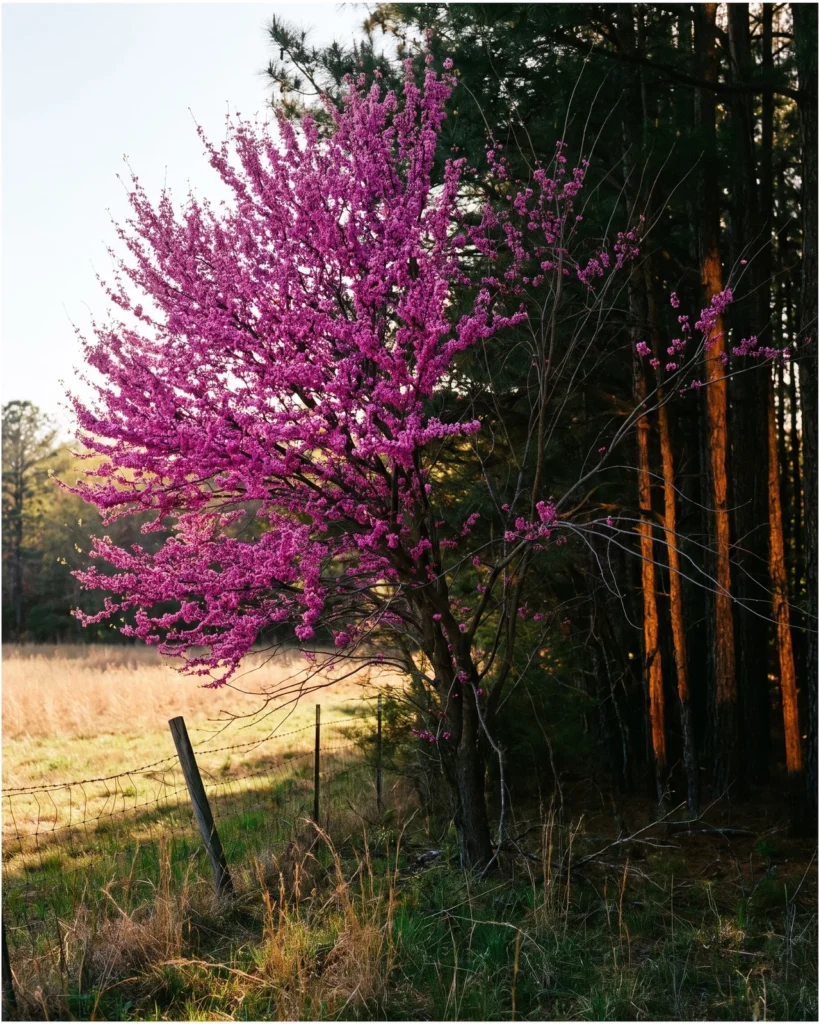
Redbud is a small deciduous tree in the bean family, Fabaceae, native to eastern North America. Its range runs from New Jersey and southern Pennsylvania west to southern Michigan and southeastern Nebraska, south to central Texas and east to central Florida. A separate population sits in the Trans-Pecos, south Texas and Mexico. Despite the name canadensis it reaches Canada only on Pelee Island and southern Ontario. Left alone it grows multi-trunked with a rounded crown, the trunk dividing close to the ground; nursery stock is trained to a single stem.
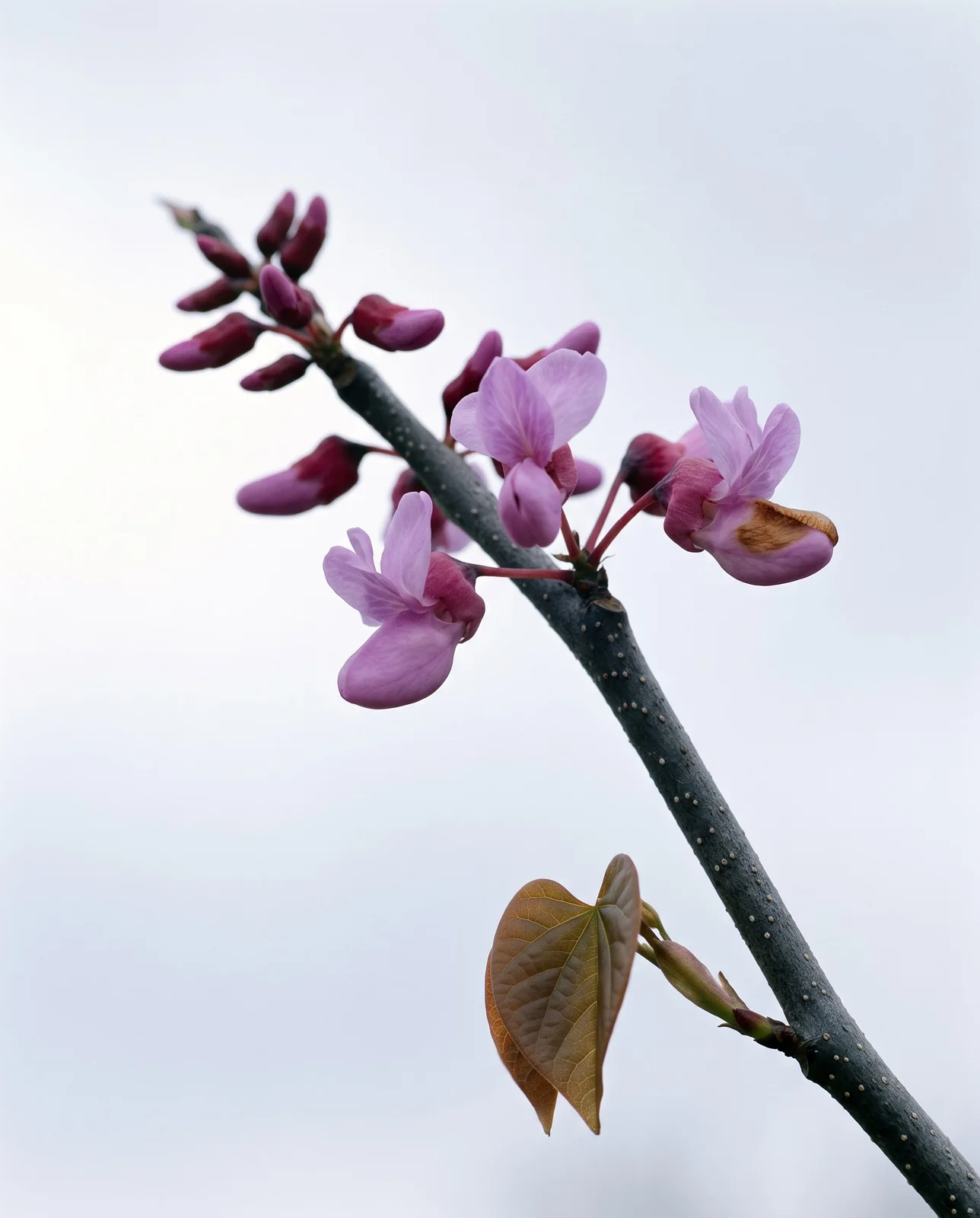
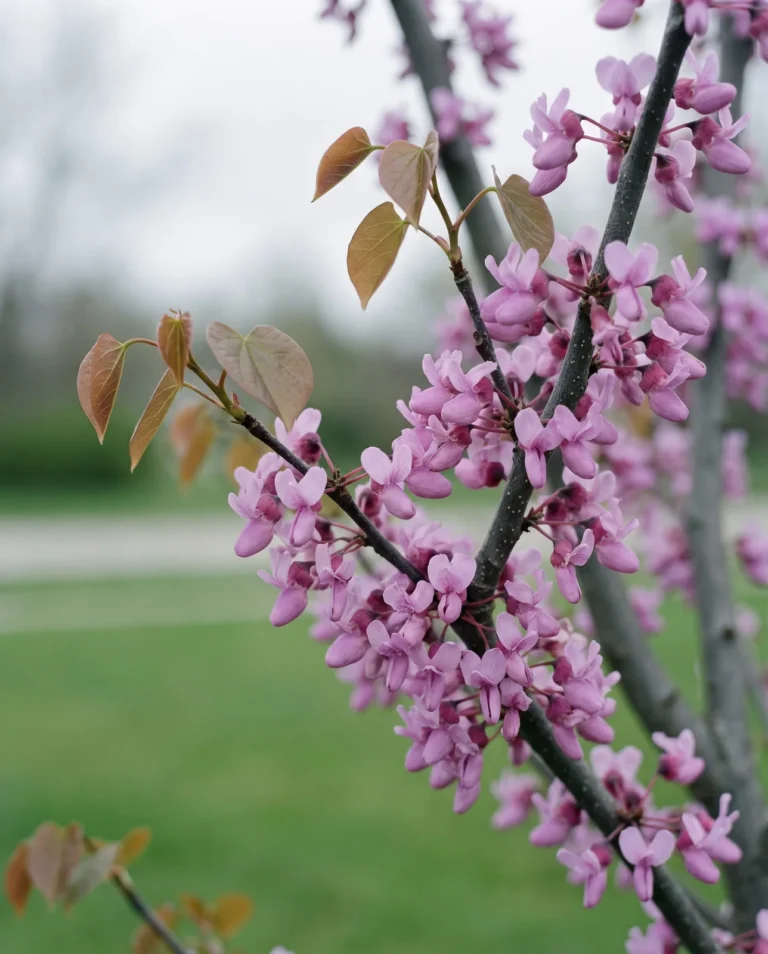
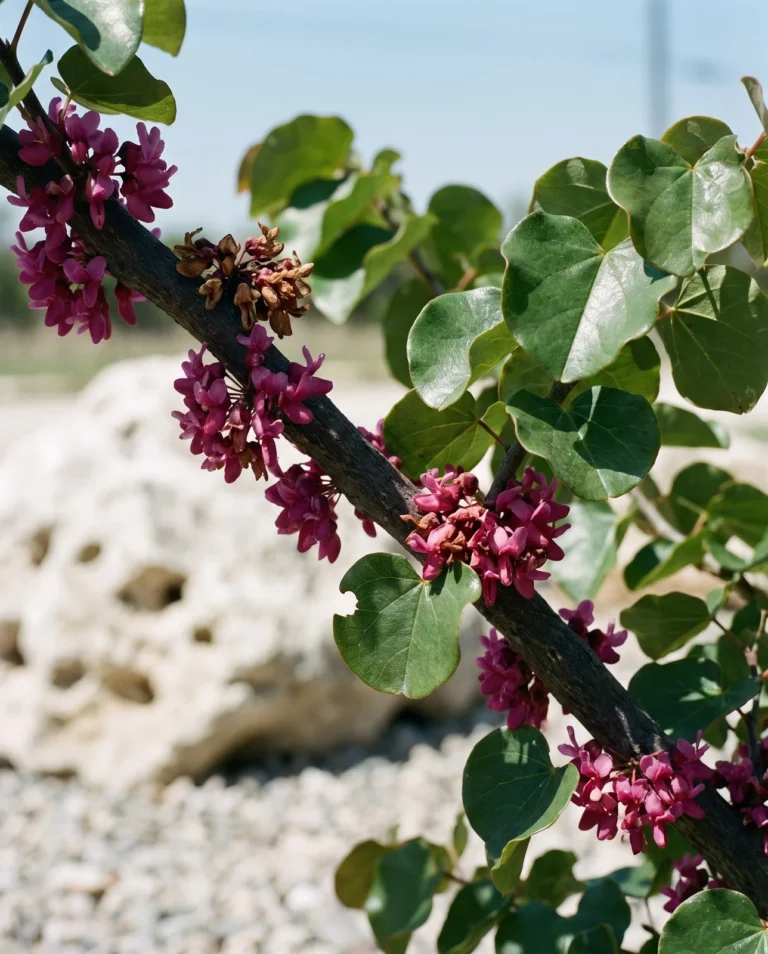
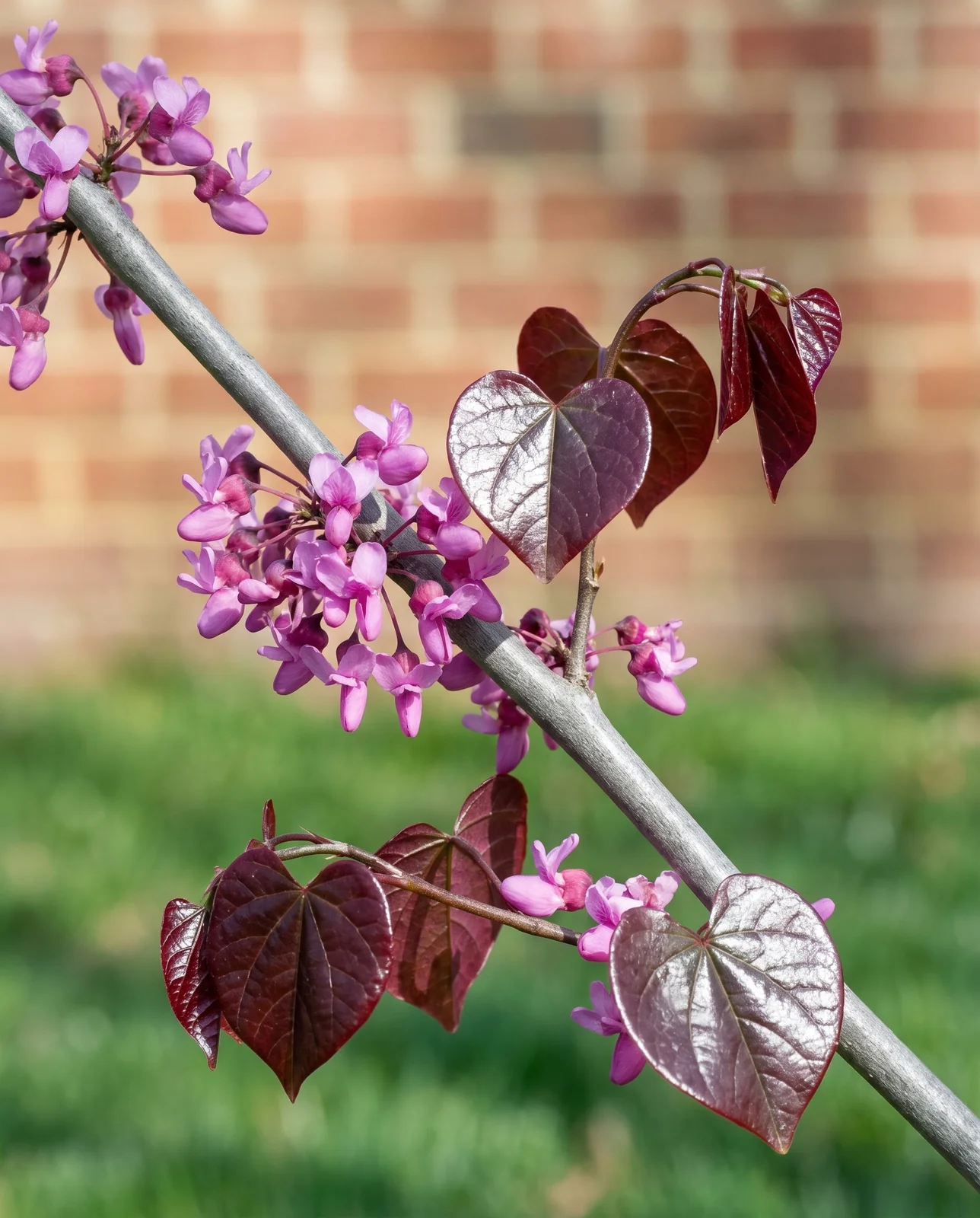
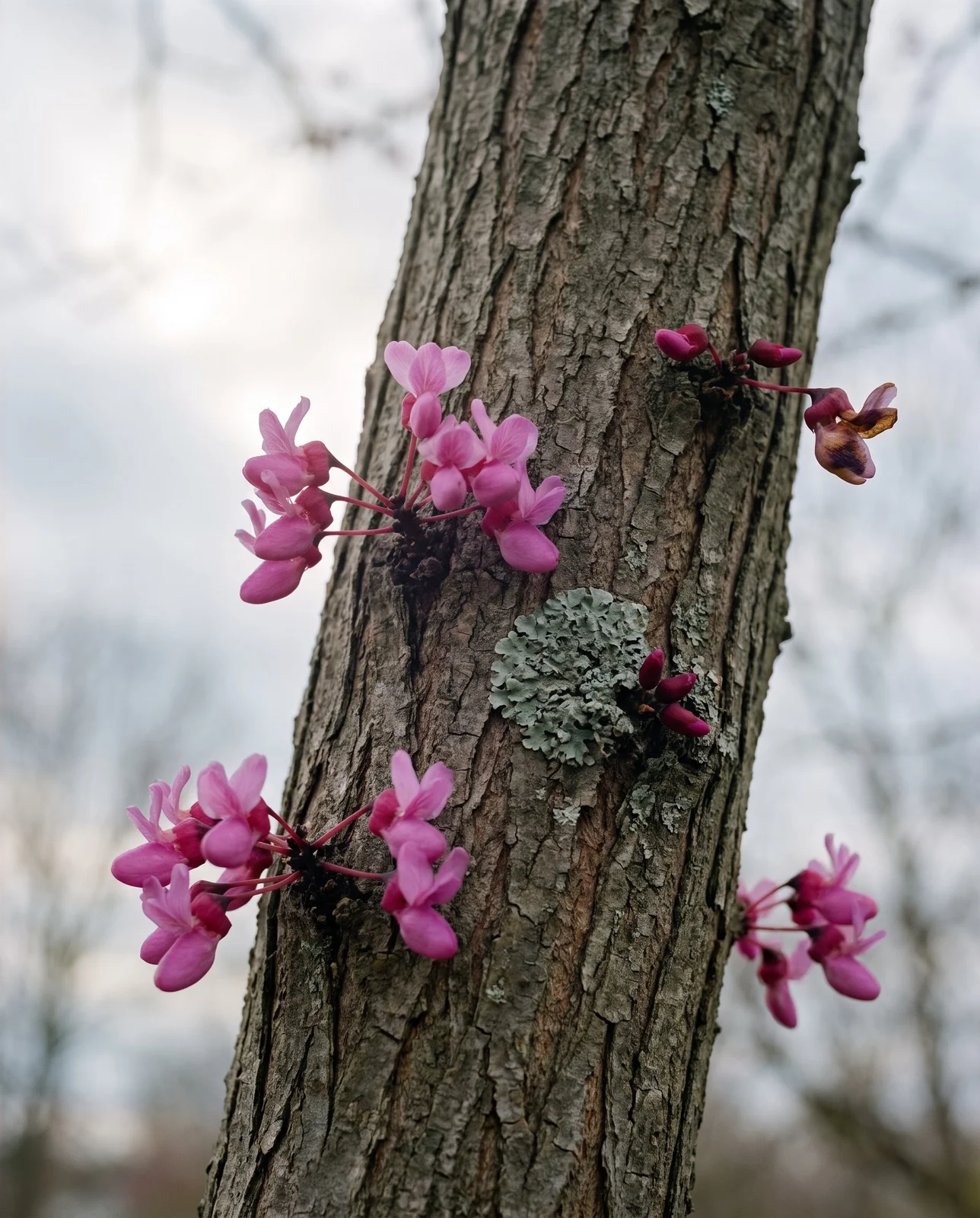
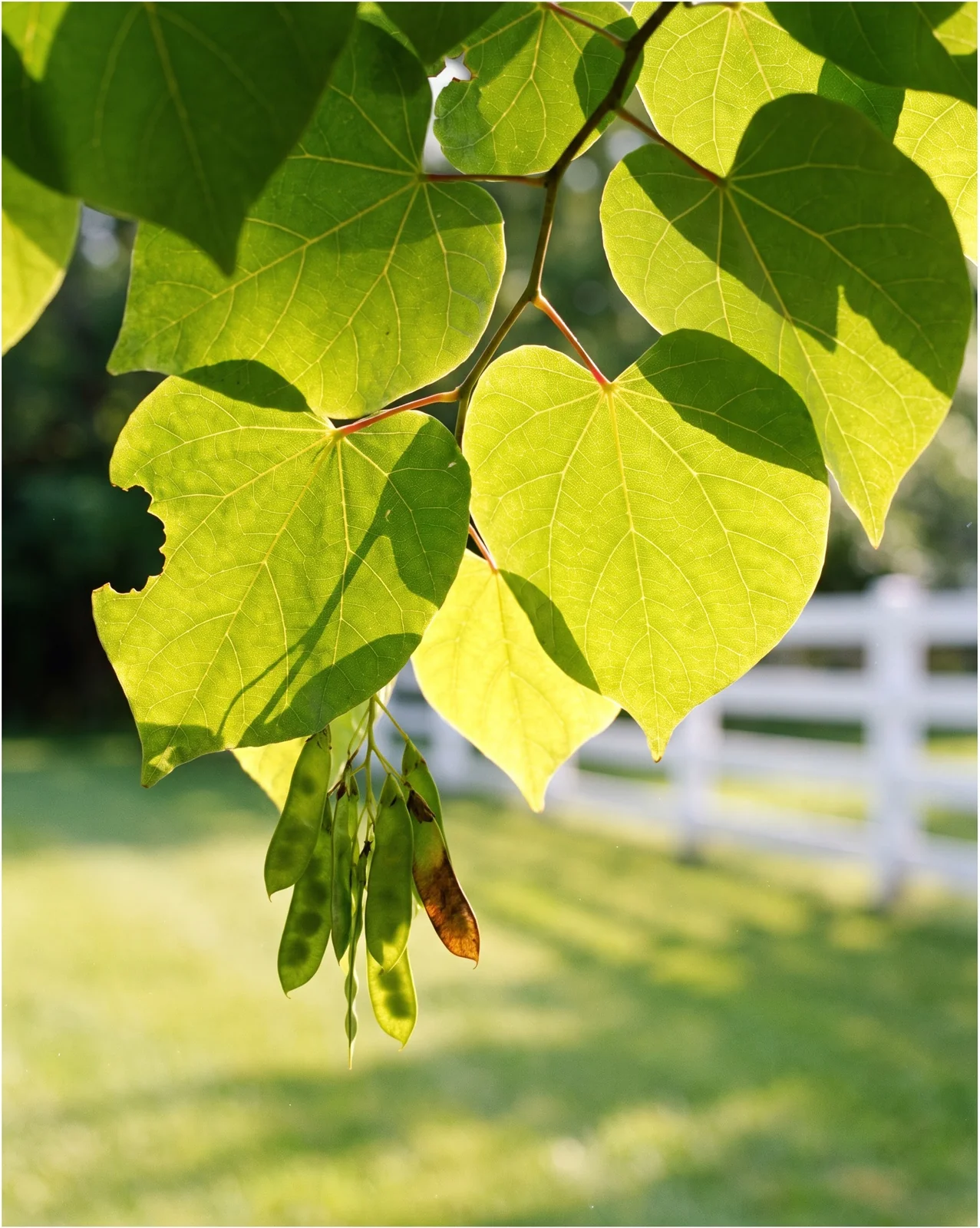
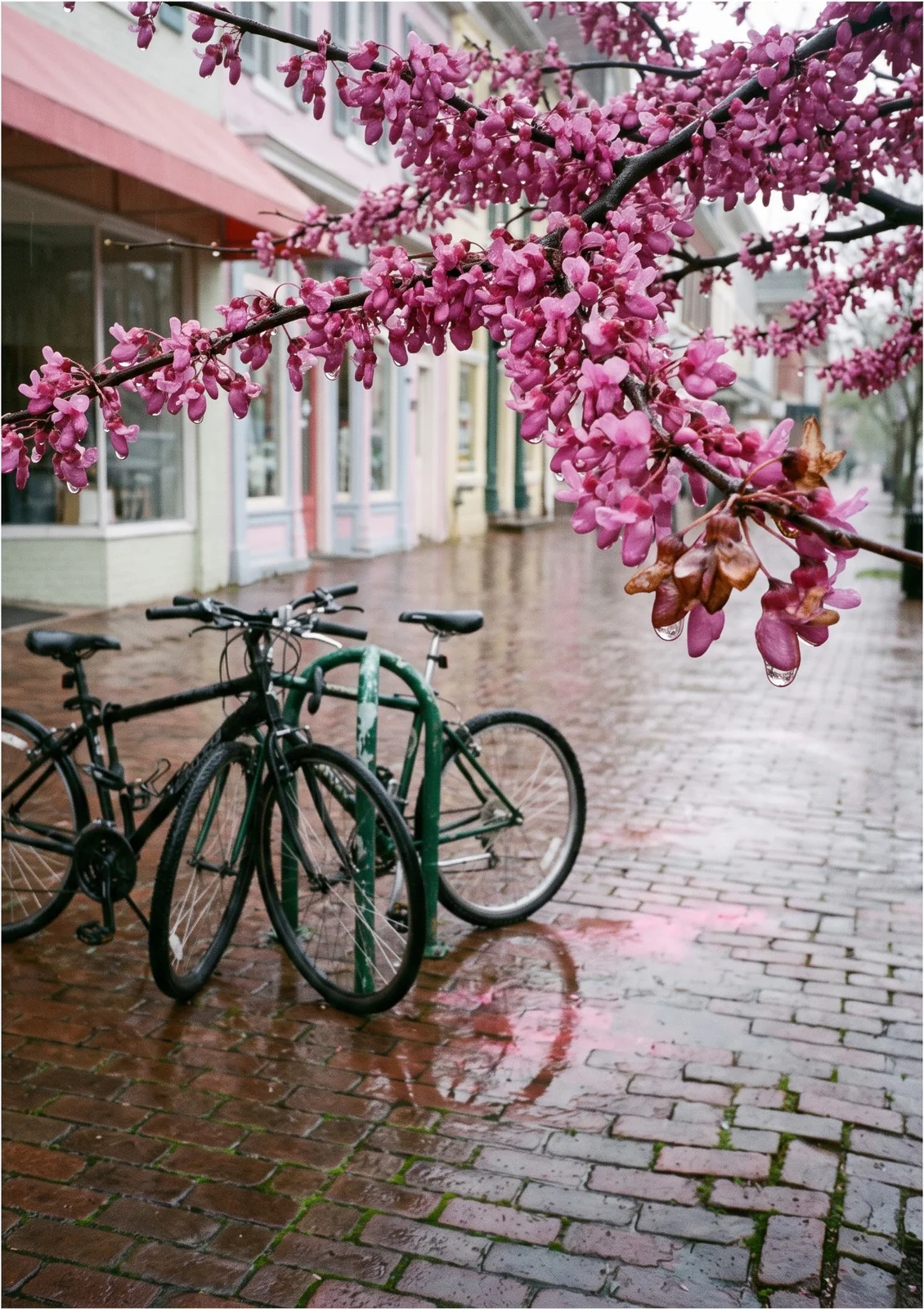
The flowers are what people notice in March, and where they come from sets redbud apart: buds open on old twigs, on branches and on the trunk itself. They sit in bundles in the leaf axils and along the wood, most of them on two-year-old growth, in clusters of 4 to 8. Each flower is about half an inch across, five petals and ten stamens, built like a pea blossom. Leaves come afterward: heart-shaped, alternate, 3 to 5 inches long and wide and occasionally to 6, red-tinged at first, then dark green above and paler below. Older bark is dark red brown and scaly, splitting into fissures that show a cinnamon-orange interior.
Several trees share the name. Cercis canadensis has two subspecies: Texas redbud, var. texensis, in southern Oklahoma, Trans-Pecos Texas and southeastern New Mexico, and eastern redbud, var. canadensis, everywhere else. The European species, Cercis siliquastrum, gives the other common name: legend has Judas Iscariot hanging himself from a branch of it. Cercis is Greek for a weaver's shuttle, after the shape of the pod. Oklahoma made it the state tree in 1937.
When redbud blooms and how long the flowers last
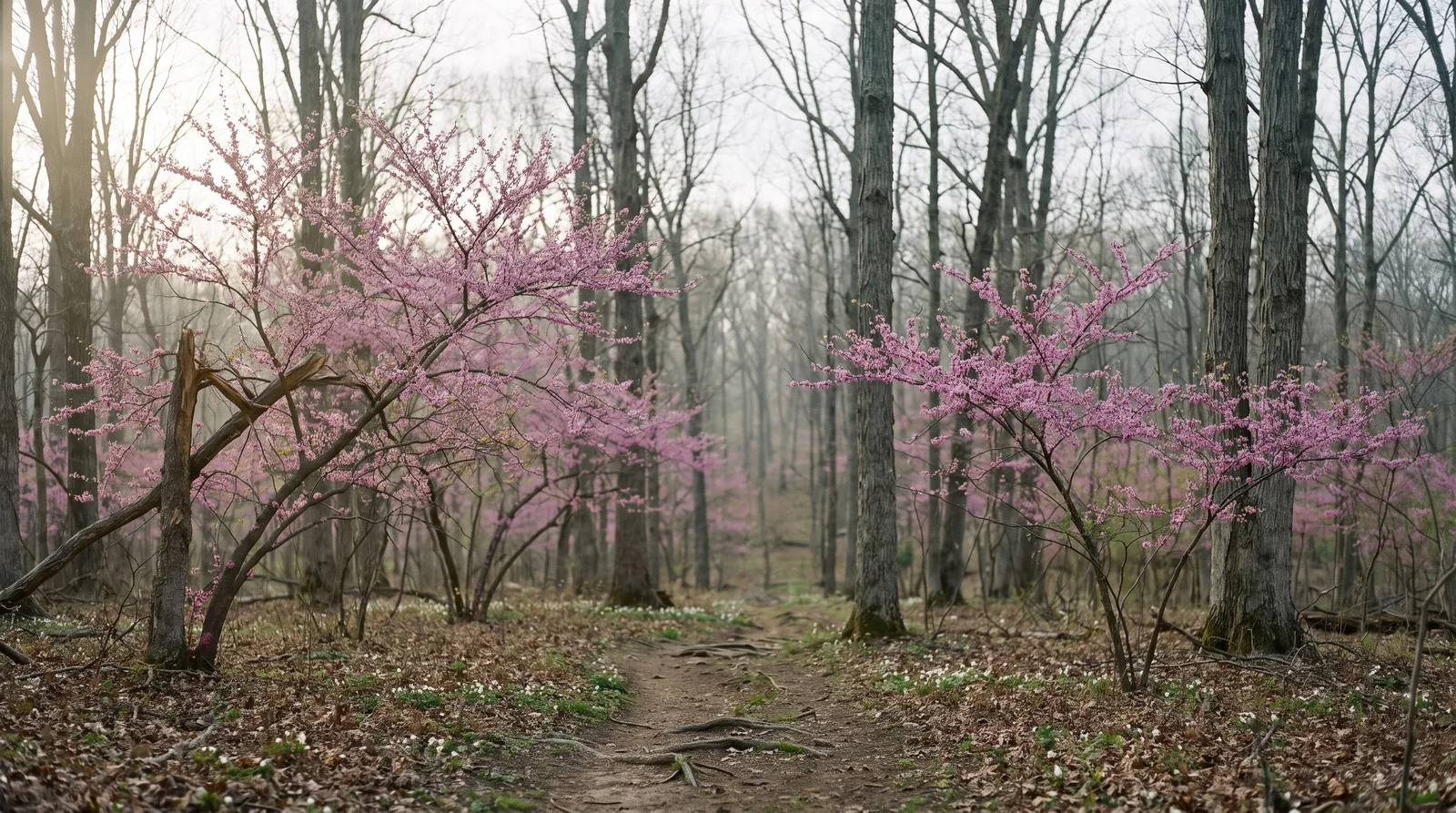
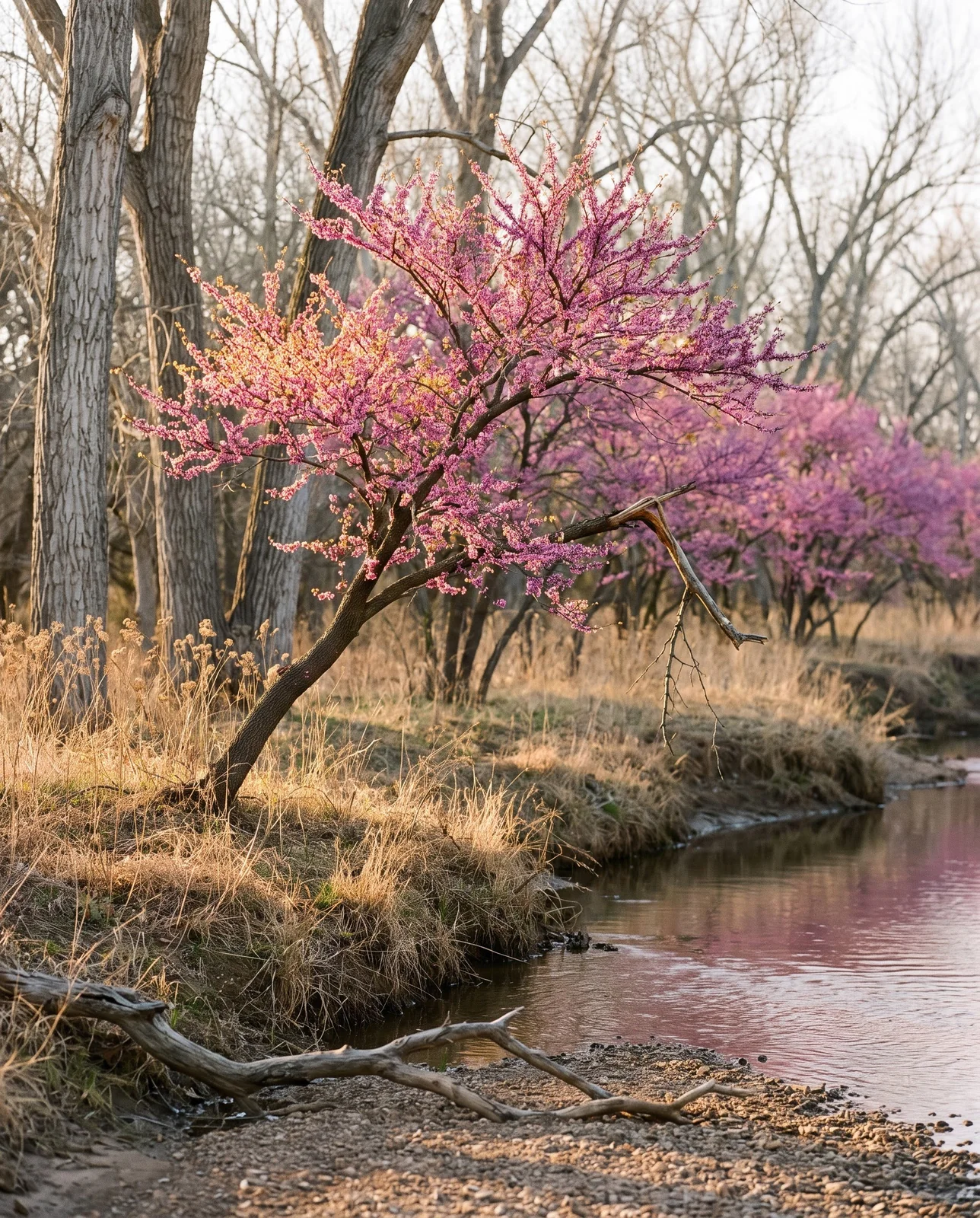
Redbud flowers in early spring, ahead of its own leaves and ahead of most trees around it. The bloom falls between March and May, with early May normal as far north as Chicago. Temperature does the scheduling: in Indiana the tree needs 30 days averaging more than 50 degrees Fahrenheit before it opens. The display holds about a month while other trees are still bare, and individual flowers drop after 2 or 3 weeks as the leaves push out behind them.
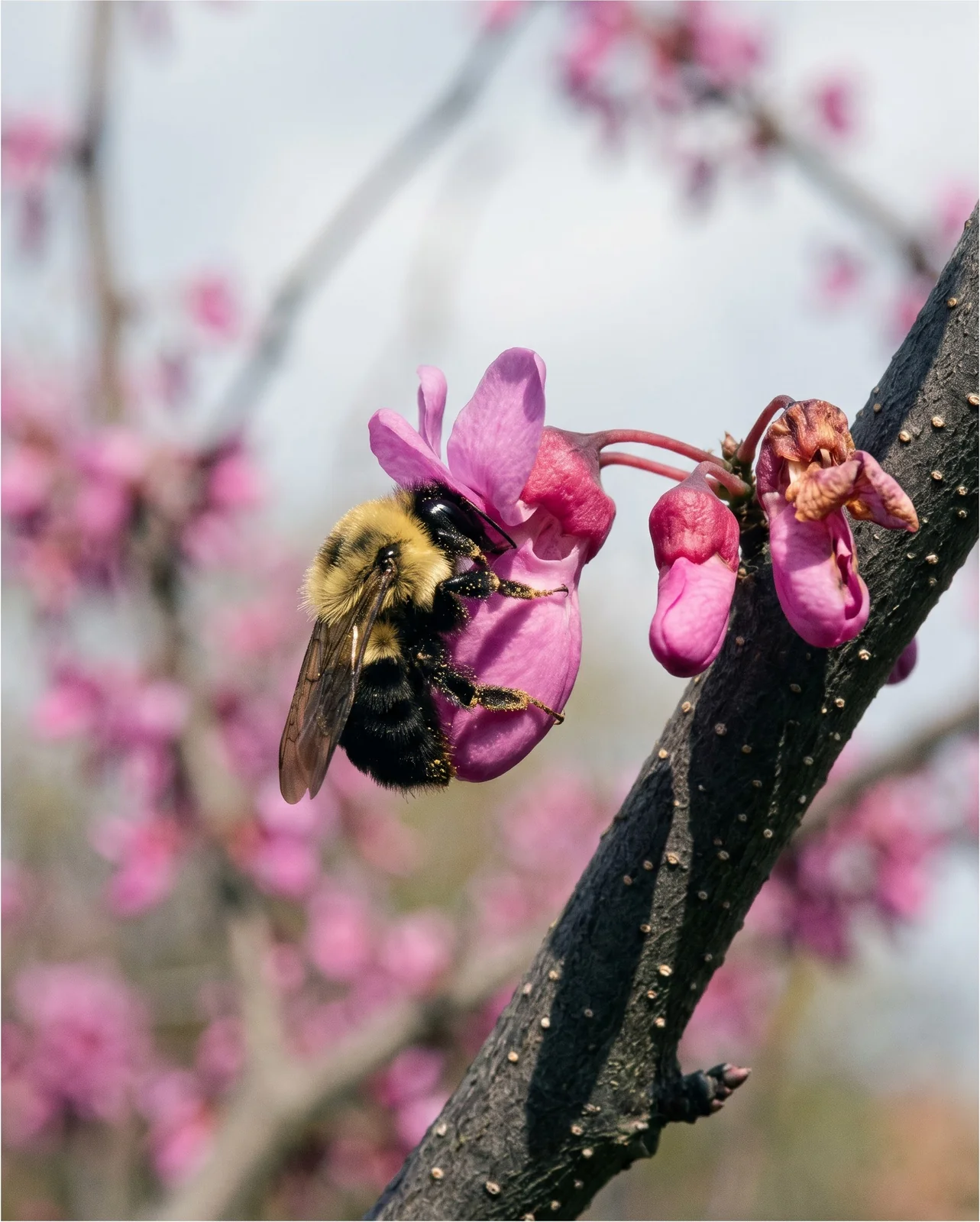
The other kinds keep their own calendars. Chinese redbud blooms in very early spring for 2 to 3 weeks, and Texas redbud is showy from March to April, before its foliage appears. 'Forest Pansy' blooms later than the species, with darker, almost purple flowers. Age is less of a barrier than owners expect. Redbuds flower at under 7 years old, though a tree sets no pods in that first flowering year. The flowers are bisexual and the tree pollinates itself, with bees doing the work.
Redbud varieties worth telling apart
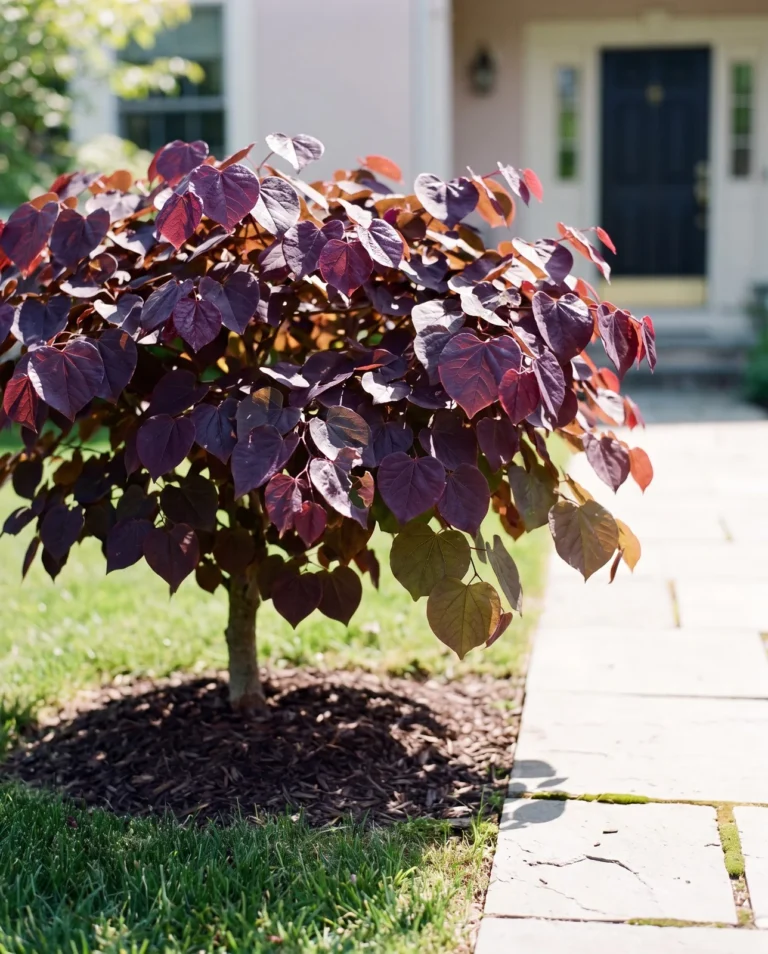
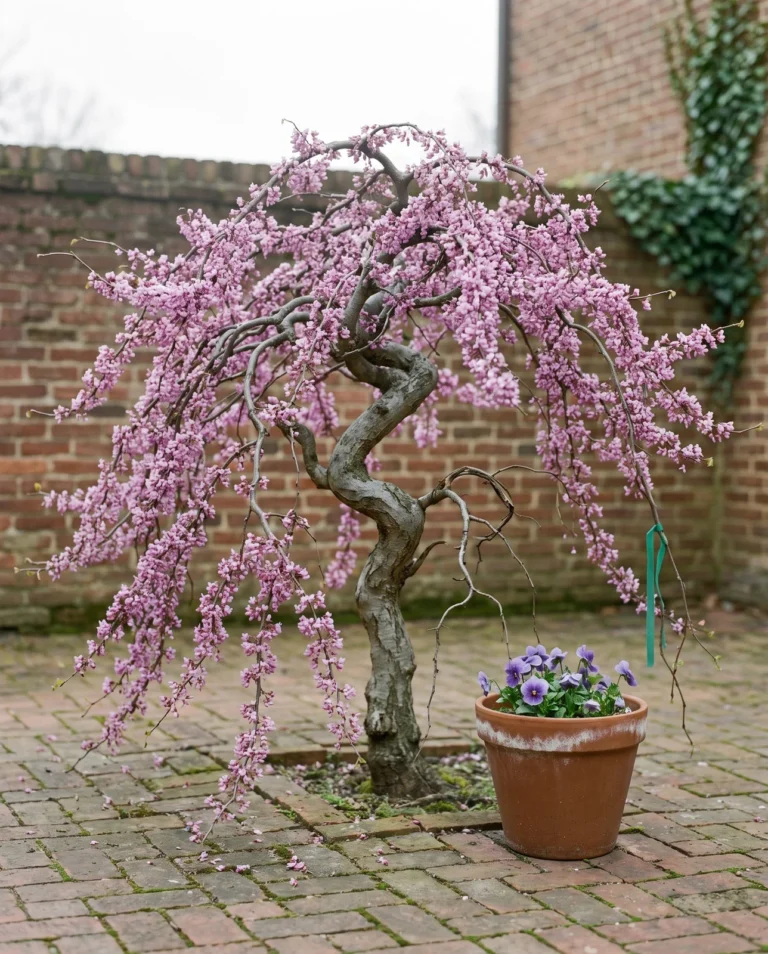
Almost every named redbud sold here is a selection of the same species, picked for leaf color, mature size or a weeping habit. Leaf color is what unsettles buyers. 'Forest Pansy' opens reddish-purple, matures to a muted purple and turns more purplish-green in hot summers. That is the cultivar in heat and no sign of a failing tree.
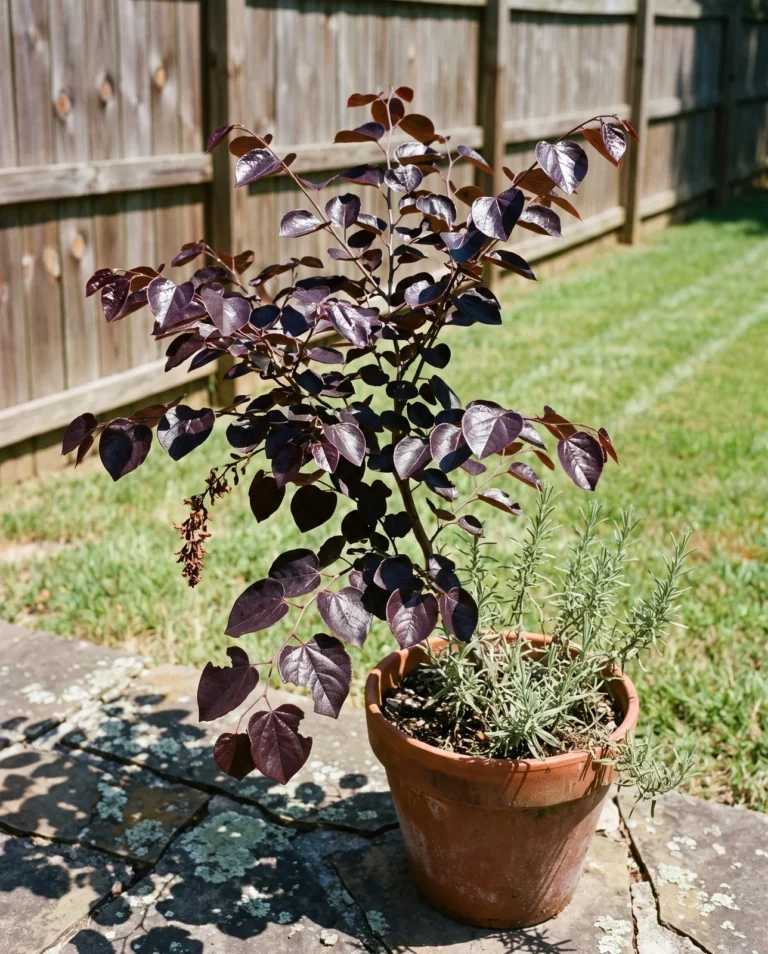
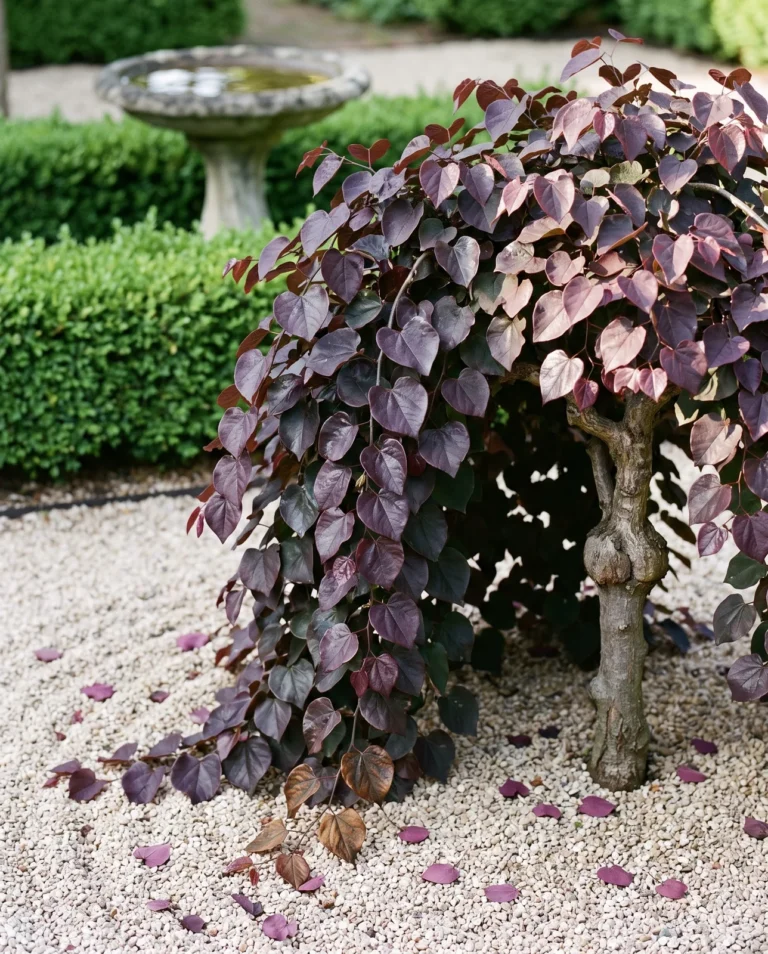
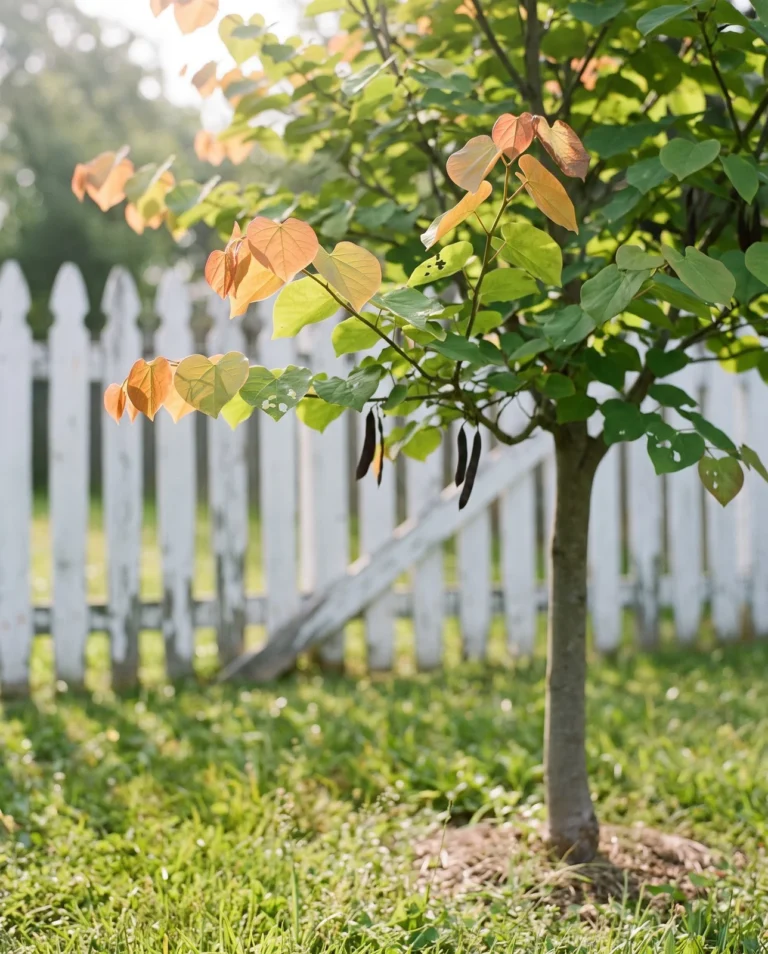
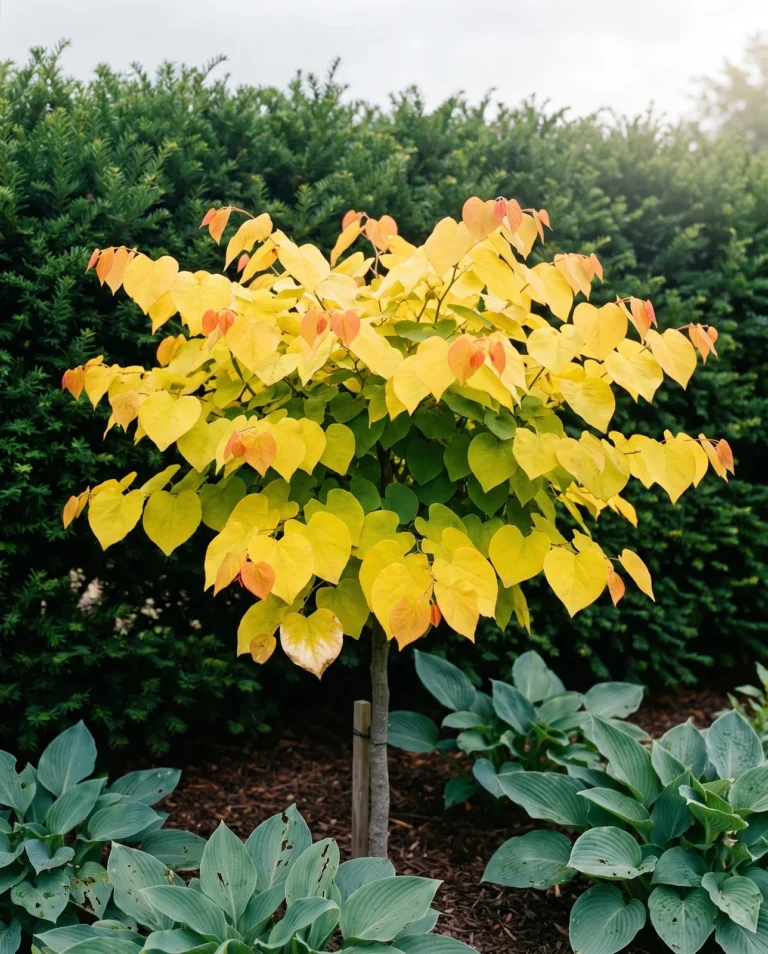
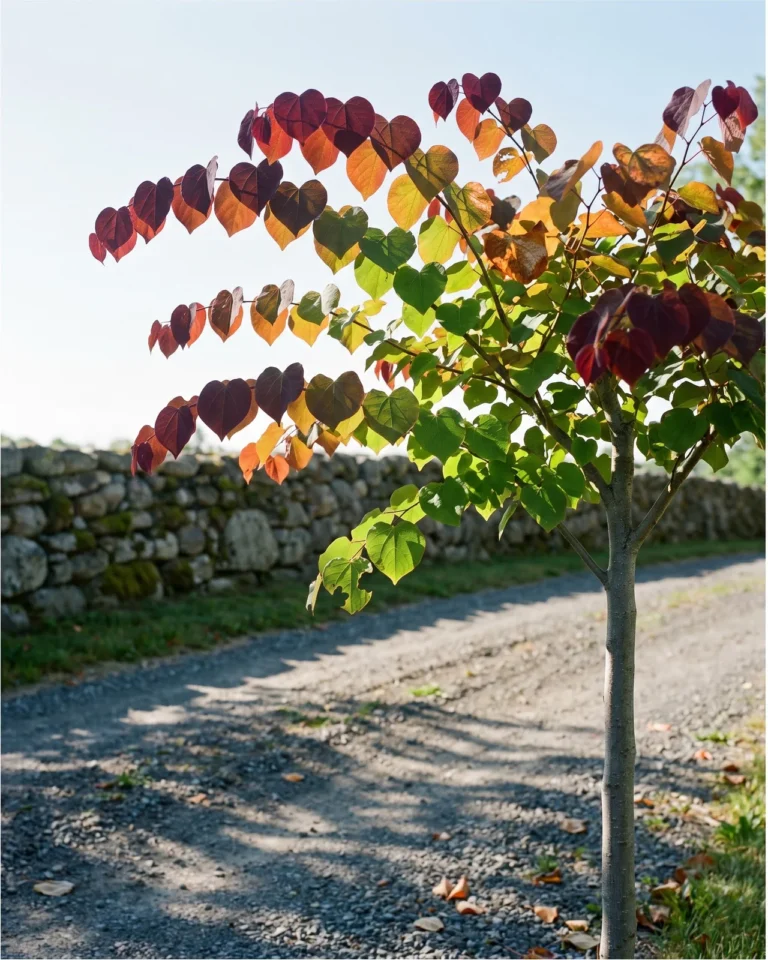
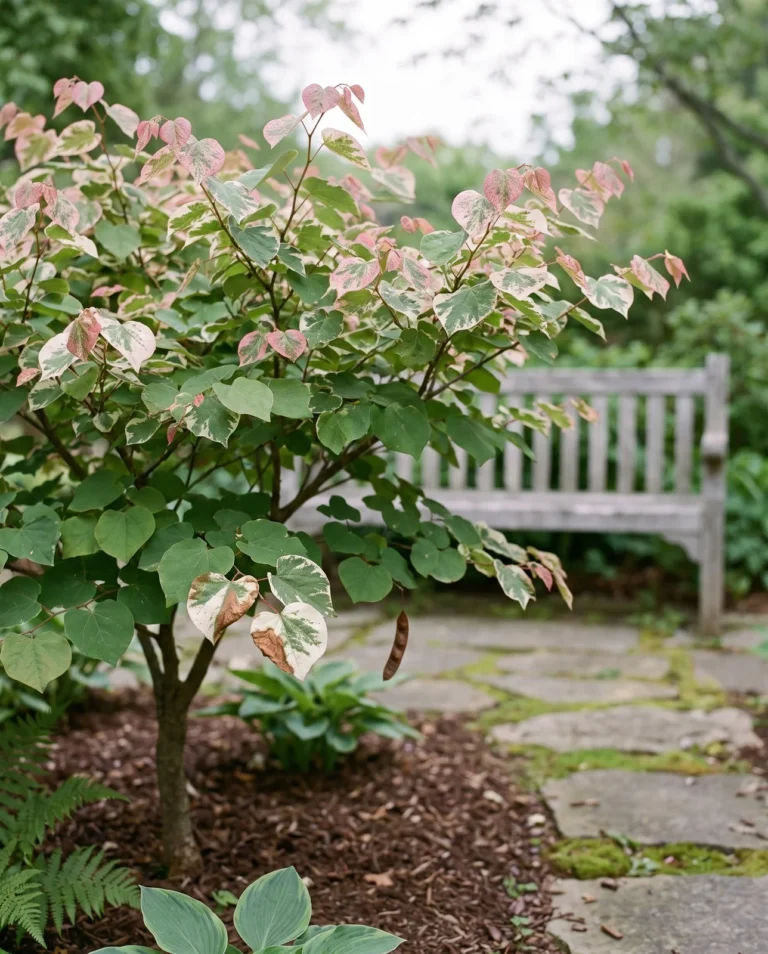
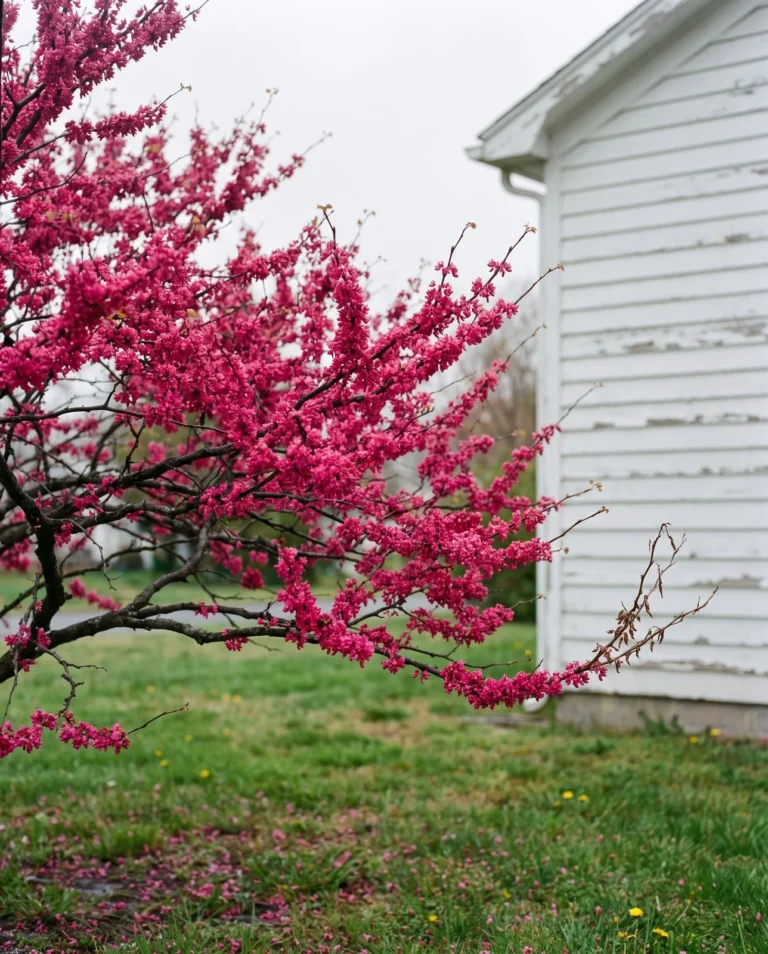
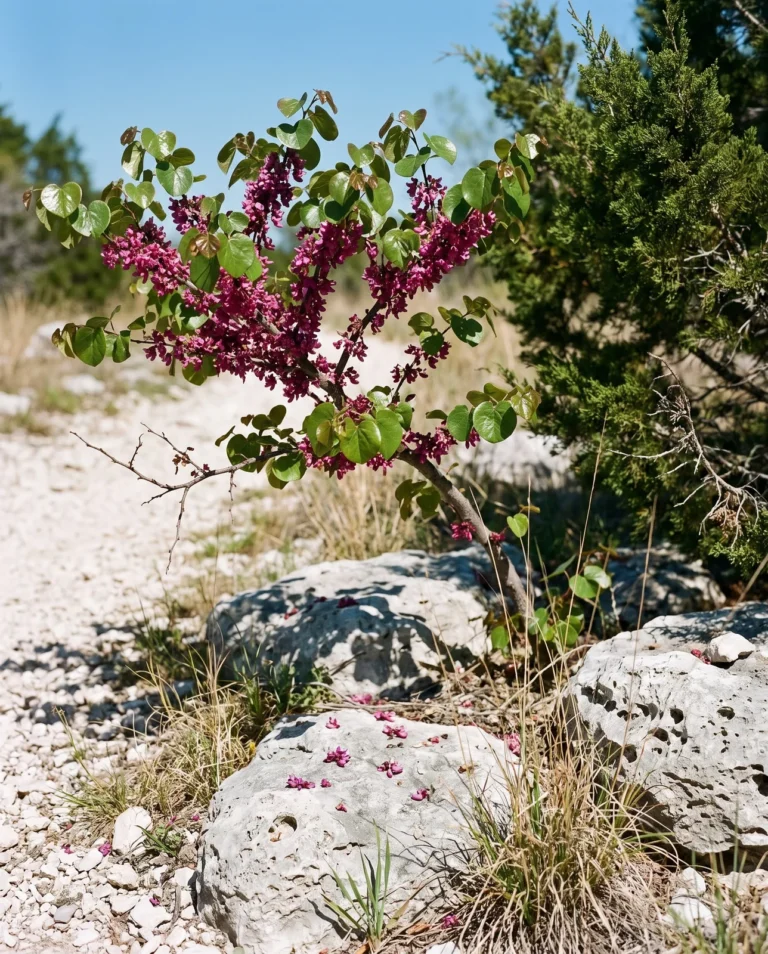
Which redbud is which
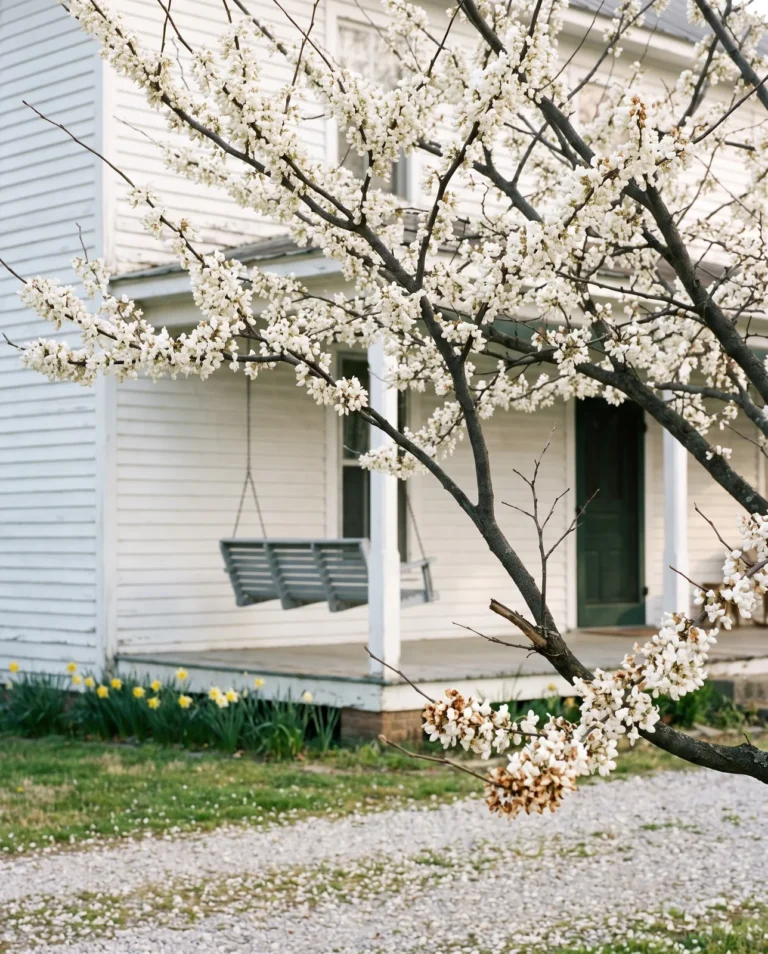
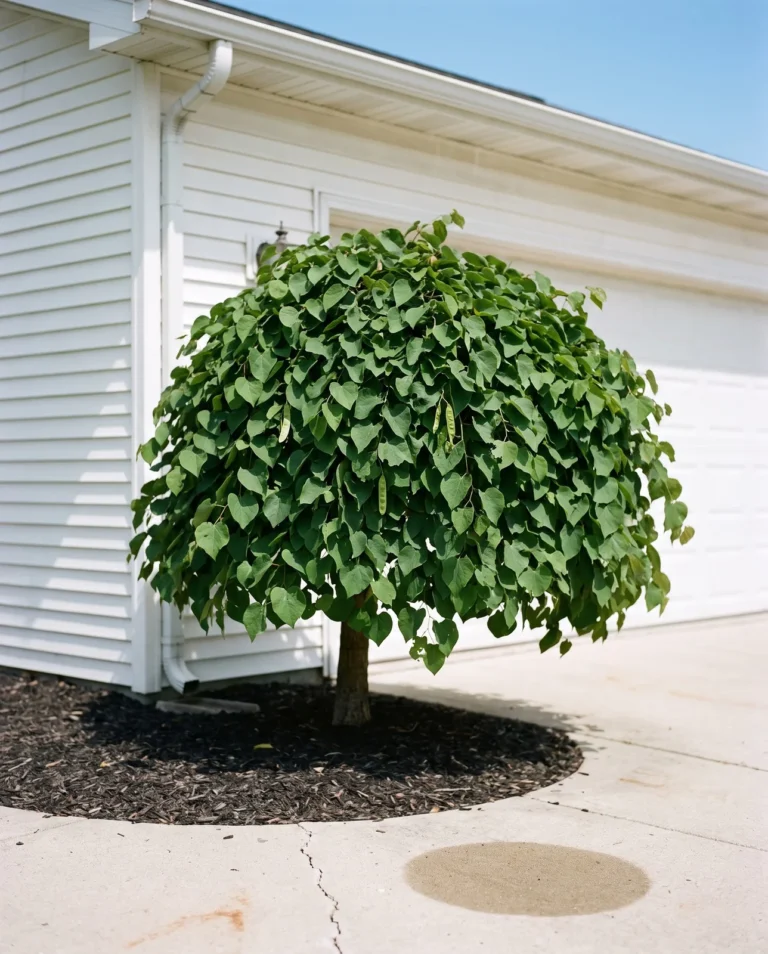
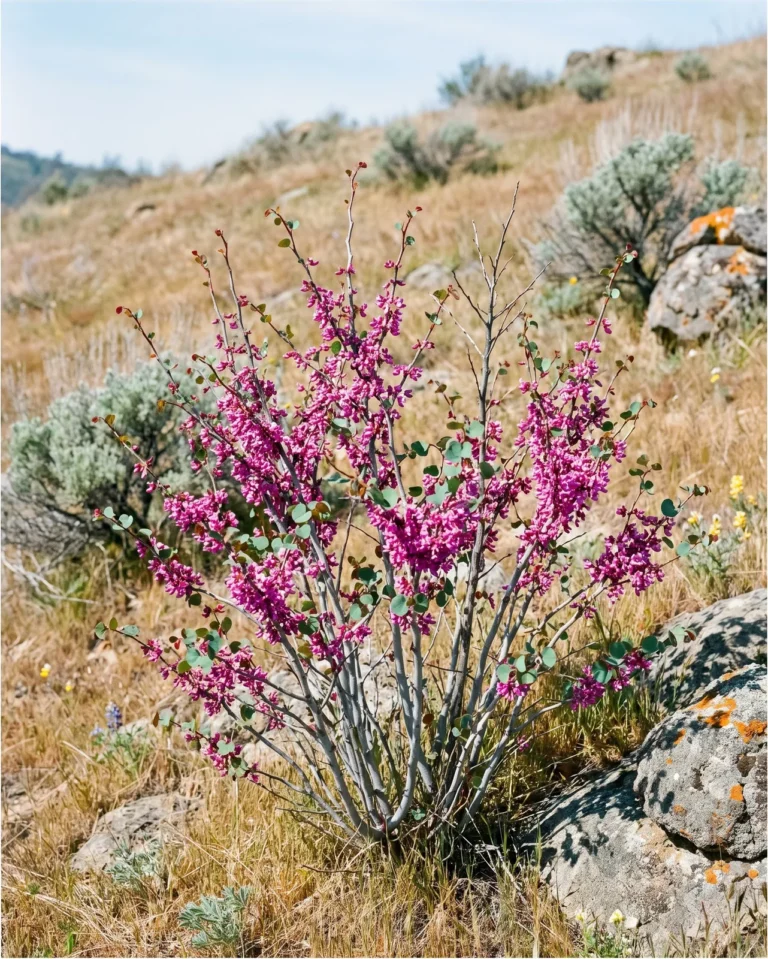
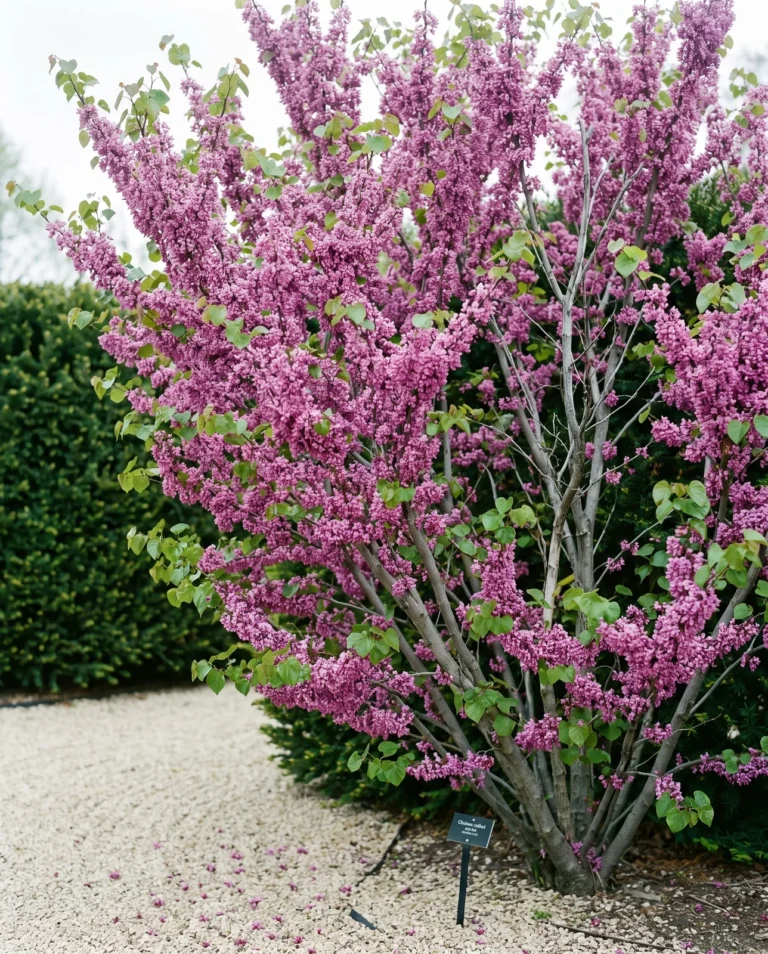
Four redbuds get mixed up with each other on nursery benches and in yards, and each one has a single tell that settles it.
Where to plant a redbud, and is it a good front yard tree
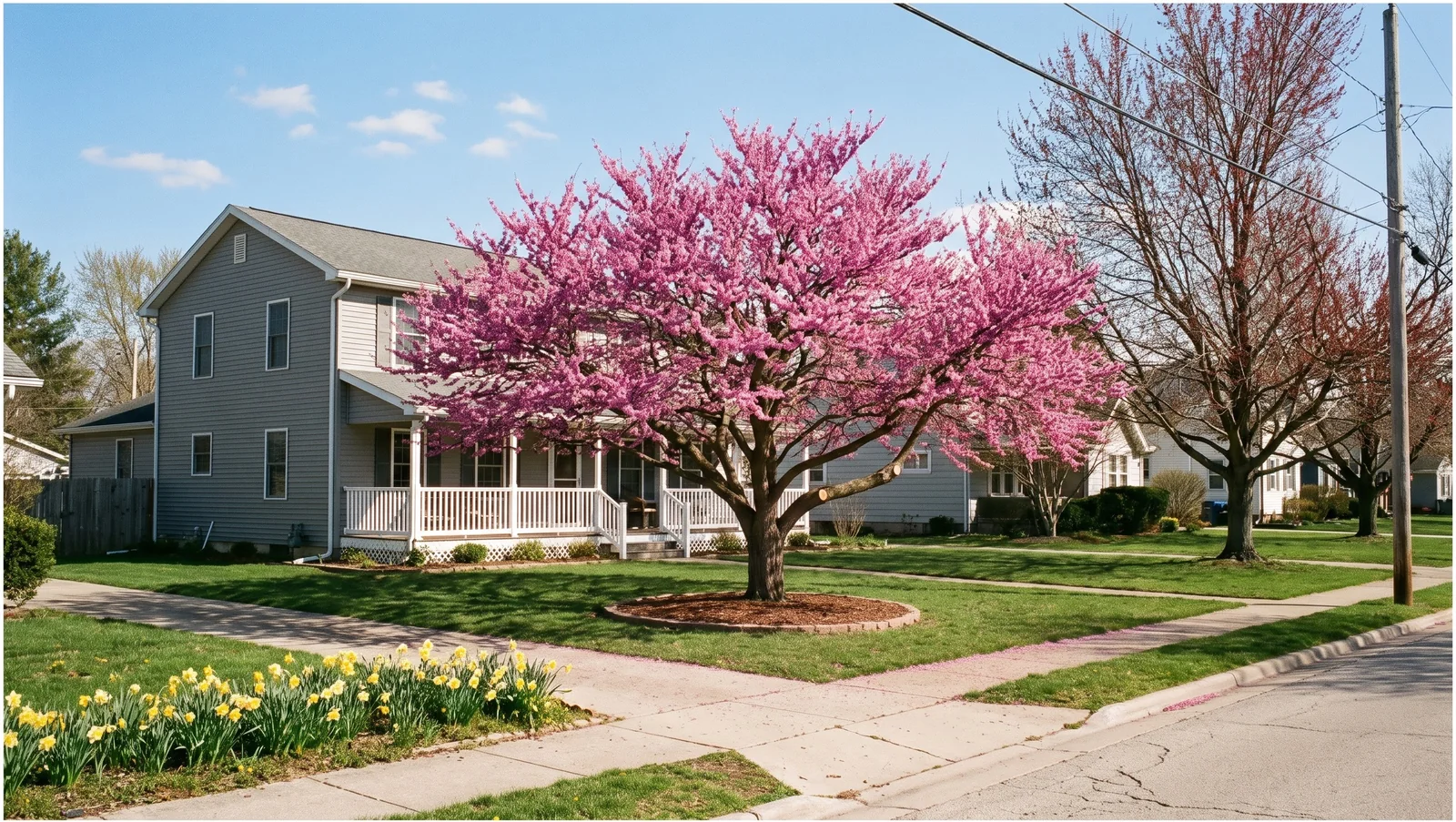
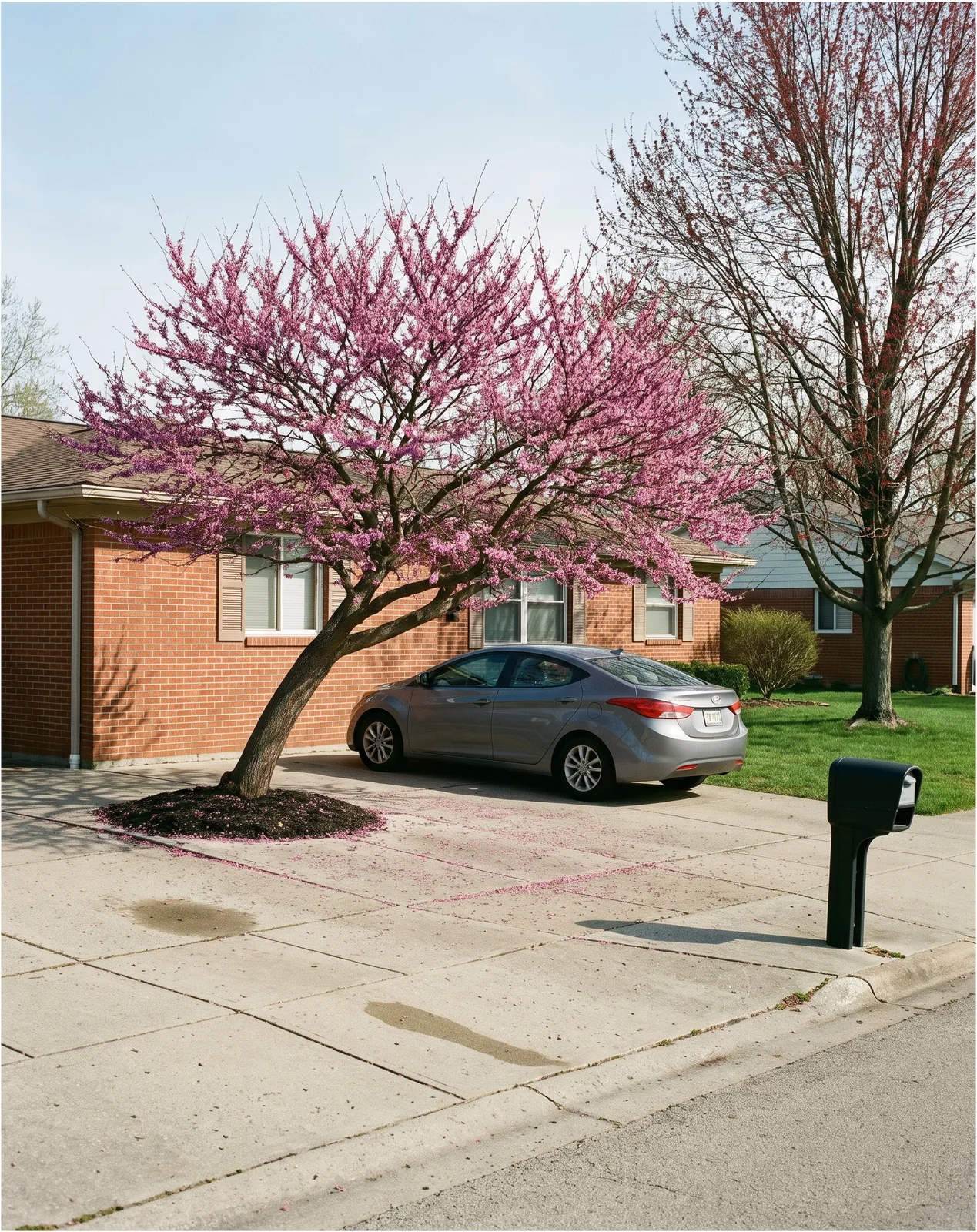
A redbud earns its place in a front yard if you give it an edge. It prefers partial shade or edge habitat, and in full sun or an open field it becomes vulnerable to summer drought. It is an understory tree that still takes full to part sun. The good spots in a suburban yard are the east side of the house, the gap between two larger trees, or the sunny margin of a wood line. Wet ground rules a site out: redbud cannot endure inundation or survive in poorly aerated soils, so it rarely grows on flooded sites.
Distance from the house is set by the crown. Redbud finishes wider than it is tall, so measure the gap to a wall, a walk or a driveway off half the mature spread. Branches break, so plant it in a relatively protected spot: out of the wind funnel between two houses, and clear of the roofline where snow slides. It works as a street or lawn tree, but it is very sensitive to herbicides and lawn chemicals. The middle of a lawn on a weed-and-feed program is a slow way to lose one.
How big a redbud gets
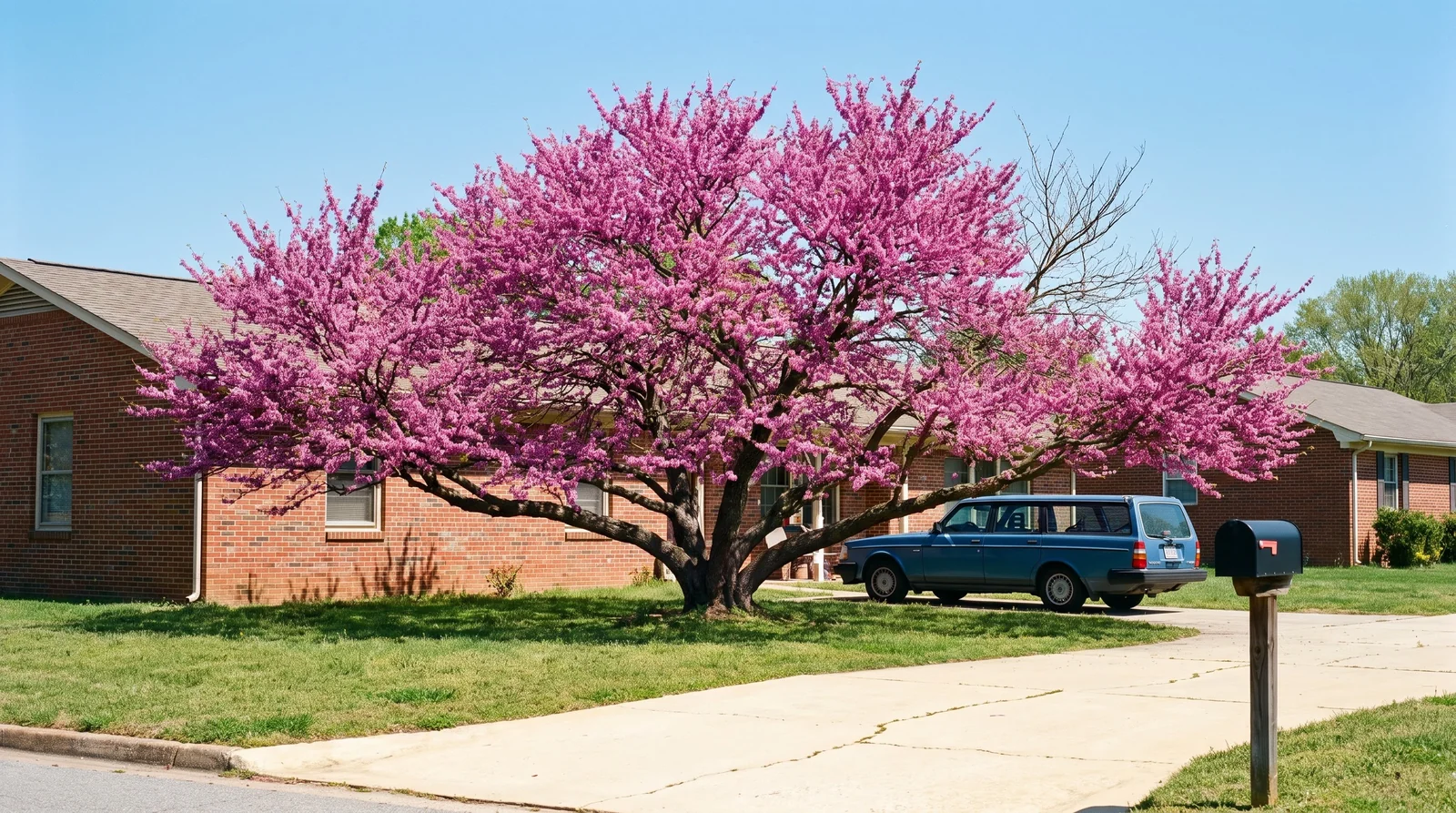
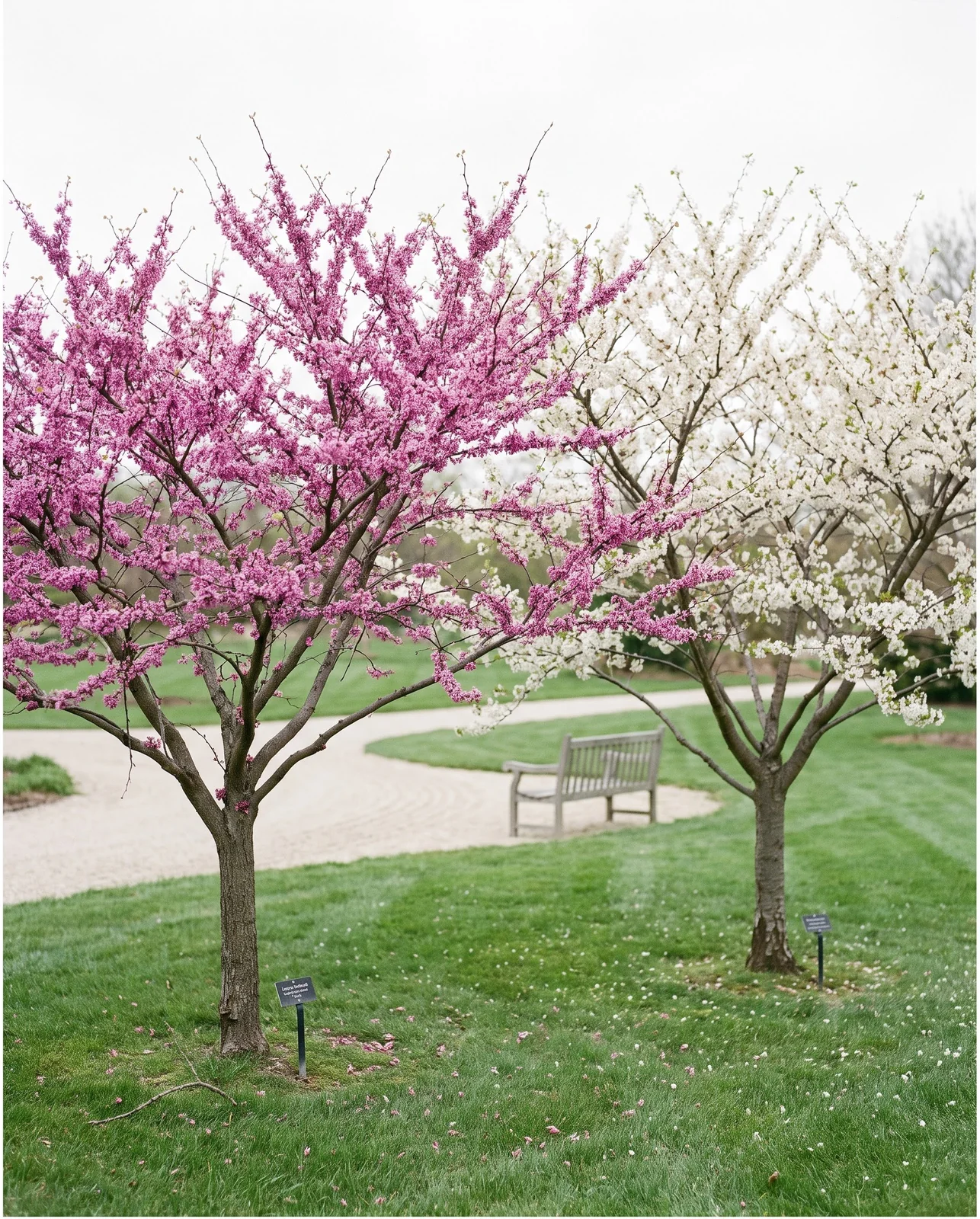
Plan for 20 to 30 feet tall and 25 to 35 feet wide. Under that spread sits a short trunk, or several on a multistemmed tree, with branches forming a broad, flat or rounded crown. Growth is quick while the tree is young and slows to medium after that, so a redbud fills its width early and then appears to stall.
Sun and shade
Redbud takes full sun, 6 or more hours of direct sunlight a day, or partial shade of 2 to 6 hours. Flowering is best in full sun, so a tree planted for the spring display should get as much light as the site allows. In hot summer climates part shade is the better call. Shade has a floor, though. Old trees cannot tolerate severe competition and shade, so a redbud that started at the edge of a wood begins to fail as the canopy closes over it.
Watering a redbud
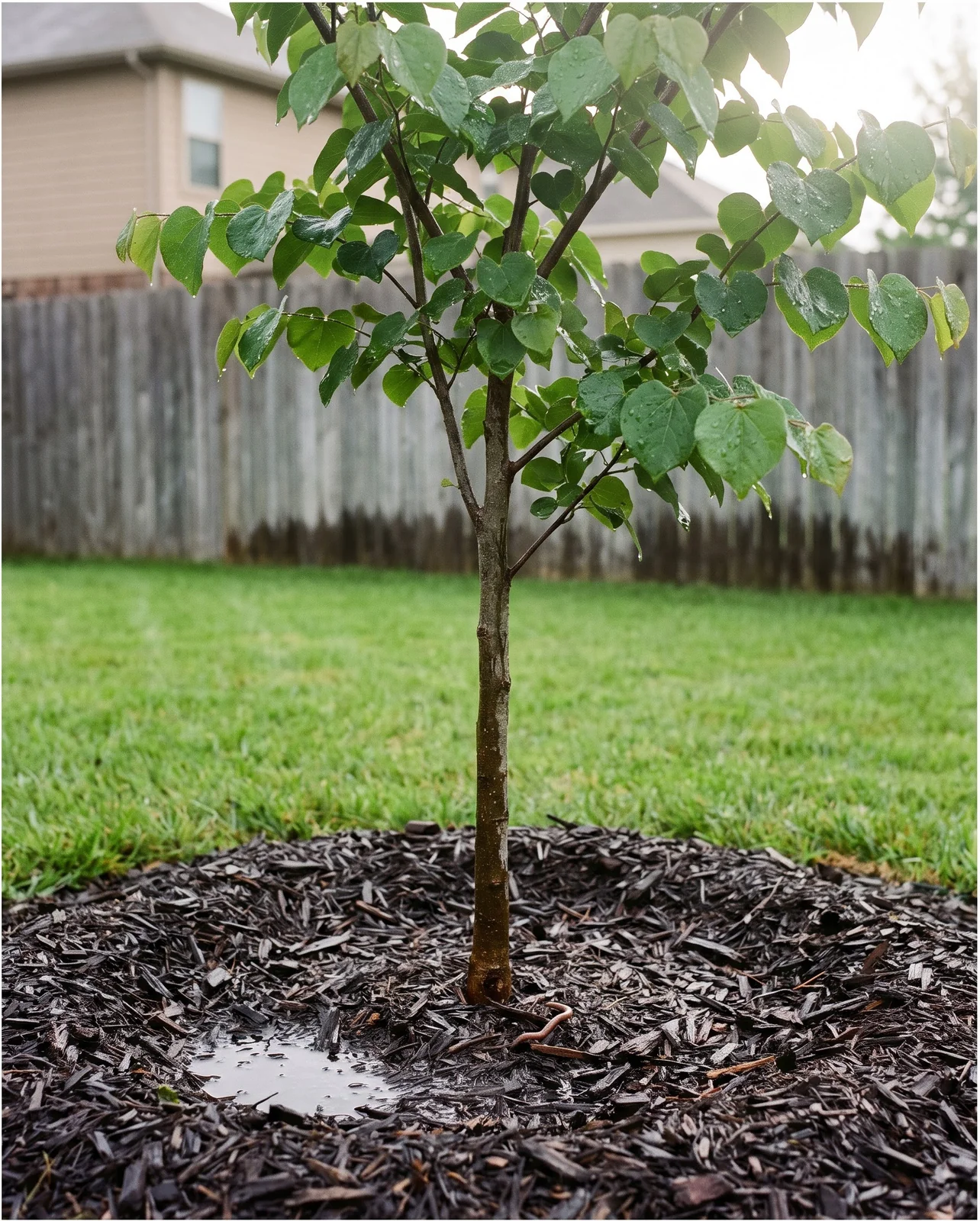
Water a new redbud steadily until it is established, since it does not tolerate root disturbance and needs that time to settle. After that it tolerates drought but does better with regular watering, and heat, drought and wet soil are all on the list of what it does not take. In full sun, supplemental water during dry periods is part of the deal.
Soil and pH
Redbud grows in average, medium moisture, well-drained soil and does best where the ground stays moist and still drains. pH is where the tree surprises people. It handles acid soil below 6.0, neutral soil from 6.0 to 8.0 and alkaline above 8.0, and it grows best above 7.5, being most common on limestone outcrops and alkaline soils. A chalky, limey yard that frustrates acid-loving shrubs is good ground for a redbud. It also tolerates juglone well enough to grow under a black walnut.
Cold hardiness and where redbud grows
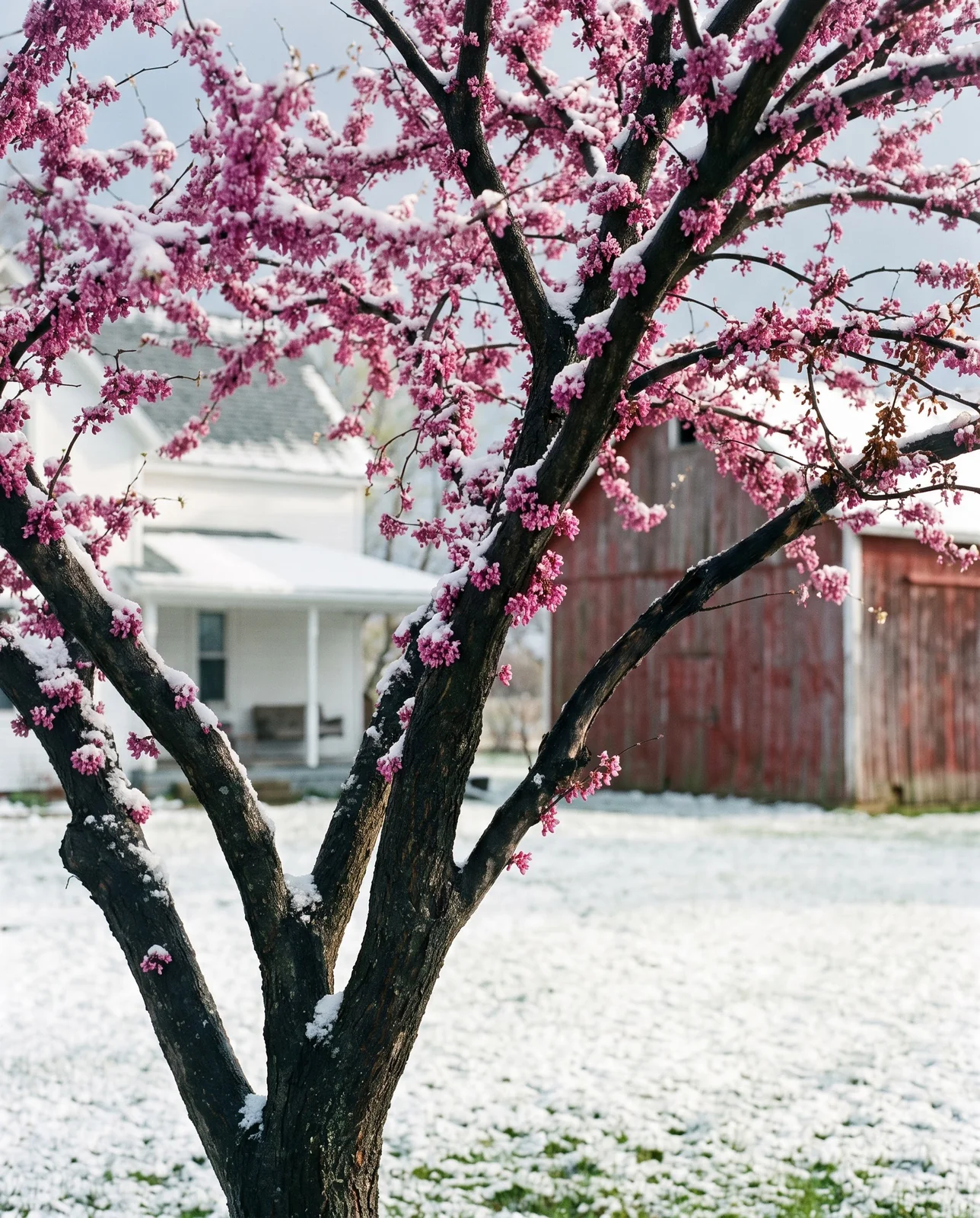
Eastern redbud is hardy through USDA zones 4a to 9b. Hardiness varies considerably from one tree to the next. Trees raised from more southern seed may lack the cold hardiness a northern winter asks for, so in zone 5a and colder buy locally grown stock. Twig kill and dieback are common in the colder zones, worth knowing before a northern owner starts hunting for a disease. Cold-hardy seed strains exist for exactly this: 'Columbus' out of Wisconsin, 'Northland Strain' and MN Strain out of Minnesota.
At the warm, dry end the choice shifts to another kind of redbud. Texas redbud, var. texensis, is hardy to zone 6 where the species goes to zone 4. Western redbud takes cold to 15 to 20 degrees Fahrenheit and grows almost anywhere in northern California that stays above 15. In southern California it wants damp ground or irrigation and a cool winter the immediate coast does not give. None of the Texas, Mexican or western kinds are hardy in the Midwest. 'Forest Pansy' is hardy in zones 5 to 9.
Planting: when, what size, and why it hates being moved
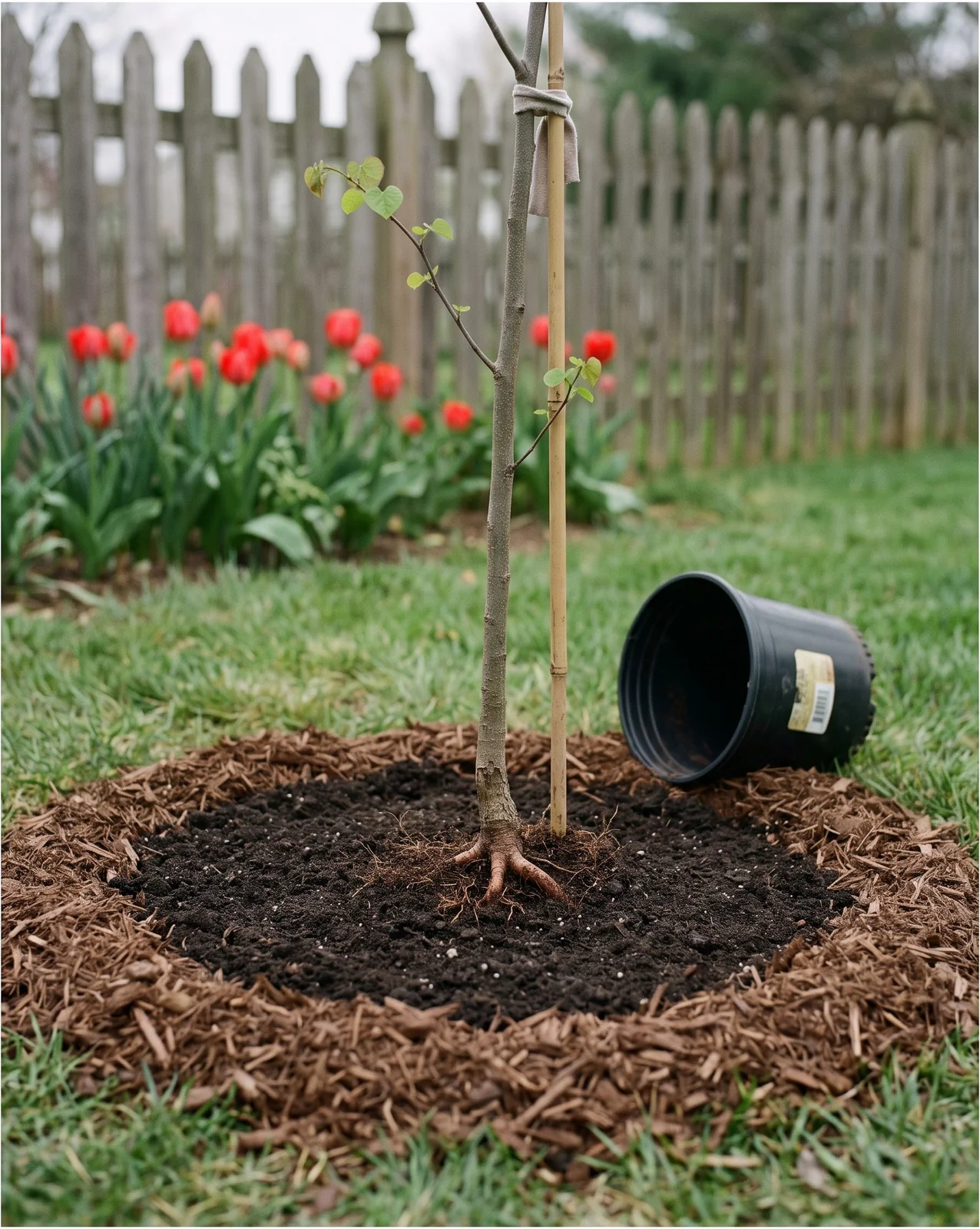
Plant a redbud in spring, in part shade, and plant it young. It does not transplant well, because it develops a deep taproot, so young stock establishes best and the tree should be left undisturbed once it is in. The taproot descends rapidly for the first few years, and where an impenetrable subsoil blocks it, it turns and grows horizontally. Put the tree in its permanent position at once, and buy the smallest one you are willing to wait for. A 3 to 4 inch layer of organic mulch protects the shallow root system, and the ring should be wide enough to keep a mower and a string trimmer off the bark.
Pruning young, and pruning around disease
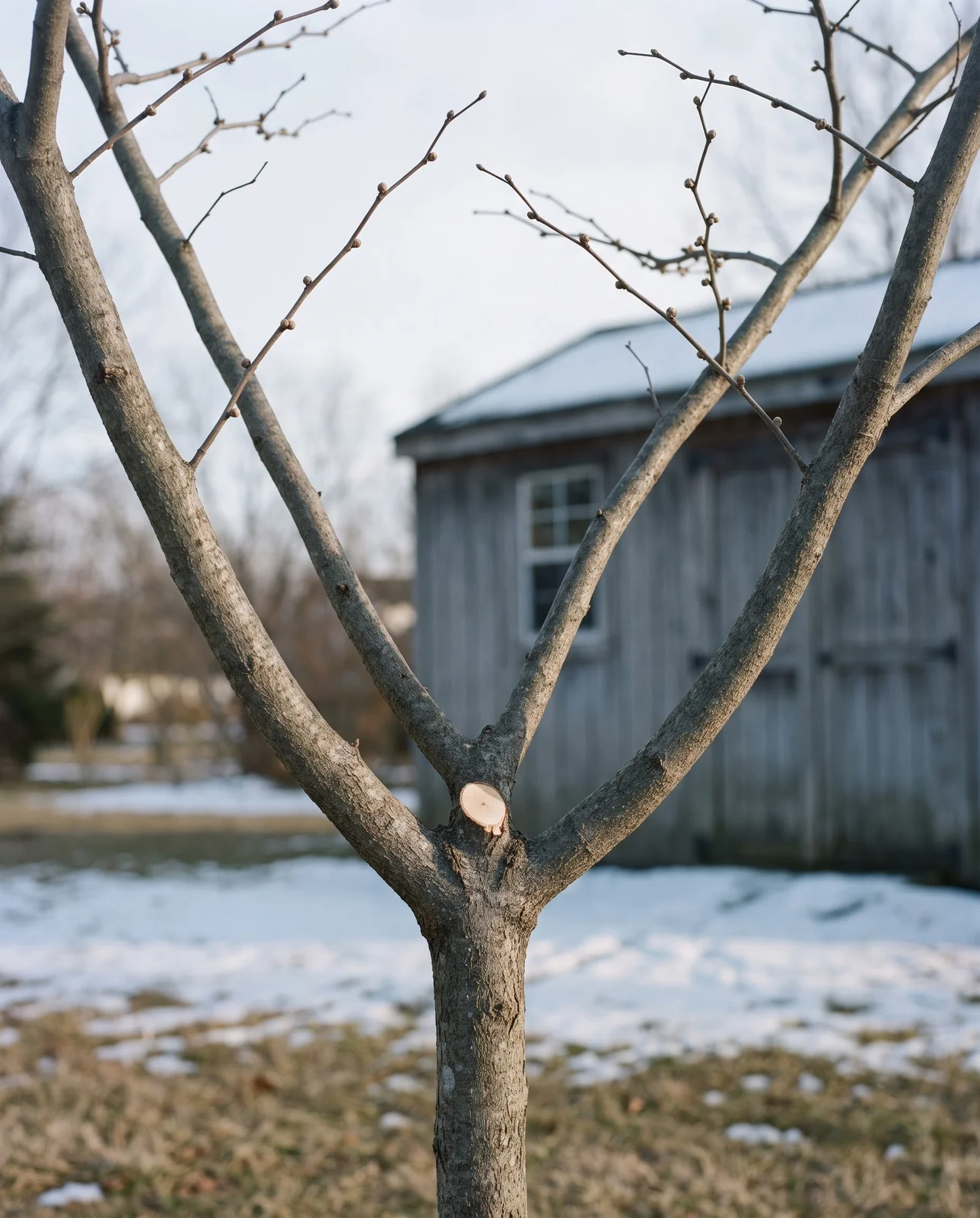
Prune a redbud while it is young to build a good shape and strong structure. The reason sits in the wood: it can be brittle, it splits at crotches, and branches break off in wind and heavy snow. The multi-stemmed habit also builds the tight crotches that fail first. The work after planting is choosing the permanent scaffold and taking out one of any pair of stems that press against each other, while the cuts are still small. Cankers often center on branch stubs and other wounds where the fungus gains entry.
Timing matters as much as technique. Do not prune in wet spring weather, when the canker fungus is sporulating hardest, and sanitize tools after working on any infected or suspect plant. Cut in dry weather. Taking out a canker means cutting well past it, at least 6 to 12 inches into clean wood, and getting the diseased material off the site. Dip tools in alcohol or a 10 percent bleach solution between cuts. No cut saves a limb that is already gone, since the cankers come in such numbers that they coalesce and girdle shoots and branches.
Growing new redbuds, and how long one lives
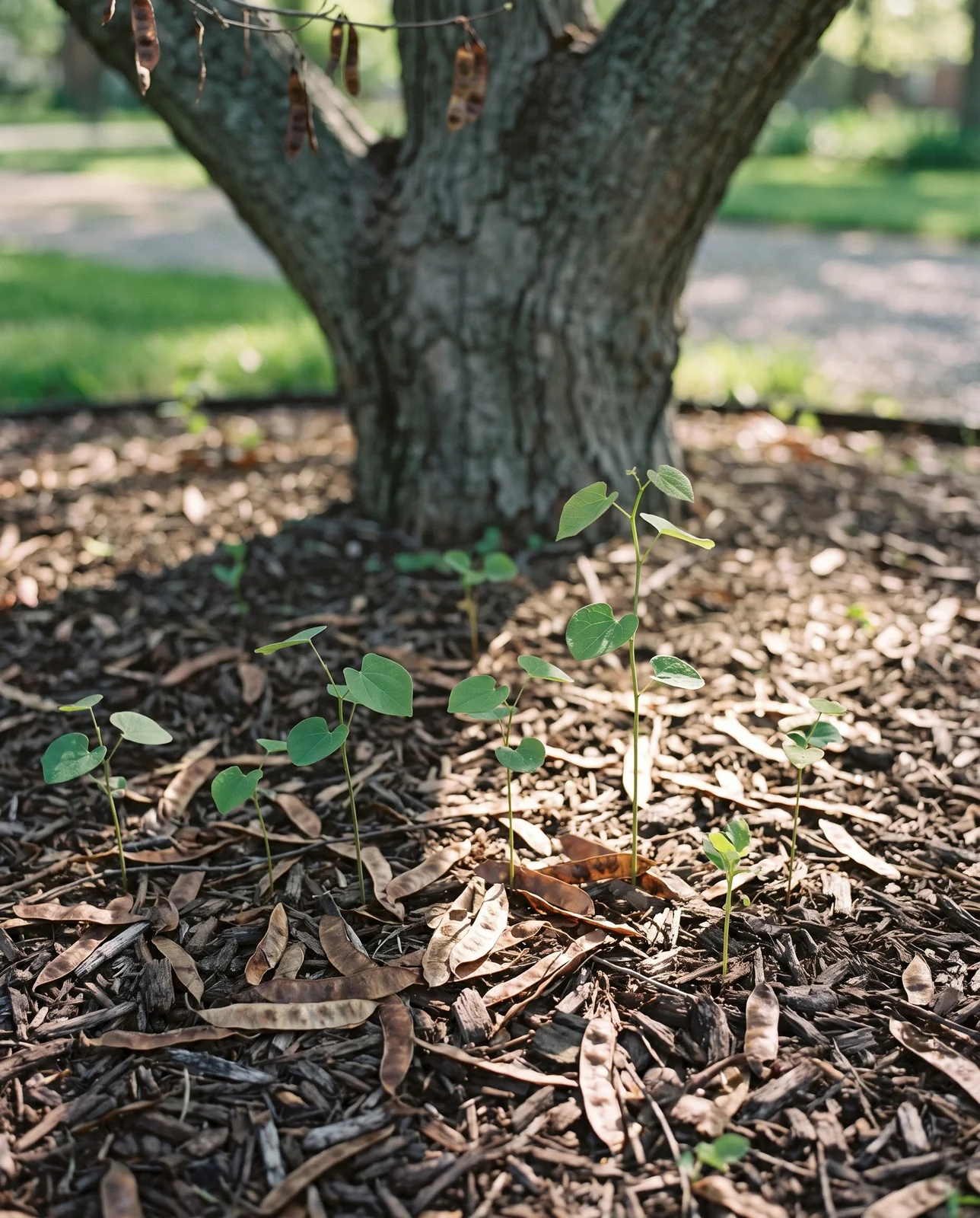
The species comes easily from seed, while cultivars have to be budded onto seedling rootstock or grown from summer cuttings. Seed takes work. Scarify it or soak it in boiling water or sulfuric acid for about 30 minutes, then stratify it in moist sand at about 41 degrees Fahrenheit for 5 to 8 weeks. Western redbud wants the same, hot water and two months of stratification. Seed that simply drops stays dormant for several years, so volunteers appear in a bed long after a heavy pod year, though many trees are sterile and produce no fruit at all. Lifespan is short: most redbuds run 20 to 25 years and few reach 75. Stress shortens it further, and old redbuds usually carry heart rot: the tree that looked settled for years starts shedding limbs.
What kills a redbud, and what can be done
Three diseases carry the tree's reputation: leaf anthracnose, Botryosphaeria canker and verticillium wilt. The worst is the canker, Botryosphaeria ribis and its variety chromogena, which produces stem and twig lesions and has killed entire groves. How the fungus lives explains a settled-looking tree going downhill in one season. These are opportunistic pathogens that attack weakened and stressed hosts, and some sit inside the plant as endophytes, causing no symptoms until it becomes stressed. It waits for a bad year; it does not break into sound wood. No effective chemical control is available.
Verticillium wilt is the other killer, and it sometimes kills redbuds outright, especially in the Midwest. No Cercis escapes it: every species tested is susceptible. Wet sites raise the odds. Once the fungus has the tree the progression is blunt: branches die back, whole limbs are killed, and in a severe infection the tree wilts and dies suddenly.
Some of the dieback that gets called wilt is something newer. Vascular streak dieback kills individual branches gradually from the tips back toward the main stem, and the xylem inside an infected branch shows streaking. The fungus Ceratobasidium theobromae turns up consistently in the vascular tissue of nursery stock with those symptoms. The cause is still unconfirmed. Insects are the smaller half of the story. Redbud has few pests other than scales, damage from the ones it does host is not normally severe, and the redbud leaffolder feeds inside leaves its larvae web together.
What owners actually run into
Ordered by how often owners hit them, with the first move on each.
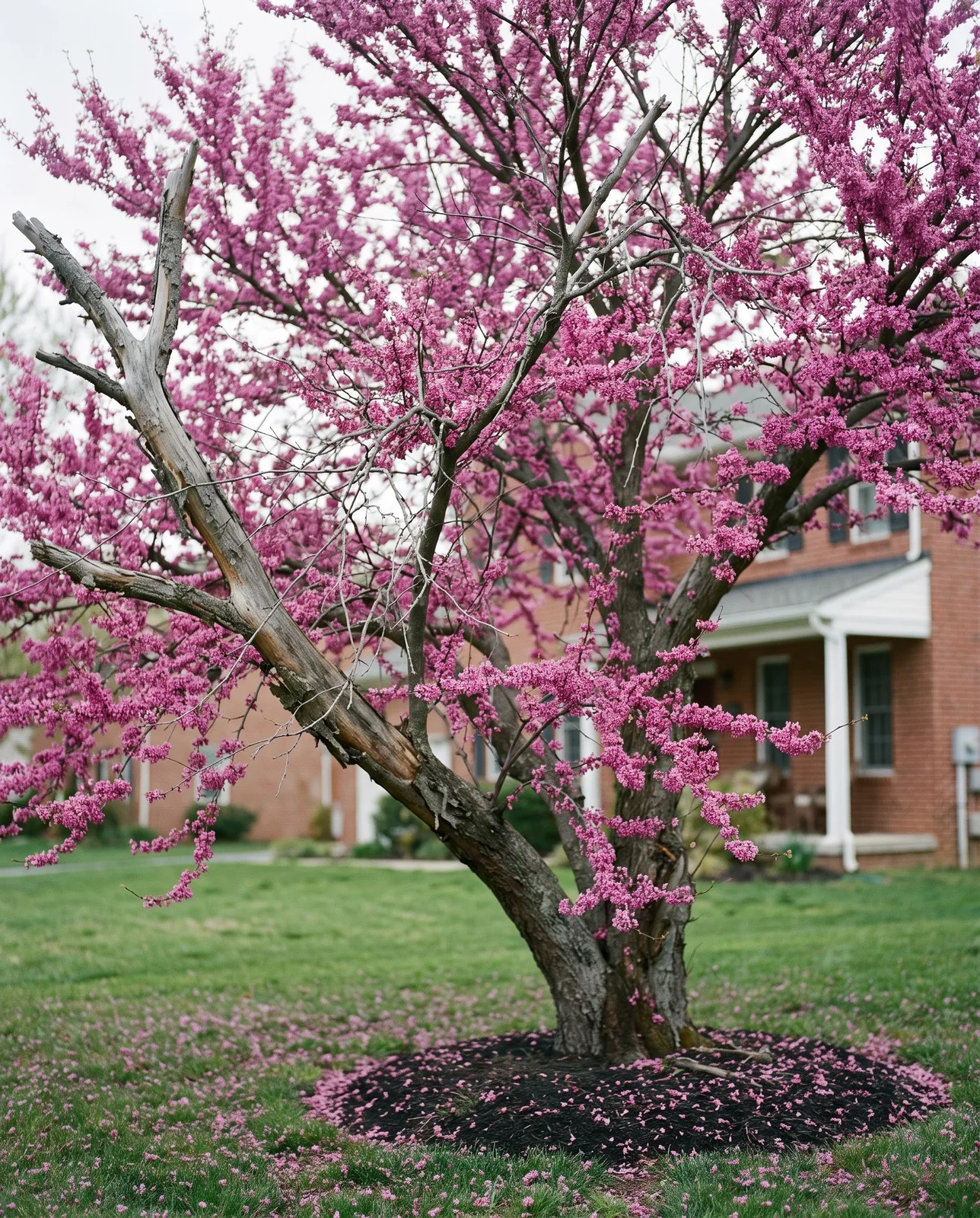
Part of the crown fails to leaf out. Canker or wilt is usually working on a tree that drought or a wound already weakened. Cut back to live wood in dry weather and judge what is left.
A lopsided or overgrown tree, or two stems pressing on each other. Take one stem of the pair out in dry weather, while the cuts are small.
Heat and dry soil do this, and so does verticillium wilt. Water first, then cut into a drooping limb and look for dark streaks in the sapwood.
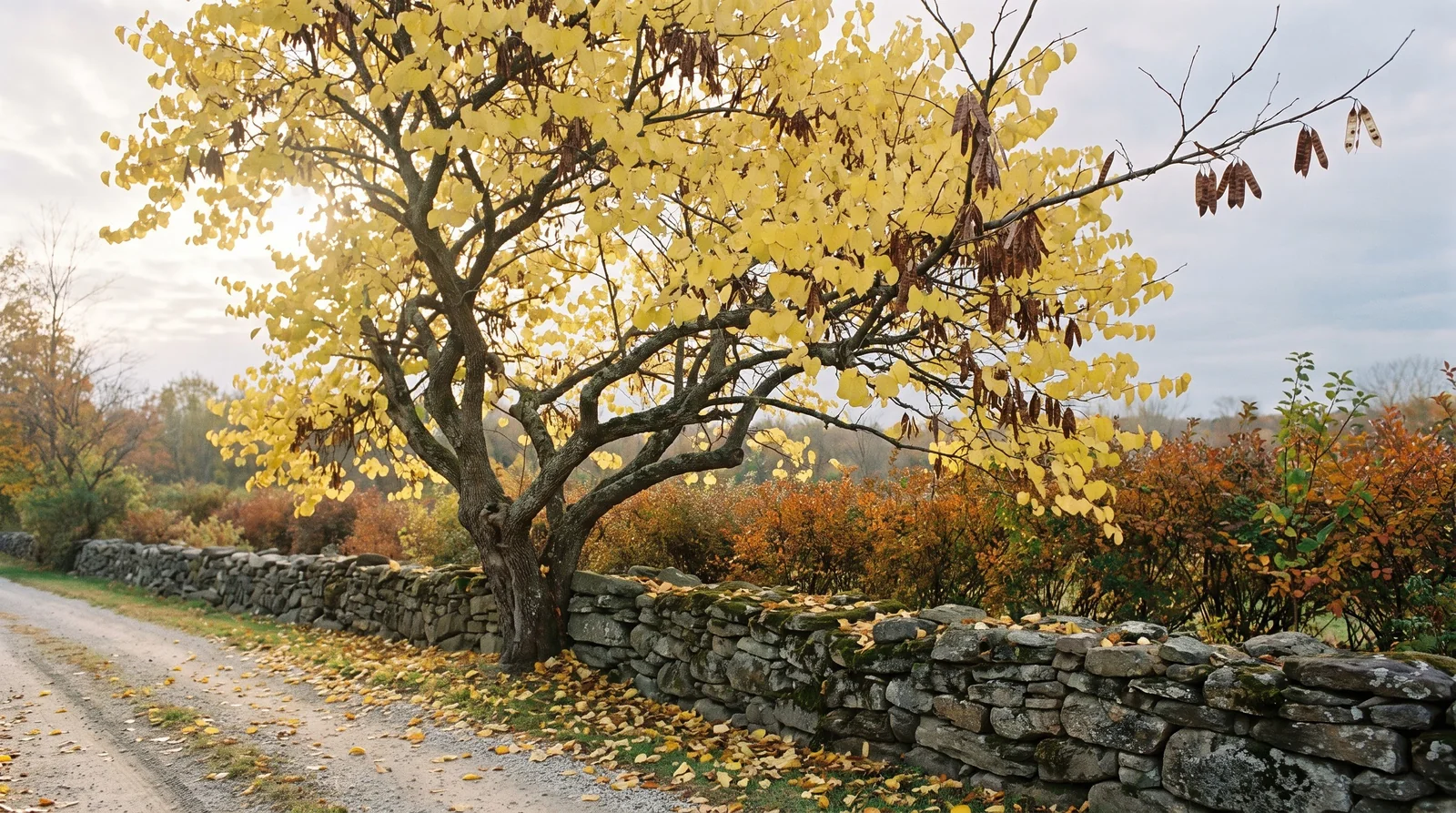
Brown pods hang through the cold months and seedlings come up in beds and lawns. Rake and pull them, or plant a sterile selection.
Purple-leaved trees lose their color to green or bronze by midsummer. Heat does that to the foliage and the tree is healthy.
A spring-planted tree leafs out weeks late or drops its leaves. Scratch a twig for green under the bark before writing it off.
Leaf spots, mildew and blights all show on redbud foliage. Rake up what falls and judge the tree by what the branches do.
Holes in the trunk, and rows of egg masses along the bark. Damage from the insects redbud hosts is not normally severe, so water and mulch before reaching for a spray.
Why a redbud is dying, in order
Work the checks in order. What has happened to the tree, and what it stands in, come first: both can still be changed.
The case for and against planting one
The case for a redbud is early bloom on a small tree that asks for very little. It is genuinely tolerant of shade and endures a good deal of shading once established, which puts a flowering tree at the edge of a canopy, where most flowering trees sulk. It is particularly resistant to black walnut and clay soils and to compaction, so the scraped, driven-over ground around a newer house does not disqualify a site. Deer tend to avoid it, and insect problems should not discourage planting one. For a tree this size the wildlife load is heavy: 12 species of Lepidoptera use redbud as a larval host.
The case against is the short life, on a tree whose maintenance is otherwise low: redbud is small and short-lived. A drought year, a mower wound or a wet corner turns a healthy tree into a declining one, and the cost arrives as limbs to cut, season after season. Messy fruit and plant parts come with it: pods to rake in winter and seedlings to pull out of beds in spring.
Toxicity, pets, and the edible flowers
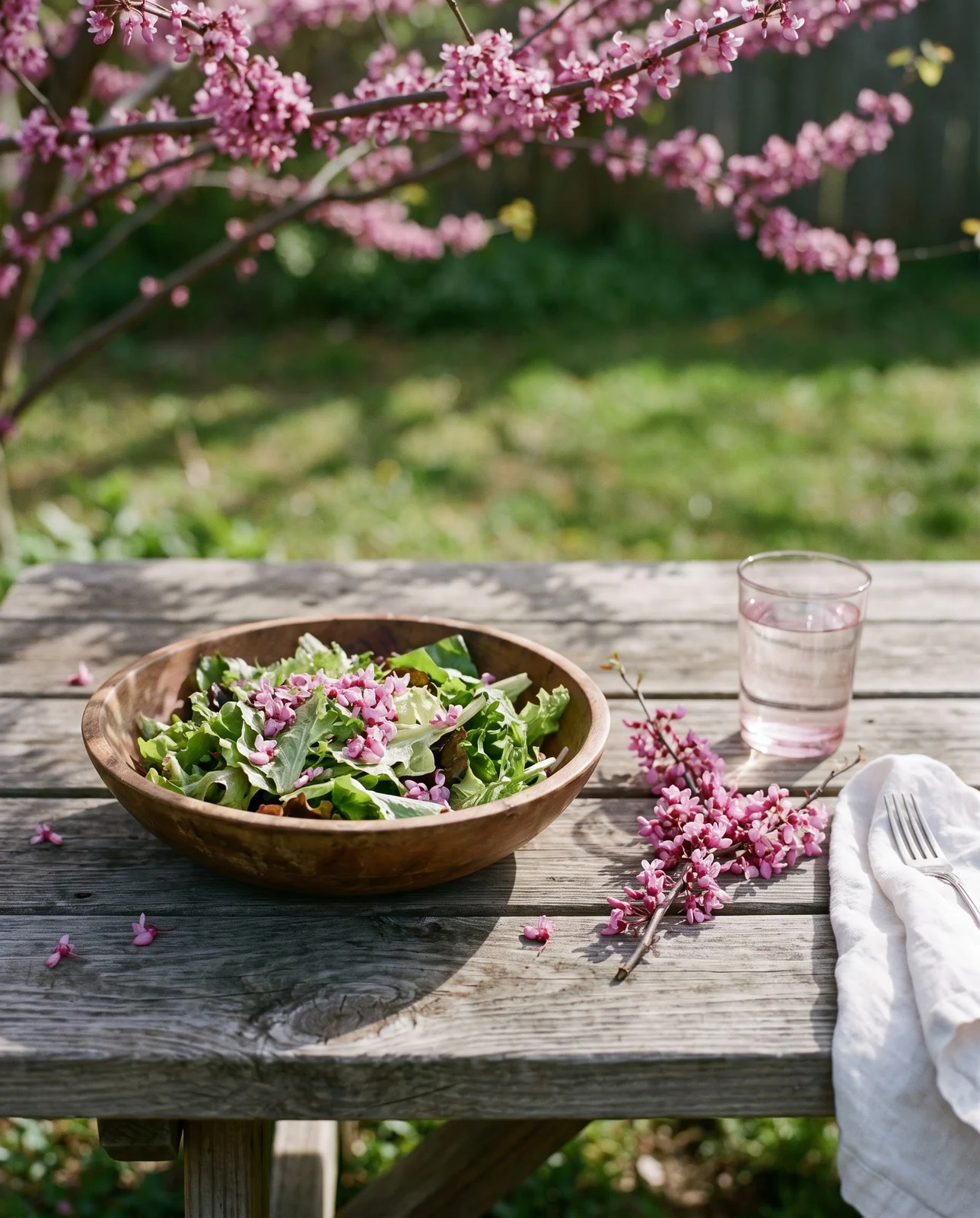
Redbud is on neither ASPCA list, toxic or non-toxic, and those lists cover only the most frequently encountered plants. The general caution applies: eating any plant material may cause vomiting and gastrointestinal upset in dogs and cats. For people it goes the other way. The flowers are edible, taste similar to peas and contain high amounts of vitamin C, and they go into salads or get fried.
Leaves, fall color, and the seed pods
Fall color is unreliable. Leaves may turn a bright, clear yellow in some years, but pale yellow to greenish-yellow is the more usual result. Selections bred for foliage change that. 'Forest Pansy' colors variably in fall, often in reddish-purple and orange, Golden Falls is the golden-leaved weeper, and 'Vanilla Twist' finishes yellow, with pure white flowers. Pods are the part people complain about. Flattened and bean-like, 2 to 4 inches long, they mature brown in summer, hold 6 to 12 seeds each and hang on into winter, where they look untidy.
What a redbud feeds
The flowers open when little else does. That timing is most of the tree's wildlife value. Many pollinators visit them, though only long-tongued bees reach the nectaries, and the flowers are important in the production of honey. Those early blossoms draw several species of early-season butterflies, while hummingbirds take the nectar and songbirds eat the seeds and the flower buds. Cardinals, ring-necked pheasants, rose-breasted grosbeaks, bobwhites, white-tailed deer and gray squirrels all feed on redbud seeds.
Forcing redbud branches indoors
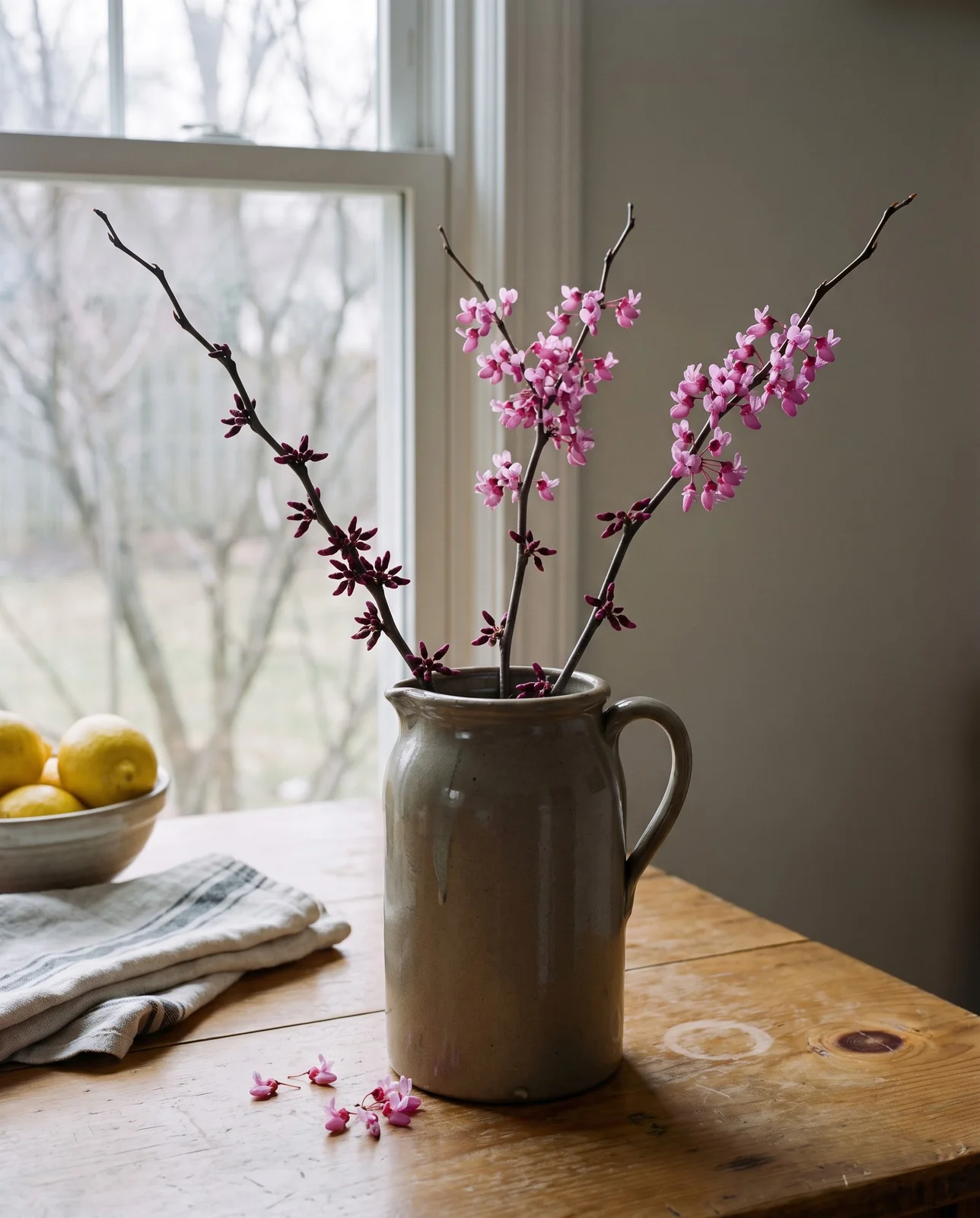
Redbud is a good cut flower for forcing indoors and one of the few trees and shrubs suited to it. Start as soon as buds swell in late winter, though March is the month for the harder ones, crabapples, magnolias and redbuds among them. Time to open varies by species, from forsythia at one to three weeks to magnolia at three to five. The closer the cut is to the tree's normal bloom outdoors, the faster it opens.
Four things people get wrong about redbuds
Each of these changes what an owner does next.
The myth: Dead branches on a redbud mean verticillium wilt.
The reality: Several causes produce the same picture. Wilt gets confused with vascular streak dieback and has been misdiagnosed in the past, so the diagnosis comes from the wood and the pattern of dieback.
The myth: A fungicide will cure a wilted redbud.
The reality: Fungicides do not cure an infected tree. What is left is sanitation, removal of affected wood, and taking the stress off the crown that remains.
The myth: 'Forest Pansy' is a different tree from the native redbud.
The reality: It is a purple-leaved cultivar of the same native species, sold under its own name for the foliage.
The myth: Redbud flowers are red.
The reality: What opens runs from light rosy pink to dark magenta, and white forms exist, which puts redbud among the pink spring flowers. 'Alba' blooms a little later than the species.
What to expect from a redbud over time
A redbud runs on a shorter clock than the shade trees around it.
Years one to three go into the roots and into what you bought. Vascular streak dieback has moved through nursery stock hard enough that in some cases 90 to 100 percent of it was unsellable. Look hard at the leader and the current season's growth before a tree leaves the lot. The structural pruning that decides the shape belongs in these years.
The middle years are what the tree was bought for: bloom on bare wood every spring, a crown near its mature width, and pods in the years a crop sets. Fruiting is erratic, heavy crops do not come every year, and a heavy crop detracts from the look of the tree.
An infected tree may die within a few weeks or live for years with symptoms coming back season after season, and a declining redbud pushes water sprouts below its dead branches.
Flower photos
FAQ
How big does a redbud tree get?
Plan for a crown 25 to 35 feet across on a tree 20 to 30 feet tall.
Is a redbud a good front yard tree?
Yes, on an edge with ground that drains. In open full sun it becomes vulnerable to summer drought.
How many years before a redbud flowers?
Earlier than most buyers expect, and the first flowering year passes without pods.
Why is my redbud not blooming?
Check light first, since the best flowering happens in full sun. In colder zones twig kill is common, and the flowers form mostly on two-year-old wood, so a hard winter takes next spring's bloom with the twigs.
How do I tell verticillium wilt from canker on a redbud?
Wilt shows inside the wood, as dark brown to orangish streaks in the sapwood of a dying limb. Canker shows outside, as sunken lesions and bark that cracks, splits or sloughs.
Can a dying redbud be saved?
Fungicides do not cure an infected tree, so what is left is cutting out the affected wood and taking the stress off the roots.
How long do redbud trees live?
Most run 20 to 25 years, and few reach 75.
Is there a dwarf redbud for a small yard?
'Ace of Hearts' is the dwarf, at 10 to 15 feet high and wide.
What is the difference between Texas or 'Oklahoma' redbud and the eastern kind?
Texas redbud is smaller and more drought tolerant, and it wants thin, calcareous, well-drained soil that is not acidic. It is hardy in zones 6a through 9b and reaches 20 to 30 feet tall and 15 to 25 feet wide. 'Oklahoma' is a compact, broad-rounded form of it.
Are redbuds toxic to dogs and cats?
Redbud is on neither the toxic nor the non-toxic pet plant list, and those lists cover only the plants people meet most often.
Interesting tips
- Most decay fungi get into a tree through wounds on stressed wood, and the common one in a yard is the string trimmer at the base of the trunk.
- The pod cleanup can be designed out at the nursery: 'Don Egolf', the single-trunk Chinese redbud, is sterile and sets no seed pods.
- Doubled flowers exist in the genus: 'Pink Pom Poms' carries double pink flowers.
Related Guides & Flowers
Magnolia
The other spring tree that opens its flowers before the leaves, on a much bigger scale.
Forsythia
The yellow shrub that flowers on bare stems in the same early weeks of spring.
Lilacs
The scented shrub that carries the garden on once the early flowering trees have dropped their petals.
Purple flowers
A run through purple garden flowers for anyone drawn to the darker end of the redbud range.
Enjoying our flower guides? Add YourFlowersGuide as a preferred source on Google. It helps more readers find us.
Add to Preferred Sources