
Taxonomy and origin
Hylotelephium telephium is distinguished from Hylotelephium spectabile mainly by having alternate leaves rather than opposite or whorled leaves along the stem.
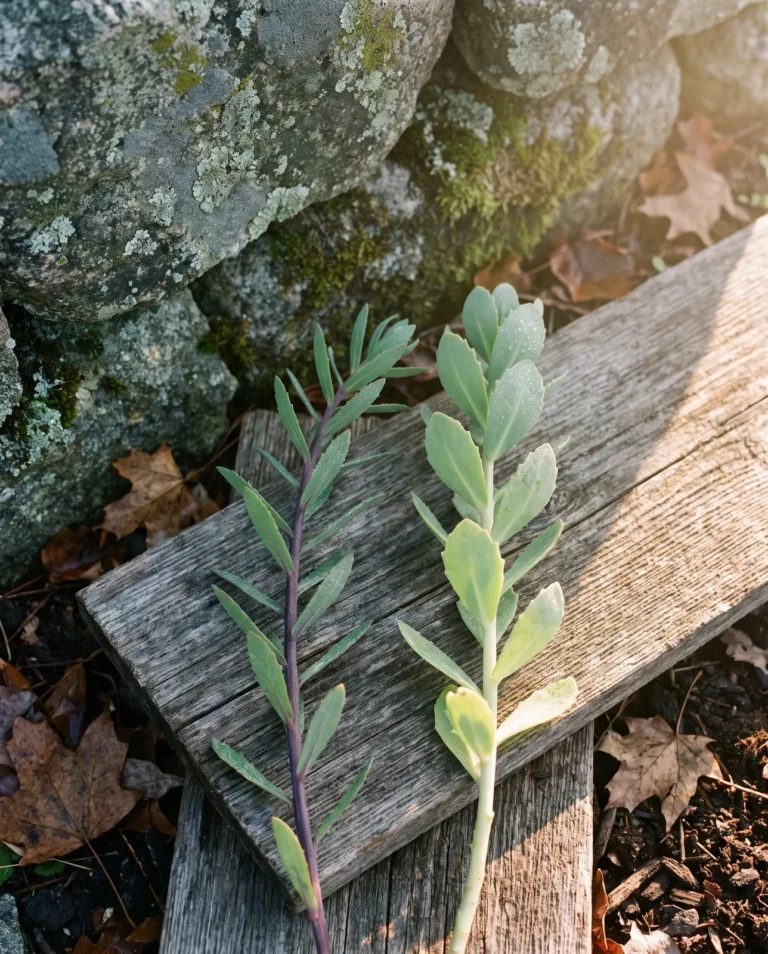
In garden settings, this genetic pedigree directly governs stem stiffness, foliage mass, and flop resistance. Selections derived primarily from Hylotelephium spectabile produce wide, intensely succulent leaves and massive, heavy flower umbrellas that bow under their own weight when grown in rich ground. Conversely, Hylotelephium telephium selections contribute narrower leaves, dark pigmentation, and rigid, fibrous stems that resist lodging under autumn rains. Popular hybrid cultivars like 'Autumn Joy' fuse the dramatic floral diameter of spectabile with the structural integrity of telephium. Understanding that these ancestors evolved on rocky, low-nutrient outcroppings reminds gardeners that replicating lean wild environments is essential to keep stems upright.
The cultivars you will actually meet, and how they differ
Garden centers sell most upright stonecrops under a handful of names, nearly all of them selections of Hylotelephium spectabile, H. telephium or crosses between the two. The descriptions under each photo are Missouri Botanical Garden's and Chicago Botanic Garden's own wording, not our summary, and a badge appears only where the source itself passes a verdict.
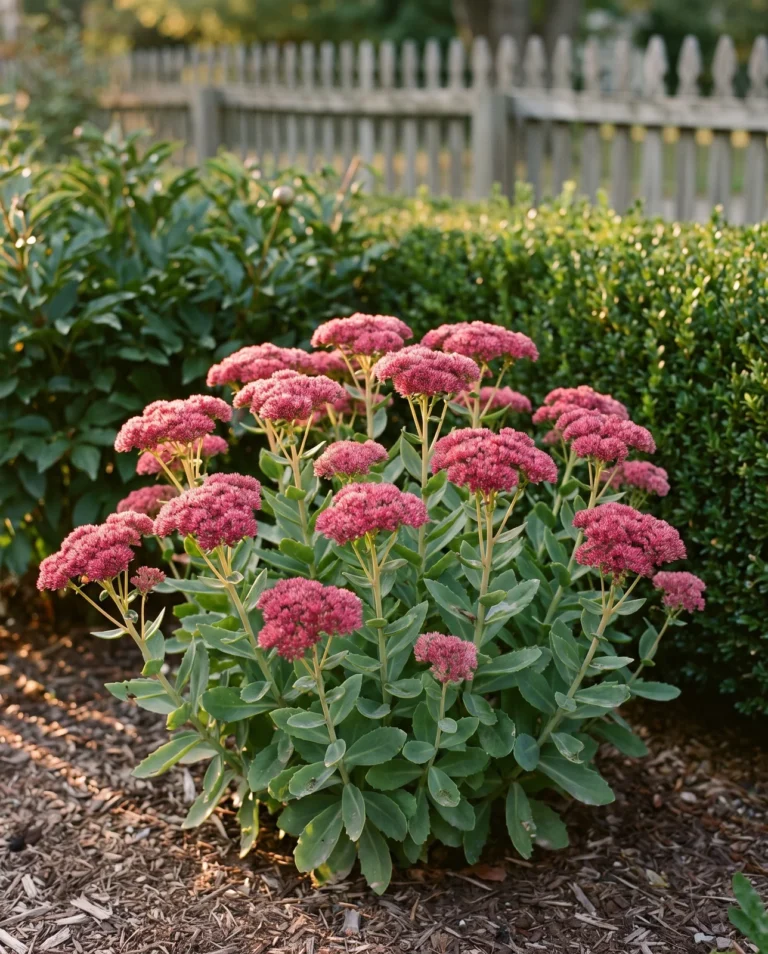

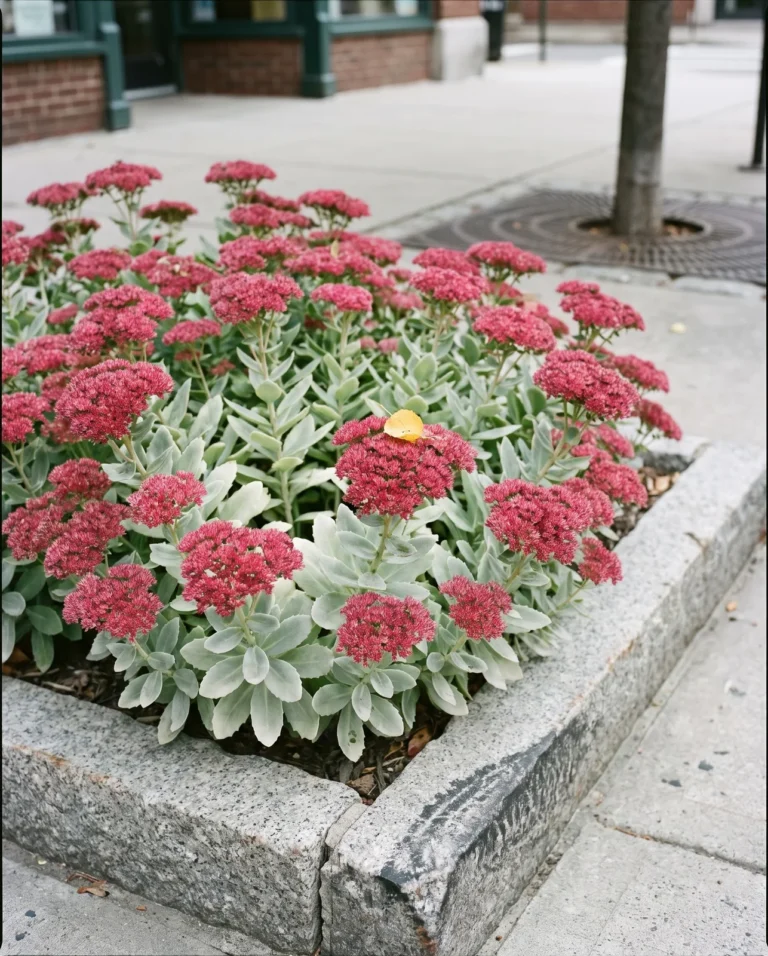
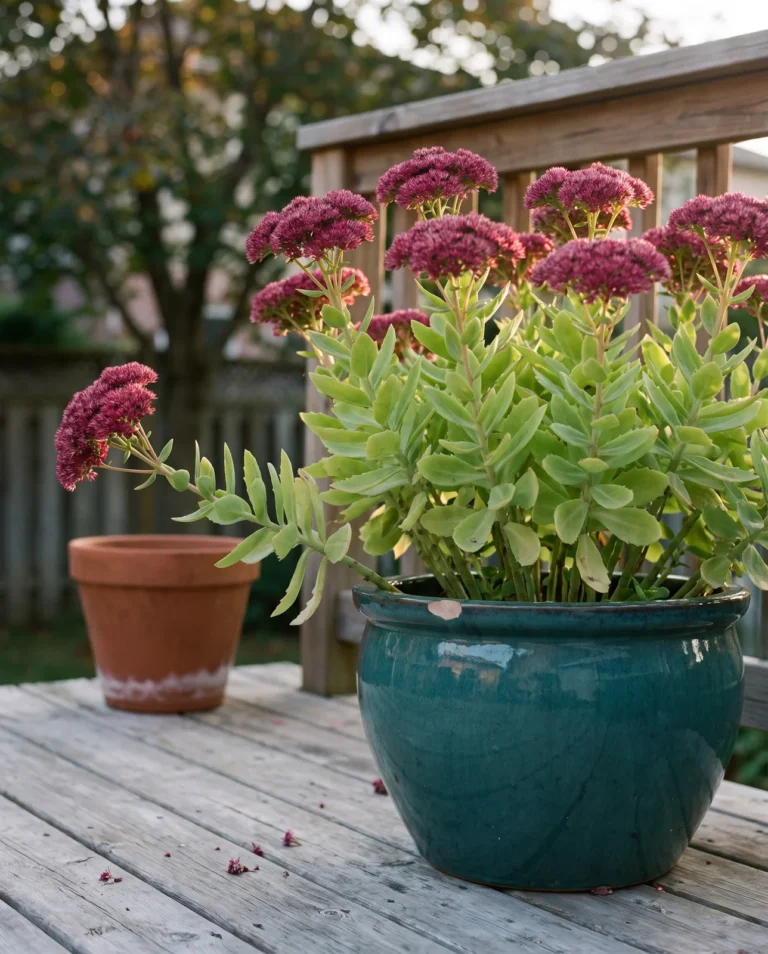

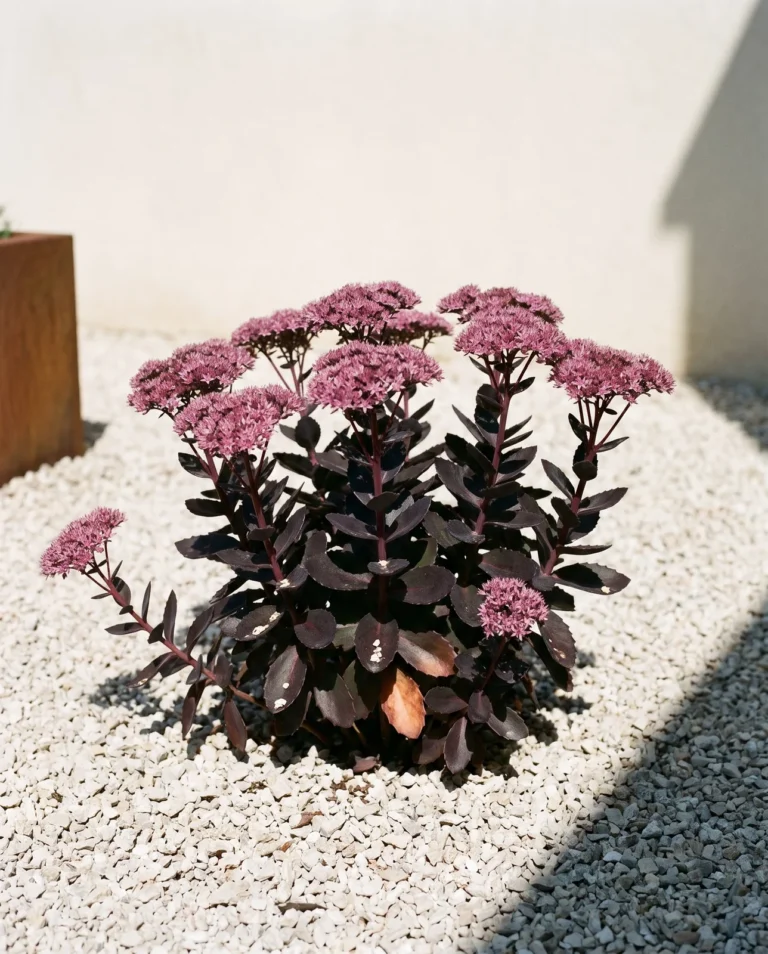

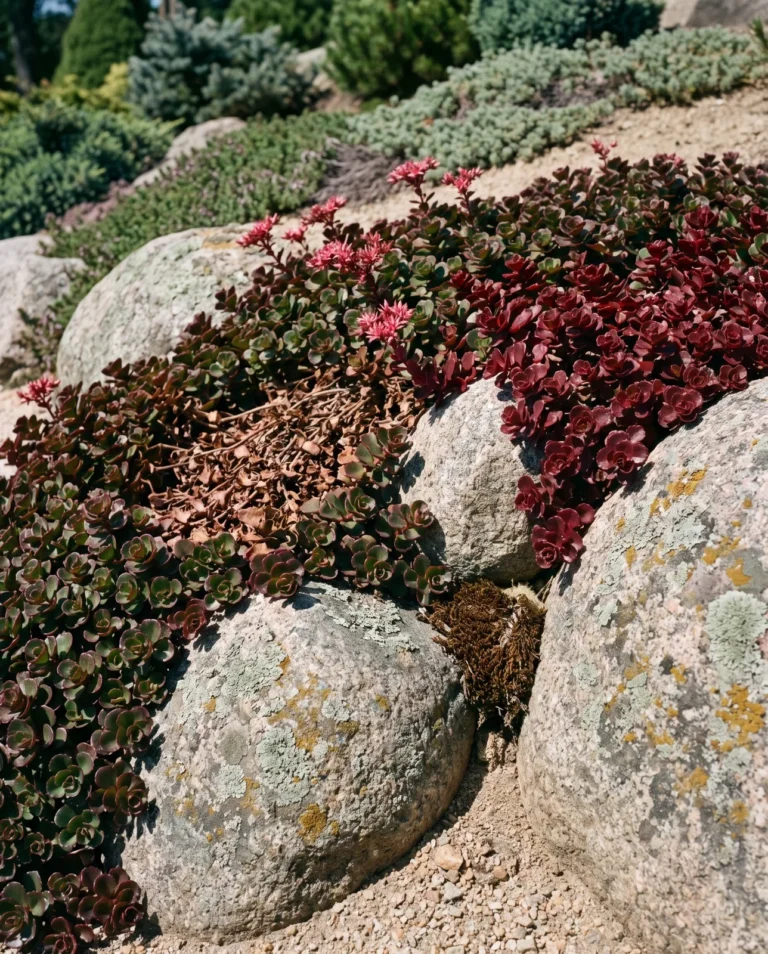
Two more spectabile selections carry Chicago Botanic Garden write-ups without photos here: 'Carmen', which that garden calls the closest of the group to a true red flower color, and 'Stardust', whose flat-topped light pink to white heads it names a great butterfly attractant. Names sold as improvements on 'Autumn Joy', such as 'Autumn Fire', mostly promise the same plant with sturdier posture; the honest way to compare them is stem thickness in a one-gallon pot, not the label.
Bloom time
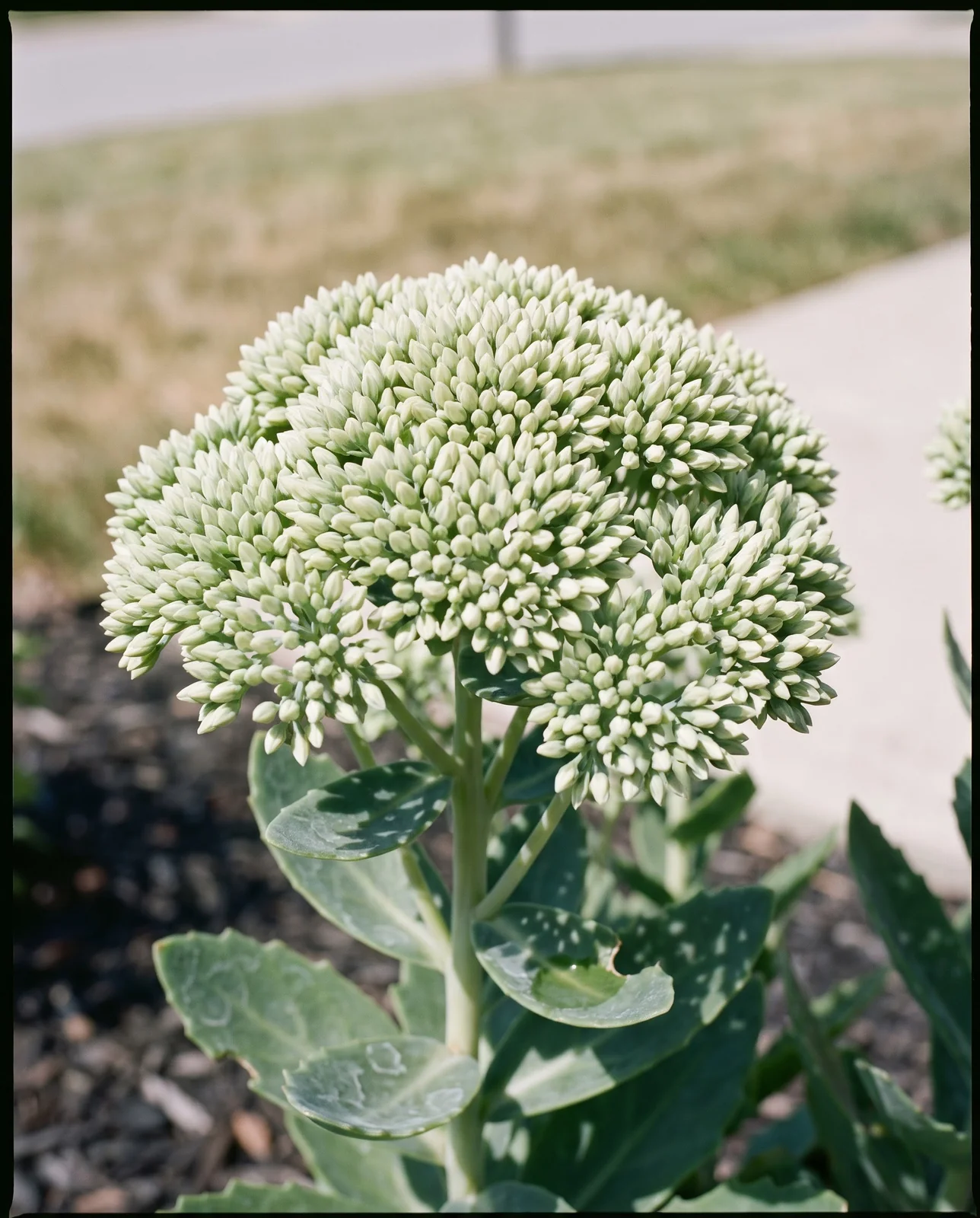
Across late summer borders, upright stonecrop provides a shifting floral display that anchors the landscape as earlier summer perennials decline alongside other fall-blooming flowers. The bloom sequence begins months before true petal color emerges. Throughout June and July, the terminal clusters form dense, pale green crowns known among growers as the broccoli stage. These tightly packed green buds hold their architectural form through intense summer heat, functioning as crisp structural foliage.
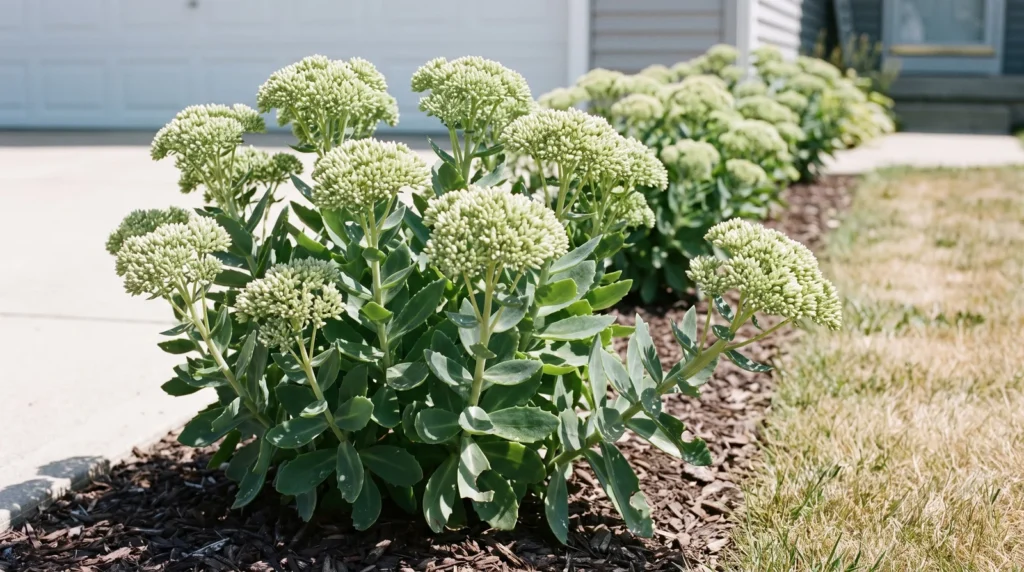
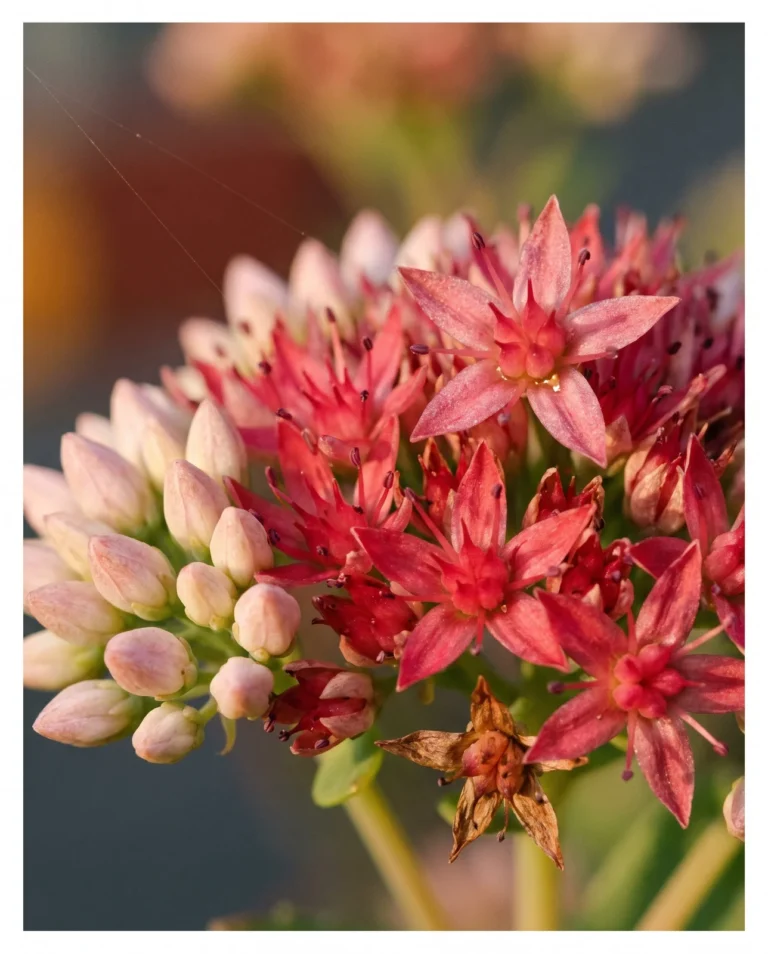
When late August arrives, the individual florets begin opening from the perimeter inward, transitioning from soft celadon to dusty pink, glowing rose, and rich carmine. In unshaded, lean ground where cell growth remains tight and compact, these color pigments develop deep saturation. The broad floral platforms act as landing pads, ensuring stonecrop serves as an attraction for butterflies, songbirds, and other pollinators during peak late-season foraging. Specific cultivars like Hylotelephium spectabile 'Brilliant' and Hylotelephium telephium 'Matrona' attract butterflies in late summer borders when nectar sources become scarce.
As autumn frosts terminate the active floral display in October, the plant transitions into its architectural winter phase. Rather than melting into mush like tender perennials, the spent blossoms dry into firm brown or copper capsules that stand through snow and hold the border together all winter. In overfed, floppy specimens, however, this winter architecture is completely lost because the collapsed stems rot against wet soil long before the first freeze.
What to expect in year one, year two and year three
Year one buys roots, not size. A spring-planted division or nursery gallon spends its first season anchoring into lean ground and usually flowers on schedule in late summer, but the clump stays modest, and that is the correct outcome rather than a shortfall. The University of California Master Gardener program describes how every season starts: small, tight, Brussels-sprouts-like buds at soil level that elongate into the year's fleshy stalks, so the plant you see in March is a fist-sized cluster no matter how large it will stand by September. Year two is when the named cultivars pull ahead. NC State's attribute data rates straight Hylotelephium spectabile and H. telephium at a medium growth rate but rates 'Autumn Joy' rapid, which is why the common hybrid fills its allotted two feet noticeably faster than the wild species around it. By year three a well-sited clump reaches the mature footprint the references agree on, 1.5 to 2 ft tall and about as wide for spectabile forms and 2 to 2.5 ft for telephium types, and from here the question changes from growth to maintenance. The University of California's marker for division readiness is a growth stage rather than a birthday: once the ground-level bud cluster has visibly widened, the clump can be dug and split in spring. One caution about age is worth stating because no source supports it: the belief that only old clumps flop. Missouri Botanical Garden and the extension services tie flopping to shade, water and rich soil, not to the plant's age, so a year-one plant in fertilized bed soil can collapse while a ten-year clump in gravel stands rigid.
Height and spread
Upright stonecrops typically establish architectural clumps between 18 and 30 inches tall, claiming a defined middle-tier footprint in sunny borders. Cultivar selection determines the exact physical footprint. For compact plantings, Hylotelephium spectabile 'Brilliant' produces carmine flower masses in flattened heads measuring 3 to 6 inches across on plants reaching around 18 inches tall. This modest height makes 'Brilliant' naturally resistant to wind shear and far less prone to splaying outward.
Taller selections demand greater attention to spacing and light exposure. The cultivar 'Matrona' forms upright, vase-shaped clumps 24 to 30 inches tall with pastel pink flower heads and bronze-tinged gray-green leaves set against purplish-red stems. Its rigid purple stems offer excellent natural structural strength, but reaching 30 inches in height creates significant physical leverage at the root crown.
Giving tall stonecrops adequate room prevents lower-stem shade. When upright cultivars are crowded against dense shrubs or aggressive perennials, the base of the clump becomes shaded, leading directly to weak, floppy stems. Perennials situated in too much shade stretch outward toward available light, causing lower internodes to elongate into weak, pencil-thin stalks that buckle when heavy 6-inch flower heads mature in September. Adequate spacing guarantees sunlight reaches the lower foliage, keeping stems thick, woody, and self-supporting.
Light
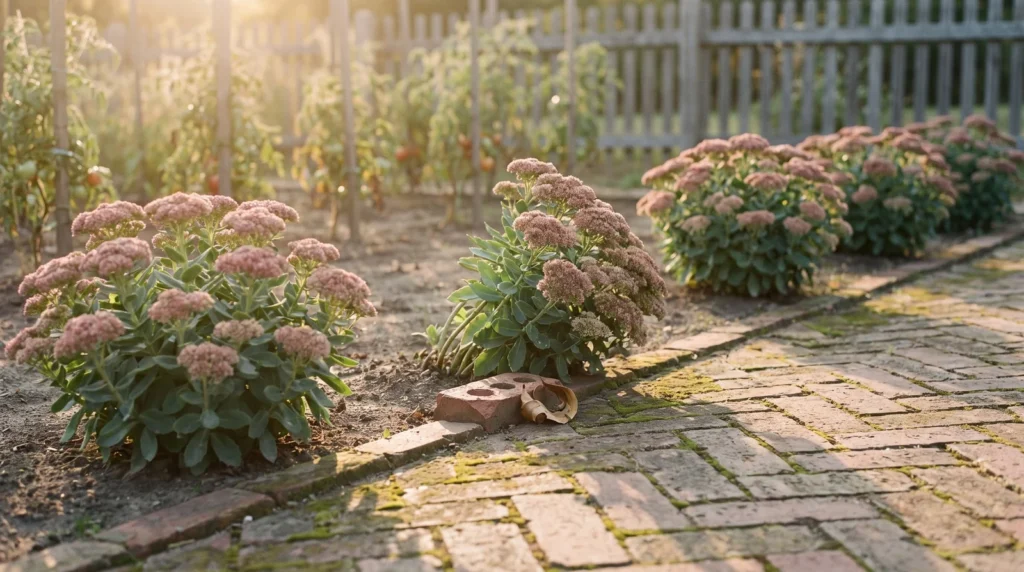
Plant upright stonecrop in full, unshaded sunlight or prepare to stake it all autumn.
The plant requires full sun to maintain its natural compact habit and sturdy stems. While stonecrop tolerates partial shade, field experience demonstrates that anything short of six hours of unfiltered, direct solar exposure compromises vascular strength.
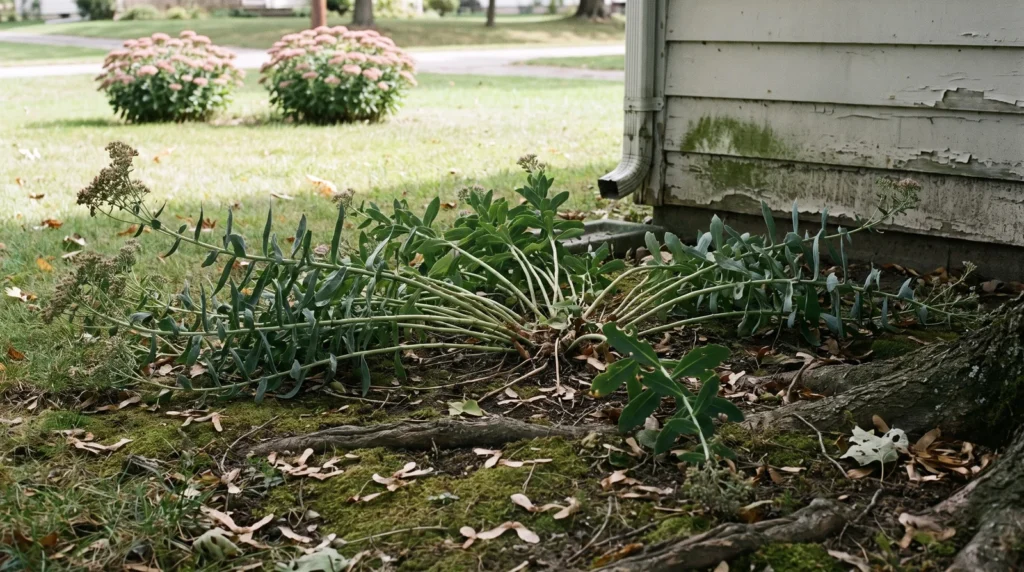
Shade forces stonecrop into an immediate, structural stretch.
Depriving the plant of direct sun triggers etiolation. In an effort to reach higher light levels, succulent stems stretch rapidly, widening the distance between leaf nodes while producing thin, water-filled cellular tissue. Situating stonecrop in excessive shade or overly rich soils leads directly to weak, floppy stems. When large, dense flower clusters swell in late summer, the stretched vascular framework fails under the load. A perennial plant that becomes floppy may be situated in too much shade and require relocation to a sunnier spot.
In exceptionally hot southern zones, light afternoon dappled shade is sometimes tolerated without complete collapse. However, even in hot southern climates, morning and midday sun remain non-negotiable for stem rigidity. If a planting bed receives filtered canopy light or less than six hours of direct exposure, tall stonecrops will invariably lean sideways toward the light source, stretch into an open habit, and drop their heavy blooms directly into the dirt.
Water
Dousing upright stonecrop on the same schedule as your lawn or thirsty border perennials is the fastest way to rot its crown.
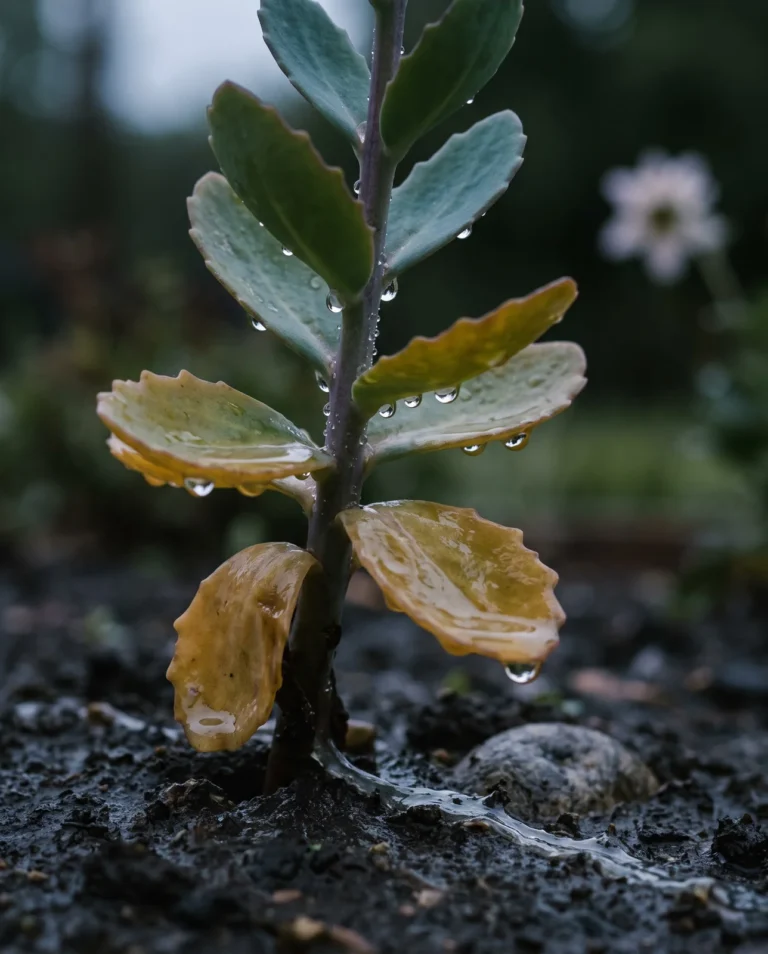
Adapted to arid slopes and rocky ledges, stonecrops are known for their tolerance to heat and drought. Their thick, succulent leaves store substantial moisture reserves, allowing established clumps to survive weeks of intense summer heat without supplemental watering. However, applying frequent irrigation to stonecrop is a direct path to root decay and structural collapse.
Excessive soil moisture destroys the root system from below. Overly moist or excessively fertile soils can cause stonecrop to suffer, and wet soils cause rot. Specifically, Hylotelephium plants may develop root rot if grown in poorly drained soils. When roots sit in waterlogged soil, oxygen is excluded, fine root hairs die, and opportunistic soil pathogens rot the taproots and crown base.
An overwatered stonecrop announces itself clearly if you know the sequence. Lower leaves turn translucent yellow, feel squishy, and drop early. Stems lose their firmness and go soft near the soil line. Then comes the trap: the whole clump wilts even though the soil is damp, and the wilting tempts a worried grower to reach for the hose again, which finishes the job. In the final stage the stems turn black and slimy at ground level and pull free of the crown with almost no resistance.
During the initial four to six weeks after planting, a new container division requires light, periodic moisture to help roots establish in native soil. Once established, supplemental watering should be strictly withheld in temperate climates, relying entirely on natural precipitation. If a prolonged midsummer drought causes the lower leaves to wrinkle slightly, a single deep soaking is sufficient to rehydrate tissues without softening structural stems.
Beliefs that decide whether a sedum stands or flops
The myth: A flopping sedum is a hungry sedum. Feed it, or move it into better soil, and it will stand.
The reality: Feeding is the cause, not the cure. Oregon State University Extension ties weak, floppy stems to rich soil and shade, and the pattern repeats across every extension source in this article: lean, unamended, sharply drained ground in full sun is what keeps the clump self-supporting. Fertilizer builds the soft, fast tissue that folds open in August.
The myth: Stonecrop is so drought-proof it never needs watering at all.
The reality: Only once it is established. Oregon State's planting guidance still calls for regular water while a new clump roots in; the no-water reputation is earned from the second season onward. The trap runs the other way too, since a mature plant kept on a lawn-sprinkler schedule rots at the crown.
The myth: Sedum is basically a small cactus, so treat it like one.
The reality: It is a succulent by strategy but not a cactus by family. The University of Missouri Extension and NC State both place stonecrop in Crassulaceae, an unrelated family to the cacti, and the practical difference matters in winter: a hardy Hylotelephium shrugs off zone 3 cold that would kill nearly any cactus, while it tolerates far more summer rain than a desert plant would.
The myth: The stems have to come down in fall, or the bed looks neglected and the plant suffers.
The reality: Extension guidance runs the other way. Colorado State's PlantTalk, NC State and the University of California Master Gardeners all describe the browned heads as a winter feature: they stand through snow, feed birds, and protect the crown, and the stalks snap off cleanly at ground level in late winter right above where the new rosettes are already forming.
The myth: Planting 'Autumn Joy' supports monarchs the way milkweed does.
The reality: It feeds a different life stage. The University of Illinois Extension lists sedum among the fall nectar plants for adult monarchs fueling migration, but caterpillars remain entirely dependent on milkweed. A September border of stonecrop, asters and goldenrod is a refueling station, not a nursery.
Soil and pH
Stop fertilizing your stonecrop.
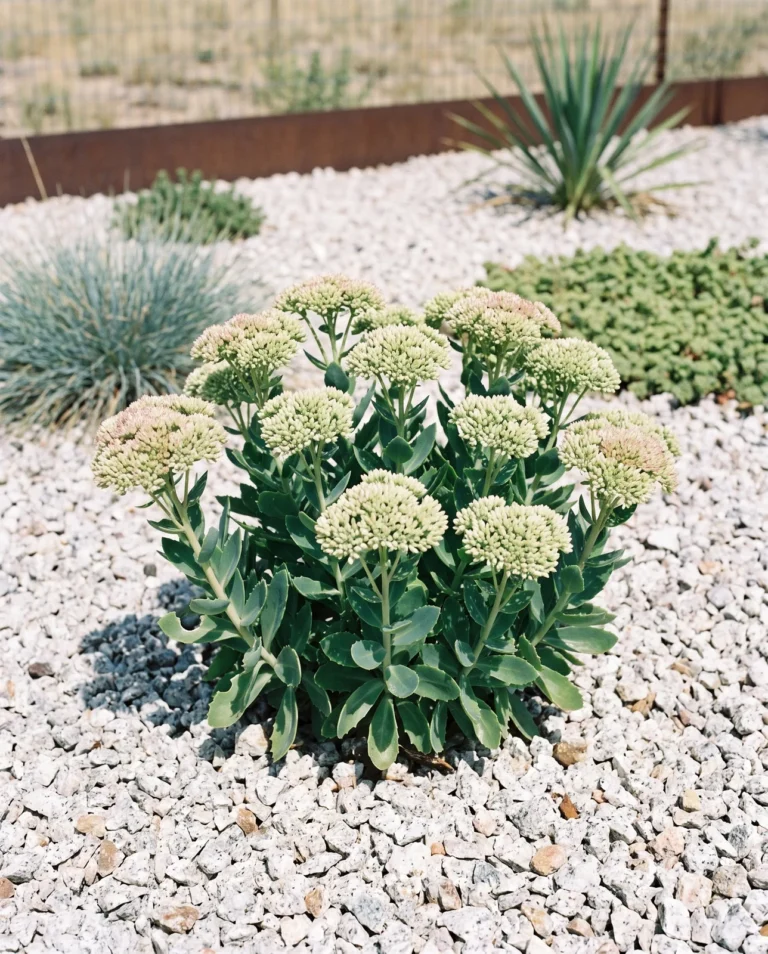
Unlike heavy-feeding border perennials that require regular additions of aged manure, compost, or granular fertilizers, stonecrop thrives in well-drained or gravelly soil with average to low fertility. Lean ground restricts rapid vegetative elongation, forcing the plant to build short, dense internodes and fibrous vascular bundles that keep stems vertical.
Introducing nitrogen-rich fertilizers disrupts this natural growth habit. High soil fertility causes stonecrop to suffer, triggering soft, weak growth. The succulent stems expand rapidly in diameter, but their cell walls remain thin and unlignified. Come late August, when heavy floral heads cap each stalk, these soft tissues lack the structural rigidity to maintain an upright stance, causing the perimeter stems to bow outward into an unsightly open ring.
Sedum tolerates any soil pH, but it demands sharp, immediate drainage. Heavy clay that holds standing water after rain will quickly kill the root system through fungal root rot. Gardeners working with dense clay must avoid adding rich compost, which holds excess moisture against the crown like a sponge. Instead, amend planting beds with coarse horticultural grit or crushed gravel, or install stonecrops on elevated berms, rock gardens, and slopes where gravity prevents water accumulation.
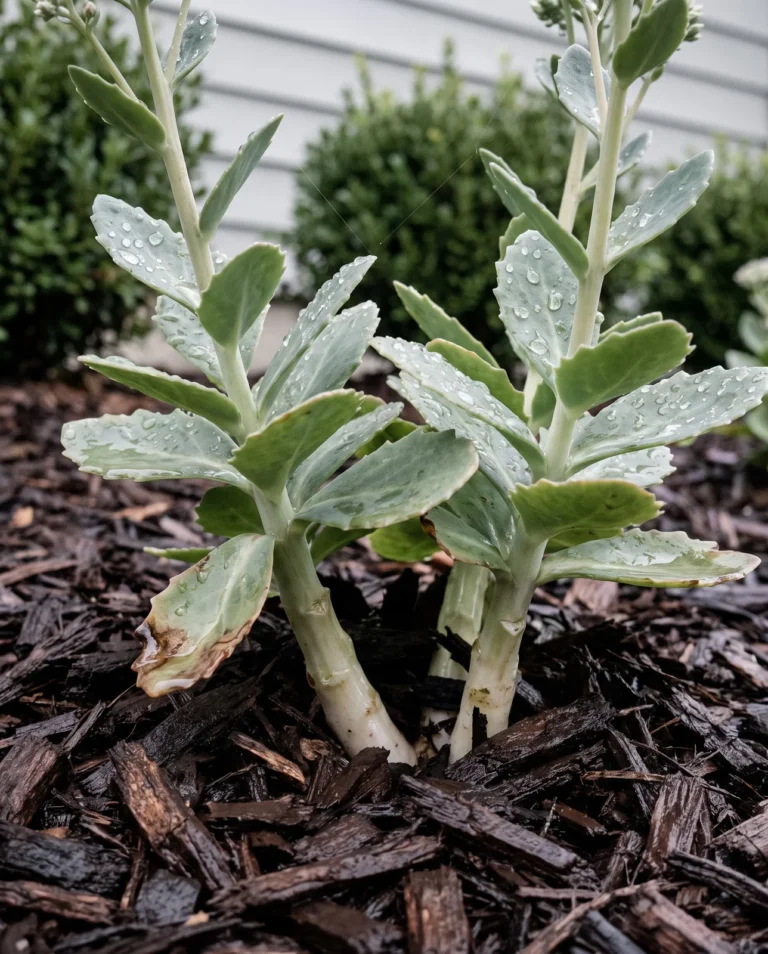
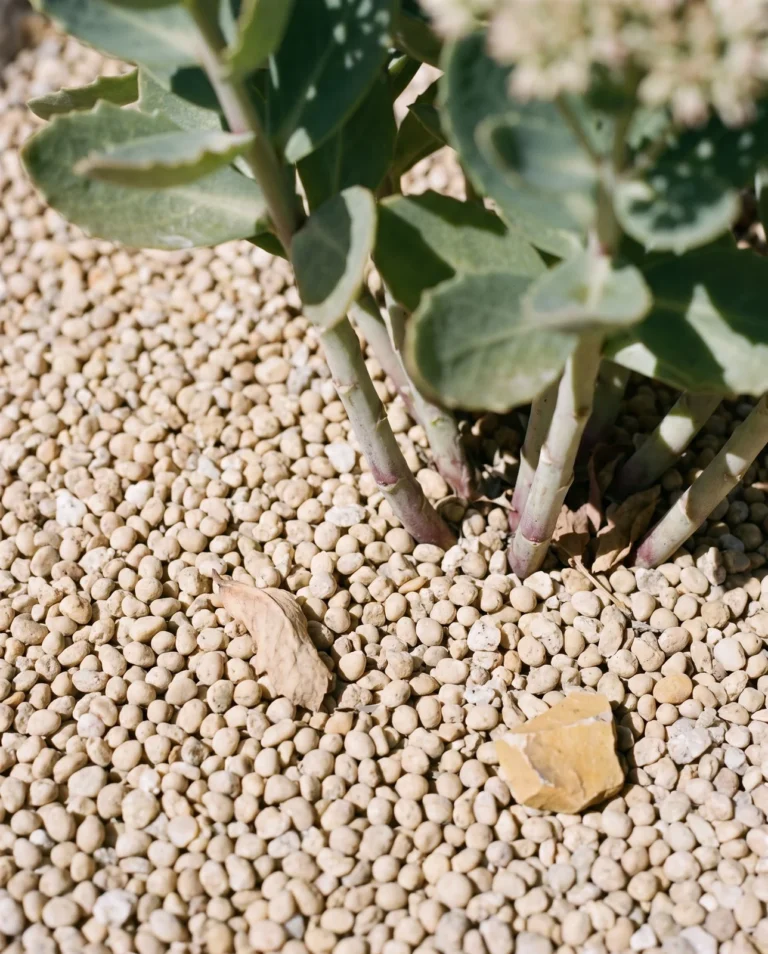
Mulching practices also dictate stem health. Applying thick layers of moisture-retentive shredded bark or wood chips around stonecrop crowns traps humidity, promotes collar rot, and provides unwanted organic nitrogen. Keep organic mulches pulled back well away from the crown, or mulch exclusively with coarse gravel or crushed rock, which sheds water instantly and reflects heat back into the foliage.
USDA hardiness
Cold tolerance across the genus Hylotelephium spans USDA Plant Hardiness Zones 3a through 9b, making these perennials exceptionally durable under severe winter freezes. Specific upright varieties like Hylotelephium spectabile 'Brilliant' are reliably hardy in USDA Zones 3 to 9. In northern zones, mature clumps easily withstand frozen ground, deep snow, and repeated freeze-thaw cycles without requiring protective coverings or winter wraps.

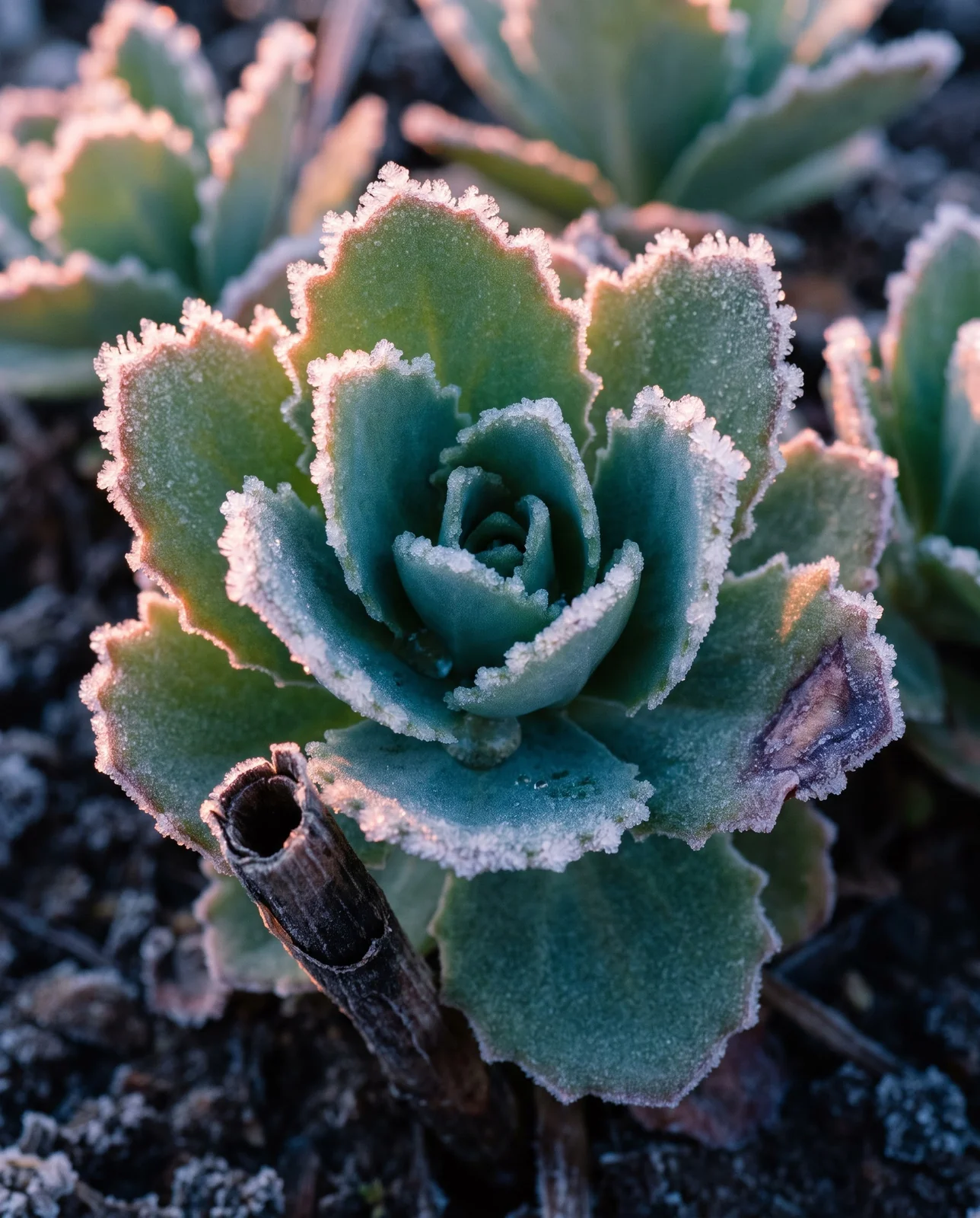
Well-meaning gardeners who pile heavy organic mulch over stonecrop crowns to "protect" them from winter cold inadvertently create waterlogged, suffocating conditions that cause fatal crown rot. Left uncovered in sharply drained soil, dormant stonecrop crowns survive harsh sub-zero temperatures without issue, sending up fresh, frost-tolerant green rosettes as soon as early spring temperatures rise.
Season dates and thresholds, and why they are not split by zone
Upright stonecrop is rated for zones 3 to 9, and the honest note is that no university source publishes separate dates per zone band for it: extension guidance gives one seasonal window across the whole range, keyed to growth stage rather than calendar, because the plant itself signals each step. Those stage-based thresholds are below, with the institution named for each.
Propagation and longevity
Early spring brings the optimal window for dividing overgrown clumps and rejuvenating tired crowns. Fall bloomers divide best in spring, and for stonecrop the window opens the moment new growing tips break the soil surface. 'Autumn Joy' in particular multiplies through simple spring clump division. Dividing in early spring ensures that newly severed root sections have an entire cool, moist season to establish deep roots before summer heat and autumn flowering demand their energy.
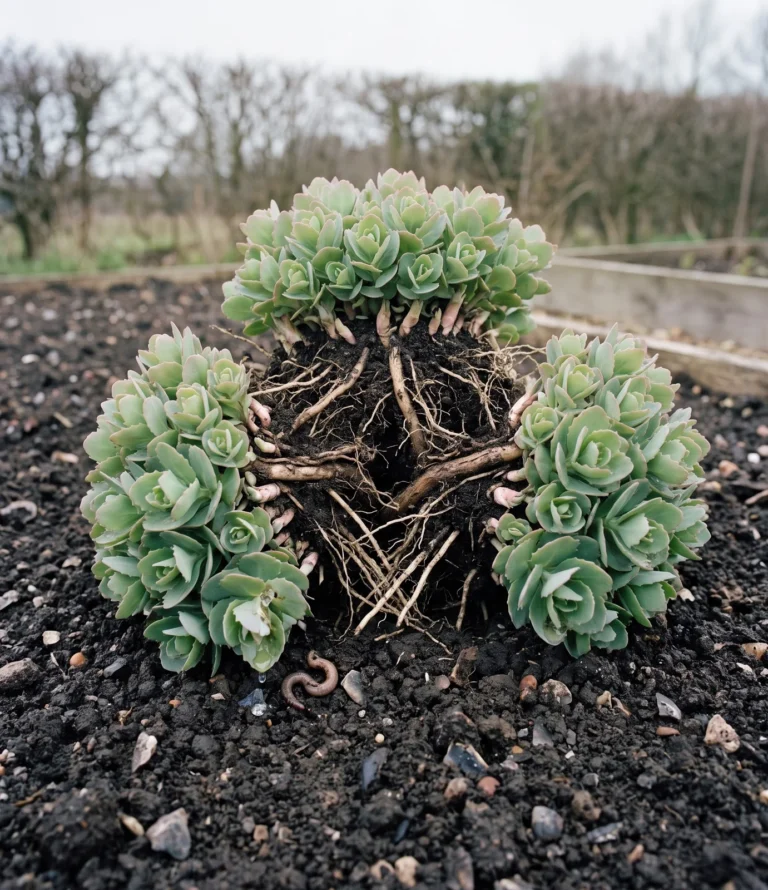
Division itself is a morning's work if the weather cooperates. Pick a cloudy day with light rain in the forecast rather than a hot, sunny one that dries exposed roots. Dig the entire root ball with a sharp spade, starting beyond the crown perimeter so the root structure comes up intact. Slice down through the dense crown so each section keeps a healthy share of roots and several active green buds, and throw the woody central core of an older clump straight onto the compost pile, since it only produces weak, sprawling stems from here on. Replant the vigorous outer sections at their original depth, firm the native soil around the roots, and water them in well to settle the air pockets.
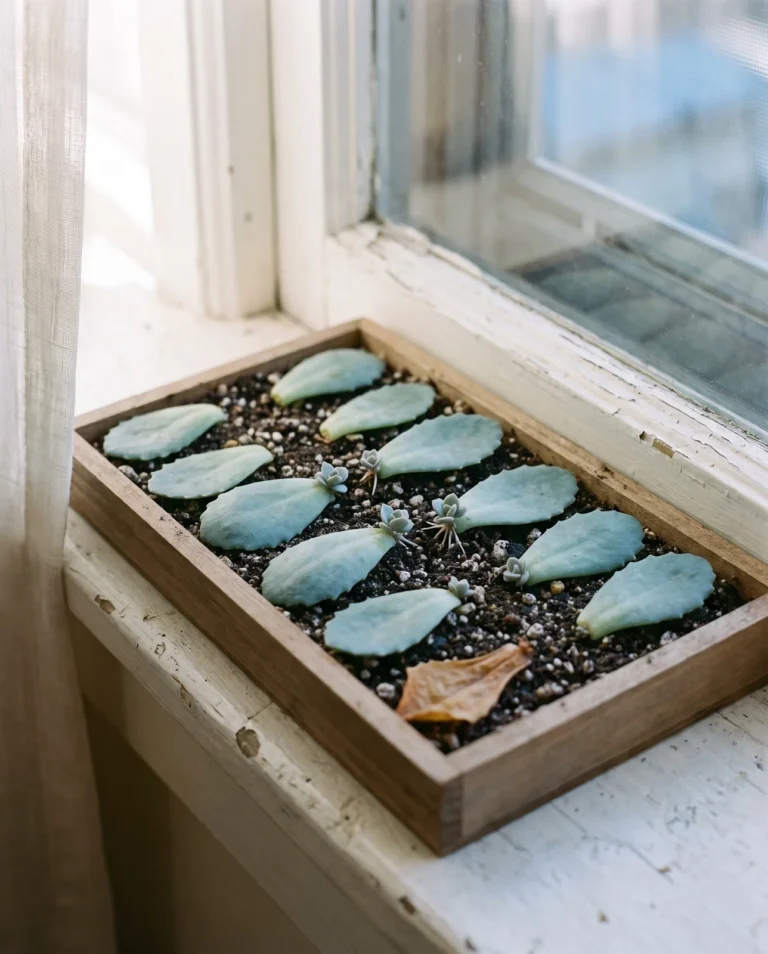
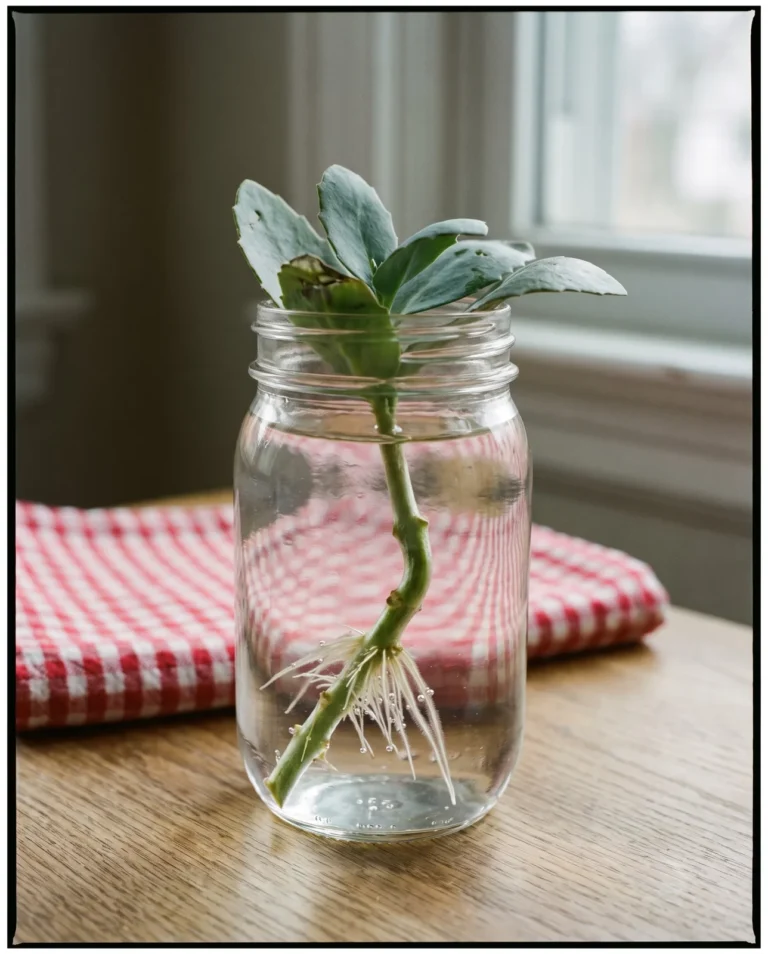
Beyond division, Hylotelephium propagates readily from summer stem cuttings and even from single detached leaves rooted in soil. If an errant garden hose, pet, or storm snaps a green stalk in June, the broken piece can be salvaged immediately. Simply strip the lower leaves and insert the bottom two inches of stem directly into moist, gritty soil in light shade; it will generate functional roots within two to three weeks.
Individual detached leaves can also root directly in soil to create new plants. To propagate from a leaf, cut a leaf with 1 to 2 inches of stem attached and plant the stem with the leaf remaining above the soil line. While leaf cuttings take longer to produce a flowering-sized clump than stem cuttings or crown divisions, they provide an effortless way to multiply rare cultivars from damaged foliage.
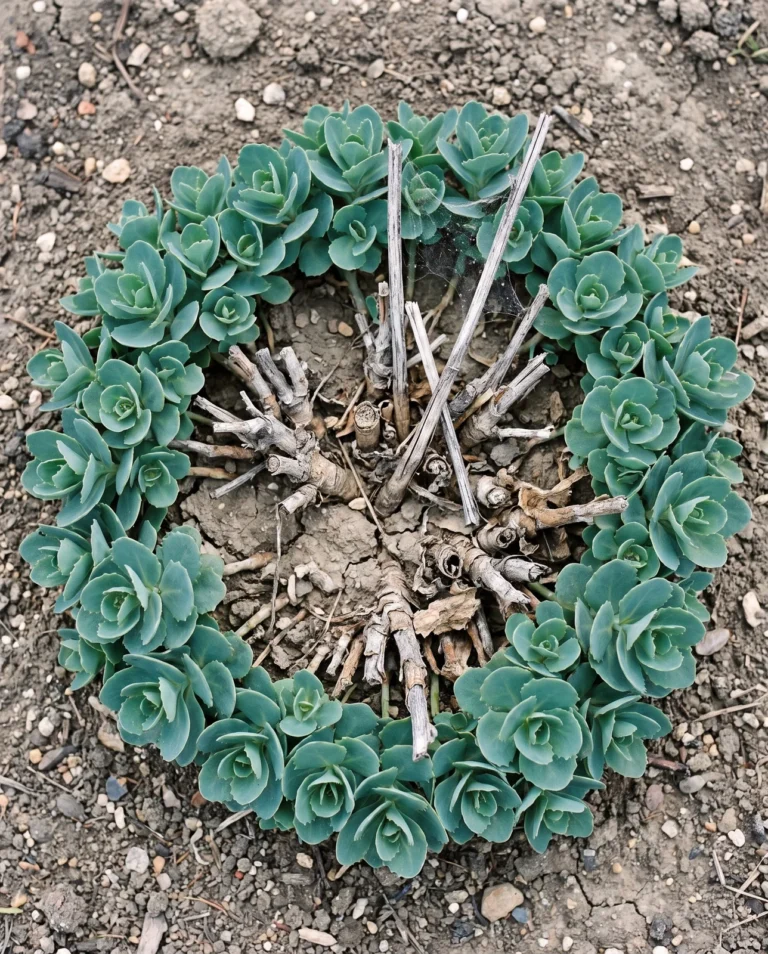
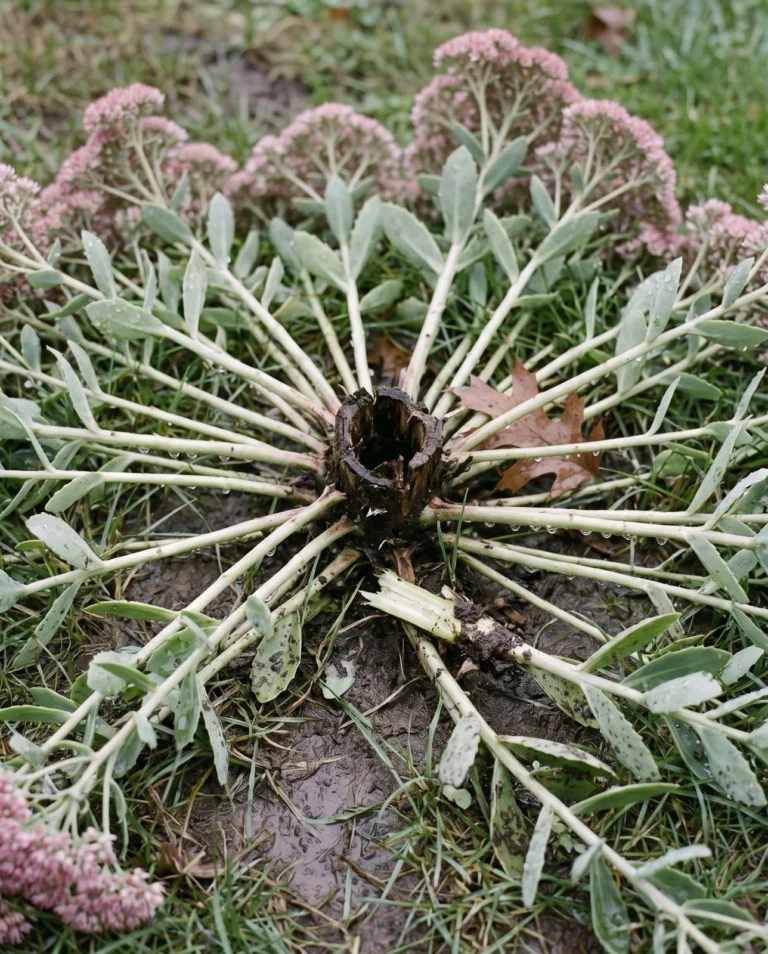
Over a four- to five-year period, an undivided stonecrop crown naturally expands outward, forming a hollow, doughnut-shaped clump. The aged center becomes congested with old, woody root tissue that impedes vigor and produces thin, weak stems that flop outward under flower weight. Digging, dividing, and replanting the vigorous perimeter rosettes every three to four years resets the clump's architecture and keeps stems standing completely upright.
The flop problem
When an upright stonecrop splays flat in late August, the damage was actually done months earlier in May and June.
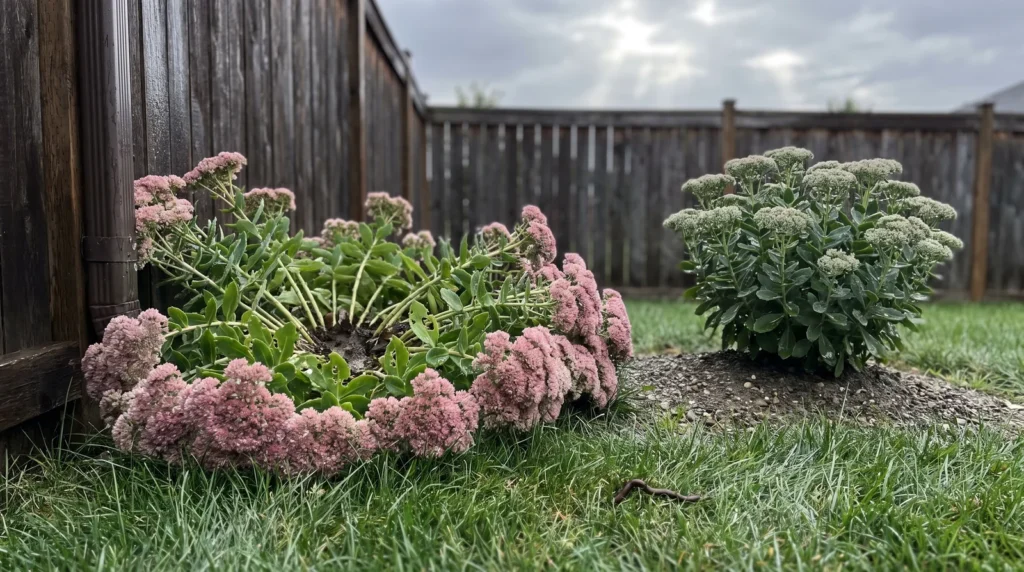
Flopping stems stem from three primary cultural errors: growing plants in excessive shade, overfeeding with compost or fertilizers, and leaving aged clumps undivided for too many years. When stonecrop absorbs excessive nitrogen or stretches toward weak light, its stems elongate rapidly with thin, flimsy cell walls. As flower heads expand and gather late-summer rainwater, the base of the stem cannot support the load and pivots outward from the crown.
The most effective physical intervention for preventing this collapse is the Chelsea chop. The Chelsea chop is a pruning technique that limits plant size, controls flowering time, and brings floppy plants under control. Typically carried out in late May or early June, this technique resets the plant's structural proportions just as rapid spring growth begins.
The technique itself takes five minutes. In late May or early June, once the young shoots stand 8 to 12 inches tall, take clean, sharp shears and cut every stem back evenly by one third to one half of its height. Gardeners who want a longer flowering window prune only the outer ring of the clump by half and leave the central stems untouched, which staggers the bloom across several weeks.
Cutting perennials back by up to half results in shorter, less leggy plants that require less staking and produce smaller, more numerous blooms. Because the pruned stems branch at each cut node, the single heavy flower dome is replaced by multiple smaller, lighter heads. These smaller heads exert far less leverage on the stem, completely eliminating late-season flopping without sacrificing color mass. Pinching or cutting stems back in early spring helps preserve a bushy form and thick stems, but pruning in summer can delay blooming. Pruning must never be delayed beyond early June; cutting plants back in July removes developing flower buds entirely or delays bloom past the first autumn freeze.
Work down the list before you blame a disease
Two failures cover most of what goes wrong with an upright stonecrop, and both have a fixed order of checks in which the boring, non-living causes come first, because light, soil richness and water explain far more collapsed and dying sedums than any pathogen does.
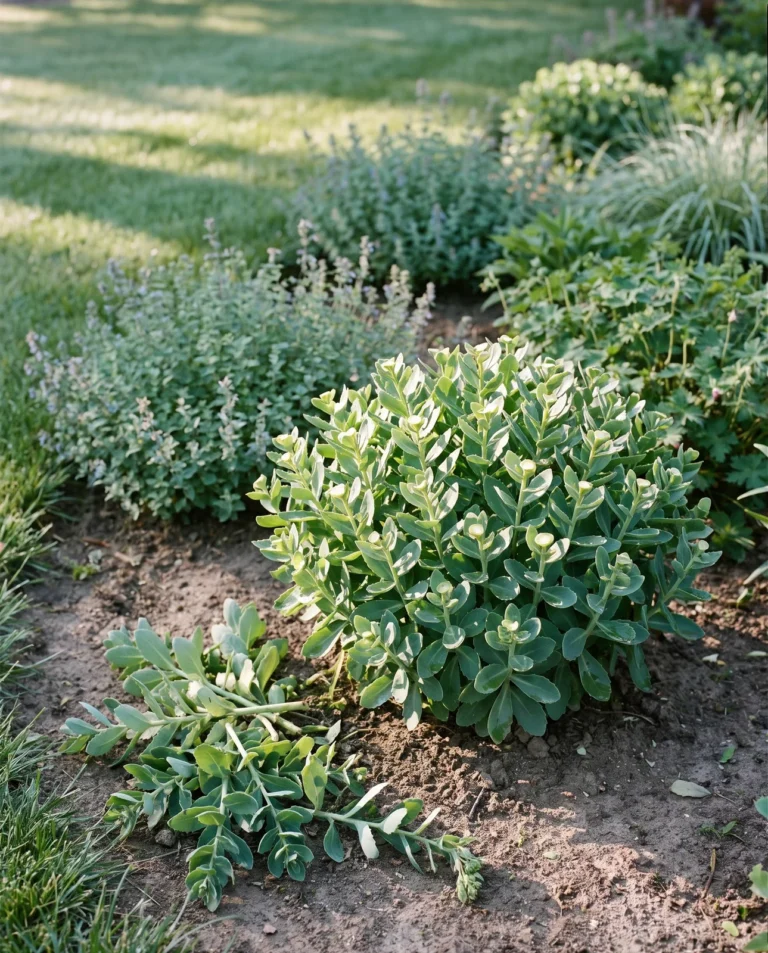
Fragrance
Nobody plants upright stonecrop for perfume, and the plant makes no apology for it. Lean close to a September flower head and you will catch, at most, a faint green sweetness; the real event is happening on the surface, where the currency is nectar rather than scent. Those broad floral platforms draw butterflies, songbirds, and other late-season pollinators in steady traffic, and cultivars like 'Brilliant' and 'Matrona' keep that traffic coming when most of the border has already closed for the year. If fragrance matters in your autumn garden, give stonecrop the structural role and plant something scented nearby.

Toxicity and pet safety
Handling and pruning upright stonecrop during spring division or the Chelsea chop requires no protective gloves or specialized gear. Hylotelephium carries low-severity toxicity from alkaloids such as sedine and sedamine present in its flowers, leaves, roots, and stems, with swallowing capable of causing mild gastrointestinal upset. While curious pets may experience mild digestive upset if they ingest large quantities of foliage, the plant poses no severe chemical danger in garden borders.
In the vase and dried
Harvesting upright stonecrop for indoor floral arrangements provides long-lasting color while serving as an emergency salvage technique for flopping stems. When cut in late summer, fresh stems hold their shape in a vase of clean water for two to three weeks without shedding florets. Harvest stems in the cool morning hours just as florets shift from the pale green broccoli phase into their first blush of pink. Stripping all foliage from the lower half of each stem prevents submerged leaves from decaying, keeping vase water clear and odorless.

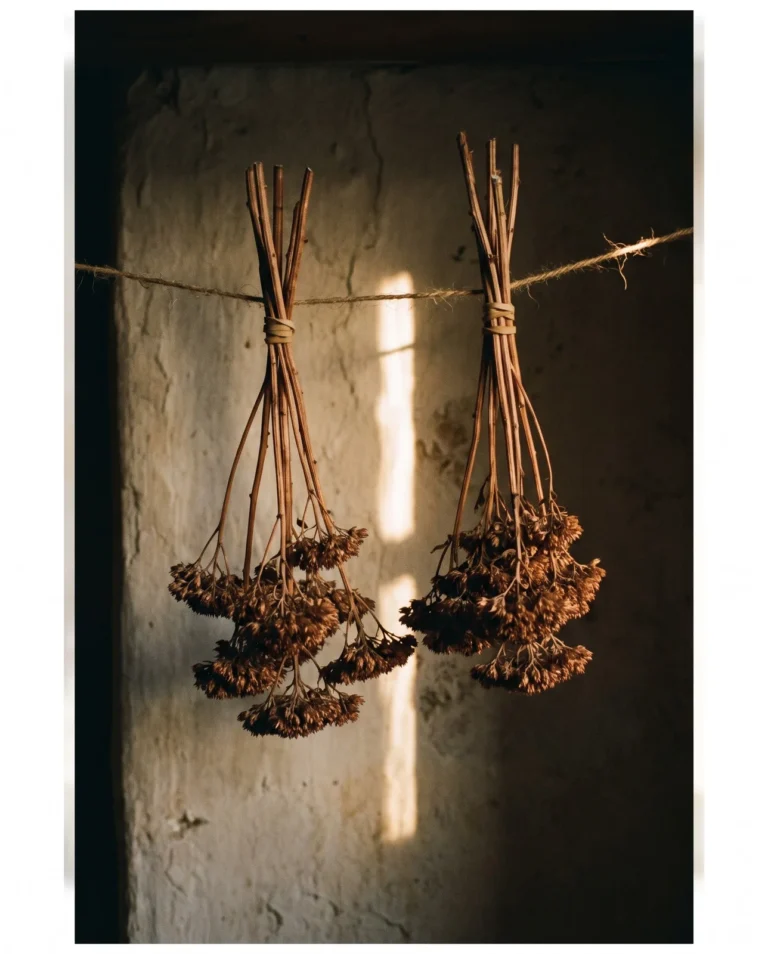
For dry winter crafts and floral arrangements, mature seed heads offer exceptional durability. Stems can be harvested in late autumn after the flowers have fully transitioned into firm seed heads on the plant. Strip away any remaining withered foliage, bundle five or six stalks together with rubber bands, and hang them upside down in a dry, dark room with good airflow for two weeks. Once cured, the rigid dried stems and dense capsule heads maintain their structural form for years without crumbling.

Measured vase life, and what actually extends it
The numbers below come from a university postharvest trial rather than a repeated consumer figure: Kansas State University's Agricultural Experiment Station cut autumn sedum in late August and September and tracked it under four treatments, published in its Report of Progress series.
An aspirin, a penny or a spoon of sugar keeps the vase going.
Iowa State University Extension names these home additives directly: none of them work as well as a commercial floral preservative, and some actively shorten vase life. For sedum the trial above adds a twist, since even the real preservative bought nothing measurable over clean water.
Where the vase stands makes no difference.
It does, through ripening fruit. University of Florida IFAS notes that ethylene from a fruit bowl ages cut flowers faster, a general cut-flower rule worth applying to a three-week arrangement more than to a three-day one.
NC State's structured plant data backs the habit with two quiet tags on H. telephium: Good Cut and Good Dried, with Cutting Garden listed among its landscape uses. The phrase everyone repeats about sedum being an excellent cut flower appears nowhere on that page, so it is not quoted here; the tags and the Kansas trial say it better anyway.
Pests and diseases
Excessive fertilizer and soggy soil do more than create floppy stems. They also lower the plant's natural defenses against garden pests.
The plant faces no serious insect or disease problems, though slugs, scale, mealybugs, nematodes, aphids, and weevils may occasionally occur. However, when growers over-fertilize with nitrogen or overwater, soft, watery succulent growth leaves tissues vulnerable.
Root rot remains the primary fatal disease, occurring almost exclusively when Hylotelephium sits in saturated, heavy soil. Slugs occasionally chew irregular holes in succulent shoots as they emerge from the crown in early spring. Surrounding emerging rosettes with coarse gravel creates an effective physical barrier that deters slugs. Maintaining lean, sharply drained soil and withholding fertilizer keeps stonecrop foliage tough, dense, and naturally resilient against pest pressure.
Four calls people get wrong without a second look
Each card carries the one detail that separates a pair of look-alikes. No generated photo pairs here on purpose: an insect or pathogen fingerprint has to come from a real reference image, so these four are written to be checked against the plant in front of you.
The glaucous bloom sits as a uniform, dusty grey-green film over the whole leaf surface; it does not move, wipes off with a thumb, and there is nothing underneath. Mealybug wax bunches into discrete cottony tufts on leaf undersides and where leaves meet stems, and something is slowly crawling under the fluff.
Location decides it. Southern blight's white fungal mass forms low, at the crown or on the soil around the base, paired with collapsed, blackened stem tissue right at ground level. Mealybugs work higher, in leaf axils and on stems, and the mass resolves into many small insects rather than one mat. NC State lists both on 'Autumn Joy', which is exactly why the two get confused.
Rot is wet: soft, water-soaked, brown-black tissue at the base, travelling upward. Winter die-down is dry: papery tan stalks and seed heads that are meant to stand through winter, above a crown that pushes fresh green rosettes in spring. Feel the lowest inch of stem; moisture is the whole answer.
Slugs chew large irregular holes into the leaf interior, avoid the midrib, and leave a silvery trail nearby. Black vine weevil adults work at night along the margins, notching the edges into a scalloped line, with no slime and the leaf center intact.
What actually goes wrong with upright sedum, by frequency
Counted from 57 unique gardener threads pulled from the Houzz garden forums, Dave's Garden and the National Gardening Association's community, deduplicated by URL. One thread carries one primary problem here, so the shares sum close to 100 and read as a ranked index of what actually drives people to ask for help.
Whether the crown sits wet: soggy soil, mulch against the stems, or a sprinkler schedule meant for the lawn. This is the top reason upright sedums die, as opposed to merely lean, and the second decision path above walks the checks in order.
Soil richness and sun, in that order. The threads run from divide-it advice to despair, and nearly every case resolves into the same three levers: lean ground, full sun, and the spring chop.
The season. This is the most asked timing question, and extension guidance is unusually unanimous: leave the stalks standing through winter, snap them off in late winter or early spring.
What is actually there. Aphids cluster on soft new growth; a white cottony mat low at the crown is not an insect at all but a blight sign, which is the exact look-alike fork in the cards above.
Which animal, because the plant itself splits them: NC State flags upright stonecrop as resistant to rabbit browsing but not to deer. Clean angled bites high on the stems in one night is deer; the rabbit-height growth staying untouched is the confirming detail.
The season and the readiness marker: spring, once the ground-level bud cluster has widened, per Clemson and the University of California. The genus moves so willingly that most of these threads end in success stories.
Hours of direct sun. Stretched internodes and a lean toward the light identify etiolation before any flopping starts, and the only fix is more light.
Which sedum was planted. The regret threads are about mat-forming ground covers like S. spurium, not the clumping uprights this page covers; the uprights stay where they are put.
Sun first, then fertility. Washed-out heads in part shade and lush-but-flowerless growth in rich soil are the two patterns behind these threads.
Whether damage followed a sudden move into full sun. Rare, and mostly a hardening-off story on plants shifted outdoors too fast.
The sample skews toward crises people bother to post about. Quiet problems, like a clump slowly shrinking in deepening tree shade, are underrepresented here and overrepresented in the no-bloom searches.
FAQ
What should you do when an upright sedum flops open in late summer?
Once a mature clump splays open in late August, mechanically tying the stems back together with twine rarely looks attractive. For the current season, cleanly cut the collapsed outer stems at soil level and bring them indoors for fresh vases or dried arrangements. To prevent the problem from recurring next year, perform the Chelsea chop by pruning the stems back by one third to one half in late May or early June. Additionally, cease all applications of fertilizer and compost, clear away heavy organic mulch, and relocate the clump to an open, unshaded site if it receives less than six hours of full sun.
Why did my sedum flowers turn brown without turning pink?
When stonecrop flower heads skip their deep pink or carmine phase and turn directly from pale green to muddy brown, inadequate sunlight is almost always the culprit. Strong, uninterrupted direct sunlight is required for proper floret development and full floral color. If the plant is shaded by nearby shrubs, trees, or tall perennials, the blooms fail to develop rich pigments and fade prematurely into dull brown tones. Relocating the clump to an open, full-sun site during early spring division resolves the issue.
Do deer and other garden wildlife browse upright stonecrop?
Retail tags often file sedum under deer-resistant plantings, and for upright forms that promise does not hold. North Carolina State Extension lists Hylotelephium spectabile as resistant to browsing by rabbits but explicitly not by deer, and gardeners routinely watch whole flower heads vanish the week before they color up. The juicy, water-filled stems and buds are exactly the kind of soft forage deer favor in late summer. Where deer pressure is real, grow upright stonecrop inside a fenced bed, near the house, or behind reliably browsed-around plantings, and let the tag's optimism apply to someone else's garden. The dried seed heads, by contrast, draw songbirds that forage on the capsules through autumn and winter.
How do upright stonecrop cultivars like Autumn Joy, Brilliant, and Matrona compare?
Cultivars vary noticeably in height, leaf structure, stem coloration, and floral mass. 'Autumn Joy' is an established hybrid featuring pale green foliage, vigorous clump growth, and soft pink heads that age to russet tones, multiplied easily through spring clump division. Hylotelephium spectabile 'Brilliant' stays much more compact, forming 18-inch mounds crowned with carmine-pink heads measuring 3 to 6 inches across that attract late-summer butterflies in Zones 3 to 9. Hylotelephium telephium 'Matrona' offers taller 24- to 30-inch architecture, distinguished by purplish-red stems, bronze-flushed leaves, and pastel pink flower heads that draw butterflies.
Should you cut sedum stems down in autumn or leave them for winter?
Leaving the dead stems and seed heads standing through the winter is strongly recommended. The spent blossoms cure into firm copper capsules that stand through snow and keep songbirds foraging on the seed heads deep into winter. Wait until early spring when new green basal rosettes begin emerging from the soil, then prune the old dead stalks flush with the ground.
Can you plant sedum in a fall container with chrysanthemums?
Pairing upright stonecrop directly in the same potting soil with chrysanthemum plants almost always leads to sedum stem rot. Chrysanthemums require rich, moisture-retentive potting mix and daily watering to maintain their dense root balls, whereas Hylotelephium roots rot quickly in waterlogged, poorly draining soil. If designing mixed autumn displays, explore our guide to flowers for containers or keep each plant in its separate plastic nursery pot, clustering the pots together inside a decorative container so the stonecrop stays lean and dry while the mums receive extra moisture.
Is sedum toxic if a kid or a pet takes a bite of it?
It carries only low toxicity. NC State's plant database rates the poison severity as low, with possible gastrointestinal symptoms if eaten, from alkaloids (sedine, sedamine, and others) in the flowers, leaves, roots and stems.
Can I start new sedum plants from a cutting instead of digging up the whole clump?
Yes. Upright sedum roots readily from stem cuttings, and Hylotelephium telephium can even regrow an entire new plant from a single detached leaf.
Can you actually eat sedum leaves?
The young, tender growth can be eaten raw; older stems and leaves, up until the plant flowers, can be briefly cooked. NC State notes the flavor is bland, so it's a curiosity more than a crop.
Is it a problem that 'Autumn Joy' flowers keep changing color through the fall?
No, that color shift is the plant's normal late-season display. Buds open pink, deepen to rose-red, then fade to a coppery rust as the flower heads age into autumn.
Does 'Autumn Joy' actually have any award recognition, or is that just a marketing name?
It's a real, independently judged award: 'Autumn Joy' received the Royal Horticultural Society's Award of Garden Merit in 1993.
There's a white, cottony patch where the stems meet the soil, not up on the leaves. Is that the same thing as mealybugs?
Probably not. A white cottony mat specifically at the crown or soil line is more likely the fungus behind southern blight, a distinct and more serious problem from mealybugs feeding on the foliage above.
Flower photos


Interesting tips
Pairing upright stonecrop with concurrent autumn bloomers creates an ecological haven for late-season pollinators. Stonecrop serves as an attraction for butterflies, songbirds, and other pollinators. To establish a self-sustaining nectar corridor for migrating butterflies and native bees, plant upright stonecrop alongside native aster and goldenrod. These three perennials bloom concurrently throughout September and October, offering contrasting floral structures, landing platforms, and nectar reserves right as summer annuals fade from the landscape.

Propagating stonecrop from broken stems is an effortless garden salvage strategy. Stonecrop roots readily from stem cuttings. If a strong storm snaps an upright flowering stalk in midsummer, strip the lower foliage and insert the cut stem directly into gritty sand or lean garden soil. Placed in bright, indirect light, the stem will establish independent roots within two to three weeks. Detached leaves can also be propagated by cutting a leaf with 1 to 2 inches of stem attached and planting the stem with the leaf remaining above the soil line.
Installing a pea gravel collar permanently eliminates crown rot in gardens with wet winters. Because poorly drained, wet soil triggers fungal root rot in Hylotelephium, moisture management at ground level is vital. In areas with heavy clay or high winter rainfall, clear away organic mulches around the plant's crown and replace them with coarse pea gravel or crushed granite. The gravel creates a dry zone directly around the succulent stem collars, reflects heat into the foliage during cool spring mornings, and prevents soggy soil from suffocating the resting crown.
Related Guides & Flowers
References
- NC State Extension – Hylotelephium telephium – Species profile: zones 3-9, rabbit resistance, Good Cut and Good Dried attributes, low-severity toxicity.
- Missouri Botanical Garden – Plant Finder, Hylotelephium 'Herbstfreude' – Cultivar profiles and growing conditions for the upright sedums pictured above.
- Clemson Cooperative Extension – Dividing Perennials – Spring division timing for tall sedum and the reasoning behind it.
- Royal Horticultural Society – The Chelsea Chop – The late-May cutback that keeps strong-growing Hylotelephium compact.
- Kansas State University – Report of Progress 805 – The postharvest trial behind the measured vase-life figures.

Chrysanthemum
the other pillar of the fall border, in every color.

Aster
clouds of September daisies for bees and monarchs.

Goldenrod
golden sprays that feed the late-season pollinators.

Black-eyed Susan
tough golden daisies that bloom into October.
Enjoying our flower guides? Add YourFlowersGuide as a preferred source on Google. It helps more readers find us.
Add to Preferred Sources