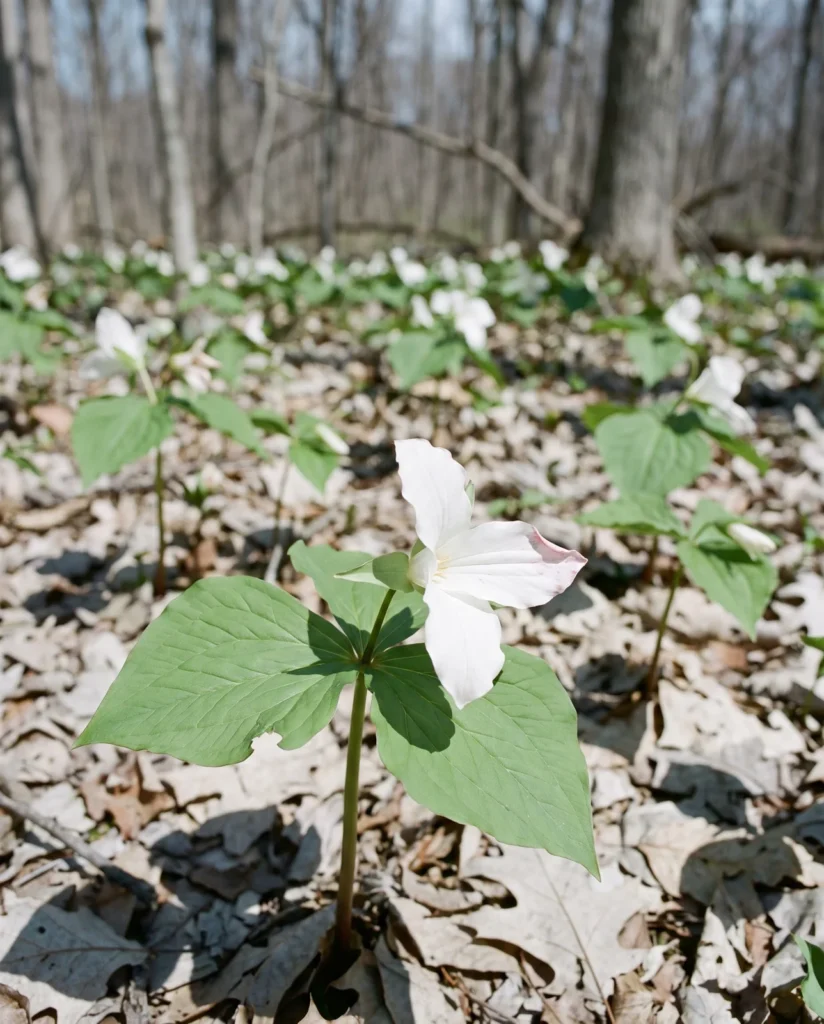
What a trillium is, and what those three blades really are
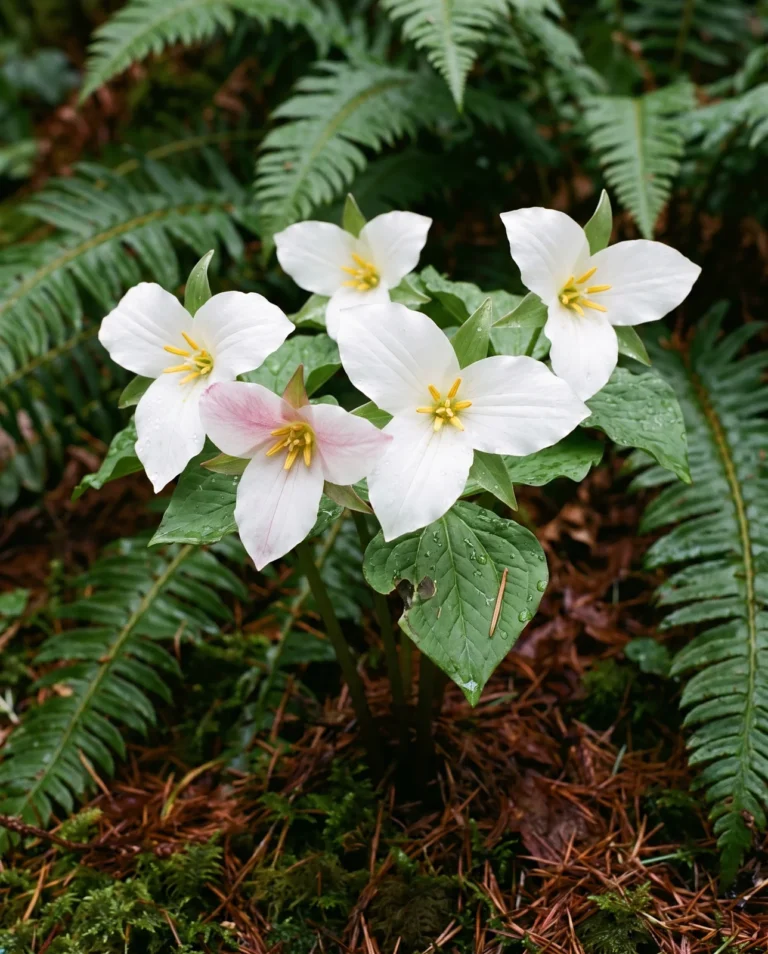
A trillium is a woodland perennial built in threes: one flower with three petals, held above three broad green blades. Those blades are bracts, not true leaves. That is the whole plant above the soil line. There is no rosette at the base and no second flower held in reserve, so damage to either half shows at once. Most plants stand 1 to 1.5 feet tall and spread 7 inches to a foot across, and white wake robin, the largest trillium in Missouri, reaches 2 feet. Everything the plant has saved sits underground in a rhizome, and the blades on top are what fill it.
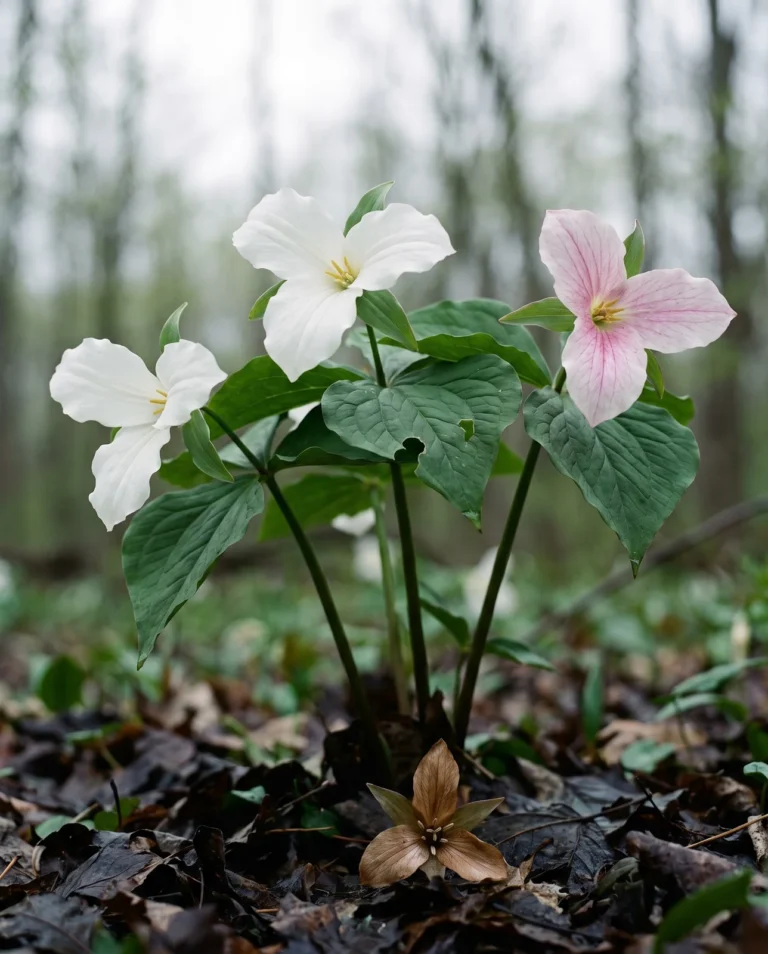
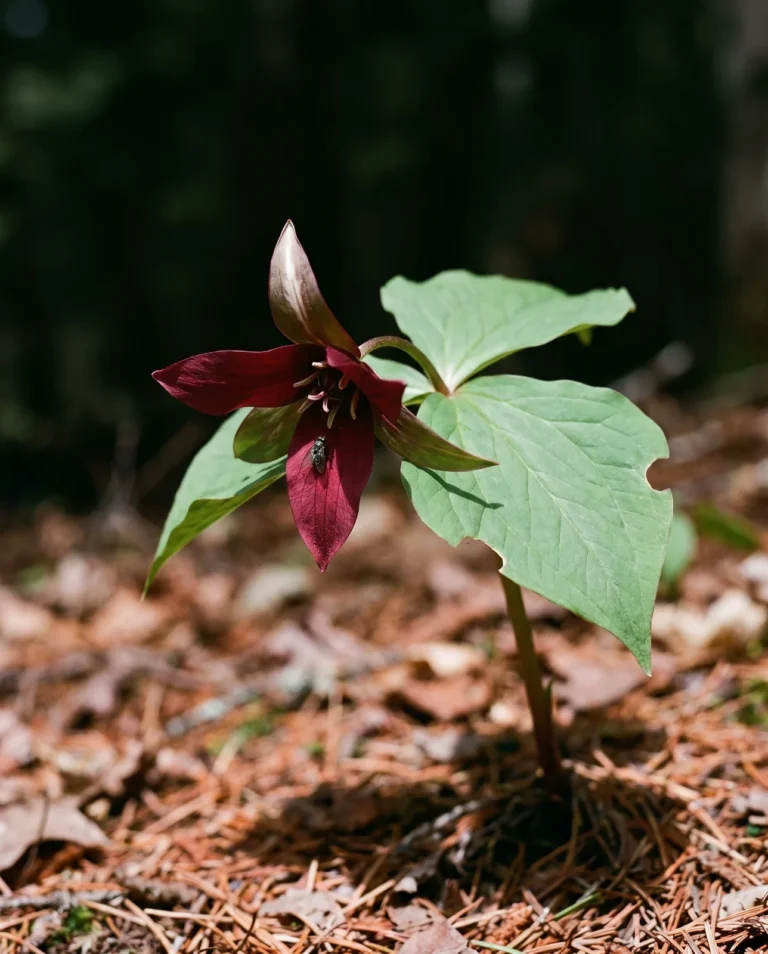
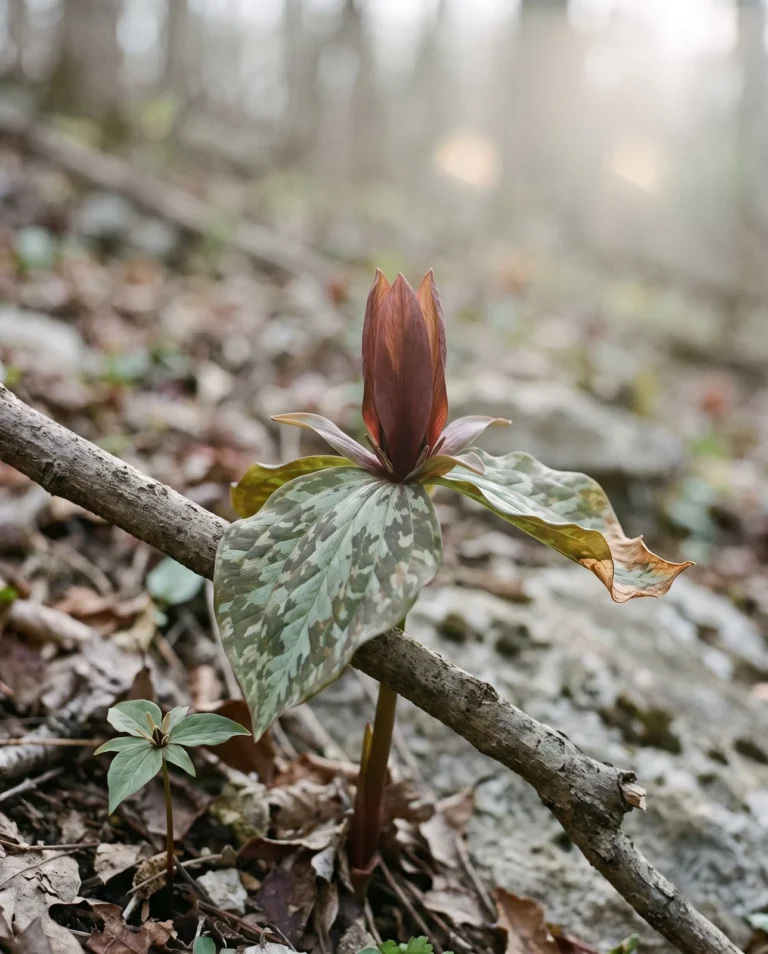
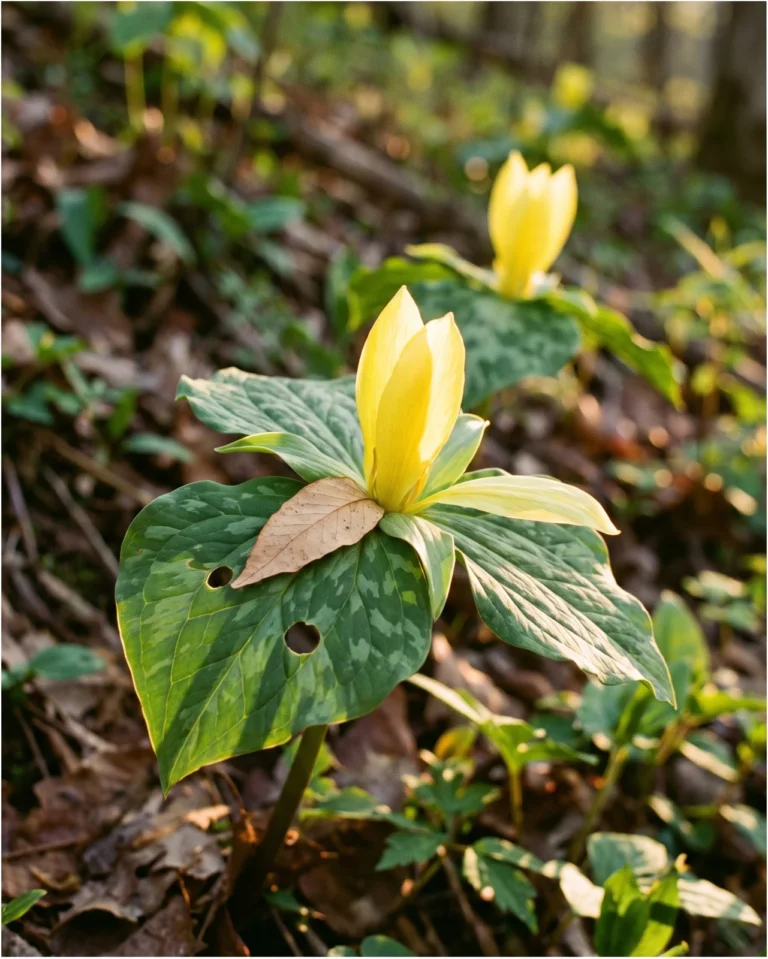
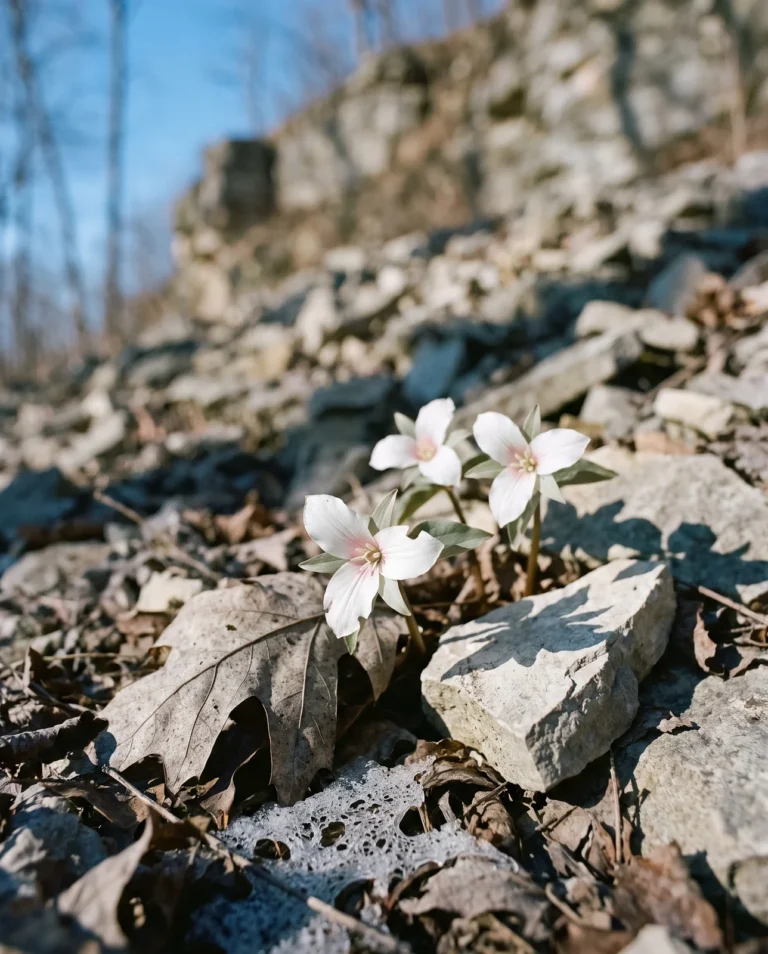
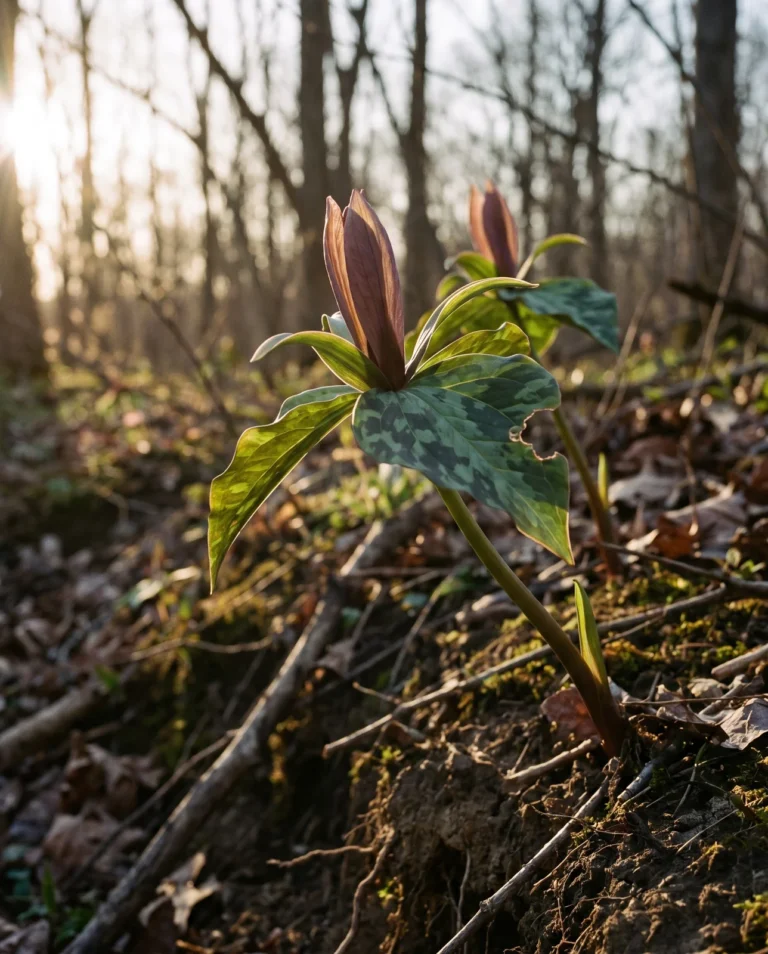
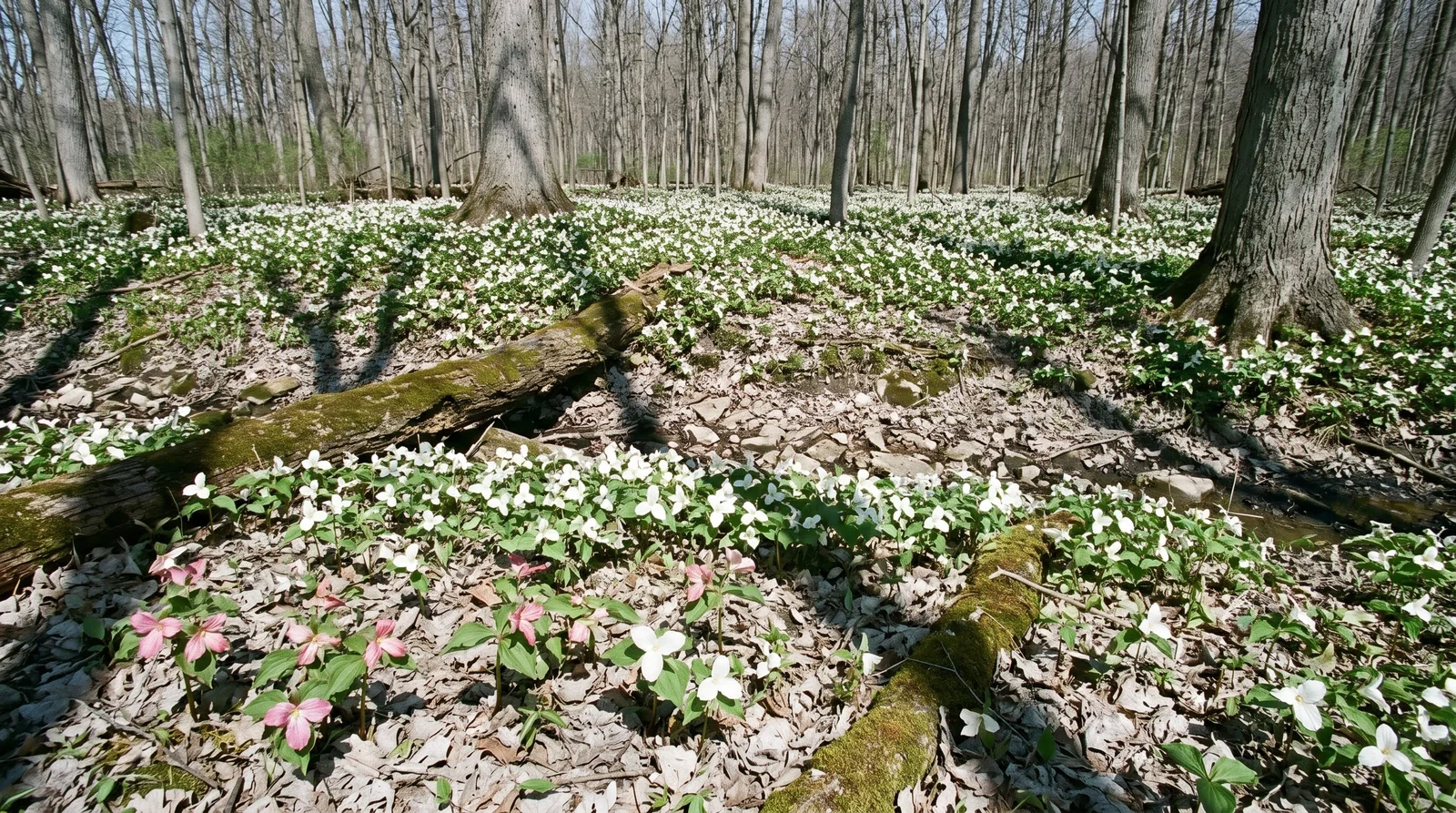
The genus answers to several names, and one of them causes real confusion. Birthroot, wakerobin and wake-robin all mean trillium, and the red-flowered species is red wake robin. Wake robin traces back to a folk belief that picking the flower risked rousing the goblin Robin Goodfellow. Color is the other trap. The familiar species opens white and turns rosy pink with age, so a plant you filed under white flowers in April can look like a different species in May. Others open maroon, yellow or purple. The word trillium on a plant label settles almost nothing about what will come up.
The seven-year story and what it actually measures
A trillium does not bloom once every seven years. The number describes a one-time wait at the start of a plant's life, from seed to first flower. Once a plant is old enough to flower, it flowers every spring as long as nothing disturbs it. The blades feed the rhizome through the season, and that stored energy pays for the next bloom. The belief survives because the plant hands gardeners something that looks like a cycle. A trillium that loses its blades has nothing to store that season, so it can come up flowerless the following spring, and one plant watched year to year is enough to start the story.
The wait itself is not settled. Brooklyn Botanic Garden puts seed to flower for white wake robin at seven years. Ask Extension gives three to five years, and its horticulturist saw first flowers at about five years in his own plantings. The longest published figure runs to seven years or more. The shortest and the longest do not overlap, so any single number quoted as the truth is quoting one count and ignoring the rest. What every count agrees on is the scale: this is a wait measured in years from the moment a seed germinates.
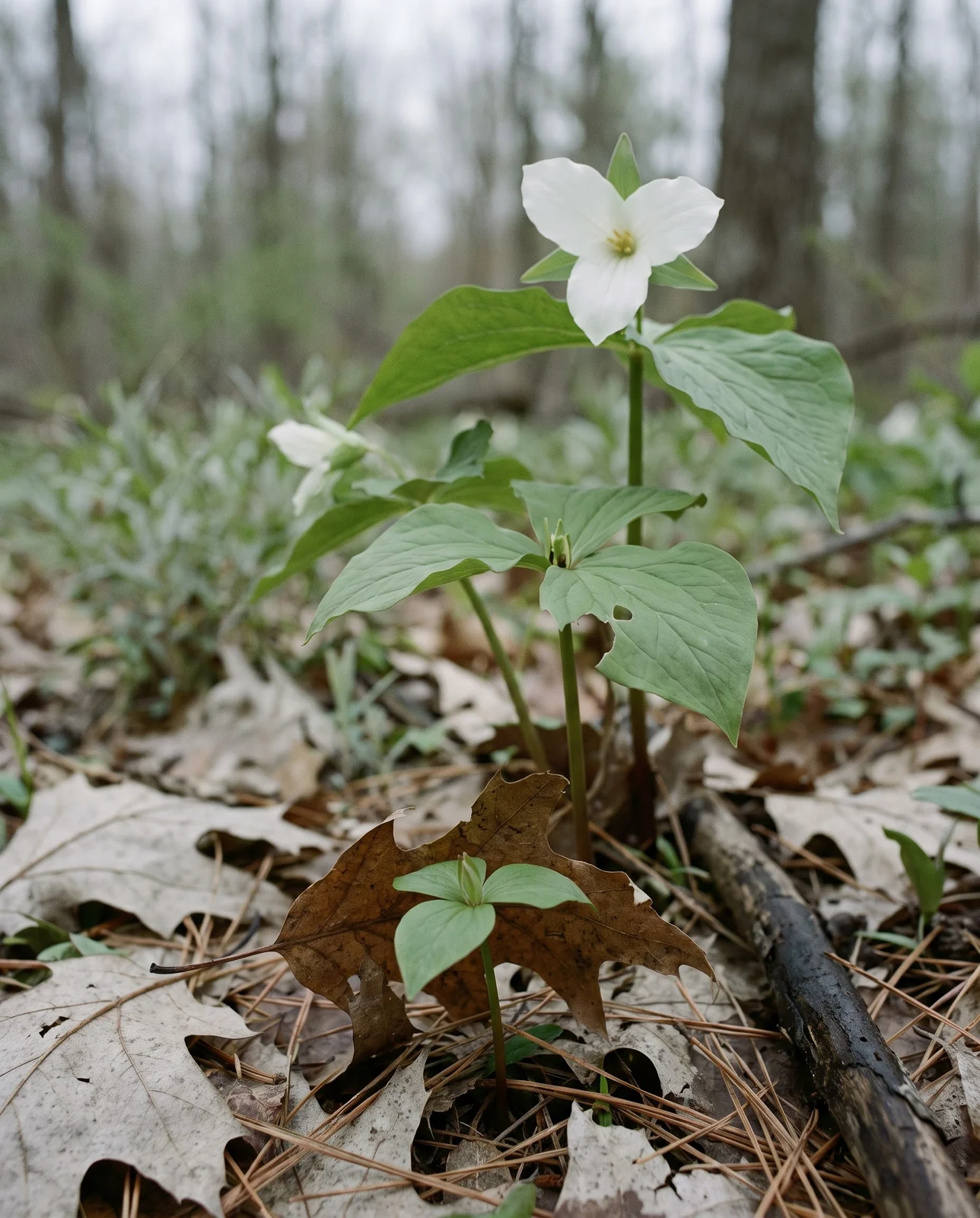
Why picking one hurts the plant
Picking the flower takes the plant's food supply with it. The three blades sit so close under the bloom that the flower comes away with them, and with them goes the plant's ability to feed itself. Those blades are its whole working surface for the year, and what they make is stored in the rhizome to pay for the following spring's flower. Take them in spring and the rhizome goes into winter without that season's deposit. Nobody has measured how long a stripped plant needs to make the loss back.
The same arithmetic makes a patch more fragile than it looks. Deer browse has been measured: in Great Lakes populations where 6 to 12 percent of plants were browsed, numbers fell 3.6 percent a year. What is lost comes back slowly, since several years pass between a germinating seed and a first flower. A wide colony therefore took many undisturbed years to build, and a handful of stems picked on a walk removes seasons the patch has to earn back one at a time. That holds whether or not a statute covers the ground you are standing on.
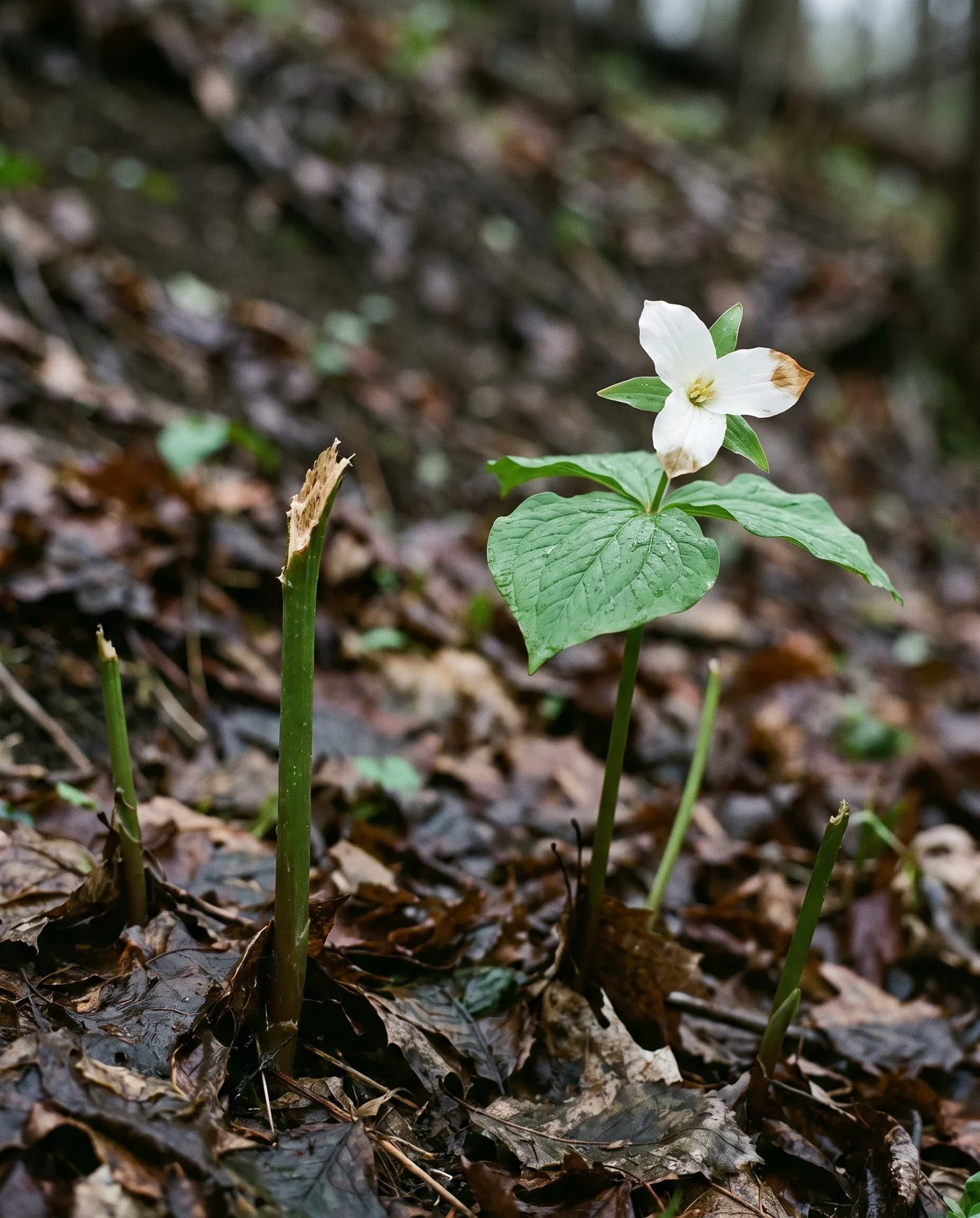
Is it illegal to pick a trillium?
There is no single answer, and the ban most people have heard about never became law. Ontario's Bill 184, the Ontario Trillium Protection Act, would have made it an offence to pick, cut down, dig, pull up, injure or destroy the plant that produces the white trillium. That held whether or not the plant was in blossom, and the fine was set at not less than $500. First reading carried on May 27, 2009, and the lines for second reading, third reading and royal assent stayed empty. A bill that stops at first reading never enters the statute book, so the Ontario fine shared every spring belongs to a proposal that died in the legislature.
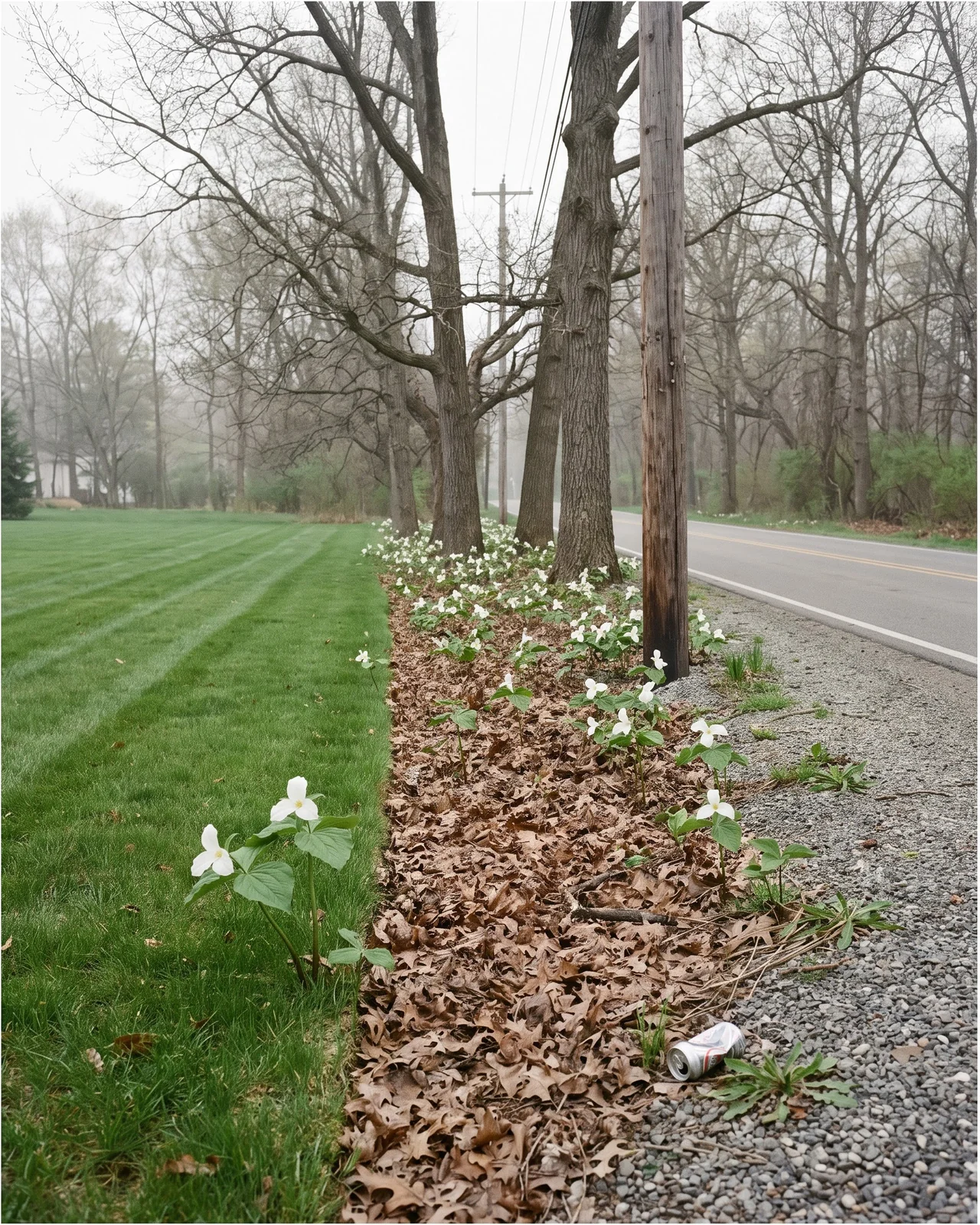
The Oregon rule people quote is real, and it never mentions trillium. It makes it unlawful to cut, dig up, trim, pick, remove, mutilate or injure any plant, flower or shrub within 500 feet of the center of a public highway. That reach covers public land and land belonging to someone else, and a written permit is the only way through it. The separate list of genera protected for sale and export names lilies, fritillaries and lady's slippers, and trillium is absent from it. A trillium is covered there only because it happens to be growing beside a road. Ownership carries weight of its own: in New York, collecting or destroying a listed plant without the landowner's permission breaks state law.
Listing works species by species, the second reason a flat answer fails. Two trilliums growing in the same wood can carry different legal standing in the same state, one of them endangered and the other in a milder protected class. A rule that names one trillium says nothing about the trillium beside it, and the species name on the plant is what decides which rule you are under. The answer that works in every jurisdiction costs nothing. Leave a wild plant where it is growing.
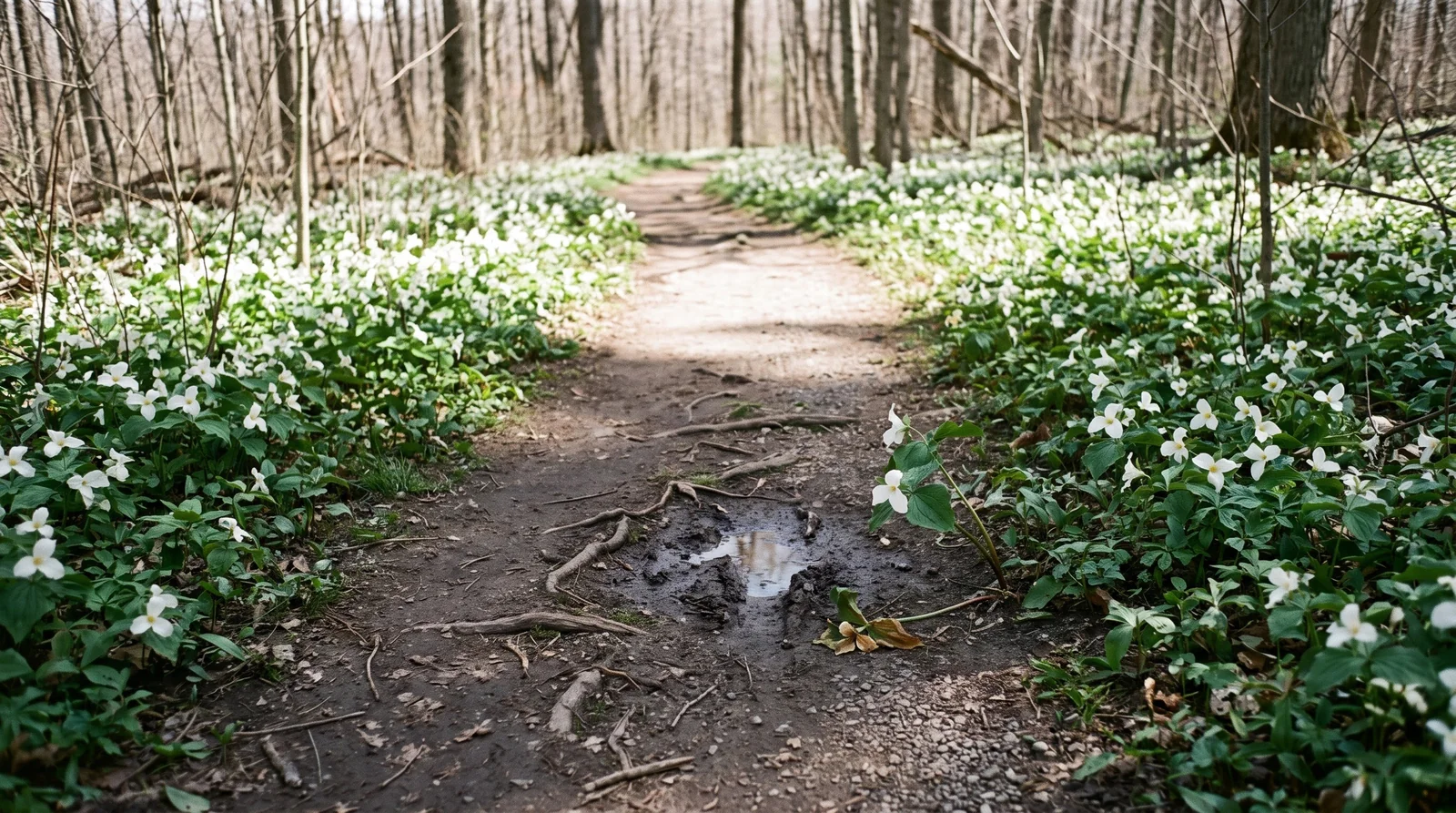
Where the rules differ, jurisdiction by jurisdiction
Six jurisdictions whose rules touch trillium, what each one does and how far it reaches. The differences are wide enough that the answer changes at a border.
Never dig one from the wild
A trillium dug out of a wood is a bad bet in the garden and a real loss where it came from. The great white trillium does not transplant well. Unsustainable collecting of wild plants sits alongside forest fragmentation among the conservation problems the species faces. The loss runs past the single plant, because what gets lifted is almost always a mature clump, and a clump that size is the output of many seasons on undisturbed ground.
Buy nursery-propagated stock. Missouri's field guide puts it directly: do not collect from the wild, buy from reputable native wildflower nurseries. Propagated and wild-collected plants look alike across a sales table, so ask the seller how the plants were raised, from seed or by division, and how long they were grown on. A straight answer names a method and a number of years. A large flowering clump offered cheaply deserves a second question, because nothing about this plant is fast.
Where trillium grows, and the shade it needs
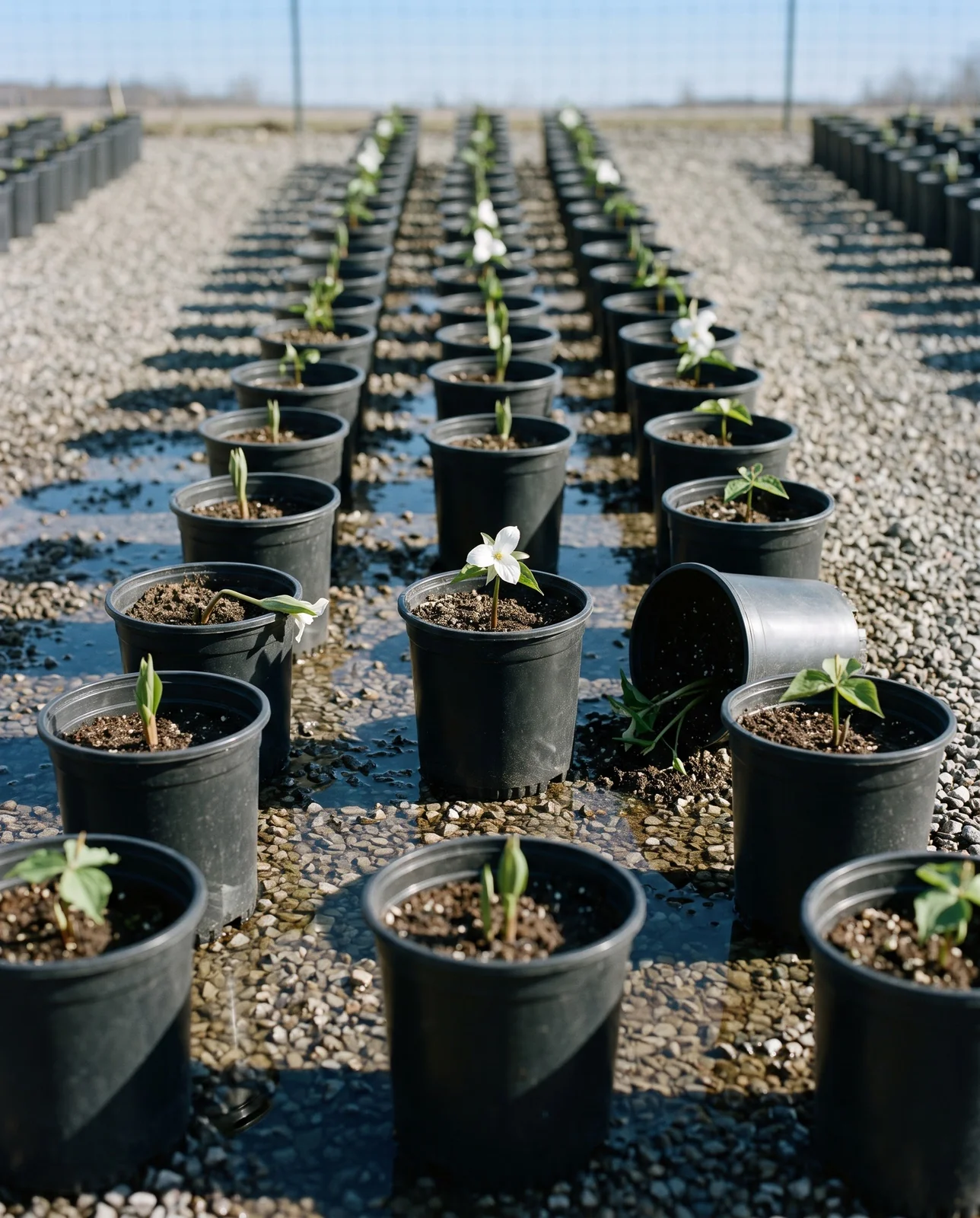
Trillium grows in woodland shade, on ground that stays rich and damp. The great white trillium wants deep, rich, humusy soil, moist but well drained, in part shade to full shade. The genus as a whole asks for the same thing in other words: loamy or humus-rich soil, high in organic matter, at a neutral pH. In the wild, white wake robin sits on rich wooded slopes and in bottomland forest, generally on east or north facing hills, which is ground that holds moisture and never bakes. The garden equivalent is the north side of a building or the floor under deciduous trees, where the other flowers that grow in shade already do well, with the leaf litter left where it falls.
Hardiness depends on which trillium you have, so the species name matters more than the genus name. The genus is hardy across zones 5a through 8b, while individual species run wider, from 3 to 8 at one end up to 4 to 9 at the other. That spread covers most of the country and hides real differences, since a southern species can fail in a winter its northern relative sits through untouched. Plants are sold under both names, and only the species name tells you which winters the thing in the pot has already come through.
Planting a trillium
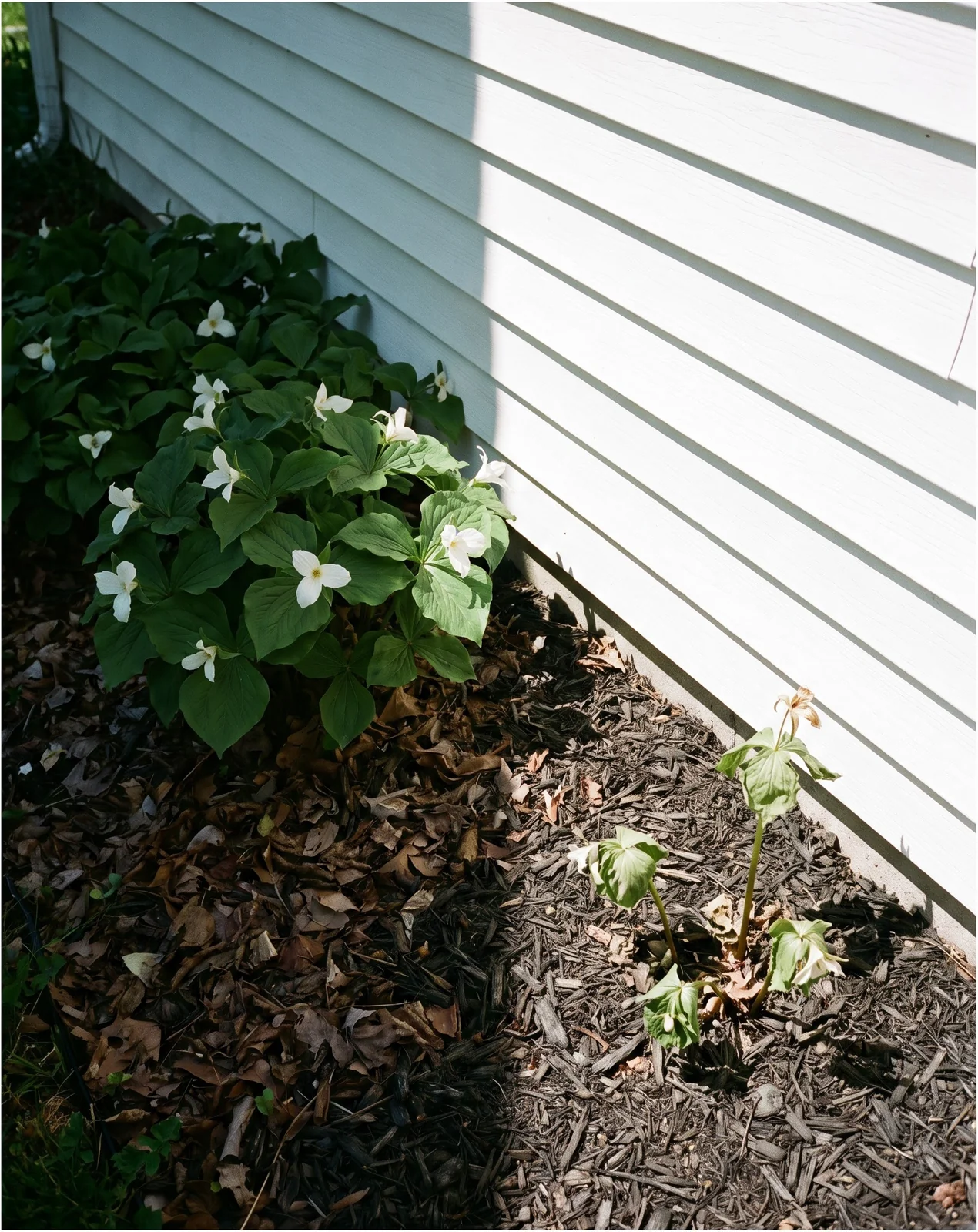
Planting a trillium is mostly ground preparation, and the ground matters more than the date. Build the bed toward deep, rich, humusy soil that holds moisture and still drains, in part shade to full shade, with plenty of organic matter and a neutral pH. No planting month can be quoted for the rhizome, so a confident calendar carries less weight than the soil description does. The plant's working season is not in question. The flower and the blades under it are the food supply while they are up, so handle the rhizome when the plant is not carrying them. Dig the bed before the plant is out of the ground.
After planting, the care is small and steady. Water regularly, and put a leaf mulch down each fall. It does for the plant what the woodland floor does without help, holding moisture at the surface and feeding the soil as it breaks down. Keep the shade, keep the ground from drying out through the growing season, and stop there. What a trillium can show above ground in any spring depends on what its blades put into the rhizome the season before.
Transplanting and dividing
Trillium moves badly. The sessile species does not transplant well and should not be dug in the wild, and white wake robin is best left alone where it grows. A plant already in your own bed is a different case, but the same mechanism applies. Lifting a trillium in growth takes the blades and the season's food with it. If a plant has to move, move it when it is not carrying a flower, into ground already prepared to the standard of the bed it left. Nobody has published how long a moved plant takes to flower again, and gardeners who move one are usually doing it because a building or a path left them no choice. Dividing an established clump is rarely worth the risk, because a clump that size is the product of many undisturbed years.
Growing trillium from seed
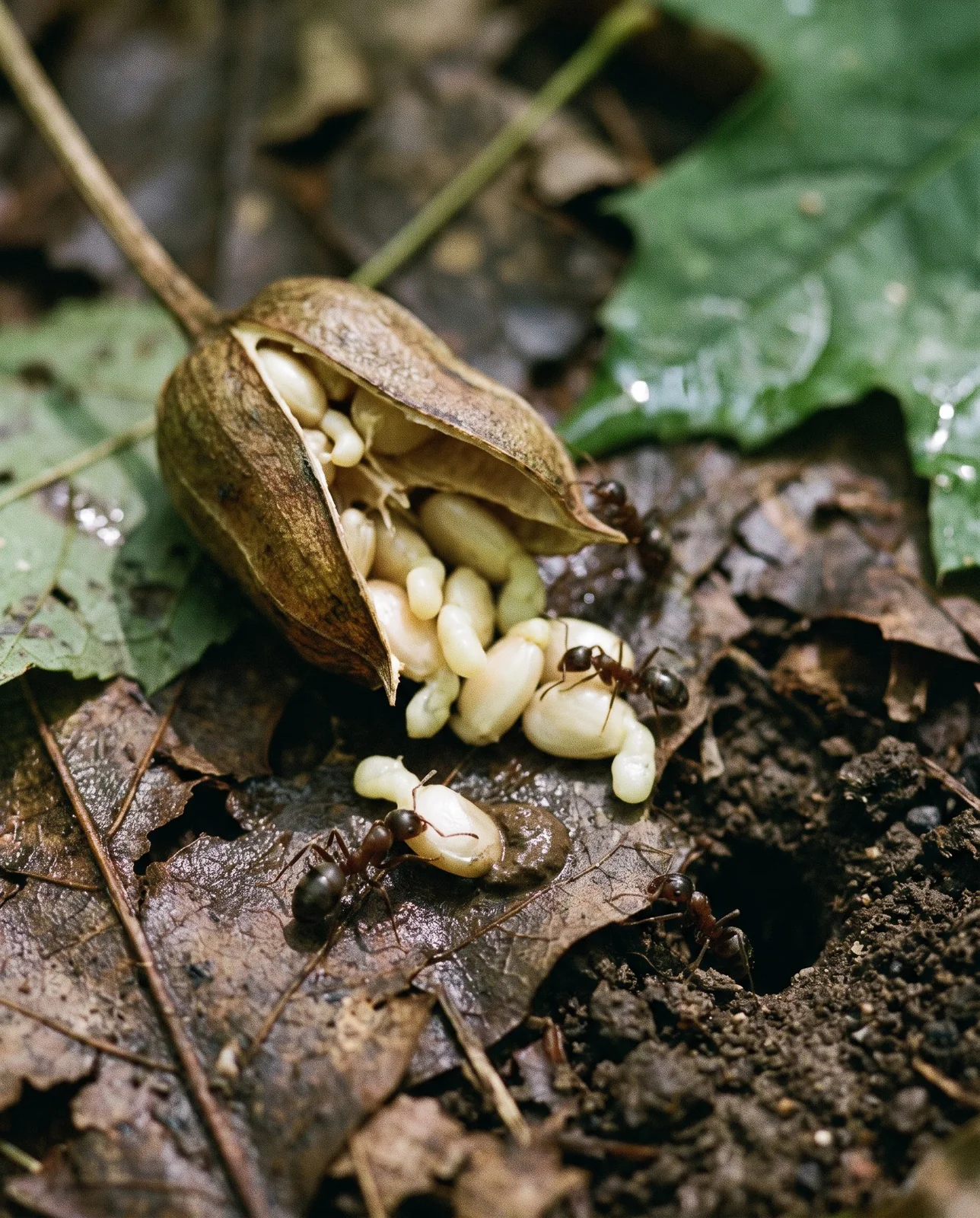
Growing trillium from seed is a long project that almost nobody finishes, and the plant's own dispersal explains part of why. Trillium seeds are fleshy and prized by ants, which carry them off to eat the sweet aril attached to the seed coat. Every species in the genus travels this way, drawing the ants with a fatty appendage called an elaiosome. That is a slow delivery service, and it is what puts young plants in a loose ring around an old one. In a garden bed it is also why sown seed goes missing. Seed propagation is difficult for a plant that runs on a rhizome, and the wait to a first flower runs into years by every count. A dormant rhizome bought ready to plant skips the whole of it.
How fast a trillium patch spreads
Slowly, by two routes, and both of them work at a walking pace. Underground, the rhizome creeps and the plant thickens into clumps over the years wherever nothing disturbs it. For a plant already in the ground, that is the whole of its expansion. Above ground the work is done by ants, which carry the fruit down into their nests, eat the flesh and leave the seed behind. That is a delivery measured in the length of an ant's errand, and it is why young plants turn up scattered around an older one at odd distances. Nobody has measured the rate, in inches a year or in feet a decade. In practice, trillium will not furnish a shaded bed inside the years you are watching. A bed that has to look full sooner needs a second plant beside it, hellebore for one, holding the ground while the trillium takes its time.
Ten trilliums, and what tells them apart
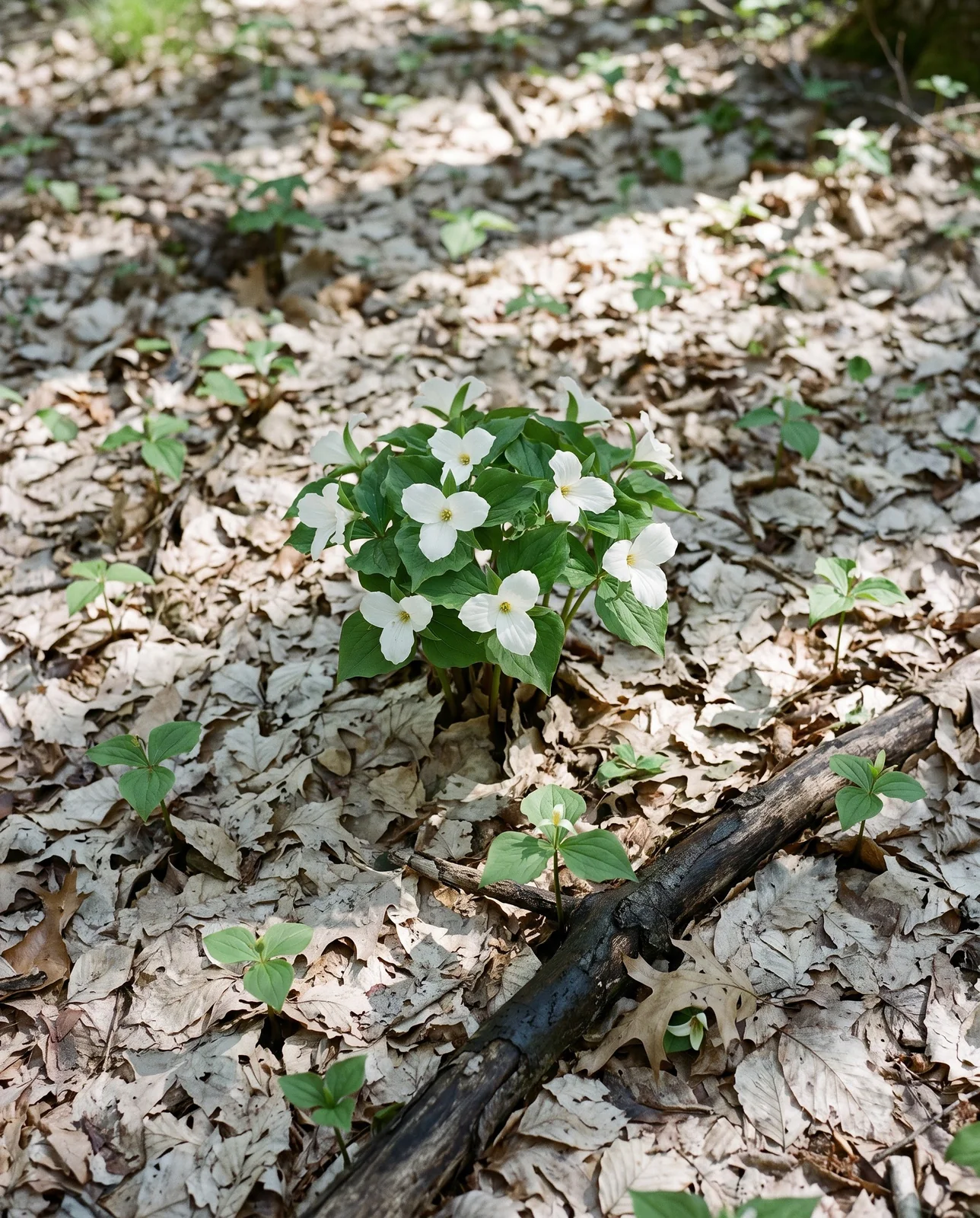
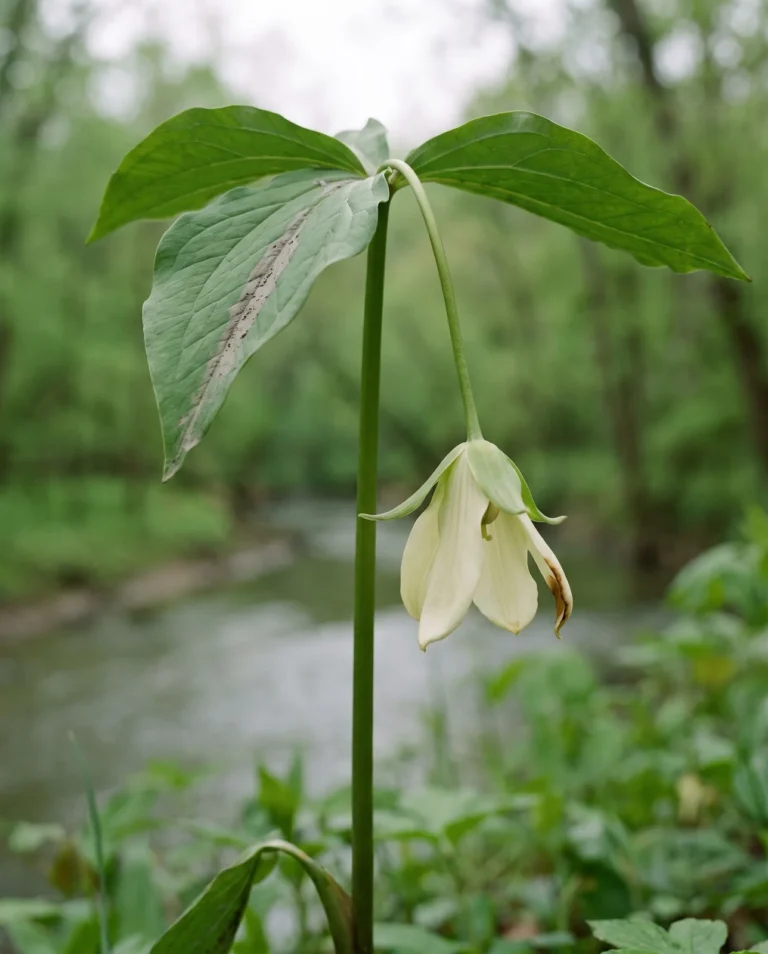
Color, hardiness, height and any conservation listing for the ten species described closely enough to compare, which is not the whole genus. The label matters more here than it does across most types of flowers, because the word trillium on its own settles nothing about color, size or whether the plant is protected where you live.
Is trillium rare?
It depends on the species and the state, and rare and protected are two different words. A rank measures how much of a plant is left; legal status is what a jurisdiction assigns, and the two come apart in both directions. The most familiar trillium is ranked secure across its global range, which means it is not judged to be at significant risk of extinction. That same species is named exploitably vulnerable in New York's plant regulation. Scale is where the answer turns slippery. Snow trillium carries a global rank of G4, apparently secure, while Michigan holds it imperiled at S2 and Wisconsin gives it S3. Those are two states on two scales, and no single figure covers both. Local loss is the part a walker can see: five populations of one trillium have been wiped out in southern Ontario. Rare, in the sense a walker means it, is local, and a rank calculated across a continent will not tell you what is left in your county.
Toxicity, and what the pet lists actually say
Trillium has no entry on the ASPCA's list of toxic and non-toxic plants. The absence was checked one name at a time, birthroot and wake robin trillium among them, and every request came back missing while a control plant on the identical address pattern returned normally. So the pet question has to be answered from elsewhere, and what exists is thin. The genus is a low severity poison in the fruits and the roots, with the symptoms and the toxic principle both unknown. The reading that holds is narrow: keep the fruit away from a dog or a child, and treat anything more specific as guesswork. One trap here produces confident wrong answers and is worth naming. One entry on that same pet list, titled Wake Robin, describes Arum maculatum, a European plant in a different family that happens to share the common name. The calcium oxalate irritation, drooling and vomiting recorded there belong to that plant.
Deer, ants and the rest of the wildlife
Deer are the pressure that shows first. Trillium is a favorite of early spring browse, alongside bellworts and ladyslipper orchids, and the blunt version of the same point is that deer love to eat trilliums. Fencing small patches put a figure on the cost: browsing cut blooming by as much as 90 percent over a few years, and given enough time it could kill out a stand. Timing is what makes the loss expensive. The plant is up early, when little else is open, and a browsed plant loses the same three bracts a picked plant loses, along with the season those bracts were going to pay for. No repellent, fence height or spray is documented for this plant, so exclusion is the only measure with a result behind it.
The other visitors take less. Ants, bees, flies and wasps all come to great white trillium, and the ants keep working after the flower is over, because they are also what moves the seed. That dependence sets the plant's limits. Forest fragmentation sits alongside unsustainable collecting among the conservation problems this species faces. Seed that travels the length of an ant's errand has no route across a road, a lawn or a subdivision to reach the next wood. A colony is where it is largely because it has always been there.
What goes wrong most often
What goes wrong most often when people grow trillium or find one already in the garden, most common first, each with the cause and the move that answers it.
A trillium lifted and replanted stalls, or never comes back. This flower does not transplant well, and the odds are no better across a garden than across a county. Move one only when a path or a building leaves no choice, and only when it is not carrying a flower. Nobody has published how many seasons a moved plant skips.
Green blades, no bloom, and two causes behind it. A seed-grown plant can simply be too young, with published figures running from three to five years to a first flower up to seven or more. A plant that lost its bracts to browsing or picking has nothing stored to spend on a flower the next spring. Neither has a fix beyond leaving the plant alone while the rhizome refills.
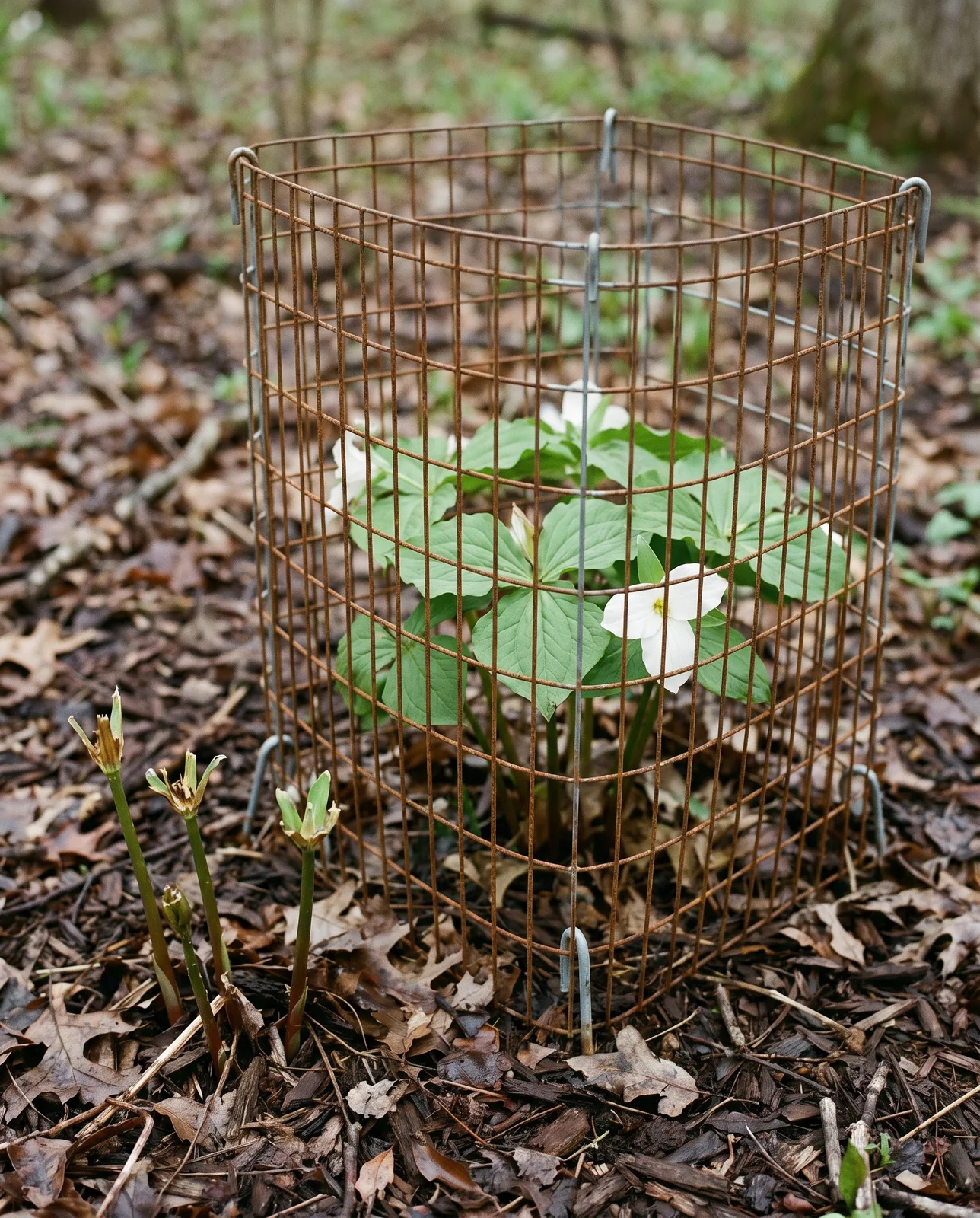
The flower and its bracts vanish in spring, or a newly planted rhizome is dug up in autumn. Deer take the top in spring; squirrels go for fresh plantings. Pin wire mesh over anything newly planted, and fence the patch if deer are the problem, since fencing is the one measure with a measured result.
Both can be partly right. In one province a bill died at first reading while a different trillium is protected as endangered. Settle it by species and by jurisdiction before you touch anything, and leave a wild plant alone while you are finding out.
Nothing at the counter separates nursery-propagated stock from wild-collected stock. The seller's account of how the plants were raised is the whole of the evidence, so ask for it, and walk past a large flowering clump offered cheaply.
A trillium that never flowers is sometimes not a trillium. Jack in the pulpit is the mix-up people report, its leaves reading as trillium until the flower opens. Wait for the flower before you decide, because the foliage alone will fool you.
Ontario's floral emblem
The white trillium is the floral emblem of Ontario, written into the province's own legislative text. The designation dates to 1937. The symbolic readings that circulate with this flower, and the state wildflower claims repeated alongside them, have nothing behind them.
Four things people get wrong about trillium
Each one turns up in comment threads under woodland flower photographs, and each has a specific answer.
The myth: A trillium blooms once every seven years.
The reality: There is no repeating cycle. The number belongs to the wait before a plant's first flower, and even that is contested, with published figures running from three to five years up to seven or more.
The myth: Picking one is illegal everywhere.
The reality: The rules come from different places and reach different plants. One province protects a single species as endangered. An act naming western trillium was repealed, the bill people quote stopped at first reading, and a roadside statute never names trillium at all. Silence about a state is not permission to pick.
The myth: A wild plant can be lifted and moved to a shady spot at home.
The reality: Two species should not be dug in the wild and are best left where they grow. Unsustainable collecting of wild plants is named among the conservation problems the great white trillium faces.
The myth: Trilliums are white.
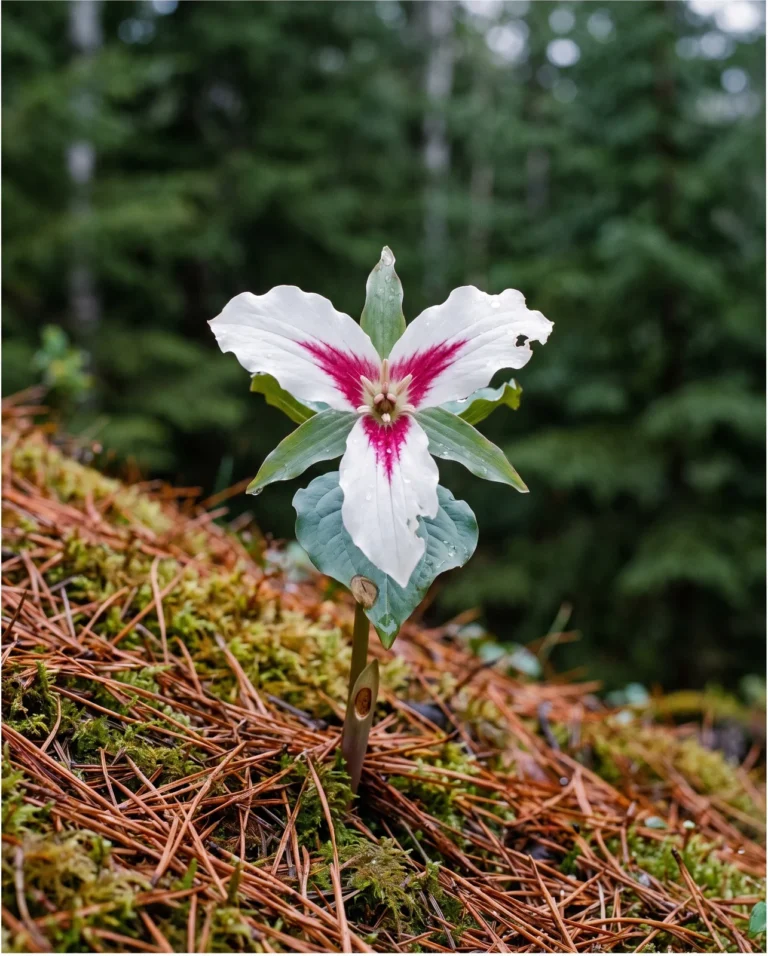
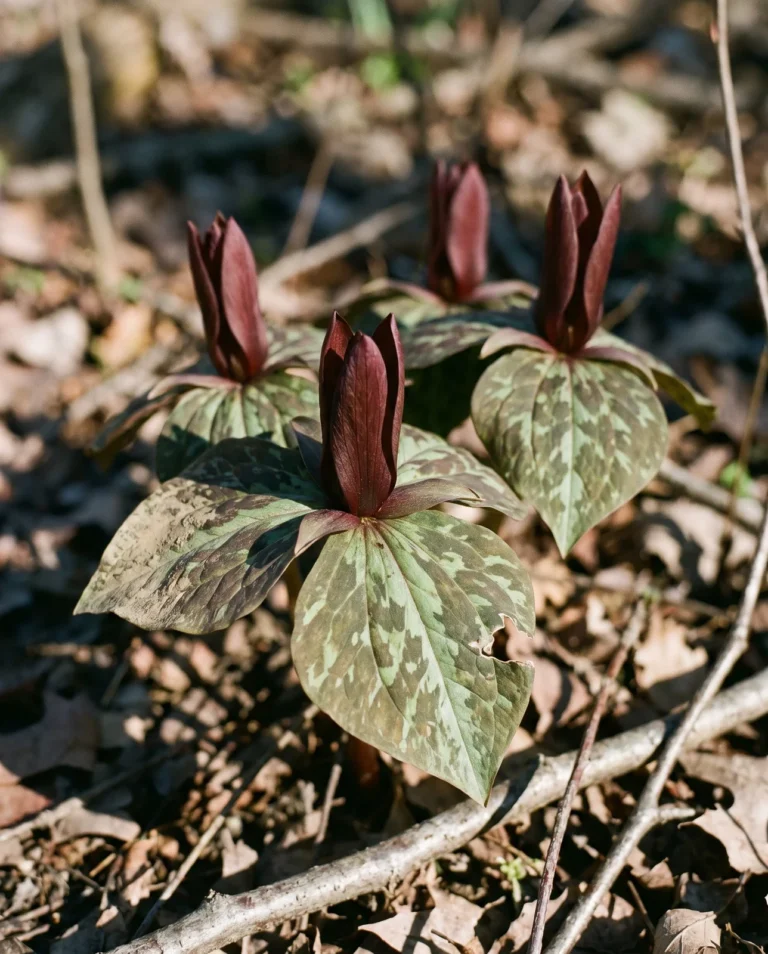
The reality: Species open maroon to brownish purple, yellow, purple, and mixtures running through orange to reddish green. Even among the white ones there is variation: one carries a deep pink V shaped mark near the base of every petal.
What to expect, year by year
What the first years, the settled years and an old colony look like, with the parts nobody measured named as such.
The first years belong to the rhizome, and nothing above ground reports on them. A bought rhizome arrives with an unknown number of years already behind it. The only clock anyone has measured starts at a seed: three to five years to a first flower, or seven and more. What a planted rhizome does in its first season above ground is not documented, so the first spring is a poor test of whether the planting worked.
Once a plant flowers, the pattern is annual. The bracts feed the rhizome through the season, and that pays for the following spring's bloom, so a plant nobody disturbs repeats itself every year. There is no third-year milestone, no size a plant is supposed to reach and no stem count to check against, so the honest expectation for the middle years is repetition and a little more width.
A wide colony is a date stamp on the ground. Rhizomes thicken into clumps only where they are left undisturbed, and seed goes no further than an ant carries it. Neither process can be hurried, so a drift across a woodland floor marks a long run of years nobody dug, mowed or grazed hard. The consequence runs one way: a patch on that scale cannot be replaced inside any timescale you control.
FAQ
What is special about trillium?
Everything about the plant comes in threes, and the three green blades under the flower are bracts. Picking the flower takes those bracts, and with them the plant's ability to feed itself for the year.
Why are trillium flowers illegal to pick?
In most places they are not. Ontario protects drooping trillium as an endangered species, habitat included. Oregon's roadside statute covers any plant within 500 feet of a highway center without naming trillium. The Ontario fine people quote every spring belongs to a bill that stopped at first reading.
Do trilliums bloom every 7 years?
No. The figure describes a one-time wait before the first flower, running from three to five years up to seven or more, and after that a plant nobody disturbs flowers each spring.
What is another name for trillium?
Wake robin, wakerobin and birthroot are the recorded common names for the genus. Species carry their own on top of that: the red-flowered one is red wake robin, and the Pacific species is western trillium.
What does the trillium flower symbolize?
Nothing that can be traced. The one documented association is official: the white trillium is the floral emblem of Ontario, written into the province's own legislative text.
Is trillium a rare flower?
It depends on the species and the state. The most familiar one is ranked secure across its global range while carrying a protected status in New York, and snow trillium is threatened in Wisconsin.
What happens if you pick a trillium?
The flower comes away with the three bracts under it, which removes the plant's ability to feed itself, so the rhizome goes into winter without the energy that pays for the next bloom. How long a stripped plant needs to make that back has never been measured.
When should you transplant trillium?
Ideally never. This flower does not transplant well, and wild plants should be left where they grow. If a garden plant has to move, move it when it is not carrying a flower.
How quickly do trilliums spread?
Slowly, along two routes: rhizomes that thicken into clumps where nothing disturbs them, and seed carried off by ants that eat the flesh and leave the seed in their nests. Nobody has published a rate in inches or in years.
When should you plant trillium?
No month can be quoted, and no depth, spacing or orientation for a rhizome either. What is specified is the ground: deep, rich, humusy soil that stays moist and drains, in part shade to full shade.
Interesting tips
- One trillium is worth putting your nose to. Trillium cuneatum carries a sweet but faint fragrance that some compare to bananas.
- One species answers to three different names in three official documents. Trillium flexipes is white wake robin in Missouri's field guide, drooping trillium in Ontario's endangered species listing, and nodding trillium in New York's plant regulation.
- The plant feeds more than its pollinators. Great white trillium hosts the larvae of the black-patched clepsis moth and the American angle shade moth.
Related Guides & Flowers
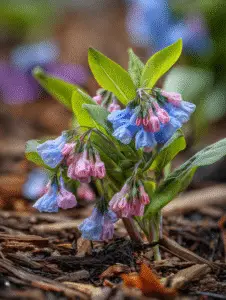
Virginia bluebells
The other native woodland spring flower people meet on the same shaded walk.
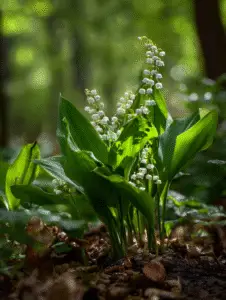
Lily of the valley
Another shade perennial that runs on rhizomes, and one that spreads far faster.
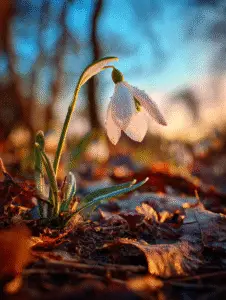
Snowdrops
Opens earlier under the same bare trees, before the woodland leafs out.
Deer resistant flowers
What deer tend to leave alone, for beds where browsing keeps taking the buds.
Enjoying our flower guides? Add YourFlowersGuide as a preferred source on Google. It helps more readers find us.
Add to Preferred Sources