Contents
Viburnum
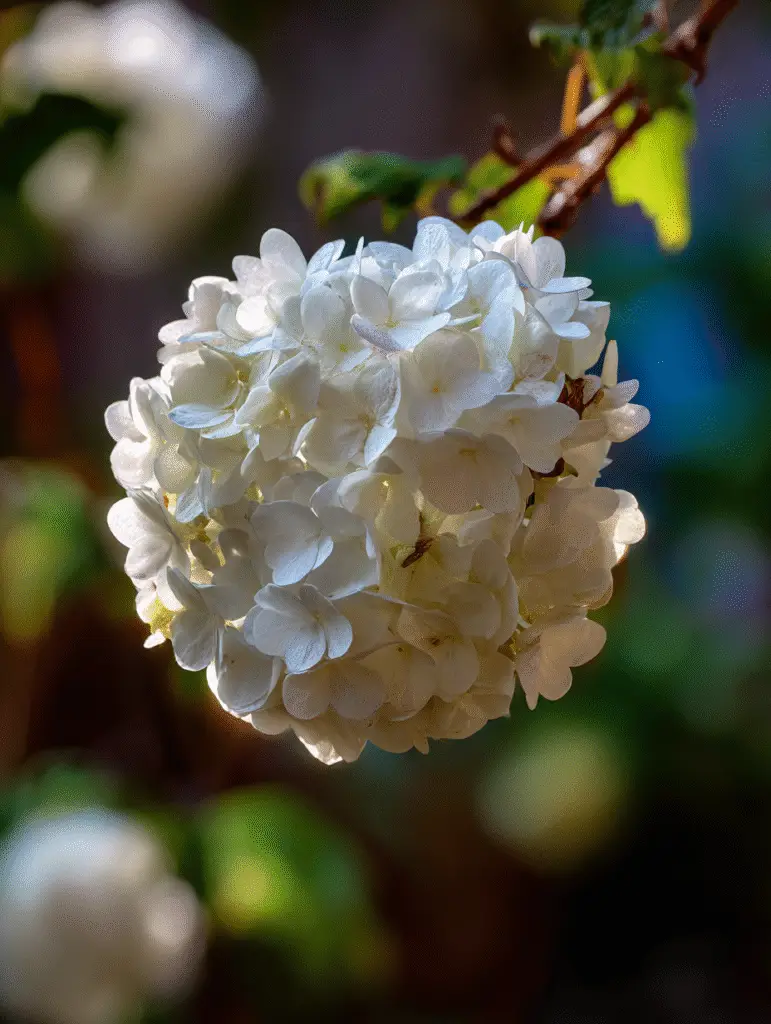
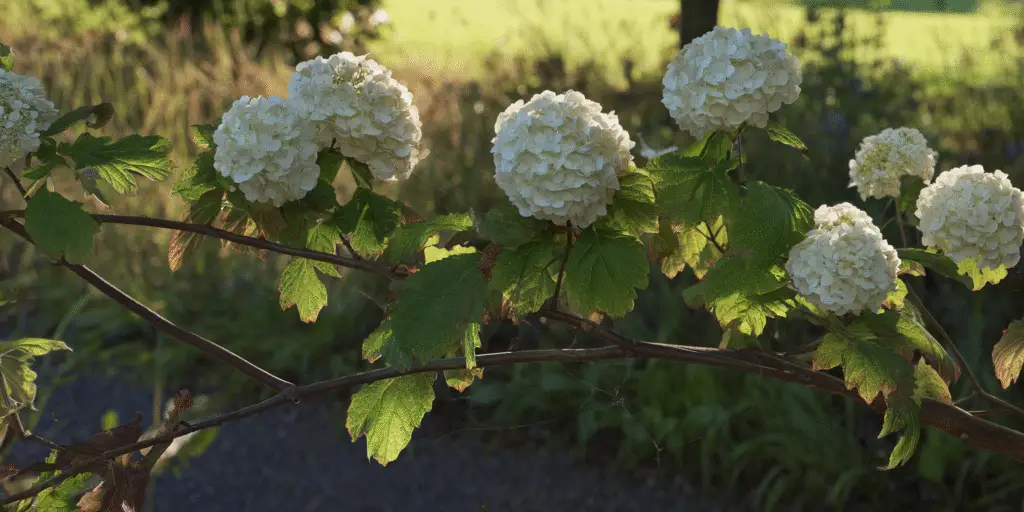
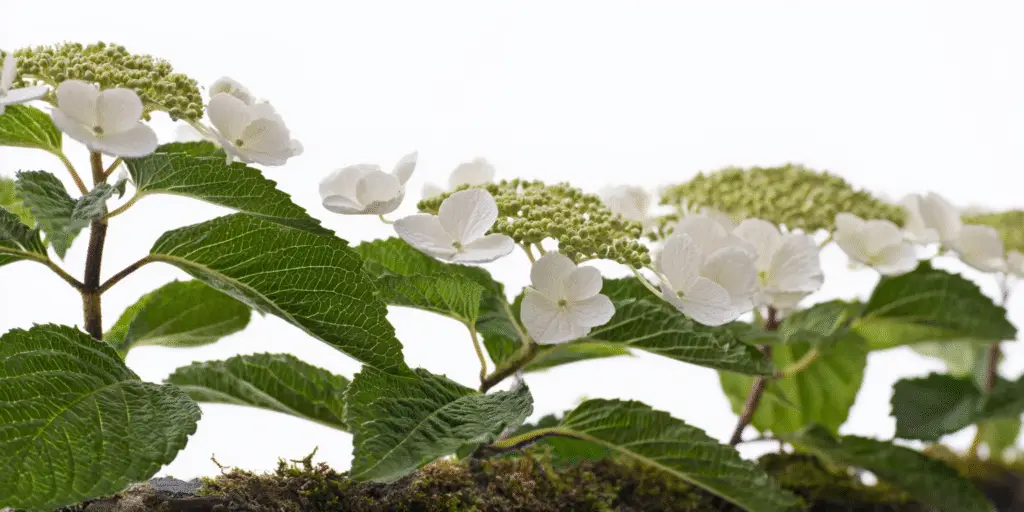
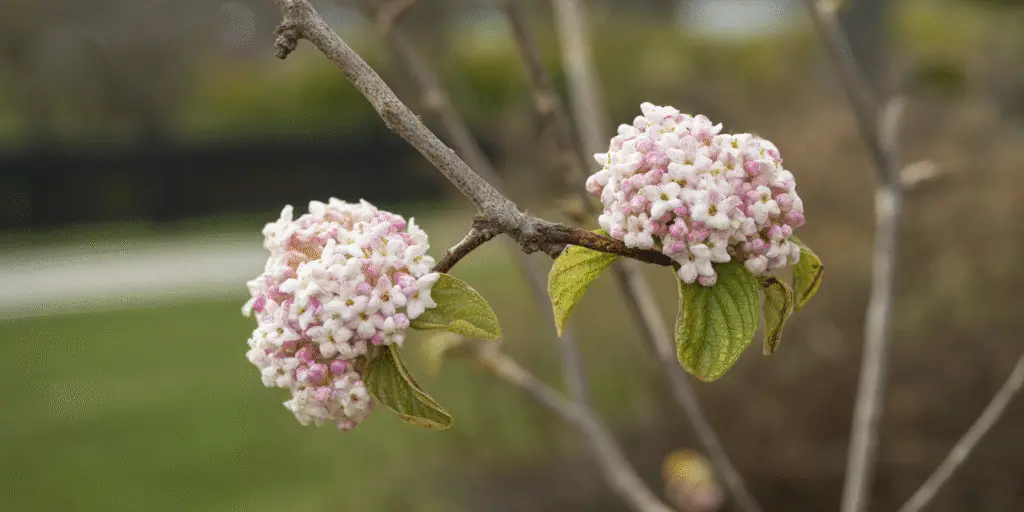
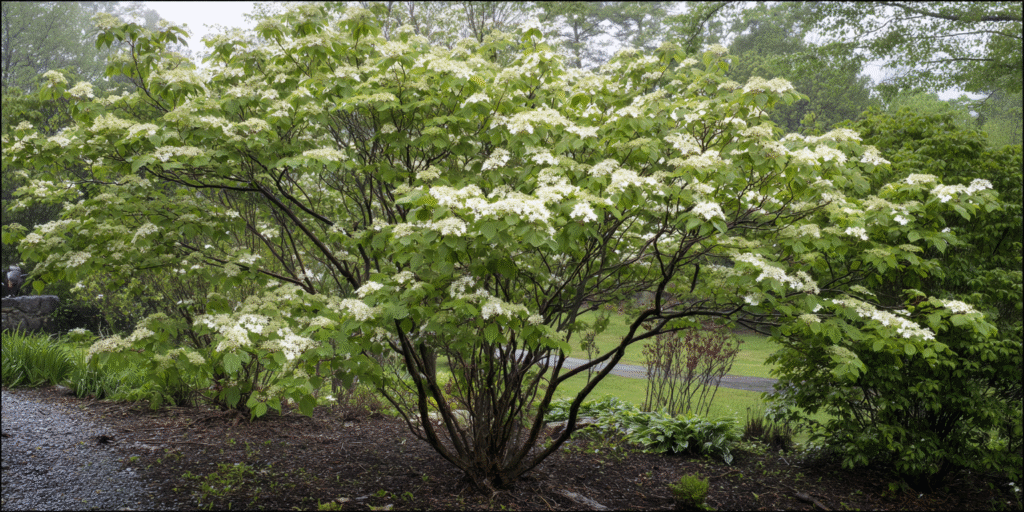
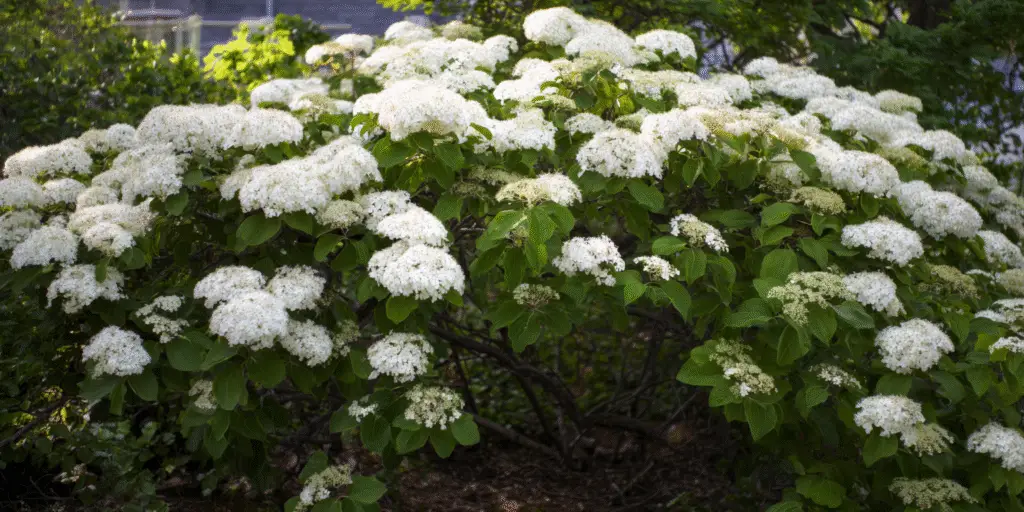
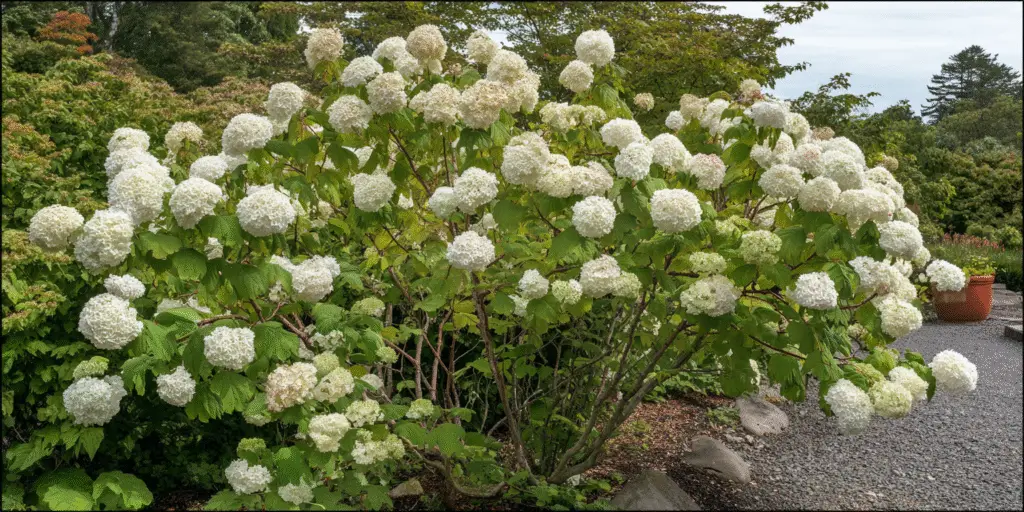
Viburnum is a genus of ornamental flowering shrubs treasured for its showy clusters of blossoms (the viburnum flower) and robust garden performance. This group encompasses over 150 species of shrubs (and a few small trees) native to Asia, Europe, and the Americas, thriving across temperate regions. Gardeners prize viburnums for their abundant white flowers or delicate pink flowers, often borne in large, rounded or lacecap clusters that create a striking display in spring. Many viburnums also offer a sweet, spicy fragrance, vibrant red or purple fall foliage, and ornamental berries, giving them multi-season appeal. As versatile landscape plants, viburnums can serve as specimen bushes, foundation plantings, or even flowering hedges due to their dense branching and lush foliage. They are generally easy to grow and low-maintenance, with good resistance to pests and diseases compared to fussier types of flowers. With their combination of beauty, fragrance, and hardiness, viburnum shrubs have become staples in gardens around the world.
A clear, step-by-step guide to soil, planting, watering, feeding, pruning, and winter care. Includes zone timing, container tips, companions, and quick fixes for common problems.

Bouquet Ideas
Explore simple, beautiful bouquet ideas for the home, gifts, and special occasions from romantic mixes to clean, minimal styles. Each idea includes suggested flower combinations, color palettes, and sizes, with photos for quick inspiration.
🌱 Taxonomy and origin
Botanically, viburnums belong to the Adoxaceae (moschatel) family, a grouping that also includes elderberries. Historically, the genus was classified in the honeysuckle family (Caprifoliaceae) before modern DNA studies placed it in Adoxaceae. The genus Viburnum comprises roughly 150 to 175 species, all of which are woody plants. Depending on the species and climate, a viburnum may be evergreen (retaining leaves year-round in mild climates) or deciduous (shedding leaves in cold winters). These plants are indigenous throughout the Northern Hemisphere, with a natural range spanning North America, Europe, and much of Asia. A few species even extend into mountainous subtropics, such as parts of South America and Southeast Asia, though viburnums are absent from equatorial tropics. In their native habitats, viburnums often grow in woodlands, thickets, or at forest edges. The name “viburnum” comes from Latin, originally referring to one European species (Viburnum lantana). Today, viburnums are cultivated worldwide for ornamental use, valued for their adaptability and attractive characteristics.
🌸 Bloom time
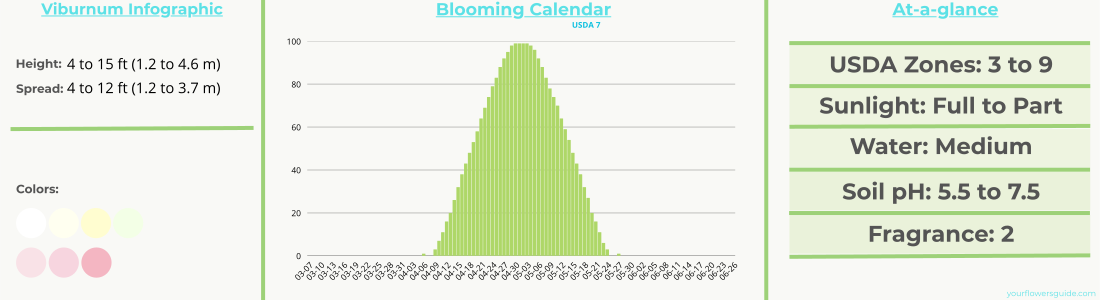
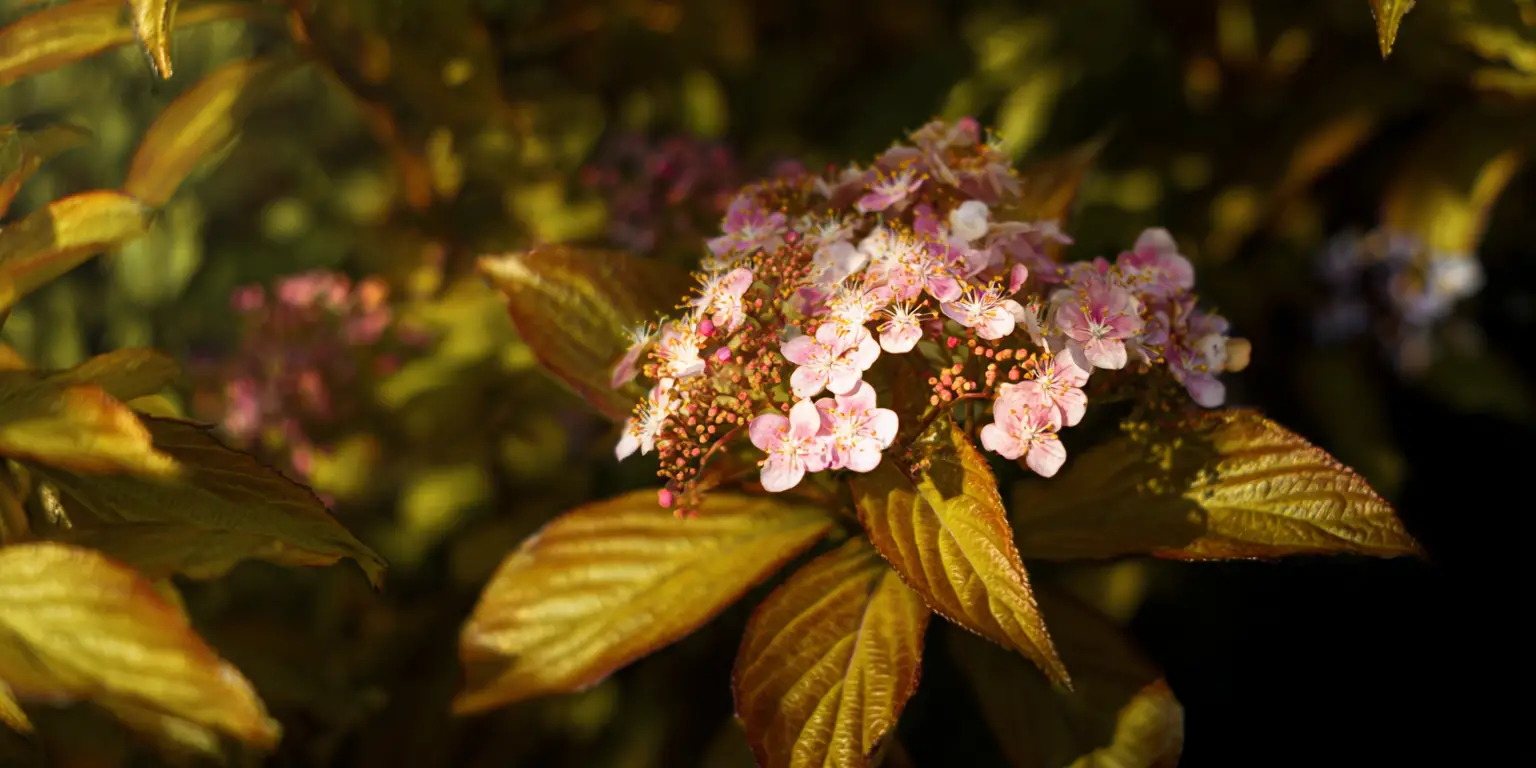
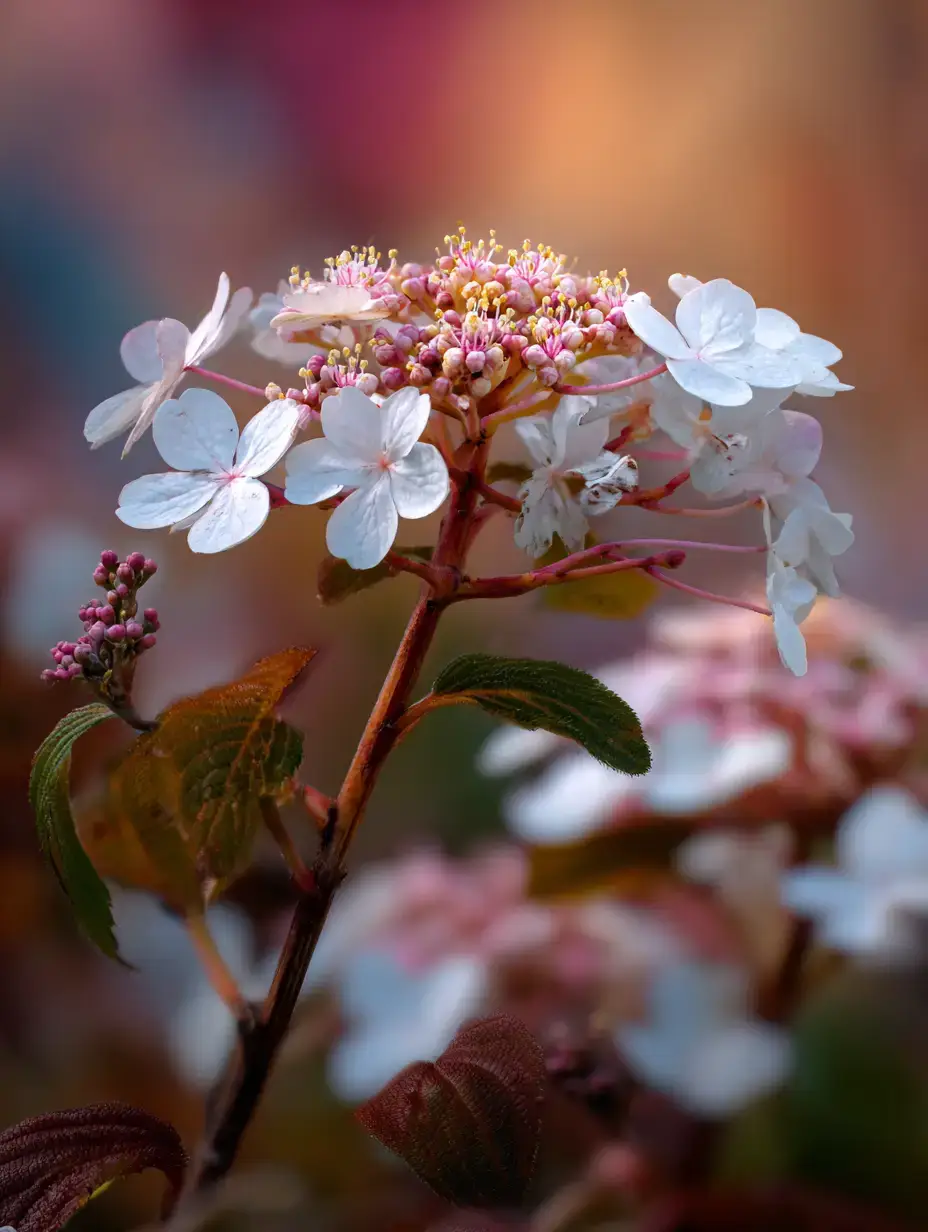
Most viburnum shrubs burst into bloom in spring, making gardens come alive with their clusters of blossoms. Depending on the species and local climate, flowering generally occurs between March and May. Many popular varieties, such as the Korean spice viburnum and doublefile viburnum, bloom in mid to late spring once warm weather settles in. The bloom period typically lasts a few weeks, during which the shrub is covered in dozens of snowy white or soft pink clusters. While spring is the primary bloom time, a few viburnum species offer off-season interest. For example, the bodnantense viburnum (Viburnum × bodnantense) produces fragrant pink flower clusters in late winter, blooming on bare branches. Conversely, some cultivars like Viburnum plicatum ‘Summer Snowflake’ can sporadically rebloom through summer after an initial spring display. In general, however, gardeners can expect one significant flush of viburnum blossoms each year, heralding the arrival of spring in temperate gardens.
📏 Height and spread
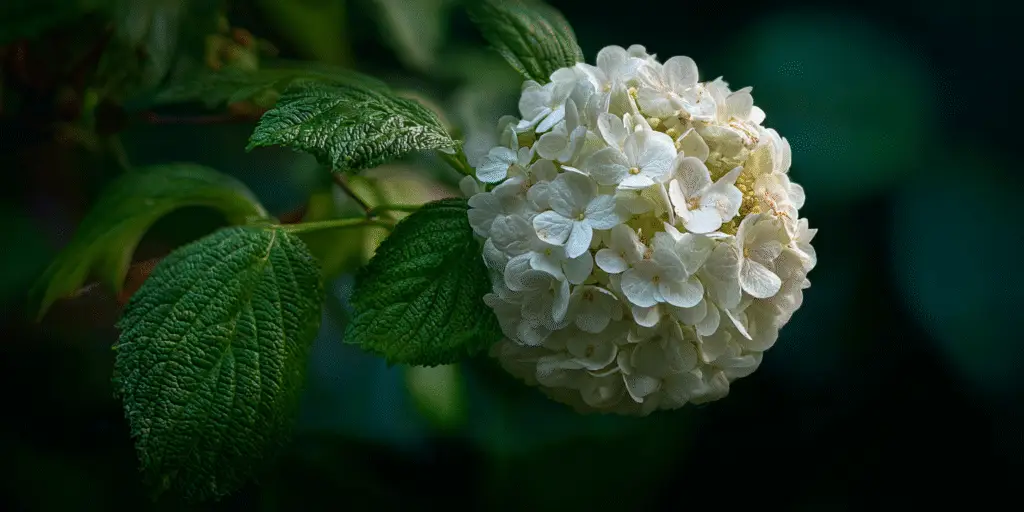
Viburnums exhibit a wide range of sizes and growth habits, allowing gardeners to find a suitable variety for almost any space. Mature heights across the genus can vary from as compact as 2 to 3 feet tall (0.6 to 0.9 m) in dwarf varieties up to 20 feet or more (over 6 m) in the largest species. Most garden viburnums grow as medium to large shrubs in the 6 to 12 foot range (~1.8 to 3.6 m) at maturity, often with a similar spread. These shrubs tend to have a full, branching form with a rounded or vase-shaped outline. Some, like the arrowwood viburnum (Viburnum dentatum), can reach 10 feet high and sucker outward to form colonies, while others, such as the dwarf European cranberrybush viburnum, stay low and mounded. When planting viburnum, it’s important to allow enough room for its eventual girth. As a guideline, spacing plants 4 to 8 feet (1.2 to 2.4 m) apart (depending on the variety) ensures they can achieve their natural spread. With their dense foliage and variable height, viburnums can function as screening plants, backdrop shrubs, or even small ornamental trees if trained up on a single trunk.
☀️ Light
Most viburnum varieties thrive in sites that receive ample sunlight. Full sun (at least 6 hours of direct light per day) encourages the best flower production and overall form. In cooler climates, planting viburnum in full sun helps ensure abundant blooming and sturdy growth. However, these shrubs are adaptable and can also grow well in partial shade. In fact, in hotter regions or USDA zones at the warmer end of their range, a bit of afternoon shade can be beneficial to prevent leaf scorch and moisture stress. Some species, such as mapleleaf viburnum (Viburnum acerifolium), naturally grow in woodland understories and tolerate more shade than others. As a rule of thumb, provide at least a half day of sun for vibrantly blooming viburnum shrubs, but know that a few hours of shade, especially during the peak of summer, will not harm these resilient plants. Too much deep shade, on the other hand, may result in sparse flowering and a leggier, open growth habit.
💧 Water
Viburnum shrubs perform best with moderate, consistent moisture. They appreciate soil that stays evenly moist but drains well. Soggy, waterlogged conditions can lead to root problems. During the first year or two after planting, regular watering is essential while the root system establishes. Deeply water the shrub about once per week (or more often in hot, dry weather), aiming to soak the soil to a depth of several inches. Once established, many viburnums exhibit decent drought tolerance, especially native species that have adapted to local rainfall patterns. Mature viburnum plants can usually get by with rainfall and the occasional supplemental watering during extended dry spells. Monitor the foliage for signs of water stress. Leaves may wilt or curl inward if the plant is too dry. Applying a layer of mulch around the root zone helps retain soil moisture and keeps the roots cool, reducing watering frequency and promoting healthier growth.
🌍 Soil and pH
When it comes to soil, viburnums prefer a fertile, well-draining medium that retains some moisture without becoming boggy. Incorporating organic matter (such as compost or leaf mold) into the planting area will improve drainage and nutrient content, giving viburnum roots an ideal environment. These shrubs are not overly fussy about soil type and can grow in loam, light clay, or even sandy soils if watered sufficiently. Soil pH is also something viburnums handle with flexibility. They tend to thrive in neutral to slightly acidic soils (around pH 6.0 to 7.0), which is typical of many garden loams. That said, many viburnum species will tolerate mildly alkaline soils too. For instance, the European cranberrybush viburnum can grow in chalky, lime-rich earth. Extremes of pH (very acidic or very alkaline) may cause nutrient availability issues, but generally viburnums are forgiving. To keep a viburnum healthy, focus more on providing rich, well-aerated soil and avoid conditions where water stands around the roots.
❄️ USDA hardiness
Viburnums are remarkably diverse in cold hardiness, with different species adapted to a wide span of climates. Gardeners in frigid northern regions will find that some viburnums can survive extremely cold winters. For example, the arrowwood viburnum (Viburnum dentatum) is hardy down to USDA zones 2 to 3, tolerating temperatures well below 0°F (−18°C). Many of the commonly grown deciduous viburnums are reliably hardy in zones 4 to 8, making them suitable for most temperate areas. These include favorites like Viburnum opulus (snowball bush) and Viburnum carlesii (Korean spice viburnum). On the warmer end, there are viburnum species that thrive in subtropical climates. The sweet viburnum (Viburnum odoratissimum) and Laurustinus viburnum (Viburnum tinus) are examples of evergreens that grow well in zone 8 through 10 or even 11, preferring mild winters and warm summers. In general, the genus offers options for nearly every garden, whether you face harsh freezes or balmy conditions. It’s always wise to check the specific hardiness zone for a viburnum species or cultivar you intend to plant, as cold tolerance and heat tolerance can vary. With the right match, viburnums can flourish from chilly northern landscapes to southern gardens.
🌼 Propagation and longevity
Viburnum shrubs can be propagated through several methods, with cuttings being one of the most common approaches for gardeners. Softwood cuttings taken in late spring or early summer (when the new growth is still green and flexible) tend to root readily. Gardeners usually snip 4 to 6 inch sections of vigorous new stems, remove the lower leaves, and insert them into a moist rooting medium. With high humidity and indirect light, these cuttings often produce roots within a month or two. Hardwood cuttings, taken in late fall or winter from mature woody stems, are another option. However, they root more slowly and benefit from rooting hormone and patience. Some viburnum varieties can also be layered by burying a low branch until it sprouts roots, or divided from suckering clumps. Growing viburnum from seed is possible but more challenging, as seeds usually require a prolonged warm-and-cold stratification period and may take over a year to germinate.
Once you have a viburnum planted, you can expect a long-lived addition to your landscape. When properly cared for in a suitable site, many viburnum shrubs can live for decades. It’s not uncommon for a viburnum to thrive for 30, 40, or even 50 years in a garden. Some species are known to persist even longer under ideal conditions. In fact, there are accounts of viburnums living well past the half-century mark. Their longevity makes them an enduring choice, often outlasting more short-lived perennials and providing structure and beauty to the garden for generations. To help a viburnum reach its potential lifespan, give it the care it needs: adequate water, occasional feeding, and rejuvenation pruning of very old stems to encourage new growth every few years.
👃 Fragrance
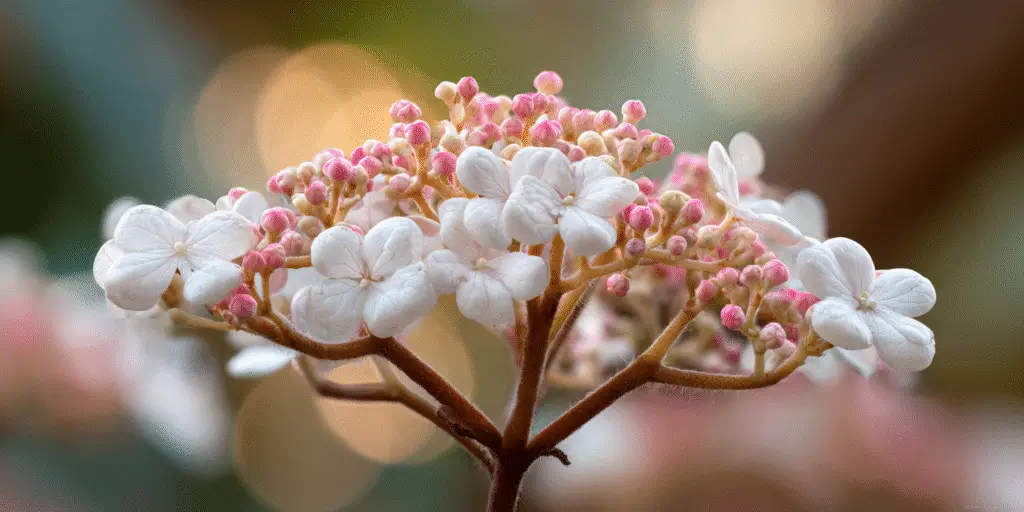
One of the delightful features of many viburnums is their fragrance. Several viburnum species are celebrated as fragrant shrubs whose blooms can perfume the air in springtime. The most famous is perhaps Viburnum carlesii, the Korean spice viburnum, which produces pink-tinged buds that open to white flowers with a rich, sweet-spicy scent often compared to cloves or vanilla. Hybrid viburnums like Viburnum × burkwoodii and Viburnum × juddii also offer wonderful fragrance, making them popular choices near patios and doorways where the scent can be enjoyed up close. When a mature viburnum is in full flower, its aroma can carry on the breeze and attract pollinators like bees and butterflies. It’s worth noting that not all viburnums are equally fragrant. Some, such as doublefile viburnum (Viburnum plicatum), have impressive blooms with little to no scent. Gardeners specifically seeking perfumed spring blossoms should select one of the known aromatic varieties. By planting a fragrant viburnum near outdoor living spaces or paths, you can savor its seasonal scent as one of the early highlights of the gardening year.
⚠️ Toxicity and pet safety
Gardeners with children or pets will be pleased to know that viburnum is generally considered a safe, non-toxic plant. Unlike some popular ornamentals (for example, certain lilies or oleander) that are highly poisonous, viburnum has no widespread reputation for toxicity. According to pet safety databases, no viburnum species are listed as toxic to dogs or cats, meaning if a curious pet chews a few leaves or a stray berry, serious harm is unlikely. For humans, viburnum is also regarded as non-poisonous. In practical terms, touching or handling the plant is safe, and accidental ingestion of a small amount would typically only cause mild stomach upset at worst. That said, the berries of some viburnum species are not very palatable and can be mildly emetic (causing vomiting) if eaten in large quantities. For instance, the fruit of the European cranberrybush (Viburnum opulus) is extremely tart and may cause stomach discomfort when raw, though it has been used in jams after cooking. By contrast, berries of nannyberry viburnum (Viburnum lentago) are actually edible and were historically eaten or made into preserves. As a precaution, it’s wise to discourage pets and children from eating any unknown berries in the garden. Overall, viburnum shrubs are a pet-friendly choice for landscapes, especially compared to more hazardous roses or other flowering plants that might require chemical treatments or carry toxicity.
🌿 Vase life
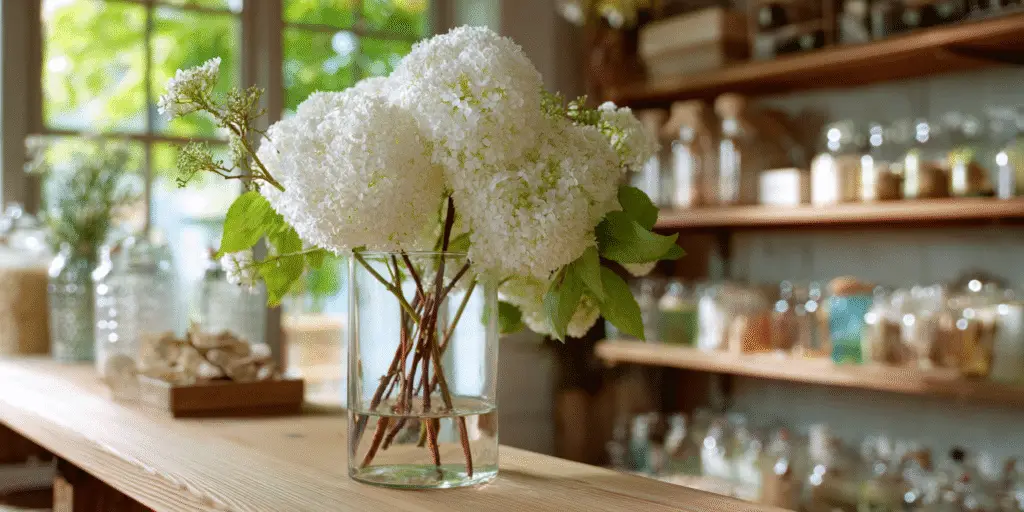
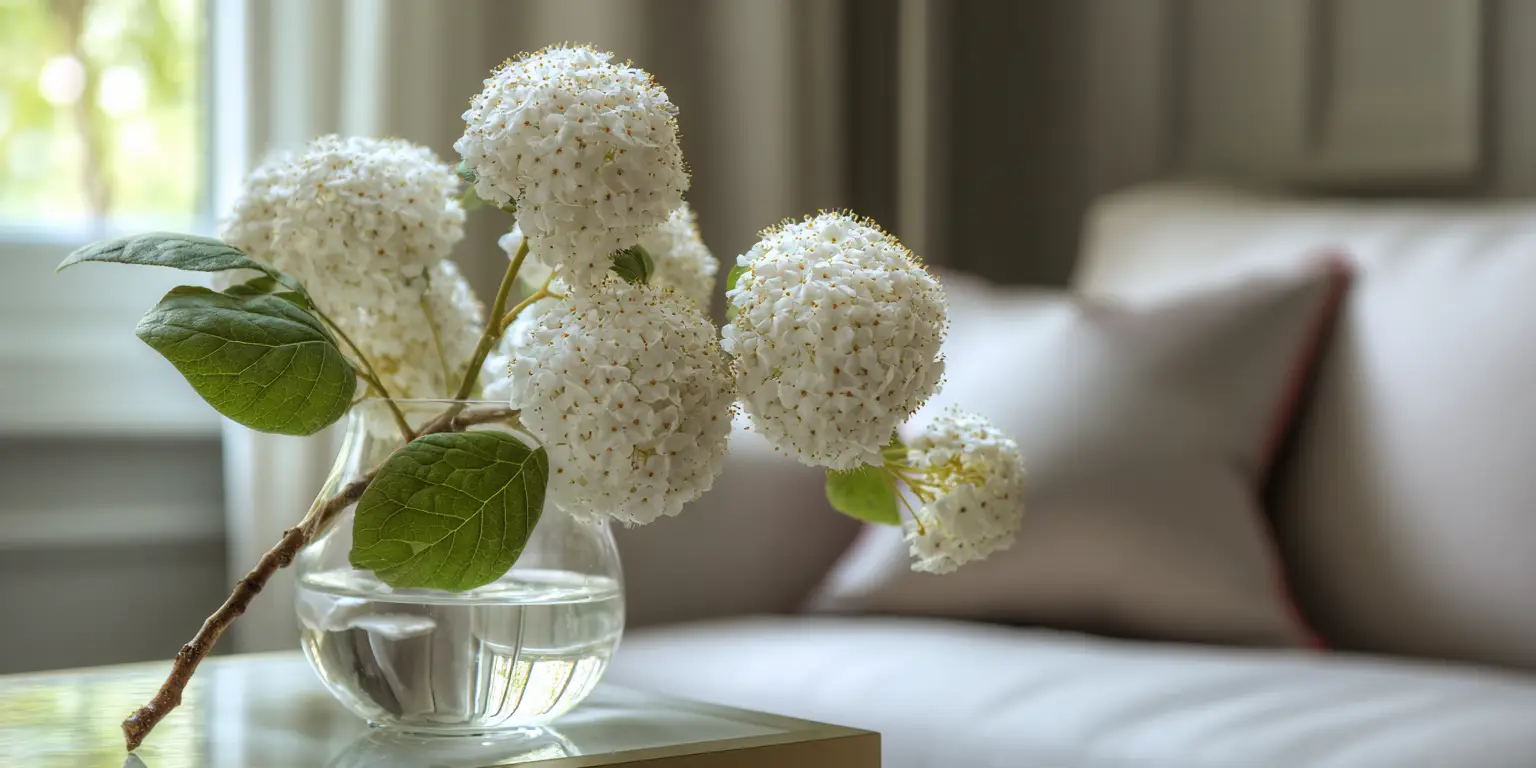
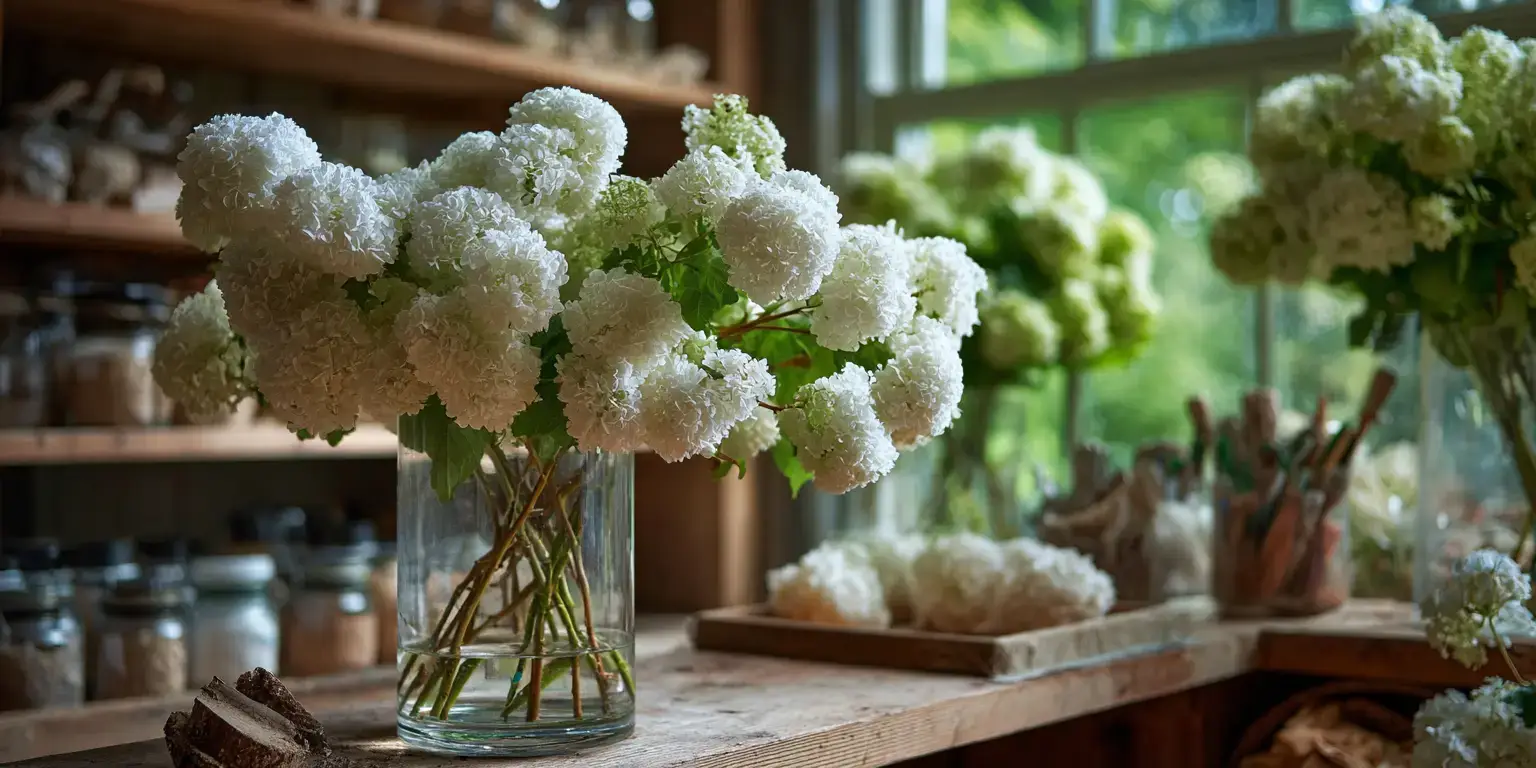
In addition to shining in the garden, viburnum flowers can be cut and brought indoors for floral arrangements. Clusters from varieties like the snowball bush (Viburnum opulus ‘Roseum’) are especially popular in vases due to their large, globular blooms that resemble hydrangea heads. When used as cut flowers, viburnum stems have a modest vase life of about 5 to 7 days. To maximize freshness, it’s recommended to cut viburnum blossoms in early morning when they are well hydrated, and choose stems where some buds are just opening (rather than fully open flowers). Remove any leaves that would sit below the water line, and make a clean angled cut on the stem. Because viburnum branches are woody, you can also split or lightly crush the base of the stem to improve water uptake.
With these steps, the pretty white or pink clusters will hold up for nearly a week. Refreshing the water and trimming the stem ends every few days can extend the display slightly. Enjoy the subtle fragrance and elegant look of viburnum cut flowers as a short-lived but lovely indoor accent.
🐛 Pests and diseases
Viburnums are relatively resilient shrubs, suffering from few serious pests or diseases when grown in appropriate conditions. However, they are not completely trouble-free. One notable pest is the viburnum leaf beetle (Pyrrhalta viburni), which has become a major problem in some regions. Both the adult beetles and their larvae feed on viburnum foliage, and a heavy infestation can skeletonize leaves and weaken the plant. Gardeners should watch for this pest’s small yellow larvae in spring or the brown adult beetles in summer. If detected, affected branches can be pruned out (to remove eggs) or treated with insecticidal soap or other controls as needed. Apart from beetles, viburnums might occasionally get visits from aphids, scale insects, or spider mites, but these are usually minor issues that natural predators or a strong water spray can keep in check.
Disease pressures on viburnum are generally mild. In humid, shaded sites, powdery mildew can appear as a white film on leaves, particularly late in the growing season. This fungal disease is mostly cosmetic and can be minimized by ensuring good air circulation around the plant. Various leaf spot fungi may cause reddish or brown blotches on foliage during wet weather, but again these seldom cause serious harm and can be managed by cleaning up fallen leaves and avoiding overhead watering. On rare occasions, viburnums that are stressed (for instance by drought) can develop fungal cankers or dieback on branches. Pruning out any dead or diseased wood is usually sufficient to keep the shrub healthy. Overall, viburnums do not demand intensive pest management. This is one reason they are favored in low-maintenance landscapes. Compared to more disease-prone plants like roses, viburnums often sail through the growing season with minimal intervention, especially when their basic needs are met.
FAQ
How fast do viburnum shrubs grow?
Viburnums are considered moderate growers. On average, a viburnum plant can put on about 1 to 2 feet of growth per year under good conditions. Growth rate can vary by species and environment – some types, like arrowwood viburnum, may reach their mature height (around 10 to 12 feet) in roughly 7 to 10 years. Providing adequate sun, water, and nutrients will help your viburnum achieve its maximum growth rate.
When and how should I prune my viburnum?
The best time to prune viburnum is immediately after it finishes flowering in spring. Since viburnums bloom on old wood (last year’s growth), pruning right after bloom allows you to shape the shrub without sacrificing next year’s flower buds. Use clean, sharp pruners to remove or shorten any overly long, damaged, or crossing branches. In general, viburnums don’t need heavy pruning annually – just occasional maintenance. If the shrub becomes very dense or old, you can rejuvenate it by cutting a few of the oldest stems down to the ground to encourage fresh shoots.
Can viburnum grow in shade or does it need full sun?
Viburnum shrubs can tolerate partial shade, but they typically flower most profusely in full sun. Ideally, provide at least around 6 hours of direct sunlight for the best blooms and a sturdy, compact habit. In hotter climates, some afternoon shade is fine and can even be beneficial to prevent stress. If grown in too much deep shade, a viburnum may live but will likely produce fewer flowers and have a more open, leggy form.
Do viburnum flowers have a strong fragrance?
Many viburnum flowers are indeed fragrant, but not all species are scented. For example, Korean spice viburnum (Viburnum carlesii) is famous for its wonderful spicy-sweet fragrance that can fill the yard in spring. Burkwood viburnum and Judd viburnum are also very fragrant. On the other hand, some viburnums like the snowball viburnum (Viburnum opulus ‘Roseum’) or doublefile viburnum (Viburnum plicatum) have showy flowers with little to no scent. If fragrance is a priority, choose one of the known aromatic varieties.
Are viburnum berries edible for people or wildlife?
After flowering, viburnum shrubs often produce clusters of berries (drupes) that can be red, blue, black, or other colors. These berries are a valuable food source for birds and other wildlife. For people, certain viburnum berries are technically edible but usually not eaten raw due to their unpleasant taste or mild toxicity. Nannyberry (Viburnum lentago) fruits, for instance, are edible and have been used in jams. In contrast, European cranberrybush (Viburnum opulus) berries are extremely tart and can cause stomach upset if eaten in quantity without cooking. It’s best to consider viburnum fruit as ornamental berries and wildlife food, rather than a snack for humans.
Is viburnum considered a deer-resistant plant?
Can I grow viburnum in a container or pot?
Most viburnums grow into fairly large shrubs over time, so they are traditionally planted in the ground. However, it is possible to grow smaller varieties in large containers for a number of years. Dwarf and compact cultivars can adapt to container life. For example, a dwarf European cranberrybush or the witherod viburnum cultivar ‘Lil Ditty’ can do well in pots if the container is spacious and has good drainage. Use a high-quality potting mix and be diligent about watering and feeding, since container plants dry out and deplete nutrients faster. Keep in mind that potted viburnums may eventually outgrow their pots and need to be transplanted into the garden or a larger container.
Can viburnum shrubs be used as a hedge or privacy screen?
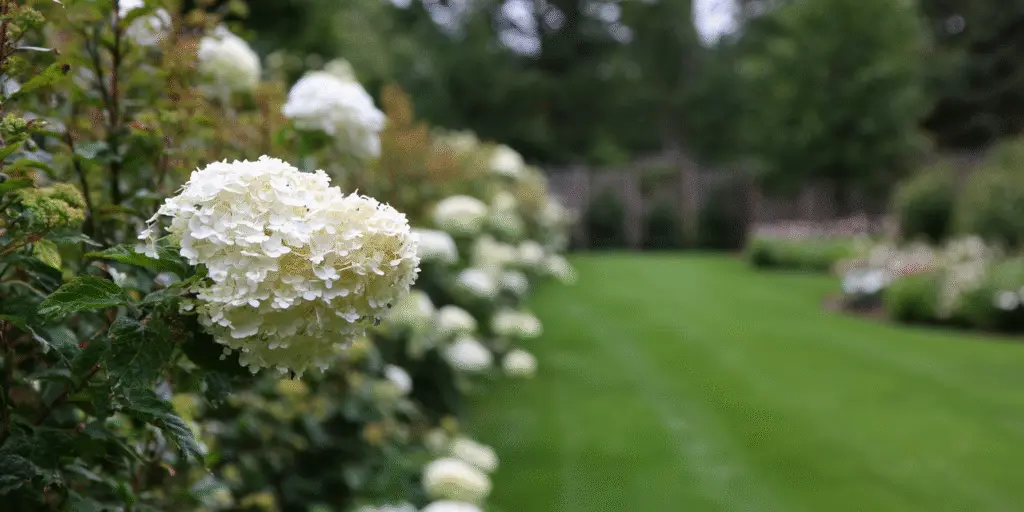
Yes, viburnums are excellent for hedging and screening. They naturally have a dense, bushy growth habit, and many species reach a suitable height for a hedge (anywhere from 6 to 12 feet or more, depending on type). By planting viburnum shrubs in a row and allowing them to grow together, you can create a lush flowering hedge that not only provides privacy but also offers beautiful blooms and berries. Popular choices for hedges include arrowwood viburnum (for colder climates) and sweet viburnum (for warm regions). Regular light pruning can help maintain a hedge shape, but often viburnums will form an effective screen with minimal pruning.
How long can a viburnum live?
Viburnum plants are known for their longevity. With proper care, a viburnum shrub can easily live decades. It’s common for well-sited viburnums to thrive for 20 to 50 years in a landscape. Some viburnum species have been documented to live even longer (in the range of a human lifetime). The key to a long life is keeping the plant healthy – ensure it gets suitable sunlight, water, and soil conditions, and rejuvenate older shrubs by pruning out the oldest stems occasionally. Their potential to be long-lived means viburnums can become permanent, established features in gardens, often growing more attractive with age.
Interesting tips
- Multi-Season Interest: Viburnums truly offer year-round appeal. After the spring bloom, many produce colorful berries in summer to fall. For example, black haw viburnum (Viburnum prunifolium) bears dark berries that birds love. In autumn, deciduous viburnums often deliver a finale of red, burgundy, or orange foliage. By choosing varieties with berry and fall color, you get far more than just spring flowers.
- Uses in the Landscape: Thanks to their dense growth and medium-to-large size, viburnums are excellent for creating flowering hedges or privacy screens. Evergreen types like Laurustinus (Viburnum tinus) provide year-round screening in warmer climates, while deciduous types like arrowwood can be planted in a row for a seasonal hedge that blooms. Viburnums can also be limbed up into small trees for a specimen feature, showing their versatility in garden design.
- Pruning Advice: Viburnums generally bloom on “old wood,” meaning the flower buds are formed during the previous growing season. Therefore, if pruning is needed to shape or reduce size, it’s best done just after flowering in late spring. This way you won’t inadvertently cut off next year’s buds. Routine pruning isn’t required for most viburnums beyond removing dead or crossing branches, but an occasional thinning of very old stems at the base can reinvigorate an aging shrub.
- Companion Planting: Since viburnums are relatively trouble-free and pet-safe, they pair well with other garden favorites. For a pet-friendly garden, some owners choose viburnum over potentially toxic shrubs like hydrangea macrophylla or azaleas. In flower beds, viburnum’s spring display can be underplanted with early bulbs or complemented by summer-blooming perennials that take over once the viburnum’s flowers fade. Their white or pastel blooms combine beautifully with colorful tulips, daffodils, or later-blooming roses (ensuring all are safe choices for pets if that’s a concern).
Related Guides & Flowers
- Lilacs (Syringa) – classic spring shrub companion
https://yourflowersguide.com/lilacs/
Fragrant panicles that bloom alongside many viburnums; perfect for traditional spring borders. - Forsythia – early-spring signal shrub
https://yourflowersguide.com/forsythia/
Masses of golden flowers before leaf-out; pairs well with viburnum for layered spring color. - Camellia – evergreen structure with white cultivars
https://yourflowersguide.com/camellia/
Glossy foliage and winter-to-spring blooms; white selections echo viburnum’s clean look in part shade. - Azaleas (Rhododendron) – woodland acid-lover
https://yourflowersguide.com/azaleas/
Big seasonal “bursts” under the same conditions many viburnums enjoy in dappled sites. - Hydrangea macrophylla – “snowball” look-alike
https://yourflowersguide.com/hydrangea-macrophylla/
Mophead clusters deliver that rounded, showy texture often used as a visual substitute for snowball viburnums. - Virginia Bluebells (Mertensia virginica) – spring woodland underplanting
https://yourflowersguide.com/virginia-bluebells/
Nods of blue that carpet under shrubs; beautiful at viburnum’s feet in moist, rich soil. - Bellflower (Campanula) – edging and filler for shrub borders
https://yourflowersguide.com/bellflower/
Cool-toned bells extend bloom interest at the front of a viburnum bed. - Great Blue Lobelia (Lobelia siphilitica) – late-season color near damp sites
https://yourflowersguide.com/great-blue-lobelia/
Spikes of blue for rain-garden edges or low spots close to shrub backdrops. - Gentian – specialty blue for collectors
https://yourflowersguide.com/gentian/
Intense blue flowers; a rarer page on your site and a niche companion for cool, moist pockets.
References
- NC State Extension Plant Toolbox – Viburnum odoratissimum
A clear, horticulture-focused profile for Sweet Viburnum: size, flowers, evergreen habit, and site needs. - NC State Extension Plant Toolbox – Viburnum tinus
Evergreen Mediterranean viburnum with notes on habit and landscape use; good for contrasting species info. - University of Minnesota Extension – Viburnum leaf beetle diagnostic
Practical identification and damage symptoms for Pyrrhalta viburni; excellent for your pest section.
Written by: Your Flowers Guide editorial team
We are a small independent group of flower lovers who research and review each guide using trusted horticultural and educational sources. Learn more about us