What ajuga is and which species you are buying
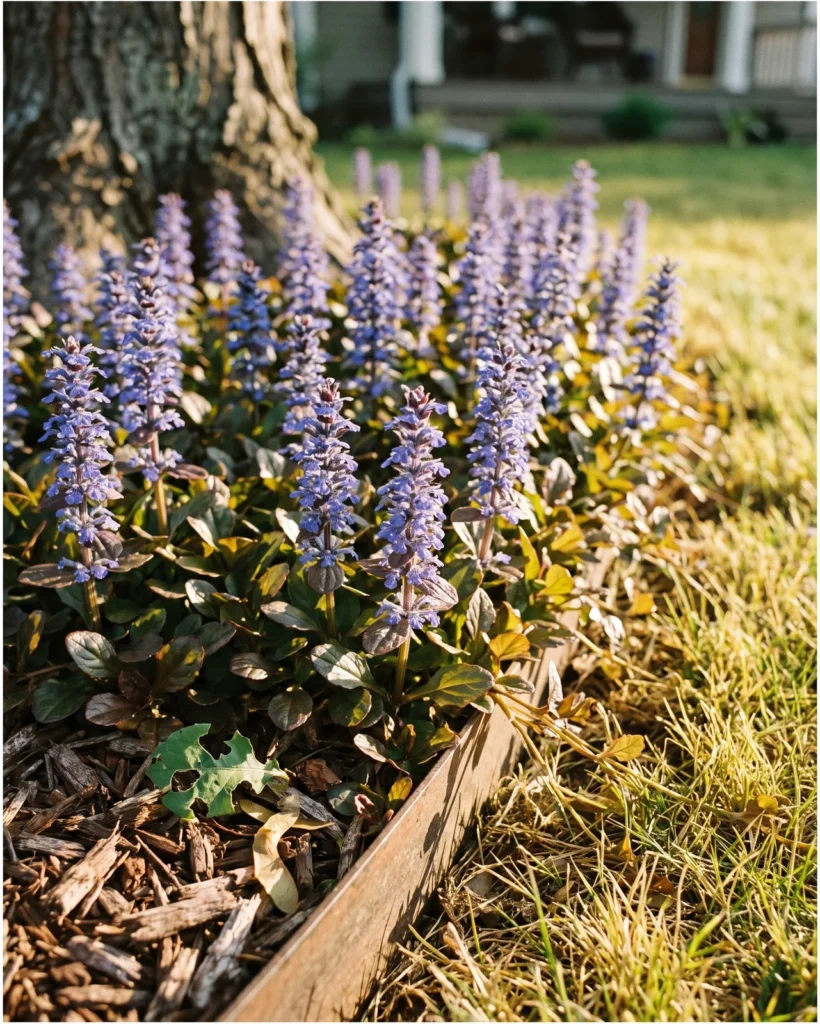
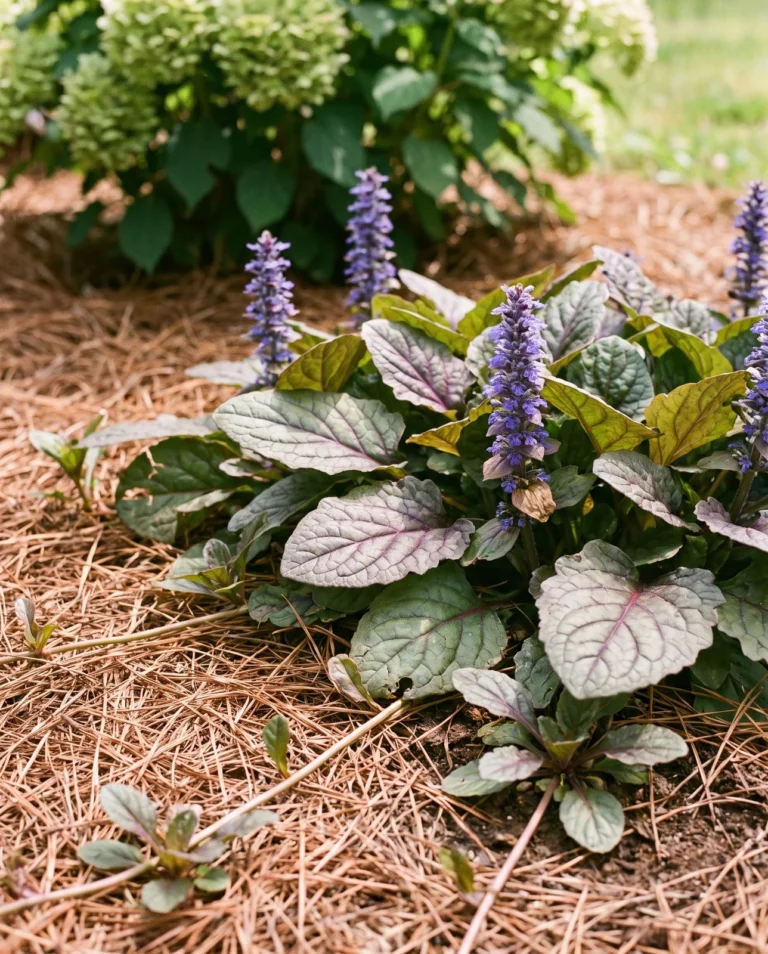
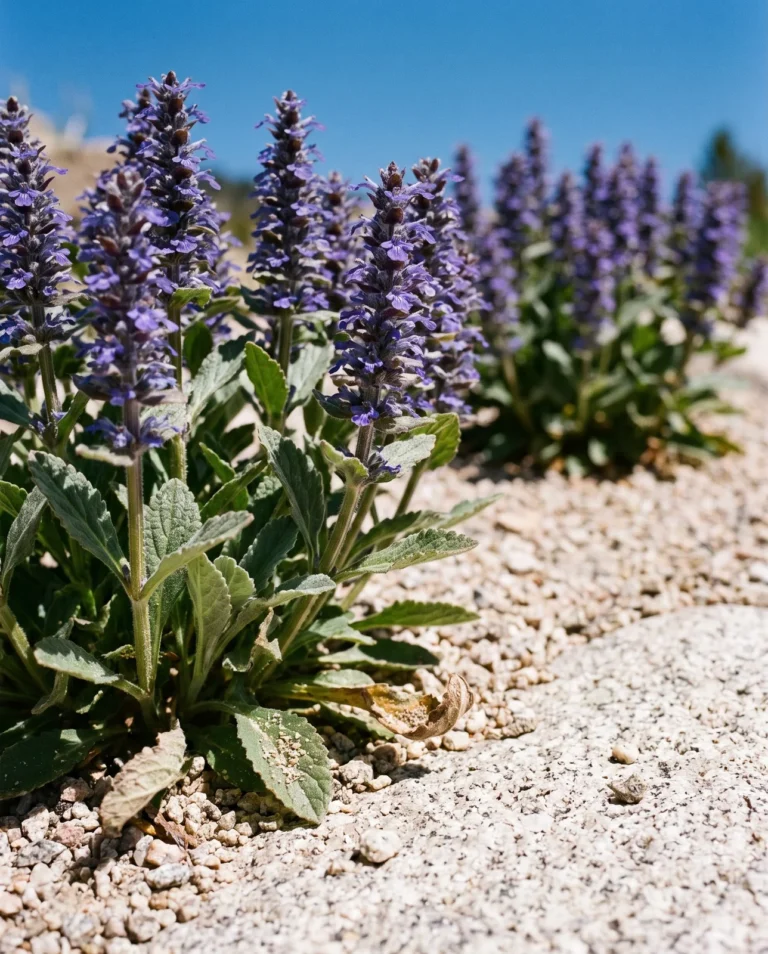
The plant the name usually means is Ajuga reptans, a low, mat-forming perennial sold as bugleweed, blue bugle, bugleherb, bugle weed and carpet bugle. It grows 6 to 12 inches tall and about as wide, flat and dense against the ground. Spikes of blue-violet flowers rise 4 to 6 inches above the mat from early spring through summer. The species comes from Europe, northern Africa and southwestern Asia. It belongs to the mint family and shows it: square stems, paired leaves, flowers packed into dense spikes and small nutlet fruits, though the flowers lack the upper lip most of the family carries.
The species name reptans means creeping, and that is the one that runs. Ajuga reptans spreads through a garden on stolons. Ajuga genevensis is the upright one, 5 to 14 inches high, and it takes more sun than its relatives. It makes no stolons and forms no mat at all, so the clump stays where you put it. That plant is European too, established across northeastern North America as an escape from cultivation. If the running is what worries you, the label is where the decision gets made.
How fast ajuga spreads and what it smothers
Established plants set apart in spring close over bare soil by the end of that season. Nobody has measured the rate in inches, and the 12 inches a year figure in circulation rests on no trial. The spreading itself is easy to watch. Stolons run out over the surface and root at points along their length, and each rooted point becomes a new plant. They radiate in every direction from the central crown, and they grow only through the summer months, so a planting widens from its whole perimeter through the warm season and then pauses.
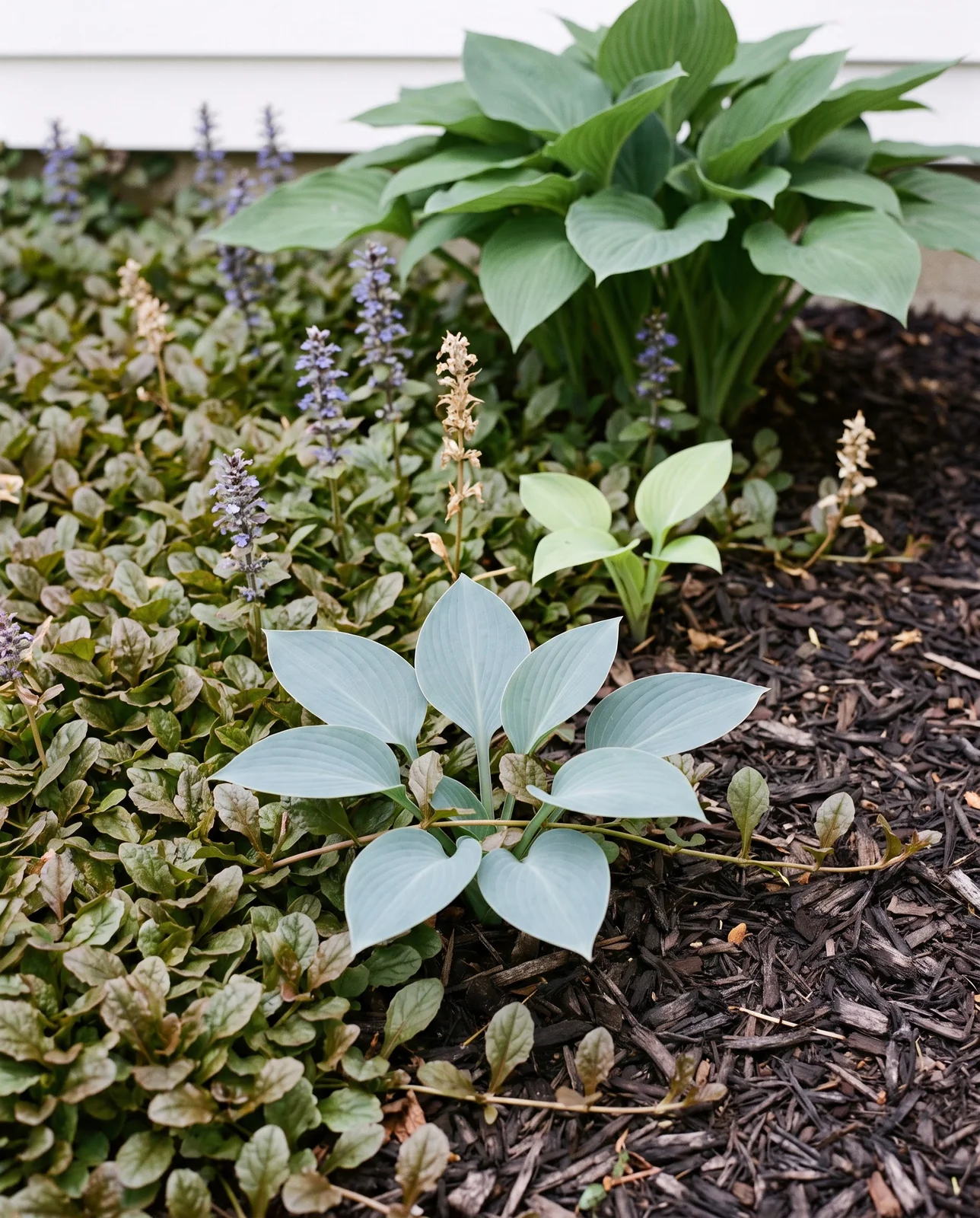
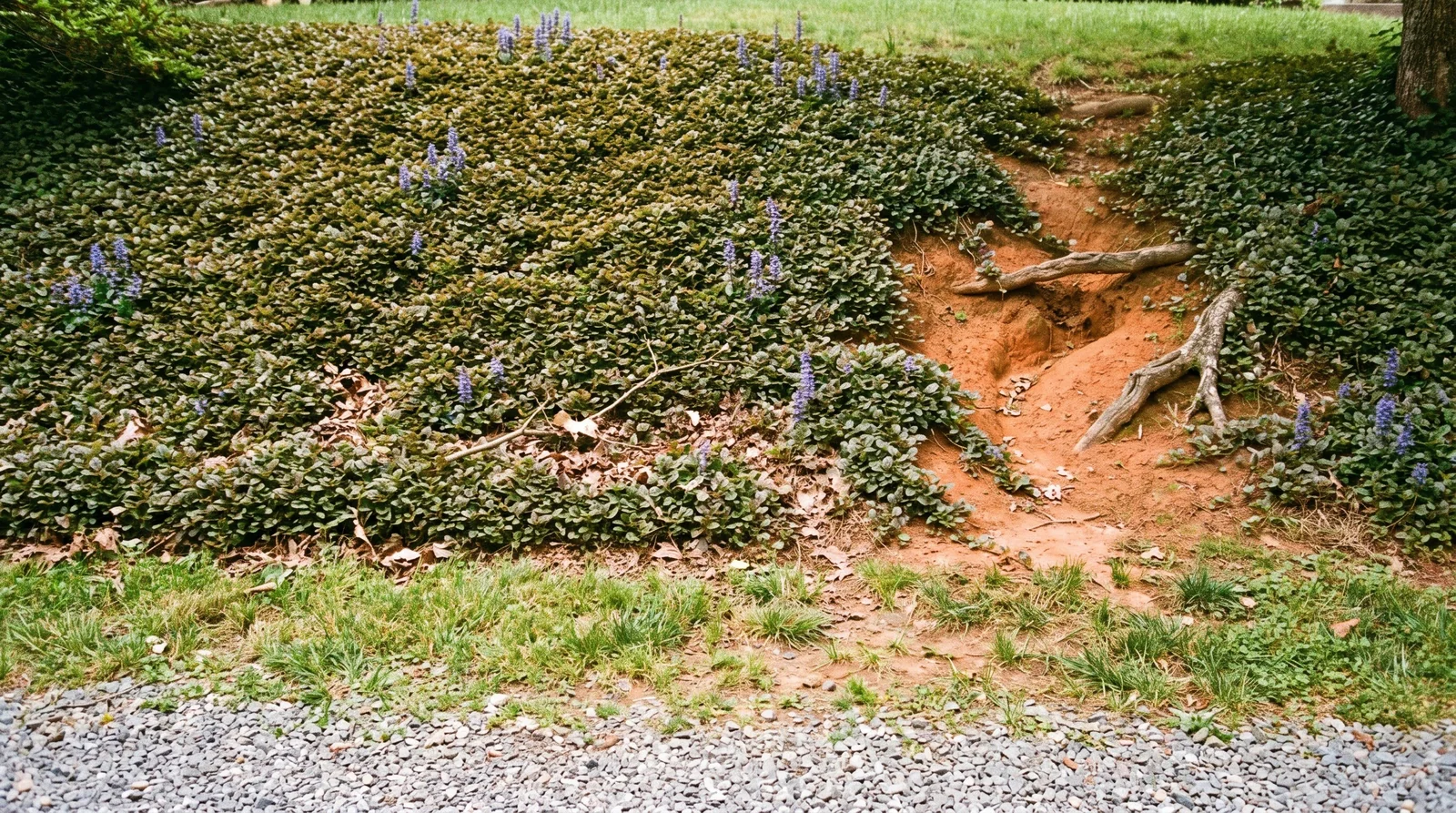
What the mat smothers is anything shorter and slower than itself. It stands 6 to 12 inches high and grows flat and dense, so a struggling hosta bed is at risk, while shrubs and tall clumping perennials grow away over the top of it. The same vigor is the reason to buy it. Ajuga suppresses weeds in the deep shade where grass will not grow, and it holds a hillside together even where it overruns the small perennials in a mixed border. It is quick, it is good in shade, and it may get aggressive and find its way into the lawn.
Is ajuga invasive
In some states, formally. The Invasive Plant Atlas of the United States records carpet bugle as invasive in Maryland, Oregon, West Virginia and two Virginia jurisdictions, Arlington County and the City of Alexandria. Maryland's own list of established invasive plants carries it under the name bugleweed. Hawaii scores the species 11 on its weed risk assessment, rates it high risk and says it should not be planted there. It describes a plant that creeps rapidly out of cultivated ground and becomes a persistent weed in lawns and turf. Florida does not recommend planting it and calls it invasive, with a note to reassess in ten years. North Carolina goes the other way, acknowledging the quick, aggressive spread that got it listed elsewhere while treating it as a low threat to native plant communities in that state.
There is a version of the plant for anyone who wants the look without the running. Ajuga genevensis makes no stolons and is gaining ground in the trade because it spreads less vigorously than A. reptans. It answers the spreading question and leaves the native-plant one open, since it is European as well and naturalized across the northeast.
Keeping ajuga where you put it
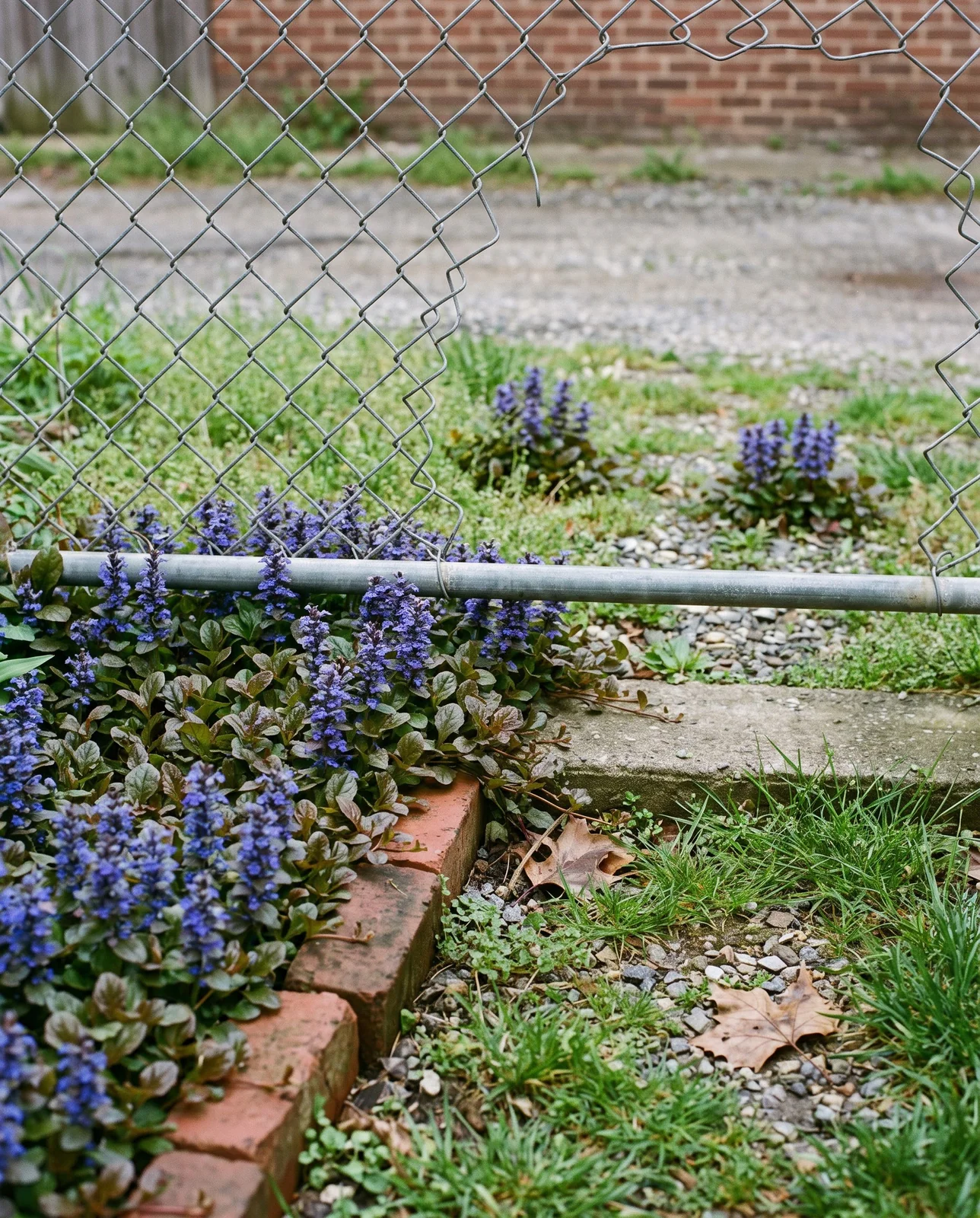
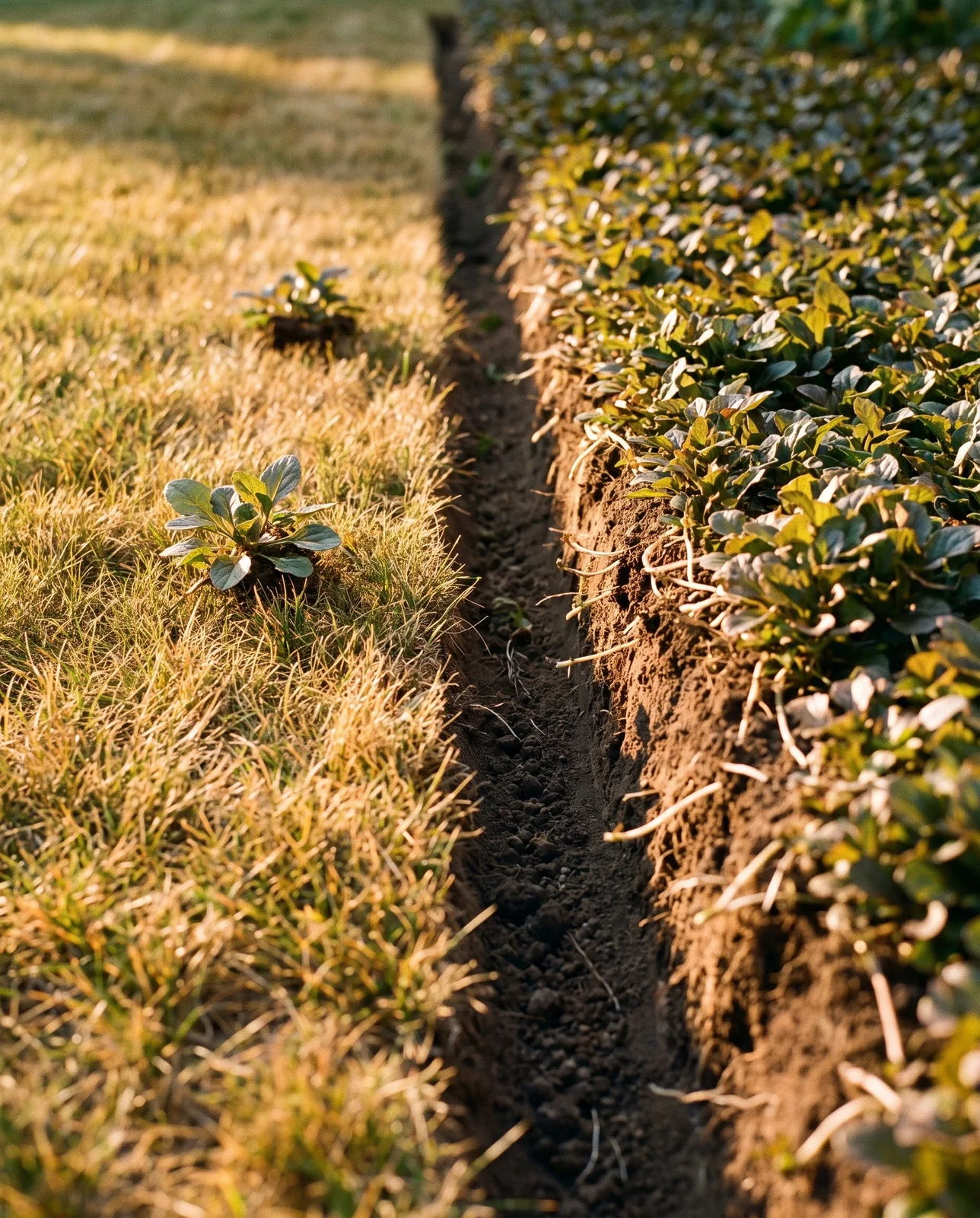
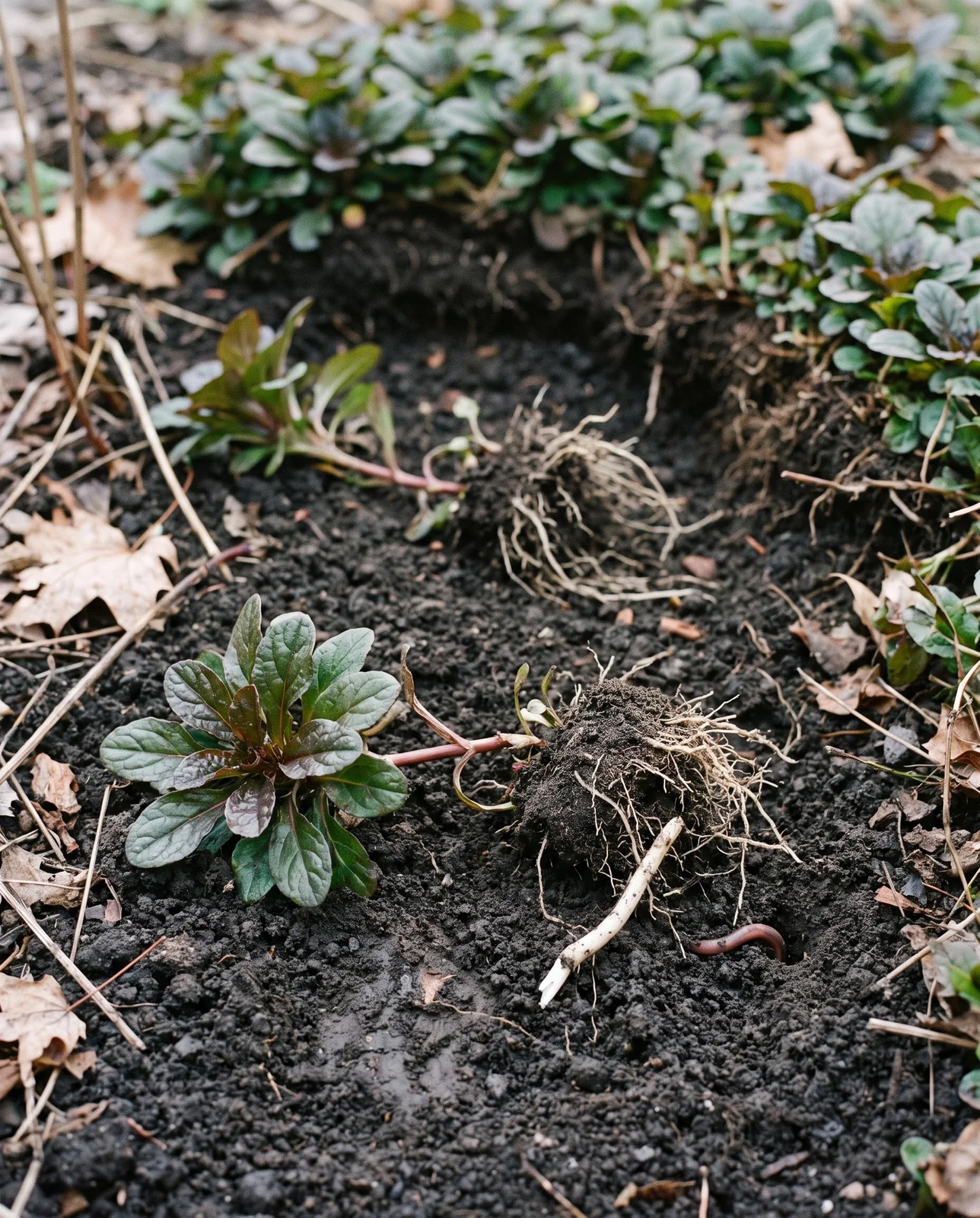
Containment is physical, and it works best when it is built before the plant goes in. Hard boundaries hold ajuga: rock borders, raised beds, anything the runners cannot root past. A path or a drive does the same work by leaving the stolons nowhere to land. Runners that cross the line come out by hand, and unwanted ajuga pulls up quite easily; hand dig without leaving root segments behind. There is no selective spray to fall back on, because ajuga is a broadleaf plant and the broadleaf weedkillers used on lawns damage it as readily as they damage a weed. For patches already loose in turf, wait until early fall, late August, and spray them with a glyphosate product. A large unwanted patch can also be baked out under black plastic, which kills whatever sits under it.
Placement decides how much of that pulling you will ever do. Plant it on a bank or under trees, where the spreading is welcome, and keep it off a lawn edge, or small islands of green foliage will soon appear in the grass. The neighbors to keep out of its way are the ones a mat can grow over: low, slow, shallow-rooted plants at the front of a bed. Anything taller and faster than a mat 6 to 12 inches high is out of reach. Thinning a crowded planting pays twice, since opening the mat improves air circulation and heads off stem disease.
Crown rot or just winter
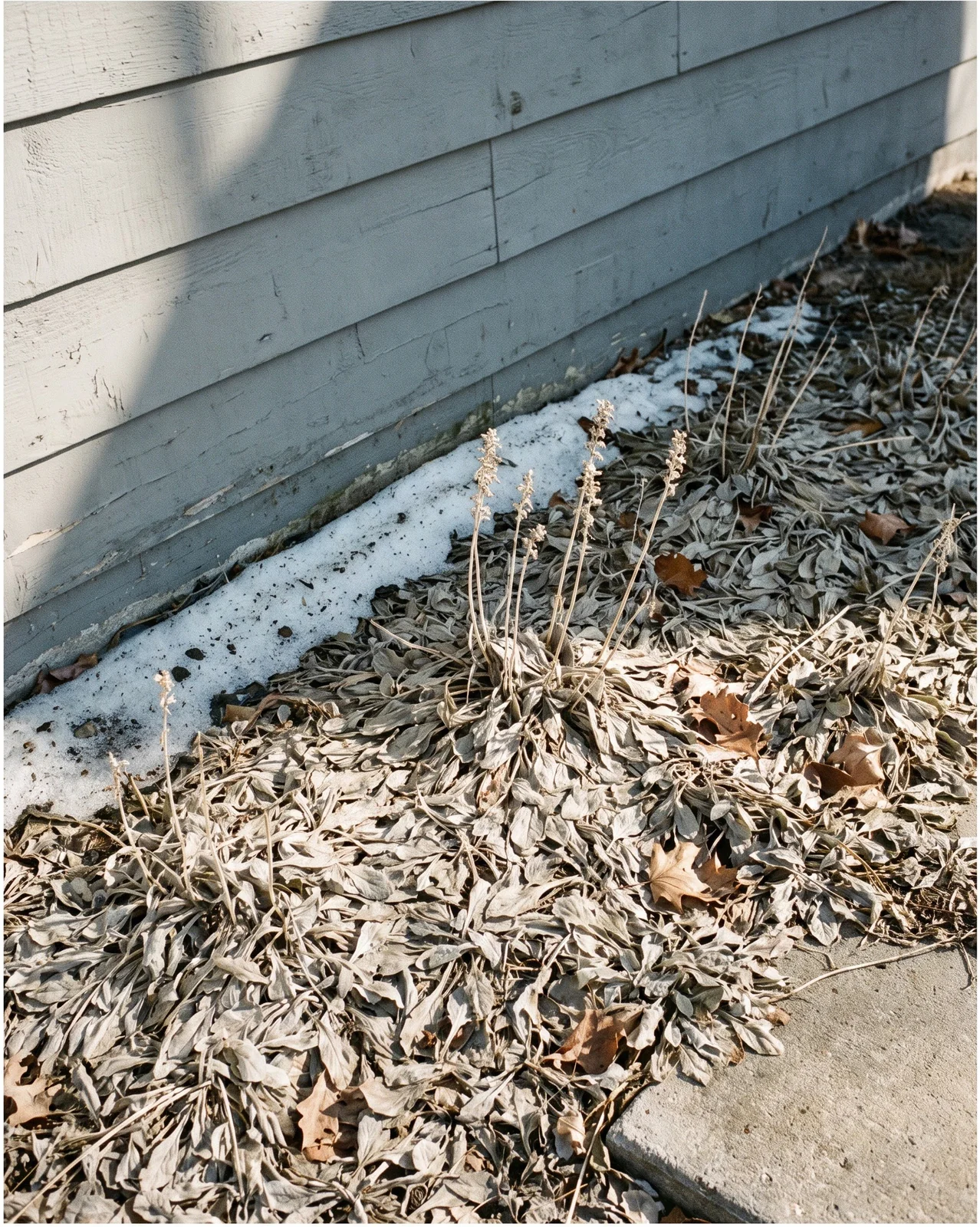
Two things separate normal winter dieback from crown rot: the season and the pattern. Ajuga dies back in cold climates, where the foliage browns, collapses or disappears entirely and then returns from the crown. It looks alarming and it is usually dormancy. That change arrives with the cold and takes the whole planting at once. Crown rot arrives in warm, wet or humid weather and moves fast enough to kill plants within a few days. Sudden wilt and death is the complaint that brings most gardeners to a diagnosis.
Above ground the disease has its own signature. Spots appear on the crown where the stem meets the roots, the lower leaves rot and the young shoots wilt, and the roots blacken under a film of white fungal threads. Stems of infected plants turn brown or black and rot. In a severe case the crown and the roots just below it are rotted through. The speed follows from the mechanism, since the fungus enters through the roots and the crown and cuts the plant off from its water supply.
Several different fungi cause crown and root rots in carpet bugleweed, and the treatment does not change with the name. The site matters more, and so does the climate: the disease shows up as sudden wilting and dieback in colder places and as yellowing and death in warmer ones.
Work out what killed the patch
Run these in order on the patch in front of you. The first two settle most cases, and the root check settles the rest.
What to do about crown rot
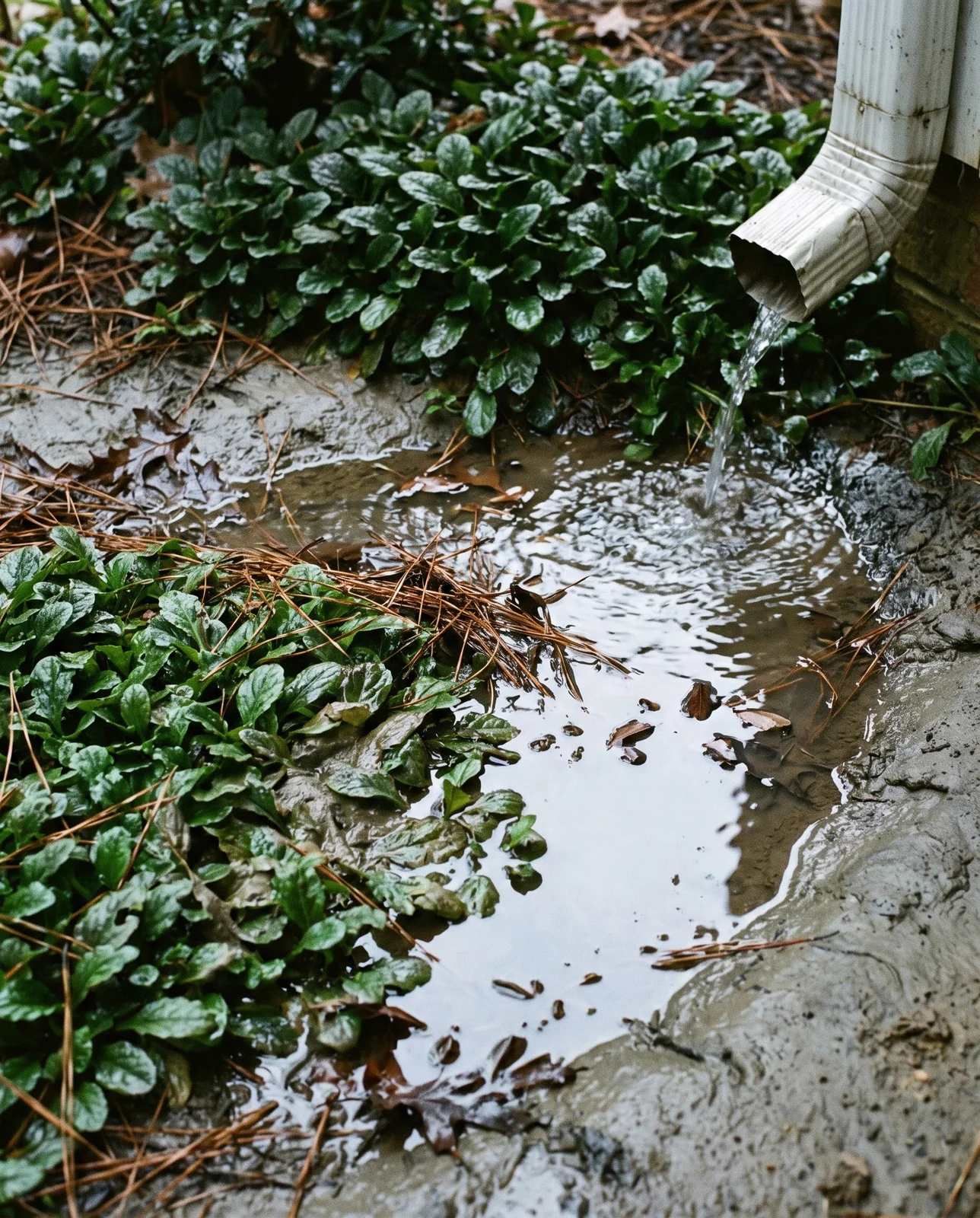
Removal is the whole treatment, and it has to take soil with it. Lift infected plants along with the soil immediately around the rootball, do it as soon as the patch shows, and bag that material for disposal, because composting keeps the pathogen in play. Disinfect tools afterward in one part bleach to nine parts water. The disease arrives in a garden on infected plants or soil and then moves around it on tools and water. After that, patience does more than effort: the fungus lives in the soil and is difficult to eradicate, and its resting bodies can sit there for several years.
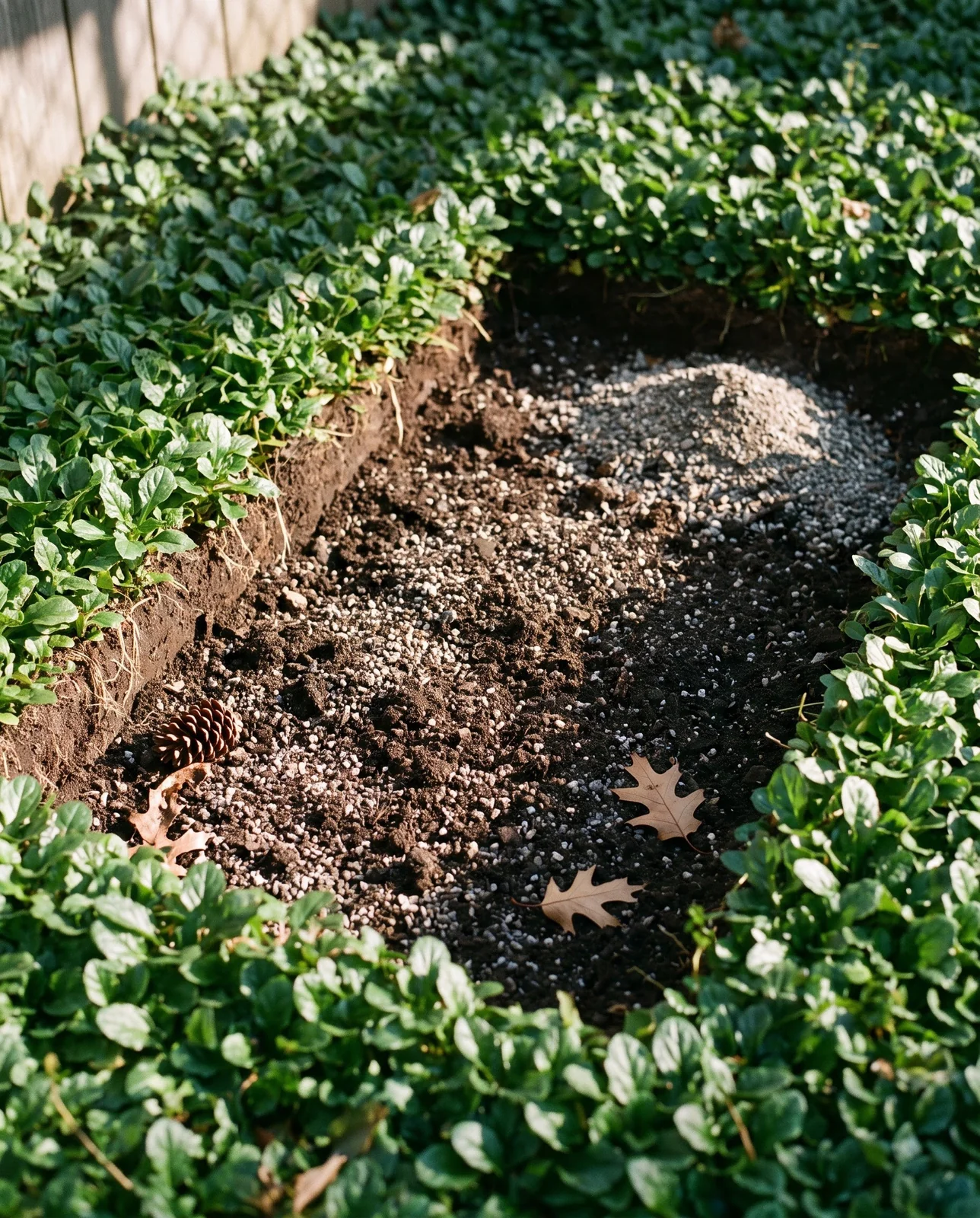
Replanting is a drainage decision. Put disease-free plants into new ground, and wait a couple of seasons before ajuga goes back where rot destroyed a planting. Where the same ground has to be used, improve the drainage first, for example by working in coarse grit. A fungicide is not a rescue. A registered thiophanate-methyl at planting protects healthy plants and will not clear a fungus already in the soil. What keeps the problem from returning is thinning: open the bed every few years and divide clumps once they become overcrowded.
Where ajuga does badly
The humid South is where large ajuga plantings fail. Crown rot plagues it there, so it is not a plant to spread over an extensive area in that climate, and large expanses usually begin to melt away after a few years. Full sun in the late afternoon makes that worse. The same warning attaches to heavy soils and to the humid conditions of the deep South generally. In the sandy soils of the lower South a second pressure sits underneath the first. Ajuga is very susceptible to root knot nematodes, which thin a planting out in spots and can kill plants outright.
The sun rule changes with latitude, so northern and southern care advice contradict each other. At the northern end of the range ajuga takes full sun as long as the soil stays moist without going soggy. In cooler climates it grows well in full sun to part shade, while in the South it wants afternoon shade or filtered sun. It is hardy from zone 3 to zone 10.
Light, soil, and water
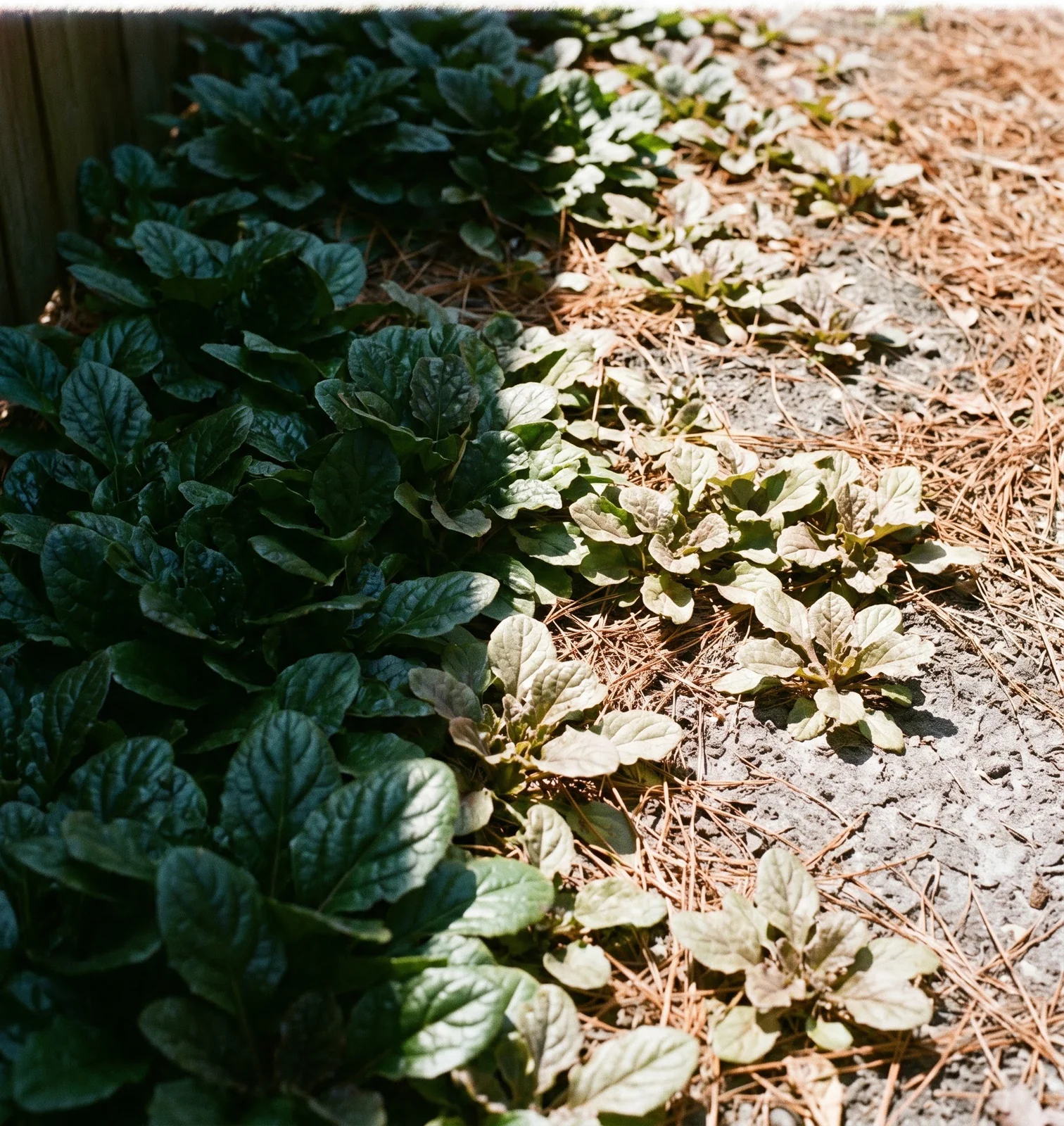
Ajuga is forgiving about light, and what light mostly decides is leaf color. It grows best in shady locations, and the strongest foliage color comes from part sun, at least 3 to 4 hours of direct sun a day. It is one of the first plants handed to anyone hunting for flowers that take shade. Soil is where ajuga is fussy, and only in one direction. It takes clay, loam or sand and prefers acid ground below pH 6.0. What it will not take is wet, heavy soil, and the standing warning on the plant pairs that with a call for good air circulation; crown rot follows soggy ground. Drought tolerance is moderate and salt tolerance is poor, so salted ground beside a drive, or a bed near the coast, is a poor place for it. Once a mat has knitted it asks for very little, and the failures come from ground that stays wet.
Planting ajuga
Plant once frost risk has passed, and expect cover by the end of that first season if established plants go in spaced apart in spring. Space them 6 to 12 inches apart. Tight spacing buys speed. Wide spacing buys air movement between plants, and air movement is what holds crown rot off in humid ground. Where the ground stays wet or muggy, take the wide end of the range.
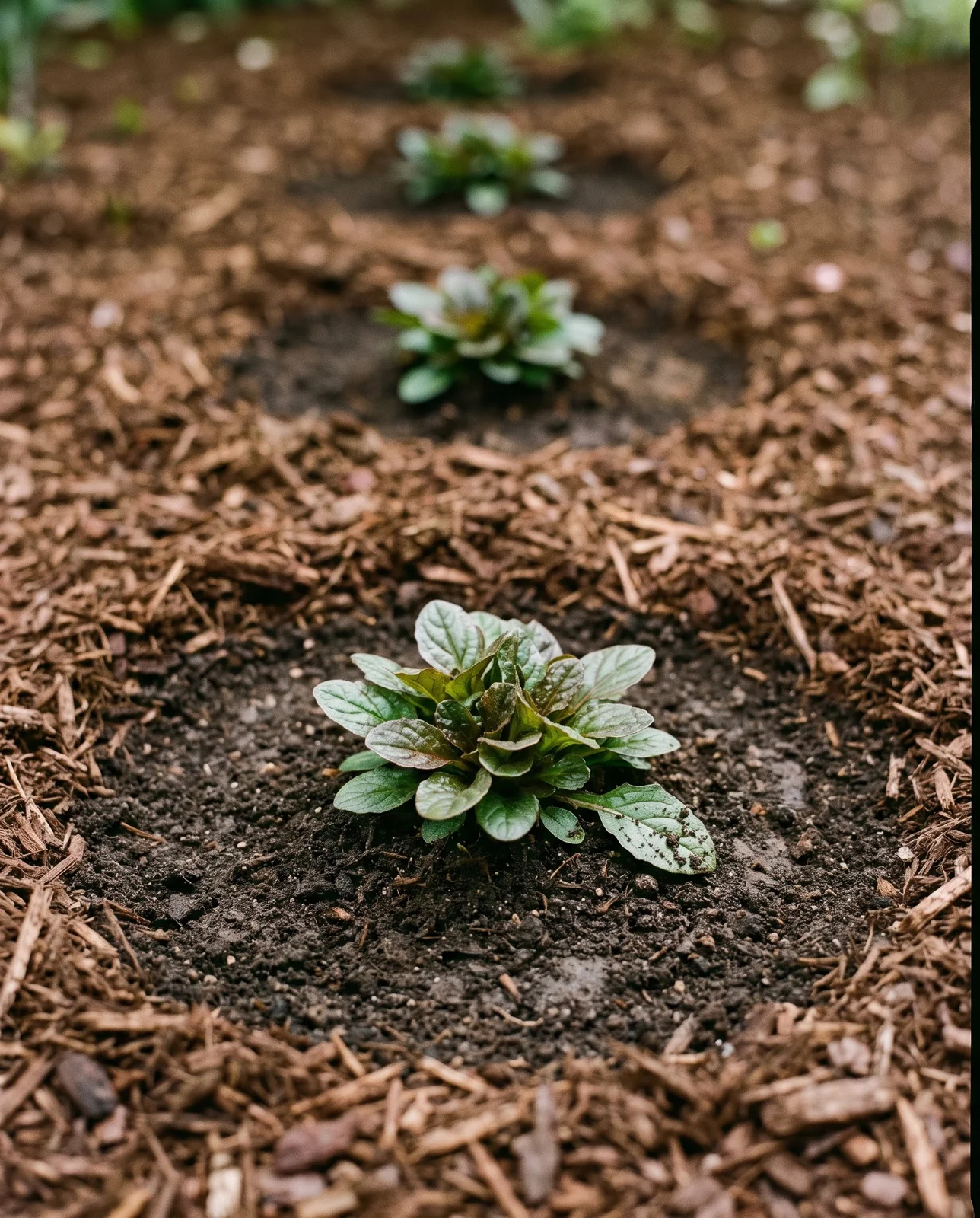
One rule decides whether the planting lives, and it has nothing to do with spacing. Ajuga must not go in too deep, and soil must not be pushed over the crown. The crown sits slightly proud of the surface, about 3 to 4 millimeters above it, because burying it invites fatal crown rot within days. Mulch follows the same rule: keep it well clear of the crown, since even a thin layer sitting over it creates the wet, airless conditions the plant cannot survive. That single detail is the planting instruction and the disease prevention instruction at once.
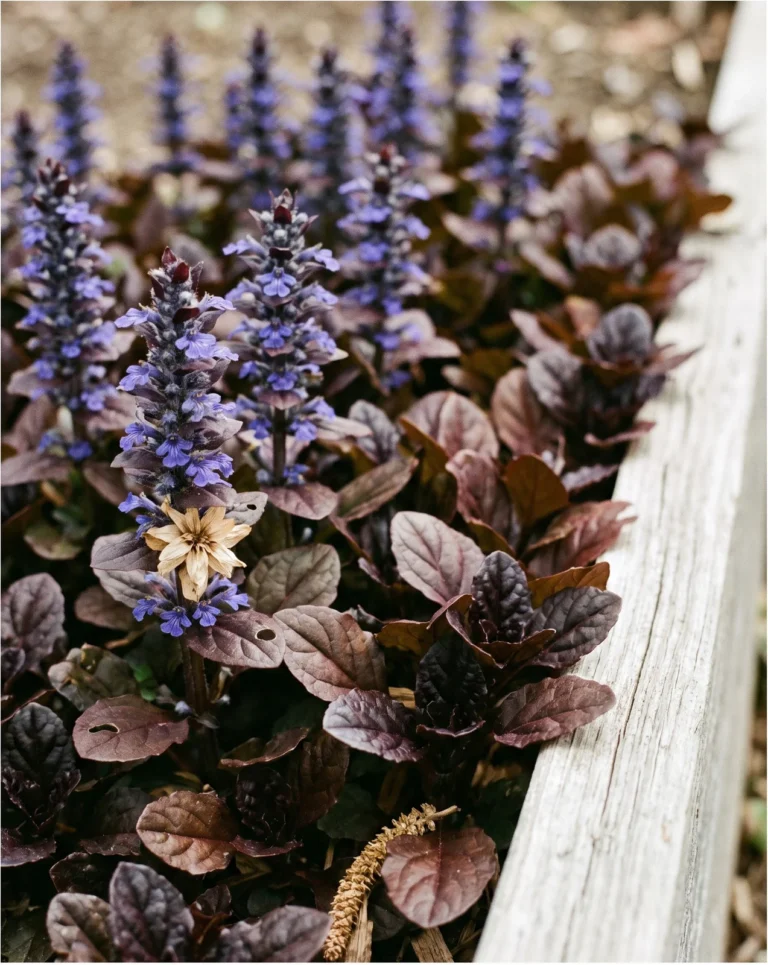
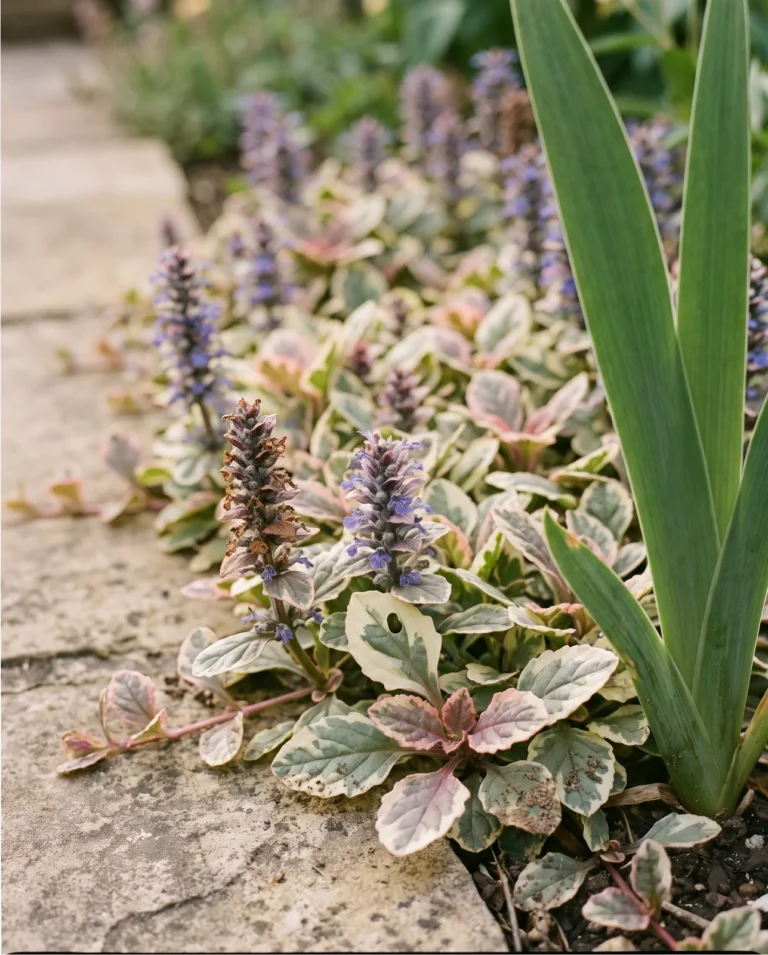
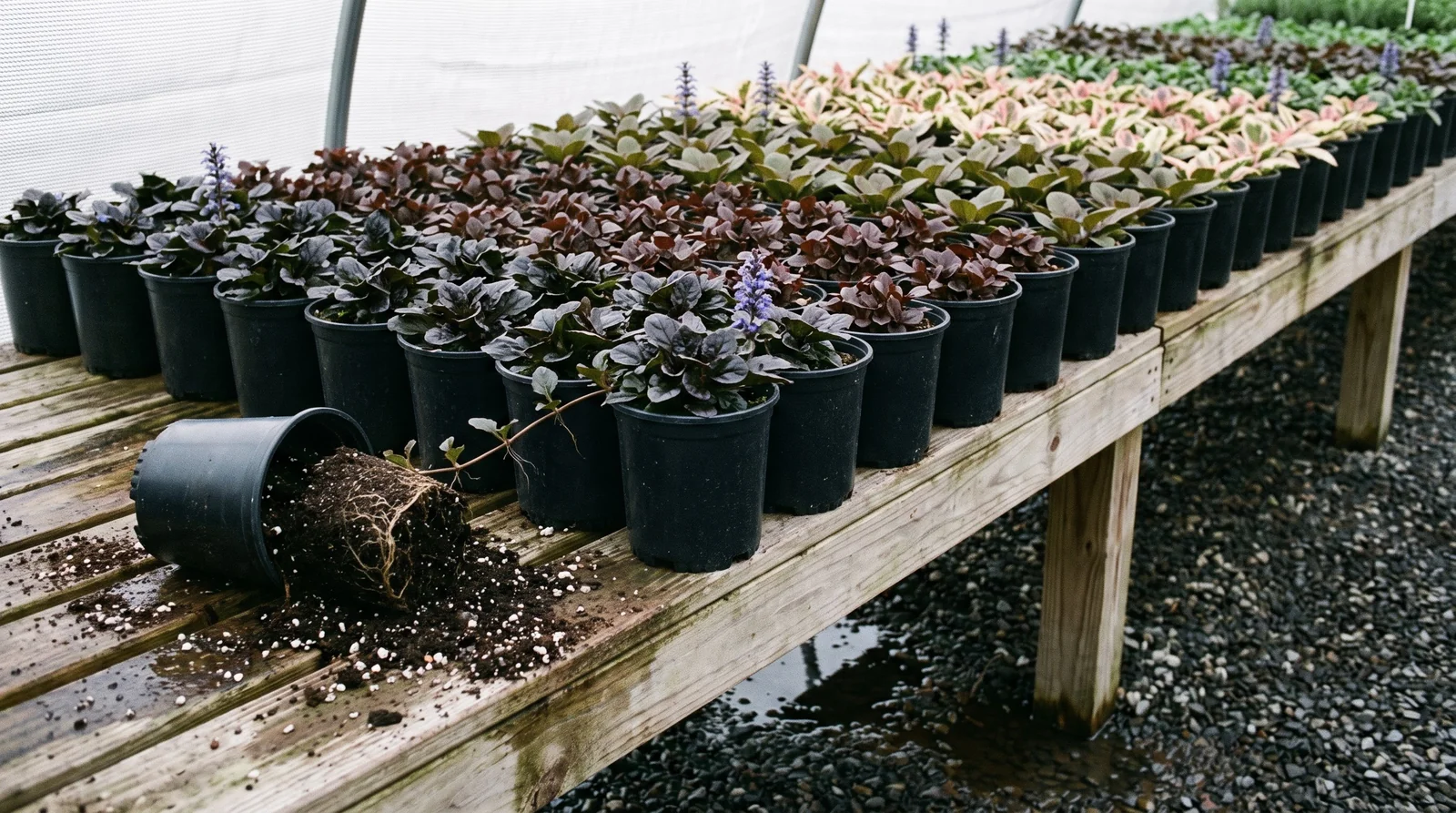
Ajuga cultivars and how far each one runs
Named ajuga are sold on leaf color, and the thing that decides whether one belongs in your bed is printed almost nowhere: how far it travels.
Does ajuga die back in winter
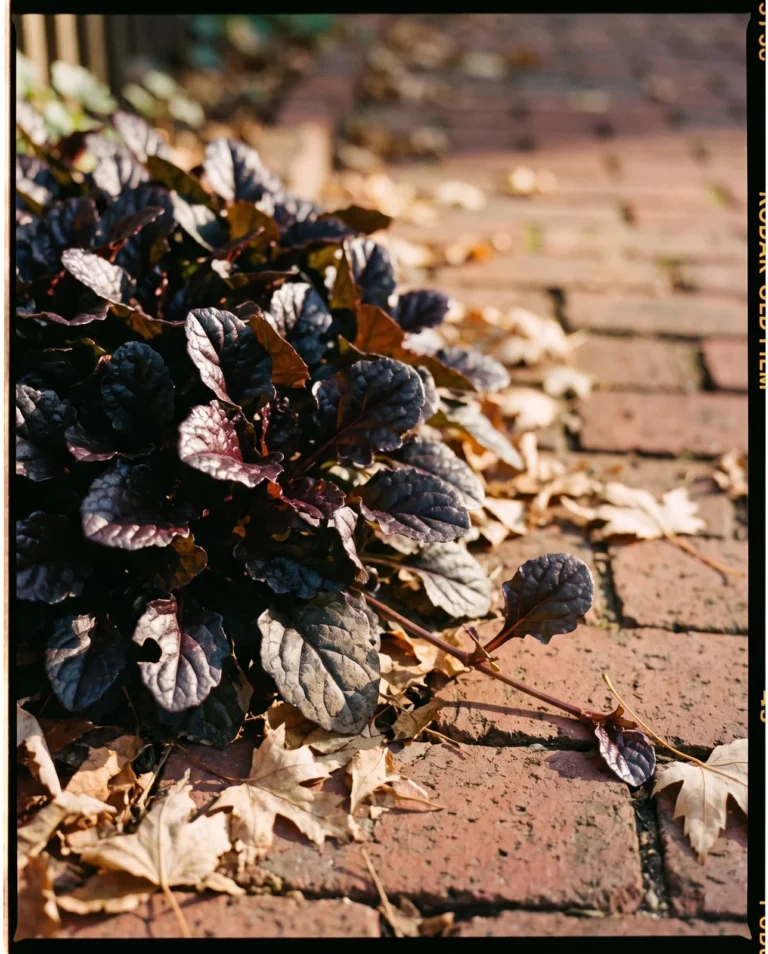
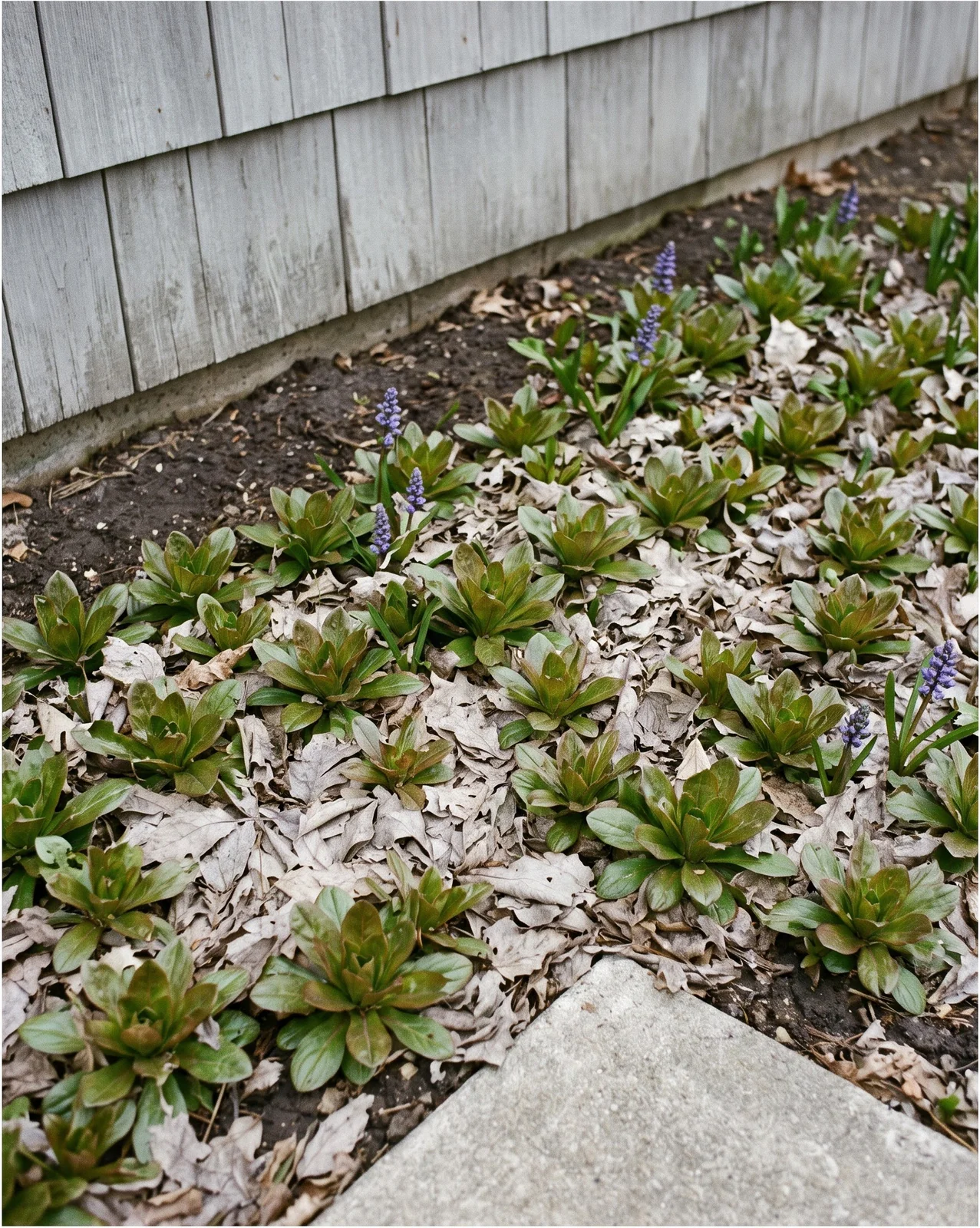
In cold climates the top of the plant goes and the crown carries it through, so a brown, flattened mat in late winter is dormancy. Ajuga counts as an evergreen groundcover wherever the cold does not strip the leaves. The browning arrives with the cold and takes the whole planting together, and the foliage may collapse or disappear entirely before anything comes back. The plant's own spreading runs on the same clock, since stolon growth is limited to the summer months. A mat that looks the same right through the cold months is behaving exactly as it should.
Spent flower spikes and foot traffic
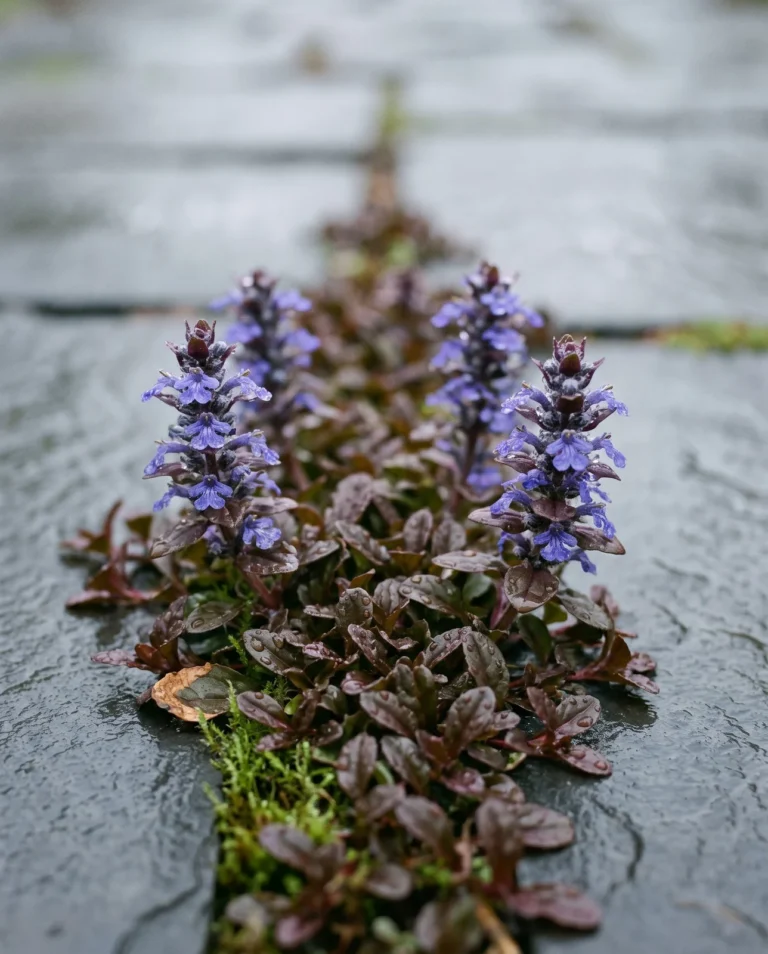
Take the spent spikes off once the flowers finish. Foot traffic is the other question, and people want it settled before they set plants between pavers or down the side of a path. Ajuga does not tolerate high traffic, which puts it in the occasional-step category. It will take a foot on the way past a stepping stone, and it thins out along a route walked every day by people, dogs and trash cans.
Deer and browsing
Deer pass ajuga over often enough for North Carolina to rate it resistant to browsing. That describes what deer usually leave alone while other food is within reach. A hard winter or a heavy local herd changes the arithmetic for any plant carrying the label. The rating also sits at species level, so it says nothing about how a browsing deer treats one cultivar against another.
Pests and the other diseases
Crown rot takes most of the attention, and three further problems turn up often enough to name. Southern blight rots the base of the stems, which turn brown or black under a white mold carrying small reddish-tan sclerotia. Those resting bodies survive the winter and other unfavorable conditions in the soil, so ground that carried the disease one year opens the next already stocked with it. A bed that collapsed in August is a bed to watch the following August.
Root knot nematodes are the underground trouble, and the roots give the diagnosis: infected plants carry small knots where the nematodes have been feeding. They turn up in sandy ground, so the same planting can fail in one yard and hold in the next street. Powdery mildew is the mildest of the three and the most visible. Grayish-white powdery spots develop on the leaves and can cover the whole leaf surface by the end of the growing season.
What goes wrong, in the order gardeners report it
The complaints gardeners bring about ajuga, in the order they come up, with the cause and the fix for each.
The biggest group by a wide margin. Stolons root wherever they touch, so the mat leaves the bed along its whole perimeter. Give it a hard edge it cannot root past and pull the runners that get over it, digging out root segments as you go.
A bed that looked healthy collapses after a wet summer, faster than the owner can work out what it was. Warm wet ground and buried crowns are the cause. Lift the plants with the soil around them and bag it, then fix the drainage before anything goes back.
Native-plant groups and general gardening groups reach opposite conclusions about the same plant in the same week. Both are right locally, since some states list it and North Carolina treats it as a low threat. Check your own state before you plant.
A plant bought by name fails in a yard where an unnamed start from a plant swap takes hold. Vigor differs by cultivar: 'Black Scallop' stays compact while 'Catlin's Giant' runs like the species. Choose on spread first and leaf color second.
Brown ground in early spring, and the owner cannot tell whether to wait or replant. In cold climates the foliage browns and disappears, then regrows from the crown. Lift one plant: firm white roots mean it is only dormant.
A tricolored cultivar quietly loses its markings across a couple of seasons. Any leaf that comes back plain green has to come off as soon as it appears.
Propagating and dividing ajuga
Ajuga comes from division or from seed, though seed is for the species: a variegated plant like 'Burgundy Glow' does not come true from it. Zone sets the timing. Divide in early spring, late March into April, in zones 3 to 5, and in early fall in zones 6 to 9, with the spring window falling before the flower spikes emerge. On Ajuga reptans and its cultivars a third route works: lift what the plant has already built, since runner propagation needs stolons to lift. Ajuga genevensis has none and comes from crown division. A crowded mat is what usually prompts the job, and every division goes back under the rule that governs a new planting, with the crown proud of the soil.
Where ajuga earns its place
Ajuga does its best work filling empty soil in shade and part shade, where it serves as a living mulch and takes on the job wood chips or pine straw would otherwise do. That is the whole case for planting it: ground that grows nothing, covered by something green and low. The places to keep it away from are the ones where the same habit works against you, meaning beds of small slow perennials and any edge that runs into turf. On a dry, sunny strip ajuga is the wrong plant altogether, and sedum holds that kind of ground, while vinca covers shade with the same running habit.
What gardeners get told about ajuga
Each of these turns up often enough in garden threads to cost somebody a plant or a season.
The myth: A variegated ajuga stays variegated if you leave it alone.
The reality: Plain green shoots outgrow marked ones, because cells with full chlorophyll photosynthesize more efficiently. Take off any non-variegated leaf promptly and the plant holds its markings.
The myth: The cultivar name tells you how the plant will behave in your yard.
The reality: Of about five named ajuga tried in one garden, only 'Black Scallop' kept growing. Gardeners divide over 'Chocolate Chip' too, some finding it less invasive than other ajuga and some saying it really moves.
The myth: Powdery mildew means the mat has been kept too wet.
The reality: The fungus behind it is favored by conditions that produce high humidity but dry leaves, so a crowded planting sitting in still, damp air can mildew while the soil surface looks dry.
What the first seasons look like
Year one has a clear answer. What comes after it depends on the site.
Established plants set apart in spring cover the soil by the end of that first growing season. After that it goes either way. Ajuga is hit and miss, and a mat can die out in patches after a couple of seasons. That is where the decision arrives, either to lift and divide the thin patches or to leave the mat to close them on its own.
FAQ
Is ajuga an invasive ground cover?
In some places, formally. Maryland, Oregon, West Virginia and two Virginia jurisdictions list carpet bugle as invasive, and Hawaii rates it high risk and says not to plant it. North Carolina treats it as a low threat there, so the answer moves with your address.
Is ajuga a sun or shade plant?
Both, with a preference. It grows best in shady locations and will take full sun at the northern end of its range as long as the soil stays moist without going soggy. Leaf color comes out strongest with at least 3 to 4 hours of sun a day.
Will ajuga choke out other plants?
It smothers anything shorter and slower than the mat, which stands 6 to 12 inches high. A struggling hosta bed is the documented casualty. Shrubs and tall clumping perennials grow away over the top of it.
How quickly will ajuga spread?
Fast enough to close bare ground in a season, if established plants go in spaced apart in spring. Nobody has measured the rate, and the 12 inches a year figure in circulation has no trial behind it.
How can I treat crown rot on my ajuga plant?
Lift the affected plants with the soil around the rootball, bag that material and keep it out of the compost, then disinfect tools in one part bleach to nine parts water. Improve the drainage before anything goes back, for example by working in coarse grit.
Can a plant recover from crown rot?
No. Once the crown and the roots just below it have rotted through the plant is finished, and the disease can kill within a few days of showing itself. The ground stays infested as well, since the fungus lives in the soil and is difficult to eradicate.
How do you stop ajuga from spreading?
Give it a physical edge it cannot cross, such as a rock border or a raised bed. Pull the runners that land where you do not want them, hand digging without leaving root segments behind.
What not to plant with ajuga?
Small, slow, shallow-rooted plants at the front of a bed, because a mat 6 to 12 inches high grows straight over them. Hostas are the one documented case. Nobody publishes a list of vulnerable companions, so judge a neighbor by its height and its speed.
When should you plant ajuga?
Once frost risk has passed. Depth matters more than the date: the crown sits slightly proud of the soil, about 3 to 4 millimeters above it, because burying it invites fatal crown rot within days.
Does ajuga die back in the winter?
In cold climates it does. The foliage browns, collapses or disappears entirely and the plant regrows from the crown. It counts as an evergreen groundcover where winters stay mild.
Is ajuga poisonous to dogs or cats?
There is no rating to give. Ajuga, bugleweed and carpet bugle appear on neither the ASPCA list of plants toxic and non-toxic to dogs nor the matching list for cats, which leaves the plant unrated. Treat it as you would any unlisted plant and call a veterinarian if a pet has eaten some.
Interesting tips
- Cultivar hardiness does not follow the species range. 'Catlin's Giant' carries zones 4 to 8, 'Black Scallop' zones 4 to 10 and 'Burgundy Glow' zones 3 to 10. The cold end of a garden can suit one named plant and kill the one beside it.
- 'Mahogany' holds up in a spot that gets full sun until three in the afternoon, staying colored right through and earning the name ever-purple.
- Every extension description of ajuga has it travelling on surface runners, and Ask Extension carries one answer that has it escaping cultivation and spreading by underground rhizomes as well. Where a patch keeps returning after the runners have been pulled, that second account is the reason to dig it out and not just pull at it.
Related Guides & Flowers
Lily of the valley
The other shade groundcover with a running habit and a reputation to check before it goes in near a bed you care about.

Hellebore
A clumping shade perennial tall enough to grow away over an ajuga mat, which makes it the safer kind of neighbor.
Companion plants
How planting partners are chosen by habit and height, the two things that decide what a groundcover can overrun.

Types of flowers
The full catalog of flowers on the site, sorted by type, for anyone still deciding what goes in the shady half of the yard.
Enjoying our flower guides? Add YourFlowersGuide as a preferred source on Google. It helps more readers find us.
Add to Preferred Sources