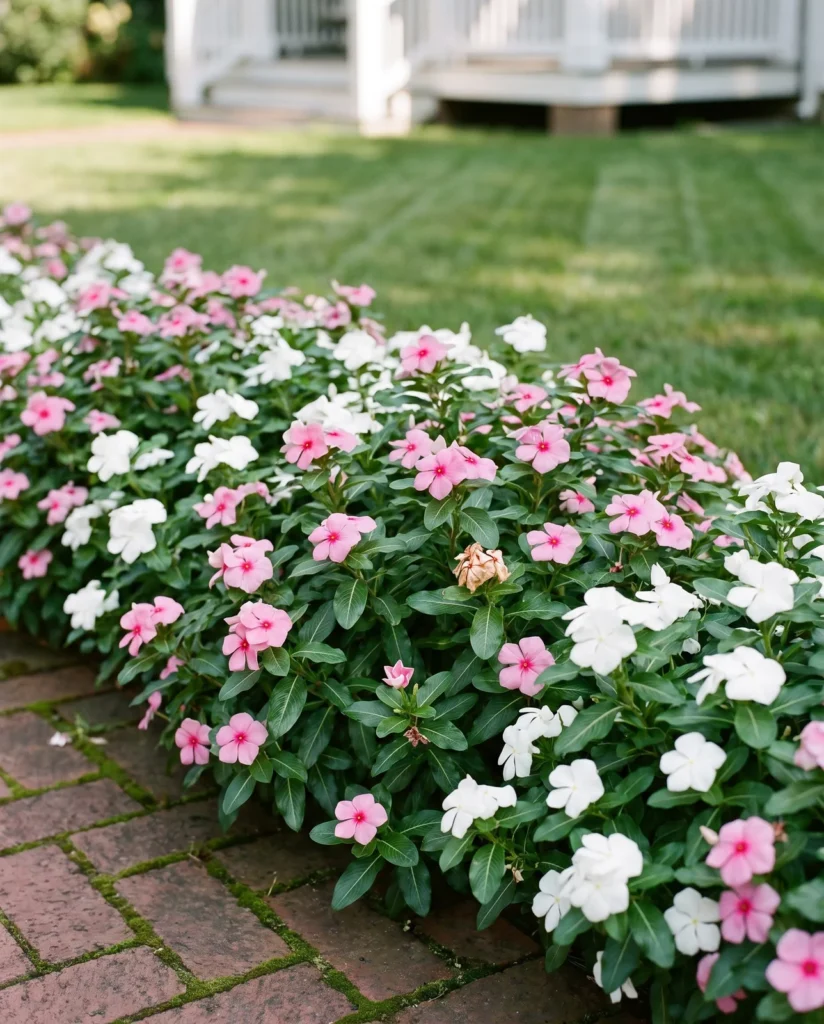
Two plants Americans call vinca
Two plants are sold in America as vinca, and they sit in separate genera of the same family. Annual vinca is Catharanthus roseus, a tender evergreen perennial in the dogbane family, Apocynaceae. It was once classified as Vinca rosea, which is where the shared name comes from. It comes from Madagascar and the semi-arid parts of Africa, and either home describes heat, strong light, and soil that dries. The confusion is old and official: Catharanthus roseus was commonly called vinca even though Vinca is a separate genus, and periwinkle is still routinely confused with the bedding plant.
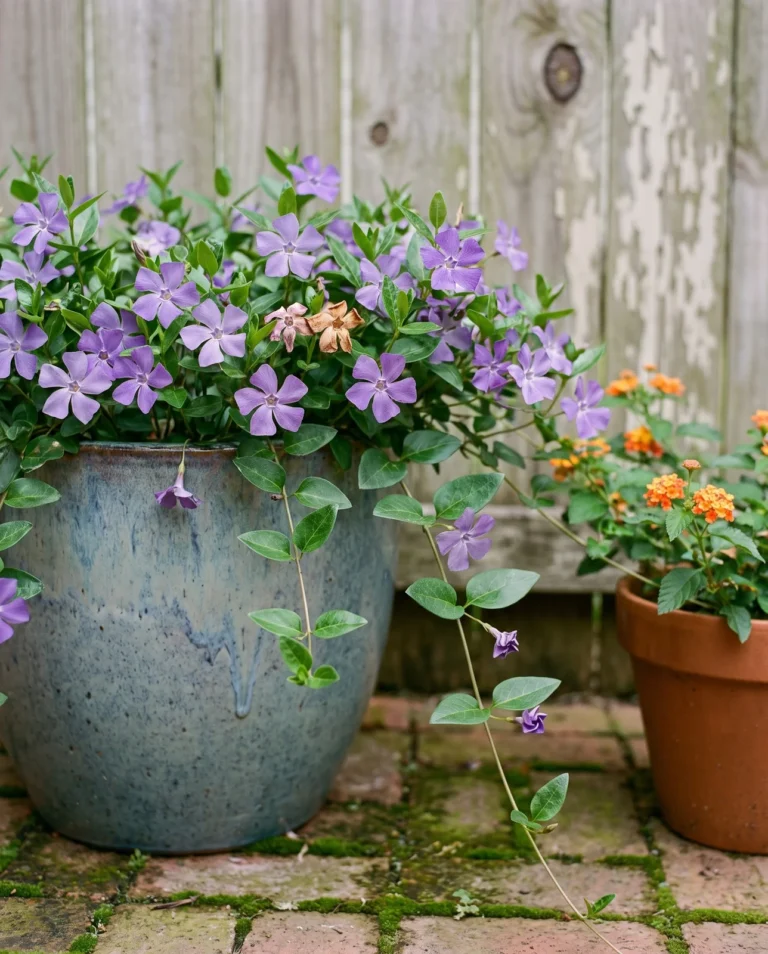
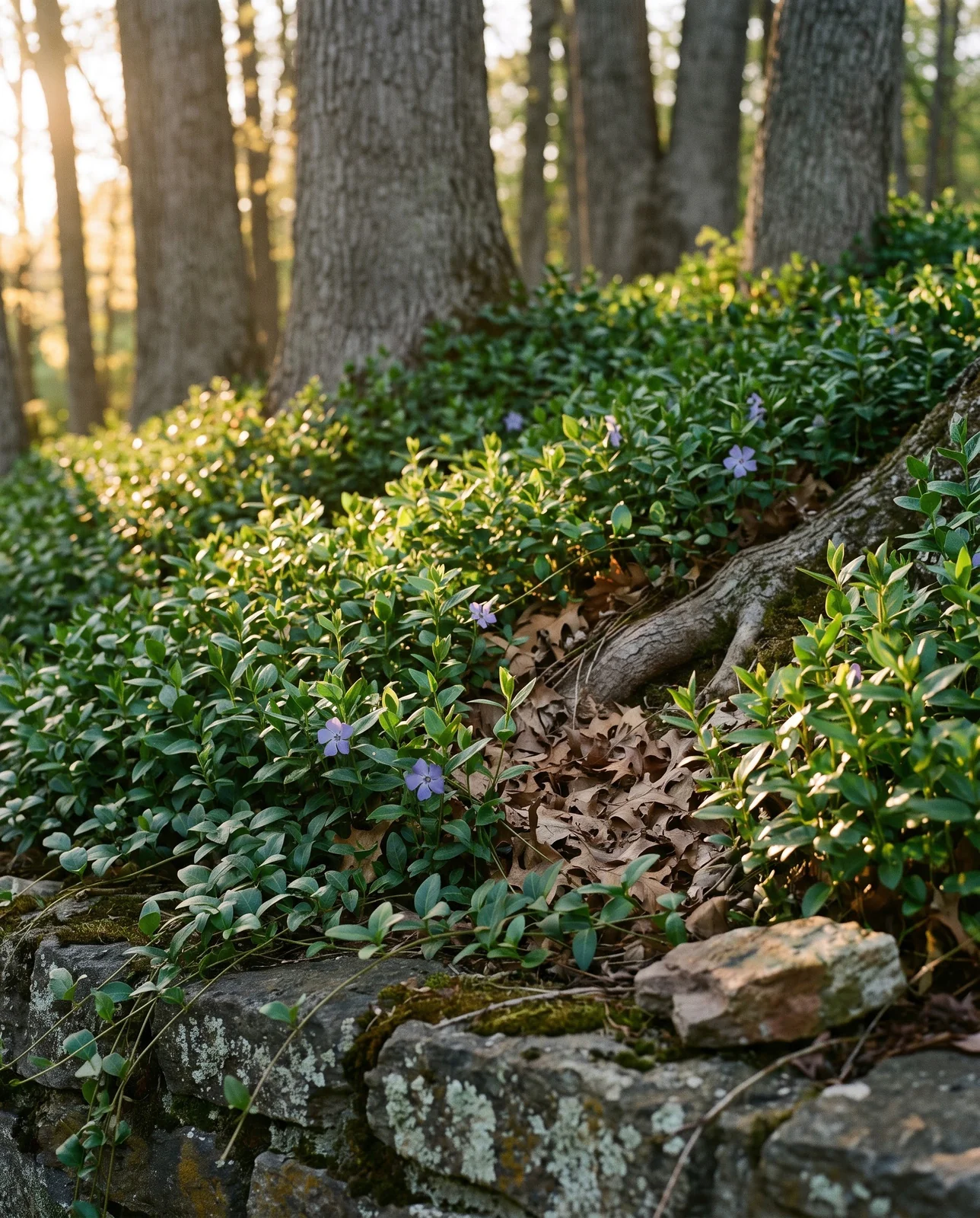
The genus Vinca holds about 12 species, and two of them became the groundcovers Americans actually plant. Vinca minor, lesser periwinkle, comes from Europe and the Caucasus and creeps flat across the soil. Vinca major, greater periwinkle, ranges from southern France to Asia Minor and forms a dense mat. Both answer to periwinkle, to vinca, and across much of the country to myrtle, so the word on a rack of garden flowers cannot tell them apart. What the plant is sold for can. The perennial Vinca species perform best in shade and come as groundcover in flats of rooted, trailing pieces, while the annual arrives in summer six-packs for full sun.
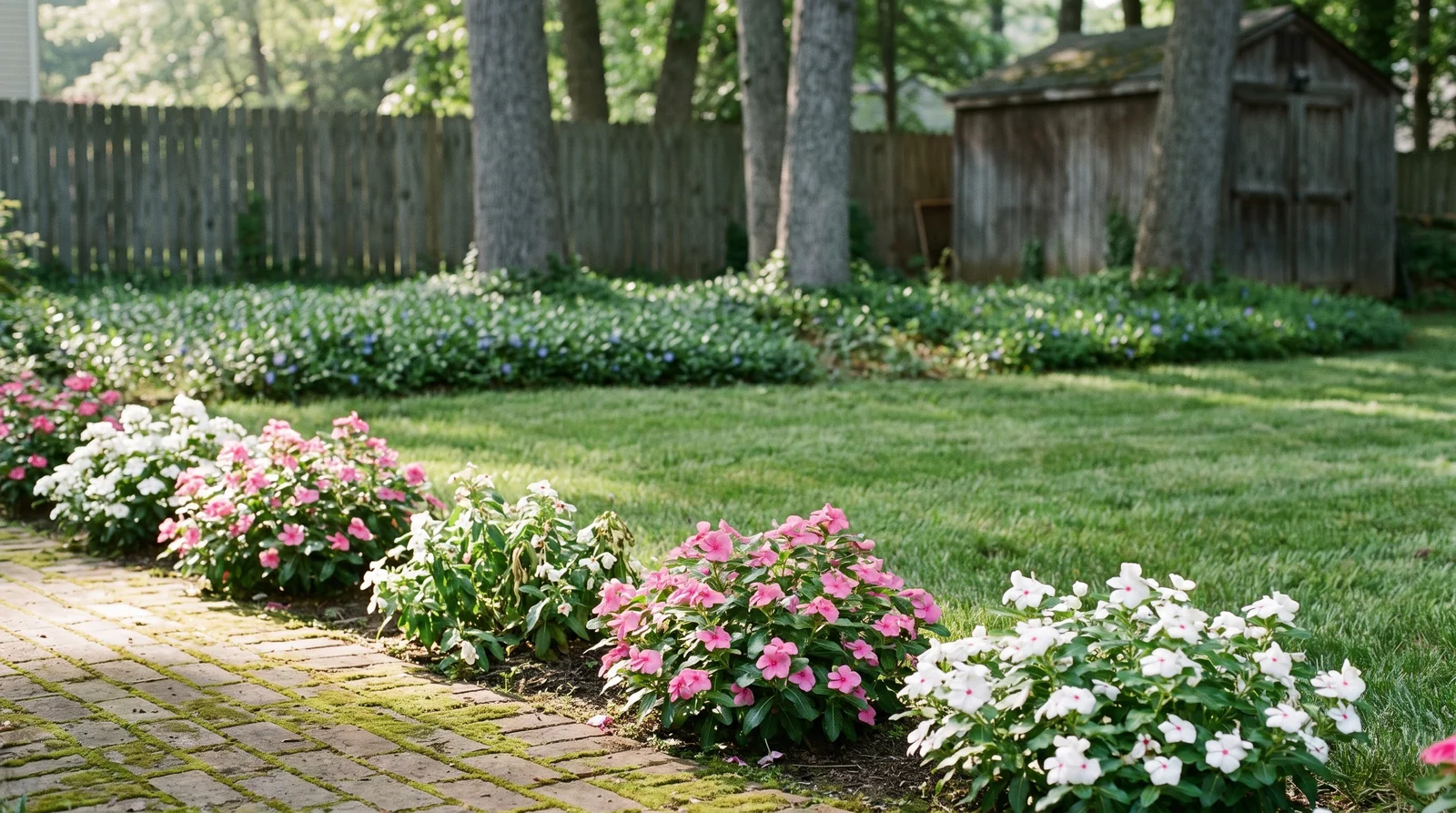
Which vinca is in the pot
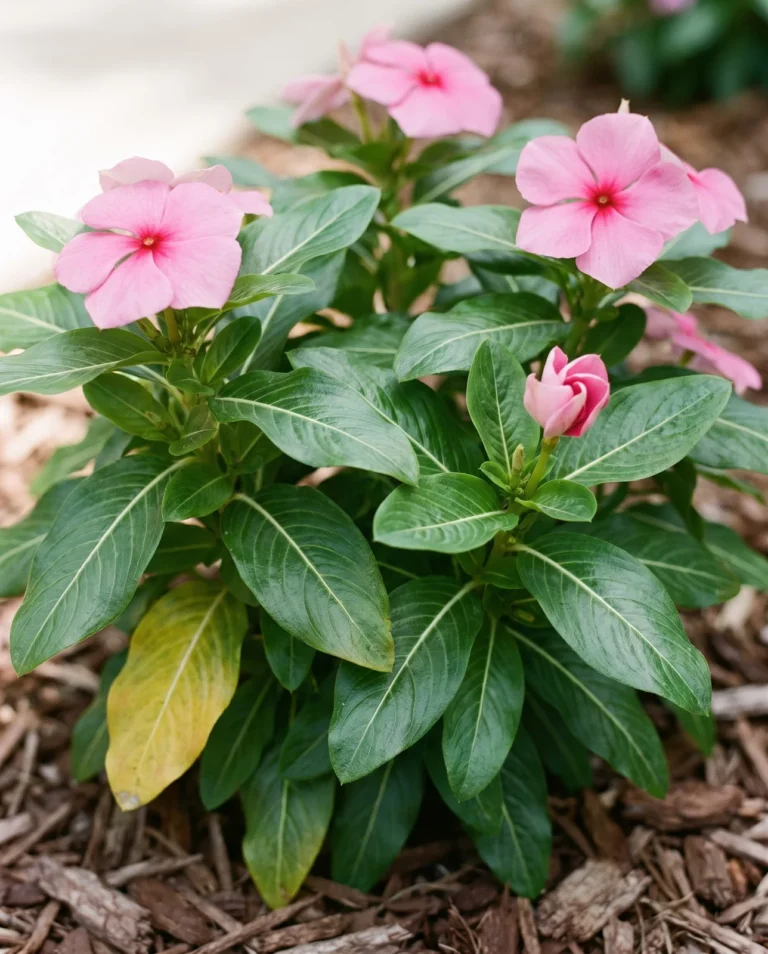
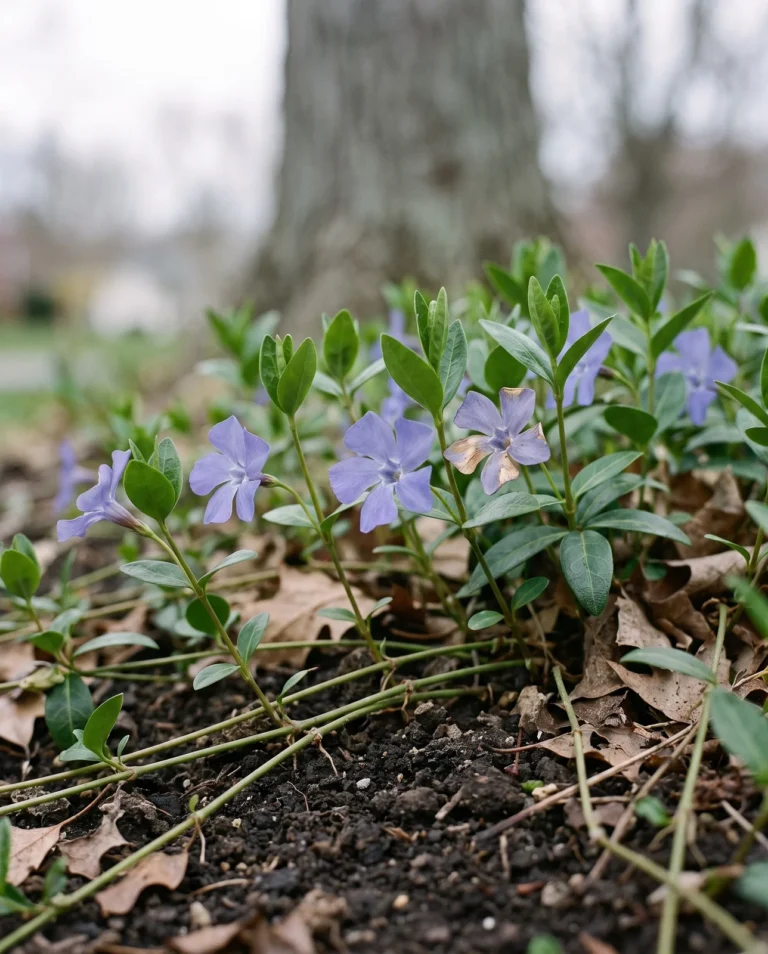
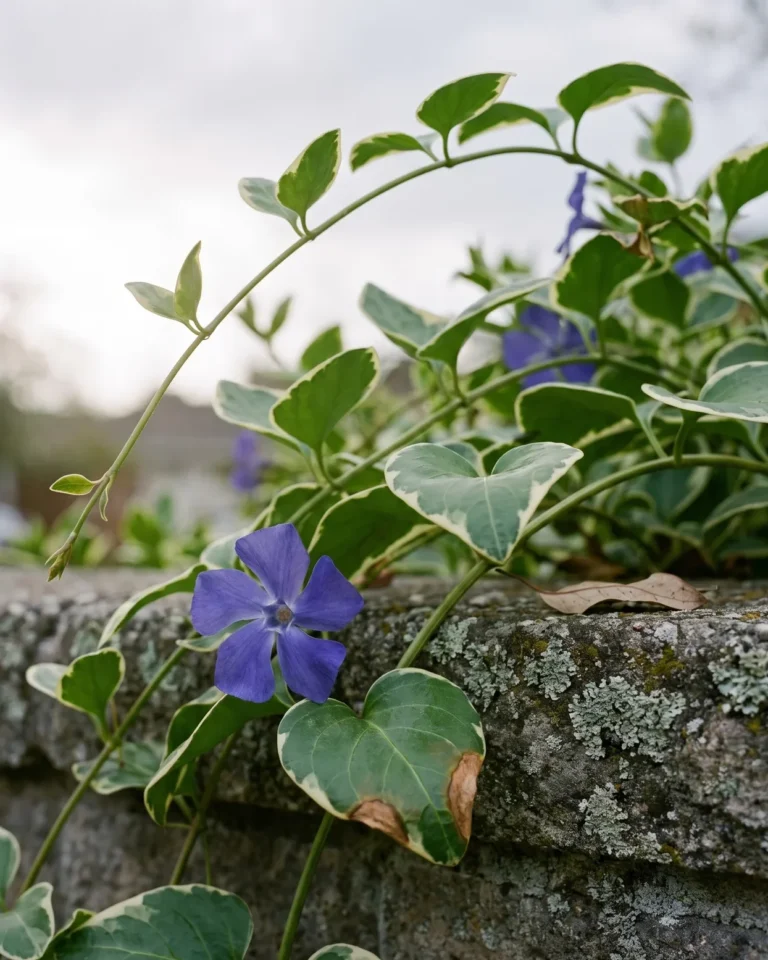
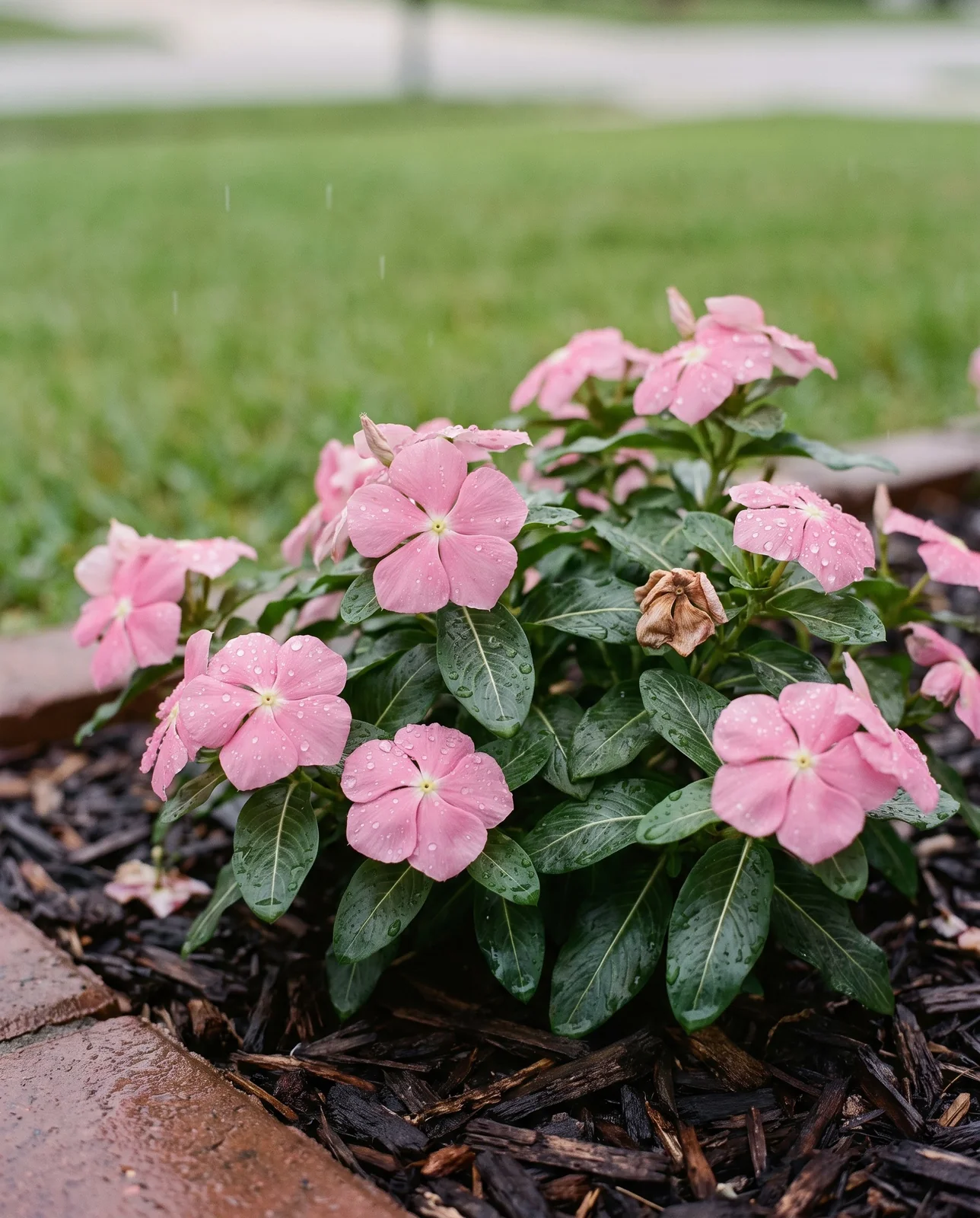
The flower and the leaf edge settle the identification faster than the label does. Three plants come home under the word vinca, and each carries one detail the other two do not.
Does vinca come back every year
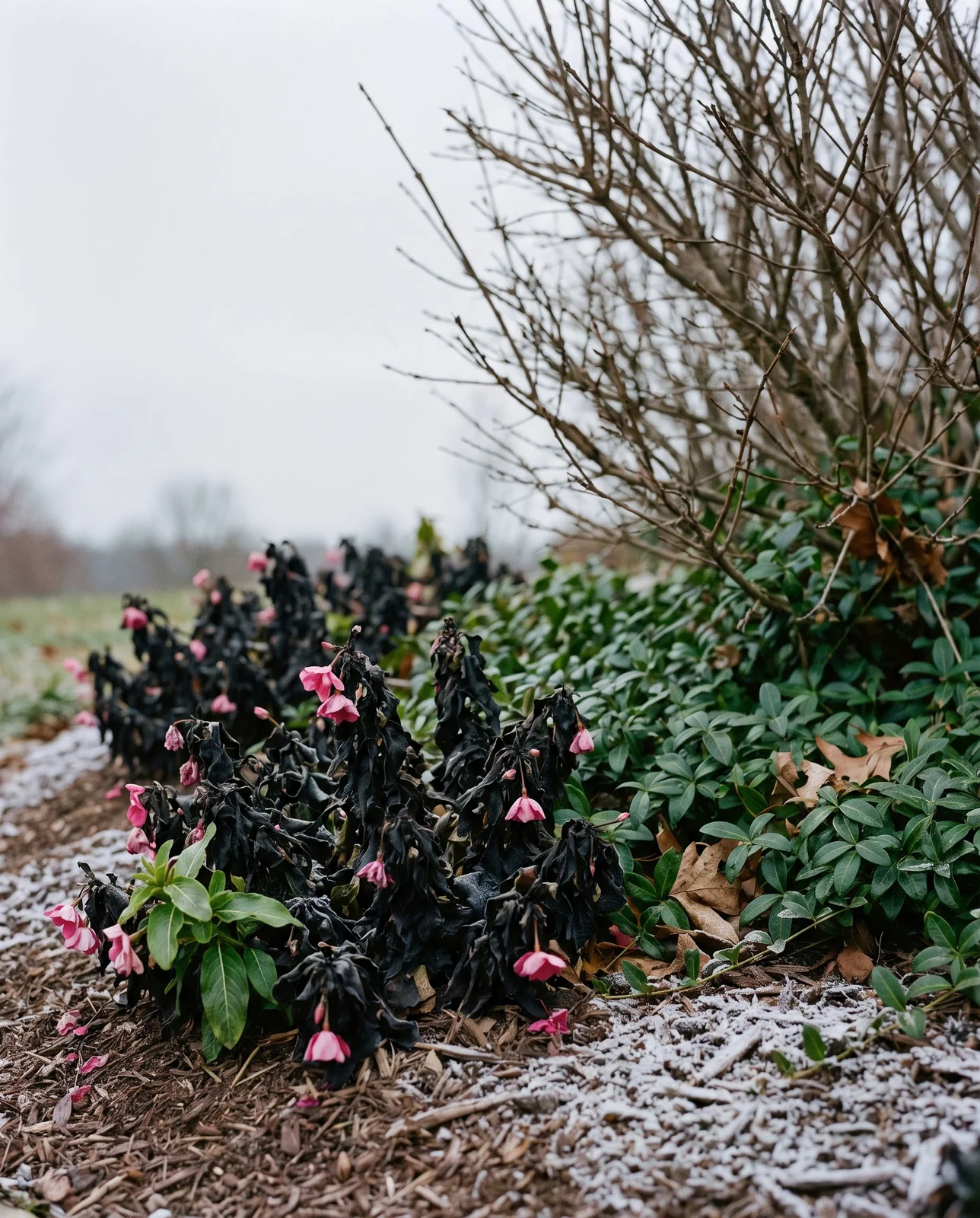
Annual vinca is a perennial that almost nobody gets to keep. It survives winter only in zone 10 and warmer, and everywhere colder it is grown as an annual. In the continental United States that means south Florida, the southern tip of Texas, the low desert, and a strip of coastal California. Even there it usually lasts one season, since frost or fungal disease takes it before a second summer. Farther north the first hard freeze ends it and nothing resprouts from the crown. Seed is what returns. The plant self-seeds in good conditions and seedlings come up around the garden the next year. Most reports of vinca coming back are those seedlings. Potted plants can winter indoors, and cuttings taken in late summer hold stock until spring.
The groundcover periwinkles are hardy perennials and behave like it. Vinca minor takes winters down to zone 4, and once a planting takes hold the same plants thicken season after season with no replanting. Vinca major is tender by comparison and starts at zone 7. North of that it lives in containers. A periwinkle planting is bought once; an annual vinca bed is bought again every spring.
Telling vinca and impatiens apart
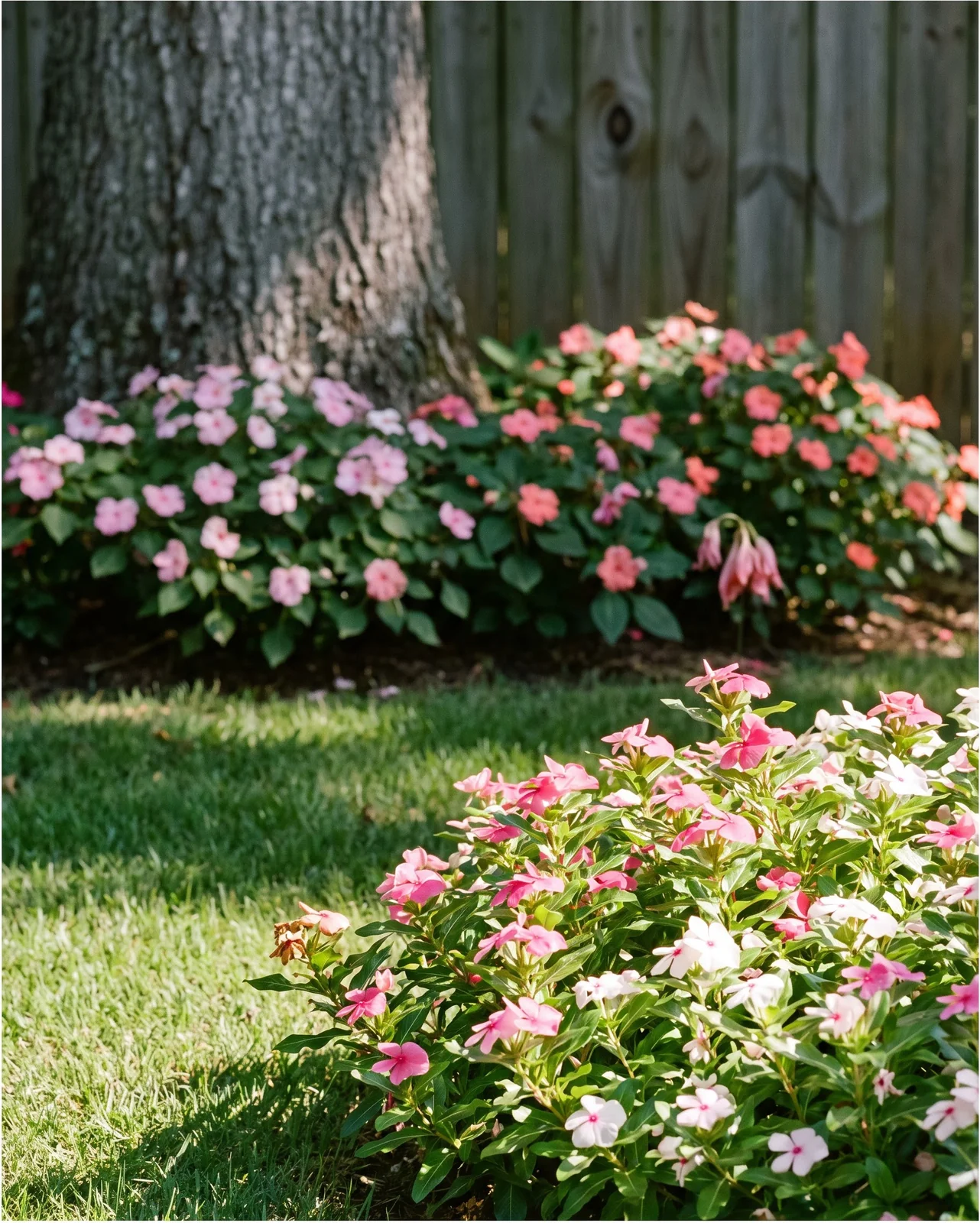
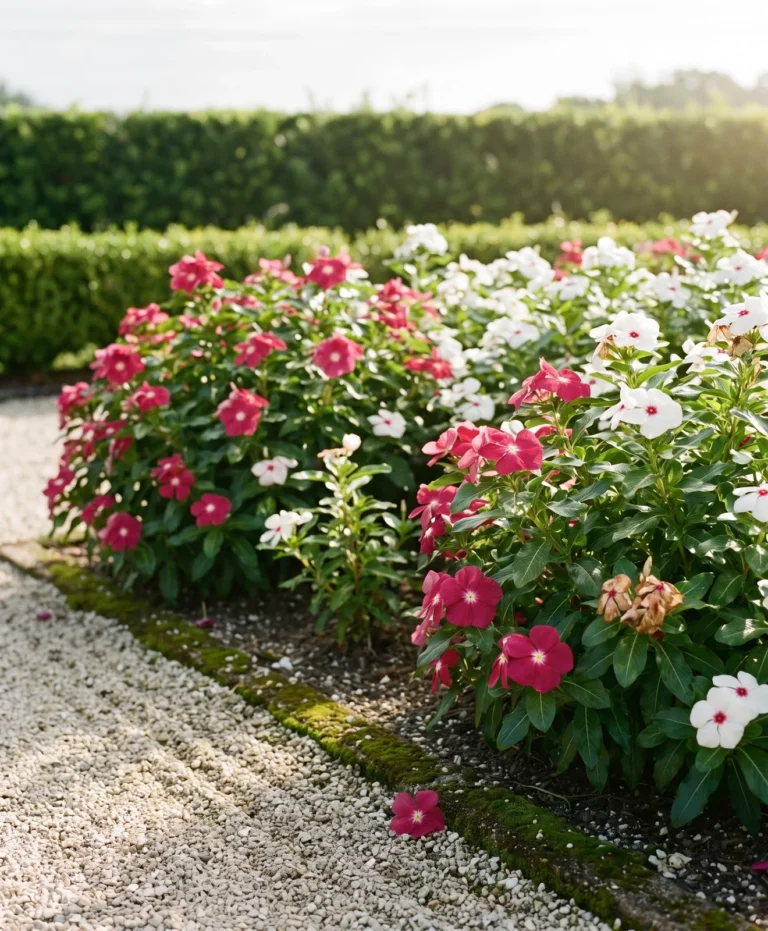
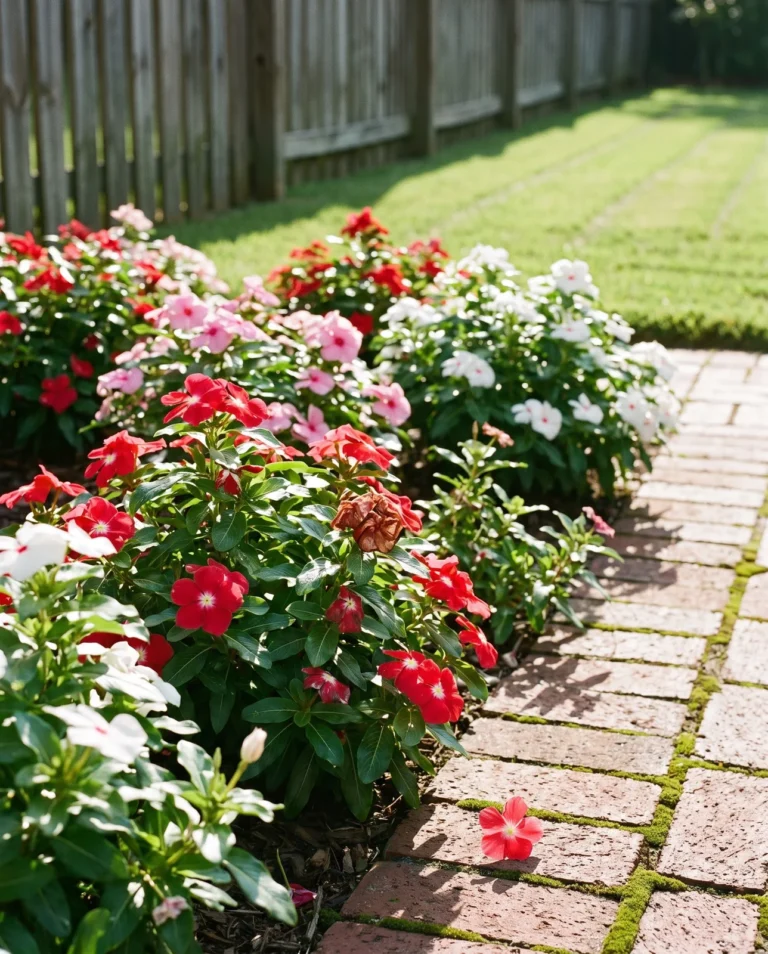
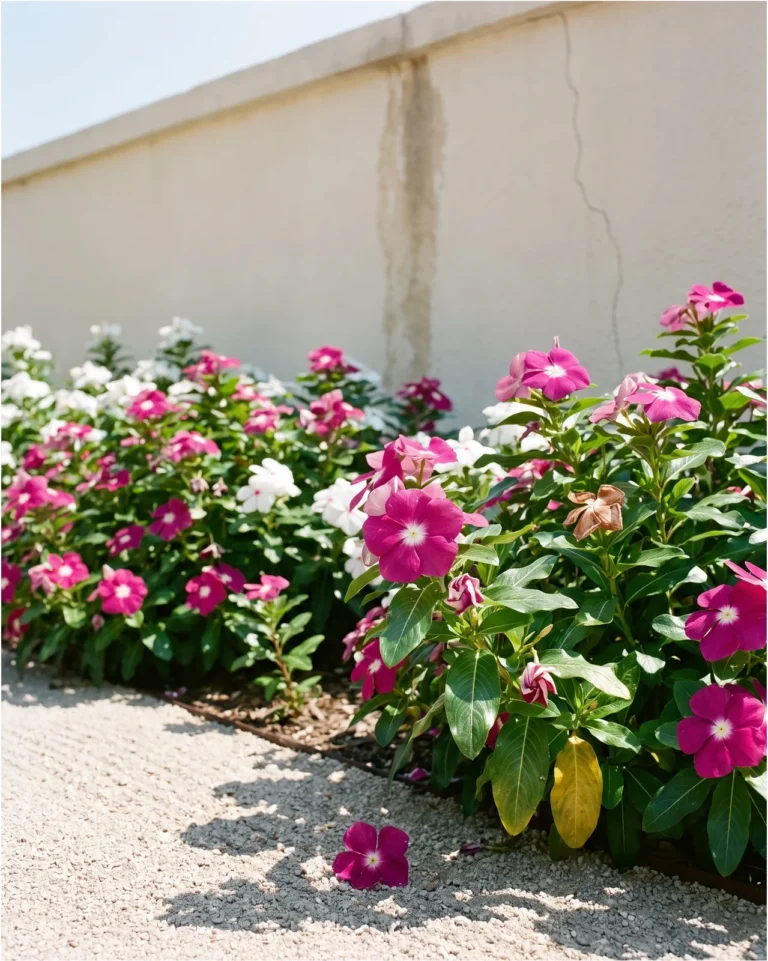
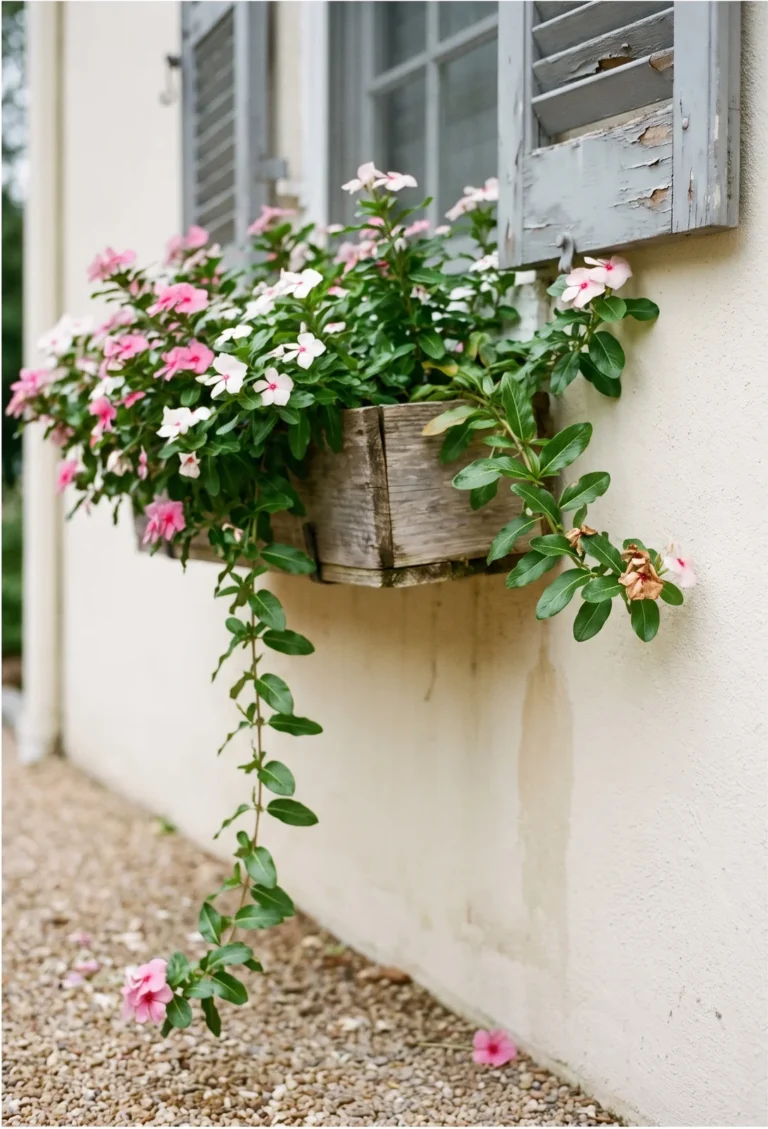
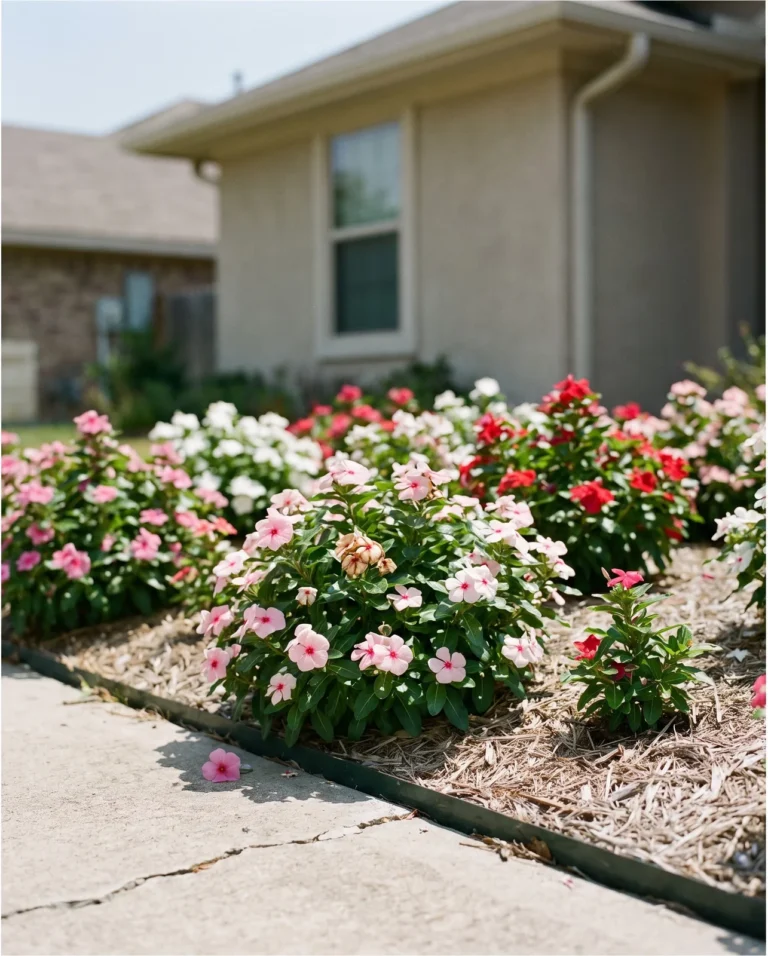
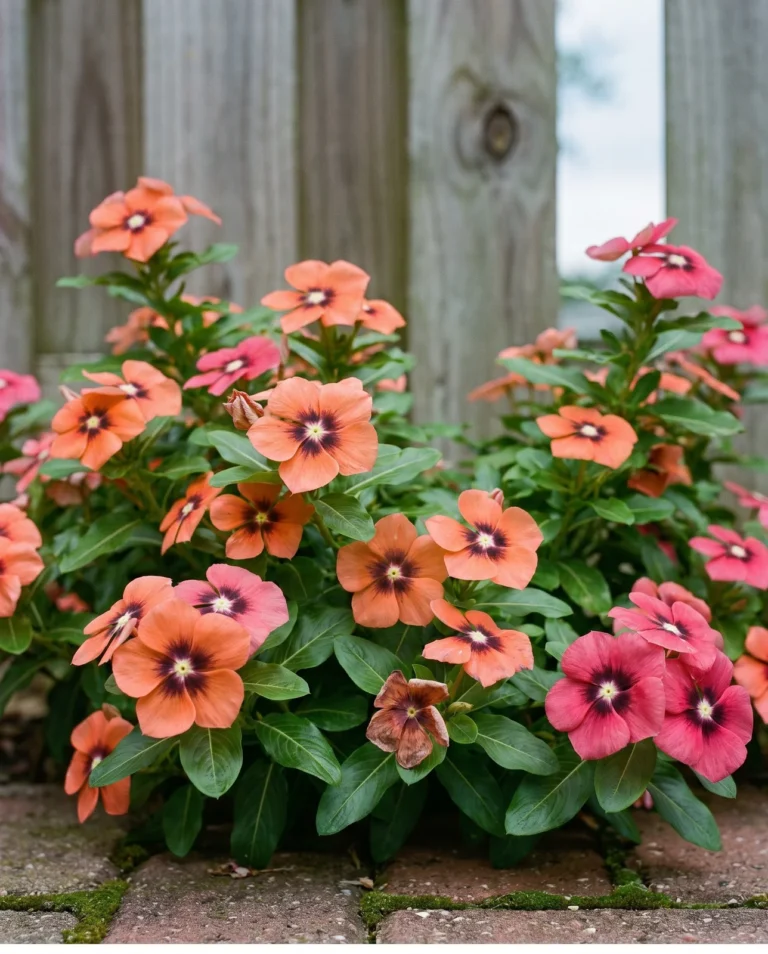
Light separates them before any leaf is examined. In the South, annual vinca fills hot, full sun beds the way impatiens fills shady ones, and swapping the two is the most common way both end up looking bad by July. The leaves confirm the call. Annual vinca leaves are opposite, simple, and smooth-edged, oblong to elliptic, hairless and glossy, with a pale midrib down the center. The flowers run 1 to 3 inches across and sit flat and open on the plant. Phlox, star jasmine, and both periwinkle species get taken for it too. Water is the second difference and the one that kills plants. Annual vinca wants soil that dries between waterings and carries moderate to high drought tolerance.
Why vinca turns yellow and collapses
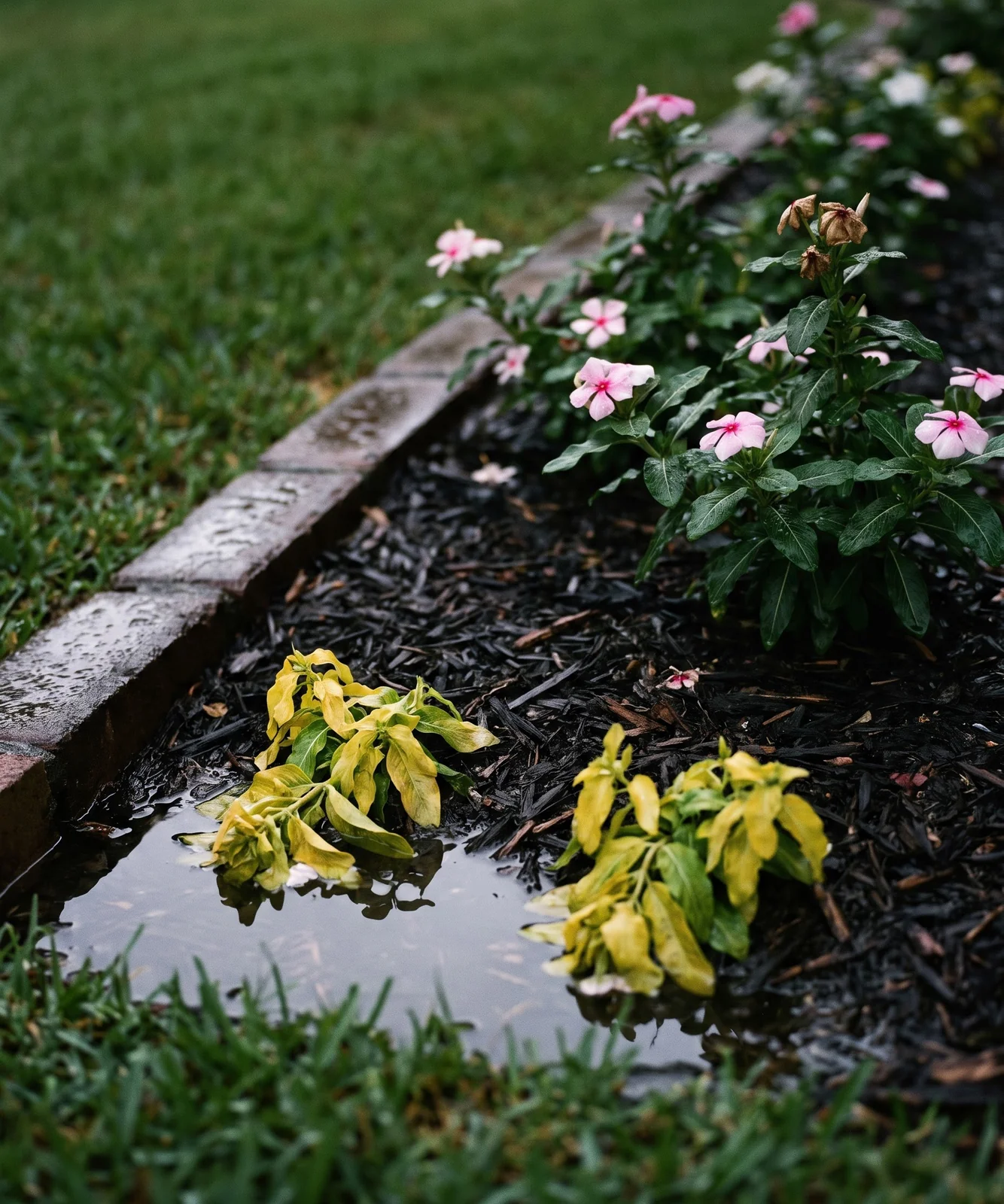
Yellow leaves that turn into wilting and collapse trace back to water more often than to anything else. Annual vinca is one of the most trouble-free bedding plants, and the diseases that do reach it are root rots, stem rots, and foliar diebacks that follow poor drainage. Frequent watering makes branch blight and root rot likely even on moderate to dry sites, and light, frequent watering raises humidity at the base of the stem and encourages the stem rot organisms. The sequence is always the same. Leaves yellow and scorch, growth stunts, then plants wilt and die. Underneath, the root system is small and the roots slough their outer tissue off the inner core. Planting into cold ground starts it early, since vinca set out before the soil warms often develops fungus problems or root rot.
Several organisms produce that same picture and cannot be told apart in a bed. Phytophthora causes aerial stem blight and root rot: dark brown to black lesions on stems and branches, with everything above them wilting and dying back, often with no root rot at all. It carries two names, Phytophthora nicotianae and Phytophthora parasitica, and it is already present in southern soils. Rhizoctonia rots the stem, yellowing the plant and collapsing it, with a slower root rot behind it. Pythium gives similar root rot and damps off seedlings, but no branch blight.
Two more causes look like the same yellowing. Black root rot, from the fungus Thielaviopsis basicola, is uncommon at home and arrives on infected plants or in beds where pansies and other susceptible hosts have died. It leaves a small root system with a salt-and-pepper look. High pH makes it worse, so lime goes down only when a soil test calls for it. In the desert Southwest the cause is chemical. Most desert soils sit at a pH of 8.0 to 8.5, and at that pH iron is too insoluble to take up, however much the soil holds. Chelated iron in the Fe-EDDHA form still works there, where Fe-DTPA and Fe-EDTA do not.
Yellow leaves when the watering is already right
Once the soil moisture has been corrected and the bed still turns yellow, the pattern on the plant narrows the cause.
Planting annual vinca
Wait for warm soil. Annual vinca goes outdoors once soil temperature is above 60 degrees Fahrenheit, and spring soil lags weeks behind spring air, so a warm April afternoon is not the signal. It goes in later than the petunias and pansies that handle cool ground, and the delay costs nothing, because the plant does its real growing in heat. Space transplants about 12 inches apart, never closer than 10 to 12 inches, since crowding cuts air movement and favors disease. Pick the bed for drainage first: standing water after a storm, the run-out from a downspout, or an edged bed that traps runoff will cost the planting. Do not plant vinca in the same bed two years running, because the organisms that rot it stay in the soil.
Vinca wants acid soil, ideally a pH of 5.5 to 6.0, and it tolerates higher in practice. Louisiana beds are planted at 5.5, and anything below 6.0 suits it. The wrong pH increases disease problems, so test a bed before liming it. Containers work the same way with less margin: a mix that dries between waterings, a pot that drains freely, no saucer left standing full underneath. Then mulch with pine straw, which cuts the splashing of rain and irrigation water onto the lower stems and foliage.
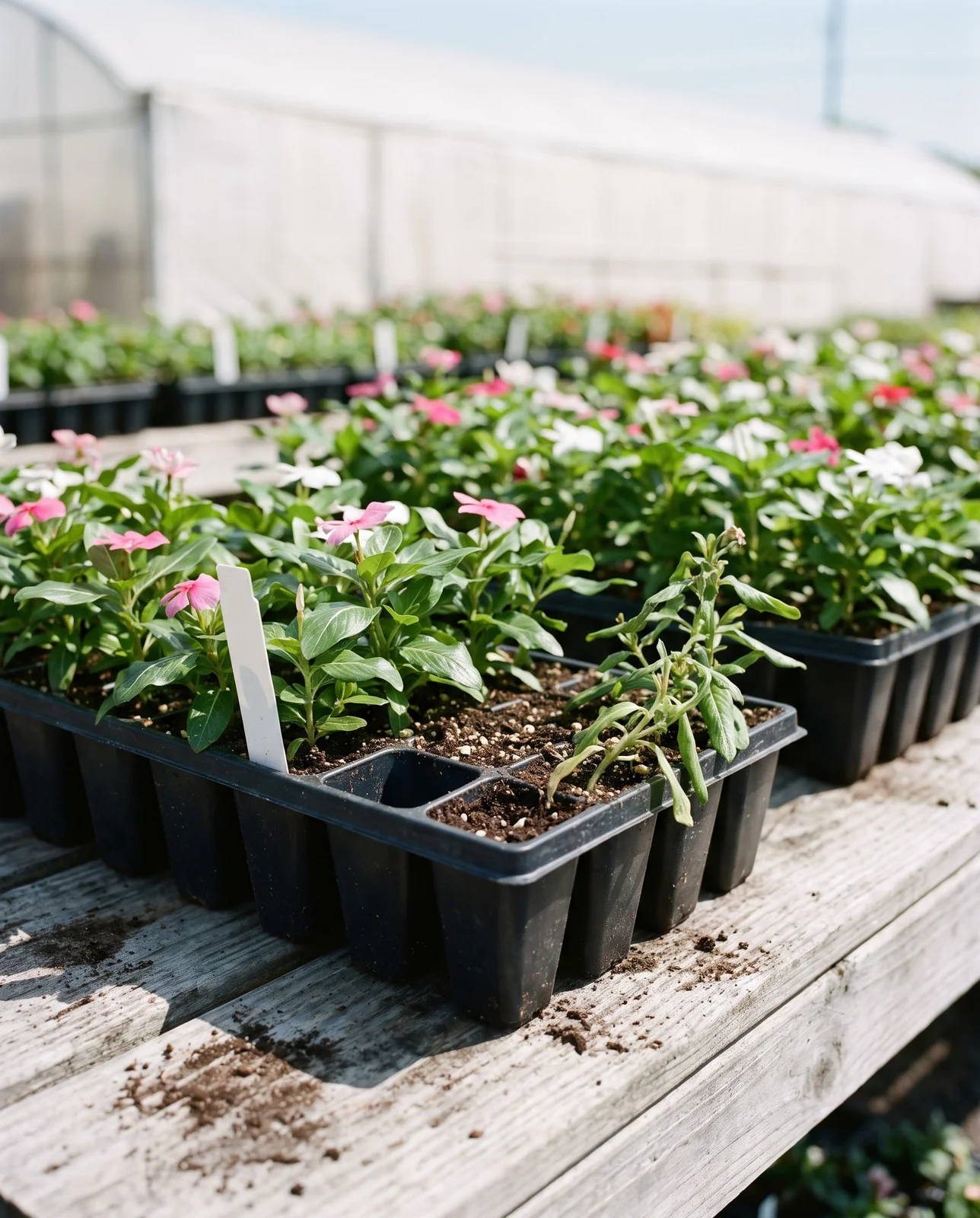
When the ground is warm enough, by region
Soil temperature sets the planting day and the calendar only approximates it, so the big vinca states name the month that usually meets the threshold.
Keeping annual vinca in flower
Annual vinca keeps flowering on its own, and most of what gardeners do to help reduces the display. Spent flowers do not need deadheading, and the plant does not need pinching to stay tidy; removing old flowers will not promote new growth. Feeding is the more expensive mistake. Vinca is a very light feeder, needs no fertilizer through the season, and can carry fewer flowers when it is fed, so any feed goes on at half the recommended rate. Heat is not the enemy people expect. The plant blooms even during heat stress and holds a bed through a southern August alongside geraniums. A slow start is normal: in New England it starts slow and peaks in July and August. When bloom falls off, look at light first, because leggy growth usually means too little sun.
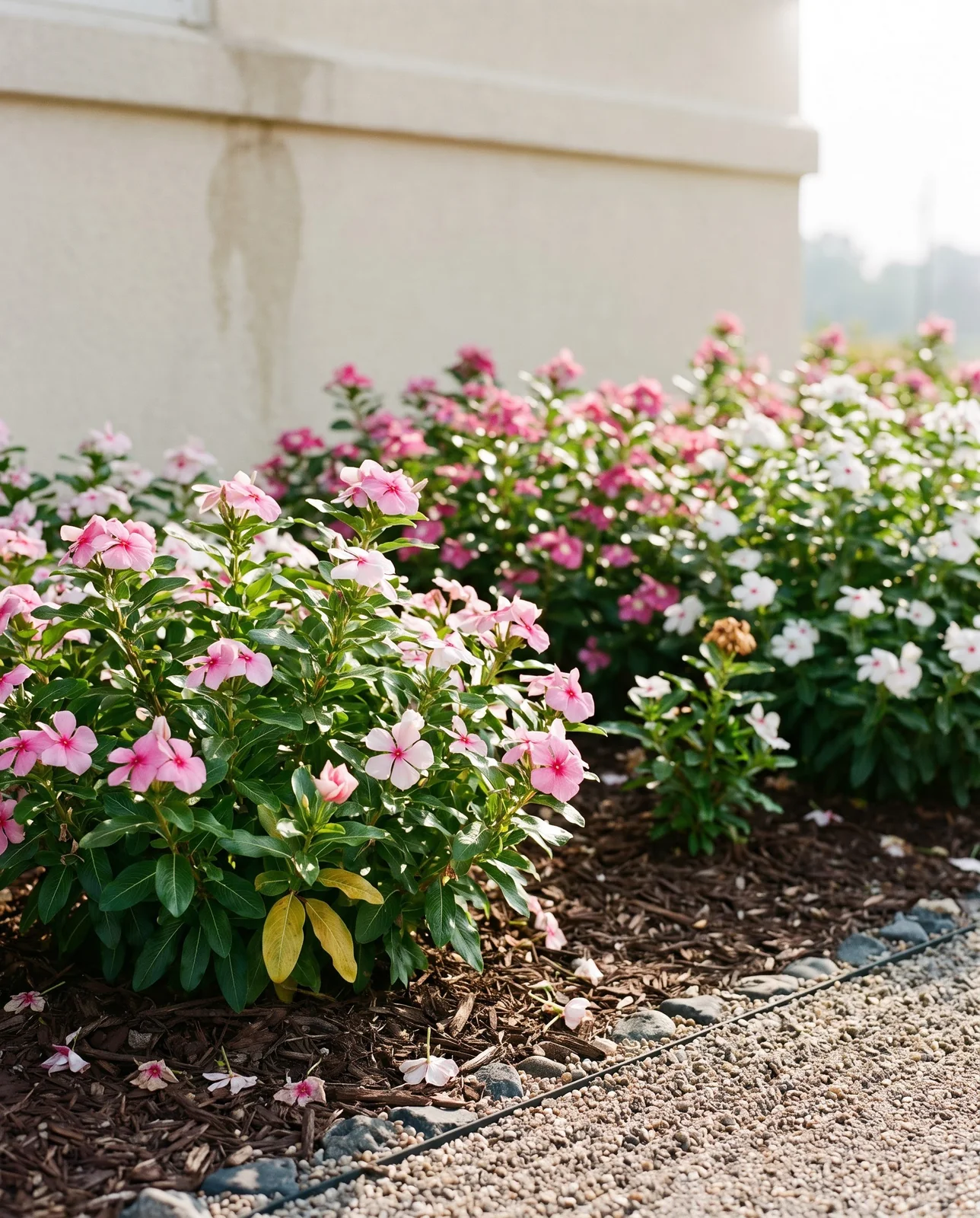
Vinca series worth knowing apart
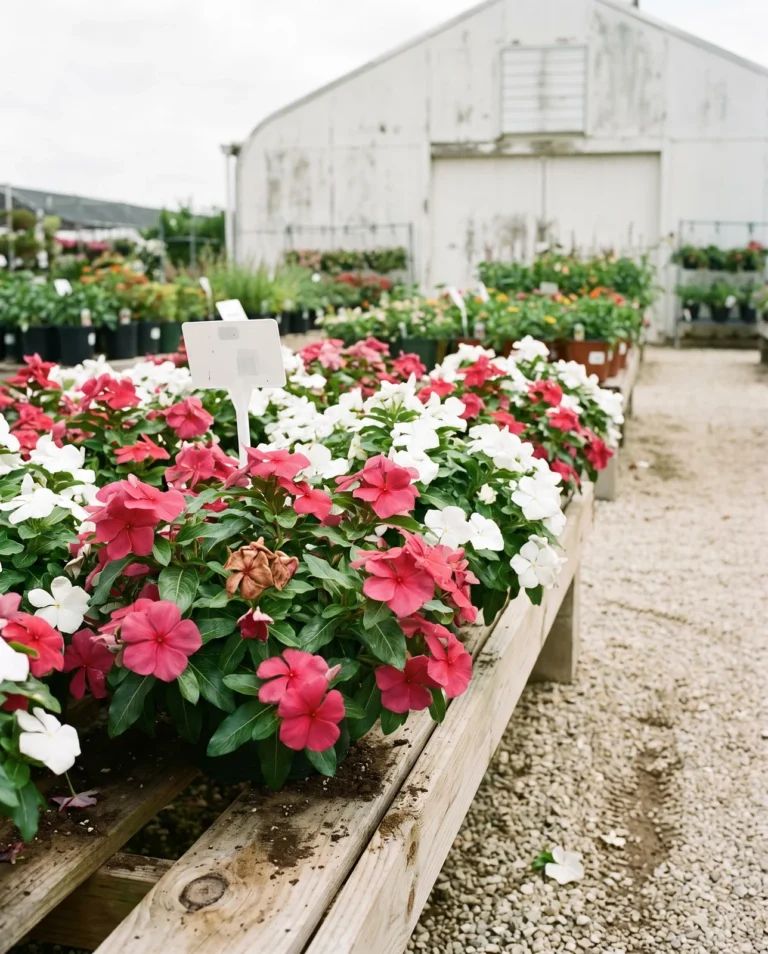
Series names on the tag carry real differences in height, habit, and disease resistance. The palette once ran to three colors, white, white with a red eye, and a rosy purple; the breeding that widened it produced the disease-resistant groups.
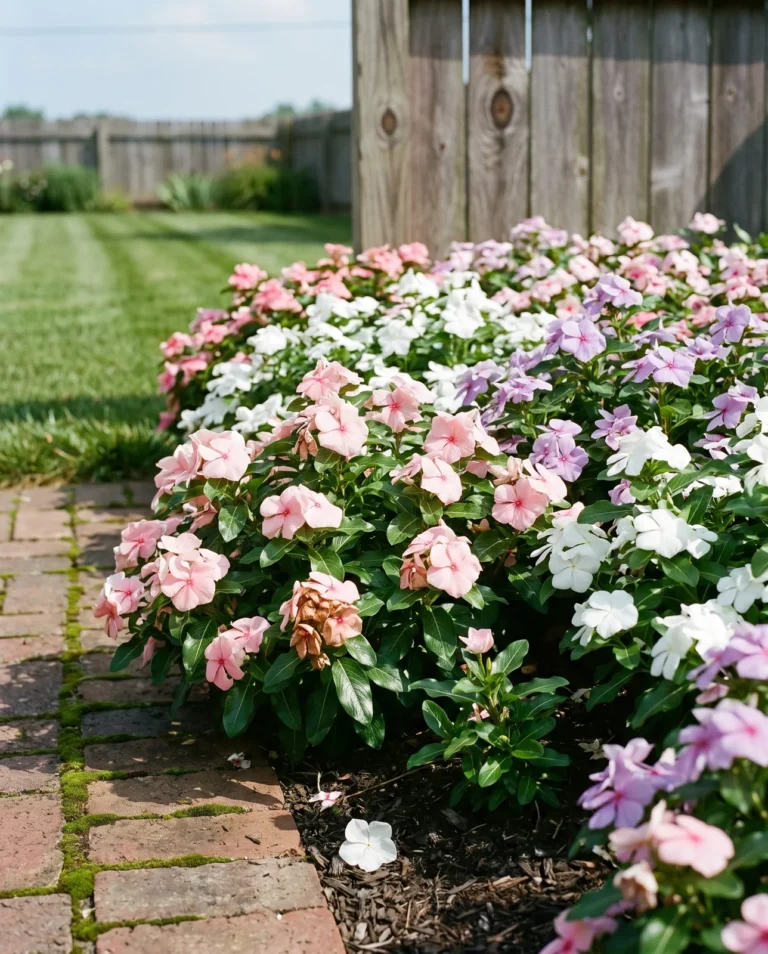
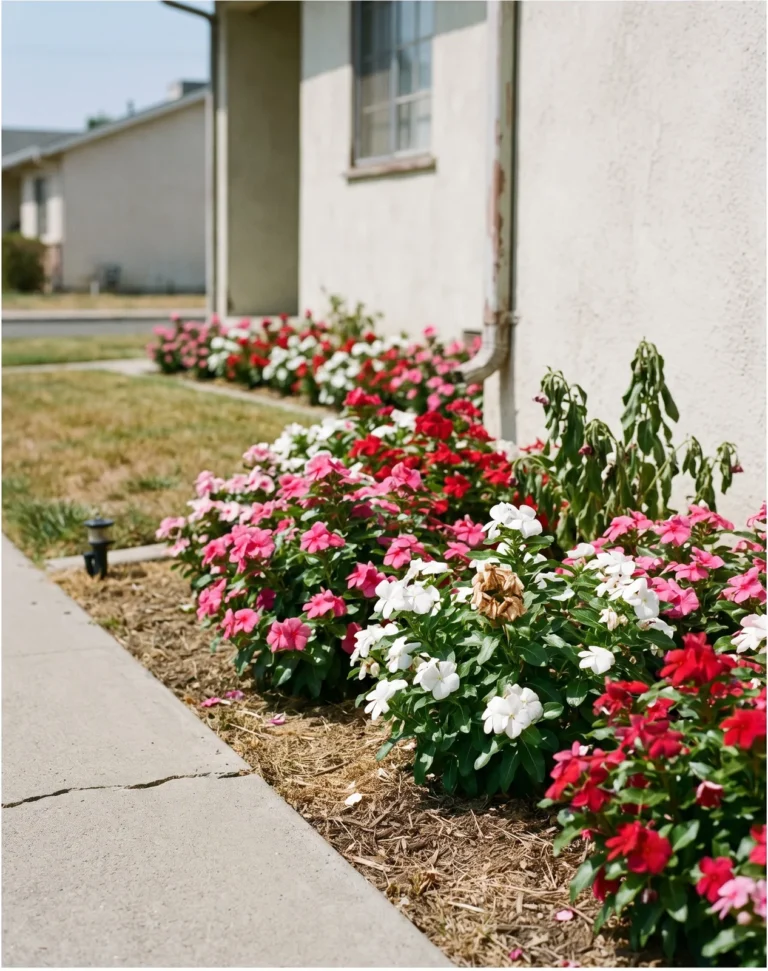
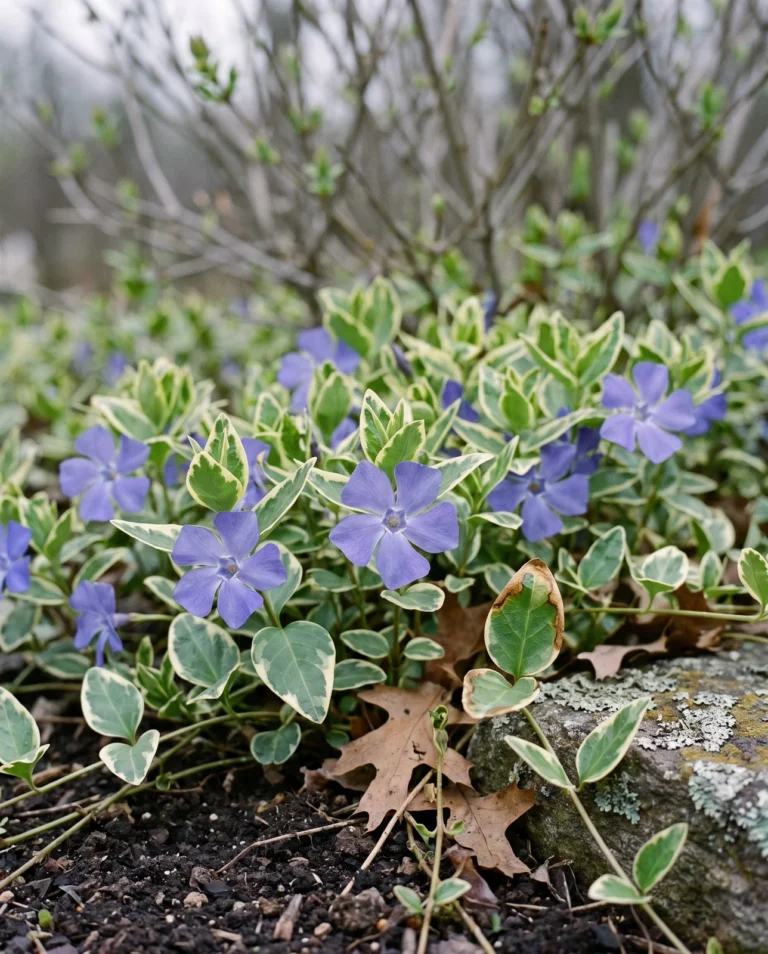
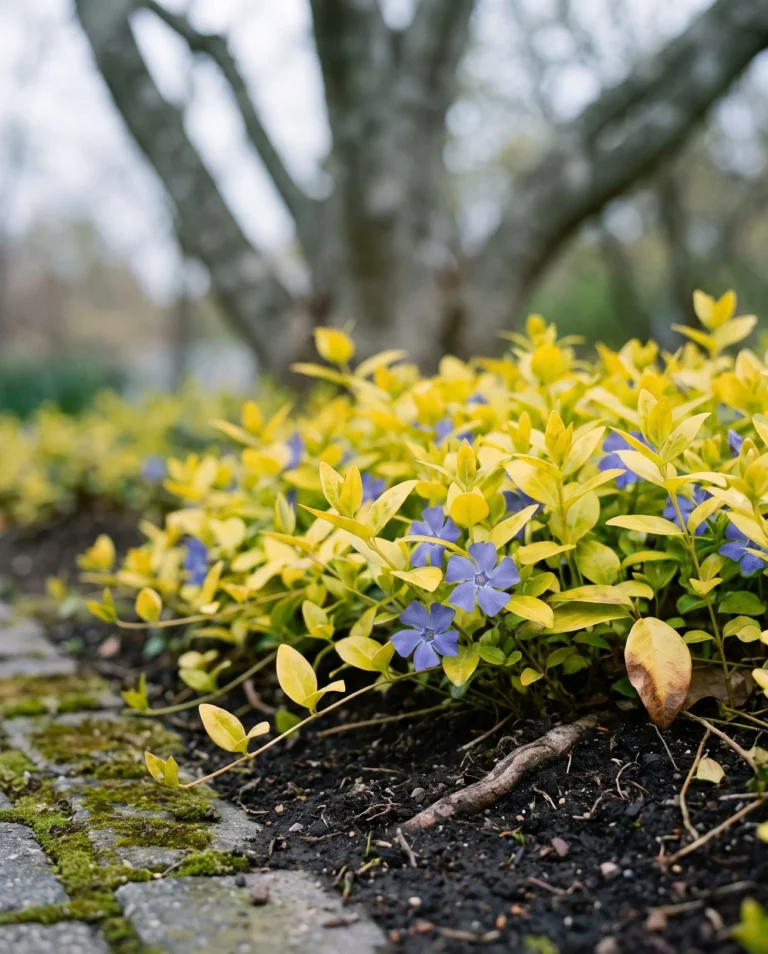
Periwinkle as groundcover, and where it takes over
Periwinkle is planted to cover ground that will hold nothing else, and it does that faster than most gardeners plan for. Vinca minor sends out long, trailing shoots that root wherever they touch soil. Fast growth and rooting at the nodes let it form a dense mat over a wide area and turn weedy and high maintenance in short order. Spacing sets the pace. Rooted cuttings and established plants normally go 12 to 18 inches apart, or 8 inches for quick cover of a small area. At 6 inches apart it covers an area completely in one year. Disease is the one thing that reliably stops a mat: dieback wilts plants and kills them back to the ground, and stem canker, also called blight, can damage or kill large patches.
That vigor is why both species appear on invasive lists. Vinca minor's aggressiveness has put it on many states' most unwanted lists, and North Carolina classifies both species as invasive. Vinca major is invasive in Virginia, South Carolina, Georgia, Alabama, and California, and Florida rates both an invasion risk and does not recommend them. In California it has escaped gardens into most coastal counties, foothill woodlands, the Central Valley, and even desert areas, lowering species diversity in native plant communities, and the state ranks it a moderate invader. Riparian ground is the most sensitive, because fragments break off, wash downstream, and start colonies where they land. Check local rules before planting it, and keep Vinca major to pots, baskets, and containers, where its spread can be watched.
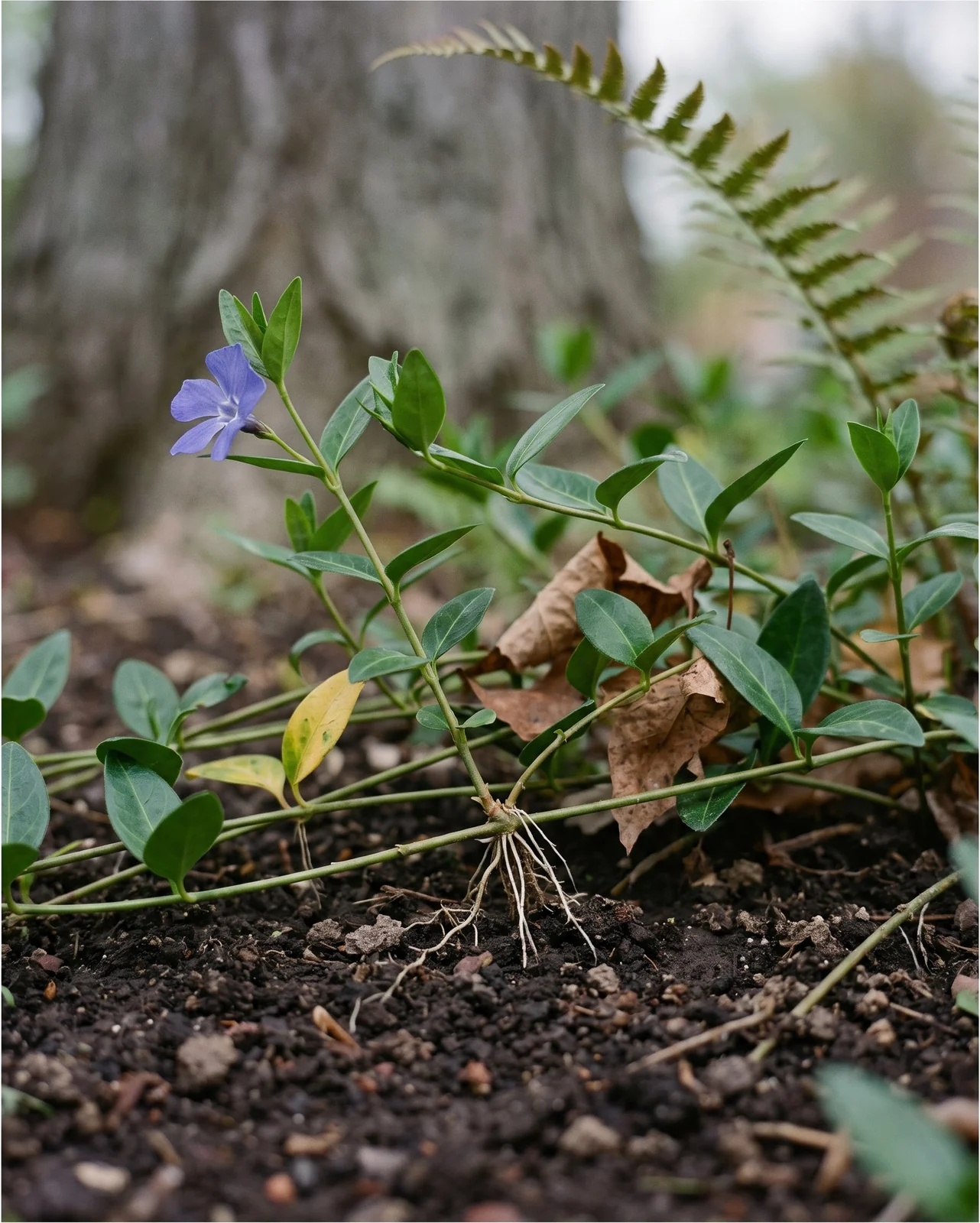
Sun or shade for vinca
The two vincas want opposite light. Annual vinca needs full sun for 8 or more hours a day. In New England it must have full sun and well-drained soil to perform at all, and hot summer weather brings the best growth and flowering. A bed under a canopy, on the north side of a house, or shaded for half the afternoon gives leaves and few flowers. Periwinkle is the opposite plant. Vinca minor tolerates high heat and nearly full shade and grows in anything from full sun to dappled light with moist, well-drained soil, its foliage a richer green in shade and its flowers more numerous in sun.
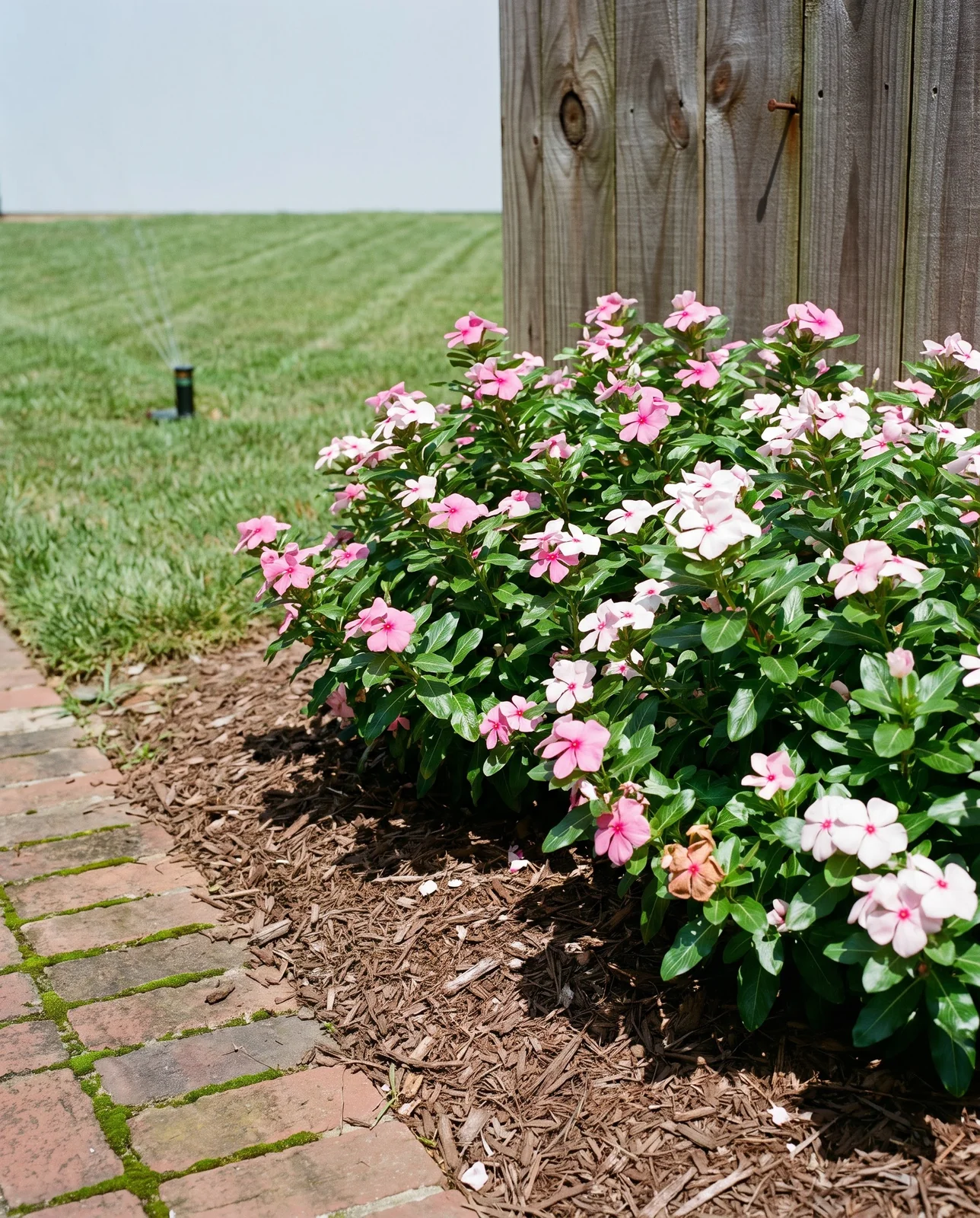
How much water vinca wants
Vinca wants less water than almost anything else in a summer bed. Water only when the top 1 to 2 inches of soil are dry, which in a well-drained bed can mean skipping several hot days in a row. Timing and aim matter as much as volume. Keep the watering out of the late afternoon so the soil dries before night, and put the water on the soil while the foliage stays dry, which holds mildew off. The groundcover asks the same restraint: it likes to be kept on the dry side and rots at the roots when watered too often. A finger pushed into the soil settles the question faster than any schedule.
How big vinca gets
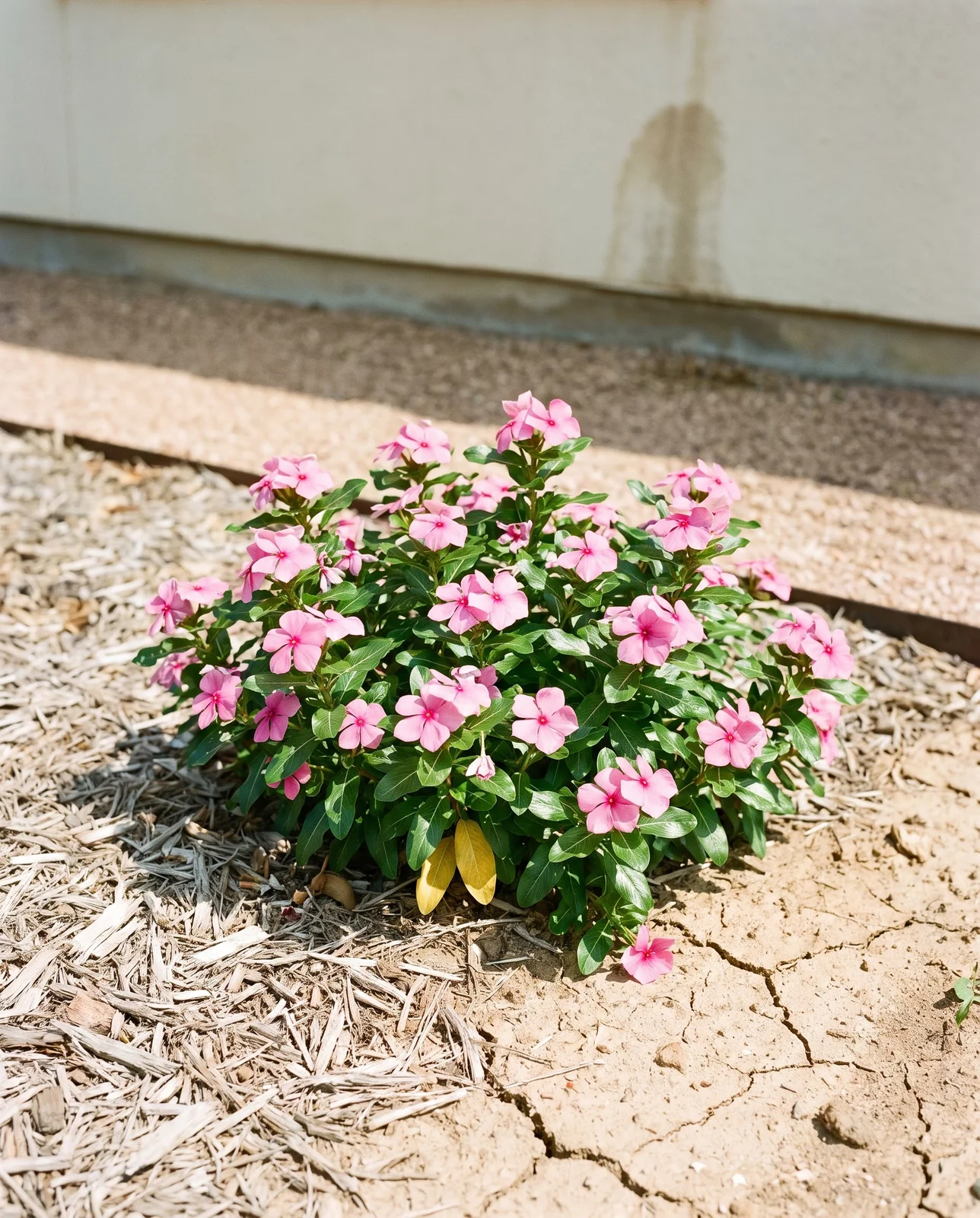
Annual vinca is a knee-high mound at most, and the series on the tag predicts the size better than the word vinca does. The plant runs 7 to 24 inches high and about as wide, in either a carpet-like or an upright habit. The usual garden size is 10 to 18 inches tall with a spread of about a foot, and about 2 feet for the trailing types. The groundcovers are ankle height and are measured by how far they run. Vinca minor grows 3 to 6 inches high and 3 to 18 inches wide. Vinca major grows 3 to 8 inches high and 1 to 2 feet wide, and where it is happy it mounds up to 2 feet. A mat that was supposed to stay flat can end up swallowing the front of a border.
Toxicity and pet safety
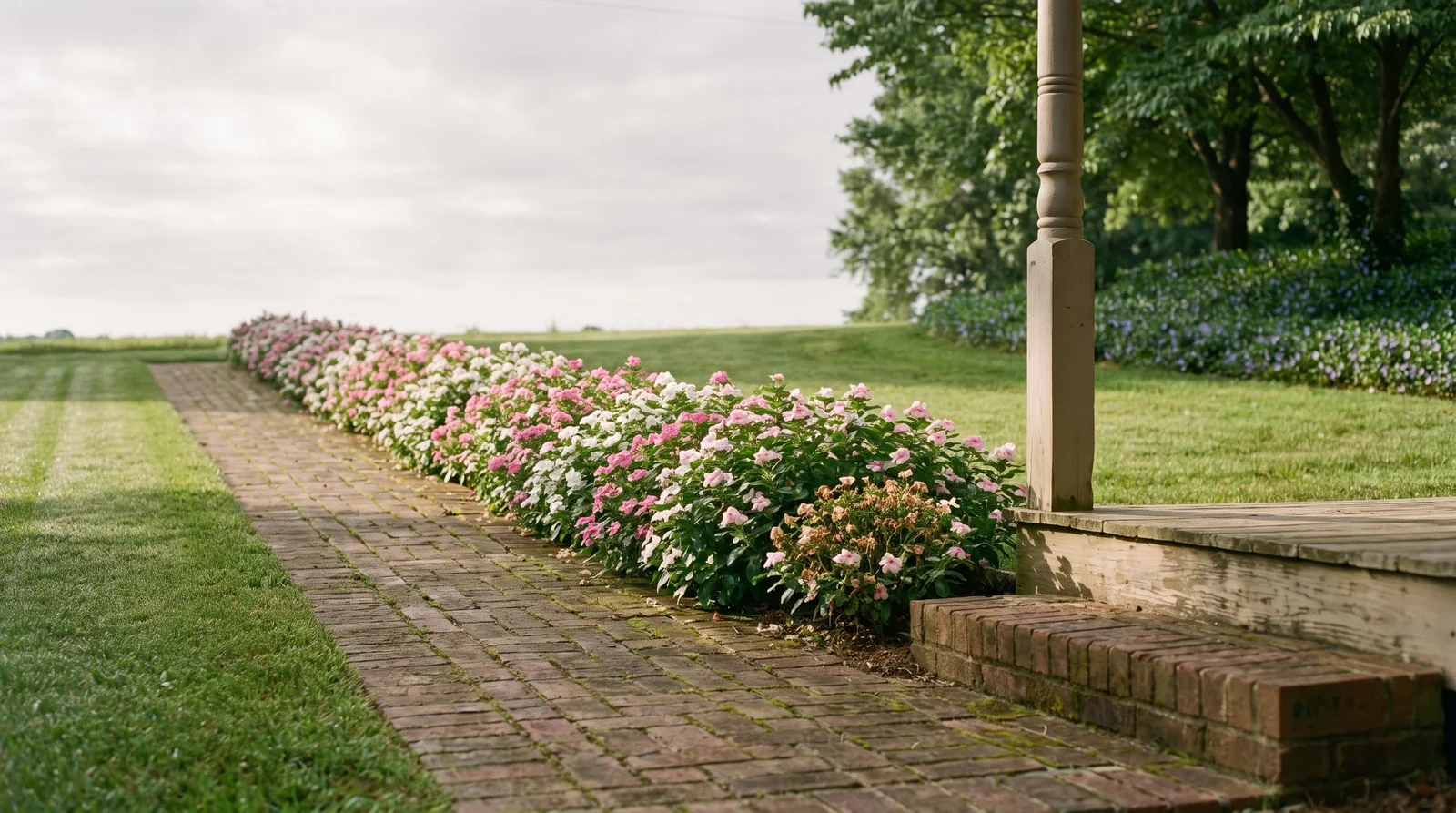
Vinca is poisonous to cats, dogs, horses, and people. The ASPCA rates it toxic to dogs, cats, and horses, with the same clinical signs under both names it files the plant under. Annual vinca is a low-severity poison for humans as well. Eating a large quantity brings vomiting, diarrhea, low blood pressure, hallucinations, depression, tremors, seizures, coma, and death, with vinca alkaloids as the toxic principle. How much was eaten decides how serious the case is, so a chewed leaf is a call to a veterinarian or a poison-control line. The same chemistry made the plant famous in medicine. Compounds in Catharanthus roseus led to a breakthrough in the treatment of certain leukemias, and its extracts still treat some cancers. Those are purified drugs given under supervision, and no part of the garden plant is safe to eat, to brew, or to give an animal.
Growing more vinca
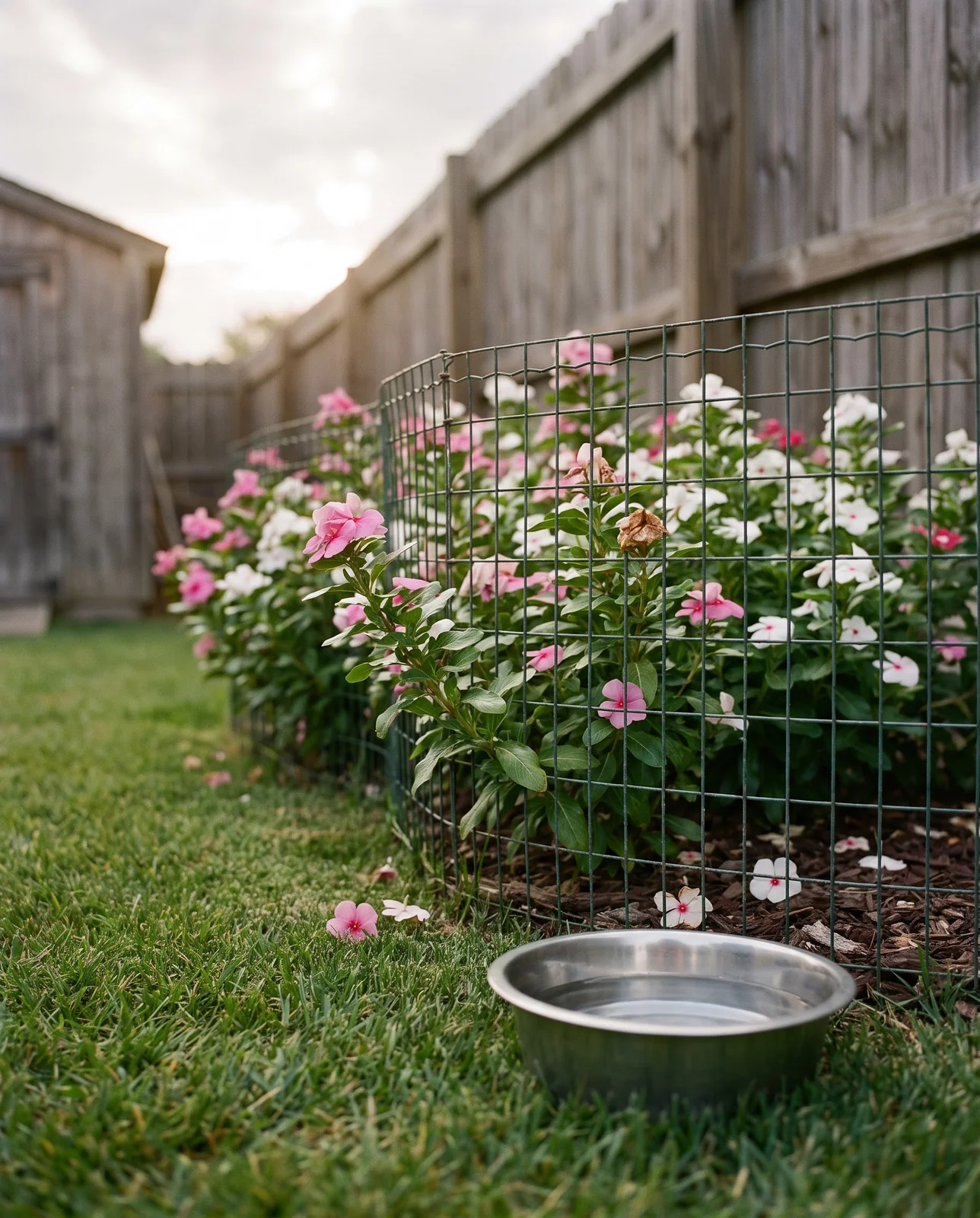
Seed is the standard route for the annual and cuttings for the groundcover. Seed is the recommended way to propagate annual vinca, and it germinates in 7 to 21 days at 70 to 75 degrees Fahrenheit, steady warmth that a cool spring windowsill rarely supplies without a heat mat. Cuttings root in about 3 to 4 weeks: take 4 to 6 inches off the top of a stem that carries no flowers, strip the lower leaves, and set it to root. For the groundcover, division and stem cuttings are the methods that work, taken as tip cuttings of non-flowering stems in late spring or by dividing plants at any point in the season. An established patch supplies its own material, since every rooted node is already a plant.
Pests and diseases
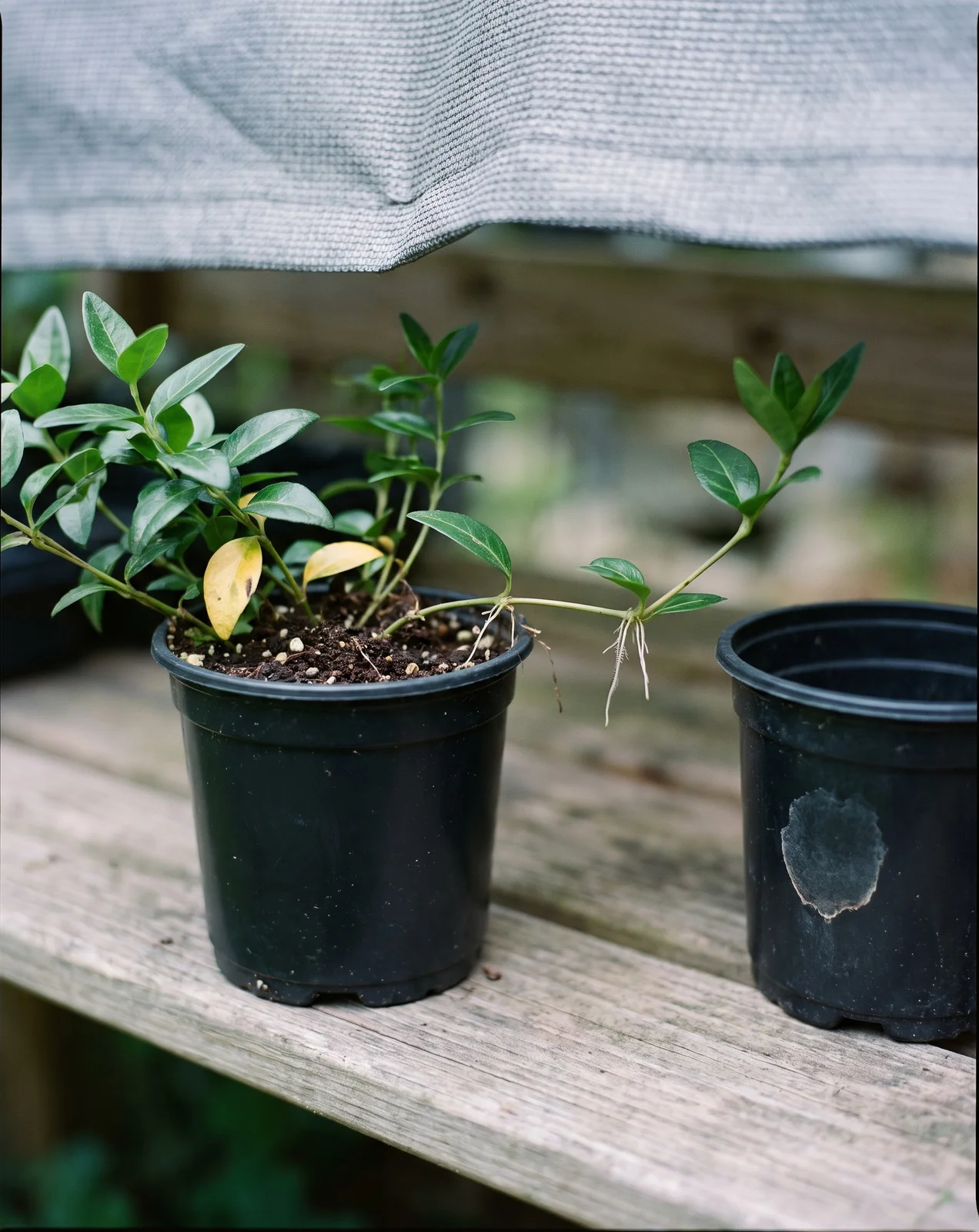
Insects are the smallest part of vinca's trouble. The annual has no serious insect or disease problems apart from stem rot, leaf spot, and aster yellows, with slugs and snails the animals worth watching in damp weather. Browsing mammals mostly pass it by: annual vinca resists deer and rabbits, and Vinca major is deer resistant as well. One disease on the groundcover reaches past the garden bed. Vinca major hosts the bacterium that causes Pierce's disease, which is deadly to grapevines, so a mat of it under a backyard grape or along a vineyard edge is a genuine liability.
What goes wrong most often
The complaints that send vinca owners looking for help, most common first, with what each one usually turns out to be.
Almost always a bed watered daily through a hot spell. Cut the water back, pull the collapsed plants, and keep vinca out of that soil next year.
Roots and stem fragments resprout, so smothering, solarizing, and herbicide all leave something behind. Clearing holds only if the pieces come out with the mat.
A chewed leaf or flower. The plant is toxic to dogs, cats, and horses, and the amount eaten decides the severity, so the call goes in the same day.
Stems stretch and flowering thins where a wall or a canopy takes part of the day. Legginess is a light problem, and cutting back does not supply sun.
The label does not say which vinca is in the flat. The annual needs full sun and the groundcover takes shade, so the answer turns on which one it is.
The annual was treated as a returning perennial and the spring bed is bare. Outside the far south the freeze ends it, and seedlings are all that return.
One was bought for the other and the care did not transfer. Vinca takes the hot, sunny beds and impatiens the shady ones.
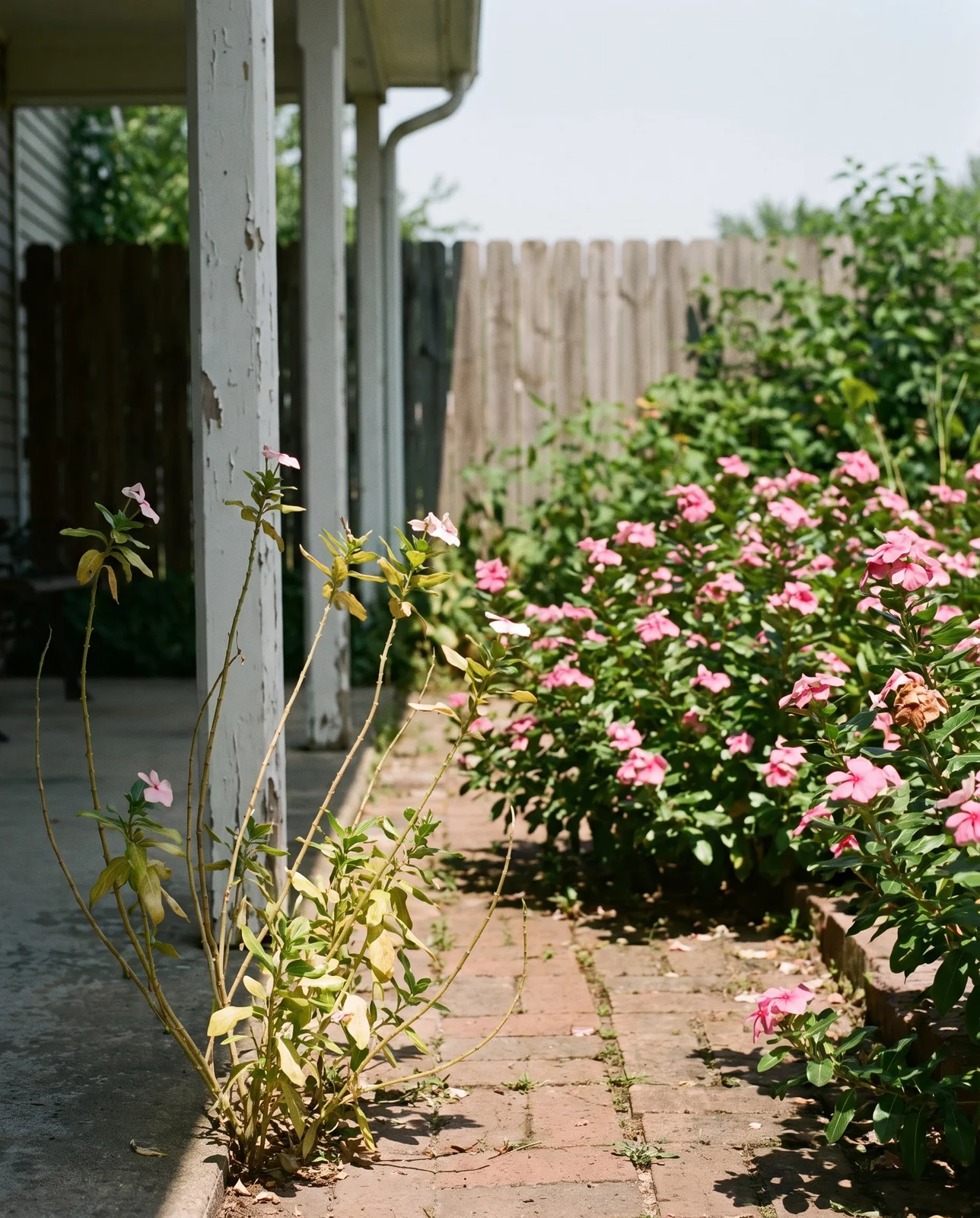
When vinca blooms
Annual vinca flowers from the arrival of real heat until frost, with the peak display from July through September. It does nothing until soil and nights have warmed, and that happens weeks apart between the Gulf and the upper Midwest. Periwinkle runs on the opposite calendar. Vinca minor flowers in spring and early summer, from March to June depending on the region, then intermittently through the rest of the year, its small blue-lavender flowers showing against dark green leathery foliage with bumblebees working them. That is the shade that puts periwinkle on most lists of purple garden flowers. Vinca major flowers April to May, its blue, funnel-shaped flowers borne in abundance in early spring and sporadically through the summer.
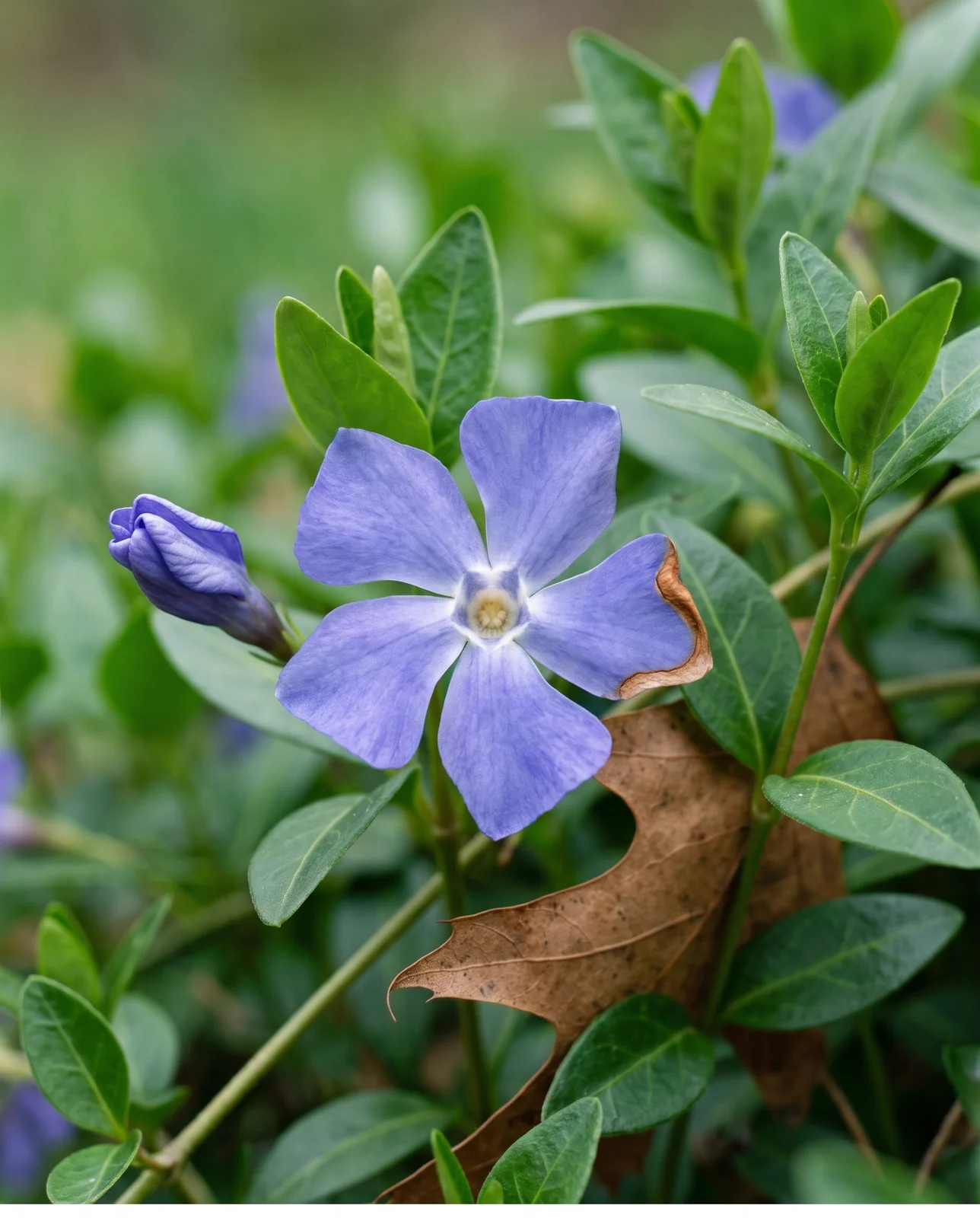
Where the names come from
The name Vinca is older than any of the American nicknames stacked on top of it. It comes from Latin meaning to bind or wind around, for the long, flexible stems that went into wreath making. The species names describe size. Minor means smaller, and Vinca minor does carry the smaller leaves of the two, while major means bigger or larger. The annual's epithet points at color, since roseus reads as pink and as rose colored.
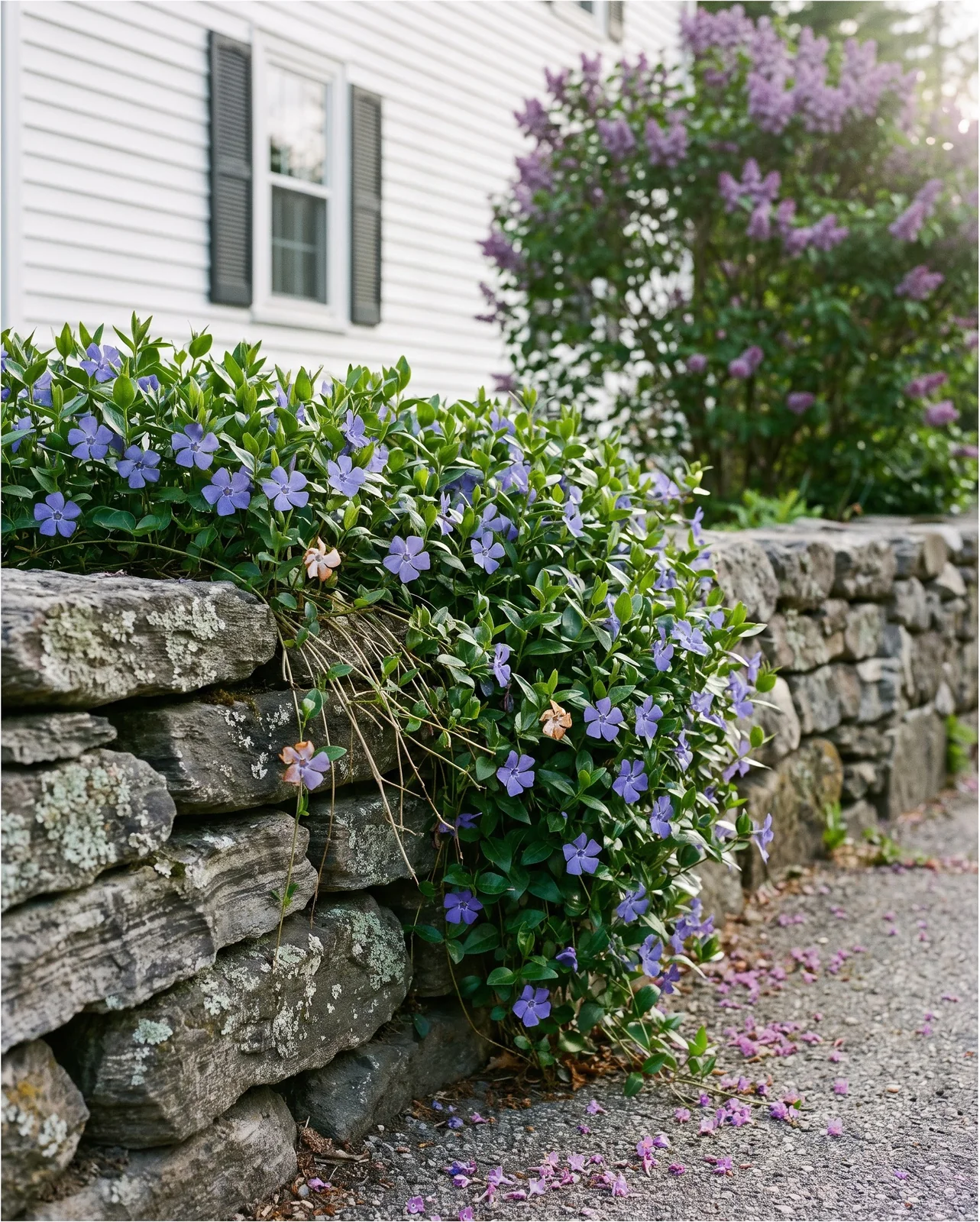
Four things gardeners get told about vinca
Each of these comes up in garden centers and forum threads often enough to cost people plants.
The myth: A tag that says periwinkle means the shade groundcover.
The reality: Poison control files both Vinca and Periwinkle under the scientific name Vinca rosea, the annual's old name. The word on a label can mean either plant; the flower and the leaf edge settle it.
The myth: Vinca loves heat, so it needs water every day in July.
The reality: Deep watering once, or possibly twice, a week covers it, and only in a week when rainfall has not supplied an inch of water.
The myth: A vinca planting that starts yellowing needs an insecticide.
The reality: Neither the annual nor the perennial groundcover has any significant insect pests, so a spray aimed at insects treats a problem the plant almost never has.
The myth: Modern vinca has been bred past the disease that used to kill it.
The reality: Resistance belongs to particular series. Cora and Nirvana offer increased disease resistance over the older varieties, and it travels with those plants alone, so an unlabelled flat gets none.
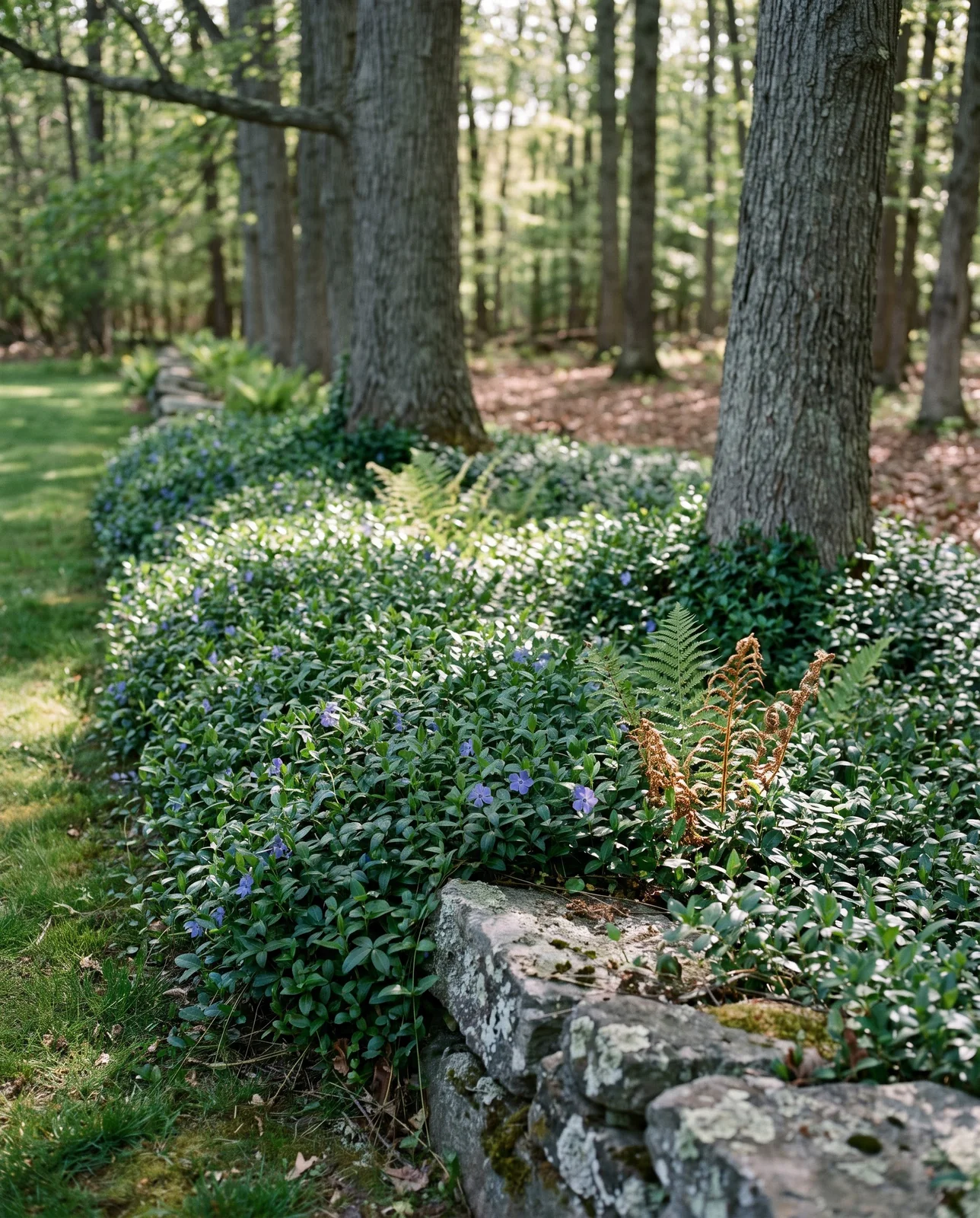
Flower photos
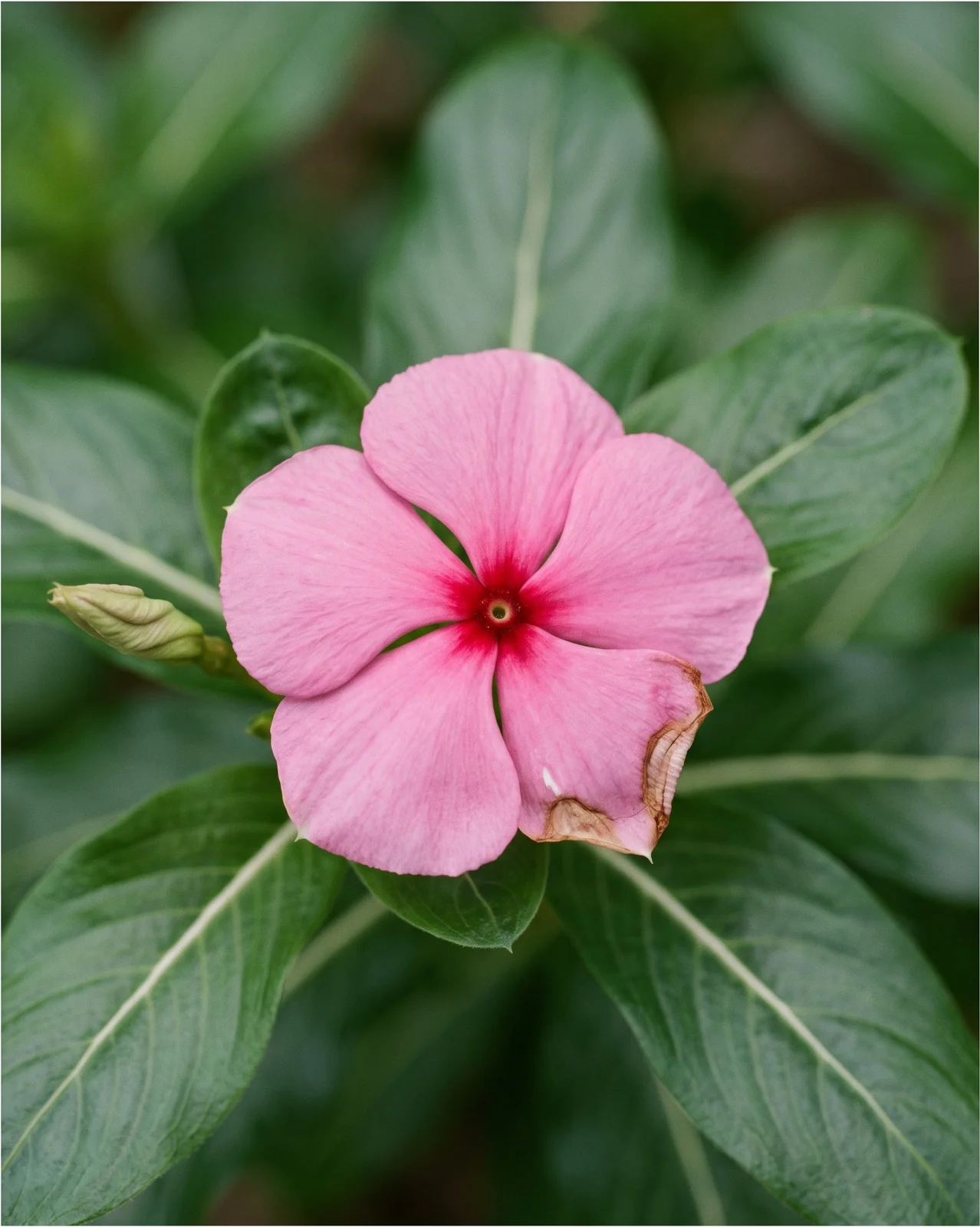
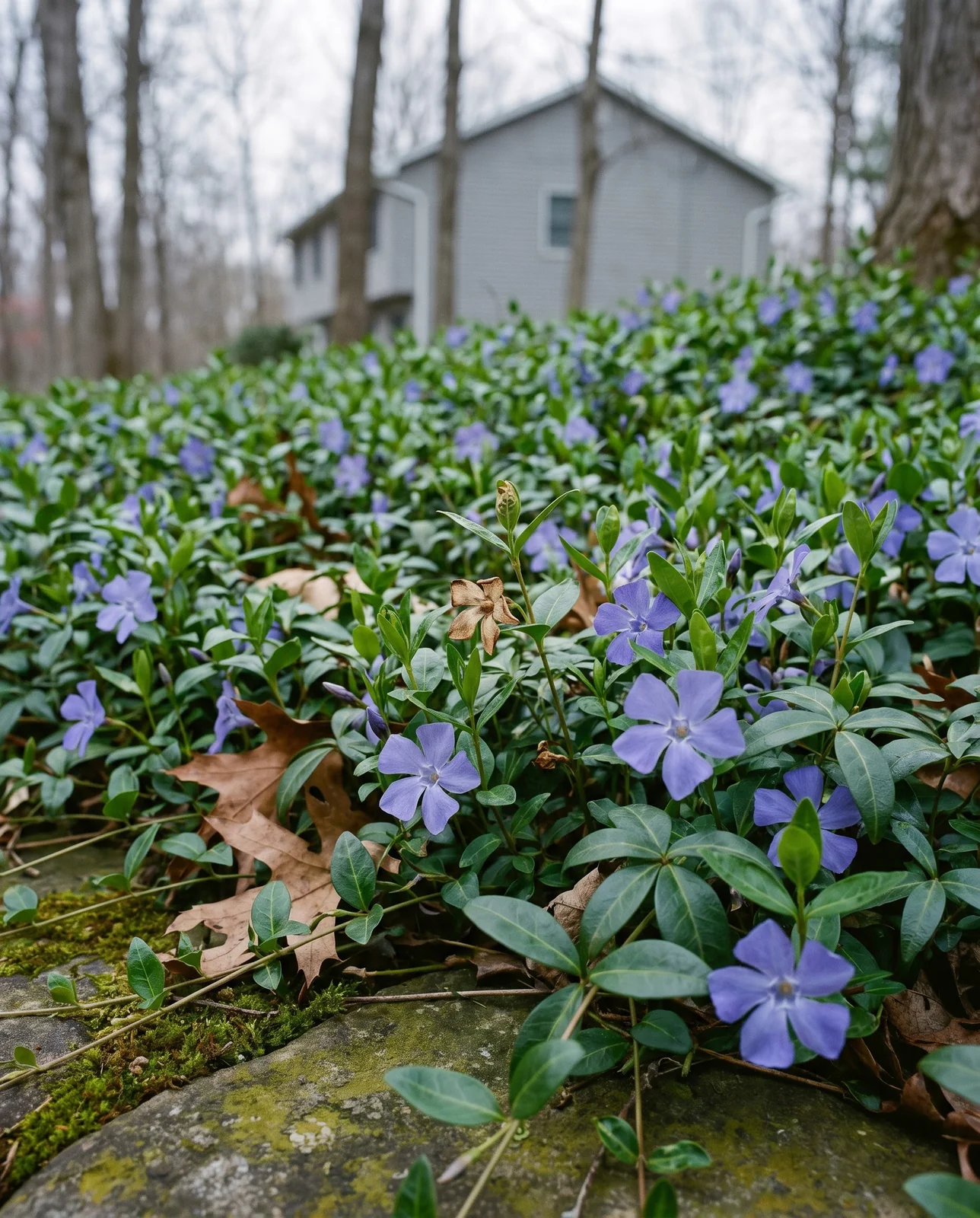
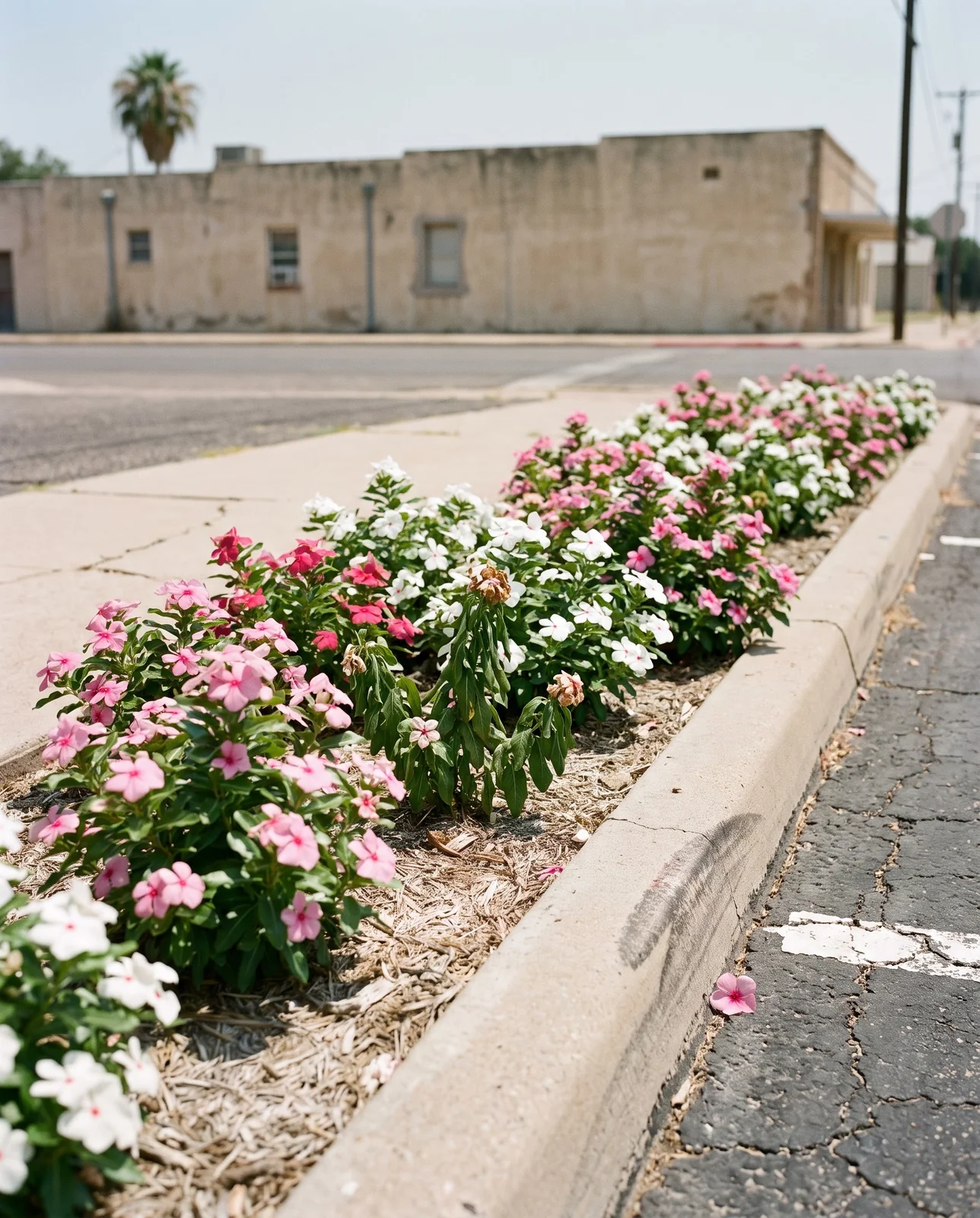
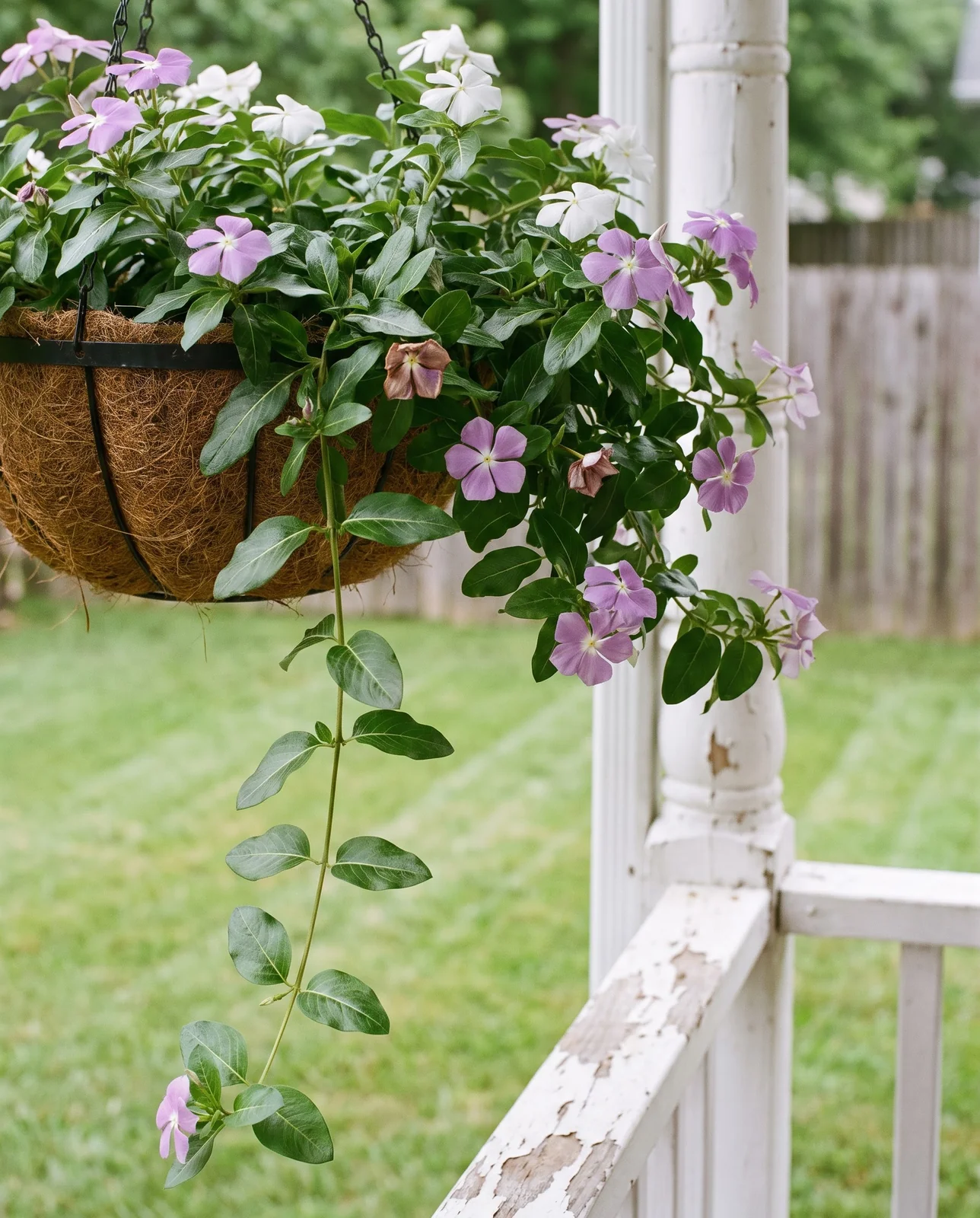
FAQ
Does vinca need full sun, or will it grow in shade?
It depends which vinca. Annual vinca needs full sun for 8 or more hours a day and gives foliage and few flowers anywhere darker, while the groundcover periwinkles take shade and carry more flowers in sun.
Is vinca an annual or a perennial?
The bedding plant is a tender perennial and lives as one only in zone 10 and warmer; in colder regions it is treated as an annual. The periwinkle groundcovers are hardy perennials.
Will my vinca come back next year?
Not the annual: outside its hardy range it does not resprout, though its seed self-sows and comes up looking like a return. Periwinkle does come back, hardy from zone 4a through 9b.
How do you tell vinca from impatiens?
Start with the light: annual vinca fills hot, full sun beds the way impatiens fills shady ones. Then check the leaf, which on vinca is hairless and glossy with a pale midrib.
What does an overwatered vinca look like?
Scorched yellow leaves and stunted growth come first, then wilting and death. Lift one plant: the roots will be few, and their outer tissue slips off the inner core.
How do you save a dying vinca bed?
Cut the watering back first, since frequent watering favors branch blight and root rot even on dry sites. Pull the collapsed plants and keep vinca out of that bed the following year.
Does Cora vinca come back every year?
No. Cora is the same tender species, hardy only in zone 10 and warmer. What it adds is resistance to phytophthora root rot, stem rot, or aerial blight, which buys a longer summer and nothing at all in winter.
Do trailing vincas bloom all summer?
Yes, on the same schedule as the upright types, flowering from early summer until frost, strongest once heat sets in.
What is the best fertilizer for vinca?
Little or none. Vinca is a very light feeder, needs no feeding across the season, and can carry fewer flowers when fed, so anything applied goes on at half the recommended rate.
Is vinca poisonous to dogs and cats?
Yes. It is toxic to dogs, cats, and horses, and poisonous to humans as well. Call a veterinarian or a poison-control line if a pet has eaten any of it.
Is periwinkle groundcover the same plant as annual vinca?
No. Annual vinca is Catharanthus roseus; the groundcovers are Vinca minor and Vinca major, two of about 12 species in a different genus. The perennials perform best in shade and last for years.
Interesting tips
- The largest-flowered vinca that comes in a seed packet is the Mega Bloom series, 8 to 10 inches high and 10 to 12 inches wide, bred to take heat and humidity and highly disease resistant.
- For periwinkle in a color other than blue, hunt down Vinca minor '24 Carat' for the gold of its young leaves, or Vinca major 'Variegata' for violet blue flowers over marked foliage.
- The Cora series was the first vinca bred to resist the aerial Phytophthora fungus, the disease that until then limited how much of the plant Texas gardens could carry.
Related Guides & Flowers
Pink flowers
Pink is the color vinca was named for, and this page collects the other pink garden flowers that hold a summer bed.
Bougainvillea
The other heat and drought plant for the hottest, driest corner of an American yard.
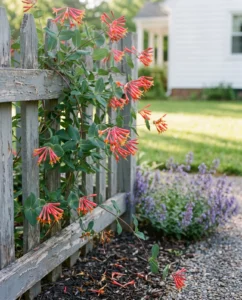
Honeysuckle
Another garden favorite with an escape problem, and the same question about where it is safe to plant.
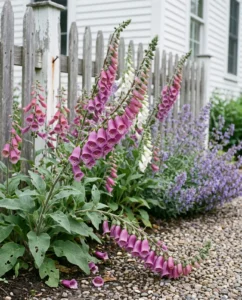
Foxglove
A second common ornamental whose whole plant is poisonous, worth reading before a bed goes in near children or pets.
Enjoying our flower guides? Add YourFlowersGuide as a preferred source on Google. It helps more readers find us.
Add to Preferred Sources