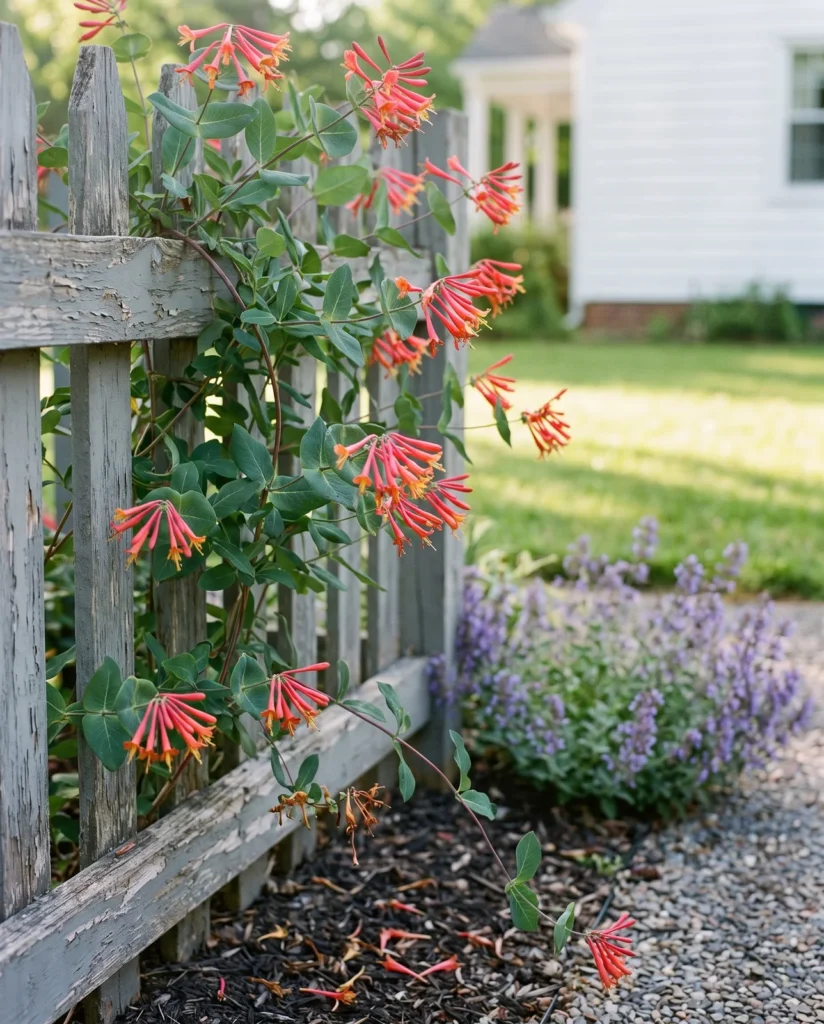
What honeysuckle is and where it comes from
Honeysuckle is a genus of 159 species spread across the Northern Hemisphere, holding climbing vines and freestanding shrubs, some evergreen and some deciduous. The leaves stay recognizable across all of it: simple, set in opposite pairs along the stem, smooth along the edge. Flowers sit just above a pair of leaves joined at the base, and red or black berries follow for birds to strip. The family is Caprifoliaceae, and the genus name honors Adam Lonicer, a sixteenth-century German herbalist.
The division that matters in an American garden is between the honeysuckles that grew here and the ones that arrived. Coral honeysuckle, sold as trumpet honeysuckle too, is a twining perennial vine of the eastern United States that holds its leaves through warm Deep South winters. European honeysuckle, the woodbine of English hedgerows, is a deciduous twiner from Europe and North Africa. Japanese honeysuckle came from Japan, Korea, Manchuria and China, naturalized across the United States, and is now treated as highly invasive. Common names blur the rest, and plants sold as bush honeysuckle in the genus Diervilla are not Lonicera at all, though the two share a family. NC State Extension states the split without hedging: Japanese and Amur honeysuckle are dreadful weeds that should not be planted on purpose, while other species are well-behaved garden ornamentals.
When honeysuckle blooms and which ones actually smell
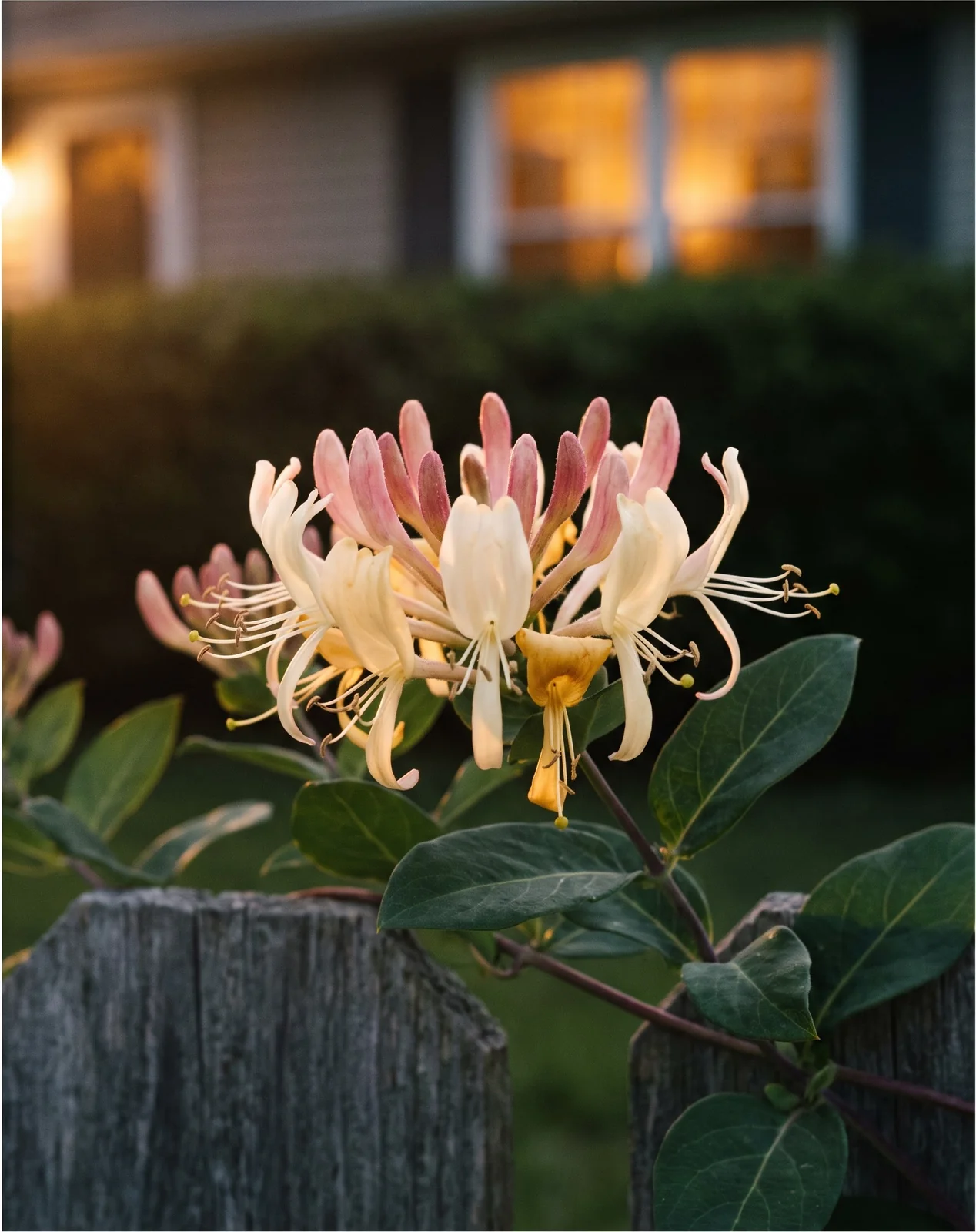
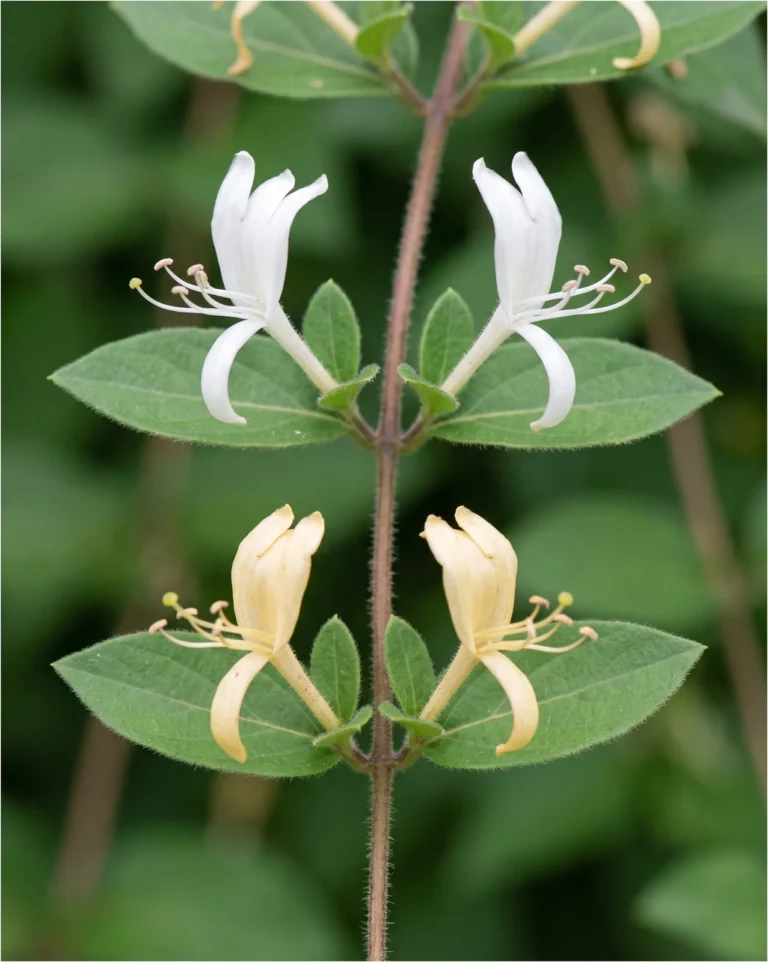
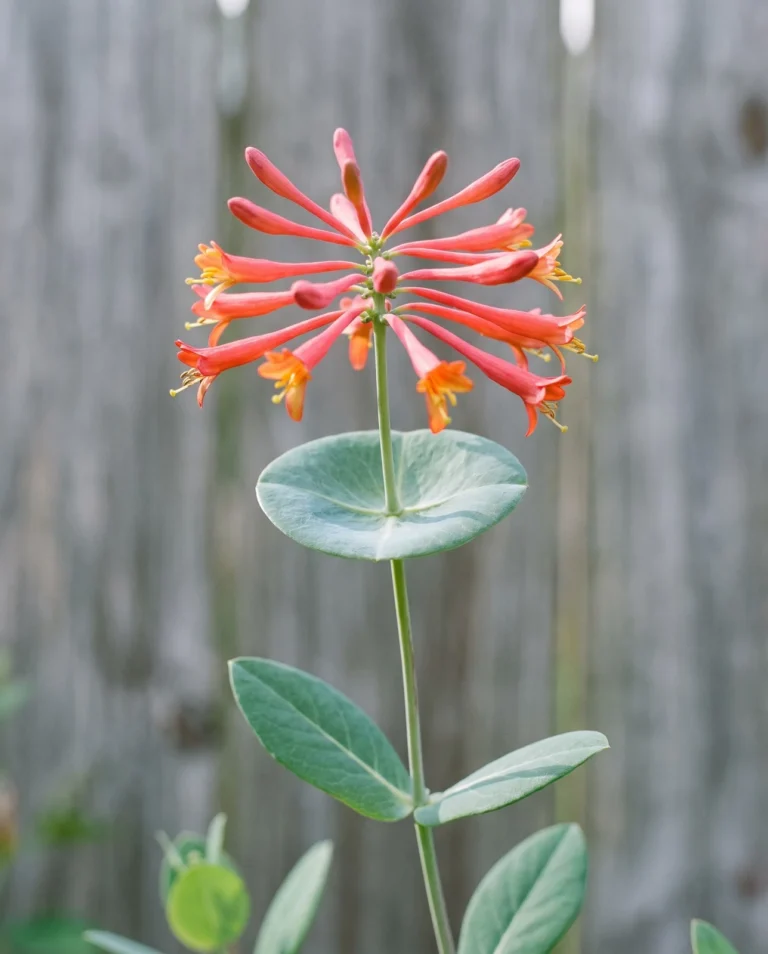
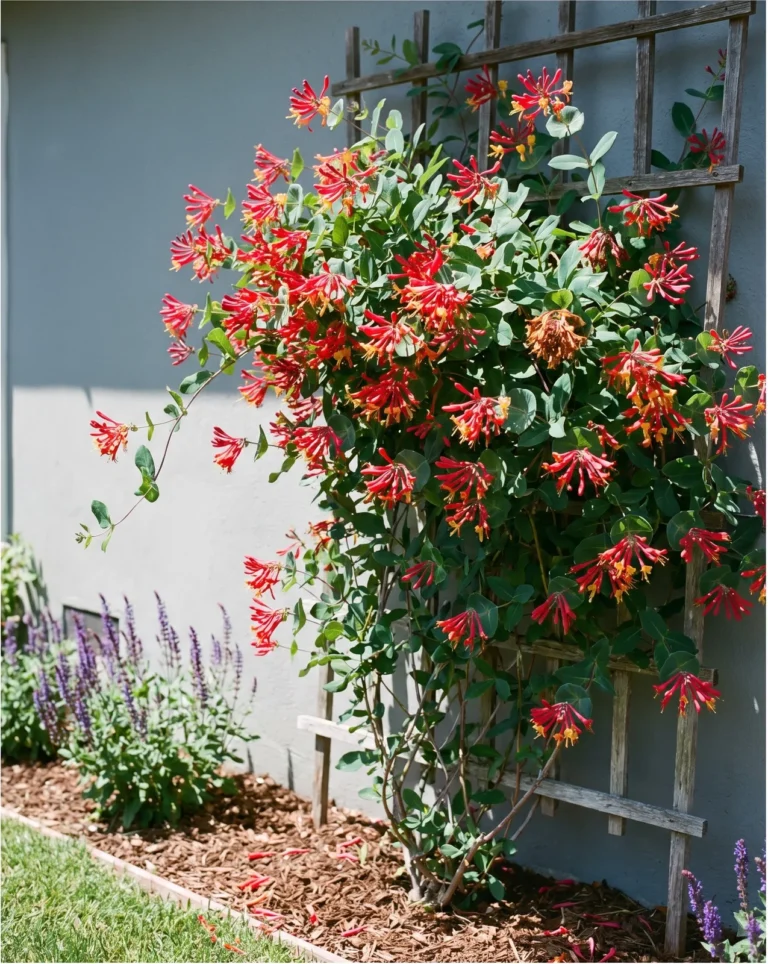
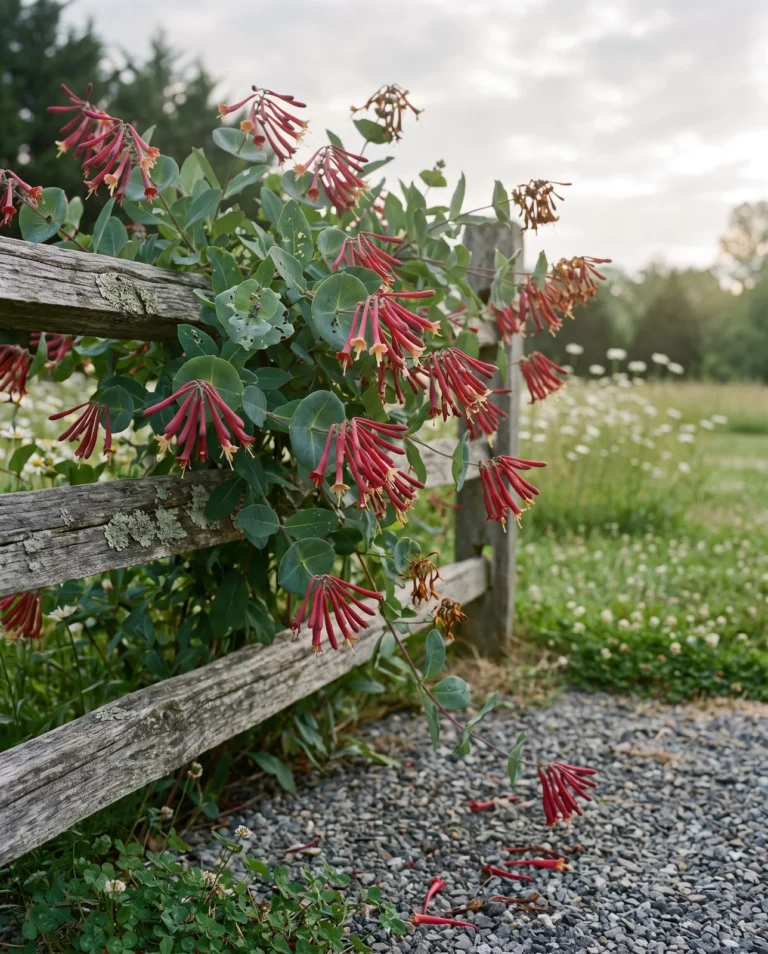
Bloom time depends on which honeysuckle you have, and between them the genus covers most of the calendar. Winter honeysuckle opens first, small creamy white flowers on bare branches from December to March in mild climates. Coral honeysuckle follows with narrow trumpets 1.5 to 2 inches long, scarlet to orange-red outside and yellowish within, in whorled clusters from March to July. European honeysuckle blooms in spring and on through the summer. Japanese honeysuckle carries paired white flowers 1 to 1.5 inches across that fade to creamy yellow, from late spring into fall.
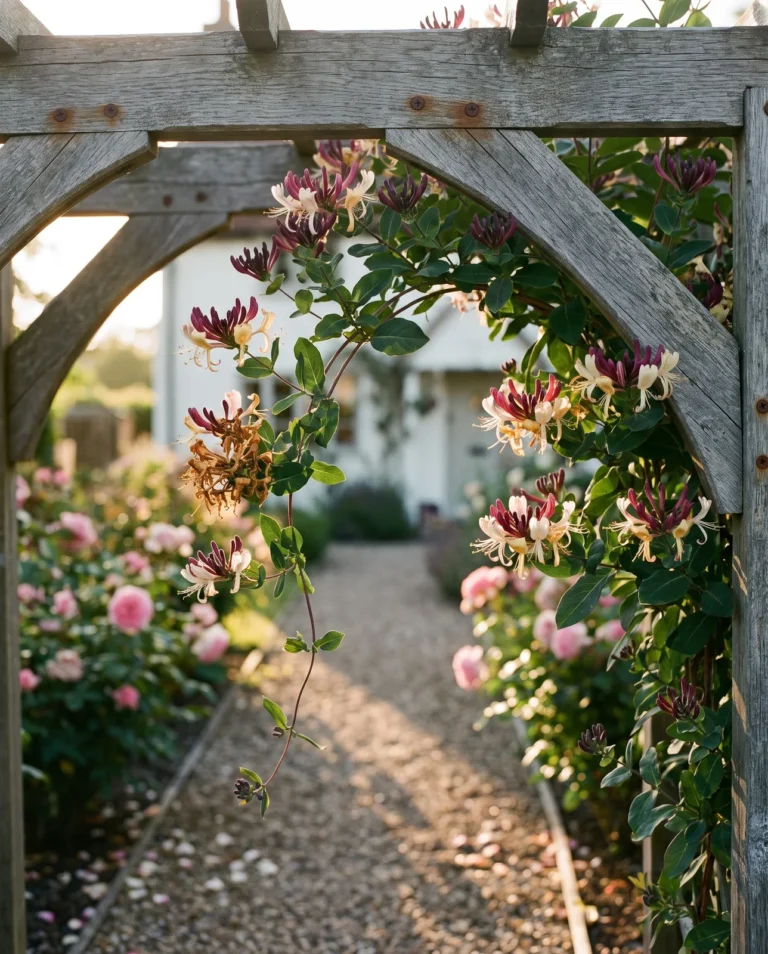
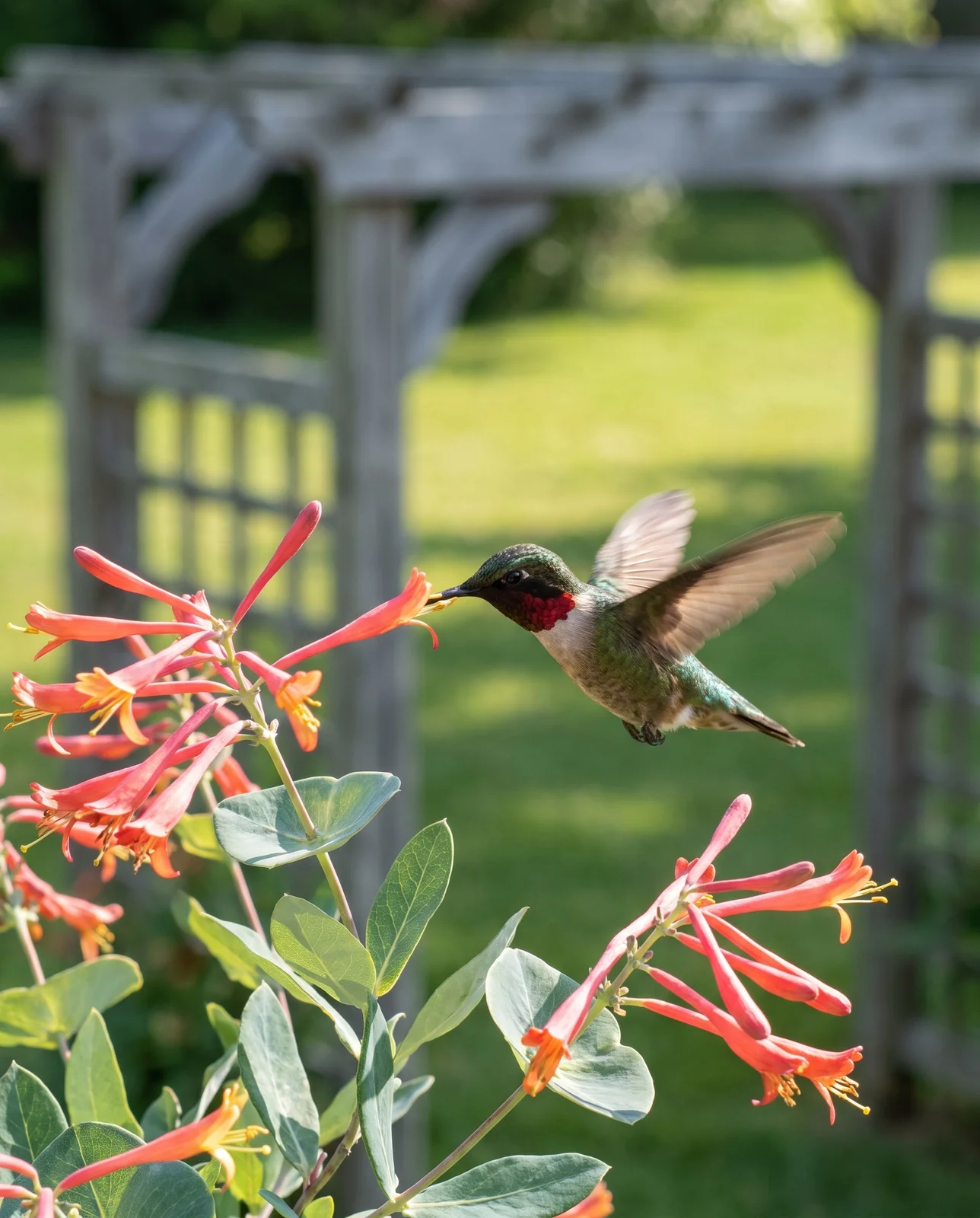
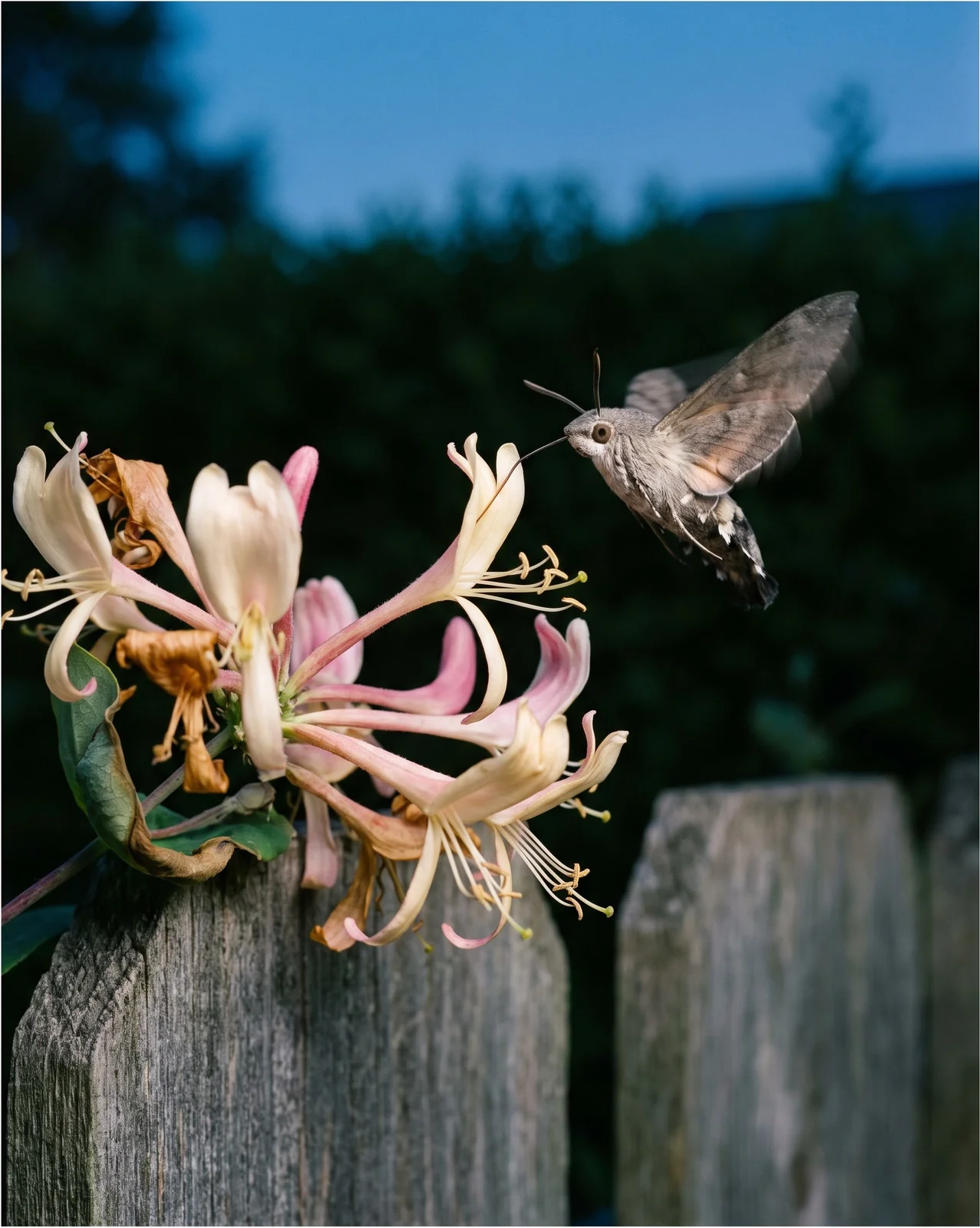
Scent is where the genus disappoints buyers. Coral honeysuckle has no fragrance at all, and its flowers are shaped for the hummingbirds that pollinate it. The heavy evening smell belongs to the Eurasian vines. European honeysuckle is strongest after dark, and moths are its native pollinators. Winter honeysuckle is the one to think twice about. Its lemon scent is the only argument for a shrub that is otherwise a dense mass of branches, and it invades woodlands, fields and disturbed sites, forming thickets, so a US-native shrub is the better buy. Goldflame is weakly fragrant at best, with 1.5-inch tubular flowers, pinkish-purple outside over a yellow corolla. Smell the plant at the nursery before paying for scent.
Native or invasive: how to tell what you have
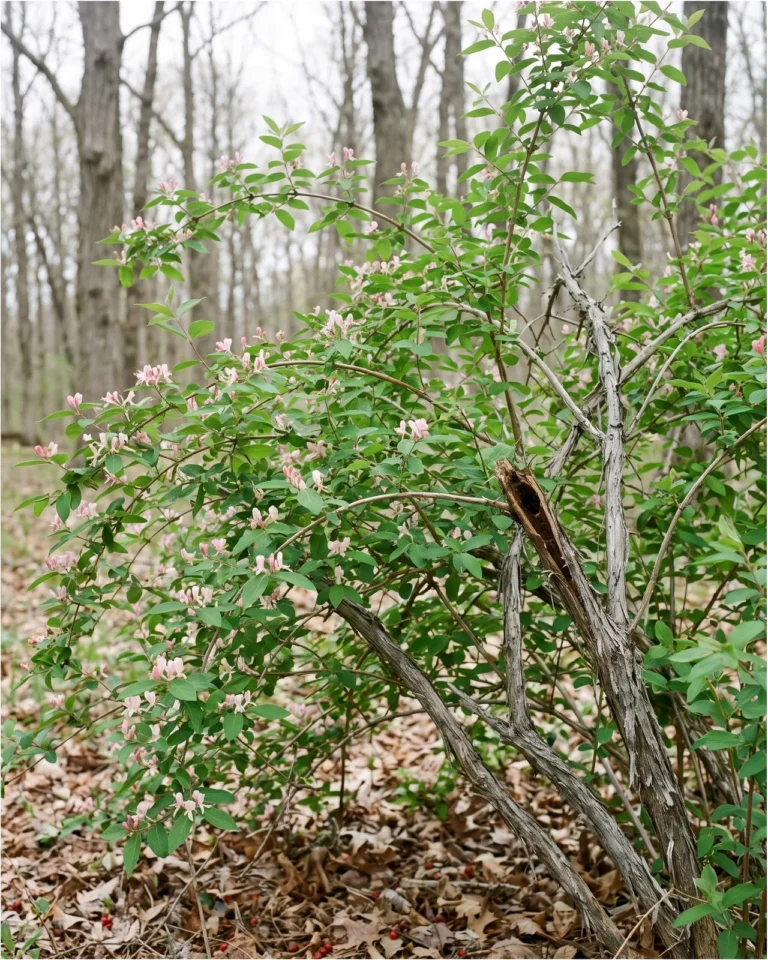
Cut a woody stem and look at the middle: every invasive honeysuckle is hollow at the center, and native stems are solid. Leaf edges, flowers and fruit settle the rest.
What to do about an invasive honeysuckle
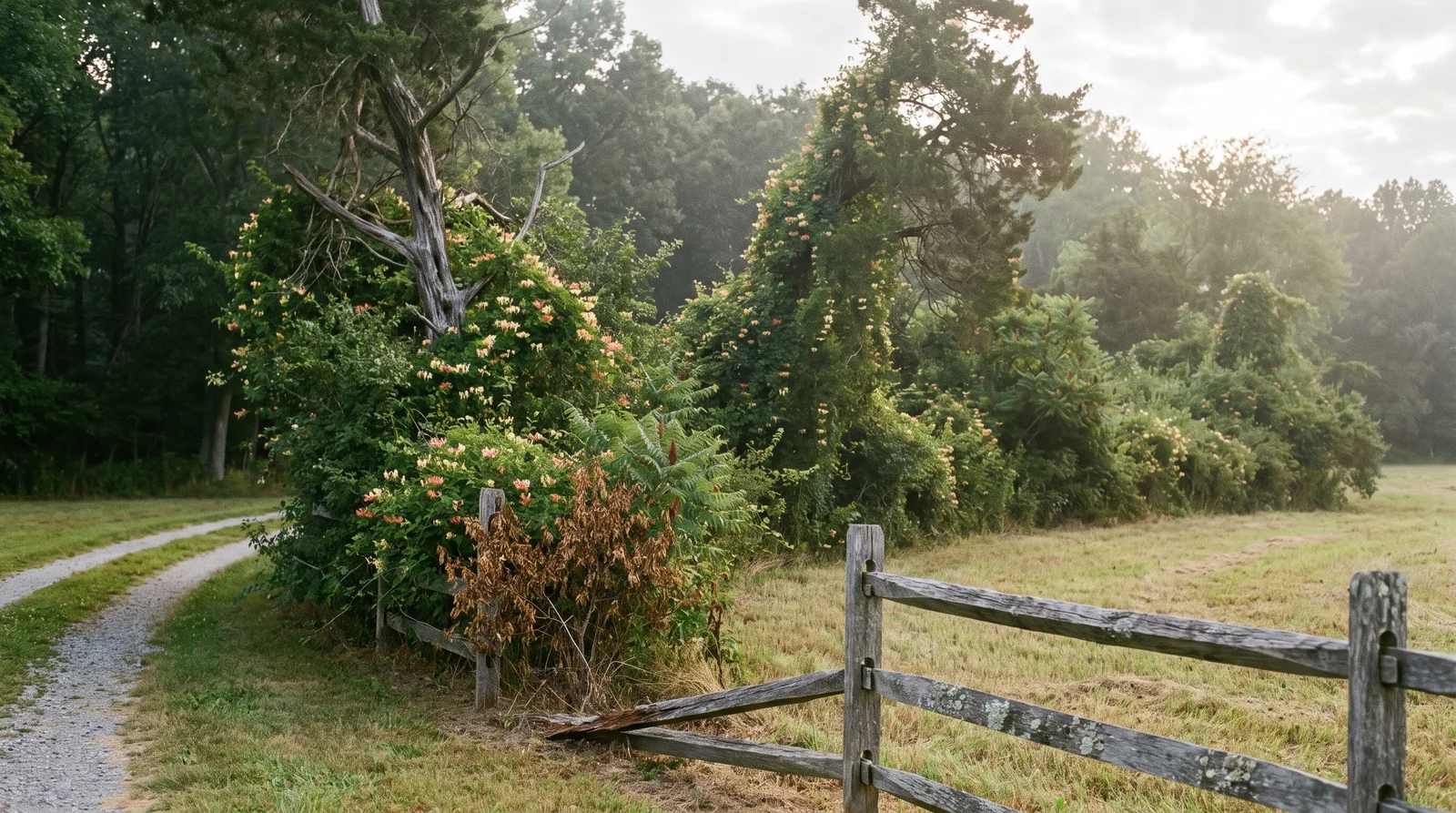
Whether your honeysuckle is a problem depends on the species and on the state you garden in. Maryland alone has 10 honeysuckle species growing in it, most of them non-native and invasive, brought over in the 1800s for ornament, wildlife cover and erosion control. Amur honeysuckle is prohibited under Maryland law, while Japanese honeysuckle is not banned there. Vermont quarantines the shrub honeysuckles as Class B noxious weeds, and Illinois counts even the garden hybrid Goldflame as invasive.
The damage runs deeper than a messy thicket. Bush honeysuckle builds an understory thick enough to starve native seedlings of light, takes their soil moisture and nutrients, and spreads from the roots on top of that. Large trees in invaded forests are stunted by as much as 40 percent. A climbing Japanese honeysuckle smothers wildflowers at ground level, shades the canopy from above, and can strangle a young tree as the wrapped stems thicken. Lone star ticks turn up in greater numbers where Amur honeysuckle grows. It comes back on numbers: plants mature at 3 to 5 years, each carries thousands of berries holding 2 to 6 seeds each, and seeds stay viable for 3 to 5 years.
Removal starts with finding the plants. Bush honeysuckle is the first shrub to leaf out and the last to drop its leaves, so a green thicket stands out against bare woods in late fall and early spring. Young plants are shallow-rooted: pull the shrub, shake the soil off, and hang the roots in the air to dry, and it dies without any chemical. Cutting alone backfires: a saw triggers vigorous regrowth, and it fails unless repeated several times a year for years. Pair the cut with herbicide on the stump: Missouri's conservation department directs a 20 percent glyphosate solution applied immediately after cutting, and other agencies go as high as 25 to 50 percent. Expect to replant, since natives may have to go in to hold the ground. For the same scent, plant summersweet, sweetbay magnolia or Virgin's-bower, a native clematis; for the same fence, crossvine, Carolina jessamine, coral honeysuckle, Virginia creeper or passionflower.
Honeysuckle varieties worth knowing apart
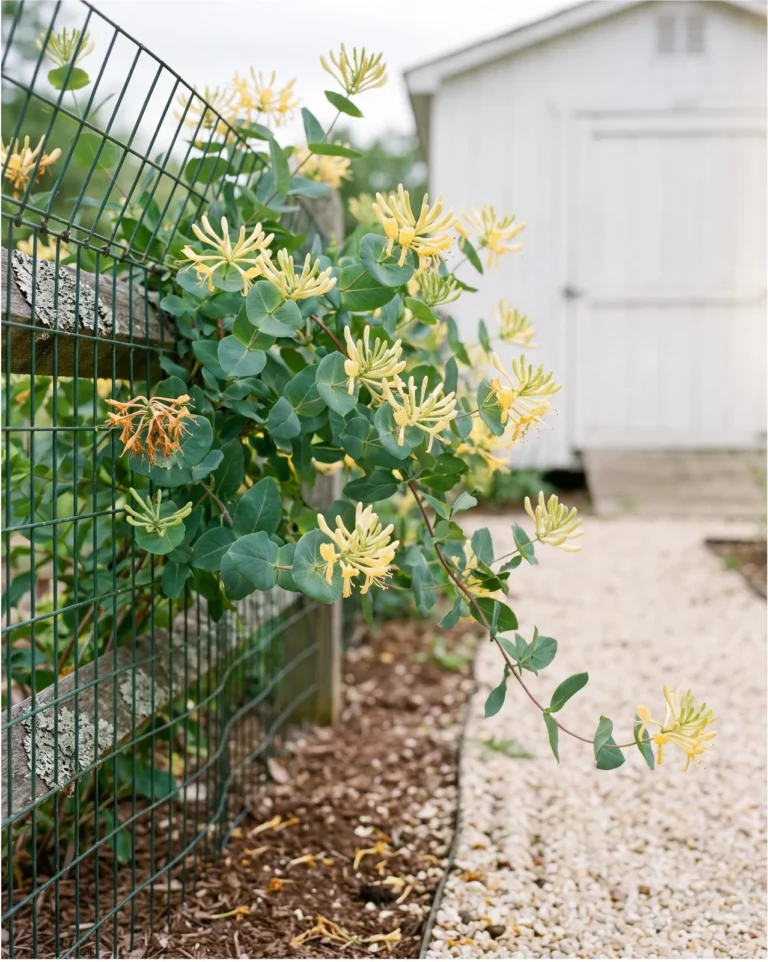
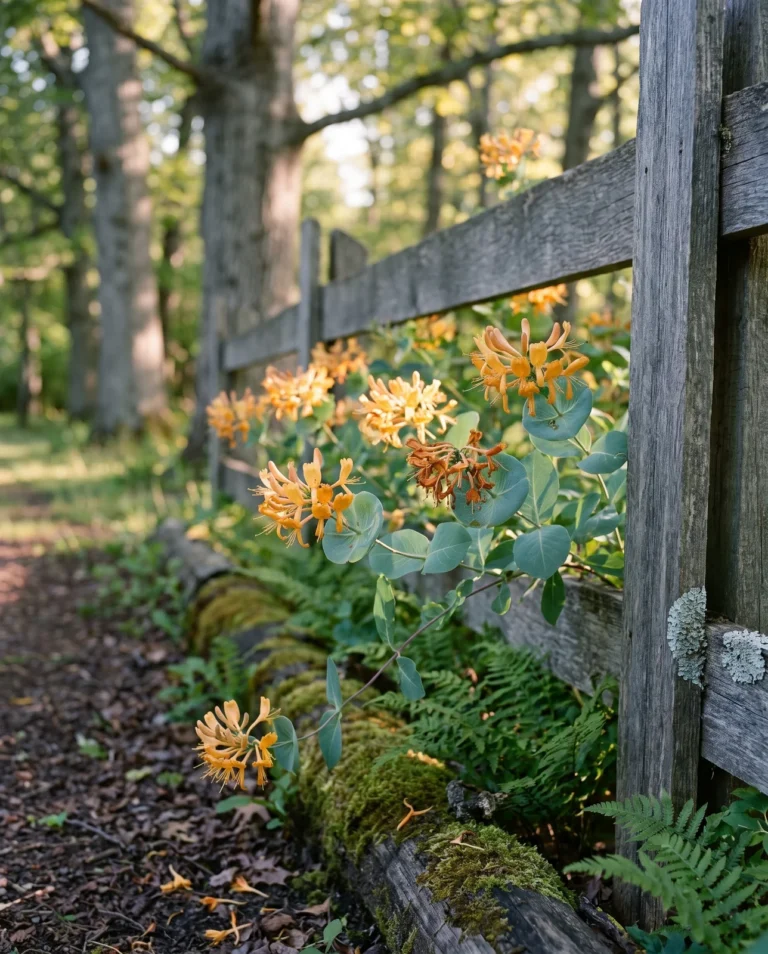
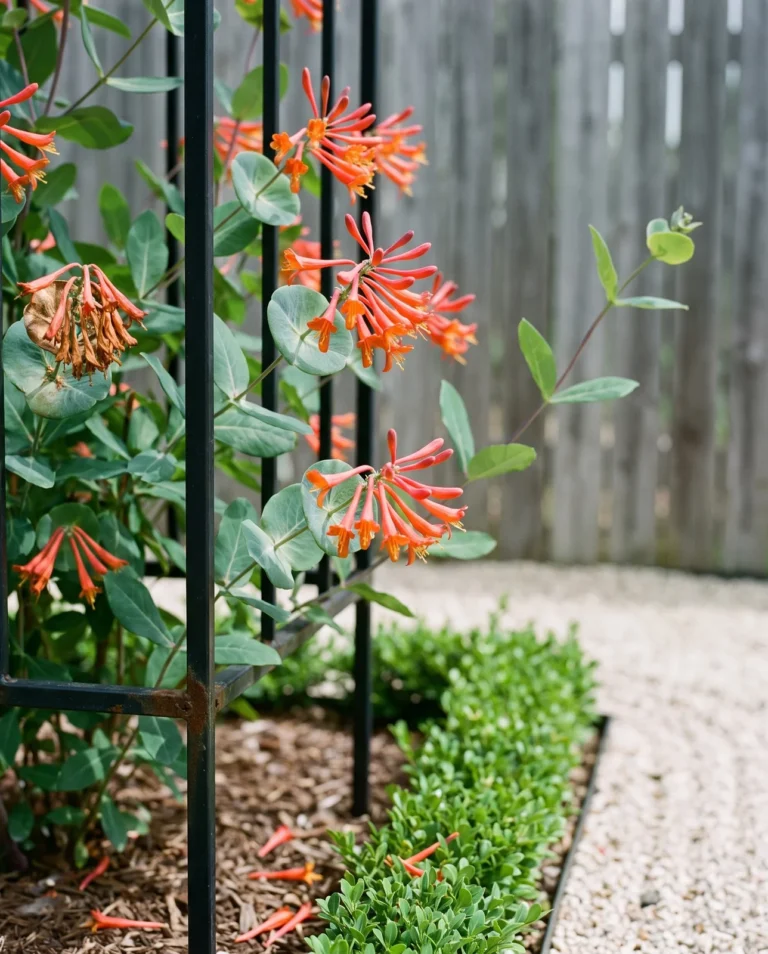
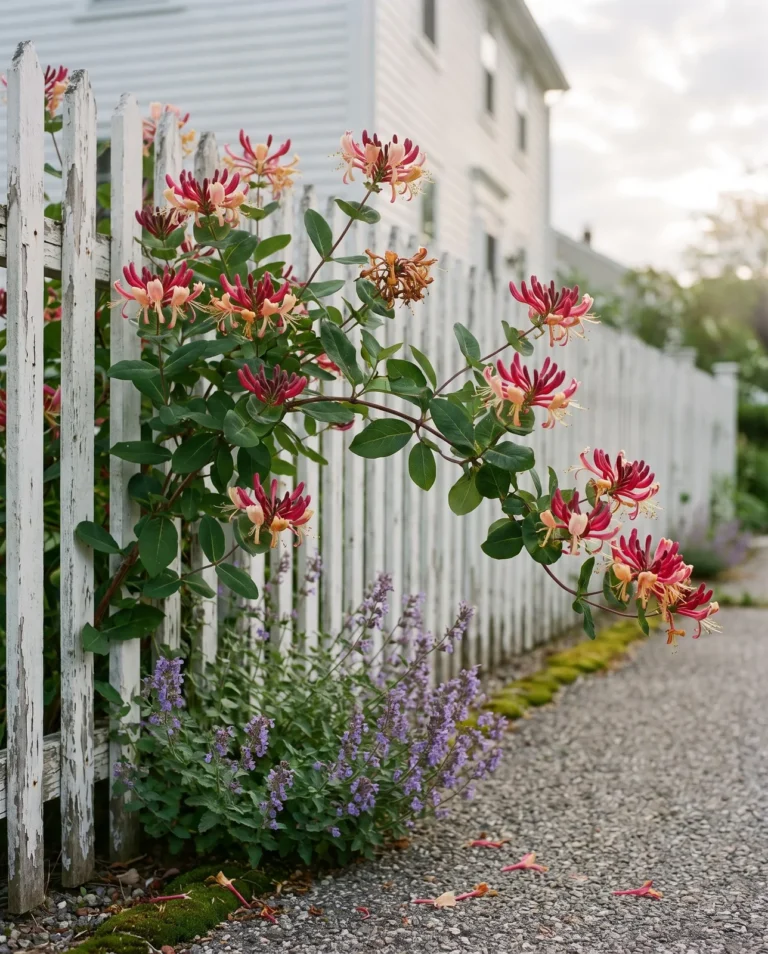
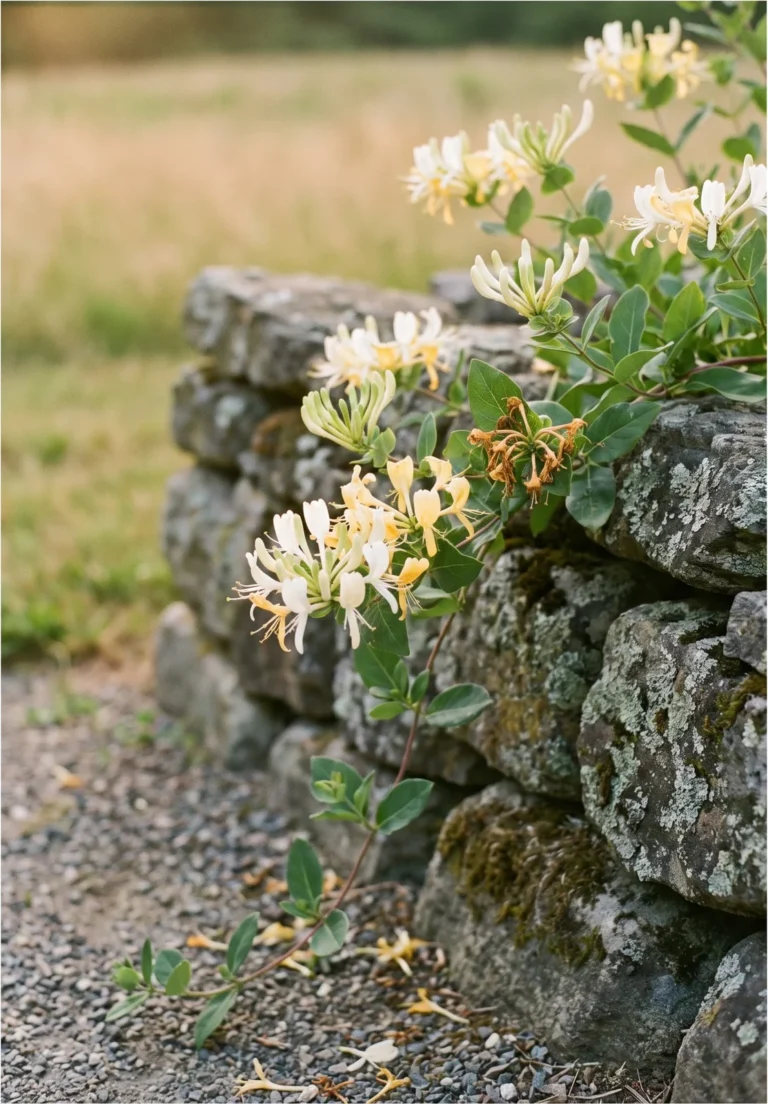
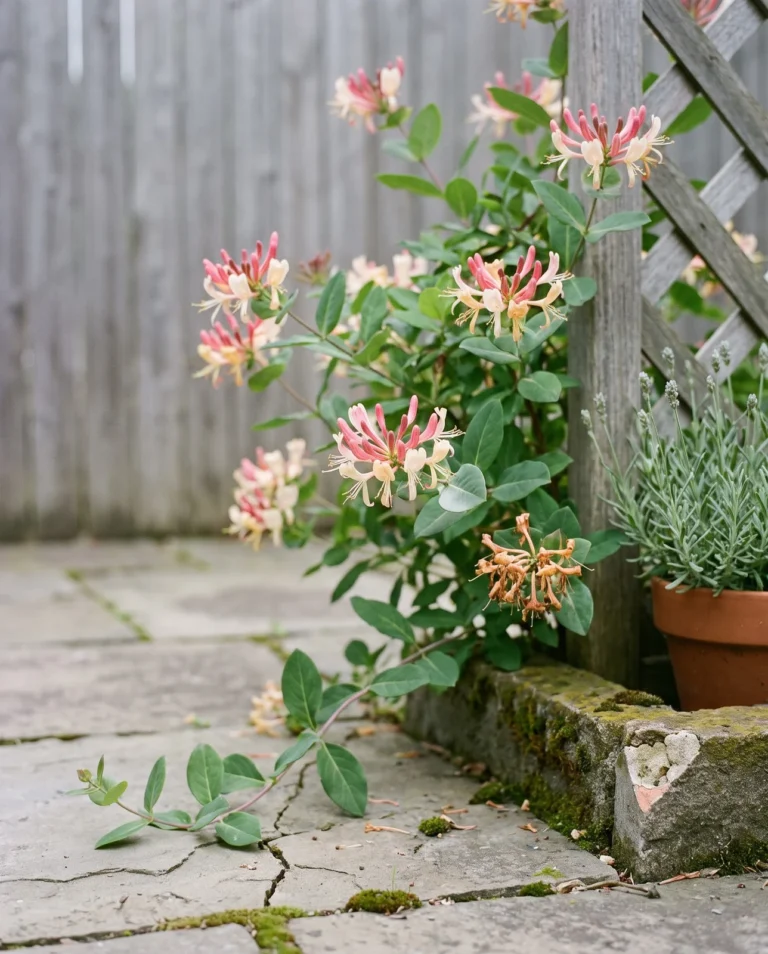
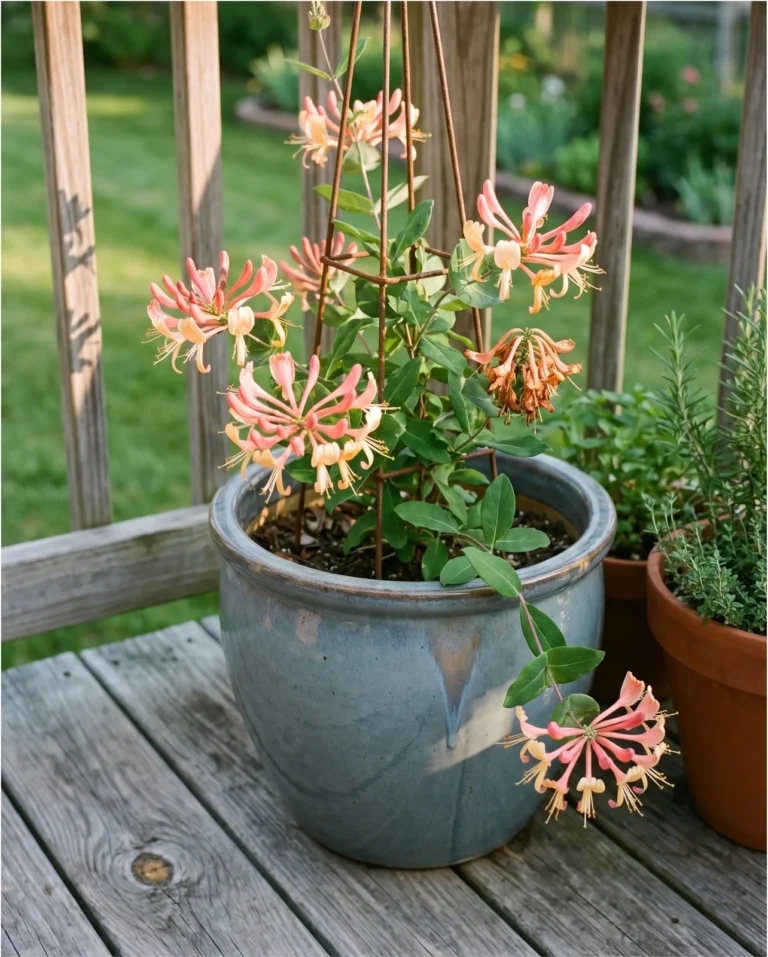
Named selections are where this genus behaves itself: the coral kinds are forms of the native vine, the European ones carry the scent, and 'Flava' and 'John Clayton' bring yellow flowers.
Light
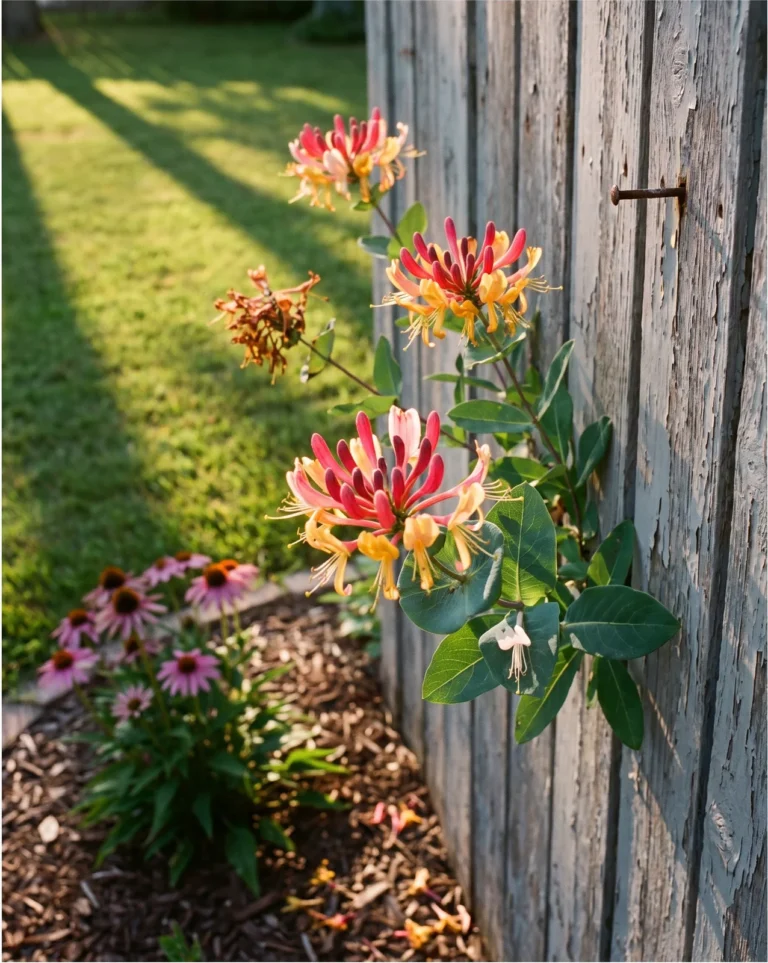
Honeysuckle flowers best in full sun, six or more hours of direct light a day, with partial shade counted as two to six. The woodland species want that light divided. European honeysuckle keeps its roots in shade and sends its shoots toward the sun, the way it grows in the hedgerows it came from. Mulch or a low planting over the root zone copies the arrangement: base cool, top in open sun. Winter honeysuckle grows readily in sun or partial shade and performs best on well-drained soil in full sun.
Soil, water, and what to grow it on
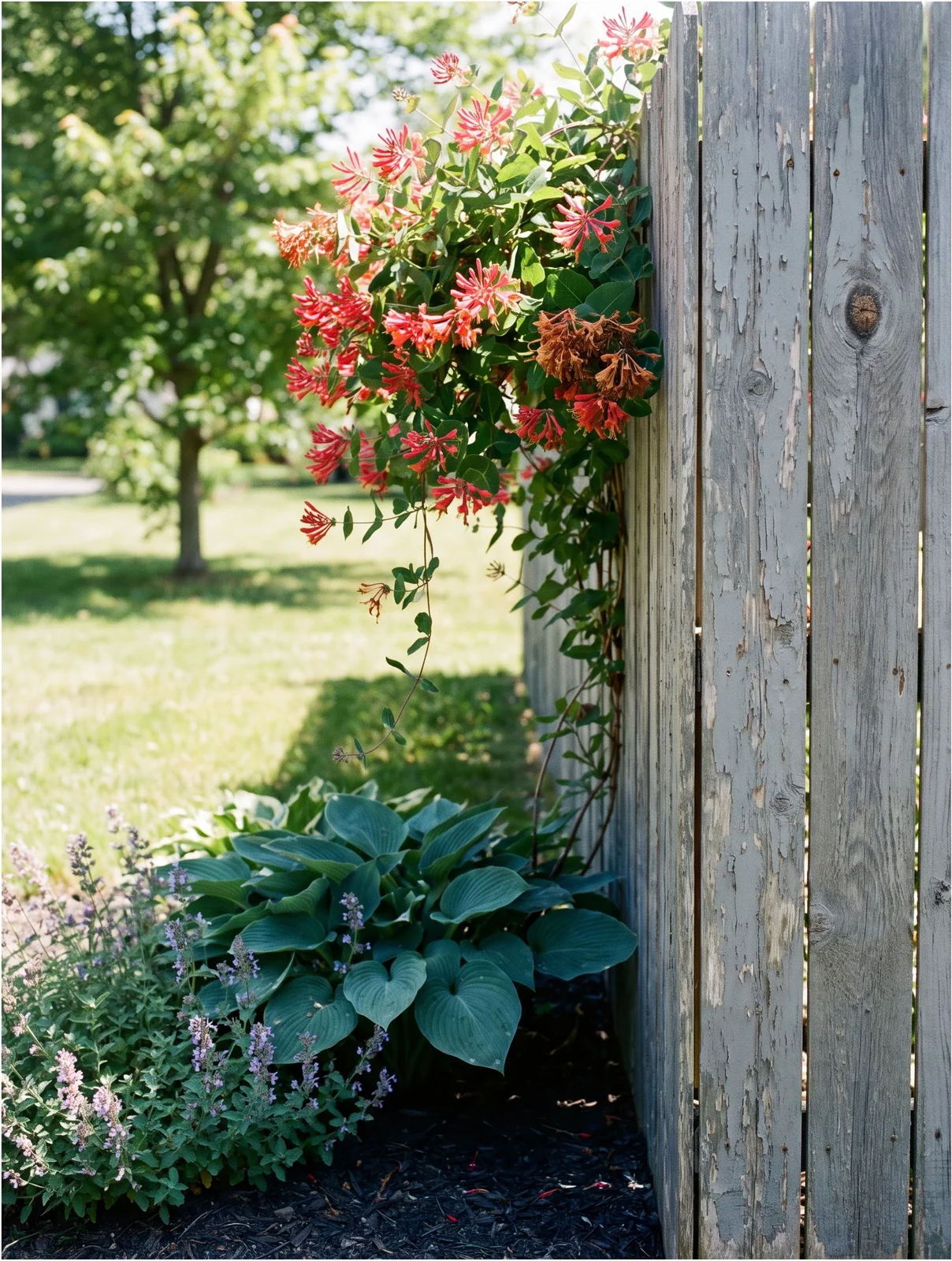
Honeysuckle wants ordinary soil with medium moisture, drainage that works, and organic matter in it. Coral honeysuckle takes acid ground below pH 6.0 and neutral ground from 6.0 to 8.0, in clay, loam or humus, which covers most American backyards. European honeysuckle tolerates acid and alkaline soil alike, while Goldflame cannot handle alkaline ground and wants air moving around it to keep downy mildew off. Most species prefer moisture and turn drought tolerant once established, so the first season is the one that decides the roots.
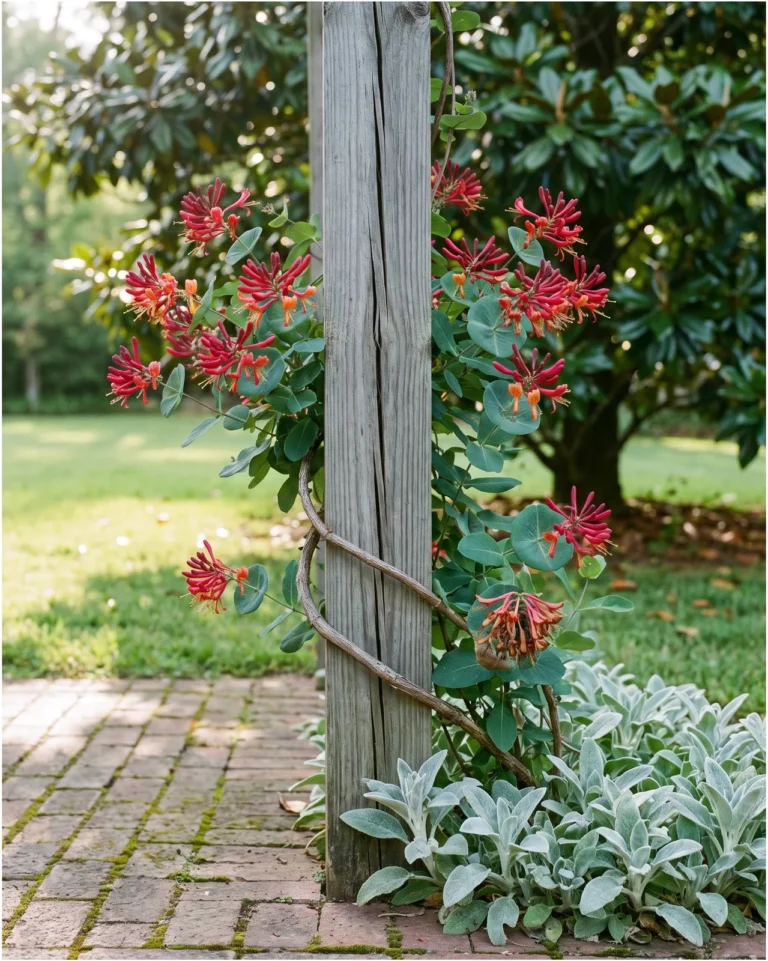
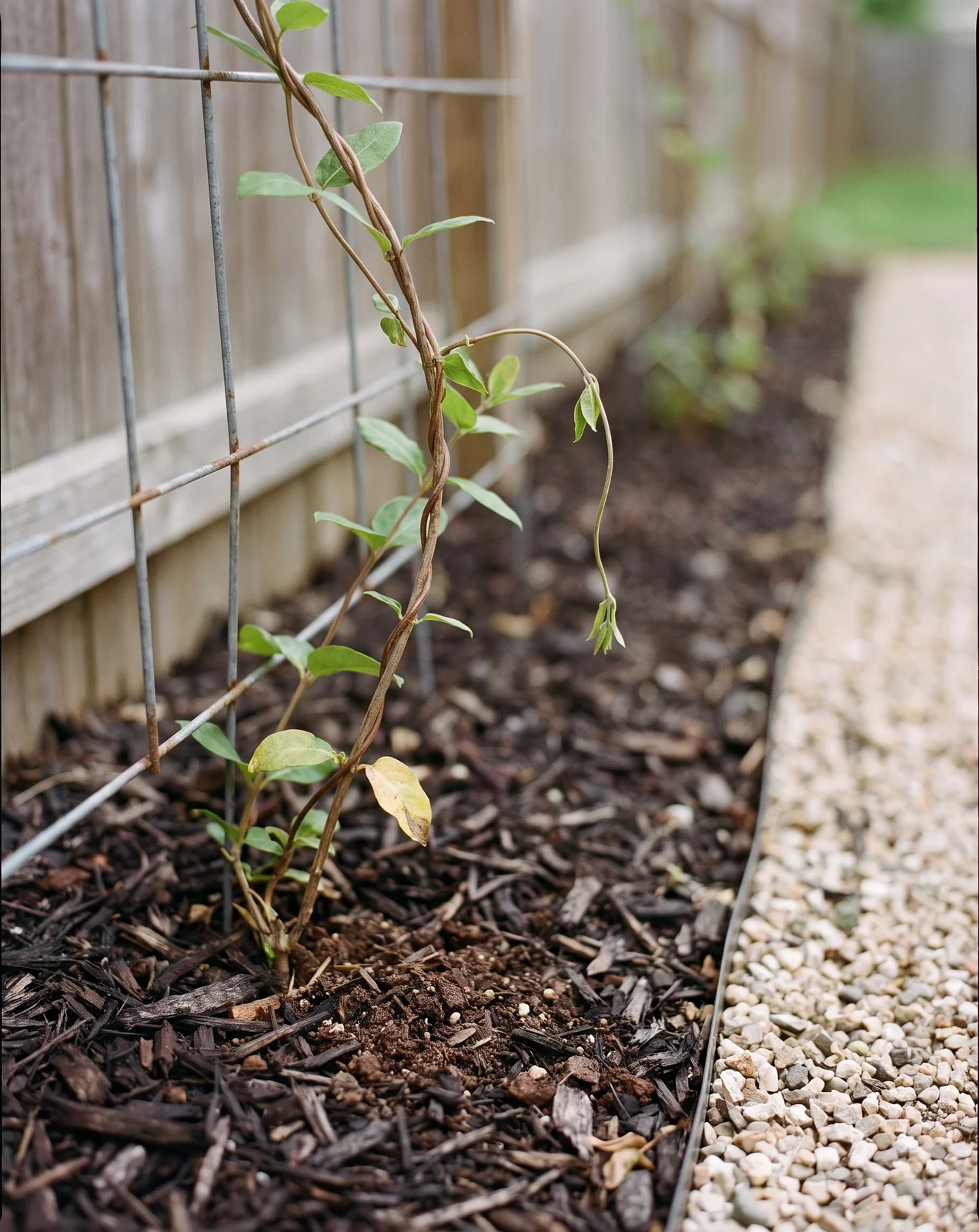
Honeysuckle climbs by twining. The stem itself wraps its support, and there are no tendrils, sticky pads or aerial roots to grip a flat wall. It needs something narrow enough for a stem to circle, a trellis, an arbor or a fence, the way morning glories take a string. Given nothing to climb, it sprawls as a ground cover. Allow 3 to 6 feet of planting space. European honeysuckle twines through and above a fence and screens well, while Goldflame is rarely dense enough and does better on an arbor or a mailbox pole. The shrubby species take shaping and hold it.
Pruning honeysuckle without losing the flowers
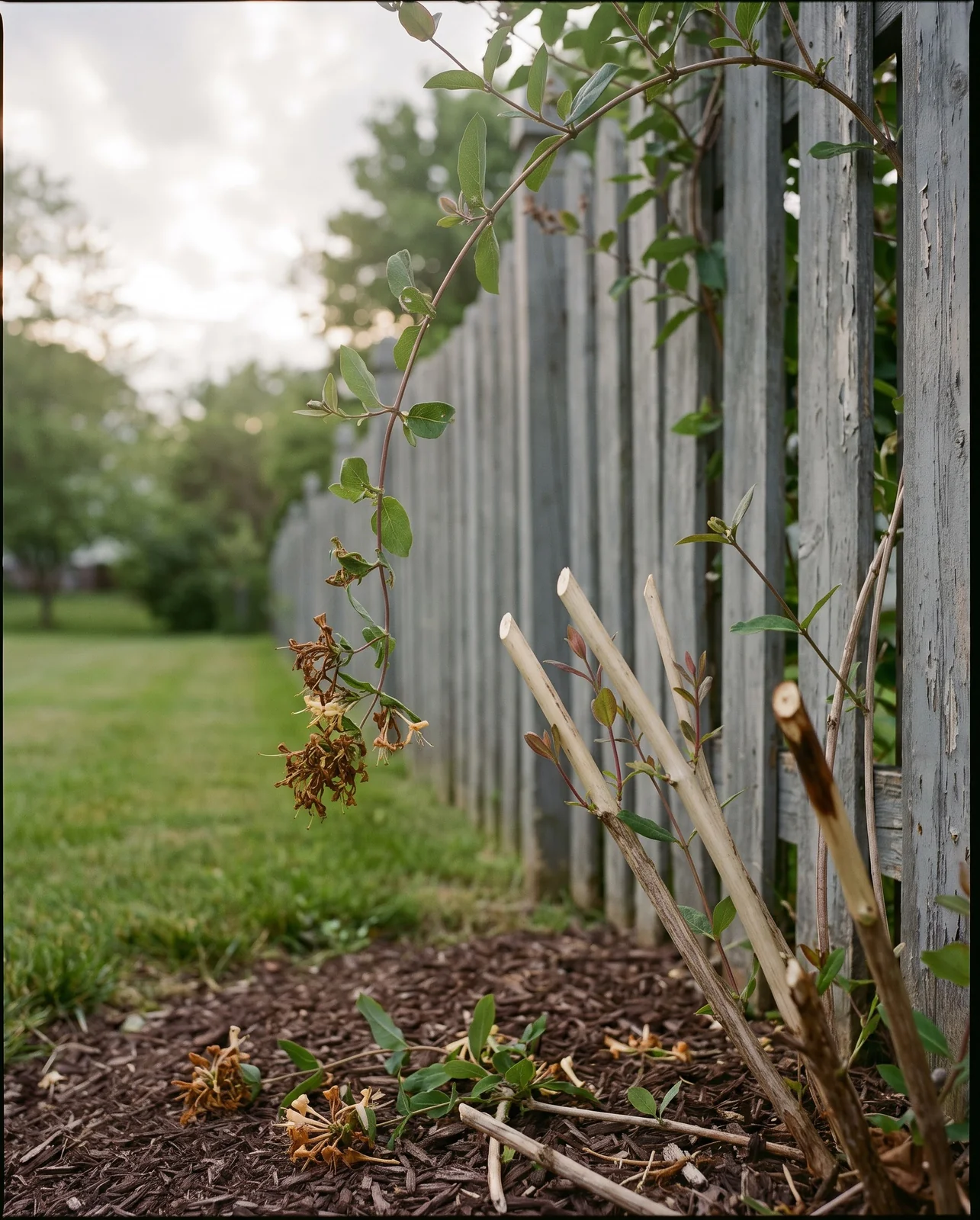
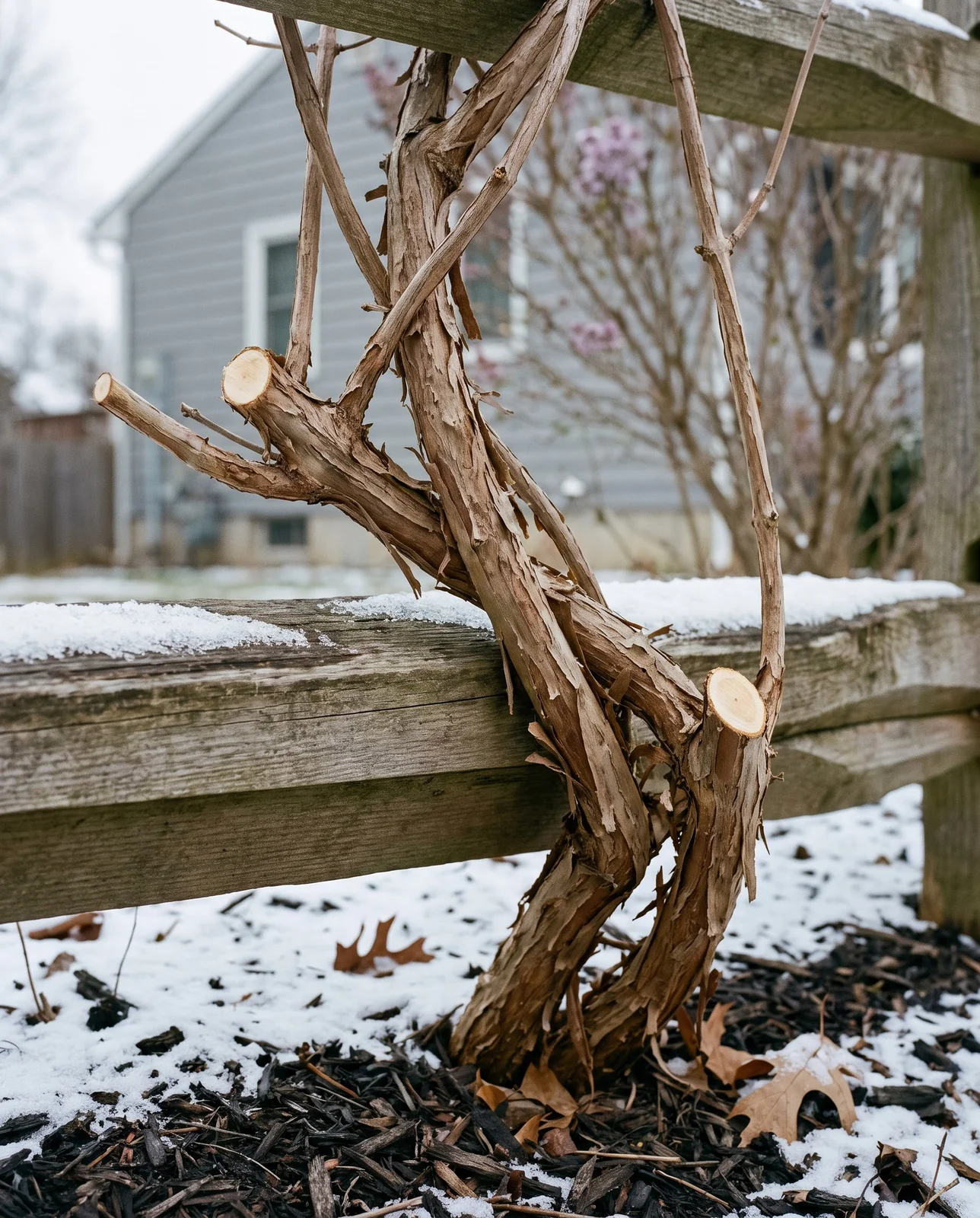
Prune honeysuckle immediately after it flowers, and take out dead or diseased branches in the same pass, the one job worth repeating every year. Which wood carries the bloom depends on the plant: coral honeysuckle flowers on new growth, European honeysuckle on the stems that grew the season before. Both end at the same instruction: keep the pruners off until the plant has flowered. Once the last flowers on a cluster have browned and dropped, the window is open. Take each stem back to a junction or to ground level, leaving no stubs mid-cane.
Beyond timing, the annual job is small. Coral honeysuckle asks for almost nothing past the cut after bloom, and European honeysuckle needs little more. Japanese honeysuckle is the exception that costs weekends, growing as fast and taking far more work to hold in place. Size is negotiable: Goldflame climbs up to 13 feet and can be held as a 6-foot shrub. A plant gone thick and woody at the base, with the flowers out of reach at the top, can be rebuilt over three seasons or cut hard once while dormant. One case reverses all of it: a bush honeysuckle you have not removed yet should be cut hard to stop it fruiting, which curbs the spread.
Four cuts, and when each one goes in
The four cutting jobs a honeysuckle asks for, each with the moment it belongs in.
Why a honeysuckle will not bloom
A honeysuckle that grows hard and never flowers is usually short of light. Honeysuckles bloom best in full sun and prefer medium moisture, so check the site and the watering before anything is cut or fed. Coral honeysuckle will grow in some shade, and the flowering there is visibly poorer. The complaint has an exact shape: a healthy plant in a place that suits its leaves and starves its buds. In the South the pull goes the other way, and European honeysuckle does better with part afternoon shade through hot summers. Moving a young vine a few feet along the fence can decide it.
The second cause is the calendar. Honeysuckle withstands pruning at other times of the year, and it will flower less, if at all, when it gets it, so a vine given a neat winter tidy every season can grow well for years and barely bloom. The third cause is age: gardeners write in with vines two years in the ground, growing profusely, that have never carried a flower. Work through the fixes in the order they cost: open the light first, because that test is free, then move lawn feeding away from the root zone and put the cut in the window after bloom.
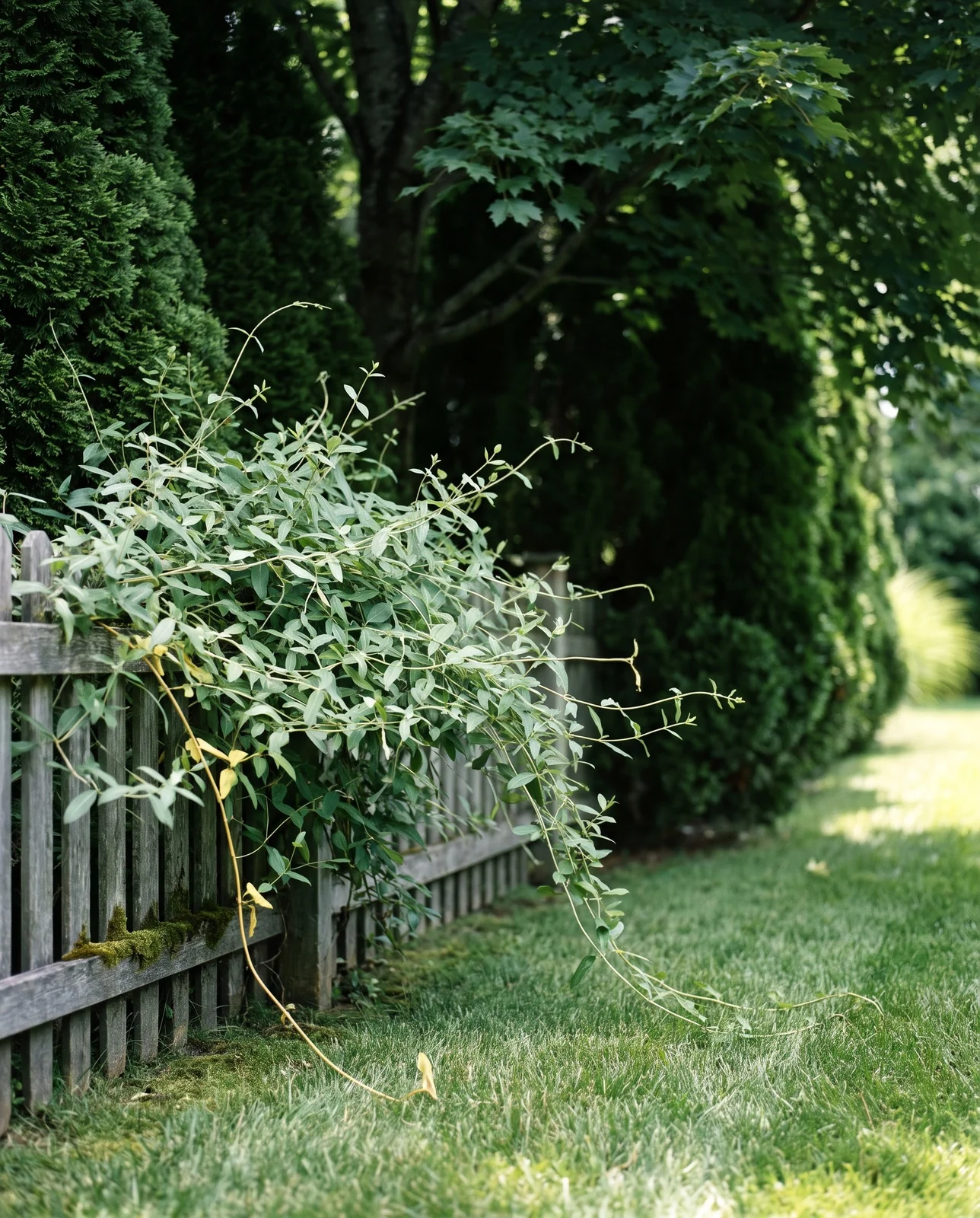
Checks for a vine that will not flower
Run these in order on a plant that grows well and refuses to bloom, cheapest check first.
How big honeysuckle gets
Size depends on whether the plant climbs or stands on its own. Coral honeysuckle runs 10 to 20 feet on a width of 3 to 6 feet. European honeysuckle reaches the same 10 to 20 feet, though it usually stops nearer 12. The shrubs trade height for width. Winter honeysuckle stands 6 to 10 feet tall and as much across, and Morrow's and Tatarian settle at the same size, gaining roughly a foot a year. Amur honeysuckle is the largest of them at 10 to 20 feet tall and wide, putting on a foot or more a year into a rounded shape with arching branches. Japanese honeysuckle is measured in stem length instead: it grows several feet a year and easily reaches 30 feet.
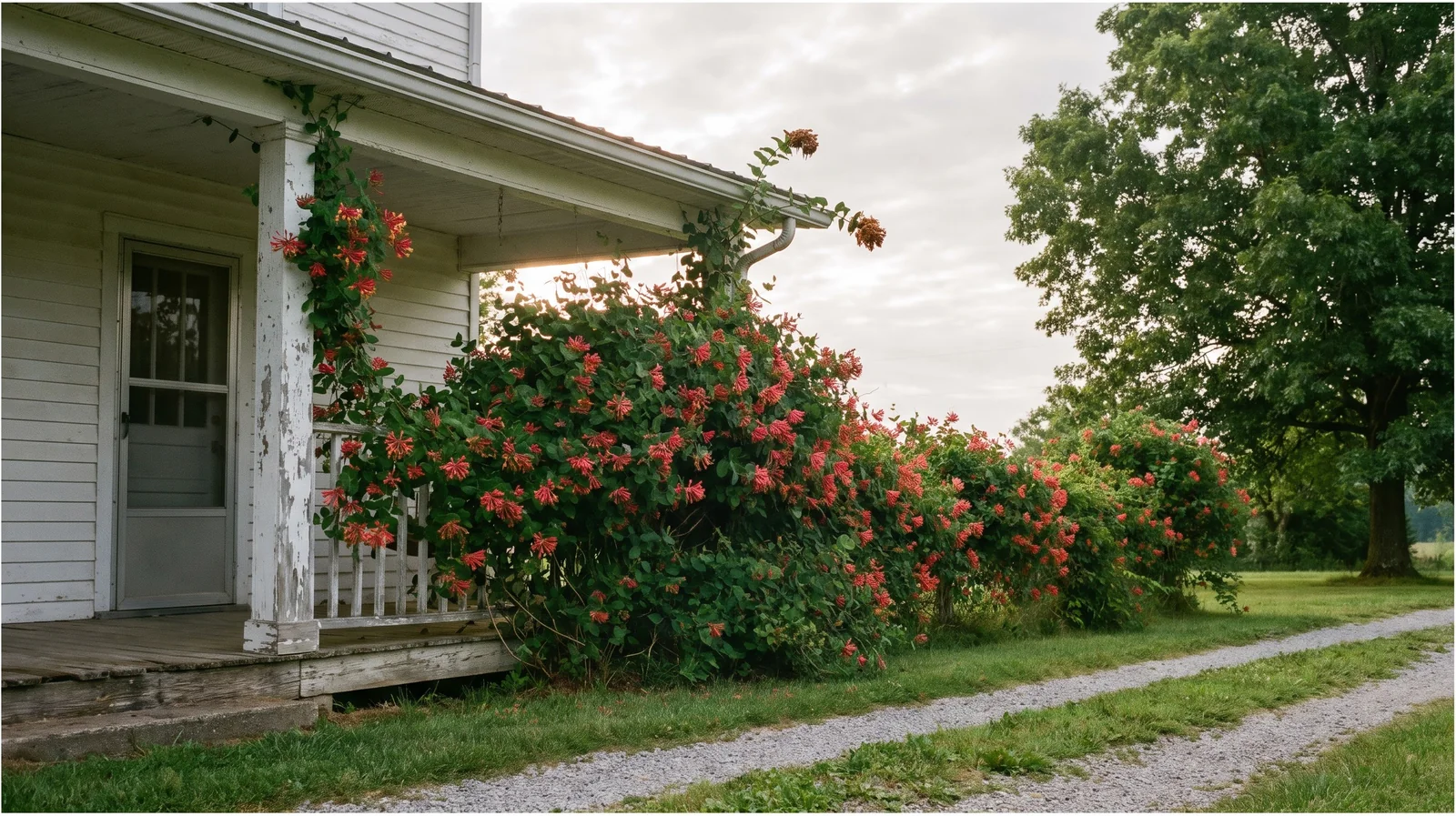
USDA hardiness
Hardiness splits by species. The genus as a whole covers zones 4a through 9b, and coral honeysuckle covers that whole band on its own. Winter honeysuckle stops one step short of the warm end, at 8b, and Japanese honeysuckle and Goldflame share the narrowest band, 5a through 8b. European honeysuckle is hardy from 5a through 9b, and it is also called winter hardy to zone 4, so gardeners at the cold edge have to choose which figure to plant by. Amur honeysuckle reaches furthest into the cold at 3a through 8b, shade tolerant on top of resisting heat, drought and severe winter cold.
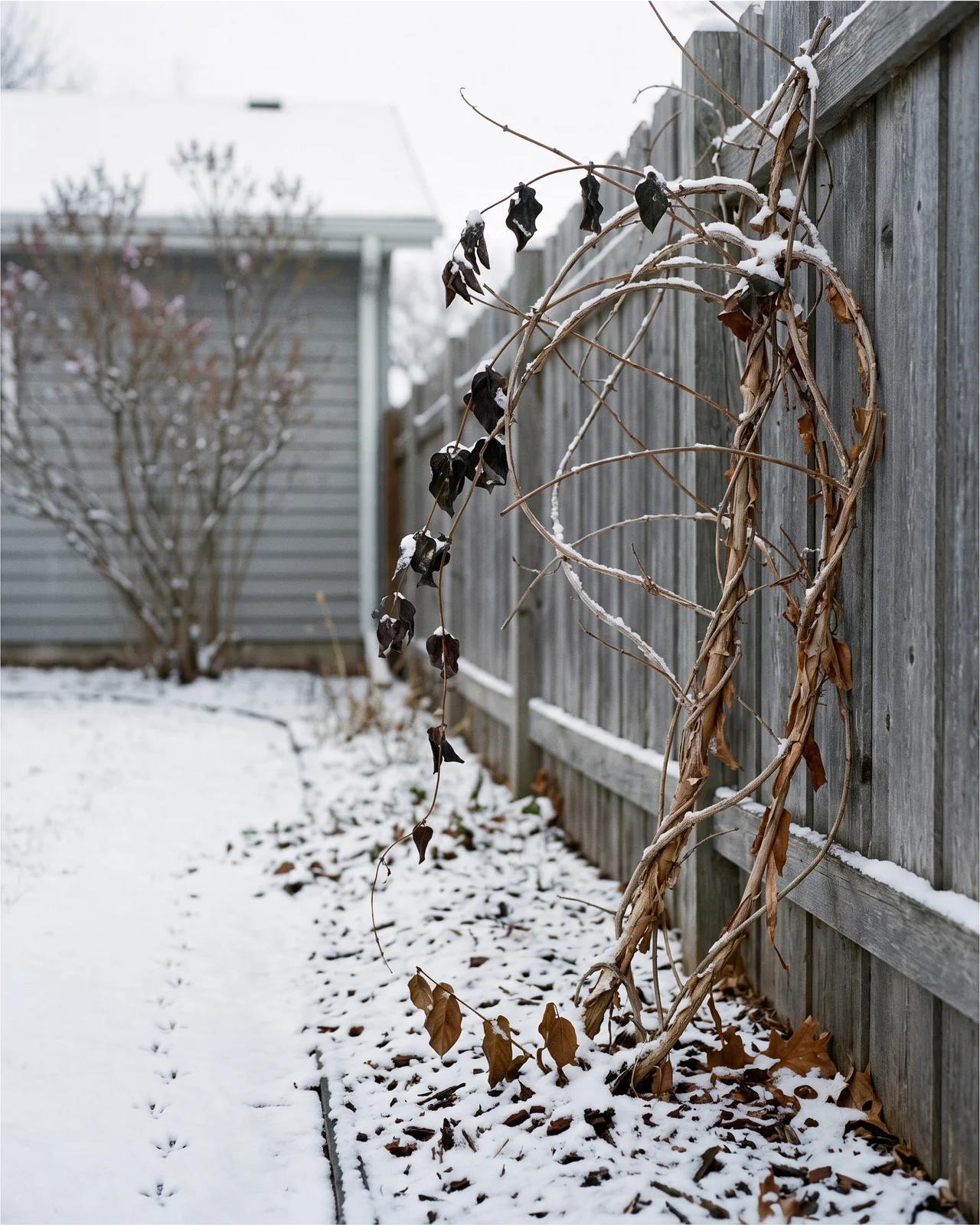
Buying one and picking the spot
Buy the native vine in early spring, when specialty and online nurseries typically sell it bare root. Honeysuckle will also grow in a container, so a patio plant works as long as the pot carries something narrow for the stems to wrap. One siting rule catches people out: coral honeysuckle is highly flammable and should not go inside the defensible space around a house. In fire country that moves it off the wall to a freestanding arbor. Look across the fence too, because invasive honeysuckles favor sunny open ground: pastures, fields, forest edges, roadsides and open woodlands.
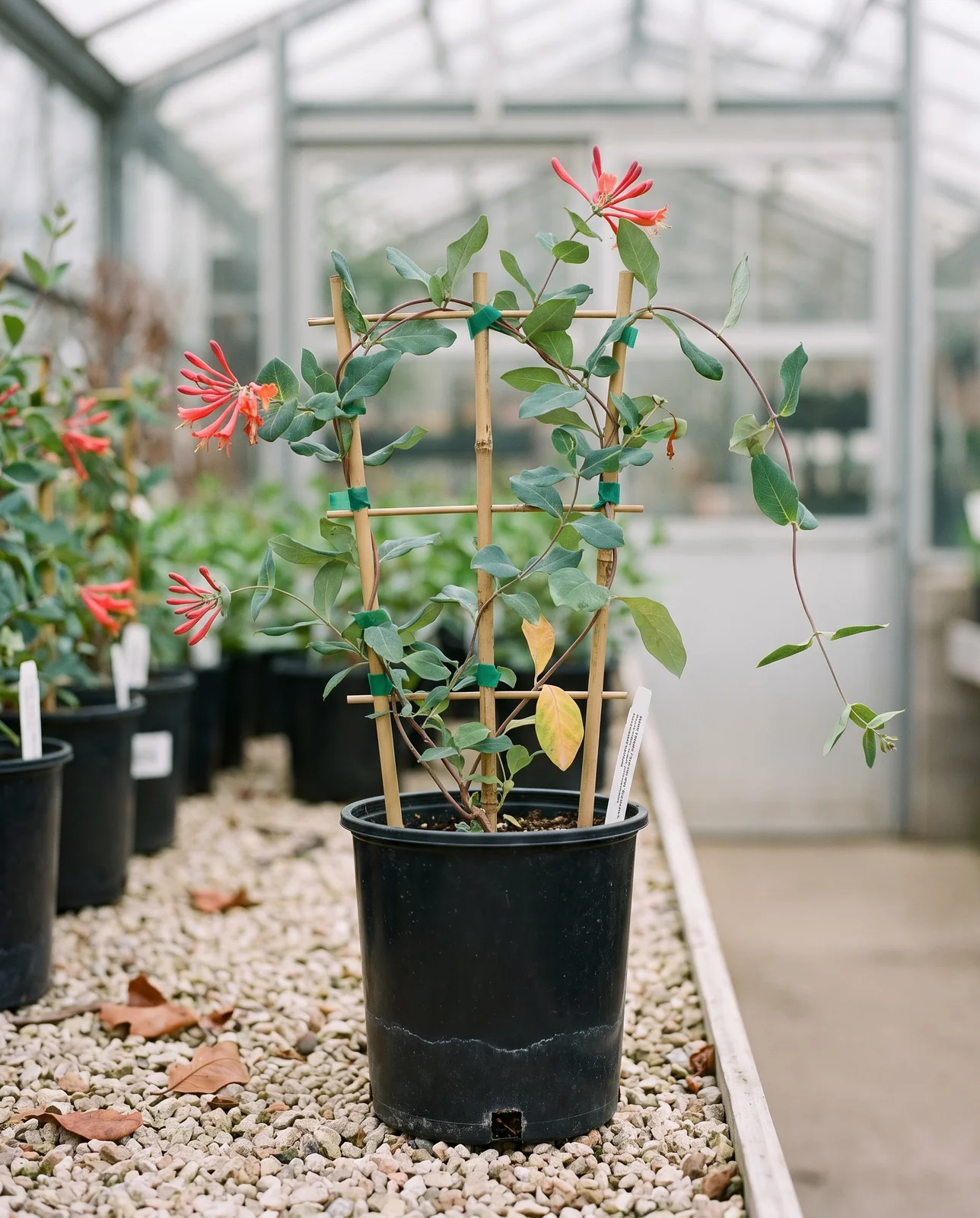
Toxicity and pet safety
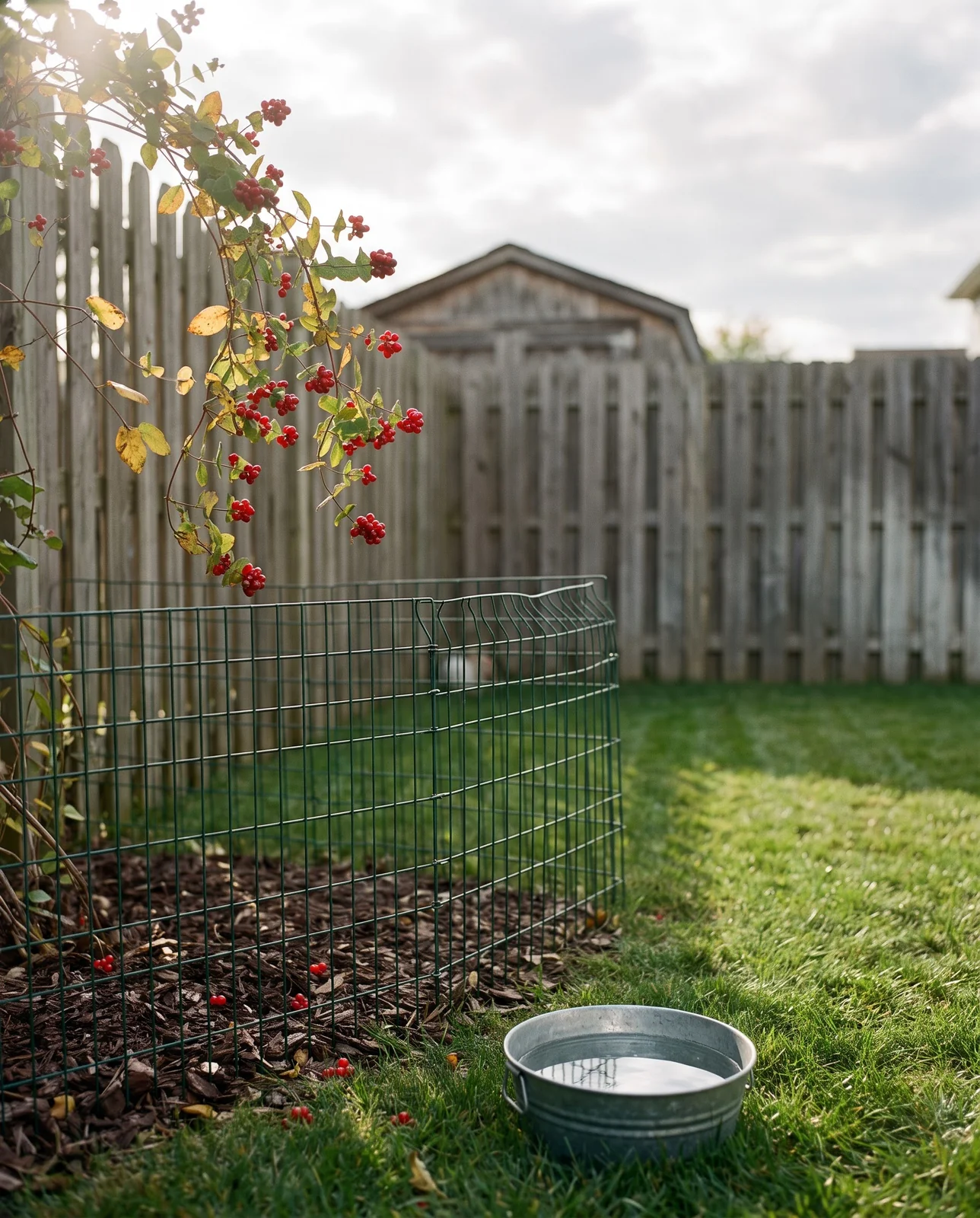
The berries are the hazard, and what they do depends on the species. Japanese honeysuckle fruit brings on vomiting and diarrhea. In quantity it goes further, to pupil dilation, cold sweat, a rapid heartbeat and convulsions, though it takes a large quantity of fruit to get there. The poison is saponins and it sits in the fruit, so handling the plant is not part of the problem: it causes no contact dermatitis. Amur honeysuckle is the milder one, and its berries cause severe diarrhea. Coral honeysuckle berries are inedible, with no poisoning reported for the species at all.
Most of the genus is inedible, and exactly one species is grown for fruit people eat, Lonicera caerulea. Beside it sits a trap: the flowers of Japanese honeysuckle are edible while its fruits are the poison part, and that pairing turns the childhood nectar habit into an assumption about the berries. For dogs and cats the ASPCA plant list has no honeysuckle entry either way. The fruit causes the trouble on every species assessed, so settle which honeysuckle is on the fence and clear the dropped berries under it.
Hummingbirds, moths, and what else it feeds
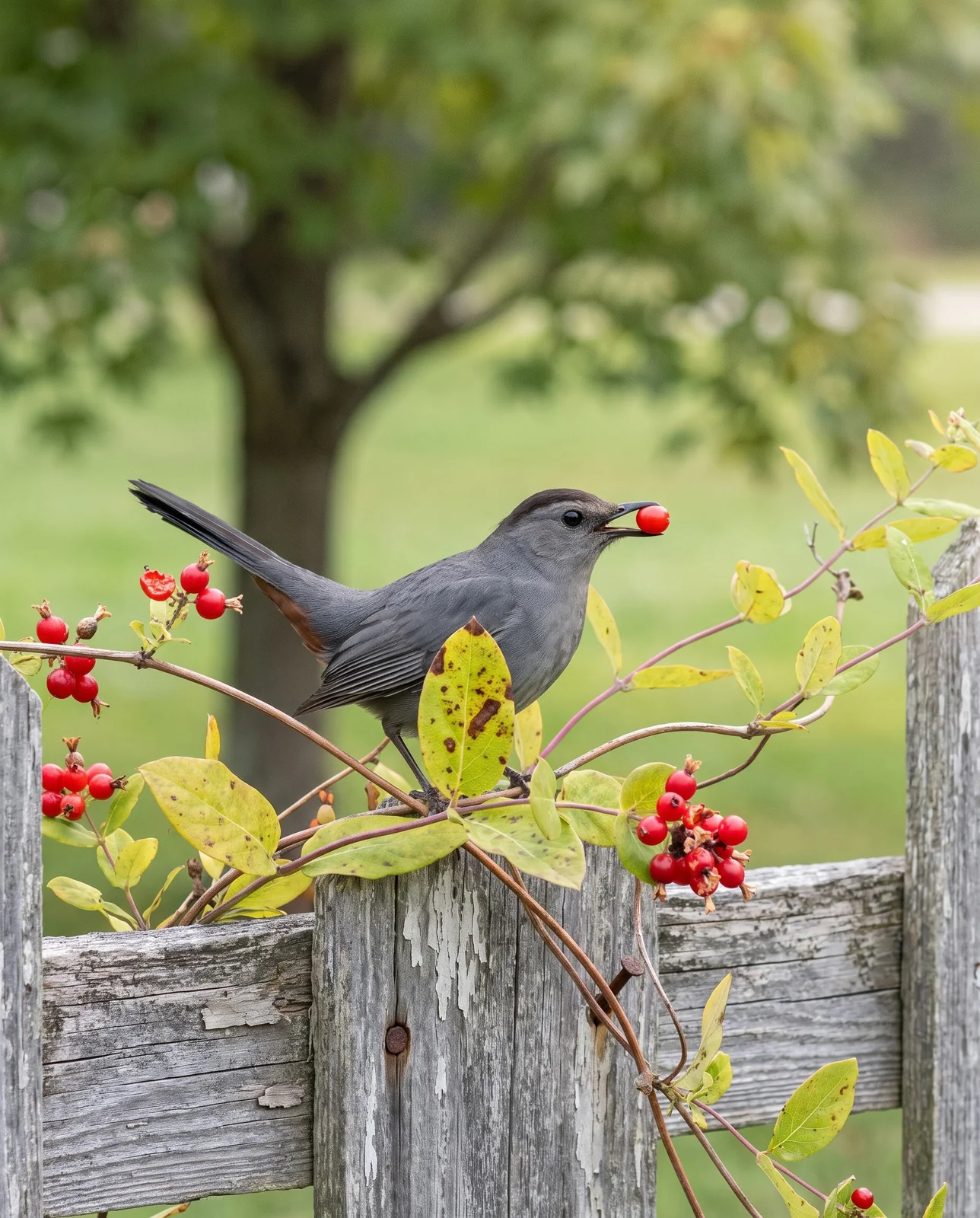
The native vine is the one that pays wildlife back. Penn State Extension puts native honeysuckle on the keystone plant list for the eastern temperate climate, host to 35 pollinators. Coral honeysuckle draws hummingbirds, bees, butterflies and some moths, feeds songbirds with its red berries, and hosts spring azure butterfly and snowberry clearwing moth larvae. European honeysuckle works a different set of visitors: long-tongued bees, butterflies and moths pollinate it, and red admiral and twenty-plume moth larvae feed on it. Even the winter shrub earns something: its flowers give honey bees nectar on warm days, and its berries feed birds and small mammals. Coral honeysuckle resists deer, black walnut, compaction and salt, though white-tailed deer still browse the foliage. The salt tolerance makes it useful where coastal spray reaches the fence.
How honeysuckle spreads and how to propagate it
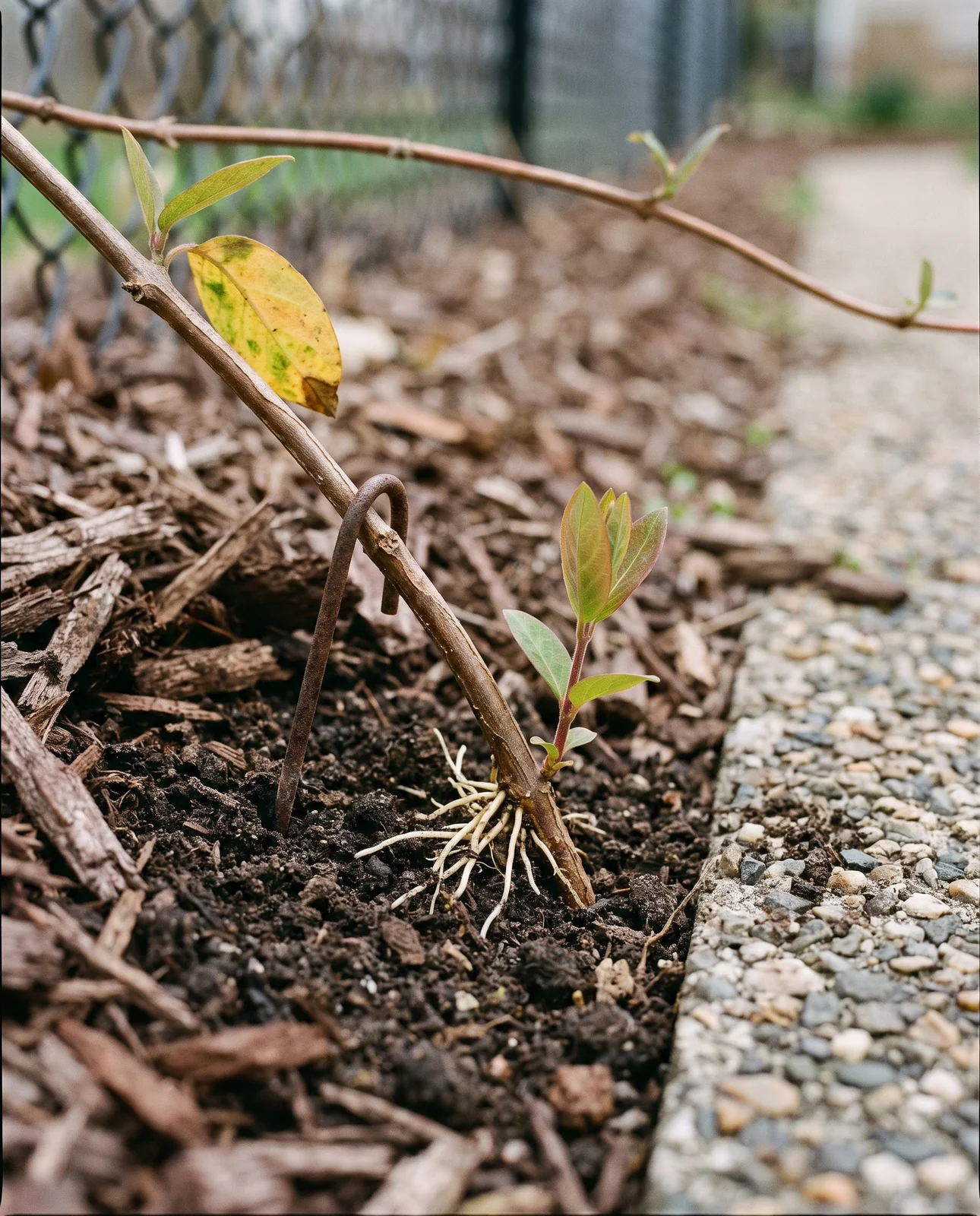
Three methods propagate honeysuckle: layering, stem cuttings and seed. Layering asks the least, since a stem pinned against damp soil roots where it touches and can be cut free once it has taken hold. The same readiness shows up outside the garden. Coral honeysuckle has escaped cultivation across the eastern states, growing along roadsides, on stream banks and in thickets, and Japanese honeysuckle runs the same trick with more routes, spreading by rhizomes and above-ground runners as well as by seed that birds and small mammals carry far from the parent plant.
Pests and diseases
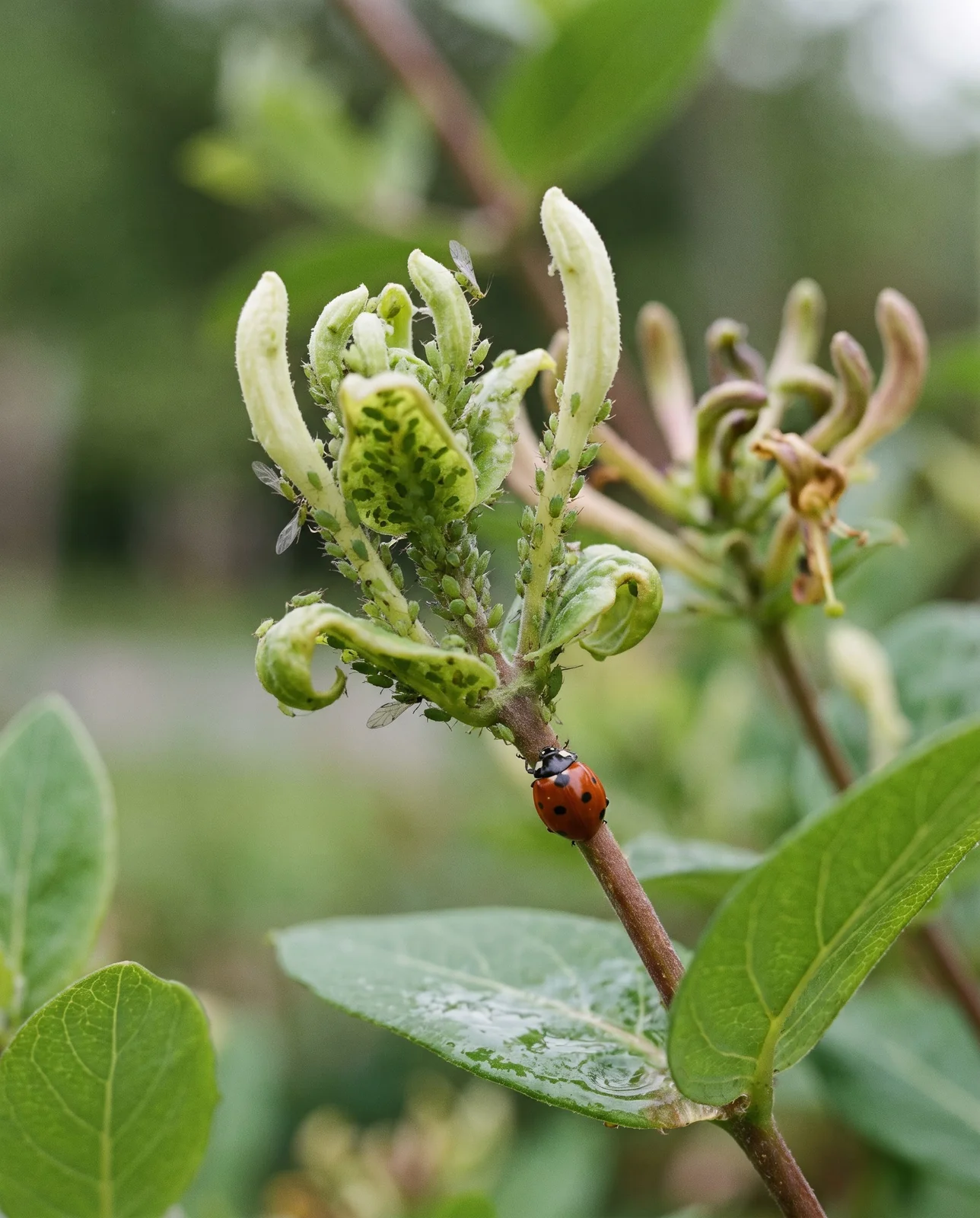
Aphids head a short list. Across the genus the insect pests are aphids, scale, beetles and thrips, and some species pick up powdery mildew and leaf spots in hot, humid summers. On coral honeysuckle the watch list is aphids, powdery mildew and leaf spots in hot humid climates, plus leaf miners. The aphids settle on flowers and foliage, so the damage lands on the buds the plant was bought for. European honeysuckle brings honeysuckle aphids and scale. Native ladybug beetles have been seen controlling the European honeysuckle aphid.
What actually goes wrong, in order
Ordered by how often it comes up, with the move that ends each one.
What month to cut, how much at once, and whether a woody base survives it. Cut after the flowers finish; rebuild a thick base over three seasons.
Green, growing, no buds, often in a container. Shade that crept over the bed and lawn feed at the roots are the two to rule out.
Powdery mildew, leaves that come out deformed and curled, dieback with no obvious cause. Open the plant so air moves through it, and turn the leaves to check for aphids.
Twining stems circle something narrow and cannot hold a smooth wall. Give the plant wires or a trellis, and tie the leaders sideways along a fence.
The colony arrives on the flower buds just before they open. Wash them off early and leave the ladybugs to finish.
Stumps sprout again and severed pieces root where they land. The cut holds only when herbicide goes on the stump the moment it is made.
Some are red-flowered natives doing what their species does. The rest were sold on a label that promised fragrance, so smell the plant first.
Meaning and symbolism
Honeysuckle's meanings come from the way the plant behaves: a stem that wraps whatever it touches and holds on, and a scent that arrives after dark. The older readings, and its place on June birthday lists, are set out on the honeysuckle flower meaning page. Evening scent puts it in the same company as jasmine.
Honeysuckle advice that does not hold up
Removing an invasive honeysuckle attracts confident advice, and some of it costs a weekend or a stand of woodland.
The myth: A hollow brown center is the giveaway, so a stem that is not brown inside must be native.
The reality: Hollow against solid is the reliable test; the color word is not. The same hollow pith runs brown on some stems and white or tan on mature Amur wood.
The myth: Cut the shrub down and it is gone.
The reality: Amur honeysuckle grows back dense and vigorous from the stump, and fire removes the top growth while the plant resprouts from the root system.
The myth: Any brush killer will finish invasive honeysuckle.
The reality: Garlon does not control bush honeysuckle. A foliar spray runs 1 percent on seedlings on dry upland ground and 1.5 percent on mature shrubs just after the June bloom.
What to expect as the plant ages
What a honeysuckle does in its first seasons, and what it turns into when nobody touches it.
The first season goes into roots and stems. Leaf shape on a young coral honeysuckle changes as the season runs, the early leaves linear and strap-like, the later ones oblong to elliptic on the same plant. The bark at this age is smooth and green with a slight fuzziness.
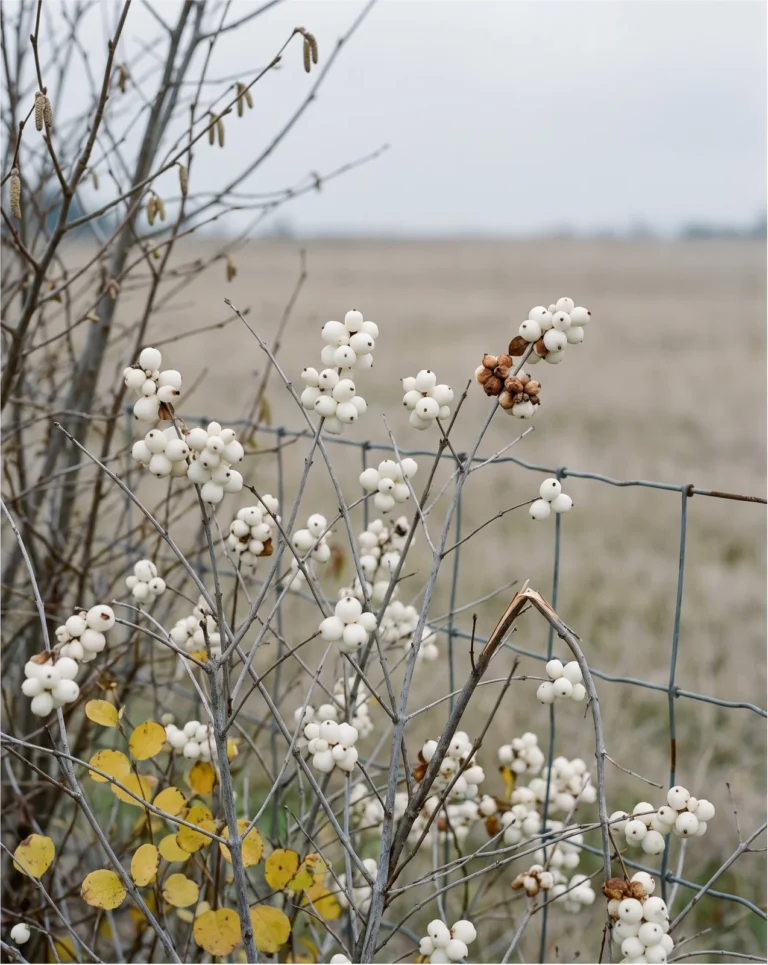
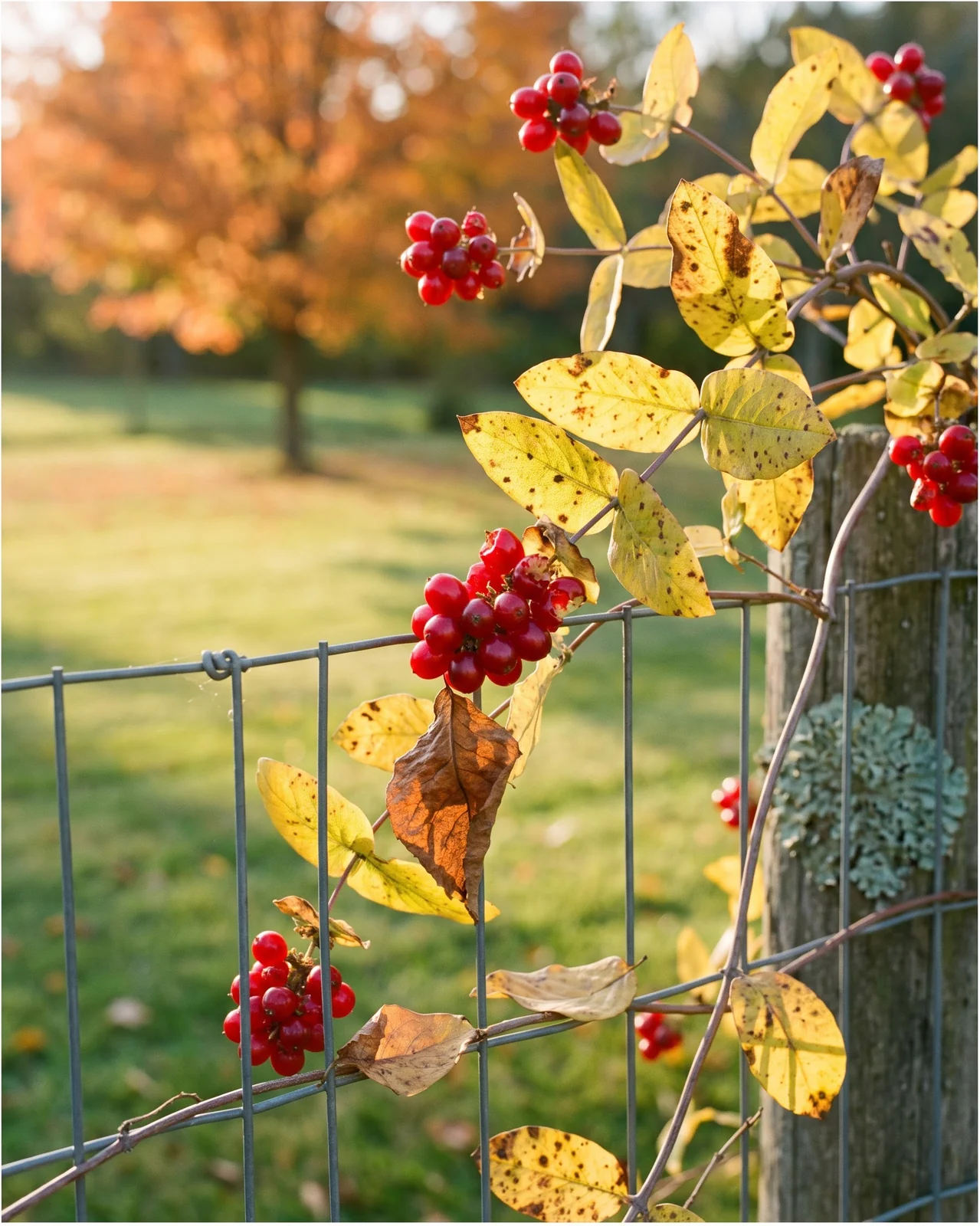
Once flowering starts, fruit follows, and the berries differ by species. Coral honeysuckle's rounded red berries, less than an inch across, show from July to September. European honeysuckle ripens deep red quarter-inch berries in September, and winter honeysuckle carries orange to dark red berries about 0.3 inch across from late spring. Japanese honeysuckle berries run to 7 mm, turning from green through red to blue-black.
Years later the plant is a different structure. The bark turns brown and begins to flake, the base thickens into hard wood, and the flowering climbs out of reach. That is the plant behind most pruning questions: one honeysuckle roughly ten years old, thick and woody, cut back while a taller arbor went in underneath it. Young Japanese honeysuckle stems are reddish and slightly hairy while the old ones are hollow, and Amur bark turns deeply fissured and peels off in strips.
Flower photos
FAQ
What month should I prune honeysuckle?
As soon as the flowers are finished, which in Maryland falls in late June to early July. Cutting later does not hurt the plant, and it will flower less, if at all.
Can I cut honeysuckle back to the ground?
Only as a repair on a dormant plant. Renovation cuts an overgrown honeysuckle to 12 inches from the ground in late winter and costs up to two years of bloom. Taking one third of the branches each year for three years keeps it flowering while it rebuilds.
Why is my honeysuckle growing but not flowering?
Light and water first, because honeysuckles bloom best in full sun and prefer medium moisture. Then the feeding: high nitrogen fertilizer, lawn feed included, produces foliage at the expense of flowers.
Why does my honeysuckle have no smell?
The species decides it. Coral honeysuckle's red trumpets are not fragrant, and hummingbirds, butterflies and bees work them. The heavy sweet scent belongs to European honeysuckle, strongest after dark.
Is there a non-invasive honeysuckle?
Shop the native coral honeysuckle by cultivar name, 'Dropmore Scarlet' among them. Garden-bred honeysuckles rarely turn weedy and usually take over nothing more than the structure they are given.
Should I remove invasive honeysuckle?
Yes, and take the young vines first, before they strangle plants you want to keep. In Illinois it counts among the biggest threats to native ecosystems.
When is the best time to cut down bush honeysuckle?
Fall, when the plant is sending energy to its roots and is one of the only shrubs still in leaf. Put the herbicide on the cut stump immediately after cutting.
Is honeysuckle poisonous to humans?
Treat the berries as off limits where children play: Japanese honeysuckle is flagged as poisonous to humans and as a problem for children. Most of the genus has inedible fruit, though Lonicera caerulea is grown for eating.
Is honeysuckle poisonous to dogs?
Keep a dog off the berries and pick up what drops. Eating any plant material may cause vomiting and gastrointestinal upset in dogs and cats, and the animal poison control line is (888) 426-4435.
Does honeysuckle have health benefits?
What the plant carries is folk use, not tested medicine. Coral honeysuckle was dried and smoked for asthma and chewed leaves went onto bee stings, while European honeysuckle flowers were used to reduce fever.
Interesting tips
- Winter honeysuckle earns a place indoors before it earns one in the border: branches cut while the buds are still closed open into fragrant arrangements in early spring.
- Turn a bush honeysuckle leaf over before deciding which one you have. Morrow's is soft and felted underneath with a blunt tip, while Tatarian leaves are smooth and largely hairless.
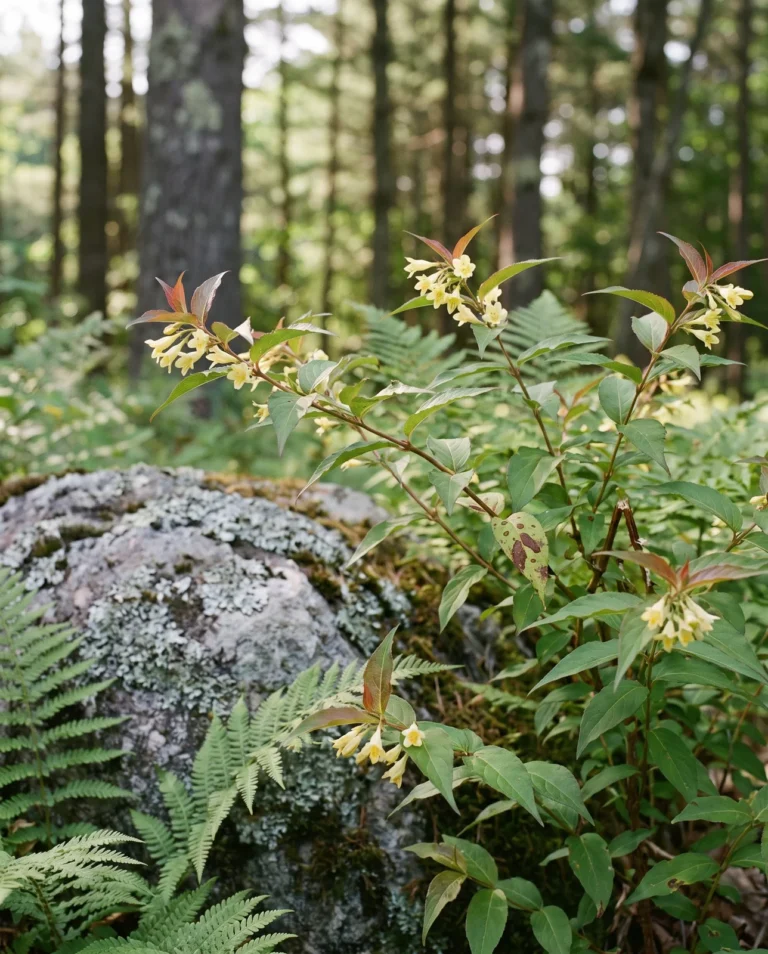
- The newest leaves on Diervilla, the native shrub sold under the same bush honeysuckle name, often come out bronze-orange or purplish-red.
Related Guides & Flowers
Honeysuckle flower meaning
What the vine has stood for, and why it lands on June birthday lists.
Clematis
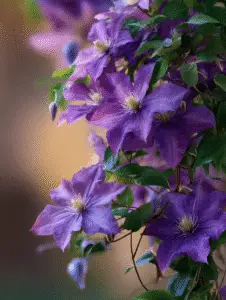
The climber most often put on the same arbor, with a native species among the fragrant substitutes for Japanese honeysuckle.
Jasmine
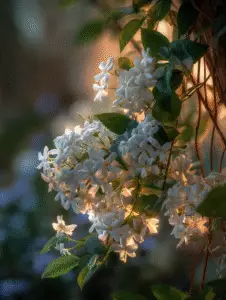
Evening scent on a climber again, with a different set of care problems behind it.
Types of flowers
The full flower catalog, sorted by type, for whatever goes on the fence next.
Enjoying our flower guides? Add YourFlowersGuide as a preferred source on Google. It helps more readers find us.
Add to Preferred Sources