What you are actually buying
Three products are sold as baby's breath: fresh cut stems for bouquets, dried or artificial stems for craft work, and a live perennial for the garden. They sit side by side at prices from a few dollars to more than a hundred, with nothing marking which form is which. It is one of the world's most popular filler flowers, and florists use it to pad bouquets, roses above all.
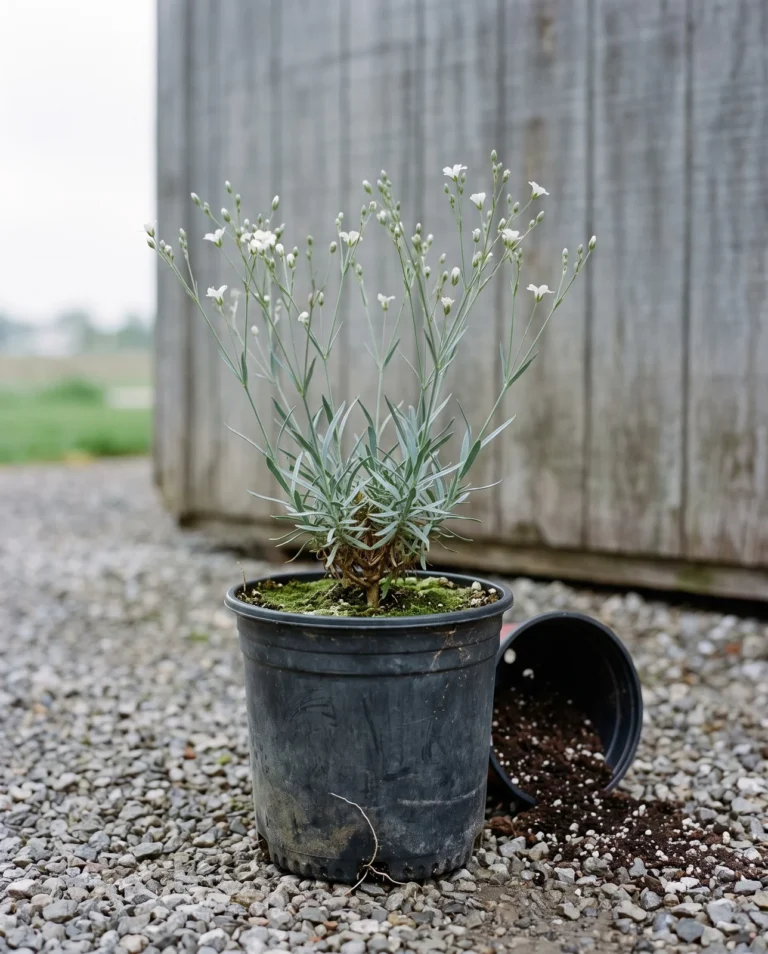
The confusion runs both ways. Someone who wanted stems for a table ends up with a plant in a pot; someone who wanted a plant ends up with cut stems, or with a dyed craft bunch that was never alive. Only the live perennial has to be sited, watered through establishment, and kept from setting seed, and only it appears on a state weed list. Zones, soil and disease belong to that plant; the other two answer to handling and storage.
Three forms side by side
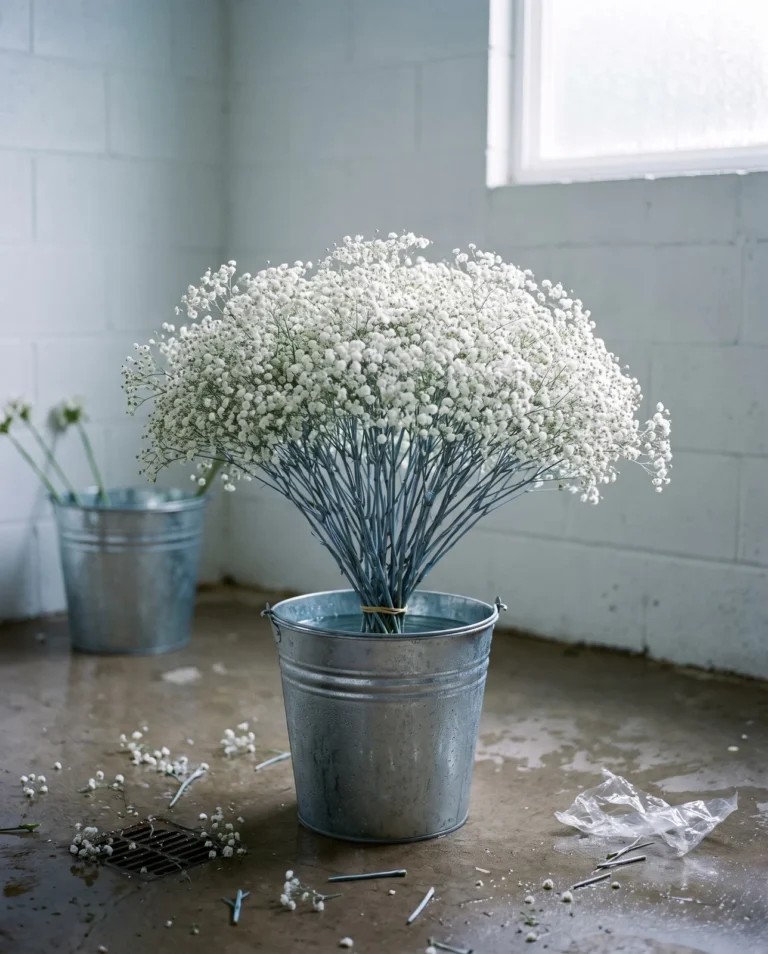
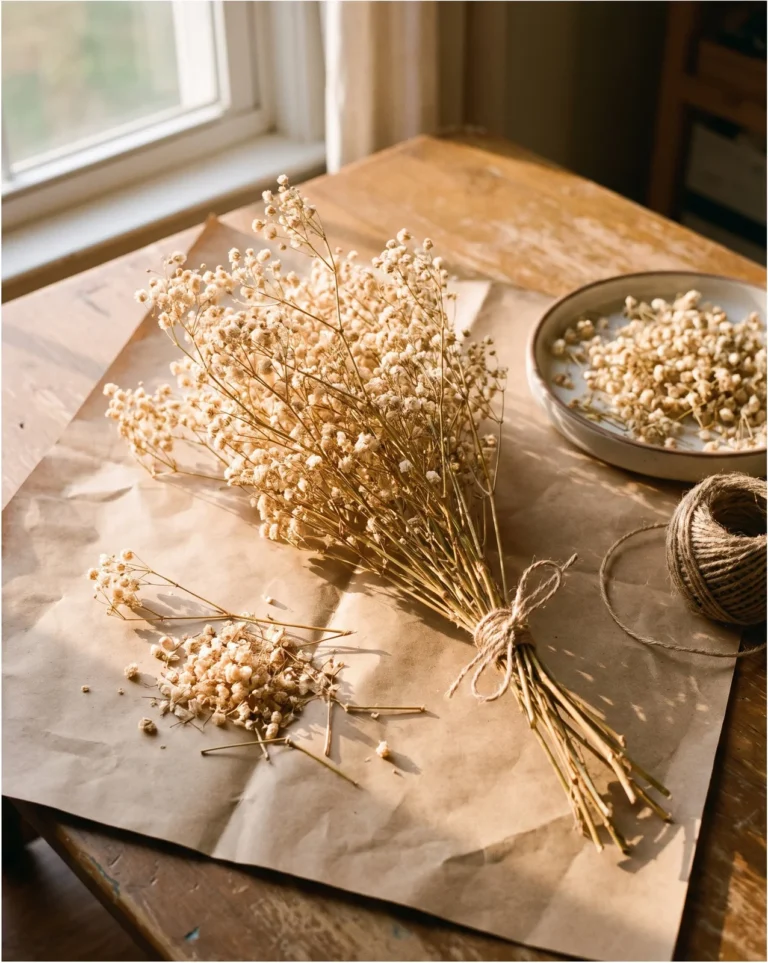
The same name covers three products with different lifespans and different obligations afterwards.
What baby's breath is
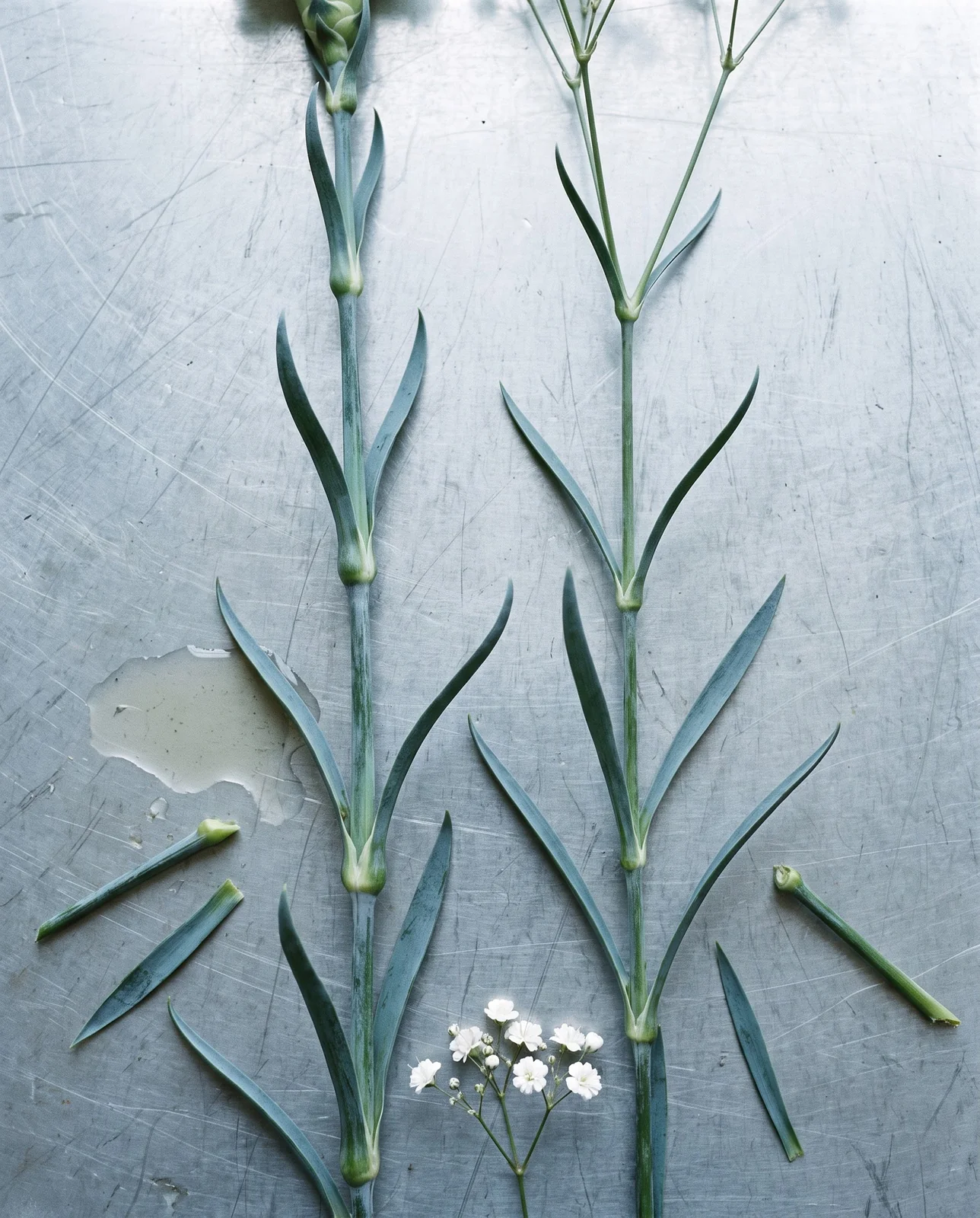
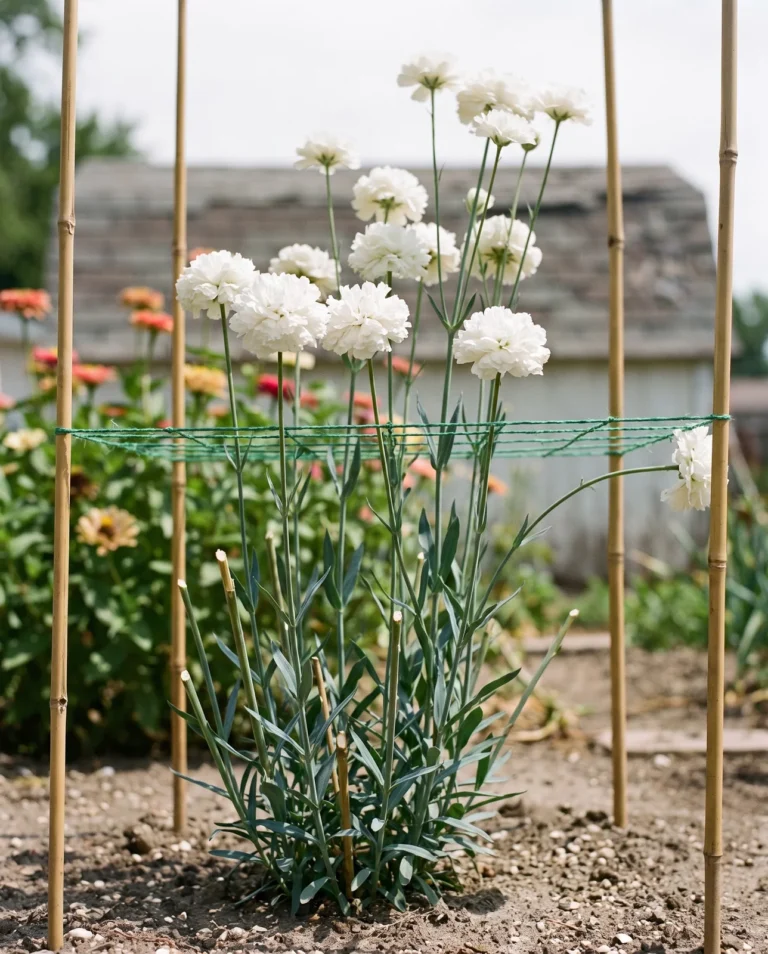
Baby's breath is a herbaceous perennial in the carnation family, and the carnation resemblance shows once the two stems lie side by side. It is native to central and eastern Europe and now grows across North America. Above the soil it is mostly air, a mound of thin branching stems carrying many small flowers. The stems in an American bouquet may not be American: Peru grows the crop, and it is a major portion of that country's flower exports.
The genus name comes from the ground it likes: Gypsophila means gypsum-loving, for the calcareous, high-calcium soils the genus favors in the wild. The common name is less settled, and it may come from the scent, which has been described as sour milk, like a baby's spit-up. Many of the white flowered plants sold for gardening under that name have been Gypsophila elegans, an annual look-alike, while the tall perennial Gypsophila paniculata carries the weed listings and the dune infestations. Read the species off the label before the rest of this applies.
Where baby's breath is invasive, and why
Baby's breath sits on weed lists in the West and on watch lists in the Midwest, and those listings carry very different legal weight. California carries it on the state noxious weed list, rates it a B pest, and gives it a Watch rating on its invasive plant scale. Washington has listed it as a Class C noxious weed since 1988, after the ornamental escaped into pastures and rangeland, where it forms dense stands that are hard to control. Colorado keeps it on a statewide watch list for species it needs to know more about. Michigan named it a priority invasive in its northern lower peninsula, Alberta lists it as noxious, and British Columbia calls it an unregulated invasive plant of concern.
Two states looked hard at the plant and declined to regulate it. Minnesota's noxious weed committee voted 15 to 0 against listing, while the state documented established populations in 19 counties. Wisconsin does not regulate it and carries it as a Caution species. Montana is the case worth reading closely: baby's breath is not a state-listed noxious weed there, but the state department of agriculture lists it at county level in 14 counties, and it has been reported in 26 of 56 counties since 1934. The same plant is regulated on one side of a county line and unlisted on the other.
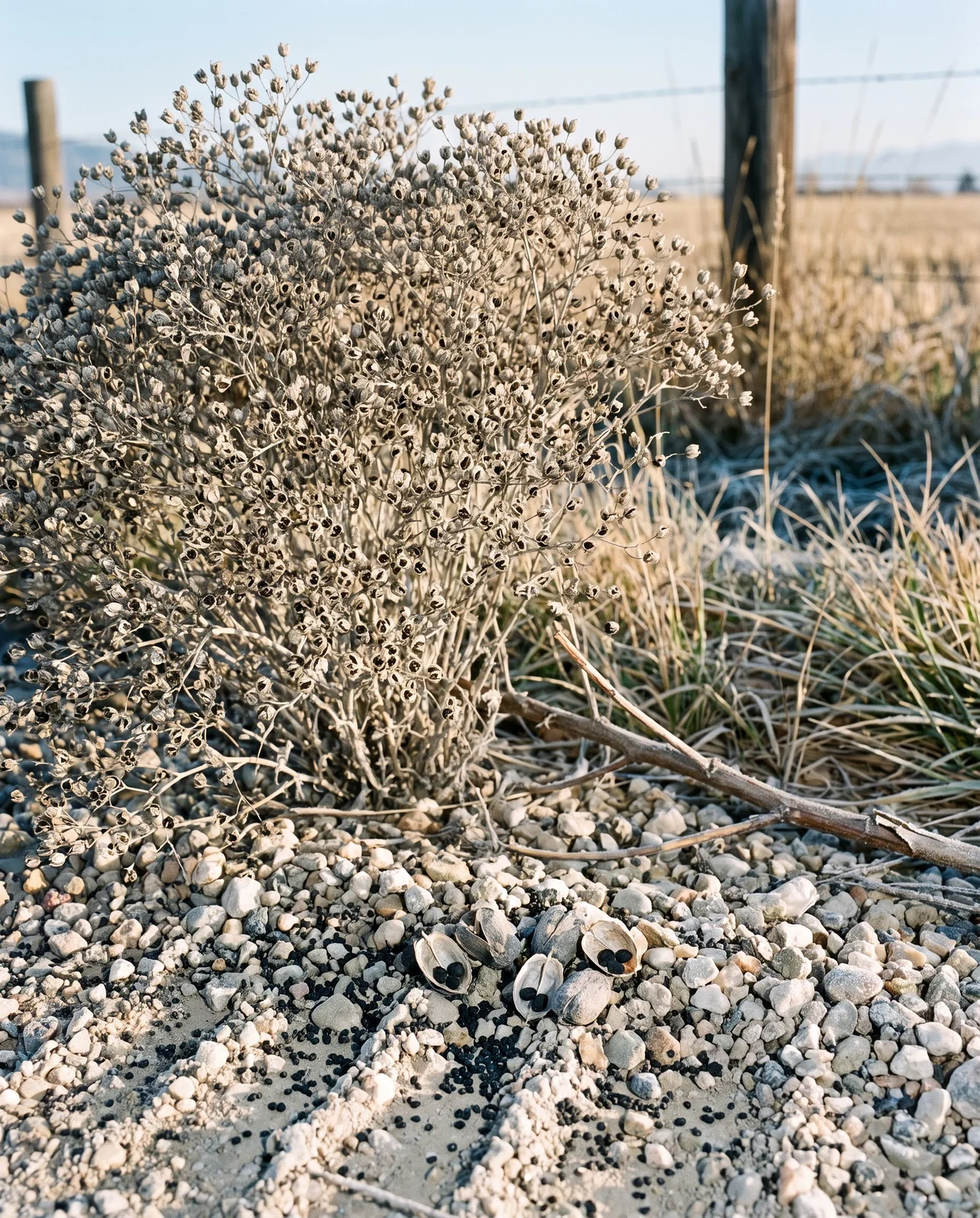
Seed is the mechanism behind all of it. The perennial reproduces by seed and does not spread vegetatively in the wild. One plant averages 13,700 seeds, newly matured seed has little to no dormancy, and seed stored for five years has germinated at 100 percent. Severed crown and rhizome pieces can also make new plants, though root fragments alone produce no shoots.
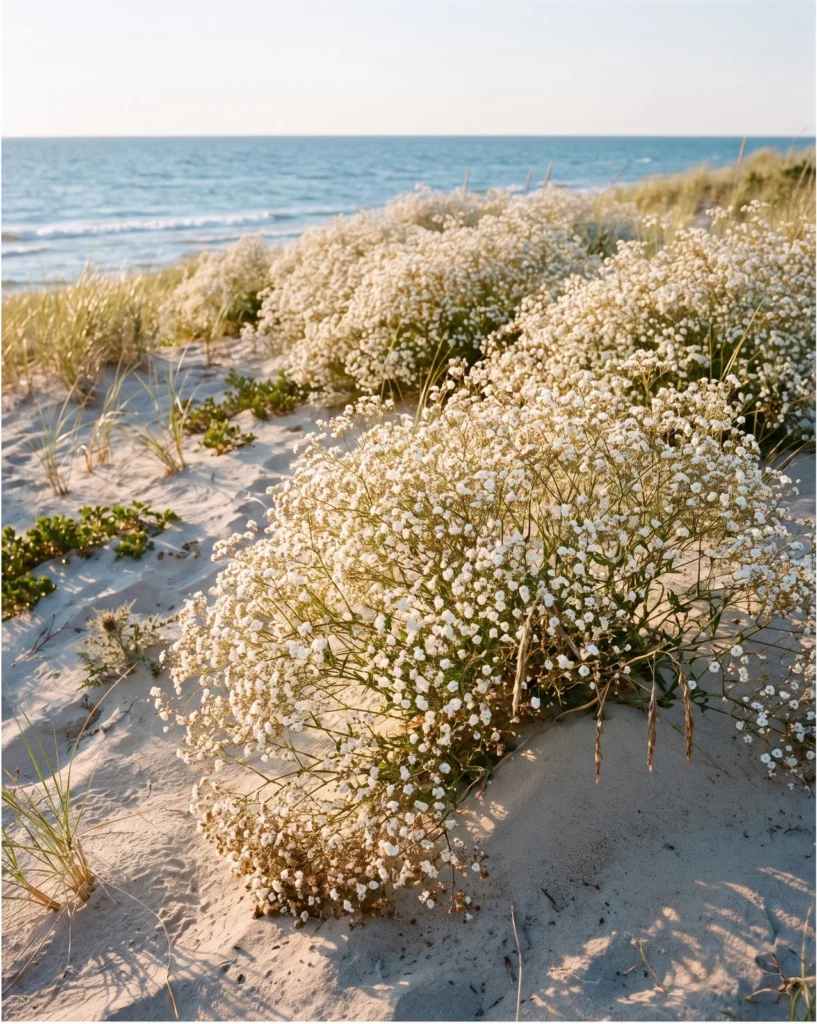
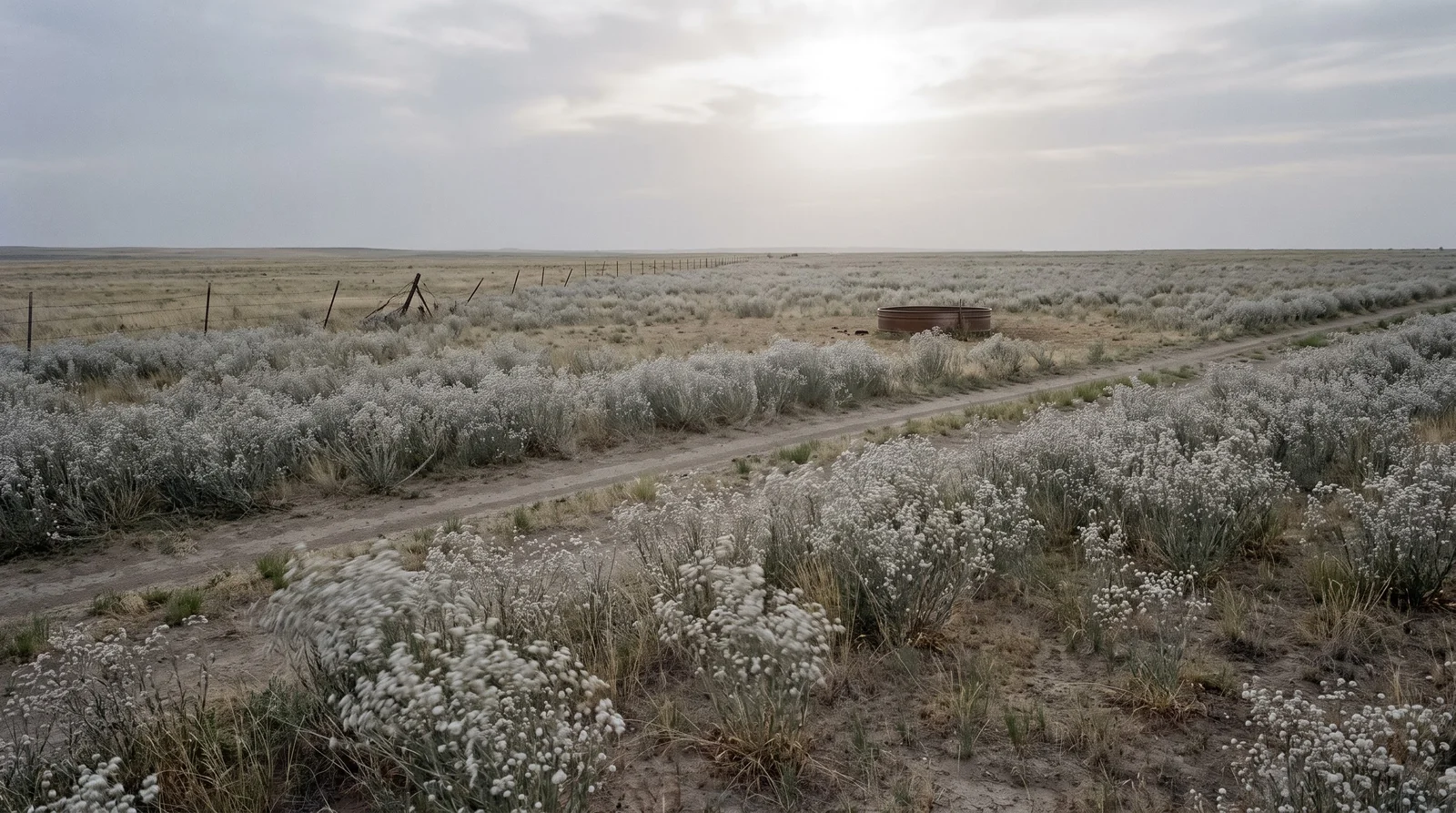
The habitat it takes is open sand and thin ground. Along the Michigan shoreline it has spread across a 260 kilometer stretch and now makes up roughly 50 to 80 percent of the ground cover in some dune areas. Other Great Lakes dune systems run 25 to 80 percent. Those dunes hold the piping plover and Pitcher's thistle. California's screening scored the plant 18, where anything above 15 is rejected for high risk, and it is present in 8 California counties. Naturalizing populations have reached every northern state except Alaska.
Should you plant baby's breath
Five questions decide it, and the first two override everything below them.
Sterile cultivars and what the claim is worth
The sterility claim has real evidence behind it and a real limit. Peer reviewed work cited in Minnesota's risk assessment found that the flowers of commercial Gypsophila paniculata plants are sterile and set no seed. New commercial varieties come from in vitro vegetative propagation and the selection of clonal variants. The limit sits in the same document: whether local cut flower growers use varieties that do not produce seed is not known. Sterility belongs to specific propagated stock, and it does not transfer to a common name.
The stakes come from the plant's own biology, since the perennial reproduces exclusively by seed. A cultivar whose flowers set nothing is a different proposition from a seed grown plant in the same border. Ask what the plant in front of you was propagated from, and treat an unlabeled one as fertile.
Is baby's breath toxic
Baby's breath carries a medium severity poison rating. Repeated handling brings eye, nose, and sinus irritation and asthma, and contact irritates skin. The toxic principle is saponin, with a question mark on the identification, and saponin fits the traditional use of the taproot as soap. Minnesota's risk assessment is softer on the same species: no documented toxicity to livestock, wildlife, or people, but occupational asthma from baby's breath allergens has been documented in a small number of cases.
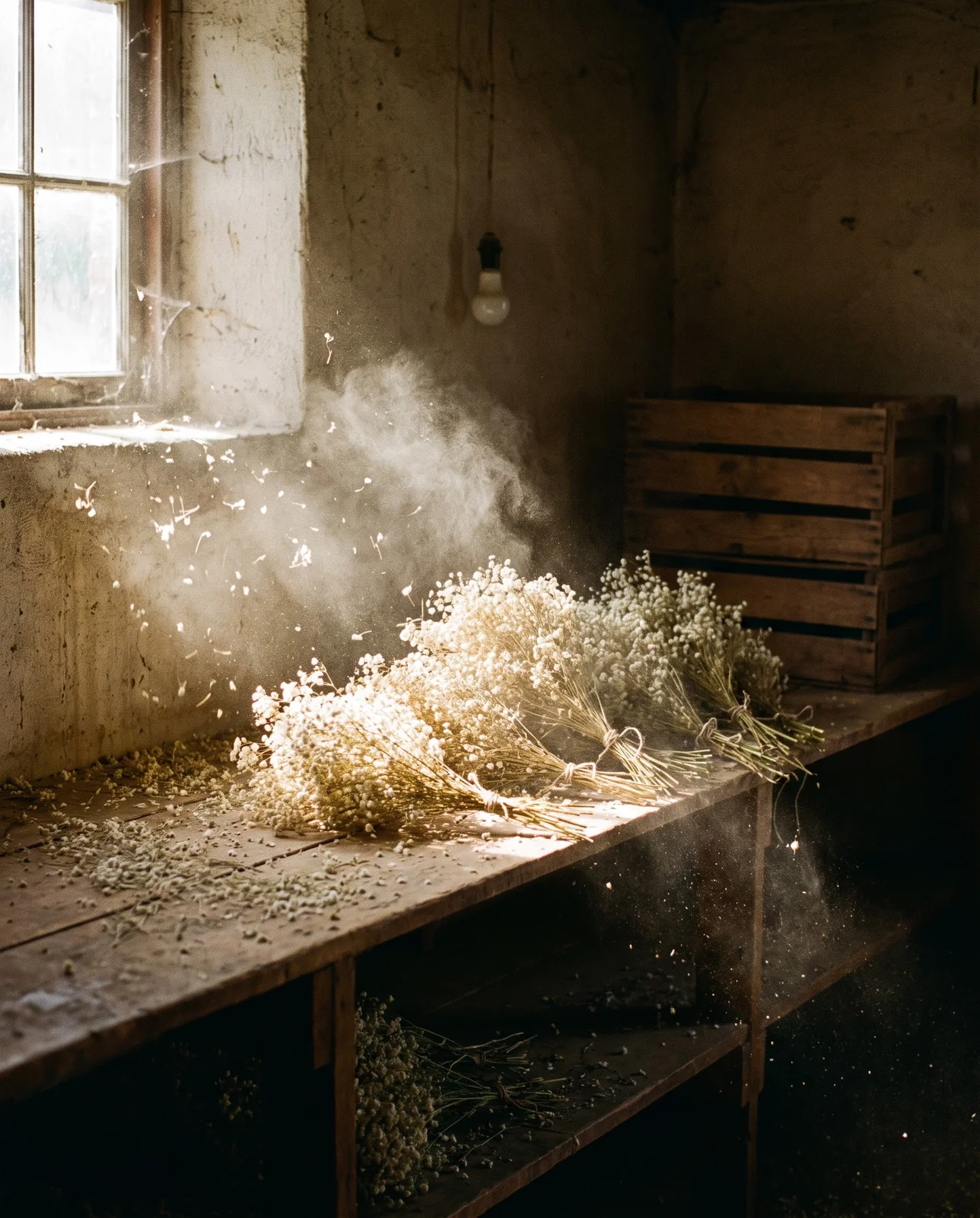
Pet advice rests on a species mix-up. The only pet toxicity entry filed under this common name covers Gypsophila elegans, the shorter annual. It rates that annual non-toxic to dogs, cats, and horses, with mild stomach upset such as vomiting and diarrhea possible if the plant is eaten. The tall perennial has no pet entry of its own, so a cats-and-dogs verdict copied across describes a different species. The perennial's own four problem tags point at people: contact dermatitis, malodorous, poisonous to humans, and weedy. Dried bunches crumble as they are worked, and handling them in bulk is that repeated contact.
What baby's breath looks like
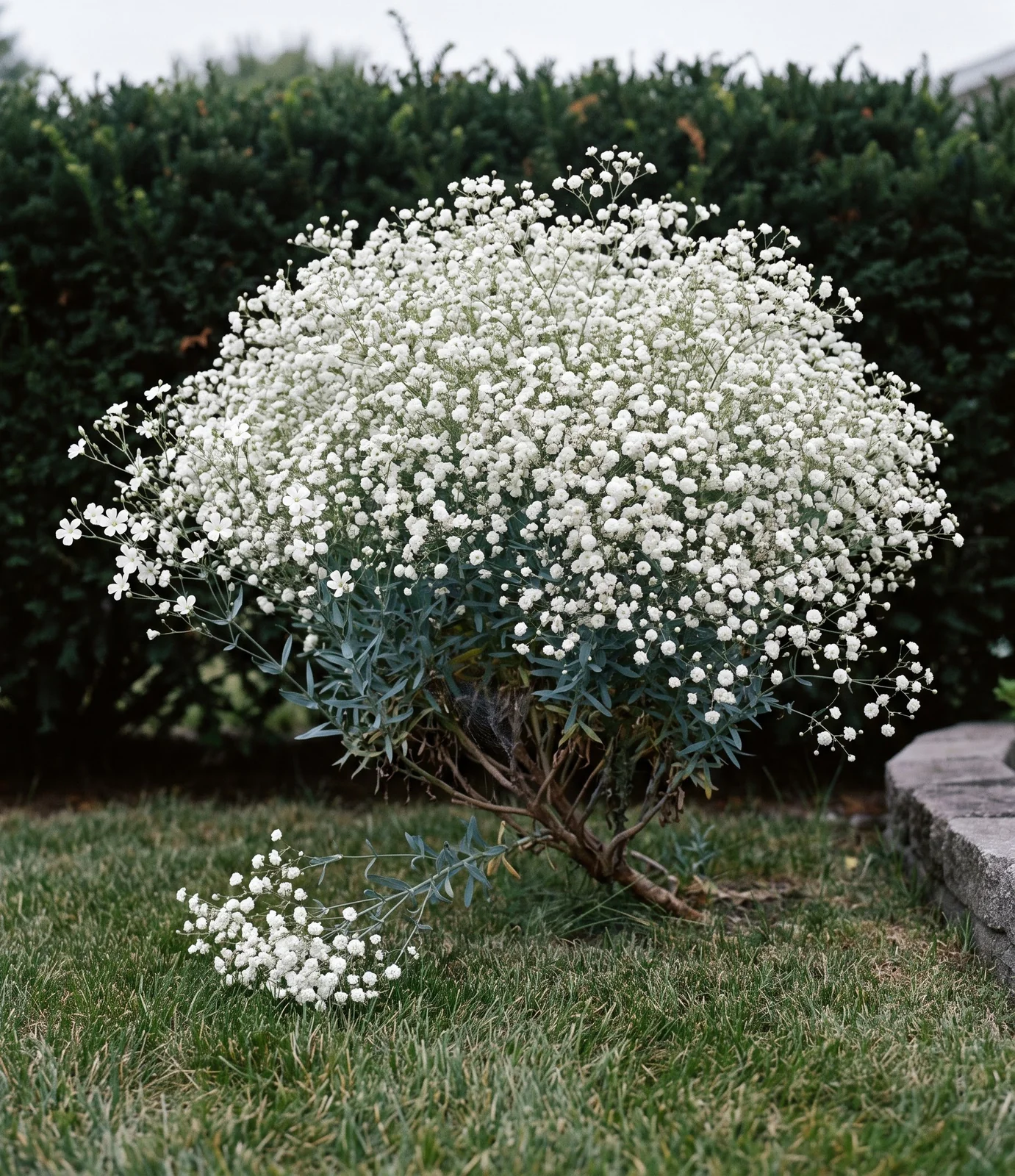
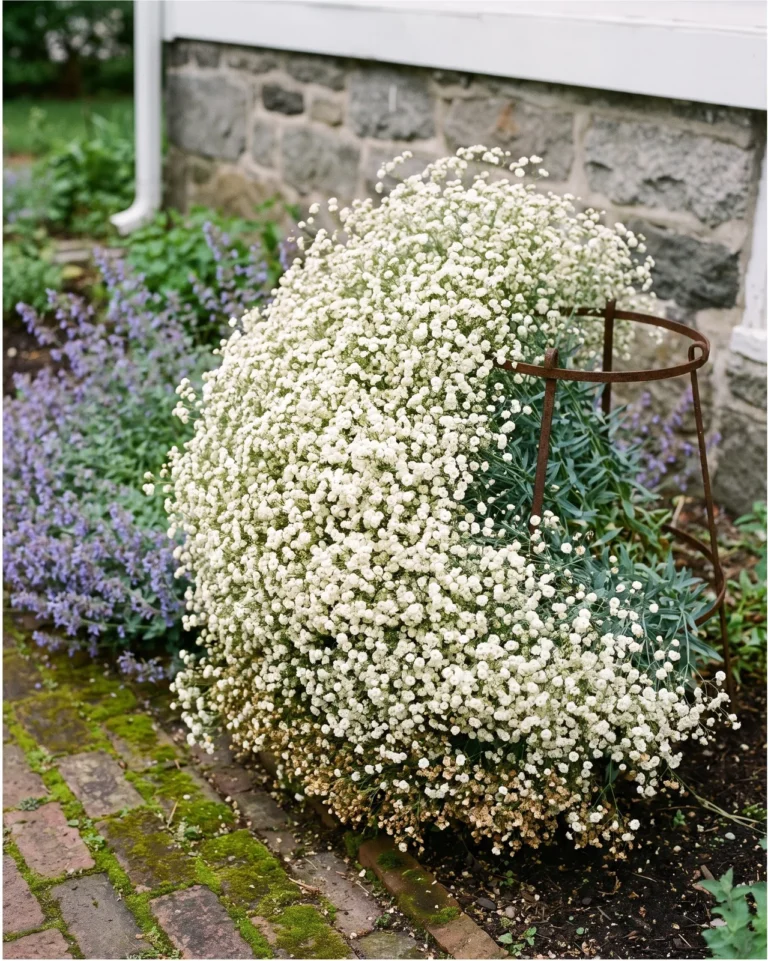
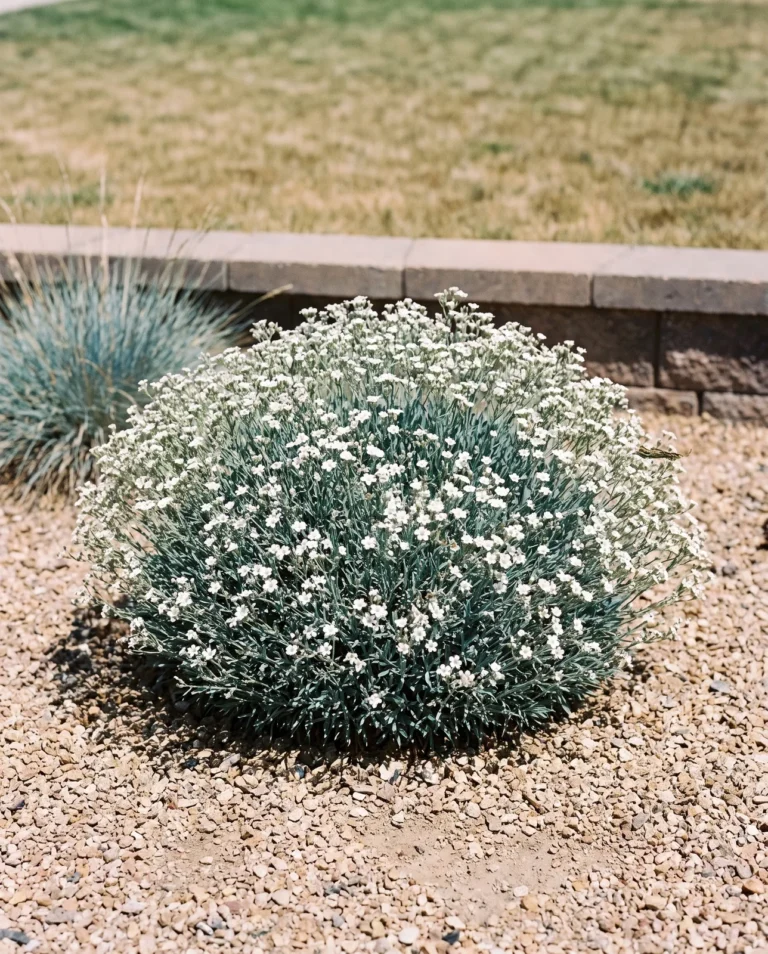
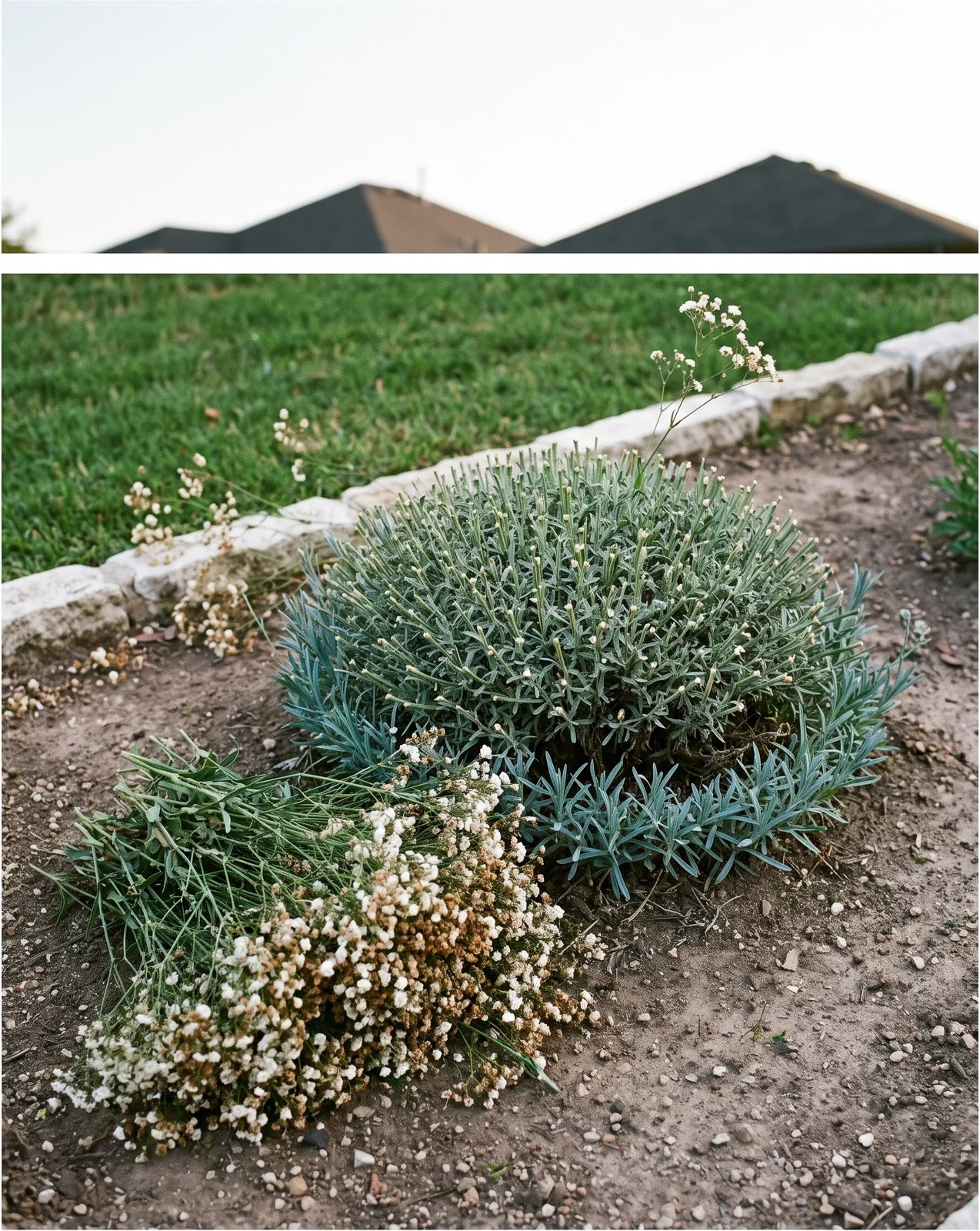
A mature plant reads as one rounded cloud of small flowers, about 4 feet tall and as wide. The leaves underneath are narrow, linear to lance shaped, one to four inches long, and blue-green to grey-green. Garden cultivars are smaller: 'Bristol Fairy' stands 2 to 3 feet in height and spread, a diffusely branched mound carrying many long lasting double white flowers. Color runs white through pink, and a pink form of the perennial is sold as a live plant.
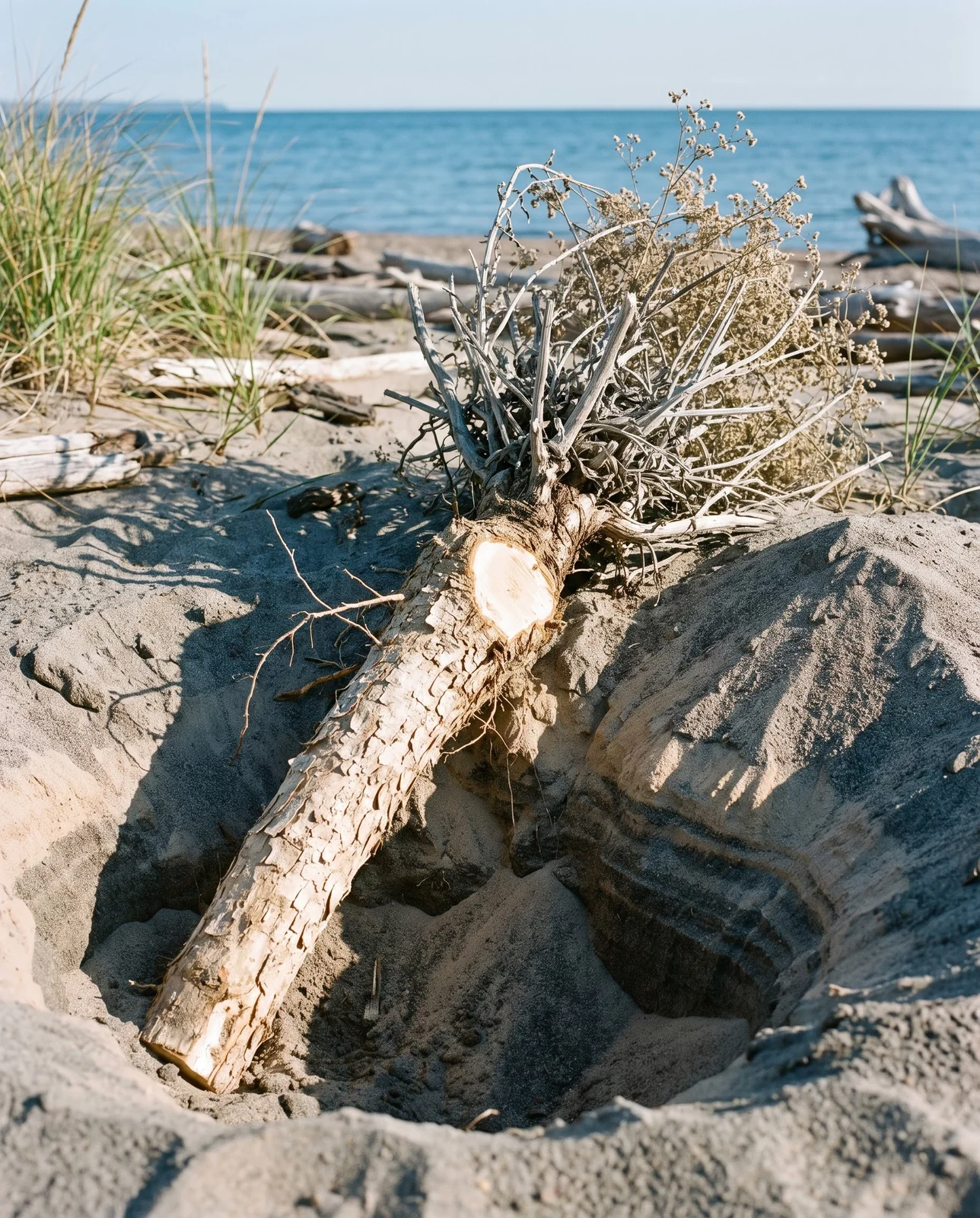
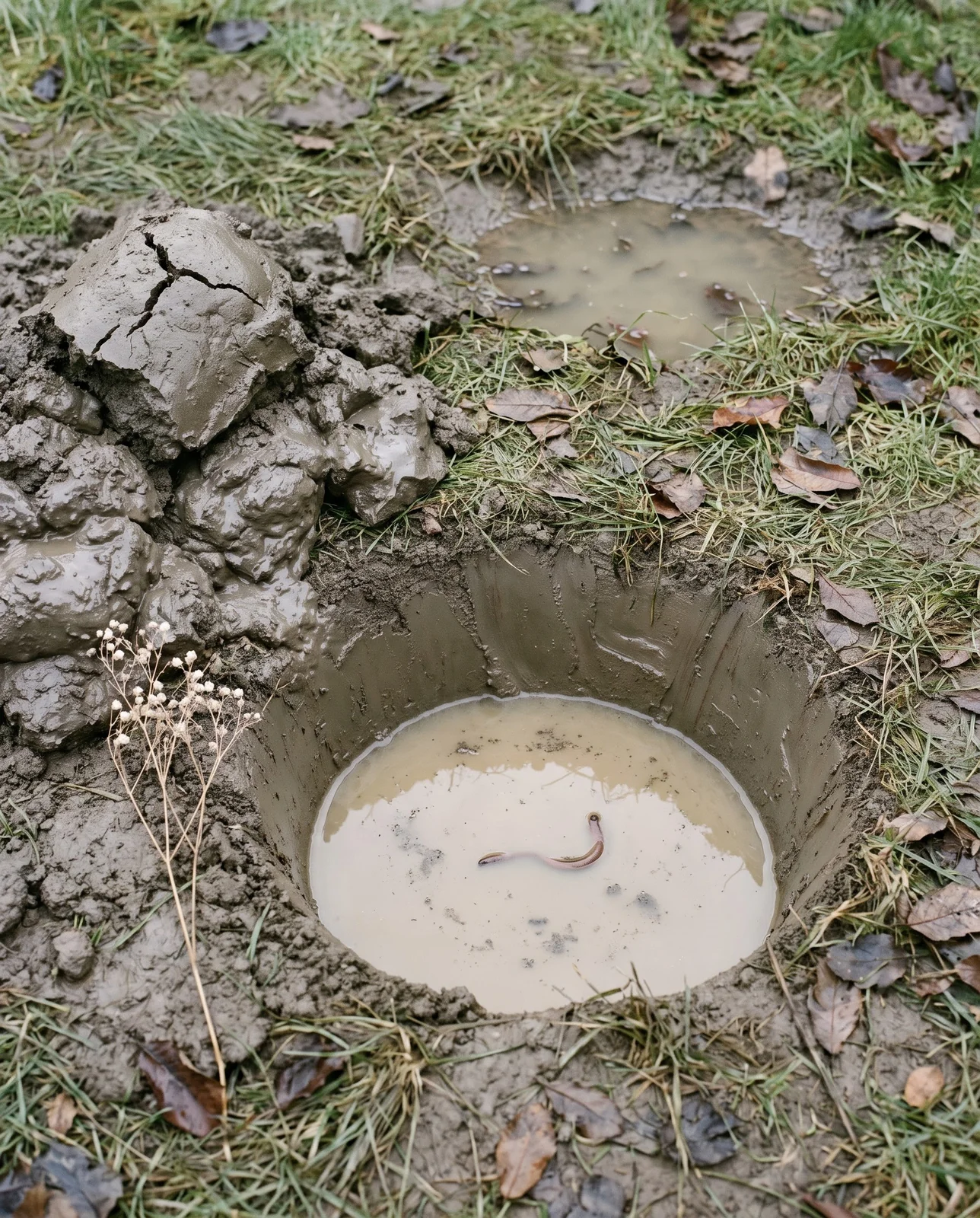
The part that decides how baby's breath is handled sits underground. The taproot is four to seven centimeters thick just below the crown and stays unbranched for roughly the first 60 to 100 centimeters, and it can run 13 feet down. An airy, temporary looking thing above the soil is anchored like a shrub below it. Pulling one out is hard work, and an established plant is best left where it is.
Where to plant baby's breath
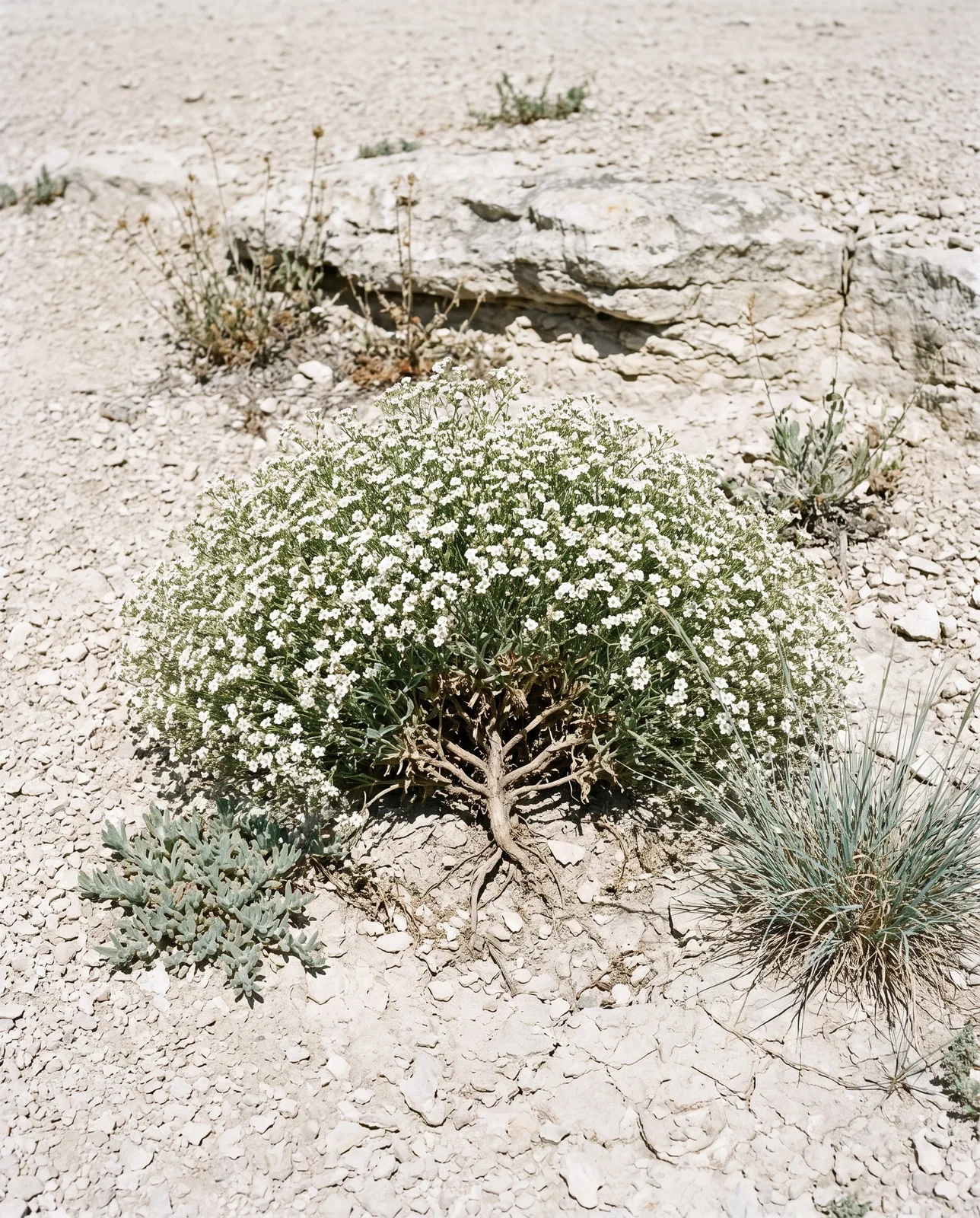
Baby's breath wants full sun and well drained alkaline to neutral soil. It prefers slightly alkaline ground, around pH 7.3 to 7.5, and tolerates 7.0 to 8.0; on acid soil the correction is lime. The ground it colonizes on its own says the same: fields, roadsides, beaches, and open sandy places in soils that are not strongly acidic. A lean gravel bed, a hot slope, a strip along a drive, the bank nobody wants to plant: all of those suit it better than an irrigated border.
Wet ground kills it. Damp or rainy conditions raise the risk of gray mold and Phytophthora root rot, and a bed that holds water after rain leaves one deep root standing in it. The hard conditions are the ones it handles: it resists salt, drought, and damage by deer, and deer tend to avoid it in the garden.
Zones and when to plant baby's breath
The perennial is hardy from zone 3a through 9b, which covers most of the country outside the far north and the subtropical south. 'Bristol Fairy' carries the same range, 3 to 9. The annual sold under the same name sits outside the question, because it finishes its life in a single season.
Bloom on a garden cultivar runs April to August, a long window for a perennial, and shearing after flowering promotes a rebloom that stretches the season without a second sowing. Manchurian baby's breath, a separate perennial species from specialty growers, wants excellent drainage and blooms from mid-summer to frost. Where the plant goes matters more than the week it goes in, because an established plant does not take root disturbance or transplanting.
Annual or perennial
Two species cover most of what is sold under this name, and only the tall one is the perennial in question. Gypsophila paniculata is the herbaceous perennial: it comes back for years and reproduces exclusively by seed. Gypsophila elegans is an annual, shorter, and similar enough to be taken for the same plant. Many of the white flowered plants sold for gardening under the name have been varieties of the annual.
The distinction decides which advice applies, because the weed listings and the dune surveys all name Gypsophila paniculata. Around the Great Lakes, G. scorzonerifolia and G. acutifolia are perennial look-alikes found in the same counties, and G. muralis is a much smaller annual. A label that says only baby's breath settles none of it. A plant that came from a seed packet and finished in one season is the annual. One that came back the next year at about 4 feet with a woody crown is the perennial.
Why baby's breath will not flower
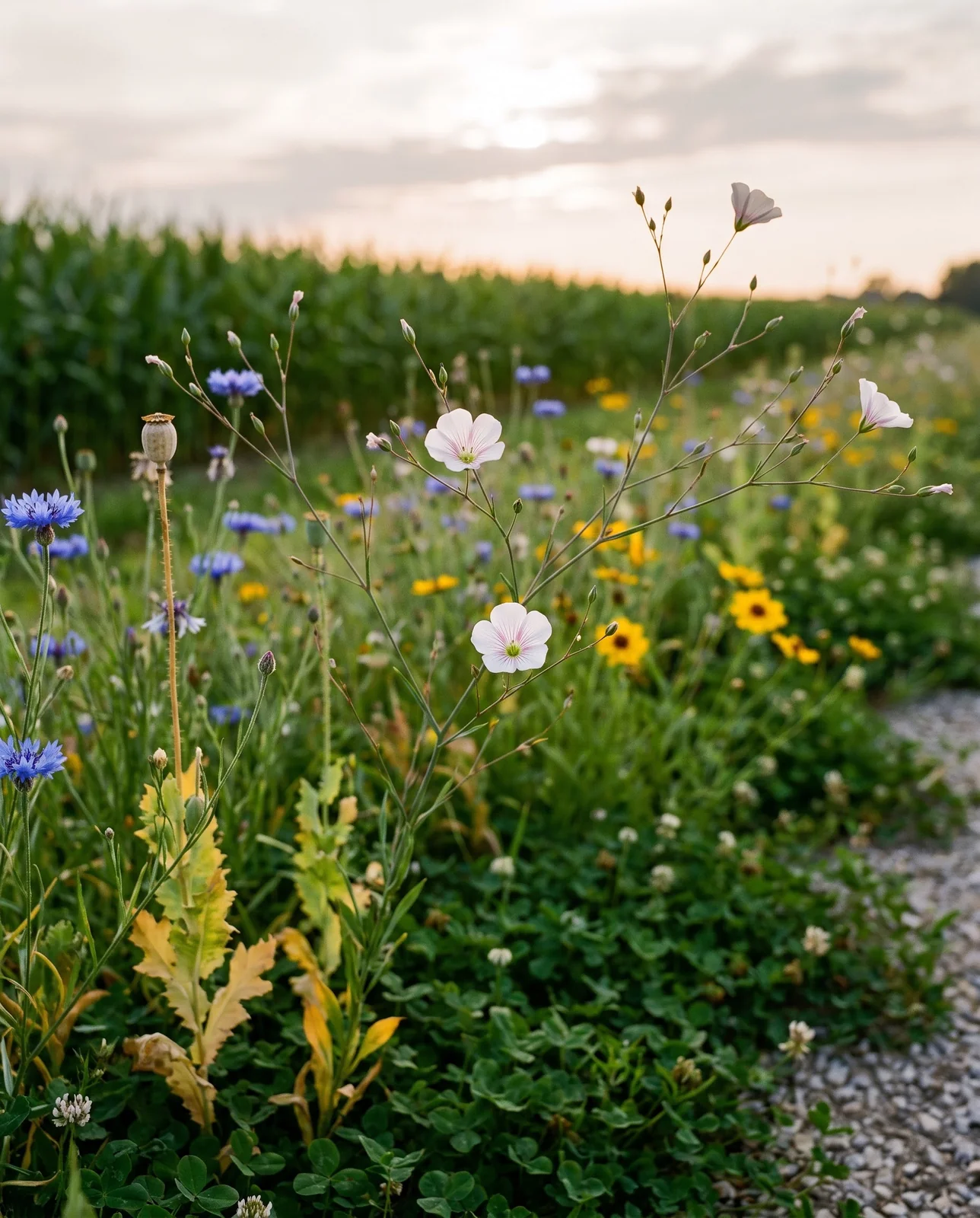
Shade is the first cause to rule out, because baby's breath needs full sun, and a bed that was open when the plant went in is often not open three summers later. Soil is the second. The plant wants alkaline to neutral ground, and acid soil is corrected with lime, so a bed fed toward acidity for years has drifted away from it. Age is the third, and it resolves itself. Plants raised in ornamental horticulture flower within the first year from sowing. Naturalized rangeland plants usually do not become reproductive until their third year. A first summer without flowers is not by itself a fault.
Cutting is the other way to lose a season, and it is easy to do by accident. Many double flowered cultivars are grafted onto single flowered rootstock, and cutting below the graft union takes the cultivar off and leaves the rootstock. Cutting above that line, after the flowers are spent, promotes rebloom. The third failure is damage. An established plant does not take root disturbance or transplanting, and failure to establish after a move is among this plant's most common problems. Feeding it does nothing for the flowers, because the trouble is under the soil.
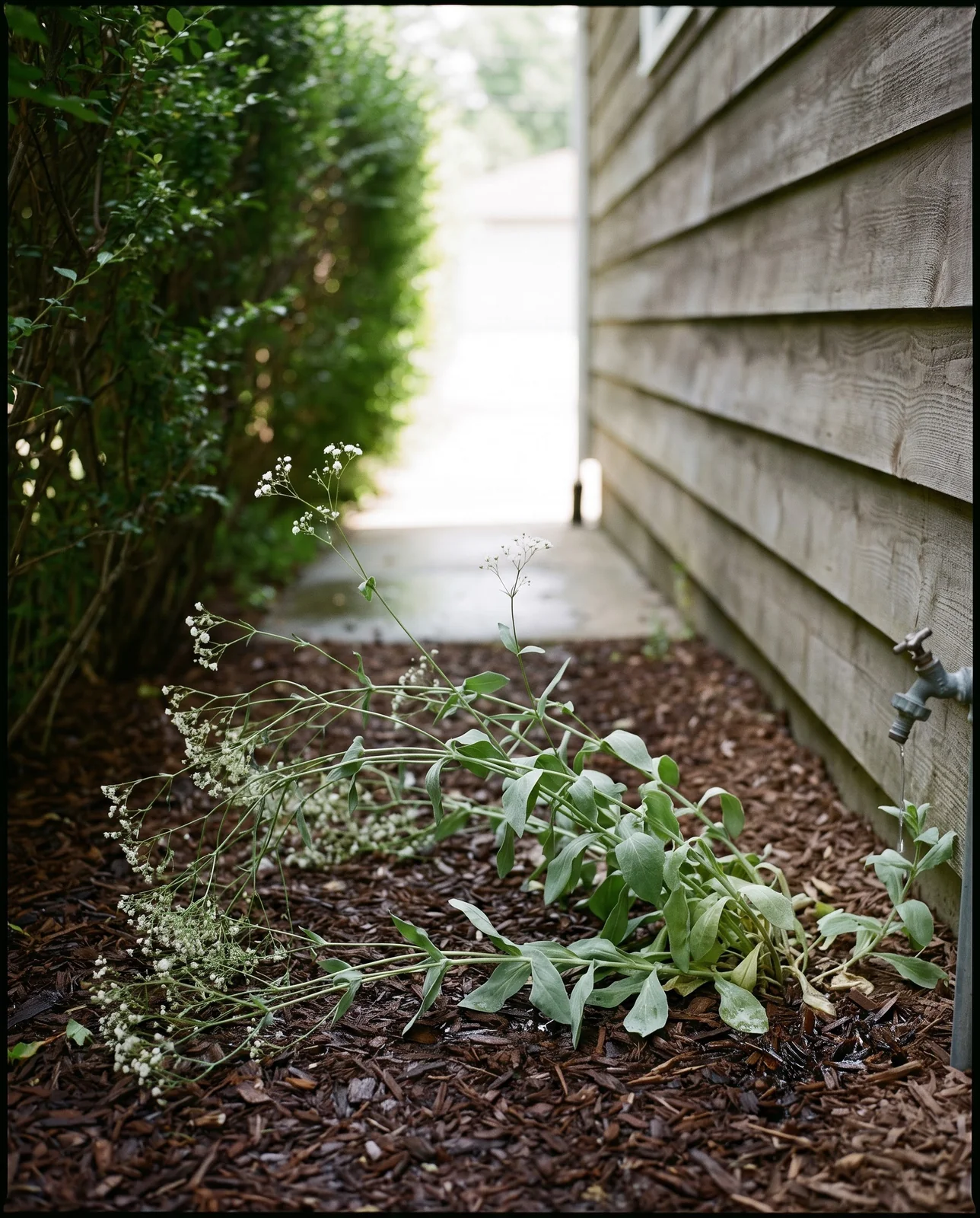
Yellow leaves and sudden collapse
Yellow leaves have three explanations of very different weight, and the first thing to read is how fast the change came. Sudden yellowing, or a plant gone over at the base, is the first sign of rot at the crown and roots, and the answer to that one is in the soil. The slow version is the ordinary one: leaves discolor, the plant loses vigor, and an untreated plant can eventually die of it. The third explanation is aster yellows, a disease leafhoppers carry from plant to plant that no gardener can treat.
Aster yellows is caused by a phytoplasma, and Minnesota Extension states plainly that an infected plant never recovers. Home gardeners cannot cure it, and infected plants are meant to be pulled and destroyed. The classic sign is many thin, weak stems growing close together into a witches' broom. Cutting the affected growth away does not help: the infection is systemic and the symptoms come back. The phytoplasma does not survive in dead plant debris, but it persists in the crown and roots of an infected perennial, so a plant left in the ground keeps feeding the bed. Once a leafhopper is infective, it stays infective for life.
Settle the mild explanation first, because it is the only one with a fix. Ordinary yellowing comes down to nutrient deficiency or overwatering. Rule that in or out before anything drastic happens, because both serious causes end with the plant in a bag. The rest of the bed matters too: the phytoplasma infects over 350 different plants, and asters, marigolds, coreopsis, and sunflowers are among the ornamentals it commonly infects.
Problems, ranked
The failure that takes a whole plant first, then the disease behind the same symptom, then the insect that carries it.
Symptoms: sudden yellowing, or a plant collapsed at the base. Cause: soil pathogens at the crown and roots, the main trouble this plant meets in a garden. Do: nothing rescues a rotted crown, so the planting position is the whole of the prevention.
Symptoms: yellow leaves and stems, stunted growth, and small malformed flowers. Cause: a phytoplasma carried in by leafhoppers. Do: no cure is known, so pull the plant and destroy it.
Symptoms: nothing visible on the insect. Cause: the aster leafhopper is one of 24 species able to transmit the phytoplasma, and typically 2 to 3 percent of a population carries it, occasionally 10 to 15 percent. Do: control is difficult and expensive, so save treatment for high value plants.
Symptoms: a lifted or divided plant that never takes hold, among this plant's most common problems. Cause: the deep taproot does not take disturbance. Do: choose the position once.
A garden problem or a bouquet problem
Where the plant is standing decides which problem you have. A rooted plant that yellows is a soil and disease question: the crown can rot, an infected crown can hold a phytoplasma, and the work happens underground or with a shovel. A cut stem has neither crown nor roots, so it cannot rot at the base and cannot pick up aster yellows on a kitchen table. Cut stem failures run on hours and days, garden failures on seasons.
For a stem in water, the trouble is the air around it. Ethylene makes open flowers wilt and leaves the opening buds small and shut, so a jar beside ripening fruit goes over faster than the same bunch across the room. The trade answers with cold, damp air: 0 to 1 degrees Celsius at 90 percent relative humidity, so the flowers and stems do not dry out. A kitchen cannot copy the cold, but it can copy the direction: keep the vase out of the sun, away from the fruit bowl, in clean water, cut before it goes in.
When to cut, and what to do on arrival
The stage to cut at depends on what happens next. Stems sold within a day, or put into a drying solution straight away, are cut when about 50 percent of the flowers are open. Stems that have to travel or wait are cut at 20 to 30 percent open, because a flower that opens inside a box is a flower nobody sees. The crop responds best to an STS pretreatment, which protects the open florets and the developing buds at once.
On arrival the work is mechanical. Take the cellophane off, cut above a node at a sharp angle, and condition the stems overnight before they are arranged. The cut is made at a 45 degree angle, and the stems go into water with flower food. Give them at least 4 hours to drink before anything is built with them, and read browning, shriveling florets as damage that arrived with the box.
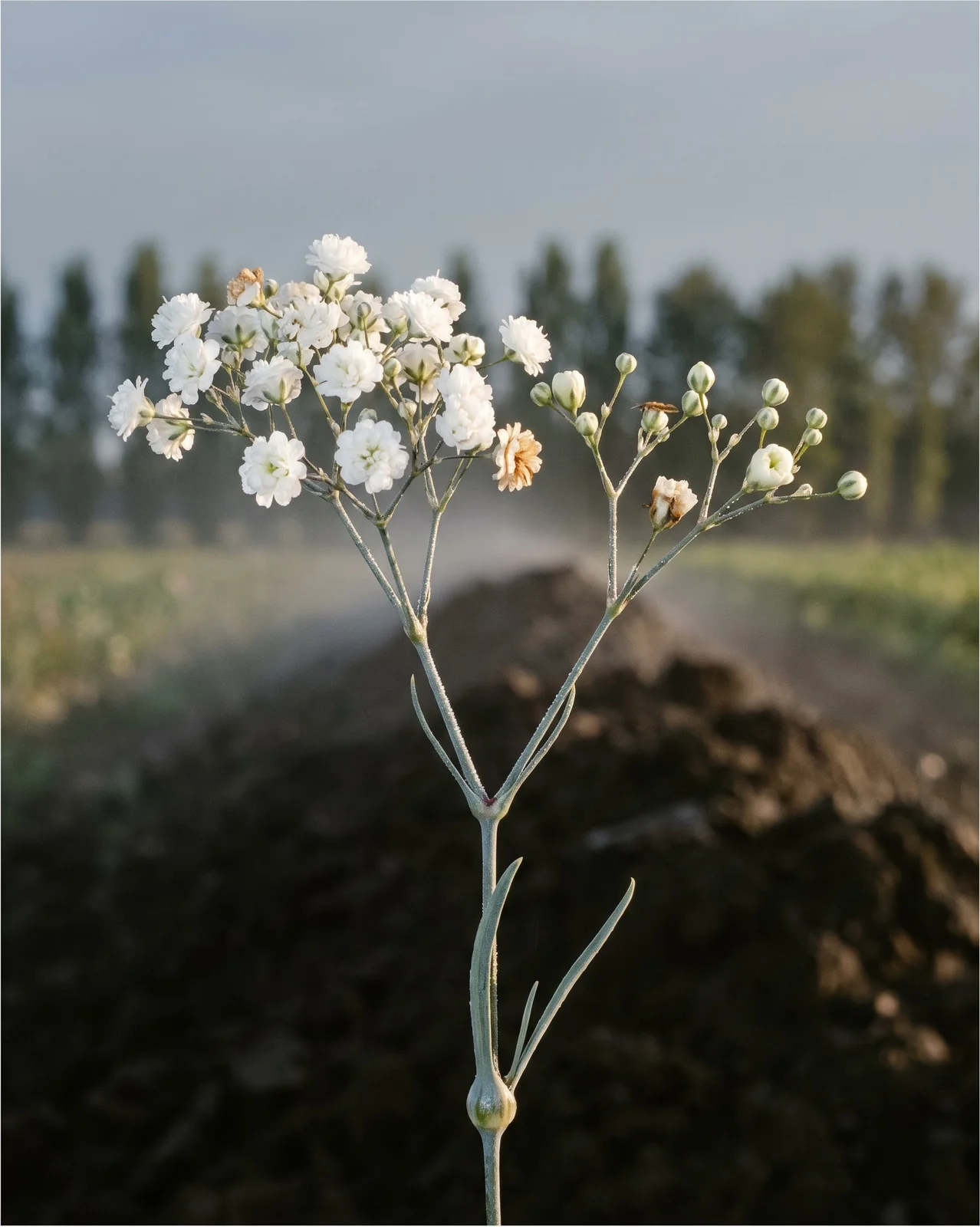
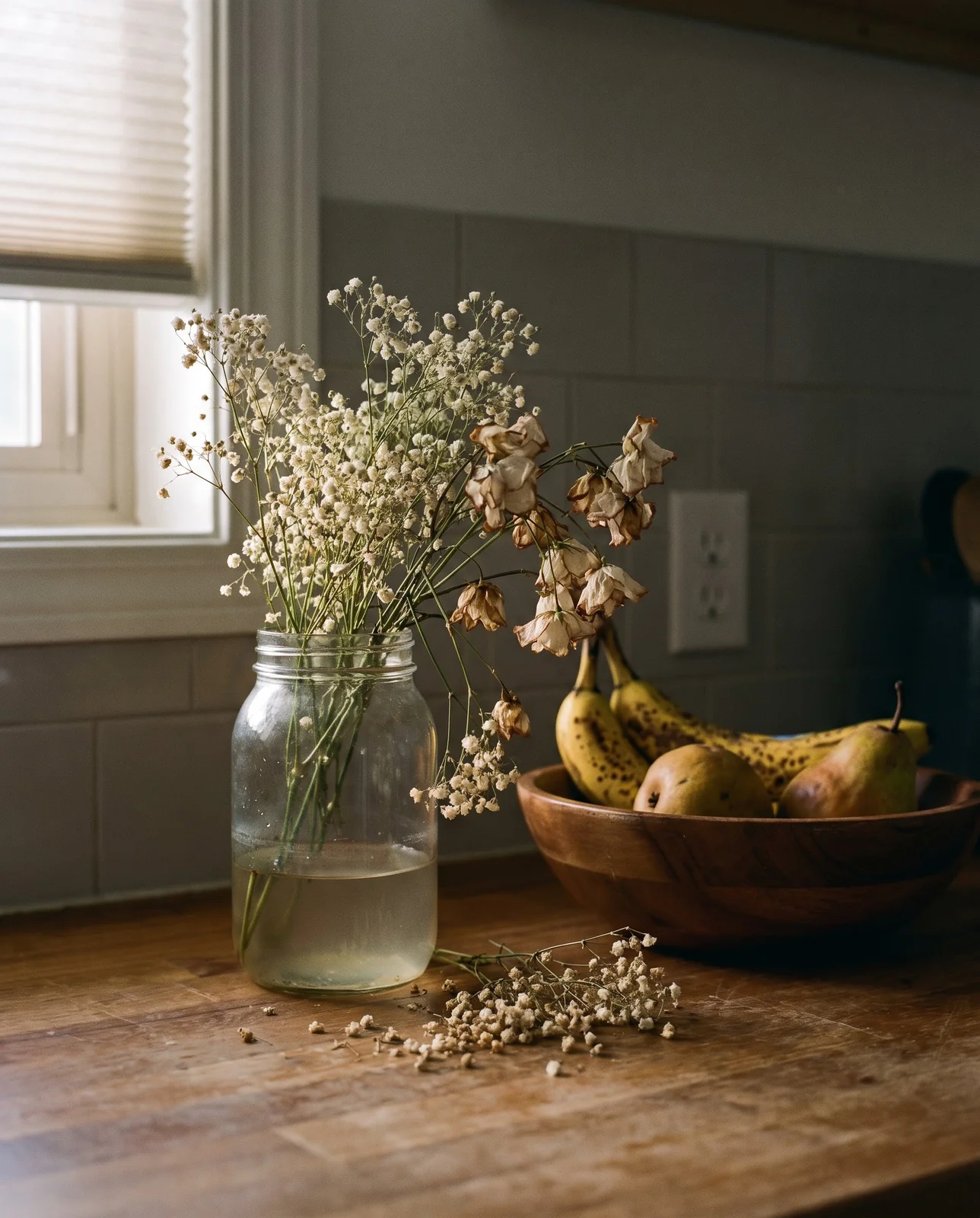
Drying baby's breath
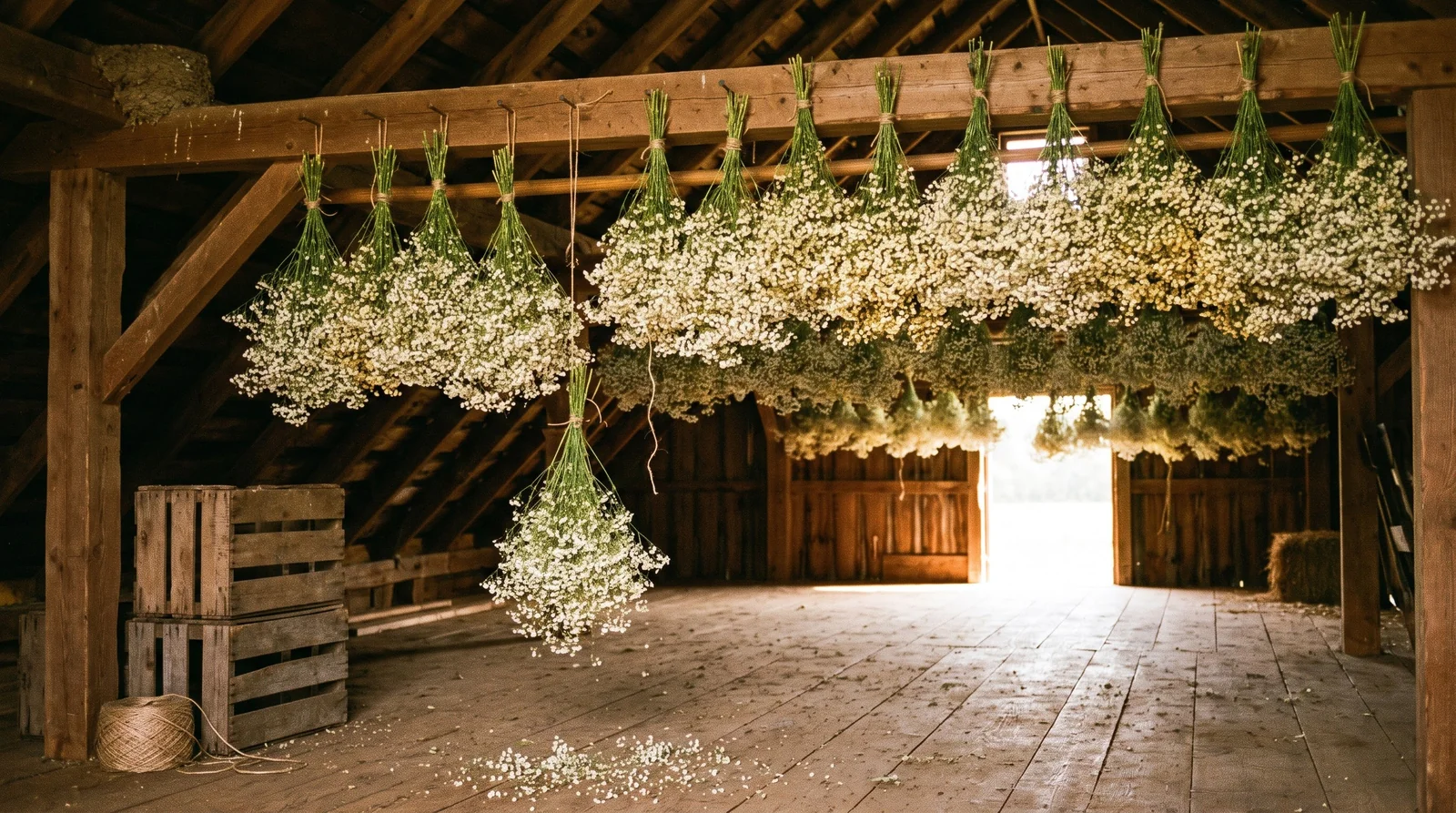
Drying starts at the cut. Stems meant to be dried later, or held more than a day, are taken at 20 to 30 percent open, because a stem cut wide open has no buds left to open as it dries. Hang the bunches upside down in warm, dry air. A glycerine treatment runs one part glycerine to two parts water.
Varieties worth telling apart
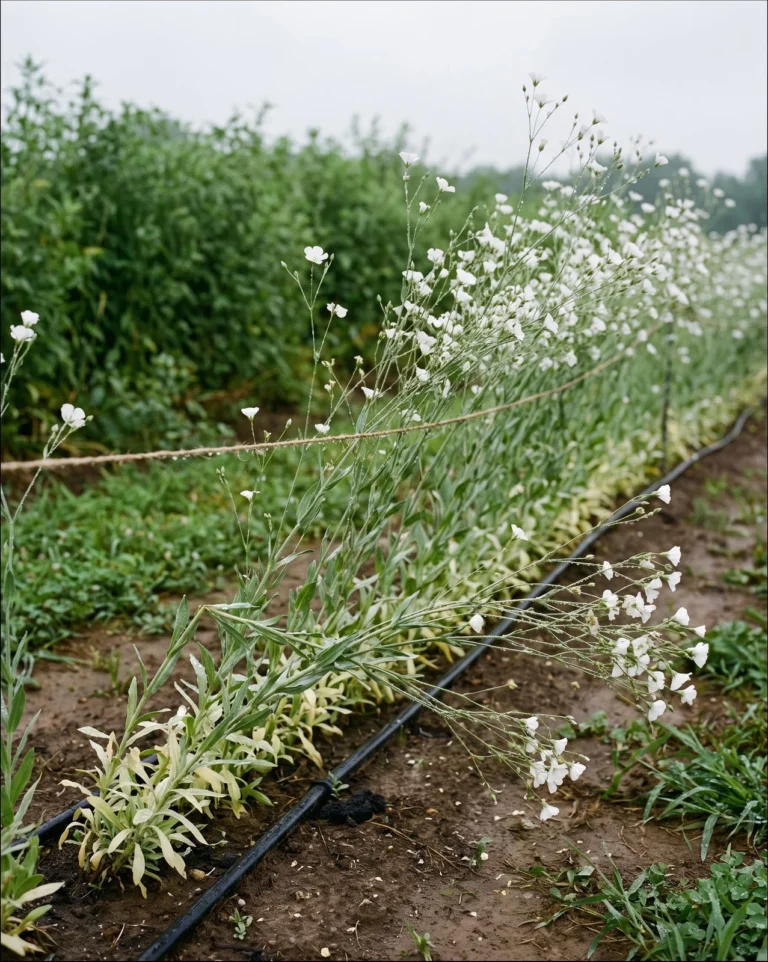
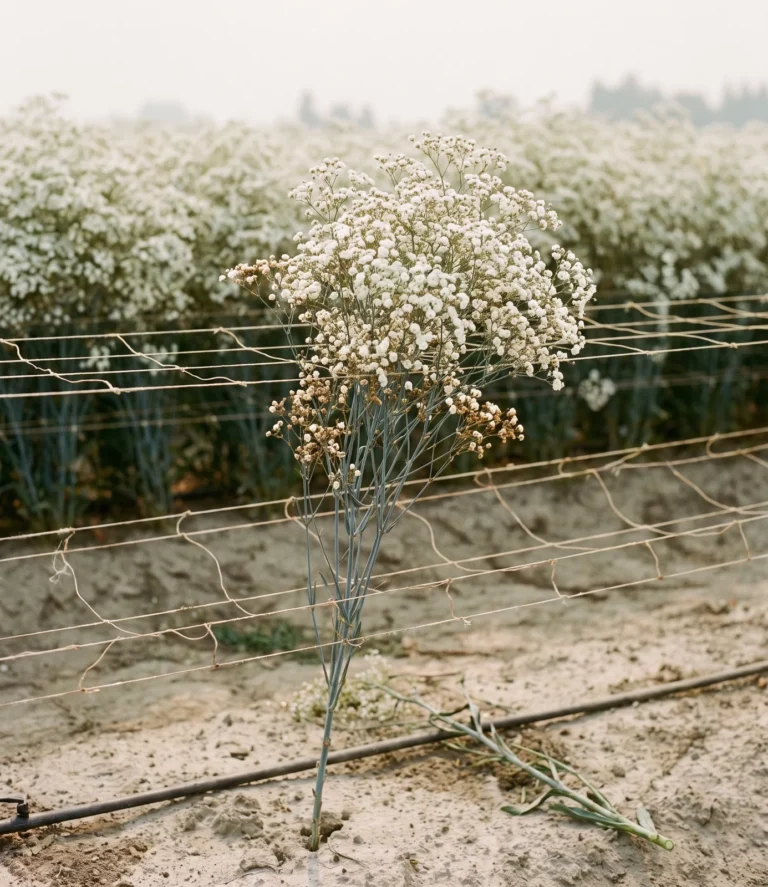
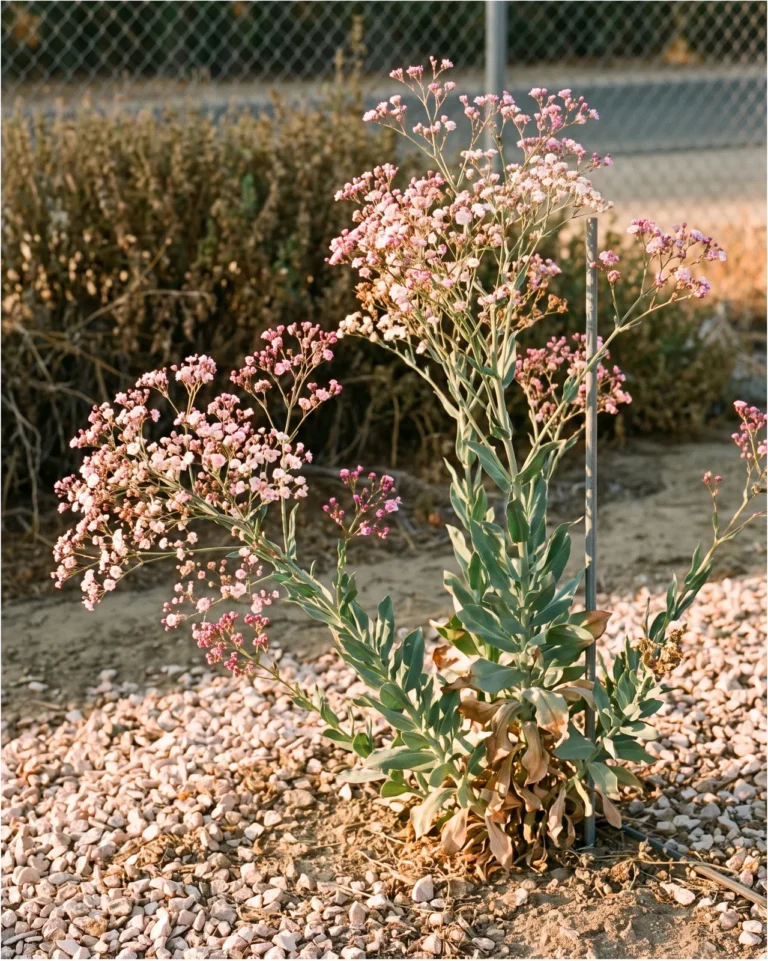
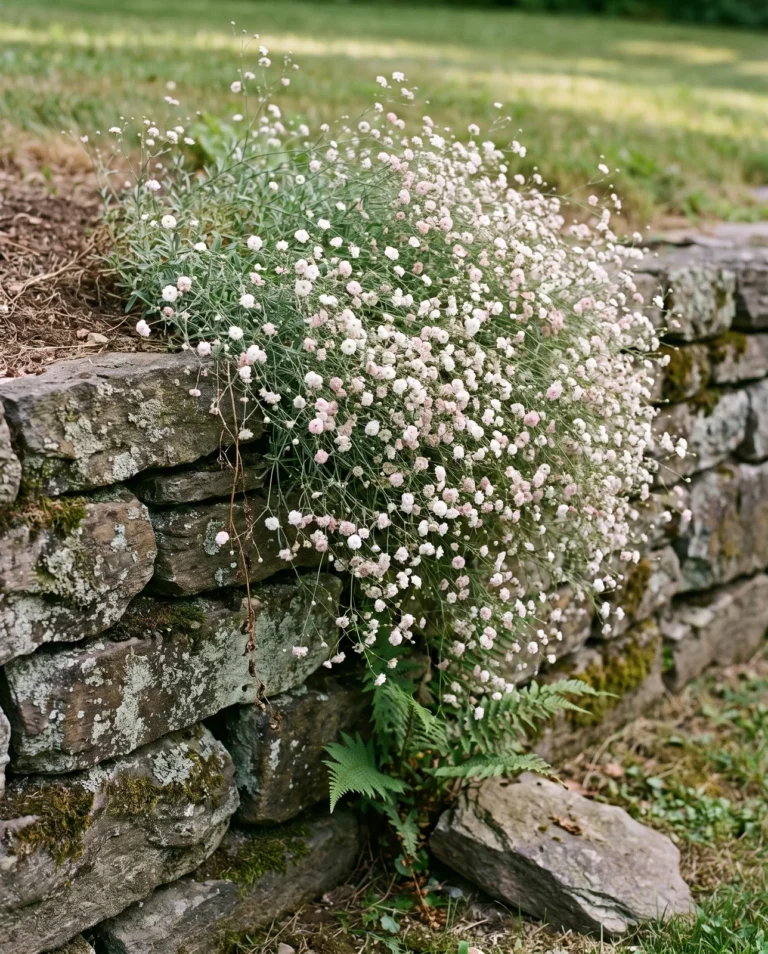
Baby's breath stands too tall for the front of a bed, where sweet alyssum does the low white froth. These are the selections that turn up in American catalogs and cutting rows.
Light
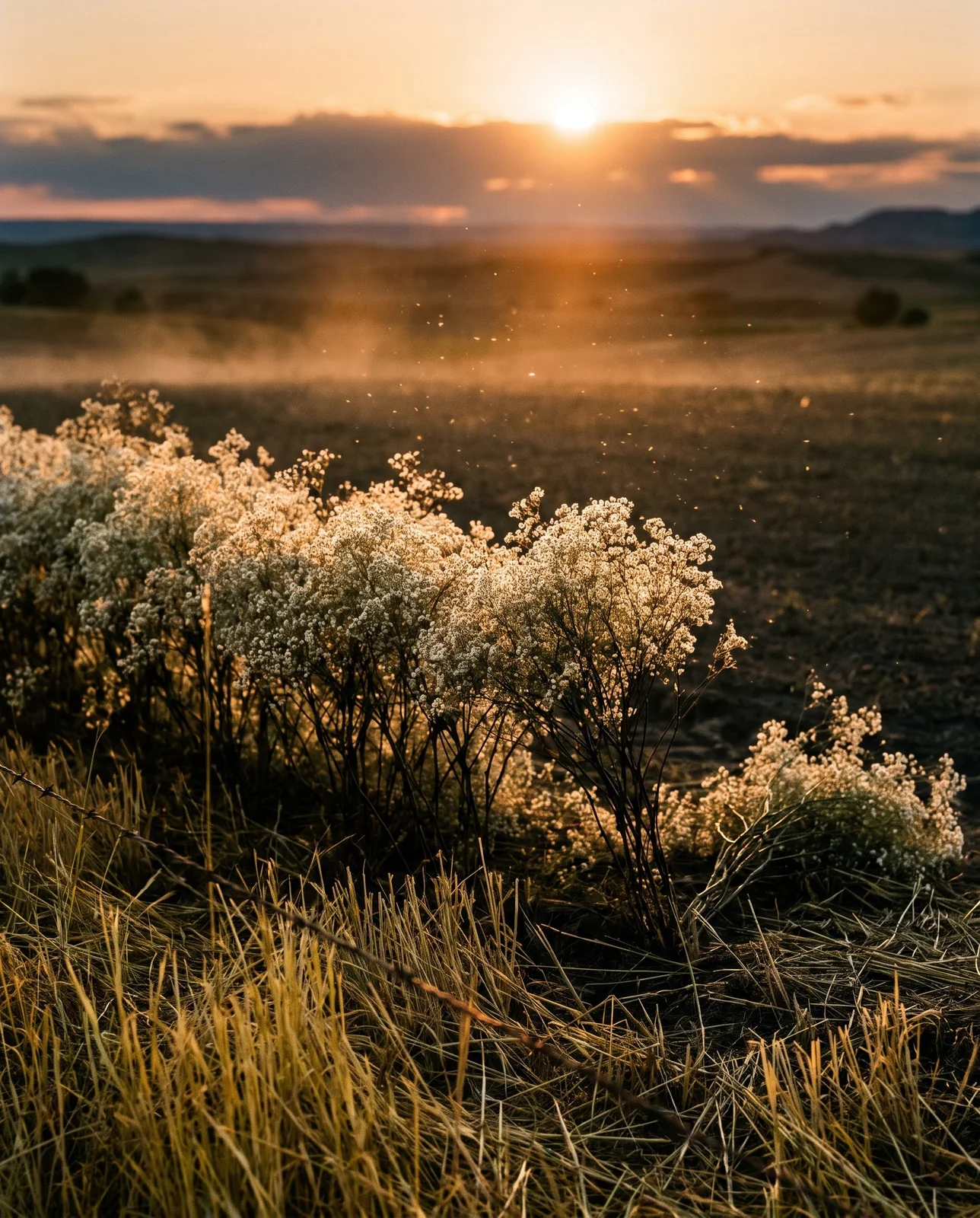
Full sun, and the plant's own choice of ground shows how literally to take that. Baby's breath needs full sun, and the places it settles into on its own are open and unshaded. The requirement flips once the stems are cut. Gypsophila flowers are sensitive to water deficit and to intense sunlight, and they brown and shrivel under that stress, so the vase belongs out of the window the garden plant would have wanted.
Soil, drainage, and water
Drainage decides more here than fertility does. The plant wants sharp drainage and alkaline to neutral ground, so on heavy soil the practical answer is a raised, gritty bed. Feeding is where gardeners overcorrect: yellow leaves get read as hunger, when the first thing to check is soil moisture. An established plant resists drought, and the risk in a watered bed is too much water, not too little.
Propagation, and keeping it in bounds
Seed is the recommended way to propagate baby's breath, and seed is also the whole of its weed problem, so propagation and containment are one subject. New commercial varieties are produced by vegetative propagation in culture and by the selection of clonal variants, and double flowered cultivars are often grafted onto single flowered rootstock, so the base of such a plant is no place to cut into. A seed packet gives you a fertile, seed grown plant.
Containment is one job done at one moment: take the flowers off before the seed sets. Cutting back after flowering promotes rebloom, and the same cut removes the developing seed heads. Minnesota asks gardeners not to pick baby's breath for bouquets at all, since carrying flowering stems around spreads seed. Taking out an established plant is harder, because it regrows from the taproot when the cut is too shallow. Sever the root 4 to 8 inches below the crown, deeper being safer, and lift the crown out with the top.
Myths worth dropping
Four things repeated about baby's breath that do not hold.
The myth: It is a filler with no requirements.
The reality: It needs full sun and well drained alkaline to neutral soil, and once established it does not take root disturbance or transplanting.
The myth: It is an American wildflower.
The reality: It is native to central and eastern Europe and spread across North America as an ornamental that escaped into pasture and rangeland.
The myth: All baby's breath sold today is sterile.
The reality: Peer reviewed work found the flowers of commercial plants sterile, but whether cut flower growers use those varieties is not known.
The myth: Yellow leaves mean the plant is thirsty.
The reality: Watering and feeding are the mild case. The serious ones are rot at the crown and aster yellows, and aster yellows has no known cure.
FAQ
Is baby's breath toxic to cats and dogs?
The only pet toxicity listing under this common name covers the annual Gypsophila elegans, and it rates that plant non-toxic to dogs, cats, and horses. The tall perennial has no listing of its own, and its trouble is with people: repeated handling irritates eyes, nose, sinuses, and skin.
Why is my baby's breath not flowering?
Start with sun, because the plant needs full sun and beds close over as everything around them grows. Then look at what was cut: on a cultivar grafted onto single flowered rootstock, cutting below the graft union takes the cultivar off.
What time of year does baby's breath bloom?
A garden cultivar blooms from April to August. Shearing the plant after flowering promotes a rebloom.
Is perennial baby's breath invasive?
Yes where it has escaped, and the rules differ by state. California and Washington carry it as a noxious weed, and a county can list it where the state has not, as 14 Montana counties do.
Where does baby's breath grow naturally?
It is native to central and eastern Europe, and in North America it turns up in fields, roadsides, beaches, and other open, sandy ground.
How long does a baby's breath plant last?
The perennial comes back for years and reproduces only by seed. It does not take root disturbance or transplanting once established, so it lasts about as long as it is left alone.
Why is it called baby's breath?
The name may come from the scent, which has been described as sour milk, like a baby's spit-up. Malodorous is one of the plant's formal problem tags.
How do you grow baby's breath from cuttings?
Seed is the recommended route for the species. Named commercial varieties come from vegetative propagation in culture and the selection of clonal variants, which is laboratory work.
How long do cut baby's breath stems last?
No room temperature figure exists. In the trade, stems keep up to 3 weeks in a preservative solution at 1 degree Celsius. At home, give them at least 4 hours to hydrate and keep them away from ripening fruit.
Is baby's breath a cheap flower?
It depends which of the three products you mean. Silk stems start around $3.14, live plants and seed around $4.95, and bulk fresh flowers run $33.88 to about $120.
Interesting tips
- Verbena, salvia, celosia, and nicotiana are sometimes called resistant or tolerant to aster yellows, though the plants actually reported as hosts have not confirmed it.
- Buds harvested at only 5 percent open still reach excellent quality in a bud opening solution of 200 ppm Physan-20 and 5 to 10 percent sucrose, so a bunch that arrives green can end white on the table.
- Root development in baby's breath is completely inhibited by the bacterium Pantoea agglomerans, a gall former and a standing problem for the floral industry, including the gypsophila industry in Israel.
Related Guides & Flowers

White flowers
The rest of the white palette, from the ones that scent a garden to the ones that only fill a vase.
Yarrow
Another flat topped perennial for dry, open, unimproved ground, and another one that dries on a hook.
Lavender
Full sun, sharp drainage and lean soil again, in a plant grown for the scent this one does not have.
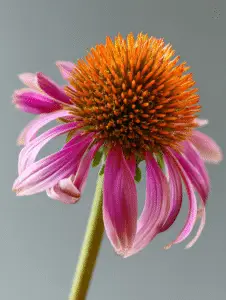
Coneflower
A summer perennial that catches the same incurable disease, and gets pulled out for the same reason.
Enjoying our flower guides? Add YourFlowersGuide as a preferred source on Google. It helps more readers find us.
Add to Preferred Sources