
The word chamomile covers two different plants
Two plants are sold as chamomile. German chamomile, Matricaria chamomilla, is a hardy annual that stands upright to about 40cm (16in) and dies once it has set seed. Roman chamomile, Chamaemelum nobile, is a hardy perennial that lies down instead, a low mat of aromatic foliage on decumbent stems over creeping roots. Both carry white rays around a yellow center, and both smell strongly when bruised. One is sown every spring or reseeds itself; the other is planted once and becomes the chamomile lawn.
Read the botanical name on the packet, because the word on the front settles nothing. Even the published common names for Roman chamomile include German chamomile and corn chamomile. The split decides the calendar: a late sowing costs the annual its whole year, and a plant browning off in late summer has finished on schedule.
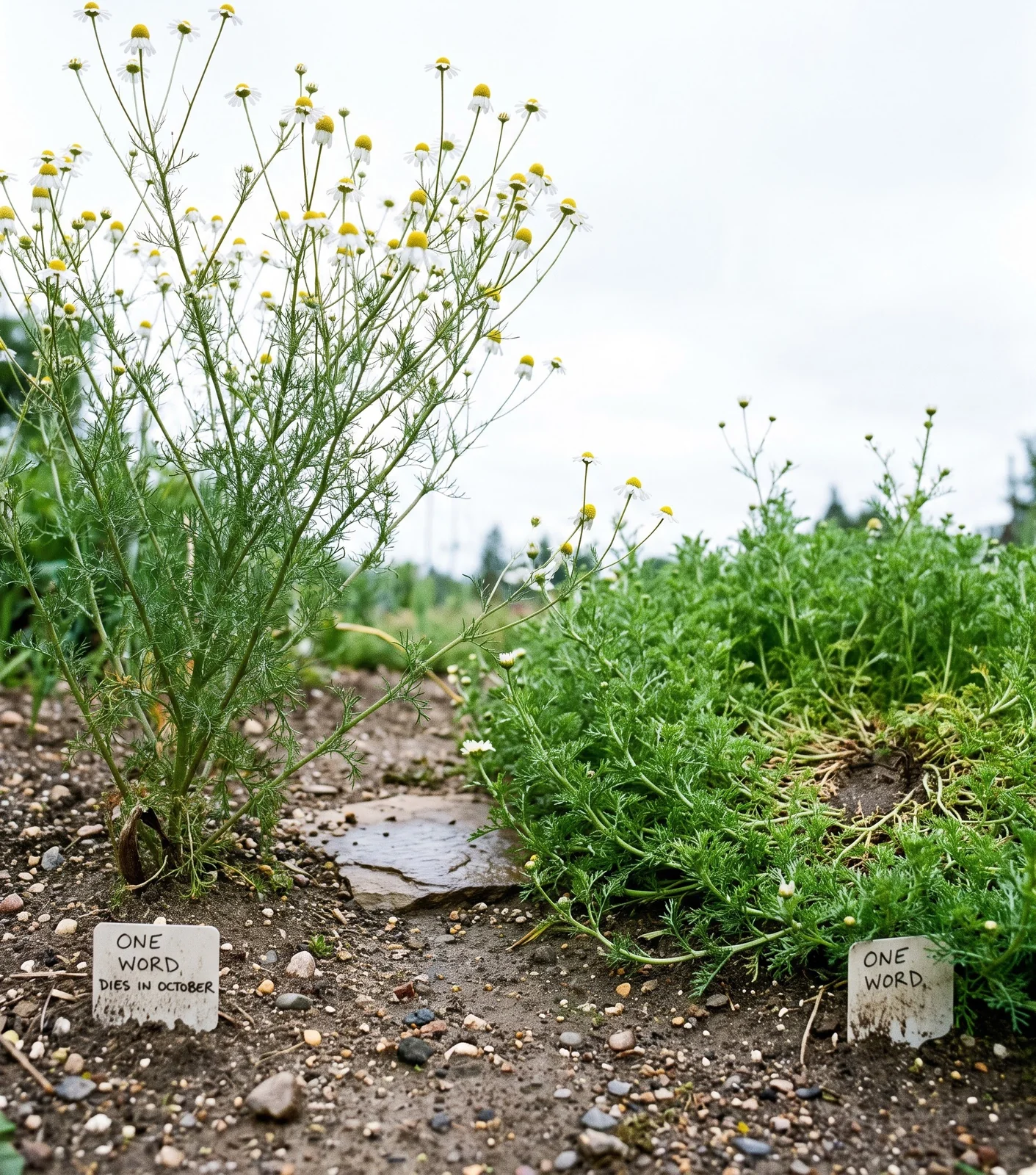
German or Roman, side by side
Five checks separate the two plants, and the last settles it when the flowers look identical.

The daisies that are not chamomile
Two checks sort the white daisies called chamomile: crush and smell, then cut a head in half. The whole plant gives off its odor when crushed, at any stage. German chamomile is hollow inside with no chaffy scales, while scaled, solid, conical heads belong to the Anthemis group. The same cut separates the garden pair: solid in Roman, hollow in German. A daisy that fails both checks belongs elsewhere in the daisy family.
Feverfew borrows chamomile's names, Wild Chamomile among them, mounding 1 to 3 feet tall, green and fern-like, and self-sowing hard enough to turn aggressive. Oxeye daisy spreads from rhizomes and weeds turf and roadsides, about a foot tall, with toothed, undivided foliage where mayweed chamomile is finely cut. Mayweed and corn chamomile are both major agricultural weeds of the United States. Mayweed has nearly hairless stems 4 to 24 inches tall and finely divided yellow-green leaves, and answers to stinking chamomile and dog fennel. How badly mayweed stinks is disputed, so sort by scent and decide by the cut head. Pineappleweed ends it: no white rays, and a smell of pineapple.
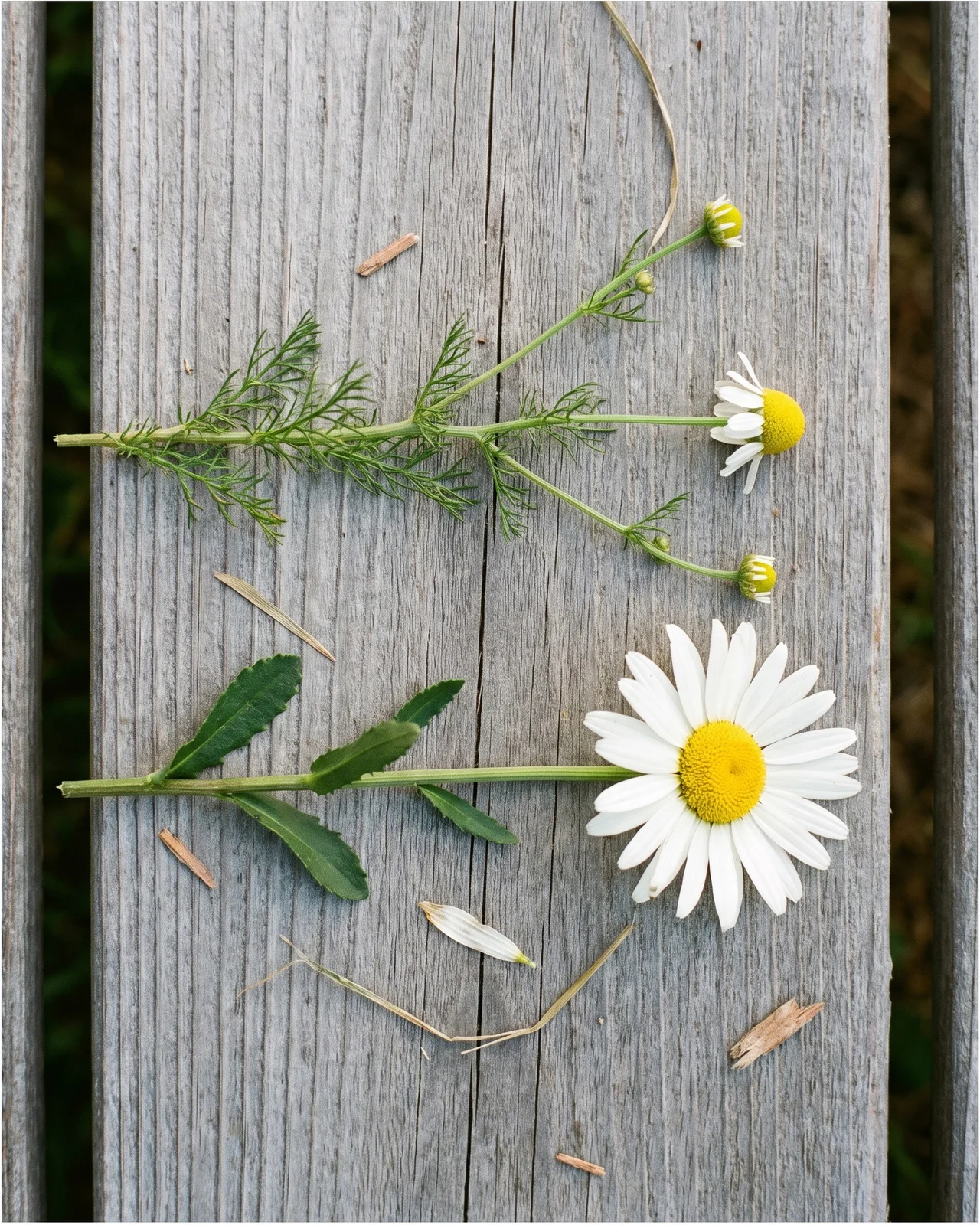
What chamomile is grown for
Chamomile earns its space three ways: as a low aromatic cover, as a plant bees work, and as a crop of dried flower heads. The cover is the perennial, set 6 to 12 inches apart where it stands in for lawn, a low evergreen mat that takes only minimal foot traffic. Both species pull insects, the annual with pollinator-friendly flowers and the perennial as a bee plant.
The tea belongs to the annual. German chamomile fills most packaged chamomile tea and goes into tea far more often than the perennial, which tastes more bitter. Snip the head alone near full bloom and use it fresh or dried; dried heads keep up to a year.
What chamomile looks like
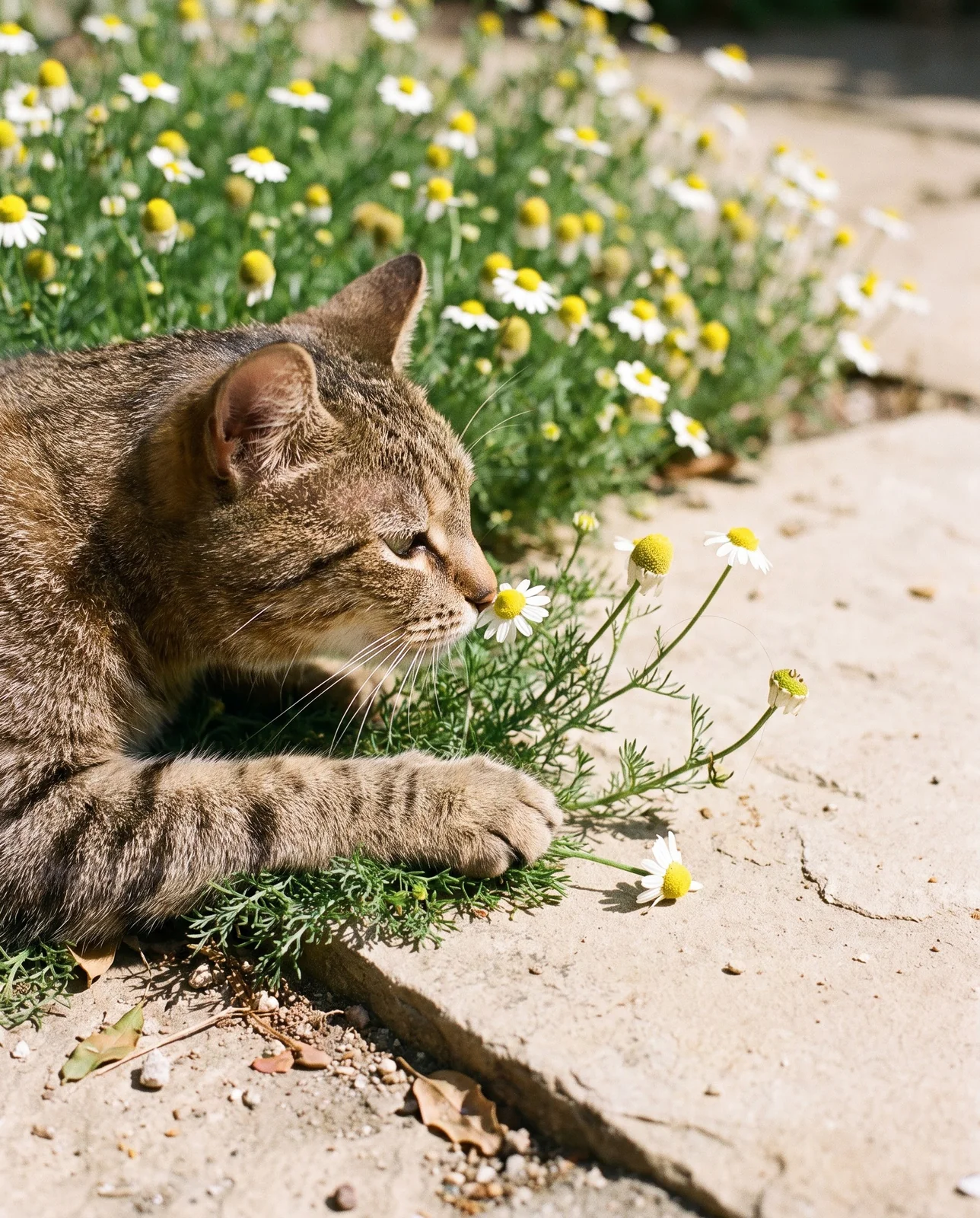
German chamomile reads as an open, almost transparent plant. It shoots up into erect, branched stems to 2 feet, thinly clothed in sparse leaves up to 3 inches long. The heads are 1 to 2 inches across, 10 to 20 white rays around a domed yellow disk, each on a long bare stalk. Crush any part and the scent is strong, though the leaves taste bitter.
Roman chamomile makes a different shape. Finely cut green leaves lie about 4 inches deep in a mat, with flowers held singly on stems about 10 inches tall, over an evergreen cover that runs to about 12 inches wide. The apple scent belongs to this one, released when you tread on the mat. Before either plant flowers the ferny foliage is the trap, and yarrow, rosemary and thyme fill the same garden corner as Roman chamomile.
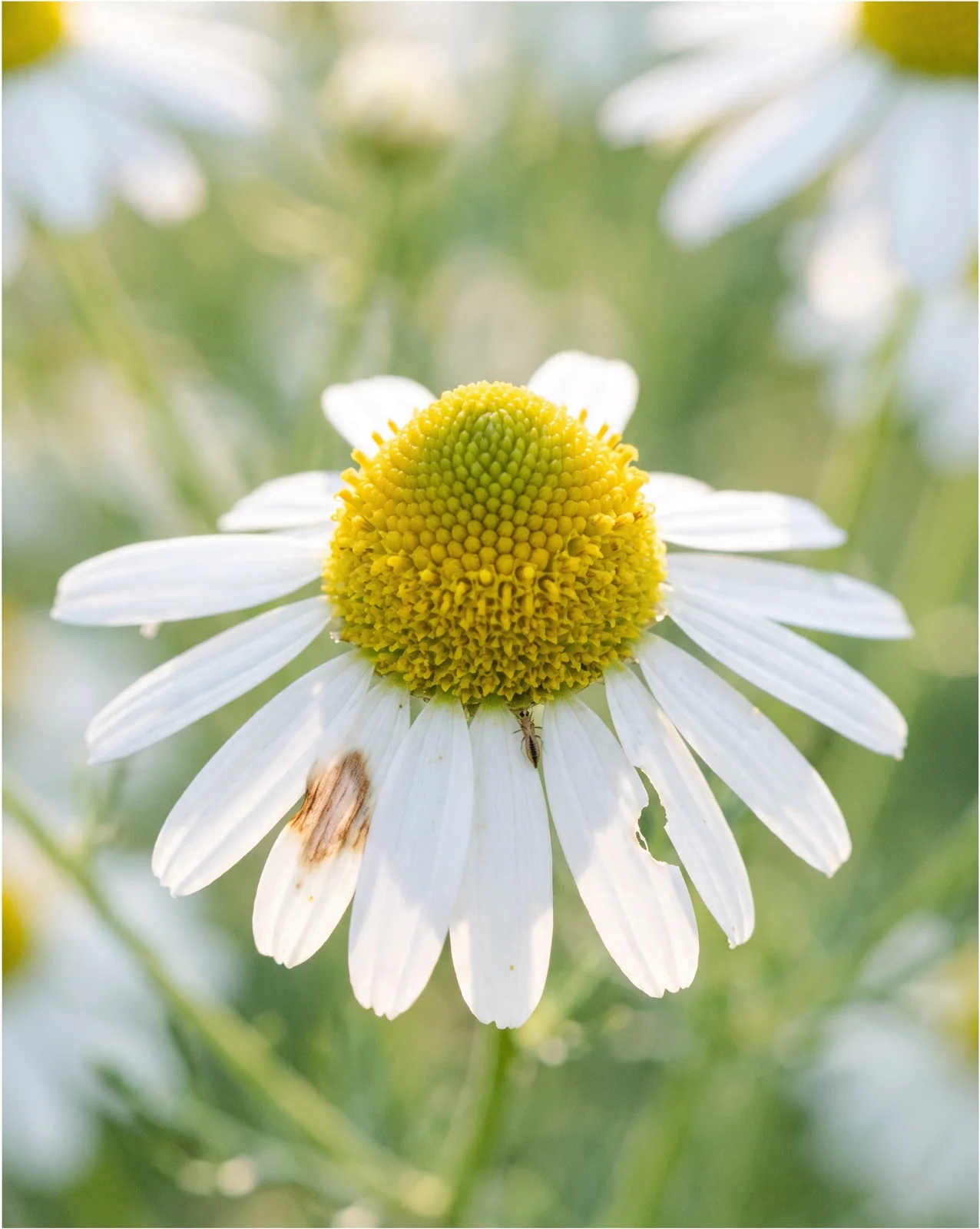
Keep it poor and sunny
Chamomile wants lean, free-draining ground and all the sun it can get. Give it at least 6 to 8 hours of direct sun a day. Roman chamomile grows on any light, well-drained soil in full sun and stays pest-free and disease-free there, and it flowers well unfed, even in poor soil. German chamomile does well in poor soils on little fertilizer. Feeding works against it: rich soil gives the perennial lush leaf growth and no flowers.
Water young plants regularly until they are well rooted, then leave them alone except in long dry spells, and do not overwater. The annual is shallow-rooted, so keep the upper level of the soil moist but never wet. Waterlogging rots plants, especially in winter, and a dry summer is the failure at the other end.

Sowing the seed on the surface
Chamomile seed needs light to germinate, so scatter it thinly on the surface and leave it uncovered. That one instruction is what costs whole trays. Press the seed in without burying it, and in warm conditions germination generally follows inside a week; seed sown outdoors in early spring stays uncovered too. Some seed packets print a planting depth of a quarter inch, which contradicts every horticultural source.
An indoor start has narrow rules. Keep flats alternating between 68F and 86F until germination. Move seedlings at 1 to 2 inches tall with 3 to 4 true leaves, because older ones transplant badly. Outdoors, seed goes onto warm soil from mid-spring, uncovered, and seedlings are thinned to 15cm (6in) apart. Slugs, snails and aphids may all go for the soft young shoots. Flowering can begin ten weeks from sowing, though it can also take 90 or more days.
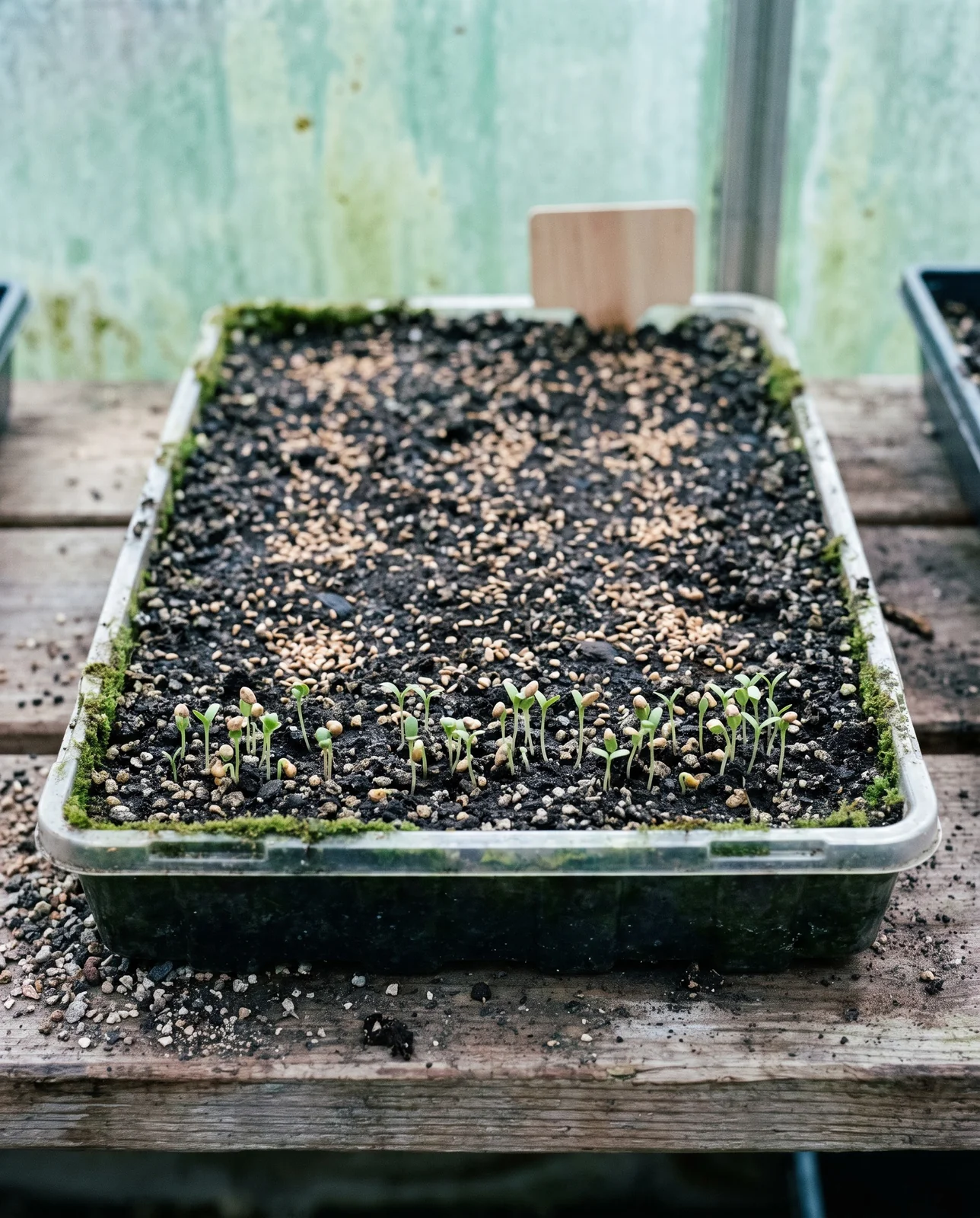
When to plant, counted from your last frost
The planting date is counted from your last frost, so it slides by weeks across the country. Sow straight into the garden in fall, or shortly before your average last frost date, or start indoors 6 to 8 weeks before it and plant out after the frost. In the coldest zones that falls near May 15 for sowing and May 30 for transplants. Space plants 6 to 18 inches apart depending on the variety, or thin seedlings sown in place to 15cm (6in).
Temperature has a narrower answer than it looks. The only published rule is a threshold for setting plants out: soil of at least 45F (7C) for the perennial, and warm soil from mid-spring for sowing. Neither number kills either plant, and seed sown in fall simply copies what the plant does by itself.
Zones for a perennial and an annual
One of these plants has a hardiness rating and the other a growing range. Roman chamomile is the perennial, so its zones describe what it survives: 4 to 9, printed elsewhere as 4a to 9b, with a narrower 5 to 8 also in print. That single zone at the cold end decides whether a mat comes through winter where it stands.
German chamomile is where the numbers get slippery, because it dies off once it has produced seeds. Zones of roughly 2 to 8 appear for it, and it is often sold with no number at all, labeled simply Annual. That label fits: a zone on a plant that finishes inside one season says where it grows through a summer and says nothing about winter. Read the perennial's number as survival and the annual's as a range.

Why chamomile will not flower
A chamomile in full green leaf and carrying no flowers has one of two causes: too little sun, or ground too rich. The plant wants at least 6 to 8 hours of direct sun a day. Soil is the second cause, and gardeners make it themselves. Rich ground gives the perennial lush leaf growth and no flowers, on a plant that flowers well unfed, even in poor soil.
Heat and timing explain the rest. Roman chamomile does best in a cool climate and will not take hot, dry weather, so a stall through a hot spell is normal. The annual carries heads until its seed ripens in late summer, or until frost if you keep picking them off, so a late sowing runs out of weeks: flowering can begin ten weeks from sowing, and can take 90 or more days. One claim travels with this question, that chamomile needs a set stretch of darkness each night. Nobody documents it, and every documented cause points toward more light and leaner ground.
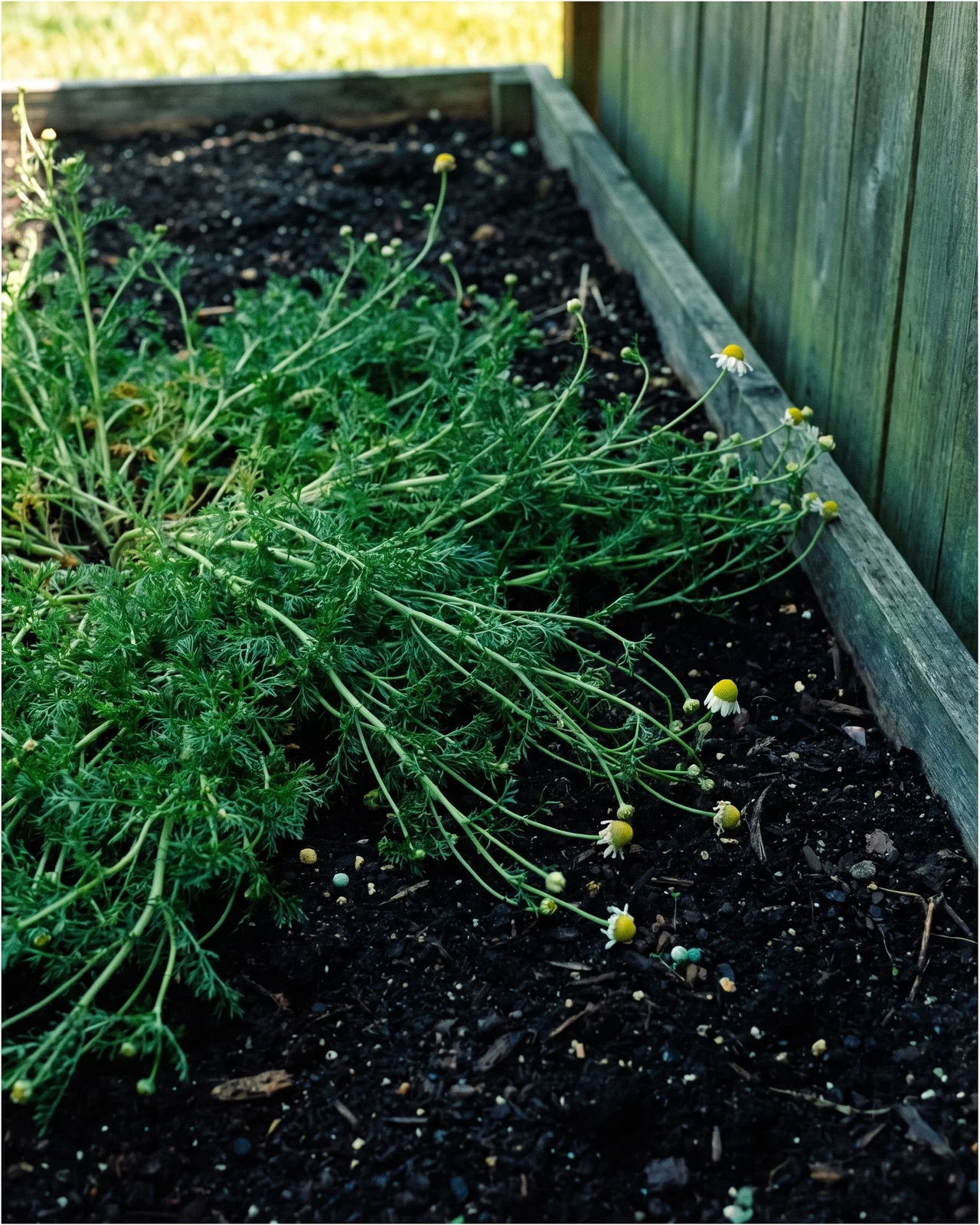
Work down the list when it will not bloom
Five checks in order, cheapest first, before anything is bought or poured on.
Yellow leaves and the two opposite causes
Yellow leaves have three explanations, and two of them are opposites. Waterlogging rots plants, especially in winter, and the same plant dislikes drying out in summer, so a pot that never drained looks like a pot that went dry. The leaf does not tell you which. The soil does. Check containers daily and water only enough to keep the compost evenly moist. The annual is shallow-rooted, so the answer sits in the upper level of the soil, moist and never wet.
The third case is not a problem. German chamomile dies off once it has produced seeds, so a bed yellowing in late summer after flowering has finished its year on schedule. Pull the spent plants; whatever seed they dropped comes up next spring.
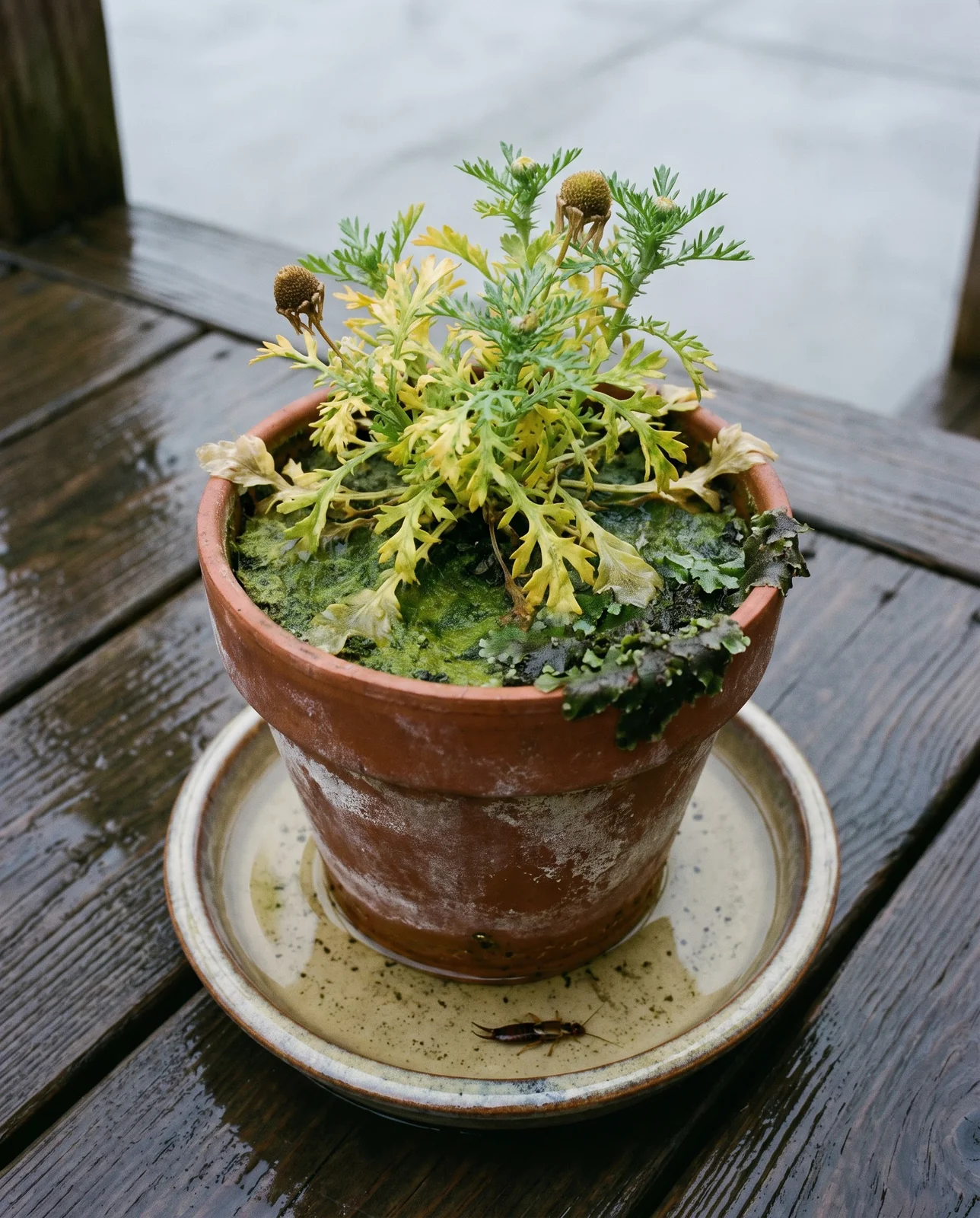
What goes wrong, in order
The pest list is short. Water tops it, because the same plant rots in wet ground and dislikes drying out in summer.
Symptoms: plants collapse and rot after waterlogging, worst over winter. Management: free-draining soil in full sun, and no overwatering.
Symptoms: the same yellowing from the opposite cause, faster in pots. Management: water young plants until well rooted, then only in long dry spells.
Symptoms: aphids gather on the soft young shoots. Management: they are the annual's one regular pest; the perennial stays pest-free on light, well-drained soil in full sun.
Symptoms: slugs and snails may be drawn to the soft young shoots. Management: thin to 15cm (6in) once seedlings can be handled, and keep the bed clear while they are small.
Symptoms: common chamomile opens out and thins at the base with age. Management: clip it back several times a season to keep it compact and bushy.
The chamomile lawn, and what it asks for
A chamomile lawn is a Roman chamomile lawn, and in practice it is one named plant. 'Treneague' is low, spreading and non-flowering, 5 to 10cm (2 to 4in) high with a spread of 45cm (18in), so there is nothing on it to mow. The species and its flowering cultivars need their flowers trimmed off assiduously or dead patches open. It sells as plants and never as seed, so count the cost in plants before clearing ground.
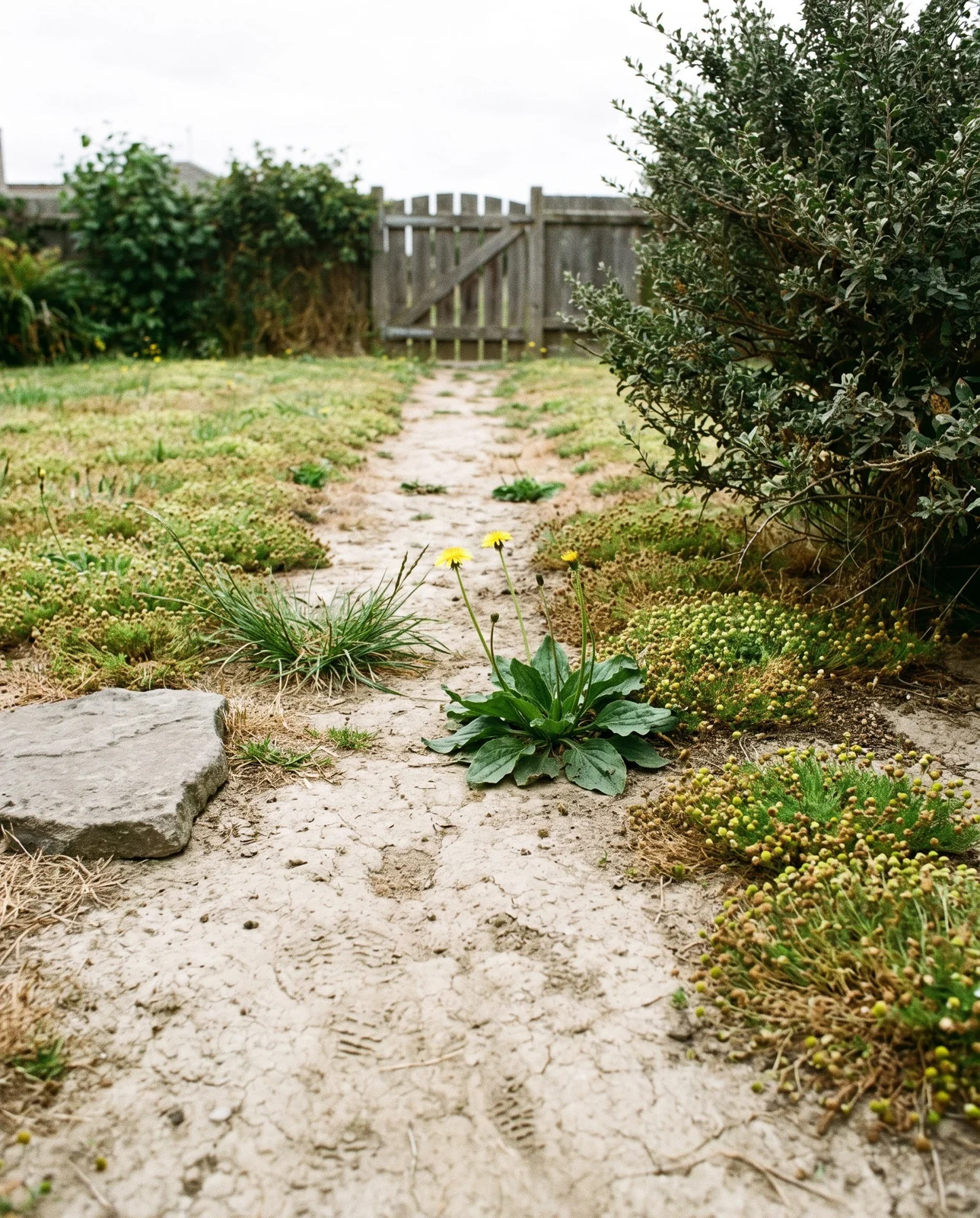
Set young plants 4 to 8 inches apart in soil kept moist. Closer spacing covers faster and costs more, at about 100 plants per square meter. Keep off a new lawn for at least 12 weeks and hold traffic to a minimum through the first year, with stepping stones where you will walk often. Weed by hand: low-growing chamomile is quickly swamped, and selective lawn weedkillers cannot be used on it. A settled mat is tough underfoot and sold as foot-traffic tolerant, but as a lawn substitute it takes only minimal walking and goes patchy where feet land often. Growth can also look sparse after a cold, wet winter.

Between pavers, and in a pot
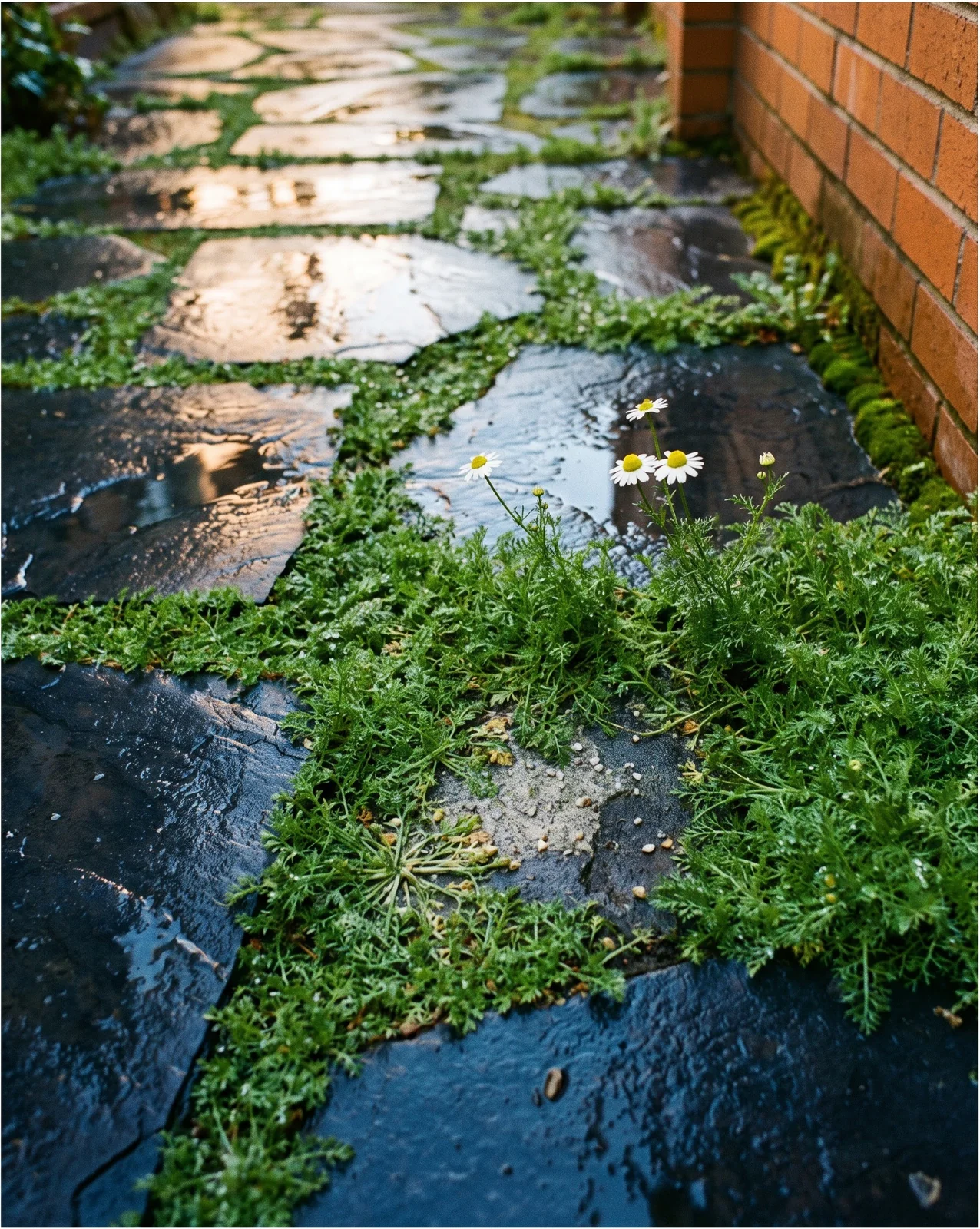
The gap between paving slabs is a job for the creeping perennial; the upright annual is no use there. Give Roman chamomile 2 to 4 inches of space, part sun to full sun, and well-drained soil from moist to dry. The mat runs to about 12 inches wide on its own stems. The limit is the lawn's limit: only occasional light traffic, and patches where feet land often. A path crossed every day wants sedum instead.
A container asks for width and drainage first. Give the annual a pot at least 12 inches across with good drainage, in a south-facing window or anywhere with at least 4 hours of sun. Pots dry faster than open ground, so check daily and keep the compost evenly moist. Pinch the tips at about 6 inches for a bushier habit.
Picking and drying the flowers
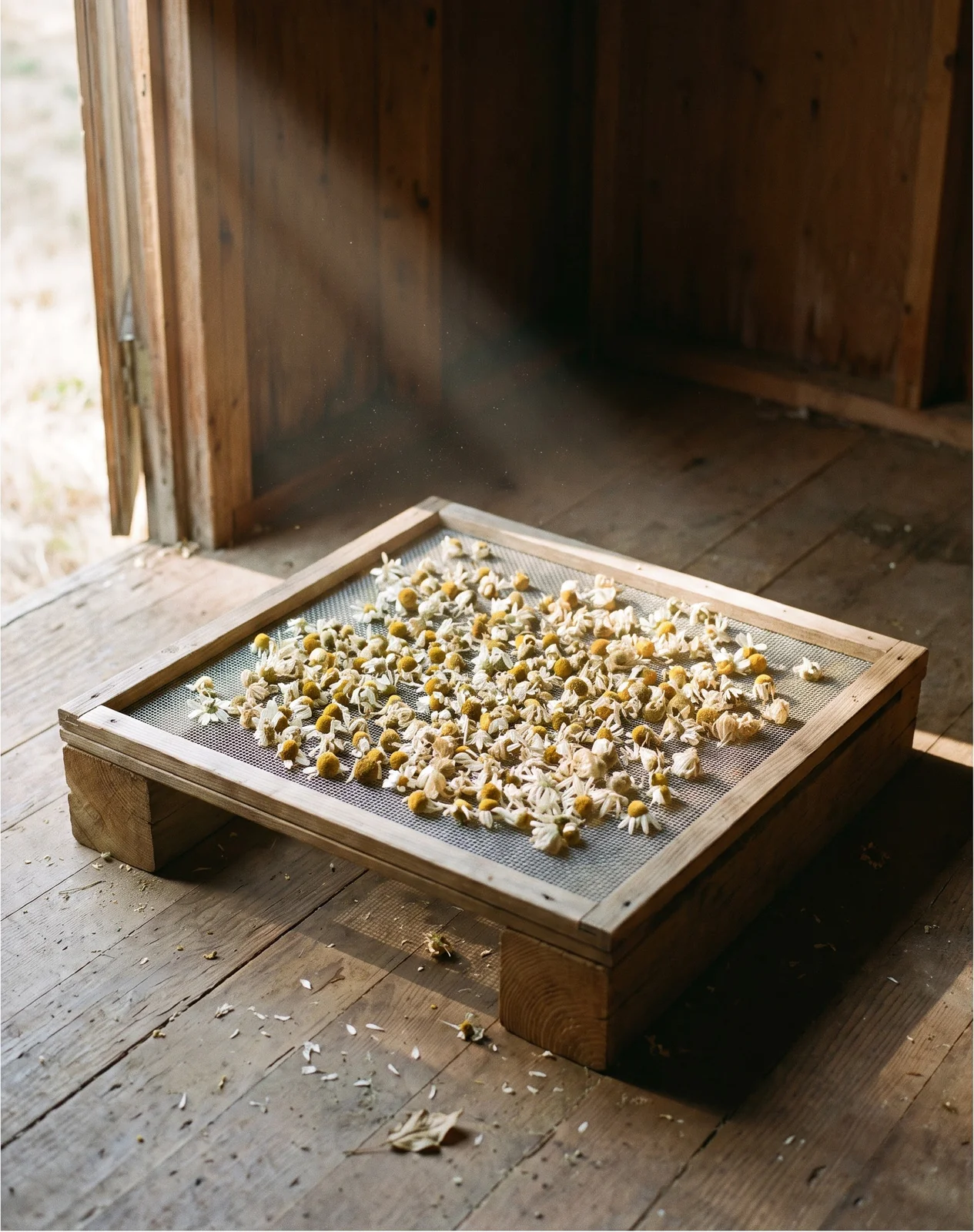
Pick the flower head alone, snipped from the stem near full bloom, and use it fresh or dried. Picking runs from the first flowers in early to midsummer and does not stop until the plant does. Up to 10 plants a person is enough where the flowers are being preserved, and dried heads keep up to a year.
Picking and deadheading are the same motion, so a harvested plant keeps going, and the annual carries head after head until its seed ripens, or on to frost if you take every one. German chamomile dies once it has produced seeds, and a bed allowed to set seed is finished for the year. On an established mat, light clipping when it goes leggy is most of the work.
Whether chamomile comes back by itself
German chamomile comes back without being perennial. The plant dies once it has produced seeds, but it self-seeds readily unless every flower head comes off, so a patch picked over casually returns next spring from its own scatter. It can go further: chamomile self-sows readily and may become invasive if it is allowed to. Where you want the volunteers, leave a few heads to ripen; where you do not, take every head before the seed sets. The annual has escaped gardens and naturalized along roads in parts of North America.
Roman chamomile is genuinely perennial and returns on its own stems. It is an evergreen mat spreading by creeping, rooting stems that can turn somewhat aggressive where conditions suit it, and it self-sows profusely, so it needs containing by pruning. 'Treneague' and 'Flore Pleno' set no viable seed and are increased only by division in fall or spring, so they never turn up uninvited.

Neighbors, and the plant doctor story
Chamomile has no documented companion effect. The story of chamomile as a plant doctor that revives a sickly neighbor is folklore. What horticulture does record is narrower: Roman chamomile is often confused with Boltonia asteroides and with the annual chamomile. Pairings with documentation behind them live in the companion planting hub.
What to keep away answers itself from what the plant wants. Rich ground first: it gives the perennial leaf growth and no flowers on a plant that flowers well unfed, so the bed that gets compost every spring is the wrong bed. Shade second, since too little sun is one of the three usual causes of a gappy mat. Competition third, because low-growing chamomile is quickly swamped and needs regular hand weeding. A plant that wants fed, shaded, heavily watered ground is a poor neighbor whatever its name.
Varieties, and the daisies that borrow the name
Four plants worth growing on purpose, one yellow impostor, and five daisies that arrive by mistake.


Light, soil and water, a line for each species
Sun and lean ground suit both species, with the detail differing. The annual takes full sun and well-drained but moist soil, and will also grow in partial shade. Both end up in the same lean, sunny corner, where lavender is grown on the same principle of feeding it nothing.
Watering splits the same way. The annual is shallow-rooted, so aim water at the upper level of the soil and keep it moist but not wet, while a new mat is kept moist only while the young plants take hold.
Height and spread
German chamomile is knee-high with a narrow footprint, 12 to 24 inches tall and about a foot wide. Space it 8 inches apart in rows 18 inches apart.
Roman chamomile is published at anything from 3 to 6 inches to 1 to 2 feet high, so height alone identifies nothing. Habit carries it instead: a mat spreading on decumbent stems to about 12 inches wide, at full size in 2 to 5 years. The cultivars are tighter, with 'Treneague' at 5 to 10cm (2 to 4in) high and a 45cm (18in) spread, and 'Flore Pleno' reaching 15cm (6in).
Safety for pets, and handling the plant
The chamomile in the pet-toxicity listings is the perennial, and ASPCA rates it toxic to dogs, cats and horses. Both entries are keyed to Anthemis nobilis, a synonym of Roman chamomile, and there is no entry for German chamomile at all, so the annual is unrated rather than cleared.
Handling the plant is a separate question. NC State Extension tells gardeners to wear gloves with Roman chamomile, which may cause contact dermatitis in some people, and puts it at low poison severity. German chamomile can cause allergic skin reactions or oral swelling in people with ragweed allergies, again at low severity. Both warnings are conditional, one on individual sensitivity and one on an existing allergy, so wear gloves when dividing a mat or clearing a bed.
What to expect, from sowing to frost
One season for the annual, and years for the mat.
Sowing to first flower is one season and no more. Seed goes onto warm soil from mid-spring, and germination generally follows within a week in warm conditions, or in 10 to 14 days indoors. Flowering can begin ten weeks from sowing, or take 90 or more days.
The flush is the middle of the summer. The annual blooms from early to midsummer and keeps going until its seed ripens in late summer, or until frost where every head is removed. Published bloom runs June to August for the annual and June to September for the perennial.
Frost separates the two plants for good. The annual dies off once it has produced seeds, and what comes up next spring is whatever seed fell before the last picking. The perennial carries on as an evergreen mat on creeping, rooting stems, though growth can look sparse after a cold, wet winter. A lawn in its first season is not a lawn to walk on: no traffic for at least 12 weeks.
Myths about chamomile
Five claims that travel with the word chamomile, and what actually happens in the garden.
The myth: Chamomile is one plant, so any chamomile advice fits any chamomile.
The reality: Two species share the word, a hardy annual and a hardy perennial. The annual dies off once it has produced seeds while the perennial is an evergreen mat on creeping stems, so one instruction can be right for one and useless for the other.
The myth: Feed it well and it will flower better.
The reality: Rich soil gives the perennial lush leaf growth and no flowers, on a plant that flowers well with no feeding at all. The annual does well in poor soils and needs little fertilizer.
The myth: Epsom salt fixes yellowing chamomile.
The reality: No magnesium shortage has ever been tied to chamomile's yellowing. Water is the documented cause: waterlogging rots plants, and the same plant dislikes drying out in summer.
The myth: A chamomile lawn takes the same walking as a grass lawn.
The reality: Chamomile lawns tolerate only occasional light pedestrian traffic and go patchy when walked on frequently, with none of the tolerance of grass. A new lawn stays off limits for at least 12 weeks.
The myth: A chamomile lawn is mown like a grass lawn.
The reality: The non-flowering clone has nothing to mow, only a light trim with shears if growth looks straggly. A flowering lawn is sheared back in late summer, and selective lawn weedkillers cannot be used on either.
FAQ
Is chamomile a perennial or an annual?
Both, depending on which plant is in the pot. Roman chamomile is a hardy perennial that creeps into a mat; German chamomile is a hardy annual that dies once it has set seed and then self-seeds readily.
What month do you plant chamomile?
Count from your last frost. Sow into the garden in fall, or shortly before the average last frost date, or start indoors 6 to 8 weeks before it and plant out after the frost.
Which hardiness zones does chamomile grow in?
The perennial is hardy in zones 4 to 9, with a narrower 5 to 8 also in print. The annual is printed at roughly 2 to 8, but on a one-season plant a zone only describes a summer.
What temperature is too cold for chamomile?
Nobody publishes a temperature that kills either plant. What exists is a threshold for planting out: soil of at least 45F (7C) for the perennial, and warm soil from mid-spring for sowing.
Why are my chamomile leaves turning yellow?
Water, in one direction or the other. Waterlogging rots plants, especially in winter, and chamomile also dislikes drying out in summer. Check the soil before pouring anything.
Does Epsom salt help yellow leaves?
No. Magnesium has never been tied to chamomile's yellowing, and feeding works against this plant: rich soil gives the perennial leaf growth and no flowers. Look at drainage first.
How do you get chamomile to flower?
More sun and leaner ground. Give it at least 6 to 8 hours of direct sun a day, stop feeding it, and clip an older perennial back through the season.
Can you grow chamomile in a pot?
Yes. Give the annual a pot at least 12 inches across with good drainage and at least 4 hours of sun a day. Check pots daily, and pinch the tips at about 6 inches.
What should you not plant near chamomile?
Chamomile has no documented companion effects, so the question is soil and light. Keep it out of fed ground, out of shade, and away from anything vigorous.
Is chamomile safe for dogs and cats?
It is rated toxic to dogs, cats and horses, with contact dermatitis, vomiting and diarrhea among the signs. Both entries are keyed to the Roman synonym, with none for the German annual.
Can you walk on a chamomile lawn?
Lightly, and not often. Chamomile lawns tolerate only occasional light pedestrian traffic and go patchy when walked on frequently. Keep off a new lawn for at least 12 weeks.
Interesting tips
- German chamomile grown as an herb is not preferred by deer.
- The perennial is native to western Europe and north-west Africa, and counts as native to Great Britain and Ireland.
- Roman chamomile is sometimes called English chamomile, after the chamomile lawns planted in Elizabethan England.
Related Guides & Flowers

Types of flowers
The full catalog, for a reader holding a white daisy who is still not sure what is in the bed.

White flowers
The rest of the white palette, sorted by season and by how each one is grown.
Calendula
Another daisy-family annual raised from seed, picked all summer and left to sow itself.
Sweet alyssum
A low, scented carpet for the same lean, sunny edges and the front of a border.
Enjoying our flower guides? Add YourFlowersGuide as a preferred source on Google. It helps more readers find us.
Add to Preferred Sources