Crocus bloom time across the US
Interactive map
 See the interactive map
Drag the date and the bloom moves north across the country. Every point has its own window, and the map says where it has no records rather than guessing. Free, with nothing to sign up for. Open the crocus map.
City by city
Typical window, earliest first. Cultivars of the same flower can open days or weeks apart.
Taxonomy and origin
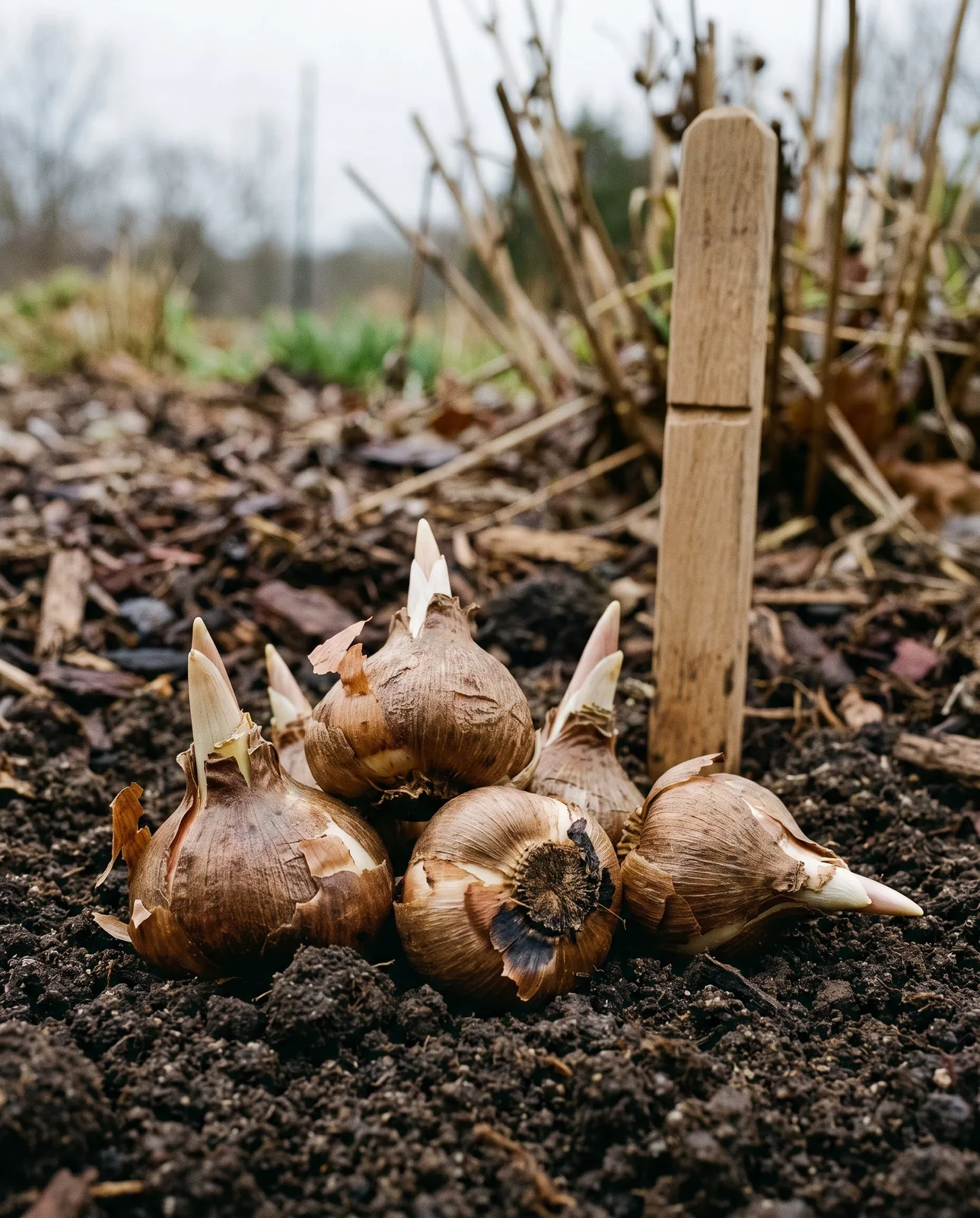
The genus Crocus sits in the iris family, Iridaceae, alongside garden irises. North Carolina State University Extension counts about 90 species in it, all deciduous perennials growing from corms. The corm is where the word "bulb" goes wrong. A crocus grows from a solid swollen stem base on a flat basal plate, not from the layered scales of a true bulb, and it stores starches and replaces itself every year, forming small daughter cormels above the spent original. Wild species run in a broad band from the Mediterranean basin and southern Europe, east through eastern Europe and on to northwest China.
Centuries of selection split garden plantings into wild species types and the larger cultivated forms bred from them. Most spring border crocuses descend from Crocus vernus, sold as Dutch crocus, next to wild kinds like Crocus chrysanthus, the snow crocus, and Crocus tommasinianus. The autumn bloomers are a separate branch of the same genus, and the oddest member of that branch is Crocus sativus, which does not exist in the wild at all. The Royal Horticultural Society traces it to roughly 3,500 years of selection from Crocus cartwrightianus, a wild species of Greece, Lebanon, and Jordan.
Bloom time
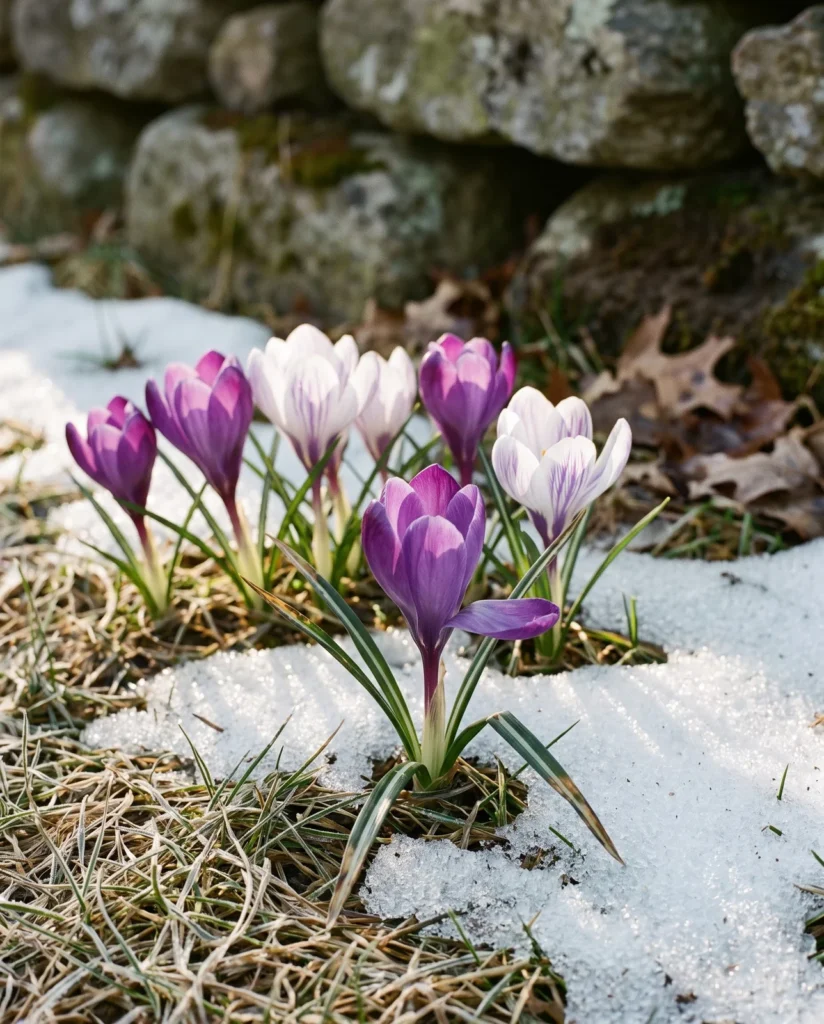
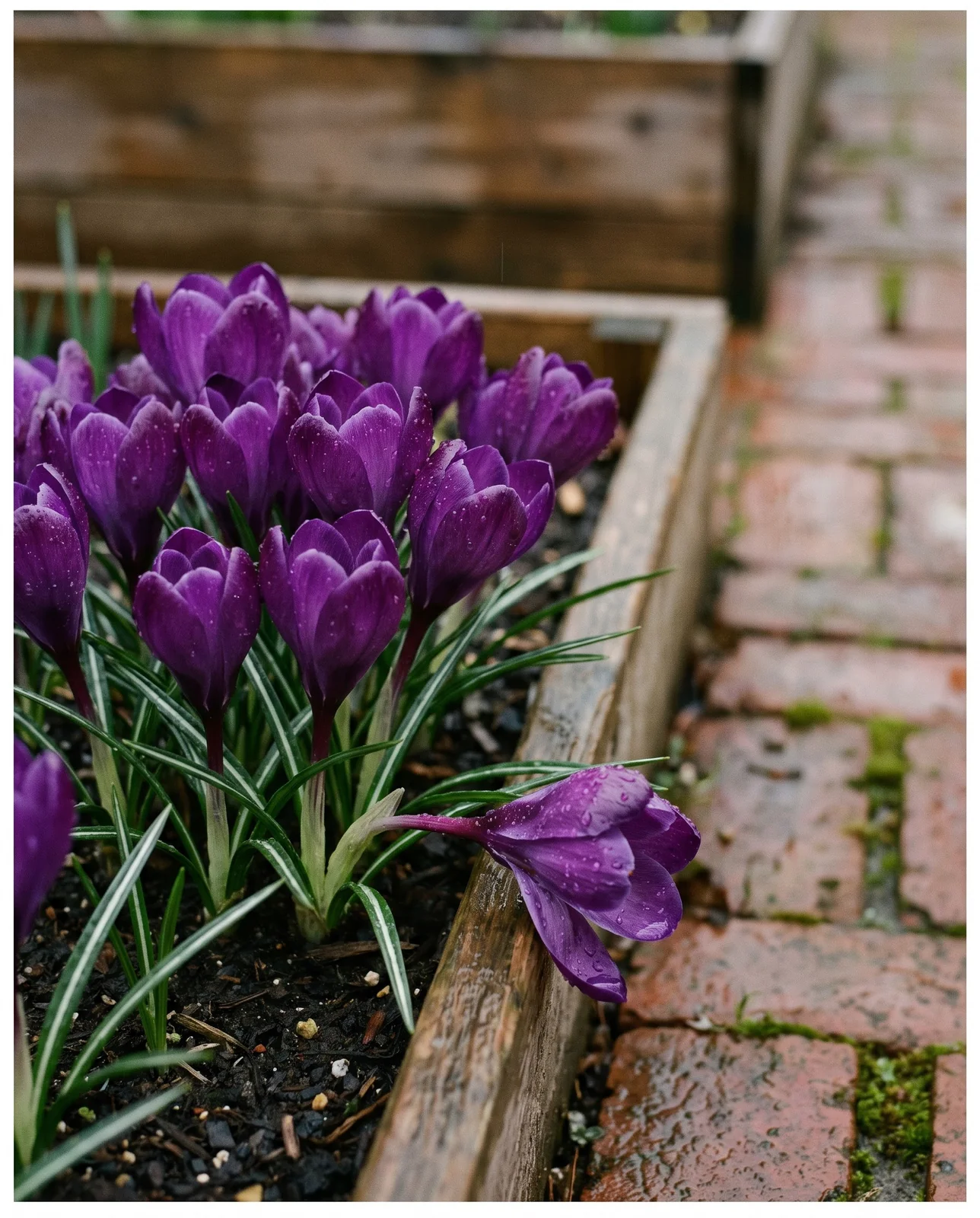
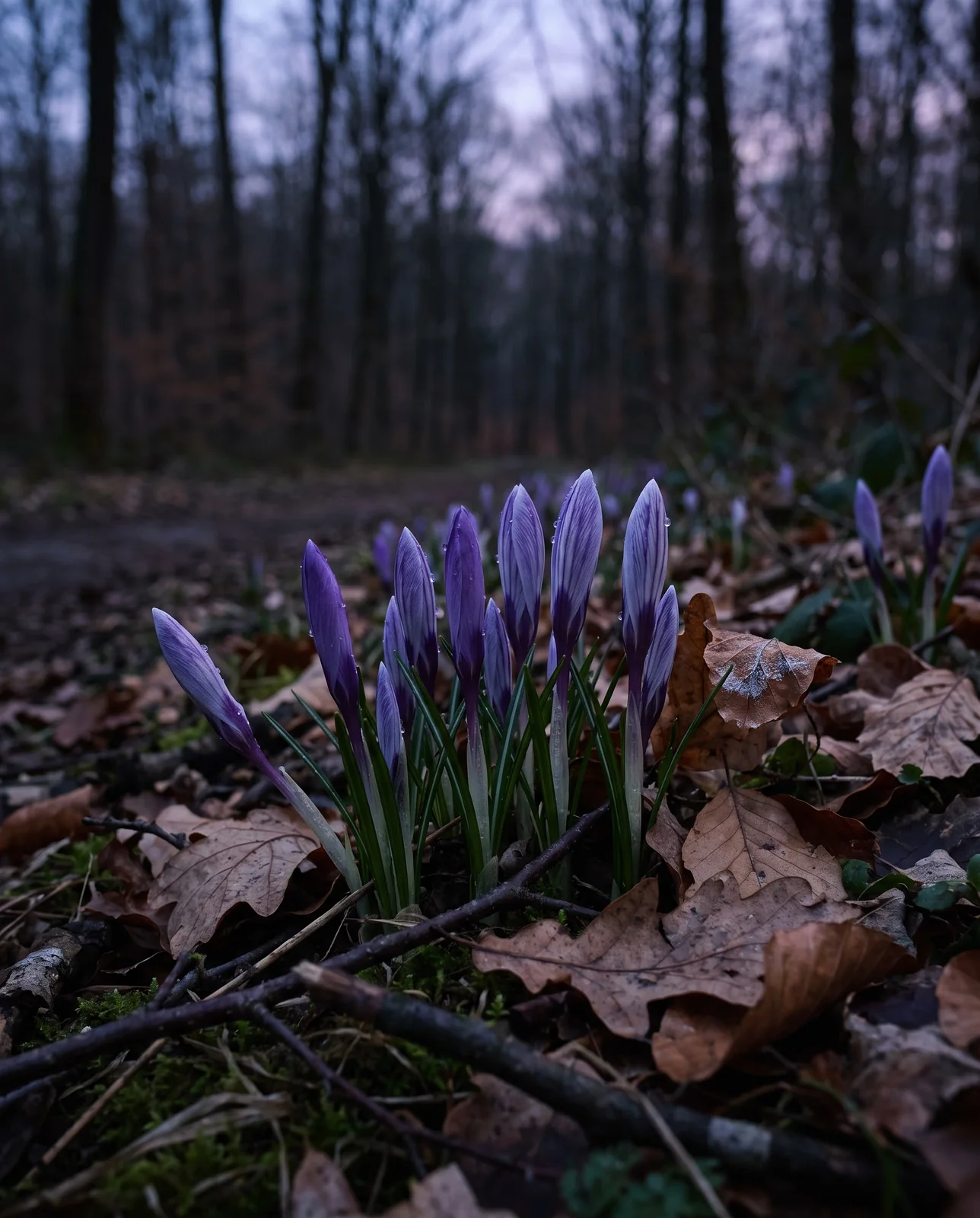
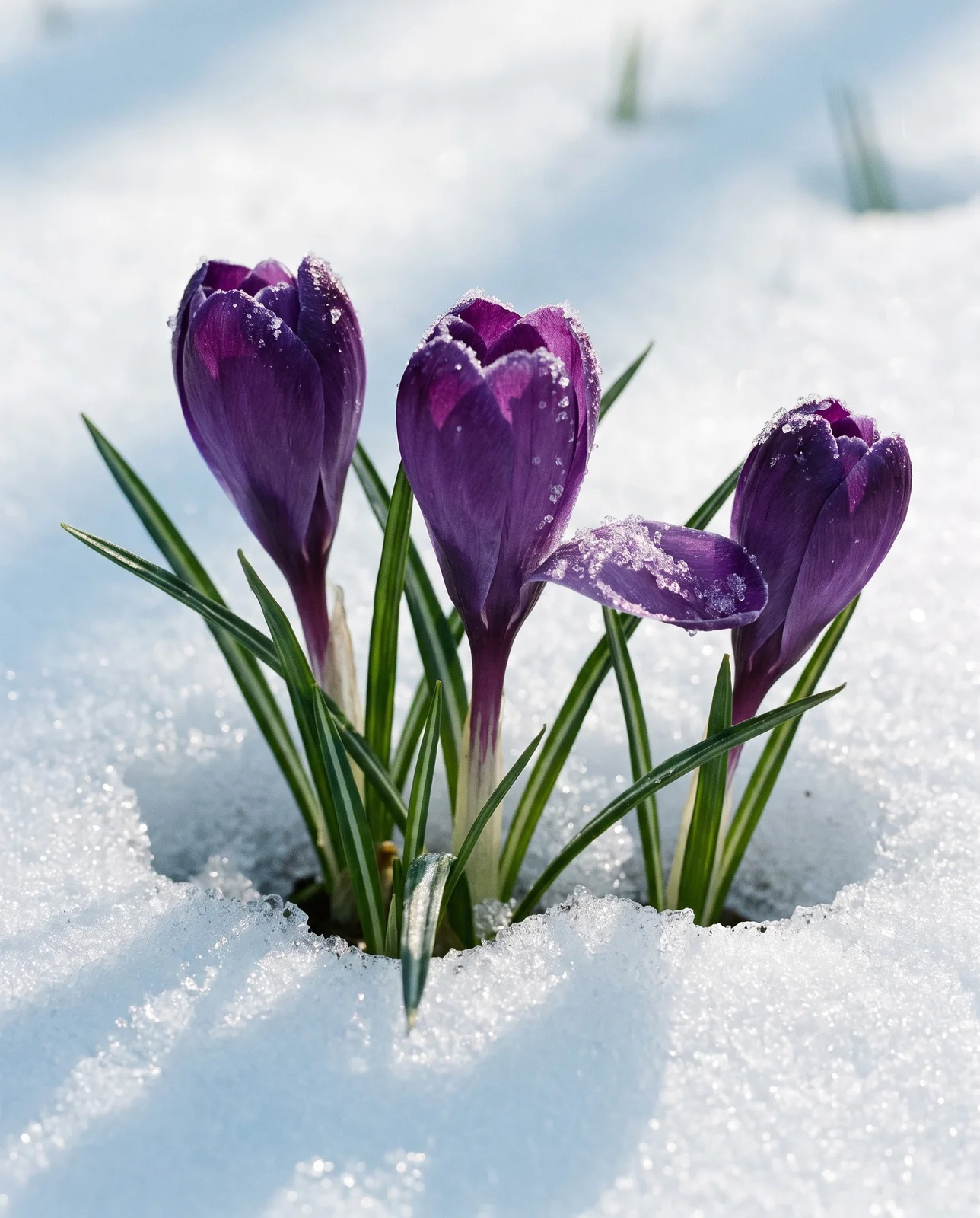
Crocus blooms come in two waves, one in early spring and one in mid to late autumn. The spring wave starts while snow is still on the ground, weeks ahead of tulips and alongside the earliest snowdrop patches: cultivars of Crocus chrysanthus open first, usually between late winter and early March depending on how the local weather runs, and the large-flowered Dutch hybrids (Crocus vernus) follow shortly after. The autumn wave runs the season backward. Crocus speciosus and the saffron crocus (Crocus sativus) push up bare flower stems from September through November, after most perennials have already died back, and the Royal Horticultural Society notes that in these species the narrow, grass-like leaves usually arrive later, in winter or early spring, rather than with the flowers. For saffron the window is tight: North Carolina State University puts the bloom at one to two weeks, which is why the patch has to be checked daily before weather ruins the stigmas.
Height and spread
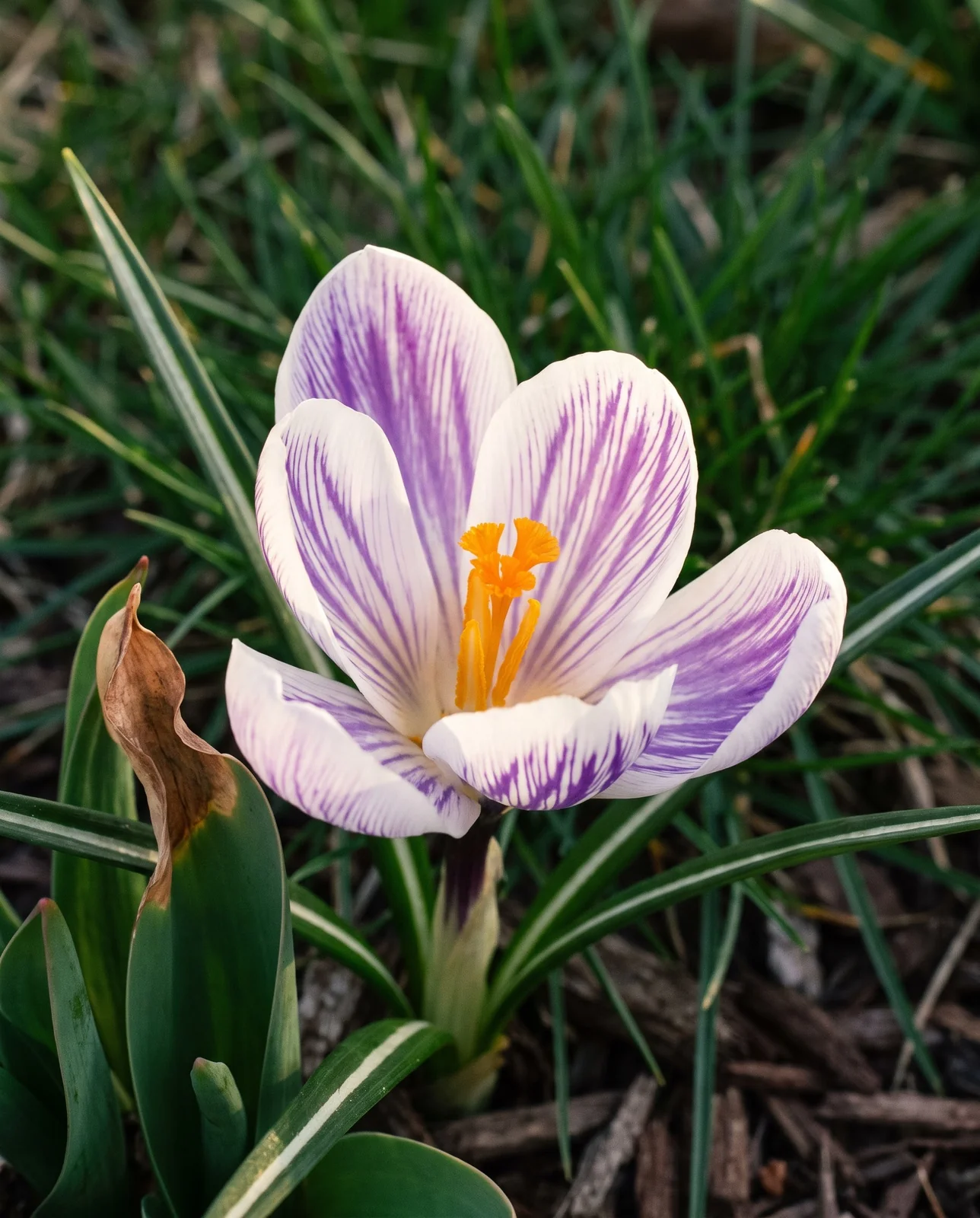
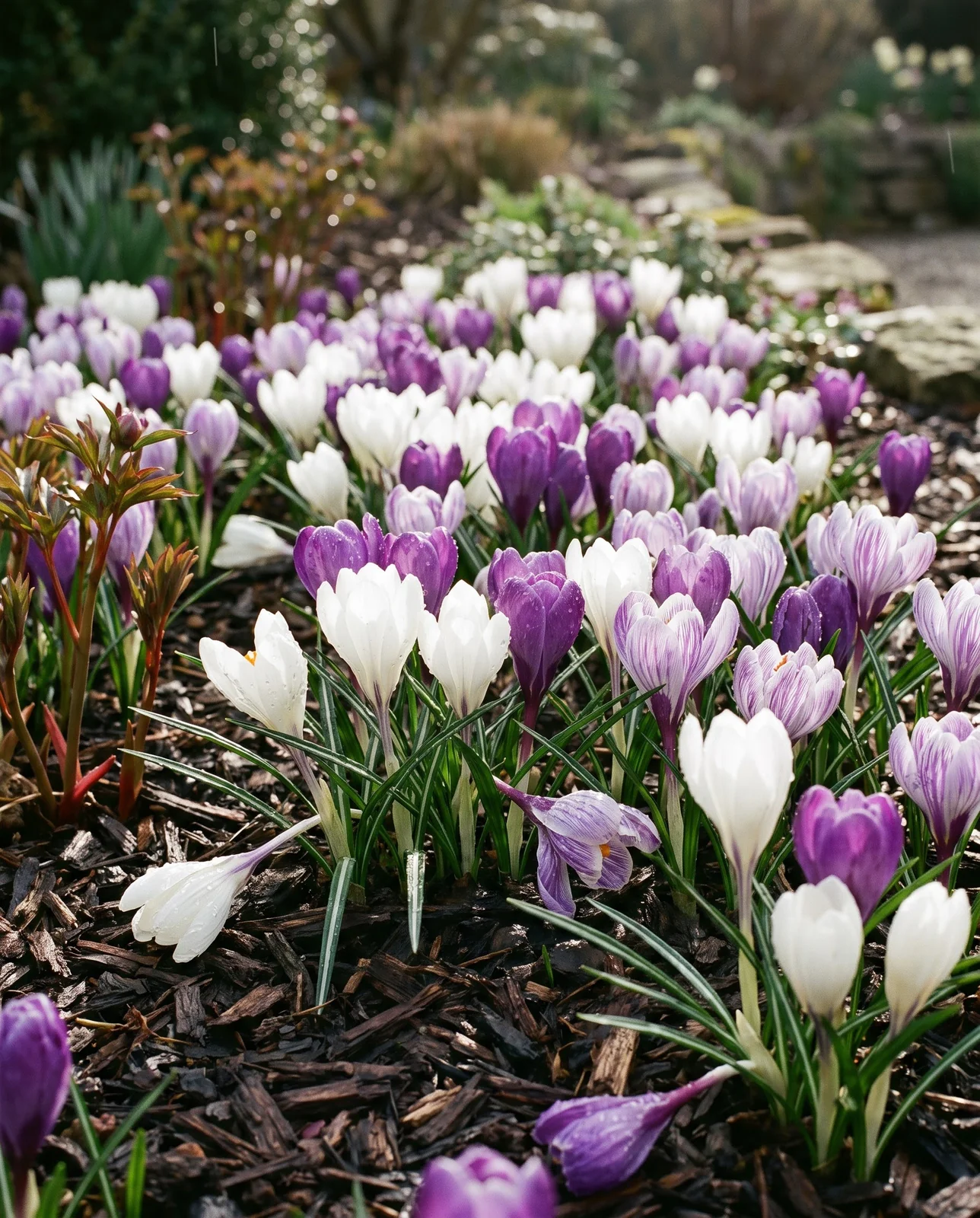
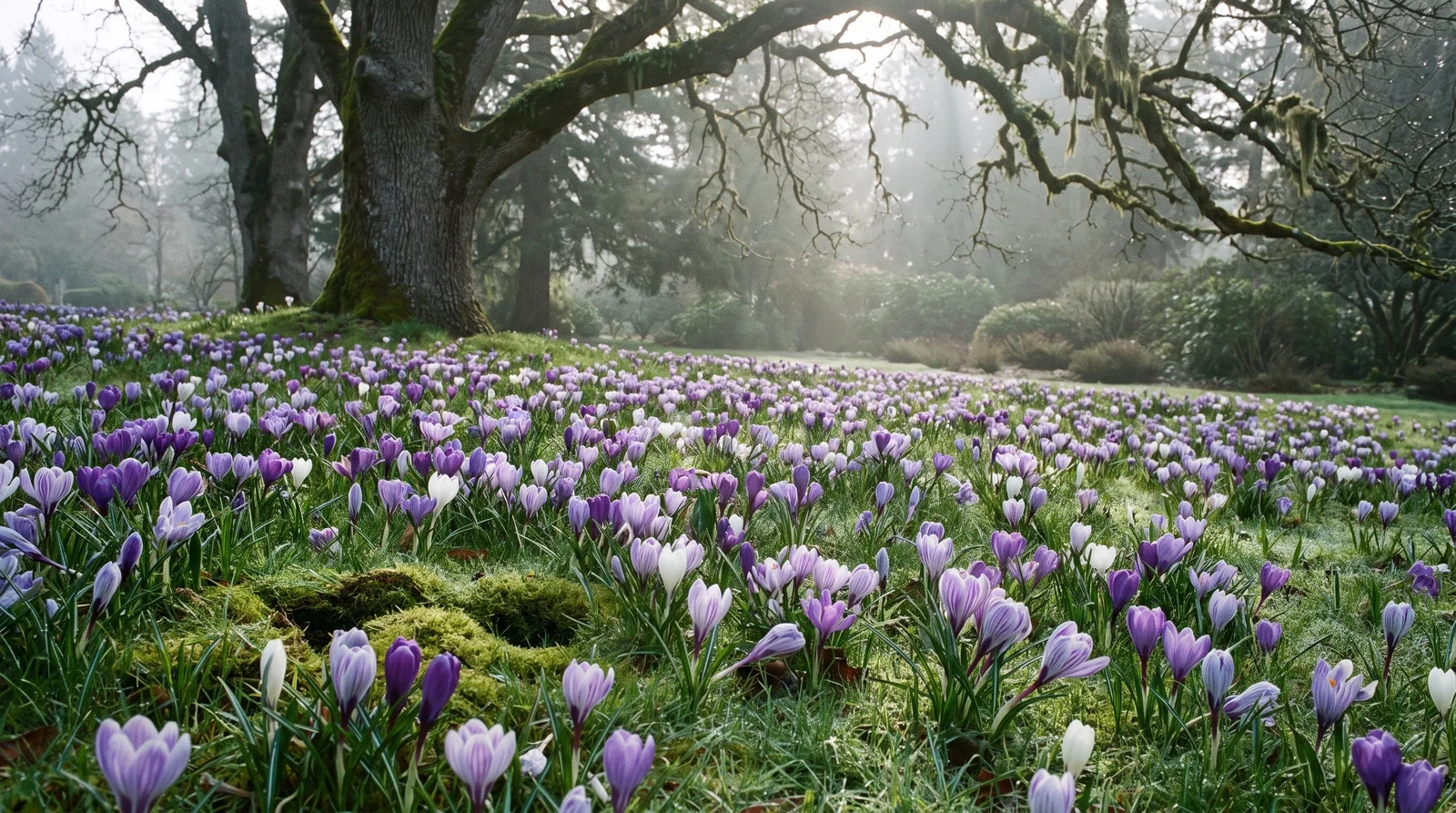
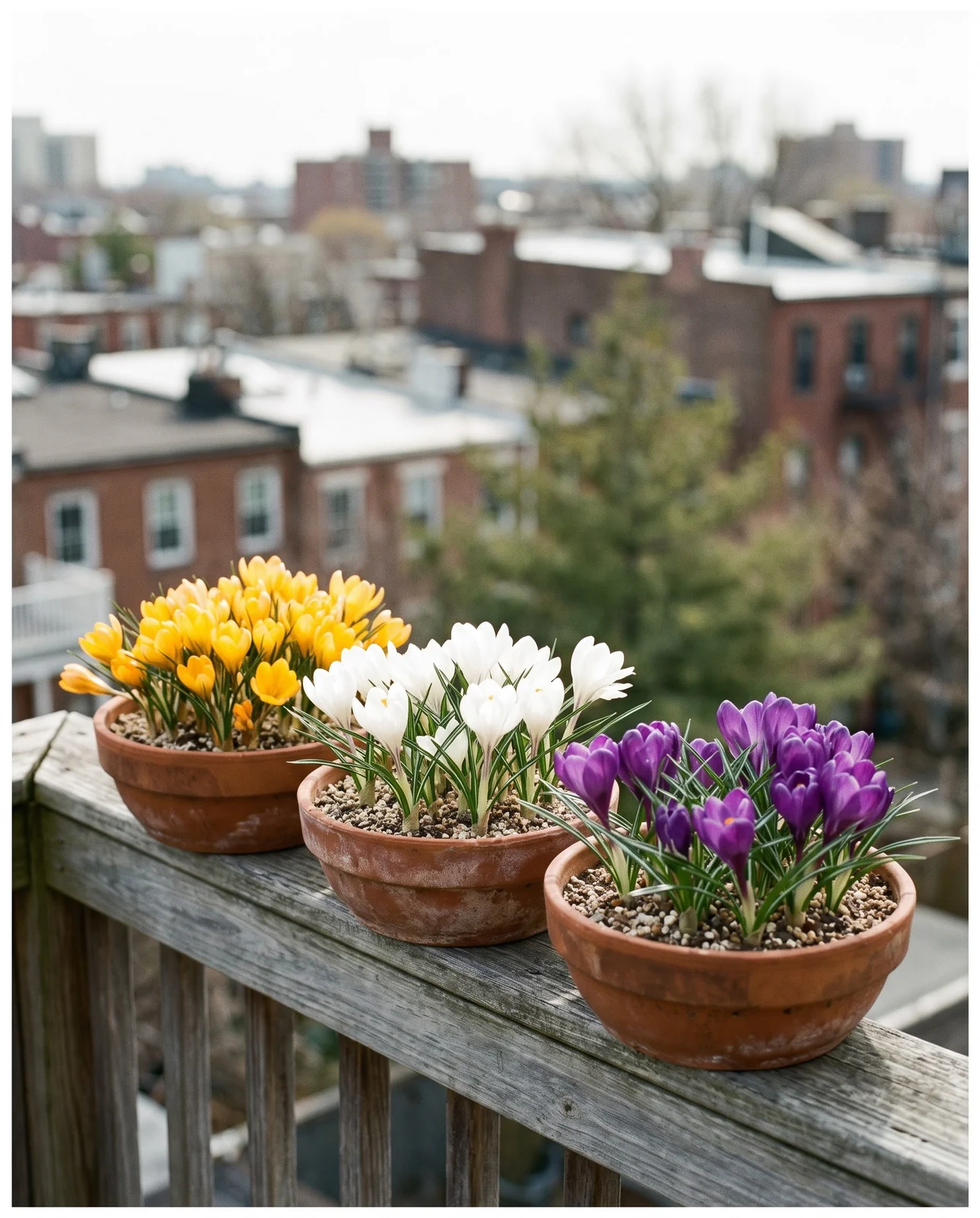
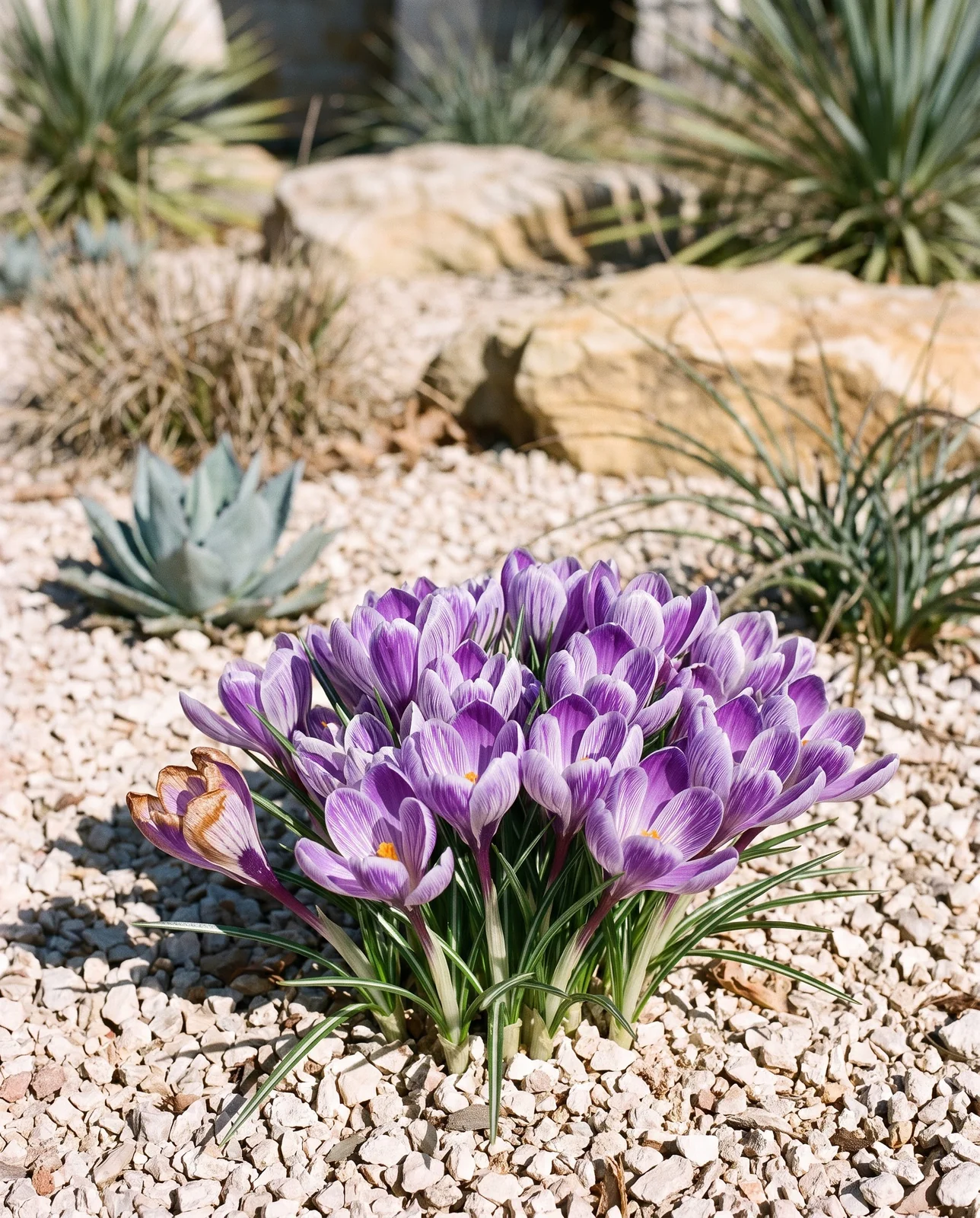
Crocus is a genuinely small plant. North Carolina State University Extension puts a mature plant at under 6 inches tall and 3 to 6 inches wide, and Missouri Botanical Garden sets snow crocus such as Crocus chrysanthus at the bottom of that range, 3 to 6 inches tall. A single corm set on its own disappears against bare soil or mulch, which is why crocus is planted the way it is: in dense drifts, in rock-garden pockets, in borders, or swept across a stretch of lawn turf.
Foliage is where spring and autumn types part company. Spring kinds carry slender dark green blades with a silver-white stripe down the middle, low to the ground and rarely past 4 to 6 inches long. Crocus sativus is coarser: each corm throws 5 to 11 upright, linear leaves up to 16 inches long, appearing just before or with the autumn flowers. Spacing follows from that difference. Dutch crocus goes in about 2 inches apart, close enough to read as a continuous carpet, while saffron corms want 4 inches to give their taller, denser tufts room.
Light
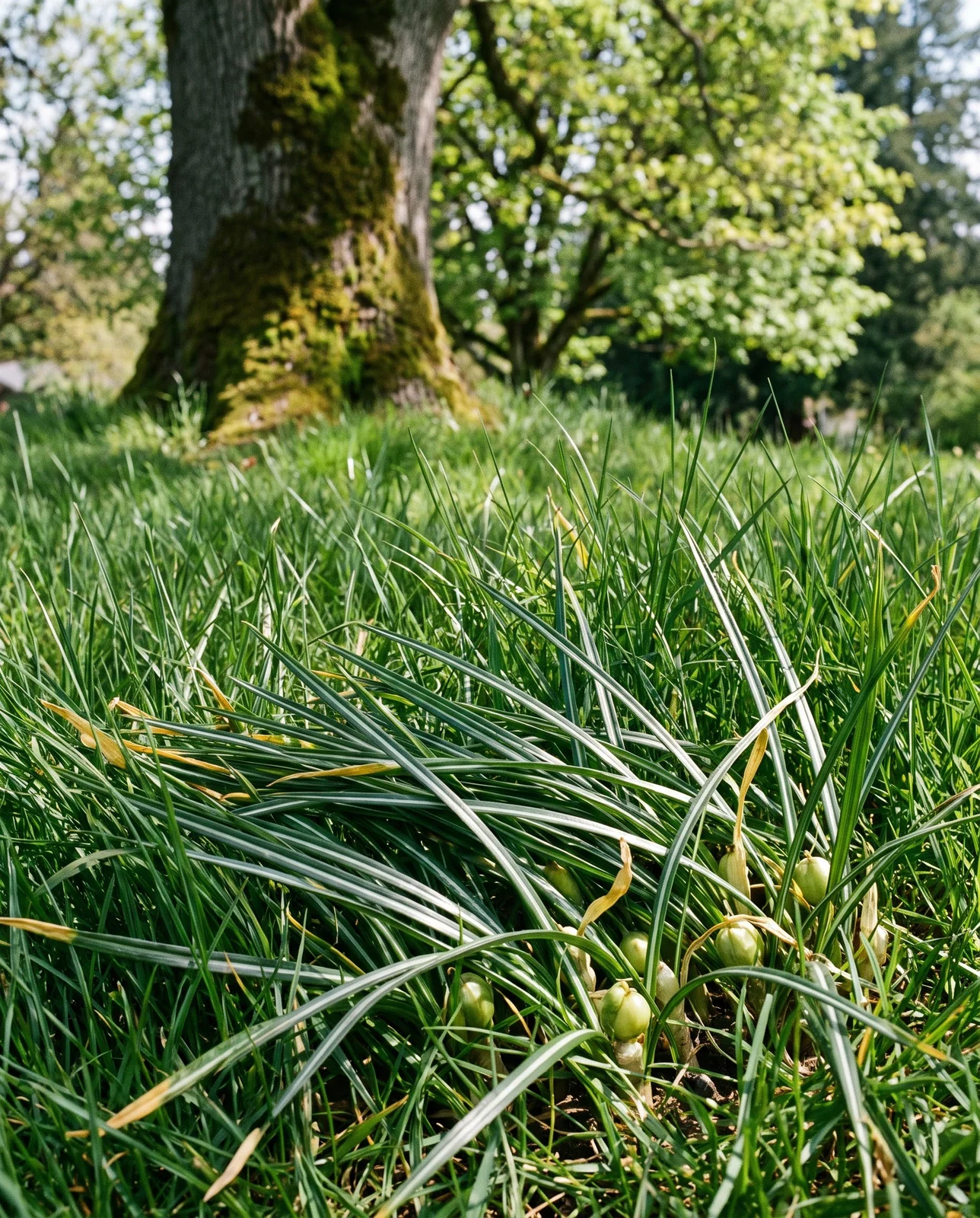
Crocus takes full sun to partial shade and does best in full sun, which supplies the warmth that pushes the petals wide open through the morning. Spring types get away with more shade than that suggests. Planted in a woodland border or under deciduous lawn trees, they emerge, flower, and finish before the canopy leafs out, so they spend their whole active season in full light. Autumn bloomers have no such loophole. They flower in October and November, when the sun sits low and the days are short, so they need an open bed or a south-facing border to collect enough heat.
Water
Water needs flip halfway through the crocus year. While leaves are growing and flowers are open, the root zone wants steady, moderate moisture. Once flowering finishes and the foliage yellows, the corm goes dormant and wet soil becomes the main threat: saffron crocus and spring types alike rot at the root in a wet site, and standing water during bloom brings fungal disease into the flowers. Summer is the part gardeners get wrong. The Royal Horticultural Society advises siting autumn-flowering crocuses where the ground dries out through the summer months, and dormant corms left in damp summer soil go down easily to bacterial rot and fungal decay. Crocus banaticus is the single exception in the genus, wanting a damper and shadier spot than its Mediterranean relatives. For everything else, put corms on sloped ground, in a raised bed, or in gravelly free-draining soil, and keep summer irrigation off them.
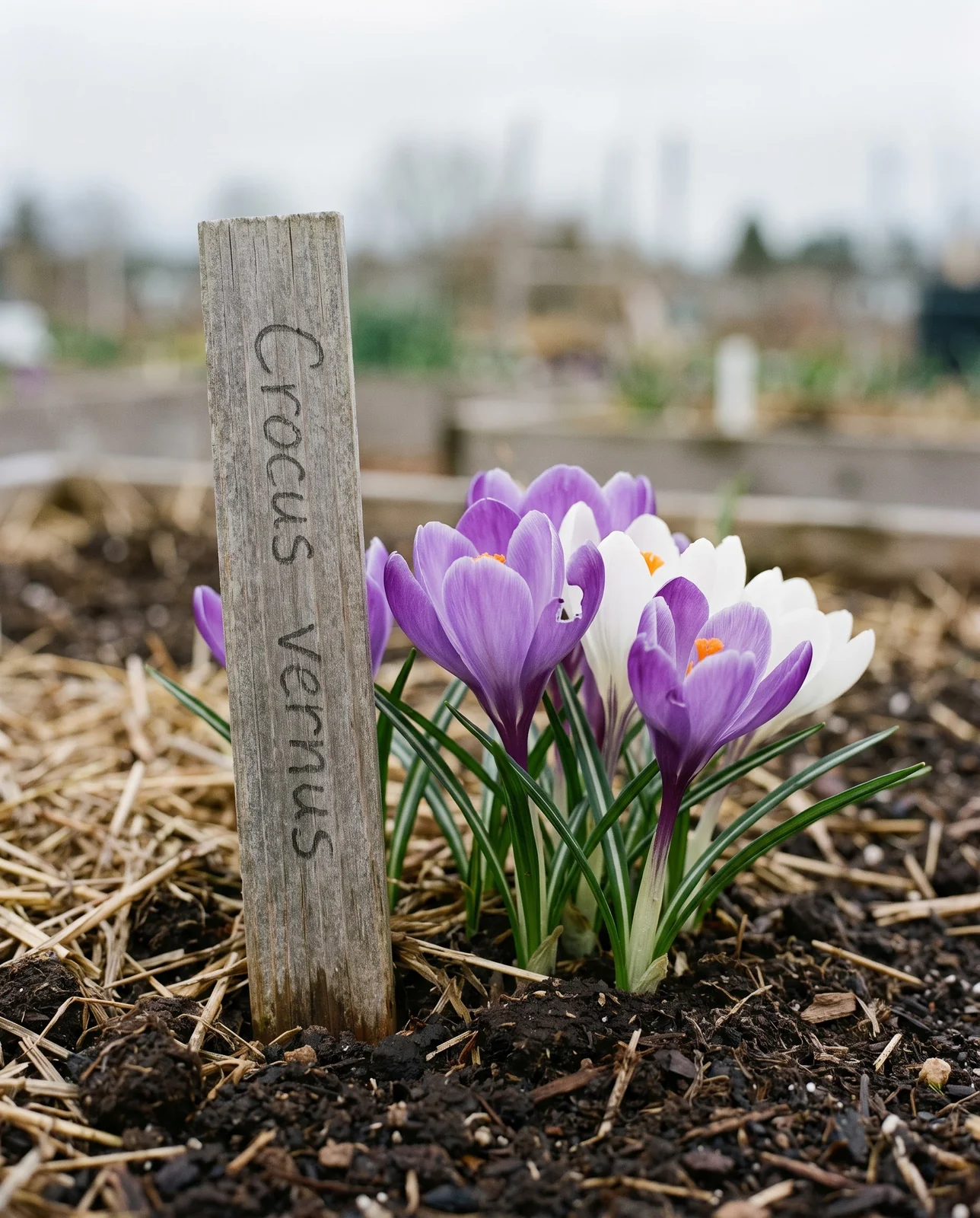
Soil and pH
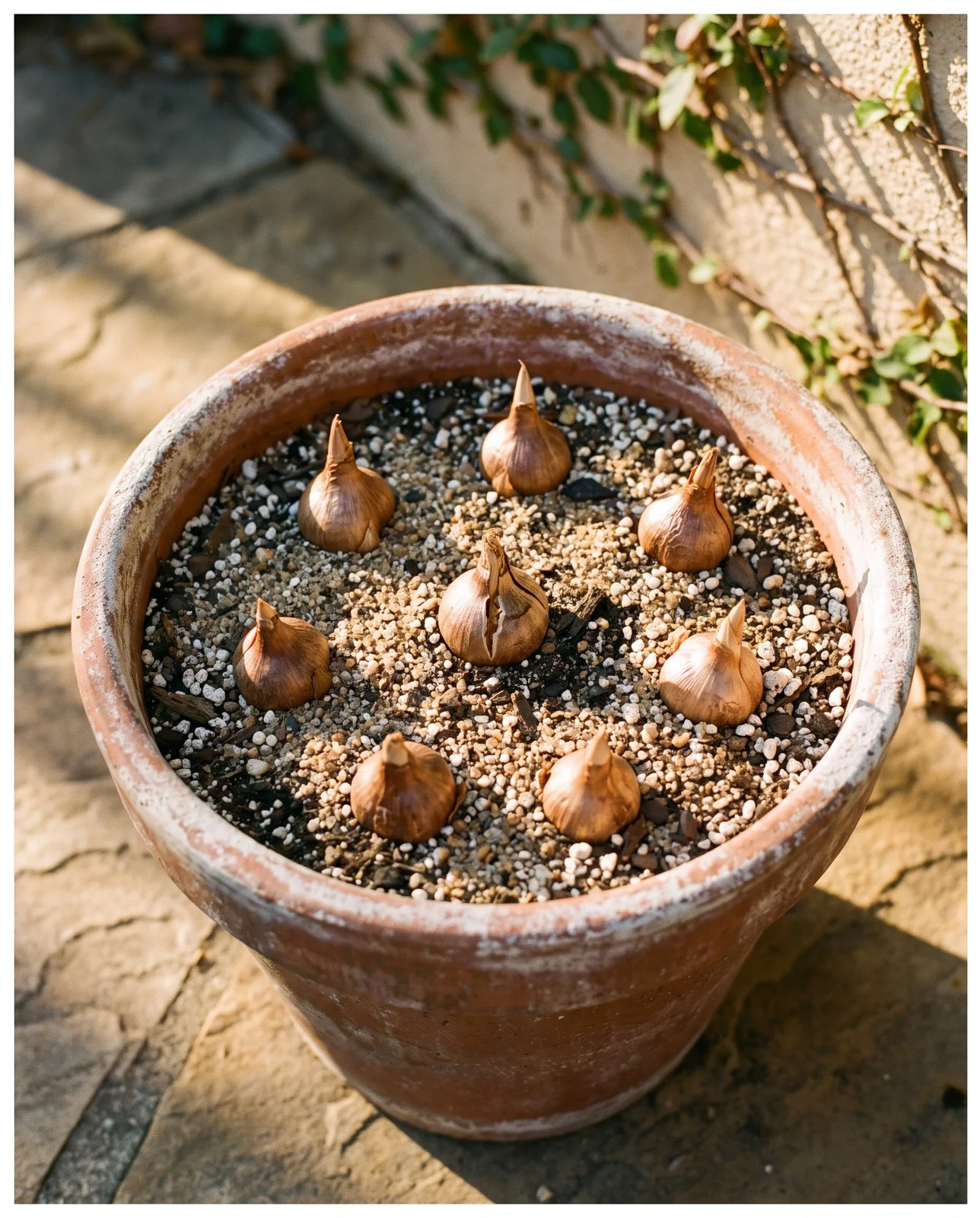
Texture matters more than fertility here. North Carolina State University Extension tells gardeners flatly to avoid heavy clay and to plant crocus in gritty, well-drained sandy loam with composted organic matter worked through it. Clay holds winter water around the corm, keeps oxygen away from the roots, and rots the basal plate before a shoot ever appears. On a clay site there are two ways out: dig coarse horticultural grit, crushed pumice, and aged compost through the bed until it drains, or give up on the open ground and grow the corms in raised stone troughs and containers.
Saffron crocus asks for the same thing, a well-drained bed with moderate levels of organic matter. Soil pH is the loose end. The genus is not pinned to a narrow band, and crocus performs across neutral, slightly acidic, and slightly alkaline ground as long as water moves through the profile quickly. A handful of gravel or sharp grit dropped into the planting hole builds a porous pocket that keeps the corm base drier through an unusually wet winter.
USDA hardiness
Garden crocus is hardy through USDA zones 3 to 8, in regions that get a real winter. Missouri Botanical Garden lists snow crocus (Crocus chrysanthus) as hardy into zone 3, with cultivars such as 'Panda' rated from zone 4 through zone 8. The chilling requirement explains the southern cutoff: spring crocus needs roughly 10 weeks of soil below 45 degrees Fahrenheit to break corm dormancy and set an even flower bud. South of zone 8 that cold does not accumulate, and bloom comes late, patchy, or not at all.
Autumn types sit in a similar range but need help at the cold end. Crocus sativus takes winter freezes unprotected across zones 6 through 8; in zones 3 to 5 it wants deep planting, a heavy mulch once the foliage has died down, or a container that can be moved into an unheated garage for the worst of the cold. Because those flowers open in October and November, an early hard freeze can burn the petals before the saffron stigmas are picked.
Planting and bloom dates by zone band
Three zone bands cover the planting window, both bloom seasons, and the point at which the foliage can finally be cut.
Propagation and longevity
Crocus multiplies on its own. Each growing season the mother corm forms daughter corms, or cormels, above itself, and those offsets pile up into a tight underground cluster. North Carolina State University recommends lifting and dividing crowded clumps about every four years to keep flowering strong. Left alone past that point, corms in a congested clump compete for soil moisture and nutrients, and both flower size and the number of blooms per square foot drop off.
Divide during summer dormancy, as the foliage turns yellow and withers. Lift the clump with a hand fork, pull the daughter corms off the shriveled mother base, and replant the largest ones at their proper depth right away. The small cormels go into a nursery row, where they reach blooming size in one to two seasons. Crocus sativus leaves no other option: its flowers are sterile and set no seed, so every new saffron plant comes from a divided corm.
What to expect in year one, years two to three and year four and beyond
In year one a fall-planted corm sends up a single flower, and the leaves that follow spend about six weeks feeding the corm below before they yellow; as they do, the mother corm forms 1 to 3 small daughter cormels above its own base. By years two and three those cormels are blooming-size corms in their own right, so each original planting spot throws several flower stems, and the drift thickens visibly in lawn turf or border soil without any supplemental feeding. From year four onward the cluster is congested and the flowers get smaller, which is the signal to lift the clump during summer dormancy, break off the daughter corms, and replant them 2 to 4 inches apart, the spacing university planting guides give.
Spring crocus, fall crocus, and saffron: telling the types apart (and the poisonous look-alike)
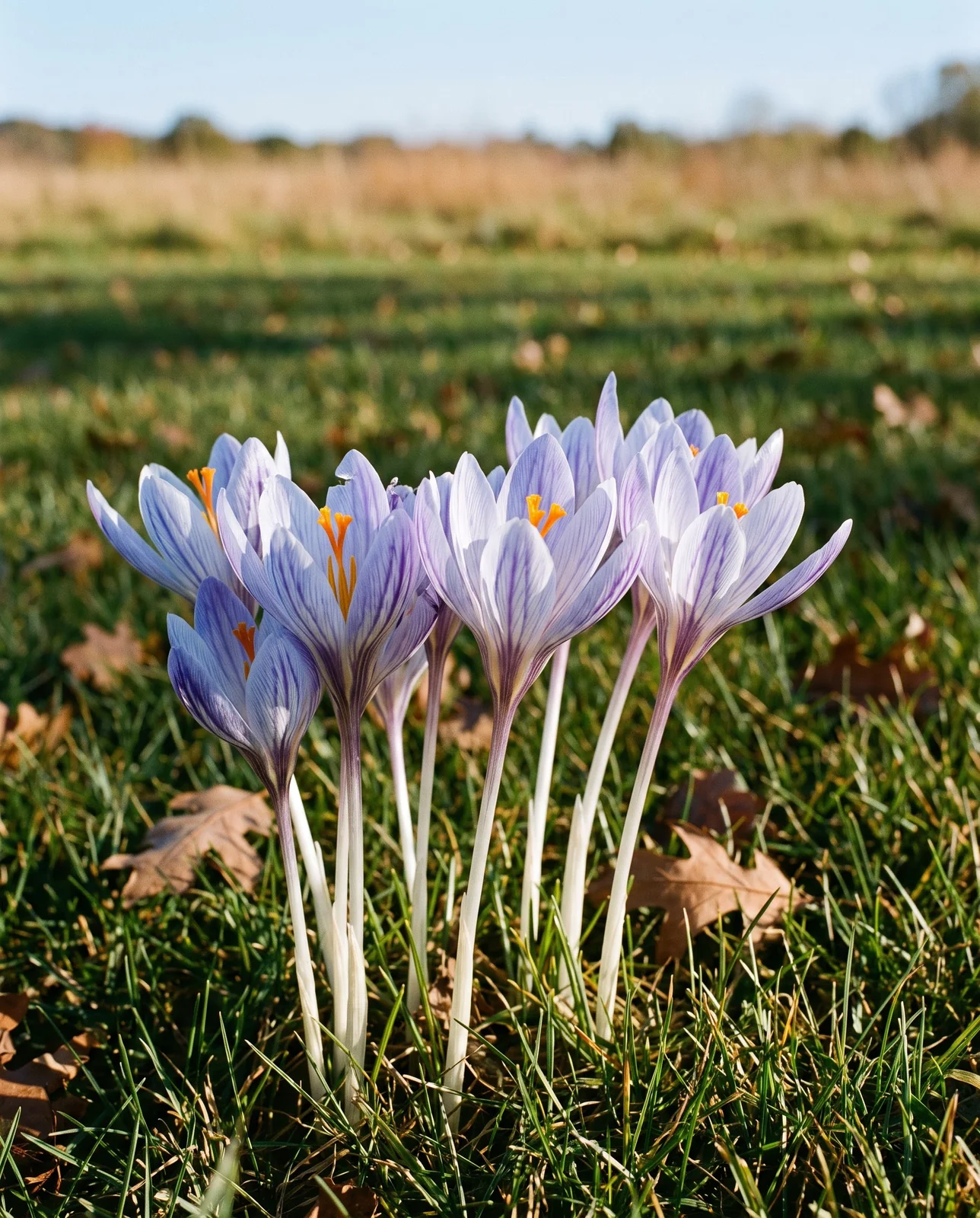
Catalogs and garden centers file several unrelated autumn-blooming plants under the one label "autumn crocus," which is behind most of the confusion gardeners and pet owners run into. The genus Crocus holds true spring bloomers, true autumn bloomers, and the domesticated saffron crocus (Crocus sativus). All of them belong to the iris family, Iridaceae, and all of them carry exactly three stamens inside the cup. The true autumn species, Crocus speciosus and Crocus sativus, open small cup-shaped purple flowers in October and November, either bare or alongside narrow, grass-like leaves marked with a silver center line.
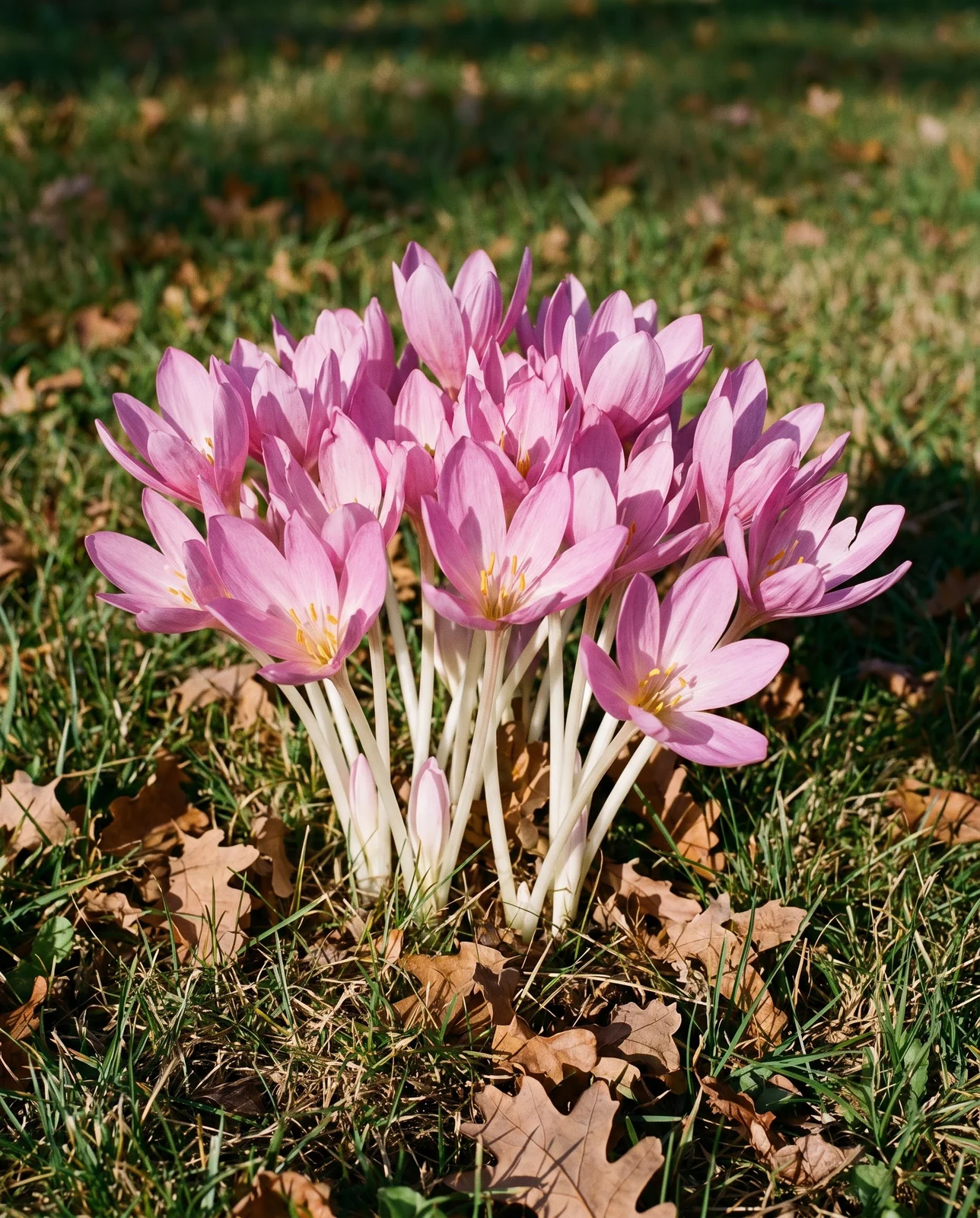
The distinction that matters is between a true autumn crocus and Colchicum autumnale, which is not a crocus at all. The Royal Horticultural Society and Encyclopaedia Britannica place it in the family Colchicaceae, historically grouped with the lilies, and it is still sold as autumn crocus or meadow saffron. Colchicum flowers are noticeably bigger, goblet-shaped, pinkish-mauve, carried on thick pale stems with no leaves under them. Its leaves come up in spring instead, in broad coarse clusters that wither by midsummer, nothing like the fine grass-like foliage of a true Crocus. Counting stamens closes the question in a second: six in Colchicum, three in Crocus.
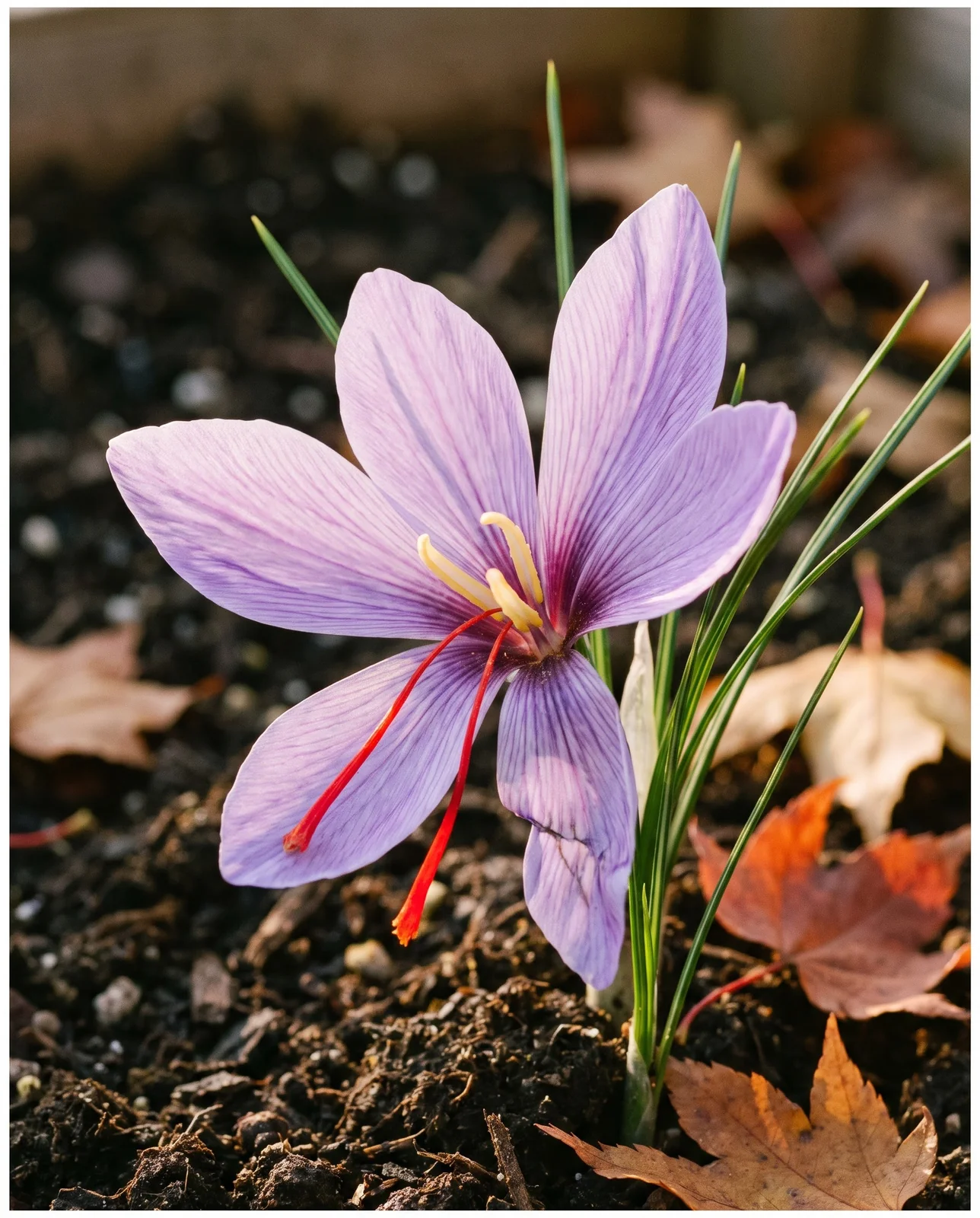
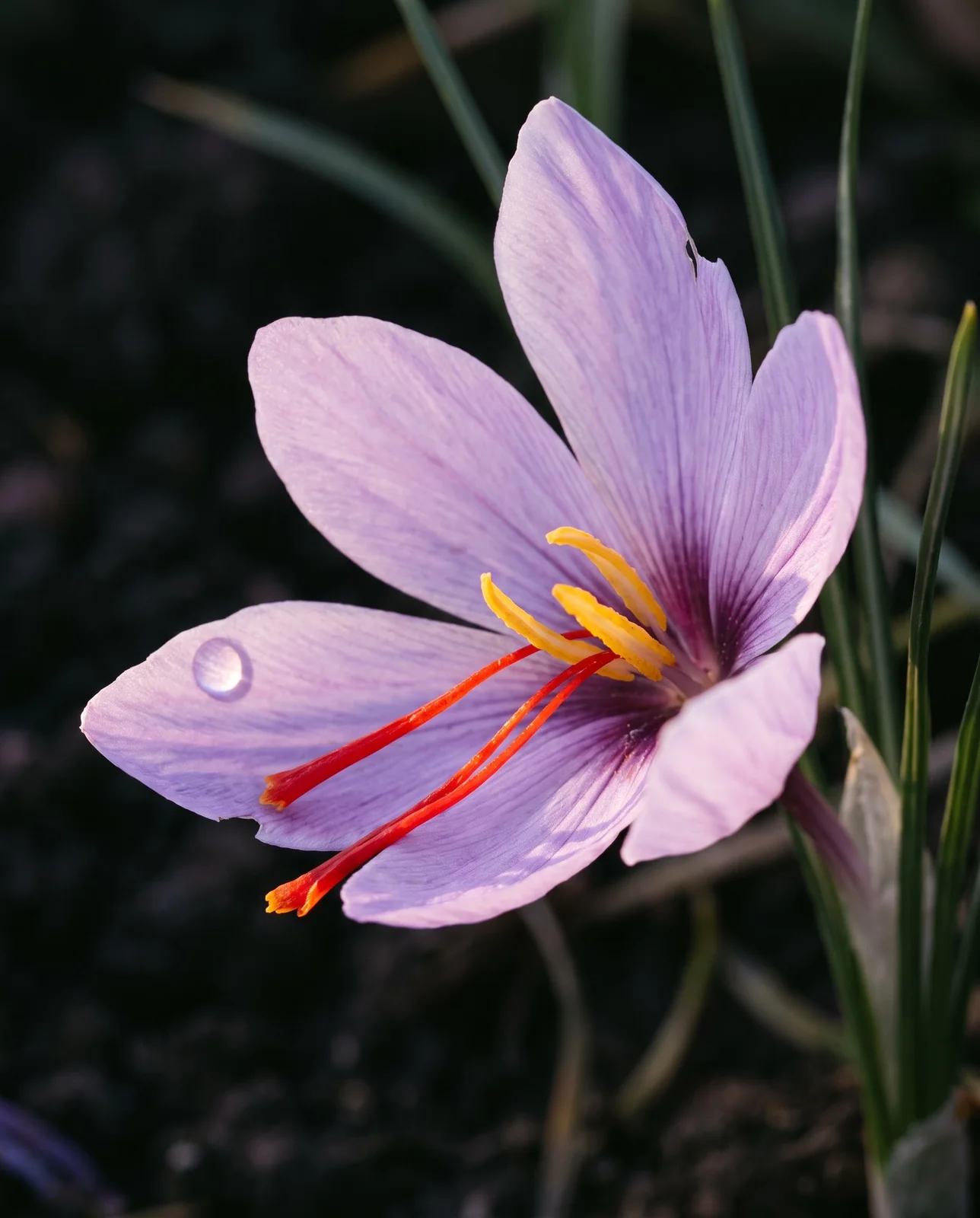
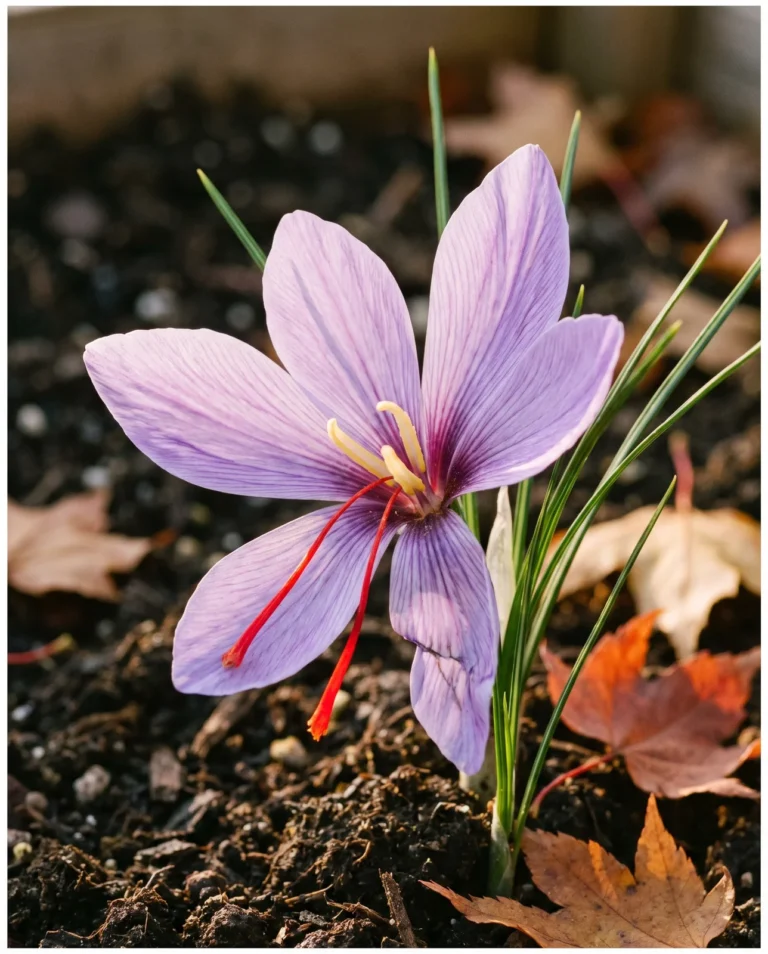
Culinary saffron comes only from Crocus sativus, never from Colchicum and never from a spring garden crocus. Each Crocus sativus flower carries three long, drooping, crimson-red stigmas attached to a central style, and those threads, plucked and dried, are the spice. The Royal Horticultural Society puts the yield at roughly 150 flowers for a single gram of dried saffron. Harvesting or eating any part of Colchicum autumnale is dangerous by comparison: the whole plant carries toxic colchicine alkaloids.
Telling true crocus apart from toxic autumn crocus
Two plants share the common name autumn crocus. Only one is a crocus, and only one is safe around dogs, cats and horses.
The iris family, Iridaceae. Exactly 3 stamens, yellow or orange. C. sativus alone carries 3 long, bright red stigmas, the source of saffron. Leaves are narrow and grass-like with a silver-white stripe down the center. The ASPCA lists true crocus as non-toxic to dogs and cats.
Colchicaceae, historically filed with the lilies. 6 stamens, prominent around the central styles. No saffron structures at all, and no relation to the culinary spice despite the shared common name. Leaves are large, broad and fleshy, come up in spring, and are long gone by the time the leafless flowers open in fall. The plant contains colchicine and is severely toxic to dogs, cats and horses.
Match the corm to your planting goal
Fragrance
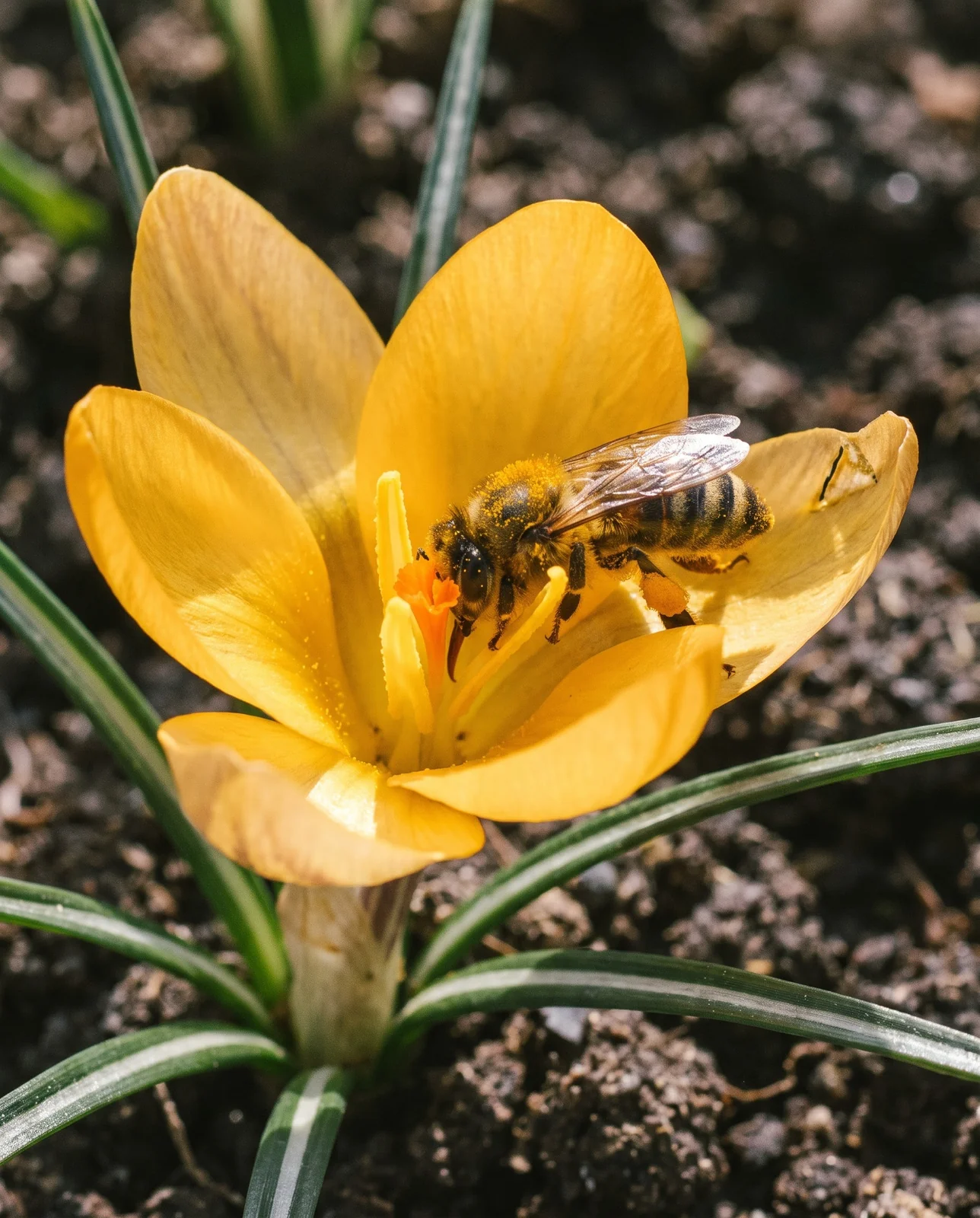
Most garden crocus, the big Dutch hybrids included, has little or no scent worth noticing. A few wild species and early cultivars carry a light honey sweetness that only shows once the flowers open in direct morning sun, and Missouri Botanical Garden describes Crocus chrysanthus selections as early spring bloomers with exactly that delicate honey fragrance, a scent that draws foraging bees on mild late-winter afternoons. In autumn a freshly opened Crocus sativus flower gives off the warm, earthy, bittersweet note that saffron threads are known for, while the petals around them stay only faintly floral.
Toxicity and pet safety
True crocuses, meaning the genus Crocus proper, including ordinary spring garden hybrids and the culinary saffron crocus (Crocus sativus), are listed as non-toxic to dogs and cats by the ASPCA Animal Poison Control Center. North Carolina State University goes a step further and notes that common crocus corms have historically been cooked and eaten as a root vegetable. A pet that works through a mouthful of raw fibrous corm may get a passing stomach upset, but a true crocus carries no systemic poisoning risk. Gardeners building a spring bed around a dog or cat can pair them with other flowers that are safe for pets.
Colchicum autumnale, the look-alike sold as autumn crocus or meadow saffron, is the opposite case. The ASPCA lists it as toxic to dogs, cats, and horses on the strength of colchicine and related alkaloids. Any part of the plant will do it, the underground corm most of all, and the clinical picture runs to severe oral irritation, bloody vomiting, diarrhea, shock, multi-organ damage, and bone marrow suppression. Colchicine poisoning is an emergency that needs a veterinarian, which is reason enough not to put Colchicum anywhere a pet can reach it.
In the vase and dried
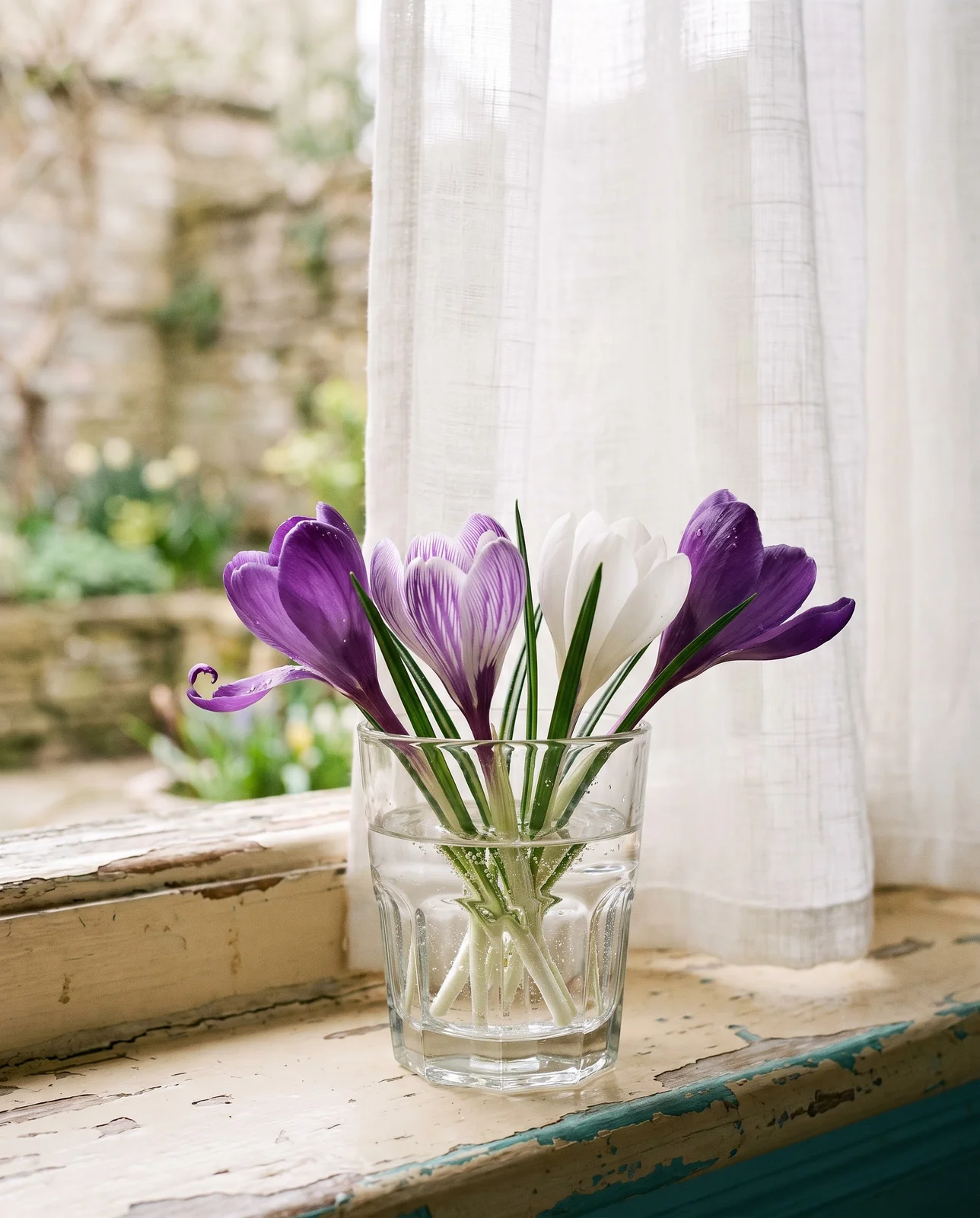
Crocus is rarely cut. The stems run only 2 to 6 inches, and a cut flower keeps its daily rhythm indoors, shutting tight at dusk or under dim room light no matter how fresh the water is. For a small posy, cut freshly opened stems on a sunny morning and stand them in shallow cordial glasses or small bud vases. Drying is where Crocus sativus earns its keep instead: pull the three red threads out of each flower with tweezers and lay them on paper towel over a wire rack for at least 24 hours, which holds both the color and the flavor for storage.
Pests and diseases
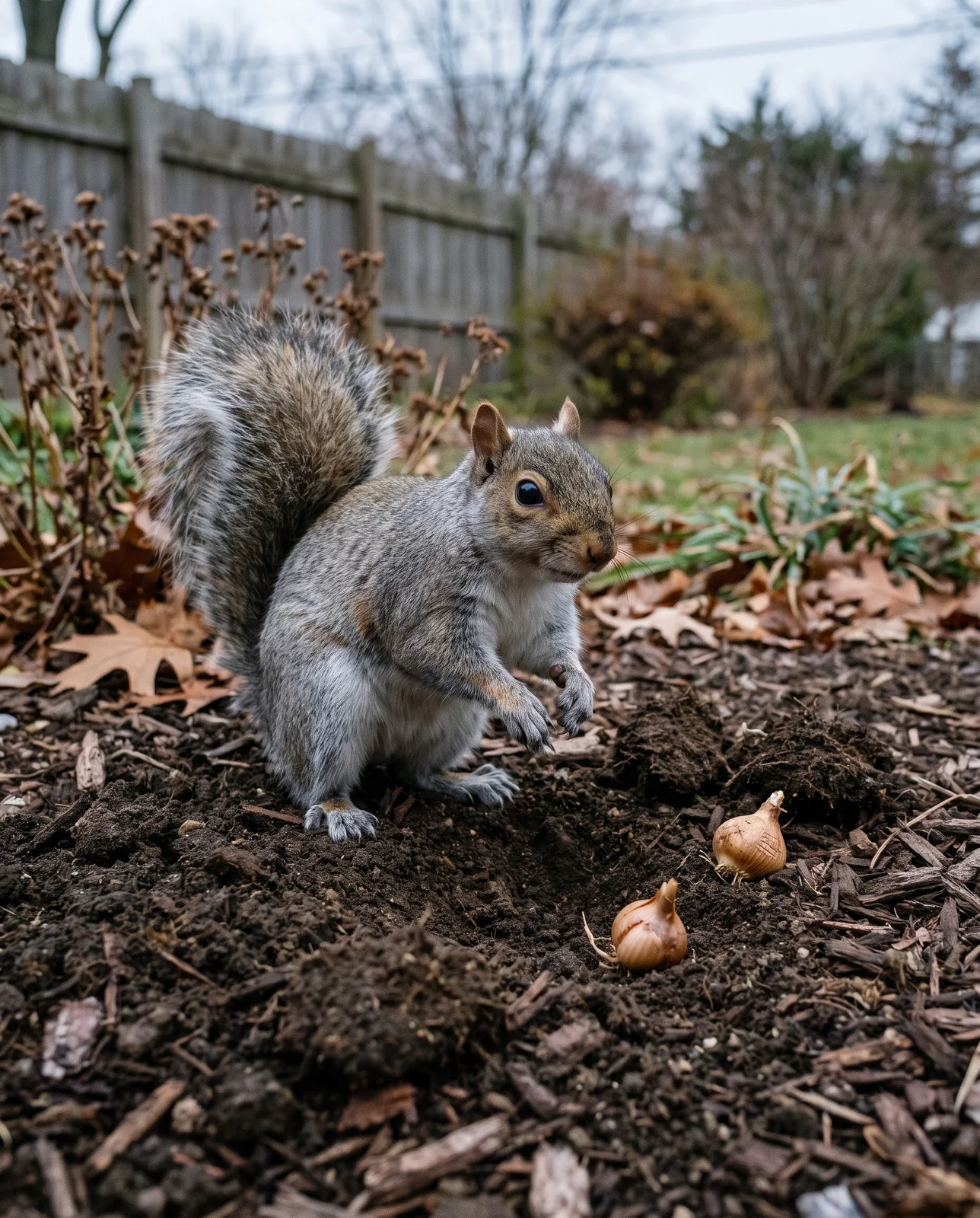
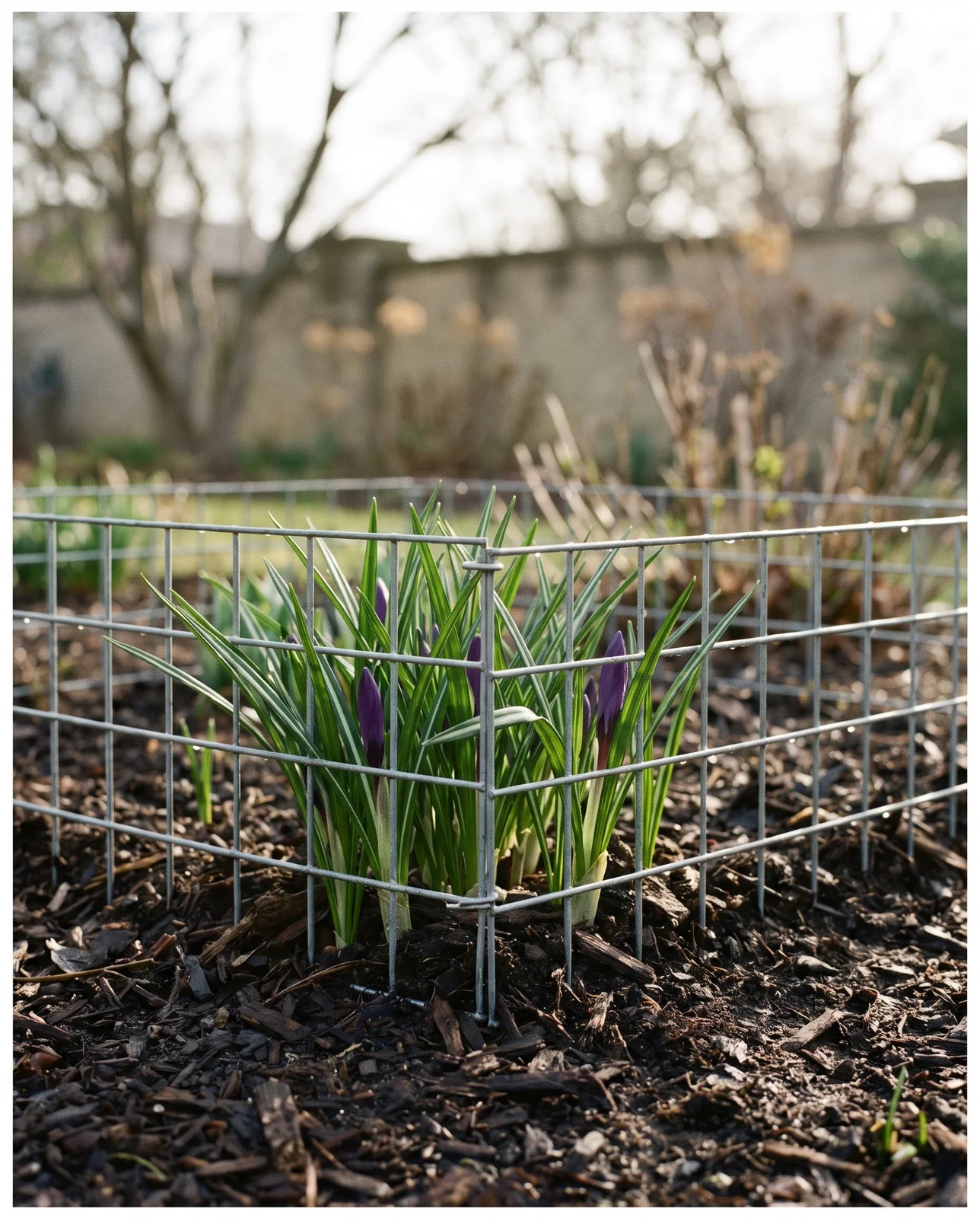
The worst thing that happens to a crocus planting has fur, not spores. North Carolina State University Extension notes that squirrels are particularly adept at locating, digging up, and eating newly planted corms, and chipmunks, field mice, and voles work the same freshly disturbed soil for the same reason. Daffodils are left alone because their alkaloids taste foul to wildlife; crocus corms are simply food. The defense is physical: lay hardware cloth or chicken wire over the planting trench before backfilling, so shoots come up through the mesh and paws cannot get down through it.
Disease, when it shows up at all, traces back to water. Saffron crocus picks up fungal disease if the bloom period coincides with a wet spell, and any crocus rots at the root in a poorly drained site. In dense soil with no air space, water molds go after dormant corms and turn them soft, gray, and mushy. Fast drainage, coarse grit worked in, no overhead watering while the corms are dormant, and firm, unblemished corms at planting time keep rot out of the bed.
What goes wrong with crocus, and how to prevent it
Four recurring problems, drawn from regional extension records and gardening communities, each with the fix that prevents it.
Excavated holes appear in the bed in autumn, and no shoots come up in spring. Prevention: lay wire hardware cloth over the planting area and firm the soil down well after backfilling.
Corms weaken season by season and stop flowering in following springs. Prevention: hold off the first spring mowing until six weeks after the flowers finish.
Corms turn to soft mush and no shoots push above ground. Prevention: plant only in gritty, freely draining sandy loam, and stay out of low-lying wet beds.
Dense clumps make plenty of thin, grass-like leaves and few or undersized flowers. Prevention: lift and divide the clumps every four years during summer dormancy.
FAQ
What does the crocus flower symbolize?
Crocus comes up through late-winter ground and melting snow before anything else in the garden, and the symbolism follows straight from that: rebirth, joy, new beginnings, and the arrival of spring.
What is the Greek myth of Crocus?
In Greek legend the mortal youth Crocus loved the nymph Smilax, the love came to nothing, and the gods turned him into the purple flower that carries his name and turned Smilax into a bindweed or yew vine. It is folklore rather than botany, but it is where the flower's association with devotion begins.
Is the crocus flower poisonous to dogs and cats?
True spring crocuses (Crocus vernus, Crocus chrysanthus) and saffron crocus (Crocus sativus) are non-toxic to dogs and cats according to the ASPCA. The look-alike sold under the same common name, Colchicum autumnale, contains colchicine and is toxic to dogs, cats, and horses.
Is crocus the same plant that produces saffron?
Only one species makes it. Culinary saffron comes from the autumn-flowering Crocus sativus, specifically the three red stigmas in the center of each flower. Common spring-blooming garden crocuses do not produce saffron, and Colchicum autumnale, despite being sold as meadow saffron, must never be used.
How is crocus pronounced, and what is the proper plural form?
It is said /kroh-kus/. Both "crocuses" and "croci" are correct plurals, and "crocuses" is the standard everyday form in American English.
Why did my planted crocuses fail to bloom?
Four causes cover most cases: rodents dug the corms out in autumn, the lawn was mowed before the leaves had their six weeks after bloom, the soil stayed waterlogged and the corms rotted, or the clump has gone four years or more without division and is now too crowded to flower well.
Flower photos
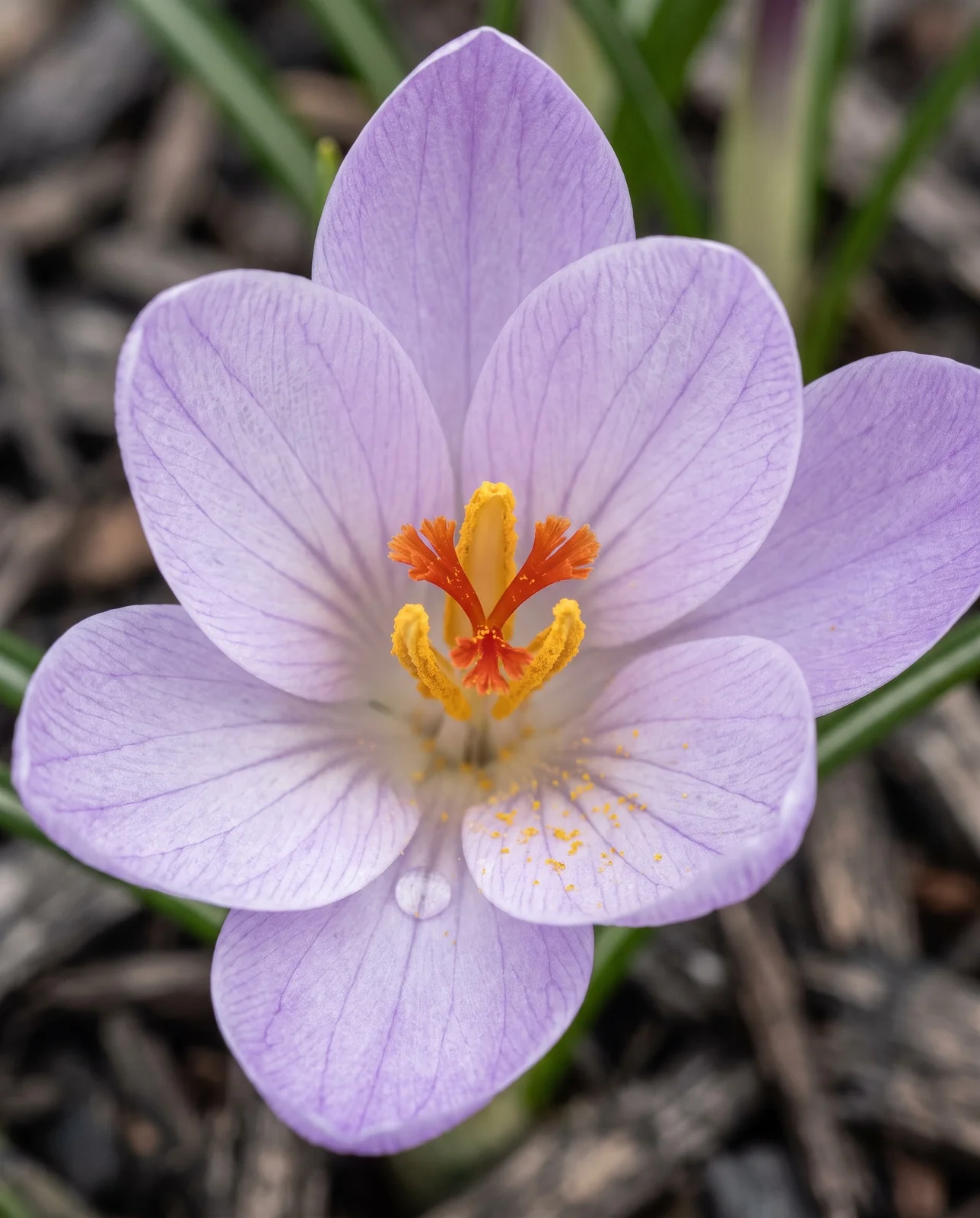
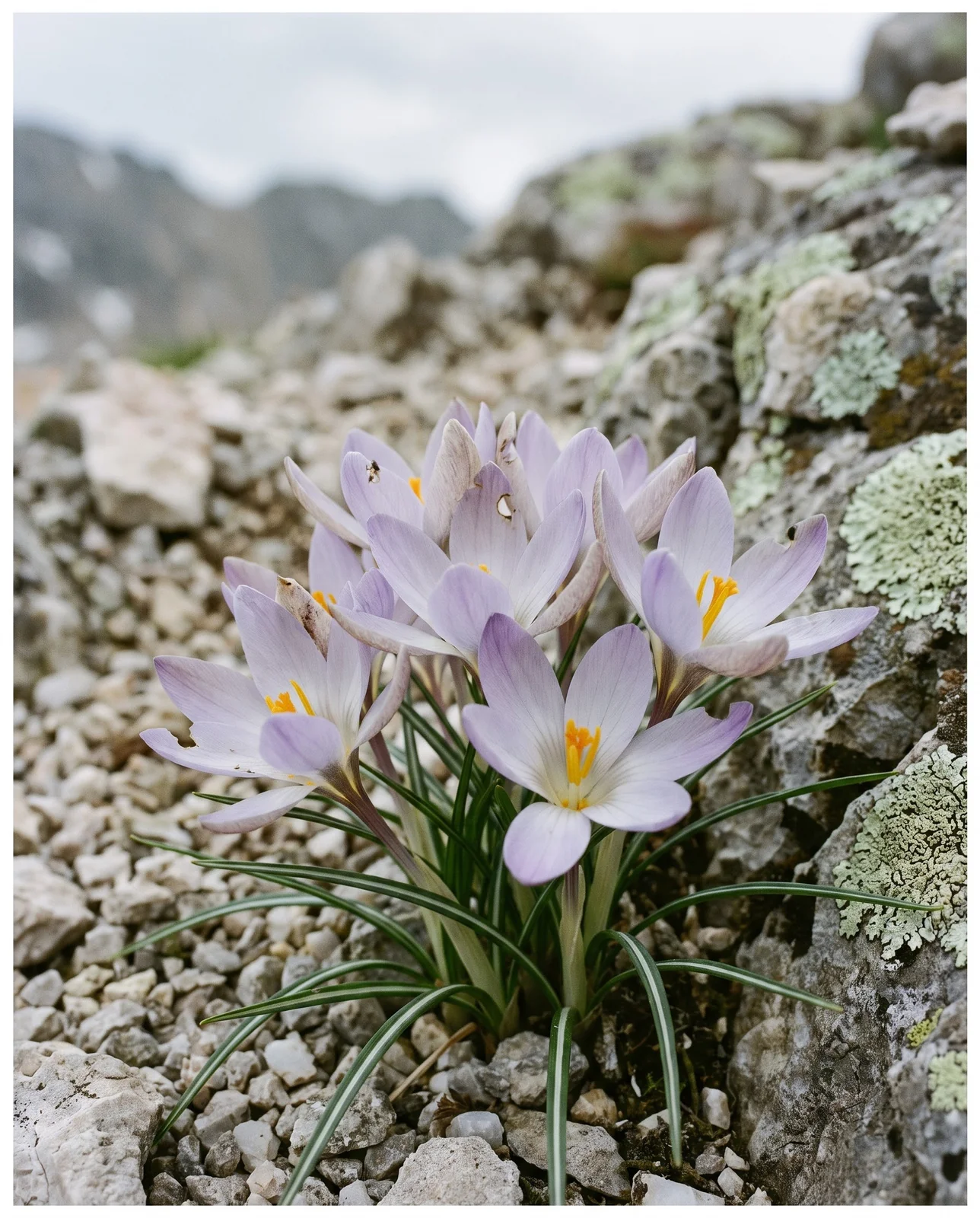
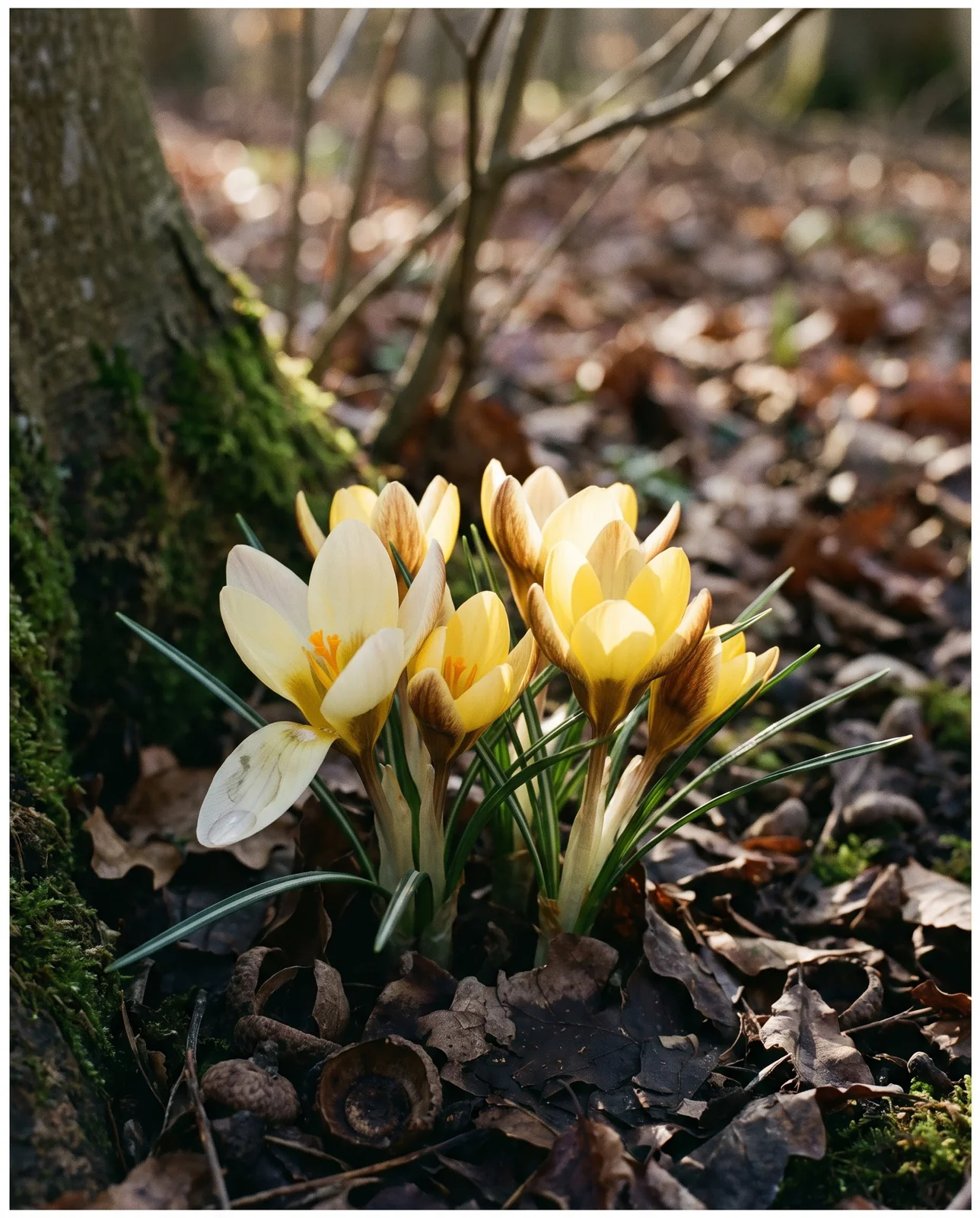
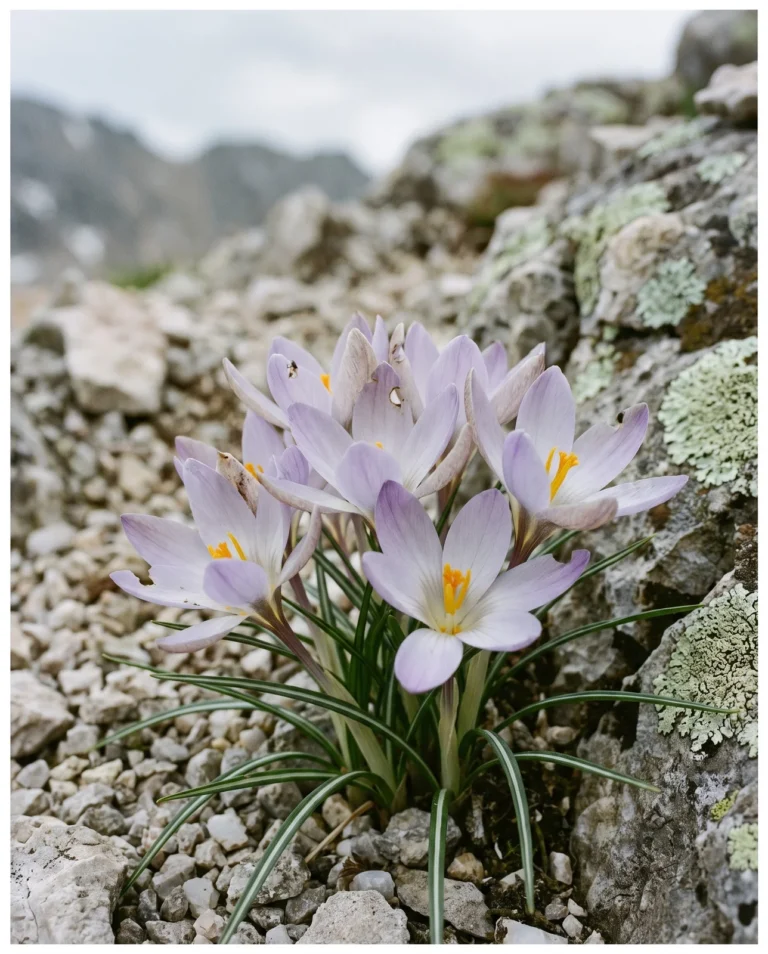
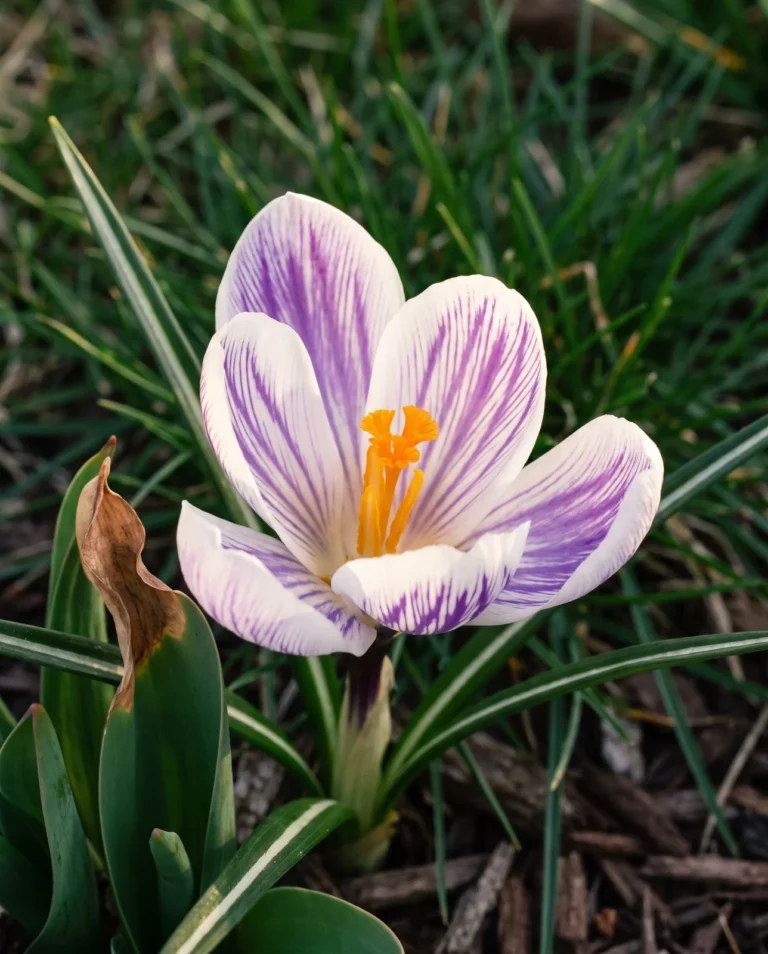
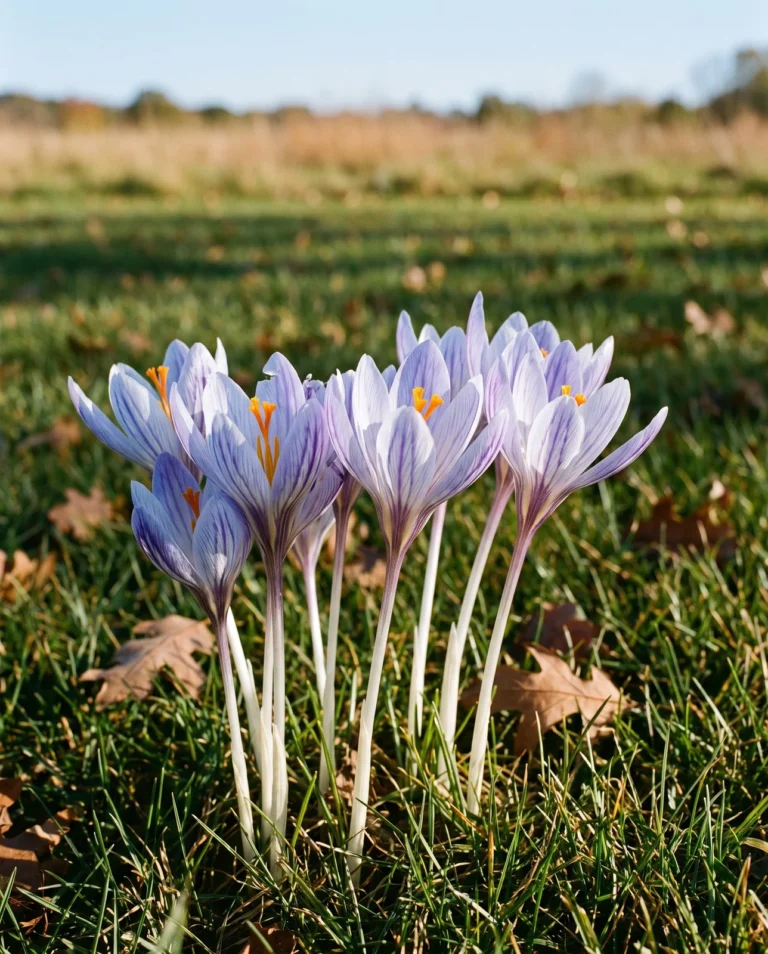
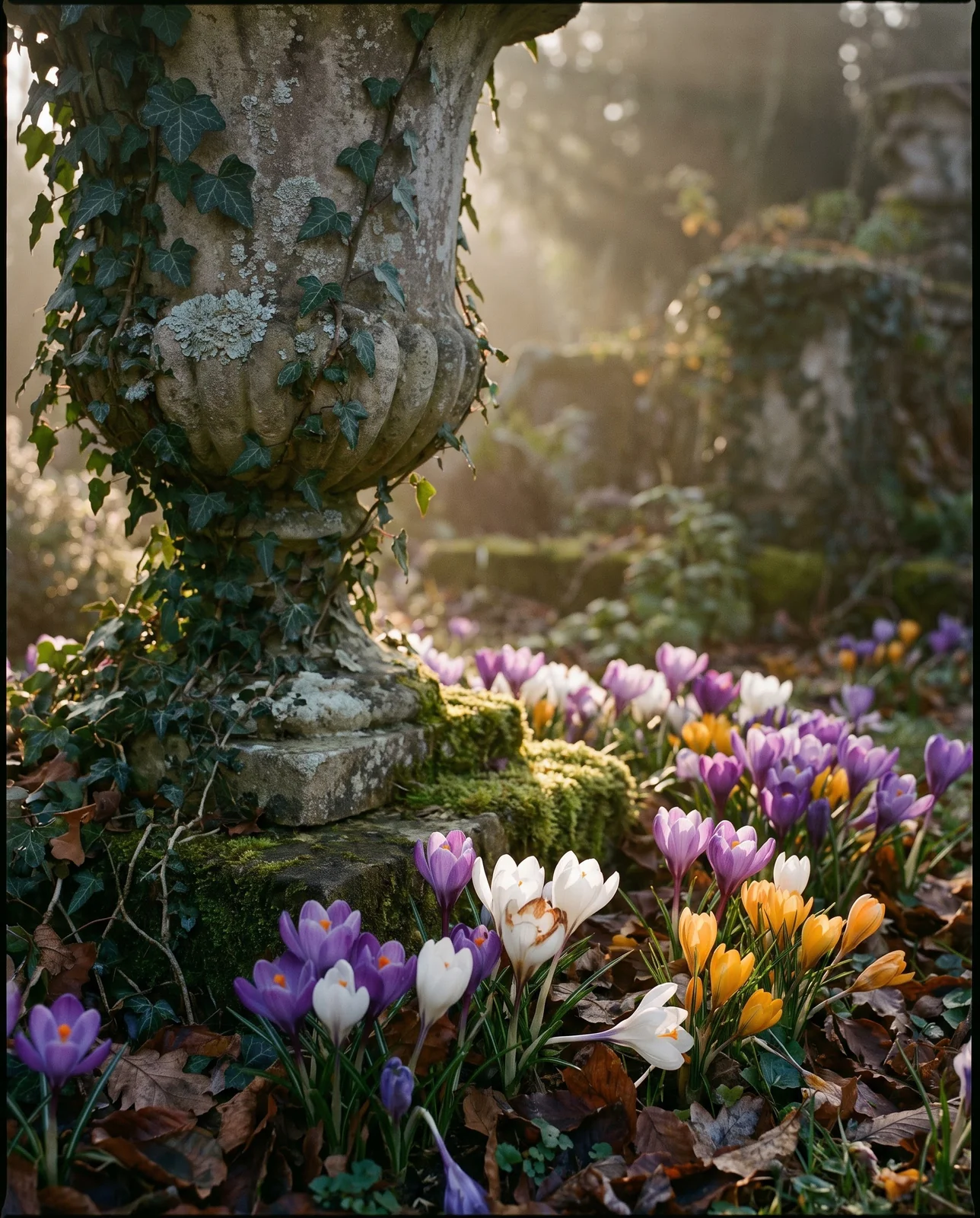
Within the genus Crocus, these types of flowers differ in blooming schedule, petal pattern, and garden use. The photos below cover the four main horticultural groups: the delicate wild snow crocuses, the large Dutch hybrids, the true autumn-blooming species, and the historic saffron crocus.
Four crocus types worth knowing apart
Four crocus types cover most of what is sold and planted, from the earliest snow crocus to the true autumn bloomers and the one that makes saffron.
Interesting tips
The plant carries a Greek story. The youth Crocus loved the nymph Smilax, the love went unfulfilled, and the gods turned him into the small purple flower that still carries his name, with Smilax becoming a twining vine. It is folklore rather than botany, but it is where the long reading of crocus as a symbol of devotion comes from.
Crocus flowers are photonastic and thermonastic, a formal way of saying that they answer directly to light and warmth. The petals swing wide when the sun reaches them and shut tight at dusk or when cloud rolls over, keeping the pollen out of night damp and cold spring wind.
Crocus also holds an esteemed place in domestic gardening, turning up again and again in national bulb selections for its reliability and its pollinator value. That second half is the part gardeners underrate: the flowers are open and loaded with pollen weeks before most garden perennials have broken ground, which puts them in front of queen bumblebees and honeybees coming out of winter diapause at a point in the year when there is almost nothing else to work.
Three misunderstandings about growing crocus
The myth: Any crocus flower growing in the garden can produce culinary saffron spice.
The reality: Culinary saffron comes only from Crocus sativus. Common spring crocuses produce nothing usable, and the autumn-blooming Colchicum autumnale, the plant most often mistaken for it, is toxic.
The myth: Crocus foliage can be mowed down immediately after the petals drop in spring.
The reality: The leaves have to stay green and uncut for about six weeks so they can photosynthesize and refill the corm for next season's blooms.
The myth: Crocus grows from a true layered bulb like a tulip or onion.
The reality: Crocus grows from a corm, a solid swollen stem base that replaces itself every year by producing daughter cormels.

Related Guides & Flowers
Snowdrop
Flowers even earlier than crocus and pairs with it in lawns and under deciduous trees.
Hyacinth
A fragrant spring bulb that follows crocus by a few weeks in the same beds.
Daffodils
Deer-resistant spring bulbs that bloom while crocus foliage is still green.
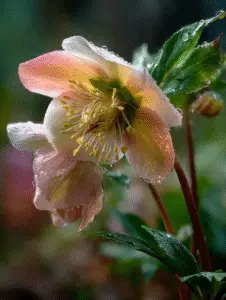
Hellebore
A late-winter perennial whose nodding flowers overlap with the first crocus.
Enjoying our flower guides? Add YourFlowersGuide as a preferred source on Google. It helps more readers find us.
Add to Preferred Sources