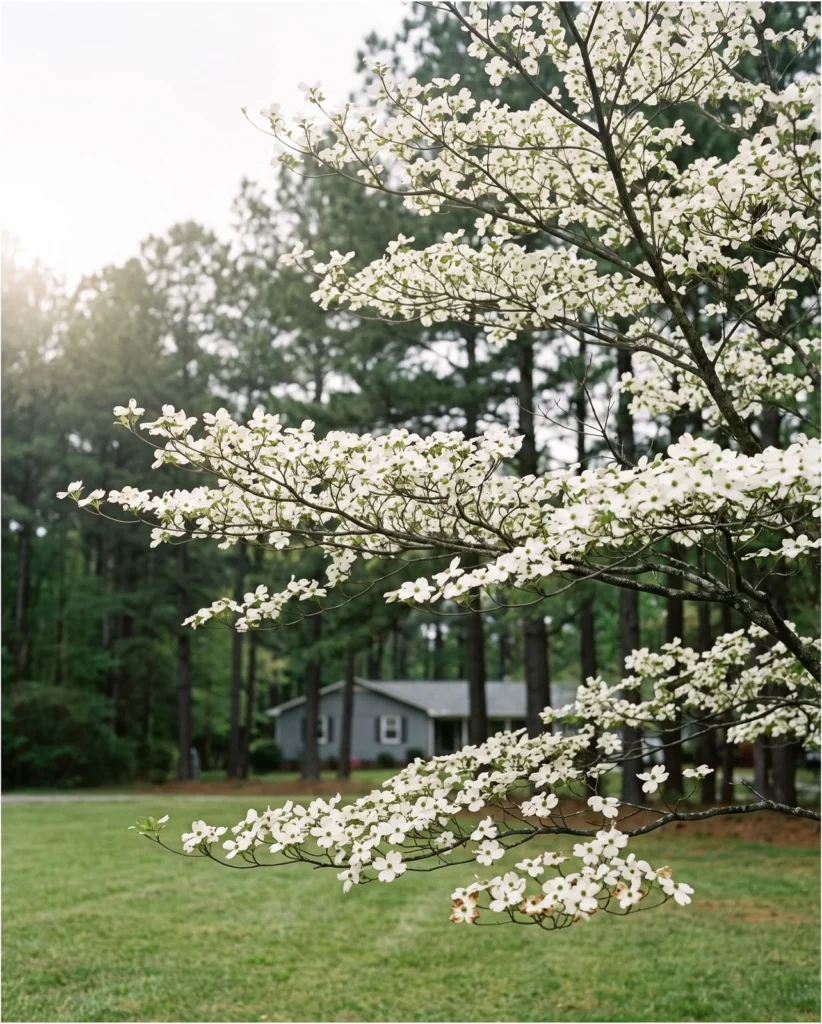
Taxonomy and origin
Dogwood is the common name for the genus Cornus, and the tree most Americans mean by it is the flowering dogwood, of the family Cornaceae. It is native to eastern North America, from Maine to southern Ontario to Illinois to Kansas and south to Florida, Texas and Mexico. It grows nowhere in the Old World except where somebody planted it. Missouri and Virginia claim it as their state tree, North Carolina as its state flower. The name probably traces to skewers once cut from the hard slender stems and called dags or dogs.
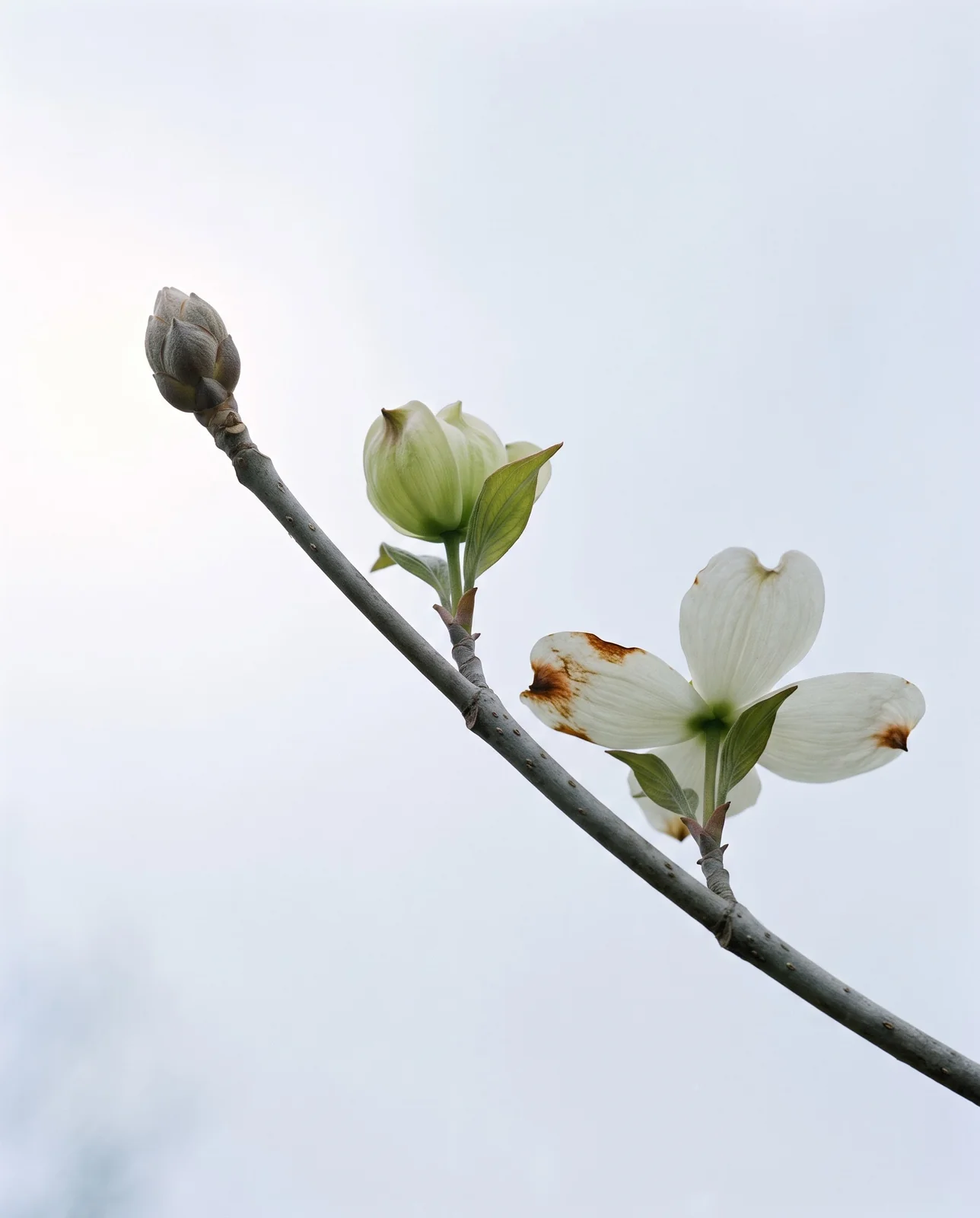
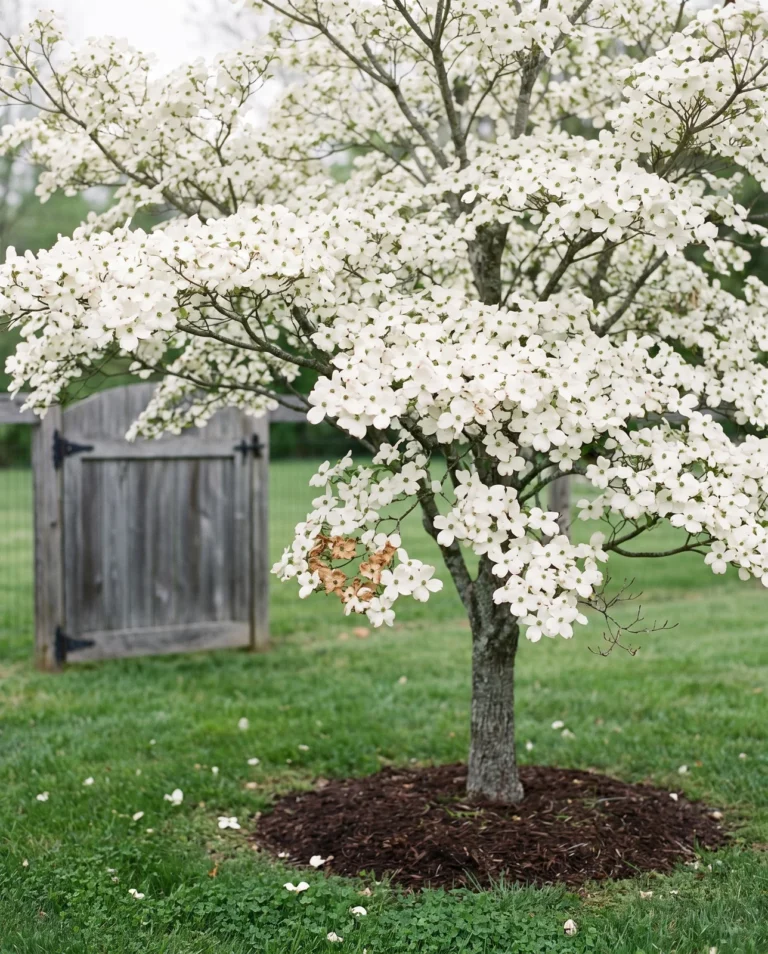
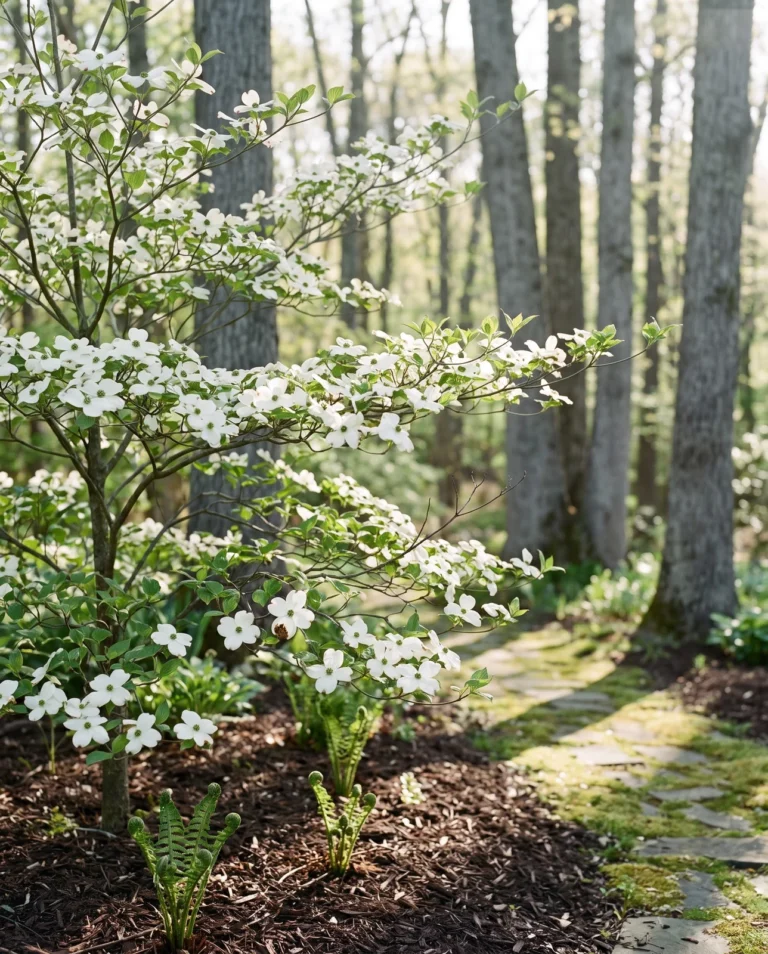
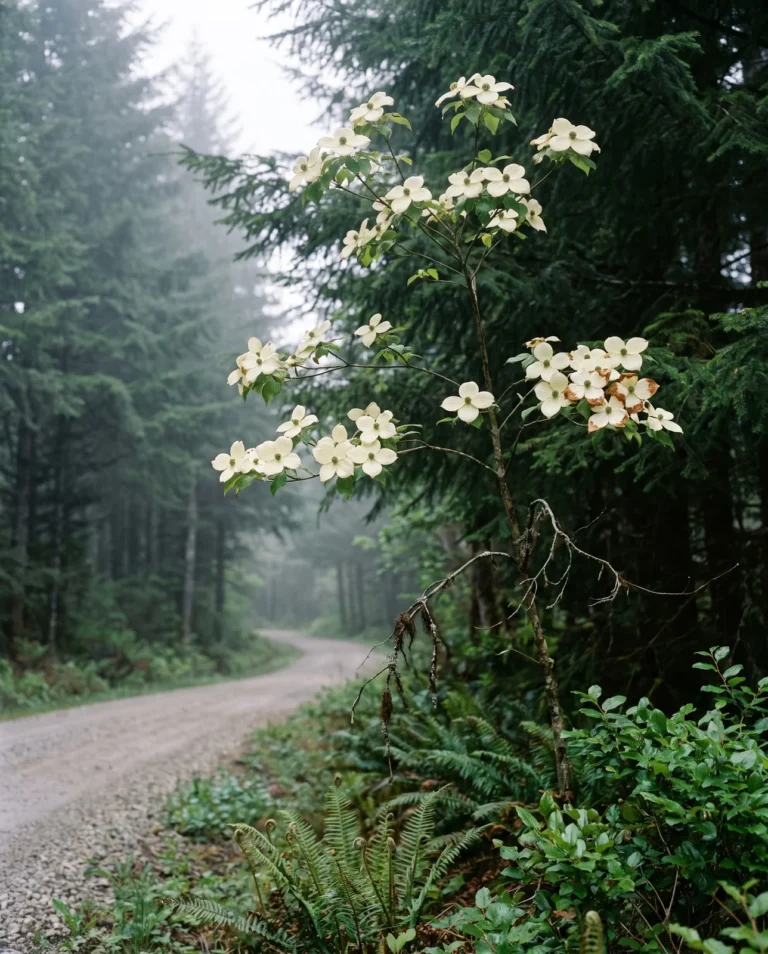
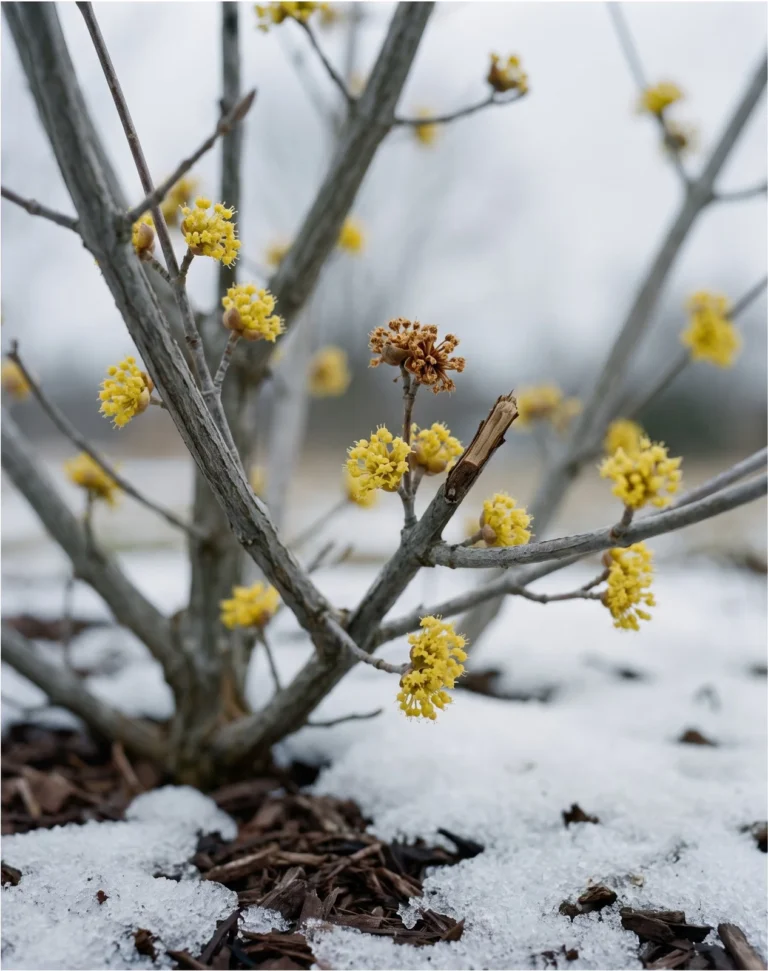
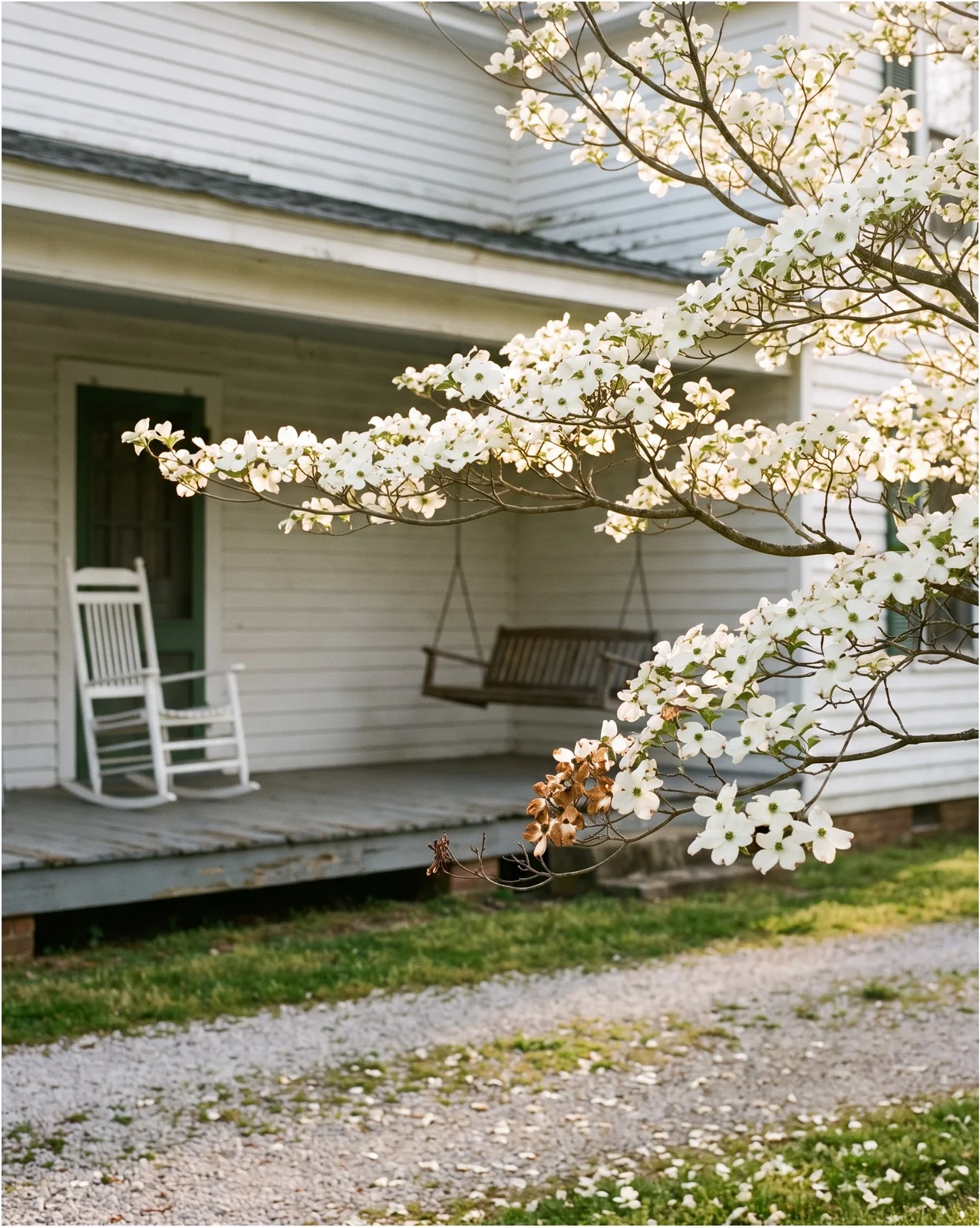
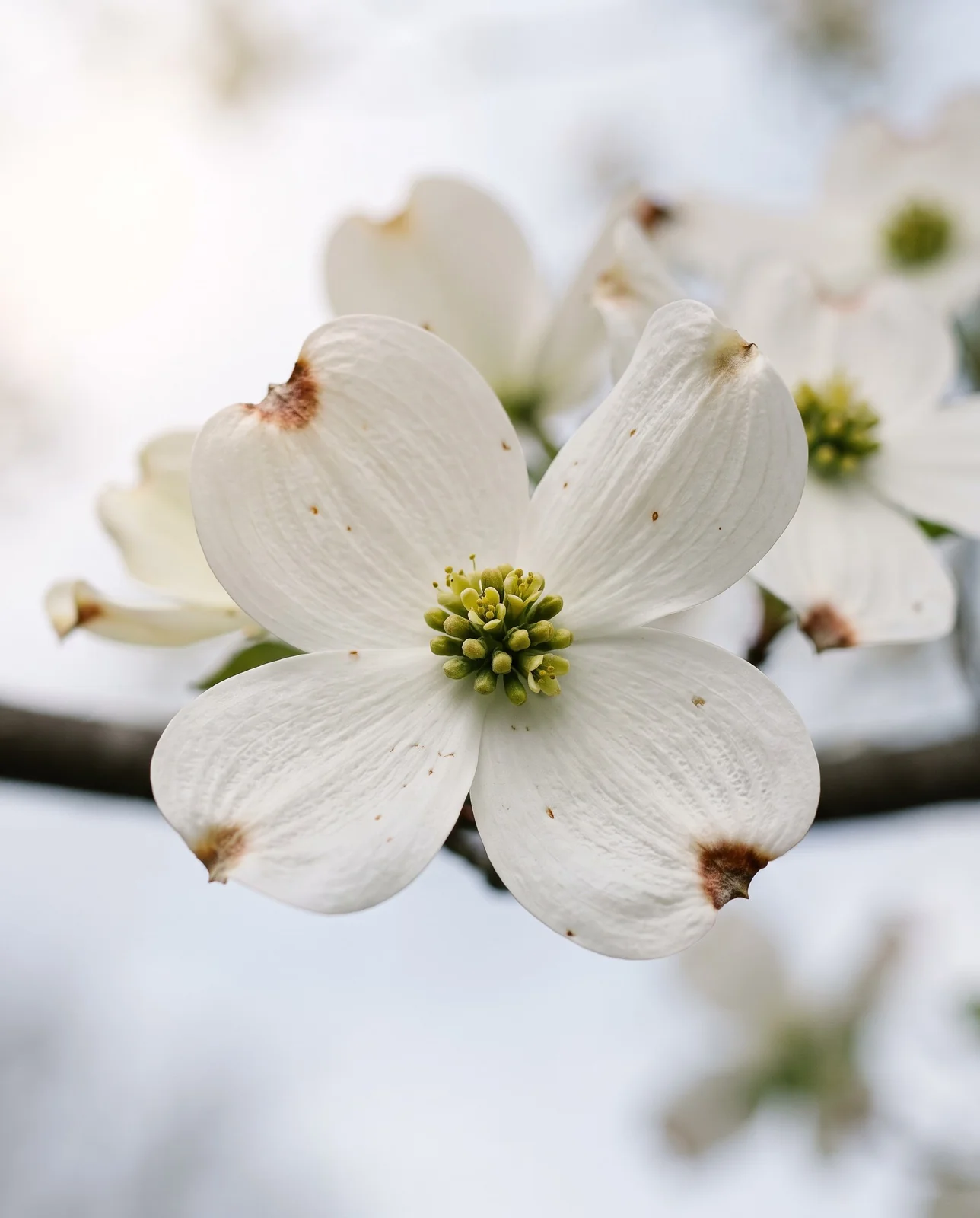
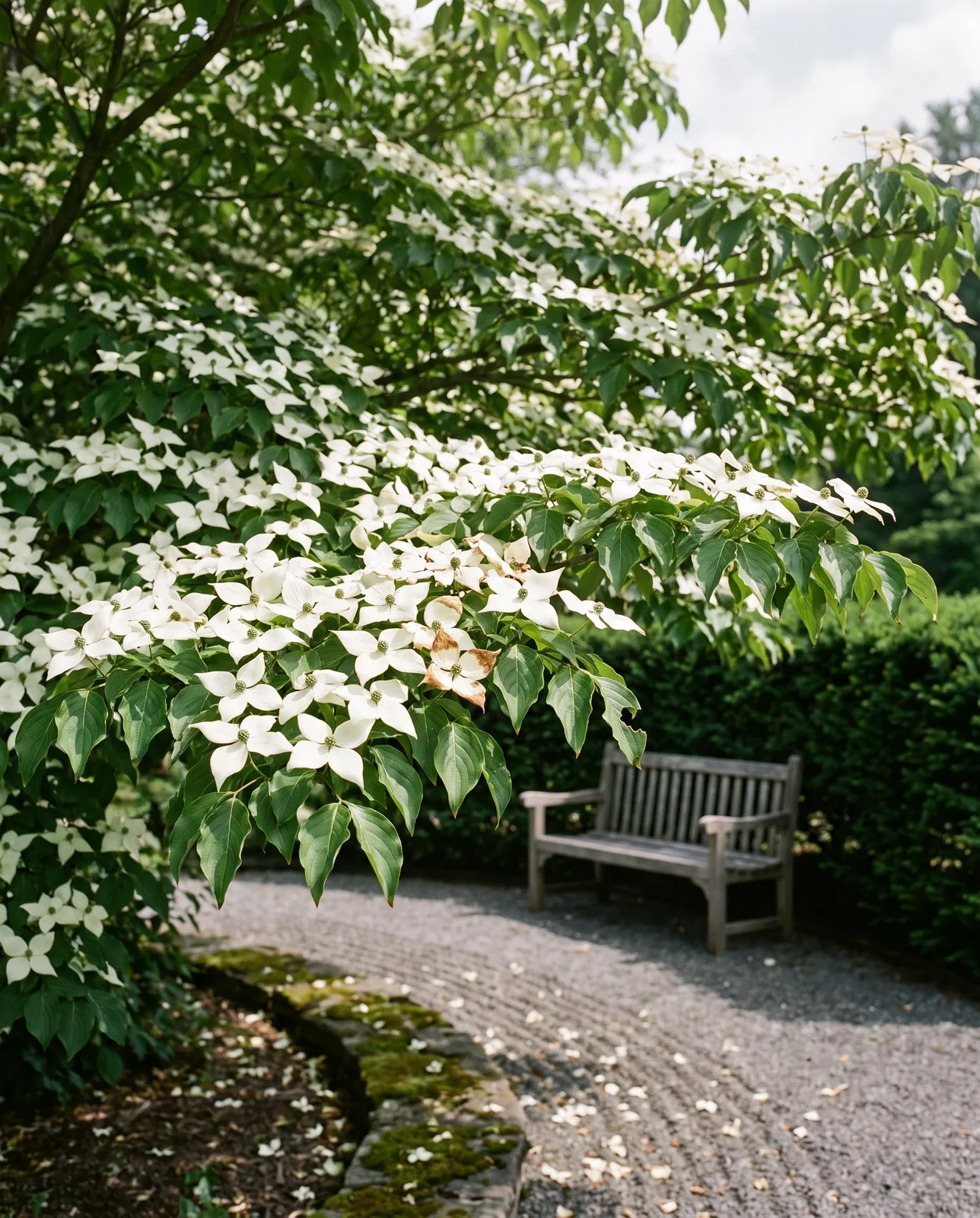
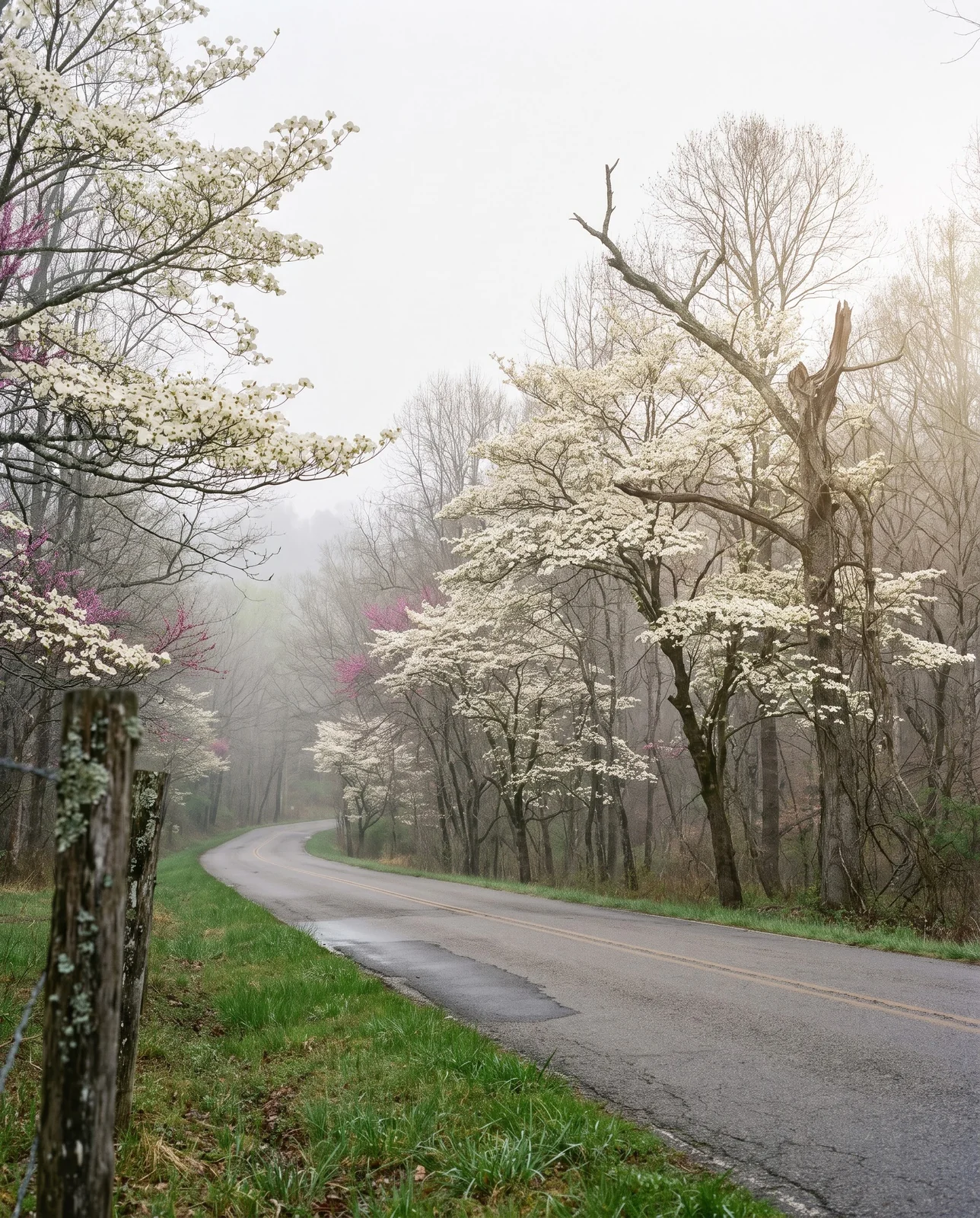
The showy part is not a flower. Four bracts, modified leaves doing the work of petals, ring a button of 25 to 30 small true flowers, yellowish green and easy to miss. Open and flat, that ring reads from across a yard as one white flower 3 to 4 inches wide. Two details name the genus once the bracts fall: leaf veins that curve toward the tip and stop short of the margin, and branches lying in flat horizontal tiers, clearest in shade. The word covers more than that one tree. Kousa comes from Japan, Korea, China and Taiwan, and Pacific dogwood is the western native. Cornelian cherry is European and Asian, multi-stemmed and shrubby, and the Rutgers hybrids are crosses of flowering dogwood and kousa.
Bloom time
Flowering dogwood opens in spring, April and May over most of the country, from mid-March in the South to late May in the North. The bracts come out before the leaves, so the flat white flowers carry a long way through bare woods. Watch for them just after the redbuds start, usually overlapping them. Kousa runs a month behind, flowering May into June with its bracts among fresh green leaves. Cornelian cherry works the other end of the calendar, opening tight clusters of small yellow flowers before its own leaves. Plant a native and a kousa and the yard carries bloom from April into June.
Dogwood types and cultivars worth telling apart
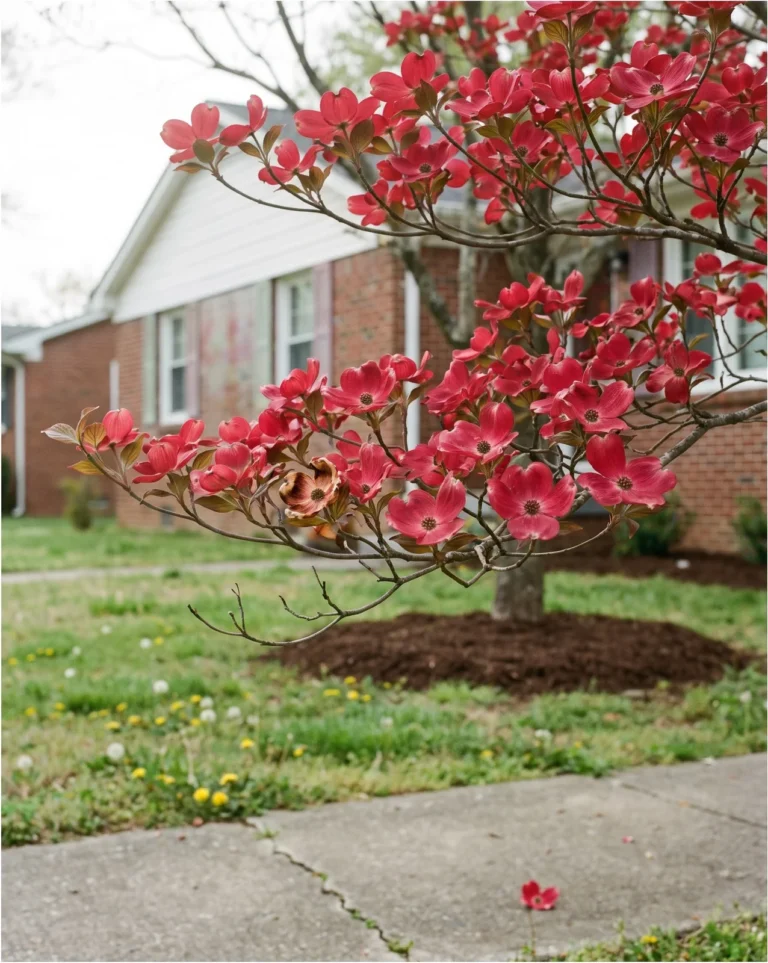
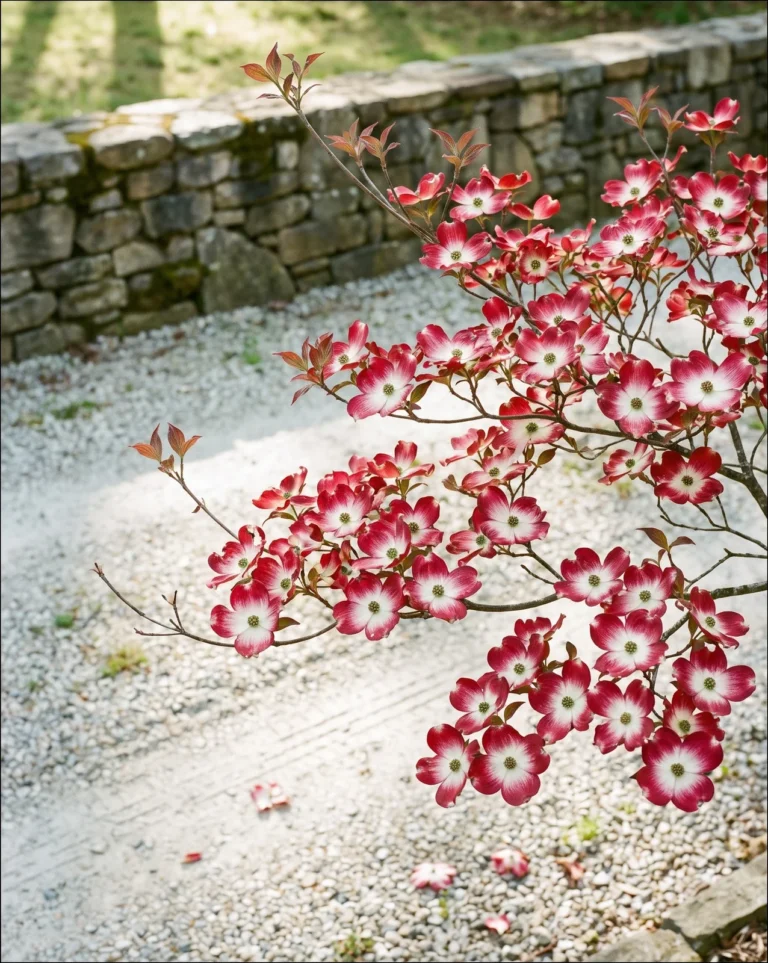
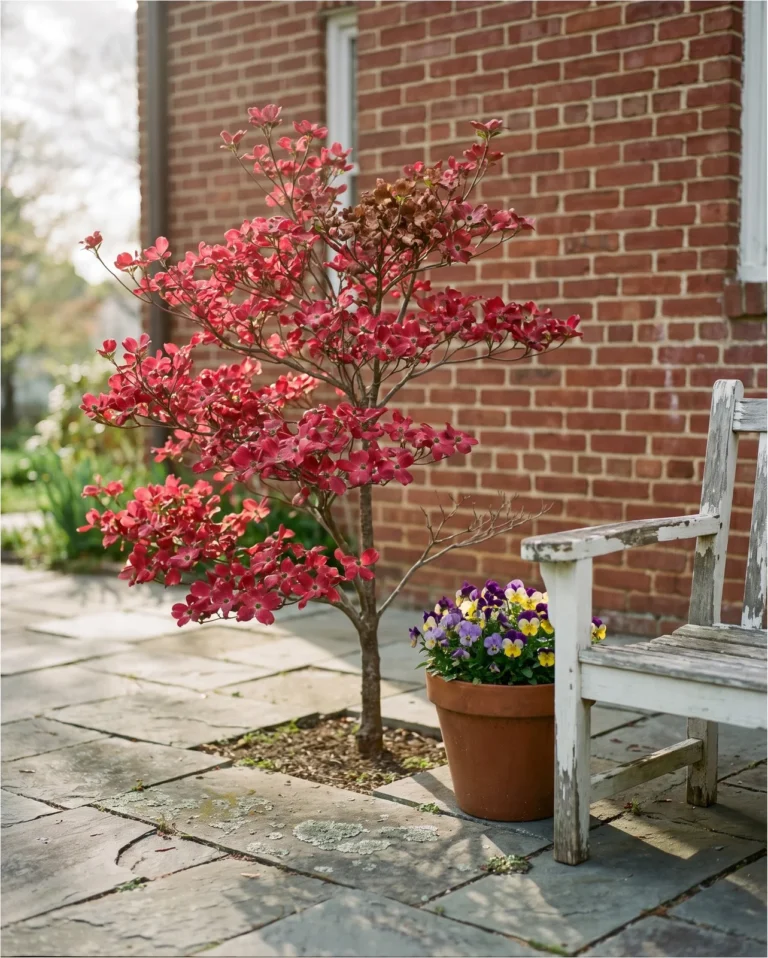
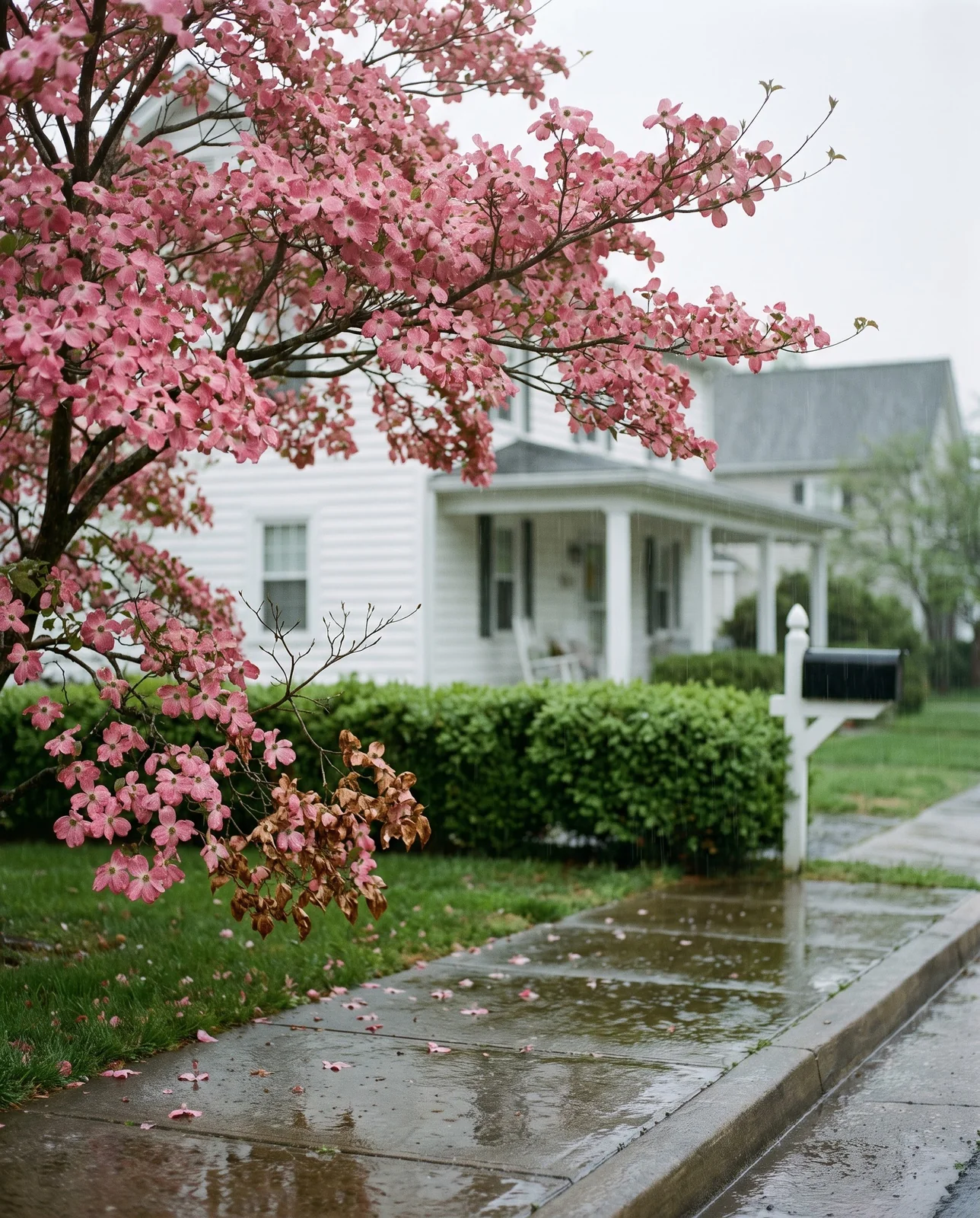
Every pink or red flowering dogwood traces back to one naturally occurring red-bracted variety. Most of the resistance printed on nursery tags belongs to kousa or to the Rutgers hybrids. Read a tag narrowly: spot anthracnose and dogwood anthracnose are different problems.
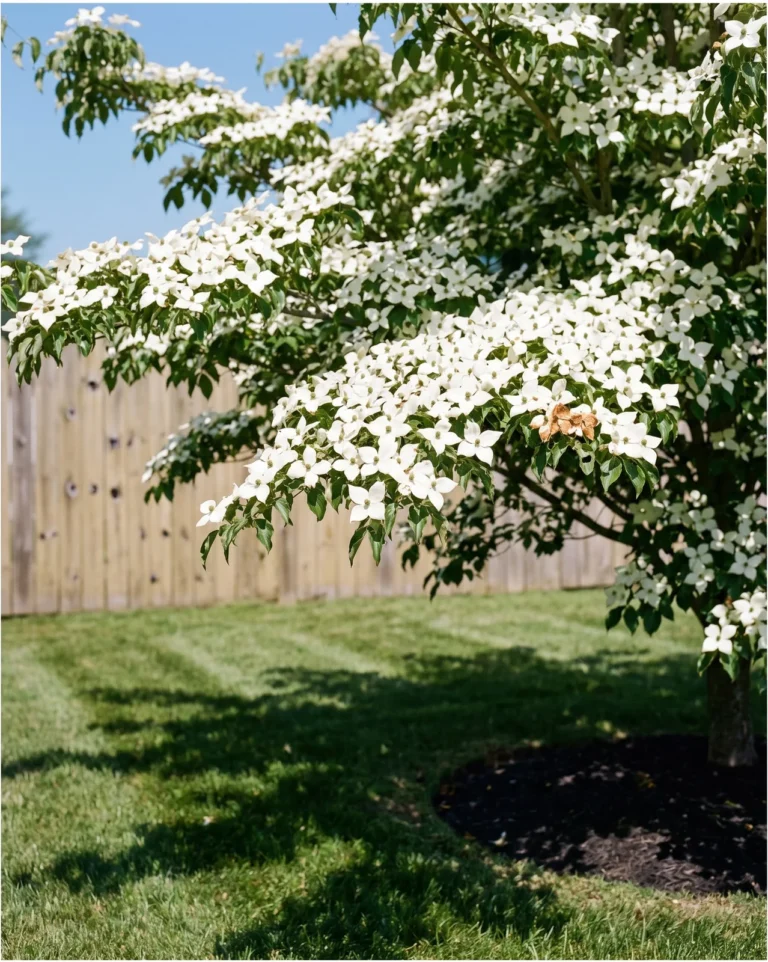
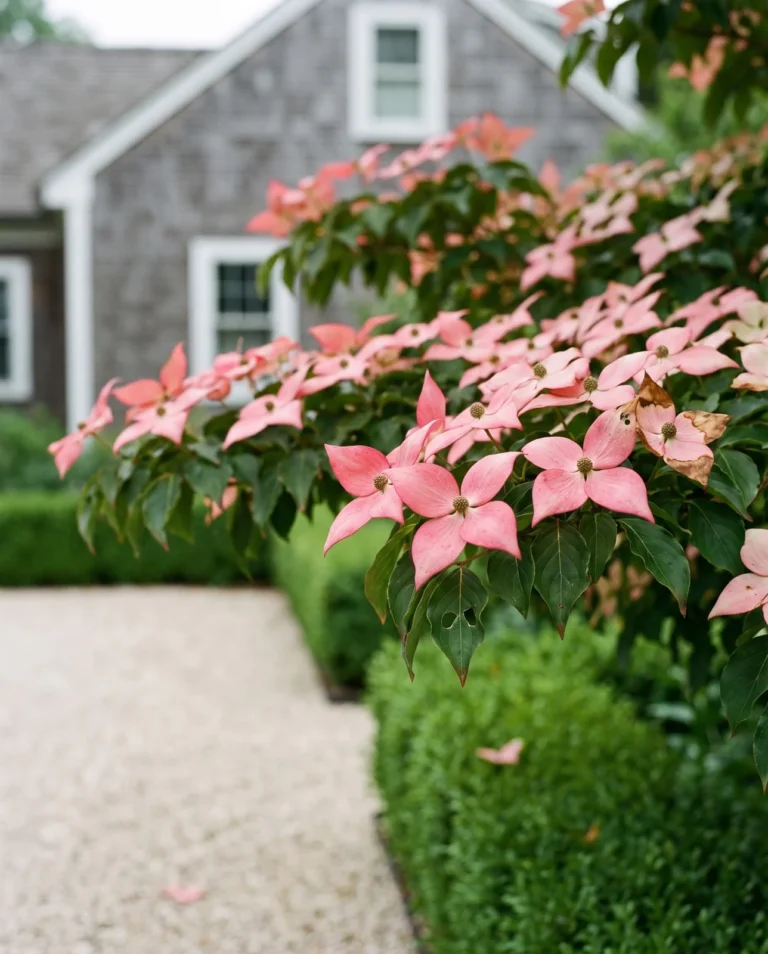
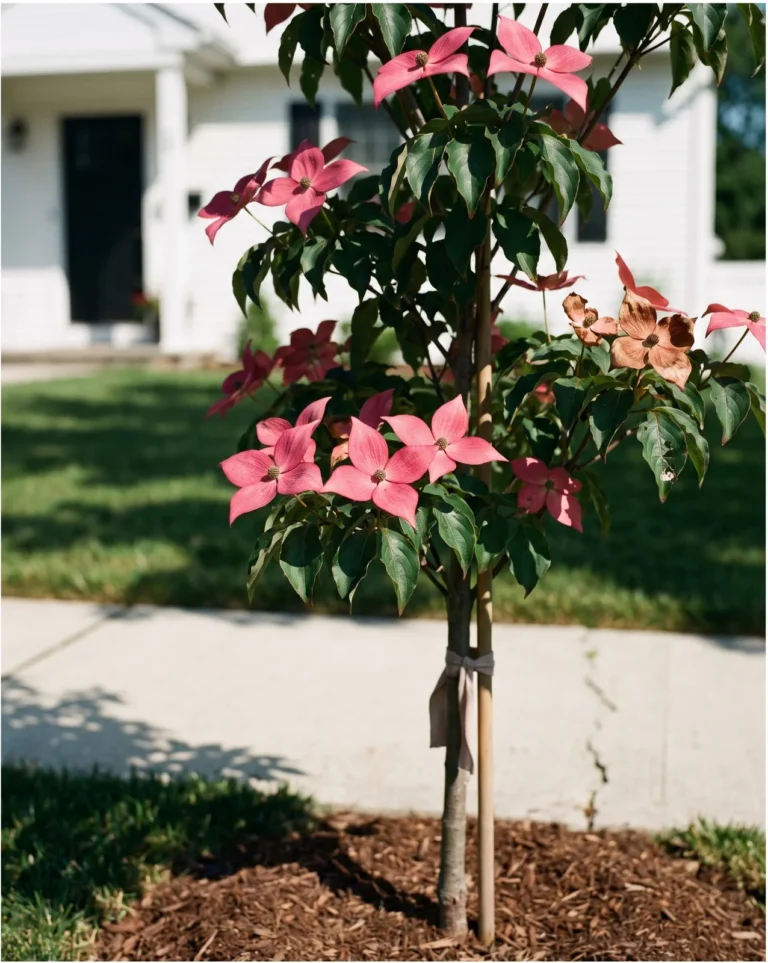
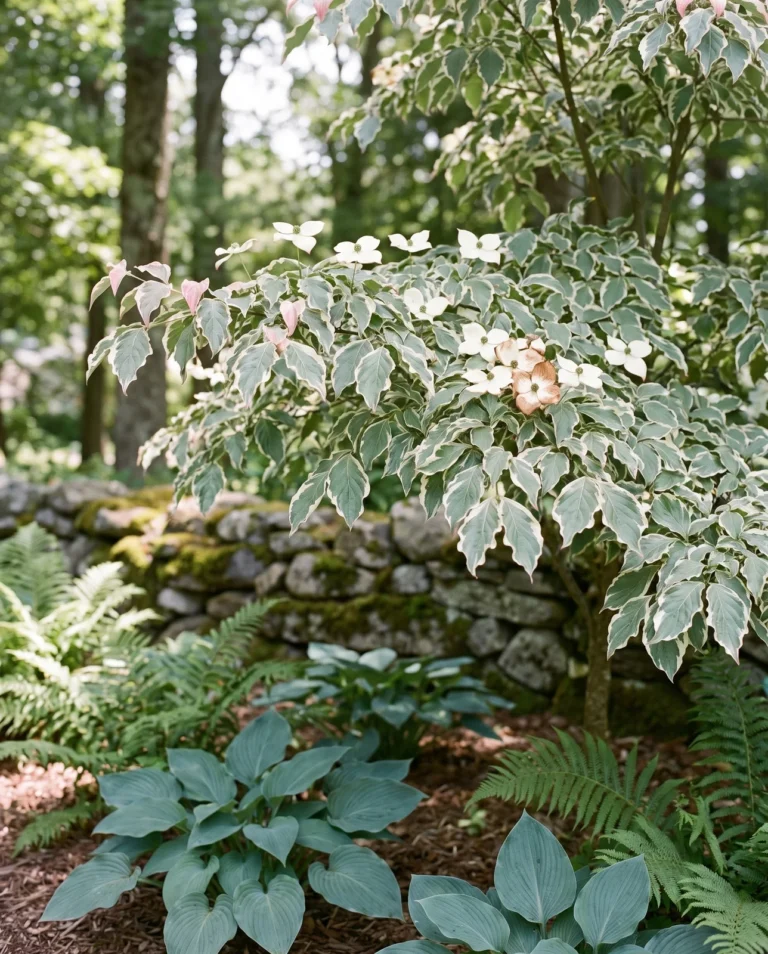
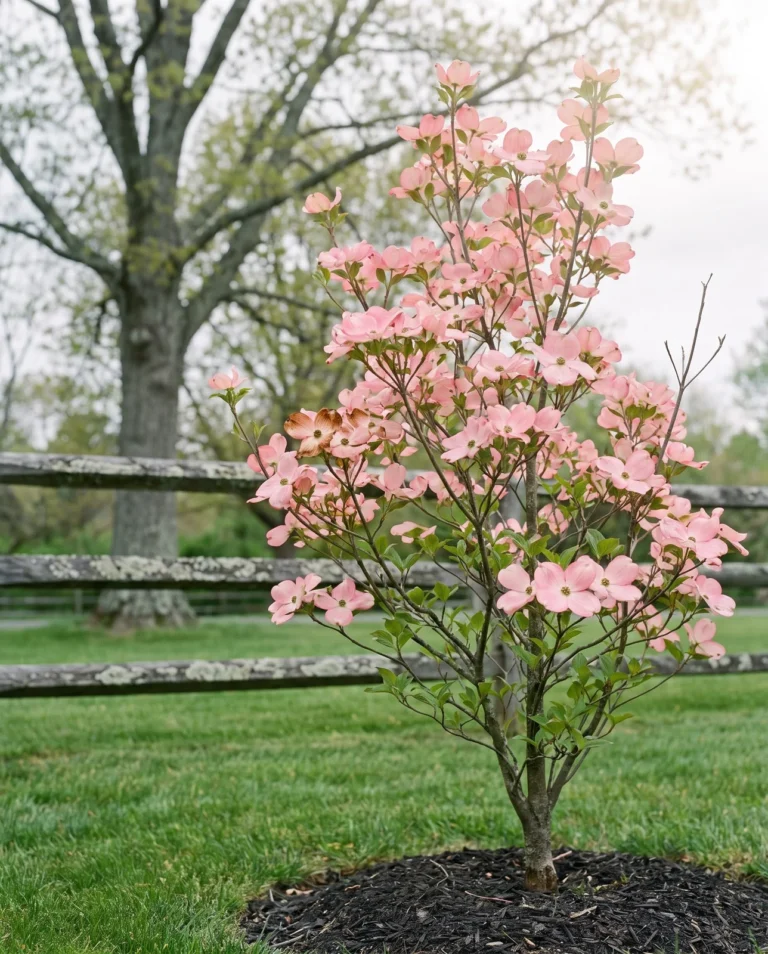
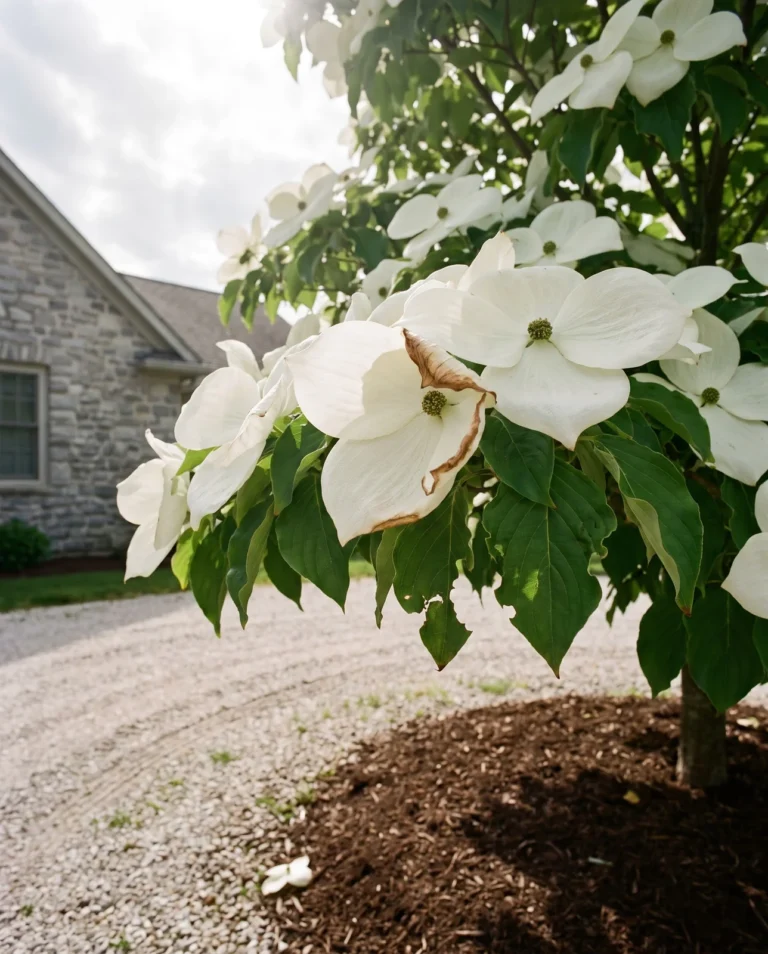
Which dogwood is which
The bract tip, the bark and the fruit sort the dogwoods fastest.
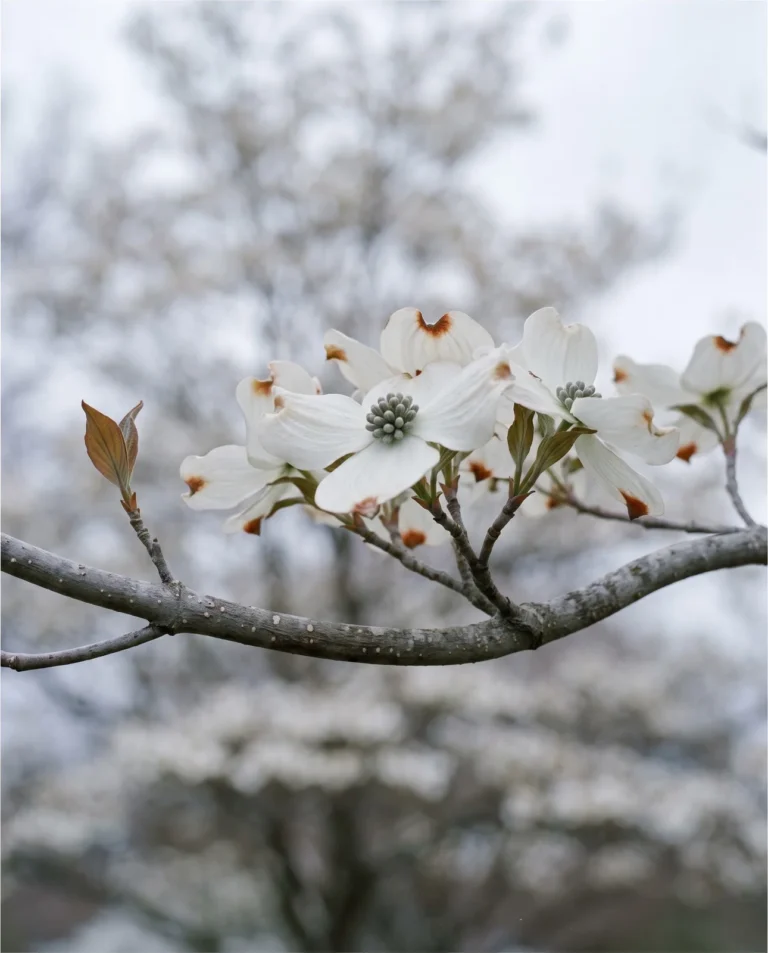
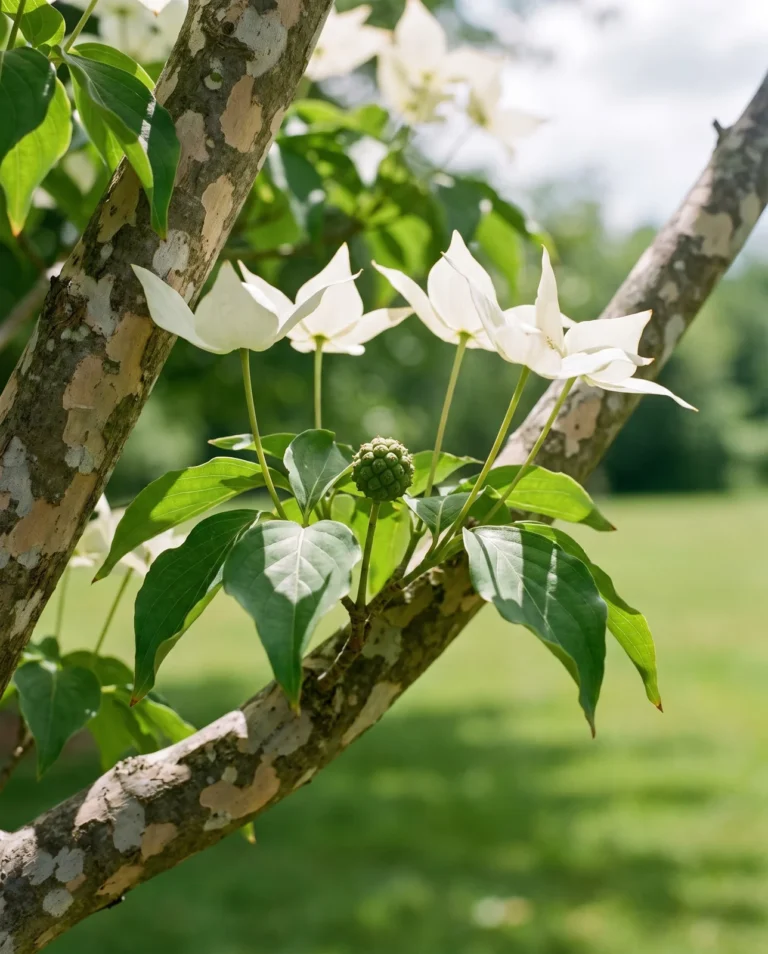
Where to plant a dogwood, and whether it suits your yard
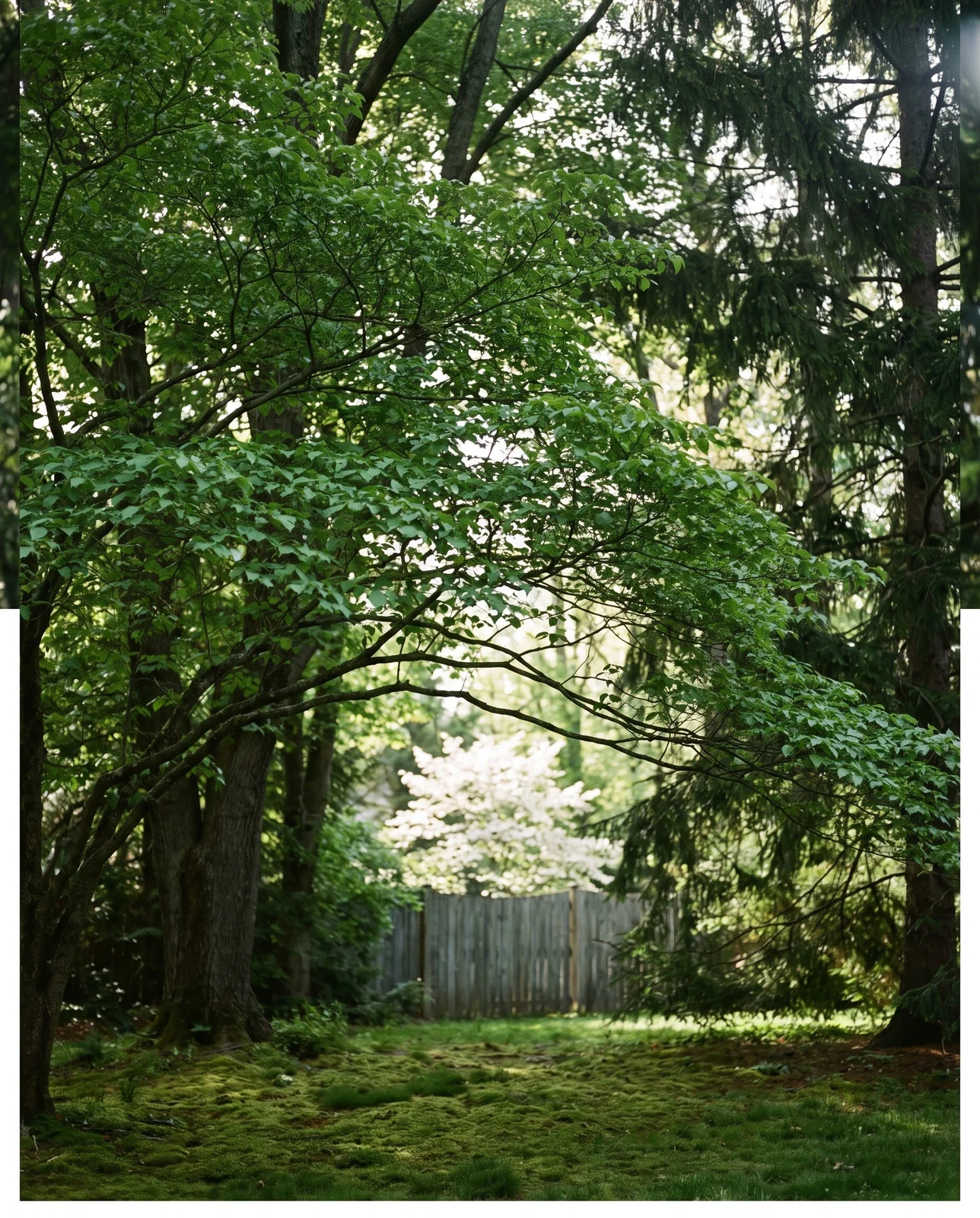
Give a flowering dogwood high shade, acid soil that drains and ground nobody mows, and it earns its place. Anywhere else it declines slowly. NC State calls it a tricky tree to grow in a yard, and it asks more than most of the small flowering trees and shrubs people set beside a front walk. Full sun to partial shade works in cooler country, while the piedmont and the coast want shade over the afternoon. Leave room for air to move through the canopy, and keep the tree clear of wind, road salt and traffic exhaust.
Lawn is the wrong ground under a dogwood. Grass should not be grown over the root system at all. The tree loses the contest for moisture and does not live as long against turf, and a mower at the base opens the bark a borer needs. Poor drainage and drought push a dogwood toward insects and disease. It tolerates black walnut, so it can go under a tree that rules out most other planting. And gardeners who want the look with less risk plant kousa, which is hardier, more drought tolerant, and the standard substitute where dogwood anthracnose is a problem.
Height and spread
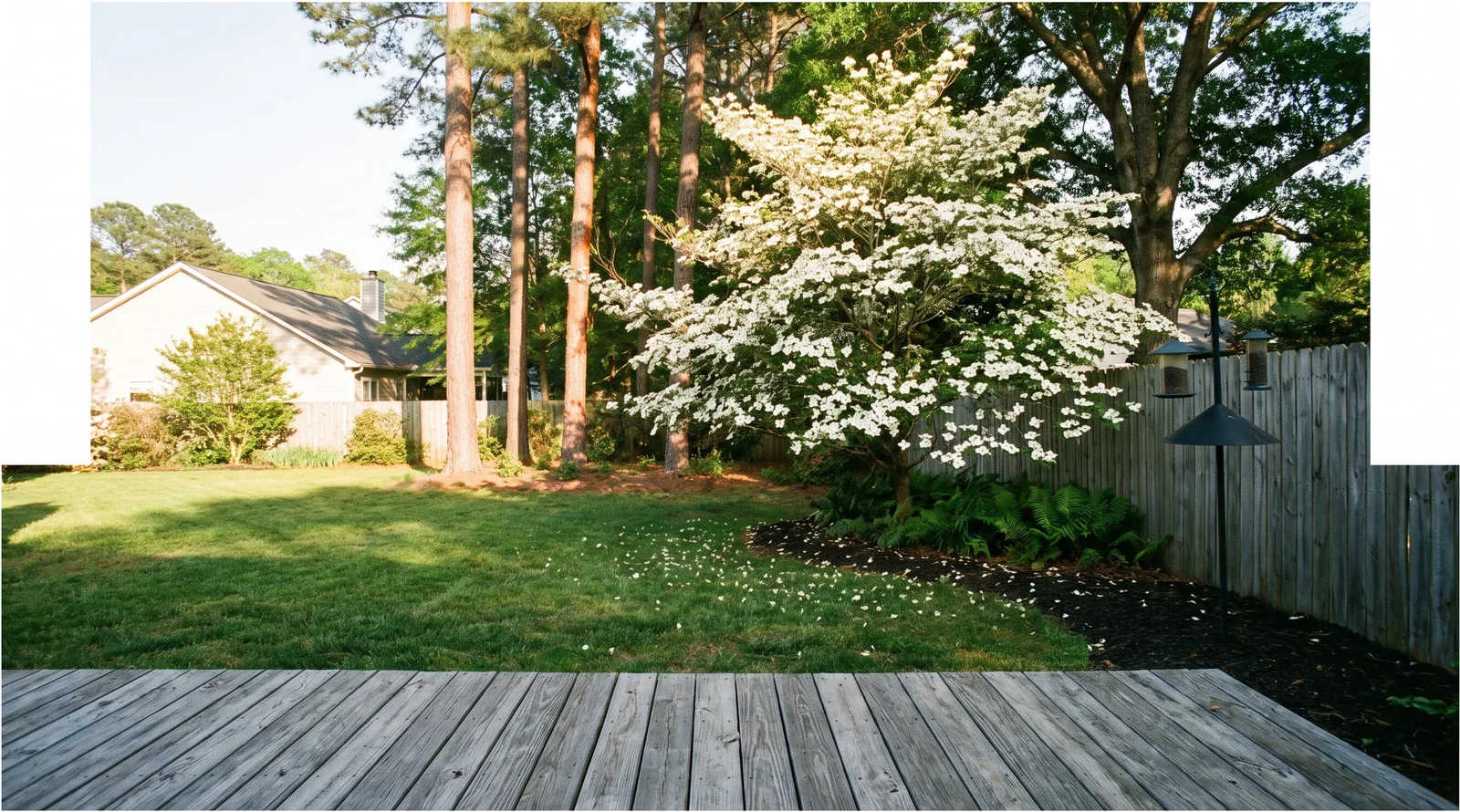
A flowering dogwood in a yard usually finishes 15 to 30 feet tall and about as wide, and old trees reach 20 to 40 feet. Site explains the gap. In woodland shade the species stretches to 40 feet; in the open the same tree may stop at 15 to 20 feet and end up wider than it is tall. Kousa covers similar ground at 15 to 30 feet, and the Rutgers hybrids stay smaller, 12 to 20 feet tall and 10 to 20 wide. Growth is slow to medium, about 15 feet in 18 years.
Light
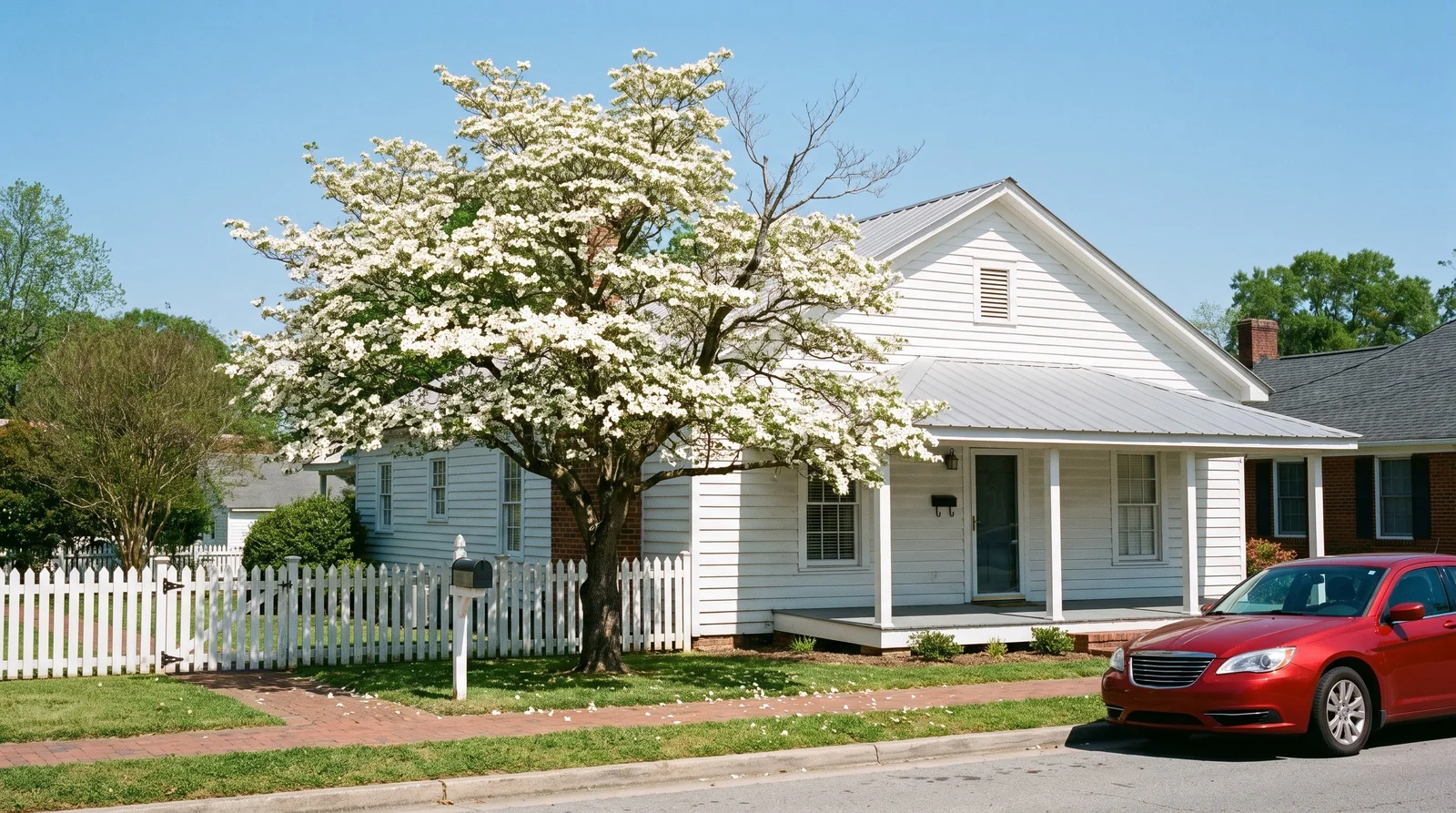
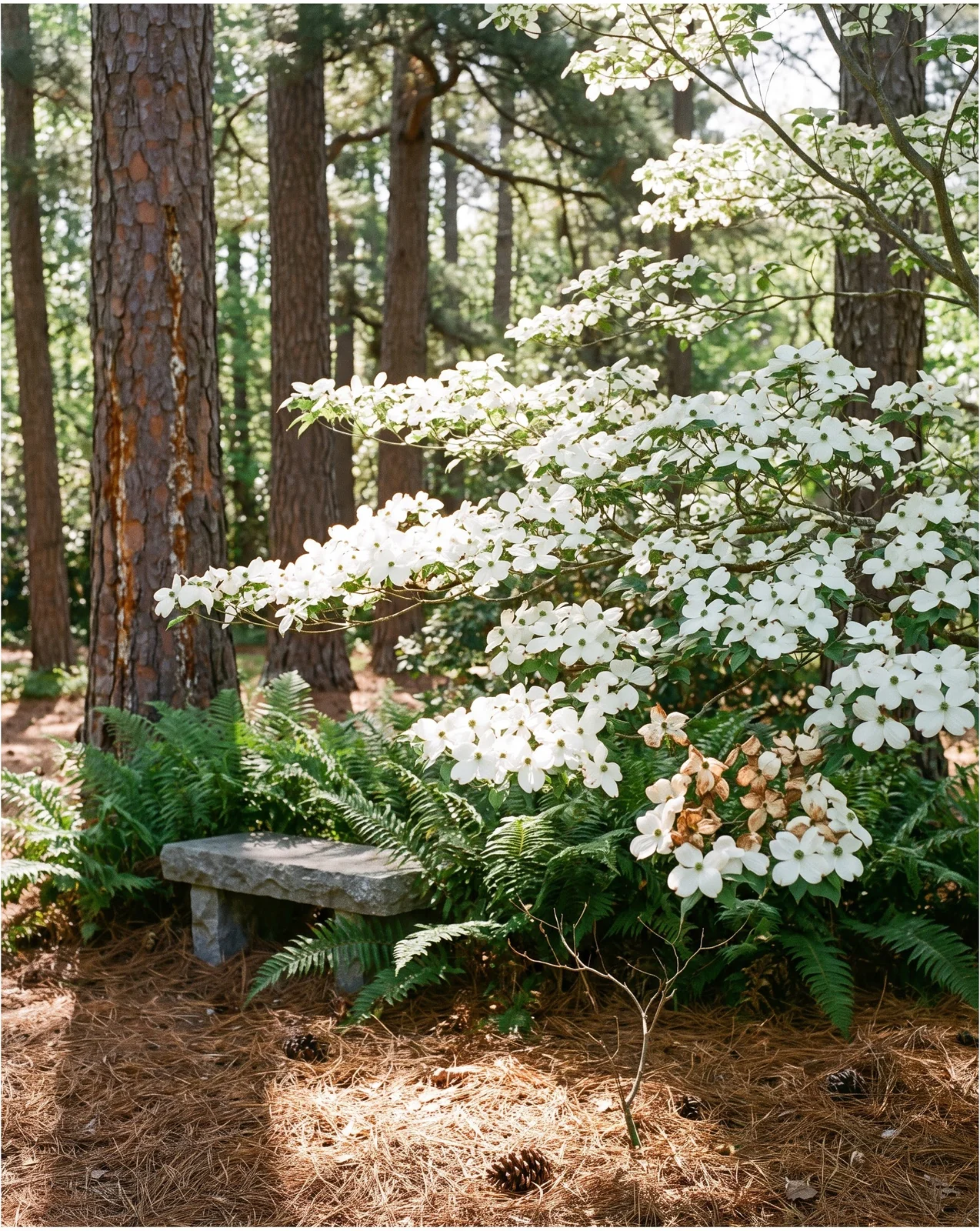
Morning sun with shade through the hot part of the afternoon is what a flowering dogwood wants. It is an understory tree, very tolerant of shade, and it does not take long spells of full sun. Maximum photosynthesis comes at slightly less than a third of full sunlight, so a dogwood is already working flat out in light that would starve most yard trees. Light decides its shape too: tall and thin with open horizontal branching in shade, shorter and denser in sun. Where leaf edges brown in summer heat, give it more water or afternoon shade. Kousa takes sun more easily, though its leaves can scorch if the soil dries out.
Water
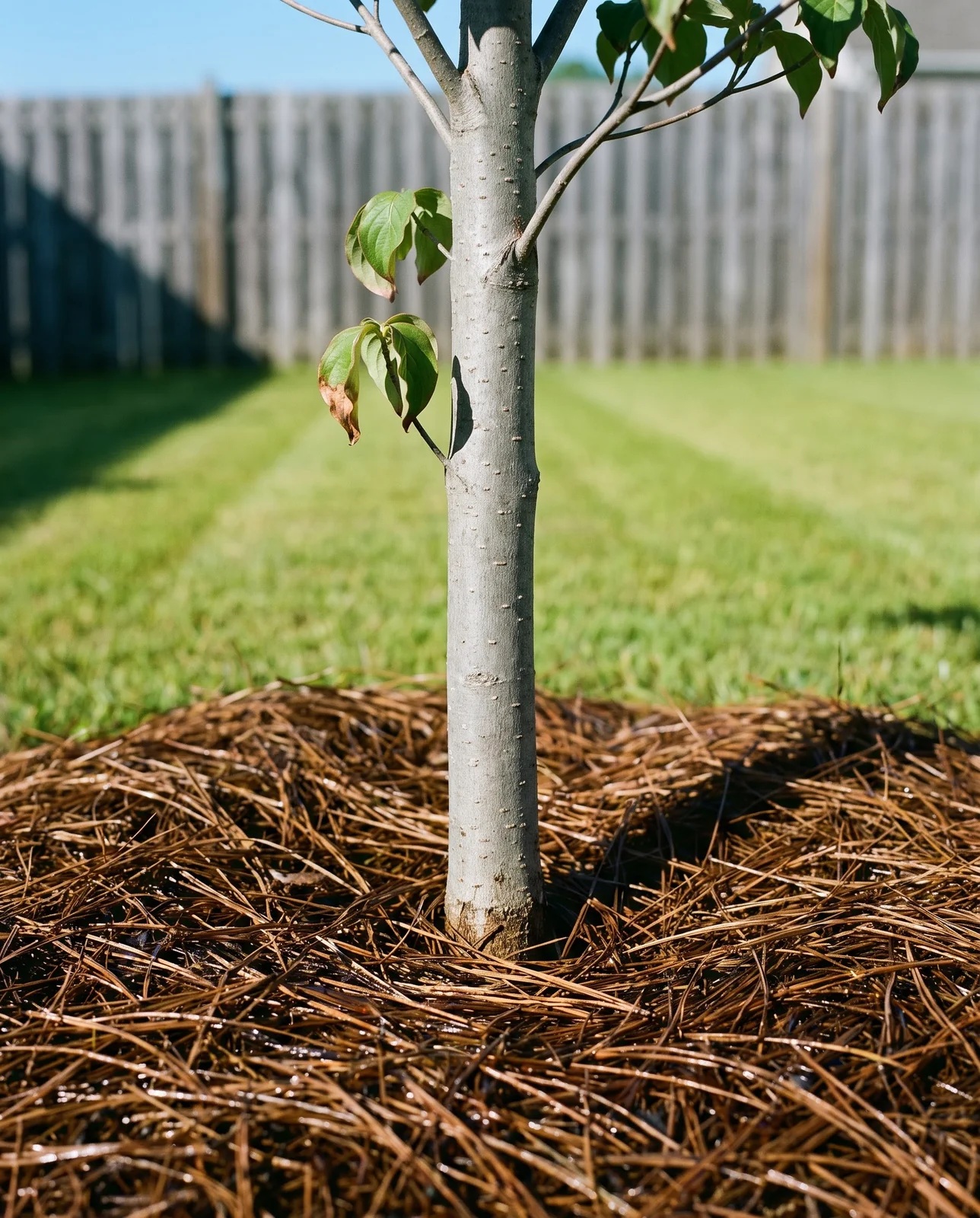
Dogwoods want steady moisture and fail at both extremes. Water deeply through dry spells, 1 to 2 inches a week, especially in sun. The roots are shallow, so a shortage of water kills roots back and costs the tree health and years of life. Dogwood leaves are the first to wilt in dry weather, and a long drought brings leaf fall and dieback in the tops. Severe drought kills mature trees outright, worst on dry ground and high ground. Mulch keeps the roots cool and moist. Use 2 to 4 inches of it, spread 8 to 10 feet across for a mature tree, carried to the drip line and never piled against the trunk. Water in the morning, so the foliage dries early and leaf disease gets less of a chance.
Soil and pH
Acid, organically rich soil that holds moisture and still drains is what a dogwood needs, at a pH of 5.5 to 6.5. Above that band the leaves go pale green with chlorosis, and heavy clay brings its own trouble. On poorly drained clay the tree is virtually absent in the wild. That puts a dogwood in the same bed as azaleas and the rest of the acid-soil planting under high shade. Work compost or ground composted pine bark through the bed before the tree goes in.
USDA hardiness
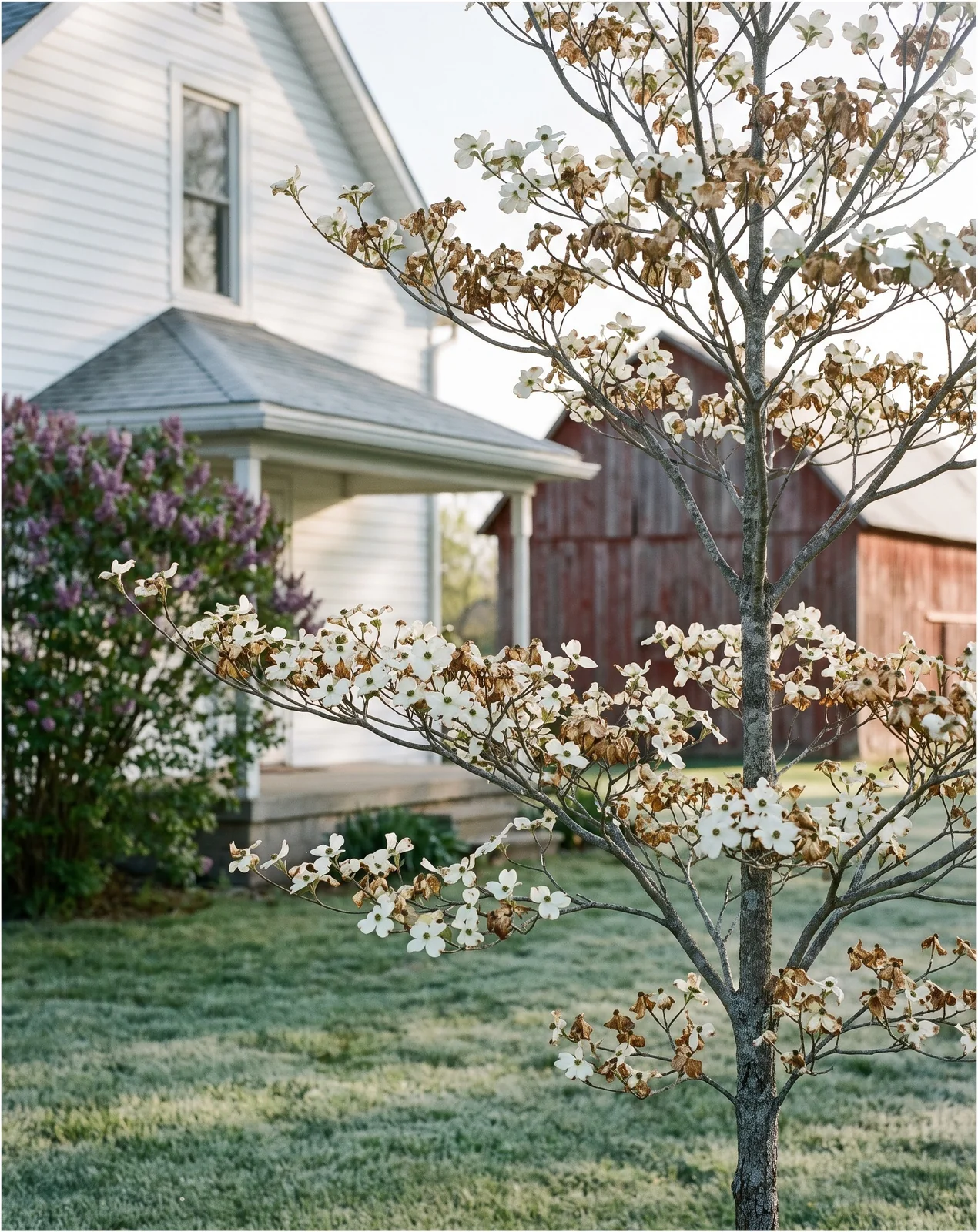
Flowering dogwood is hardy through zones 5 to 9. Kousa stops a zone earlier at the warm end, 5 to 8, and cornelian cherry reaches a zone further north, 4 to 8. Pacific dogwood is hardy to zone 7 but a poor bet outside its own range, since it does not suit the eastern climate. At the cold edge, winter takes the flowers before it takes the tree. Around Chicago a flowering dogwood is borderline, and because it flowers on old wood a harsh winter can damage the flower buds. Heat is the easier end, and an established tree takes it well.
Planting
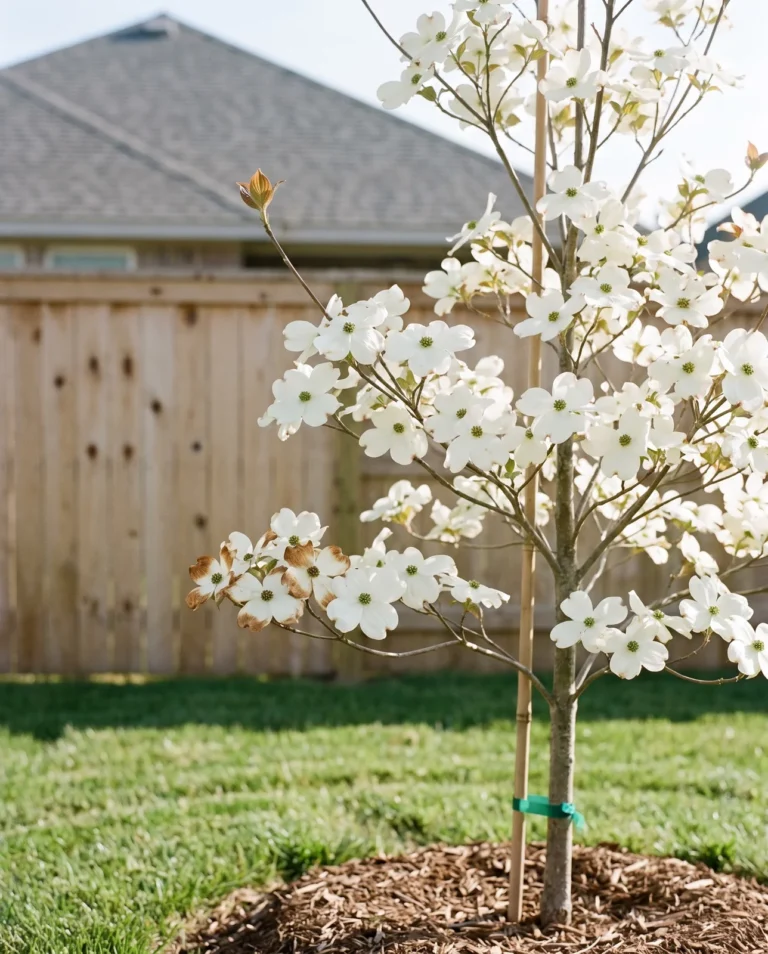
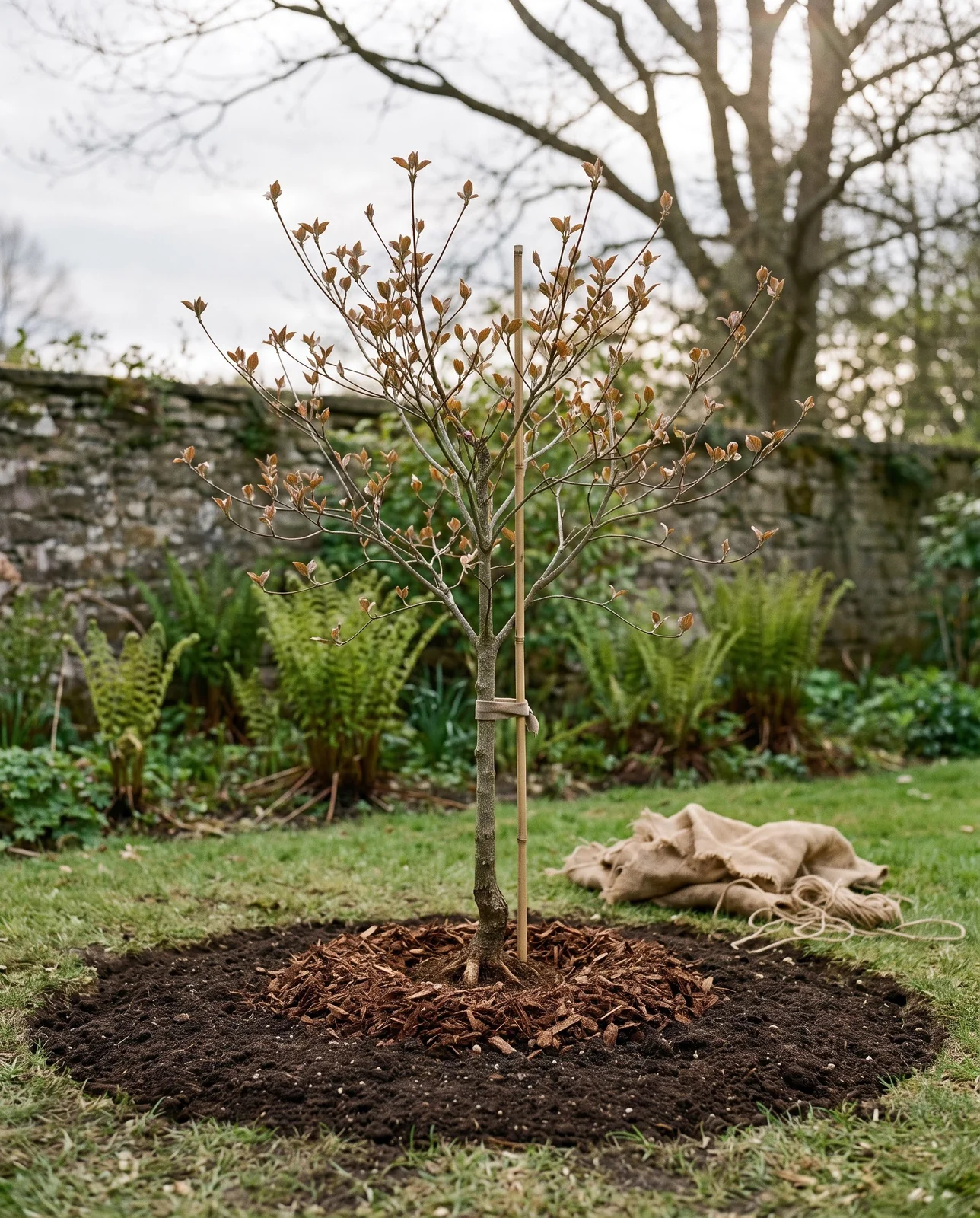
Fall is the best time to plant a dogwood. Buy container-grown where there is a choice, since it establishes faster than balled and burlapped stock and a dogwood does not transplant well to begin with. Do not lift a seedling out of the woods, since wild plants often carry powdery mildew and spot anthracnose. Set the tree no deeper than it grew: one planted too deep invites the flatheaded appletree borer, which shows as cracked bark near the base. Water matters most through the first year, when many young trees die in late summer before their roots reach the surrounding soil.
Why a dogwood will not bloom
A dogwood that will not flower is almost always young, freshly moved, or standing in too much shade. Trees in sun carry more flowers, so a dogwood under a closed canopy can look healthy for years and still give you a handful of bracts. Age is the second answer. A seed-grown tree commonly flowers at six years old, some wait seven to 10 years, while almost every dogwood sold is propagated asexually and flowers young. Buy a grafted cultivar where early flowering matters.
The third answer catches people who did everything right. A balled and burlapped cultivar may bloom its first year and then not rebloom until its roots reestablish, which can take up to four years. That is the pattern behind one full spring after planting and then nothing, with no damage anywhere on the tree. The tree is not sick. It is spending everything it makes underground. Weather and disease take buds off an otherwise healthy tree as well.
Checks for a dogwood that will not flower
Most flowerless dogwoods are settled by the first two or three checks, made from the ground. Work down in order: the cheap fixes sit at the top and the chainsaw sits at the bottom.
Pruning and aftercare
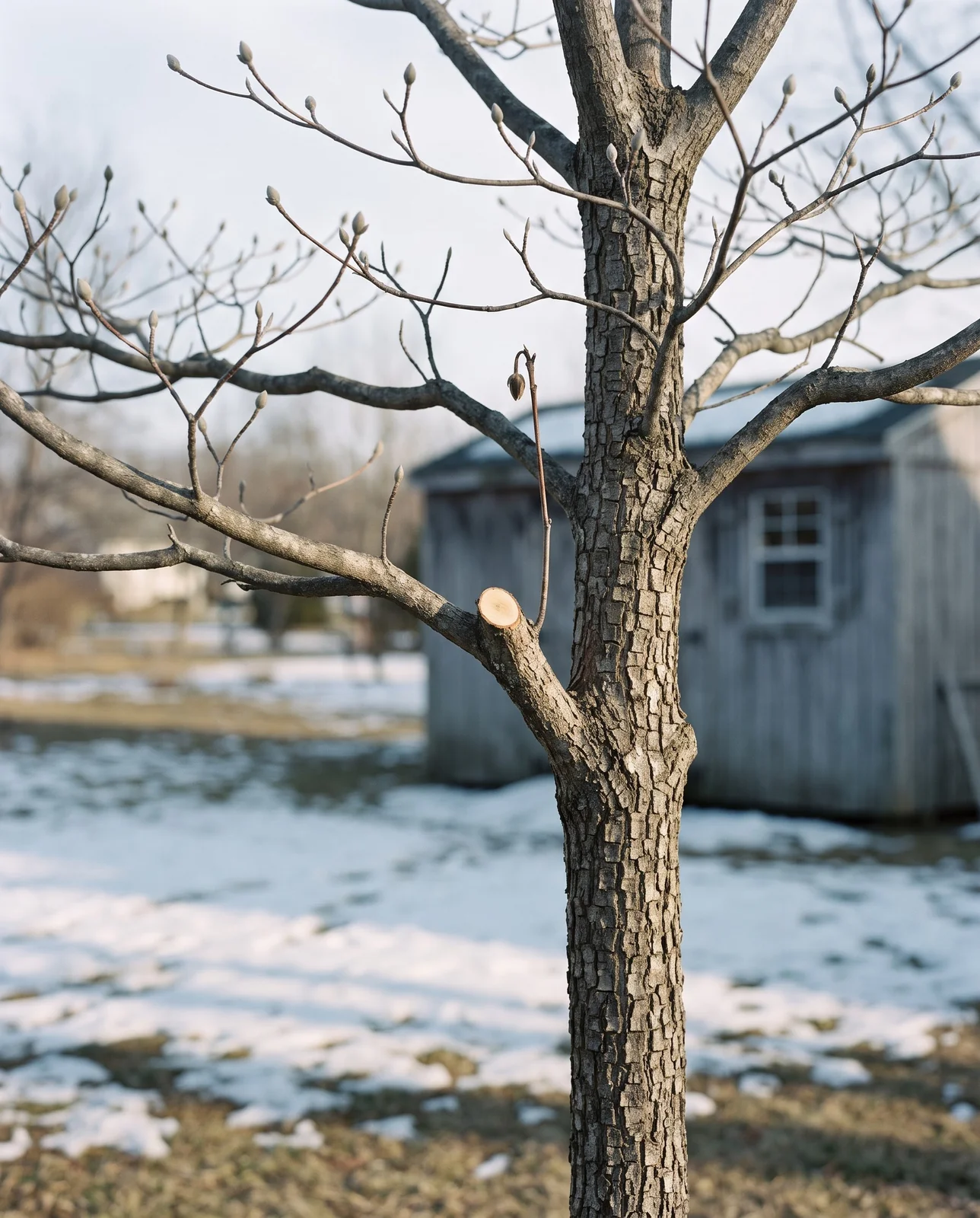
Keep pruning to a minimum and do it after flowering, in early summer. Cornelian cherry follows the same rule, cut once its yellow flowers have gone over. Dead wood is the exception, worth taking out whenever it appears. Cutting dead branches back to living wood removes cankers that would otherwise spread into decay, and selective cuts move air through the canopy. Cut cankered twigs and limbs out during hot dry summer weather. Every cut is also an opening. Dogwood borers establish only where they find a wound or a break in the bark, and the female goes for injured bark and scars on the trunk.
Propagation and longevity
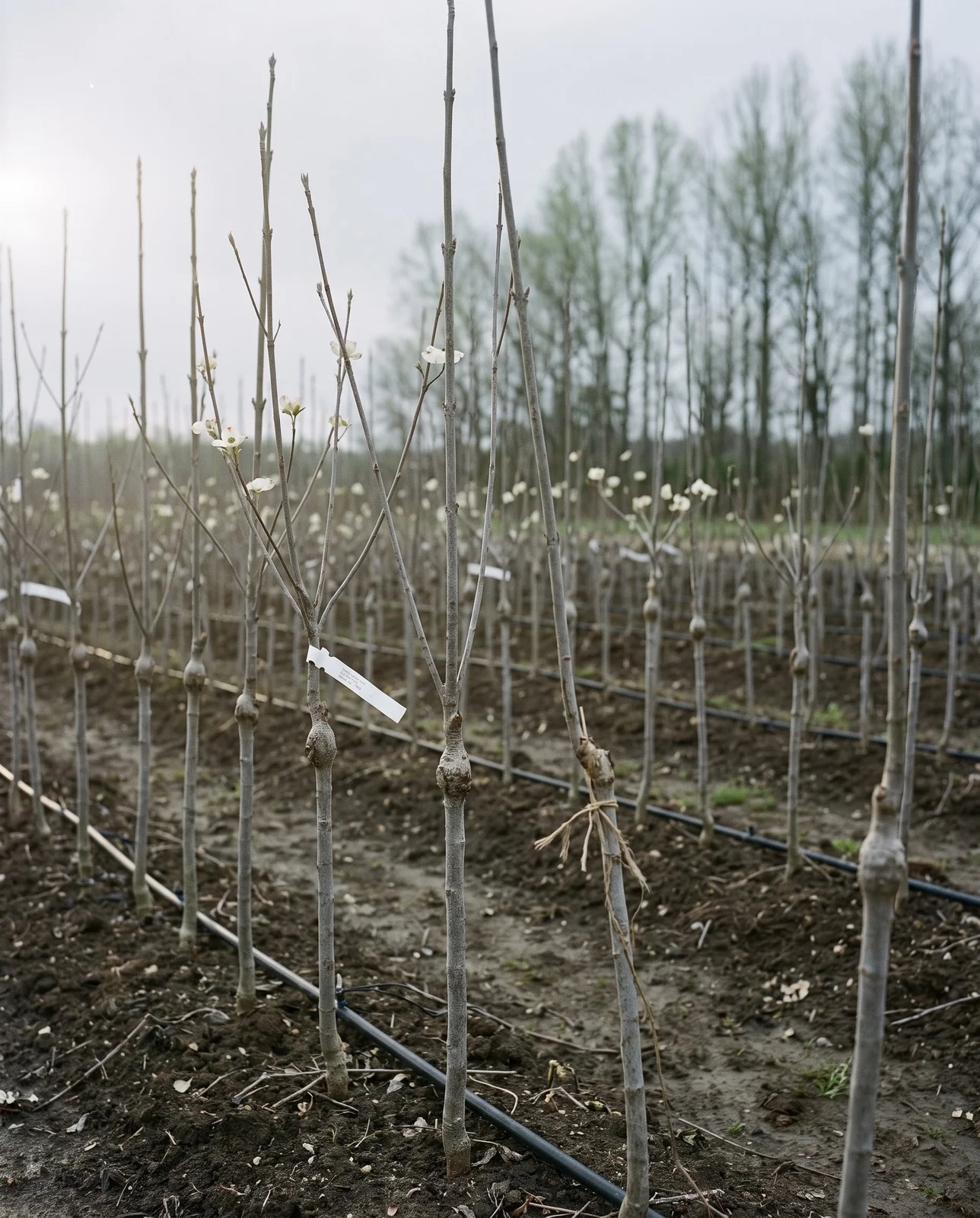
Flowering dogwood grows from seed or from stem cuttings. Seed carries an embryo dormancy that has to be broken first, so freshly collected seed is chilled at 41 degrees Fahrenheit for up to 120 days. Cuttings are quicker: the species roots readily from wood taken in June or right after the tree blooms. The pink and red forms are the awkward ones, difficult from cuttings and usually budded or grafted instead. A dogwood lives up to 80 years in good conditions, and single trees reach 125.
Pests and diseases
Dogwood trouble starts with a tree under strain, because poor conditions and drought open it to disease and insects. Dogwood anthracnose is the serious one. It kills leaves, twigs and branches from the lower part of the tree upward, and a tree carrying its cankers usually dies within three to five years. Elevation carries most of the risk: it bites above roughly 1,800 to 2,000 feet, and lower down only in very cool, moist, shady spots. Once the worst disease of flowering dogwoods in yards and forests alike, it is less common now.
The diseases most gardeners meet are milder. Powdery mildew coats the leaves in white growth, dries them out and can strip a flowering dogwood of foliage. It settles into dense shaded sites with poor air circulation. Spot anthracnose hits the flower bracts first, then leaves, young shoots and fruit; it is common and it is not severe.
What kills a dogwood is usually at the trunk or under it. Crown canker is the most serious disease of flowering dogwoods in the eastern United States, and it gets in through wounds, mower and trimmer damage among them. Never put a new dogwood back in the spot where a diseased one stood. On poorly drained or regularly flooded ground, root rot takes the tree from below.
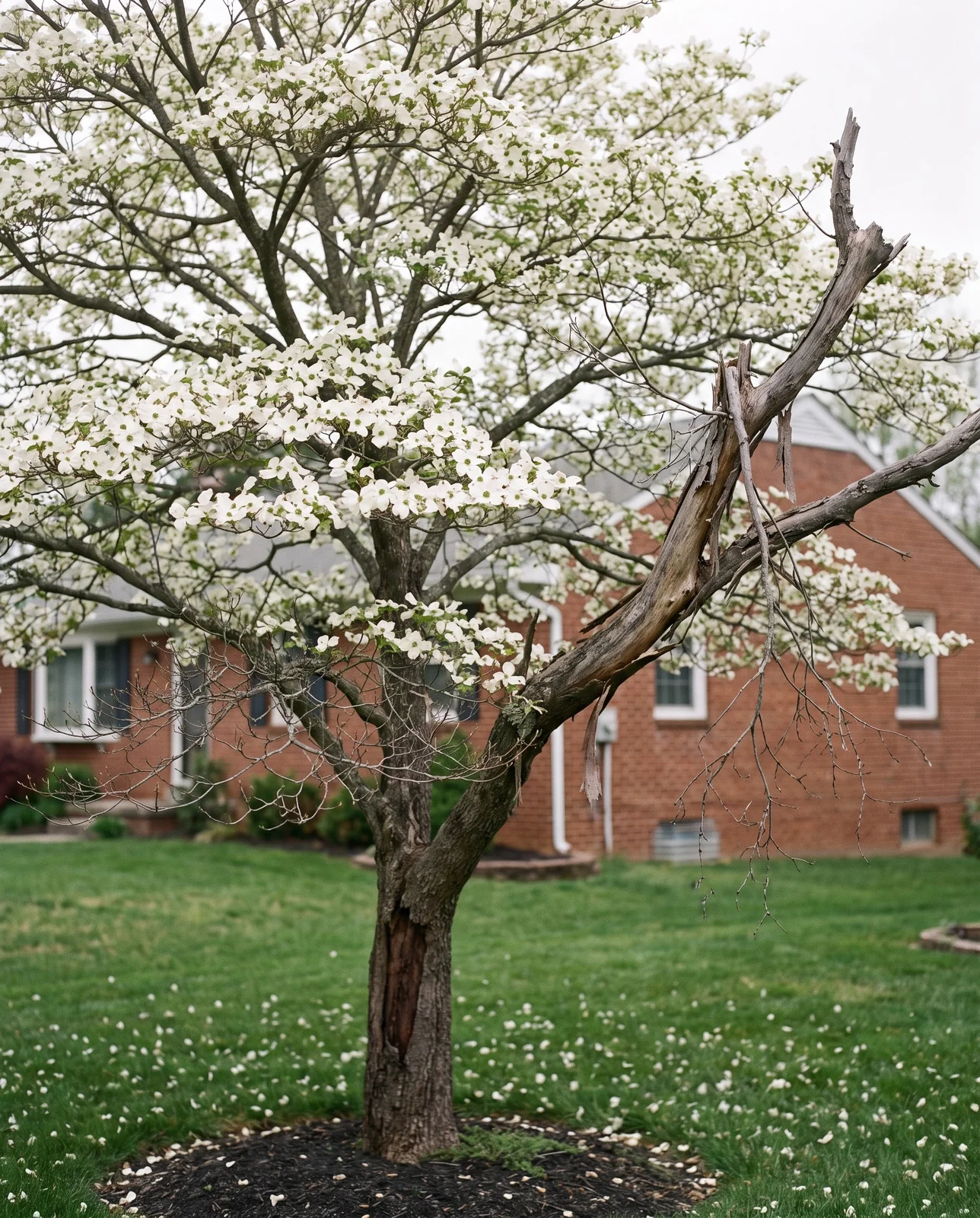
The insect to know is the dogwood borer, the off-white, reddish-headed larva of a clearwing moth. Once it is inside the trunk, control is difficult and the tree usually dies within a year or so. The program is therefore preventive: permethrin from early May, repeated four times at three-week intervals. Kousa carries far less of all this.
What goes wrong most often
Six failures account for most sick dogwoods, roughly in the order they turn up.
Limbs fail one at a time and the canopy thins from below. The cause sits under the tree, where root rot, root damage and vascular trouble almost always end in a slow death. Check the drainage and the roots first. Ten or more large dogwoods in one central Alabama neighborhood died and fell inside three years.
A full canopy of healthy leaves and no bracts, often one strong spring after planting and then nothing. Usually a root system still rebuilding, or too little light. Leave the root ball alone, keep lawn feed off the root zone, and open the sky above the crown.
Crisp brown margins, curling, early leaf drop in a dry summer. This is leaf scorch, and no plant pathogen causes it. Mulch carried past the edge of the canopy and a deep soak are the answer.
A white coating on both leaf surfaces, usually in spring only, followed by early purple and red leaf color. Powdery mildew. Thin whatever crowds the tree, and ask for a mildew-resistant selection next time.
Leaves that redden and drop early, bark sloughing around holes in the trunk, brown sawdust-like frass below them in late summer. That is the dogwood borer. Treat at once: an infested young tree can die in one to two seasons.
Larvae covered in white powder after their second molt, yellowish with a shiny black head once mature. Dogwood sawfly, nearly always on shrub dogwoods. Gloves and hand removal usually settle it; Bacillus thuringiensis should not be used on them.
Telling the leaf problems apart
Four problems brown a dogwood leaf, each with its own mark.
Toxicity and pet safety
The red drupes on a flowering dogwood are bitter and inedible to people, and called poisonous. Kousa fruit is technically edible, and usually left to the birds. Dogwood has no entry at all on the ASPCA toxic and non-toxic plant list, and that list is not all-inclusive, so the absence settles nothing. For a dog that eats whatever falls, rake the drops out while the tree is fruiting, and call a veterinarian if it swallows a quantity and then vomits or goes off its food.
Fall color, berries, and winter interest
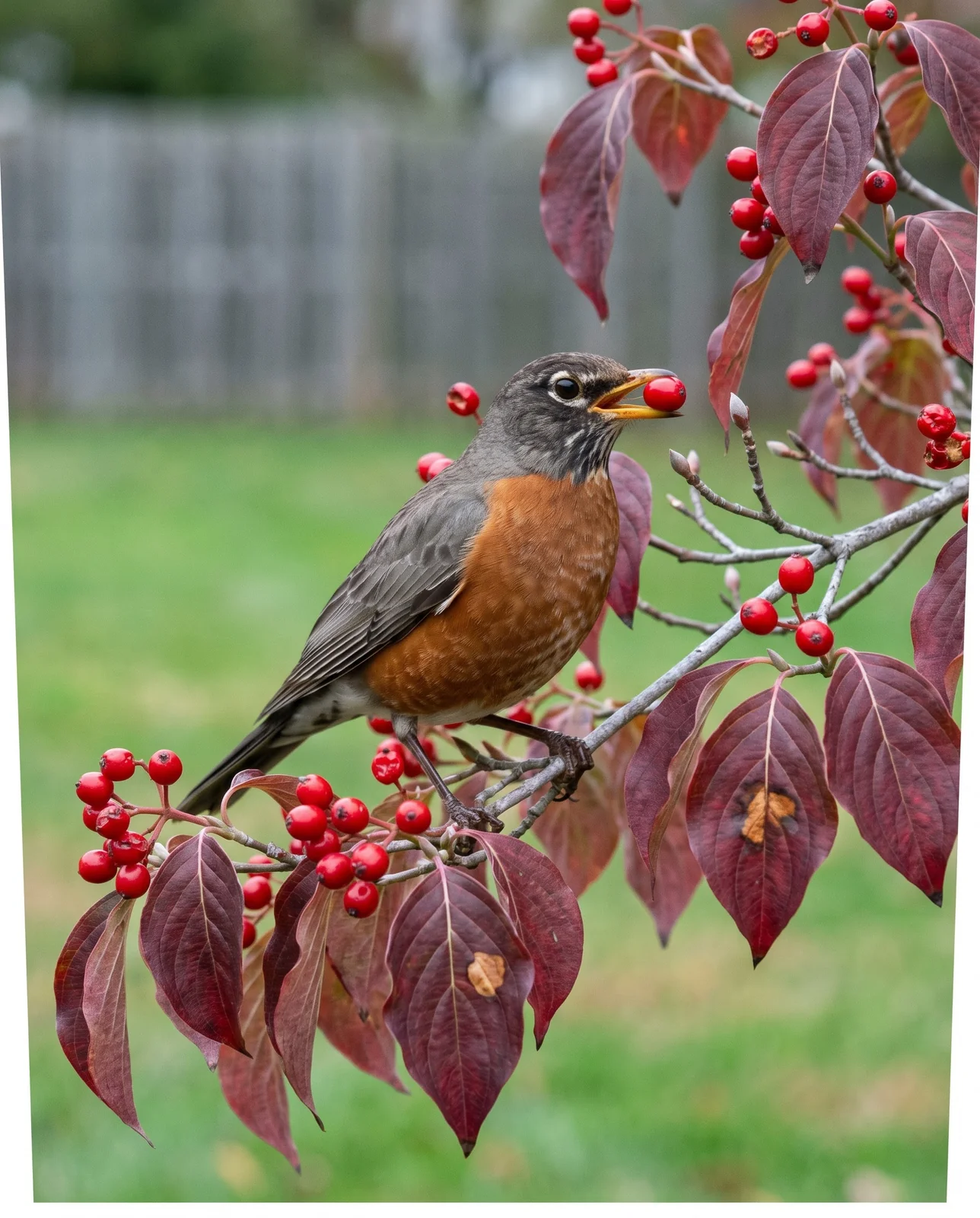
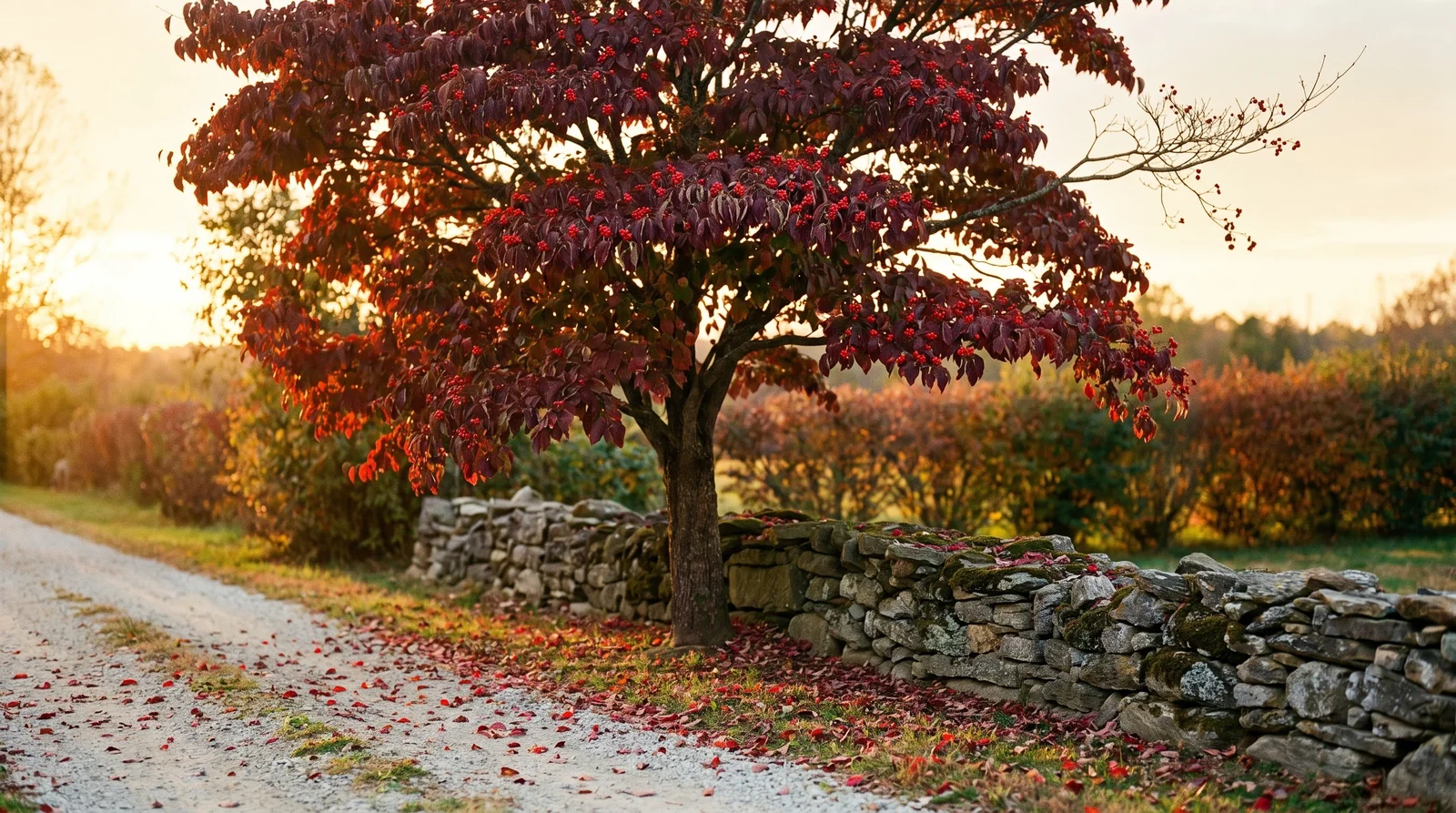
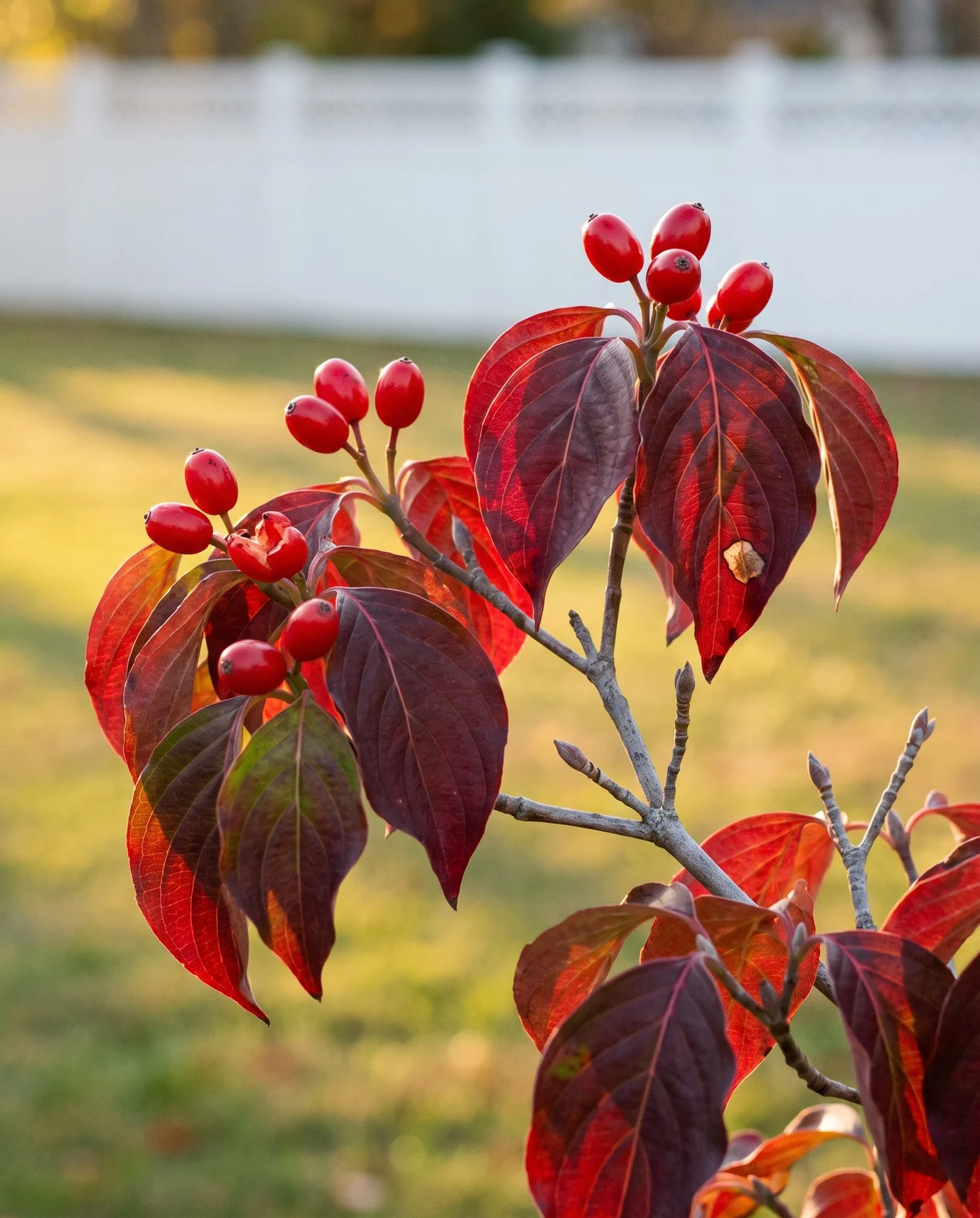
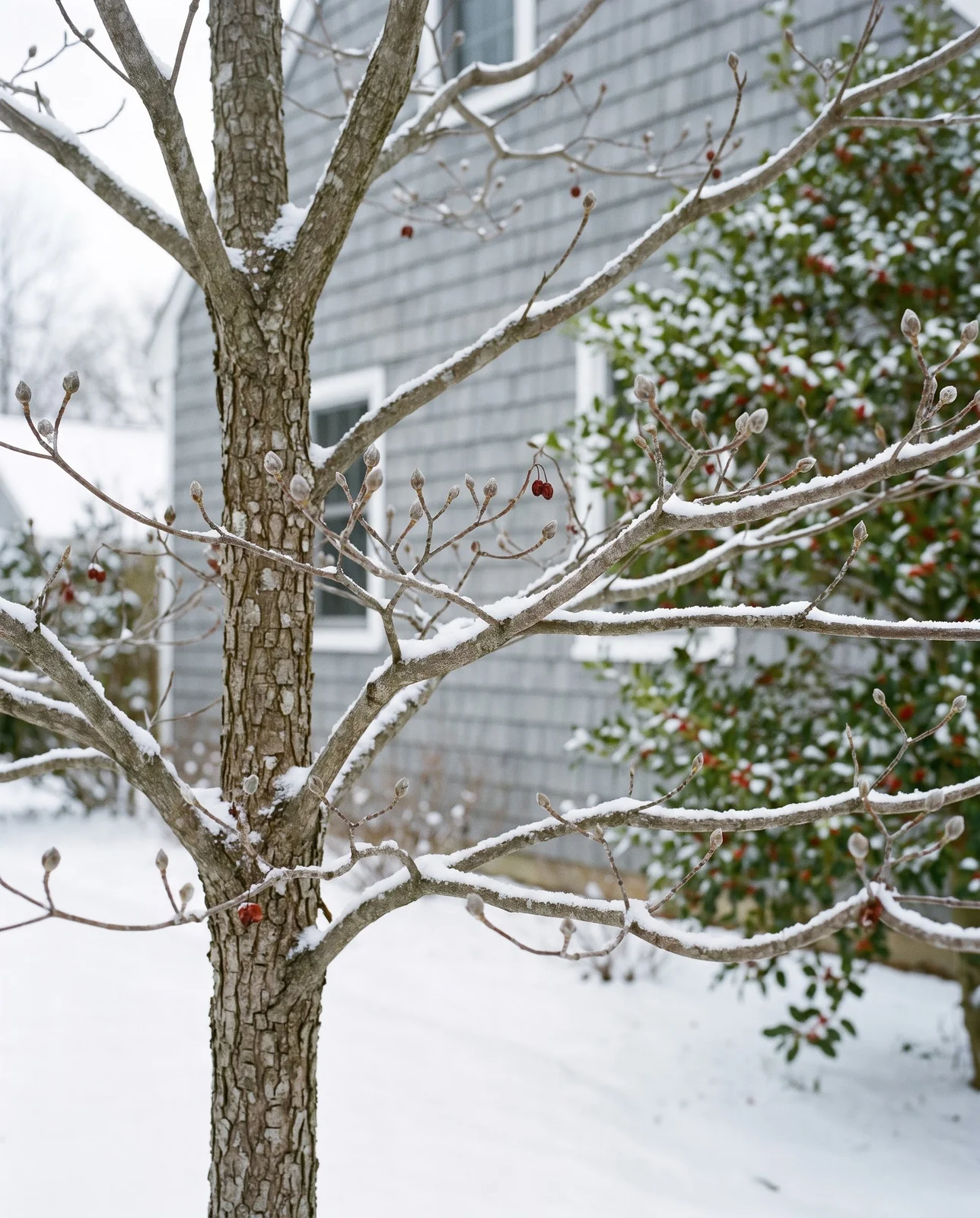
Oval dark green leaves 3 to 6 inches long turn red in fall, through reddish purple to a brilliant reddish purple over the whole canopy. Kousa holds its fall color for three to five weeks, stronger with more sun on the leaves. Fruit follows: glossy bright red oval drupes about half an inch long, in clusters of three or four. Ripening moves with the region, July and August around Chicago, September into October in South Carolina, and clusters the birds overlook hang until December. That fruit feeds at least 36 species of birds, ruffed grouse, bobwhite quail and wild turkey among them. Even the fallen leaves work, breaking down faster than most litter so their minerals return sooner. Winter belongs to the bark on a kousa, mottled and exfoliating in tan and gray.
Meaning and symbolism
In American use the dogwood stands for spring and rebirth, and its legend adds sacrifice and renewal. It also stands for a place: Missouri wrote it into law as the state tree in 1955. The symbolism comes out of one Ozark story. Old-time Ozarkers, as the folklorist Vance Randolph recorded them, held that the cross was made of dogwood, a tree then as tall as any large timber. For its part in the crucifixion it was cursed to grow stunted and twisted. The legend reads the flower part by part: the center cluster as a crown of thorns, the notches at the bract tips as nail holes with bloodstains. None of that is botany, and the Ozarks carried a competing tale that blamed the willow.
Forcing dogwood branches indoors
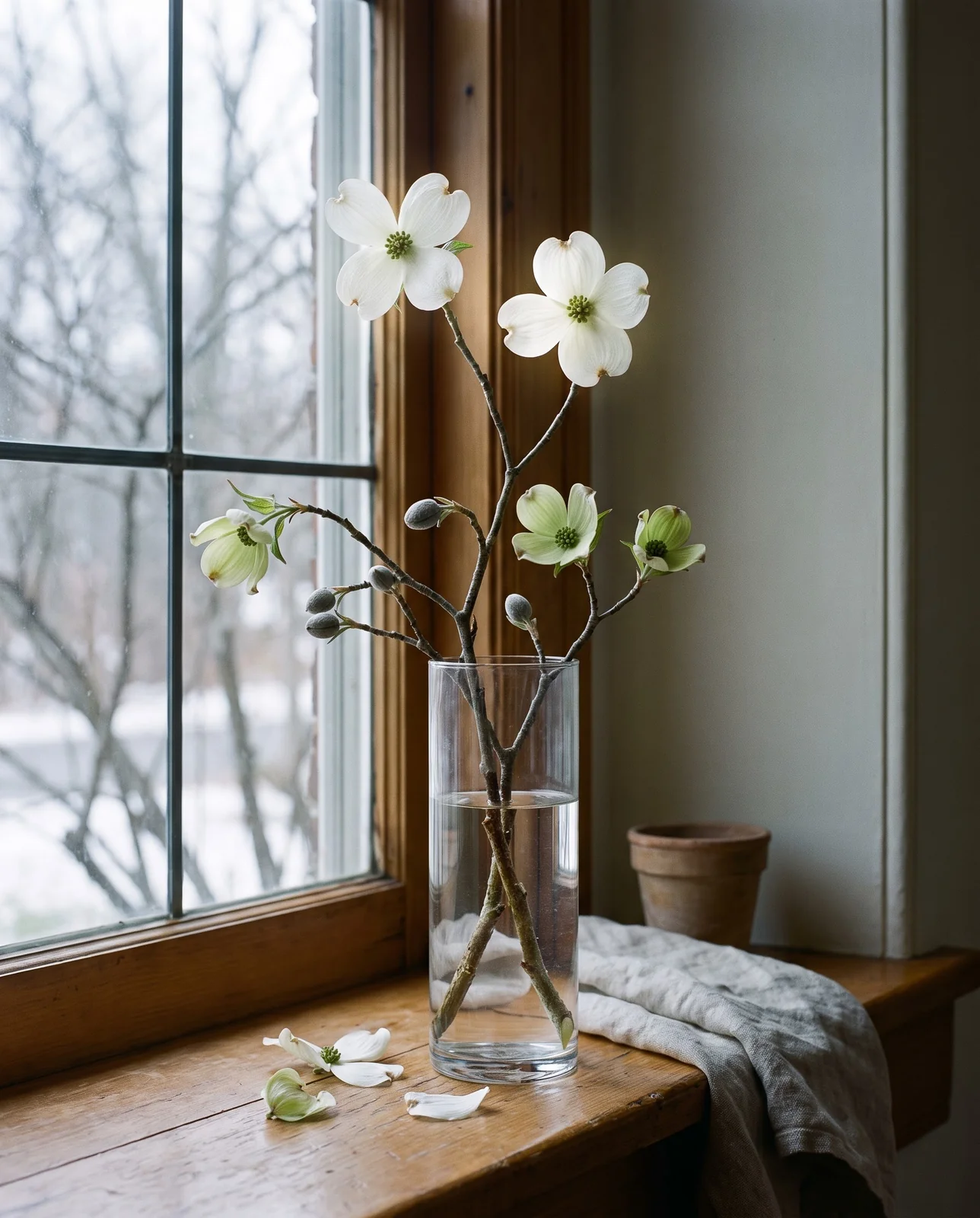
Dogwood and cornelian cherry can both be cut in late winter and brought into bloom indoors. The closer the cutting date to the tree's normal flowering time, the faster the branches open. For scale, forsythia and pussywillow run one to three weeks indoors, apple and crabapple two to four, and magnolia three to five.
Dogwood beliefs that do not hold
Four things gardeners repeat about dogwoods that the plant answers plainly.
The myth: Kousa is the same tree as the flowering dogwood, only later.
The reality: The two part company after bloom. Kousa fruit drops, ferments and draws yellow jackets, and seedlings come up prolifically underneath.
The myth: Spotted bracts mean the tree is infected for life.
The reality: Bract spotting tracks the weather at bloom. When dry weather follows bud swell and flowering, the bracts may show few or no symptoms, and that year's leaf infections are often milder.
The myth: It is an understory tree, so it belongs in deep shade.
The reality: Full shade costs the second season: dogwoods sited there often color poorly in fall.
The myth: Deer leave dogwoods alone.
The reality: Foliage and twigs are browsed heavily by deer and rabbits, even though the tree also turns up on lists of plants that tolerate deer. Protect a young trunk. Kousa is mildly resistant.
What to expect, year by year
A dogwood is bought for a spring show and judged on a schedule that has little to do with the first two springs.
Years one and two belong to the roots, and the tree looks idle: little height, a thin canopy, leaves off early in a dry August. This is when a dogwood is most easily lost, so the work is water and keeping metal off the trunk.
From roughly the third season it settles into a rhythm: bracts every spring, a little more width each year. Mark early July, when watching for the dogwood sawfly starts.
Decades in, size and risk arrive together. Twenty year old Aurora specimens stand 20 feet high and wide, Constellation about 20 by 17. Borers, drought stress and leaf scorch, sawfly and crown canker are all occasional problems over a mature tree's life.
Flower photos
FAQ
What month do dogwoods bloom?
April and May across most of the country, mid-March in the South to late May in the North.
Why is my kousa dogwood not blooming?
Kousa opens its bracts among the leaves in May and June, weeks after the native tree has finished. 'Milky Way' appears to flower biennially, so a blank spring after a heavy one can be normal.
How do you bring a dogwood back to life?
Check the drainage, pull mulch off the trunk, and look for mower damage at the base. Anthracnose gets the blame for most sick dogwoods, though it is not common and mostly bites at elevation.
Do coffee grounds help a dogwood bloom?
No. Shade, the age of the tree and a root system still reestablishing account for most flowerless dogwoods, and nothing poured on the ground fixes any of the three.
Which dogwood has the fewest disease problems?
Kousa, generally disease and pest free, with cornelian cherry close behind. For the native tree, ask for a mildew-resistant selection such as 'Cherokee Brave'.
Is there a dogwood that does not drop fruit?
'Plena' is the one to look for: semi-double white flowers, no fruit at all, and immune to spot anthracnose.
What is the smallest dogwood for a tight spot?
'Red Pygmy' is the true dwarf, 5 to 6 feet high and wide and small enough for a container. For a narrow upright, cornelian cherry 'Golden Glory' runs 12 to 15 feet.
How far from the house should a dogwood be planted?
Measure for the crown, which can reach 15 to 30 feet across on a tree 15 to 25 feet high. Old specimens are recorded at 40 feet tall and 35 wide.
What do dogwood flowers symbolize?
Spring and rebirth, with sacrifice and renewal carried by the old cross legend that Ozark storytellers attached to the tree.
Is red twig dogwood the same plant?
It is a shrub in the same genus, and highly susceptible to powdery mildew. The sawfly that strips shrub dogwoods in late summer prefers gray and yellow dogwood to the flowering tree.
What are the disadvantages of a dogwood tree?
Size first: it commonly finishes 15 to 30 feet across, wider than it is tall. It is fussy about where it stands, and on ground it dislikes it declines slowly.
Interesting tips
- Cornelian cherry is the dogwood you can pick fruit from. The southern selection 'Spring Glow' grows 20 feet tall and 15 feet wide and ripens red edible fruit in July.
- A yellow-fruited flowering dogwood exists. 'Xanthocarpa' carries the usual white bracts and then ripens yellow fruit.
- Nearly the whole dogwood harvest once went into shuttles for textile weaving, until plastic shuttles replaced that use.
Related Guides & Flowers

Magnolia
The other spring tree that opens its flowers before the leaves, on a frame that needs more room.
Azaleas
The acid-soil shrub that wants the same high shade and the same bed a dogwood needs.
Lilacs
The scented spring shrub for the open sunny ground where a dogwood struggles.
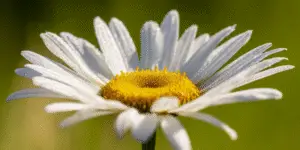
White flowers
More white-flowered plants to set beside the flat white bracts of a dogwood.
Enjoying our flower guides? Add YourFlowersGuide as a preferred source on Google. It helps more readers find us.
Add to Preferred Sources