The pairing · pick a flower
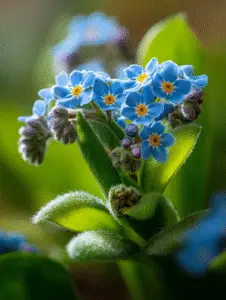 Forget-me-not+
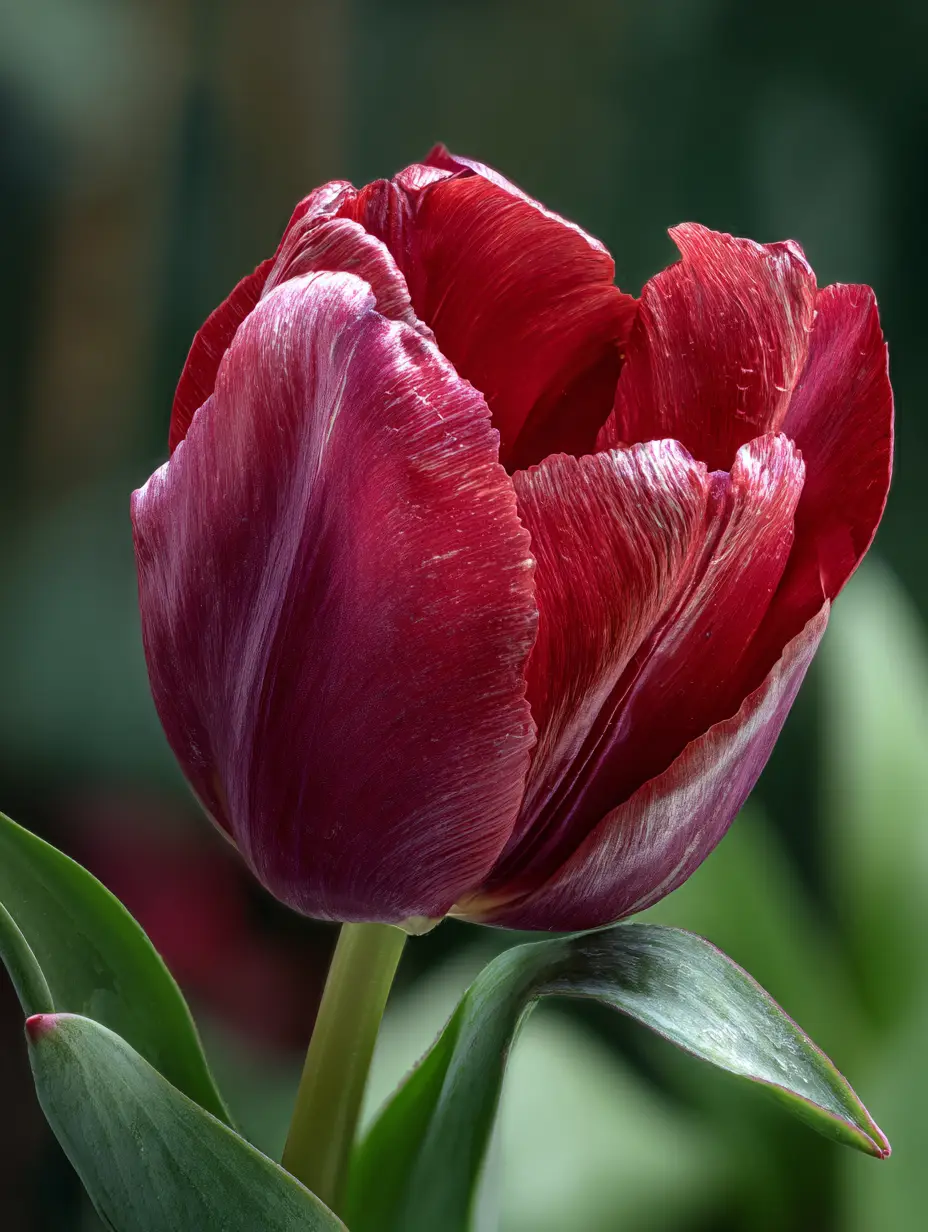 TulipProven
The classic underplanting: forget-me-not's blue haze rises with late tulips, shares the same moist part-shade bed, and later swells to hide the tulip's yellowing leaves.
Forget-me-not+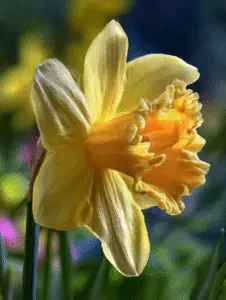 DaffodilProven
Same moist part-shade match and foliage-masking job as tulip, with a bonus: daffodil bulbs are toxic to deer and rodents, so the pairing is more critter-proof than tulip alone.
Forget-me-not+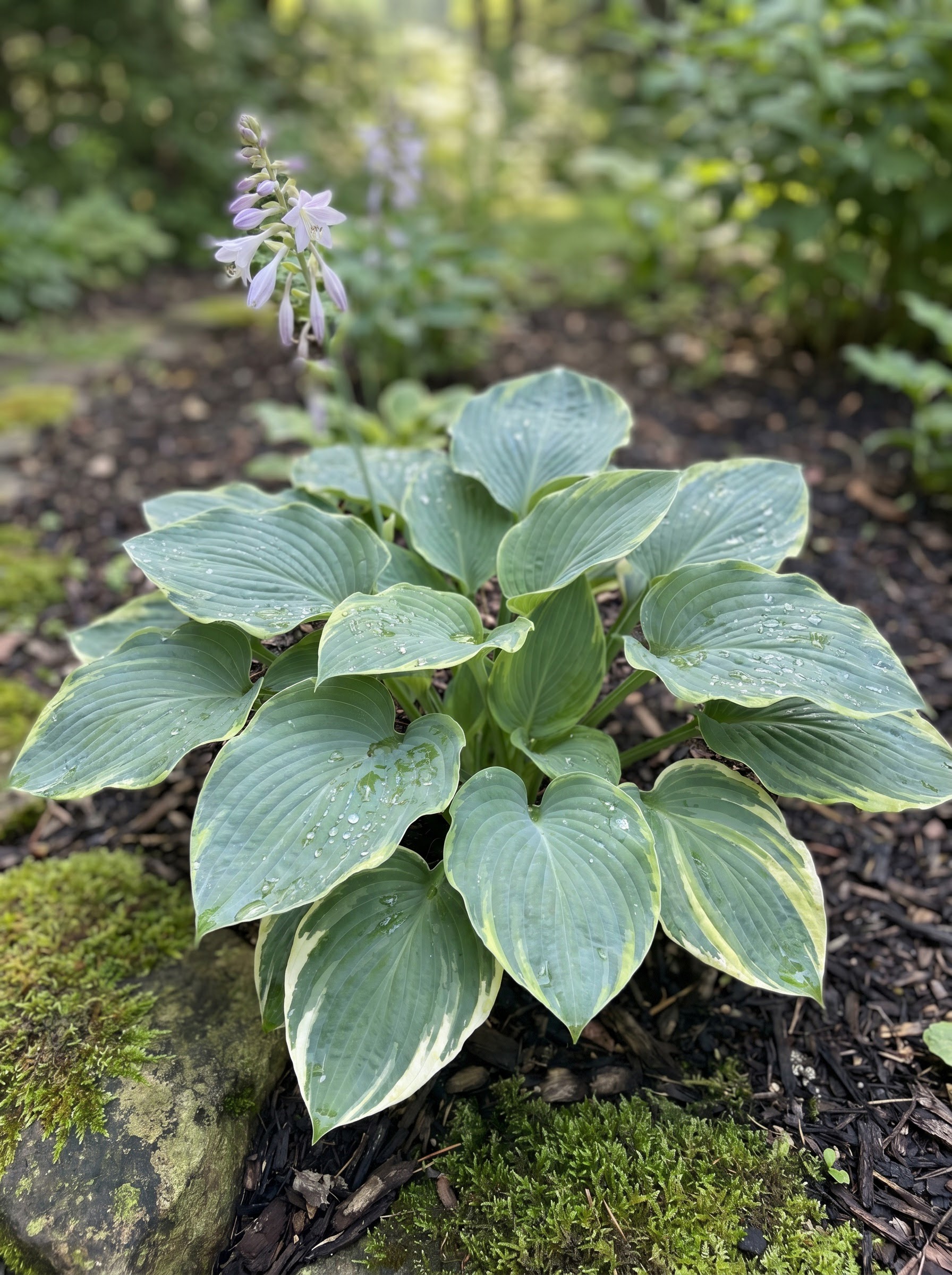 HostaFolklore
Same part-shade, same steady moisture, and the broad ribbed leaves are the strongest textural foil to forget-me-not's fine haze, then carry the bed once the forget-me-not dies back for the year. This specific pairing is a widely repeated garden-design tradition rather than a documented recommendation from either source.
Forget-me-not+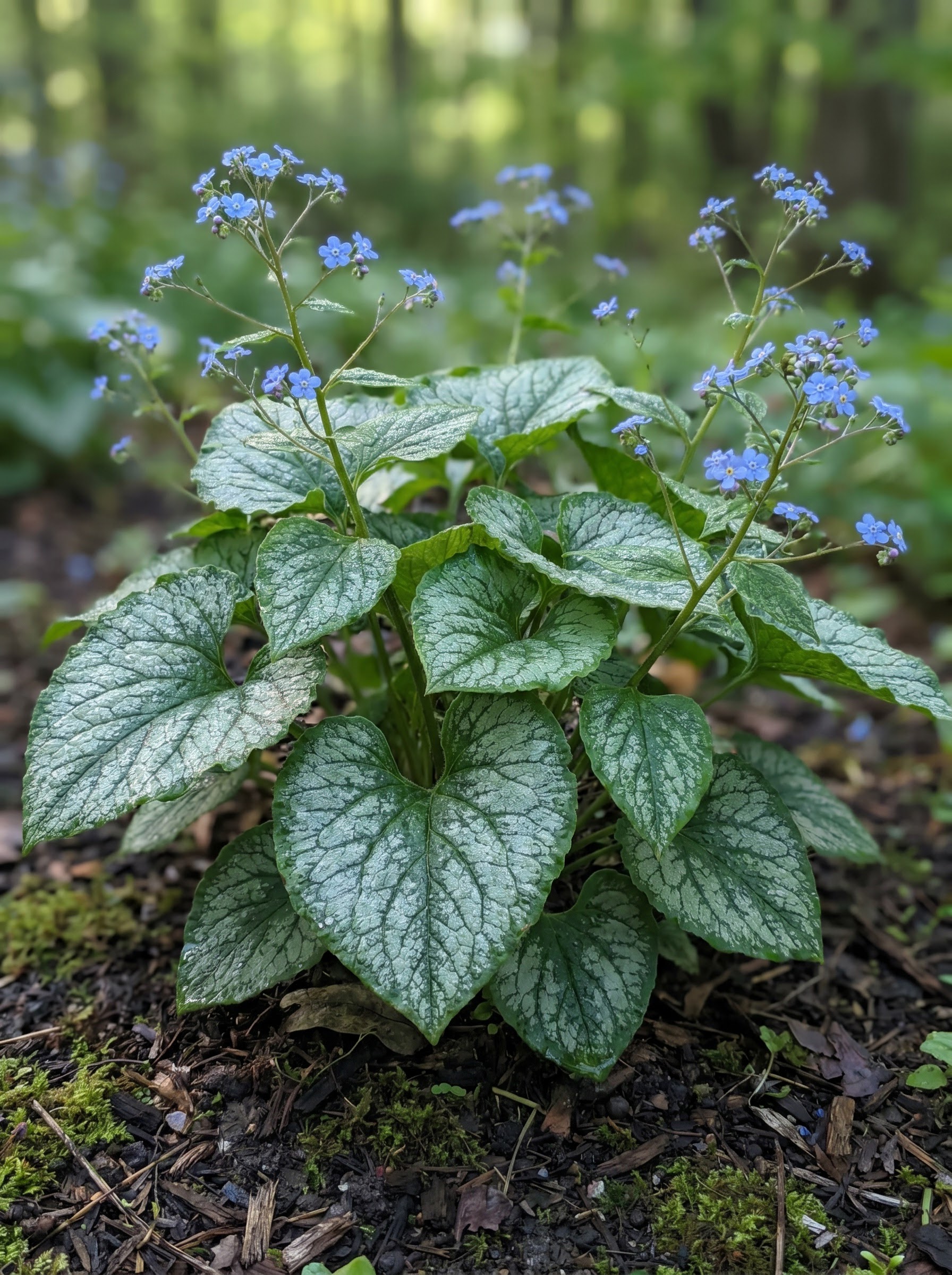 BrunneraPartial
True-blue flowers that closely echo Myosotis extend the same color story past forget-me-not's bloom window, while its heart-shaped, often silver-veined leaves hold the space through summer.
Forget-me-not+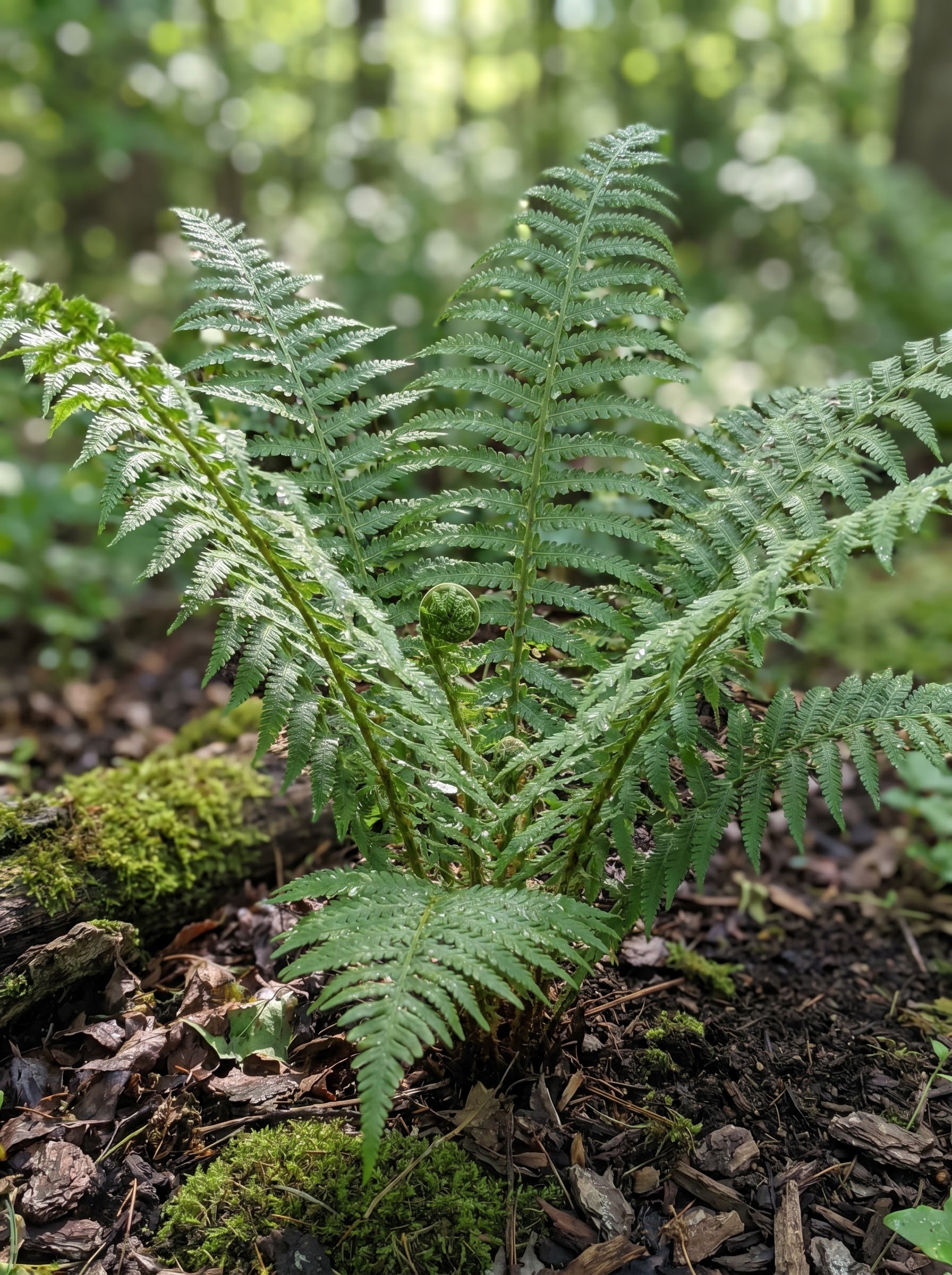 Shade fernFolklore
Ferns share the same moist, part-shade bed and carry a fine, feathery texture that echoes forget-me-not's own haze rather than contrasting it, filling the space once the flowers are gone. Like hosta, this specific pairing is a common garden-design habit rather than a documented recommendation from a university or botanical-garden source.
Forget-me-not+ Virginia bluebellsPartial
Both are moist, part-shade, blue-toned spring bloomers on the same timing, so the two read as one flowing wave of cool color rather than a contrast pairing.
Forget-me-not+ SnowdropPartial
Snowdrops open earlier and share the same part-shade, evenly moist ground forget-me-not wants, so the small white bells pierce through emerging Myosotis foliage before the larger bulbs take over.
Forget-me-not+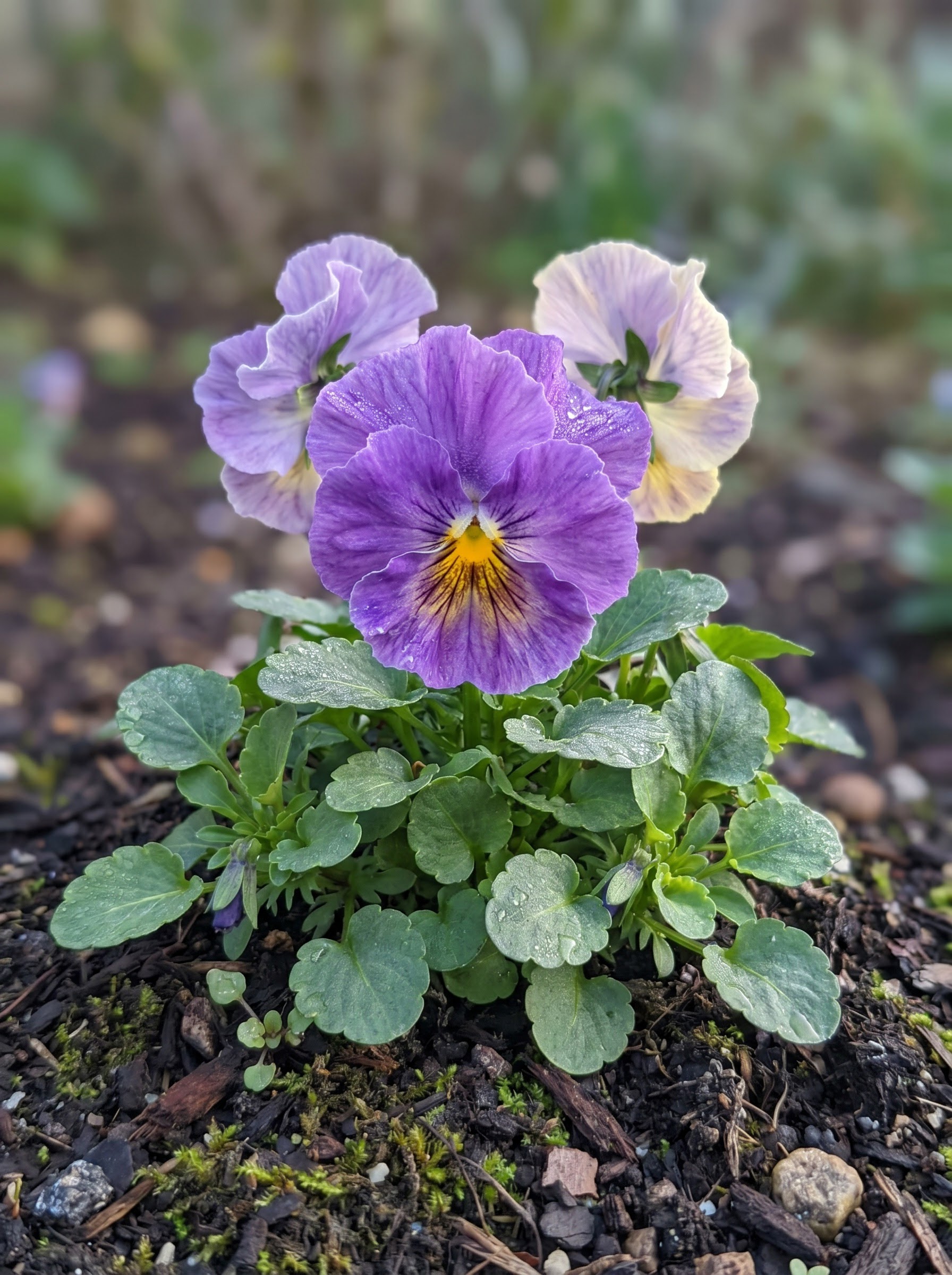 Pansy /Folklore
A popular container-and-window-box pairing rather than an in-ground bed match: both are cool-season, moisture-loving spring plants, but the pairing itself is a design tradition, not a documented horticultural mechanism.
All Forget-me-not companions
8 flower companions, best match first
What not to plant near Forget-me-not
Most bad neighbours are not evil, they just want the opposite light, water or root run. Here is what to keep away, and what to do instead.
Full-sun, dry-soil plants: lavender, rosemary, thyme, most sedums, drought-tolerant bedding annuals
Forget-me-not needs organically rich, consistently moist soil in part shade, while Mediterranean herbs and most sedums want it lean, dry and sun-baked. Planted together, one of the two gets watered wrong.
Small, slow-growing, or expensive choice perennials and alpines planted directly in its seeding path
NC State Extension documents that forget-me-not persists for years by freely, sometimes aggressively self-seeding and spreading via creeping stem bases; a precious slow-grower planted right in that path risks getting swamped before it establishes.
Other aggressive self-seeders in the same small bed (cornflower, love-in-a-mist)
Two enthusiastic self-sowers competing for the same ground turns a designed combination into an unmanageable free-for-all of volunteer seedlings by the second or third year.
Very small, delicate early bulbs planted right where forget-me-not fills in (species crocus, tiny species tulips)
The same dense spring growth that beautifully masks dying tulip and daffodil foliage can just as easily swallow a much smaller, more delicate bulb before it gets its moment; this is the opposite problem from snowdrop, which blooms and is seen before forget-me-not fills the ground.
Deep, dry shade under mature conifers or dense evergreen canopy
Shade alone isn't the same as moist shade: forget-me-not tolerates the light level in deep shade but fails on the moisture axis, since dry shade under heavy canopy rarely holds the consistent dampness it needs.
Most companion guides treat forget-me-not like any other flower shopping for a partner. That gets the relationship backward. Forget-me-not is a low, mounding groundcover that works as living mulch, so its best companions aren’t neighbors standing beside it, they’re taller plants growing up through it. The clearest, best-documented version of that relationship is the classic spring bulb underplanting: forget-me-not laid down first as a blue carpet, with tulips or daffodils rising through it a season later. Missouri Botanical Garden’s own cultural notes name this directly, listing "interplant with spring bulbs" among the plant’s standard garden uses, and every major gardening source that discusses forget-me-not at all eventually lands on the same pairing. Once you understand forget-me-not as the floor rather than the feature, the rest of its companion list falls into a simple pattern of what grows through it in spring and what takes over once it’s done for the year.
The best companions for forget-me-not, explained
Tulip and daffodil are not just companions for forget-me-not, they’re closer to the whole reason the pairing exists as a garden tradition. The mechanism is threefold: both bulbs share forget-me-not’s moist, part-shade preference, their bloom windows overlap if you choose late tulip varieties, and forget-me-not’s own spring growth swells at exactly the moment tulip and daffodil foliage starts yellowing and flopping, burying the ugly part of the bulb’s life cycle under a fresh blue haze. Tulips get the more dramatic color story out of it. Blue is a receding color, so a carpet of forget-me-not makes warm apricot, coral or pale yellow tulips look more luminous by contrast, while a run of dark purple or maroon tulips against the same blue reads as a moodier, more sophisticated harmony instead. Daffodils play a slightly different role: their pale yellow or white trumpets against the blue carpet read crisper and more architectural than the softer tulip pairing, and they carry a genuine practical bonus, since every part of a daffodil bulb contains lycorine, a bitter alkaloid that deer, squirrels and voles avoid on the first bite. That makes daffodil-and-forget-me-not measurably more critter-resistant than tulip alone, which voles and deer will happily dig up given the chance.
Once the bulb display fades, forget-me-not’s own life cycle is short. It’s biennial or a very short-lived perennial, meaning the plants that bloomed this spring are largely finished by summer, and the bed needs something else to carry it. Brunnera macrophylla, sometimes sold as false forget-me-not or Siberian bugloss, is the best-documented answer: NC State Extension notes its own small blue flowers resemble Myosotis directly, so the two together create an extended illusion of the same bloom continuing past forget-me-not’s actual window, while brunnera’s heart-shaped, often silver-marked leaves hold the space through summer after the annual has died back. Hosta and shade ferns are the other two plants gardeners reach for here, and the logic holds up on paper, since both share forget-me-not’s moist, part-shade profile and both offer real contrast or continuity once the flowers are gone, broad ribbed paddle leaves against the haze for hosta, a matching fine texture for fern. But neither pairing shows up in the university and botanical-garden sources that back the rest of this list; it’s a widely repeated design habit rather than a documented recommendation, and it’s worth naming plainly as that. Virginia bluebells bloom right alongside forget-me-not in the same moist, part-shade, blue-toned register, reading as one continuous wave of cool spring color rather than a separate combination. Snowdrop works at the opposite end of the timeline, its small white bells opening in late winter and pushing up through forget-me-not’s still-emerging foliage before the larger bulbs take their turn. In containers and window boxes, forget-me-not pairs with pansy or viola as a design tradition rather than a documented horticultural match. Both like cool, moist spring conditions and neither one needs the other to thrive, so call this pairing what it is: a popular, attractive combination with no real mechanism behind it beyond shared timing and scale.
What not to plant near forget-me-not
The plant’s biggest documented weakness isn’t disease or toxicity toward its neighbors, it’s sheer reproductive enthusiasm. NC State Extension states plainly that forget-me-not "will persist in the garden for many years by freely and sometimes aggressively self-seeding," spreading further through creeping, stolon-like stem bases that root and form new clonal offsets, and both NC State and Missouri Botanical Garden go a step further, flagging Myosotis sylvatica as a listed noxious weed in one or more Midwestern states outside Missouri. That reframes the avoid list entirely: the concern isn’t that forget-me-not will harm a neighboring plant through competition for nutrients or shared pests, it’s that a precious, slow-growing perennial or a small alpine planted right in its seeding path can get swamped before it has a chance to establish. The practical advice here is not "never plant forget-me-not near choice perennials," it’s "deadhead before seed set, or give small slow growers a season’s head start somewhere the seedlings haven’t reached yet." The same mechanism explains why forget-me-not is a rough neighbor for other enthusiastic self-sowers like cornflower or love-in-a-mist in a small bed: two species racing to colonize the same ground turns a planned combination into an unmanageable tangle of volunteers within a couple of seasons, though this specific pairing risk is common-sense garden wisdom rather than a documented study.
The cleaner, more teachable avoid rule is the water and light mismatch. Forget-me-not wants organically rich, consistently moist soil and does best in part shade, full sun only if the ground never dries out. That makes it a poor match for lavender, rosemary, thyme, most sedums, and any full-sun, drought-tolerant bedding annual: those plants want it lean and dry, forget-me-not wants it damp, and crowding the two together means one of them is being watered wrong on any given week. A subtler version of the same mismatch is deep, dry shade under mature conifers or a dense evergreen canopy. That’s shade, technically the light level forget-me-not tolerates, but it usually isn’t moist shade, and the plant fails on the moisture axis even in conditions that look right on paper. There’s a final, narrower caution worth naming plainly: the same dense growth that beautifully masks dying tulip and daffodil foliage can just as easily swallow a much smaller, more delicate early bulb, like species crocus, if that bulb is planted directly in forget-me-not’s path rather than at the thinner edge of the drift. This is the mirror image of the snowdrop pairing, which works precisely because snowdrops bloom and get their moment before forget-me-not fills in.
Do they like the same conditions?
Forget-me-not’s reputation as a pure shade plant is a little overstated. NC State Extension lists it as tolerating full sun to part shade, and Missouri Botanical Garden’s own growing notes say the same, adding that afternoon shade is appreciated specifically in hot summer climates rather than required everywhere. Most consumer and UK gardening sources default to recommending partial shade as the headline placement, and that’s not wrong exactly, it’s the more forgiving, more reliably successful choice and the one that produces the classic woodland-floor look most people are actually picturing. The practical rule: part shade is the safe default, full sun works if you can guarantee the soil stays consistently moist through the season, and if you can’t guarantee that, shade is the more forgiving bet.
Moisture, not light, is the real limiting factor for this plant, and it’s the one place where the sourcing is unanimous. NC State Extension calls for consistently moist, well-drained soil and notes the plant tolerates shallow standing water, which tells you a lot about where its tolerances actually sit. Consumer sources echo the same point independently, describing forget-me-not as thriving in moist soil and tolerating conditions on the muddy side, never the reverse. Soil pH gets treated as a near non-issue by comparison: forget-me-not handles a wide range around neutral without complaint, so pH matching is essentially never the deciding factor when you’re choosing a companion. The one nuance worth stating honestly is that forget-me-not’s hardiness across USDA zones 3a through 8b matters less for companion planning than you’d expect, because most gardeners grow it as an annual or biennial regardless of zone, letting the self-sown population persist year to year rather than relying on any single plant’s winter survival.
How to plant them together
Timing is the whole game with bulb underplanting. Plant forget-me-not first, either from seed sown in late summer for bloom the following spring or from nursery starts set out in fall, and let it get established before you add bulbs. Then, that same fall, tuck tulip or daffodil bulbs randomly between the already-growing forget-me-not plants rather than in a separate zone, spacing bulbs roughly four to six inches apart within the drift. Choose late-blooming tulip varieties specifically, since forget-me-not’s own bloom peaks later in spring than many early and midseason tulips, and a timing mismatch means you lose the visual overlap the whole pairing depends on. For the summer hand-off plants, give hosta and brunnera twelve to eighteen inches of clearance from the thickest part of an established forget-me-not drift so their crowns aren’t smothered by spring seedlings, and treat ferns the same way with slightly more room, since fern fronds unfurl later and need a season to establish without competition.
In containers, the rules shift a little because everything dries out faster and the seeding problem mostly disappears with the pot at the end of the season. Space forget-me-not and pansy or viola six to eight inches apart in a window box or large pot, and water more frequently than you would an in-ground bed since containers lose moisture fast, especially in a sunny spot. Layer a bulb like tulip in the center of a fall-planted container with forget-me-not tucked around the edges, so the same underplanting logic that works in a bed works in a pot on a smaller scale. Wherever you plant it, resist the urge to space forget-me-not itself out evenly. It reads best as an irregular, sweeping drift with organic, kidney-shaped edges rather than a neat ring or a grid, since that’s the layout that lets the bulbs rising through it look naturalized instead of planted.
Does companion planting actually work for forget-me-not?
Some of it is genuinely proven, and some of it is popular design tradition dressed up as horticulture, and a clear-eyed version separates the two rather than blurring them together. The tulip and daffodil underplanting is as close to proven as this category gets: it rests on matched growing conditions that university sources document directly, a real overlap in bloom timing you can engineer by variety choice, and a physically observable foliage-masking effect anyone can watch happen in their own bed each spring. The self-seeding caution is equally solid, sourced straight to NC State Extension’s own description of the plant’s spread, not a rumor passed between gardening blogs. Where the evidence thins out is anything claiming a specific plant-to-plant benefit beyond shared conditions and bloom timing, like pansy in a container, or vague warnings about companions that don’t actually conflict with forget-me-not’s documented needs. If a claim can be traced to a university extension source or a botanical garden’s own cultural notes, it earns real weight here. If it can’t, and it’s just a pairing repeated across enough blog posts to sound authoritative, it’s still worth listing honestly, just not worth believing more than the evidence supports.
FAQ
What can I plant under forget-me-not?
Nothing, in the usual sense. Forget-me-not is the underplanting itself, the low layer other things grow through, so the better question is what to plant it under: late tulips, daffodils, or any taller spring bulb whose bare stems it can visually mask as they fade.
What should you not plant near forget-me-not?
Full-sun, drought-tolerant plants like lavender, rosemary and most sedums are the clearest mismatch, since forget-me-not wants consistently moist soil and part shade while those plants want it lean and dry. Small, expensive, slow-growing perennials planted directly in its seeding path are the second concern, not because forget-me-not harms them directly, but because its self-seeding can outcompete them for space before they establish.
Is forget-me-not invasive?
Not legally, according to University of Maine Cooperative Extension, which notes the common woodland species doesn’t appear on official invasive lists even though it "is widespread and can be aggressively weedy, legal definitions aside." Water forget-me-not, a different species grown at pond edges, is treated more cautiously in some states. Either way, the honest framing is enthusiastic reseeder, not garden-destroying invasive, and deadheading before seed set keeps it in check.
Can forget-me-not grow in full sun?
Yes, but only if the soil stays consistently moist through the season. NC State Extension and Missouri Botanical Garden both list full sun as tolerated, not just part shade, but every source agrees moisture is the real limiting factor, so full sun without reliable water is a worse bet than part shade.
What can I plant with forget-me-not in containers?
Pansy or viola is the classic pot and window box pairing, both cool-season, moisture-loving spring plants at a similar scale, though this specific combination is a design tradition rather than a documented horticultural match. For more structure, layer forget-me-not around the base of a container-planted tulip or daffodil bulb the same way you would in a bed.
Sources
- NC State Extension Gardener Plant Toolbox: Myosotis sylvatica
- Missouri Botanical Garden Plant Finder: Myosotis sylvatica
- University of Maine Cooperative Extension: Are forget-me-nots invasive or native?
- NC State Extension Gardener Plant Toolbox: Brunnera macrophylla
- Wisconsin Horticulture Extension: Virginia Bluebells, Mertensia virginica
- RHS: Snowdrops growing guide