
What a four o'clock is and where it came from
Four o'clock is a tender perennial in the Nyctaginaceae family, grown as an annual across most temperate gardens. That family is mostly tropical and subtropical, with about 30 genera and 300 species worldwide. Its botanical name Mirabilis means wonderful in Latin, while jalapa points to Xalapa, the state capital of Veracruz in Mexico. That name also recalls an old purgative medicine once credited to these roots, though the drug actually came from a member of the morning glory family. Gardeners have grown it since the days of the Aztecs, and Spanish conquistadors carried it to Europe as one of our oldest garden flowers. It arrived in Europe in 1525 or was first identified there in 1540.
In the wild, it belongs to the tropical Americas, traced to Peru or across dry tropical regions of Mexico, Guatemala, Chile and Peru. Across the American South, it is a traditional passalong plant, shared from yard to yard by hand.
Why it opens late in the day
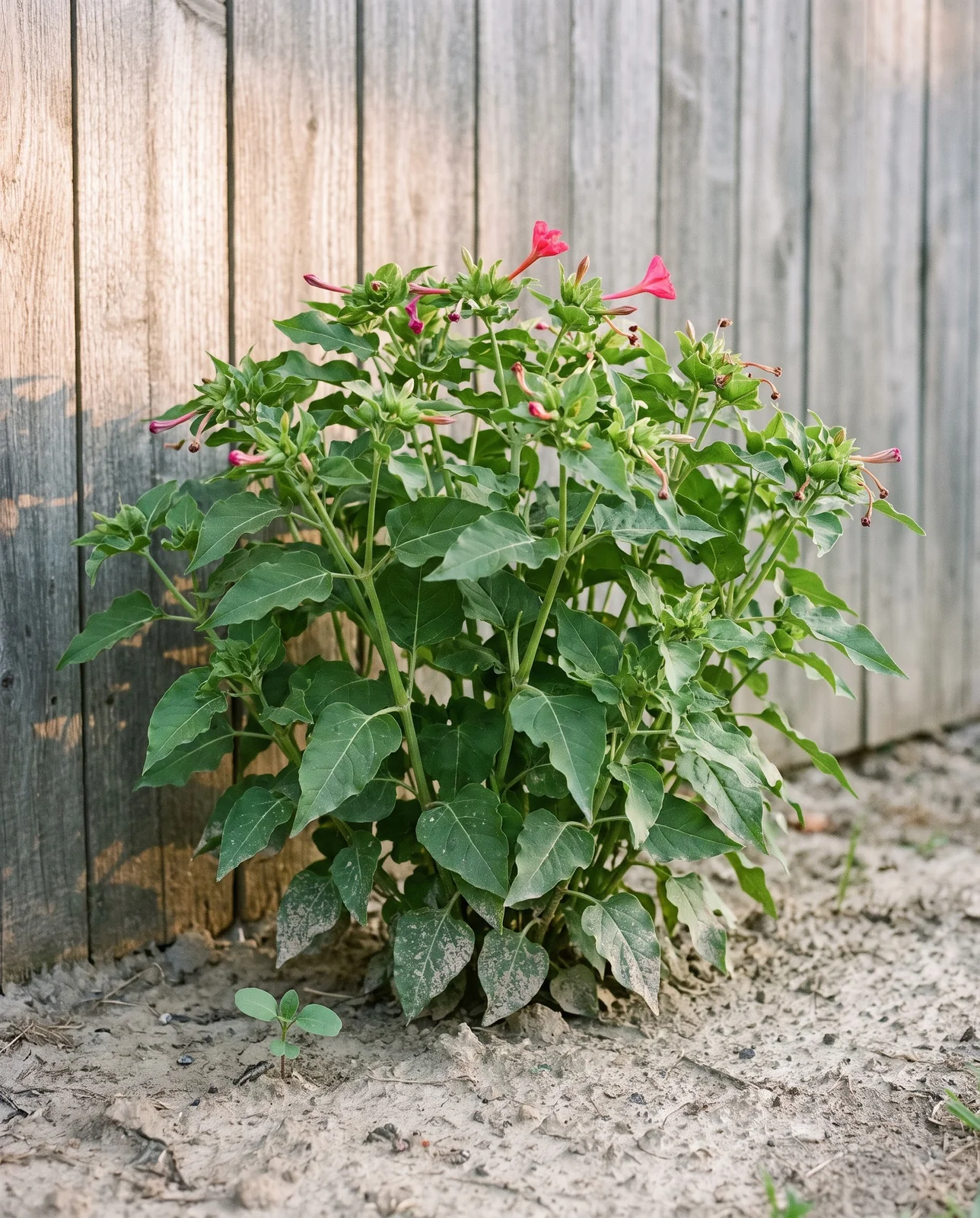
The flowers open in late afternoon as the air cools, responding to falling temperatures without any internal clock. They typically open around four o'clock and stay open until the following morning, holding their blooms for 16 to 20 hours. The foliage follows that same cooling rhythm, often wilting under baking midday sun before recovering vigorously in the evening as the sun sets. That evening timing suits the night-flying moths that pollinate the flowers while avoiding the heat of the day.
Shifting weather easily changes that timetable. On rainy or heavily overcast afternoons, the flowers open earlier. When temperatures stay cool, blooms can remain open past the next morning until new flowers open behind them. Because cloud cover and cooling air control the bloom, you cannot set your watch by the flowers. Four o'clocks share that late-day garden well with moonflower, which also comes into its own as twilight settles.
The other plants called four o'clock
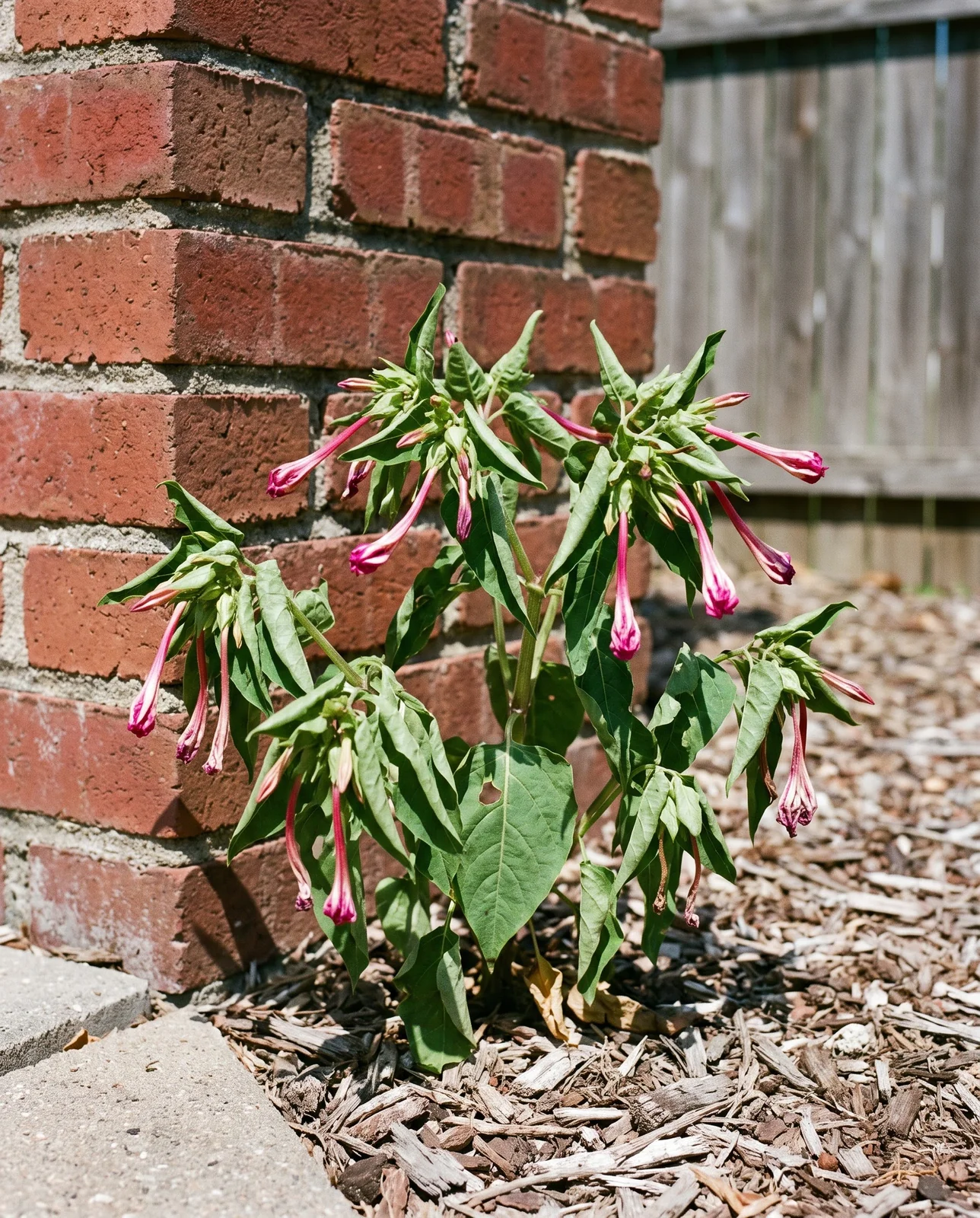
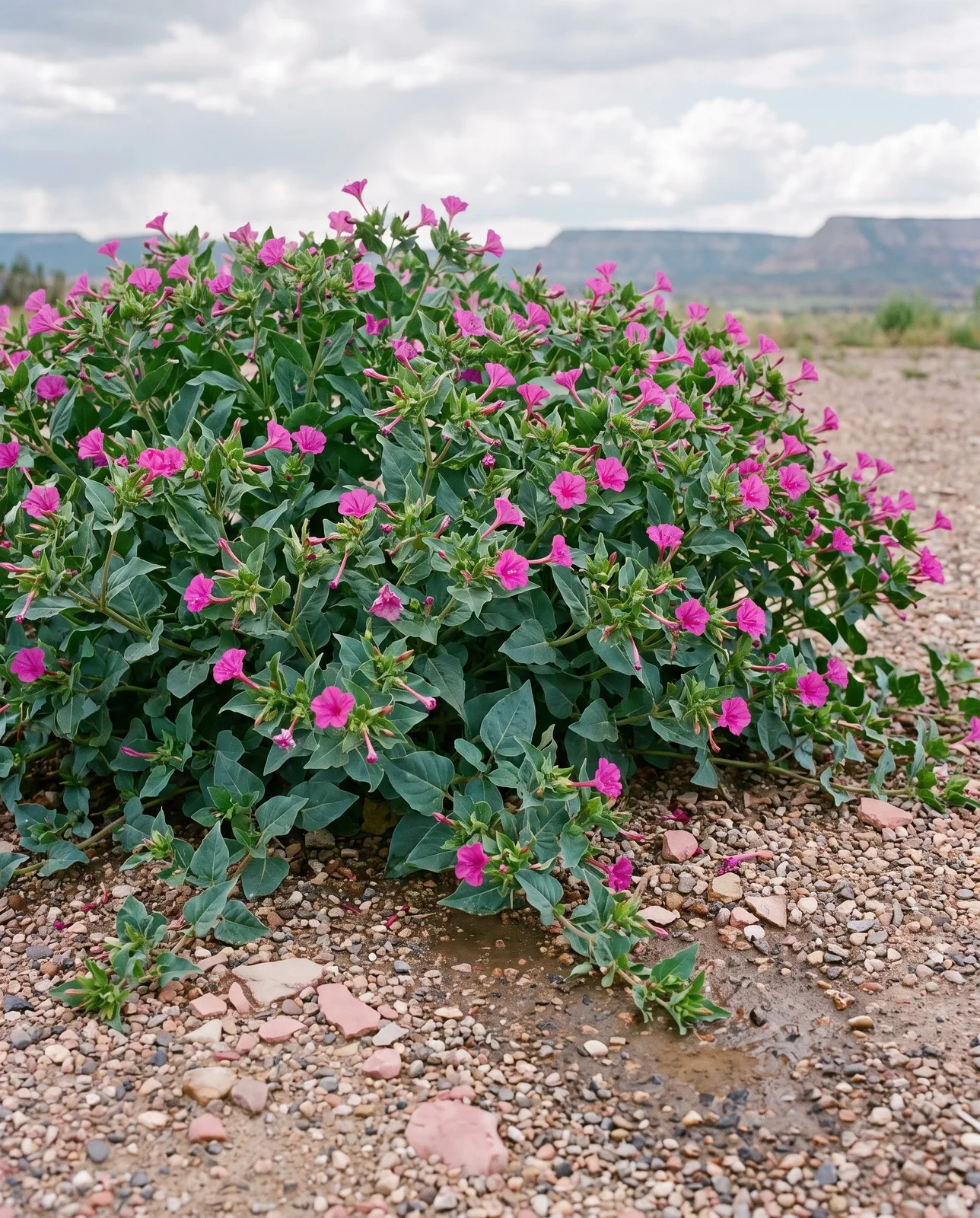
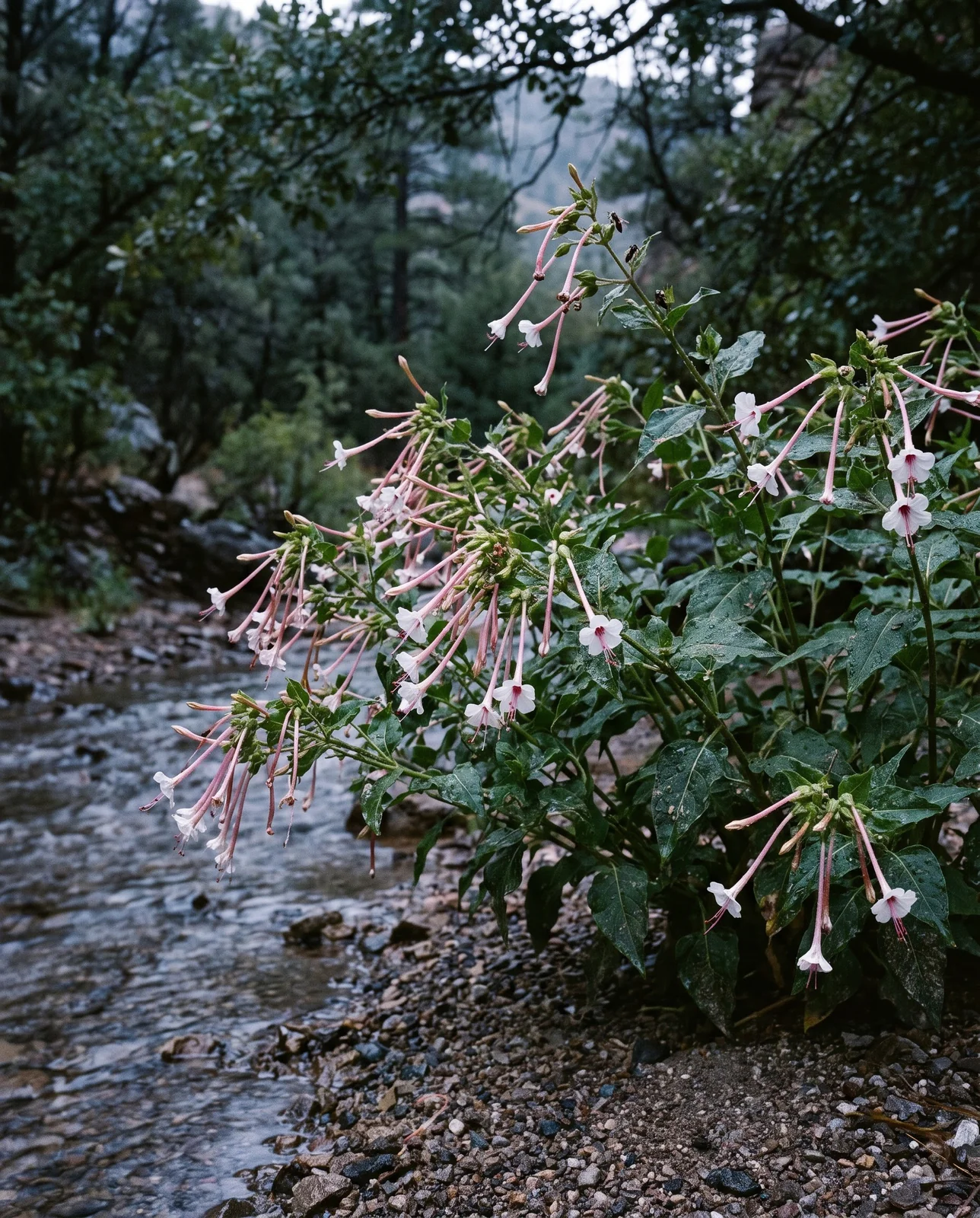
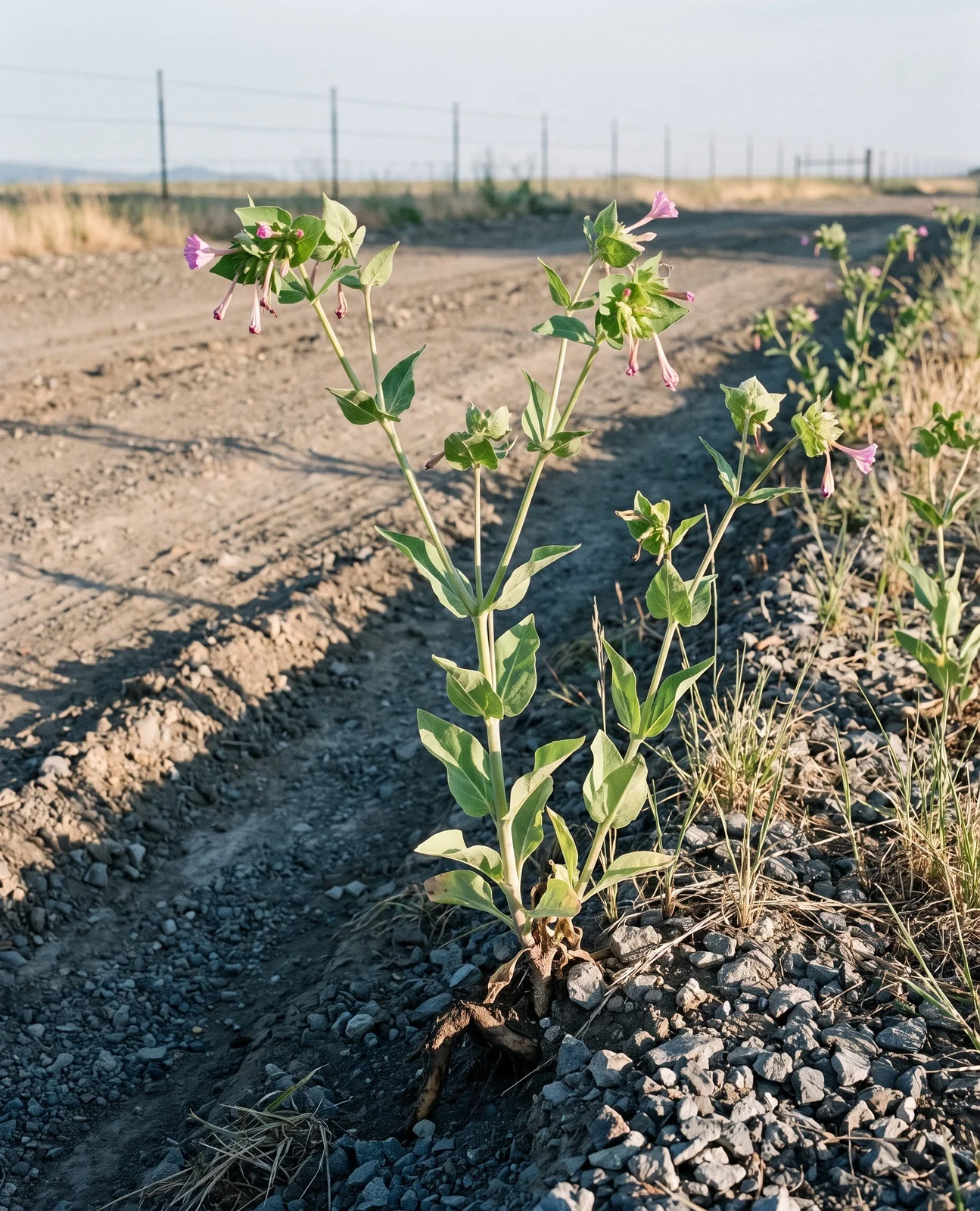
Four distinct plants carry the four o'clock name, though three are native wild species quite different from the common garden flower. Colorado four o'clock, Mirabilis multiflora, also goes by desert, wild, showy, or Froebel's four o'clock. It grows from a deep taproot up to 2 feet tall and 6 feet wide, sprawling across dry ground. Southwestern gardeners often plant it for xeriscaping, since established plants need little extra water. Hawkmoths pollinate its blossoms, which open sooner and stay open longer when clouds roll in. In winter the foliage dies back and the stem snaps cleanly at ground level, leaving no surface trace of the root below.
A second wild relative is sweet four o'clock, Mirabilis longiflora, named for the fragrance of its night blooms. It is a close perennial cousin of garden four o'clock, growing up to 5 feet tall with heavy, brittle, sticky stems branching near the base. It grows from tubers, is perennial, and prefers some shade and water. The fourth plant is wild four o'clock, Mirabilis nyctaginea, native east of the Rocky Mountains and a Class A noxious weed in Washington. Its flowers also open in late afternoon and wither by morning, and gardeners easily confuse it with the garden species because their calyx structures look so similar. A four o'clock growing in a flower bed is almost certainly the common garden species, the main ornamental in the genus. The other three are usually found on wild ground in the Southwest and the middle of the country.
The four plants that carry the name
A few measurements tell them apart quickly. Each plant is a distinct species with its own native territory, mature size and bloom season.
What the plant and the flower look like
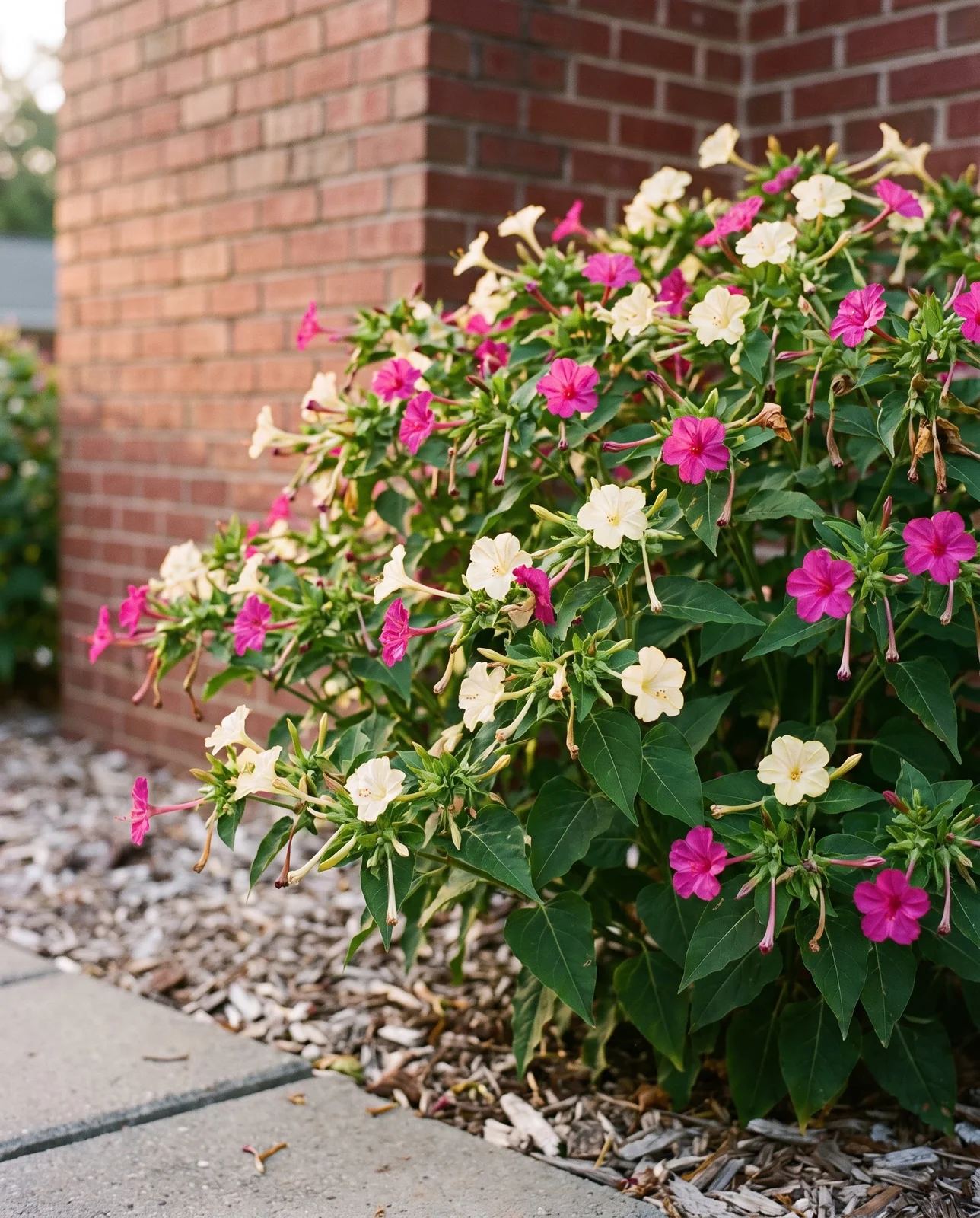
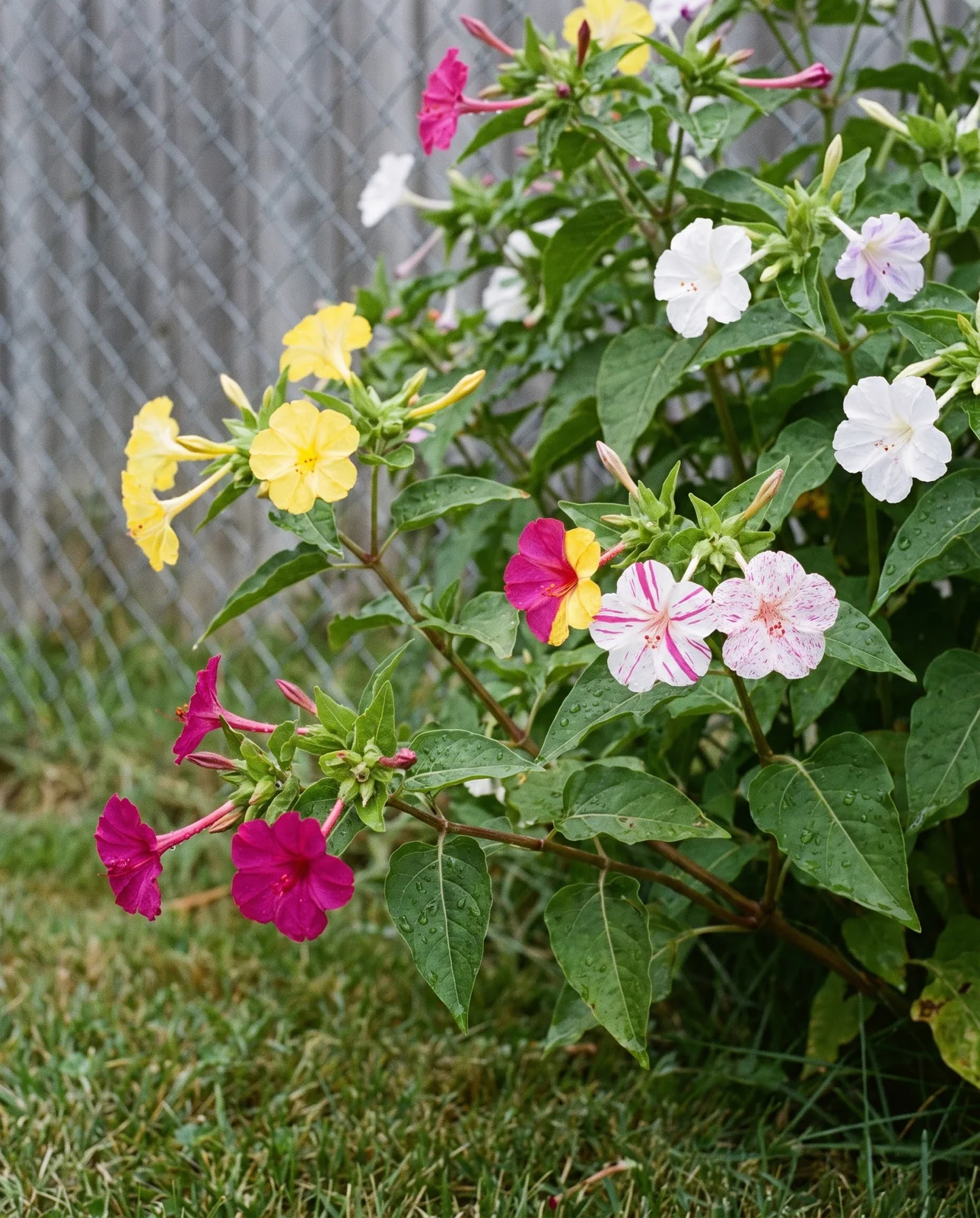
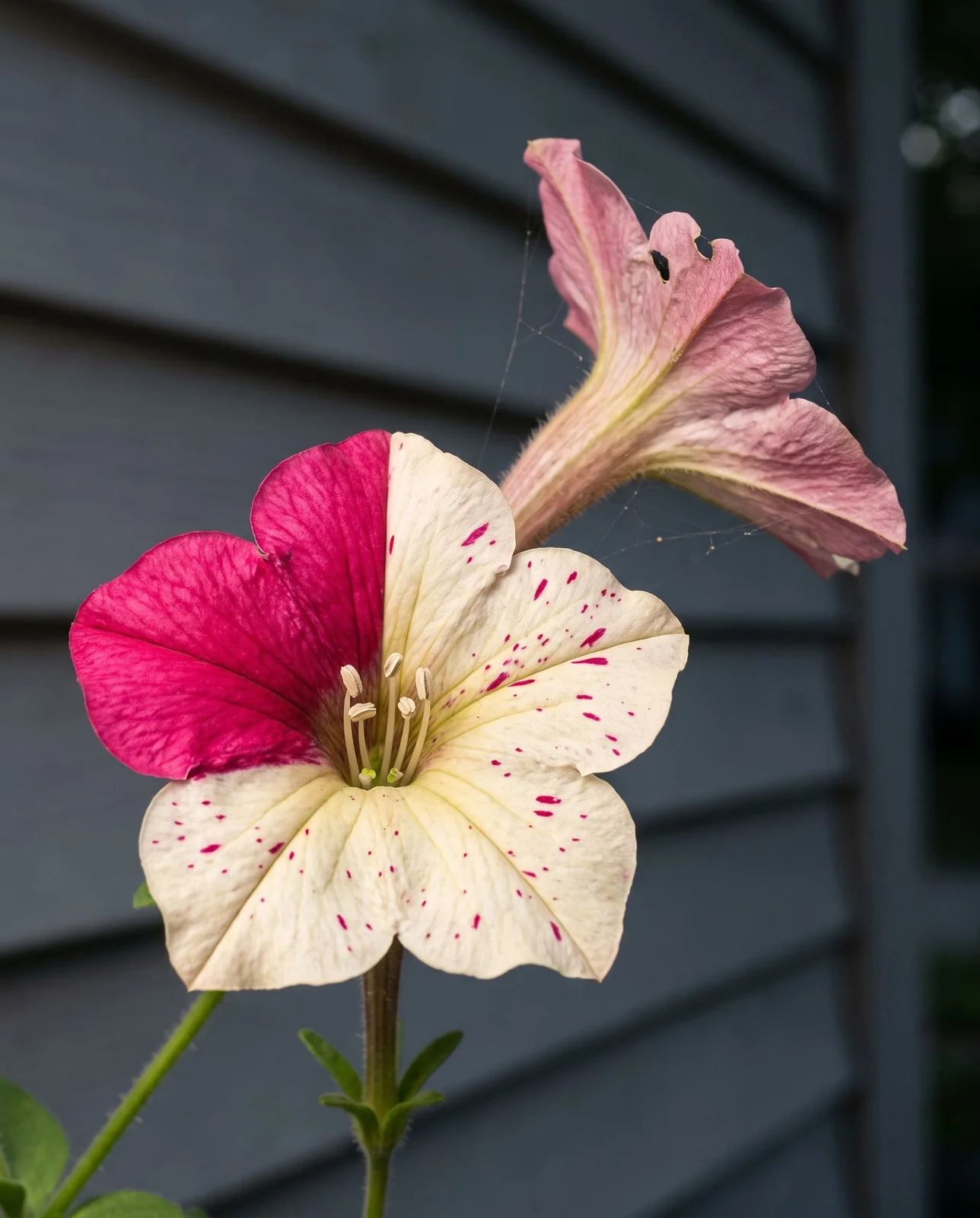
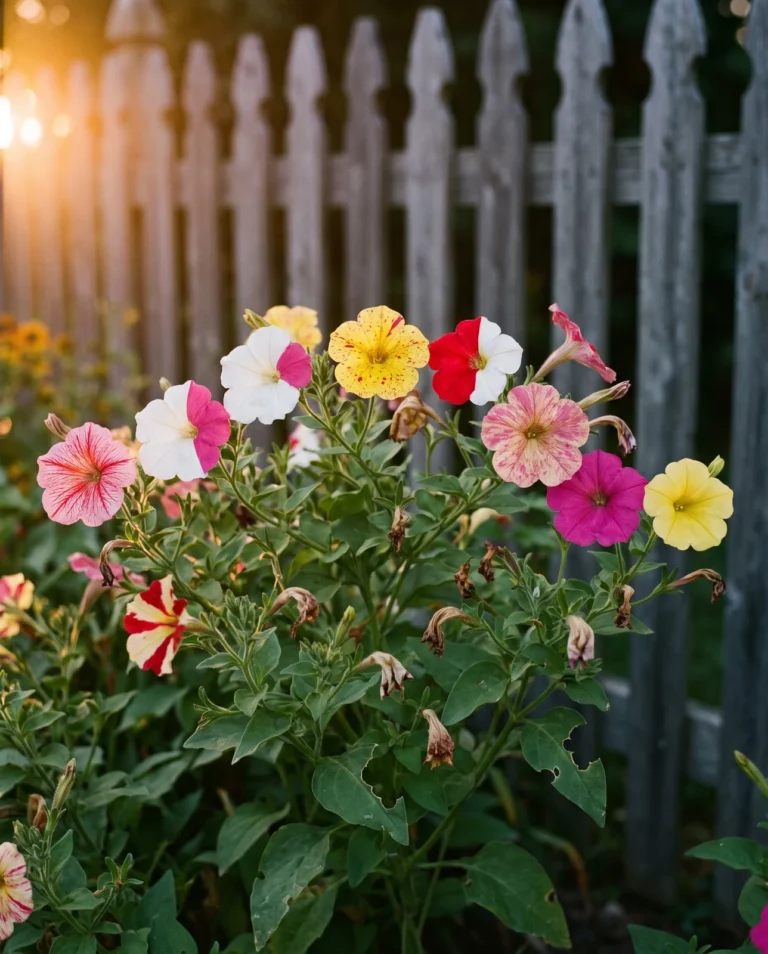
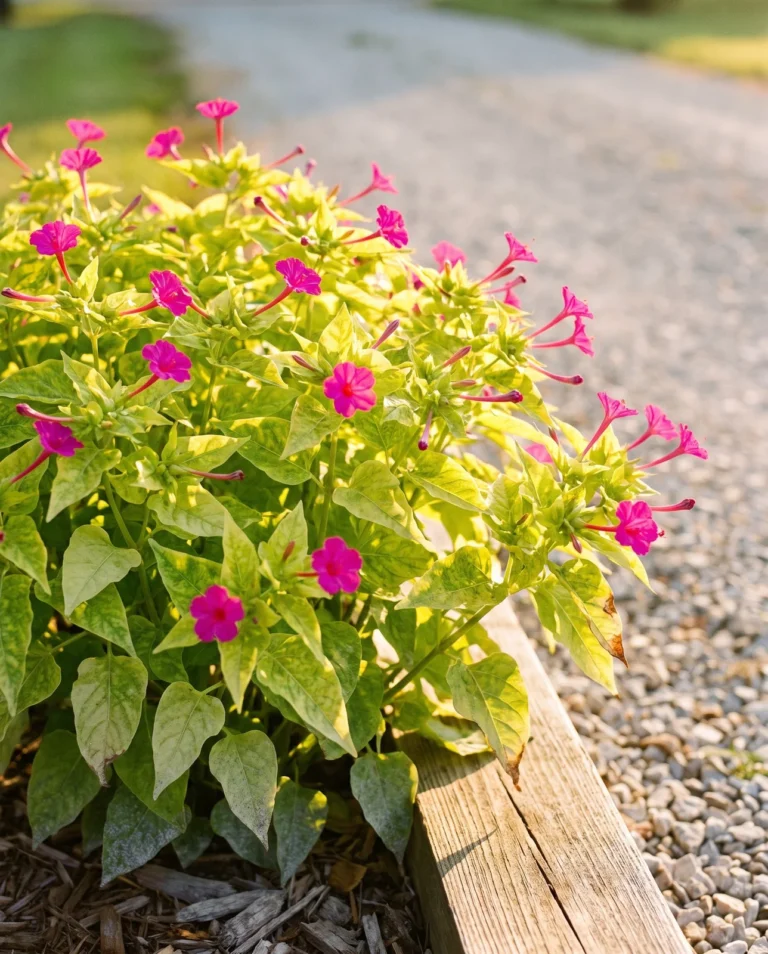
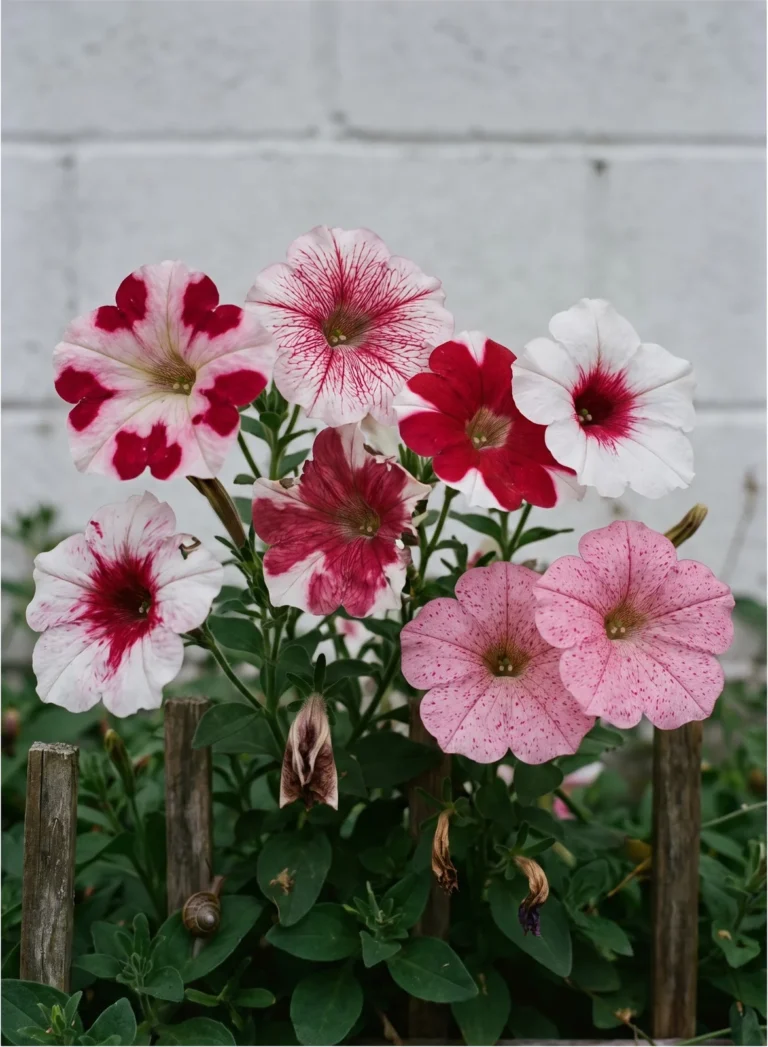
A four o'clock grows as a bushy mound of green foliage covered in colorful trumpet blooms, though each trumpet is actually a modified calyx. The plant produces no true petals, relying on colorful sepals to form the flower. Petal-free flowers are unusual in garden plants, but they are normal across the four o'clock family. Different flower colors often appear together on a single plant, and individual blooms can be bicolored, speckled or variegated. The markings show up as distinct sectors, striped flakes of different lengths, or fine spots. Individual flowers can even change color as they mature, with yellow blossoms turning dark pink and white ones shifting to light violet.
Striped patterns were once attributed to a viral infection in 1999, but genetic studies trace the variegation to a transposon disrupting pigment genes. Around 1900, Carl Correns used four o'clock foliage to study cytoplasmic inheritance, showing that factors outside the cell nucleus shape traits beyond Mendel's rules. The blooms also demonstrate incomplete dominance, since crossing a dark pink flower with a white one produces light pink seedlings. The hard black pellet that follows each flower looks like a seed, but it is technically a single-seeded fruit. Faded blossoms do not drop on their own, lingering limp on the branches into the next day.
Which parts are poisonous
The roots and seeds are somewhat toxic, though all parts of the plant are poisonous if eaten. The stems can cause serious stomach upset as well, and eating any part can cause stomach pain and nausea. Handling the roots can irritate the skin or trigger dermatitis, so wear gloves when working with them.
Poisoning brings on stomach pain, nausea, vomiting, and diarrhea, while handling the roots may cause dermatitis. Larger amounts can cause mouth sores, numbness, headache, dizziness, ringing in the ears, and hearing loss. A 56-year-old woman developed facial numbness and ringing in the ears after eating soup made with the plant, with symptoms taking three weeks to improve. A young man developed dizziness, headache, and muscle weakness after drinking a root decoction, recovering by the following day. The roots and flowers are used in traditional Chinese medicine, but only in controlled doses.
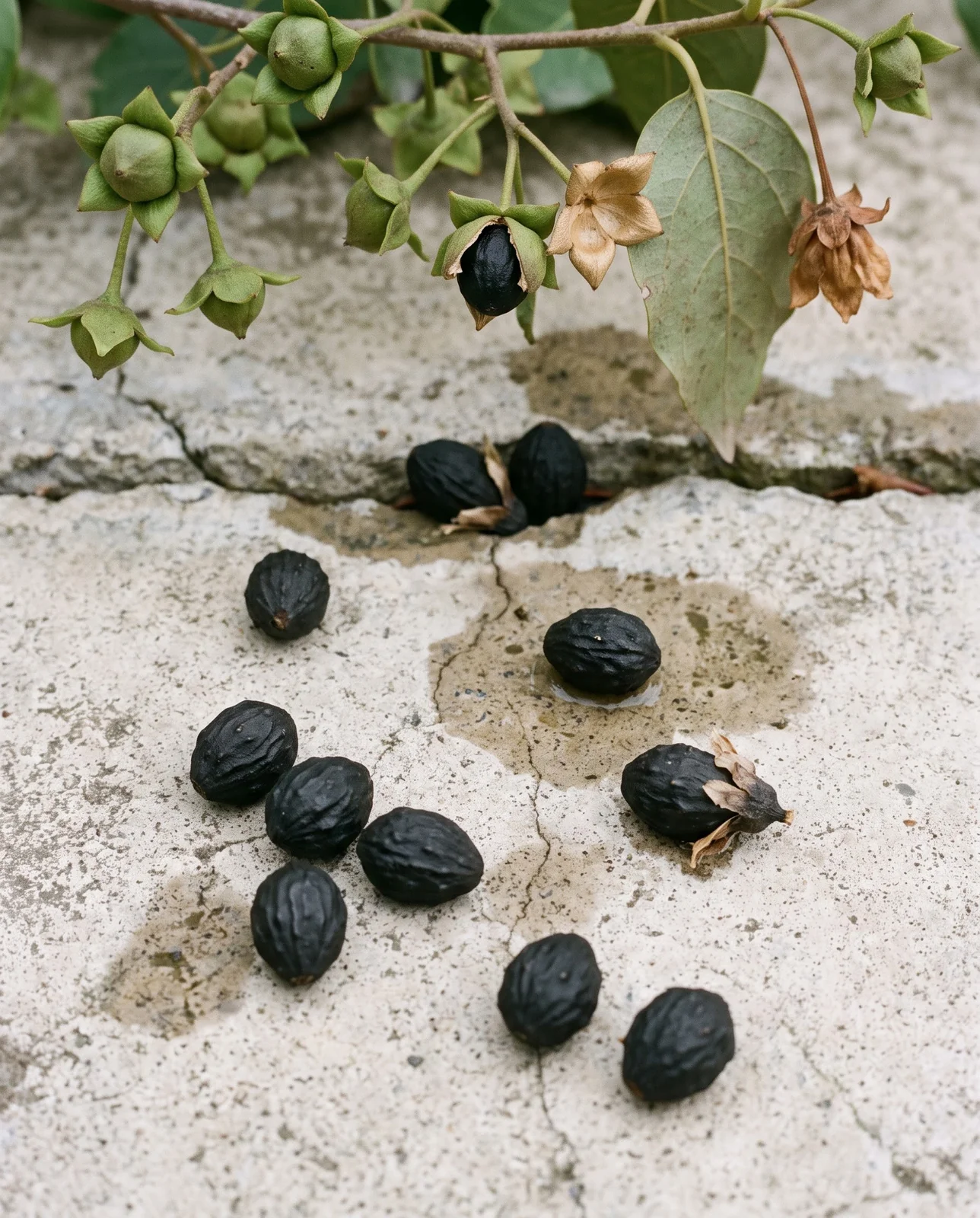
The seeds that fall in the garden are about 0.2 inches across, black and bumpy, held in green cups that stay on the plant. Commercial seed packets carry explicit poison warnings with liability disclaimers. Cooked leaves have been eaten in emergencies, but the seeds are considered poisonous. The specific toxic compound remains unidentified. Simple garden care is enough: wear gloves when lifting the roots, and keep the seeds away from pets and small children.
Zones, frost, and whether it comes back
Whether a four o'clock comes back depends on winter cold, and where that line falls depends on the garden. Cautious accounts treat it as hardy only in USDA zones 9 to 11, or strictly in zone 9a. Other guides place winter hardiness at zone 8, growing it as an annual in zone 7 and below. Named selections like 'Limelight' perennialize in zones 8, 9, and 10. In mild coastal areas, it can perennialize across zones 7 to 10. In zones 8 and 9, the tuberous roots can stay in the ground and regrow in spring. If your garden sits near those edges, watching a plant through one winter is the surest guide.
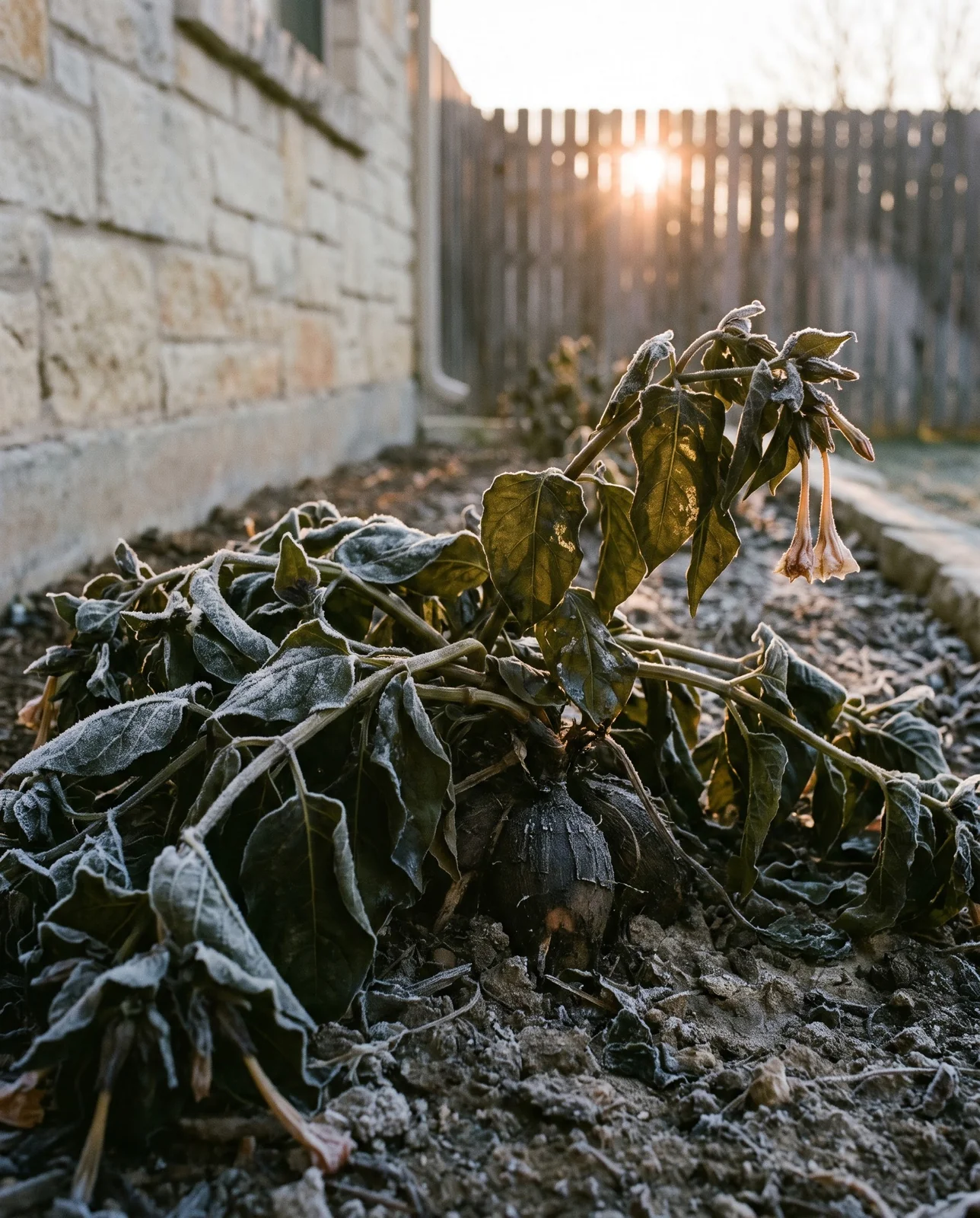
With the first frosts, the above-ground stems deteriorate and die, but the underground crown can return in spring. The plant forms dahlia-like tubers that usually survive the winter and sprout fresh growth from the roots. Local conditions matter just as much as broad zone lines: in North Carolina, it is grown as an annual in the western mountains but behaves as a perennial in most Piedmont and coastal gardens. Where the ground freezes too deeply for the tuber to survive, the plant is grown strictly as an annual. In favorable gardens, both cycles happen side by side, with established roots returning while dropped seeds sprout into volunteers.
Two ways to keep a four o'clock
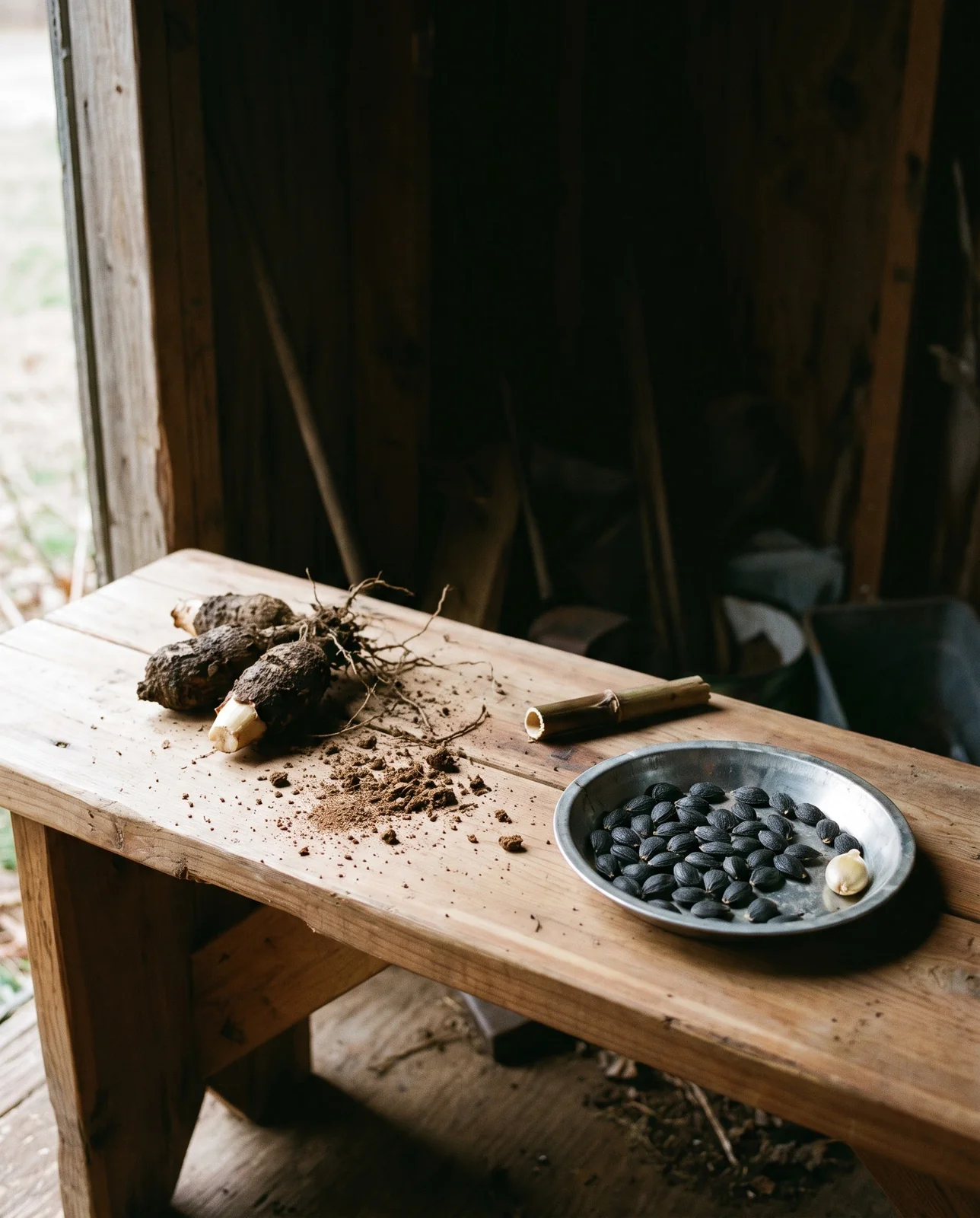
You can keep a four o'clock going through winter either by gathering seed or by saving the root. Growing from seed starts a fresh generation, while keeping the root brings back the exact bush you already grew. Anyone who winters over a dahlia already knows the routine: dig the fleshy tubers before hard frost and pack them away until spring. Saving that root is worth the effort, because plants tend to flower much better from an established root than from seed.
Winter temperatures decide whether digging the root is necessary or just a helpful bonus. In climates as cold as Canadian zone 6a, roughly zone 5, digging the root keeps the plant alive well beyond its normal range. In milder regions, lifting is optional, chosen for earlier and heavier blooms. You can also simply let fallen seeds sprout on their own where they land.
Starting four o'clocks from seed
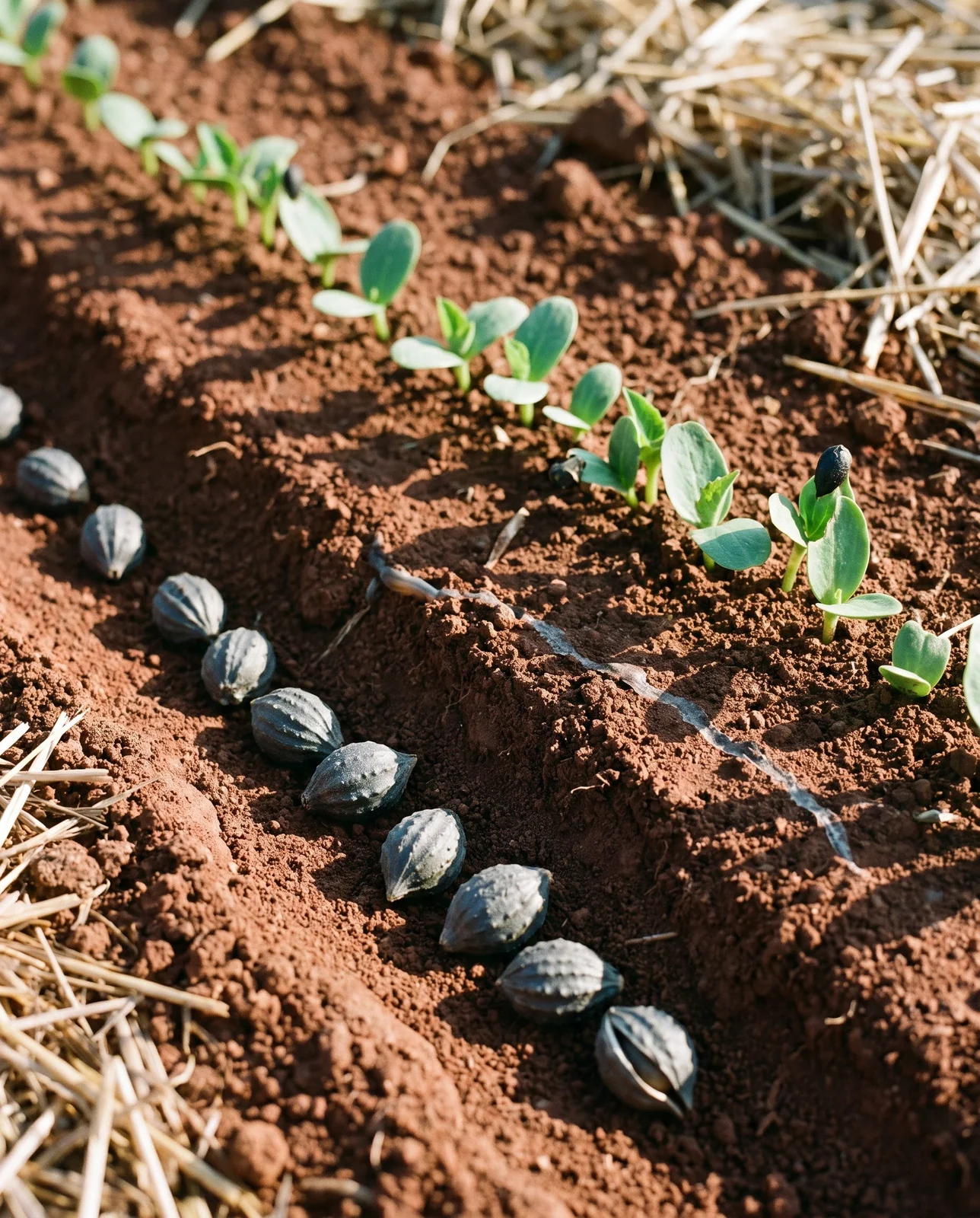
Starting four o'clocks from seed is straightforward once moisture penetrates their hard outer coat. Nicking the pointed end and soaking the seeds in water overnight, or in warm water for 4 to 6 hours, speeds up germination. Once prepared, seeds typically sprout in 5 to 7 days when kept at 68 to 70 degrees Fahrenheit. They also sprout rapidly at cooler temperatures around 64 degrees Fahrenheit. Warmth matters more than precision: steady, gentle heat is what wakes the seed.
Sow seeds directly outdoors once the danger of frost has passed, or start them indoors up to 8 weeks ahead of time. The general planting season stretches from mid-February through May. For an early spring start, the seeds will germinate at temperatures between 55 and 64 degrees Fahrenheit. Planting depth and spacing depend on the variety, so follow the recommendations on your packet.
Lifting and storing the root
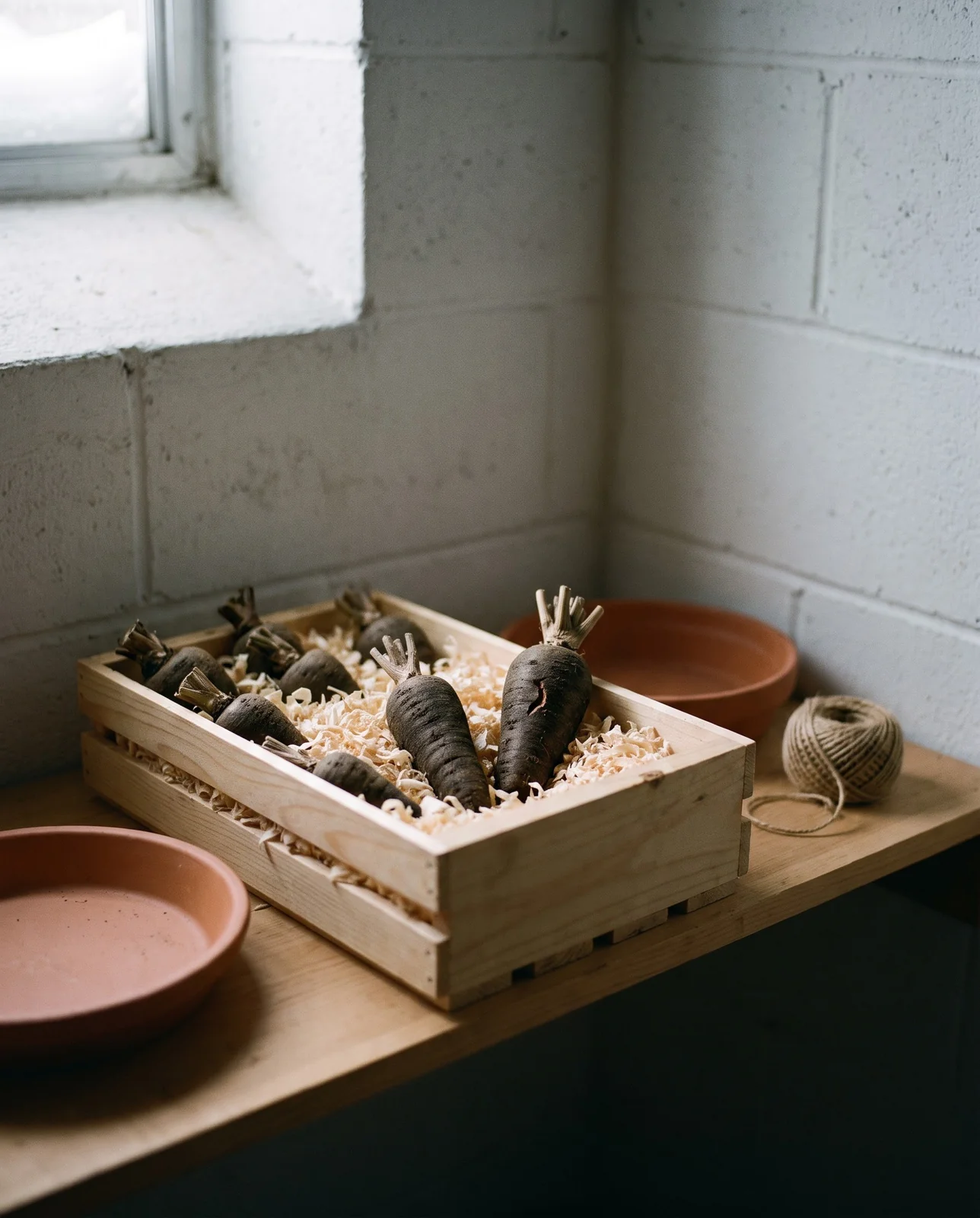
Cut back the top growth before you begin lifting the roots. Dig the tubers either just after the first autumn frost knocks down the foliage or right before the first hard freeze. The goal is simply getting them out after the season ends above ground, but before frost penetrates the soil. You are digging for a cluster of dark, carrot-like roots, so sink your garden fork well out from the stem to keep them whole.
Store the tubers in a cool basement or frost-free garage, packed in barely moist material. You can also keep them dry in a dark corner. Either way, the storage area simply needs to stay cool, dark, and safely above freezing all winter. Come spring, replant the tubers to enjoy the exact same vigorous bush for another summer.
Where to plant it
Plant four o'clocks close to where you spend your summer evenings. Set them near porches, patios, decks, swimming pools, or under open windows where you can fully enjoy the night-blooming flowers and their vanilla fragrance. At the far end of the yard, they bloom on schedule but release their scent to an empty lawn. Placing them beside a doorway or garden bench lets you enjoy the perfume every time you step outside. Give them shelter from cold, drying winds, and spread a dry winter mulch to protect overwintering roots from excess wet.

Self-seeding, and how much of it to expect
Four o'clocks drop plenty of seed, though how far they spread depends on your climate. In cooler gardens, the plant reseeds in its own patch without spreading very far. Under the right conditions, particularly in the warmest southern regions, it can self-seed vigorously and spread rapidly if left unchecked, sometimes becoming weedy or naturalizing. In tropical cane fields on Reunion Island, that rapid growth and heavy seed let it cover 30% to 50% of the ground. Hearing about that spread can make anyone worry about regretting the plant later. Four o'clocks share a sunny border well with cosmos, giving the bed daytime color while these evening blooms prepare to open.
The garden flower is not on the federal noxious weed list. Managing volunteers in your yard comes down to two simple habits: gather the ripe seeds before they drop, or hoe out unwanted sprouts in spring before their roots thicken.

Why it is not blooming
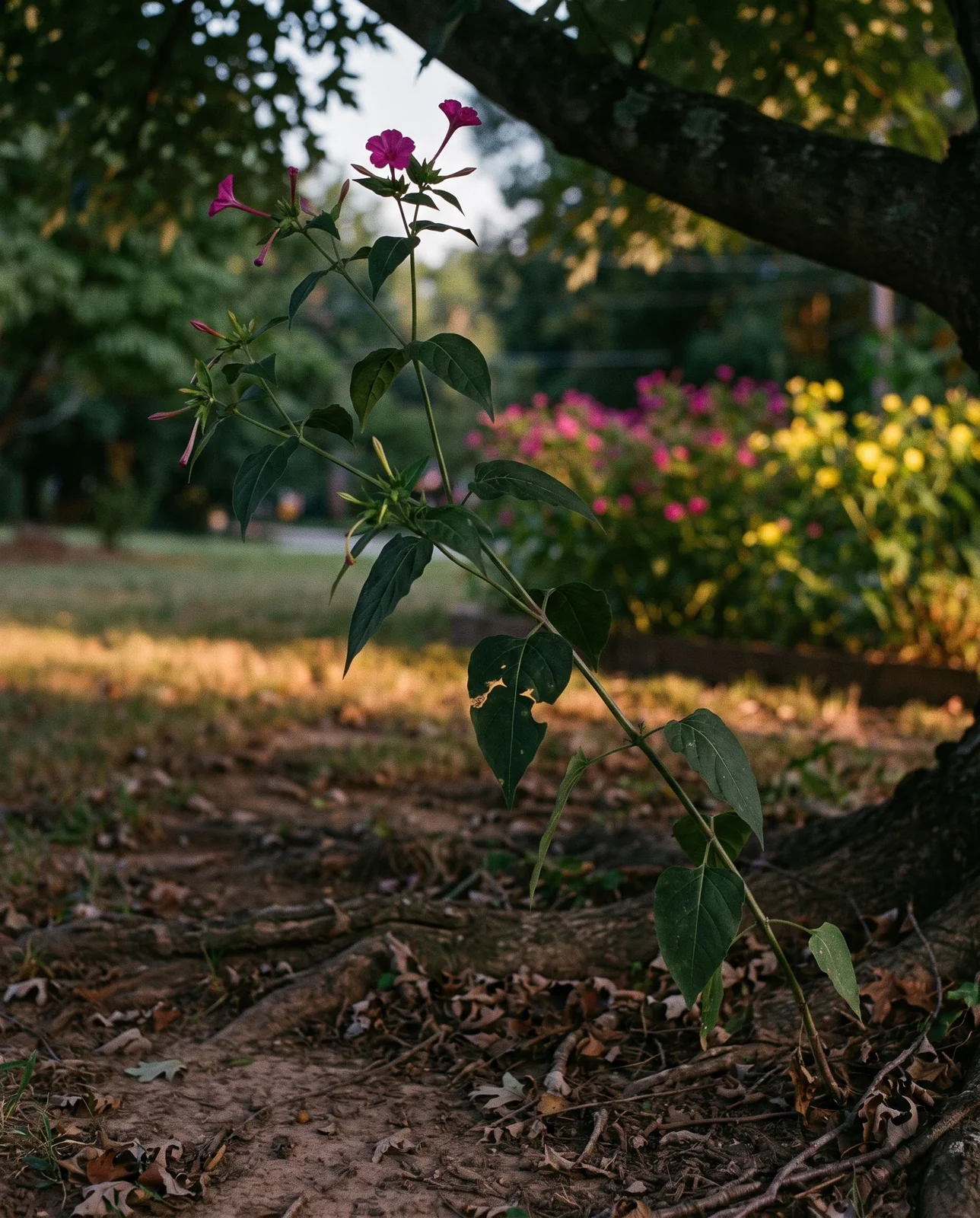
Before assuming a plant has failed, check it after sunset. Four o'clocks respond to temperature and dislike heat, waiting to open their flowers until the air cools down. If summer temperatures run high, a plant that seems barren by day may simply be blooming overnight. You can easily spend all July thinking the bush quit, when you simply missed the night display.
If the plant stays bare even after dark, check how much sunlight it gets. A bed tucked under deep tree shade leaves the bush with plenty of green leaves but little energy to set buds.
Bloom check, in order
Work through these steps in order. The first check usually solves the mystery before you move or feed the plant.
Yellow leaves and what they point at
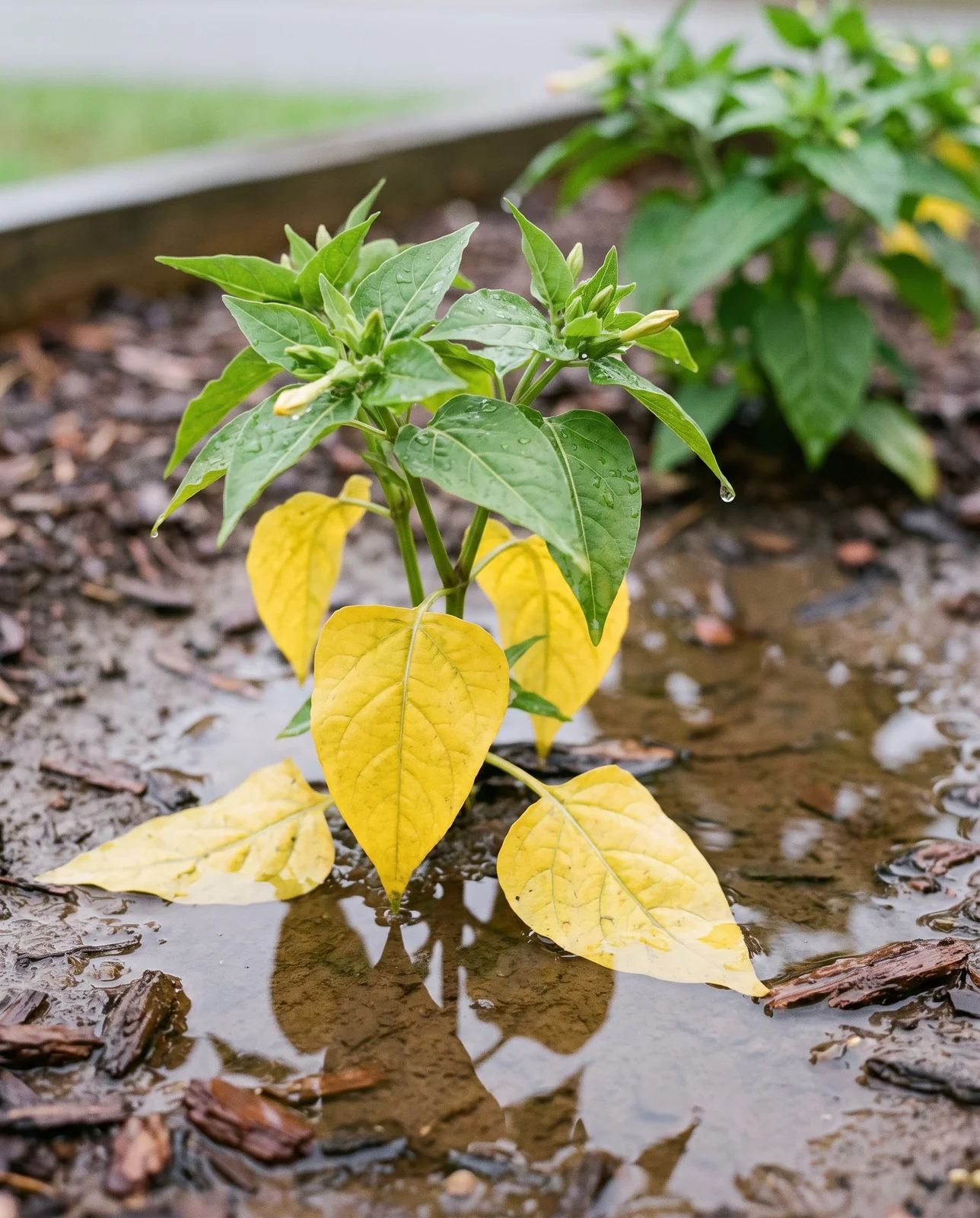
Yellow leaves usually point to soil moisture, where both extremes cause similar distress. Overwatering, poor drainage, or parched soil can all make four o'clocks wilt, turn yellow, or drop leaves. They need well-draining soil and regular watering during dry spells, so feeling the ground tells you which problem you have. A muddy low spot that stays waterlogged rots the root, while crumbly dry soil simply needs a deep soak.
A different pattern appears when the yellowing comes with fallen buds. Yellow-spotted leaves and dropped buds usually point to a fungal infection or a nutrient deficiency, both of which drag down plant vigor. Look closely at the foliage to tell them apart. Fungal issues often create distinct circles or lesions, whereas a nutrient shortage tends to fade the leaf tissue more evenly. Stripping spotted leaves cleans up fungus, while a light balanced feeding restores green growth to starved plants.
What actually goes wrong, ranked
Listed from the most common complaint down. Each one outlines the symptoms, the cause and what to do.
Symptoms: leaves turn yellow, sometimes developing spots or dropping buds. Cause: overwatering, poor drainage, or parched soil can trigger wilting, yellow leaves, or leaf drop, while yellow spots with bud drop usually point to fungal infection or a nutrient deficiency. What to do: inspect soil moisture, provide well-draining ground with regular water during dry spells, and clear away diseased leaves.
Symptoms: a healthy bush in full leaf with no open flowers during daylight. Cause: four o'clocks dislike heat and respond to temperature, which delays opening until the day cools and can push bloom into the night. What to do: visit the garden after sunset on a few evenings to see the flowers open.
Symptoms: volunteer seedlings sprouting where the parent plant stood or across nearby beds. Cause: four o'clocks drop plentiful seed; they can self-seed vigorously and become weedy in warm areas, though in cooler gardens they simply reseed in the area without spreading wide. What to do: collect the dark seeds before they tumble to the ground, or pull young seedlings in early spring.
Symptoms: a full-grown plant facing autumn frost with uncertainty about winter survival. Cause: the tuberous roots cannot survive freezing soil outdoors in cold winters. What to do: in zone 7 and below, dig the tuberous roots after the first fall frost and store them in a dry, dark spot like dahlias. The method carries tubers safely through winter even in cold zone 5.
Growing four o'clocks in containers
Four o'clocks settle happily into patio containers for the summer, provided the pot gives their roots enough depth. Because the plant develops a thick, carrot-shaped tuber, use a very deep container and set the root 4 inches deep. A wide, shallow planter is the wrong choice here, no matter how roomy the surface appears.
Pots also make winter care much simpler in cold climates. You can keep the container outdoors through the warm months and bring it inside to overwinter before frost arrives. Stashing the whole pot in a cool cellar saves you from digging roots out of cold autumn mud, cleaning them, and packing them into crates.

Moths and hummingbirds
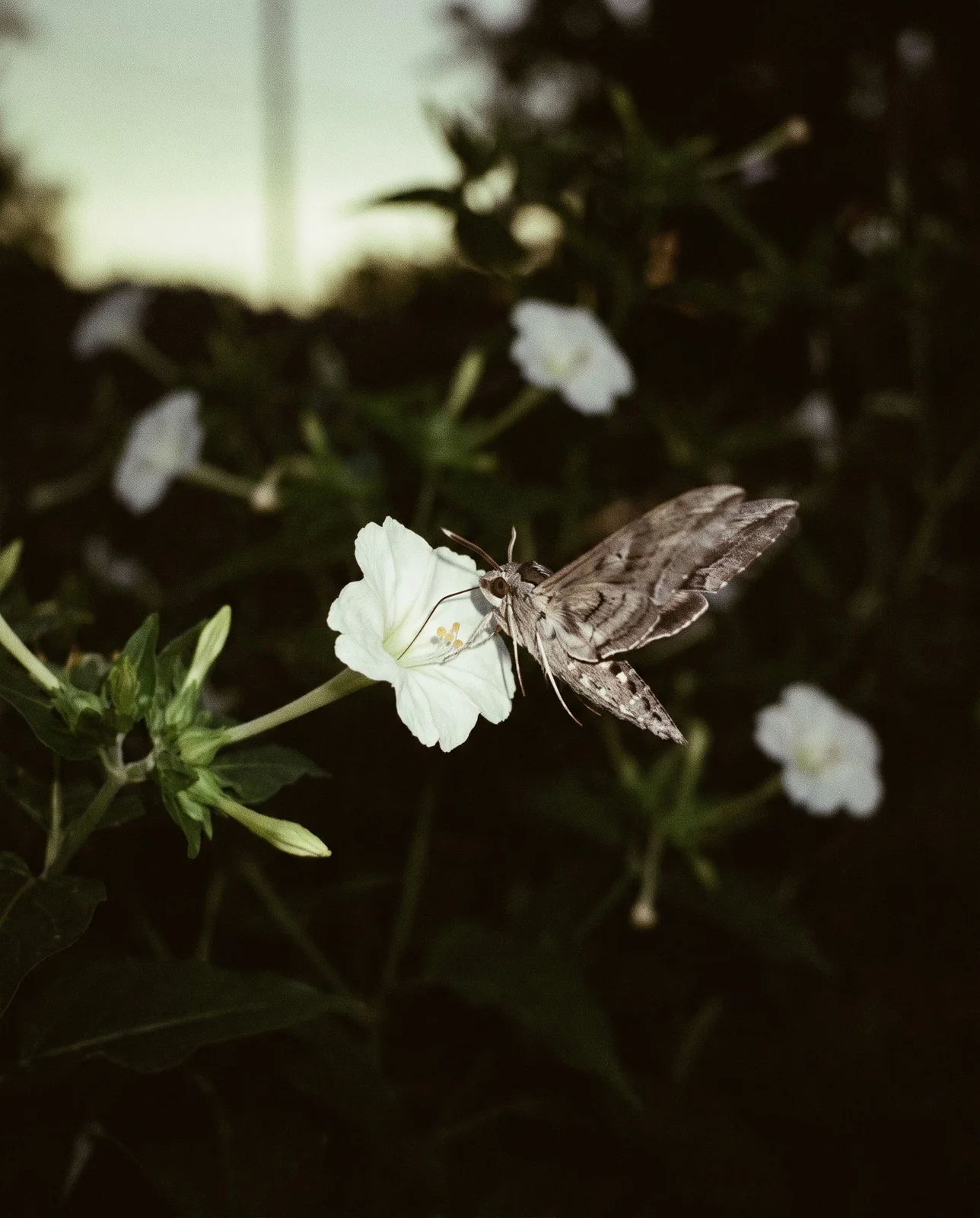
Opening late in the day is an invitation to evening wildlife. The trumpet-shaped flowers draw hummingbirds, butterflies, and nocturnal pollinators, especially sphinx moths, lunar moths, and other long-tongued insects seeking rich nectar. As dusk arrives, the blooms release a sweet fragrance reminiscent of tobacco flower to attract night-flying moths. With long floral tubes tailored for night visitors, four o'clock fits naturally into an evening pollinator garden.
Named varieties worth telling apart
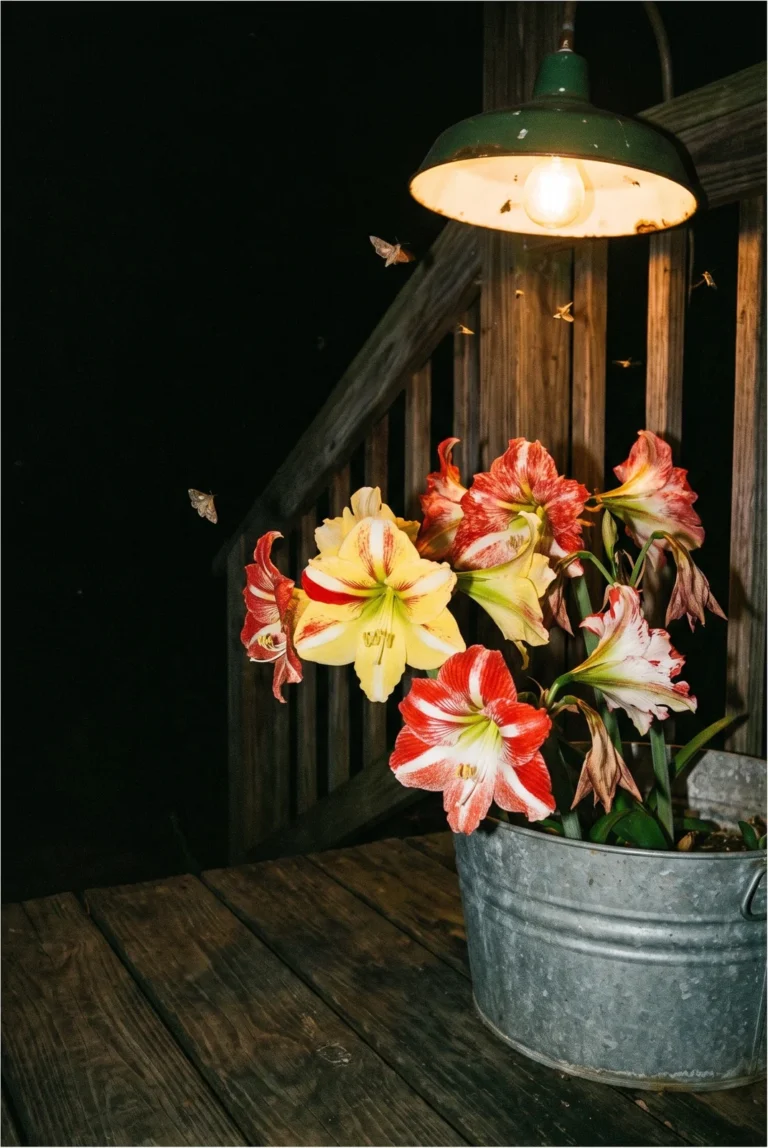
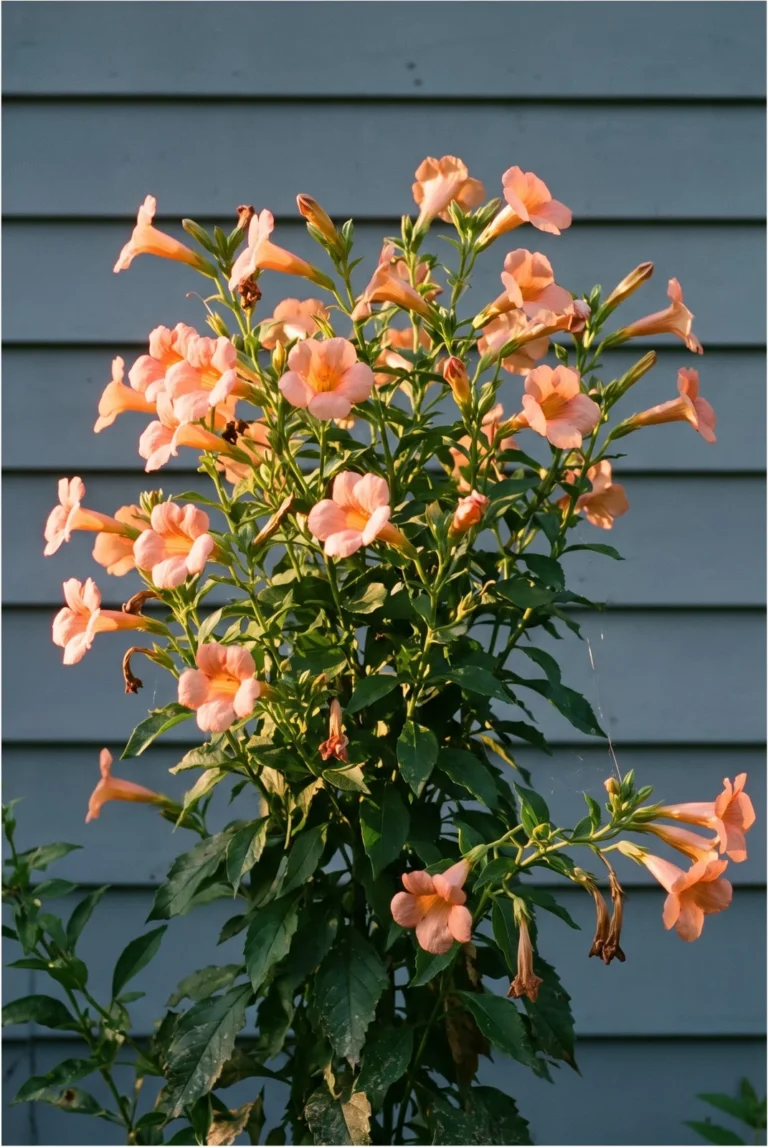
Flower patterns and foliage separate these selections, from splashed bicolors to scented trumpets.

How much sun it needs
Four o'clocks grow in full sun to part shade, but full sun is where they do best. Keeping them in full sun encourages strong growth and a heavy set of flowers. A dark corner under dense trees or against a north-facing wall will leave the bush thin and flowerless. Opening late in the day is simply the plant's response to cooling temperatures, so it still relies on plenty of sunshine to fuel those blooms.
Soil and water
Four o'clocks do best in a range of soils, including moderately fertile ground, as long as it drains well. They are low-maintenance plants that resist drought, rabbits and deer. While they get by with very little moisture, moderate to regular water brings far better bloom.
The plants people inherit
Four o'clocks often pass down through families for generations, thriving and coming back year after year. That habit of self-seeding is a large part of why the flower stays in gardens for decades. It is one of those garden flowers that moves between friends as seed in an envelope, settling into a yard without ever being bought. Still, it is an overlooked and misunderstood flower that gets a bad rap, even though it is easy to grow.
What to expect, season by season
How the plant develops over its first three years when you start from seed in a cold-winter garden.
Year one belongs to the seedling. Sow seed directly outdoors once frost danger passes, or start it indoors up to eight weeks early. Warm soil typically brings seedlings up in five to seven days. From there, the plant builds its mound of leaves and starts opening trumpets in the evening.
Year two belongs to the root, provided it survives the winter. When the tuber stays alive in the ground, the plant returns on its own, and plants tend to flower much better from established roots than from seed. Where winter cold would kill the tuber, you can dig the roots after the first fall frost and store them in a dry, dark spot like dahlias.
Year three brings the volunteers. The plant self-seeds, often spreading rapidly if left unchecked in a garden. Under the right conditions, it can self-seed and has become naturalized in some parts of the southern United States. From here, an older clump returning from its own root grows alongside a scatter of new seedlings.
Myths about four o'clocks
Three common beliefs about the plant that do not match how it behaves in the garden.
The myth: Four o'clocks open at four o'clock.
The reality: The flowers open in the afternoon as temperatures change, with no internal clock involved. People take the name so literally that questions about when to sow seeds still get the joking answer: at 4.
The myth: If it were a problem plant, an official list would name it.
The reality: No Mirabilis species appears on the federal noxious weed list. A different species with the same common name is regulated in Washington, where it spread from 10 acres to several hundred.
The myth: The frost blackened it, so it is dead.
The reality: With the first frosts, the top growth deteriorates and can die, but the underground parts can return in spring. The plant forms dahlia-like tubers that usually live through winter, letting it come back from the roots.
FAQ
What month do you plant four o'clock seeds?
Planting usually runs from mid-February through May, and the seeds germinate rapidly at about 64 degrees Fahrenheit. You can sow them directly outdoors once the danger of frost has passed, or start them indoors up to 8 weeks ahead of time.
Do four o'clock seeds need to be soaked?
Soaking the seeds in water overnight or nicking the surface speeds up germination. You can also nick the pointed end and soak the seeds in warm water for 4 to 6 hours before sowing.
How long do four o'clock seeds take to germinate?
Seeds typically germinate in 5 to 7 days at 68 to 70 degrees Fahrenheit. When sown in early spring, they also germinate at cooler temperatures of 55 to 64 degrees Fahrenheit.
Do four o'clocks come back every year?
They return wherever the roots survive winter, and in zones 8 or 9 the tuberous roots can stay in the ground and will regrow in spring. In zones 7 and below, you can dig the roots after the first fall frost and store them like dahlias.
Are four o'clocks invasive?
Four o'clocks do not appear on the federal noxious weed list. Even so, the plants can self-seed vigorously and become weedy, and they have naturalized in parts of the southern United States.
Which parts of a four o'clock are poisonous?
The roots and seeds are both somewhat toxic, and the plants can cause contact dermatitis in susceptible individuals.
Why is my four o'clock not blooming?
Check the plant after sunset before assuming it will not bloom. Four o'clocks respond to temperature and dislike heat, so their flowers wait to open until the day cools. If a plant seems not to bloom at all, heat could be the reason, since it may still bloom overnight.
Do hummingbirds like four o'clocks?
Yes. Hummingbirds and butterflies are drawn to the fragrant flowers, alongside the sphinx moths and other long-tongued night pollinators that pollinate them.
Can you grow four o'clocks in pots?
Yes. They grow well in patio containers, which can stay outside through summer and be overwintered. Choose a very deep container and plant the tubers about 4 inches deep.
How do you store four o'clock roots over winter?
Cut the plant back before lifting the tubers, and dig them around the first fall frost. You can store them in a barely moist medium in a cool basement corner or frost-free garage, or keep them dry and dark like dahlias.
Interesting tips
- A stored root does not have to go back out whole, because you can divide the tubers in spring to propagate the plant.
- 'Limelight' has light green, marbled foliage that dates back to 1889.
Related Guides & Flowers
Hollyhock
The other dooryard flower that seeds itself along a fence and outlives whoever planted it.
Canna lily
Another tender root dug in fall and stored over winter, so one autumn routine covers both plants.
Zinnias
The other seed packet that goes straight into warm ground and flowers until frost.
Jasmine
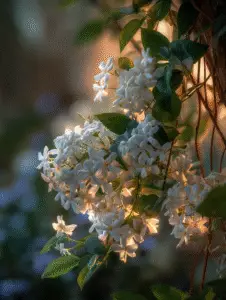
If evening scent is the reason you are planting, this is the other plant that delivers it.
Enjoying our flower guides? Add YourFlowersGuide as a preferred source on Google. It helps more readers find us.
Add to Preferred Sources