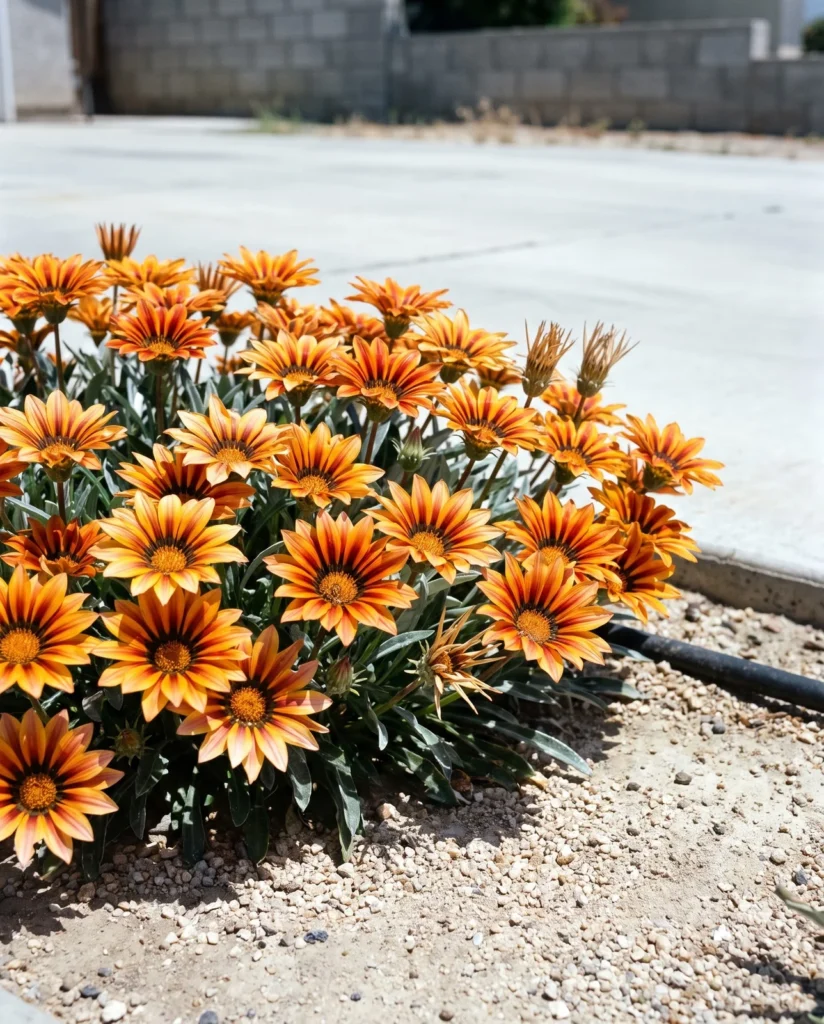
Gazania flowers close at night, and nothing is wrong
Gazania flowers close at night and may not open fully on cloudy or wet days. The plant turns toward the sun, and the heads shut in shade or under a grey sky. The foliage does not change while it happens, and that is the whole difference between a shut gazania and a sick one.
The heads open again in full sunlight. That habit is the commonest reason a healthy plant gets reported as a dying one. Gazania answers to direct light the way morning glory shuts by early afternoon and moonflower waits for dusk. Breeding has moved the habit at least once: 'Sunbather's Sunset' is sold for paprika petals that stay open into the evening, where most varieties shut tight at twilight.
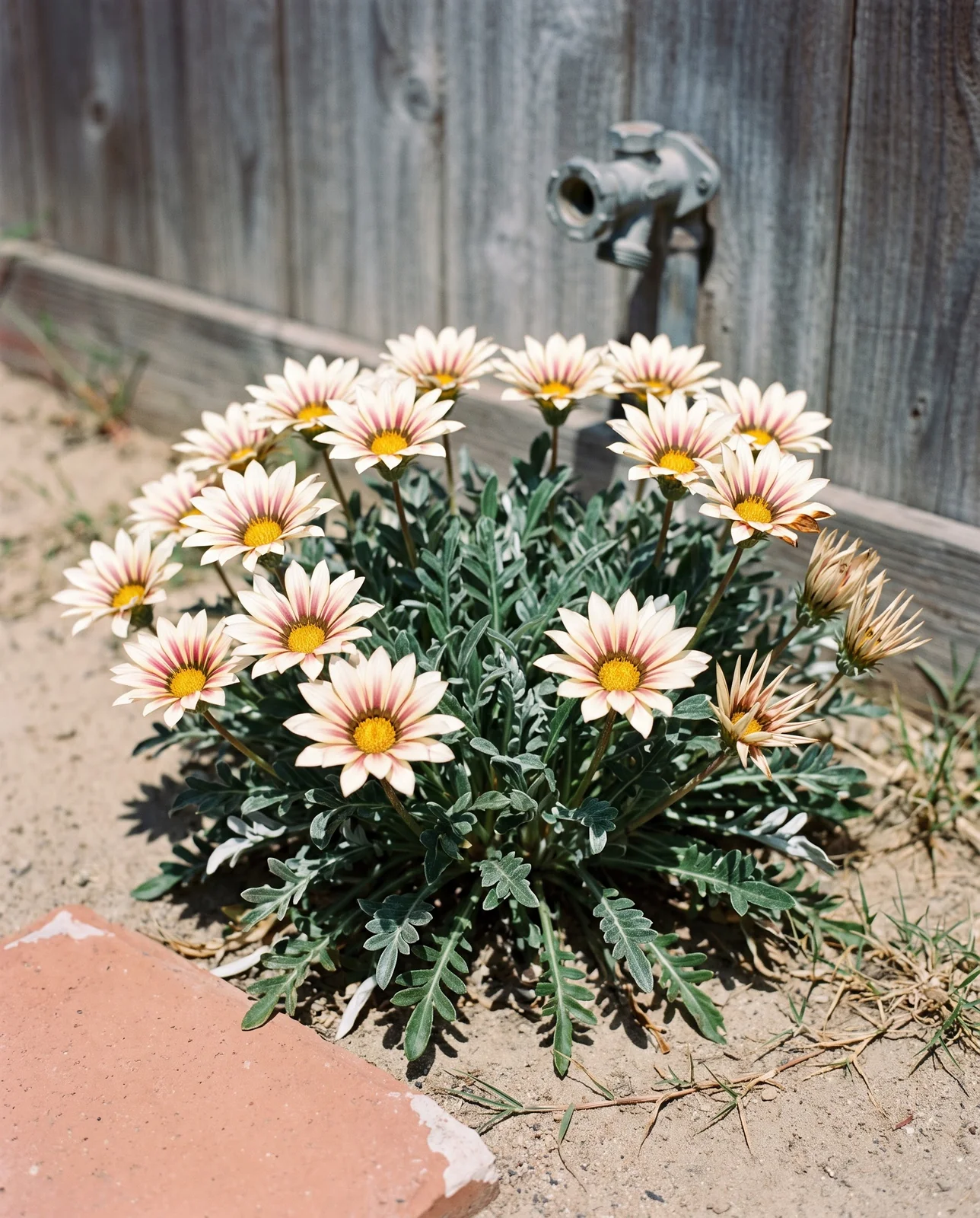
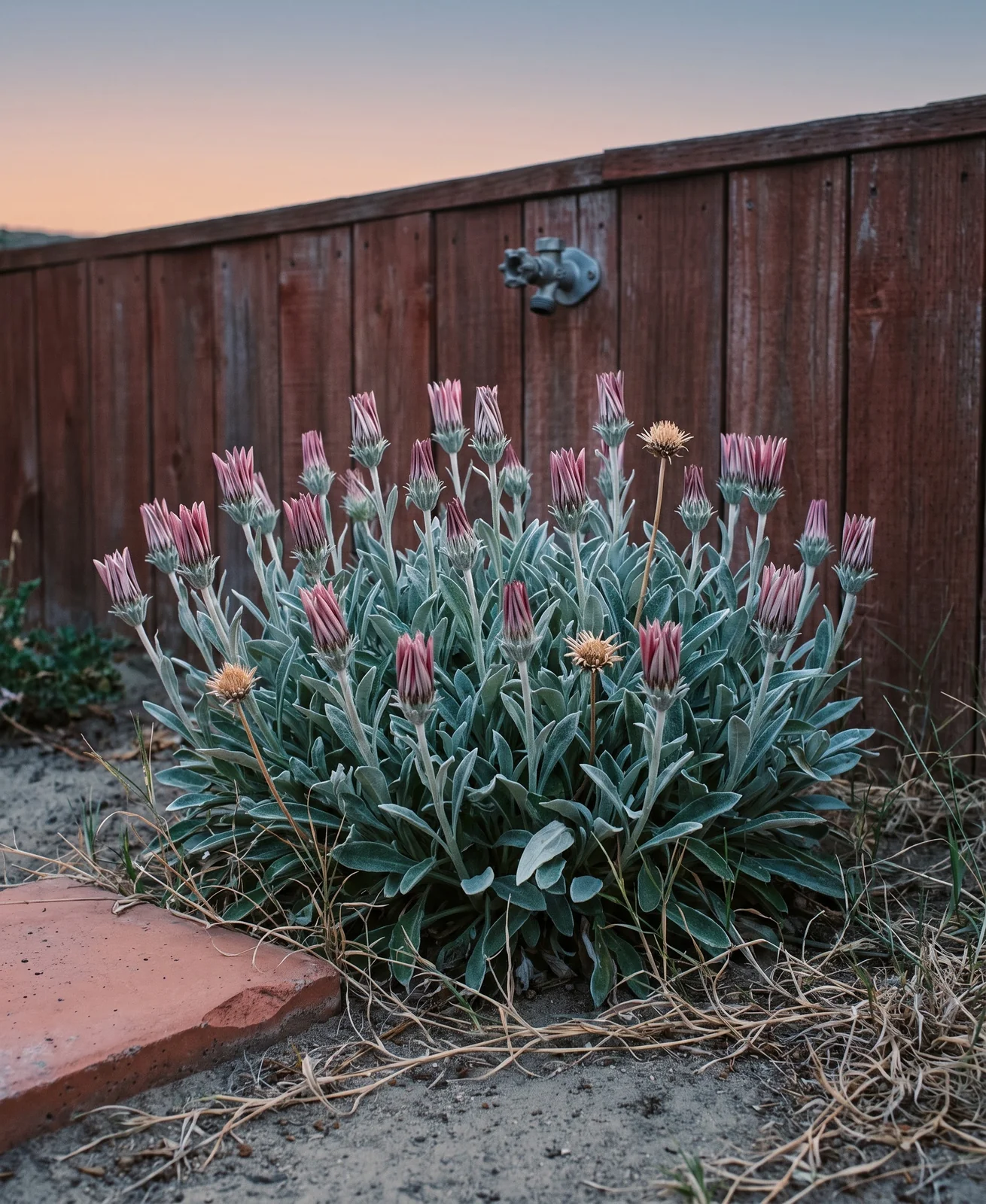
Closed for the night, or actually failing
Three situations look alike in a gazania bed. Check the sky and the hour before you check the plant.
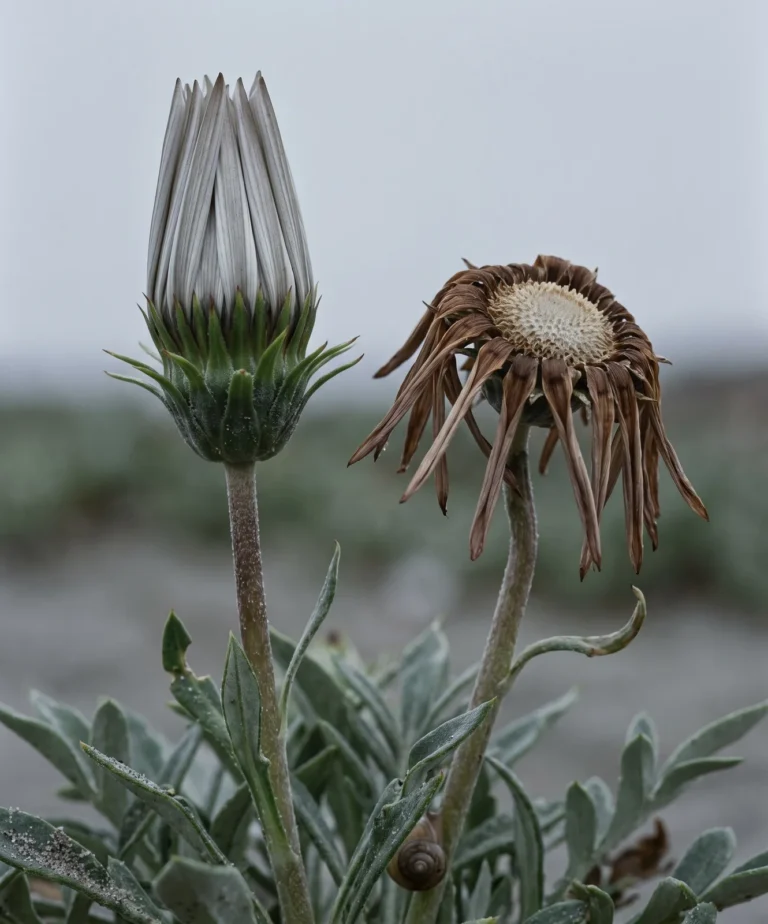
What gazania is, and where it comes from
Gazania is a genus of southern African daisies in the aster family, and almost everything sold under the name is Gazania rigens, the treasure flower. Say it gay-ZAY-nee-uh. The genus holds about 16 species, though DNA work found only seven of them clearly distinct. In the wild they run from low coastal sand to alpine meadow in South Africa, Mozambique, Tanzania and Angola.
The garden species is native to the southern African coast and has naturalized around the Mediterranean, in New Zealand and in Australia. The plant itself is small and flat, 6 to 12 inches tall and about as much across. It is perennial by life cycle, cascading, medium in growth rate and low in maintenance. Everything a gazania does happens at ankle height.
African daisy is more than one plant
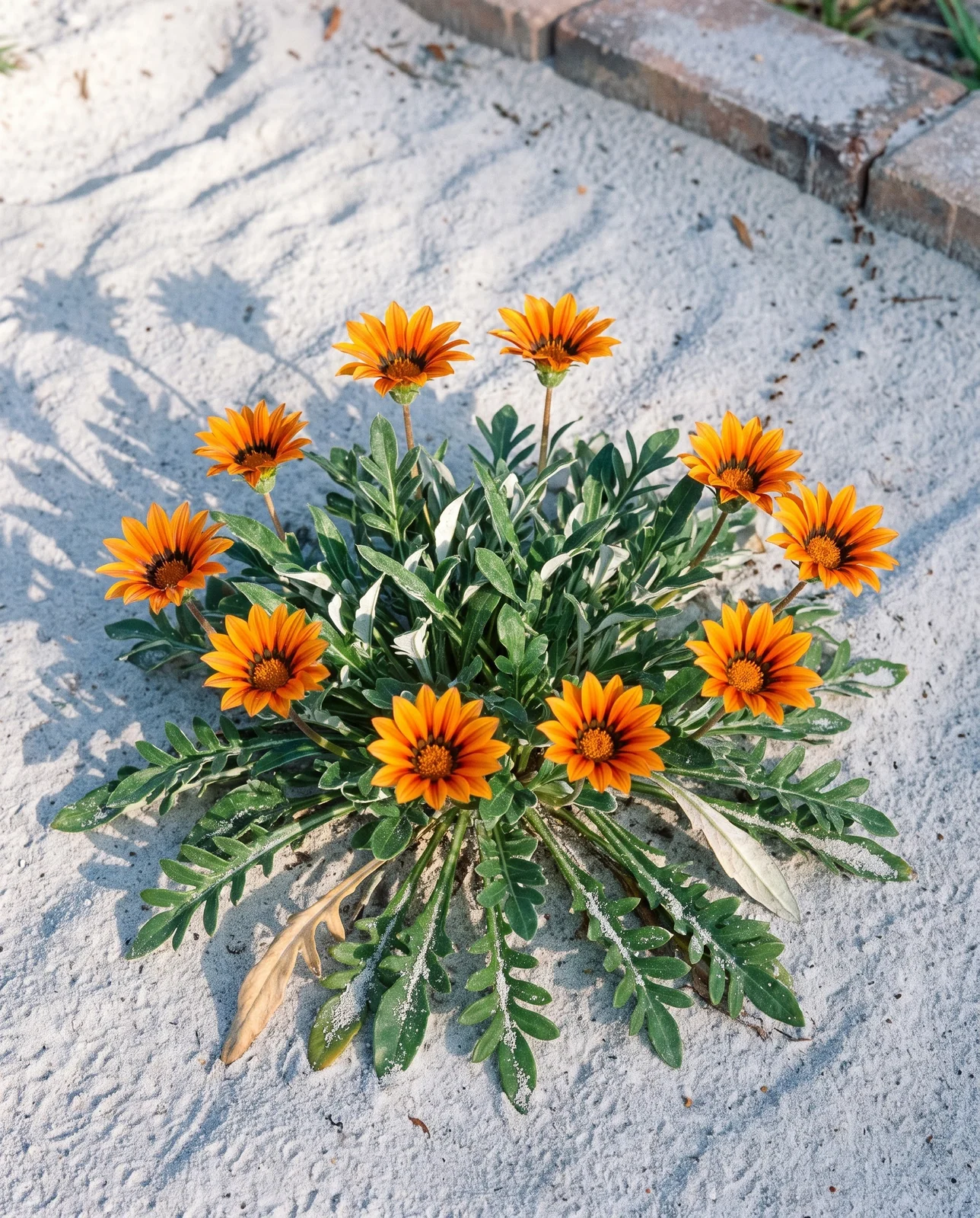
African daisy is a name that two different plants carry, and one of them is gazania. The other is Osteospermum, a genus of about 70 subshrubs, perennials and annuals from southern Africa and the Arabian Peninsula. Height settles it in a photograph. Osteospermum holds its daisies on upright stems 1 to 3 feet tall, while gazania keeps to a foot or less and cascades along the ground.
Heat and cold separate them after that. Osteospermum flowers well in spring and early summer, then declines fast once summer heat is steady, and it takes zone 10 to 11. Arctotis is the third name in the confusion, and it enters only by resemblance. The botanical name on the pot tag settles which plant is going home; the sign over the bench does not.
What the flower and the leaf look like
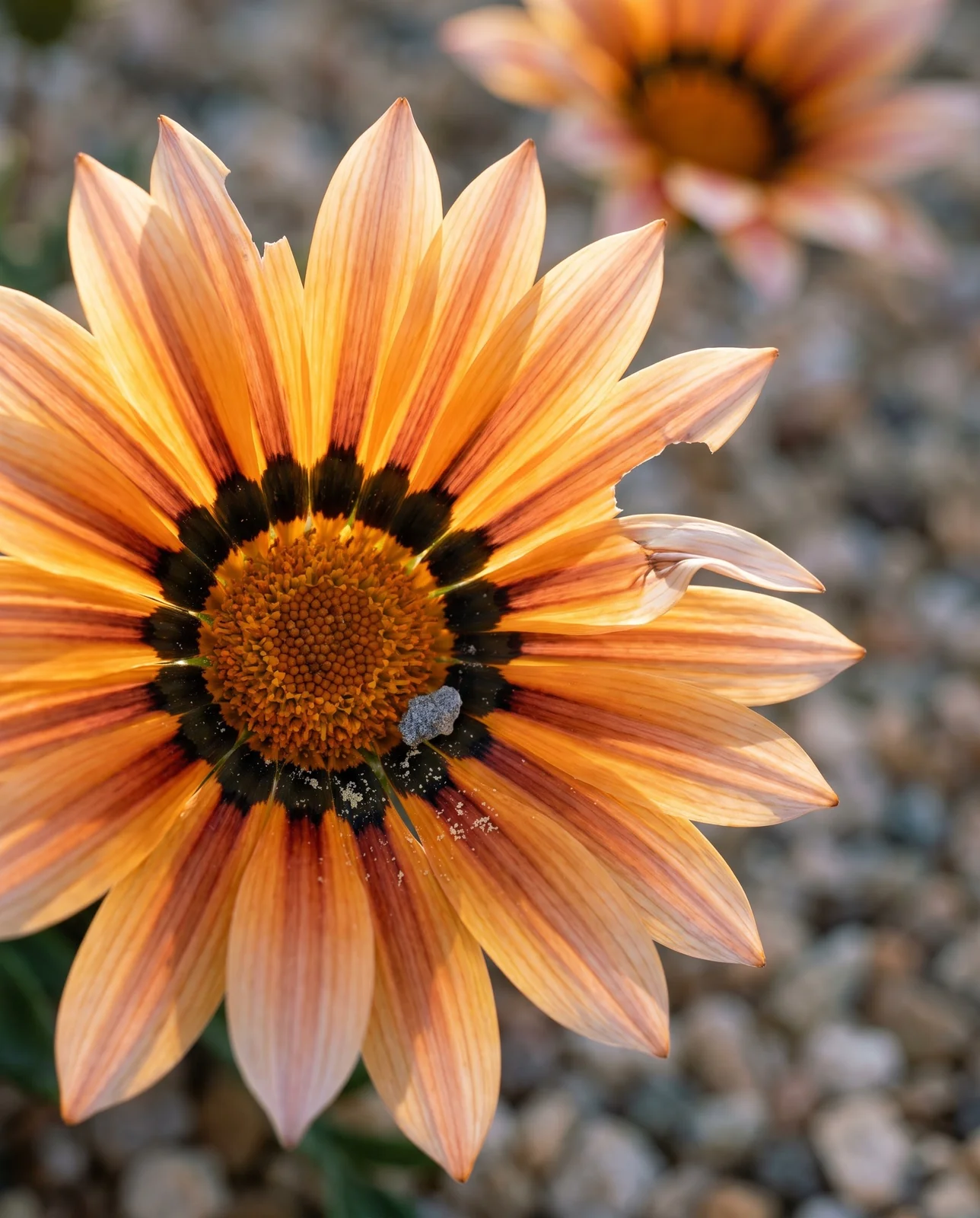
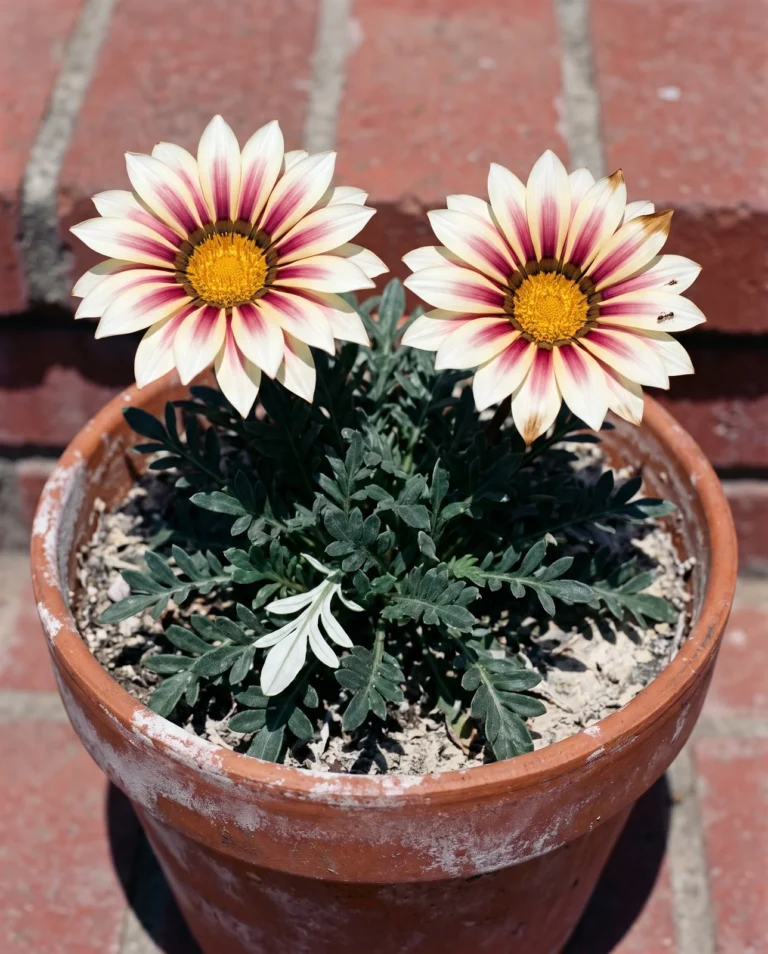
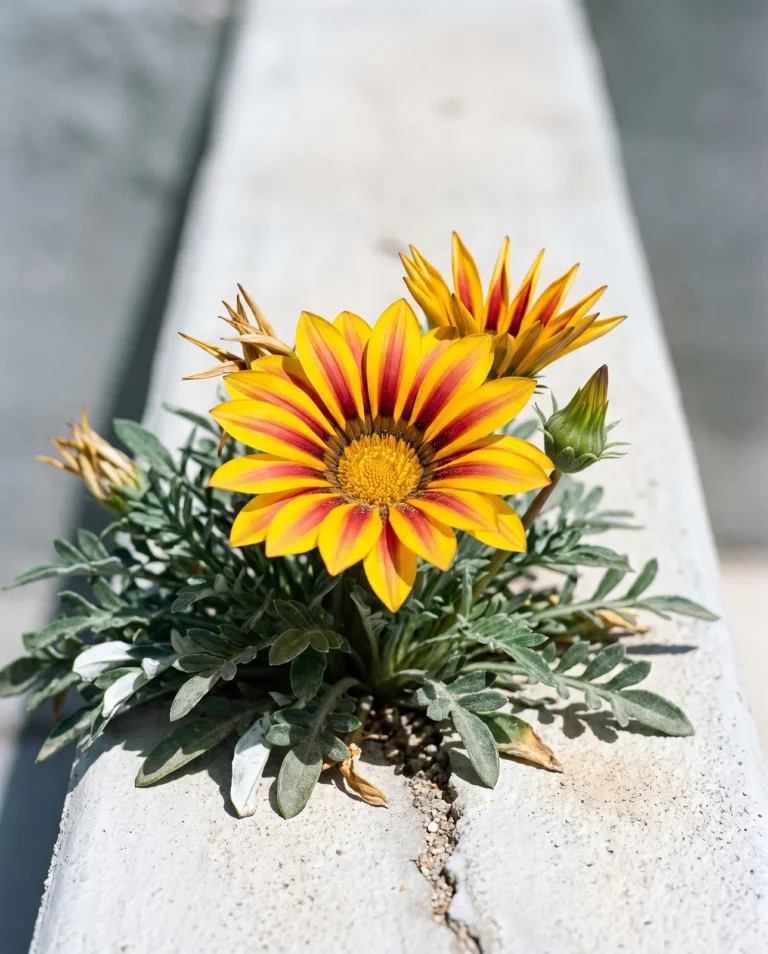
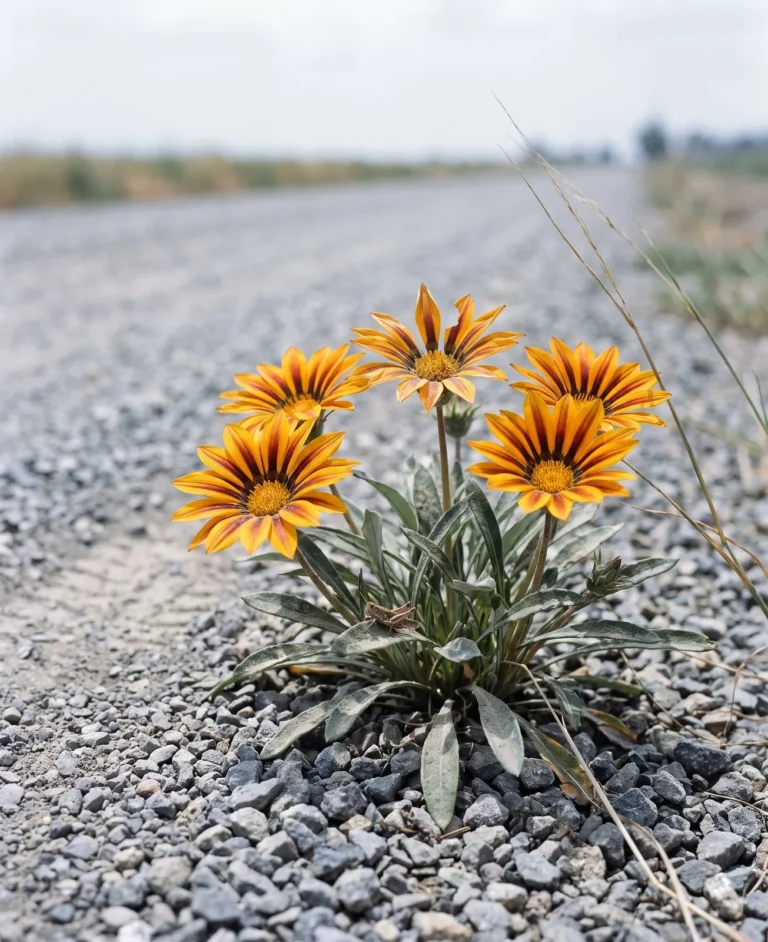
The flower is one large daisy head on a bare stem, and the dark mark at each ray base identifies it. Blooms run 3 to 4 inches across on stems up to 10 inches, with a black eye at the ray bases and an orange-brown center disc. A head carries more than 20 rays. Hybrids add yellow, orange, bronze and white to the species orange, usually with a contrasting ring where the rays meet the disk.
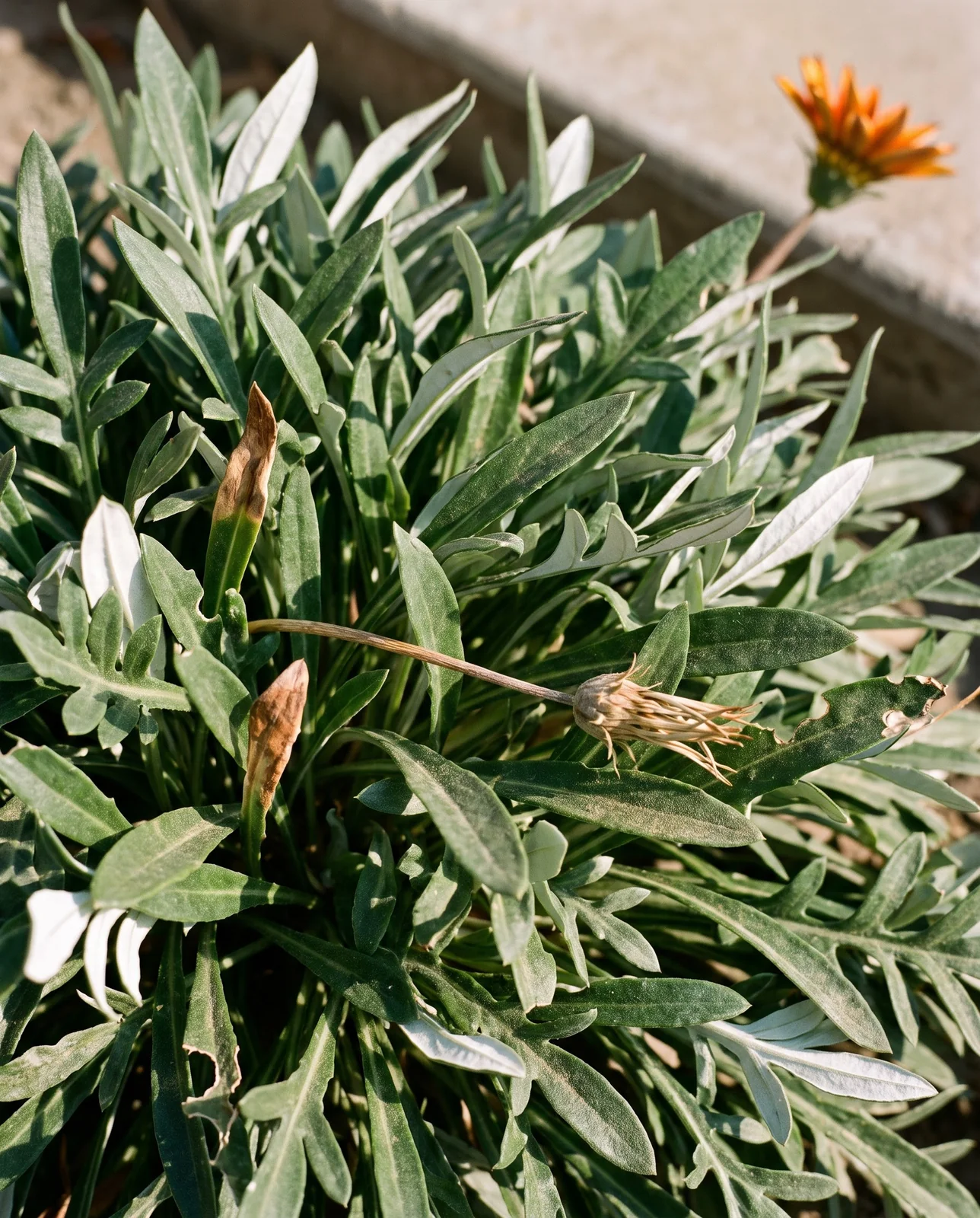
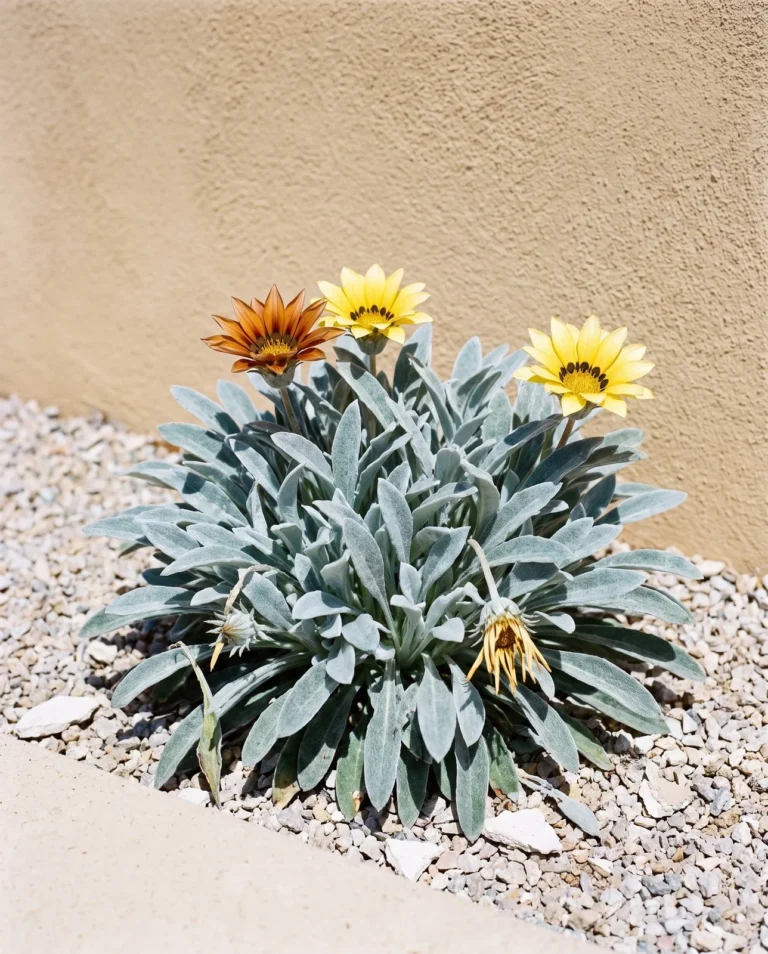
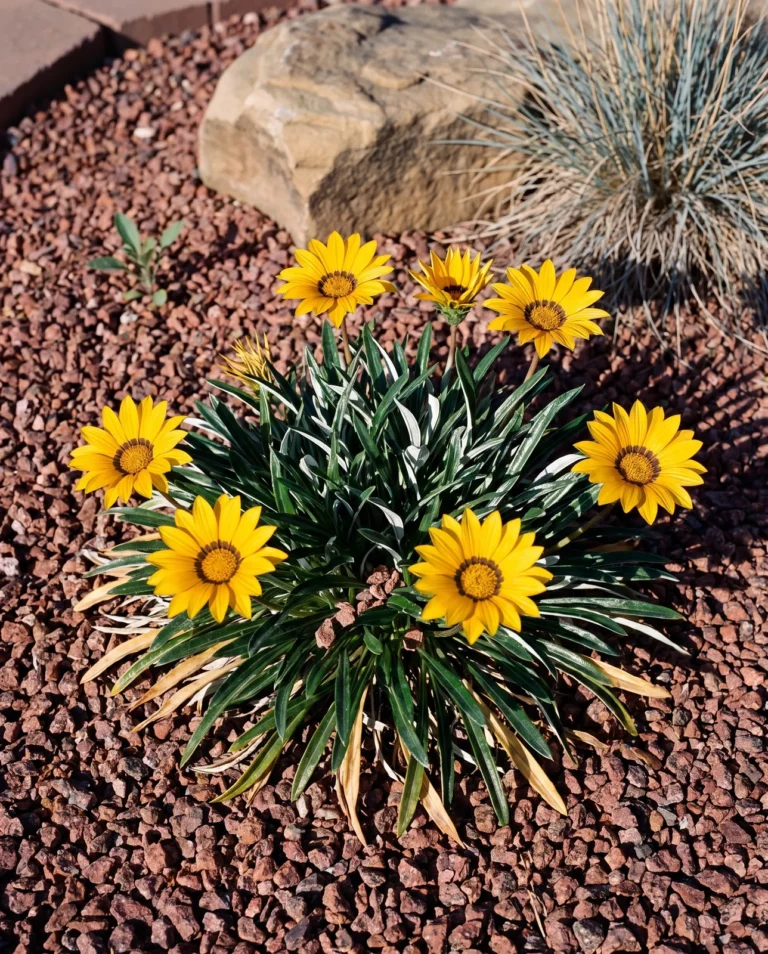
The leaf identifies the plant when nothing is open. Basal leaves are green above and whitish and hairy underneath, 1.5 to 4.5 inches long, either long and narrow or deeply cut like a dandelion leaf. Color and length vary with the plant in front of you, from dark green spoon-shaped rosettes to blue-green blades 4 to 8 inches long. The pale reverse is the constant, and it makes a gazania mat flicker white when wind turns the rosettes over.
Sun: six hours or more of direct light
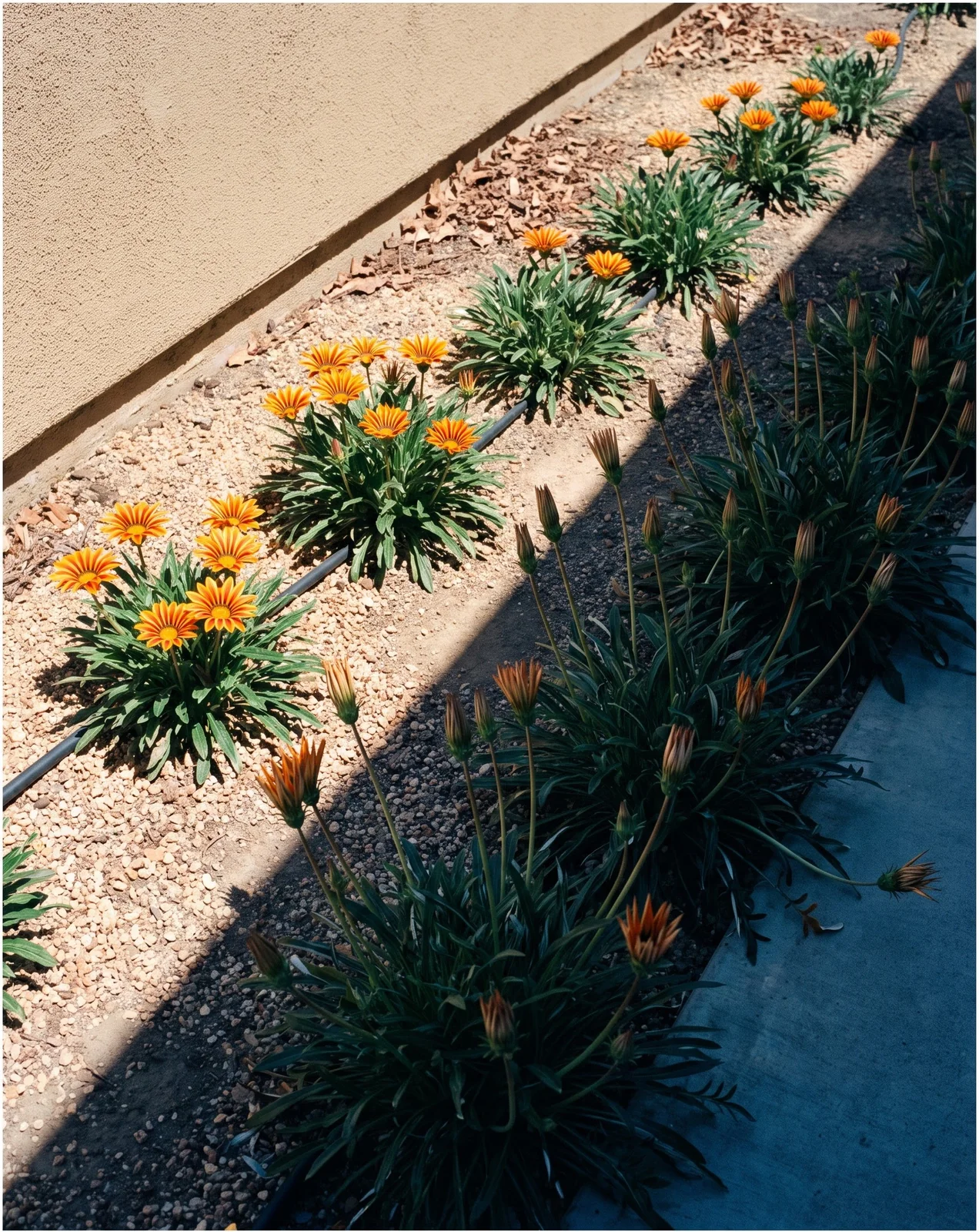
Gazania is a full-sun plant, and full sun means six or more hours of direct light a day. Do not plant it in partial shade, because full day sun is what a healthy plant needs. Sun keeps the plant in condition and opens the flowers, and those two jobs fail separately. A bed shaded through the morning or the afternoon holds its flowers closed for part of the day and draws the plants lanky. A plant that never sets a bud and a plant whose buds are shut are different problems, and the hour tells them apart.
One selection takes more shade than the species. 'Colorado Gold', a cultivar of Gazania linearis, grows in full sun down to partial shade, meaning two to six hours of direct light. That tolerance belongs to that cultivar and does not transfer to the seed-grown hybrids that fill most flats.
Soil and water: lean ground, dry between drinks
Lean, sharply drained ground is what gazania is built for. It grows in loam, sand and shallow rocky soil and wants good drainage. It takes anything from acid below 6.0 to alkaline at 8.0, with neutral near 7.0 in the middle. Fertility is where good intentions go wrong. It grows in low-fertility rocky ground at home, so compost and supplemental fertilizer are unnecessary.
Let the soil dry out between waterings. Gazania needs less water than most annuals or perennials, and the leathery foliage is itself the clue to a high drought tolerance. Drainage is where the failure is specific. Extended wet weather or poorly drained soil can promote disease that kills portions of the plant, and gazania can rot at the root wherever the ground stays wet. With no other major pest or disease trouble, wet soil is the main way a healthy one is lost.
Zones, and whether gazania comes back
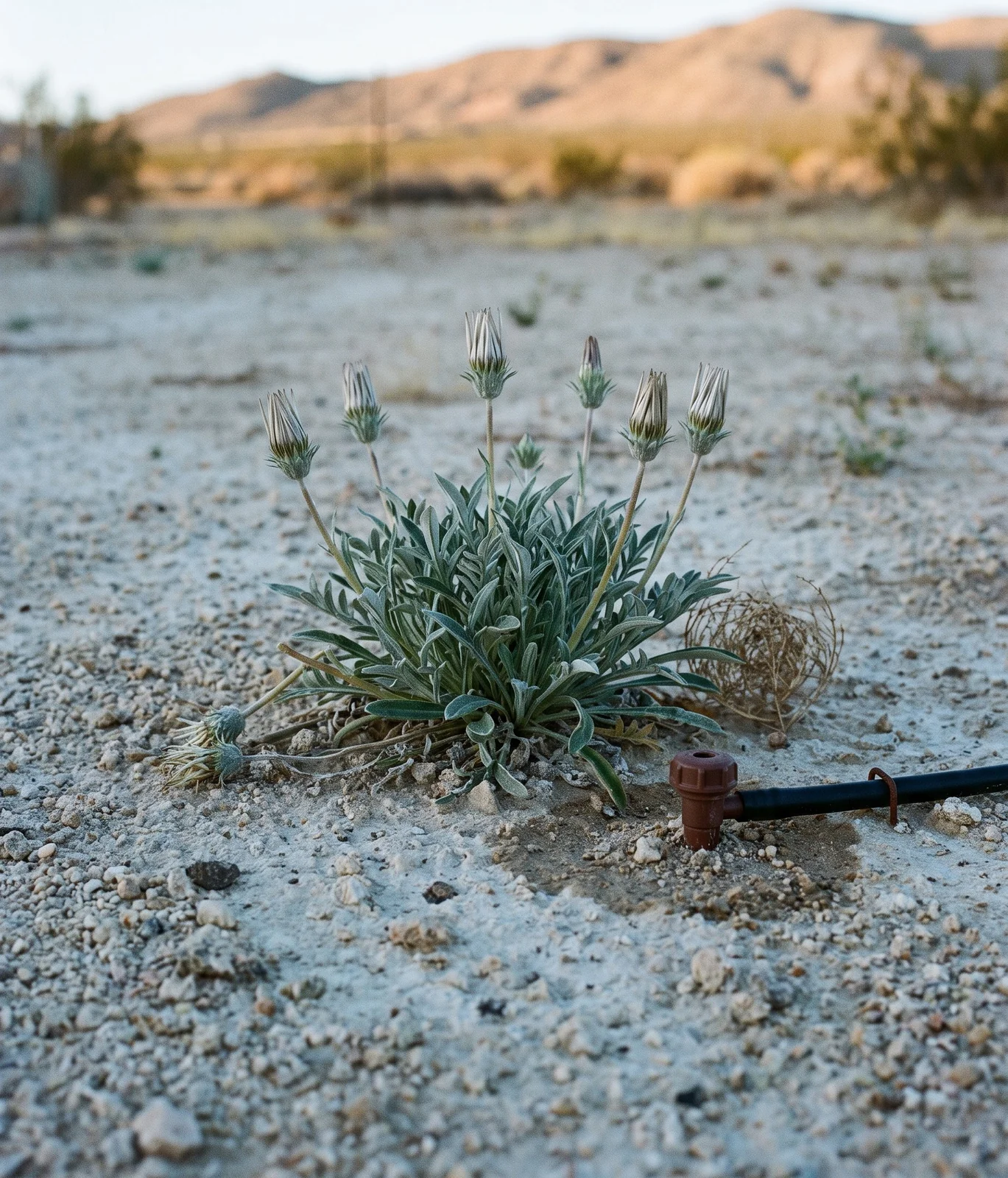
Gazania is a perennial by life cycle that stays one only at the warm end of the map. Zone 9 to 11 is the usual range, and inside it the plants flower year after year as long as they stay healthy. The disputed edge is zone 8, where gazania is grown as a perennial down to 8B in Florida and through zone 8 more widely. There it is worth trying and not worth counting on. Colder than that it is grown as an annual.
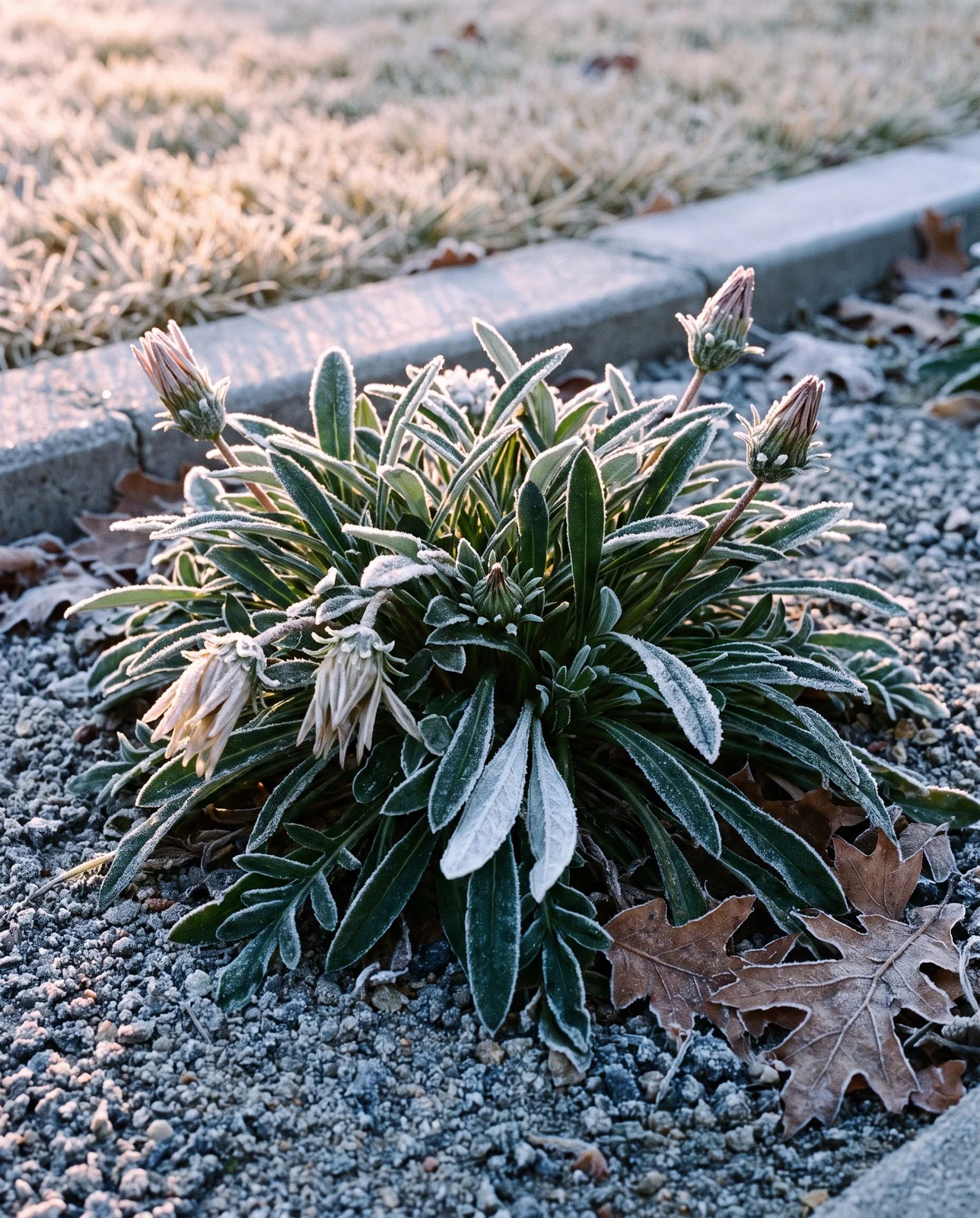
Below that range the hybrids come indoors before the first frost, or take a heavy mulch over the roots, and the flowers themselves can recover from mild frosts. 'Colorado Gold', a Gazania linearis selection, is hardier than other gazanias and grows in zone 5 to 9. Where plants are kept as perennials, prune in late winter or early spring, cutting the foliage back to a couple of inches above the ground in the second season if it needs it.
When to start gazania from seed
Start seed indoors 6 to 10 weeks before your average last frost. Sow about 1/4 inch deep and cover the seed lightly, since darkness helps trigger germination. Hold the soil between 60 and 65 degrees Fahrenheit and expect germination in 14 to 21 days. Harden the seedlings off and set them outdoors two weeks after the last frost.
Direct sowing waits for warm soil, two to four weeks after the last frost and typically mid spring. Planting months by zone are April to May in zone 8, March to May and September to October in zone 9, and February to May and November to December in zones 10 and 11. First flowers arrive about twelve weeks after sowing, which is the number that decides whether an indoor start is worth the trouble in a short season.
Buying gazanias that actually grow
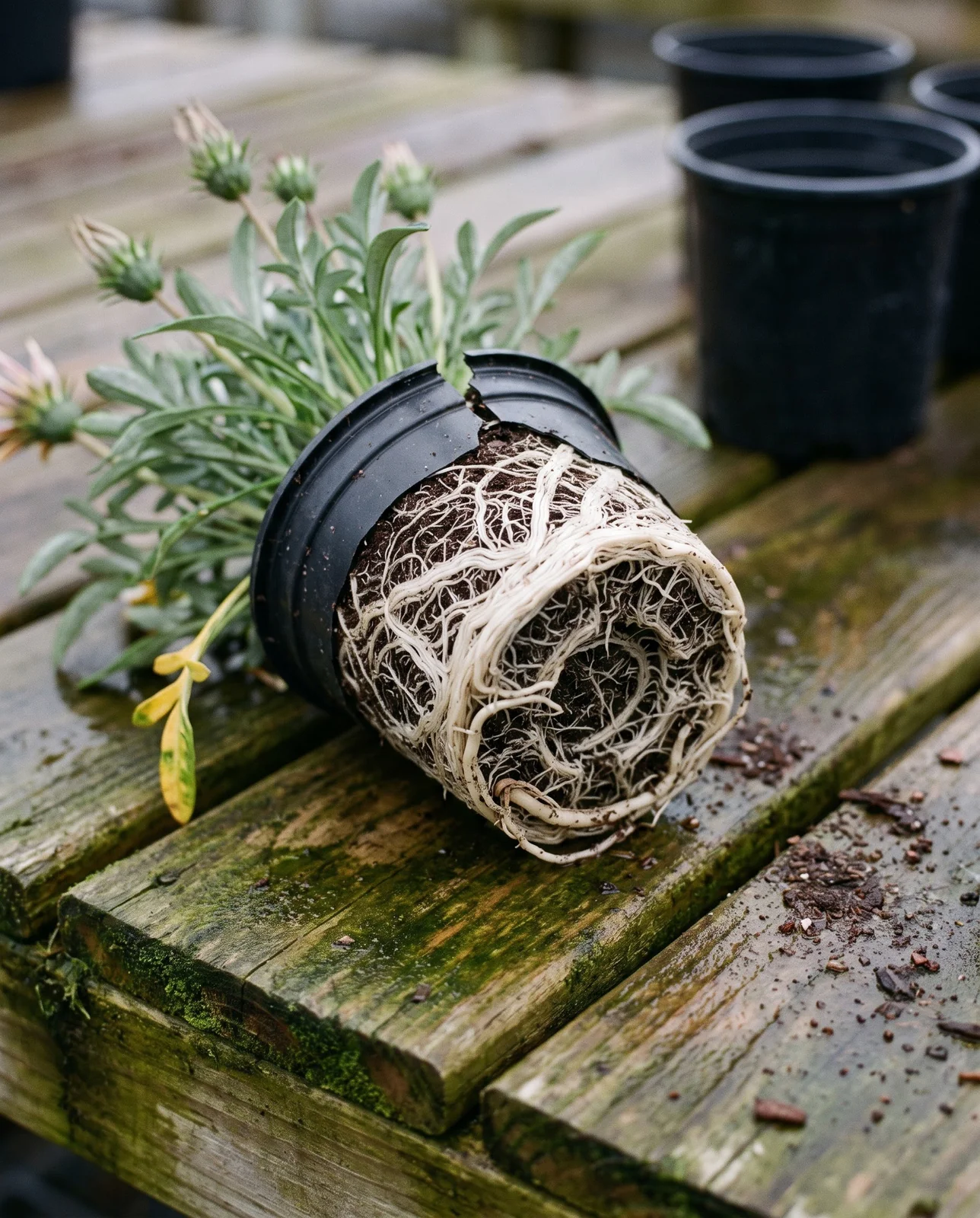
What separates two identical gazanias a month after planting is usually what was going on inside the nursery pot. These plants are commonly root bound by the time they are sold, and the fix is to transplant them as soon as they come home. Slide the plant out of its pot at the counter and turn the root ball over. If the roots have wrapped the wall into a solid mat, open it with your fingers on planting day and spread them outward into the hole.
Gazania is bought the way most bedding daisies are bought, in flower and in a small pot, and that is the moment the root ball is easiest to open. Set the plants 12 to 18 inches apart and they close into a solid ground cover several months later, so the gaps that look too generous on the day are what let the bed fill in. Water them in, then let the soil dry out between waterings from there on.
Why a gazania will not bloom
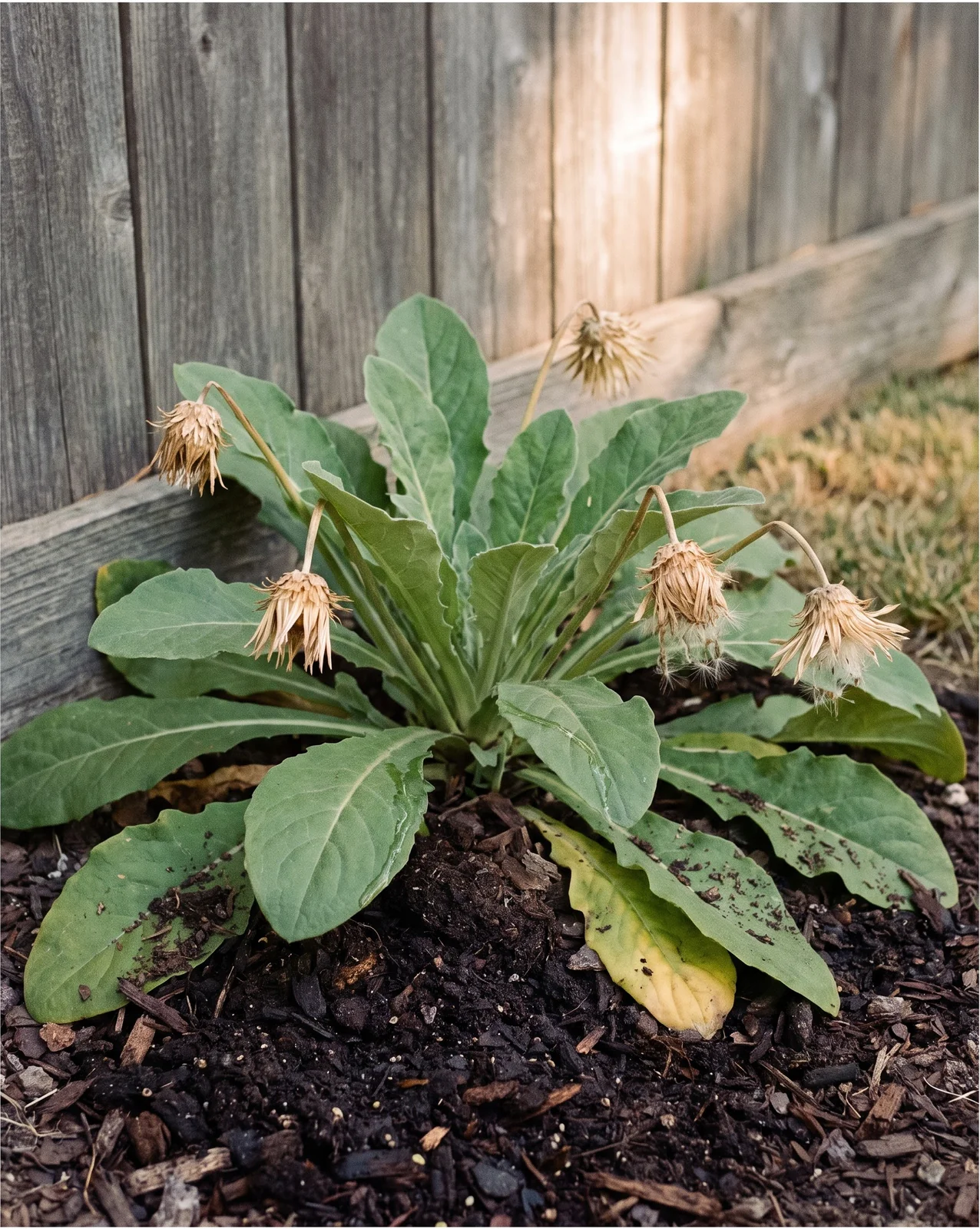
Check the hour and the sky before you check the plant, because a gazania with its heads shut has not stopped flowering. Past that the causes are few: too little sun, overwatering, or a plant spending itself on old blooms. Sun is first and the least negotiable, since full sun here means six or more hours of direct light a day. Water is second, and gazania thrives on little of it, while overwatering has a negative impact on blooms. Old flowers are third, and that fix is the cheapest, because removing them may increase the number of blooms a plant produces.
Feeding is the cause gardeners add themselves. Too much fertilizer can have the opposite effect and send the plant's energy toward foliage growth. What that leaves is the plant this section is named for: a wide, dark, healthy rosette with nothing standing above it. Stop feeding and wait. The last cause is the pot the plant arrived in, since a root ball that never opened keeps it on the ration of water and air it had in the can. None of the five needs a product to fix.
Bloom check, in order
Work down these in order and stop at the first one that describes your plant.
Yellow leaves: two opposite explanations
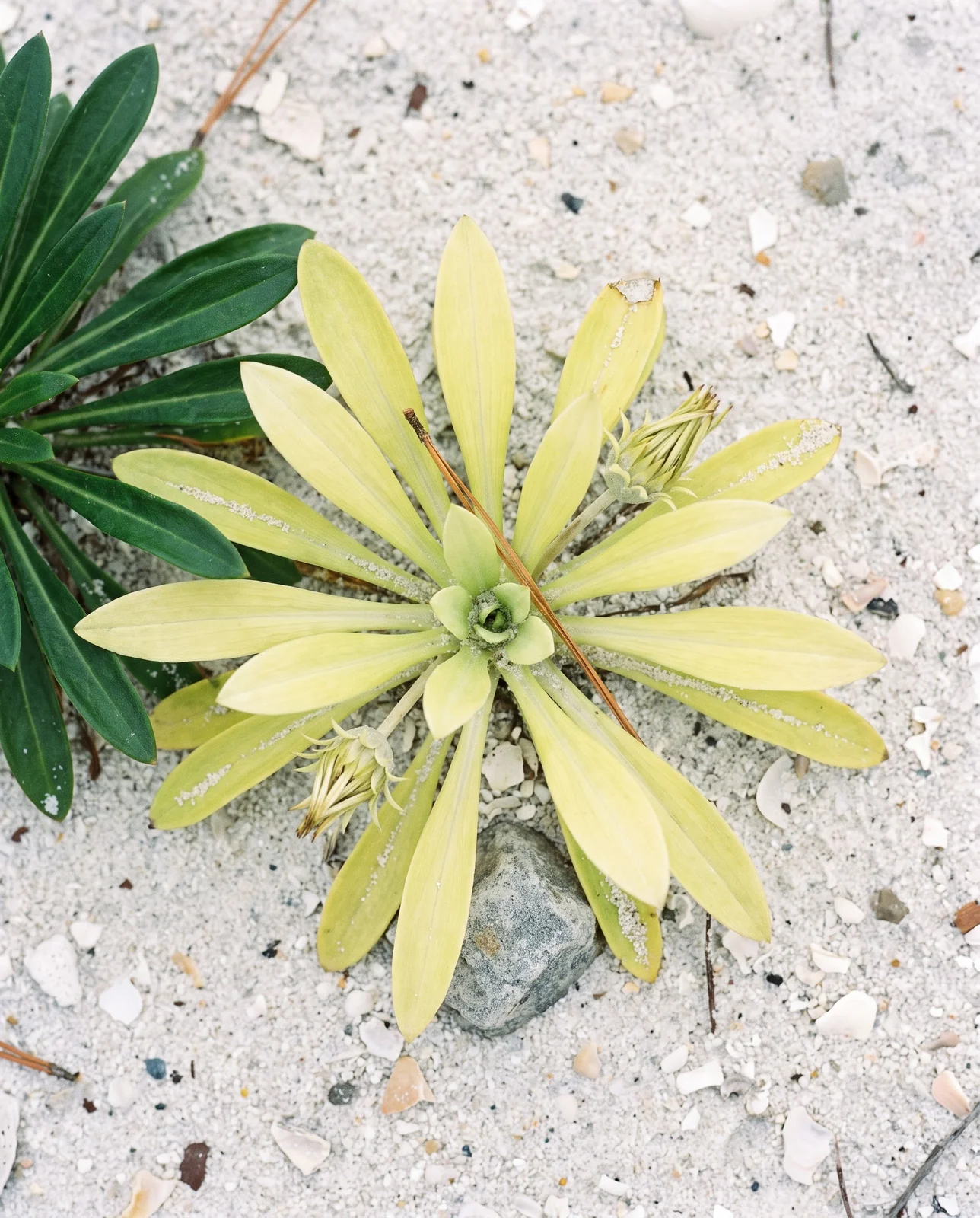
Yellow leaves have two opposite explanations, and what separates them is what happened just before the color changed. On lean, gritty ground that has never been fed, yellowing plants read as nitrogen deficiency, rare in gazania except on rocky or sandy soil, with soil pH possibly too high as well. Iron sulfate is the correction there, bringing the pH down and making the nitrogen available to the plant again. Test the soil before treating the pH.
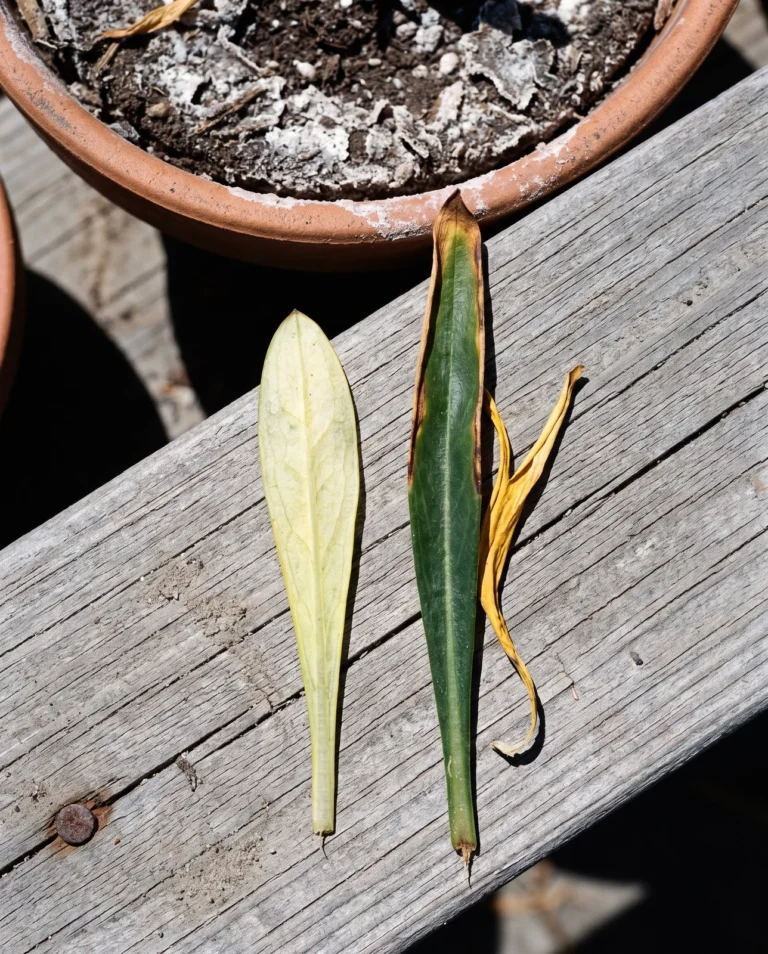
The opposite case is a plant fed too well. Too much fertilizer can have the opposite effect and send the plant's energy toward foliage growth. Leaves that suddenly turn yellow, brown at the margins or fall off have had more food than they can eat, sometimes with a crusty white dusting on the soil. Remove what fertilizer can be removed and flush the rest away with water.
Wet roots are the third cause, and the one that finishes plants off. Overwatering causes root suffocation and disease, and native clay packed into a container blocks the gas exchange roots need. A failing potted plant goes back into fresh potting soil, and the watering can goes back on the shelf for a week.
Too little food, or too much
Three patterns of yellow, told apart by what happened before the color changed.
Pests and problems, and how much they matter
Gazania is largely trouble-free, and the short list of what does go wrong starts with wet ground.
Symptoms: plants going backwards where the ground stays wet, since overly moist soils can lead to rot and various rots follow poor drainage. Management: fix the drainage, then water less often.
Symptoms: a white bloom on the leaves in humid weather, where mildew becomes a problem. Management: plant in the open, in sun, with air moving through.
Symptoms: white cottony clusters in the crown and leaf bases, likely visitors that seldom cause severe damage. Management: check often, and more often on anything wintered indoors, where mealybugs can proliferate.
Symptoms: aphids on flower stems and buds, seldom enough to do severe damage. Management: wash them off with water.
Symptoms: petals eaten away with nothing visible on the plant. Management: the feeder could be one of several pests, or caterpillars, so identify it before spraying.
Is gazania invasive, and where
Gazania is invasive in named places, and the names carry the answer. It is reported invasive in Australia, New Zealand, Algeria, Egypt, Europe and California, with Gazania linearis and Gazania rigens the worst of it in Australia. There are no effective control options, chemical herbicides included, and the plant is very difficult to manage. Gazania rigens, the species behind most of what garden centers sell, has spread across five continents.
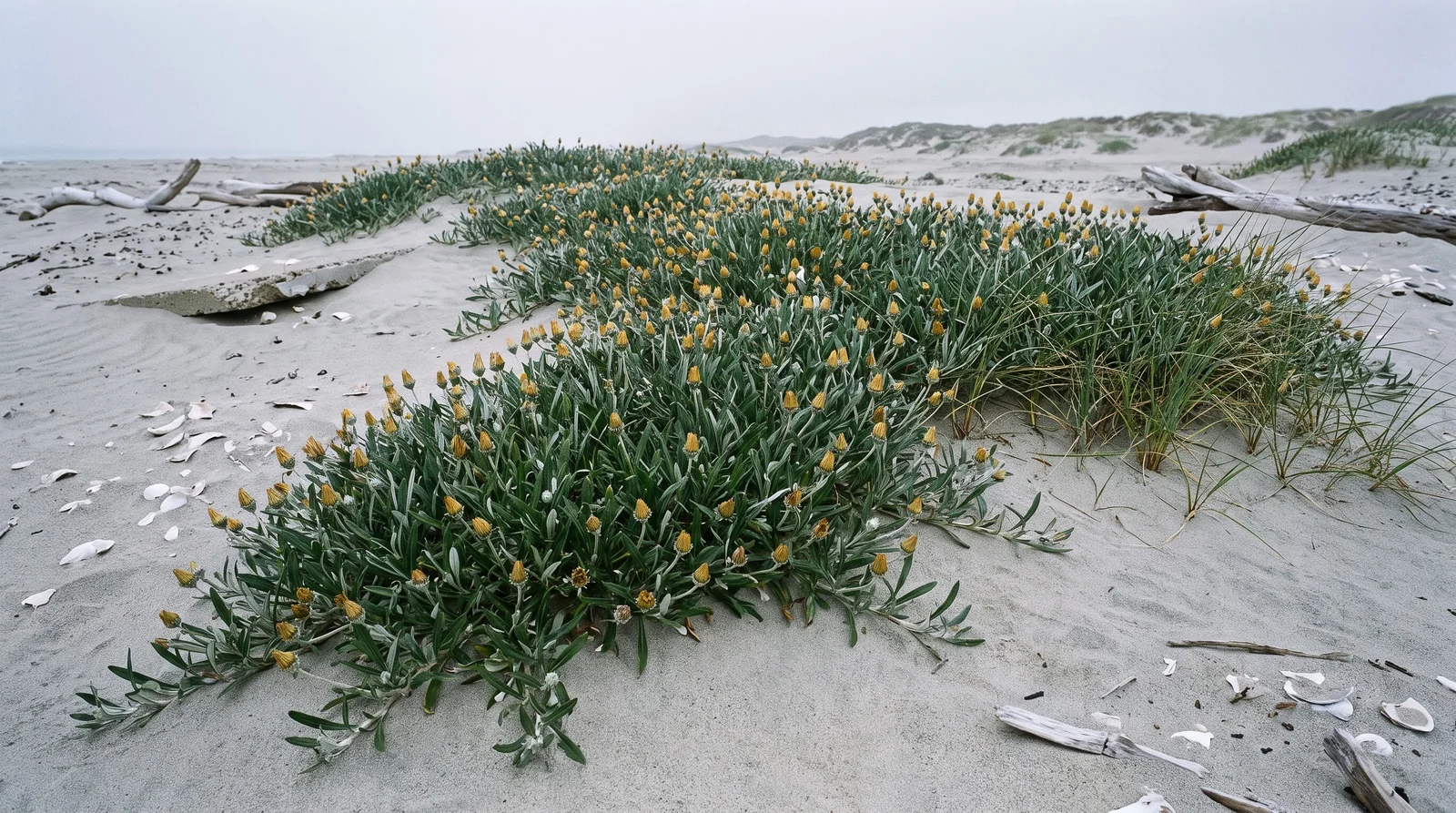
California is where the question sits for American gardeners. Major infestations run through San Diego, Los Angeles, Orange and Ventura counties, and 697 records of Gazania linearis stand in the state, in creekside vegetation and native grassland. The California Invasive Plant Council rates Gazania linearis Moderate with an Alert designation. Moderate covers substantial but generally not severe impact, and the Alert marks a limited distribution that could spread much further. No state regulation stands behind it. In McLaren Park in San Francisco the plant has reached remnant native grassland and pressed on a locally endemic species.
Gazania arrived in Australia as a garden plant in the 1950s and 1970s, naturalized along roadsides and coastlines, and has taken native grassland and farmland in South Australia, Victoria and parts of Western Australia. South Australia has declared it a weed, so growing, selling and transporting it is illegal, and only varieties claimed to be sterile are still allowed in gardens. Victoria calls it a very high risk environmental weed while its seed and plants stay on nursery and supermarket shelves. None of that is a verdict for the United States, where Florida's assessment for the genus reads not known to be invasive. Gazania raises the same question in warm, dry states that lantana does, and the answer turns on where you plant it.
Does gazania spread, and can you save the seed
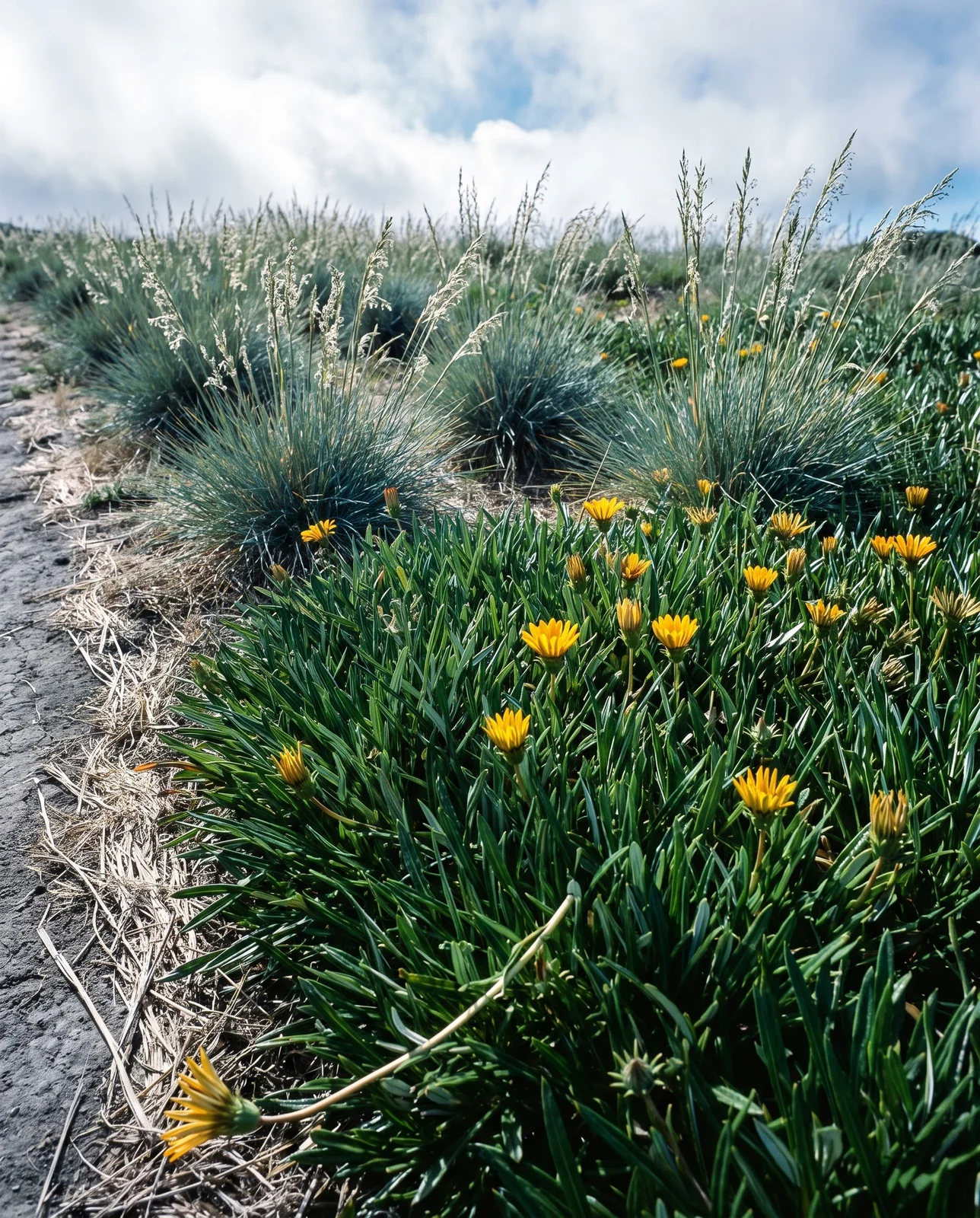
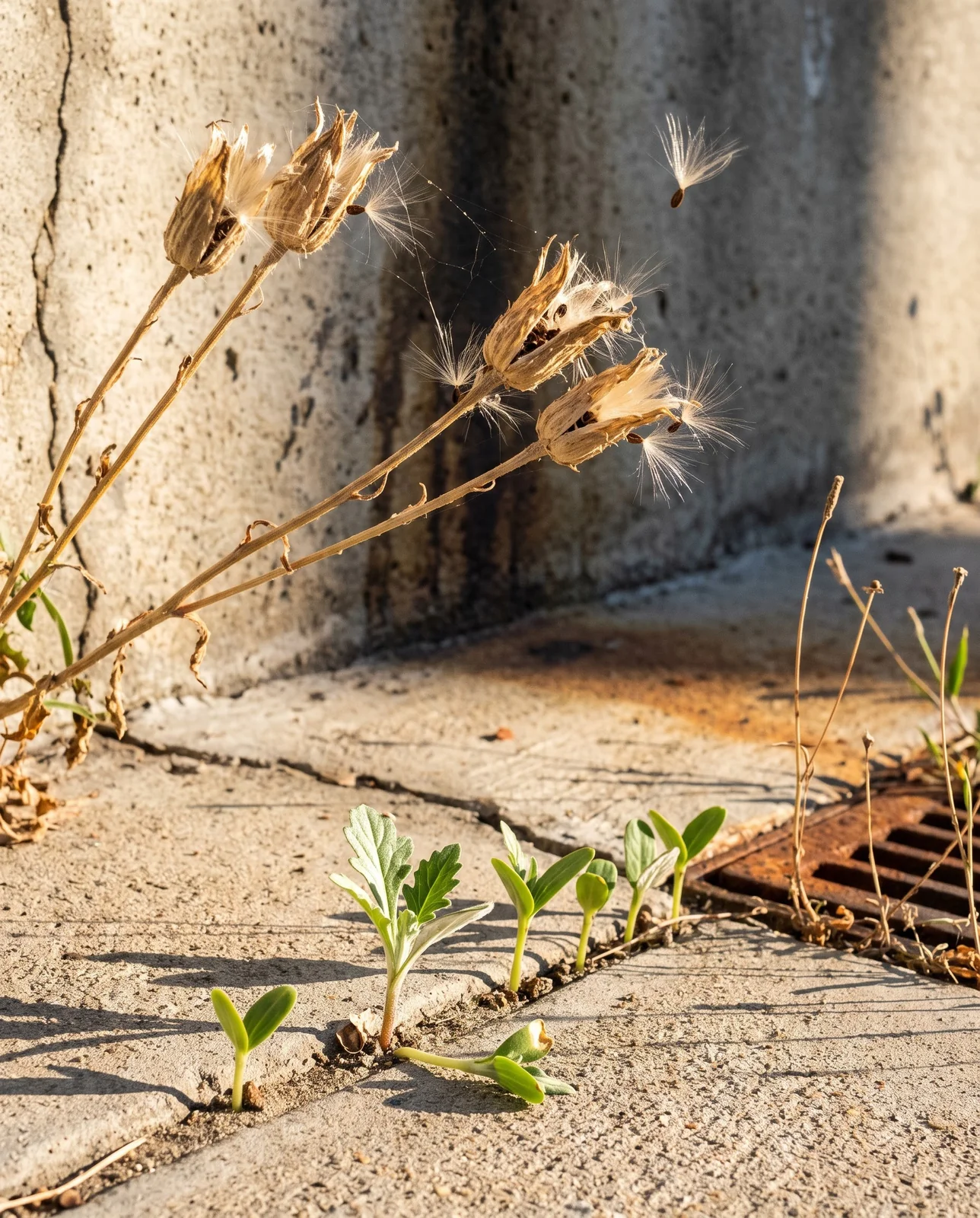
Gazania spreads two ways, by seed and by growth, and which one you get depends on which gazania you bought. The fruit is a capsule that splits open to release its seeds. 'Colorado Gold', a Gazania linearis cultivar, carries self-seeding and naturalizes among its own tags. The trailing form of the garden species, Gazania rigens var. leucolaena, spreads by growth, and it is the form used as ground cover. In a bed that trait is the reason to buy the plant. On the edge of open ground it is the same trait read differently.
Seed and stem cuttings are the two routes for the garden species, and a cutting is the only way to copy one striped plant exactly. Take basal cuttings in fall, each with three to five shoots from new growth at the base. Pot them up, keep them bright indoors over winter and plant them out in spring. Where escapes matter, cutting the finished heads off takes the capsules away before they split.
Deadheading, and what it buys
Deadheading buys flowers. Removing the old blossoms may increase the number of blooms a plant produces, and regular deadheading helps bud production and lengthens the flowering period. The mechanics are easy, because the heads sit singly on bare stems above a flat rosette. Follow the stem of a finished flower down to the leaves and take the whole stem, so nothing is left standing to dry out over the foliage. On a mass planting this is the one job that comes round again, done with fingers or shears in the same pass that pulls weeds out of the mat.
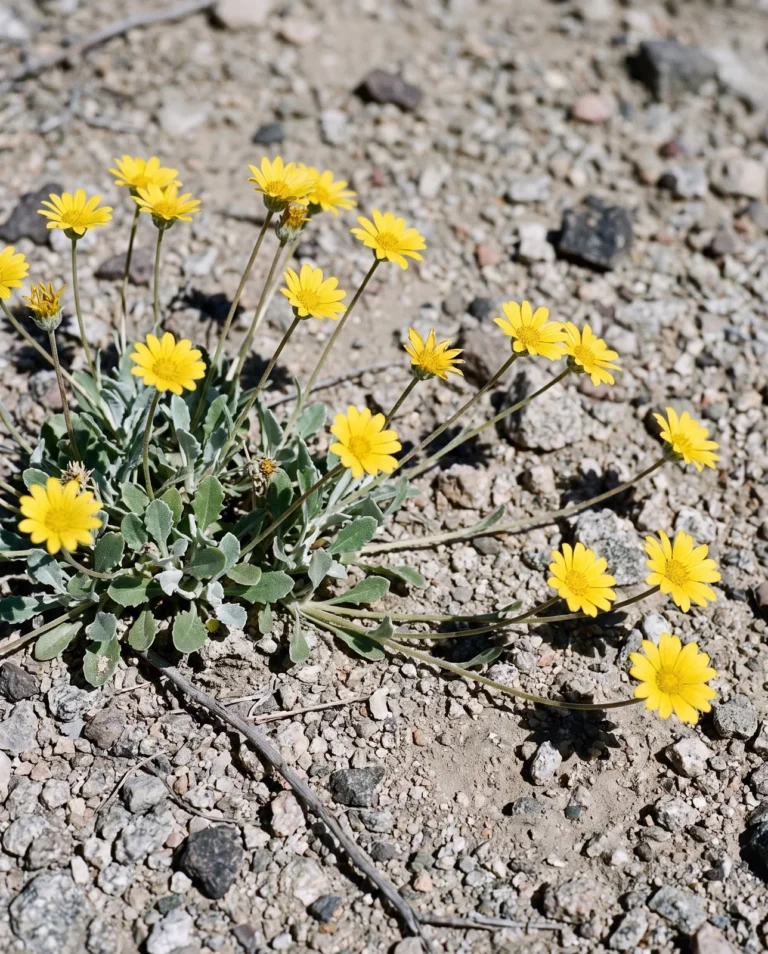
Gazania varieties worth knowing apart
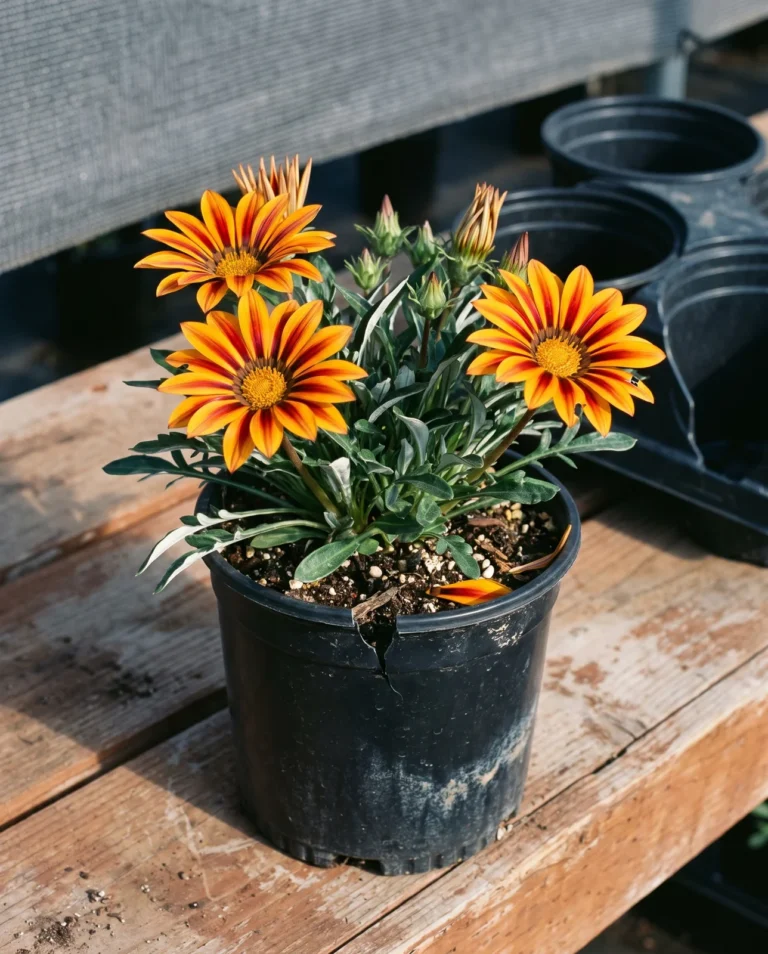
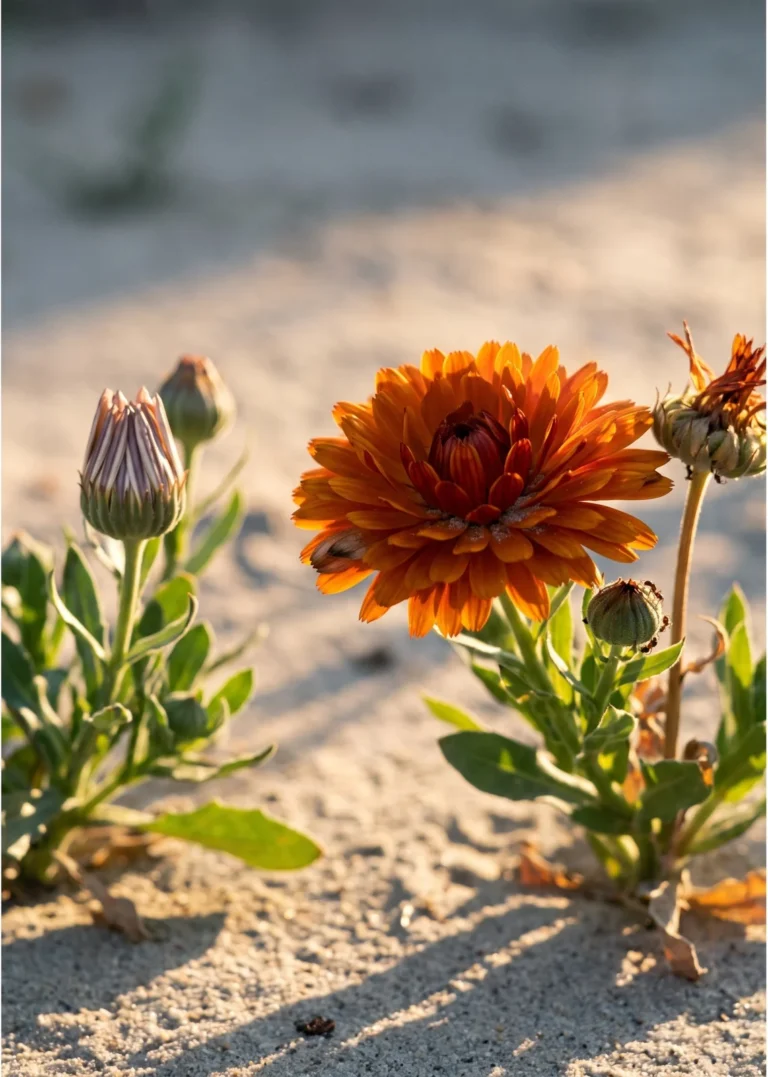
The named series differ mostly in the stripe on the ray and in the color of the leaf, which the shelf sign leaves out.
In pots, on banks and along paths
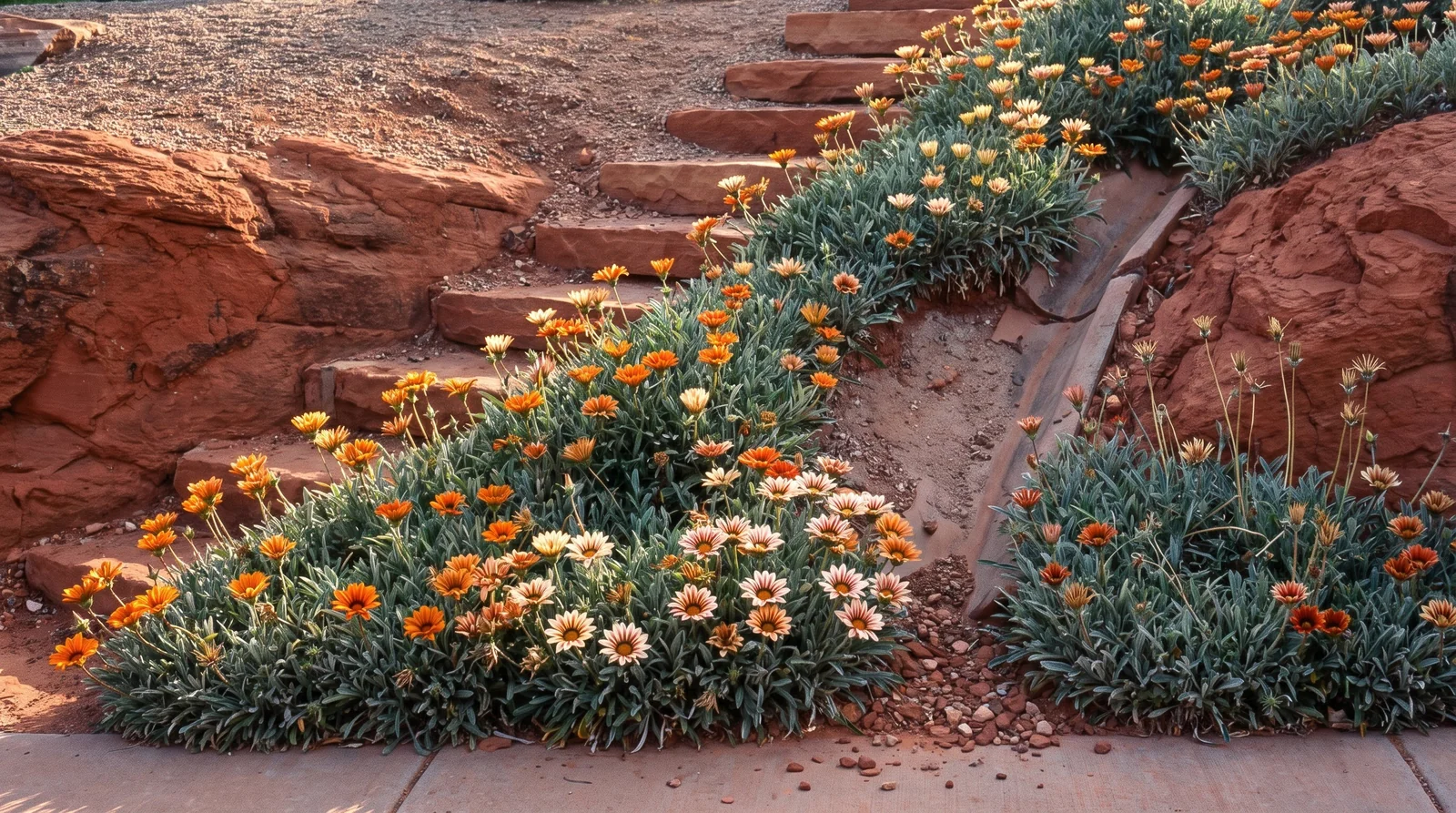
The jobs gazania is good at defeat other bedding plants: hot banks, gravel, parking strips and the dry edge of a path. It works as ground cover and edging, and it is good for erosion control in dry areas. The trailing form, Gazania rigens var. leucolaena, does this at scale, since it can be planted en masse to cover large areas or embankments and grows fast. All of those places ask for the same pair of conditions, sun on the leaves and water that leaves quickly.
In a container the plant answers a different problem. A pot is the solution where the garden soil is heavy. It supplies the sharp drainage gazania wants anyway, and it can be carried into the open where the flowers get the direct sunlight that opens them at all. Plant it at the rim and the cascading habit does the rest.
Is gazania toxic to pets
Gazania has no entry of its own in the ASPCA toxic and non-toxic plant database, under either botanical name or any form of the common name. The African daisy page that does come up there is a different plant, the gerbera daisy, and the non-toxic verdict for dogs, cats and horses belongs to Gerbera jamesonii. None of it carries over to gazania. With no listing either way, the careful reading is caution. Keep dogs, cats and horses from grazing the plant, and call a veterinarian if one eats a quantity of it.
What to expect, from planting to winter
One season with a gazania, in the order it happens.
The first weeks belong to roots. Seedlings and bought plants go out two weeks after the average last frost, with the root ball opened up if it came wrapped. Water them in, then let the soil dry out between waterings from there on.
Through summer the plant keeps its own schedule. Heads open in full sunlight and close again at night, and taking the old blossoms off may increase the number of blooms that follow. The ground is the thing to watch, since overly moist soils can lead to rot.
Winter splits the map. In zone 9 to 11 the plants stay out and flower year after year as long as they stay healthy, with pruning in late winter or early spring. Outside that range they are grown as annuals, or brought indoors before the first frost.
Myths about gazania
Four things said about this plant that do not hold up.
The myth: Closed flowers mean the plant is sick.
The reality: The heads close at night and under heavy cloud and open again in full sunlight, with the foliage unchanged. Worry about the plant whose leaves are involved as well.
The myth: Yellow leaves mean the plant is hungry.
The reality: Sudden yellowing with browned edges and dropped leaves is the pattern of too much fertilizer. The deficiency reading belongs to plants on rocky or sandy ground.
The myth: A plant this well behaved in a bed cannot become a weed.
The reality: In California, Gazania linearis escapes into creekside vegetation and native grassland and forms a dense groundcover there, and South Australia has made gazania illegal to grow, sell or transport.
The myth: African daisy is safe for pets, so gazania is too.
The reality: That non-toxic entry belongs to Gerbera jamesonii, and no gazania entry exists in the ASPCA database under any of the names checked.
FAQ
Why do my gazania flowers close during the day?
They are light-sensitive: the flowers do not open at night or on cloudy days and open again in full sunlight. A bed shaded for part of the day holds them closed then.
When does gazania bloom?
Where the plants come through winter the flowering is year round. Where gazania is grown as an annual it blooms seasonally and stops at the first frost.
Is gazania a perennial or an annual?
A perennial by life cycle. It behaves like one in zone 9 to 11, where plants flower year after year as long as they stay healthy, and colder than that it is grown as an annual or carried indoors.
How long does gazania take to flower from seed?
About twelve weeks from sowing to the first flowers. Germination alone takes 14 to 21 days with the soil held between 60 and 65 degrees Fahrenheit.
Why are my gazania leaves turning yellow?
Sudden yellowing with browned edges or leaf drop follows too much fertilizer, sometimes with a crusty white dusting on the soil. On rocky or sandy ground with no recent feeding it reads as nitrogen deficiency, possibly with soil pH too high. Soil that stays wet suffocates the roots.
Is gazania toxic to dogs and cats?
Gazania has no ASPCA listing under any of the names checked, and the African daisy entry there is Gerbera jamesonii. With no verdict either way, keep pets from chewing it.
Is gazania invasive in the United States?
In coastal California it is. Major infestations run through San Diego, Los Angeles, Orange and Ventura counties, and Gazania linearis carries a Moderate rating with an Alert there. Florida's assessment reads not known to be invasive.
Can gazania grow in containers?
Yes, and pots are the solution where garden soil is heavy. Use potting soil, since native clay in a container blocks gas exchange and suffocates roots.
Does gazania need deadheading?
It flowers without it, but removing the old blossoms may increase the number of blooms and lengthens the flowering period.
Do gazanias spread on their own?
The fruit is a capsule that splits to release seed, and 'Colorado Gold' carries self-seeding among its tags.
Interesting tips
- The Award of Garden Merit names for this genus also run to 'Aztec', 'Cookei' and the variegated form of the species, a short set to search by when the shelf label gives only a color.
- Gazania rigens belongs in borders and in mass plantings of cottage and pollinator gardens, so a hot strip of it is doing more than holding color.
- More names past the seed racks: 'Gold Rush' is orange-yellow with brown basal spots, 'Sundance' carries gold, bronze and white petals with a stripe, and 'Fire Emerald' has emerald petal bases.
Related Guides & Flowers
Verbena
Another sun-hungry bedding plant for hot, lean ground that keeps flowering through summer.
Sedum
The other answer to a dry bank or a gravel bed, grown for its foliage as much as its flowers.
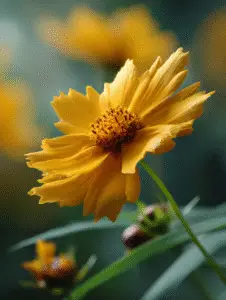
Coreopsis
A daisy for poor sunny soil that keeps going as long as the finished heads come off.
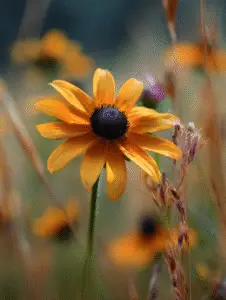
Black-eyed Susan
The daisy that stays open all day, for gardeners who want the shape without the closing.
Enjoying our flower guides? Add YourFlowersGuide as a preferred source on Google. It helps more readers find us.
Add to Preferred Sources