Honesty is a plant as well as a virtue
Behind the virtue there is a plant: Lunaria annua, a European member of the mustard family. Fourteen common names follow it, among them money plant, silver dollar, moneywort, moonwort and Judas' penny. Every coin name points at the same object, the flat silvery discs that stand on the stems after the seeds have dropped. Those discs are what people grow it for.
What the honesty plant is
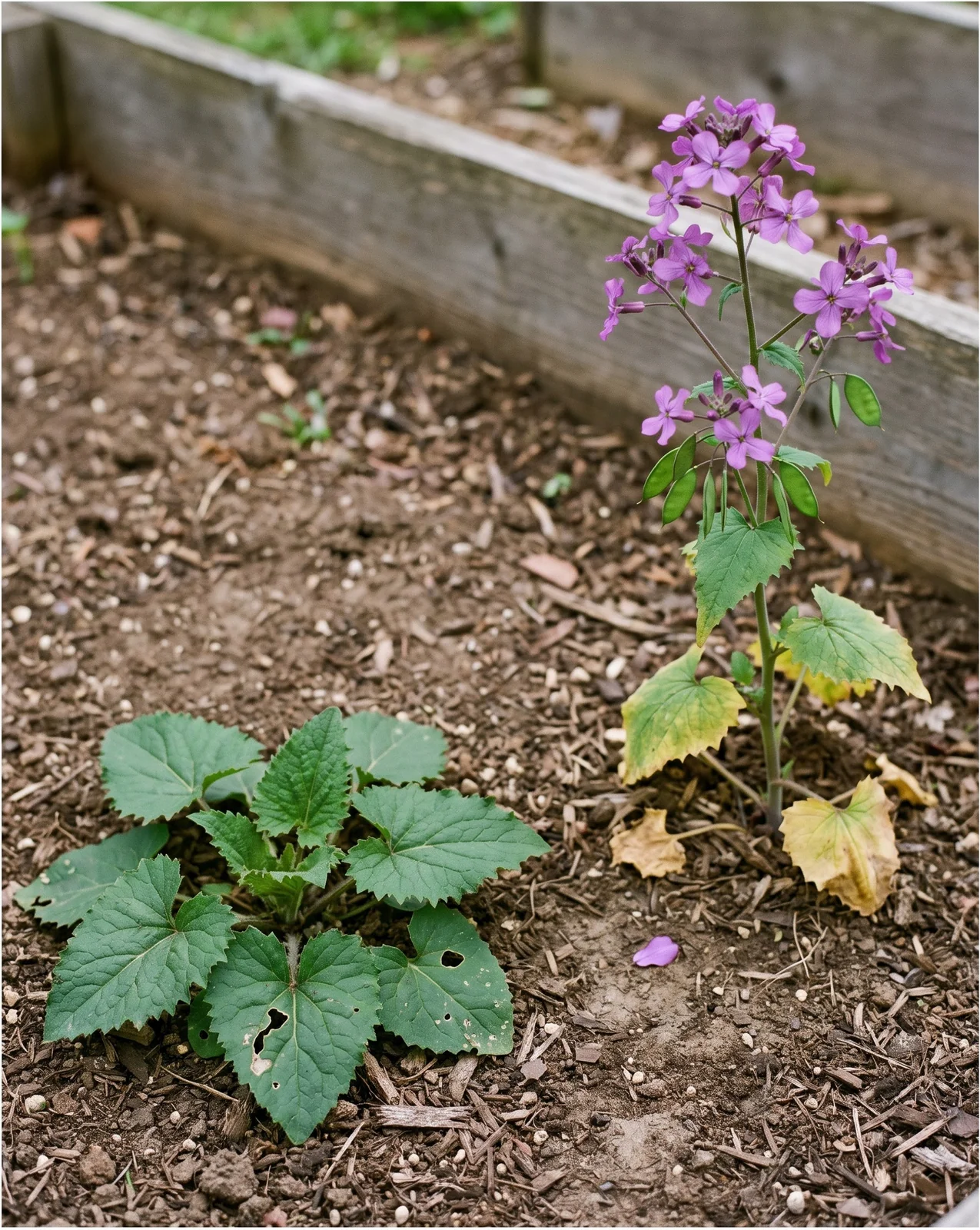
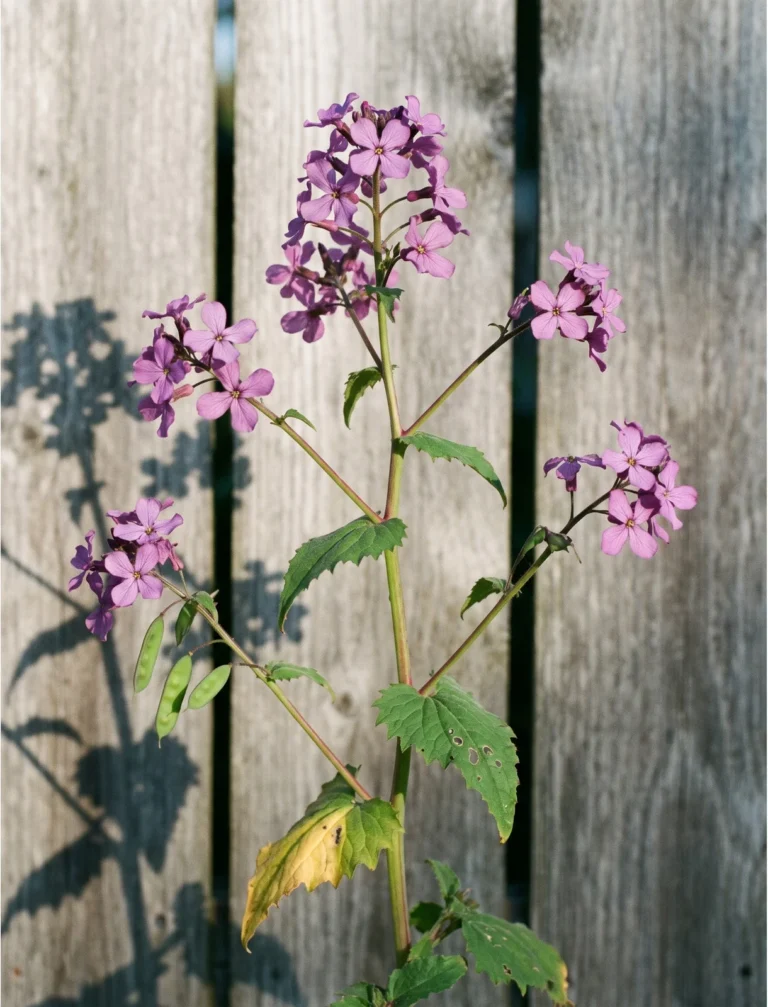
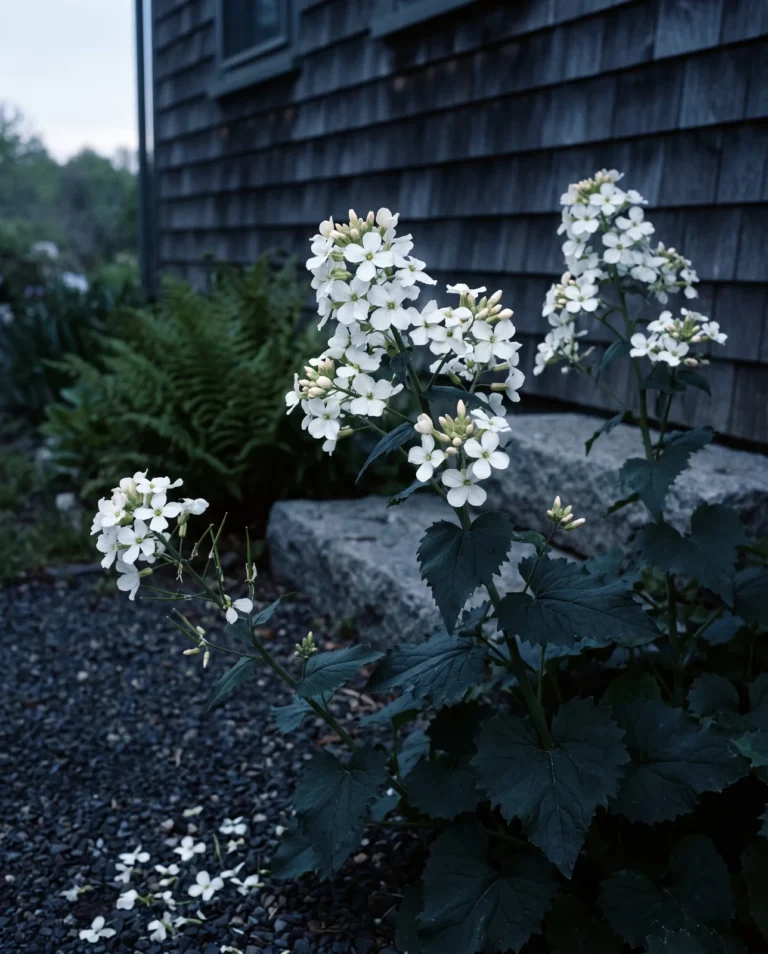
The honesty plant is an upright biennial in the mustard and cabbage family, European by origin and now grown across the temperate world. It stands 2 to 3 feet tall and 1 to 2 feet wide on green or reddish stems. The leaves are coarse, heart shaped and toothed, 3 to 6 inches long and 1 to 3 inches wide. Purple flowers open in leafy racemes of four petals, mostly through April and May, with a white form grown as Lunaria annua var. alba. They are fragrant, which is half the reason anyone grows the genus. Honesty is also a brassica, so it can take the same club root that distorts cabbage roots and stunts the top growth. That matters if it shares ground with vegetables.
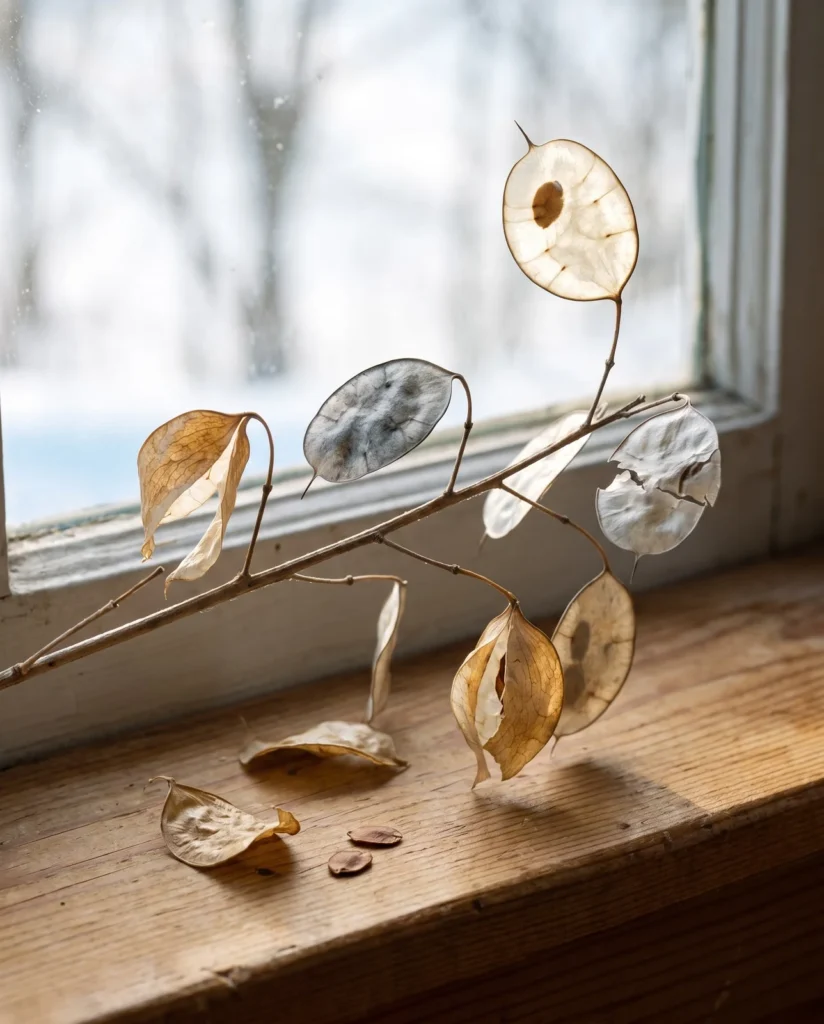
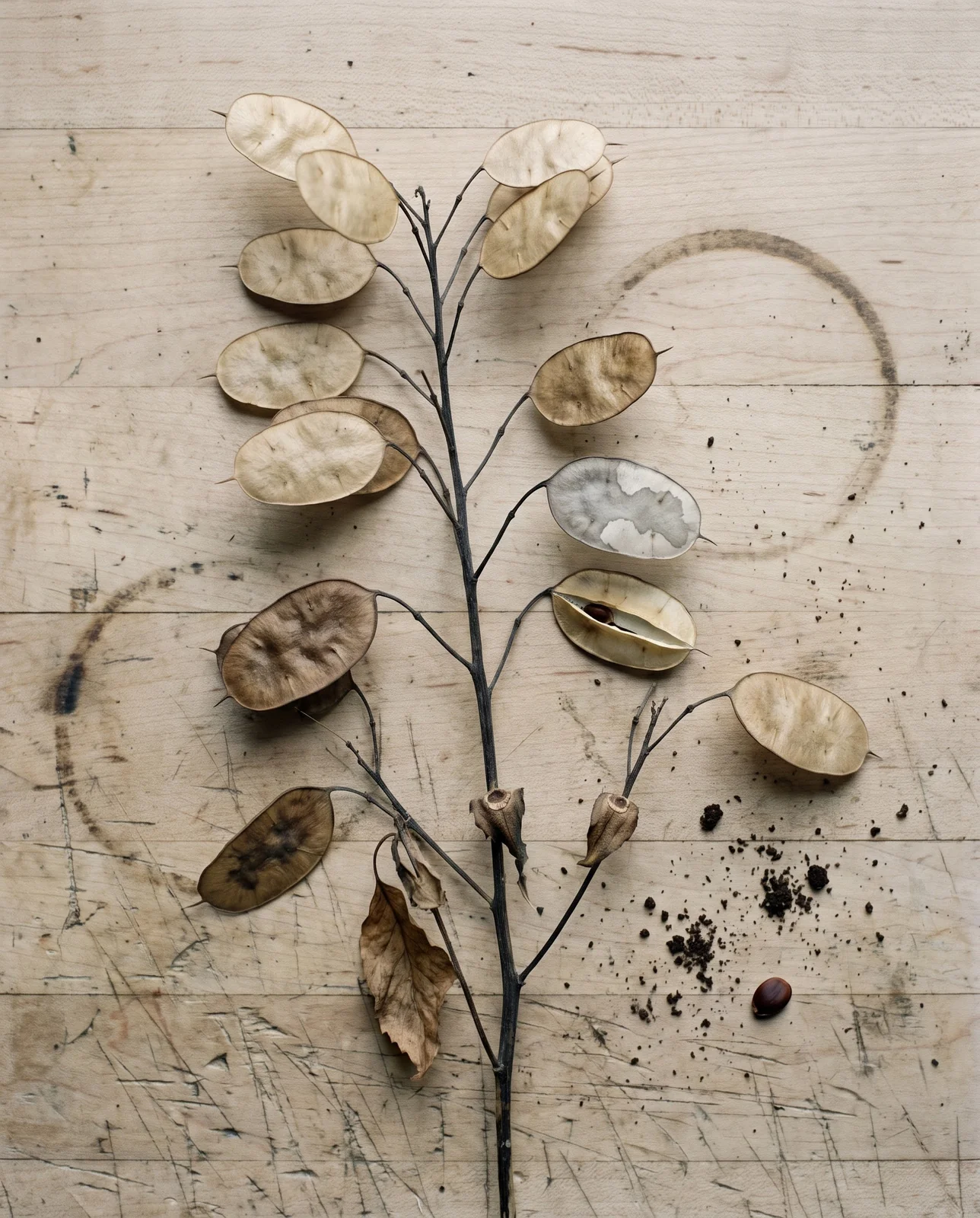
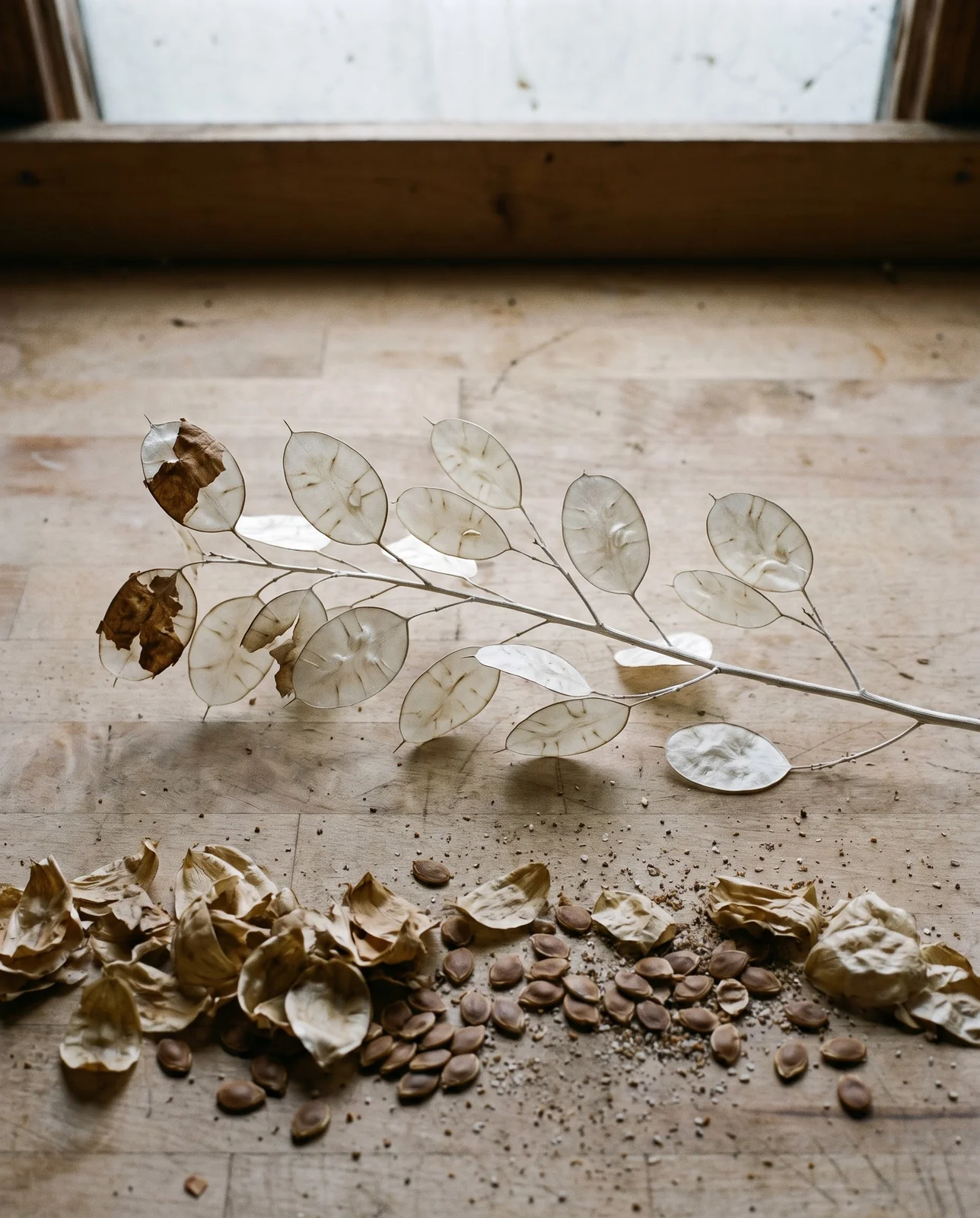
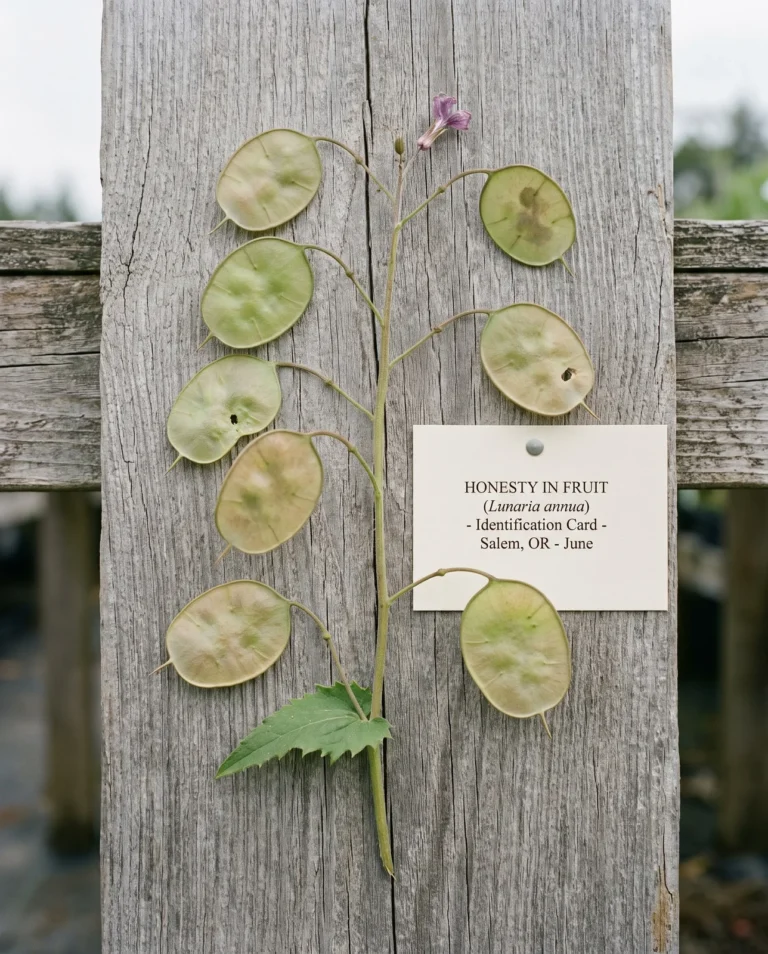
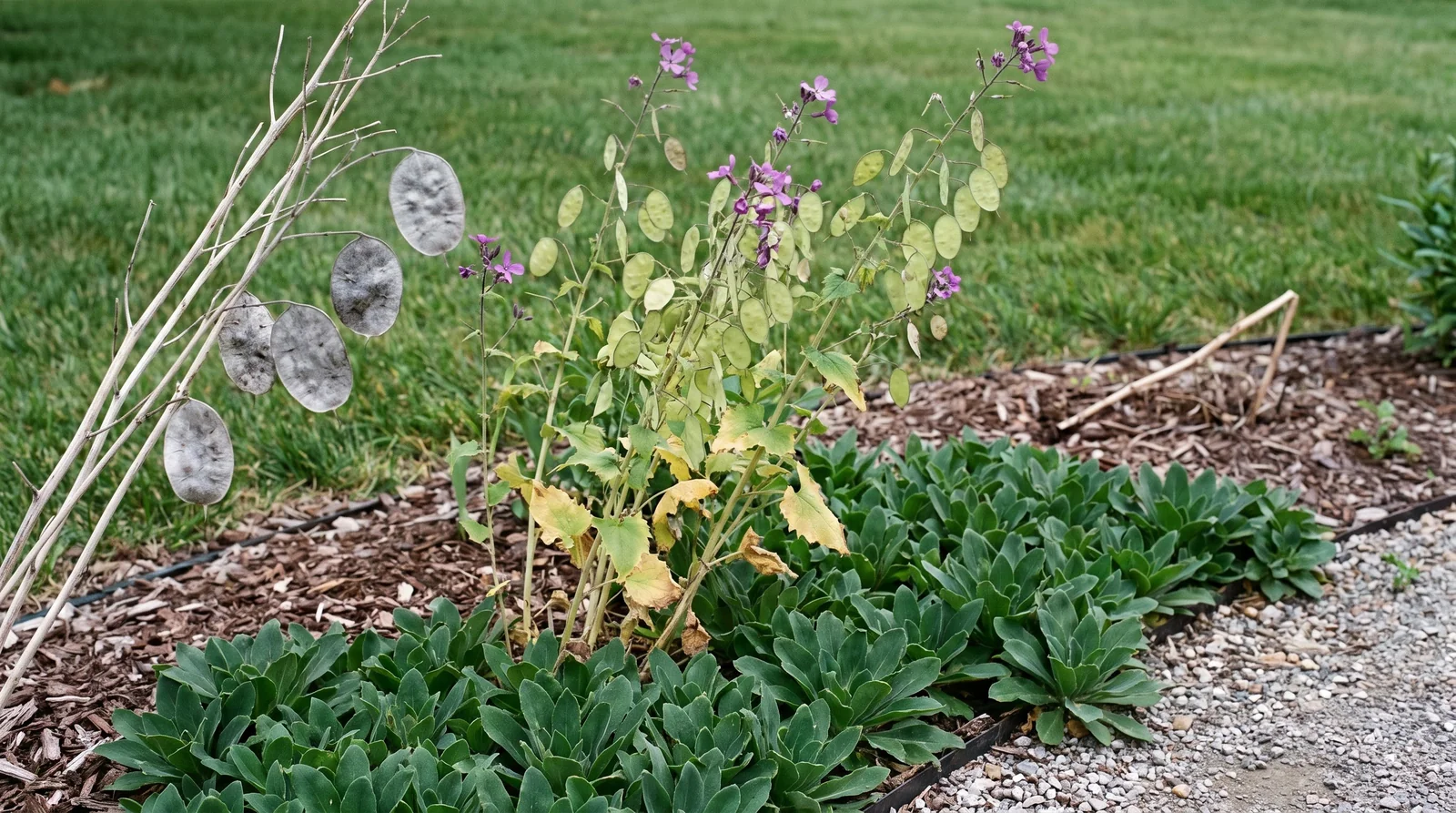
What follows the flowers is the reason most people plant it. Each fruit is a flat silicle, oblong-elliptic to nearly round, with a satiny, paper-white septum inside. As it ripens the two outer walls fall away with the seeds and leave that partition standing on the stem. The disc is translucent, 1 to 3 inches across, and it can hold on through winter depending on the weather.
The common names cause real trouble. Money plant, moneywort, penny flower, silver dollar and money-in-both-pockets all describe this one species, and two of them belong to other plants in the toxic-plant list a worried owner is most likely to open. The ASPCA files Silver Dollar under Crassula arborescens, an unrelated succulent that is toxic to dogs and cats, and Money Plant under Pachira aquatica, the money tree. Honesty itself appears under none of its own names: the alphabet runs from Hollyhock straight to Honey Locust, with no Lunaria, moneywort, moonwort, penny flower or dollar plant anywhere in it.
Called annual, grown as a biennial
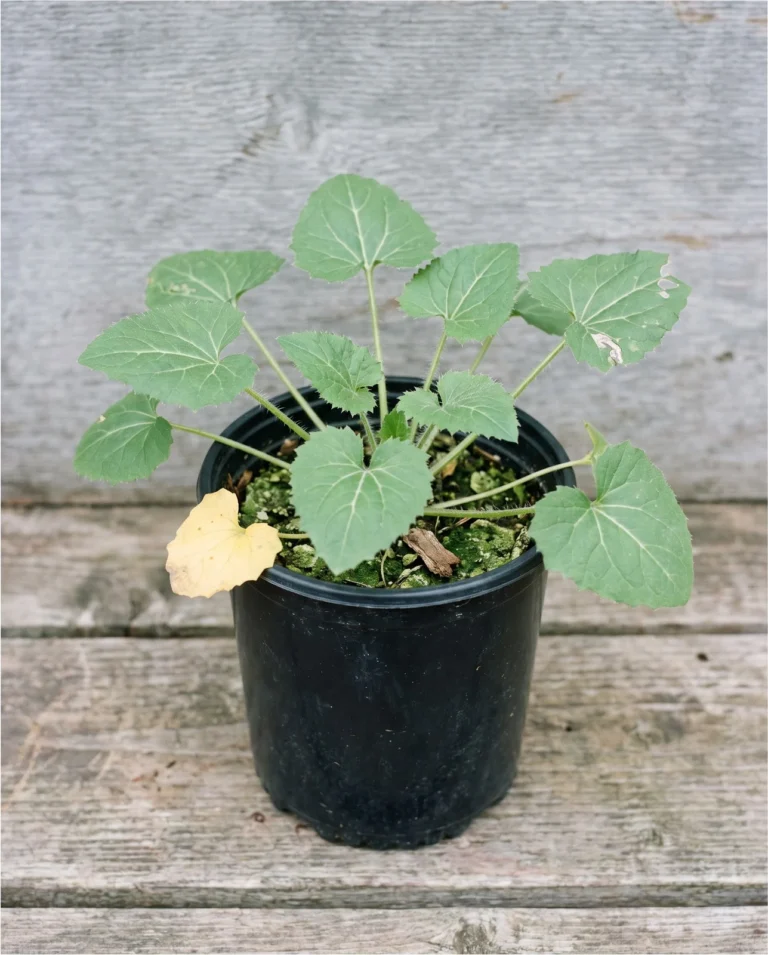
The species name says annua and the plant does not live by it. Sown in spring, honesty makes only foliage the first year, then flowers, fruits and dies in the second. That one fact answers most of what gardeners ask about it. A first-year plant sitting as a rosette with no flower stem has not failed and needs nothing done to it, since it is running the same two-year pattern as foxglove. What hides the habit is the patch. Honesty self-seeds so freely that a patch left alone will never disappear, so there are flowering plants in the same ground most years while no single plant lives past its second summer. Gardeners describe that as the plant coming back annually.
Two labels on seed packets add to the confusion. Lunaria biennis is an older name for the same species, recorded alongside Lunaria inodora, so a packet using it holds nothing different from one that says Lunaria annua. The other label is a plain error: one seed company sells honesty as a perennial while its own product text calls it biennial and explains that it self sows and returns year after year. Honesty is a biennial. The perennial in the genus is a separate species, Lunaria rediviva, which is larger, carries smaller and more fragrant flowers, has more sharply toothed leaves and sets elliptical fruit.
Why the pods are a two-season decision
Dried pods for a particular winter are decided by a sowing made in an earlier growing season. The British calendar runs like this: sow in June, plant out from September through November, expect flowers in April and May, and collect seed from August through October. In American gardens the equivalent is a spring or early summer sowing that gives the rosette a full season to build before winter. The discs are not silver on the day the fruit forms either, because the outer covers have to be shed or rubbed away before the translucent center shows. Growing honesty for a wreath therefore runs across two seasons. Anyone who sows in spring and goes looking for pods that fall is a season early.
When and how to sow honesty seed
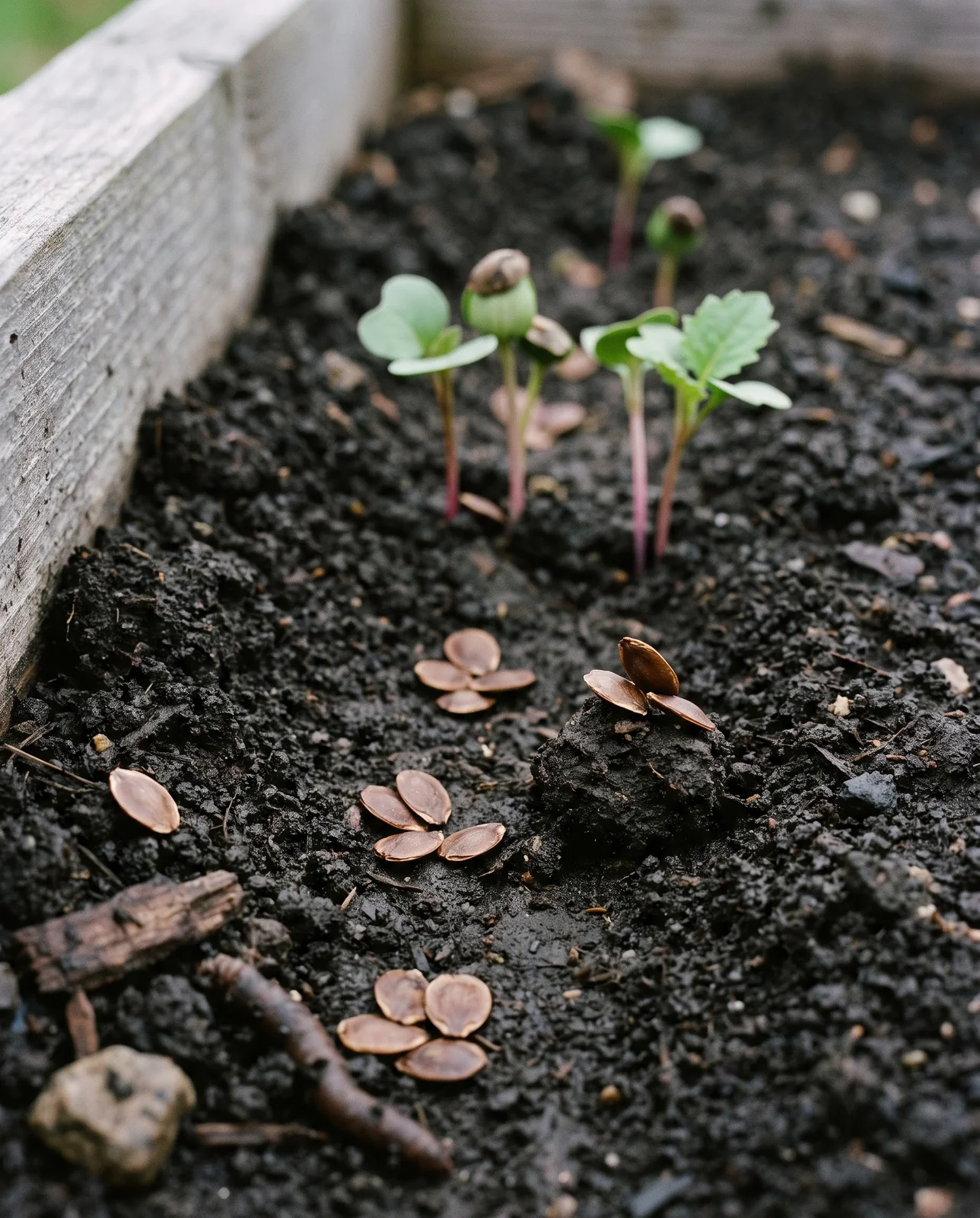
Sow honesty where it is meant to grow. Seed goes outdoors in spring as soon as the ground can be worked, or after the last frost in groups of three or four seeds, and germination spreads over 14 to 28 days. Space the plants 12 to 18 inches apart to allow for their size at maturity. Sowing in place in early summer is the recommended method of propagation, and fall sowing works as well. In the warmest gardens the clock is shorter: seed sown in fall in zones 8 to 10 flowers the following spring.
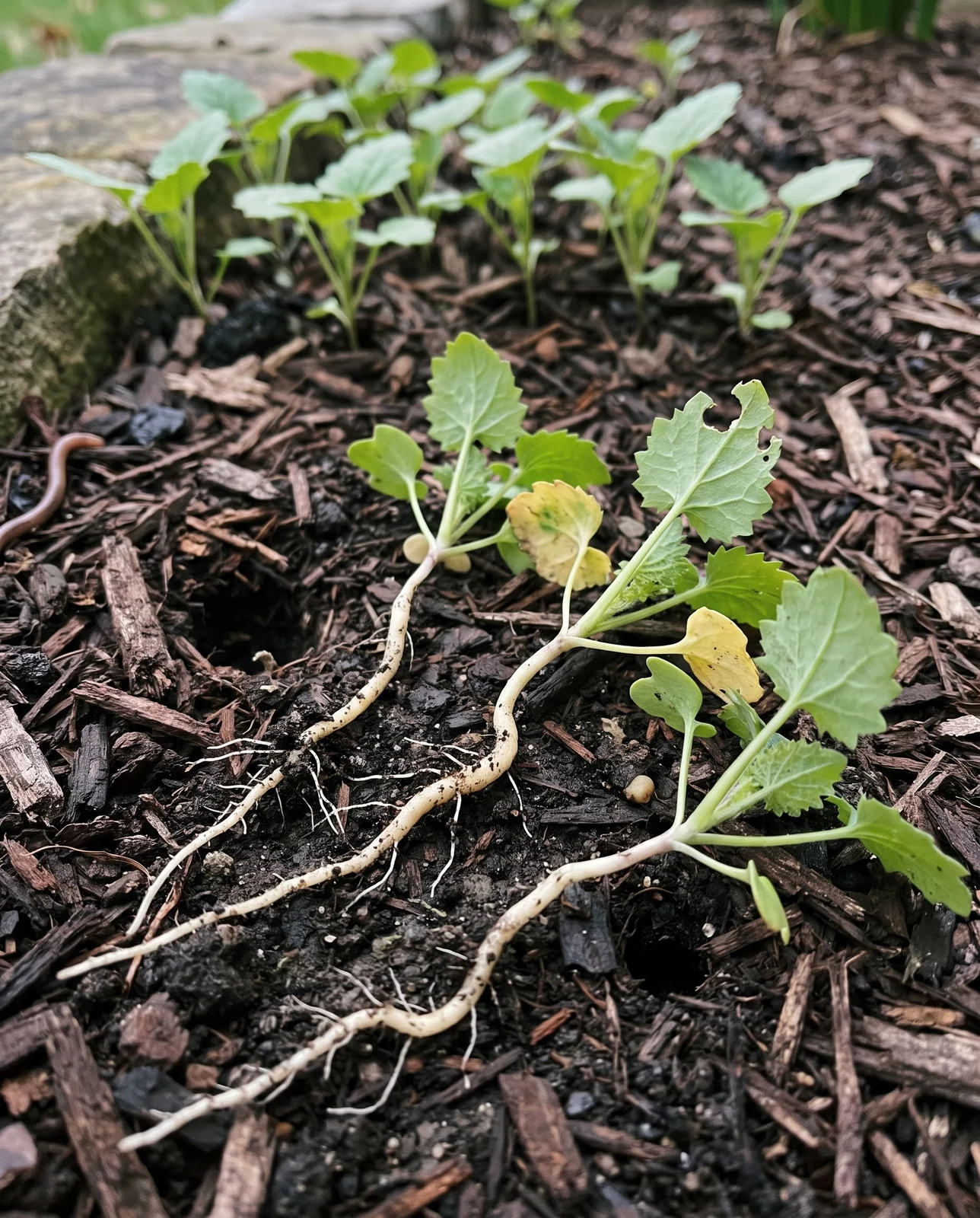
Transplanting is the job to settle before you buy plugs. Honesty makes a large taproot, so it goes out young or not at all, and larger plants establish poorly. Even a young one is difficult to move, and scattering seed where the plants are wanted avoids the question. The two positions disagree about whether a young plant travels safely, and agree that the older the plant, the worse the move. If you do start under cover, sow into pots or a seed tray in early summer. Move the seedlings into larger pots once they are big enough to handle, then set them in their final positions in fall.
Light, soil, and water
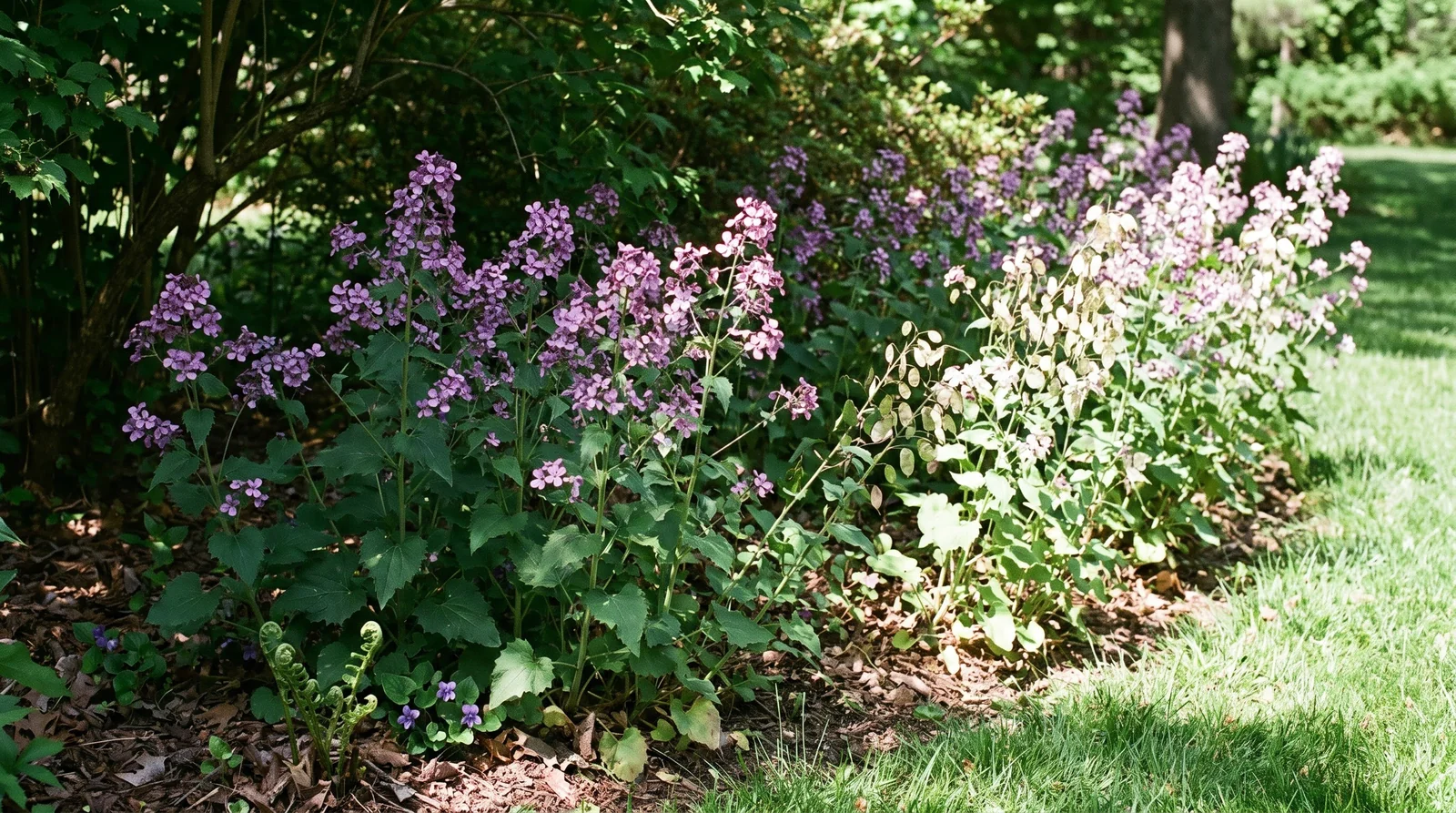
Honesty takes either full sun or partial shade. Its light range runs from six or more hours of direct sun down to partial shade of two to six hours a day, and half shade suits it best of all. It belongs in borders, open woodland, shade gardens, naturalized corners and the cutting bed, the same half-lit ground where most other flowers that grow in shade earn their place.
Soil should be moist, well drained and high in organic matter, on any pH from acid below 6.0 through neutral up to 8.0. Water needs are medium. Size follows the soil. Plants grow tallest in rich, moist, free-draining ground, stay smaller and carry fewer pods in poor soil, and come through winter best where the ground drains freely and never sits saturated.
How hardy honesty really is
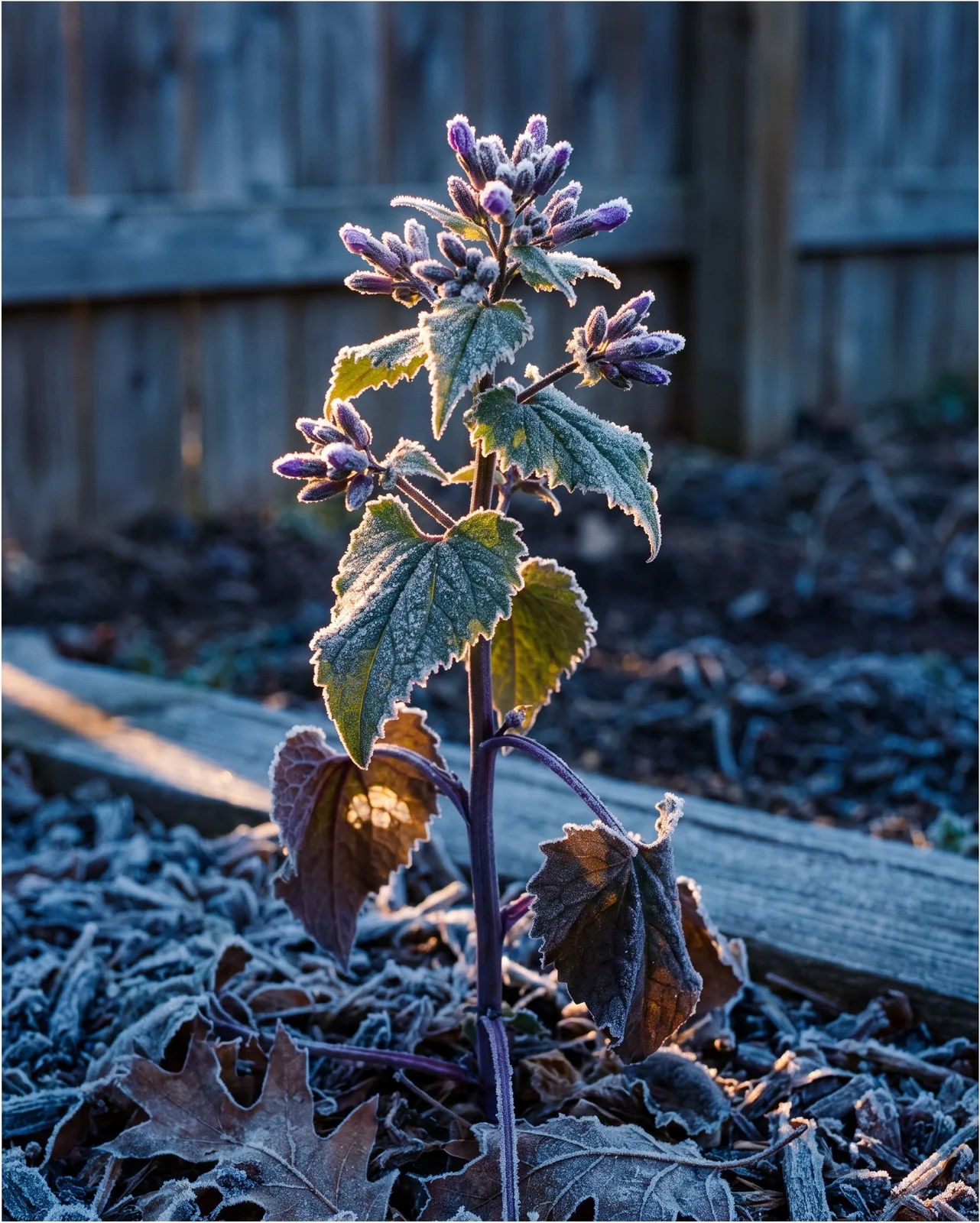
Honesty is a cool-climate plant that takes hard frost without help. Zones 5 to 9 is the figure given most often, cut-flower growers overwinter it down to zone 4, and hardiness data elsewhere runs from zone 4a through 8b. Take the coldest of those as the working limit, and expect the plant to get less predictable as winters soften. In Britain it comes through minus 20 to minus 15 degrees Celsius. The warm end of the range works differently: in zones 8 to 10, seed sown in fall flowers the following spring, which is a sowing instruction for mild winters and says nothing about summer heat.
Is the honesty plant invasive?
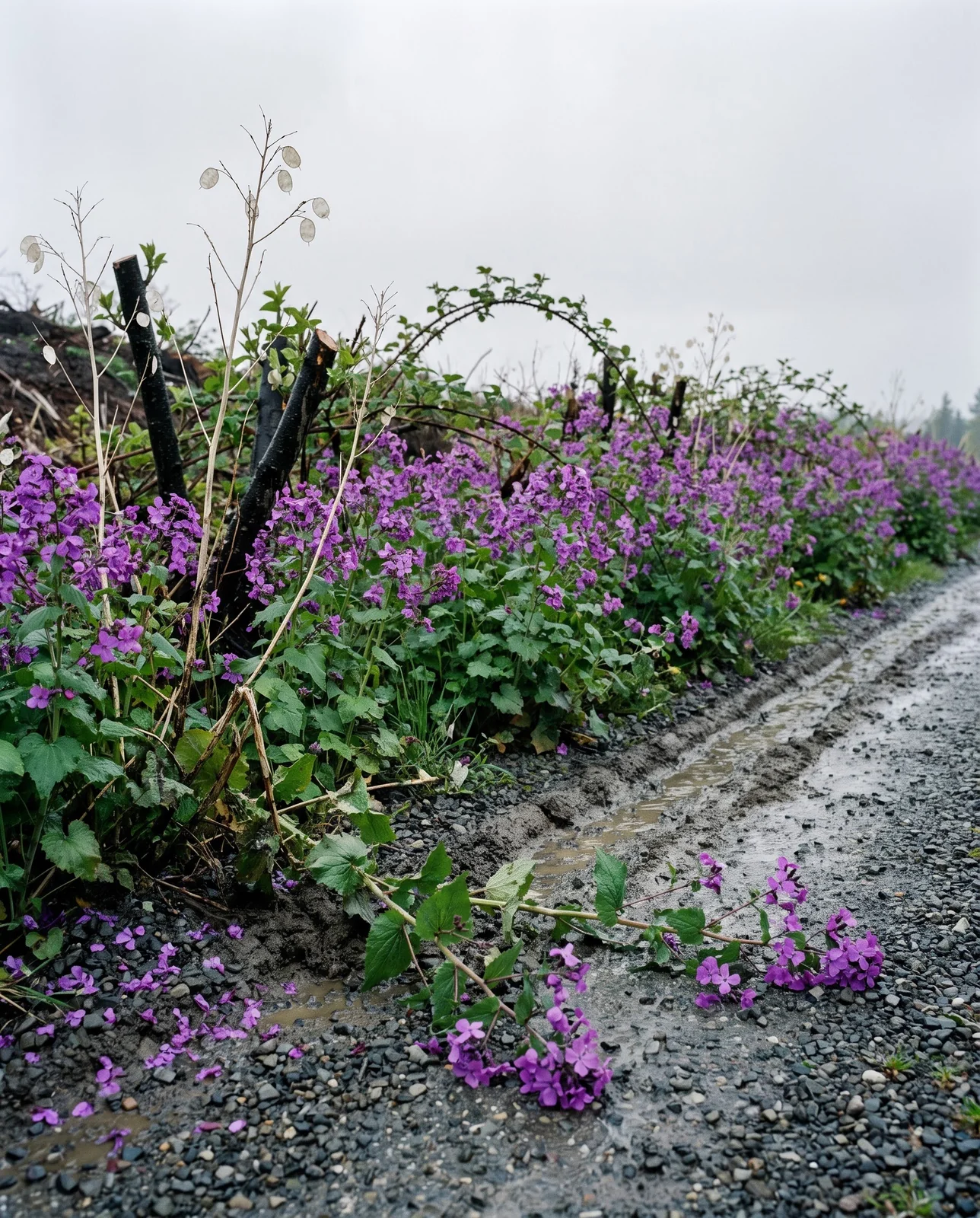
Honesty spreads on its own, and no state has put it on a noxious weed list. It is introduced in the United States and not native to North America. It grows wild in 21 states, from California and Washington across to Connecticut and Tennessee, and has naturalized in wooded parts of the east. The ground it takes is disturbed and human-maintained: fields, roadsides, banks and waste places. It seeds itself hard enough that a patch left alone will never disappear. Most gardeners who call honesty invasive mean exactly that, and none of it is a legal designation.
Washington, Oregon, Connecticut and Rhode Island all publish lists, and honesty is on none of them. Washington's noxious weed list, the one that sets what landowners can be required to control, runs from Linaria vulgaris straight to Myriophyllum spicatum. Oregon designates no weed called Lunaria, honesty or money plant. Connecticut's statutory list, which bans the import, sale, cultivation and distribution of what it names, goes from Lepidium through Lonicera to Lychnis. Rhode Island names honesty nowhere on its list of invasive and weedy plants, and that list carries no regulatory force in any case.
Databases are looser than statutes. Go Botany tags Connecticut as present, invasive and prohibited while warning that status definitions vary from state to state, and the Connecticut statute does not carry the plant at all. NC State Extension reports the species as invasive in some areas of the country and advises considering a native alternative. That advice stands on its own footing. Gardeners split by region. The complaint out of Seattle is that honesty displaces natives in local greenbelts and should be pulled wherever it is found, and King County answered that the patches there looked small. Across 32 grower comments the split runs 25 positive, 6 neutral and one negative, and the negative is that Pacific Northwest complaint.
Keeping honesty where you want it
Cutting the pods is also how the plant is kept in bounds. The seed rides inside the same flat fruits people harvest, and a ripe one sheds its outer covers and its seeds together. Stems taken indoors while the green is just going carry that seed out of the bed with them. Where the pods are left standing, deadhead before they ripen and the volunteers stay down. Seedlings that do appear lift by hand without much argument, because each sits on a single taproot and comes up whole, easiest as a first-year clump or at any point before the second-year pods ripen. None of that touches the seed already lying in the soil. A patch keeps producing after the parent plants are gone, and it takes a few seasons of pulling to run out. Anyone who likes the effect can do nothing at all and let it run, the way a corner of forget-me-nots refills itself.
Harvesting and drying the silver pods
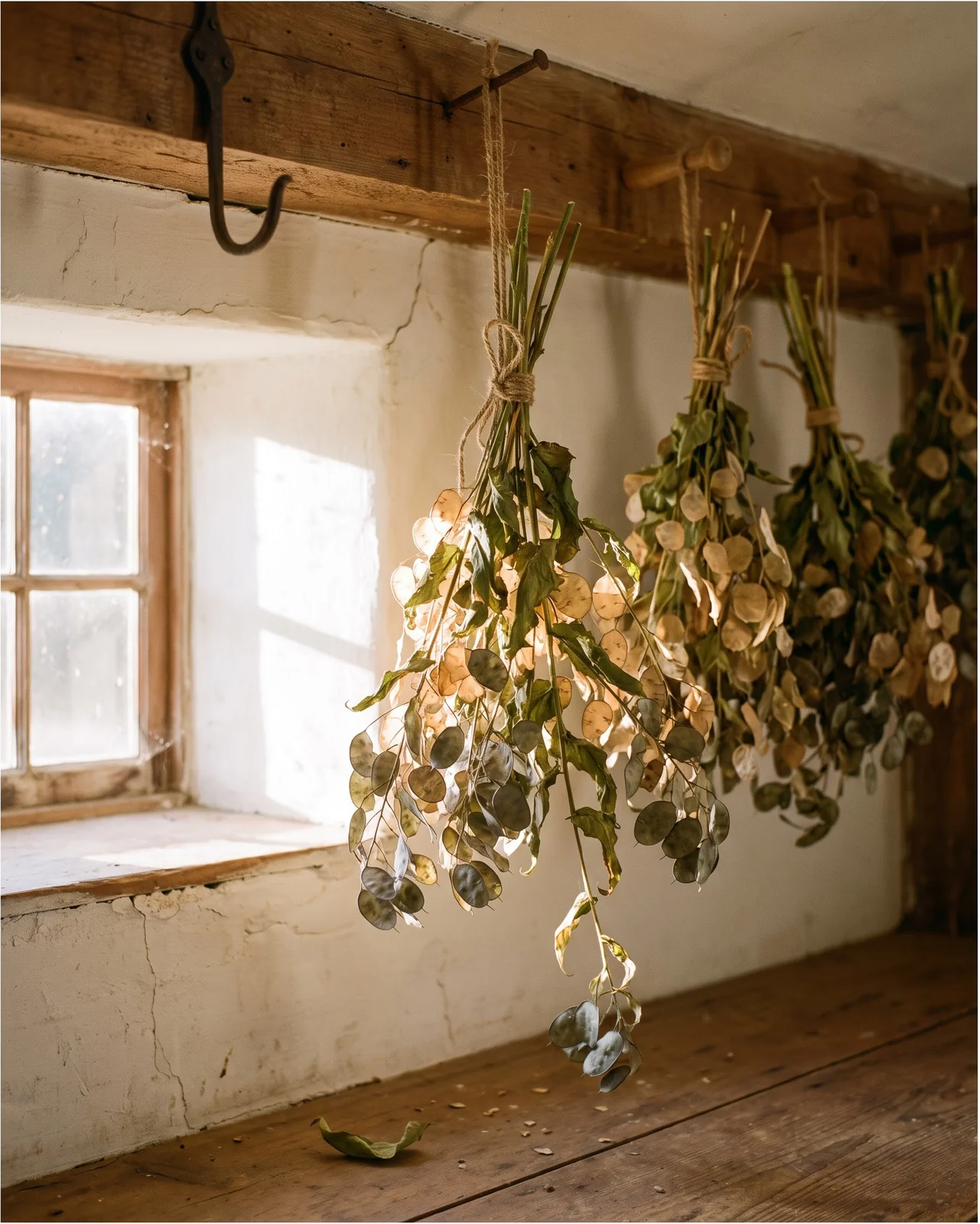
Cut the stems as the green goes out of the fruit. That is the whole timing signal: take the stems out of the garden just as the green fruit color disappears, then hang them upside down indoors to dry. The perennial species gets a slightly earlier signal, cut just before its green begins to fade. Seed collectors work the other way and leave the pods to dry on the plant before breaking them open. The plant allows it: the fruits stand where they grew into winter, and the weather decides how long they hold. The choice between the two is a choice about exposure. Stems cut early finish in still indoor air, and stems left standing take whatever the fall gives them.
Husking is the part nobody photographs. Put the whole dry branch upside down into a paper shopping bag and shake it firmly. That peels most of the discs clean, the covers that hold on rub away between thumb and forefinger, and the seeds and shed covers gather in the bottom of the bag. The bag holds the next sowing at the same time, because the seed leaves the fruit as the disc is exposed. Prepared with that much care, dry branches keep for years in an arrangement, and dried-flower work is one of the garden uses honesty is grown for.
Honesty types worth telling apart
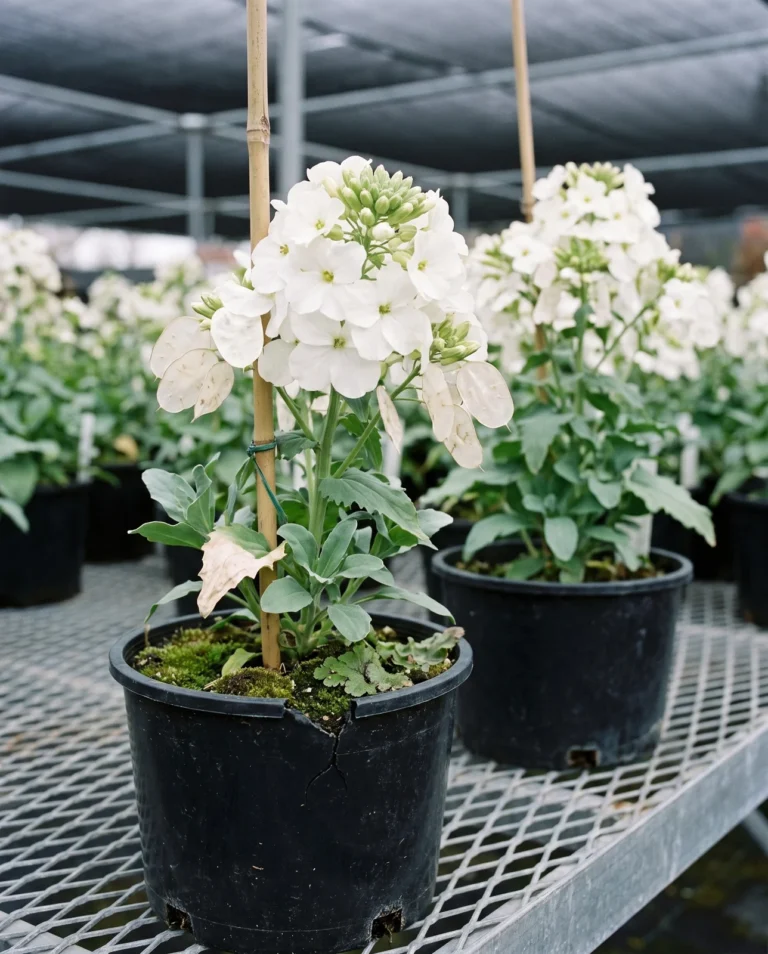
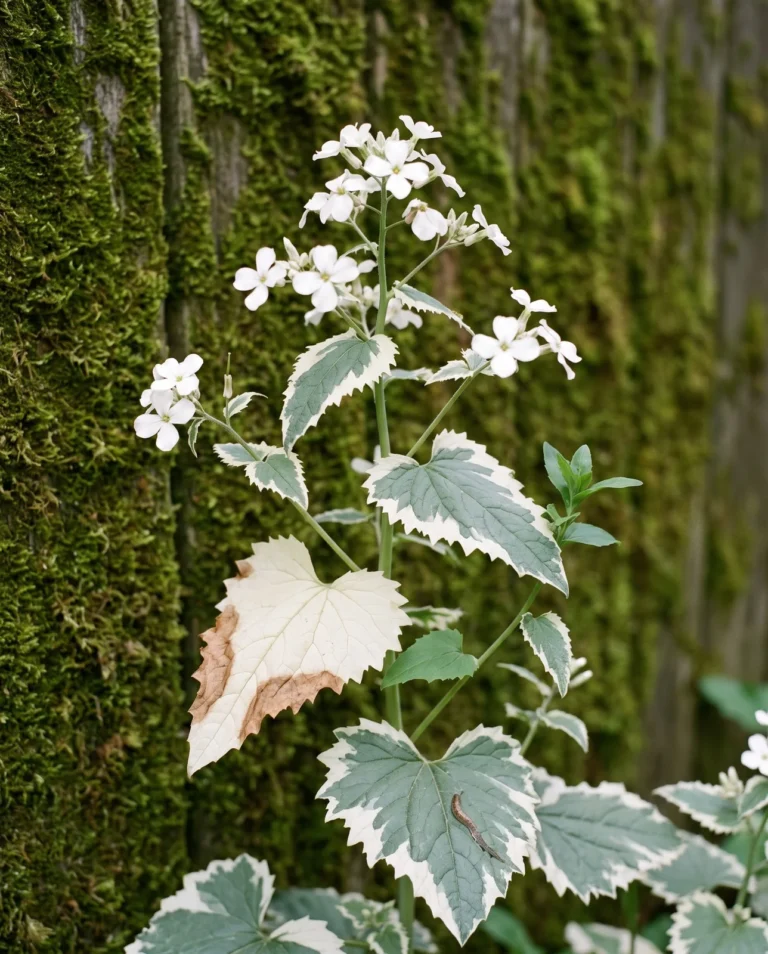
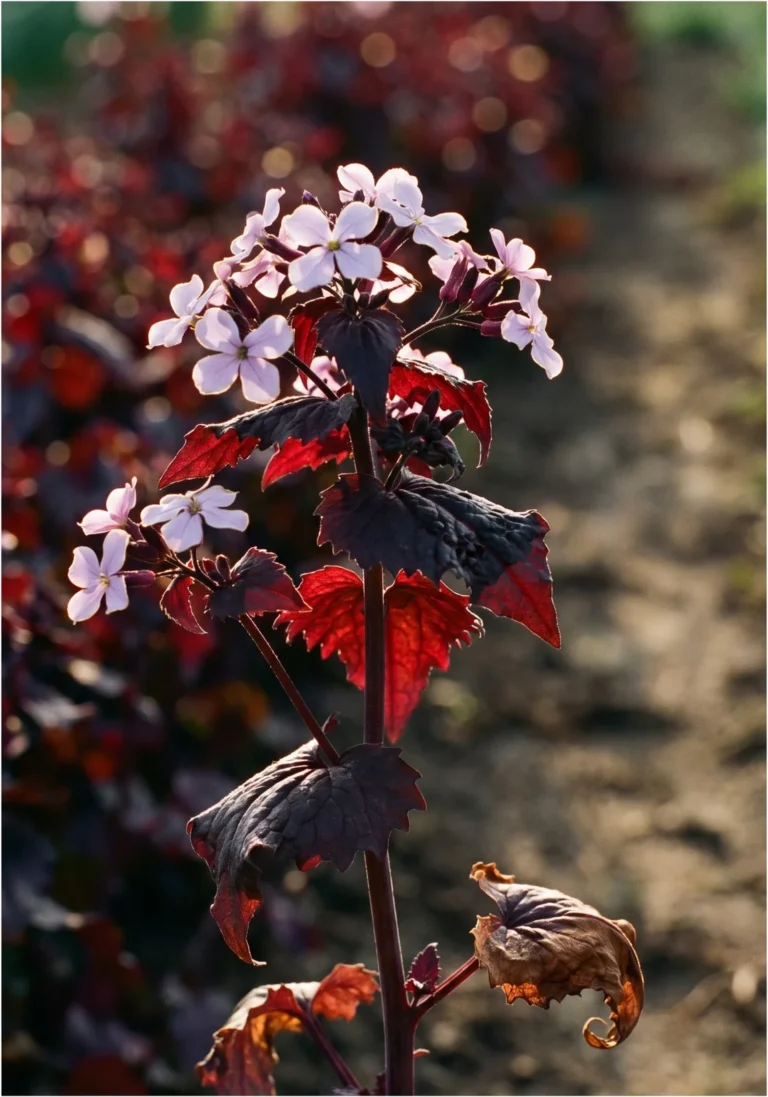
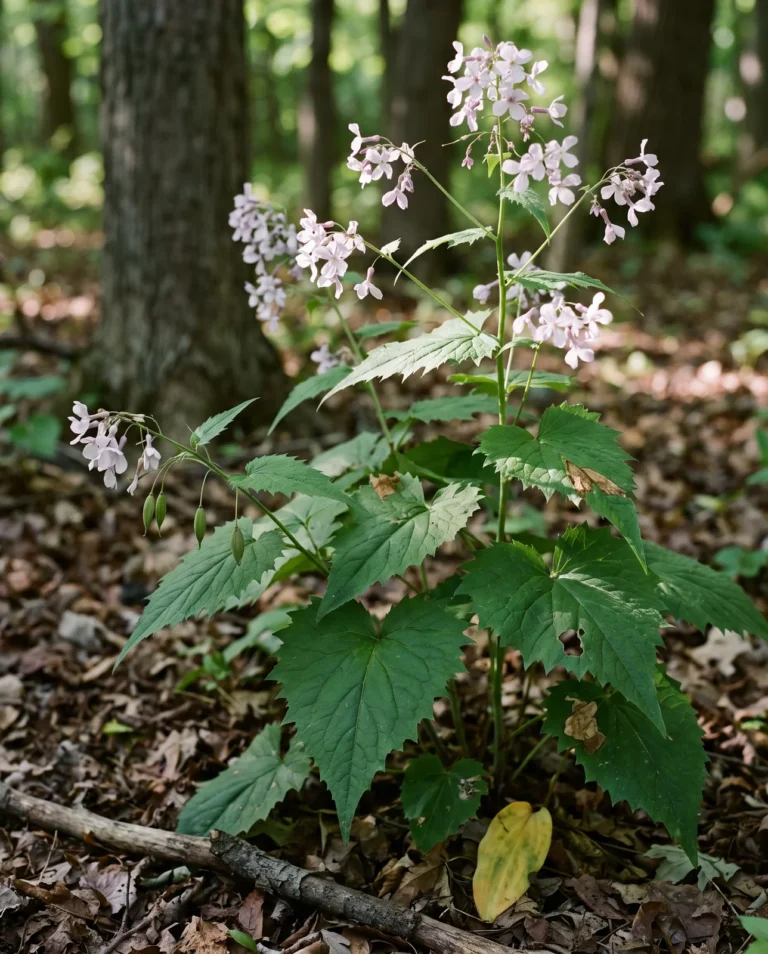
Seed listings sell fewer distinct plants than they appear to. The species carries purple flowers, the named selections are white, variegated or dark leaved, and the last entry is a separate species.
Honesty and the plant it gets mistaken for
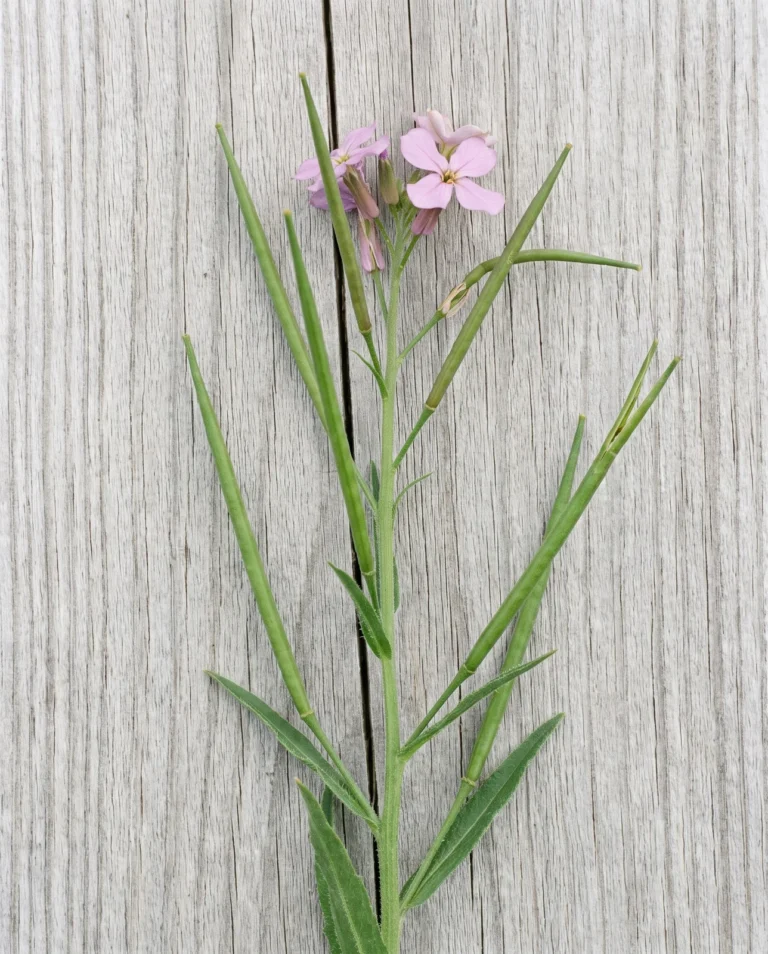
Before the fruit forms, honesty passes for dame's rocket often enough to be worth a second look. The fruit settles it.
What honesty feeds
Honesty works as an early nectar plant and as a host for a caterpillar. Its flowers feed butterflies and long-tongued bees while they are open in April and May. Which caterpillar it hosts depends on the country. NC State Extension names the cabbage white butterfly as the larval host in America, and British growing advice names the orange-tip. Neither speaks for the other's fauna, so both hold where they were written. Rabbit and deer resistance is claimed in the seed trade and nowhere else.
Is the honesty plant edible or toxic?
Nothing published answers either half of this question. The claim that honesty is edible circulates among foragers, unanswered. No botanical, horticultural or toxicological source stands behind it, and nothing stands against it. That leaves no basis for eating any part of the plant. The pet question ends in the same place. The toxic-plant list that files Silver Dollar under a succulent carries no entry for honesty under any of its own names. There is no published rating in either direction, so caution is the only safe reading. One hazard is documented and it has nothing to do with eating: the pollen may cause an allergic reaction.
What actually goes wrong
The complaints are about seedlings, pods and patience. The pests come last and stay minor.
Symptoms: volunteers through the bed and the path in the year after pods ripen. Management: pull first-year clumps by the taproot while they lift whole, and expect a few seasons of it before the seed already in the soil runs out.
Symptoms: dried stems carrying dull papery ovals with no silver. Cause: the outer covers are still attached. Management: shake the dry branch upside down in a paper bag, then rub off the last of them by hand.
Symptoms: a low clump of foliage through the whole first season on a spring sowing. Cause: nothing. Management: leave it in place, because flowering, fruiting and death all belong to the second year.
Symptoms: colonies on stems and flower buds in spring. Management: aphids are the only insect worth monitoring on honesty, and the plant has no serious insect or disease problems.
Symptoms: spotting on the foliage and lesions on the stems. Management: both turn up occasionally and neither is serious enough to spray a plant that dies at the end of its second year.
Symptoms: white rust on the underside of the leaves. Management: it has been seen once, next to a commercially grown radish crop, and nowhere in the botanical literature.
What people get wrong about honesty
Four claims follow this plant around, and the sources answer all four.
The myth: The species name says annua, so it lives one year.
The reality: It is a biennial: leaves the first year, then flowers, seed and death in the second.
The myth: Lunaria biennis on the packet is a different plant.
The reality: It is an older name for the same species, recorded alongside Lunaria inodora.
The myth: Silver dollar plant and money plant always mean this plant.
The reality: In the toxic-plant list the first name belongs to Crassula arborescens, a succulent, and the second returns Pachira aquatica, the money tree.
The myth: The silver disc is the seed pod.
The reality: The disc is the partition inside the fruit, and that fruit, a silicle, is not a true botanical seedpod.
Where the name honesty comes from
The name comes from the pods. Honesty was recorded in the sixteenth century for the translucence of the seed partitions, which show what they hold. The coin names run darker. In Denmark and in Dutch-speaking countries the plant is judaspenge and judaspenning, the coins of Judas, after the thirty pieces of silver paid for the betrayal of Christ. The Victorian language of flowers gave the plant fascination or sentiment, other systems gave it honesty and money, and folk practice used the pods in protection and prosperity spells because they look like coins. Older still is the earliest surviving recipe for a flying ointment, written down around 1440, which lists Lunaria as the ingredient answering astrologically to the moon, to be picked on a Monday.
What to expect, year by year
Honesty runs on a two-year clock, and the third year belongs to whatever the second one dropped.
Year one is leaves. A spring sowing spends the season building a rosette and the taproot under it, and no flower stem appears at any point.
Year two is the whole event. Flowers open in April and May, the flat fruits follow behind them, and the stems are ready to cut as their green goes. Left standing, the discs can hold on the plant into winter. The plant dies once it has fruited.
Year three is decided by year two. Whatever seed fell settles how much of the bed comes up as honesty, and because those seedlings are in their own first season, the same ground can look flowerless again while the next generation builds.
FAQ
Does Lunaria come back every year?
Each plant flowers, fruits and dies in its second year. What comes back is the seed it drops, which refills the same ground so freely that an established patch never disappears.
Does Lunaria bloom the first year?
No. A spring sowing makes only foliage in its first season and flowers in its second. The exception is a warm-climate fall sowing, since seed sown in zones 8 to 10 in fall flowers the following spring.
Is the annual honesty plant invasive?
It is introduced in the United States and it reseeds hard enough to hold ground once established. Washington, Oregon and Connecticut do not name it on their weed lists.
Do biennials come back every year?
A biennial lives two seasons: foliage in the first, flowers and seed in the second, then death. In a honesty bed the next generation of seedlings takes over, so the patch keeps producing for years.
What are common honesty plant problems?
Most of them are about identification, self-sowing and getting the pods to dry clean. The plant itself has no serious insect or disease problems, with aphids, leaf spot and stem canker the things to watch for.
Can I sow honesty seeds now?
Sow outdoors in spring as soon as the ground can be worked, in place in early summer, or in fall. Seed set in groups of three or four germinates over 14 to 28 days.
Is Lunaria annua easy to grow?
Yes, where it is sown in its final position. Maintenance is low and water needs medium, it takes full sun or partial shade, and the one real difficulty is moving it once it has a taproot.
How tall does the honesty plant get?
2 to 3 feet tall and 1 to 2 feet wide. Rich, moist, free-draining ground grows the tallest plants.
Can you grow Lunaria in pots?
Seed can be started in pots or a seed tray in early summer, moved into larger pots as the seedlings grow, and planted out in fall. After that the taproot argues for a permanent position, since larger plants transplant poorly.
When should you cut honesty for drying?
Cut the stems just as the green color goes out of the fruit and hang them upside down indoors. Leaving the pods to dry on the plant also works, and the discs can stand into winter depending on the weather.
Interesting tips
- The genus holds a third species that nobody grows. Lunaria telekiana is a rare plant of the mountains of Albania, Montenegro and Serbia.
- The perennial honesty has its own sowing window. Its seed can go in during fall or spring, and the plants self-seed where conditions suit them.
Related Guides & Flowers
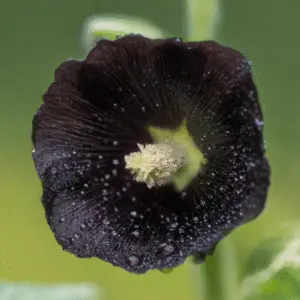
Hollyhock
The other cottage spire that holds its ground by seeding itself, on the same patient timetable.

Sweet alyssum
A low scented edger that comes back from its own seed, for the front of the same half-shaded bed.

White flowers
Where the white honesty forms sit among the rest, if the color scheme is what you are planting for.

Types of flowers
The full catalog of flowers on the site, sorted by kind, when you are choosing what goes in beside it.
Enjoying our flower guides? Add YourFlowersGuide as a preferred source on Google. It helps more readers find us.
Add to Preferred Sources