Taxonomy and origin
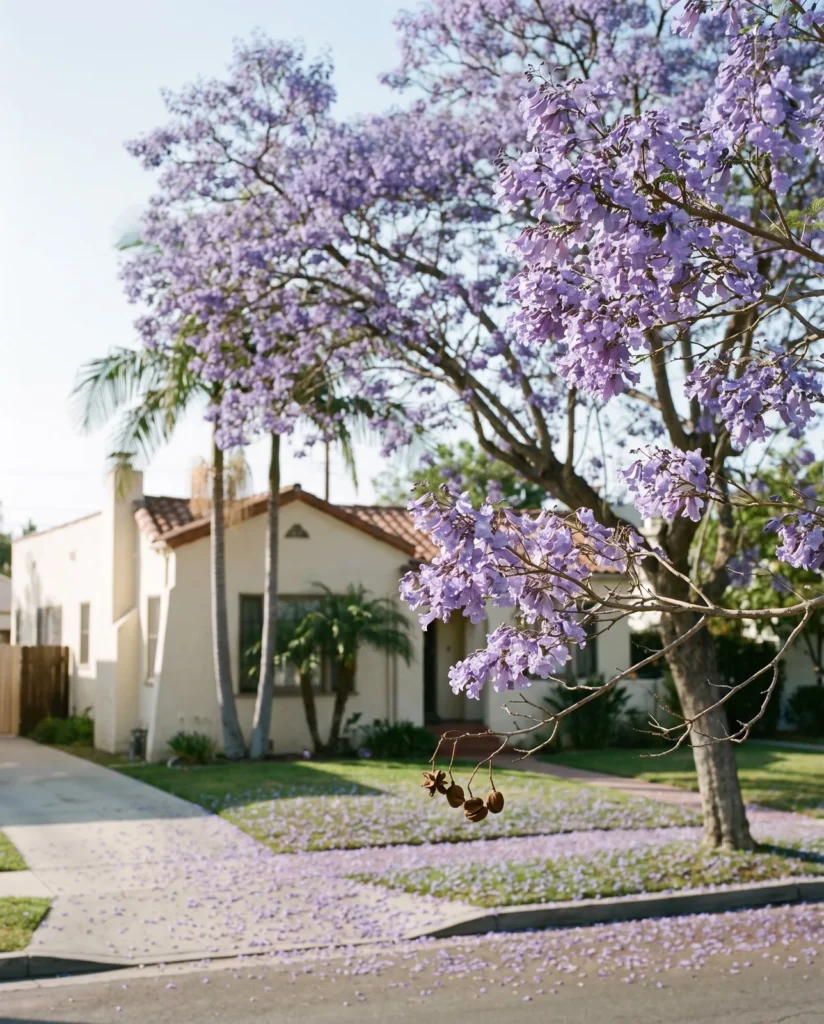
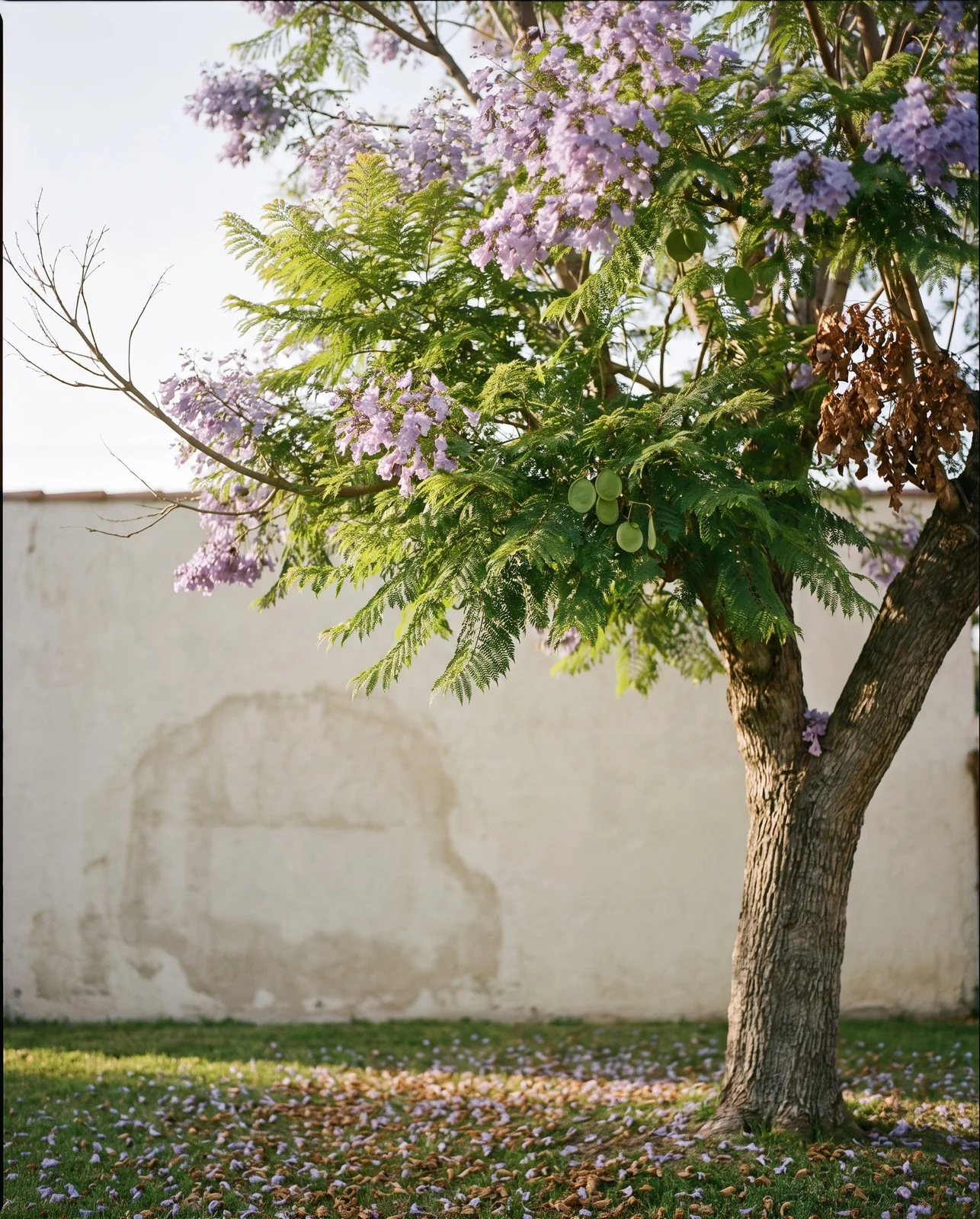
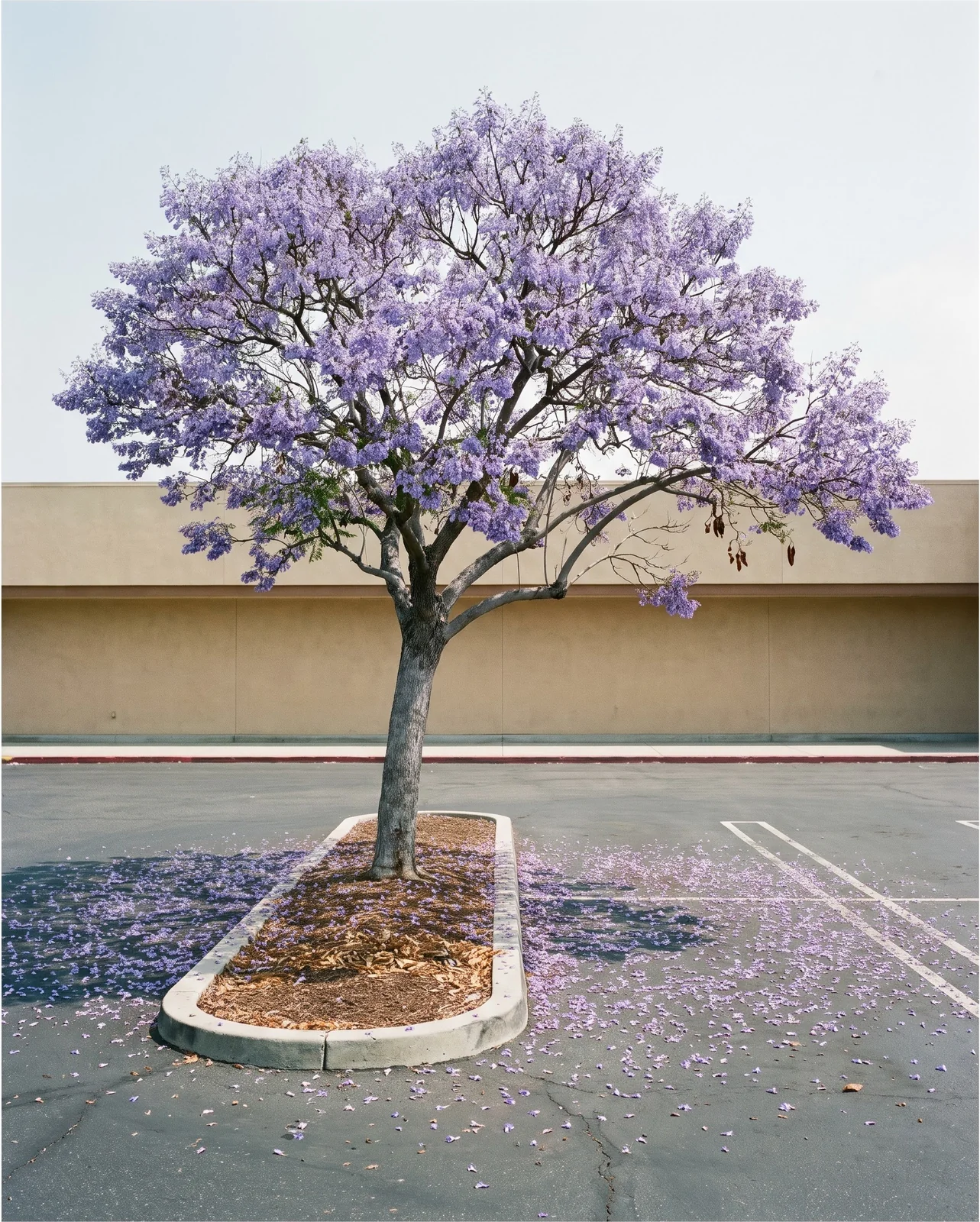
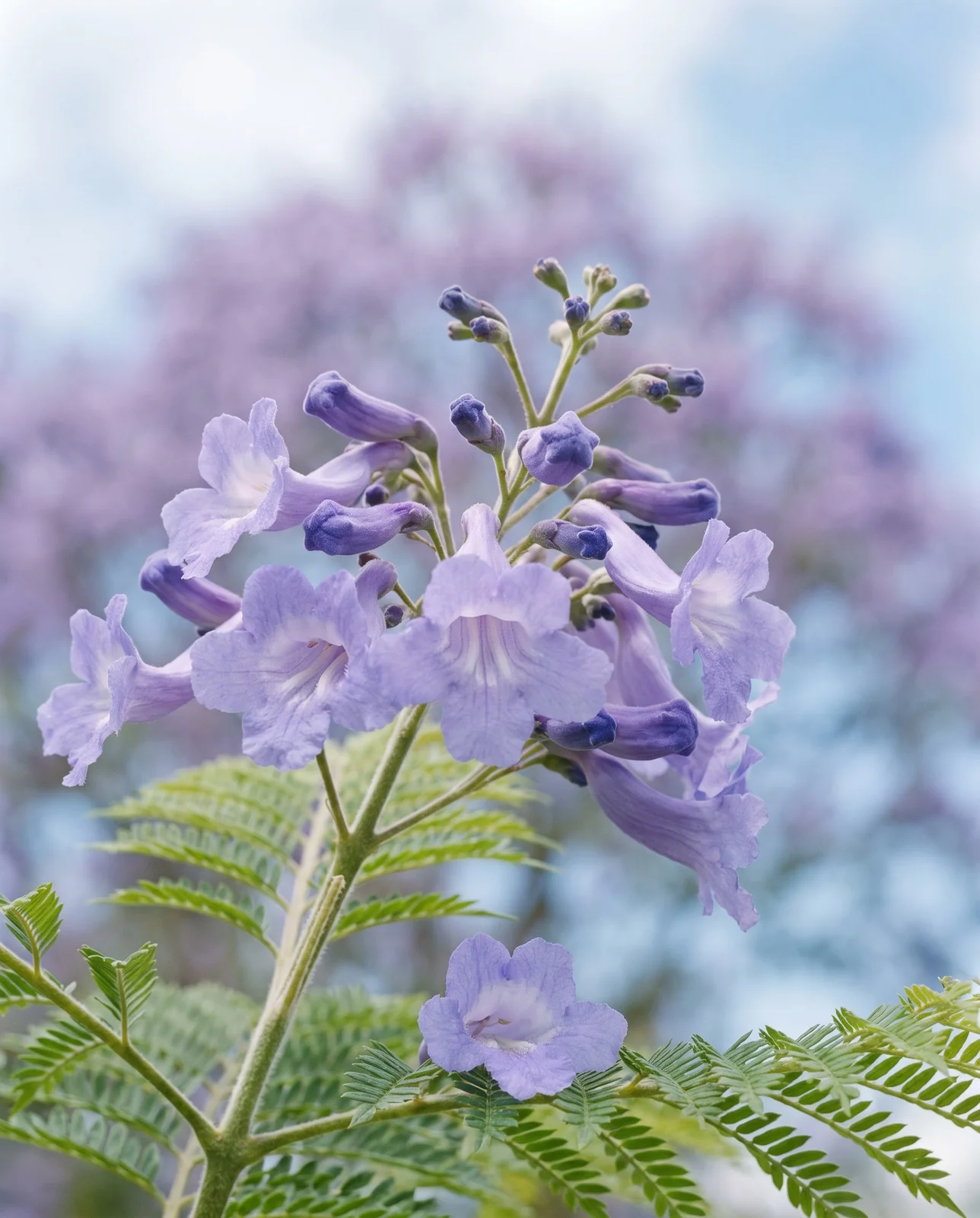
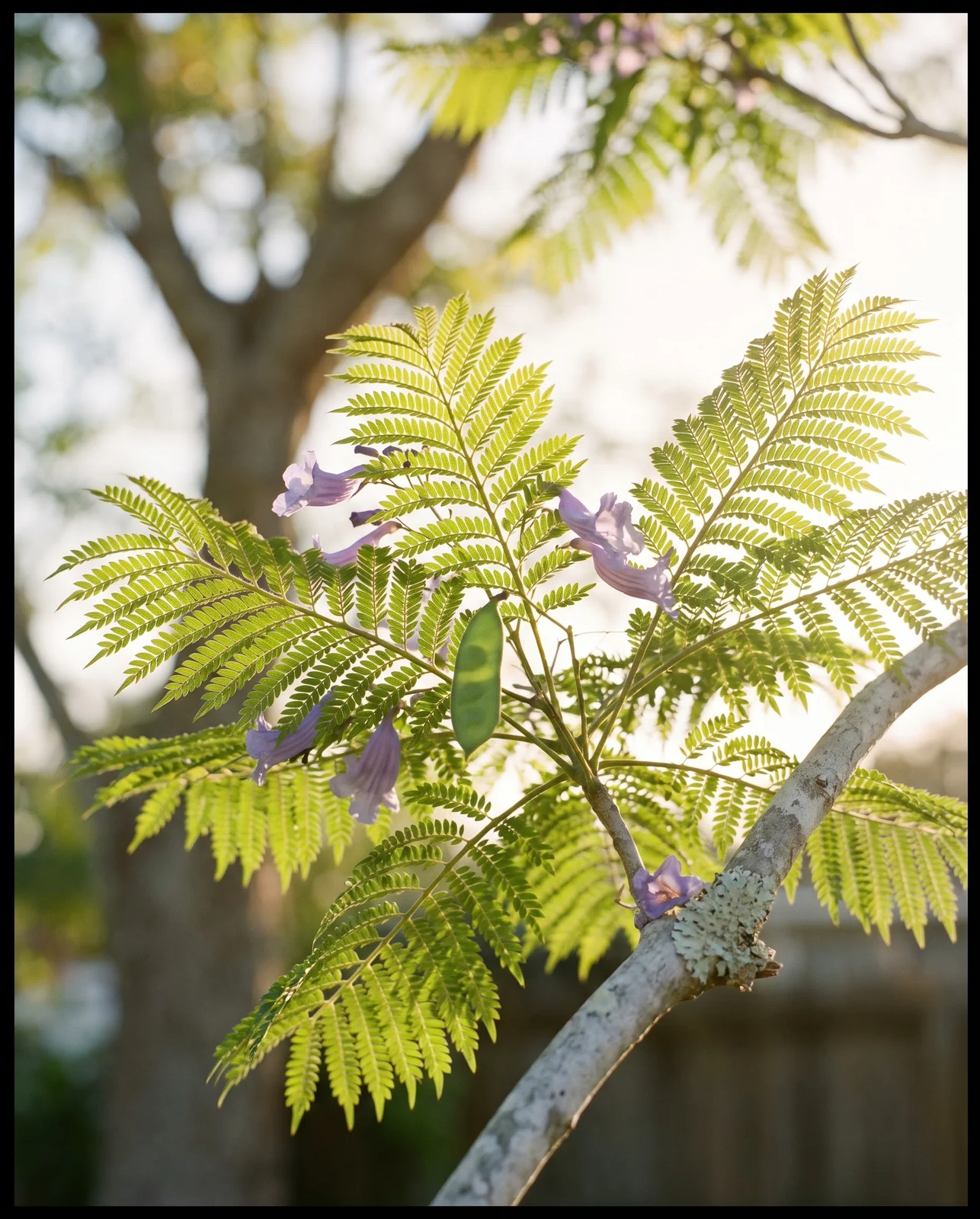
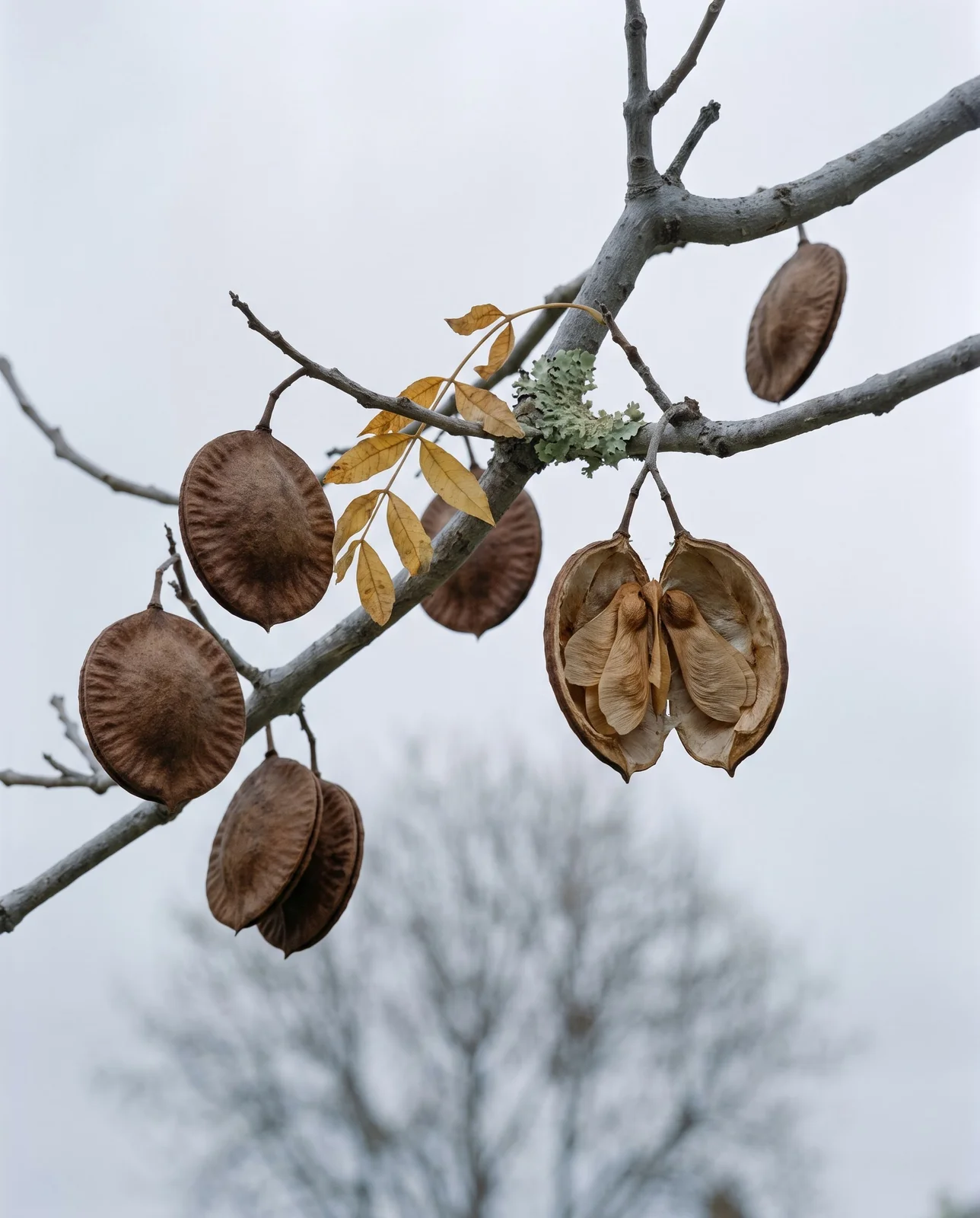
Jacaranda is a subtropical tree in the trumpet vine family, Bignoniaceae, native to southern Brazil, Uruguay, Paraguay, northern Argentina, and southern Bolivia. The fern name comes from the foliage. Leaves are bipinnately compound and 9 to 18 inches long, each primary leaflet carrying about 20 small leaflets of its own, so the shade under the canopy is filtered, never solid. Flowers are trumpet shaped and up to two inches long, massed on panicles 12 to 18 inches long at the ends of the branches. Woody pods about two inches across follow the color, each holding a stack of flat, winged seeds. They are tough enough that people gather and clean them for dried arrangements and Christmas trees. Nurseries also sell the tree as blue jacaranda, fern tree, blue trumpet tree, and black poui.
In the United States the tree grows extensively in California, the Southwest, southeast Texas, and Florida. The northern edge is abrupt: San Francisco holds it only in the warmest microclimates, Potrero Hill and the Mission District. San Diego owes much of its purple to Kate Sessions, who imported and popularized the tree there, and it is now the city's official urban tree. Pretoria and its surroundings hold more than 65,000 jacarandas, the reason for the nickname Jacaranda City. Wild jacaranda is another story. Logging and land clearing have thinned the native stands, and the species is vulnerable in the wild. One labeling wrinkle is worth settling before you buy. Much of the Jacaranda mimosifolia in the nursery trade may in fact be a hybrid with J. acutifolia, a smaller Peruvian species with fewer leaflets and a more intense color. Two trees sold under one label can hold different shades of purple.
Bloom time
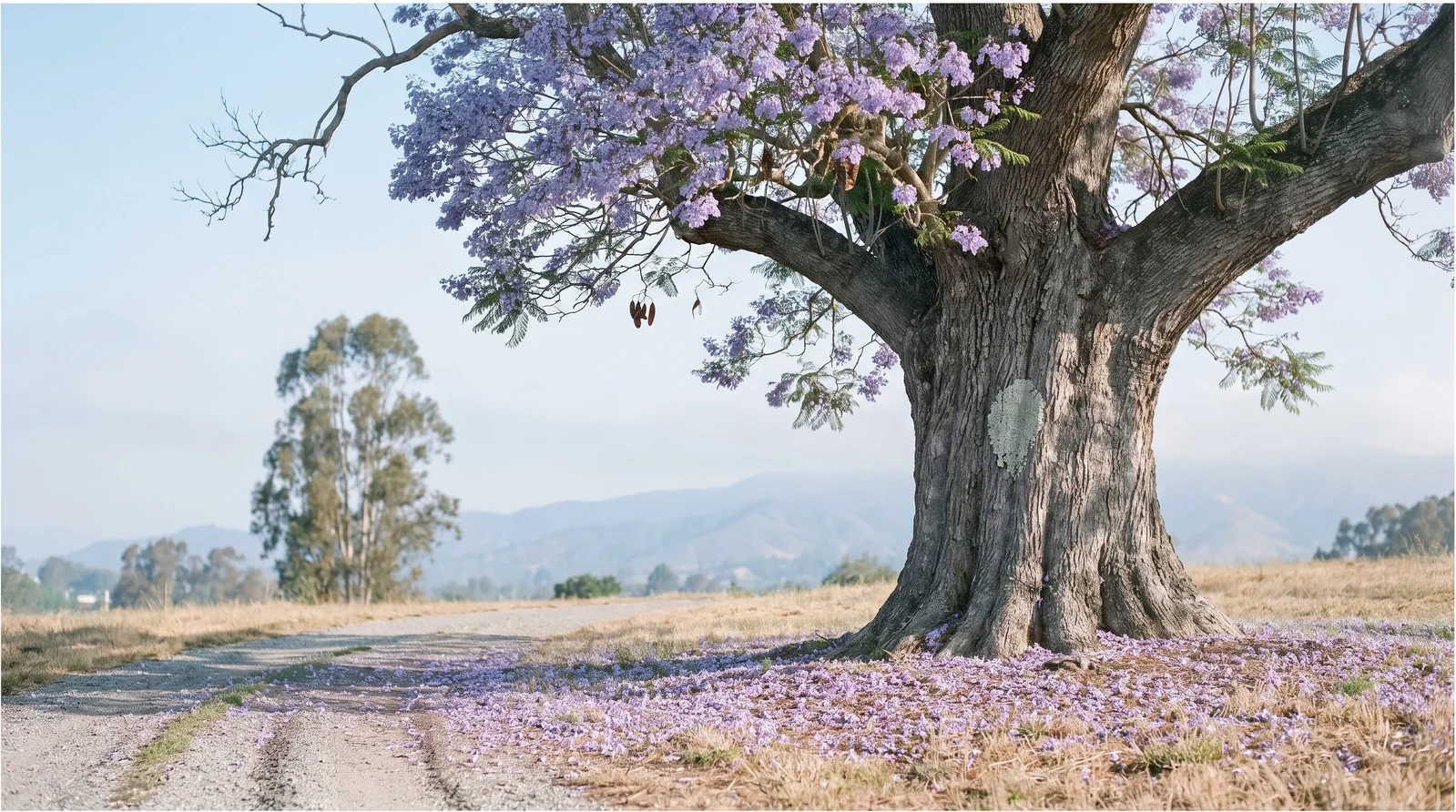
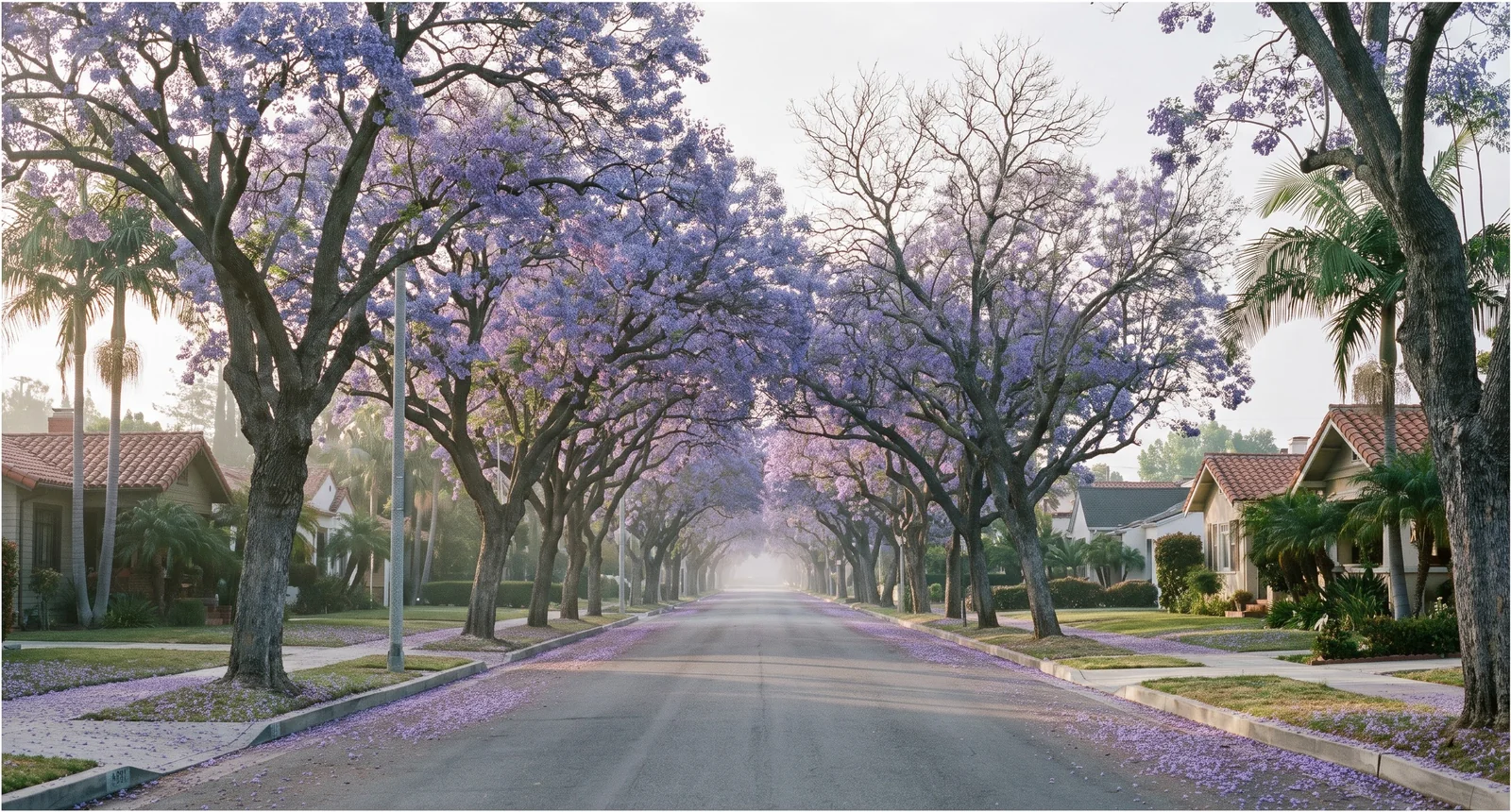
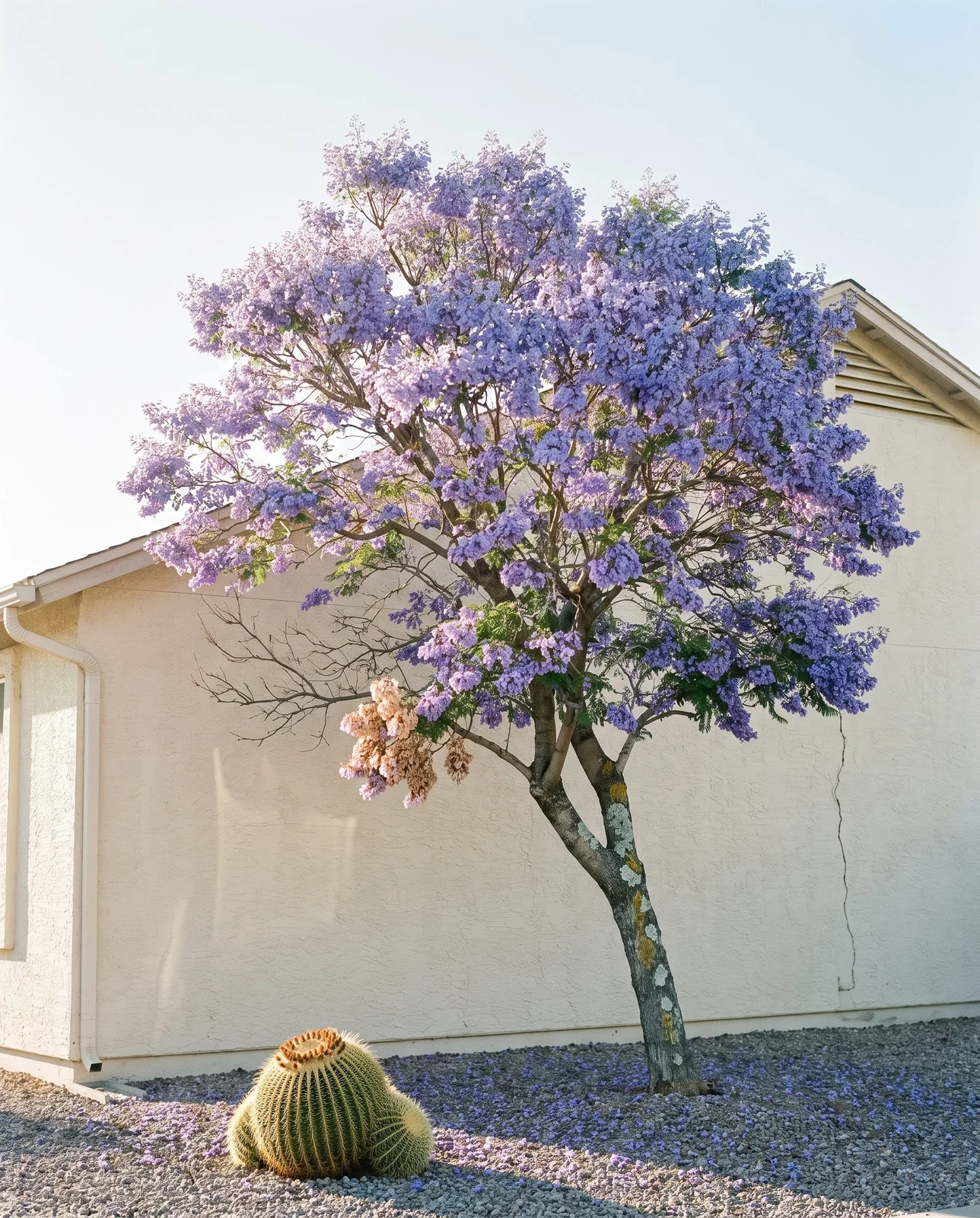
Jacaranda blooms in late spring and early summer, and the display can hold for up to two months. The window is wide because the tree follows heat: flowers appear any time from April through August, most often in May. Climate type moves the peak further than latitude does. The low deserts flower in April and May, while California's maritime climates hold off until June. South of the equator the calendar flips, and Pretoria's trees flower from late September until November. The purple month is short, so gardeners stretch the color with a bed of purple flowers that opens in the same weeks.
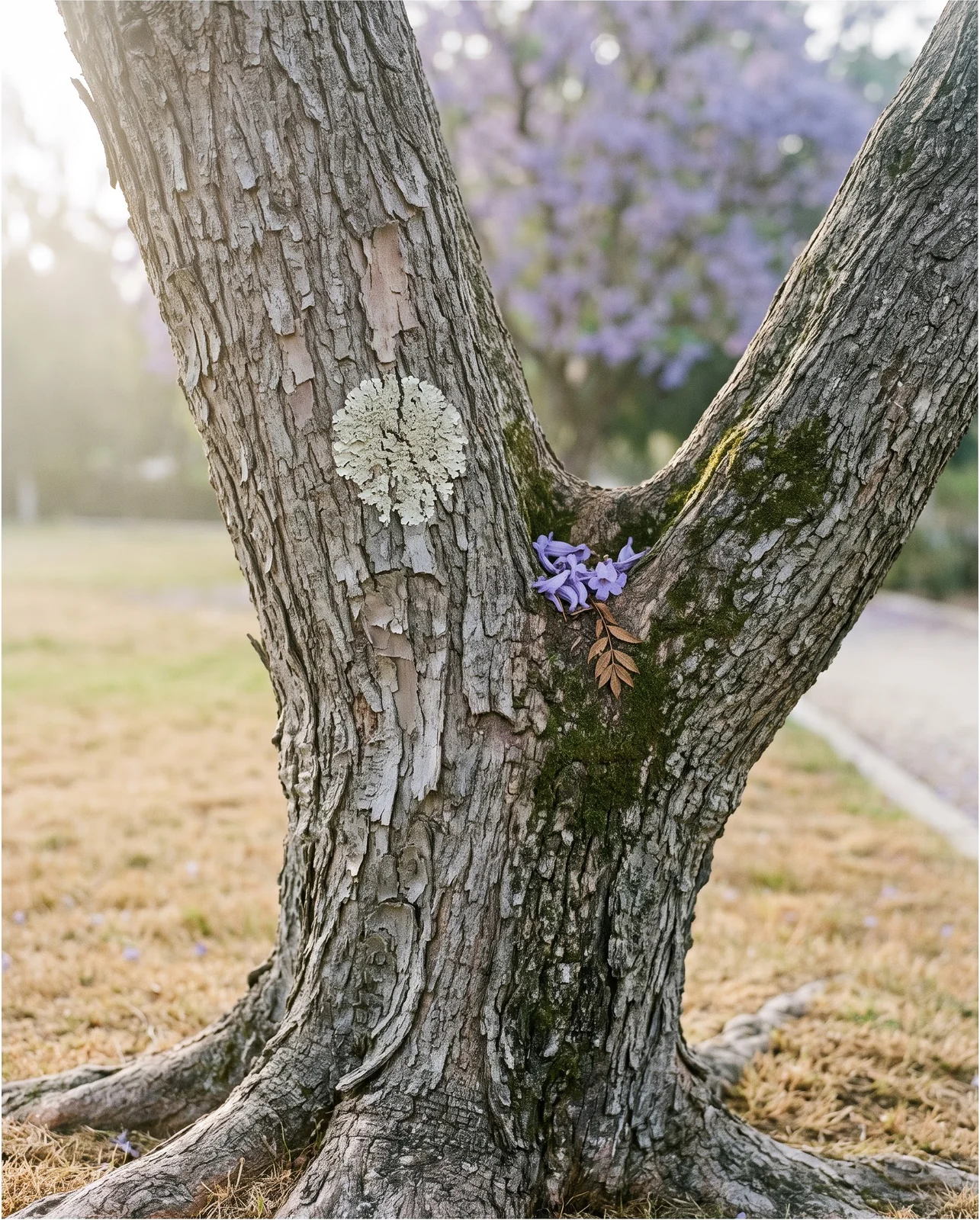
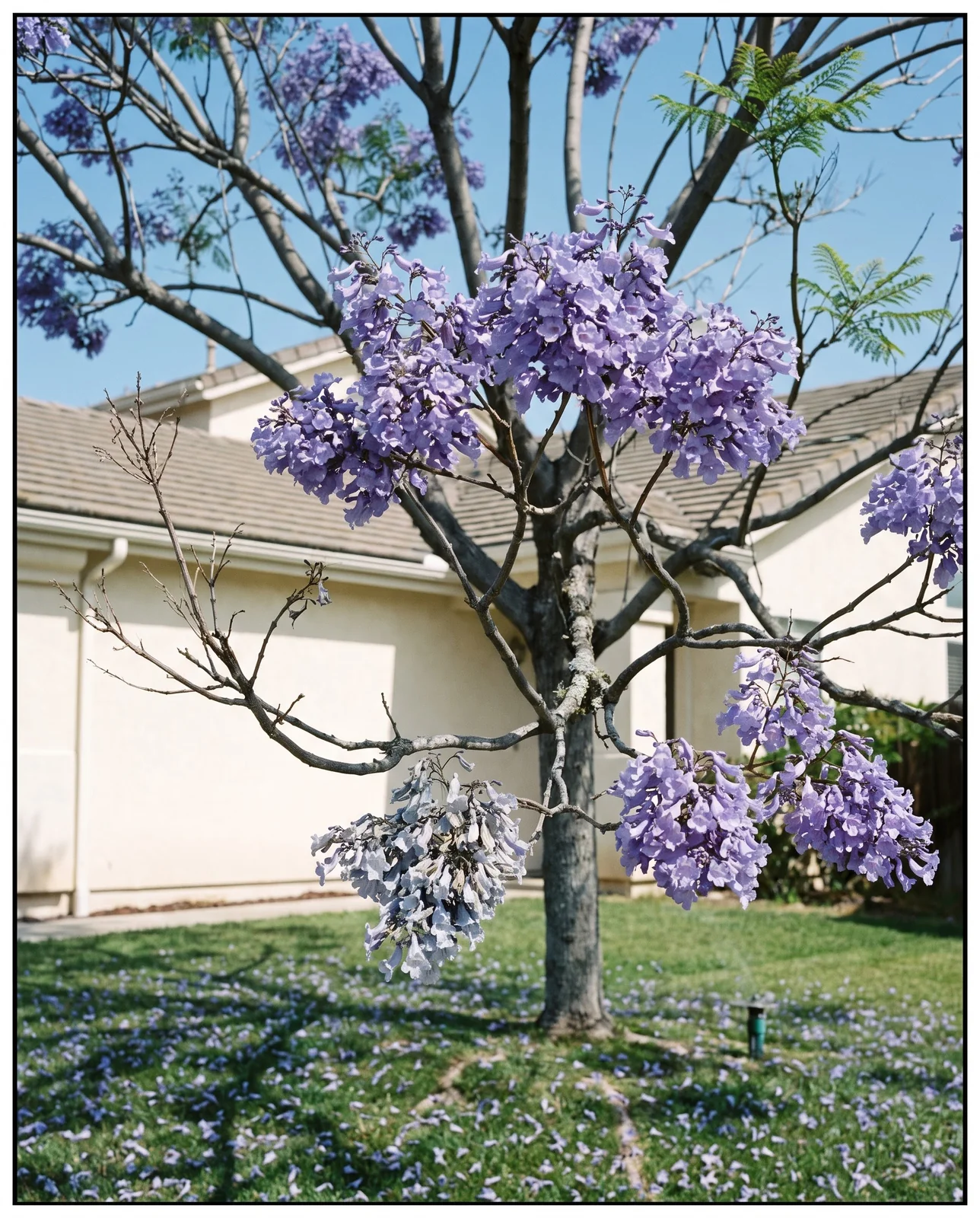
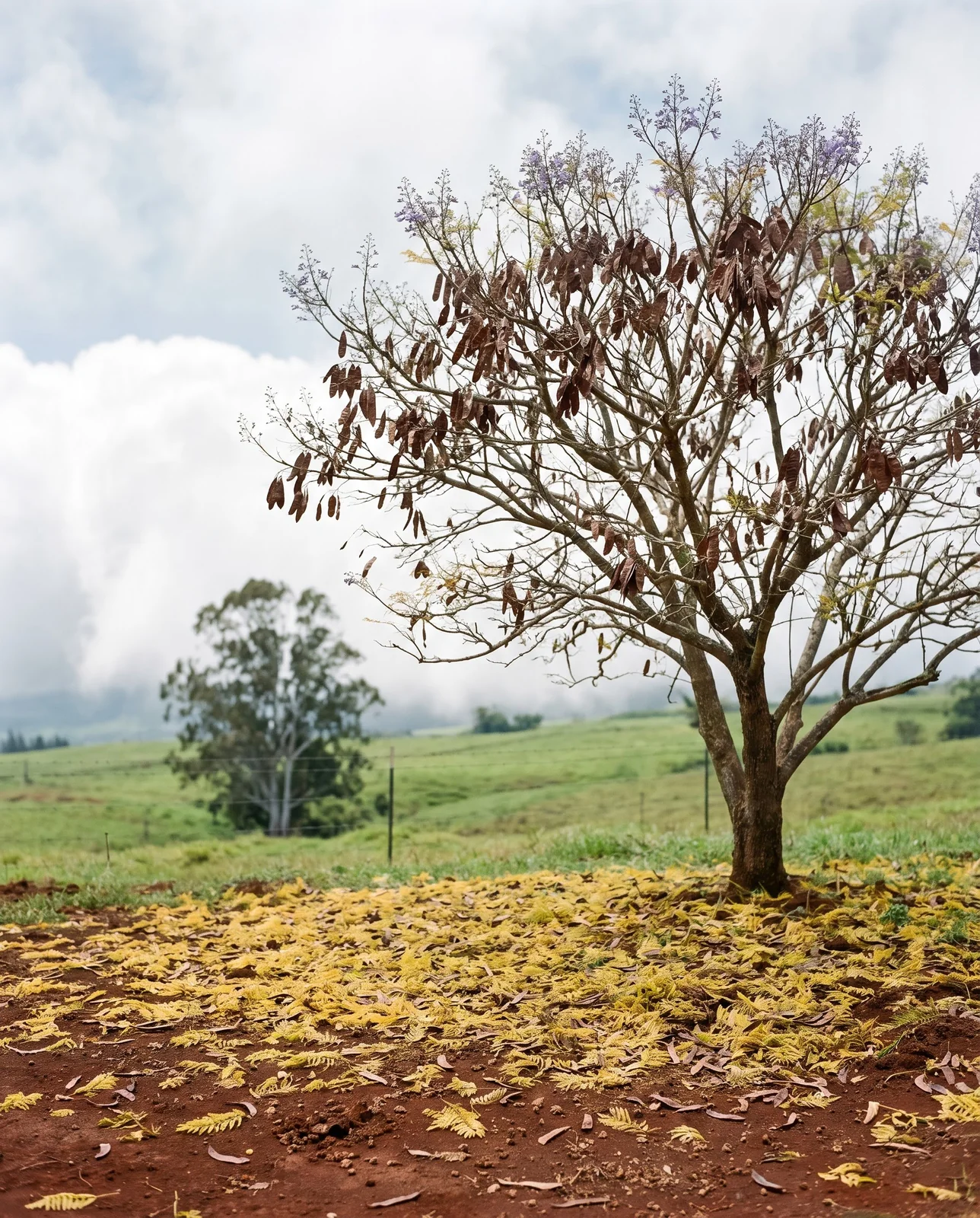
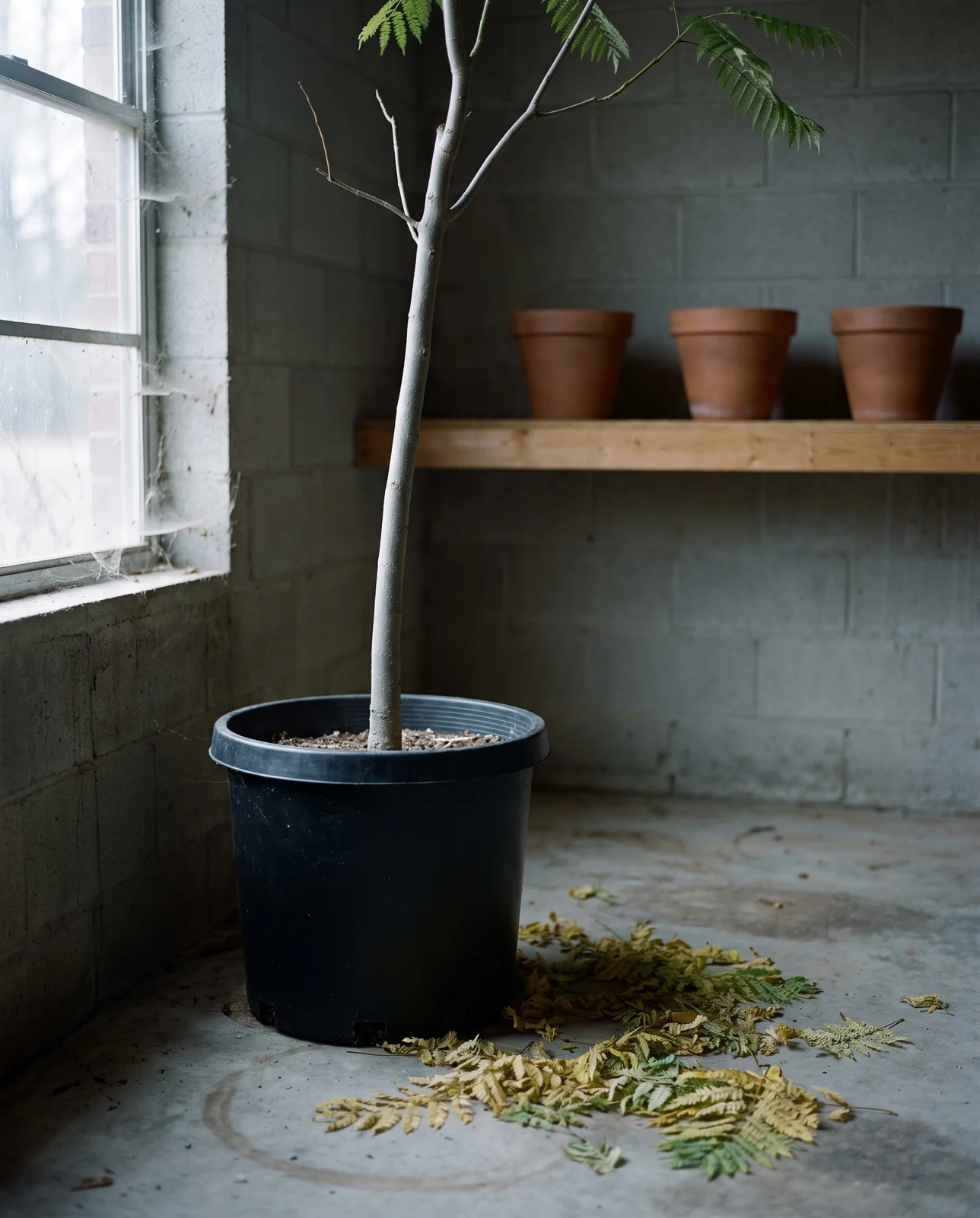
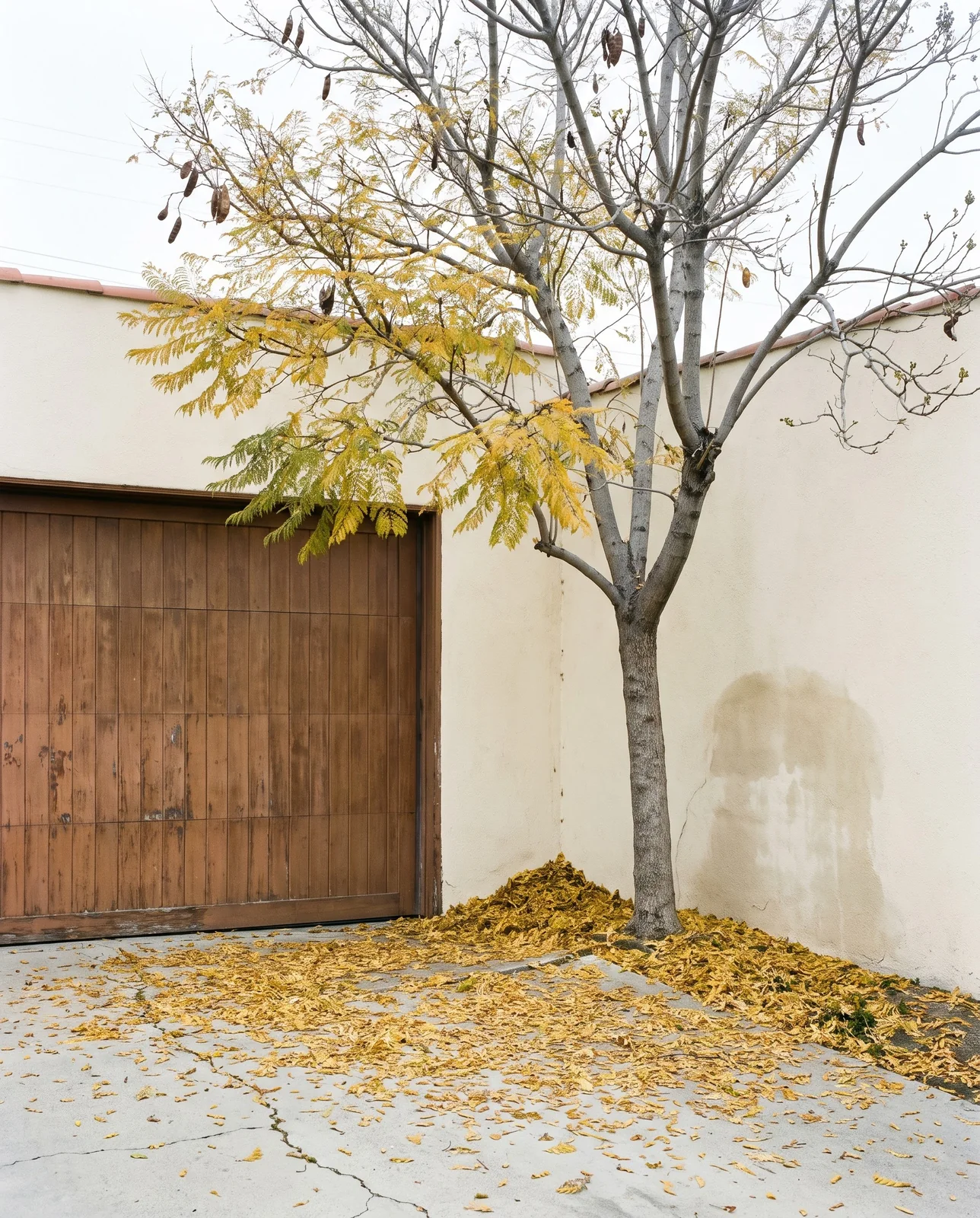
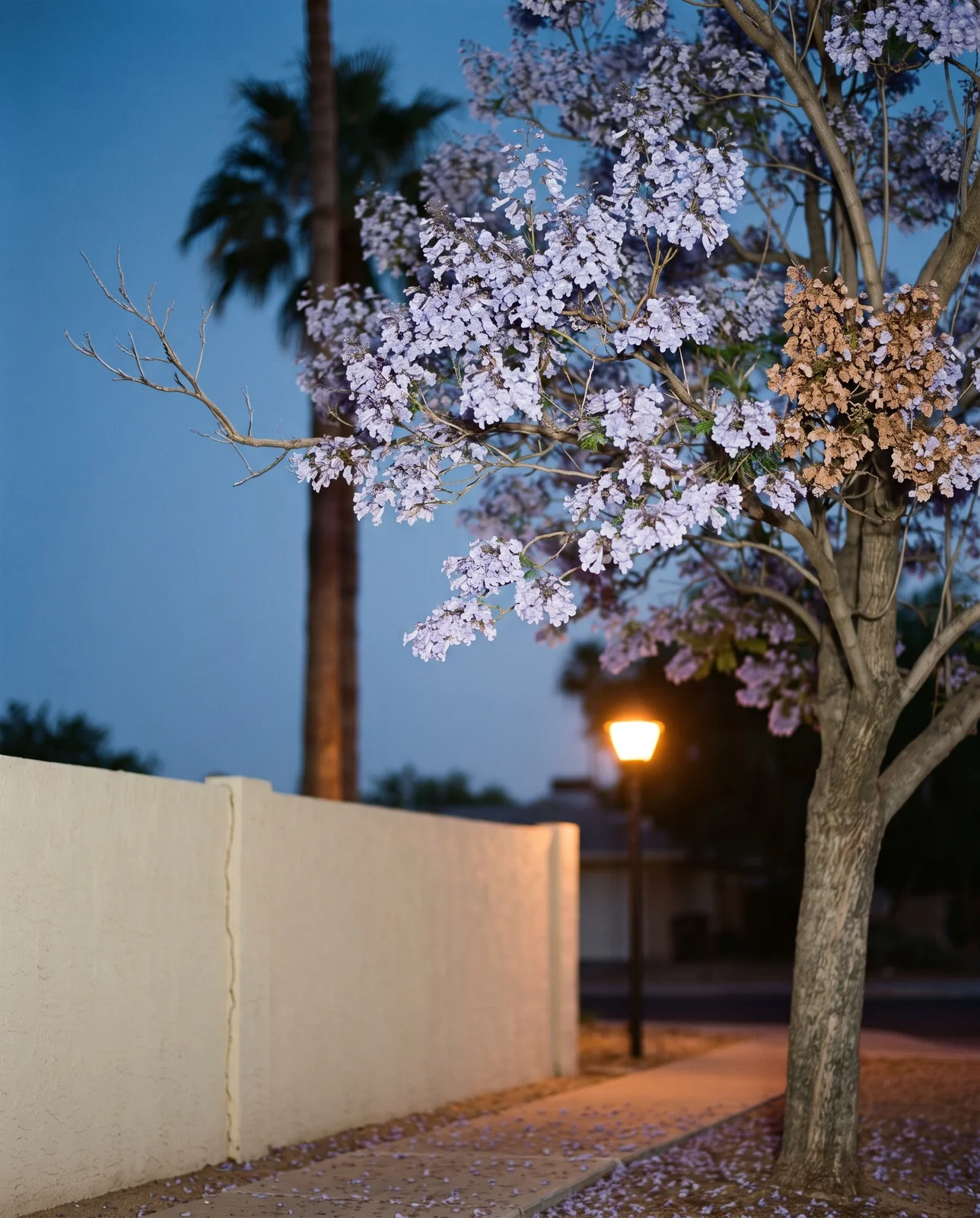
Yellow leaves and heavy leaf drop in late winter belong to the bloom cycle. In Phoenix the tree turns briefly deciduous through late winter and early spring. In Hawaii it drops its pods and leaves in February and March, then flowers in April and May. The flowers open ahead of the new flush of leaves. A tree in full bloom can look half dead to anyone seeing one for the first time: bare gray branches, no foliage, color at every tip. The leaves return in summer as the flowers fade. Heat is what ends the bare stage. A March heat wave above 90 degrees Fahrenheit pushed Los Angeles jacarandas into early bloom. A stretch of 90-plus weather reads to the tree as the signal to flower, weeks ahead of the usual date.
How heavy the bloom gets is a separate question from when it starts. Warm weather brings more flowers over a longer period, and cold weather cuts both. Flowering is best after a winter with several nights in the upper 30s, so a winter that never cools off can cost a tree its spring. Heavy winter rain has produced the most spectacular displays in Phoenix. Both ends of the thermometer take flowers away: the species does not generally flower in Darwin, at the tropical end, and Hobart is a little too cold for it.
When it blooms where you live
Peak bloom by place. Each window slides a week or two with the heat that arrives before it.
Why a jacaranda will not bloom
The commonest reason a jacaranda does not flower is age, and how many years that means depends on how the tree was propagated. Grafted trees flower somewhere between three and seven years old. A seedling takes seven to fourteen years, and ten years is the usual wait on the straight species. Buy a grafted tree or a rooted cutting and the wait is shorter.
After age, the usual cause is kindness. Jacaranda may flower best when grown in poor soil. A tree in a watered, fed lawn is getting everything except the lean, dry conditions that push it to bloom. Climate can cap the bloom outright, and the clearest case is the California shoreline, where cool ocean wind and a lack of heat stunt growth and discourage flowering. A tree of the right age, in full sun, on lean soil, and out of the sea wind has run out of excuses. The question left is what it was grown from.
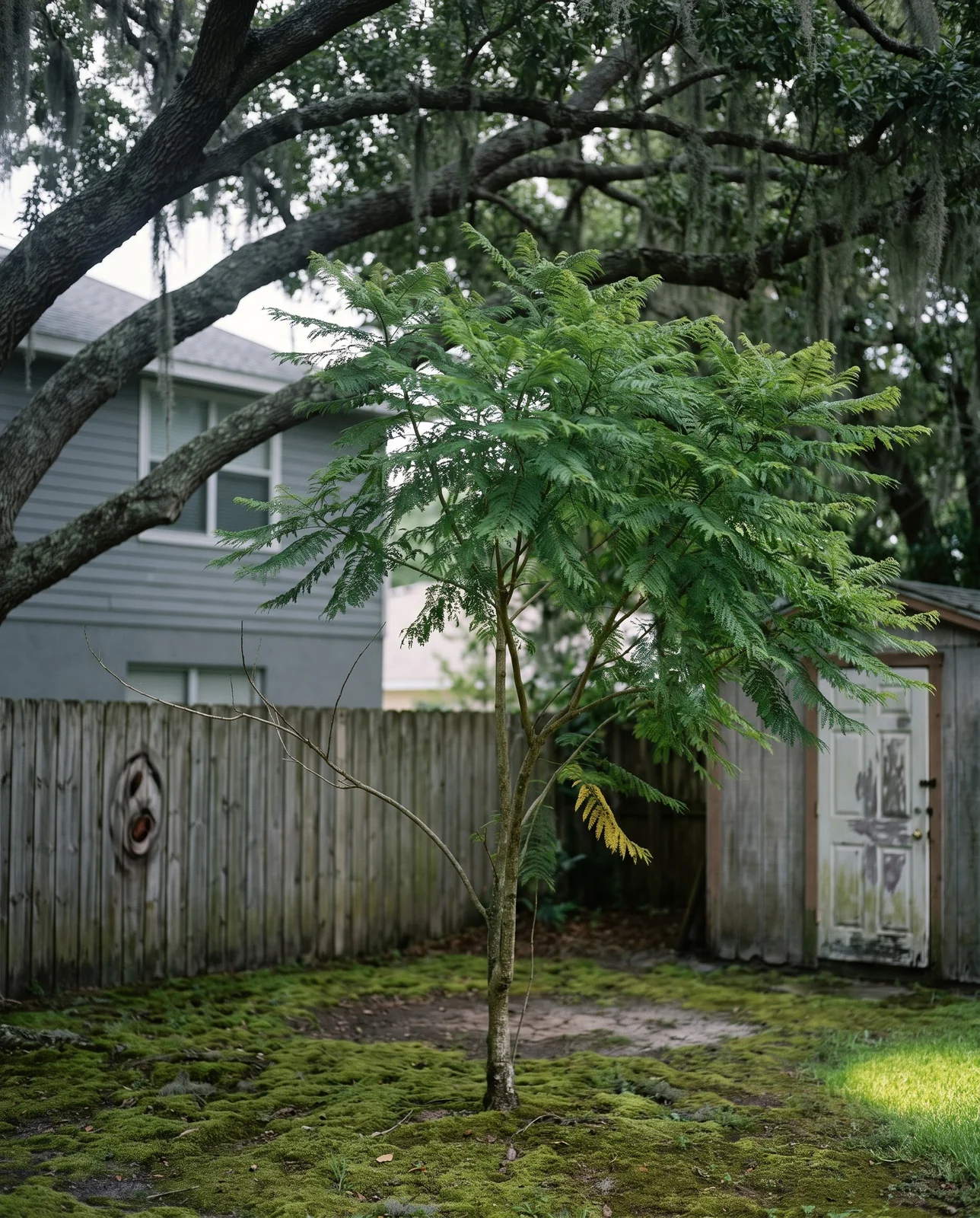
Work out why yours is not flowering
Run these in order and stop at the first honest no. The checks start with what you can change this season and end with what only time changes.
USDA hardiness and cold damage
Jacaranda is hardy in USDA zones 9b through 11. The cold end of that is the part worth arguing about. A stricter rating starts at 10 and calls 9b only possible, while another runs from 9b up through 13b. In protected locations the tree turns up half a zone colder, in 9A. That is where the gambling happens: a courtyard, a south-facing wall, a block of city pavement that holds its heat overnight. Below that range a jacaranda does not stay outside through winter. The zone number is still only half the answer, because zone maps average the winter lows and what hurts this tree is one cold night.
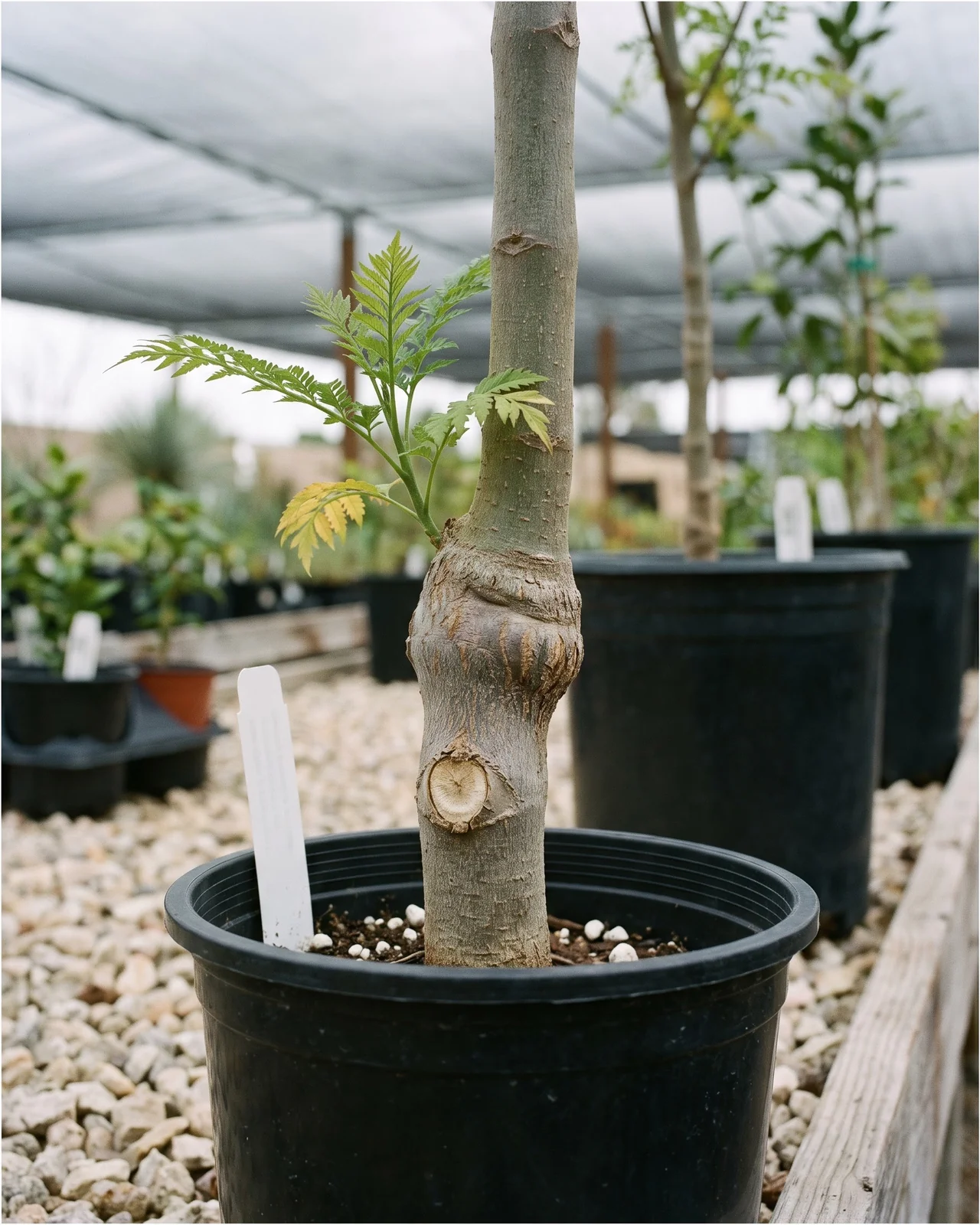
Established trees withstand occasional dips to about 20 degrees Fahrenheit. In the desert Southwest the damage line sits higher, at 27 degrees, with trees hurt in Tucson winters and in the coldest Phoenix winters. Age decides the outcome. Young trees take the worst of a hard frost. Even those often rebound from the roots and regrow in a shrub-like, multi-stemmed form, and the zone-edge gardener ends up with a wide bush where a shade tree was planted. Heat sets its own limit in the low desert, where the trunk is highly susceptible to trunkscald as well as to occasional freeze injury.
Growing jacaranda in a container
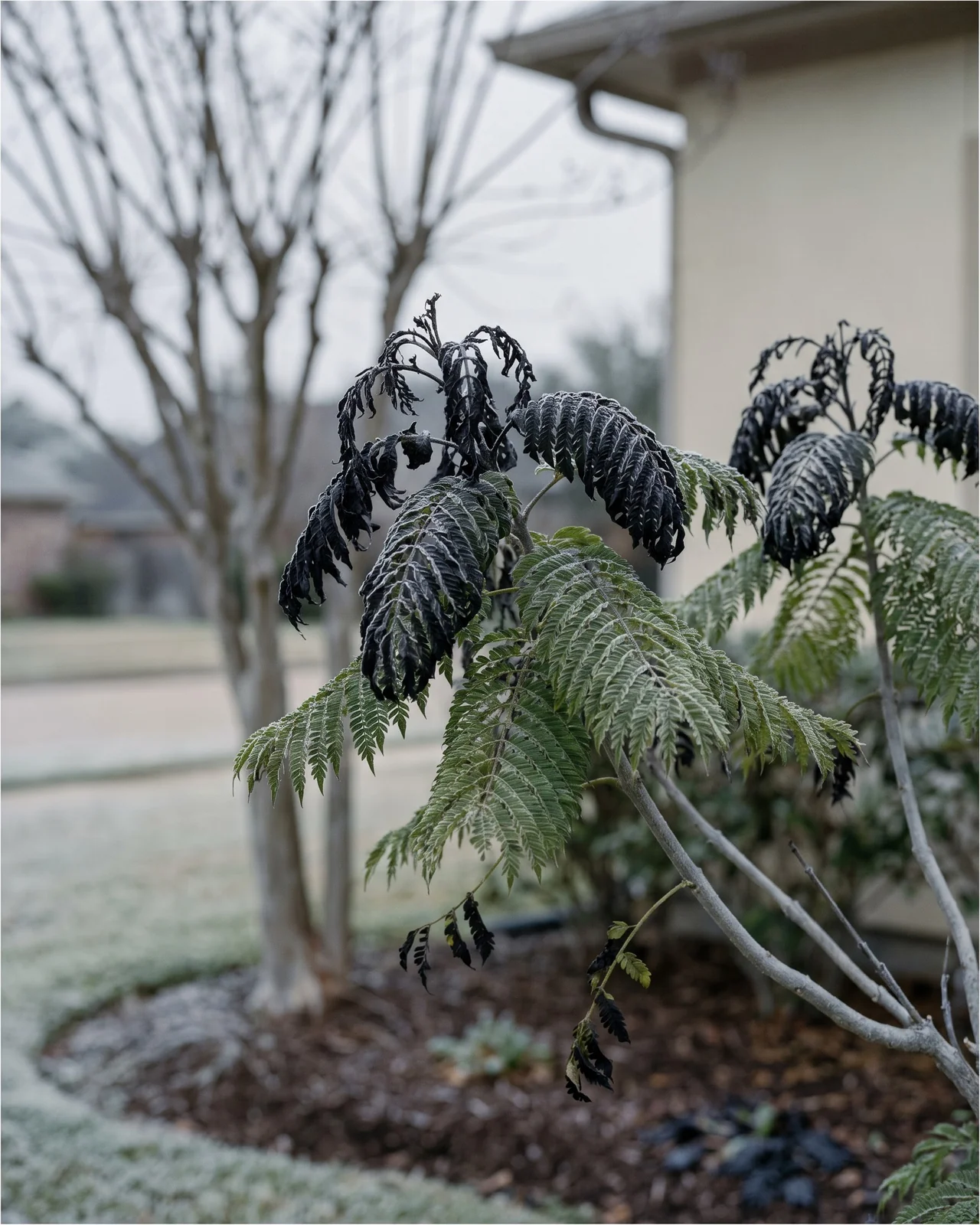
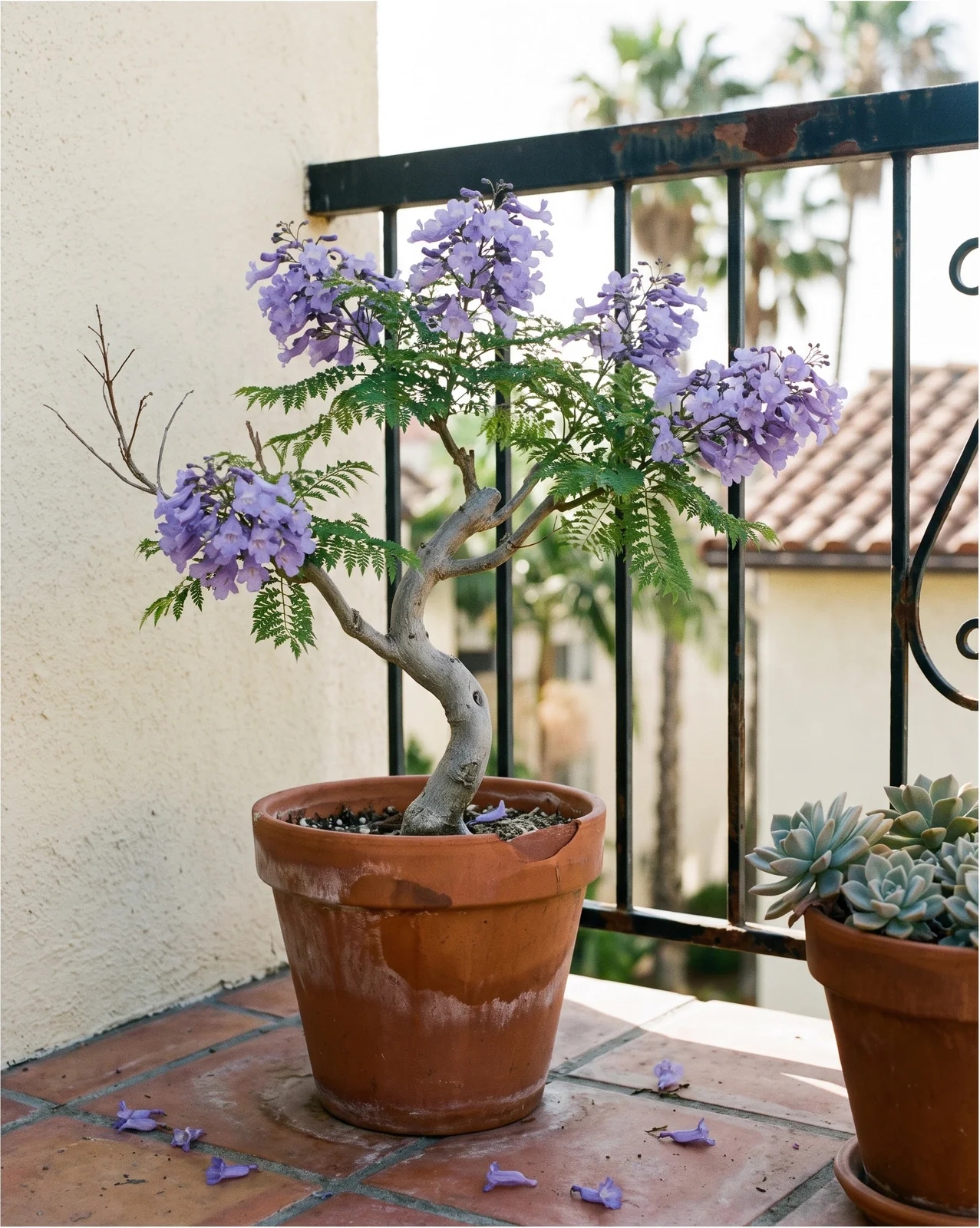
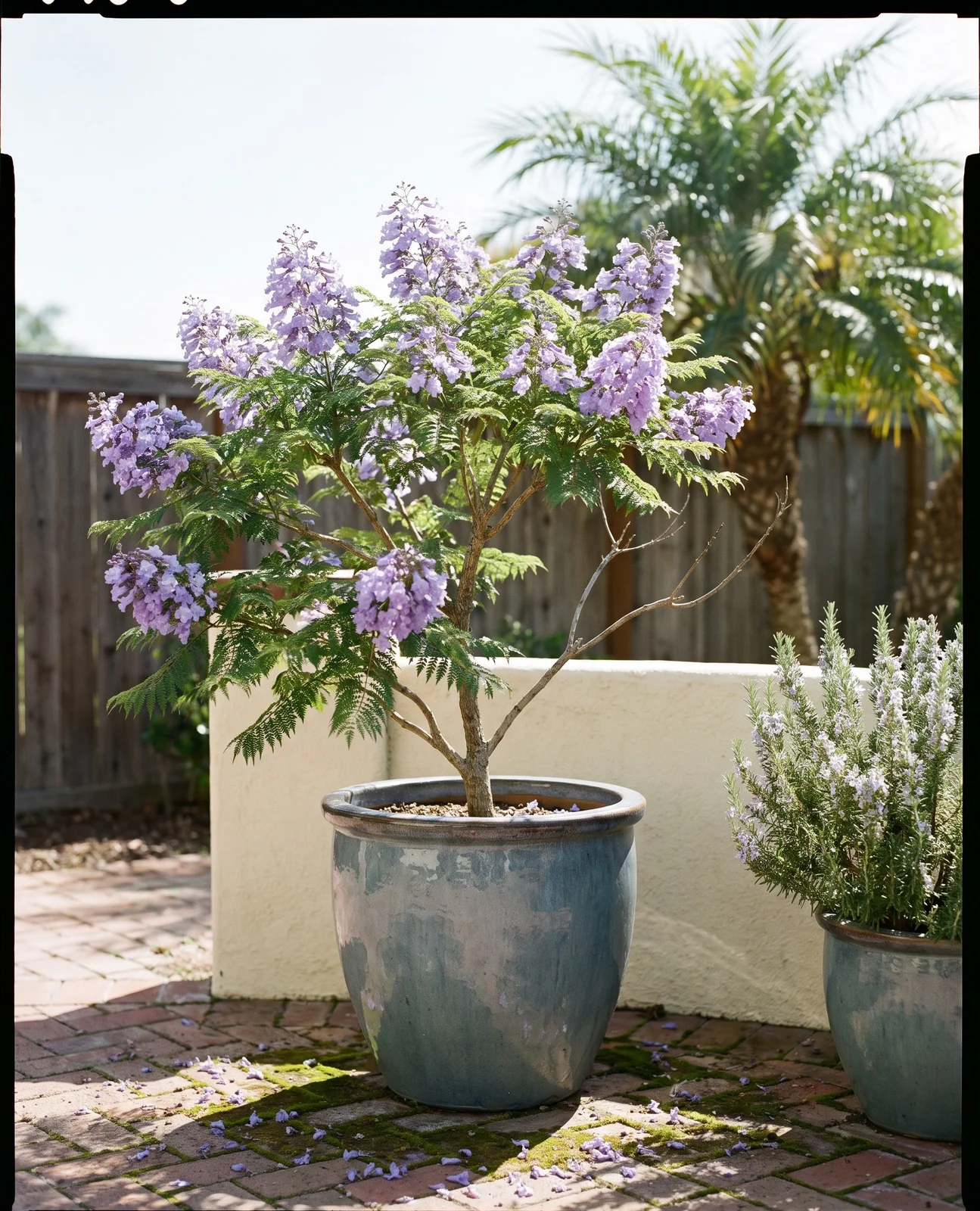
Where winters are too cold to leave a tree outdoors year round, the pot is the only option. Foliage is what you are growing, because young container plants usually do not flower. Frost sets the routine. The pot spends the warm months outside in sun and comes indoors each fall, overwintering in a bright, cool location. A potted jacaranda takes the same winter routine as a tender hibiscus. Indoors, watch for aphids and whiteflies, which bother potted plants far more than trees standing outside.
The mess, the roots, and what the tree gives back
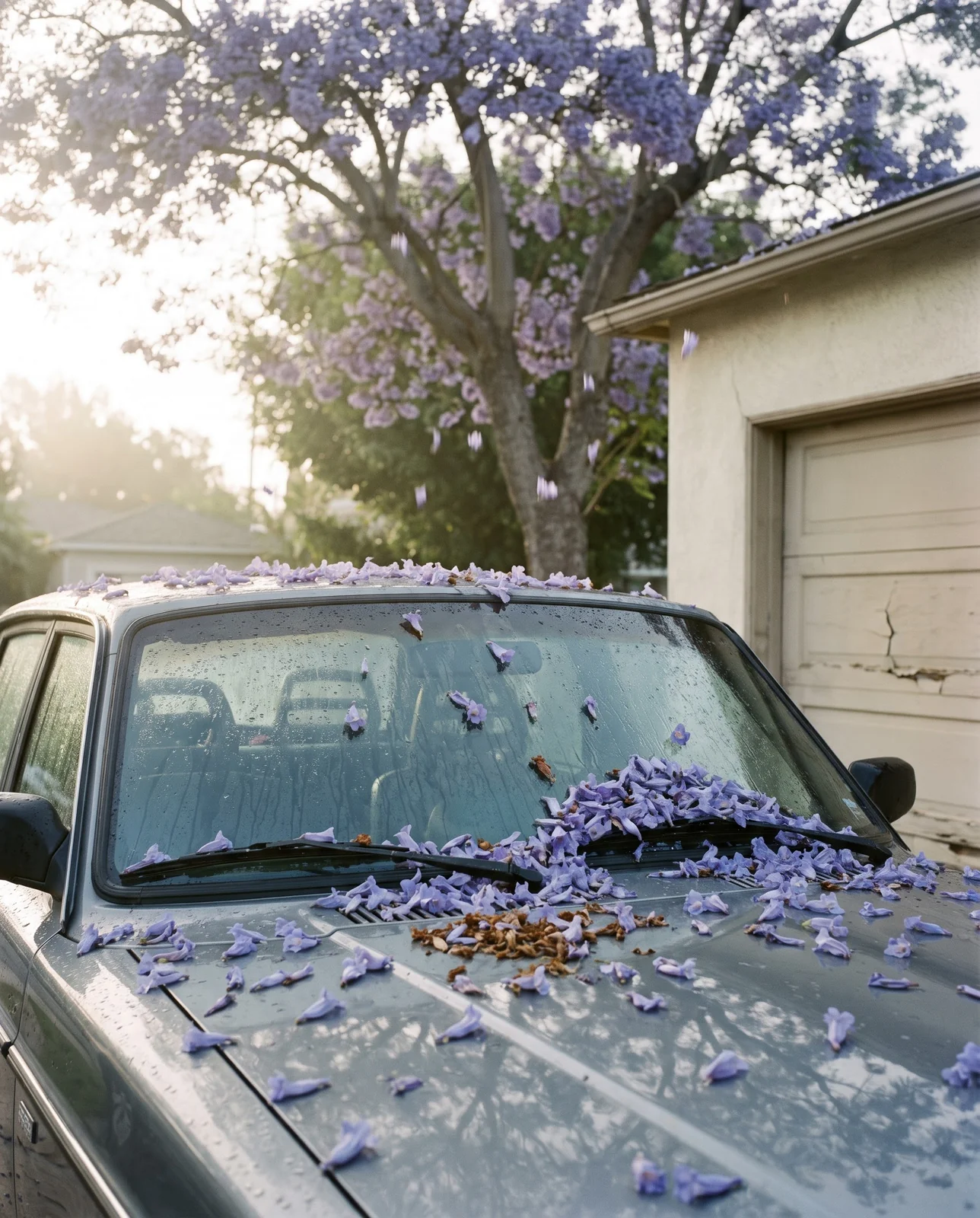
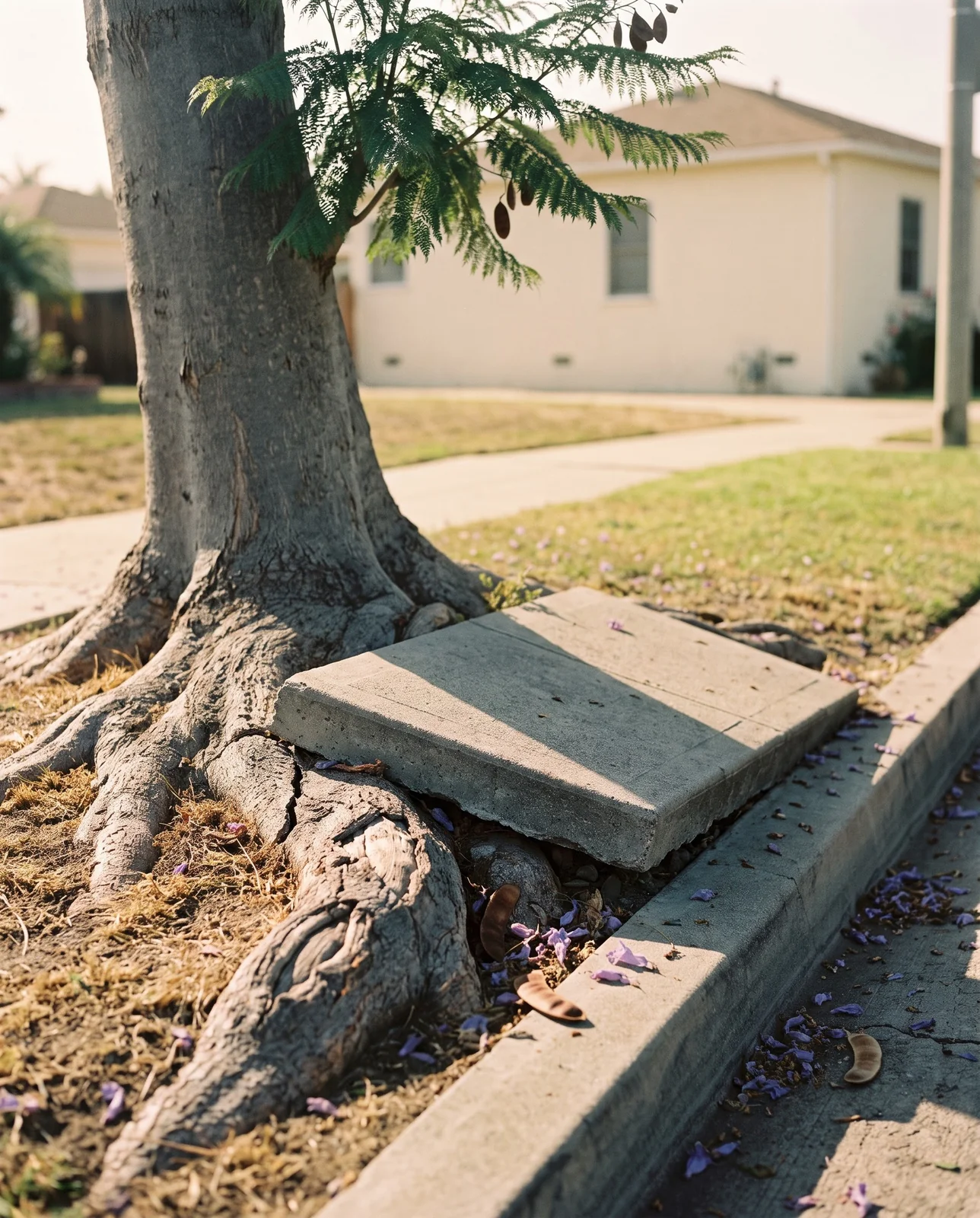
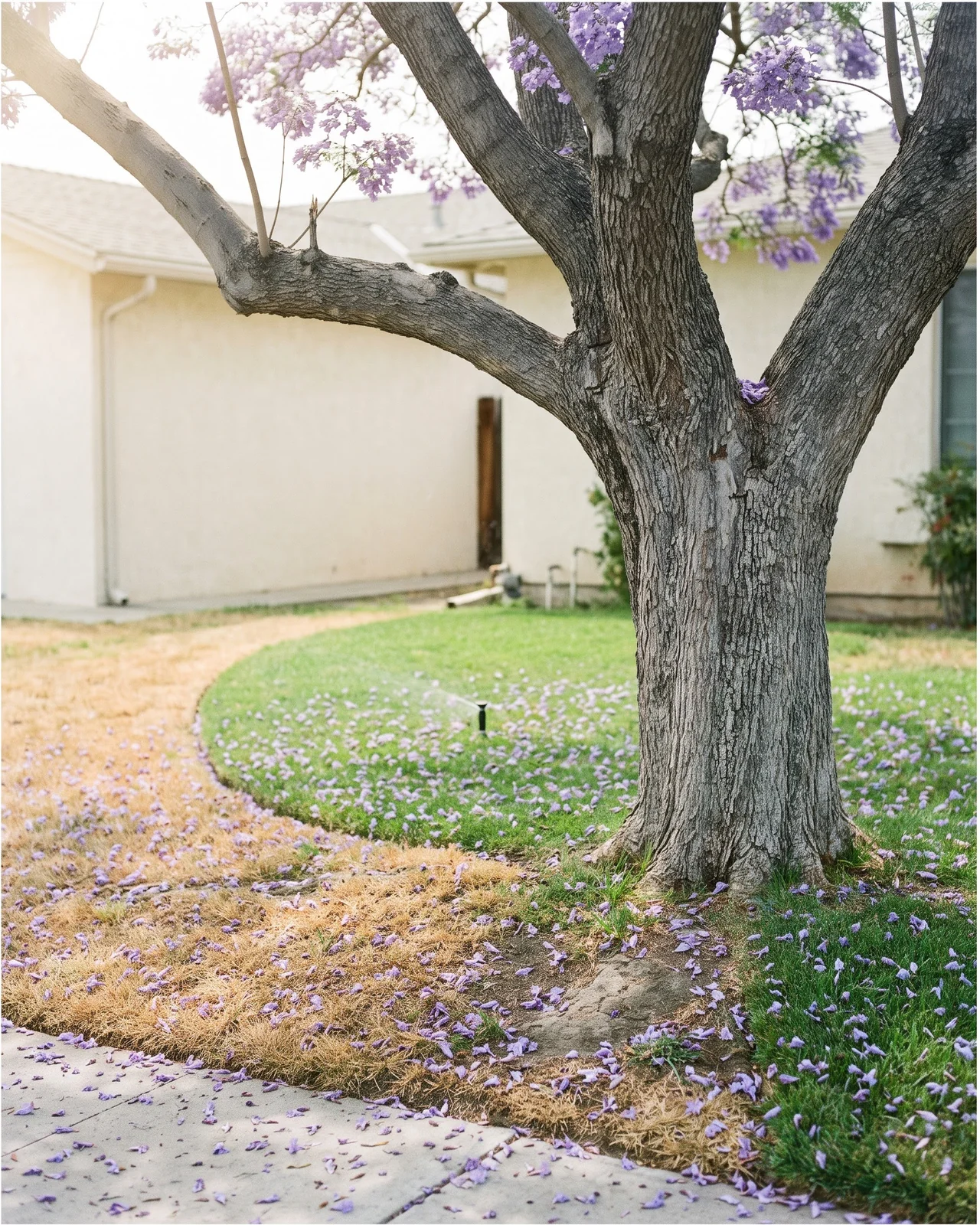
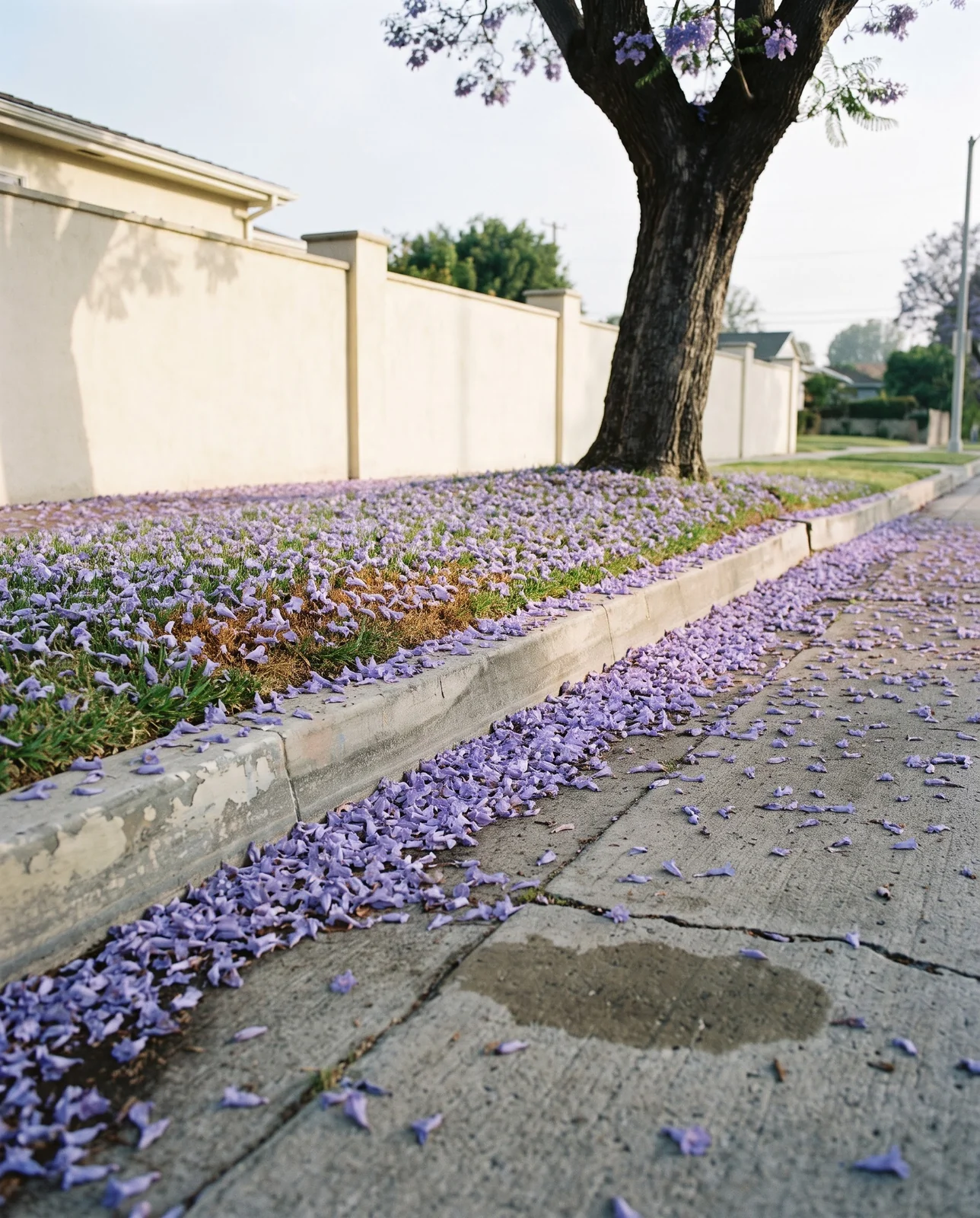
The price of a jacaranda is litter, and the drop is heavy enough to decide where the tree goes. It sheds dry fruit, leaves, and flowers across the year. That rules it out beside a pool, and over a patio the fallen flowers and shed leaves turn into a chore. Surface roots are the second cost, because jacaranda can form large ones. Wood strength is the third: the wood is weak, and storm damage follows from it. Early training is the counterweight, since a properly trained and pruned jacaranda is fairly strong wooded.
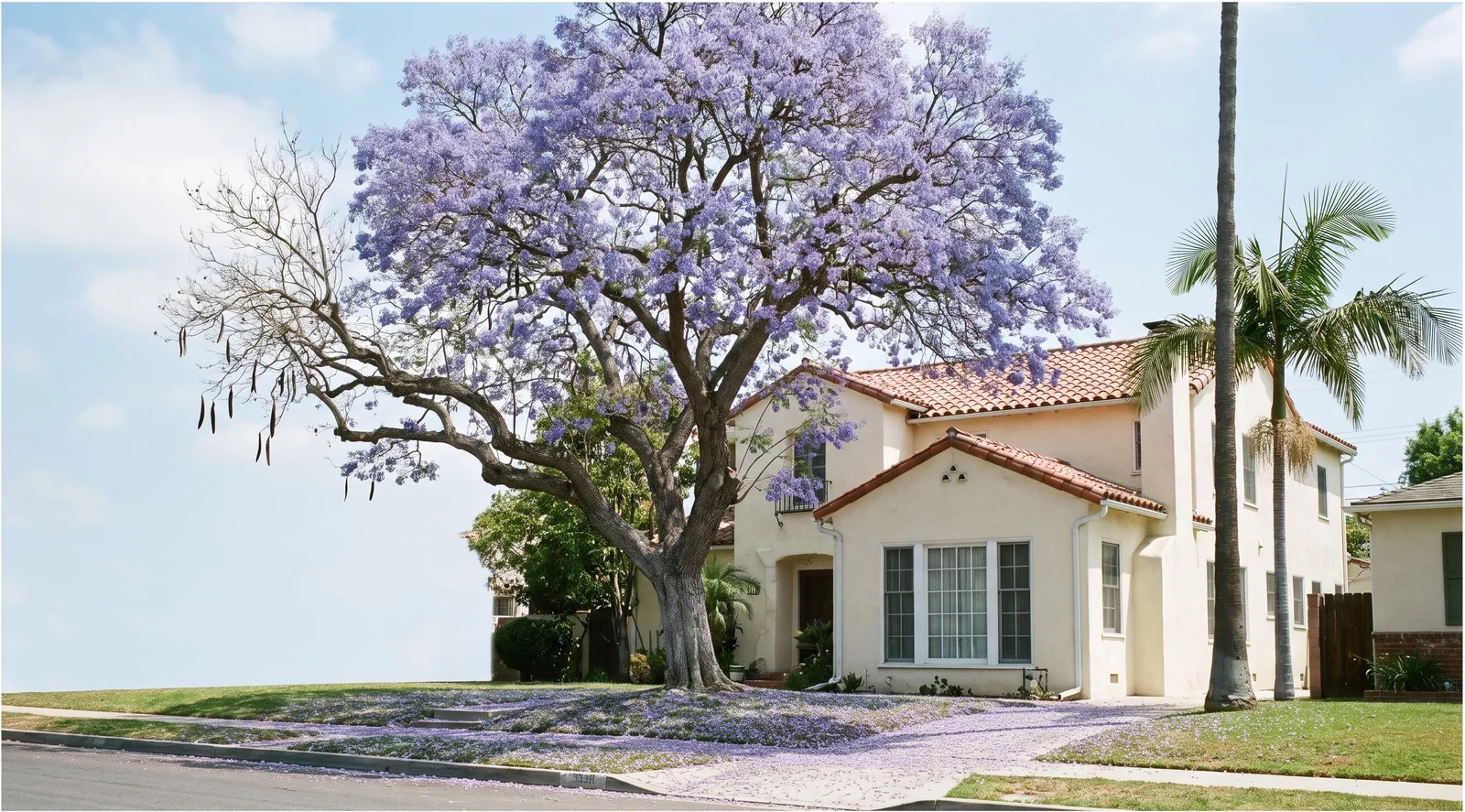
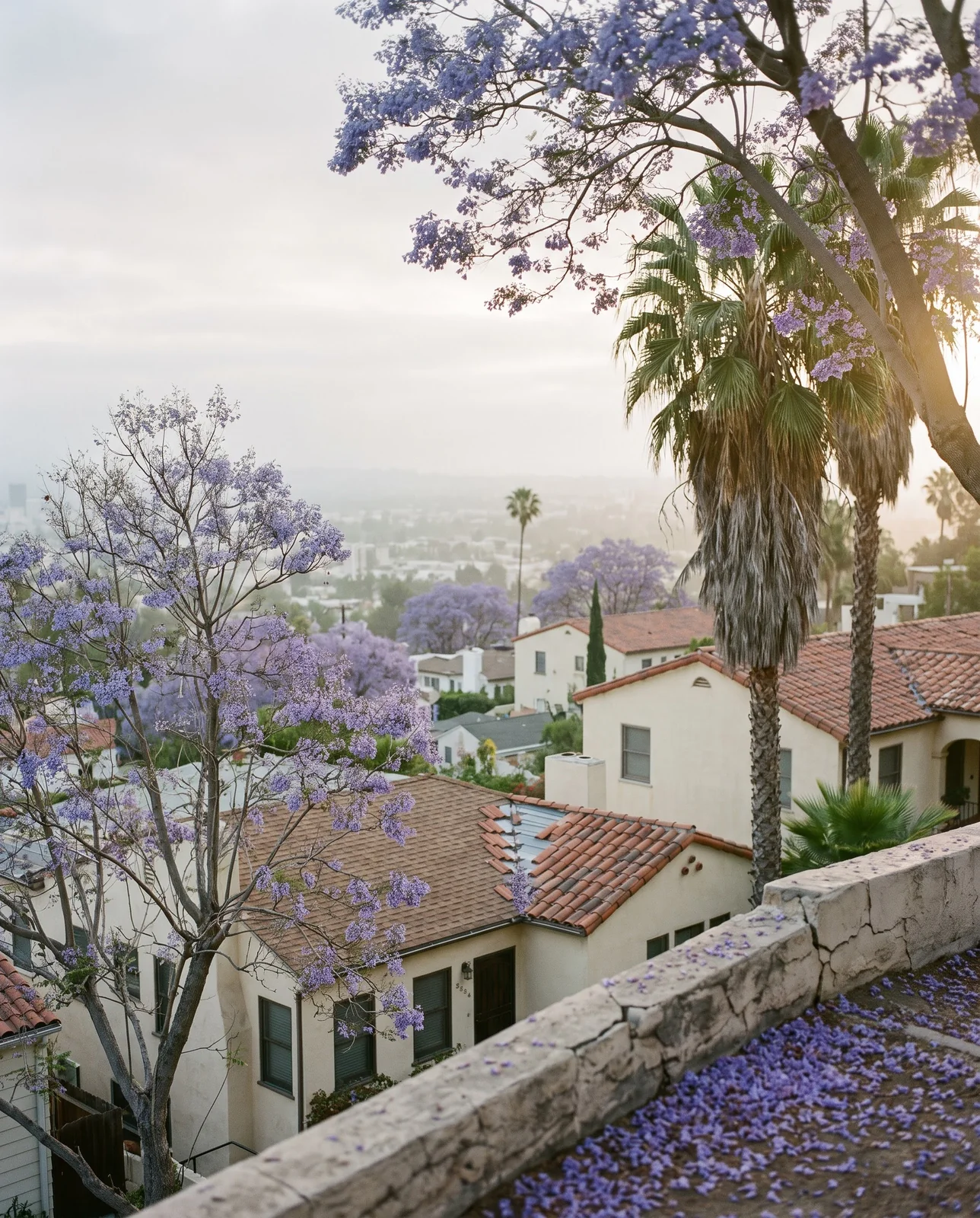
What comes back is shade, color, and a tree that asks for very little. Jacaranda is relatively drought tolerant, pest resistant, and able to grow in the small planting cutouts cities give street trees. The shade arrives quickly because growth is fast. The large flowers pull in bees and other pollinators at a time when bee populations are deteriorating, and the tree draws birds as well. Pollen is a minor complaint, causing only slight allergy symptoms. Then there is the reason people put up with the sweeping. The drop makes a purple carpet under the canopy, and the litter one neighbor clears every morning is what the next one photographs. If the sweeping is the deal breaker, keep the spot and plant a magnolia in it.
Light
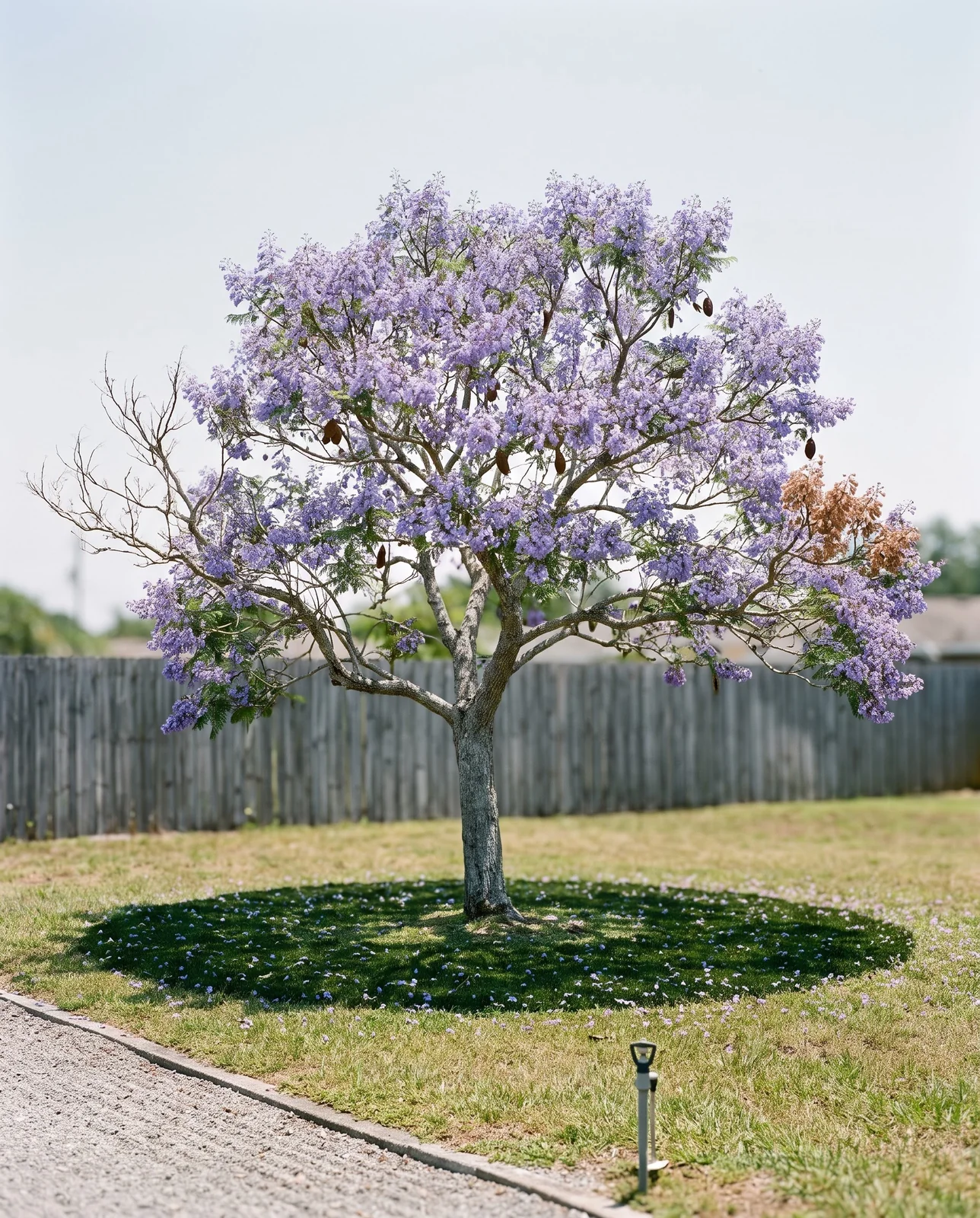
Jacaranda needs full sun, meaning six or more hours of direct sunlight a day. Heaviest flowering and fastest growth both happen in full sun, and while small trees tolerate light shade, the flowers are what the shade costs. Morning sun with an afternoon in the shadow of a two-story house is the common setup that produces a tall green tree and nothing else. Judge the spot by where the shade will fall in ten years. Sun works against the tree in one place. In the low desert the trunk is susceptible to sunscald, so avoid a position that throws reflected or western light onto young bark. A trunk wrap or a temporary shade board covers the years while the canopy is small.
Soil and water
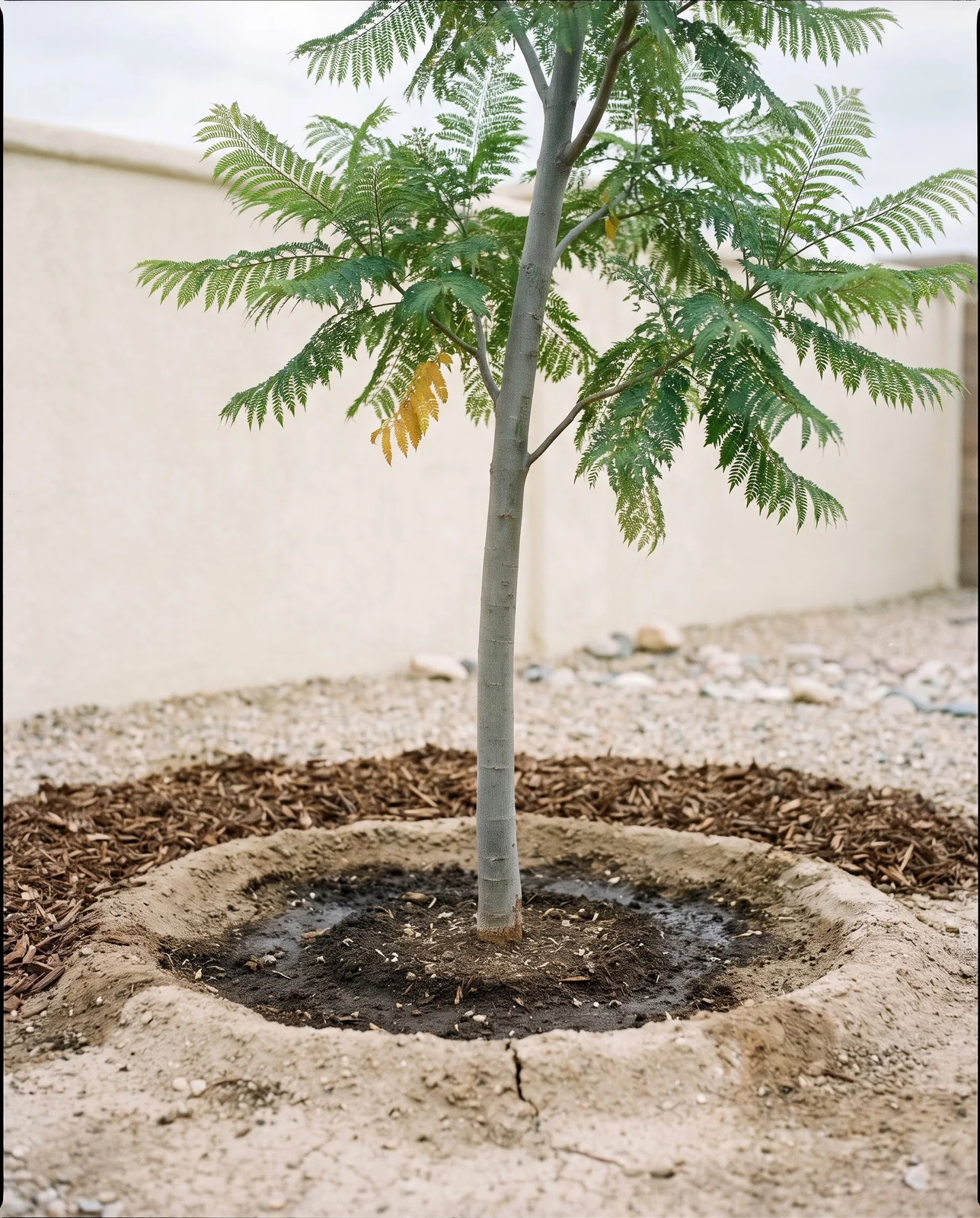
Well-draining, slightly sandy, acidic soil suits a jacaranda best. The tree takes sand, loam, or clay, from slightly alkaline to acidic, as long as the drainage is real. That range covers the alkaline ground of the desert Southwest and the acid sands of Florida. What it will not accept is heavy, poorly drained ground. On a clay lot, plant high: set the root ball slightly above grade so water moves away from it. That costs nothing at planting and cannot be retrofitted later.
Water is where most jacaranda failures start. Once established the tree is very drought tolerant and has no tolerance at all for aerosol salt. A beachfront lot within reach of spray is a poor place whatever the zone map says. Deep, infrequent soaks suit an established tree far better than the daily minutes a lawn zone runs. A mature jacaranda left on the lawn schedule is being watered for the grass. The low desert is the exception: in Phoenix the tree wants deep, regular supplemental watering, especially through the warm part of the year. On ground that stays wet, the specific failure is mushroom root rot.
Planting
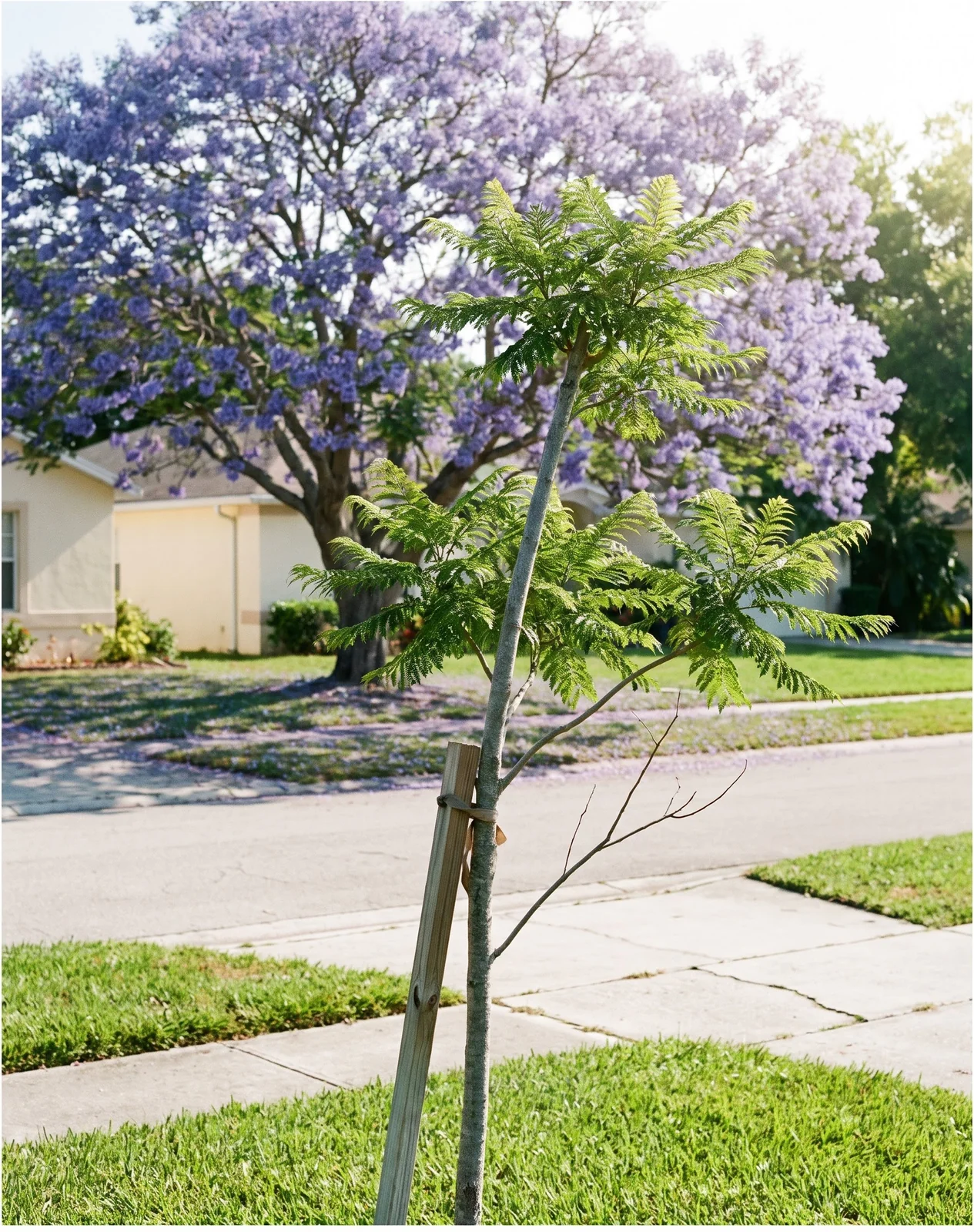
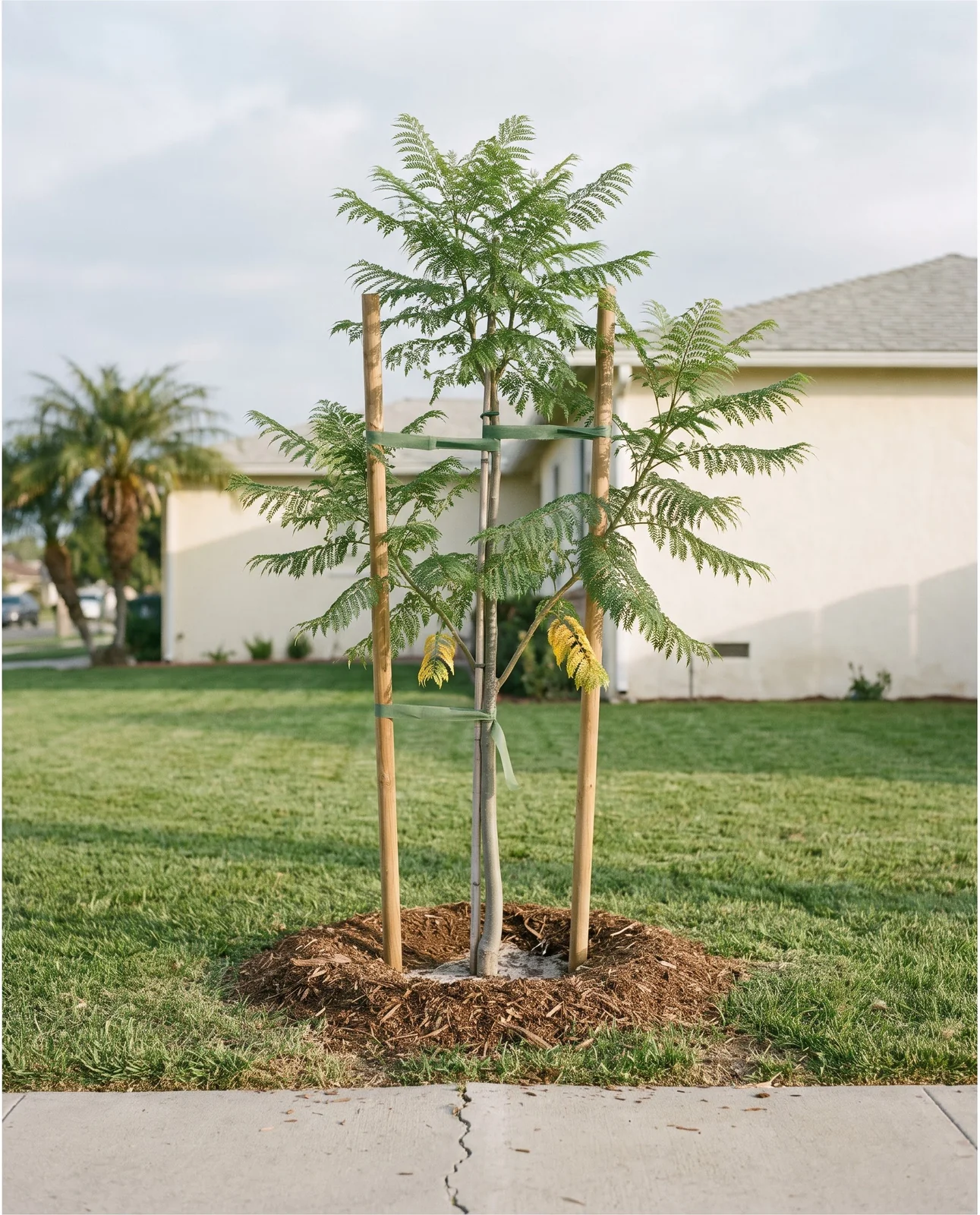
Give the tree room before anything else. Plant a jacaranda at least 15 feet from the house, 20 feet if you have it, and 15 feet from walks and driveways. The reason is underground as much as overhead, since large surface roots make jacaranda a poor choice close to structures or walkways. Stake a young tree through its first year, because a strong wind can blow one over while it is still anchoring. Leave the ties loose enough for the trunk to flex. Water it through dry periods until it is well established, and after that only in drought. Spacing is the one decision here that cannot be revisited once the trunk is up.
Pruning
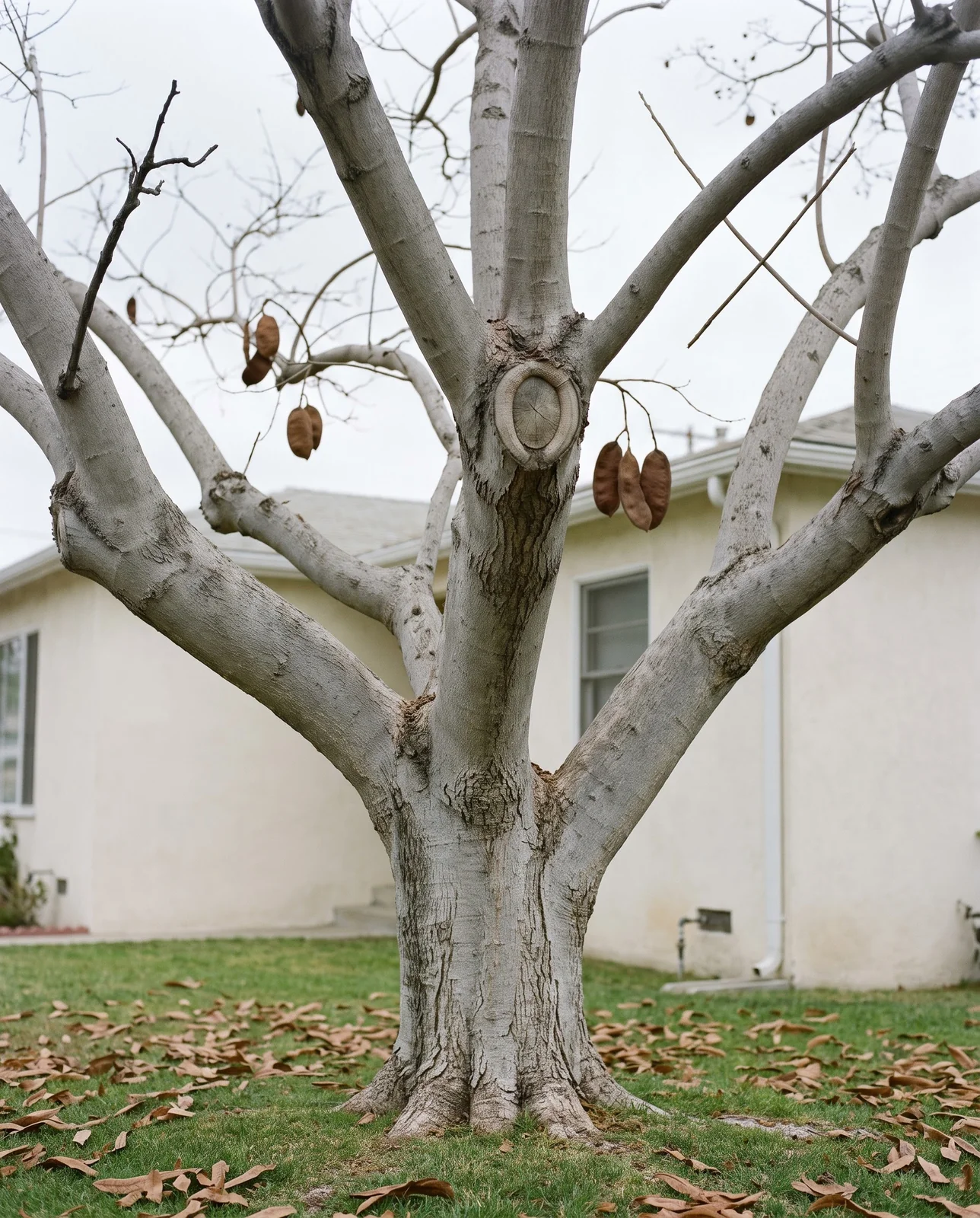
Prune a jacaranda for structure while it is young, and do the cutting after it flowers. Pruning is what gives the tree strong structure, and it is susceptible to breakage without it. Left alone, a young tree develops several co-dominant stems, often with included bark, the split waiting to happen in the first real storm. The schedule is specific. Cut back the branches competing with the leader every three years until the tree is 15 to 20 years old. As it matures, keep branches to less than half the diameter of the trunk. Timing follows the bloom, since the needed pruning is done after flowering in spring and early summer, which leaves that season's flowers on the tree. A tree that came back from the roots after a freeze arrives multi-stemmed: pick the strongest stem and cut back its competitors.
Feeding and growth rate
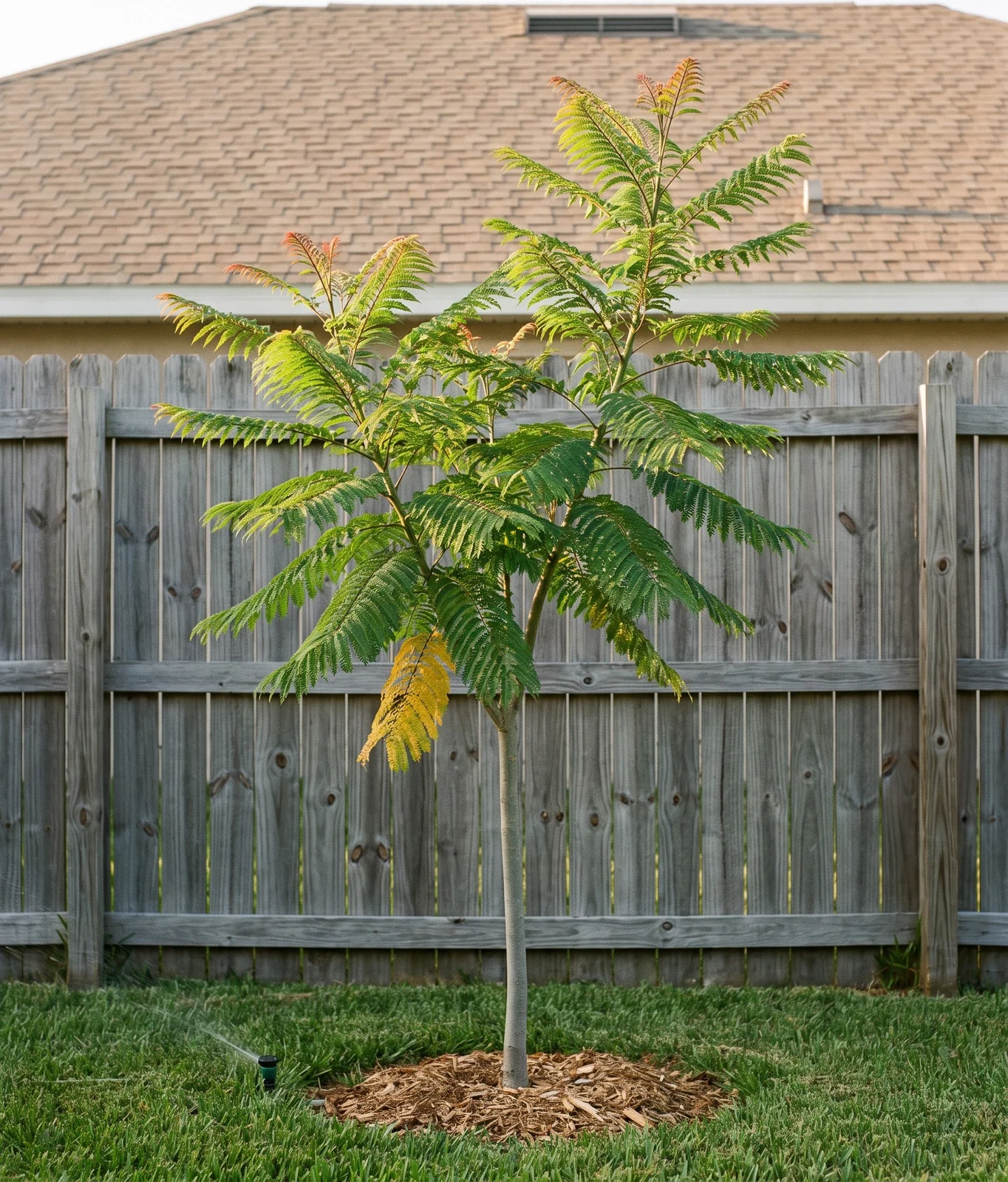
Feeding is rarely what a jacaranda is short of, because the tree grows fast without help. In its native environment it gains up to 10 feet of height a year, and that rate drops in cooler climates. The top rate on landscape trees is about 36 inches a year. Most US yards land between those two figures, nearer the lower one where nights stay cool and the season is short. On Florida sand, feed three times a year, in spring, summer, and autumn, with a granular fertilizer.
Height and spread
A jacaranda finishes at 25 to 50 feet tall, and a mature tree measured 40 feet tall and 30 feet across. Height is the settled part. Spread is not, and the gap is wide enough to change where the tree goes: UF/IFAS gives 45 to 60 feet, Missouri Botanical Garden 15 to 30. An open-grown tree with room on every side takes a different shape from a street tree in a sidewalk cutout. Site the tree for the wide figure and a narrow crown costs you nothing.
The forms worth telling apart
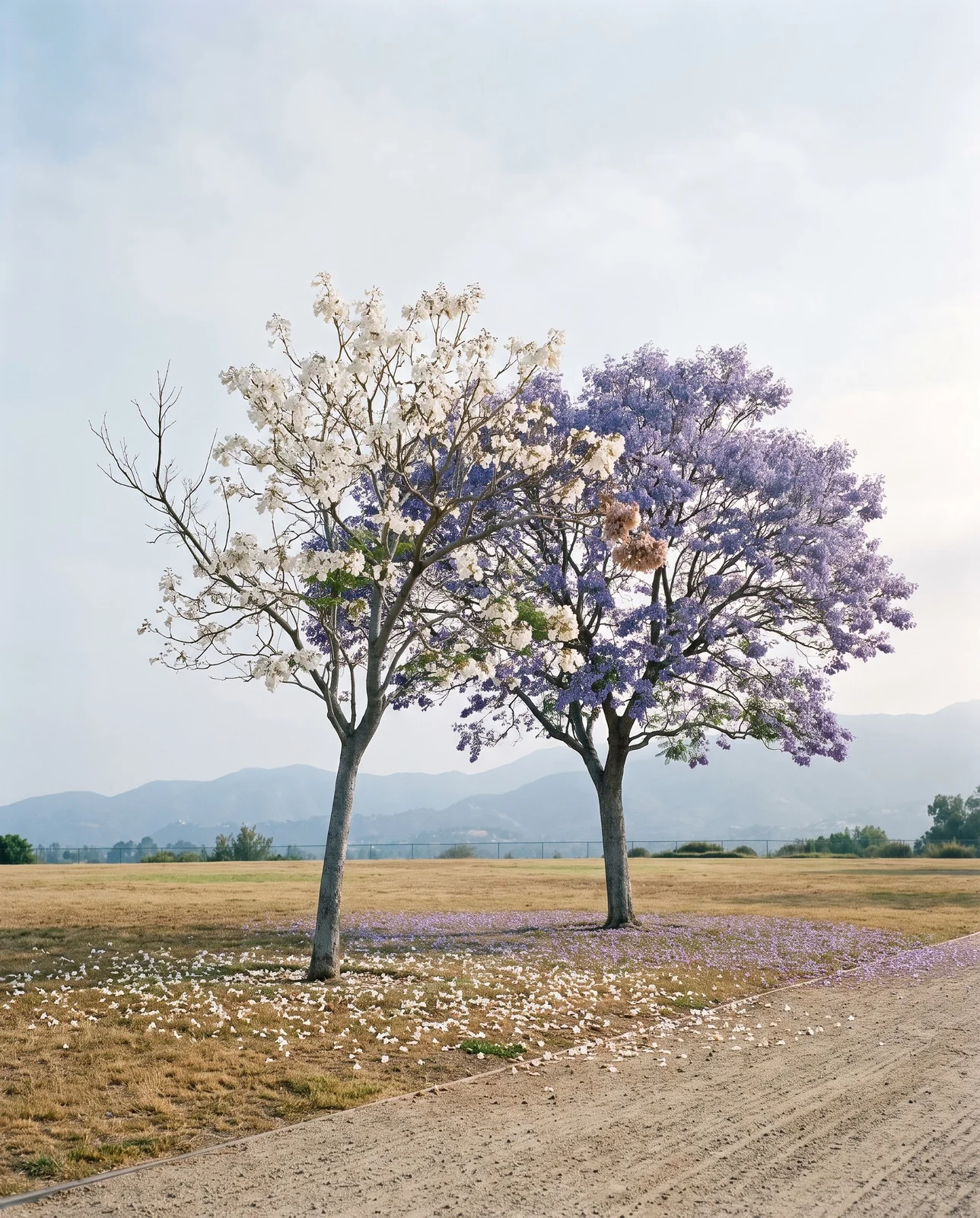
Almost everything sold as a jacaranda in the United States is the straight species, the blue jacaranda, which holds an Award of Garden Merit. Its purple-blue spikes are the color people mean when they say jacaranda, and the two named forms behind it each change one obvious thing. 'Alba' changes the color: white flowers, sparser than the species, held across more of spring and summer. 'Bonsai Blue' changes the size, a true dwarf at 10 to 12 feet tall and 6 to 8 feet wide. It is semi-evergreen, fern-leaved, happy to be pruned, and it flowers about two years after grafting. Anything else offered under the name is the species again, from seed or from a graft, and that difference sets how long you wait for the first flowers.
Propagation and lifespan
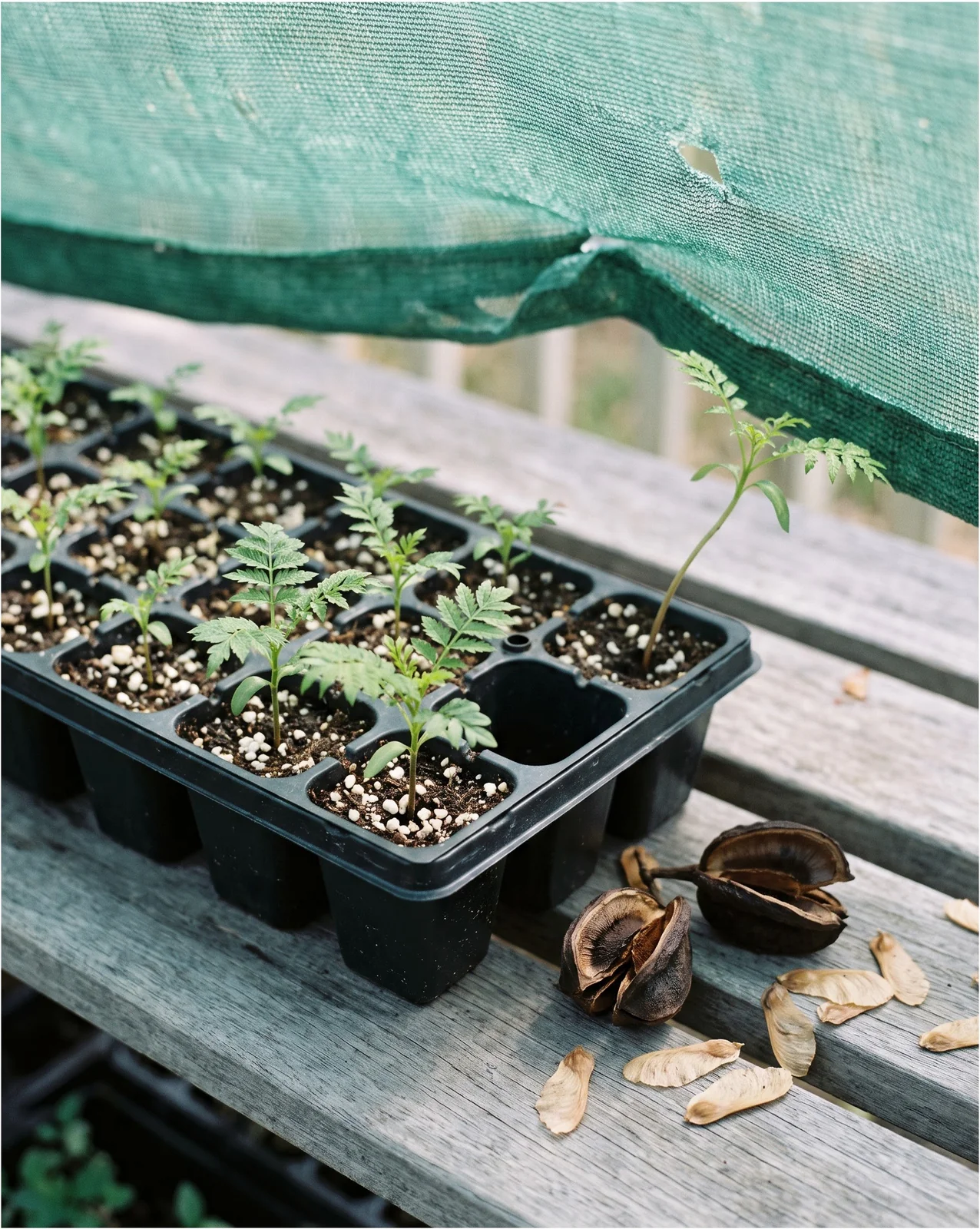
Jacaranda is grown from softwood cuttings, grafting, or seed. Seed is the easiest of the three to start and the slowest to pay. Fresh seed germinates at 50 to 92 percent and generally needs no pretreatment, and a lone tree sets viable pods on its own, since the species is self-compatible. Volunteer seedlings turn up under street trees, and home-raised jacarandas are everywhere, with nobody sure what they will do. Lifespan is the other end of the same story. Jacarandas can reach two hundred years of age. A Sydney tree planted around 1850 was still standing at over 175 years old, fenced off with ropes. Of 115 planted on one California campus in 1988, 65 were still standing decades later.
Pests and diseases
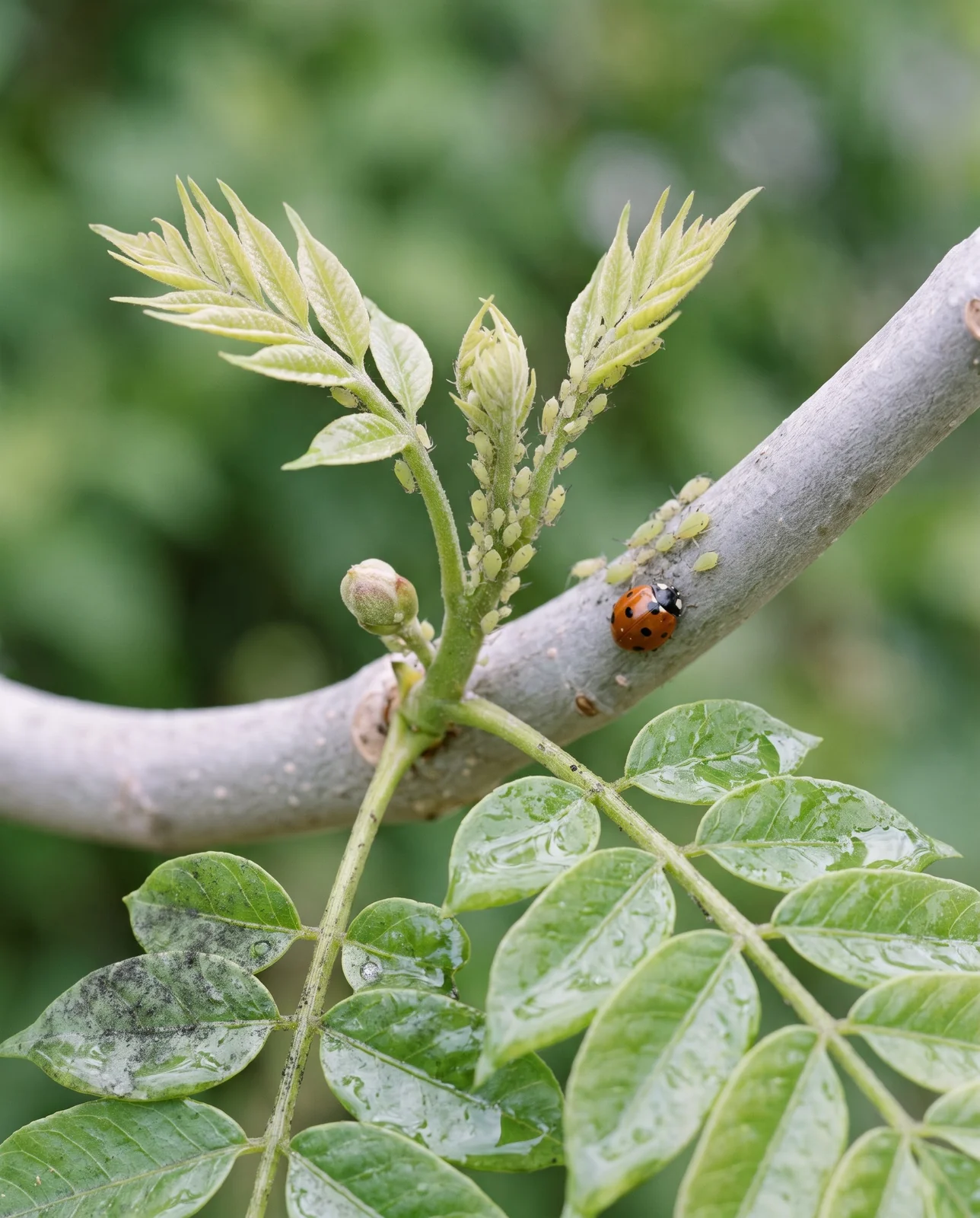
No pests are of major concern on a jacaranda. The insects that do turn up are ordinary ones, scale and aphids, and California trees also face the invasive shot hole borer alongside phytophthora and root rot. A bacterial disease specific to jacaranda can hit it as well. Phytophthora and root rot both come out of wet ground. A tree that thins out, wilts through the heat of the day, and sheds leaves off season is a drainage case until proved otherwise. Diagnose from the soil upward before anything gets sprayed at the canopy.
What actually goes wrong, most common first
Ordered by how often owners hit them. The first two are the same question, asked from a lawn and from a pot.
Healthy, well past planting, and not one panicle. Age is the first suspect, and the graft union at the base tells you which clock the tree is on. Shade and a lawn watering schedule come next.
Grows well, drops its leaves over winter, never sets a flower. Container trees are usually still too young, so grow this one for the foliage and give it the brightest spot in the house.
Blackened stems after a hard winter, sometimes a dead tree. Young trees take the worst of it. Where the top dies the roots often push up a multi-stemmed shrub; pick one leader and you get a trunk back.
Pods gathered from a street tree, seedlings raised easily on a windowsill, then years of waiting. Nothing but time fixes it, so plant grafted stock when the flowers are the point.
A tree cut in the dormant season comes into spring with no flowers, because the cuts took them off before they opened. Prune after the bloom, and do the structural work while the tree is young.
A trunk left at an angle after a storm, or a stake pulled out of soft ground. Stake through the first year, keep the ties loose, and reset them after every blow.
Wilting in the heat, sour-smelling soil, a crown that thins year on year, and no pest anywhere on it. That is drainage, so dig before you spray.
Toxicity and pet safety
Jacaranda is not toxic to cats, dogs, or horses. The one thing that puzzles owners is the ASPCA list, which carries no entry for Jacaranda mimosifolia. Its only jacaranda is Caroba, Jacaranda procera, a different species in the same genus, also marked non-toxic to dogs, cats, and horses. That blank says nothing either way about the tree in your yard.
Meaning, exams, and the purple season
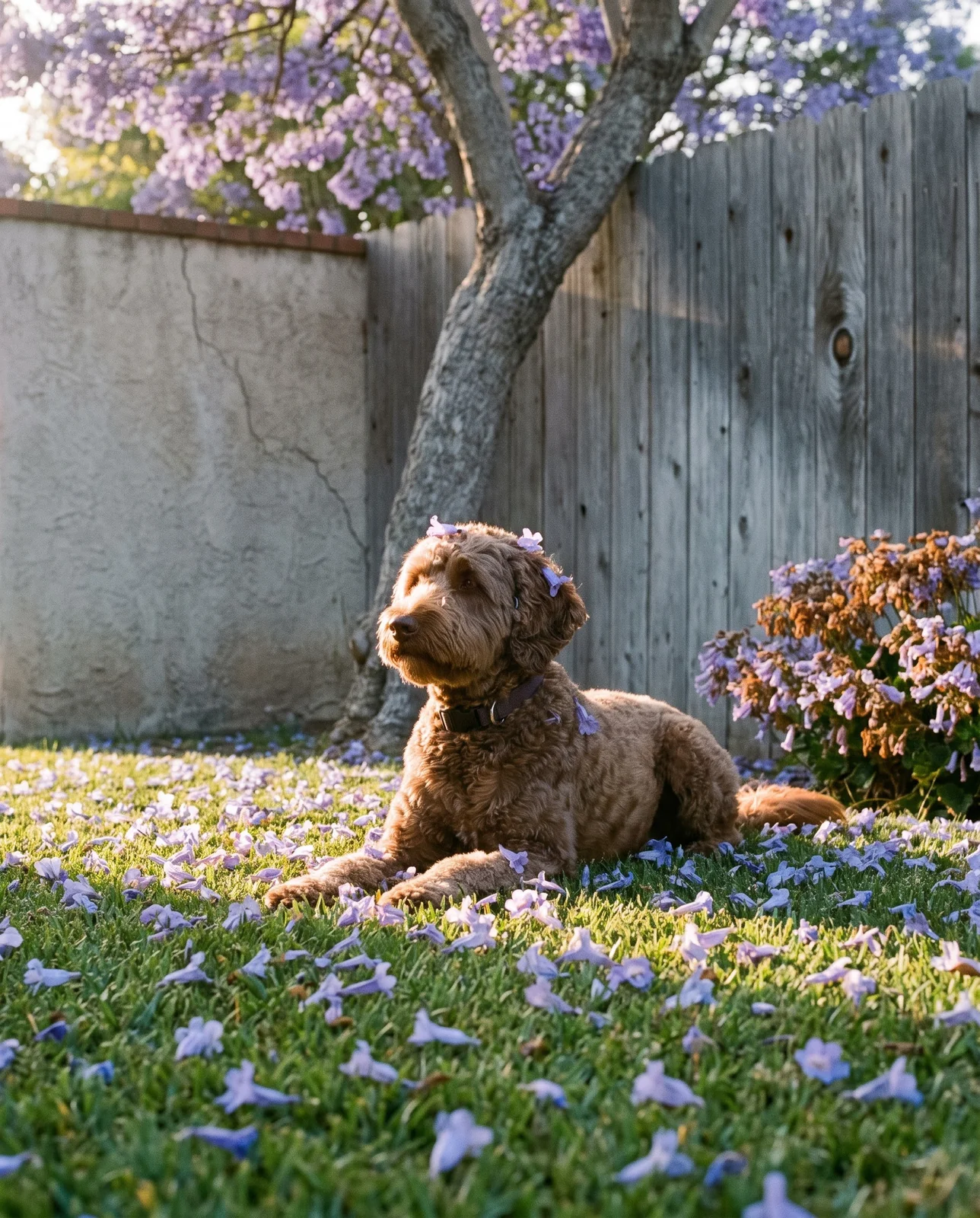
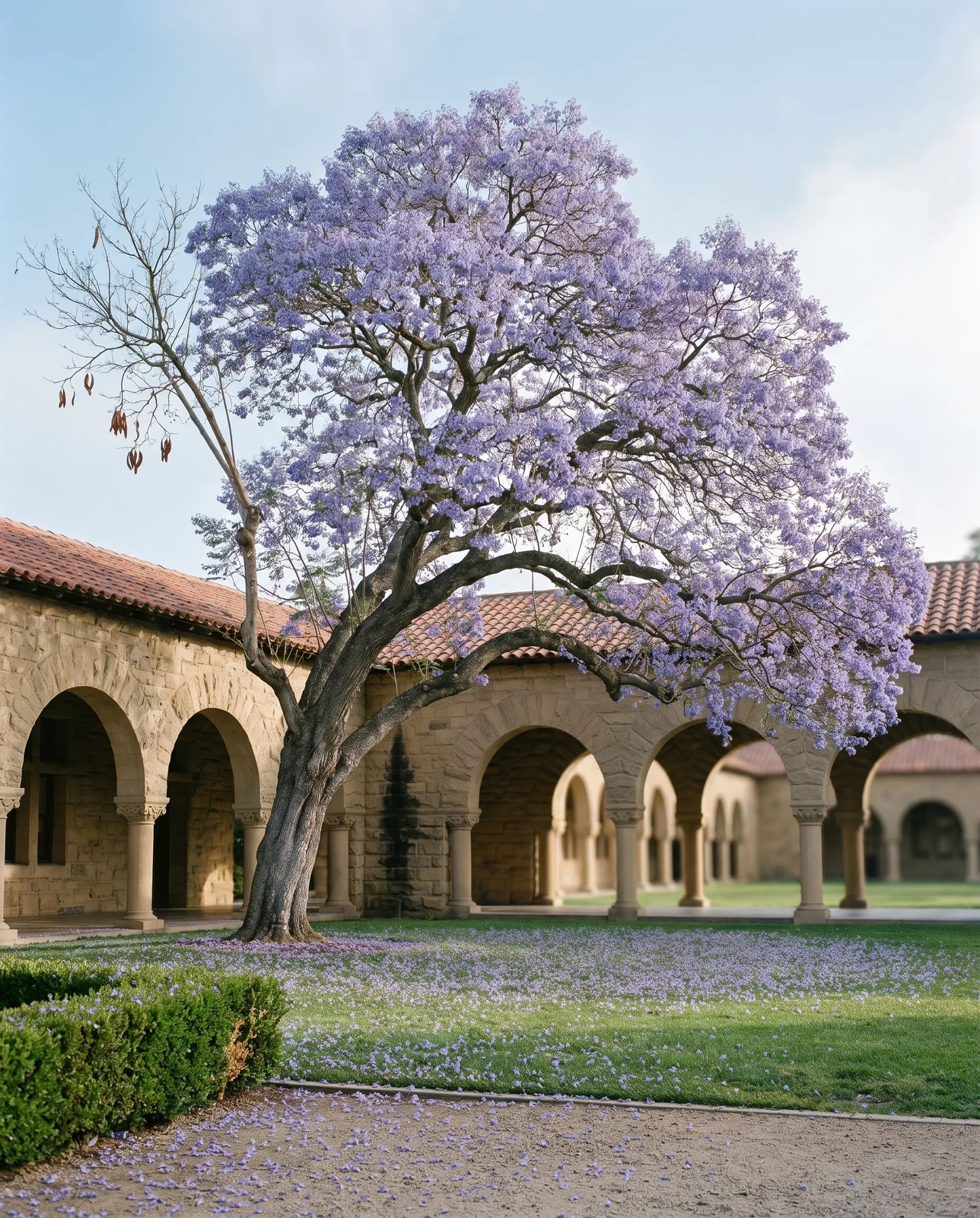
What a jacaranda means comes from when it flowers. In the southern hemisphere the bloom lands at the end of the academic year, so the tree in flower is known as the exam tree. Students in southeast Queensland call the season purple panic. The Pretoria version of the folklore is gentler: a flower that drops on a student's head means passing every exam. The travel history behind all that is short and entirely ornamental. The first specimens went from Rio to Britain around 1818, and jacarandas were on sale in Sydney by 1861. The species stayed admired and rare across Australia until someone worked out how to propagate it in 1868. Every city that took it up afterward built a season around the same few weeks.
What people get wrong about jacarandas
Three claims follow the tree everywhere. One of them is about a different tree entirely.
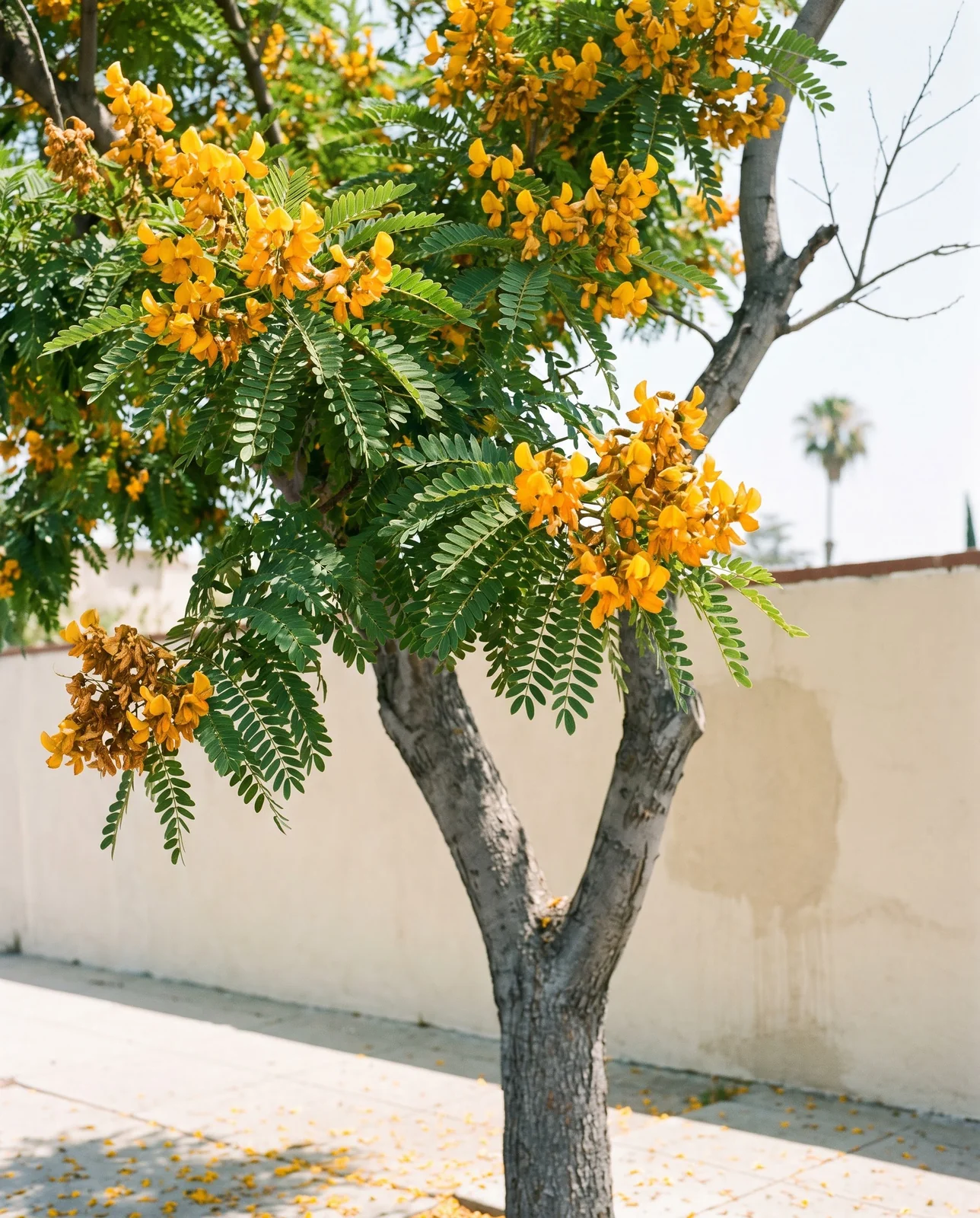
The myth: The yellow jacaranda is a jacaranda with yellow flowers.
The reality: The tree sold as yellow jacaranda is Tipuana tipu, a legume with bright yellow to orange summer flowers. Its leaves are once-pinnate and lacy where a jacaranda's are divided twice. It grows larger, to 60 feet tall and 50 feet wide, and its roots are strong enough to lift sidewalks.
The myth: Jacaranda is invasive wherever it is planted.
The reality: That depends on the rainfall. In dry California the tree rarely reproduces on its own. Parts of South Africa, Namibia, and Queensland regard it as invasive, and in Hawaii it is naturalized across dry to moderately moist areas.
The myth: A tree planted on this many streets must be doing fine in the wild.
The reality: Wide cultivation has not protected the wild population, which sits at high risk of endangerment in its native range.
What to expect, year by year
A jacaranda planted young runs on a slow schedule, and the purple is the last thing to arrive.
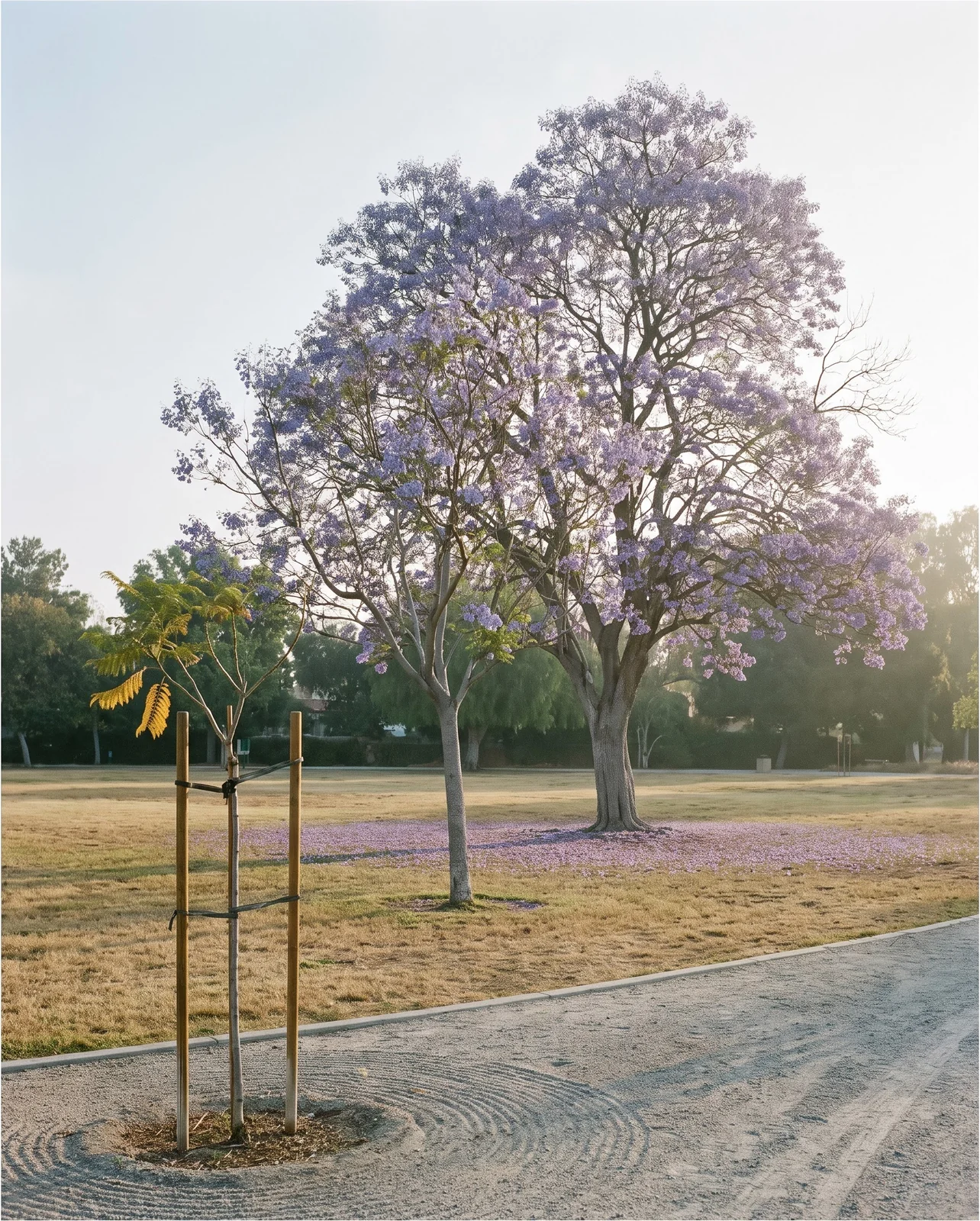
Years one to three: no flowers, and the whole budget goes into roots, trunk, and the shape you are choosing for it. Expect up to about three feet of height in a good season, a stake through the first winter, and a canopy still too thin to shade a chair. Structural cuts are cheap in this window.
Years four to seven: the tree becomes a tree. Height and canopy arrive faster than most owners plan for, and roots reach the lawn and the driveway edge. On grafted stock the first panicles show up in here, a scatter of purple at the top of the crown. A seedling of the same age has years left to run.
Year ten and on: full size, full litter, and the purple month the tree was planted for, heavier each year as the crown fills. Not every season delivers it, and a healthy mature tree can skip a year with nothing visibly wrong on it. By this stage the sweeping is a real chore for weeks at a time, and the shade underneath is thin enough that grass still grows in it.
Flower photos
FAQ
What is the downside of a jacaranda tree?
Litter and placement. It sheds dry fruit, leaves, and flowers through the year, which rules out a spot beside a pool or a patio.
Do jacaranda trees grow in the United States?
Yes, extensively in California, the Southwest, southeast Texas, and Florida. North of that band the tree needs a protected microclimate to stand outdoors through winter.
Can you grow a jacaranda in Florida?
Yes. Zones 9B through 11 cover most of the peninsula, and the tree takes Florida sand as readily as loam.
How many years does it take a jacaranda to bloom?
Three to seven years on a grafted tree, and seven to fourteen on a seedling.
How long do jacaranda trees live?
They can reach two hundred years of age.
Do jacaranda trees have invasive roots?
They form large surface roots, which makes the tree a poor choice close to structures or walkways.
What month do jacarandas bloom?
May, most often, inside a window that runs from April through August with the year and the climate.
Why is my jacaranda not flowering?
Age first: a grafted tree needs several years and a seedling much longer. After age, the usual causes are shade and steady water on a tree that prefers to dry out.
Will a jacaranda survive in zone 8?
Not dependably. The ratings start at 9b, with 9A workable in protected spots. An established tree takes brief dips to about 20 degrees Fahrenheit, and a young one can be killed outright.
Is jacaranda poisonous to dogs and cats?
No. It is not toxic to cats, dogs, or horses.
Can you grow a jacaranda in a pot or as a bonsai?
Yes, and it will almost certainly stay a foliage plant, because young container plants usually do not flower.
How fast does a jacaranda grow?
Fast: up to 10 feet of height a year in its native environment, slowing in cooler climates. About 36 inches a year is the top rate on landscape trees.
Interesting tips
- The dwarf 'Bonsai Blue' was not bred for the job. It was found as a chance seedling in a private garden in Nichinan-shi, Miyazaki, Japan, in May 1995.
- White jacarandas are worth hunting. Los Angeles has a rare white cultivar, rumored to stand in a non-public part of the county arboretum. About one hundred white ones grow among the purple in the Groenkloof area of Pretoria.
- The purple season has been moving. In the 1920s Pretoria's jacarandas bloomed in mid-November, and today they open in early September, a shift researchers link to a warming climate.
Related Guides & Flowers
Blue flowers
Where the jacaranda's blue-purple sits among the garden plants that read as true blue.
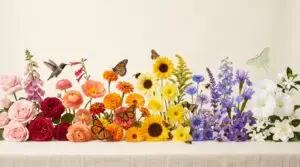
Types of flowers
The full index of flower profiles on the site, sorted by kind.
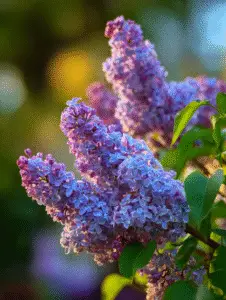
Lilac
The cold-climate answer to a purple spring, for gardens far north of jacaranda country.
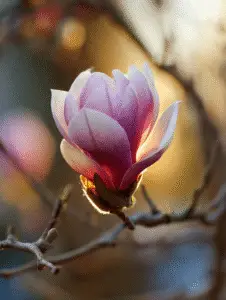
Magnolia
The other large southern flowering tree, with the same placement questions and a heavier leaf.
Enjoying our flower guides? Add YourFlowersGuide as a preferred source on Google. It helps more readers find us.
Add to Preferred Sources