Taxonomy and origin
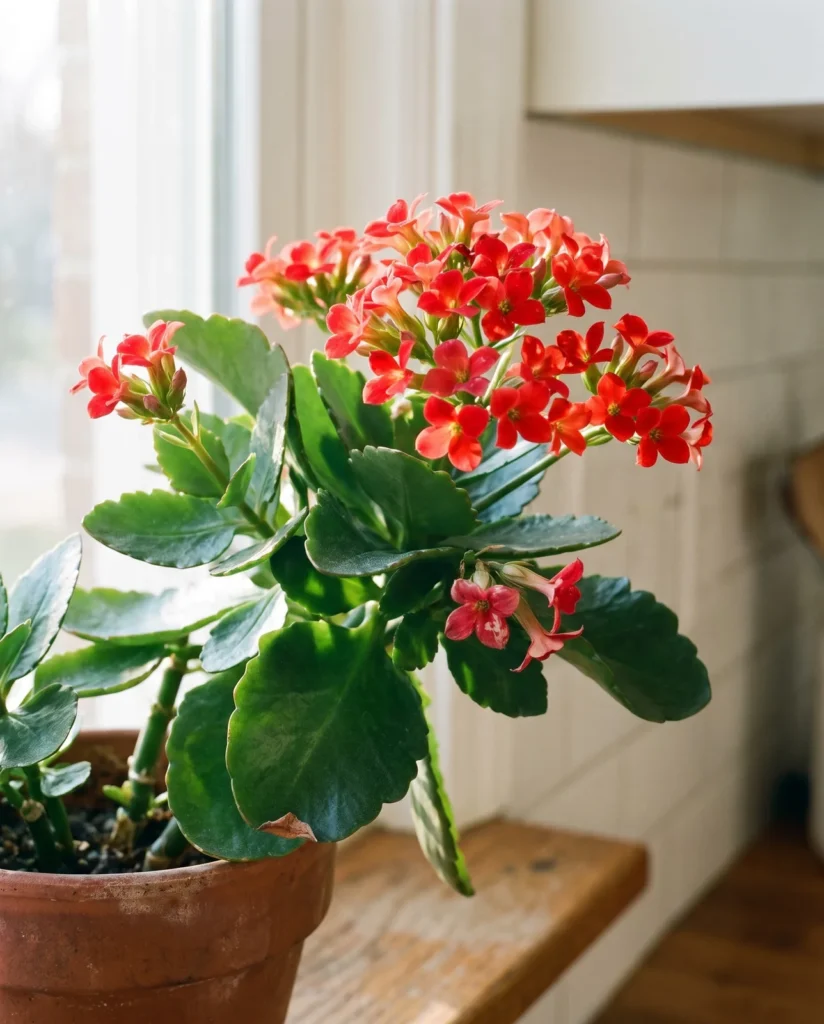
The genus Kalanchoe sits in the stonecrop family, Crassulaceae, and how many species it holds depends on which authority you ask. The NC State Extension Plant Toolbox lists 174 accepted species; Encyclopedia Britannica puts the figure at about 120. Neither is an error: the gap comes from where botanists draw the line between a full species and a regional variant. The plants are native to Madagascar and tropical southern and eastern Africa, on rocky outcrops that dry hard between rains. That habitat explains the fleshy leaves and stems: both are water storage, which is why a kalanchoe forgives a missed watering and resents a generous one.
The genus name comes from the Chinese kalan chau, "that which falls and grows," a phrase aimed at the species that shed leaves and miniature plantlets which root wherever they land. What reaches American stores is a narrow slice of all that: Robert Blossfeld, a German nurseryman, found Kalanchoe blossfeldiana in Madagascar in the early twentieth century and introduced it to European horticulture, and its descendants account for nearly all of the blooming winter pots. The foliage species travel under a tangle of common names that NC State lists together: Chandelier Plant, Devil's Backbone, Mother-in-Law Plant, Mother of Millions, Mother of Thousands, and Panda Plant. Those names attach loosely and overlap in casual use.
Bloom time
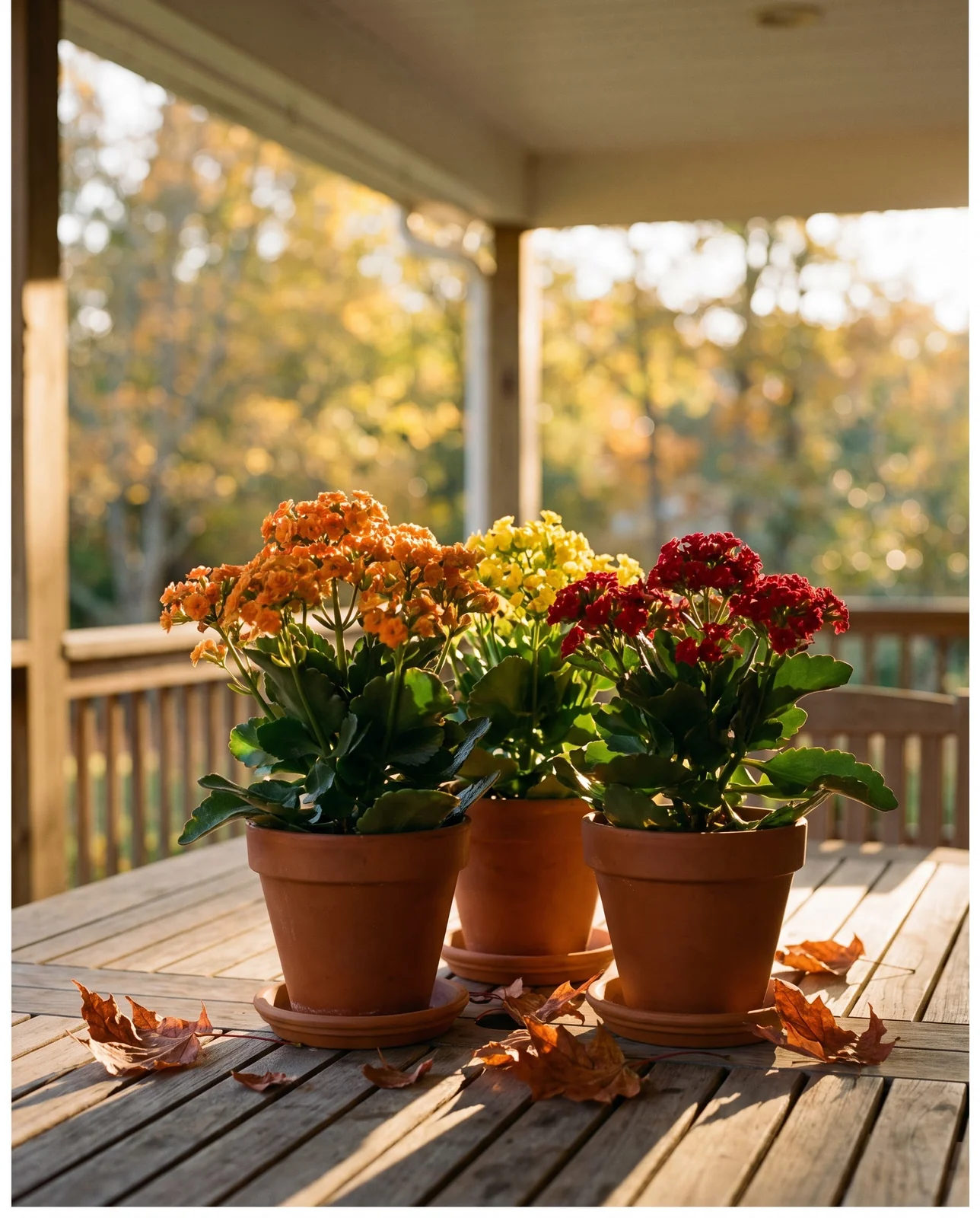
Kalanchoe is an obligate short-day plant: it sets flower buds only when nights run long, which in practice means the stretch between October 1 and March 1 that Clemson University Cooperative Extension identifies as the natural window. Commercial growers do not wait for it: they black out greenhouse benches on a schedule and deliver budded pots to stores through the winter holiday season, which is why the plant reaches most homes already in flower. How long that flower lasts is the one number the sources disagree on. NC State Extension puts it at about four weeks; Britannica says blooms on Kalanchoe blossfeldiana can stay fresh as long as eight. Both describe the same plant in different rooms, and the spread comes down mostly to temperature.
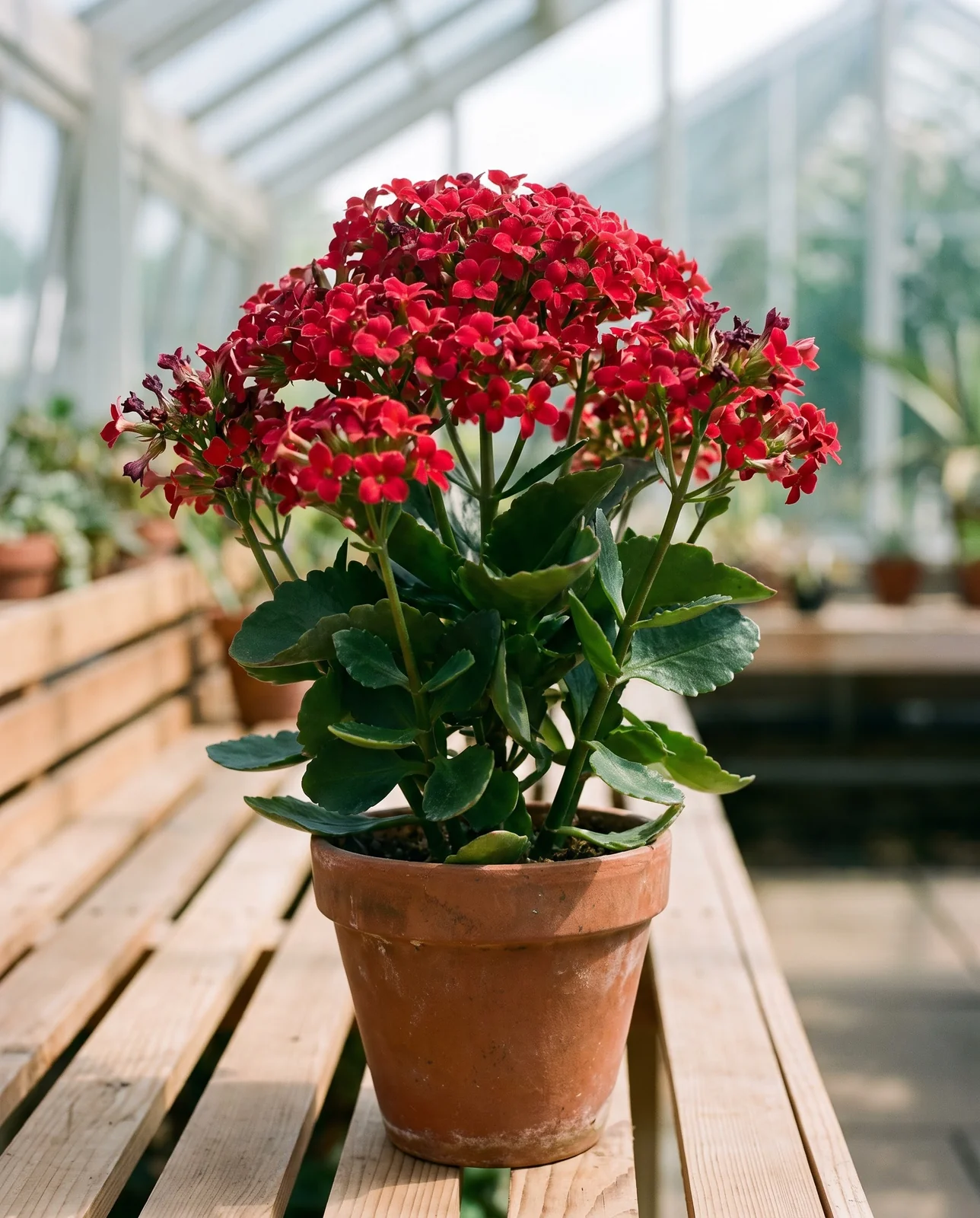
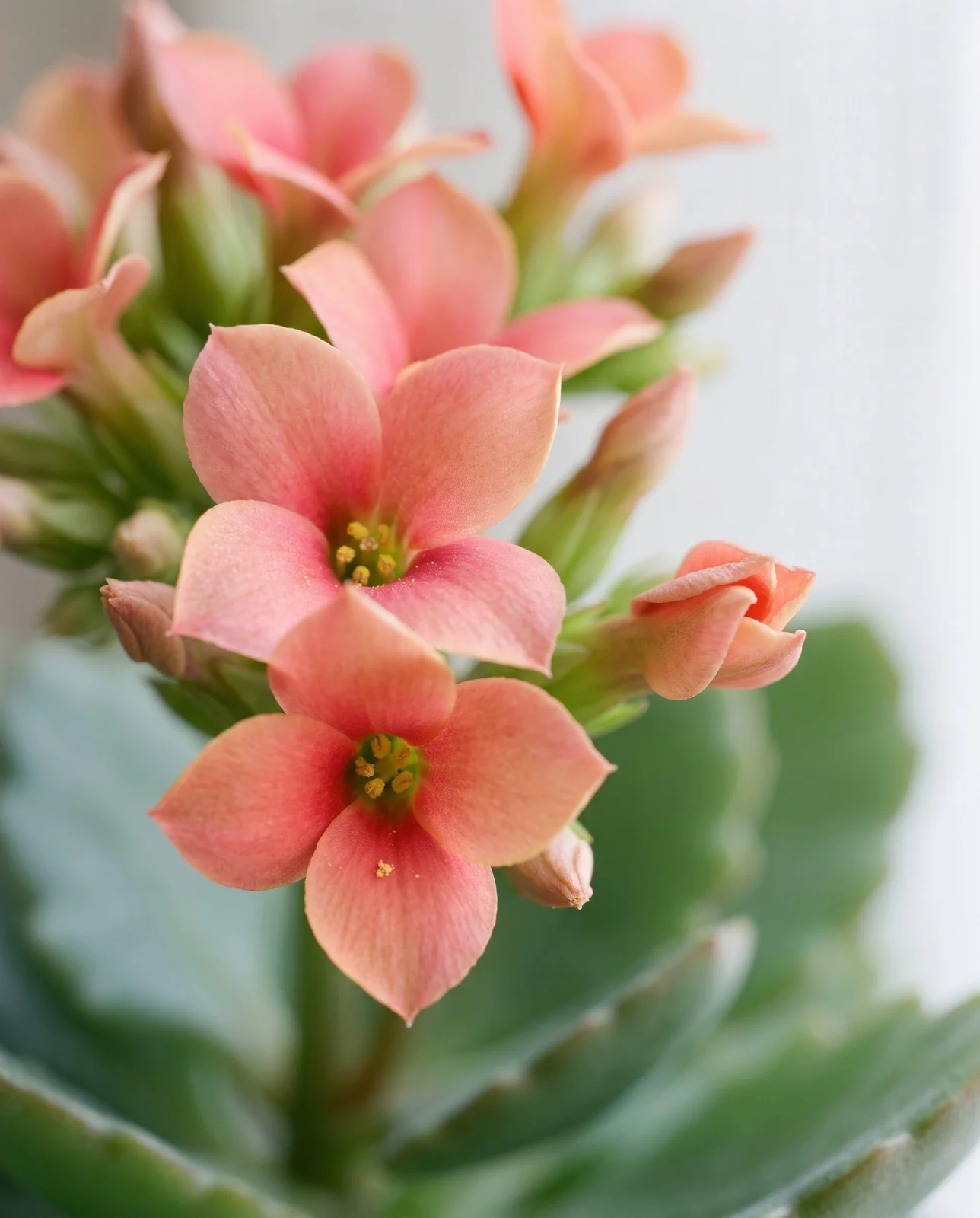
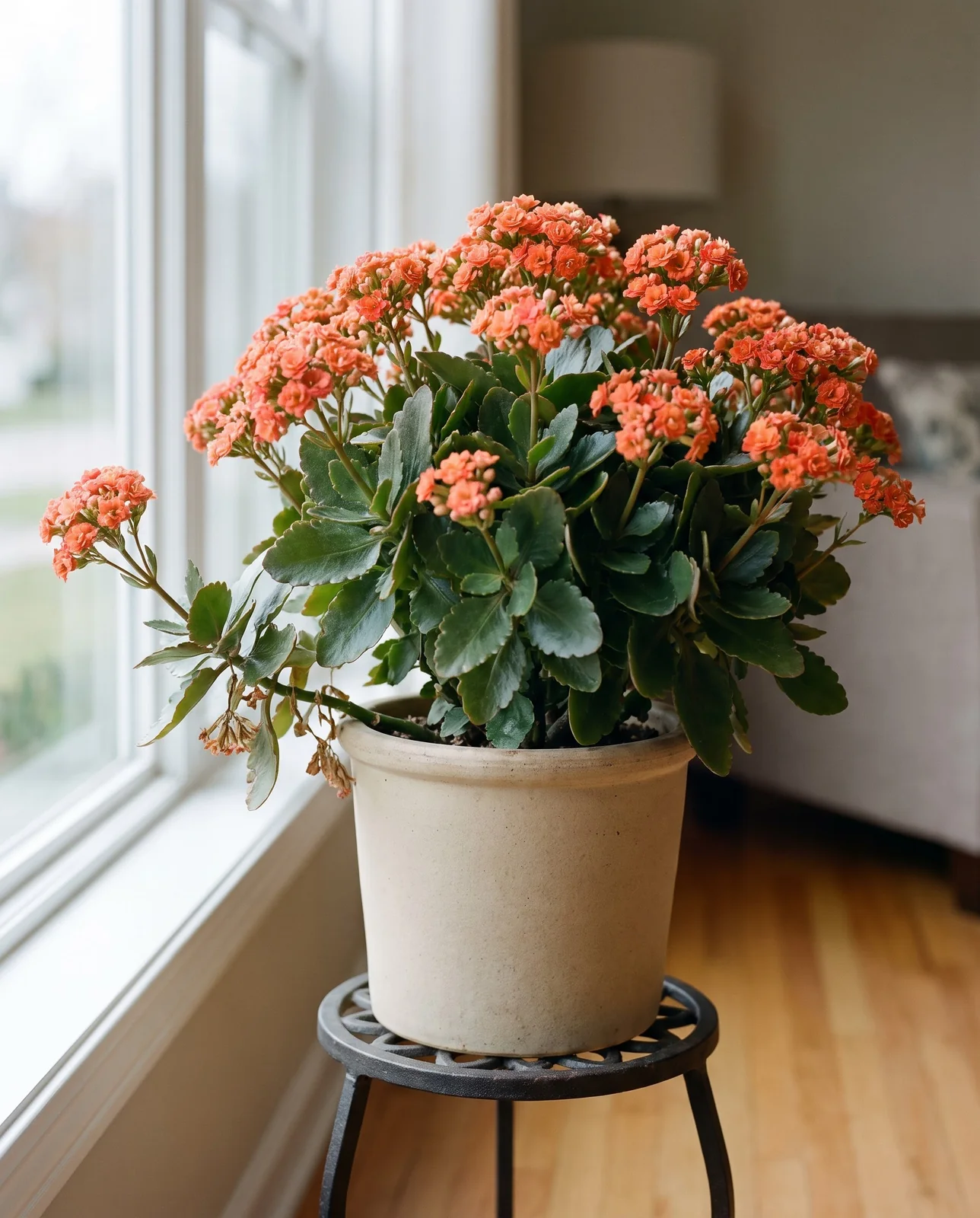
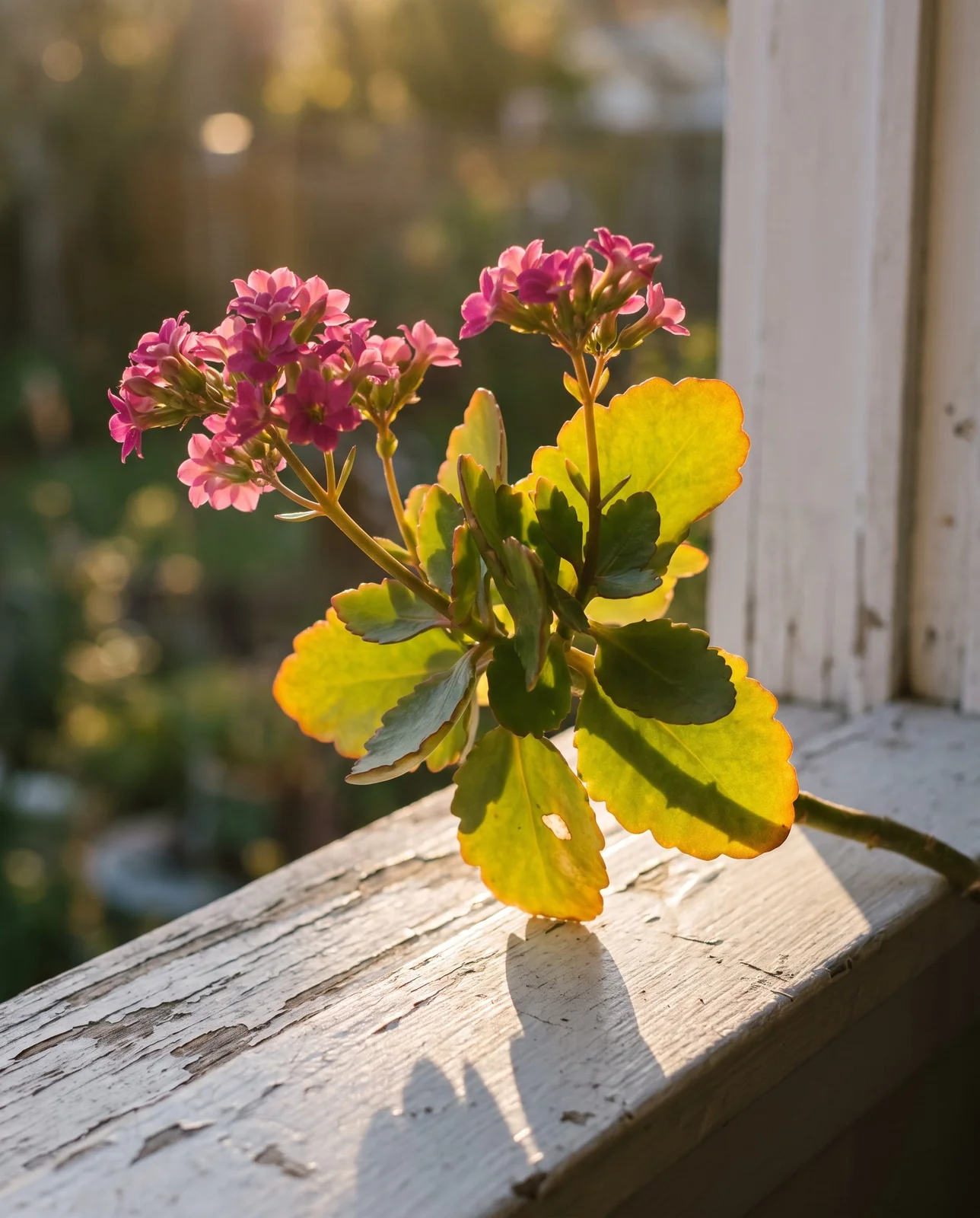
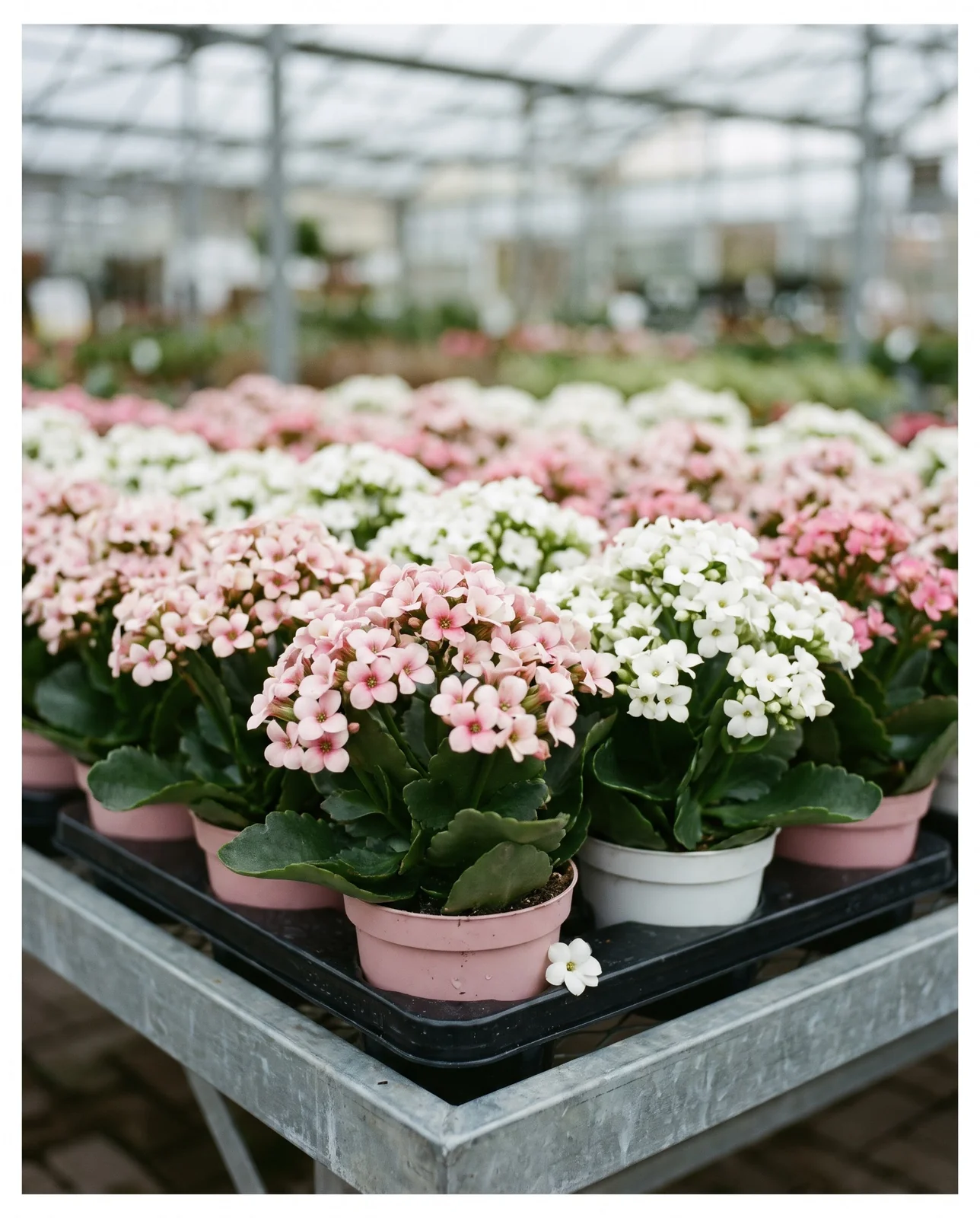
The individual flowers are small and salverform: a narrow, fleshy tube that flares into four petal lobes at the mouth. Breeders have pushed that simple structure into double forms carrying as many as 26 petals per bloom, which read as miniature roses in a tight cluster. Temperature decides how long the display holds. Clemson's numbers for a plant already in flower are 45 to 65 degrees Fahrenheit at night and 50 to 70 during the day, cooler than most people keep a living room in December. A warm room runs the florets through their cycle faster, so a pot above a radiator dries and fades weeks before one on a cool windowsill.
Height and spread
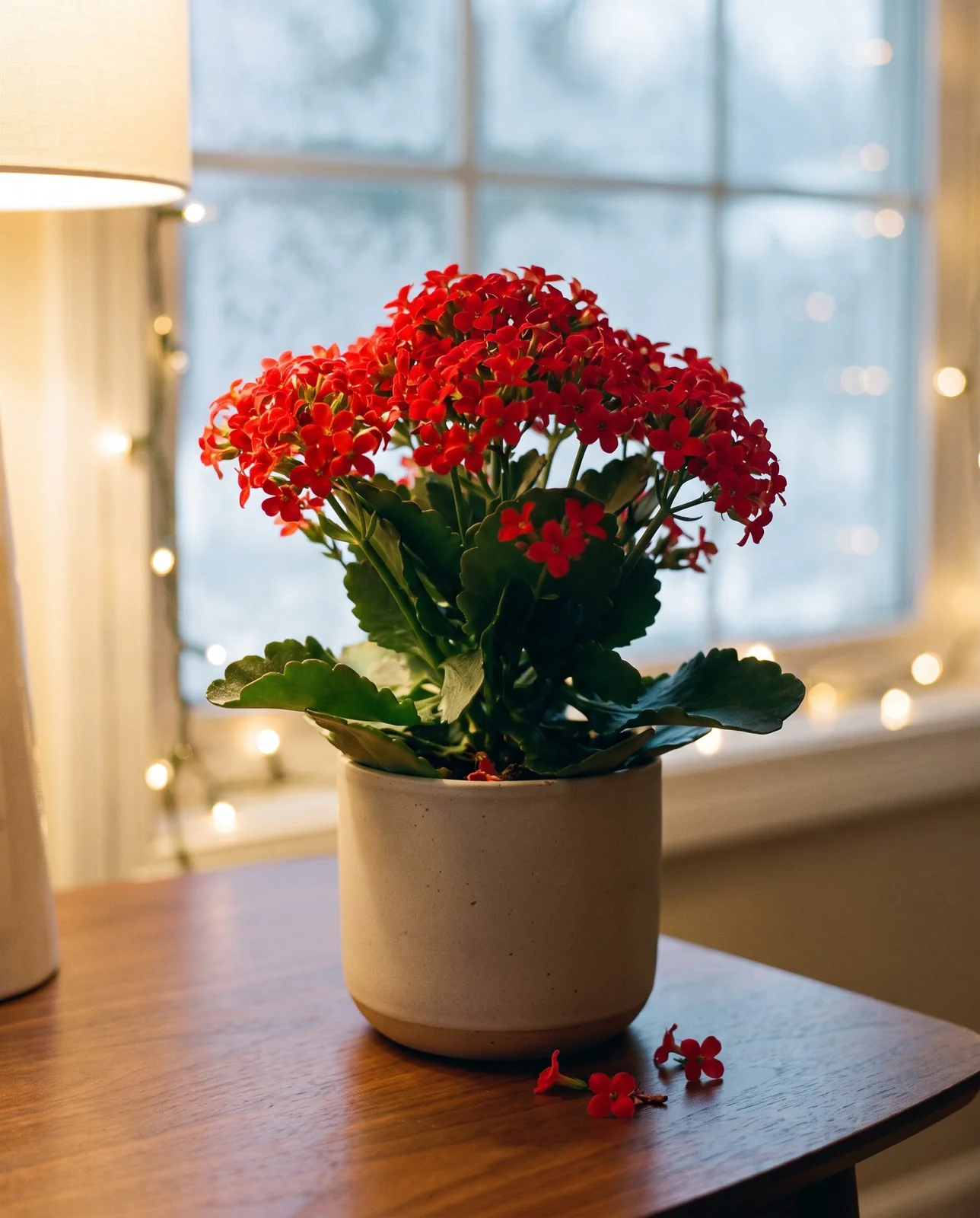
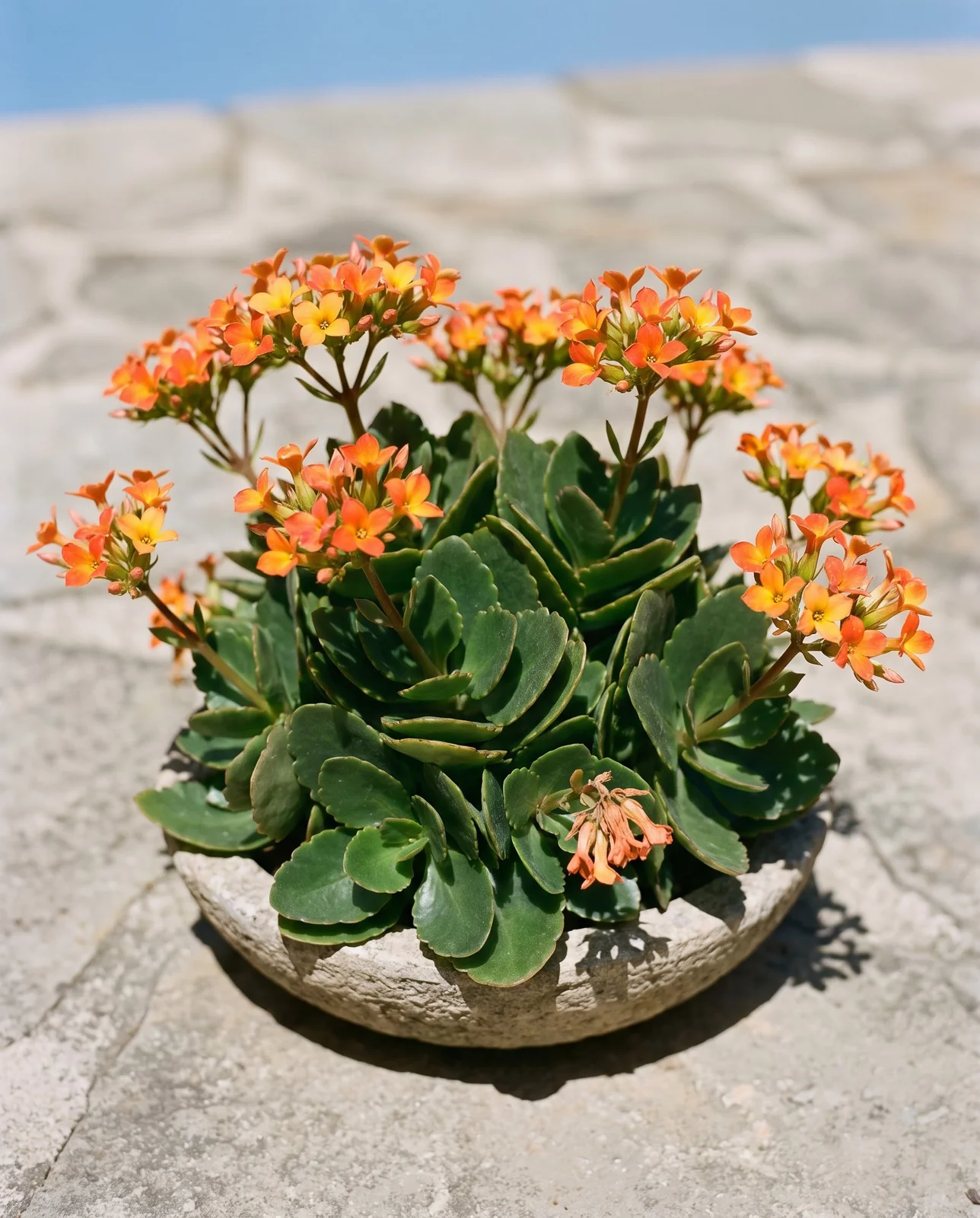
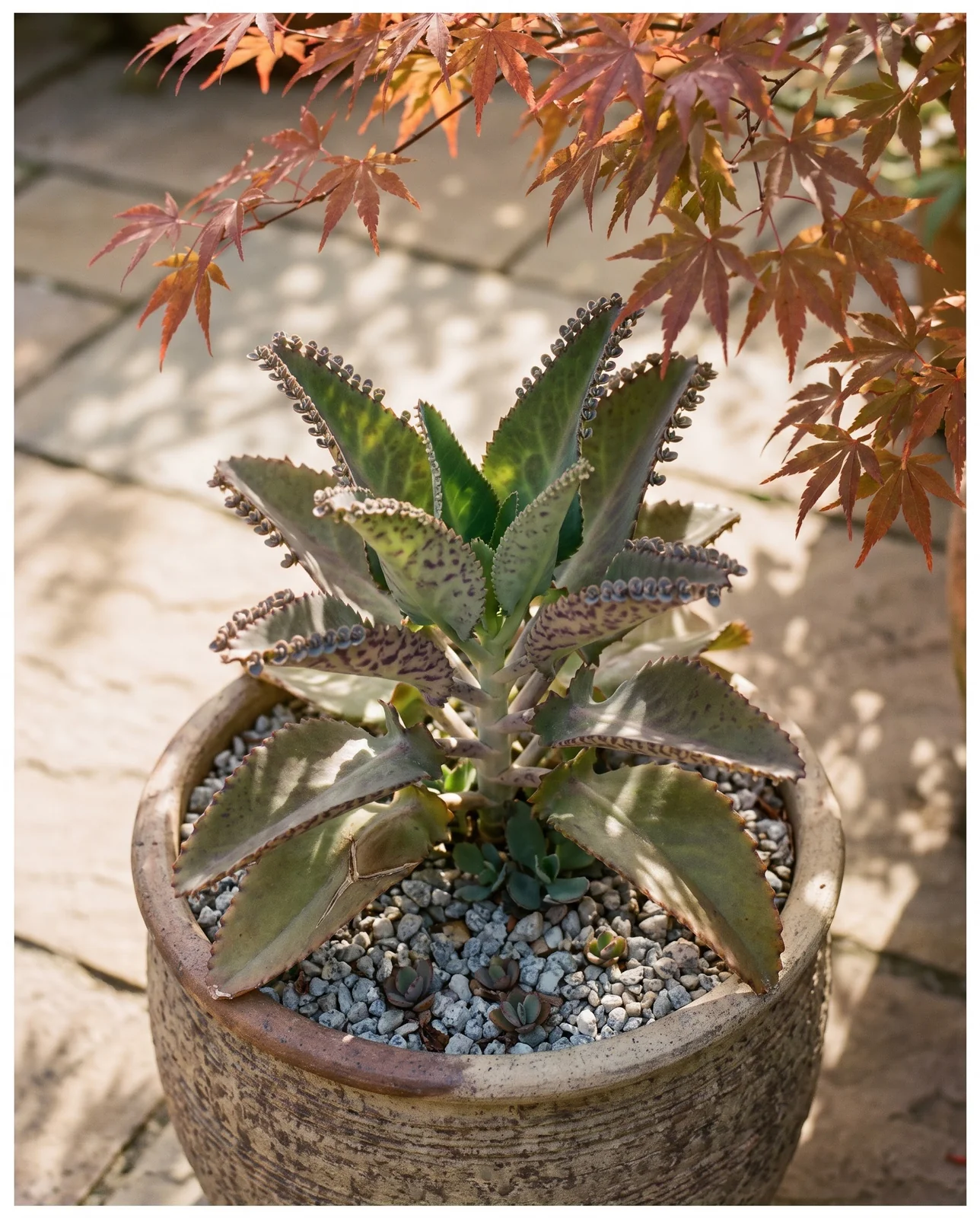
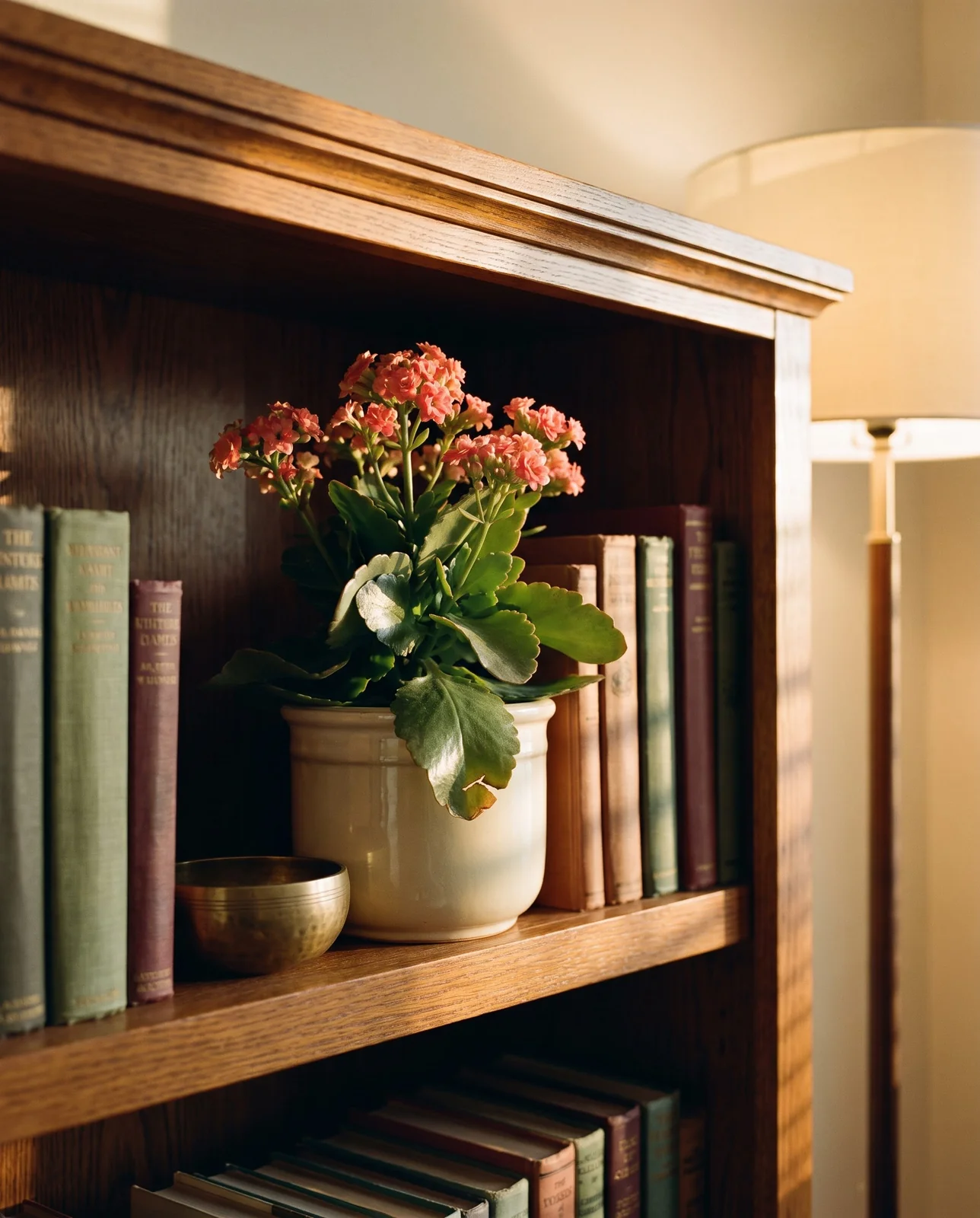
In a pot indoors, Kalanchoe blossfeldiana holds a compact mound of 6 to 18 inches tall and 6 to 12 inches wide at maturity, per NC State Extension, small enough that a windowsill suits a fully grown plant. Named cultivars run smaller still: the double-flowered 'Queen Jodie' tops out around 12 inches, which puts it on a narrow sill or a tabletop planter. The foliage species in the genus are a different proposition. Kalanchoe daigremontiana, sold as Mother of Thousands, sends up an erect, unbranched stem to 3 feet with a spread of 1 to 2 feet, and it does not stay on a windowsill for long.
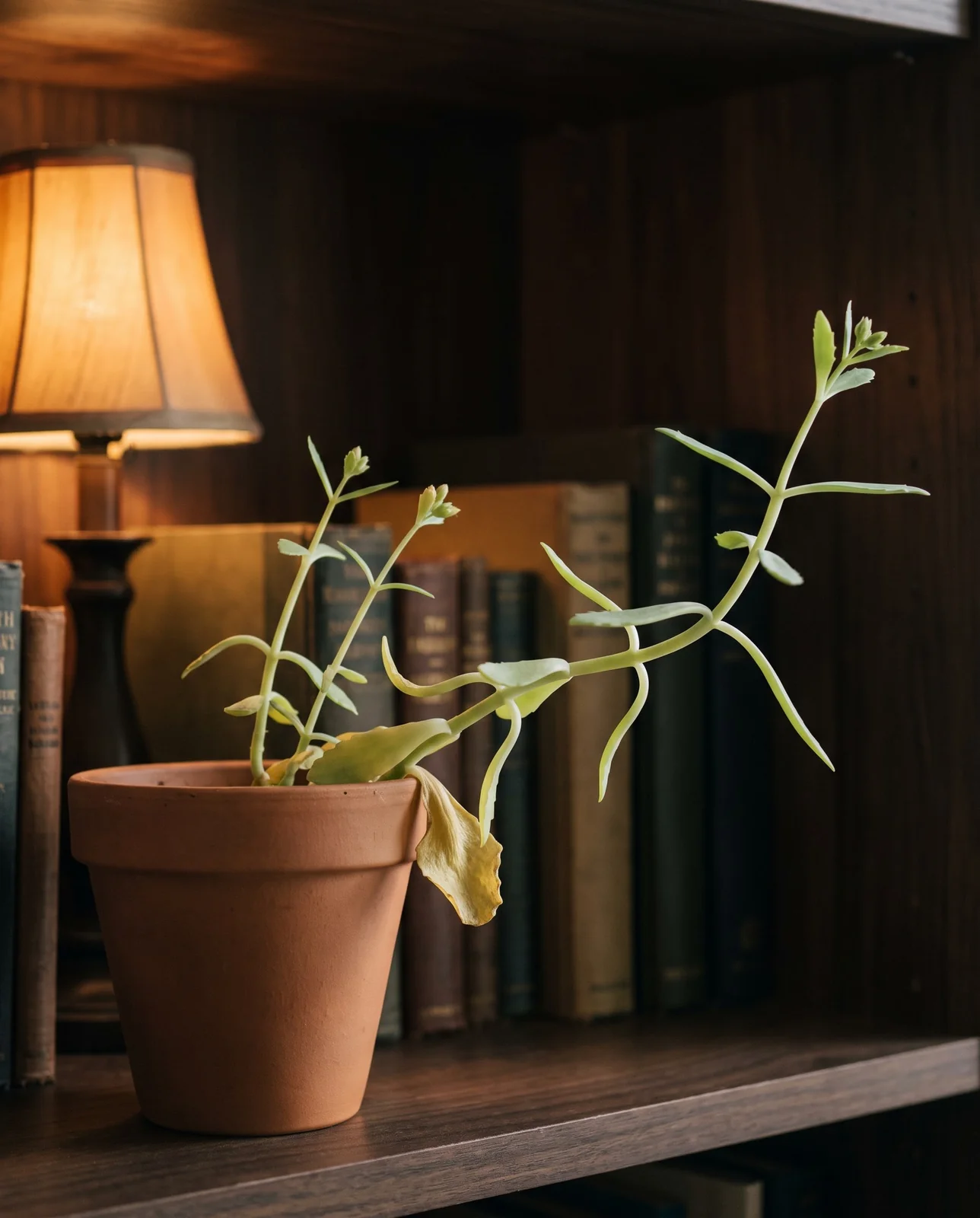
Those published dimensions assume the plant is getting enough light. Below its minimum, a kalanchoe stops building compact leaves and pushes stem instead, reaching its upper foliage toward whatever light there is. The nodes space out, the mound opens up, and the stalks end up too thin to hold a developing flower cluster upright. Nothing but brighter light restores the proportions; pruning and chemical growth retardants do not.
Light
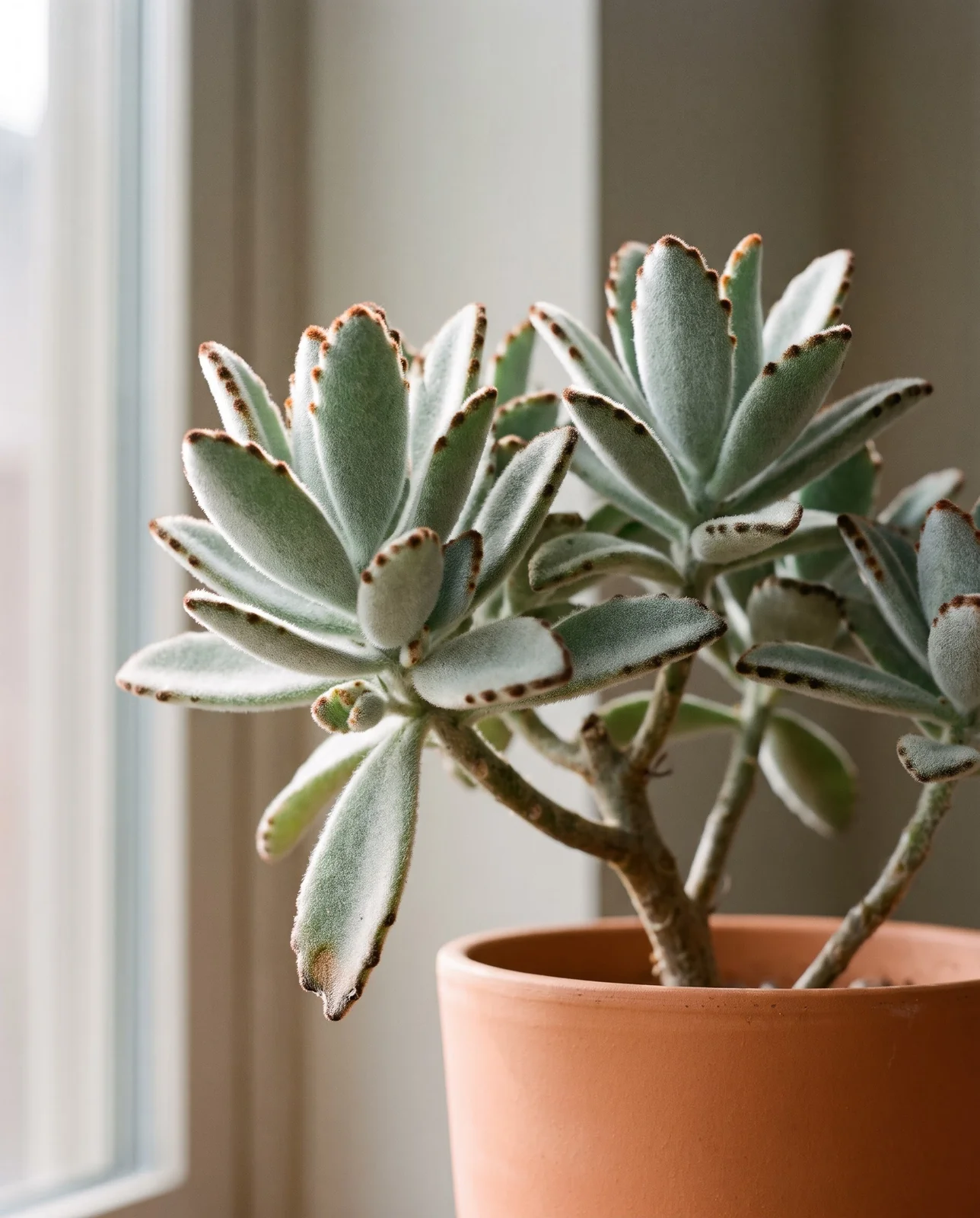
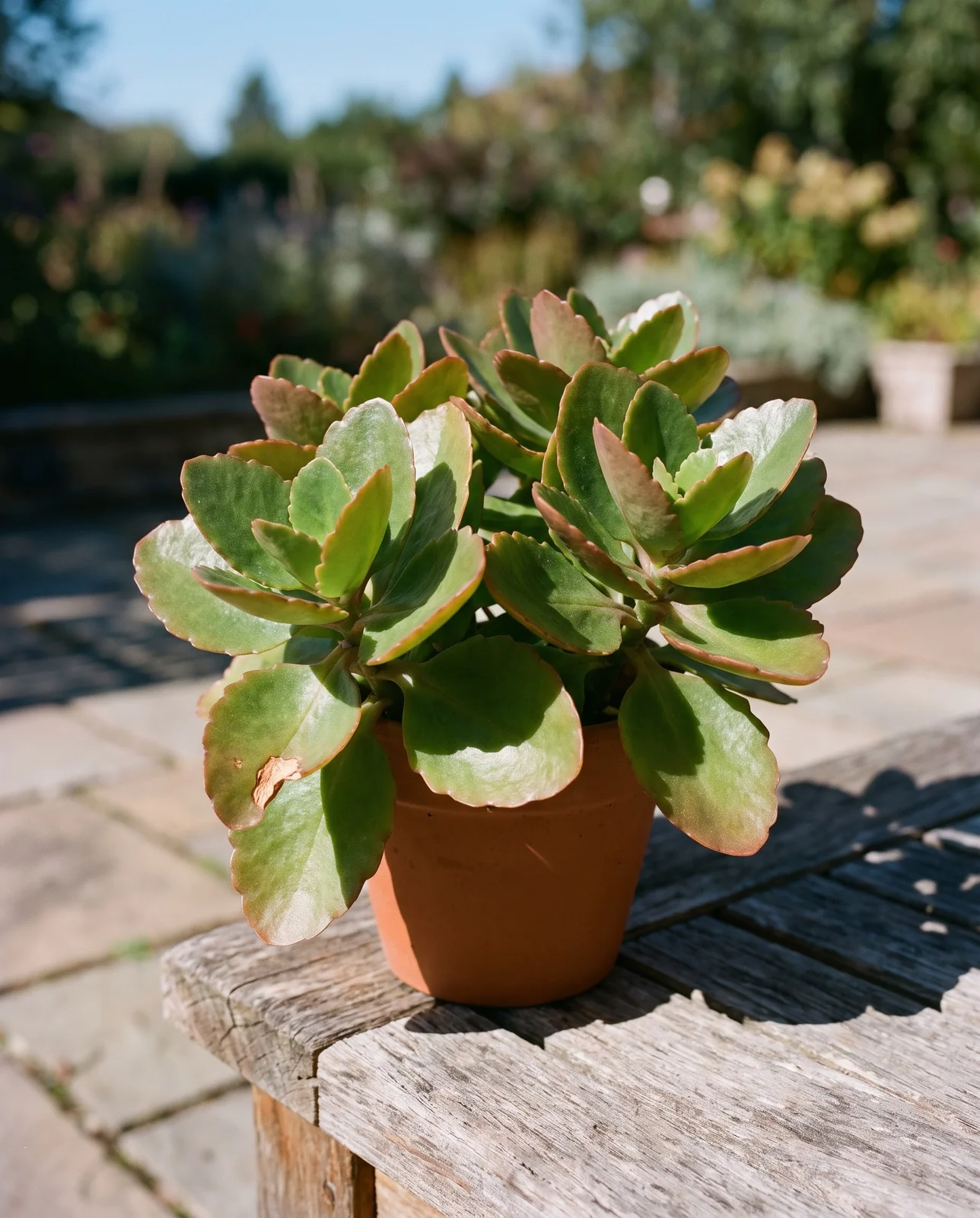
Give a kalanchoe six to eight hours a day of bright light, either indirect or direct morning sun. Through a northern winter, an unshaded south window is rarely too much. Through a southern summer, intense sun through the same glass can scorch leaves, and shielding the plant from midday glass heat is what keeps foliage color intact and tissue from collapsing. NC State Extension states the tradeoff plainly for the velvety species: panda plant, Kalanchoe tomentosa, burns in full hot sun and grows weak and stretched without enough of it.
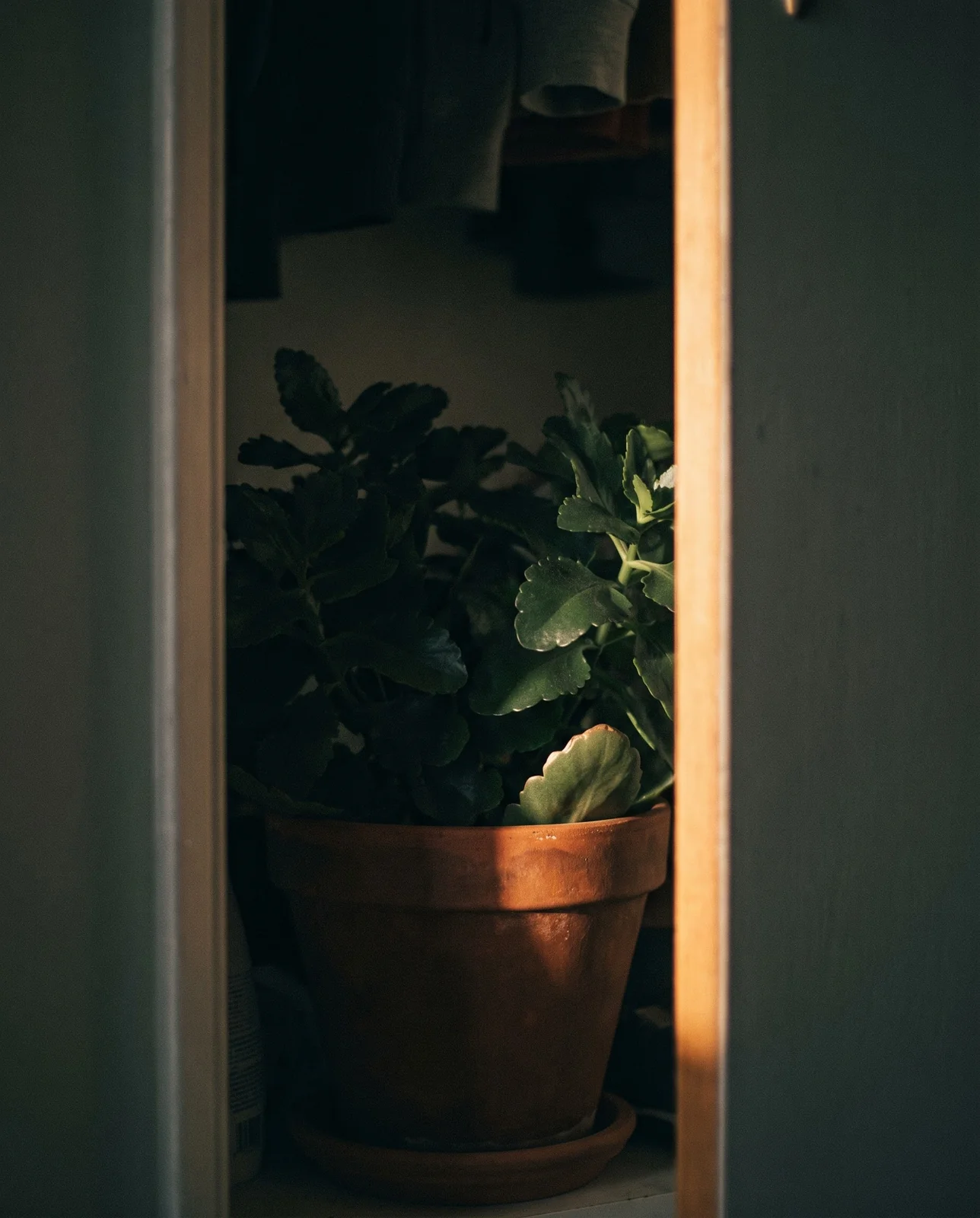
Etiolation is the failure you will actually see. On a dim shelf, in an interior hallway, or three feet back from the window, the plant quits making tight leaves and runs stem: tall, spindly, with bare gaps where foliage should be. It looks like hunger, and that is the trap. Gardeners reach for fertilizer and get more of the same soft, watery growth, faster. The only correction is more light. Move the pot onto an unobstructed east, west, or south windowsill, then cut the stretched stems back so fresh branches break from the lower nodes.
Water
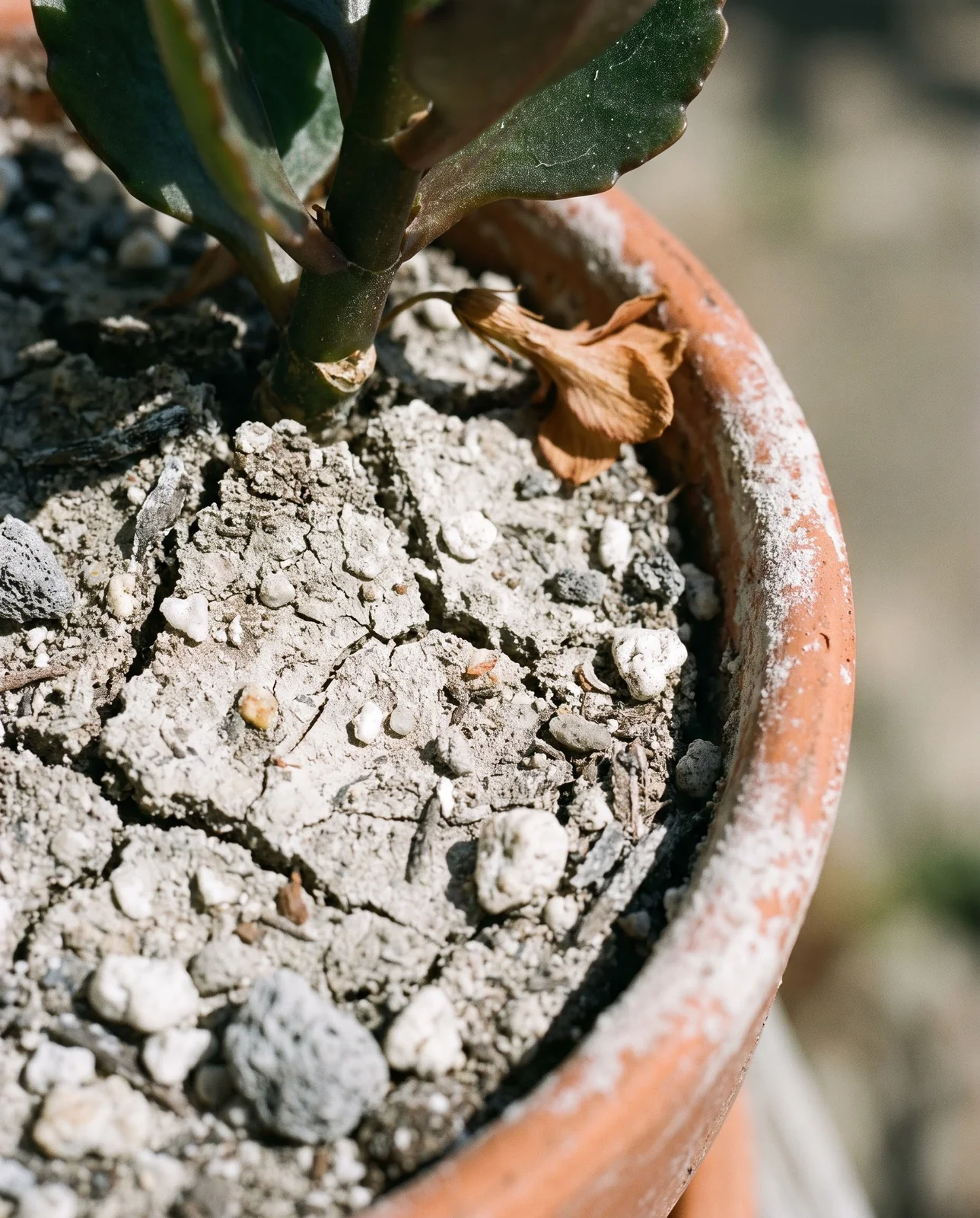
Kalanchoe keeps its water reserve in thick leaves and a fibrous root crown, which buys it weeks of neglect and makes it easy to kill with kindness. Iowa State University Extension frames the interval simply: let the potting soil dry between waterings, but not so far that the lower leaves wrinkle and go limp. When it is time, water properly, soaking the root ball until moisture runs freely from the drainage holes, then pour off everything that collects underneath.
That last step is not housekeeping. Standing water kills more kalanchoes in American homes than any pest or disease, and Iowa State names the specific culprit: the decorative foil sleeve the plant came wrapped in at the store, or a saucer left full of drainage water. Roots sitting in stagnant water run out of oxygen, and the fungi already present in the mix take the weakened tissue from there. The damage shows first in the lower leaves, which go translucent and soft, turn pale yellow, and drop at a touch, with blackened mush at the soil line by then.
Soil and pH
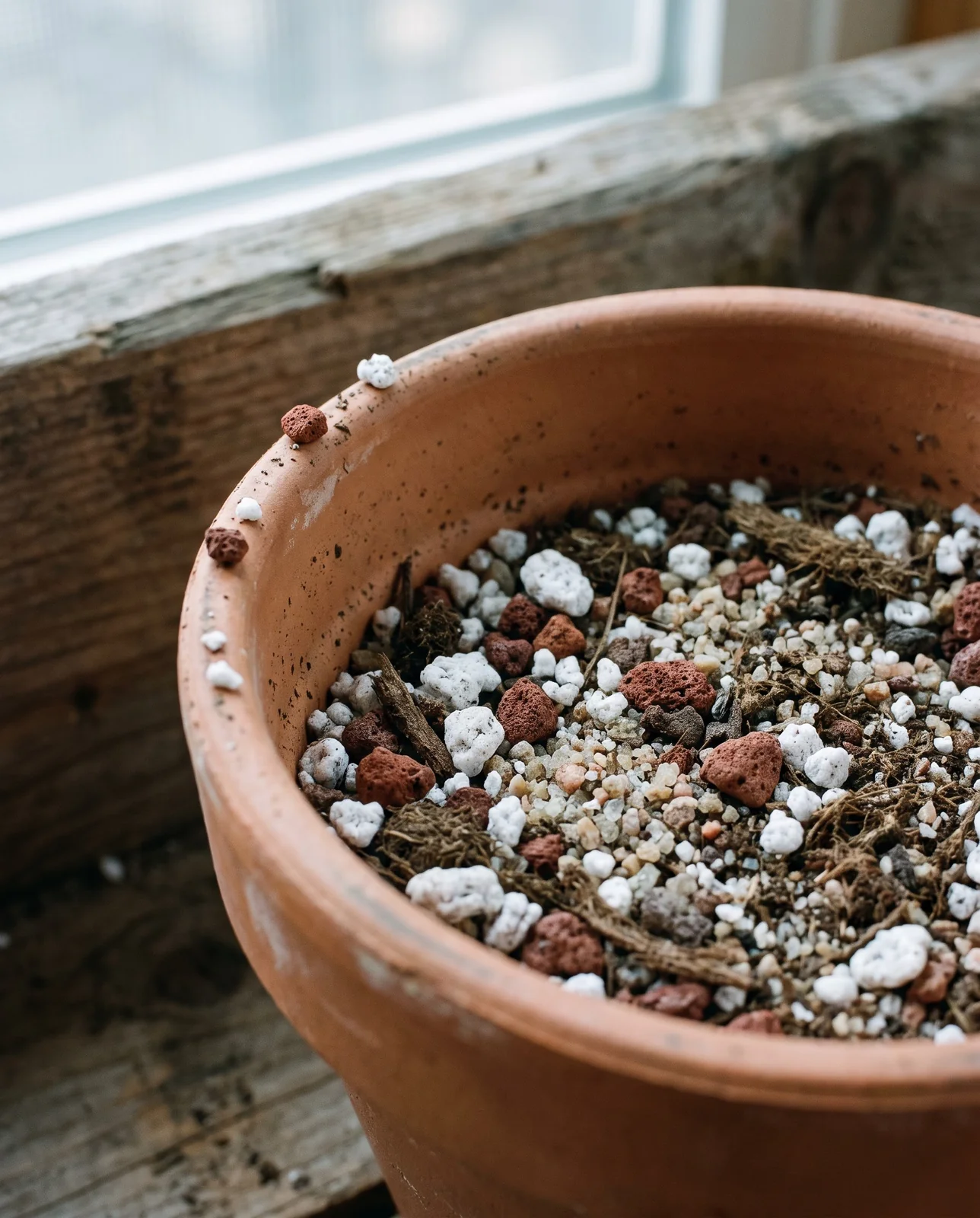
Kalanchoe wants a mix that drains the moment water hits it and lets air back to the roots between waterings. Bagged houseplant soil carries enough peat moss to hold moisture far longer than a succulent root wants, so it needs opening up. Clemson University Extension publishes two recipes, one for each job. A plant in a pot you intend to carry through to a second bloom goes into 60 percent peat moss and 40 percent perlite, enough peat to keep an established root system evenly moist without letting the mix pack down around it. Cuttings go into 50 percent peat and 50 percent perlite, lighter and airier, because emerging root hairs need oxygen more than they need a moisture reserve. Feed actively growing plants once a month with a standard houseplant fertilizer.
USDA hardiness
Kalanchoe is a tender perennial succulent that lives outdoors year round only where frost does not reach it. NC State Extension puts the winter-hardy range at USDA zones 9 through 12, where the plant works as a groundcover or a rock garden accent. In zone 8 and north, it is a houseplant that may spend the warm months on a patio, and nothing more.
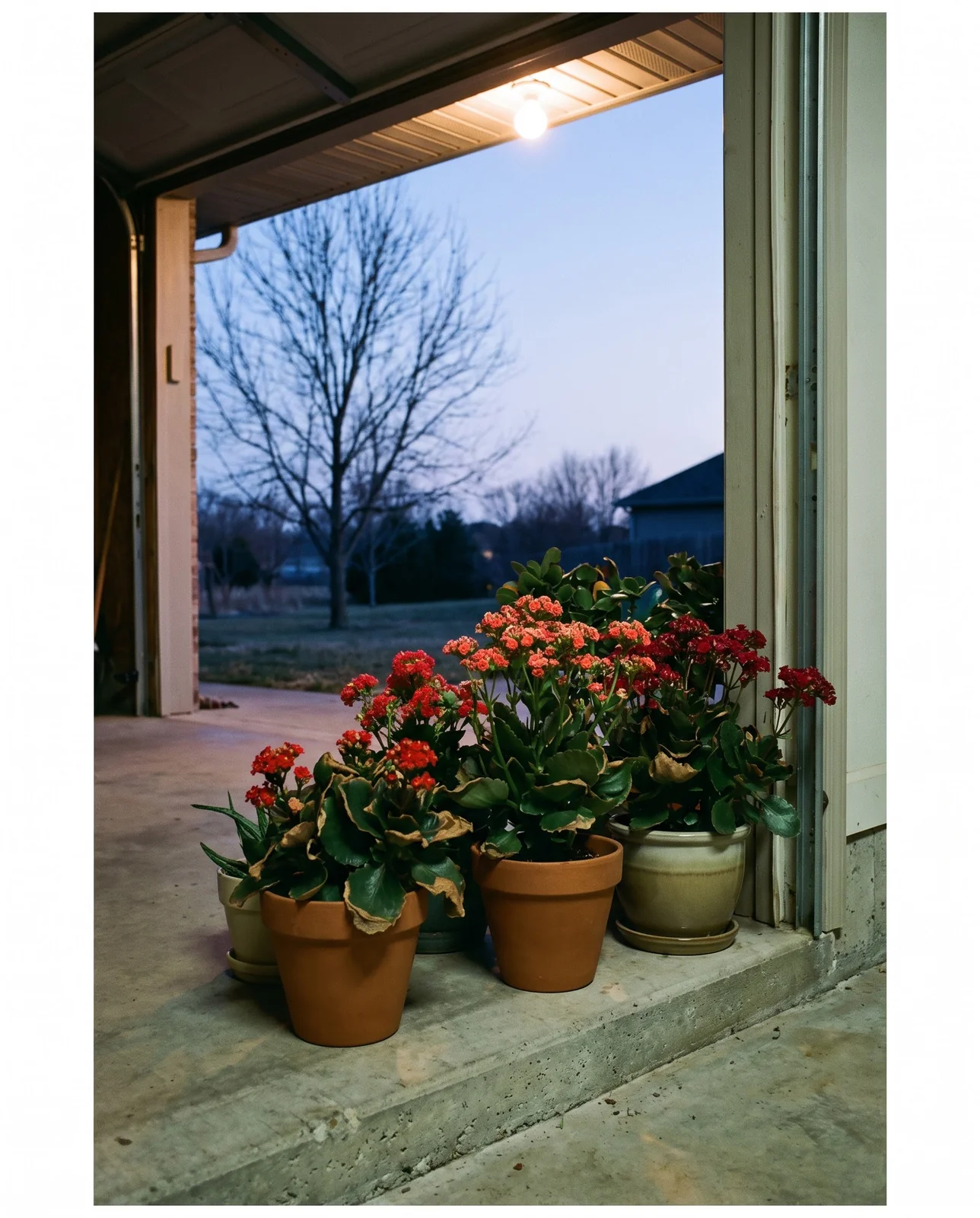
Two different temperatures govern the trip back inside. NC State advises bringing potted kalanchoes in before autumn temperatures fall below 50 degrees Fahrenheit, and Kalanchoe blossfeldiana, which has no frost tolerance at all, should not be left out past 45. Once indoors, separate the question of comfort from the question of bloom. A house held between 60 and 85 degrees keeps foliage growing well all year. Holding an open flush of flowers longer takes cooler air than that, 45 to 65 at night and 50 to 70 by day, which usually means the coolest bright room in the house.
Propagation and longevity
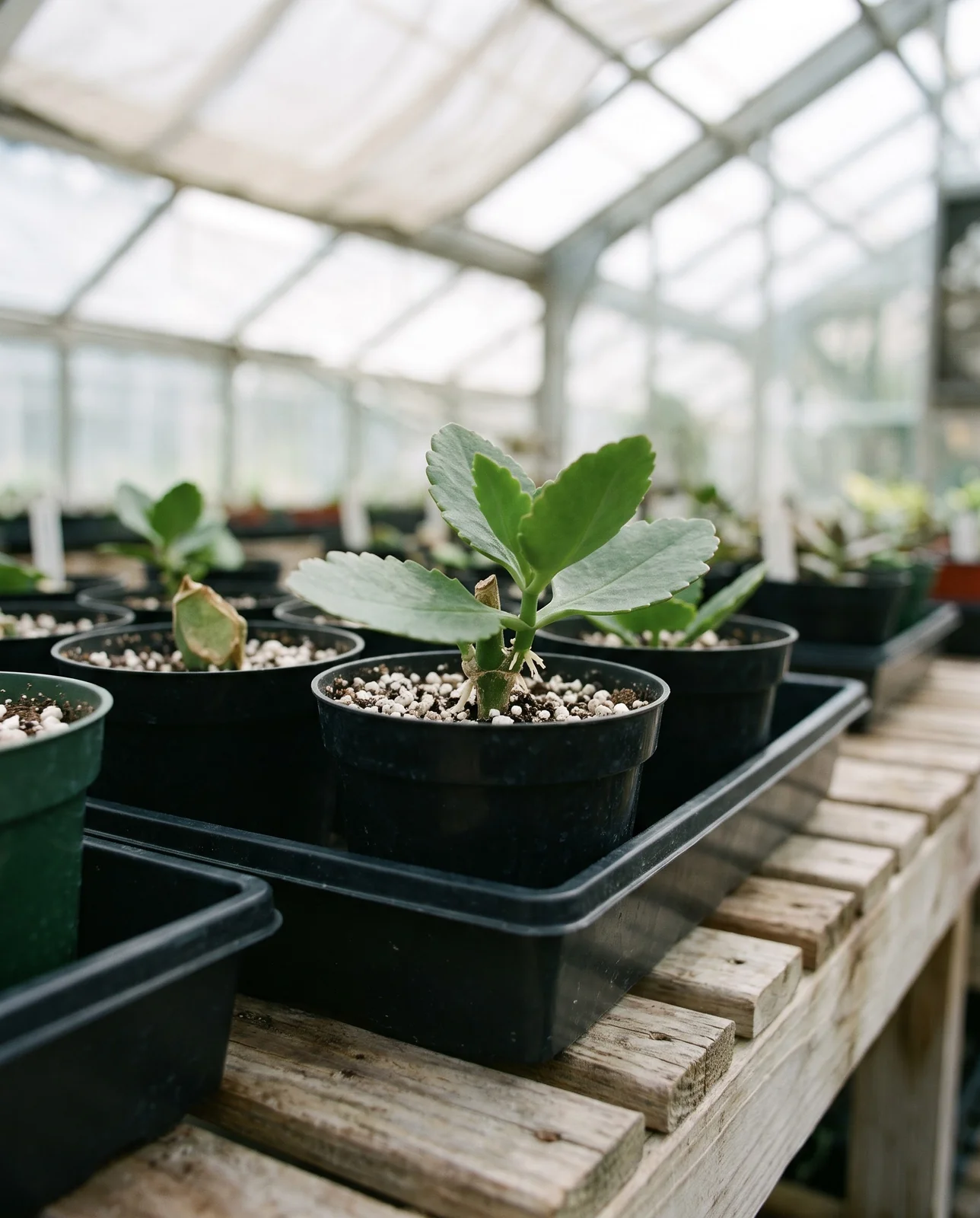
Kalanchoe blossfeldiana propagates from terminal stem-tip cuttings taken once flowering has finished. Clemson Extension specifies cuttings 2 to 3 inches long carrying two pairs of mature leaves, and is equally specific about which shoots to take: vegetative ones root far better than flowering ones, since a blooming stem spends its energy on the flowers rather than on new roots. Set the cuttings in the 50 percent peat and 50 percent perlite mix and expect roots established enough to pot on in 14 to 21 days.
Identifying Mother of Thousands vs. Mother of Millions
Both of these kalanchoe are prolific plantlet producers sold under names that blur together in casual use, and at a glance the two do look alike. Four traits separate them reliably.
Mother of Thousands: Kalanchoe daigremontiana. Mother of Millions: Kalanchoe delagoensis.
Mother of Thousands: broad, oblong-lanceolate leaves with serrated margins. Mother of Millions: narrow, cylindrical, pencil-like tubular leaves.
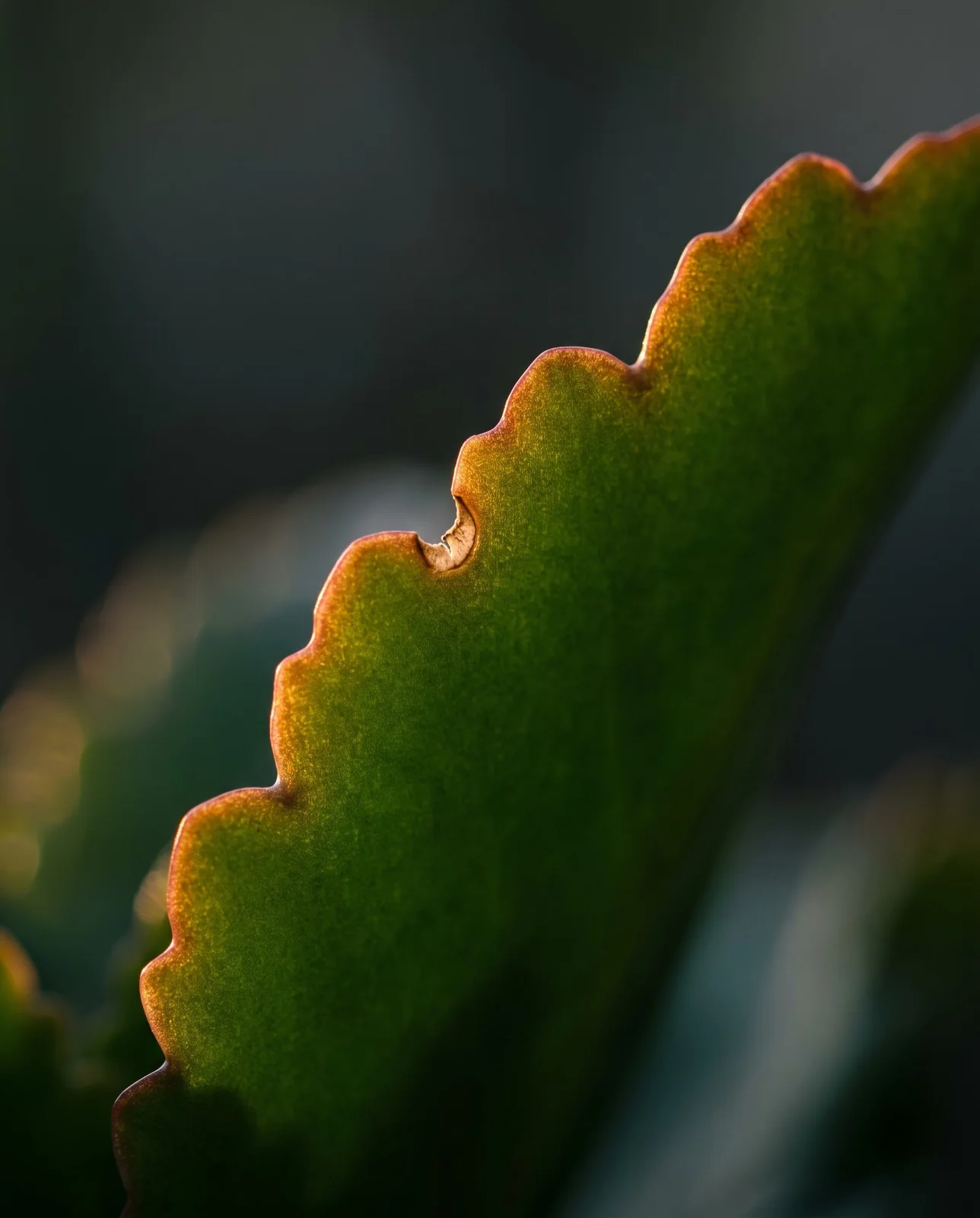
Mother of Thousands: forms continuously along the entire scalloped leaf margin. Mother of Millions: forms mainly in clusters at the notched tip of each leaf.
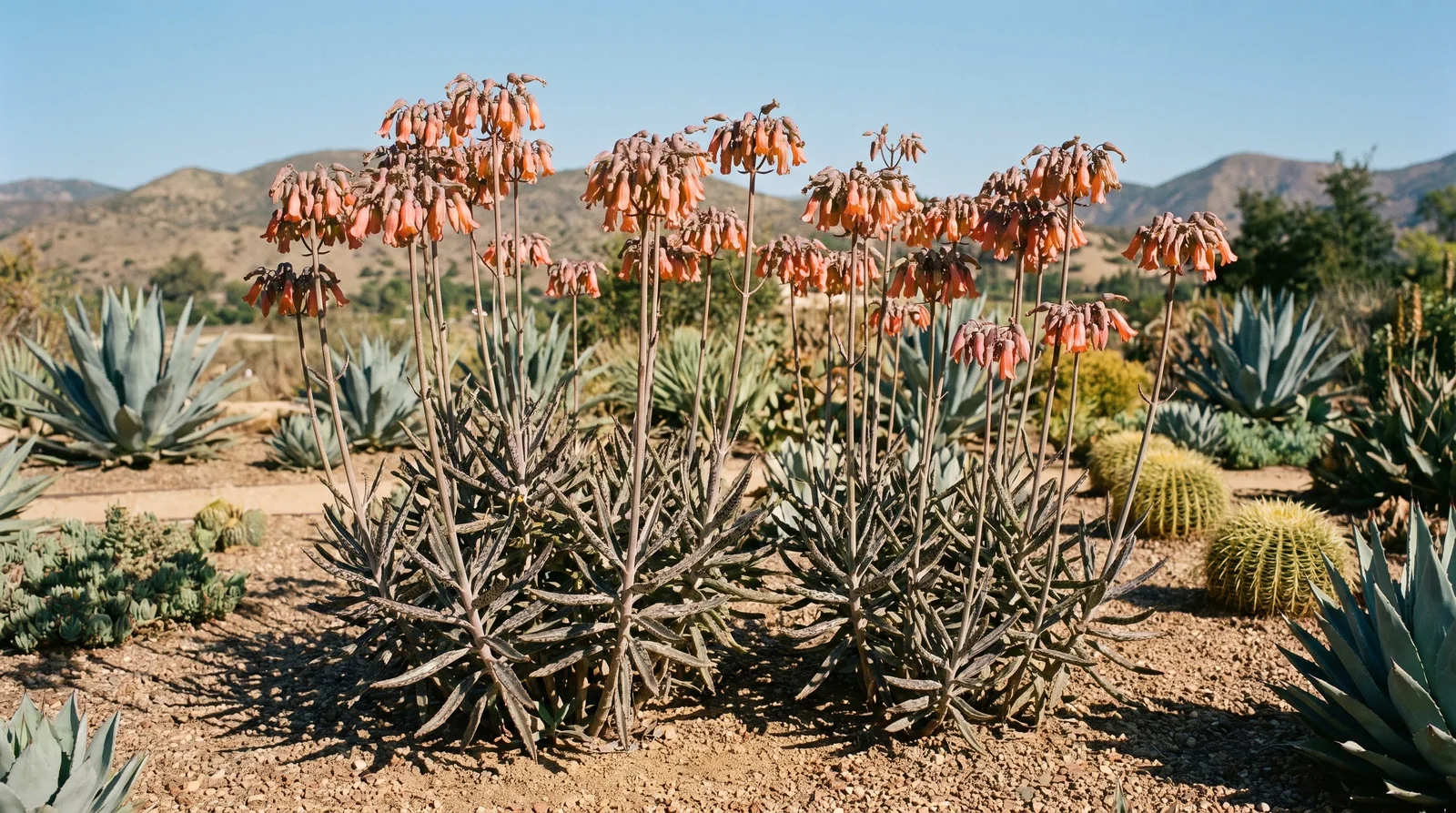
Mother of Thousands: a broad, spreading succulent up to 3 feet tall and 2 feet wide. Mother of Millions: erect and slender, with tall stems carrying orange-red tubular flower clusters.
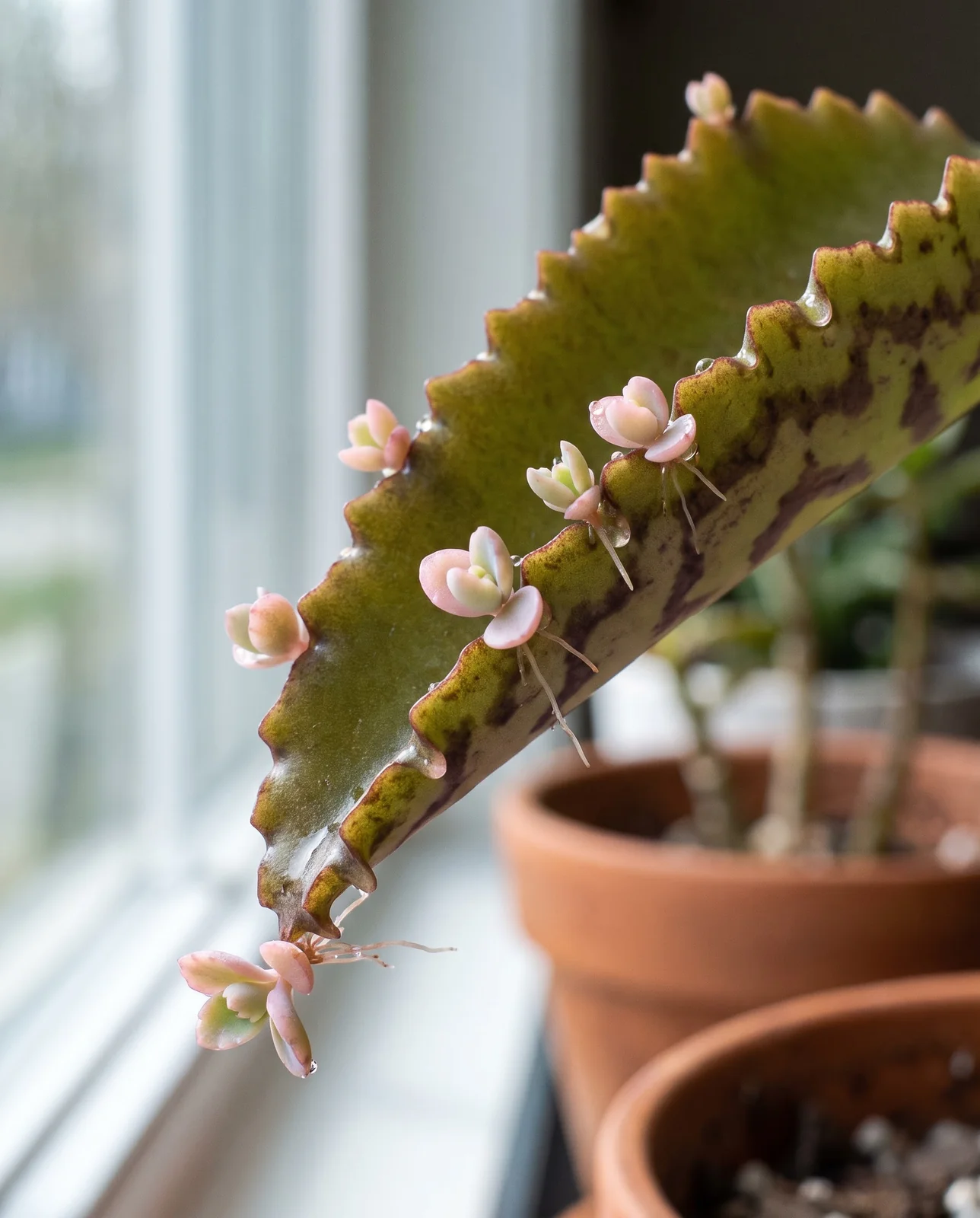
Other species in the genus skip cuttings entirely. Kalanchoe daigremontiana lines the scalloped edges of its broad leaves with hundreds of miniature plantlets, as NC State Extension documents, each one already carrying tiny roots before it lets go and drops to the ground below, where it roots on bare soil. It is also monocarpic: the plant flowers once and then dies. Longevity for the florist type is a separate question, and Iowa State Extension answers it more bluntly than most care sheets are willing to. Because forcing a second bloom indoors is genuinely difficult, plants can simply be discarded once the first flush fades. Plenty of owners do exactly that.
How to make kalanchoe rebloom
Reblooming comes down to giving the plant nights long enough to register as short days. Under ordinary household conditions it never gets them: a ceiling light at nine in the evening, a reading lamp, a television across the room, and the plant reads the day as still running. The treatment starts around October 1 and takes six weeks, and it does not forgive shortcuts.
Kalanchoe seasonal care and reblooming calendar
Kalanchoe blossfeldiana is a short-day plant: it sets flower buds only after a run of long, uninterrupted nights. This calendar runs from the dark treatment through the growth that follows it.
From October 1, the plant needs exactly 14 hours of continuous, unbroken darkness every night for at least six consecutive weeks, as NC State Extension specifies. In practice that means a closet with the door shut, or an inverted cardboard box over the pot, from 6:00 PM to 8:00 AM daily, without a night off. Any stray light during the dark period resets the plant's hormonal photoperiod trigger. Days are the easy half: put the plant back on a bright windowsill and let it work.
Why won't my kalanchoe rebloom?
Failure to rebloom almost always traces back to the dark treatment itself rather than to a disease. Work down this list in order.
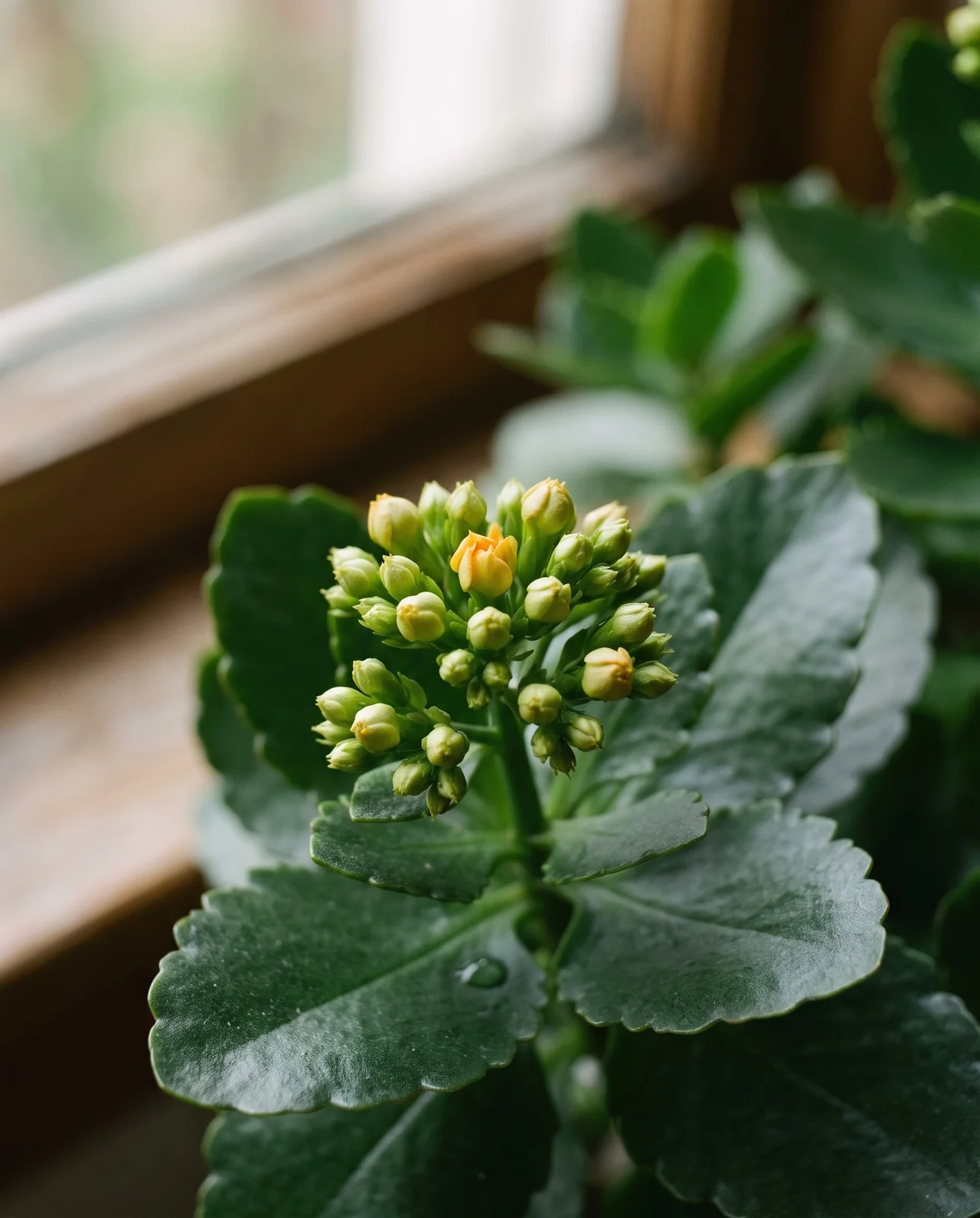
Temperature during the forcing weeks matters as much as the darkness. Iowa State Extension puts the targets at 65 to 70 degrees Fahrenheit by day and 60 to 65 at night, and Clemson warns that anything above 80 during the long night period causes a heat delay that stalls bud initiation, so a warm closet through a late October hot spell can waste the whole six weeks. Around mid-November, tight green bud clusters appear at the stem tips. The darkness has done its job at that point: return the plant to normal room conditions and expect open flowers by roughly January, about 12 weeks from the first long night.
Three-year kalanchoe lifecycle timeline
Year one is the nursery's work: the grower has already run the plant through its dark treatment, so it arrives budded or in flower. Kept in bright indirect light and watered only once the top soil has dried, that first flush holds 4 to 8 weeks before fading by early spring, after which the plant turns to leaf rather than repeating. Year two is the home cycle, and the odds change once the greenhouse is out of the picture. The plant grows through spring and summer in a sunny window or outdoors, then goes into 14-hour dark nights from October 1 for 6 weeks to set buds again; flowers open around January, usually a lighter showing than the forced original. Year three and beyond is a fork. Repotting into a 60/40 peat-perlite mix keeps an aging plant going, or 2 to 3 inch stem cuttings rooted in a 50/50 mix start a fresh one. Iowa State Extension notes that many home growers do neither and simply replace the plant rather than keep running the light cycles a kalanchoe needs to rebloom year after year.
Fragrance
Kalanchoe flowers have no scent. NC State Extension records them as unscented, fleshy, and tubular, and a windowsill of them in full January bloom smells of nothing at all. In its native range the plant pulls pollinators with bright petal color instead of with volatile aromatic compounds.
Toxicity and pet safety
Every part of a kalanchoe, flowers, leaves, and stems alike, contains bufadienolides (bufodienolides), the cardiac glycosides that both the ASPCA Animal Poison Control Center and NC State Extension name as the toxic principle. In a household with a cat that chews houseplants, that puts it among the plants worth checking against a guide to safe flowers for dogs and cats before anything new comes through the door.
The phrase cardiac glycoside sounds worse than the case record reads. ASPCA poison control data on real exposures in dogs and cats shows the picture is overwhelmingly digestive rather than cardiac: vomiting in 57 percent of cases, lethargy and depression in 42 percent, diarrhea in 29 percent. Abnormal heart rhythms turn up only rarely, and the ASPCA records zero deaths in dogs or cats from kalanchoe. For people, the NC State caution is about skin rather than swallowing: sap on the hands can raise contact dermatitis, so gloves are worth wearing when pruning or repotting, and any ingestion of plant material warrants an immediate call to poison control.
In the vase and dried
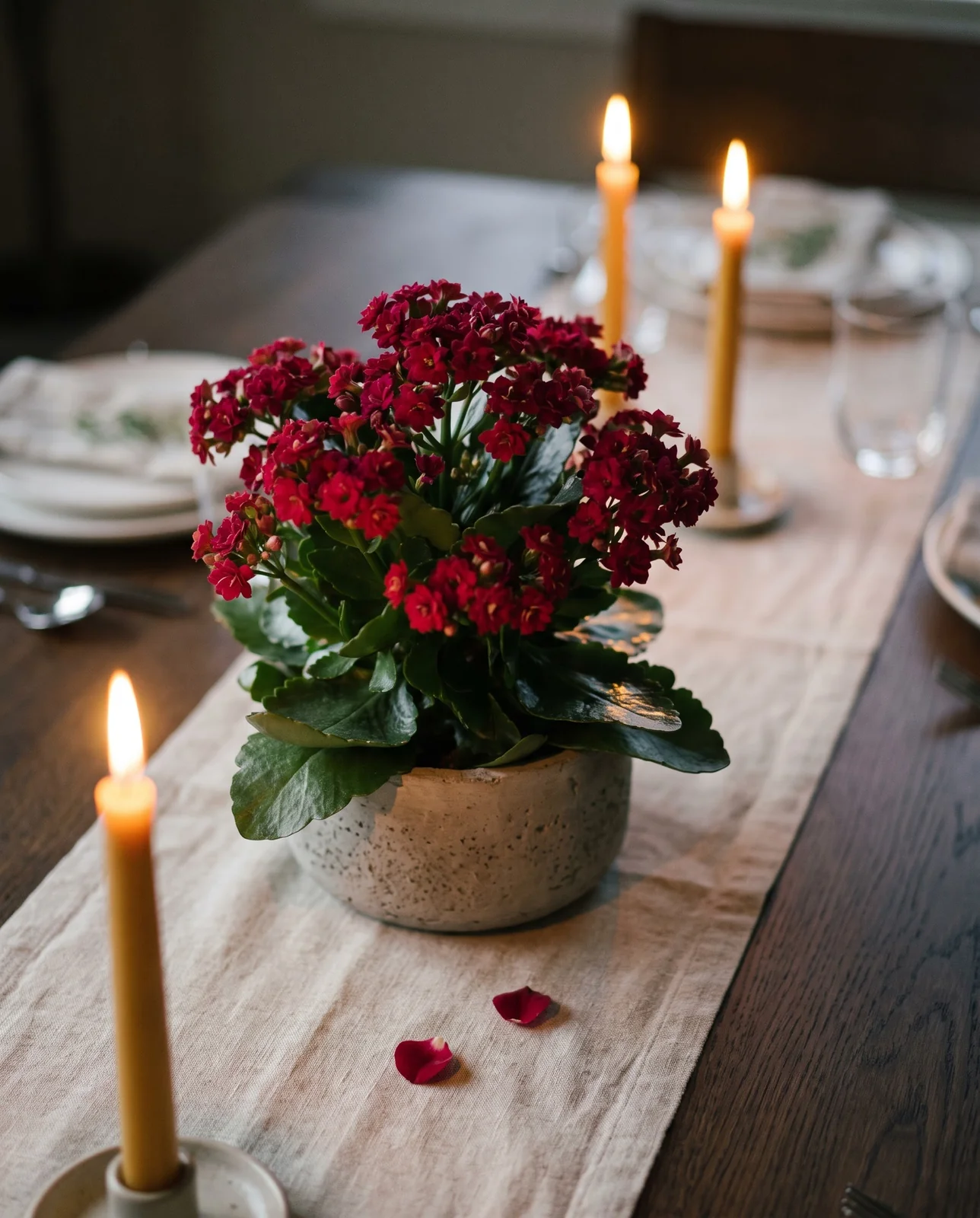
Kalanchoe is grown and sold as a living potted plant, never as a cut flower, and the reason is in the stem. Thick succulent tissue does not draw water up a severed stem the way a rose or a tulip does, so a cut spray wilts early in the vase. Left on its roots, the same flush runs four to eight weeks, which makes the intact pot a far more durable indoor display than any cut arrangement.
Pests and diseases
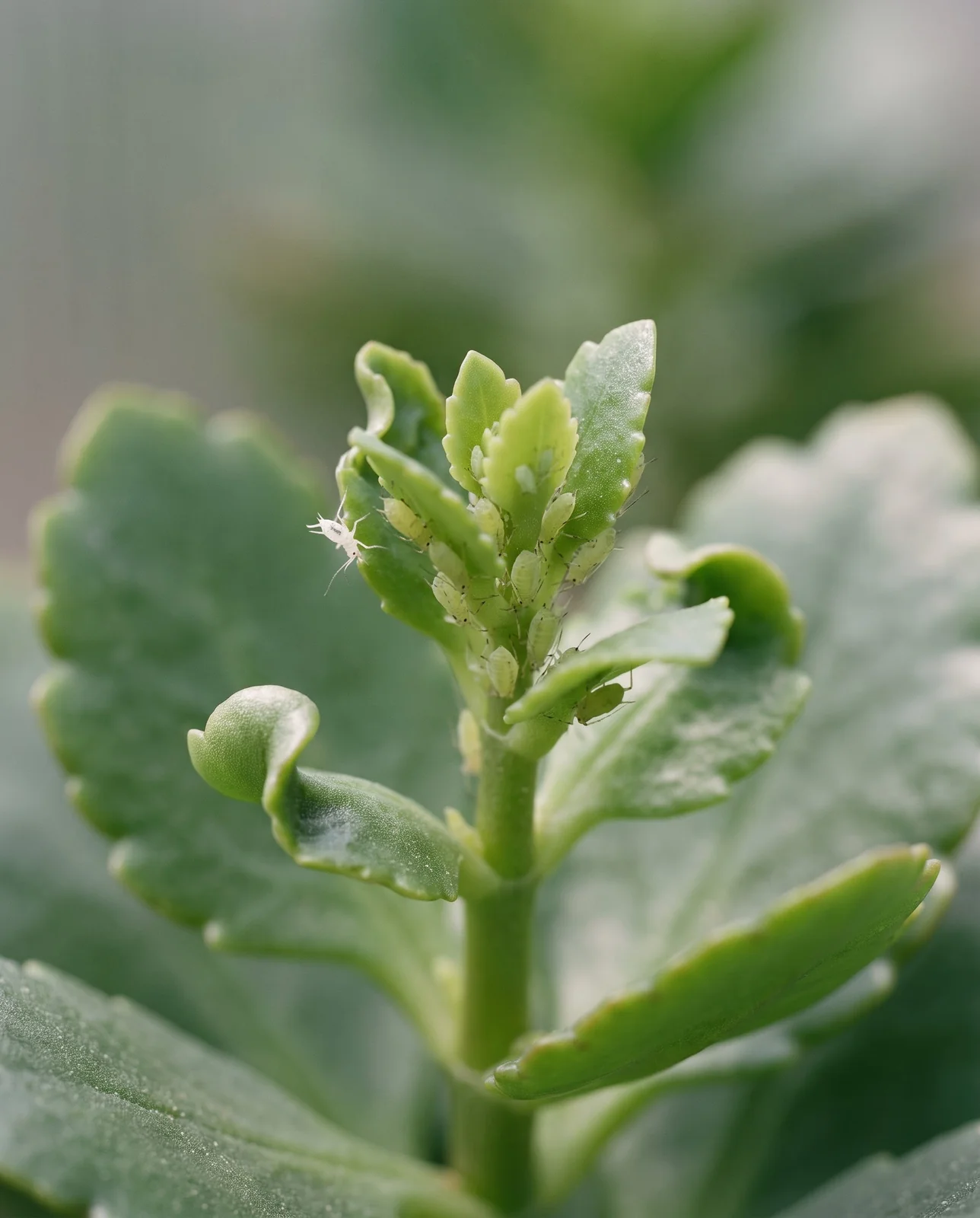
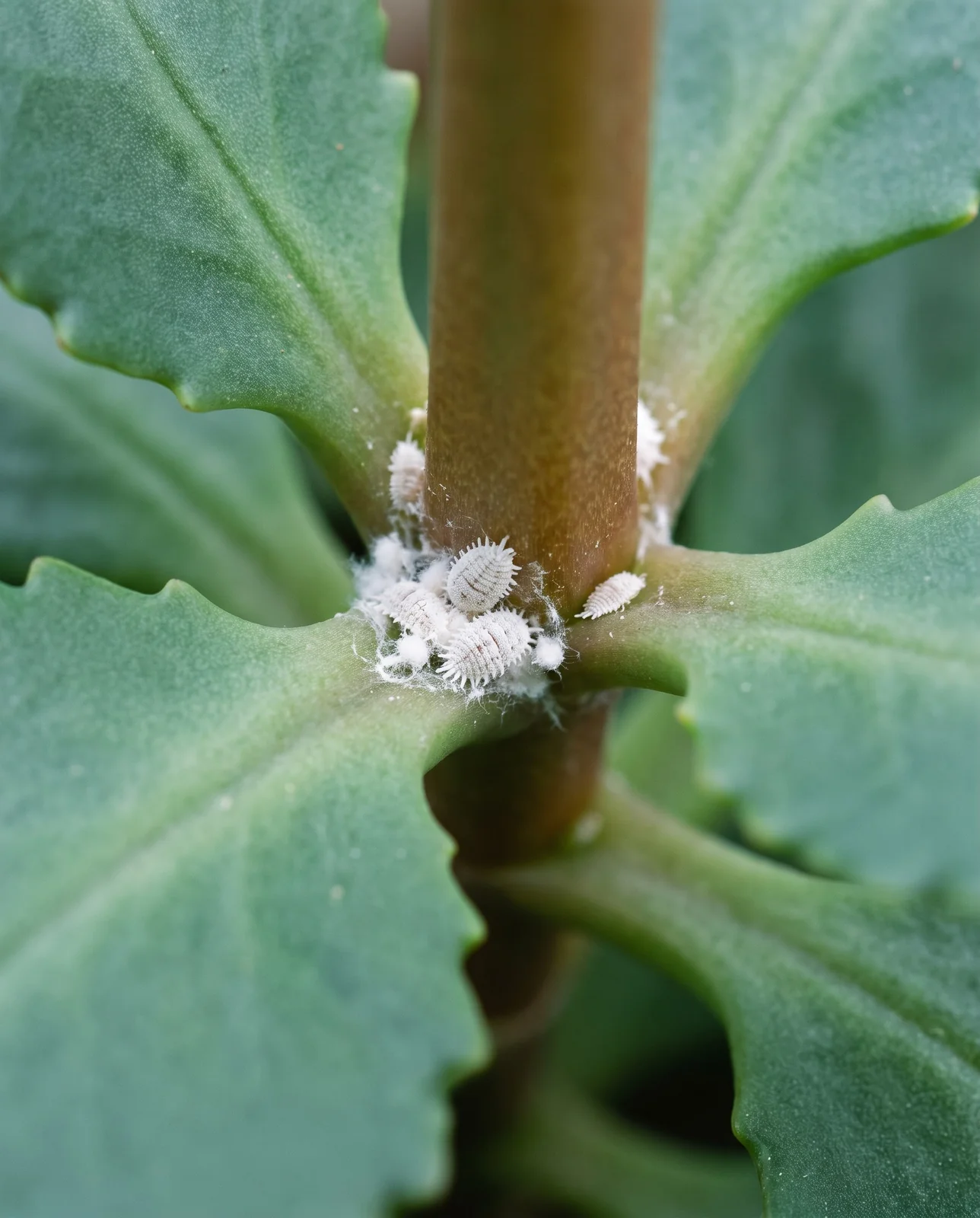
Indoor kalanchoes attract a short, predictable list of sap feeders, and Clemson Extension names three: mealybugs, aphids, and brown scale. Mealybugs are the ones people find first, cottony white clusters wedged into leaf axils and pressed against the undersides of foliage, where they drain sap and leave sticky honeydew behind. On a plant this size the fix is mechanical: wipe each colony off with a cotton swab dipped in rubbing alcohol. Aphids on soft shoot tips and scale on older stems respond to insecticidal soap sprayed in the early morning.
Common kalanchoe growing problems, ranked by forum frequency
Ranked by how often each issue comes up in grower forums, most frequent first. No percentage figures accompany this ranking, so the order stands on its own rather than on a share of total posts.
Overwatering, and pots left standing in waterlogged decorative sleeves. Let the soil dry between waterings and empty saucers straight away.
Too little indoor sunlight on a dim interior shelf. Move the plant to an unobstructed east- or south-facing window with 6 to 8 hours of light a day.
High indoor humidity combined with stagnant air. Improve airflow around the pot and apply a potassium bicarbonate spray such as Bonide Remedy.
Mealybug infestation. Wipe the pests off directly with a cotton swab dipped in rubbing alcohol.
Powdery mildew is the disease that shows on foliage, dusty white patches and mottled yellowing on leaves sitting in humid, still air. Clemson recommends a potassium bicarbonate fungicide such as Bonide Remedy, and improving air movement around the pot removes the condition that started it. Root rot is the more common failure and is cultural rather than infectious: it follows poorly drained soil and standing water, which rot the root hairs and the crown tissue.
FAQ
Is kalanchoe an indoor or outdoor plant?
Indoor, across almost all of the country. NC State Extension gives the winter-hardy range as USDA zones 9 through 12. Anywhere colder, kalanchoe lives inside and can spend the warm months on a patio, coming back in while night temperatures still sit above 50 degrees Fahrenheit.
How toxic is kalanchoe to humans?
The same bufadienolides that make it toxic to pets run through the whole plant, and NC State Extension notes that sap on skin can raise contact dermatitis. What the literature does not provide is a human severity rating: the clinical data that exists was gathered on dogs and cats. Any ingestion by a person is a call to poison control.
Why is kalanchoe called widow's thrill?
No source records it. The name sits in common-name indexes beside Chandelier Plant and Devil's Backbone, and botanical, horticultural, and university extension literature all list it without explaining where it came from.
What do kalanchoe flowers symbolize?
Nothing formal. Victorian floriography, which assigned meanings to most European garden flowers, has no entry for the genus: kalanchoe reached Western horticulture only in the twentieth century. The endurance and lasting affection associations that circulate now come from the gift trade and from flowers that hold for four to eight weeks, not from an older tradition.
Why are my kalanchoe leaves turning yellow and dropping?
Overwatering, or a pot that cannot drain. Leaves that go translucent and soft before yellowing and dropping are showing root damage, and Iowa State Extension points at the usual cause: a container left standing in a sleeve or saucer of water. Let the top of the soil dry between waterings and empty the saucer every time.
Can kalanchoe rebloom without a dark closet?
Sometimes. The natural short days between October 1 and March 1 will set buds on a plant in a room that is genuinely unlit after dark. Most rooms are not: a lamp switched on for an hour in the evening breaks the 14-hour dark period, resets the plant's clock, and no buds form. A closet or a box is the reliable way to get an unbroken night.
Flower photos
Distinct kalanchoe species and varieties
The genus spans flowering pot plants, furry foliage succulents, and the plantlet-producing species sold as houseplant curiosities. These six cover the range most gardeners actually encounter.
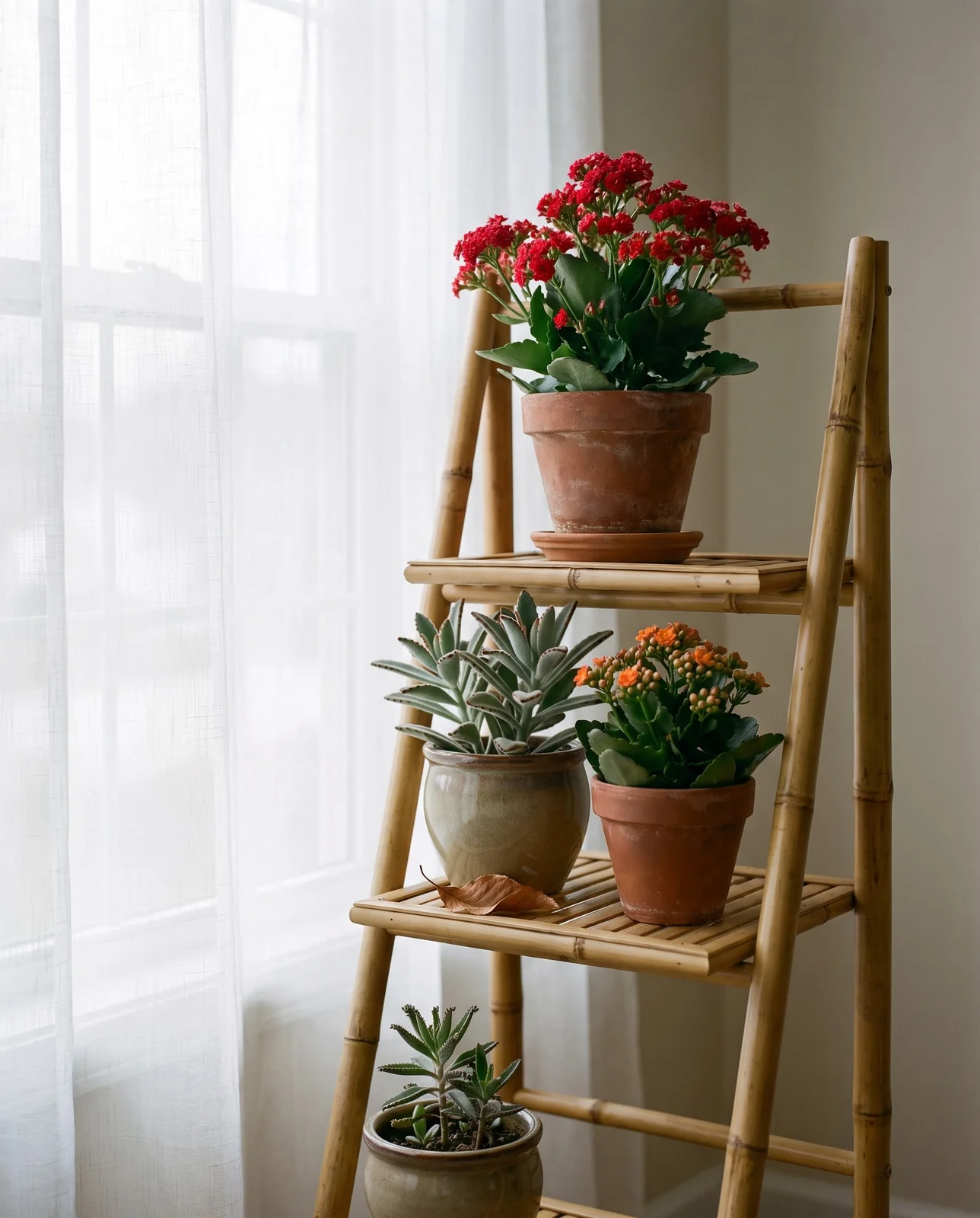
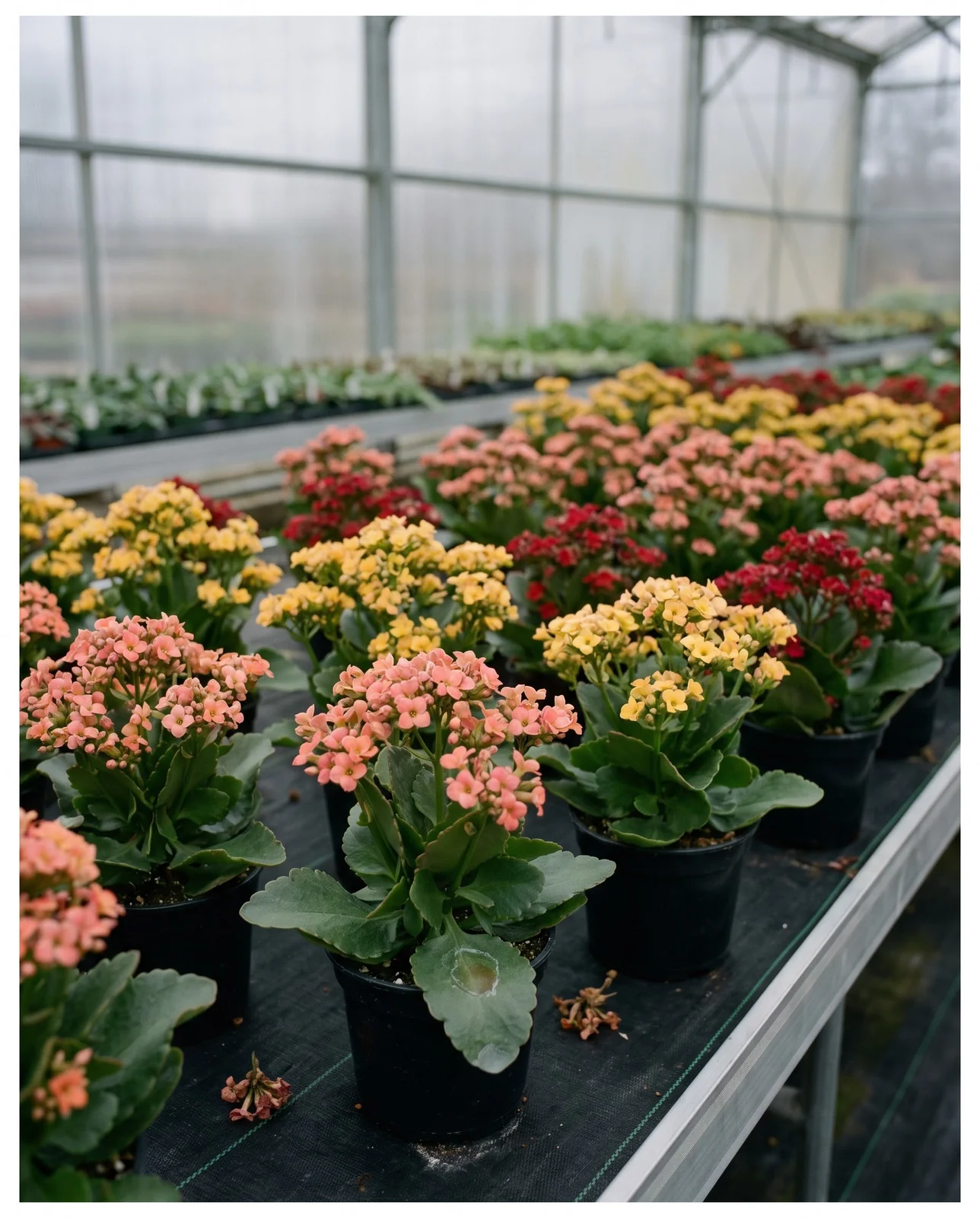
Cultivated varieties of Kalanchoe blossfeldiana run through deep crimson, bright orange, golden yellow, pure white, and salmon, and they sit easily in a winter display built around pink flowers. The foliage species are why collectors keep more than one pot. Kalanchoe tomentosa, the panda plant, carries thick, velvety silver leaves marked with chocolate-brown spots along the margins, and comes from east-central Madagascar, as NC State Extension documents. Its cultivar 'Chocolate Soldier' clumps faster on narrower leaves bordered in dark reddish brown, with yellow-green flowers.
Kalanchoe myths vs. horticultural reality
The myth: The genus Kalanchoe has an undisputed, universally accepted species count.
The reality: The NC State Plant Toolbox recognizes 174 accepted species, while classic references such as Encyclopedia Britannica cite about 120; the gap comes from differing classification criteria, not from an error on either side.
The myth: Any dim, unlit bedroom is dark enough to trigger winter reblooming.
The reality: Iowa State Extension is specific that even brief exposure to stray light from a hallway lamp or a streetlight resets the required 14-hour dark period.
The myth: Kalanchoe poisoning in household pets causes immediate fatal heart failure.
The reality: ASPCA Animal Poison Control data shows clinical signs are overwhelmingly gastrointestinal, 57 percent vomiting and 29 percent diarrhea, with zero reported canine or feline deaths.
The myth: A single universal potting soil ratio works best for every stage of kalanchoe care.
The reality: Clemson Extension specifies a 60 percent peat, 40 percent perlite mix for reblooming potted plants, against a 50/50 peat and perlite formula for rooting new stem cuttings.
'Pink Butterflies', a variegated hybrid of Kalanchoe daigremontiana crossed with Kalanchoe delagoensis, takes the plantlet habit somewhere stranger. The plantlets along its leaf margins come out bright pink and sit on the edge like a row of small butterflies, and, as NC State Extension notes, they carry no chlorophyll. They cannot feed themselves, so they die after falling from the parent plant rather than rooting into new colonies.
Interesting tips
A leaf or a margin plantlet knocked off one of these succulents will root where it lands, and that habit is the one the genus name points at, kalan chau, the Chinese phrase for that which falls and grows. Indoors in winter kalanchoe sits comfortably beside other cool-season flowering pots such as cyclamen, layering contrasting foliage textures against long-lasting winter color.
The genus is far wider than the pot on the store shelf. It runs from 6-inch florist plants to 3-foot upright succulents, and NC State Extension counts 174 accepted species across it. Commercial growing stays with a handful of Madagascan species, kept because they tolerate dry indoor air and flower on cue during the shortest days of the year.
Related Guides & Flowers
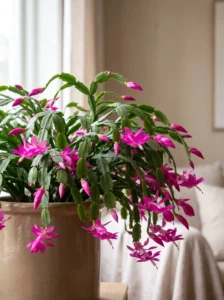
Christmas cactus
A winter-flowering houseplant that, like kalanchoe, needs long nights to set buds.
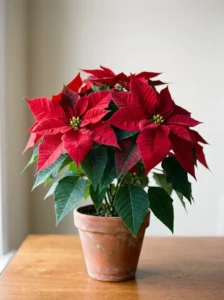
Poinsettia
The other short-day holiday plant; the same dark-treatment logic colors its bracts.
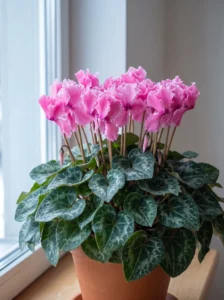
Cyclamen
A cool-room winter bloomer that pairs with kalanchoe on a bright sill but wants less heat.
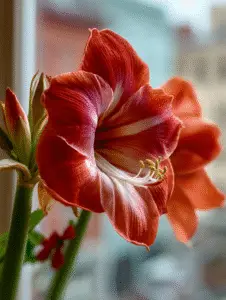
Amaryllis
A winter bulb for indoors that flowers without any dark treatment at all.
Enjoying our flower guides? Add YourFlowersGuide as a preferred source on Google. It helps more readers find us.
Add to Preferred Sources