What a kangaroo paw is, and the fern with the same name
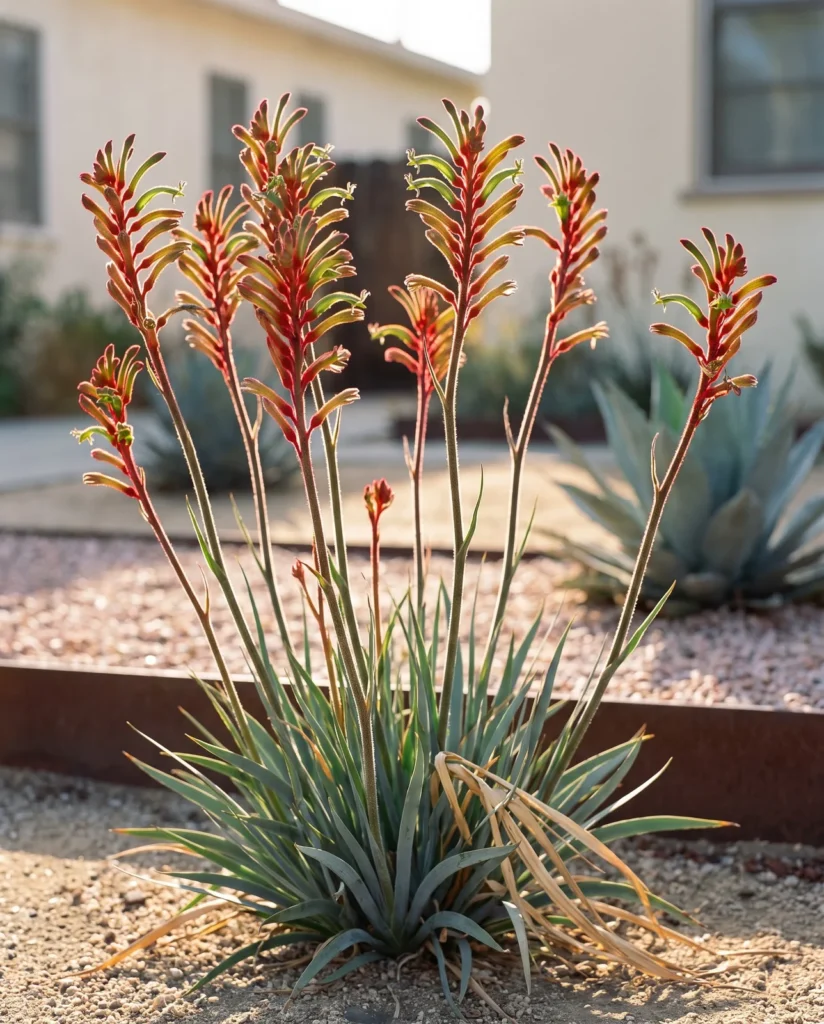
The true kangaroo paw is Anigozanthos, a genus of 11 species in the bloodwort family, Haemodoraceae, native to southwest Western Australia. It belongs to the subfamily Conostylidoideae in the order Commelinales, centered on the red kangaroo paw, Anigozanthos rufus. The common name also covers the black kangaroo paw, once placed in Anigozanthos but now set apart in its own genus, Macropidia. Even within the same family, the two genera remain different enough that attempts to hybridize them have so far failed. In Noongar, the Aboriginal language of southwest Western Australia, the black kangaroo paw is Nollamara, while the red-and-green species is Kurulbrang.
The kangaroo paw fern is a different plant. It is an evergreen fern, Lecanopteris pustulata subsp. pustulata in the polypody family, unrelated to Anigozanthos. It also goes by an older botanical name, Microsorum diversifolium. In the garden or a pot, it grows 6 to 12 inches tall and 3 to 4 feet wide in a low mound. Its care runs in reverse: the fern prefers shade and steady moisture, while Anigozanthos needs open sun and soil that dries between waterings. Mixing them up leads to a struggling plant, because following fern care puts a sun lover into damp shade.
What the flowers and the plant look like
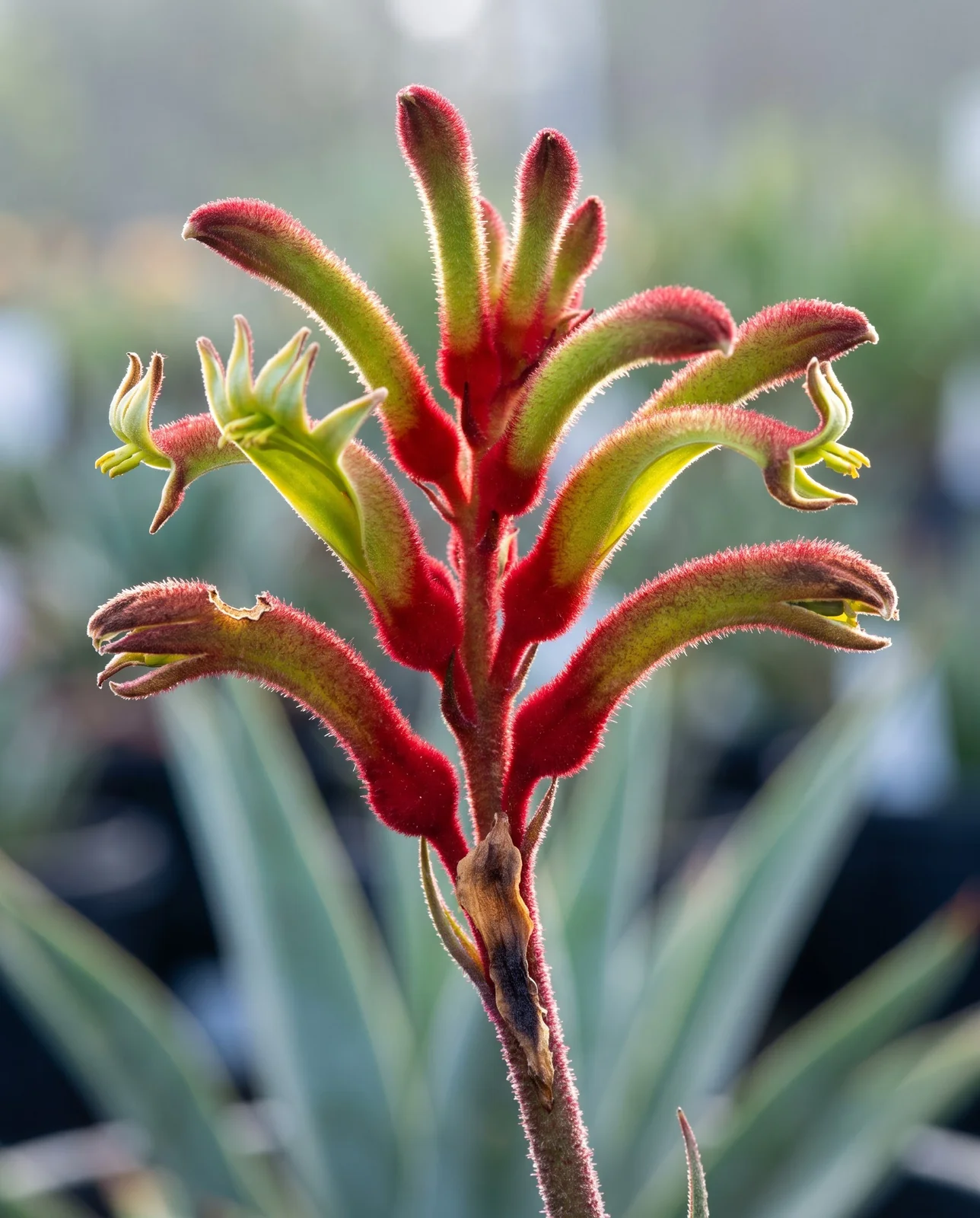
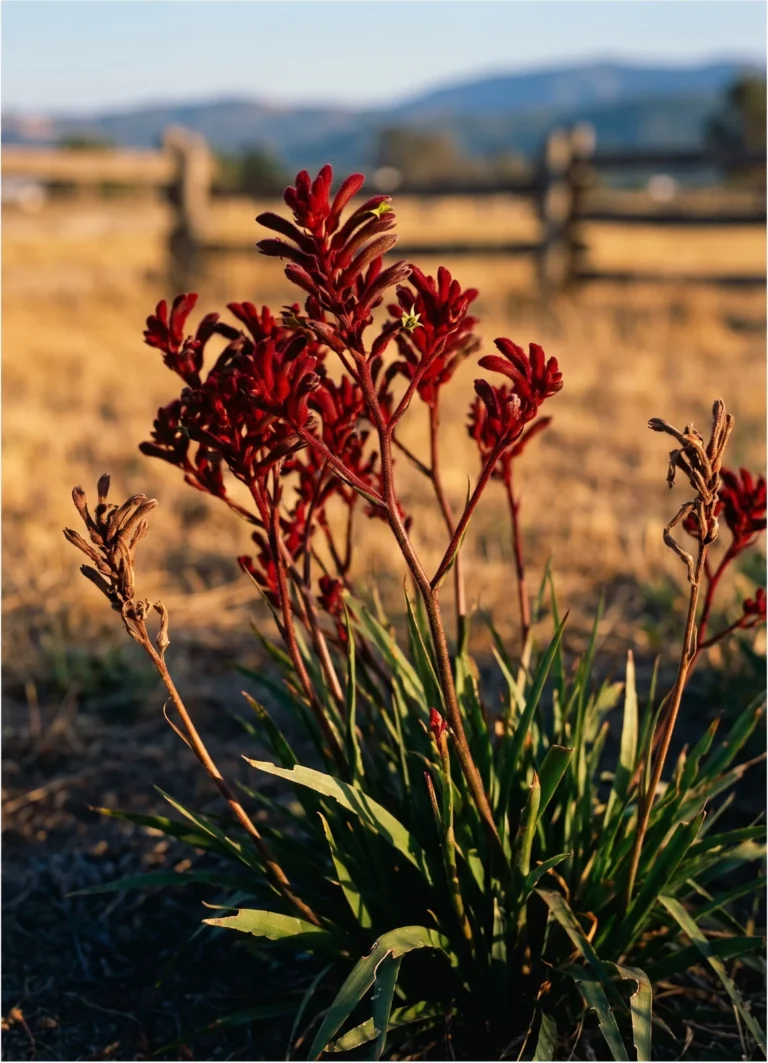
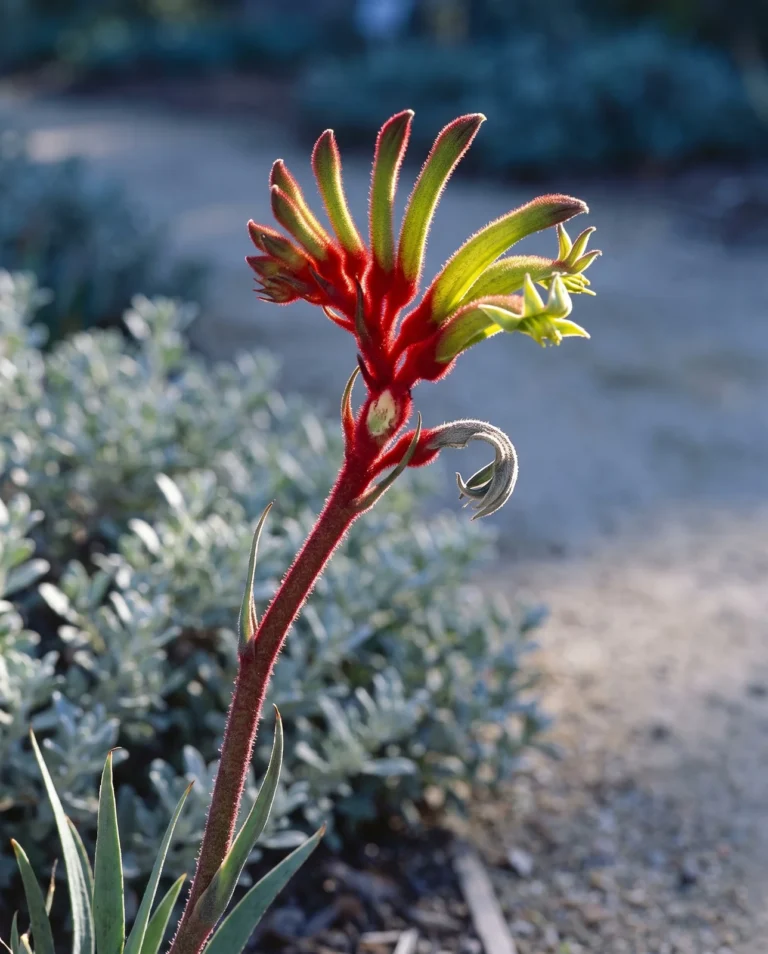
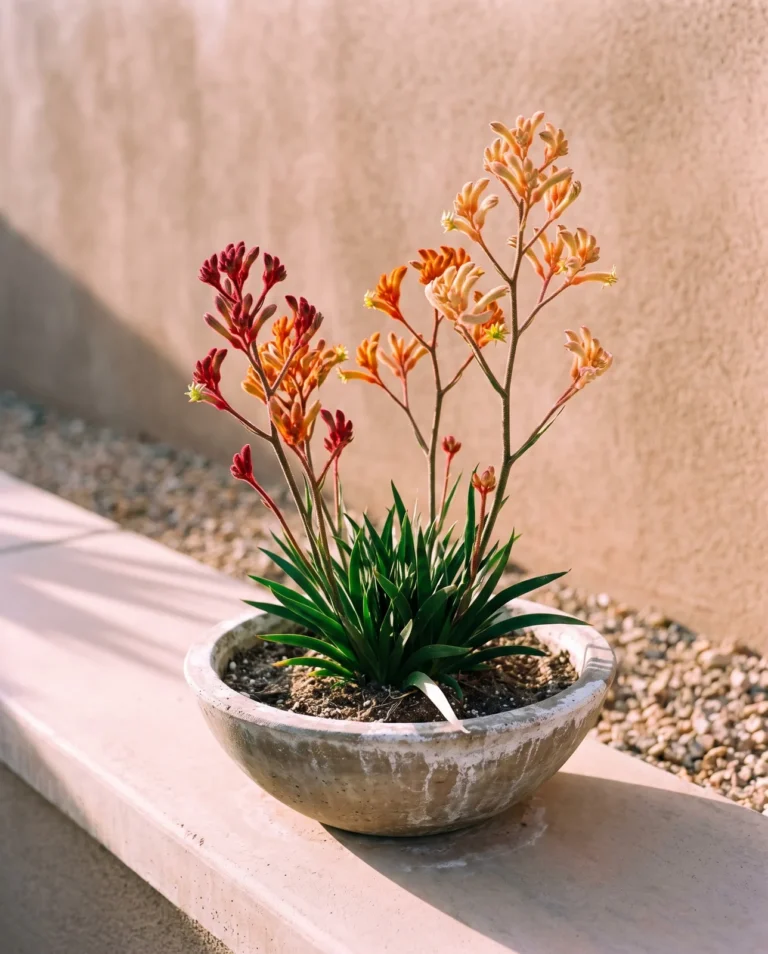
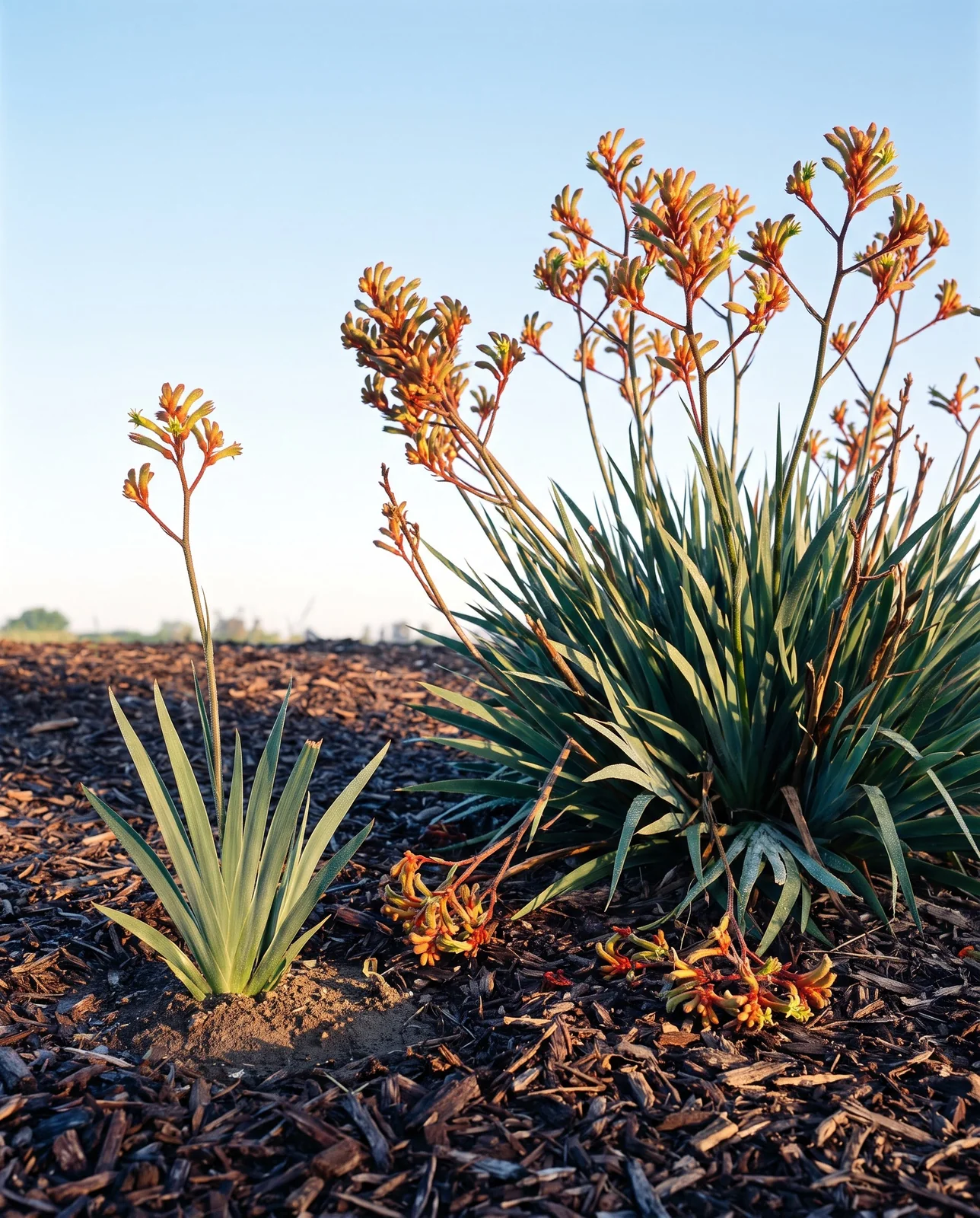
The flowers are tubular and covered in velvety hairs, opening at the tip into lobes shaped like a paw. On common wild species they are greenish yellow, sometimes pink or red. Hybrids expand the palette to red, yellow, orange and pink, blooming from spring through fall. Leafless flowering stalks can reach 6.5 feet tall, carrying up to ten blooms clustered at the top.
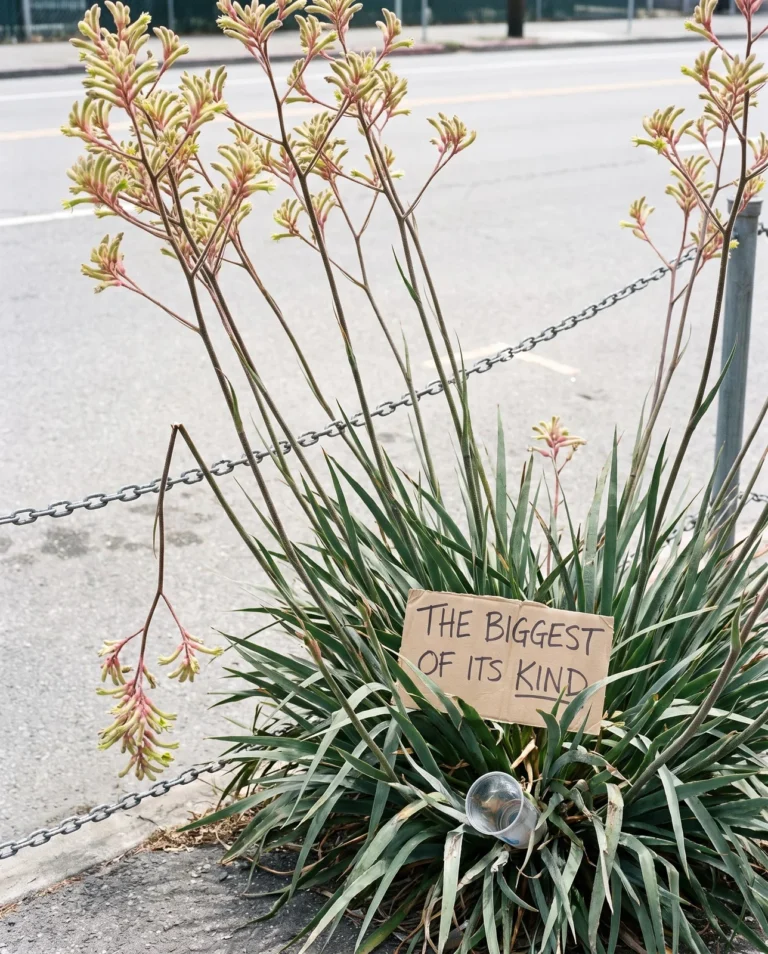
Plant height splits the group cleanly. Dwarf types stay between 1 and 2 feet tall in bloom, while tall types reach up to 6 feet. On the tall kangaroo paw, Anigozanthos flavidus, those leafless flowering stems rise 3 to 6 feet high. Other selections stay intermediate, growing 2 to 4 feet tall over sword-shaped leaves 1 to 2 feet long. That low fan of foliage anchors the plant, letting dwarf varieties hug the front of a bed while tall types lift their flowers to chest height.
Where kangaroo paw survives the winter, in three tiers
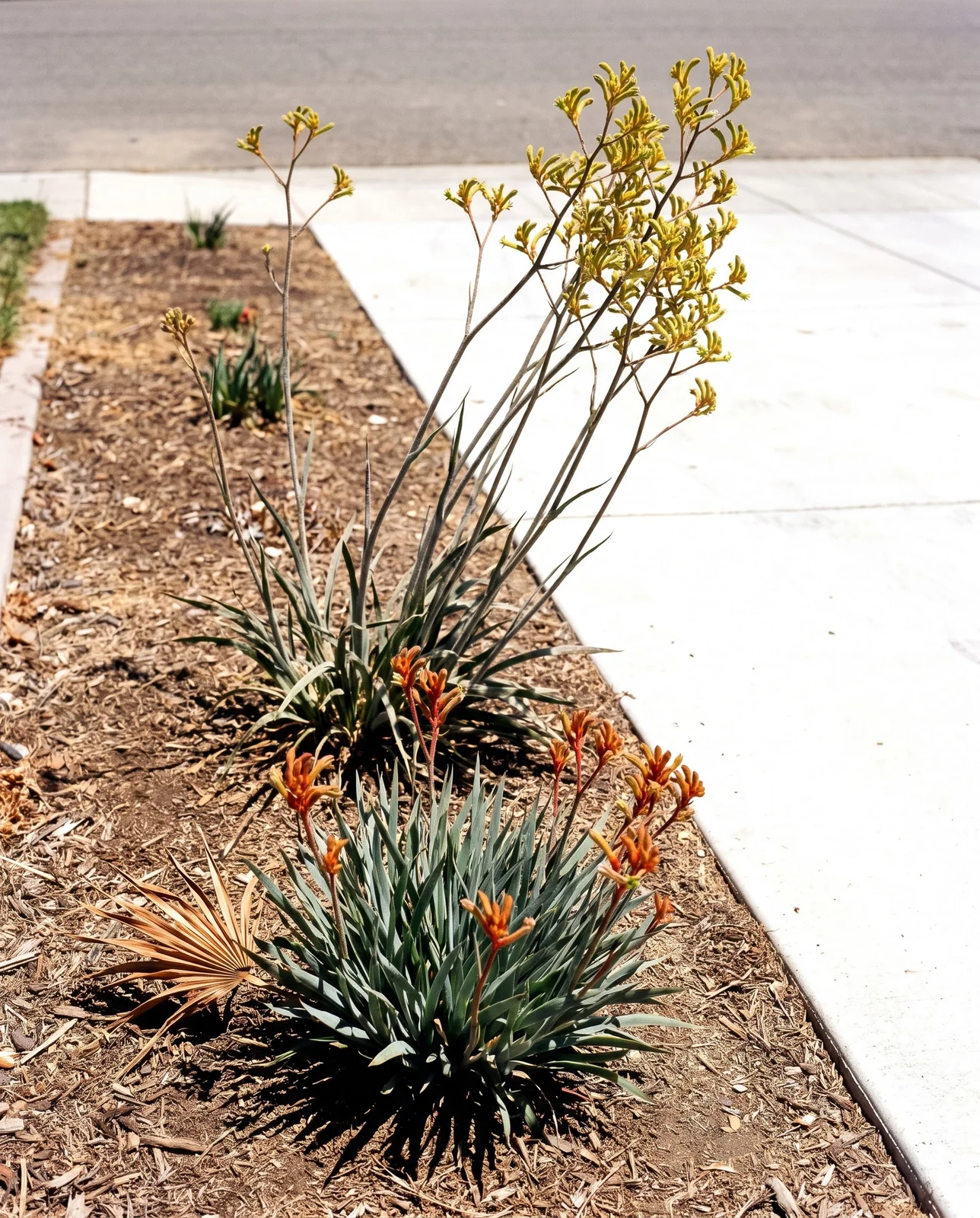
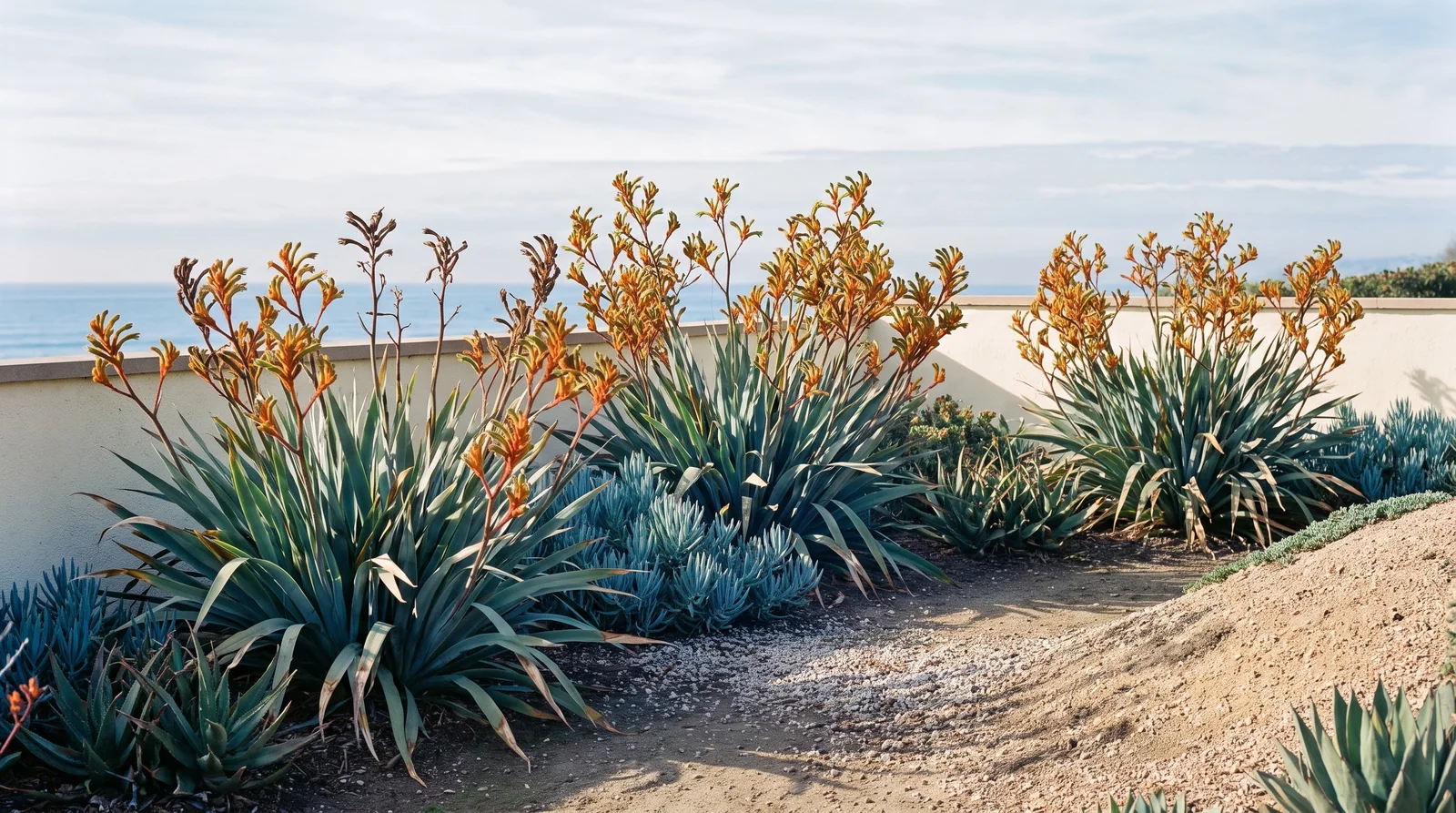
Kangaroo paw lives as a year-round garden perennial only in USDA zones 10 and 11. In colder climates it works as a container plant brought under cover, or in the ground for summer alone. That sets up three distinct paths: in the ground, in a pot, or under glass. The in-ground tier belongs to dry, mild regions. Both Anigozanthos and the black kangaroo paw thrive across Mediterranean climates like Southern California, Baja California and Chile, needing very little water once established.
For Anigozanthos flavidus, dependable outdoor hardiness covers zones 10a to 11b, matching Sunset climate zones 15 to 24 and heat zones 10 to 11. Wider ratings of zones 9 through 11 fold container growing into the hardiness figure. While the species grows easily in Southern California, it is poorly adapted to the climate of North Carolina. There it is grown in a greenhouse or conservatory, while in cold winter regions like St. Louis it lives under glass or as a houseplant.
Frost sets the real boundary. The plants are intolerant of frost and need shelter from strong winds. Cold tolerance also varies by species: Anigozanthos rufus tolerates moderate frosts, while Anigozanthos bicolor can be severely damaged by frost. Hybrids bred from the tall species prove far hardier, while grey-green leaved selections typically last only a season or two outdoors and belong in pots. In zone 9a, a plant may or may not return after winter.
What each tier means over a winter
Your winter temperatures decide whether you plant in the ground or shop for a patio pot. For gardens too cold for kangaroo paw, crocosmia fills open beds with tubular blooms that hummingbirds visit.
Sun, drainage, and the ground it wants
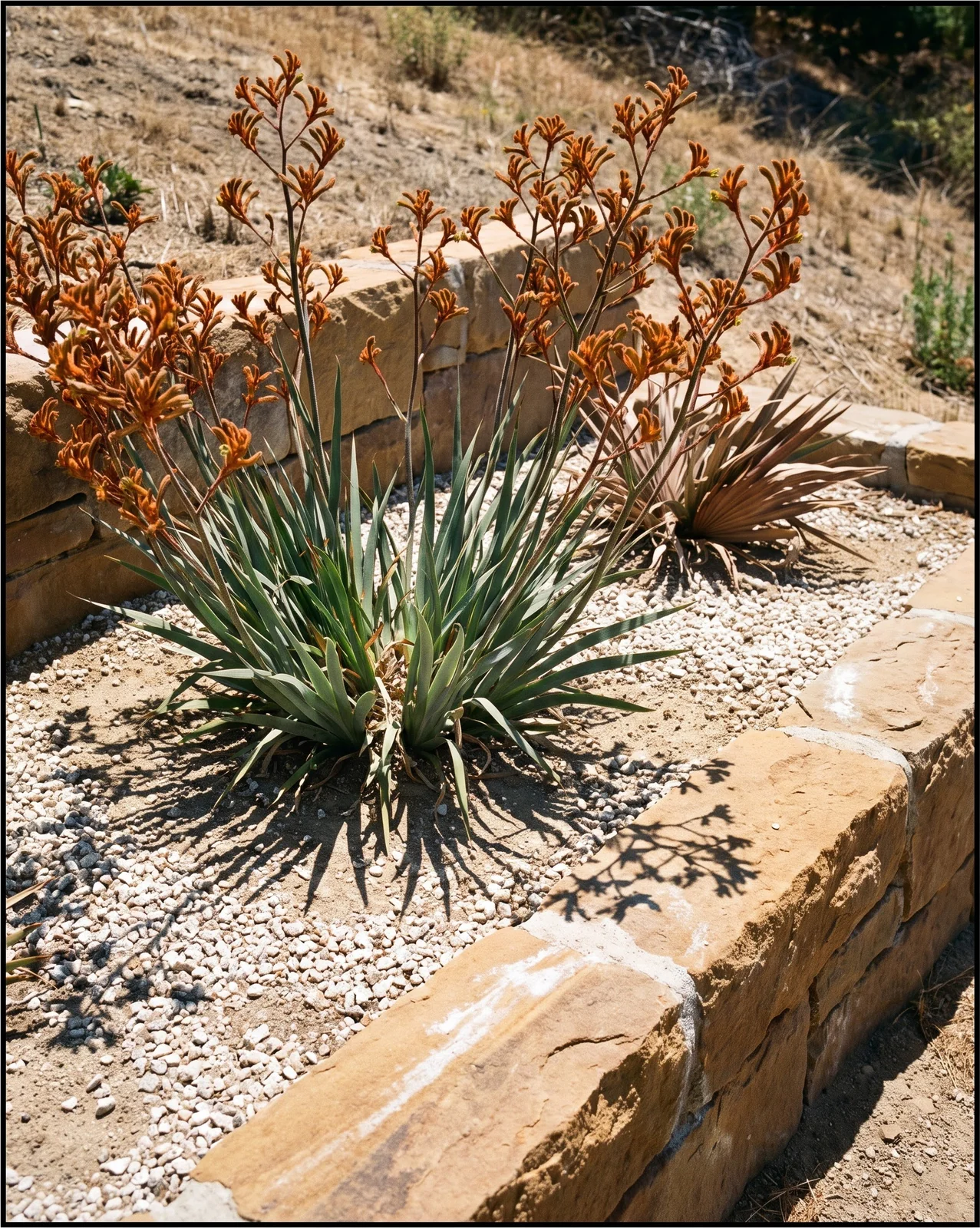
Kangaroo paw needs full sun, meaning at least 6 hours of direct sunlight each day, and sandy or loamy soil that drains quickly. In gardens with heavy clay, grow it in a raised bed or a pot. Soil pH should sit on the acidic to neutral side, between 5.8 and 7.0. That ground suits a plant adapted to the sandy soils and Mediterranean climate of southwest Western Australia. When breeder Merv Turner set down his cultivation rules in 1986, he put open sun and sharp drainage first.
Standing water kills these plants quickly. Kangaroo paws will not tolerate waterlogged soil, though the tall species accepts imperfect drainage better than most, and soggy ground easily brings on root rot. Planting depth requires the same care: keep the roots covered but the crown and foliage fully in the air, since mulch piled against the crown encourages fungal disease. The green kangaroo paw, Anigozanthos viridis, is an exception, coming from winter-wet ground and proving less particular about drainage. Summer watering poses a separate risk. Irrigating through the summer shortens the life of every species except the tall one, because most go dormant in heat and rot if watered while resting. Sap stored in the root system carries the plant through extreme dry spells without help. Because they come from a dry Mediterranean climate, adapting to wet summers decides whether a plant settles in or dies out.
Growing kangaroo paw in a pot
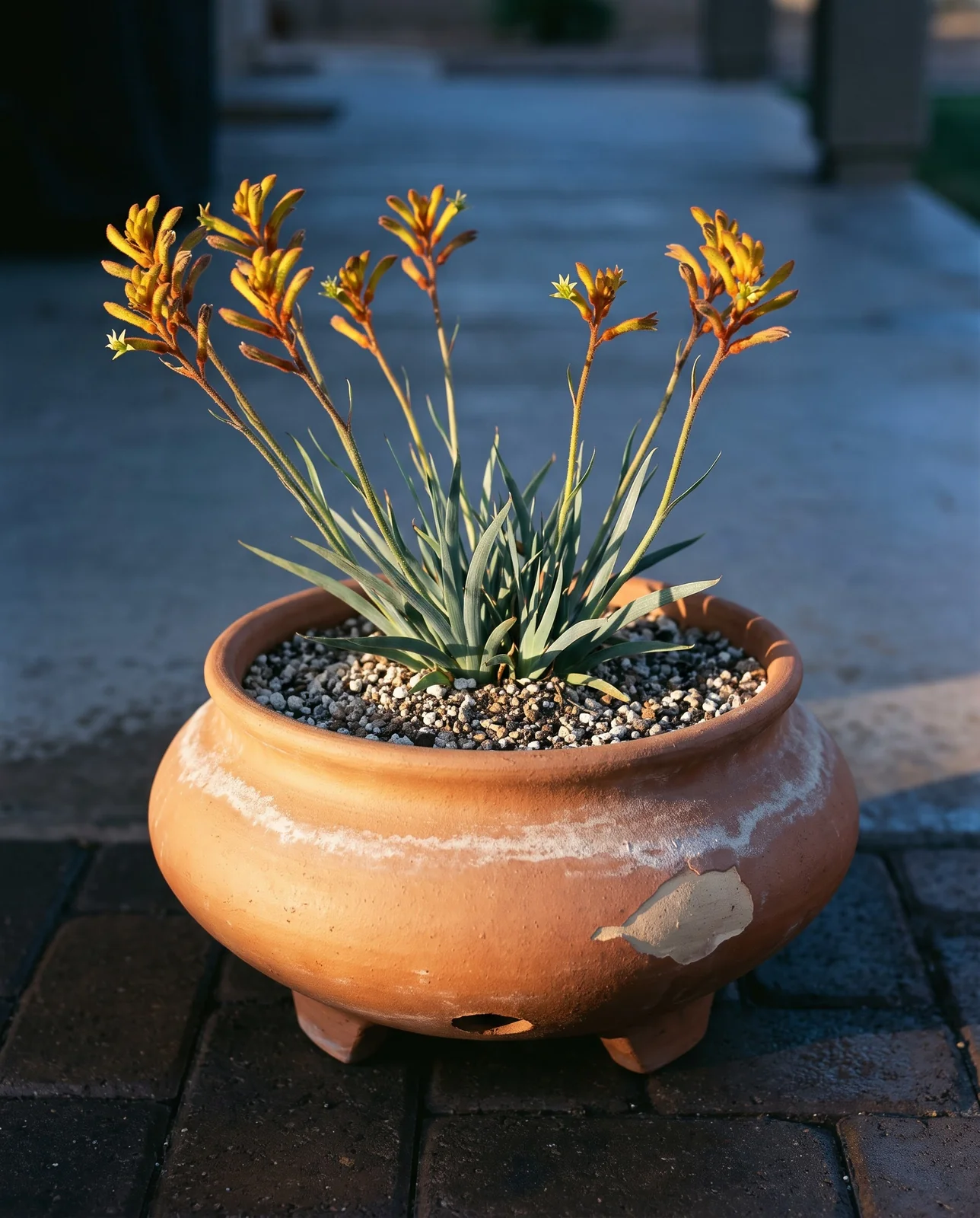
Growing in a pot is the simplest way to enjoy kangaroo paw outside mild winter zones. A container thrives on a sunny patio, sharing space easily with a potted bird of paradise, or tucked into a border for the summer. That lets you move the clump under cover before freezing weather arrives. In humid climates, the black kangaroo paw lasts only a few years in a sunny container, and it is particularly susceptible to frost.
Keeping kangaroo paw indoors year-round is difficult because of its need for strong light. Outdoor plants resist most insect pests, but dry indoor air leaves indoor specimens susceptible to spider mites. Though occasionally called tropical, kangaroo paw resents stagnant air. The most reliable routine keeps the pot outdoors in full sun from spring through autumn, bringing it inside only for winter protection.
Why a kangaroo paw stops flowering
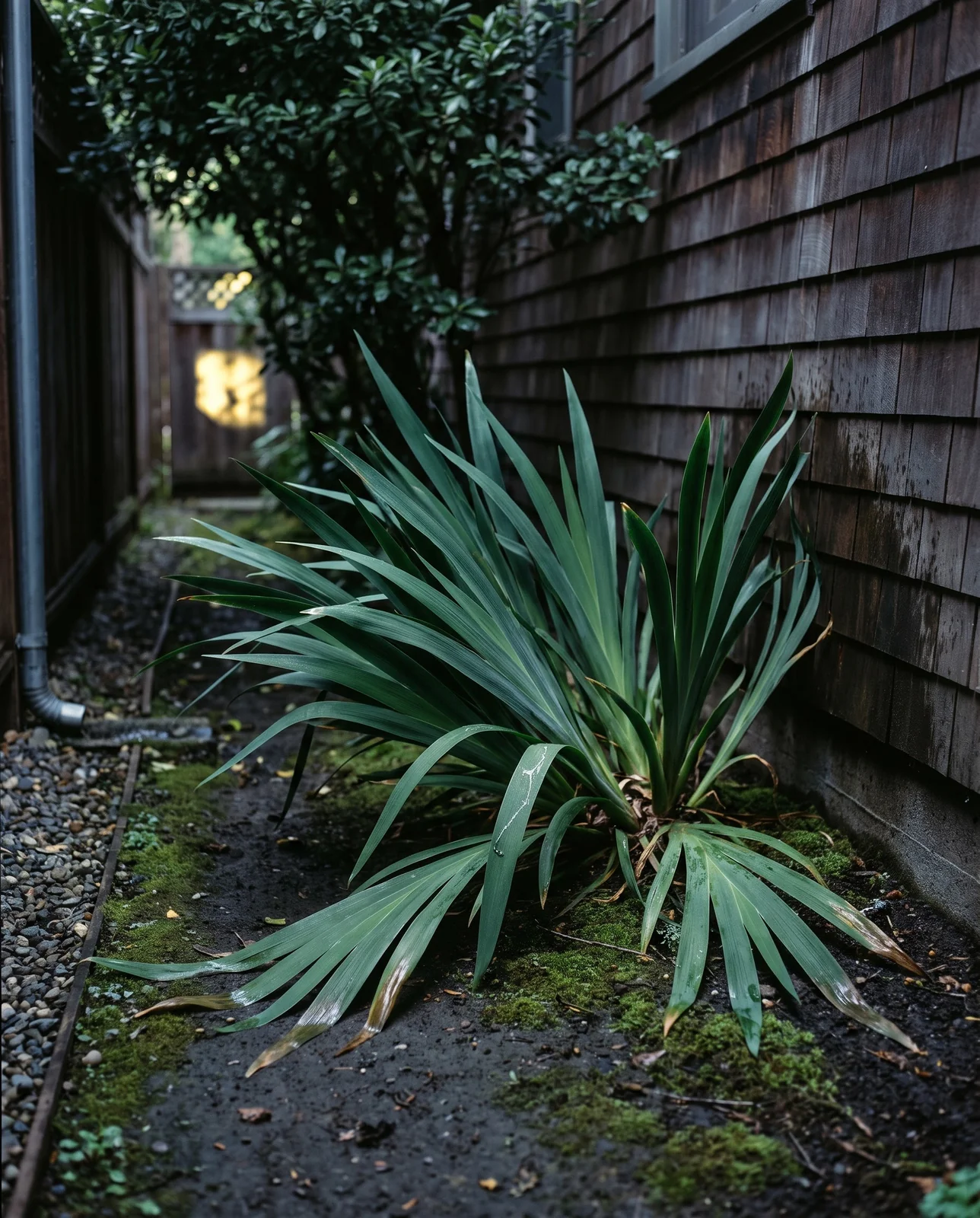
A leafy clump that stops flowering usually points to water stress or late winter cold. Too little water while flower buds are forming can cause the stems to bend permanently and abort their blooms. Frost works on a separate calendar: regular heavy frosts from midwinter into spring may hinder flower development, leaving a clump that survived winter without any blooms.
The age of the clump is another factor, since several popular species are naturally short-lived. Clumps of the red-and-green kangaroo paw rarely last more than a year or two, even with attentive care and division every 2 to 3 years. In its home range it is treated as an annual or biennial and replanted each year. Shade is less often to blame than people think, because many species and hybrids grow and bloom in open light shade. Nearby trees can also exhaust the soil, taking up nutrients until the clump struggles to send up flowers.
Working out why the stems never came
Start with the simplest checks, since the first two cost nothing more than a close look at the plant.
Yellow leaves, black leaves, and which one spreads
Three different problems turn kangaroo paw leaves yellow or black, but only one of them spreads through the clump. The most common cause is simply age. When an older fan finishes flowering, cutting the stems off right at soil level lets the leaves spring back. Soil nutrients come next, and several shortages can darken leaves enough to look like disease. A lack of nitrogen produces pale green leaves and few fans. Low potassium strikes the oldest leaves first, killing the tips with brown spots on the outer half of the leaf. A lack of magnesium brings a blue-black discoloration to the upper half of older leaves that works downward, creating a mass of dead leaves. Phosphorus is easily misread: true deficiency is rare and turns older leaves orange-yellow before they die back, while phosphorus toxicity is more common and mimics ink disease with blackened tips progressing down the leaf. Deficiencies in calcium or potassium can also increase a plant's susceptibility to ink disease.
Ink disease is the trouble that spreads, and it is fungal. Later research traces it primarily to Alternaria alternata, which blackens leaves and flower stems from near the tip down toward the rhizome. Symptoms range from sunken brown lesions ringed in black with yellowing halos, to solid black patches, to a rare large blotch that withers flower stems and ruins blooms. Different species handle the fungus in very different ways. Anigozanthos manglesii and A. gabrielae are usually killed by it, and it can also kill A. pulcherrimus, though A. pulcherrimus is sometimes less affected alongside A. viridis and A. rufus. Meanwhile, A. flavidus is highly resistant and often escapes with cosmetic damage. The fungus thrives on wet foliage, so water at the base to keep moisture off the leaves, especially in autumn and winter, and prune stems after flowering. Mancozeb is used for ink spot and Baycor for rust, though sprays may not be fully effective.
What actually goes wrong, in order
Much of the trouble reported under this name actually belongs to the kangaroo paw fern, so this list keeps the two apart. It runs from common mistaken identity down to root rot, rust, and garden pests.
Symptoms: the plant has mealybugs, spider mites, scale insects, or root rot from overwatering. Cause: those problems belong to the unrelated kangaroo paw fern. What to do: verify which plant you have before following any care advice.
Symptoms: stems collapse and the base turns soft in wet soil. Cause: soil pathogens including Phytophthora, Pythium, and Fusarium causing root and stem rot, which are distinct from ink disease. What to do: move the plant to sharply draining soil, because wet ground in the root zone quickly ruins it.
Symptoms: reddish-brown spots form across the leaves. Cause: the rust fungus Puccinia haemodora, a separate pathogen from ink disease. What to do: choose varieties bred from the tall kangaroo paw, Anigozanthos flavidus, which is resistant to rust.
Symptoms: sticky residue, curled new shoots, or white powdery film on leaves and buds. Cause: aphids or powdery mildew, which along with ink spot are the main problems to watch for on tall kangaroo paw. What to do: rinse aphids off tender new shoots in spring and fall, and give the clump full sun and good air circulation.
Symptoms: the plant looks different from the photograph that sold it. Cause: 'Big Red' can refer to a rufus hybrid or to a four-way cross of A. manglesii, A. flavidus, A. rufus, and A. humilis. What to do: buy by plant description and photograph, and treat the cultivar name as a starting point.
Cutting it back, and how far down the cut goes
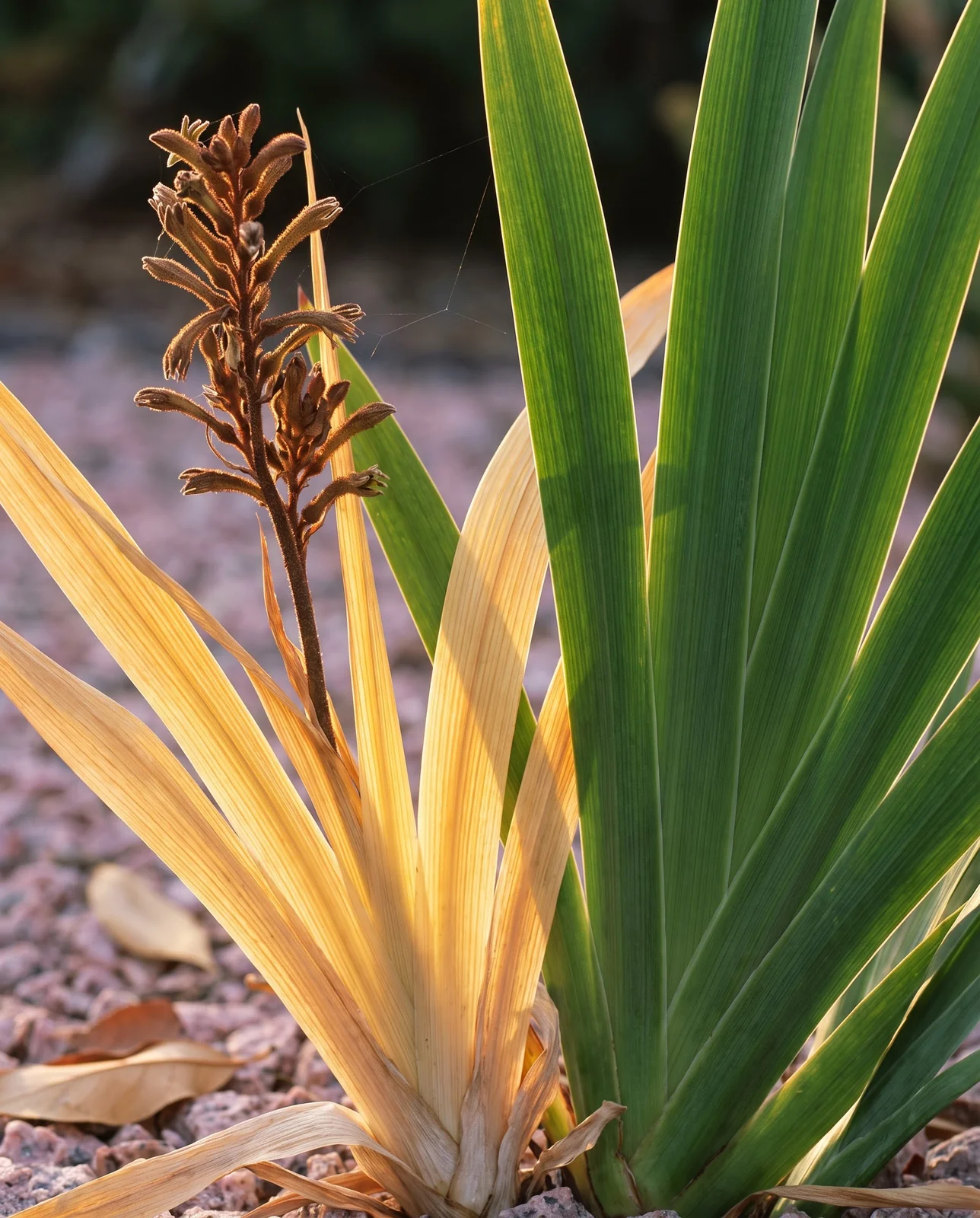
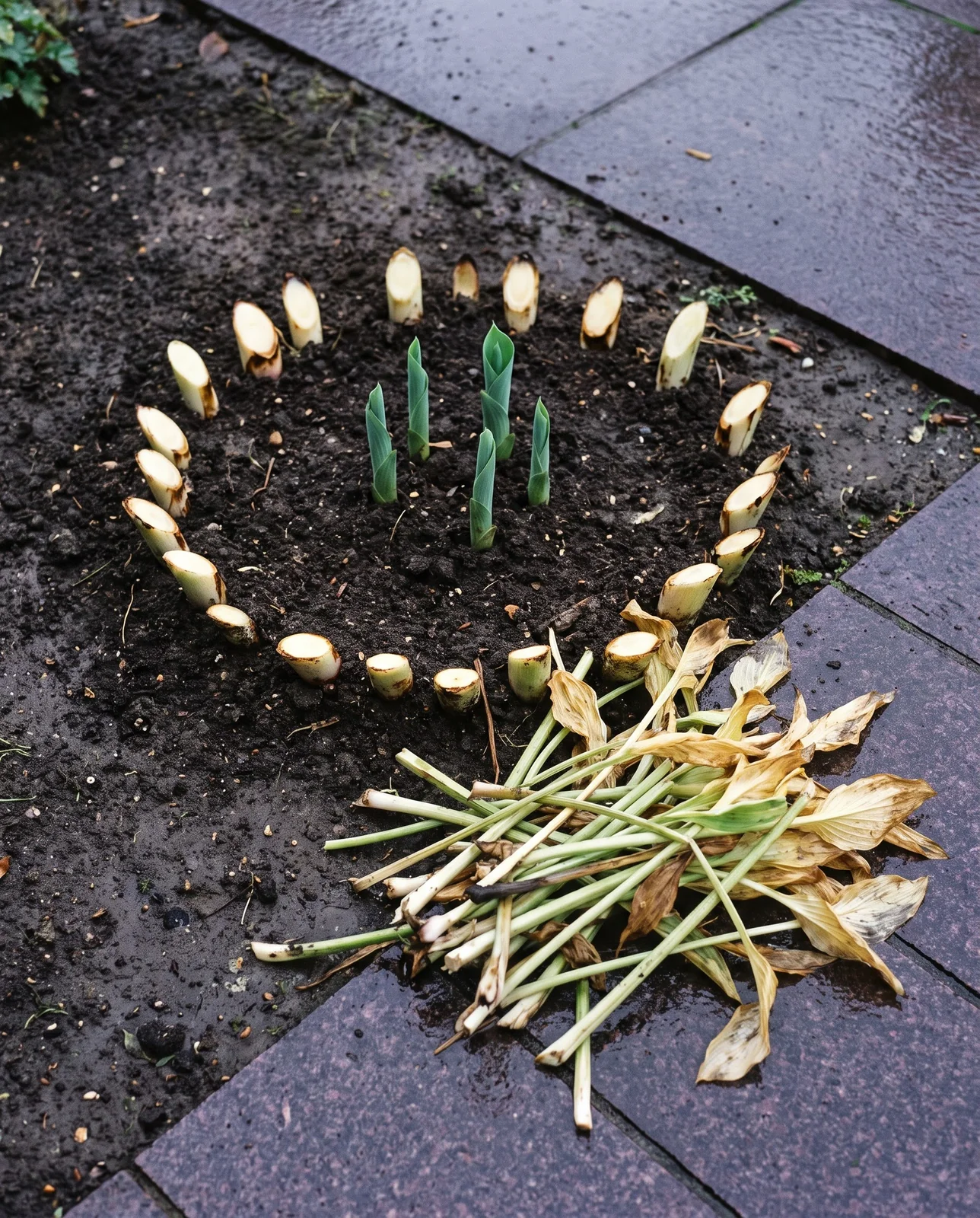
Once flowering finishes, cut spent flower stems right down to the ground among the foliage, taking care not to nick new leaves as they emerge. Put on gardening gloves before you start, because the tiny hairs coating the stems and flowers can irritate bare skin. Cutting that low can feel drastic on a plant whose flower stems carry all its height, but clearing old stalks makes room for fresh growth.
Whether to trim the foliage alongside the stems comes down to personal preference. One approach clears old leaves as low as possible after flowering, because each fan blooms only once and finishes at season's end. Another approach treats trimming living foliage as unnecessary shaping that slightly hinders photosynthesis. The spent flower stem comes out either way, while clearing tired leaves around it is simply a matter of how neat you want the clump to look.
When to plant, and why the window moves
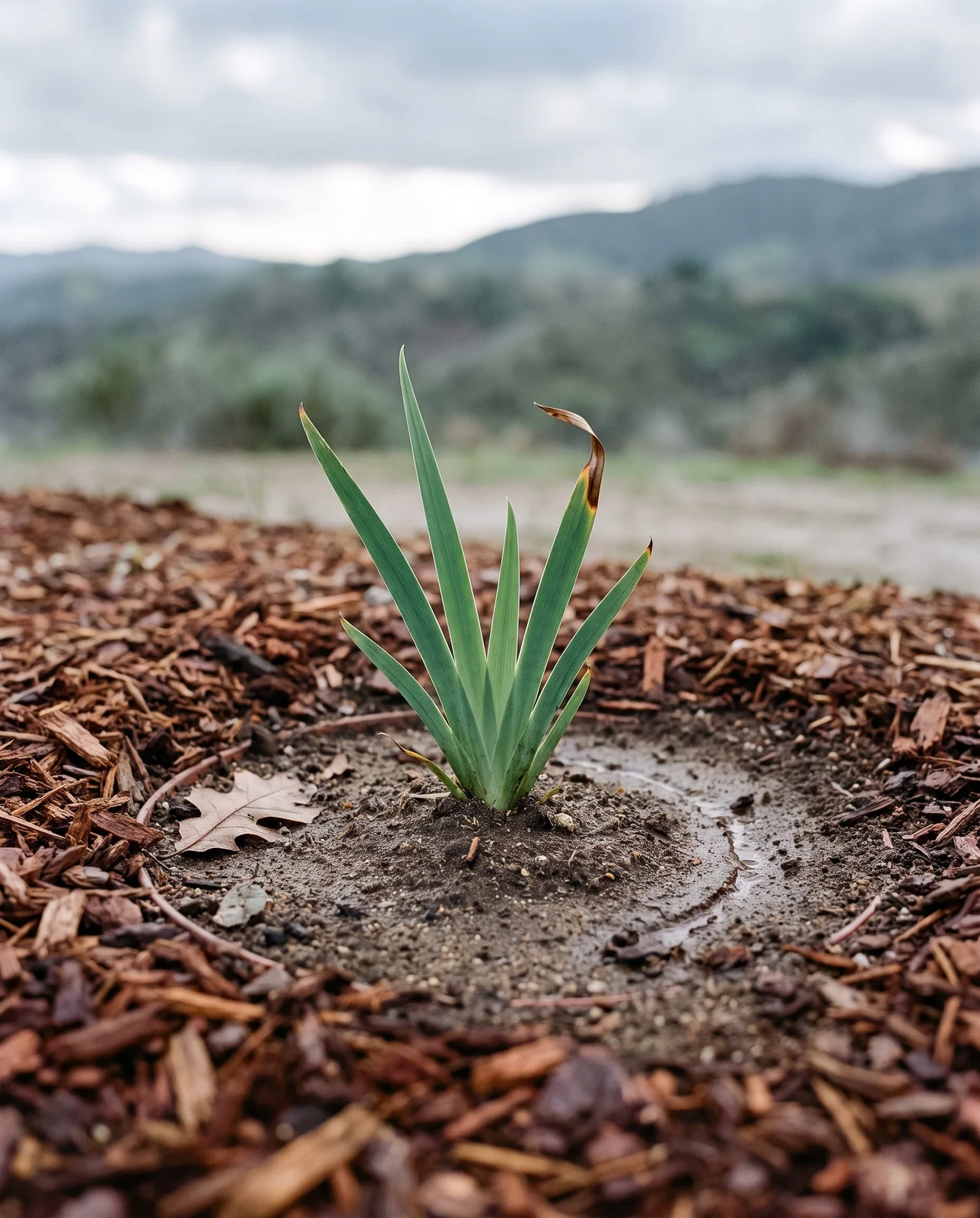
The best planting window depends on your local climate and winter chill. In mild areas, planting between autumn and early spring lets roots establish in cool, rainy weather before flowering starts. Red and green kangaroo paws go into the ground through autumn and winter, in full sun or dappled shade. In areas with colder weather, plant in late fall or early spring, but protect the plants with mulch or wait until spring if medium frosts are expected. Some regions allow planting any time between March and October. Where winter frost is common, holding off until spring gives tender roots the safest start.
Species and cultivars worth telling apart
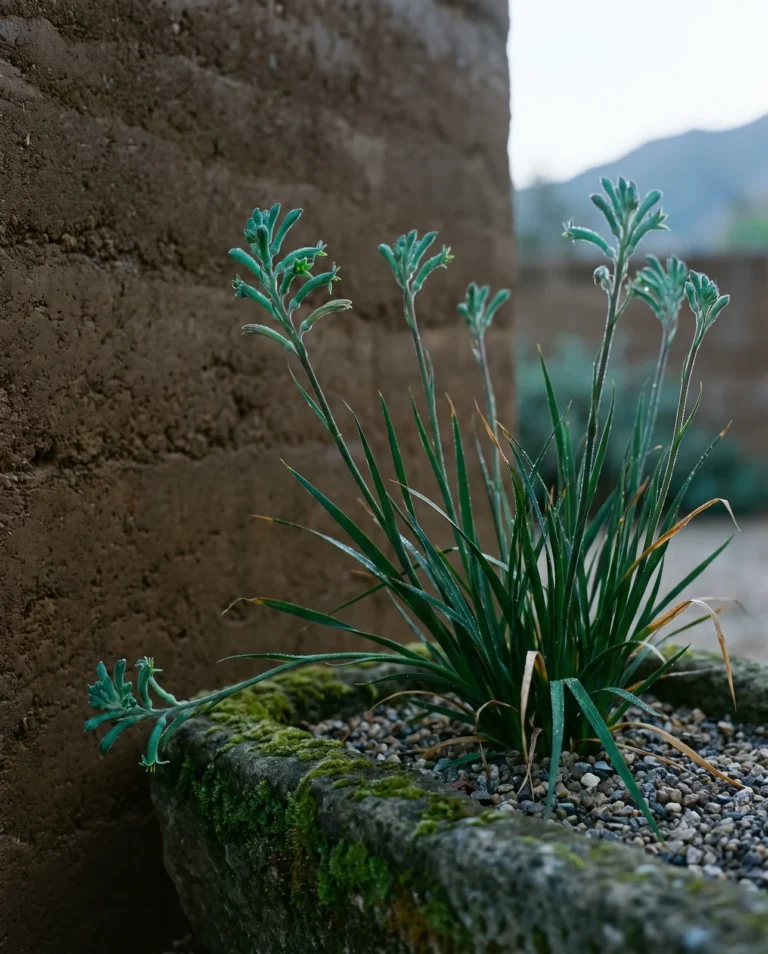
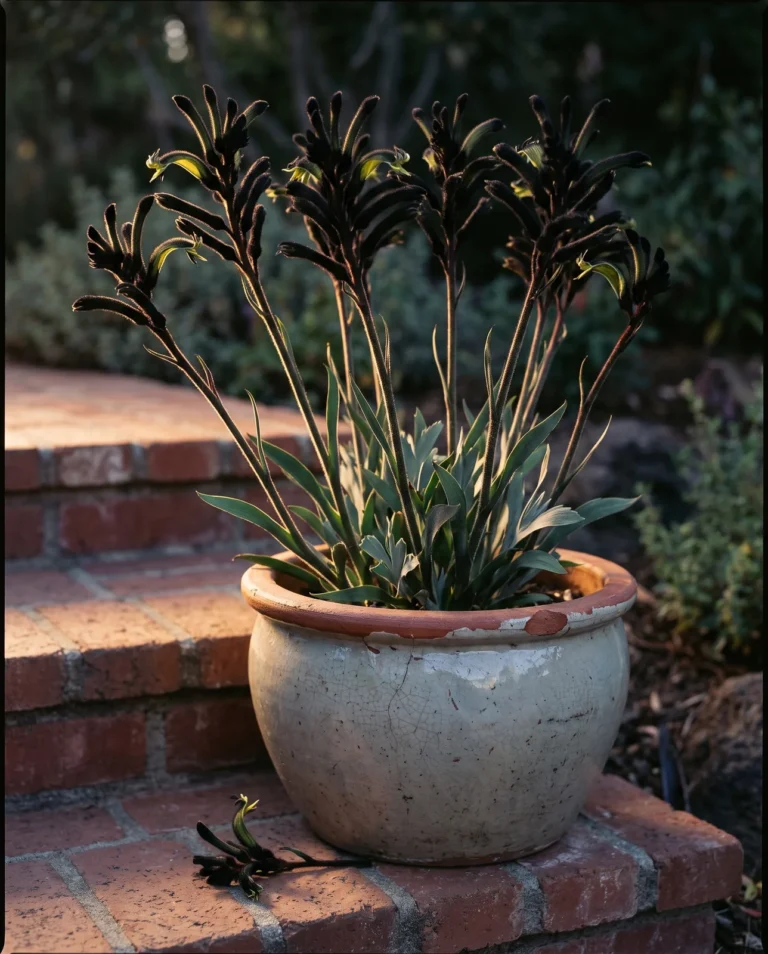
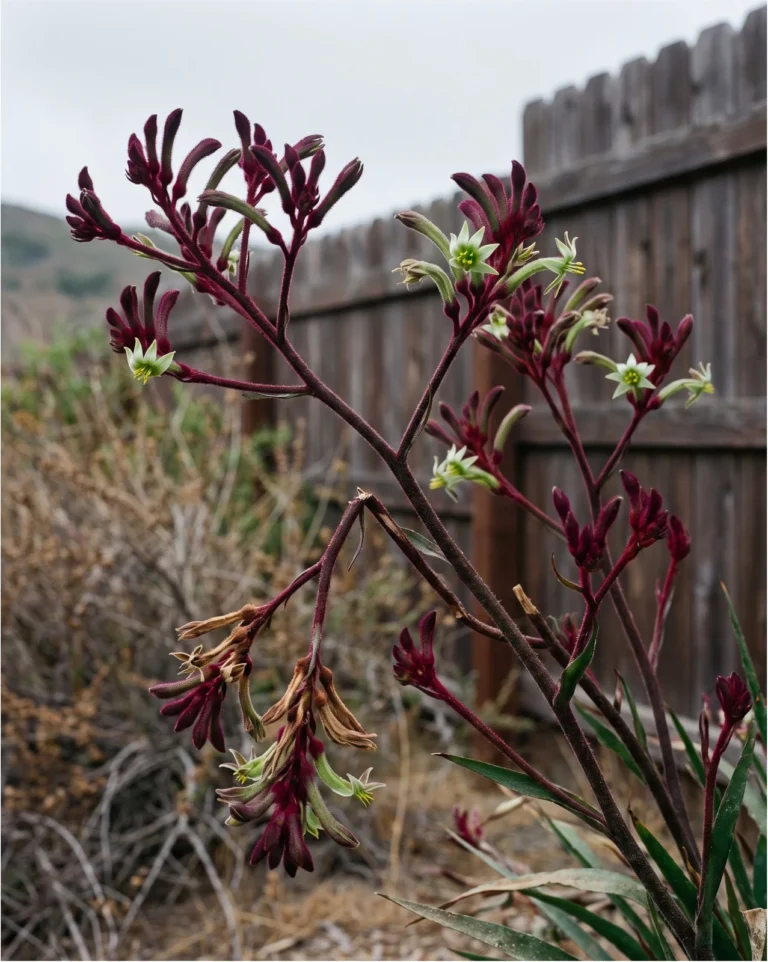
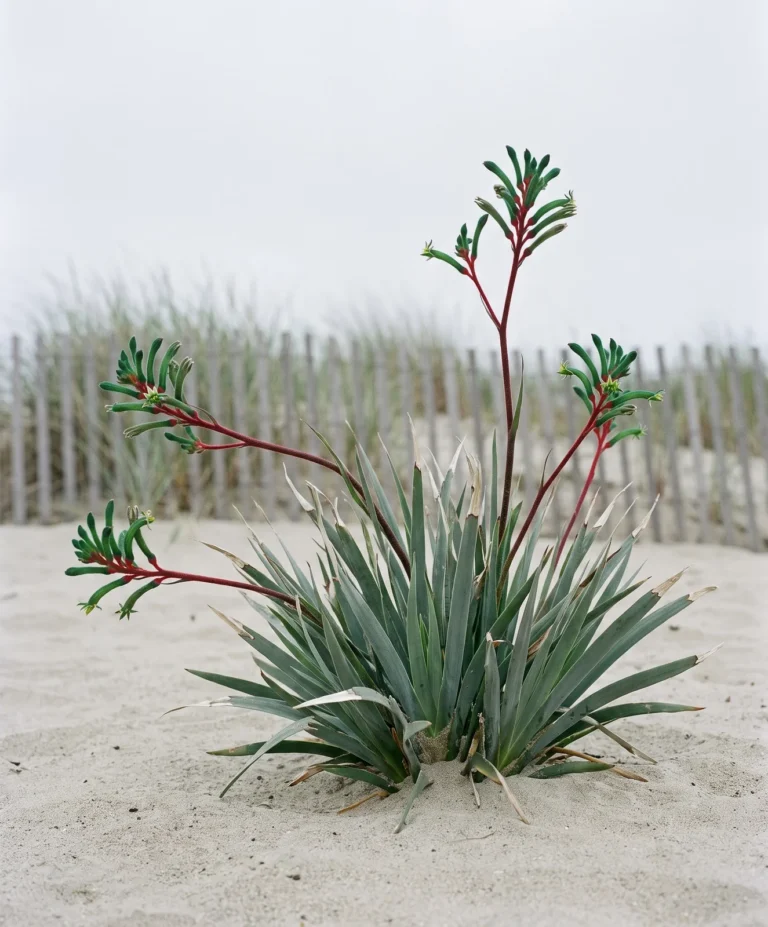
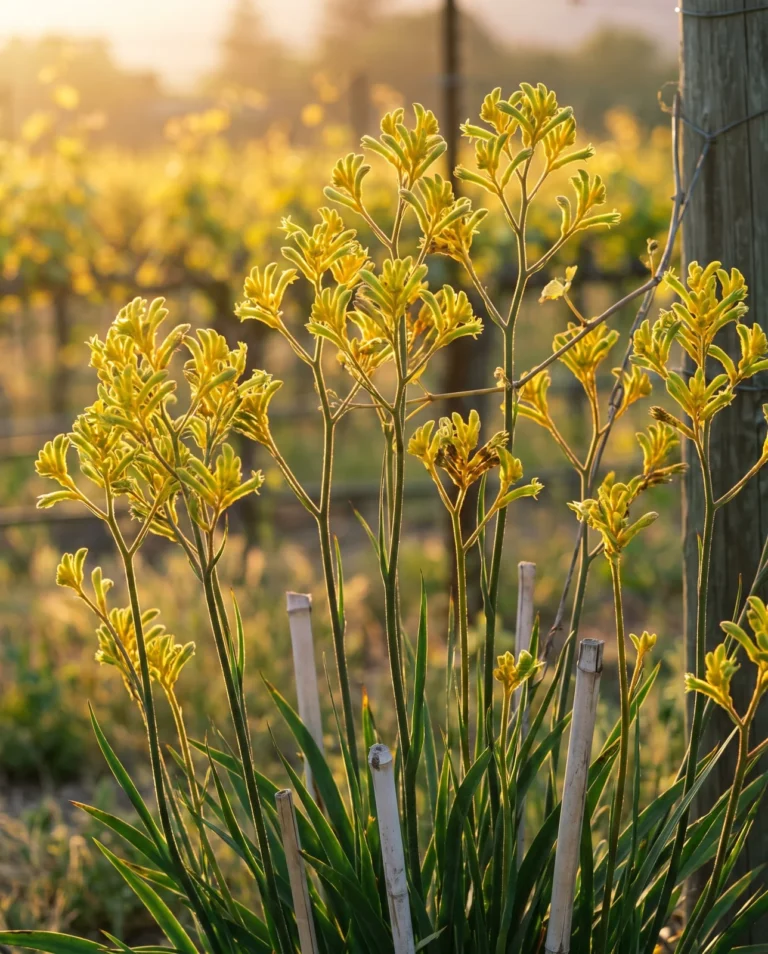
Wild species that parent modern hybrids sit alongside familiar garden cultivars here. Height, bloom color, and disease resistance set them apart, while the unusual black kangaroo paw belongs to a separate genus.

Watering
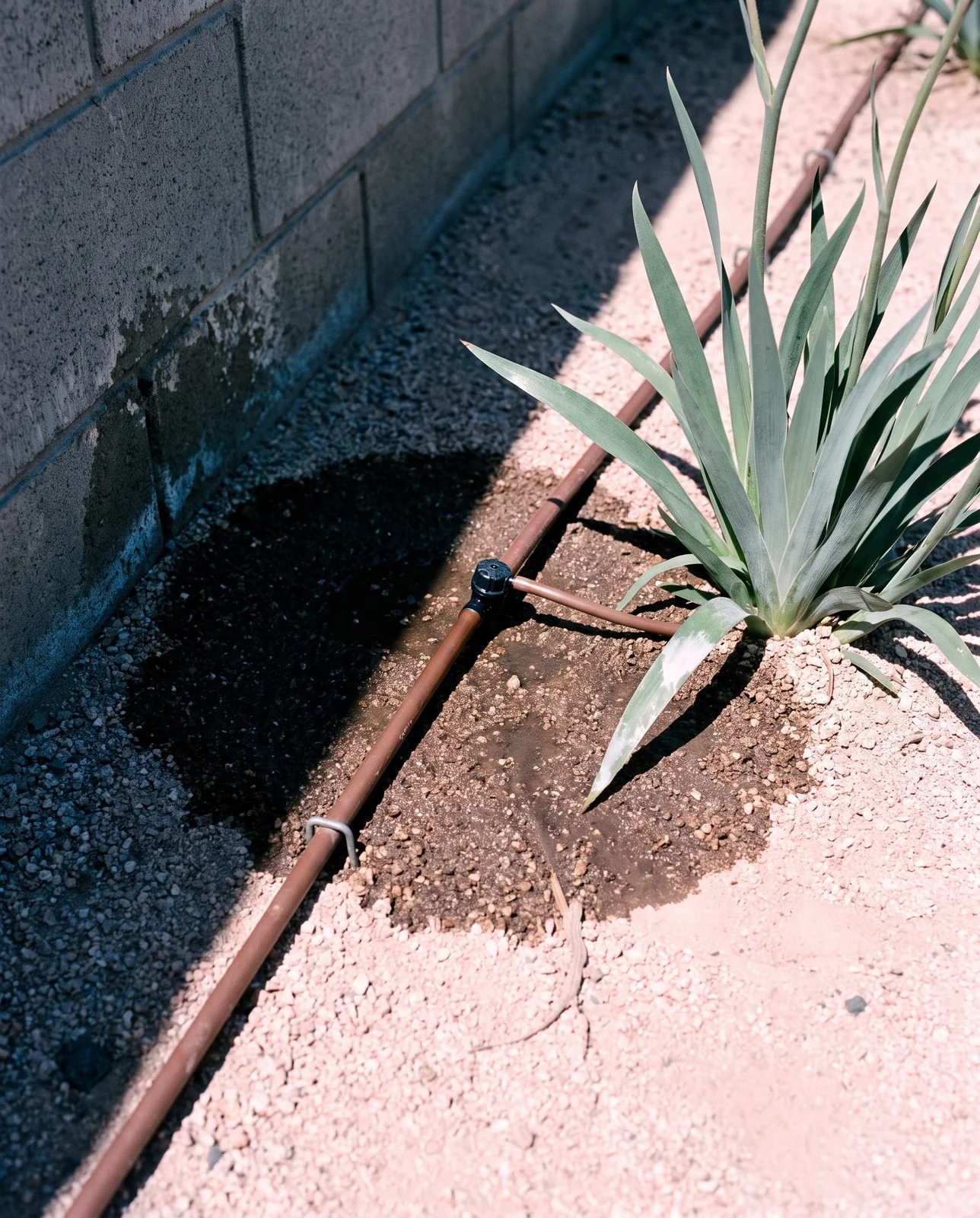
Water kangaroo paw deeply and infrequently, letting the soil dry out between waterings to prevent soggy ground and root rot. A drip line works best even in a dry Mediterranean garden, because watering at the base lowers disease risk compared with overhead sprinkling. Regular watering also moves the calendar forward, and irrigated plants tend to flower about a month earlier on average than dry wild stands.
Feeding, and the phosphorus argument
Feeding kangaroo paw comes with an ongoing debate over phosphorus. Much of the advice to avoid phosphorus fertilizers comes from the broad rule for Australian native plants as a whole. For kangaroo paws, that often means applying a slow-release, low-phosphorus fertilizer in spring, because too much phosphorus can cause harm. Merv Turner's 1986 rules similarly recommend feeding lightly and keeping phosphorus on the low side. Yet most kangaroo paws are not especially sensitive to phosphorus, a deficiency is rarely an issue, and regular fertilizer is usually preferable to a native-plant mix. In trials, Anigozanthos bicolor, A. humilis, and A. manglesii proved least sensitive, growing best at the highest phosphorus rates without toxicity symptoms. Anigozanthos viridis likewise tolerated every level tested, producing its largest plants at the second-highest rate. Toxicity remains the more common hazard of the two, appearing most often in A. pulcherrimus and the black kangaroo paw. The black kangaroo paw responds well to feeding but is susceptible to phosphate toxicity, so a fertilizer formulated for Australian native plants suits it best.
The birds that work the flowers
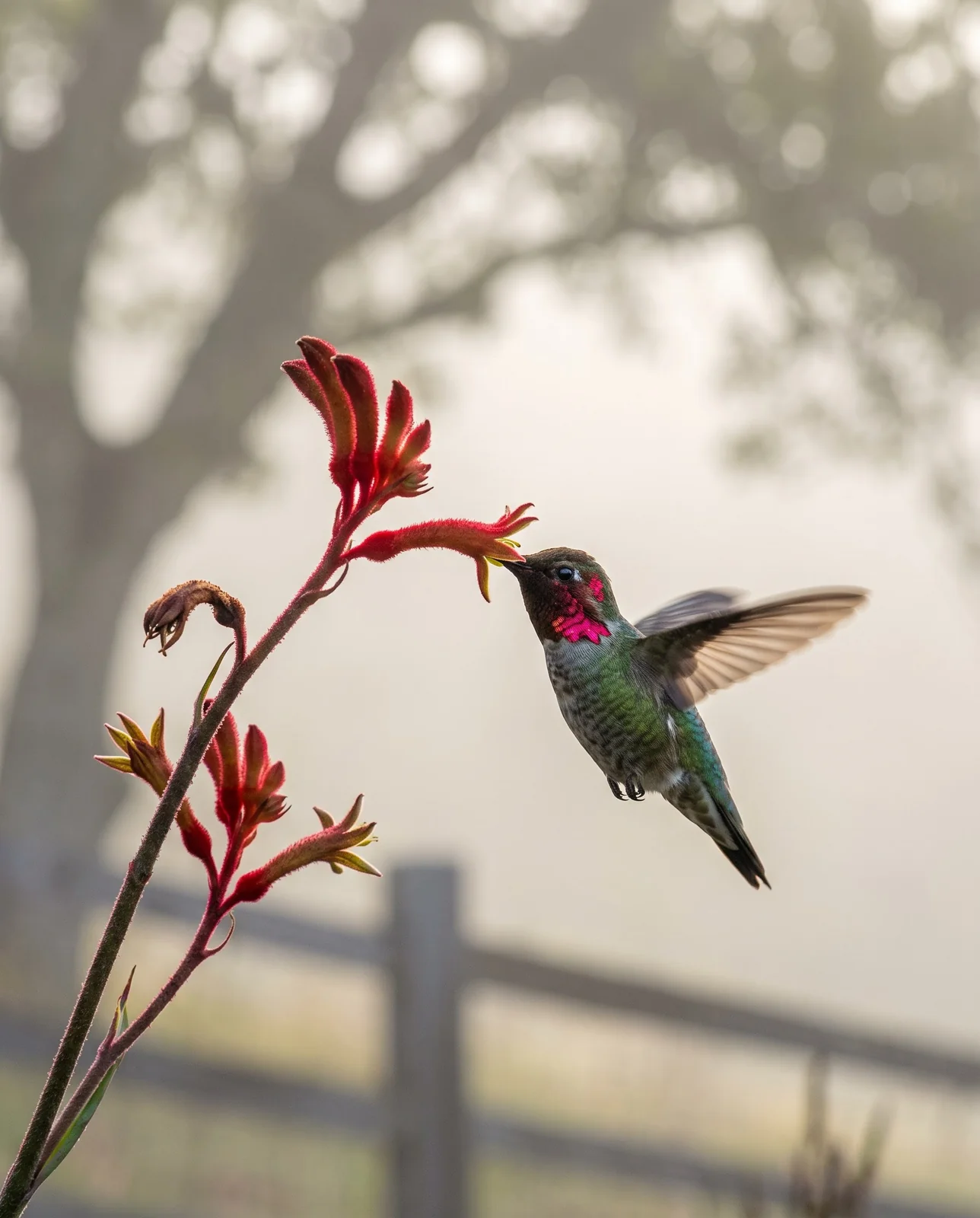
In their native home, kangaroo paws attract nectar-loving birds like honeyeaters and wattlebirds, with long, sturdy stems built to support their weight. Small nectar-feeding marsupials also visit the flowers, including the little honey possum. On the black kangaroo paw, observed visitors include tawny-crowned, singing, brown, and white-cheeked honeyeaters. Australia has no native hummingbirds, but in an American garden they are sure to visit the tubular flowers. The plant is highly attractive to them and to other nectar-seeking pollinators.
Height and spread
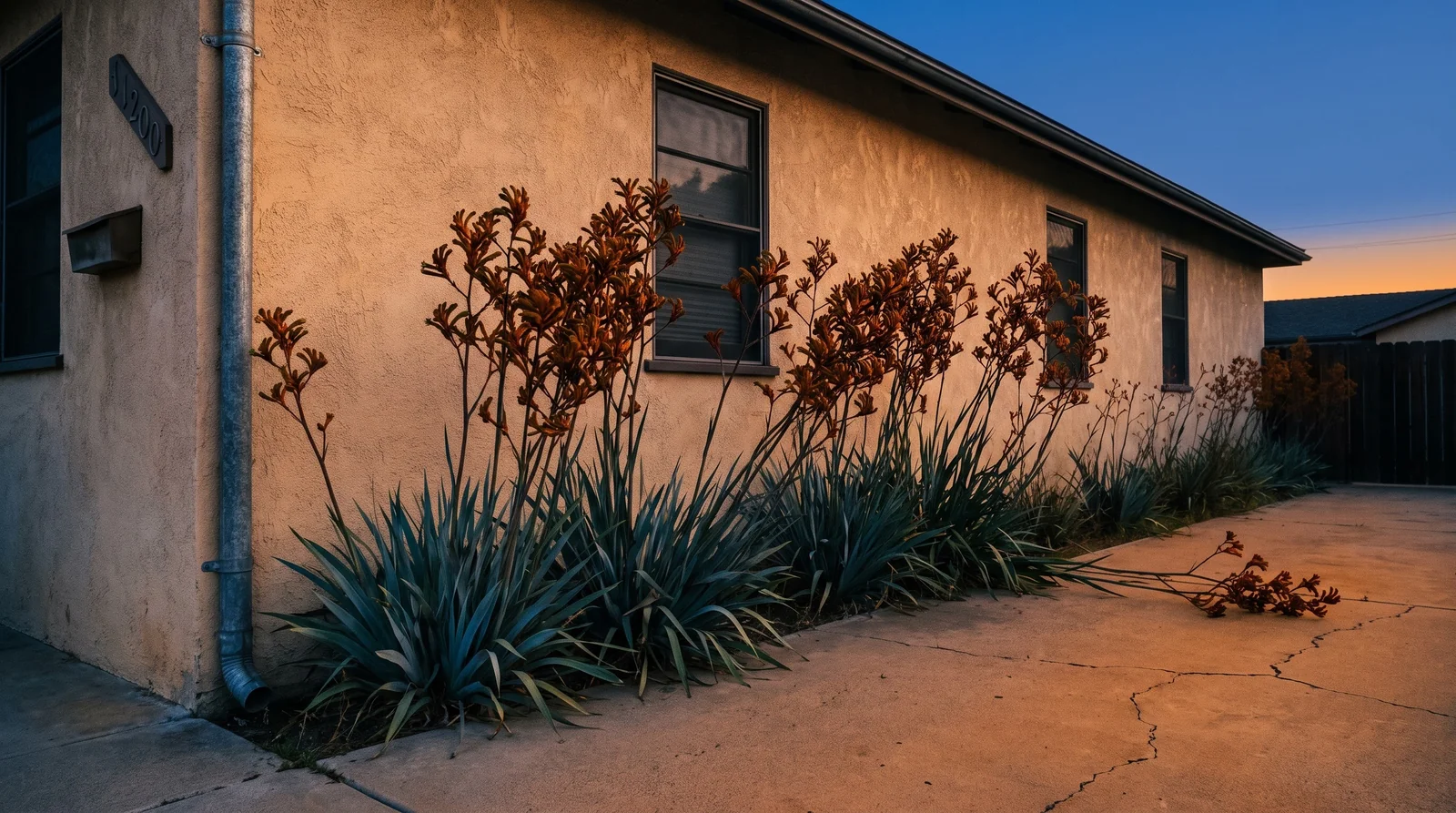
The tall kangaroo paw grows 3 to 6 feet tall and spreads 2 to 4 feet wide. Across different species, foliage clumps generally spread 1 to 3 feet wide, while flowering stalks can reach up to 6 feet tall. Individual selections fit within this frame: 'Big Red' bears leaves 10 inches long and flower clusters up to 1.5 inches, on stems reaching 5 feet tall. When placing a plant in a border, plan around the stalk height, because the leaves stay low while the flowers rise high above them.
Pests
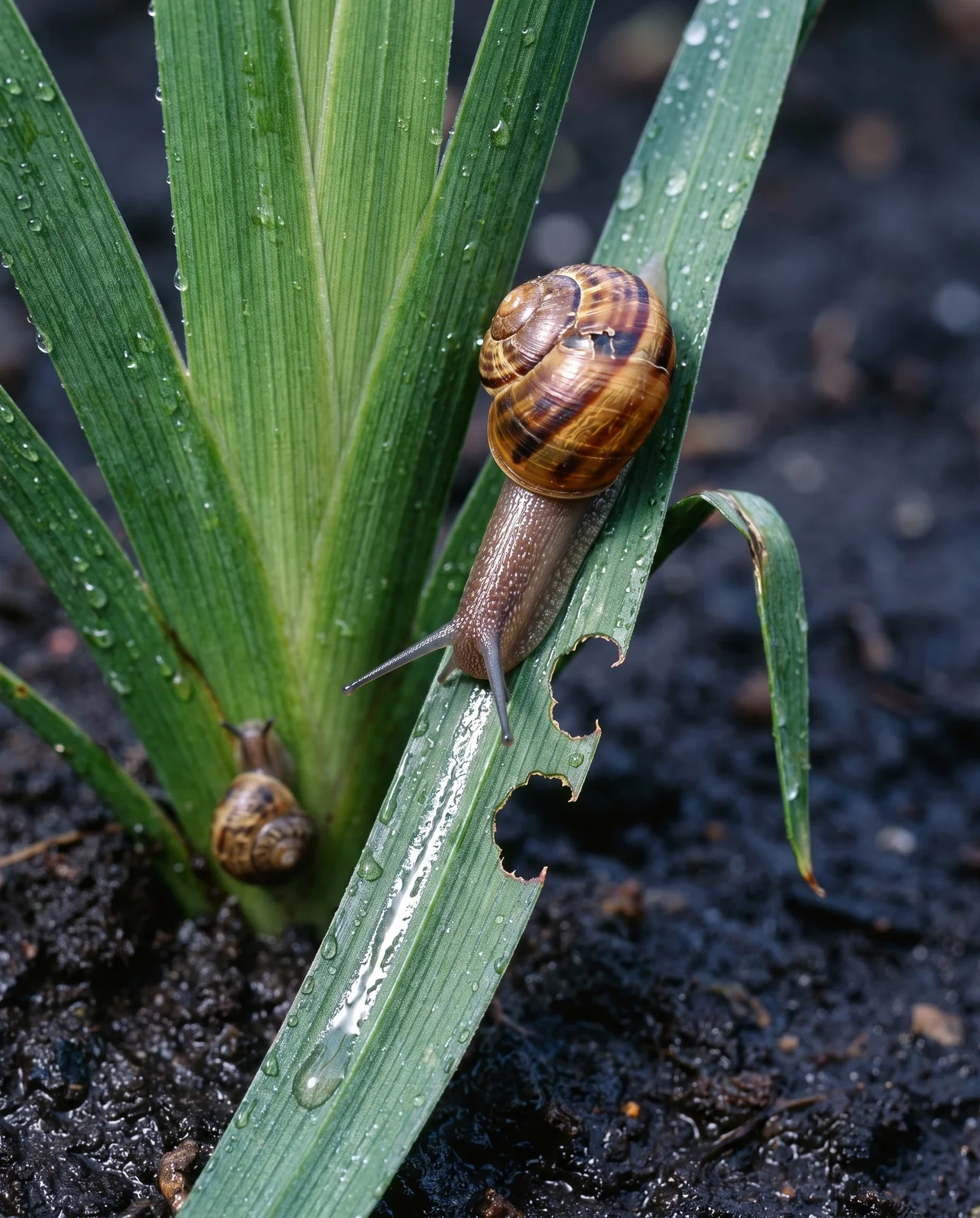
Keep a steady eye out for snails and slugs, which are the pests to watch for on kangaroo paw. The European brown garden snail is the most important pest and raises disease risk, while aphids can also be a problem in spring and fall. Snails can be serious pests on young black kangaroo paw plants, so putting a few pellets in the pot helps protect them.
Toxicity, and the separate skin question
Kangaroo paw has no toxicity record in the ASPCA database, so treat it with standard caution around pets. Skin irritation is a separate issue. Tiny hairs on the stems of tall hybrids can irritate bare skin, which becomes a real disadvantage when picking large quantities of flowers.
What you are actually buying
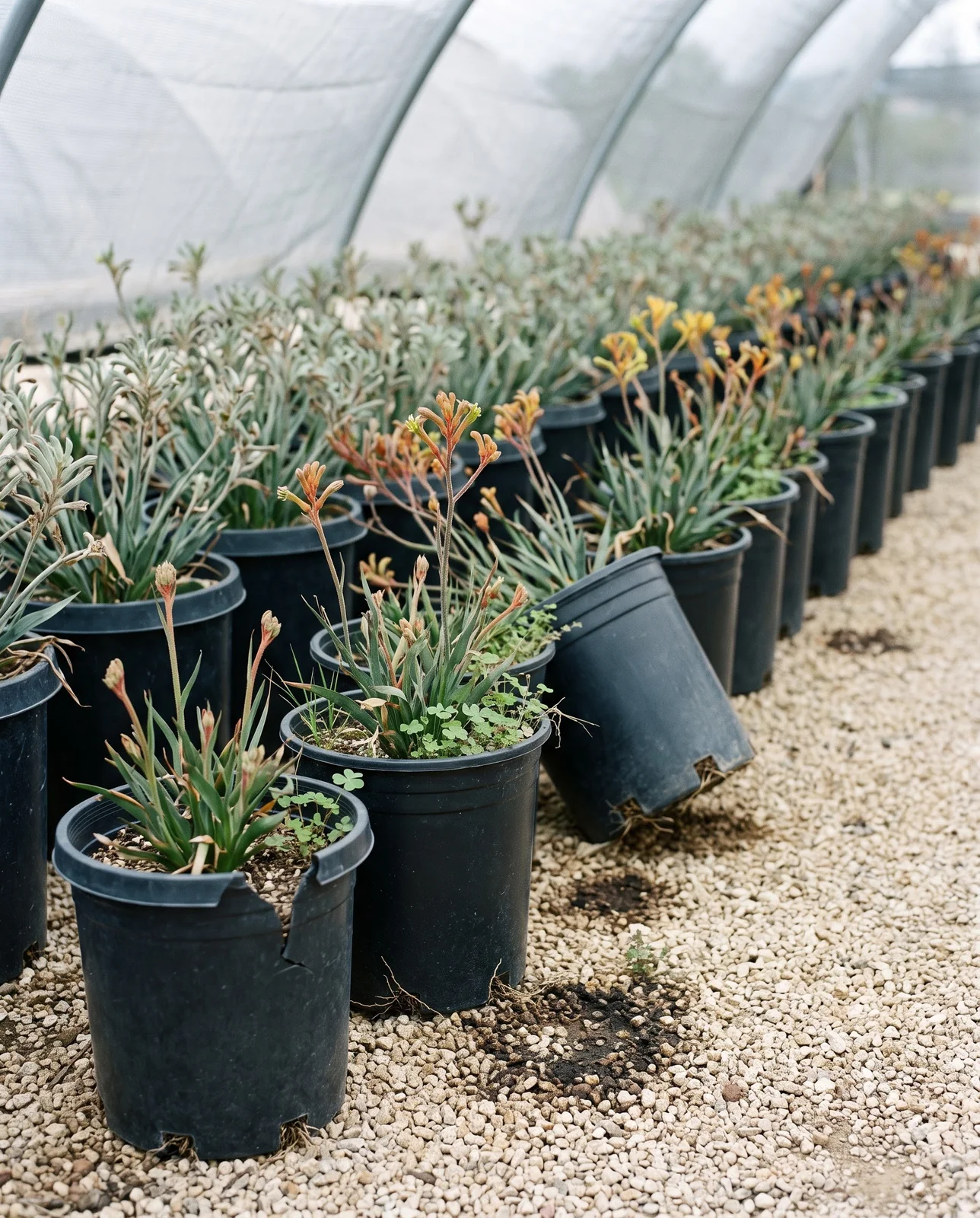
When you shop for kangaroo paw, you are buying a live potted plant, with nursery containers typically running from $9.98 to about $80. Growers developed the bloom as a major cut-flower crop in the United States, Israel, and Japan. Commercial fields in California produced thousands of cut stems for sale by 1975, and florist hybrids arrived on the market in 1990. It makes an excellent cut flower with showy, long-lasting blooms well suited to home cutting gardens. If you fell in love with a floral arrangement, you can easily grow your own from a container. The plant sits comfortably in a sunny border alongside container perennials like agapanthus, producing fresh stems for the vase once established.
What to expect, season by season
Three stages follow how kangaroo paw establishes its roots, repeats its bloom, and ages over the seasons.
The early months focus on building roots. In the wild, seeds germinate with autumn rains and establish roots through winter, then rapid spring growth carries the plants into bloom by late spring or early summer. Planting during cool weather gives a garden start that same quiet advantage.
Pruning begins as the first stems finish, stretching across the warm months. The best time to prune flower stalks is after blooming, usually repeated several times through spring and summer as different stems finish flowering. Clearing away each spent stem keeps the clump looking fresh.
The second and third years reveal how long different species last in the garden. The red kangaroo paw has grown well in California but proved short-lived. Anigozanthos humilis has also proven short-lived in cultivation, despite being an essential parent of several Bush Gem hybrids. In the wild, an established black kangaroo paw may live for 30 years.
Four things people repeat about kangaroo paw
Four common misunderstandings about hardiness, pruning, pet safety, and leaf spots, answered plainly.
The myth: A non-toxic tag online means kangaroo paw is safe around pets.
The reality: That tag belongs to a different plant. The kangaroo paw fern is non-toxic to both cats and dogs, but that rating covers the fern alone.
The myth: It is hardy anywhere in the warm zones.
The reality: Kangaroo paw stays in the ground and returns as a perennial in zones 10 and 11.
The myth: Cutting it to the ground kills it.
The reality: Cutting spent flower stalks back to the rhizome after bloom is normal deadheading, while pruning foliage is optional and not required for plant health.
The myth: Black marks on the leaves are always ink disease.
The reality: In 1990, an Okinawa fungal disease turned stalks and leaves brown to black with white cottony growth, later identified as Fusarium blight, a different pathogen from Australian ink disease.
FAQ
Do kangaroo paws come back every year?
They return year after year in zones 10 and 11, where they are winter hardy in the ground. In colder regions, they survive only as container plants brought indoors before freezing weather.
Do kangaroo paw plants prefer sun or shade?
They prefer full sun, which means at least 6 hours of direct sunlight each day. Many species and hybrids will also grow and bloom in open light shade.
Is kangaroo paw poisonous to dogs?
The ASPCA database lists no entry for kangaroo paw under its botanical or common names. Without an official finding either way, the safest course is to keep dogs from nibbling on the plant.
Why are my kangaroo paws not blooming?
Drying out while flower buds are forming can cause the stems to bend permanently and the flowers to abort. Regular heavy frosts from midwinter through spring may also hinder flower development.
Should you cut off dead kangaroo paw flowers?
Yes, cut spent flower stalks right down to the base among the foliage once flowering finishes. Trimming the stems after that initial flush promotes further flowering that season.
Which kangaroo paw species is the hardiest?
The tall kangaroo paw, Anigozanthos flavidus, is the toughest species. It tolerates heavier soils and wet conditions, resists disease, and parents most of the better garden hybrids. Among smaller types, 'Bush Ranger' is one of the hardiest cultivars you can grow.
When should I plant kangaroo paws?
The best time to plant is during the cooler months from late fall to early spring, letting the roots establish before flowering begins. In regions with cold winters, you can plant anytime between March and October.
Can kangaroo paw be grown as a houseplant?
It rarely thrives indoors year-round because it needs at least 6 hours of direct sunlight daily. Indoor specimens are also susceptible to spider mites. It performs much better in a container grown outdoors for summer and brought under cover for winter, sharing a bright, frost-free room with a potted plumeria.
What is the black kangaroo paw?
It belongs to its own genus, Macropidia, in the same plant family as true kangaroo paws. The flowering stems reach 2 to 6 feet tall. Its flowers are covered in black hairs through which the green color shows, and the plant is particularly susceptible to frost.
Are kangaroo paws difficult to grow?
They are easy to grow in the right climate and make excellent cut flowers. Success or failure depends largely on how well a given species or hybrid adapts to higher rainfall, especially in summer.
Interesting tips
- You might find two different plants sold as 'Pink Joey'. A tall pink selection has gone under that name by mistake, while the true 'Pink Joey' is a dwarf form that arrived in the United States more recently. It carries bright pink or salmon pink flowers on stems to about 20 inches.
- 'Bush Ranger', a cross of A. flavidus and A. humilis, bears bright red flowers on stems to about 20 inches. It also comes with orange flowers, and the plant is drought tolerant and can take mild frosts. Buy it in flower if the color matters.
- If you want the tall species in plain yellow, 'Big Roo Yellow' carries fuzzy yellow flowers on stems up to 6 feet tall.
Related Guides & Flowers

Types of flowers
The full index of flowers on the site, sorted by kind.

Red flowers
Red is the color most people come to this plant for, and this is the wider red list.
Yellow flowers
The tall species and its hybrids sit at the yellow end of the same shelf.
Lavender
Another full sun plant grown on dry, sharply drained ground where wet feet are the risk.
Enjoying our flower guides? Add YourFlowersGuide as a preferred source on Google. It helps more readers find us.
Add to Preferred Sources