What plumeria is and where it comes from
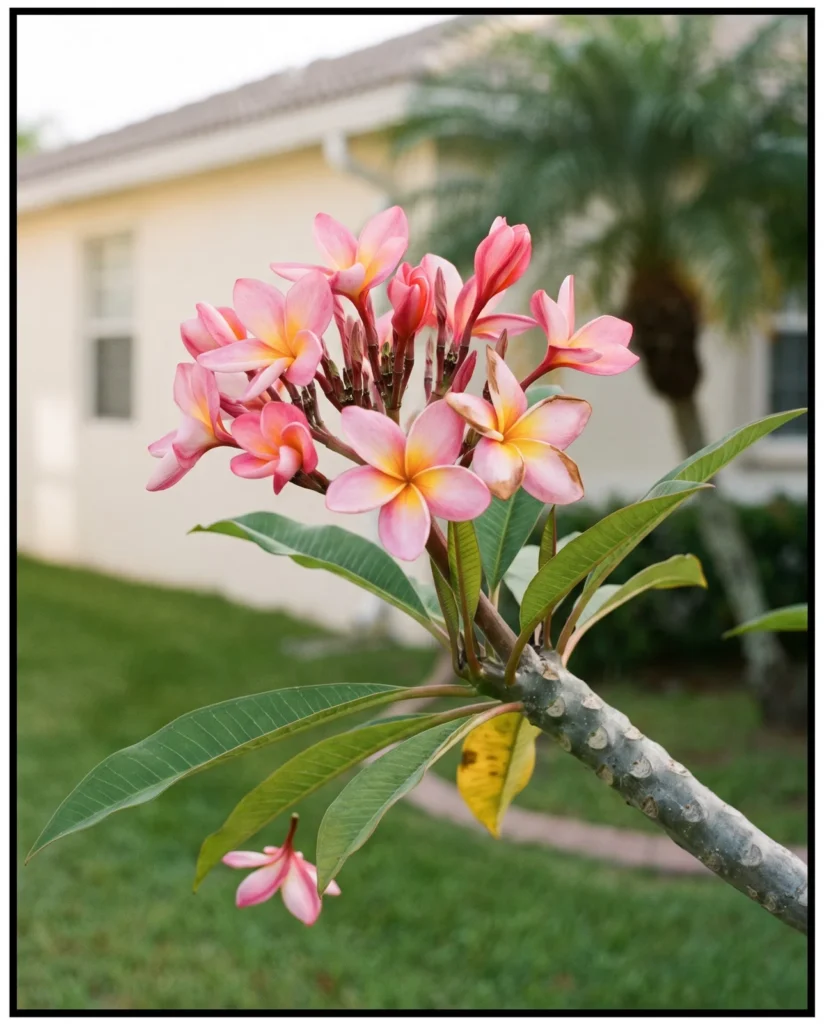
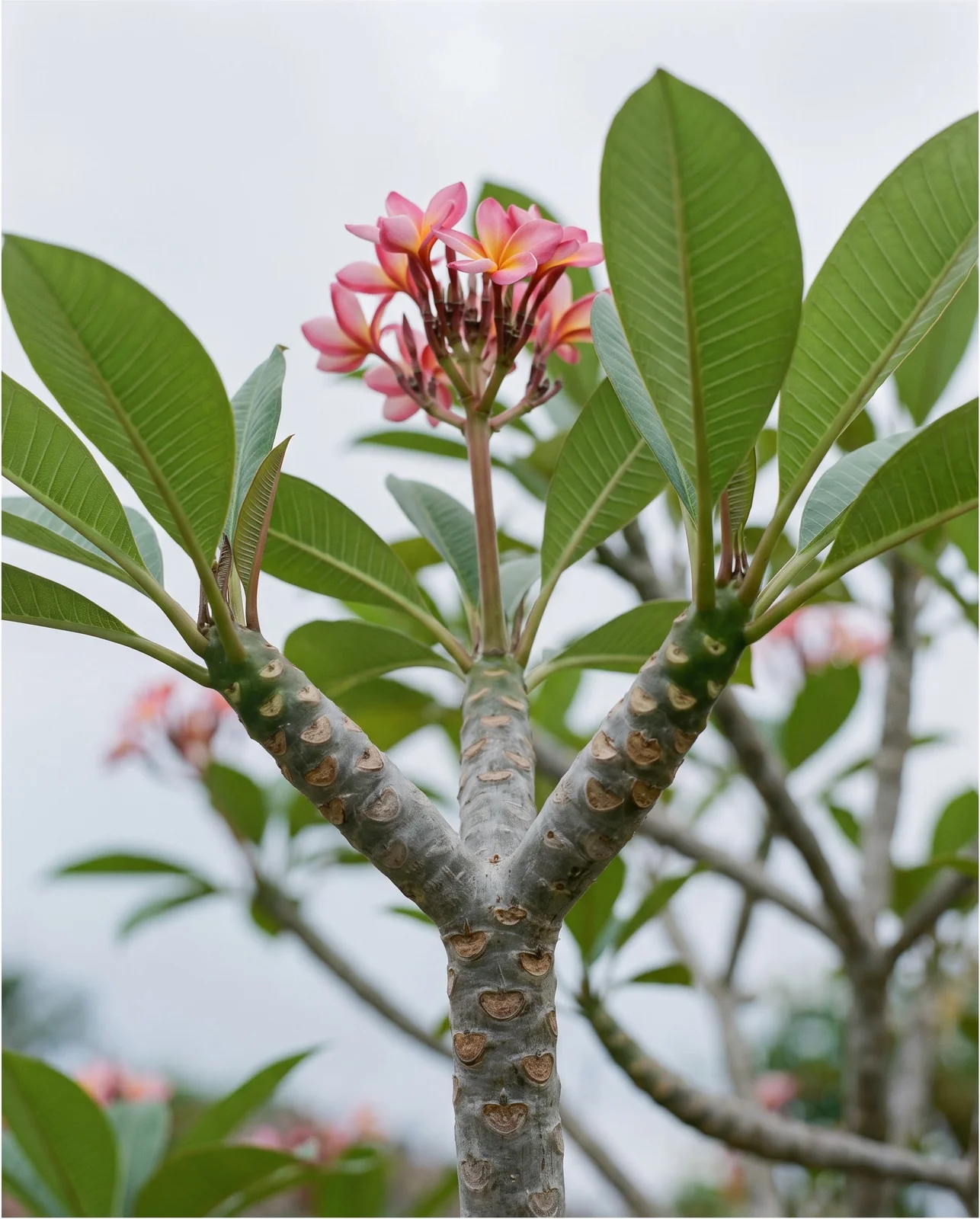
Plumeria is a small tropical tree in the dogbane family, grown for clusters of thick, waxy, scented flowers at the tips of stubby branches. The genus holds 12 to 18 species, native to the Caribbean, Mexico, Central America, Venezuela and Colombia. The Hawaii association is borrowed: the genus is endemic to the Caribbean Basin and grows there only as an ornamental, with no wild population. The name honors Charles Plumier, a French monk and botanist, 1646 to 1704. Frangipani came from a 16th century Italian nobleman whose perfume smelled like the flower.
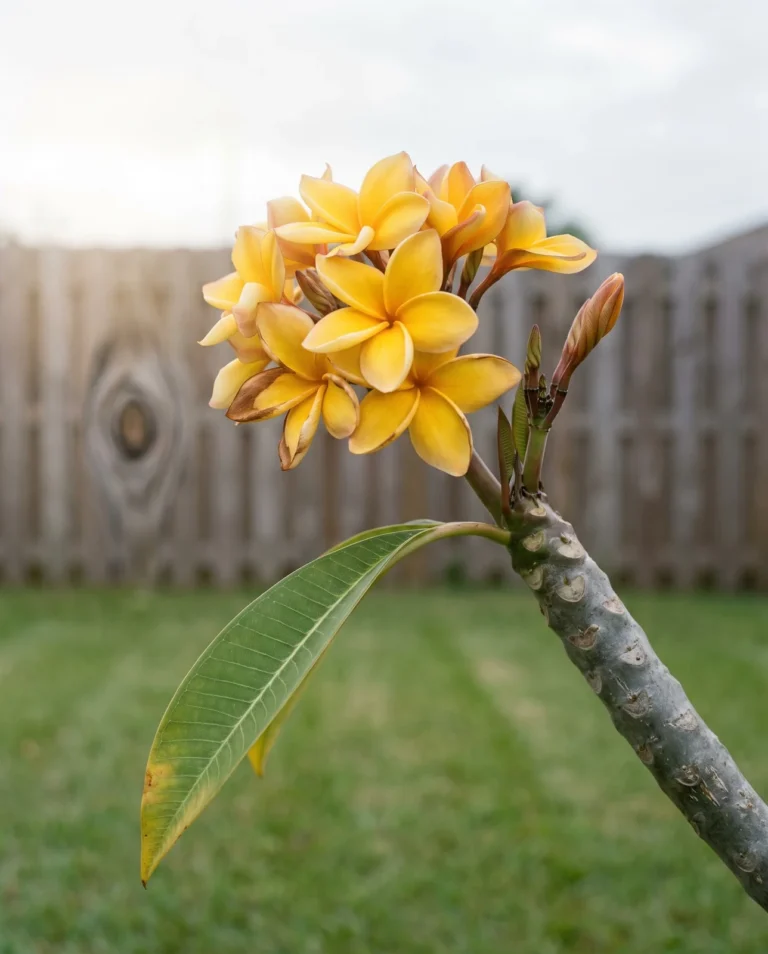
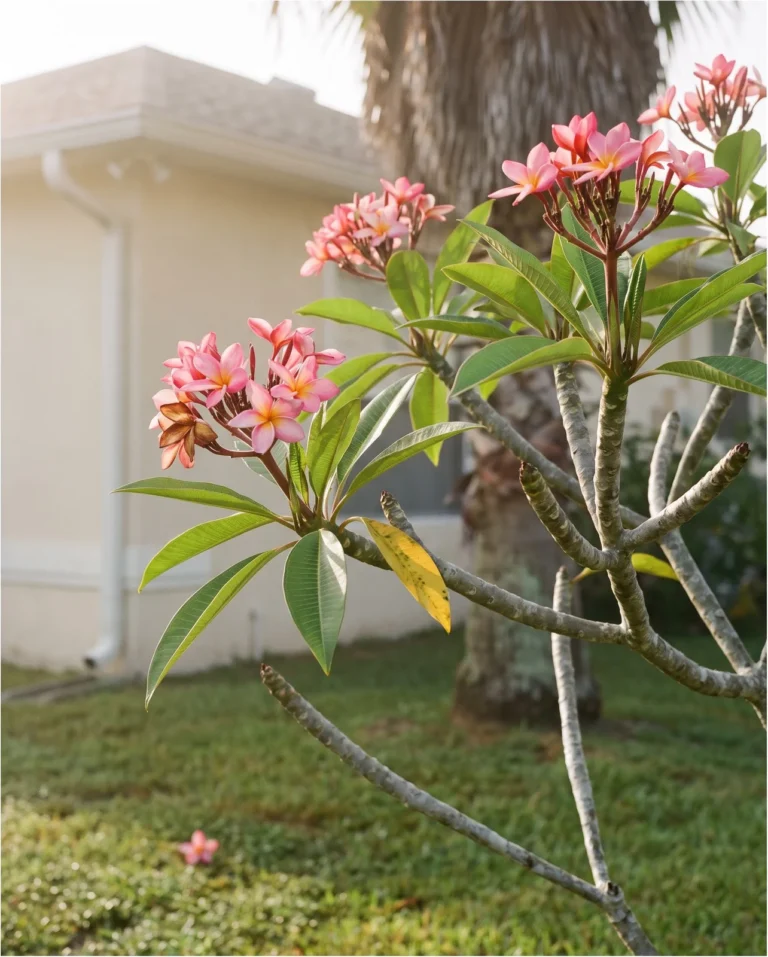
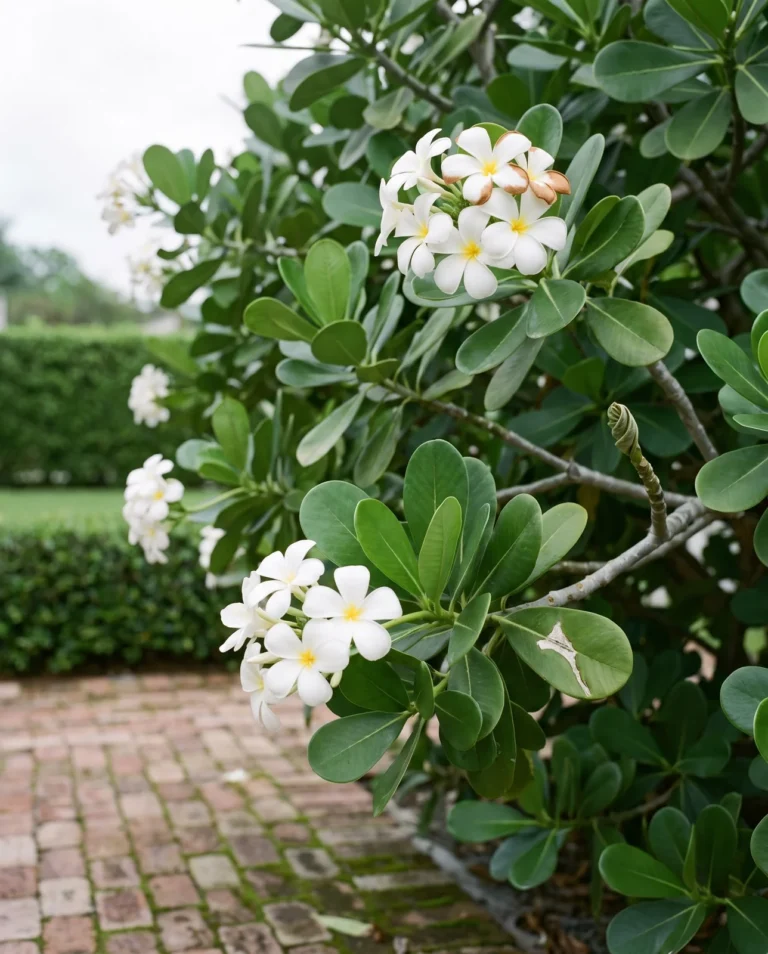
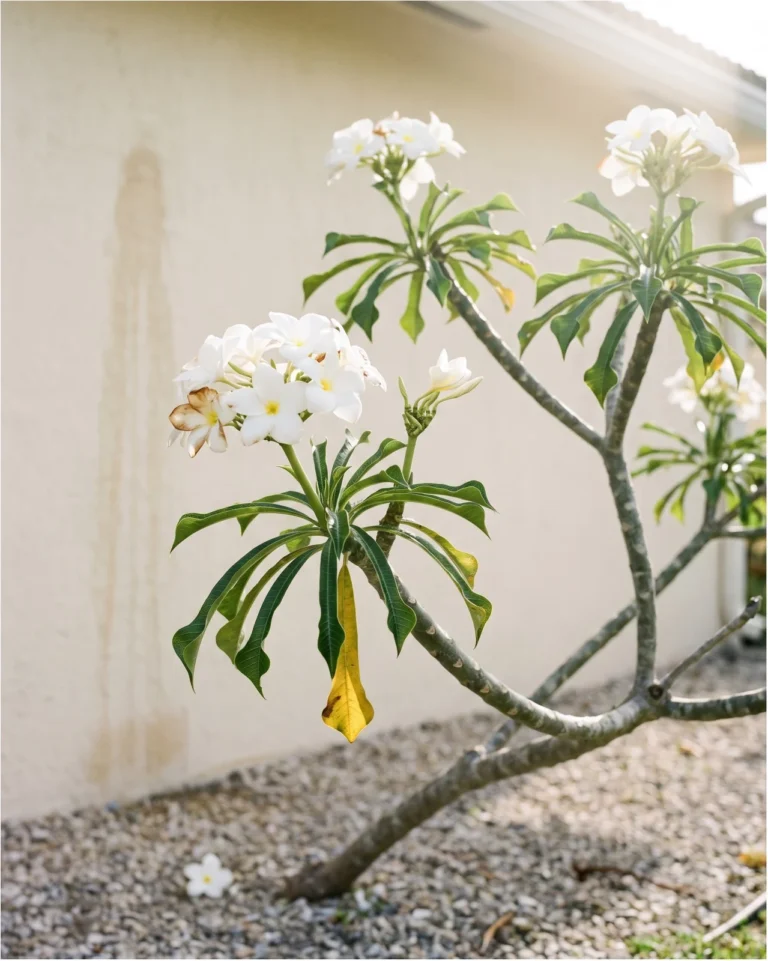
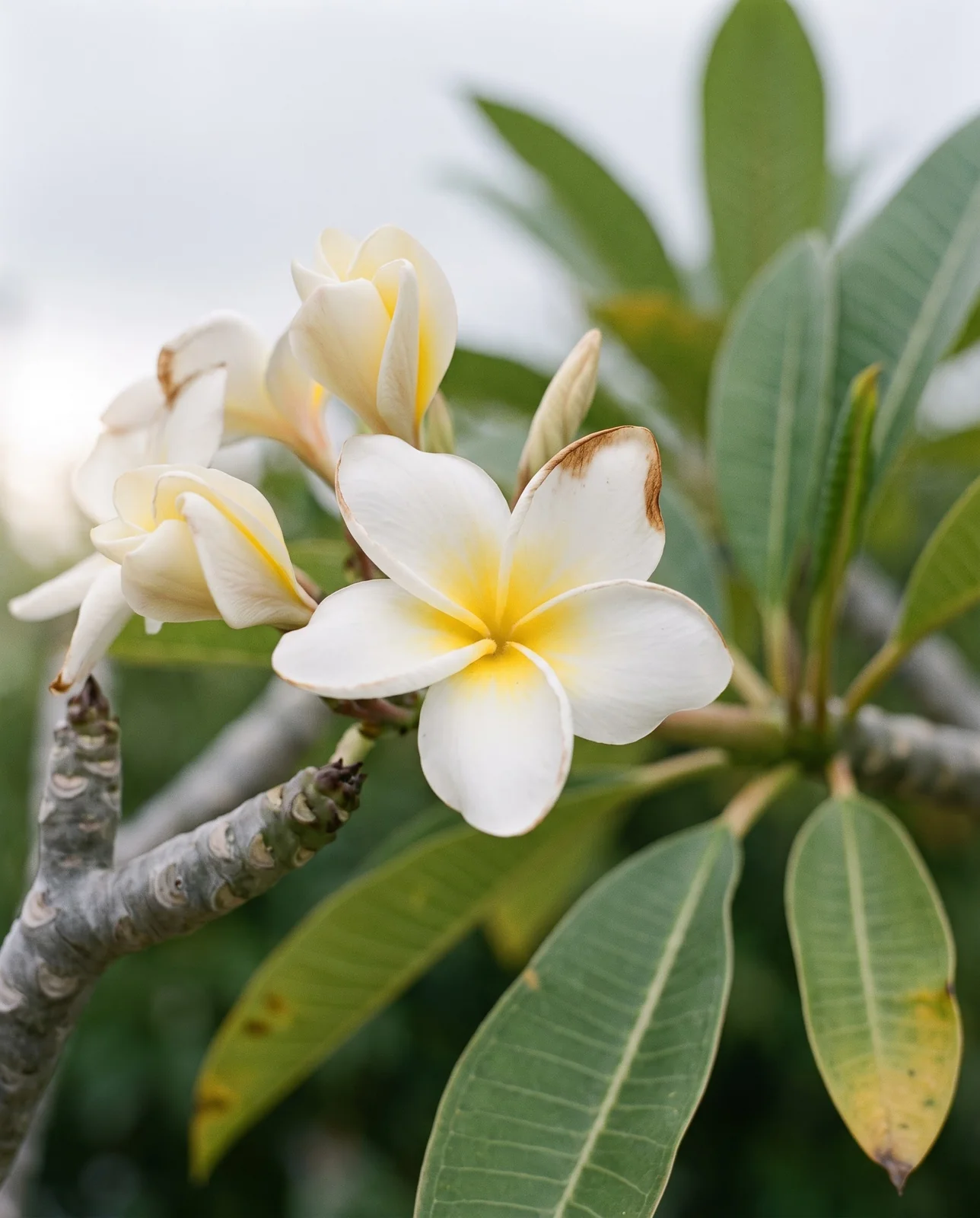
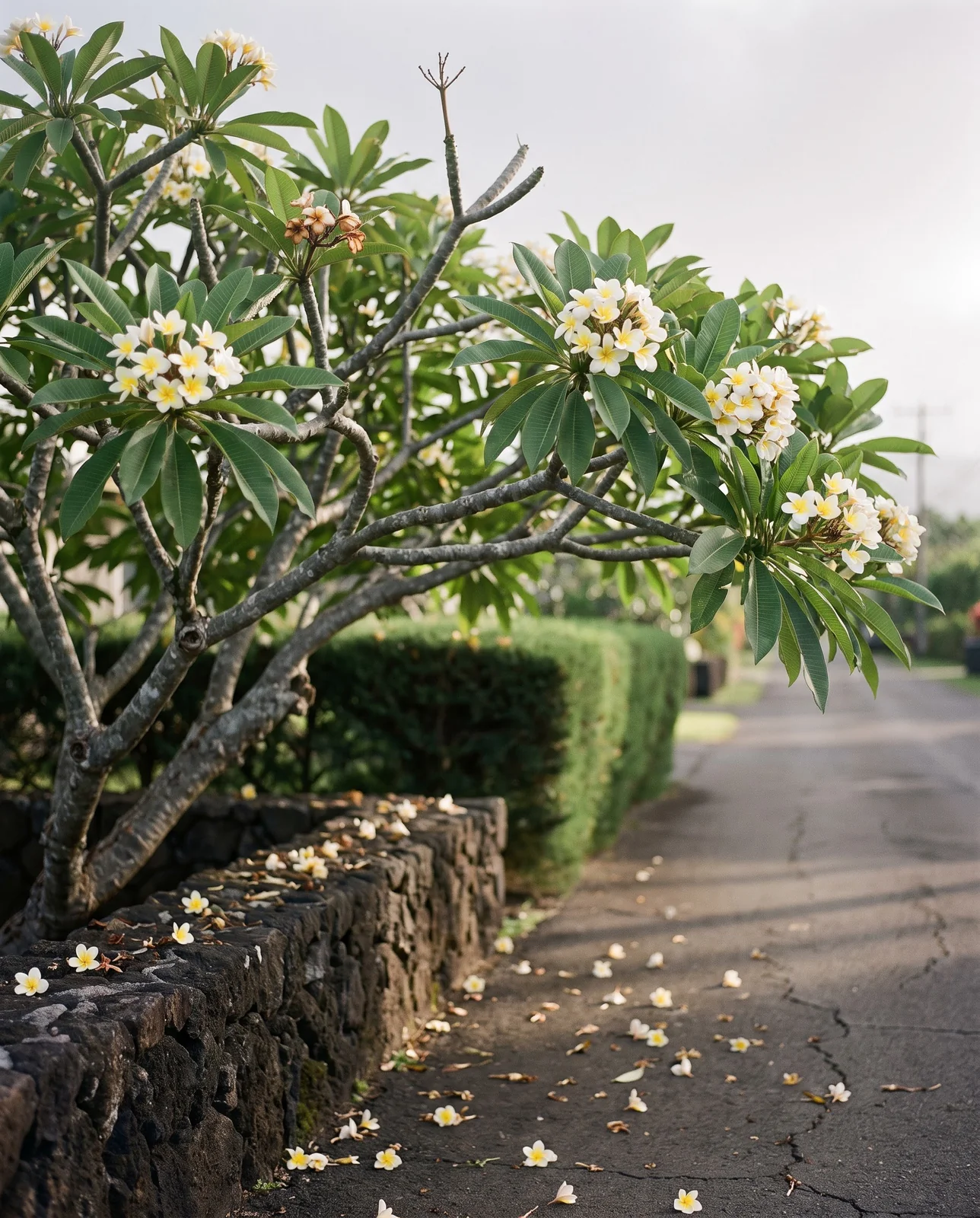
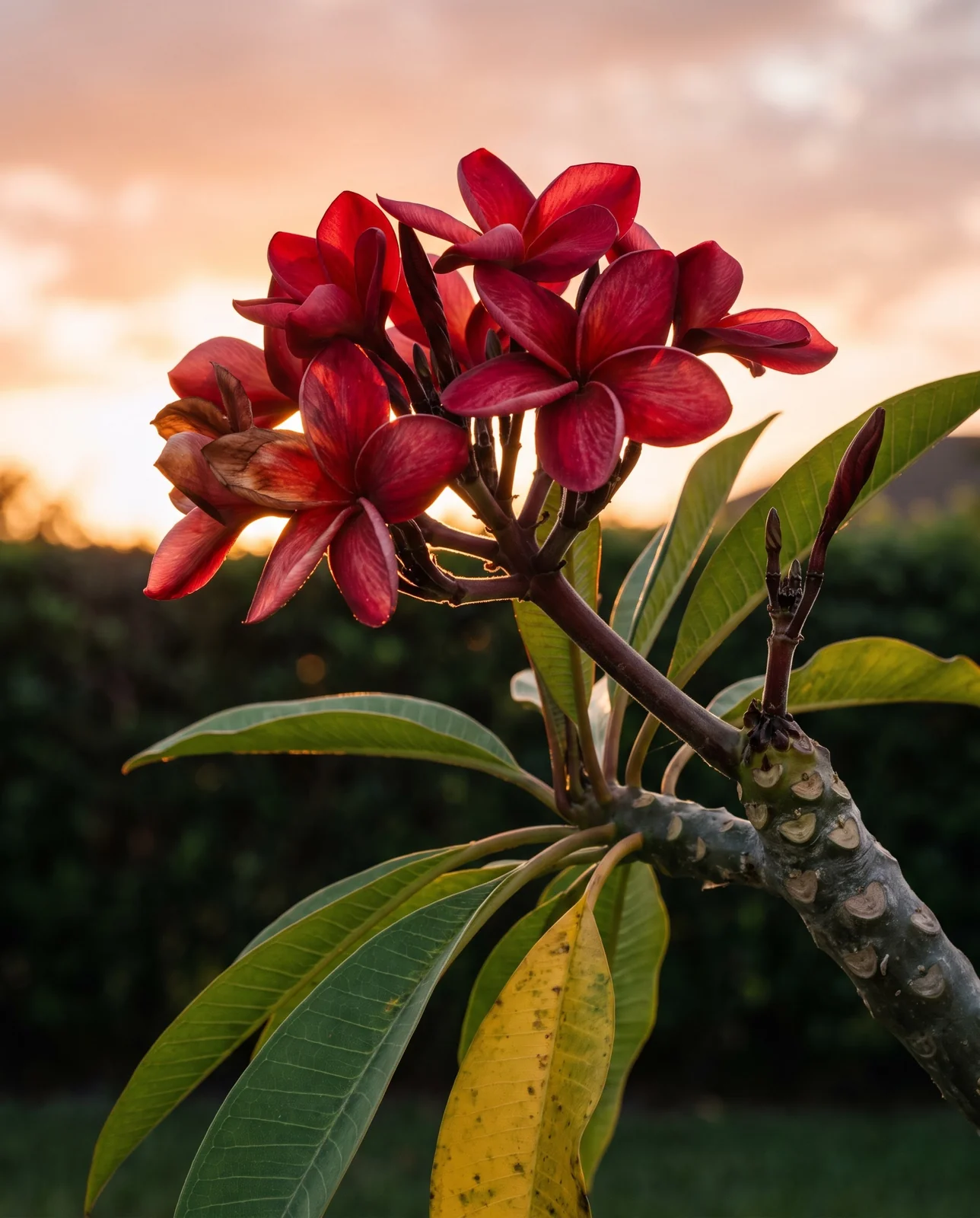
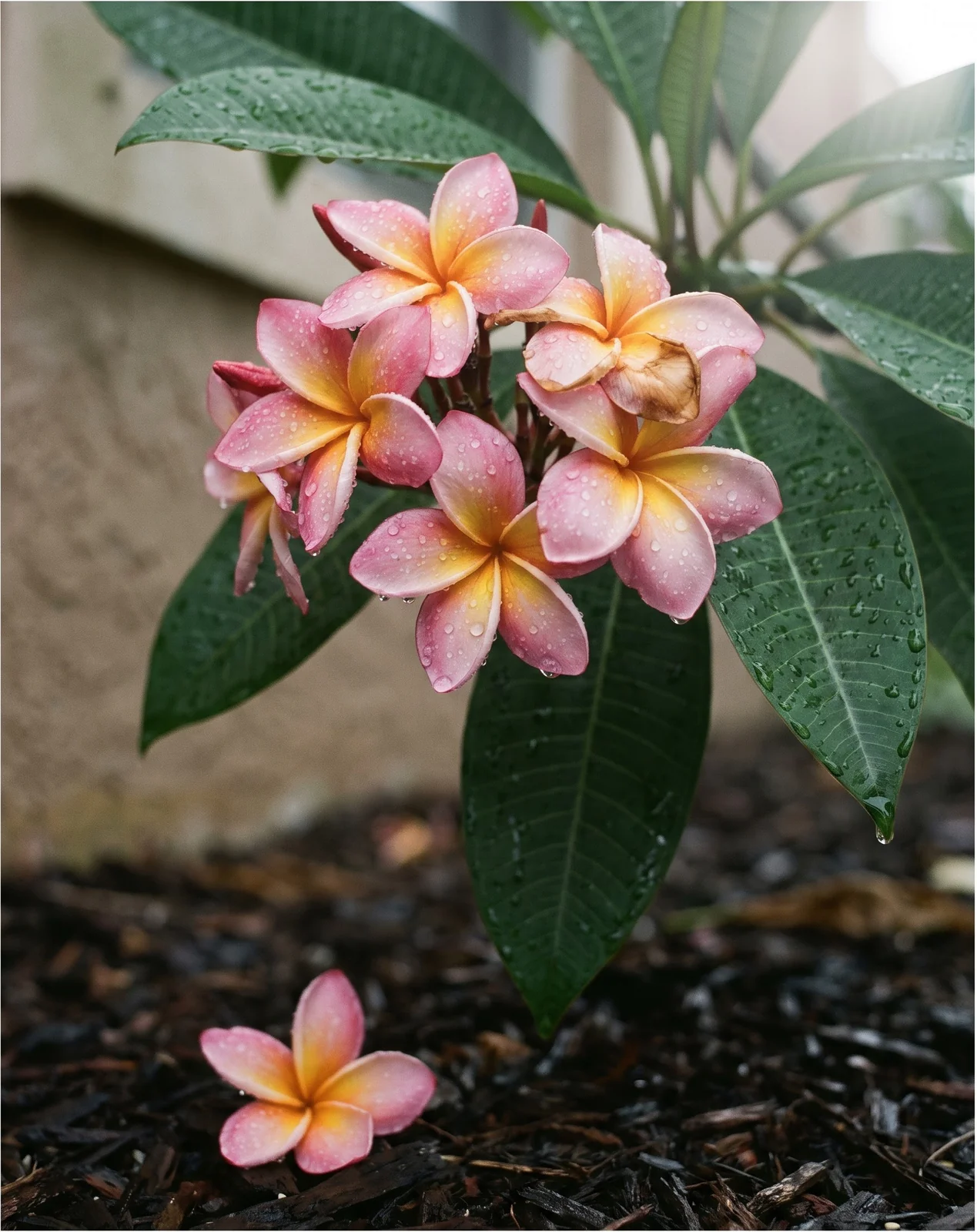
Two species cover most of what is sold, and they part ways in winter. Plumeria rubra types are deciduous, while Plumeria obtusa and the other white-flowered species stay evergreen. Breeding on that base has produced more than 100 named cultivars and hybrids. The flower is a narrow tube that flares into five waxy petals, overlapping like a pinwheel: the tube 2 to 4 inches long, the pinwheel 2 to 4 inches across. Color runs from pure white through yellow, orange, pink and red. Scent peaks at night and takes in jasmine, citrus and gardenia alongside coconut, peach and vanilla. The flowers hold no nectar at all, so sphinx moths pollinate the tree on a search that never pays.
When plumeria blooms and how long a flower lasts
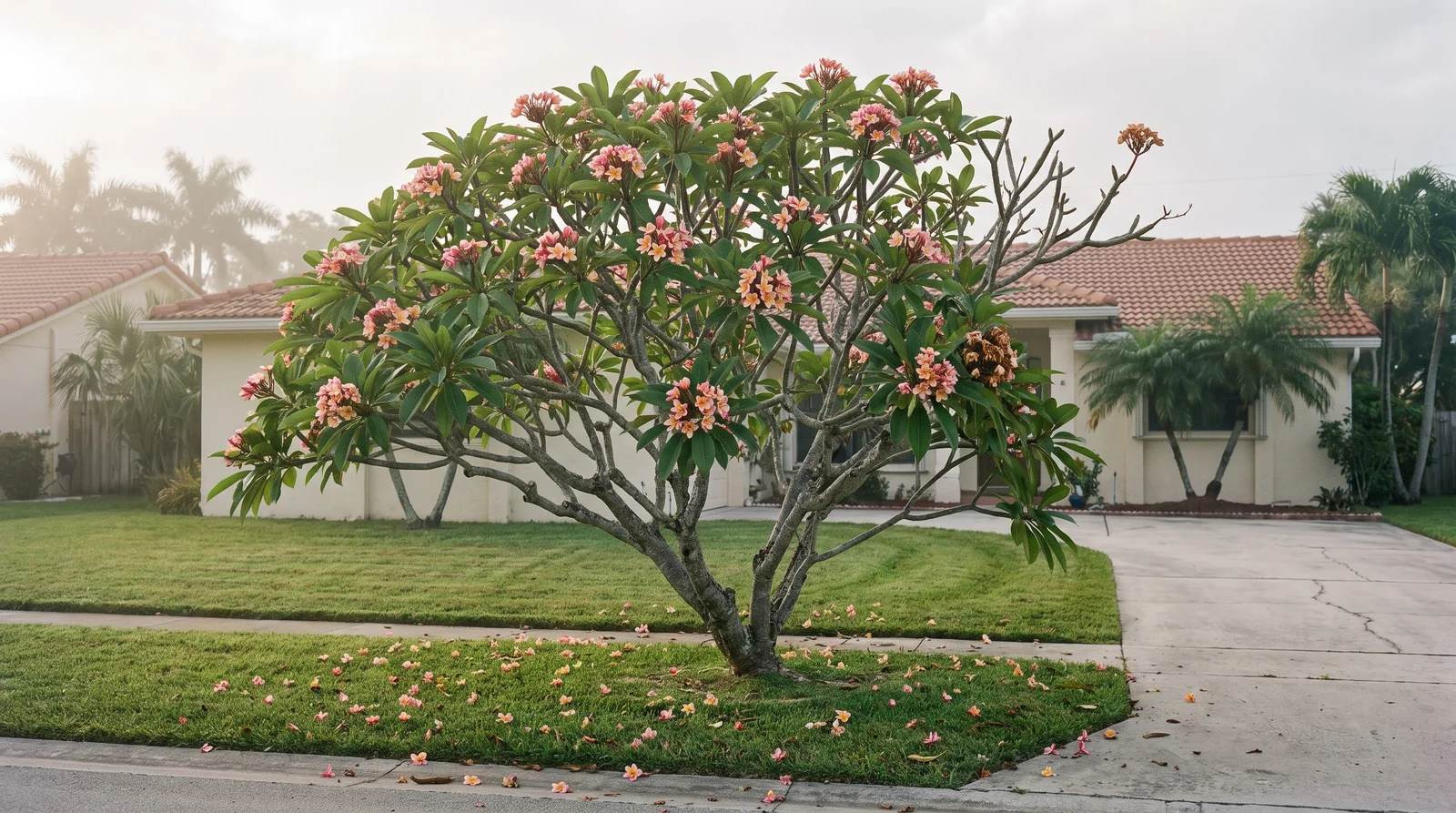
Plumeria blooms through the warm half of the year. In Florida the window runs May through November, and Hawaii's is close to it, opening as early as March. Flowering tracks the leaves. The plant spends winter dormant and leafless, and it turns prolific only once the new foliage is back. A pot that came out of storage bare is weeks behind a tree that never lost a leaf.
A cluster works far longer than any single flower on it. One inflorescence can keep producing bloom for five months, though the last flowers come small and infrequent. Cluster size is a cultivar trait: some hybrids carry more than 200 flowers per cluster, others only 50 to 60. The most floriferous set flowers on 60 percent of their branch tips, the sparse ones on 10 percent. Two plants of the same age can look nothing alike in July.
Why a healthy plumeria will not bloom
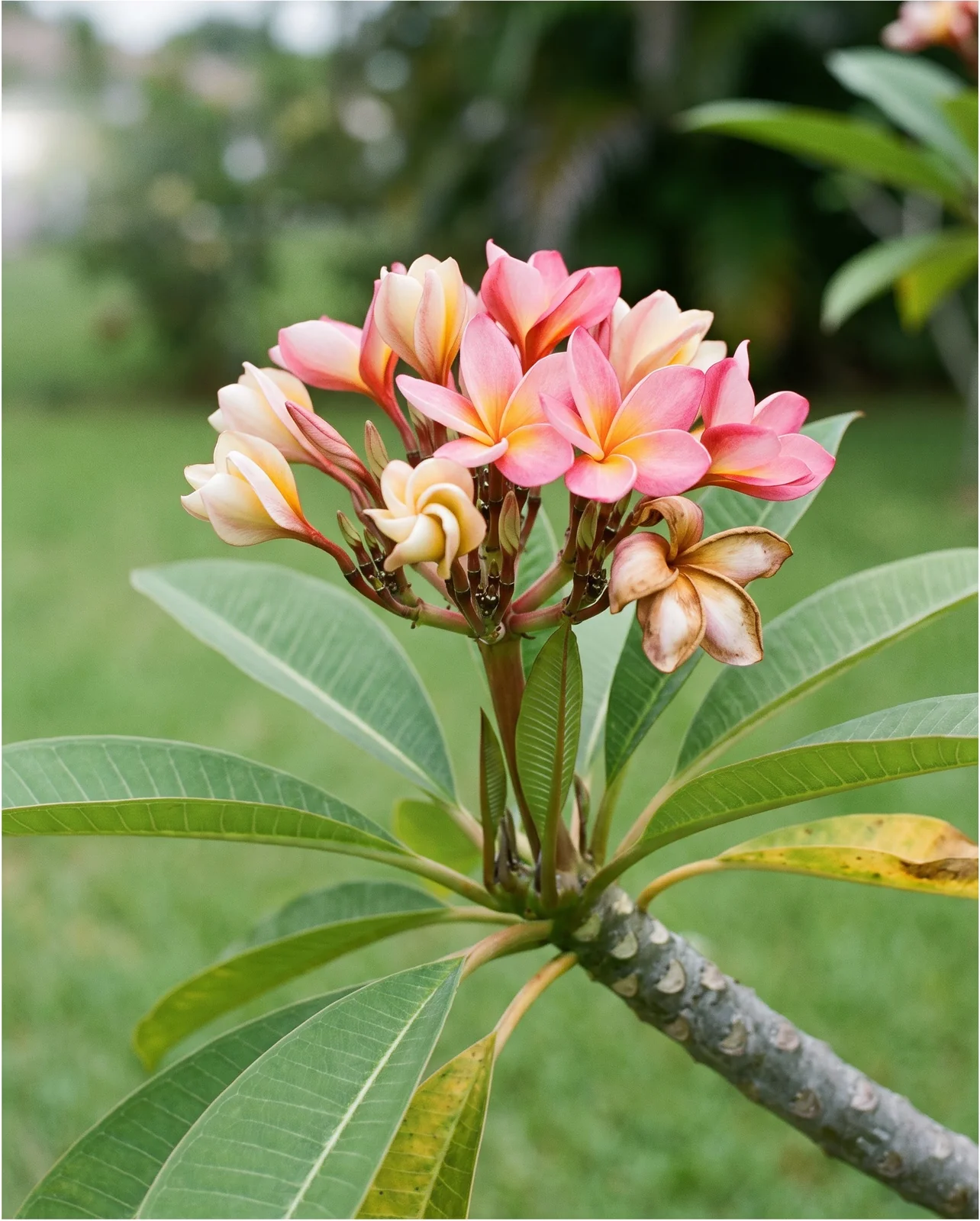
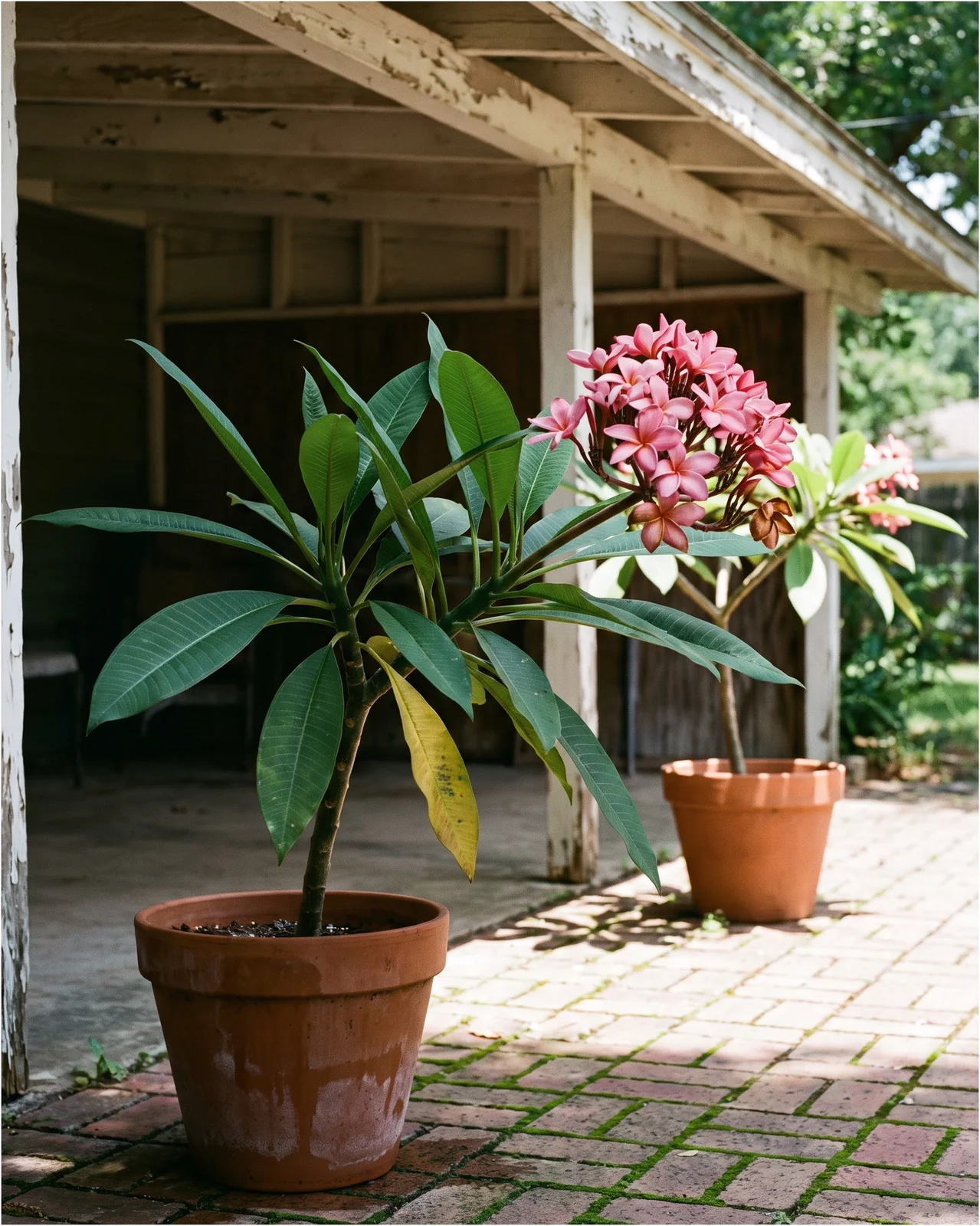
Most plumerias that make leaves and no flowers are short of sun, short of years, or both. A pot on a shaded patio or against a north wall pushes leaves all season and sets nothing at the tips. Age is the half that sellers rarely spell out. A plant started from a cutting can flower in its first year, depending on how large the cutting was and when it was taken, while a plant grown from seed takes three years or more. Indoors the two compound: a young plant in weak light spends its growth on foliage and never reaches flowering size.
Fertilizer is next, and the ratio matters more than the brand. Feed plumeria 10-30-10, every three to four months, at about a pound for every inch of trunk diameter. High-nitrogen feed, the kind that keeps a lawn green, pushes leaf and stem at the expense of flower clusters. Stop feeding 30 to 45 days before the first cool weather, because fertilizer pushes soft growth that cold damages.
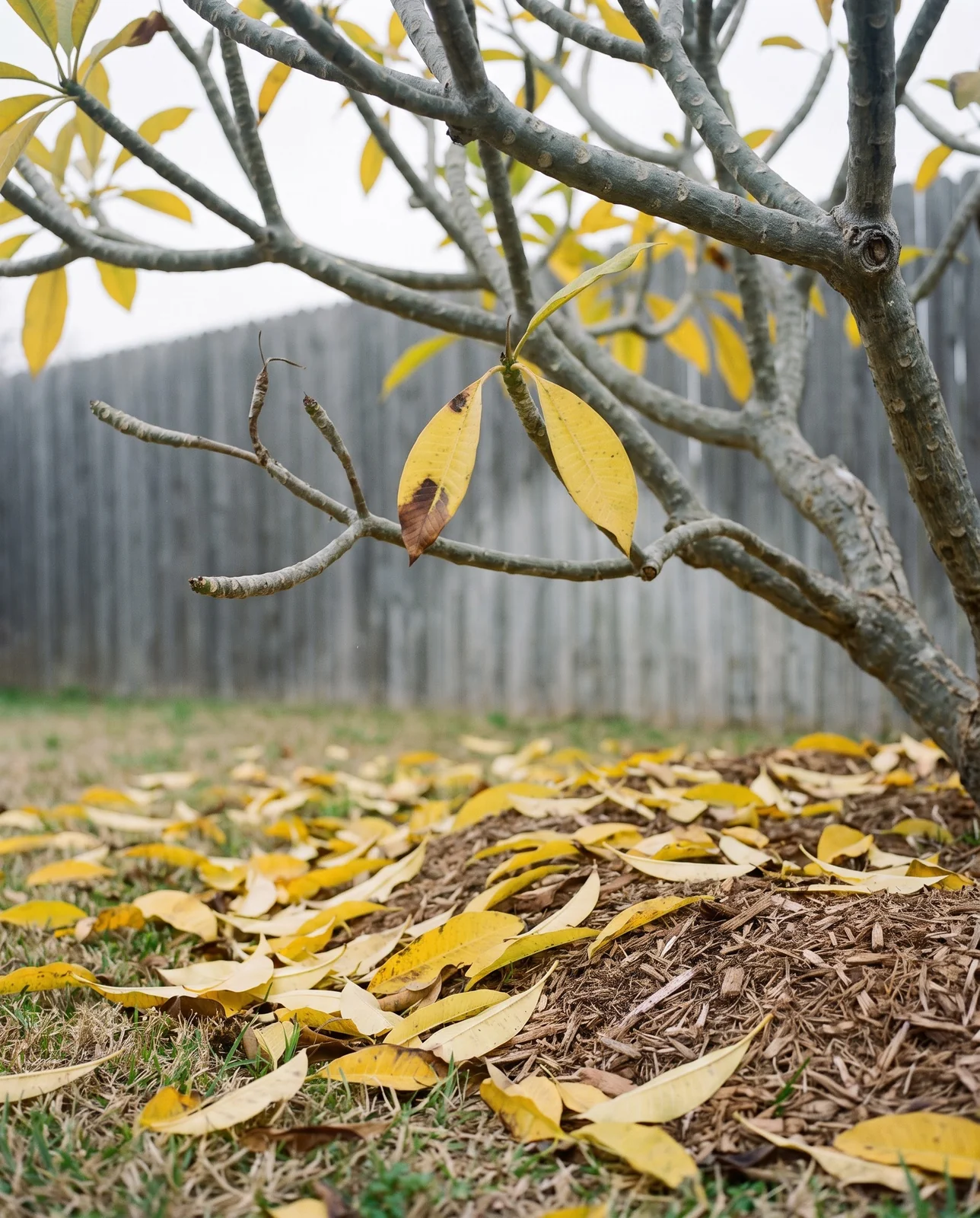
Overwatering finishes the list, and in a pot it is the easiest mistake to make. Plumeria is drought tolerant once established and the thick stems hold their own water, so a mix that stays damp drowns the roots. The plant answers by yellowing and shedding leaves in midsummer, which owners read as dormancy arriving early. A newly rooted plant also wants at least three months of root growth before it goes dormant, so a cutting potted in late summer spends its first winter with roots too small to carry a bloom the year after. None of this shows above the soil line.
A check order for a plant that will not flower
Work down these in order and change one thing at a time. Plumeria answers slowly, so give every change a full season.
Overwintering a plumeria, in a pot or in the ground
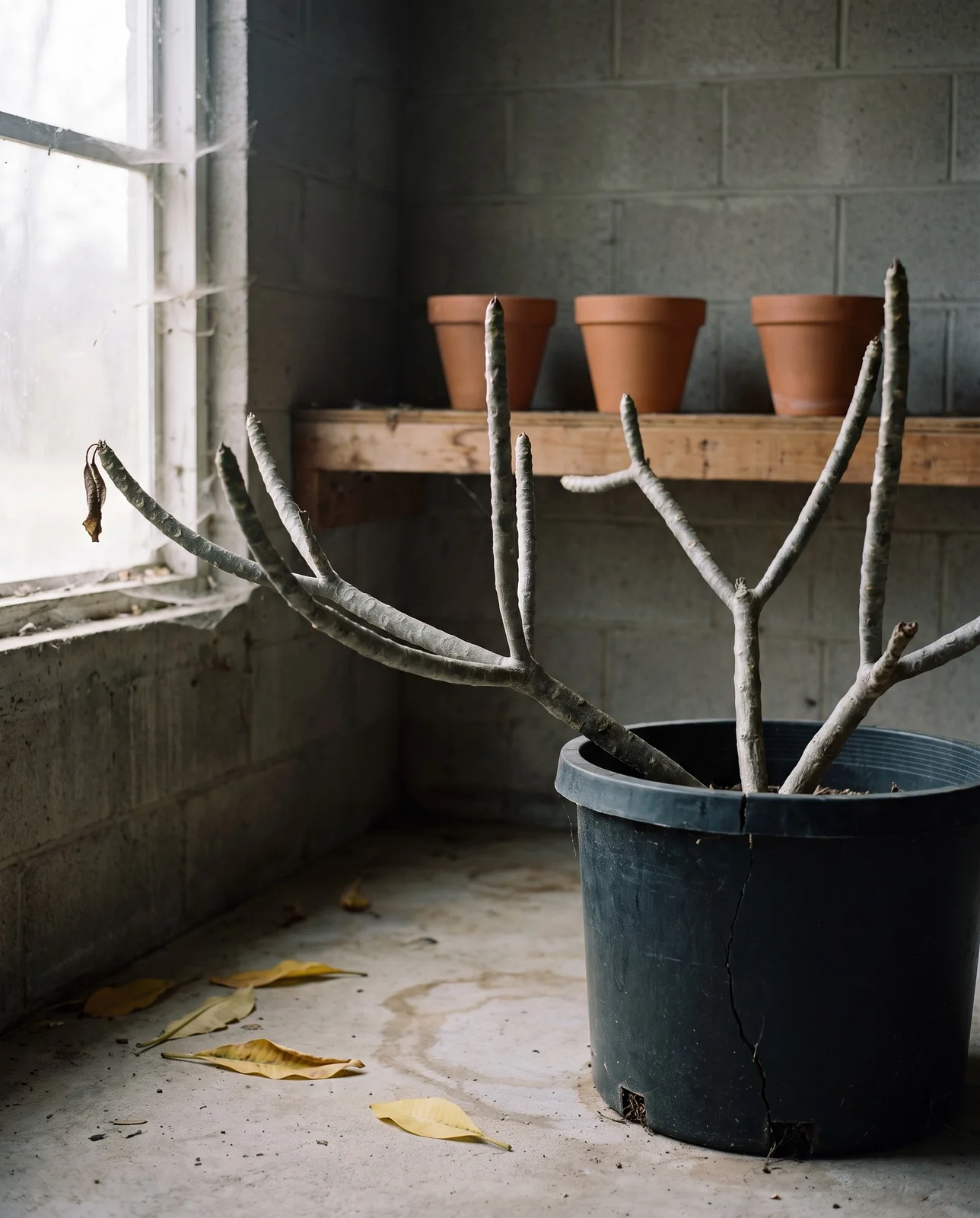
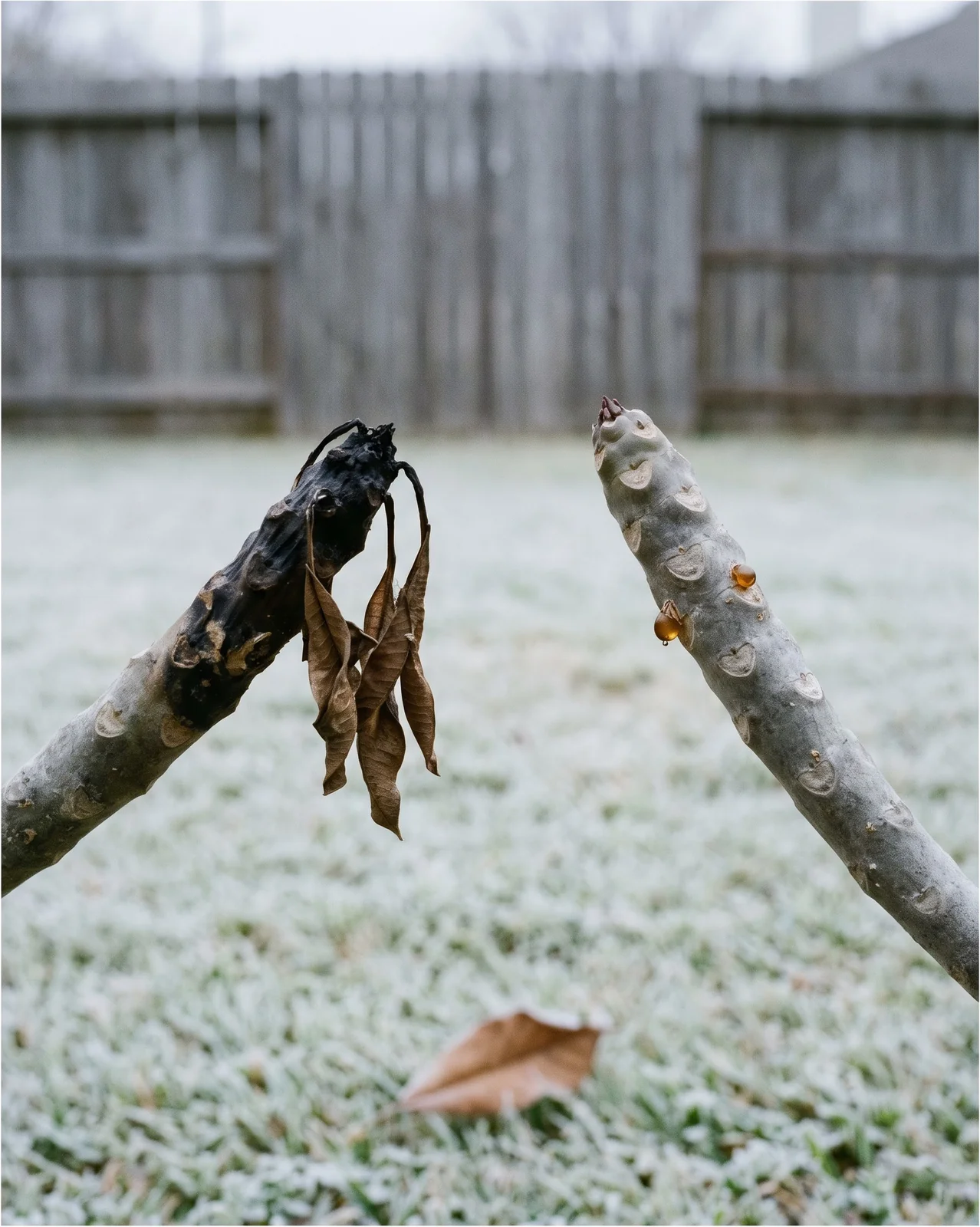
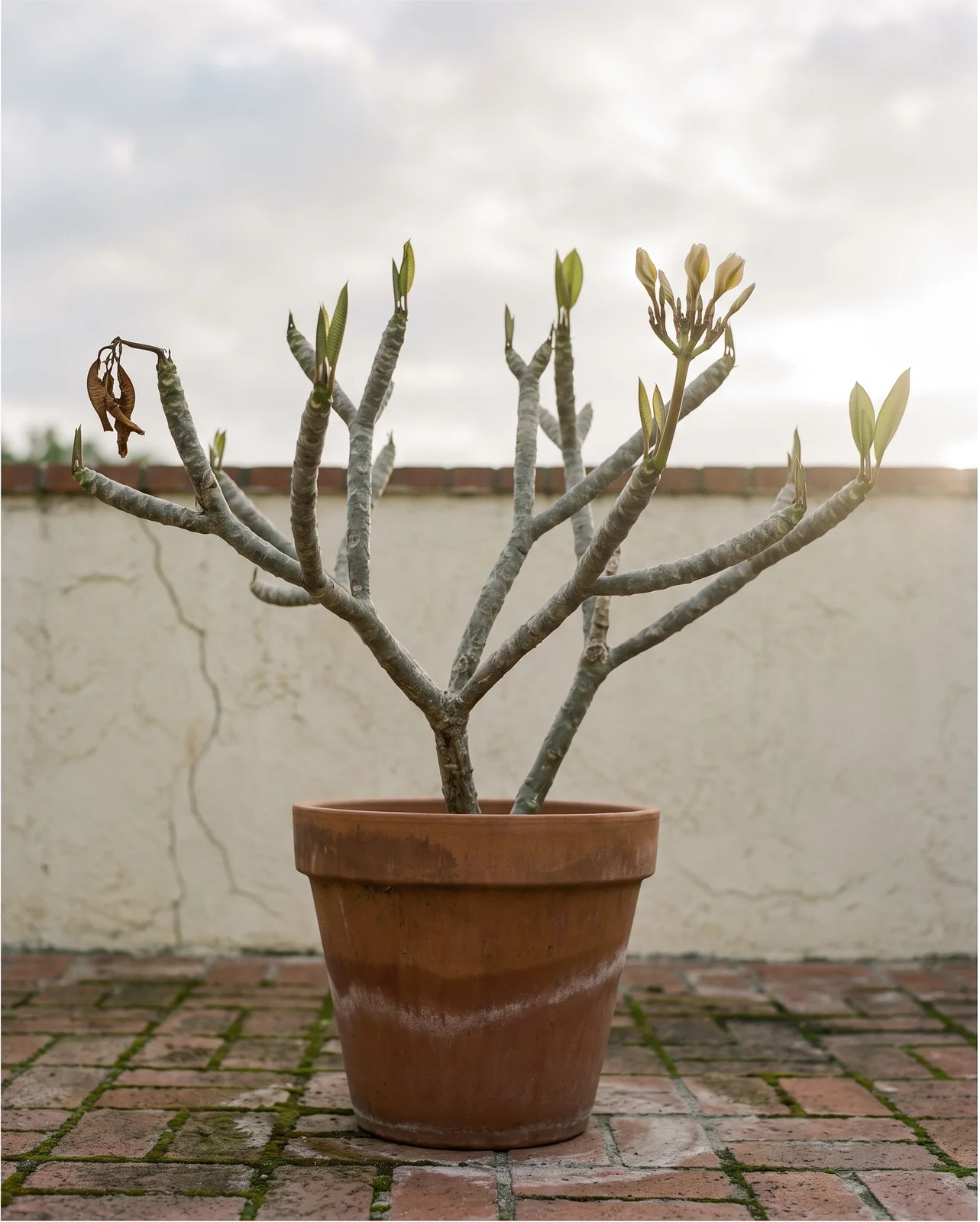
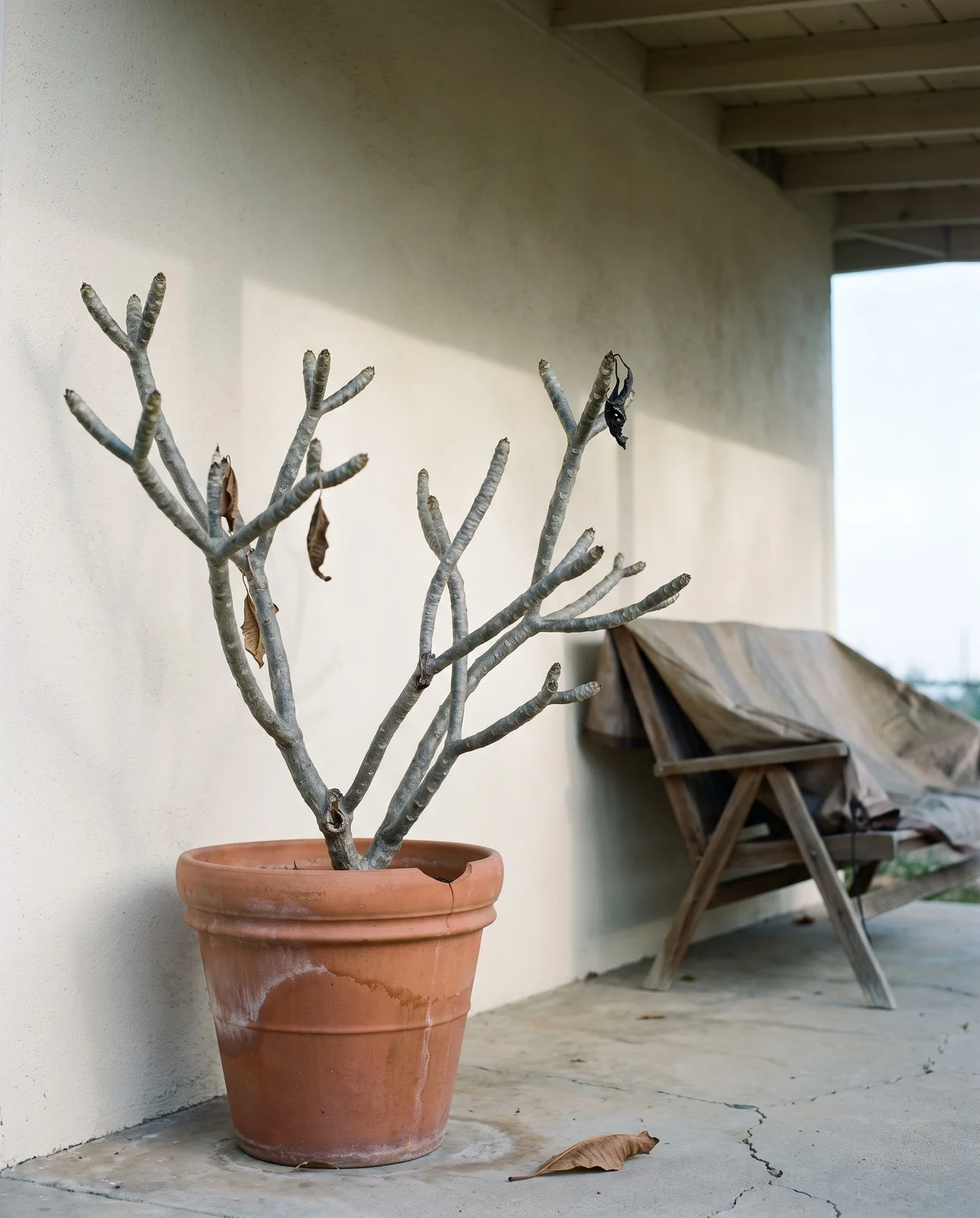
A plumeria that drops every leaf in late fall is doing what it should. Leaf fall starts once winter temperatures drop below 50 degrees Fahrenheit, and flowering stops with it. What is left looks alarming: gray wrinkling sticks. The stems are still working, staying green under the surface and photosynthesizing with no leaves present. That is how a bare plumeria sits in a dark garage for months without water and leafs out again in spring. Watering it or moving it into warmth to help is the reliable way to rot the roots.
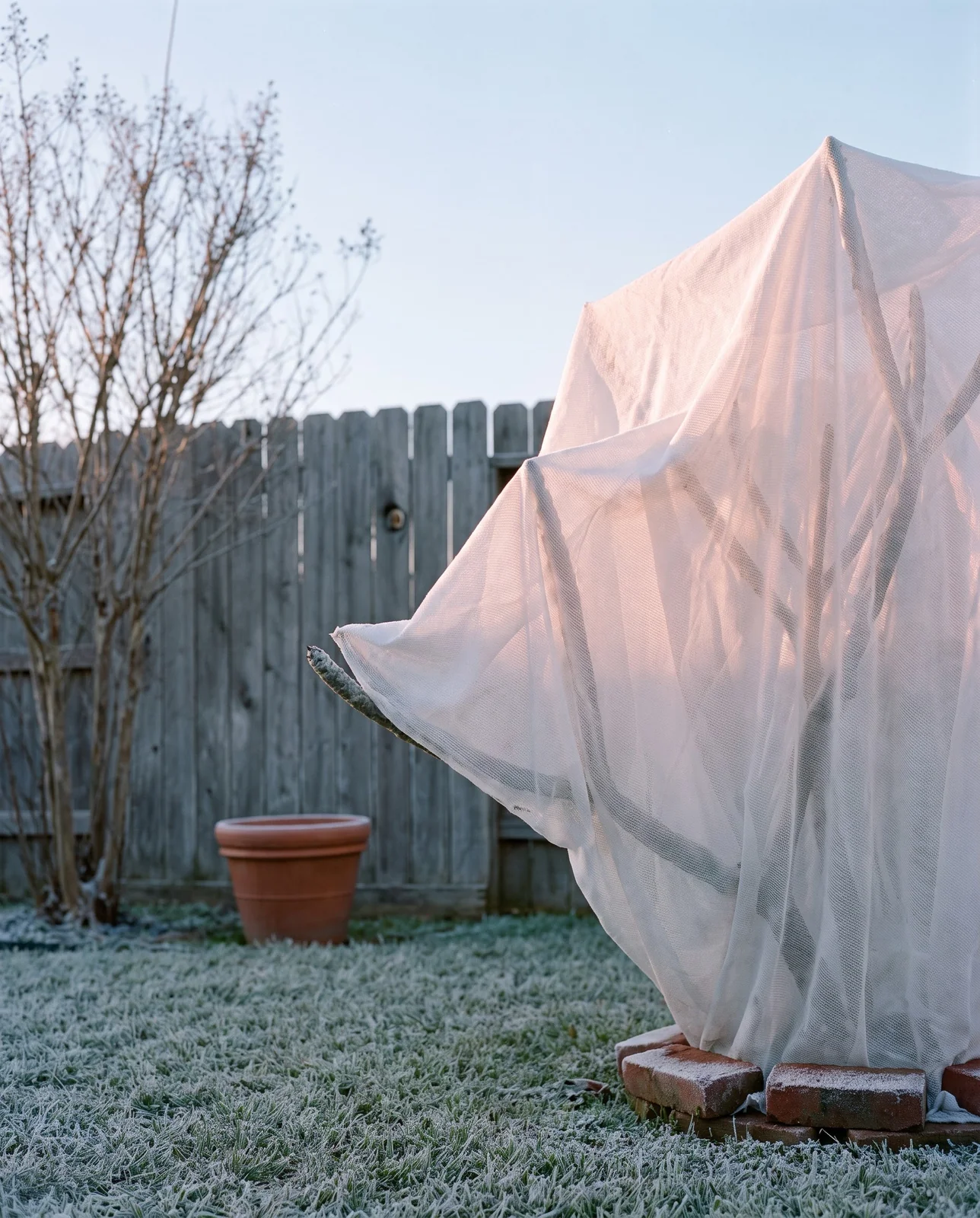
The thresholds stack. Bring container plants indoors and hold them at 50 to 55 degrees Fahrenheit, watering less. Plants left outside want frost protection once the forecast dips to 40 degrees, and cover against a freeze at 35 degrees and below. A well established plumeria takes a brief 32 degrees with cosmetic burn on the tips, while young plants do not survive the same night. Stored plants stay above 40 degrees at all times, and below 30 degrees the storage space needs heat.
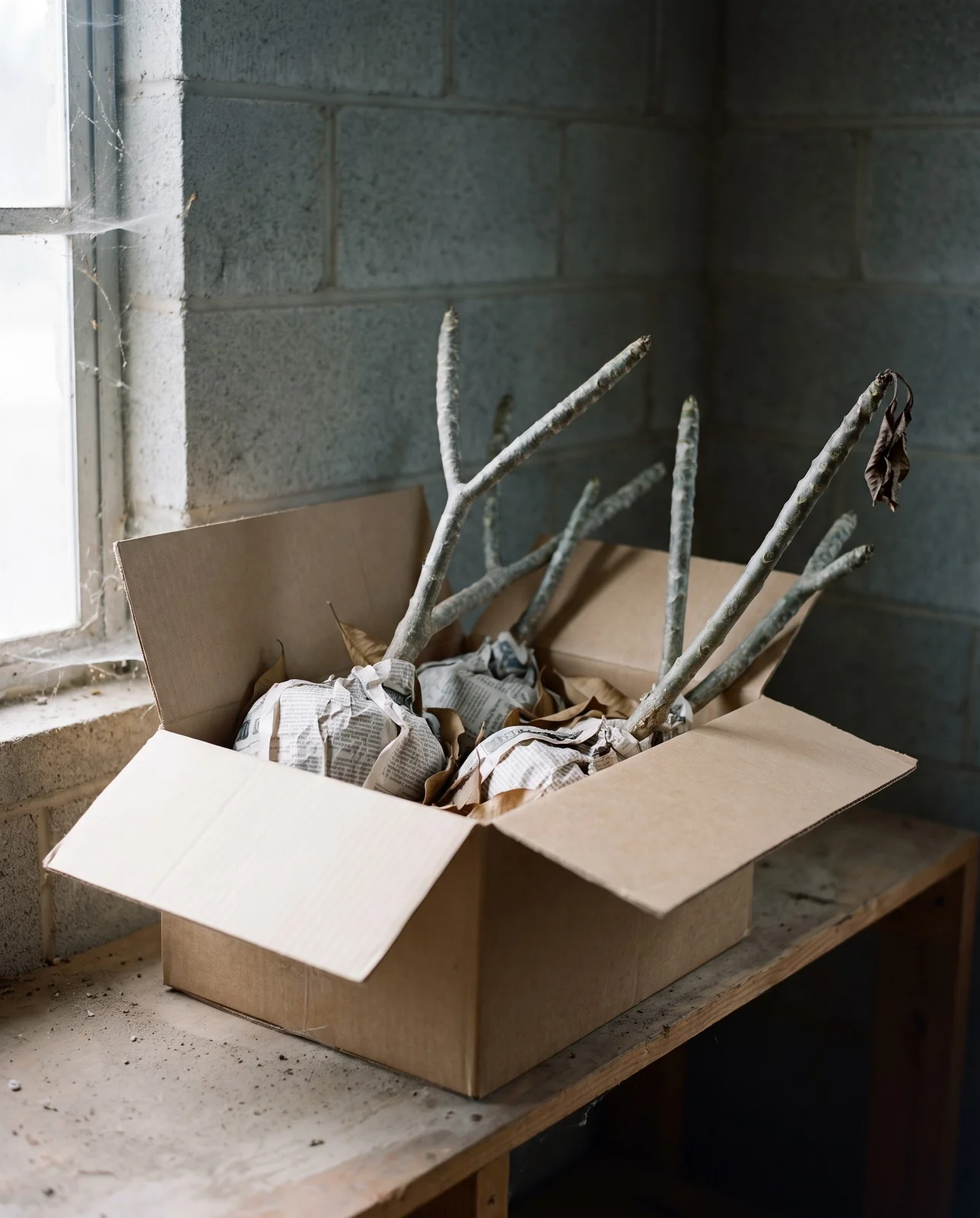
Three methods work, and space decides between them. The simplest is to put the pot in a garage, closet or basement and leave it dark, since dormant plumerias need no light and a sunny spot breaks dormancy too early. Watering stops entirely. The second is bare root, for plants too big to carry in their pots: dig it, shake off the dirt, then hang it up or stand it in a bucket with newspaper wadded around the roots. The third is to keep it growing under lights indoors, the way a potted hibiscus is, trading the rest for green leaves and watering all winter. Before any of them, strip the leaves, leaving about a half inch of stalk on the branch so the nodes do not rot.
Winter handling by zone
What winter asks of a plumeria changes with the band you garden in.
Taking cuttings, rooting them, and pruning
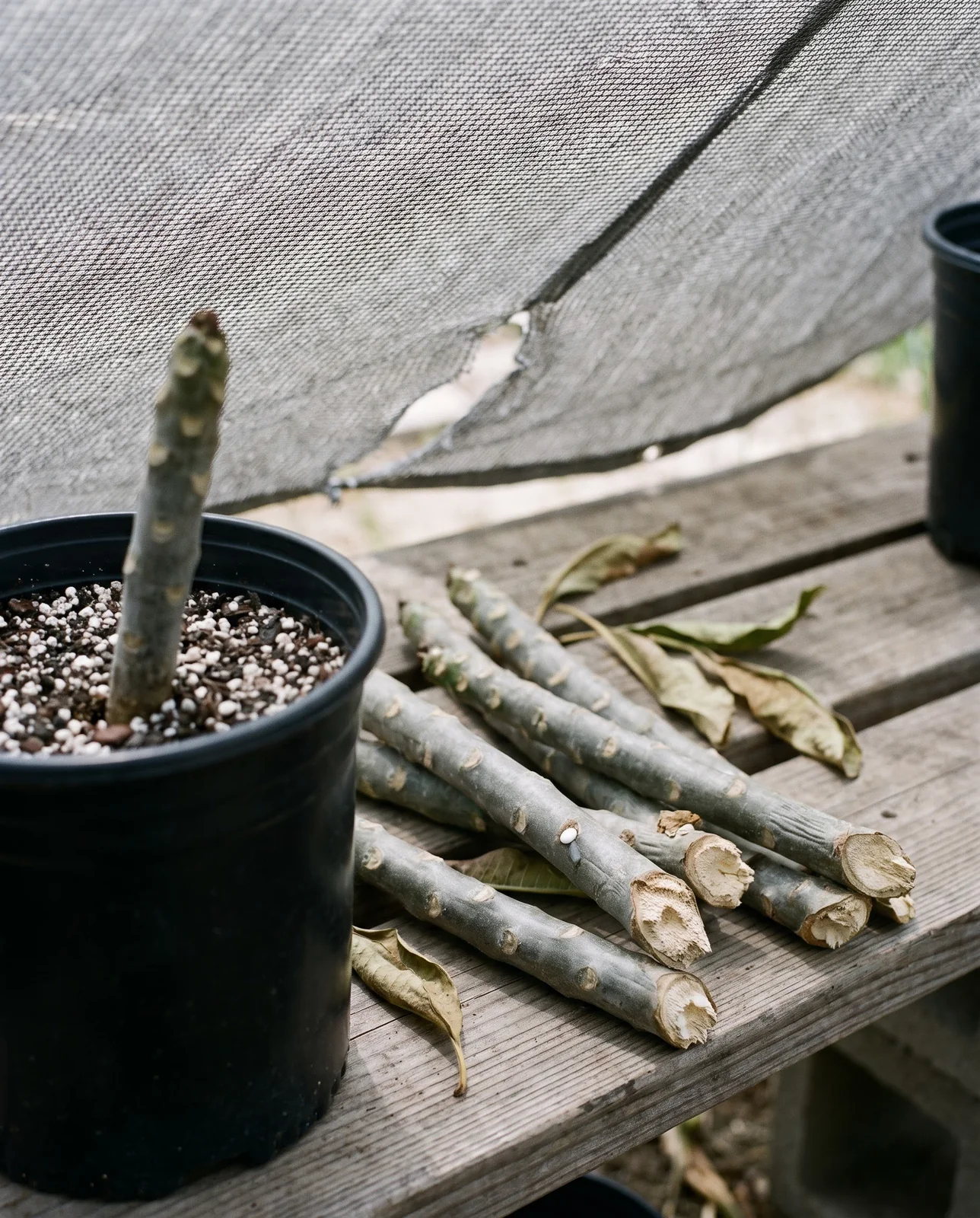
Plumeria is easily propagated from stem cuttings, and almost every named plant in a garden started as one. Cuttings run from 8 inches to 2 feet of branch tip. The cut bleeds milky latex at once, and that sap irritates eyes and skin, so gloves go on before the knife comes out. Then the cutting cures in a dry place for at least two weeks, which lets the wound seal over. A cutting pushed into soil fresh and wet rots at the base.
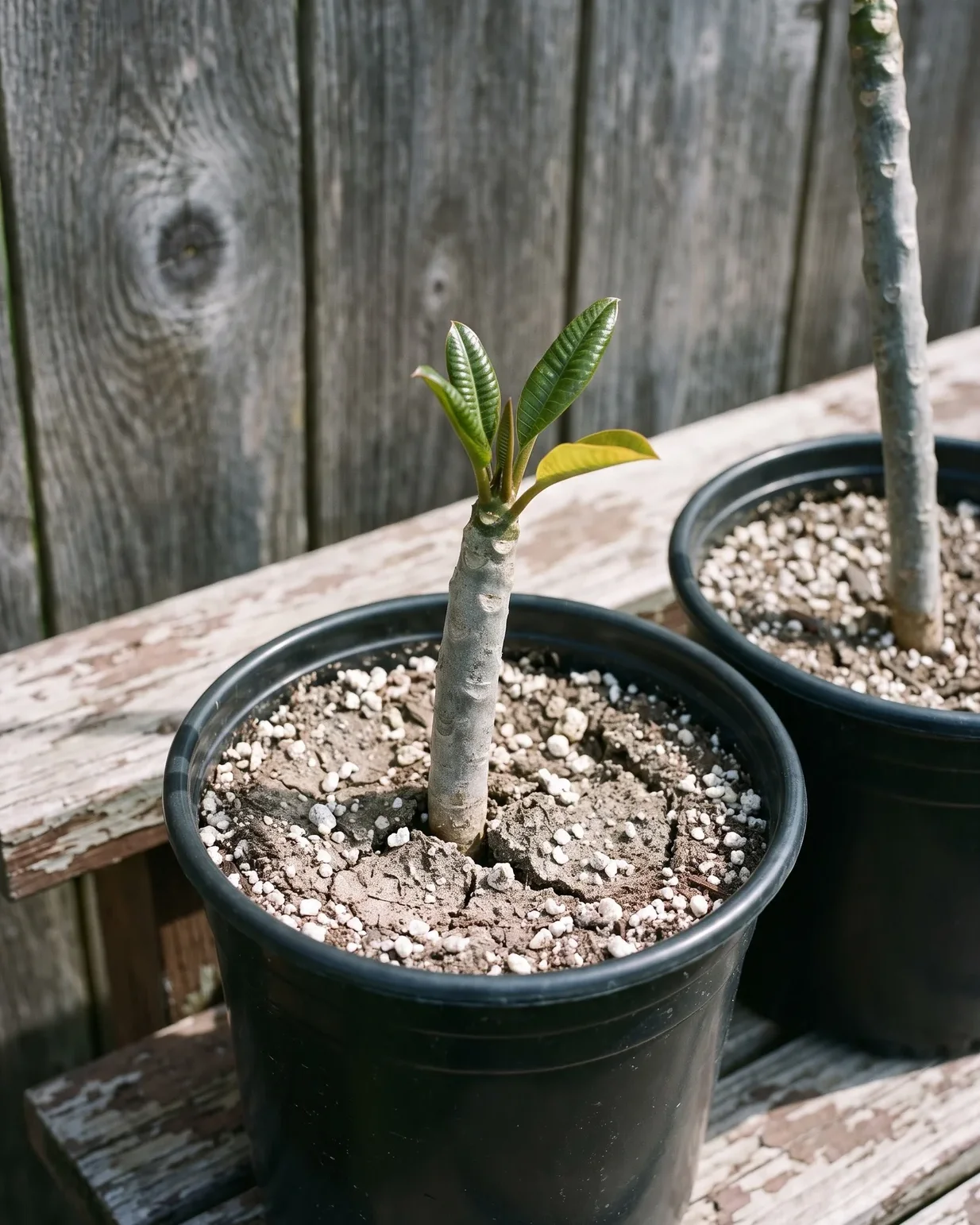
Rooting is a matter of warmth and restraint. Roots form best in soil between 65 and 85 degrees Fahrenheit, and a cutting roots in 6 to 8 weeks in good conditions, or many months in a cool climate. Water sparingly through the wait, because nothing has grown yet to take the moisture up. A rooting compound of 0.3 percent indolebutyric acid on the cut end improves rooting without being a requirement. Cuttings do not store well and are best rooted soon after they are taken.
Pruning is a winter job with a price attached. It is easiest after leaf drop, when the branch structure is finally visible, but heavy pruning gives up the following spring's bloom. Old trees that have outgrown their place take pollarding well, cut back repeatedly to the same framework. Grafting is the other way growers change a plant, and it works fast: a graft that has taken pushes new leaves within 2 weeks.
Named plumerias and the species behind them
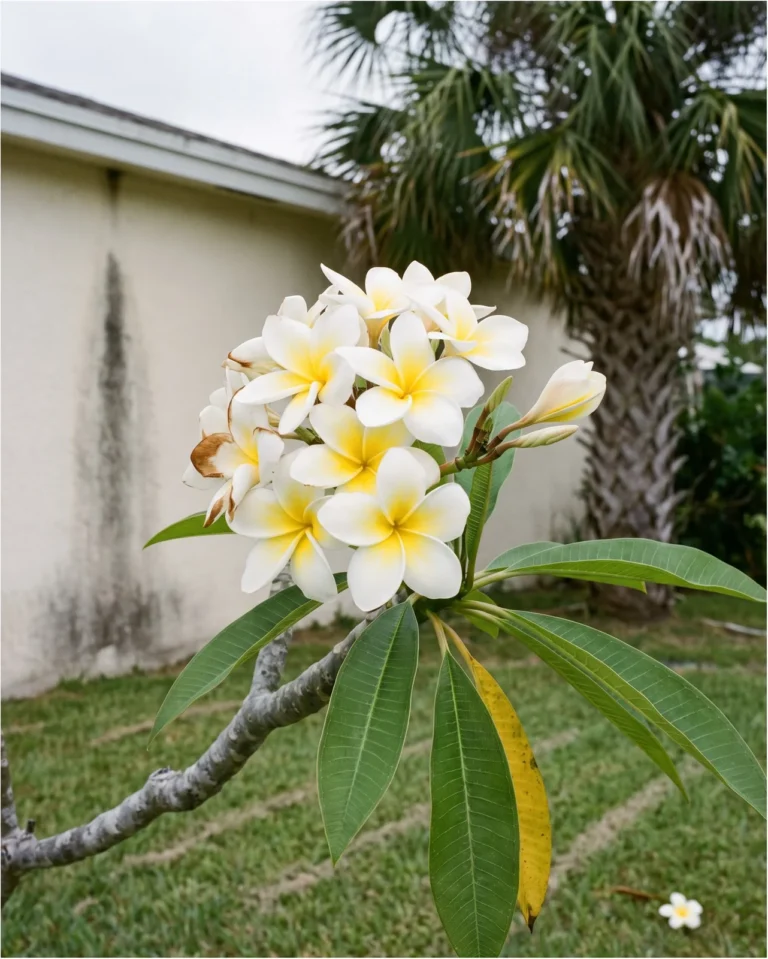
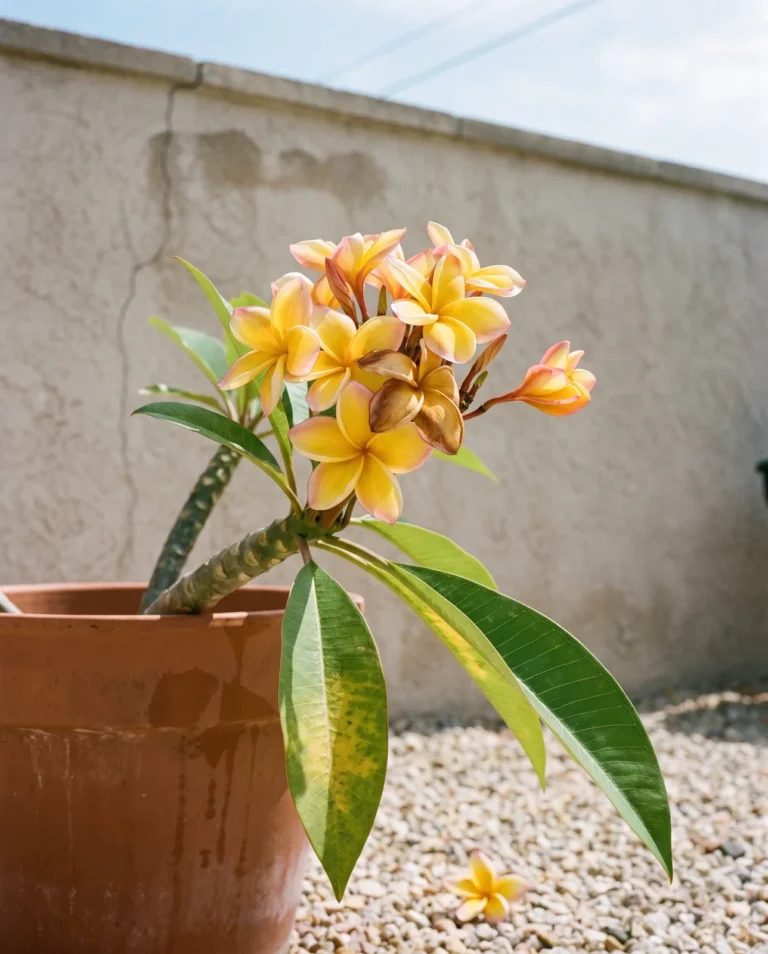
Plumeria is bought by name, and the name carries scent, flower size, growth rate, and whether the plant goes bare in winter.
Rust and the other problems plumeria gets
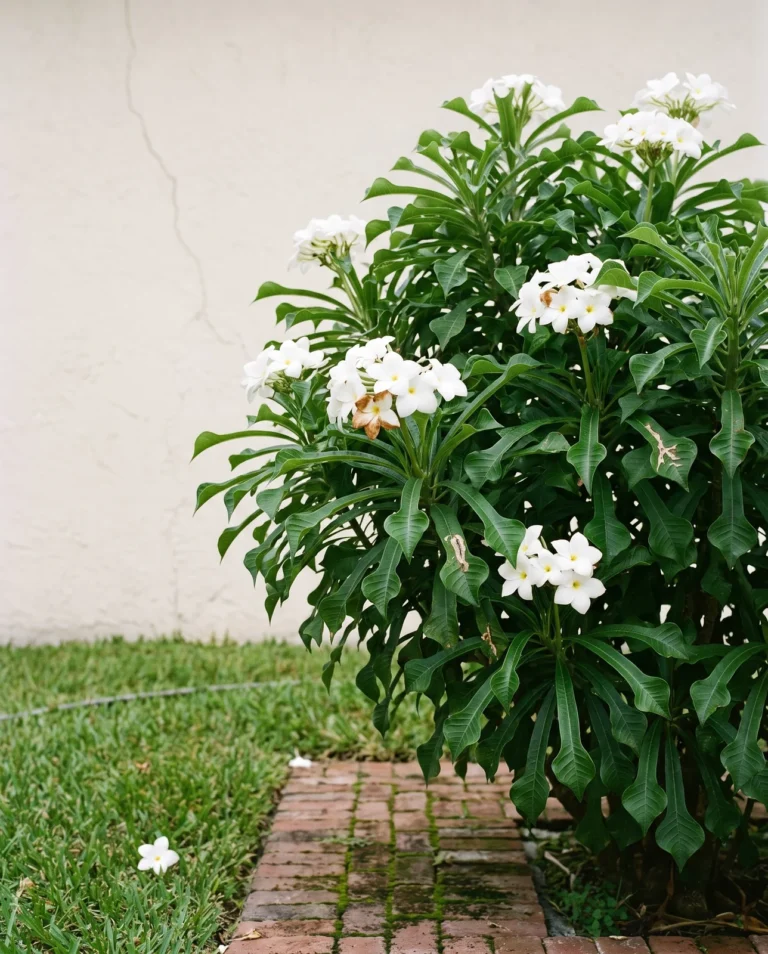
Rust is the disease that defines growing plumeria in a humid climate. It shows as powdery yellow-orange lesions, with the spore masses on the undersides, building through the season. Infected leaves can brown and fall as early as two months after the spring flush is hit, and defoliation can approach 100 percent. The fungus does not infect stems or flowers, so a tree stripped bare in August comes through with its wood intact.
Sanitation comes first and chemicals second. Pick up fallen leaves and destroy them, and take severely infected leaves off the tree early in the season. Clearing dead leaves from the site in fall cuts what carries over, and drier, less humid positions reduce infection. Two fungicides are registered in Hawaii for it, Eagle 40WP at 40 percent myclobutanil and Heritage at 50 percent azoxystrobin. Cultivar choice sits under both: in University of Hawaii trials 'San Germain' rated highly resistant, while 'Rainbow HAES 3-2' and 'Red Moragne' were spotted, yellowing and defoliating by late July.
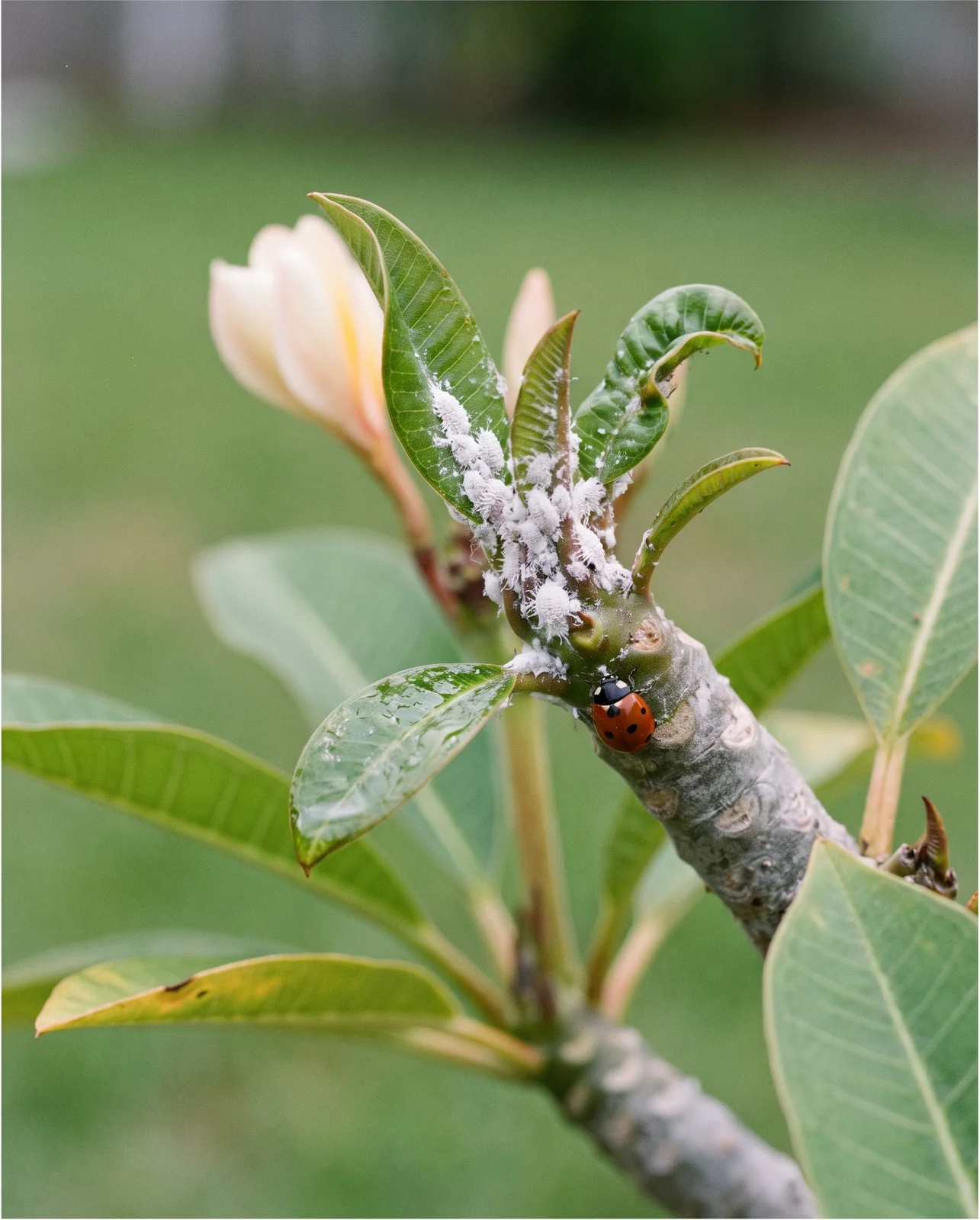
Insects are a smaller problem with one exception. Plumeria takes thrips, a blossom midge, whiteflies, mites, and the long-horned beetle known as the plumeria stem borer. The borer is the destructive one, because its damage happens inside the stem where insecticides cannot reach it. The sign is a stem gone shriveled and bent, and the answer is to cut it back to its junction with a healthy branch. Black sooty mold means scale, whiteflies or mealybugs feeding above and dropping honeydew, so trace it upward and treat them.
What plumeria growers actually post about
These come up again and again on grower forums, in roughly this order.
Tall, green, well fed, and either the wood is too young or the spot is too shaded. Move it to full sun and give it a season.
Every leaf goes and the tips shrivel in midwinter. That is dormancy, and watering to help is what kills the plant.
Soft black tips after a cold or wet spell, usually on unrooted cuttings. Cut the soft wood away above the rot and let it dry.
Nothing happens for weeks, because water went in before there were roots to take it. Keep the mix barely moist and warm, and judge the cutting by whether the stem stays firm.
Leaves fading with no clear symptom. Early rot, mites and overwatering look alike, so squeeze the stem first, then turn the leaves over.
Too much water and too little make the same yellow leaf. Lift the pot the day after a soak and again three days later, and judge it by weight.
Stippled leaves and fine webbing on a plant held indoors, where dry heat favors mites. Inspect the undersides weekly and wash them down.
Yellow-orange powder under the leaves in late summer, worse in humid air. A susceptible variety can lose its leaves within 8 weeks of the yearly flush, so rake up what falls.
Light
Full sun, all day, is the requirement. Plumeria grows best in full sun and well-drained soil, and in a container the two work as one condition: strong light dries the mix between waterings, while a shaded pot stays wet long enough to cost roots. The best position is the hottest hard surface on the property: a south or west wall, a driveway, a pool deck. Clusters form at the branch tips, so a plant lit from one side flowers on one side, and a pot turned through the season fills out evenly. Anything less shows up as long soft growth between the leaf scars, and leaves with no clusters.
Soil, water, and whether to keep it in a pot
Plumeria wants a mix that drains hard and a rhythm that lets it dry out. It grows in a rich, dry to medium moisture, well-drained loam in full sun, which in a container means an open gritty mix, several drainage holes, and a soak that runs straight through to the saucer. Water deeply once the mix has gone dry below the surface, then leave it until it dries again. The thick stems carry a reserve, so a plant that goes a week too long only sulks, while one kept damp loses roots quietly until the leaves yellow in midsummer. Young root systems are brittle, so repot with the mix intact and skip the root teasing that shrubs get.
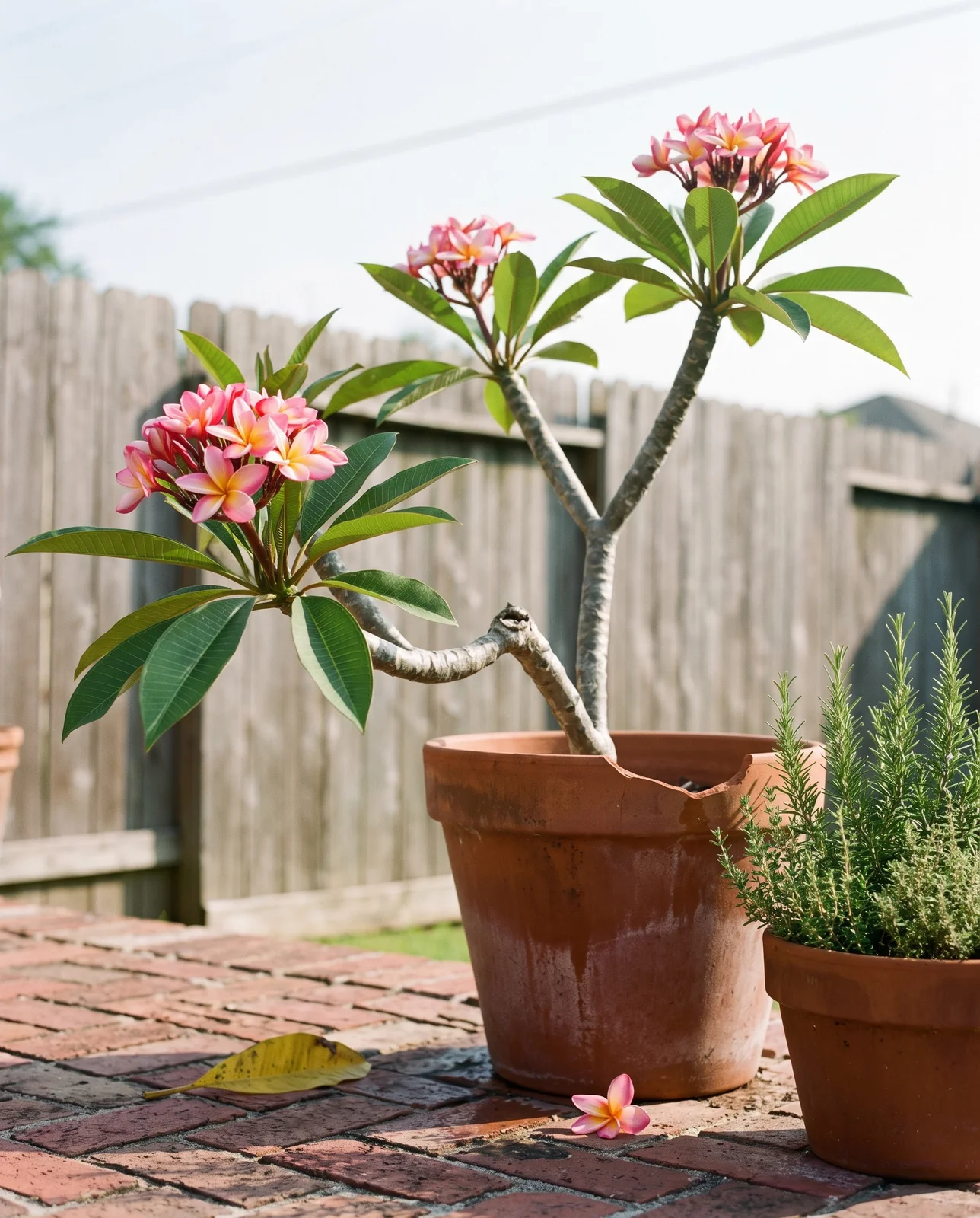
The choice between a pot and open ground is a winter decision before it is a size decision. Planting out is held to south Florida and protected parts of central Florida unless real steps are taken against frost. In a pot, the growth class on the label predicts how long the arrangement lasts: a medium habit adds 12 to 24 inches of new stem a year and a tall one more than 24. A tall cultivar outgrows a liftable pot within a few seasons, while a dwarf or compact one stays movable for years.
Hardiness, and where plumeria stays outside all year
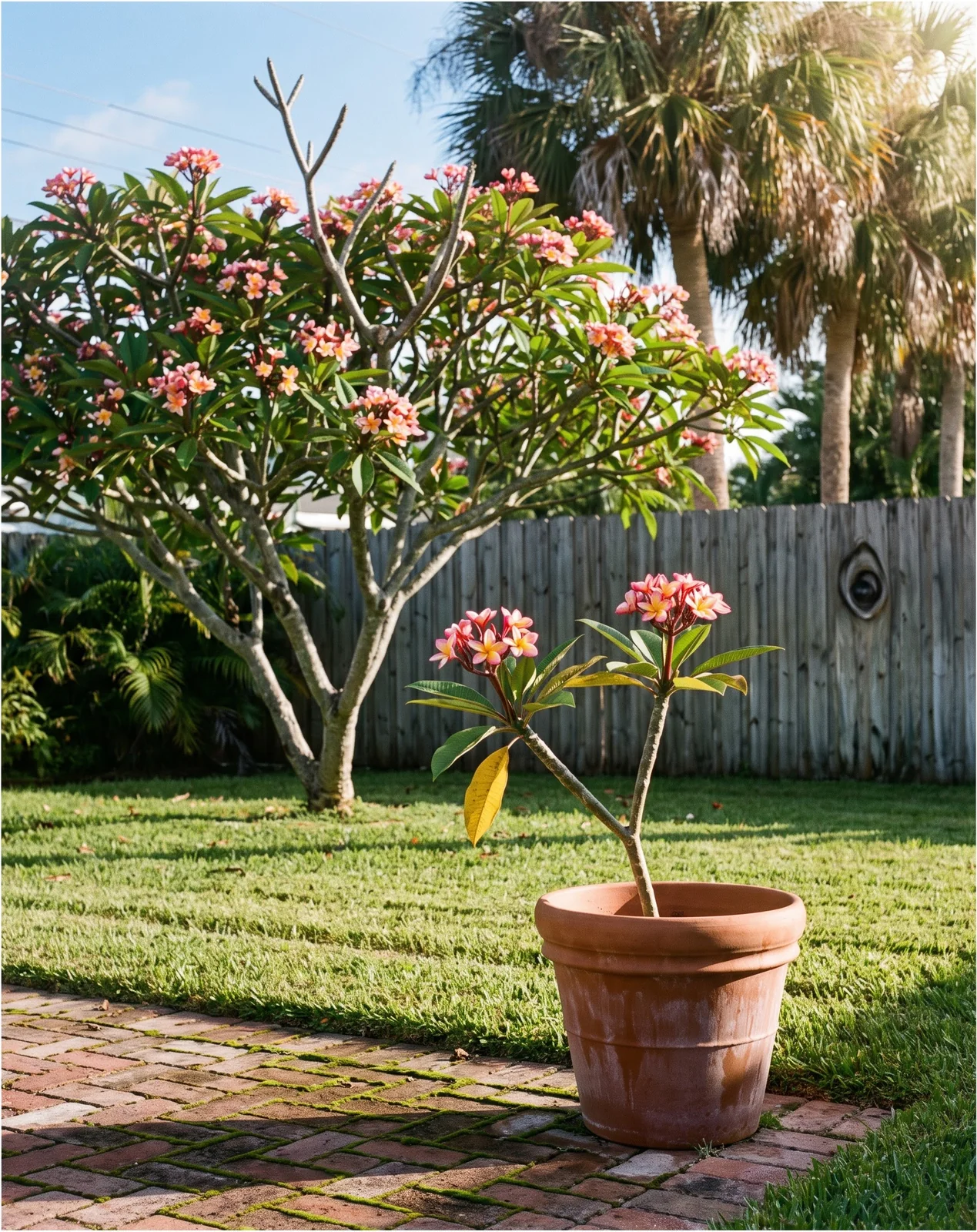
Plumeria lives outdoors year round only at the warm end of the map, in zones 10 to 11. Anywhere colder it is a container plant that comes under cover, which is most of the country. Florida shows the edge clearly: most of the interior of the central part of the state sits in zone 9B, where tropical plants face a continual threat of frost. At that edge the microclimate decides more than the map does. A masonry wall that holds the day's heat, or a slope that drains cold air away, can buy the few degrees that settle a winter.
Height, spread, and the size of the leaves
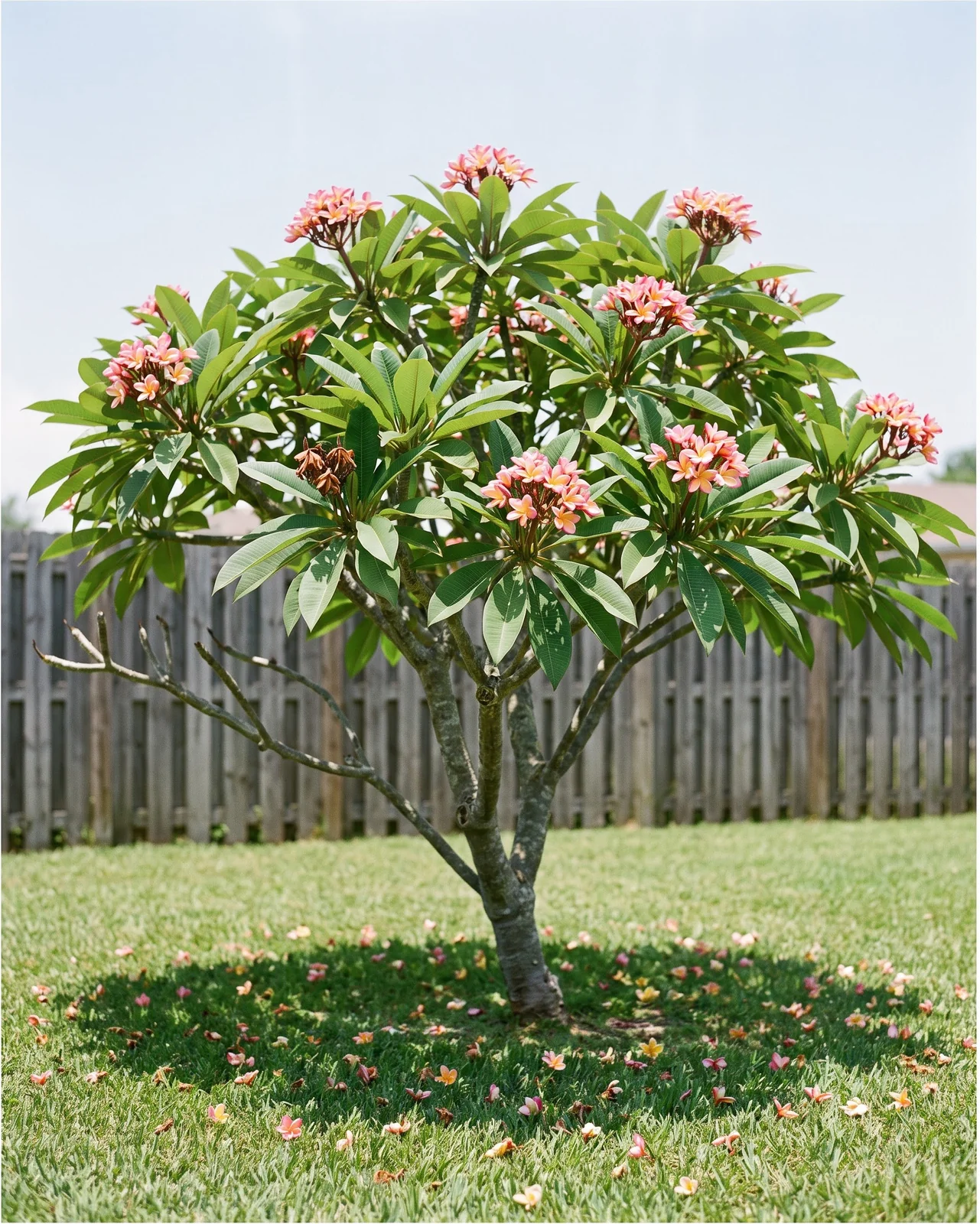
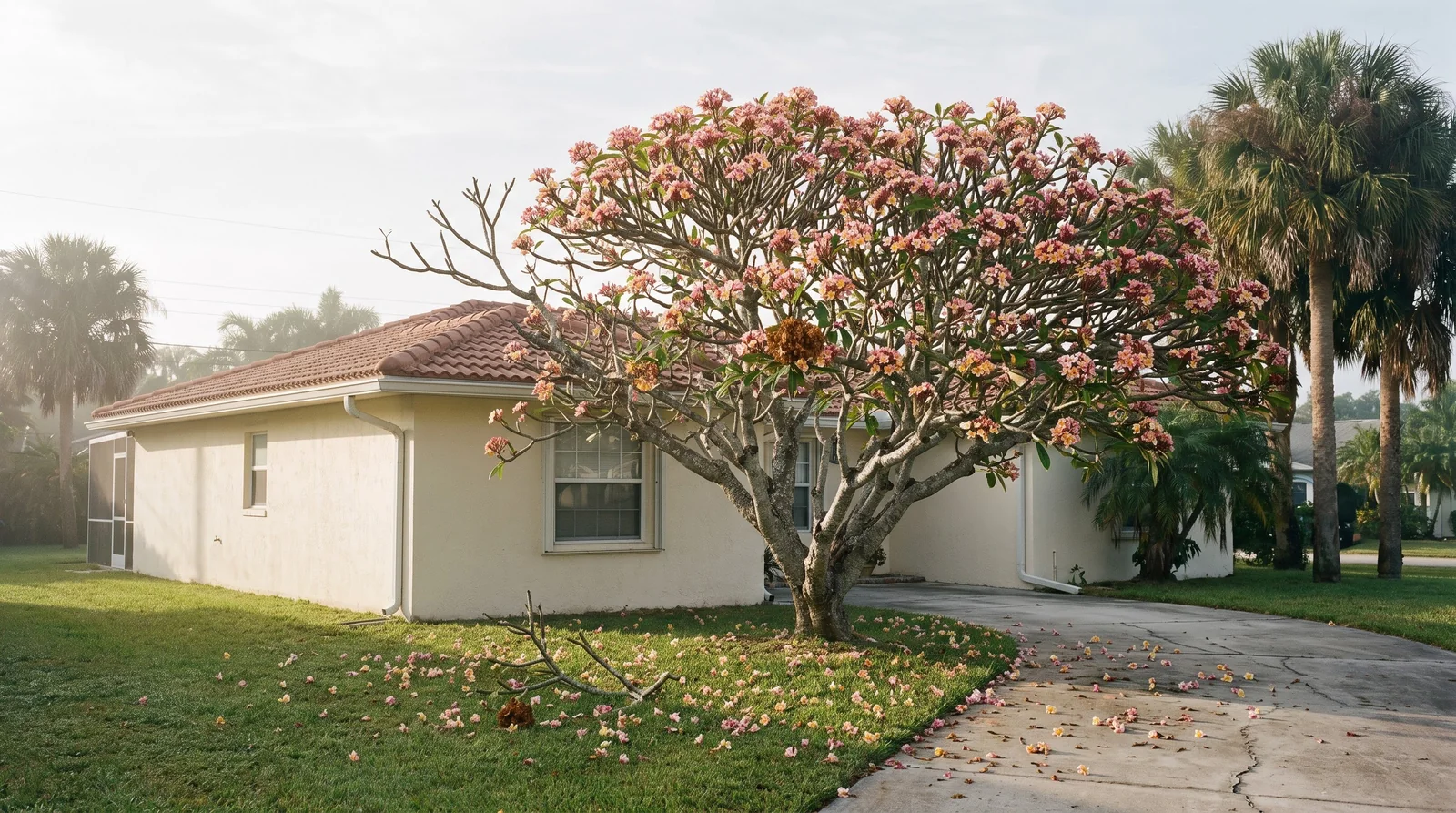
In the ground a plumeria becomes a small tree. Height and spread both run 15 to 25 feet, with about 30 feet at the top end. The canopy is broad and round-headed, usually about as wide as the tree is tall, so width is what decides whether a spot works. The leaves are large, paddle-shaped and clustered at the ends of the branches, 2 to 4 inches wide and 8 to 16 inches long. A plumeria reads as bare gray sticks for part of the year and as a full tropical tree for the rest.
Sap, toxicity, and pets
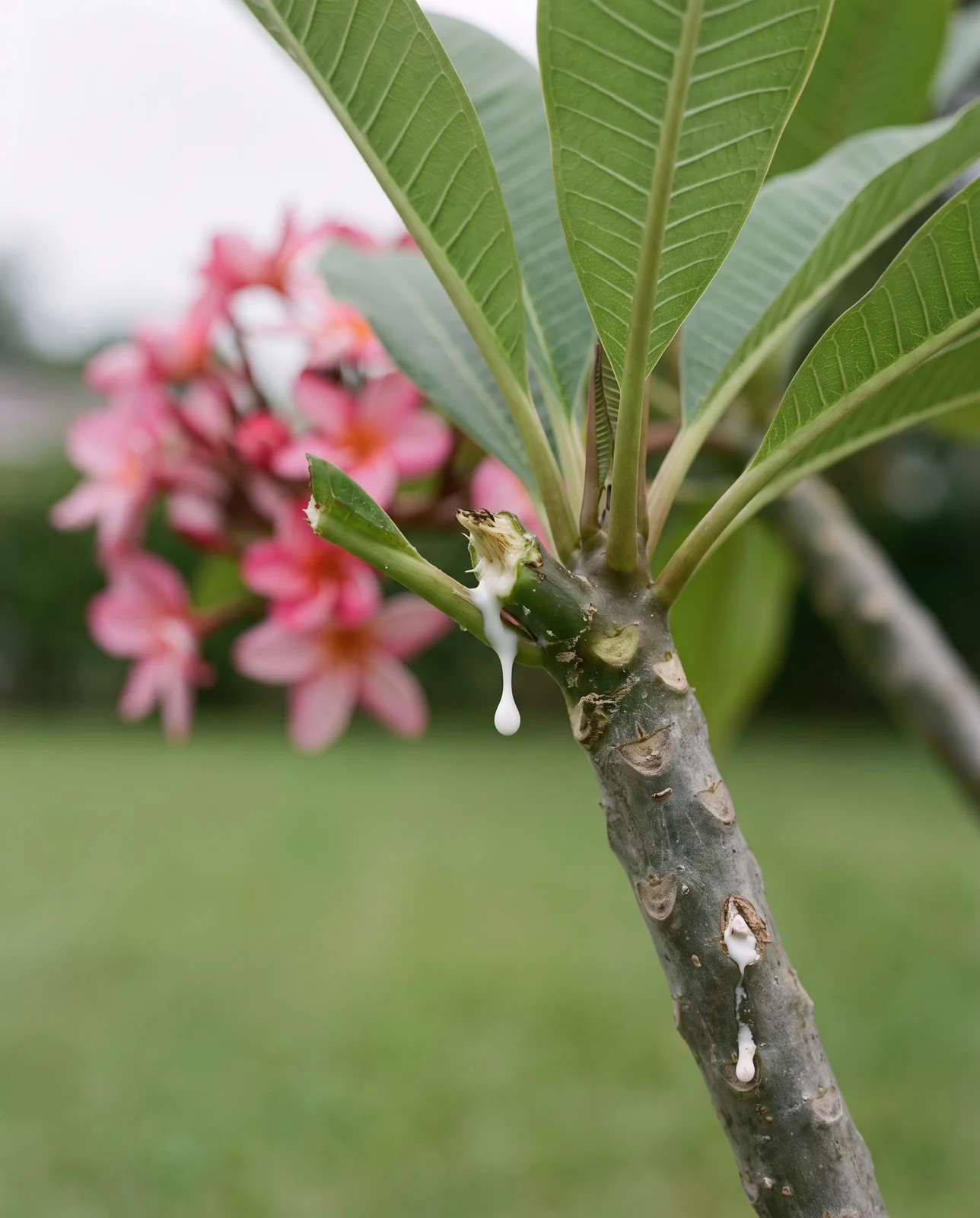
Plumeria is an irritant more than a poison. Every part gives off a milky sap when damaged, and it may irritate eyes and skin; on Plumeria rubra that sap causes dermatitis. Next to other landscape plants, oleander among them, plumeria is not considered particularly poisonous, and there are no recorded cases of death from exposure or from eating it. Cornell University keeps one caution open on the family, without confirming it: a dogbane relative might carry the cardiac glycosides that oleander and foxglove hold. Wear gloves when cutting, and rinse a child or a dog that has chewed a pruned branch. Anyone sorting a whole planting for animals can start from the list of flowers that are safe for cats and dogs.
Seed pods and what grows out of them
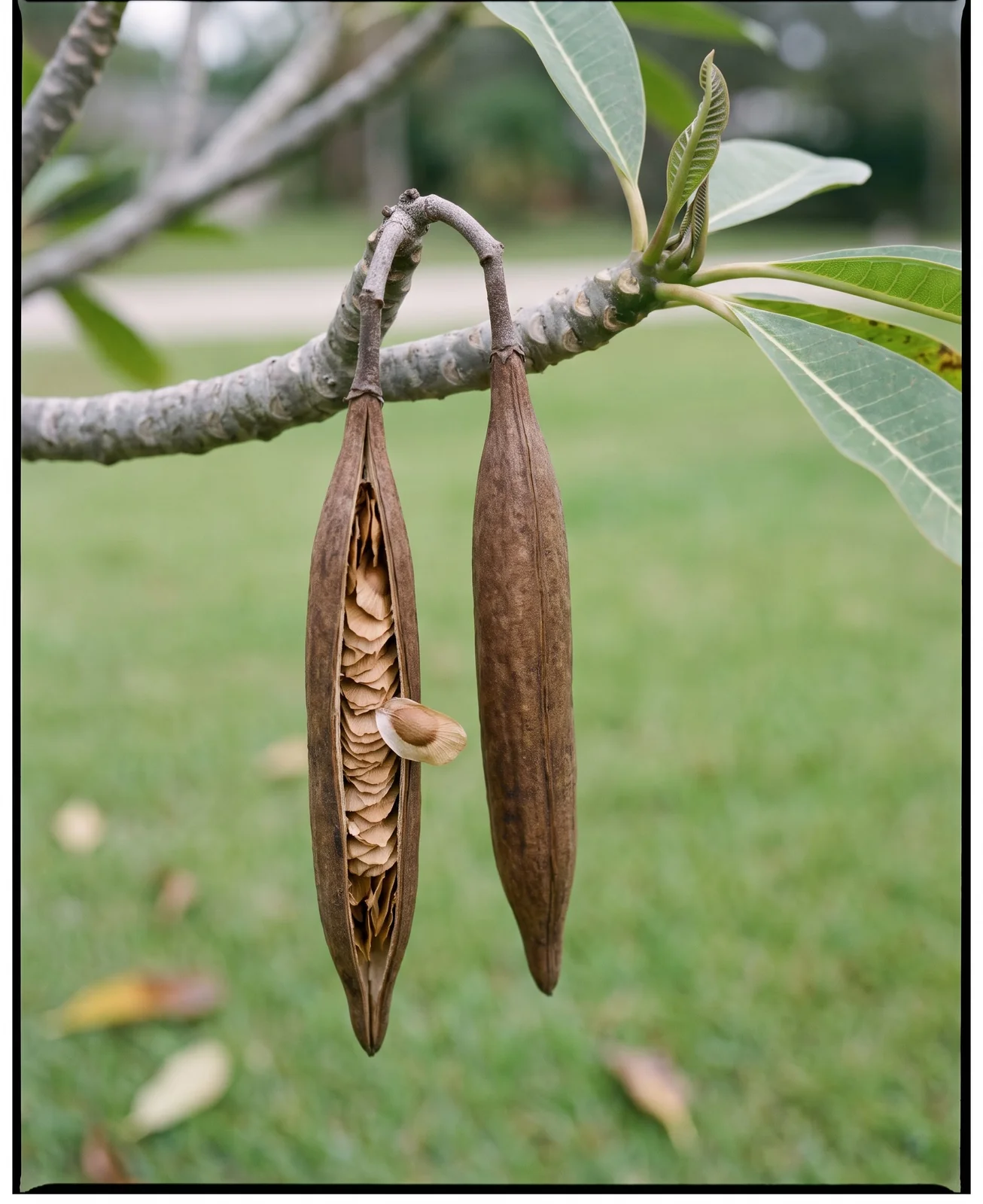
Plumeria sets seed only when a flower is pollinated, and what comes up will not repeat the parent. A pollinated flower forms two hard, narrow, pointed pods up to 7 inches long, each holding 20 to 60 winged seeds, though cultivated plants rarely form pods at all. Seed from white-flowered parents gives mostly white-flowered seedlings, while flower quality across a batch stays unpredictable, and that unpredictability is why named cultivars travel as cuttings and grafts. Sowing seed is breeding, not propagating: the payoff is a plant nobody else has, bought with years of waiting.
What the flower means, from Mesoamerica to the lei stand
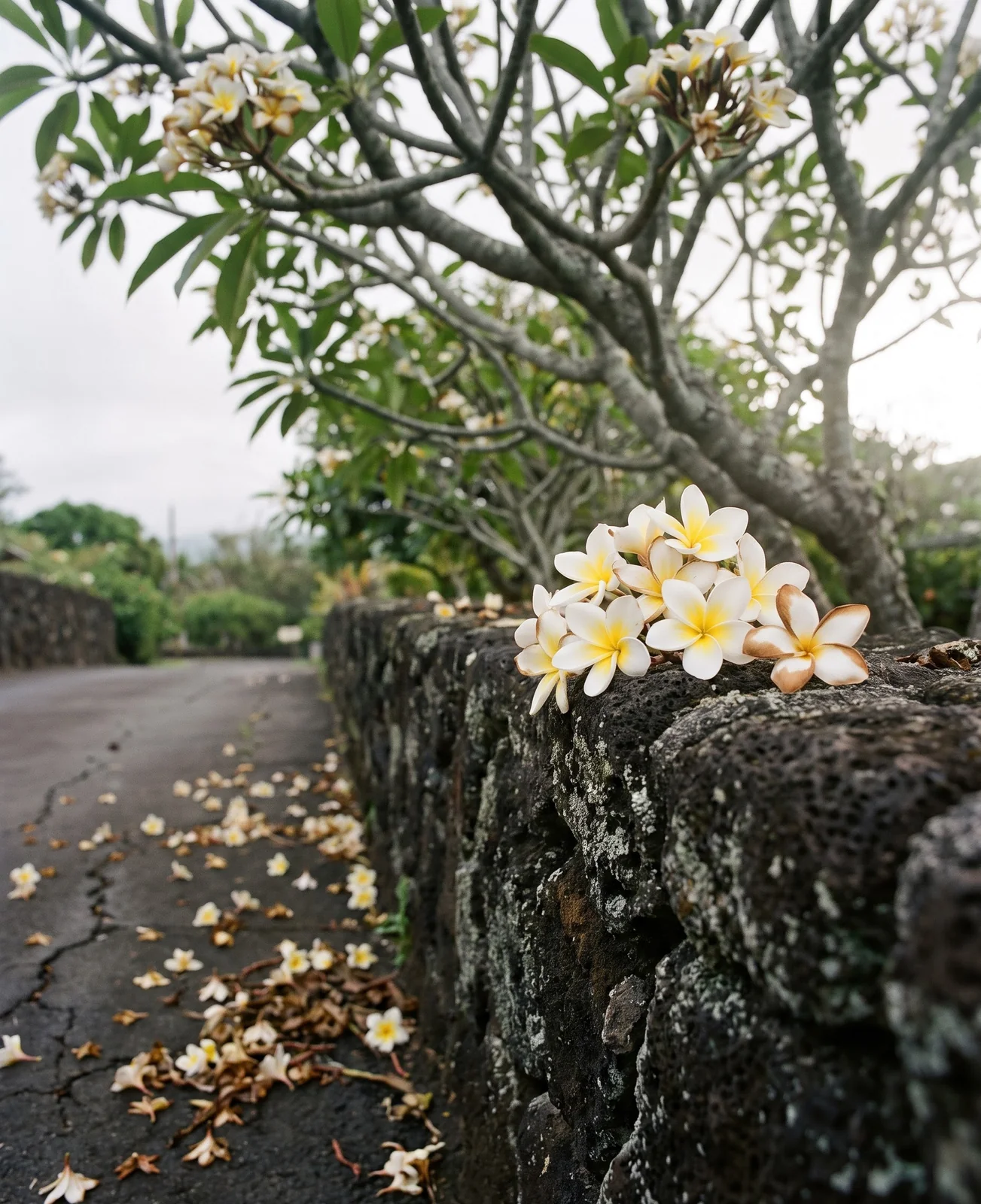
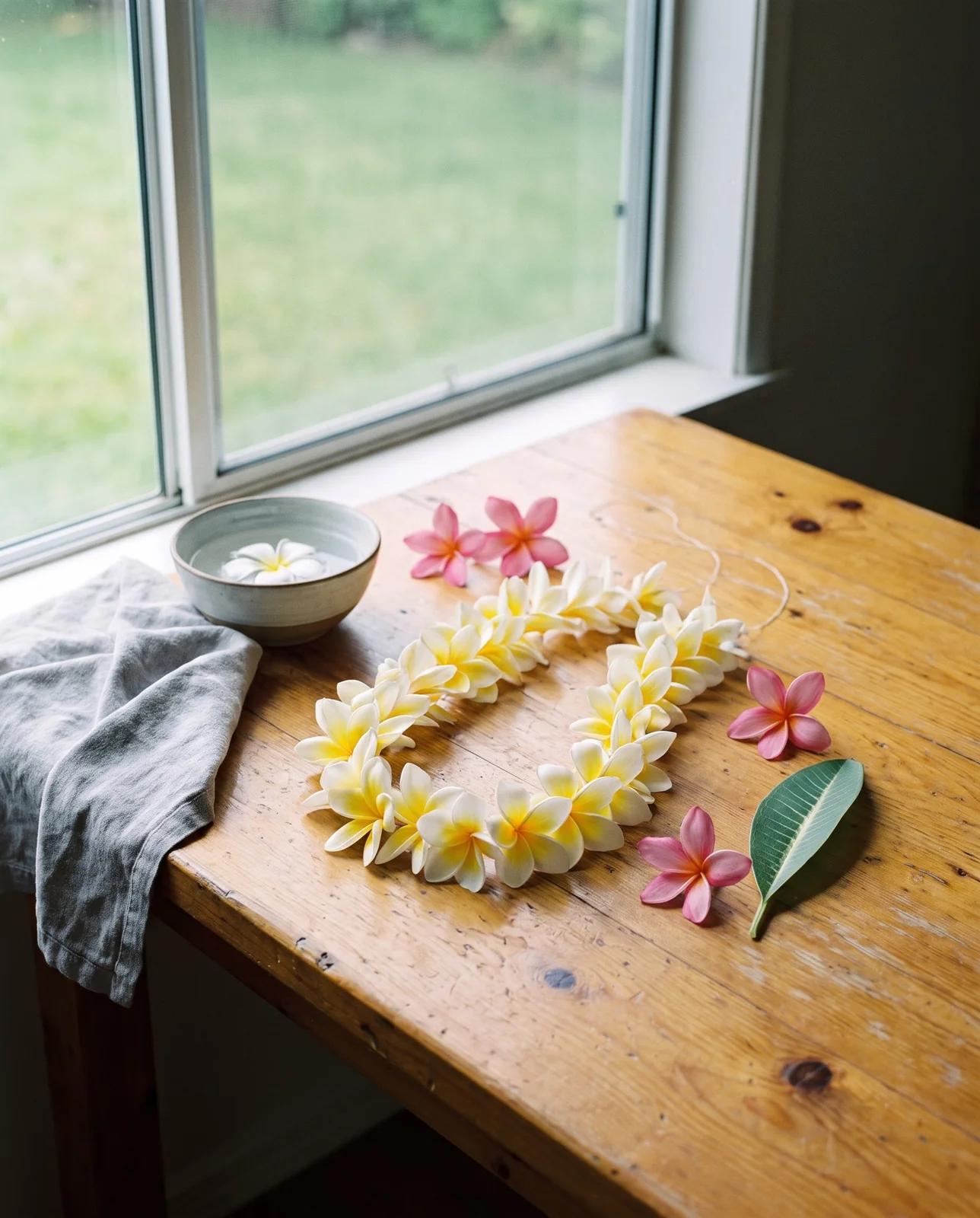
Plumeria carries opposite meanings depending on which side of the Pacific the question is asked. Among the Maya the flower belonged to deities of life and fertility and became strongly connected with female sexuality, and Aztec nobles used it as a mark of elite status in the gardens of the nobility. In the Philippines, Indonesia and Malaysia the association runs the other way, toward ghosts and death, and the trees stand around cemeteries. Hawaii gave plumeria its best known job: the blooms are prized lei flowers and the traditional choice for home-made leis. In 2006 the state's 15 plumeria farms sold more than 12 million flowers for receipts of $372,000, with annual sales averaging about $505,000 across five years.
Four beliefs about plumeria that do not hold
Each of these turns up every season, and each one costs somebody a plant or a year of flowers.
The myth: A plumeria that drops every leaf in winter is dying.
The reality: That is dormancy, and it runs one to five months depending on conditions. The stems stay green and go on photosynthesizing while it lasts, so the plant asks for nothing but a dry, dark corner until the tips swell.
The myth: Cutting off the growing tip forces a plumeria to flower.
The reality: Clusters form at branch tips, so cutting a tip removes the flowers it would have carried, and heavy pruning gives up the following spring's bloom.
The myth: Epsom salt makes a stubborn plumeria flower.
The reality: The feeding ratio for plumeria is 10-30-10, already weighted toward phosphorus, and no magnesium supplement is attached to it.
The myth: Plumeria is an evergreen.
The reality: Plumeria rubra types are deciduous, while Plumeria obtusa and the other white-flowered species are evergreen. The bare-stick winter belongs to the rubra side.
What to expect in the first years
Plumeria runs on a slow clock, and the first two seasons look like failure to anyone expecting a flowering plant.
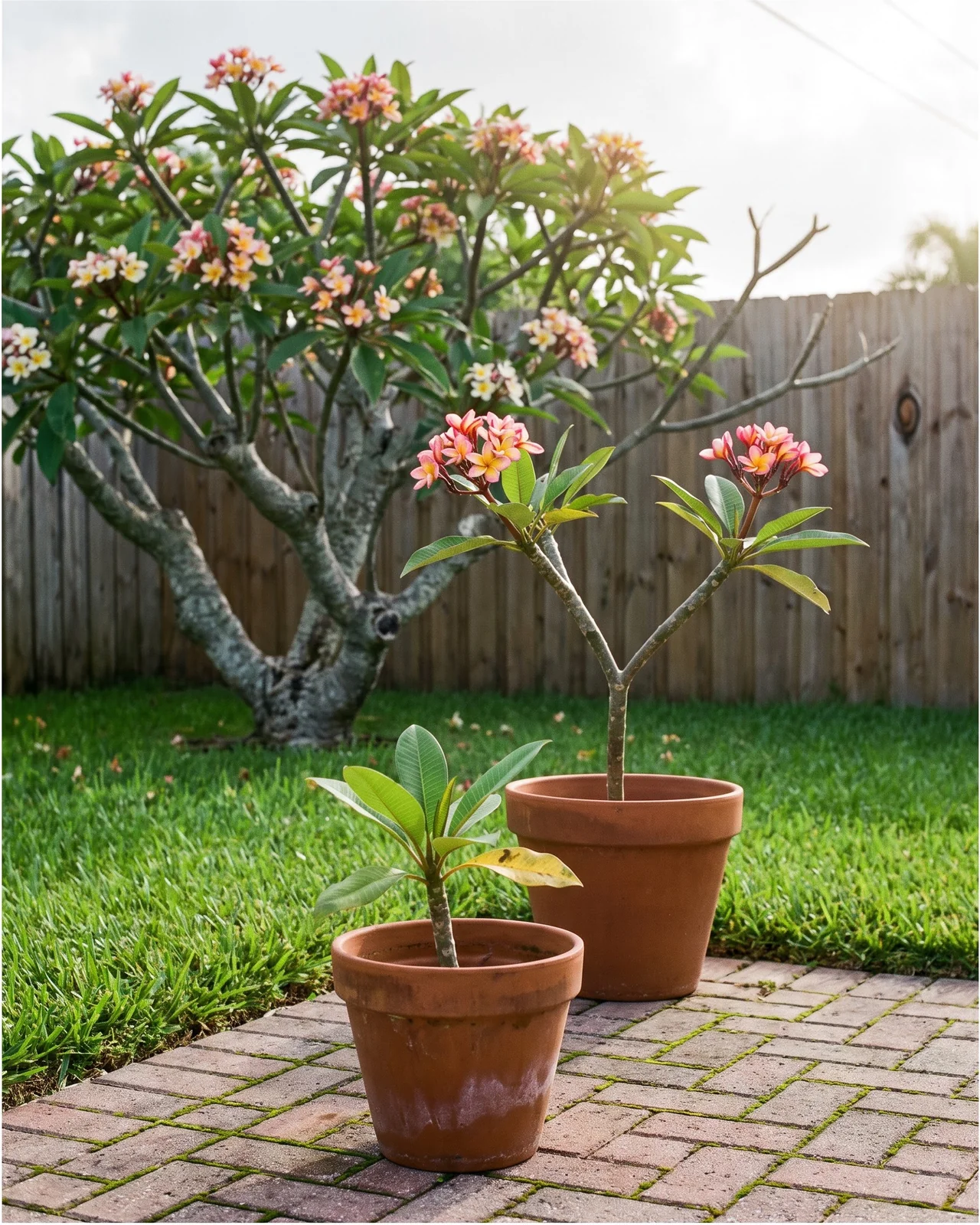
Year one goes into roots and leaves. A stem that arrives bare in spring carries a rosette of leaves by midsummer and stands bare again after the first cool nights. Flowers are possible even then, depending on how large the cutting was and when it was taken.
Years two and three are when a cutting-grown plant usually starts flowering and when the branching that carries future clusters gets built. A plant grown from seed needs three years or more before it flowers at all. Expect a larger pot each spring and the first clusters on the oldest, thickest wood.
A mature plumeria settles into a yearly cycle of bare winter, spring leaves, warm-season flowers, and bare again. In the ground with steady feeding and water it can reach 10 to 12 feet in 6 years. In a pot it stays a fraction of that, and the year's work is storage, a spring wake-up, and one pruning decision.
Picked flowers, leis, and how long they hold
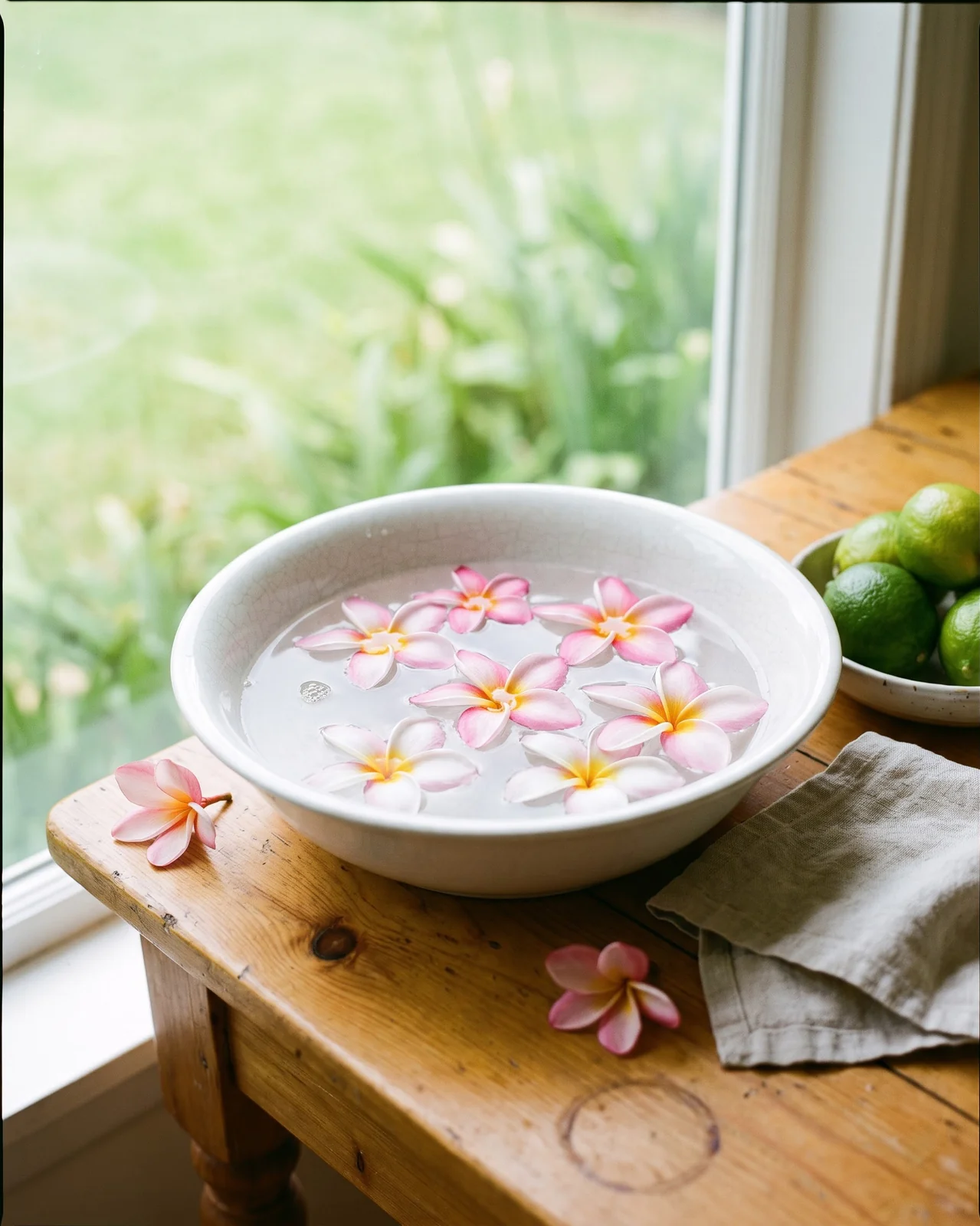
Plumeria is handled as a picked flower: blossoms come off one at a time and go into a lei or a bowl of water.
Flower photos
FAQ
Why does my plumeria have leaves but no flowers?
Age and sun cover most cases. A plant from a cutting can flower in its first year, but only if the cutting was large and taken at the right time of year. Move it to the sunniest hard surface you have.
How cold can a plumeria tolerate?
A well established plant takes a brief 32 degrees Fahrenheit with cosmetic burn on the tips, while young plants do not survive the same night. Keep stored plants above 40 degrees, and add heat below 30.
How long does a plumeria cutting take to root?
Six to eight weeks under good conditions, and many months where the climate is cool. Roots form best in soil between 65 and 85 degrees Fahrenheit, so bottom heat shortens the wait.
How long should a cutting sit before I plant it?
At least two weeks of curing in a dry place, which lets the cut seal before it meets soil. Do not stretch it out, since cuttings are best rooted soon after they are taken.
How far back can I cut a plumeria?
Very far. Old trees take pollarding well, cut back repeatedly to the same framework, but heavy pruning gives up the following spring's bloom.
How do I get rid of plumeria rust?
Sanitation, repeated every year. Pick up fallen leaves and destroy them, take severely infected leaves off early, and clear what falls in autumn.
Is plumeria poisonous to dogs and cats?
It sits low on the list of dangerous garden plants. The sap causes skin irritation, and no deaths have been recorded from exposure or ingestion.
Are plumerias better in pots or in the ground?
In the ground only where frost is not a standing threat. Planting out is held to south Florida and protected pockets of the center of the state. Everywhere colder, the pot is the plant.
Will my plumeria come back after dropping all its leaves?
Yes. A leafless plumeria in winter is dormant, and dormancy runs one to five months. Keep it dry and dark, and wait for the branch tips to swell before watering.
What fertilizer makes a plumeria bloom?
Feed it 10-30-10, every three to four months, at about a pound for every inch of trunk diameter. Scale it down hard for a container: the rate is written for a trunk in open ground.
Which plumeria keeps its leaves through winter?
Plumeria obtusa, sold as Singapore plumeria, holds its leaves and flowers through the winter, and its hybrids tend to keep foliage year round.
Interesting tips
- The Plumeria Society of America counted 368 registered cultivars, so two plants sold as nothing more specific than pink can look nothing alike on a bench.
- In modern Polynesian custom the flower carries a message as well as a scent, since which ear a woman wears it over signals her relationship status.
- Plumeria seed does not keep. Dry seed holds in a plastic bag for about three months before viability starts to drop, and what is still good germinates in about two weeks.
Related Guides & Flowers
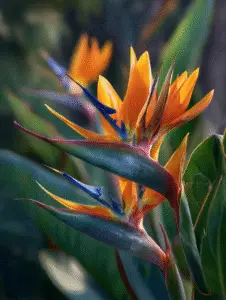
Bird of paradise
The other tropical that spends summer on the patio and winter under cover in most of the country.
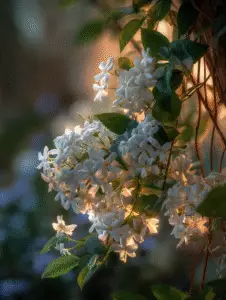
Jasmine
The night-scented climber whose smell keeps getting named inside plumeria's own fragrance.
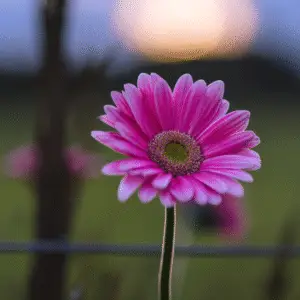
Pink flowers
Where plumeria's pinks sit among the other pink garden plants worth growing.
Types of flowers
The full catalog of flower guides on the site, sorted by plant.
Enjoying our flower guides? Add YourFlowersGuide as a preferred source on Google. It helps more readers find us.
Add to Preferred Sources