Which daisy is actually a marguerite daisy
The name belongs to Argyranthemum frutescens, a woody based evergreen subshrub from the Canary Islands that also answers to Paris daisy. The genus grows wild only there, on Madeira and on the Savage Islands. Almost none of that reaches the label. Nurseries still sell the plant under its old name, Chrysanthemum frutescens, and the genus is sometimes still placed in Chrysanthemum outright. Three other daisies are sold as marguerite daisy as well. Golden marguerite now goes by Cota tinctoria and is still traded as Anthemis tinctoria. The others are the Shasta daisy, Leucanthemum x superbum, and the wild oxeye daisy, Leucanthemum vulgare. Two more borrow the word without belonging to any of them, since blue marguerite daisy is Felicia amelloides and cape marguerite daisy is Osteospermum ecklonis. The flower shape is shared across the wider daisy family, so a tag carrying a common name and a price answers nothing. The genus word is what decides whether the plant survives a frost.
Four daisies sold under one name
The four differ in where each one comes from, what the foliage looks like and how much winter it takes.
What a marguerite daisy looks like
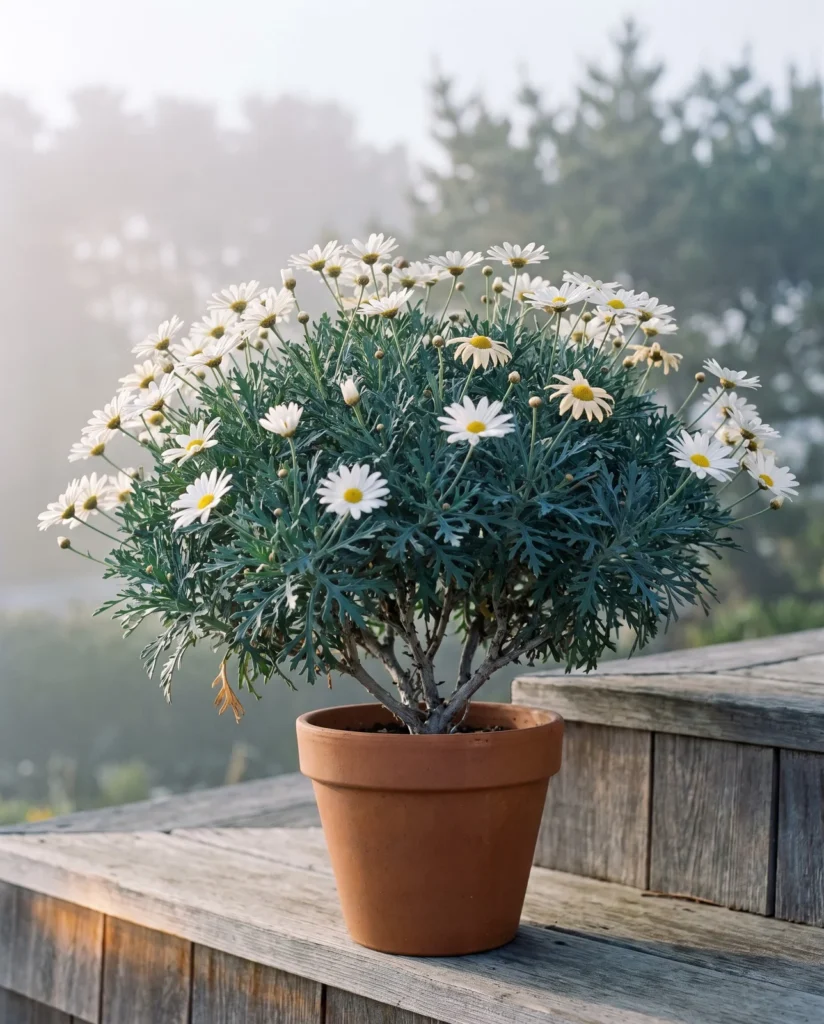
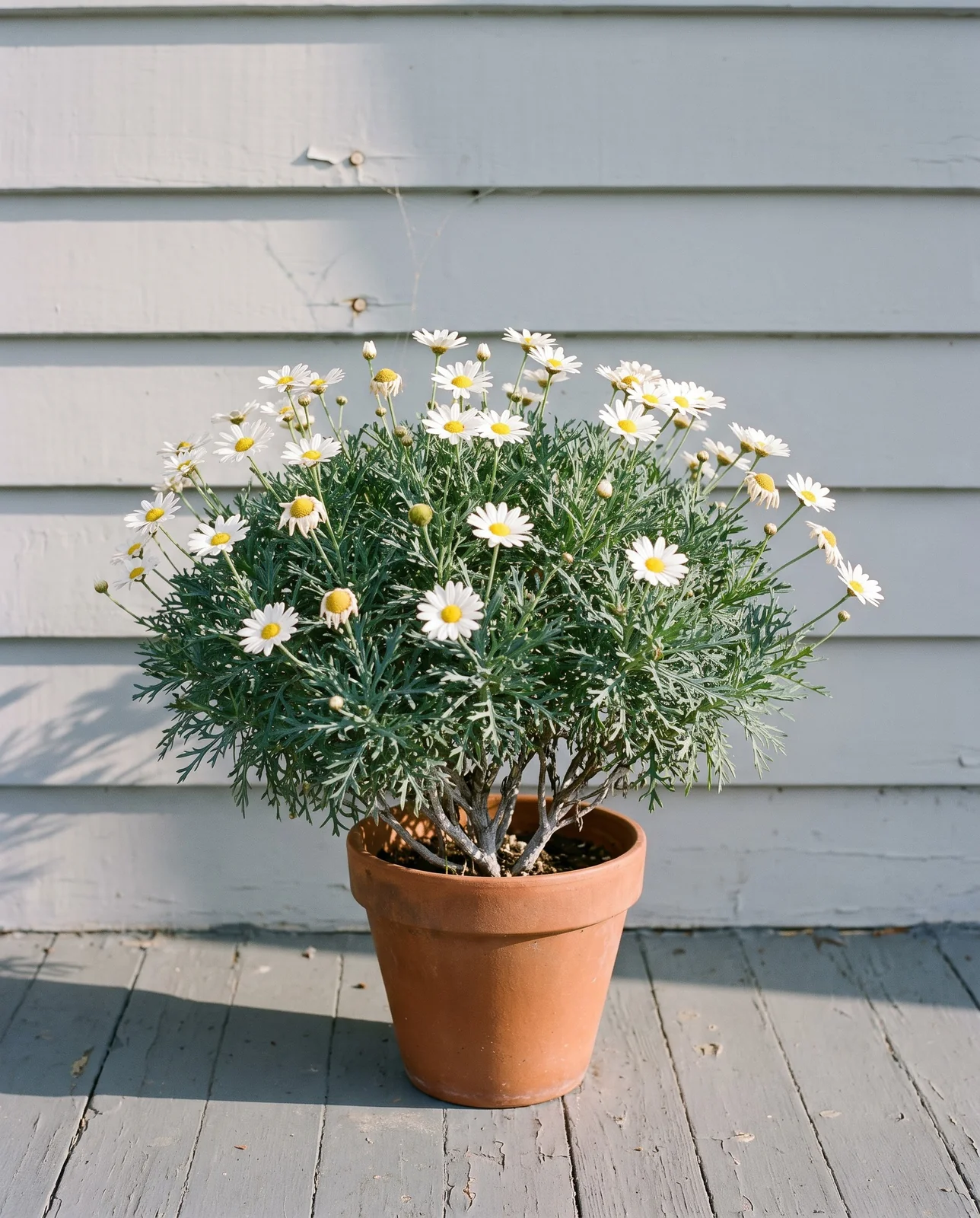
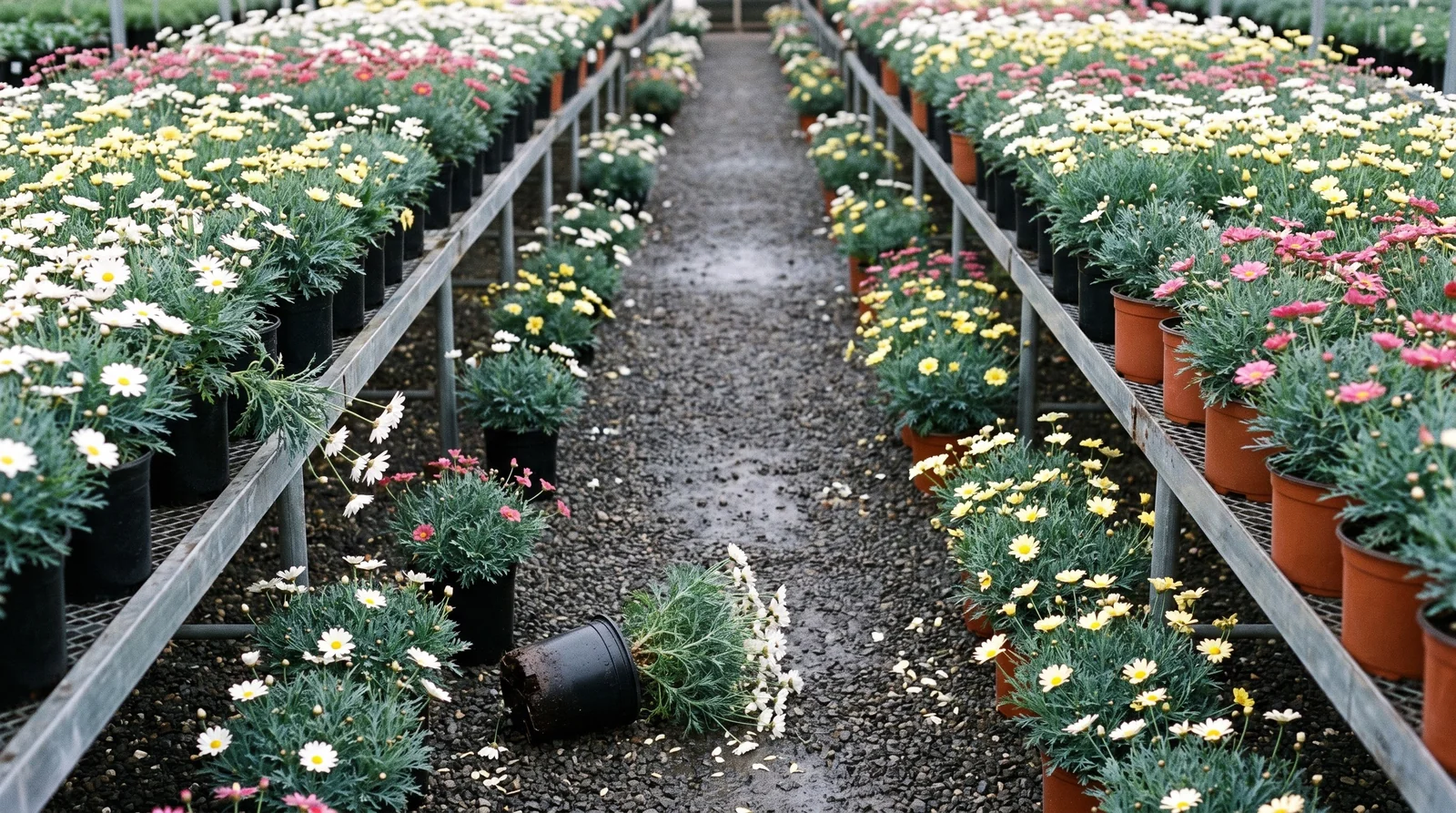
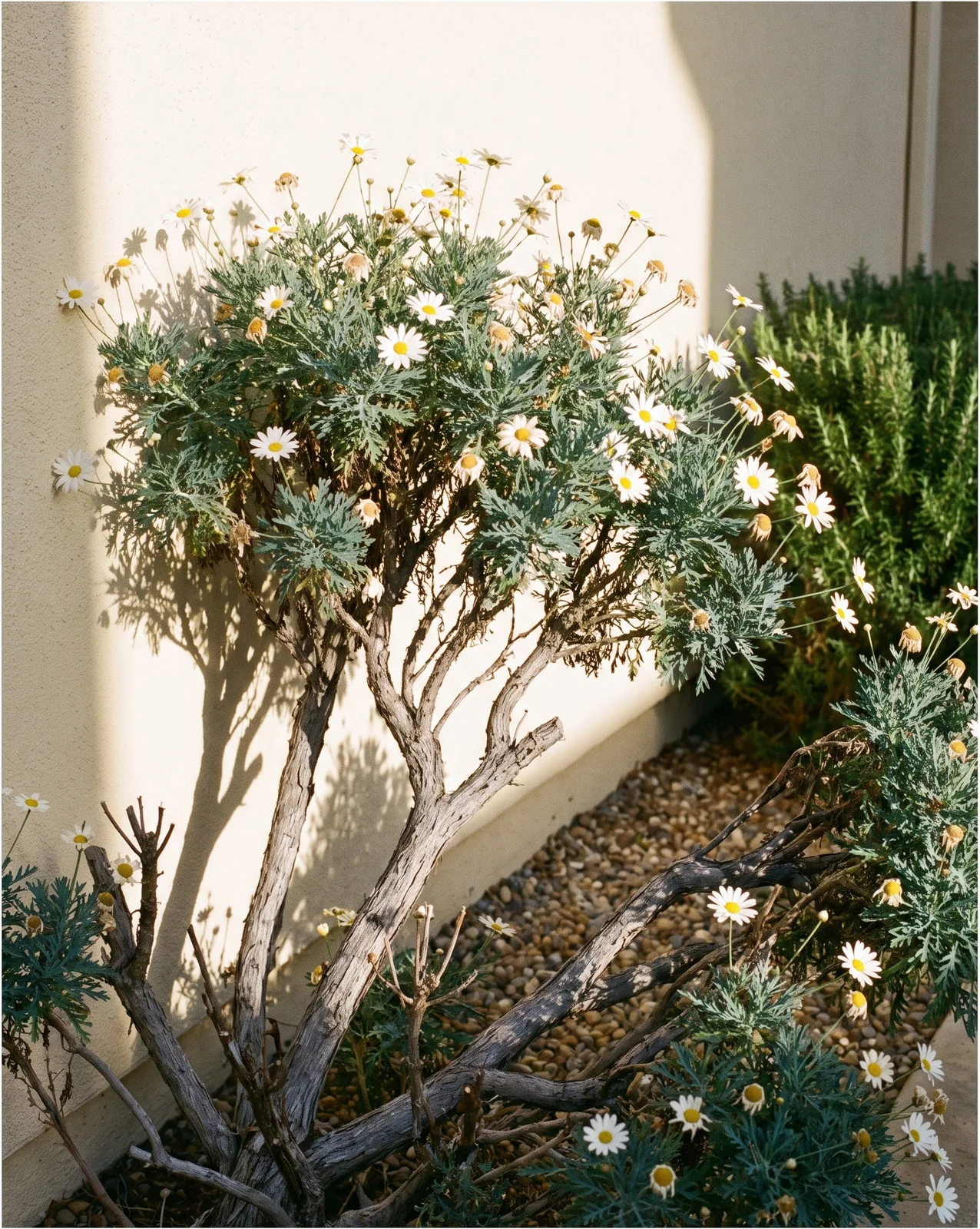
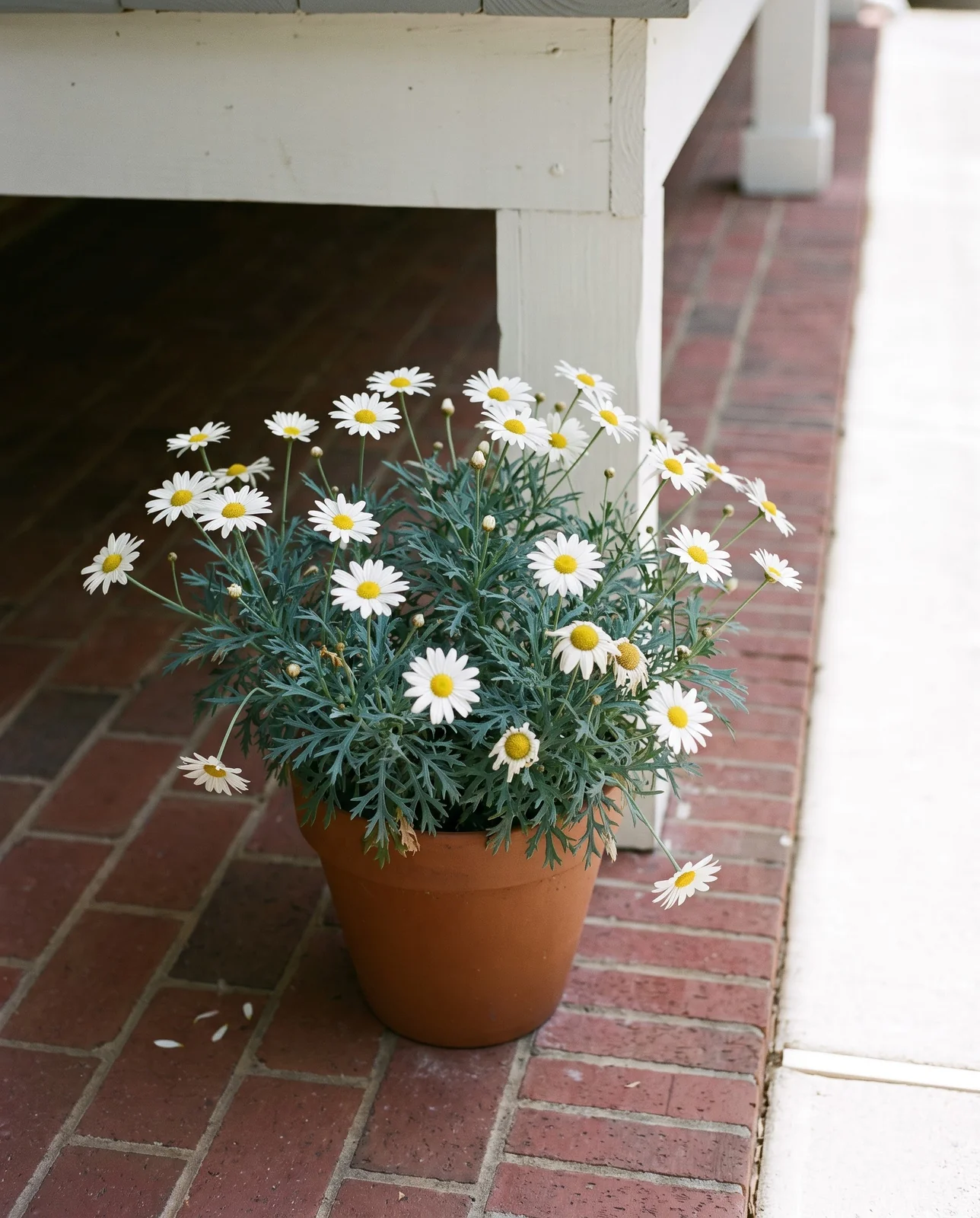
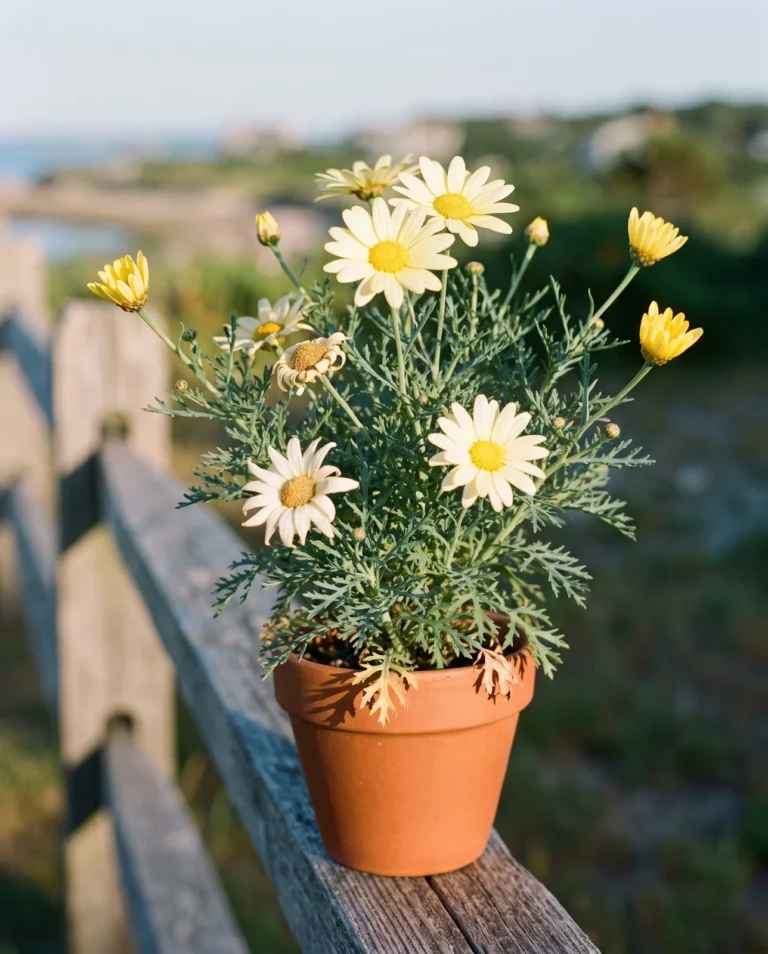
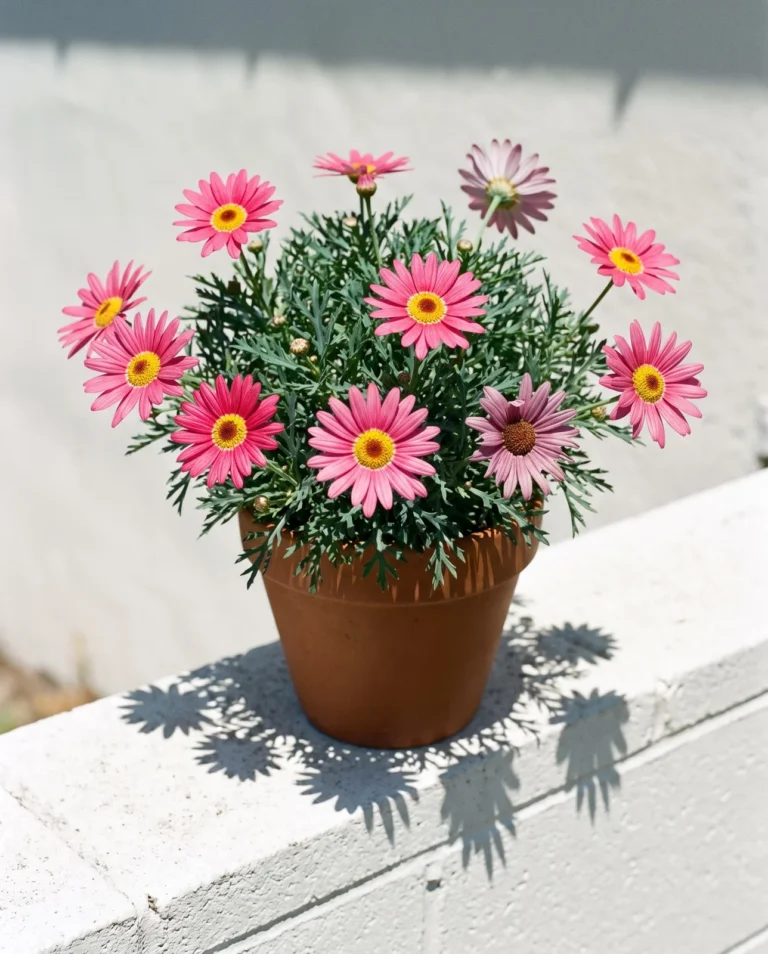
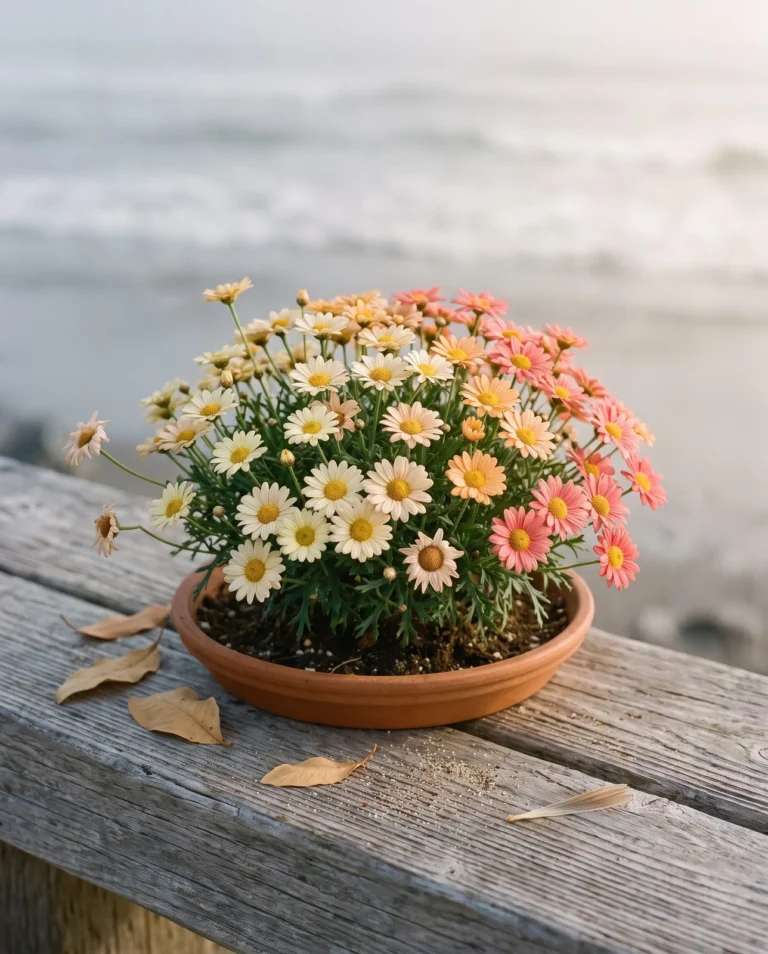
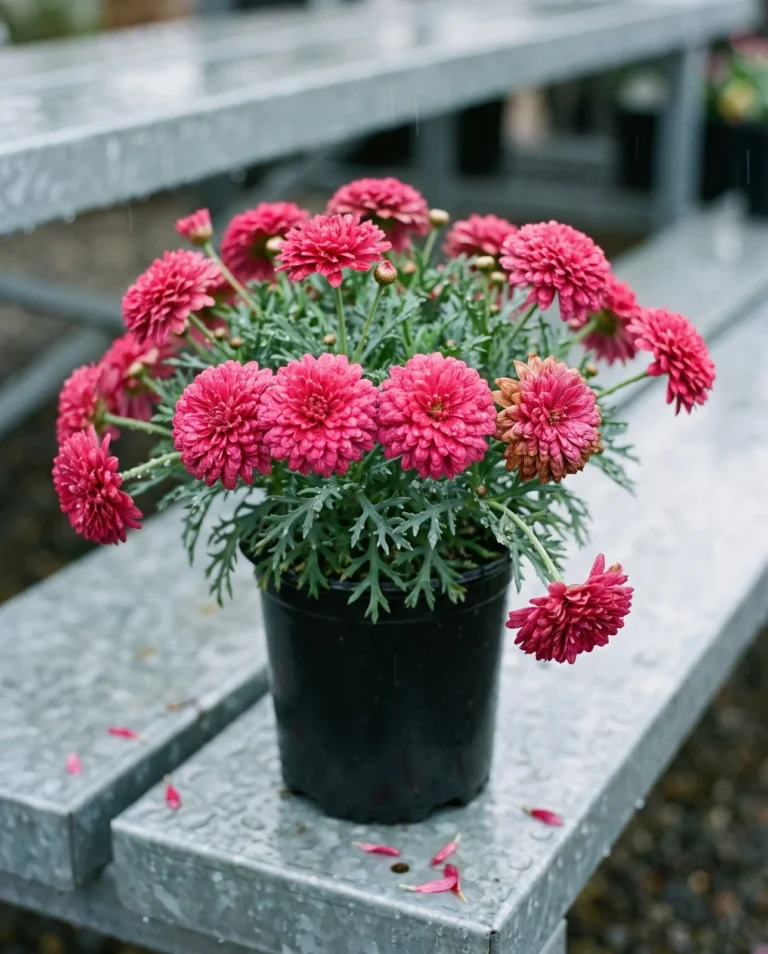
In flower it is a rounded, bushy mound of finely cut foliage carrying many small daisy heads at once, in white, yellow or pink. The leaves are fleshy and blue green, oval to lance shaped, 1 to 3 inches long, and cut finely enough to read as fern like. The base under all that is woody, so where winters stay warm the plant is an evergreen subshrub, and where they do not it behaves as a short lived herbaceous perennial.
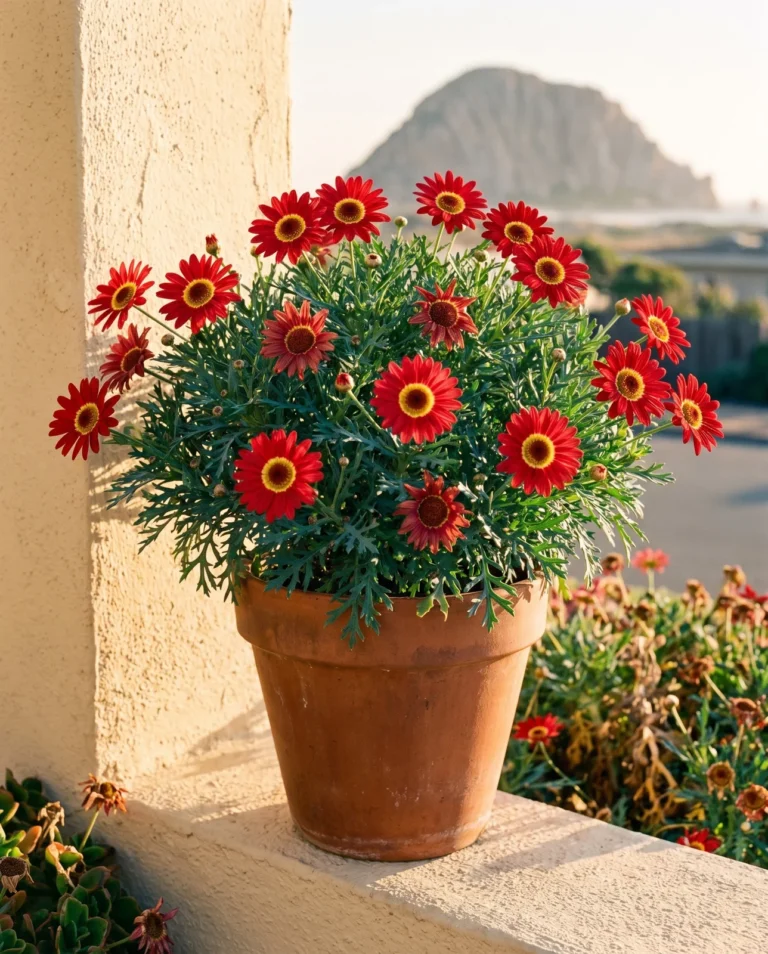
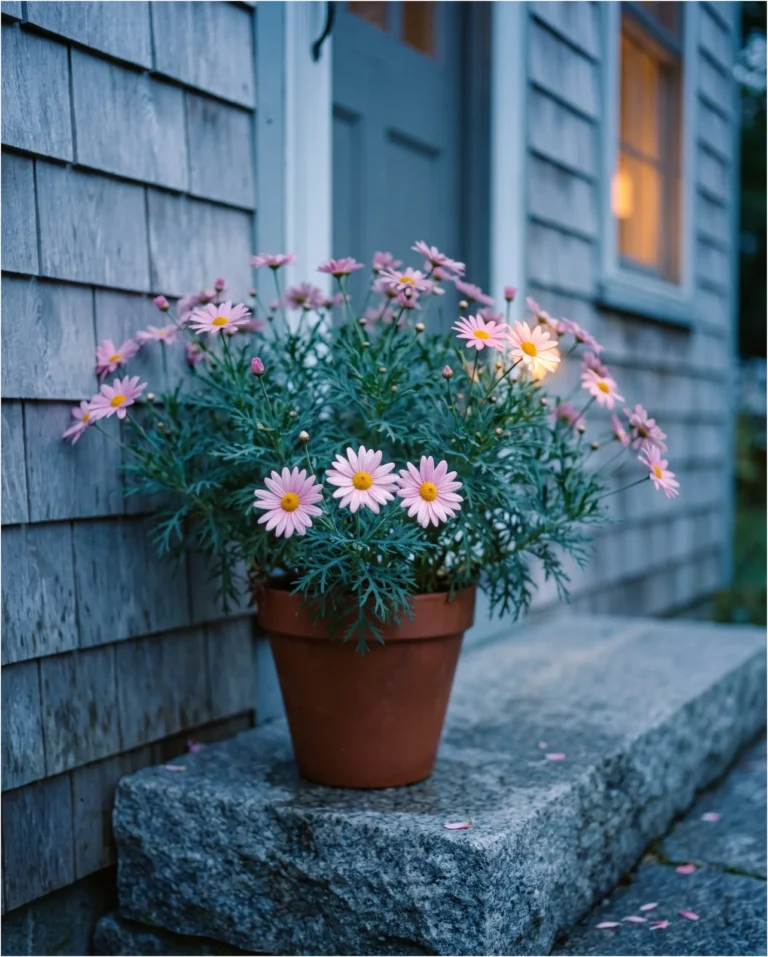
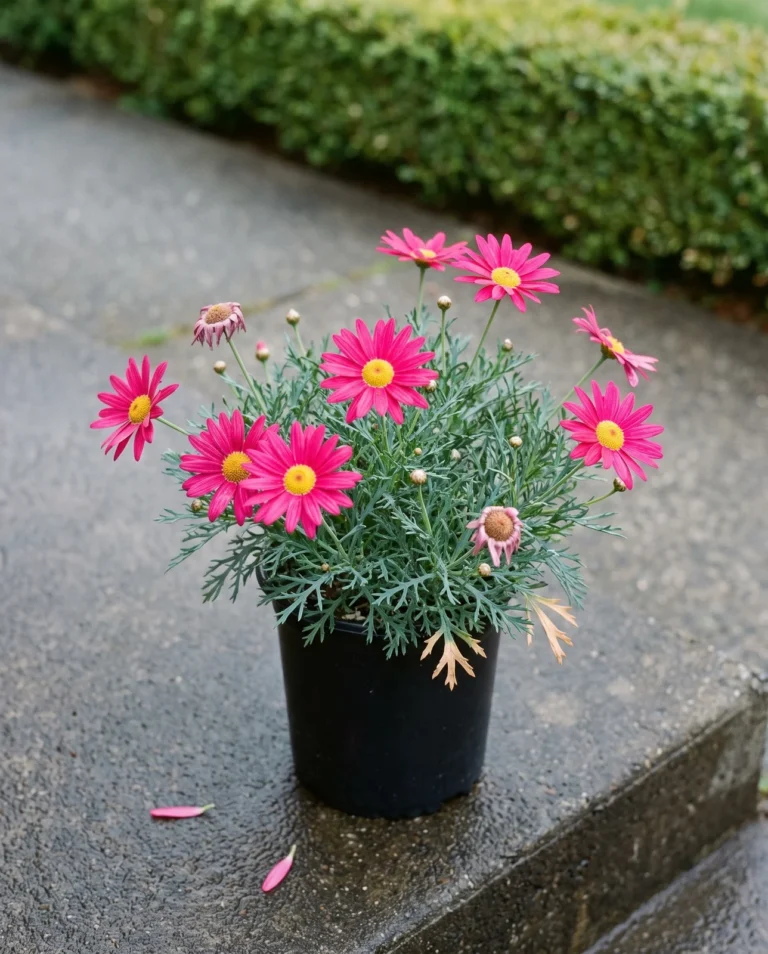
Garden plants are larger than the wild species in almost every dimension. The wild plant carries loose clusters of white heads with yellow centers, under an inch across, on stems 8 to 31 inches tall. The plants actually sold carry heads 1 to 3 inches across in single, semi double and double forms, in yellow, white, pink, rose or red. They stand 1 to 3 feet tall and about as wide. Pink, yellow and white are the species colors; the reds and the roses arrive with named cultivars.
Hardiness, and why the zone numbers conflict
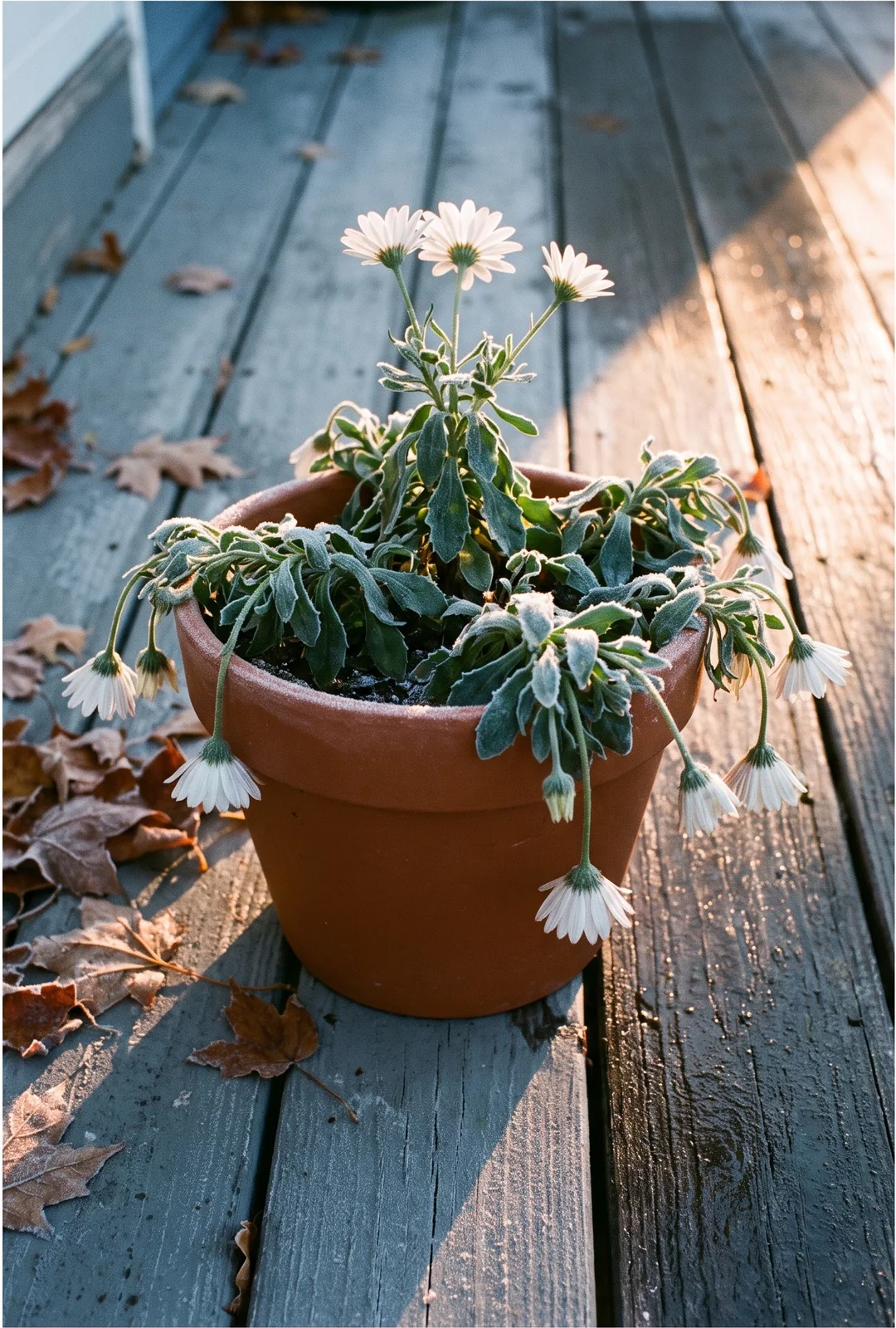
The true marguerite daisy is frost tender: it tolerates low temperatures and does not survive being frozen. That puts it at zones 10 to 11 in the ground, and the Royal Horticultural Society files the species as H2, its rating for plants that take cold without taking a freeze. Trouble starts well before ice, since the plant is cold sensitive below 40 degrees F and dies once temperatures drop below freezing outside zones 10 through 11. Even inside that band a very cold winter can damage it. Watch the thermometer, not the zone map: one frosty night is what kills it.
The colder numbers printed under this common name belong to other plants. The one product rated from zone 3 to zone 8 as marguerite daisy is labeled Anthemis tinctoria by its own seller, and golden marguerite is hardy from zone 3 on its own account. The Shasta daisy sold under the same name sits at zones 5 to 9. Neither of those is the Canary Islands plant, and both differ from it in foliage and origin as well, golden marguerite having no patience with the hot humid summers of the deep South.
The genus word on the tag outranks the zone band printed beside it. Argyranthemum on the label means a frost tender plant, whatever number sits next to it. Where winter temperatures drop below freezing at all, cuttings taken from the plant are the standing insurance against losing it.
Annual or perennial
Marguerite daisy is a true perennial only where winter stays frost free, and in every colder climate it is grown and discarded as an annual. Even inside its perennial range it is not long lived. Two to three years is the average there, and the species is short lived at its best. In the tropics it grows on as an evergreen shrub; in a temperate garden it is a plant for one season. The plant is a perennial by nature, and the climate decides whether anyone gets to see it behave like one.
Where it does survive the winter it stays evergreen, holding its foliage on a woody base. Where it does not, the decision is best made before the purchase. Anywhere summer or winter temperatures regularly move outside the plant's comfort range, a pot is the better home, for the simple reason that a pot can be carried. Cuttings are the other route, and for the named hybrids they are the way to keep one, because those are propagated vegetatively and are not reliably raised from seed.
Where to plant it
Full sun, soil that drains and cool air are what it asks for, and the third one decides how you deliver the first. Give it at least 6 hours of full sun in moderately rich, well draining soil, with shelter from afternoon sun in hotter climates. Keep the soil slightly acidic to neutral, a pH of 6.0 to 7.5. In a hot region that changes where the plant goes: site it so that most of its sun arrives in the morning wherever heat is extreme.
Heat is the condition that overrides the rest. Marguerite daisies prefer cool nights, may not perform well in hot climates, and turn into unstoppable bloomers where summers stay moderate, and warm, humid nights are the specific thing they cannot tolerate. Flowering is at its best at 70 degrees F or below, and a container plant is in trouble in a place that regularly runs below 40 degrees F or above 70 degrees F. Those two figures bracket the working range of the plant, and the width of that band in your garden decides how long the flowering lasts.
Watering and feeding
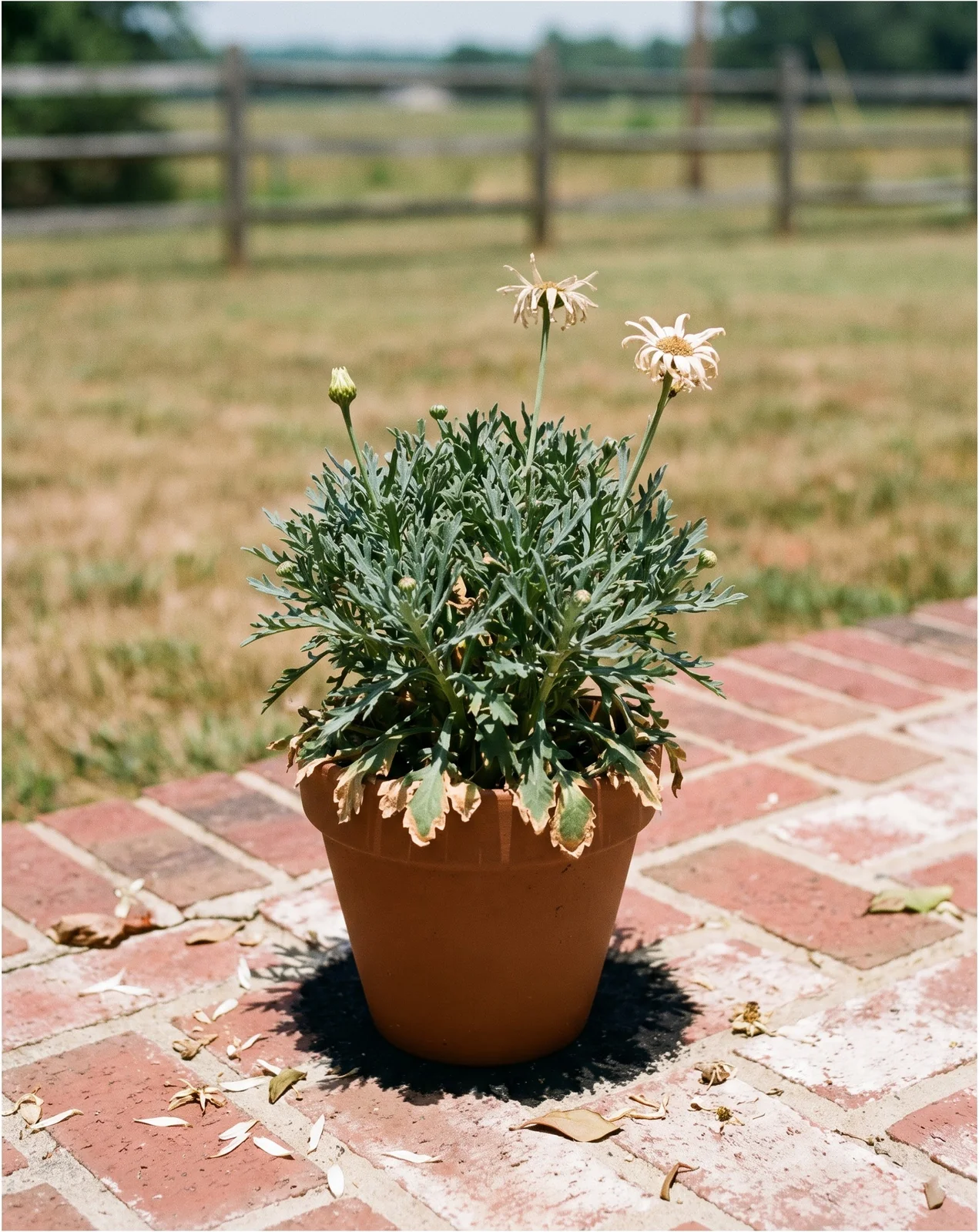
Water when the top inch or two has dried out, keeping the soil evenly moist and never soggy, and test it by feel, 1 to 2 inches down, before each watering. Containers change the rhythm. The same plant in a pot needs watering more often than one in open ground, and the pot has to carry adequate drainage holes of its own.
Feeding is where an eager owner does the damage. Two light schedules work: an all purpose liquid fertilizer once or twice a month through the growing season, or a monthly drench of liquid organic fertilizer through the summer. The warning attached is specific. Heavy use of all purpose fertilizer can leave a marguerite daisy scraggly and leggy, which is the same silhouette the feeding was meant to correct.
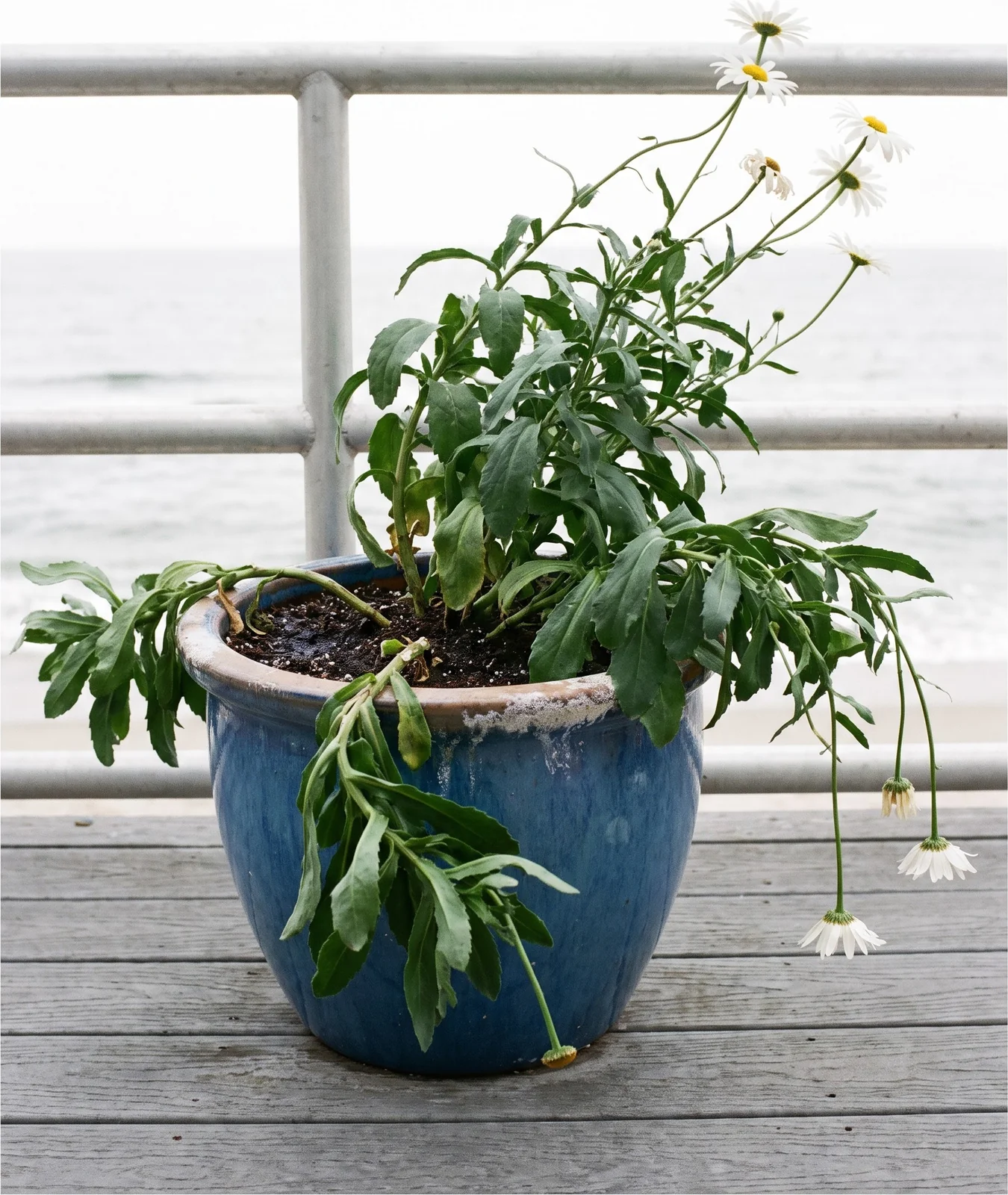
Why a marguerite daisy stops flowering
Heat is the usual reason, and on this plant the summer pause is normal. Bloom runs from late spring into early summer with a rebloom in fall, and carries straight through the summer only in milder climates. Even the heat tolerant white and yellow selections may flush out of bloom once night temperatures regularly stay in the high 70s or above. The trigger is a night temperature, so the reading that matters is the one taken after dark. When the weather turns, flowering resumes from late summer into fall.
Whether deadheading belongs in the answer depends on which plant is in the pot. Two named selections are bred to cover themselves in flower all summer with no deadheading needed, and one of them is more heat tolerant than the older marguerite daisy cultivars. On plants like those, picking off spent flowers is cosmetic. On ordinary material it still pays, since removing past blooms increases flowering and makes the plant bushier. Golden marguerite, sold under the same name, needs occasional deadheading to keep blooming, and a pinch or shear of the stem tips in mid spring to thicken it.
Age is the last cause, and the hardest one to treat. In a frost free garden the plant runs two to three years on its woody base, and a plant in its third year there has reached the end of that run. Grown as an annual it never gets that far, so a first season plant that has stopped flowering is answering to something in the weather, the light or the water.
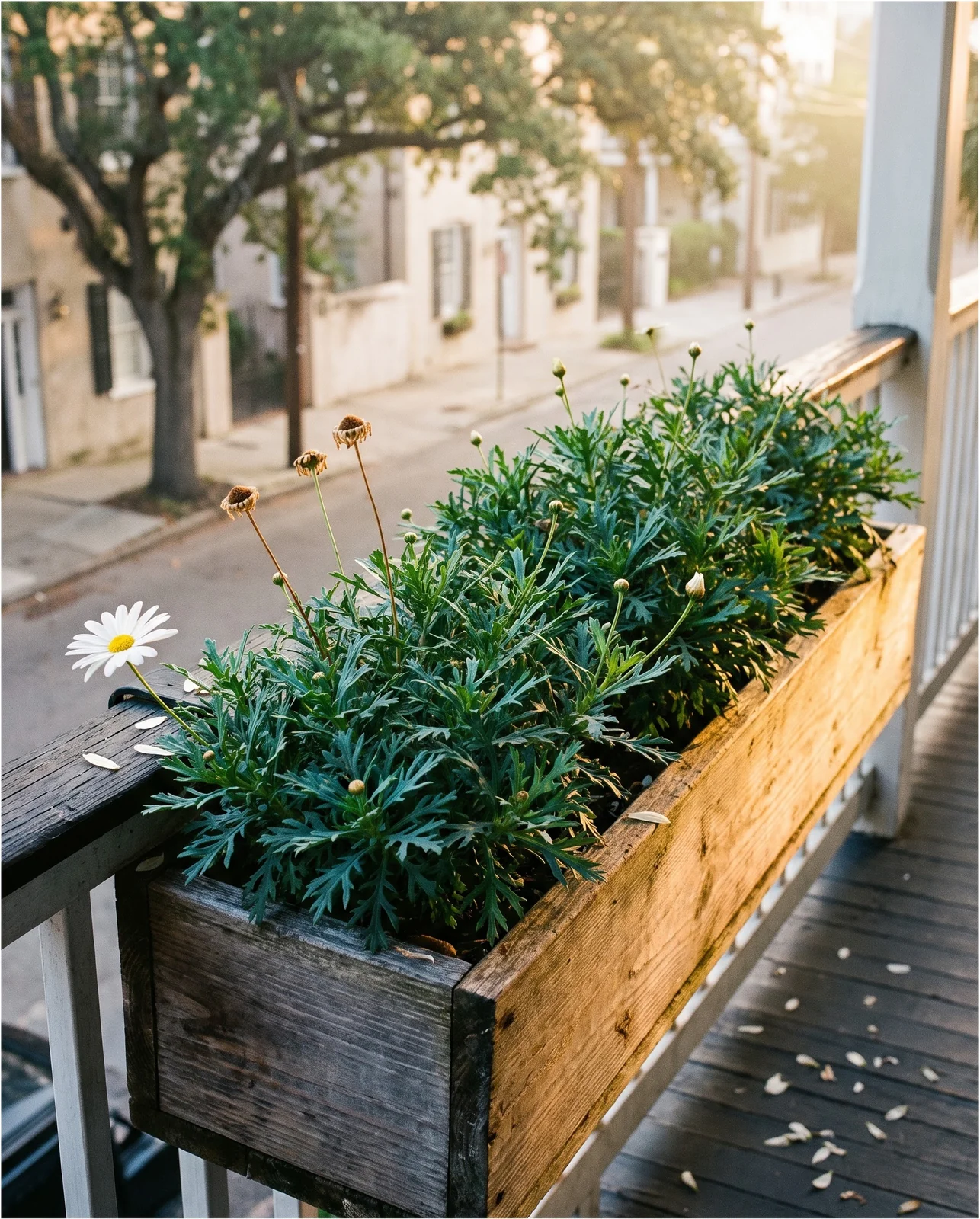
When the flowers stop, check in this order
Four checks, starting with the one that explains the midsummer pause.
Yellow leaves, and the three causes of discolored foliage
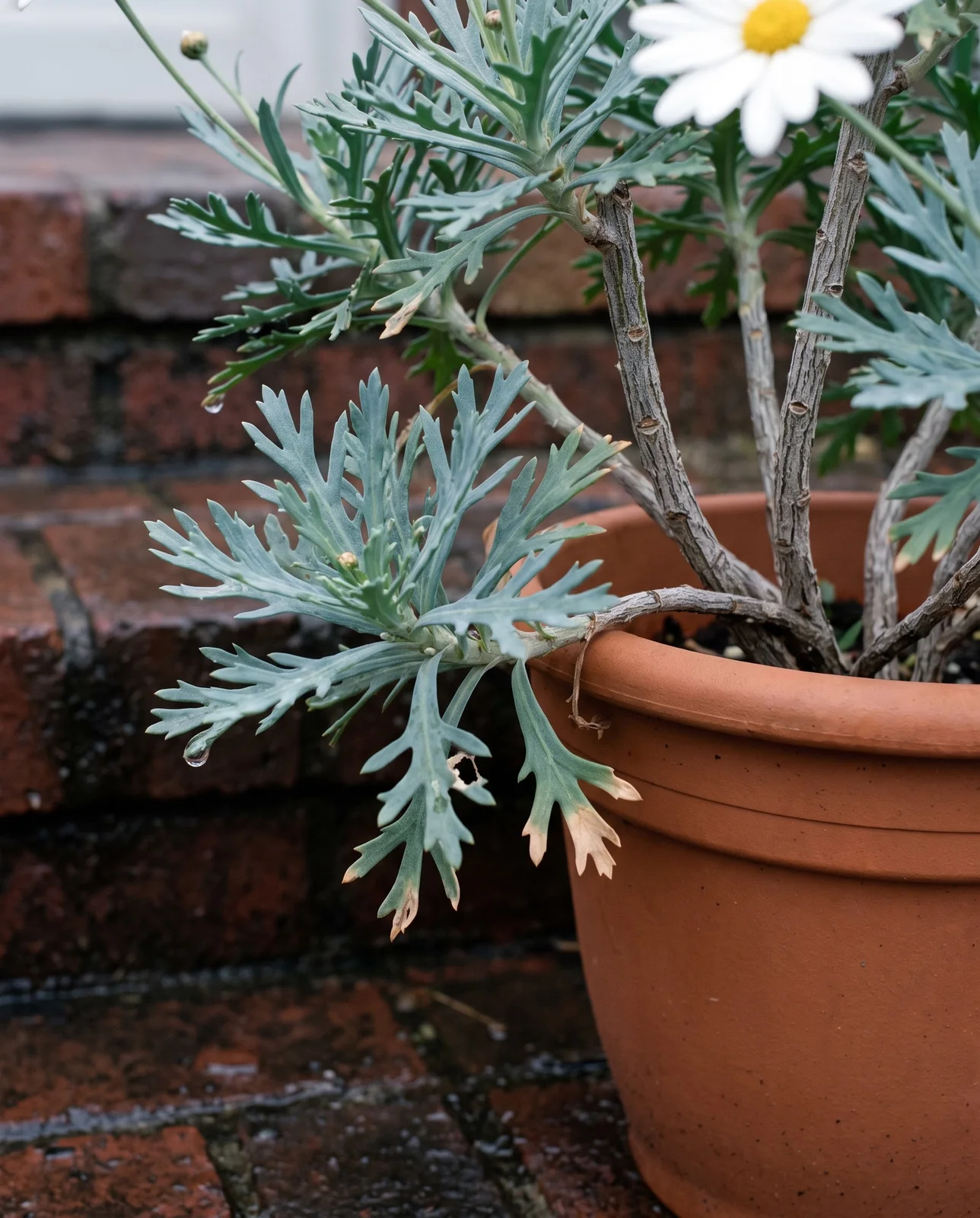
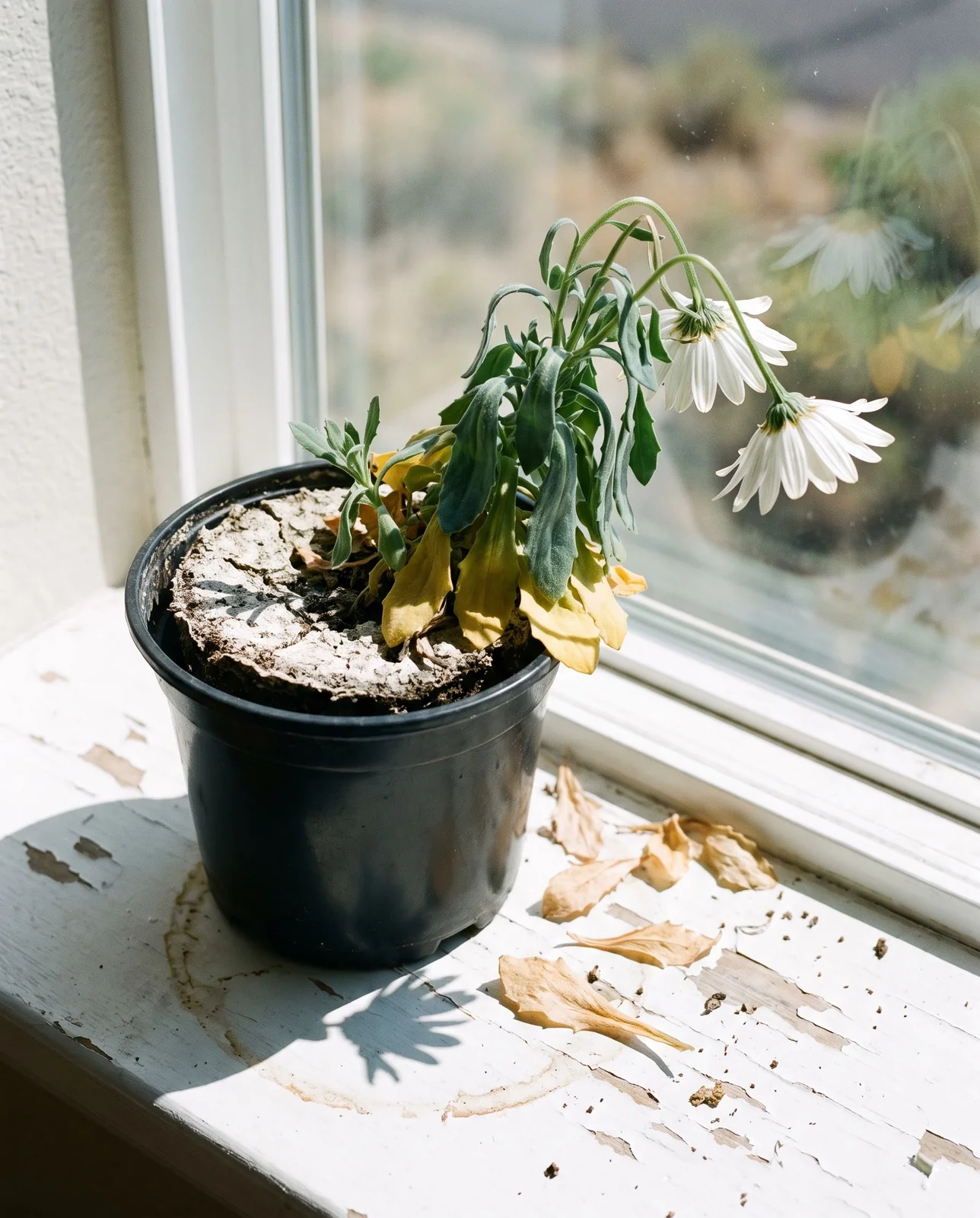
Water is the first thing to check, and the check runs in both directions. Yellow leaves may appear when the plant is under stress from improper watering, either too much or too little. Water excess or deficiency is an environmental disorder on this plant in its own right. The excess version looks like a plant watered every morning and every evening, its leaves turning yellow and drying at the same time. Both directions look much the same on the leaf, so the answer comes from the mix underneath it.
When the watering has been corrected and the plant keeps fading, the next place to look is the roots. UC IPM's pest management guideline for this crop documents Pythium root rot, which shows as stunted plants with a reduced root system and small, rotted roots. Pythium is a soilborne water mold whose spores travel through soil and water, and excess soil moisture and poor drainage favor it. That is the link back to the first cause, because heavy watering in a pot that drains slowly builds those conditions. The measures against it are structural: avoid poorly drained soils, plant on raised beds, and reduce the amount of irrigation water.
The third cause shows at the growing tips and arrives with the weather. Downy mildew, caused by the water mold Peronospora radii, turns young tip leaves dull green, stunts them severely and rolls them downward. Cool, wet weather of 40 to 60 degrees F favors it. Dull, stunted tip leaves in a cool wet stretch are a different problem from yellowing on an over or under watered plant. The weather at the time is what separates them.
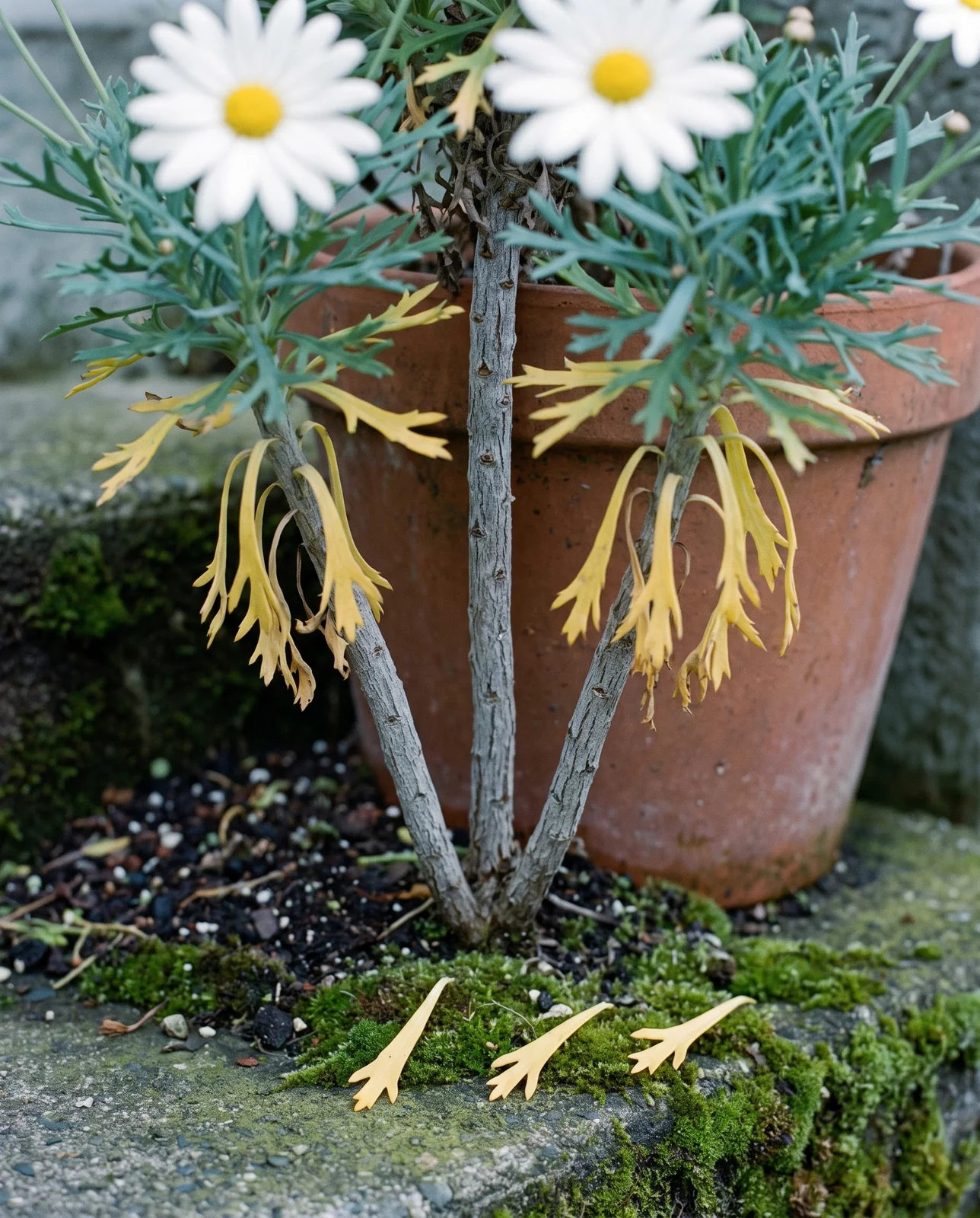
The diseases named for marguerite daisy
Marguerite daisy has no serious insect or disease problems in an ordinary garden. These are the ones documented when something does go wrong, starting with the entries that come with a described symptom.
Spherical galls on the stems, most often at the base of the plant, caused by the soilborne bacterium Agrobacterium tumefaciens.
Gray mold on the flowers and foliage, documented on this plant along with bacterial soft rots and leaf spots.
The one disease that turns up both in home garden warnings and in the agricultural guideline for the crop.
A soilborne wilt named for this crop, with leaf spot beside it.
Named for marguerite daisy in landscape and agricultural listings alike, with curly top next to it.
Nematodes sit among the invertebrate pests of marguerite daisy, a second soil organism to weigh when a plant fails from the roots up.
Cutting back a leggy plant
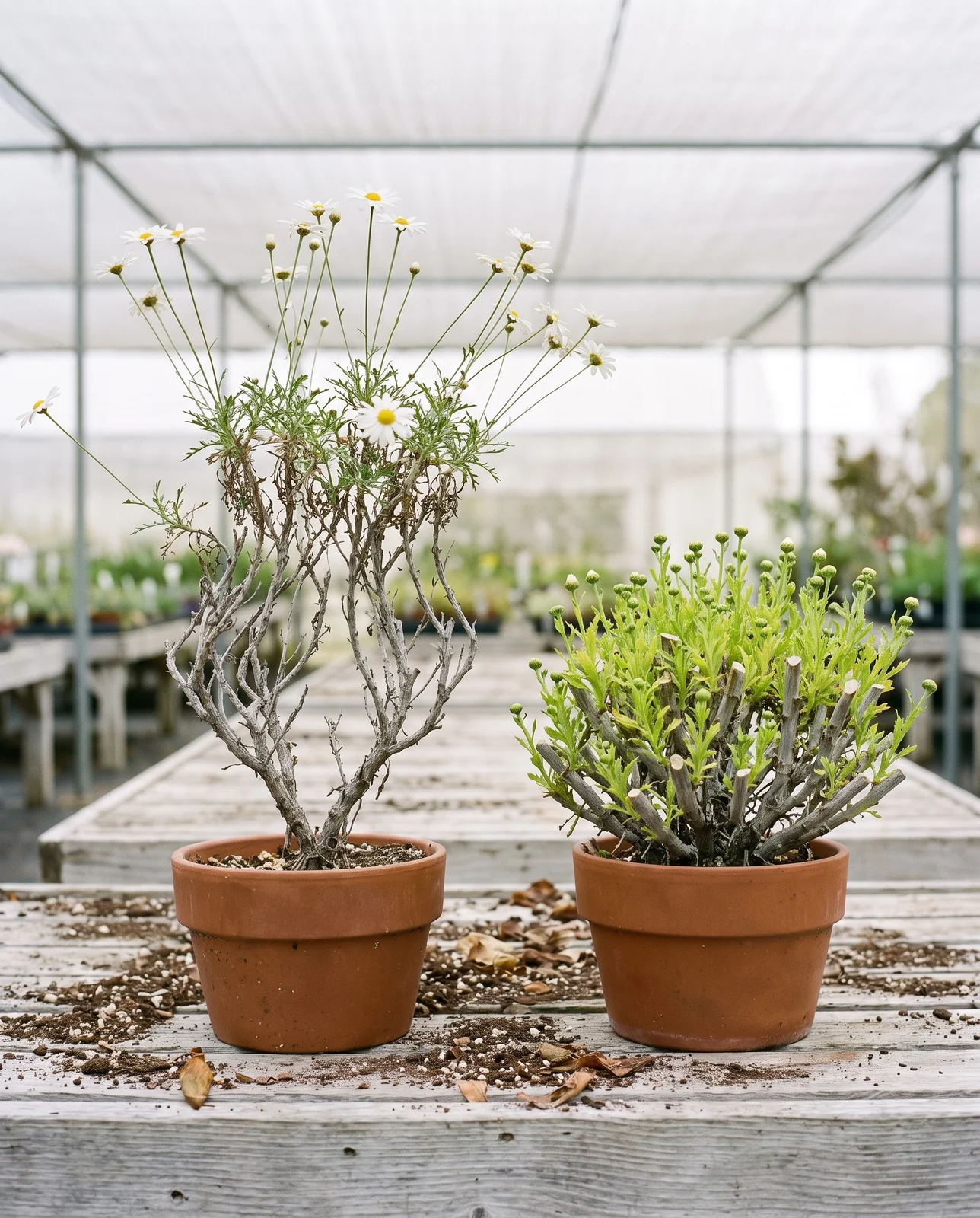
A marguerite daisy asks for little pruning, and the one cut that earns its place is a light shear in midsummer. The habit is a neat mound that needs little work, and plants can be lightly sheared once flowering slows, which brings a bushier habit and new flower buds. A tall, leggy plant can be pinched back instead, but pinching can delay flowering. That is the whole calculation in July, on an open, bare stemmed plant. A light shear costs a little time and comes back as branching. A hard pinch on a plant about to bud buys shape at the cost of the next flush.
The hard cutback heights sold under this name belong to a different plant. Golden marguerite is cut back hard to 2 to 3 inches in late fall and again to 3 to 4 inches in early to mid spring. It is an erect, clump forming, shrubby perennial of another genus. Nothing that hard is described for the tender Canary Islands plant, where the only cut is the light shear taken once a flush of flowers is over.
Growing one in a container
In a container the mix matters more than the pot. Use a high quality all purpose potting mix that drains well, and remember that beds, borders and containers are all normal homes for this plant. Where several plants share a bed or a wide bowl, set them a minimum of 1 foot apart each way. The pot is also the escape route, because a plant that can be carried indoors survives a night that would kill the same plant in open ground.
Overwintering one indoors
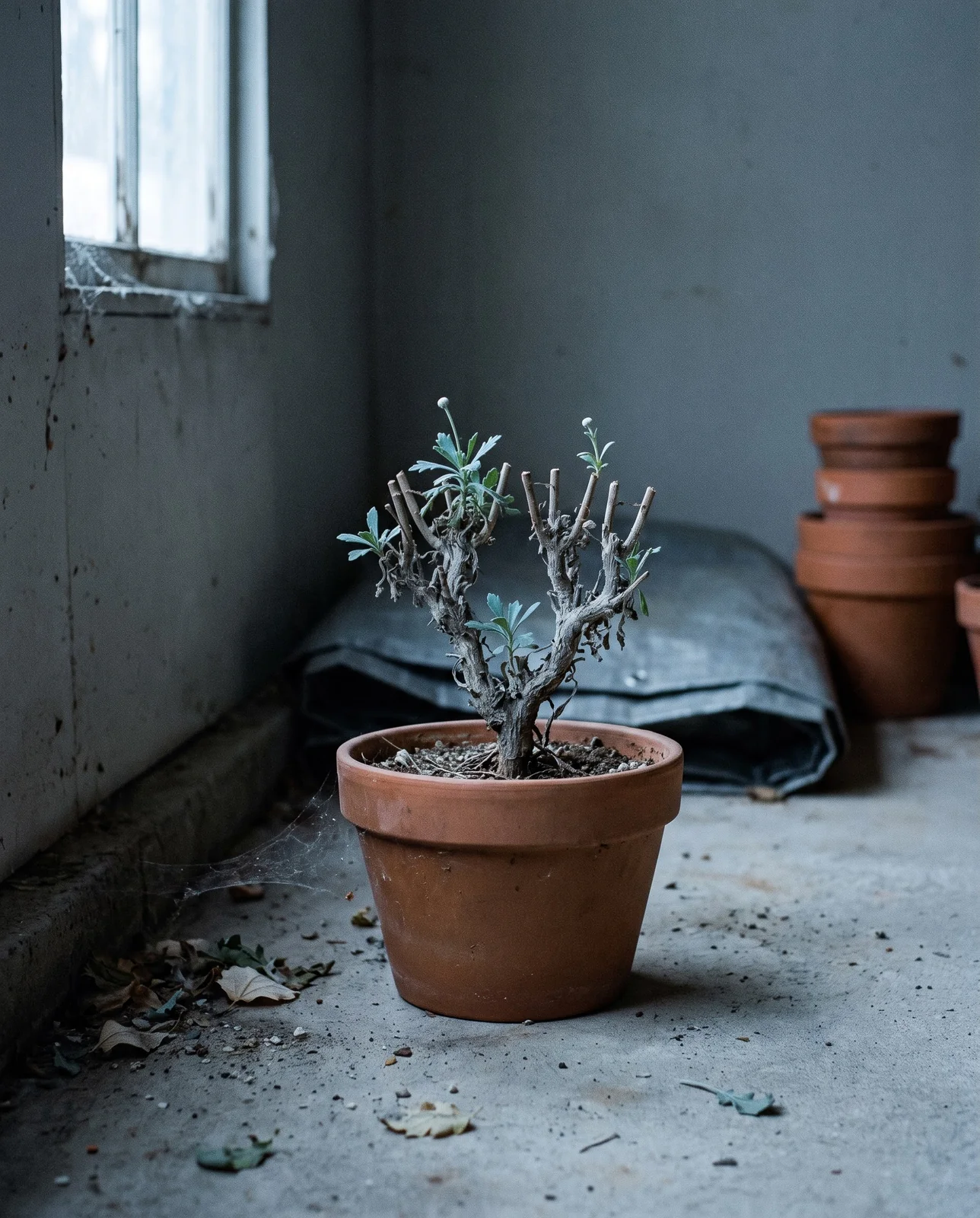
Overwintering works by keeping the plant cool and barely alive. Bring it in autumn into a cool basement or garage, somewhere the temperature holds above 50 degrees F, so that the plant goes semi dormant. Through that stretch give it only enough water to stay alive. A plant treated that way should perk up in spring, and it can then supply stem cuttings to root into new plants. Those cuttings are the reason to bother with the whole exercise. The named cultivars do not grow true from seed, so cuttings may be taken in late summer and overwintered until spring. That keeps a replacement coming even in a year when the parent does not survive.
Marguerite daisy varieties worth telling apart
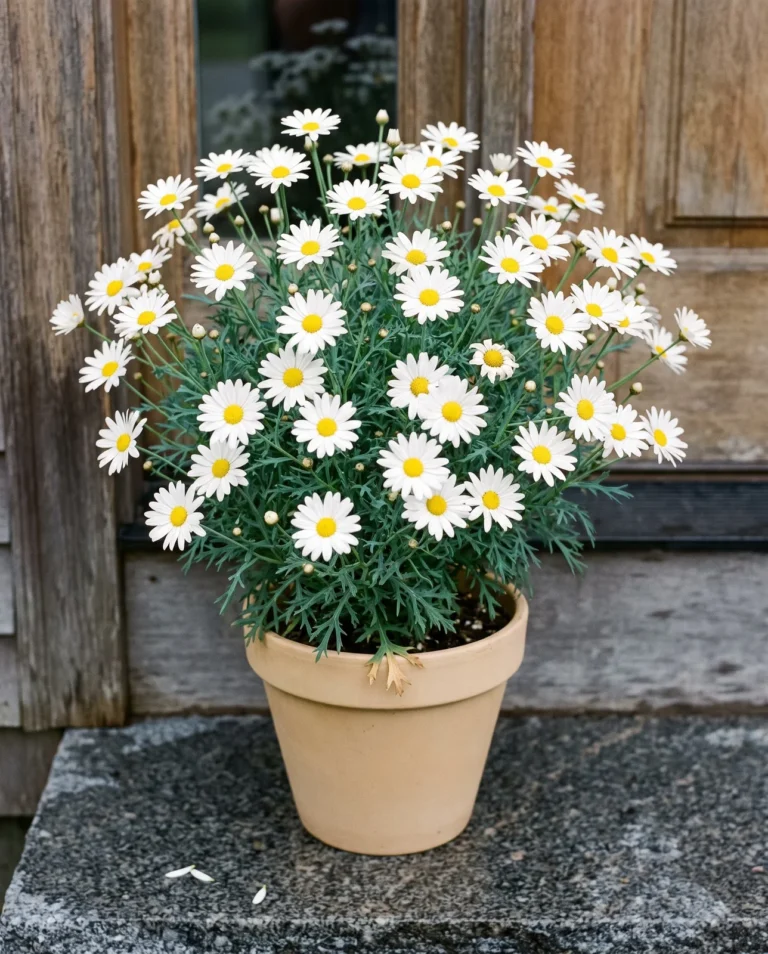
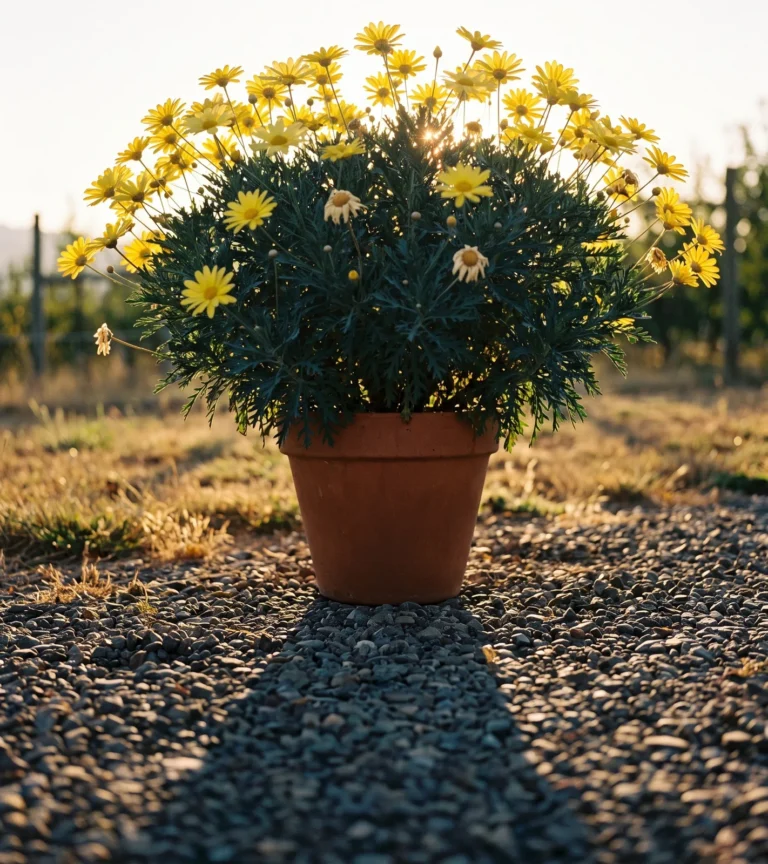
Ten named selections, all of them true Argyranthemum, told apart by color, flower form, size and whether they ask for deadheading.
Height and spread
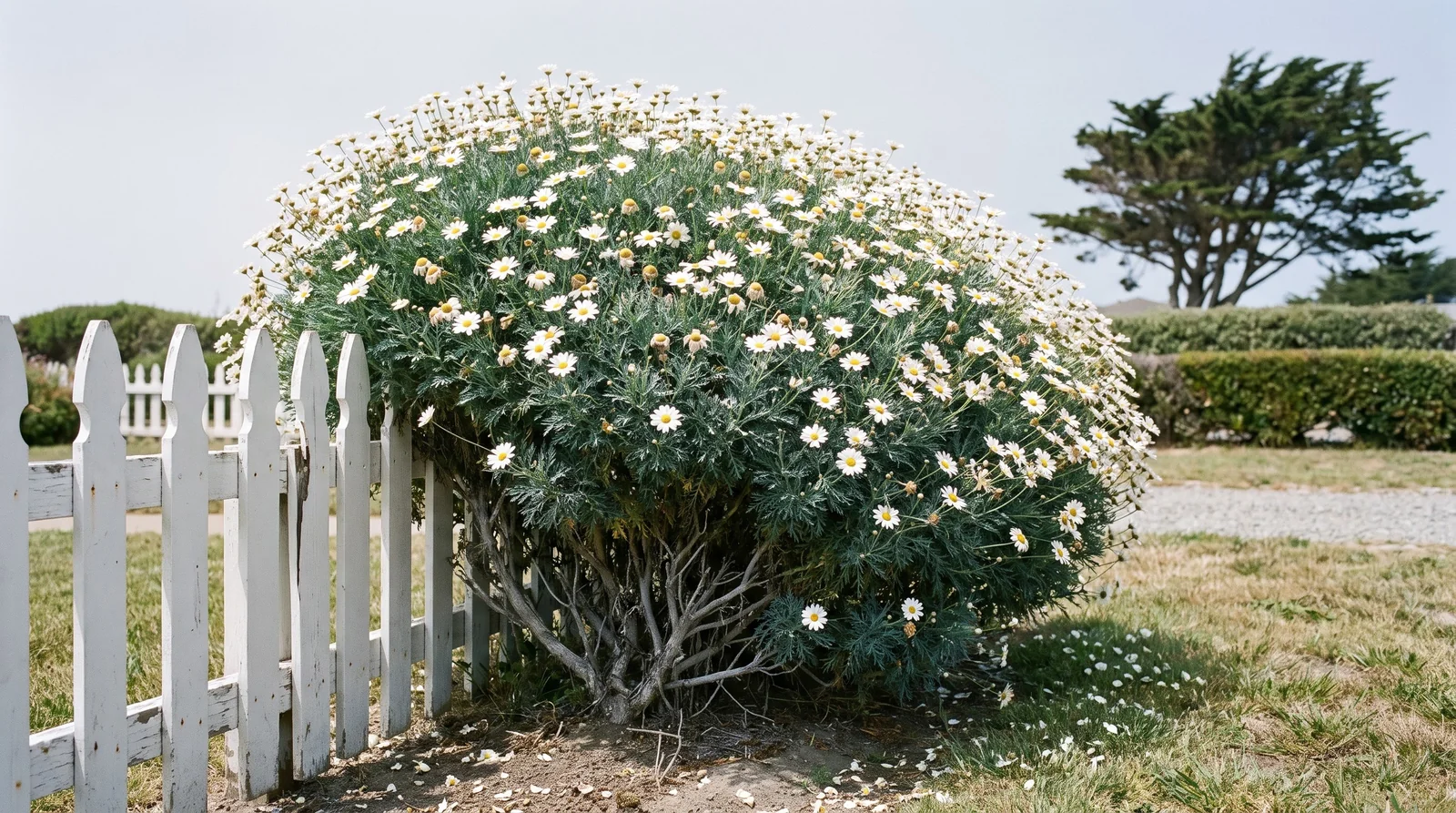
A settled plant makes a dome 1 to 3 feet tall and about as wide, the spread tracking the height closely. It takes one to two years to reach that size, in full sun, in loam or sand. Both figures describe a plant that has been grown on, which is a different thing from the one that arrives in a pot in spring. The wild species runs smaller, at 8 to 31 inches.
Taking cuttings
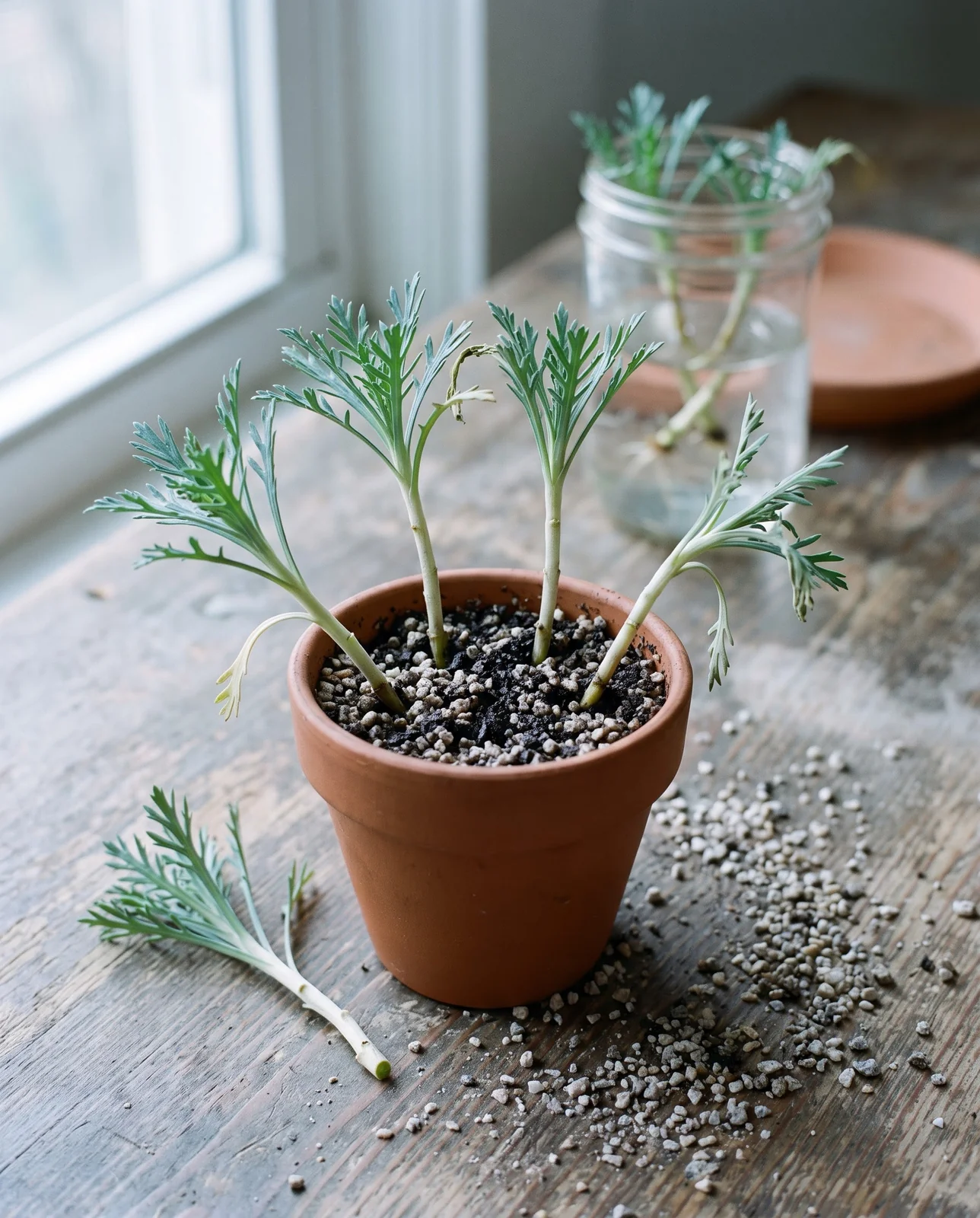
Cuttings are how a named marguerite daisy is kept, because the cultivars do not come true from seed, and they may be taken from prized plants in late summer for exactly that reason. Two windows work: softwood cuttings in spring, or semi ripe cuttings of non flowering shoots, 2 to 4 inches long, in summer. Either way take a healthy stem with no flower on it, at least three inches long, snipped just below a leaf node. The shoot without a flower is the part both descriptions insist on.
Set the cutting so that at least one node sits below the surface of the potting mix, dipping the cut end in rooting hormone first if you want to speed the rooting along. After a few weeks, test it by tugging gently: resistance at the base means it has rooted. A plant kept in a pot and cut back through the season supplies this material without any special effort, and a few rooted cuttings are cheaper insurance than a replacement plant in spring.
Pests
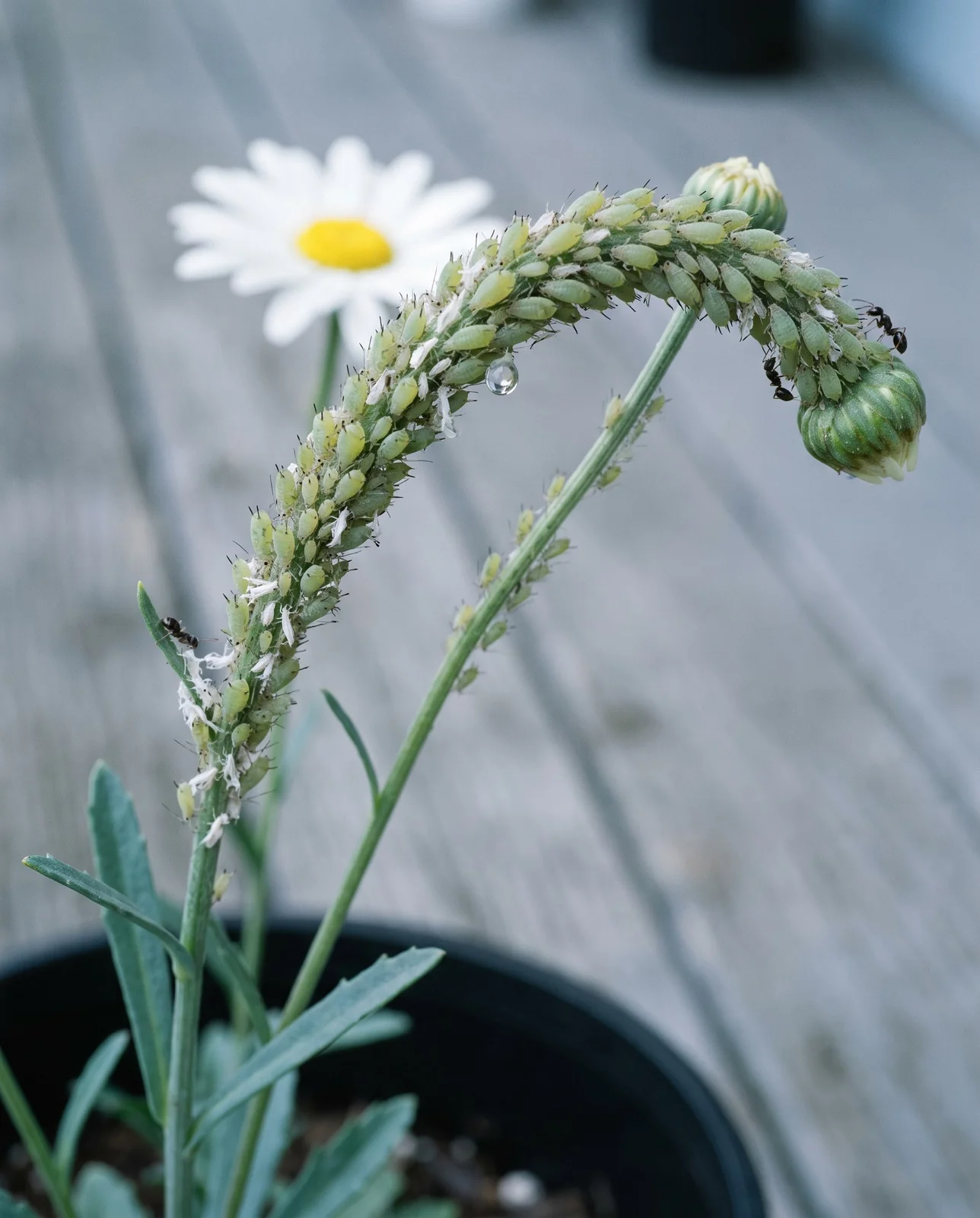
Aphids open every pest list for this plant. Leaf miner mites, thrips and whiteflies follow them, with crown gall, powdery mildew, mold and root rot as the diseases that may come next. Broad mite and cyclamen mite, spider mites, foliage feeding caterpillars, mealybugs and vegetable leafminers are documented on it too. Given the right growing conditions, the plant is generally free of most pests and diseases. That fits a plant grown for a single season in most of the country.
What to expect through the year
Spring runs from planting to the first flush. Set plants into a bed a minimum of 1 foot apart each way. Flowering starts early on a young plant, and one white selection blooms from planting until hard frost in a climate that suits it.
Summer is where the climate settles the shape of the year. Improved varieties can bloom for three months or more in hospitable climates, and that stretch is what a marguerite daisy is bought for. How much of it a given garden gets is decided by the nights it has in July and August.
Autumn closes the outdoor season and settles what the plant has been all along. The species is used as an annual almost everywhere and rates as a perennial only in the warmest zones. Its uses are beds, borders and containers, and the container version is the one with somewhere to go when the cold arrives.
Four things people believe about marguerite daisy
Each of these has a one line answer.
The myth: A marguerite daisy is a Shasta daisy under another name.
The reality: Different genus. Leucanthemum, which holds the Shasta daisy, is a look alike from a genus of its own.
The myth: It is hardy to zone 3.
The reality: The only plant carrying a zone 3 rating under this name is labeled Anthemis tinctoria by its own seller.
The myth: Every marguerite daisy has to be deadheaded.
The reality: Pure White Butterfly and Golden Butterfly are bred to need no deadheading at all.
The myth: More sun always means more flowers.
The reality: Where the heat is extreme, give it a spot where most of the sun arrives in the morning.
FAQ
Do marguerite daisies come back every year?
Only where winter stays frost free. In zones 10 through 11 the plant is a perennial, and even there it averages two to three years. Everywhere colder it is grown as an annual, or lifted and carried through the winter under cover.
Are daisies and marguerites the same thing?
Daisy is a flower shape shared by several unrelated genera across the wider flower catalog, and marguerite is a common name that lands on more than one of them. The oxeye daisy carries marguerite as its French name, and the Leucanthemum daisies were once filed in Chrysanthemum, the same genus this plant has been placed in.
Do marguerite daisies like sun or shade?
Sun, at least 6 hours of it, in moderately rich soil that drains, with shelter from afternoon sun in hotter climates. Where the heat is extreme, place it so that most of its sun arrives in the morning.
What temperature kills a marguerite daisy?
Freezing. The plant tolerates low temperatures and does not survive being frozen, and it dies once temperatures drop below freezing outside zones 10 through 11. Trouble starts before that, because it is cold sensitive below 40 degrees F.
Why are the leaves on my marguerite daisy turning yellow?
Watering, in either direction, is the first thing to check. When the watering has been corrected and the leaves keep yellowing, look at the roots, where the water mold Pythium is documented on this plant in poorly drained, over irrigated soil.
Does a marguerite daisy need deadheading?
It depends which one is in the pot. Two modern cultivars are bred to need none at all, while on ordinary material removing past blooms increases flowering and makes the plant bushier.
Is marguerite daisy poisonous to cats and dogs?
Nobody has settled it. The ASPCA plant database returns no entry for marguerite daisy at all, while the plant is also called possibly toxic to pets and children if eaten. That database does list Chrysanthemum species as toxic to dogs, cats and horses, and that entry covers Chrysanthemum. Keep the plant away from an animal that chews.
Can you grow marguerite daisies from seed?
Not the named ones. Cultivars do not come true from seed, which is why cuttings may be taken from prized plants in late summer. Packets sold as marguerite daisy seed can be another genus altogether, labeled Leucanthemum by the sellers themselves.
What is the difference between a marguerite daisy and a golden marguerite?
Genus, habit and winter. Golden marguerite is an erect, clump forming, shrubby perennial to 2 or 3 feet, with yellow flowers about 1.5 inches across, and it is hardy from zone 3. The true marguerite daisy is the tender Canary Islands plant, and the two share little more than a common name.
Can a marguerite daisy live indoors over winter?
It can be held over, cool and barely growing. Move it in autumn to a basement or garage that stays above 50 degrees F, where it goes semi dormant on very little water and should perk up in spring.
Interesting tips
- The one poisoning entry that touches this group of plants sits under Chrysanthemum species, toxic to dogs, cats and horses, with sesquiterpene lactones and pyrethrins among the toxic principles. Its scope is Chrysanthemum, and this plant's old nursery name, Chrysanthemum frutescens, is enough to make it look as though it covered this plant too.
- A plant that makes no flowers at all through a cool, wet spring may be carrying downy mildew, favored by wet weather of 40 to 60 degrees F. Infected plants fail to flower.
- Where the water mold has caused trouble in a bed before, an oomycete specific fungicide at transplanting helps the plants get started.
Related Guides & Flowers

Aster
The hardy daisy for the same autumn weeks, and one that stays in the ground through the winter.

Black-eyed Susan
The daisy that takes the hot middle of summer, which is when a marguerite daisy is usually waiting it out.
Calendula
Another cool season daisy relative for pots, at its best in spring and again once the heat breaks.
Zinnia
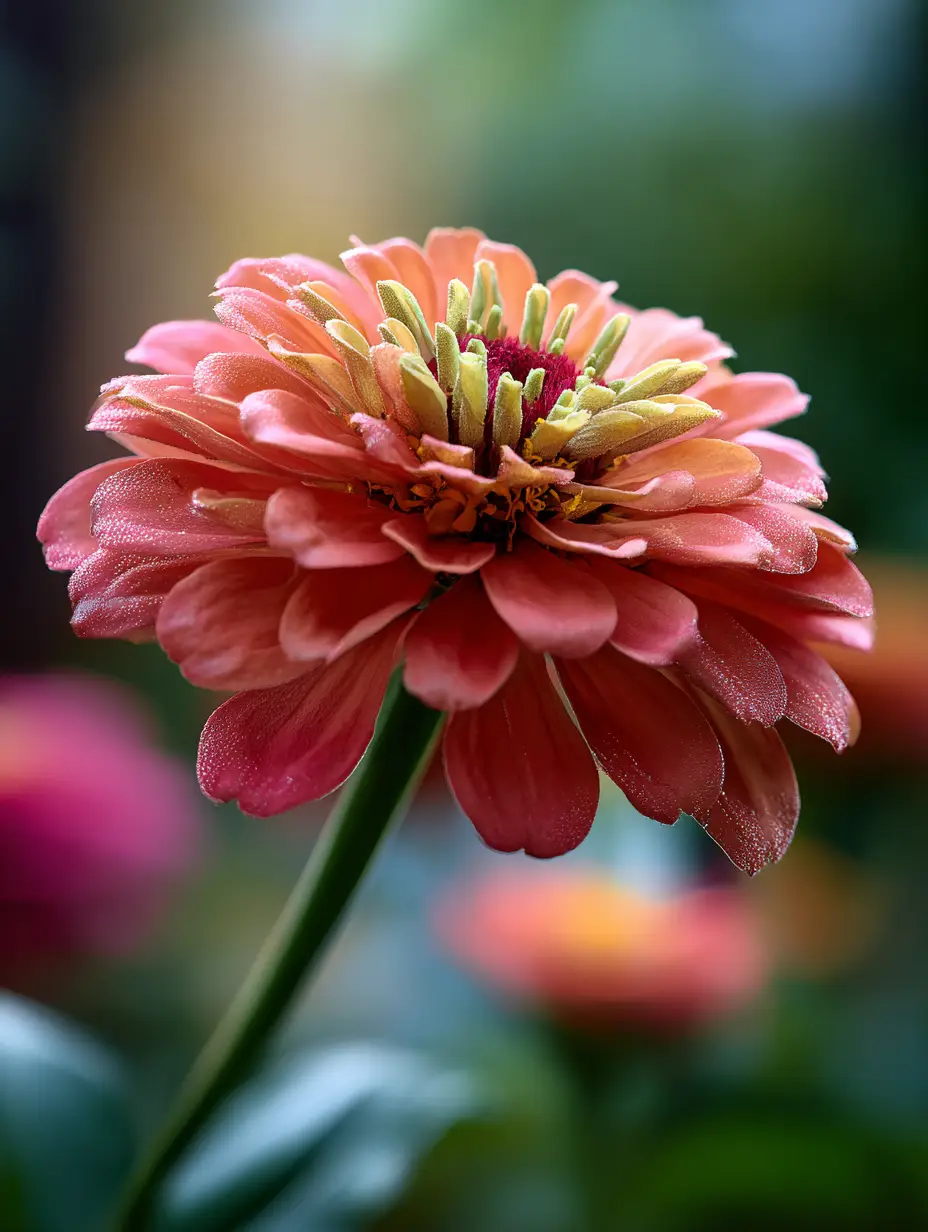
The summer annual for the same containers, raised from seed and untroubled by heat.
Enjoying our flower guides? Add YourFlowersGuide as a preferred source on Google. It helps more readers find us.
Add to Preferred Sources