in bloom
now
through Oct
Bloom calendar
Tagetes erecta
African marigold (species) · Linnaeus, 1753, Mexico to Central America
At‑a‑glance
- Group/Class: African marigold (species)
- Height × spread: 1-4 ft × 1-2 ft (30-120 cm × 30-60 cm)
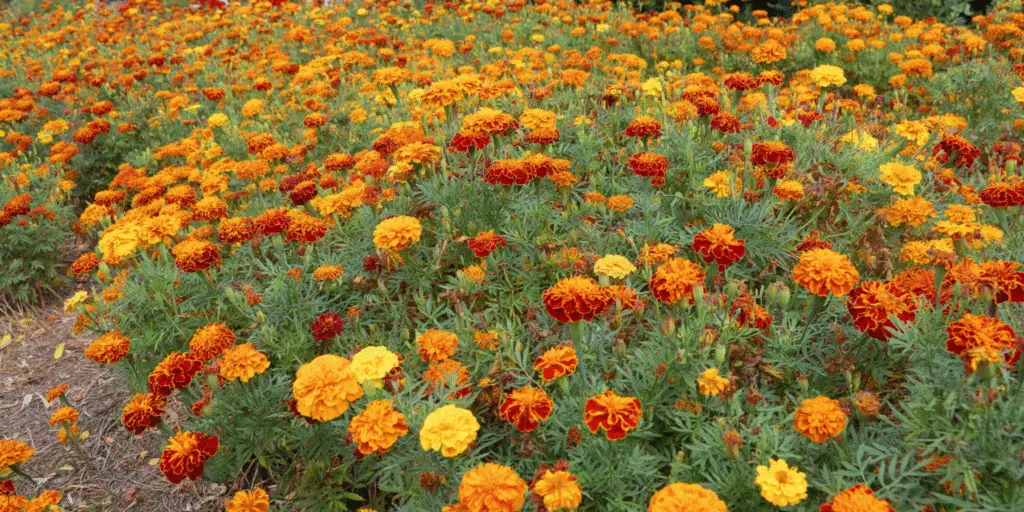
- Bloom window: June to frost
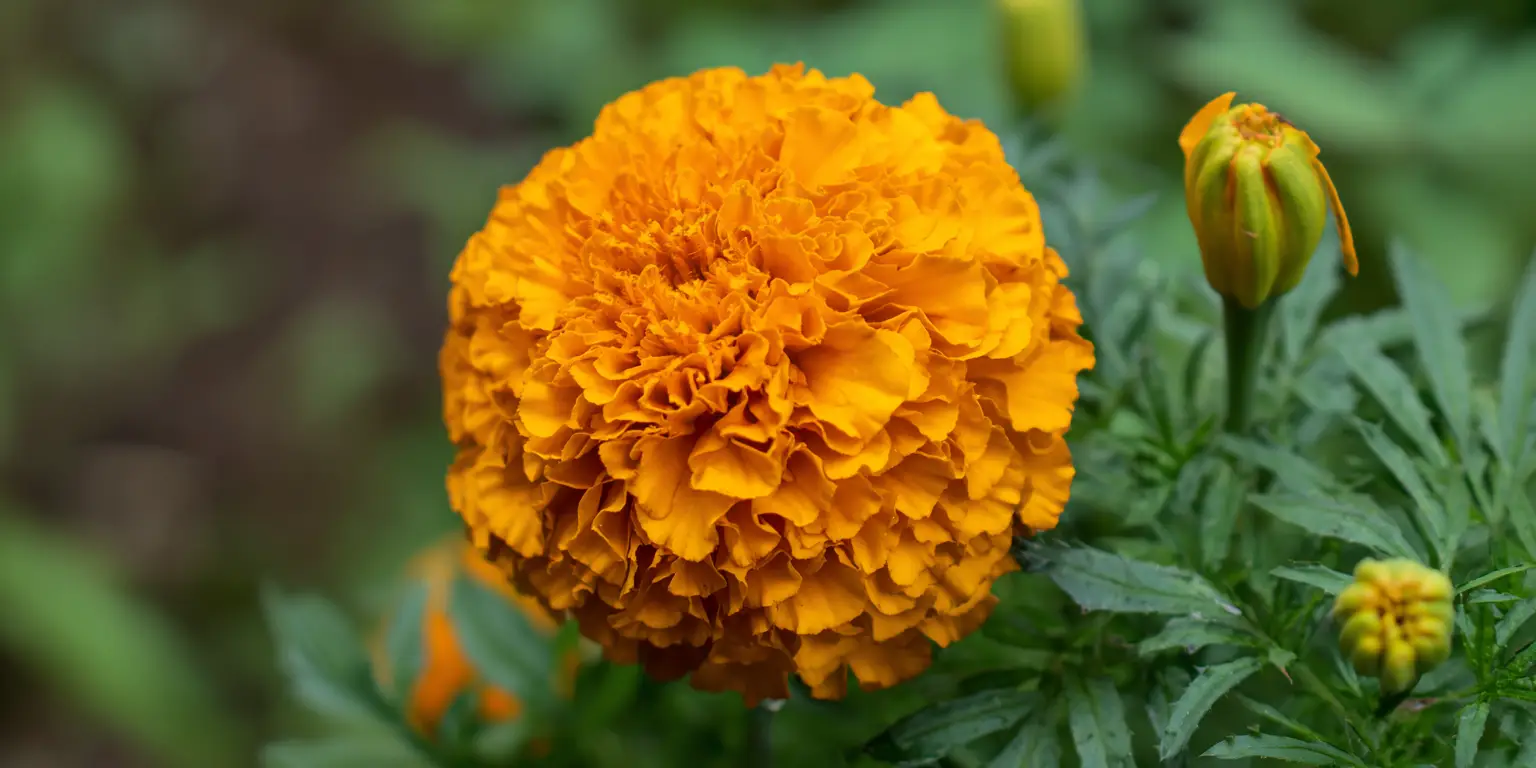
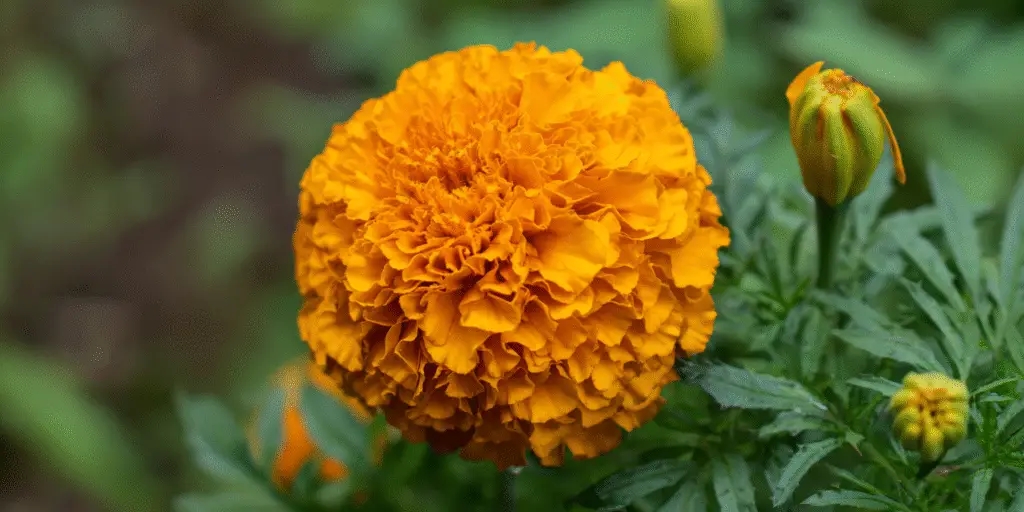
- Color & flower form: Yellow to orange to creamy white; mostly double, globular 2-4 in
- Fragrance: 2 noticeable
- USDA hardiness: grown as annual in most of North America
- Breeder / Year / Origin: Linnaeus, 1753, Mexico to Central America
- Cut‑flower notes: Sturdy stems; typical vase life 7-14 days when conditioned cool
- Pet safety: avoid
How it differs
- Taller stature and the largest flowerheads in the marigold group.
- Fuller, more spherical double blooms than French or signet marigolds.
- Better suited to cutting than compact bedding types.
- Tall stems may need shelter or light support in exposed sites.
Strengths
- Long summer bloom to frost with regular deadheading.
- Handles heat when soil moisture is steady.
- Useful stems for cut work; commonly reported 1-2 week vase life.
- Deer tolerant in many landscapes.
Care in one minute
Site in full sun with well‑drained soil; neutral to slightly acidic pH is fine.
Plant after last frost; water deeply once or twice a week in heat.
Feed lightly at planting; avoid high nitrogen that reduces bloom.
Pinch young plants once; deadhead spent heads; stake tall rows if windy.
No overwintering outdoors in cold zones.
Watch‑outs
- Botrytis and powdery mildew can spot flowers and foliage in cool, wet weather.
- Spider mites and thrips may appear in hot, dry spells.
- Heavy flowerheads can snap stems in wind or heavy rain.
Best uses (tags)
Provenance note
Described by Linnaeus in 1753; native to Mexico and Central America and long cultivated worldwide.
References
- Missouri Botanical Garden – Tagetes erecta profile
- NC State Extension – Tagetes erecta
- Mississippi State Extension – Marigolds for the Farmer‑Florist
- PNW Plant Disease Handbook – Marigold Botrytis Blight
- UC ANR – Tagetes spp. plant safely note
Similar Flowers
Enjoying our flower guides? Add YourFlowersGuide as a preferred source on Google — it helps more readers find us.
Add to Preferred Sources