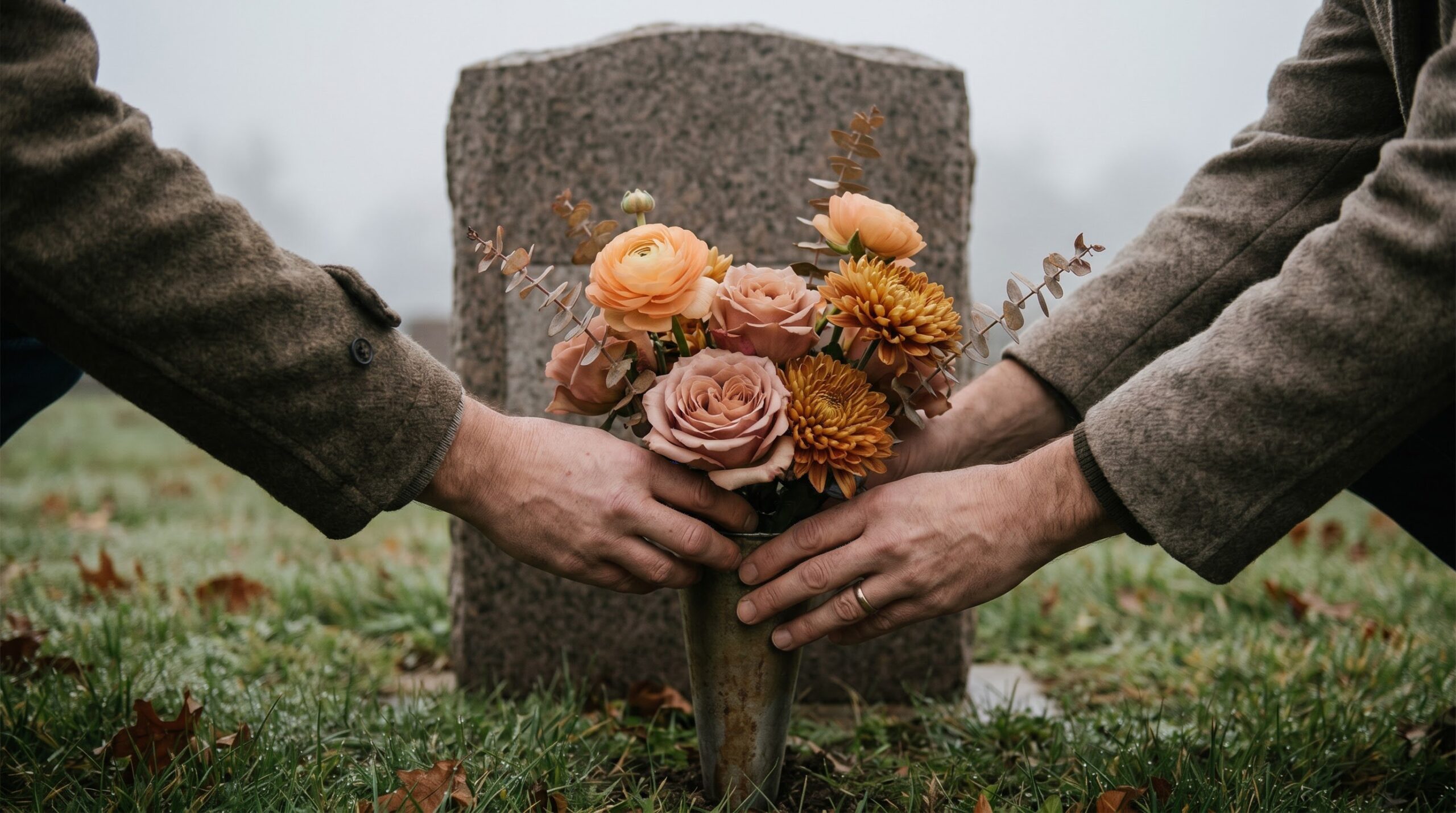
Sending flowers on a death anniversary is one of the kindest gestures available on a day that most people dread quietly and alone. Almost always, the flowers are meant for someone who is still living, the widow, the parent, or the sibling carrying the loss, since this day belongs to them far more than it belongs to a grave. By the first anniversary, the casseroles and the check-in texts have usually stopped, and that person often faces the date with far less support than they had in the first weeks after the death. One woman asked the underlying fear plainly on r/AskWomen, wondering whether it would even be appropriate to send flowers on the day a friend's child had died a year earlier. Grief communities answer that question the same way every time: yes, and repeat gestures on hard dates get described, in the words of one r/grief commenter, as something that "creates a gentle pattern of support." The one real condition attached to that yes is knowing exactly who the flowers are for, and calling first if your own tie to that person is thin.
What to send the family, and what the card should say
This page picks up at the anniversary itself. If you're still in the earlier stretch after a death, the first days, weeks, or months, timing flowers in the first weeks and months after a loss covers that fuller timeline, and general sending etiquette, including faith-specific rules and what an obituary's "in lieu of flowers" line actually requires, lives in sympathy flower etiquette, including faith-specific rules. On the anniversary specifically, the American Hospice Foundation counts flowers among the concrete ways someone can support a grieving friend or colleague on that date, sent to the house or left on a desk with a card that simply says the person is being thought of. That's the shape to aim for, warmer and more personal than the funeral service ever was.
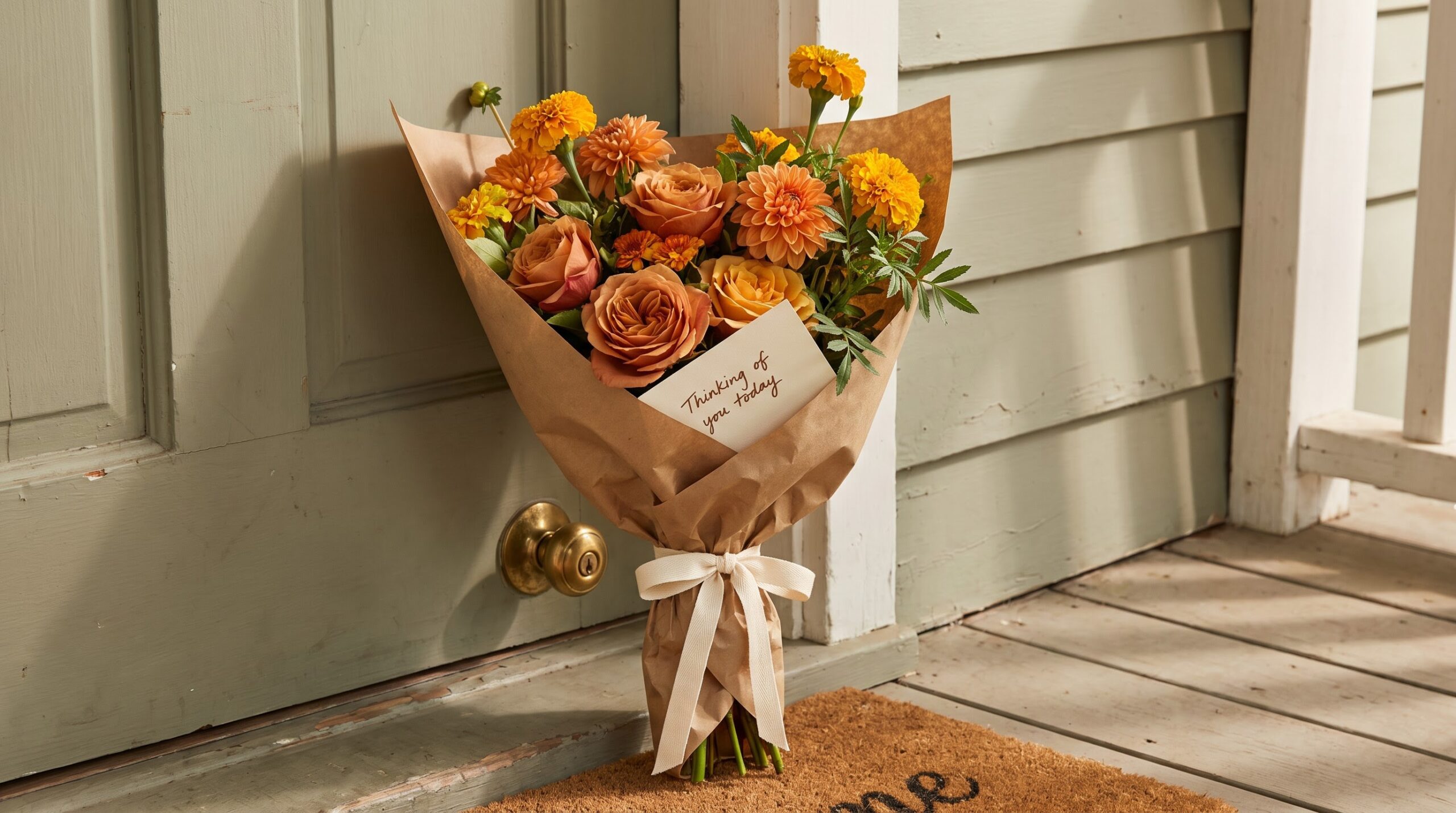
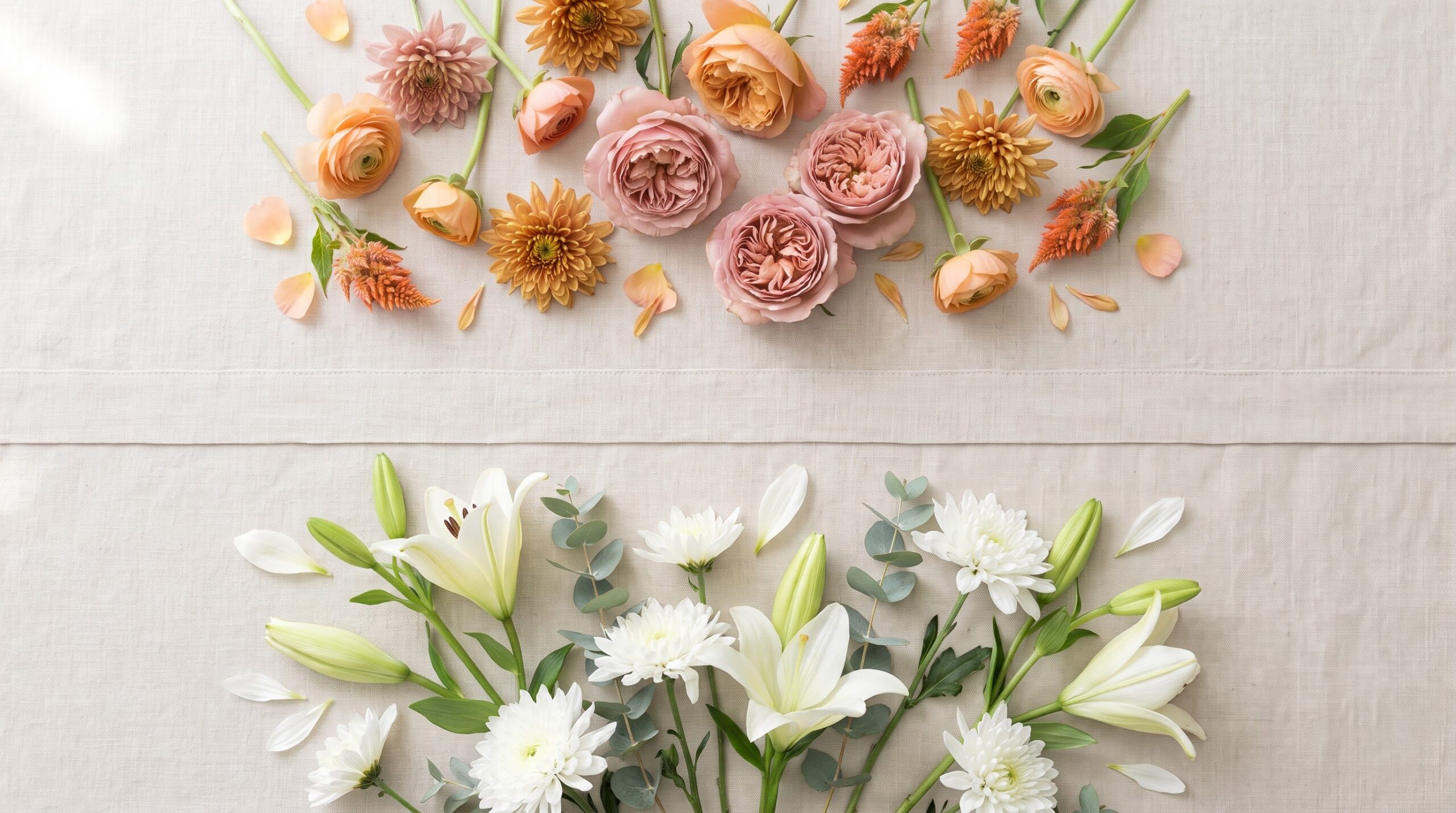
The flowers themselves should read as remembrance, not as a rerun of the funeral. A funeral-white arrangement heavy on lilies risks doing exactly that, restaging a service the family has already moved past, on a day meant for quieter memory. If there's any chance a cat lives in that house, lilies carry a second, harder reason to leave them out: the ASPCA lists true lilies among the plants most acutely toxic to cats, capable of causing kidney failure from something as small as brushing against the pollen. Aim softer instead: a seasonal mixed bouquet in colors the person actually liked, or a single variety they associate with the one who died. The card matters more than the stems. Write the name. "Thinking of you and remembering [name] today" does work that "happy anniversary" cannot, since that phrase belongs to weddings, and on this date it lands oddly rather than kindly. One sibling described sending flowers to their mother every year on their father's anniversary "to let her know I was thinking of her," and a commenter replying to a similar question on r/grief called it a way of creating "a gentle pattern of support," adding that if a gesture landed well once, say on Valentine's Day, it will likely land well again. Another commenter put it even more plainly, calling repeat flowers on hard dates "bursts of sunshine" that "can only make her feel loved."
Timing works best the day before or the morning of, so the arrangement is already in the house when the date itself arrives rather than announcing itself mid-afternoon. If the relationship is close, a same-day delivery still lands fine. If it's thinner, a call ahead, "I was thinking of sending something, would that be okay?", turns a guess about overstepping into an actual answer. Grief communities treat that one question as the whole solution to the appropriateness worry in the first place.
Visiting the grave: what cemeteries allow, and what to actually do there
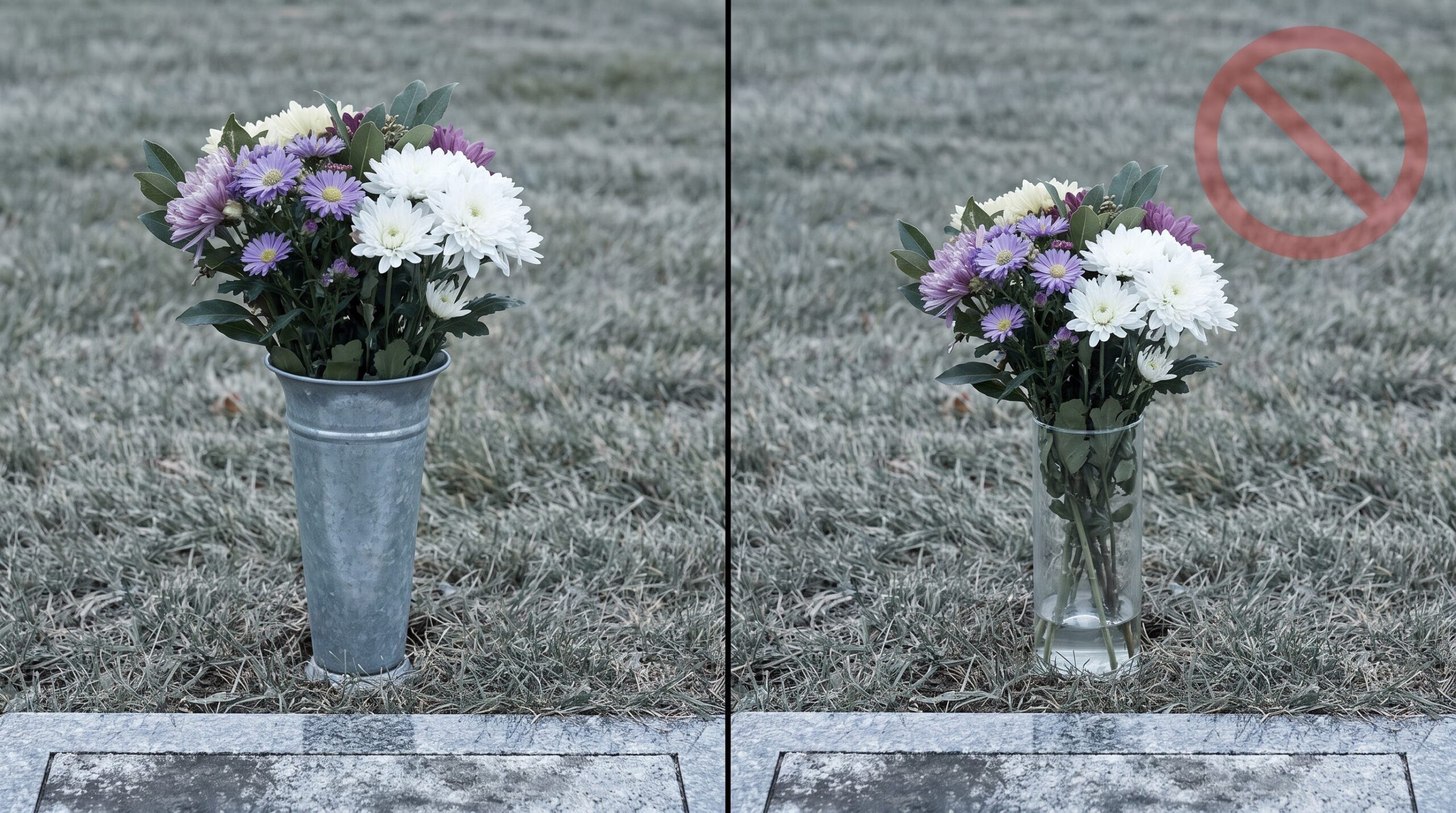
A smaller group of readers already know the flowers are headed to the grave itself, either as their own yearly ritual or because they've been invited to come along. Cemeteries have real rules here, and they vary by property, so a quick call or a look at the specific cemetery's posted policy is worth doing before you show up with anything. The pattern across national and private cemeteries alike is consistent enough to plan around. Glass containers are almost universally banned. The VA National Cemetery Administration states plainly that permanent or glass floral vases are not permitted at its national cemeteries, and it provides its own temporary containers instead. Jefferson Memorial Cemetery in Pittsburgh runs a similar rule with its own seasonal wrinkle: no glass, no artificial flowers, and bronze vases banned outright from November 30 through February 28 to guard against freeze damage, followed by a spring cleanup each March that clears anything left over the winter. Bring seasonal cut stems in whatever cone or container the cemetery supplies or approves, skip anything glass or breakable, and don't expect what you leave behind to stay put indefinitely. Maintenance crews clear wilted or unauthorized items on their own schedule, not out of disrespect, but because a working cemetery still has to mow and move equipment through.
What you actually do once you're standing there is looser than the container rules, and often more private than public etiquette guides suggest. One person described a promise made to bring "something romantic" to a grave every year, roses (what roses say by color is worth a look if you want to choose deliberately), sometimes a letter written and left, and time spent just sitting there afterward. Another described a different ritual entirely. Their father was buried at sea, so on the first anniversary they went to a lake instead and threw flowers into the water, calling it a moment that made them feel "so connected." Neither version needs an audience or a script.
If someone invites you along, the etiquette is simpler than it feels in the moment. Bring flowers if you're told to. Follow whatever pace and mood the person setting the visit wants, and hold off on suggesting extras, a picnic, conversation, a longer stay, until they signal they want that too. One reader preparing for exactly this kind of invitation, nervous about getting it right, was already planning to bring flowers and considering a picnic on top of it. The safer version of that plan lets the person whose grief it actually is decide whether a picnic belongs in the day at all.
When the answer is no
There is one situation where the community consensus flips hard, and it holds regardless of how good the sender's intentions are. Sending memorial flowers to an ex-partner, or to an estranged family member, on the anniversary of a parent's or relative's death is close to a unanimous no. A thread on r/relationship_advice asked exactly this, someone wondering whether to send flowers to an ex for her father's death anniversary, and the room did not hedge. One reply put the optics bluntly: "I would consider it creepy that you knew and sent flowers for her father's death anniversary. I would consider it stalkery." Another summed up the whole thread in one line: "Please don't weaponize the death of your ex's father to try and manipulate her." Good intentions don't change the optics here. Knowing a private, painful date about someone who has chosen not to be in contact with you, and using it as an opening, reads as surveillance no matter how the sender meant it. If the relationship line is broken, the kindest move is no move at all. And if flowers themselves feel like the wrong gesture even for a relationship that's still intact, what to send when flowers don't feel right covers the alternatives.
One more mix-up is worth clearing before you place any order. "Death anniversary" and "wedding anniversary" get confused constantly, by searchers and by senders, because for some people flowers carry the weight of a funeral rather than a celebration. One woman wrote that before she started dating her partner, "the only flowers I had gotten were for the death of my mother," a small detail that explains why a bouquet can land as grief rather than romance for some recipients. If you actually came here looking for flowers for a wedding anniversary, that's a different occasion with its own etiquette, milestone colors, and rules for what to do when you've forgotten the date entirely.
The decision, recipient by recipient
Before you place an order or pack the car for a cemetery visit, run the situation past this once. The right move changes completely depending on who these flowers are actually for.
| Who the flowers are for | Is it appropriate | What to send or bring | What to avoid |
|---|---|---|---|
| The living family member (widow, parent, sibling, close friend) | Yes, almost always. Ask first with one short call if the tie is thin. | A seasonal bouquet delivered the day before or the morning of, card naming the person directly. | "Happy anniversary" wording, a funeral-white lily arrangement, showing up unannounced. |
| The grave, as your own ritual or by invitation | Yes, once you know the cemetery's rules. | Seasonal cut stems in a cemetery-provided or approved container. | Glass vases, banned containers, arriving with an agenda if someone else invited you. |
| Across a broken relationship line (an ex, an estranged relative) | No. The community verdict is unanimous. | Nothing. This is the one time to sit it out. | Sending "with good intentions" anyway; it still reads as manipulation. |
Swipe →
Pick your row, then act. Order for the family with a note that names them directly, and leave "happy anniversary" wording out of it entirely. If you're the one heading to the grave, pack cut stems and a cemetery-safe container; if you've been invited along, pack your expectations instead and let the person grieving set the pace. And if the relationship in question is the broken kind, this is the one date where closing the tab is the kindest gift you can give.
Enjoying our flower guides? Add YourFlowersGuide as a preferred source on Google. It helps more readers find us.
Add to Preferred Sources