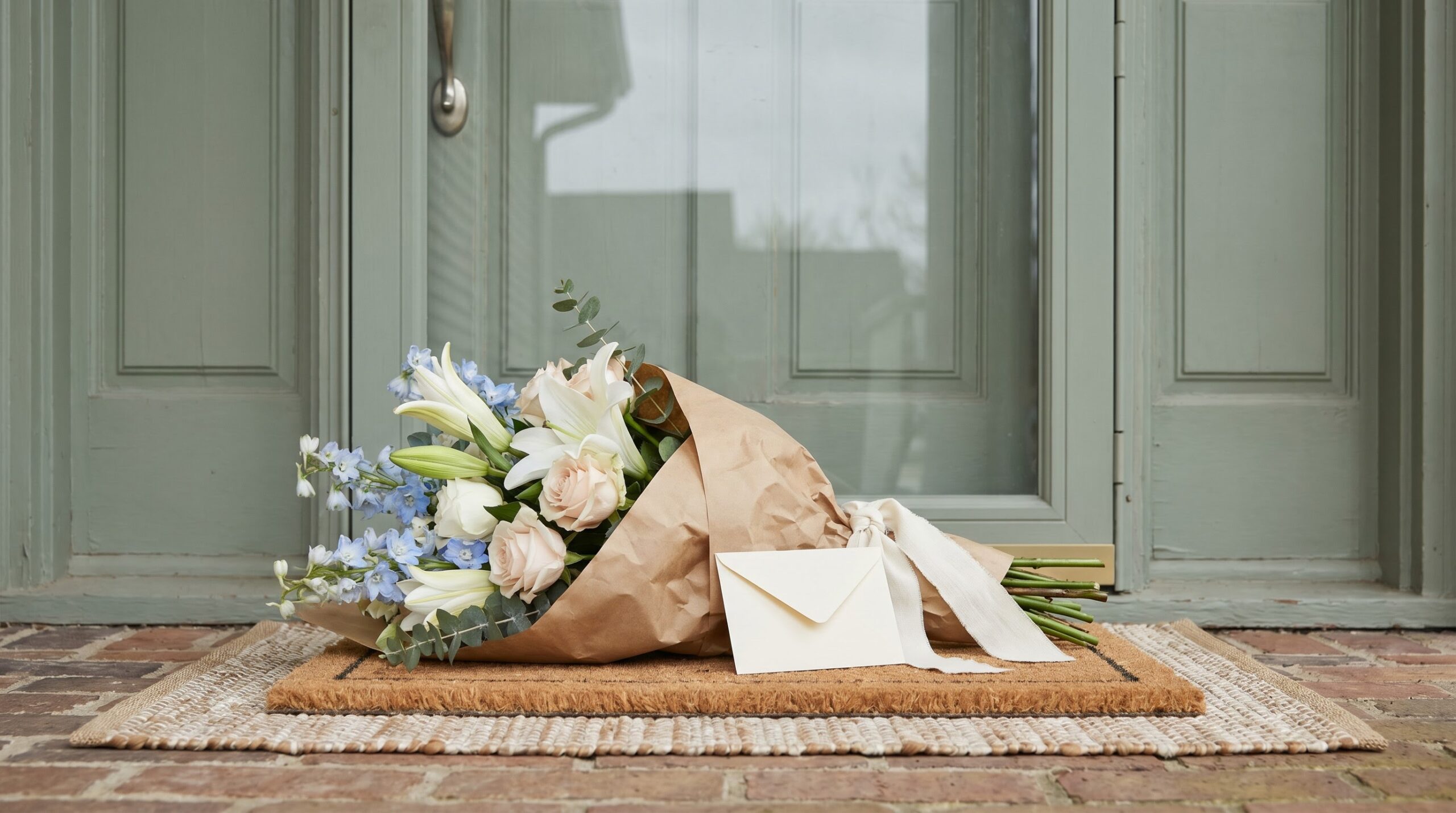
If the funeral has already happened and you're wondering whether it's too late to send sympathy flowers, it isn't. Flowers that arrive three weeks after a death are often the best-received gesture of all, because the meals, the cards, and the check-in texts largely stop once the service ends, and the quiet weeks afterward are when grieving people feel most alone. The only thing that really changes with time is the destination. Before the service, arrangements go to the funeral home or the church. After it, a smaller bouquet goes to the house. Match the delivery to the window you're in and there is no wrong week to send.
That destination question trips up more senders than the calendar does. Flowers arriving at a venue after the service has ended, or carried by hand into a viewing, cause the awkwardness people fear far more than lateness ever will. So here is the whole timeline in one place. Find the window you're standing in and note where the flowers go. If you're unsure which kind of arrangement you're even buying, start with whether your order counts as sympathy or funeral flowers, and who receives each.
Find your window: where the flowers go at each stage
| When you're sending | What to send | Where it goes |
|---|---|---|
| The first three days | A modest bouquet, or hold your order until service details post | The family home, once you know someone is there to receive it |
| The day before the service | A funeral arrangement: spray, wreath, or basket, florist-delivered | The funeral home or church, addressed to the funeral of the person who died |
| Weeks one and two | A hand-tied bouquet or a low vase arrangement | The family home |
| A month or more later | A small bouquet with a "thinking of you" card | The family home |
| Anniversaries and birthdays | A single-variety bunch, or the person's favorite flower | The family home, timed to land on the date |
Swipe →
The first three days
Right after a death, the household is in logistics mode: phone calls, paperwork, relatives arriving. A modest bouquet to the home is kind, but there may be nobody there to accept it, and the family may not have chosen a funeral home yet. If you heard within a day or two, you have a choice. Send something small to the house now, or wait until the obituary posts the service details and direct a proper arrangement there instead. A 48-hour pause usually produces a better-placed delivery.
The day before the service
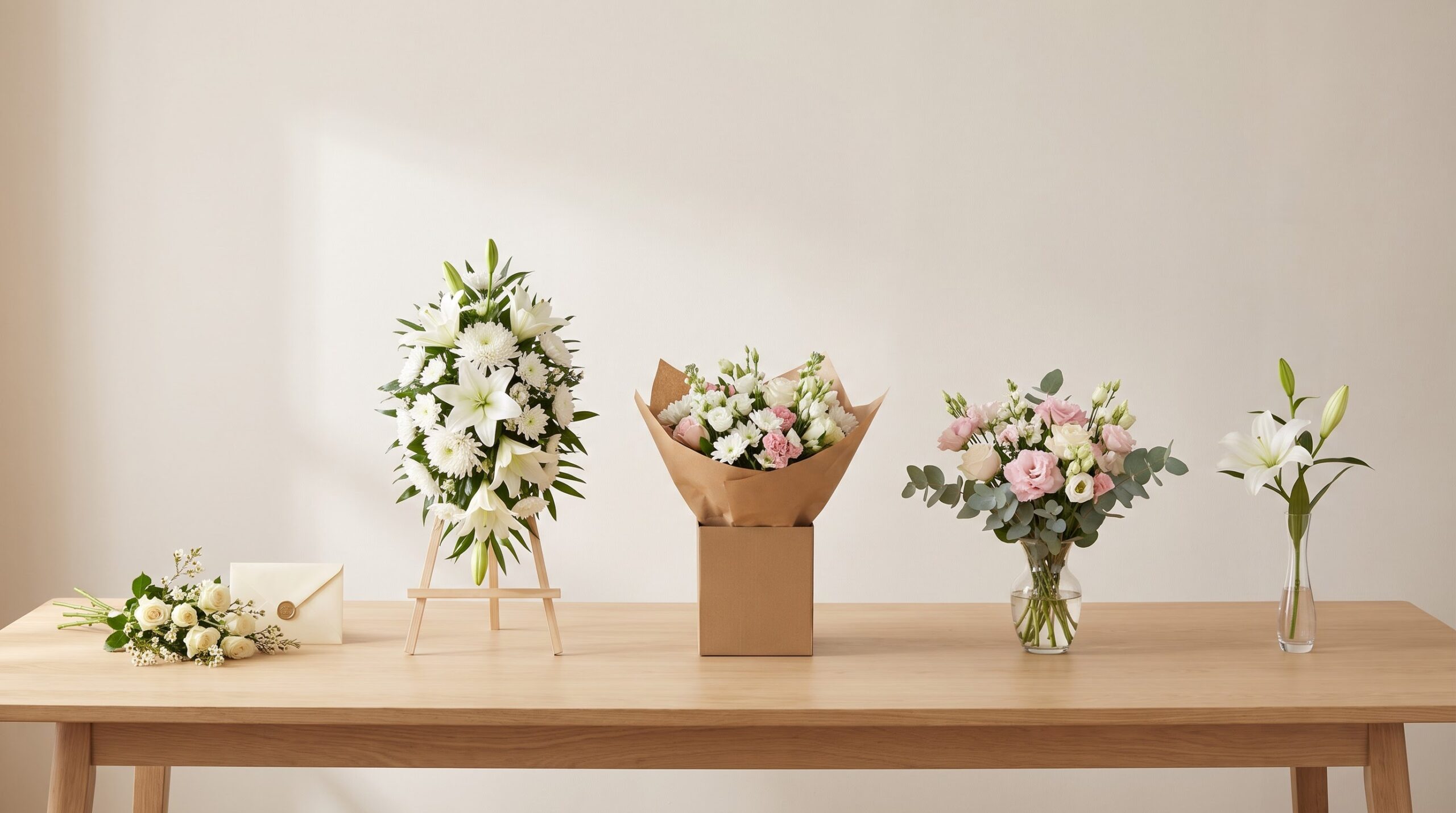
The Emily Post Institute keeps its timing rule short: there are no fixed rules, but flowers should reach the bereaved as soon as possible and arrive "in time for the visitation or funeral." In practice that means ordering through a florist and asking for delivery the day before the service, or early the same morning. Give the florist the name of the funeral home, the name of the person who died, and the exact date and time of the service, and have the order addressed to the funeral, care of the venue. A good florist will confirm the delivery slot with the funeral home directly.
Two mistakes to avoid in this window. Don't hand-carry flowers into a viewing or a funeral; arrangements are delivered ahead of time and placed by staff, and walking in with a bouquet leaves a grieving family or a busy funeral director scrambling to deal with it mid-event. And once the service date has passed, take the venue off your list entirely. A funeral home has no one to give your flowers to. From that point on, everything goes to the house.
Weeks one and two
This is the window people talk themselves out of. "I was thinking flowers but I know they will have a bunch after the funeral" comes up constantly, and it sounds sensible. It's usually wrong. Service arrangements mostly stay at the venue, go to the graveside, or get divided among relatives, and by day ten the house itself is often bare. The absence gets noticed too. One mourner described being gobsmacked that not one bunch of flowers was delivered to the family home, while the chapel had been full of them.
A hand-tied bouquet or a low vase arrangement suits this window, scaled for a kitchen table rather than a stand. Lilies turn up in a lot of these deliveries, and a small pointer on keeping lilies looking their best is worth passing along, since a bouquet that lasts two weeks quietly extends the gesture.
A month or more later
Past the one-month mark, reframe the flowers. The card now says "thinking of you," and the arrangement should be domestic in scale: a small bouquet, a posy, a single generous bunch of one flower. A service-scale standing arrangement showing up at a front door in week five reads strangely, like a delivery that got lost. Small and warm is the register here, a way of telling the person carrying the loss that you still remember, long after the death itself stopped being news.
Anniversaries and birthdays
The Hospice Foundation of America tells supporters to stay alert to key moments, such as a birthday, an anniversary, or a holiday, because those dates hit grieving people particularly hard. Legacy.com makes the same point about flowers specifically: you can send them to mark the one-year anniversary of a loss, or later. If you missed every earlier window, put the anniversary in your calendar now. Choosing a bloom with some intention helps here; a quick look at what different flowers say can turn a nice bunch into the right one, especially if you know what the person who died grew or loved.
Is it too late to send sympathy flowers?
People ask this in every form. "Is it too late to send him flowers?" "Is it too late to send sympathy flowers to her parents for their mother's passing?" The answer from every serious etiquette source is the same, and Legacy.com states it flatly: there's really no time that's "too late" to send sympathy flowers. If the funeral has passed, they simply go to the family home instead, even quite a while after the death.
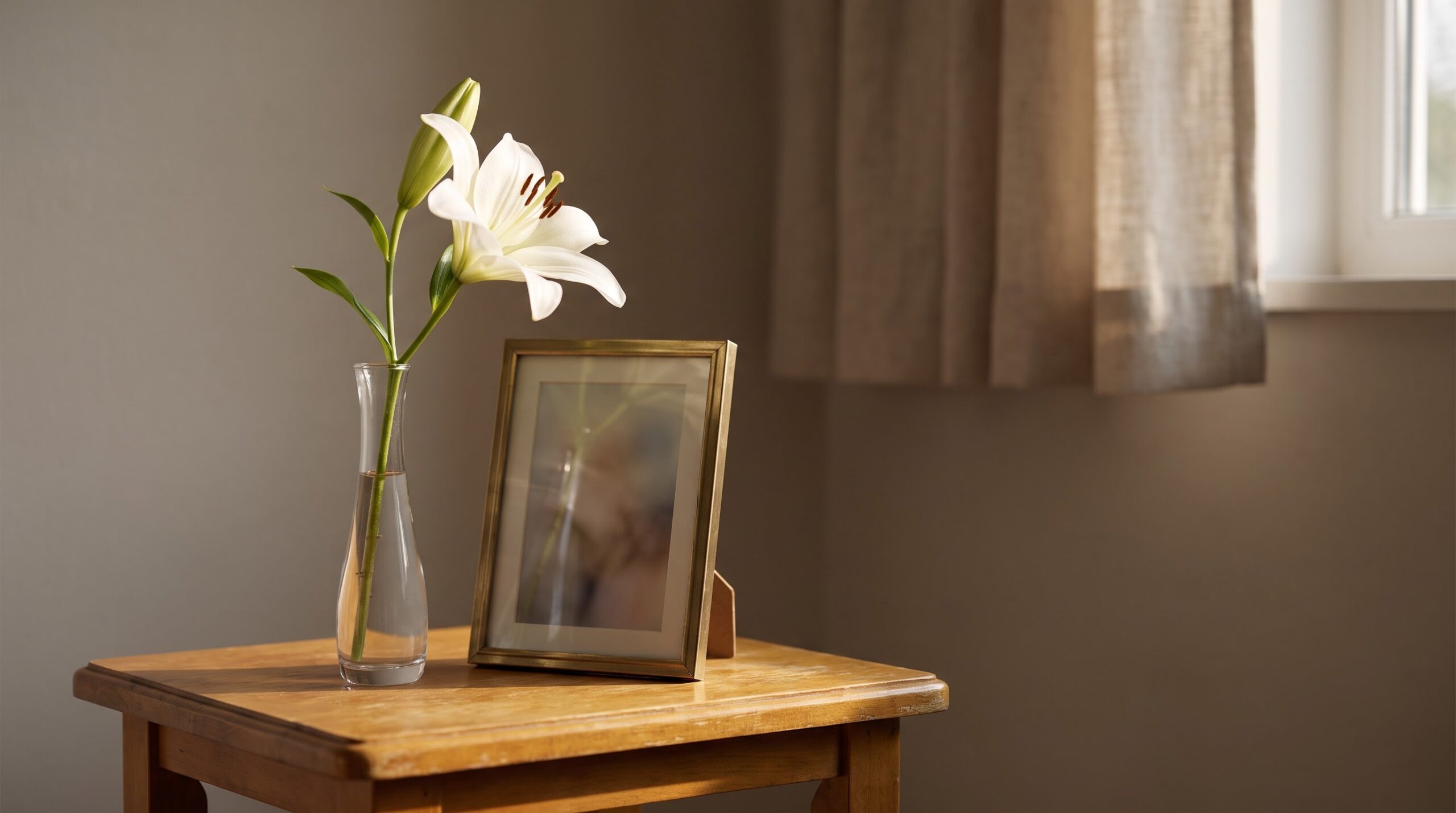
But the reassurance runs deeper than "it's allowed." Grief support thins out on a schedule. The Hospice Foundation of America warns supporters directly: do not abandon the grieving person shortly after their loss, and keep checking in through the weeks and months ahead, because there is no finish line for grief. The week the last casserole dish gets returned is roughly the week the house goes quiet, and a bouquet arriving in that quiet does something the twenty arrangements at the chapel could not. A late bouquet reads as remembering, arriving right when everyone else has already moved on.
One more worry rides along with the lateness question: whether the recipient even wants flowers, especially a man. Someone wondering whether a grieving brother would want a bouquet is really asking whether the gesture will land. It will. Flowers in week three aren't decor, they're evidence that someone's loss is still on another person's mind, and that reads the same regardless of who opens the door.
How close you were decides who sends when
Immediate family and the closest friends belong to the earliest windows. By convention, casket arrangements come from the closest family, while wreaths, standing sprays, and larger tributes tend to come from family, close friends, or groups; the Emily Post Institute maps baskets and plants to friends, coworkers, and relatives. If that's you, order for the service, and yes, family members send flowers to each other too.
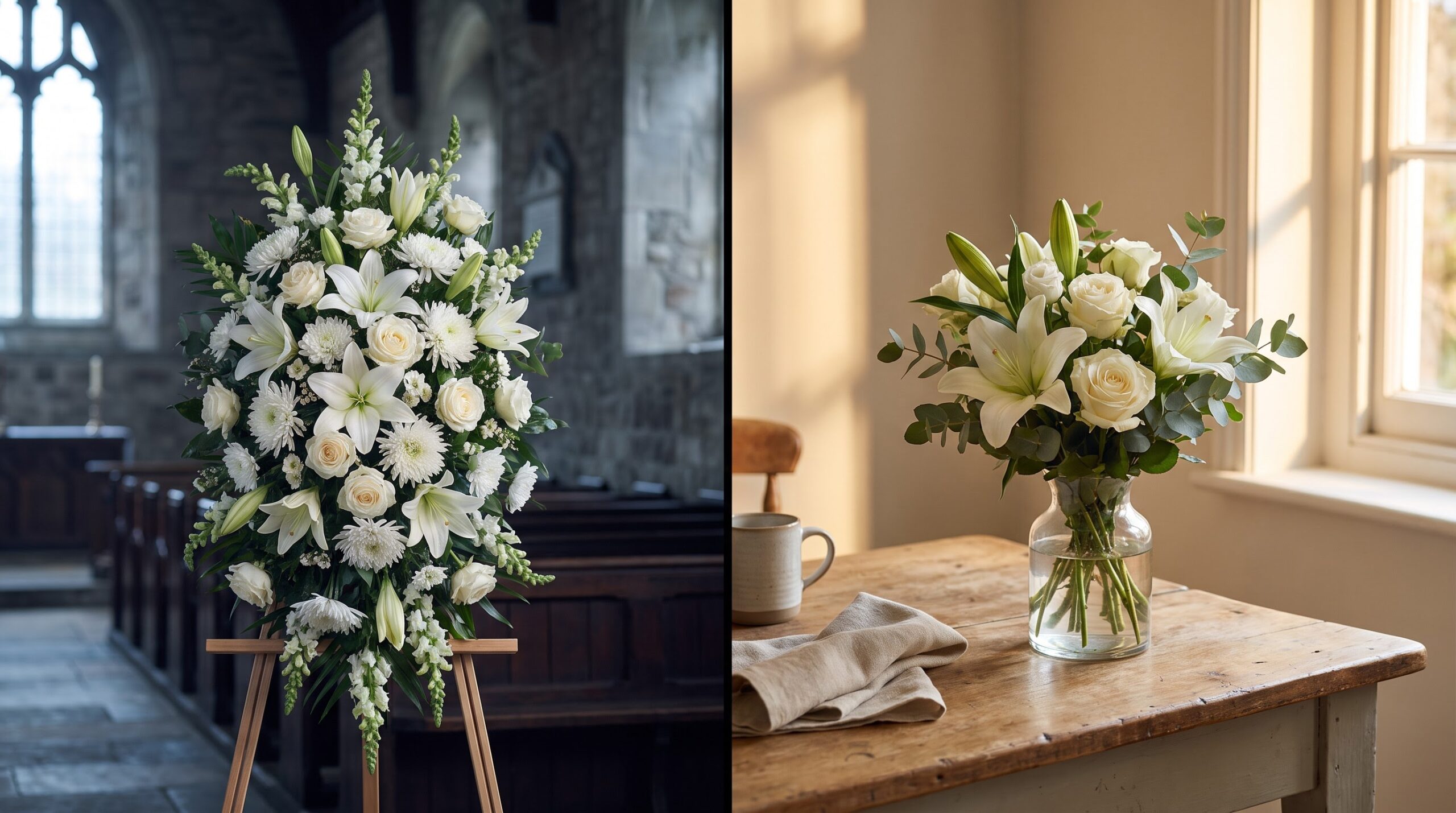
Coworkers and acquaintances have two good options: chip into a group arrangement for the service, or send individually to the home in weeks one and two. If the office is organizing something, join it rather than duplicating it, so the family isn't flooded on a single day and then forgotten.
Ambiguous ties are where timing does the most work. If you never met the family, if you're an ex-partner, if this is someone you hardly knew but genuinely want to acknowledge, don't race to be first. A quiet bouquet to the home in week two, or a month later, carries none of the front-row weight that a service arrangement does, and it spares the family from wondering who you are on their hardest day. And when your relationship makes flowers themselves feel wrong, there are better routes: what to send when flowers are the wrong call covers them.
Placing the order so it lands on the right day
For a service delivery, order the day before at the latest, and earlier if you can. When the deadline is tight, call a local florist near the funeral home instead of typing your card message into a national wire-service website. A wire order gets relayed to a local shop anyway, with a middle step that costs time and detail; calling that shop yourself gets you a straight answer about what they can make and deliver by tomorrow morning. Local florists also know the funeral homes on their route and their delivery windows.
Same-day is often possible if you call before the shop's cutoff, usually early afternoon local time, and it matters most in the last-minute case: the person who wants flowers at the wake this evening and the funeral tomorrow. That order is exactly what the florist closest to the funeral home handles all the time. Call, explain the timing, and let them tell you what's realistic.
Home deliveries are far more forgiving. Any weekday works. Pick a day when someone is likely to be home, since a bouquet wilting on a porch for two days undoes the thought. For an anniversary send, place the order a few days ahead and request delivery on the date itself.
Common questions
What if there's no funeral service?
Send to the home, whenever you're ready. Legacy.com confirms flowers are appropriate no matter the arrangements, including cremation or no formal service at all. If the family has planned a delayed memorial for months out, you can send now, and again near the memorial if you wish.
Do you send sympathy flowers to family members, or only to friends?
Family sends too. Closest family traditionally handles the casket arrangement, and relatives send sprays, baskets, or plants to the service. Outside the service window, a bouquet to a grieving relative's home follows the same timing as anyone else's, and it's never redundant coming from family.
Is it appropriate to send sympathy flowers at all?
For most losses, yes, and they remain the most common condolence gesture. The exceptions are an obituary that requests "in lieu of flowers" and faith traditions with their own customs around flowers at a death. Check the family's wishes first, then pick your window.
You know your window now, and you know where the flowers go in it: venue before the service, home after, calendar reminder for the anniversary if today somehow isn't the day. Place the order while it's in front of you. For everything the card should say and what belongs in the arrangement itself, including "in lieu of flowers" wording and faith-specific customs, the sympathy flowers etiquette guide picks up where timing ends.
Enjoying our flower guides? Add YourFlowersGuide as a preferred source on Google. It helps more readers find us.
Add to Preferred Sources