What pieris is and where it comes from
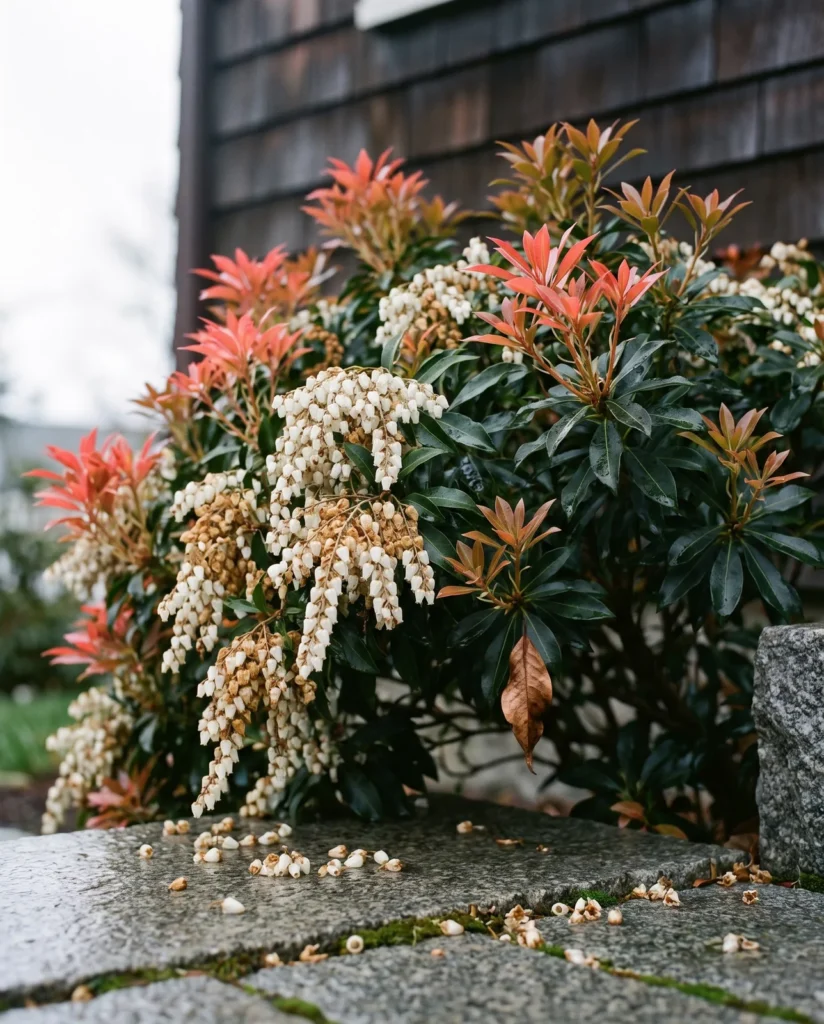
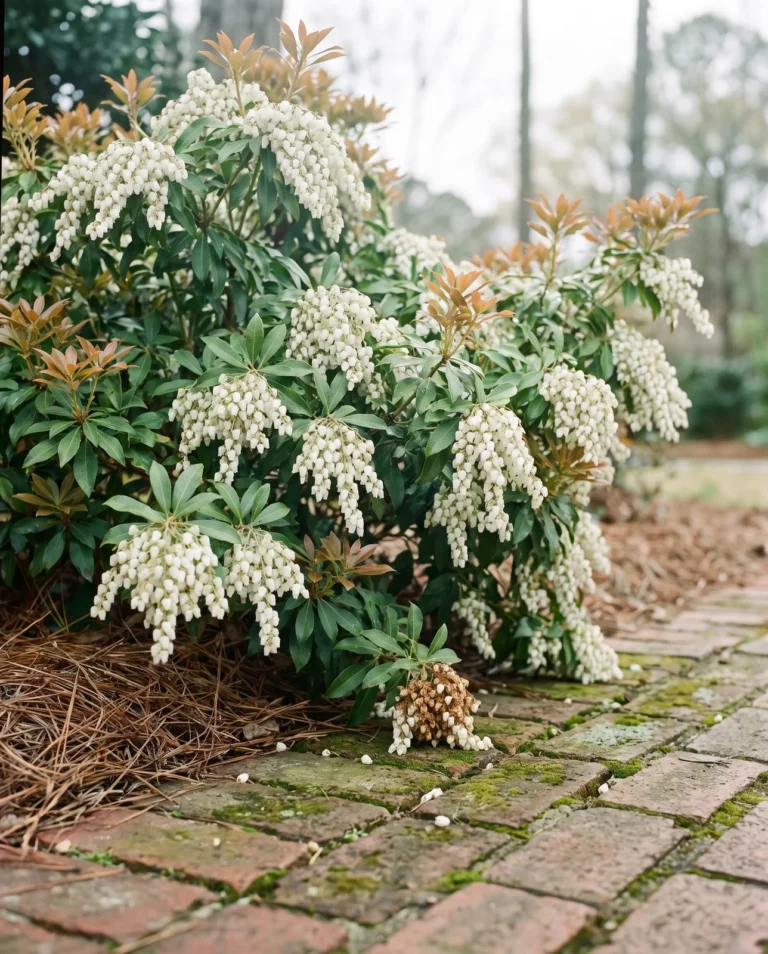
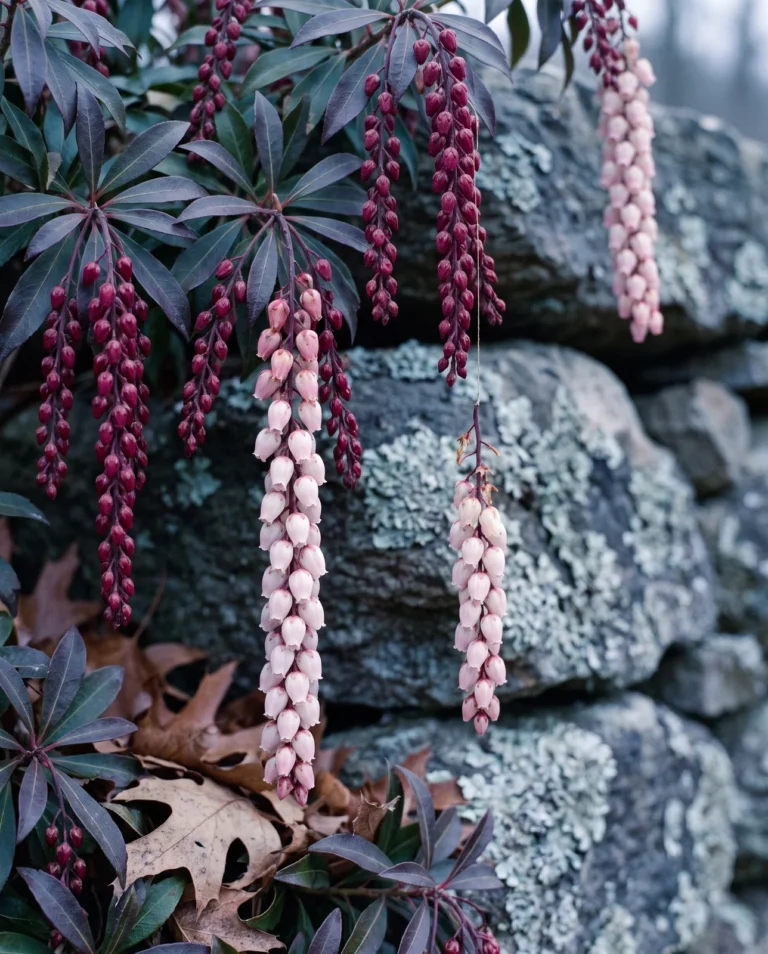
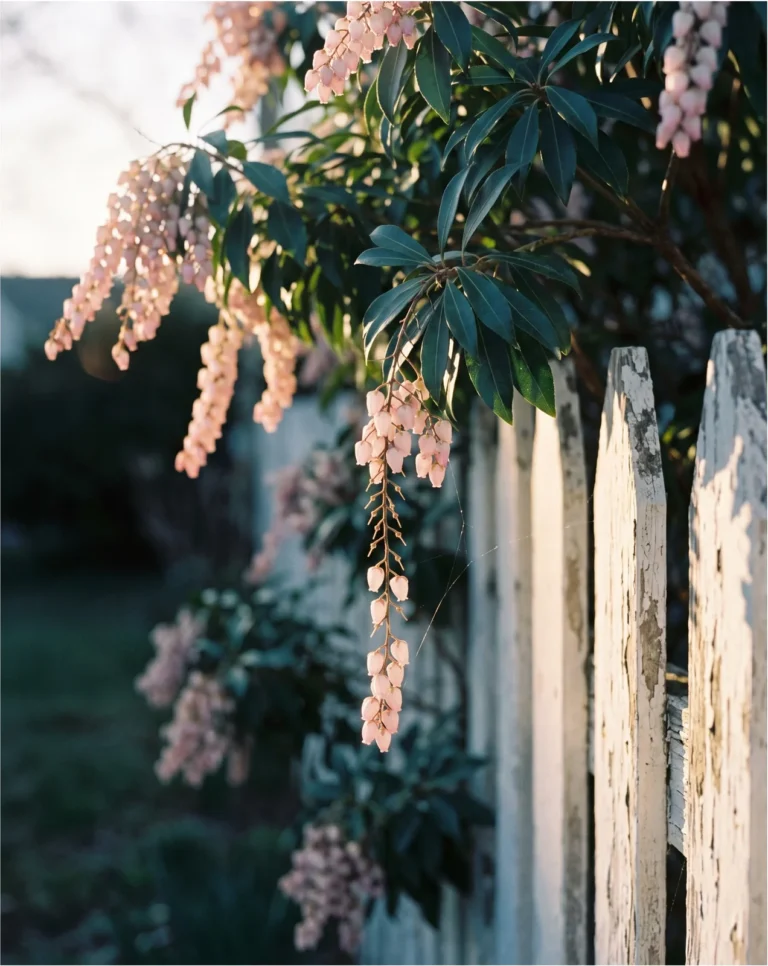
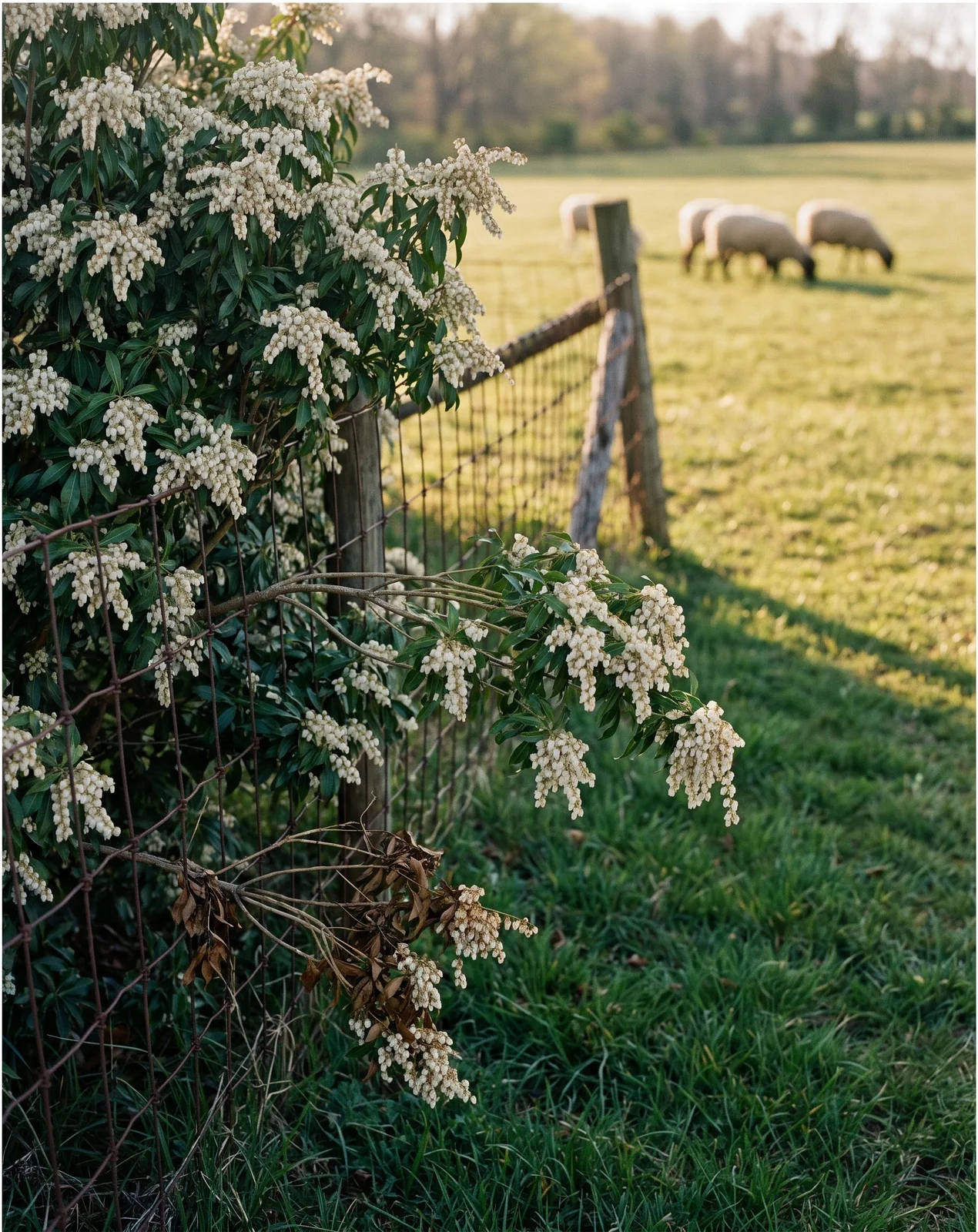
Pieris is a woody, broadleaf evergreen in the heath family, and the plant almost everyone means by the name is Japanese pieris, native to southeast China, central to southern Japan, and Taiwan. It grows upright, rounded and dense, and it matures slowly. The flowers are small white urns about a quarter of an inch long, in drooping clusters 3 to 6 inches long that open in spring. The flower buds form in late summer, a full season ahead of the bloom they carry, and hang on the branch tips as bead-like strings through fall and winter. Deer usually leave it alone.
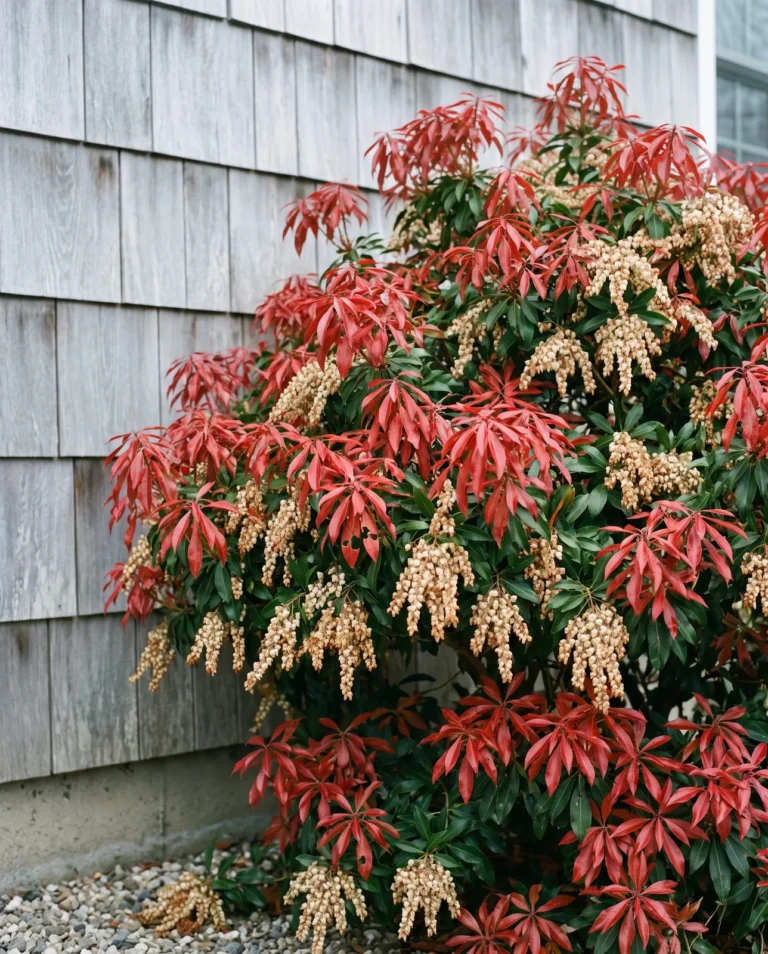
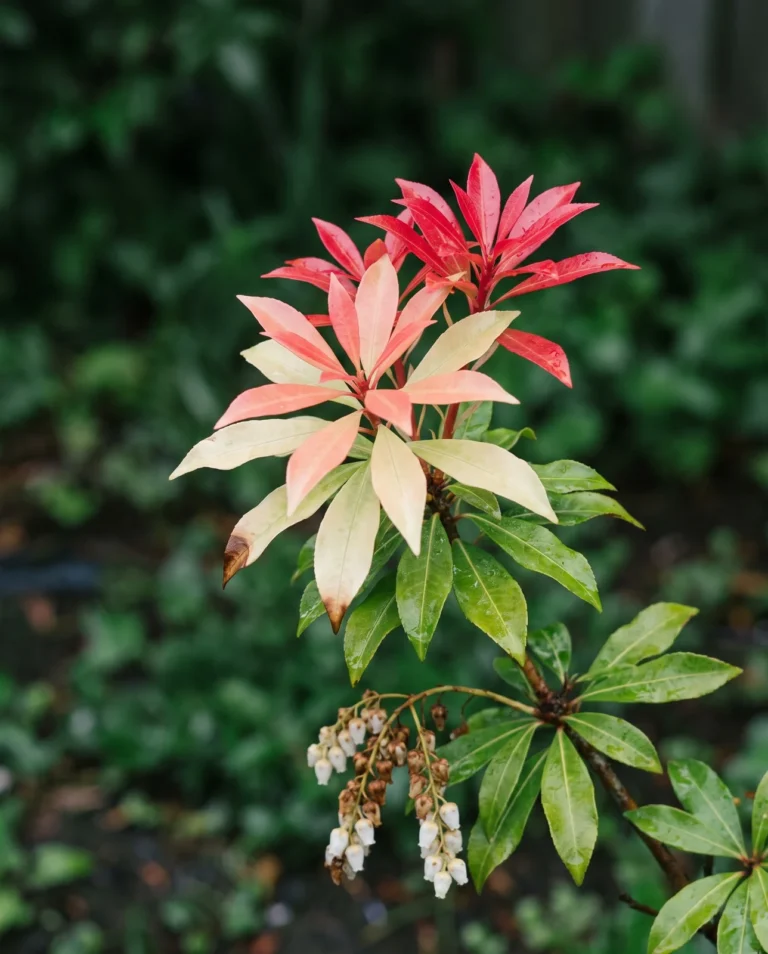
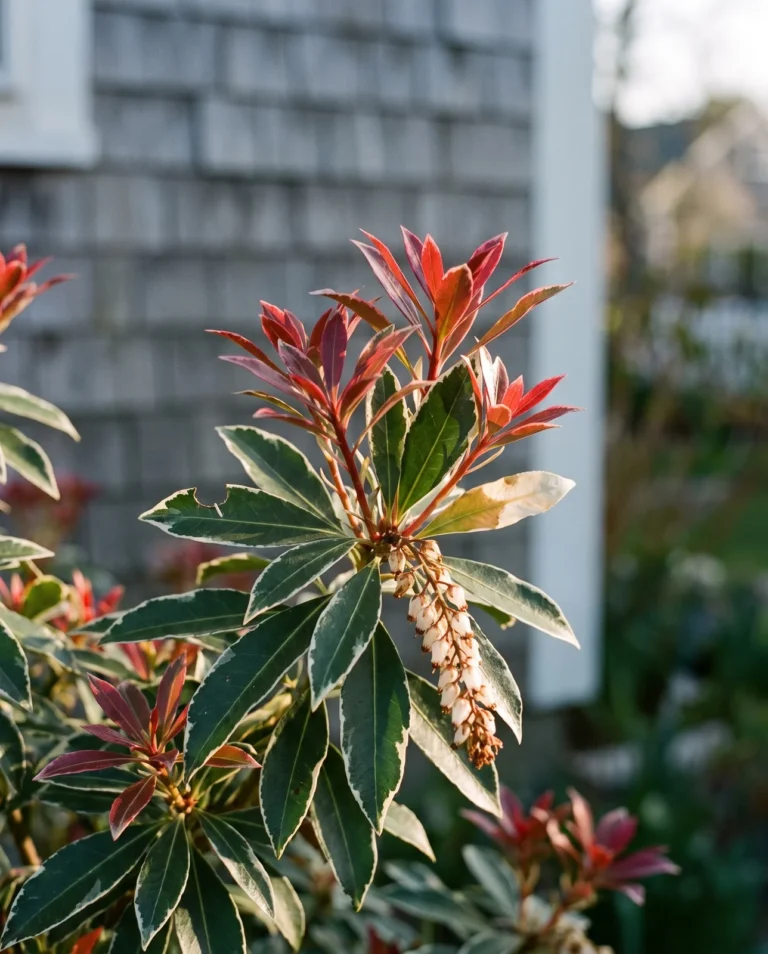
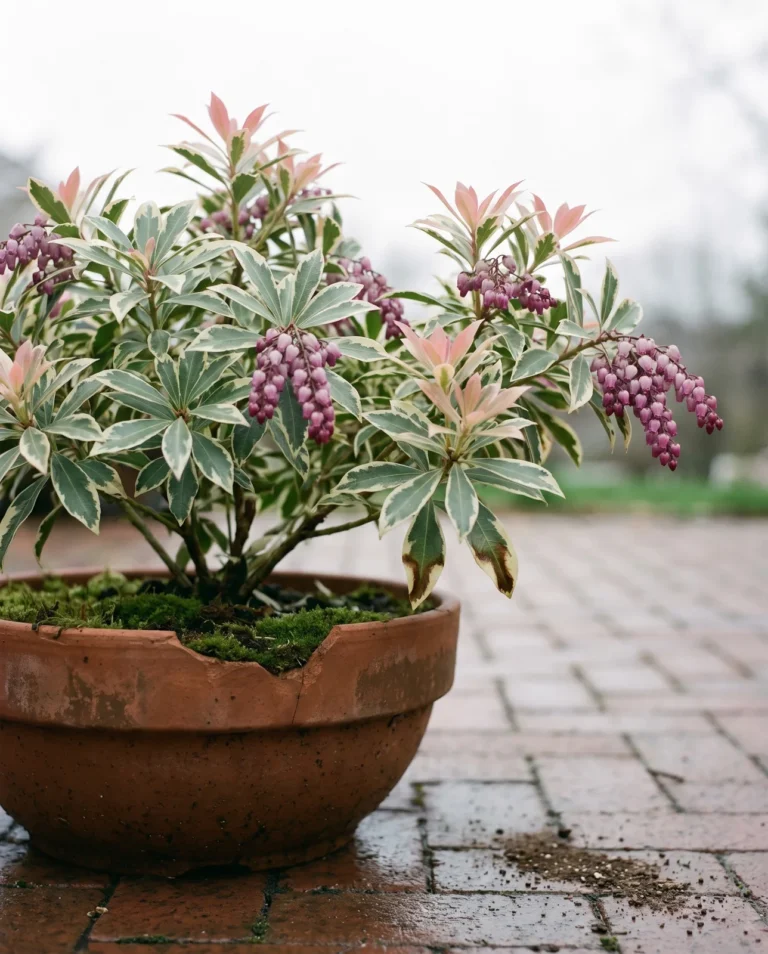
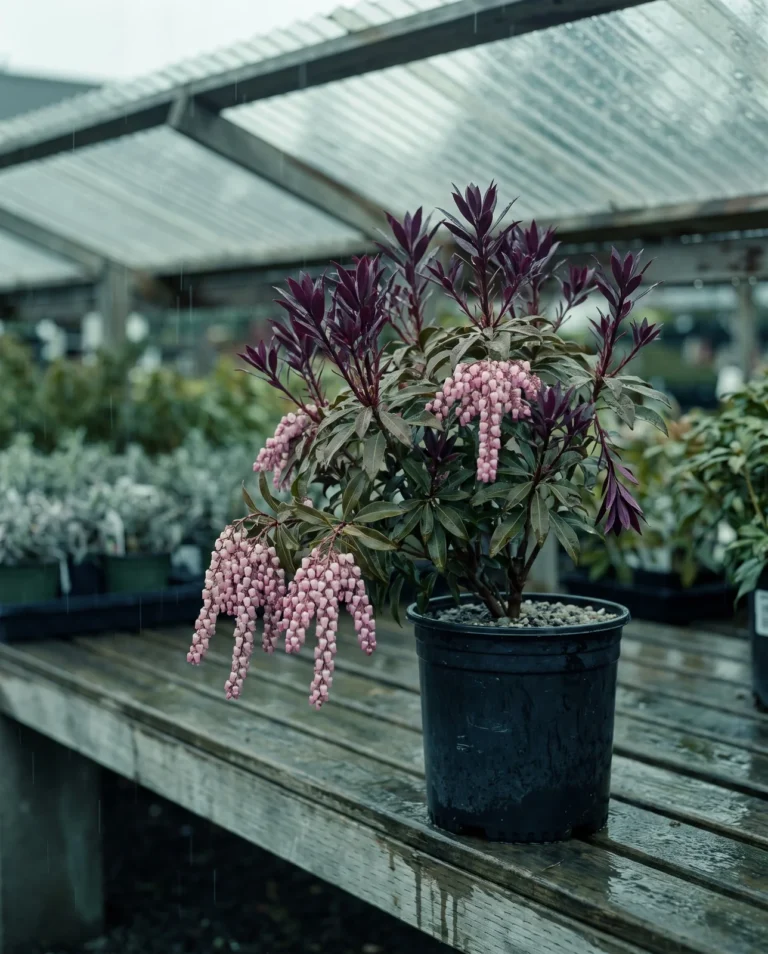
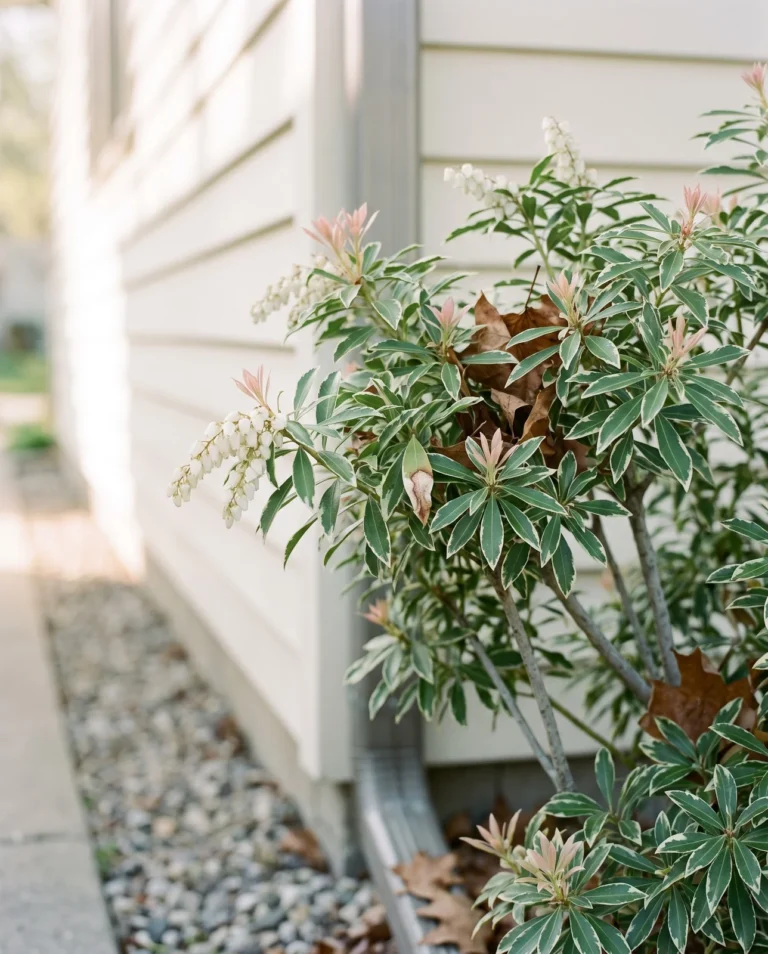
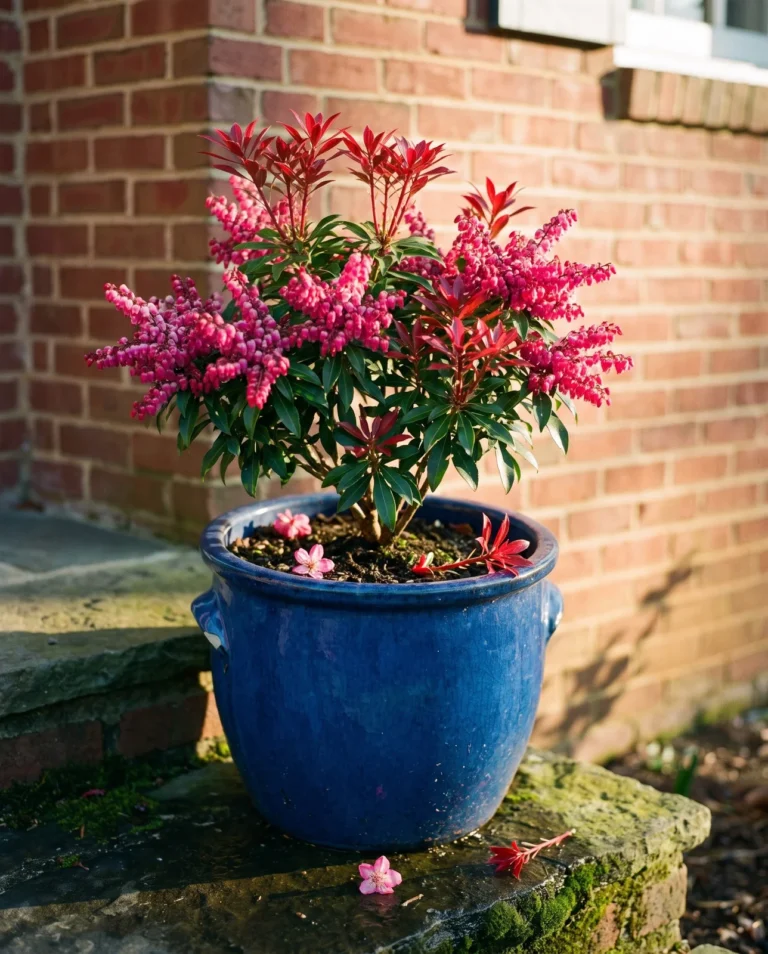
The colored new growth is the other half of the appeal, and the color depends on the form. It is bright red on Mountain Fire, bronze on Mountain Snow, red edged pink and then silver white on Flaming Silver. A second species shares the bench and behaves differently. Mountain andromeda is North American, growing wild in North and South Carolina, and it stays smaller at 4 to 6 feet tall and 3 to 4 feet wide. It carries fragrant spring bells of its own and sets small brown capsules from August to October.
Andromeda, lily-of-the-valley shrub, and how to say it
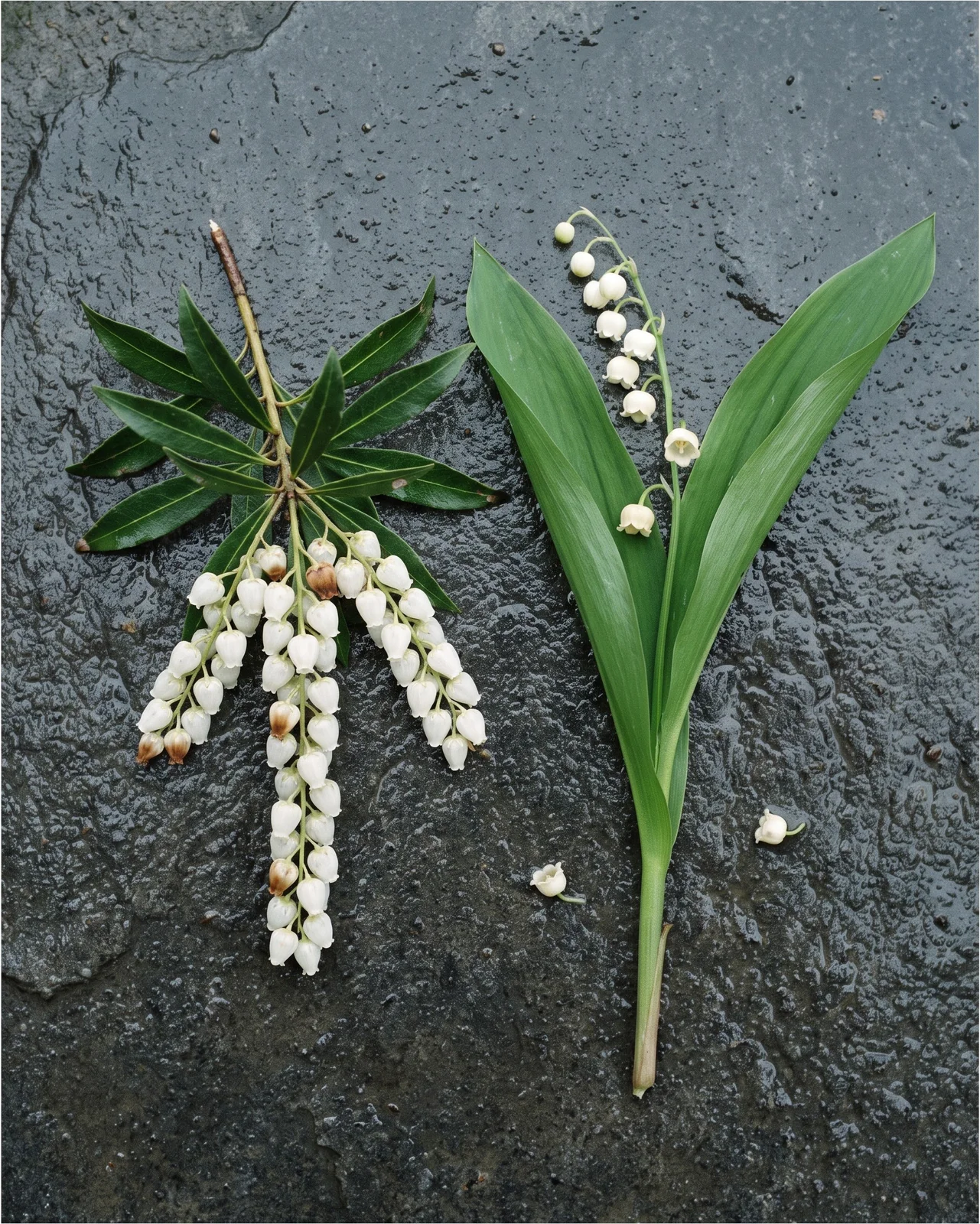
Japanese pieris, Japanese andromeda, fetterbush and lily-of-the-valley shrub all name the same species, filed for years under the older name Andromeda japonica. Four names on one shrub is why it can look like four plants along a row of labels. The last of them misleads, because true lily of the valley is another plant entirely. Say it pi-ER-is ja-PON-i-ca, stressing the second syllable of each word. The genus takes its name from the Pierides, the Muses of Greek myth, and the species name means of Japan.
Sun, shade, and where to put it
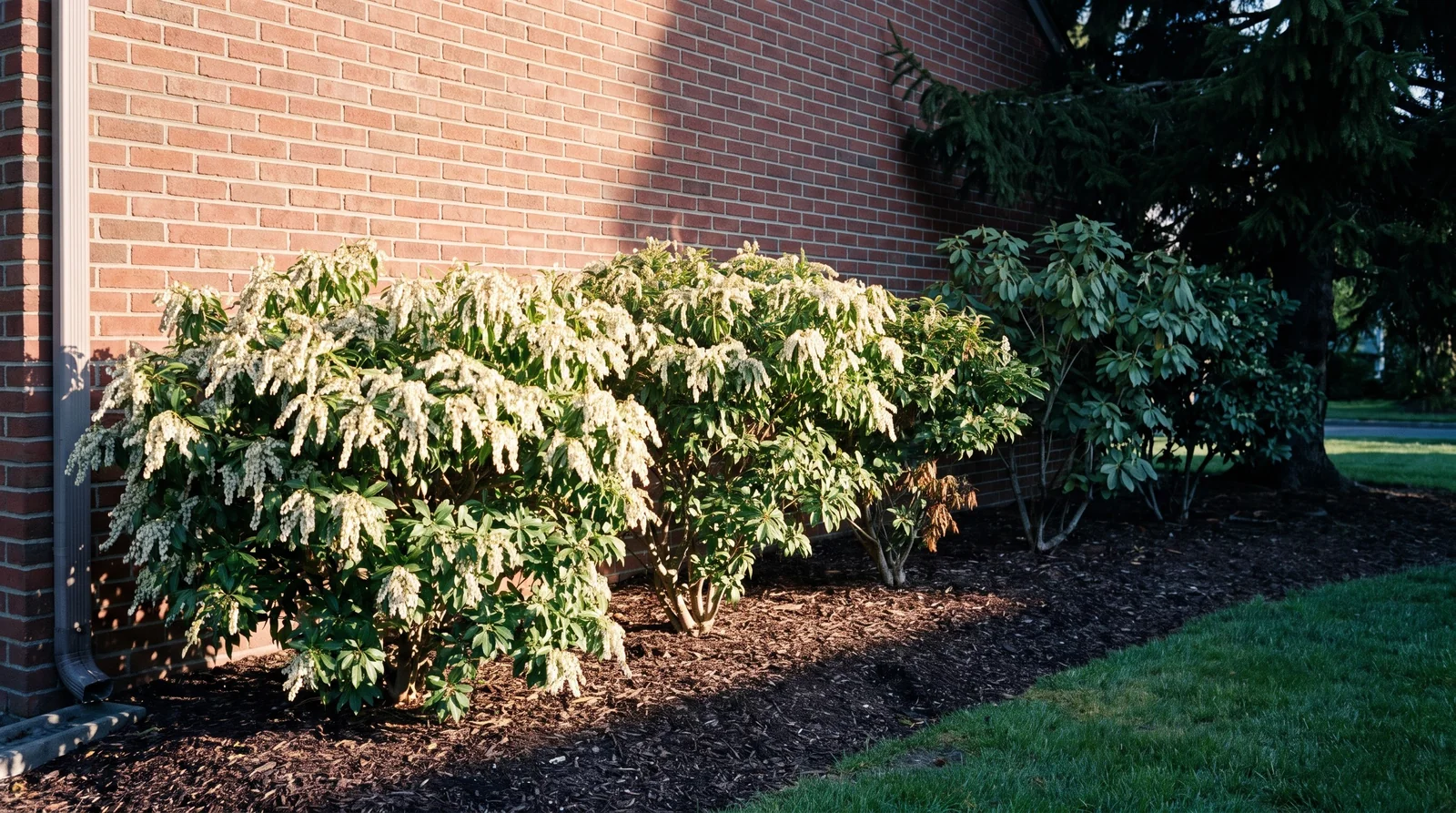
Part shade is the target: morning sun, afternoon shade, and deeper shade tolerated at the cost of flowers. Full sun to partial shade works too, though a plant without afternoon cover struggles where summers are hot. Heavy shade sits at the far end of that scale: the shrub puts up with it but lacks bloom in deep dark shade. Shade keeps pieris alive, light is what makes it flower, and the spot has to do both.
Full sun carries two costs. Broadleaf evergreens pick up winter leaf damage where they take a good deal of sun and wind, so shelter counts for as much as light. And lace bug injury runs most severe in full sun. Both point to the same spot, morning light with afternoon cover.
Soil decides the rest. Pieris wants acid ground below pH 6.0, moist, well drained and rich in organic matter, though it is less demanding about acidity than most of its family. It roots shallowly, so it needs regular watering until it establishes and then water only when rainfall runs short, and it rots where the soil stays waterlogged. Water at the base, since wetting the foliage invites leaf spot fungus.
What zone is pieris really hardy to
Zones 5 through 8 is the band to plant by. Published hardiness runs wider at both ends: 4 to 8 and 5 to 9, 4b through 8b elsewhere, and 5 to 8 twice over. Zones 4 and 9 are the edges, and each carries a condition: a sheltered spot in light shade at the warm end, the word protection at the cold end.
At an edge the site decides more than the number does. Winter sun and wind brown a broadleaf evergreen whatever the map says. An exposed windy corner in zone 5 is a harder place than the rating promises, and a sheltered north-facing bed in zone 4 is easier. Where cold is the real constraint, the American species answers better. Mountain andromeda is hardy through zones 4a to 6b, colder and narrower than the 4b through 8b given for the Japanese species.
When and how to plant it
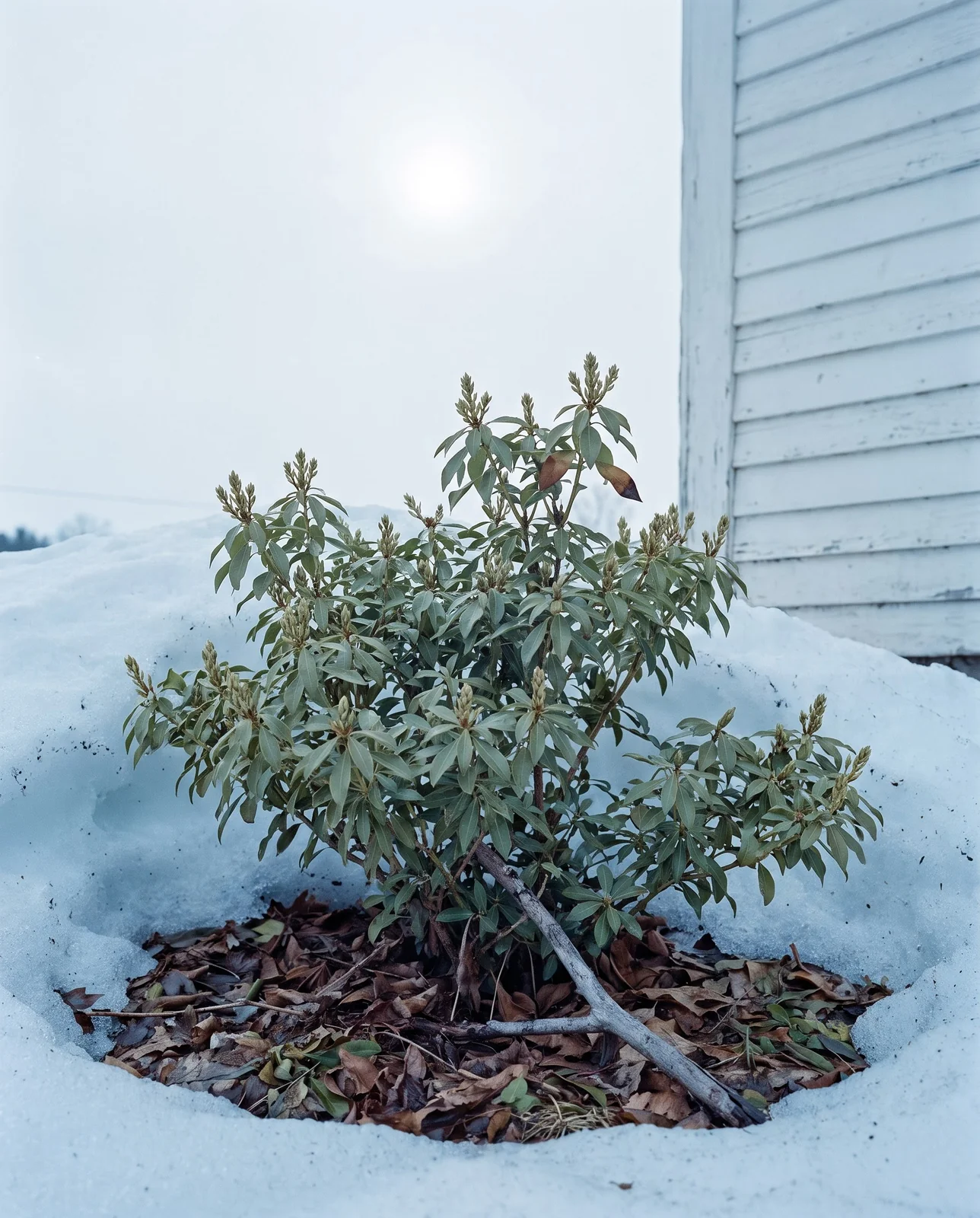
Plant in early spring or fall, and keep the job out of summer heat, when transplant shock does the most damage. Prepare moist, well drained, acid ground below pH 6.0, with organic matter worked through it. Stay out of any low spot where water stands, because waterlogged ground under a shallow-rooted shrub ends in root rot. Japanese pieris comes from stem cuttings, while mountain andromeda roots poorly from cuttings and is usually raised from seed.
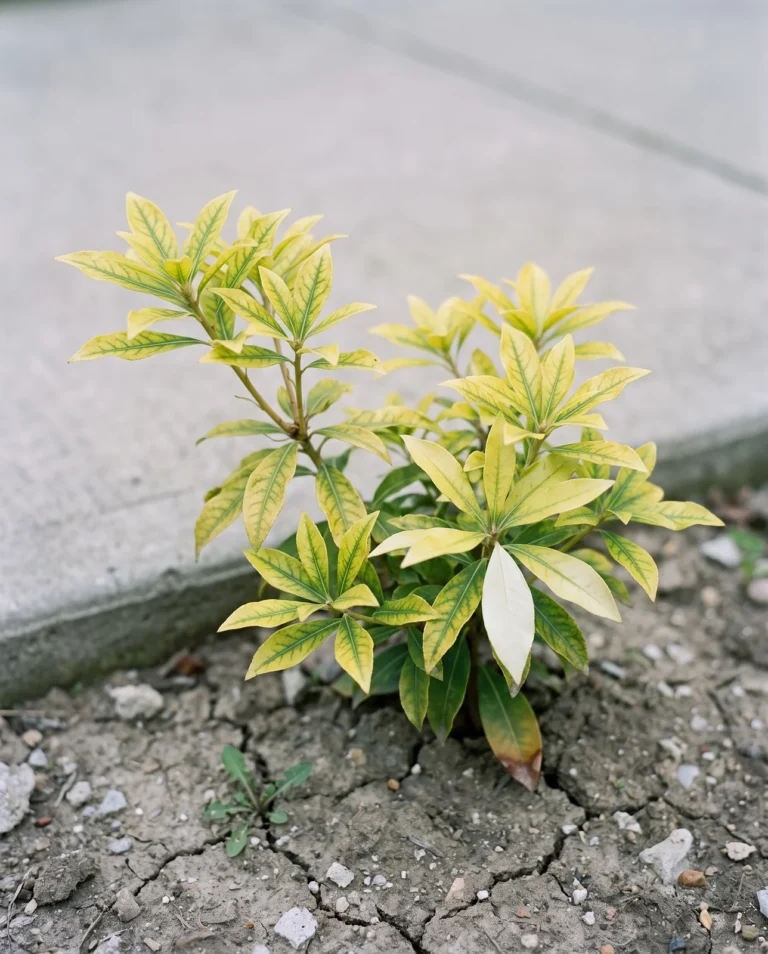
Feeding is a small job with a narrow window. Feed from late spring to early summer with the plant food sold for azaleas, camellias and rhododendrons, and an annual feed is not necessary. Low fertility announces itself as yellow foliage, and pieris responds to fertilization, especially in high-rainfall areas. The timing follows the buds, which are set in late summer for the following spring, so the feed has to be in the ground well before that.
Lace bug, the problem that defines this plant
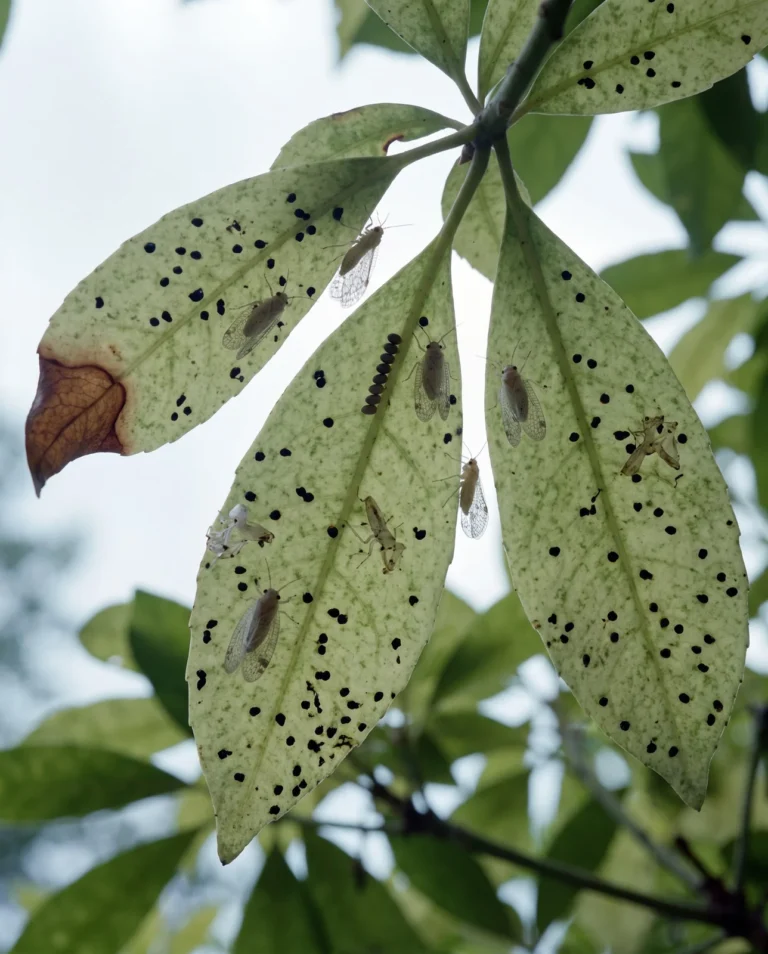
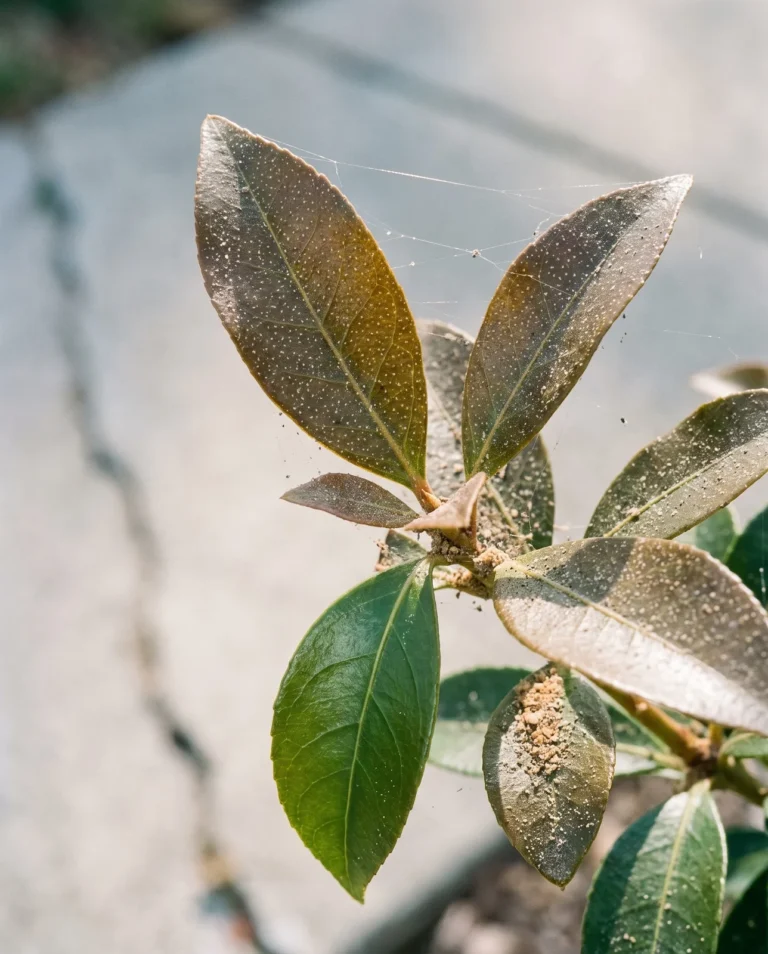
The andromeda lace bug is the pest that defines this shrub, and the diagnosis happens on the underside of the leaf. Stephanitis takeyai is one of three lace bugs common on broadleaf shrubs, with the others on azaleas and rhododendrons. Adults are whitish tan, roughly 0.13 inch long, with lacy-looking wings. Most live their whole lives on the lower surface, laying black eggs and leaving stationary spots of excrement. Turn the leaf over and the proof is there: black, shiny, tar-like excrement, shed nymph skins and the insects themselves, under an upper surface that shows only stippling and yellowing.
Timing decides whether a spray is worth making, and the looking starts in early May. Eggs begin hatching in early to mid May, and the nymphs take about a month to reach adulthood. Spray the leaf undersides as soon as nymphs appear in mid May. Generations then stack up: at least four a year in North Carolina, active May to September, with the first doing the most damage. Connecticut counts four or five, New England three or four, mostly late May into September. The Pacific Northwest runs later, with damage apparent from early to mid July. The insect is not native: it arrived from Japan and was in Connecticut by 1945 or before.
Horticultural oil at a 2 percent summer rate, or insecticidal soap, will control lace bugs where the spray covers the leaf undersides thoroughly. One pass is rarely enough, because eggs keep hatching: repeat every 1 to 2 weeks until the pest is under control. Contact sprays are hard work here, because the insects live under the leaf and the eggs are inserted into or glued onto leaf tissue. Home-remedy mixes are a poor trade, because soap can strip the protective wax off the leaves and leave desiccation damage of its own. A soil systemic goes on after bloom, which keeps it away from pollinators. Damaged leaves do not heal, so protected new growth needs a few years to cover the old damage, and heavy damage causes dieback of twigs and branches.
The other reasons the leaves go brown
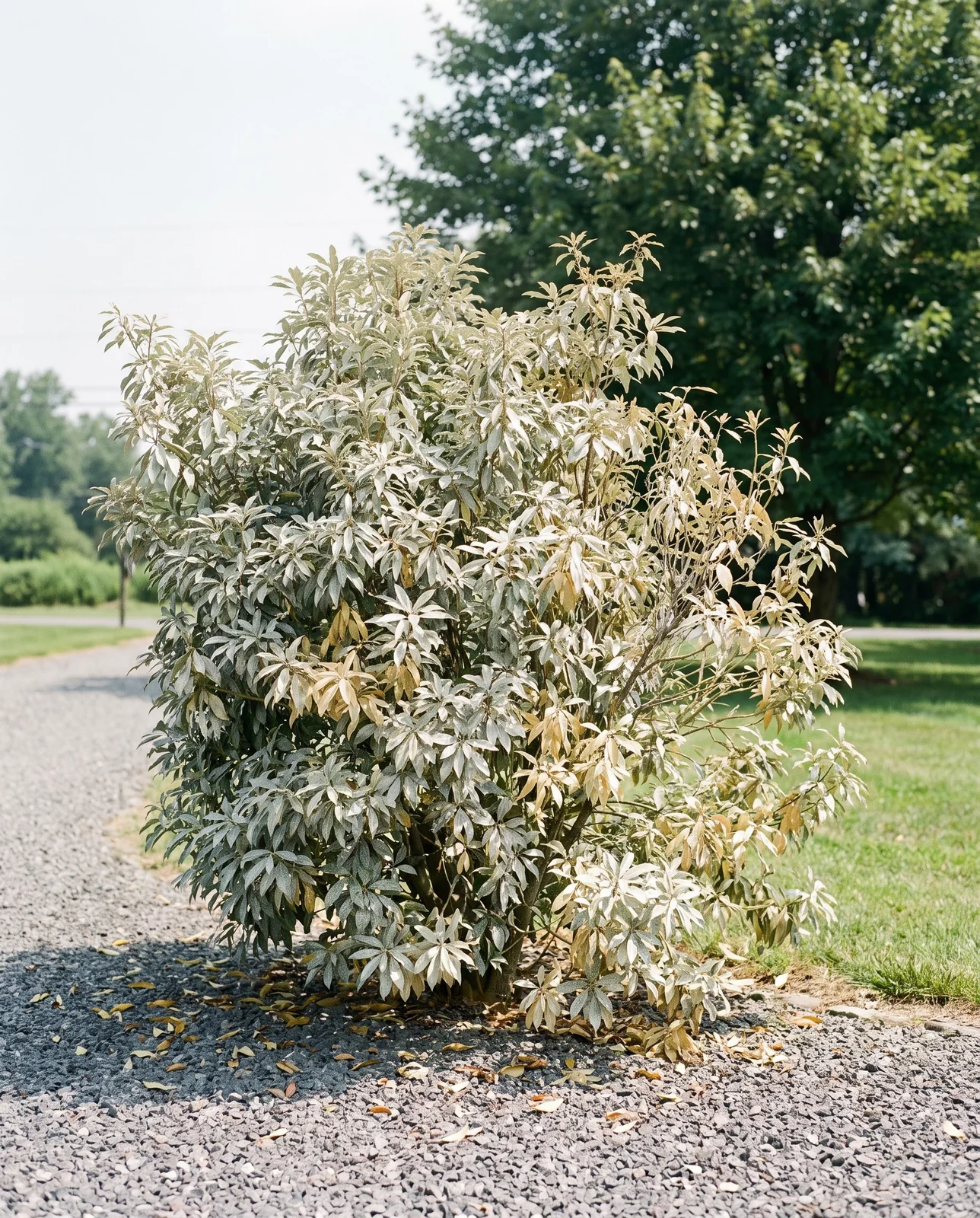
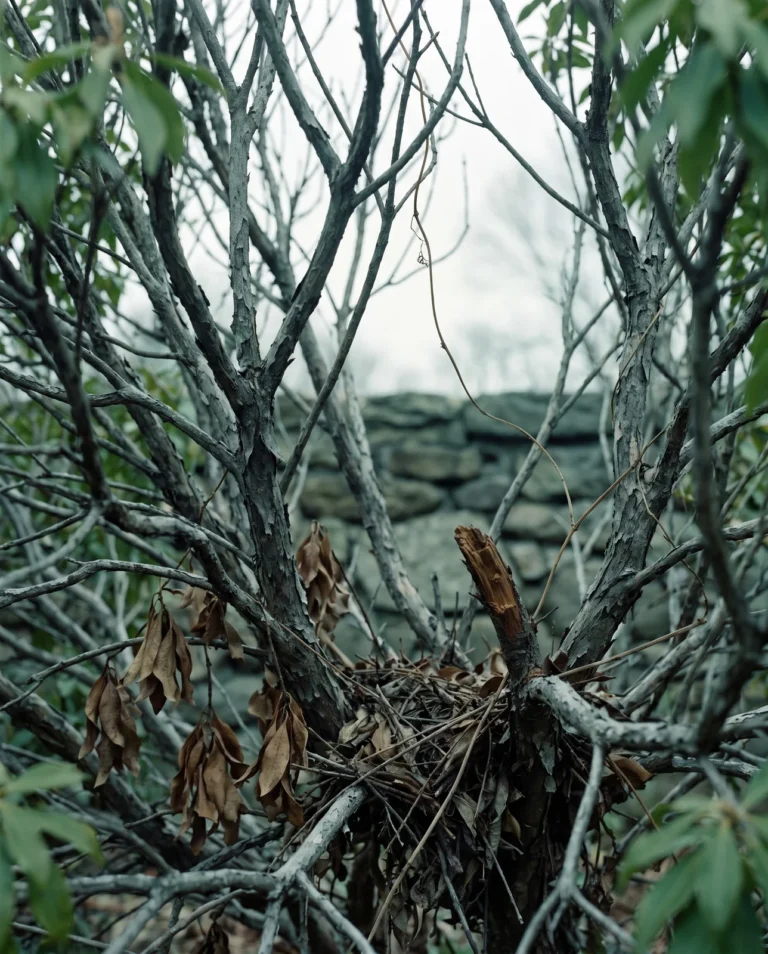
Age is the cause owners rule out last, and the check is physical. Scrape the bark gently with a fingernail: brown tissue underneath means wood that is very old, dying or dead. On leafless branches, bend them from the outer edge inward, and where they stop snapping is where the live wood begins. A decades-old shrub bare in the middle is usually not failing but overdue for pruning, and that job has a window: next season's flowers appear on wood made the previous season.
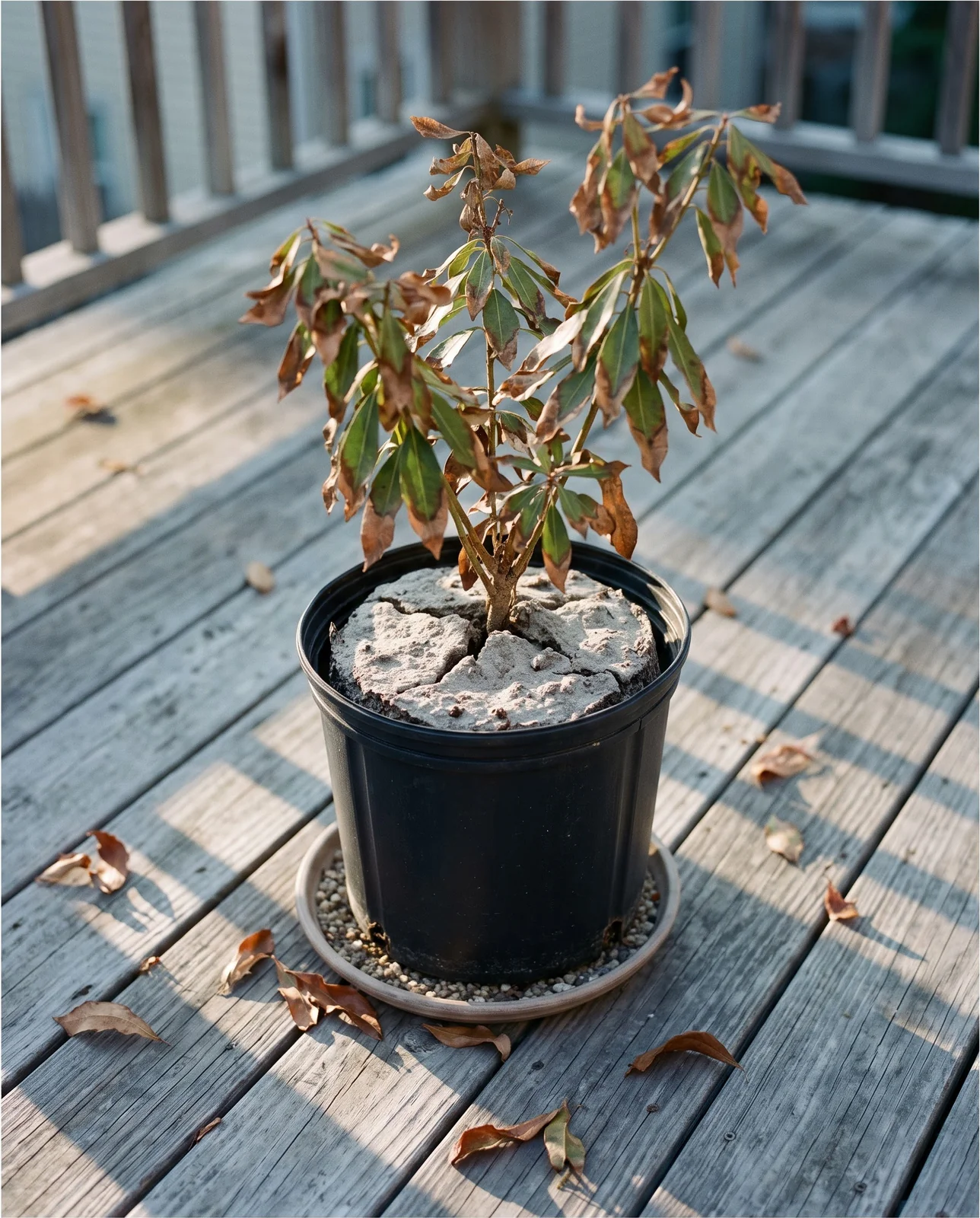
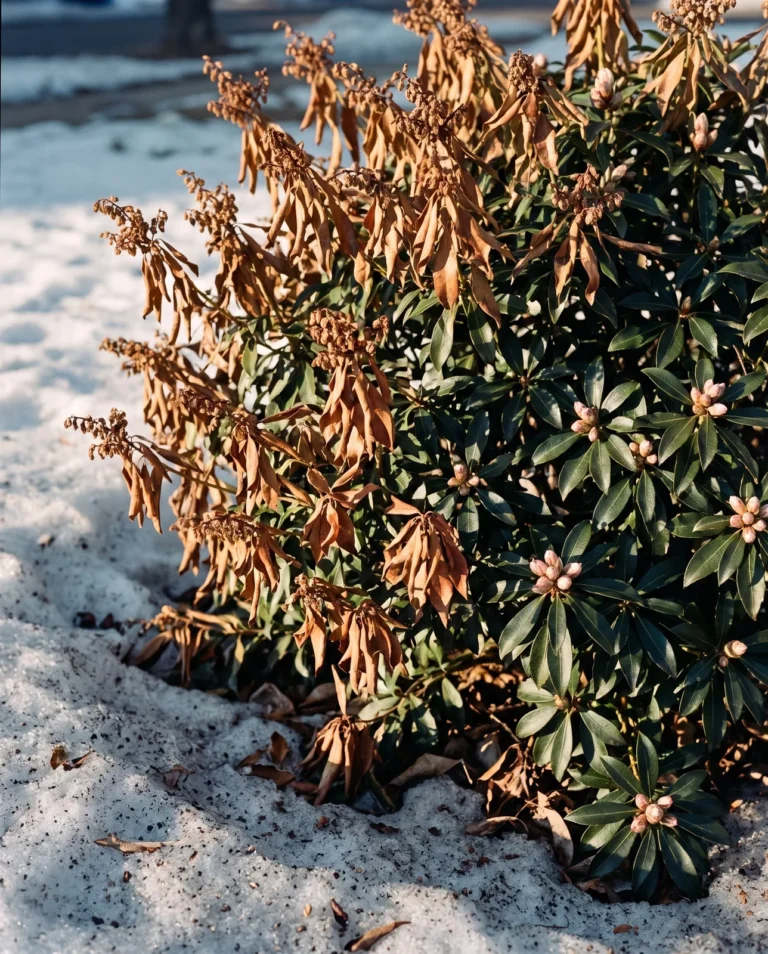
Winter is next. An evergreen that takes a good deal of sun and wind through winter comes into spring with browned leaves. Soil is third: low fertility shows first as yellow foliage, on ground that is not acid enough for a plant that wants a pH below 6.0. Water failures run both ways, too little on a shrub that has not established, too much where the ground stays waterlogged and the roots rot.
Disease accounts for the rest. Phytophthora dieback affects Japanese andromeda along with rhododendrons, azaleas and leucothoe, showing on the current season's leaves and shoots, unlike root rot. Overhead sprinklers make it worse, because the pathogen is splashed up onto the foliage. Even resistant shrubs lose that resistance for a time after 48 hours of flooding, or drought stress bad enough to wilt them. Leaf spot, dieback, blight, root rot and nematodes all sit on the problem list, with nematodes and lace bugs the major ones, and mites and scale belong on it too.
Telling the causes of browning apart
Every cause of browning leaves a different mark. Match what is in front of you before spraying or feeding.
Reviving a sick pieris, in order
Work down the steps and stop at the first one that explains what the plant is doing.
Pruning and deadheading without losing next spring
Prune soon after the flowers finish. Take out damaged, dead or diseased wood at the same time, and cut selected branches by hand, since a hedge trimmer is the wrong tool for this shrub. The window is narrow because the following spring's flowers come off wood made the season before. In practice the shaping cuts fall in May, June and July. Deadheading runs on the same clock and is a separate job: spent flowers come off immediately after the bloom finishes.
How big pieris gets and how fast
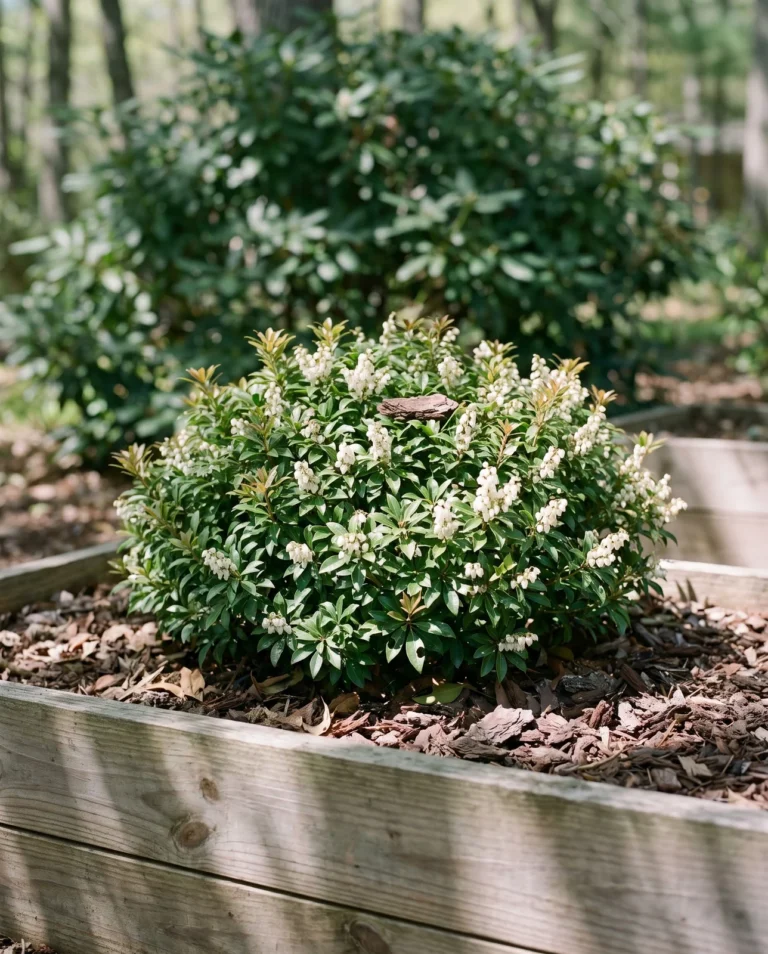
Expect a shrub somewhere between waist high and taller than the porch roof, because the published mature sizes for this one species do not line up. The smallest averages 4 to 5 feet tall and wide, occasionally 6 feet in a good position. The middle gives 8 to 10 feet tall by 6 to 8 feet wide. The largest gives 9 to 12 feet tall by 6 to 8 feet wide. All three describe the species with no cultivar attached, so a tag is a prediction more than a measurement. Width is the steadier dimension, 6 to 8 feet in the two larger figures and 4 to 5 in the smallest. Leave room for the wider one and treat height as the dimension pruning controls.
Fast growing it is not. The species grows slowly, and where a number is attached the shrub puts on 6 to 12 inches a year. Cavatine shows what that means over a decade, reaching 2 to 3 feet tall by 3 feet wide after ten years. That is the argument for buying the biggest plant the budget allows, since a small one spends years filling its space.
Named varieties worth telling apart
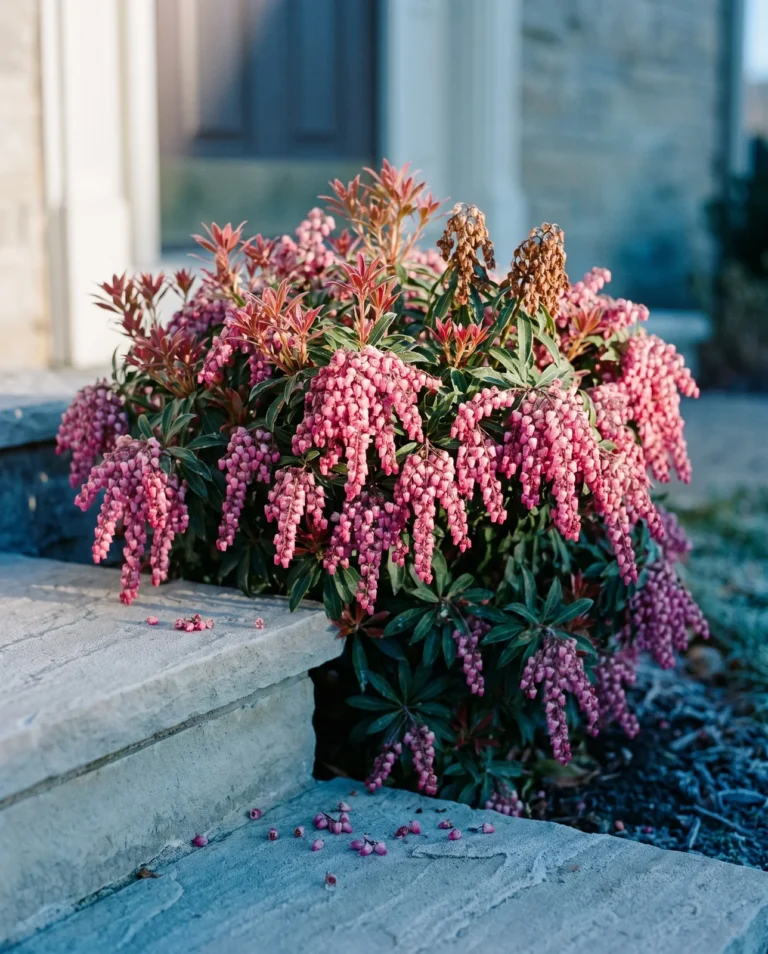
Named forms differ in the two things that matter on the day you buy: the size the plant finishes at and the color of the new growth.
Which pieris actually resist lace bug
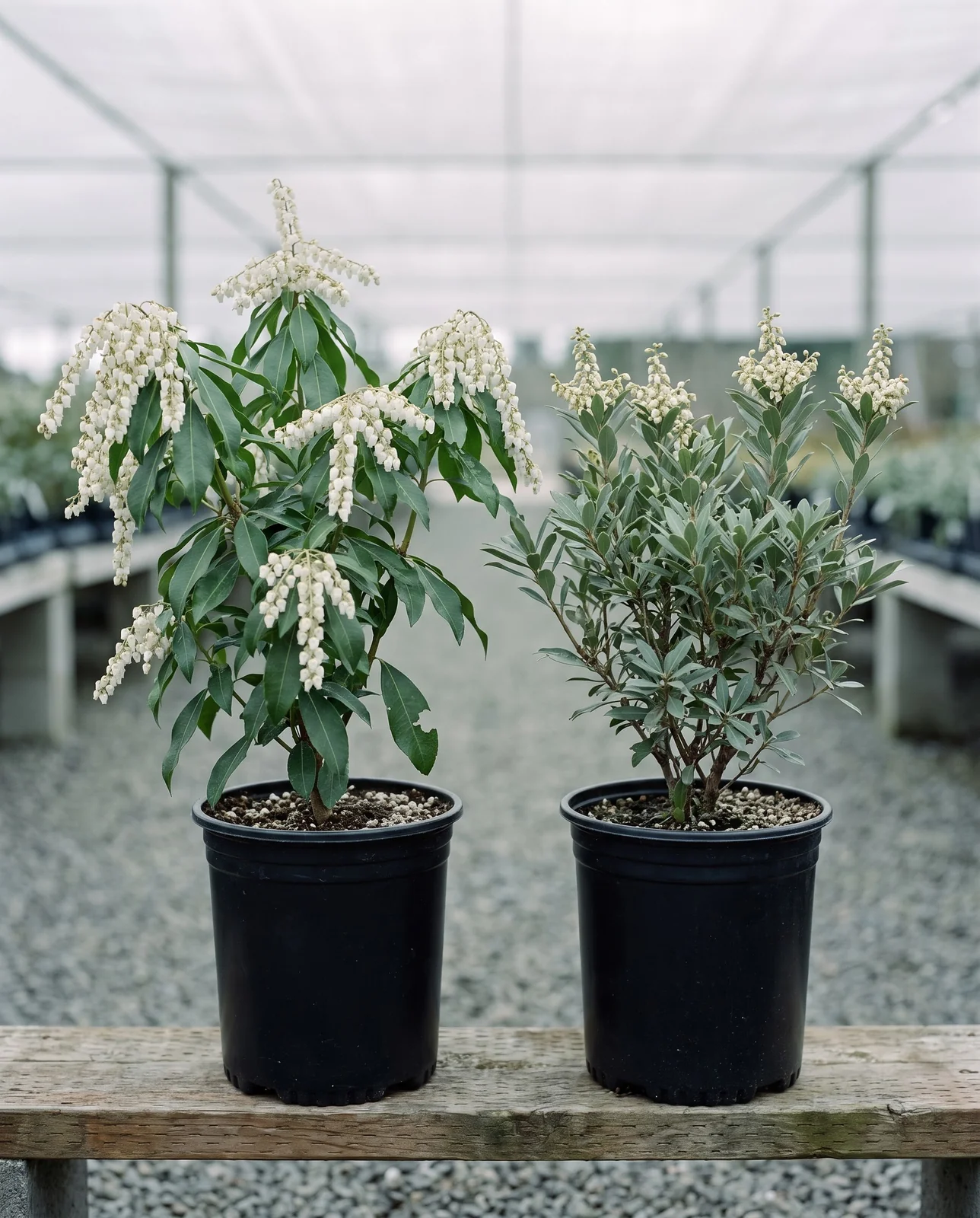
Resistance to lace bug is real in this genus, and it belongs to particular species and crosses that a tag rarely names. Mountain andromeda, the North American species, is highly resistant to the andromeda lace bug. Plant it in place of the Japanese species wherever a garden allows. Some crosses between the two keep the resistance, among them Karenoma, a soft pink budded, white flowered hybrid of the two. A screening trial reported in 2011 put more than 60 pieris taxa in front of lace bugs. Leaf toughness, moisture content and stomatal characteristics may carry the difference, while leaf surface waxes do not.
That turns resistance into two questions at the counter. The first is which plant is actually in the pot, because the resistant species and its hybrids are sold under the same andromeda name as everything else. The second is which insect the claim covers, since resistance does not travel across pests. One cultivar in the same trial was highly susceptible to the andromeda lace bug while it resisted the azalea lace bug. A claim means little until it names the insect.
What to plant with pieris
The companion list for pieris is short, and soil decides it. Rhododendrons come first, because mixing pieris with other broadleaf evergreens works on a shared preference for acid ground. The standard woodland grouping adds azaleas, hellebores and ferns, all of them acid loving and shade tolerant. One soil, one light level, one watering habit: a lime loving plant in the same ground is the one that struggles.
Is pieris toxic to people and pets
Yes. Pieris is poisonous to humans and pets when it is eaten, and on Japanese pieris the parts named as poisonous are the leaves and the nectar. The compounds are grayanotoxins, formally andromedotoxin, the group that runs through rhododendrons and the rest of the heath family. ASPCA carries this one shrub under three names, and two of those entries disagree about horses. It is dogs and cats under Pieris, and dogs, cats and horses under Andromeda Japonica, where grayanotoxins are named as the toxic principle. Plan around the wider list.
Severity is high for both species. NC State Extension gives Japanese pieris a high poison severity, with andromedotoxin and grayanotoxins as the toxic principles, and rates mountain andromeda high as well. The symptom lists differ: tingling, salivation, nausea and vomiting for Japanese pieris, with convulsions added for mountain andromeda. Neither is the safe one. In people it runs from a burning mouth to vomiting, coma and convulsions hours later. In dogs and cats it runs from vomiting and weakness to cardiac failure, with hypersalivation and low blood pressure among the signs. Grayanotoxins disrupt sodium channels in cardiac and skeletal muscle, and eating a few leaves is enough to cause serious problems.
Grazing animals are where the case records pile up. A 2026 systematic review of grayanotoxin poisoning found Pieris japonica and rhododendron the two plants most often reported, across 31 records. Sheep and goats are the livestock most often poisoned, and the toxic dose for ruminants is put at roughly 0.1 percent of body weight in fresh foliage. By a front door the risk sits with small children and with dogs that chew what they find. A pieris inside a fence line that sheep, goats or a pony can reach across is worth moving. If an animal has eaten any part of one, a veterinarian should hear about it the same day.
What actually goes wrong, ranked
Ordered by how often each one turns up in gardening threads about this shrub, most frequent first.
Weeks of pale, speckled foliage blamed on feeding or watering. The underside holds the answer, and it is the only surface worth spraying.
Browning on a shrub that otherwise looks sound, most often at winter's end. Blame a root ball that never grew out, winter sun and wind, or last summer's lace bug damage.
A fast collapse after a wet stretch or a generous summer of watering. Rule out waterlogged ground, which ends in root rot, then overhead irrigation, which splashes dieback onto the shoots.
An overall yellowing answered with more water. Look at soil pH instead: the plant wants acid ground under 6.0 and answers to feeding where fertility is low.
A healthy looking shrub that skipped its bloom. The buds sat on the previous season's wood, so the cut that removed them happened months earlier.
Decades old shrubs, bare in the middle, and owners unsure whether the plant is failing or old. The bark scrape settles it, and the cutting goes branch by branch after bloom.
Plants that sulk in heat and humidity, with no cause pinned down. Pieris wants afternoon shade in hot regions, and lace bug injury is worst in full sun.
Flowering and fragrance
Pieris flowers in spring, and on named forms such as Mountain Fire the bells open in early spring. The flowers are fragrant. Lean into the shrub on a still, mild day to find the scent. On the species the bells are white, which puts pieris in with the other white flowers of spring. A plant in deep shade gives very little of any of it.
What follows the flowers is a small decision. Spent racemes dry into five valved seed capsules about a quarter of an inch across, and they persist on the branch tips into winter. Keep them for texture or cut them off when the color goes; the plant is unharmed either way. In late winter they stand beside the flower buds already formed for the coming spring.
Beliefs about pieris, tested
Four things gardeners repeat about this shrub, and what holds up.
The myth: Pieris is a full shade plant.
The reality: Heavy shade is on the list of conditions it tolerates, and tolerating is all it does, because bloom fails in deep dark shade. That is how it gets sold as a shade plant and disappoints the buyer who wanted flowers. Part shade with morning sun serves both.
The myth: Yellow, speckled leaves mean the shrub needs feeding.
The reality: Feeding is the answer only when the underside of the leaf is clean. Black tar-like specks, shed skins and the insects themselves mean lace bug, and fertilizer changes nothing there. Yellow foliage with a clean underside is low fertility or soil that is not acid enough.
The myth: The zone number on the tag settles whether it will survive here.
The reality: Published figures for this one shrub run from 4b through 8b to 5 through 9, so a tag quotes one answer out of several. Where they overlap is the dependable part, and at the edges exposure decides, since winter sun and wind damage evergreen foliage whatever the map says.
The myth: Deer will not touch it, so it must be harmless.
The reality: Deer resistance and toxicity are the same fact on this plant. Deer avoid pieris because it is poisonous to people and animals, which makes the browse resistance printed on the tag a warning as much as a selling point.
What to expect, year by year
Three phases, and the one that decides the flowers is the phase where nothing appears to be happening.
The first year is roots and very little else. This shrub grows slowly, so a newly planted pieris looks much the same in September as it did in April. The work of that season is water, regular until it establishes.
By the second and third spring it starts to resemble the plant on the tag. New growth runs 6 to 12 inches a year, and the first pruning decision arrives right after the flowers drop. The lace bug watch belongs on the calendar from here, since the insect is active from May into September.
A mature plant runs on a fixed rhythm: flowers in spring, deadheading straight after, and one careful look at the leaf undersides in May. Old damage does not reset, because leaves marked by lace bug never recover.
FAQ
Do pieris like sun or shade?
Part shade: morning sun with afternoon shade, and deeper shade costs flowers. In hot regions the afternoon cover stops being optional, and the plant in full sun takes the worst lace bug damage.
Will pieris tolerate full shade?
It survives heavy shade but lacks bloom in deep dark shade. If flowers are the reason for buying it, the spot has to carry real light for part of the day.
Where is the best place to plant pieris?
A sheltered spot with morning sun and afternoon shade, in moist, well drained, acid soil rich in organic matter. Keep it out of waterlogged ground and open winter wind.
How big do pieris get?
From 4 to 5 feet tall and wide to 9 to 12 feet tall by 6 to 8 wide, with 8 to 10 by 6 to 8 in between. Width varies less, 6 to 8 feet on the larger plants.
Are pieris fast growing?
No. It grows slowly, and where a figure is given it is 6 to 12 inches a year. Cavatine takes ten years to reach 2 to 3 feet tall by 3 feet wide.
How can I treat lace bugs on my pieris shrubs?
Horticultural oil at the 2 percent summer rate, or insecticidal soap, covering the leaf undersides thoroughly. Repeat every 1 to 2 weeks, because eggs keep hatching.
What does lace bug damage look like?
From above, stippled, fading leaves that read as a nutrient problem. Underneath: black tar-like excrement spots, shed nymph skins and the insects themselves. Spider mites leave no specks.
Why have my pieris leaves gone brown?
Winter sun and wind on a broadleaf evergreen, or lace bug damage carried over from last summer. On an old shrub the interior wood is simply finished, which a bark scrape shows as brown tissue.
How do you revive a pieris?
Work in order: turn leaves over for lace bug, check moisture at root depth, then scrape the bark to see how much wood is alive. Cut the dead wood out after flowering.
What are good companion plants for pieris japonica?
Rhododendrons first, on a shared preference for acid ground. Azaleas, hellebores and ferns complete the acid loving, shade tolerant woodland group.
Interesting tips
- The American species is said differently from the Japanese one: pee-AIR-iss flor-ih-BUN-dah.
- Lace bug matters most in the eastern United States, where it is called a serious problem on pieris alongside occasional phytophthora dieback and leaf spot.
- For a narrow gap beside a path or a doorway, Scarlet O'Hara has a narrow habit with bronze new growth and white flowers.
Related Guides & Flowers
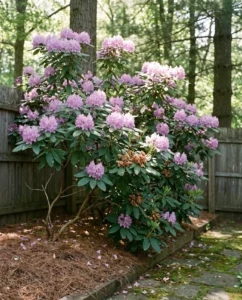
Rhododendron
The shrub pieris is planted with most often, sharing its acid soil, its shade and its family chemistry.
Camellia
Another acid soil evergreen that flowers when almost nothing else does, for the same sheltered bed.
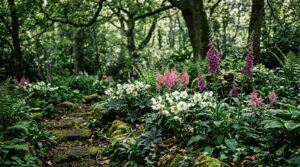
Flowers that grow in shade
What else will flower where the sun reaches for only part of the day, sorted by how deep the shade is.

Types of flowers
The full index of flower guides here, arranged by type and by name.
Enjoying our flower guides? Add YourFlowersGuide as a preferred source on Google. It helps more readers find us.
Add to Preferred Sources