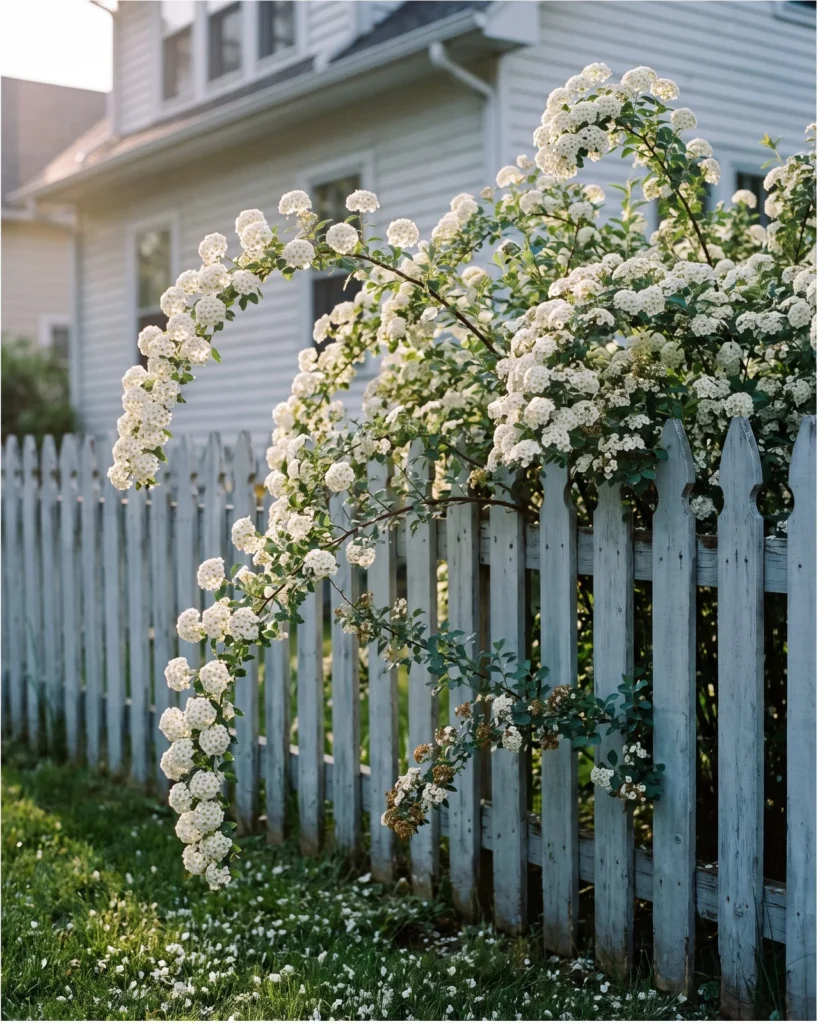
Spring spirea or summer spirea, and why it decides everything
One common name covers two distinct shrubs. Spring varieties flower white on canes that grew the year before, arching out and down, while summer varieties carry pink to rose-red blooms on fresh shoots above a compact mound. That difference sets your pruning calendar. Trimming a spring shrub in late winter removes the flowers before they open, whereas cutting a summer shrub at the end of winter shapes the new wood that will carry summer blossoms. Two people can follow sound pruning advice on the same weekend and get opposite results simply by growing different shrubs.
Plant tags rarely clear up which one you have, and catalog names make it harder. Catalogs often sell other species, such as Vanhoutte spirea, as bridal wreath spirea, even though true bridal wreath is Spiraea prunifolia. Confusion happens with leaves too: a yellow-leaved spirea can even be misidentified as a boxwood. Telling which shrub you own comes down to watching three simple signs: flower color, the month blooms appear, and how the branches grow.
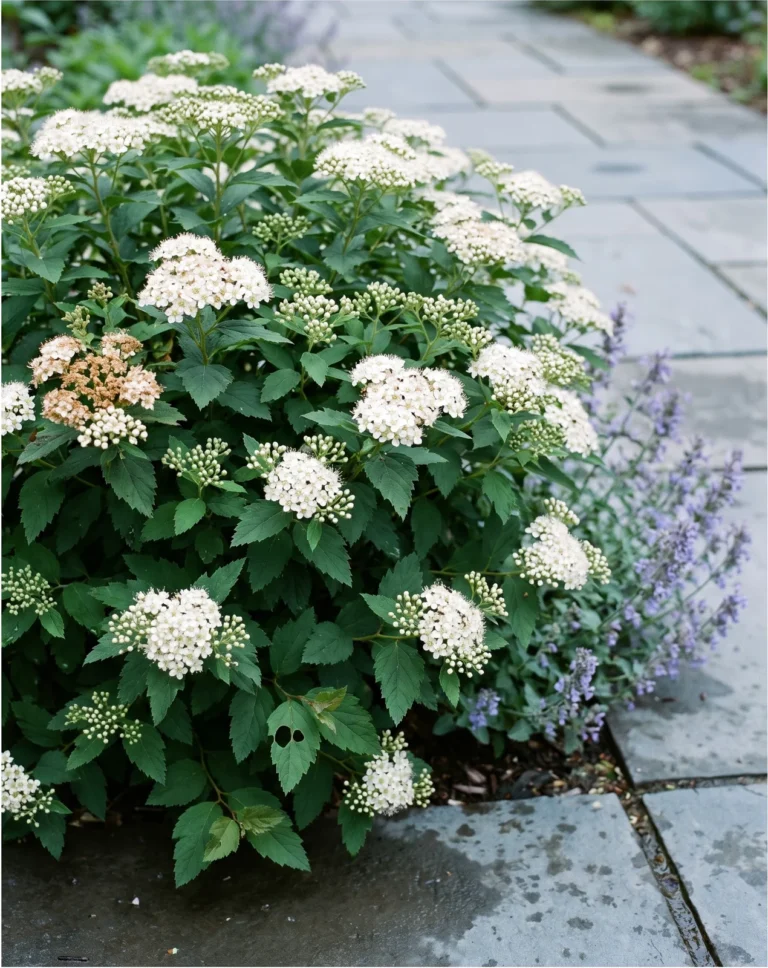
Growth habit also decides how much room the plant takes up in your garden. White spring bloomers like Vanhoutte spirea form tall, arching branches that spread wide. Summer spireas stay comparatively low and compact. A border planned for a small mound will quickly be crowded by an arching spring shrub, so knowing the group keeps garden spacing on track.
Telling the two groups apart
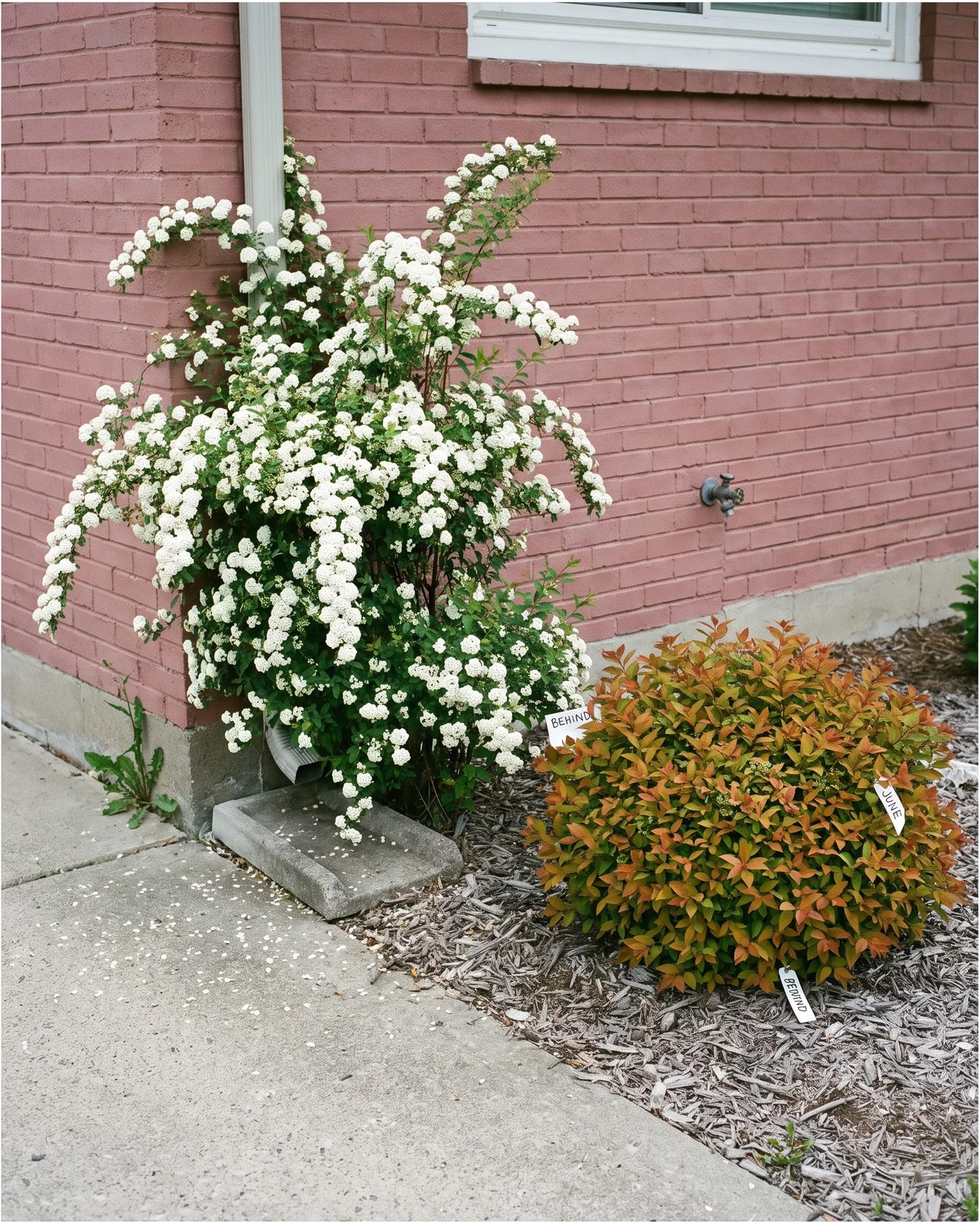
Four checks separate the groups without a plant tag: bloom season, flower shape, branch habit, and foliage changes.
What spirea is
Spirea is a shrub in the rose family with many species, commonly counted at more than 80. Wider counts place the number at about 80 to 100 species. The plants grow wild across the Northern Hemisphere in Asia and North America, and several species are native to North America, including Pennsylvania. The name Spiraea comes from the Greek word speira, meaning wreath, which describes the dense clusters of flowers on most shrubs. It also goes by older names like meadowsweet and steeplebush, which belong to species native to North America.
Bridal wreath spirea has no known serious insect or disease troubles of its own. Japanese spirea is just as tough, though spireas are generally prone to the insects and diseases that affect other shrubs in the rose family. The shrubs fall into three groups: white spring bloomers from Asia, pink and red summer bloomers, and species native to North America. The summer group centers on Japanese spirea and the bumalda hybrids, while the native group includes wild species like meadowsweet and steeplebush. Which group you plant decides when you prune and guides how the shrub grows over the coming years.
What spirea looks like up close
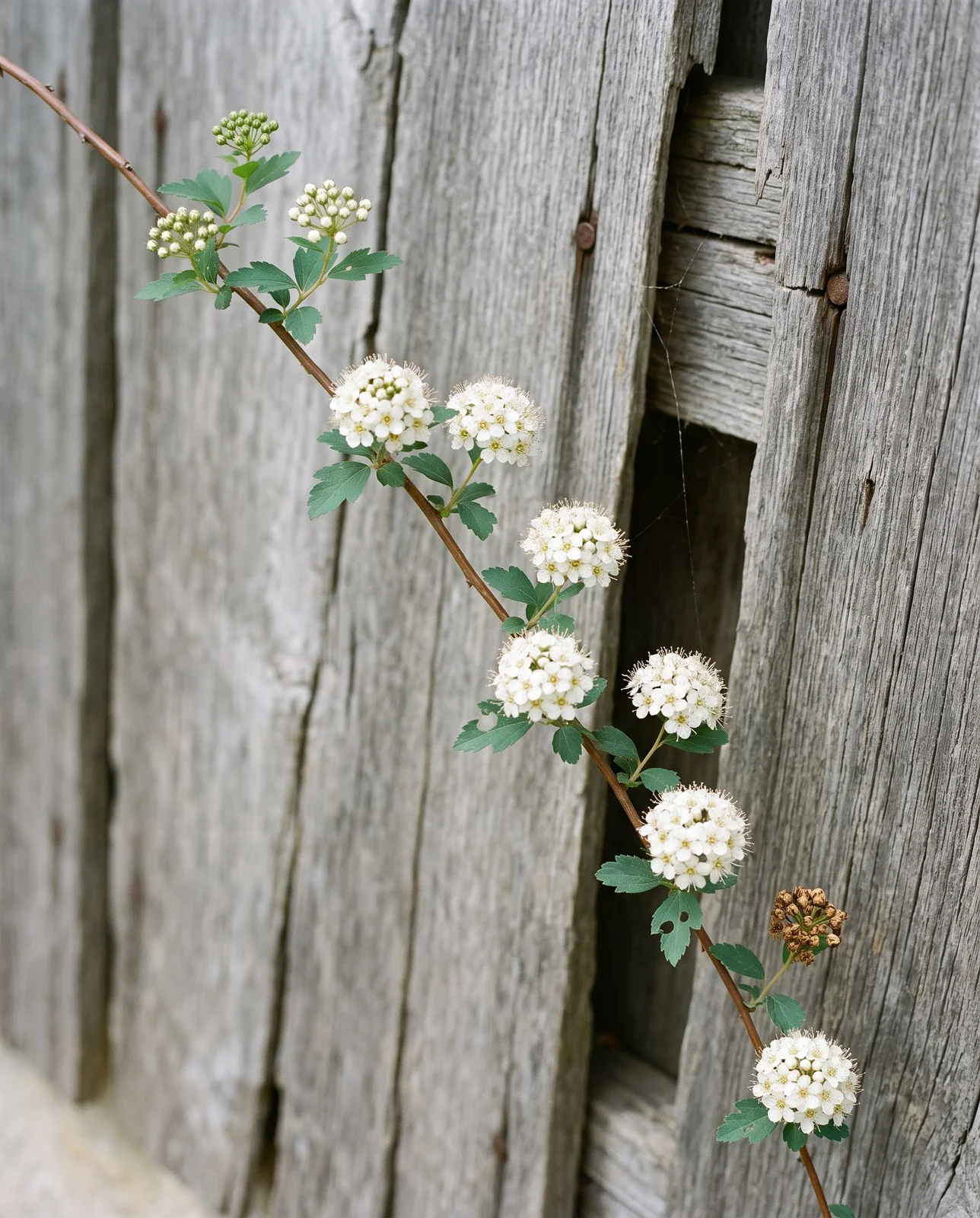
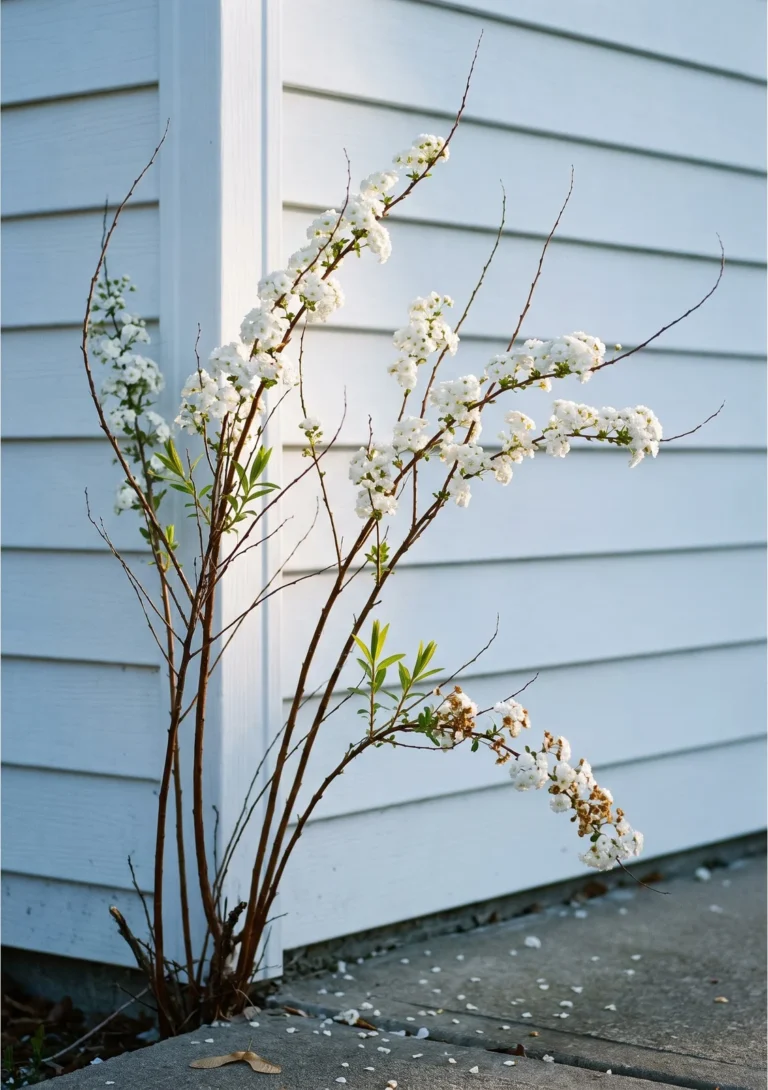
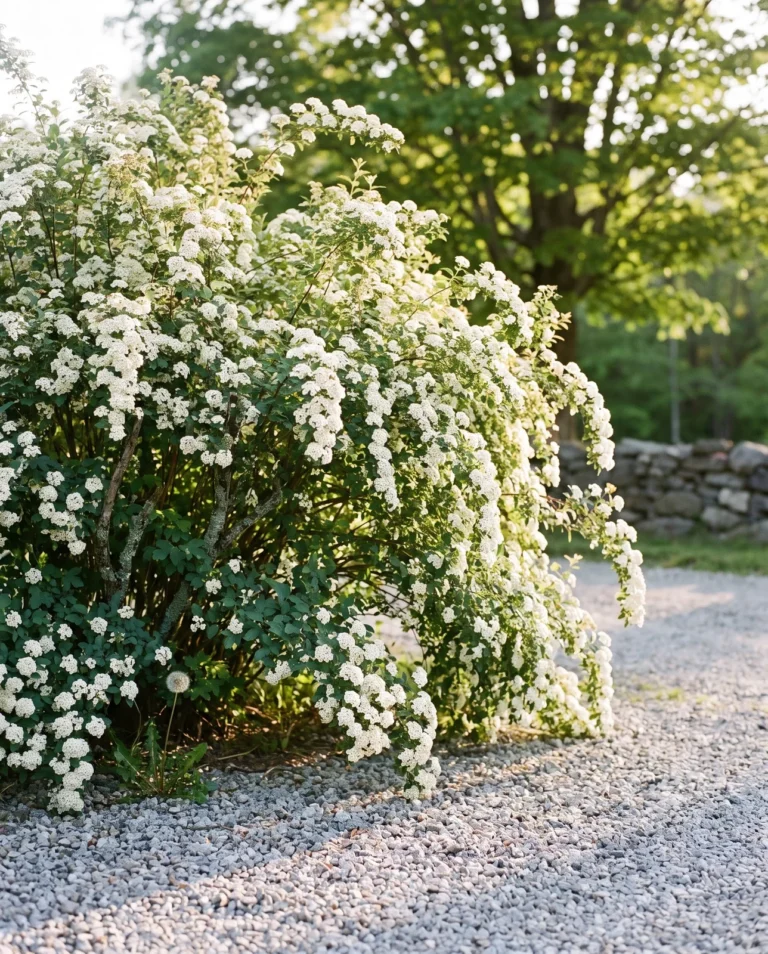
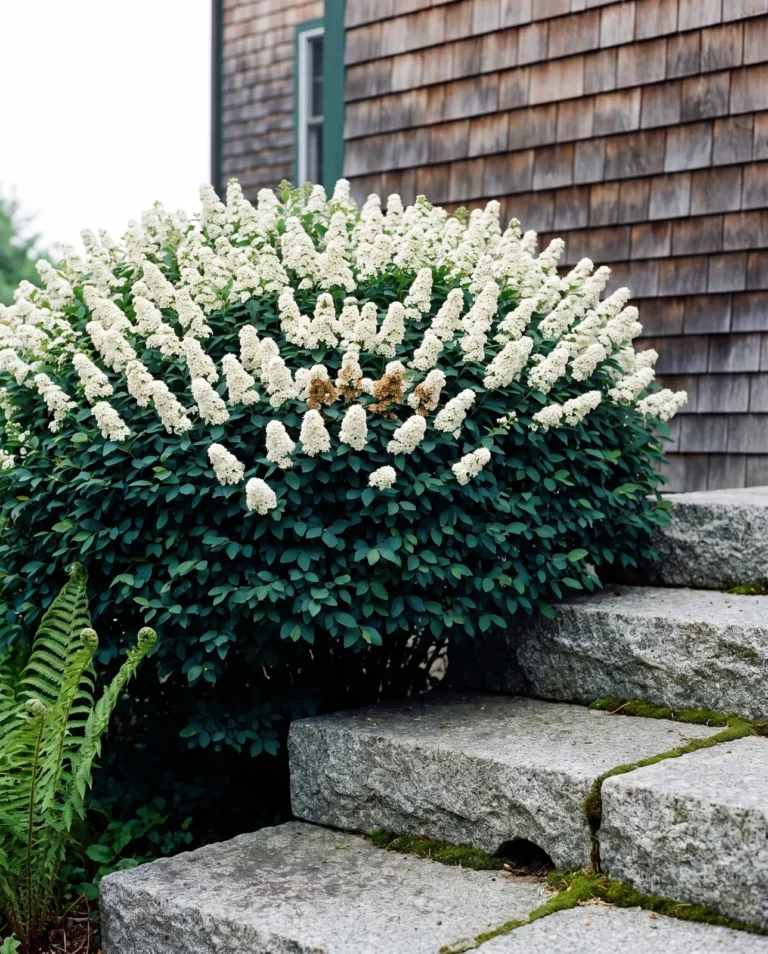
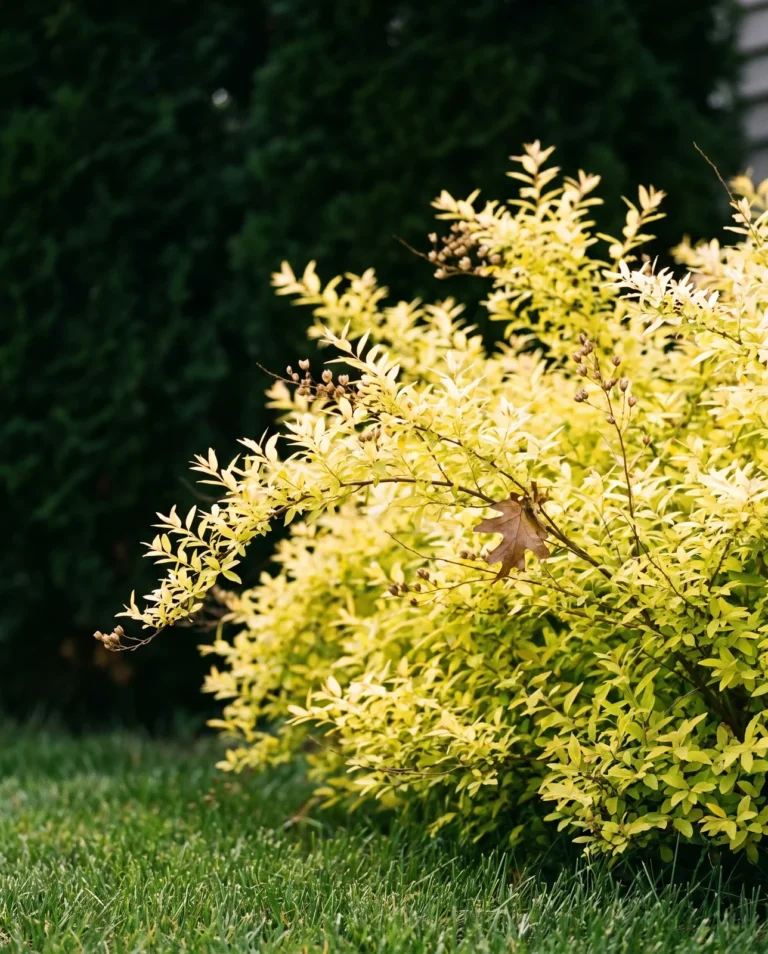
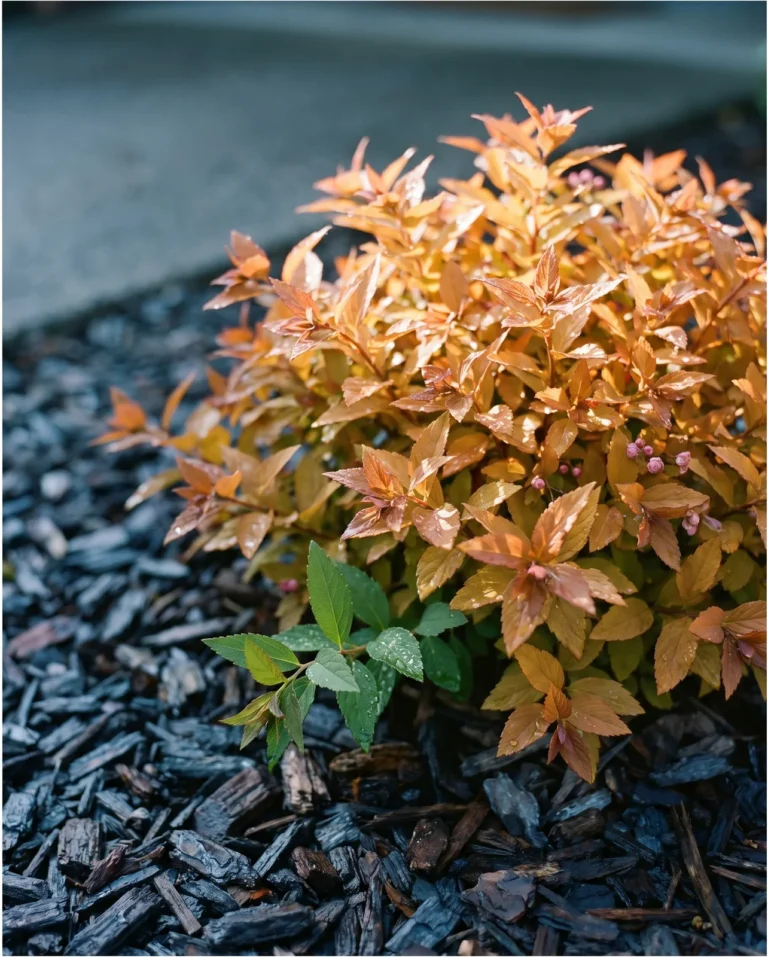
Up close, the two spirea groups look unalike in their branches, flowers, and leaves. Vanhoutte spirea forms a vase-shaped shrub with long, arching branches that bear flower clusters about 2 inches wide, packed with single white florets. True bridal wreath spirea carries white flowers in small clusters of three to five doubled florets on upright stems, growing about as wide as tall. Foliage brings its own color across the spring group: Thunberg spirea carries willow-like leaves that turn bronze-orange in autumn, alongside its cultivar 'Ogon' with bright yellow early-summer leaves. Snowmound spirea holds its flowers back until May or June and finishes the season with golden yellow foliage in autumn.
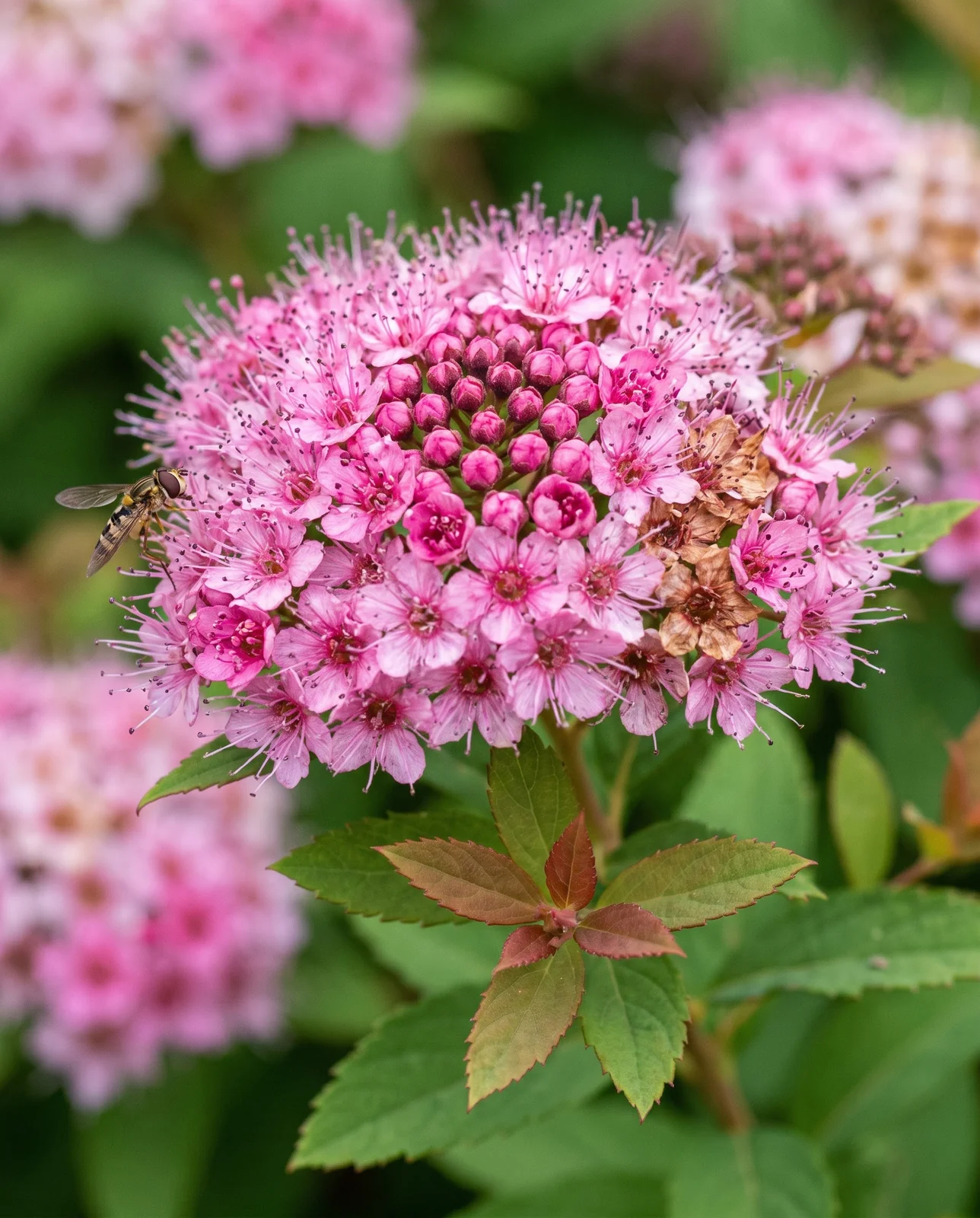
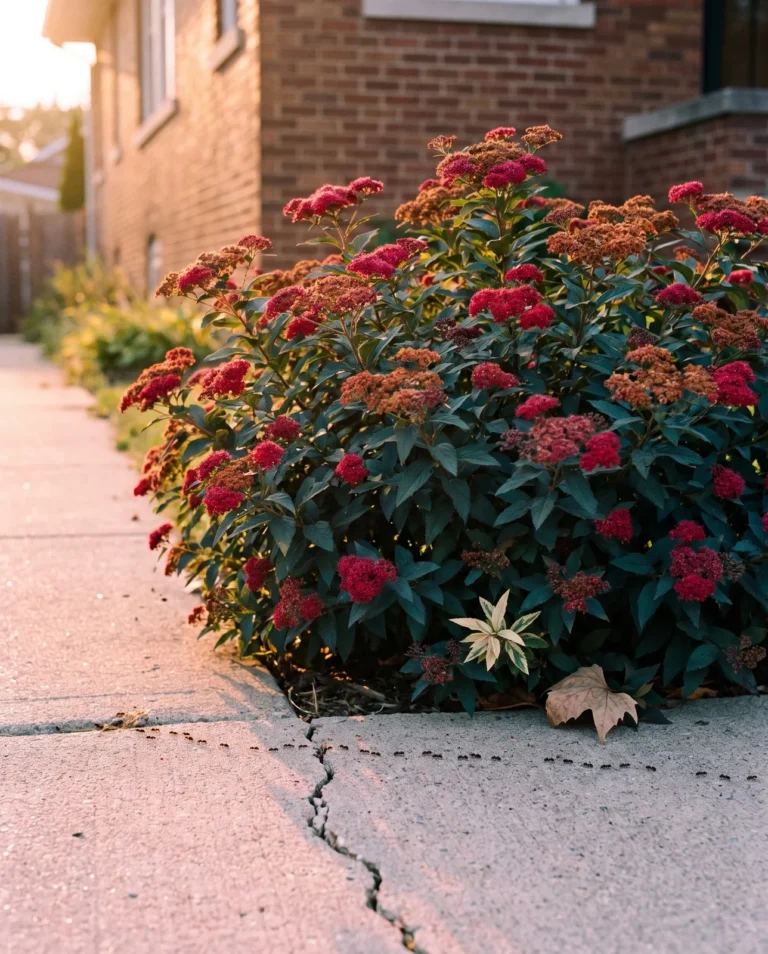
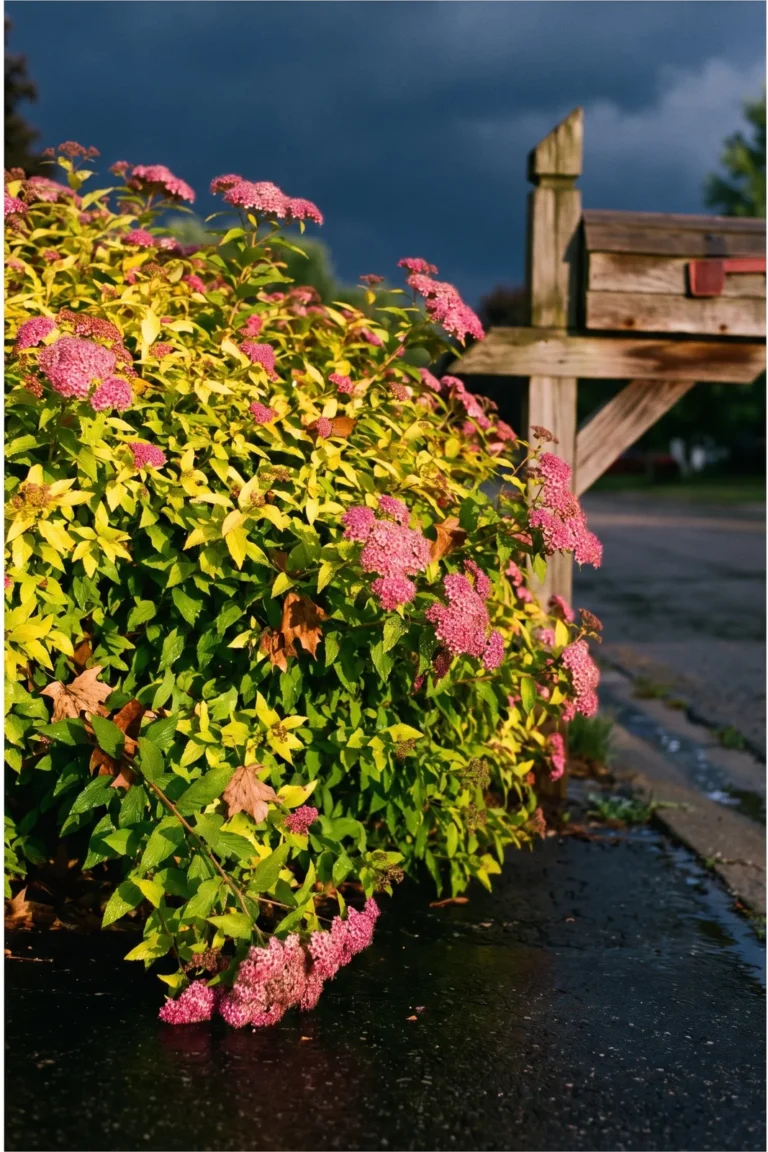
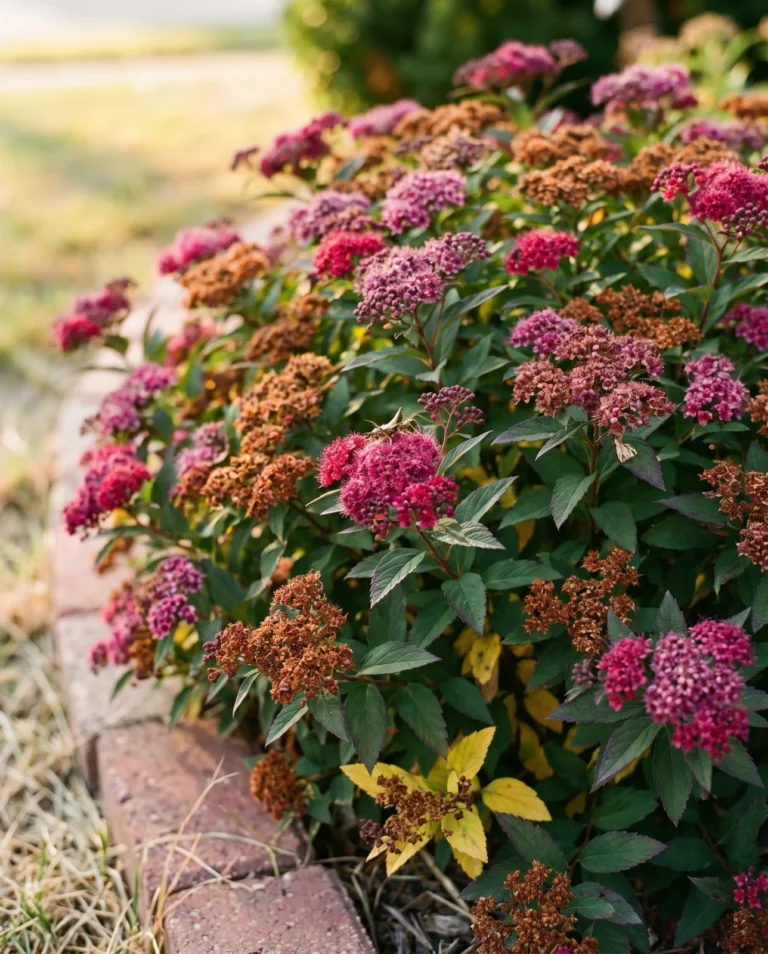
The summer group forms a neat, rounded mound topped with wide flower heads. Japanese spirea opens in June with flat-topped pink to rose-red corymbs 3 to 6 inches wide, and new leaves on some cultivars emerge russet-orange to bronze-red. On Japanese spirea, the foliage appears before the flowers, unlike the spring bloomers, which makes early summer identification straightforward: a shrub in full leaf in May with no open flowers points to the summer group. That early flush of colorful foliage gives the shrub quiet appeal for weeks before and after bloom.
Old wood, new wood, and the pruning date
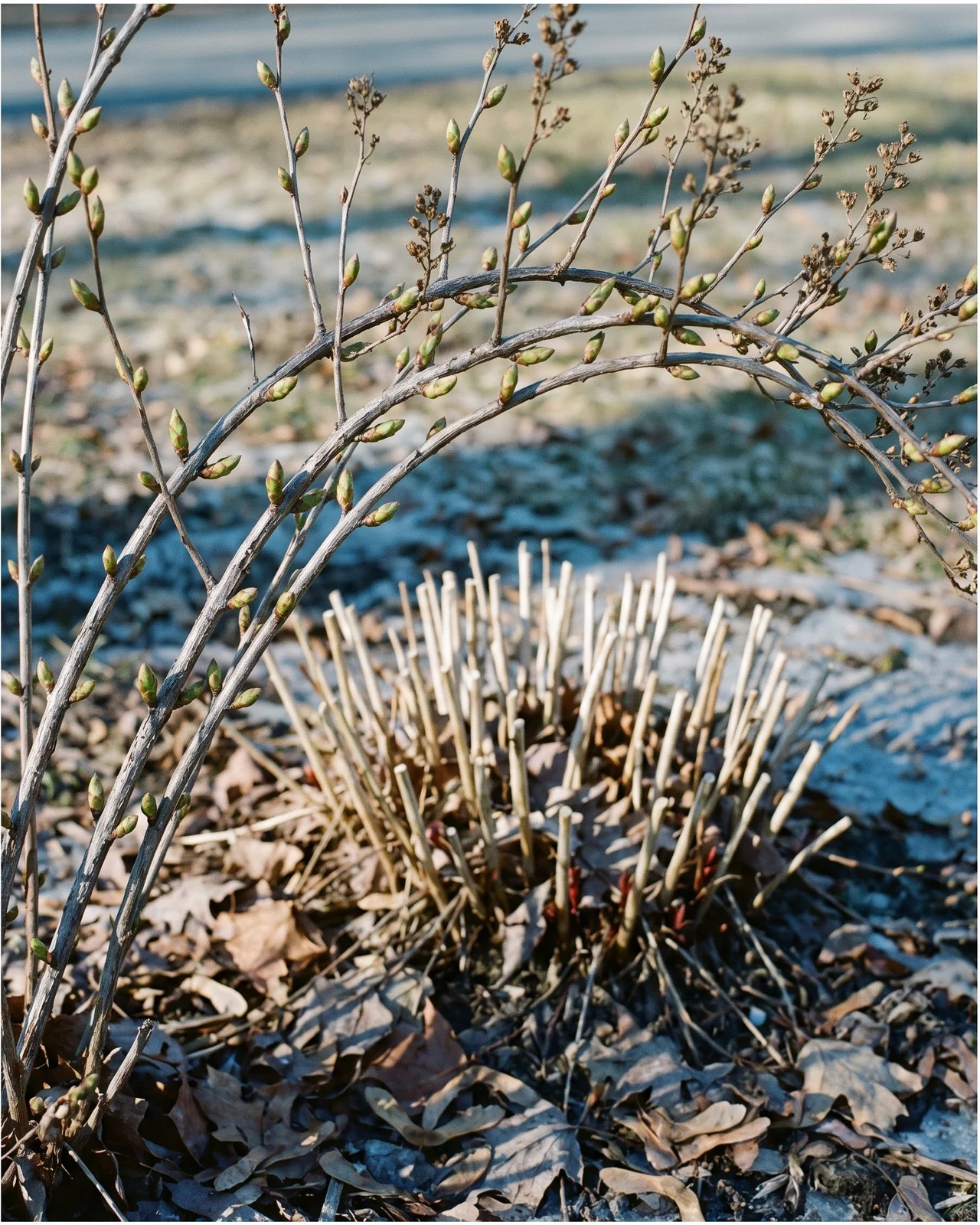
Pruning dates come down to whether a shrub flowers on old wood from last season or fresh shoots from this spring. Old wood means stems already standing in the bed, so spring spireas are pruned after flowering finishes. Summer spireas bloom on new shoots that push out in spring, so cut them back while bare: late winter to early spring on Japanese spirea, and winter or early spring on bumalda hybrids. Summer spireas that bloom on new wood can also be pruned in fall. Both schedules make sense once you realize they belong to different shrubs.
The old-wood pruning habit governs many familiar garden shrubs beyond spirea. A spring spirea shares a border well with forsythia and lilac, trimmed right after flowering finishes before it sets next year's buds. Spirea causes confusion because both spring and summer shrubs sit side by side on sales benches under the same single name. A standard plant tag rarely explains which wood type you are carrying home, leaving you to piece together the pruning schedule yourself.
Across the spring group, the after-flowering rule repeats species by species. Trim baby's breath spirea soon after flowering, and prune Reeves spirea after flowering if needed. Bridal wreath is pruned soon after flowering if necessary, while Snowmound is cut back after its flowers finish. One selection breaks the spring pattern: birchleaf spirea 'Tor' flowers in late spring, but is pruned in late winter before bloom begins. Knowing your cultivar prevents trimming away blossoms by mistake.
When to prune the one you own
Work down these checks in order, and stop at the first one that fits the shrub in front of you.
How to prune spirea without losing the flowers
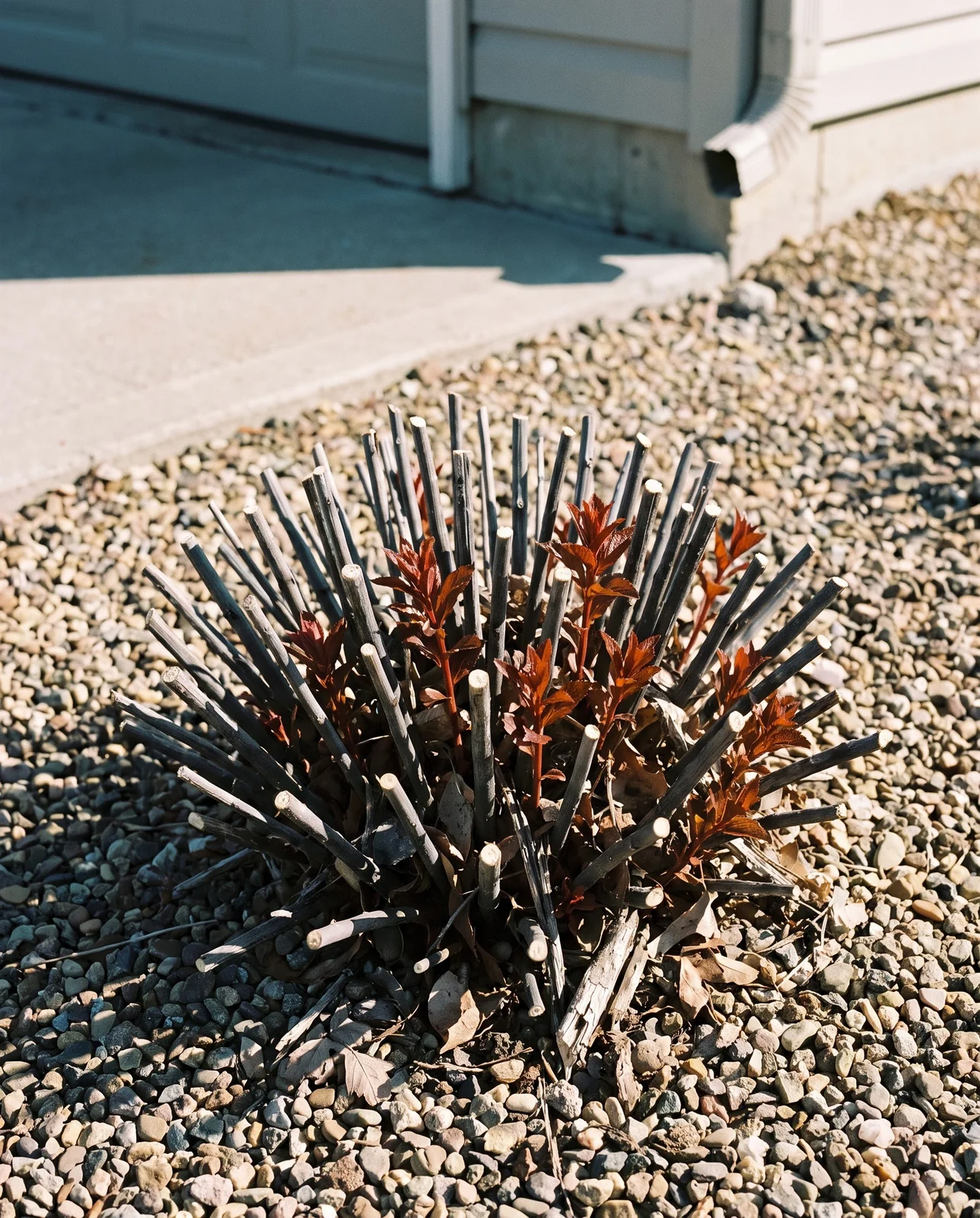
The cut that keeps a spirea in good shape is a thinning cut taken right down to the base. Thin out old and weak canes to the ground annually on spring bloomers, giving young shoots the room to develop. Bridal wreath spirea can become leggy if left alone, so prune it as needed immediately after flowering. An overgrown spring shrub is renewed the same way, taking old canes to ground level. Summer spireas require less heavy cutting, because bumalda hybrids generally need less severe pruning than other spirea species.
Deadheading is the next job once the first wave of flowers fades. Removing faded flowers on any spirea cultivar stimulates fresh growth that brings additional flowers. On Japanese spirea, light shearing is an easy way to take spent clusters off and encourage more bloom. That trim also controls unwanted spread: remove spent flower heads before seeds mature, and discard them in the trash, keeping them out of the compost pile.
Why a healthy spirea carries no flowers
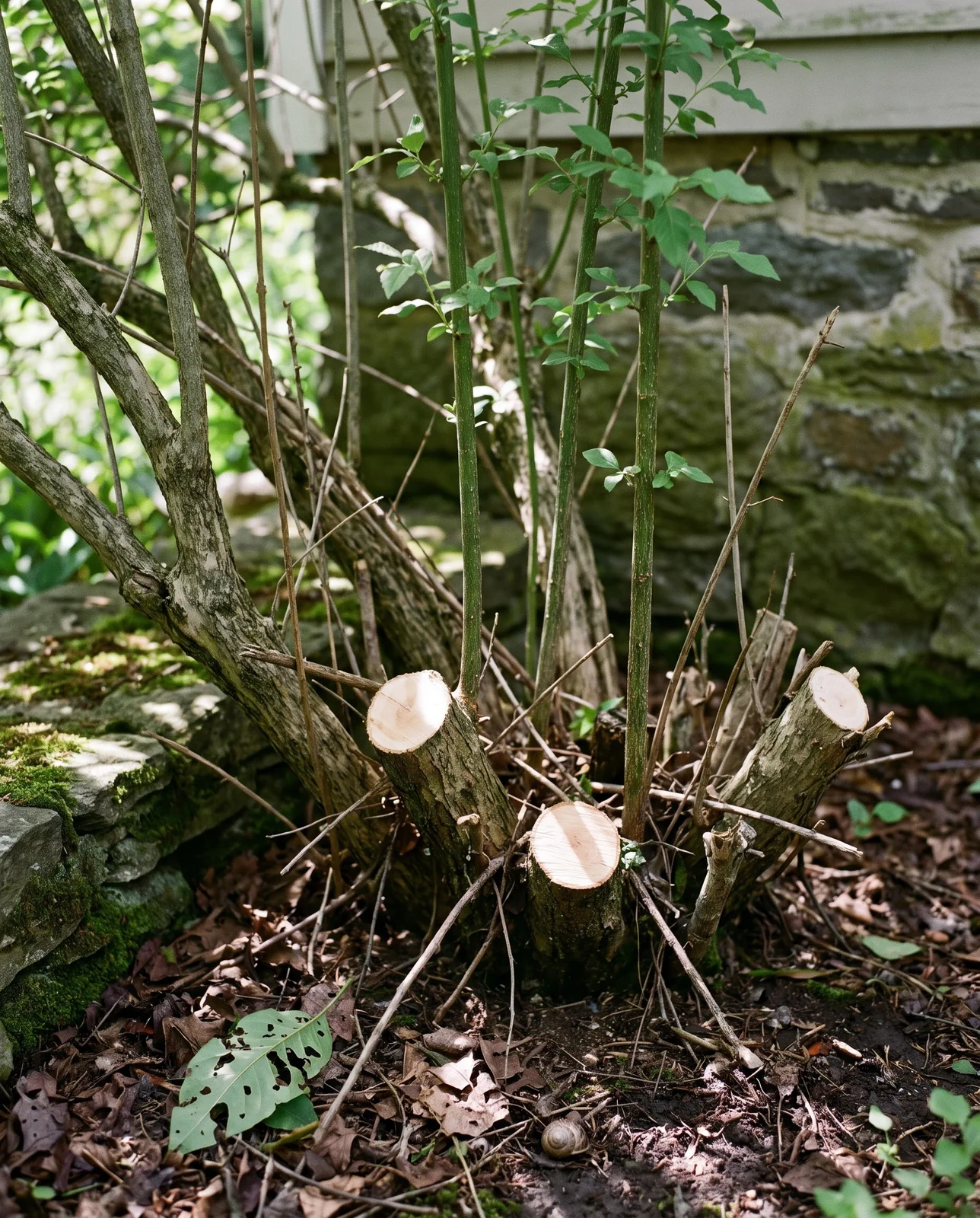
Start with the pruning date, which is easy to get wrong and just as easy to fix. Spring spireas form their flower buds on old wood, so trimming them in late winter cuts away the coming season of blooms. If an established shrub bloomed for years and suddenly stopped after a hard early cut, check which group it belongs to before trying anything else.
Sunlight comes next. Spirea needs full sun, meaning 6 or more hours of direct sunlight each day, and getting less than that is a common reason flowers fail to appear. Plants can take light shade, but full sun produces more blooms, better color, and brighter autumn leaves. Shade often creeps in slowly as surrounding trees grow taller.
Feeding the plant is another common impulse, but over-fertilizing can cause leggy growth, so keep fertilizer light. Stripping away discolored leaves to redirect energy toward flowers or inspecting stems for pests will not bring back the bloom. When a healthy bush produces leaves and no flowers, the pruning calendar and daily sunlight are usually the two things that matter.
Yellow leaves are three different things
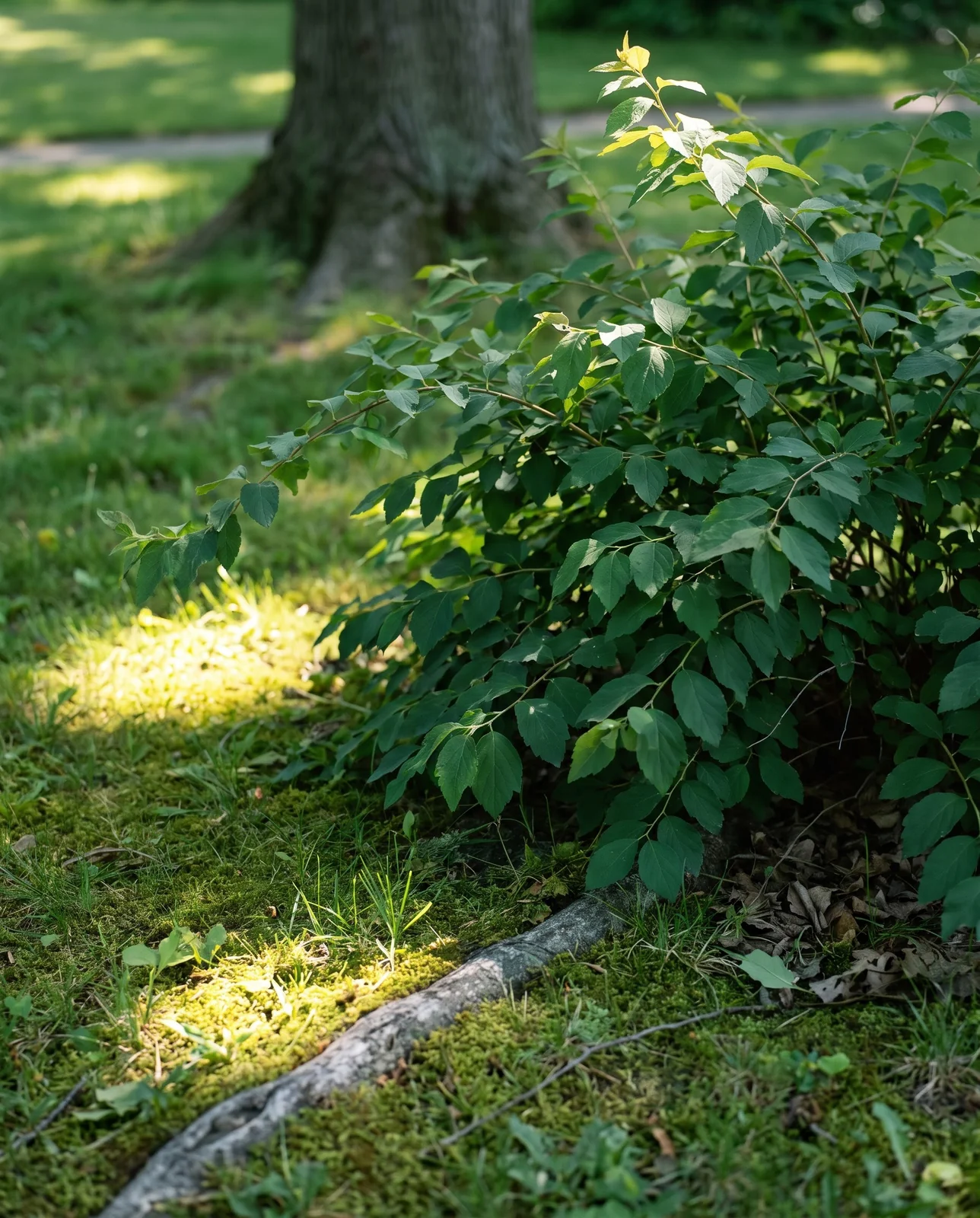
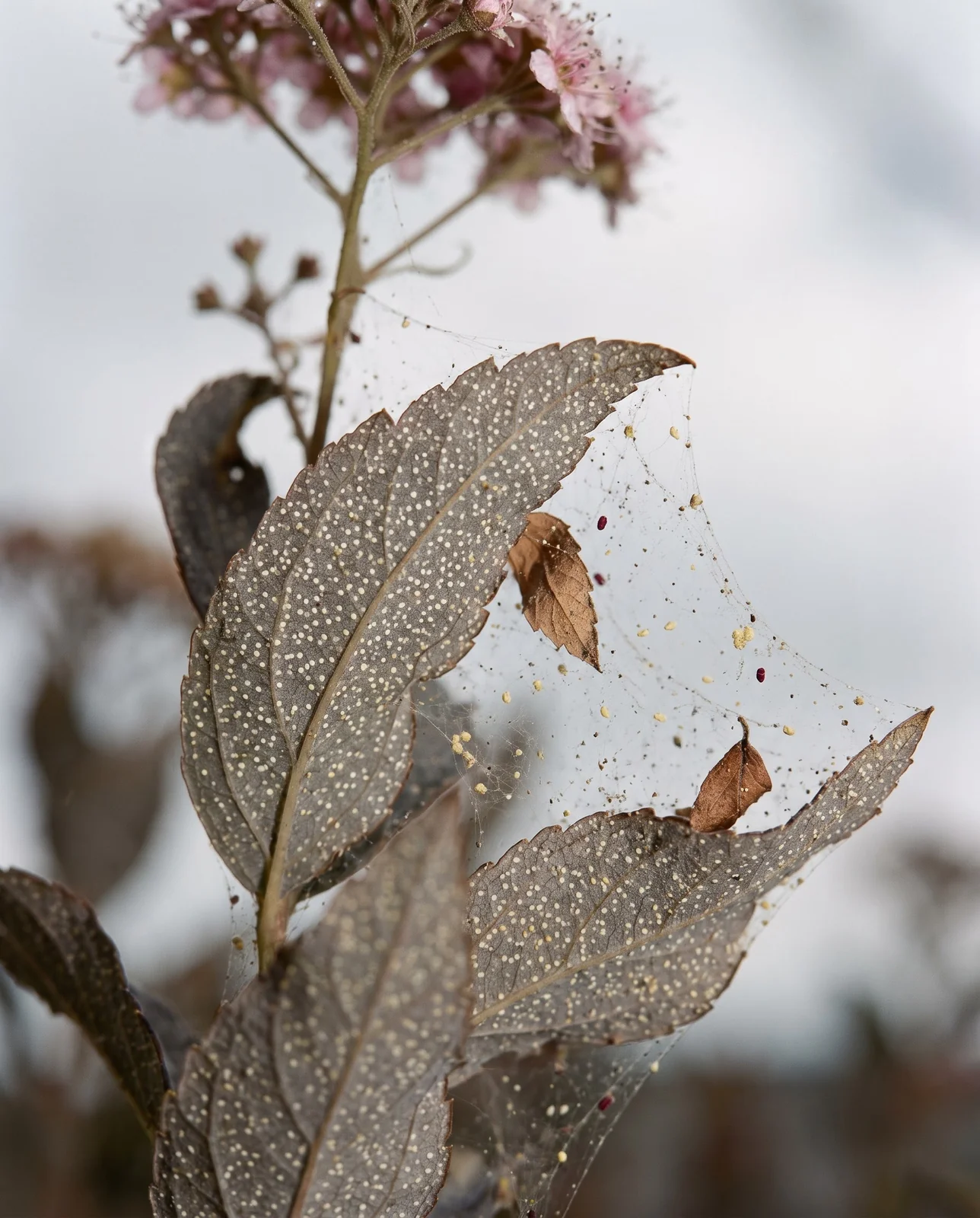
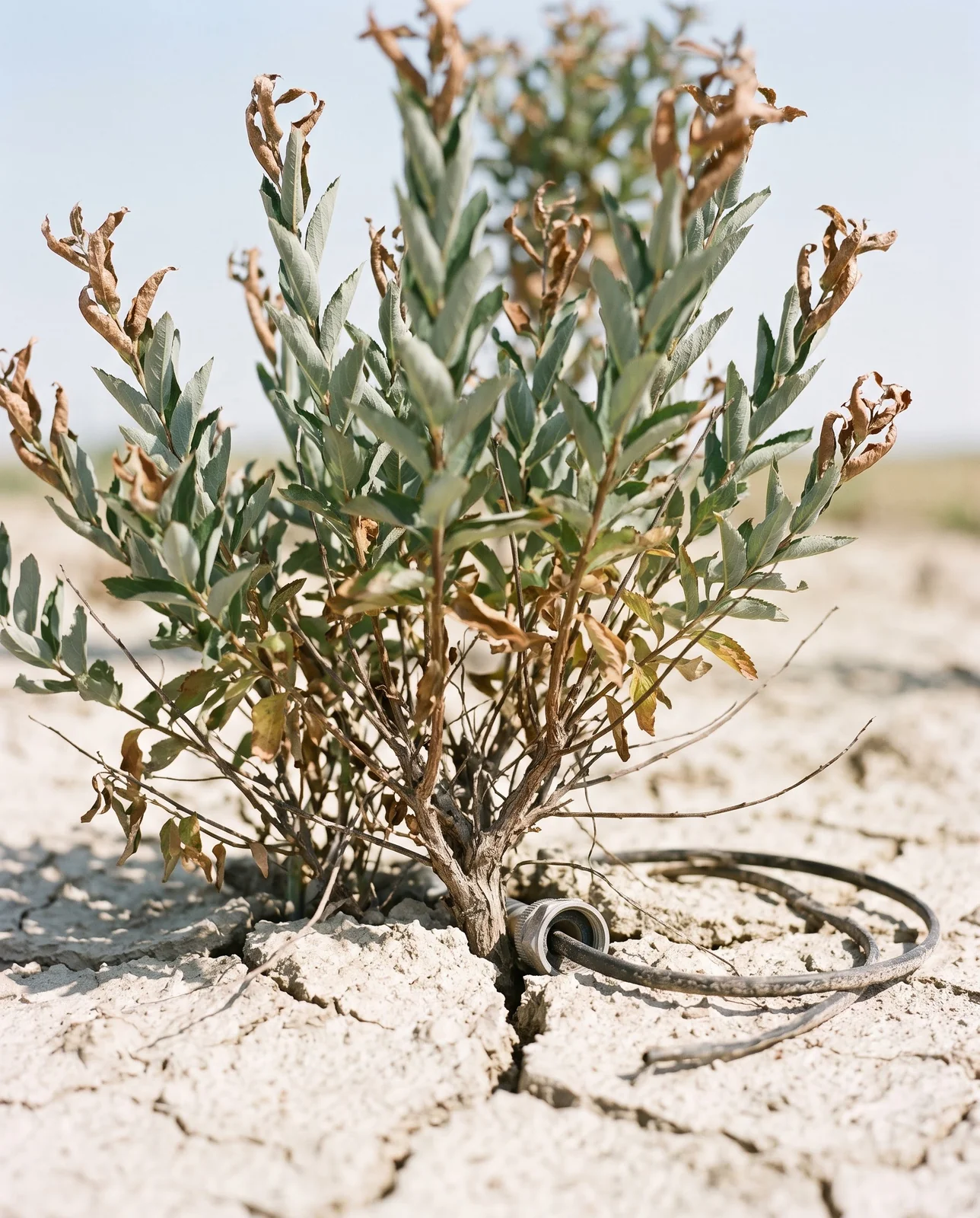
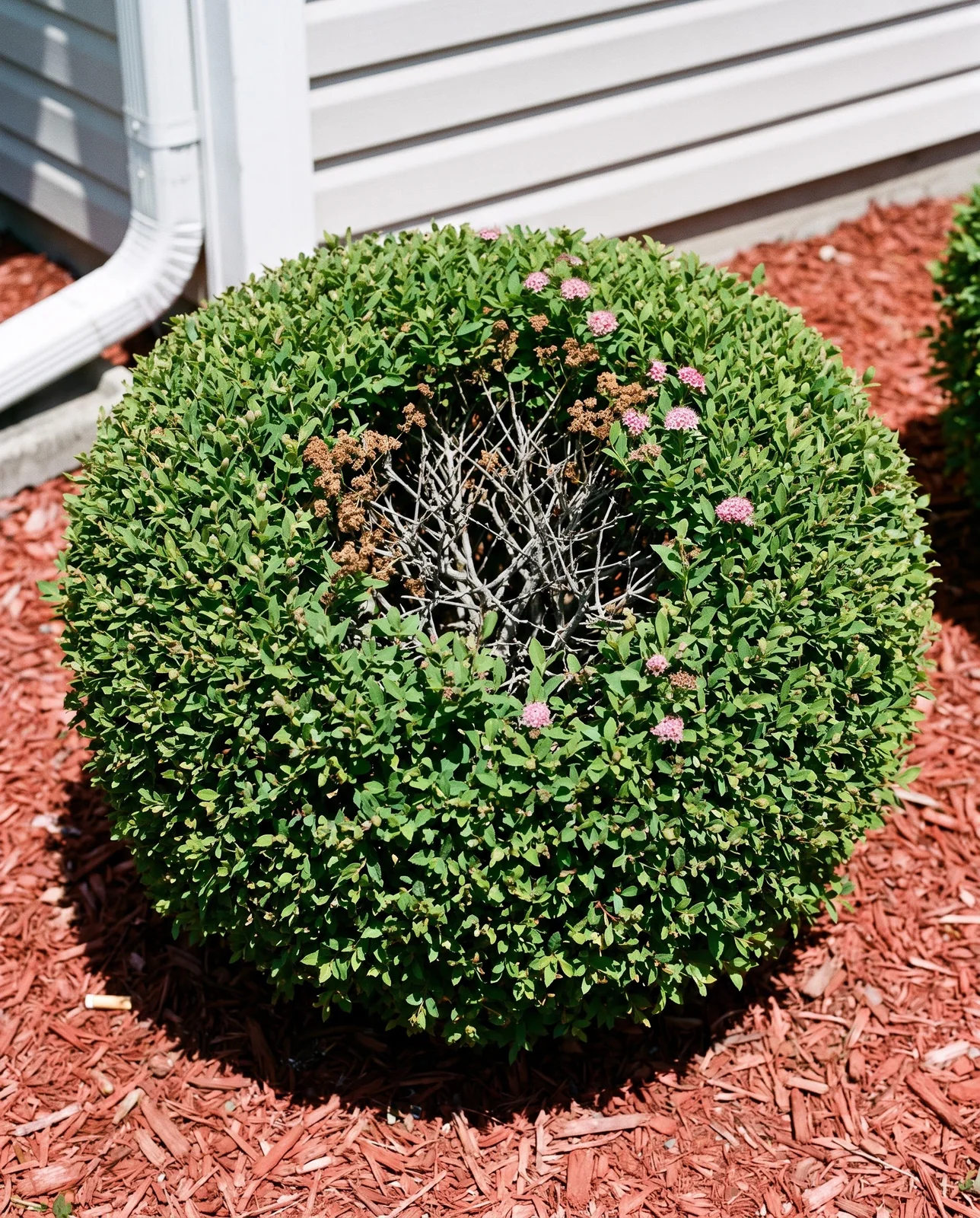
Yellow leaves on a spirea come from three different situations, each calling for its own fix. Water at either extreme accounts for the first two. Too much water can cause leaves to yellow, while drought can leave the shrub looking sickly and pale with no blooms. The third reason has nothing to do with watering. Mites feed on the leaves until they fade past yellow into a dull bronze that looks like a disease.
That pest damage comes from two-spotted spider mites, and the symptoms develop step by step. Feeding begins as white to yellow stippling across the leaves, and the foliage can turn off-green. Heavy infestations push the damage further, turning leaves white, yellow, and finally grayish bronze, and leaves may drop early. Fine webbing can also appear when the infestation is heavy. The mites themselves measure about 1/50 inch long, yellow to dark red with dark spots, and you need a magnifying lens to see them. They usually show up from late June through August and are more prevalent in hot, dry weather, right when yellowing foliage is easily mistaken for thirst.
Two other conditions look like yellow leaves without involving water or mites. A pale shoot on an otherwise green bush is usually a chimera, which is not a sign of disease, chemical damage, or poor nutrition. Foliage that turns yellow, wilts, turns brown, and dies back points to injury from a non-selective herbicide. A single pale branch among green ones needs no treatment, while weedkiller drift damages the entire shrub.
Overwatered or thirsty, and how to tell
Both watering extremes produce similar foliage symptoms, so the soil and the season help tell them apart.
Spirea problems, most reported first
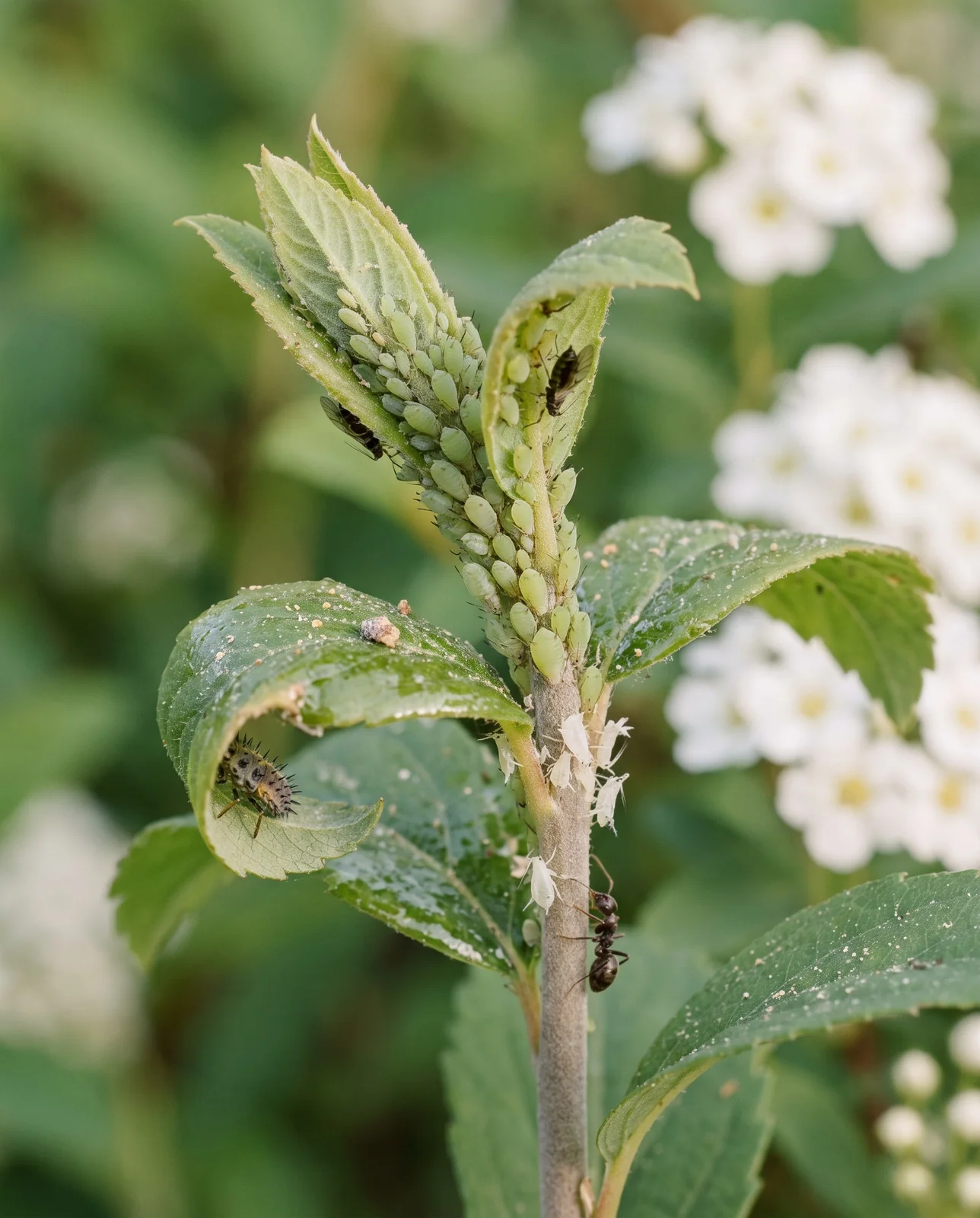
Spireas stay mostly trouble-free in the garden, though aphids, spider mites, scale, powdery mildew, fire blight, and leaf spot can occasionally show up.
Symptoms: clusters of tiny insects gather along tender young shoots in spring. What to do: these spring pests appear occasionally, and spraying them in the early evening with an insecticidal soap solution keeps them under control.
Symptoms: fine pale stippling turns leaves yellow and finally grayish bronze, and heavy feeding can cause leaves to drop early.
Symptoms: pale powdery patches develop across the foliage and can coat leaves completely during bad outbreaks. By the middle of summer, affected foliage may become stunted, reddened, scorched, or puckered.
Symptoms: leaf spotting from Phyllosticta or Cylindrocladium can appear on bumalda varieties, though it remains rare. What to do: keep water off the foliage, since overhead watering increases the risk of leaf disease.
Symptoms: foliage on one or more branches shifts from red to yellow, wilts, and drops away as verticillium wilt sets in. What to check: scrape back the bark on a dying branch to see whether dark olive or gray streaks run through the sapwood.
Symptoms: armored or soft scale can settle along stems, while redbanded and white-lined leafrollers feed on foliage, with scale sometimes troubling other spireas as well.
Is Japanese spirea a problem plant
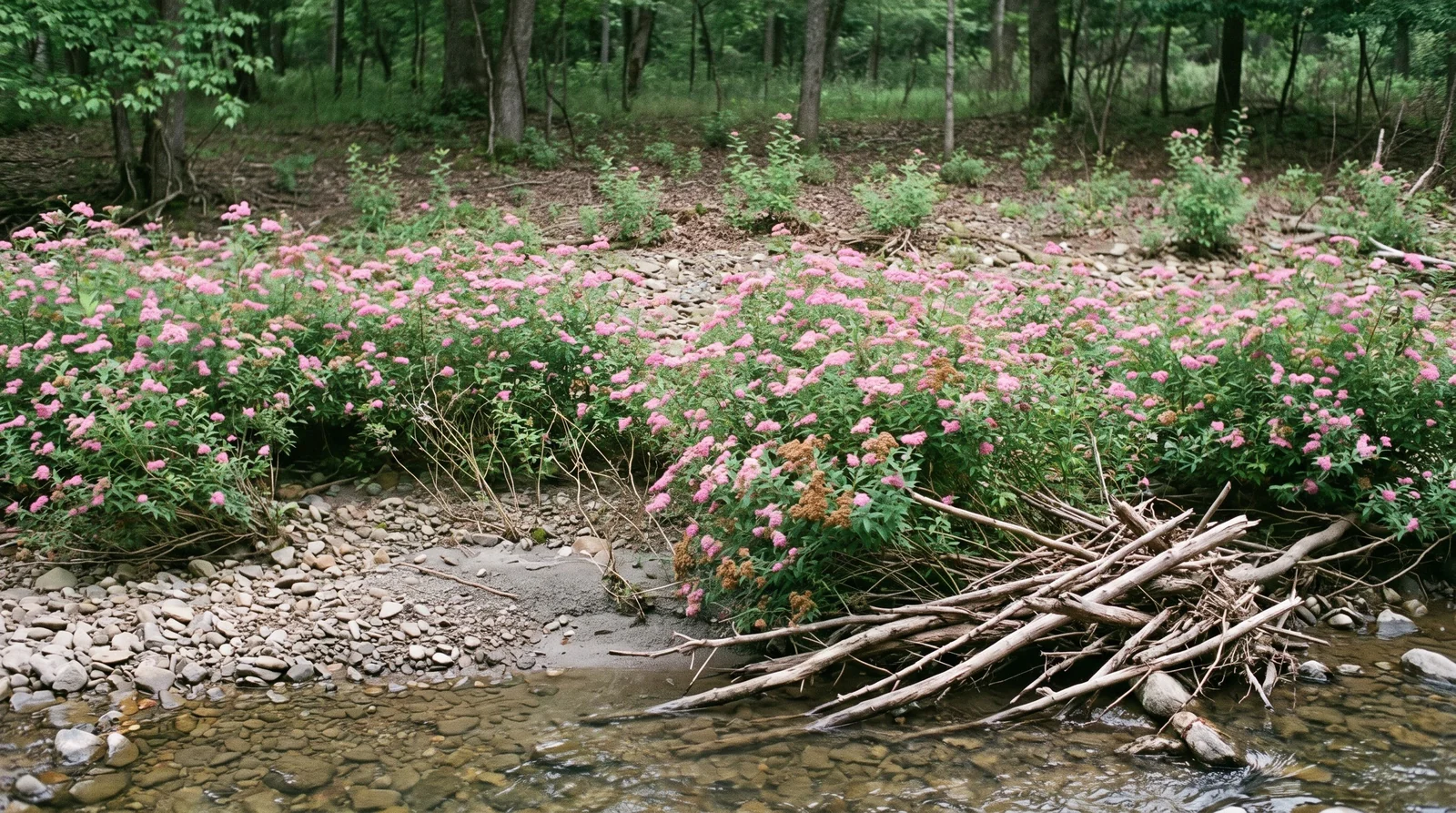
Japanese spirea has become a problem shrub across much of the eastern United States, escaping gardens and naturalizing in the wild. It behaves as an invasive plant across Georgia, Kentucky, Maryland, New Jersey, North Carolina, Pennsylvania, South Carolina, Tennessee, and Virginia, including the Great Smoky Mountains. The shrub can spread along roadsides and clearings into native plant communities, posing an established threat in Tennessee and a significant threat in Kentucky. Because of that invasive spread, neither Japanese spirea nor its bumalda hybrids are recommended for landscape planting in the Southeast. Gardeners in those states do better choosing well-behaved alternatives, including native Virginia spirea.
In Pennsylvania, official regulation and garden advice pull in different directions. The state Controlled Plant and Noxious Weed Committee voted not to place Japanese spirea on the noxious weed list. Even so, gardeners who already grow it are advised to consider removing the shrub and replacing it with a non-invasive plant. In natural habitats, the escaped shrub crowds out native vegetation, and its dropped seeds stay viable in the soil for years. Some newer selections are marketed as sterile, but only time will tell whether they are truly non-invasive.
First grown in American gardens in the late 1800s, it spread from the Northeast across the Midwest and Southeast. Each shrub produces hundreds of small seeds that wash down streams and take hold along banks where tree cover is light. Once established, the shrub grows rapidly into thick stands that can invade canopy gaps and woodland edges. A 2009 trial evaluated twenty common cultivars to test their fertility through pollen and seed germination. Three cultivars proved sterile, 'Crispa', 'Dart's Red' and 'Neon Flash', with almost none of their pollen able to germinate. None of the three set viable seed, while seed from the fertile selections sprouted almost every time. The other seventeen cultivars tested, including 'Anthony Waterer', 'Goldflame', 'Goldmound', and 'Little Princess', should be treated as fertile.
The North American spireas
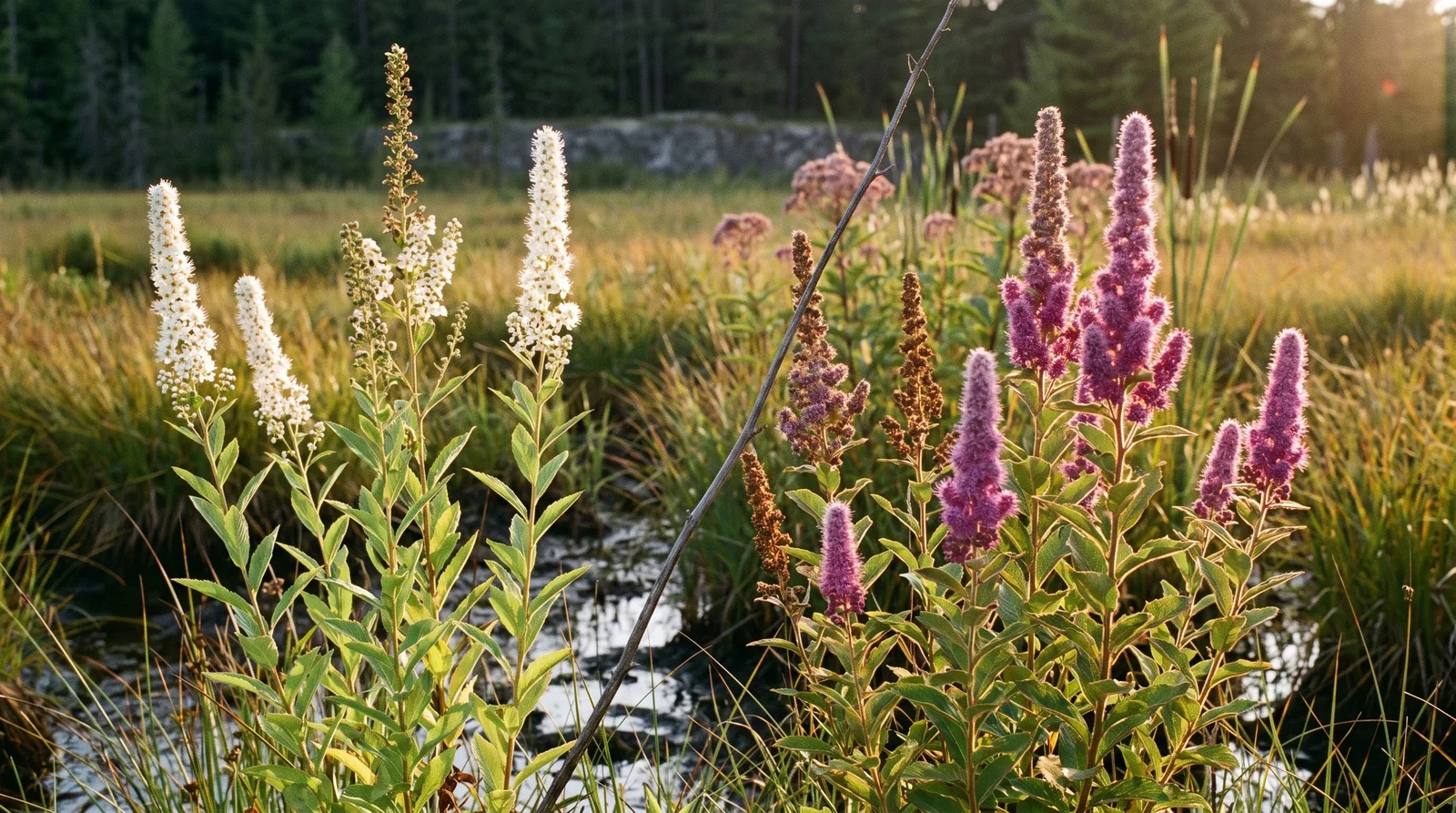
North America has its own native spireas, and the familiar ones bloom through summer in damp ground. Meadowsweet is native to eastern and midwestern North America, flowering from June through September. Steeplebush is an upright, suckering shrub of wet meadows and bogs, blooming pink to rose-purple from July through September. Out west, rose spirea grows from Alaska to northern California and east to western Montana. It reaches 2 to 7 feet tall on slender upright stems. Birchleaf spirea forms a small, rounded shrub with dark green, birch-like leaves and white flowers in early summer. Virginia meadowsweet is rare in the wild, holding federal threatened status.
Ninebark makes a natural native substitute for Japanese spirea, offering colorful foliage and clusters of white or pink flowers. Other reliable native options include Ceanothus americanus, Fothergilla gardenii, Itea virginica, and Kalmia latifolia. Native spireas are not direct swaps for white spring shrubs, mostly because of the ground they need. Meadowsweet is native to eastern North America and Canada, generally growing in very moist soil. It is sensitive to heat and does not perform well in dry ground. These native plants belong in a rain garden, along a pond edge, or in any damp hollow where moisture lingers.
Zones, and why the published ranges differ
Hardiness numbers differ because each figure describes a different species or selection. Taken across the entire genus, spirea survives from USDA zones 3a to 9b. Japanese spirea covers zones 3a to 8b, broadly summarized as zones 3 to 8. Bridal wreath spirea needs milder winters, surviving in zones 5a to 8b. The two eastern native shrubs push farther into winter cold. Meadowsweet is hardy in zones 3a to 7a, while steeplebush spans zones 3a to 8b.
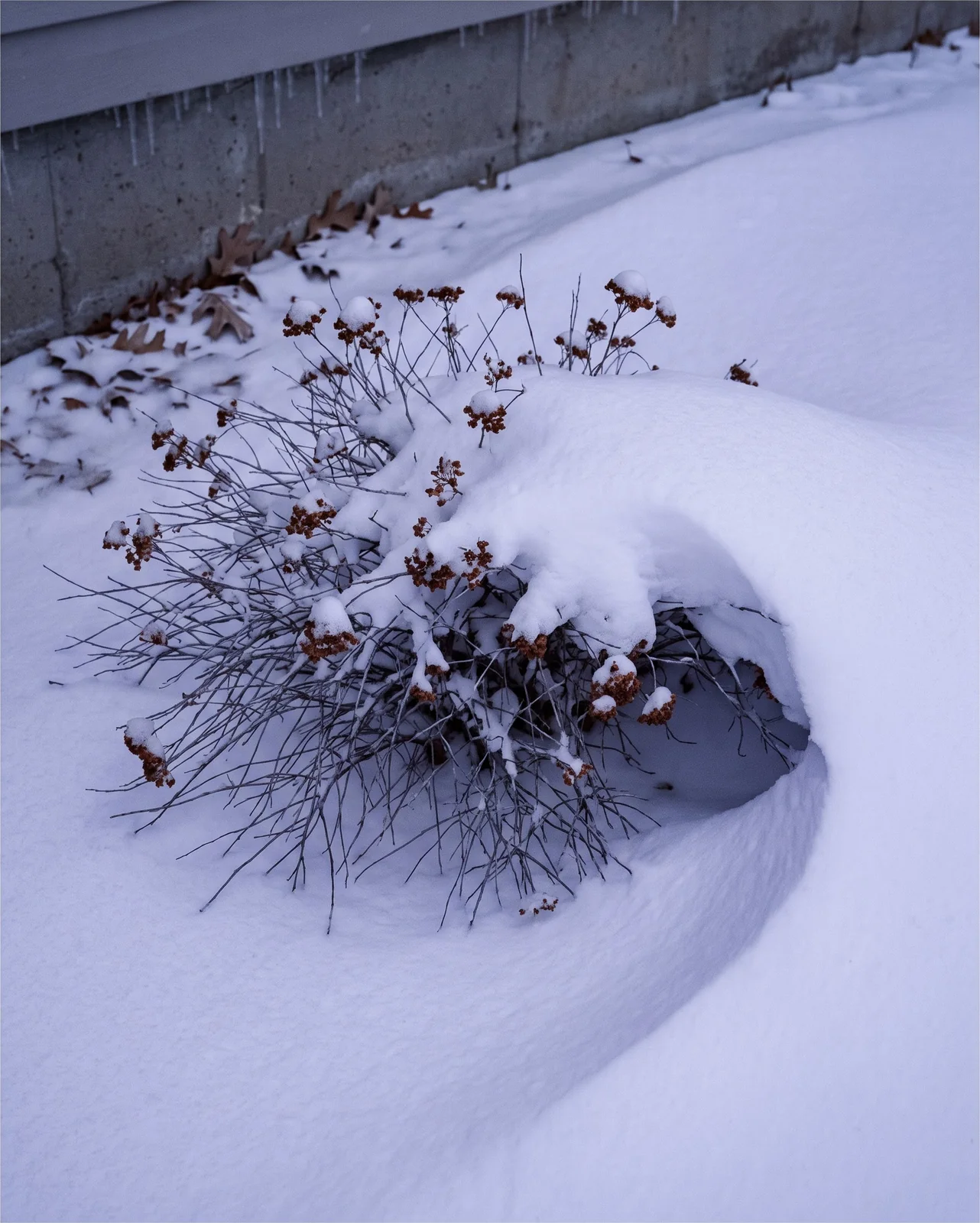
Most cultivated spireas thrive across zones 4 to 8, though cold-hardy selections reach zone 3 and others tolerate zone 9 depending on the variety. A single flat baseline rates the group as hardy to zone 4. The exact winter cold a plant tolerates comes down to the cultivar, so the nursery tag gives the number that matters.
Where and when to plant spirea
Fall is the best planting time, as it is for most shrubs. Spring or fall both work well, as with most woody shrubs, though fall is recommended when transplanting. The shrubs tolerate most soils, with extremely wet ground being the only real exception. Where you place the shrub depends on which group you grow. Summer mounds stay compact near the front of a bed. Spring spireas need generous room, because their arching canes sweep outward well past the crown.
How much sun spirea needs
Spireas generally do best in full sun, receiving 6 hours or more of direct light each day. Check how shadows move across the bed, because shade from a growing tree slowly cuts into that light. Sun matters just as much for summer cultivars, whose bright golden and bronze foliage needs strong light to hold its color.
Height and spread
Spirea sizes vary across the genus, with heights spanning 1.5 to 8 feet, and some species reaching 2 to 10 feet. Compact summer varieties stay as small as 12 to 15 inches tall and 2 to 3 feet wide. At the larger end, classic Vanhoutte spirea can grow 5 to 8 feet high and spread as much as 7 to 10 feet wide. Spread is the measurement people often skip, yet it decides whether a garden path stays open once those arching branches mature.
Does spirea spread
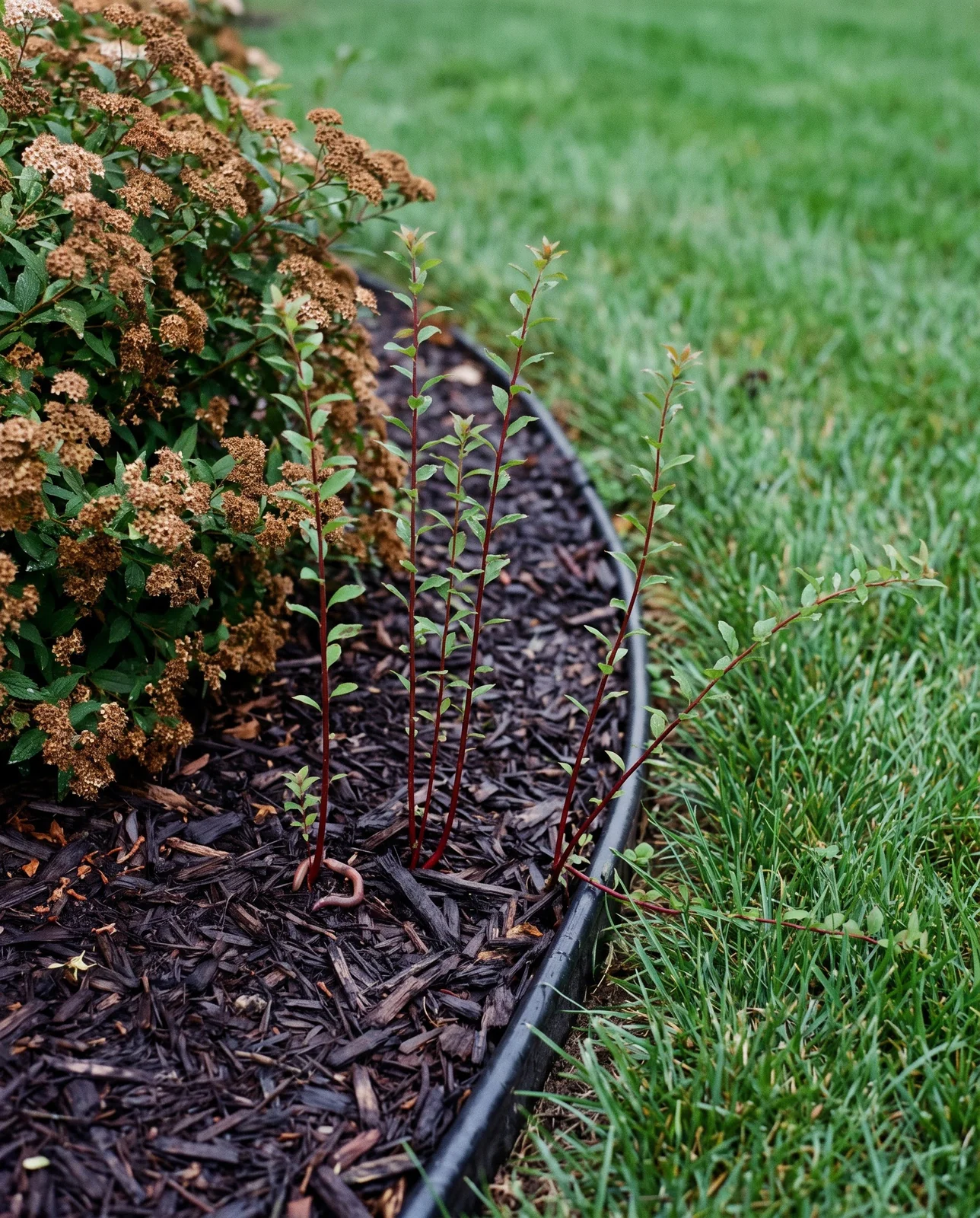
Spirea can spread in two different ways: by widening its clump underground, and by casting seed across the garden. Some species spread by suckers. Japanese spirea reproduces by suckering or stem cuttings, creating dense thickets of wiry stems that displace other plants. Among native shrubs, rose spirea also spreads by underground suckers to form dense thickets. Suckering stays close to the crown, where you can reach wayward growth with a spade.
Seed dispersal is where Japanese spirea causes wider trouble. It spreads tiny, abundant, fertile seeds far and wide, and young seedlings often appear nearby already in bloom. The shrub grows quickly and can seed aggressively, escaping gardens to naturalize across many parts of the eastern United States. Native species bear very few viable seeds, spreading through underground runners into shrub patches. A native shrub widens in place, while fertile garden cultivars can wander far from where they were planted.
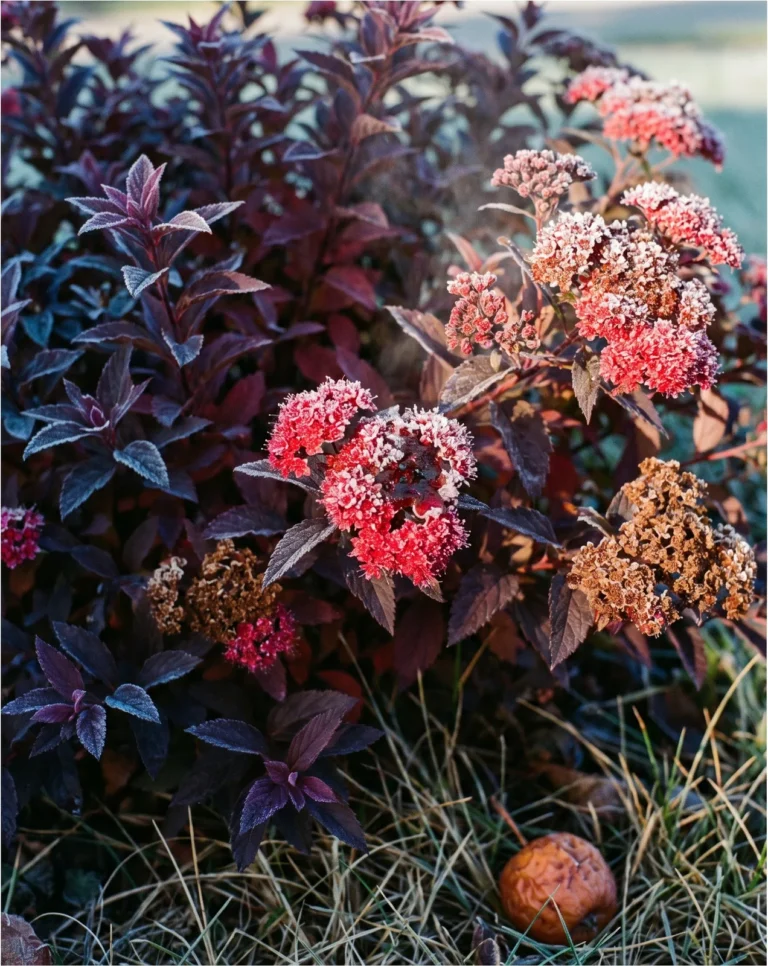
Ten spireas worth telling apart
Ten standout varieties you will find in nurseries, grouped by bloom season, mature size, and foliage color.
Deer, rabbits, and what browses spirea
Spireas are generally resistant to deer and rabbits, and deer usually leave the shrubs alone. Japanese spirea is less certain, as deer may damage its foliage in some gardens. Among native species, steeplebush tolerates deer. None of these ratings acts like a fence, and in a lean winter hungry deer can browse almost anything.
Hedges, borders, and foundation beds
Summer-blooming spireas work well for low hedges, because their compact habit stays easy to control. The cultivar 'Goldflame' holds 2 to 3 feet tall and wide. Selection 'Anthony Waterer' spreads slightly wider, reaching 2 to 3 feet tall by 3 to 4 feet wide. Limemound fills out at 3 feet tall and 4 feet wide. In a mixed border, spirea sits naturally in the middle tier in front of a taller viburnum. Against a foundation wall, Snowmound fits neatly at 2 to 4 feet tall and wide. Larger spring spireas send their canes out and down, taking up far more garden ground than tags suggest.
Three things people repeat about spirea
All three survive because one name covers very different shrubs, and nursery tags rarely tell you which one you are holding.
The myth: Every spirea gets cut back hard in early spring.
The reality: Summer spireas take that hard early trim, while spring bloomers like Oriental spirea flower on old wood and are pruned right after flowering if needed. Cutting branches too early removes the unopened flower buds, the same timing rule that protects the buds of a bigleaf hydrangea.
The myth: A native spirea will stay where it is put.
The reality: Native rose spirea can become invasive, spreading readily by suckers and seedlings, especially on flat, sunny ground that stays moist to wet.
The myth: The old, widely planted varieties are the safe ones.
The reality: Decades-old varieties like 'Little Princess' and 'Anthony Waterer' are among those responsible for unplanned, unwanted spread that outcompetes native vegetation. Both are entirely fertile.
FAQ
Should spirea be cut back?
Yes, and the right time depends on when your bush flowers. Prune spring-blooming spireas right after the flowers fade. Summer-flowering types like Japanese spirea are cut back while bare, in late winter or early spring.
Does spirea prefer sun or shade?
Spirea prefers full sun, generally doing best with 6 hours or more of sun each day. Plants can take light shade, but an increase in shade can cause yellowish leaves and no flowers.
Do spireas spread?
Yes, though how they spread depends on the species. Some spirea species spread by suckers, while Japanese spirea scatters tiny, fertile seeds far and wide that sprout into young seedlings near established plants.
How big will spirea get?
Size depends on the species, with shrubs typically growing from 1.5 to 8 feet or 2 to 10 feet tall. Dwarf cultivars stay much smaller, such as Sundrop at just 12 to 15 inches tall and 2 to 3 feet wide.
Why are my spirea leaves yellow?
Yellow leaves usually come down to watering, light, or spider mites. Too much water can turn foliage yellow, while drought or an increase in shade can also cause yellowing. Heavy infestations of two-spotted spider mites turn leaves white, yellow, and grayish bronze, and leaves may drop early.
Why are my spirea bushes not blooming?
The two most common reasons are improper pruning and too little sunlight. Spring-blooming spireas flower on old wood and should be pruned after flowering has finished. Plants also require full sun each day, roughly 6 hours or more, and insufficient daily sunlight is a main reason a spirea will not bloom.
What is the best time of year to plant spirea?
Fall is the best time to plant spirea, as it is for most shrubs. You can also plant in spring, though fall is recommended if you need to transplant an established shrub.
What spirea varieties are hardy in zone 3?
Japanese spirea handles that cold well, hardy in zones 3a to 8b. Native meadowsweet grows in zones 3a to 7a, and native steeplebush is hardy in zones 3a to 8b. Bridal wreath spirea needs milder winters, hardy in zones 5a to 8b.
Is Japanese spirea invasive?
Yes, across much of the East and Midwest. The shrub is invasive in Virginia, Georgia, South Carolina, Tennessee, and Kentucky, as well as North Carolina, Maryland, New Jersey, and Pennsylvania. In Pennsylvania, the Controlled Plant and Noxious Weed Committee voted not to add it to the state noxious weed list at this time.
Is spirea poisonous to dogs or cats?
The ASPCA does not list spirea under either its common or botanical name. For native species, toxicity is unsettled, with some treating them as nonpoisonous and others as poisonous, possibly because spireas contain aspirin-like compounds. Keep dogs and cats from chewing on the branches.
Is spirea deer resistant?
Yes. Spireas are generally resistant to deer and rabbits, and deer usually do not damage them. Japanese spirea is an exception, as deer may damage that species.
What is the longest blooming spirea?
Double Play Doozie blooms the longest because it is a sterile, remontant cultivar, which means it repeat-blooms from late spring through fall.
Interesting tips
- If you plant a native spirea for wildlife, the choice of species matters. Meadowsweet is a larval host plant for the Spring Azure butterfly, and steeplebush is the larval host of the New England buck moth.
- The double-flowered Reeves spirea 'Lanceolata' carries blooms shaped like many-petaled miniature roses.
- In the Pacific Northwest, deer and livestock occasionally browse rose spirea, but it is considered poor forage.
Related Guides & Flowers
Crape myrtle
The summer shrub that builds its flowers on growth made after winter, pruned on the same logic.
Mock orange
Another arching white spring shrub for the same border, grown for scent as much as flower.
Roses
The family spirea belongs to, and the source of the troubles the two shrubs share.

Types of flowers
The full index of flowers on the site, sorted by type, season, and color.
Enjoying our flower guides? Add YourFlowersGuide as a preferred source on Google. It helps more readers find us.
Add to Preferred Sources