Taxonomy and origin
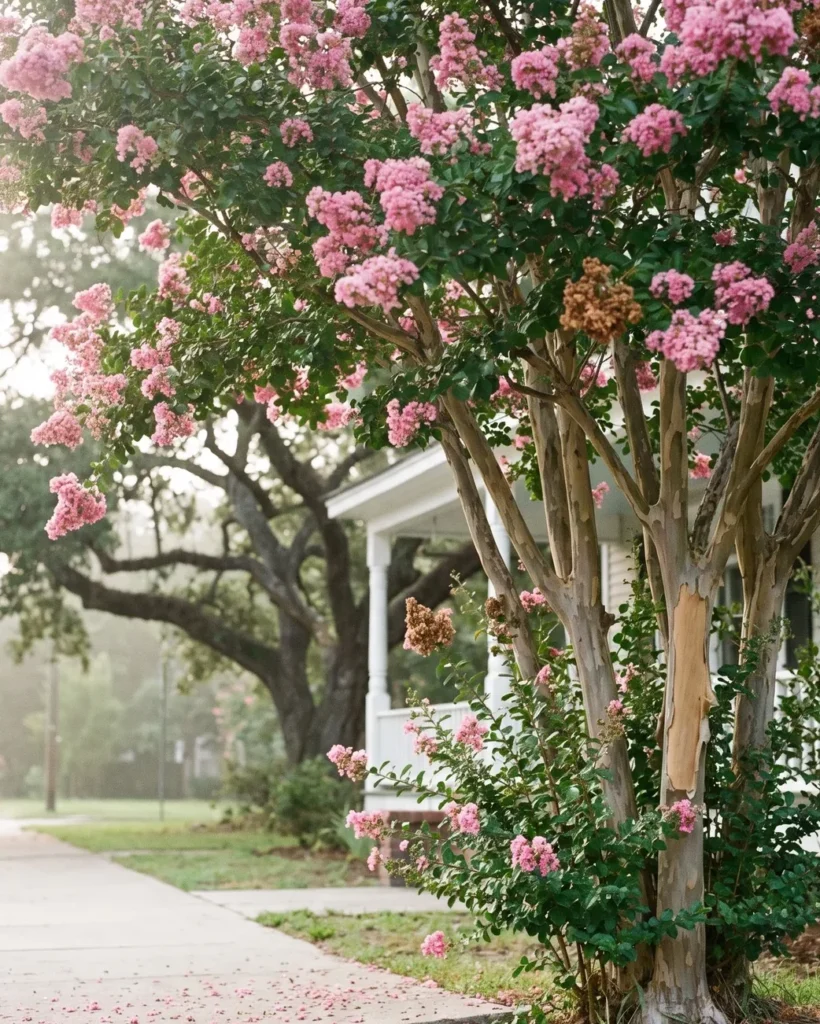
Crape myrtle is a deciduous shrub or small tree, and it is not a myrtle. The name points at flower clusters like crepe paper and at leaves and bark that resemble true myrtle. The tree came out of Asia and reached the United States in the early 19th century. It has been grown here for more than 175 years.
The size range is what buyers underestimate. Cultivars run from 3-foot shrubs to 30-foot trees, and the tag rarely says which. Crosses between Lagerstroemia indica and L. fauriei at the U.S. National Arboretum gave the hybrids that resist powdery mildew and take more cold. Every one of them carries the name of a Native American tribe, so a tribal name on the tag is a fast first filter.
Bloom time
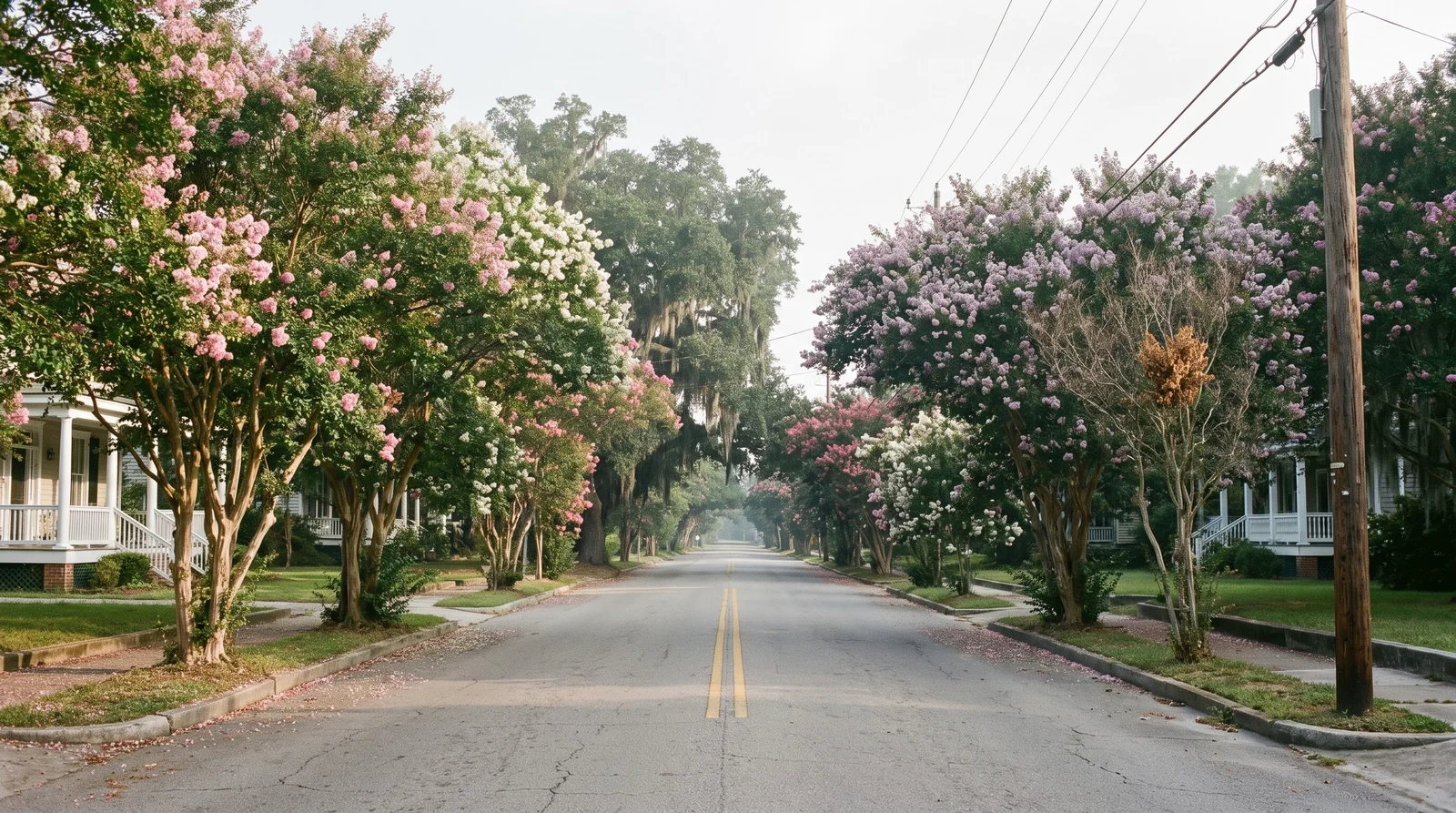
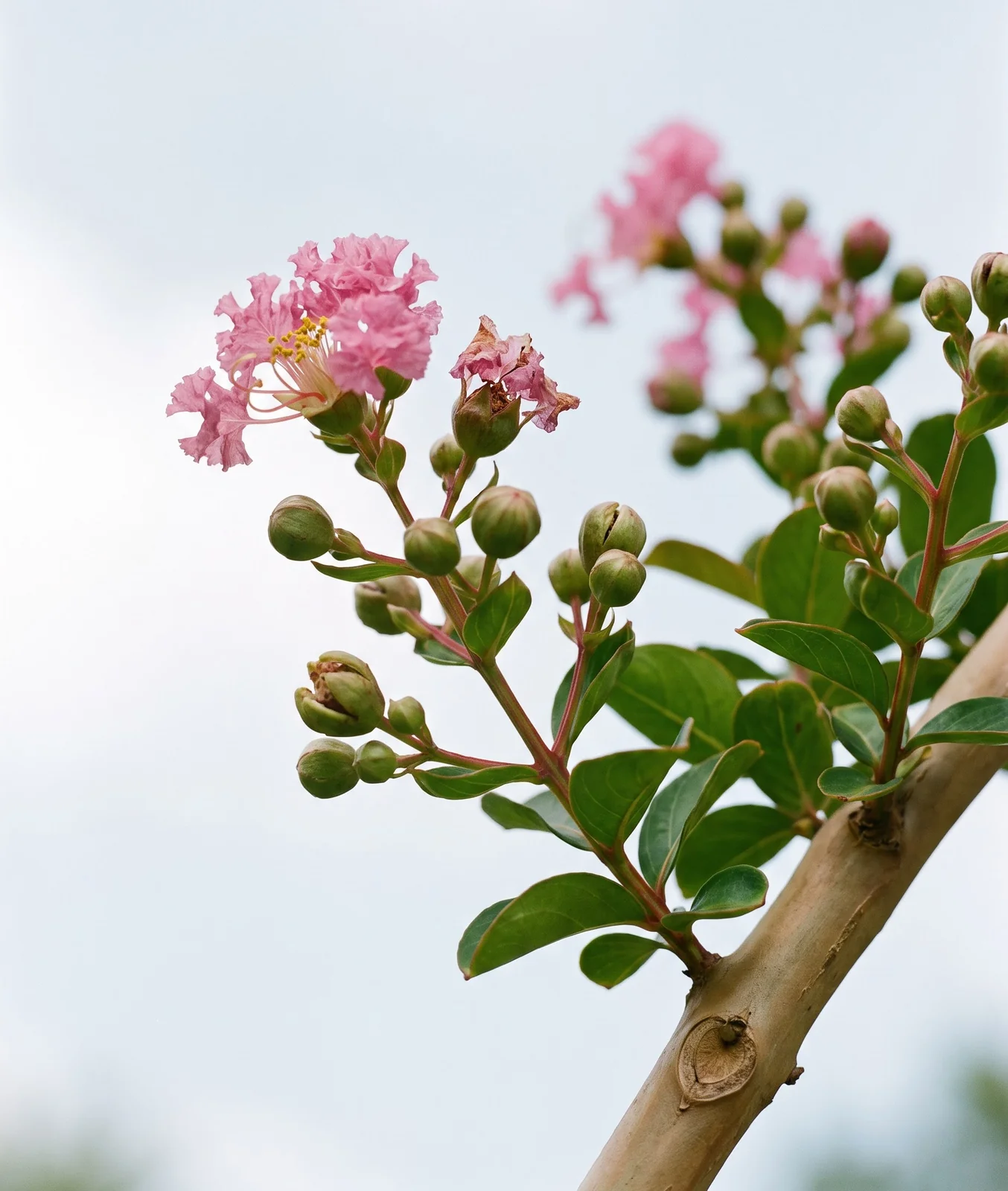
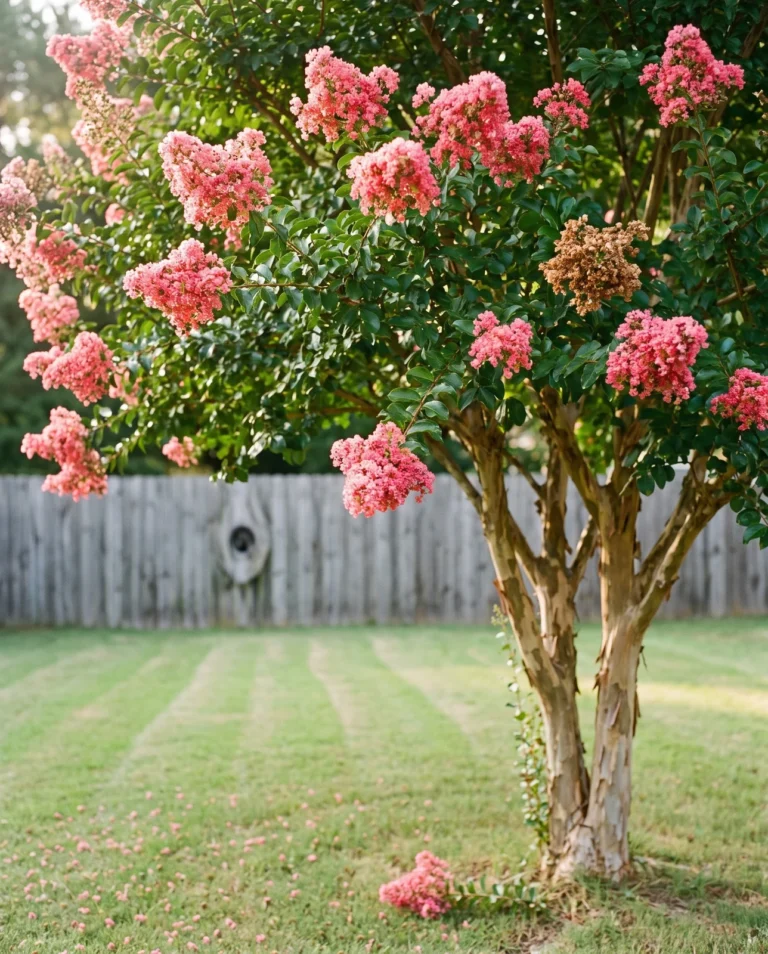
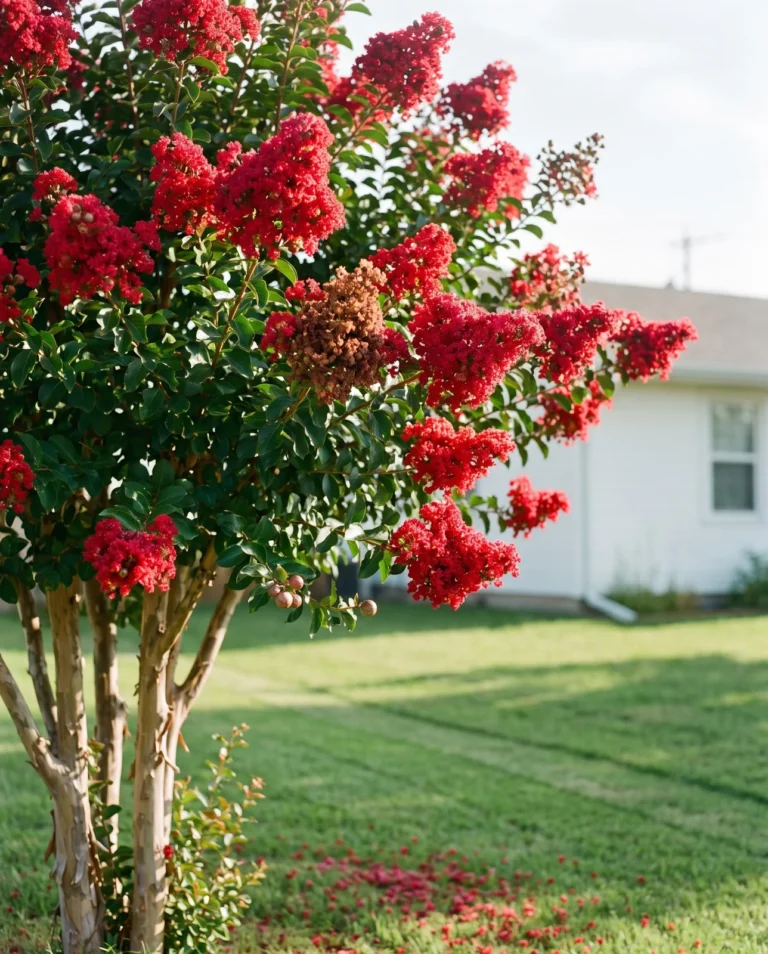
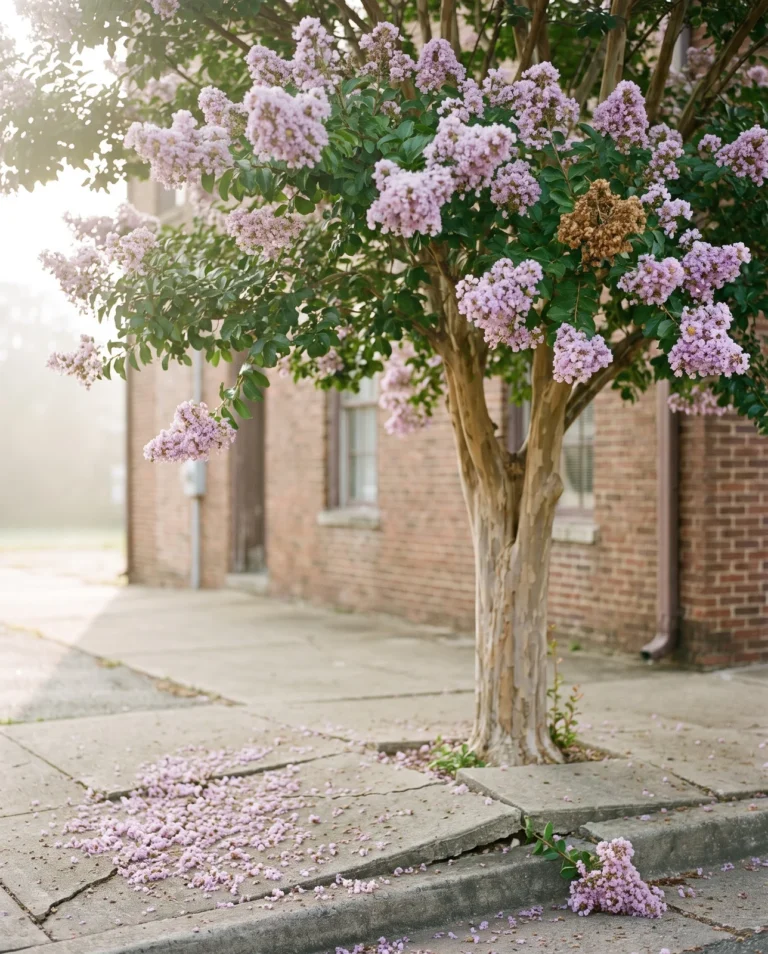
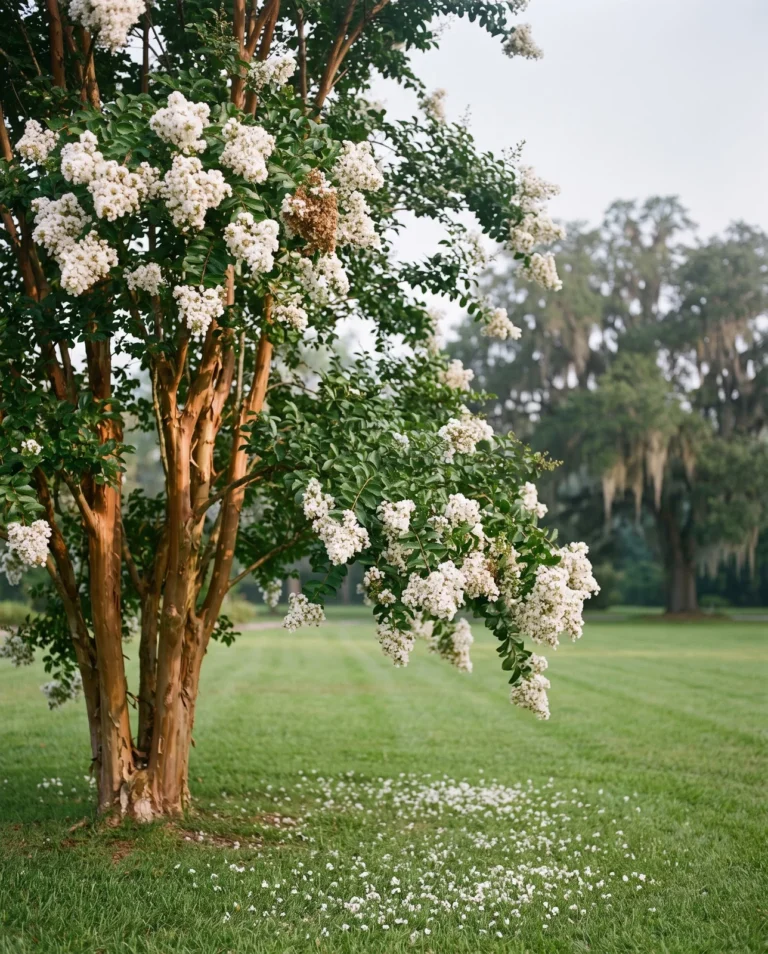
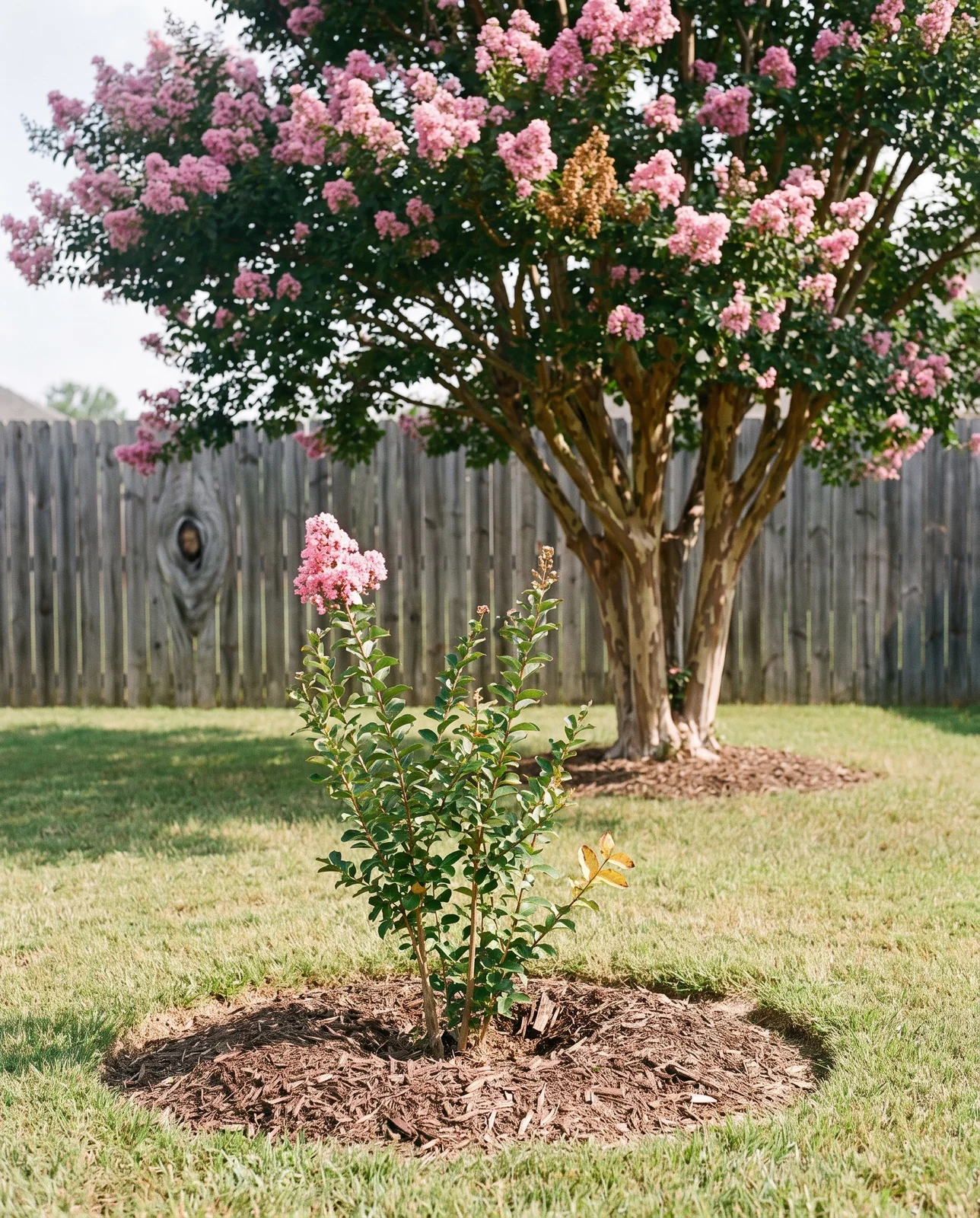
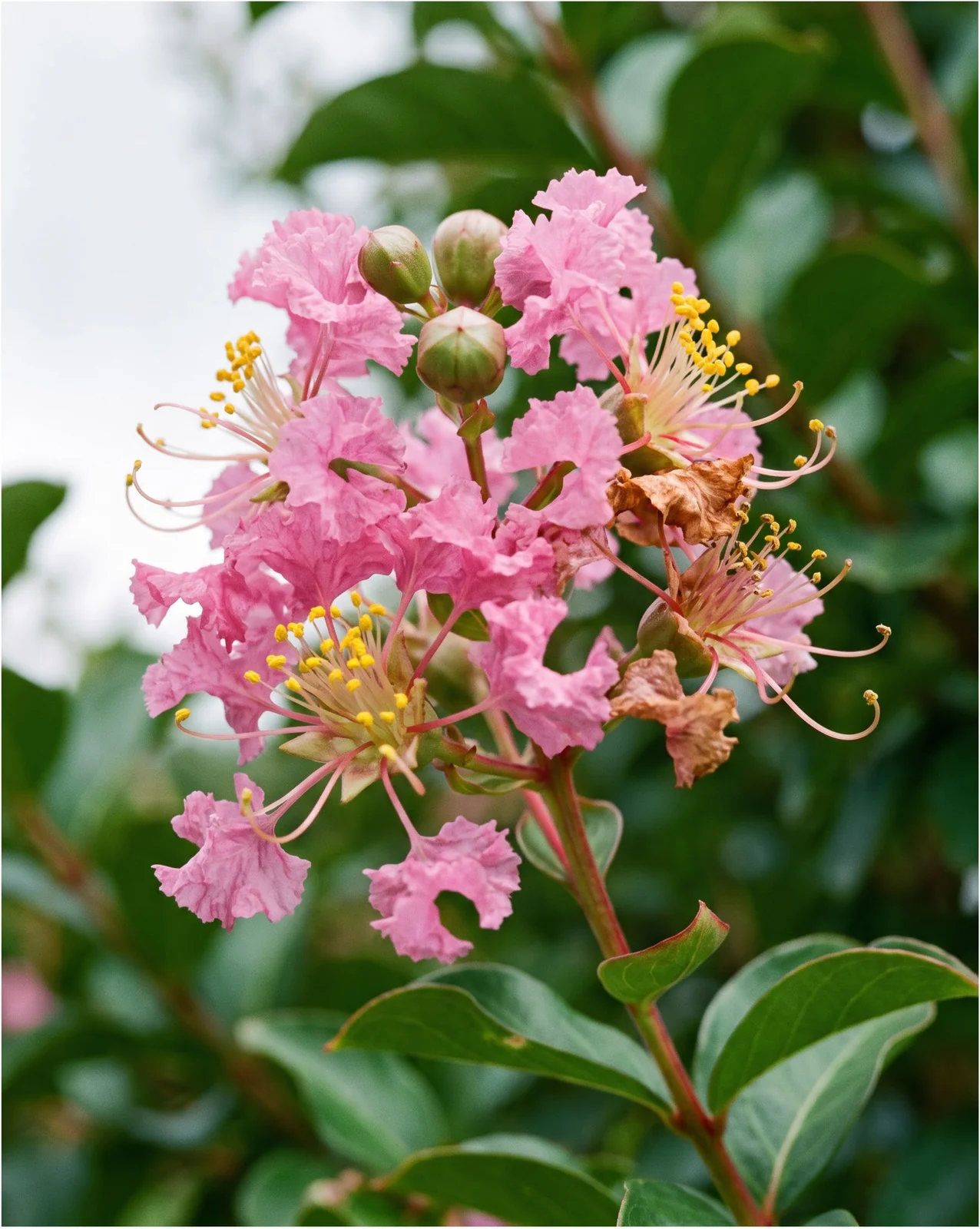
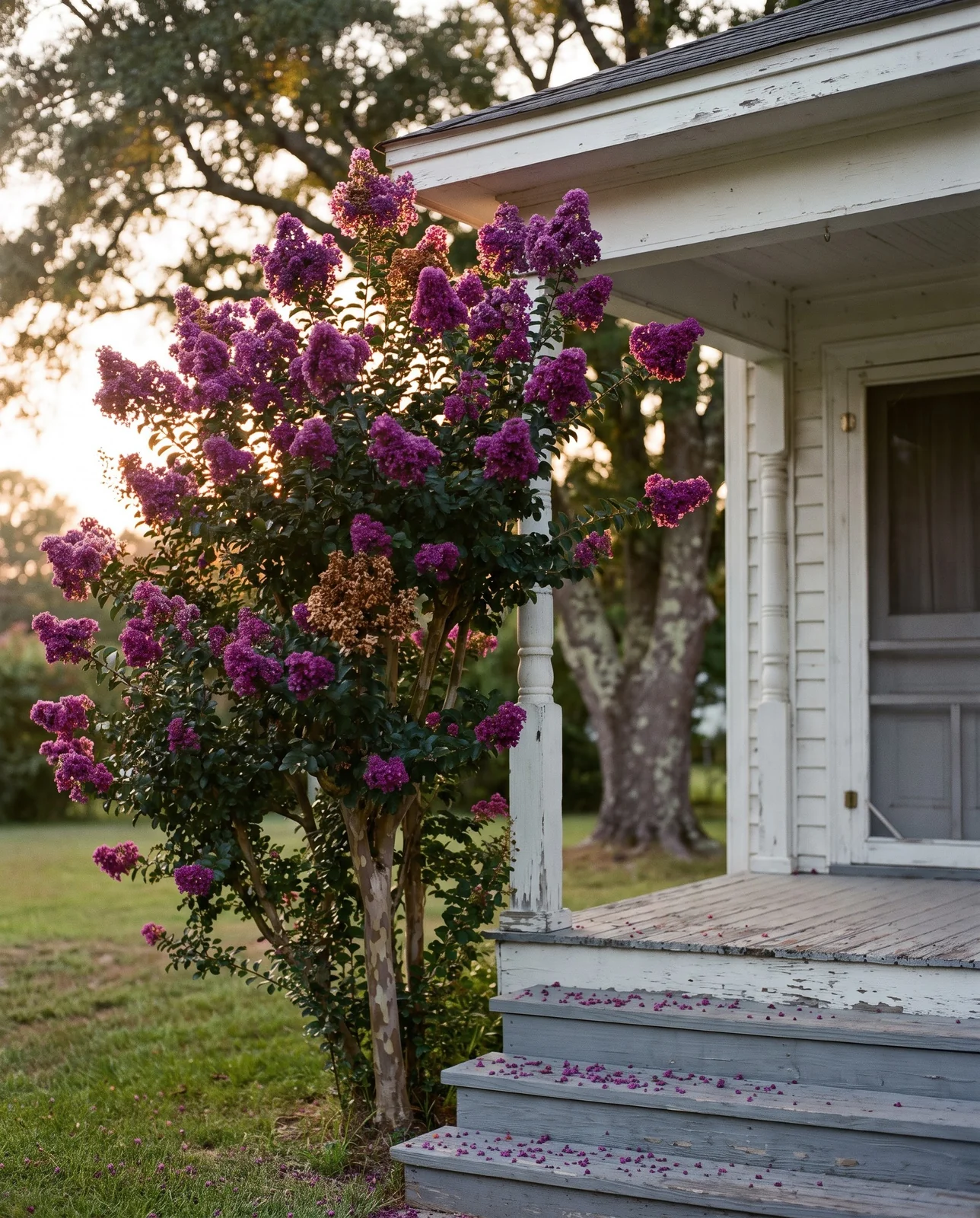
Crape myrtle flowers in the heat, from July into September across most of the range, and as early as May in the Deep South. The flowers come in cones 6 to 12 inches long at the branch tips, built from small crinkled petals that look like crepe paper. One 'Natchez' panicle carries 100 to 800 flowers.
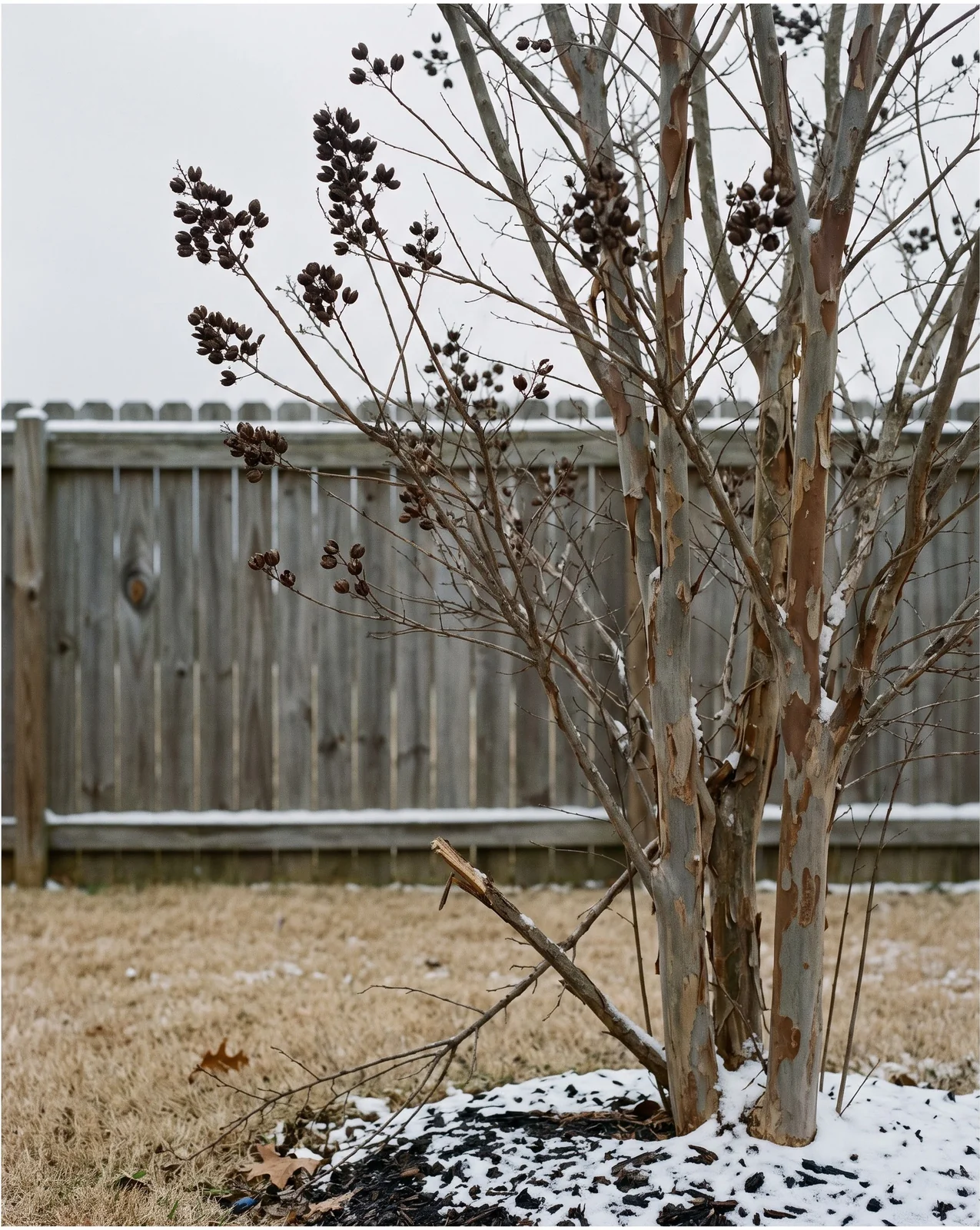
The timing runs off new growth. Buds form on the current season's shoots, so they start building as soon as spring growth does. That fixes the pruning date at the end of winter. Whether deadheading buys a second round is unsettled. Taking off spent blossoms brings a fresh flush in late summer on some cultivars, though a cultivar that blooms after mid-July is hard to push twice. Tip pruning to remove the dormant seed capsules costs no flowers, and capsules left on all winter do nothing to the next bloom. Left alone, the seedheads look good and drop on their own in spring.
Pruning, and what crape murder costs
Prune in the dormant season, from late winter into early spring, before growth resumes. Keep the job small. Take the three D's first, dead, dying and diseased wood, then the crossing branches, since rubbing opens wounds to disease and insects. On a tree-form plant the order is suckers at the base, the lower branches on the bottom third, then crowded branches inside the canopy. The lightest cut, tipping, goes through outer-canopy stems about a year old and as thick as a pencil. In full sun, with room to grow and clear of walkways, it may need no pruning at all.
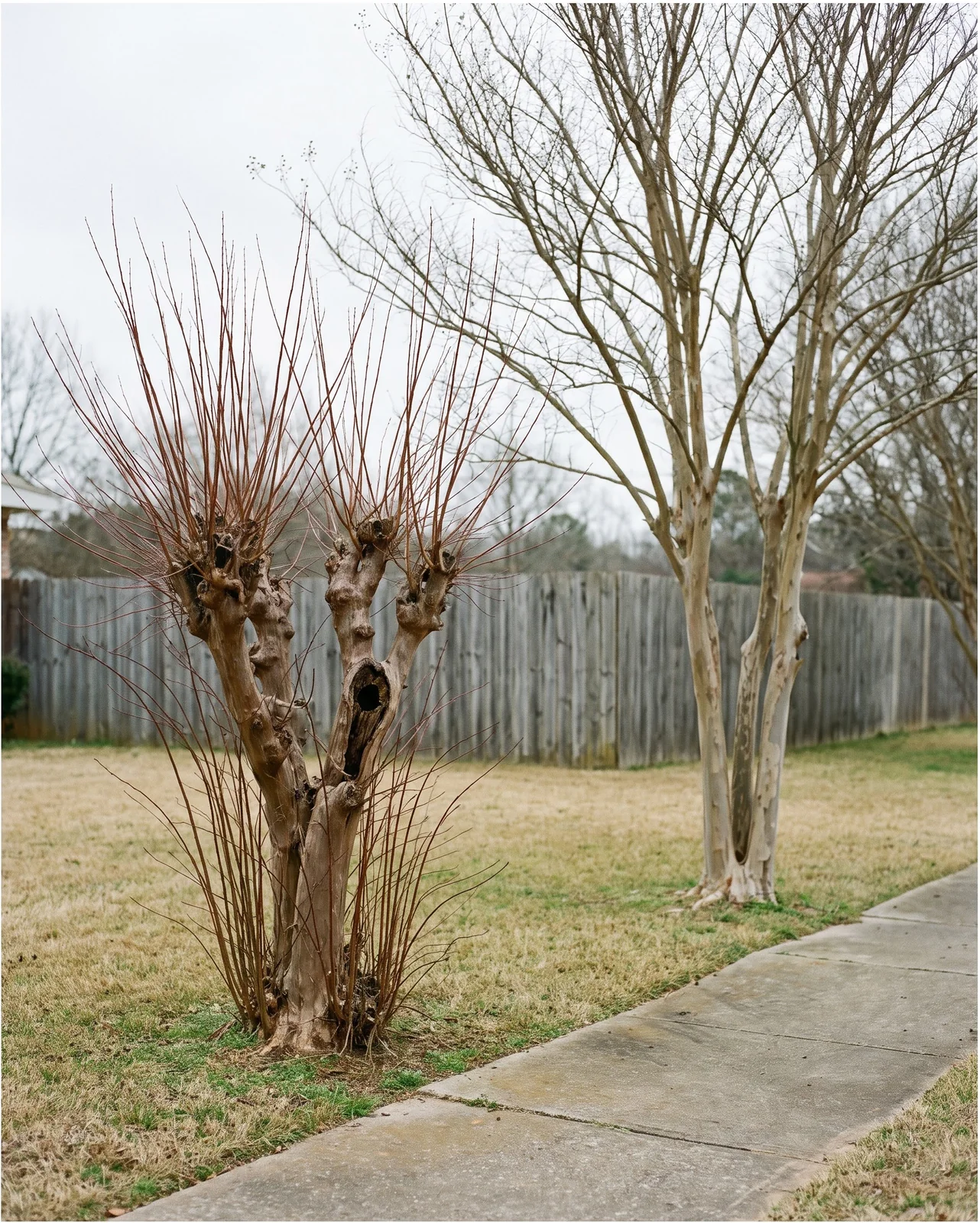
Topping is the other end of the scale. It removes large-diameter wood and shortens every stem and branch. Done every year, leaving big stubs, it is what people call crape murder. It costs flowers: topping and pollarding delay bloom by up to a month and shorten the season on some cultivars, while tip pruning changes neither. It costs more in structure. Long sprouts break out below the big cuts and bend under their own weight, too weak to hold summer flowers, so the branches sag when the panicles open. The cuts also strip stored starch and open wide wounds to insects and wood rot, and the suckering that follows carries powdery mildew into the canopy.
A topped tree can be rebuilt from its own sprouts: hard pruning brings them from the roots, the upper stems and the base of the main stems. Keep three to five shoots spaced around the stub, leaning slightly outward, as the new trunks. Clear their side branches over the next seasons until the canopy starts 3 to 4 feet up. Where a plant has to be held under its natural size, pollard it: cut through branches up to about three years old, then take the sprouts back to that same cut every year. That leaves fewer dead stubs and less decay than topping. A plant that needs cutting every year to fit its spot is the wrong cultivar for the spot.
When to cut, month by month
The pruning year sorts into five windows, and only two of them hold a saw.
Why a crape myrtle will not bloom
Sun and water come first: too little of either is the common cause of poor growth and poor flowering. Feeding is second, and gardeners create that one themselves. Rich soil grows lush leaves at the expense of flowers. Heavy nitrogen does the same, and the soft growth it pushes is what winter damages. Neither shows up as a sick plant, only as a green one.
Pruning, pests and cold take the rest. Flower numbers fall as the diameter of the cut rises, so a plant cut back hard carries fewer panicles. Bark scale gets there another way: a heavily infested tree turns black with sooty mold and blooms less, and smaller. Powdery mildew works on the buds, and heavily infected flowers may never open. Cold is the cause people misread. Where winter kills the top growth, the roots send up new stems, and those stems flower on new wood. A plant that looked finished in April can carry a full crop of panicles in August.
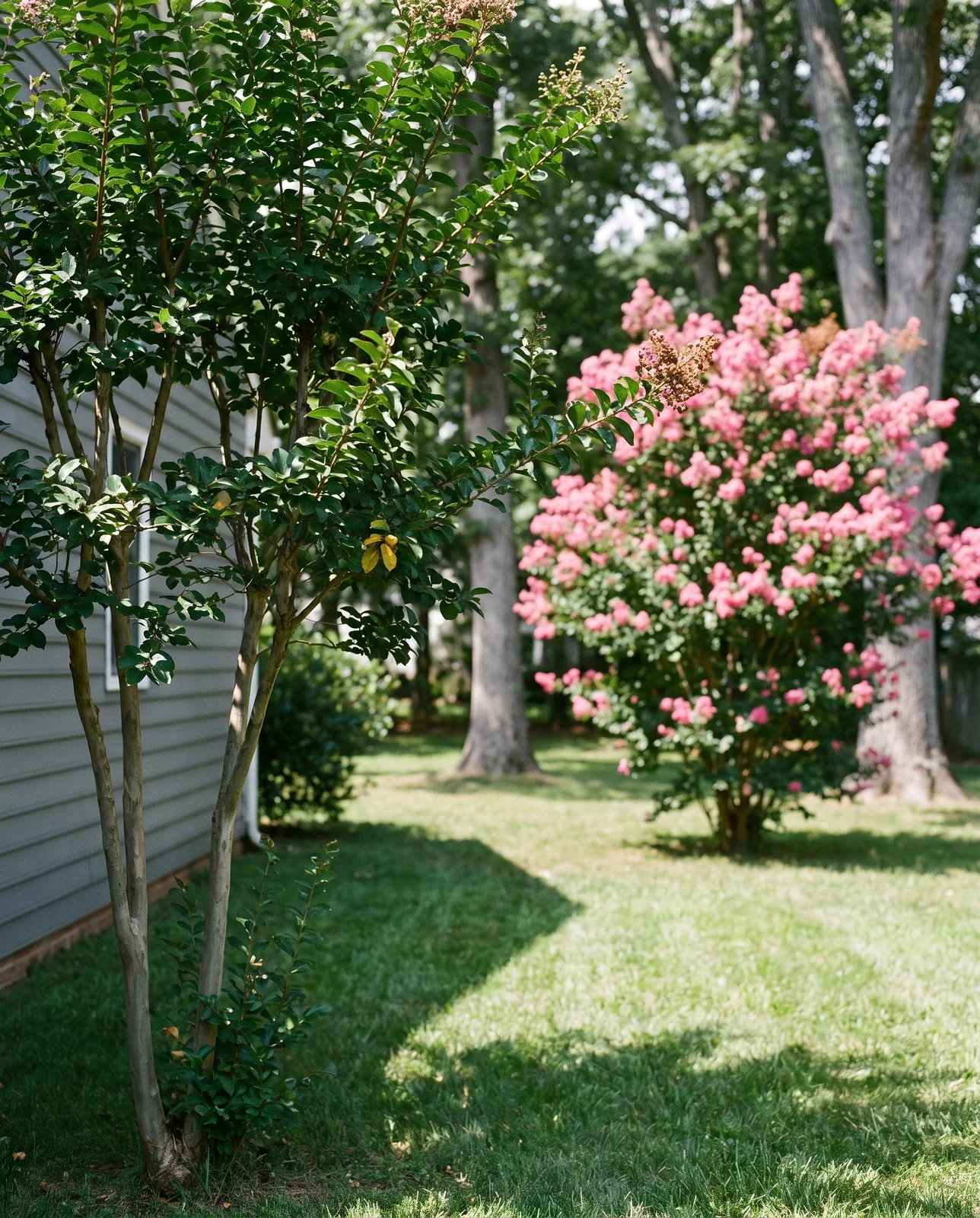
Finding the reason it stopped blooming
A crape myrtle that has quit flowering shows the reason from the ground. The cheapest checks come first.
Black bark, sooty mold, and bark scale
The black crust on a crape myrtle trunk is sooty mold, and underneath it, most of the time, is crape myrtle bark scale. The adult female is about one-tenth of an inch long under a soft off-white felt, and her felt sac holds 100 to 300 pink eggs. The nymphs pour out honeydew, and the mold that grows on it coats leaves, twigs and trunks and spreads onto the grass and mulch below. The mold lives on the honeydew and does not attack the plant. The scale is the damaging half: with few natural enemies here it builds until twigs are completely encrusted, and no variety yet resists it.
The pest is new to the country and still spreading. It was first detected in Texas in 2004 and in Mississippi in spring 2015, and it now holds more than 20 Mississippi counties. Only the males have wings, so long moves happen when people carry infested plants; after that it goes tree to tree hundreds of feet apart. In the Southeast it runs two to four generations a year and overwinters in any life stage, usually as nymphs.
Treatment is a matter of timing. A soil-applied systemic is the most effective and the easiest to put on: imidacloprid, imidacloprid with clothianidin, dinotefuran or thiamethoxam. The window is late March through May, which catches the first generation of nymphs. One soil application a year is the limit, and a tree that had scale gets treated again next year even if spring looks clean. Soil applications are safer for pollinators than the same actives sprayed on leaves, and a treated tree should not get both. Dormant oil after leaf drop or before bud break kills exposed crawlers and nymphs, but will not clear an infestation alone. Scrubbing the trunk with a soft brush, water and a little dish soap lifts the crust and gives the bark back, but controls nothing. Control the insect and the mold goes with it.
Black on the bark: which one is it
Four things darken or patch crape myrtle bark, and each takes a different answer. One tell separates them.
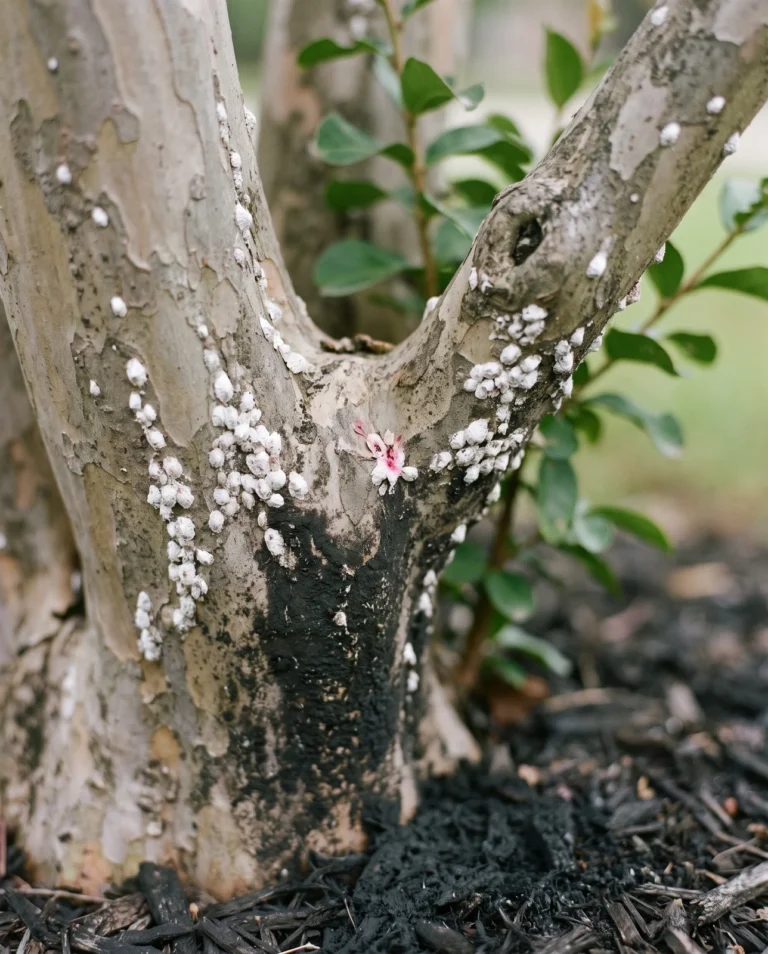
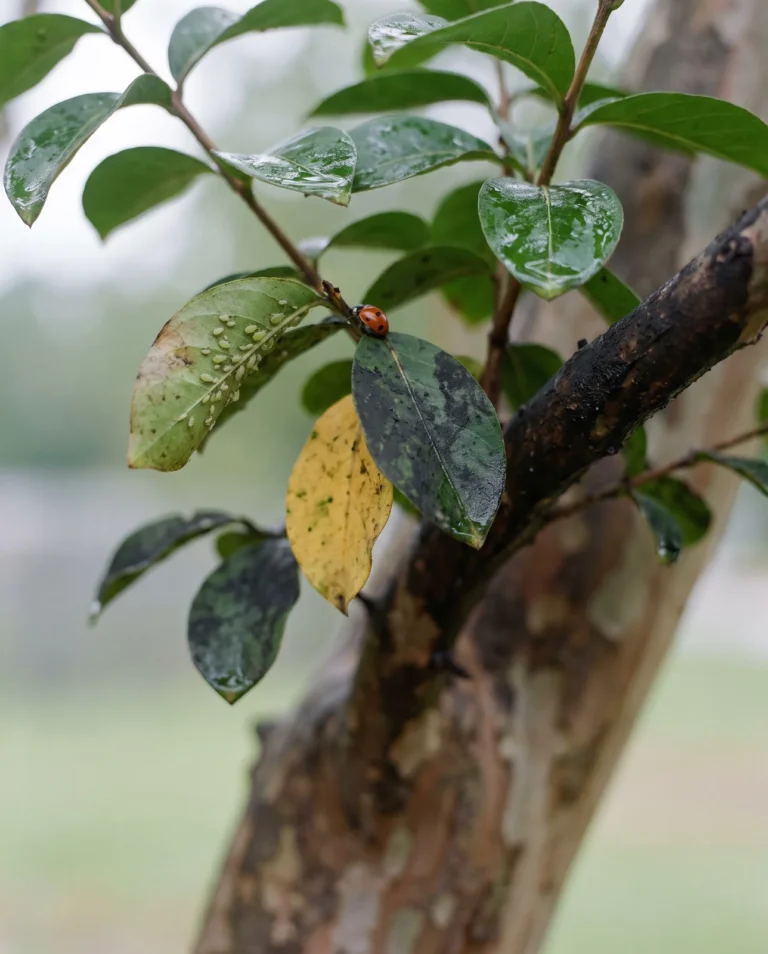
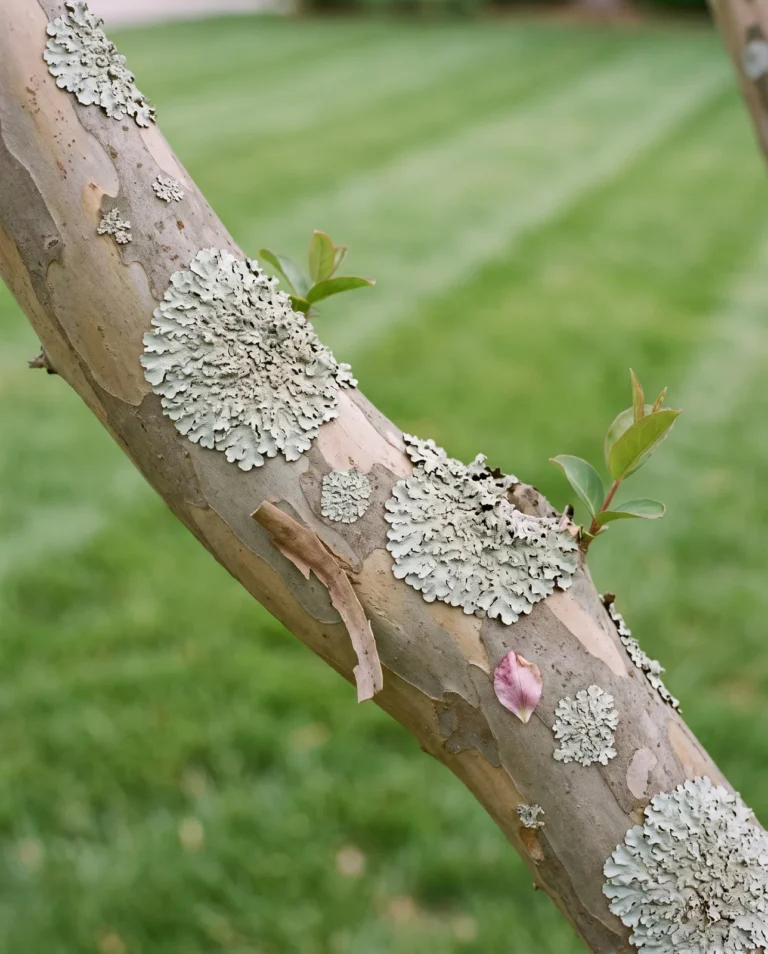
What actually goes wrong, ranked
Six problems cover nearly everything that goes wrong, in the order they come up.
Knuckled stubs, then a mop of whippy shoots, weak where they meet the old cut. Rebuild from those sprouts, one dormant season at a time, and stop cutting at that height.
A black film over bark and leaves. A first insecticide application around May 1 heads the mold off, and an imidacloprid drench takes a month to reach the leaves, so it goes on early.
A healthy canopy carrying few or no panicles. Work the checks in order: sun, root competition, feeding, pruning history, then scale.
White coating on flower buds and young shoots, worst in shady, damp, crowded spots with still air. Skip the susceptible old cultivars: 'Carolina Beauty', 'Wonderful White', 'Raspberry Sundae', 'Potomac'. A severe case takes myclobutanil, propiconazole, thiophanate-methyl, or copper, often more than once.
Yellow spots 1/8 to 1/4 inch across on the upper leaf surface in warm, moist weather. Cosmetic most years, though a susceptible cultivar can drop almost every leaf in late summer; 'Fantasy', 'Tonto', 'Tuscarora', 'Tuskegee', and 'Velma's Royal Delight' hold theirs.
Pale yellowish-green aphids with black spots, 1/16 to 1/8 inch long, on leaves and twigs. Eggs overwinter and hatch in spring, and maturity takes about 10 days, so generations stack up. Ladybird beetles, green lacewings, and parasitic wasps eat them. A dish soap wash, 4 ounces per gallon, left three to four minutes and rinsed off hard, takes the film off.
Varieties by mature size
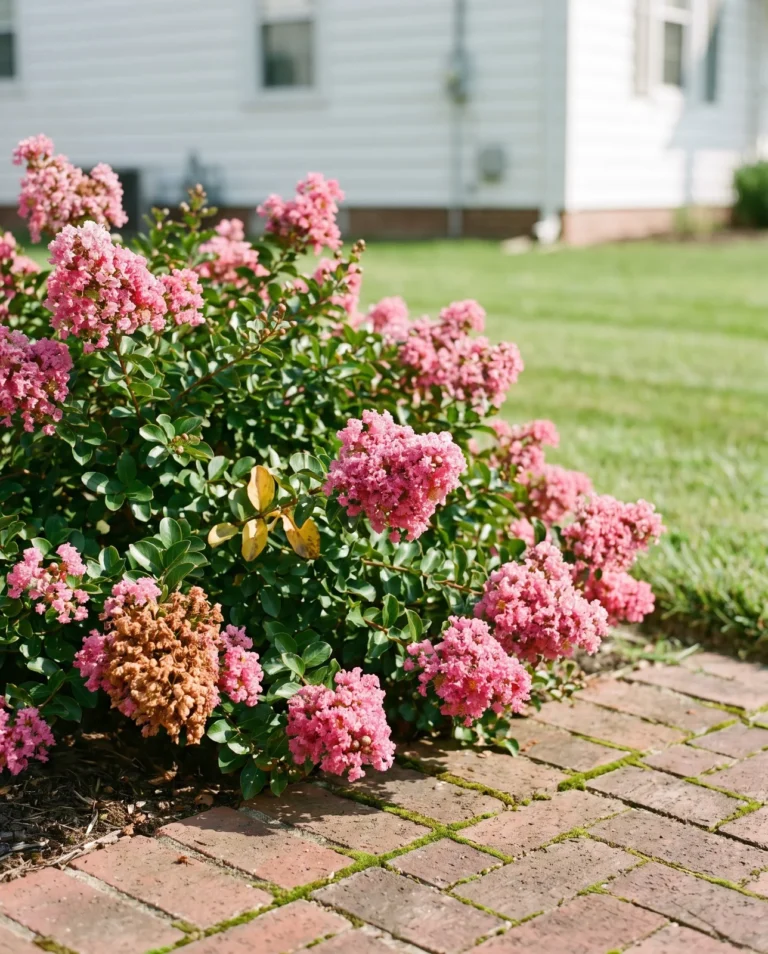
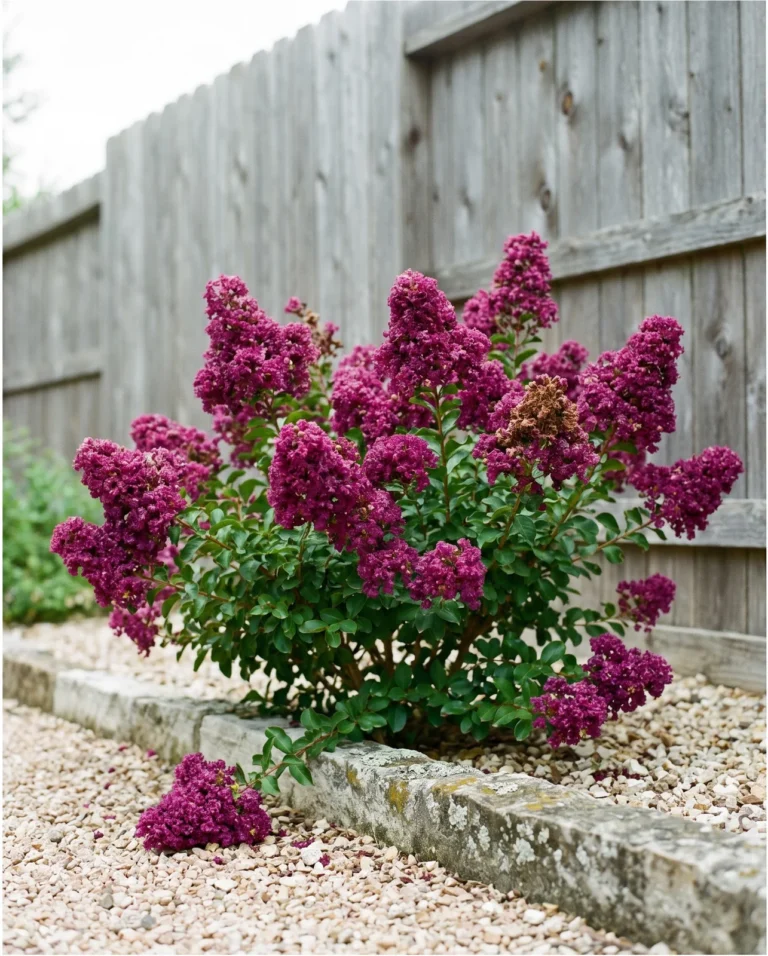
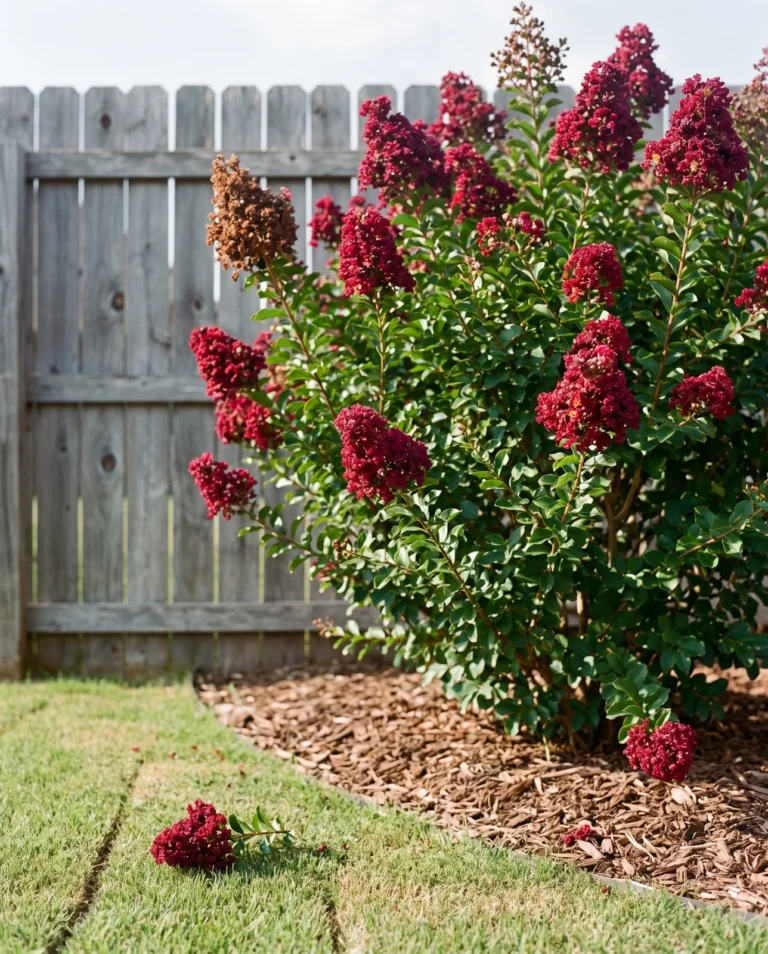
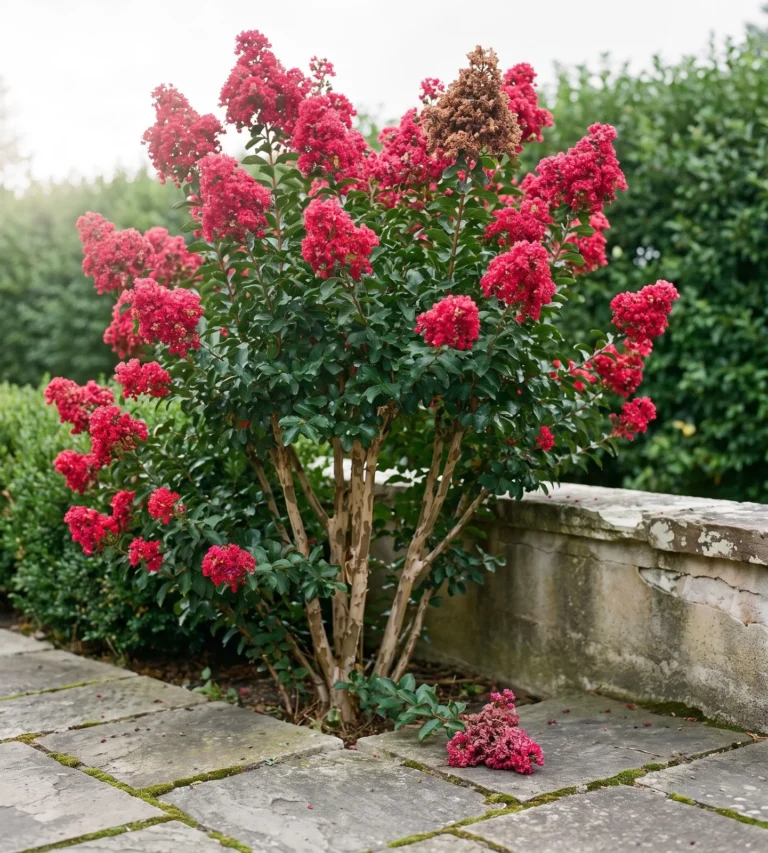
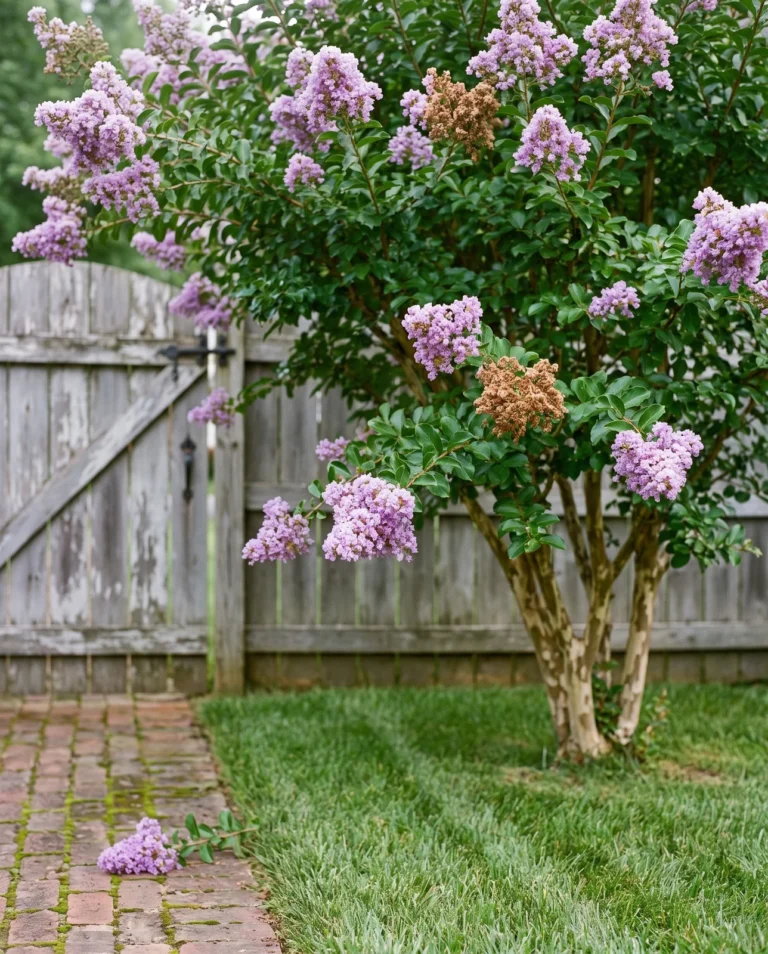
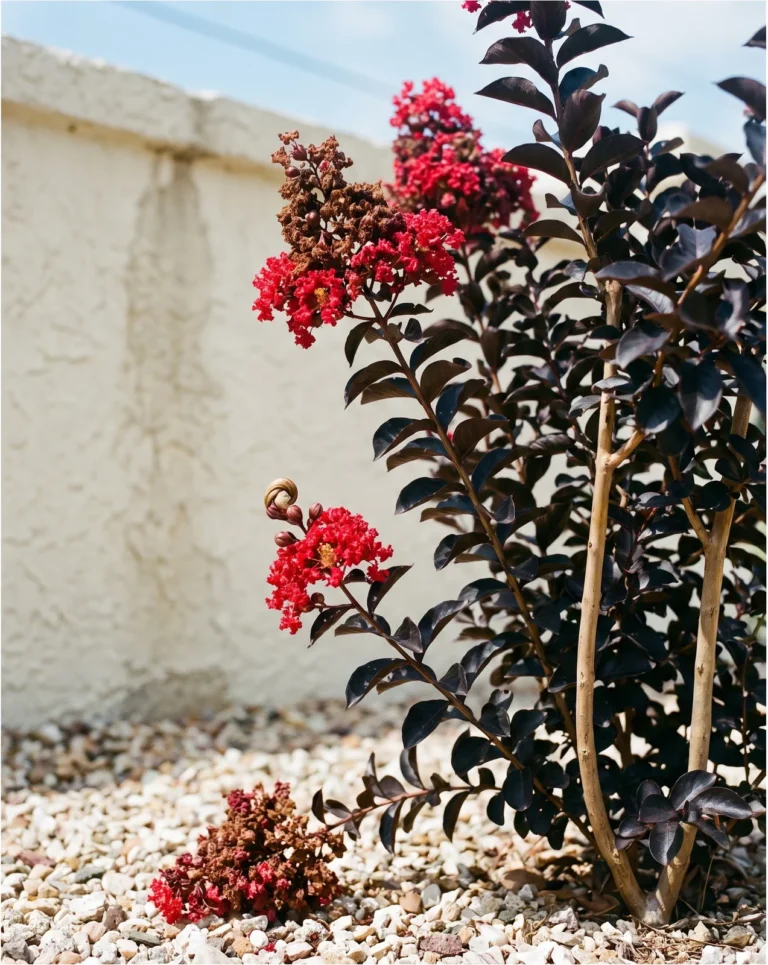
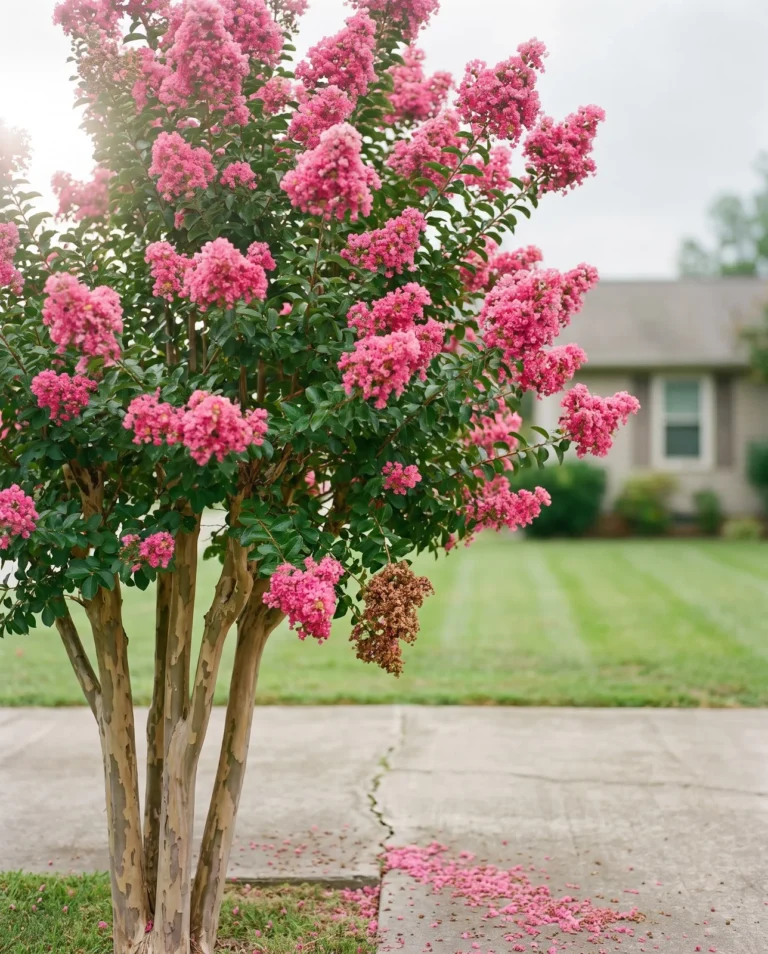
The cards run from ankle height to shade tree, in white, lavender, red, and every shade of pink.
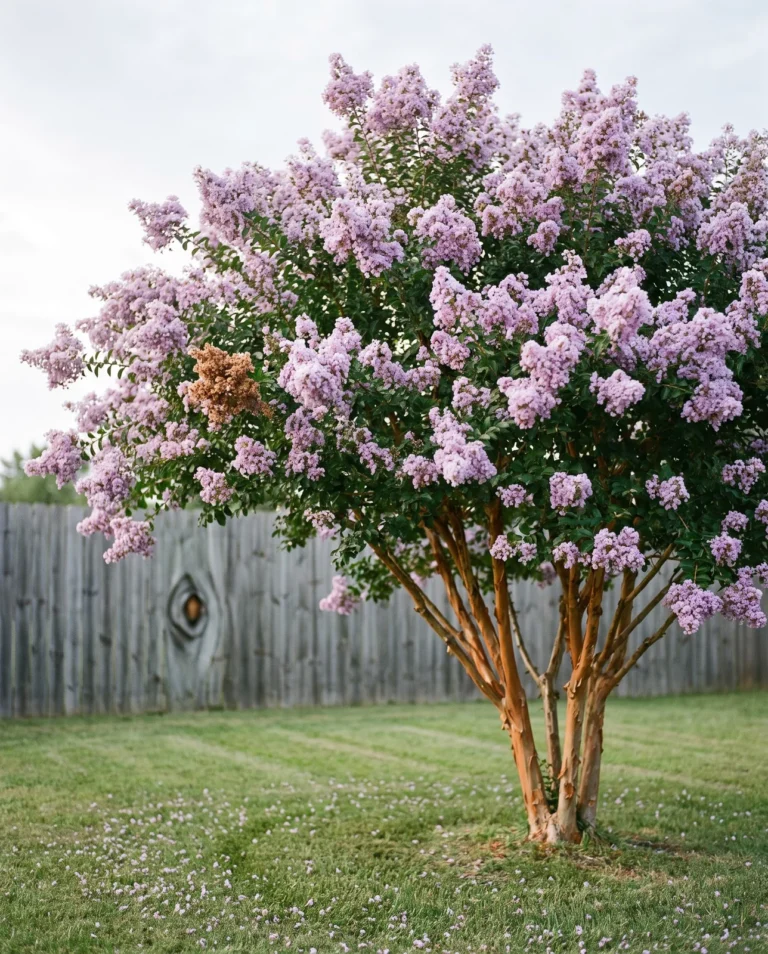
Size classes and the room they need
Four classes cover everything on sale. Width decides the spacing, and it is the figure most tags leave off.
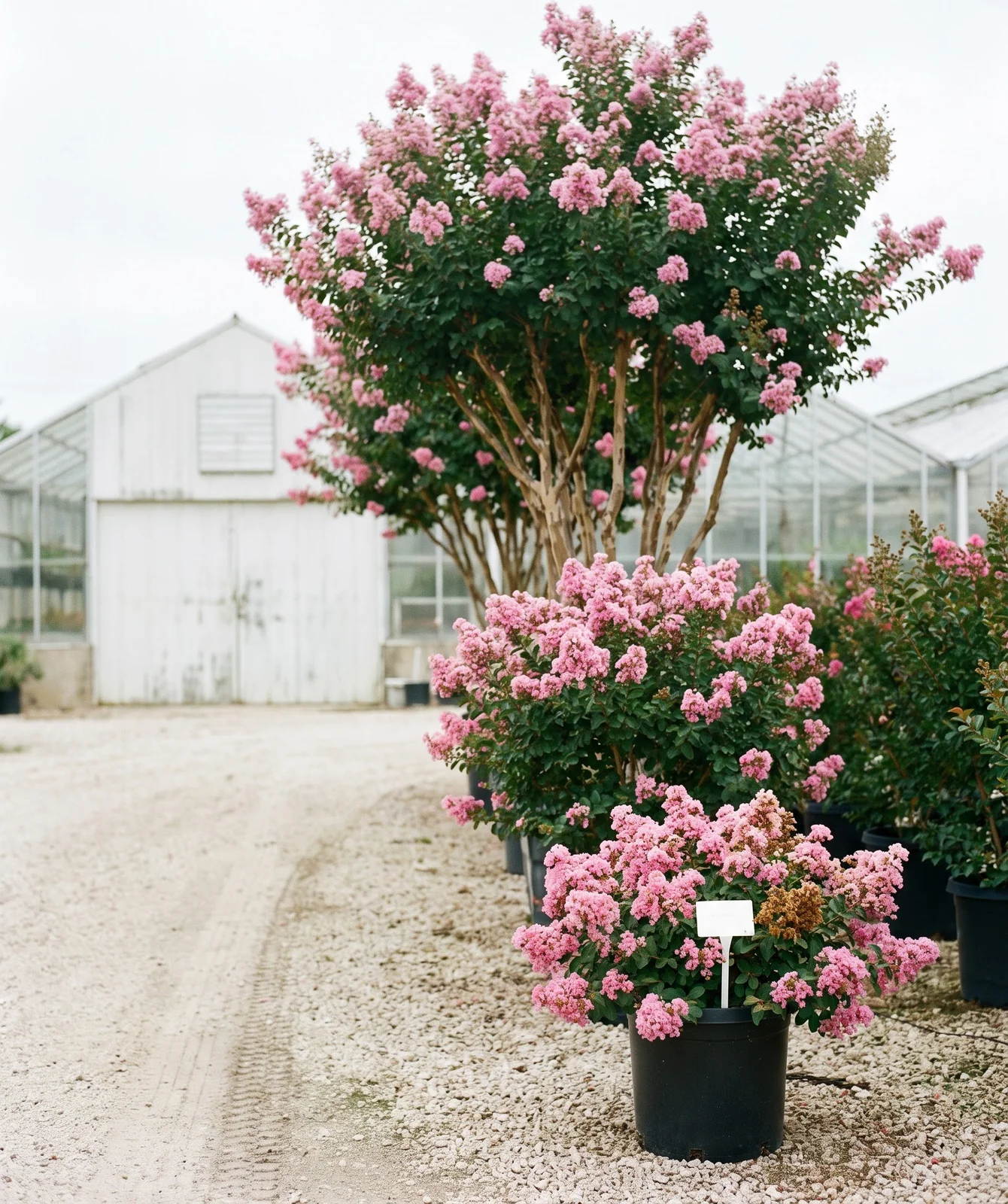
Hardiness zones, and how far north it grows
Crape myrtle is dependable through the middle South and the Mid-Atlantic. The published range splits at the cold end: zones 7a through 9a, or 6a through 9b. The split traces to a plant that carries two hardinesses in one body. The branches are winter hardy to zone 7, while the roots are usually, though not always, hardy to zone 5. In degrees: top growth often dies to the ground below minus 5 Fahrenheit, and root hardiness runs to about minus 10. Where a crape myrtle fails outright, the cause is usually a shortage of summer heat to harden the wood.
Zone 6 works with a change in expectations: with protection the top growth survives some winters in zones 5 and 6, though a harsh one still takes it to the ground. The method at that edge is to plan for the dieback: cut the killed stems back hard every early spring and let the roots rebuild over summer. What you get is a flowering shrub on an annual cycle. 'Natchez' is hardy in zones 6 to 9. 'Glendora White', an open plant of medium height with snowy white flowers, and the compact 'Velma's Royal Delight' are hardy to zone 6, while 'Monow' stops at zone 7. Marketing runs ahead of those ratings: one series sells as stem-hardy to zone 6 and root-hardy through zone 5b, on plants that mature at 24 to 30 inches.
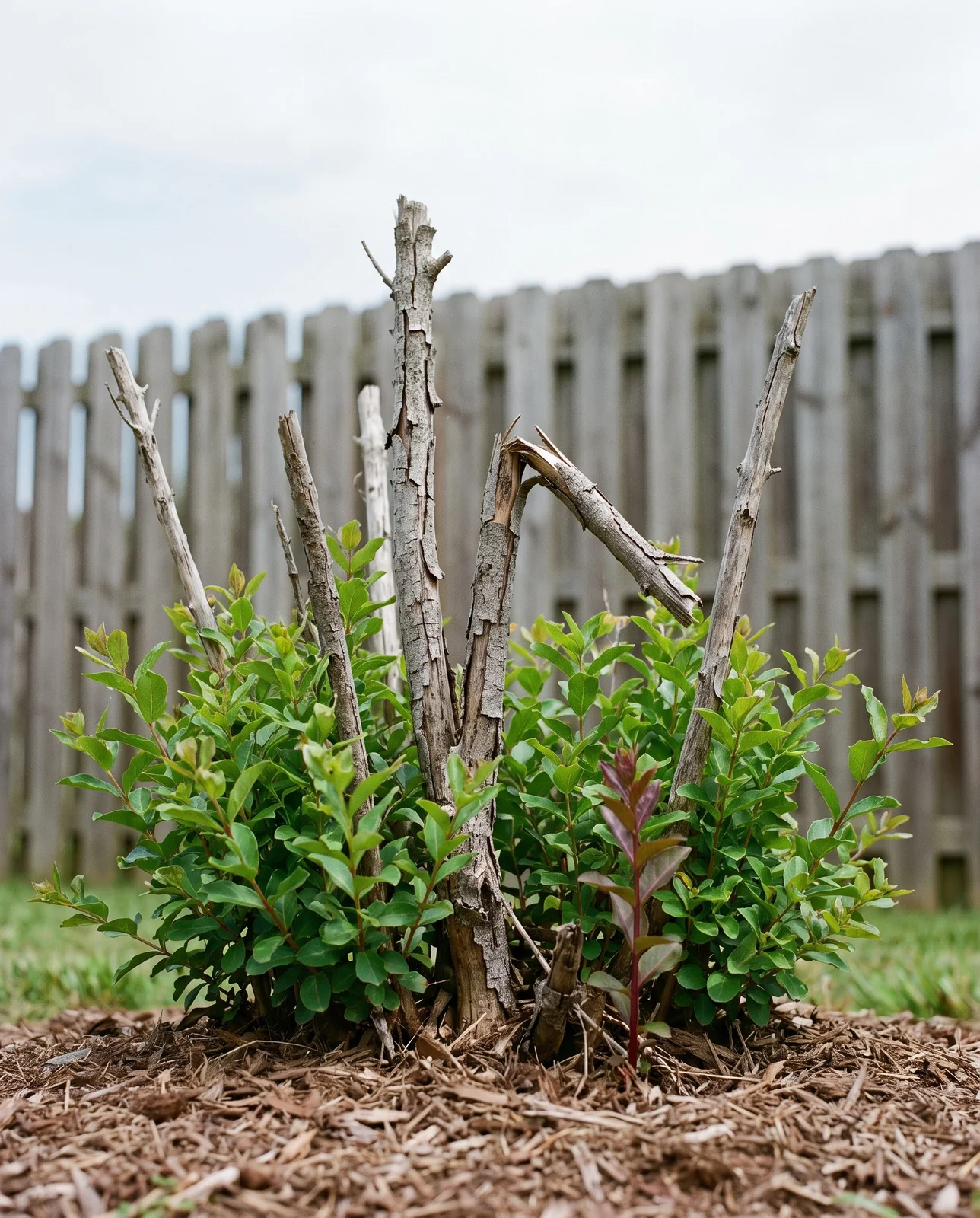
The cold edge, zone by zone
At the cold edge the plant changes character, from tree to shrub to a woody perennial cut back every spring.
Downsides, and where not to plant one
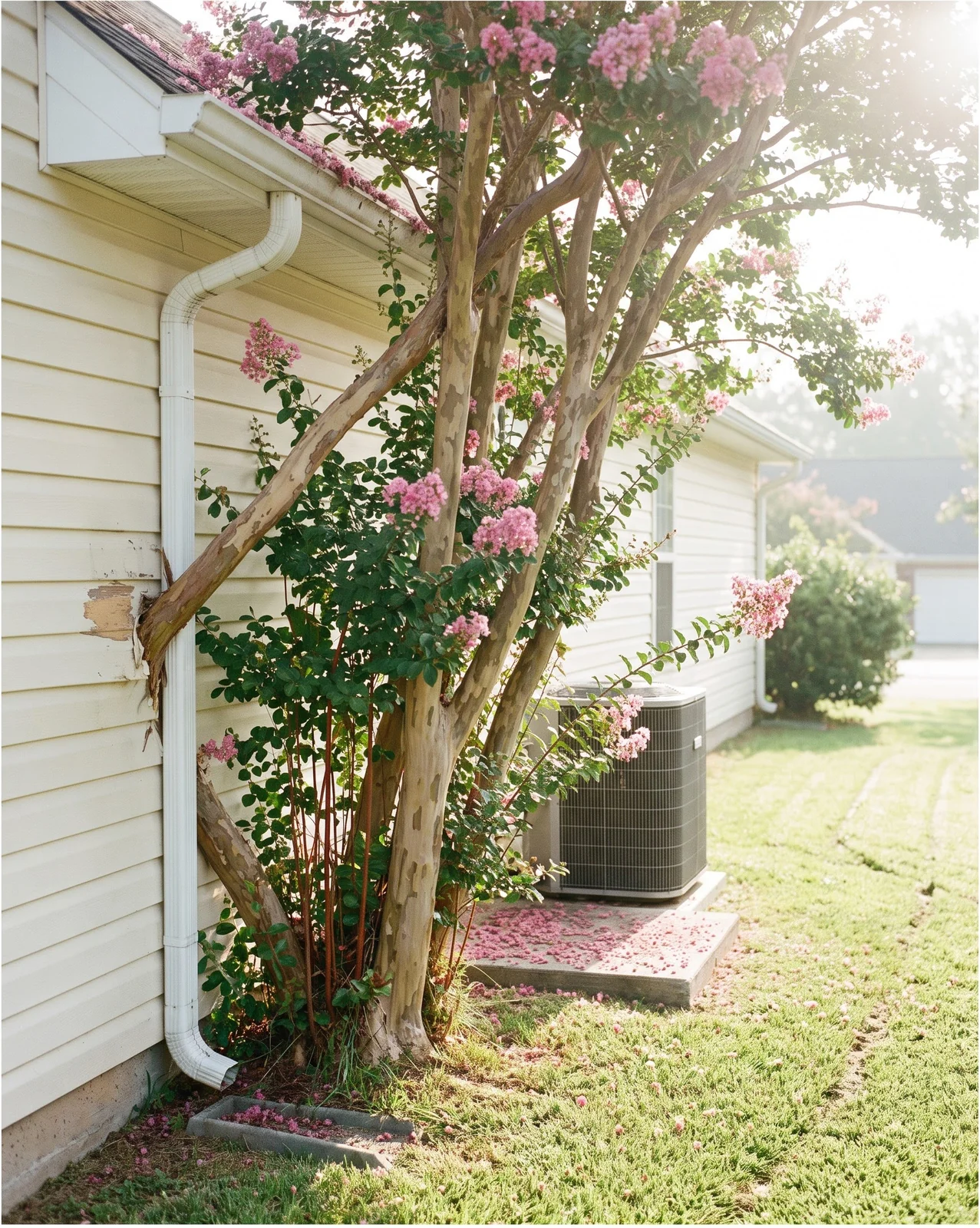
The trouble people have with a crape myrtle is nearly always a placement problem. The flowers stain walkways and car paint, so keep the plant back from a front path or a driveway. Aphid honeydew leaves a sticky film on cars and patio furniture under the canopy. The roots are not a problem, and neither the fruit nor the leaves make much litter. Size is where the complaints hold up. A tree-class cultivar set a few feet off a wall grows into the gutters and the windows, and then the choice is a hard cut every winter or removal.
Whether the plant belongs in a Southern yard at all is an open argument. It has naturalized here from Virginia to Arkansas south to Texas and Florida, and it appears on listings of species considered invasive in certain natural areas. The formal assessments split: Florida calls it not a problem species, while NC State tags the genus as weedy. Where that question carries weight locally, compare it with a hibiscus before the hole is dug.
Planting
Plant from late fall into early spring, and lean toward late fall, which gives the roots months to grow before the plant spends anything on leaves and flowers. Dig the hole at least twice as wide as the root ball, and set the plant no deeper than it grew in its container. Backfill with the native soil that came out of the hole. Organic matter is not necessary in an individual planting hole, and amendment inside it keeps roots in the hole when they should be pushing out. Cover the hole with 3 to 5 inches of pine straw, pine bark, shredded hardwood mulch, or shredded leaves. Water thoroughly at planting, then once a week without rain for the first two months.
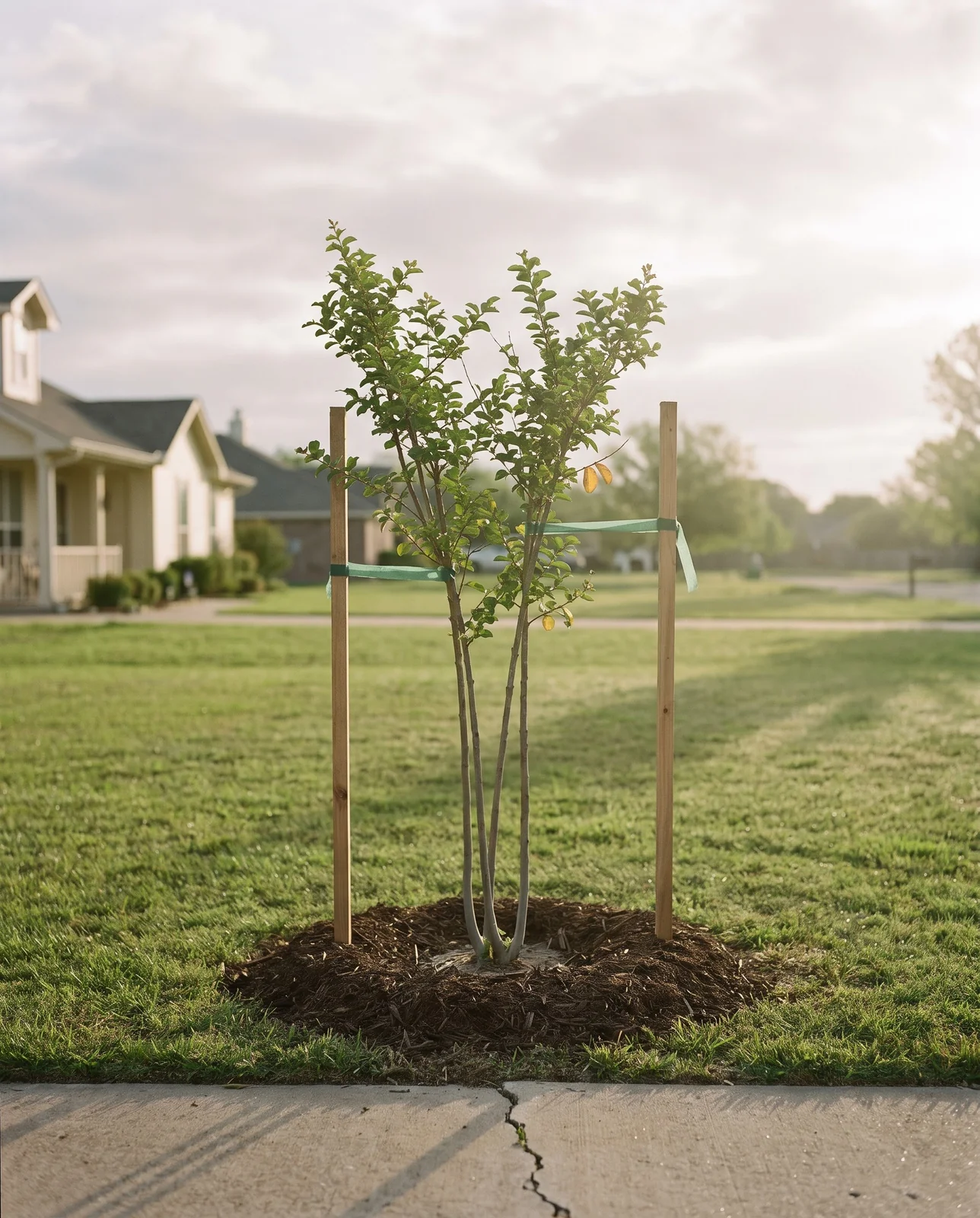
Light
Crape myrtle does best in full sun, which means 6 or more hours of direct sunlight a day. Heavy shade costs twice over: growth and flowering drop, sooty mold builds on the foliage, and powdery mildew moves onto the flower buds and the young growth. A plant that flowered for a decade can stop without changing at all, because the shade around it grew in.
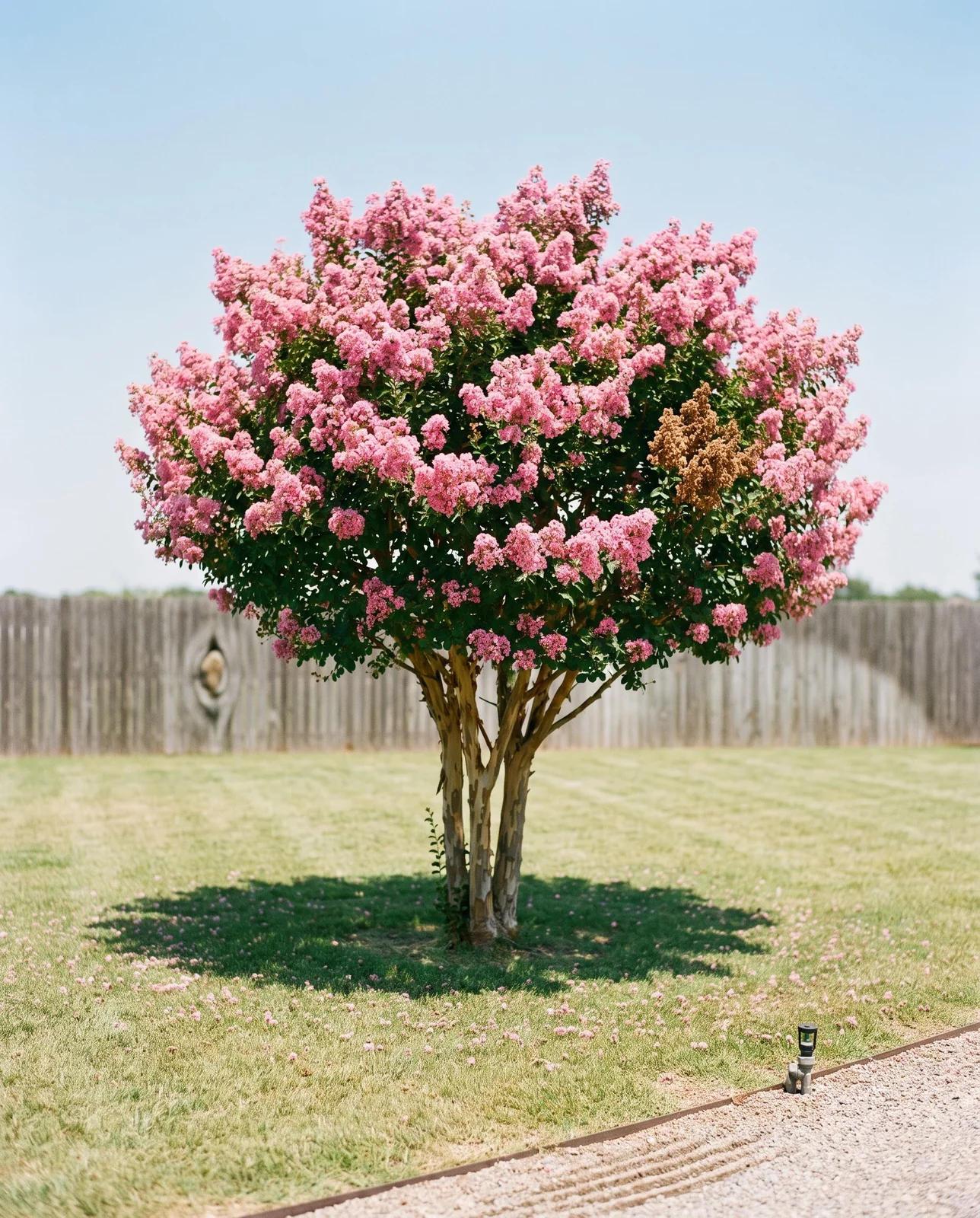
Water and soil
Average, medium-moisture, well-drained soil suits crape myrtle, and loamy clay is fine as long as the drainage is. The pH range is wide, running from slightly alkaline down to acidic ground around 5.0 to 6.5, so most yards need nothing done to them. Once established the plant tolerates drought, which keeps it flowering in parking strips and hot driveway edges through August. Water deeply and less often while it is young, and let the surface dry between soakings.
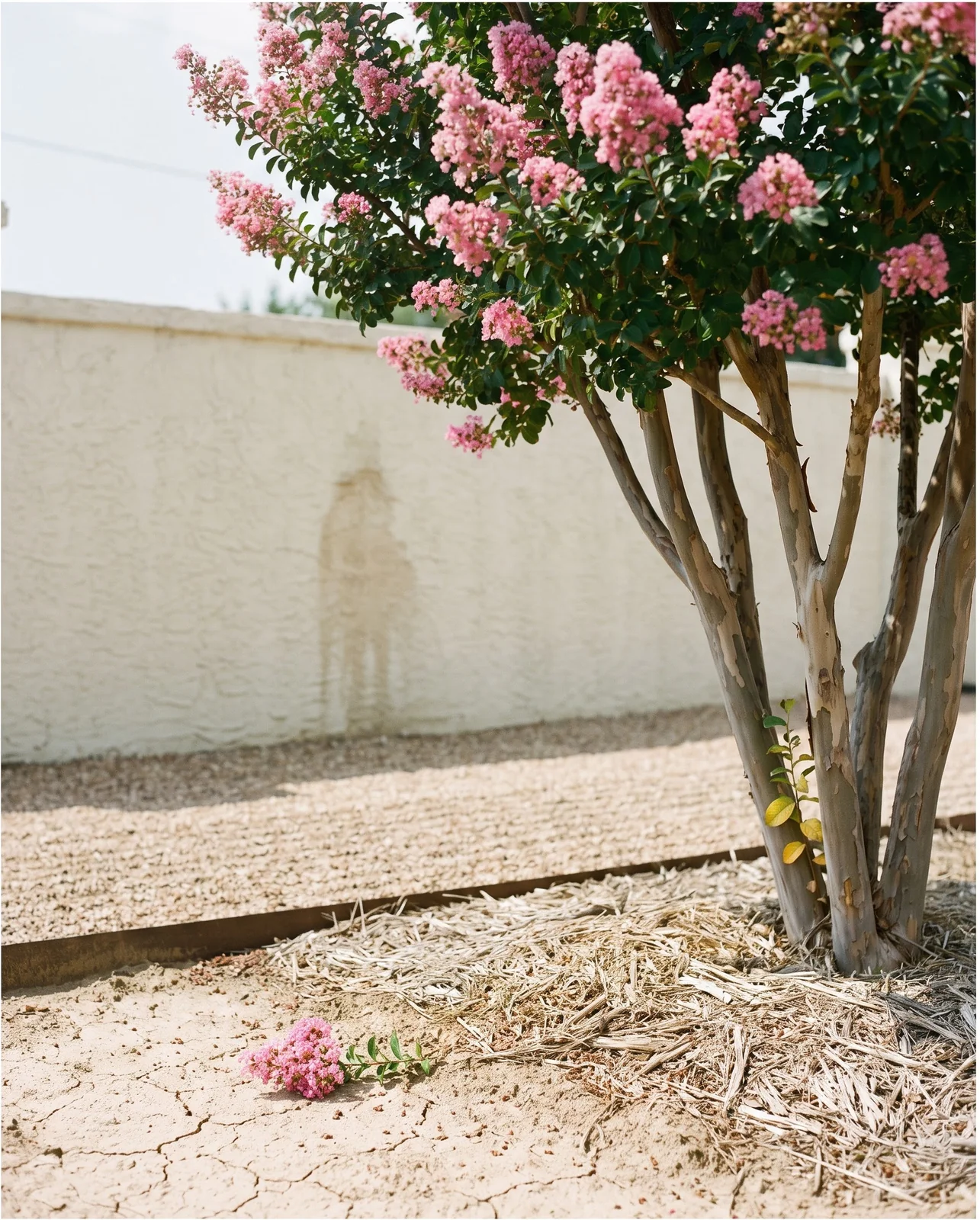
Feeding
Feed a crape myrtle lightly or not at all, since over-fertilization brings excess growth and reduced flowering. A young plant that does get fed takes a complete general-purpose fertilizer such as 8-8-8, 10-10-10, 12-4-8, or 16-4-8. A newly planted 1-gallon size takes 1 teaspoon monthly from March through August. The overdose that reaches most crape myrtles is never aimed at them: a lawn program run to the trunk feeds the tree every time it feeds the grass.
Height, spread, and growth rate
Species figures are close to useless without a cultivar name attached. Published heights run 10 to 30 feet with widths of 15 to 25 feet, and mature specimens reach 40 feet. Growth is moderate to fast. One line of figures covers both a dwarf and a shade tree, so the cultivar name is the only size worth reading on a tag.
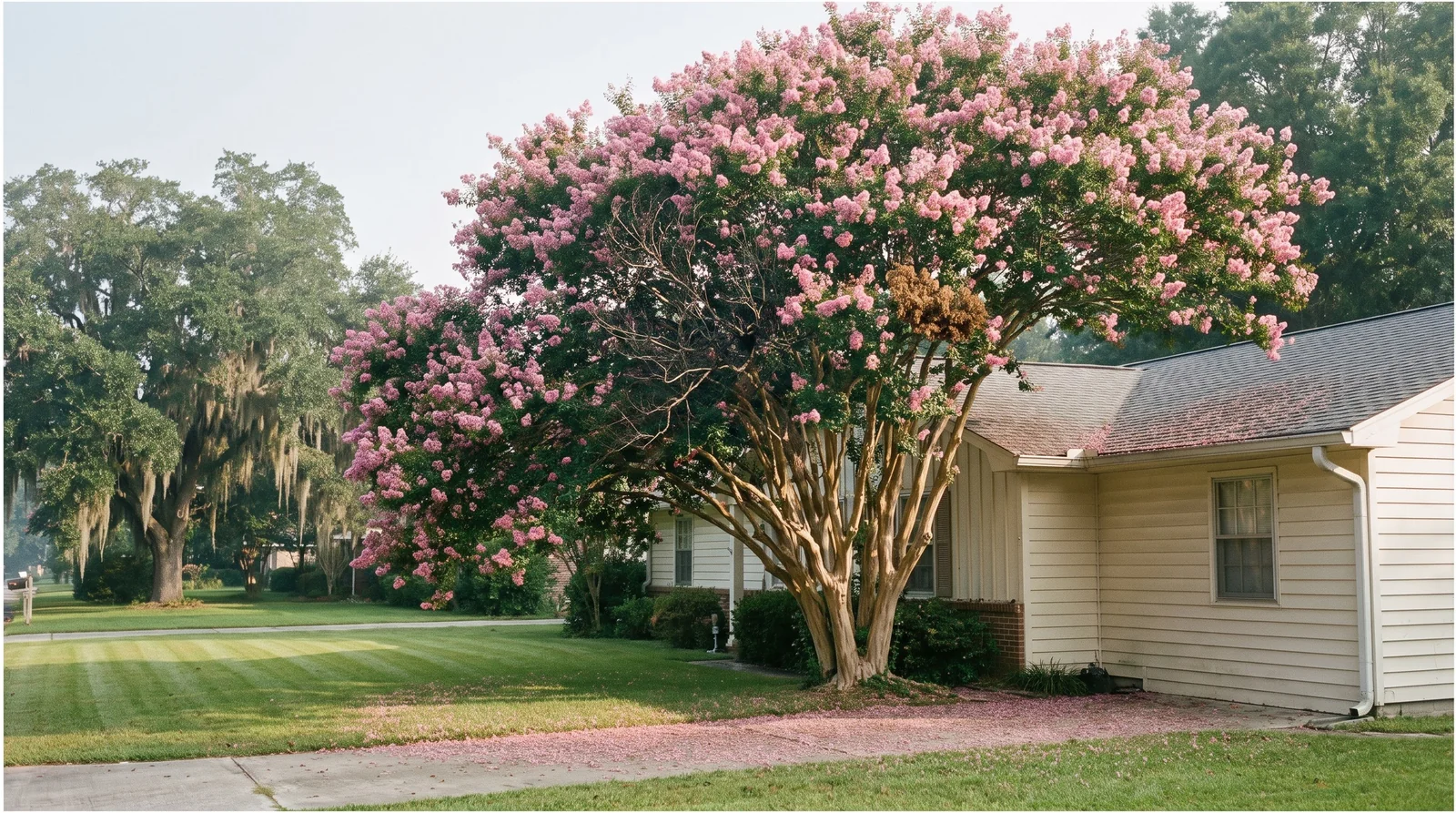
Bark and fall color
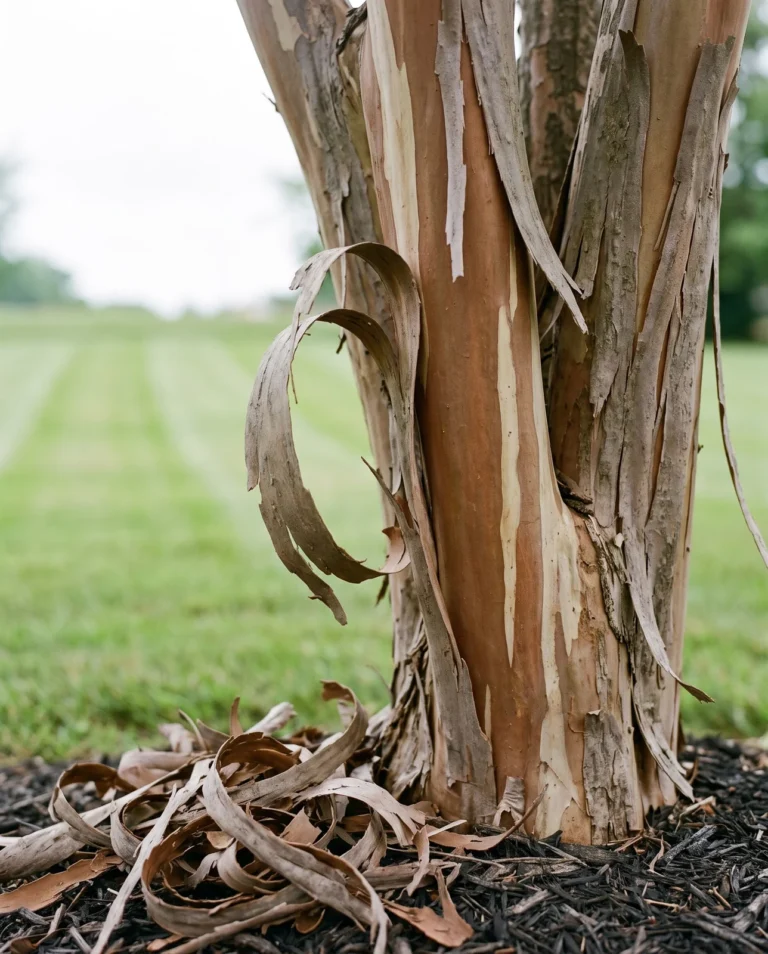
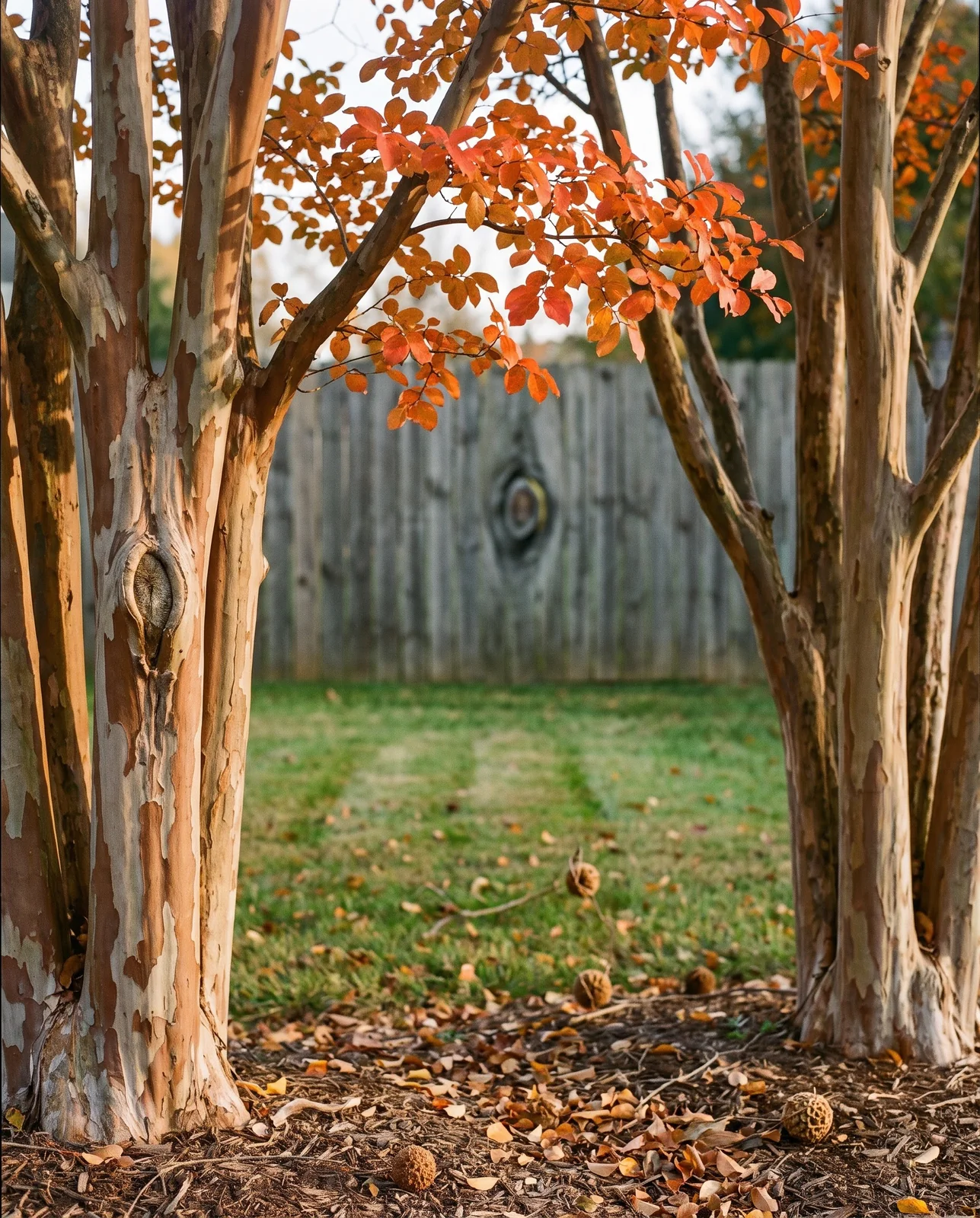
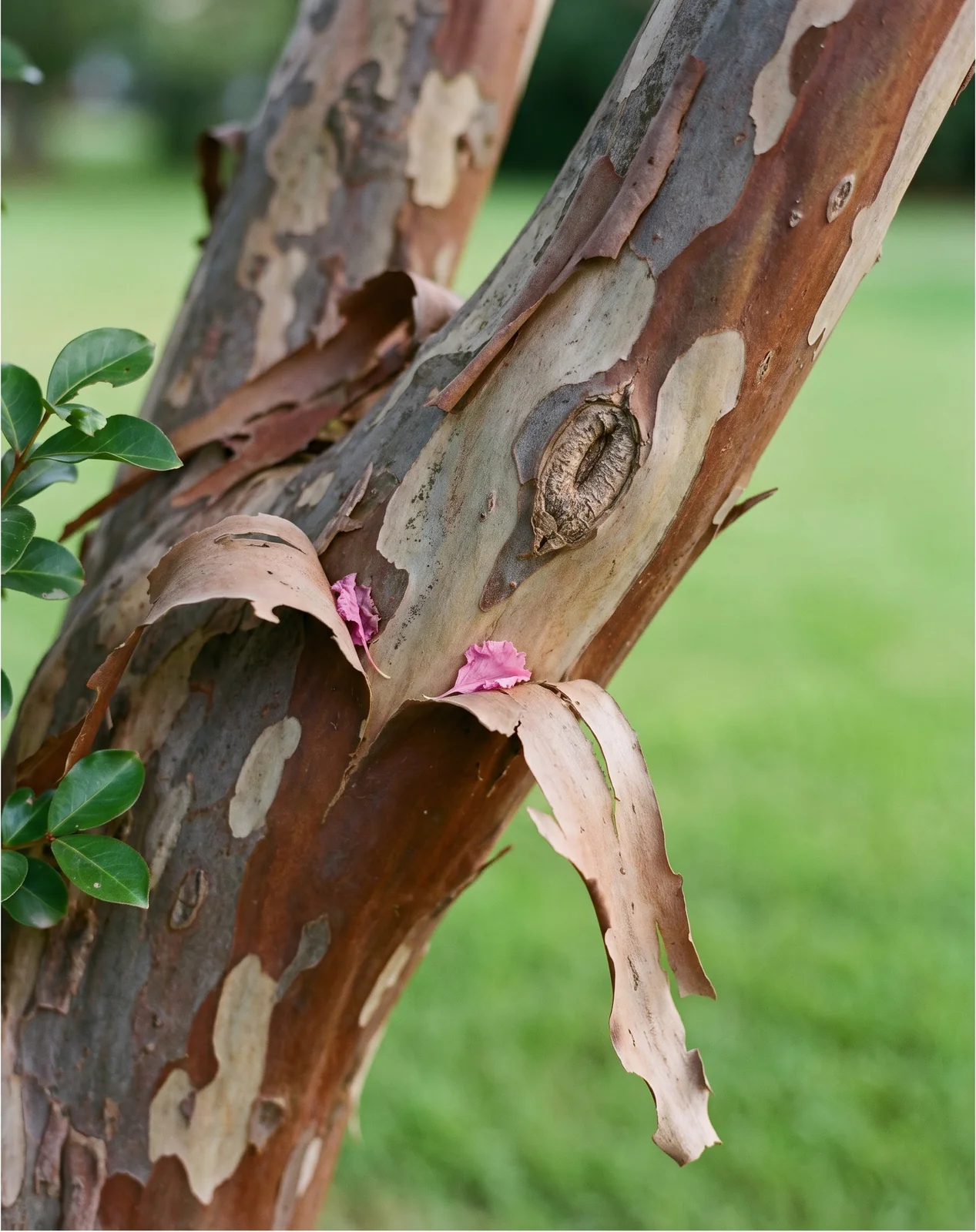
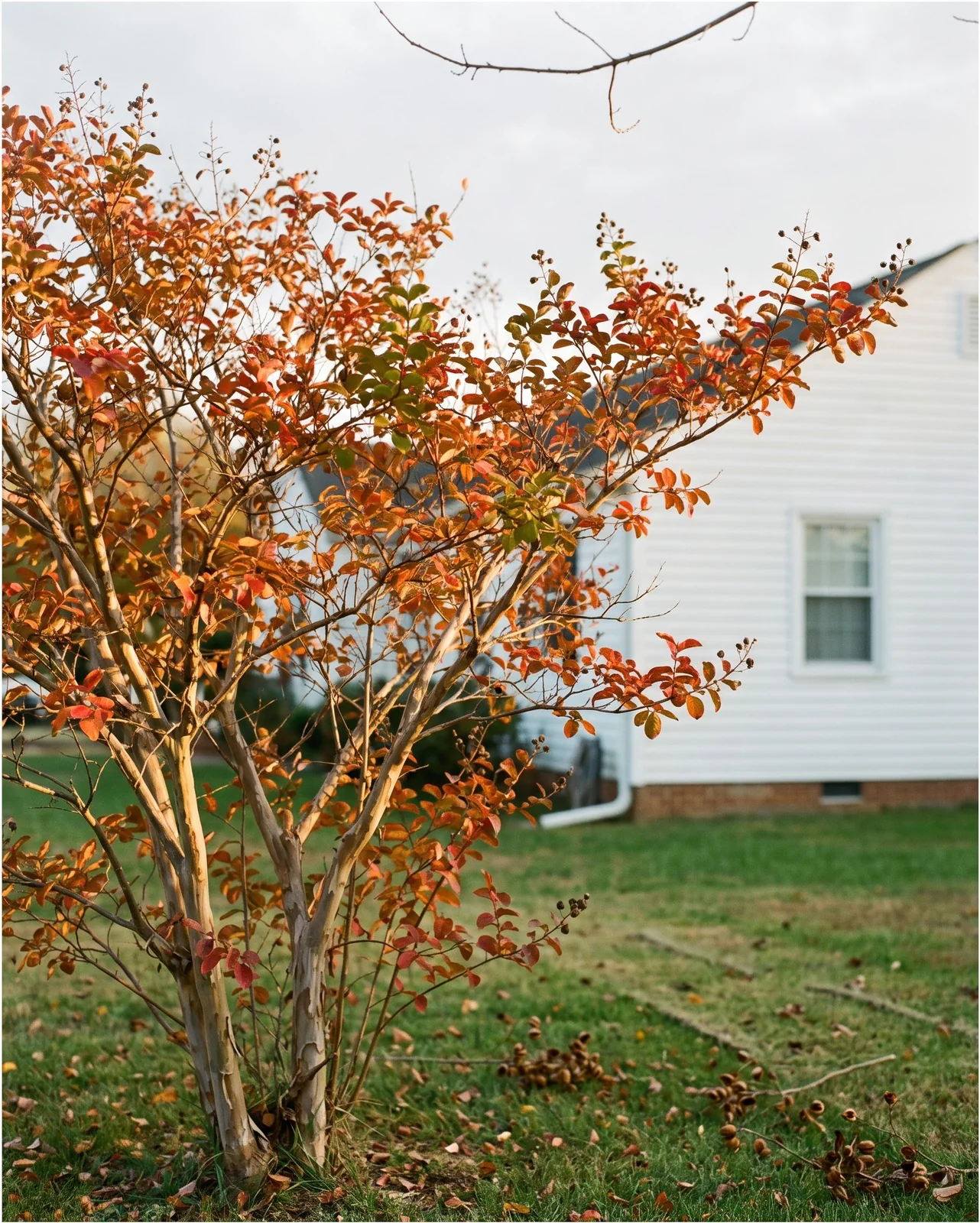
The bark is thin, smooth, and pale brown to gray, peeling and exfoliating in papery sheets as the plant matures, and on a multi-trunk plant it carries the winter. It is the second reason to grow the tree and the first casualty of topping: trunks need years alone to thicken. Fall color comes in before the leaves drop, in yellow, orange, and red.
Propagation from cuttings
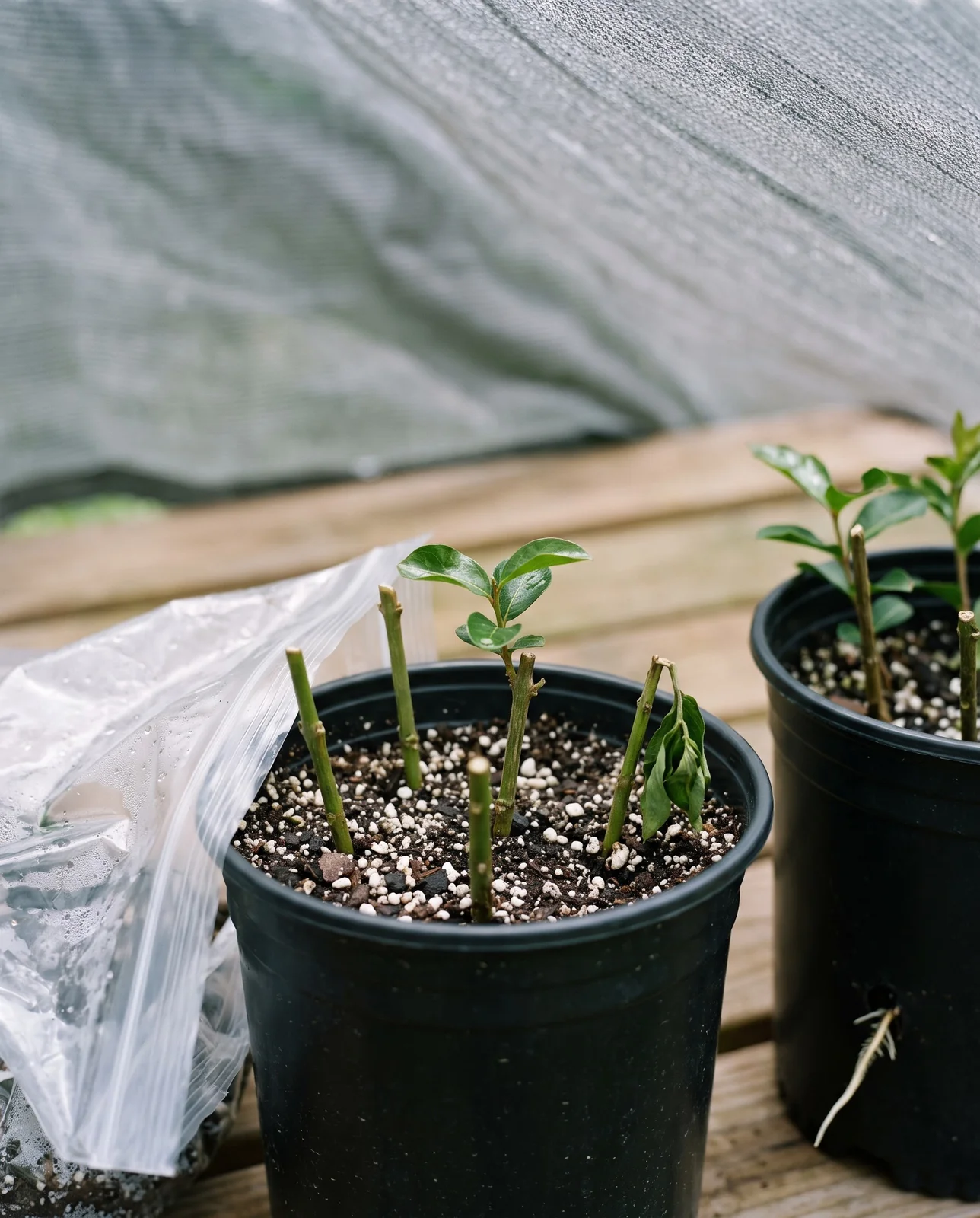
Crape myrtle roots easily from semi-hardwood cuttings taken during the growing season. June, July, and August are the months for it: rooting hormone is generally unnecessary, and cuttings root in three to four weeks. Patents matter here more than with most garden plants. Propagating a patented variety is not lawful, and a patent expires 20 years after the original filing, so cultivars on the market since the early 1990s can be propagated freely.
Toxicity, deer, and pollinators
The ASPCA lists crape myrtle non-toxic for dogs, cats, and horses. Deer leave it alone as well, since the plant resists deer damage. The flowers work for insects, serving as both nectar and pollen sources. Bees do not treat the cultivars alike. Across 40 of them, the visits went most often to dark pink, dark purple, and white flowers, with honey bees favoring pink and bumble bees lavender and dark purple.
Meaning and Southern history
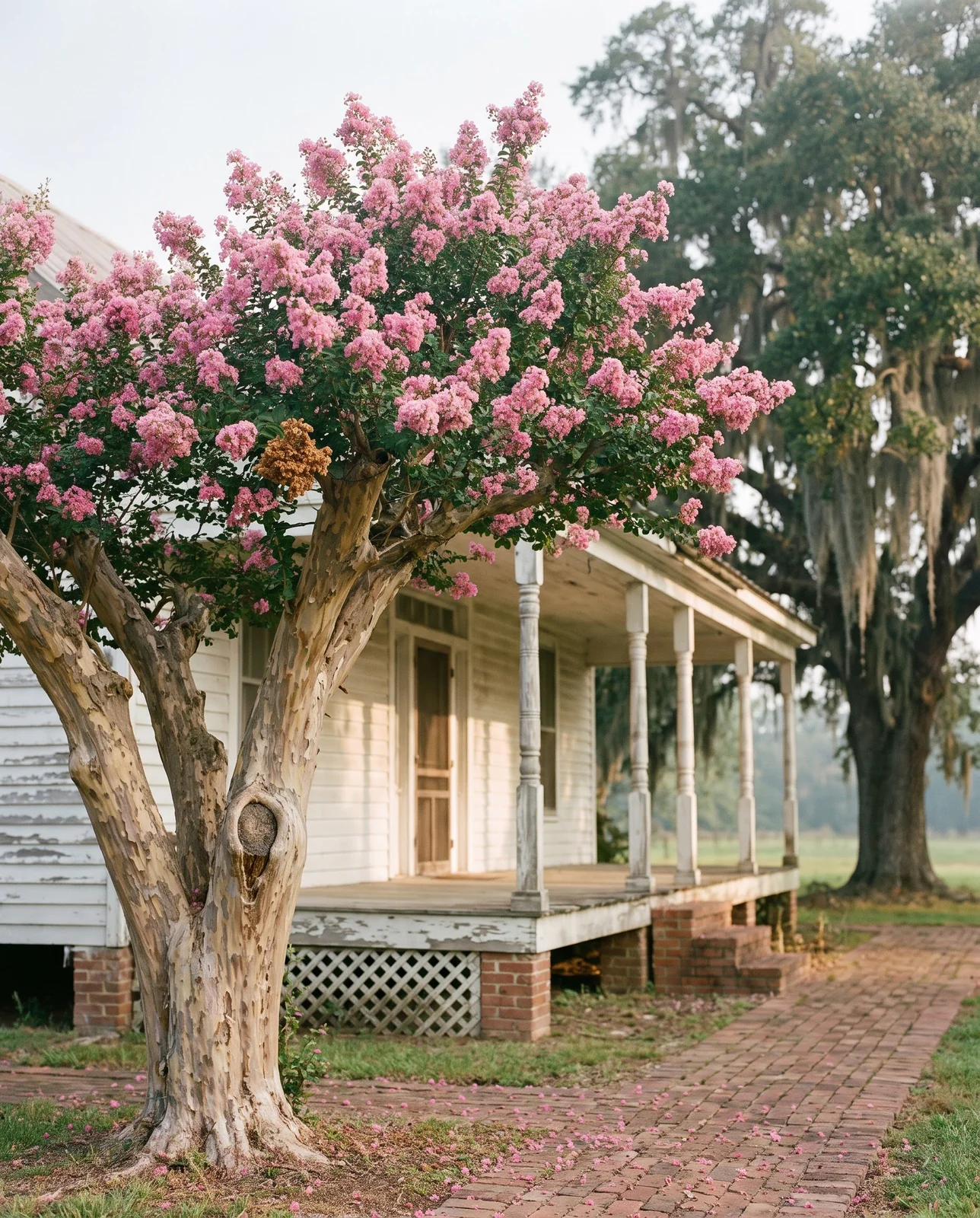
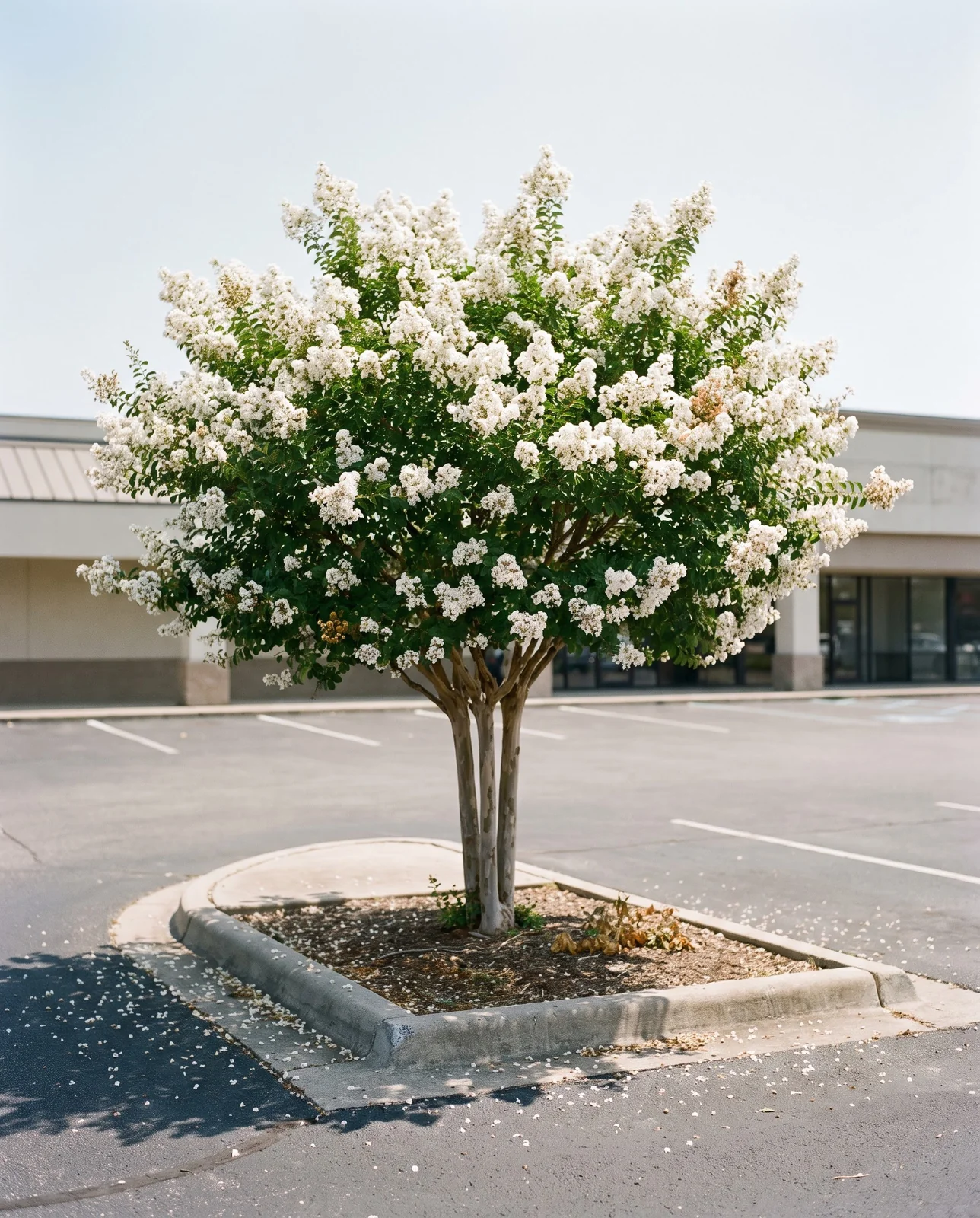
Crape myrtle stands for the American South alongside the southern magnolia, on the strength of how widely it is planted and how well it takes hot, humid summers with regular rain. Texas counts it among the state's symbols. The association is a matter of sheer quantity: street strips, parking lots, courthouse squares, and driveway pairs across the Sun Belt, all flowering when the rest of the yard has given up.
Myths worth dropping
Four beliefs survive every summer, and each one costs somebody a tree or a season of flowers.
The myth: You have to cut it back hard every winter or it will not bloom.
The reality: Crape myrtles do not need pruning in order to flower. That misconception has cost millions of plants a very aggressive cutting.
The myth: Crape myrtle is a Southern native.
The reality: The species is native to the Philippines, Japan, and the central Himalayas through southern China and Indochina. It came here as a garden plant and stayed.
The myth: It cannot survive a northern winter.
The reality: Winter injury in zones 5 and 6 lands on the top growth first. Gardeners there grow it as a shrub that rebuilds itself from the roots.
The myth: The mildew-resistant hybrids are just better selections of the same old plant.
The reality: 'Natchez' is a cross between Lagerstroemia indica 'Pink Lace' and Lagerstroemia subcostata var. fauriei, so a whole second species stands behind the resistance.
What to expect, year by year
A crape myrtle asks for the most attention in its first two summers and almost none after that.
Years one and two go into roots, and the plant is not established until roughly the end of the second year. Water it through every dry spell, keep the mulch topped up, and cut nothing off but dead wood.
The multi-trunk shape gets chosen next, and the lower branches come off. On 'Natchez' the bark mottles to dark cinnamon brown and exfoliates as the tree ages. The trunks thicken enough to hold a full flower load without bending.
A mature plant runs on one dormant pass for dead and crossing wood, a spring look along the twigs for white felt, and water in a long drought.
Flower photos
FAQ
What month should I cut back a crape myrtle?
Late February into early March, and the deadline is firm: the cuts go on before growth begins.
Is it too late to prune once the leaves are out?
For anything structural, yes. The buds for that summer are already forming on those shoots, so a cut now takes the flowers with it.
Can a crape myrtle recover from crape murder?
It can. Hard pruning makes it sprout from the roots and the stems. Keep three to five of the strongest outward-leaning shoots and clear the rest.
Do I have to prune it every year?
No. In full sun, with room to grow and clear of walkways, it may need none at all.
How do I get rid of the black on the trunk?
Scrub it off with a soft-bristle brush, water, and a bit of dish washing liquid. That is cosmetic; the insect underneath still has to be treated.
Will bark scale kill my crape myrtle?
It does not kill the tree, but a heavy infestation turns it black and cuts the blooms down in number and size. Treat late March through May, against the first generation of nymphs.
What is the most cold-hardy crape myrtle?
'Natchez' is hardy in zones 6 to 9, and 'Glendora White' and the compact 'Velma's Royal Delight' are hardy to zone 6.
How big does a dwarf crape myrtle get?
The dwarf class runs 3 to 5 feet, and 'Pocomoke' and 'Chicasaw' sit in it. Read the width on the tag as well as the height.
Where should I not plant a crape myrtle?
Back from walkways and driveways, since the flowers stain paving and car paint, and clear of any wall, eave, or wire the cultivar will grow into.
Are crape myrtles poisonous to dogs?
No. Crape myrtle is non-toxic to dogs, cats, and horses.
Is it crape myrtle or crepe myrtle?
Both spellings name the same plant, after petals that look like crepe paper and leaves and bark that resemble true myrtle.
Interesting tips
- If aphids come back every summer, the cultivar list matters: 'Muskogee', 'Natchez', 'Tuscarora', 'Acoma', 'Tuskegee', 'Hopi', 'Pecos', 'Zuni', 'Biloxi', and 'Miami' all carry moderate resistance to them.
- Japanese beetles on a crape myrtle are rarely a crape myrtle problem. The adults run about half an inch long, coppery brown with metallic green heads, and they feed on nearly three hundred plant species. The ones on the flowers were raised on everything else in the neighborhood.
- Acephate painted around the trunk as a paste is systemic and moves into the leaves and twigs, but it lasts only through July, so a second application is what takes the tree to the end of the growing season.
Related Guides & Flowers

Hydrangea
The other summer shrub Southern gardens lean on, with its own color and pruning rules.
Dogwood
A small flowering tree that covers the spring weeks before crape myrtle wakes up.
Redbud
Color on bare branches in early spring, at the other end of the year from crape myrtle.

Types of flowers
The full index of flowers on the site, sorted by type, season, and color.
Enjoying our flower guides? Add YourFlowersGuide as a preferred source on Google. It helps more readers find us.
Add to Preferred Sources