The word wallflower does more than one job
Wallflower is a plant name that has to share. The same word names the shy guest at the edge of a dance, and it sells air fresheners, jeans and a film title. The plant kept its older names anyway. Bloody warrior, wall gilliflower and the Welsh blodyn y fagwyr are among the seven other common names carried by the common wallflower.
What a wallflower is, and what to call it
Wallflowers are Erysimum, a genus in the mustard family holding somewhere between 150 and 270 species. Older labels say Cheiranthus cheiri. It is the same plant under a name that has been folded into Erysimum, and the old spelling still turns up on pots. The genus runs from annuals through biennials to woody-based perennials, and that spread is the root of every argument about how long a wallflower lives. Alone in the mustard family, Erysimum builds cardiac glycosides on top of the usual mustard oils, and at least 48 species make them.
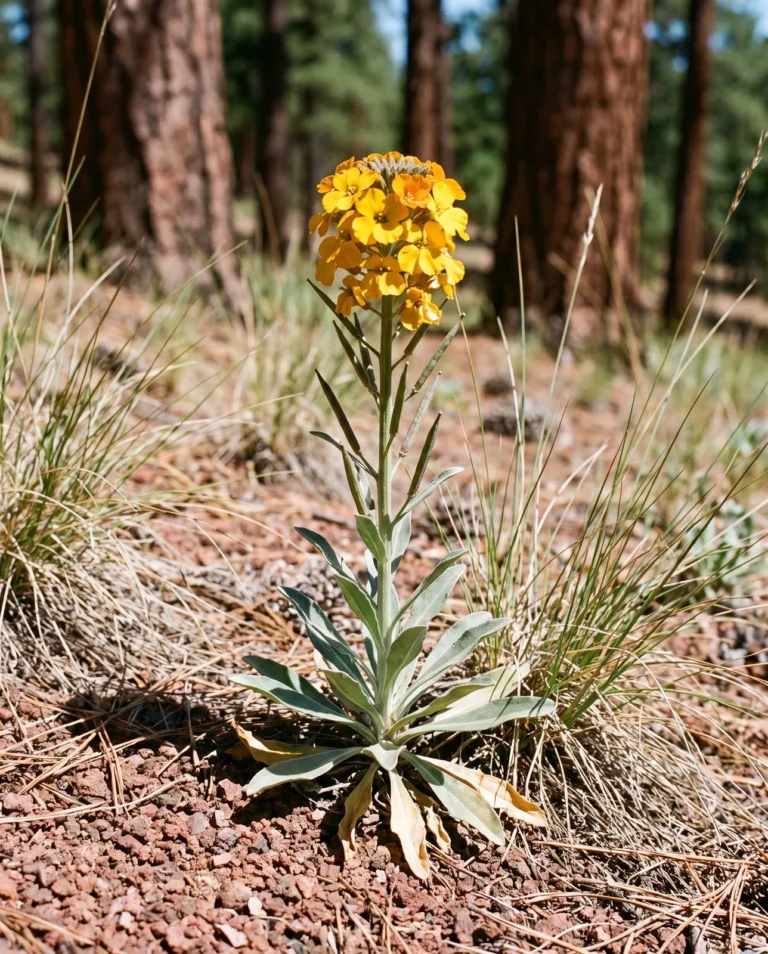
The common wallflower has been introduced across dozens of regions, British Columbia and California among them, and in central Europe it is naturalized but still scattered. The American side of the genus is a different plant. Western wallflower grows wild through Colorado and Utah and flowers from May to July, and its Contra Costa subspecies is endangered in California. The narrow-leaved species behind most of the named perennial hybrids comes from northern Portugal and Spain. All of them carry the family's four small petals in a cross, the same flower you see on sweet alyssum.
Biennial or perennial, and why it matters
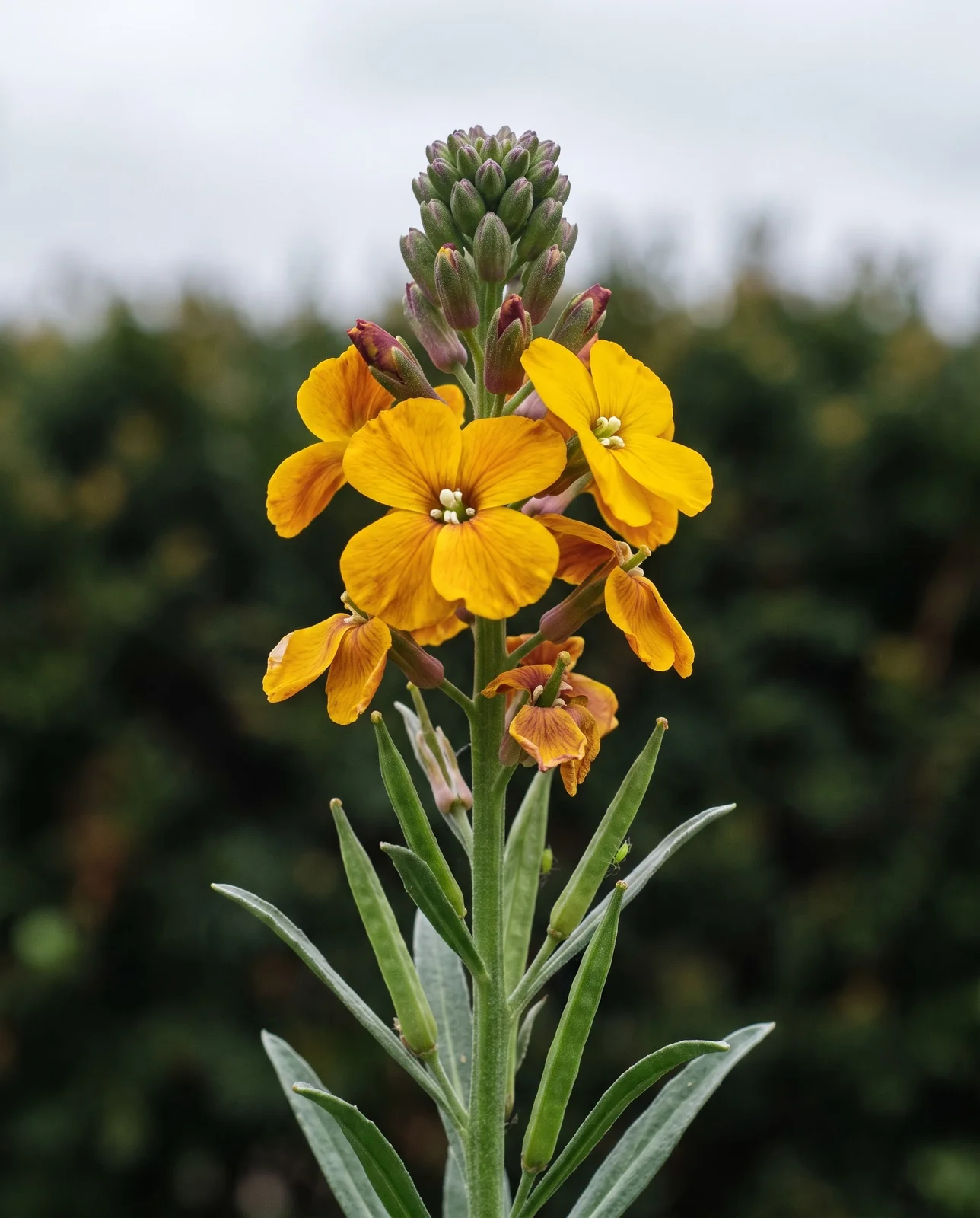
Two plants share the one name, and that fact explains most wallflower confusion. The classic bedding wallflower is a woody-based perennial subshrub, but it is grown as a biennial. Seed goes in one year, the plants go out in autumn, they flower the following spring, and then they come out. A second-year plant grows spindly and leggy, and it is susceptible to club root, so the row is started again from seed. Sowing to flowering maturity takes 1 to 2 years, the whole useful life of the plant on that system.
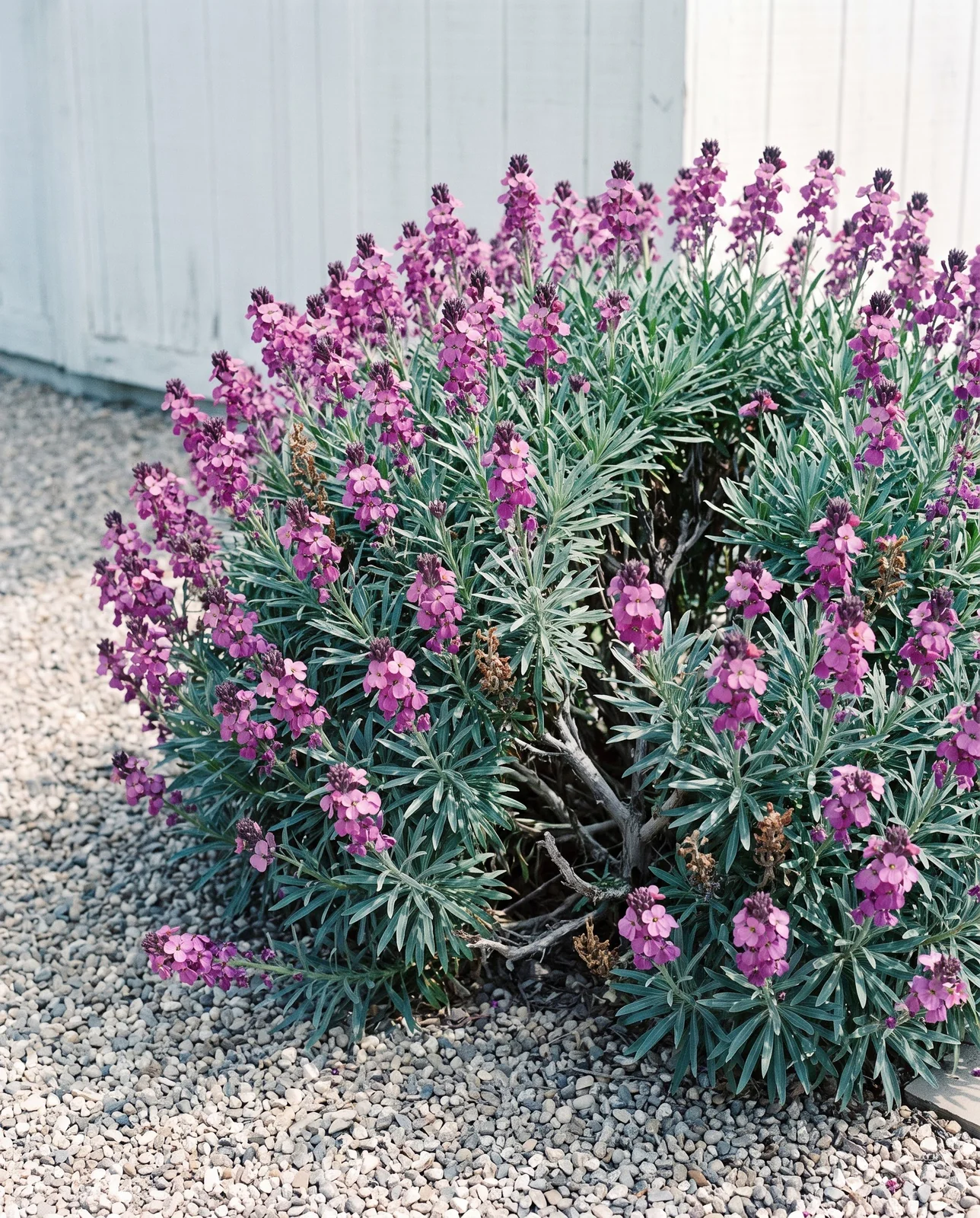
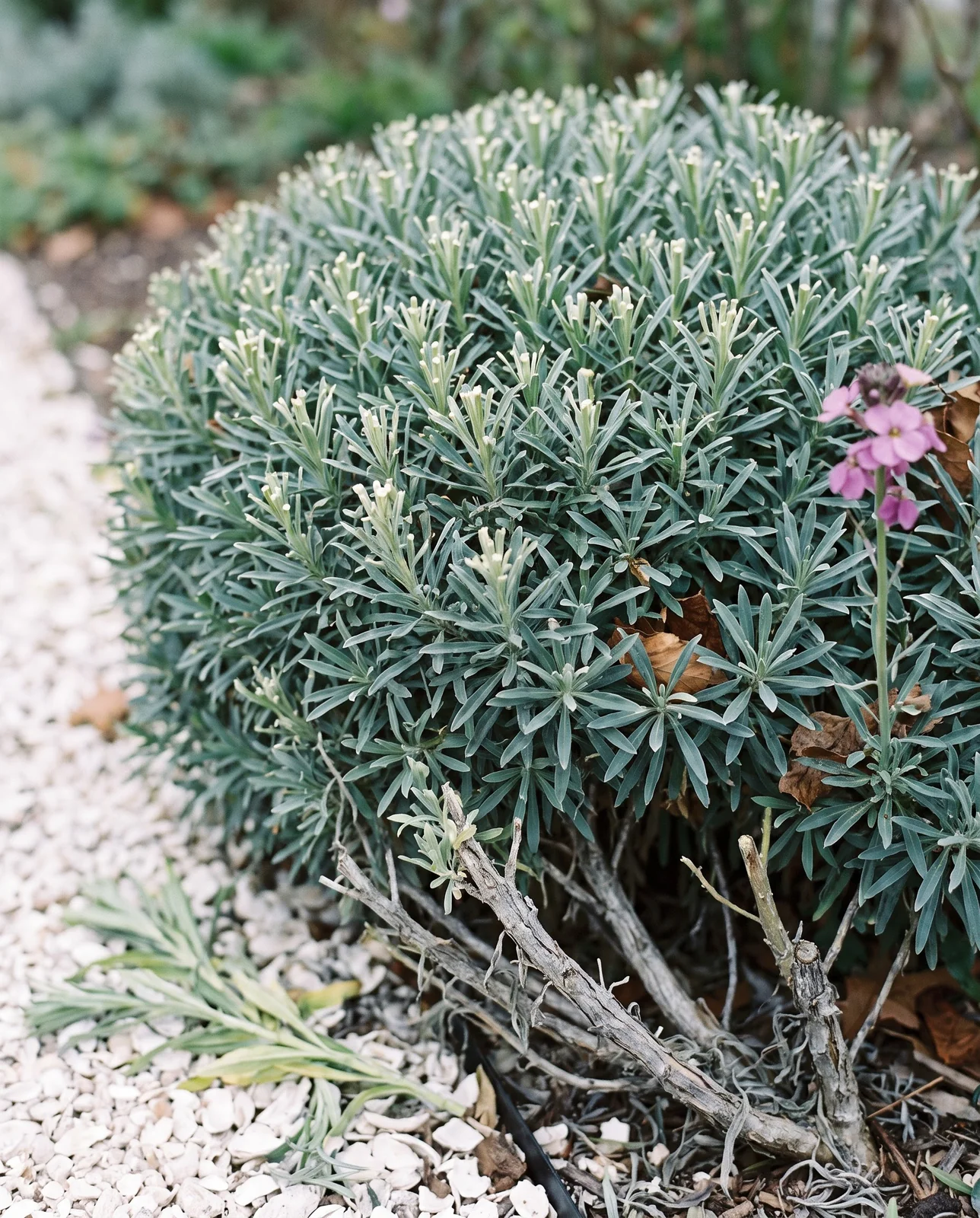
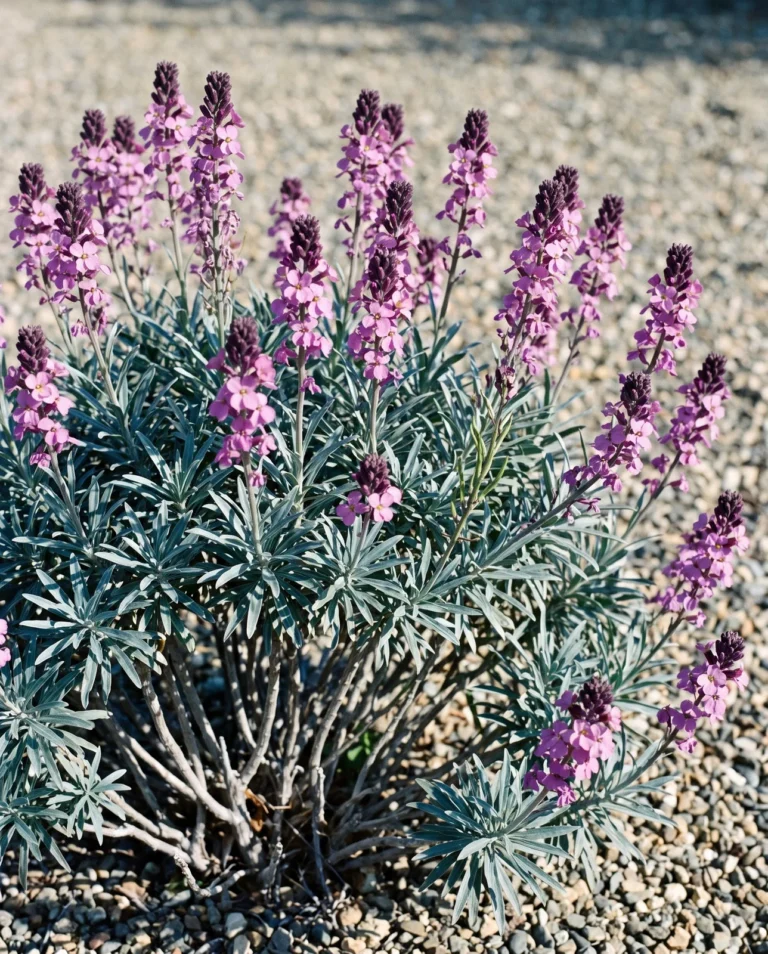
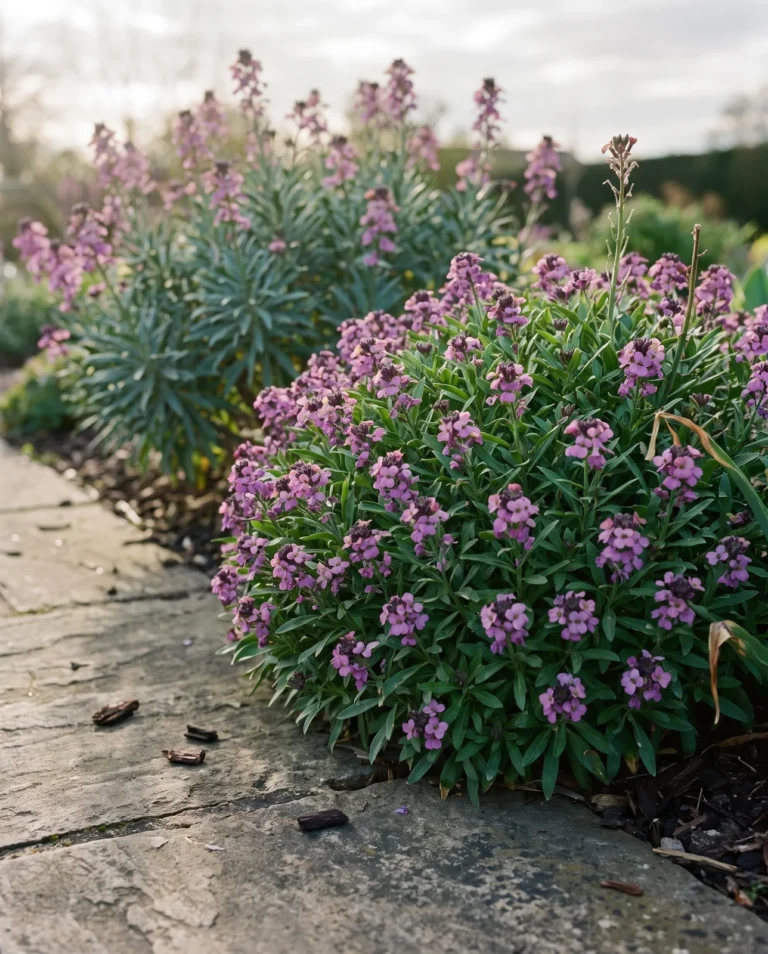
The named modern hybrids are a different proposition. 'Bowles's Mauve' is a short-lived evergreen clump with blue-gray foliage, flowering from late fall through spring and credited with up to 9 months of flower. Short-lived is the operative half of that. The narrow-leaved species behind many of these hybrids is a perennial that performs best treated as an annual or biennial, because it goes leggy afterward. Much of the 'Bowles's Mauve' in the trade is actually the plainer parent species, so two pots bought under one name can behave differently in the same bed.
The wild species will not settle into one category either. Western wallflower is called both a biennial and a short-lived perennial. Siberian wallflower is technically perennial but is liable to die out after flowering, probably exhausted by the display. The common wallflower itself has been called a short-lived evergreen perennial that never really behaves like a true biennial. None of these is wrong. They describe different plants, and in the bedding wallflower's case a plant that could live longer and is deliberately not allowed to.
Hardiness figures by plant type
Hardiness numbers only make sense once the plant type is settled, so they are split by habit.
Where to plant a wallflower
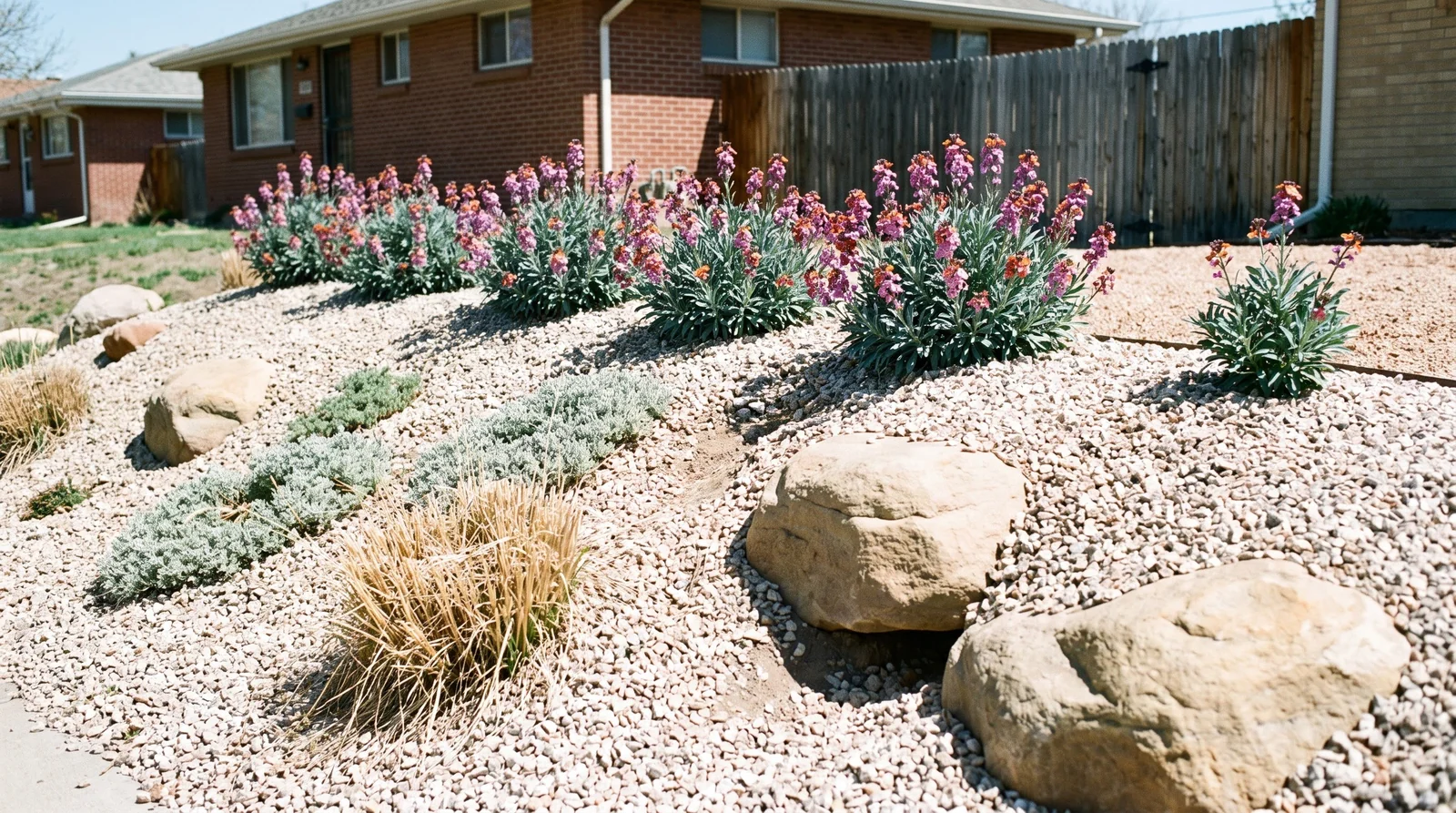
Full sun, and ground that water leaves fast. Wallflower wants poor to moderately fertile soil, well drained and ideally alkaline, and an established plant needs only dry to medium moisture. Heavy wet clay and standing water put it at risk of root rot. That rules out the obvious spot for a scented spring flower: the improved bed, the low corner the hose reaches, the border mulched deep and fed. The crown has to stay dry.
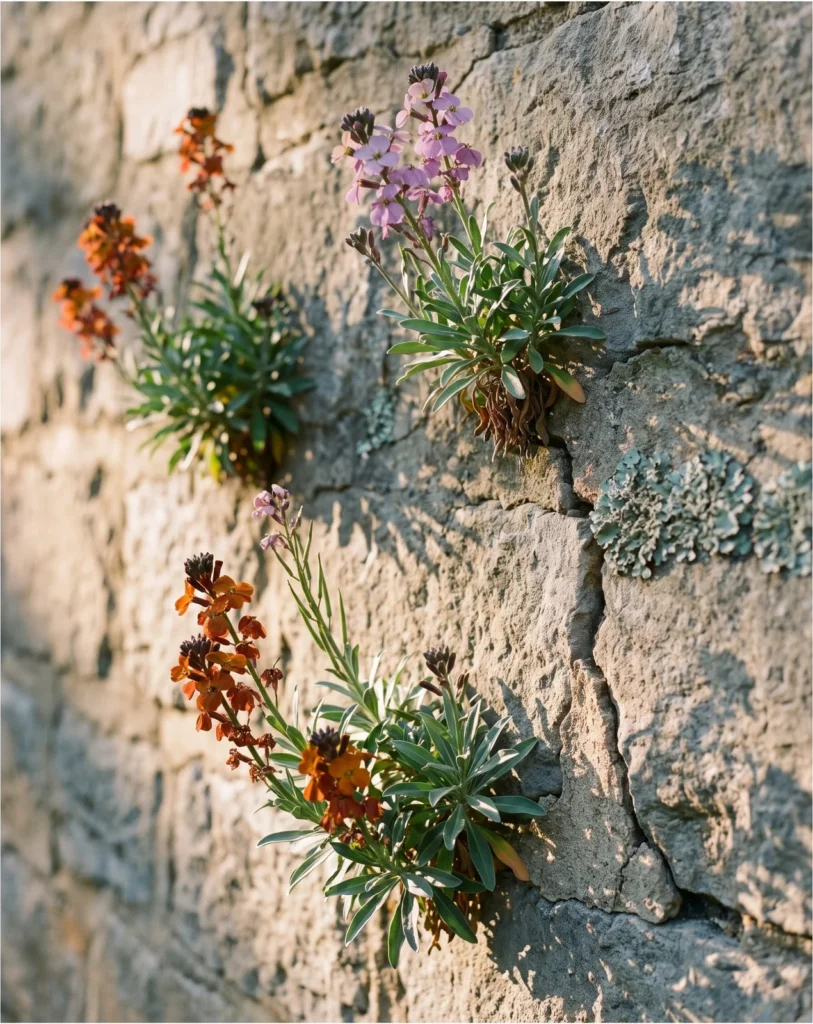
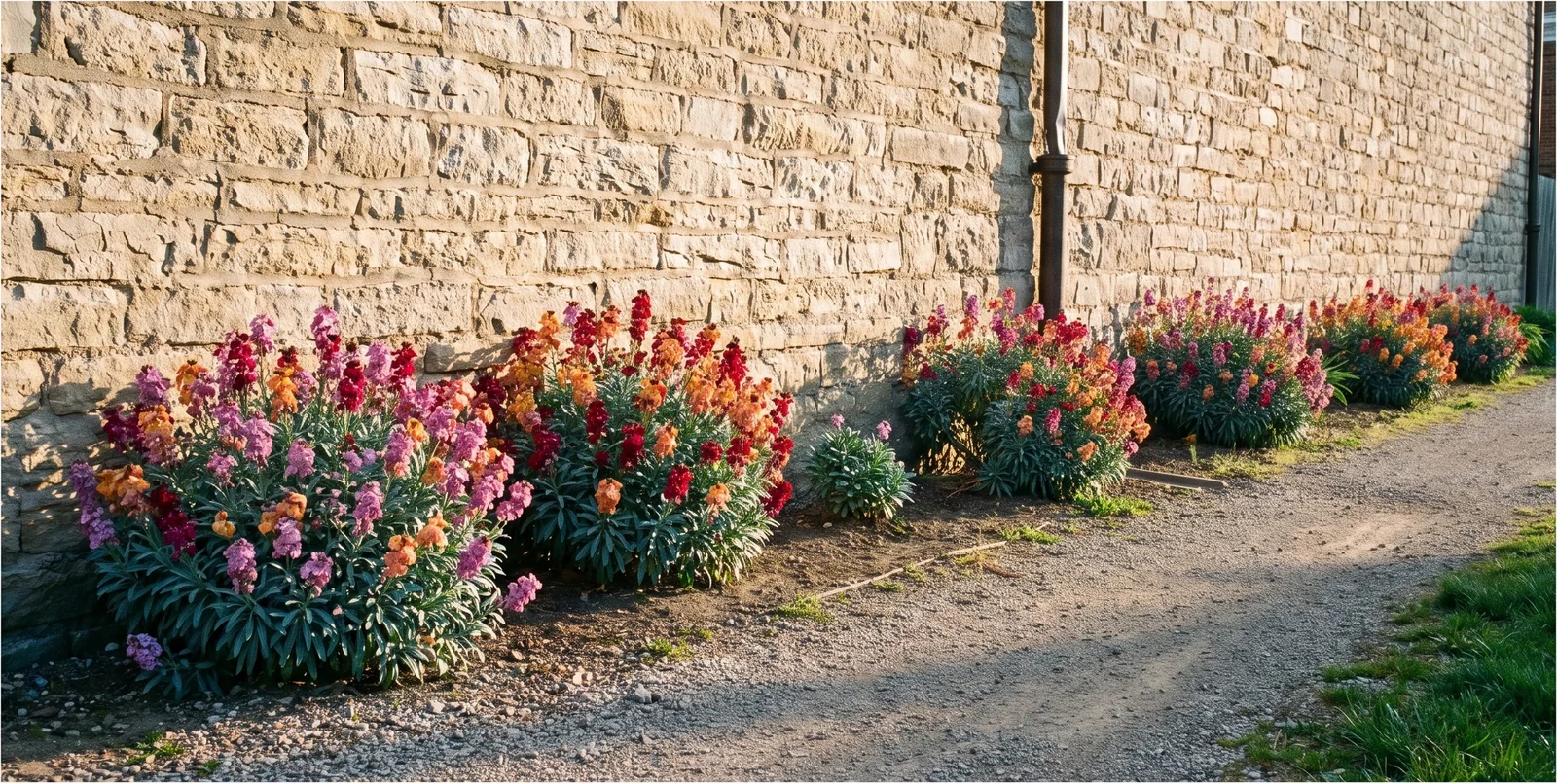
The places that suit it are the awkward ones. Rock walls, slopes and banks carry the narrow-leaved perennial in planting lists, and the mauve perennial goes into coastal gardens, gravel gardens, cottage gardens, wildlife gardens and open borders. What they share is drainage. The top of a dry wall, a gravel bed, a raised bed with grit worked through it and the shoulder of a bank all pass that test. On flat heavy ground, plant into a raised or mounded bed and it does the same job as a wall.
When and how to plant
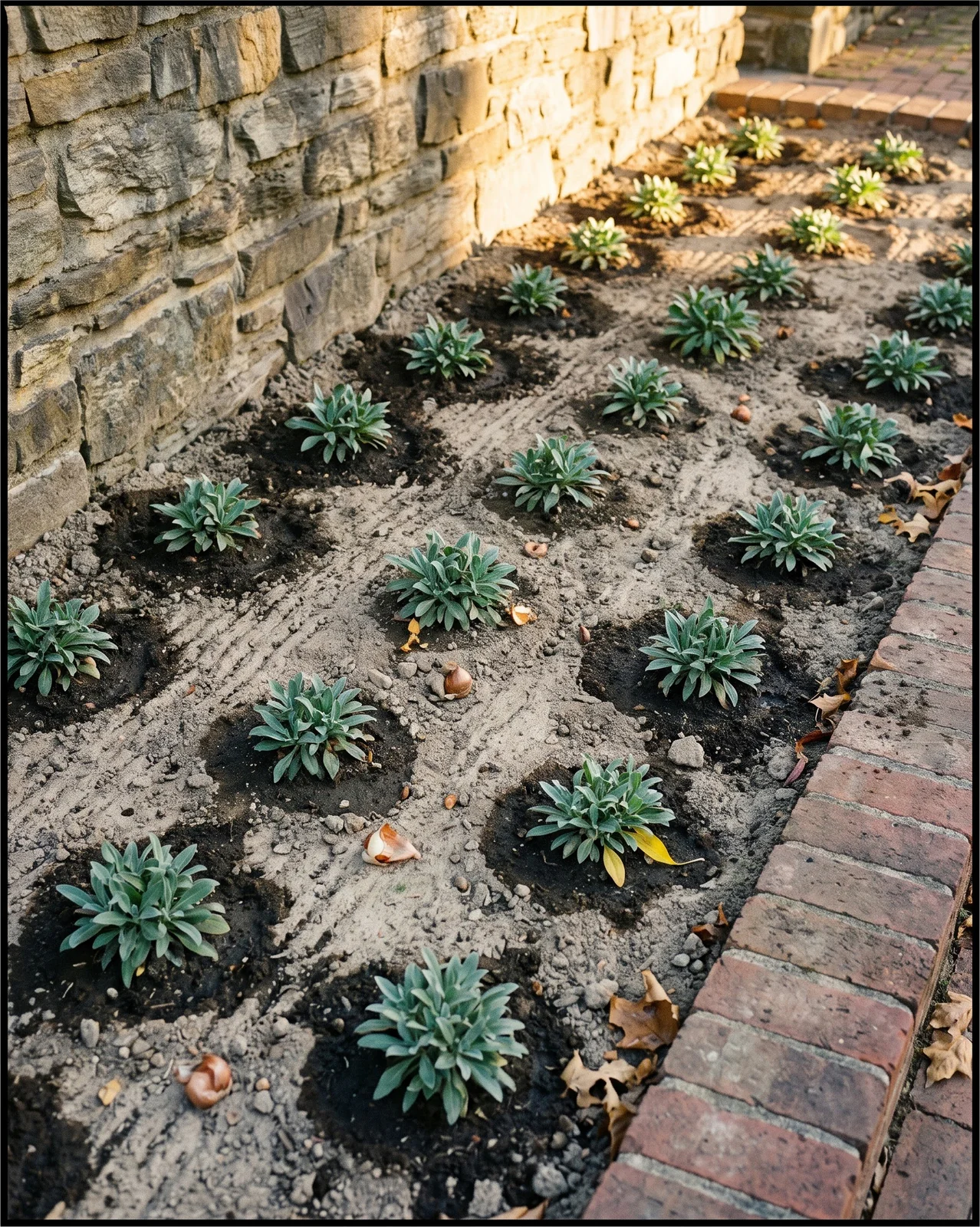
Two planting calendars run under one plant name, and they belong to the two habits. The biennial calendar starts with seed sown in spring for bloom the following year. The seed needs light to germinate, so scatter it on moist soil and leave it uncovered. Germination takes about 3 weeks from an outdoor spring sowing, or 1 to 3 weeks for Siberian wallflower in a late-spring seedbed. The young plants go out in autumn, and they want 4 to 6 weeks in the ground before the first frost so new roots can establish.
The second calendar treats the same plant as an annual. Seed sown in early spring after the last frost flowers from late spring into midsummer of that same year. Neither calendar is wrong. One buys a long-planned spring display, the other buys flowers by summer. Either way, sowing to flowering maturity runs 1 to 2 years.
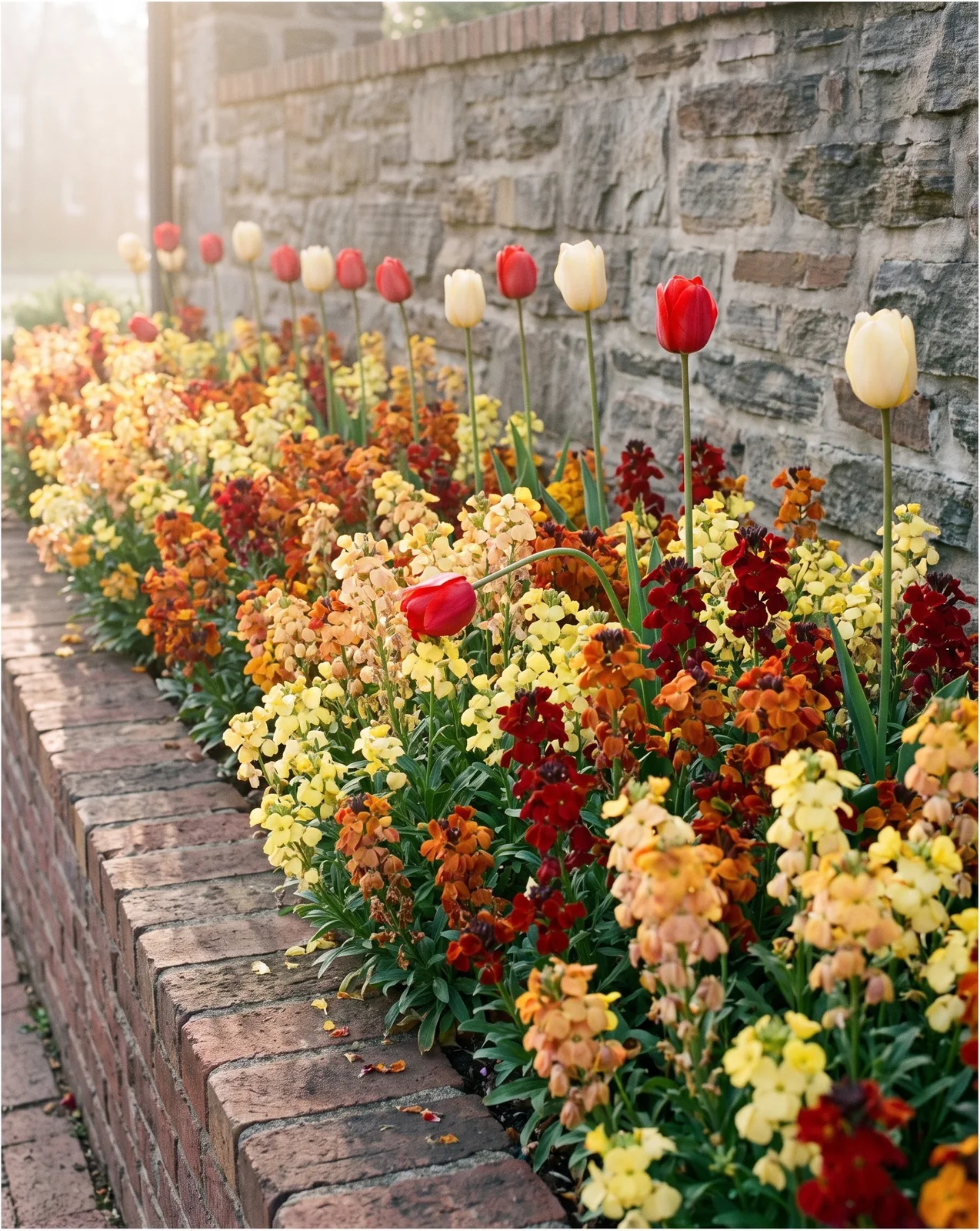
Autumn planting is the classic route, with wallflowers going in alongside spring bulbs to flower with them the following spring. A block of them under tulips is the old version, wallflower scent at ground level while the bulbs come up through it. Spacing follows the plant's own footprint: the mat-forming perennials make about 1 foot each way and go 1 to 2 feet apart. Bedding strains go closer together, in blocks, so the color covers the ground for one season.
The scent, and which types have it
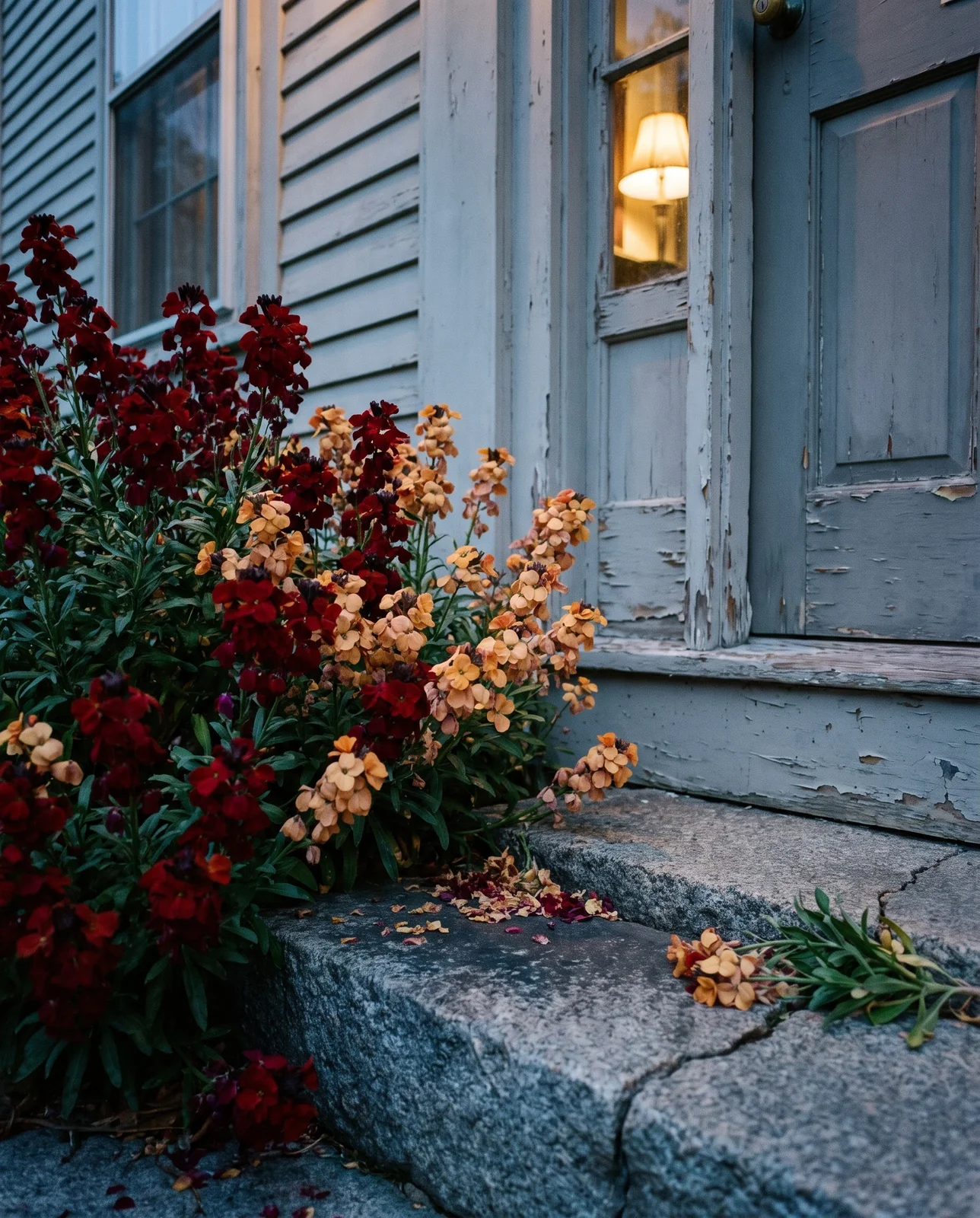
The scent is the reason to plant a wallflower where people walk. The flowers hold an essential oil at 0.06 percent, and diluted it has a pleasing aroma and goes into perfumery. The old names carry the same story. The species name cheiri comes from a medieval habit of carrying the flowers to festivals in small hand bouquets. Cheiranthus has been read as hand flower after the same custom.
Not every wallflower smells alike. Many heavily bred modern varieties have lost much of the strong fragrance the older ones carried. Where scent is the point, look for the older bedding strains. Any of them does more work beside a door or a path than in the middle of a border.
Why a wallflower stops flowering
Three situations look like a wallflower that stopped flowering, and only one is a fault. The first is a plant that has finished. A bedding wallflower flowers once, in the spring after it was sown, and is then pulled. Siberian wallflower is technically perennial but is liable to die out after flowering, probably exhausted by the display. In both cases a change of care comes too late. The first question is what was planted.
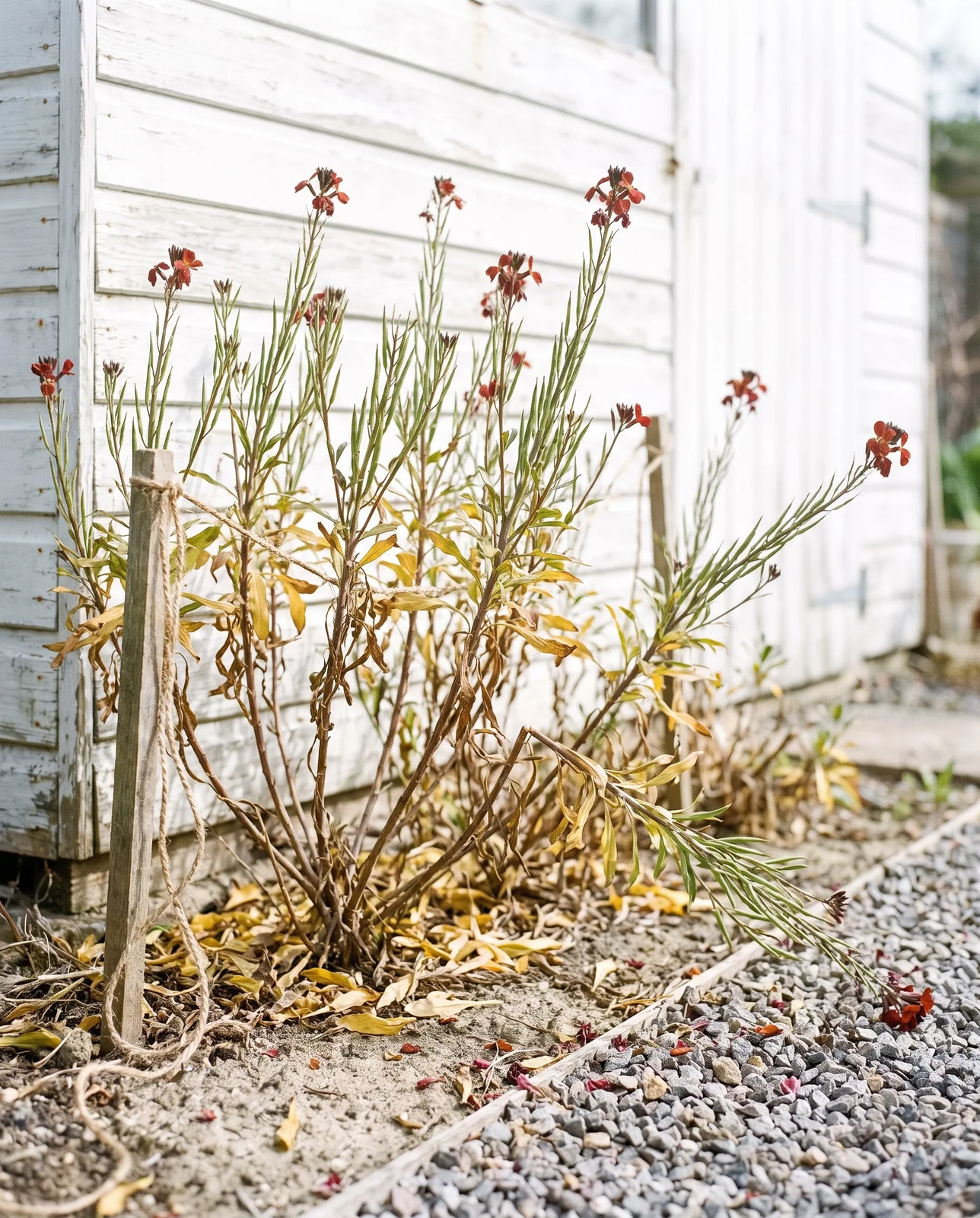
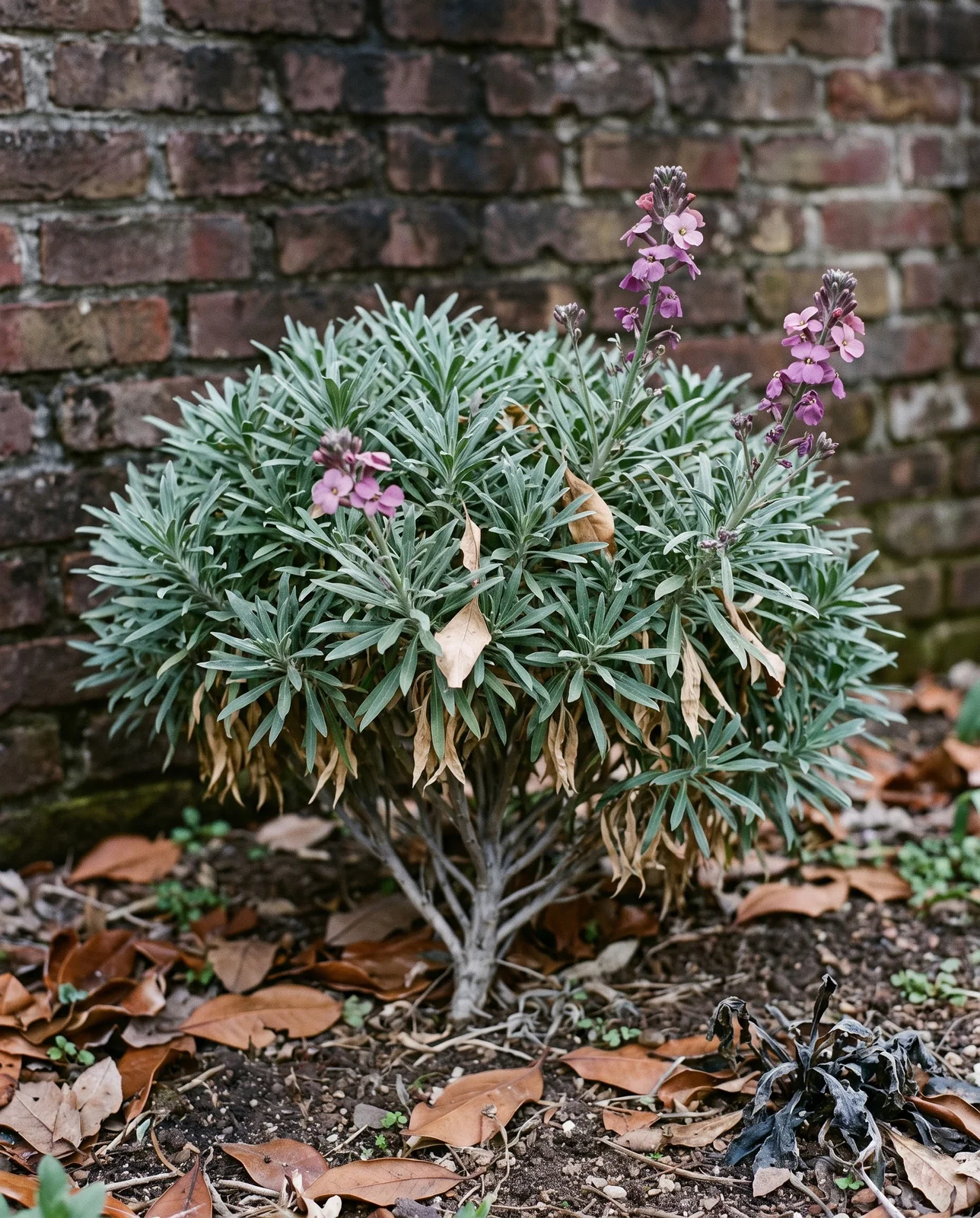
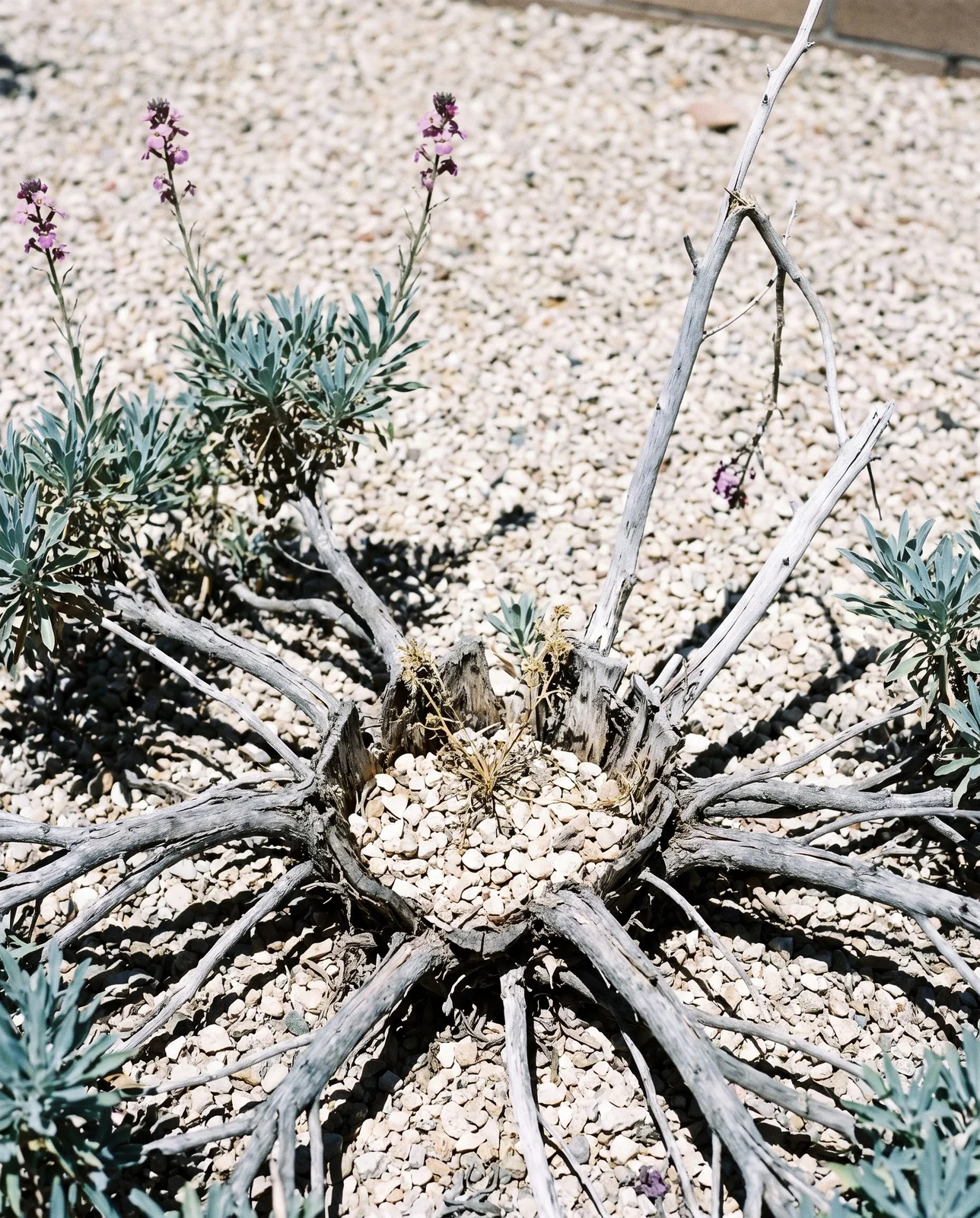
The second situation is a perennial hybrid that has aged out. These are short-lived clumps, and the narrow-leaved species behind many of them goes leggy with age. Legginess is what the decline looks like: bare woody stems at the center, the mound splayed open, flowers only at the tips of the outer shoots. A plant in that state is at the end of a short life, and the answer is a replacement rather than a rescue.
The third situation is the plant that never flowered, and here there are real causes. Sun, deadheading and drainage are the three levers. Feeding works backwards. Too much fertilizer reduces flowering, and a light early-spring feed can boost growth but is generally unnecessary. Age is the other answer, and a plant that went in late or went in small may simply be too young to flower. A wallflower set out small, in shade, into fed ground has been given three reasons at once to stay green.
Work out why it is not flowering
The first two questions decide whether there is anything to fix at all.
Yellow leaves and dying back
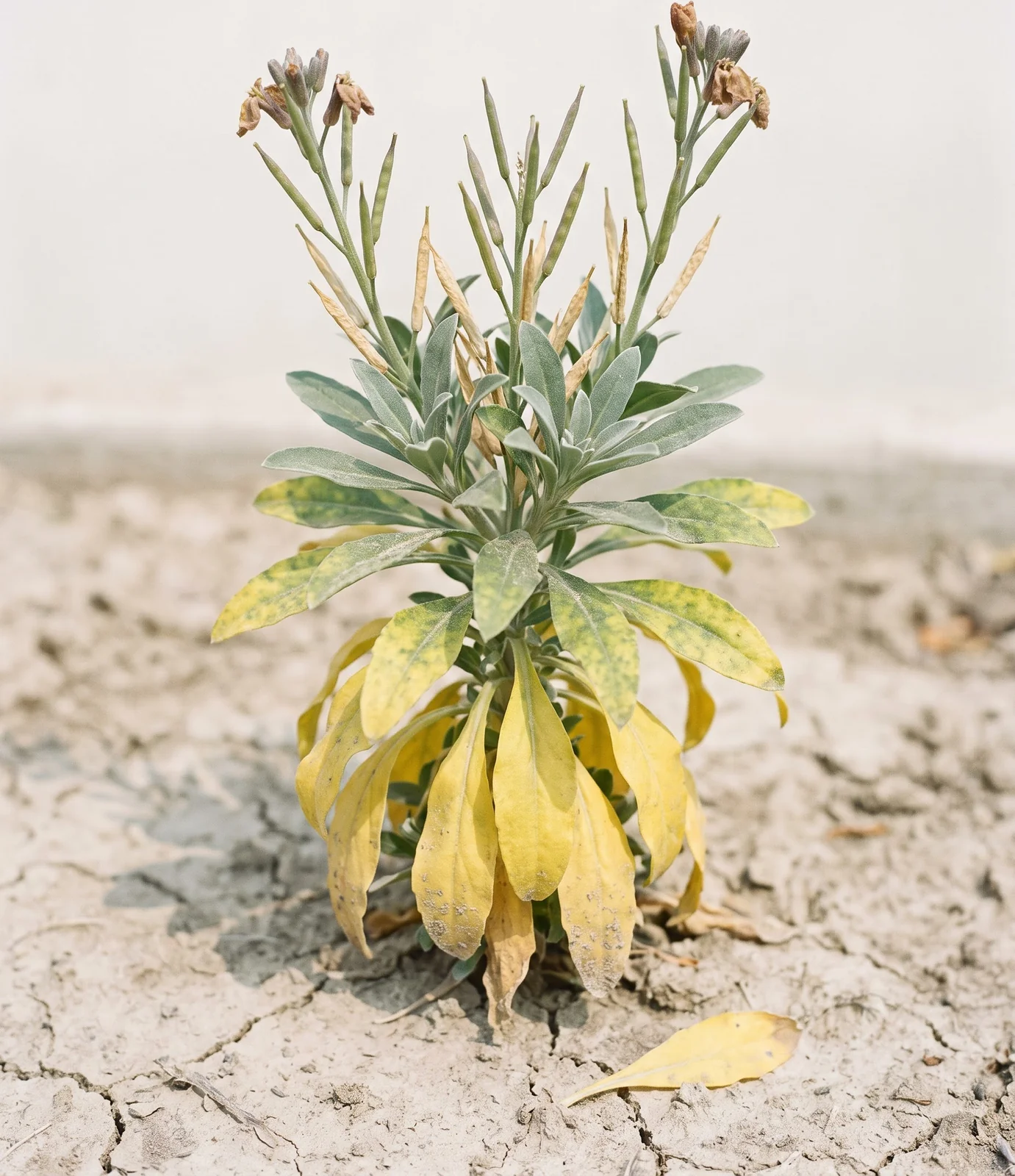
Yellow leaves after flowering are usually the plant finishing on schedule. Post-bloom yellowing and dieback are the normal signal to go dormant, and the response is to water less. The seasonal version is broader: most wallflower types lose their foliage and die back every year in regions colder than zone 8. On a bedding plant that has already had its spring, yellowing is the end of the cycle it was sown for. Cutting the leaves off changes nothing but the look of the bed.
The yellowing worth acting on arrives with no flowering season behind it, or on a plant standing in wet ground. Heavy wet clay and standing water put the roots at risk of rot, and an established wallflower wants only dry to medium moisture. Yellow leaves on a plant that has not flowered, in soil that stays soggy after rain, point at a crown sitting wet. The answer there is drainage, or moving the plant somewhere drier.
Deadheading, and how far to cut back
Deadheading is what stretches the season on the perennial hybrids. The tricolor hybrid flowers from spring until the first frost when it is deadheaded regularly, and the colors deepen as the season runs on. The mauve perennial gets a light trim after flowering for a different reason, to stop it going leggy. Bedding strains are pinched back while young to push a bushier shape, and the straight bedding species needs no pruning at all. Deadheading a biennial tidies the bed and buys nothing else.
The autumn cut has a limit, and it is smaller than most pruning. Perennial wallflowers get a light trim that keeps the blade out of the older, woodier growth, capped at 2 inches of top growth a year. The window runs from September to November, with October the month named. Perennial wallflowers cannot tolerate hard pruning. A plant that has gone woody and splayed open at the center is a poor candidate for the shears, whatever it looks like it needs. The cut is for shape, on soft growth only.
Keeping the perennial types going
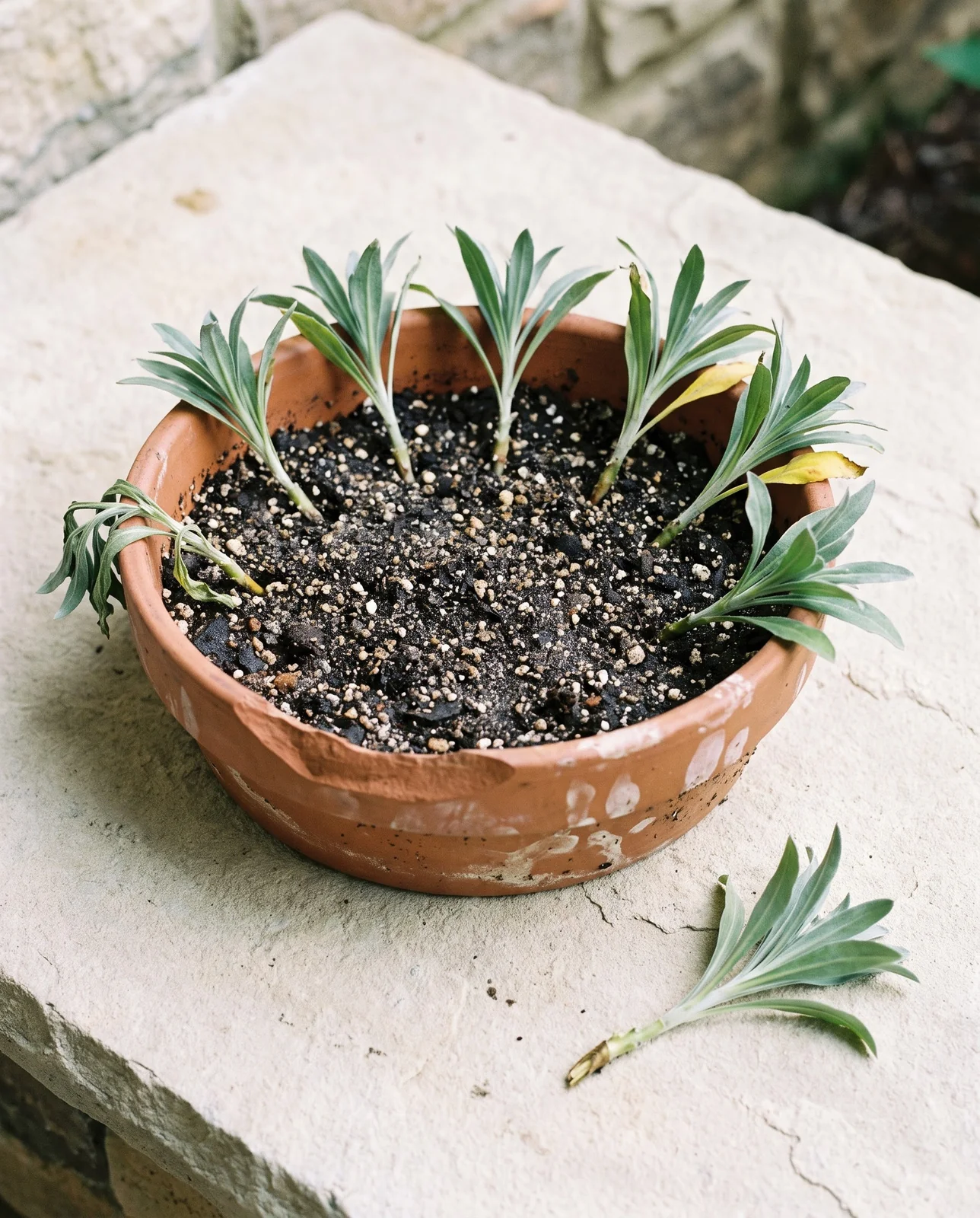
A perennial wallflower is kept going by raising the next one before the old one gives out. After the autumn trim, mulching well lets the plant overwinter, regrow and flower again the following season. That carries a healthy clump from one spring to the next. It does not make a short-lived plant long-lived. Cuttings are the answer, and the window is narrow: spring, ideally May or June. Semi-hardwood cuttings taken in spring or summer work for the common wallflower and its named hybrids alike. Take a few while the parent is still flowering heavily.
Cuttings are 4 inches long, off healthy shoots that carry no flowers. Pull them so they break just below a node, leaving a small heel at the base; heel cuttings often stand a better chance of rooting. Strip the lower leaves and leave 3 to 4 near the top. Rooting hormone is optional, and generally unnecessary for good cuttings taken at the right time of year. Rooted plants go out in late spring, before the weather turns too warm and dry, with a season of growth ahead of the winter.
Varieties worth telling apart
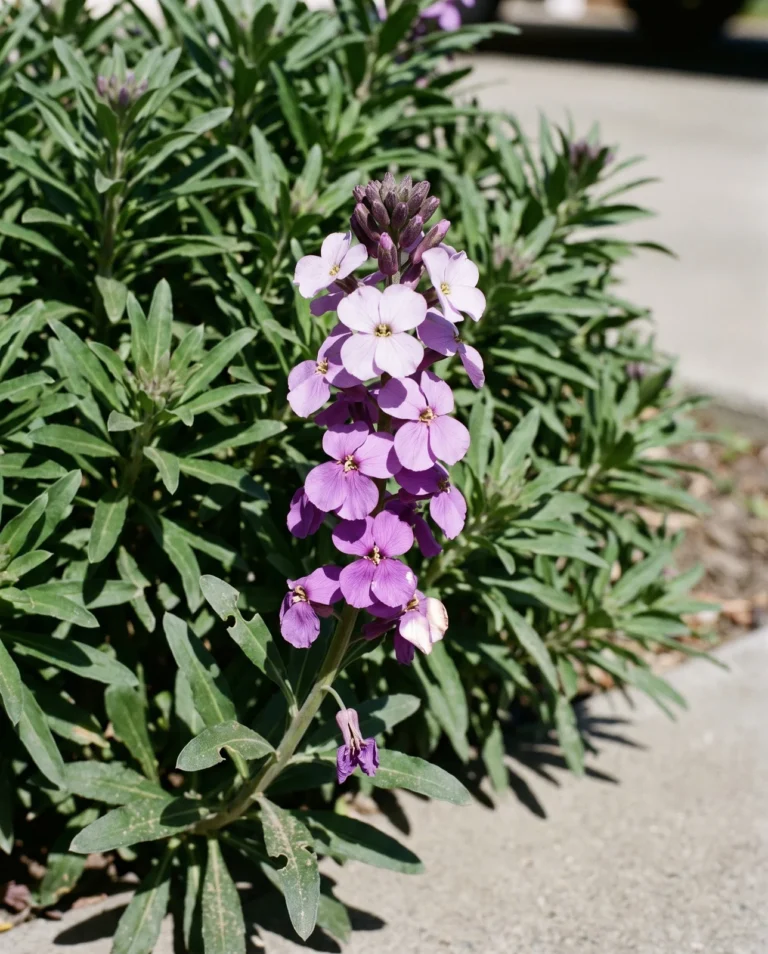
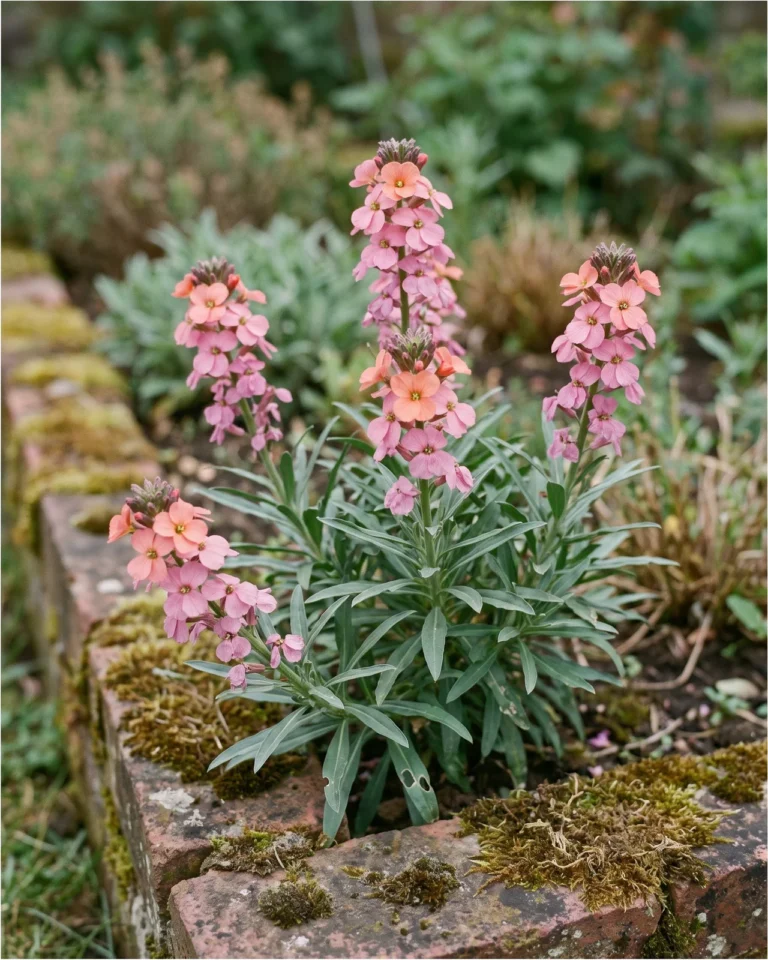
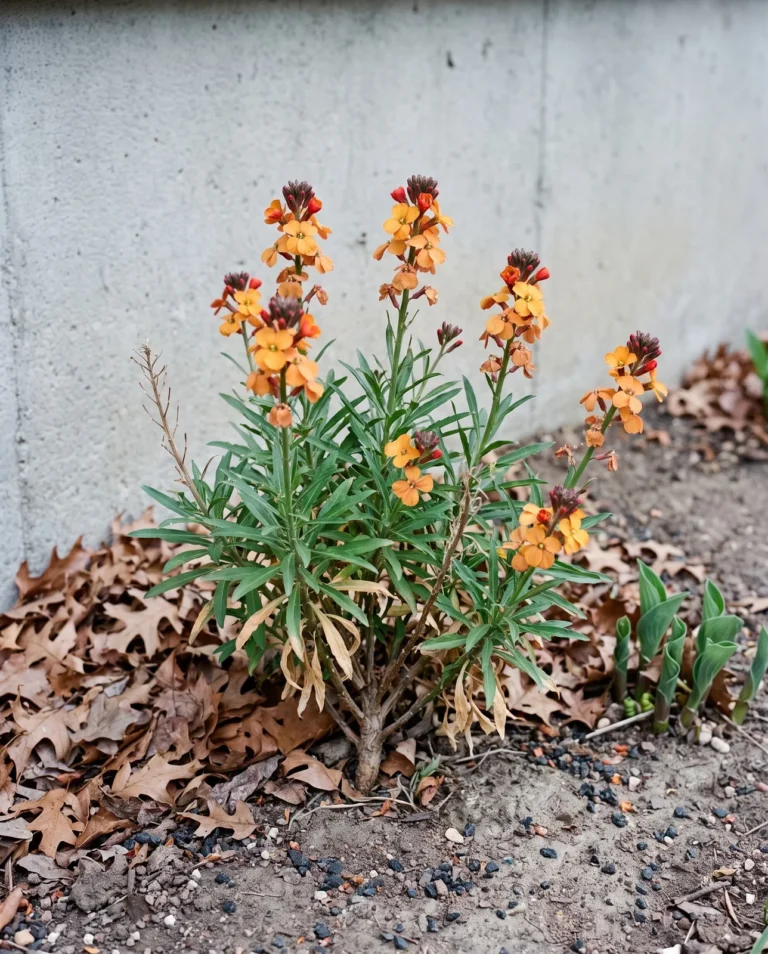
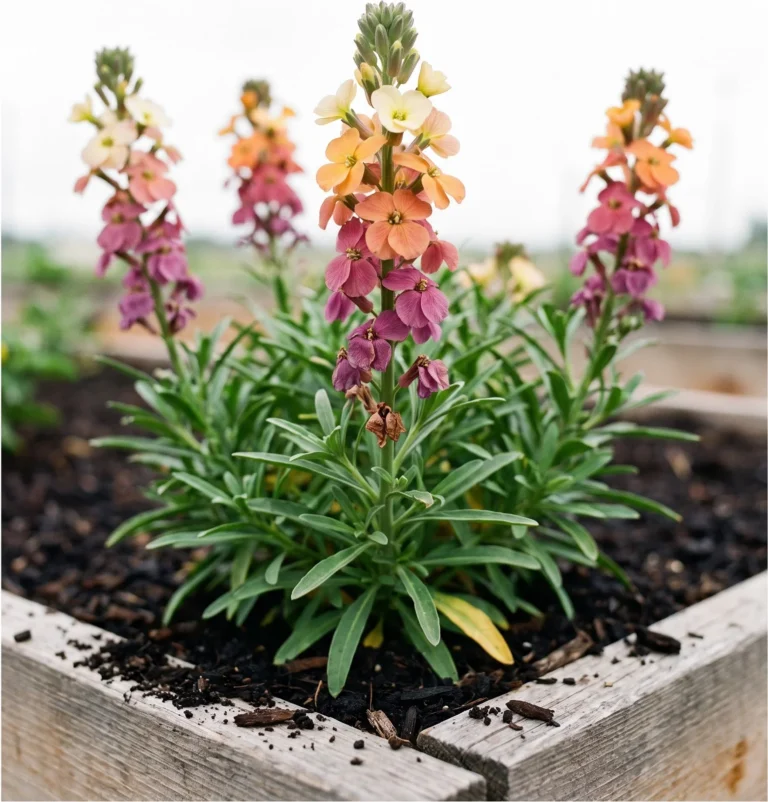
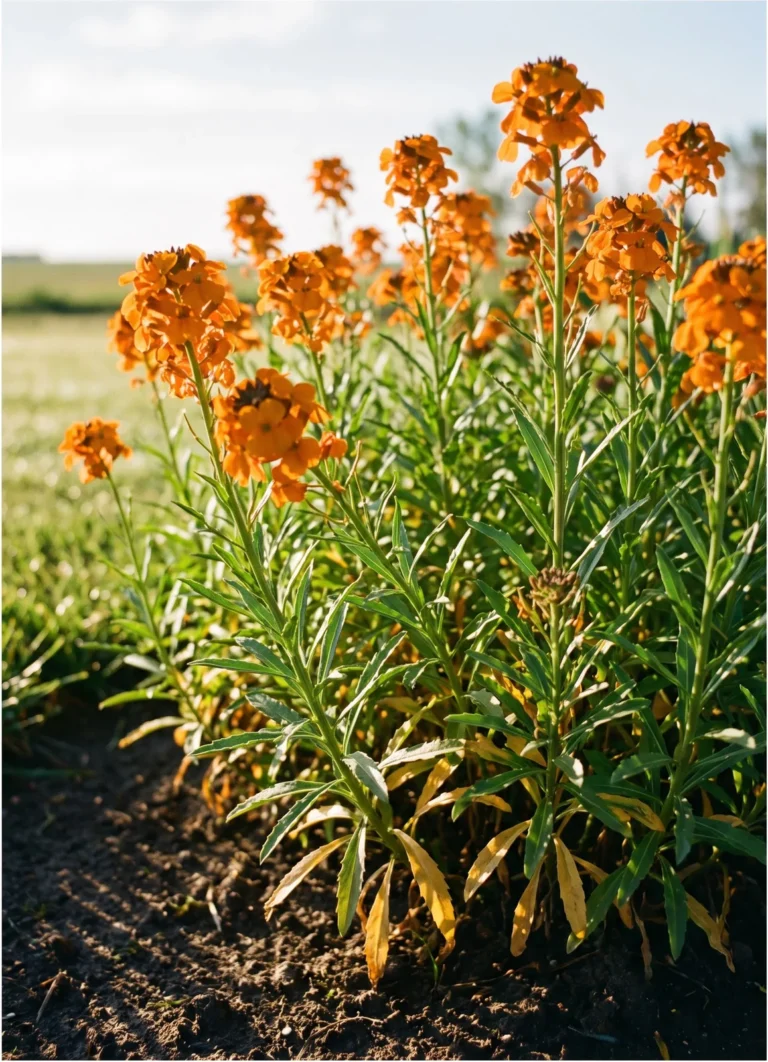
The named perennial hybrids and the bedding strains are sold under one word. Habit, hardiness and the length of the flowering are what separate them.
Light
Full sun is essential for wallflowers. For the narrow-leaved hybrids that means 6 or more hours of direct sun a day, while 2 to 6 hours counts as partial shade, which they tolerate. Count the hours a spot actually gets in spring, when the sun is low and a fence or a house wall takes more of the day than it will in July. A bed that reads as bright but collects its light late, through a tree just coming into leaf, is flowering from the tolerated band.
Soil, drainage and pH
Drainage decides where a wallflower can live, and pH decides how much trouble it meets there. Clubroot spores germinate best in acidic, wet soil below pH 7.0. Liming to pH 7.1 to 7.5 can slowly reduce the severity of an infestation, though it will not clear one already well established. That runs with the plant's own preference for well-drained, alkaline ground, so test the soil before planting. On sour, heavy ground both problems arrive together, since the soil the plant likes least is the soil the pathogen likes most. A raised bed of grittier material answers both at once.
Water
Watering is a light job once the plant has settled. An established wallflower takes a few deep waterings through a dry spell, and frequent shallow watering does less for it. Shallow water keeps the crown and the top of the root system damp for hours at a stretch, and that is the state this plant handles worst. A new planting is the exception. It has no root system yet, so keep the ground around it from drying out completely for its first few weeks, then leave it alone.
Wallflowers in containers
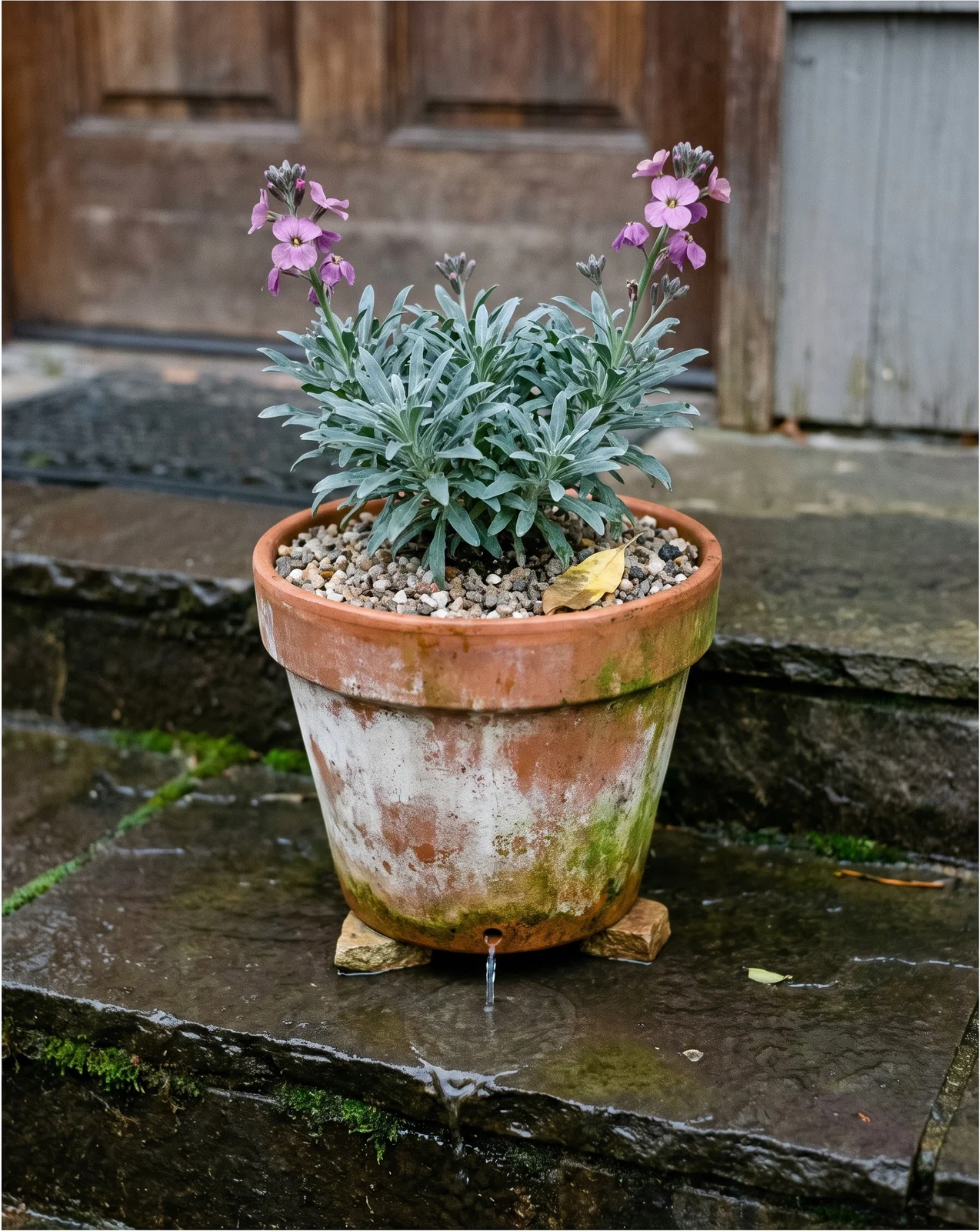
A pot suits a wallflower for the same reason a wall does: water leaves quickly. Containers and hanging baskets suit the narrow-leaved perennial types, alongside rock walls and banks, and the mauve perennial takes a patio pot as well. What a pot adds is control over the mix, the grit and the drainage holes. It also lifts the flowers to the height where the scent is easiest to reach.
Winter is where container plants get lost. Standing water carries the risk of root rot. A pot sitting in a full saucer through a wet winter creates exactly that at the crown, however sharp the mix inside it is. Raise the pot clear of the ground, empty the saucer and keep it out of the drip line from a roof. An autumn pot of bedding wallflowers with pansies comes out with them once the spring display is over. A perennial hybrid in a pot has to be carried through the wet months.
What visits the flowers
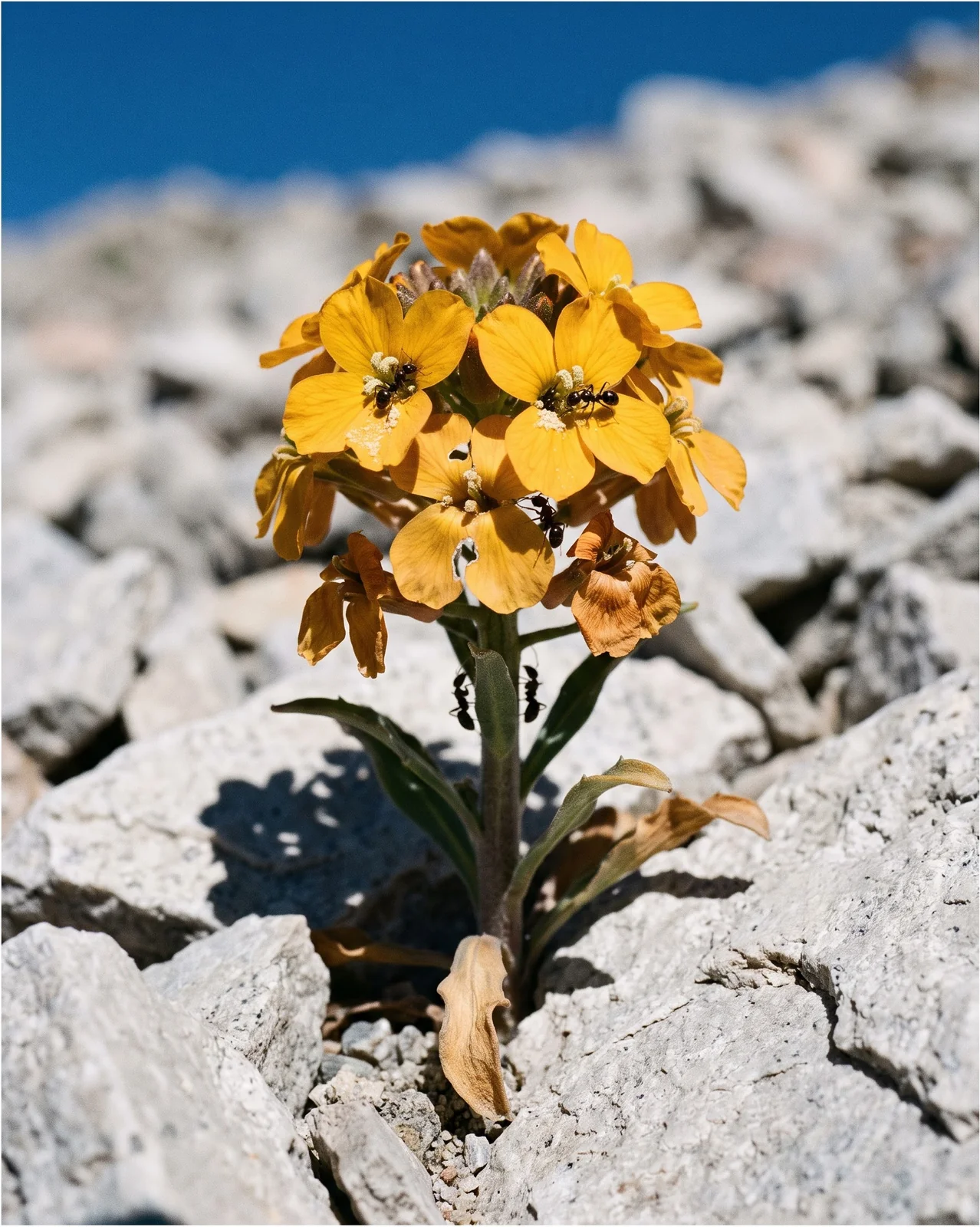
Wallflowers open early, and the timing is most of what they offer insects. They feed pollinators in early summer, at a point in the year when little else is in bloom. The visitor list is broad. Bees, bee flies, hoverflies, butterflies, beetles and ants all work the flowers, and most wallflowers are generalists about it. Caterpillars of some moths and butterflies use the genus as a larval host, and the narrow-leaved perennial draws hummingbirds and butterflies as well.
The oddest case comes from the wild American species. In subalpine talus scree, over 80 percent of flower visits to western wallflower came from just two ant species. That is one population in one habitat, and it fits the generalist pattern: a wallflower takes whatever the ground provides, and at that height it walks up the stem.
Height and spread
Most wallflowers are ankle to knee high. The common wallflower stands 6 to 24 inches tall, occasionally reaching 30. The flowers are small, about three-quarters of an inch across, so a block of them reads as a haze of color from any distance. The named perennials are where the sizes argue. 'Bowles's Mauve' runs 12 to 24 inches in height and spread, and up to about 30 inches on a bushy plant. The narrow-leaved mat-formers behind much of the group make about 1 foot each way. A label alone will not settle which of those a pot holds.
Pests and diseases
Wallflower sits in the cabbage family and shares the family's troubles. Downy mildew, club root and bacterial leaf blight turn up on the common wallflower. The narrow-leaved perennial picks up aphids, spider mites, snails, slugs, rust, downy mildew and powdery mildew. Downy mildew is what the two have in common. Club root is the one worth understanding, because it lives in the soil and works on a different timescale from everything else.
Its resting spores stay in the soil for 10 to 20 years. Infection runs mainly from midsummer through late autumn, whenever the soil stays moist and warm, the same stretch in which biennial wallflowers are growing on in a seedbed. Where it has appeared, keep brassica-family plantings off the site for a minimum of 4 to 7 years. Vulnerability to it is also part of why a second-year bedding plant is pulled and the row started again from seed.
What to expect, season by season
This is the biennial calendar, the autumn-to-spring bedding rhythm that snapdragons run on too. The named perennial hybrids skip the first year of it.
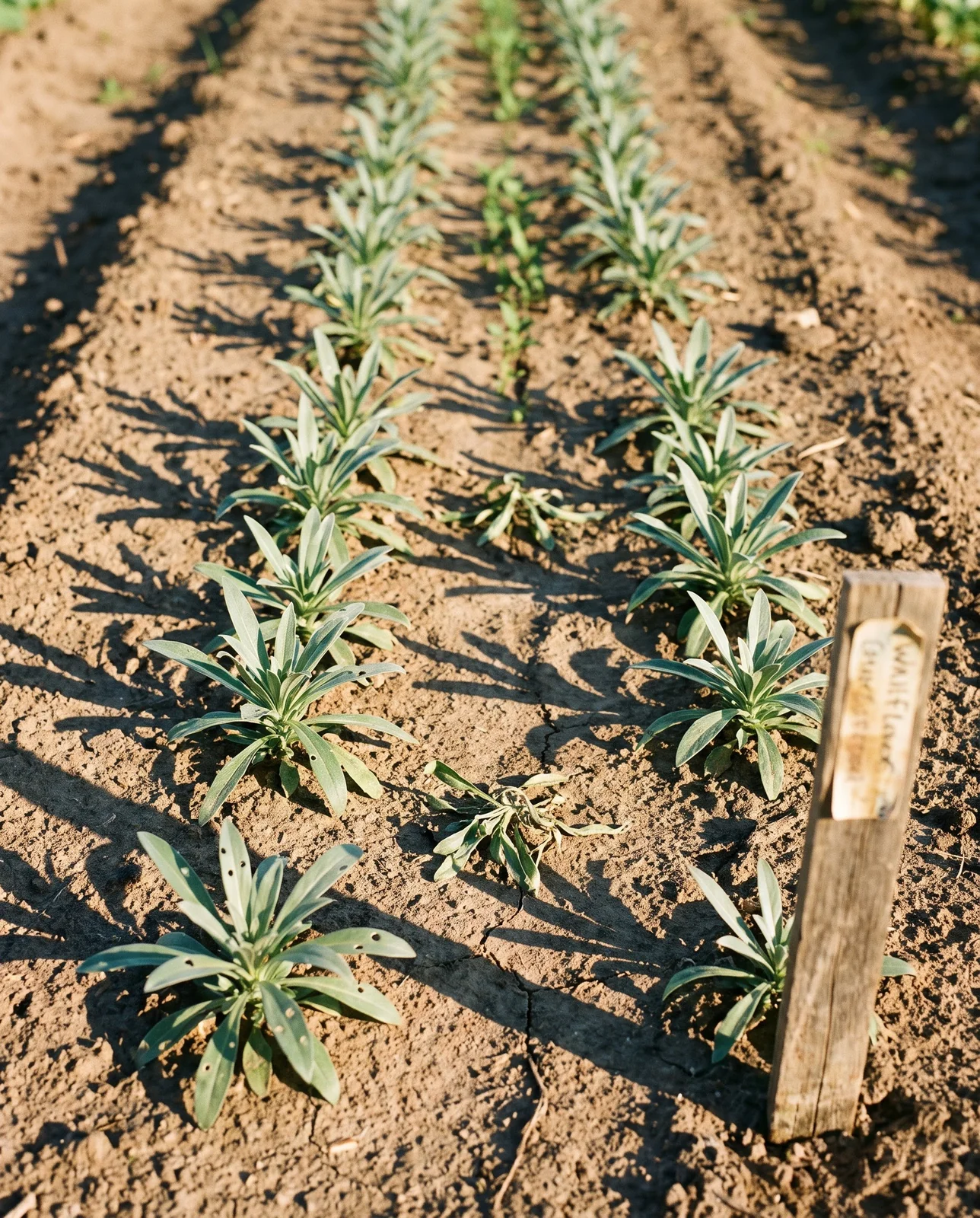
Year one looks like nothing is happening. Seed scattered on the surface of an open bed and left uncovered, because it needs light to start, germinates in about 3 weeks. Then comes a summer of leaves: small rosettes thinned to give each one room, with no sign of a flower and no reason to expect one. In autumn the young plants are lifted into the bed where they are to flower, timed to give them 4 to 6 weeks before the first frost.
The second spring is the point of the exercise. Bedding wallflowers flower from April to June, and the scent does most of its work in still air near a door or a path. On the named perennials the same weeks are one stretch of a much longer run, and the plants are already building their woody base.
After flowering the two types part ways. Bedding stock has finished: it flowers once, comes out, and next year's display starts from seed sown that spring. A perennial hybrid gets the small autumn cut, no more than 2 inches of soft growth between September and November, and a mulch to carry it through winter. Every year or two, take a batch of cuttings in May or June, so a young plant is standing by before the old one opens at the middle.
What people get wrong about wallflowers
Four claims travel with this plant. Each is true of some wallflower somewhere, so none of them dies out.
The myth: A wallflower is a perennial, so it should come back next year.
The reality: The classic bedding wallflower is a woody-based perennial grown as a biennial. It flowers the spring after sowing and is then lifted, because a second-year plant grows spindly and leggy and is susceptible to club root. The perennial label belongs to the named hybrids sold in pots, and even those are short-lived.
The myth: Rich, well-fed soil gives more flowers.
The reality: Too much fertilizer reduces flowering. A light early-spring feed can boost growth, but feeding is generally unnecessary. Poor ground that drains fast is what this plant asks for.
The myth: Yellow leaves after flowering mean the plant is sick.
The reality: Yellowing after bloom is a dormancy signal, answered by watering less. The version worth acting on is yellow leaves with no flowering season behind them, on a plant in ground that stays wet, where root rot is the risk.
The myth: A leggy old plant can be cut back hard and it will come again.
The reality: The autumn trim is capped at 2 inches of top growth, and perennial wallflowers cannot tolerate hard pruning. A plant that has gone woody and opened at the middle is at the end of a short life, and the replacement comes from a cutting.
FAQ
Do wallflowers come back every year?
It depends which one you have. The classic bedding wallflower is grown as a biennial: it flowers the spring after sowing and is then lifted. The named perennial hybrids do come back, as short-lived clumps that flower for months.
What does wallflower mean when it is not a plant?
In everyday speech a wallflower is the guest who stays at the edge of a dance, and the same word sells air fresheners, jeans and a film title. The plant is a scented spring flower in the mustard family with seven other common names of its own, among them bloody warrior.
Can I plant wallflowers in October?
In most of the country, yes. Fall-planted wallflowers want 4 to 6 weeks in the ground before the first frost so new roots can establish, so count back from your own frost date.
What hardiness zone are wallflowers?
The number follows the plant type. The bedding species takes zones 6 to 9, and the true mauve hybrid 5a to 10b. A genus-wide claim of zones 3 to 10 runs far wider than either.
When should I cut back wallflowers?
For the perennial hybrids, between September and November, with October the month named, and no more than 2 inches of top growth. The straight bedding species needs no pruning at all.
Are wallflowers poisonous to cats, dogs or horses?
There is no clean answer. ASPCA has no plant page for wallflower, Erysimum, Erysimum cheiri, Cheiranthus cheiri or Siberian wallflower, so its list says nothing either way. The common wallflower is called poisonous if eaten in large quantities, and the narrow-leaved species is flagged as a problem for horses.
Do wallflowers need full sun?
Yes, full sun is essential for the genus. For the narrow-leaved hybrids that means 6 or more hours of direct sun a day, with 2 to 6 hours counted as partial shade and merely tolerated.
Do honeybees visit wallflowers?
Not reliably. Honeybees want large drifts of the plant before they bother with it, and a small patch can go a season without one. Other bees, hoverflies, butterflies, beetles and ants do work the flowers.
Can wallflowers flower the same year they are sown?
Yes, on the annual route. Seed sown in early spring after the last frost flowers from late spring into midsummer of the same year. The autumn route gives up those first-year flowers for a display the following spring.
Do deer eat wallflowers?
The narrow-leaved perennial counts as resistant to deer, drought, dry soil and rabbits. Yet wild deer, ibex and other large herbivores across the Northern Hemisphere feed on wallflower flowering and fruiting stalks. Resistant describes a preference, and a hungry animal in a hard season is a different case.
Interesting tips
- Not every Erysimum is a garden plant. Wormseed mustard, Erysimum cheiranthoides, is a true annual to 3 feet in zones 4 to 8. Bushy wallflower, Erysimum repandum, is another annual at 2 feet in zones 5 to 9. European wallflower, Erysimum hieraciifolium, is a biennial or perennial of the same height in zones 6 to 9. The plants sold for gardens are a small part of the genus.
- Producing cardiac glycosides lets Erysimum escape some of its specialist insect herbivores, though not all of them. Whatever else those compounds do inside the plant, they buy it a partial defense and no more.
Related Guides & Flowers
Most fragrant flowers
Where a wallflower sits among the plants grown for scent, if the doorway bed is being planned around it.
Drought tolerant flowers for full sun
Other plants for the same lean, fast-draining ground in the open.
Deer resistant flowers
How the resistant lists are put together, for a bed that already gets browsed.

Types of flowers
The full catalog of flower guides by kind, when the rest of the spring bed is still open.
Enjoying our flower guides? Add YourFlowersGuide as a preferred source on Google. It helps more readers find us.
Add to Preferred Sources