Love and Romance Flowers Guide | Step-by-Step
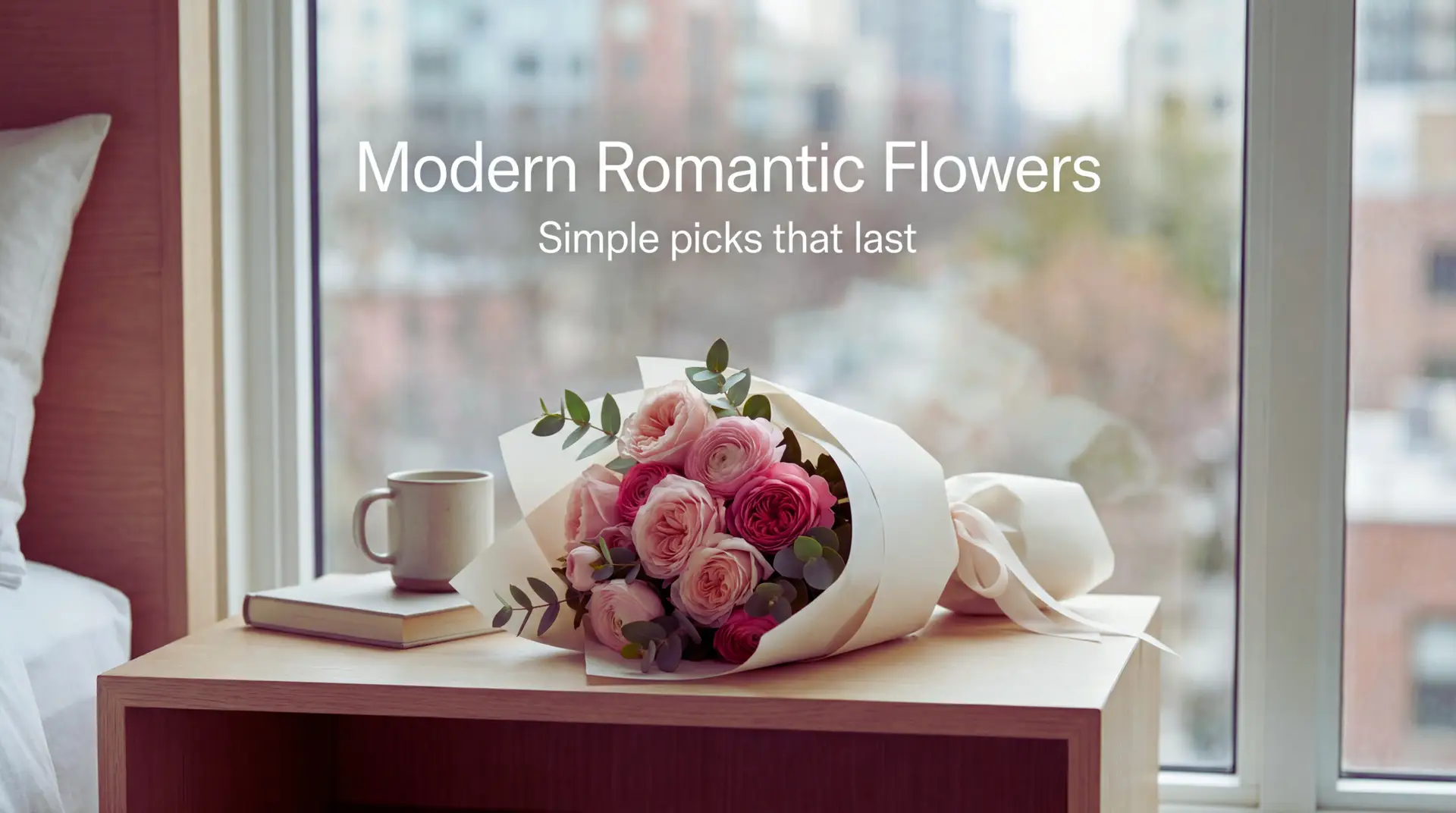
Romantic flowers do not need to be dramatic to feel meaningful. The best picks are the ones that fit the recipient’s style and the moment’s tone, then hold up well once they get home. For classic and widely loved choices, roses still lead because they read as romantic in almost any color, and they come in many price points. Tulips are another safe classic that can feel modern and soft, especially in pinks, whites, and creamy tones. When the goal is “romance, but not too much,” lisianthus can be a quiet upgrade that feels elegant without being loud.
Seasonal and easy-to-find flowers tend to look freshest, which matters more than rare names. In spring, ranunculus, anemones, and peonies often show up, and they naturally create that full, layered look. In summer, dahlias and sunflowers can feel joyful and warm, especially for playful romance. In colder months, amaryllis and orchids are common go-to options that still feel special. The season does not need to control the whole plan, but it can keep the bouquet from looking tired.
For long-lasting winners, carnations and alstroemeria are often underrated. They tend to keep their shape and color, which helps a gift feel “worth it” over several days. Chrysanthemums can also last well, but they are not the best fit for every romance vibe, and they can bother some sensitive noses. For low-fragrance or allergy-friendlier directions, tulips, hydrangea, lisianthus, and many orchids tend to be gentler than highly scented stems. They also avoid that “perfume cloud” feeling in small spaces.
Budget-smart picks are mostly about structure. A small cluster of roses mixed with carnations or alstroemeria can look full without a premium price. A simple bunch of tulips can feel modern and romantic with minimal extras. For potted plant gifts, a phalaenopsis orchid is a classic for a reason, and a blooming kalanchoe is an easy, low-pressure choice that lasts. For a grow-it-yourself friendly pick, zinnias and sunflowers are approachable, and mini roses can be sweet if the recipient enjoys plants and has bright light.
Table of Contents
The Step-by-Step Plan
Romance gifting works best when the giver aims for comfort first, then adds beauty. The goal is to avoid surprises that create pressure, like a huge arrangement that takes over a room or a strong scent that lingers. A thoughtful gift also respects the setting, since a bouquet for a quiet night at home is different from something carried across town.
Every romantic gift has three solid paths. Cut flowers are best for “right now” impact. Potted plants work when the recipient likes something that stays. Grow-it-yourself is a gentle option for shared time and future blooms, as long as it stays simple.
- A giver picks the goal: low-key warmth, classic romance, or a bigger wow moment that still feels tasteful.
- They choose the path: cut flowers for immediate impact, a potted plant for longer enjoyment, or a small grow plan for a shared project.
- They check the setting: home, restaurant pickup, doorstep, hotel, or outdoors, then match size and container needs.
- They choose a palette that fits the recipient’s style and avoids “too much” if the relationship is new.
- They pick one hero flower, then add one support flower and one soft filler for balance.
- They avoid common risks: heavy fragrance in tight spaces, messy pollen when outfits matter, and fragile blooms for travel.
- They decide on presentation: wrapped bouquet, vase-ready arrangement, or a plant with a simple pot cover and a small card.
- They plan timing: purchase close enough to the moment for freshness, and avoid leaving flowers in a hot or cold car.
- They add a low-pressure line: a short message that matches the relationship stage and does not demand a response.
- They set up success at home: clean vase, fresh water, and a spot away from direct heat or strong sun.
To adapt the plan to budget and setting, the easiest lever is size and stem count, not “fancier flowers.” A small, well-balanced bouquet often looks more intentional than a large mixed bundle. For travel or delivery, sturdier blooms and simpler wrapping can keep the gift looking good at the moment it is received.
Romantic Color Palettes That Always Work
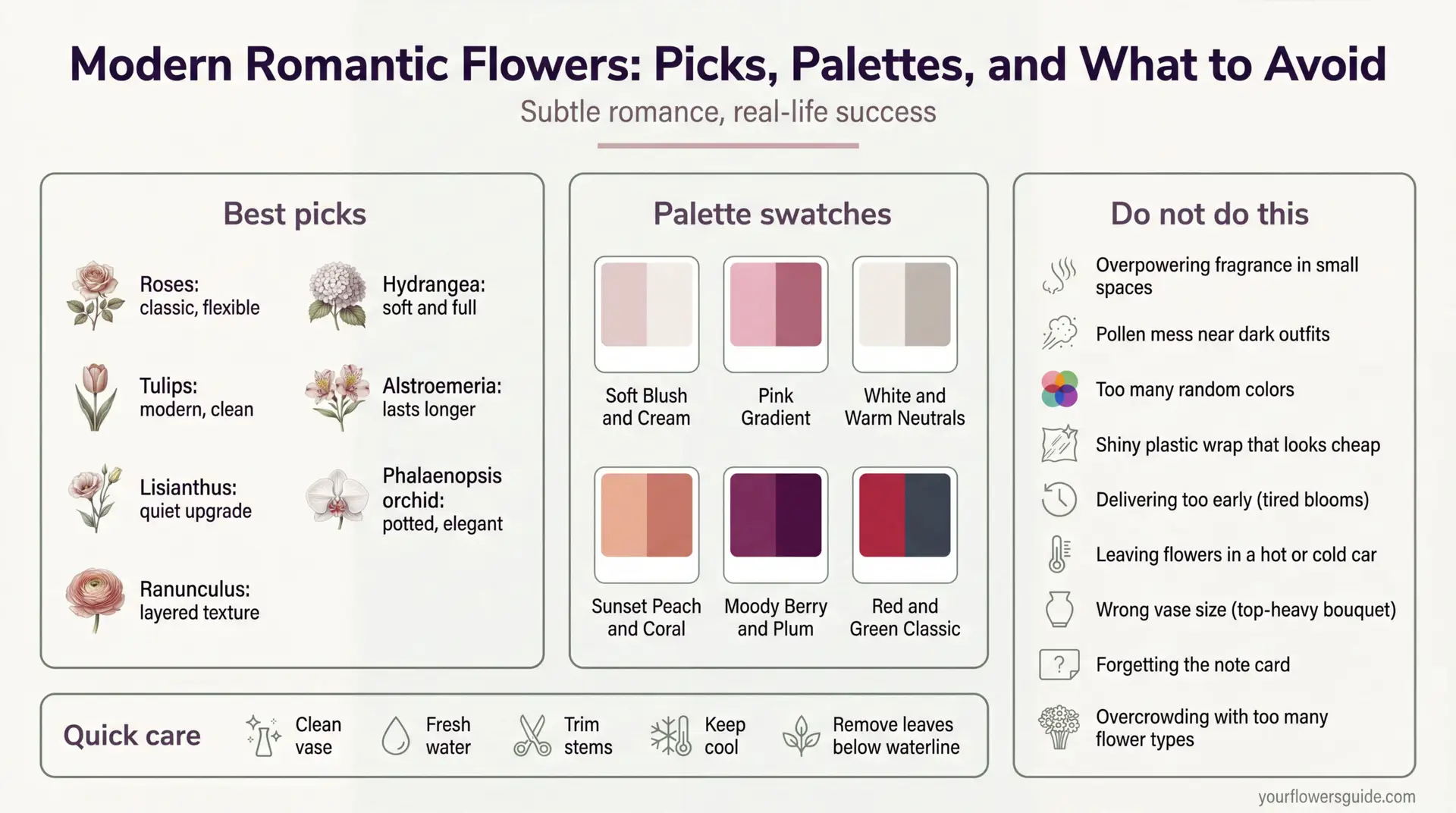
Soft Blush and Cream. This palette feels gentle, sweet, and low-pressure, which makes it a strong match for early dating or a new crush. It also works for partners who prefer calm style over bold statements. A common mistake is adding too many random colors that turn it into a “mixed grocery bouquet” instead of a romantic look.
Red and Green Classic. This is the traditional romance signal and it often fits long-term partners or spouses who enjoy clear, classic gestures. The mood is confident and direct. The most common mistake is going too dark or too heavy, which can feel formal rather than romantic, especially in a small apartment.
Pink Gradient. Light pink to deep rose tones feel playful and modern, and they suit many everyday romance moments like a simple date night or a “thinking of you” surprise. It flatters most flower types, from roses to tulips to carnations. The mistake to avoid is mixing in bright neon shades that can feel more like a party theme than romance.
White and Warm Neutrals. Cream, white, and soft beige tones feel elegant and grown-up, which makes them a safe pick for a partner who likes minimal style. This palette also keeps attention on shape and texture, not loud color. A common mistake is choosing all white with no greenery or contrast, which can read as too formal instead of romantic.
Sunset Peach and Coral. Peach, apricot, and soft coral feel warm and friendly, which can be perfect for rekindling after a rough week or for a partner who dislikes “Valentine” stereotypes. The mood is affectionate without being intense. The mistake is pushing it too orange or adding harsh reds that clash.
Moody Berry and Plum. Deep pinks, berry tones, and plum accents feel dramatic but still tasteful when balanced with soft greenery. This palette fits a confident long-term dynamic or a special weekend trip. The mistake is using too many dark flowers with no lighter break, which can feel heavy and less inviting.

Bouquet Styles and Sizes (Low-Key vs Wow)
A low-key bouquet often feels more romantic than a huge arrangement when the relationship is new or the moment is casual. Small hand-tied wraps, a few premium stems, or a simple single-flower bunch can look intentional and easy. Tulips in one color, a small bundle of roses, or a mixed set built around lisianthus can all deliver romance without creating “big announcement” energy. A good low-pressure move is choosing a modest size that fits one hand and does not require a special vase.
A wow bouquet is less about size and more about shape. A rounded, full look reads romantic, while a tall, spiky look reads more like an event centerpiece. For wow without chaos, a giver can choose one main bloom type, then add a soft supporting bloom and a clean greenery. The wrapping matters too. A simple paper wrap with a neat ribbon often looks more premium than shiny plastic.
Premium look without premium price usually comes from restraint. A bouquet can look expensive when it uses fewer flower types, repeats the same color, and has clean greenery. Even budget-friendly flowers can feel elevated when the mix is tight and the stems are trimmed evenly, then wrapped cleanly.
Potted plant styling can stay romantic without being fussy. A phalaenopsis orchid in a neutral ceramic pot, or a blooming kalanchoe in a simple cover pot, looks finished and calm. A small note and a gentle care hint can help the gift feel supportive, not like homework. For grow-it-yourself, presentation should feel like an invitation, not a challenge. A small seed packet set with a tiny pot, a bag of potting mix, and a simple “first week” card keeps it light.
By Relationship Stage (Ideas That Match the Dynamic)
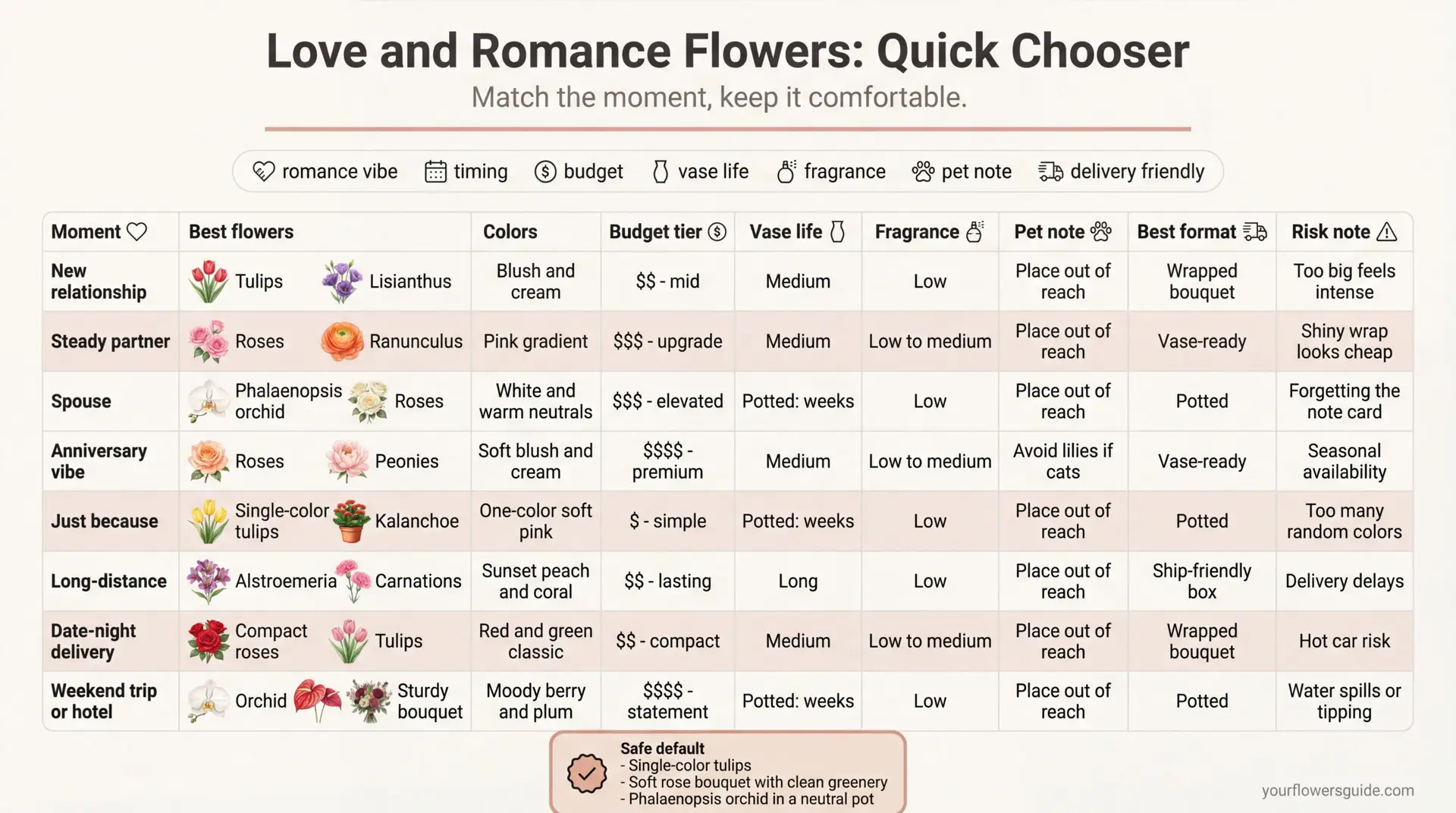
New relationship or early dating often calls for a cut-flower gift that feels sweet, not intense. A small bouquet with tulips or lisianthus, or a few roses mixed with soft greenery, keeps the vibe warm. Message line: “Thinking of you and looking forward to next time.”
A romantic partner in a steady relationship can handle either cut flowers or a potted gift, depending on style. A bouquet built around roses with a secondary bloom like ranunculus or carnations can feel classic without being predictable. Message line: “Just a little reminder that you are loved.”
A spouse often appreciates a gift that fits the household and lasts, so potted plants can be a strong path. A phalaenopsis orchid or a small flowering plant in a simple pot can feel elegant and practical. Cut flowers still work well when the palette matches the home, like white and blush with clean greenery. Message line: “Home feels better with you in it.”
Long-distance partners often do best with a plan that photographs well and lasts longer than a single evening. A sturdy cut arrangement with long-lasting blooms like alstroemeria and carnations, or a potted orchid, can stretch the moment. A grow-it gift can also become a shared countdown if both people plant the same seeds. Message line: “A small piece of me, until the next hello.”
Rekindling after a rough week benefits from low-pressure choices. A simple bunch of tulips or a soft peach bouquet with roses and gentle greenery can say “care” without making it a big talk. A small potted plant can also feel steady and calm. Message line: “No big speech. Just care.”
Low-pressure everyday romance is where small gestures shine. A single rose, a mini bunch of daisies or gerbera, or a small kalanchoe can be enough. The key is consistency and tone, not scale. Message line: “Saw these and thought of you.”
A special milestone or planned surprise can handle a bigger wow moment, but it still benefits from comfort and practicality. A fuller bouquet with roses, peonies when in season, or a romantic berry palette can feel memorable. A grow-it gift can be added as a sweet extra, like a small pot of seeds for spring. Message line: “Today deserves something beautiful.”
By Moment and Delivery Scenario (Date Night, Surprise, Weekend Trip)
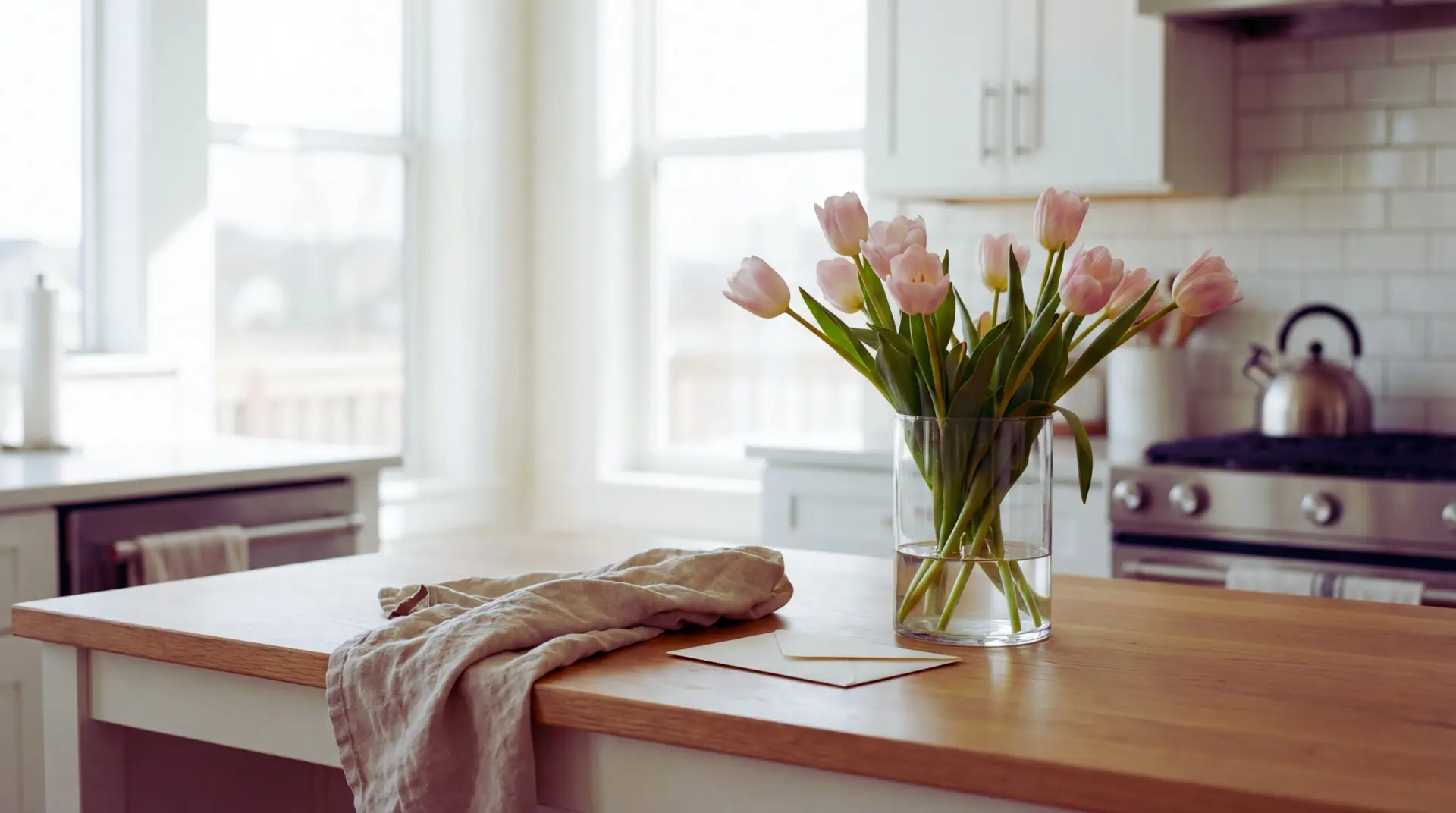
A surprise at home works best when the flowers arrive ready to enjoy. A vase-ready arrangement can remove stress, since it does not require trimming and arranging on the spot. Medium height vases tend to suit most bouquets, and sturdy blooms handle doorstep delivery better than very delicate petals. Fragrance matters indoors, so low-scent flowers like tulips, hydrangea, and many orchids can keep the moment comfortable.
For date night at a restaurant, the best plan is usually a pickup after the meal or a handoff outside, not a grand entrance. Carrying flowers through a crowded space can feel awkward, and restaurants may not want large bouquets placed on the table. A small bouquet with a tight wrap is easier to hold, and it avoids dripping water. Pollen-heavy flowers can also be risky for clothing, so choices that shed less visible pollen tend to be safer for dark outfits.
A weekend trip or hotel arrival needs durability and temperature awareness. Flowers can suffer in a car if they sit in direct sun or cold air for too long. A potted orchid or anthurium can travel well if it is kept upright and protected from drafts. Cut flowers should be kept out of extreme temperatures and unwrapped quickly so they can breathe, then placed in water as soon as possible.
Outdoor moments like a walk, picnic, or scenic overlook call for simple carrying and minimal fuss. A smaller bouquet with a firm wrap is easier than a wide, floppy arrangement. Heat and wind can dry petals fast, so sturdier flowers and shorter time outside help. Strongly scented blooms can also feel overwhelming outdoors when someone is walking close beside the giver, so a lighter fragrance direction can keep things pleasant.
Fragrance, Pollen, and Allergy Notes (Always Include)
Fragrance is personal, and romance gifts should not force someone to live inside a scent they did not choose. A low-fragrance direction often feels safer for shared spaces like apartments and hotel rooms. Tulips, hydrangea, lisianthus, and many orchids tend to read as gentle in scent. They still look romantic, but they do not announce themselves from across a room.
When sensitivity is unknown, the safest approach is to reduce risk without making it a big topic. That means choosing flowers with lighter fragrance, skipping heavily scented greenery, and keeping the bouquet modest in size. A giver can also avoid powdery flowers that drop pollen easily. If a recipient loves fragrance, that preference usually shows up over time, and it is easier to learn it on a later gift than guess on an early one.
Pollen can be an issue even when allergies are not part of the picture, because it can stain surfaces and clothing. Some flowers carry visible pollen, and it can brush off during a hug or while placing the bouquet on a table. A simple practical tip is to keep blooms that shed pollen away from the outside edge of a bouquet, or to choose flowers that do not show heavy pollen in the first place. Another calm move is to present flowers after a meal rather than before, so the bouquet is not competing with food and table space.
A safe default bouquet plan is simple and romantic in almost any setting. A giver can choose a soft palette, use one main bloom type, and keep the overall size medium or small. For example, a small bunch of tulips in one color, or a rose bouquet with gentle greenery and minimal filler, usually feels romantic without triggering fragrance or pollen surprises. The gift stays about care, not about intensity.

Pet Safety and Toxicity (Short, Practical)
Some popular flowers can be toxic to pets, and that risk can be easy to overlook in the middle of a romantic moment. Cats and dogs explore with mouths and paws, and even fallen petals can end up on the floor. Lilies are a well-known concern for cats, and other common bouquet flowers can also cause problems if chewed. When pets are in the home and the risk is unknown, caution is the right tone.
A safer approach is to use swap logic instead of panic. If a bouquet idea includes a higher-risk flower, the same color and mood can often be built with lower-risk options. A florist can usually help adjust the recipe if the request is clear: “romantic, low-fragrance, and pet-aware.” Placement also matters. Keeping flowers on a high shelf, using a stable vase, and cleaning fallen bits quickly can reduce risk, but it does not remove it.
Care Tips to Extend Life (Cut Flowers + Potted Gifts + Starter Plants)
Cut flowers
Cut flowers last longer when they get clean water fast and stay cool. A clean vase matters more than most people expect, since old bacteria can shorten flower life. Stems should be trimmed with a sharp tool and placed in water right away, then kept away from direct heat, strong sun, and ripening fruit. If the bouquet comes wrapped, unwrapping helps airflow and reduces trapped moisture.
Water should be refreshed regularly, and cloudy water is a sign it is time to rinse the vase. Some flowers also benefit from removing leaves that sit below the waterline, since leaves can rot and make water smell. If a bouquet starts to droop, a fresh trim and a reset in clean water can bring it back.
Potted gifts
Potted plants feel romantic when they stay healthy, so the first week matters. Most gift plants dislike sitting in water, so drainage is important even when the pot looks decorative. Light needs vary, but many flowering houseplants prefer bright, indirect light rather than harsh sun. Overwatering is the most common mistake, especially when the giver wants to “take care of it” too much.
A calm way to help is to keep the care message simple. One line like “water when the top feels dry” can be enough. If the plant comes in a decorative sleeve, it helps to remove it for watering, then let excess water drain before putting it back.
Grow-it-yourself starters (first 2 weeks)
Grow-it-yourself romance works best when it starts small. A simple pot, fresh potting mix, and a few easy seeds are enough for a sweet shared project. The first two weeks are mostly about light and moisture balance. Seeds should stay lightly moist, not soaked, and the container should have drainage. Once sprouts appear, more light helps keep them from getting leggy.
A beginner-friendly plan is to choose one quick flower like zinnias or sunflowers and keep the setup near a bright window. If outdoor planting is planned later, the gift can include a note that the first goal is “sprout and grow leaves,” not perfect blooms.

FAQ + Common Mistakes
What is the safest romantic flower when the recipient’s preferences are unknown?
A small bouquet of tulips or a simple rose bouquet in a soft palette is usually a low-risk start. Keeping the size modest helps it feel warm, not intense.
Is red always the best romance color?
Red is classic, but it is not required. Pink, blush, peach, and white neutrals can feel just as romantic, and sometimes more modern.
What is a good “low-pressure” romantic gift?
A single flower, a small bunch of tulips, or a compact potted plant like a kalanchoe can feel sweet without making the moment feel like a big test.
How can a gift feel premium on a mid-range budget?
Fewer flower types, repeated color, and clean wrapping usually look more upscale than a busy mix. A smaller bouquet with better structure often wins over a larger, messy one.
What is best for a restaurant date?
A small bouquet that is easy to carry is usually best, and a pickup after the meal often feels smoother than a table delivery. Avoiding drip and heavy fragrance helps.
What is best for a weekend trip or hotel?
A potted orchid or a sturdy arrangement that can handle travel is a strong choice. Planning water access soon after arrival keeps cut flowers from drooping.
How can pollen risk be reduced without making it awkward?
Choosing flowers that do not shed visible pollen is the easiest move. Keeping the bouquet tight and not brushing it against clothing also helps.
What should be done if pets live in the home?
It is safer to choose pet-aware flowers and keep the bouquet out of reach. If the risk is unknown, a giver can ask a florist for lower-risk options.
Should a gift include a long message?
A short line usually lands better. Romance gifts feel lighter when the note is warm and simple, not intense.
How can cut flowers be kept looking good longer?
Clean water, a clean vase, and a fresh stem trim are the basics. Keeping flowers away from heat and direct sun helps a lot.
Common mistakes usually fall into timing problems, pressure-level mismatches, fragrance and pollen surprises, and simple care slip-ups. Timing mistakes include buying too early, leaving flowers in a hot or cold car, or bringing a large bouquet into a setting where it is hard to handle. Romance is more comfortable when the gift arrives close to the moment and can go straight into water.
Pressure-level mistakes are often about size and symbolism. An early relationship can feel strained by an oversized arrangement or a loud palette that reads like a public statement. A better approach is to keep it modest, pick one clear style, and let the note carry warmth without demanding anything back.
Fragrance and pollen mistakes can turn a sweet gift into a lingering annoyance. Strong scent in a small space can feel overwhelming, and visible pollen can stain clothing and surfaces. When preferences are unknown, choosing gentler flowers and keeping the bouquet simple reduces the chance of regret.
Care mistakes are usually small but costly. Dirty vases, leaves left in the water, and overwatering potted plants can shorten the life of the gift. A romantic gesture feels better when it keeps looking good for days, not just minutes.
Written by: Your Flowers Guide editorial team
We are a small independent group of flower lovers who research and review each guide using trusted horticultural and educational sources. Learn more about us