What astilbe is and where it comes from
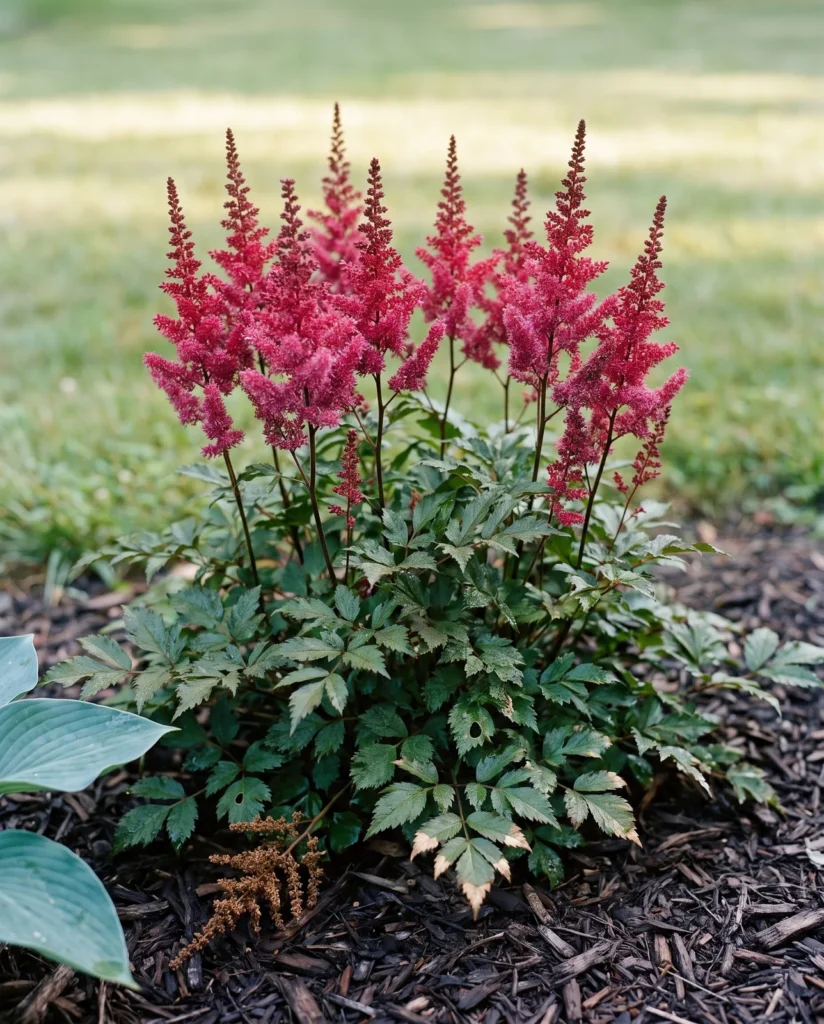
Astilbe is a hardy perennial grown for its plumed flower heads and its divided, fern-cut leaves, and it grows from a rhizome, a thickened creeping stem at the soil surface. Say it uh-STIL-bee. It sits in the saxifrage family and carries two common names that both point at other plants, false goat's beard and false spirea. The genus is Asian, running from the Himalaya through East Asia to New Guinea, with one outlier in the eastern United States. Kew's checklist accepts 28 species.
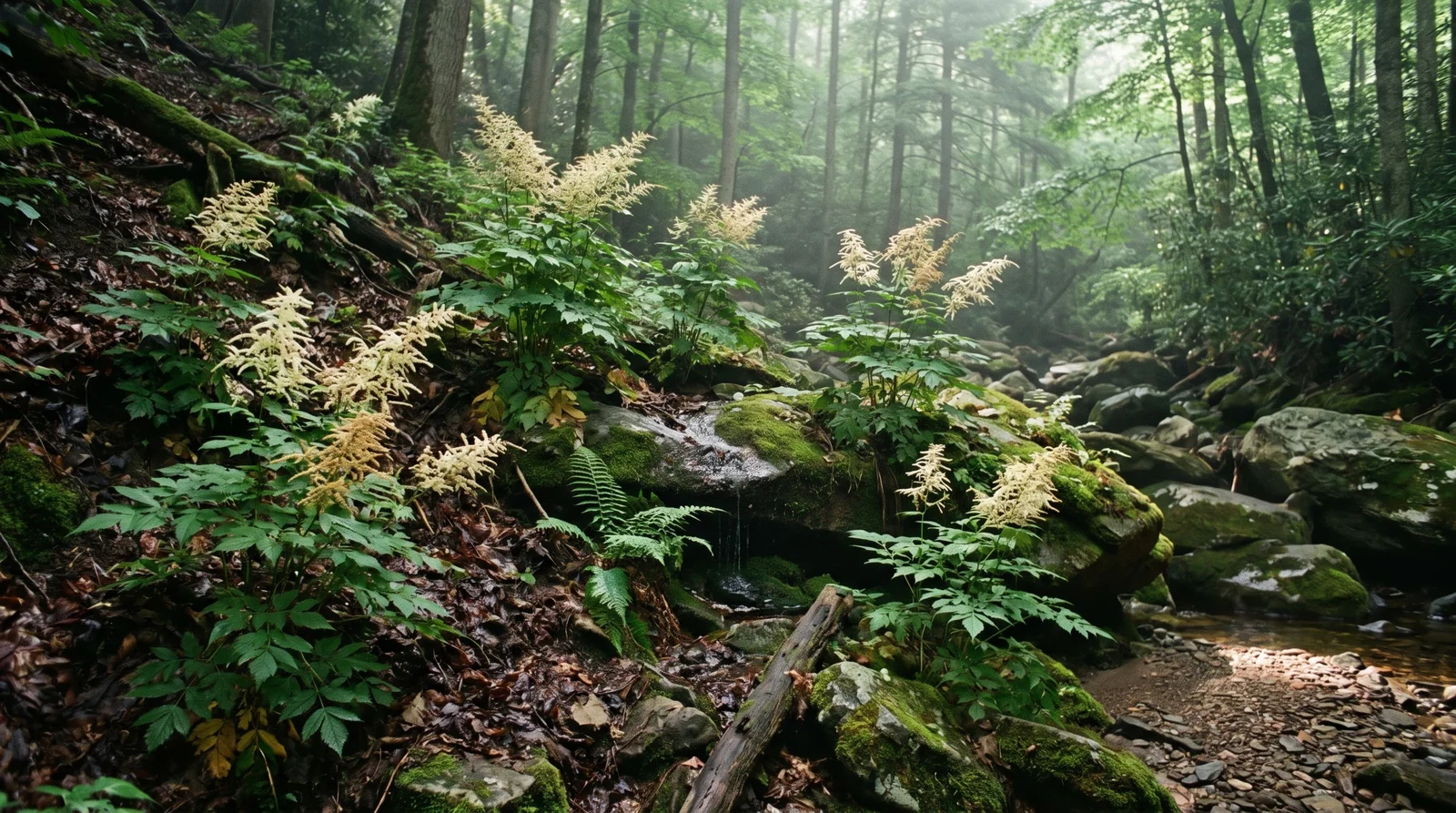
That outlier is nothing like the astilbes sold in garden centers. Appalachian false goat's beard, Astilbe biternata, is the only astilbe native to North America, and it is built to another scale: 3 to 6 feet tall and 2 to 3 feet wide, against 24 to 36 inches for the arendsii hybrids. It grows wild through the southeastern and mid-Atlantic states, takes zones 5 to 8, and grows at a medium pace, slower than the Japanese group. Where it stands beside true goat's beard, Aruncus dioicus, the tell is the leaflet at the tip of the leaf: lobed on the astilbe, unlobed on the goat's beard.
The thing in the bag is a bare root
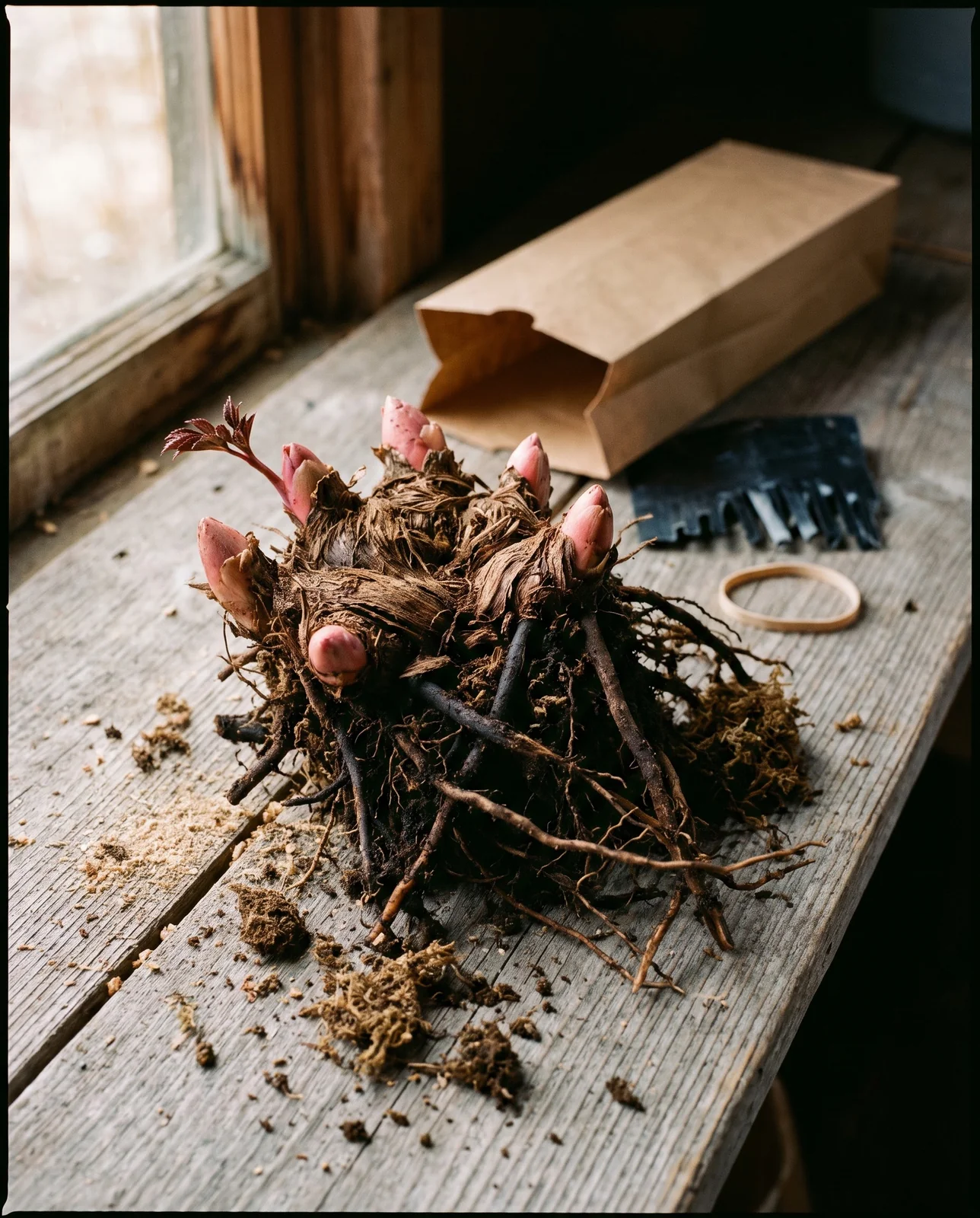
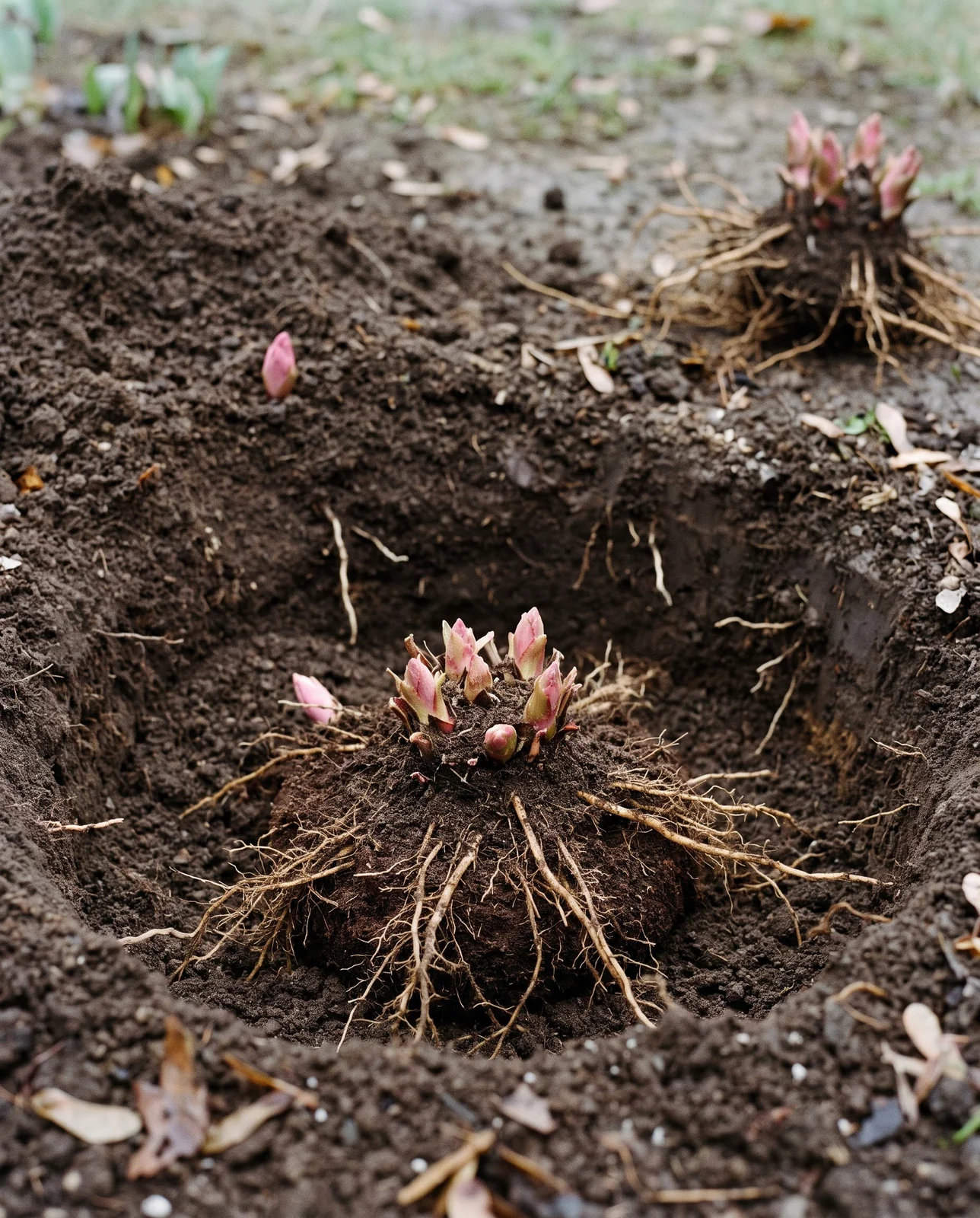
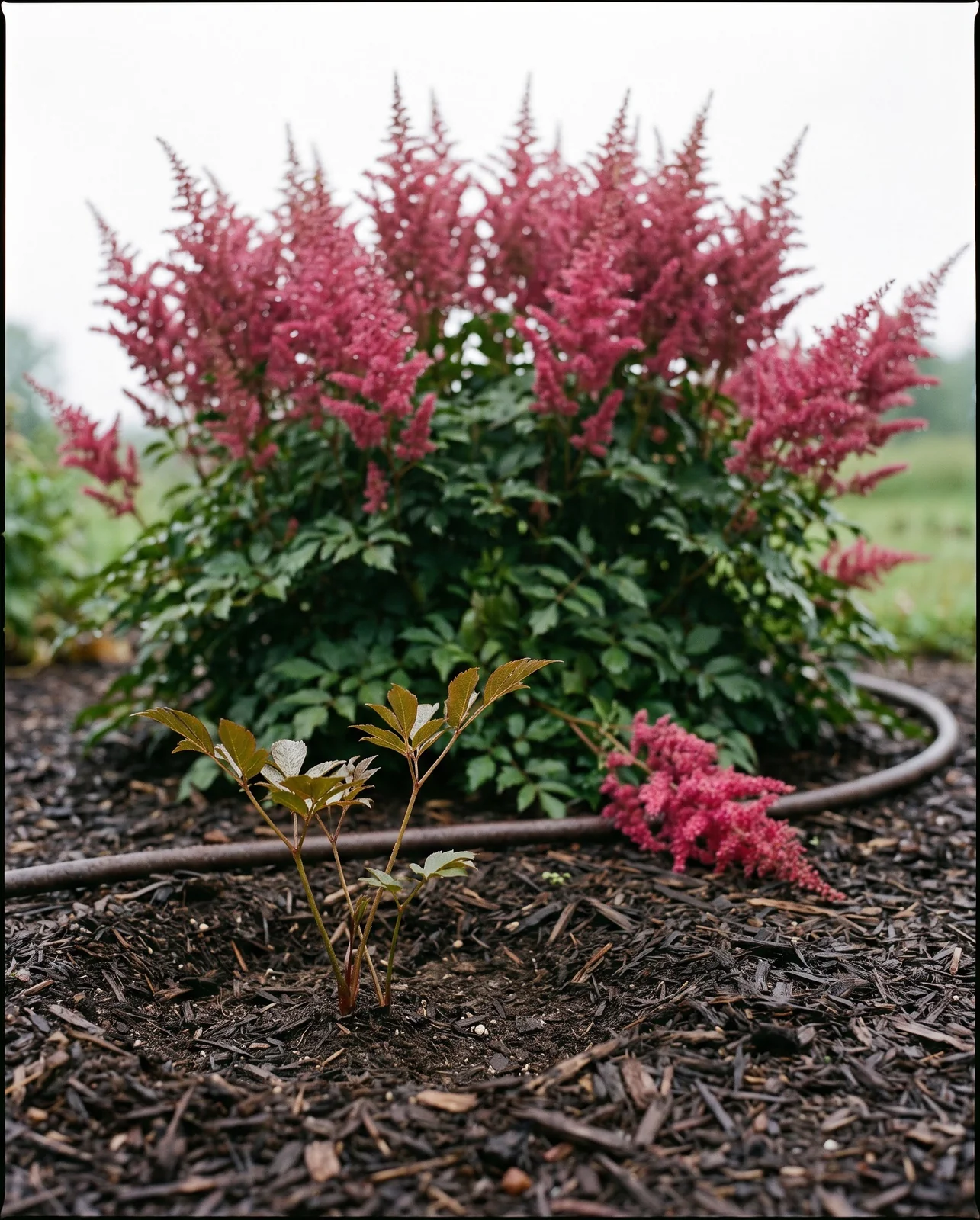
What arrives in the bag is a bare root, not a bulb. The plant travels with its roots exposed and no pot, packed in peat moss, and astilbe is one of the standard examples of the category. Below ground it runs on a rhizome, and a rhizome takes a different planting depth from a bulb. Set the buds facing upward, one to two inches under the surface, which puts the crown and the fat growth points along it just below the soil line. There is no pointed end to look for.
What the plant and the plume look like
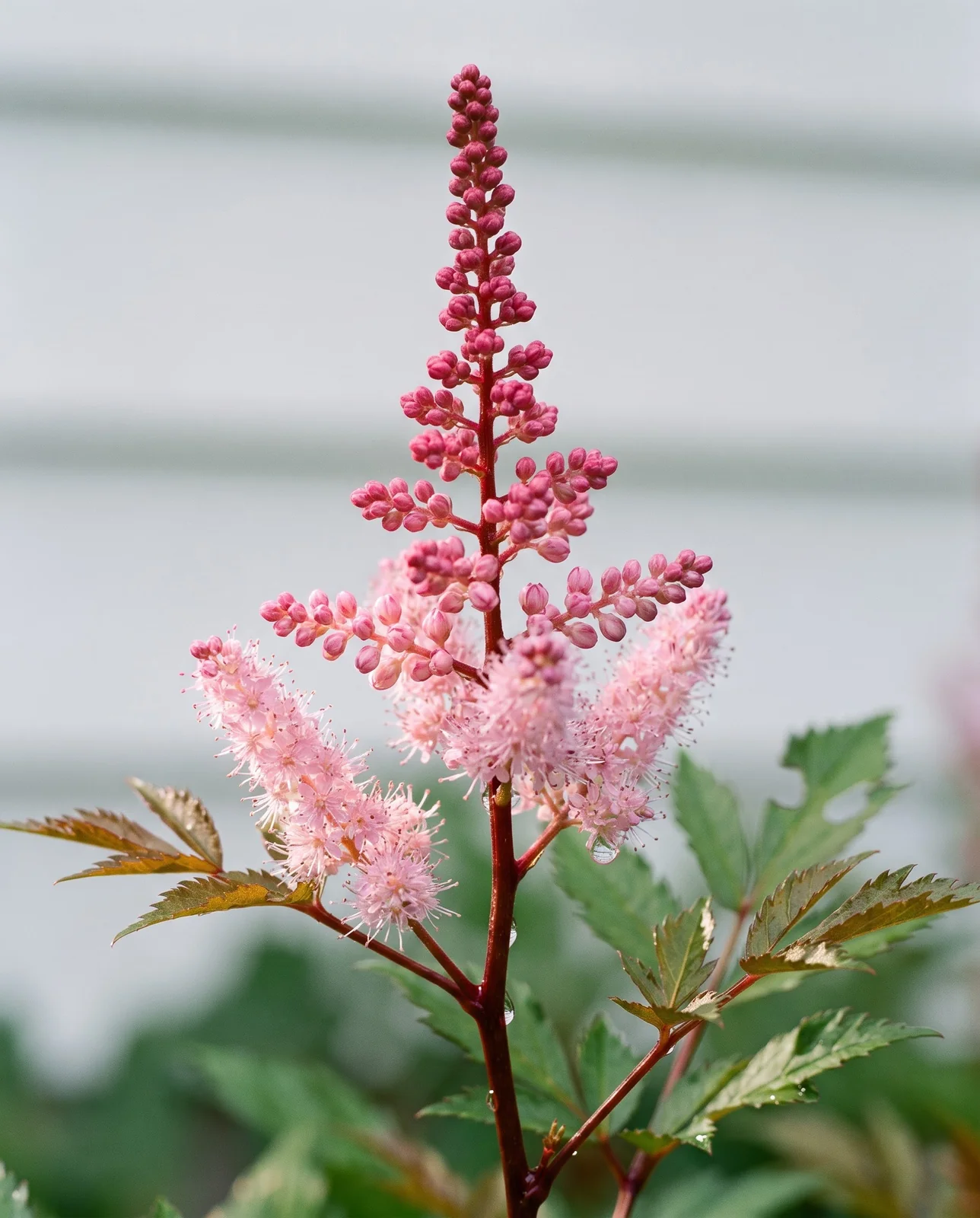
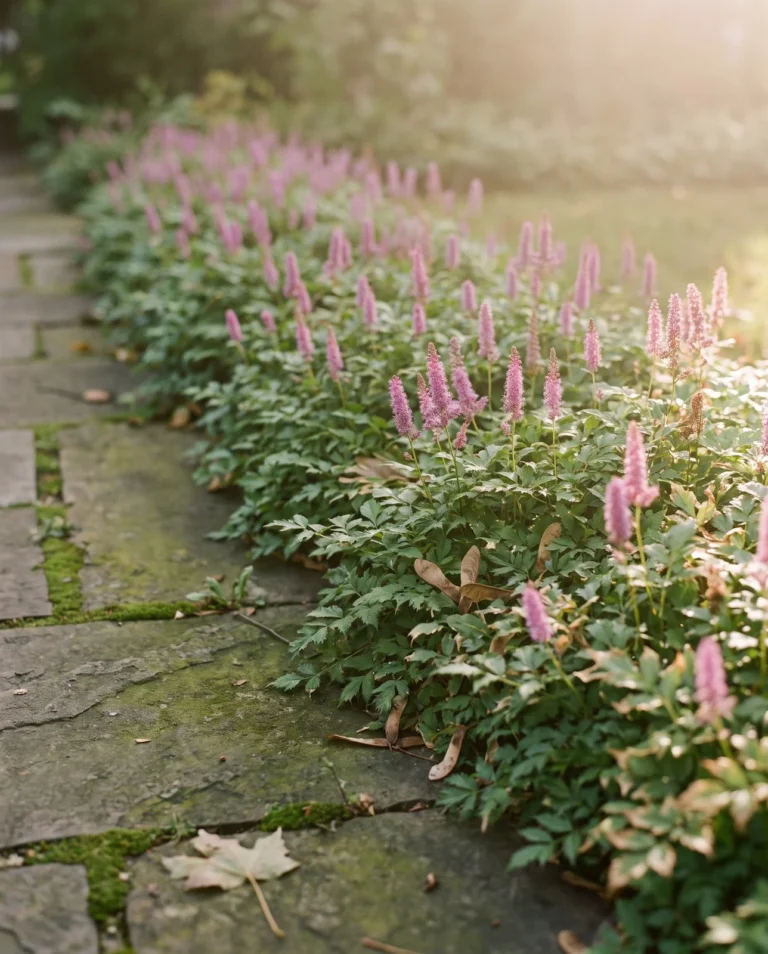
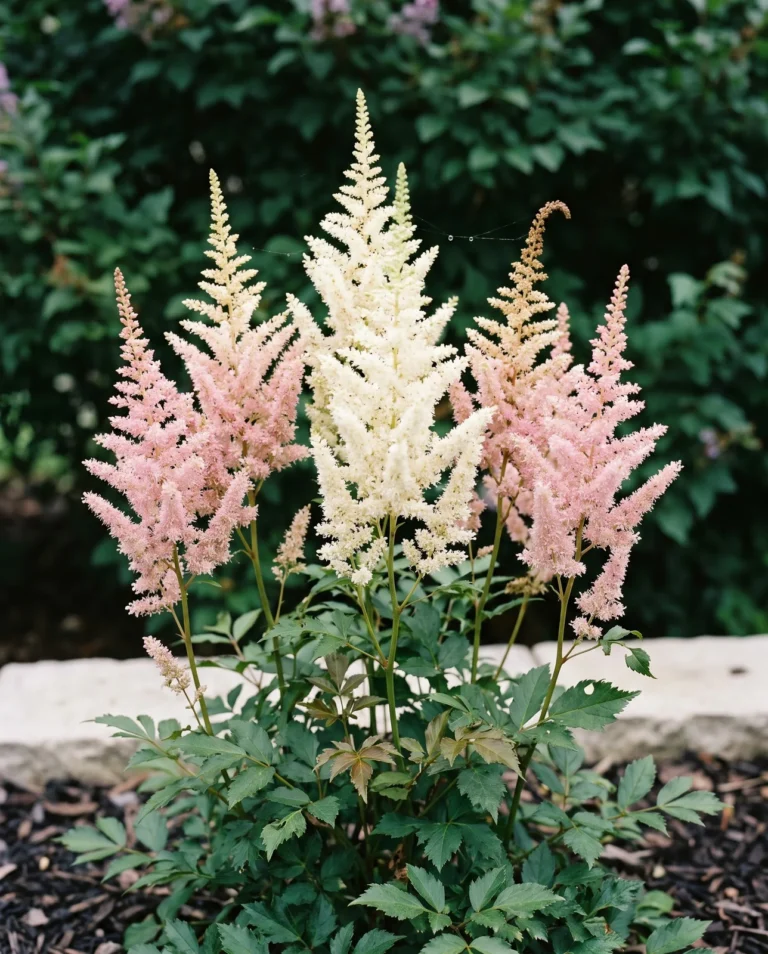
The foliage is the half of the plant that lasts. The leaves are fern-cut, divided into toothed leaflets, and they run from green to bronze depending on the cultivar. Out of that mound the flower stems rise clear of the leaves and open into narrow, upright plumes packed with small flowers, 6 to 8 inches long on the Japanese group. A plume does not open all at once. The flowers open in succession along the stem, so a single plume stays showy for about a month and shifts color as the earliest flowers go over. Bloom time belongs to the cultivar, and across the arendsii hybrids alone it runs from late spring into fall.
How much sun astilbe will take
Part shade is the target, and morning sun with afternoon shade is the version of it that works in most gardens. Full shade is workable but costs flowers. The upper limit moves with the climate and with the soil. In cool northern gardens most varieties tolerate a full day of sun, and even there full sun works only where moisture is adequate. Afternoon sun is the exposure that burns the tender foliage.
Exposure is not the variable the plant is really answering. Foliage decline follows soil moisture through hot, dry spells more closely than it follows hours of sun, so two astilbes in the same light can end August looking nothing alike. Sun sets the speed at which the ground dries, and the ground is what the roots read. A shaded bed loses water more slowly, so astilbe earns its place on any list of flowers that grow in shade.
Soil and watering
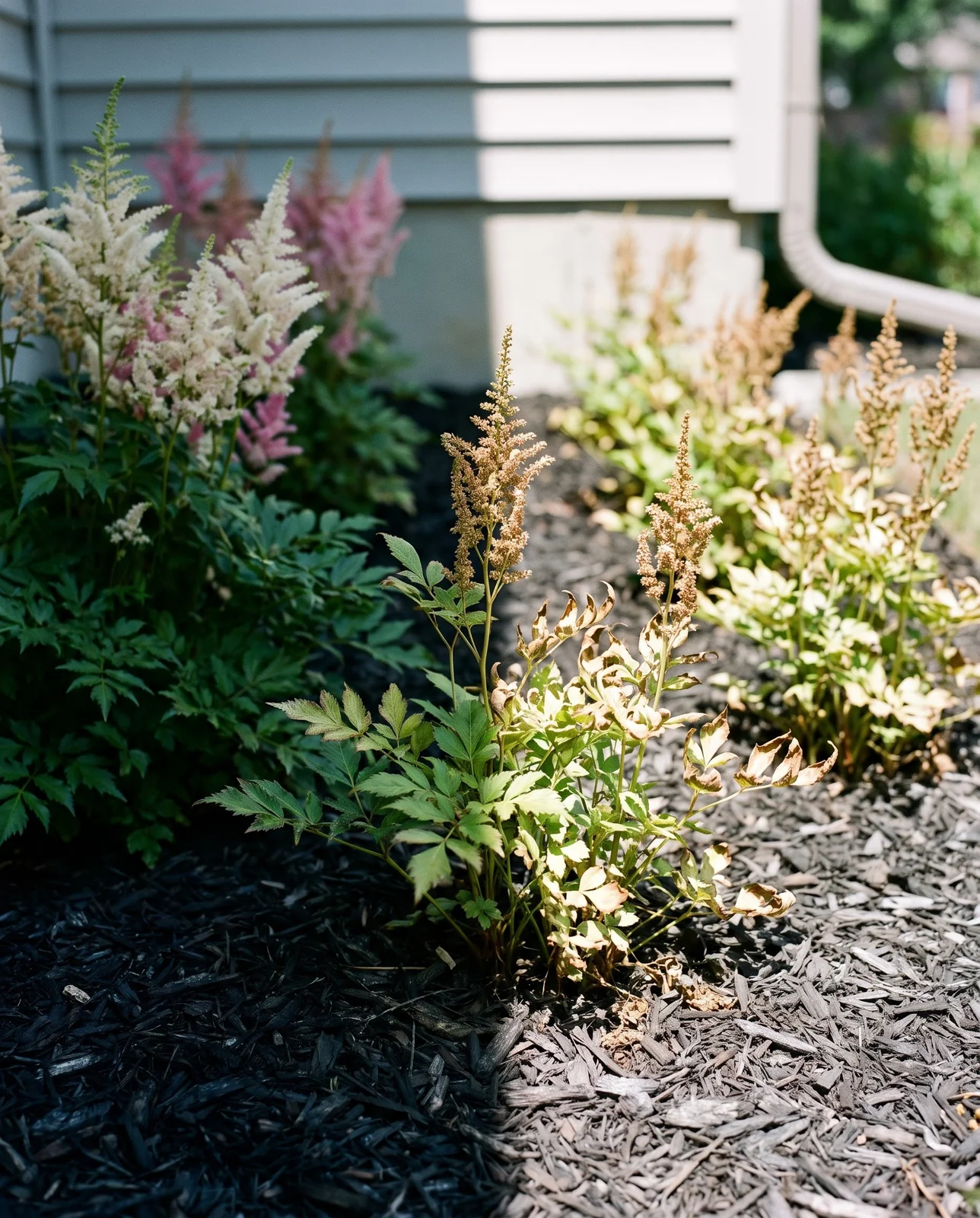
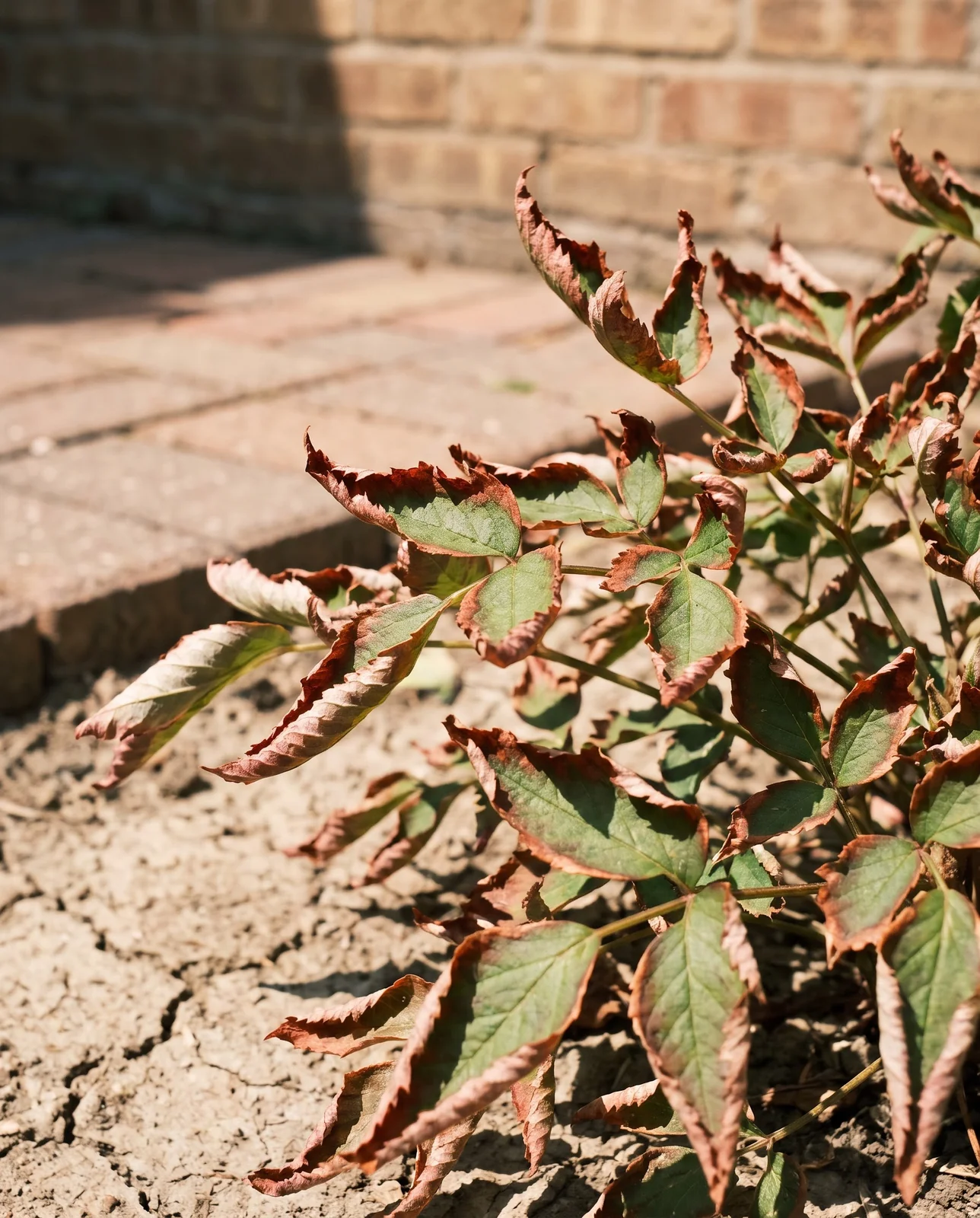
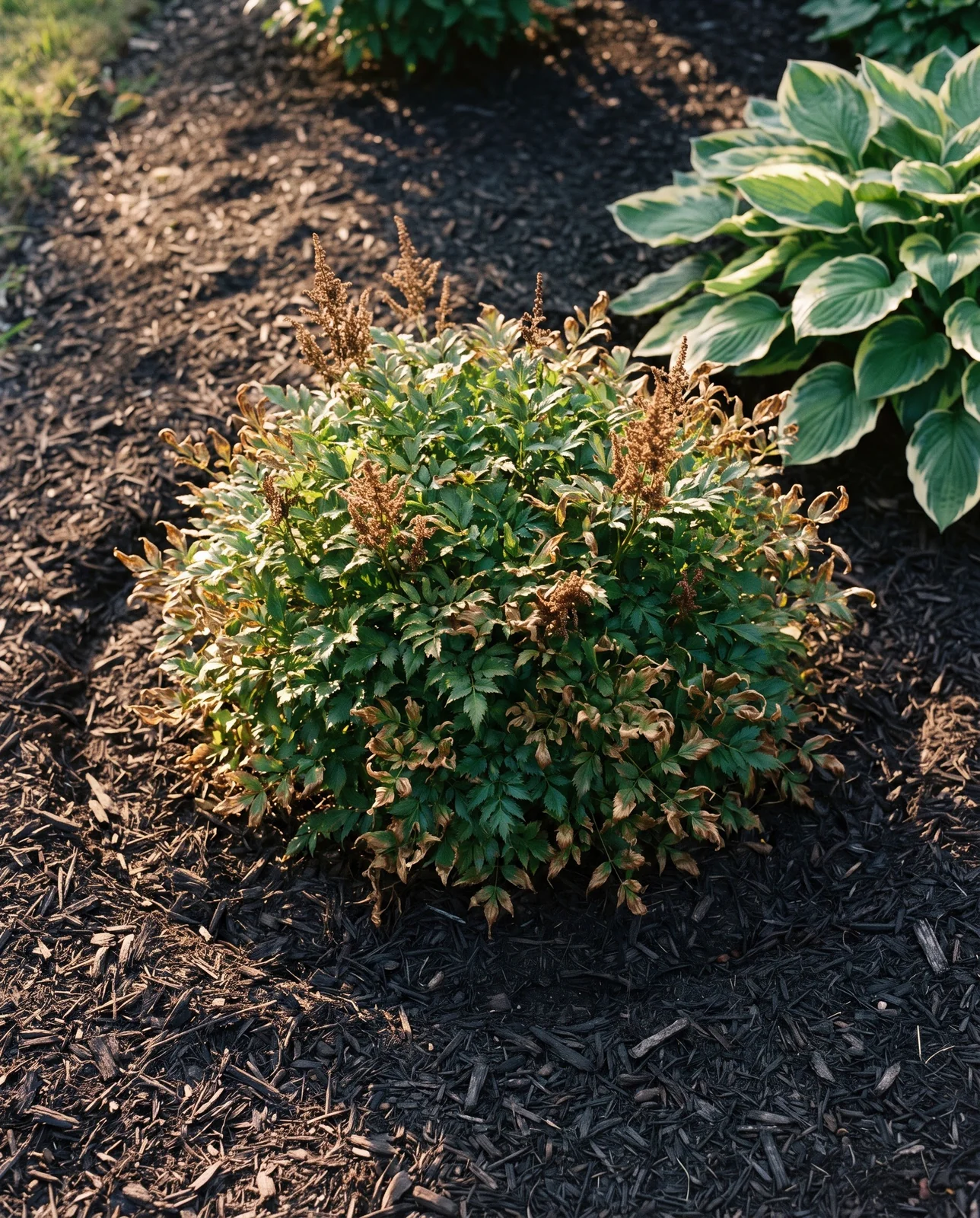
Astilbe is a moisture plant before it is a shade plant. It wants soil high in organic matter that holds water while still draining, and watering that is deep and consistent through the hottest months. July and August decide the season, and at least twice a week through a dry spell is the working figure. Let the soil dry and it browns quickly, starting at the leaf edges, the tell of a plant that went dry. Pushed further, the foliage may go dormant for the season. Leaves that have dried and crisped stay brown.
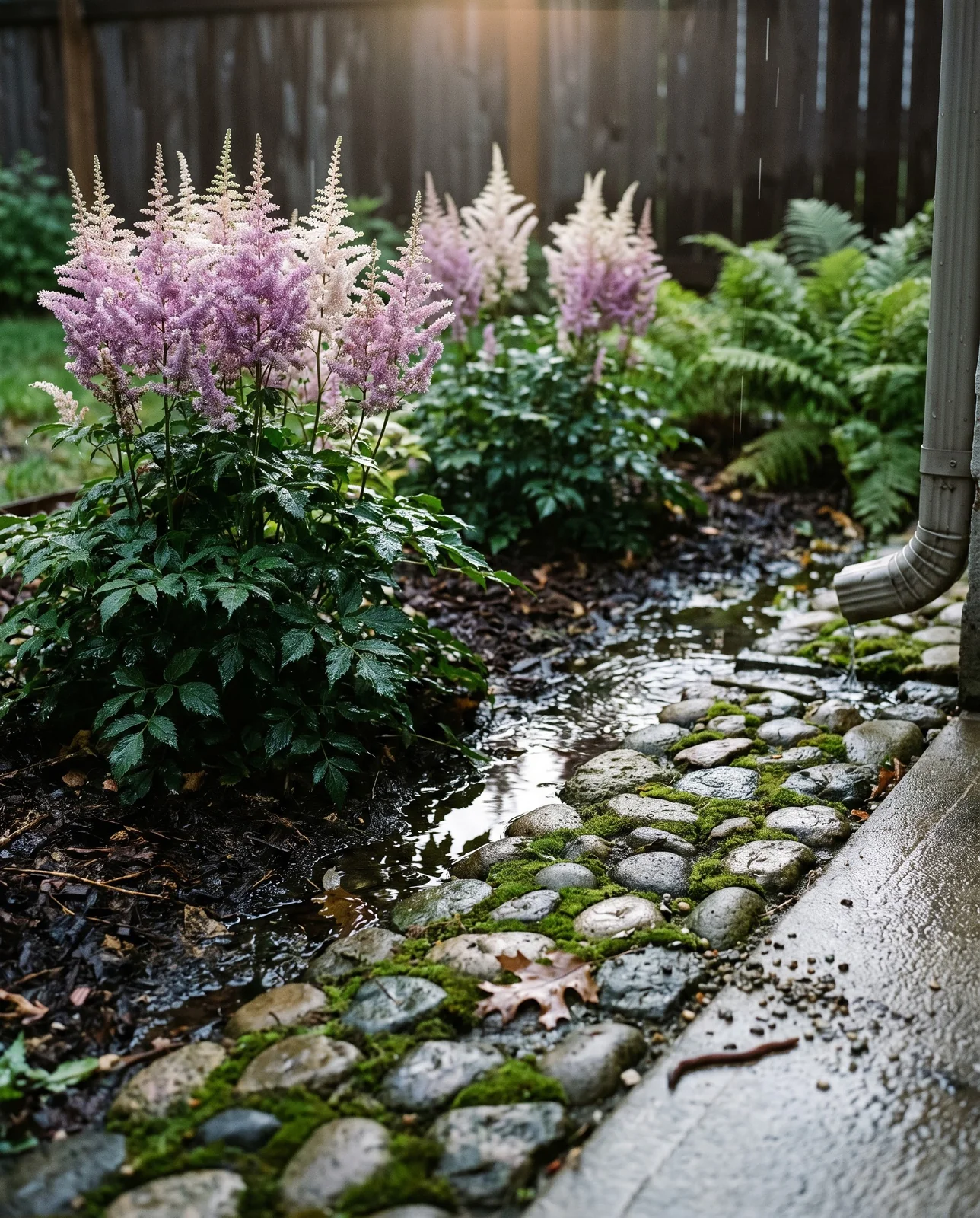
Two failures that read as sun damage are water damage. Dry, sunny ground gives poor foliage and few flowers, and the first thing to change is the water, before the light. A damp spot is worth more than a dark one: the low corner where a downspout empties, the foot of a north wall, the edge of a path that never bakes. Astilbe wants the ground that suits lily of the valley.
Zones, and the second number that is not hardiness
The hardiness numbers printed for astilbe disagree, and they disagree at the warm end. Nobody argues about the cold: the floor is zone 3, and the arendsii hybrids run the full span from 3a to 9b. The warm end is printed both ways, zone 8 and zone 9, and heat is what sets it. Further south astilbe is grown as a cool-season annual. The Arends hybrids that fill most garden centers have a name for doing best where summers stay cool, so the real question is how much summer they will sit through.
A second number looks like a zone and measures close to the opposite thing. A heat zone counts the days a place averages above 86 degrees Fahrenheit in a year, from none in zone 1 to 210 or more in zone 12. It says how long a well watered plant takes heat before its growth suffers, and it was never a survival rule. The map dates from 1997 and has not been revised since. Read as hardiness, it says the opposite of what it measures.
When to plant, and what to do with an early delivery
Spring and fall are the planting windows, and cool soil is the reason. Astilbe roots into ground that is still cool and moist, and summer heat is the season to keep it out of. A bare root that arrives before the ground is workable is not a lost plant. Hold it near 40 degrees Fahrenheit until it can go in, and if the packing has dried out in transit, moisten it lightly, repack the roots and keep them cool.
Why an astilbe does not bloom
Take the least alarming answer first, because the plant may be too young. A bare-root astilbe is expected to begin flowering in its second year in the ground, so look for buds already forming before deciding it has failed. After that the list is short. Too much sun may yellow the leaves and cut flowering, and a plant standing in hot afternoon sun should be moved. Soil that has dried out or overheated gives the same failure with a signature attached, poor flowering together with small, scorched leaves. Underfeeding sits on the same list, and it is the one cause a bag of fertilizer answers.
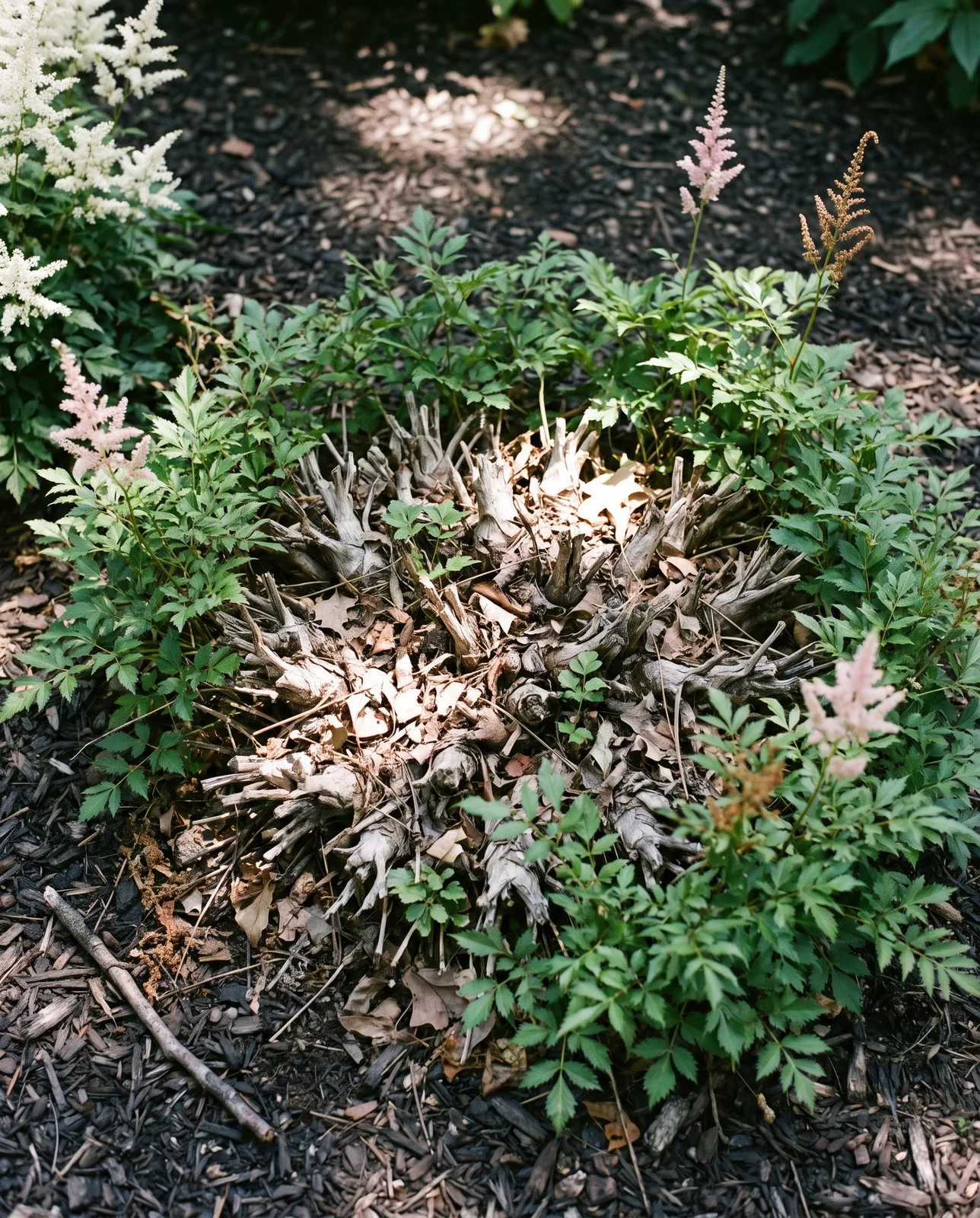
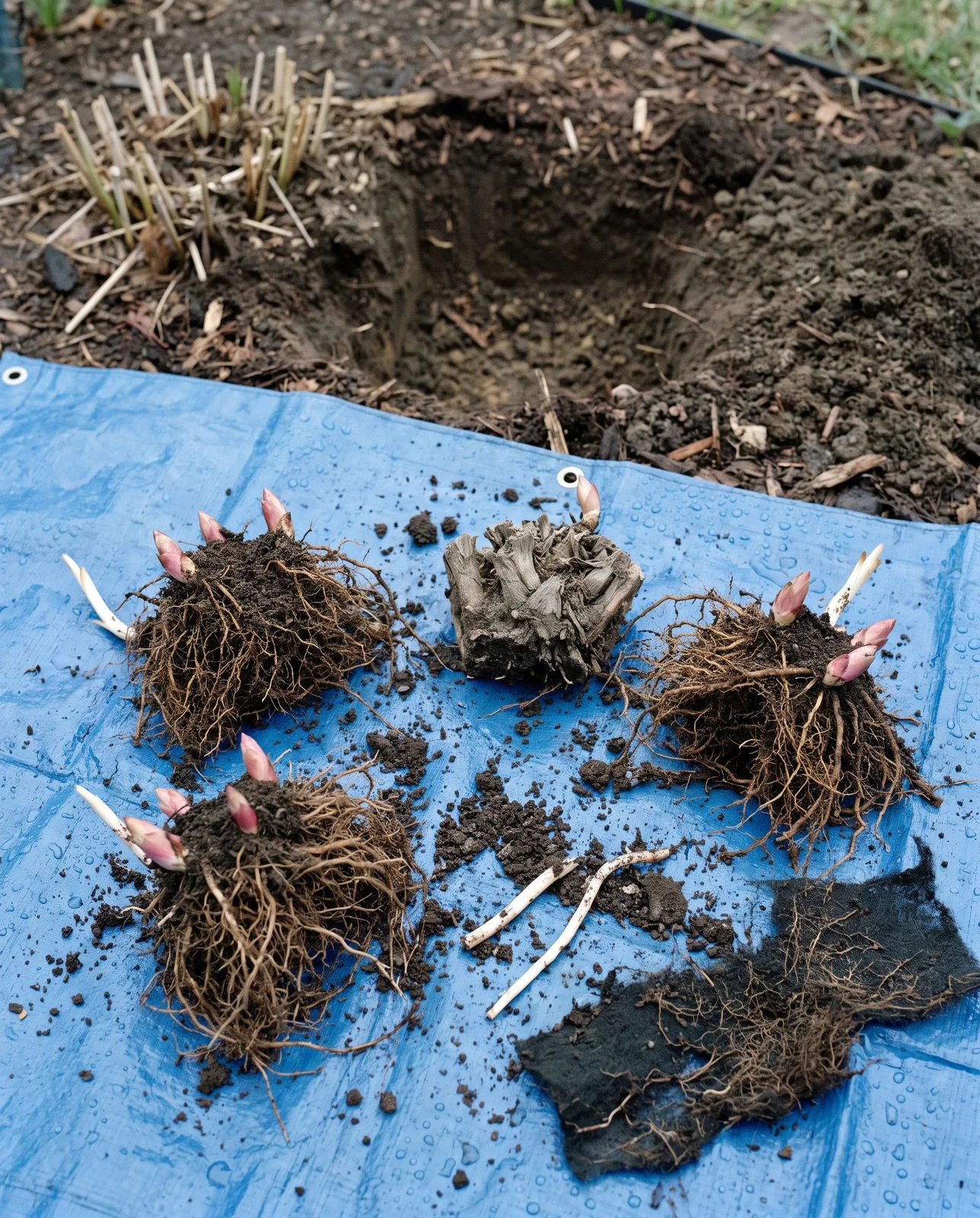
The other common cause is age, and it looks like nothing at all. A clump that flowered for several good years and quietly stopped is usually a crowded one. Reduced flowering on an otherwise healthy plant is no disease; lift the clump and split it. That is the encouraging half of the answer, since nothing has infected the plant.
Mildew or scorch: which leaf problem you have
Astilbe leaves discolor for more than one reason, and these four leave different marks. Look at the leaf surface in good light.
Brown edges and yellow leaves, cause by cause
Check the soil before you check the leaf. Scorch belongs to a plant getting too much sun or too little water; high temperature, dry soil and wind are the causes, and a shadier, moister position is the correction. Margins that brown and crisp mean the plant is not being kept moist enough. Strong sun and drought each produce the same curling and scorch, so the eye cannot separate them. That leaves a cheap first move: water, and judge the plant by the leaves it makes afterward.
Powdery mildew is the second story on the same leaves, and it is an infection. It puts white fungal growth on the upper surface of the leaf, typically starting low and able to spread from there. The two answers pull in opposite directions: thinning the center of the clump for mildew, water in the ground for small, scorched leaves. One asks for more air around the plant and the other for more moisture in it, so tell them apart before acting. The leaf surface decides it.
From the symptom to the cause
The list runs from the checks that cost nothing to the ones that need a closer look.
What goes wrong most often
Astilbe goes wrong in a small number of ways, and most of them show on the leaf.
Symptom: margins browning and crisping on curled leaves, the plant thin and ragged. Cause: dry soil, and the edges show it first. Management: water deeply through the hottest months; leaves that already crisped stay brown.
Symptom: full foliage and few plumes or none. Cause: a crowded clump on an otherwise healthy plant, with too much sun or underfeeding behind the rest. Management: lift and divide the clump.
Symptom: color draining out of the foliage. Cause: mildew starts low and can leave leaves curled, twisted or yellow; on a clean leaf, dry and sunny ground gives poor foliage and few flowers. Management: check the surface, then water.
Symptom: white fungal growth on the upper leaf surface. This one is an infection, and the answer is air: thin the center of the clump so it moves through the plant.
Symptom: well-defined dead spots that merge into larger patches in wet weather. Cause: Cercospora leaf spot; bacterial leaf spot is a separate astilbe problem. Management: read the shape, since a sharp-edged spot is not a browning margin.
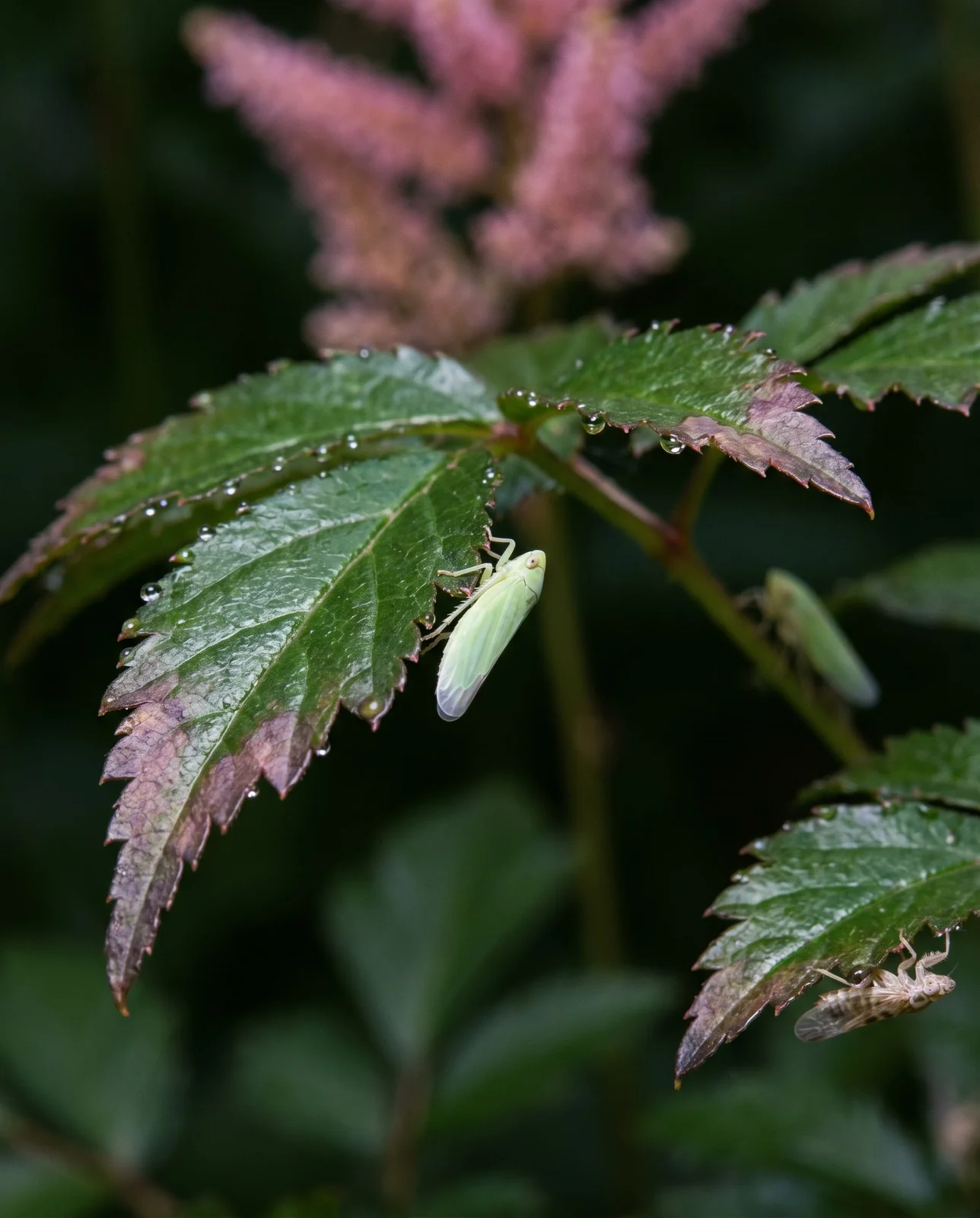
Symptom: leaf tips turning red and brown with nothing on the leaf. Cause: scorch, or leafhopper feeding, which reddens tips the same way. Management: check the soil, since damp ground points away from scorch.
Symptom: scorched foliage on a plant that has not gone dry. Cause: astilbe is sensitive to high salts, and a buildup may scorch it and damage the roots. Management: suspect it in pots before open ground.
Early, mid and late: the tier that decides the month
Astilbe is sold in three bloom groups, early, mid and late, and the group fixes the month more firmly than the species does. Across the genus the flowers run from May through August, and staggering the three groups through one bed keeps that whole stretch in flower. The arendsii hybrids that fill most garden centers sit at the early end, through May and June. On a tag, the tier is worth more than the color.
The tier also decides what a plant can be set beside. Mid and late cultivars are the ones to pair with companion perennials, since they arrive when the spring layer of a shade bed has gone over. At the far end the dwarf 'Pumila' flowers from July into September, when the earliest hybrids are brown stalks. Two neighbors growing what they both call astilbe can be a month apart, and neither plant is misbehaving.
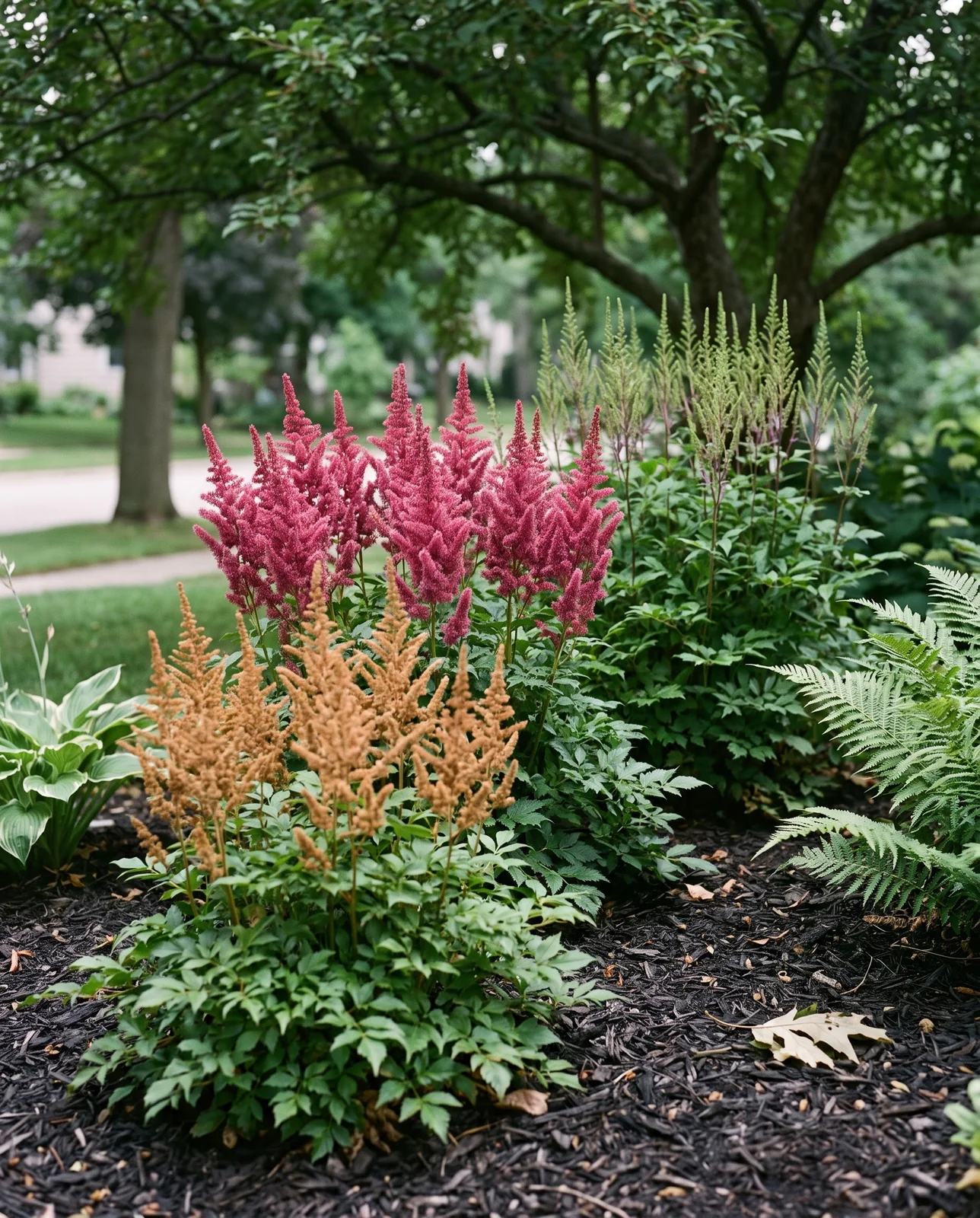
Astilbe varieties worth telling apart
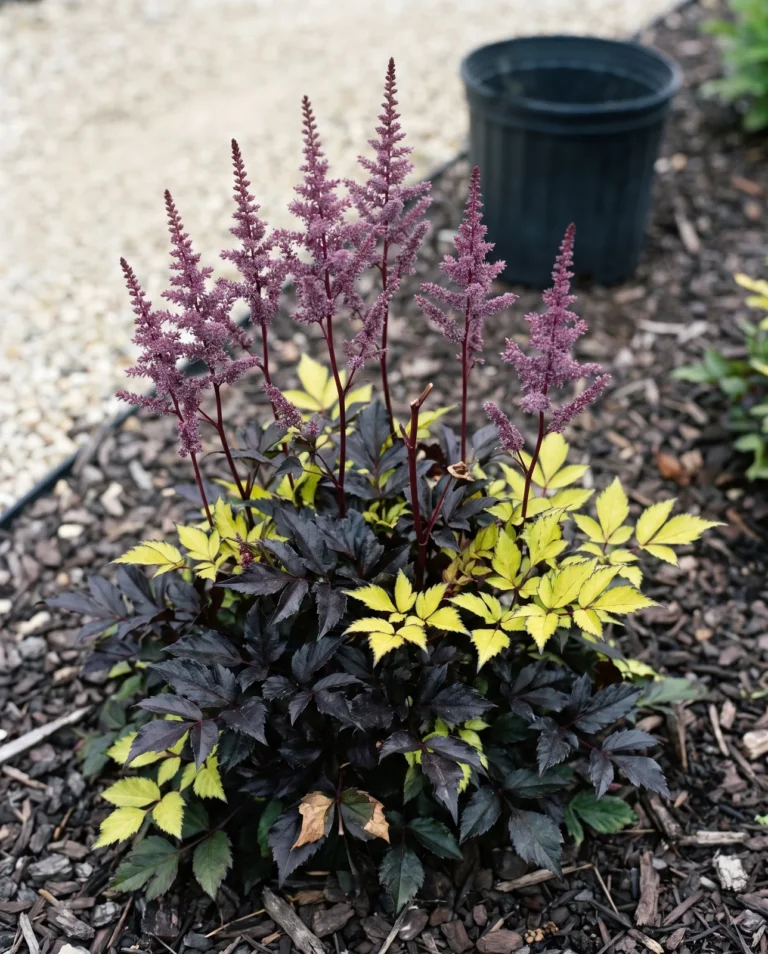
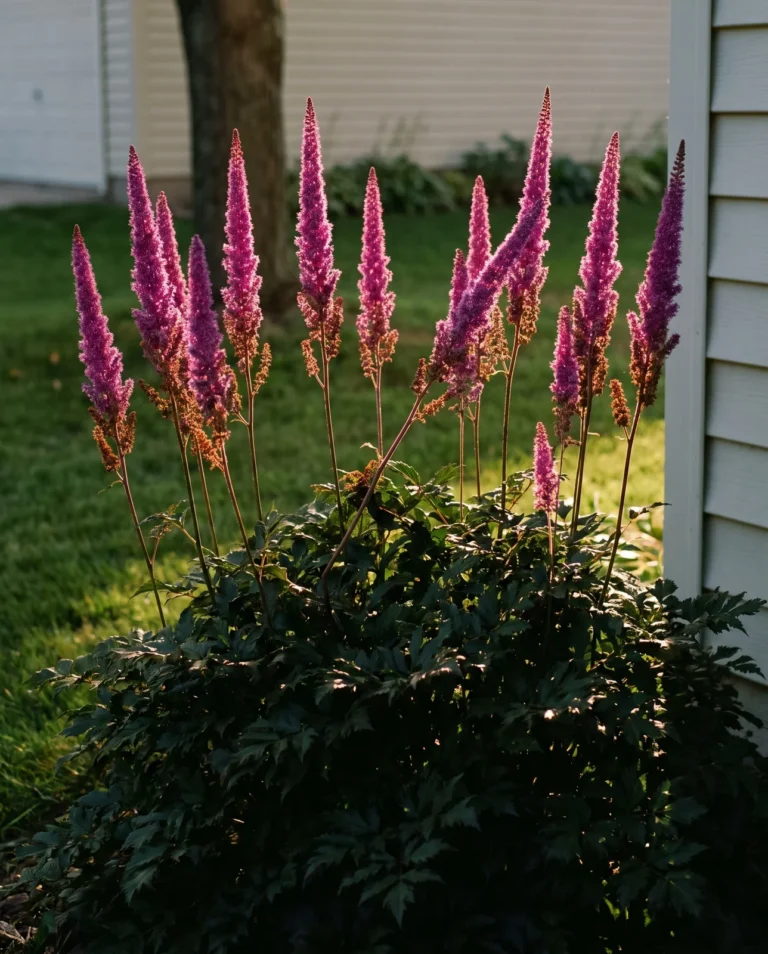
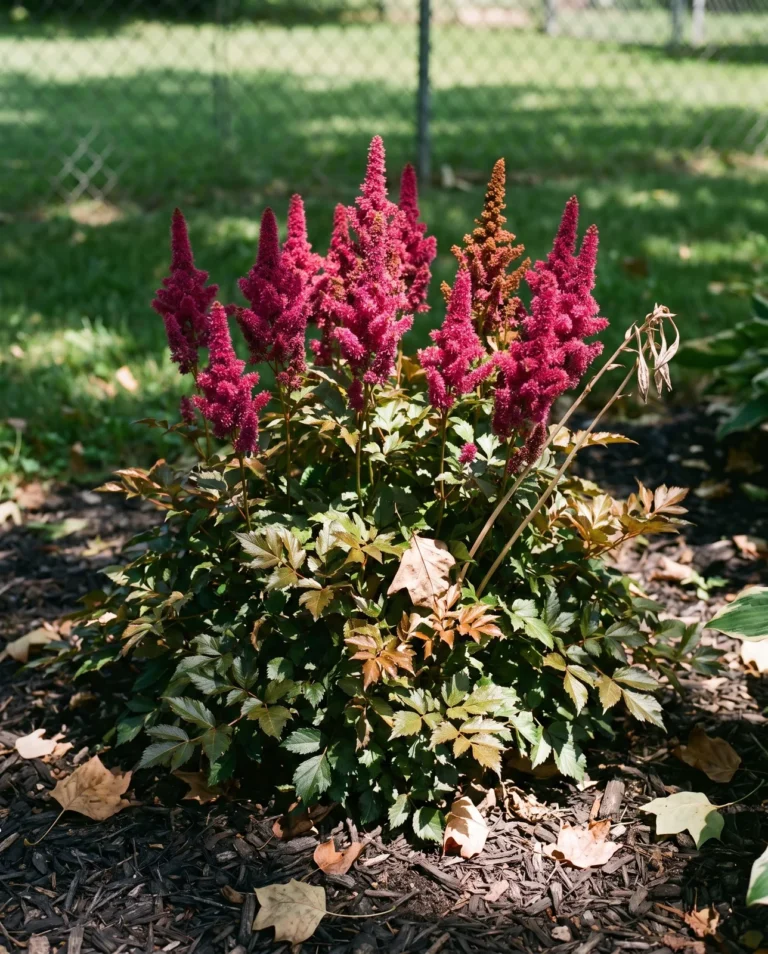
Twelve cultivars across five groups inside the genus. The group in front of the name predicts the plant better than the name does.
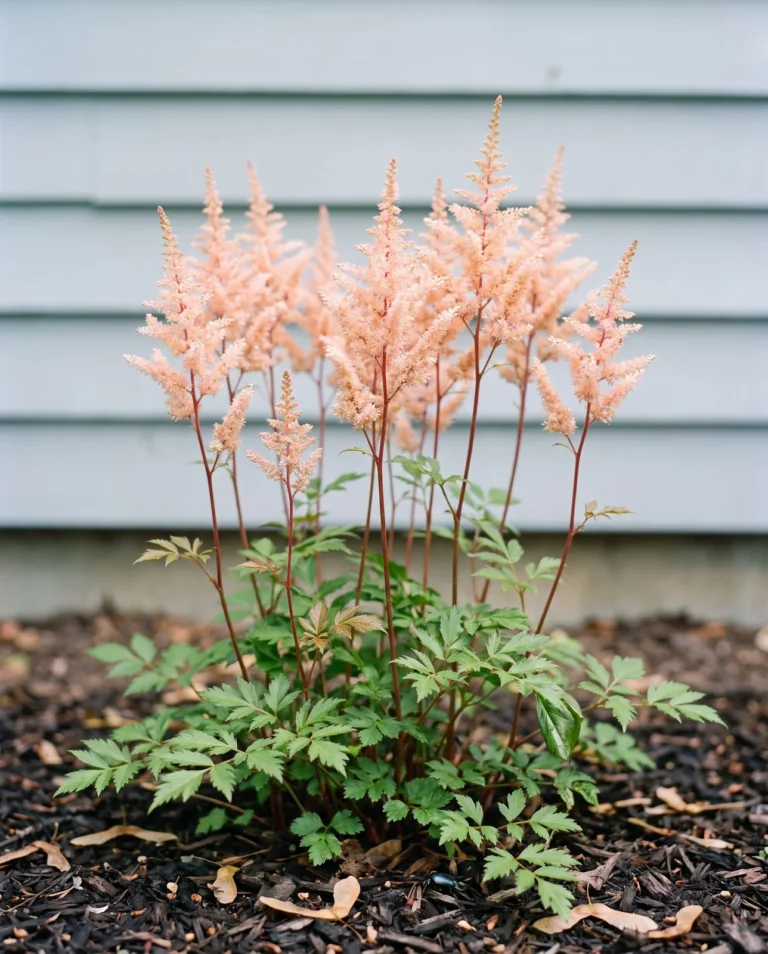
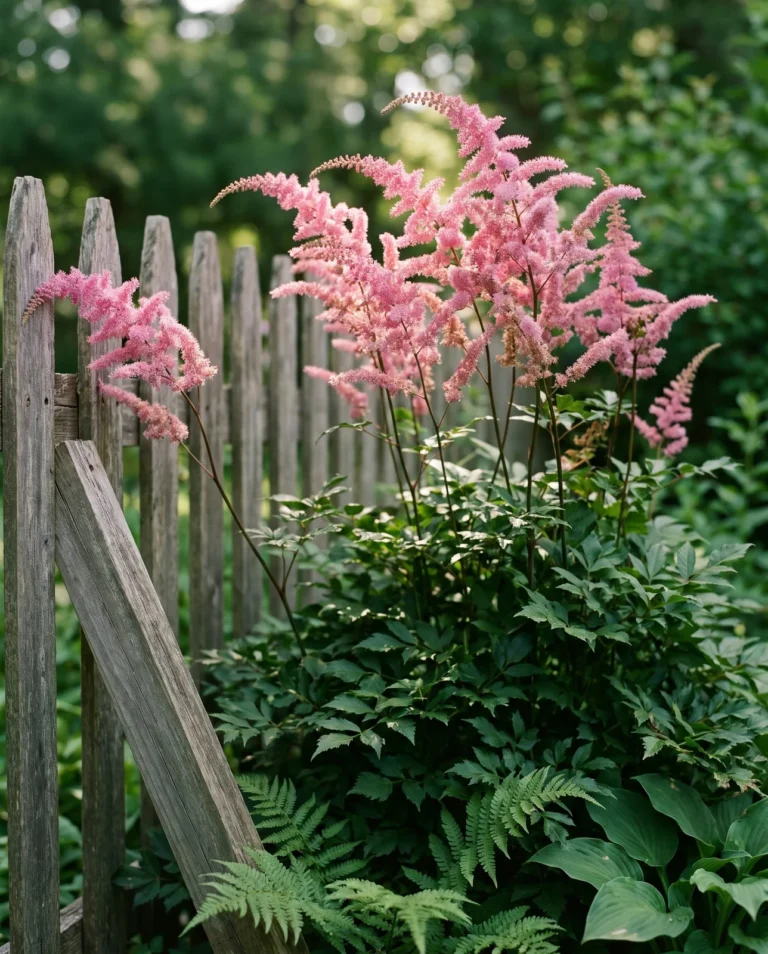
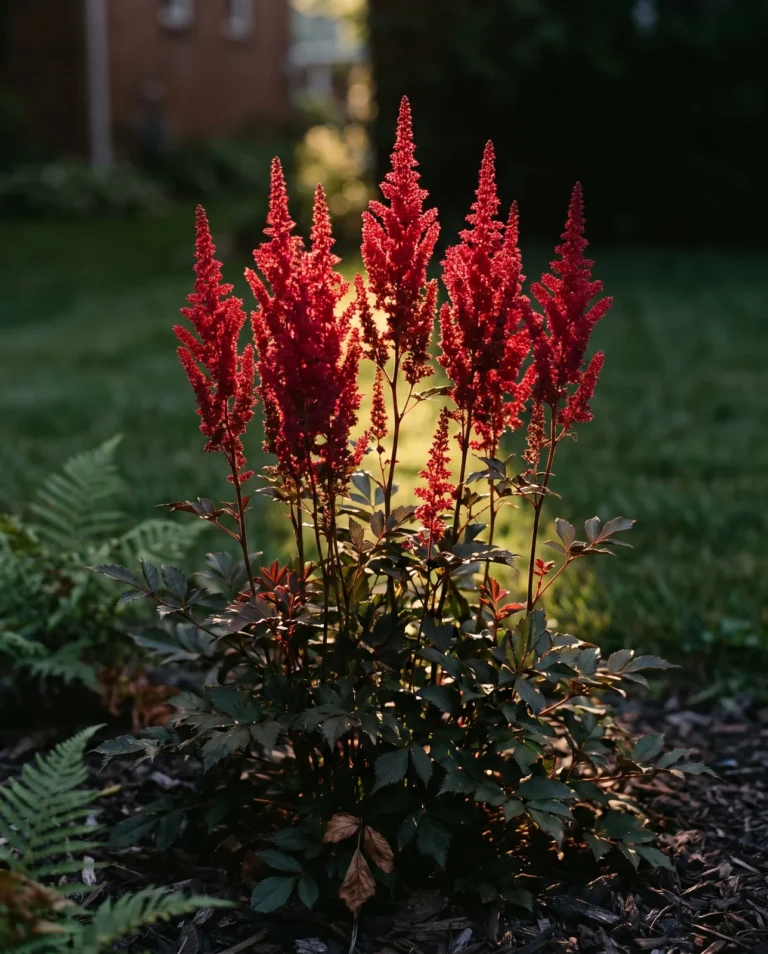
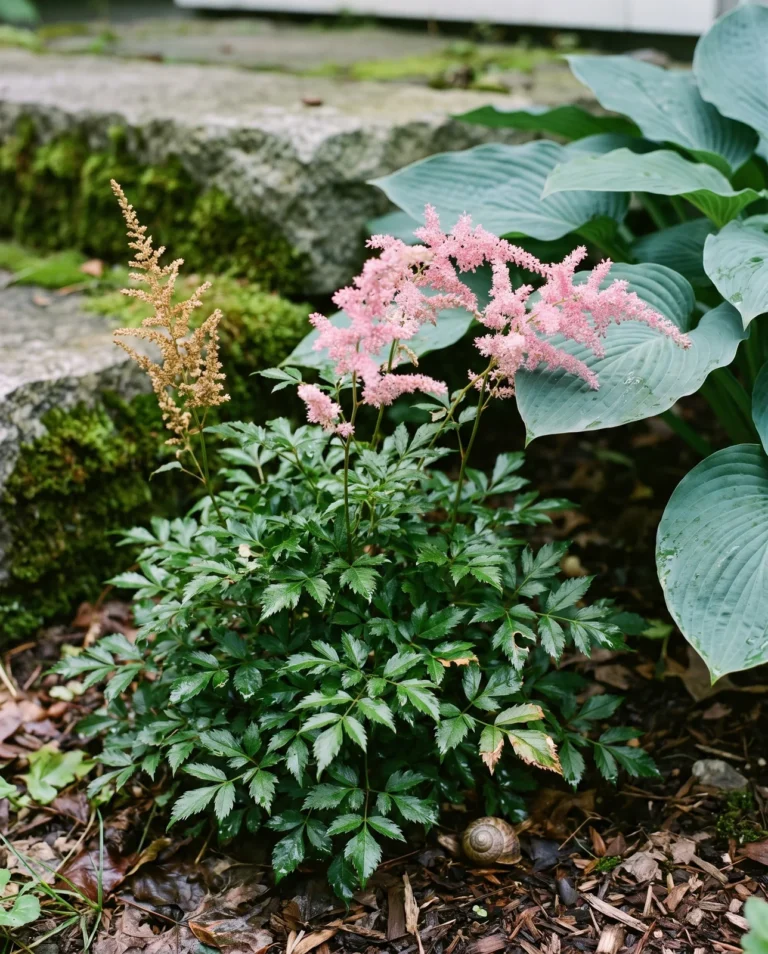
Does astilbe spread
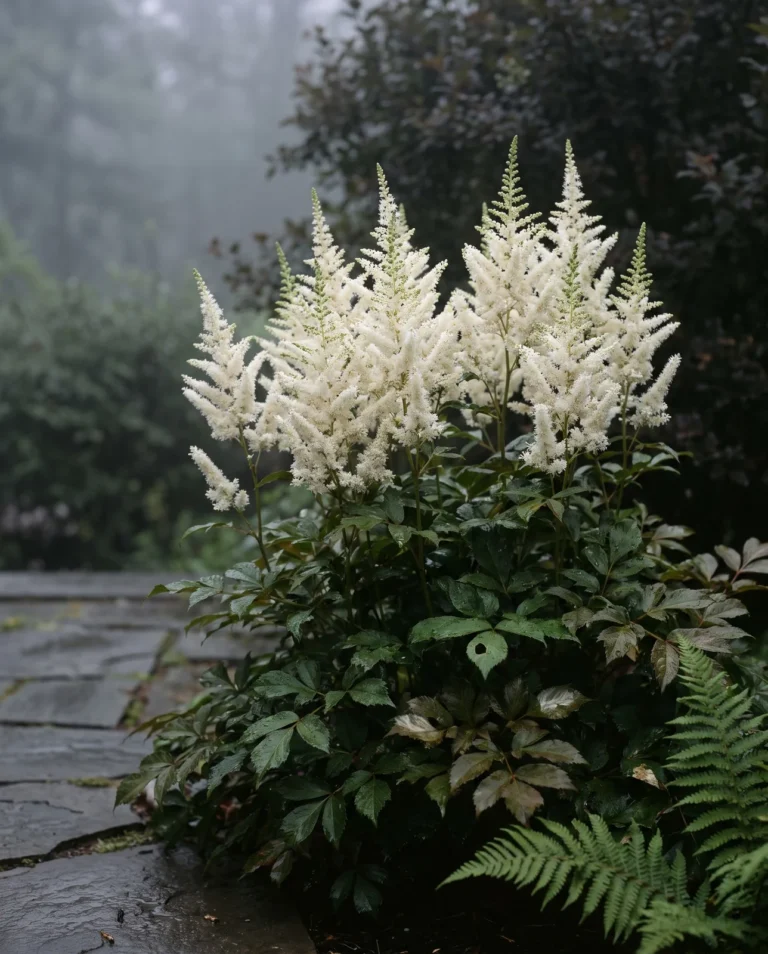
Astilbe widens from its own crown, and how far it travels depends on which group is in the ground. The arendsii hybrids are clumping and mounding, so a plant of that group thickens where it was put and stays there. The Japanese group also spreads, a different expectation carried under the same common name. Chinese astilbe grows at a moderate pace, and in the wild it widens slowly by short stolons, short horizontal stems that push the crown outward.
One cultivar is the exception, and it is the one sold for the job. 'Pumila' spreads more quickly than most other Chinese astilbes and is recommended as a ground cover for it. Spacing follows habit more than height. Set a clumping hybrid at its mature width and let it fill in; plant a mat former closer and let it close the gaps itself.
When to divide an astilbe clump
Astilbe is lifted and split every three or four years, and a clump still growing strongly can go four to six years. Spring is the season named for the work, when the crown is low and the new buds are visible before the leaves hide them. A clump left untouched past the end of every one of those figures is the one that quietly stops flowering.
Deadheading and cutting back
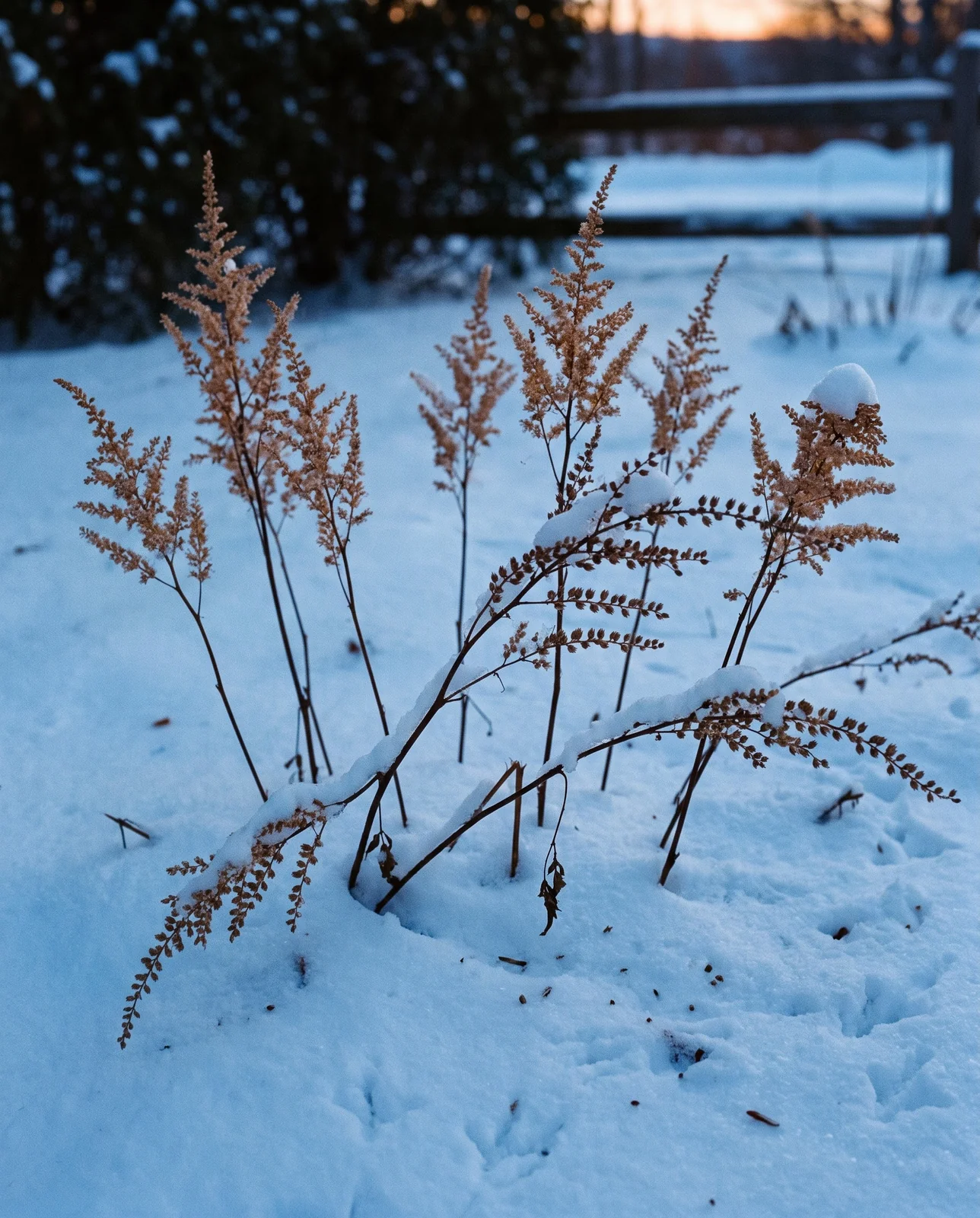
Removing a spent astilbe plume will not extend the bloom; it may improve the plant's appearance and nothing else. That turns the browning plume into a decision about looks. Many gardeners leave the stalks standing for the dried seed heads, which usually hold into early winter and give a shade bed something to stand in once the leaves are down. Cutting them the day the color goes is preference, and the plant is not asking for it.
The foliage is a different job, and the answer is to wait. Cut last year's leaves back in late winter, before the new growth pushes through, because the old foliage helps protect the crown over the cold months. That rules out the fall tidy: a clump sheared flat as soon as it browns loses its cover for the whole winter.
Which astilbes take more sun and dry ground
Chinese astilbe is the group singled out for taking more sun and drier ground. Arkansas Extension calls it probably the best adapted astilbe for southern gardens, where the others struggle in heat. The same edge shows up in the tall variety davidii, better suited to sun and drought than most arendsii hybrids, and again in the dwarf 'Pumila'. 'Milk and Honey' is moderately drought tolerant, in keeping with that parentage.
The advantage has a limit printed beside it. The extra heat and drought tolerance is relative, and normal irrigation through hot, dry spells is still expected. The group offers a wider margin in a warm bed. It does not offer a plant that can be left dry. Check the size too, because the same group holds the largest plants in the genus, davidii at 4 to 6 feet and 'Superba' the tallest of all, alongside 'Pumila' on a far smaller frame.
What to plant with astilbe, and where
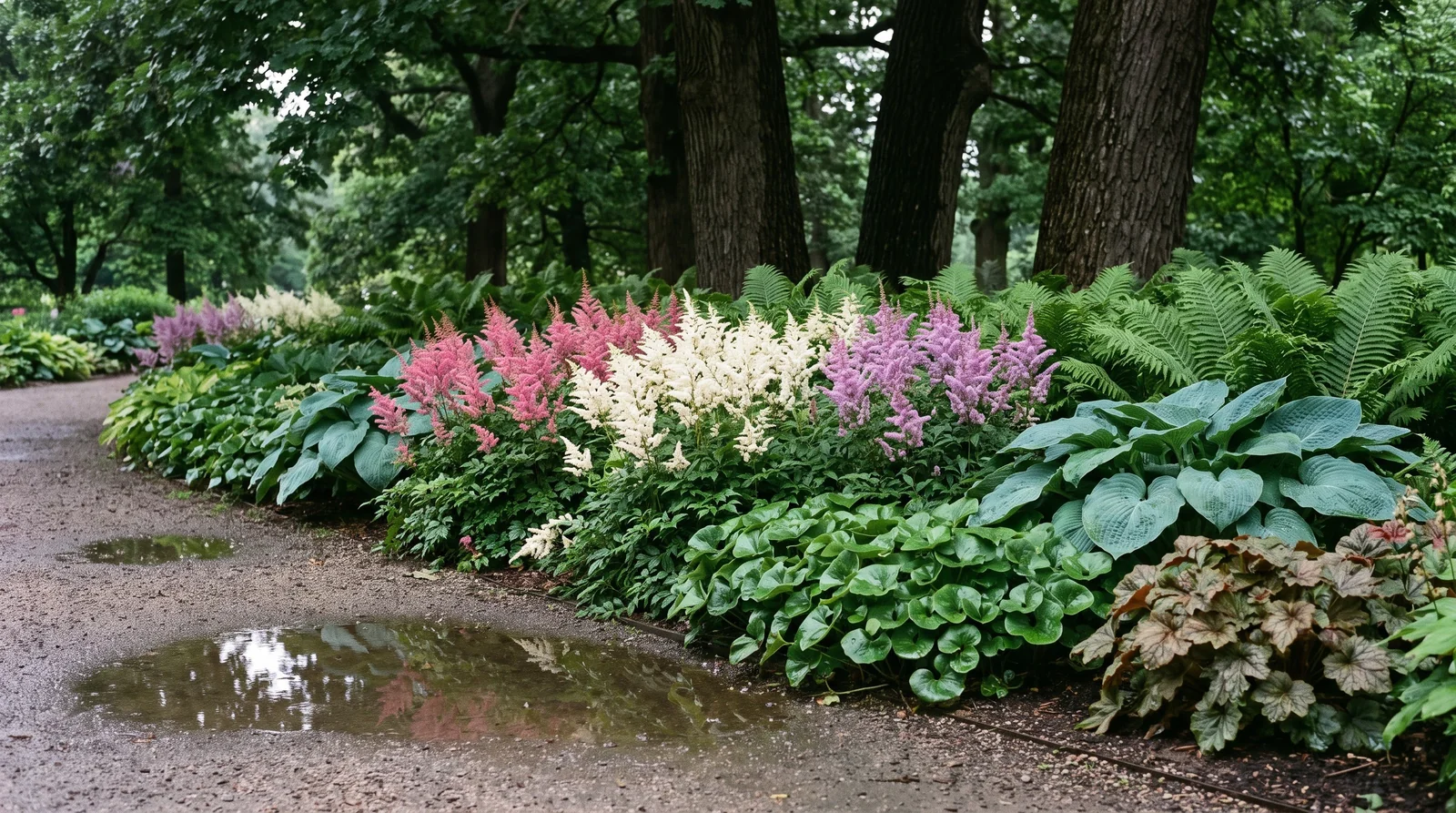
The right spot is ground that stays damp without being watered, and the planting around it is the standard cast of a shade bed. Astilbe suits perennial borders, woodland plantings, containers and ground cover. Weave it among hostas, ferns, lady's mantle and hellebores. Add columbines for spring and daylilies for summer and the same corner carries three seasons. The native species takes different partners: wild ginger, plantain-leaf sedge and American alumroot, for contrasting texture.
Two traits shape the placement. Astilbe is deer and rabbit resistant in both the hybrid group and the Japanese group, which suits an unfenced woodland edge where most of the shade catalog gets grazed. The other is the shape of its season: once the plumes are over, the fern-cut foliage carries the bed, and gardeners filling that gap run a shade annual through the same ground, where impatiens is the usual choice.
Is astilbe toxic to dogs and cats
Astilbe is missing from the ASPCA's toxic and non-toxic plant database under every name it is sold by: astilbe, false spirea, false goat's beard, spirea and goat's beard all return nothing. Missing is not the same as cleared. The same list carries a standing note that eating any plant material can cause vomiting and stomach upset in dogs and cats. For a household with a dog that chews, discourage the habit and watch for the stomach upset that note describes.
How tall astilbe gets, and how wide
Astilbe covers a range of sizes wide enough that the genus name on a tag predicts almost nothing. The garden hybrids are the middle of it, 24 to 36 inches tall and 18 to 24 inches wide. The Chinese group holds both ends of the range. Above the middle sit the variety davidii at 4 to 6 feet and 'Superba' at 3 to 5; below it sits 'Pumila' at 8 to 12 inches. One group label covers a plant that stands chest high and a plant that edges a path.
Spread is the number most people skip, and it does not track height. 'Milk and Honey' stands 28 to 30 inches over an 18 to 20 inch footprint, while 'Dark Side of the Moon', shorter at 20 to 22 inches, is the wider plant at 24 to 28. Reading both numbers keeps a front-of-border choice from swallowing its neighbors.
What to expect in the first years
A bare root does not behave like a potted perennial in its first season, and most of the worry it causes is about timing.
The first summer is quiet. Astilbe emerges slowly in spring, and the new shoots usually show dark orange or red before they green up, which reads as damage to anyone who has not seen it before. A first-year plant spends the season on roots and leaves, and it wants watering weekly right through that first season. Flowers are not the measure of a good first year.
The second year is when the plumes are expected. A bare-root astilbe is sold on the expectation of flowers in its second year, so a plant that leafed out well and skipped its first summer is running to schedule.
By the third or fourth season the clump has filled its space and reached the age at which astilbe is normally lifted and split. From there the cycle repeats, and the age that counts is the time since the last division.
Four things people believe about astilbe
Each of these is common enough to shape what gardeners buy and how they treat the plant afterward.
The myth: Astilbe grows from a bulb.
The reality: The planting unit is a bare root over a rhizome, set with the buds facing up, one to two inches down. Depth is measured to the crown, and no bulb rule applies.
The myth: Shade means no direct sun at all.
The reality: Part shade is the recommendation, and full shade is workable at the cost of flowers. In cool northern gardens most varieties tolerate a full day of sun.
The myth: Brown leaf edges mean the plant needs feeding.
The reality: Margins that brown and crisp mean the plant has not been kept moist enough. Underfeeding may cut flowering; the scorched margin is a water symptom.
The myth: Deadheading brings a second flush of plumes.
The reality: Cutting a finished plume off adds no flowers; at most it may tidy the plant.
FAQ
How quickly does astilbe spread?
Slowly, and it depends on the group. The arendsii hybrids clump and mound, the Japanese group also spreads, and 'Pumila' is the exception, sold as a ground cover because it moves faster than the rest.
Do you deadhead astilbe?
For looks only, if at all. Removing spent flower stalks will not extend the bloom; many gardeners leave the plumes up for the dried seed heads, which usually hold into early winter.
When should you cut back astilbe?
At the end of dormancy. Cut last year's foliage in late winter, before new growth appears, since the old leaves help protect the crown through the cold.
Is astilbe toxic to dogs?
There is no astilbe entry in the ASPCA database under astilbe, false spirea, false goat's beard, spirea or goat's beard. Eating any plant material can still cause vomiting and stomach upset in dogs and cats.
How often should astilbe be divided?
Every three or four years, stretching to four to six for a clump still growing strongly. Spring is the season for the job.
When do astilbe bloom?
Across the genus, May through August. The arendsii hybrids sold in most garden centers are early, through May and June, while late types such as 'Pumila' carry on into September.
Do astilbe make good cut flowers?
Yes, and they dry well too. Cut stems last about a week in a vase.
Are there astilbe varieties for sun?
Chinese astilbe is the group, probably the best adapted astilbe for southern gardens, with the variety davidii better suited to sun and drought than most arendsii hybrids. The extra tolerance is relative, and normal watering is still expected.
Do deer eat astilbe?
Astilbe is one of the shade perennials deer and rabbits usually pass over, in both the hybrid group and the Japanese group. The Japanese group also stands up to heavy shade and black walnut.
How tall does astilbe get?
Anywhere from 8 inches to 6 feet. The garden hybrids run 24 to 36 inches, the dwarf 'Pumila' 8 to 12 inches, and the Chinese variety davidii reaches 4 to 6 feet.
Interesting tips
- Scent is not why astilbe is bought, but 'Peach Blossom' is early and fragrant.
- 'Dark Side of the Moon' is worth buying for its spring foliage alone. The leaves emerge yellow with a dark margin and age toward near black before the purple plumes open.
- Two of the named cultivars carry a zone 4 floor while the arendsii hybrids run down to 3a, so a cold garden should read the tag on the plant it is buying.
Related Guides & Flowers
Virginia bluebells
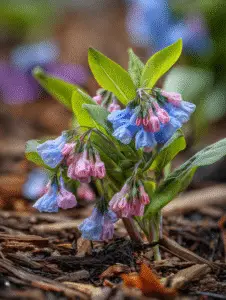
The spring half of the same damp woodland corner, finished and gone by the time astilbe reaches full leaf.
Foxglove
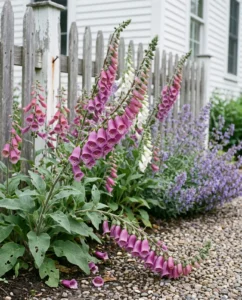
The tall spire for the same part shade, with a very different answer to the question about pets.

Daylily
The summer partner in the same beds, holding color after the astilbe plumes have gone over.

Bigleaf hydrangea
The shrub for the same damp part shade, and another plant that announces dry soil by wilting.
Enjoying our flower guides? Add YourFlowersGuide as a preferred source on Google. It helps more readers find us.
Add to Preferred Sources