returns in
304
days
Bloom calendar
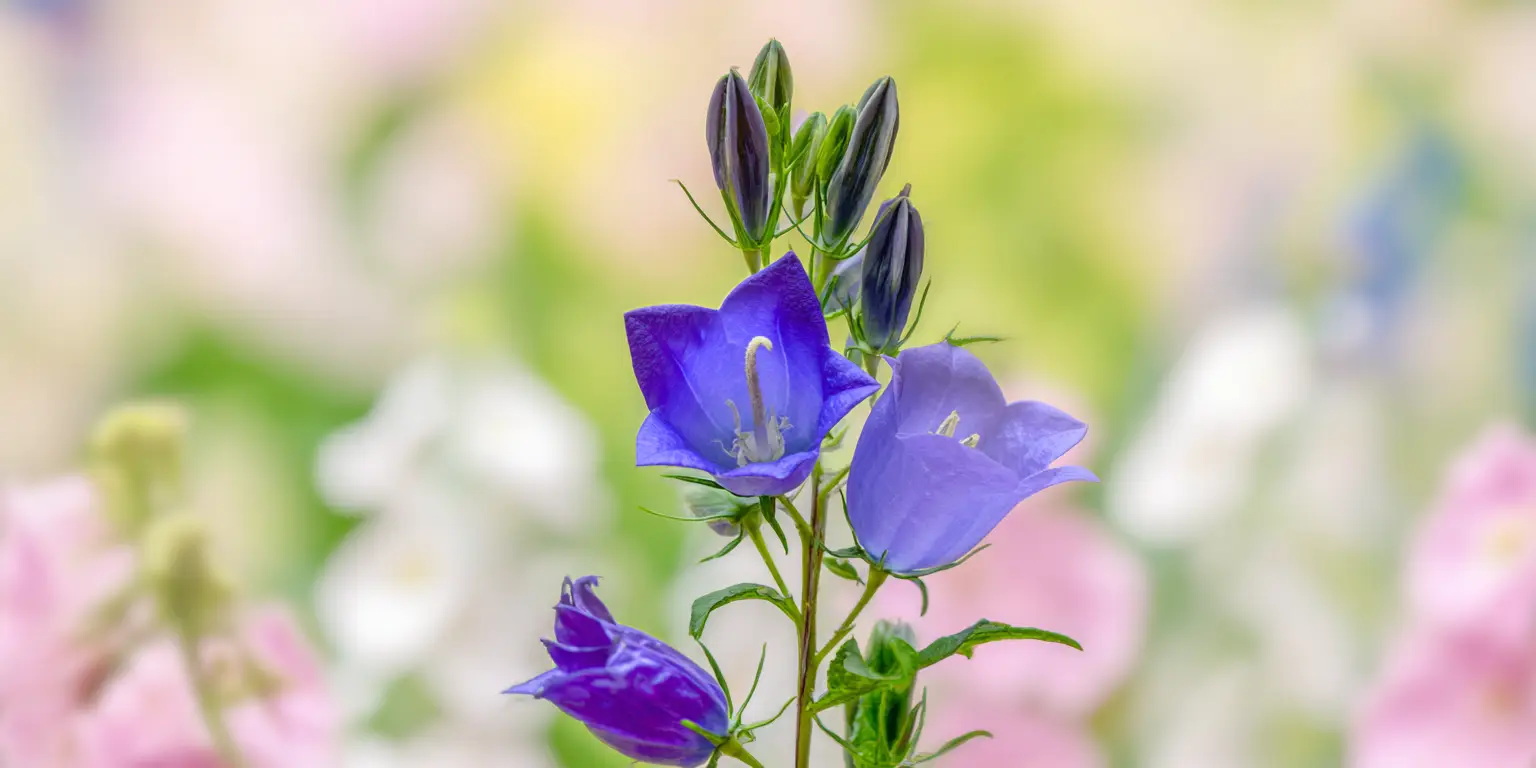
Canterbury Bells
Biennial; often grown as a cool‑season annual
At‑a‑glance
- Group/Class: Biennial; often grown as a cool‑season annual
- Height × spread: 24-36 in × 12-18 in (60-90 cm × 30-45 cm)
- Bloom window: Early to mid‑summer
- Color & flower form: Blue, pink, or white; large bells; single and double selections
- Fragrance: 2 noticeable
- USDA hardiness: grown as biennial in zones 5-8; often annual outside this range
- Breeder / Year / Origin: unknown
- Cut‑flower notes: Sturdy stems; typical vase life about 7-14 days
- Pet safety: safe
How it differs
- Biennial lifecycle versus perennial bellflowers on the pillar page
- Tallest, showiest bells among common garden Campanulas
- Sweet fragrance compared with most bellflowers
- Less tolerant of heat and humidity than many perennials
Strengths
- Striking vertical spikes for cottage borders
- Excellent for cutting and arranging
- Wide color range in named series
- Performs in full sun to light shade
Care in one minute
Start from seed or transplants; rosette year one, flowering year two
Light: full sun to part shade; provide afternoon shade where summers are hot
Soil: fertile, moist, well‑drained; neutral pH ideal
Water: keep evenly moist during bud and bloom
Groom: deadhead to prolong bloom; stake if exposed to wind
Watch‑outs
- Short‑lived; replant or let self‑seed to maintain a display
- Can suffer in hot, humid summers
- May need staking in wind‑exposed sites
Best uses (tags)
Provenance note
Species of southern Europe long grown in cottage gardens; modern F1 series like ‘Champion’ are common in the cut‑flower trade.
References
- NC State Extension: Campanula medium
Similar Flowers

Enjoying our flower guides? Add YourFlowersGuide as a preferred source on Google. It helps more readers find us.
Add to Preferred Sources