returns in
304
days
Bloom calendar
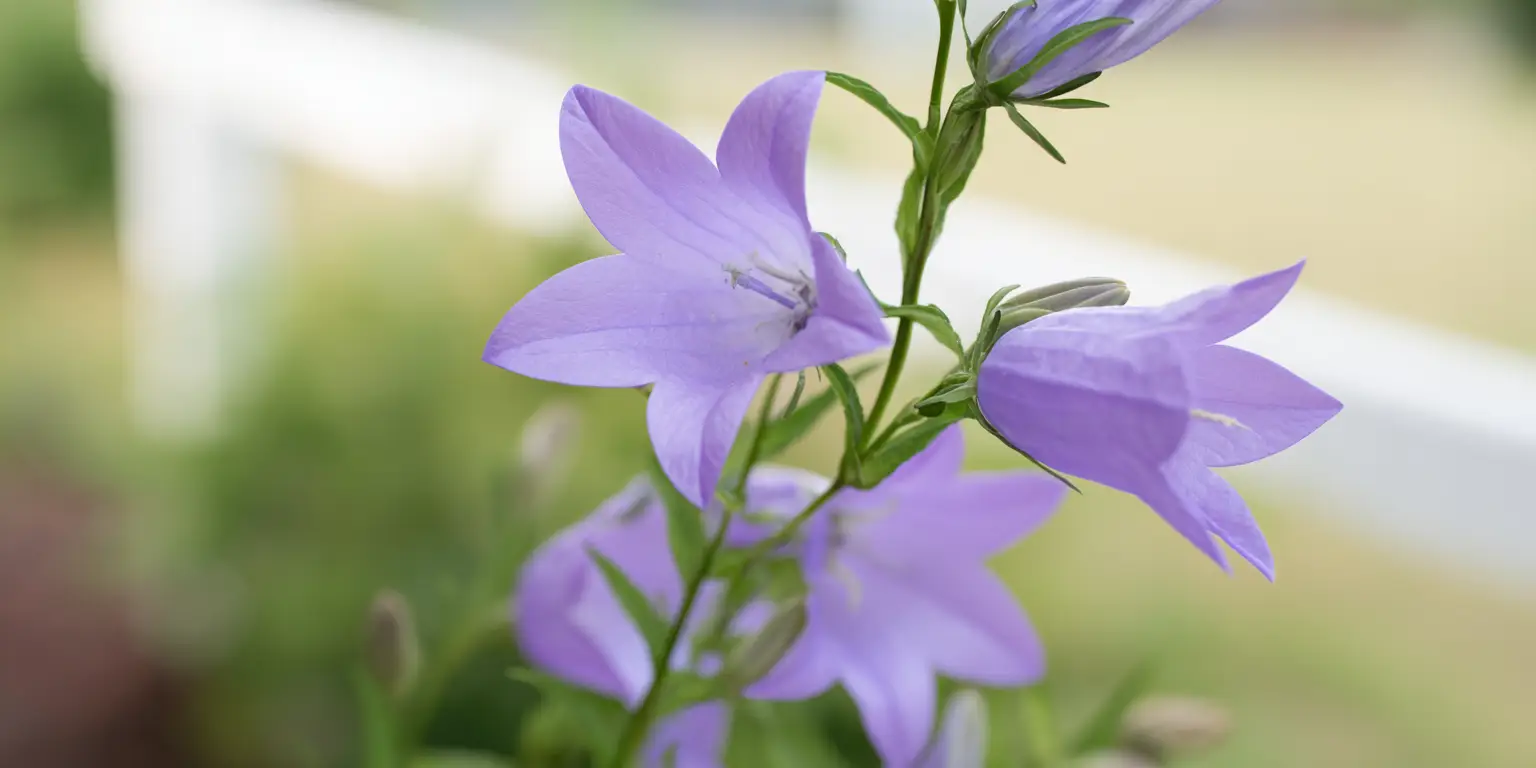
Peach leaved Bellflower
Perennial species; clump‑forming
At‑a‑glance
- Group/Class: Perennial species; clump‑forming
- Height × spread: 18-36 in × 12-18 in (45-90 cm × 30-45 cm)
- Bloom window: June to July
- Color & flower form: White to blue; outward‑facing cups; single or double forms exist
- Fragrance: 0 none
- USDA hardiness: zones 3-7
- Breeder / Year / Origin: unknown
- Cut‑flower notes: Stems fairly sturdy; typical vase life 7-10 days
- Pet safety: safe
How it differs
- Taller, upright habit versus many low, creeping bellflowers
- Broad, outward‑facing cups rather than nodding bells
- Works well for cutting compared with most species
- Prefers cool summers and part shade in heat
Strengths
- Elegant vertical accents for mixed borders
- Good cut‑flower performance
- Deer browsing is uncommon
- Semi‑evergreen basal rosettes in mild winters
Care in one minute
Light: full sun to part shade; give afternoon shade in hot regions
Soil: average, well‑drained; slightly alkaline soils are acceptable
Water: regular moisture; avoid drought stress during bud formation
Feeding: modest spring feed if soil is poor
Groom: deadhead to limit self‑seeding and encourage a light rebloom
Watch‑outs
- May self‑seed where happy
- Can flop in rich soils or wind; light staking may help
- Declines in deep South heat
Best uses (tags)
Provenance note
Native to Europe and western to central Asia; naturalized in parts of northeastern North America.
References
- Missouri Botanical Garden Plant Finder: Campanula persicifolia
- RHS: Campanula persicifolia
- NC State Extension: Campanula persicifolia
Similar Flowers
Enjoying our flower guides? Add YourFlowersGuide as a preferred source on Google. It helps more readers find us.
Add to Preferred Sources