The pairing · pick a flower
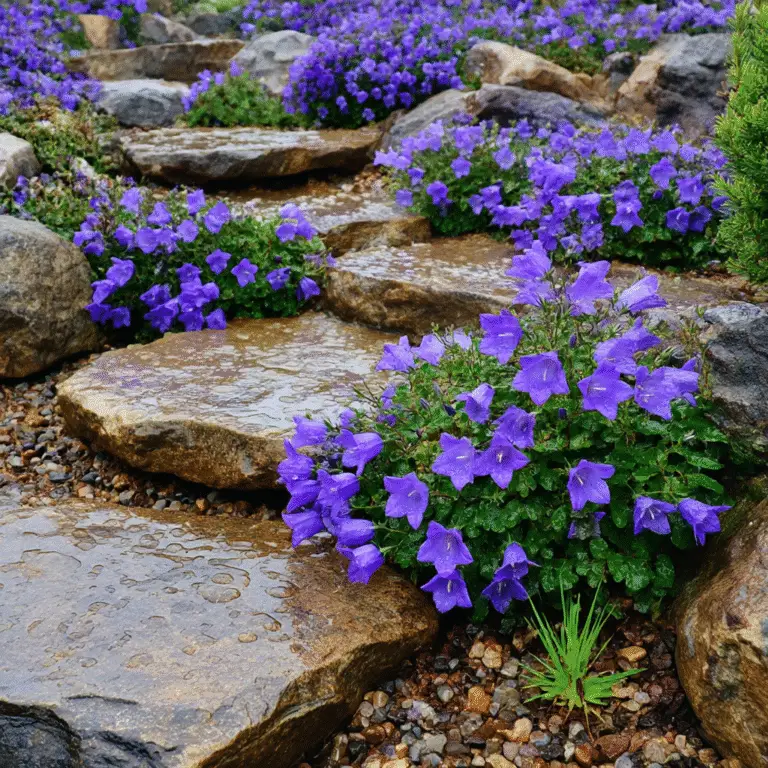 Bellflower+
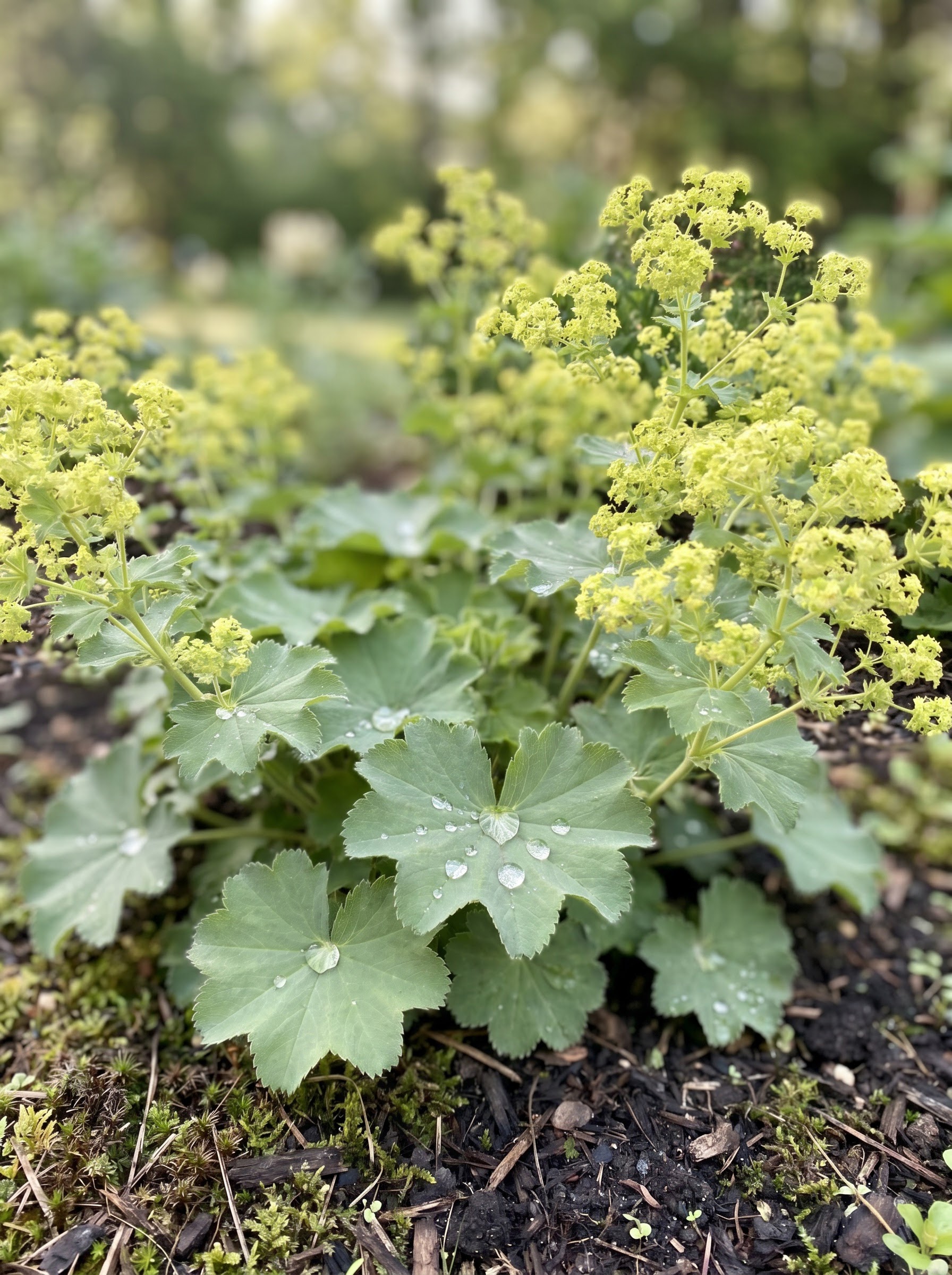 Lady's mantlePartial
Frothy chartreuse blooms and scalloped downy leaves are the classic foil for bellflower's vertical spikes and cupped blooms, in the same sun-to-part-shade, moderate-moisture ground.
Bellflower+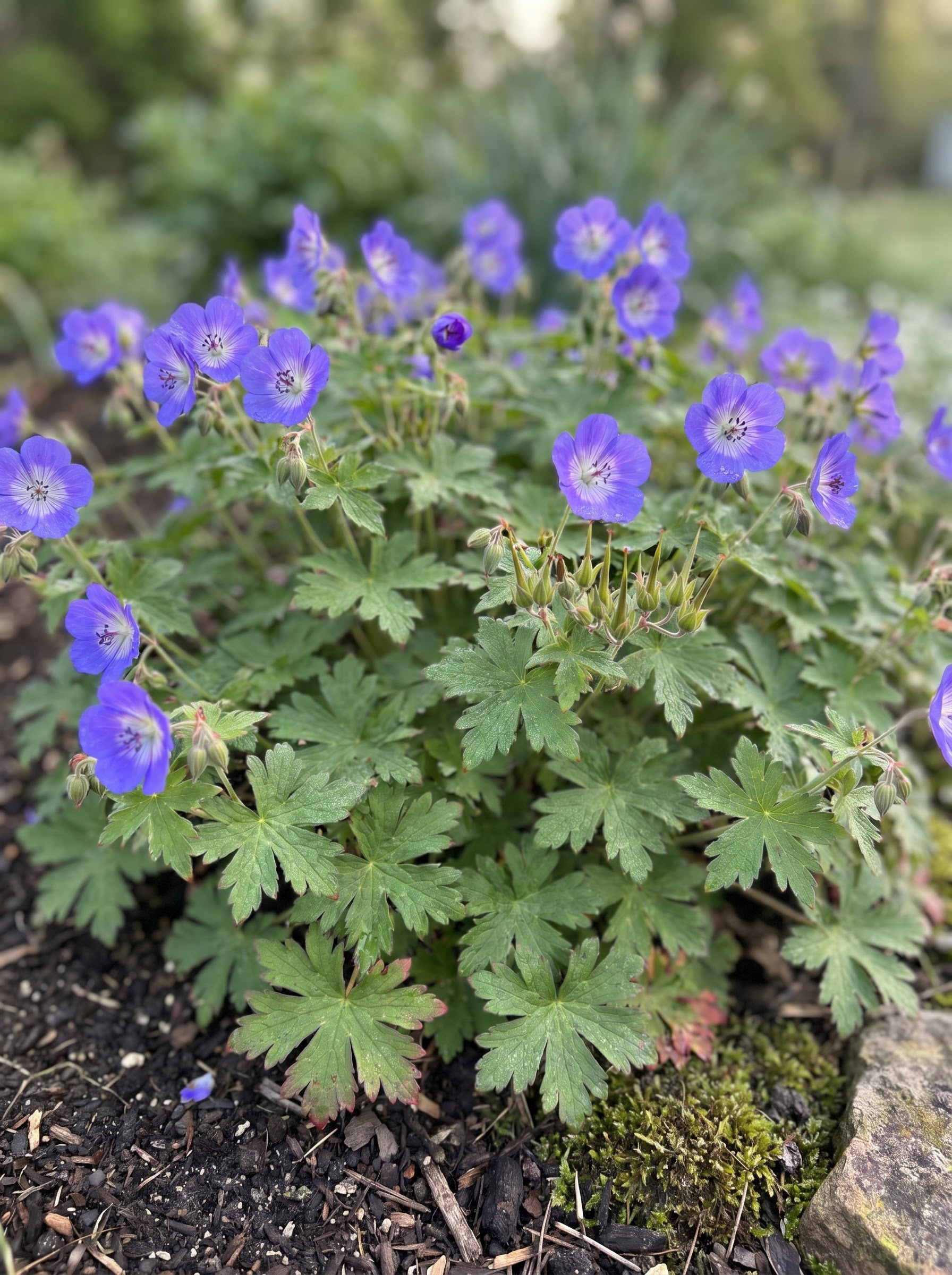 Hardy geraniumProven
Wants the same average, medium-moisture, well-drained ground and full sun to part shade as bellflower, and its spreading mound covers soil at the front of the bed all summer long.
Bellflower+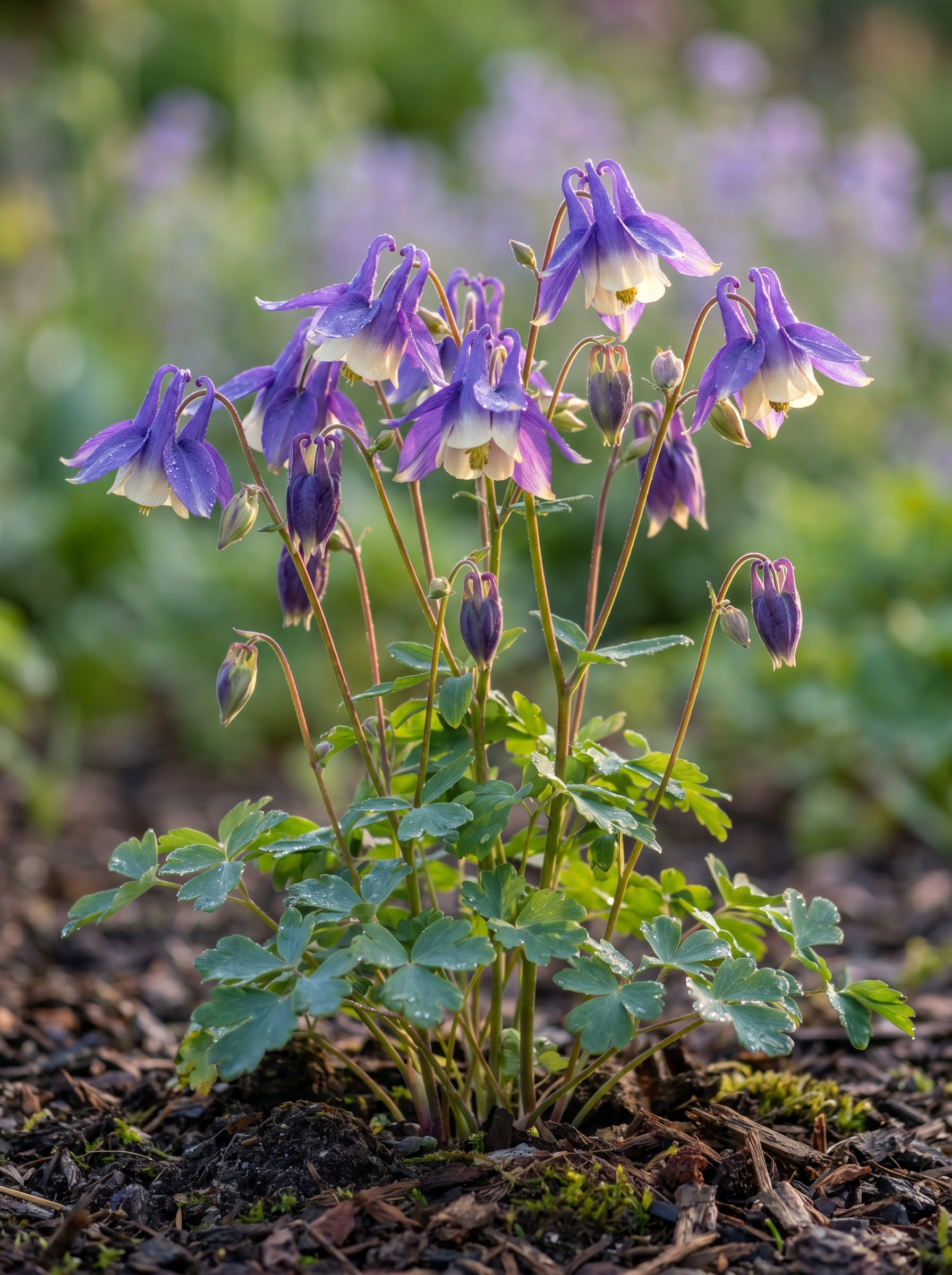 ColumbineProven
Full sun to part shade in average, well-drained soil matches bellflower's own range, and columbine's nodding spurred flowers open earlier, stretching the border's bloom season before bellflower takes over.
Bellflower+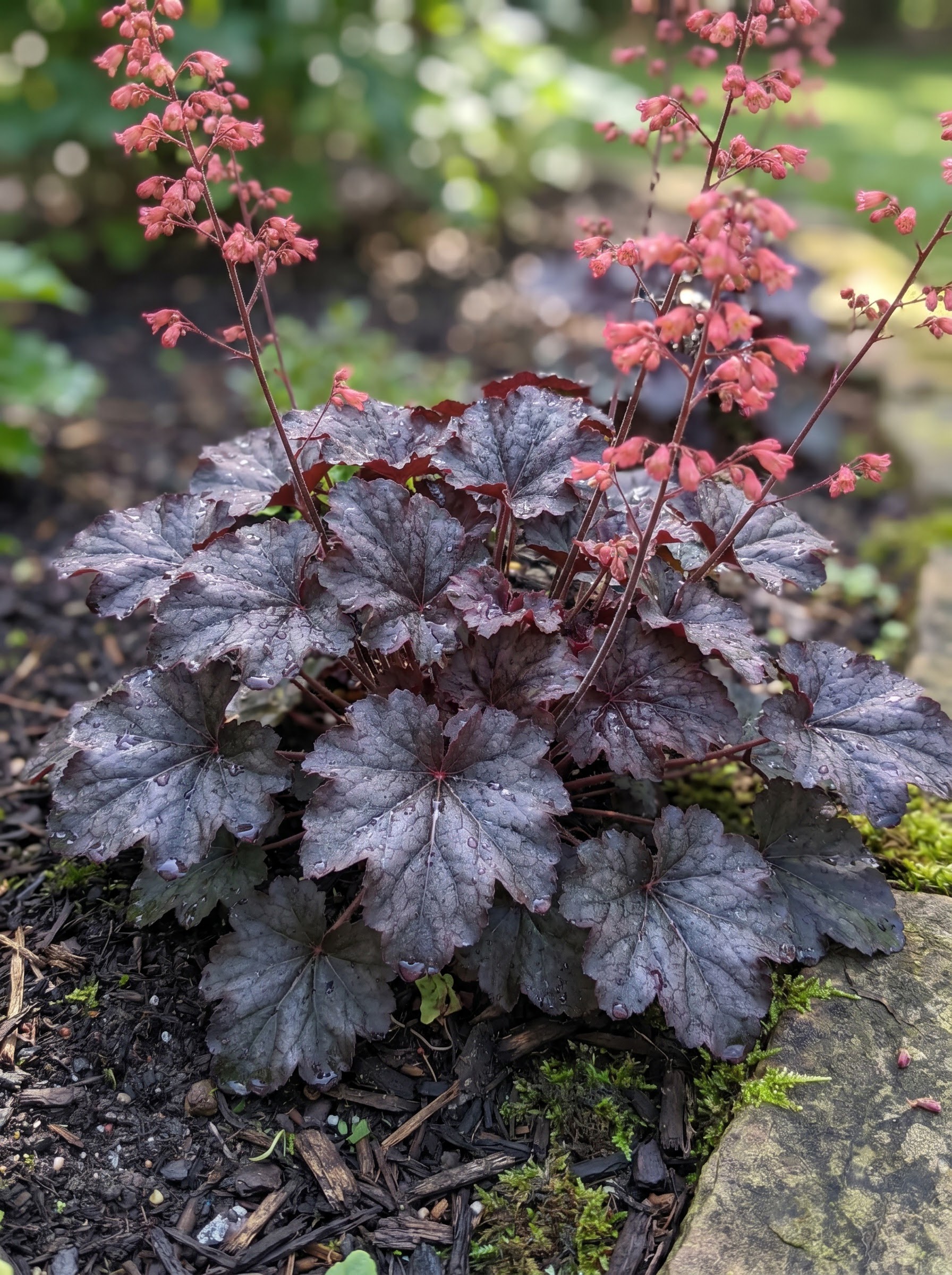 Coral bellsProven
Medium-moisture, well-drained soil in full sun to part shade matches bellflower's own needs, and its purple, bronze, or lime foliage echoes or contrasts blue-violet bellflower blooms all season, not just when flowering.
Bellflower+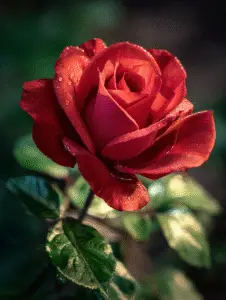 RosesPartial
Full sun and well-drained soil suit both, and a low bellflower type planted at a rose's feet hides the bare lower canes while its spikes give roses the vertical shape their rounded blooms lack.
Bellflower+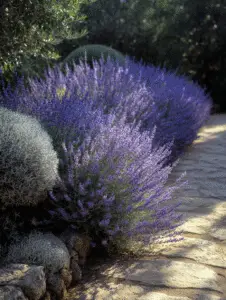 LavenderPartial
A genuine and popular blue-and-purple pairing, but lavender wants dry to medium, lean, alkaline soil while bellflower wants steadier average moisture, so this works only with careful siting rather than shared irrigation.
Bellflower+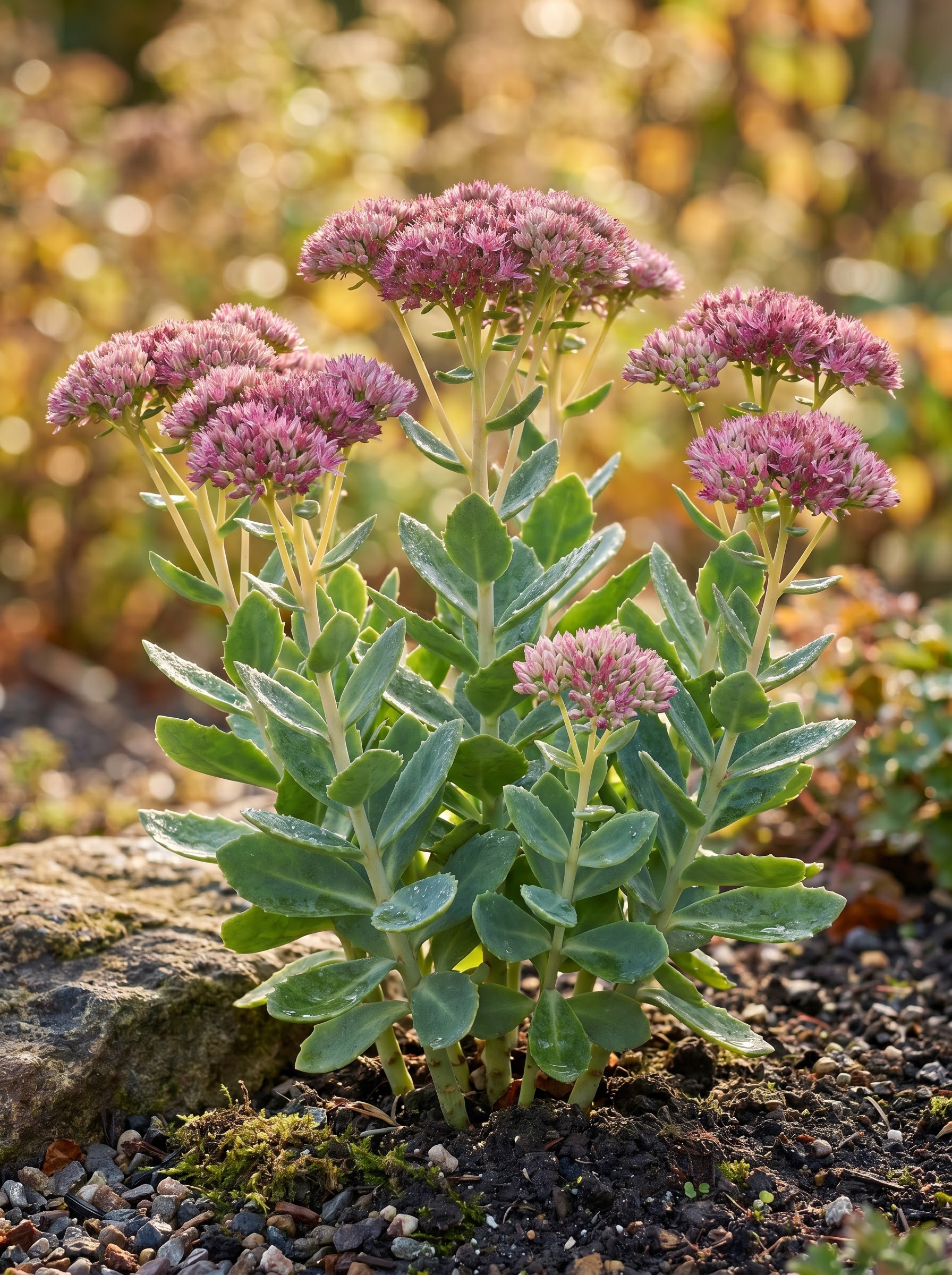 SedumProven
For the low, mat-forming bellflower types only (carpatica, portenschlagiana): NC State Extension confirms carpatica will not tolerate soil that runs too wet or too dry, the same lean, sharp-drained profile sedum wants in a rock garden.
Bellflower+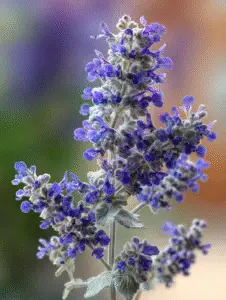 CatmintProven
A low, aromatic, repeat-blooming mound that shares bellflower's sun and drainage needs and pulls in bees over a long season, though its lavender-blue spires echo rather than contrast bellflower's own color.
All Bellflower companions
8 flower companions, best match first
What not to plant near Bellflower
Most bad neighbours are not evil, they just want the opposite light, water or root run. Here is what to keep away, and what to do instead.
Succulents, cacti, aloe, and other lean-dry-soil plants
Bellflower needs average, consistent moisture while succulents and cacti need the soil to dry out fully between waterings; whichever gets watered correctly rots or starves the other, since Iowa State Extension notes succulent root rot develops directly from excess soil moisture.
True bog and marginal-water plants (cattails, papyrus, rushes, marsh marigold)
These plants want soil that stays constantly saturated at or near the waterline, the opposite extreme from bellflower's need for soil that drains freely between waterings; sitting bellflower in that ground rots its roots even though it likes steady moisture.
Creeping bellflower itself, if that is what's actually in the ground (Campanula rapunculoides)
This is not a companion-planning question. University of Arkansas Cooperative Extension documents a stout taproot sending out rhizomes in every direction, where each broken root fragment can start a new plant, and University of Saskatchewan Extension confirms the plant sets thousands of seeds that stay viable in the soil for years, so it spreads through and chokes out whatever is planted near it rather than pairing with it.
Small, slow-establishing, or choice perennials sited right against mat-forming bellflower (portenschlagiana, poscharskyana, carpatica)
These species are sold specifically as vigorous groundcovers; NC State Extension describes portenschlagiana-type habits spreading steadily to fill a rock wall or path edge, which is a strength there and a problem for a small, newly planted neighbor with no room to establish.
Tall, dense shade-casters over short bellflower varieties (sunflowers, tall delphinium)
Compact border and rock-garden bellflower types need full sun to part shade to bloom well, and a much taller, denser neighbor planted too close can shade them out and reduce flowering; this applies to the short, compact varieties, not tall types like lactiflora or persicifolia which can hold their own height.
The best companions for bellflower, explained
Before choosing a companion, it helps to know which bellflower you actually have, because the genus splits into two very different garden citizens. Upright, clump-forming border types, peach-leaved (Campanula persicifolia) and clustered (Campanula glomerata) chief among them, behave like any well-mannered perennial and pair by matching conditions the same way you would for phlox or coreopsis. Low, spreading rock-garden types, Carpathian (Campanula carpatica) and Dalmatian (Campanula portenschlagiana), are sold specifically as vigorous groundcovers, so their companions need to be sturdy enough to hold their own ground rather than delicate. Once that’s settled, the strongest pairing on this page is hardy geranium, whose spreading violet-blue mound wants the same average, medium-moisture, well-drained ground and full sun to part shade that bellflower does, and which keeps flowering from late spring into fall, carrying the border long after a bellflower’s first flush fades. Lady’s mantle is close behind, its frothy chartreuse blooms and scalloped grey-green leaves supplying the texture contrast bellflower’s spikes and cups can’t provide on their own, in the same forgiving sun-to-part-shade range.
Columbine and coral bells round out the strongest tier for different reasons. Columbine’s nodding, spurred blooms open earlier in the season, in the same average, well-drained soil, so the border has color before bellflower comes into its own rather than a hard start-stop transition. Coral bells contributes something bellflower’s own foliage can’t: purple, bronze, or lime leaf color that holds all season, echoing or contrasting blue-violet blooms whether or not anything is actually flowering that week. Roses make the list too, and for a genuinely old pairing: a low bellflower type planted at a rose’s feet hides the bare lower canes that roses are famous for, while the rose’s rounded canopy gives bellflower’s vertical spikes something to play against. For the compact rock-garden bellflower types specifically, rather than the tall border forms, sedum earns its place the same way it does in any rock garden: NC State Extension confirms Carpathian bellflower will not tolerate soil that runs too wet or too dry, which is exactly the lean, sharp-drained profile sedum wants, so the two share a genuinely narrow, honest window rather than a generic "rock garden plants" grouping.
Lavender deserves an honest middle ranking rather than an unqualified one. It’s an extremely popular blue-and-purple pairing, and the site’s own color-pairing guide for bellflower and lavender covers the full design treatment, but lavender actually wants dry to medium, lean, alkaline soil, while bellflower wants steadier average moisture. The two can share a bed, but only if lavender sits on the leaner, drier side and nobody aims regular irrigation at both plants at once. Catmint sits in similar territory: genuinely popular, genuinely compatible on sun and drainage, but its lavender-blue spires echo bellflower’s own color rather than contrasting it, so it reads as a supporting player rather than a standout.
What not to plant near bellflower
The most important thing to say here isn’t about pairing at all. If what’s actually growing is Campanula rapunculoides, creeping bellflower, this isn’t a companion-planning situation, it’s a removal job. University of Arkansas Cooperative Extension describes a stout taproot that sends out rhizomes in every direction, and the reason it resists most control efforts is blunt: each broken root fragment, even a tiny one, can start an entirely new plant, which is exactly what makes it so hard to dig out once established. On top of the root system, University of Saskatchewan Extension notes the plant sets thousands of seeds that stay viable in the soil for years, so a plant left alone doesn’t just spread underground, it reseeds itself into every open patch of soil nearby. If the bellflower in question has tall, one-sided racemes of purple-blue bells and is visibly spreading into a bed faster than anything planted there, the honest next step is control first, before any companion list, and the site’s own guide to controlling invasive bellflower covers the digging, sifting, and repeated-cutting approach that actually works. It’s worth saying plainly that the well-behaved garden bellflowers, peach-leaved, clustered, Carpathian, Dalmatian, do not share this behavior. They’re a different set of species with a different growth habit, and nursery tags rarely spell that difference out, which is exactly why this confusion is so common.
Setting the identification question aside, bellflower’s real avoid list runs on moisture mismatch at both extremes. Succulents, cacti, and aloe want soil that dries out completely between waterings, the opposite of bellflower’s need for steady, average moisture, and Iowa State University Extension is direct about the mechanism: succulent root rot develops from excess soil moisture reducing oxygen at the root, so whichever plant gets watered the way it actually needs will punish the other. True bog and marginal-water plants, cattails, papyrus, rushes, marsh marigold, sit at the opposite extreme, wanting soil that stays saturated near a waterline, and the RHS’s own Campanula growing guide is explicit that the genus wants moisture-retentive, free-draining soil that is never allowed to sit wet, particularly over winter. Neither of these is a subtle caveat. They’re a straightforward instruction to keep bellflower out of both a cactus bed and a pond margin.
The genus’s own spreading habit creates a genuinely unusual second avoid category, one that has no real equivalent in most companion guides: bellflower can be the aggressor rather than the victim. NC State Extension describes the mat-forming rock-garden types as spreading steadily to fill whatever space they’re given, a real feature in a rock wall or along a path edge and a real problem next to a small, newly planted, or expensive perennial with no room yet to establish. This isn’t chemical or aggressive in the way creeping bellflower’s takeover is, it’s simple physical crowding, and the fix is equally simple: give new neighbors a season to settle before letting a mat-forming bellflower spread toward them, or keep the spreading types contained to a wall crevice or stepping-stone gap where filling the space is exactly the job. One more caveat is worth naming honestly rather than dressing up as a rule: compact border and rock-garden bellflower varieties do need full sun to part shade to bloom well, so a much taller, denser neighbor, a mature sunflower stand or an unstaked tall delphinium, can genuinely shade them out if planted too close. That caution scopes specifically to the short, compact bellflower forms; tall types like lactiflora and persicifolia can hold their own height against most neighbors.
Do they like the same conditions?
Bellflower’s growing profile is wider and more forgiving than most companion-planning genera, and stating it plainly is what keeps the pairings above honest rather than decorative. Light runs full sun to part shade across nearly the whole genus, with the RHS and NC State Extension in agreement, and most of the border species actually perform better in part shade where summers run hot, so this is one of the least restrictive parts of the profile rather than a limiting factor. Water is the real fingerprint: average, medium moisture in soil that still drains freely, a plant built for neither drought nor bog conditions. The RHS states this directly as moisture retentive but free draining, a middle ground between too wet and too dry, and NC State’s separate profiles for clustered and peach-leaved bellflower both land on the identical phrase, medium moisture, well-drained soil, which is a strong sign this is a real, consistent requirement rather than boilerplate. Soil pH doesn’t read as a limiting factor either. No dedicated extension source surfaced a hard acid or alkaline requirement for the genus, which puts bellflower closer to an adaptable plant than a picky one like azalea or hydrangea.
Where the profile gets more specific is hardiness and heat tolerance, and it matters for companion choice in a way pure sun-and-soil advice misses. Peach-leaved bellflower is documented at USDA zones 3a through 7b, clustered bellflower slightly wider at 3a through 8b, and Canterbury bells, the tall biennial type, is flatly intolerant of temperatures over 80 degrees Fahrenheit per NC State Extension, needing afternoon shade or filtered light in warmer regions to avoid outright decline. The genus as a whole skews toward preferring cool summers, which is a real, honest reason to pair warm-climate bellflower plantings with companions that can share some afternoon shade rather than assuming every full-sun perennial will do. One myth worth naming and setting aside: nothing in the sourcing for this page supports the idea that sunflowers or marigolds chemically inhibit bellflower’s growth, or that tomato-family plants pass disease to it. Both claims turn up only on consumer listicles with no extension or peer-reviewed backing, and they read like the generic "chemical incompatibility" filler that shows up whenever a companion-planting page needs a dramatic-sounding reason rather than an actual one.
How to plant them together
Spacing follows straight from the habit split above, so it’s worth planning by which bellflower type is actually going into the ground. For upright border types, persicifolia and glomerata, treat spacing like any well-behaved perennial: 12 to 18 inches from true companions is enough to avoid root competition while still reading as one composition, tightening slightly for low front-of-border plants like lady’s mantle and heuchera and opening to 18 to 24 inches for something with real spread, like hardy geranium or lavender. For the mat-forming rock-garden types, carpatica and portenschlagiana, spacing is really about giving the bellflower itself room to fill in, 8 to 12 inches between plants along a wall or path edge, and about giving anything small or newly planted nearby a head start before the bellflower reaches it. Layer by habit rather than height alone: upright spikes like columbine and bellflower’s own taller forms suit the middle of a bed, while low, spreading companions, lady’s mantle, geranium, heuchera, work the front edge where their foliage knits the soil together and covers what would otherwise be bare ground once bellflower’s own basal foliage thins in late summer.
In containers, the same moisture rule that governs the open border applies at a smaller, less forgiving scale: bellflower wants soil that stays evenly moist without ever sitting in standing water, so drainage holes and a well-drained mix matter more in a pot than in open ground, where excess water has somewhere to go on its own. Compact varieties, particularly the rock-garden types, are well suited to container growing precisely because their naturally low, mounding habit doesn’t need the room a tall border bellflower would. If pairing with a companion in the same pot, choose one with a genuinely matching root-zone need rather than a merely compatible above-ground look, since a shared container removes the option of giving one plant slightly drier or wetter ground than the other. Timing matters less for bellflower than for many perennials since most border and rock-garden types bloom over a long early-to-midsummer window rather than a single tight flush, which is part of why it layers so easily with earlier bloomers like columbine and later ones like garden phlox without leaving an obvious gap.
Does companion planting actually work for bellflower?
Some of what gets repeated as bellflower companion planting rests on real, documented ground, and some of it is popular design consensus without a dedicated study behind the specific pairing, and being honest about the difference is the whole point of a page like this rather than a weakness to hide. The shared-conditions logic itself, average moisture, free drainage, full sun to part shade, is as close to proven as garden advice gets, independently confirmed by the RHS at the genus level and by NC State Extension separately for clustered, peach-leaved, and Carpathian bellflower, all landing on nearly identical language. Hardy geranium and columbine sit on similarly solid ground: their own growing profiles, sourced directly from Missouri Botanical Garden’s Plant Finder, match bellflower’s moisture and light needs closely enough that the pairing isn’t really a claim so much as an observation that two plants with the same needs will do fine next to each other. The sedum pairing for rock-garden bellflower types earns its Proven tier the same way, anchored specifically to NC State’s own note that Carpathian bellflower won’t tolerate soil running too wet or too dry, a genuinely narrow match rather than a blanket "rock garden plants get along" assumption.
Catmint’s own growing profile, sourced directly from NC State Extension, matches bellflower’s sun and drainage needs closely enough to sit alongside geranium and columbine on solid ground. Lady’s mantle, roses, and lavender sit a step below that. Each is a real, widely repeated design pairing with a genuine shared-conditions basis, but the specific claim that bellflower benefits from any of them beyond looking good together and tolerating the same ground isn’t independently documented the way the geranium, columbine, or catmint pairings are, so calling them Partial rather than Proven is the more honest read. What does hold up, and matters more than any individual pairing, is the avoid side of this page. Creeping bellflower’s taproot-and-rhizome spread and its capacity to regenerate from broken root fragments are directly documented by University of Arkansas Cooperative Extension, and its thousands-of-seeds output is confirmed separately by University of Saskatchewan Extension, rather than repeated from garden folklore, and the moisture mismatches with succulents and bog plants rest on the same kind of basic, well-established physiology that governs nearly every plant on earth. What doesn’t hold up, and is worth naming so it stops circulating, is the idea that sunflowers or marigolds chemically suppress bellflower or that tomato-family plants transmit disease to it. Neither claim traces to a real source, and treating them as fact would be exactly the kind of unearned certainty this page exists to avoid.
Frequently asked questions
Is creeping bellflower the same as regular garden bellflower?
No, and the distinction matters more here than for most flowers. Campanula rapunculoides is a specific, Extension-documented aggressive spreader with a taproot-and-rhizome system that regenerates from broken fragments. The clump-forming garden types sold at nurseries, peach-leaved, clustered, Carpathian, Dalmatian, are different species entirely and don’t share that behavior, though tags rarely make the difference obvious.
What should you not plant near bellflower?
Keep it away from succulents and cacti, which want soil to dry out completely between waterings, and away from true bog plants like cattails or marsh marigold, which want soil that stays saturated. Both sit at the opposite extreme from bellflower’s own average, well-drained moisture need.
Will bellflower take over my garden?
It depends entirely on which species is in the ground. Upright border types like peach-leaved and clustered bellflower behave like ordinary, well-mannered perennials. The low, mat-forming rock-garden types spread steadily and are sold specifically as groundcovers, so they need siting with intent. Creeping bellflower is the one true garden weed in the genus and does need active control.
What can I plant with Carpathian or Dalmatian bellflower in a rock garden?
Sedum is the strongest match, sharing the same lean, sharp-drained profile NC State Extension confirms these species need. Thyme and other true alpine companions follow the same logic; the site’s rock garden guide for Carpathian bellflower covers the fuller growing-conditions treatment for this species specifically.
Can I plant bellflower near roses?
Yes, and it’s a genuinely old cottage-garden pairing. A low bellflower type at a rose’s feet hides the bare lower canes roses are known for, and both plants share a preference for full sun and well-drained soil, so the pairing works on shared conditions as well as looks.
Sources
- RHS: Campanula (Bellflower) growing guide
- North Carolina Extension Gardener Plant Toolbox: Campanula glomerata
- North Carolina Extension Gardener Plant Toolbox: Campanula persicifolia
- North Carolina Extension Gardener Plant Toolbox: Campanula carpatica
- University of Arkansas Cooperative Extension: Creeping Bellflower
- University of Saskatchewan Extension: Creeping Bellflower
- Iowa State University Extension: Common Problems and Issues of Succulents
- Wisconsin Horticulture Extension: Lady’s Mantle, Alchemilla mollis
- Missouri Botanical Garden Plant Finder: Geranium ‘Gerwat’ Rozanne
- Missouri Botanical Garden Plant Finder: Aquilegia vulgaris