Which plant is actually called Chinese lantern
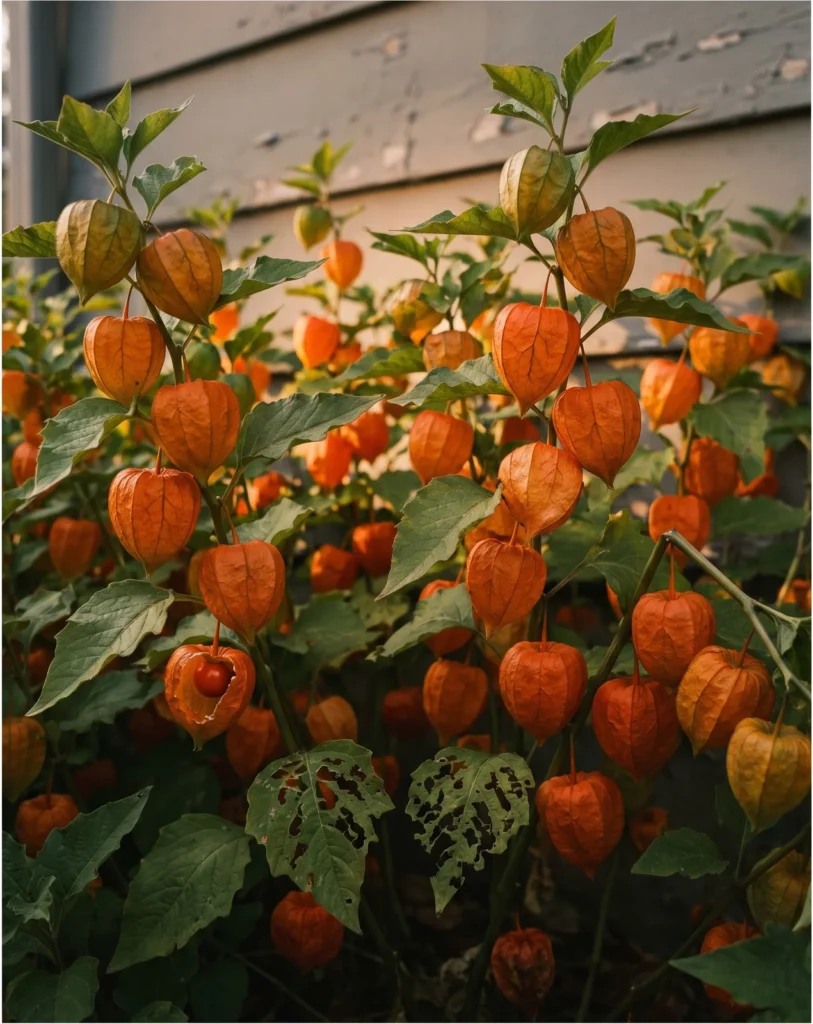
Three different plants share the name Chinese lantern, but only one is the hardy perennial famous for its papery orange husks. Its botanical name is Alkekengi officinarum, first published in 1802. The plant was first called Physalis alkekengi in 1753, an older name that means the same plant. Two varieties grow in gardens, called var. franchetii and var. officinarum. It belongs to the nightshade family alongside tomatoes, peppers and petunias. Other names for it include bladder cherry, Japanese lantern and winter cherry.
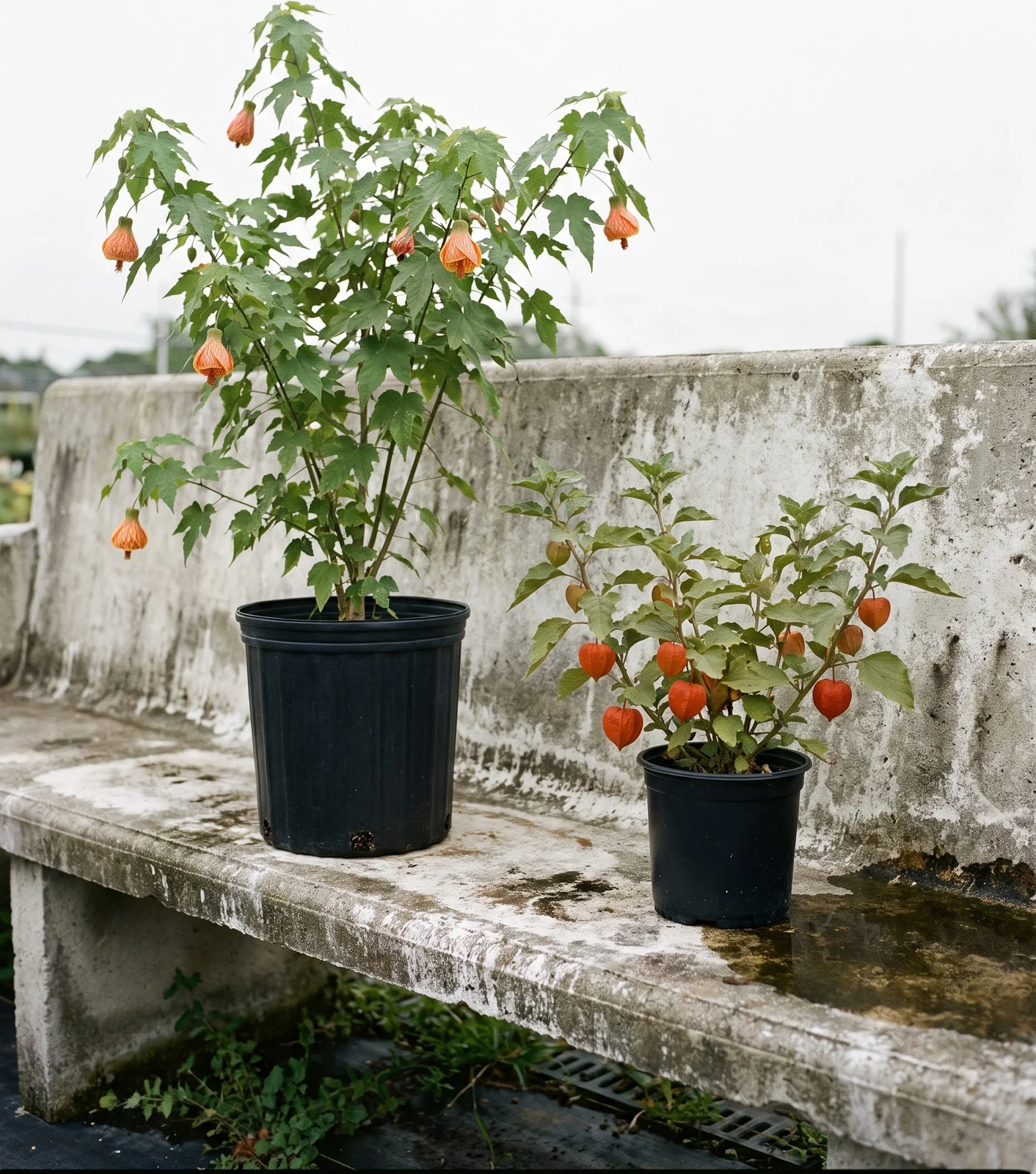
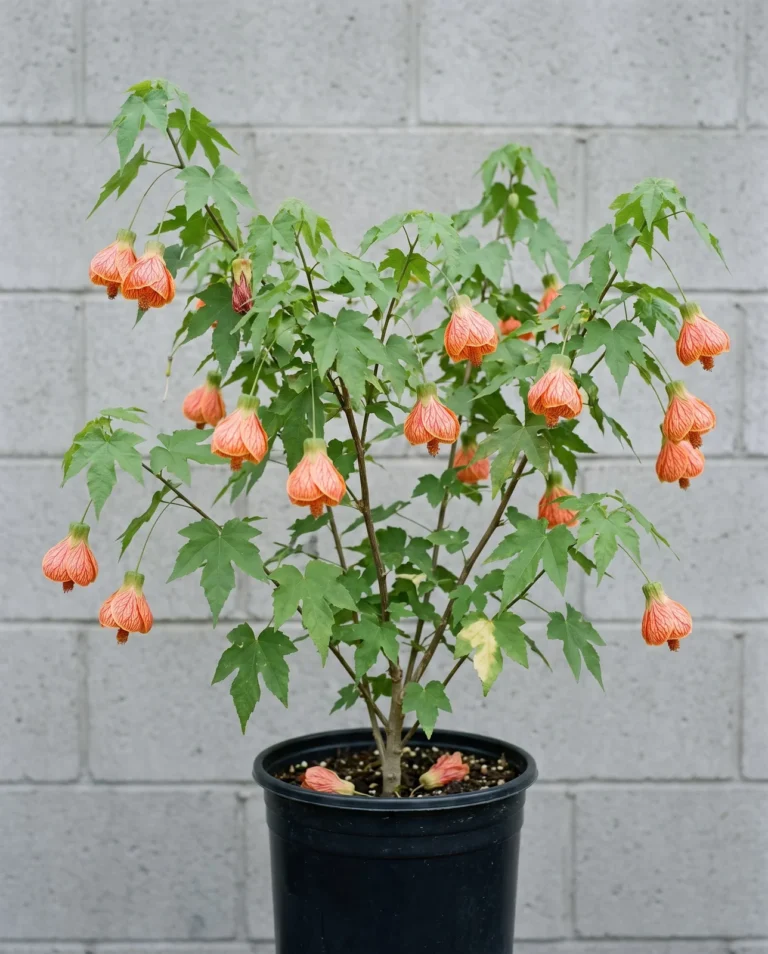
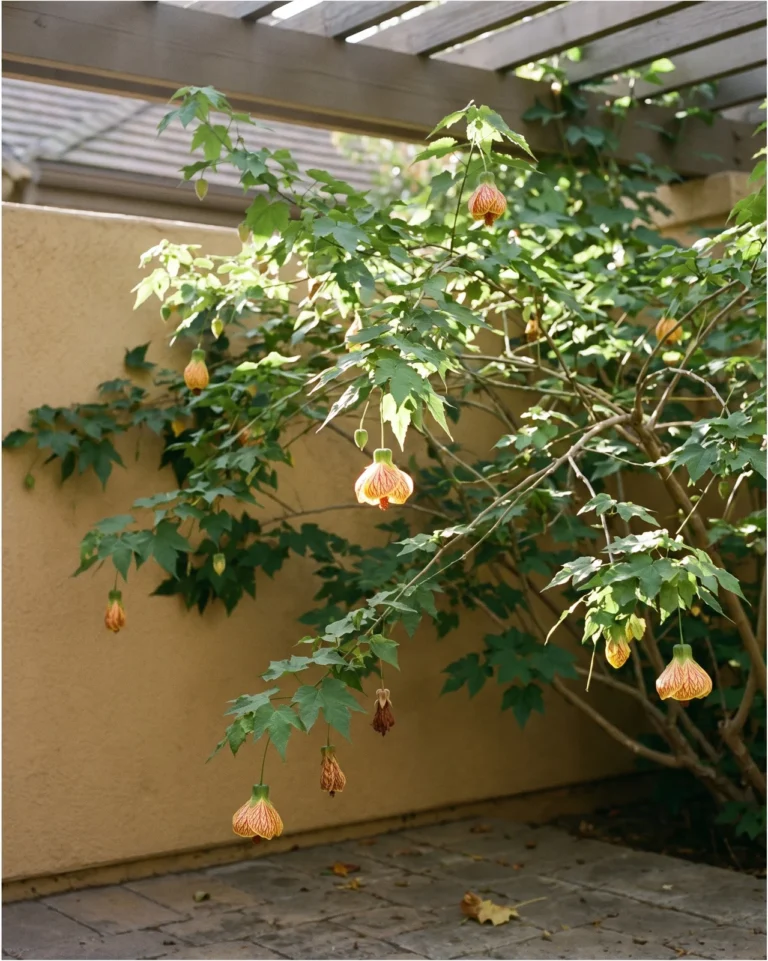
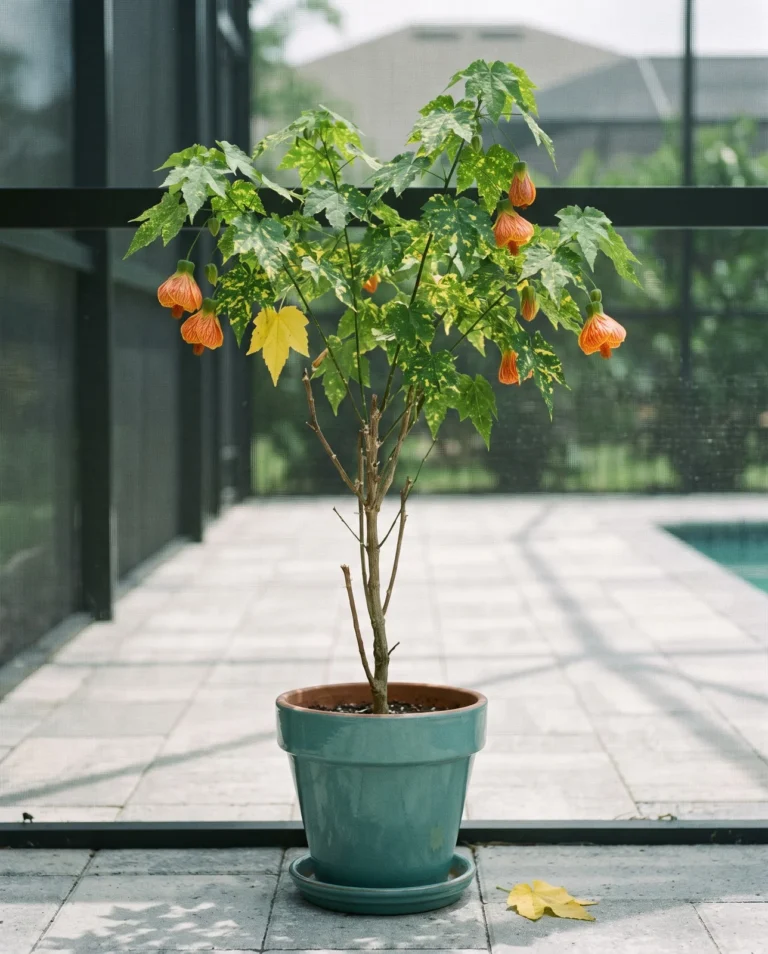
The plant sold most often in garden shops is Abutilon, known as flowering maple. It is a group of hybrids in the mallow family whose wild origin is not known. It also goes by Chinese lantern, Chinese bellflower, parlor maple and Indian mallow. Very few of its species come from Asia. Nurseries regularly sell these varieties as young Chinese lantern plants. This woody shrub grows 4 to 6 feet tall in full sun to part sun, and comes from South America.
The third plant sharing the lantern name is Ceropegia, an unrelated succulent vine. Treating this hardy perennial like a succulent vine will quickly kill it. The same happens if you treat it like the South American shrub, which survives outdoors all year only in frost-free climates. Shared common names cause confusion across the catalog of flower types, but rarely do they cover three plants so distinct.
How to tell the three apart in a photo
Set the pictures side by side and the three separate quickly on the shape of the lantern, plant size, habit, and the hardiness zone on the label.
What the true Chinese lantern is
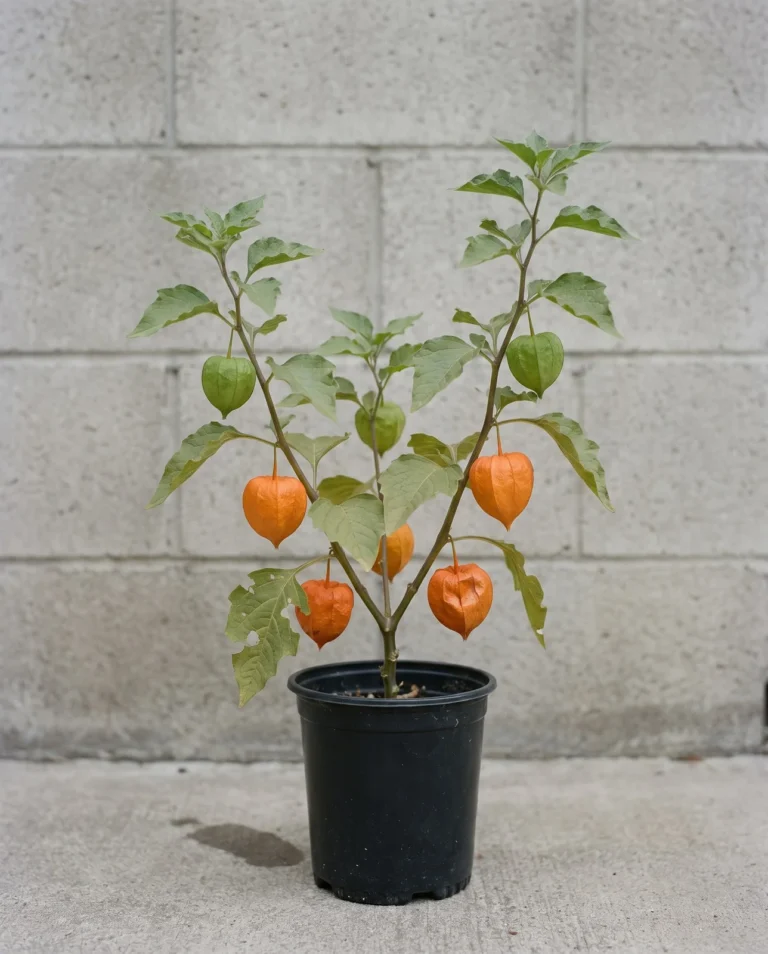
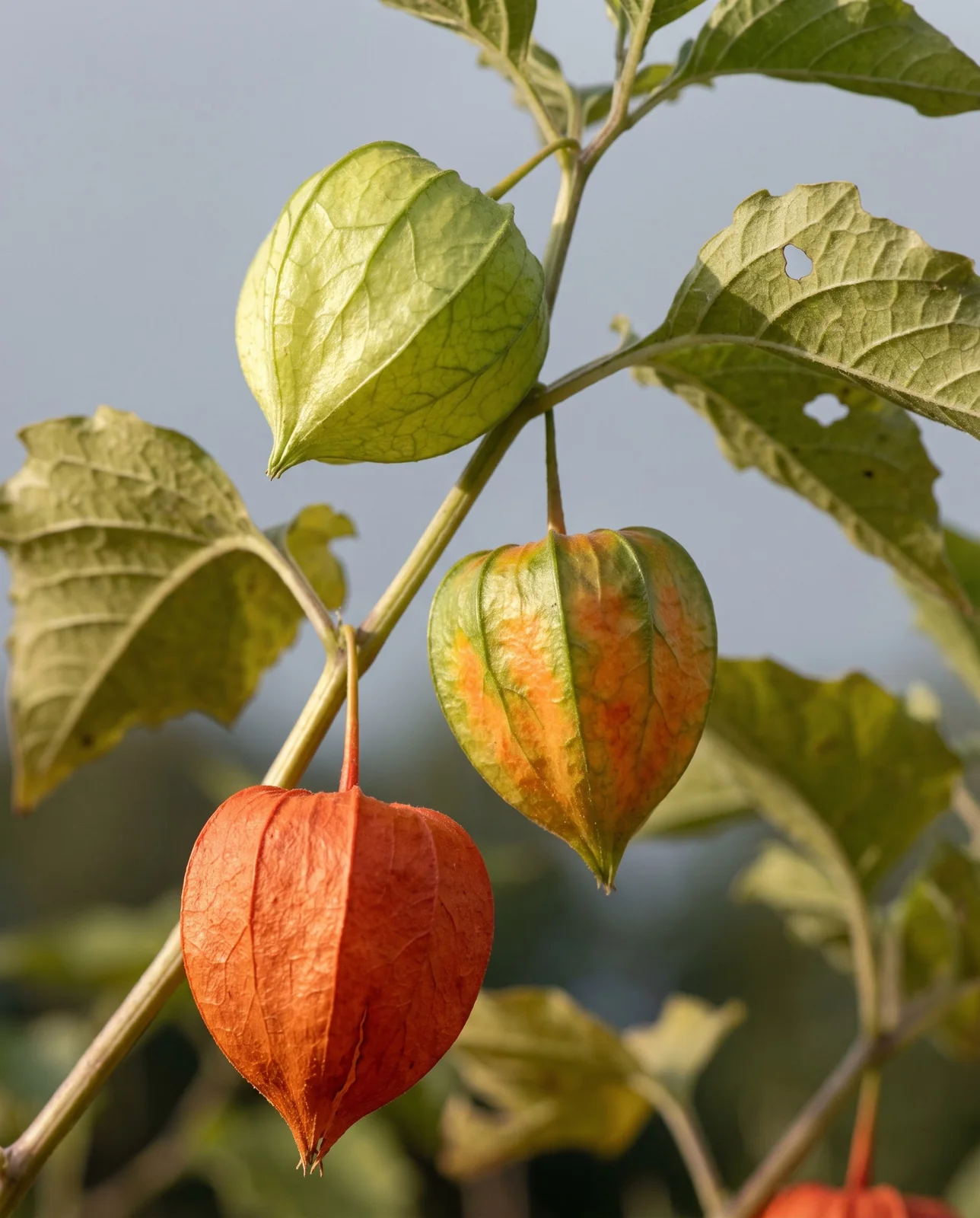
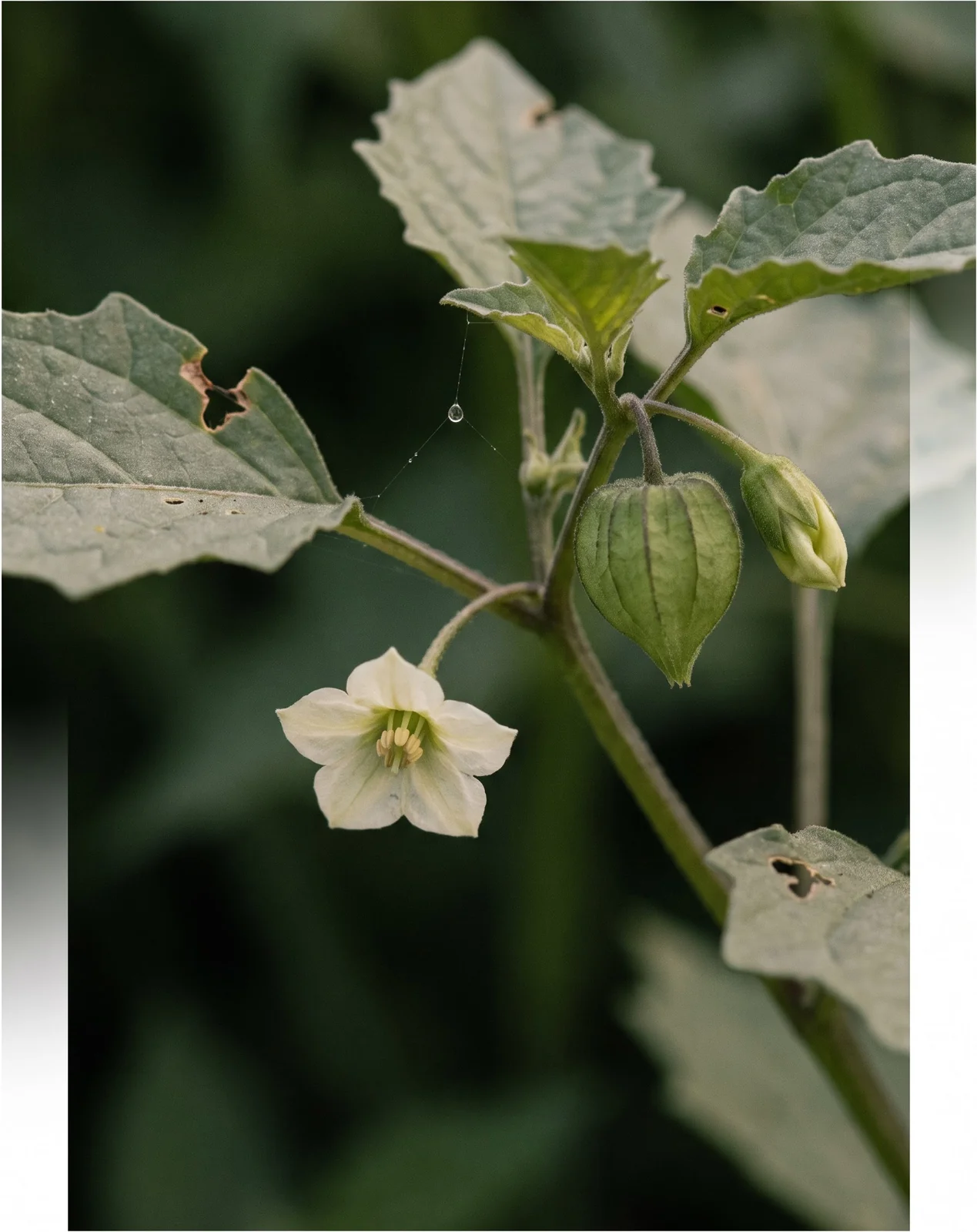
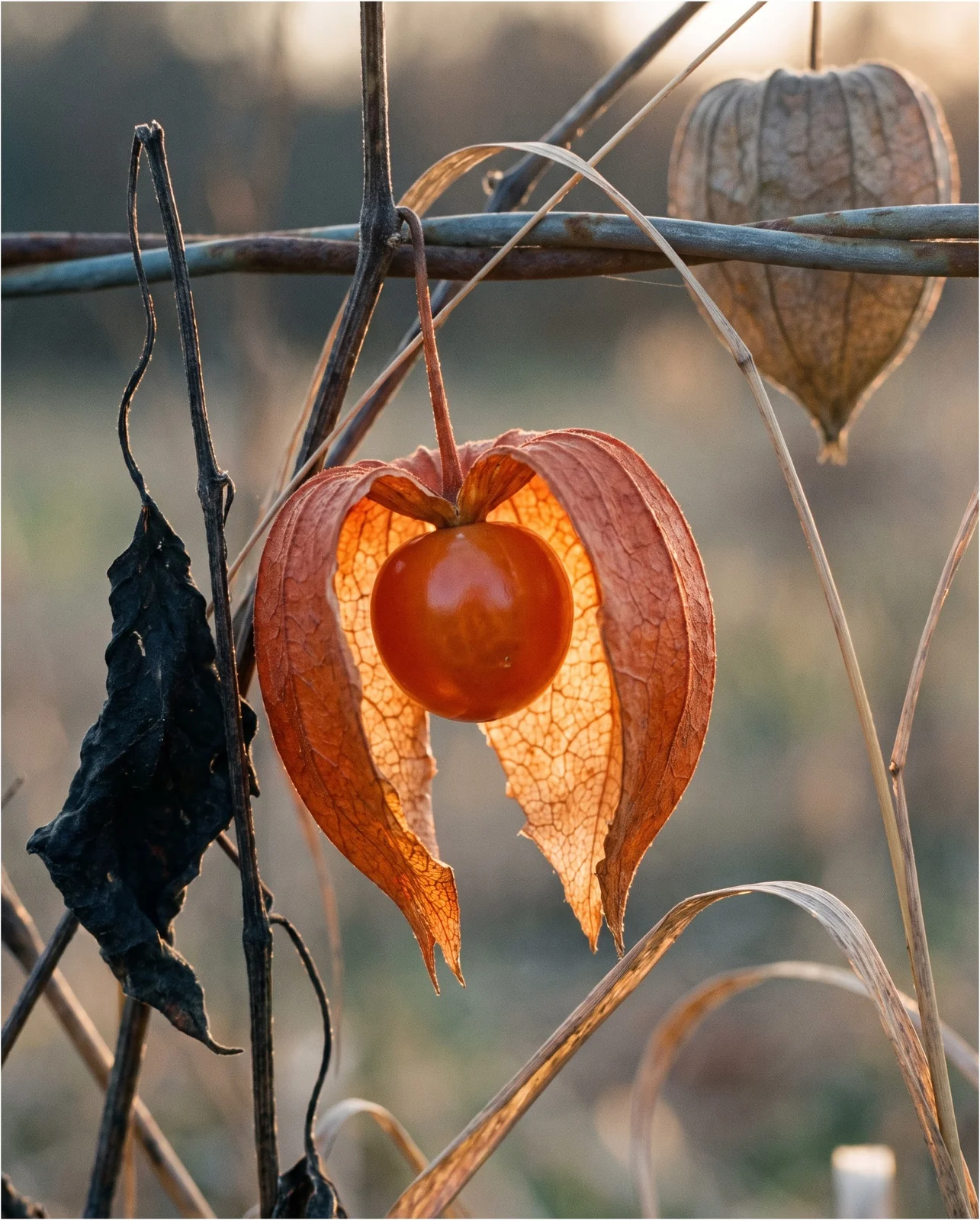
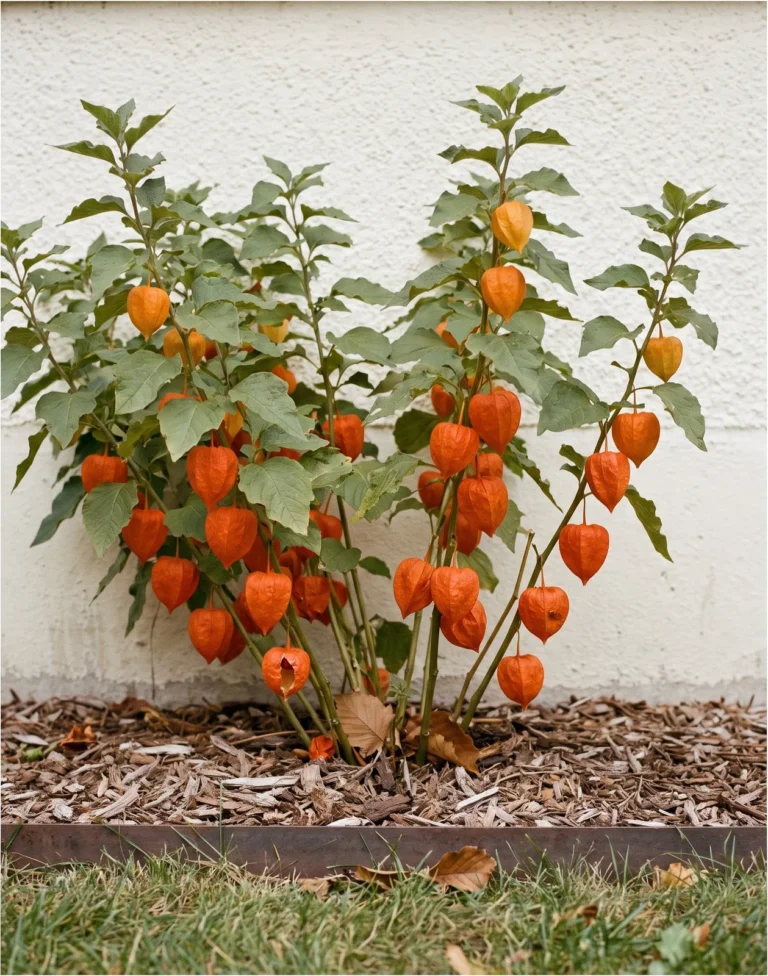
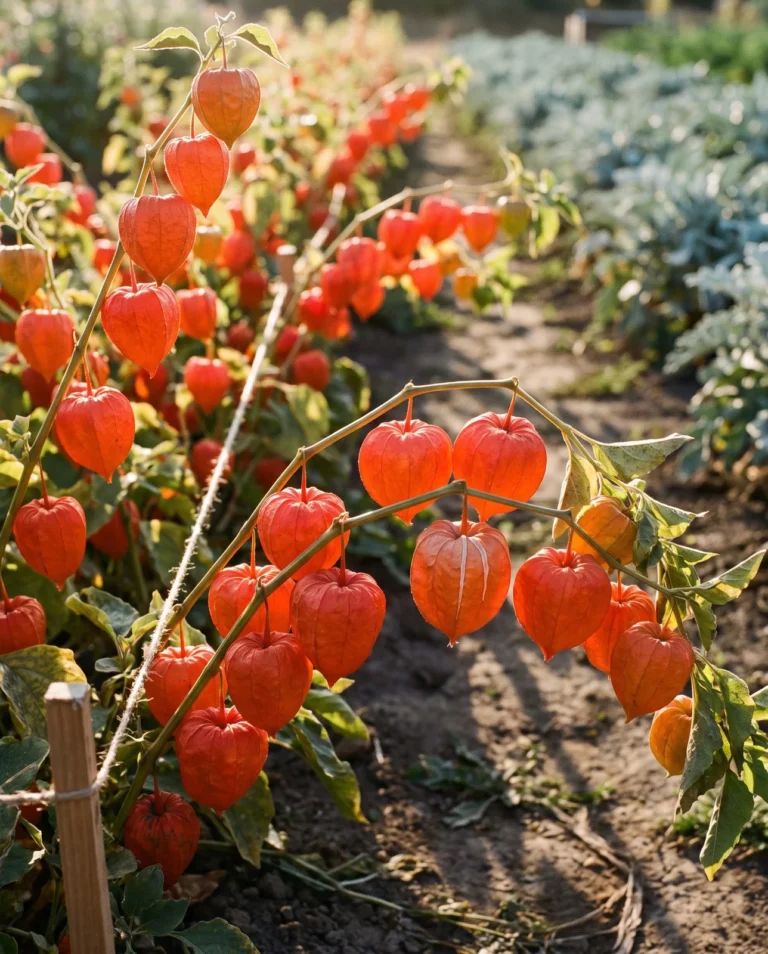
The true Chinese lantern is a soft-stemmed perennial that dies back to the ground in winter and returns from creeping rhizomes. It grows as an upright clump 1 to 2 feet tall and wide, though stems can reach 2 to 3 feet in rich garden soil. White, five-petaled flowers open along the branches in July. Once the petals drop, the green calyx behind each flower closes around the developing berry and swells like a balloon to nearly 2 inches across. That ribbed husk ripens to a bright orange-red case up to 2 inches long, inspiring the older botanical name Physalis, from the Greek physa, meaning a bladder.
Once colored, the husks hold their display for months, standing out late in the season alongside decorative seed pods like those on love-in-a-mist.

Zones and cold hardiness
The true plant is very cold-tolerant, thriving outdoors across zones 3 to 9 and withstanding winter temperatures down to -40 to -35 degrees F. A narrower, warmer range covers zones 6 to 9. In practice, northern gardeners find that the species survives harsh winters down to zone 3 without special protection.
The shrub sold under the same name belongs in a much warmer band. It is semitropical and frost-tender, surviving outside year-round only in zones 9 and 10, though cultivars like 'Gold Dust' can reach into zone 12. A plant tag promising survival down into zone 4 points straight to the hardy perennial, while any warning about winter frost belongs to the shrub.
Where to plant it, and how to keep it there
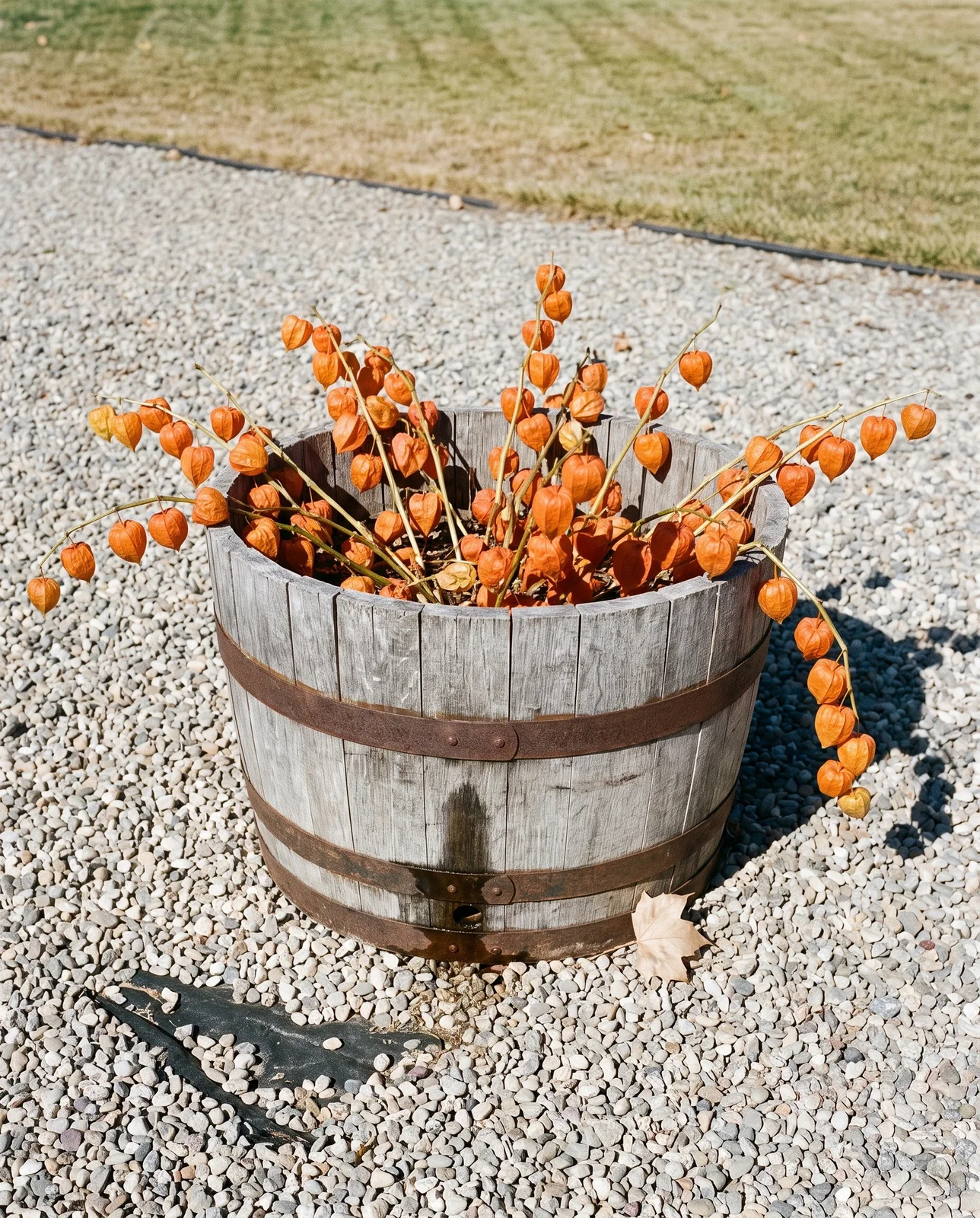
Plant Chinese lantern where its spread will not matter, or keep it inside a firm barrier. The plant grows easily in average, evenly moist, well-drained soil in full sun, but creeping rhizomes mean it can spread aggressively through a garden. It is best sited where those spreading habits cause no concern, and it is generally not recommended for mixed flower borders.
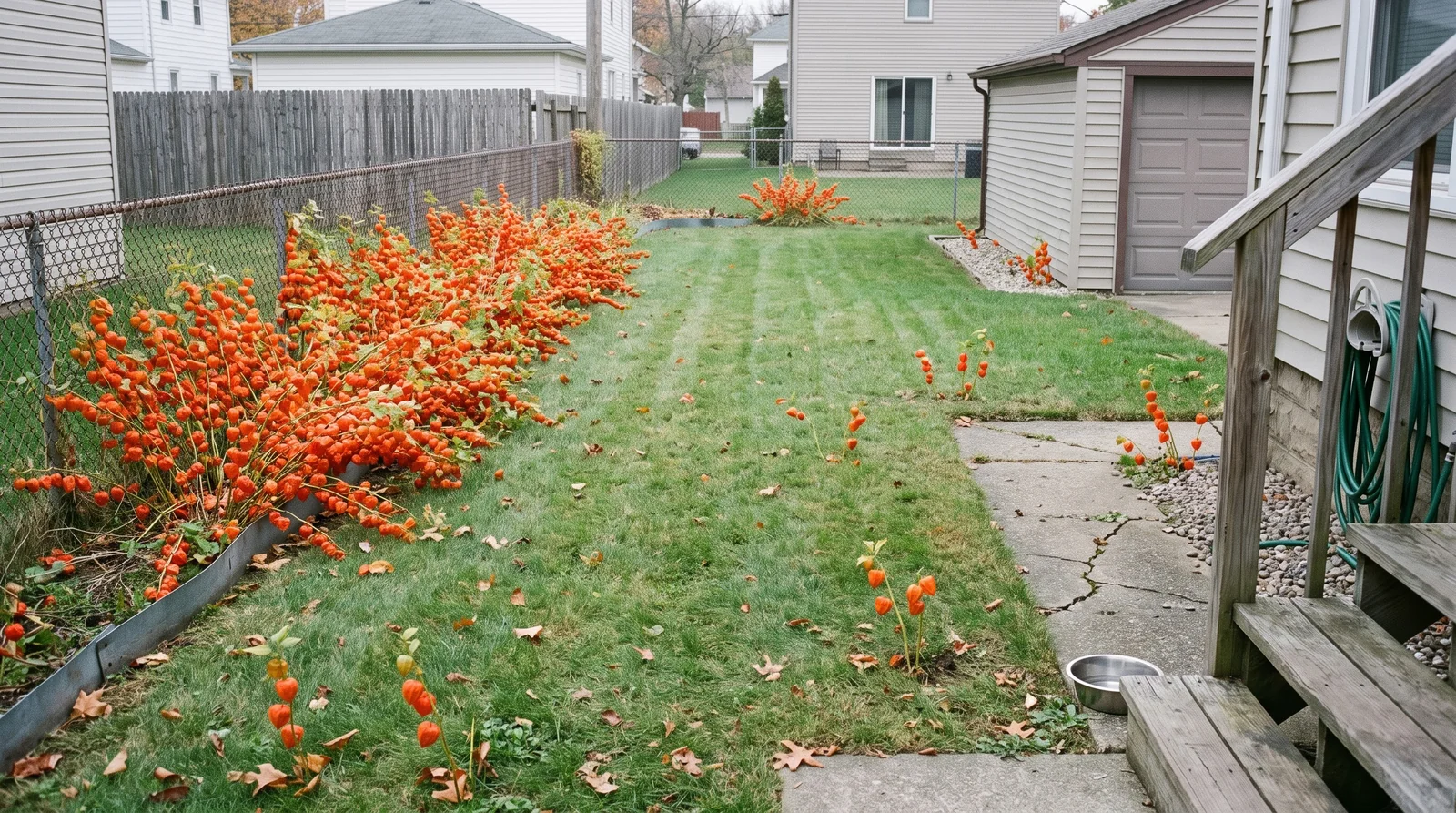
How growers describe that vigor varies, but the plant's wandering roots are well known. Introduced across the United States, Chinese lantern appears on regional advisory lists of aggressive plants because of its invasive roots. Extension guidelines define such plants as difficult to control, advising gardeners to check county noxious weed lists. Other recommendations describe it as somewhat invasive and suggest an underground barrier to confine the root zone. Although it is sometimes considered to have no weed potential, the creeping rhizomes travel readily through open soil when left unrestricted.
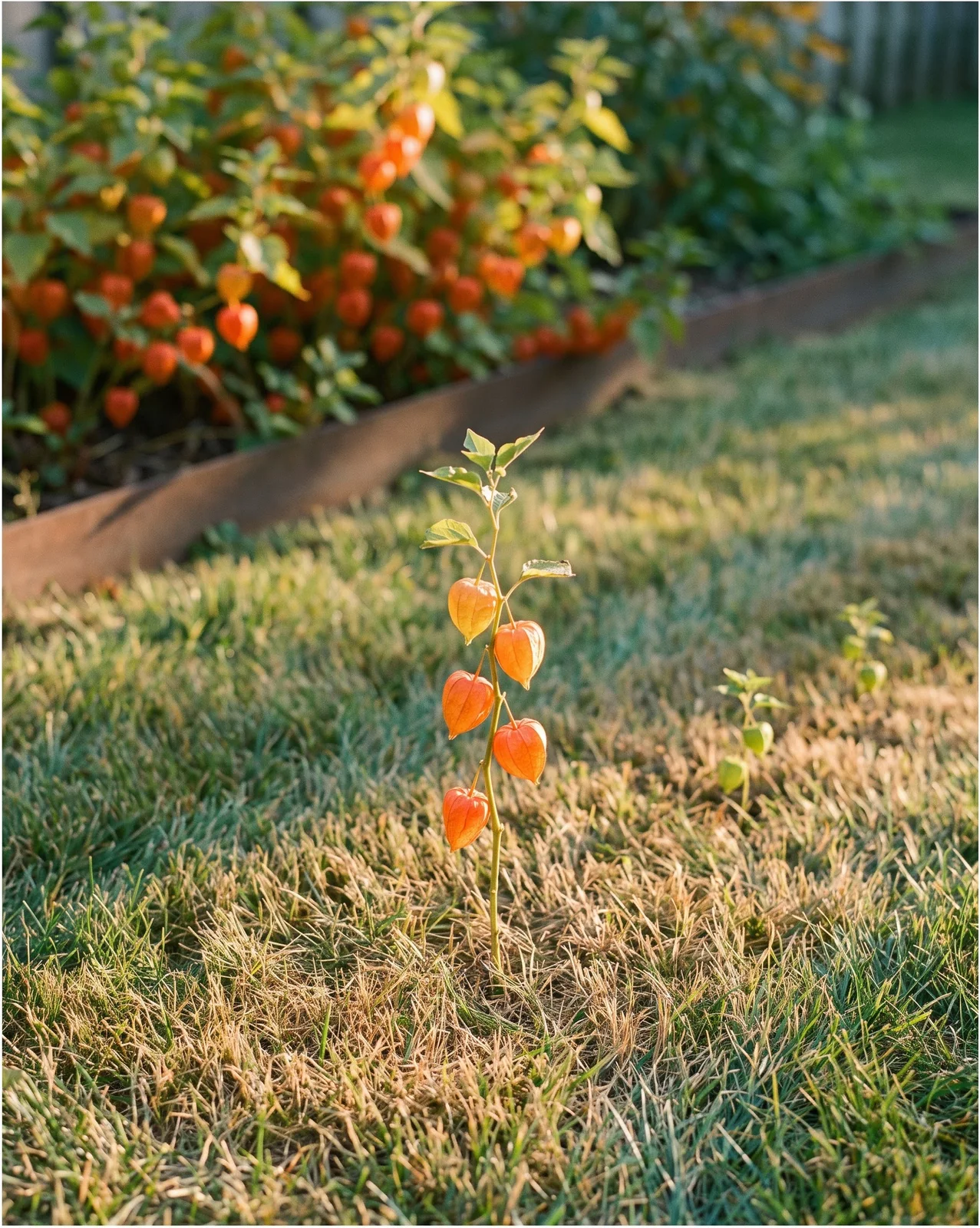
Keeping the plant in bounds comes down to simple physical controls. Without barriers, it spreads by creeping rhizomes as well as dropped seed. Sinking an underground barrier deep enough to sit beneath the root zone keeps the runners confined, and growing in a solid container works without any digging. Snip off old lanterns before they shed seed, and lift and divide the clump every couple of years to reset its borders.
Sowing and when to plant
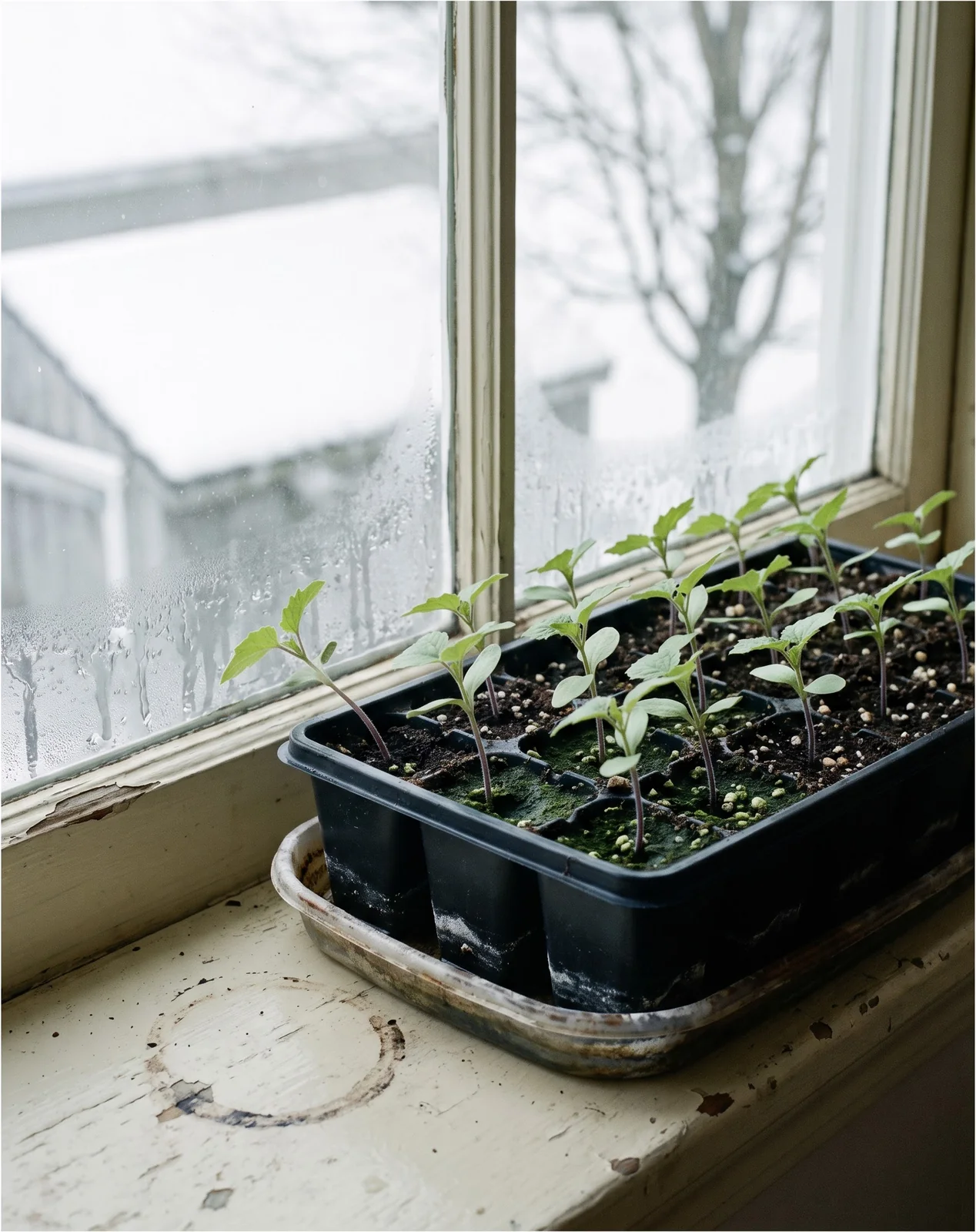
Start seed indoors about 6 to 8 weeks before the last spring frost, or sow it directly in the garden once frost danger has passed. Seeds germinate readily given light and warmth, sprouting in 14 to 21 days when kept around 70 degrees F. Move young seedlings outdoors 12 to 24 inches apart after the last frost. If you already have an established plant, division is the easiest method: slice off a piece of rhizome with shoots in early spring and replant it.
A seedling takes more than one season to produce the familiar lanterns. In the second year after planting, plants reach 18 to 24 inches tall and open their small, white five-petaled flowers. Because the papery husks swell only after the flowers drop, the bright orange display follows on that same two-year timetable.
Why it will not flower, or the husks stay green
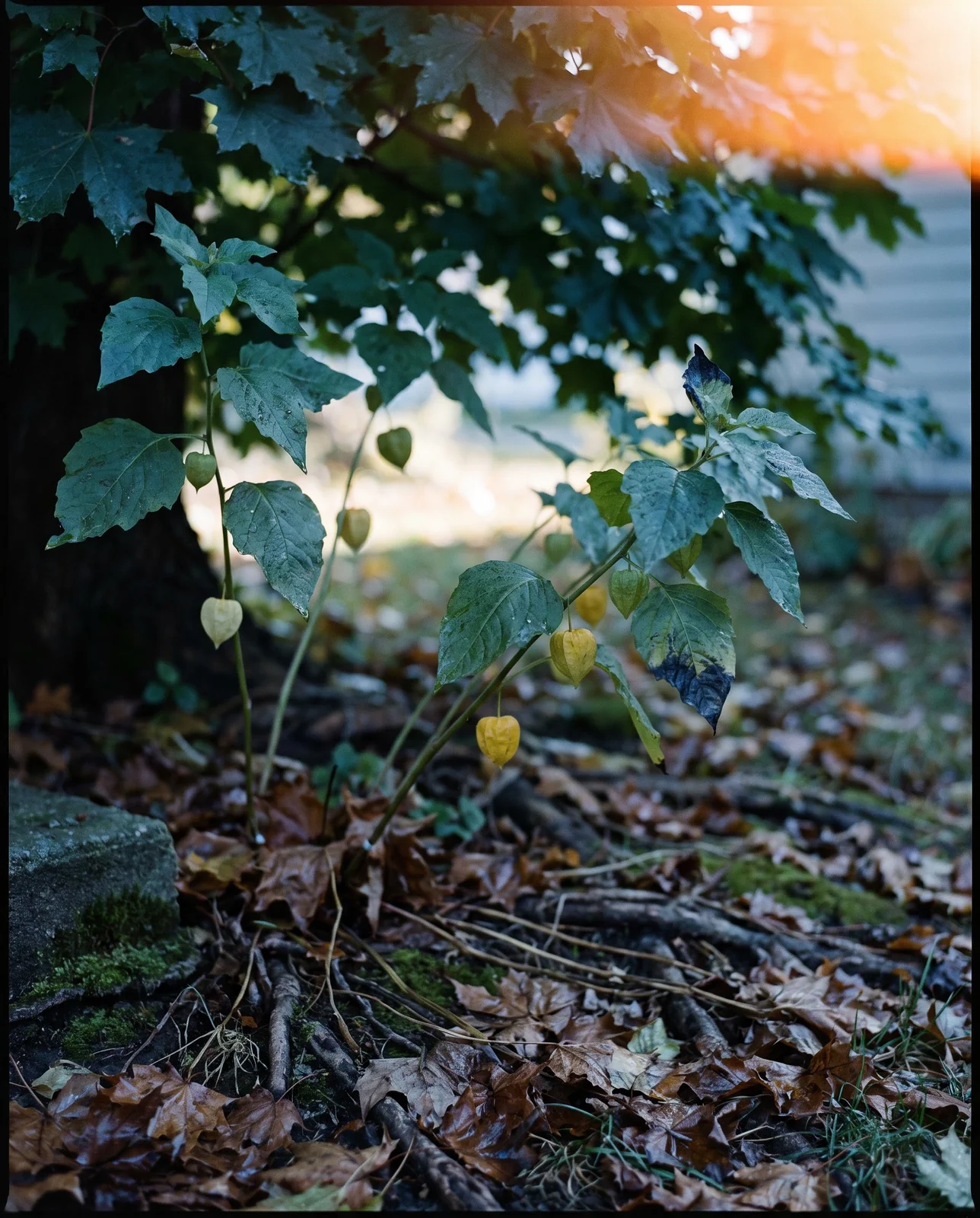
Chinese lantern usually fails to flower or keeps its husks green when it sits in too much shade. While it tolerates light shade, the plant produces its richest color and the most lanterns in full sun, needing at least 6 hours of direct sunlight each day. When shade or poor soil leaves you with few or pale lanterns, move the clump to a sunnier spot and work in compost in spring.
Soil richness and plant age can also leave a planting without lanterns. Overly rich ground pushes leafy growth over flowers, while young plants take time to mature before they bloom. In containers, crowding several plants together can stall blooms, while a freshly potted plant that wilts from transplant shock benefits from temporary shade.
Working out why there are no lanterns
Go through these checks in order and stop at the first one that fits, because the remedies pull in opposite directions: more sun, leaner soil, or simply another year of patience.
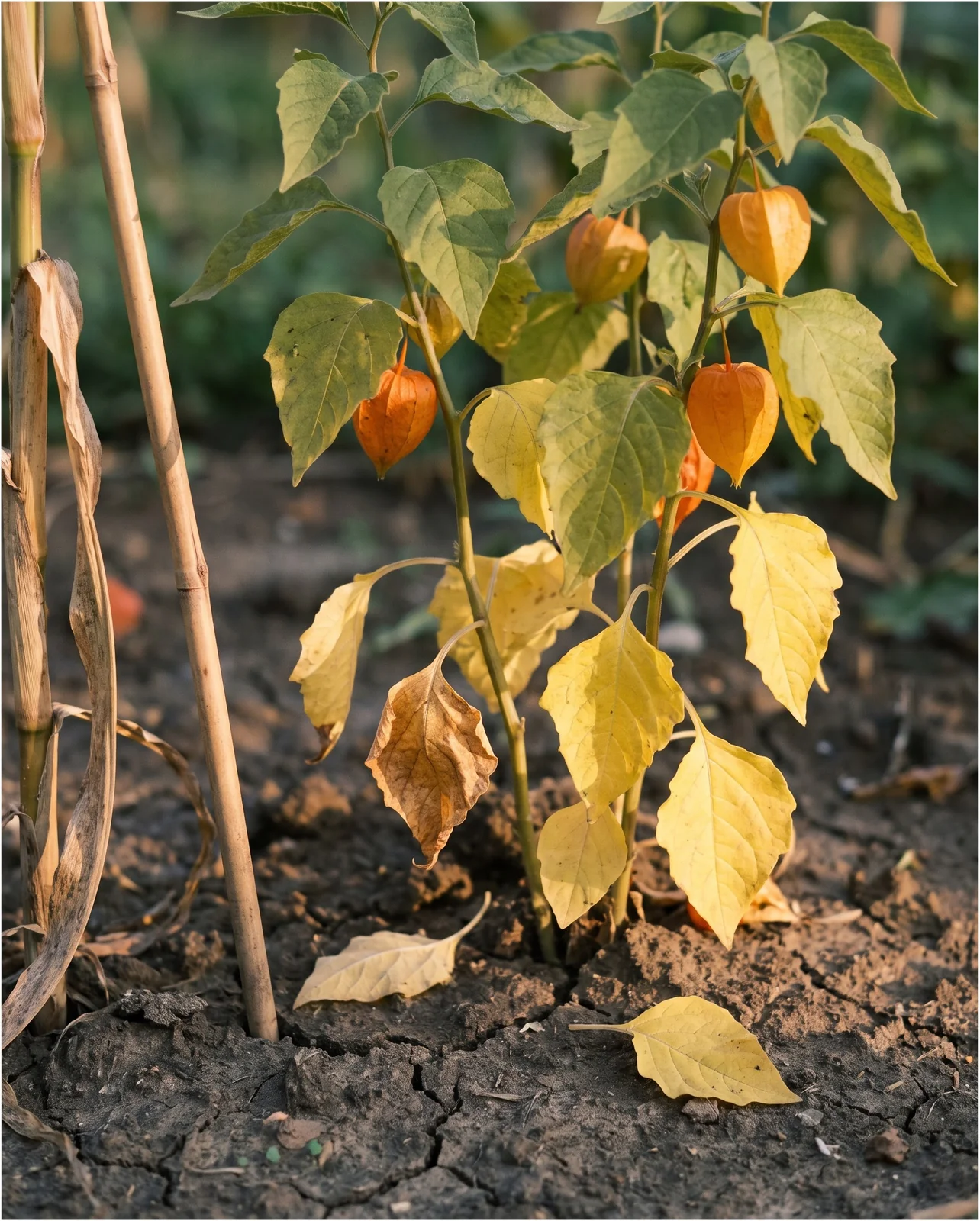
Yellow leaves
Yellow leaves on Chinese lantern typically show that the plant is not getting the right amount of water, and the trouble can run either way. The moisture in the soil reveals which problem you are facing. Yellow foliage can signal overwatering or poor drainage, which calls for loose, well-draining soil and repotting if the yellowing keeps up. Wilting can point to dry ground or root rot, so check the soil moisture and trim away any rotted roots if the soil stays constantly wet.
A plant that carries yellow leaves while still blooming well is usually in no immediate danger, with uneven watering at the root of it. Drainage is simple to check. A bed that puddles after rain or a pot with a blocked drainage hole traps water around the roots, causing the lower leaves to yellow.
Toxicity, and what the records say about pets
Chinese lantern is harmful if eaten. Every part of the plant is poisonous except the fully ripe berry. The warning covers the flowers, leaves, stems and green fruit. The papery husk is also toxic and should not be eaten. The active poisons are solanine and related nightshade alkaloids found in the green growth and unripe fruit.
Poison risk is high across the Physalis group. This group includes Chinese lantern, bladder cherry, cape gooseberry, ground cherry, Jerusalem cherry and strawberry tomato. Eating toxic parts can cause stomach pain, headache, vomiting and diarrhea. It can also cause dilated pupils, low body temperature, slow breathing and loss of feeling. In severe cases, the poisoning can be fatal.
The ASPCA does not evaluate pet safety for Chinese lantern. Under the name winter cherry, its list warns of solanine poisoning in dogs, cats and horses. That warning applies to Solanum pseudocapsicum, which is a different genus. While a plant like oleander has clear pet warnings, Chinese lantern gives dog and cat owners only the broad caution that all parts except the ripe berry are poisonous.
Flowering maple, the shrub sold under the same common name, raises a separate safety question. It is sometimes treated as poisonous to humans with a risk of contact rash, and elsewhere regarded as non-toxic. Handling the foliage can still cause minor skin irritation. Whether the shrub is truly toxic remains unsettled.
Is the fruit edible
Only the fully ripe berry inside the husk is edible, while every other part of the plant is poisonous. The papery lantern around the fruit is toxic as well and should not be eaten. Across the entire genus, ripe fruit is the only safe harvest, while leaves, husks, and unripe berries carry nightshade alkaloids. The ripe berry can be eaten fresh and is sometimes cooked into jams. Commercial physalis sold as food in grocery stores belongs to other species in the genus.
The flavor of the berry is unsettled. The fruit is technically edible but tasteless and rarely eaten. It contains more vitamin C than lemons, or up to twice as much, tasting either sharply sour or barely noticeable. Because Chinese lantern can be harmful if eaten, it is grown for ornament, unlike its edible relatives. Treat it as an ornamental garden plant, since everything except the fully ripe berry can cause harm.
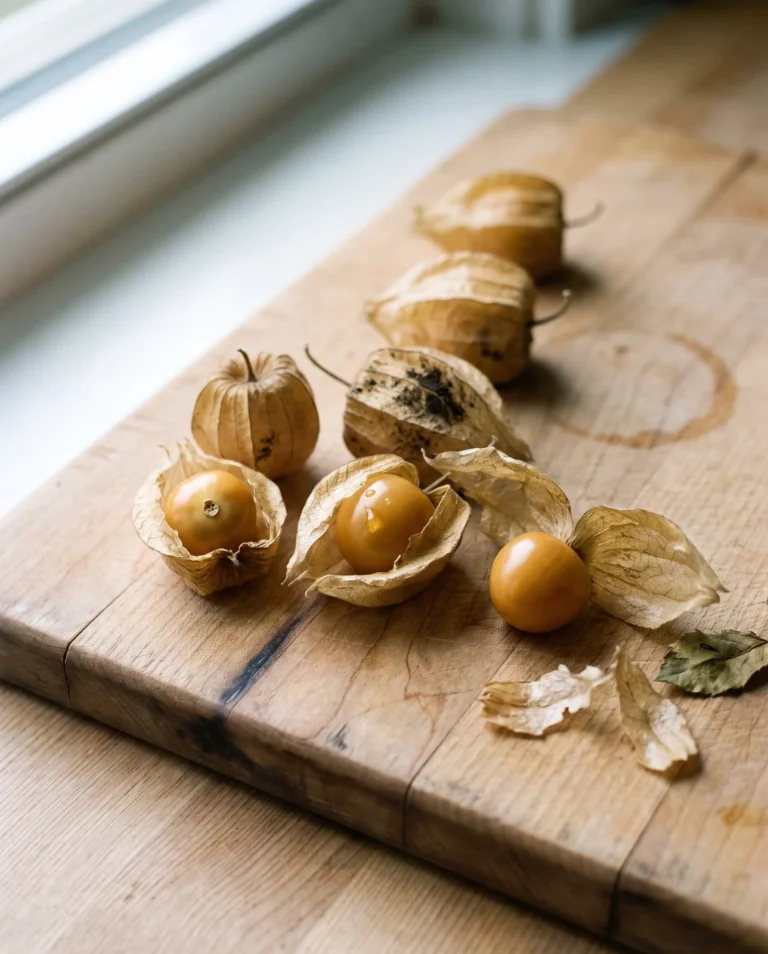
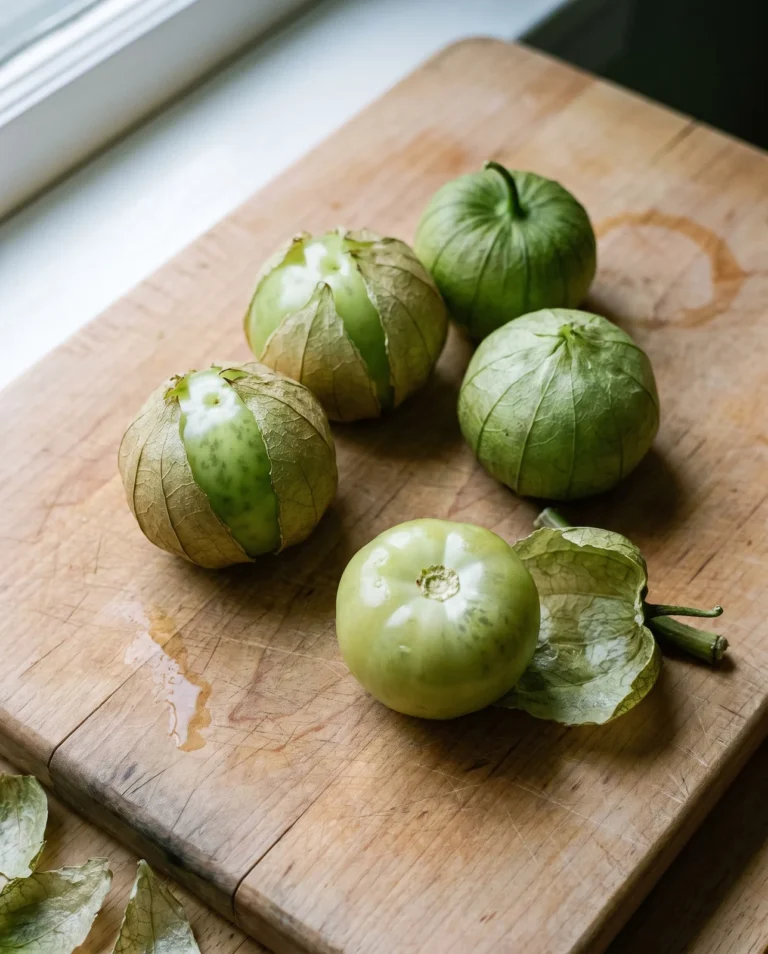
Chinese lantern against tomatillo, ground cherry and cape gooseberry
Three relatives in the same genus are grown for fruit and sold as food. Ripe husk color quickly separates these culinary crops from ornamental Chinese lantern.
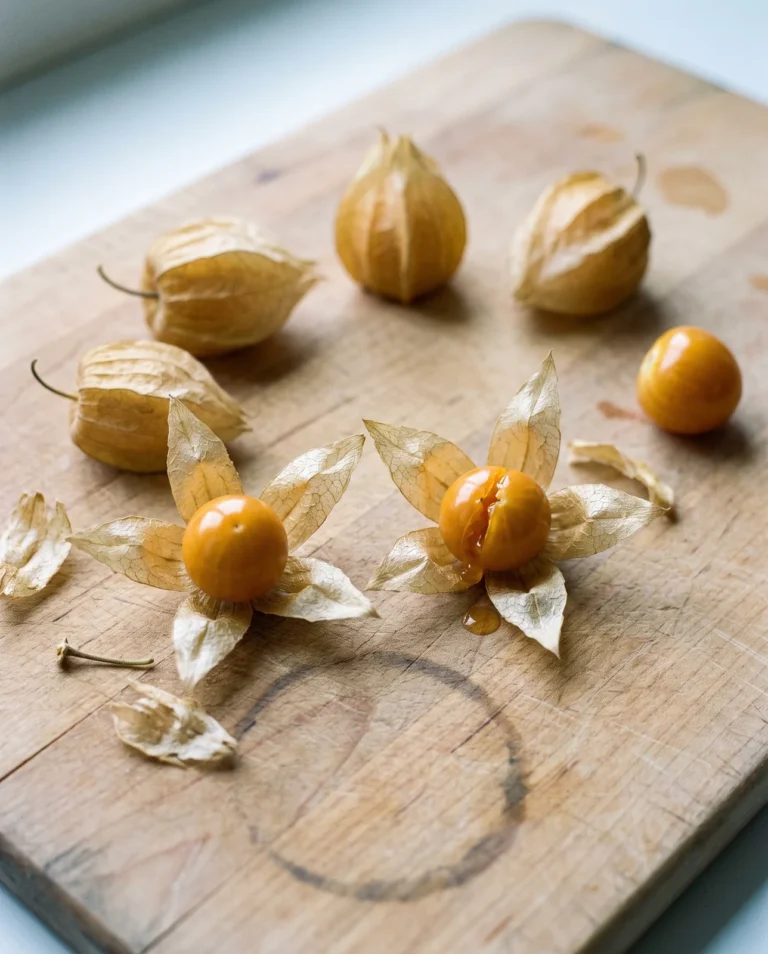
Cutting and drying the lanterns
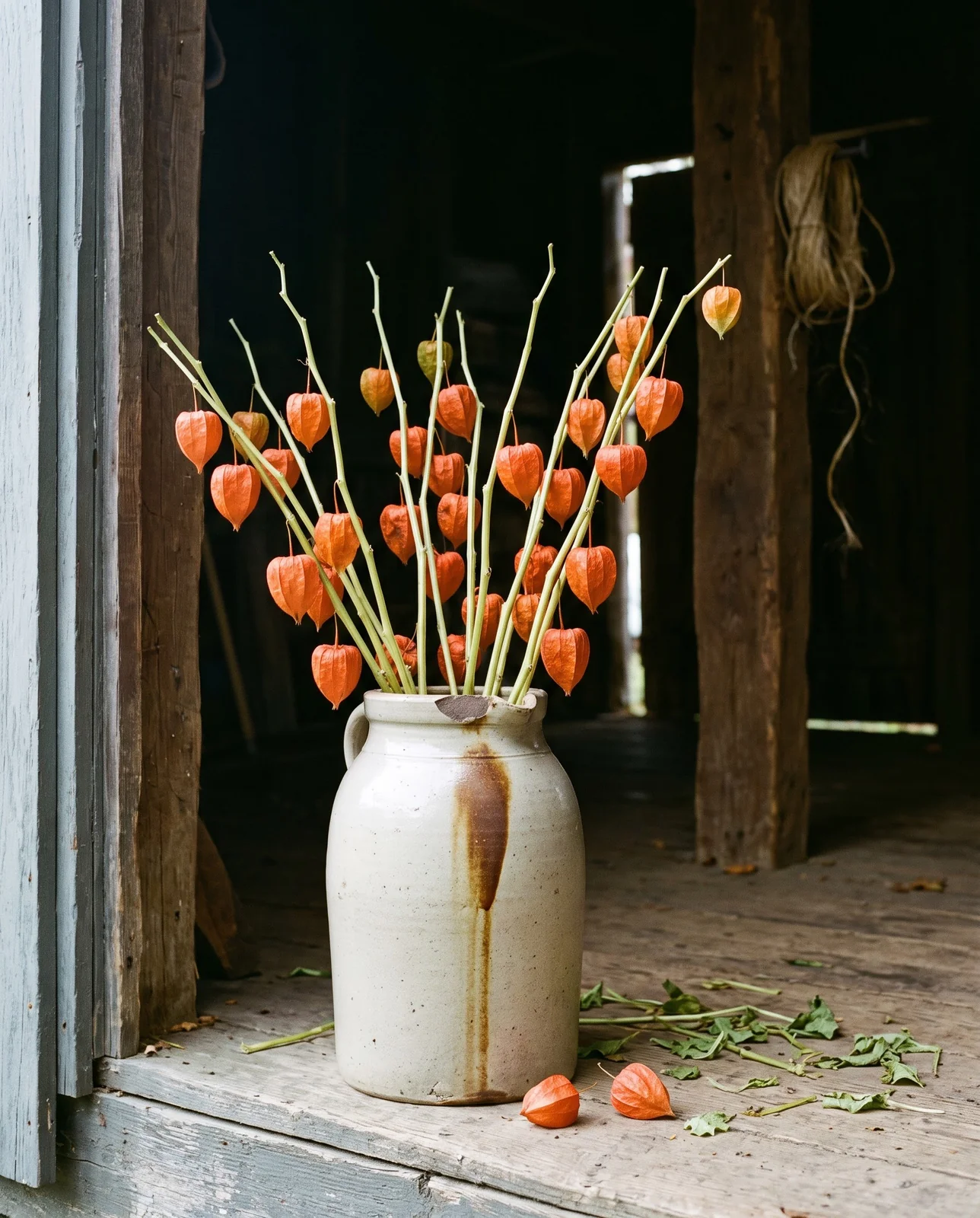
Cut the stems for drying once the color change is complete. Strip off the leaves before you dry the stems.
Hang the stems upside down in a warm, airy, shaded spot for 2 to 3 weeks. You can also stand them upright in a cool, airy place with the husks on, where they keep their color for several years. Another easy option is to let them air dry upright in an empty vase, which preserves their shape and color. The dried stems then fit naturally into winter displays beside everlastings such as celosia.
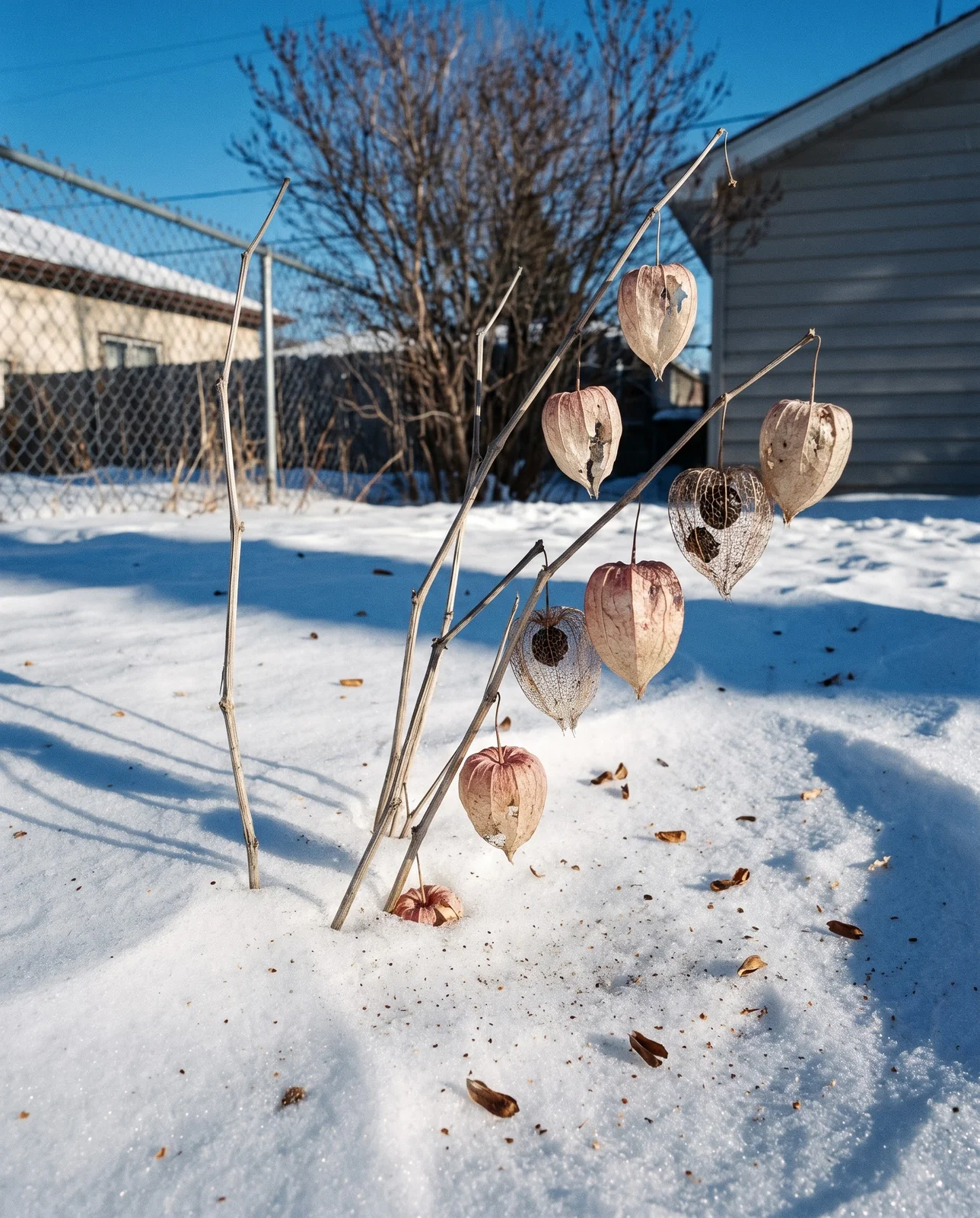
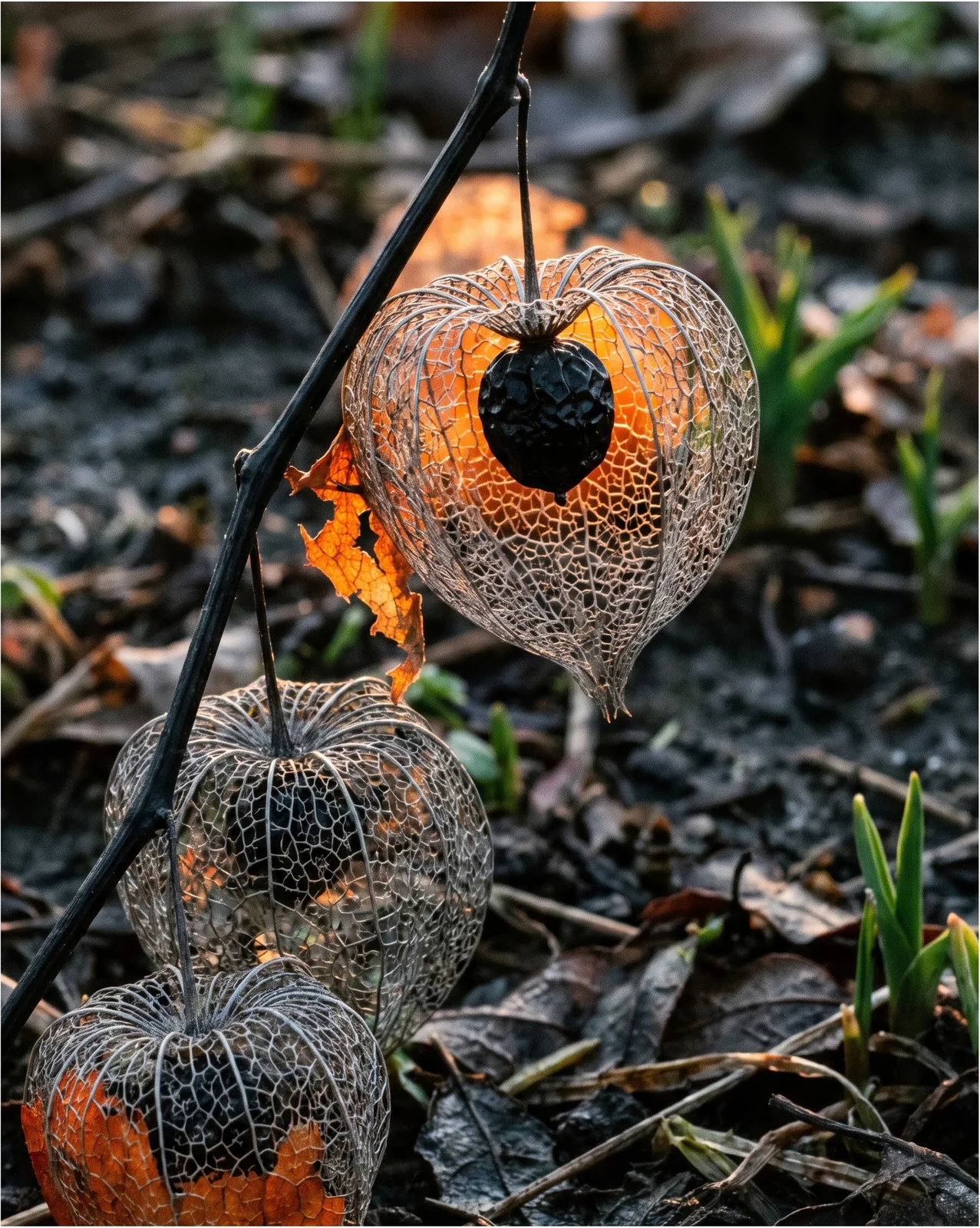
The lace-like skeleton lanterns form when weather and time thin the outer husk to a fine network of veins around the berry. Leaving the stems standing outside over winter lets the weather clear the tissue on its own. For faster results, soak harvested lanterns in water and gently brush away the softened tissue, which only takes a little patience.
Soil and feeding
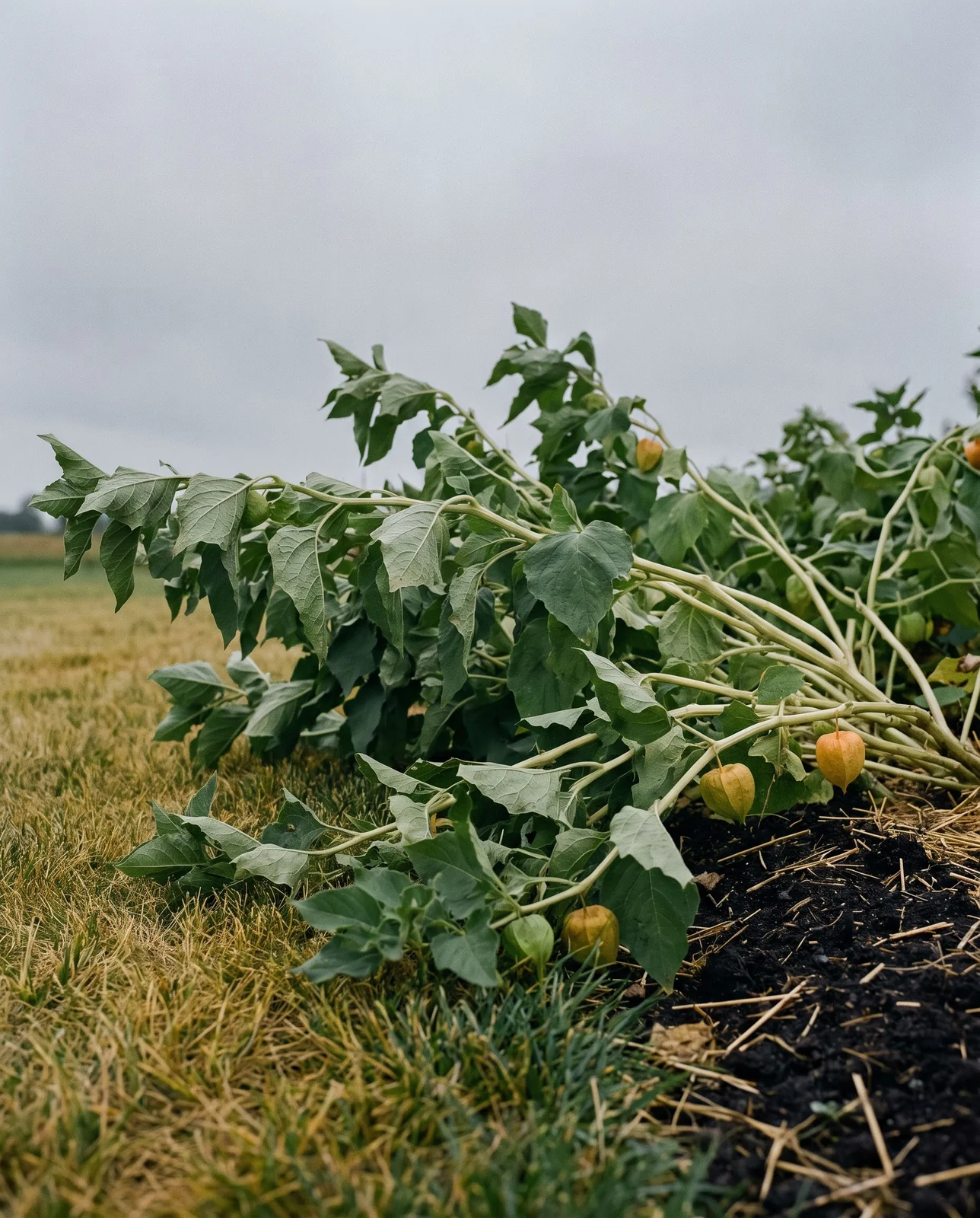
Average, well-drained soil is all the plant needs, and it adapts readily to many garden soils. In containers and beds, keep drainage free with a moderately fertile mix at a pH between 6.0 and 7.0. A light dressing of compost in spring is plenty, since average soils already provide enough food. Overly rich soil or shade leads to floppy stems, which you can fix with a support ring and less nitrogen.
Water
Keep the soil evenly moist and well-drained, giving the plant a medium amount of water. Potted plants run the greatest risk of standing in water, so use a free-draining potting mix. Grow containers in full sun to partial shade and take care not to overwater. If leaves begin to wilt or turn yellow, feeling the soil tells you whether the roots are too wet or too dry.
Pests and diseases
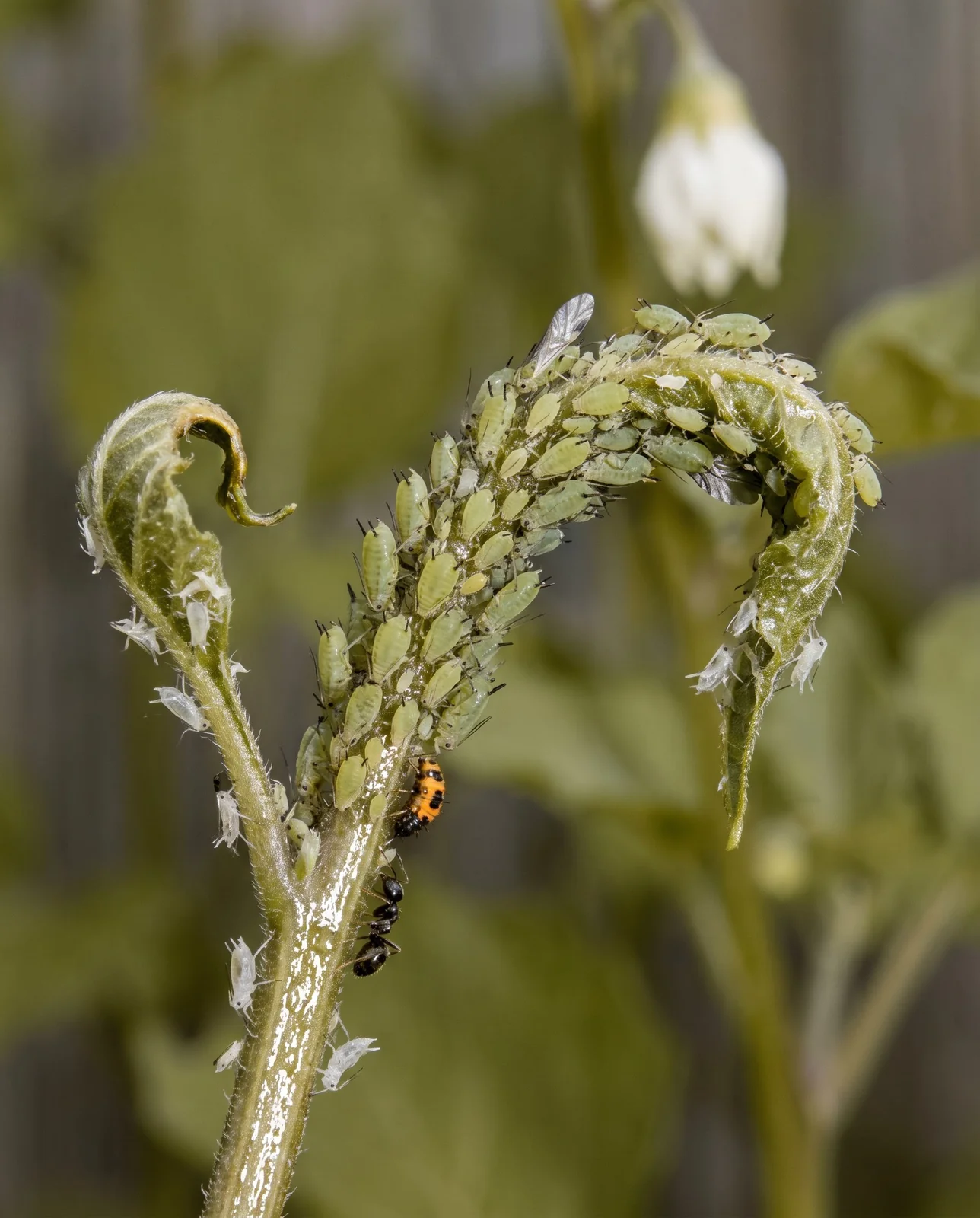
Chinese lanterns suffer from no serious insect or disease problems, and the plant is often disease-free. Pests are usually common garden visitors like aphids, whiteflies and spider mites, which treat easily with insecticidal soap or neem oil. Slugs and snails can also nibble the tender spring shoots as new growth emerges.
Deer rarely cause trouble in a fall border. The plant is often deer-resistant across many regions, which makes it useful along woodland edges. In most gardens, containing the spreading roots takes far more attention than protecting the stems from hungry wildlife.
What goes wrong, in the order gardeners report it
Listed from the most common complaint down. Each one gives the symptoms, the cause and what to do.
Symptoms: a plant labeled Chinese lantern produces maple-shaped leaves and bell-like flowers, or papery pods on herbaceous stems. Cause: nurseries sell both the perennial Physalis alkekengi and the tender shrub Abutilon under the same name. What to do: check the growth. A woody shrub with lobed leaves is an Abutilon, while an herbaceous perennial with papery husks is the true Physalis.
Symptoms: lush green foliage in a sunny spot, but no flowers or colored lanterns appear. Cause: cramped roots in a small container, or too much nitrogen fertilizer promoting leaves over blooms. What to do: move the plant into a roomier pot or garden bed, and hold back on heavy feeding so it can flower.
Symptoms: lower foliage turns yellow and limp while the upper stems flower normally. Cause: uneven watering, usually waterlogged soil from poor drainage or drought stress in dry spells. What to do: check the soil around the roots. If the ground stays soggy, ease off watering and improve drainage; if dry, water deeply and evenly.
Symptoms: new shoots pop up several feet away in flower beds or lawn. Cause: aggressive underground rhizomes running beneath the soil surface. What to do: dig out the wandering stems down to the root, install a deep rhizome barrier around the planting, or move the plant into a sunken container.
Symptoms: young seedlings stretch out, grow weak, and collapse onto the soil. Cause: insufficient light causing leggy stems, or soil that stays too wet. What to do: move seedlings into brighter light, improve air circulation, and let the soil surface dry slightly between waterings.
Varieties, and the shop cards that are another plant
The true perennial goes by a few names in garden centers, while plant tags often use Chinese lantern for flowering maples as well.
What the plant has meant
The traditional uses of Chinese lantern grew directly out of its distinctive shape. Renaissance herbalists following the doctrine of signatures believed the bladder-like husk showed that the plant could treat kidney and bladder ailments. Both the papery calyx and the fruit have a long history of use in Chinese medicine. Historical remedies also include homeopathic preparations made from the fruit for kidney and bladder complaints. These traditions belong to herbal history, and the plant carries no formal meaning in the language of flowers.
Three things people get wrong
Three common misunderstandings about Chinese lanterns, and how the plant actually grows.
The myth: It is a physalis, so the fruit can be picked and eaten like a ground cherry or a tomatillo.
The reality: Across the Physalis family, only fully ripe fruit is ever safe to eat, while husks, leaves and unripe green fruit carry toxic nightshade glycoalkaloids. Sweet ground cherries, tropical cape gooseberries and savory tomatillos are separate species grown for food. On Chinese lantern, the papery calyx itself is toxic and should not be eaten.
The myth: The orange lanterns are the flowers.
The reality: The true flowers are small, white and five-petaled, blooming in July. The lantern is the papery calyx left behind, which swells like a balloon to nearly 2 inches across before turning bright orange-red. A stem showing full orange lanterns has already finished flowering for the year.
The myth: It is a tender plant that has to come indoors for the winter.
The reality: That tender reputation belongs to the flowering maple, a shrub reaching 10 to 15 feet that survives outdoors only in zones 9 to 12. True Chinese lantern is an herbaceous perennial that dies to the ground in frost and returns from its rhizomes every spring. It easily survives cold winters outdoors across zones 3 to 9.
FAQ
Does the Chinese lantern plant like sun or shade?
It does best in full sun, though light shade works as well. Aim for at least 6 hours of direct sunlight each day to get the most lanterns and the strongest color.
Is the Chinese lantern plant toxic to touch?
No. The danger comes from eating the plant, whose flowers, fruits, leaves and stems are poisonous and can cause symptoms that may be fatal. Skin irritation comes from the flowering maple, a shrub whose leaves can cause minor skin irritation on contact.
Do Chinese lantern plants come back every year?
Yes. It is an herbaceous perennial that dies back in winter and returns from underground rhizomes each spring. In zones 3 to 9, the roots survive winter outdoors.
Does the Chinese lantern plant spread?
Yes, and it can become invasive without barriers, spreading by both rhizomes and seed. Plant it in a pot or behind a rhizome barrier to keep it contained. Deadheading spent lanterns and lifting and dividing the clump every couple of years will reset its boundaries.
Why are my Chinese lantern leaves turning yellow?
Watering trouble is usually the cause, and it can run in either direction. Yellowing leaves can be a sign of overwatering or poor drainage, while wilting may be a sign of underwatering or root rot. Checking the soil moisture will show which problem you have.
Why is my Chinese lantern not flowering?
Too much shade or poor soil is usually why a plant produces few or pale lanterns. Potted plants can also fail to bloom if several stems are crowded into one container. If the plant is in its first season, it may simply need time, as flowering builds toward its full display in the second year.
Should I cut back my Chinese lantern plant?
Yes. Cut the stems for drying once their color change is complete, and strip off the leaves before you dry them. In the garden, deadhead spent lanterns to help keep the plant contained.
When should I plant Chinese lanterns?
Start seeds indoors about 6 to 8 weeks before your last spring frost, or sow them directly in the garden once frost has passed. At a steady 70 degrees F, the seed germinates in 14 to 21 days. Move the seedlings outdoors after all danger of frost, spacing them 12 to 24 inches apart.
What hardiness zone is the Chinese lantern plant?
The plant is hardy across zones 3 to 9, though its cold limit is sometimes set at zones 6 to 9. Flowering maple, a frost-tender shrub often sold under the same name, can be grown outdoors year-round in zones 9 and 10.
Is the Chinese lantern plant poisonous to dogs and cats?
The ASPCA has no dedicated rating for Chinese lantern, and its winter cherry entry belongs to a different plant. Keep pets away, because all parts of the plant except the ripe fruit are poisonous from solanine and other solanidine alkaloids.
Can Chinese lantern be grown in pots?
Yes. Growing it in a pot is an effective way to keep its roots contained, alongside a buried rhizome barrier. Grow one plant per pot, because crowded roots can keep it from flowering.
Interesting tips
- Even if the leaves are sometimes counted among edible parts, caution is advised because they are almost certainly poisonous, at least when raw.
- Common names get tangled easily. A single flowering maple cultivar can go by Chinese lantern, flowering-maple, Chinese bellflower, Indian mallow, lantern flower, parlour maple and twelve o'clock flower.
Related Guides & Flowers
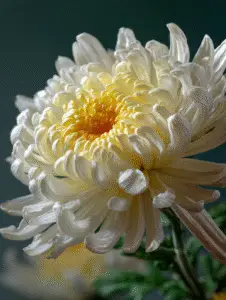
Chrysanthemum
The other flower carrying fall color on a porch, and the one most often standing next to a bowl of dried lanterns.
Keeping goldenrod from spreading
The same rhizome problem on another fall perennial, and the same choice between a barrier and a pot.
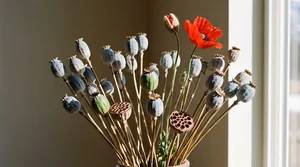
Poppy seed pods for drying
Another seed case cut and kept for the shape it holds long after the flower has gone.
Flowers safe for cats
Where the rest of the house gets checked against the pet safety records, one plant at a time.
Enjoying our flower guides? Add YourFlowersGuide as a preferred source on Google. It helps more readers find us.
Add to Preferred Sources