What the columbine flower is
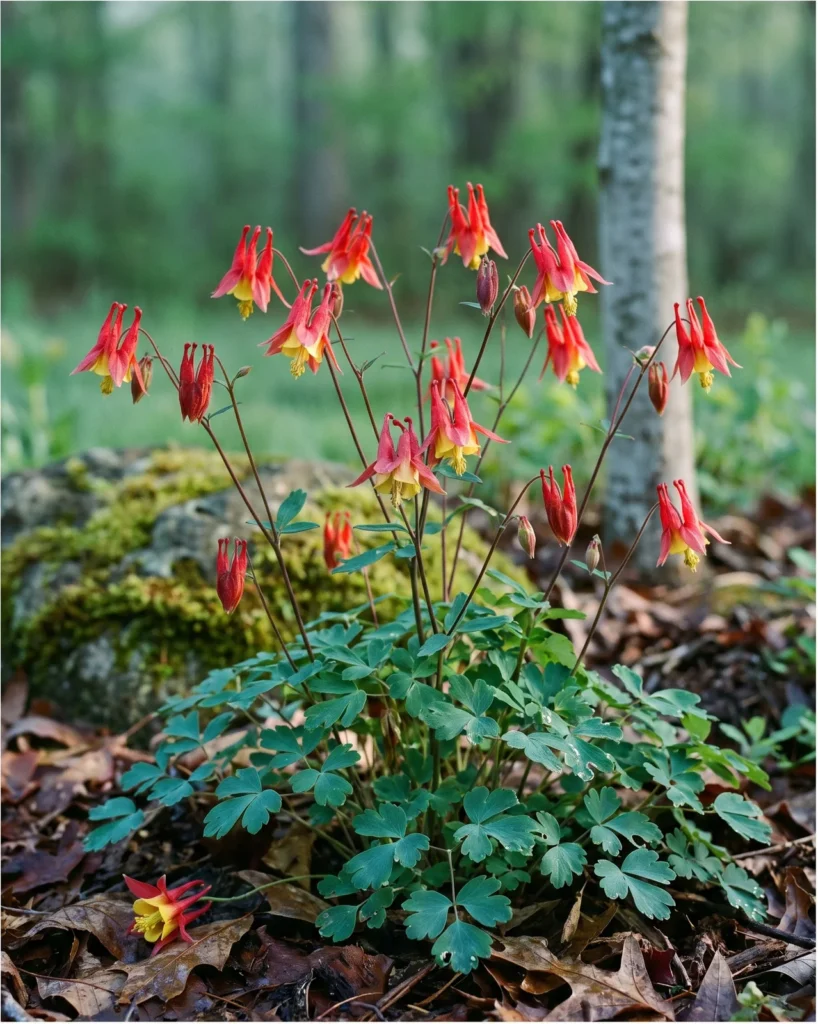
The word columbine is better known for the Colorado school shooting. The plant is Aquilegia, a perennial in the buttercup family. The genus runs across the temperate Northern Hemisphere as far south as Guatemala, and counts give it 65 to 130 species. Both names come from birds. Columbine comes from columba, the Latin for dove, for a cluster of flowers that looked like doves. Aquilegia comes from aquila, eagle, for spurred petals read as talons.
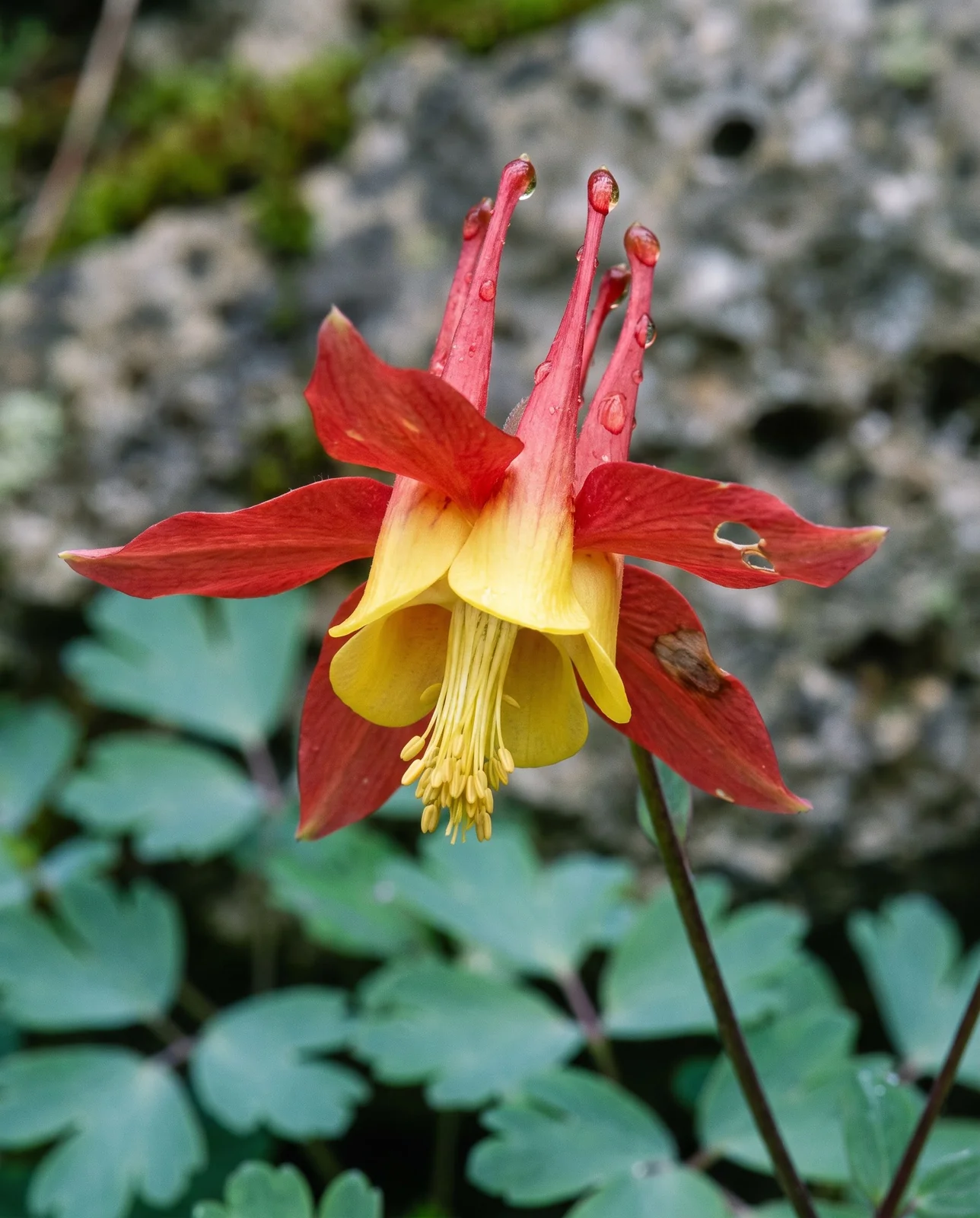
The doubled, two-tiered look comes from the petals. Each is drawn out into a flat blade in front and a hollow nectar spur behind, with the sepals, stamens and pistil filling the rest. On the eastern wild columbine that adds up to five petals and five petal-like sepals, spurs pointing upward. Spur length varies from one species to the next, and the longspur columbine carries the longest of them, close to 6 inches.
Who the spurs are built for
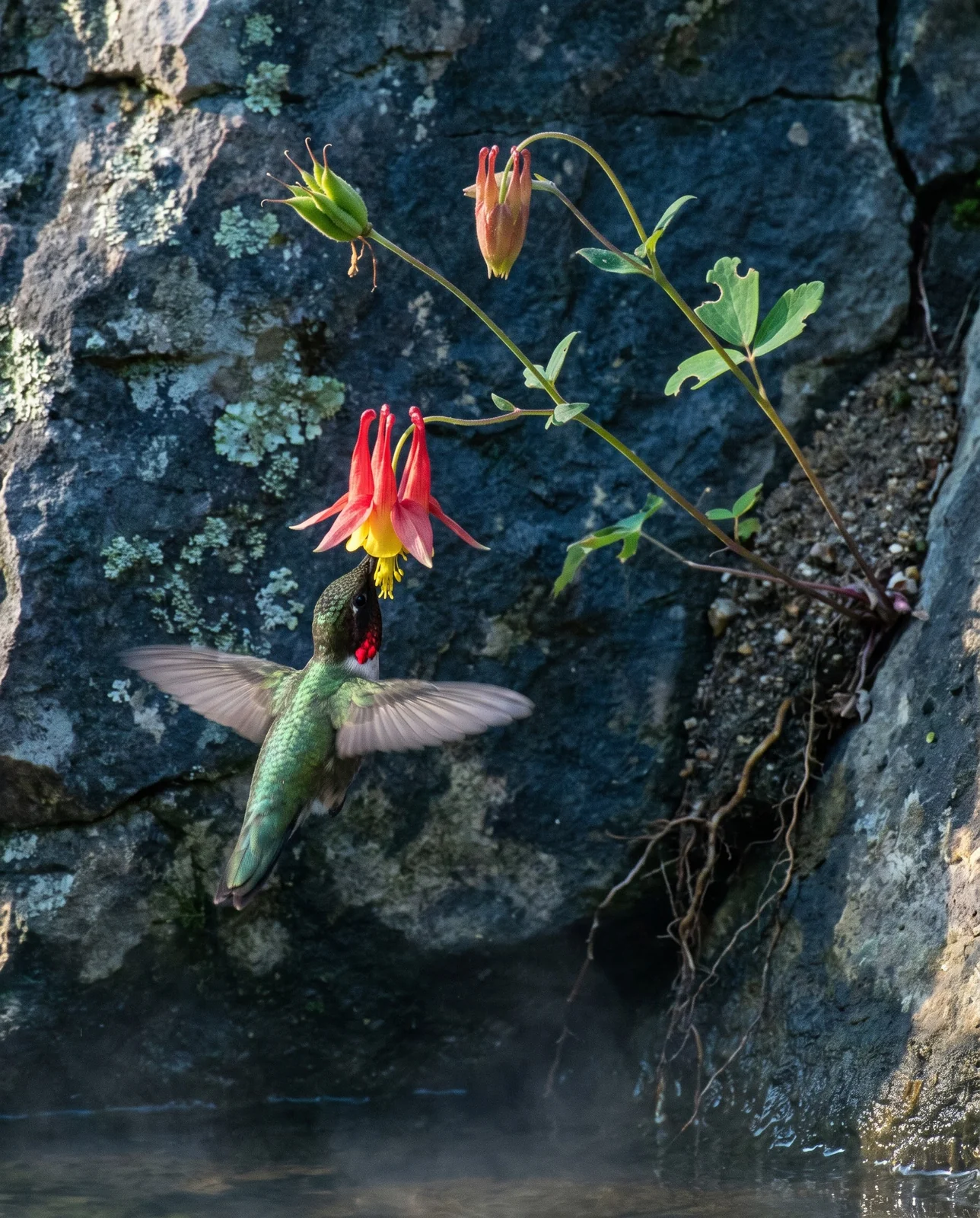
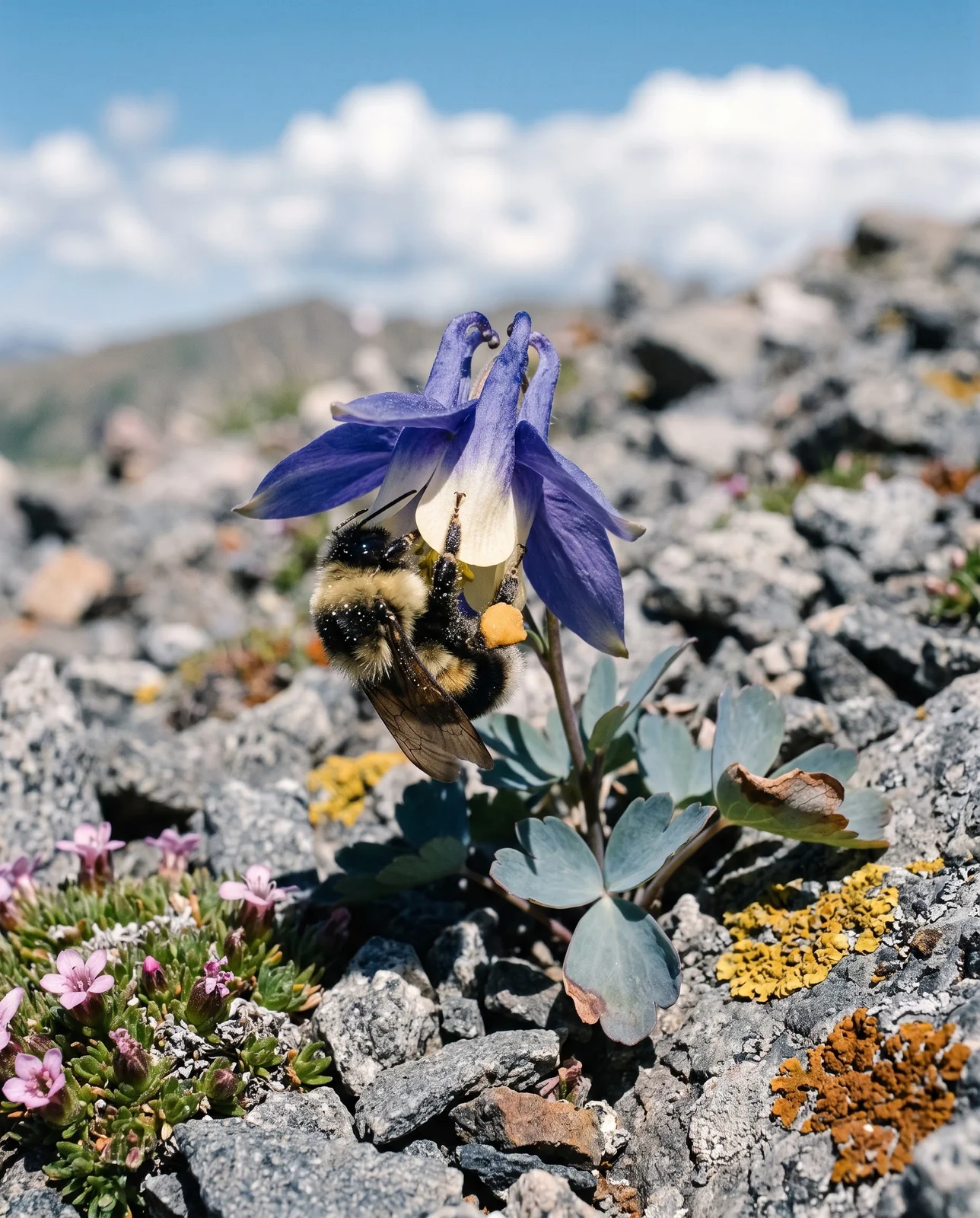
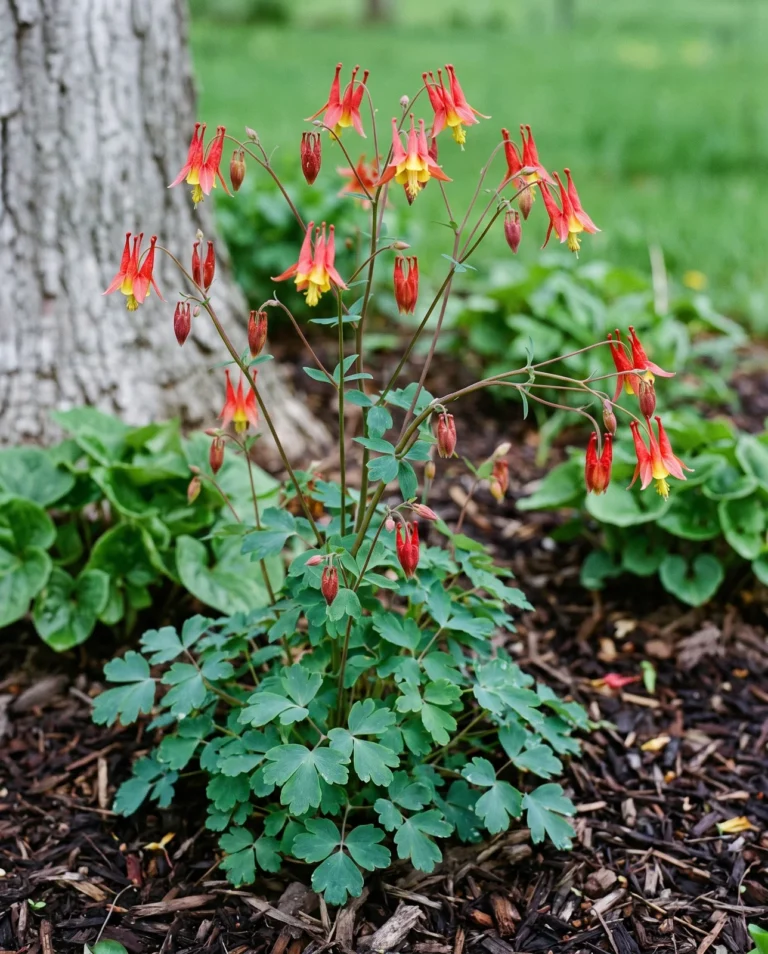
The nectar sits deep in the spurs, so the visitors are pollinators with long tongues: ruby-throated hummingbirds, bumble bees and hawk moths. The red-flowered western columbines are pollinated mainly by hummingbirds, and their nectar carries more sugar to meet a hummingbird's energy demand. The deep blue, short-spurred alpine species are bee and bumblebee work, because hawk moths and hummingbirds are uncommon where they grow. The eastern wild columbine is the only species east of the 100th meridian, and it flowers as the ruby-throated hummingbirds move north in spring. It is one of two natives worth planting for those birds, and great blue lobelia is the other.
One butterfly depends on the plant outright. Wild columbine is the larval host of the Columbine Duskywing, whose females lay eggs singly under the leaves from April to June and again from July to September. The butterfly is ranked apparently secure worldwide, though it may be rare at the edges of its range. Deer densities above 20 per square mile may work against it, since deer browse the host plant.
The Colorado columbine and the law around it
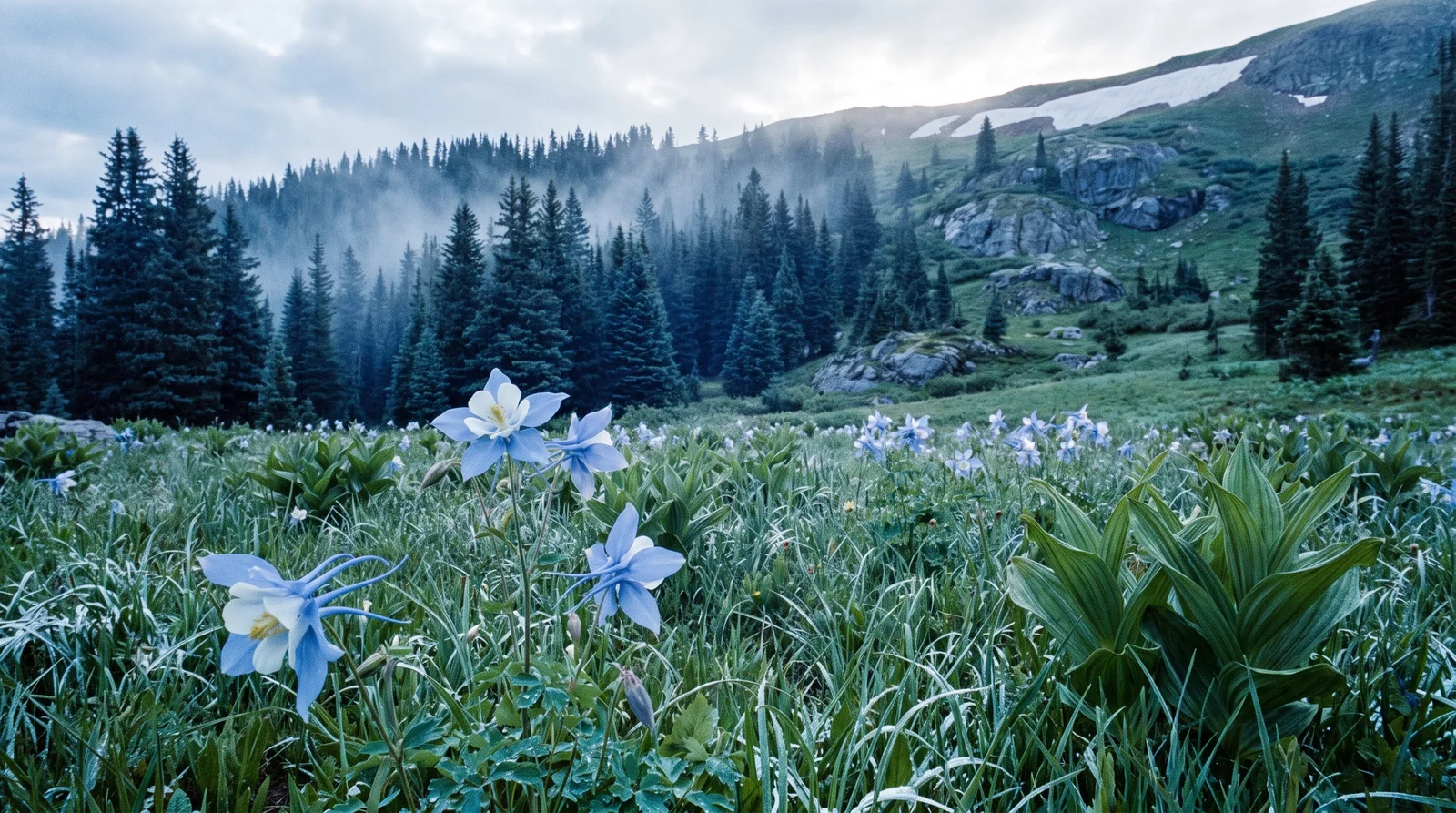
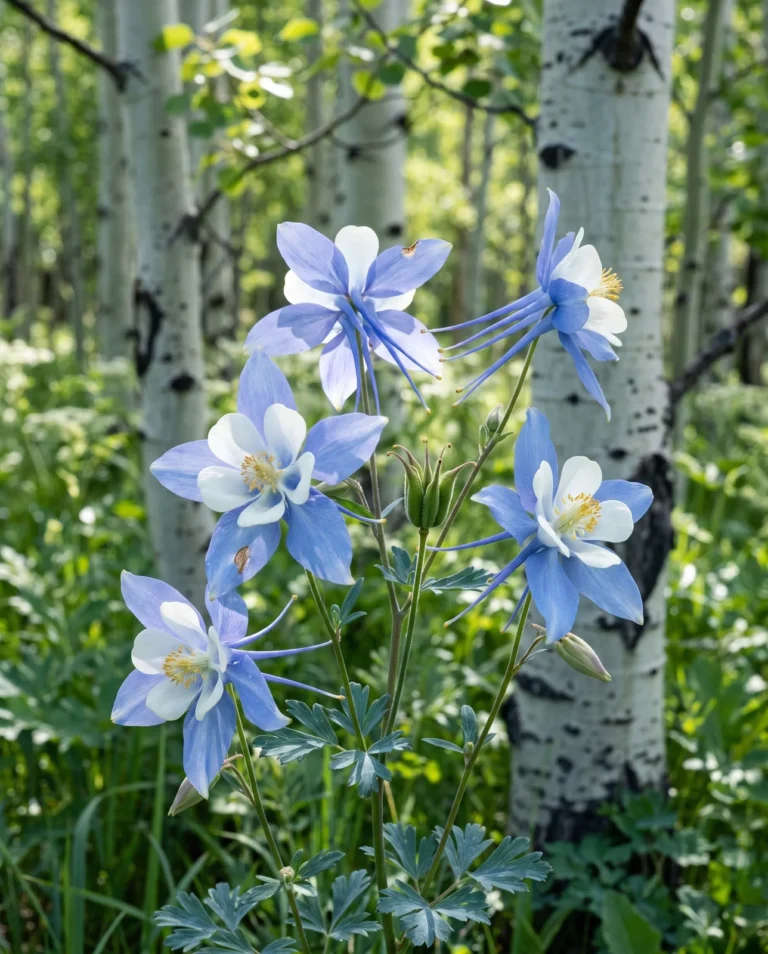
Colorado's state flower is Aquilegia coerulea, the blue and white columbine, and it comes with a statute attached. It is the southernmost dark blue columbine, reaching northern New Mexico, and it grows at elevations where cold generally keeps hawk moths out. The species splits along that line. Dark blue high-country plants carry short spurs like the other alpine blues. The paler blue to white plants lower down carry long ones, a shift tied to pollination by long-tongued hawk moths.
Colorado adopted it in 1899, after schoolchildren picked it in a statewide contest. The plant has been protected since 1925, when uprooting it on state-controlled land became illegal. A small bouquet is still allowed: up to 25 stems, buds or blossoms a day. On private land there is no restriction on picking, though state law requires the landowner's permission first. In a national park, picking wildflowers of any kind is illegal.
Which columbine flower you have
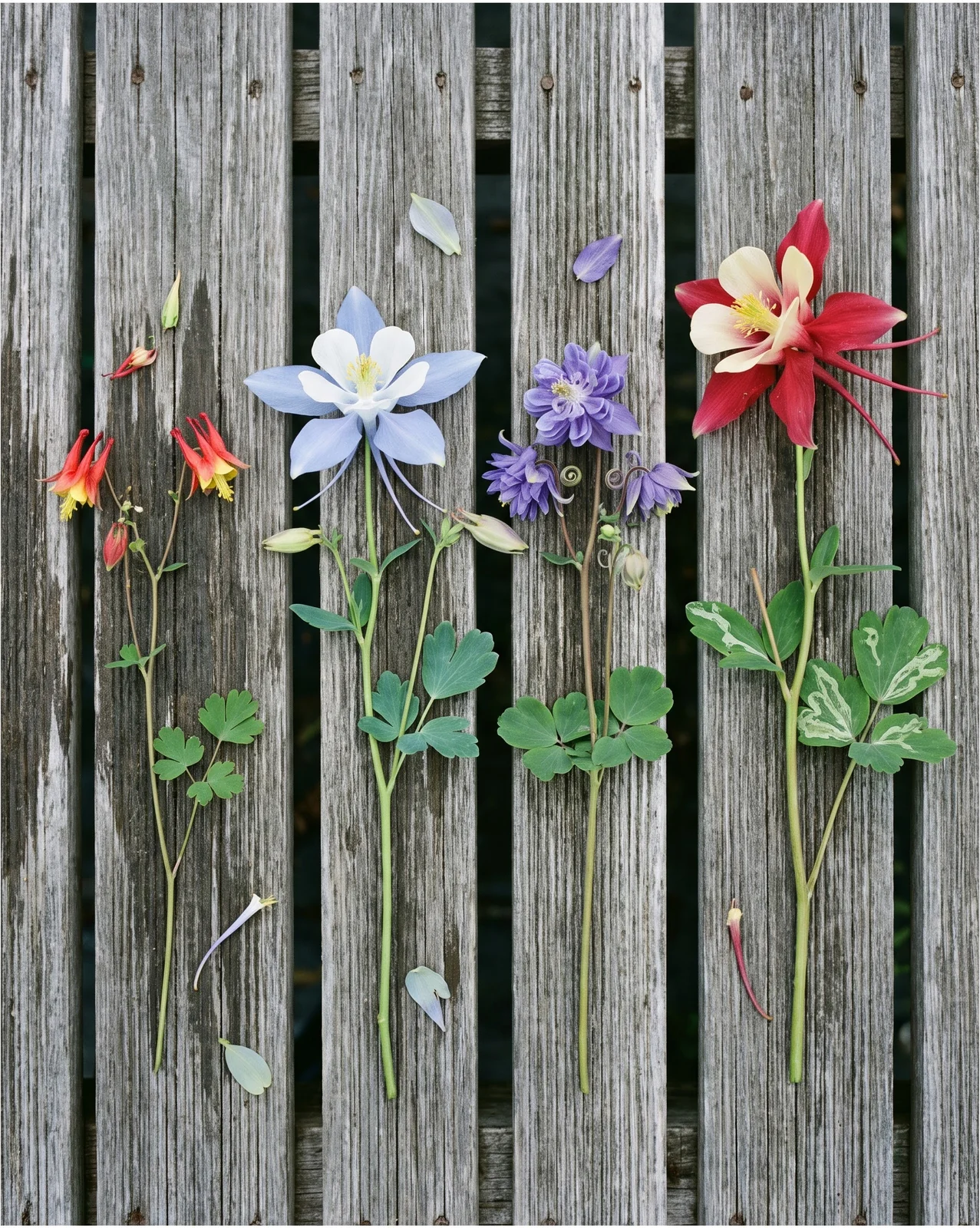
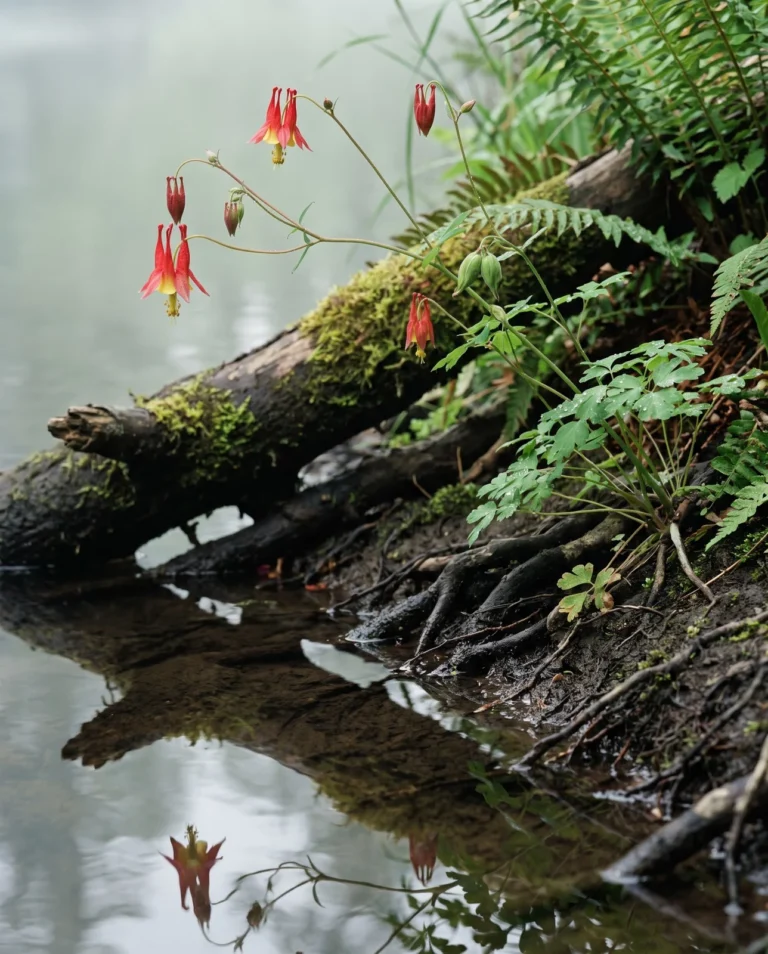
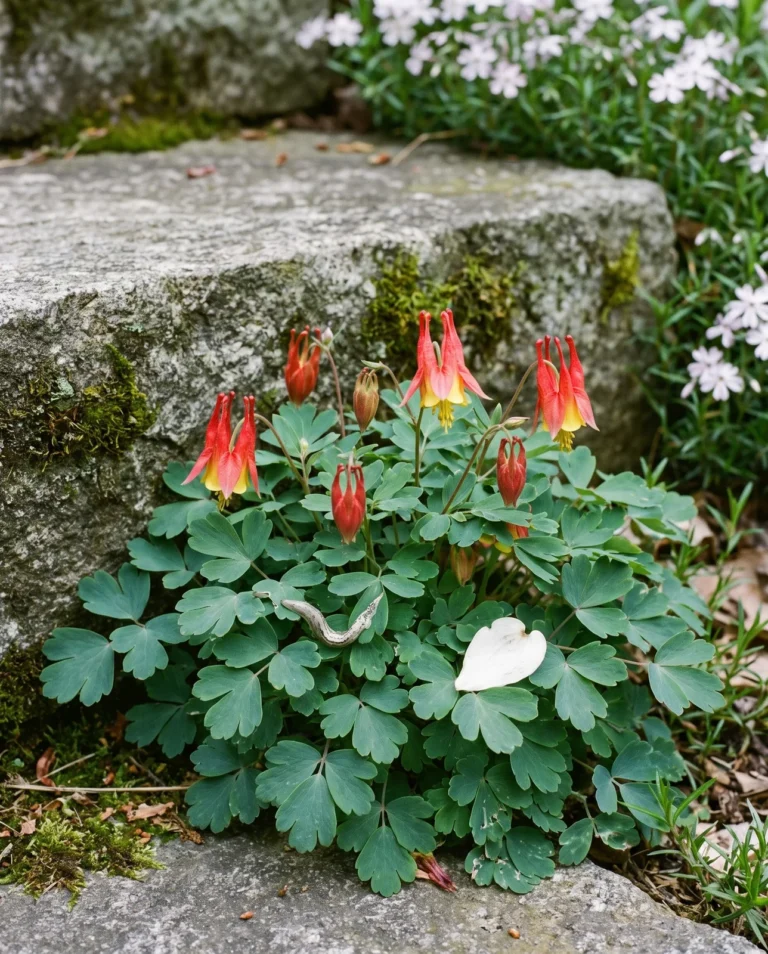
Four groups are sold as columbine, and the one on the label sets the color, the size and the trouble. Height alone runs from 6 inches to 3 feet across the genus. The natives in circulation are the Rocky Mountain columbine, the Canadian or wild columbine and the golden columbine, sold alongside the European species. Wild columbine, Aquilegia canadensis, is the eastern native with red and yellow flowers. They mature in early spring and can hold for a month. It is also the one species resistant to the leaf miner that troubles the rest of the genus. The Rocky Mountain columbine is its western counterpart.
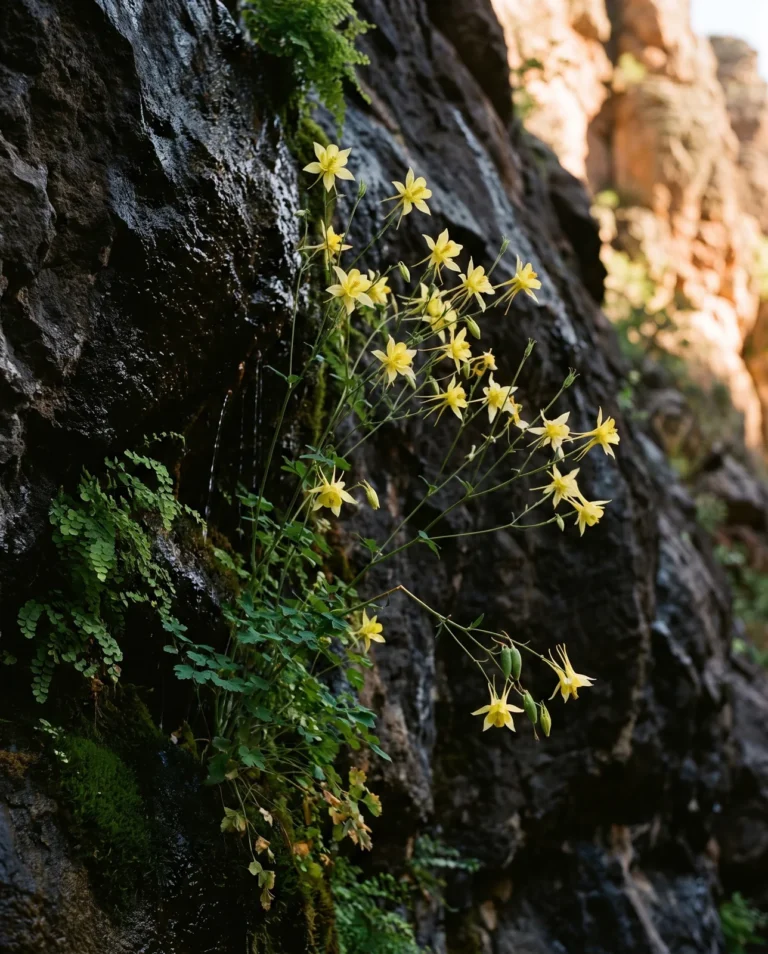
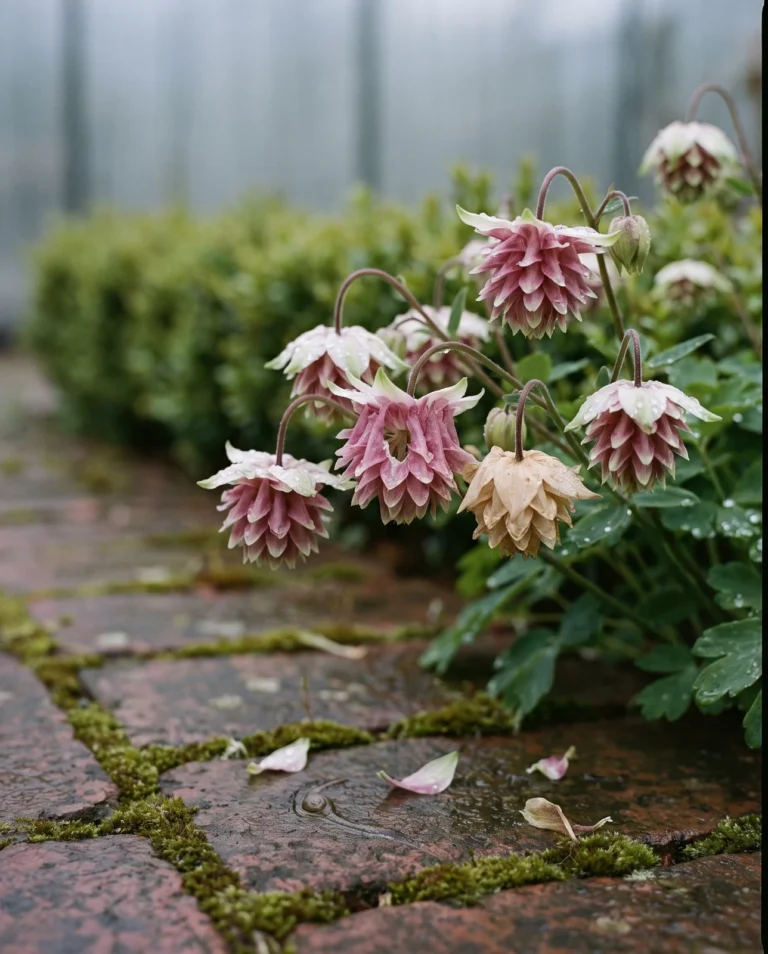
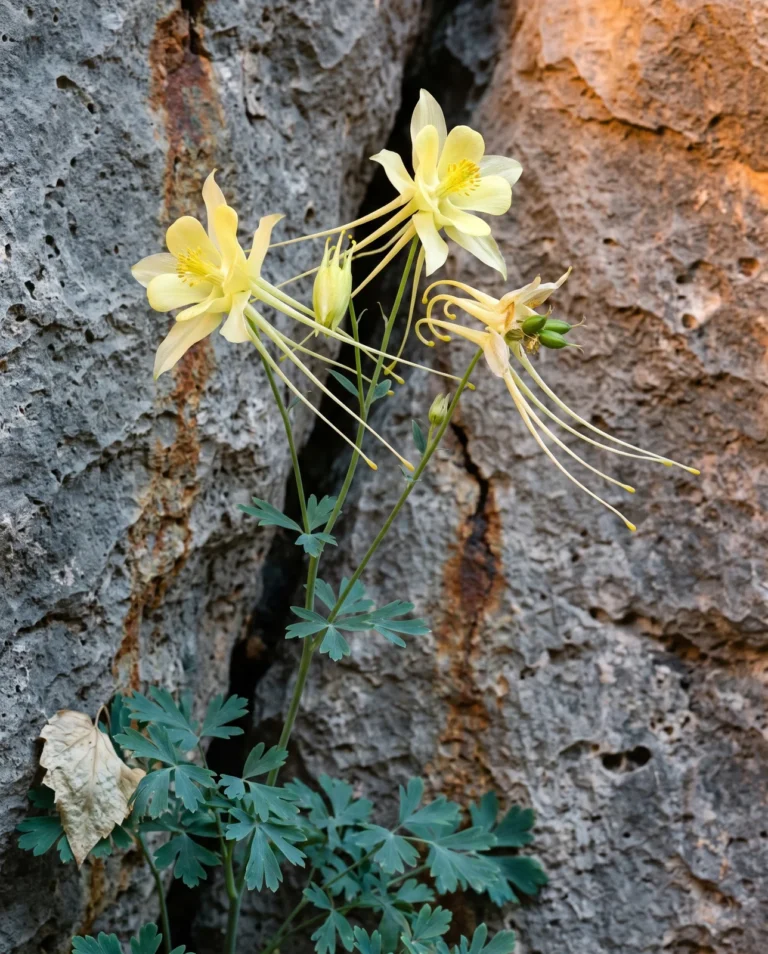
Golden columbine, Aquilegia chrysantha, is the yellow-flowered native of the western United States and Mexico, its flowers up to 3 inches long and held mostly erect. Its weak points are specific: crown rot where the ground drains poorly, and spider mites and aphids in hot, dry spells. The European species, Aquilegia vulgaris, is violet-blue. It stands behind the frilly end of the catalog, including the pinkish double 'Nora Barlow' and the compact, double, upward-facing Clementine Series.
The fourth group is the seed strains, hybrids sold in mixed colors, many of them crosses between North American and European species. The McKana Group is the tall one, with large, bright, long-spurred, nodding, bicolored flowers. It brings the hybrid's troubles with it: leaf spot, powdery mildew, rust and aphids.
Where to plant a columbine flower
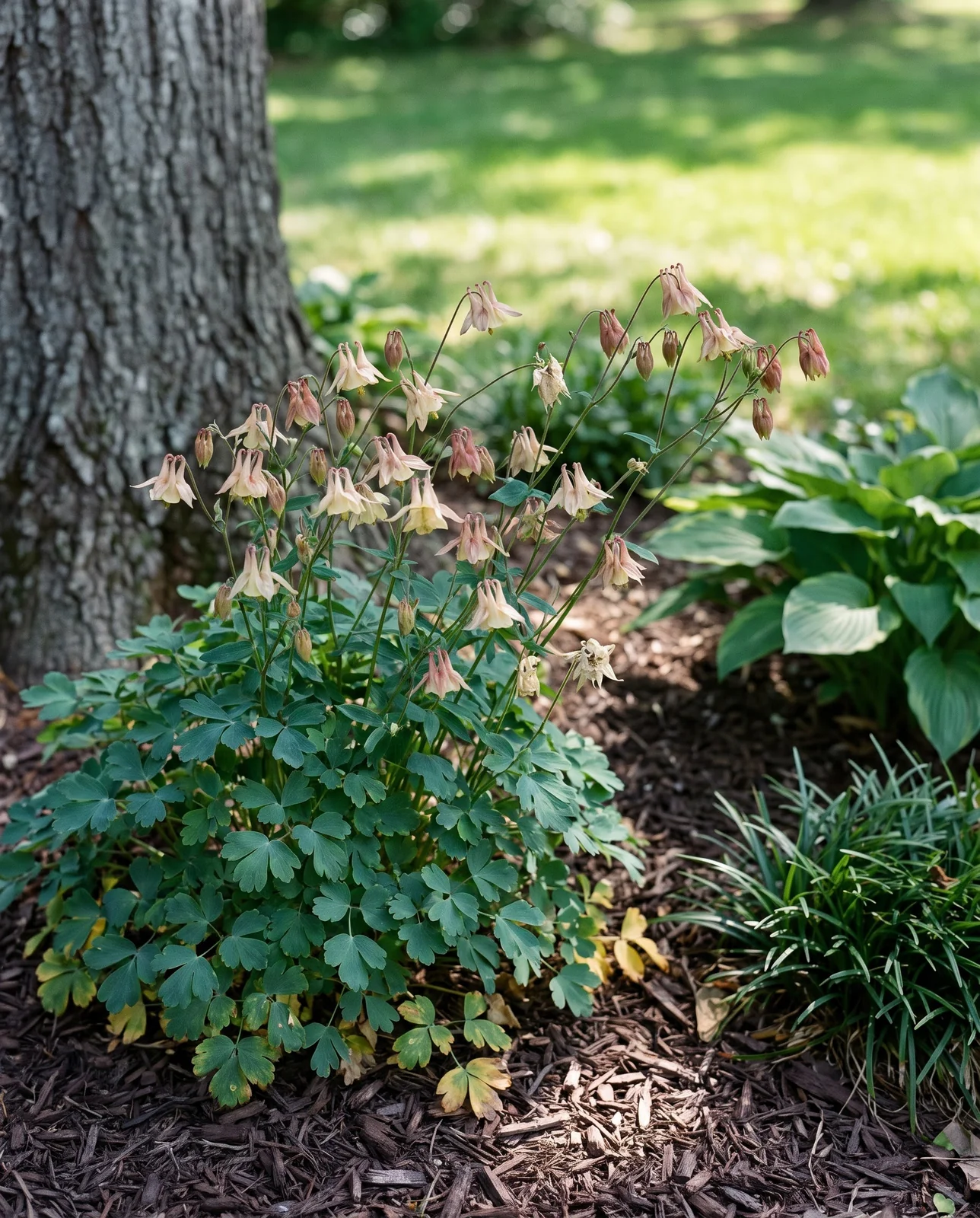
Where the plant goes depends on how hot the summer gets. Part shade with moist, well-drained, average soil is the default, and full sun works where the plant is kept moist. The eastern wild columbine reads the same way, preferring partial shade and taking more sun when the moisture is there. Dappled light under deciduous trees suits it, the same spring bed that Virginia bluebells want.
Under that shade the ground still has to drain. Columbine suffers in heavy, compacted soil, and it is not drought tolerant either. That rules out both easy mistakes: the low corner that stays wet after rain, and the dry strip at the foot of a wall. Loam and sandy ground sit between them, and that is where the eastern native belongs.
Zones, and which plant the number is for
A zone number for columbine belongs to one plant in the group, never to all of it. At genus level the range is 3a through 8b, and the eastern wild columbine carries the same band. Golden columbine sits a step warmer at 4a through 9b, and the McKana seed strain is sold for zones 3 to 9. The cold end barely moves; heat moves the warm end. Golden columbine is not very tolerant of hot, humid summers in the southeast, where the eastern wild columbine is the better plant.
When and how to plant it
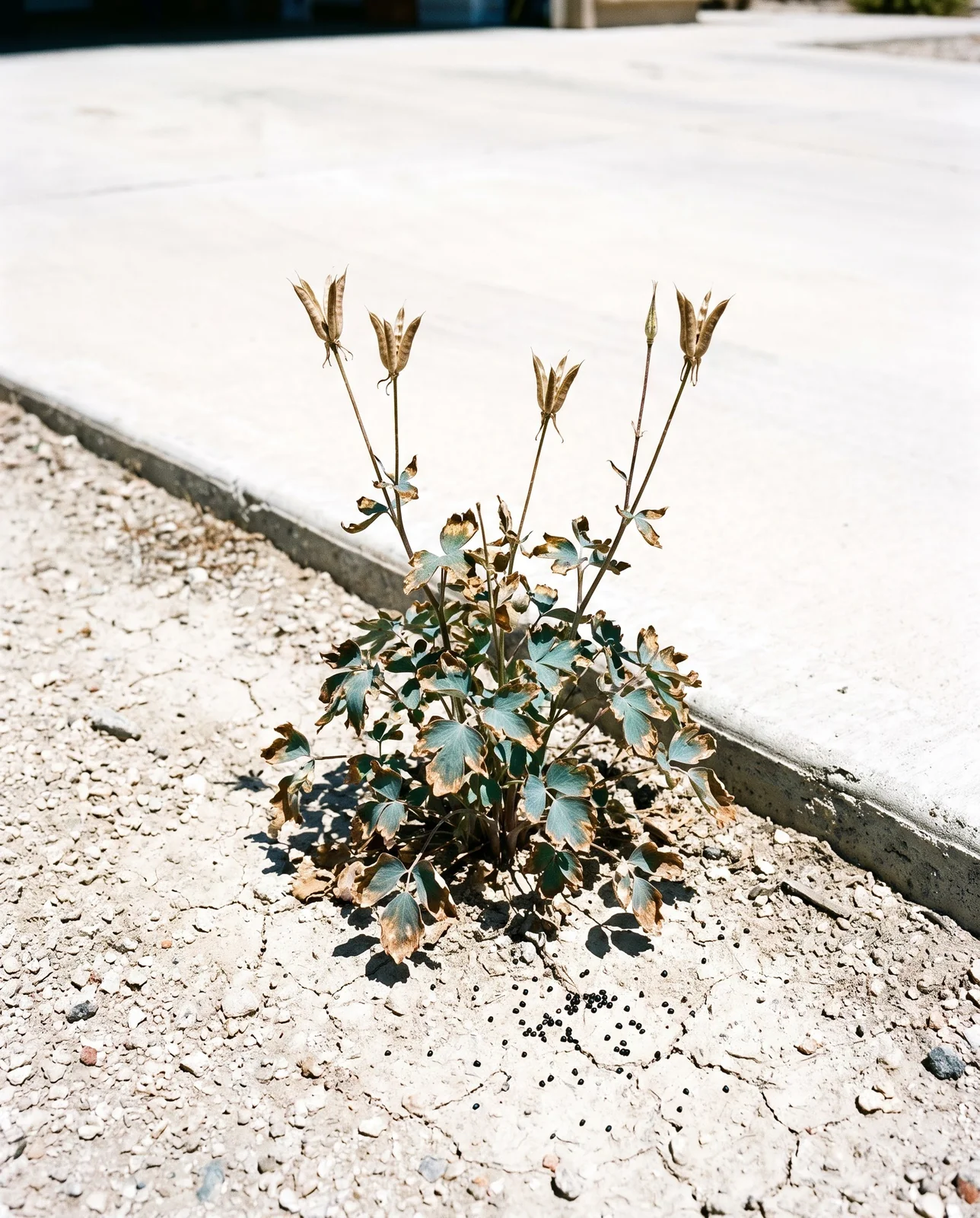
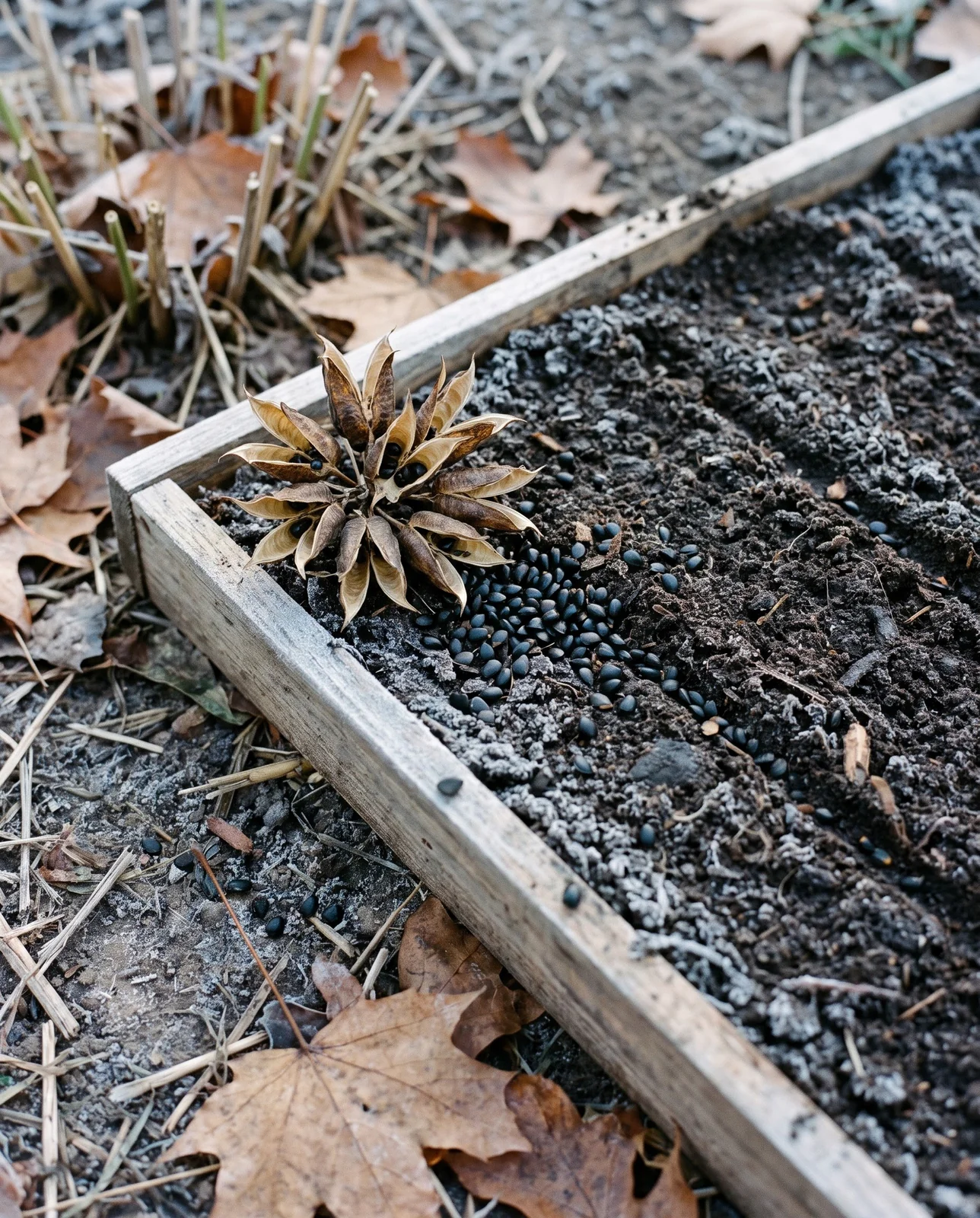
Sow the eastern native outdoors in fall, so the seed stratifies over winter and germinates in spring. It needs 60 days of cold, moist conditions before it will germinate, and it germinates best planted outdoors in fall. Sowing then hands the cold requirement to the winter. The seed is shiny, black and smooth, hard enough to bounce on firm soil, and the bouncing helps the plant spread it.
On the eastern native the seed rides in 5 pod-shaped follicles with long beaks, splitting down one side to release it, on display from April to August. Across the genus a plant carries 5 to 15 follicles, each holding many seeds. Division is the other route and the more awkward one. It can be done in late summer, but the long, coarse roots have to be separated carefully and replanted at once.
The first year, when it makes only leaves
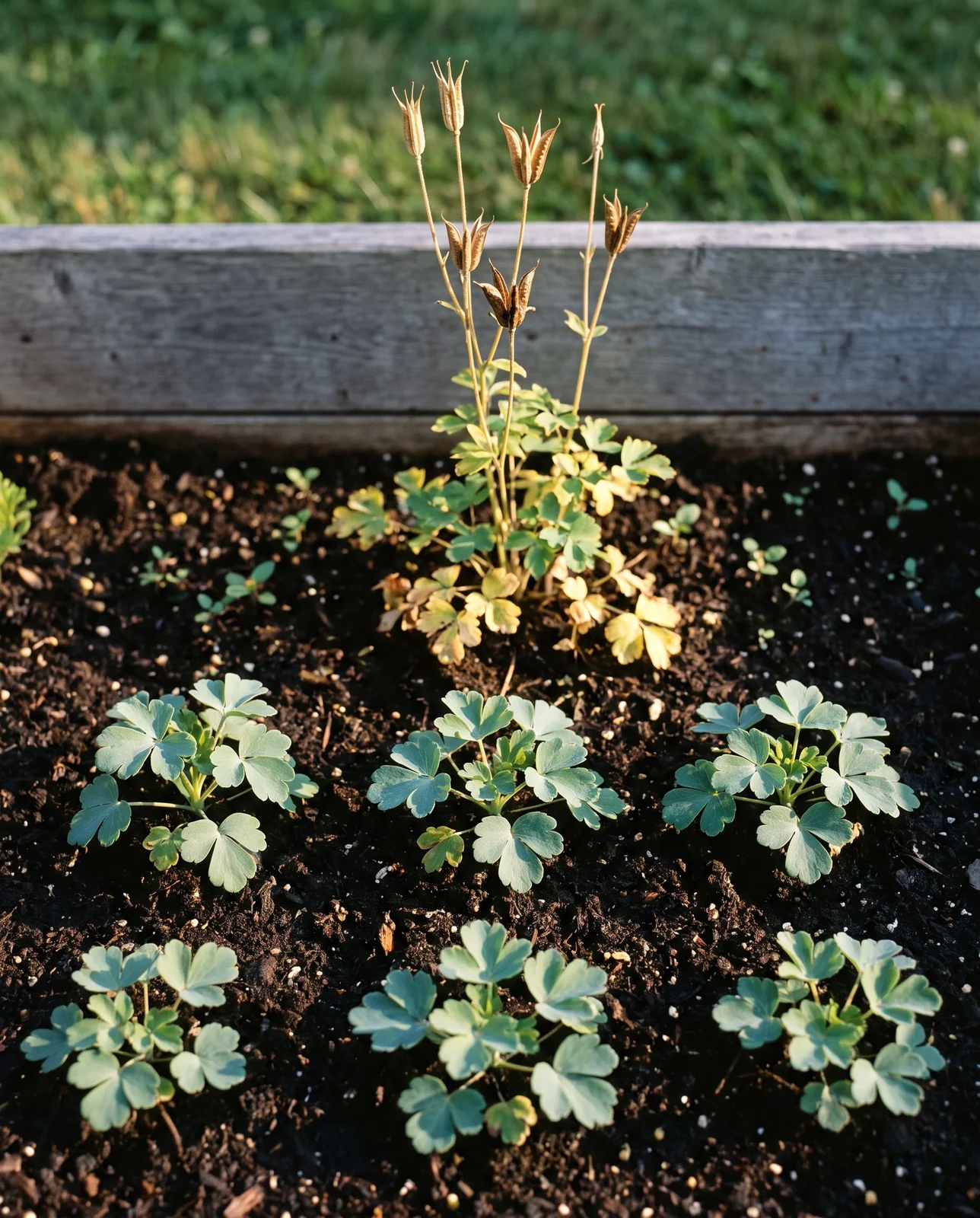
A columbine grown from seed spends its first season making leaves and no flowers, and that is the normal course. Seed that has had its 60 days of cold, moist stratification produces top growth in its first year, which means foliage. Plants raised that way bloom on average in the second year, and depending on the weather they may not bloom until the third. The same second-year timing holds for the eastern native's own seedlings. A young plant carrying a mound of foliage and no bloom is running on schedule. That foliage still wants the shade and moisture an older plant wants. It typically stays green through the season, but it may come out of a hot, droughty summer singed, and a plant alone in full sun shows it first.
Whether it comes back, and what comes back
The patch comes back, and often it is not the same plant. A single columbine lasts 2 to 5 years, and heavy seed formation may shorten even that. What keeps color in the bed is the seed. The eastern wild columbine self-seeds freely and naturalizes into large colonies under good growing conditions, and the genus seeds itself readily.
That changes what you are buying. The stand in a bed after several seasons is a population, not the plants that went in. It holds its ground by replacing itself faster than its members die. A bed of foxglove persists the same way. Ground weeded clean of every seedling empties out within a few seasons, because nothing arrives to replace the plants that finish. And a clump that thins and disappears after a few springs has run the course this plant tends to get. One plant is temporary here; the colony is what lasts.
Why the seedlings look nothing like the parent
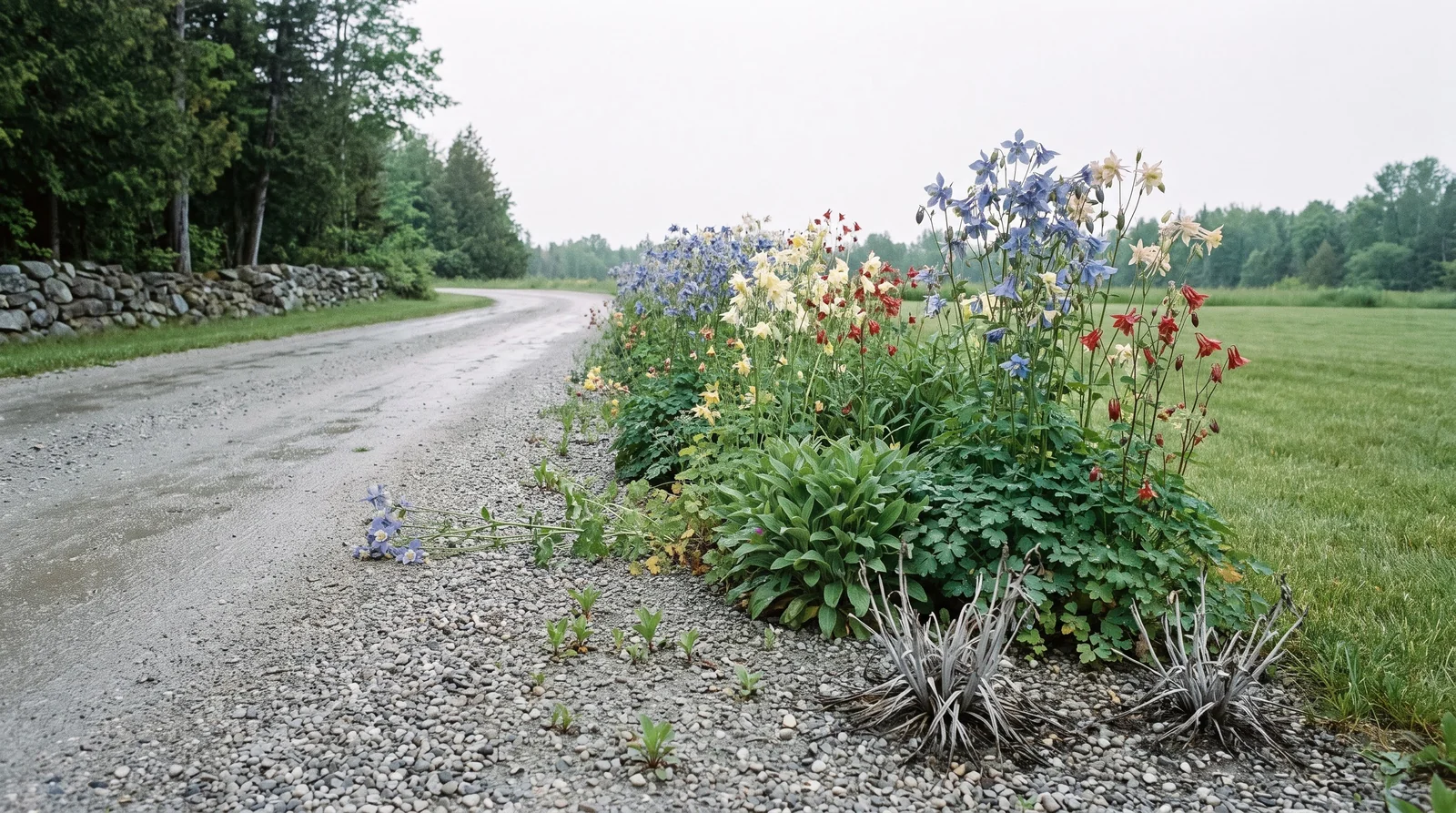
Columbine species cross freely, so a garden holding more than one type produces volunteers that belong to neither. Grow several types and your own hybrids appear in the beds. Different varieties can cross-pollinate on the spot and set seed that varies from either or both parents. The seed strains are the clearest case: plants sold as seed frequently fail to come true to type in a home garden, and the seedlings run inferior in quality to their parents. None of this is a garden accident. Where species overlap in the wild and reproductive isolation is incomplete, interbreeding is common, and meadows of intermediate-colored columbines turn up across the western states.
Deadheading is the control, and it works because the flower has to reach seed for any of this to happen. Golden columbine propagates by seed as long as the flowers are not deadheaded, and it will hybridize with columbines grown too close. Distance is the other lever, and it is out of reach: varieties would have to stand 1,500 feet apart or more. The choice is between cutting the flowers off before they set seed and taking whatever the bed produces.
The pale trails in the leaves
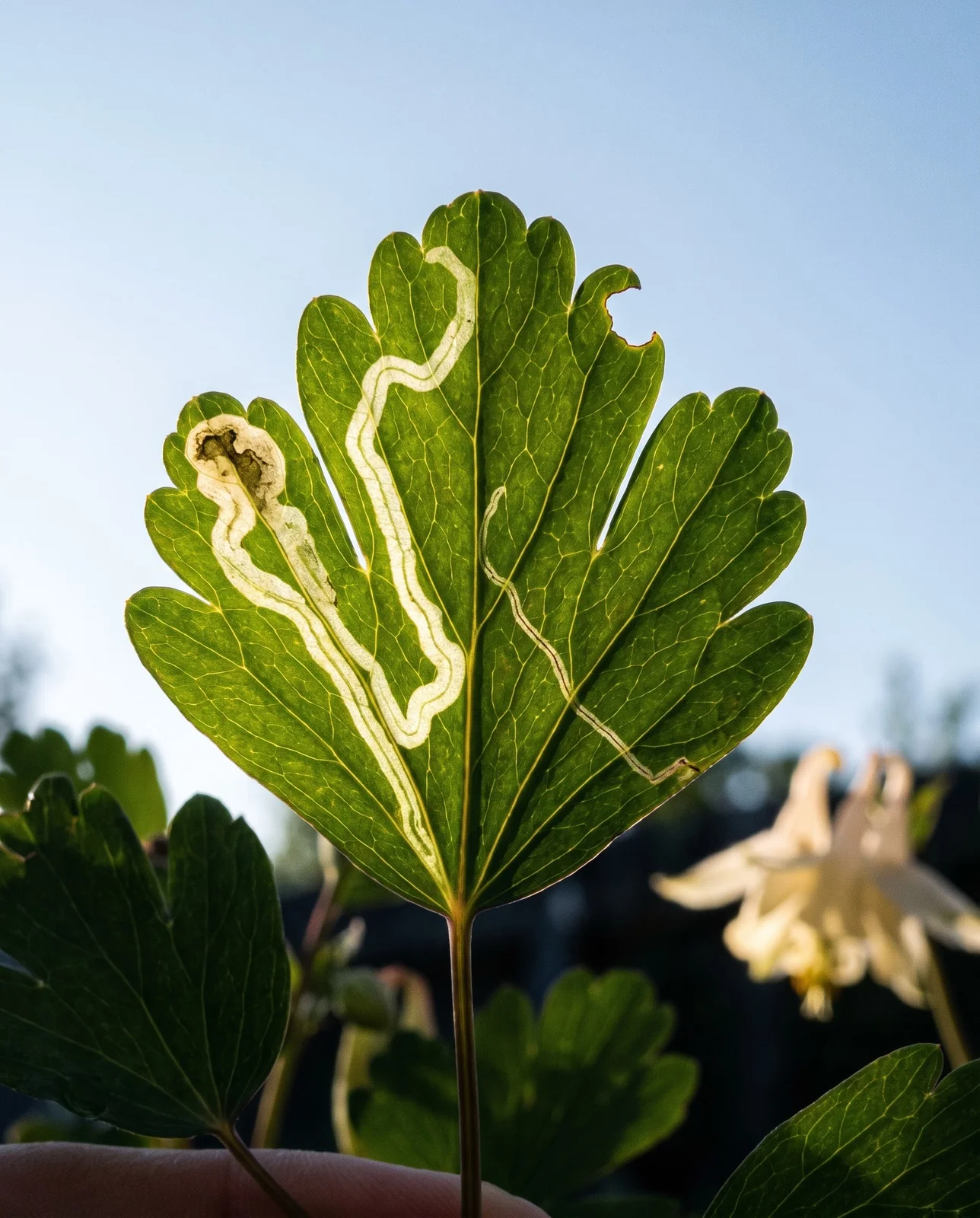
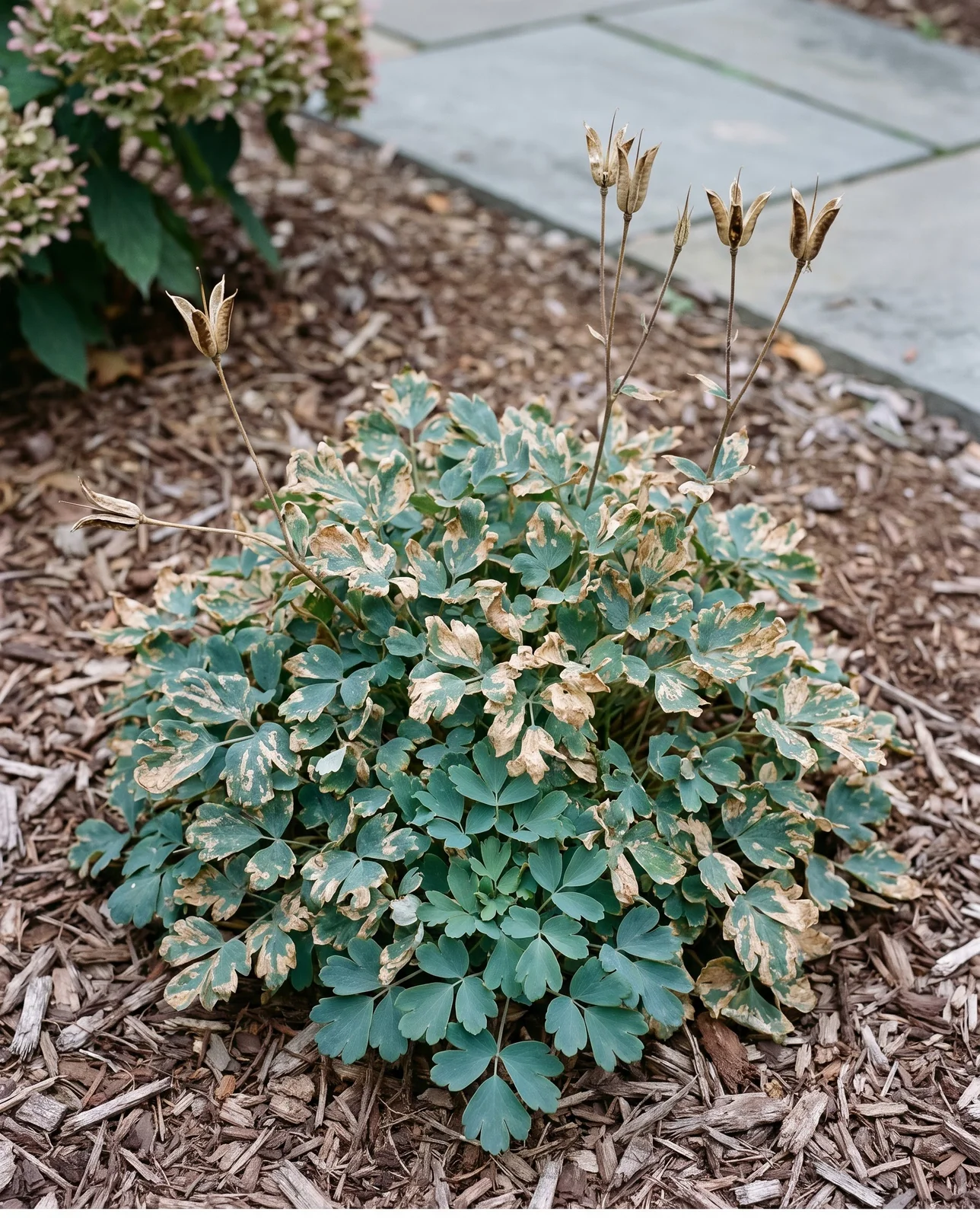
The trails winding through a columbine leaf are feeding tracks made by fly larvae between the leaf surfaces, and the damage is cosmetic. They read as wiggly, serpentine lines, whitish when fresh and turning tan later. It is not a single spring event. Up to five generations occur from May to September, and the insect winters as pupae in the soil. The leafminer is not fatal, though it may be aesthetically displeasing, and heavy infestations may reduce the vigor of plants.
The one real disagreement is about spray. NC State recommends Orthene or imidacloprid. Iowa State says insecticides are of little help and may do more harm than good by eliminating natural enemies. The mechanical argument is specific: a contact insecticide does not reach a larva already inside the leaf, and it may kill the beneficial insects working outside it. The advice on that side is to ignore the damage, or trim the foliage back to the base after flowering so a fresh mound appears.
Susceptibility is uneven across the plants sold under this name. The eastern wild columbine has very good resistance to leaf miner, a pest that often severely damages the foliage of many other columbine species and hybrids. The McKana Group is susceptible. A Georgia trial found the same split: least affected were a Rocky Mountain columbine seed strain, wild columbine and fan-leaved columbine. Most heavily attacked were alpine columbine, a golden columbine cultivar, and Rocky Mountain columbine with two of its cultivars.
Yellow leaves, and the three things that cause them
The leaf itself says which problem you have. Winding trails with green tissue on either side are the leafminer, meandering across the leaf without injuring the plant. Powdery white spots or blotches are a different thing. They can spread over the plant and in some cases make leaves curl, twist or turn yellow. Even, all-over paling is the third pattern, and its causes are in the soil and the watering. A photograph of the underside of a marked leaf settles the question faster than any general advice about feeding.
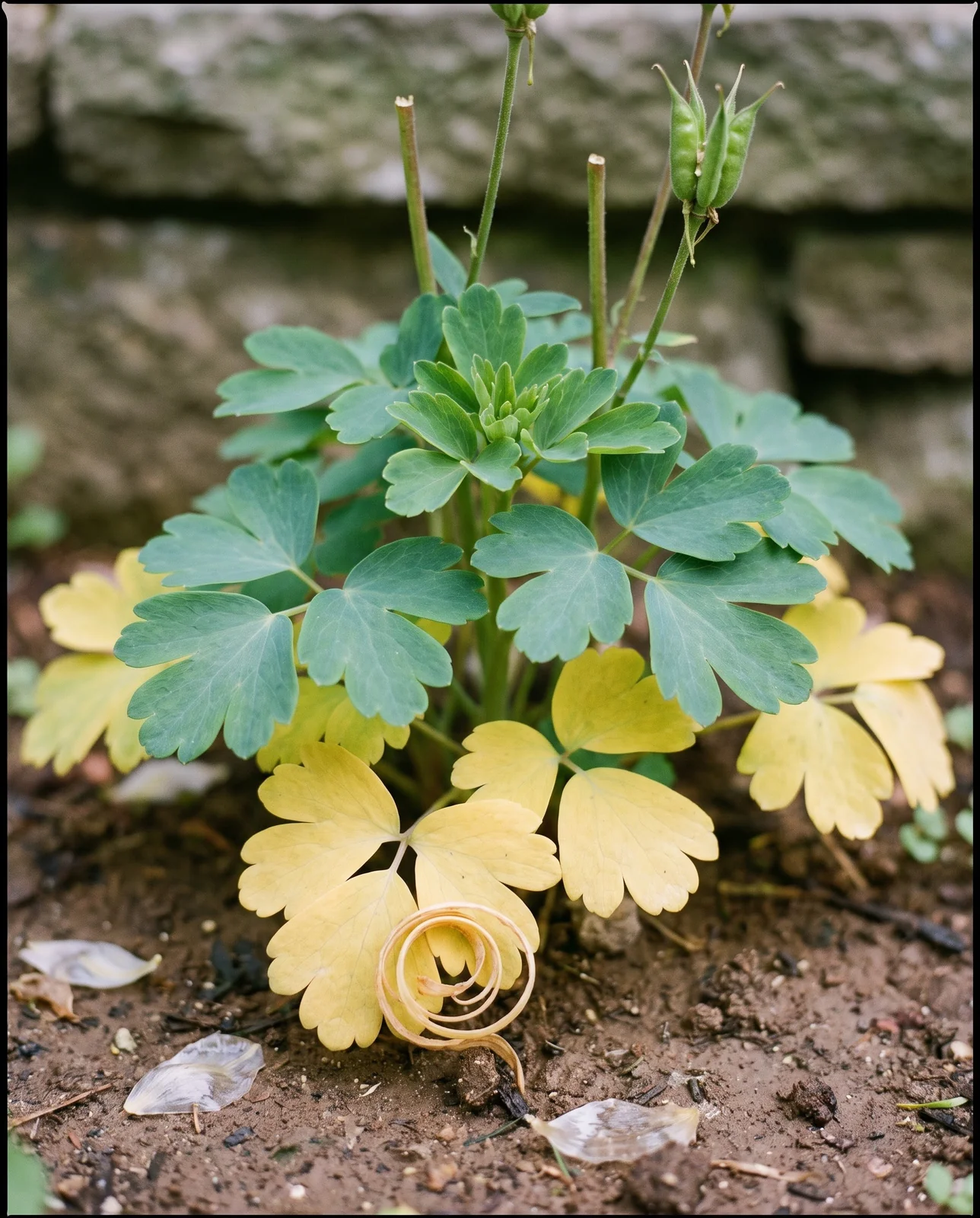
True nitrogen shortage has a signature of its own. It usually shows first on the older, lower leaves, which go pale green to yellow, because nitrogen relocates to new growth when supplies run short. As it progresses, more of the plant becomes chlorotic, stems thin, and in severe cases leaves drop. Yellowing between the veins is a separate pattern, and that soil may be short of potassium, iron, magnesium or manganese. Two ordinary causes sit alongside all of it. The first symptom of excess soil moisture is wilting or yellowing of the lower and inner leaves, and leaf yellowing is often one of the first signs of general plant stress. Feeding a plant that is yellowing from water or from larvae adds nothing it can use.
What actually goes wrong, in order
Only the leafminer carries published ratings: frequency 5 out of 5, meaning it occurs annually, and severity 1 out of 5, meaning very little damage.
Symptoms: pale winding trails inside the leaves from late spring, darkening to tan later. Management: leave it, or cut the marked foliage back to the base after flowering.
Symptoms: powdery white spots or blotches on leaves and stems, in some cases with leaves that curl or twist. Management: pick off the worst leaves; the marks sit on the foliage.
Symptoms: a plant failing at the crown in ground that drains poorly. Management: crown rot follows poorly drained soil, so drainage is the decision, and it is made once, when the plant goes in.
Symptoms: aphids and spider mites in hot, dry spells. Management: these and the columbine borer appear occasionally and rarely cause notable problems, so identify the insect before spraying.
Symptoms: a named hybrid that flowers well, thins out and is gone. Management: hybrid types often live only one to three years, and their seed grows into a plant that rarely resembles the parent. Replacement keeps that color in the bed.
Symptoms: foliage nibbled at the edges of a clump. Management: deer and rabbits may nibble the foliage but rarely feed heavily on it, so the clump carries on.
Cutting back, and the two cuts people confuse
Two cuts, at different times, doing different jobs. Deadheading comes first: removing spent flowers as they fade helps prolong the bloom time. It doubles as the brake on self-sowing for anyone who wants a named variety to stay named. The second cut takes the whole plant down after flowering, foliage trimmed to the base so a fresh mound of leaves comes up. An infested plant will not look better until new growth emerges to obscure the earlier damage, so that cut brings the new leaves forward while there is season enough to grow them.
Autumn is the open question. Nobody settles whether to cut columbine down in fall or leave the crown standing through winter, and there is no first-winter routine for a young plant either. The summer cut after flowering is the one on the calendar, and October is left to you.
Columbine varieties, and which plant each one is
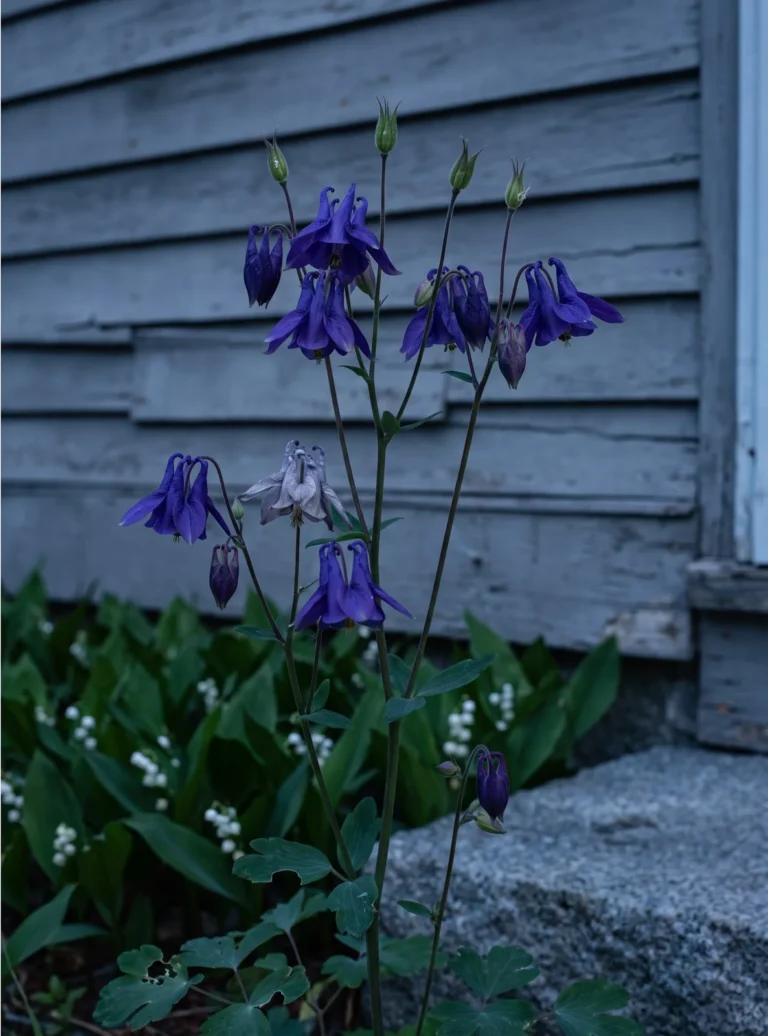
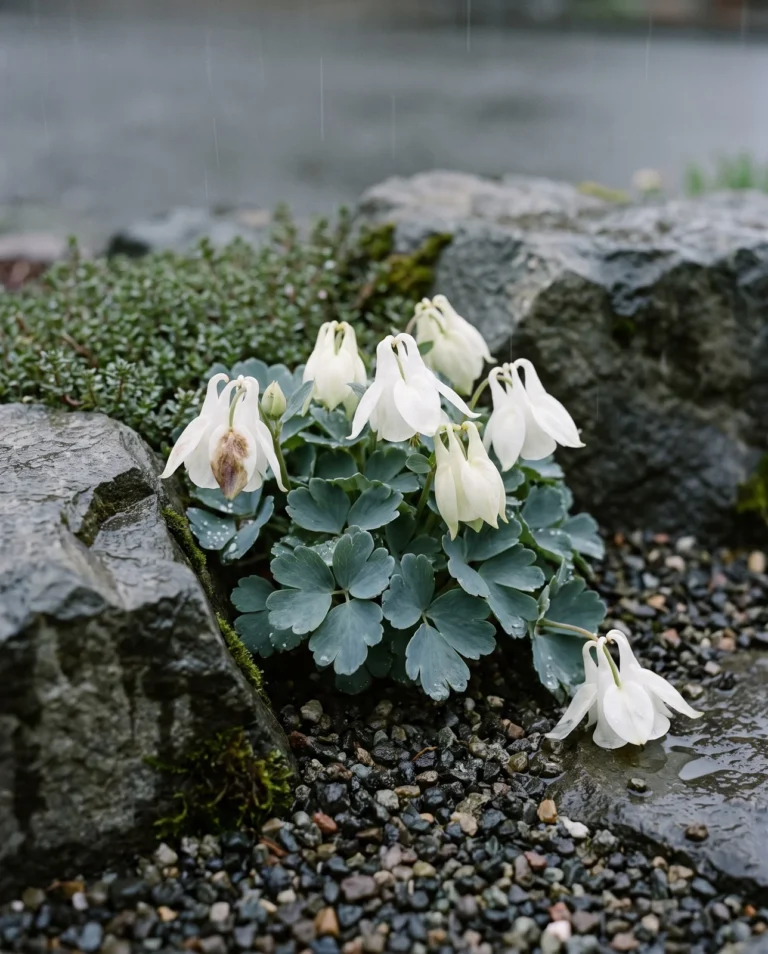
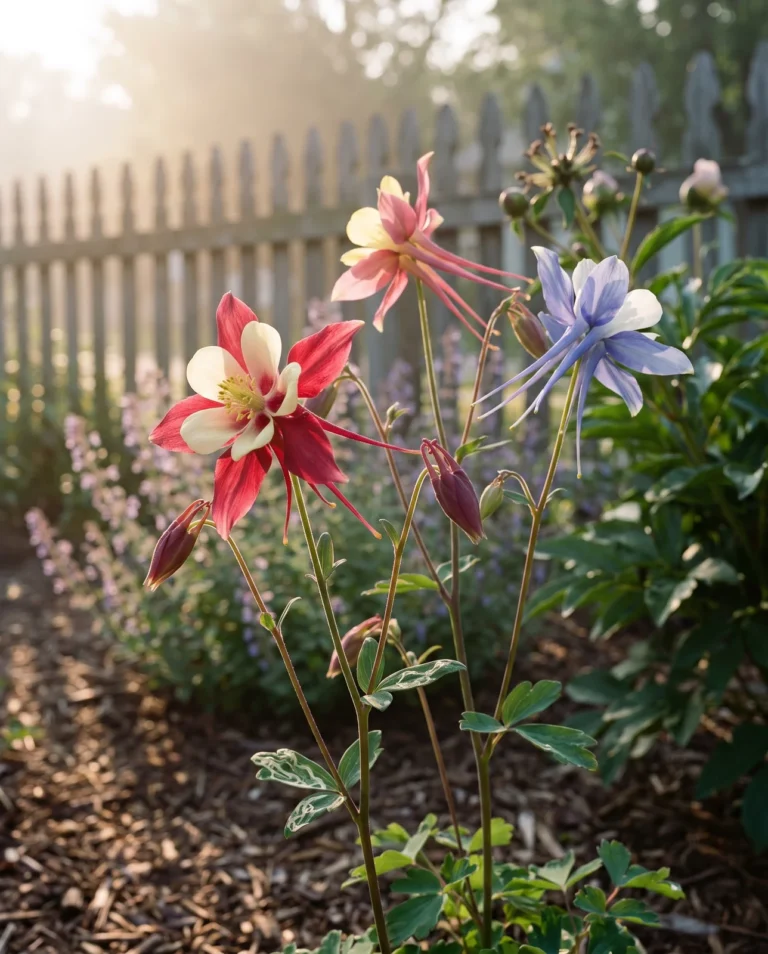
Species first, then the strains and cultivars, because the group decides height, color and how much leafminer damage a plant carries. Columbine reaches a bench of garden flowers under a dozen names, and these are what they mean.
Soil, water and feeding
Feeding is the one part of this with a specific window. Columbine responds well to fertilizer applied in spring as the leaves begin to emerge, the moment it is building the foliage it will flower from. For a perennial bed in general, 5-10-5 at 2 pounds per 100 square feet in March feeds it through the season. Neither figure treats a plant yellowing from water sitting around its roots or from larvae inside its leaves. Where the ground is heavy, the fix is drainage, and the time to fix it is before the plant goes in.
How tall and how wide it gets
Height belongs to the plant on the label, and the spread is the steadier number. The eastern wild columbine grows to 3 feet tall and 1.5 feet wide. It is planted 10 to 17 inches apart, close enough that a row closes into a continuous edge. Between the dwarf selections and the tall seed strains the gap is wide enough that a common name tells you almost nothing about the size of what will arrive. The species or strain name is the part of the tag that carries the answer.
Growing a columbine flower in a pot
Columbine roots are thick and rhizomatous, long and coarse enough that dividing calls for careful separation before the pieces go back in. No depth figure for a pot exists, so take one deep enough for the height on the label. It has to drain as sharply as a bed would, since crown rot follows poorly drained ground. A plant that tends to last only a handful of years in the ground is a short-term arrangement in a container, with a replacement built into the plan.
Is the columbine flower toxic
The usual pet poison list does not settle this one. The ASPCA search of toxic and non-toxic plants returns no entry for columbine, and none under aquilegia. What exists instead is chemistry. Most plants in this family contain irritant protoanemonins, while columbines specifically contain cyanogenic glycosides. No official toxicity figures have been published for the plant, which sits in a family holding other toxic species, so caution is the standing advice.
Children are the reason the question comes up at all. Young children often mistake columbine for honeysuckle, pulling the flowers off and biting the spurs for nectar. Against that sits older practice: the Miwok boiled and ate the early spring greens of the western red columbine, and Hanaksiala children sucked nectar from its flowers. That carries no instruction with it, because the chemistry is unsettled and the plant is not a food crop. Keep seeds and roots away from children, and wear gloves to divide a clump, the same rule that applies to delphinium.
Deer and rabbits
Deer and rabbits may nibble the foliage, but they rarely feed heavily on it, and columbine is relatively pest-free overall. That is the strongest statement anyone makes in either direction. The plant is not browse-proof, and it is not one that gets eaten to the ground either, so expect it to be sampled and to carry on. What nobody weighs is browsing pressure on the seedlings, the part of the cycle that keeps the colony going.
What to expect, year by year
One plant from the season the seed goes in to the point where the bed runs on volunteers.
The first season is leaves. Seed that has had its cold period produces top growth in its first year, a mound of foliage and no flower stems. Plants raised that way bloom on average in their second year, sometimes not until the third.
The second spring is the one to judge the plant on. Flowers on the eastern native mature in early spring and can hold for a month, and in Colorado the season generally runs early to mid-May through June. It also decides the years after it, because the flowers left standing set the seed the bed lives on.
By the third and fourth seasons the bed is running itself. Individual plants tend to last only a handful of years. The seed they drop germinates around them, and where more than one type is present the volunteers often come up as hybrids of whatever was flowering nearby.
Four things gardeners get wrong about columbine
Four things gardeners get wrong about this plant.
The myth: The trails in the leaves mean the plant is dying.
The reality: The damage is typically only cosmetic, though heavy infestations may reduce the vigor of plants. The one published severity rating is 1 out of 5, very little damage.
The myth: Yellow leaves mean the plant needs feeding.
The reality: Leaf yellowing is often one of the first symptoms of general plant stress, which need not be a nutrient shortage, and excess soil moisture shows the same way on the lower and inner leaves. A real nitrogen shortage usually starts on the older, lower leaves.
The myth: Columbine is a long-lived perennial.
The reality: A single plant lasts 2 to 5 years, and hybrid types often run only one to three. The colony lasts; the plant does not.
The myth: Seedlings from a named variety look like the packet.
The reality: Different varieties may cross-pollinate in the garden and produce seed that varies from either or both parents, and hybrids sold as seed often fail to come true to type.
FAQ
Do columbines come back every year?
The colony does; the individual plant often does not. A single columbine lasts 2 to 5 years, and the stand persists because the plant self-seeds freely and naturalizes into colonies.
Do columbine flowers spread?
By seed, and readily. Where more than one type grows in the same garden, the volunteers often come up as hybrids of whatever was flowering nearby.
How many years does it take for columbine to bloom?
Two, as a rule. Seed-grown plants bloom on average in their second year and may not bloom until the third. The same timing holds for the eastern native's own seedlings.
Why are my columbine plant leaves turning yellow?
Read the pattern before feeding. Winding trails are the leafminer, which spoils the look without injuring the plant. White powdery blotches that curl and yellow the leaves are powdery mildew. Even paling on the older, lower leaves usually points at nitrogen, though excess soil moisture shows there too.
Can leaves recover from turning yellow?
A marked leaf keeps its trails. An infested plant looks no better until new growth covers the old damage, so clean foliage comes from the cut after flowering.
What is the best fertilizer for yellowing leaves?
Nothing, unless the pattern points at the soil. Where it does, columbine responds well to a spring application as the leaves emerge, and the general perennial-bed figure is 5-10-5 at 2 pounds per 100 square feet in March.
Should I cut down columbine in the fall?
Nobody settles the autumn question either way. The cut that is described comes right after flowering, and its purpose is clean foliage.
What not to plant with columbine?
Another columbine, if you want the named one to stay itself. Varieties may cross-pollinate and set seed that varies from either or both parents, and the isolation distance would be 1,500 feet or more.
How deep do you plant columbine seeds?
No depth figure exists for it. Sow the eastern native outdoors in fall so it stratifies over winter and germinates in spring, because the seed needs 60 days of cold, moist conditions first.
Is columbine poisonous to dogs and cats?
No pet toxicity list settles it. The usual list returns no entry under columbine or aquilegia, while columbines contain cyanogenic glycosides and no official toxicity figures have been published.
Interesting tips
- Eleven kinds of parasitoid wasp attack columbine leafminers, and a spray that clears them clears the control along with the pest.
- The leafminer does much less damage in sunny spots than in shaded ones, so the same variety can carry cleaner foliage on the brighter side of a bed.
- Wild columbine populations differ widely in flower shape and habitat but barely differ genetically. That is the background to how freely these plants cross in a garden.
Related Guides & Flowers
Hellebore
The other buttercup relative for a shaded bed, and it opens earlier in the year.
Flowers for hummingbirds
What else to plant for the birds that work the spurs, once the columbine season ends.
Flowers for shade
Companions for the same dappled ground under deciduous trees.
Naturalizing anemones
Another woodland plant that moves around the garden on its own seed.
Enjoying our flower guides? Add YourFlowersGuide as a preferred source on Google. It helps more readers find us.
Add to Preferred Sources