Which dianthus did you buy
A pot labeled simply dianthus usually holds one of three plants in the pink family, Caryophyllaceae. Carnation is Dianthus caryophyllus, pink covers Dianthus plumarius and its close relatives, and sweet William is Dianthus barbatus. The genus contains about 300 to 340 species. Most are native to Europe and Asia, with a few species in northern and southern Africa and one in arctic North America. Gardeners and florists have bred dianthus since 1717. Today the genus carries more than 27,000 registered cultivar names. A generic tag gives you the family look of narrow gray leaves and a fringed bloom, but tells you nothing about plant height or life span.
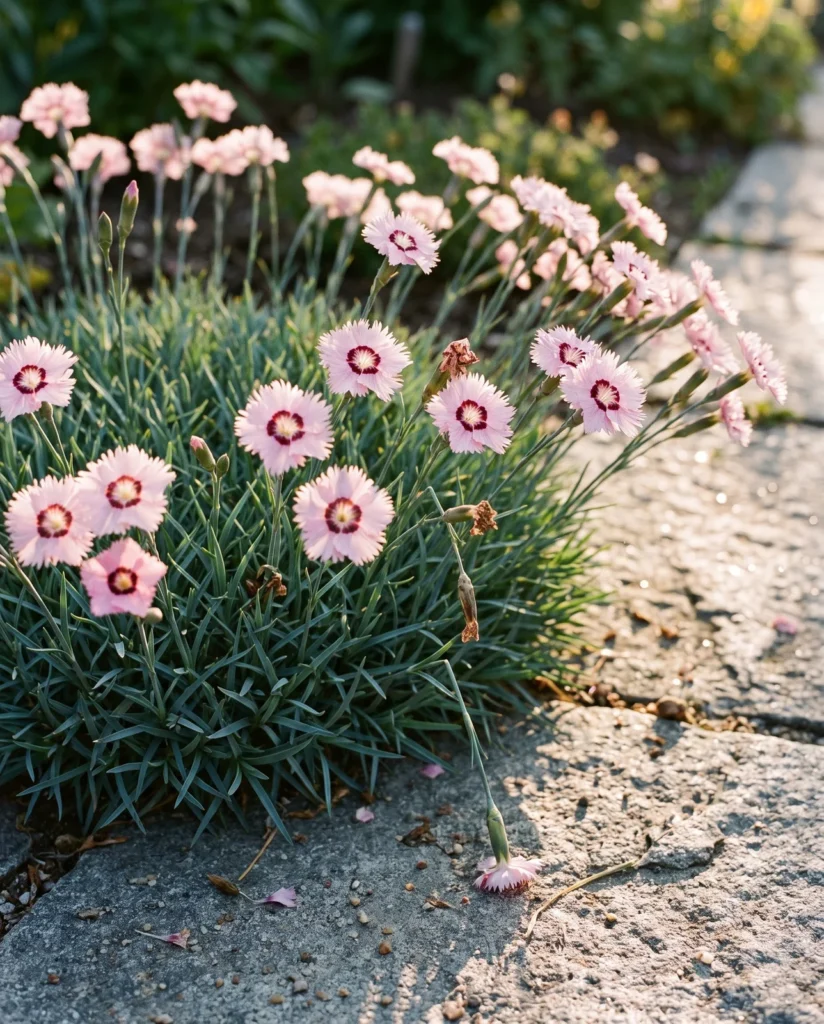
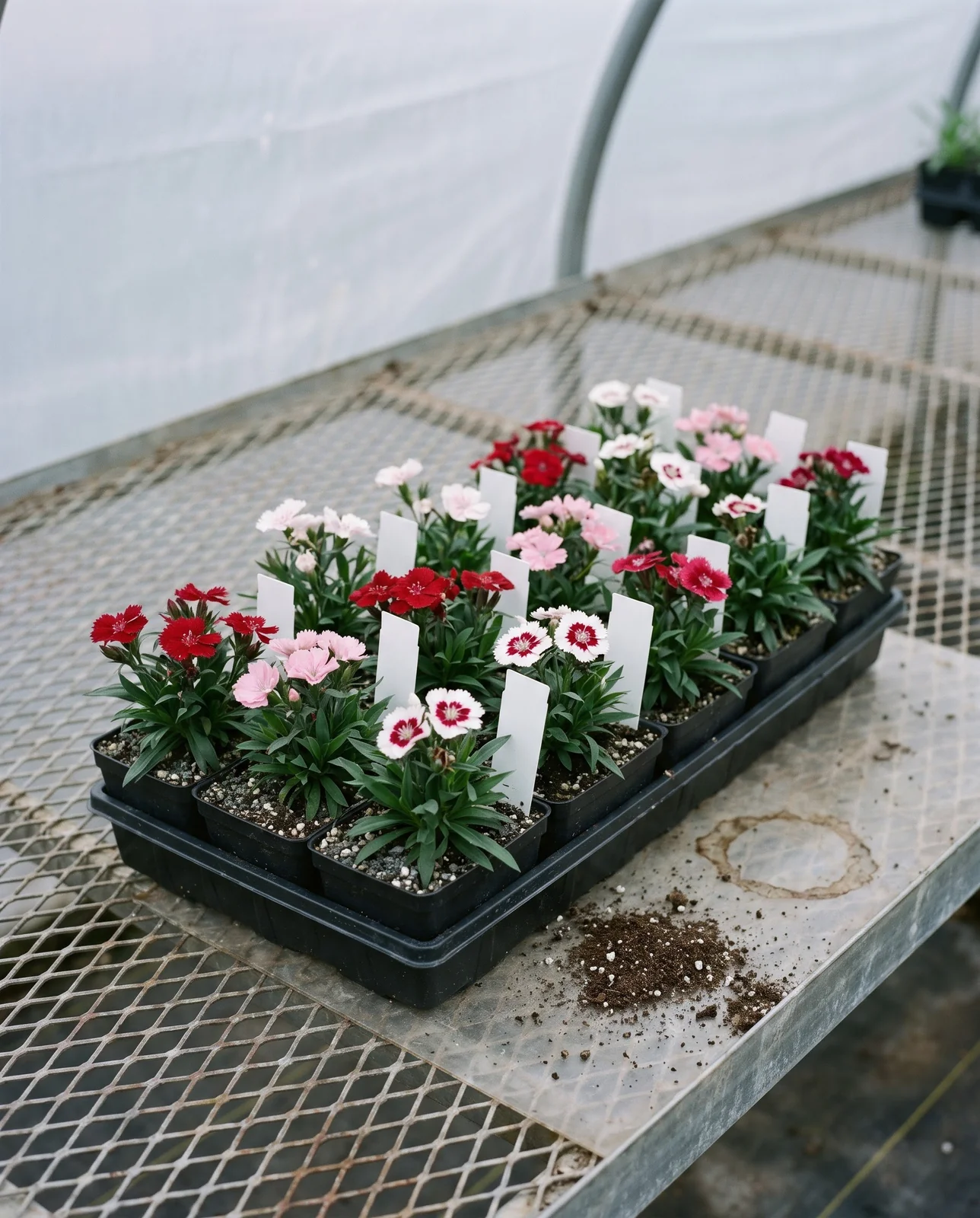
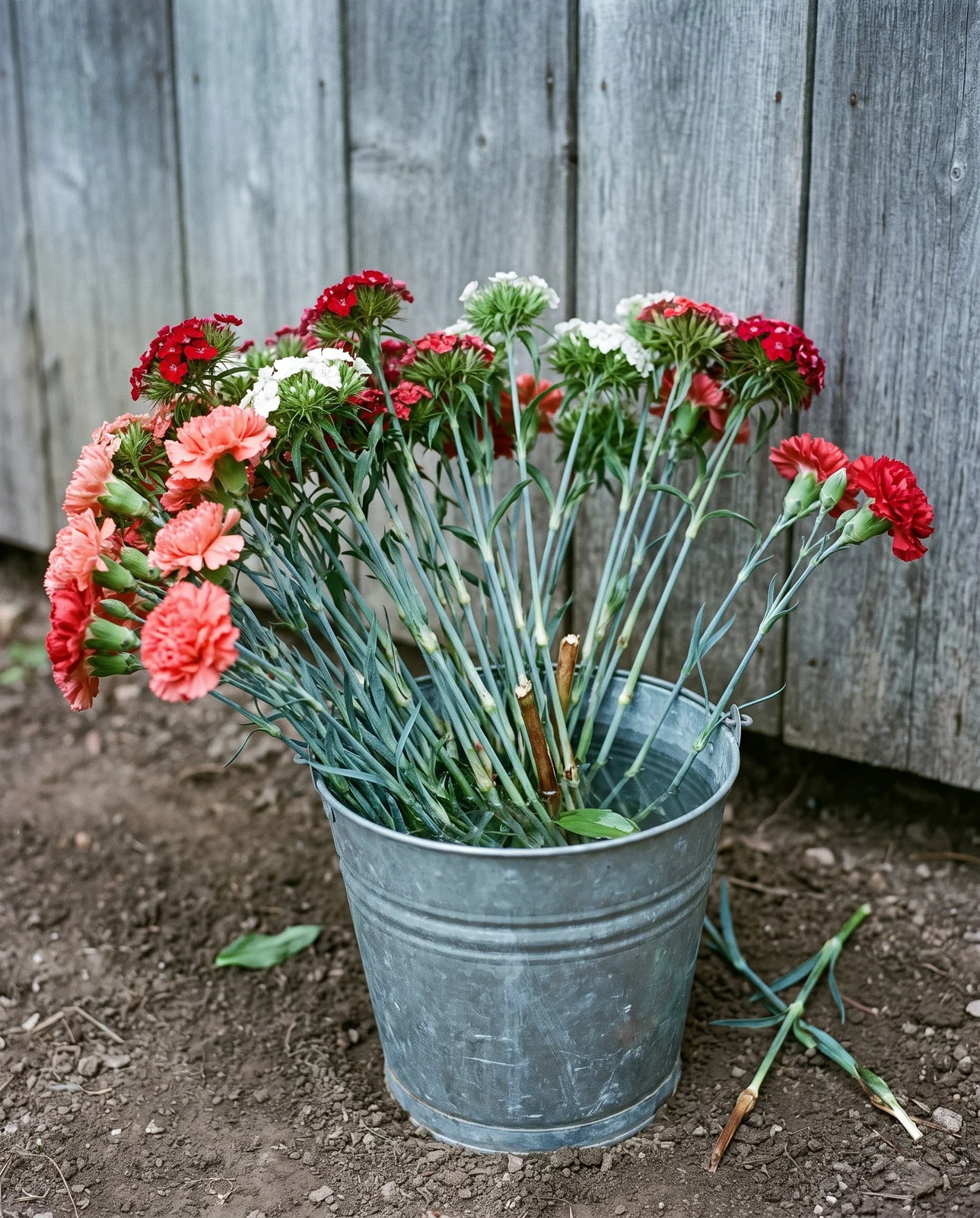
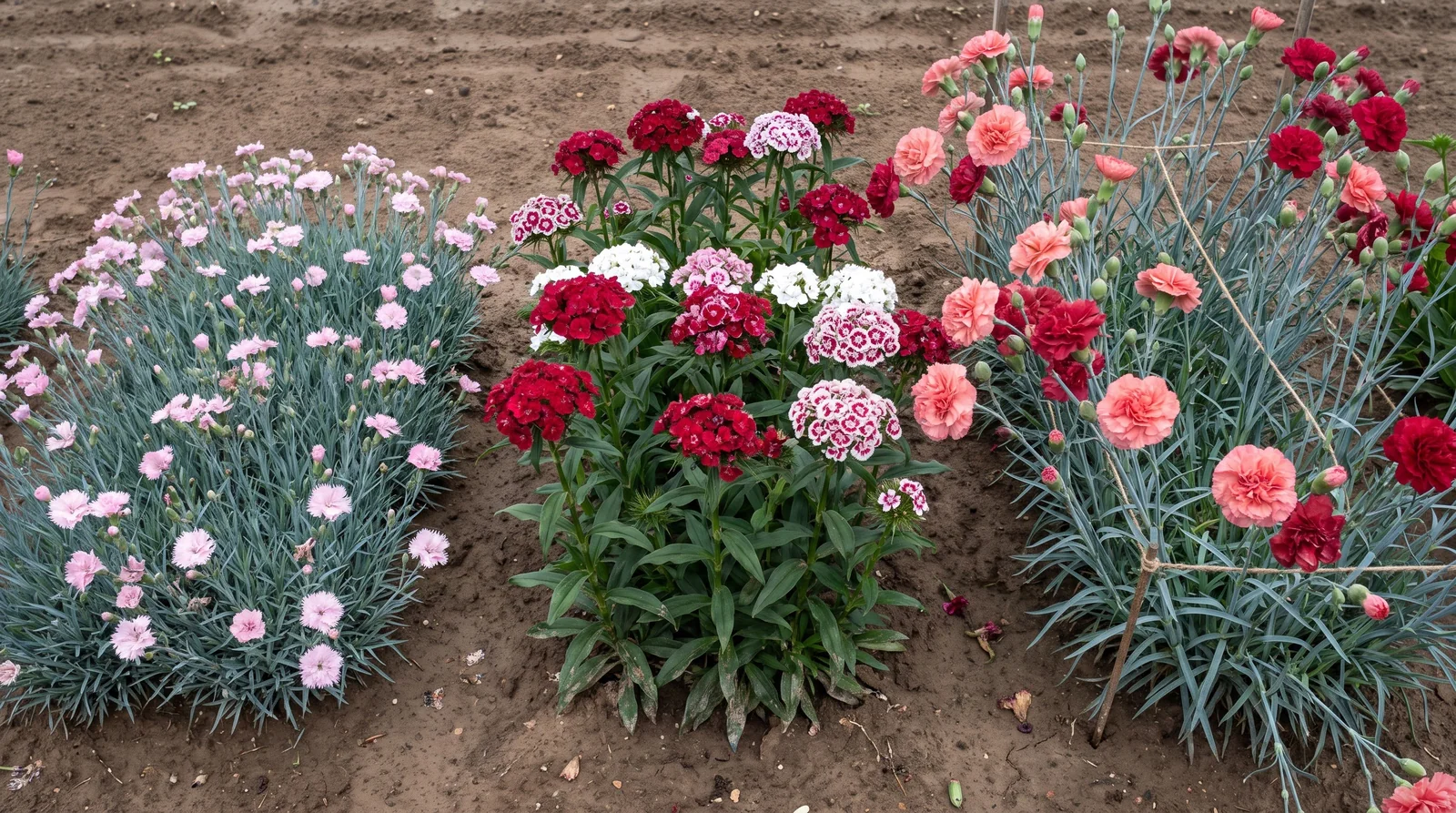
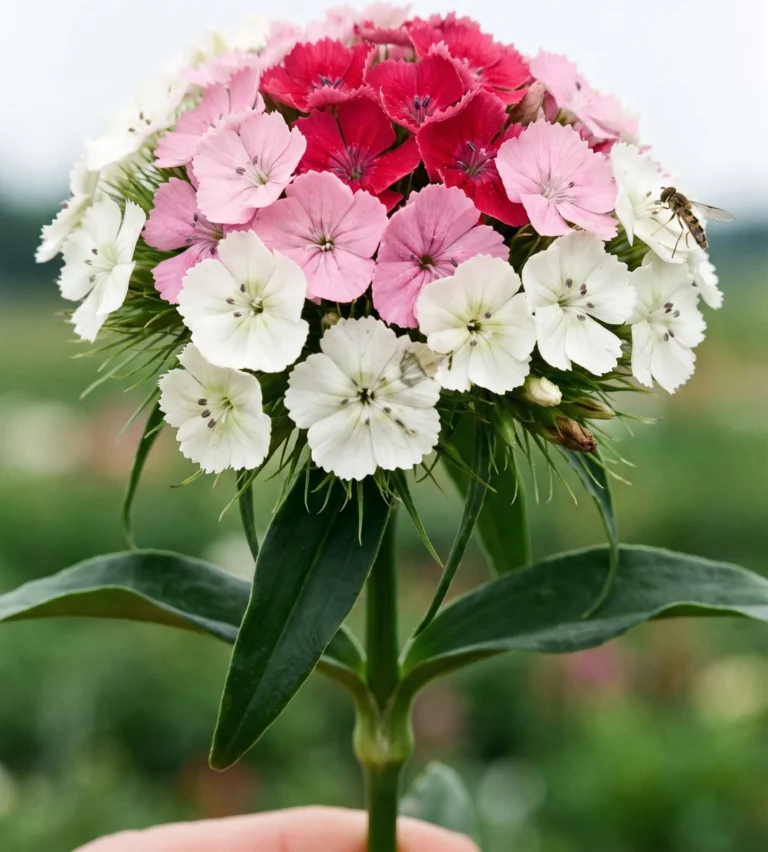
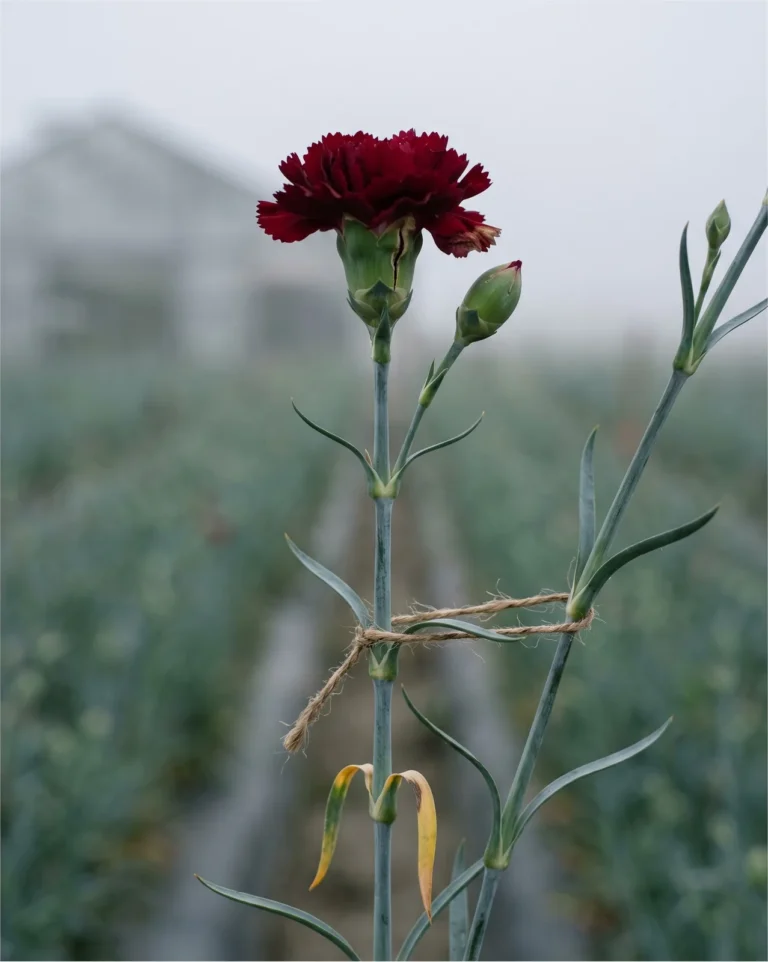
Looking at plant shape helps you tell them apart quickly. A low, evergreen mat of foliage marks a garden pink. Stiff, upright stems carrying flat flower heads belong to sweet William, named barbatus for the beard-like growth on the petals. Long stems reaching 3 to 4 feet belong to carnation, where a taller type is grown for florists and may be used as cut flowers and boutonnieres. A fourth kind sold in spring flats is China pink, Dianthus chinensis, grown as an annual though it can behave as a biennial or short-lived perennial. Beyond gardens, an unrelated biotechnology company also shares the name Dianthus.
The four plants sold as dianthus
Four plants share the dianthus name, parting company on life span, flower shape and height. Here is how they differ in bloom, size and garden use.
What dianthus looks like
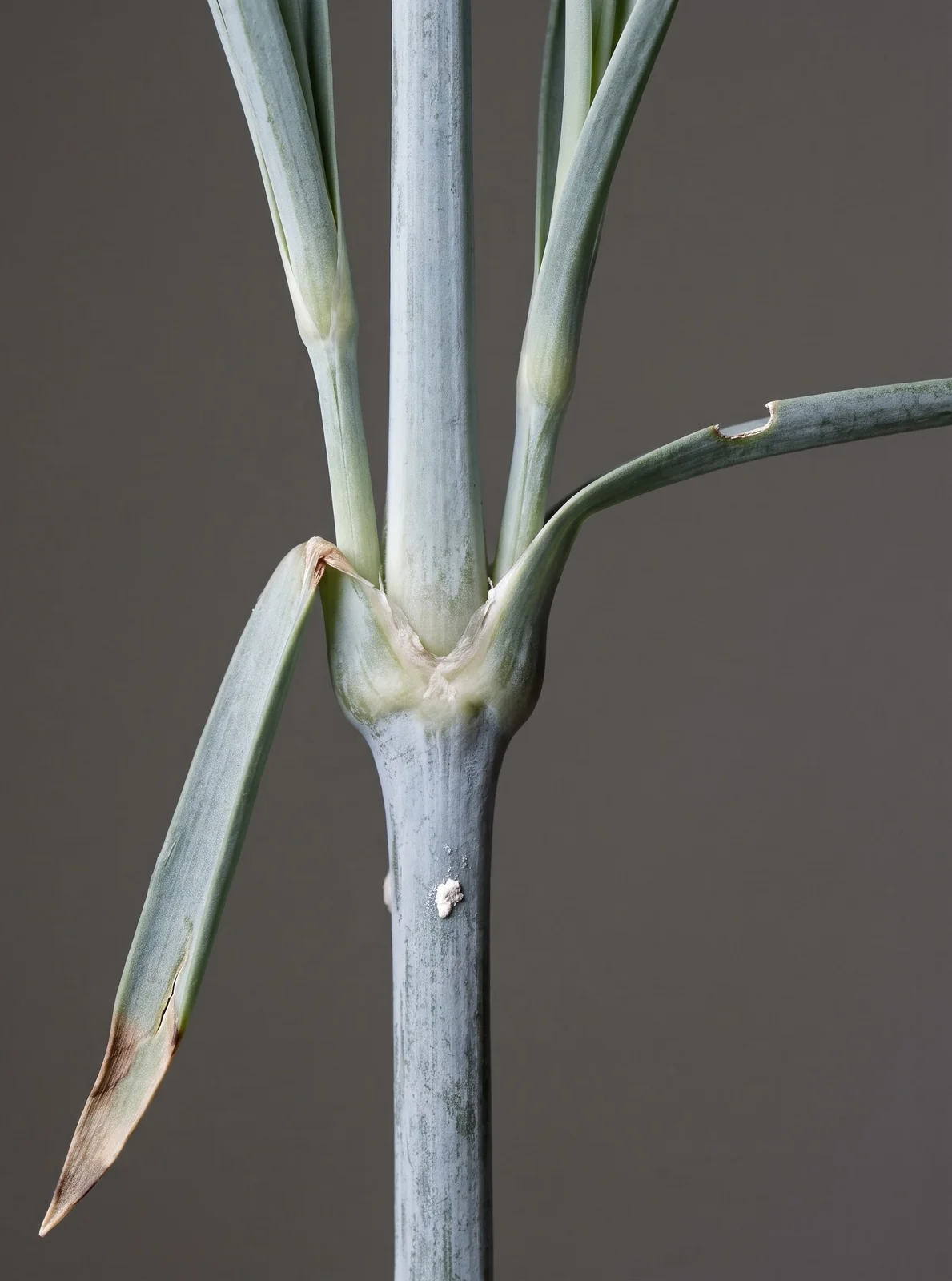
The leaves and stems give dianthus its recognizable look across the genus. Leaves are narrow, 2 to 3 inches long, set in opposite pairs at right angles on the stem, and often show a gray-green or blue-green cast. Garden pinks carry grasslike leaves 1 to 4 inches long. Carnation leaves are strap-like and grow up to 6 inches long, paired and joined at the nodes. Stems are jointed and swollen where the leaves meet, a trait the pink family usually shares. On carnation stems, each swollen joint carries a conspicuous stipular scar.
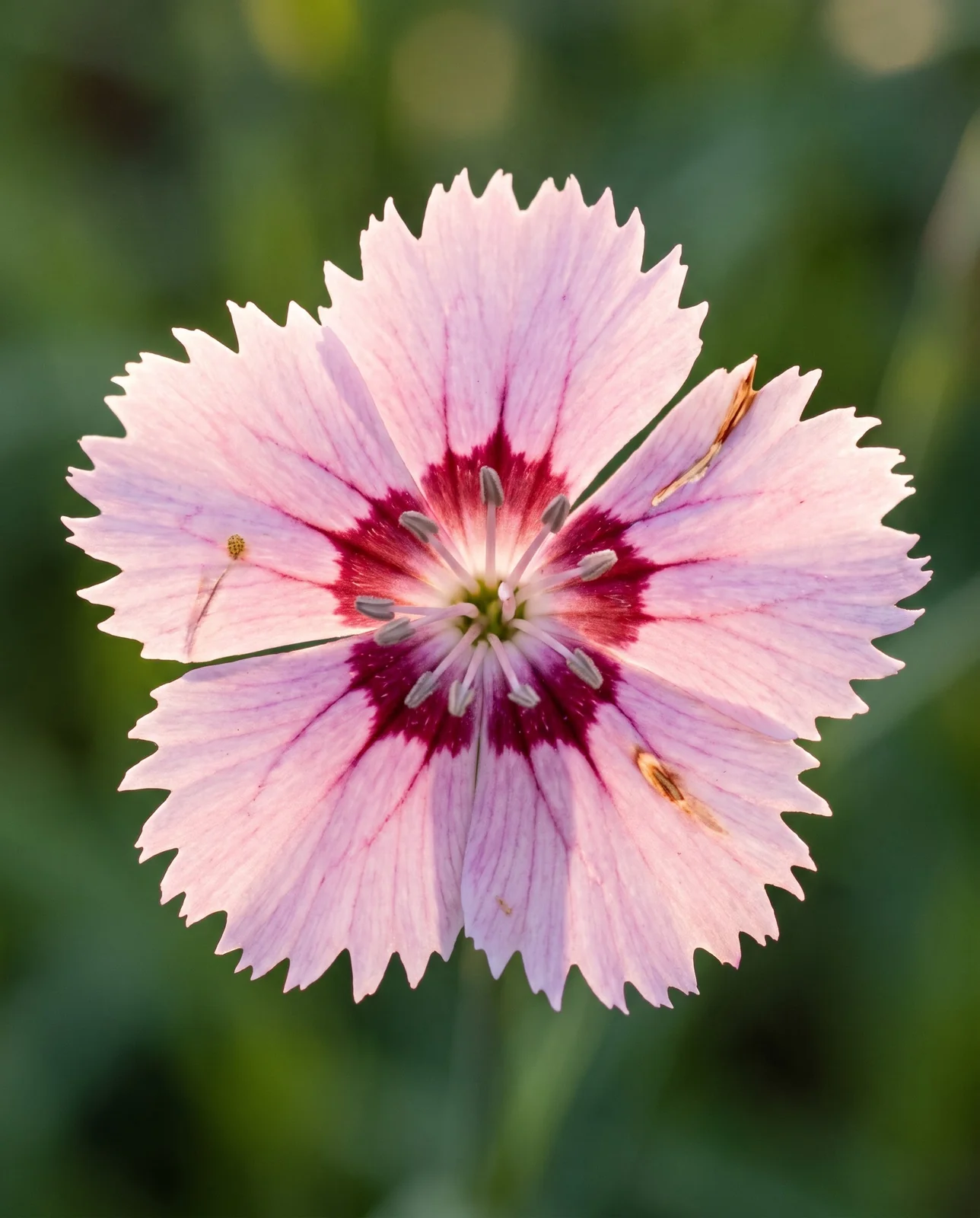
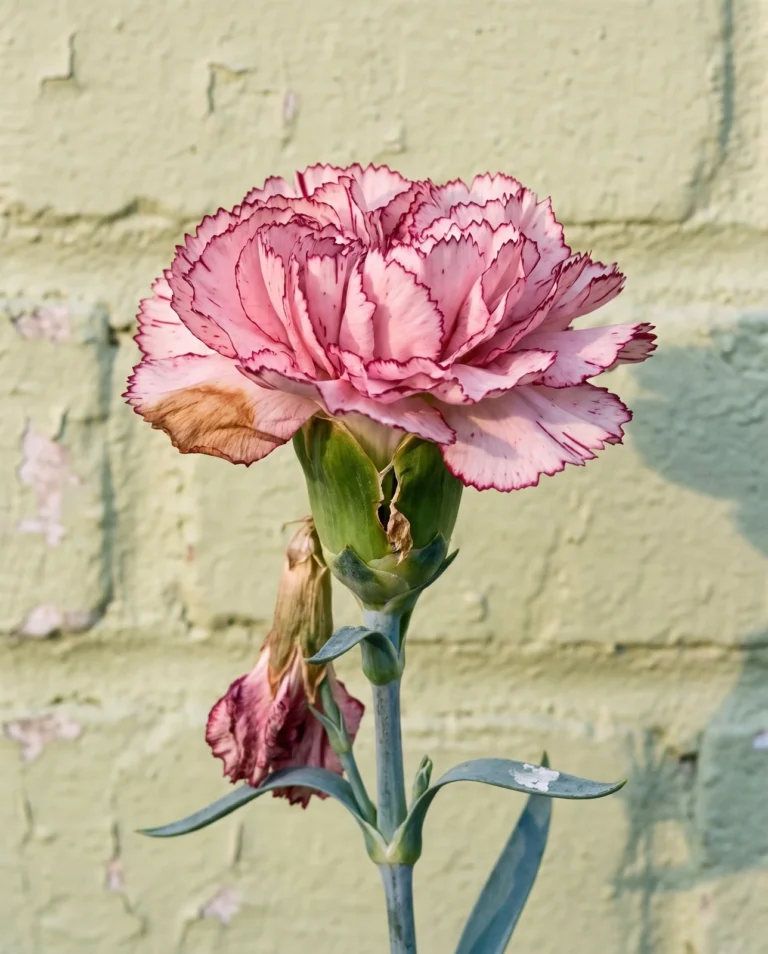
The flowers show where the four groups part company. Across the genus, blooms have five flattened petals held in dense heads, open sprays, or rarely singly. Each petal narrows to a slender base before opening into the wider blade. Garden pinks carry radially symmetric flowers with 10 stamens and deeply fringed petals. Fragrance varies across the genus, though some carnation cultivars have no fragrance at all and are often chosen for boutonnieres. A plant bought in bud for its scent can still open without one.
Annual, biennial or perennial
Whether your dianthus returns next spring depends on which plant you have, because the genus includes annuals, evergreen perennials and subshrubs. Garden pinks are the only group with a single life cycle, returning reliably as perennials. The other three kinds behave more flexibly. Carnation is botanically a perennial, but gardeners often grow it as an annual. Sweet William spans all three life cycles. China pinks dislike hot, humid summers, so they are grown mainly as cool-weather annuals even though they can persist as short-lived perennials. Nothing on the pot explains which of these habits you are bringing home.
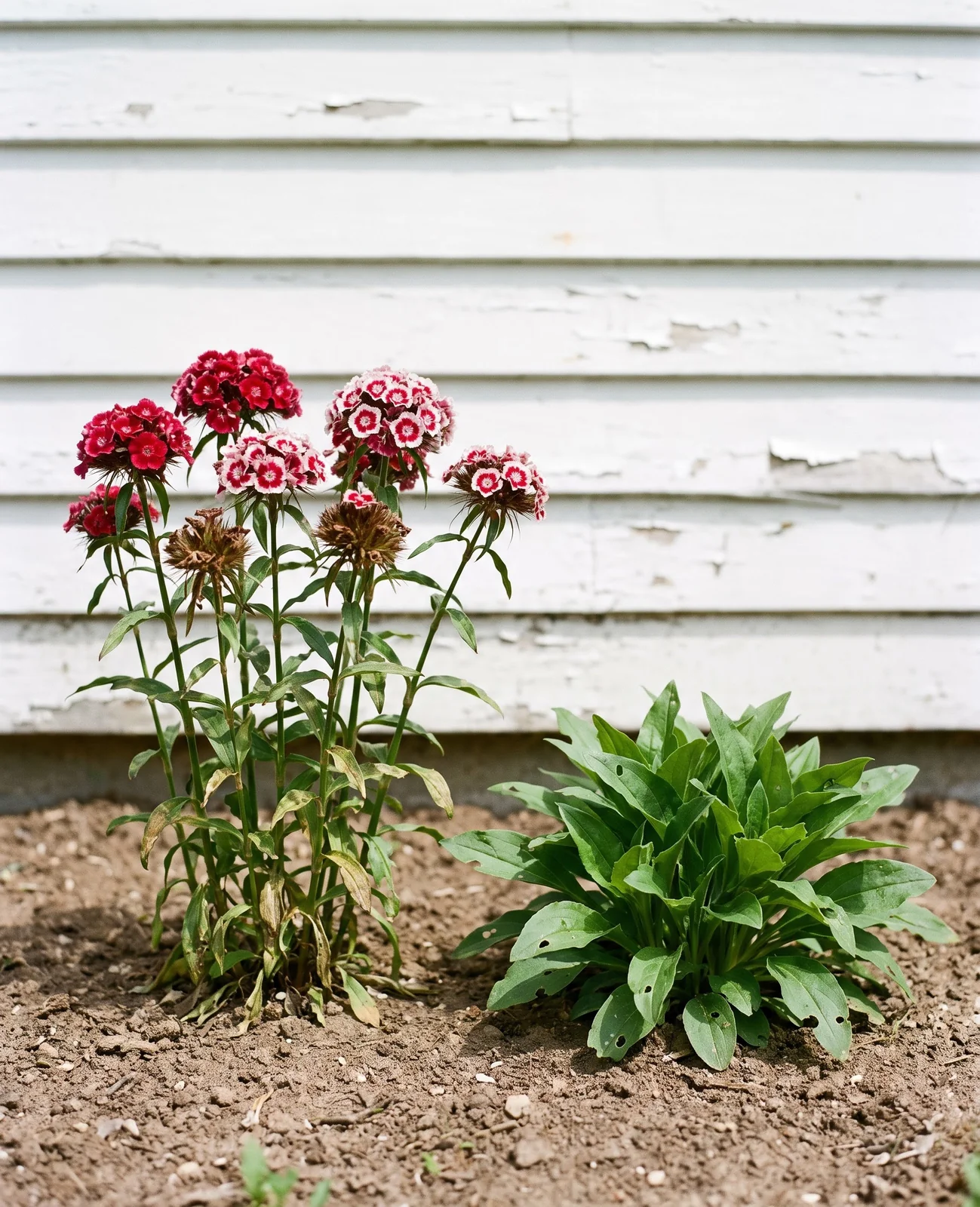
Sweet William can fit into the garden on several different schedules. It is a short-lived perennial that is perhaps best grown as a biennial, though planting cold-treated starts lets you grow it as an annual. In many gardens it behaves simply as a biennial. For cut flowers, selections like the Amazon series are botanically perennial, but growers raise them as annuals to market larger stems from more floriferous plants.
A biennial rhythm changes how you plan your beds. The plant grows leaves in its first year and flowers in its second, which means sowing seed in late spring and planting out into flowering spots in autumn. A young sweet William that produces only leaves through its first summer is simply on that biennial schedule. In optimum conditions, the plant reseeds each year and can stay in the garden for many years as though it were a long-lived perennial.
Hardiness, and why the published numbers differ
Hardiness ratings for dianthus differ because they describe very different plants under one genus name. Broad genus ratings usually span USDA zones 4a to 9b, while other sources set the cold limit at zone 5. Depending on the cultivar tier, published advice shifts between zones 3 to 9, zones 4 to 9, and zones 4 to 8 for perennial lines. No single zone bracket fits every dianthus when the group spans tender bedding annuals and cold-hardy evergreen cushions.
Looking at individual species makes the hardiness numbers much clearer. Sweet William is hardy across zones 3 to 9, or 3a through 9b. Garden pinks share that cold tolerance across zones 3a through 9b. Carnations are more tender, surviving in zones 6a through 9b. China pink is also limited to zones 6 to 9. Within sweet William, the Amazon series behaves as a tender perennial in zones 6 to 8, where it is still best grown as an annual. Sorted by species, the numbers simply describe four separate plants with their own cold limits.
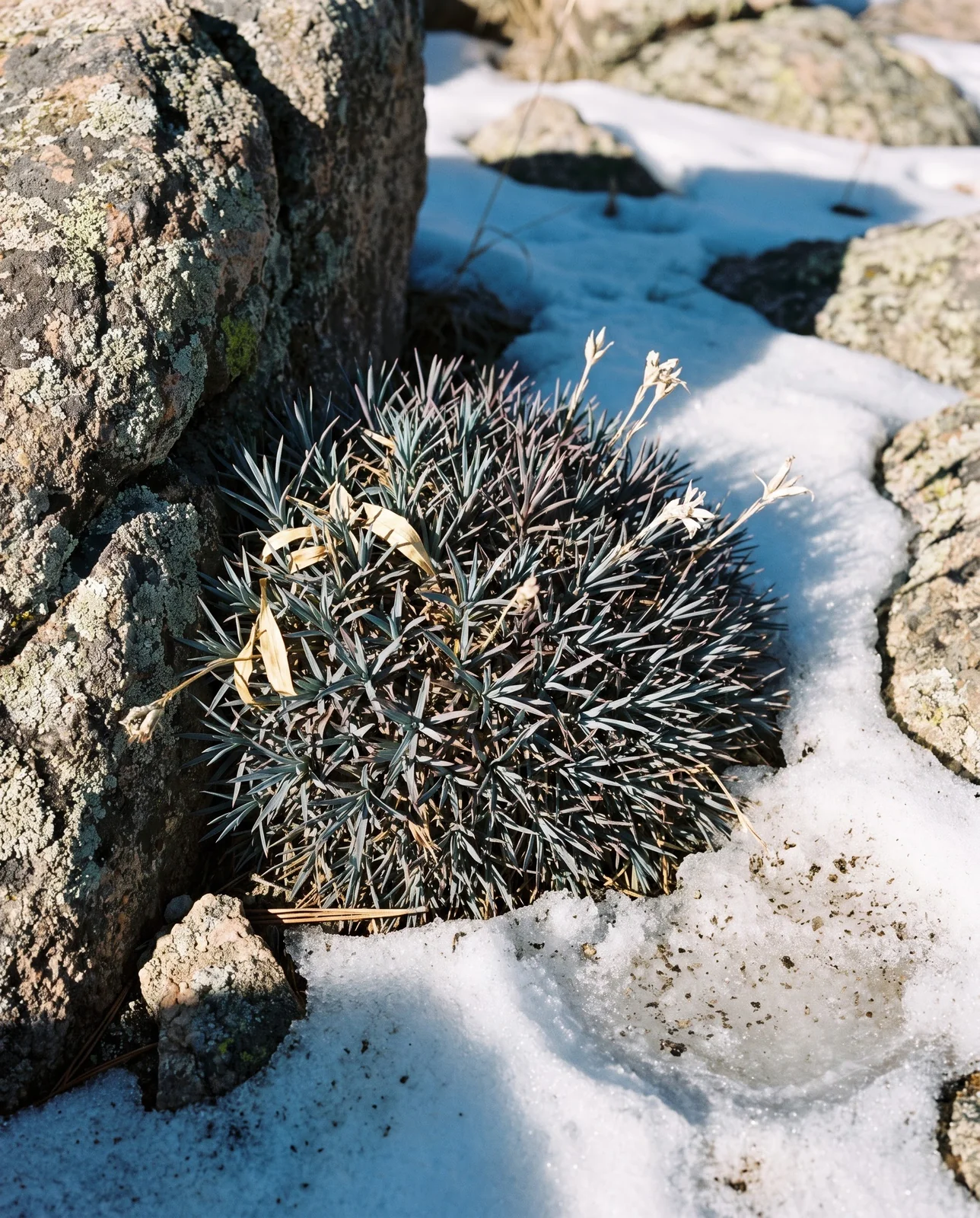
British ratings place both garden pinks and sweet William in the highest hardiness band, H7, surviving below about minus 4 F in severe continental winters. When a tag lacks details, the foliage gives a practical clue. In mountain gardens around zone 6, dianthus varieties with stiff, blue-green or gray-green leaves can prove reliably perennial. That habit aligns with garden pinks, whose evergreen mats carry the widest cold range across zones 3a through 9b.
Telling dianthus from phlox
The leaves settle the difference between dianthus and garden phlox right away. Dianthus leaves are narrow and slender, while garden phlox carries deep green, oval leaves 4 to 6 inches long with clear veins. Their blooms separate just as clearly. A phlox flower forms a long corolla tube with five flat petal lobes, while dianthus petals are clawed and often fringed along the edge. Stems provide a third check. Phlox stems grow stiff and erect without the swollen, jointed nodes that mark dianthus. The two can still cause confusion at the bench. An annual dianthus like Amazon Neon Purple looks nearly identical to a perennial phlox like Ultraviolet.
Telling them apart matters. The annual dianthus finishes after a single season, while the perennial phlox returns each spring. They share a cold limit at zone 4a, but garden phlox takes less summer heat than dianthus, topping out at zone 8b. Both plants are often infected by anthracnose, so advice for spotted leaves applies to either one.
Where to plant dianthus
Plant dianthus in full sun, though it tolerates some shade if good drainage and air circulation protect it from root rot and fungal disease. Aim for at least 6 hours of direct sunlight a day, though plants take very sunny spots and can manage in 2 to 6 hours of partial shade. Dianthus can get by in partial shade, but generous sun is what brings the flowers.
The soil can be clay, loam, or sand at a neutral pH of 6.0 to 8.0, provided it drains well or stays occasionally dry. Dianthus is a water-wise plant that does not tolerate wet soil and needs good air circulation. When the ground drains poorly, China pink plantings may melt out in the center or burn out in hot summers. A spot on a gentle slope, along a wall top, or in a gritty bed provides the reliable drainage dianthus needs.
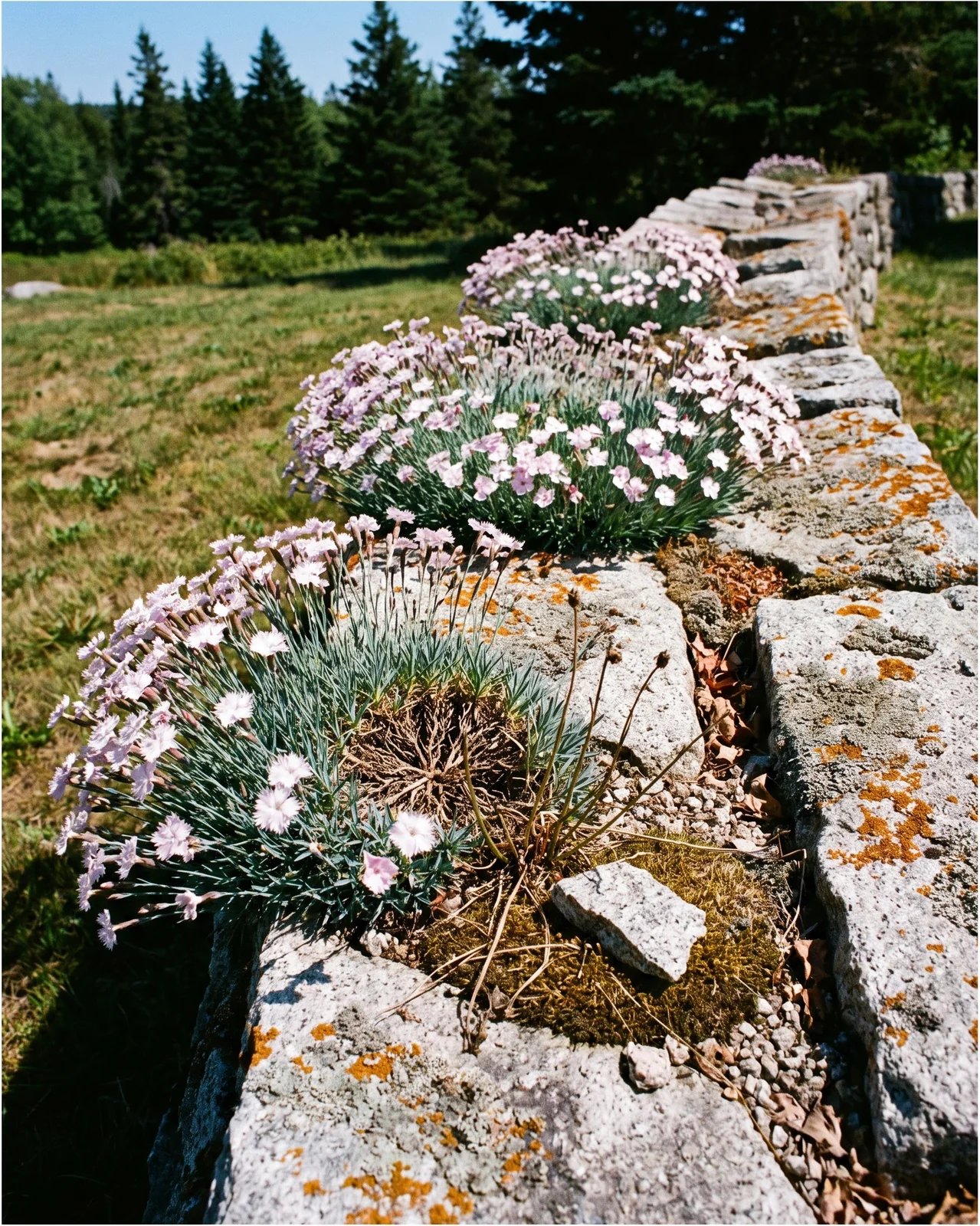
Crown rot and the mulch line
Because dianthus is susceptible to crown rot, keep mulch from touching the plant and set the crown slightly above soil level. Sweet William and China pink are particularly prone to crown rot in poorly drained soils.
Rhizoctonia solani and Pythium cause crown and root rot on sweet William, showing as general wilting, decline, and collapse of the whole plant. Avoid watering directly into the crown, because mulch banked against the stems holds moisture where standing water encourages rot. Setting the crown slightly high costs nothing at planting, and it prevents damage that cannot be corrected later without lifting the plant.
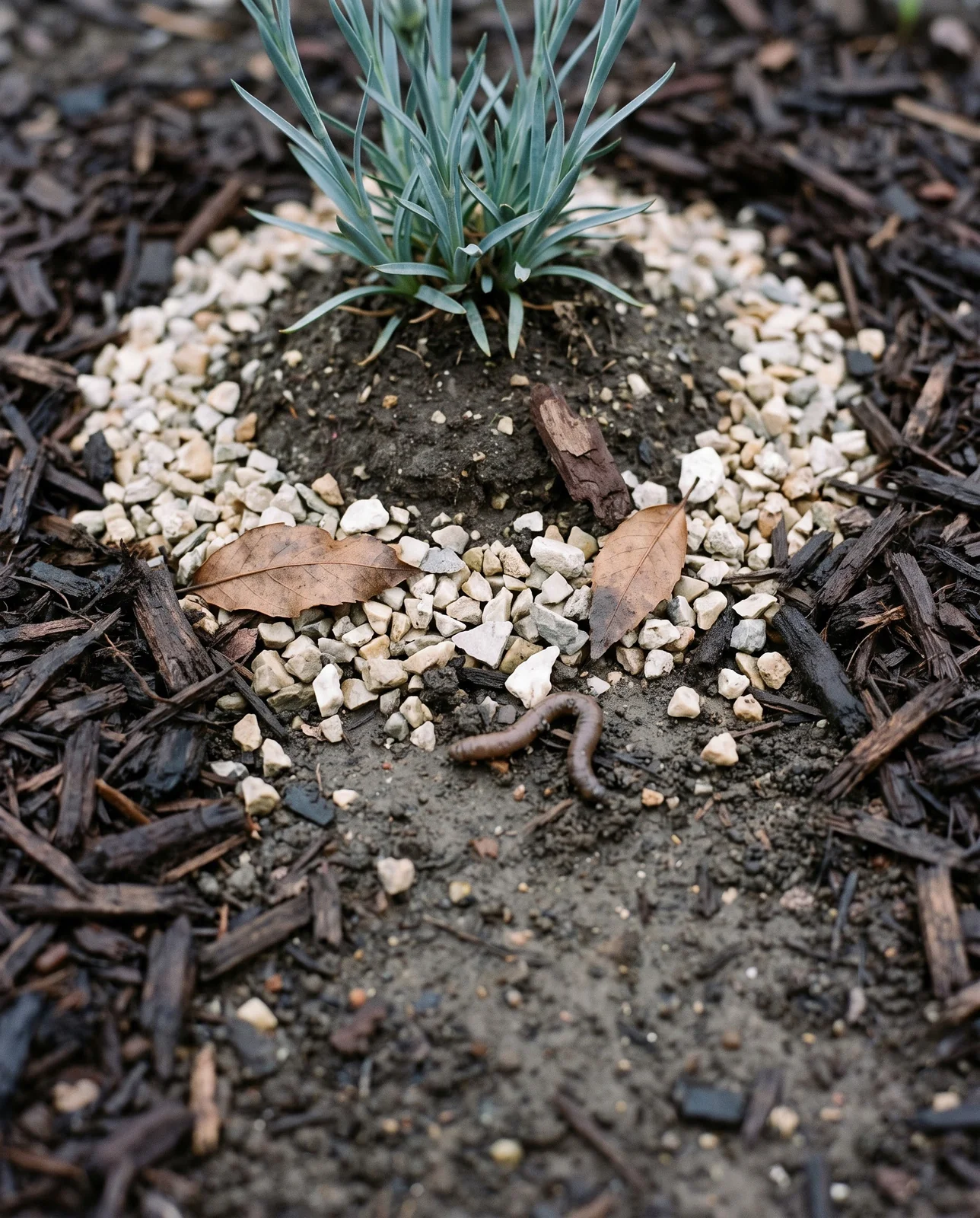
Watering without soaking the crown
Water dianthus at the base, and avoid overwatering, especially in heavy soils. If possible, water early in the day so the leaves dry before evening. Established plants ask for less water once roots settle into gritty soil, but young plants need moisture until they settle.
Newly planted specimens need closer attention in hot weather, when heat stress can leave young plants needing extra water. A new plant can be watered daily until established, in the early morning or late afternoon.
Why dianthus stops flowering
Too much shade is the main reason a dianthus fails to bloom, because it requires full sun and shade suppresses flowers. If your plant looks green but bare, check sunlight, drainage, deadheading, and crown health first. Sunlight is the hardest of those to fix in place, especially when nearby shrubs have grown over the bed. Extra food and water cannot make up for shade, so moving the plant into open sun is what brings back the buds.
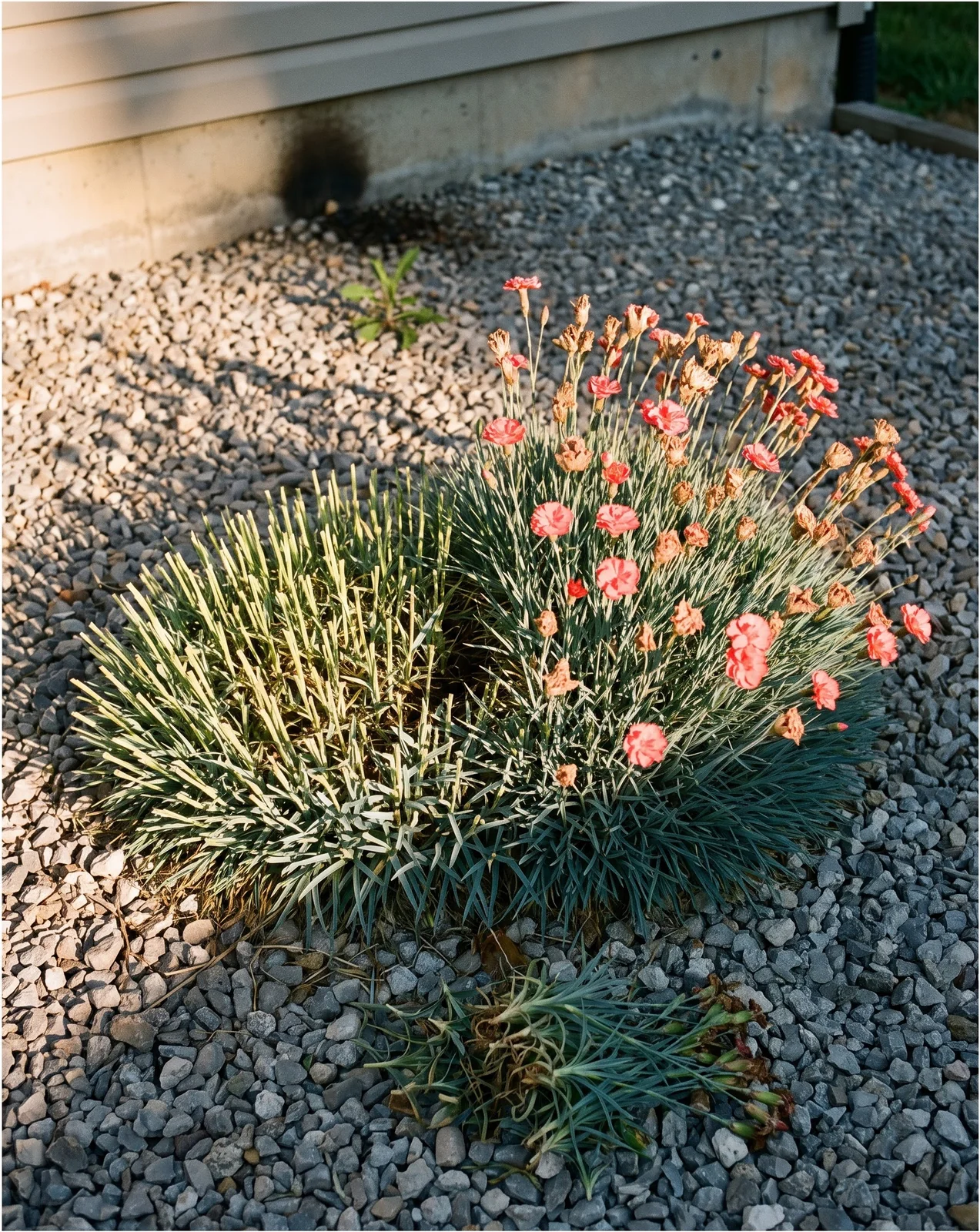
Old flowers left standing on the stems are the second reason flowering stalls. A straggly plant with few blooms likely needs deadheading, more sun, or a trim back to encourage fresh growth. China pinks are high-maintenance plants that need regular shearing to force additional bloom. Shearing the spent flower stems stops the plant from setting seed and coaxes out fresh buds. If leaves are turning yellow while the flowers stop, the cause usually sits down at the crown.
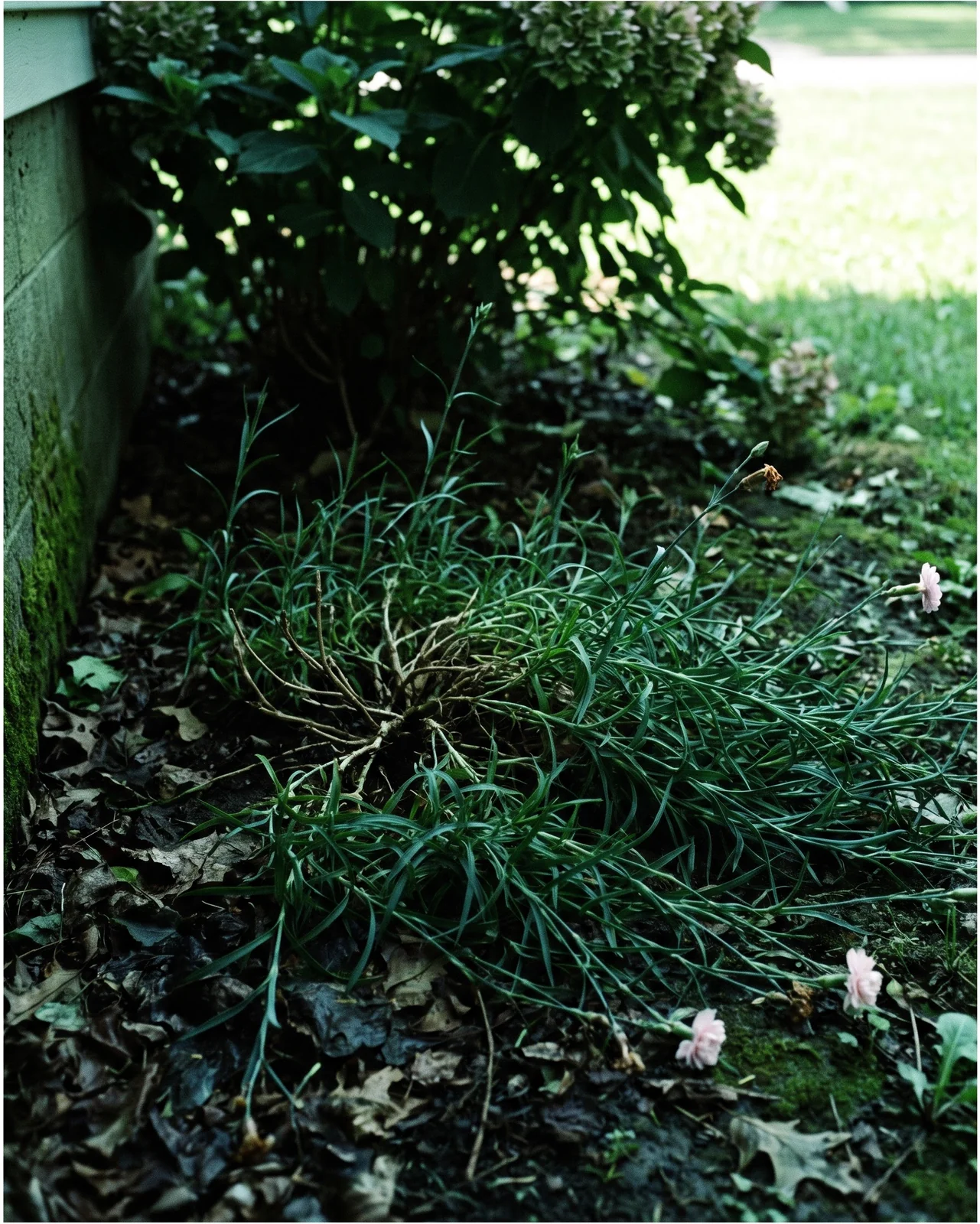
Work out why yours is not blooming
Follow these checks in order for a plant that grows well but will not flower. The first match usually tells you what to fix.
Yellow leaves: three different things
Yellow leaves in midsummer point to three different causes, and two of them require action. In perennial dianthus, yellowing foliage can simply be natural summer dormancy, though overwatering also causes yellow leaves. Some tough plants keep blooming straight through a very hot, humid summer, but taking a midsummer rest is common. A plant that dulls in color while holding its shape and firm gray foliage is merely resting, so leave it alone.
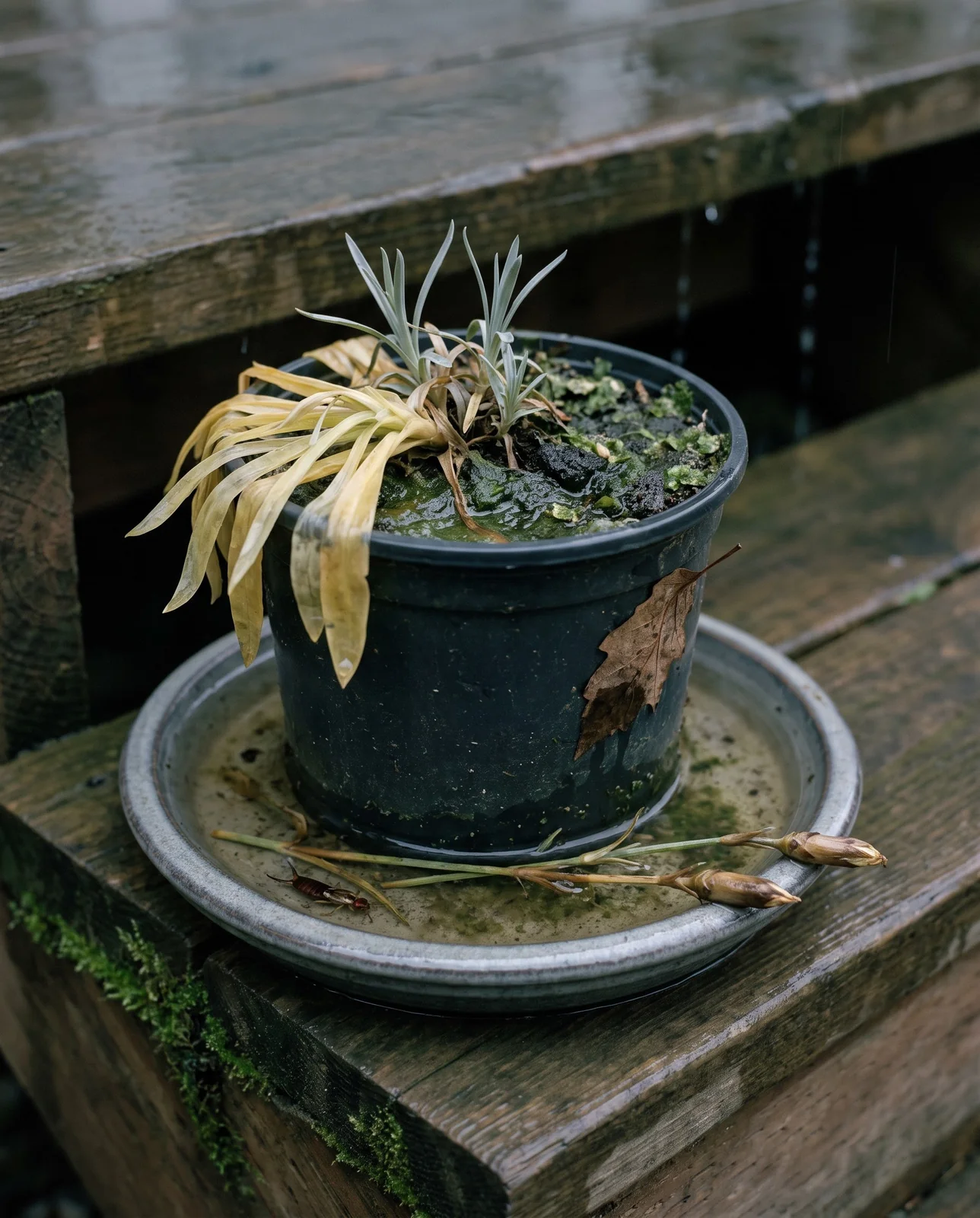
The second pattern is root and crown rot, which starts at the soil line and cannot be reversed. With crown rot, wilting is often accompanied by browning and rotting of roots and crown, followed by yellowing and death of outer leaves until the whole plant dies. Heavily symptomatic plants should simply be removed, since recovery is unlikely. Checking the crown gives you a quick answer: brown, soft tissue where stems meet the soil confirms rot, which extra feeding cannot fix.
The third pattern is leaf disease, which shows visible signs before the yellowing spreads. Under fungal attack, leaves lose their luster and turn yellow before wilting and dying. With anthracnose, lower leaves develop irregular spotting and blighting that turns brown, showing tiny black dots with needle-like bristles. Symptoms typically appear as dark spots, leaf yellowing, or sunken lesions that can quickly run together into irregular dark patches, repeating across several infection cycles in wet weather. Spotted foliage above a sound crown points to leaf disease, while a brown, rotted base at the soil line points back to crown rot.
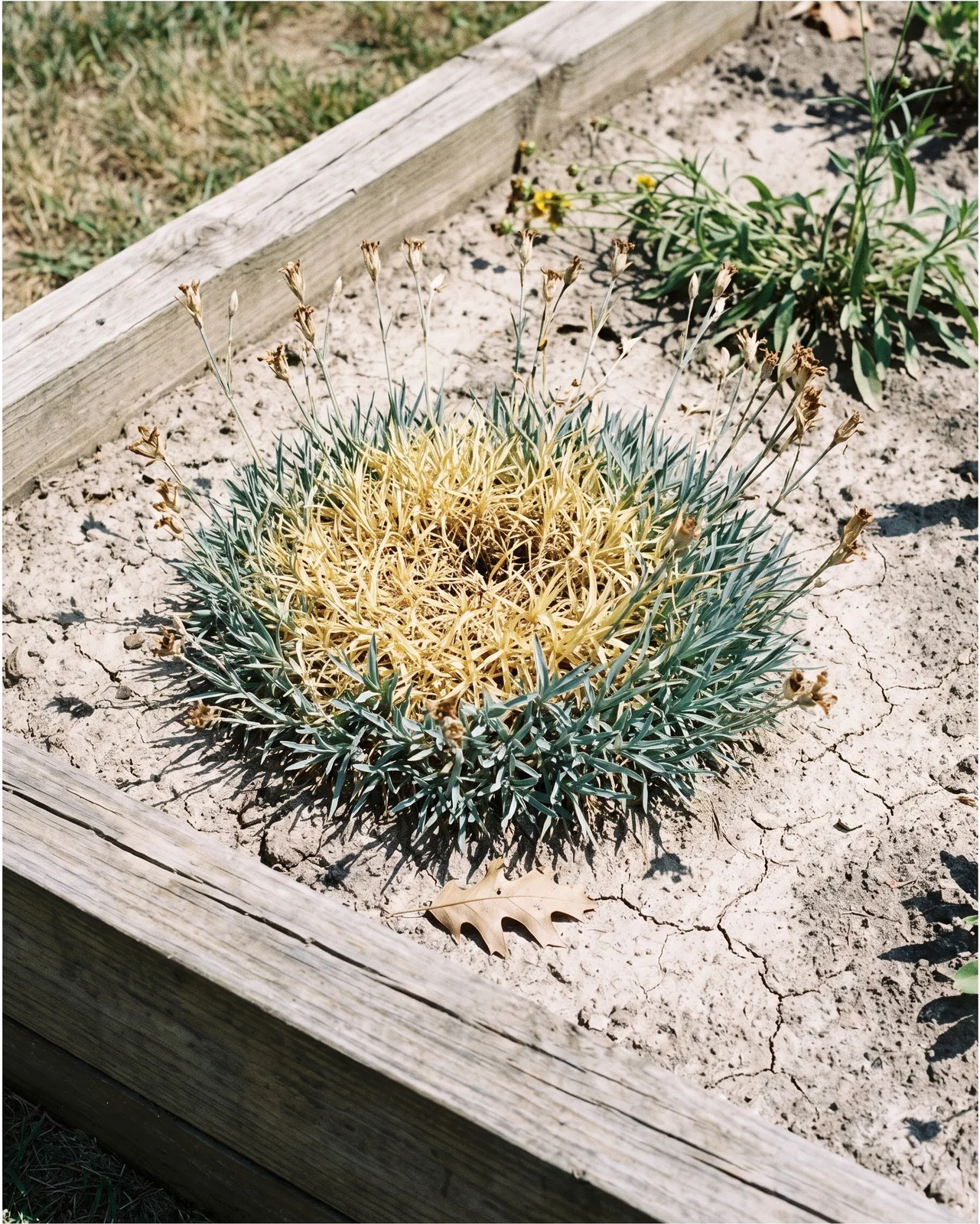
Problems in the order they come up
Common dianthus problems, with the symptoms to look for, the underlying cause, and what to do.
Symptoms: general wilting, decline, and collapse of the whole plant. Cause: soil fungi, Rhizoctonia solani and Pythium, attacking the base in poorly drained ground, with sweet William and China pink particularly susceptible. What to do: avoid overwatering, especially in heavy soils, and avoid watering directly into the crown area.
Symptoms: spotting and blighting on lower leaves that can move into the main stem and collapse the entire plant if left unchecked. Cause: fungal spores spread by wind, splashing water, and handling wet plants. What to do: water at the base to prevent splashing, and avoid handling damp foliage. Old-fashioned sweet William cultivars tolerate the fungus far better than several newer selections.
Symptoms: wilting shoots, splitting stems, frayed yellow vascular streaks, and sticky bacterial ooze when a stem is cut. Cause: bacterial infection that appears to spread rapidly at high temperatures. What to do: remove infected plants promptly, and keep them out of your compost.
Symptoms: rust spots forming on foliage, with sweet William particularly susceptible in poorly drained soil. Cause: fungal infection encouraged by standing dampness. What to do: improve drainage and give plants plenty of space for air circulation, which protects them from both rust and crown rot.
Symptoms: chewed foliage, as sweet William can be bothered by snails and slugs in shaded areas. Cause: slugs and snails hiding and feeding in damp, shaded spots. What to do: plant in full sun where the soil dries out quickly. Deer tend to avoid sweet William, so snails and slugs in damp shade are the primary pest to watch.
Deadheading against shearing
Deadheading takes off single faded flowers as they finish, while shearing trims the whole cushion down at once. How you prune depends on the type you grow. On garden pinks, deadhead regularly to prolong flowering. For sweet William, deadhead as needed, though prompt deadheading and shearing back large plantings helps promote perennial tendencies. China pinks benefit from deadheading spent flowers to prolong bloom, and you can shear the plant when flowering declines to encourage more blossoms. On carnations, deadheading spent blossoms can prolong bloom, while pinching out the center promotes bushier growth.
Shearing can feel drastic, because it takes off flowers, stems and foliage tips together. The simple rule is to remove spent blooms on tall varieties, or shear mounding plants back after bloom to encourage re-bloom. That cut lets the plant rebuild a neat cushion, so the next flowers open over fresh growth. After the first killing frost, cut the stems back to an inch or two above the soil line.
When to plant dianthus
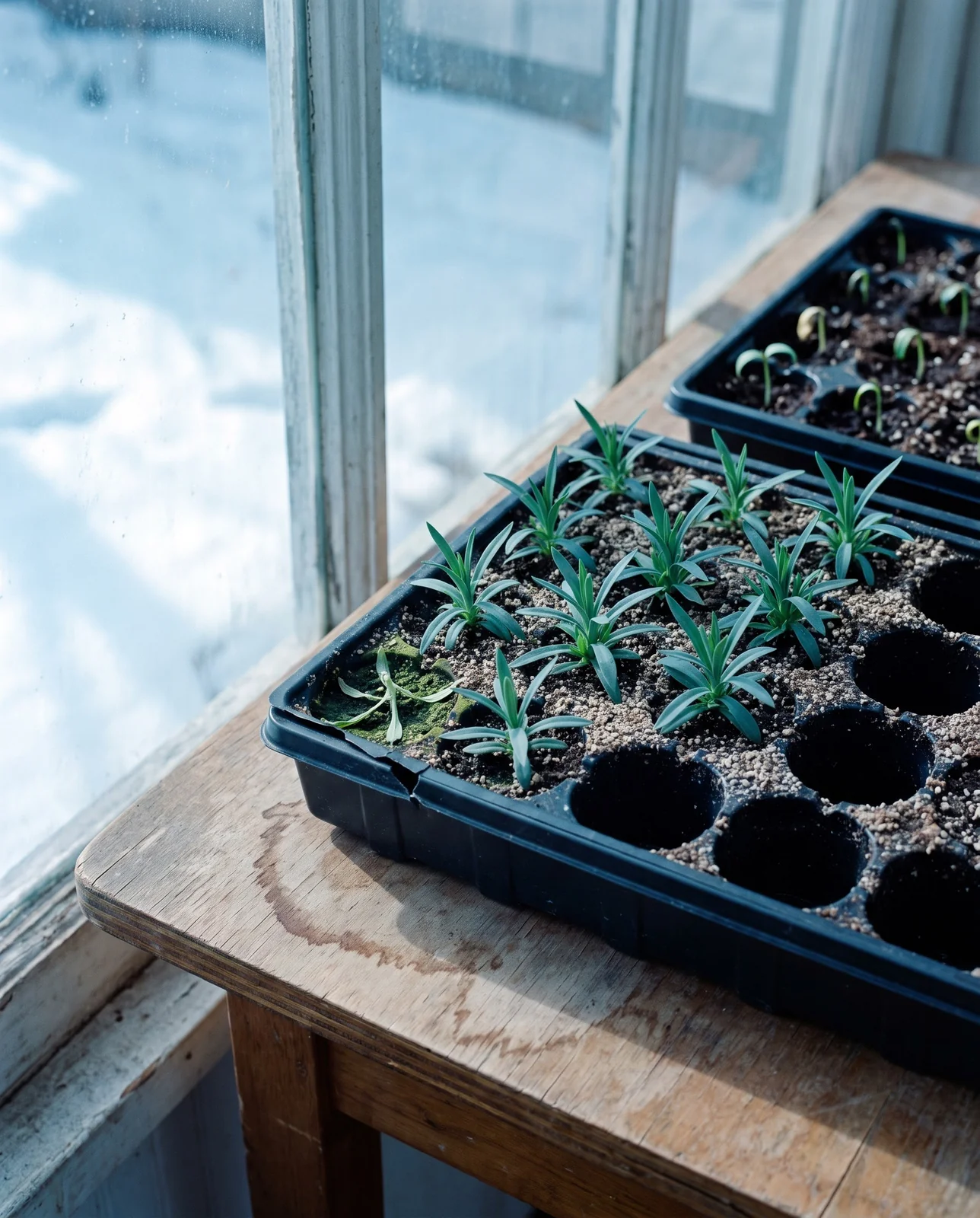
Dianthus belongs in the garden while the weather is still cool, well before summer annuals go out. Half-hardy bedding varieties tolerate light frost and are usually planted in early spring. You can start seeds indoors 6 to 8 weeks before the average last frost date, or wait to direct-sow and transplant seedlings once the danger of frost has passed. For early garden sowing, you can direct-seed outdoors in early spring while light frost is still possible, about 10 to 12 weeks before the final spring frost. First-year-flowering cut-flower types like Sweet and Amazon can be planted up to a month before the last frost, since they prefer cool air to bulk up.
Sweet William follows two different planting calendars depending on the harvest you want. When grown as a traditional biennial, seed is sown in late summer or early fall for flowers the next spring. For same-season cut flowers, series like Amazon are sown in spring, 6 to 8 weeks before the last frost. While young plants prefer cool air, the seed needs warmth to start. The Amazon series germinates at a soil temperature of 64 to 70 F, and then grows on with daytime temperatures of 50 to 72 F and night temperatures of 40 to 60 F.
Perennial varieties also benefit from an early start. Plant perennial dianthus during the cooler months of spring or fall to encourage deep root growth and a compact mound. Annual China pinks need an early jump indoors, where seed is started 6 to 8 weeks before the last frost, with seedlings moving outdoors 1 to 2 weeks before the final frost date. If you brought a flat home alongside cool-season pansies, your dianthus welcomes that exact same early window and cool air.
Named series and cultivar groups
Popular varieties and garden groups, with the flower colors, habits and heights typical of each type.
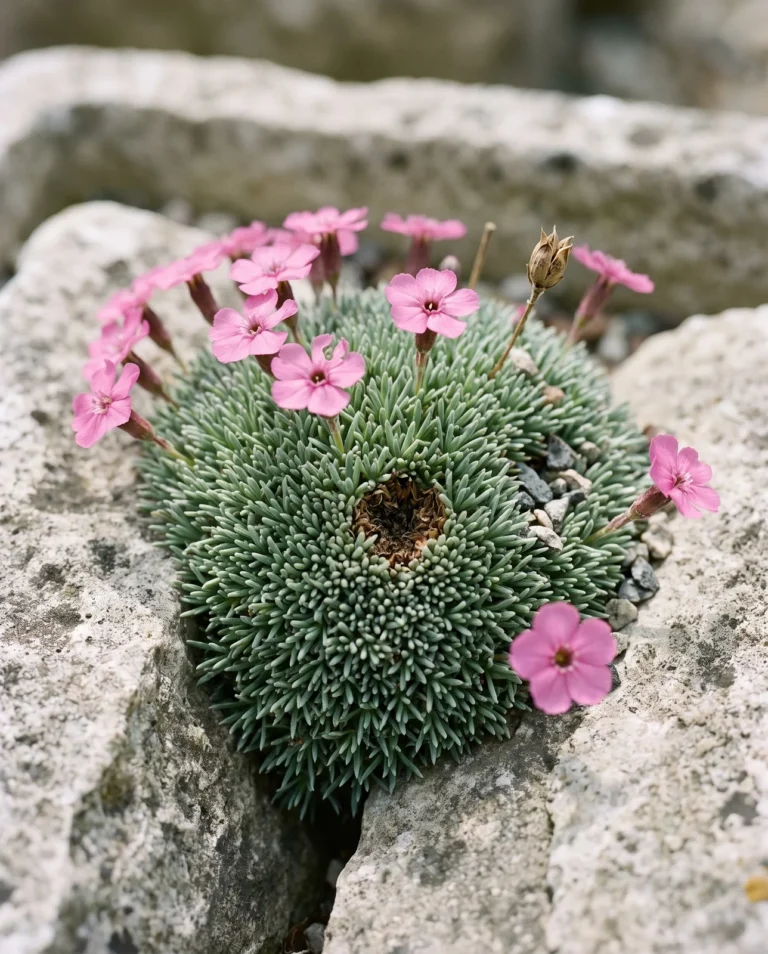
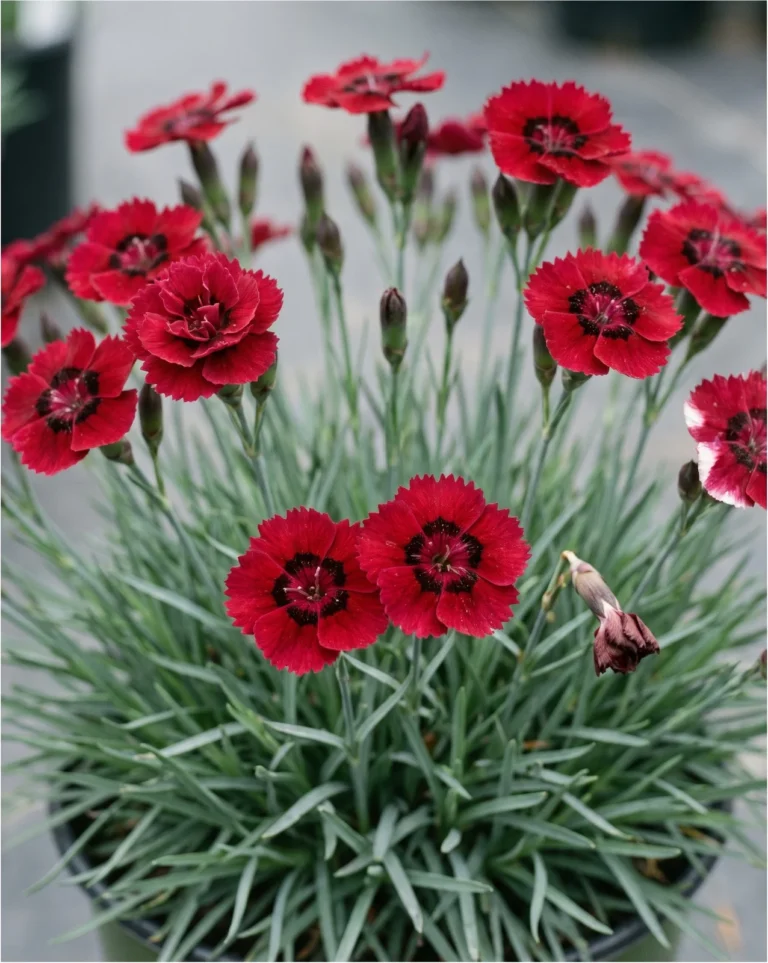
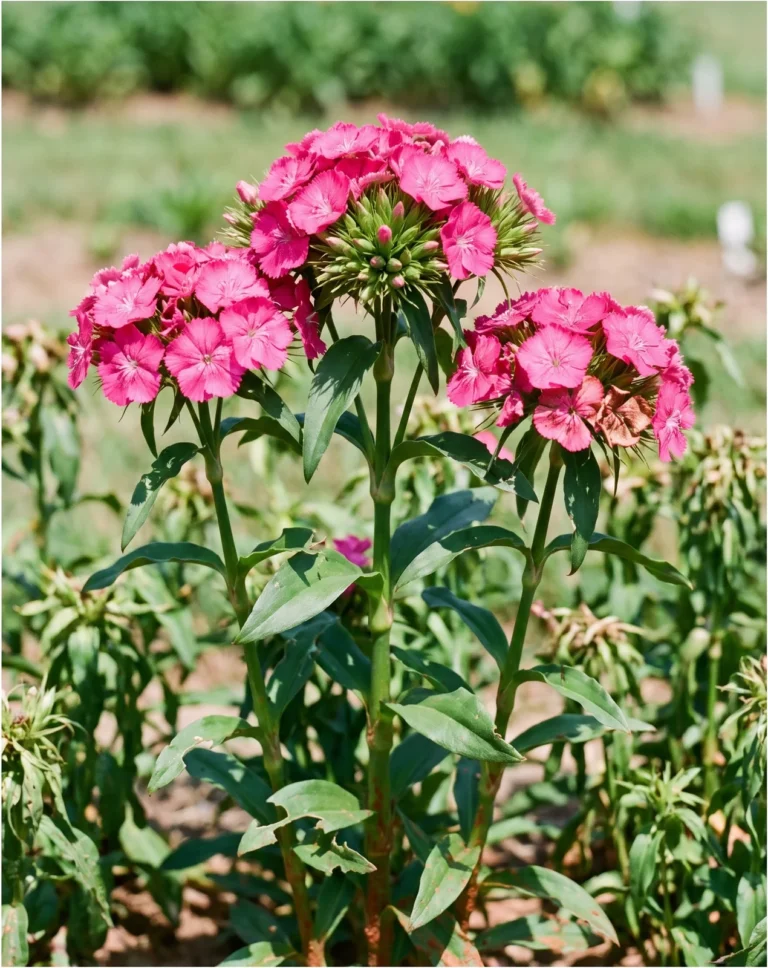
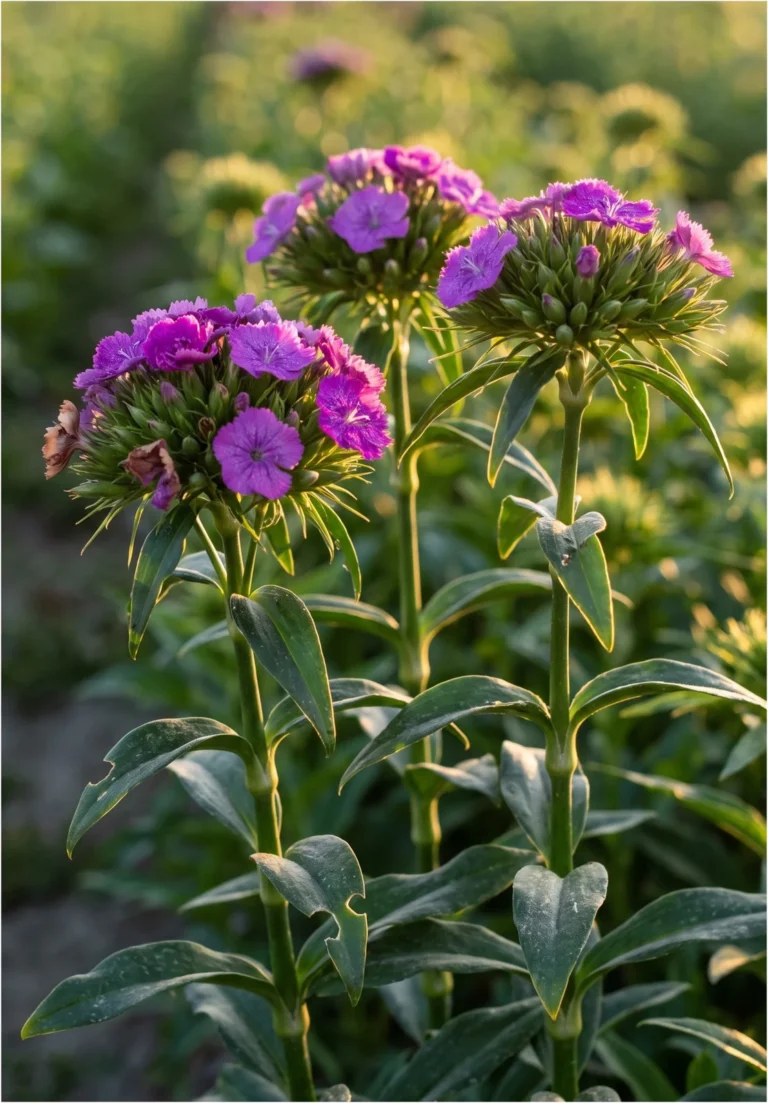
How big dianthus gets
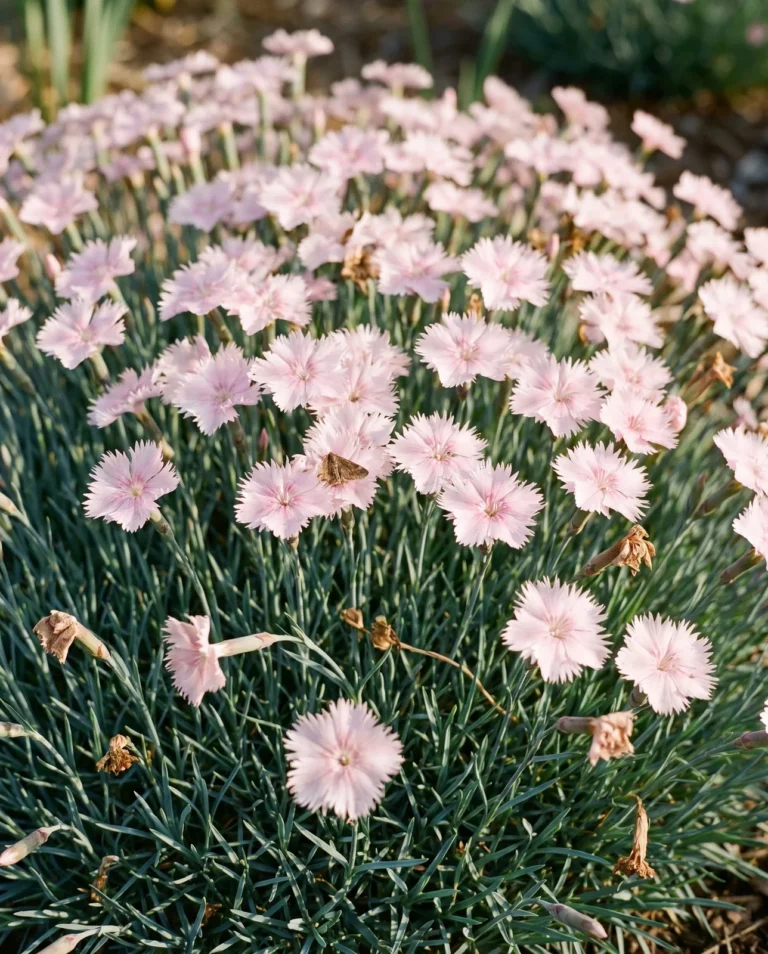
Dianthus ranges from creeping ground cushions to upright stems, spanning 4 inches to 3 feet in height and 1 to 2 feet across. Garden carnations typically stand 1 to 4 feet tall and 6 inches to 1 foot wide. As a species, carnation grows as a herbaceous perennial up to about 32 inches tall. Sweet William spans roughly 5 to 36 inches depending on the variety. Common garden forms usually grow 1 to 2 feet tall and 6 inches to 1 foot wide. China pink can reach up to 30 inches tall in its species form, though most garden cultivars stay a compact 6 to 12 inches. Perennial Cheddar and cottage pinks form blue-gray or green mats, with varieties as low as 2 inches and others reaching 16 inches. Because sizes differ so much between varieties, checking the cultivar name matters more than reading a generic tag.
Containers, path edges and wall tops
Low dianthus thrives along sunny garden edges, stone wall tops and containers where water drains away quickly. Dwarf, mat-forming varieties suit border edging, containers, rock gardens, patio pavers, ground cover and rock walls. Medium to tall selections belong in flower borders and cutting gardens. These planting spots keep water moving away from the crown. Wall tops and paver joints hold very little moisture, while containers let excess water run freely out the bottom. In a pot, water the soil around the rim to protect the crown, and empty standing water from the saucer. Bedding selections grow 6 to 12 inches tall in full sun, producing nectar-laden flowers that draw butterflies. They share spring benches with sweet alyssum and make easy companions for cool-season edges.

Does dianthus spread
Dianthus widens where it grows, and any wider spread comes from dropped seed. Growth habits differ between groups: sweet William develops an upright, bushy shape, while garden pinks form low, mat-forming mounds. A mature garden pink cushion reaches 6 inches to 2 feet tall and spreads 1.5 to 2 feet across. Seeds can travel farther, and two introduced species, Dianthus armeria and Dianthus deltoides, now grow wild in North America. In garden borders, you may find occasional volunteer seedlings sprouting around the parent plant, which are simple to lift or weed out while young.

Deer, rabbits and pets
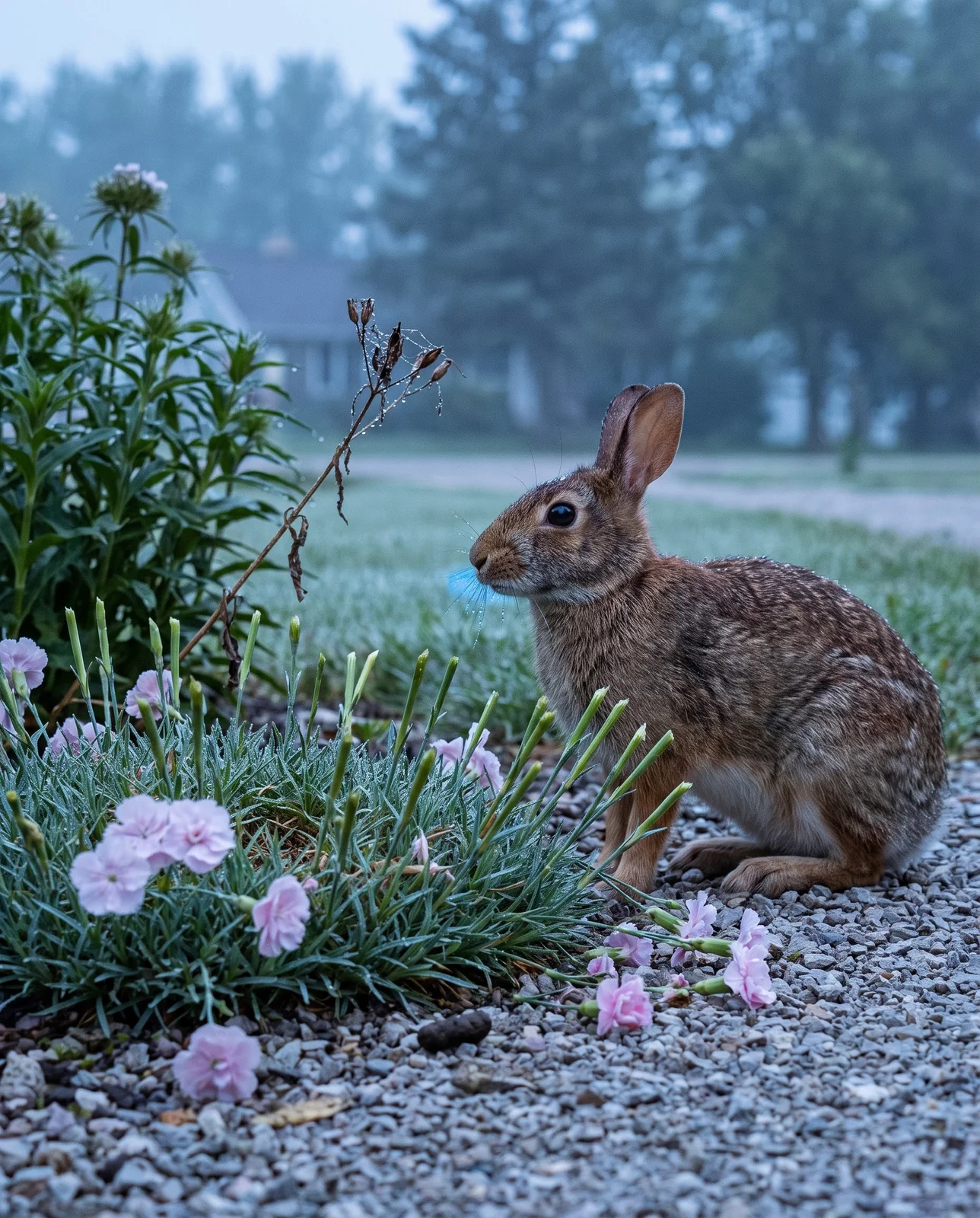
Dianthus is resistant to damage by deer, but rabbits will readily eat the foliage. Sweet William follows that same habit: deer tend to avoid the plant, while snails and slugs are the pests to watch. Because low cushions sit right at browsing height at the front of a bed, they remain an easy meal for hungry rabbits.
For pets, dianthus is mildly toxic to cats and dogs if eaten. The ASPCA lists Dianthus caryophyllus across carnations, sweet William and pinks. Carnations are toxic to dogs, cats and horses, while sweet William and pinks are toxic to dogs and cats. Across the genus, symptoms are low severity, with triterpenoid saponins in the leaves causing dermatitis and vomiting. Carnations can cause mild gastrointestinal upset and mild dermatitis from an unknown irritant. Sweet William has no reports of poisoning from being eaten, though touching it can irritate the skin. Garden pinks carry low toxicity only if eaten, causing vomiting, while skin irritation is minor or lasts only a few minutes.
What to expect, season by season
How dianthus behaves from the first spring planting through the years that follow.
Bedding dianthus can go into the garden while frost is still possible, since half-hardy types tolerate light frost and are usually planted in early spring. Perennial kinds settle in best during the cool months of spring or fall, which encourages deep rooting and keeps them compact. Garden pinks bloom from May through August. China pinks flower for up to 8 weeks in spring before summer heat sets in.
Summer heat often brings a quiet spell. Half-hardy dianthus usually declines in summer heat, but plants may bloom again in the fall. When the first killing frost arrives, cut the stems back to an inch or two above the soil line.
By the third year, the long-term patterns are clear. Perennial mats take two to five years to reach their full height and spread of 4 to 20 inches, so plants in their third season are close to mature size. Sweet William behaves differently, either dying out after flowering or dropping seed. In optimum conditions, it reseeds each year and remains in the garden for many years as though it were a long-lived perennial.
What people get wrong about dianthus
Four common claims about dianthus, and the facts behind each one.
The myth: Pinks are named after the color pink.
The reality: The common name most likely refers to the frilled, pinked petal edges, which look trimmed with pinking shears. The word may also derive from the Dutch pinksteren, for Pentecost, the season when some pinks flower, so the color may have taken its name from the plant.
The myth: Sweet William is named after a particular William.
The reality: The English name first appeared in botanist John Gerard's 1596 garden catalog, and its exact origin remains unknown.
The myth: Dianthus is the botanical name for the carnation.
The reality: Dianthus is the wider genus, taking its name from the Greek dios (divine) and anthos (flower), credited to the botanist Theophrastus. Carnations are just one species within that group, alongside garden pinks and sweet William.
The myth: Every part of the plant is poisonous.
The reality: The petals are edible when grown organically and are often crystallized with sugar for decorating cakes, while eating the leaves can cause mild stomach upset and dermatitis. Carnation petals have historically been used to make the French liqueur Chartreuse, but the bitter petal base is not edible.
FAQ
Does dianthus come back every year?
It depends on which dianthus you have. Garden pinks are perennials. Sweet William can act as an annual, a biennial, or a short-lived perennial, while China pinks are biennials or short-lived perennials mostly grown as annuals.
Is dianthus a sun or shade plant?
It is a sun plant. Dianthus should be planted in full sun but can tolerate some shade, with good drainage and air circulation needed to keep root rot and fungal disease away. It needs at least 6 hours of sunlight each day and can tolerate very sunny conditions.
How do you keep dianthus blooming?
Give it full sun and clear away the fading flowers. The main reason dianthus stops blooming is the wrong location, because it requires full sun and too much shade suppresses bloom. Remove spent blooms on tall varieties, or shear back mounding plants after bloom to encourage re-bloom.
Why are my dianthus leaves turning yellow?
Three different conditions create that yellow look. In perennial dianthus, summer yellowing is mainly natural dormancy, though overwatering can also cause yellow leaves. Crown rot browns and rots the crown before the outer leaves yellow and die, while disease makes leaves lose their luster and turn yellow before wilting and dying.
Can yellow leaves turn green again?
Not if the leaves were lost to rot. Highly symptomatic plants should simply be removed, since recovery is unlikely. If summer heat is the cause, half-hardy kinds usually decline in the heat but may bloom again in the fall.
What month do you plant dianthus?
Aim for the cooler months of spring or fall. Start seeds indoors 6 to 8 weeks before your average last frost, or sow them outside once the threat of frost passes. Perennial types are best planted during the cool weather of spring or fall to encourage deep rooting and a compact shape.
Do dianthus spread?
They widen in place without sending out aggressive runners. Garden pinks spread into low mats that reach 1.5 to 2 feet across, while sweet William grows as a bushy plant. Under optimum conditions, sweet William will reseed each year and remain in the garden for many years as if it were a long-lived perennial.
What should not be planted next to dianthus?
Avoid planting anything that needs damp soil or thick layers of mulch. Dianthus is a water-wise plant that does not tolerate wet soils, needs good air circulation, and should not be heavily mulched, especially in winter.
Do deer and rabbits eat dianthus?
Deer tend to leave dianthus alone, but rabbits will eat it. The plant is resistant to damage by deer, but it will be eaten by rabbits. Deer also tend to avoid sweet William, while snails and slugs are pests to watch for.
Is dianthus poisonous to cats and dogs?
Carnations are toxic to dogs and cats, causing mild gastrointestinal signs and mild dermatitis. The ASPCA has no dedicated entry for the dianthus genus itself, China pink, or Cheddar pink.
Should dianthus be cut back in the fall?
Yes, after the first killing frost, cut the stems back to an inch or two above the soil line. That late pruning is different from shearing back mounding plants after bloom to encourage re-bloom.
Interesting tips
- Wear gloves and protective gear when you handle sweet William, because the plant is a skin allergen.
- Crossing Dianthus caryophyllus with Dianthus capitatus gives resistance to bacterial wilt, but the resulting flower is less attractive and needs further breeding.
- If you garden in a hot, humid climate like St. Louis, hybrids of China pink and sweet William generally flower better.
Related Guides & Flowers
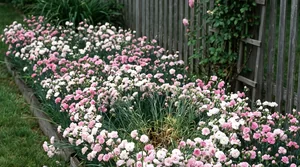
Garden pinks and border carnations
The cottage end of the genus in full, where the pinks and the border carnations are grown side by side.
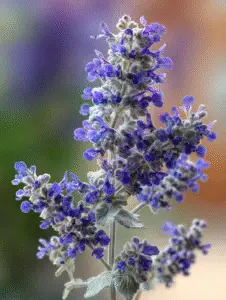
Deer resistant flowers
What else the plant records leave off the deer menu, checked the same way dianthus is.
Drought tolerant flowers for full sun
The rest of a dry, sunny, sharply drained bed, which is where these mats want to live.
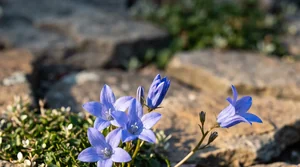
Campanulas for rock gardens
The neighbors that take the same wall tops and gravel pockets as the alpine pinks.
Enjoying our flower guides? Add YourFlowersGuide as a preferred source on Google. It helps more readers find us.
Add to Preferred Sources