What freesia is and where it comes from
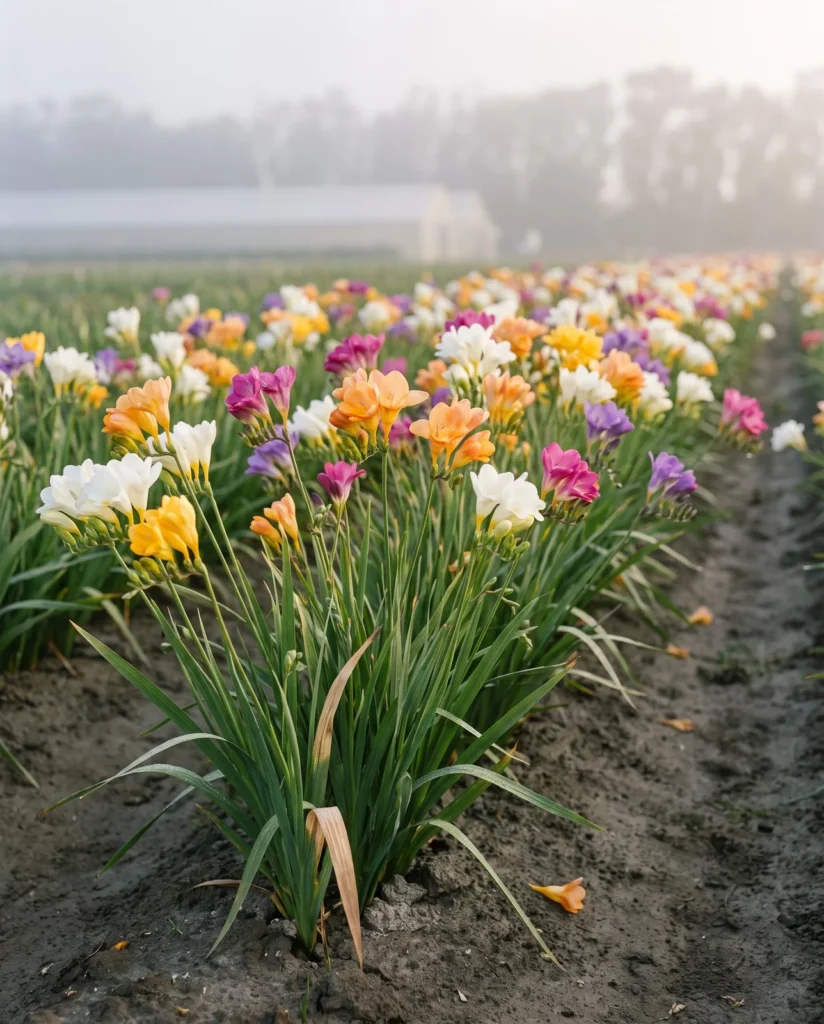
Freesia is a corm grown flower in the iris family, close kin to gladiolus, iris and crocus. The corm is conical, about half an inch to an inch across, and it is not a true bulb. Leaves are narrow and sword like, 4 to 12 inches long. Each stem carries 5 to 10 funnel shaped flowers 1 to 2 inches long, and it bends near the top so every trumpet faces the same way. Plants stand 1 to 2 feet tall and 6 inches to a foot wide. Older lists still call it baboon flower.
Almost everything sold as freesia is a hybrid from nineteenth century crosses of two species, polyploid, taller and sturdier than its wild parents and often less fragrant. The genus holds roughly 14 to 20 species. Freesia is native to the eastern side of southern Africa, from Kenya south to South Africa. The garden hybrids come from the winter rainfall southwestern Cape, where winters are cool and wet and the summer is hot and dry. That origin is why they do well in mild climates and badly through cold winters and in summer rainfall country.
The scent, and which colors carry it
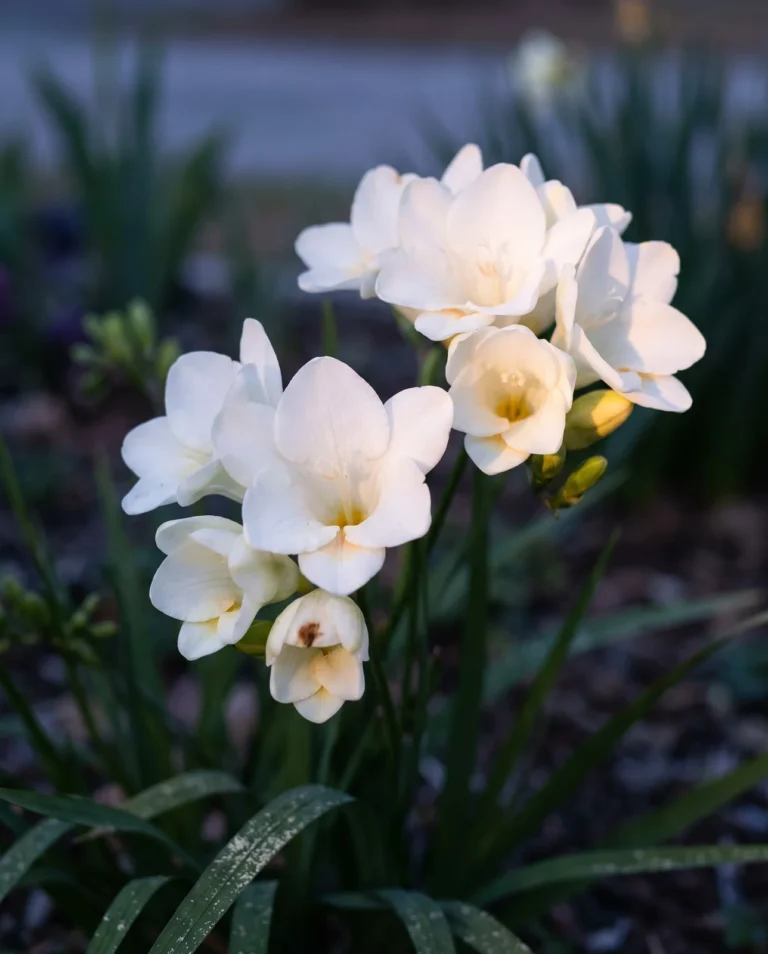
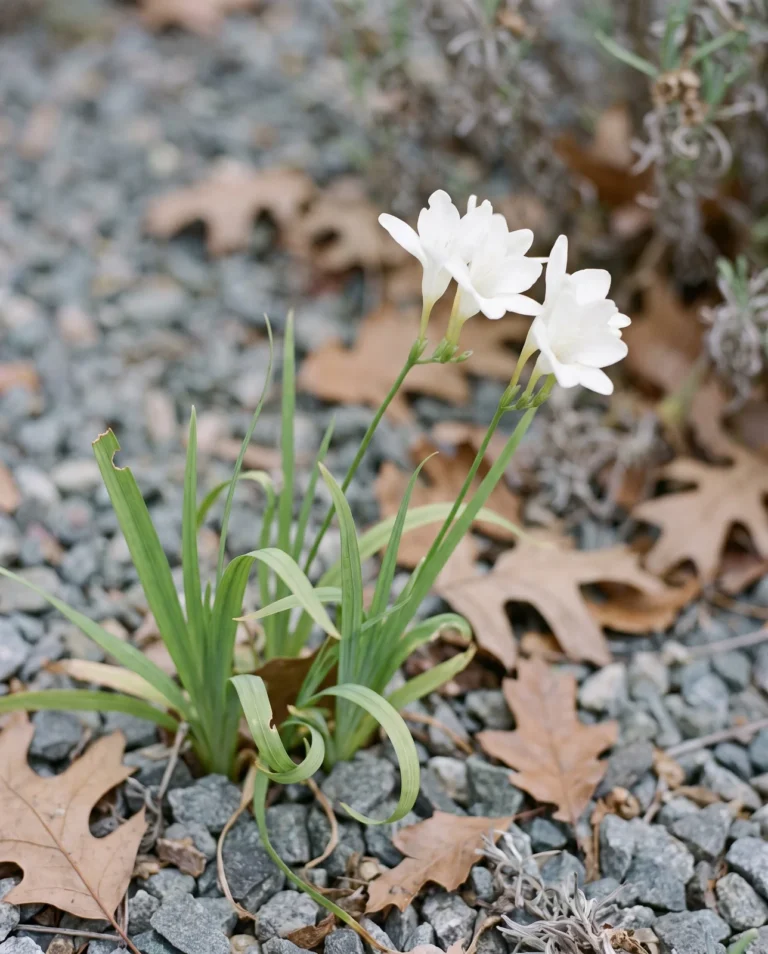
The scent is the reason most people buy freesia: sweet and powdery, close to baby powder, strong enough to fill a room from one bouquet. White varieties carry the strongest scent of the color range, though nothing has tested the colors side by side. The hybrids that fill the bulb racks are polyploid and often less fragrant than the wild species they came from.
A winter growing plant on an American calendar
Freesia grows through the cool wet part of the year and rests through heat, which reverses the calendar most American gardens run on. In most of the country the corms go into warming spring soil and meet summer while they are still forming flowers. During growth the plant wants 60 to 70 degrees Fahrenheit by day and 40 to 55 at night. Heat does its damage long before anything wilts: above 59 degrees while the spike forms, the lowest florets come out unevenly spaced, a defect cut flower growers call thumbing.
Two temperatures do two different jobs here, and mixing them up is the commonest way to get this plant wrong. While the corm sits dry and dormant, heat prepares it: warm storage promotes sprouting, and freesia corms require high temperature storage to break dormancy. Awake and growing, the corm wants the opposite, the cool days and cold nights of its home winter. A corm that gets its warm spell and then runs into an American summer has been prepared and then cooked.
When to plant where you live
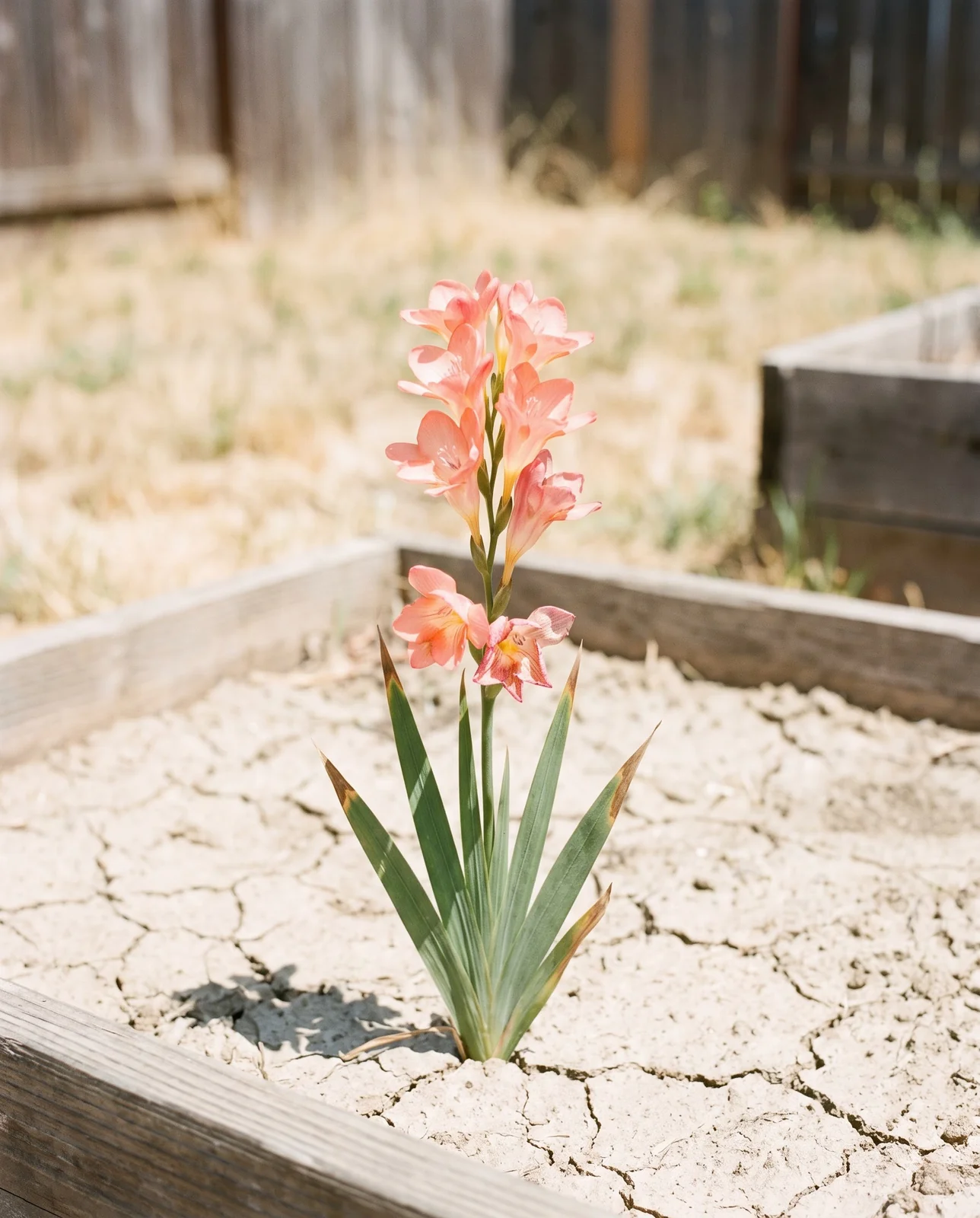
Fall planting works only in the mildest parts of the country. Everywhere else the corms go in during spring, after the last frost. The fall line sits at zones 9 and 10, and zones 3 through 8 are counted too cold to leave corms in the ground. Zone 8 itself is contested. The page that puts fall planting at zone 9 and above also lists zones 8 to 11 for fall.
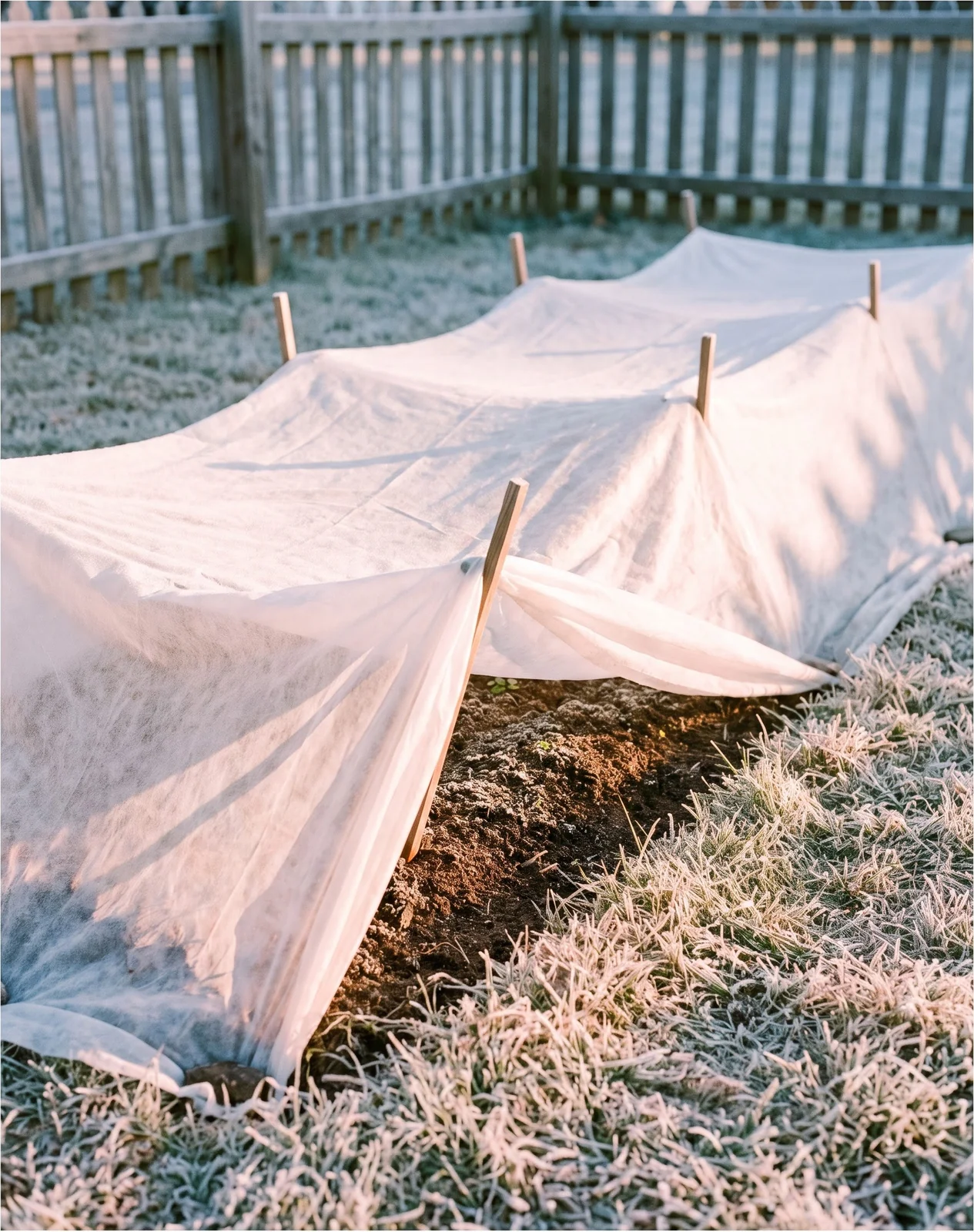
The way out is to read the frost calendar, not the zone number. Freesia is not frost hardy under any zone label. Lightweight row cover is a fair hedge on cold nights, and the half ounce fabric sold for this holds up to 4 degrees of extra warmth underneath. Where the ground freezes, plant in spring and grow the corms as annuals or lift them in fall. In zones 7 and 8 spring carries the season, and a fall batch under cover is the experiment worth running beside it.
Planting calendar by region
Region decides the month the corms go in, whether they winter in the ground, and whether they come back out.
How to plant the corms
Set the corms pointed end up, shallow, and closer together than feels right. Depths run 1 to 3 inches with spacing of 2 to 4 inches. Cut flower growers plant tighter, 2 inches deep and no more than 1.5 inches apart, because a dense stand holds its own stems upright. In containers it is 1 to 2 inches deep with 6 to 8 corms in a 6 inch pot. Planting too deep is one of the named causes of leaves and no flowers. A batch every couple of weeks stretches the season, and each batch flowers 10 to 12 weeks after it goes in.
Freesia takes full sun to partial shade, and at least eight hours of direct sun a day buys a long run of bloom. Drainage is the part that kills corms outright. Overwatering can rot them, wet saturated ground rots them faster, and the soil should dry somewhat between waterings. Stems turn top heavy as the heads fill and they fall over, so slim stakes or a loose tie of string are part of the job.
Why freesia will not bloom
The usual answer is the corm's own history. A corm that has already flowered needs a warm spell while it is dormant before it will flower again, and almost no home gardener gives it one. Warm dry storage is what resets it, at 77 to 86 degrees Fahrenheit. Corms sold for forcing have already had that treatment at the distributor, and that is the plainest reason fresh corms bloom and saved ones sulk.
The temperature is agreed on and the clock is not. The 6 to 12 weeks repeated across gardening pages rests on an anonymous reader comment, so the most confident figure is the weakest one. The Royal Horticultural Society sets 14 to 20 weeks at 26 Celsius. Dutch research from 1968 ran 10 weeks at 31 Celsius then 4 weeks at 13 Celsius. Treat a saved corm as an experiment and a fresh corm as the crop.
After the corm's history the causes fall into a stable order. Heat is second. Saved corms are up and growing when it is already too warm in most of the country, and a hot spring can stop them breaking ground at all. Feeding is third: lack of nutrients is a common cause of no flowers, met with bone meal or a high potassium feed in spring. Foliage cut too early belongs with it, since the leaves fund next season and nothing is cut back for six weeks after flowering ends. Light comes fourth, though it is the answer offered first almost everywhere, and it is seldom the only cause at work.
Work out why yours did not flower
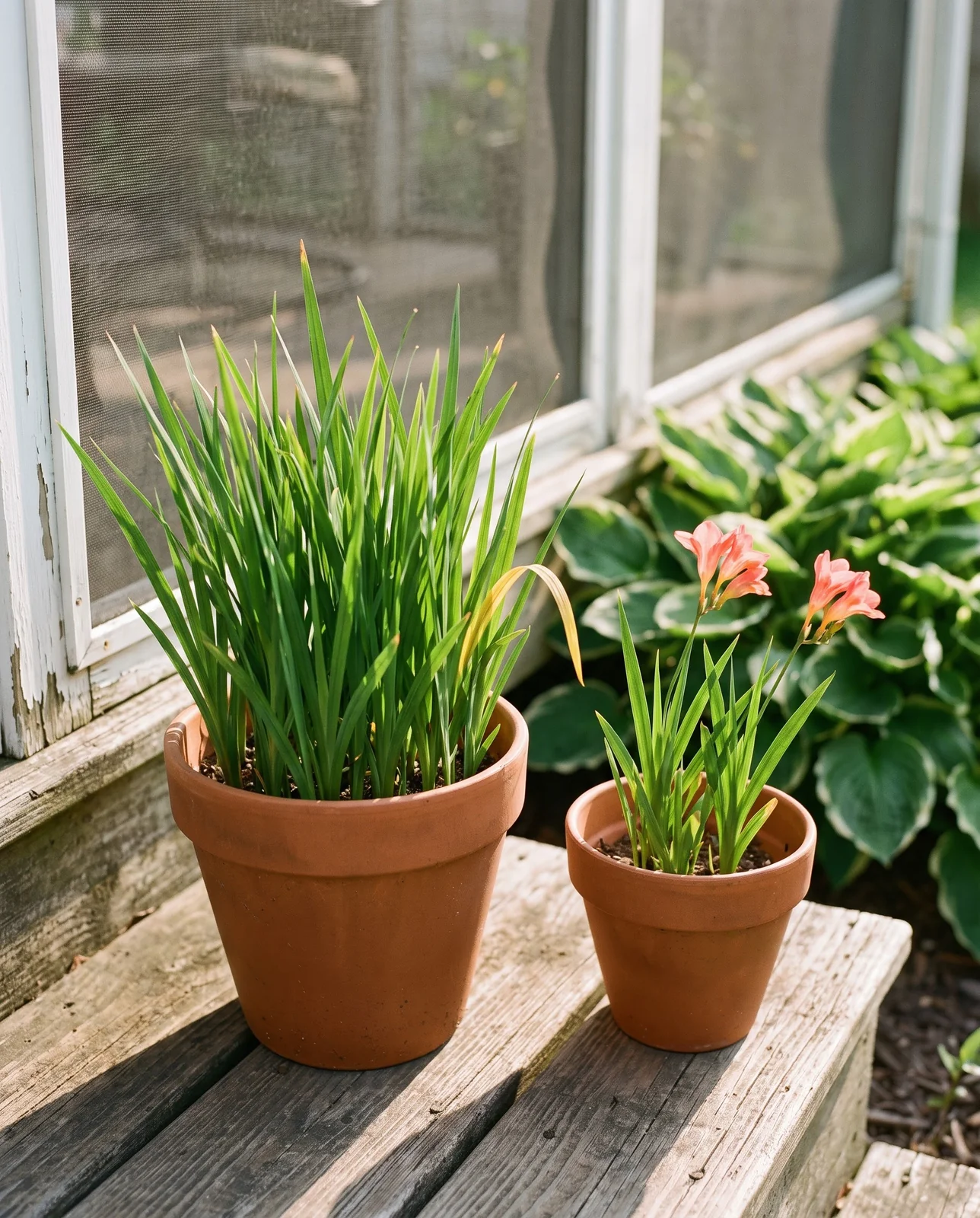
Take these in order. Most freesia bloom failures are decided by the corm's history, before anything else matters.
After flowering, and whether to keep the corms
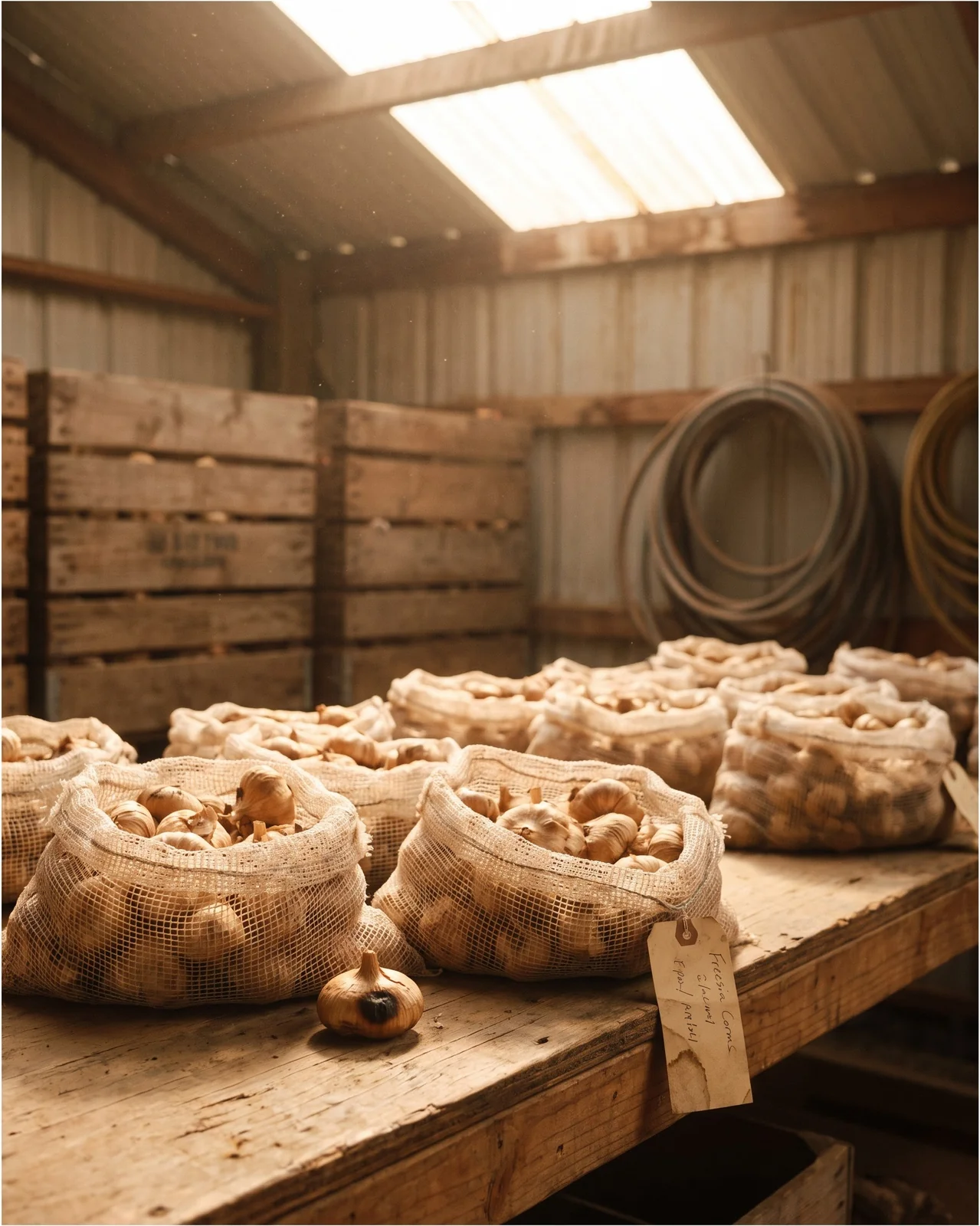
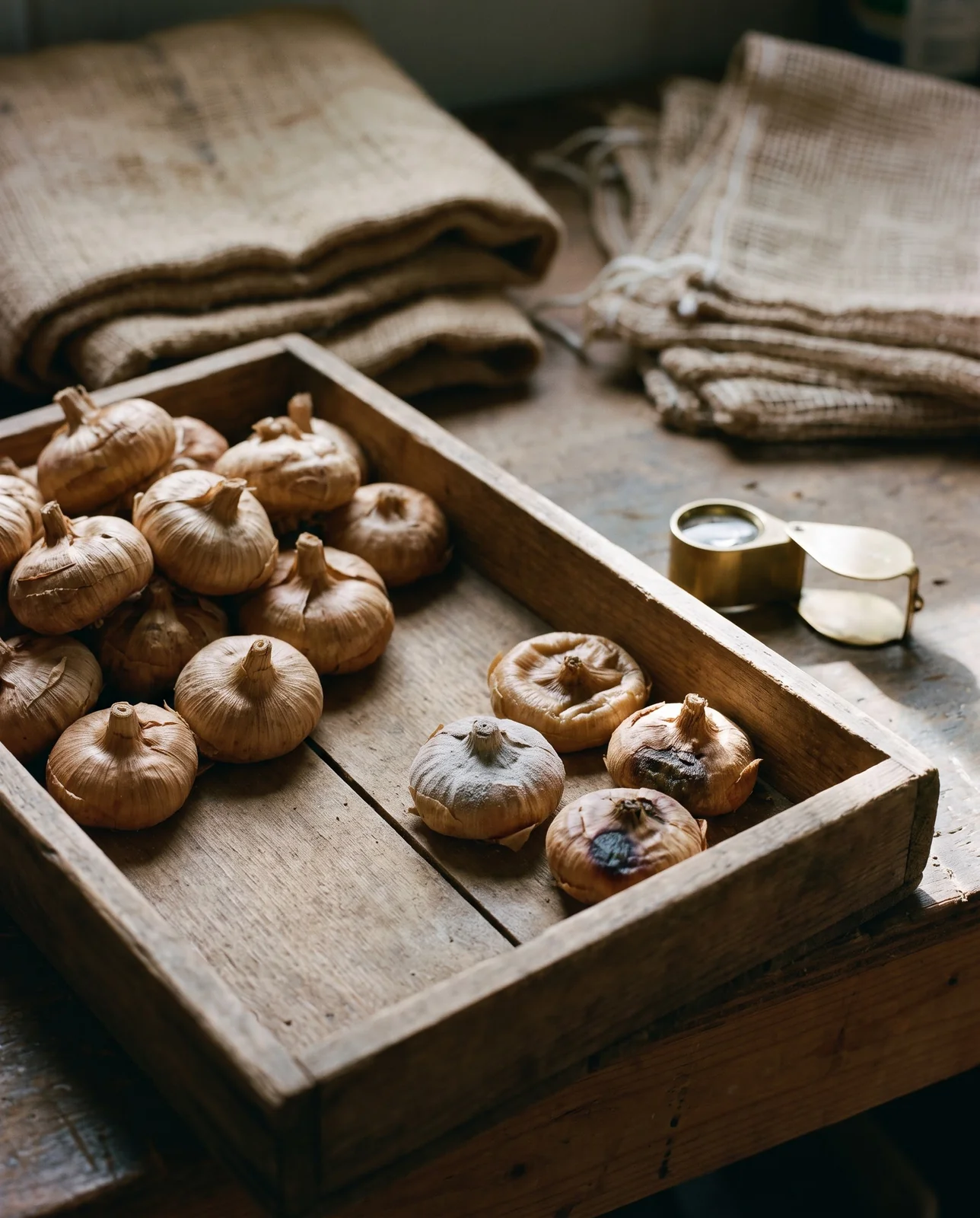
The corm rebuilds itself after the flowers fade, and cutting the leaves down early stops that. Let the foliage stand until it yellows, and wait at least six weeks after flowering ends before removing dead leaves. In cold gardens the corms come out before the first frost and go somewhere cool and dry for at least four months. Cure them promptly and throw out anything soft or marked before it reaches the storage box.
Storage temperature answers two different questions, and that is where the confusion starts. Keeping a lifted corm alive through winter calls for cool and dry, about 55 degrees Fahrenheit until spring. Preparing that same corm to flower again calls for the opposite, the warm 77 to 86 degree cure. Tulips need a long cold period before they will flower and freesia needs a long warm one, and the same cellar shelf cannot do both.
An untreated corm is reliably worse than a fresh one. In northeast Florida the standing advice is pot culture, since the corms come up annually anyway. Corms do multiply over time, and most species produce cormels that can be grown on, though the small ones need extra seasons. Carrying corms over pays only if the warm cure is genuinely going to happen.
Growing freesia indoors
Freesia makes an indoor pot plant, and it needs no refrigerator chill first. It belongs with the tender bulbs that can be started indoors at any time. People keep treating it like a hardy bulb and giving it 6 to 8 weeks in the fridge, which does nothing for it. Planting in October or November lets the foliage build through winter so the longer light of spring brings the flowers. A 6 inch pot takes five to eight corms, more than it would hold of larger bulbs.
Cool rooms and bright light decide whether an indoor pot flowers. A bright south facing window supplies the light, and nights of 40 to 55 degrees Fahrenheit with 50 to 70 by day supply the rest. Put a slim bamboo stake beside the stems before the flowers open, and use a heavy pot. Expect one season of flowers: without the warm dormant treatment the same corm comes back as leaves.
Freesia as a cut flower
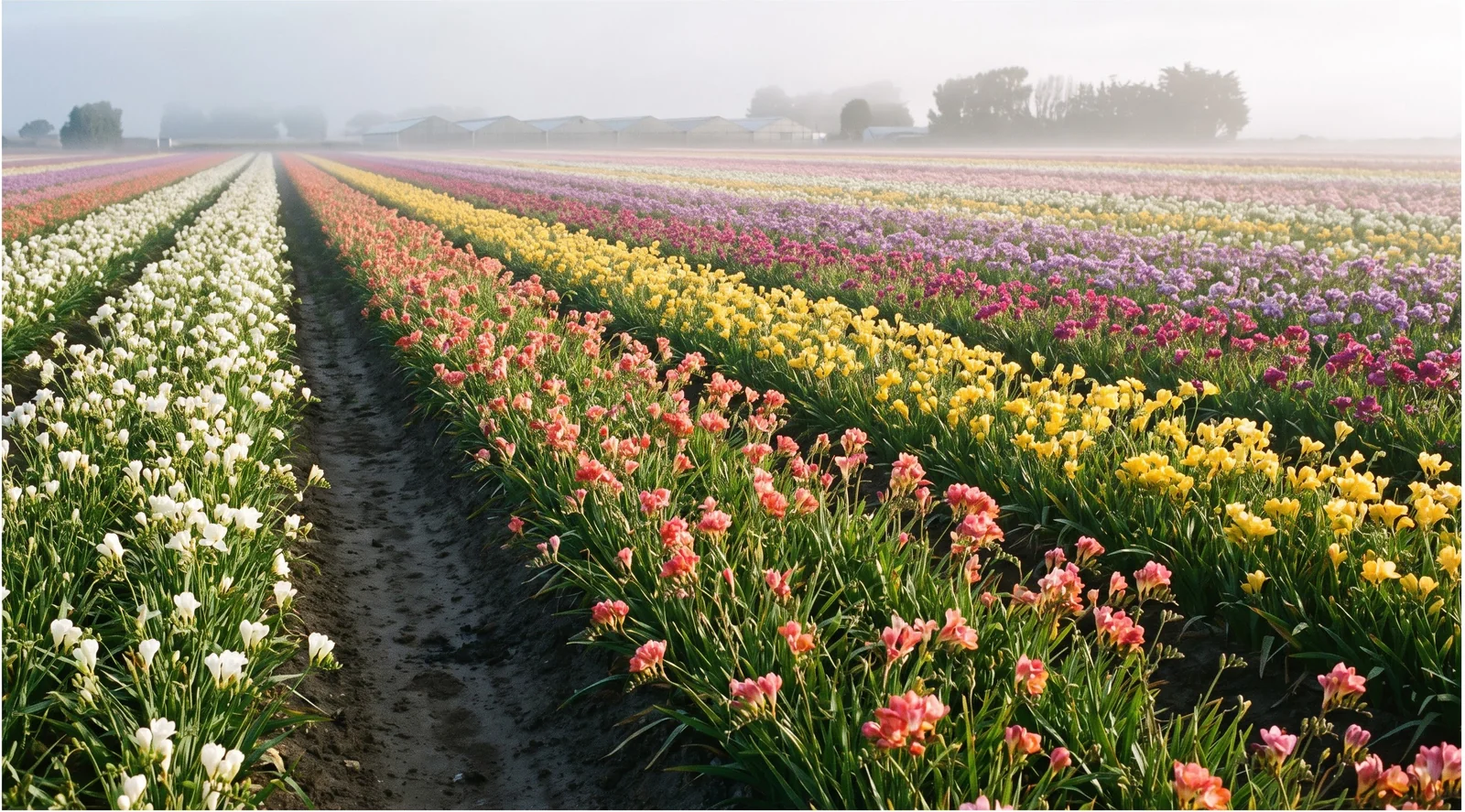
Freesia earns its living as a cut flower, sold on pure color, long vase life and the perfume. The stem carries a good part of that: 12 to 15 inches holding six to twelve trumpets. Mixed packs run the whole color range, and the white flowers are the ones the fragrance claim attaches to. Cut the stem when the lowest floret is puffy and opening and two more buds above it are well colored. The florets open in order up the spike, so a stem taken then goes on opening for days in the vase.
Nobody publishes a vase life in days, only the word long. Cut stems hold dry in refrigeration at 32 to 35 degrees Fahrenheit for short periods, and anything longer belongs in water with a floral preservative. Stalks are thin and the heads grow top heavy as the florets fill, so a stem supported in the row arrives straight.
Cutting and holding numbers
The measured part of cutting freesia and holding the stems.
Freesia types, and the two plants sold under one name
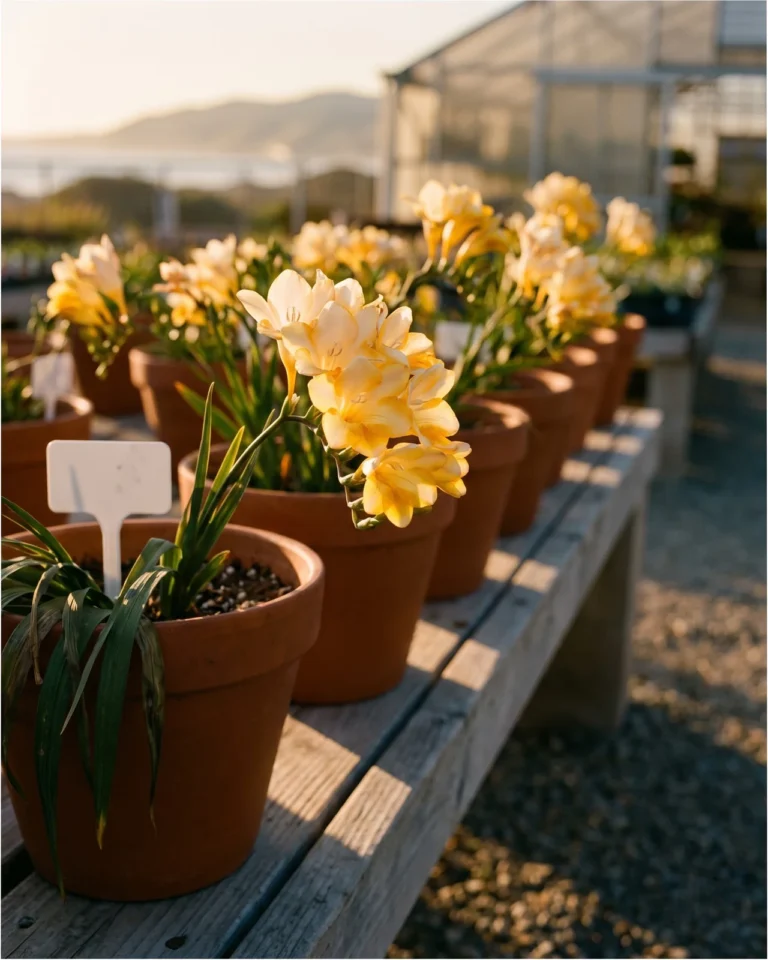
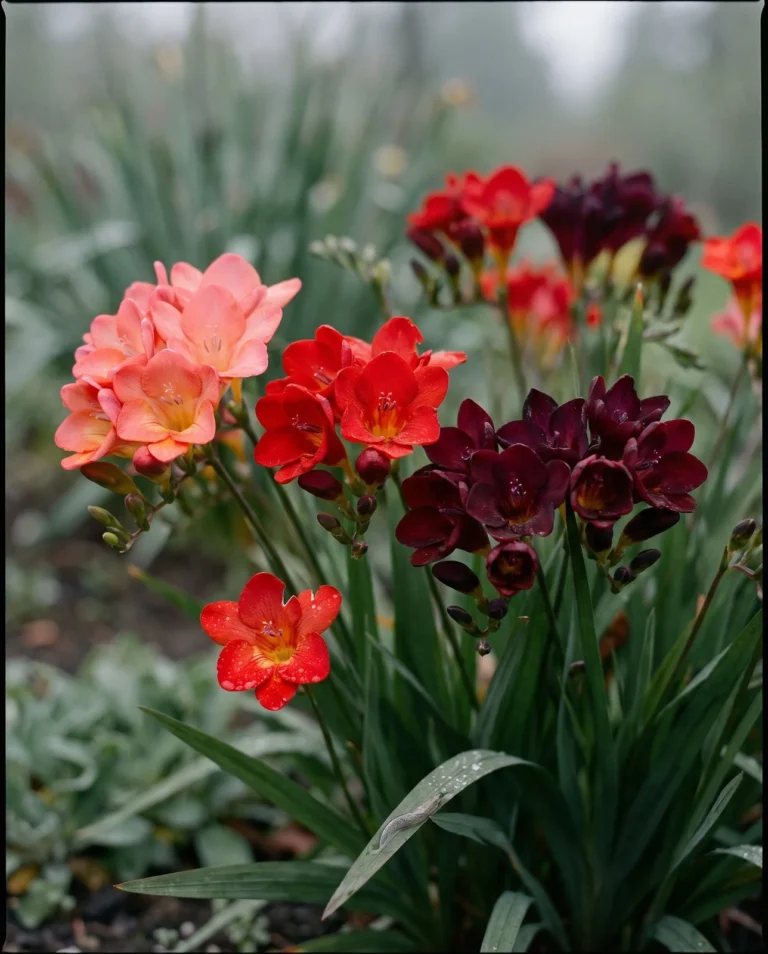
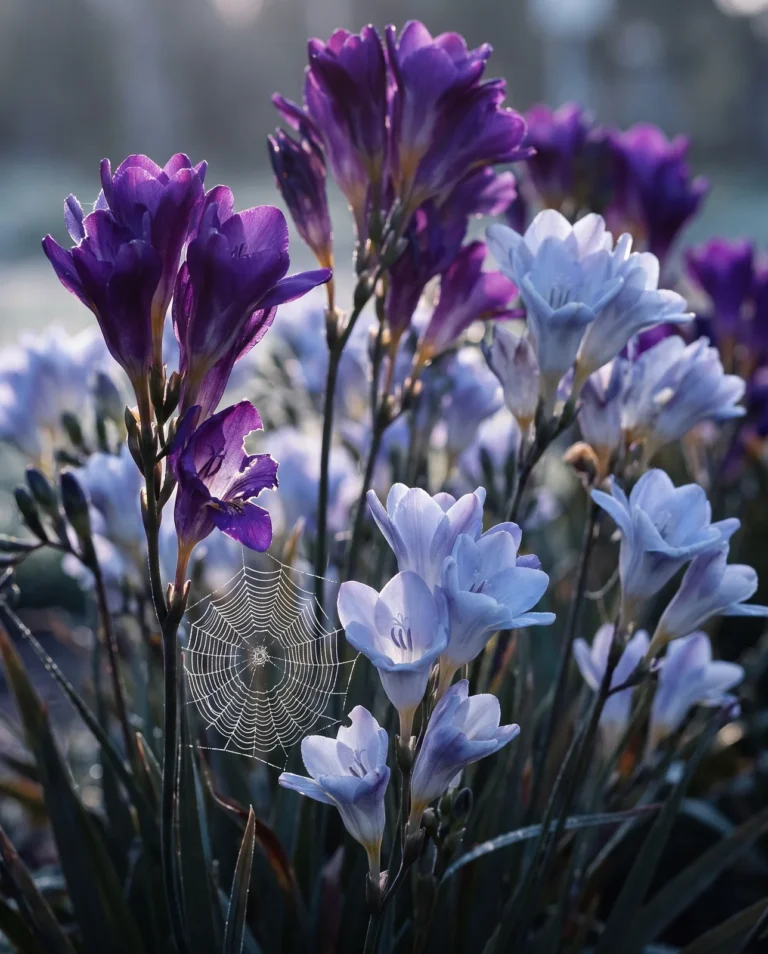
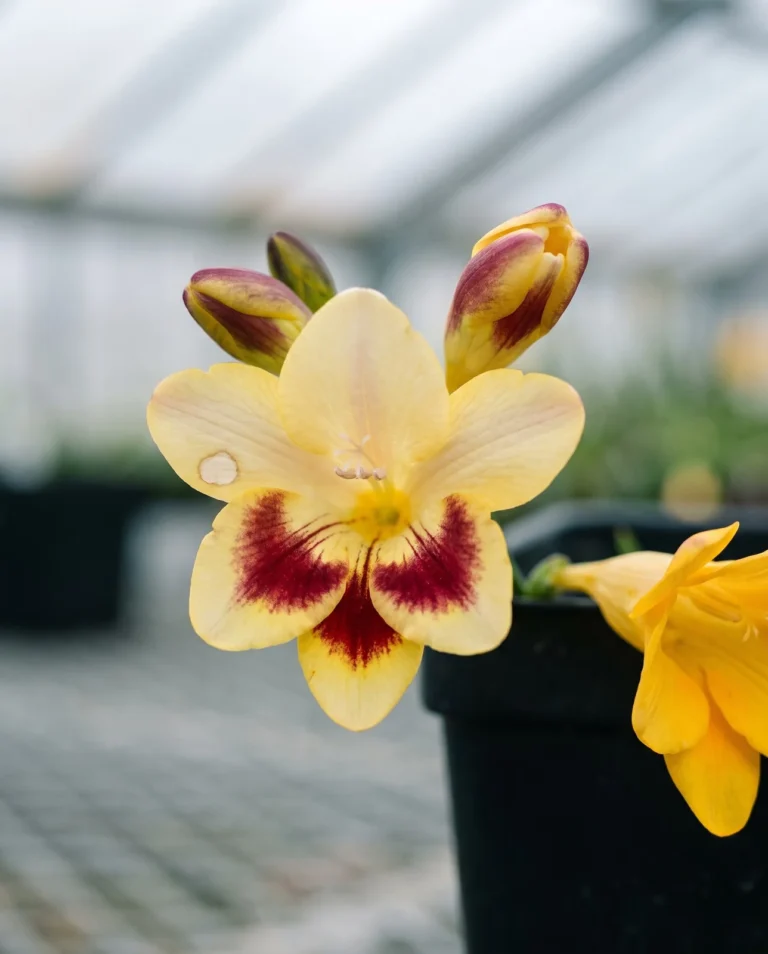
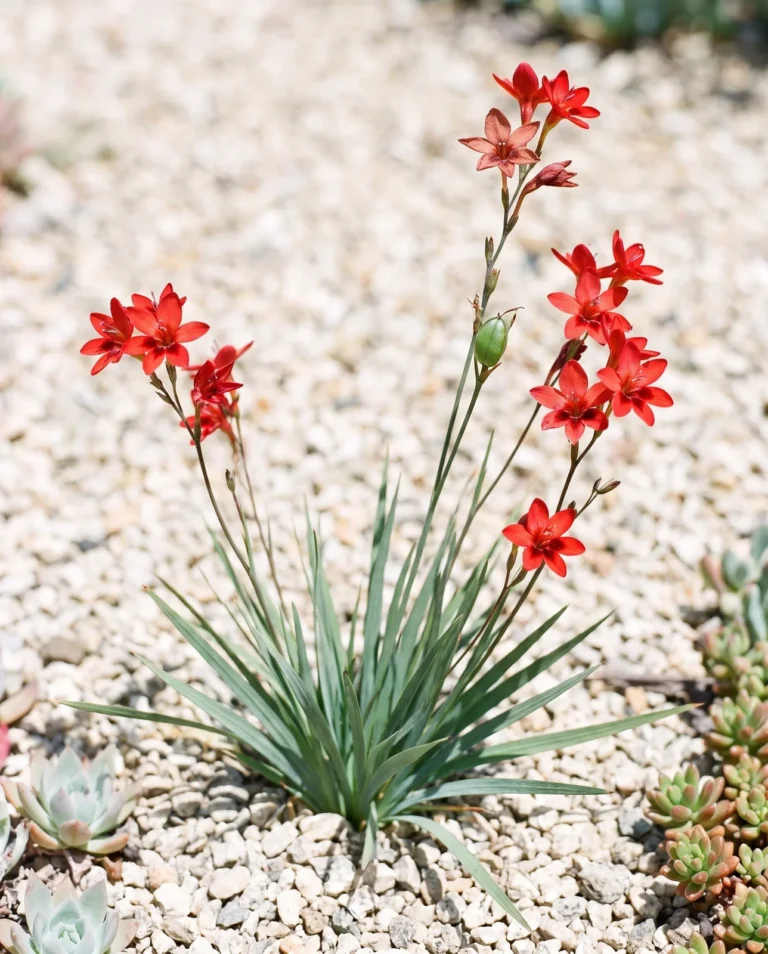
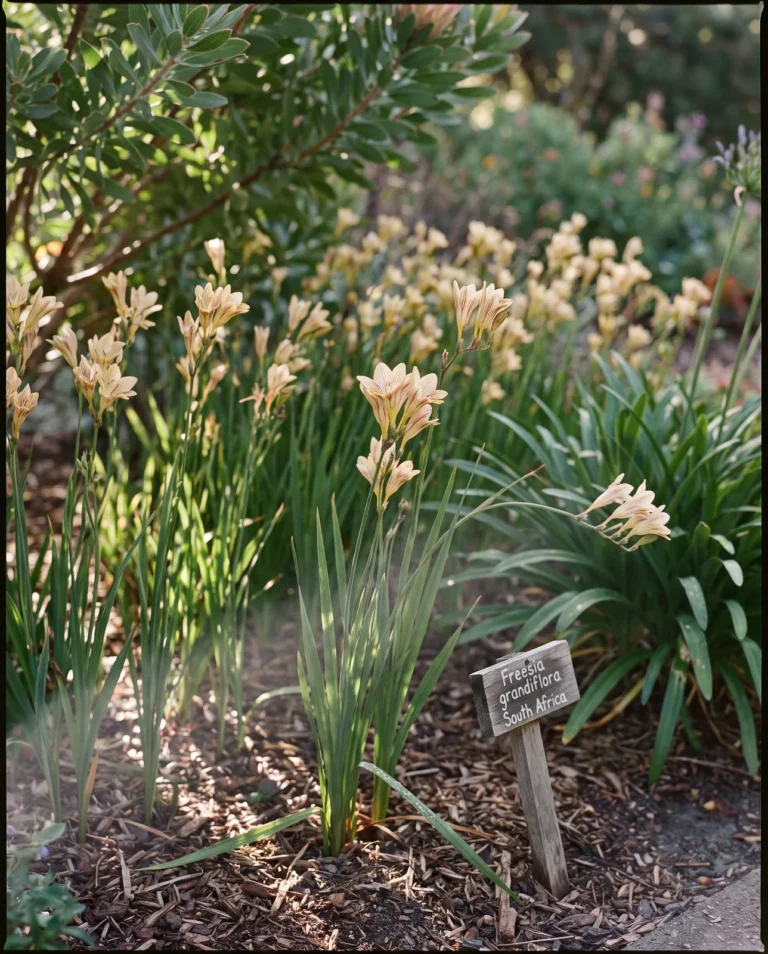
Two different plants are sold under this name. The trumpet flowered hybrids in the bulb racks are one. Freesia laxa is the other, a grassy fan of leaves closer to a small iris than to a freesia spike.
Light, soil and the two halves of the watering year
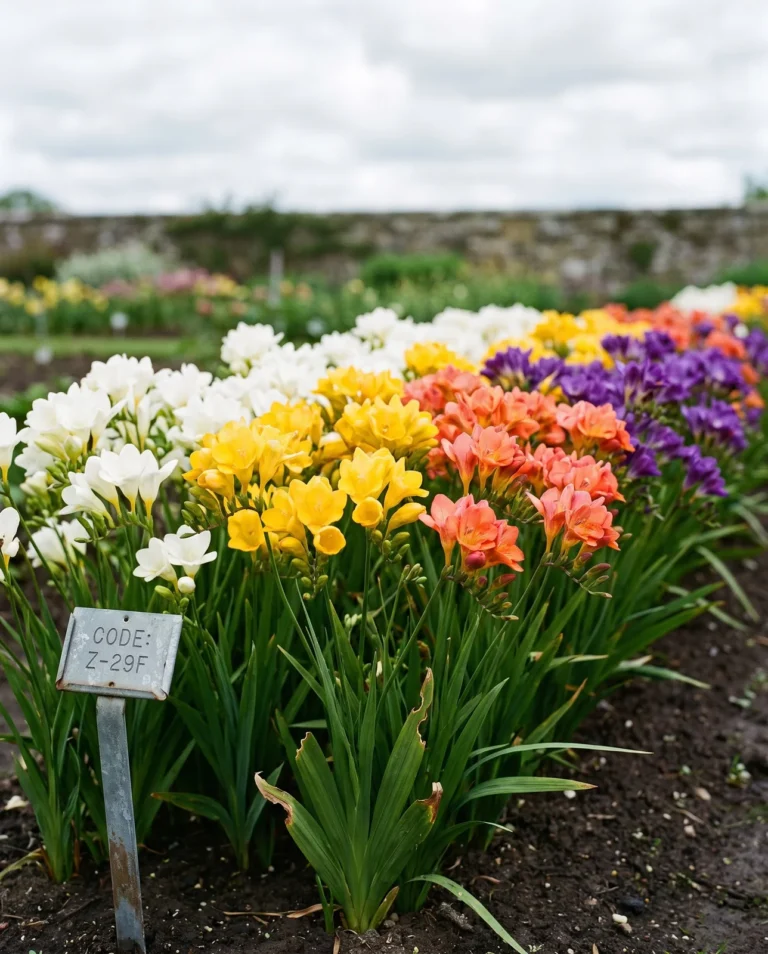
Bright and cool is the combination that flowers; bright and hot produces leaves. Soil wants organic matter and a pH near neutral, and above all it wants to move water through. Overwatering can rot the corms outright, and a corm in cold saturated ground comes up soft or never comes up at all.
Watering splits the year in half, and the second half is the instruction people skip. Through growth and flowering the plant takes regular water; through its summer dormancy it takes none. A pot of yellowing leaves in June looks like something asking for help, and water is what turns the corm underneath it soft. Feeding belongs to the growing half only. Cut flower production starts feed once the stems are about six inches tall, at 200 ppm nitrogen, and in a bed that means bone meal or a high potassium feed while there is growth to feed.
Hardiness, and whether freesia comes back
Freesia is a true perennial only in zones 9 and 10, and everywhere colder it is an annual or a corm you lift. Zone 8 and everything below it sits outside winter survival. Anyone who has put hyacinth in the ground in October and found it again in April expects the same arrangement here. This is the bulb that does not keep it.
Coming back and flowering again are separate questions. A corm that survives winter in zone 9 or 10 has done nothing more than survive. Whether it flowers turns on a dry summer rest and on the warm dormant spell that resets it. In zones 9 and 10 expect the plant to persist, and everywhere else expect to buy again or to work for the second year.
Pests and diseases
The pest list is short: aphids, thrips, slugs and snails. Aphids and thrips are the two most common during freesia production, and both work on the growing tips and inside the opening flowers. Bulb mites are the freesia specific problem. Acarid bulb mites infest freesia along with daffodil, gladiolus, lily and tulip, in storage and in the field. Freesia takes it worst because the corms require high temperature storage to break dormancy, which is also the temperature at which mite numbers climb.
The diseases split into rots below ground and spots and blights above it. Corm and root rot comes back from plant clinics as Fusarium, and warm weather favors it. Bacterial soft rots, leaf spots, dry rot and blights fill out the rest, and botrytis is the one that shows on the flowers themselves. Viruses have no way back: once a plant carries one there is no treatment. Most of that list traces to how the corms were cured and stored, and whether the ground drains.
Toxicity and pet safety
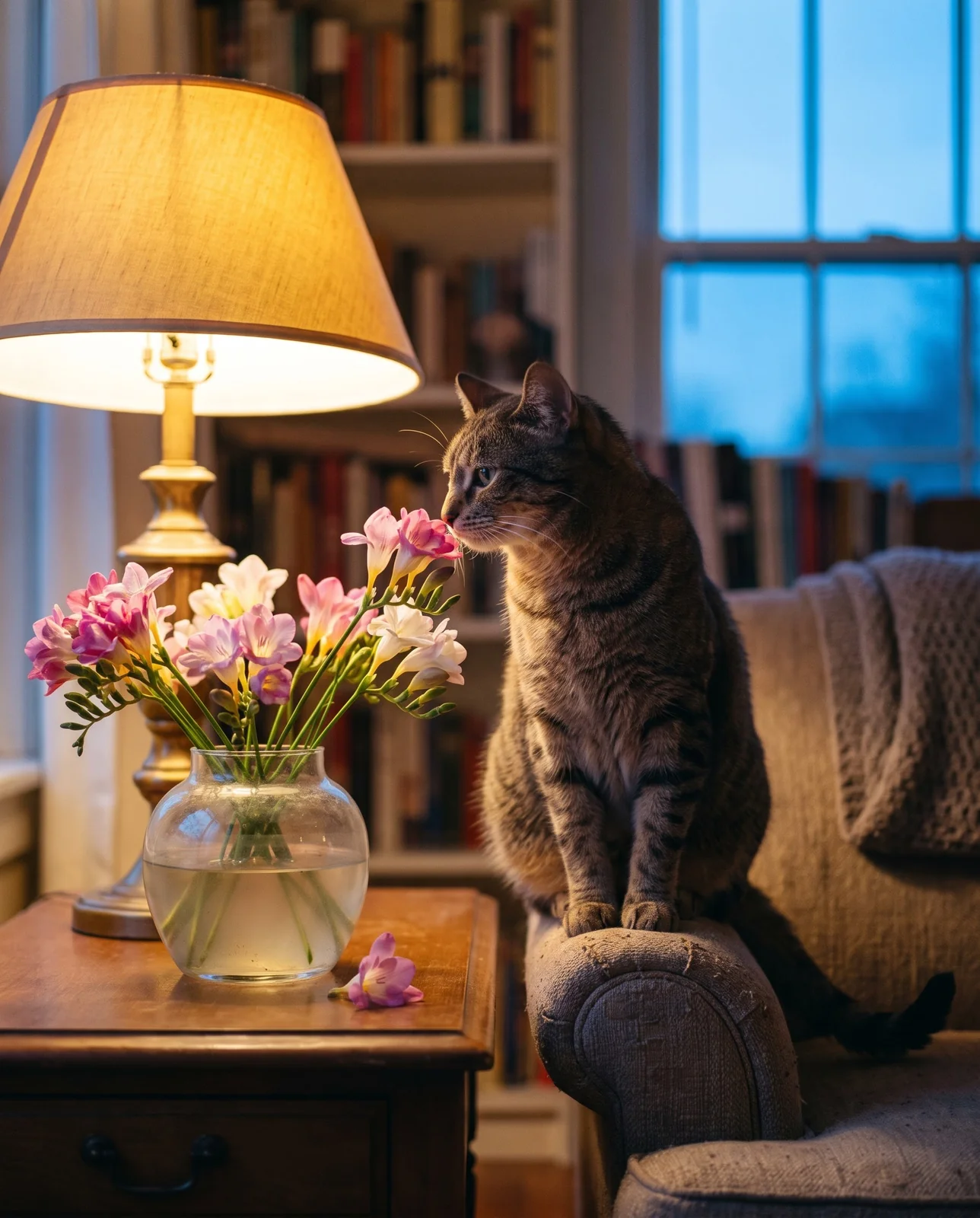
Freesia has no toxicity rating. It does not appear on the ASPCA plant lists for cats or for dogs, in the toxic section or in the non toxic one. It has not been assessed there, so treat it as unrated. Keep the corms and the storage sack out of reach while they are dry and dormant. If a pet does eat part of a plant or a corm, call a veterinarian or a poison line with the plant name.
What actually goes wrong, in order
The five things that go wrong most often, most frequent first.
Symptom: a row or pot of narrow leaves through spring, not one bud. Cause: corms carried over without a warm dormant cure, a hot spring, or something planted on top of them. Fix: buy fresh corms, and feed the ones you keep.
Symptom: a garden on the line between zones. Cause: from zone 8 down the corms will not live through winter outdoors. Fix: dig them as the foliage yellows and store them dry, since the plant is not frost hardy under any label.
Symptom: corms soft, dark or hollow when dug, or a batch that never sprouts. Cause: wet saturated soil, and drainage outranks feeding here. Fix: cure quickly after digging and throw out every marked corm before the rest go into the box.
Symptom: corms put in the refrigerator for weeks before planting. Cause: freesia belongs with the tender bulbs that need no pre-chilling. Fix: skip the fridge, and give the corms a warm dormant spell instead of a cold one.
Symptom: a handful of tiny cormlets at lifting time. Cause: the corms multiply, and most species produce cormels that can be grown on. Fix: pot the small ones separately and expect extra seasons before they flower.
Is freesia hard to grow
Freesia is easy to care for and hard to flower, and confusing those two makes it look difficult. Nothing on the care list is demanding: shallow planting, drainage, sun, cool growing weather, and leaves left standing after the flowers fade. The calendar is the hard part: the plant runs on a winter growing cycle that an American spring planting cannot supply. A first attempt with fresh corms often flowers, and a second attempt with the same corms gives leaves.
Where the name came from
Freesia honors Friedrich Heinrich Theodor Freese, a German doctor who lived from 1795 to 1876, and Christian Friedrich Ecklon attached that name when the genus was described in 1866. Freesias reached Europe during the nineteenth century, and the bulb rack plants descend from crosses made there between two South African species. The flower became a commercial crop more than a garden one: professional growing is concentrated in the Netherlands, where about 80 growers supply the trade.
Freesia myths worth dropping
Five beliefs that send people to the wrong planting month or the wrong storage shelf.
The myth: Freesia bulbs come back every year, wherever you plant them.
The reality: They come back in zones 9 and 10 and nowhere colder. Below that they are dug or replaced each spring. A corm that returns has only survived, and flowering is a second result.
The myth: It did not bloom because it needed more sun.
The reality: Light is on the list and it is rarely all of it. The corm's own preparation, heat arriving before flowering and plain nutrient shortage sit at least level with it. A brighter window usually delivers another season of leaves.
The myth: You can store the corms the way you store tulips.
The reality: The warm storage a freesia corm wants carries a cost of its own. Acarid bulb mites infest freesia alongside daffodil, gladiolus, lily and tulip, and high temperature storage shortens their generation time. Cure fast and cull every marked corm.
The myth: All freesias smell the same.
The reality: The trade hybrids are polyploid and often less fragrant than the wild species they descend from. White hybrids carry the strongest scent of the color range, and Freesia laxa sells on drought tolerance and small scarlet flowers.
The myth: Plant them in fall the way you plant daffodils.
The reality: Fall planting belongs to zones 9 and 10. From zone 8 down, plant in spring after the last frost. The plant is not frost hardy under any label, and the winter ground is what kills it.
What to expect, planting to the following autumn
One season in three phases, and the phase that decides next year is the one that looks like nothing is happening.
Most of the wait happens with nothing worth looking at. The corms go in shallow, and the first weeks look like a failed planting. Then narrow grassy leaves come up and stay that way for a long stretch. In the ground the run from planting to flowering averages 110 to 120 days. Nothing is meant to be happening in week six.
Then the flowers pass and the part that matters begins. The leaves have to stand until they yellow so the corm can rebuild its reserves, and cutting back waits six weeks after flowering ends. Through those weeks the plant is moving next season into the corm, and it is the stretch most people shorten.
The following autumn is where a decision has to be made. A corm that spent dormancy cool is alive and unprepared, and it will give leaves again. A corm that gets a warm dormant spell may flower, on a schedule nobody agrees about. Fresh corms are cheap and they flower, so carrying corms over pays only where there is a warm dry place and a season to spend on the experiment.
FAQ
Will freesia come back every year?
In zones 9 and 10 it can, since that is where the corms are hardy. From zone 8 down they are dug and stored, or replaced.
What does freesia smell like?
Sweet and powdery, closest to baby powder, strong enough that one bouquet scents a room. White varieties carry the strongest scent, though no side by side test stands behind that.
What month do you plant freesia bulbs?
Fall in zones 9 and 10, where the corms are hardy. Everywhere colder, spring after the last frost, so your own frost date sets the month.
Do freesias like sun or shade?
Full sun to partial shade, and eight hours of direct sun a day for a long run of flowers. The plant wants that light while the weather is still cool.
Why are my freesias not flowering?
Start with the corms. Saved ones need a warm dormant spell at 77 to 86 degrees Fahrenheit, and forcing corms arrive already treated. Then heat too early, too little feeding and planting too deep.
How long does it take freesia bulbs to bloom?
Planting to flowering averages 110 to 120 days, and a batch in the ground flowers 10 to 12 weeks after planting. In a pot, foliage appears about 12 weeks in with flowers behind it.
Can freesia be an indoor plant?
Yes, and it needs no refrigerator chill first. Give it a bright window, nights of 40 to 55 degrees Fahrenheit, and a slim stake before the heads turn top heavy.
Do freesias only bloom once a year?
One run of flowers per planting. Plant in batches a couple of weeks apart to stretch the season. A second year from the same corm turns on the warm dormant spell.
Will freesia bulbs multiply?
Yes, the corms multiply over time, and most species produce cormels that can be grown on. Cormlets come off small and need extra seasons before they flower.
Are freesias better in pots or in the ground?
Pots, through most of the country, since the corms come up annually below zone 9. In zones 9 and 10 the ground works.
Interesting tips
- Freesia laxa sets bright red seeds and self sows freely enough in Britain to be called somewhat invasive there.
- Twiggy prunings pushed in around the clump before the stems get tall hold the flower heads up without a visible stake.
- If Freesia laxa cannot be found under that name, look for Anomatheca laxa or Lapeirousia laxa. The same plant has been filed under all three, and the former genus Anomatheca now sits inside Freesia.
Related Guides & Flowers
Ranunculus
The other cool season corm sold beside freesia, with the same short window and the same lifting question.
Crocus
A corm from the same family that does the opposite: cold winters are what it wants.
Amaryllis
The tender bulb that also needs no chilling, forced indoors on a windowsill through winter.

Types of flowers
The full index of flower guides here, arranged by type and by name.
Enjoying our flower guides? Add YourFlowersGuide as a preferred source on Google. It helps more readers find us.
Add to Preferred Sources