Hardy or tender: two plants under one name
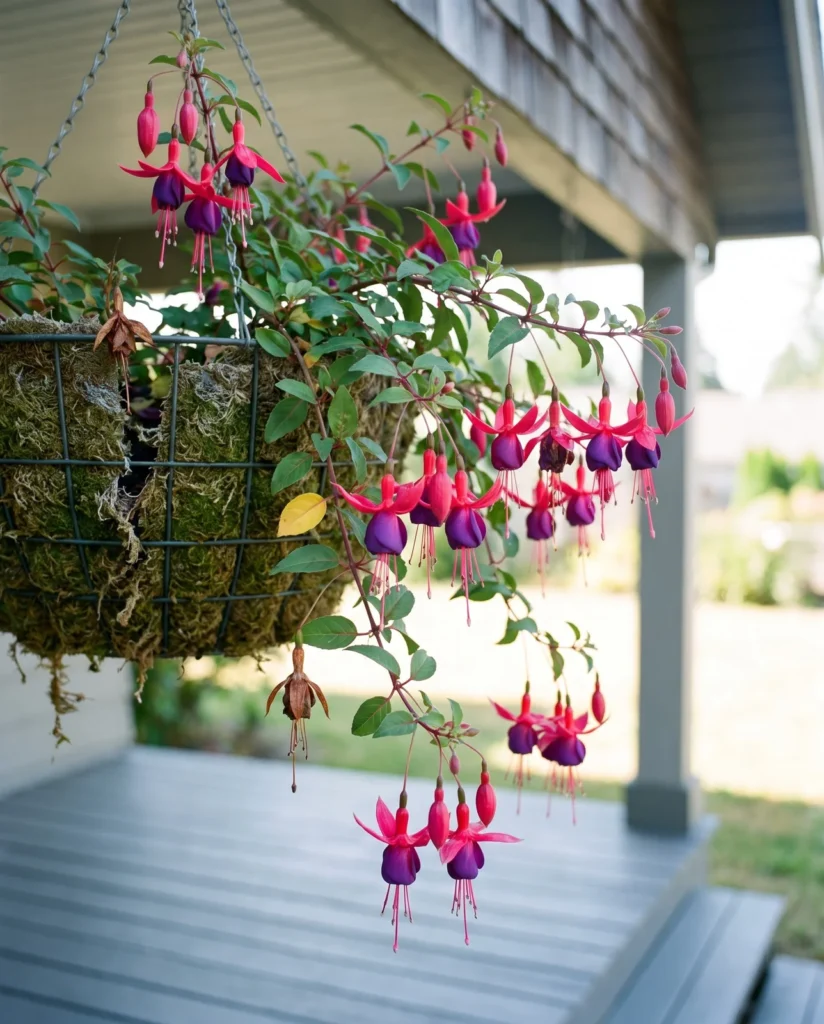
Two different plants are sold as fuchsia, and which one sits in the pot decides how you grow it. One is a woody garden shrub that lives in open ground for years. The other is a tender hybrid grown in a hanging basket for a single summer. The hardy side belongs to Fuchsia magellanica, known as hummingbird fuchsia, hardy fuchsia, or chilco. The tender side covers the hybrid crowd, where the common basket plant Fuchsia x hybrida traces back to two or three founding species. Gardeners can choose between 3,000 and over 8,000 named cultivars.
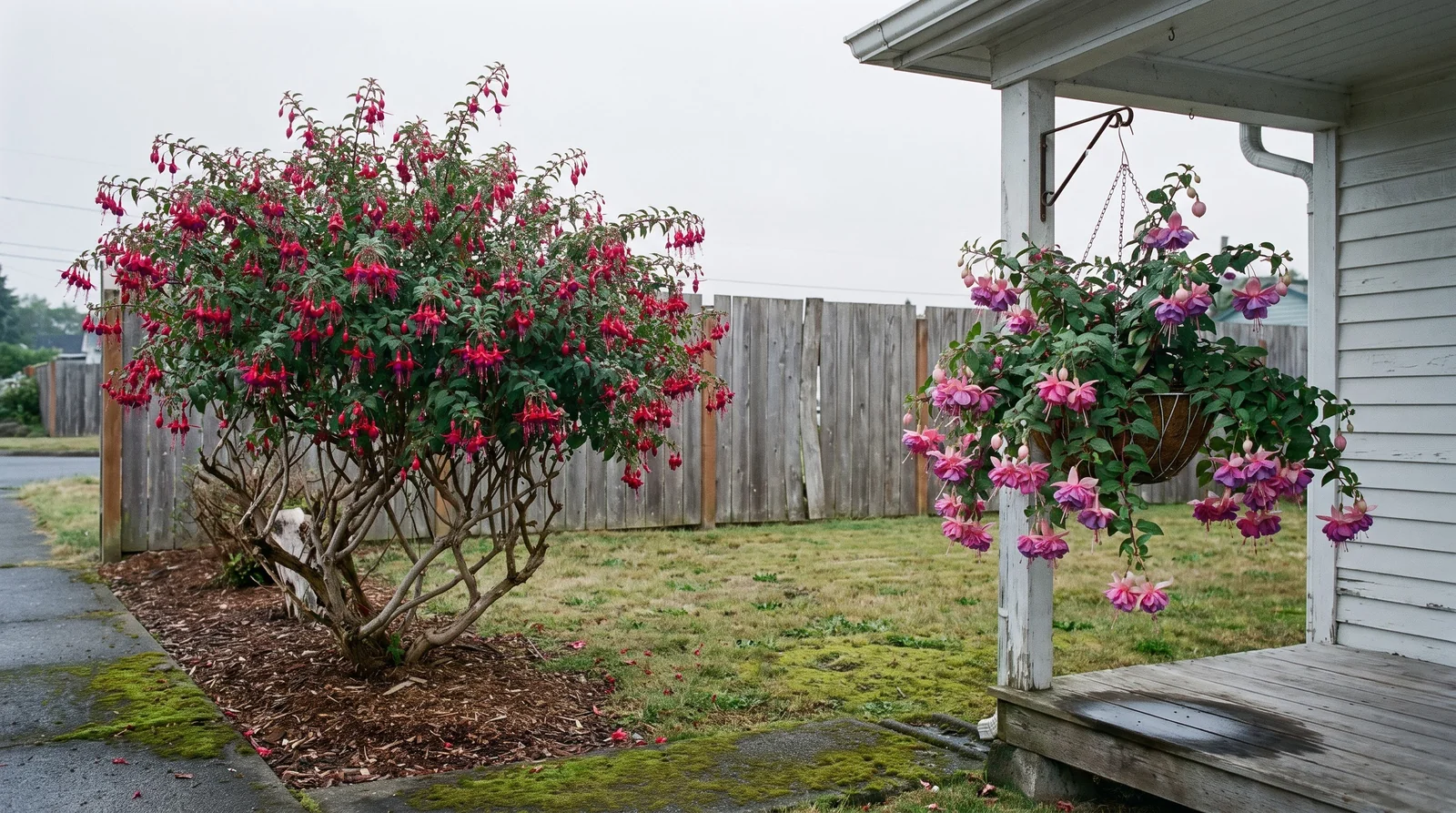
In practice, hardiness splits into three groups. Truly hardy fuchsias survive freezing in the ground, while half-hardy types die back to the ground each winter and resprout in spring. Tender fuchsias cannot survive below freezing, so they need shelter indoors or get discarded at the end of the season. The most tender selections, rated H1C, need a frost-free greenhouse or windowsill through the winter. Those rated H2 suit summer containers and frost-free coastal gardens with a minimum temperature of 34 to 41 F. Fuchsias rated H3 survive in coastal and mild gardens down to about 23 to 34 F, except in hard winters. Even hardy varieties vary in toughness, and in colder regions a hedge can freeze to the ground every winter before regrowing.
Most gardeners grow fuchsia as an annual even though some varieties are cold hardy. That split means the same question about winter brings two very different concerns. If your fuchsia is a shrub in the border, the questions are when to prune it and how deep to mulch. If it hangs in a basket, the only question is whether it can stay alive at all.
The fuchsia groups side by side
Set the groups side by side and the line that matters is whether anything survives winter outdoors. Hardy types survive freezing in the ground, though top growth often dies back during a hard freeze and returns from below ground in spring.
What fuchsia is
Fuchsia is a genus of shrubs and small trees from Central and South America, grown for flowers that hang upside down like lanterns. The genus includes about 100 to 110 species, with the vast majority native to South America. Its largest branch runs from northern Argentina up through Colombia, Venezuela and Hispaniola, holding 64 recognized species on its own. Most fuchsias grow as shrubs from about 8 inches to 13 feet tall. The lone exception is New Zealand's kotukutuku, a true tree reaching 40 to 50 feet.
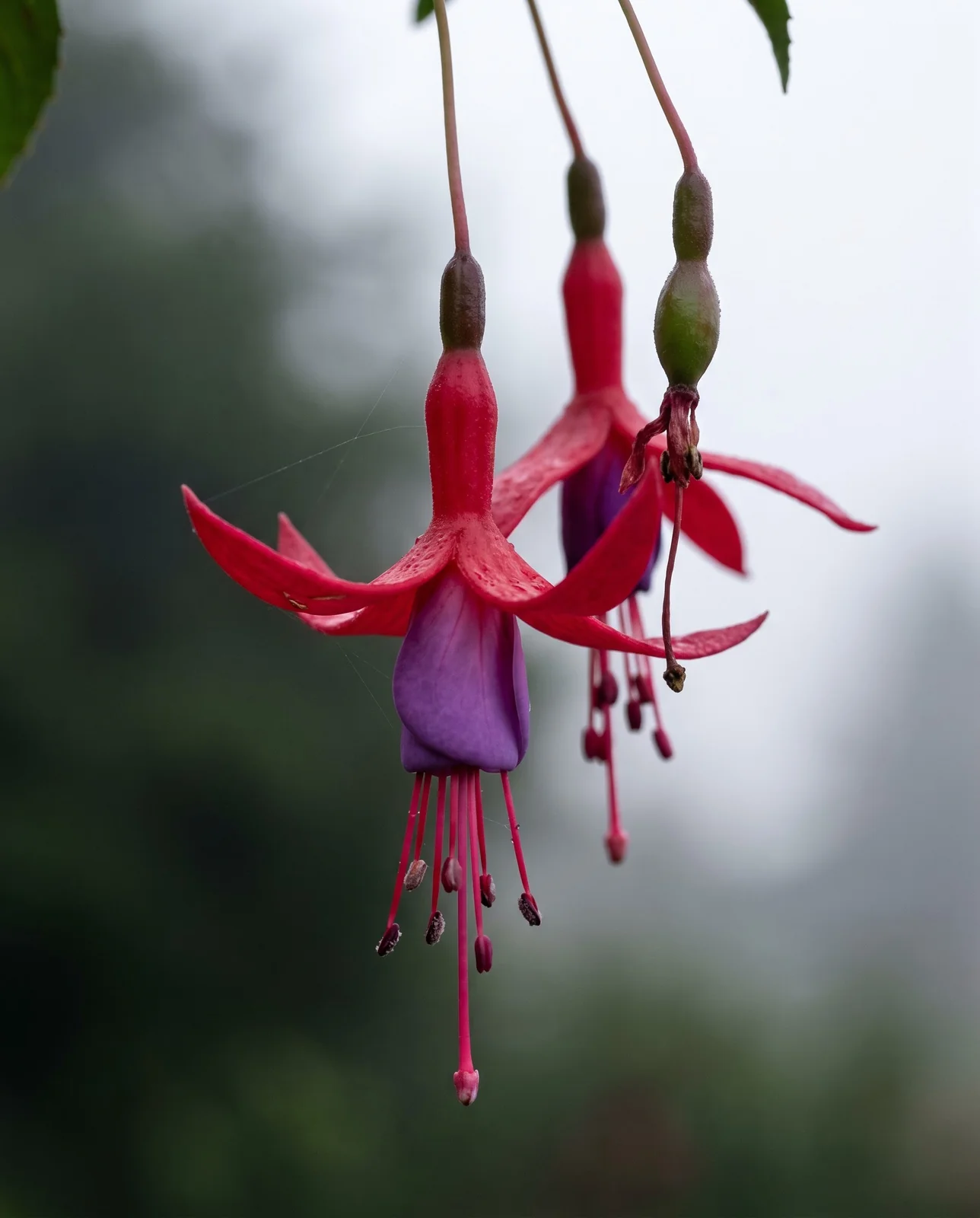
The drooping flower makes the genus easy to recognize. Each flower has four or more arching sepals over one or more bell-shaped or skirted corollas. The blooms hang in pairs from each leaf joint on thin, usually drooping stalks 1 to 2 inches long. On the hardy species they stay small and magenta to red, dangling as slender tubes with prominent stamens from summer until frost.
The hardy species has spread well beyond its home range. Plants have established along the United States Pacific coast, Mexico and Britain, naturalized across several Australian states, and in mild climates are sometimes considered invasive. Wild populations center in southern Chile and Argentina, reaching north into Peru and south to Tierra del Fuego. How tall a plant grows depends on the winters it gets. In frost-free climates it reaches about 3 to 10 feet tall. Where winters turn colder, it stays shorter, settling around 4 to 5 feet.
How to tell which fuchsia you have
Read the plant tag, because the plant itself gives almost nothing away. Tender and hardy fuchsias look very similar, so check the label before buying. The botanical name printed there is the most helpful guide. Fuchsia magellanica, on its own or behind a cultivar name, identifies the hardy species. Fuchsia triphylla, the honeysuckle fuchsia used in Triphylla hybrids, sits on the tender side, while Fuchsia x hybrida covers the tender crossed hybrids sold for hanging baskets. No leaf or stem shape sorts them out, so a pot without a tag stays uncertain until the first frost.
Growth habit can easily deceive you. Several popular upright cultivars, including 'Ernie', 'Jollies Nantes' and 'Maria Landy', look like garden shrubs but are not reliably winter hardy. They are extremely tender and rated for zone 10. You can recognize the Triphylla group by eye alone. Triphylla varieties carry long, tapering tubular bells in shades of coral-orange to red, differing from the flared sepals and skirted corollas common across the genus. Other plants on the nursery bench need a tag, and a series name on its own settles nothing.
Zones, given twice
A hardiness zone for fuchsia only makes sense once you know which type you have, and even the hardy shrub brings disagreement. For Fuchsia magellanica, ratings run anywhere from zones 5a to 10b down to a conservative zone 6 or 7. The hardy selections can winter outdoors in zone 6 if you mulch them heavily. Across zones 6 to 10, the species grows as a short-lived shrub needing minimal winter protection. Other garden varieties are narrower still, with some hardy to zone 6 or 7 and others surviving in zones 9 or 10.
The tender side leaves far less room for debate. Tender hybrid fuchsias and honeysuckle types are winter hardy in zones 10 to 11, or zones 10a to 11b. Most fuchsias in garden centers are sold simply as annuals, hardy to zone 9, or roughly 20 degrees F. Any plant tag that prints a single zone range without stating whether the fuchsia is hardy or tender leaves you to guess which plant you actually bought.
The practical question behind the numbers is whether cold kills the whole plant or only the top growth. Hardy fuchsias often die back during a hard freeze and return from below ground in spring, while lingering stems can be cut back to renew the shrub. Tender varieties leave no roots to rebound from frost, requiring indoor shelter before the cold sets in.
Where to put it, and the heat that stops it
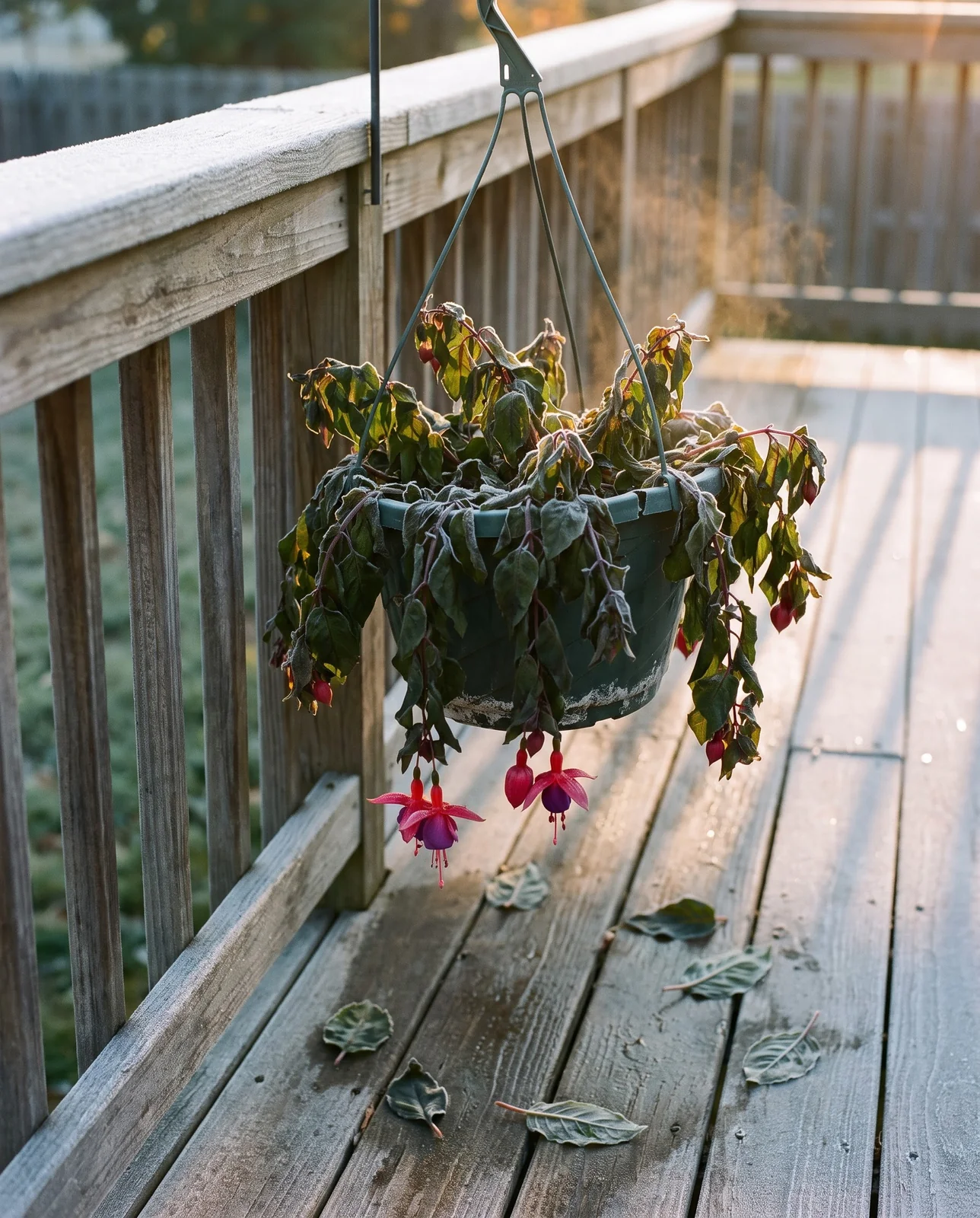
Fuchsias belong in partial shade, where they can take a couple of hours of morning sun but stay protected from hot afternoon rays. The plants prefer cool daytime temperatures of 60 to 70 degrees F, with nights about 10 degrees lower, well away from the summer heat that ends flowering.
No fuchsia escapes hot summer weather. Across hardy shrubs, basket hybrids, and honeysuckle types, summer heat can slow flowering and cause leaves to wilt. Orange- and red-flowered varieties are generally more heat tolerant than white or blue ones. Hybrids in the Triphylla Group, including 'Gartenmeister Bonstedt', also hold up better in warm weather. In July, keep baskets where morning sun reaches them before shade settles in: an east-facing wall, a covered porch, or the shaded side of the house. That cool, shaded exposure suits hanging fuchsias, and impatiens grow happily beside them there.
Watering, and how fast a basket dries
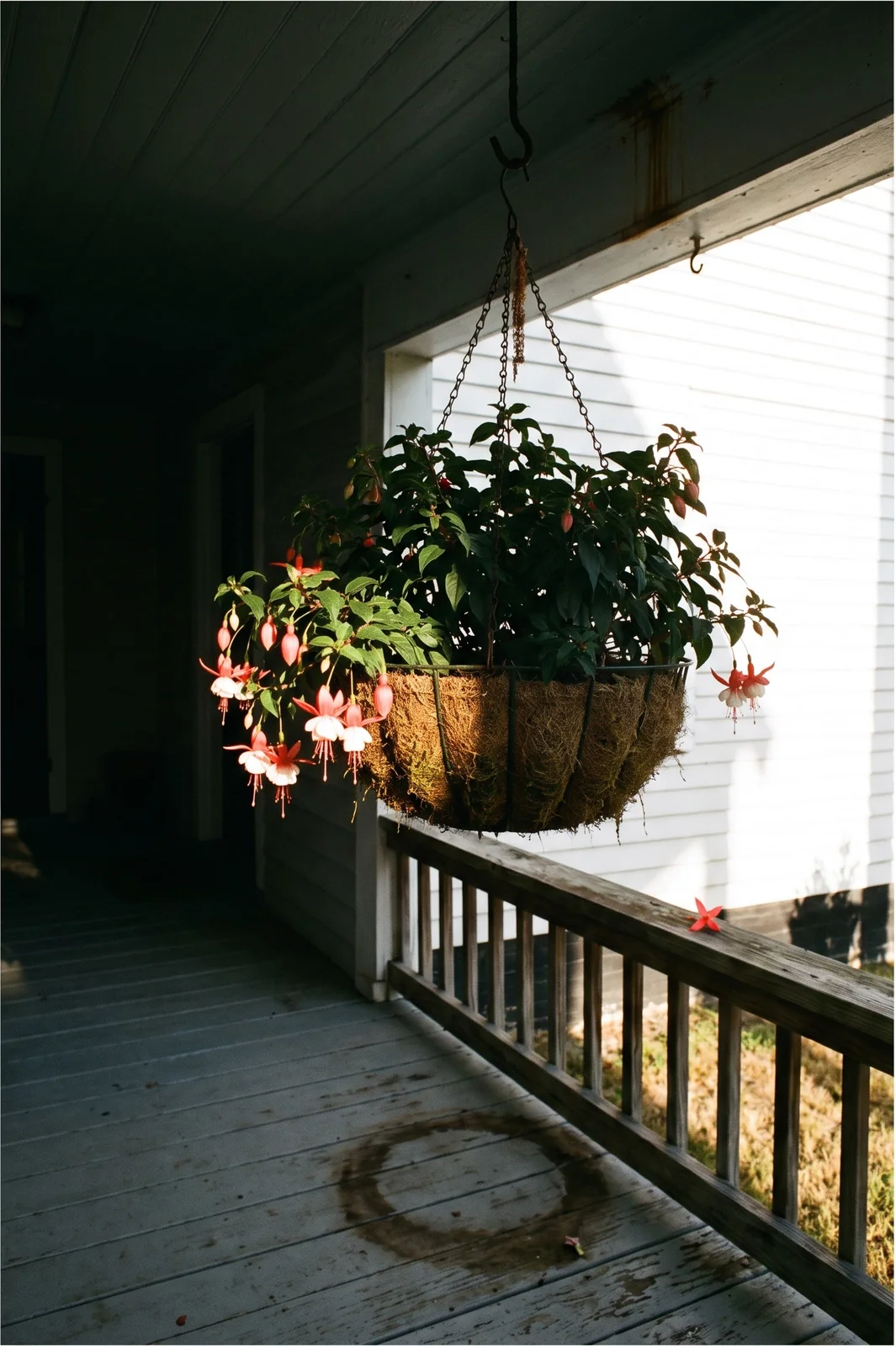
Fuchsias in pots or baskets need water often, at least once a day, and hot weather may require watering twice or more a day. A hanging basket dries fastest of all, with breeze on every side and dense leaves drinking steadily from a small volume of mix. That thirst slows down toward the end of the year. As winter approaches, the top 1 to 2 inches of soil can dry out between waterings.
Two watering habits cause yellow leaves that take weeks to show. Using very hard tap water brings on yellowing because fuchsias resent too much lime. Wetting the foliage is the other trap, since spraying or hosing leaves without shade in early summer causes sun scorch. Rule out both habits before blaming fertilizer or pests.
Soil and potting
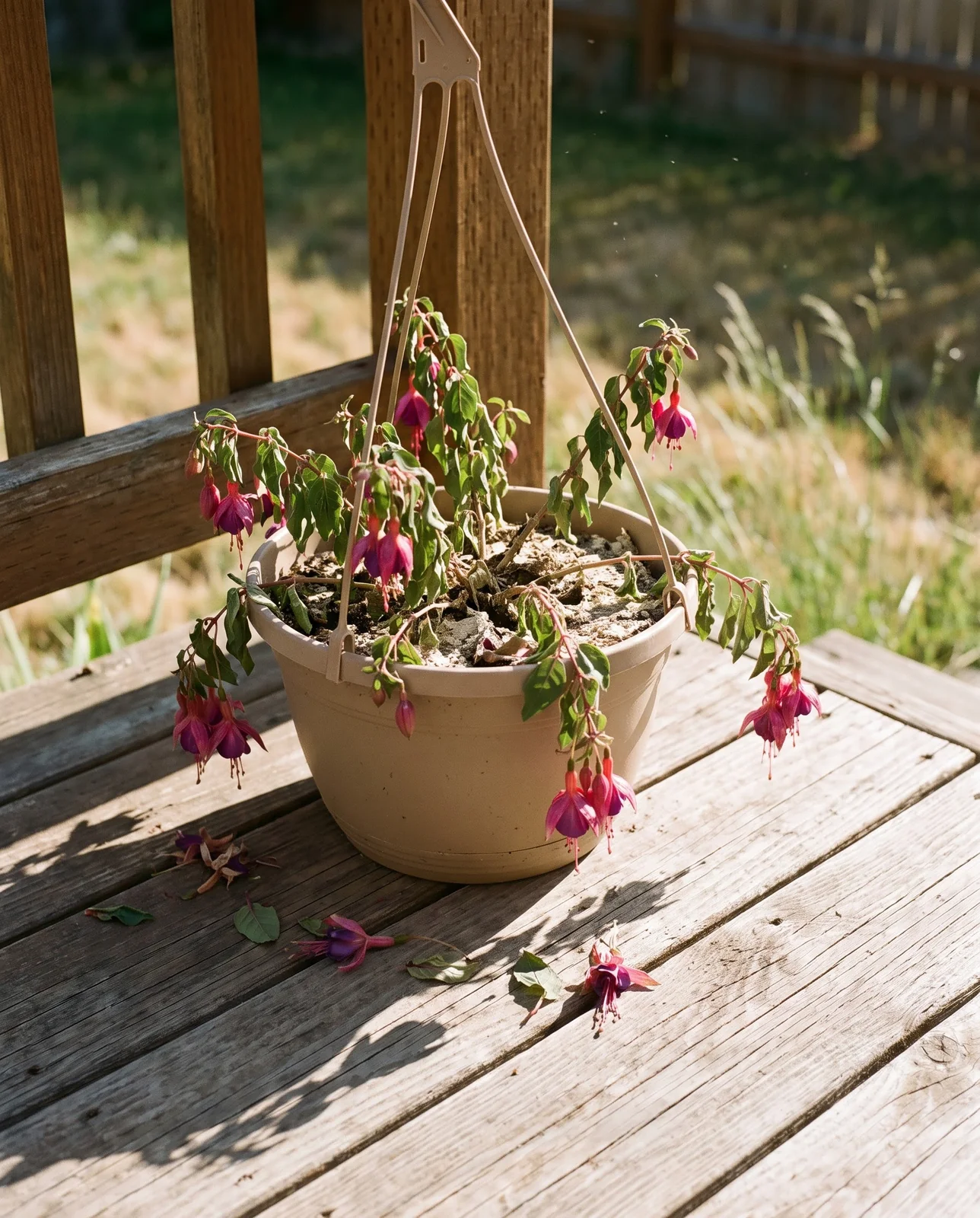
Hardy fuchsia does well in fertile, well-drained soil rich in humus, thriving in cool, moist conditions with some shade. For tender honeysuckle fuchsia, ideal growing conditions are temperatures between 60 and 80 degrees F, a soil pH of 6 to 7, and some shade from direct sunlight. Containers require drainage holes and a loose, open mix so excess water escapes freely without pooling at the roots.
Nurseries typically sell hardy fuchsias in small 3.5-inch pots in mid-spring, stepping up to pots of about a quart to a half gallon by summer when the plants are in full bloom. That small root volume on a plant bench or porch hook dries out quickly in the breeze. Keeping up with that thirst is why a hanging basket asks for closer daily care than a shrub planted directly in garden soil.
Feeding and pinching
Fuchsias are heavy feeders that benefit from a soluble, complete fertilizer every two to four weeks during the growing season. You can also feed weekly through spring and summer, tapering off as fall approaches. A soluble, balanced 10-10-10 fertilizer is most commonly used, either alone or alongside bloom boosters like 15-30-15 and 12-55-6. Many basket and container growers use a slow-release fertilizer that stays effective for two to four months.
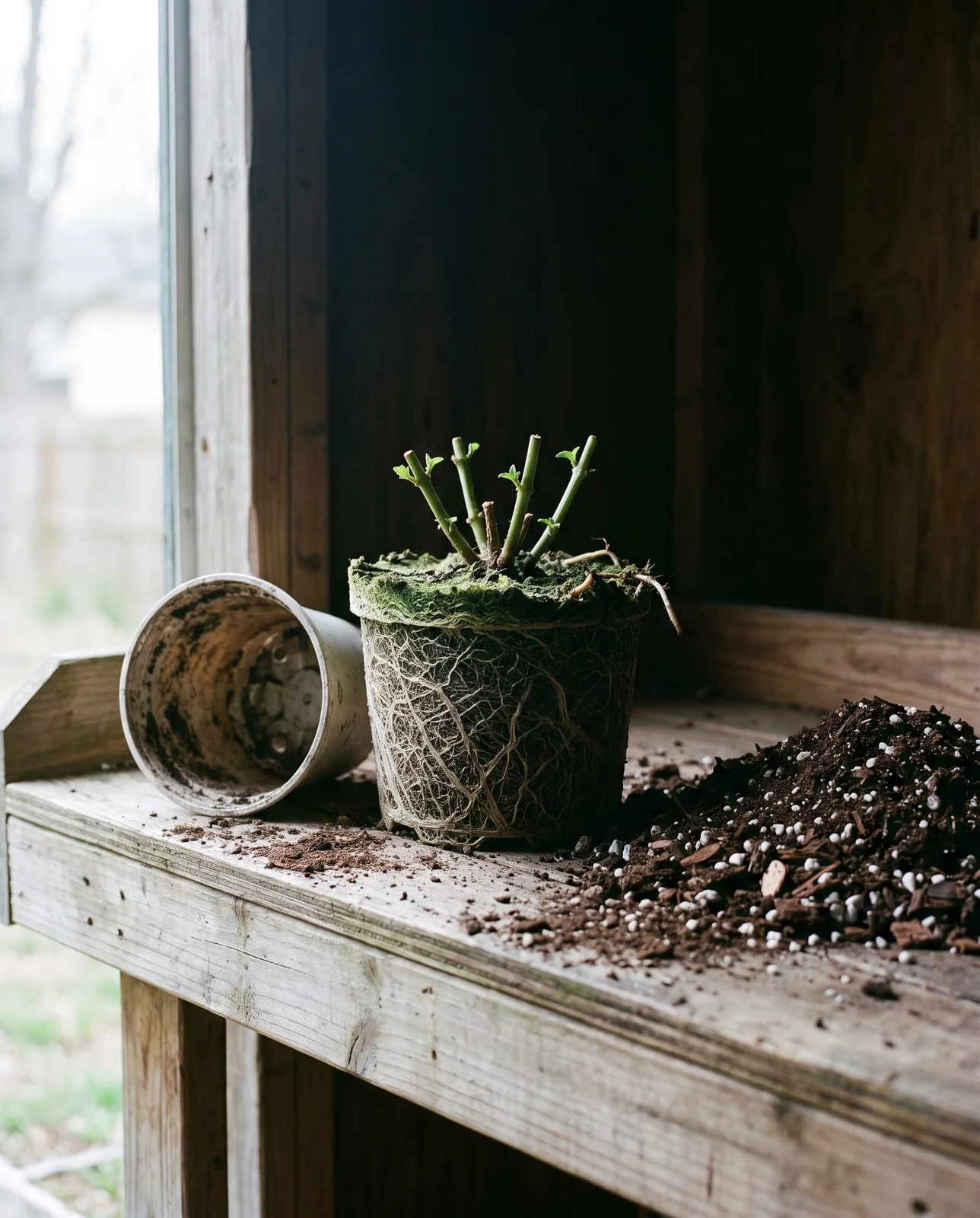
Pinching shapes a bushy plant with more flowers, but each pinch postpones the bloom. Pinch each new shoot after it produces two full sets of leaves, taking out the shoot tip at one or two leaf pairs from where the growth began. That work increases the eventual flower count, but it delays blooming by up to eight weeks after the final pinch. Start pinching early in late winter and spring, then let the plant grow and bloom after mid-May to early June. As the season winds down, stop pinching about a month before the first fall frost.
Why a fuchsia stops blooming
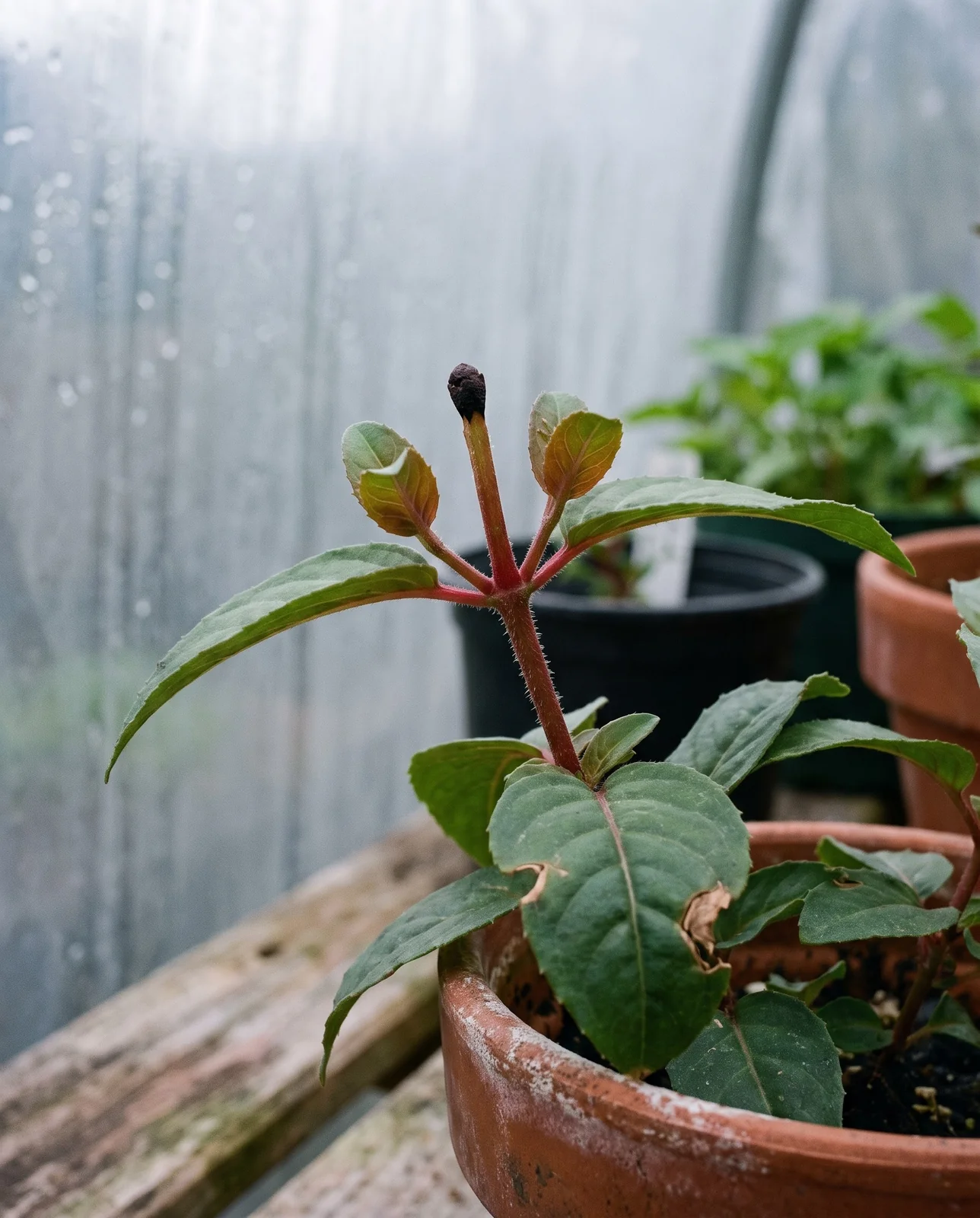
Summer heat is the first thing to check when a plant that bloomed hard in May goes quiet in July, because flowering ceases once average daily temperatures rise above 76 degrees F. Extra water cannot make up for high heat, so the plant simply rests until temperatures break. Before knocking a stalled basket out of its pot in midsummer to inspect the roots, check the daily temperature first.
Hunger and shade are two problems you can remedy right away. A basket bought in spring and left unfed soon runs out of fuel, while deep shade leaves the plant with too little light to form buds. Stems can also turn leggy over time, leaving leaves only at the tips. Pinching those shoots forces fresh growth, but that recovery delays flowering and belongs early in the year.
Cooler weather usually resolves a midsummer stall, and the normal blooming season extends from late spring to fall, with some varieties flowering almost year-round in suitable conditions. What will not recover on its own is a basket starved of nutrients or hidden in heavy shade, both of which need attention before blossoms return.
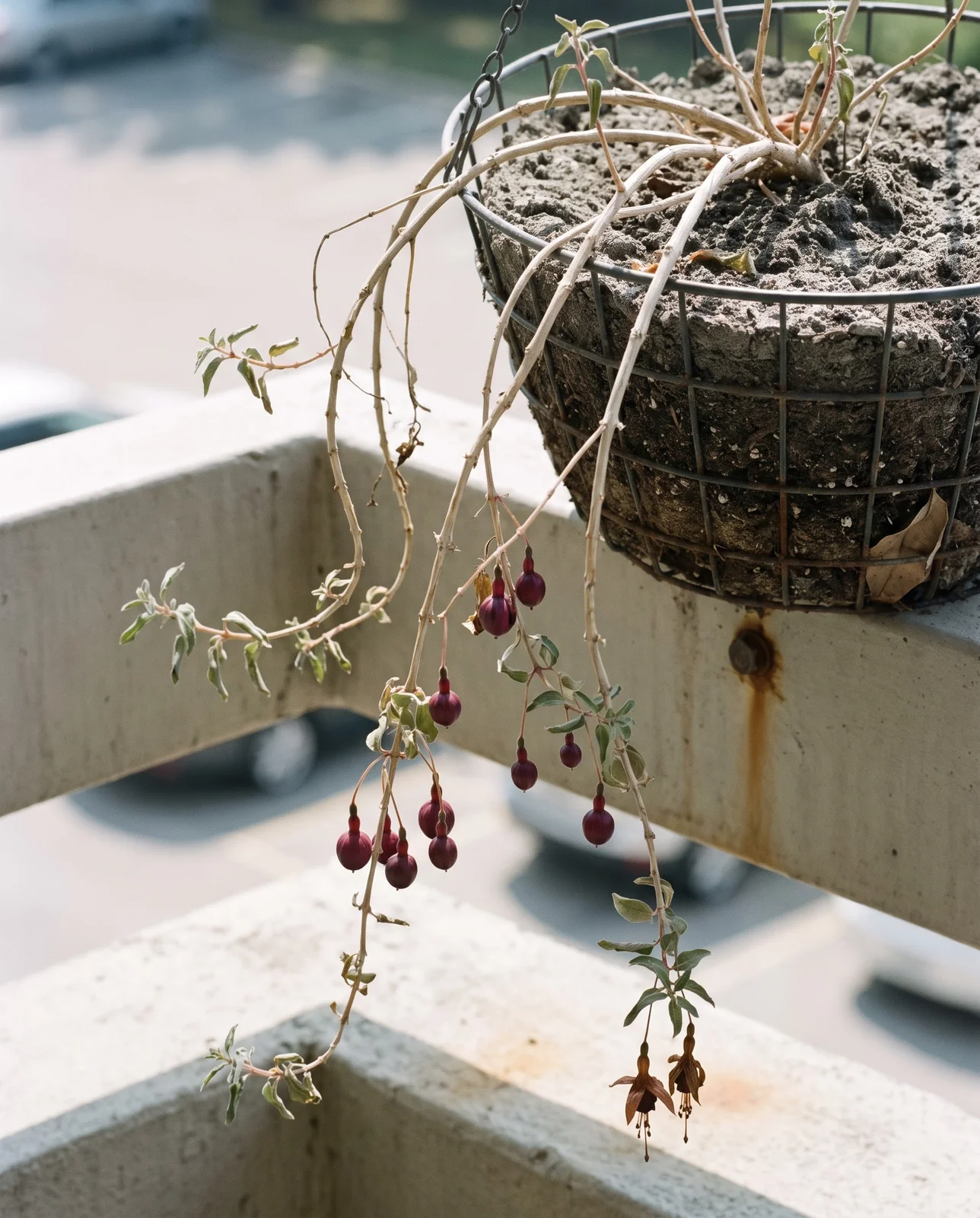
A decision path for a fuchsia that will not flower
Work through these steps in order. Checking temperature first saves you from repotting a plant that simply needs cooler air.
What yellow leaves mean
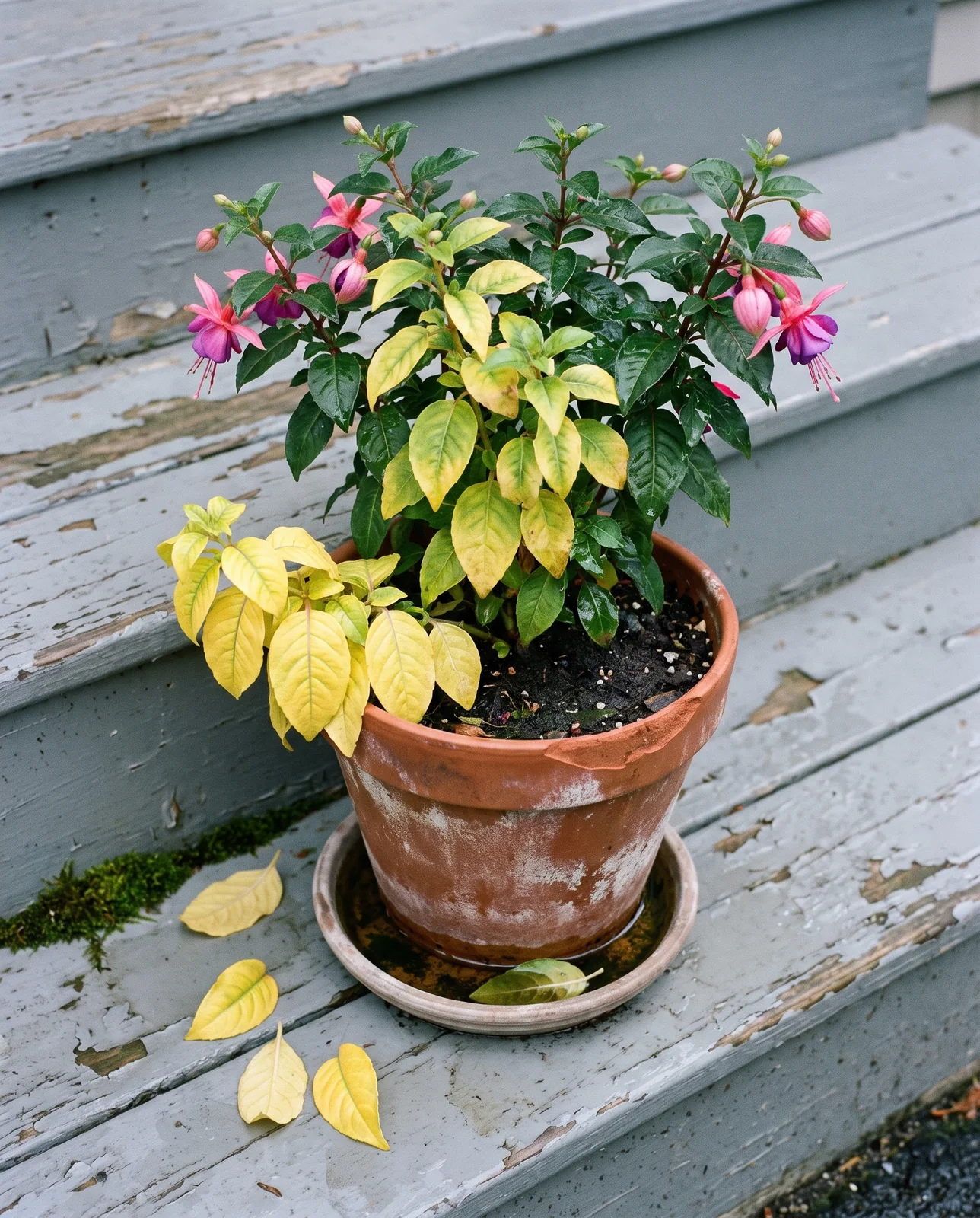
Yellow leaves usually point to a watering problem, but some loss is natural. As a deciduous shrub, fuchsia naturally sheds some yellow bottom leaves, which should not be confused with abnormal leaf drop. Beyond that normal shedding, yellowing on standard varieties is most likely caused by either underwatering or overwatering. Both look similar above ground, so test the potting mix with your finger before changing your routine. Soggy soil means the roots are drowning, while dry mix means the plant needs a deep drink.
Where the yellowing appears on the plant points to specific nutrient shortages. Magnesium deficiency yellows the lower leaves first, often appearing on older established plants that have not been repotted with fresh compost, and Epsom salts provide the remedy. Iron deficiency works the opposite way, turning the upper leaves yellow. Checking top growth against bottom growth distinguishes between the two, and it separates both deficiencies from the plant's normal shedding of bottom leaves. Neither pattern comes from underwatering, so extra water will not cure it.
Two fungal diseases also cause yellow foliage. Fuchsia rust appears as yellow spores on the underside of leaves and sometimes on both sides. Verticillium wilt causes leaves to turn yellow and brown, and it can kill individual leaves or entire branches. Diagnosing in order keeps the steps clear: check the mix first for overwatering or underwatering, note whether yellowing sits on upper or lower leaves, and look under the foliage for signs of rust.
Fuchsia pests and diseases, ranked
Ranked from the most damaging down, and by how difficult each problem is to clear. The threat at the top is why starting with clean stock and quarantining new arrivals matters so much.
Symptoms: leaves and flower buds distort with abnormal galls that start light green and turn red with age. Cause: a tiny mite that reached the West Coast around 1980 or 1981, spreading through California and into the Pacific Northwest. Hardy fuchsia and hybrids bred from it are very susceptible, and it is a relatively new pest to watch for. What to do: start with clean stock, quarantine new plants, sanitize pruning tools by soaking them in alcohol, and dispose of infested plants.
Symptoms: pale yellowish spots on leaves that can change rapidly to tan or brown dead spots, sometimes with purple borders, with tiny yellow to reddish fruiting bodies clustered on leaf undersides. What to do: rust is difficult to control once established, so look for rust-resistant cultivars when choosing plants.
Symptoms: blight affecting leaves, stems, and flowers in cool or humid conditions. What to do: space pots generously and hang baskets where breezes can reach them, because good air circulation, adequate spacing, and good sanitation keep it from taking hold.
Symptoms: leaves turn yellow and brown, and the disease can kill individual leaves or entire branches. That branch dieback sets it apart from simple feeding problems, which only discolor the foliage.
Buds that color up and fall
When fuchsia buds color up and drop before opening, summer heat and dry air are usually the cause. Hot and dry conditions cause flower buds to fail to develop properly, and flowers, if any, quickly fade and drop. A hanging basket caught in dry wind can dry out and shed its flowers inside a single day. Moving a pot rarely causes trouble on its own, but a new spot often brings a sudden change in heat, wind, or soil moisture that prompts the plant to drop its buds.
Overwintering a tender fuchsia
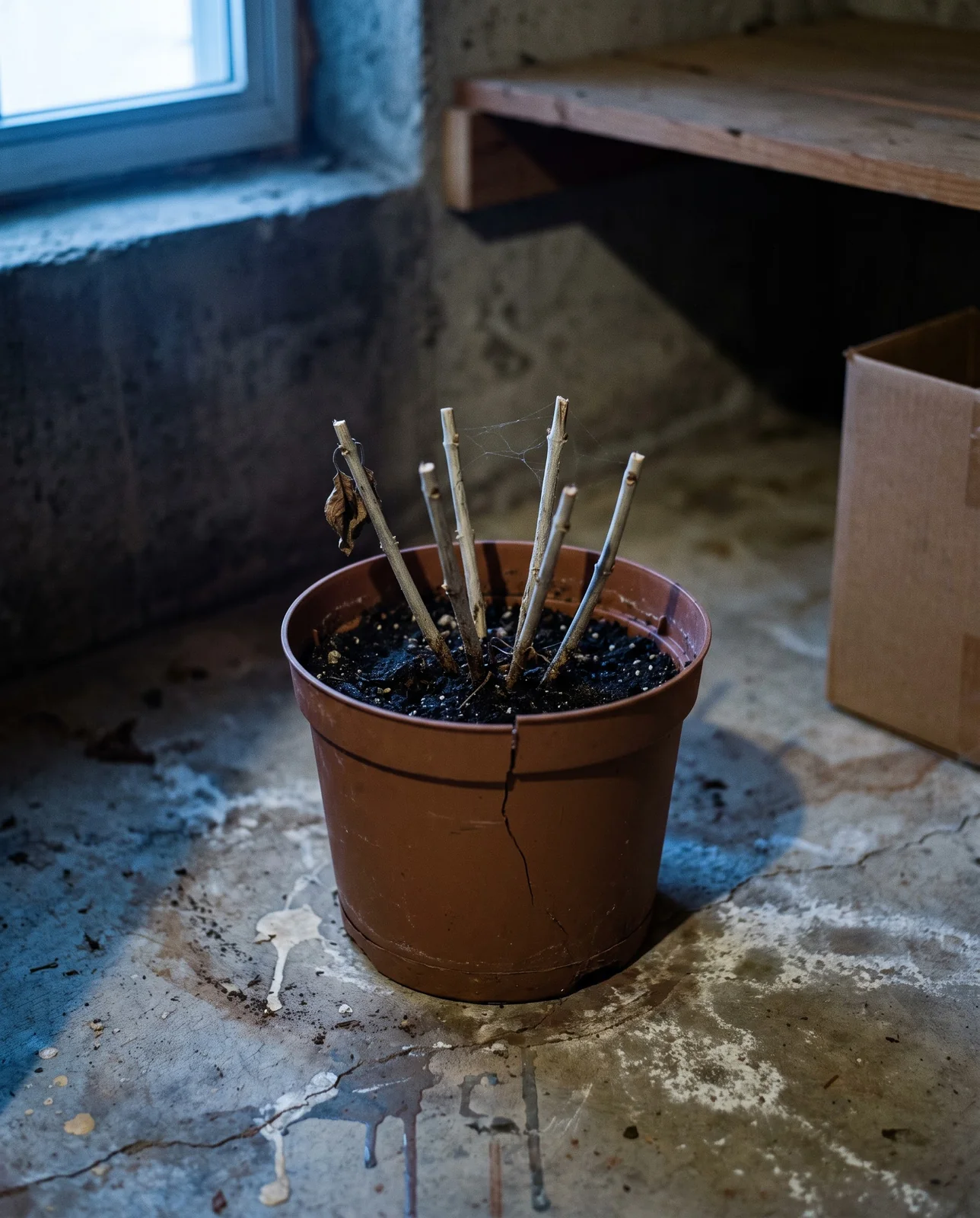
To carry a tender fuchsia through the winter, bring the pot inside before frost, cut it back, and store it somewhere cold, dim, and nearly dry. Taper off fertilizer in late August and move the plant to shelter while nights are still around 50 degrees F. Settle the pot into a cool, dimly lit basement or porch before the first frost arrives. Prune the growth back by a third to a half, or trim stems to a framework about 3 to 6 inches tall. Very large plants can be cut back to 6-inch stubs or right to the rim of the pot. Cut back and kept cold, a potted fuchsia rests through winter much as a stored geranium does.
Store dormant pots in a dark basement corner or an attached garage where temperatures hold between about 40 and 55 degrees F. Water sparingly, about once every 3 to 4 weeks, giving just enough moisture to keep the potting mix from drying out. If you have no dark, cold room, place the pot in a bright, cool indoor spot and reduce winter watering to a bare minimum. Triphylla types need warmer winter quarters, with temperatures kept at a minimum of 40 to 45 degrees F.
Bring the plant out of storage in March, pruning it back severely and watering thoroughly to restart growth. Aim to cut all branches back by half about a month before your last spring frost date. Feed with a dilute fertilizer solution every 2 weeks as green growth returns, and move the pot back outdoors once danger of frost has passed in May. A single frost will kill most hybrid fuchsias left outside, but with minimal winter care they can regrow even in cold zones 2 to 5. The entire difference comes down to getting the container off its hook and indoors on time.
Hardy fuchsia left in the ground
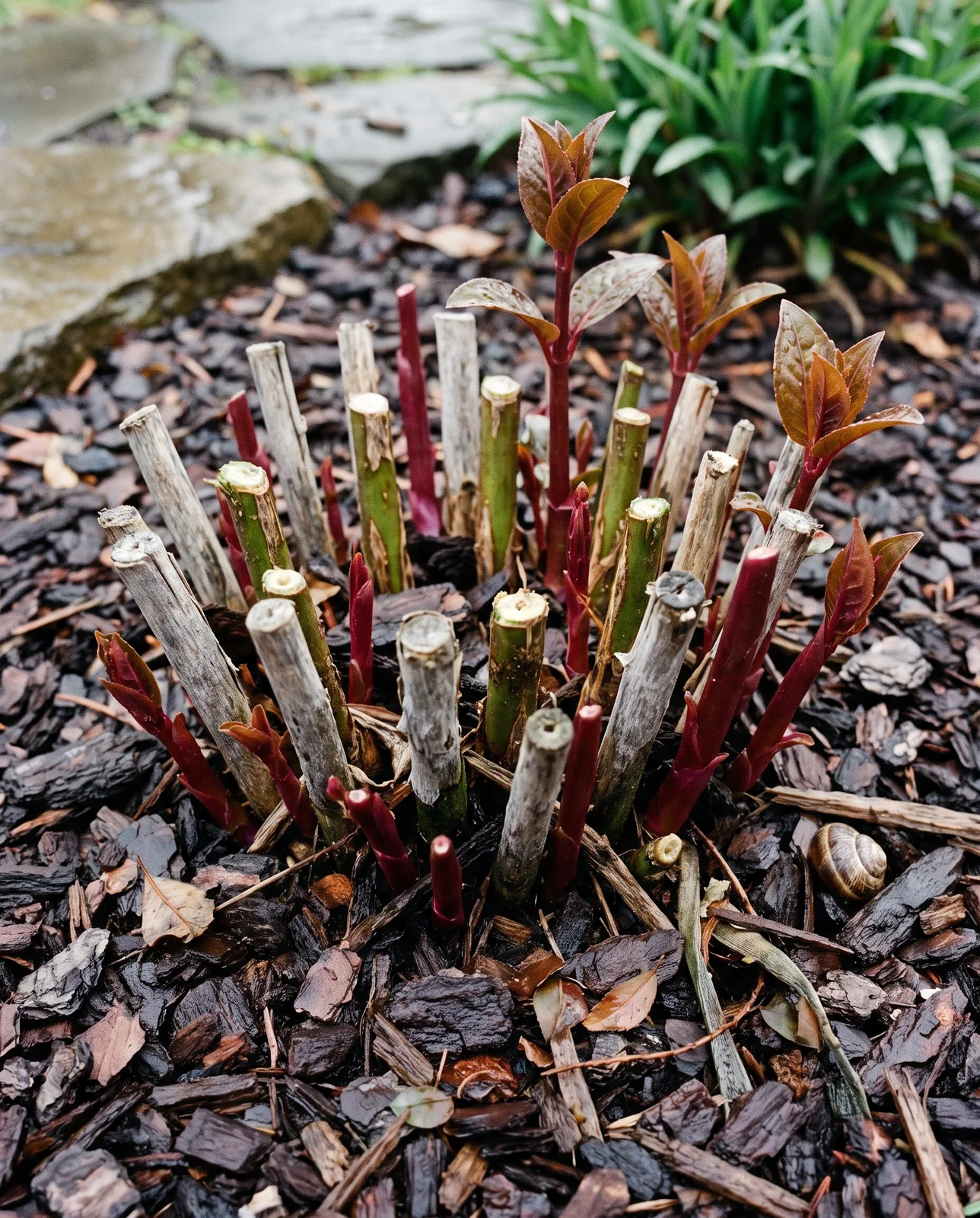
Hardy fuchsias survive winter in open ground with little trouble if you plant them deeply and mulch well. Set the base of the plant about 2 inches deeper than the surrounding soil to protect the crown, which keeps the shrub usually happy in a sheltered border year-round. In late autumn or winter, apply a protective mulch at least 2 inches thick using bark chips, leaf mold, or straw. That simple blanket is all an established border shrub needs through the cold months.
Spring pruning takes two different paths. In colder gardens, cut all of last year's growth to the ground in early spring, as frost kills the stems anyway and fresh shoots rise from below. Or, since hardy fuchsias need minimal winter protection, leave the top growth standing as insulation and prune only damaged branches once new growth begins in spring. Whichever method you choose, wait to cut back dead stems until mid to late April. Hardy fuchsias break dormancy late, and many get dug up as dead just before new shoots appear.
Baskets, pots and standards
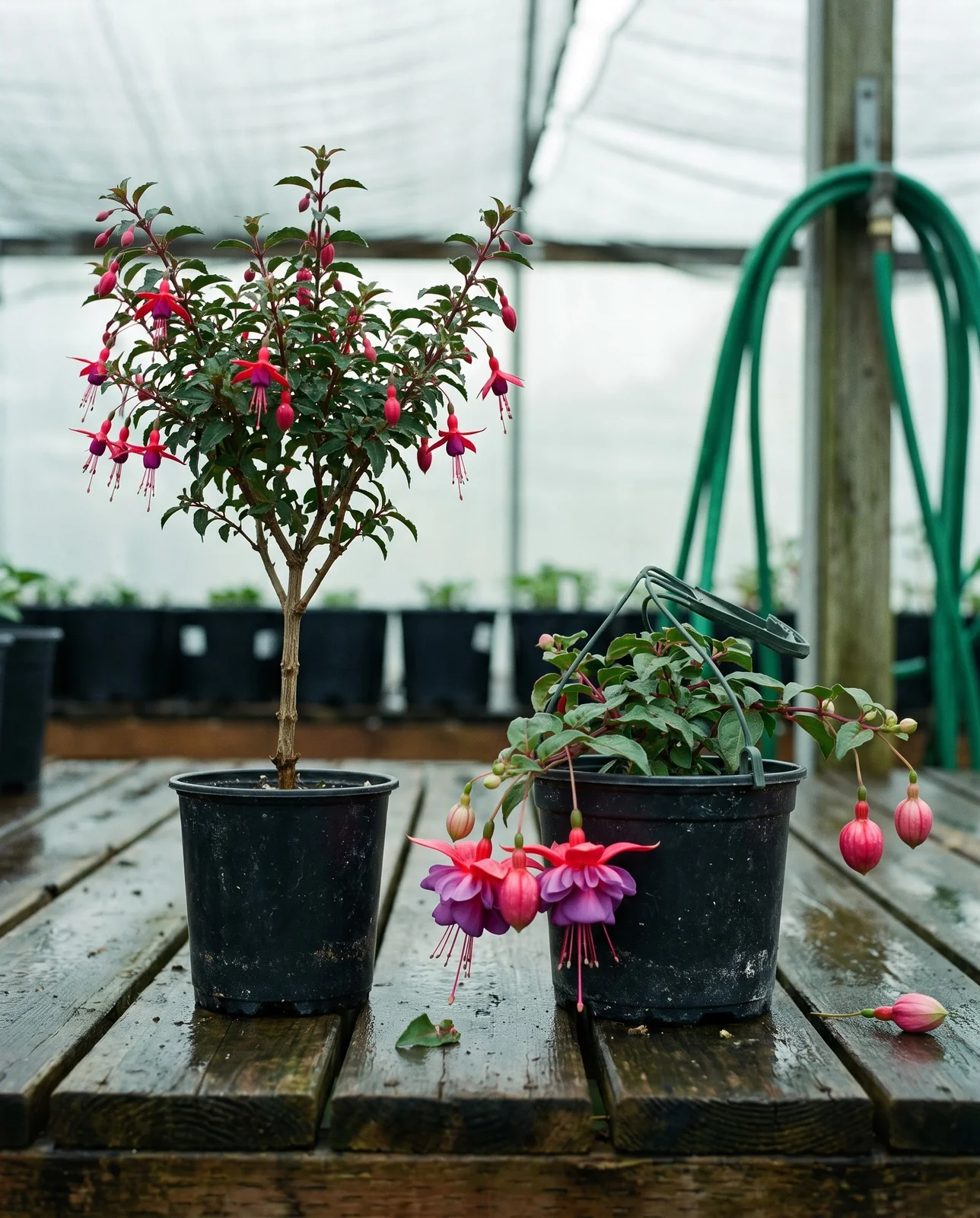
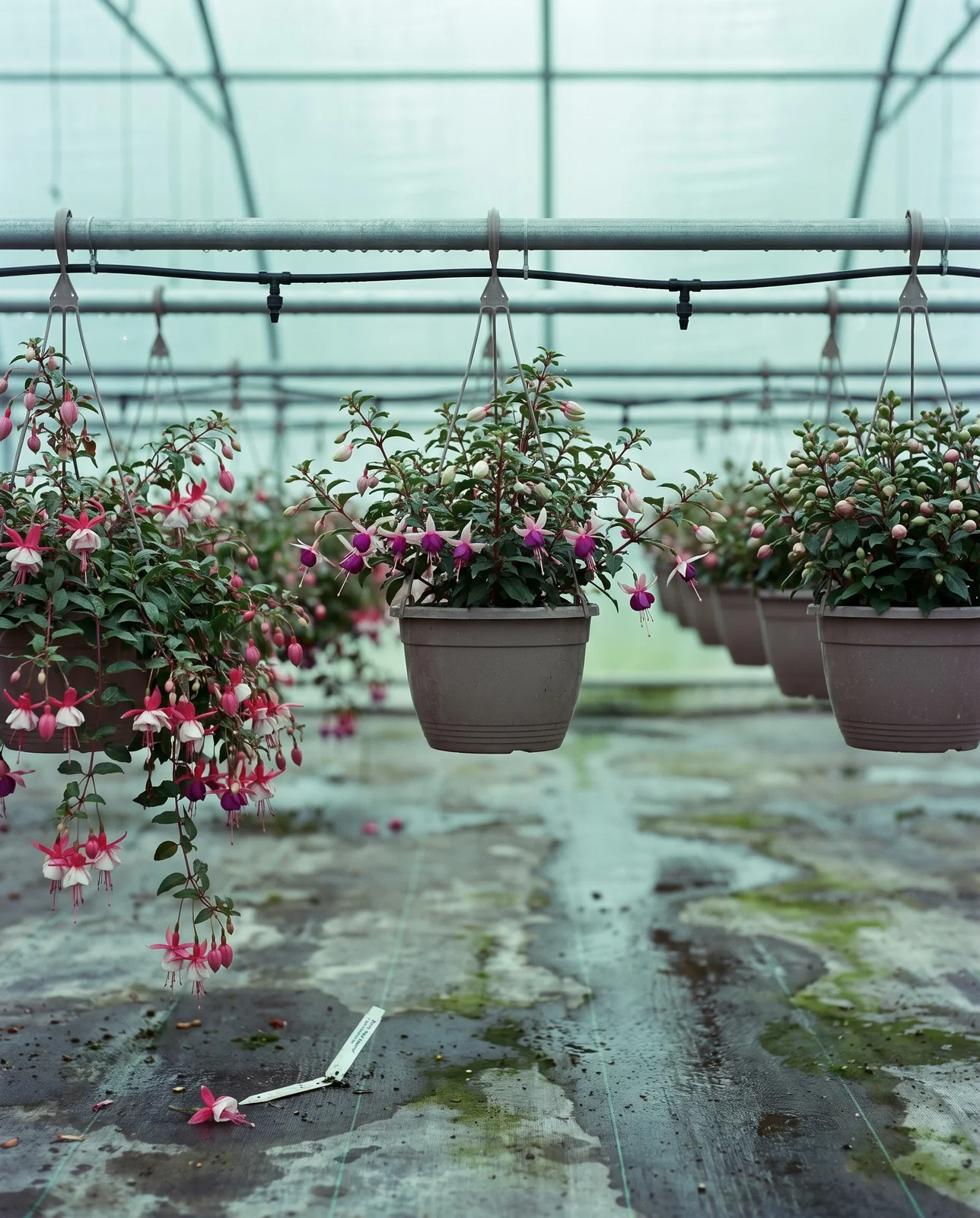
Most fuchsias grow in hanging baskets and patio pots, where container life dictates daily care. Breezes reach a hanging basket from every angle, drying the potting mix quickly and demanding frequent watering and steady food through the summer. A covered porch gives a hanging fuchsia the cool shelter it likes, and a pot of begonias shares that spot well.
Trained standards are a rewarding container project that demands patience. Training a full standard with a tree-like crown on a clear stem takes about 18 months, while a quarter or mini standard takes about 6 months. A mini standard carries a clear stem of 6 to 10 inches. Because that central stem needs to survive winter for the shape to continue, training a standard also means committing to overwintering indoors.
Are the berries edible
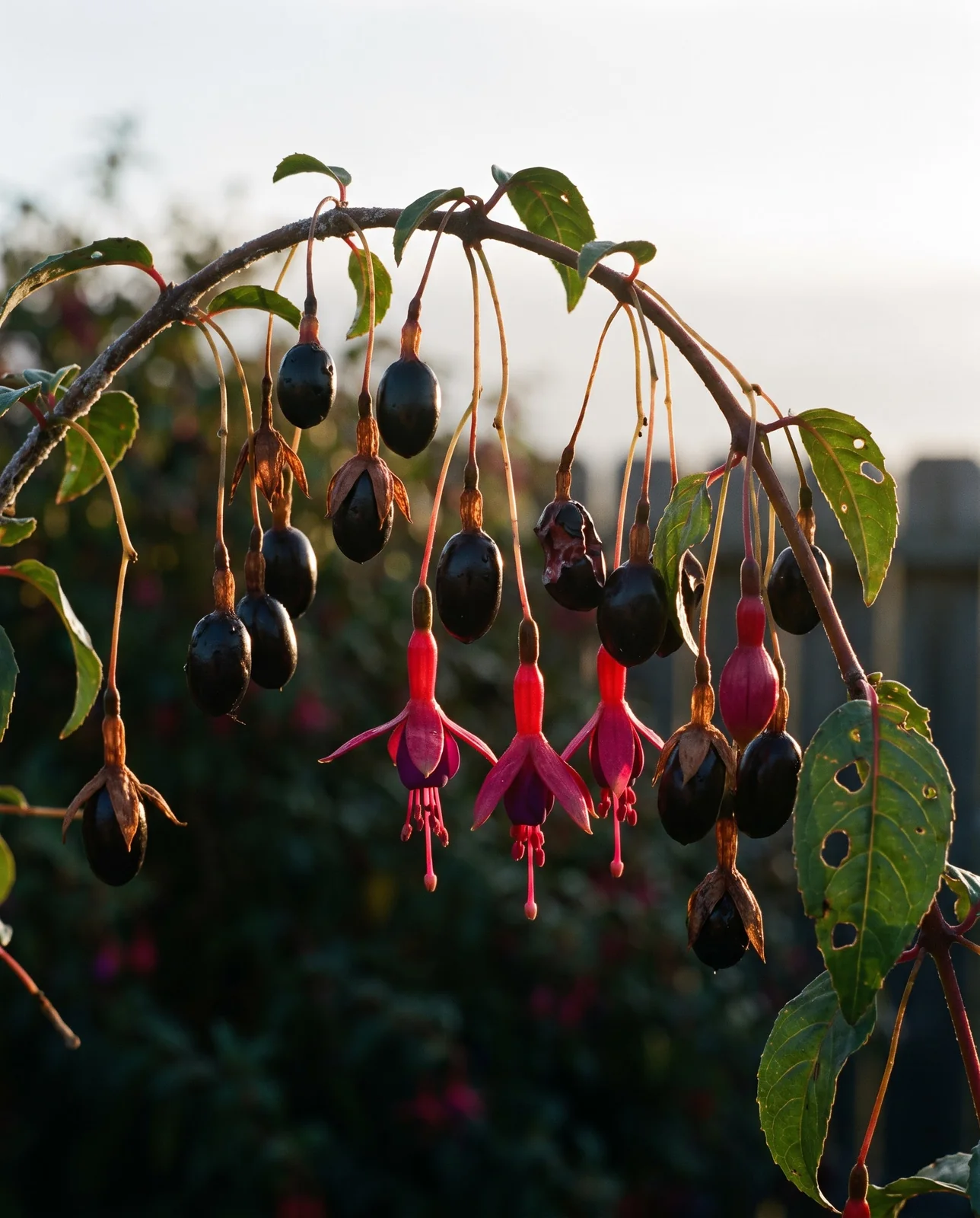
Whether fuchsia berries are edible is genuinely unsettled, because leading authorities contradict each other directly. The Royal Horticultural Society considers the fruit of all fuchsia species and cultivars edible, though flavor ranges from tasteless to an unpleasant aftertaste. NC State Extension, on the other hand, describes the juicy oblong fruit of hardy fuchsia as not edible by humans. Fuchsias are not poisonous and the berries can be eaten, though eating the leaves is not recommended, and fuchsia does not appear on official lists of edible flowers.
For gardeners who do taste them, flavor varies dramatically from one species to the next. Some fuchsias are grown specifically for their edible berries, and the fruit can be cooked into jam. Fuchsia splendens is among the best-tasting, with a flavor reminiscent of citrus and black pepper. Deer also show clear preferences among varieties, avoiding some while browsing others down. If you do sample them, remember that edible claims stop strictly at the fruit: eating the leaves is not recommended, and some authorities advise against eating the berries at all.
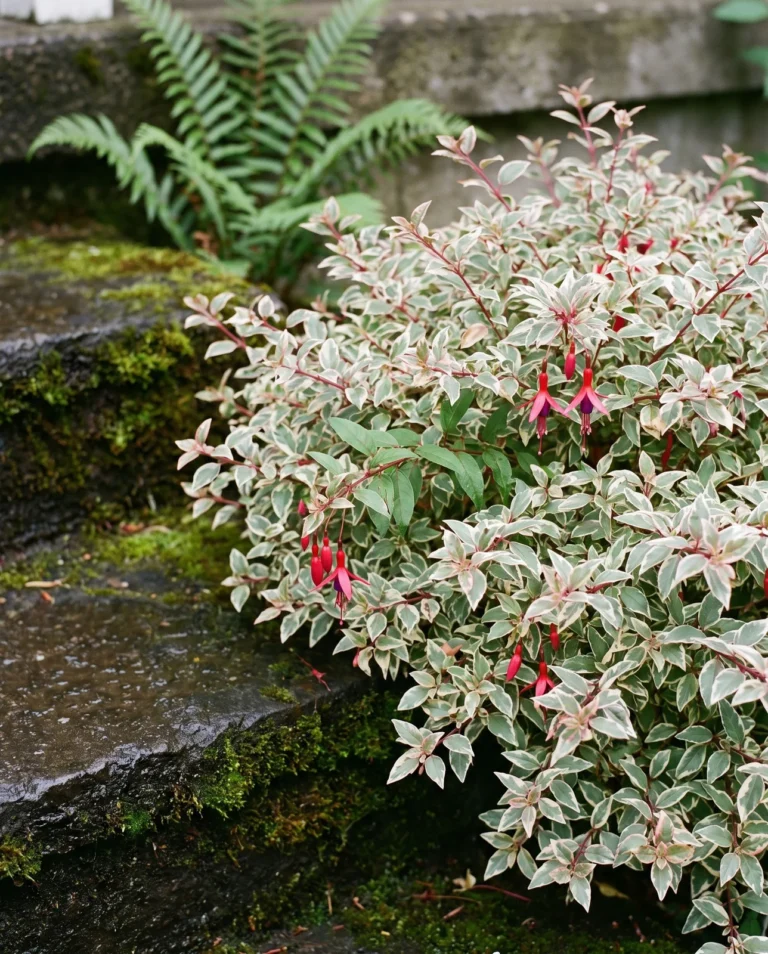
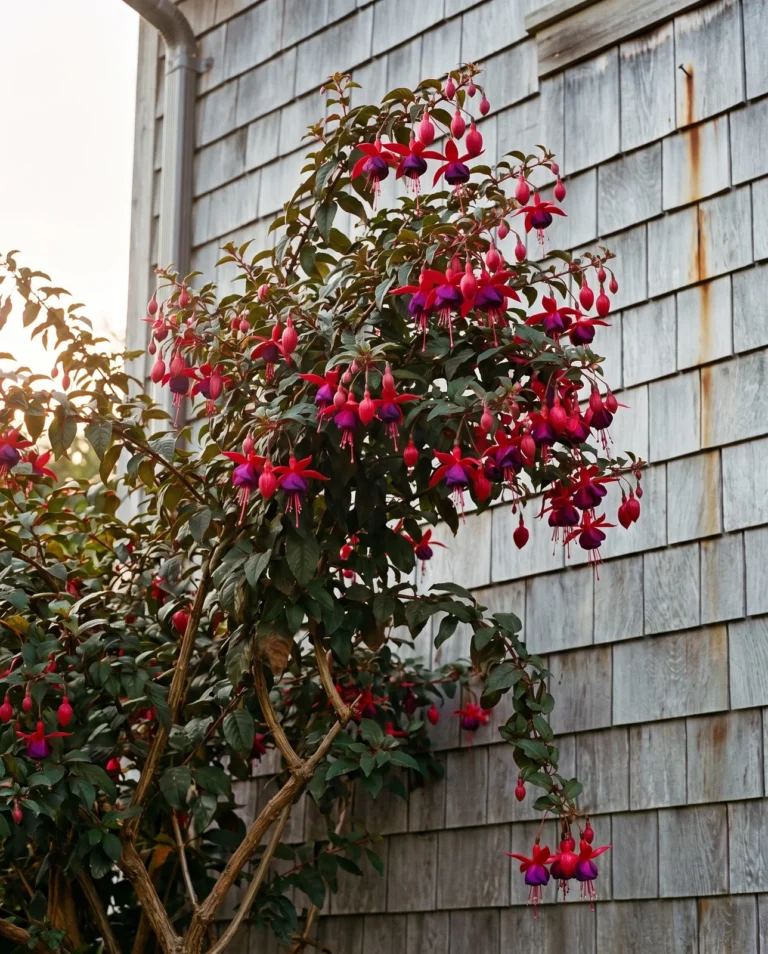
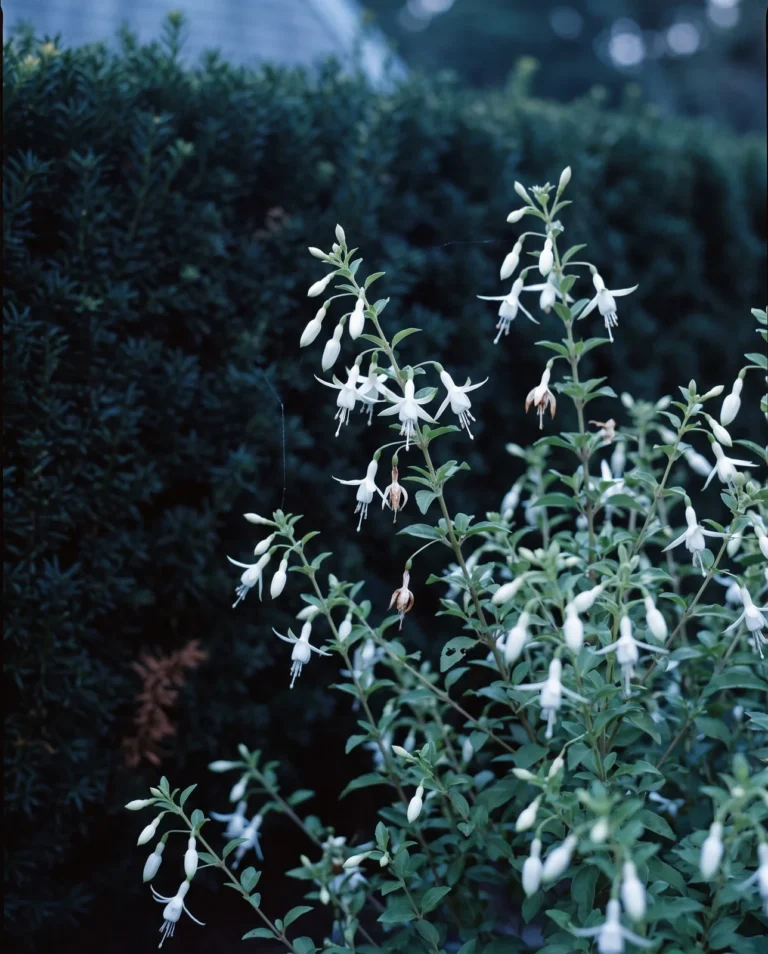
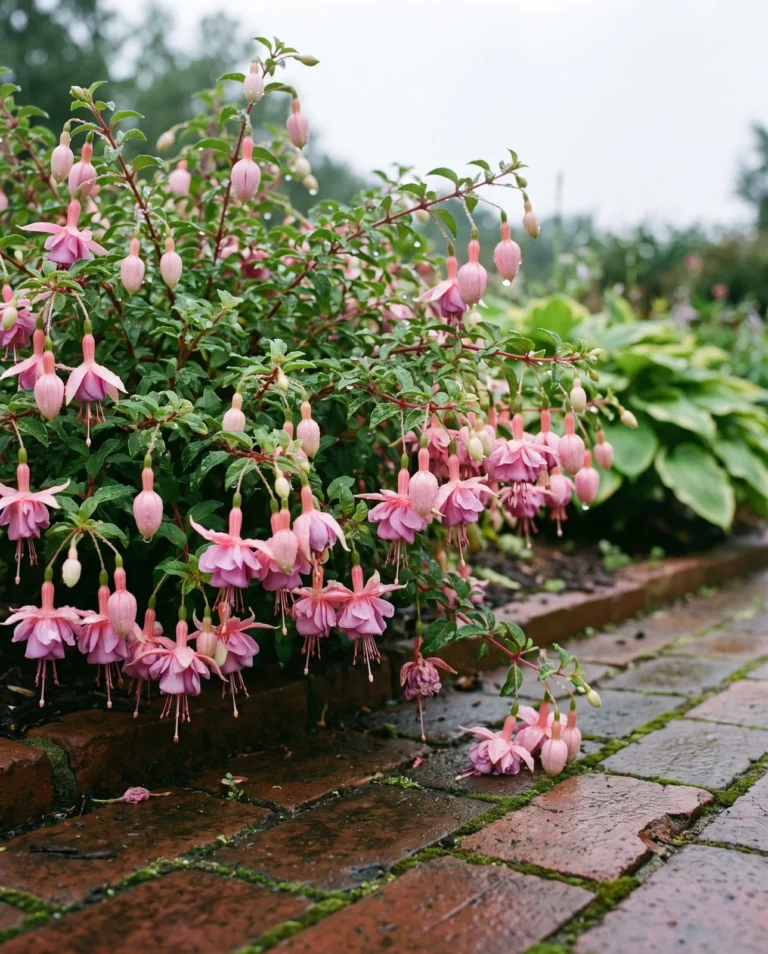
Fuchsia varieties worth telling apart
Hardy selections come first, followed by the tender kinds for pots and summer baskets.
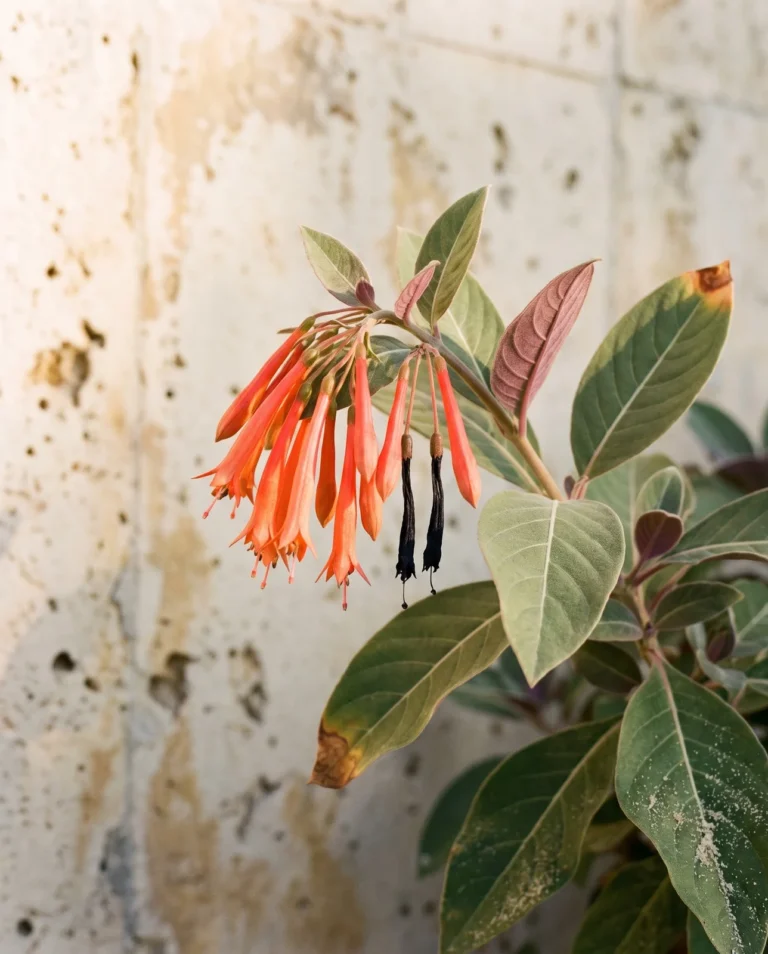
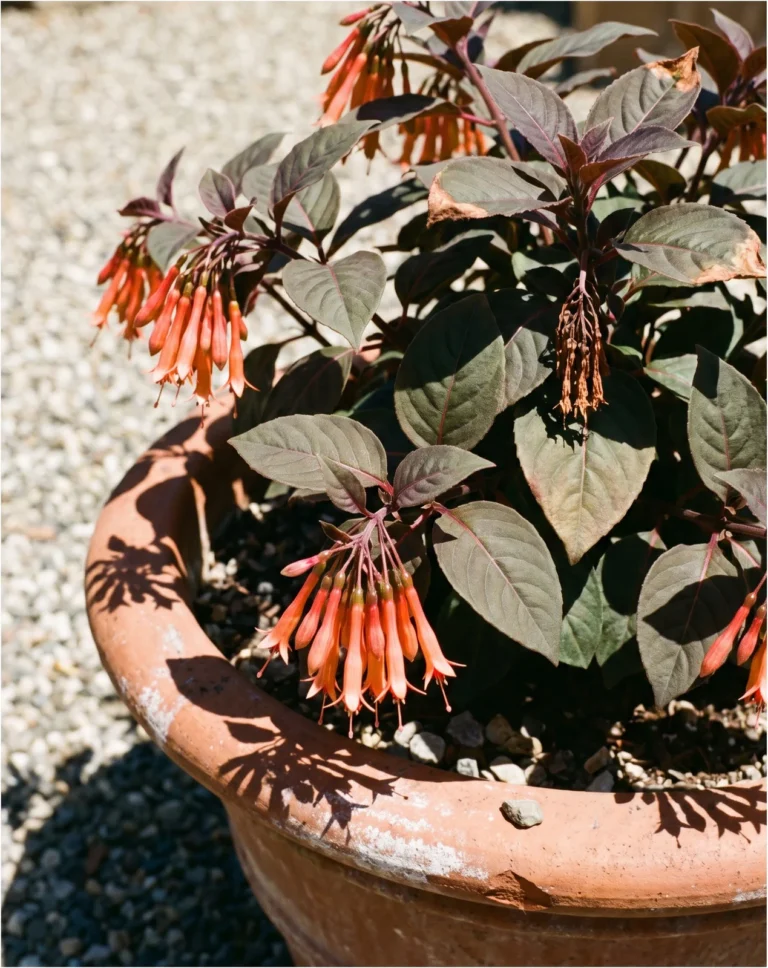
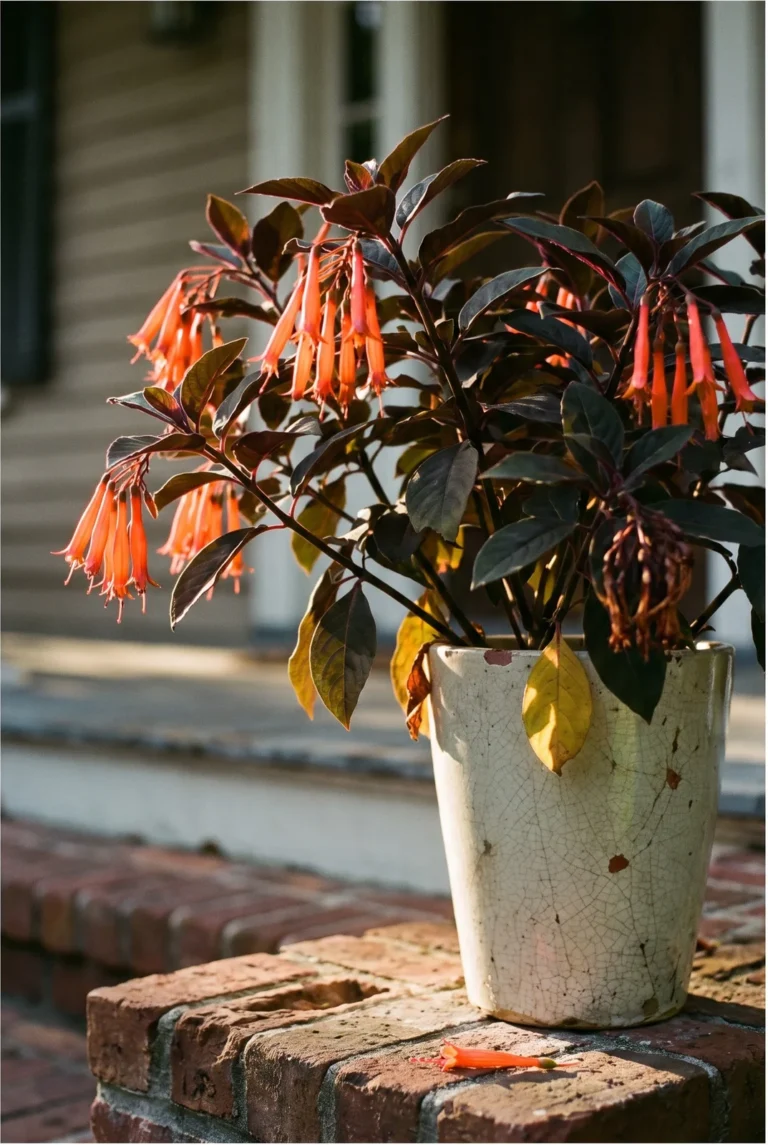
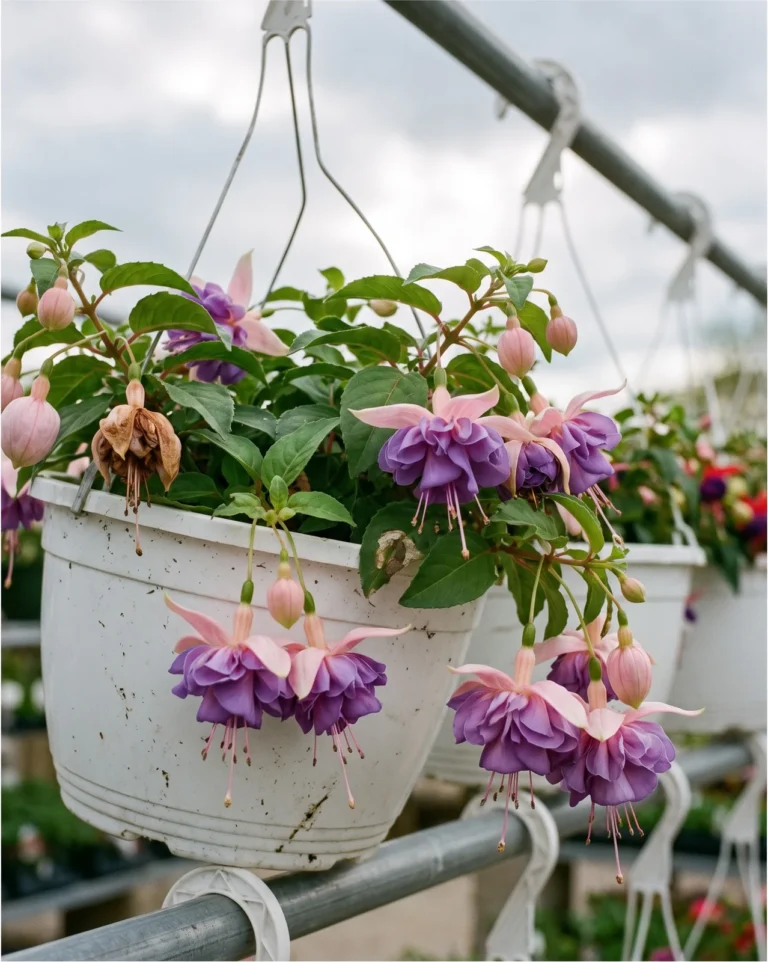
How much light it needs
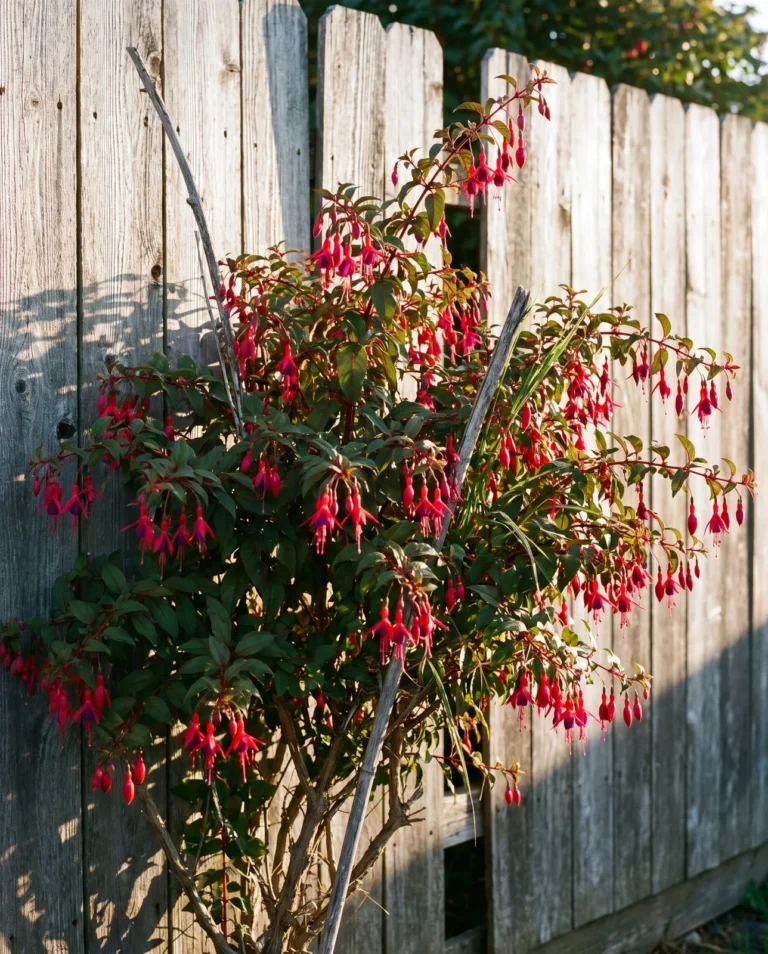
A fuchsia needs plenty of light to bloom, with shelter from the hottest sun of the day. Neither hardy nor tender fuchsias will flower in deep shade, and plants resent exposed spots with cold, drying wind. The ideal spot offers bright morning sun and soft afternoon light. An east wall, open sky on the north side of a house, or dappled shade under high branches works well. The common mistake is tucking a basket under a solid porch roof, where shelter turns into deep shade.
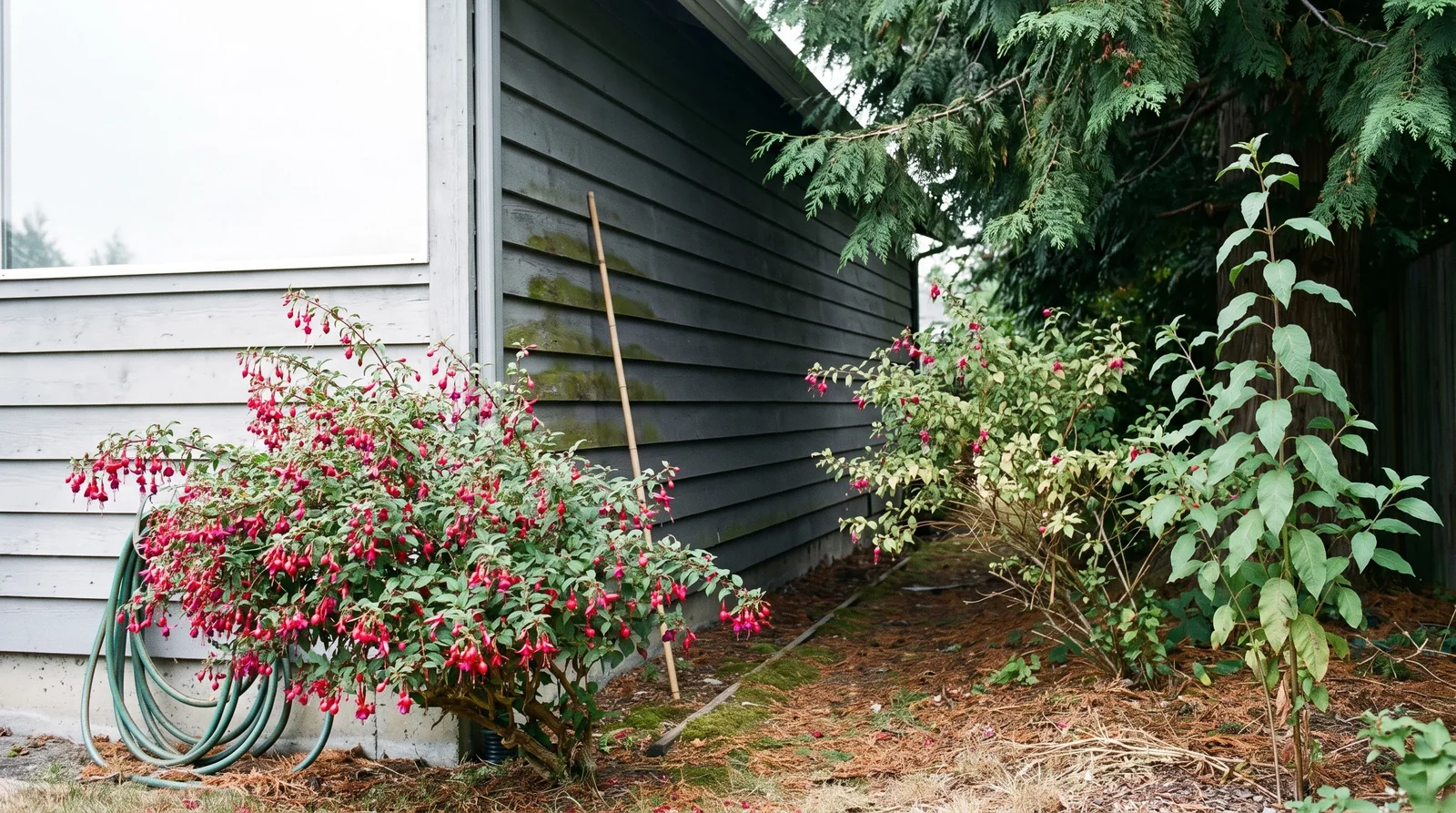
Fuchsia and hummingbirds
Fuchsia flowers are built for hummingbirds. The hardy species produces profuse drooping blossoms rich in nectar, drawing hummingbirds and bees into the garden. Tender pot hybrids do the same job, so a basket on a porch hook feeds hummingbirds just like a border shrub. Because the blooms have no fragrance, bright colors and sweet nectar do all the work of pulling pollinators in. Hang it near a pot of lantana, another hummingbird favorite, and the birds keep returning to the porch all summer.
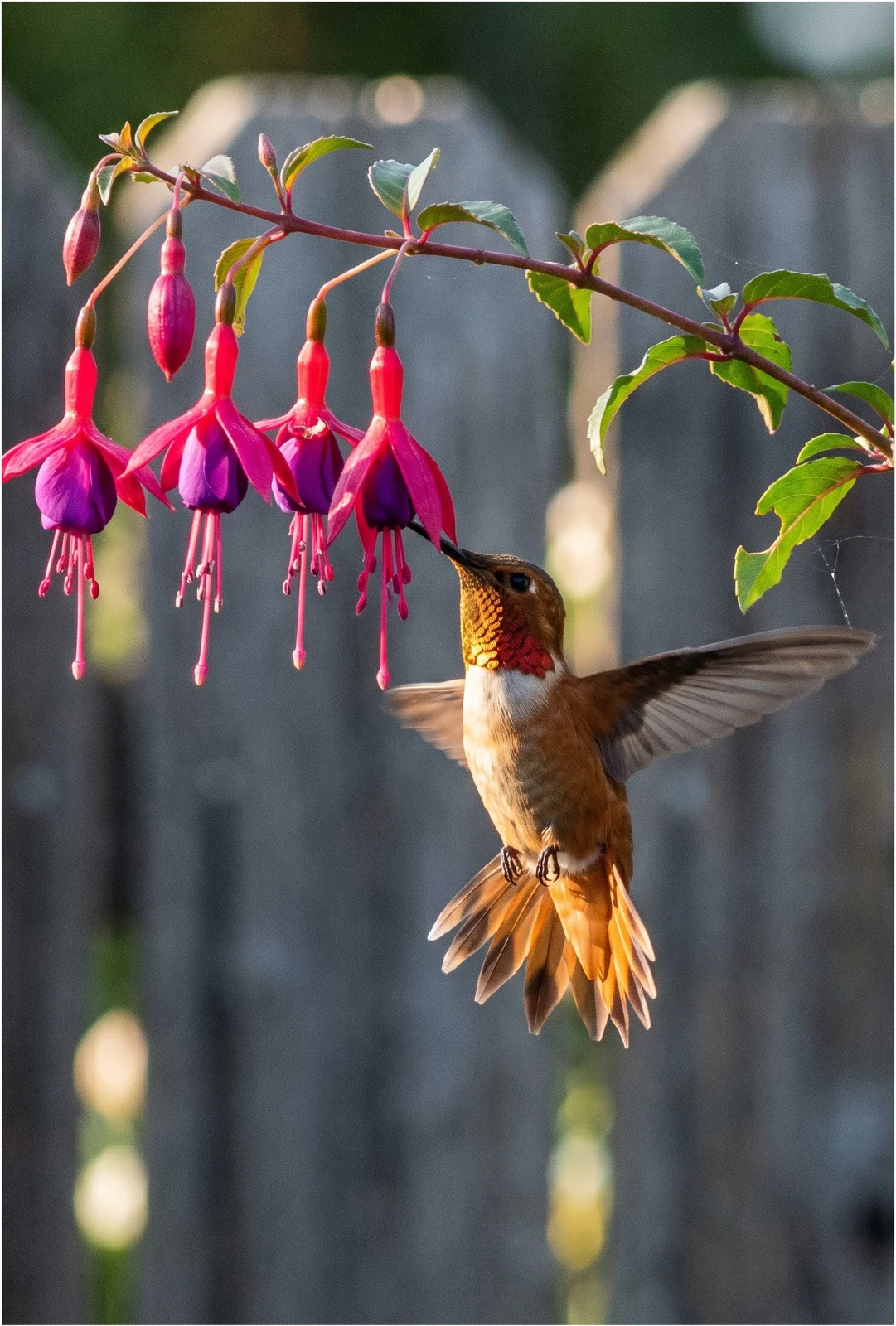
Why nobody buys fuchsia as cut stems
Fuchsia is grown as a garden plant, because the blooms do not hold up as cut flowers. In floral arrangements, the name simply describes a color palette of deep purple and rich berry tones. There is no reliable vase life in days for cut fuchsia, the first detail any flower buyer looks for. The drooping bells belong on a living plant in a pot or a hanging basket.
What to expect through the year
How a fuchsia behaves across the year, starting with a blooming plant brought home in spring.
Spring is when the plant settles in and grows fast. Flowering typically runs from late spring into fall, and some varieties bloom almost year-round in mild conditions. Cool spring weeks bring the fastest growth, making this the ideal time to pinch stem tips and move the plant into a larger pot.
Summer brings a quiet stall once hot weather arrives. Daily average temperatures above 76 degrees Fahrenheit cause plants to stop setting flowers. A basket that was crowded with buds in June will hold plain foliage and wait for cooler weeks. No care routine can override high temperatures, so shade, water and patience are all that helps.
Autumn sorts the plants by how they handle freezing weather, after flowers carry on through early fall. Hardy fuchsias in garden beds often lose their top stems to freezing weather, only to sprout anew from underground when spring returns. Tender hybrids cannot survive below freezing, so they must be overwintered in shelter or discarded at season's end.
Fuchsia myths worth dropping
Common assumptions about growing fuchsia, paired with how the plants actually behave.
The myth: Fuchsia is an annual.
The reality: Most gardeners grow fuchsia as an annual, although some selections stay cold hardy across zones 6 to 10. During severe winters the top growth will often die back, yet new shoots emerge from below the ground in spring.
The myth: Fuchsia wants full shade.
The reality: Deep shade leaves hardy fuchsias unable to bloom. Triphylla hybrids actually require full sun, unlike the majority of fuchsias that thrive in filtered light.
The myth: Yellow leaves mean the plant is thirsty.
The reality: Yellow foliage is most often triggered by either underwatering or overwatering. Hard tap water is another culprit because fuchsias resent too much lime. Hosing foliage on sunny early summer days can scorch leaves yellow. Mineral shortages also show up in the leaves, with magnesium deficiency yellowing the lowest leaves first while iron deficiency turns the upper leaves yellow.
The myth: One hardiness zone covers fuchsia.
The reality: Hardiness depends on the group. Tender hybrid varieties survive winter outdoors only in zones 10 to 11. By comparison, cold tolerance for the hardy species remains unsettled, with its range placed in zone 6 or 7 and sometimes colder.
The myth: A healthy fuchsia flowers all summer.
The reality: Midsummer heat naturally halts the display, as flowering ceases when the average daily temperature rises above 76 degrees Fahrenheit. In sustained heat, flowering on both hardy and tender fuchsias may decline while foliage wilts under the stress.
FAQ
Do fuchsias prefer full sun or shade?
Most fuchsias prefer shade or part shade. Hardy fuchsias will not flower in deep shade and resent exposed spots with cold, drying wind, while Triphylla types need full sun.
Does fuchsia grow back every year?
Hardy fuchsias return every year, though tender types do not. During a hard winter, hardy growth often dies back, but new growth appears from below ground the following spring. Tender varieties will not survive below freezing, so they need winter shelter indoors or they end with the season.
Is fuchsia a perennial or an annual?
Fuchsia is a perennial, but it is most often grown as an annual even though some varieties are cold hardy in zones 6 to 10. Gardeners group them into three hardiness tiers: hardy fuchsias that survive freezing in the ground, half-hardy types that die back each winter but resprout in spring, and tender selections that cannot take frost.
What temperature is too hot for fuchsia?
Flowering stops once the average daily temperature rises above 76 degrees F. Fuchsias prefer cool daytime temperatures of 60 to 70 degrees F, with nights running about 10 degrees lower.
Why are my fuchsia leaves turning yellow?
Yellow leaves are most likely caused by either underwatering or overwatering. Where the yellowing appears points to nutrient needs: a magnesium deficiency yellows the lower leaves first, while an iron deficiency turns upper leaves yellow. Some yellow bottom leaves are also normal, since fuchsia is a deciduous shrub that naturally sheds its lowest foliage.
What does an overwatered fuchsia look like?
An overwatered fuchsia looks very similar to an underwatered plant, since both show up as yellowing leaves. The foliage looks the same either way, so feel the potting mix to see whether the roots are sitting in soggy soil.
Why does my fuchsia have yellow leaves with black spots?
This is usually fuchsia rust. It starts as pale yellowish spots that may change rapidly to tan or brown spots, with purple borders on some cultivars. Check beneath the foliage to confirm, where tiny yellow to reddish fruiting bodies develop in jumbled groups on the leaf undersides.
How do I get a fuchsia to bloom again?
Wait out the heat first, because blooms stop once summer temperatures run past the plant's threshold. Next, check the light, since too much shade results in an absence of flowers on tender fuchsias. If a plant looks stunted or yellow-leaved, apply a balanced liquid feed.
What is the best planting zone for fuchsia?
The planting zone depends on whether you have a hardy or tender type. Hardy fuchsias survive outdoors across zones 5a through 10b, though some treat them as hardy only to zone 6 or 7. Tender hybrids are winter hardy only in zones 10 to 11, so gardeners elsewhere treat them as annuals.
Are fuchsia berries edible?
Whether fuchsia berries are edible is genuinely unsettled. The fruit of every fuchsia species and cultivar is considered edible, though its taste ranges from bland to an unpleasant aftertaste. Not everyone agrees, and the juicy oblong berries of hardy fuchsia are sometimes judged not edible by humans.
Is fuchsia toxic to cats and dogs?
No, fuchsia is non-toxic to cats and dogs. The ASPCA finds honeysuckle fuchsia non-toxic to dogs, cats and horses, with no toxic principles. Both hardy species and tender hybrids are non-toxic to dogs, cats and horses as well.
Do fuchsias do better in pots or in the ground?
It depends on which fuchsia you grow. Hardy fuchsias are usually happy in a sheltered border all year-round, especially when planted deeply to protect the crown in cold winter weather. Tender hybrids suit containers, which can be brought indoors for winter or discarded once frost arrives.
Interesting tips
- Deer seem to have preferences among fuchsia varieties, leaving some alone while eating others.
- The fuchsia gall mite has a cold limit. It can tolerate a winter temperature of 41 F, but does not readily survive below 39 F.
- Quarantine a new fuchsia carefully, because a female gall mite can lay 50 eggs that hatch in 4 to 7 days. At 64 F, the four-stage life cycle takes 21 days to complete, so keeping a plant apart for only a few days is not enough.
Related Guides & Flowers
Hibiscus
The other plant sold in two versions under one name, where the hardy one and the tropical one want completely different winters.
Petunia
The other basket bought in full flower every spring, and the one that takes the summer sun a fuchsia cannot.
Purple flowers
Where the color called fuchsia belongs, since the word names a shade of purple about as often as it names a plant.
Types of flowers
The wider catalog, for when the label on the pot still does not say which plant came home.
Enjoying our flower guides? Add YourFlowersGuide as a preferred source on Google. It helps more readers find us.
Add to Preferred Sources