What helenium is and where it grows wild
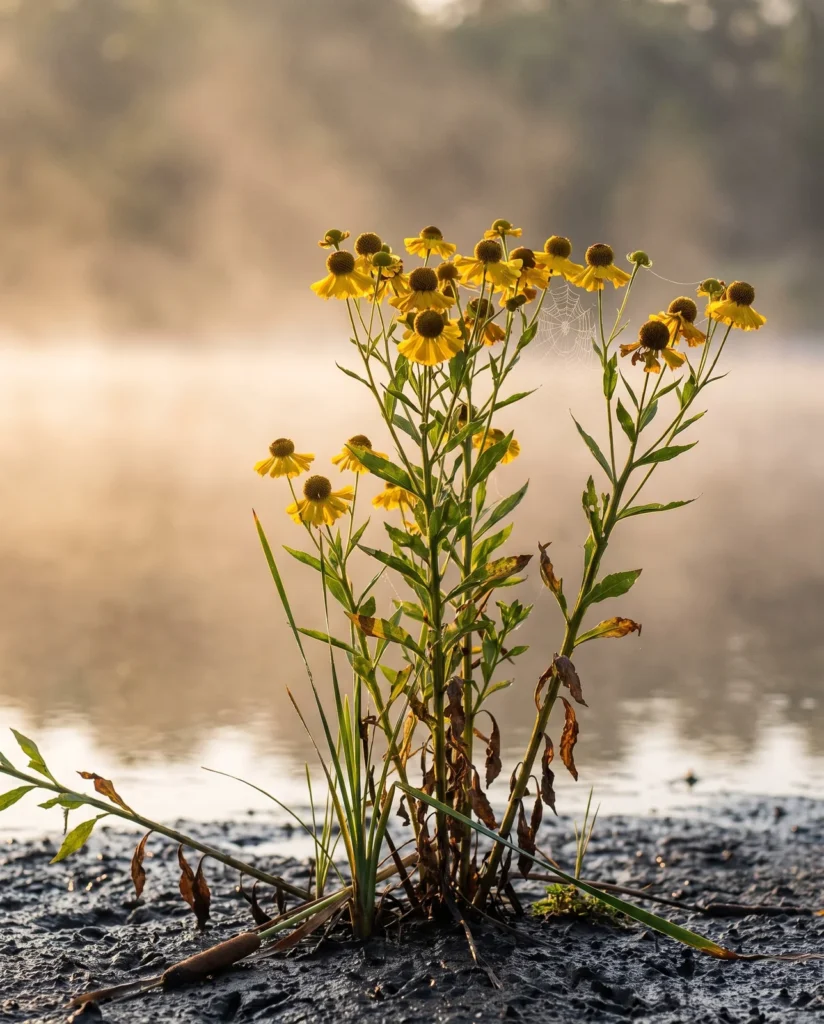
Helenium is a perennial in the daisy family, native across the lower 48 states and Canada. Its wild range runs from western Quebec to British Columbia, south to South Carolina, Texas and northern California, with naturalized stands in New England. In nature it settles in damp, open ground along streams, ponds and ditches, in swamps, and across wet meadows and prairie. It also goes by autumn sneezeweed, bitterweed, dogtooth daisy, false sunflower and Helen's flower.
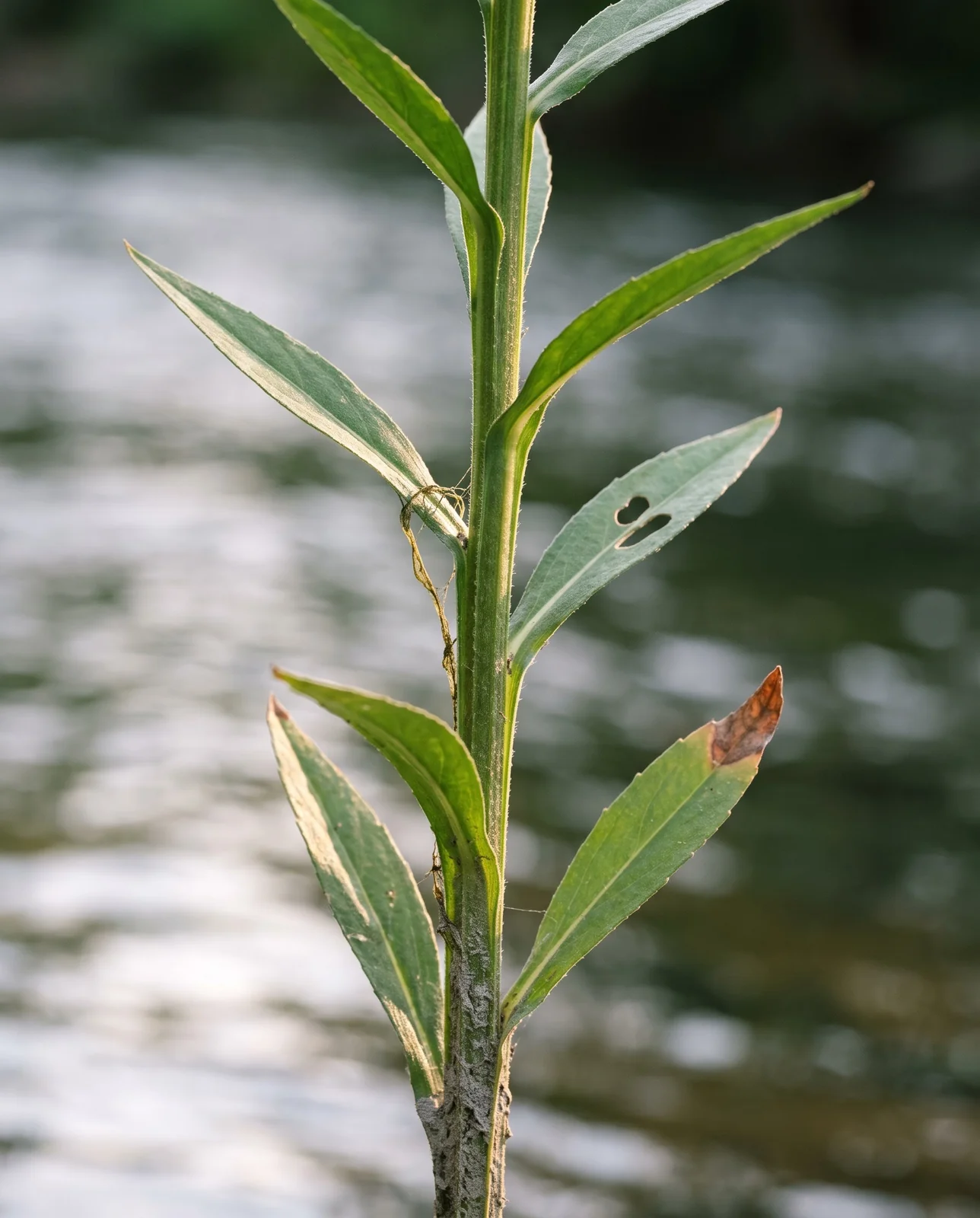
Plants typically grow 2 to 5 feet tall and 2 to 3 feet wide, standing upright at the back of a border. Wild plants can reach 5 feet or more on slightly hairy stems. The rigid, angular stems branch near the top, with a green wing running down the stem from each leaf base. Alternate, medium green leaves grow up to 6 inches long in lance-shaped to narrow oval blades that often clasp the stem directly.
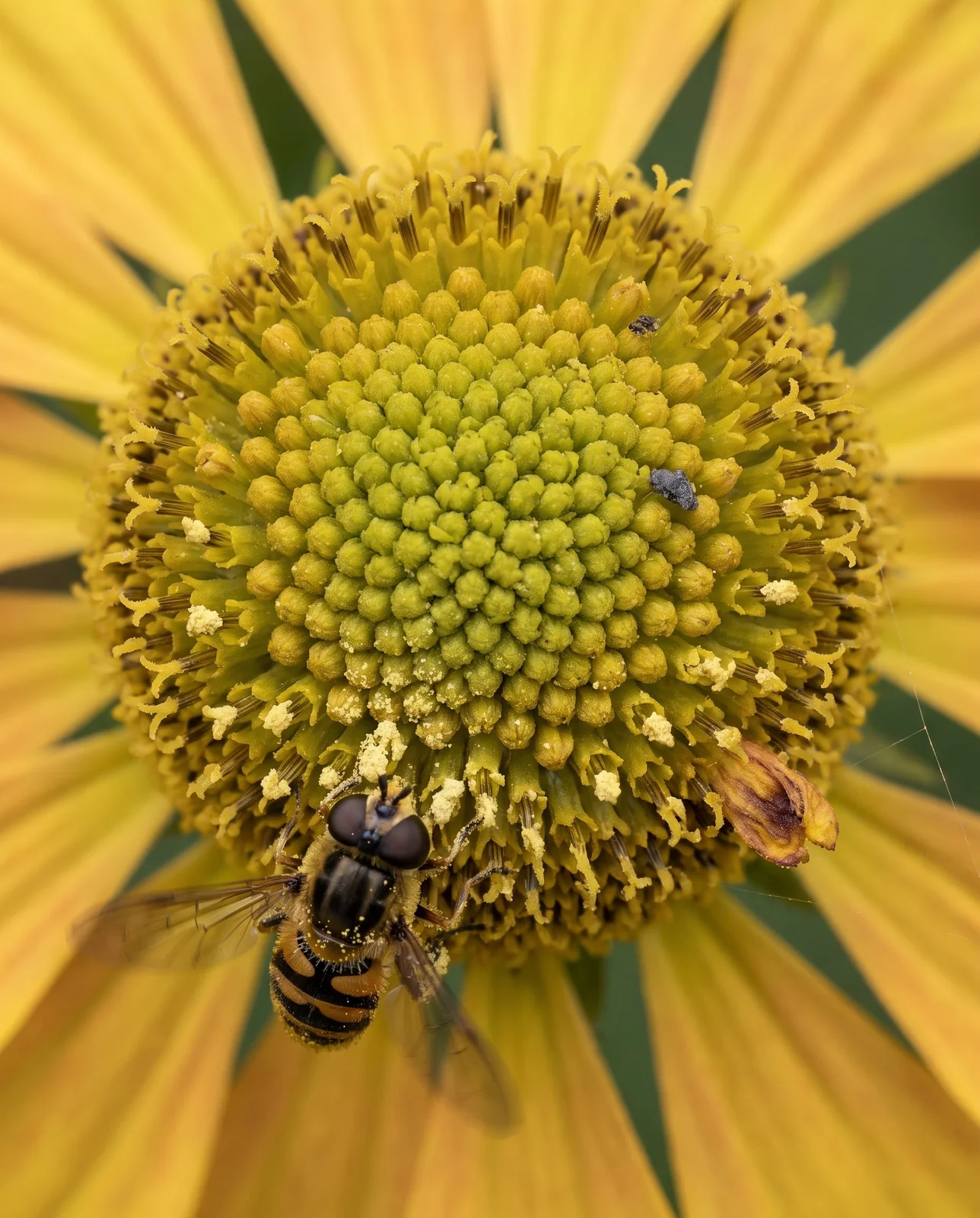
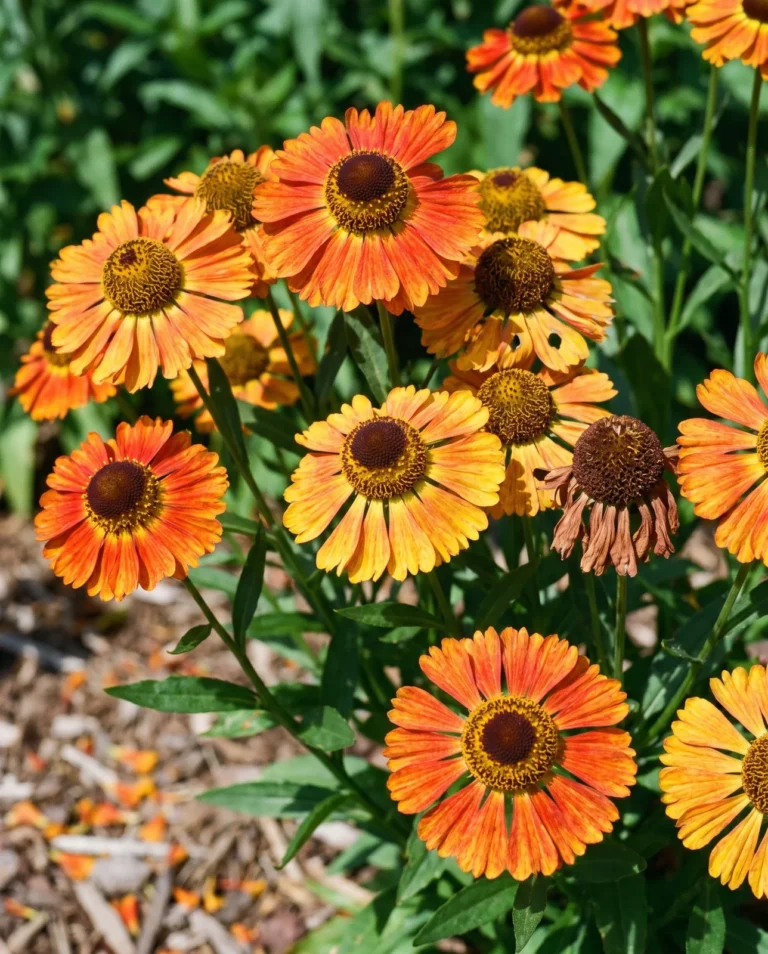
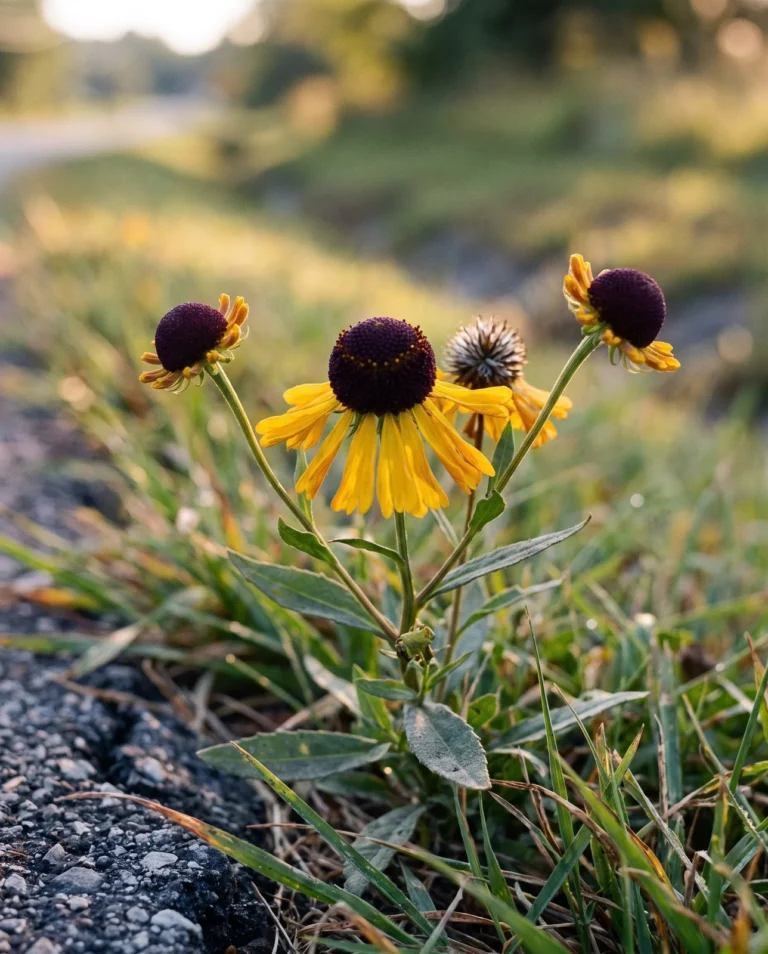
The daisy-like flower heads are about 2 inches across, with bright yellow petals that droop below a prominent center. Each petal has three notches at the tip, creating distinct tooth-like indentations that give rise to the name dogtooth daisy. In the center, disk flowers form a nearly spherical, greenish-yellow dome, with the ray-like petals arranged in a single row around it. Garden cultivars are much showier than the weedy native sneezeweed.
Why it is called sneezeweed, and what really causes fall hay fever
Sneezeweed gets blamed for allergies without good reason. The plant is not known to cause sneezing, and it does not get its name from pollen. Insects pollinate the flowers, so the plant does not produce the small pollen grains that trigger hay fever. Its heavy, sticky pollen cannot easily be inhaled.
The real cause of fall allergies is ragweed, which blooms during the exact same weeks. Ragweed season starts around August and lasts six to ten weeks, peaking in mid-September and running until the first frost. A single ragweed plant can release up to 1 billion pollen grains. That pollen brings symptoms to almost 50 million people in late summer and early fall. Goldenrod takes the same unfair blame because both bloom brightly in fall, even though bees and other insects carry their pollen.
The name sneezeweed comes from herbal snuff made from dried leaves and flower heads. Breathing in the crushed powder caused sneezing, which was once thought to loosen head colds and drive out evil spirits. The Cherokee and other Native American peoples used the dried powder to treat congestion and headaches. The Menominee name translates to sneezing spasmodically. The genus name Helenium honors Helen of Troy, following a legend that the flowers sprouted where her tears fell. That story seems far-fetched for a plant native only to the Americas. The botanical name autumnale simply describes its autumn flowering.
Where helenium grows best
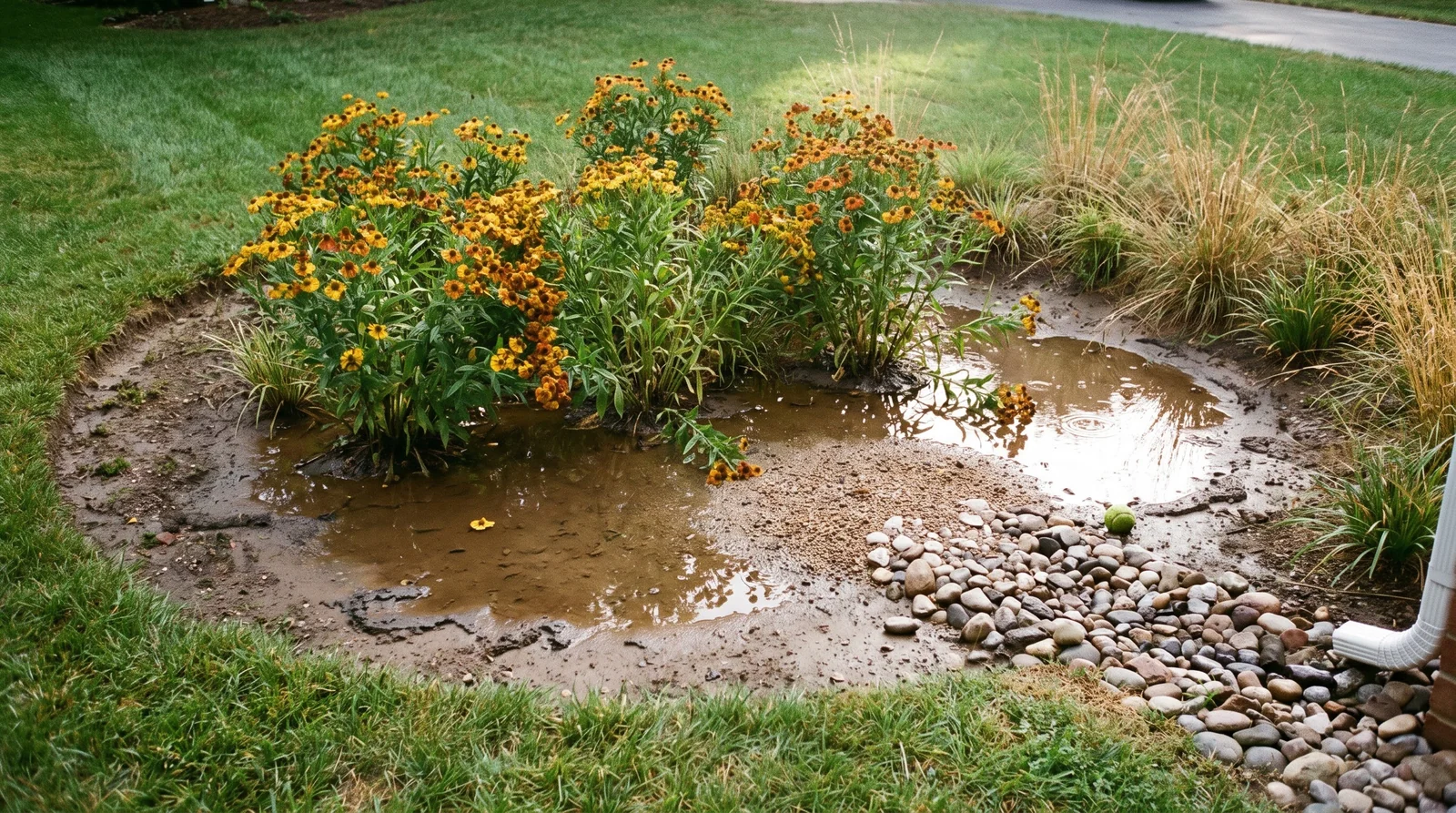
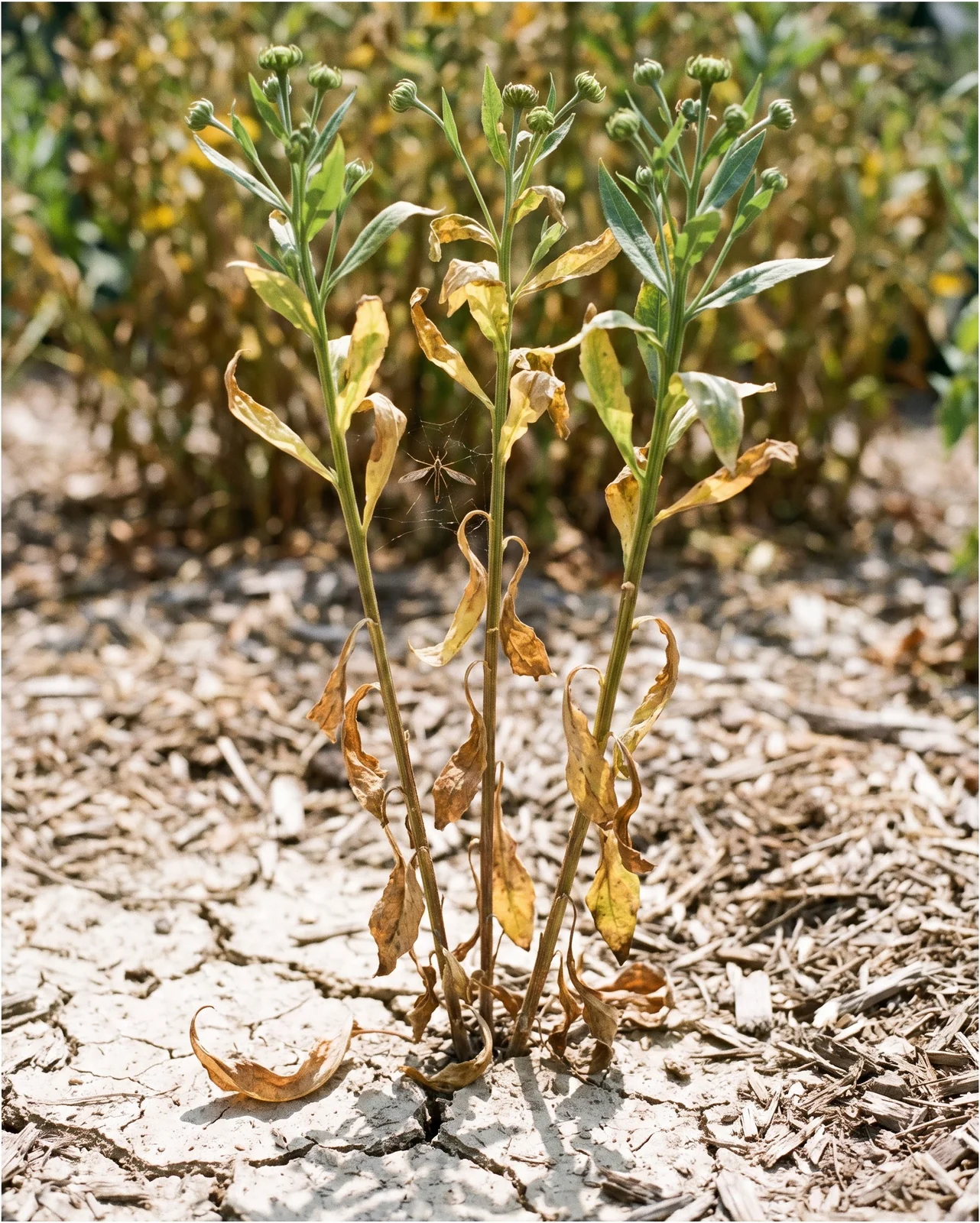
Helenium needs full sun to partial shade and soil that stays moist to wet. It can be cultivated in average to rich soils, preferring fertile, damp ground and growing well in moist clay. Dry ground is what the species cannot take: avoid dry spots where drought can cause damage. Watering through dry spells is a routine part of keeping it healthy.
That preference makes helenium a dependable choice for rain gardens, where it handles the moist to mesic sections in any fertile soil. The species is intolerant of dry soil and demands damp ground, though it can also show drought tolerance. Many garden hybrids tolerate relatively drier soil than the wild species, giving them more leeway in an ordinary border.
Where you plant decides whether helenium is easy or demanding. In an ordinary bed that bakes dry, it suffers from its intolerance of dry soil and takes rapid damage from drought. Watering through dry spells can keep it going, but setting it in ground that stays naturally moist saves endless effort.
Hardiness zones, and what the plant does in spring
Helenium easily handles deep winter freezing, with reliable cold hardiness starting in USDA zone 3. The southern edge of its range is less uniform: hardiness usually ends at zone 8 or 8b, though the range can extend into zone 9. Gardeners in zone 9 may therefore need to see how well the plant handles their local summer heat.
Named cultivars do not all share the exact same hardiness as the wild species. Most garden selections survive winter in zones 3 to 8. Individual varieties differ. For example, 'Feuersiegel', 'Mardi Gras' and 'Ruby Tuesday' are hardy from zone 4 to 8. Selections like 'Sahin's Early Flowerer' thrive from zone 3 to 9, while 'Moerheim Beauty' reaches from zone 4 to 11. Gardeners in zone 3 should check the cultivar label before buying, since several popular choices are a zone more tender than the native type.
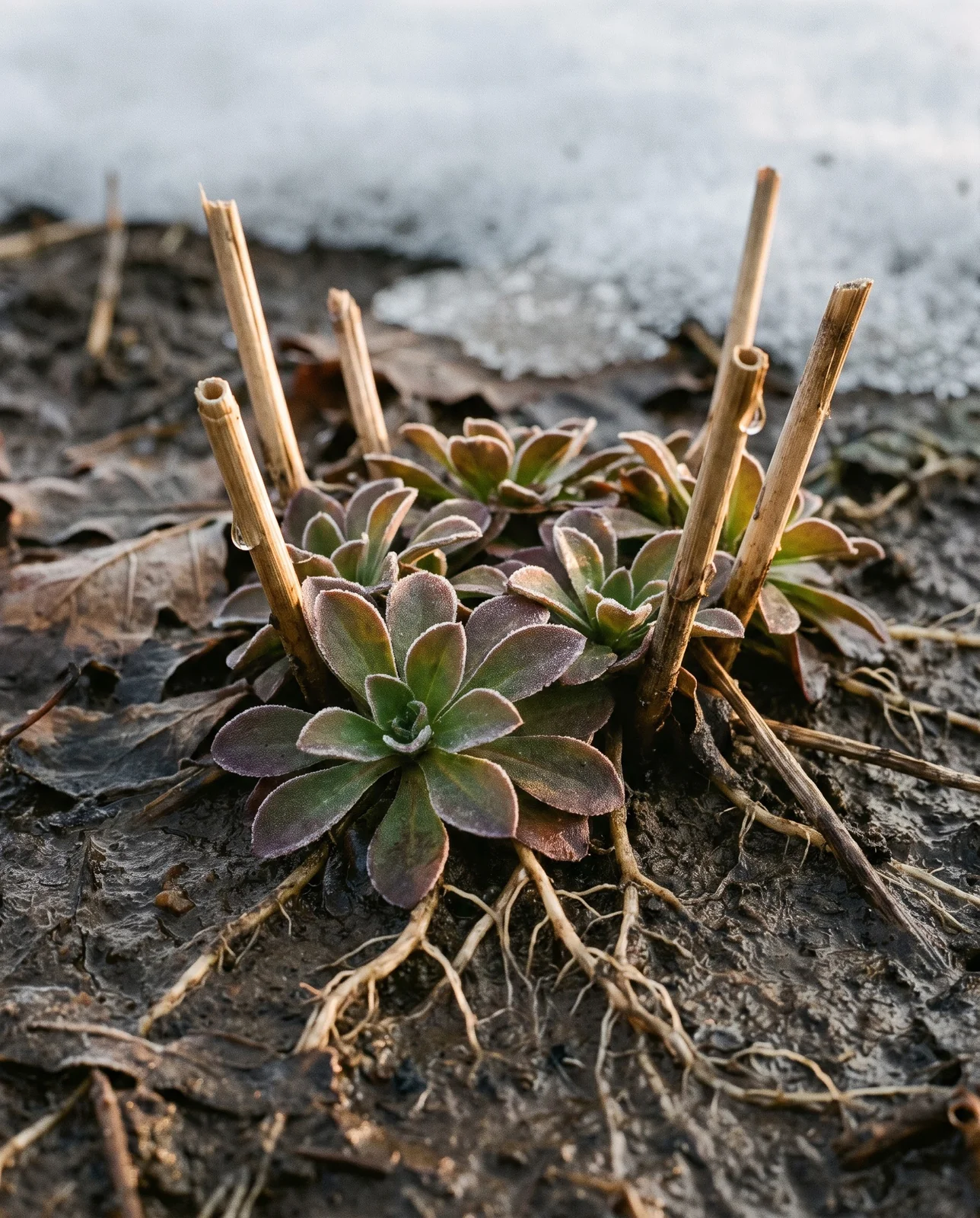
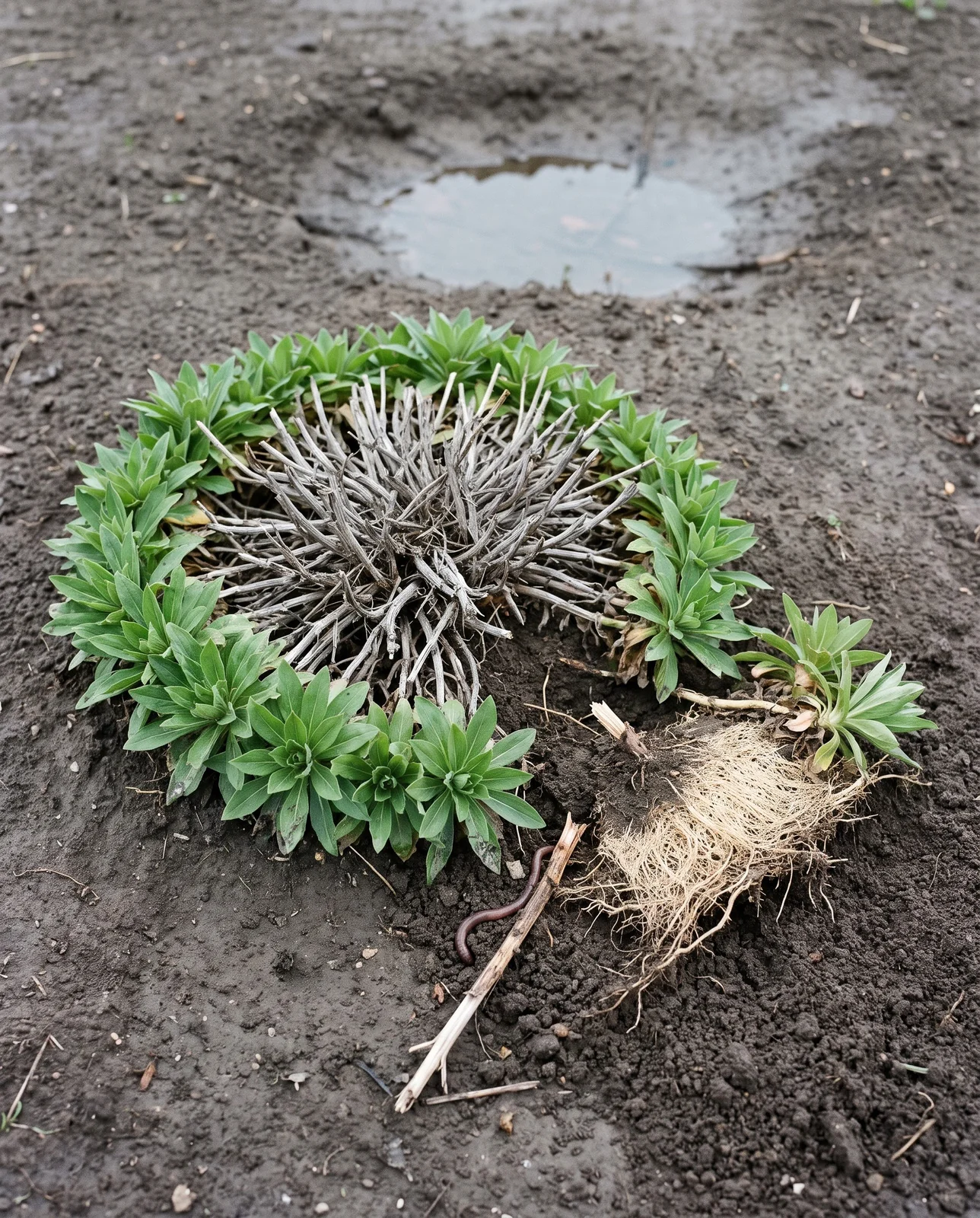
In winter, the plant dies back to the ground, overwintering as a crown of resting shoots with shallow, fibrous roots. Growth returns only once spring warms the soil, emerging as low, flat rosettes. Because those fibrous roots remain shallow all year, dry soil in summer heat quickly stresses them. That early spring awakening is also the ideal window to move or divide the plant, while top growth is low and roots are just stirring.
The early summer cutback
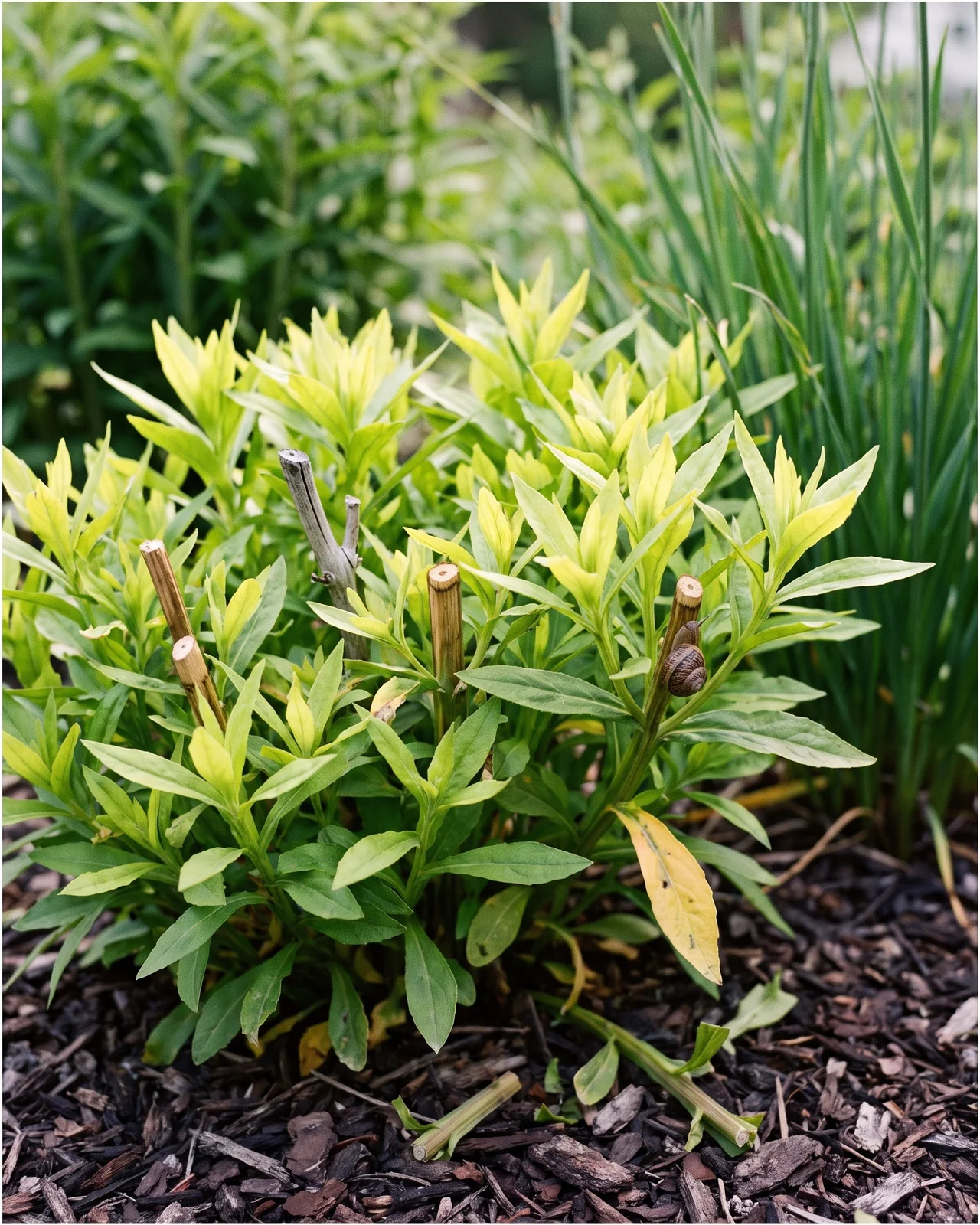
Cutting helenium back in early summer transforms how the plant stands and blooms by autumn. Pruning the stems encourages bushy branching, resulting in shorter, sturdier growth that carries more flower heads on self-supporting stems. The cut leaves behind fresher foliage and spares you the chore of staking tall stems later. The only trade is flower size, because the plant yields a larger number of slightly smaller blooms.
Aim for late May to early July, ideally cutting in early June at least six weeks before normal flowering. Helenium responds to this chop alongside border companions like coneflower, garden phlox and upright sedums. You can also judge by the plant itself, pinching or cutting back stems once spring growth reaches 6 to 8 inches tall.
Helenium takes well to losing one third to one half of its stem height, with taller selections tolerating the deeper cut. Trimming delays bloom by about a week, and cutting later in the season pushes flowering further back. To stretch the show, cut only the front stems and leave the back untouched so the clump blooms in waves.
What keeps tall stems upright
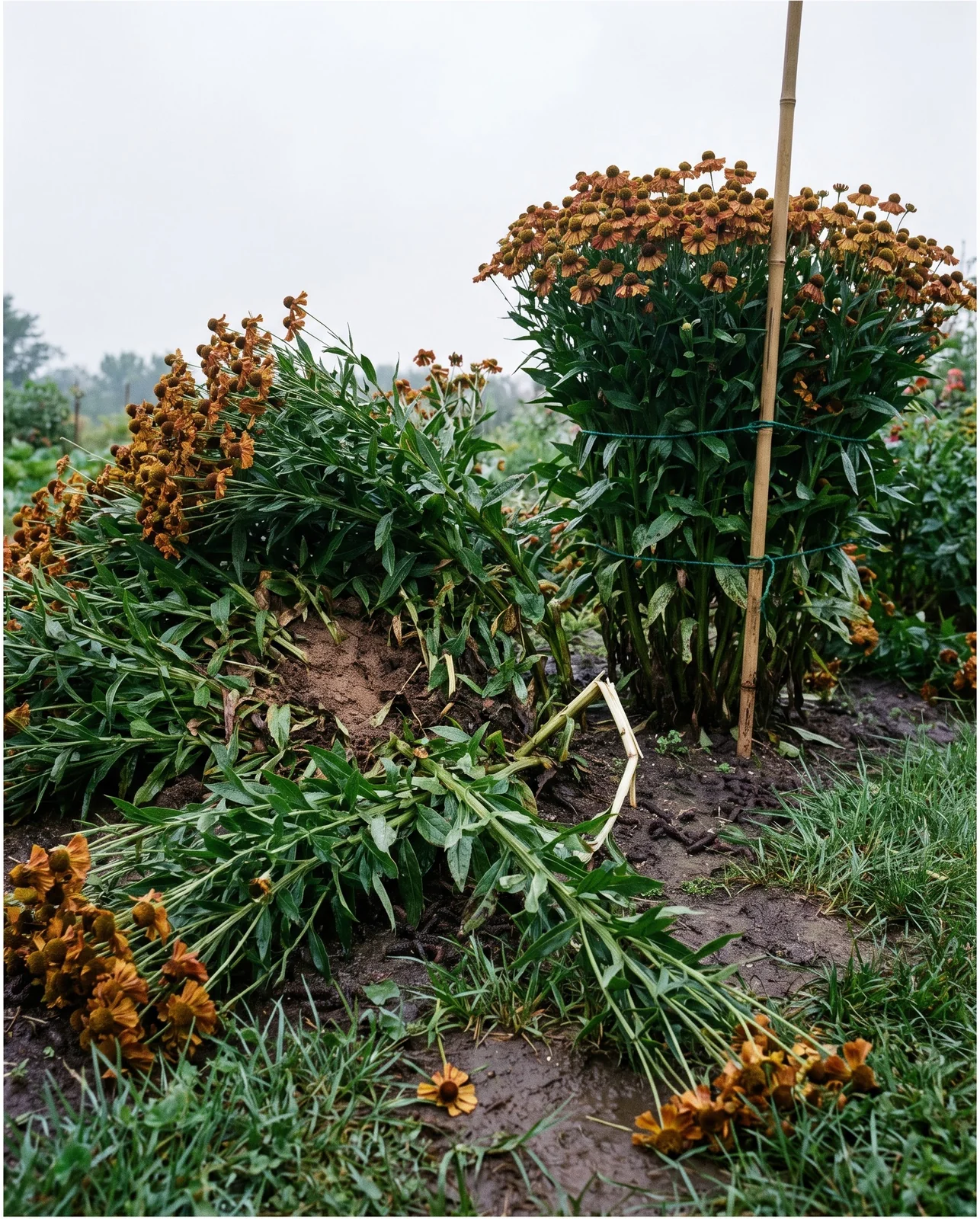
Tall helenium often requires staking to prevent its top-heavy stems from toppling over in late summer. Taller selections are prone to flopping right as blooms open, particularly when summer heat forces tall, weak growth on windy sites. A single stake supports an isolated clump, pea staking with brushy prunings lets stems weave through naturally, and drifts can simply be corralled with twine. For substantial clumps, set a strong cane behind the stems and run two rings of twine, one midway up and another about 8 inches below the flowers.
An early summer cutback achieves much of the same stability without stakes or string. Chopping the stems makes the entire plant sturdier and lowers the chance of flopping. Compact cultivars in sheltered spots usually stand on their own, but tall, uncut clumps growing in rich, moist soil often need staking.
Why helenium does not bloom well
When helenium fails to bloom well, the trouble usually comes down to three things: sunlight, fertilizer, or an old clump. Light comes first. Helenium flowers best in full sun with at least 6 hours of direct light, though it will manage in partial shade if the soil stays moist. Deep shade under trees or on the north side of a fence leaves the stems weak and flowerless. If you need to move a shaded plant, transplant it in spring before new stems take off.
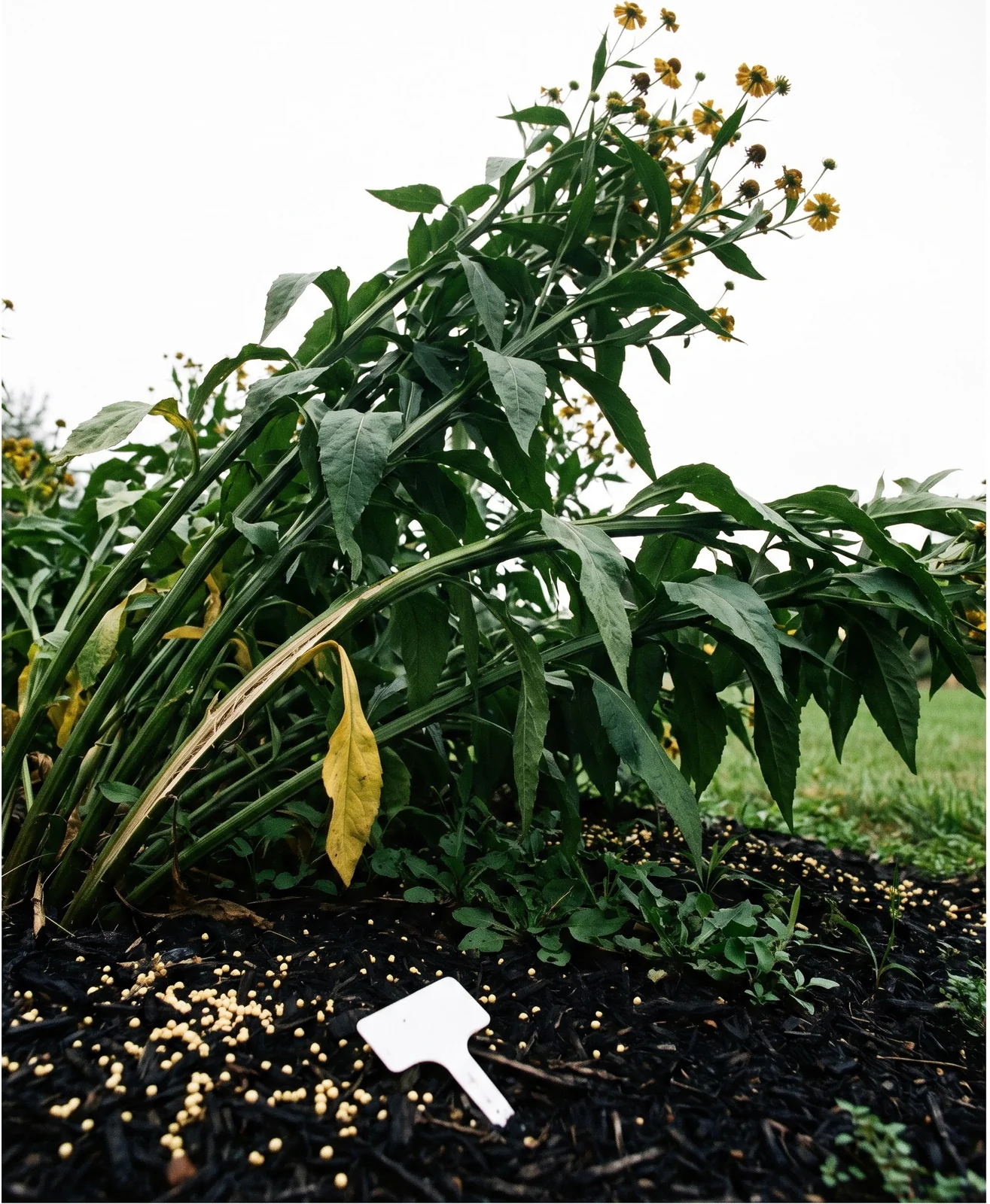
Fertilizer is the second check, and the usual mistake is generosity. Too much fertilizer spurs lush leaf growth and reduces flowering, and overfeeding can push stems so tall that they flop over. A light feeding in early spring as new growth starts is plenty. When a clump produces a mass of leaves with few flowers, stop feeding it and let the soil carry the plant.
The third check is the age of the clump. As helenium grows crowded over the years, the clump turns dense and flowering drops off. Dividing the roots gives the plant fresh room to grow and brings back full bloom.
Yellow and ragged leaves
Yellow or ragged leaves on helenium usually point to dry ground or a foliage disease. Drying out shows up first at the base of the stems. Taller selections often drop lower leaves and look ragged before they flower if the soil dries out. Regular watering during dry spells helps protect them, but because tall stems naturally lose some bottom foliage, growing a lower partner like coreopsis in front neatly hides the bare stems while the flowers open.
Foliage diseases are the second cause of discolored leaves. Helenium has no serious insect or disease problems, but powdery mildew, leaf spot, and rust can settle on the foliage. Powdery mildew is the one you will see most often. If mildew coats the leaves, cut the stems back by half to two-thirds once blooming finishes to help prevent future outbreaks.
What goes wrong with helenium
Helenium has no serious insect or disease problems, making it an easy perennial in most gardens. When issues do show up, these are the few to watch for.
Powdery mildew can form a pale film on the leaves, making it the most frequent foliage trouble on helenium. Once flowering finishes, cut the stems back by half to two-thirds to deter another outbreak.
Leaf spots can occasionally show up on the foliage, though they rarely cause lasting damage to the plant.
Rust can sometimes settle on the foliage, but it rarely threatens the overall health of the clump.
Insects rarely bother helenium, and the plant has no serious pest troubles.
Taller varieties may flop over as they begin blooming, especially since hot weather encourages tall, weak stems on exposed or windy sites. Staking or tying stems together in drifts keeps them standing straight.
Handling the plant can cause contact dermatitis, as its sesquiterpene lactones may trigger a skin rash in susceptible people. Wearing garden gloves when cutting stems or dividing clumps prevents irritation.
Dividing the clump
Dividing helenium every 2 to 5 years keeps clumps vigorous and blooming well. Clumps do not need frequent division unless the stems turn spindly, but digging them every 3 to 5 years lets you discard the old central stalk and separate young rosettes. The surest guide is watching the plant: lift and divide in early spring whenever flowering slows down or growth seems weakened.
As clumps grow crowded over time, they turn dense and bloom less. The task is easy because helenium grows from a crown of resting shoots with shallow, fibrous roots that separate readily. You can lift and divide the clump in either spring or fall. The roots recover quickly: in some gardens, seed-raised plants can even be split into single shoots each year and still grow into full, blooming clumps by midsummer.
Deadheading and how long the bloom lasts
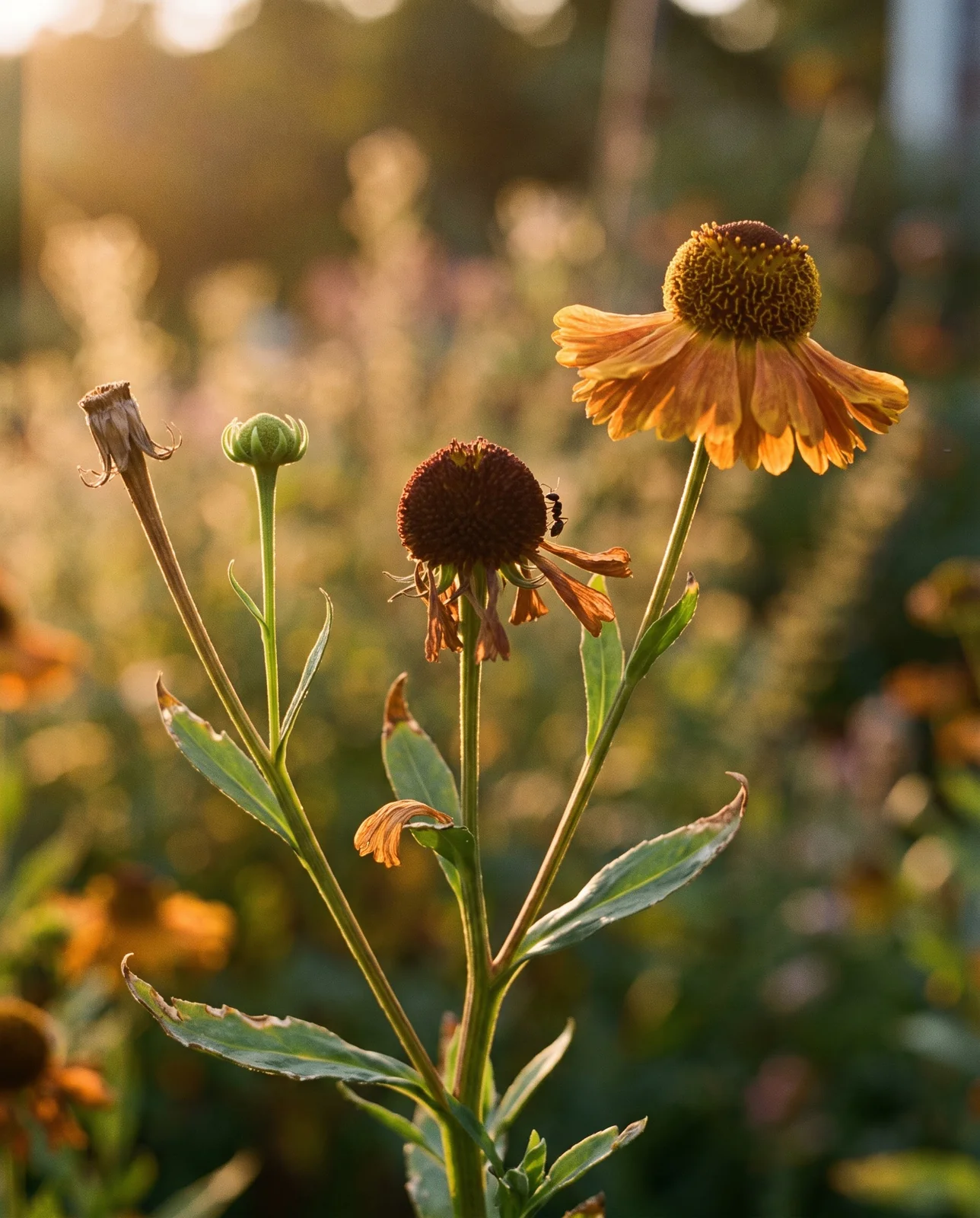
Helenium does not bloom all summer, and no single variety carries color through the whole late season alone. The flowers open from late summer into fall when most other perennials are finished. Bloom times vary across selections: the earliest can begin as early as late June, many open in July, and several keep blooming into October. Planting an early variety alongside a late one keeps flowers in the garden for months.
Deadheading is the easiest way to stretch the season. Removing spent flowers encourages fresh blooms, and varieties like 'Moerheim Beauty' reflower later in the season if you deadhead them thoroughly. Once the final flowers fade, cut the entire plant back by half.
Helenium varieties, and two species that get mixed in
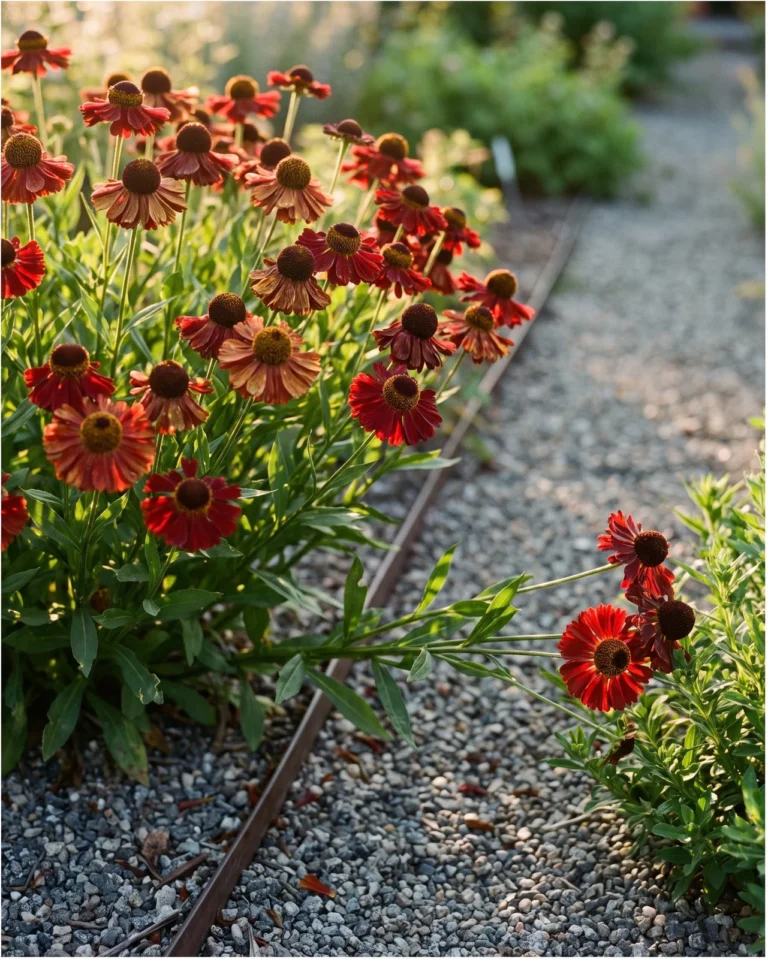
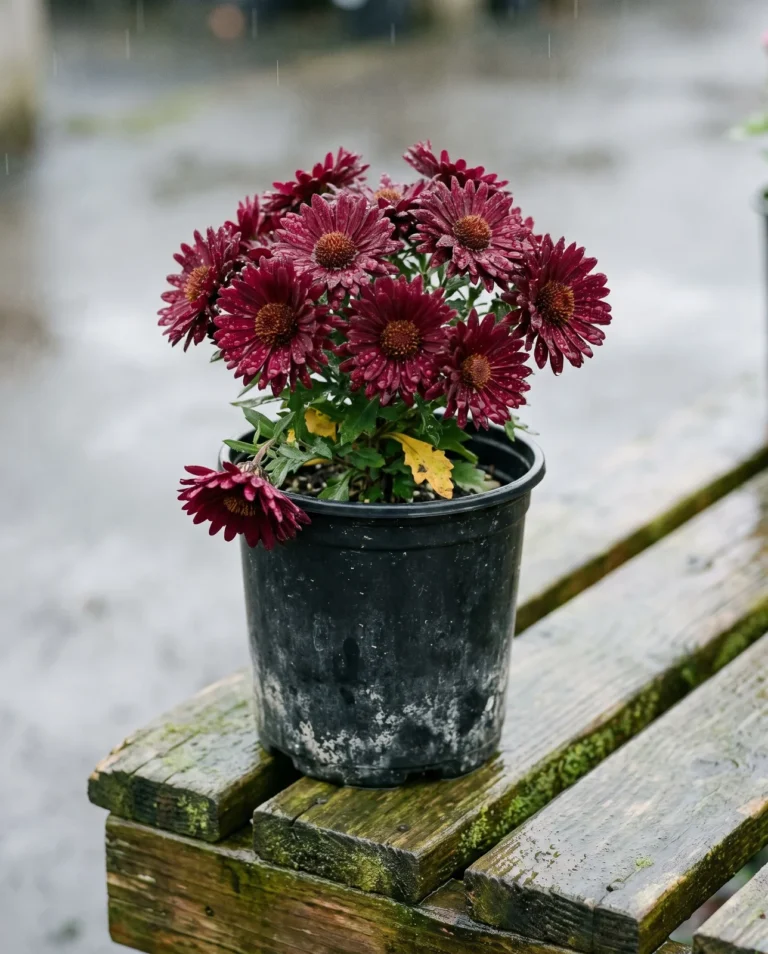
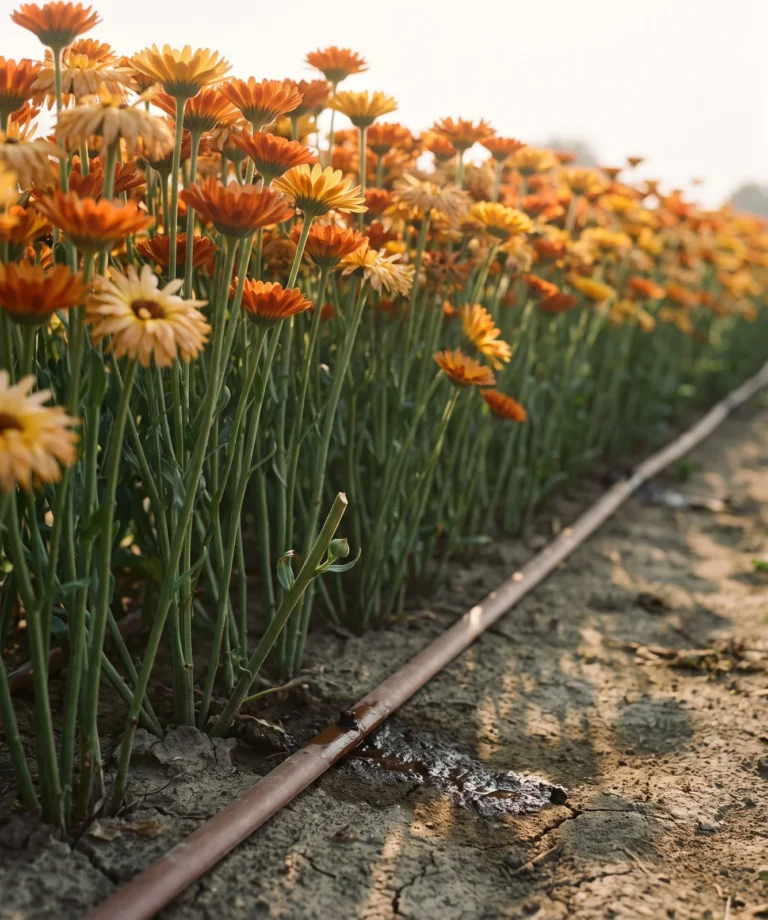
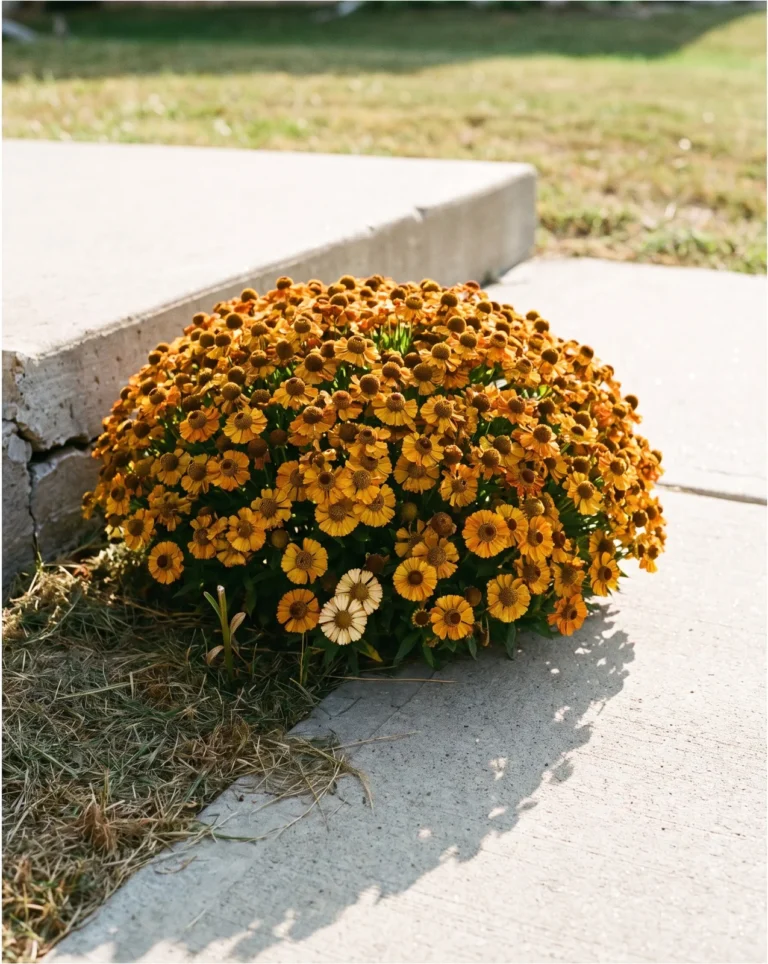
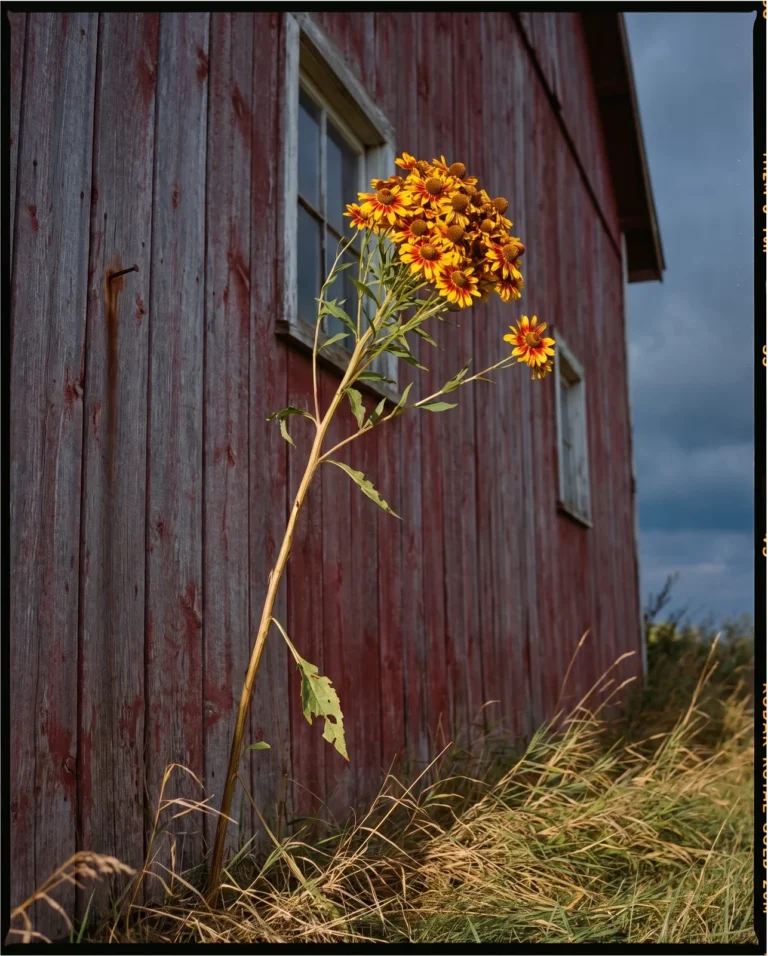
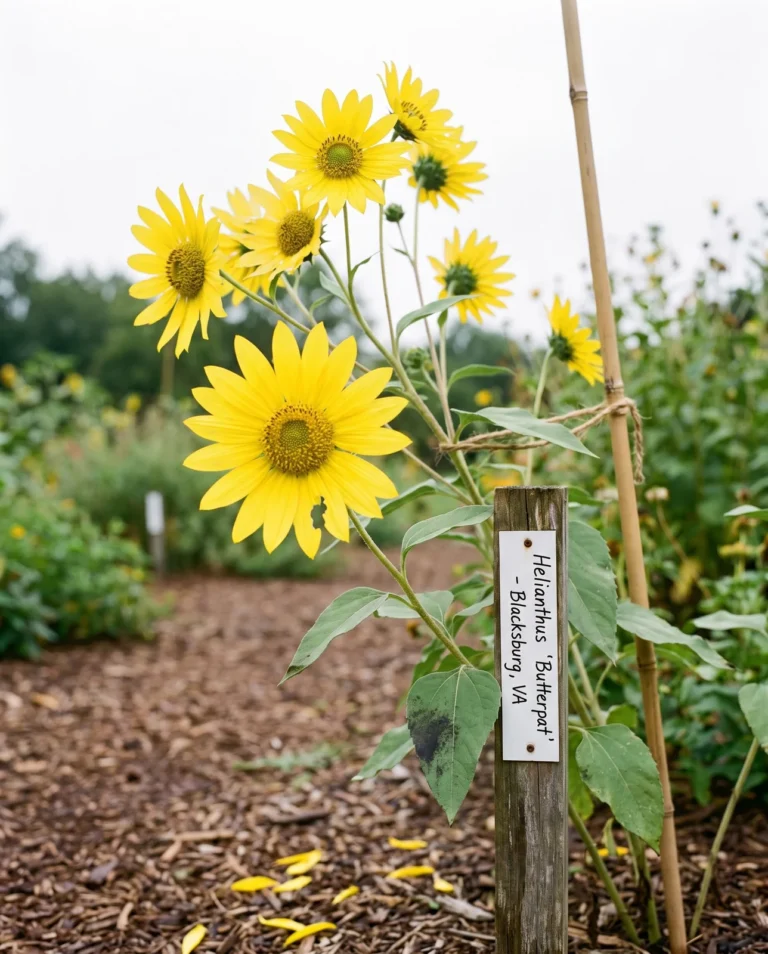
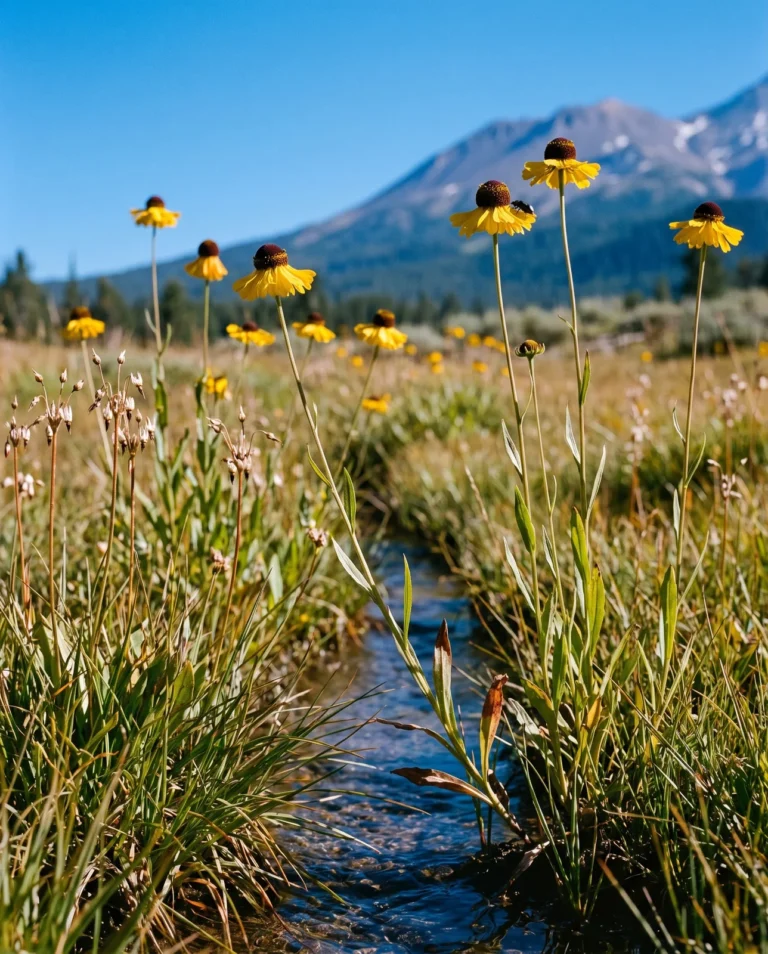
Most garden varieties come from common sneezeweed, bred into warm shades of copper, mahogany, and burgundy that are far showier than the wild native form. The final two entries belong to separate species: Bigelow's sneezeweed from the West and purple-headed sneezeweed from the East and Midwest.
Height and spread
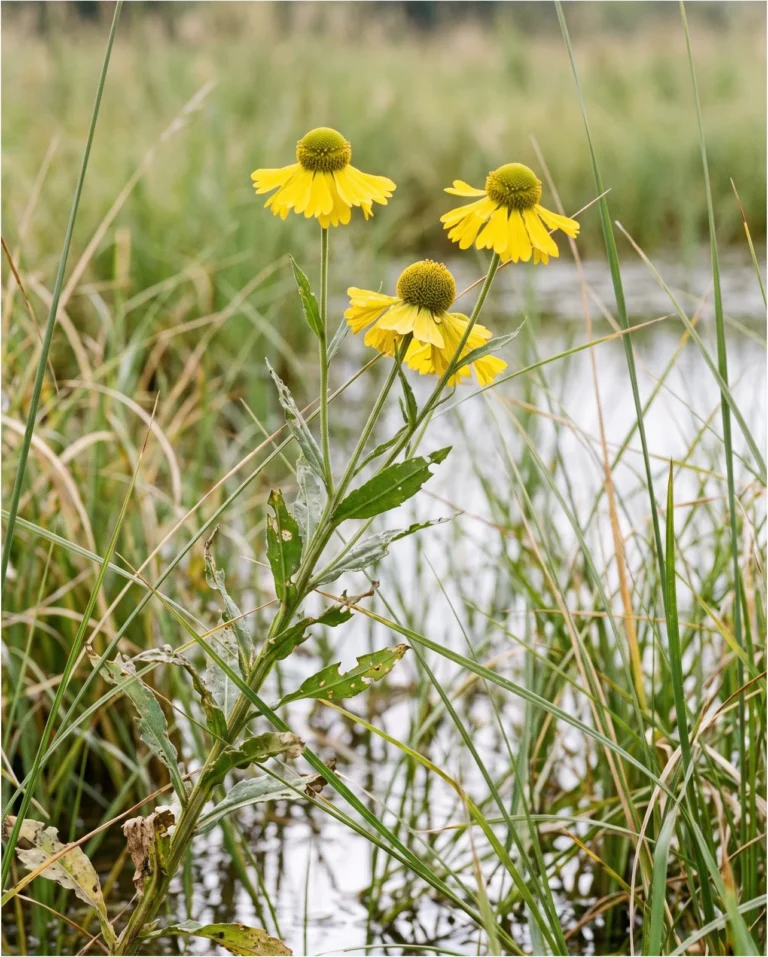
Helenium generally grows 3 to 5 feet tall, making a bold statement at the back of a border. Compact cultivars stay around 2 feet tall, and the shortest reach only 12 to 18 inches in height and spread. The tallest selections reach 5 feet on a spread of about 2 feet. Clump width varies much less than height, usually settling between 2 and 3 feet across, so taller varieties need extra headroom without taking up more garden space.
Does helenium spread
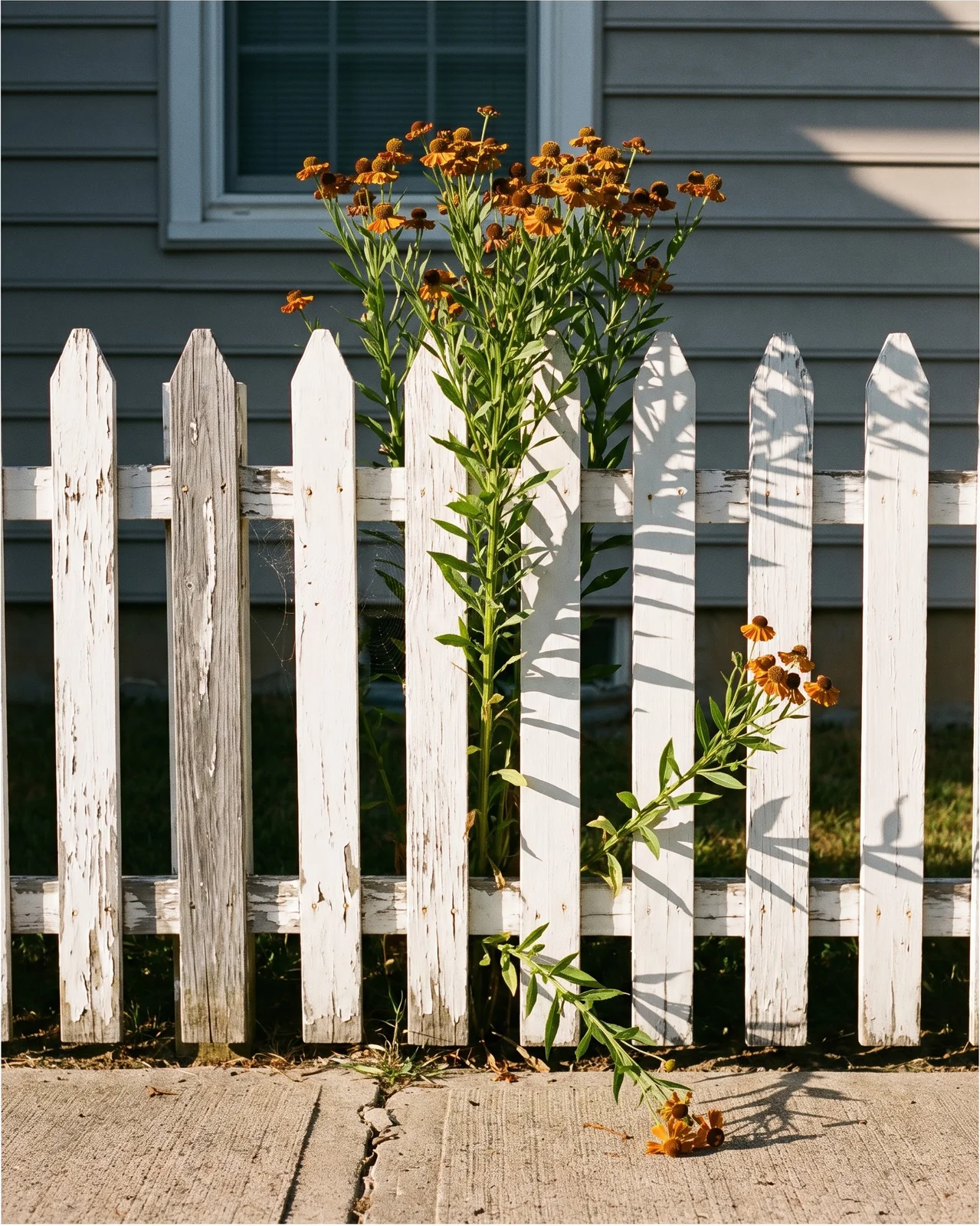
Helenium stays where you plant it, forming an upright clump that broadens slowly. The fruit is a cypsela, often loosely called an achene, with no aggressive self-seeding. In the wild, it grows naturally in meadows, fields, along riverbanks, around lake shores, and in ground disturbed by human activity.
Helenium does not become invasive, growing in natural habitats across North America without any aggressive spread. In a home garden, the clump stays well within bounds long before it ever needs to be contained.
What helenium feeds late in the year
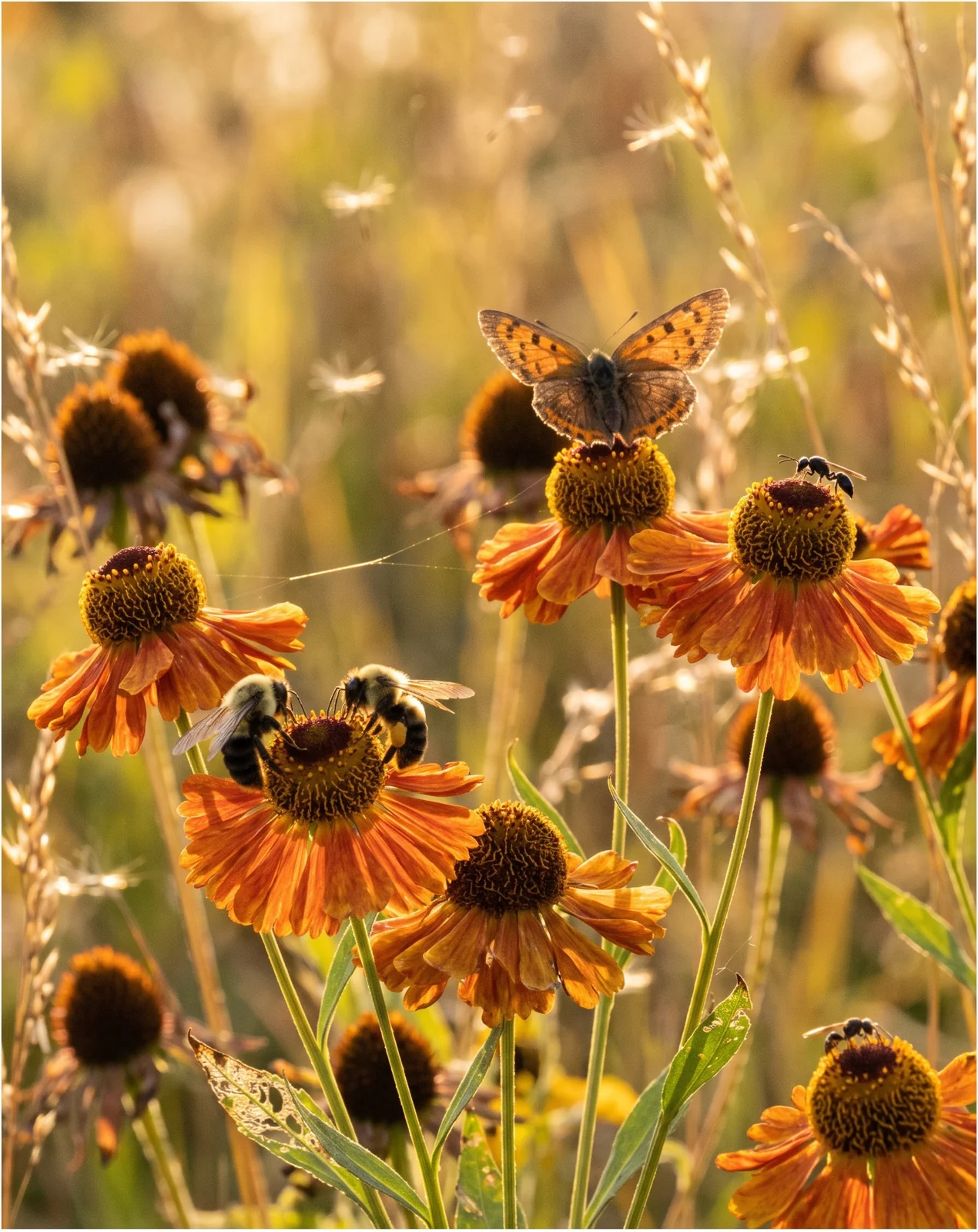
Helenium feeds wildlife late in the year by flowering when most other perennials are already done. Its abundant yellow blossoms offer late-season nectar that often draws bees and butterflies, while also welcoming hummingbirds and beneficial insects. Songbirds, small mammals, and native pollinators also visit the stand as the season closes. Together with late-blooming asters, it gives pollinators a rewarding reason to visit the border in September.
Deer tend to avoid helenium, and the plant proves unpalatable to herbivores and resistant to both deer and rabbits. Grazing animals leave it alone because the bitter foliage is toxic if eaten in large quantities. Even so, resistance only means animals prefer to eat elsewhere, so a starving deer in late winter might still test it.
How poisonous helenium is
Helenium carries a medium poison severity, with the flowers, leaves, and seeds all containing sesquiterpene lactones. Eating the plant causes salivation, elevated temperature and pulse, vomiting, labored breathing, and convulsions, though it is toxic only if swallowed in large quantities. Swallowing large amounts causes severe gastric and intestinal irritation that can become fatal. On the skin, the sap can trigger contact dermatitis and allergic rashes in sensitive people, making gloves a sensible precaution when trimming stems.
Around animals, the plant still calls for caution. Helenium is poisonous to humans, with no separate warning for pets or horses. Even so, its chemicals can poison livestock, particularly sheep, and the compound helenalin has proved poisonous to dogs and fish. Helenalin is a crystalline substance with the chemical formula C20H25O5 that irritates mucous membranes. Because helenalin harms dogs, keep pets from chewing the foliage even though warnings focus on humans.
Helenium as a cut flower
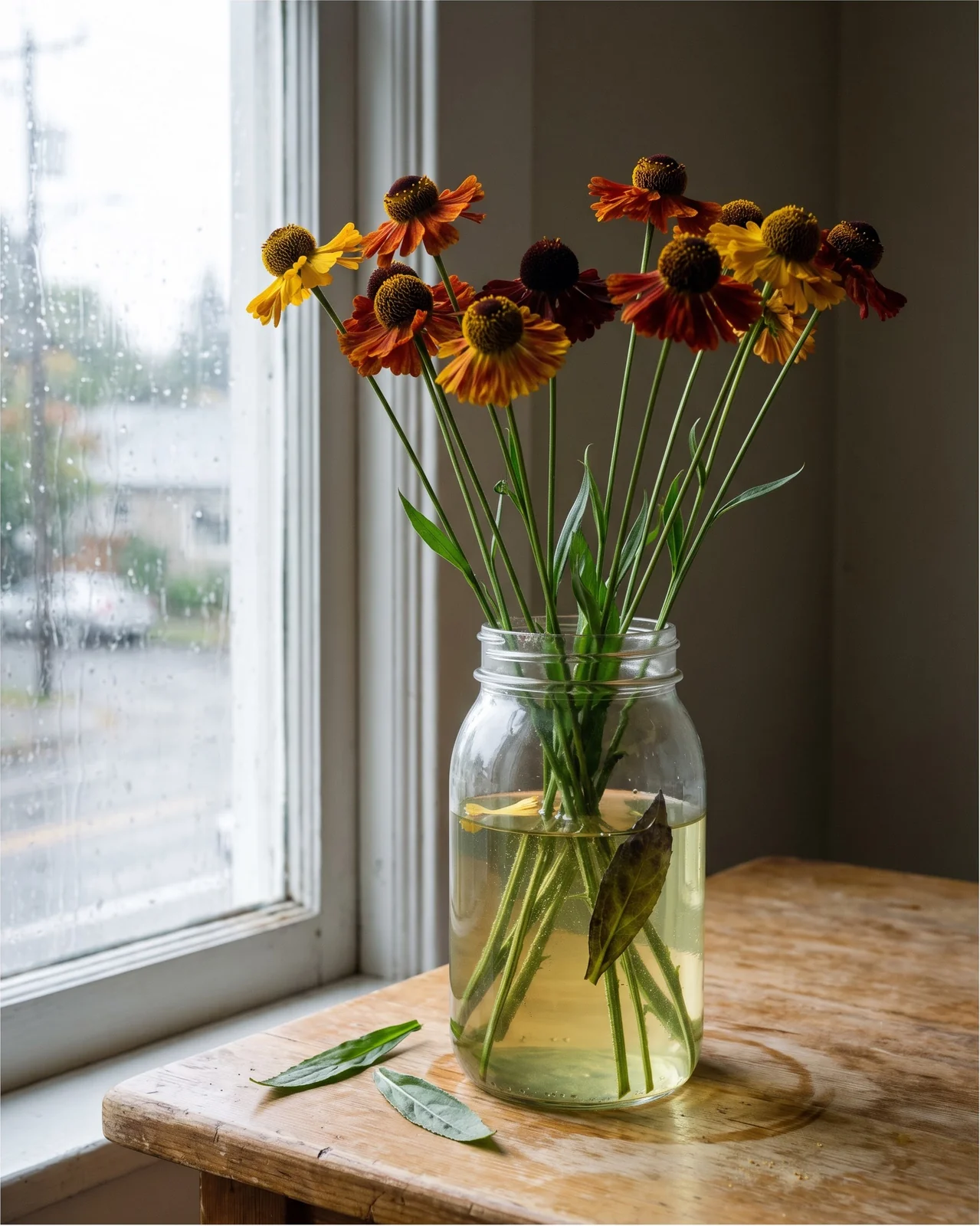
Helenium makes an excellent cut flower, supported by a long flowering season that keeps vases filled late into the year. The variety 'Sahin's Early Flowerer' stands out for arrangements because its exceptionally sturdy stems make it great for cutting. Strong stems are a welcome asset on such a tall plant. Cutting new growth back in late spring also works well for the vase, giving you shorter, stockier stems that carry a heavier flush of smaller blooms.
What to expect, year by year
How helenium develops over its first few seasons in moist soil and full sun.
The first year centers on getting the roots established in the right spot. Set the young plant in full sun and soil that stays moist to wet, watering through dry spells because helenium cannot tolerate dry ground. It reaches full height, blooms late in the season, and dies back at frost to a crown of resting shoots with shallow, fibrous roots. Taller selections in windy or exposed beds may need staking during bloom to keep stems upright.
In the second year, an early summer trim creates a much sturdier, bushier plant. Pinch back the new stems when growth reaches 6 to 8 inches tall, or cut them back in early June, at least 6 weeks before normal bloom. This cut produces shorter, sturdier stems that support themselves and carry more flowers, though it delays blooming by about a week. Snip off faded flowers to encourage fresh buds throughout the season, then cut the entire plant back by half once flowering ends.
By the third or fourth year, the clump is mature and the work changes shape. Congested clumps can become denser and flower less, and if flowering decreases or the plant seems weakened, that is the sign to divide it in early spring. Dividing clumps every 2 to 5 years revitalizes vigor. A clump kept on that cycle needs only steady seasonal care: water during dry spells, an early summer cut, regular deadheading, and division whenever flowering decreases.
Four things people believe about helenium
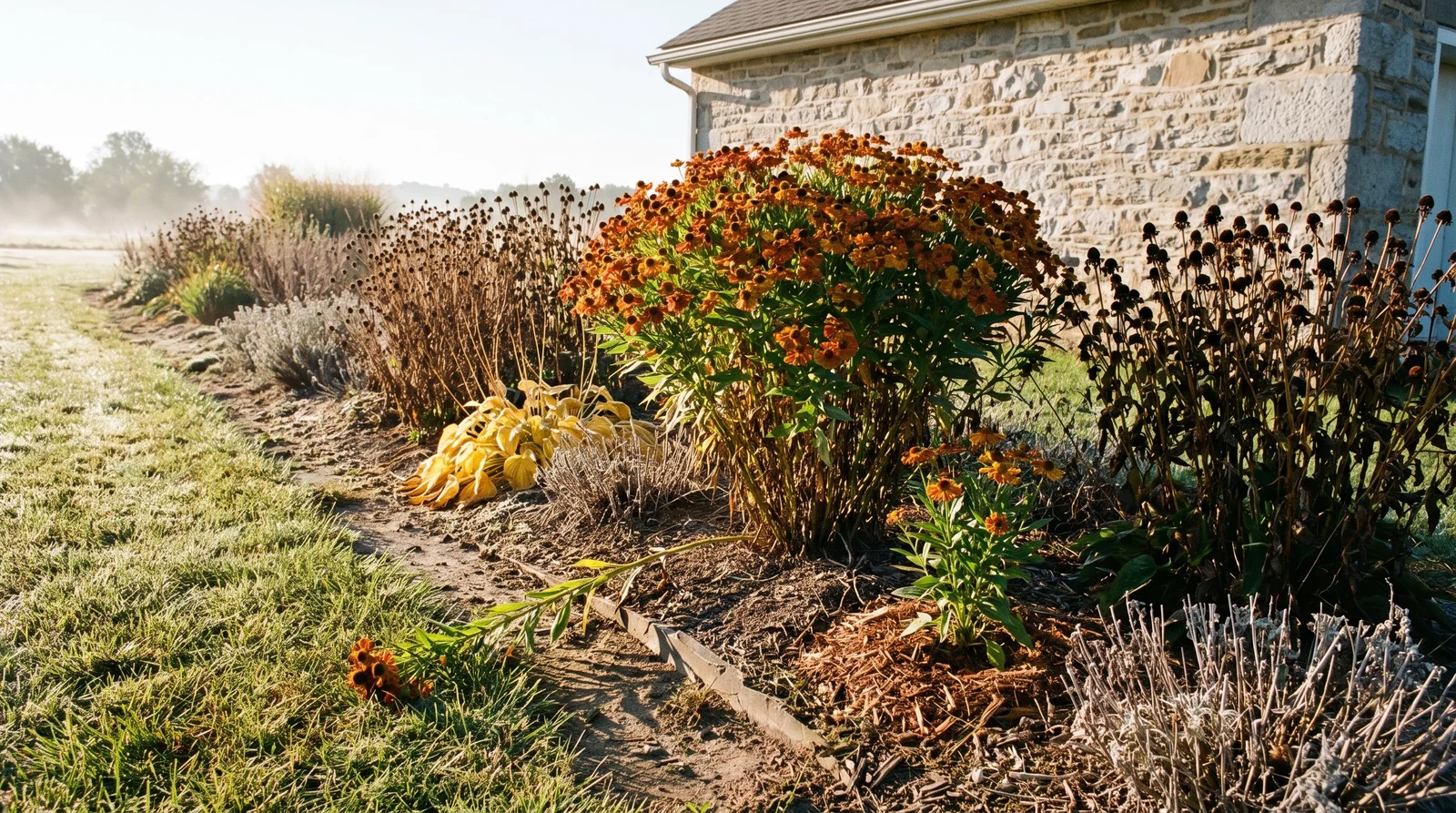
What gardeners often hear about helenium, and how the plant actually behaves.
The myth: Sneezeweed sets off hay fever.
The reality: Helenium pollen does not trigger seasonal allergies, and the plant is not known to cause sneezing. The name comes from traditional herbal use, where people dried and powdered the plant to inhale as snuff to relieve headaches and congestion.
The myth: It is a high maintenance perennial.
The reality: In moist, fertile soil and full sun, helenium is easy to grow and dependable. Gardening work only begins if the plant sits in dry soil it cannot tolerate, where it demands regular watering through every dry spell.
The myth: It will take over the bed.
The reality: Helenium stays neatly in place, growing as an upright clump from a crown of resting shoots. It is not an invasive plant and settles quietly into the border without overwhelming its neighbors.
The myth: Bigelow's sneezeweed is another name for the same plant.
The reality: Bigelow's sneezeweed is a distinct western species native to Oregon, California, and Arizona that grows 2 to 3 feet tall. It is sometimes sold alongside common sneezeweed, and the popular garden selection 'The Bishop' belongs to this separate species.
FAQ
Do heleniums come back every year?
Yes. Helenium is a perennial that dies back for winter and returns from a crown of resting shoots on shallow, fibrous roots. It is hardy through cold winters down to zone 3.
Does helenium spread?
It widens slowly as a clump and does not run, growing from a crown of resting shoots. The plant is not invasive, and its small dry fruit does not lead to aggressive self-seeding.
Does helenium prefer sun or shade?
Sun. Helenium grows best in full sun, needing at least 6 hours of direct sunlight each day. It can also tolerate partial shade.
When should I cut back helenium?
Cut the plant back twice during the growing season. In early summer, pinch stems at 6 to 8 inches tall, or in early June at least six weeks before flowering to encourage branching. After flowering, cut the plant back by half, or by half to two-thirds if it had mildew.
Does helenium bloom all summer?
No single variety blooms across the entire summer, though the season spans months. Early types can open in late June, while most begin in July. Several continue into October, holding their color late in the year when most other perennials are done.
Why are my helenium leaves turning yellow and ragged?
This usually comes down to dry soil or fungal foliage disease. Taller varieties often drop lower leaves and turn ragged before blooming if they dry out too much, because helenium cannot tolerate dry soil. Foliage is also susceptible to powdery mildew, leaf spot, and rust.
When should you plant helenium?
Early spring is the best time to set out or divide plants, though established clumps can also be dug in fall. In early spring, helenium is only a crown of resting shoots with shallow, fibrous roots, so there is very little growth to damage.
How often does helenium need dividing?
Plan to divide clumps every 2 to 5 years to keep them vigorous and blooming well. Watch the plant itself: divide whenever flowering decreases or the clump looks weakened.
Is helenium poisonous?
Yes, helenium carries medium toxicity. Its flowers, leaves, and seeds contain a sesquiterpene lactone, though they are toxic only if eaten in large quantities, causing salivation, elevated temperature and pulse, difficulty breathing, vomiting, and convulsions. Handling the foliage can also cause contact dermatitis.
Is helenium poisonous to dogs?
Yes, it can be. Helenium is known mainly as poisonous to humans, but the compound helenalin in the plant has also been found poisonous to dogs and fish. The plant can also poison livestock, particularly sheep, so keep dogs from grazing on it.
Do deer eat helenium?
No, deer tend to avoid helenium, and the plant is particularly resistant to both deer and rabbits because it is unpalatable to herbivores. Grazers stay away because the bitter foliage is toxic if eaten in large quantities.
Interesting tips
- The plant contains helenalin, a crystalline substance with the chemical formula C20H25O5 that irritates mucous membranes. Sesquiterpene lactone chemicals like this are common in aster family plants and may help protect them from pathogens and herbivores.
- The Helena series grows 3 to 4 feet tall from seed and comes in solid golden yellow 'Gold', bronze, orange, and red 'Red Shades', or a mix of both.
- 'Sahin's Early Flowerer' has Helenium bigelovii in its parentage and may be short-lived in the garden.
Related Guides & Flowers
Black-eyed Susan
The other North American daisy grown for yellow in the second half of the summer, and a shorter one.
Sedum
Named on the same list of perennials that take the early summer cut, and grown for the same late season.
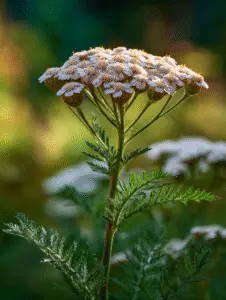
Yarrow
A sun perennial for the same border, with flat flower heads over ferny leaves and very different soil habits.
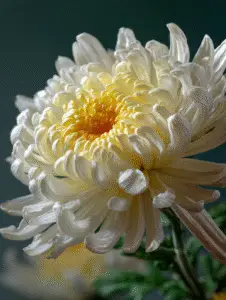
Chrysanthemum
The fall daisy most gardens reach for, flowering in the same weeks helenium does.
Enjoying our flower guides? Add YourFlowersGuide as a preferred source on Google. It helps more readers find us.
Add to Preferred Sources