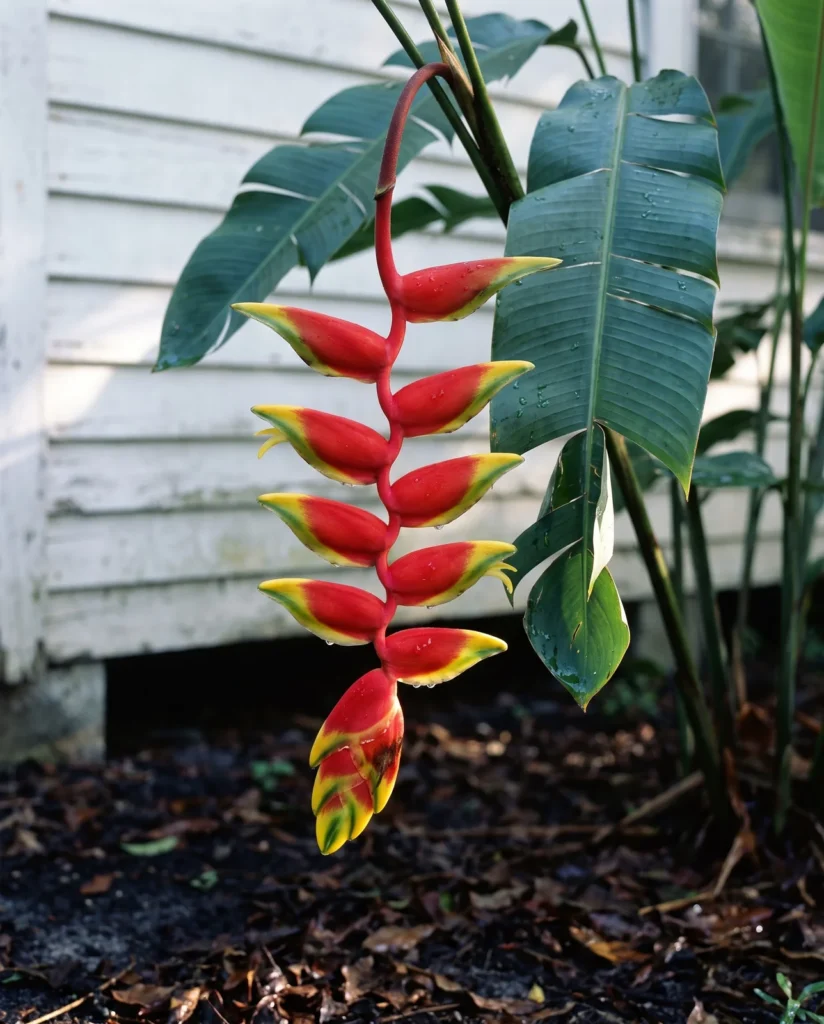
What lobster claw plant actually names
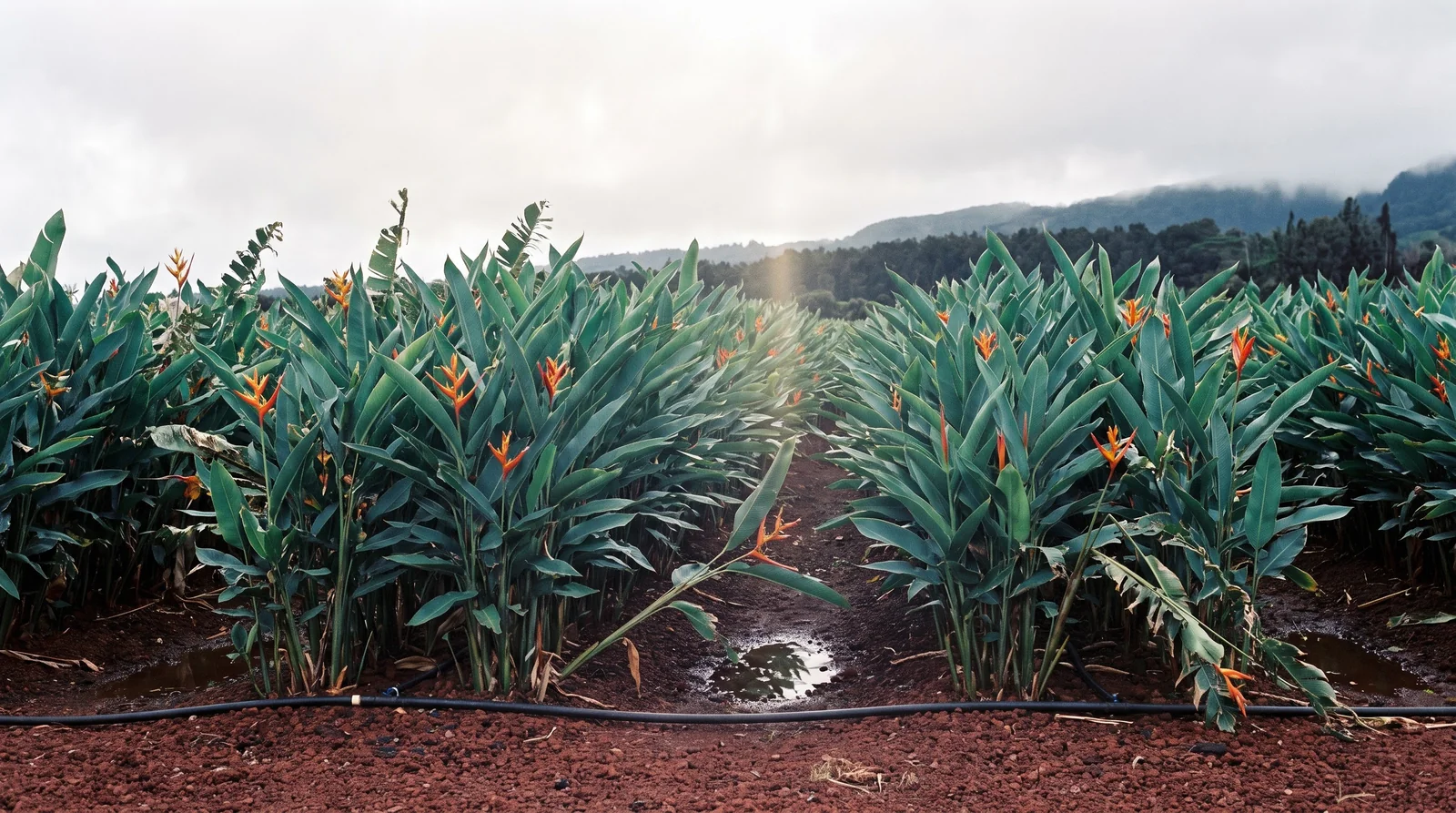
Lobster claw plant refers to two unrelated plants that share only a common nickname. The name most commonly belongs to tropical perennials in the genus Heliconia, grown for colorful claws of waxy bracts on tall leafy stems. The other plant using the nickname is an unrelated succulent. Beyond that shared label, the two have nothing in common.
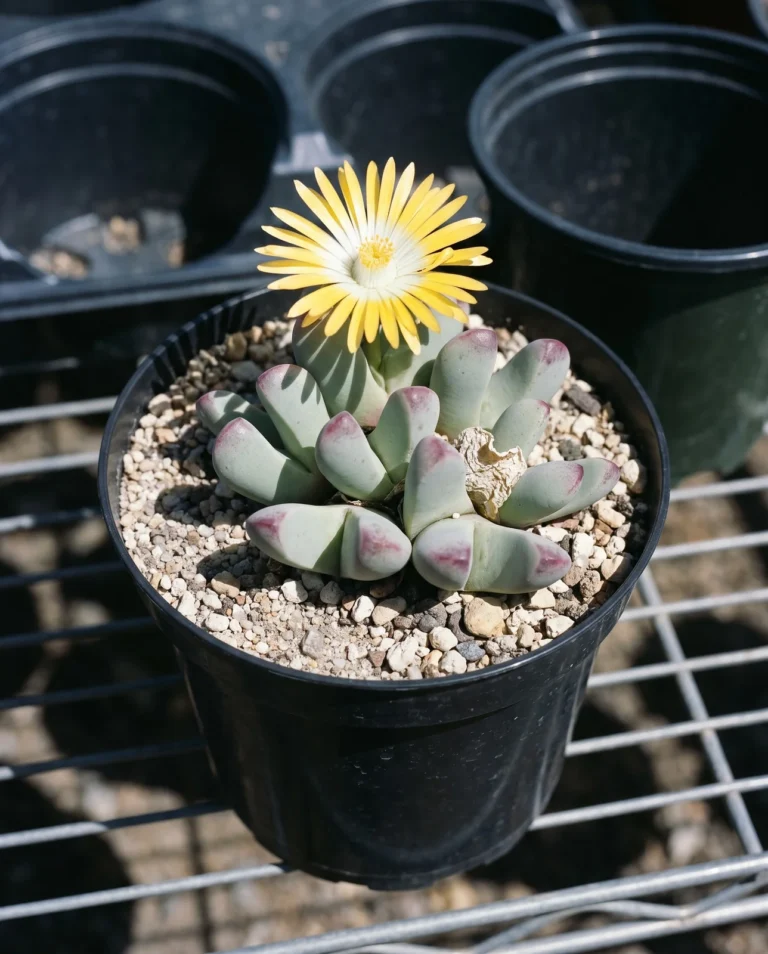
That succulent is Cheiridopsis candidissima. It belongs to the ice-plant family, Aizoaceae, which is separate from heliconia's family Heliconiaceae. The plant comes from South Africa's Little Karoo, and it bears yellow flowers with white centers about 3 inches across. A succulent from the Little Karoo has very different water needs from a rainforest perennial.
Looking at the leaves settles which plant sits in front of you. The succulent forms a low mat of paired leaves up to 4 inches long, while heliconia produces large paddle leaves on tall stems. Mature heliconias stand anywhere from about 1.5 feet to nearly 15 feet tall depending on the species. Heliconia itself also answers to lobster claws, toucan beak, wild plantain, and false bird-of-paradise.
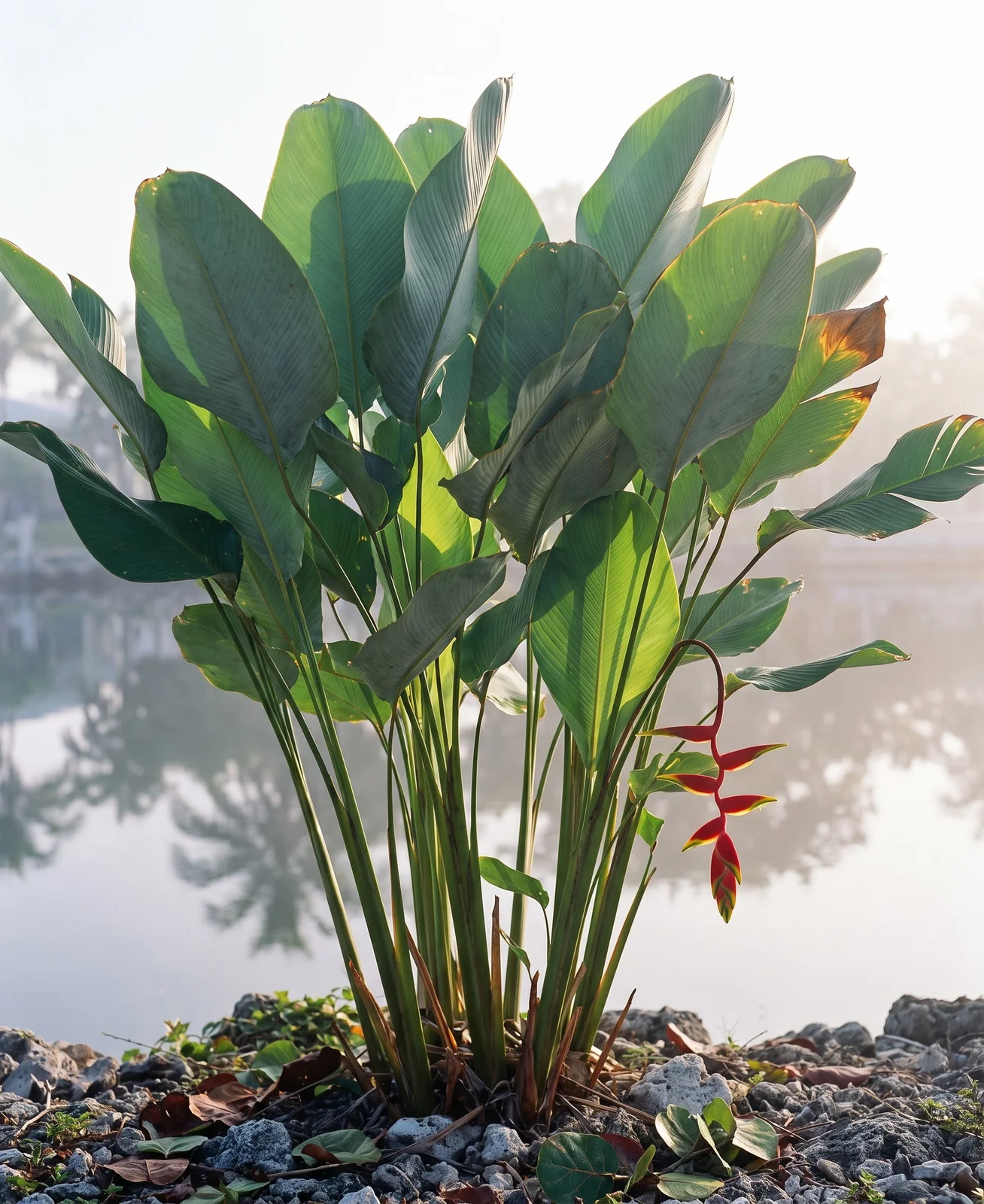
Heliconia or the succulent: which one is in the pot?
Both plants sell under the name lobster claw, but their leaves and flowers separate them immediately.
What heliconia is
Heliconia is a genus of tropical perennials that forms a family of its own, Heliconiaceae. How many species belong to that family remains unsettled, and published estimates differ too widely to combine. Published counts range from about 40 species to 194 or approximately 225. When cultivated varieties are included, the number rises to more than 250.
Most heliconias come from the tropical Americas, though a few are native to islands of the western Pacific and Maluku. Carl Linnaeus coined the name Heliconia in 1771 from a Greek word, honoring Mount Helicon, the mythical home of the Muses. The plant shares its upright growth habit with close relatives like cannas, birds of paradise, and bananas. All of them belong to the order Zingiberales alongside gingers and arrowroot.
Is bird of paradise a heliconia?
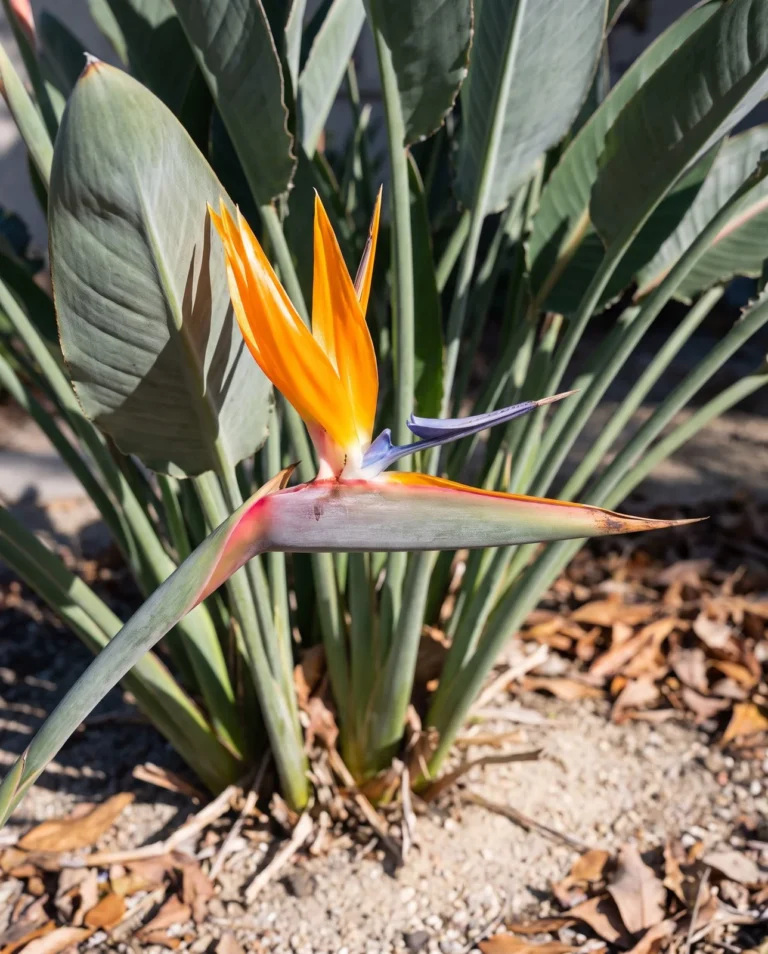
No, bird of paradise is a separate plant altogether. True bird of paradise belongs to the genus Strelitzia in the family Strelitziaceae, distinct from heliconia's family Heliconiaceae. Heliconia picked up the common name false bird-of-paradise because its blooms closely resemble Strelitzia flowers, a name frequently applied to Heliconia psittacorum. Native regions divide them just as clearly. Strelitzia reginae comes from South Africa and grows outdoors in zones 10 to 12, far from where any heliconia grows wild.
The connection to bananas runs deeper. Heliconia was once classified in the banana family, Musaceae, and its type species, Heliconia bihai, was first described under the banana genus Musa. Since 1998, Heliconiaceae has stood as its own family, sister to Musaceae, within the order Zingiberales. The plant long went by wild bananas before heliconia became its common name. Both plants share the broad-leafed silhouette that first linked them, though heliconia flowers evolved in a very different direction.
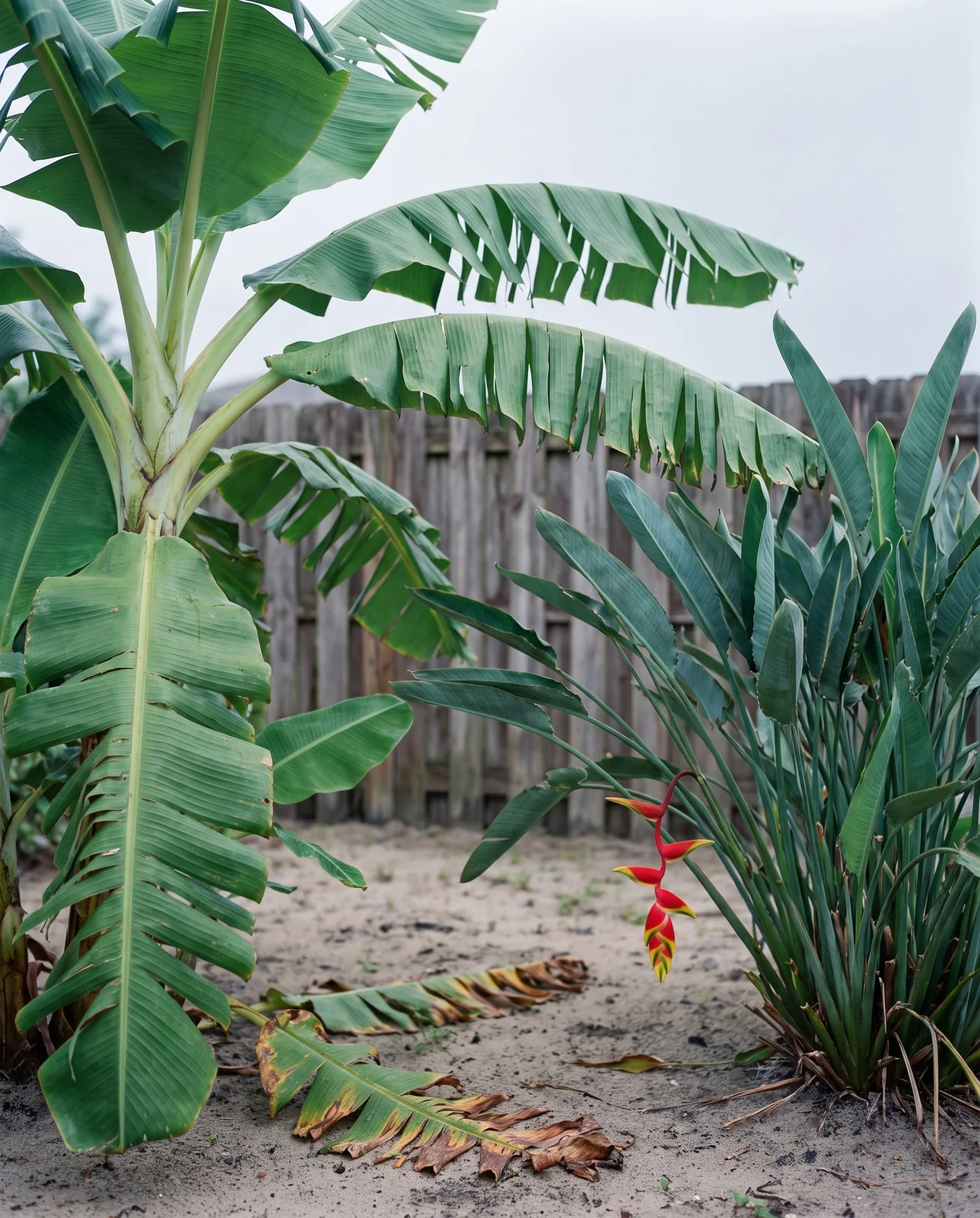
The two plants heliconia gets mistaken for
A single floral feature separates heliconia from each look-alike.
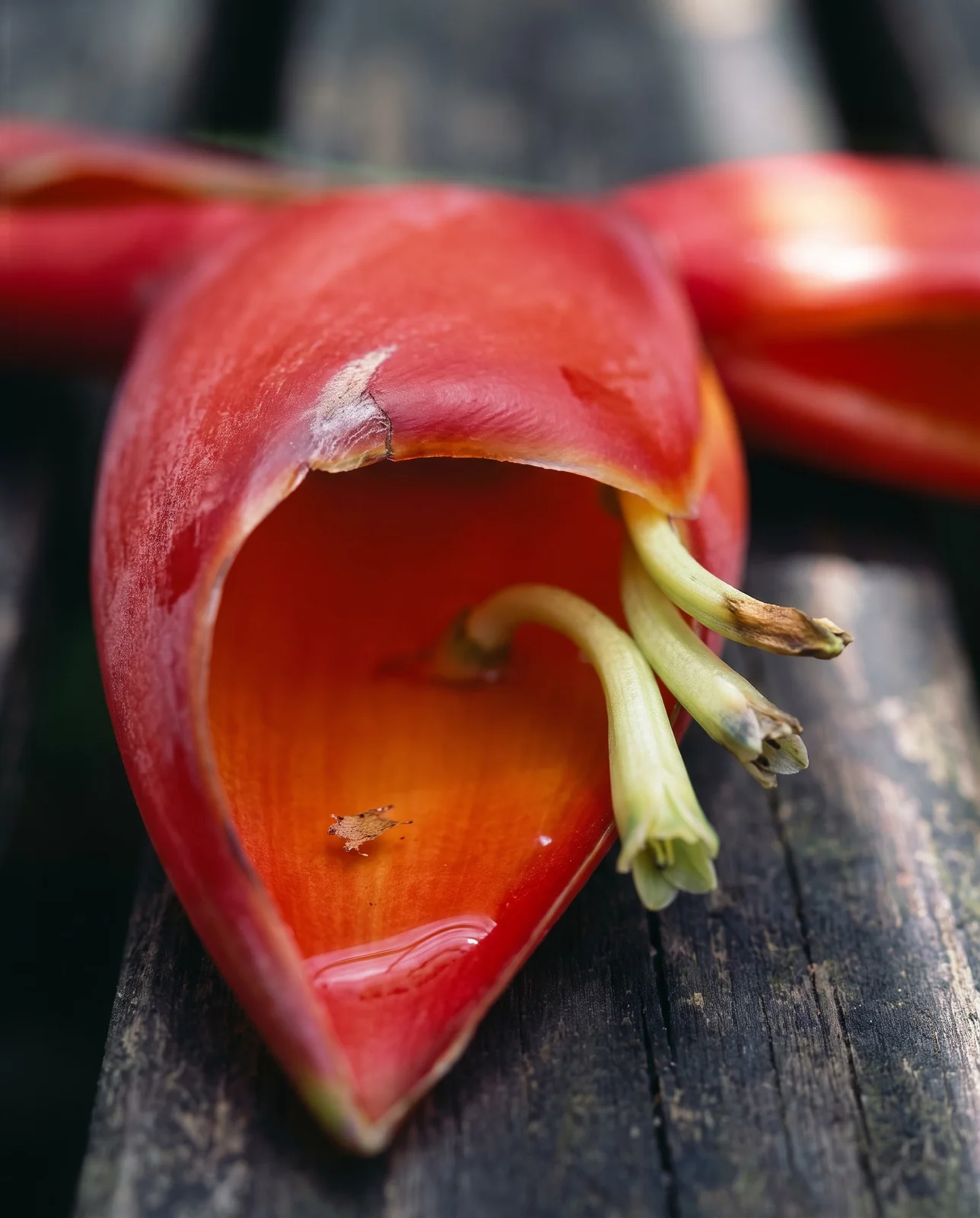
The colored part is not the flower
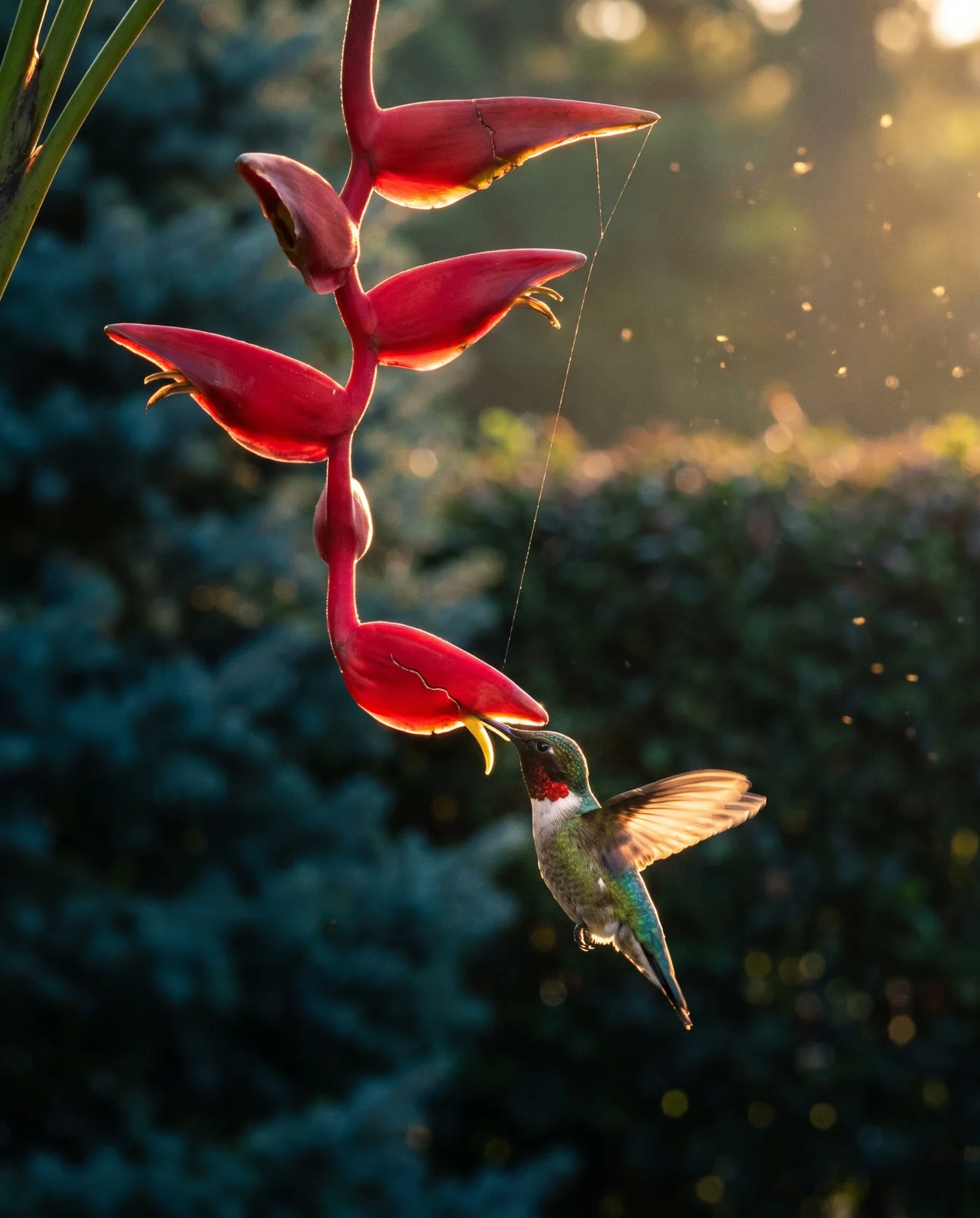
The colorful claw is made of waxy modified leaves called bracts. These bright bracts enclose and protect the small true flowers peeping out from inside. Those tiny blooms appear in spring and summer, while the tough bracts stay showy for months. A potted anthurium shares that shaded porch corner well, displaying its own colorful spathes alongside heliconia.
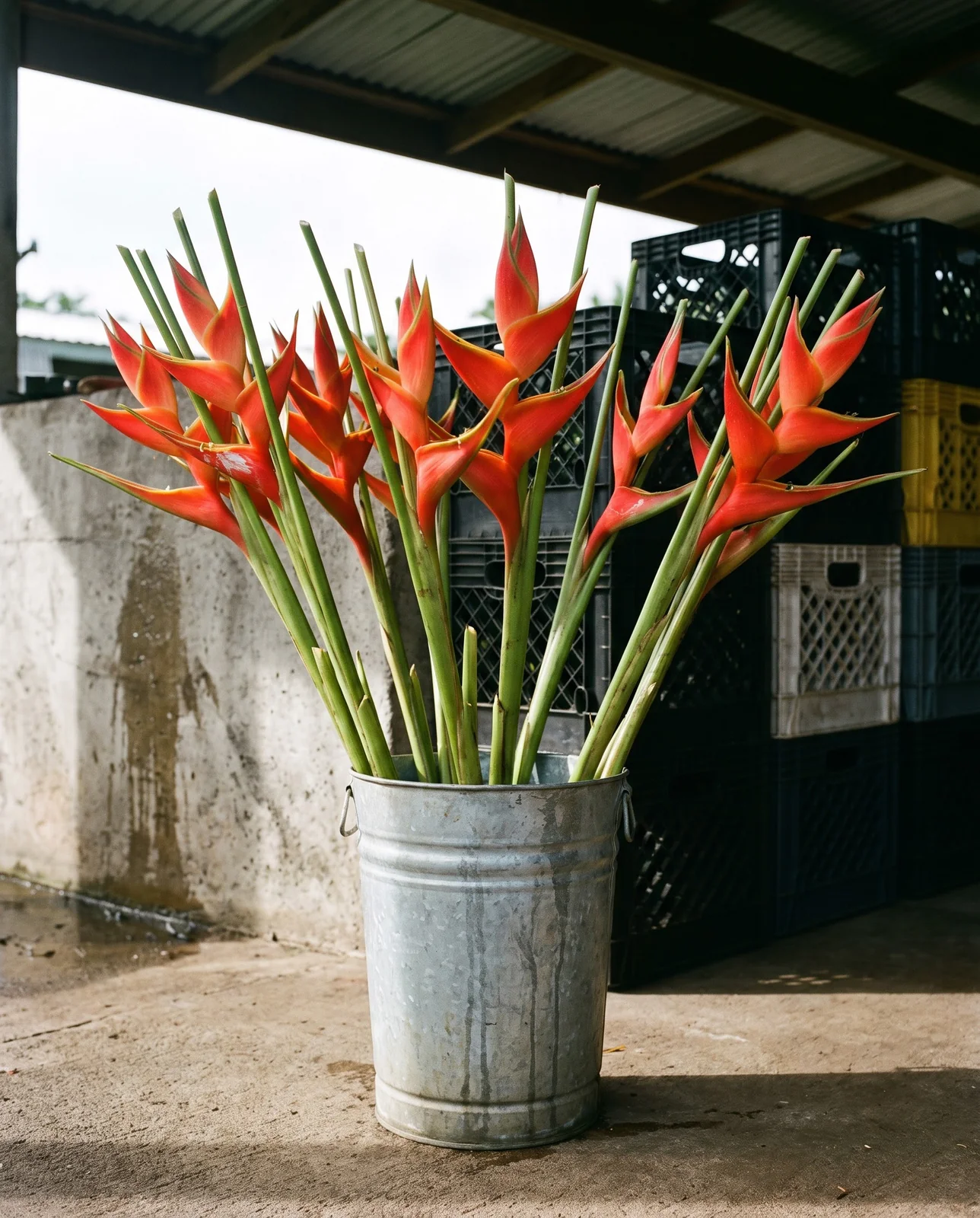
Those durable bracts explain why the flower shaft holds its colorful display for up to two months. They also set the rule for cut stems, because bracts stop opening once the stalk is cut. What you cut is what you keep, so pick stems that have already opened to the stage you want.
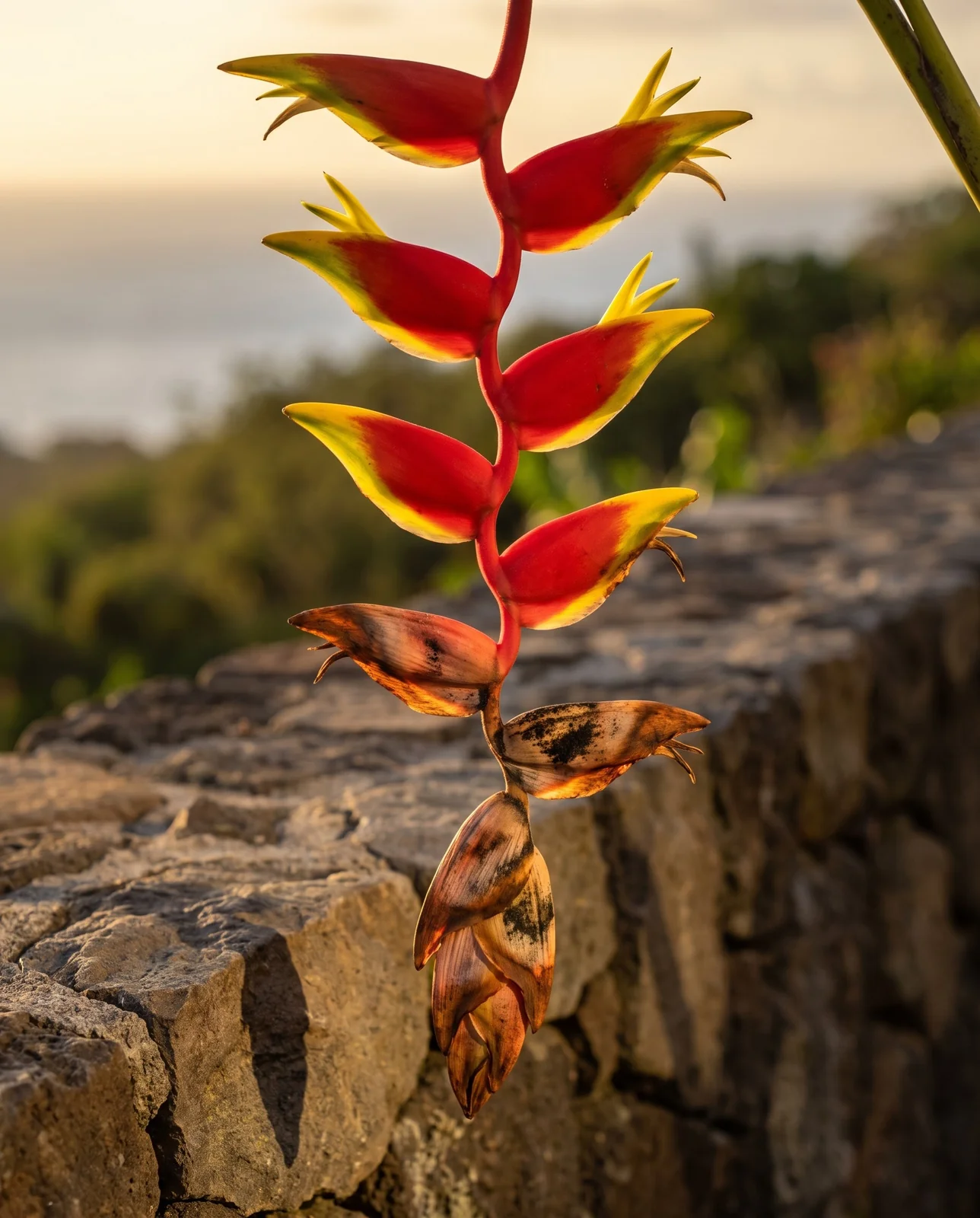
What a heliconia looks like
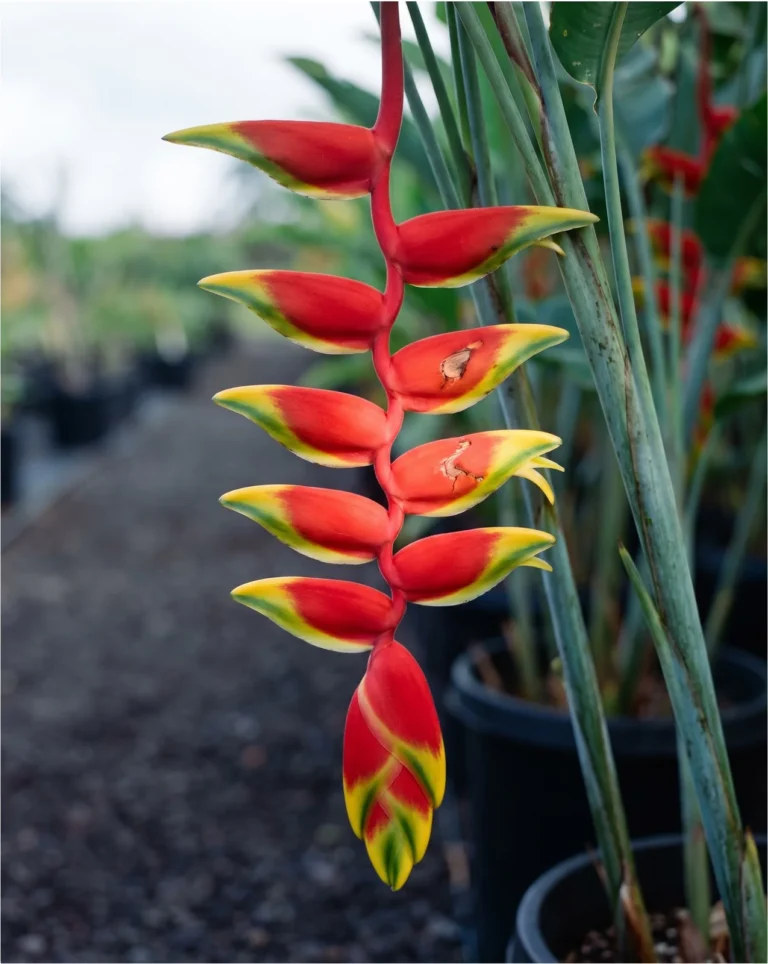
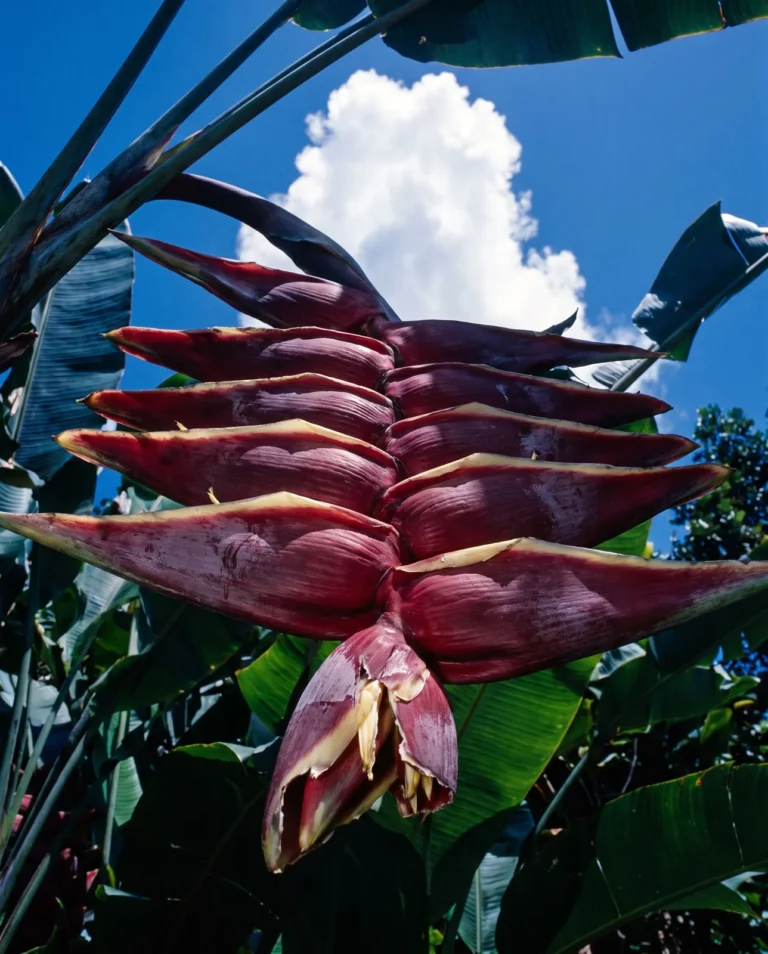
Heliconia forms a clump of large paddle leaves around a flower stem, but bloom angle divides the genus into two habits. Some species hold their bracts upright, while hanging heliconias let them dangle down from the main stem. Heliconia rostrata is the most familiar hanging species, bearing downward-facing bracts with the flowers sheltered underneath. Heliconia bihai stands upright as an erect herb that typically grows taller than 5 feet. Because flower stalks either rise stiffly or droop downward, two species can look very different from each other.
Plant height varies just as widely across the genus. Heliconia caribaea regularly reaches 10 to 15 feet tall, anchoring the large end of the scale. Heliconia rostrata stems can reach 10 feet, though they are rarely taller than 8 feet. Its bracts show red with a lemon-yellow edge, hiding the small true flowers within. At the compact end, Heliconia psittacorum is a slender plant growing 3 to 6 feet tall with leaves like a banana. Its upright clusters pair red bracts with pale yellow tubular flowers.
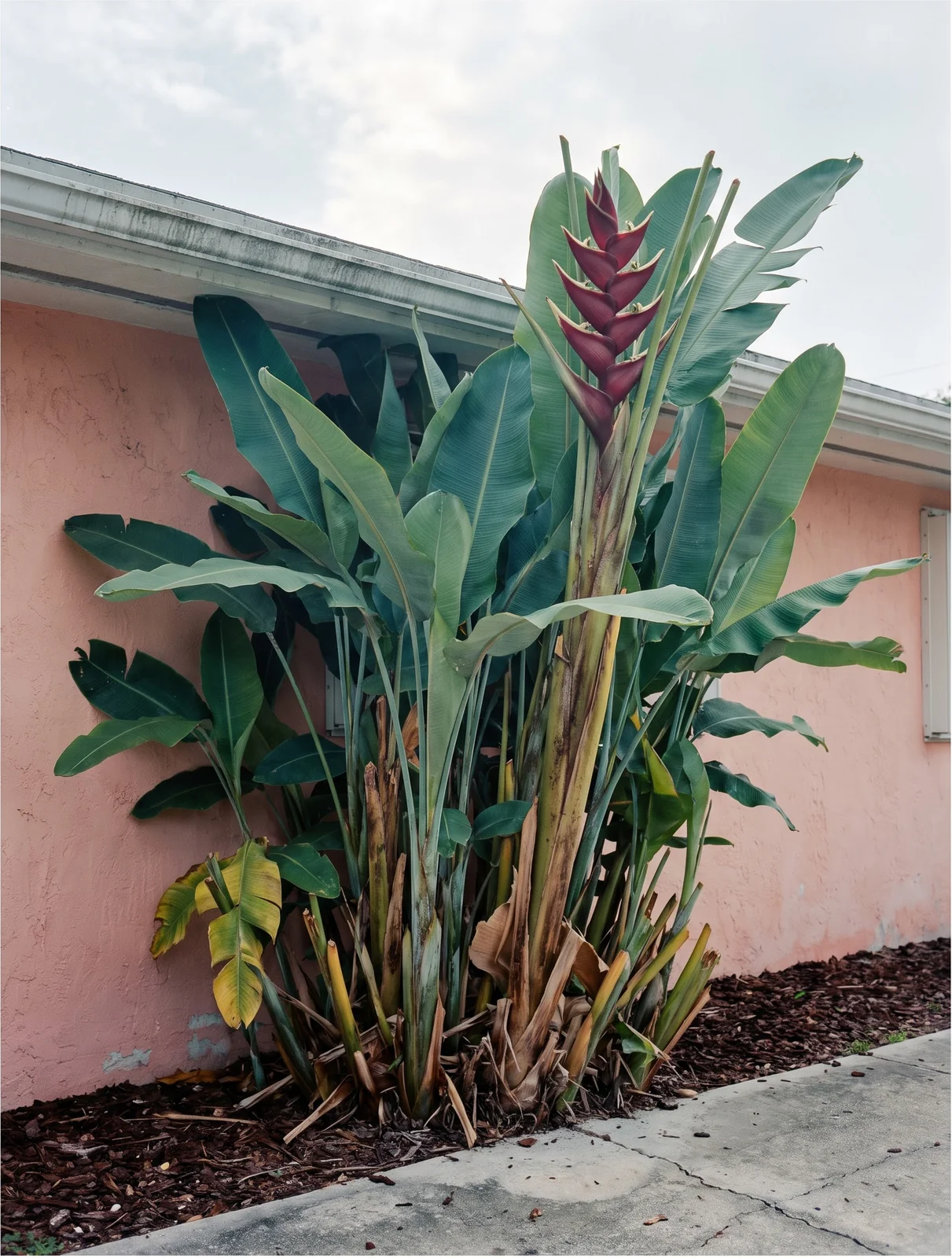
Zones and the cold line
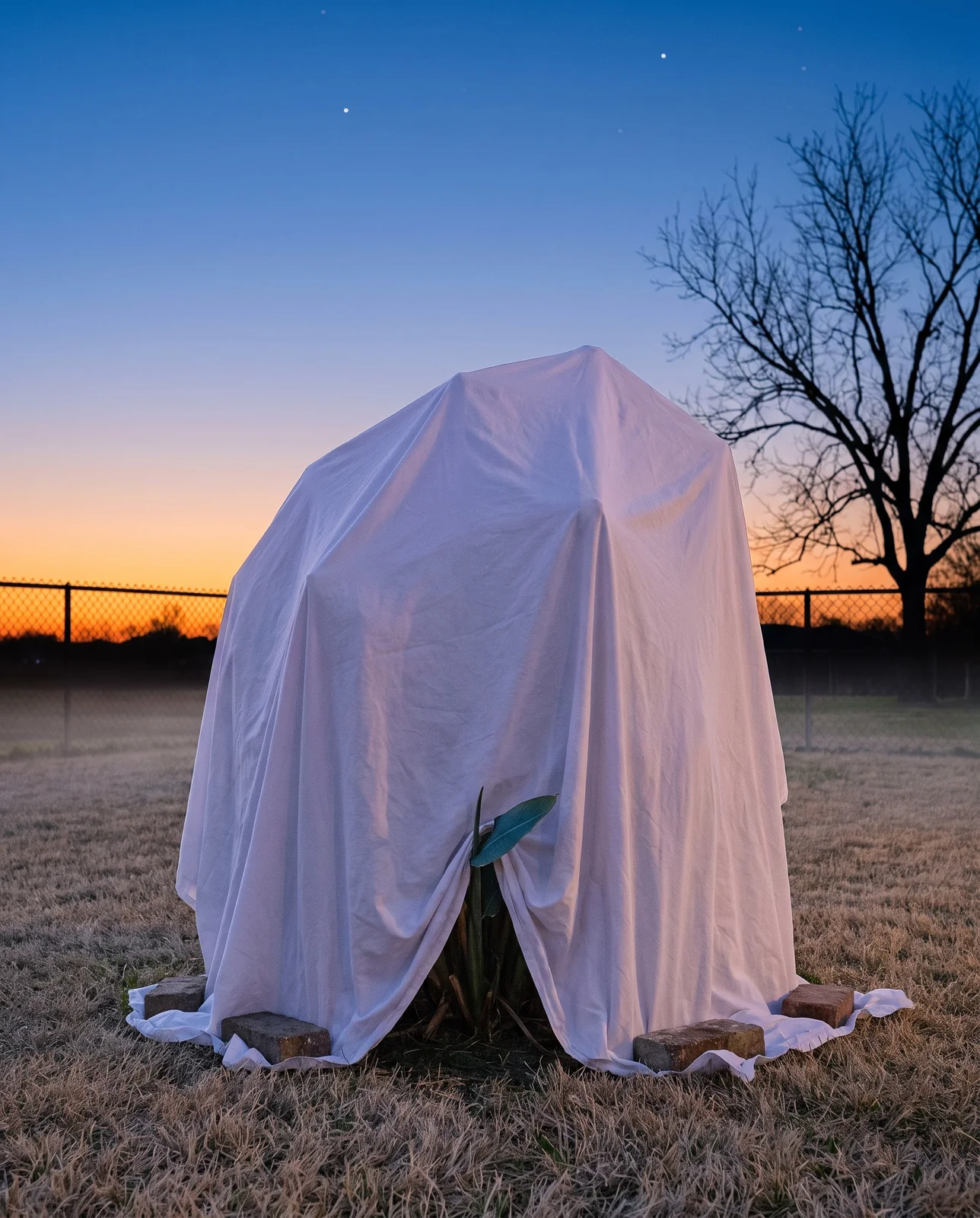
Heliconias grow reliably outdoors in USDA zones 10B to 11. Zone 10B is ideal, though plants do fine in zone 10A if sheltered from cold winter winds. Heliconia bihai is sometimes grown in zones 9 to 11 across hot, humid climates. In zone 9, Heliconia rostrata needs temperatures of 35 F or higher and requires frost protection anywhere below zone 10. In zone 9b, plants can stay alive when covered on nights below 32 F.
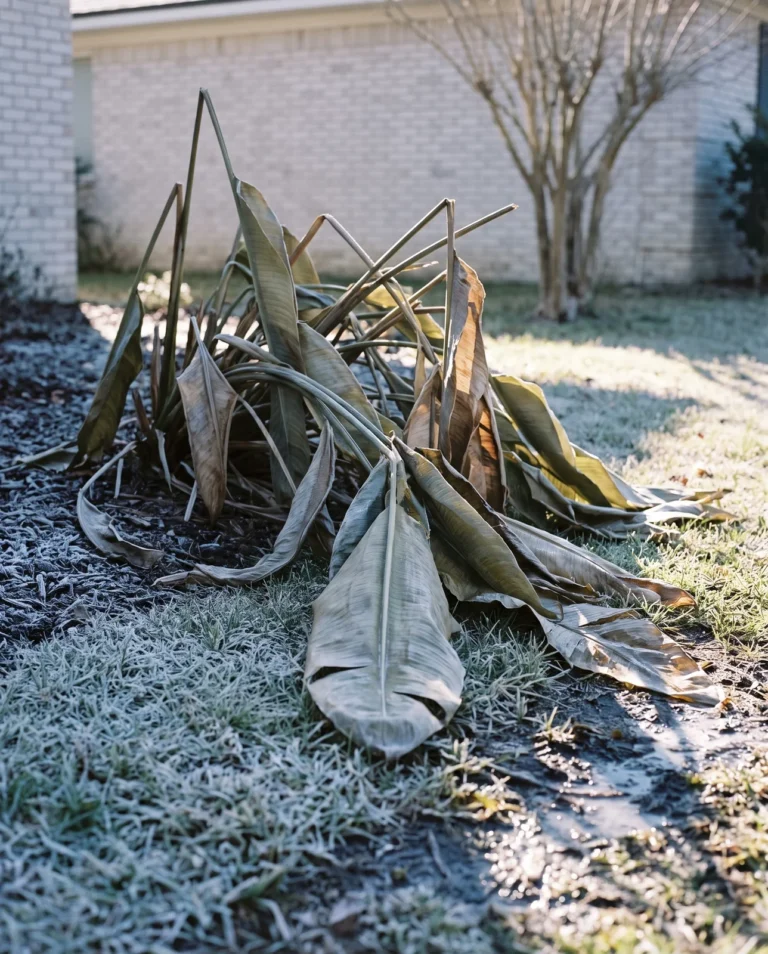
Cold injury begins at temperatures that feel barely chilly. Air below 50 to 55 F can harm Heliconia psittacorum, and even in zone 10 a clump may die back somewhat during winter. True winter freezes cause far worse damage. In zone 9a, where annual minimum temperatures reach 20 to 25 F, cold is likely to kill heliconia. Hard freezes and frozen soil will probably kill most varieties.
Differing hardiness advice comes down to different rating scales and different growing conditions. British rating scales classify heliconia as H1b, equivalent to hardiness zone 12, which does not match the American system. In American gardens, recommendations range from a strict zone 10B to 11 in open soil to zones 9 to 11 where plants receive winter protection.
Light, water, and soil that never dries
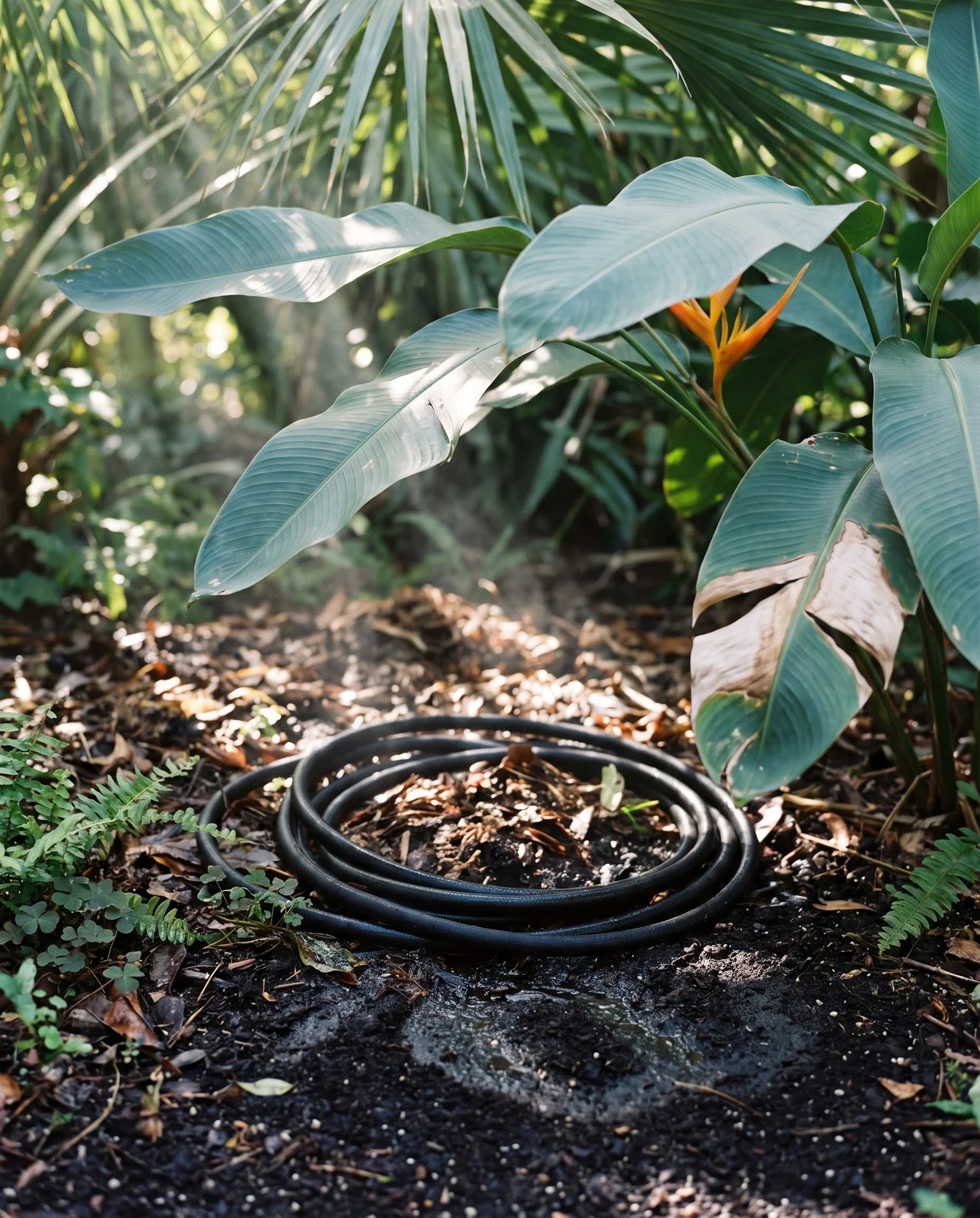
Heliconias thrive in bright, filtered sunlight similar to their native rainforest canopy. Most species prefer a spot with partial sun or shade, though lobster claw heliconia can tolerate full sun. Too much direct sun can scorch the leaves, while too little light reduces flowering. Plants grow best in semi-shaded conditions, whereas heavy shade and crowding produce weak, lanky stems with fewer blooms.
Fertile, moist soil is non-negotiable for growing heliconia. Most species need rich organic soil, part shade, and plenty of room to spread. Water frequently to keep the soil consistently moist, but never let it sit soggy. Heliconias tolerate very little drought or salt, so they are not recommended for dry or coastal gardens.
Yellow and browning leaves
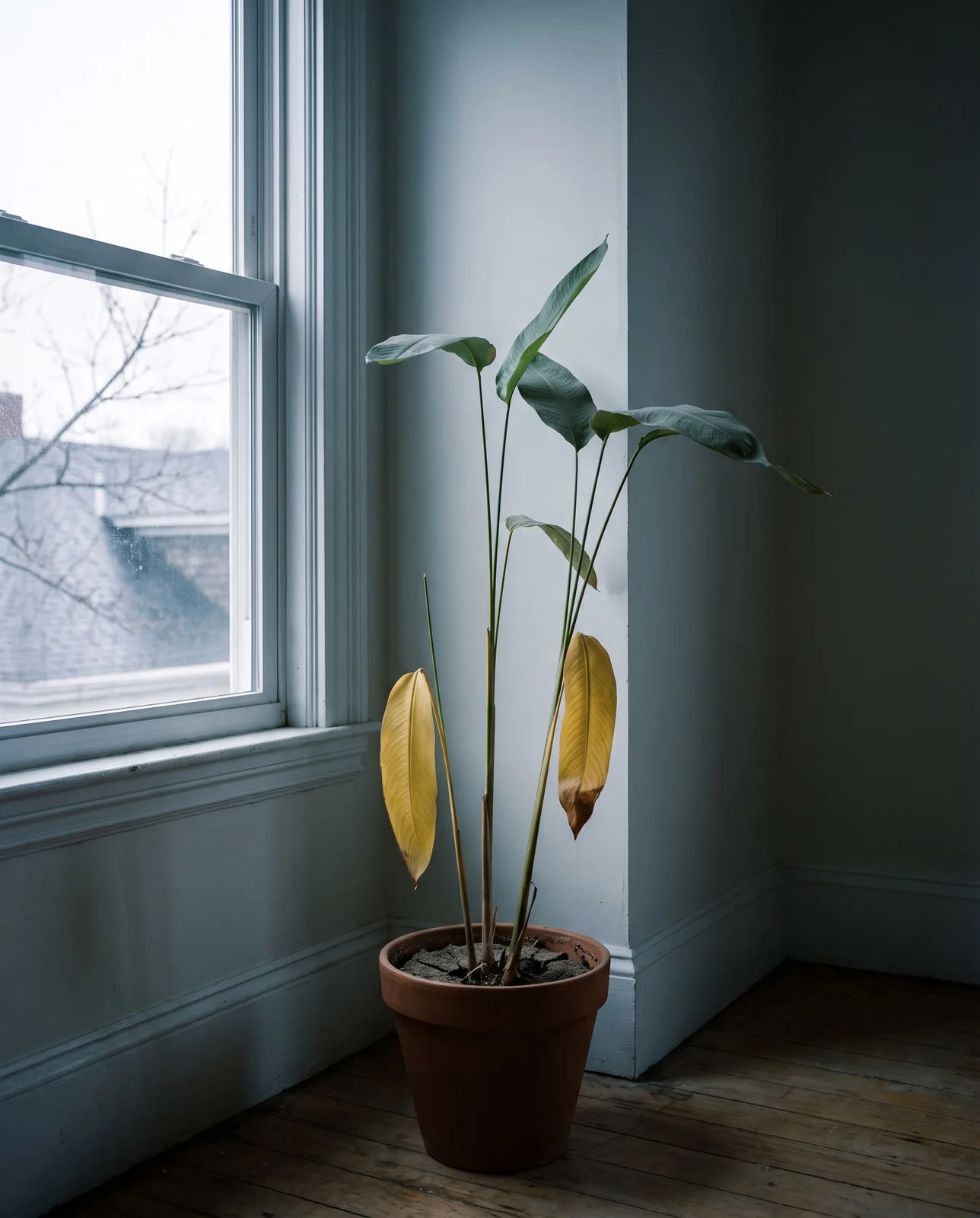
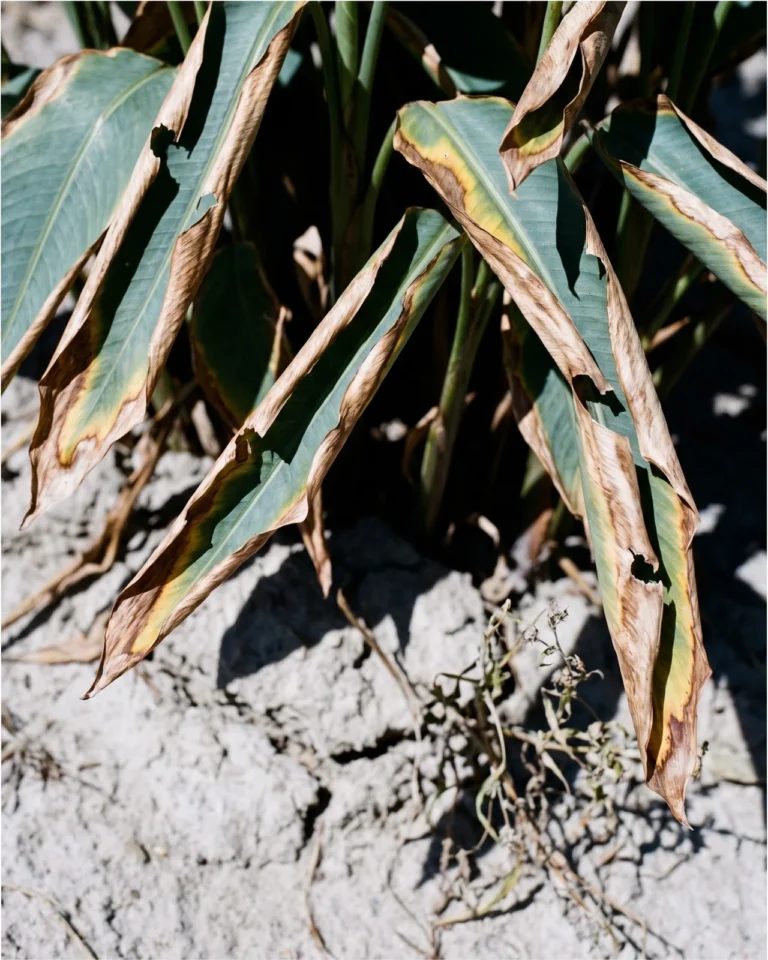
Yellow leaves on a heliconia can point to several different problems, and what causes them depends on where the plant is growing. Overwatering is usually the first explanation, but indoors a plant most often yellows from a lack of adequate light. In the garden, soil-borne disease or iron deficiency can also cause yellowing, which clears up with chelated iron and better airflow. In chilly weather, winter cold stress can leave cultivars like 'Hot Rio Nights' and 'Claw II' struggling.
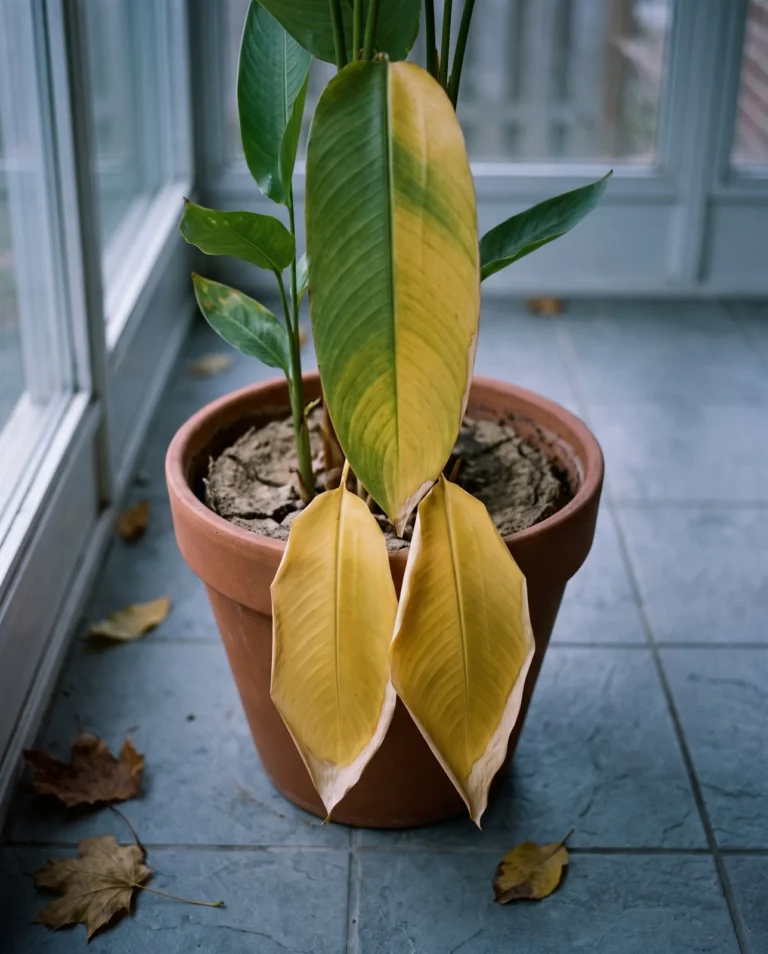
To pinpoint the problem, look at how the rest of the plant behaves. When a heliconia gets too little water, the leaves yellow, flower buds drop, and leaf edges turn brown and dry. Too much water causes something very different: roots and rhizomes rot, leaving stems soft, decayed, and collapsing. A pot sitting back from a window in dry winter air is usually starved for light and water. A garden clump standing in heavy rain or waterlogged ground is fighting rot. When yellowing follows a sudden cold snap, winter chill is to blame, and each situation needs its own response.
Which yellow is yours?
Four distinct situations cause yellow heliconia leaves, and each one leaves a clear pattern on the plant.
From symptom to cause
Work through these checks in order, because the first two rule out problems that adjusting your watering cannot fix.
Why a heliconia refuses to bloom
When a healthy heliconia refuses to bloom, it is usually too young, needs more light, or lacks fertilizer. Age comes first. A fresh division takes time to build sturdy rhizomes before it can support flowers, spending its first season on roots and leaves alone. Light matters just as much, because too little sun slows growth and prevents flowers from forming. Feeding is easy to overlook, because a clump pushing up lush green leaves looks well nourished even when it lacks the fuel to set buds.
Heat and daylength govern the rest, and neither responds to extra fertilizer. The daylength needed to trigger flowering depends on the species, so two heliconias in the same bed can wait on different seasonal cues. Temperature plays an equal part, with warmth between 59 and 70 F helping to increase the share of plants that flower. Without that warmth, a plant simply waits for hotter weather.
Heliconias are heavy feeders that need regular nutrition, a habit they share with their banana relatives. One routine is to apply a general-purpose fertilizer with micronutrients about 3 times a year, adding liquid fertilizer through the warm months to encourage heavier bloom. Another approach is to feed monthly through spring and summer with a balanced fertilizer, stopping when winter arrives. Whichever schedule you choose, provide enough phosphorus to build large, healthy rhizomes and support flowering.
The diseases named on heliconia
These are the primary diseases that attack heliconia, from fungal root problems to bacterial wilts.
The soil fungus Rhizoctonia solani causes root and rhizome disease, with Heliconia caribaea and the H. bihai selection 'Lobster Claw' particularly susceptible.
Symptoms: leaf curling, wilting, and a leaf-edge browning called firing. Cause: bacterial wilt from Pseudomonas solanacearum, to which Heliconia psittacorum and H. rostrata are highly susceptible.
A combined infestation of bacteria and nematodes in the soil spreads into the root system, causing severe rhizome rot that can kill the plant.
Banana bunchy top virus can infect Heliconia aurantiaca, as documented in Hawaii.
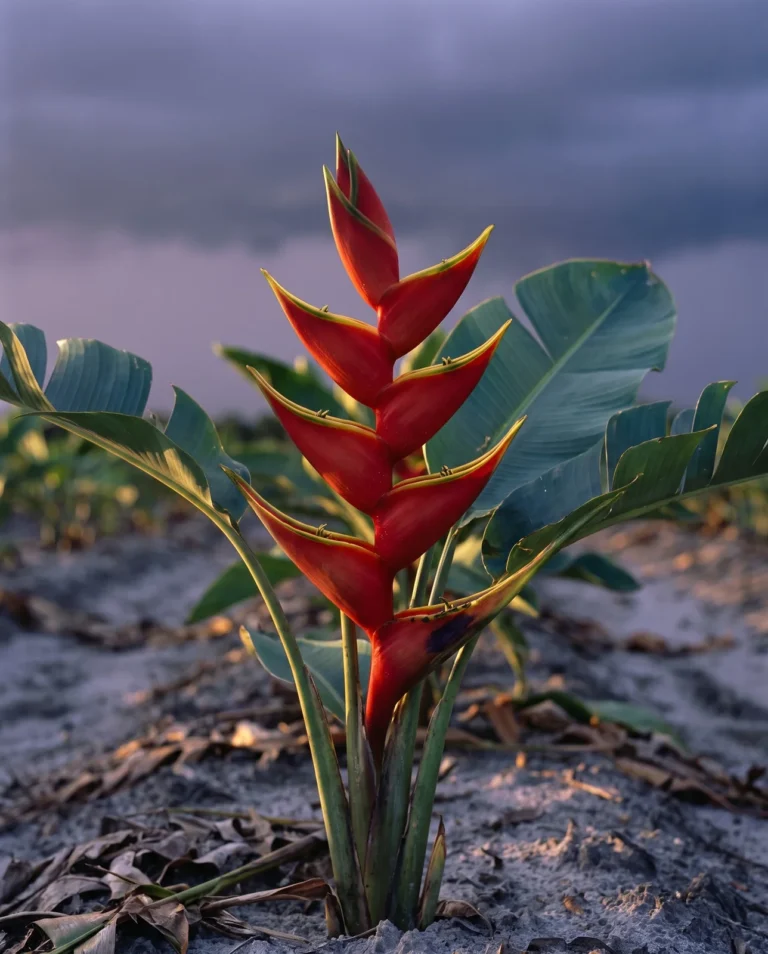
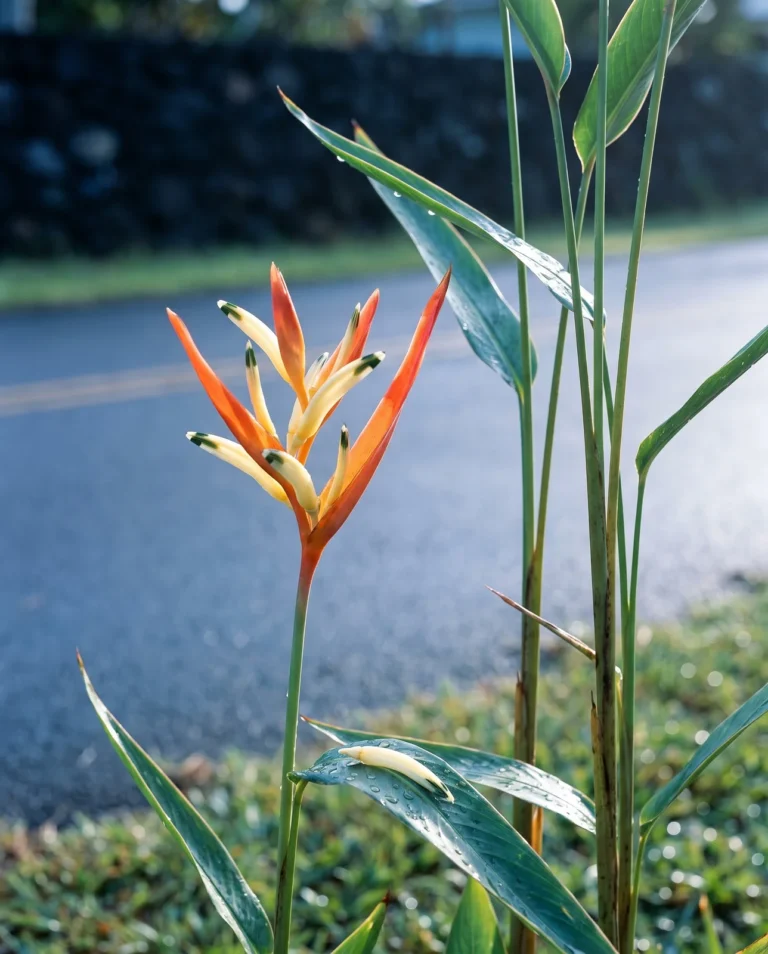
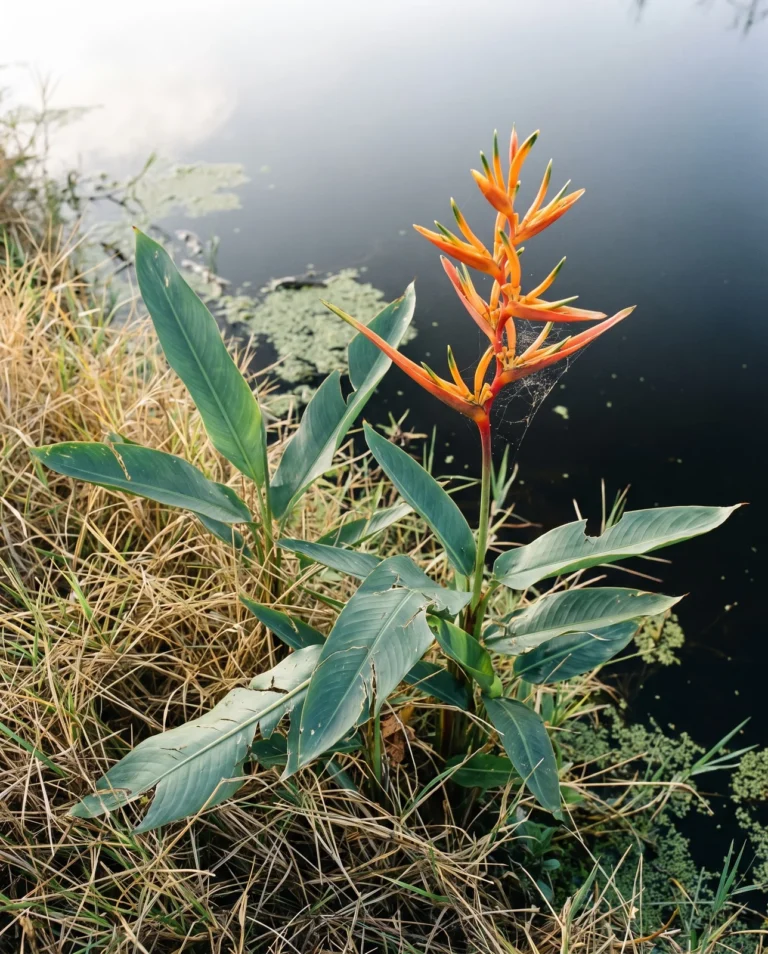
Species and selections worth telling apart
Bract shape and flower habit tell these species apart at a glance, from pendulous claws to upright fans.
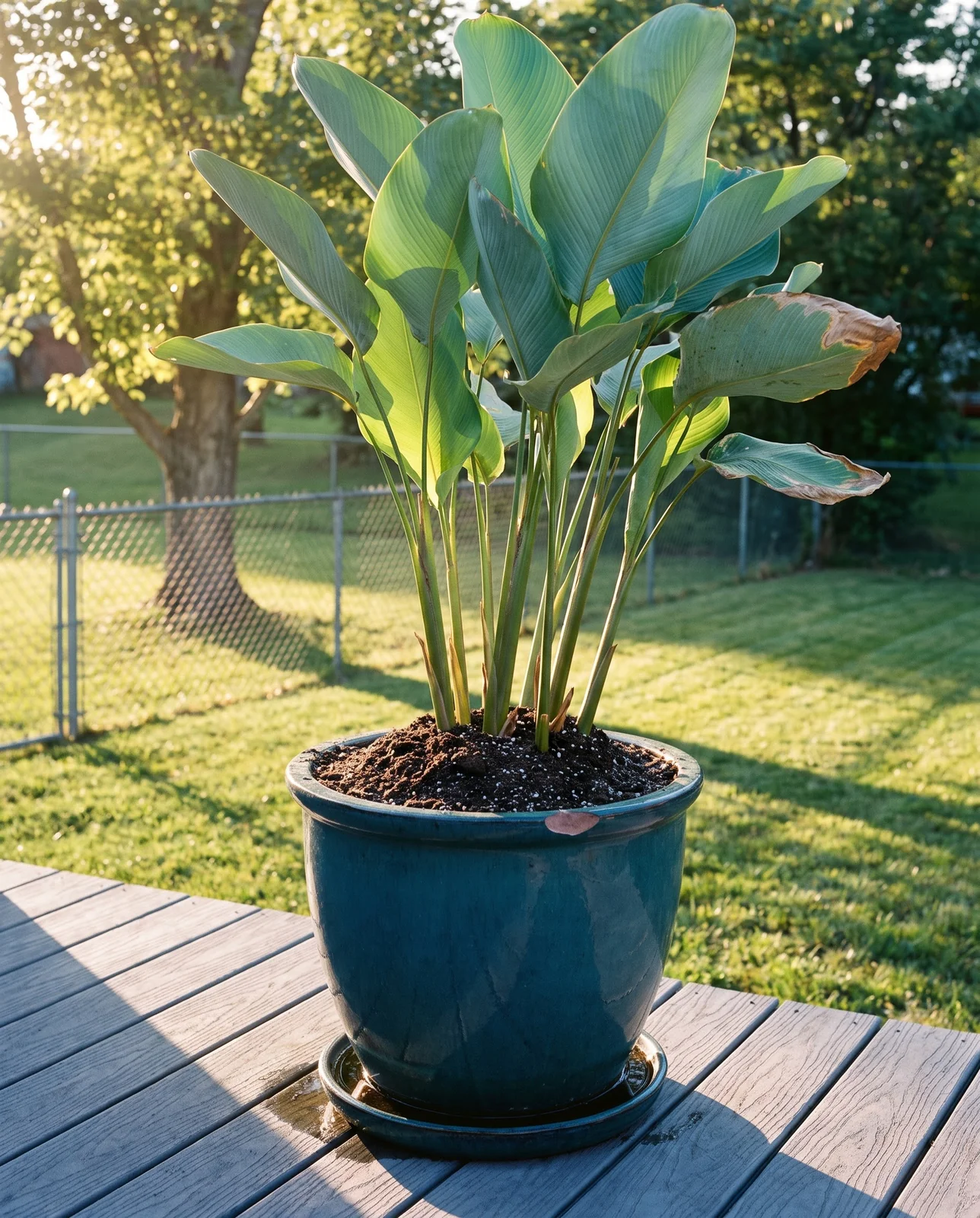
Growing heliconia in a pot
Outside the tropics, potted heliconia is usually grown for its lush foliage. Flowering indoors takes patience, as a plant may take up to two years to bloom after the year you buy it, and it flowers only after a good resting period. Advice on indoor light divides: it can thrive in plenty of direct sunlight, or in a bright spot with little to no direct sun within about 6 feet of a window.
Watering indoors requires a lighter hand than in a garden bed. Let the top third of the potting mix dry out between waterings, and err on the dry side because the thick rhizomes hold moisture. Winter care is mostly a question of temperature. Through dormancy, keep the room above 59 F. A chilly window chills the pot, and the watering can cannot fix cold roots.
Growing in a container also keeps spreading roots under control. Heliconia grows quickly and some species spread aggressively into nearby beds, so a pot keeps the clump contained. In cold regions where containers move indoors before frost, heliconia shares that winter space well with a potted canna lily.
What a cut stem needs
How long a cut heliconia lasts depends on harvesting at the right stage and keeping the stem warm.
Cutting back and dividing
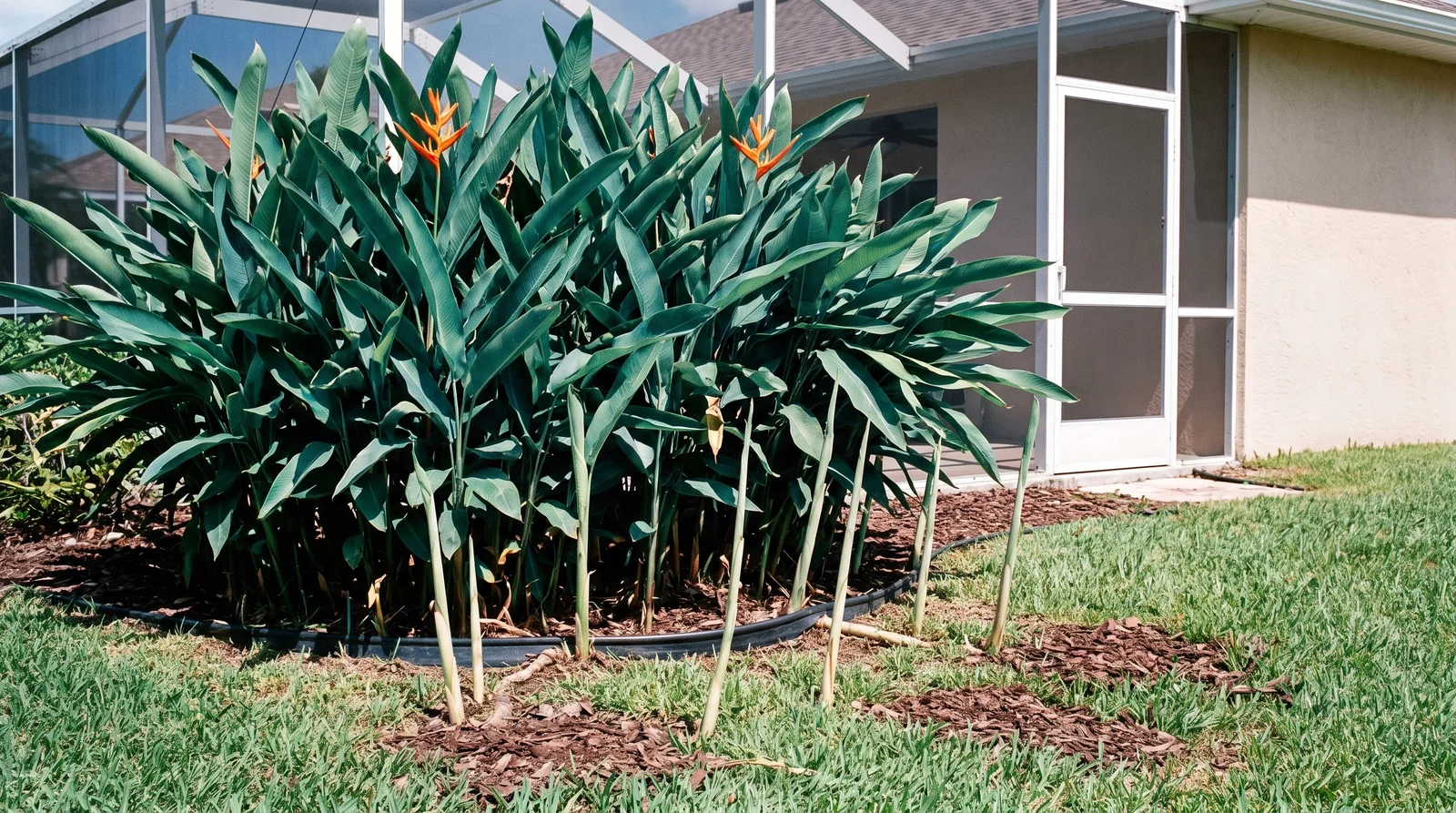
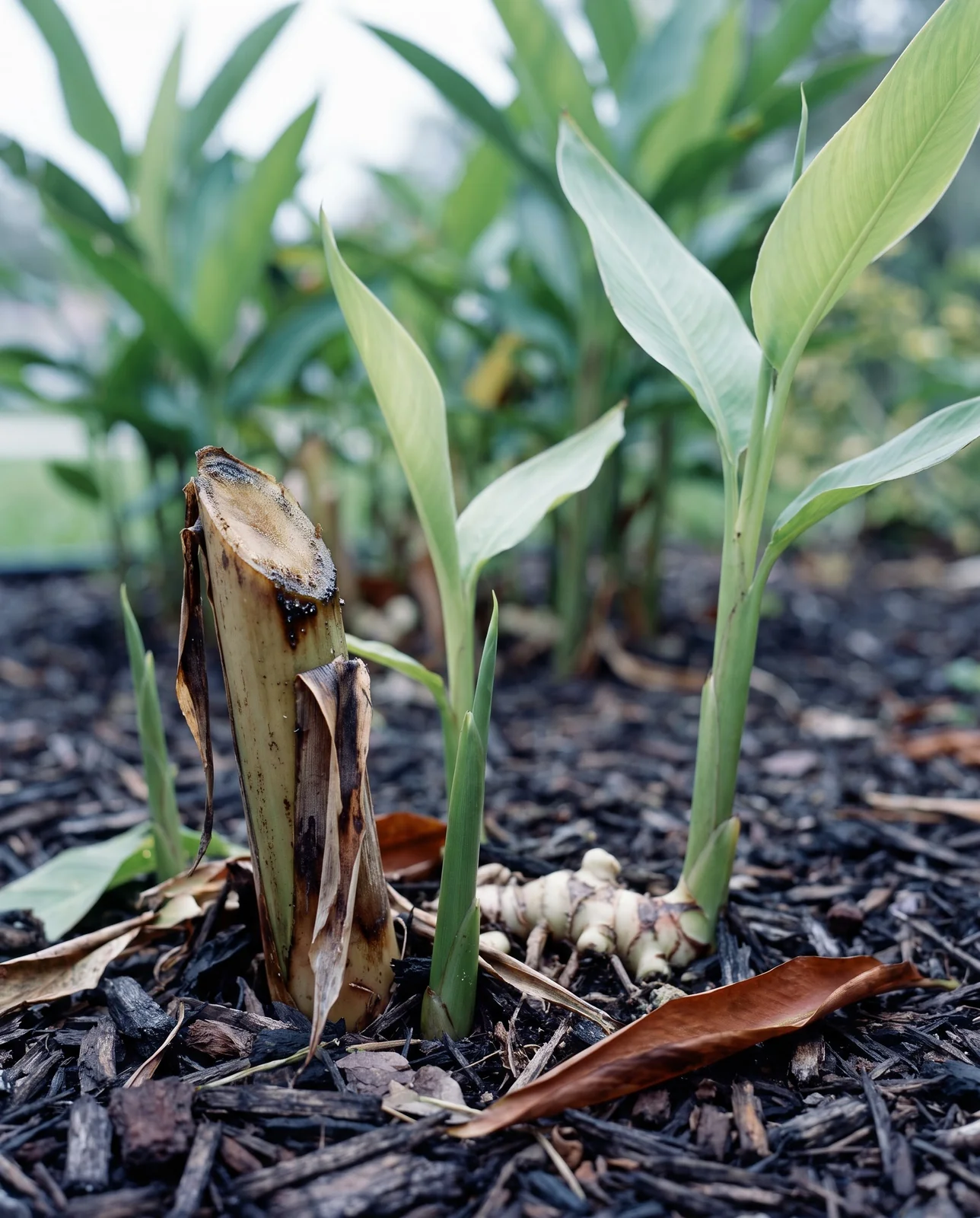
Pruning heliconia comes down to removing spent stems. Once a stalk flowers, that whole cane eventually dies back, as blooms appear only on fresh, unflowered stems that grew from the soil that season. Cutting finished canes to the ground makes room and light for younger shoots without sacrificing future blossoms. If winter brings frost injury, cut cold-damaged stalks to the ground in late March or early April once cold weather passes.
Dividing a clump renews vigorous growth and provides new plants. To propagate, lift and divide the root mass, then replant the rhizomes in large sections. A potted plant needs dividing once roots fill the container and begin choking themselves out. For container plants with side offsets, separate basal pups during spring or summer after each pup grows past 4 inches tall.
The pests that work below ground
The most troublesome pests on heliconia attack out of sight in the root zone. Three species of nematodes feed on the roots: burrowing nematodes, root-knot nematodes, and lesion nematodes. They leave roots swollen and lesioned, which interrupts water and nutrient uptake and causes yellow leaves, curling, wilting, and poor health. When a plant wilts despite moist soil, damaged roots below ground are often the reason.
Protecting heliconia from soil diseases starts before planting, while you have bare rhizomes in hand. To prevent rhizome and root rot, wash rhizomes in a 10 percent bleach-to-water solution before planting. To control nematodes, dip rhizomes in hot water at 122 F for 15 minutes, then plunge them straight into a cold water bath. Both treatments protect clean planting stock, because once soil pests invade an established bed, treating them in the ground is difficult.
Is heliconia native to Florida or Hawaii?
No heliconia is native to Florida, and only one species has established itself in the wild. Heliconia latispatha, the expanded lobsterclaw, is the single species documented growing wild in Florida, and its status in the state is not native. A few heliconia species have naturalized in Florida, Gambia, and Thailand, though none are indigenous to those regions. A clump thriving along a Florida canal is simply an escaped garden plant holding its own.
Hawaii has a similar history. Heliconia psittacorum is not native to the islands, having arrived from Puerto Rico in 1950 through private introductions. Under a regional weed risk assessment, it receives a high-risk score of 11, yet it has no documented invaded habitats or ecological impacts. The score warns of potential weediness, but in Hawaiian gardens the plant has stayed in cultivation without damaging native habitats.
What heliconia is planted for
Heliconia is planted for two things smaller perennials cannot match: bold tropical foliage and hummingbirds. It fits easily along a porch, patio, or deck, in front of a fence, or clustered around a tree. Hummingbirds serve as the principal pollinators of heliconia across the Americas. They visit the flowers daily, and individual birds often become territorial over a single clump. In a frost-free garden, a tall clump creates a lush backdrop alongside flowering shrubs like hibiscus.
Toxicity and pets
Heliconia has no entry on the ASPCA toxic plant list under any of eight common names, including lobster claw and parrot's beak. Without an official rating, it is neither confirmed toxic nor cleared as safe for cats, dogs, or horses. Keep pets from chewing the tough leaves or bracts, and contact a veterinarian if an animal swallows any part of the plant.
What to expect, season by season
Heliconia establishes in stages, shifting from lush leaf growth to blooms and an expanding clump.
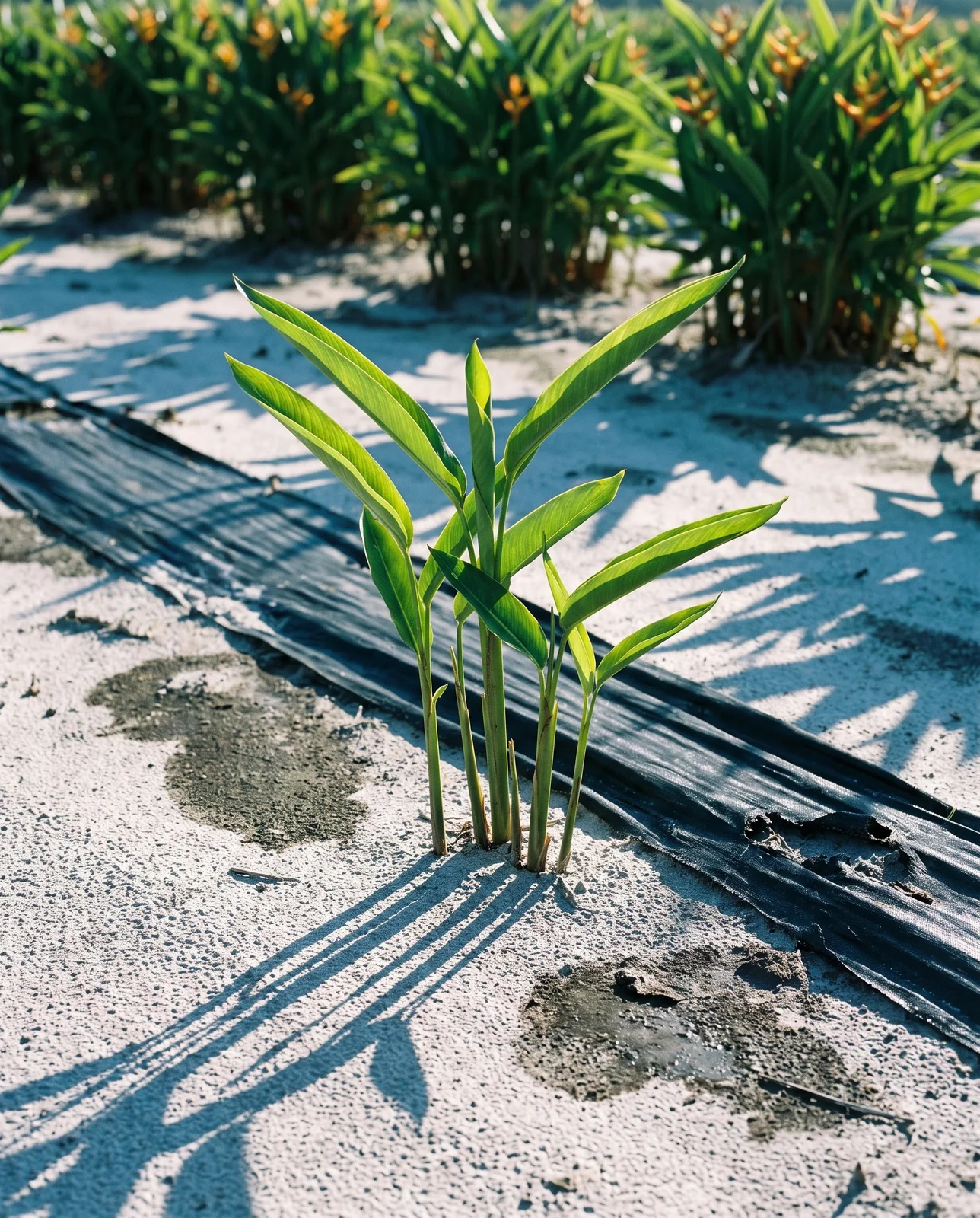
Plant rhizome divisions in large sections, and expect the first year to belong to the leaves. Heliconia grows at a moderate to fast pace, quickly pushing up height and lush new shoots. Missing flowers in this opening season is normal, because the plant is busy building a strong root system.
Flowers appear once canes have had time to mature. Blooms most commonly emerge from sound, one-year-old stems, while some types take longer and flower only from two-year-old canes. A young clump planted in spring rarely flowers the first summer because the flowering canes are still developing.
After a few years, managing an expanding clump becomes the main task. Install root barriers around the bed to keep vigorous rhizomes contained. After a number of years, an overgrown planting may need thinning, taking out older plants so fresh young canes have room to grow.
Four claims about heliconia that do not hold
Common misconceptions about heliconia, cleared up with the facts.
The myth: Lobster claw plant names one plant.
The reality: Two unrelated plants share the nickname: tropical heliconia, and a South African succulent in the ice plant family.
The myth: The red claw is the flower.
The reality: The colorful claws are waxy leaf bracts, and the tiny true flowers peek out from inside them.
The myth: Heliconia is a kind of banana.
The reality: Heliconia was once classified in the banana family, but since 1998 it has stood in its own family as a close relative of bananas.
The myth: Zone nine is warm enough to leave one outdoors.
The reality: Heliconias are best suited for zones 10b to 11. In zone 9b, keeping plants outdoors through winter requires covering them on nights below 32 F.
FAQ
Is bird of paradise a heliconia?
No. True bird of paradise belongs to the genus Strelitzia in its own family, Strelitziaceae, and comes from South Africa. Heliconia is called false bird-of-paradise simply because the flowers look so similar.
Is heliconia native to Florida?
No. Heliconia latispatha is the only species found growing wild in the state, and it is not native to Florida.
Is heliconia native to Hawaii?
No. Heliconia psittacorum was brought to Hawaii from Puerto Rico in 1950. It carries a high weed-risk score of 11, but has no known record of invading wild habitats or causing harm.
Do heliconias prefer full sun or shade?
Most heliconias prefer partial sun or shade, though kinds like lobster claw can tolerate full sun. Too much shade and crowding cut down on flowers and leave stems weak and lanky.
Why is my heliconia not flowering?
The plant may need more light, extra feeding, or simply more time to mature. Flowers most commonly appear on sound one-year-old stems, though some types take longer and flower from two-year-old canes.
What is the best zone for growing heliconia?
Heliconias are best suited for zones 10B to 11. Zone 10B is ideal, though plants do fine in zone 10A if the site is protected from winter winds.
How quickly do heliconias grow?
Heliconias grow at a moderate to fast rate, though some species spread aggressively into nearby beds.
What is the best fertilizer for heliconia?
You can feed about three times a year with a general-purpose fertilizer containing micronutrients. Another option is applying a balanced fertilizer monthly through spring and summer, then stopping for winter.
What is the best heliconia to plant?
The most commonly planted garden species are Heliconia bihai, H. psittacorum, H. rostrata, and H. schiedeana.
Where can you buy heliconia plants?
Specialist tropical nurseries carry named varieties, while potted plants often turn up in garden centers. Prices typically run about $16.70 for a rostrata selection, $20.00 for a bihai selection, and $25.38 to $49.89 for potted plants.
Can a heliconia recover from yellow leaves?
Yes, and often there is nothing wrong. Heliconias typically die back to their roots through fall and winter before regrowing foliage and flowers for summer. Some plants die back over the year with yellowed and browned foliage, which is entirely normal, and they should bounce back in spring.
Interesting tips
- Heliconias are considered deer-resistant plants, though that comes with no guarantee.
- Heliconia bihai also goes by the common names balisier and macawflower.
- Pulling stems from the plant gives satisfactory keeping quality as an alternative to cutting.
Related Guides & Flowers
Plumeria
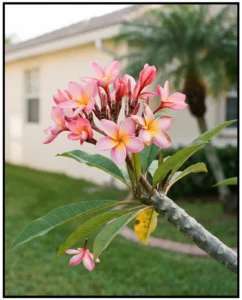
The other tropical filling the same Florida and Hawaii gardens, grown for scent above all.
Bougainvillea
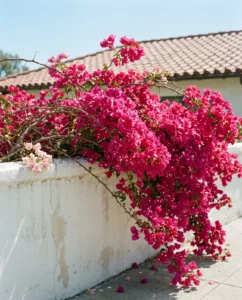
Another warm climate plant that takes its color from bracts around small true flowers.
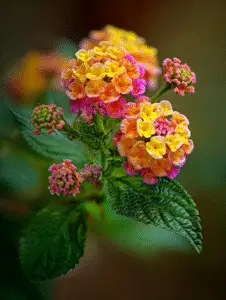
Lantana
A low, tough companion for the same bed, planted for the hummingbirds and butterflies it pulls in.
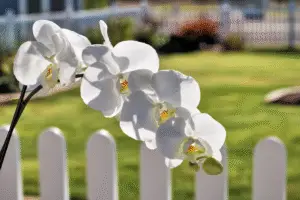
Orchid
The tropical most often brought home in a pot, and the one that most often asks for its own climate.
Enjoying our flower guides? Add YourFlowersGuide as a preferred source on Google. It helps more readers find us.
Add to Preferred Sources