What a hoya is and where it comes from
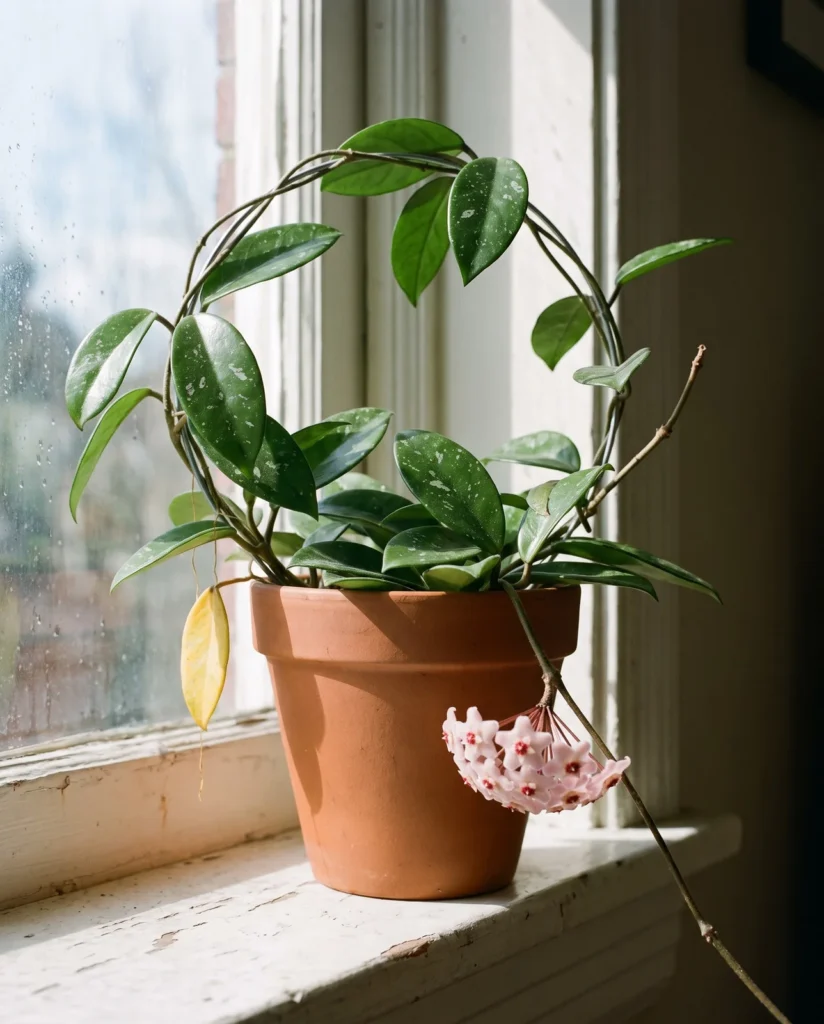
A hoya is a climbing evergreen perennial that grows perched on trees through tropical and subtropical Asia and the western Pacific islands. The genus is huge, at 567 accepted species. It sits in the dogbane family, Apocynaceae, and a cut stem bleeds the same milky sap a milkweed does, which marks furniture if it drips. Robert Brown named the genus in 1810, and thick waxy leaves earned it the name wax plant.
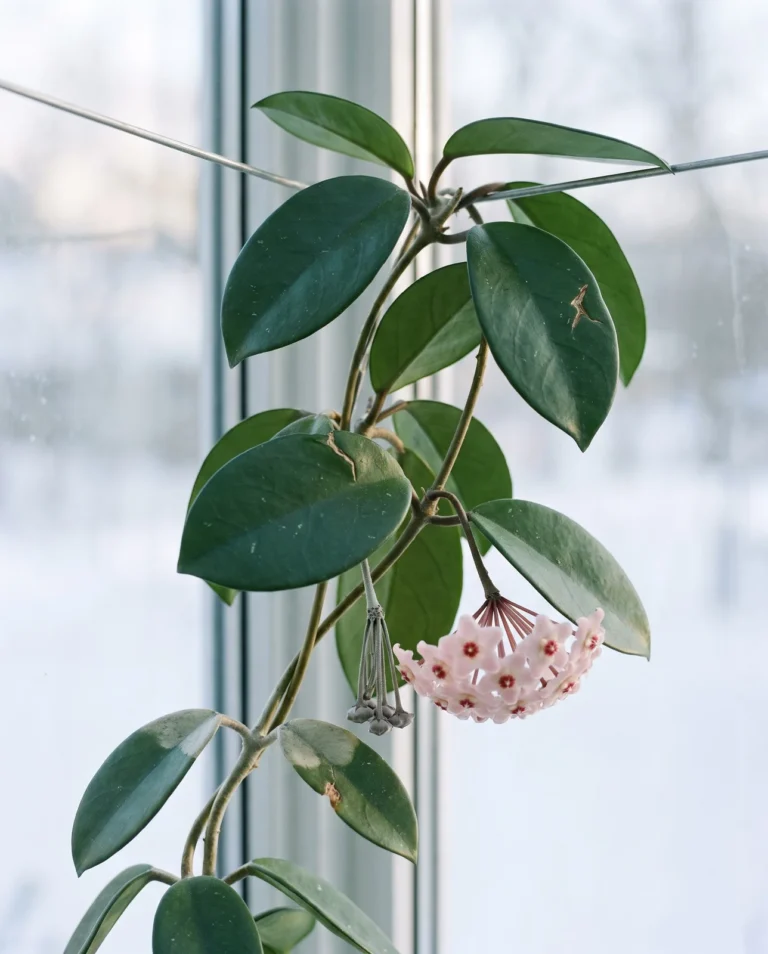
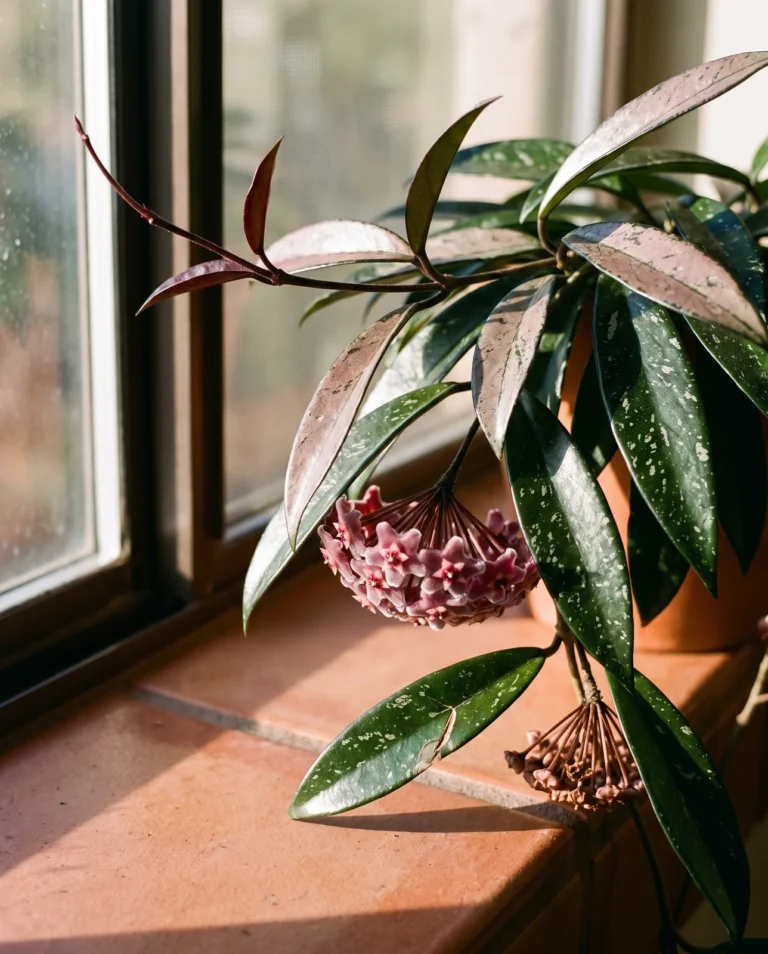
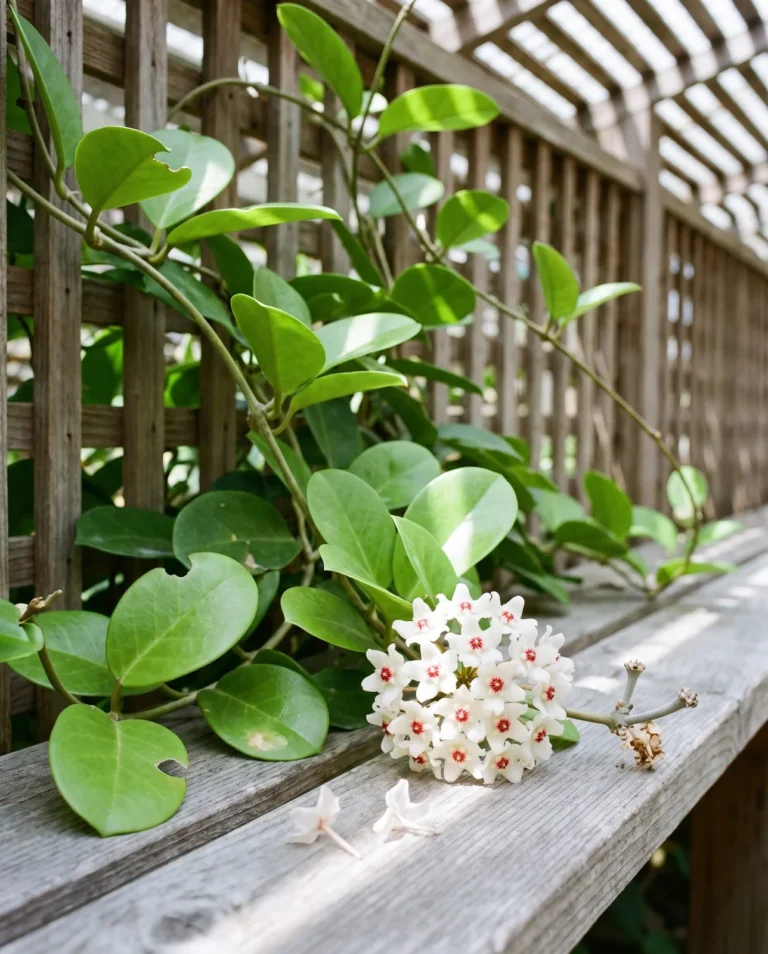
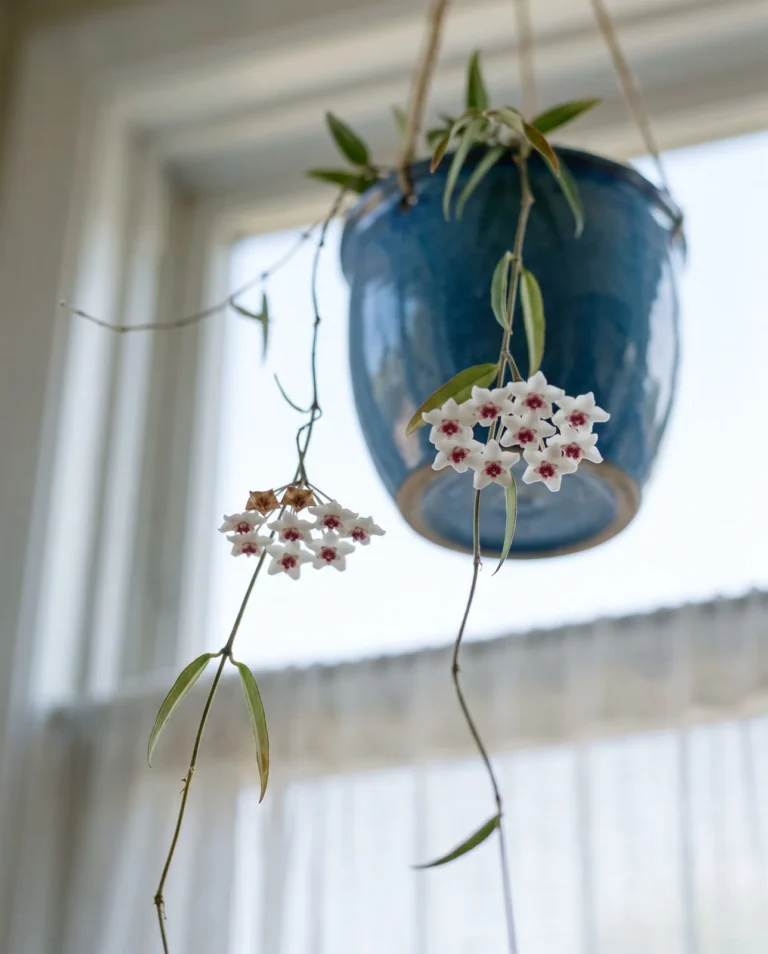
Hoya carnosa carries star-shaped pink or white flowers with a red center, up to 30 in a cluster, above leaves 3 to 6 inches long and 1 to 3 inches wide. The common wax plant is simply fragrant; Hoya lacunosa smells of cinnamon.
The peduncle rule: never cut the old flower stalk
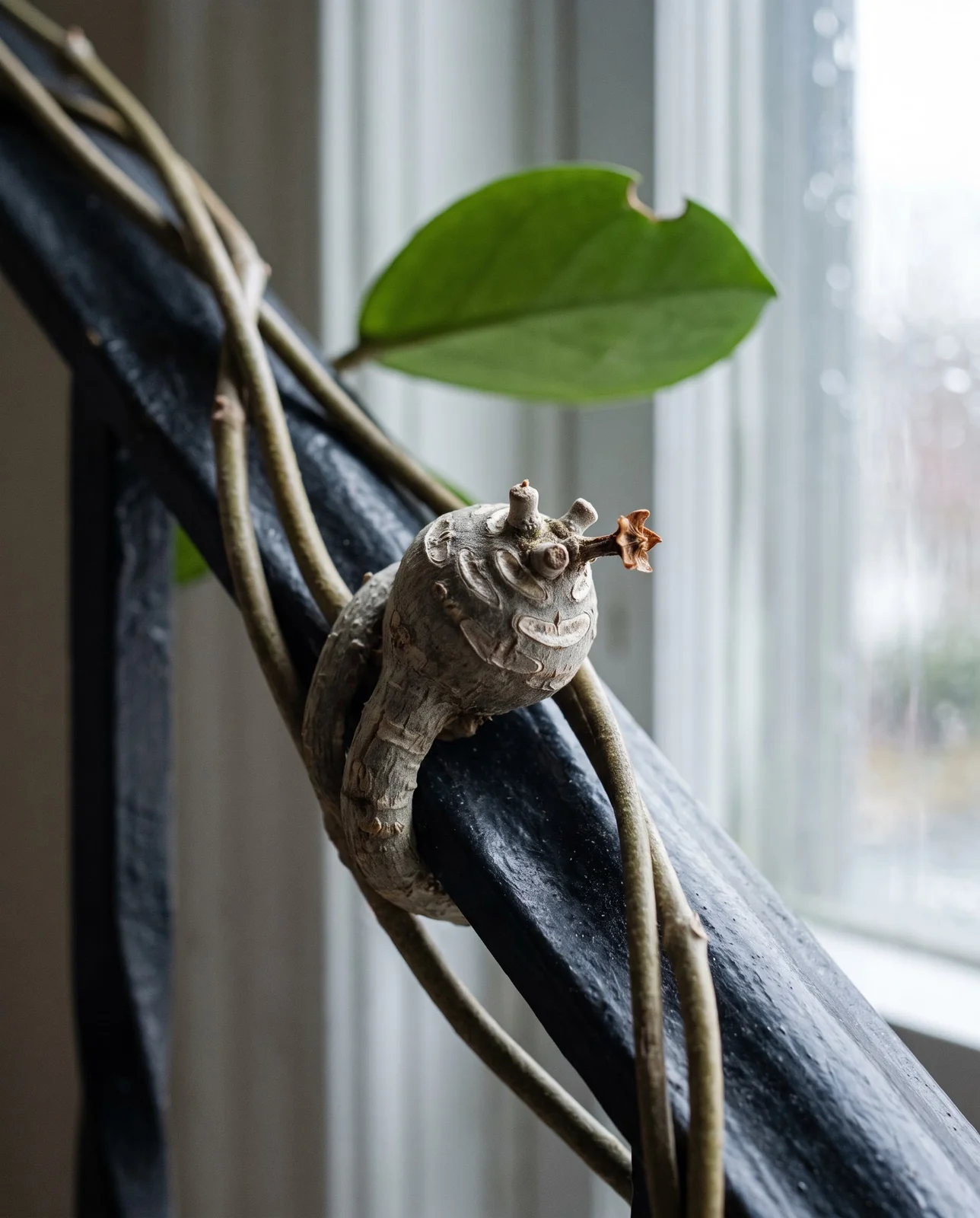
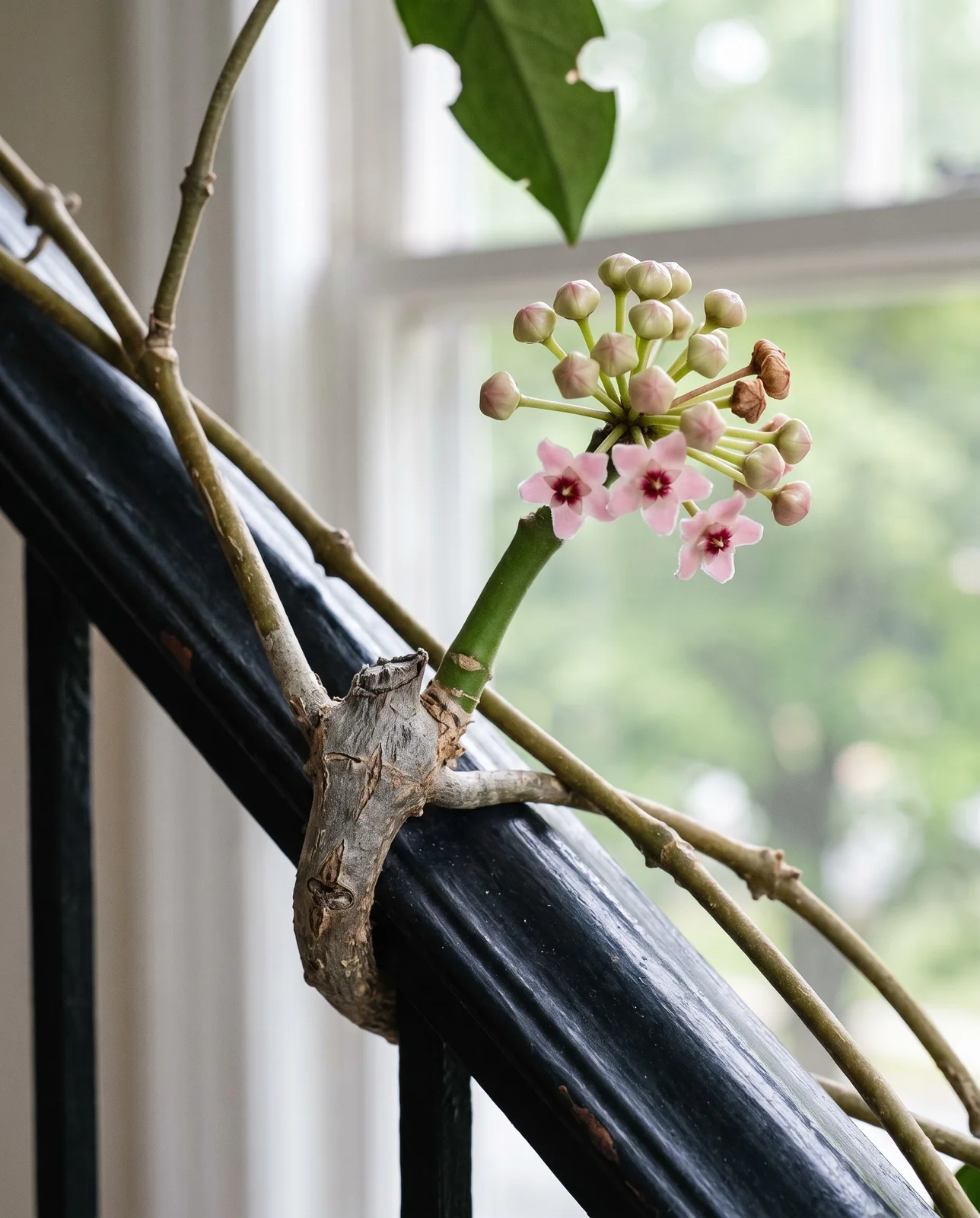
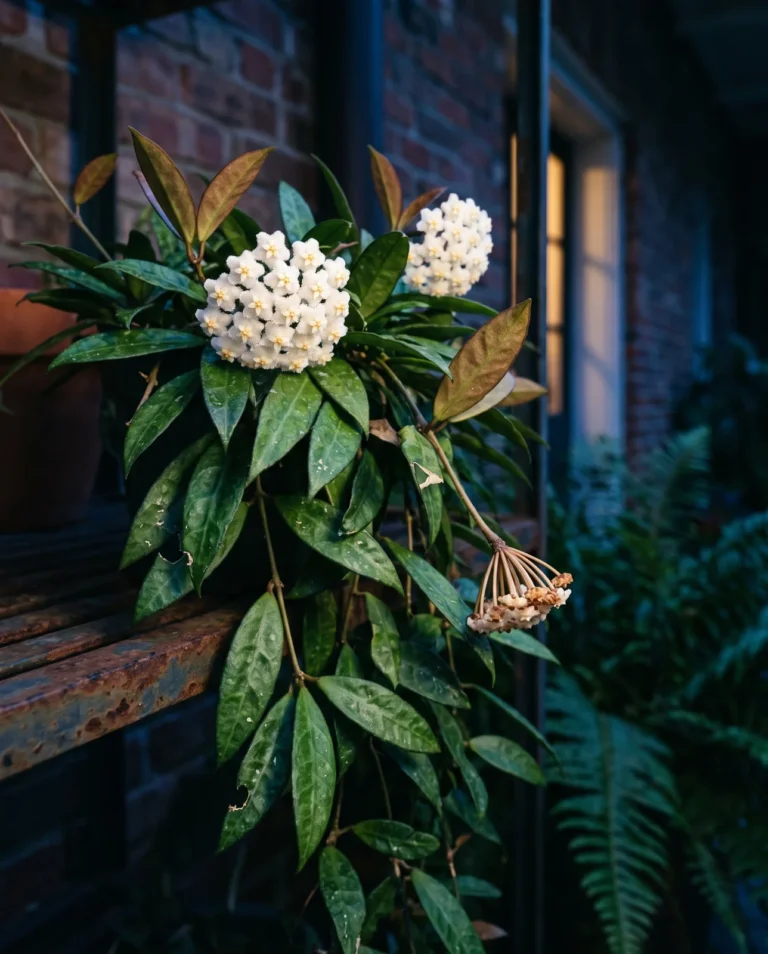
A hoya flowers from a peduncle, a short woody spur that stays on the plant after the petals drop and flowers again from the same point. Cut it off and the flowers go with it. Left alone, it carries new blooms the next season. The spur produces for several years, sometimes twice in one season. It thickens each time, so an old plant wears knuckles that have flowered four or five times over.
The damage happens before the spur is recognizable. A new peduncle is a small bare stub, and only repeated flowering grows it into the woody knuckle. So it gets snapped off with the spent cluster, or trimmed away as a dead stem. Two habits protect it. Pull nothing off by hand: spent flowers come away, the base stays. And cut only above a leaf node.
Moving a plant mid-cycle is the other common loss. Buds and whole peduncles yellow and drop after a change of room or a shipment, with nothing done wrong.
Why a healthy hoya will not bloom
Light comes first. Insufficient light is the usual reason a hoya does not flower. A dim corner does not kill the plant, it slows it down and holds back flowering and variegation. The brightness that produces flowers is higher than most care cards suggest: bright light, with at least half a day of direct sun outdoors. Indoors that means the brightest window in the house.
Age is the second gate and nothing beats it. Most plants will not flower until they are two or three years old, and a good chance of blooms comes at about five. The pot is third. Hoyas take a crowded pot happily, but that is a preference, not the switch that turns flowering on. Repot every three years at most, and go up no more than 2 inches.
A hoya kept too wet can be blocked from flowering by the water alone. Feed ranks below light without being irrelevant, and a liquid fertilizer at a flowering ratio is what it wants.
Work out why yours is not flowering
The blockers stack in a fixed order, and the plant's history settles this more often than its leaves do.
How much light a hoya really needs
Bright indirect light is the working rule, as long as bright means brighter than most rooms are. Most species want bright light, dappled shade or full morning sun, and not full sun all day. Some direct sun early or late may push a plant toward flowering, and more light makes flowers likelier as the plant ages. Too much scorches the leaves, and burn never heals, so a plant headed for a south-facing window has to be moved into that light gradually.
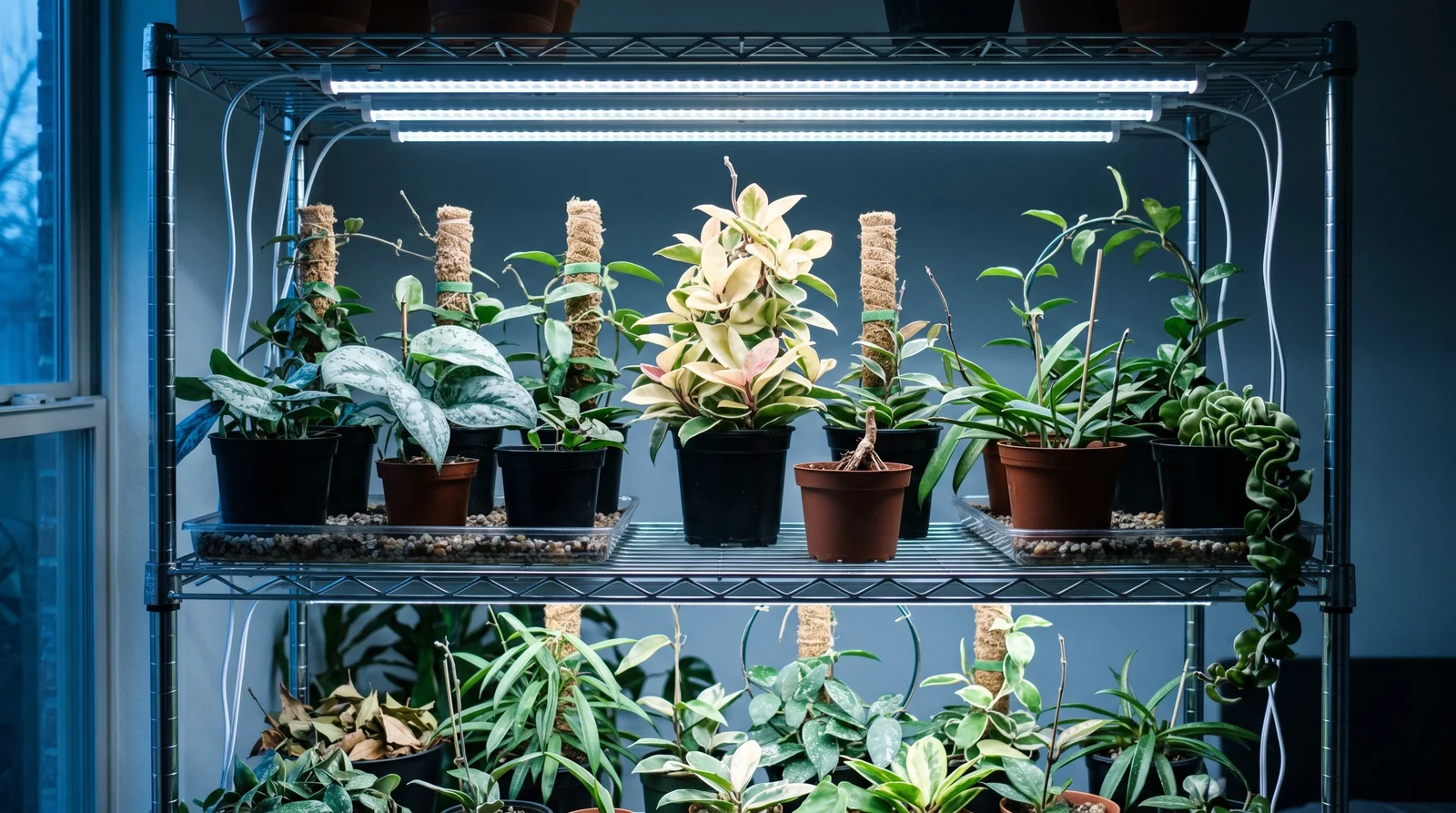
An east window suits most homes, or a spot a few feet back from a south-facing one behind a sheer curtain. Where no window is bright enough, an LED grow light does the job through the short days of winter. Anyone who keeps a peace lily going in a dark room should not expect the same bargain from a hoya: it lives in a dim corner for years without ever flowering.
How dry the soil should get between waterings
Let the top third to half of the soil go dry before watering again, because a hoya will not tolerate a soggy pot or wet roots. Ignore the calendar and use weight: lift the pot and water when it goes light. Water very sparingly through the cold months, and use room-temperature water, since cold water sends a plant into shock.
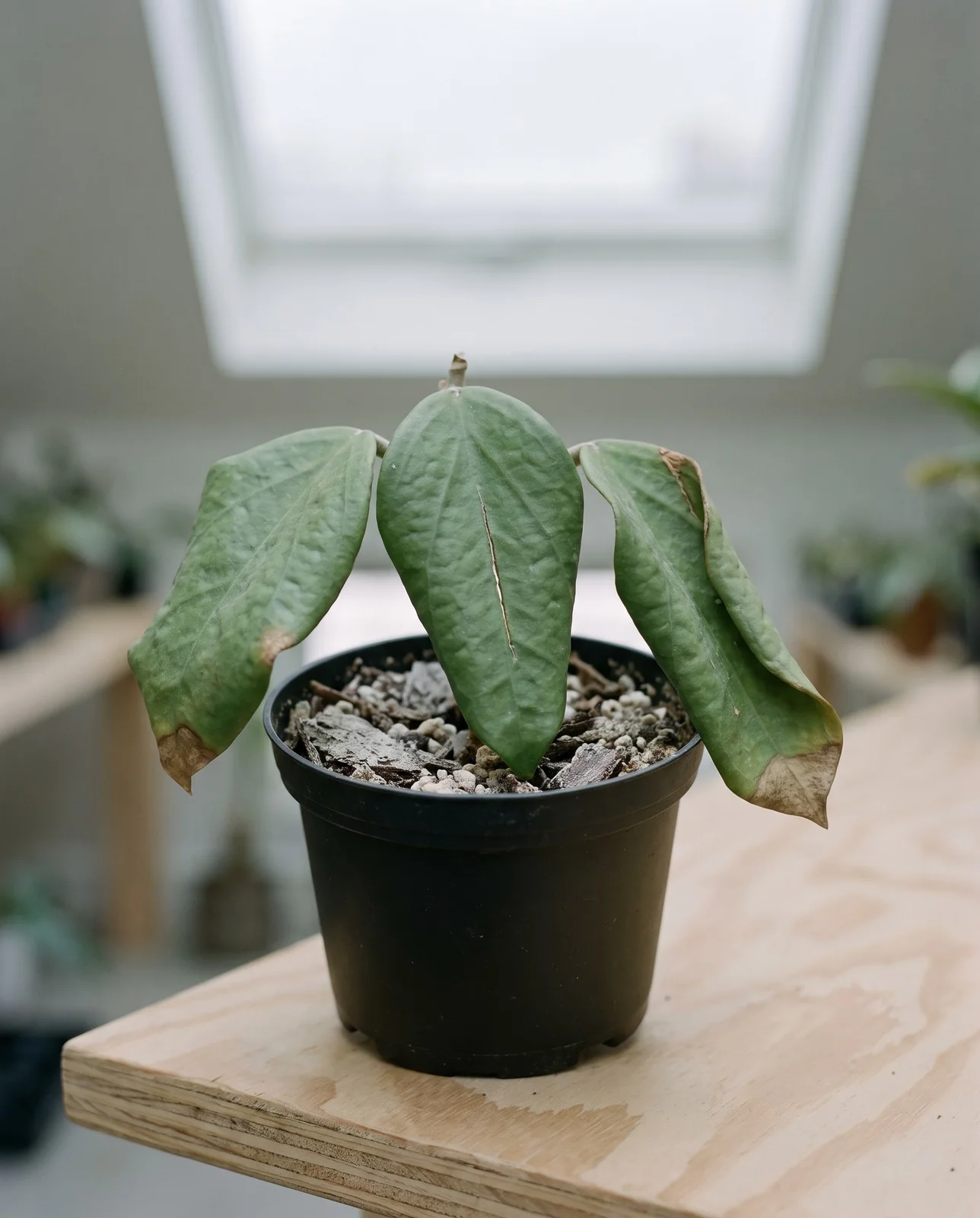
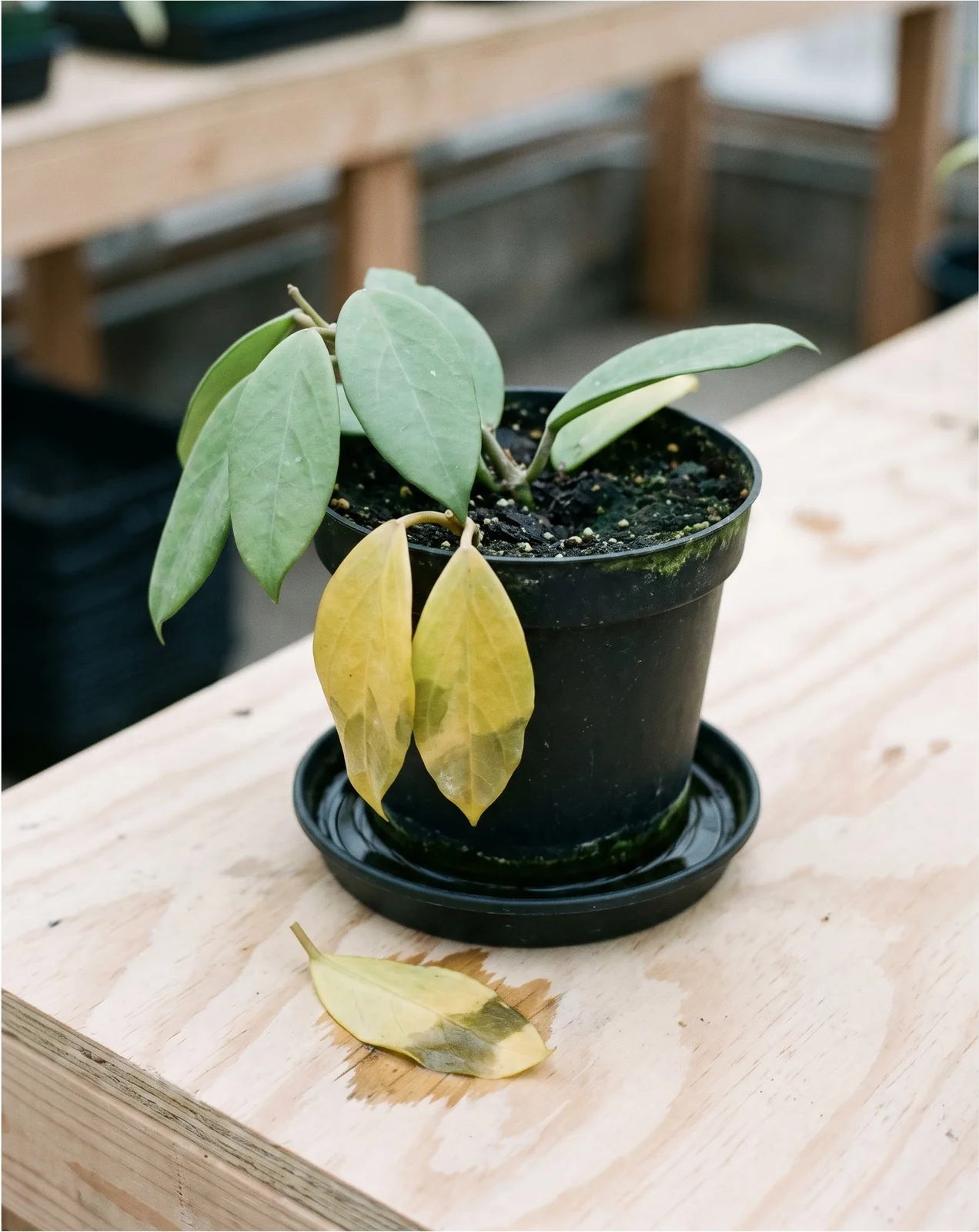
The two failure states look different on the leaf. An overwatered plant yellows and drops leaves. Overwatering is the commonest problem hoyas have, and it leads to root rot, the biggest threat to their health. A thirsty plant puckers: thinning, brown or wrinkled leaves mean the pot has been dried too far. Both extremes end with leaves on the floor.
Soil, pot size, and when to repot
Hoyas need a free-draining organic mix that dries between waterings, because they grow as epiphytes and will not tolerate soggy roots. Equal parts potting soil, orchid bark and perlite is the standard recipe. Coco husk works mixed with perlite and bark, never alone; a plain loamy mix is adequate for the common species. Unglazed clay or terracotta with drainage holes moves air and water faster than a sealed pot.
Repotting is rare work, and doing it on a schedule works against you. Three years or more is the normal interval, the trigger is roots coming out of the drainage holes, and otherwise you repot only when you must. Go up by no more than 2 inches in width. A container too large to keep the plant root-bound holds excess water and can rot it.
Yellow leaves and what they actually mean
Yellow leaves have four separate causes, and the default answer is right often enough to hide the other three. Overwatering is the commonest problem the plant has, and it leads to root rot. The signature is leaves that yellow and then fall, on soil that has stayed damp, often in a pot too large for the roots.
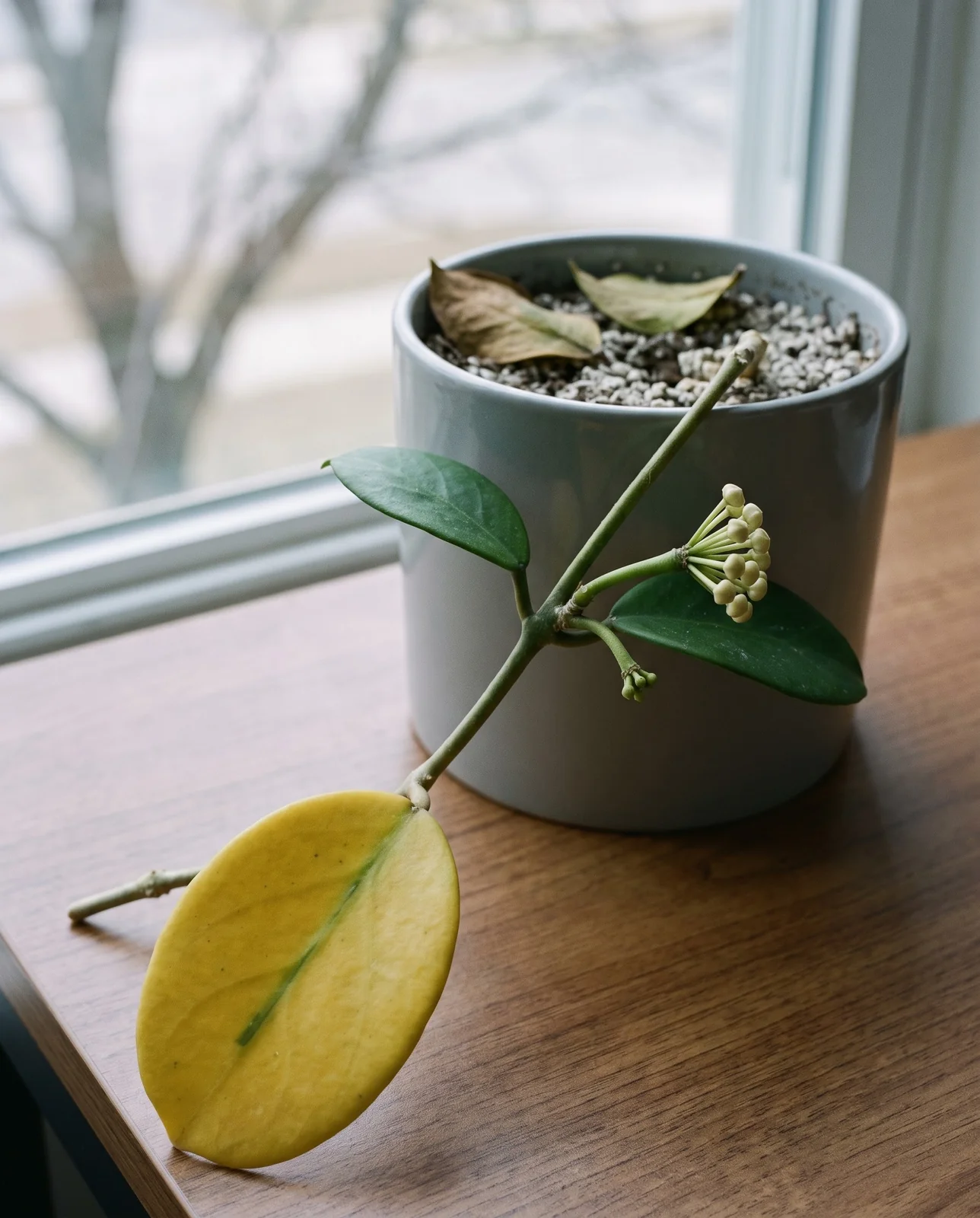
The second cause is the one almost nobody checks. When the yellowing arrives alongside new growth, a fresh peduncle or opening buds in particular, the likelier reading is hunger: what the plant is not given, it takes from itself. Change the feed the moment flower structures appear. Leave the yellow leaves on until the cause is fixed, because the plant is drawing on them.
The third cause is not a problem at all. Leaf color tracks light, and a plant moved into brighter light makes lighter leaves as it adapts. Fourth is plain disruption: a new room, a house move or a shipping box stresses a plant, and peduncles go touchy with nothing done wrong. Direct sun is its own case: it scorches and discolors, and that damage is permanent.
Reading the symptom in front of you
This path reads only what the plant looks like today, so it needs no history.
Feeding a hoya that is trying to bloom
Feed lightly, and only in spring and summer. A liquid houseplant fertilizer once or twice a month through the growing season covers it, with nothing in fall and winter. Liquid matters: hoyas are watered so seldom that slow-release granules never dissolve on a useful schedule. For flowering, the ratio is an NPK of 2:1:2 or 3:1:2.
Potassium is the other lever. Orchid fertilizer runs high in it, and hoya keepers who use it credit it with better growth and flowering. At the first sign of new flower structures, move off a nitrogen-rich foliage feed onto a bloom formula, and cover calcium at 50 to 130 parts per million.
Humidity, temperature, and how much the species matters
Ordinary indoor warmth suits a hoya, at 60 to 85 F with humidity of 40 percent or higher. How strictly the humidity applies depends on which hoya is in the pot. Penn State Extension holds that the common species all share similar requirements in care. The International Hoya Association holds the opposite: the habitats are too varied, so culture can only be generalized.
The split falls along which species you own. For the common wax plant, ordinary room humidity is enough in most cases, at 60 to 80 F and never below 50 F. The sweetheart hoya asks for warm and humid, 65 to 80 F, and it gains from a kitchen or bathroom. A carnosa on a bookshelf through a dry winter is in its element.
Temperature has firmer edges than humidity. A hoya kept outdoors should not go below 45 F, and one wintered indoors tolerates nights around 50 F with light and water reduced. The leaf-thickness shortcut fails on its own example: thin or fuzzy leaves are supposed to mean a plant wants humid air, yet the sweetheart hoya, the one named here for humidity, has the thickest leaves of all.
Climbing, hanging, and what not to cut back
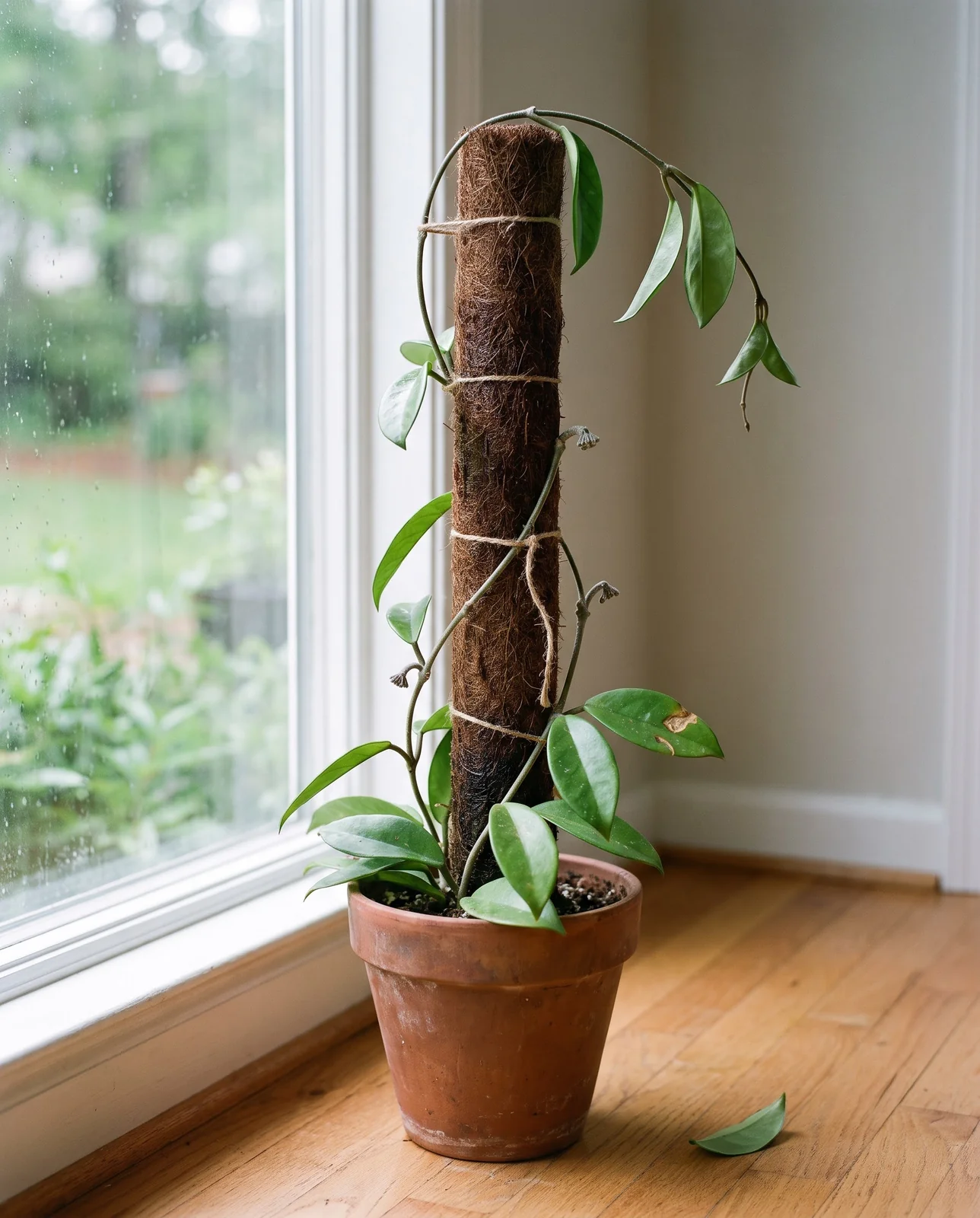
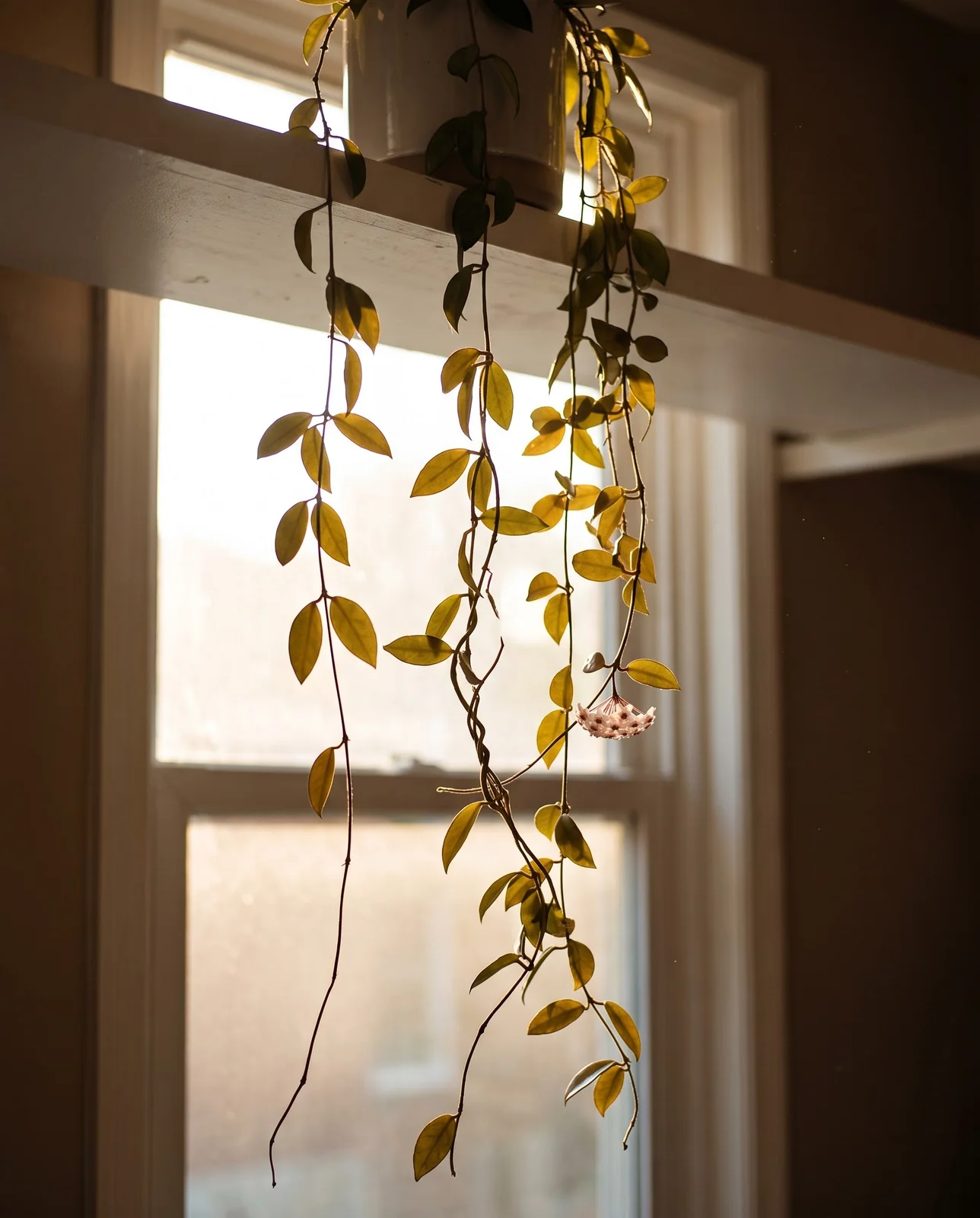
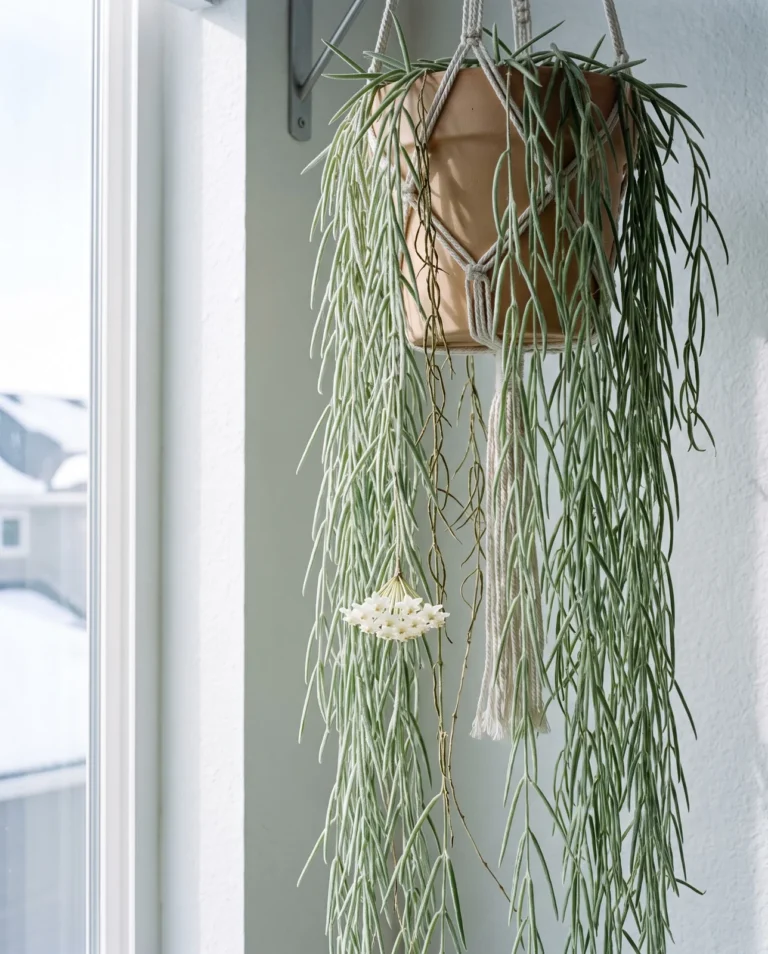
Hoyas are natural climbers that need a trellis or other support to grow upward, and they take to hanging baskets for a cascading effect. The pace surprises new owners: tendrils that sat still for months turn into vines that want trellising for years. A hoya is one of the climbing indoor types of flowers, so the support goes in early.
Cutting long bare vines back is where owners lose flowers they never knew were coming, and here the advice splits. Shortening an overlong vine by about a third, and rooting what comes off in a glass of water, is one recommendation. Against it stands the instruction for the sweetheart hoya, whose long bare twining stems are not cut back, because those stems come before new leaves and flowers. Length is not a fault in this plant. It is the stage before flowers.
Types worth telling apart
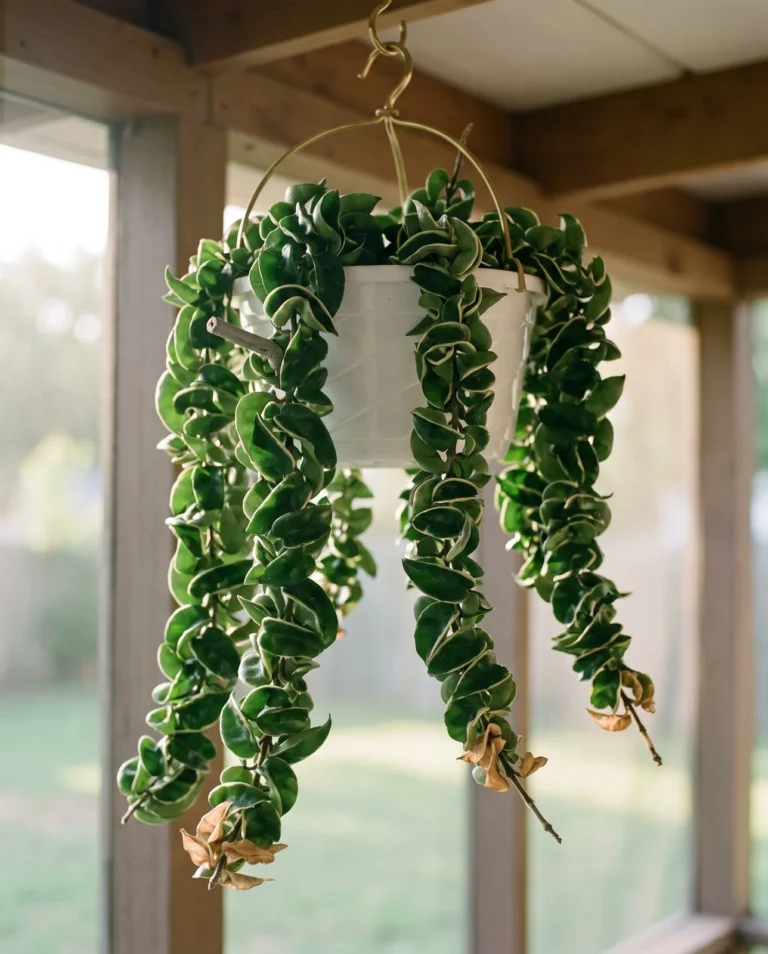
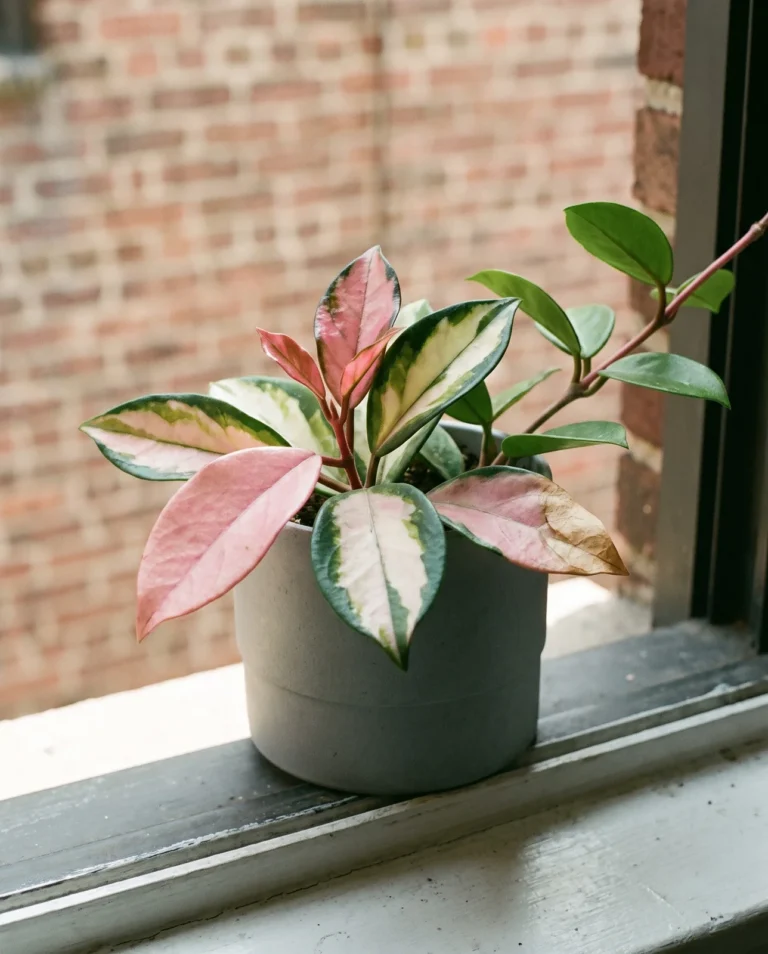
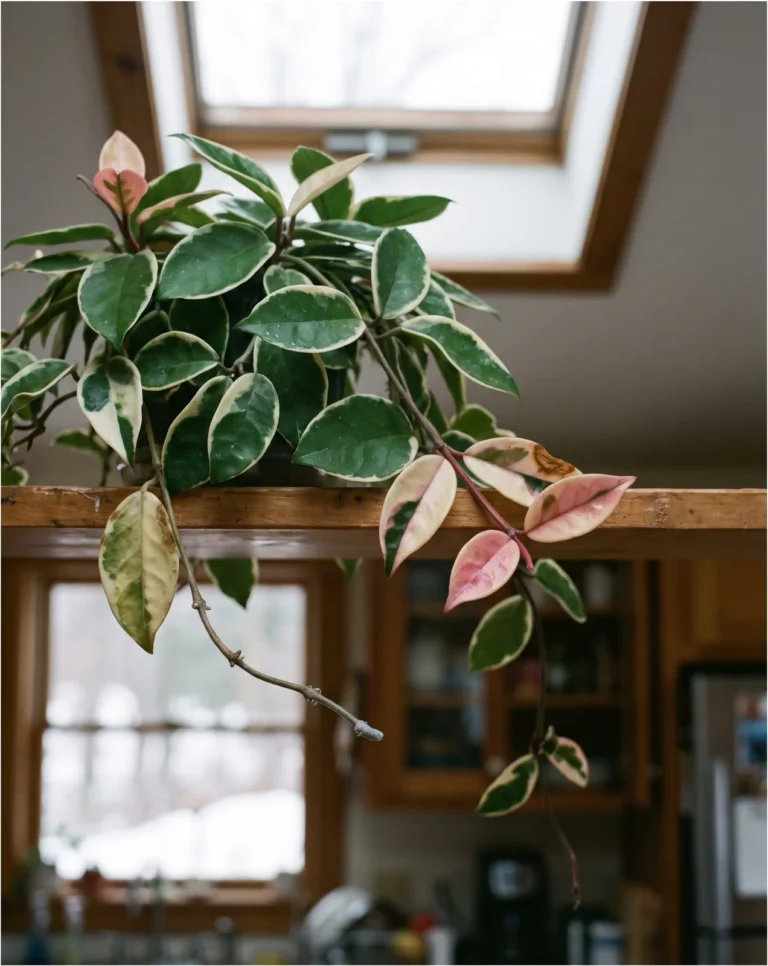
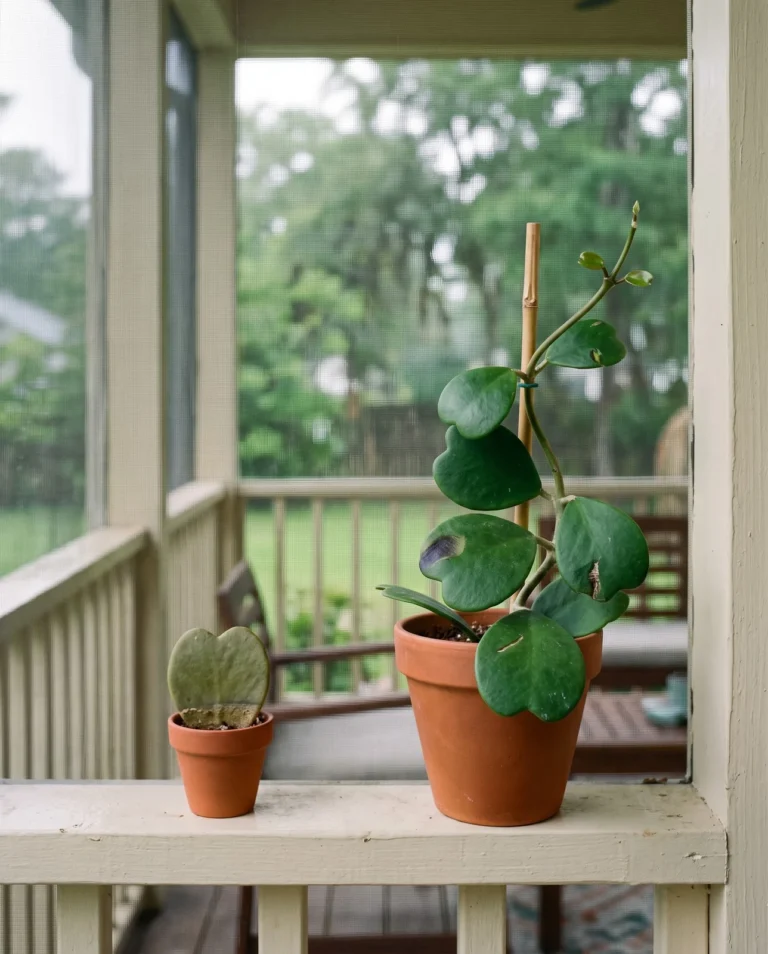
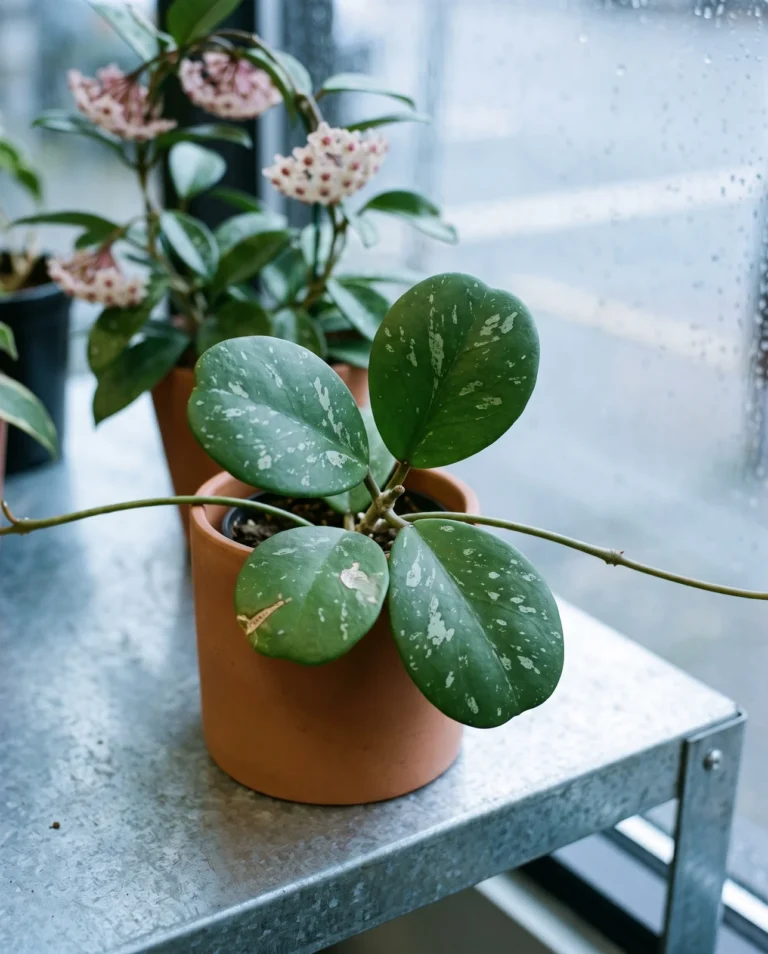
Leaf and habit separate these far more than the flowers do, which hold to one formula: waxy stars in a tight cluster, usually with a red center. Several carry white flowers, several pink.
Why some hoyas cost so much
Price follows supply, and hoya supply is slow by the nature of the plant. Ordinary plants run about $12 to $60, with the rarer variegated cultivars asking more. The ceiling sits far above that: a single node cutting of Hoya polyneura 'Jasminka' has fetched up to $750. Every hoya on a shelf started as a piece cut off another hoya and rooted before sale, so each one costs the parent a length of vine.
Variegation is the other half of it, and it is less stable than the price suggests. Dim light holds back high variegation as surely as it holds back bloom, so marbled leaves depend on the window they end up in. Scarcity has room to run in a genus where the cultivars outnumber the species. None of that matters for a first hoya. The plain green wax plant sits at the bottom of the price band, does well in ordinary room humidity, and flowers from the same reusable spurs as anything rarer.
Propagation, and the single leaf question
Hoyas grow from stem cuttings, and the work is easy. Take a stem carrying at least three nodes, strip the bottom one or two leaves, stand it in water until the roots reach one to two inches, and pot it up. The node is where roots come from, so count nodes and not inches.
The single heart-shaped leaf sold around Valentine's Day is its own question. Leaf cutting appears as a recommended propagation strategy for the species. The warning attached to it says such cuttings rarely grow well unless a bit of stem tissue came with the leaf, and a blunter version says a lone leaf stays exactly as it is. A leaf with a piece of stem at its base can go somewhere; a leaf without one is what both warnings are about.
Pests and diseases
Mealybugs are the pest that defines hoya keeping. Aphids, scale and spider mites join them on the genus list. Fungus gnats and banded greenhouse thrips join them on the common wax plant, with moisture-driven root rot beside them on carnosa and bella. Almost all of it hides in the leaf axils and on the flowering spurs.
A mealybug is a small oval insect covered in wax, about 1/8 to 1/4 inch long, with egg masses like small white puffs of cotton. One female lays three hundred or more eggs in a waxy sac where the leaves join the stems, the junction a hoya crowds with leaves and spurs. They stay in one location for the four to ten weeks they live, so a colony builds where it started. Pick the insects and egg sacs off, or dab them with an alcohol-soaked cotton swab. Use insecticidal soap, pyrethrin or neem on a heavier case, and an anthurium on the same shelf gets the same treatment.
Mites arrive with dry winter air indoors, when the heating goes on. Spider mites answer to a systemic insecticide, neem oil or insecticidal soap. Flat mites are harder: smaller, showing as deformed leaves, grayish scarring and dying growth tips, and controlled with a systemic insecticide or predatory mites. Fungal problems turn up occasionally, leaf spot, powdery mildew or fungal wilt, treatable with a fungicide caught early alongside removal of the infected leaves. Sweetheart hoya blooms drip copious reddish-brown nectar that stains fabrics, walls and furnishings, so a flowering plant above a rug wants a tray under it.
Hoyas, cats and dogs
Both hoyas commonly kept indoors are non-toxic. The wax plant is safe for dogs and cats, and the sweetheart hoya is safe for dogs, cats and horses. A search that comes up empty is a filing problem. The ASPCA carries no page under the bare name Hoya, and files its two entries under the common names Wax Plant and Sweetheart Hoya.
The family is why the question gets asked at all. Hoyas belong with milkweed and the other plants that bleed milky sap, a group with poisonous members. Certain species, Hoya australis among them, are reported toxic to livestock even though the common houseplant species are not. Two species have been assessed and both came back clear. A hoya bought under some other species name has not been assessed either way.
What to expect, year by year
A hoya runs on a slower clock than almost anything else sold as a flowering houseplant.
The first year is leaves, and that is the whole of it. A young plant spends it building vine and foliage, and most will not flower until they are two or three years old. Repot only when it is necessary. The blooms, when they come, seem like miraculous events.
The first peduncle is the turning point, and it arrives later than most owners expect. A good chance of flowering comes at about five years, on a plant healthy and settled by then. What appears on an older stem looks like a dead twig, and a tidy-up kills many of them before they open.
After that the plant sets its own pace and the spurs do the work. Older peduncles thicken with each round of flowering until they are budding for a fourth or fifth time, so an old hoya wears its blooming history on its stems. The vines want support for years to come, and the plant underneath it all is an evergreen perennial.
What actually goes wrong, most common first
Ordered by how often owners run into them. Questions about a peduncle outnumber every other worry.
The answer is to do nothing. A spur goes touchy in a new environment, and new flowers form on the old spur, so it stays whatever color it turns.
Insufficient light is the usual cause. Move it to the brightest window in the house and give it a full season before judging.
Usually older leaves low on the plant. Watering and feeding, each in both directions, are the two answers.
White cottony sacs where leaves join stems, sticky residue, stunted growth, sooty mold. Pick them off or dab with an alcohol-soaked swab; soap, pyrethrin or neem on a heavier case.
Usually on plants their owners water carefully. Thinning, brown or wrinkled leaves mean the soil is drying too far between waterings.
Follows a change of room or a shipment. Peduncles go unreliable in a new environment, so stop changing things and leave the plant alone.
An oversized container holds excess water and can lead to root rot. The fix is a pot no more than 2 inches wider than the old one.
The confusion is which side of the leaf carries the variegation. Princess has pink and white inside the leaf; Queen has a green center ringed with creamy white to pink.
Myths worth dropping
Five ideas that circulate in plant groups, set against what the plant actually does.
The myth: Cut the old flower stalk off once it has finished blooming.
The reality: New flowers form on the old spur, so the stalk stays after bloom, and a plant that has flowered blooms again from the same peduncle.
The myth: Hoyas are low-light plants.
The reality: They survive low light and stop flowering in it. Low light slows growth badly, and good light is what produces blooms.
The myth: All hoyas want the same thing.
The reality: The sweetheart hoya wants warm humid air at 65 to 80 F and gains from a kitchen, while ordinary room humidity is enough for the common wax plant.
The myth: A single leaf will grow into a full plant.
The reality: A leaf sold on its own rarely grows well unless a bit of stem tissue came with it, and a blunter version says a lone leaf stays exactly as it is.
The myth: It needs a bigger pot to grow better.
The reality: A container too large holds excess water and can lead to root rot. When a repot is needed, go up no more than 2 inches, at three years or more.
FAQ
Do hoyas prefer to climb or hang?
They climb by nature and need a trellis or other support. Hanging baskets work too, with the tendrils falling free and the vines twining. The vines want trellising for years, so choose the support early.
Do hoyas prefer sun or shade?
Bright light, stopping short of full sun all day: bright light, dappled shade or full morning sun. Some direct sun early or late may push a plant toward flowering, while too much scorches the leaves.
Why is hoya so expensive?
Scarcity and slow multiplication. Ordinary plants run about $12 to $60, with rarer variegated cultivars asking more, and a single node cutting of Hoya polyneura 'Jasminka' has reached $750. Every new plant is a cutting rooted off a parent vine.
Where is the best place to put a hoya plant?
The brightest window in the house, out of hot all-day sun. Any room between 60 and 85 F suits it, and a sweetheart hoya does better in a humid room such as a kitchen.
How long does it take for a hoya peduncle to bloom?
Nobody has published a figure for it. The documented clock is longer: most plants will not flower before two or three years old, and a real chance of bloom comes at about five. Once buds appear the flowering runs for weeks and sometimes months.
What do overwatered hoya leaves look like?
Yellow, and then dropping off, on soil that has stayed damp. Overwatering is the commonest problem hoyas have and it leads to root rot. A thirsty plant looks different: the leaves thin, wrinkle or go brown.
What does it mean when my hoya leaves turn yellow?
Four different things. Wet soil with leaves yellowing and dropping is overwatering and possible rot. Yellowing alongside a new peduncle points at a nutrient shortage. A move into more light lightens the leaves, and a plant fresh from a shipper is stressed.
Is a general-purpose houseplant fertilizer good for hoyas?
Yes, on a light schedule: a balanced liquid feed once or twice a month through spring and summer, nothing in fall and winter. For flowering the ratio is 2:1:2 or 3:1:2, in liquid form because hoyas are watered too seldom for granules to dissolve.
Should you water hoyas from the bottom?
There is no instruction either way. What matters is the threshold: let the top third to half of the soil dry out, judged by lifting the pot. Use room-temperature water.
How do I tell what type of hoya I have?
Start with the leaf. 'Compacta', sold as Krinkle Kurl or the Hindu rope plant, has leaves folded over into a rope. 'Krimson Princess' carries pink and white variegation inside the leaf, 'Krimson Queen' the reverse. Thick single heart-shaped leaves are the sweetheart hoya.
Interesting tips
- Two species sit at the outer edges of what the genus does. Hoya imperialis carries flowers up to four inches across, and Hoya serpens is one of the most cold-tolerant, holding down to 50 F despite a species name that means serpent.
- Hoyas have been used medicinally in a number of cultures, which has contributed to population decline in some regions, and recent research indicates the plants remove indoor air pollutants effectively.
- A sweetheart hoya reaches shops under several gift-shop names: lucky heart plant, sweetheart valentine hoya and wax hearts are all Hoya kerrii.
Related Guides & Flowers
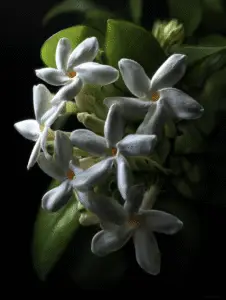
Stephanotis
The other twining houseplant grown for waxy white stars and scent, trained the same way on a hoop.
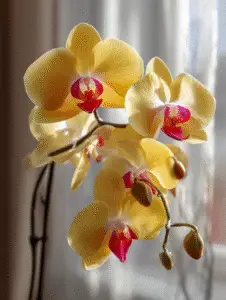
Moth orchid
Where the same question comes up about whether to cut a spent flower spike or keep it for the next bloom.
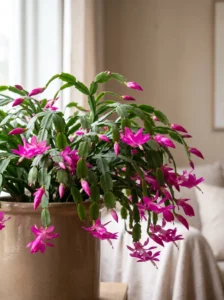
Christmas cactus
Another long-lived houseplant judged entirely by whether it flowers again, and for much the same reasons.
Pink flowers
Where the pink hoya clusters sit among the other pink flowers grown indoors and out.
Enjoying our flower guides? Add YourFlowersGuide as a preferred source on Google. It helps more readers find us.
Add to Preferred Sources