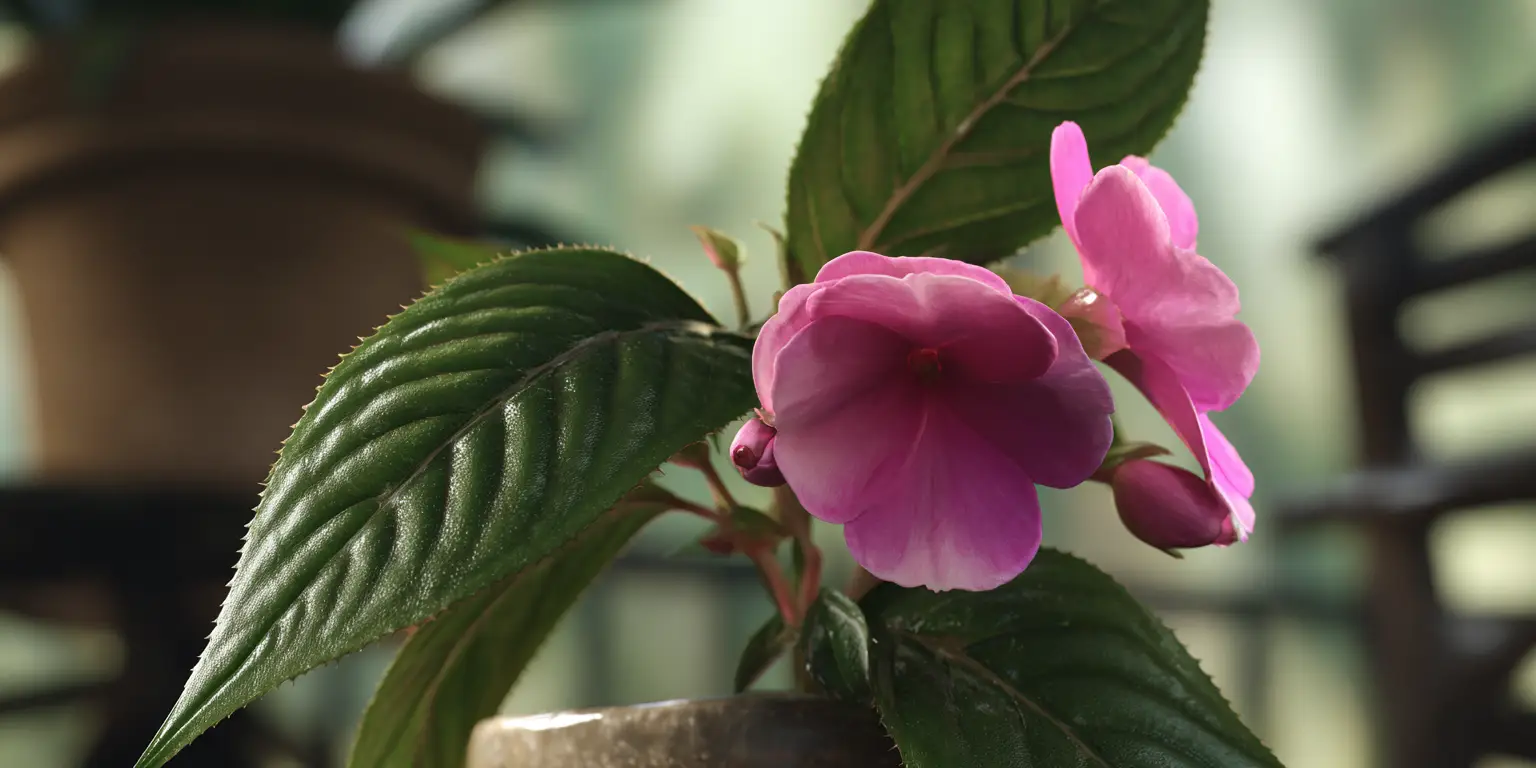
in bloom
now
through Oct
Bloom calendar
Impatiens hawkeri
New Guinea impatiens · W. Bull, 1886, Papua New Guinea to Solomon Islands
At‑a‑glance
- Group/Class: New Guinea impatiens
- Height × spread: 12–24 in (30–60 cm) × 12–24 in (30–60 cm)
- Bloom window: late spring to frost
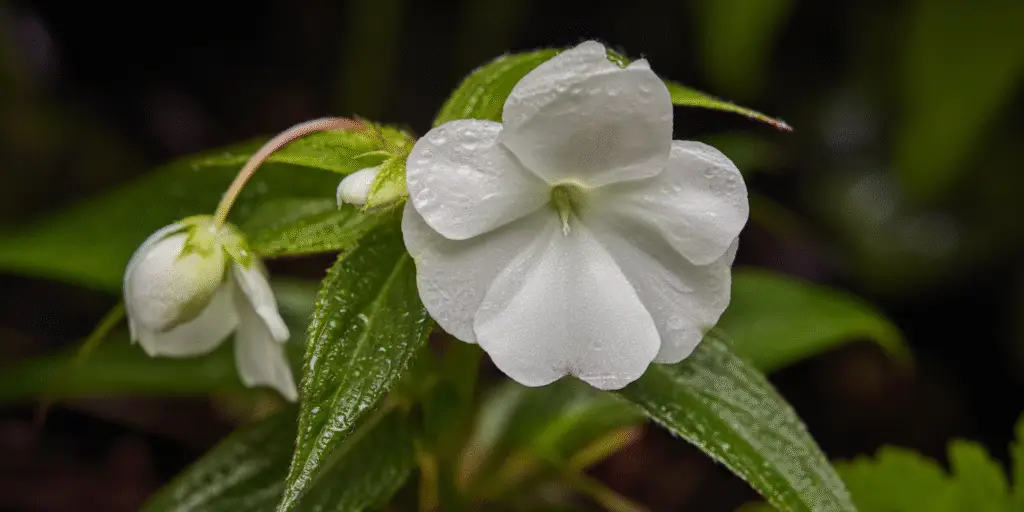
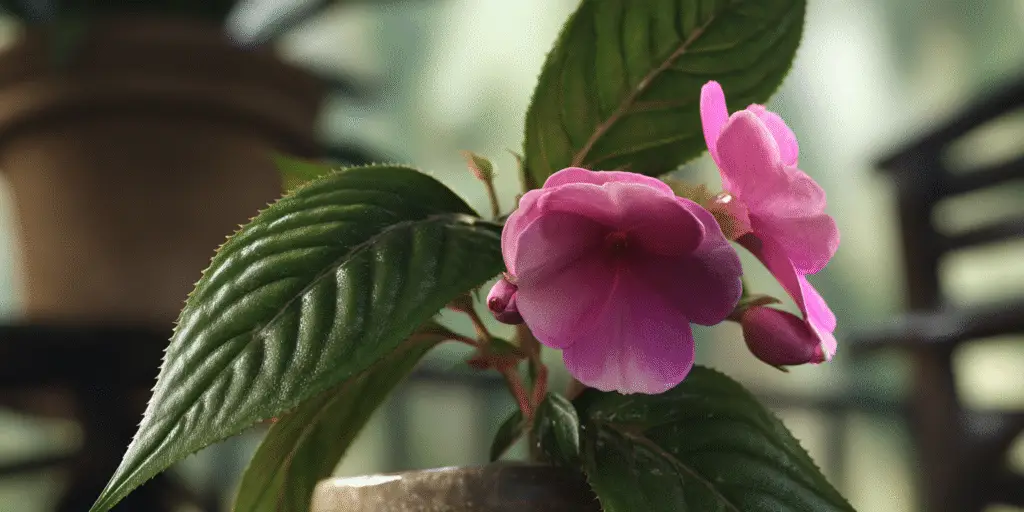
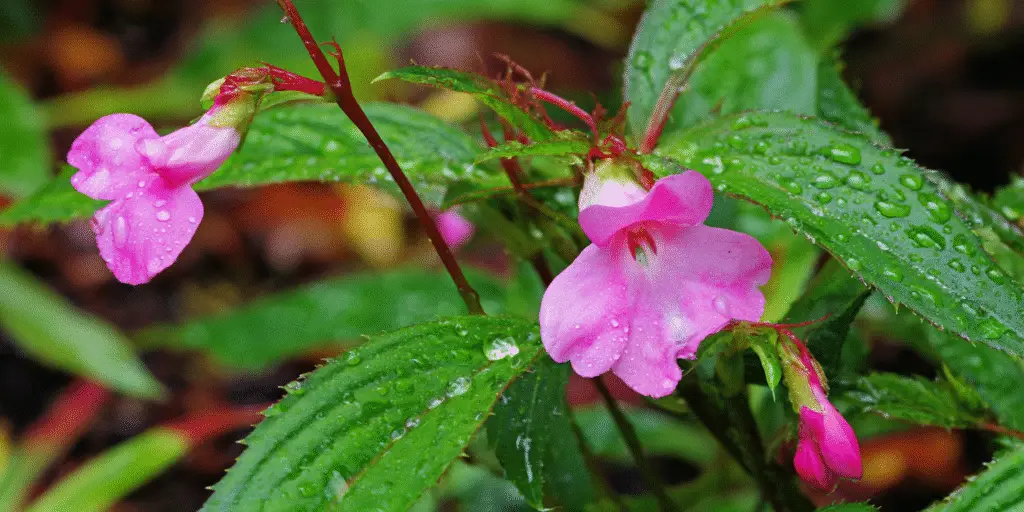
- Color & flower form: large single flowers in white, pink, red, violet, orange; some bicolors
- Fragrance: 0 none
- USDA hardiness: grown as annual in most of North America; tender perennial in Zones 10–12
- Breeder / Year / Origin: W. Bull, 1886, Papua New Guinea to Solomon Islands
- Pet safety: safe
How it differs
- Bigger flowers and leaves than common bedding impatiens.
- Tolerates brighter light and warmer conditions.
- Generally less affected by impatiens downy mildew.
- More dramatic foliage with bronze or variegated types.
Strengths
- Showy color in bright shade settings.
- Good performance in containers and large planters.
- Extended bloom under consistent moisture.
Care in one minute
Site: part shade or morning sun with afternoon shade.
Soil: organic, well‑drained, slightly acidic to neutral.
Water: consistent moisture; avoid waterlogging.
Feeding: regular light feed to support continuous bloom.
Grooming: pinch to shape if needed; no deadheading required.
Overwintering: treat as annual outside Zones 10 to 12.
Watch‑outs
- Needs regular watering in heat to avoid wilting.
- May scorch in full midday sun in hot, humid summers.
- Sensitive to cold; do not plant before danger of frost.
Best uses (tags)
Provenance note
note Impatiens hawkeri was collected in Papua New Guinea in the 1880s and reached U.S. gardens in the early 1970s.
References
- NC State Extension – Impatiens hawkeri
- Missouri Botanical Garden Plant Finder – Impatiens hawkeri (group)
- Iowa State Extension – Yard and Garden: Impatiens brighten gardens
- ASPCA – Impatiens spp. non‑toxic to cats and dogs
Similar Flowers
Enjoying our flower guides? Add YourFlowersGuide as a preferred source on Google. It helps more readers find us.
Add to Preferred Sources