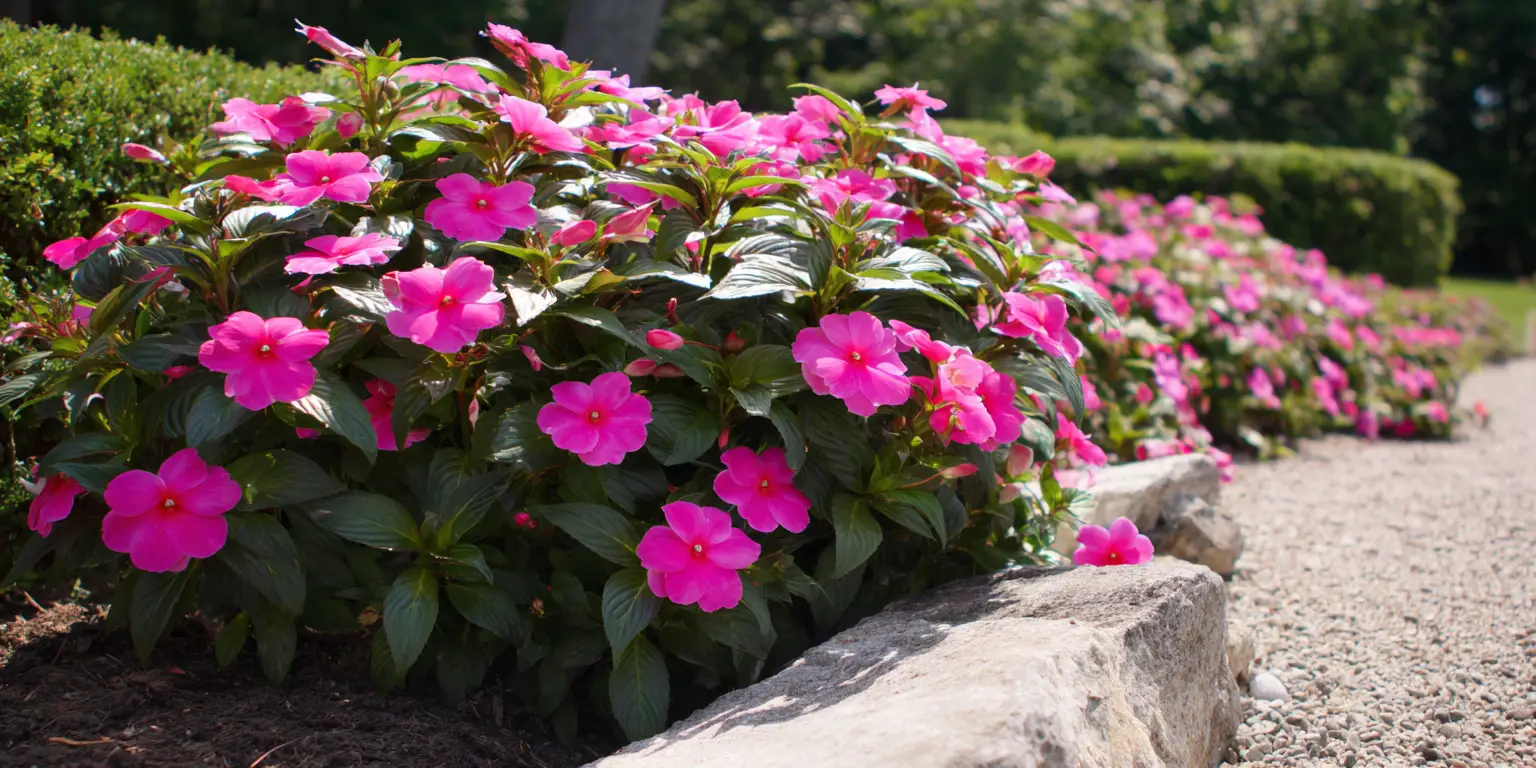
SunPatiens
SunPatiens Series; interspecific hybrid; vegetative · Sakata Seed, 2006, Japan; Indonesian germplasm via IAARD
At‑a‑glance
- Group/Class: SunPatiens Series; interspecific hybrid; vegetative
- Height × spread: 16–32 in (40–80 cm) × 14–24 in (35–60 cm)
- Bloom window: spring to frost
- Color & flower form: large single blooms in white, pink, red, orange, salmon, lavender; many mixes
- Fragrance: 0 none
- USDA hardiness: grown as annual in most of North America; tender perennial in Zones 10–11
- Breeder / Year / Origin: Sakata Seed, 2006, Japan; Indonesian germplasm via IAARD
- Awards/registration: AAS Vegetative Winner 2015 ‘SunPatiens Spreading Shell Pink’
- Pet safety: safe
How it differs
- Tolerates and thrives in full sun with regular water.
- Heat and humidity stamina is higher than standard impatiens.
- Thicker petals and sturdy stems resist weathering.
- Series offers habits from compact mounds to spreading groundcover.
Strengths
- Spring‑to‑frost color in landscapes and large containers.
- Performer in heat where common impatiens struggle.
- Award‑backed garden performance.
- Broad color and habit choices.
Care in one minute
Site: full sun to part shade depending on series and climate.
Soil: fertile, well‑drained media or beds; neutral to slightly acidic.
Water: water deeply and regularly in heat; avoid drought stress.
Feeding: apply slow‑release fertilizer at planting; supplement lightly through summer.
Grooming: no deadheading needed; trim only to control size.
Overwintering: treat as annual outside frost‑free zones.
Watch‑outs
- High water use in sunny, hot exposures.
- Can wilt rapidly if root ball dries.
- Frost sensitive; plant after danger of frost.
Best uses (tags)
Provenance note
SunPatiens were created by Sakata in partnership with Indonesia’s IAARD to use native Impatiens germplasm responsibly.
References
- Sakata Global News – SunPatiens and IAARD collaboration
- LSU AgCenter – SunPatiens performance
- University of Arkansas Extension – ‘SunPatiens’ plant profile
Similar Flowers
Enjoying our flower guides? Add YourFlowersGuide as a preferred source on Google. It helps more readers find us.
Add to Preferred Sources