The pairing · pick a flower
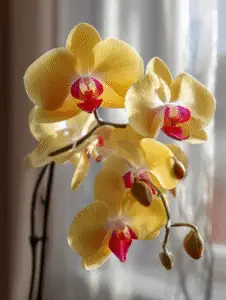 Moth orchid+
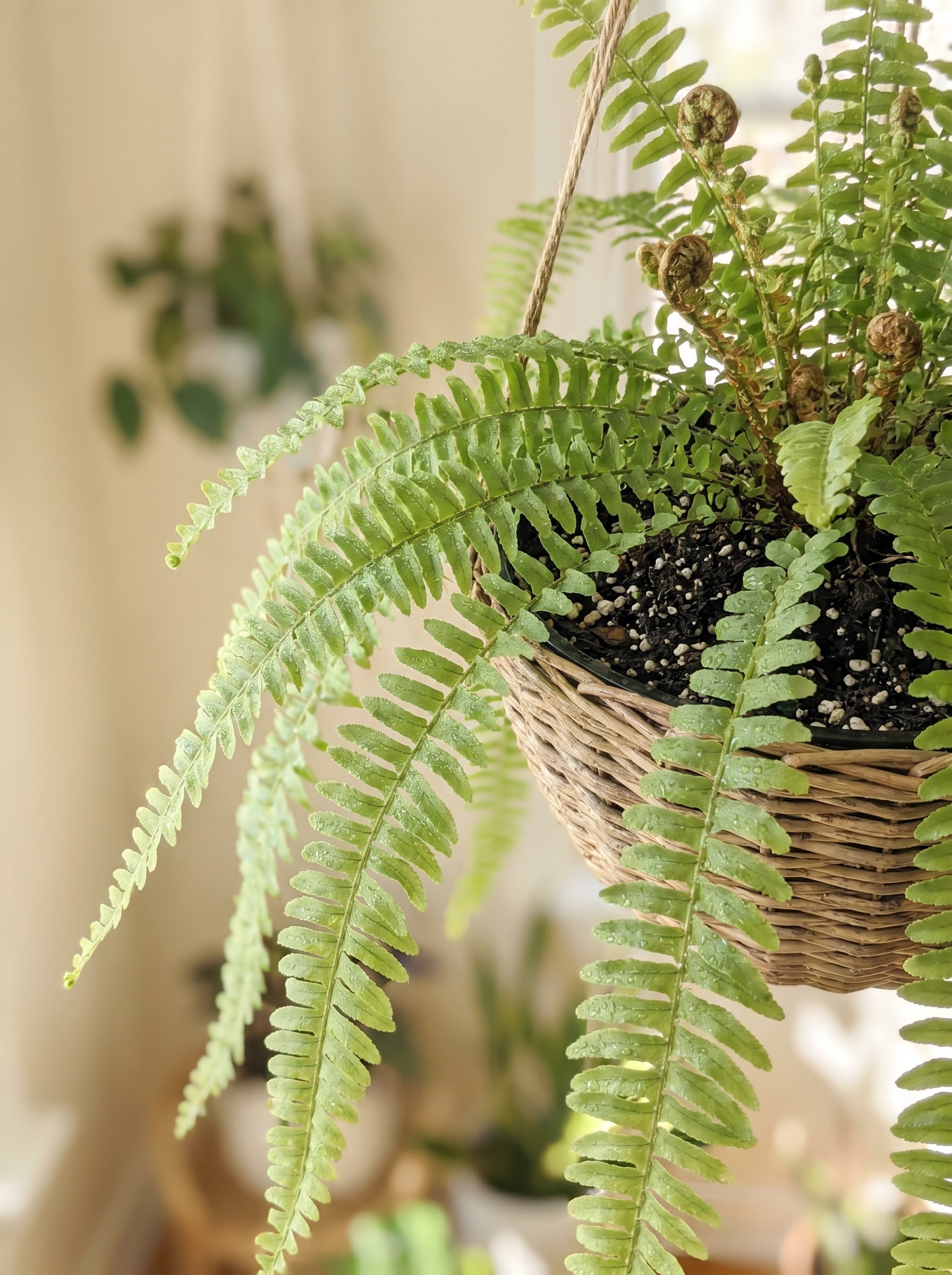 Boston fernPartial
An epiphyte like the orchid itself, wanting the same bright indirect light and the same high humidity that a bathroom or grouped shelf provides, with fine fronds that set off the orchid's broad leaves and arching spikes.
Moth orchid+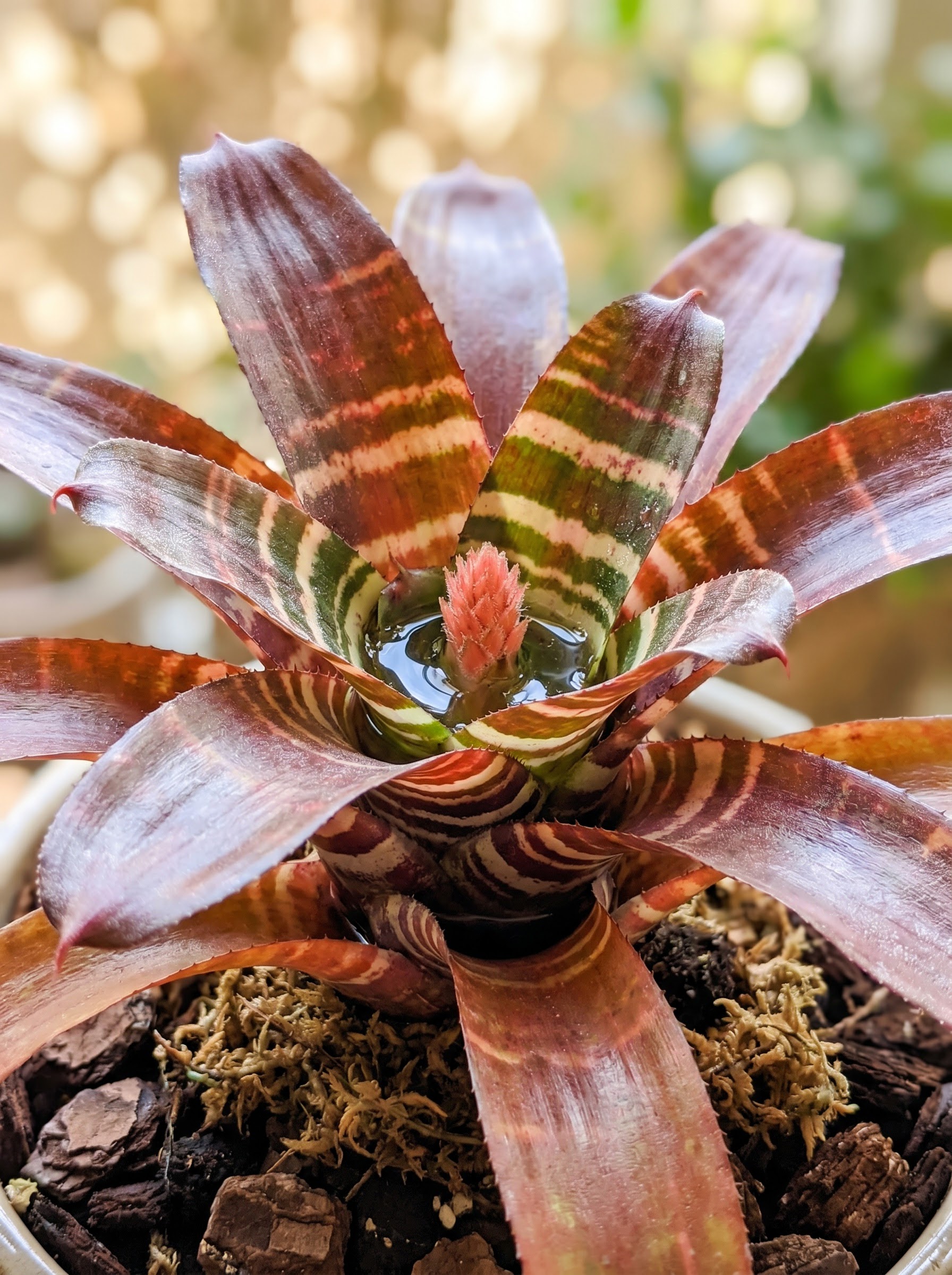 BromeliadPartial
Another true epiphyte that draws much of its moisture through its leaves and grows in a loose, fast-draining mix rather than a wet root zone, so it tolerates the exact humid, bright-indirect display an orchid wants without either plant fighting the other's water needs.
Moth orchid+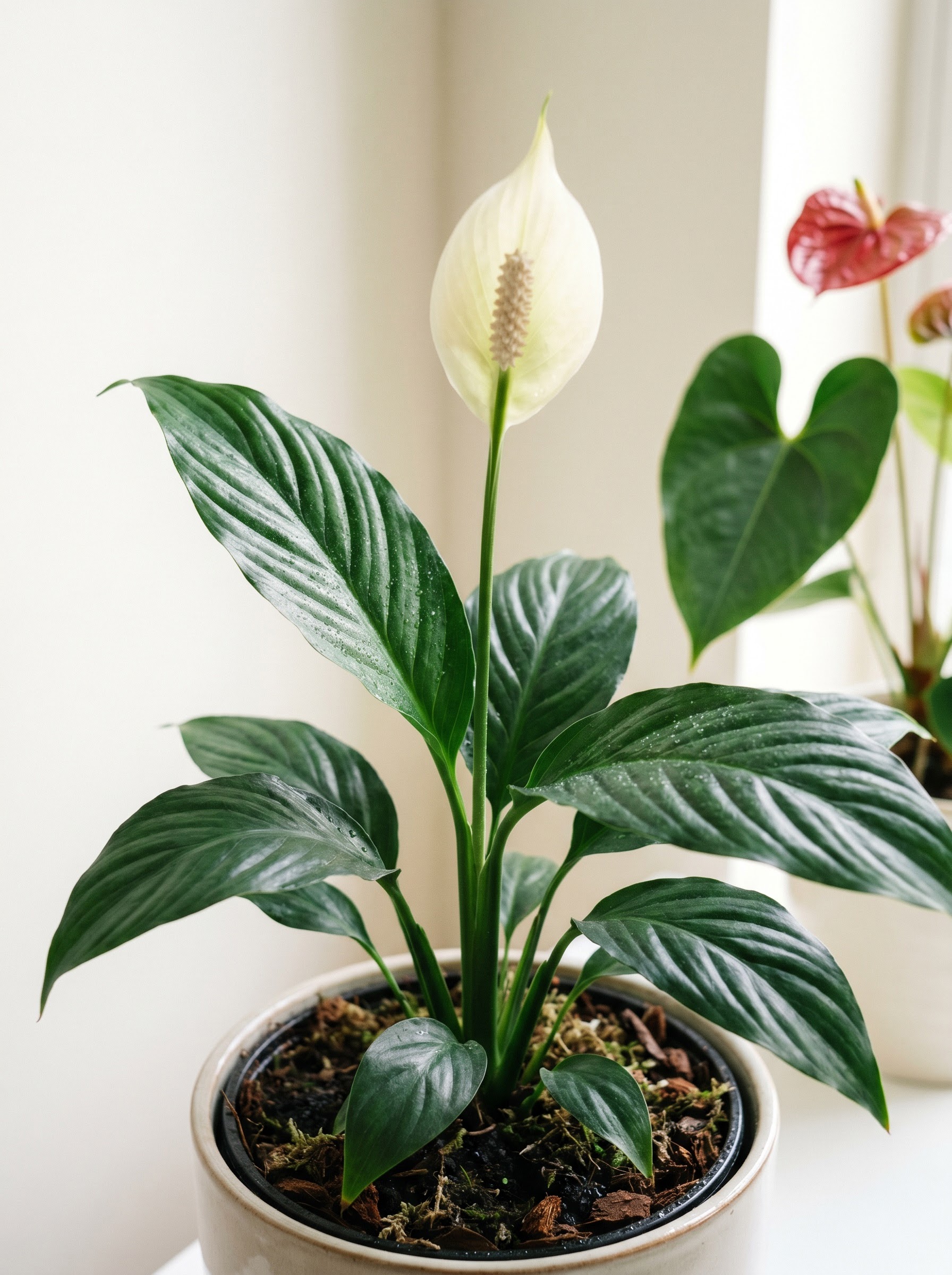 Peace lilyPartial
Wants the same east or north window and shade-mimicking indirect light as the orchid, but it is soil-grown and drinks on a steadier schedule, so it belongs beside the orchid on the shelf, never sharing the actual container.
Moth orchid+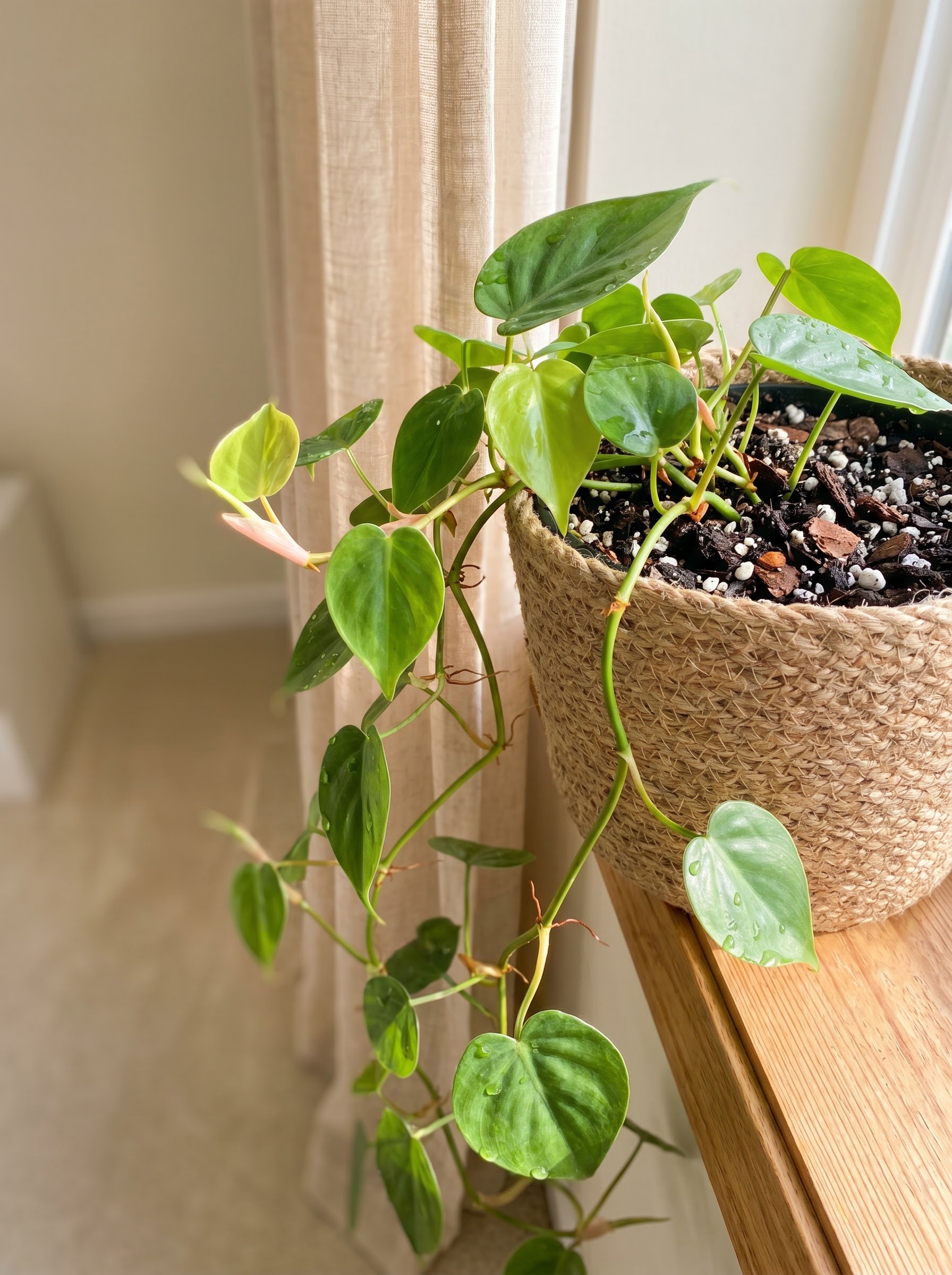 PhilodendronPartial
A tropical foliage plant that genuinely wants the roughly 50 percent humidity an orchid display creates, and its trailing forms make a design foil for the orchid's upright spike, though it still needs its own soil-filled pot.
Moth orchid+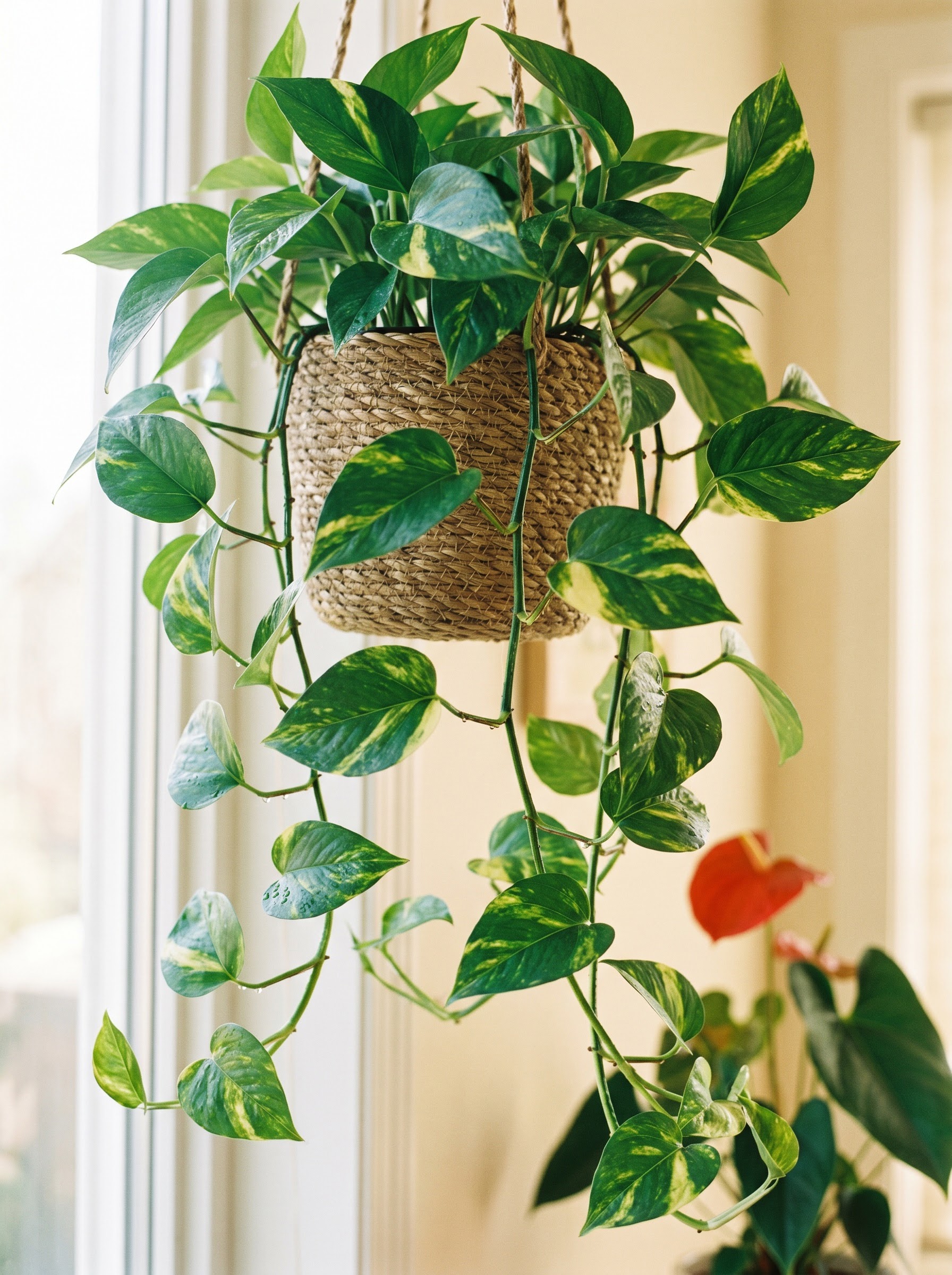 PothosPartial
Tolerant of the same bright indirect light and comfortable in the 50 to 70 percent humidity range an orchid display creates, its cascading vines give the grouping a second visual layer without competing for the orchid's exact light angle.
Moth orchid+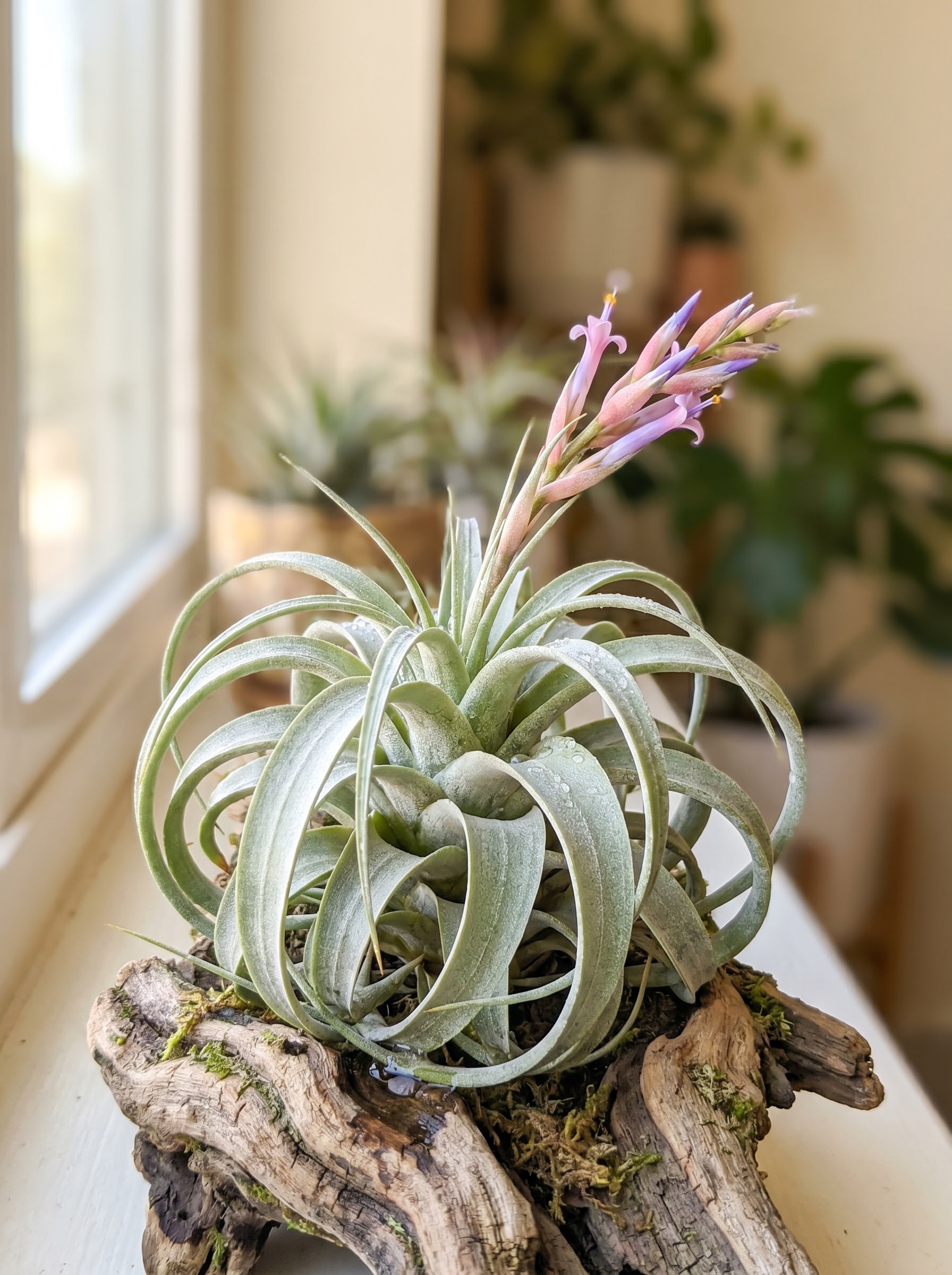 Air plantPartial
A true epiphyte that needs no growing medium at all, so it carries zero risk of the soil-versus-bark watering conflict, and it thrives in the same bright indirect light and regular misting an orchid display already provides.
Moth orchid+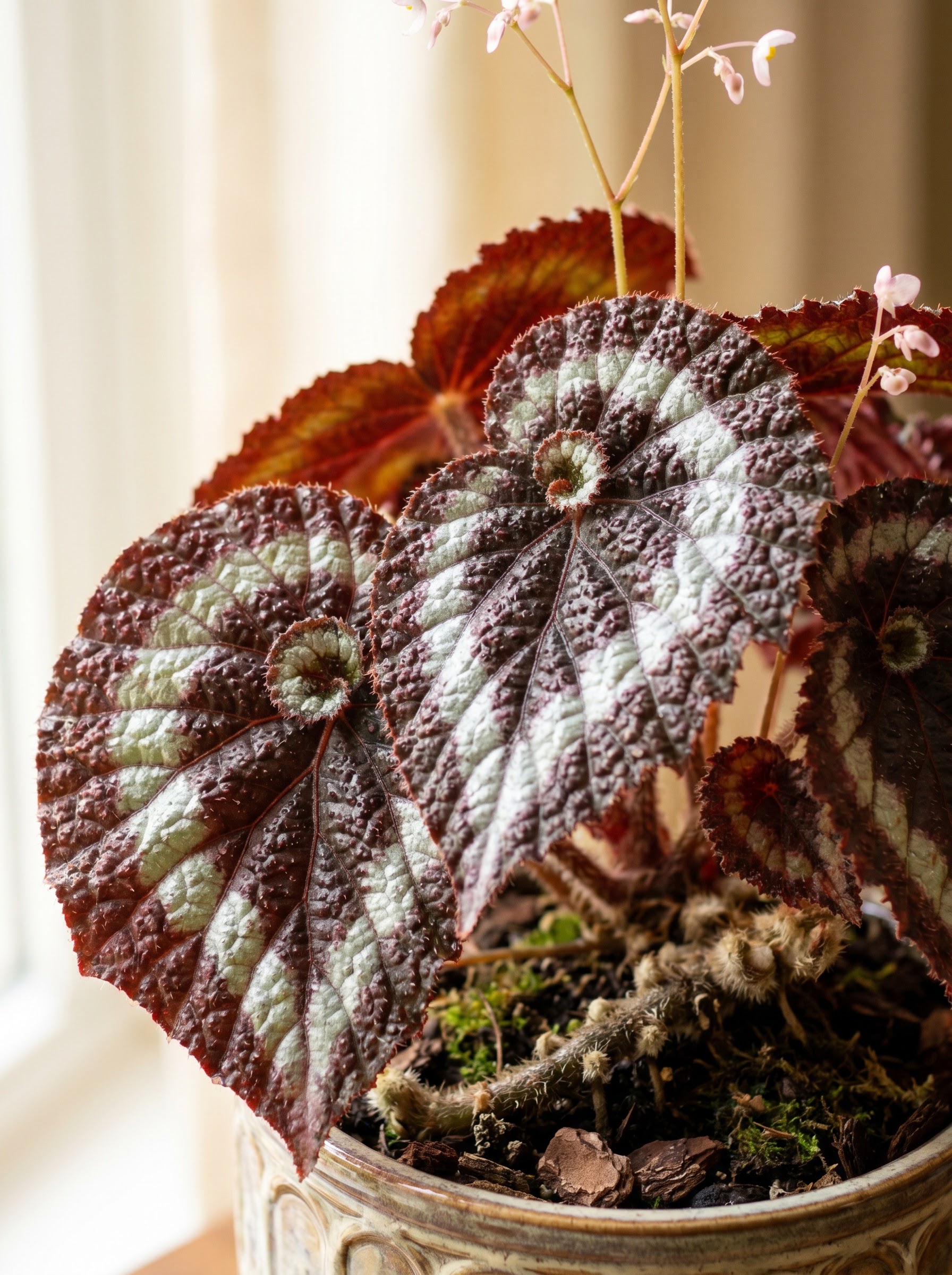 Rhizomatous begoniaPartial
Many rhizomatous begonias tolerate the 50 percent-plus humidity and indirect light an orchid shelf provides, and their patterned foliage adds color when the orchid is out of bloom, but cane-type begonias need brighter light than most windowsill orchid spots offer, so match the type carefully.
Moth orchid+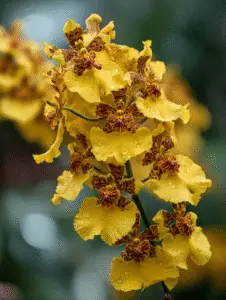 Other orchidPartial
For anyone building a windowsill or greenhouse bench of several orchids, other genera share the same warm, humid, bright-indirect culture and the same seasonal cool snap that triggers reblooming, each staying in its own pot rather than merging media.
Moth orchid+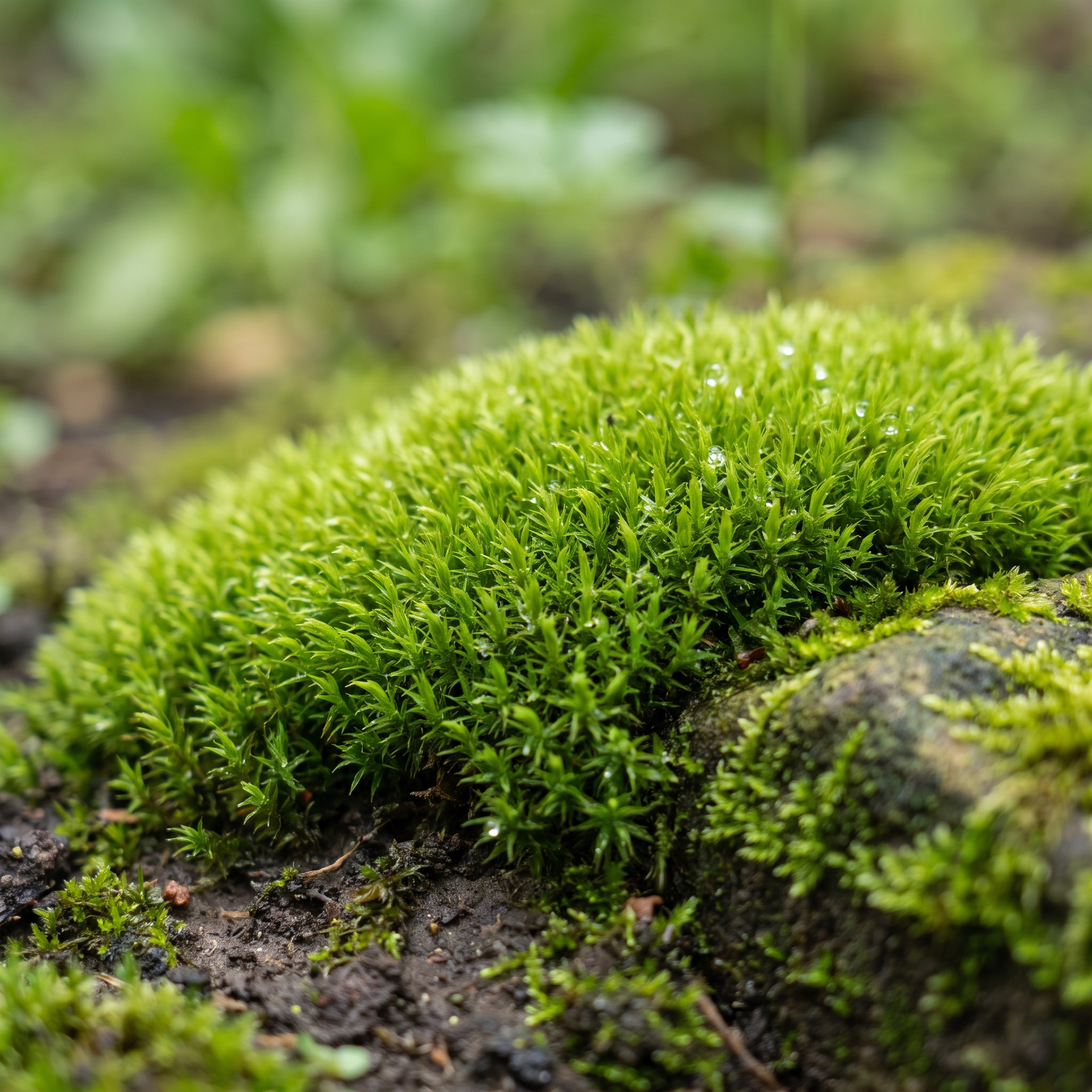 MossFolklore
Moss used as a display surface or wrapped into a kokedama ball creates zero watering conflict since it is not a soil-grown companion competing for the pot, and it holds humidity right at the base of the orchid's aerial roots the way it would on a rainforest branch.
All Moth orchid companions
9 flower companions, best match first
What not to plant near Moth orchid
Most bad neighbours are not evil, they just want the opposite light, water or root run. Here is what to keep away, and what to do instead.
Ripening fruit and other ethylene sources (bananas, apples, aging cut flowers)
Phalaenopsis is one of the orchid genera most sensitive to ethylene gas, and the gas given off by ripening fruit or fading cut flowers can trigger bud blast, where buds shrivel and drop before they ever open, or cause open flowers to collapse early. This is a placement fact about airborne gas, not a plant-versus-plant pairing.
Any soil-grown plant sharing the actual pot, not just the shelf
Orchid bark or moss mix is built to dry down between waterings and drain fast, while potting soil wants to stay evenly moist, and university guidance on grouping plants confirms that combining anything with mismatched watering needs in one container is exactly the setup that gets one of the two plants over- or under-watered every time.
Succulents and other dry-loving plants (aloe named specifically)
Aloe wants bright light and a potting mix that dries out fully between infrequent waterings, the near opposite of an orchid's steady 40 to 60 percent humidity and weekly dry-down cycle, so whichever plant gets the owner's default watering habit ends up wrong, aloe rotting in the humid microclimate or the orchid drying out on aloe's schedule.
Sealed or unventilated terrariums and display cases
Even with conditions-matched companions inside, a fully closed case with no air exchange traps humidity around the roots and crown, and stagnant, poorly ventilated moisture is a documented driver of root rot and disease buildup in enclosed plant displays.
A recently purchased or visibly pest-affected houseplant placed right next to it
Mealybugs and scale turn up on both orchids and many tropical foliage companions, and general houseplant hygiene practice is to isolate any new or infested plant before it sits near an established collection, though this is standard plant hygiene rather than an orchid-specific finding.
A moth orchid does not live in a bed, a border, or even soil, so "companion planting" for this flower means something honestly different than it does for a rose or a hydrangea. Phalaenopsis grows almost everywhere as a windowsill houseplant, and the real question people bring to it is not what to plant in front of it, but what to set nearby on the same shelf or tray so the display looks intentional, and what to keep well away so it does not wreck the bloom. Some of that is styling. Some of it is genuine physiology, a watering rhythm so specific that most experienced growers keep the orchid solo in its own pot on principle. Both deserve a straight answer rather than a garden-bed template forced onto a plant that never asked for one.
The best companions for moth orchids, explained
The honest starting point is that a moth orchid’s best companions almost never share its actual pot. What they share is its light and its air. A Boston fern is close to the ideal match for exactly that reason: it is an epiphyte too, content in the same bright indirect light and the same humid air an orchid display already needs, and its fine cascading fronds set off the orchid’s broad leaves and arching spike better than almost anything else on a plant shelf. Bromeliads work the same angle from a different form. They are true epiphytes that draw moisture mostly through their leaves rather than a wet root zone, so a bromeliad’s rosette of red or orange bracts can sit right beside an orchid without either plant fighting the other over water, which is exactly why the two show up together so often in tropical-grouping displays. Air plants take the logic further still. A Tillandsia needs no growing medium at all, so it carries zero risk of the bark-versus-soil conflict that trips up almost every other candidate, and it thrives on the same bright indirect light and regular misting an orchid grouping already gets. Moss, whether draped over the visible bark or wrapped into a kokedama ball, does the same no-conflict job purely for display, holding humidity at the orchid’s aerial roots the way it would on a rainforest branch, though this one is popular styling tradition more than a documented horticultural benefit and it earns its Folklore label honestly rather than being dressed up as proven.
Soil-grown foliage plants can join the display too, with one caveat repeated so often in this list that it becomes the whole point: they need their own pot. Peace lily wants the same shaded, indirect-light window an orchid does, and its steadier soil-watering rhythm actually argues for keeping it separate rather than combined. Philodendron and pothos both genuinely want the roughly 50 percent humidity a grouped orchid display creates, and their trailing habit gives the arrangement a second visual layer, vines spilling from a higher shelf while the orchid’s spike arches below. Rhizomatous begonia, the patterned-leaf types rather than the sun-loving cane varieties, tolerates the same humidity and shade well enough to add color when the orchid itself is between bloom cycles, though begonia types vary enough that it is worth checking the specific cultivar before committing a shelf to one. For anyone who owns more than a single orchid, other genera, Cattleya, Oncidium, Vanda, round out a windowsill collection sharing the same warm, humid culture and the same seasonal cool snap that triggers reblooming in the first place, a mechanic covered in full in the piece on why an orchid won’t bloom and the temperature trick that fixes it.
What not to plant near moth orchids
The sharpest avoid for this flower is not a plant at all. Phalaenopsis ranks among the orchid genera most sensitive to ethylene gas, the same hormone that ripening fruit gives off as it ages, and exposure can trigger bud blast, where buds shrivel and drop before they ever open, or cause an already open flower to collapse early. A fruit bowl left near a budding orchid, or a vase of cut flowers fading in the same room, is enough to do real damage, which is why orchid-society technical guidance treats ethylene exposure as a serious, well-documented threat to this specific plant. This is a placement fact about airborne gas rather than a plant-versus-plant grudge, and it deserves to lead the avoid list because almost nothing else on this page carries the same weight of evidence or the same real risk of losing an entire bloom cycle over one careless decision.
The second-sharpest avoid is mechanical rather than chemical: never share the actual pot with a soil-grown plant, no matter how well its light and humidity needs otherwise match. Orchid bark or moss is built to dry down fast and needs to, while potting soil wants to stay evenly moist, and university guidance on mixed containers is blunt about what happens when two media with different watering needs end up in one pot, one of the two plants gets watered wrong on every single cycle. This is the same substrate-versus-drainage logic that shows up across nearly every orchid-care source available, and it is more mechanistic and more universal than any single named "bad companion," because it applies to nearly any true soil-grown plant, not one specific species. Succulents sit at the opposite extreme of the same problem. Aloe wants bright light and a mix that dries out fully between infrequent waterings, close to the reverse of an orchid’s steady 40 to 60 percent humidity and weekly dry-down rhythm, so placed side by side, whichever plant gets its owner’s default watering habit suffers, the aloe rotting in the humidity the orchid wants or the orchid drying out on aloe’s schedule. Sealed terrariums and fully enclosed display cases round out the list, not because the companions inside are wrong but because zero air exchange traps humidity around the crown and roots even when everything else about the pairing is sound, a documented driver of rot in enclosed plant displays generally. A freshly bought or visibly pest-affected houseplant set right next to an established orchid is a smaller, less certain caution, mealybugs and scale do turn up on both orchids and many tropical foliage companions, but this is standard houseplant hygiene rather than a finding specific to Phalaenopsis, and it belongs here as a caveat, not a headline warning.
Do they like the same conditions?
Test every candidate against the same profile Phalaenopsis actually wants: low to bright indirect light from an east or west window, never direct sun; humidity in the 40 to 60 percent range that most homes fall short of on their own; warm, stable room temperatures through most of the year with a deliberate autumn chill down into the fifties or low sixties that triggers a new flower spike; and a coarse bark or moss medium that has almost nothing in common with the potting soil most houseplants sit in. That last point is the one worth stating plainly, because it is the actual myth-busting fact on this page. A plant can share an orchid’s light and its humidity completely and still be a poor same-pot match, because the medium and the watering rhythm it demands matter more here than the light level, and that is what makes true epiphytes, ferns, bromeliads, air plants, moss, other orchids, the only candidates with zero watering conflict. Everything else on the companions list, peace lily, philodendron, pothos, begonia, checks out on light and humidity but still needs its own container, and that is not a lesser recommendation, it is the honest one.
USDA hardiness zone barely matters here, which is itself worth saying out loud. Phalaenopsis is rated hardy only in zones 10 through 12 outdoors, functionally irrelevant for the vast majority of the audience growing it as a houseplant regardless of climate, so unlike an outdoor flower where zone compatibility filters half the candidate list before anything else, nearly every companion on this page is chosen purely on light, humidity, and pot logic rather than a hardiness match. One small honesty note carries real weight for anyone styling a shelf with pets in the house: Phalaenopsis itself is non-toxic to cats, dogs, and horses, so the plant is not the risk in this pairing, and the same cannot always be said for every companion candidate, worth a quick check before adding anything new to the display.
How to plant them together
Because almost nothing here shares an actual pot, "planting them together" mostly means arranging separate containers on one tray, shelf, or windowsill so they read as a single display rather than a scattered collection. Group true epiphytes, ferns, bromeliads, air plants, moss, in a loose cluster closest to the orchid itself, since none of them need a soil pot and all of them tolerate the same misting or pebble-tray humidity boost. Set soil-grown companions, peace lily, philodendron, pothos, begonia, in their own pots slightly further back or on an adjacent shelf, close enough to share the room’s humidity but never touching bark to soil. A pebble tray under the whole grouping raises the local humidity for every plant at once, which is the entire logic behind the bathroom-windowsill placement covered in the piece on why humidity-loving Phalaenopsis actually thrive near a shower, a room that already runs at the right humidity range without any extra equipment.
For anyone determined to get a single-container look without actually merging media, the honest workaround is a pot-within-a-pot, one plant in its own nursery pot dropped inside a larger decorative cachepot alongside the orchid’s own pot, so each plant still drains and dries on its own schedule even though they visually read as one arrangement. Terrarium and open-case displays follow a stricter rule: keep the lid off or crack it daily, since even a conditions-matched grouping of ferns, moss, and a compact orchid will rot at the crown if the air inside never moves. Whatever the setup, the fruit bowl and any aging cut-flower arrangement belong in a different room entirely while buds are forming, since proximity is the one variable that no amount of clever container arrangement can fix.
Does companion planting actually work for moth orchids?
Some of it does, cleanly, and some of it is closer to styling tradition wearing the language of horticulture, and keeping those two things separate matters more than blurring them together for a tidier list. The shared-conditions matches are real and testable: Boston fern, bromeliads, air plants, and other orchid genera all genuinely want the same bright indirect light and humid air Phalaenopsis does, confirmed independently across extension and university sources for each plant rather than assumed by association. The soil-grown foliage group, peace lily, philodendron, pothos, begonia, is real too, just with an asterisk that most competitor content skips entirely: the light and humidity match is genuine, but the pot has to stay separate, and any list that shows these plants sharing an orchid’s actual container without saying so is quietly wrong. The ethylene threat and the bark-versus-soil watering conflict are the two strongest, best-documented facts on this entire page, backed by orchid-specialist and university guidance rather than repeated blog claims, and either one alone explains more real orchid failures than any specific "bad companion" ever could.
What does not hold up is the idea that any nearby plant actively improves an orchid’s bloom or protects it from pests through some mechanism beyond shared conditions. Moss and kokedama styling are the clearest example of popular tradition standing in for evidence, genuinely appealing, genuinely low-risk, but not a documented benefit beyond looking good next to a spike of moth-shaped flowers. The pest cross-contamination worry between a new houseplant and an established orchid is plausible on paper and worth a quick precaution, but it rests on general plant hygiene rather than anything specific to Phalaenopsis. The honest verdict, stated plainly rather than hedged: match light and humidity for a shared display, respect the ethylene and same-pot rules as if they were law because the evidence says they basically are, and treat everything past that as styling choice rather than science.
FAQ
What can I plant near my moth orchid for display?
Ferns, bromeliads, air plants, and other orchids are the cleanest matches, since all are true epiphytes that share the same bright indirect light and humid air without any watering conflict; soil-grown plants like peace lily, philodendron, and pothos also work well nearby as long as each stays in its own pot.
Can I plant something in the same pot as my orchid?
Usually not. Orchid bark or moss needs to dry down fast between waterings, while potting soil wants to stay evenly moist, so combining the two media in one container all but guarantees one plant gets watered wrong every time; keep companions in separate pots on a shared tray instead.
What kills orchid buds before they open?
Ethylene gas from ripening fruit, bananas and apples especially, or from aging cut flowers is the most likely cause of bud blast, where buds shrivel and drop without ever opening; Phalaenopsis is one of the more ethylene-sensitive orchid genera, so keep budding plants away from the fruit bowl.
Should orchids be potted alone?
Many experienced growers do keep Phalaenopsis solo on principle, since a mixed-media pot makes correct watering nearly impossible for one of the two plants; a solo pot set among other plants on the same shelf gets the styling benefit without the watering risk.
Can Phalaenopsis go in a terrarium with ferns and moss?
Yes, but only if the case stays open or gets vented regularly; even a conditions-matched grouping will develop root and crown rot in a fully sealed container with no air exchange.
Sources
- North Carolina Extension Gardener Plant Toolbox: Phalaenopsis
- North Carolina Extension Gardener Plant Toolbox: Nephrolepis exaltata (Boston fern)
- North Carolina Extension Gardener Plant Toolbox: Begonia, rhizomatous types
- UF/IFAS Gardening Solutions: Bromeliads
- Penn State Extension: Tillandsias as Houseplants
- South Dakota State University Extension: Peace Lily
- South Dakota State University Extension: Philodendron
- Clemson Cooperative Extension HGIC: Pothos (Epipremnum)
- Clemson Cooperative Extension HGIC: Repotting Your Orchid
- University of Maryland Extension: Care of Phalaenopsis Orchids