The garden nicotiana and the tobacco crop
Garden nicotiana and commercial tobacco come from the same nightshade family, alongside tomatoes, peppers and potatoes. Fragrance runs through nearly all of the roughly 70 wild species, carried in the flowers, the leaves, or both. Farmed tobacco belongs to Nicotiana tabacum. Flower borders usually feature Nicotiana sylvestris or Nicotiana alata, an annual or tender herbaceous perennial native to South America. The compact bedding plants sold in spring cell packs next to petunias are hybrid selections grouped as Nicotiana x sanderae.
Tobacco farming guides focus on burley and flue-cured field crops managed by agricultural specialists. Those plants grow by the acre for cured leaves, while garden nicotiana needs far less fertilizer and sheds lower leaves for ordinary garden reasons.
Every part of it is poisonous
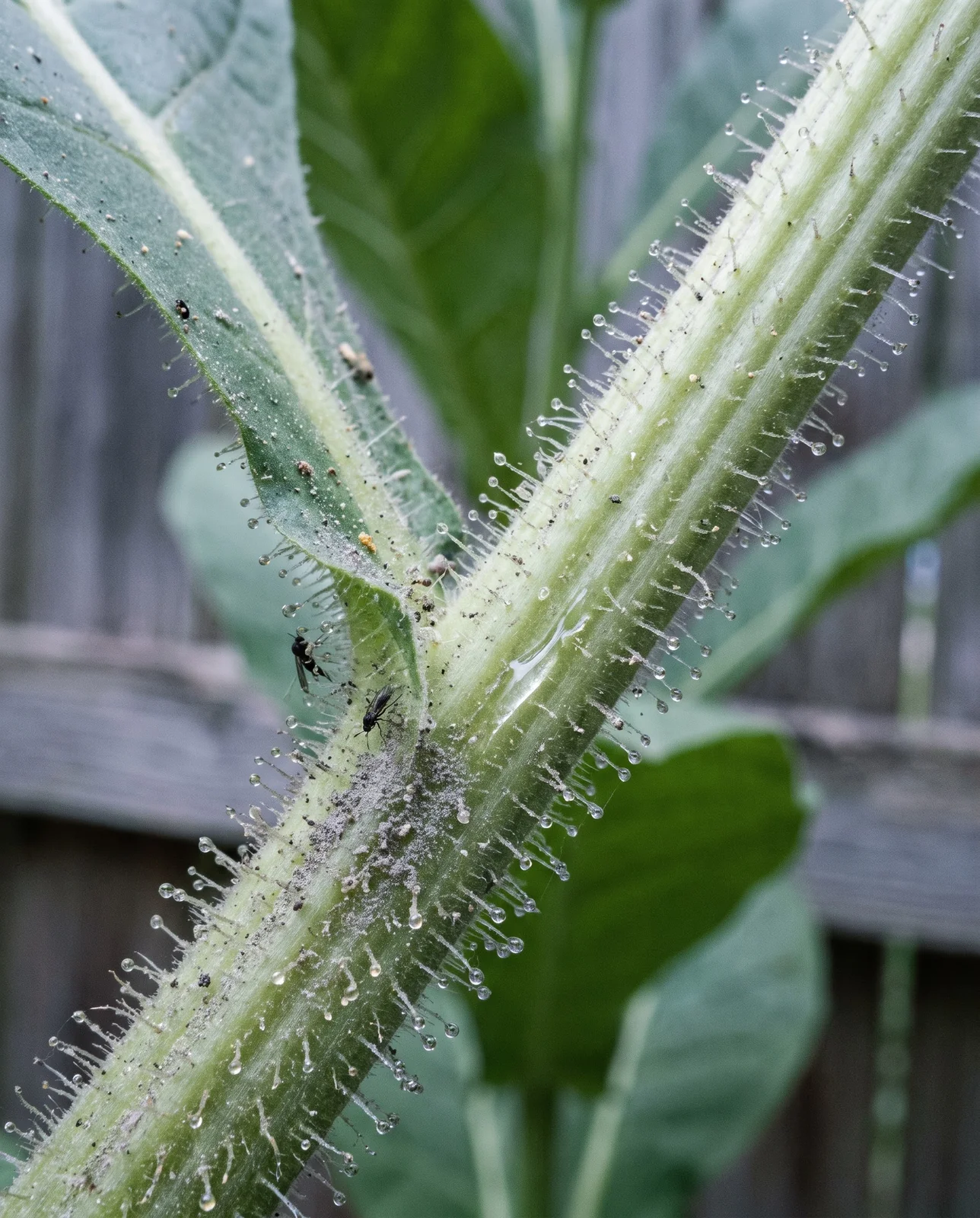
Ornamental flowering tobacco contains nicotine, making every part of the plant toxic if eaten. Both alata and woodland tobacco are harmful if swallowed and carry that same risk for dogs. Wear gloves to avoid direct skin contact when handling either plant, since stems can also leave a sticky residue on hands and pruning tools.
The ASPCA files tobacco under three names, Nicotiana, Tobacco and Tree Tobacco, and all three entries point to one plant, Nicotiana glauca, or tree tobacco. That shrubby relative sits apart from garden bedding flowers. It is toxic to dogs, cats and horses. Nicotine can bring on excitement or dullness, vomiting, clumsy movement, paralysis, and death. The list does not name alata or sylvestris, but both garden species are harmful too.
In people, nicotine poisoning from nicotiana brings vomiting, agitation, lethargy, seizures, and shifts in heart rate, blood pressure and breathing. In one documented case, a toddler who swallowed cigarette butts vomited and grew agitated, and was watched for 6 hours before going home. If a child swallows tobacco material, wipe out the mouth, rinse it with water, and call 1-800-222-1222. Garden leaves are not for curing or smoking, because they hold nicotine, and the plant that needs gloves to handle is not safe to eat.
What the plant and the flowers look like
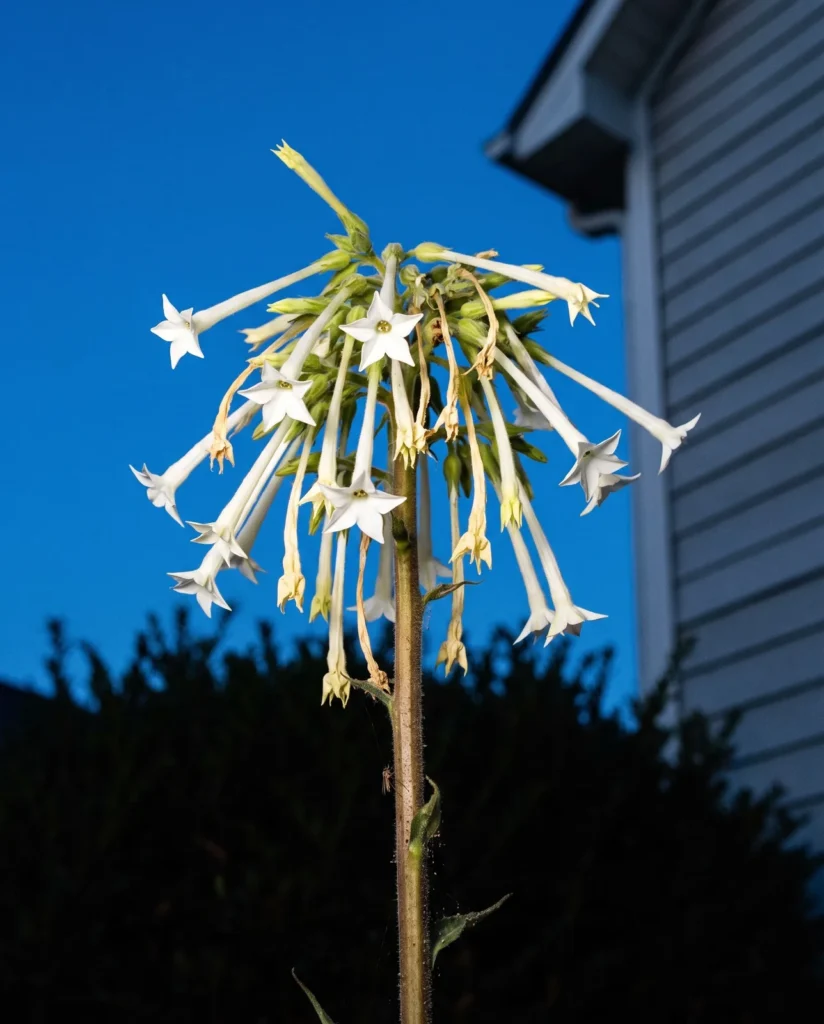
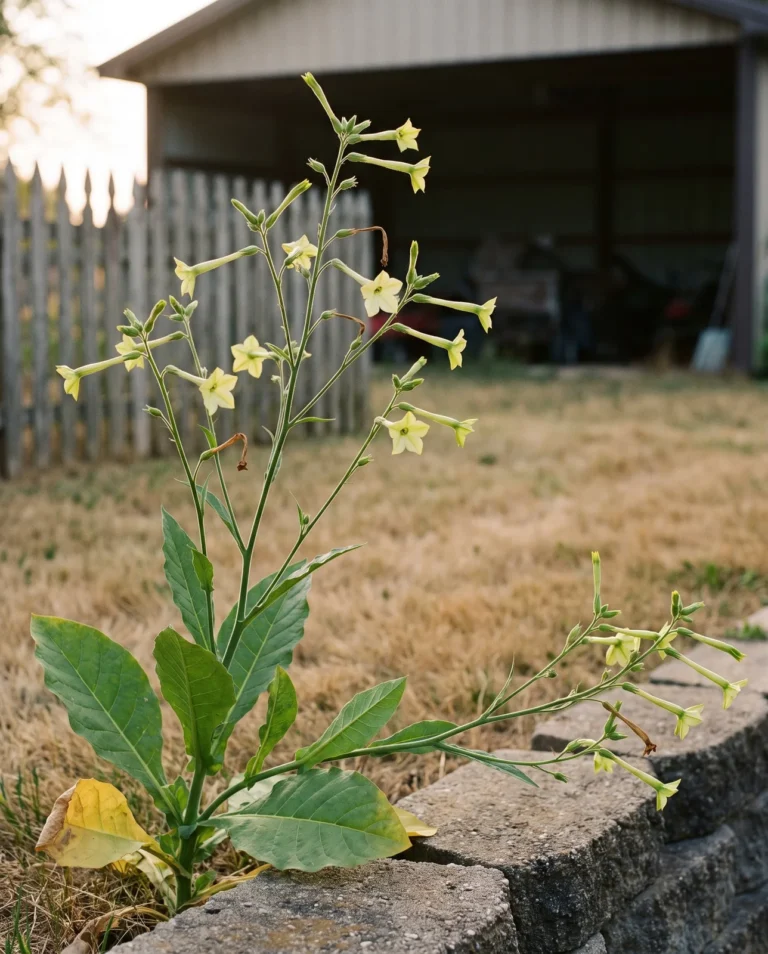
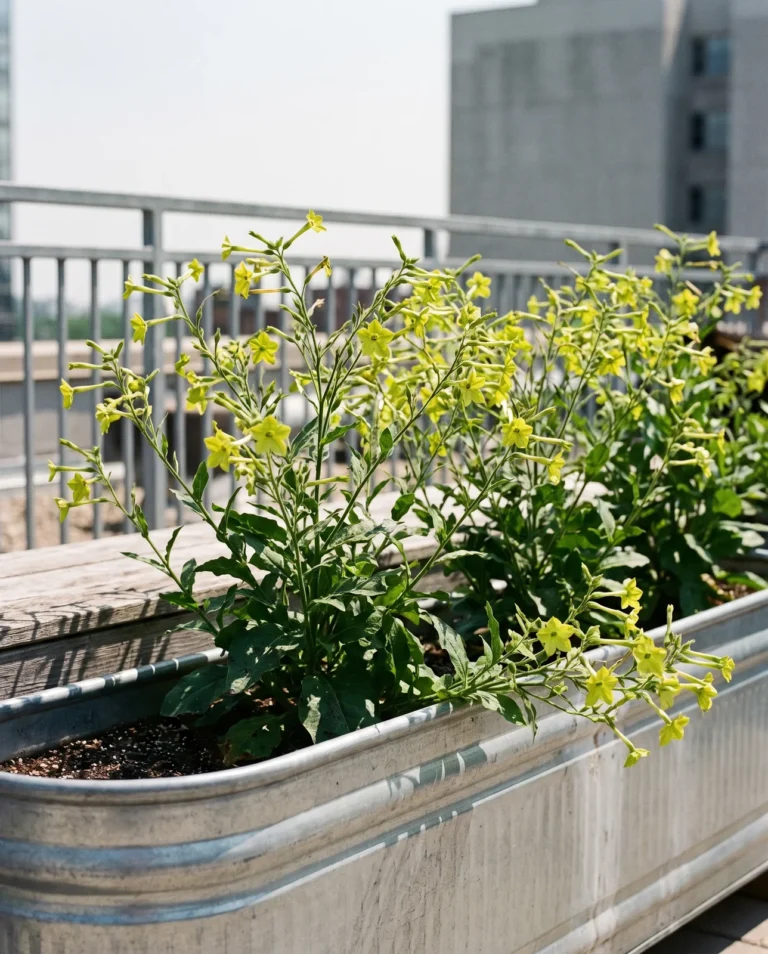
A nicotiana bloom forms a long, downward-hanging tube where five petals fuse together and open into a star-shaped face. Flowers across the species open in lime green, red, white and yellow. Each bloom lasts only one night, but the plant continues setting fresh buds from early summer until frost.
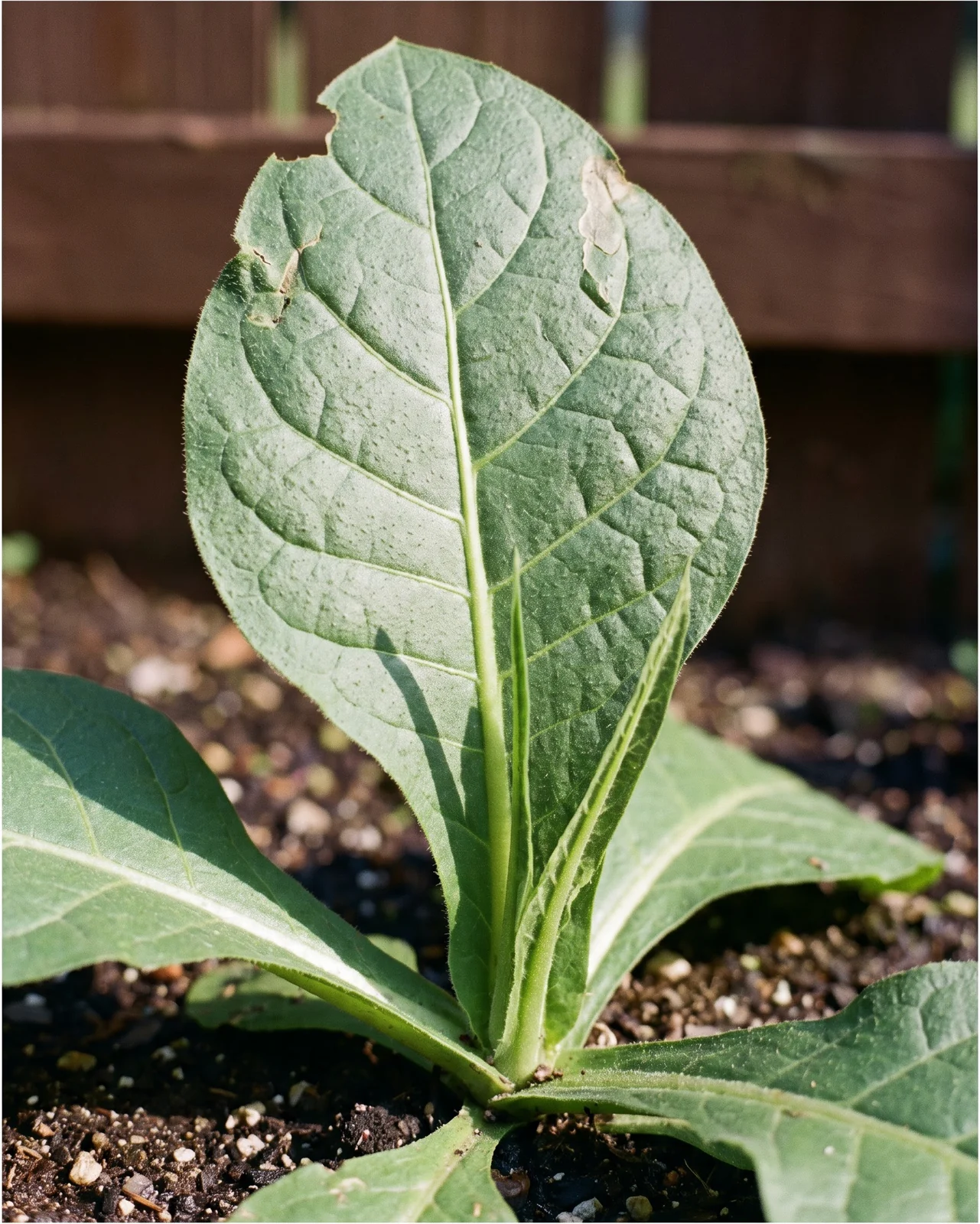
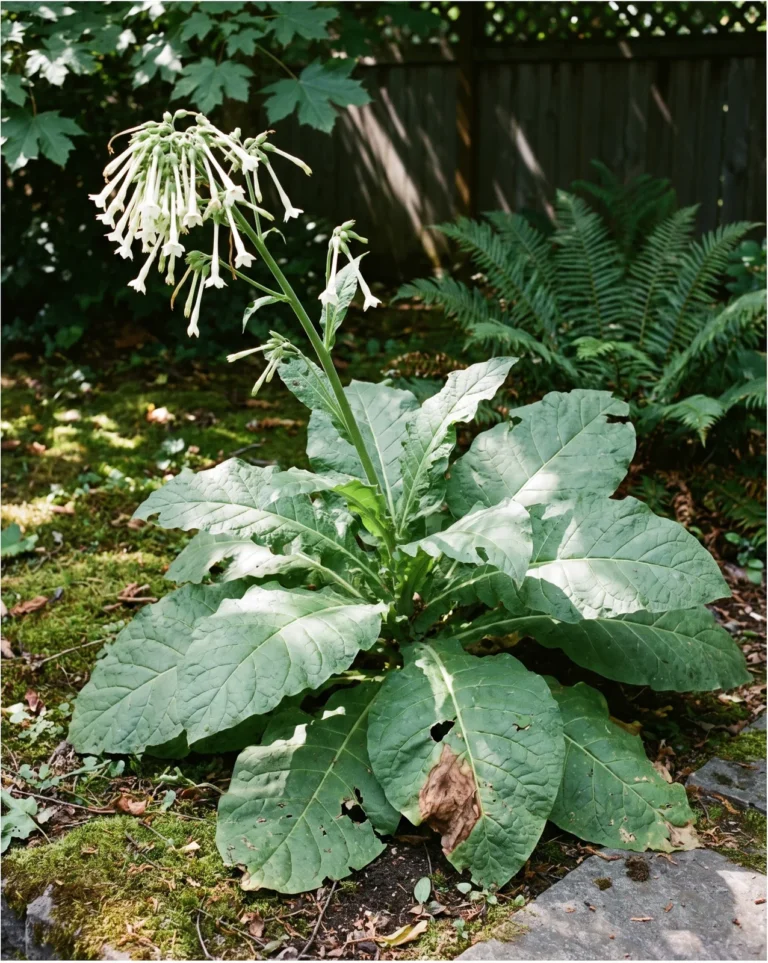
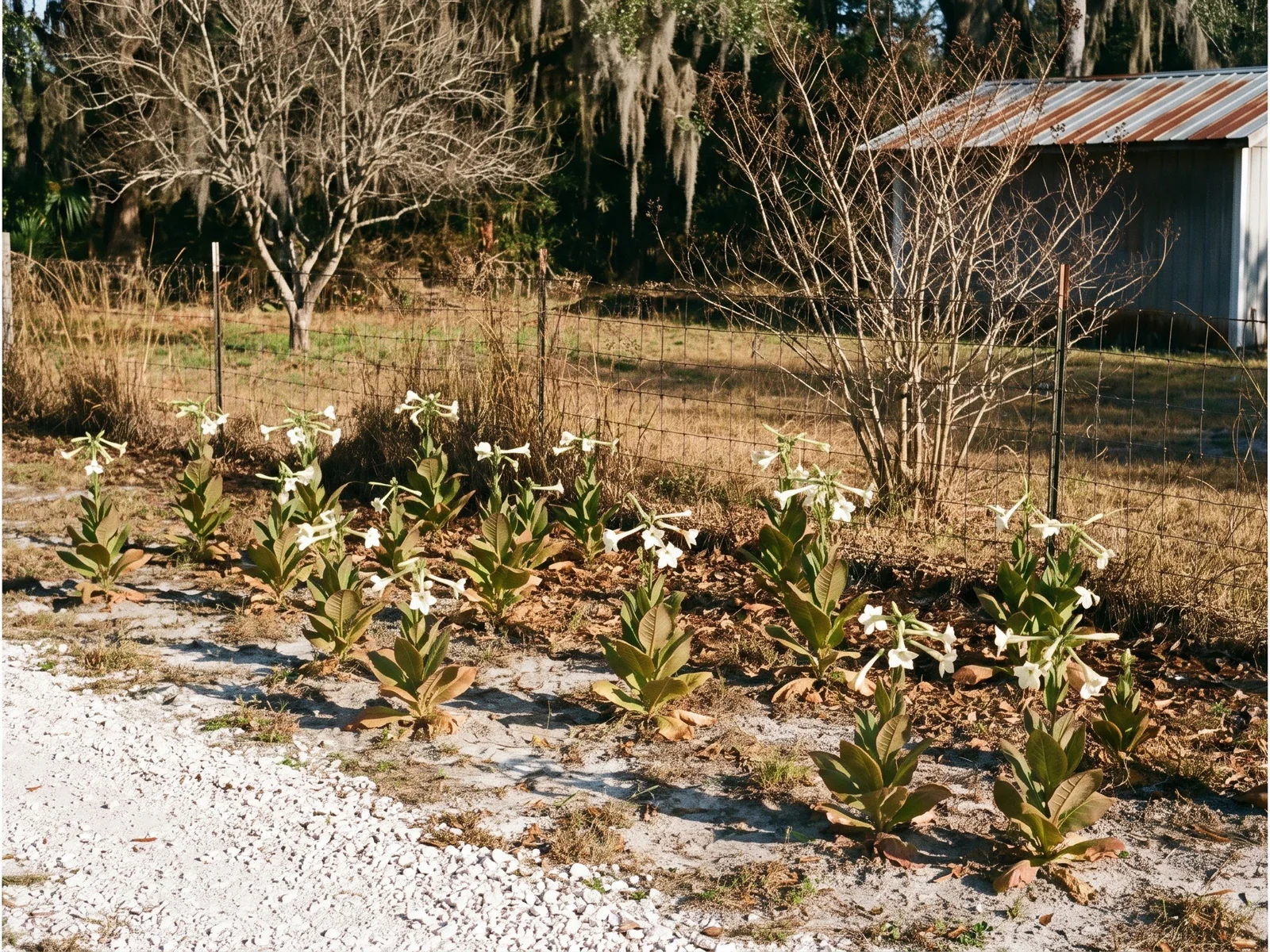
Underneath the blossoms, alata forms broad, spoon-shaped basal leaves up to 12 inches long, anchored by the winged stalks that gave the plant its name. Nicotiana sylvestris forms a large basal rosette with nodding clusters of long white trumpets that resemble shooting stars.

The scent arrives in the evening, and much of the stock has none
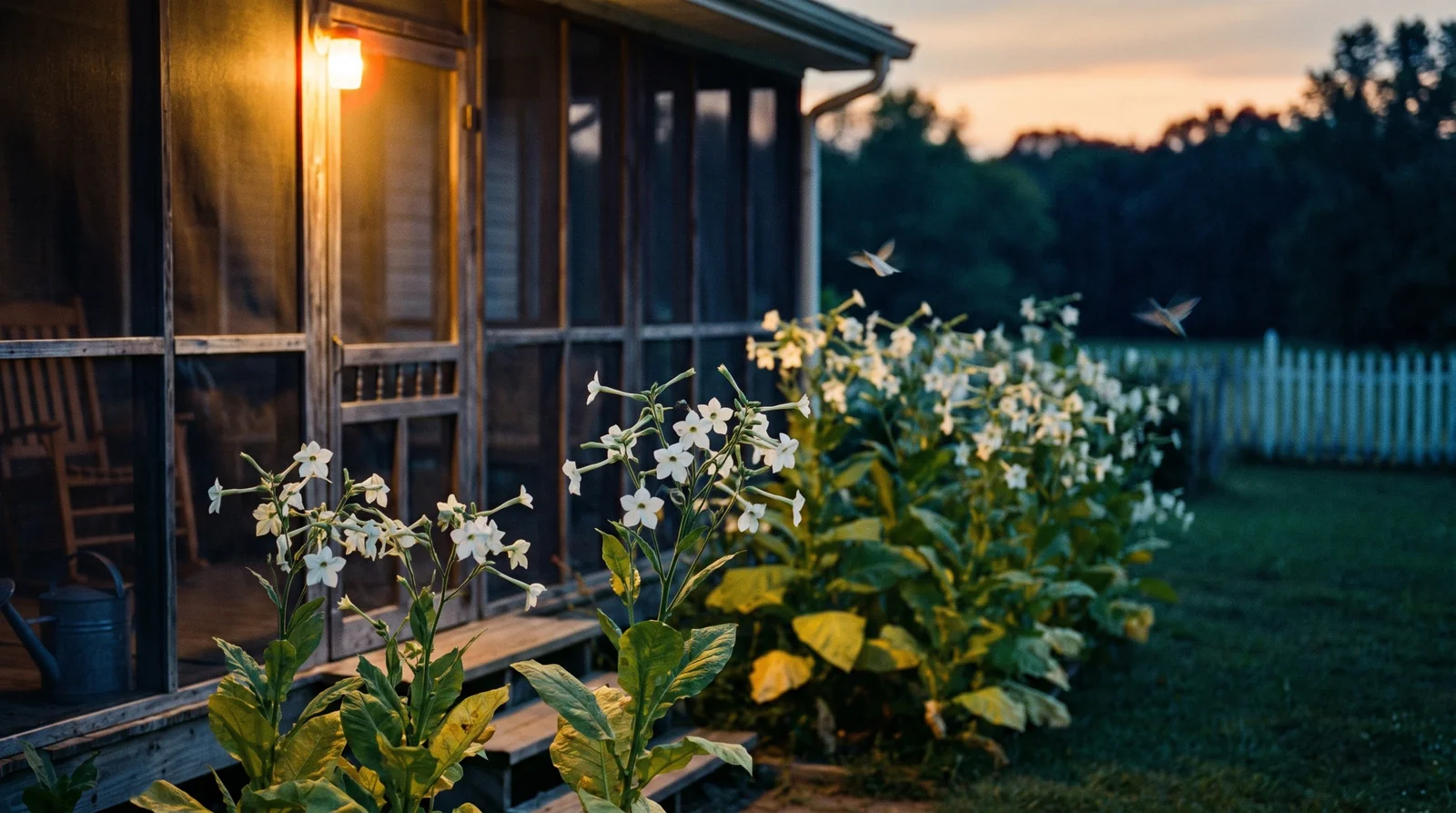
Fragrance from flowering tobacco is an evening affair, releasing its strongest perfume as dusk settles. On wild alata, the blooms are strongly scented at night and draw visiting moths, making them natural partners for moonflower along an evening patio.
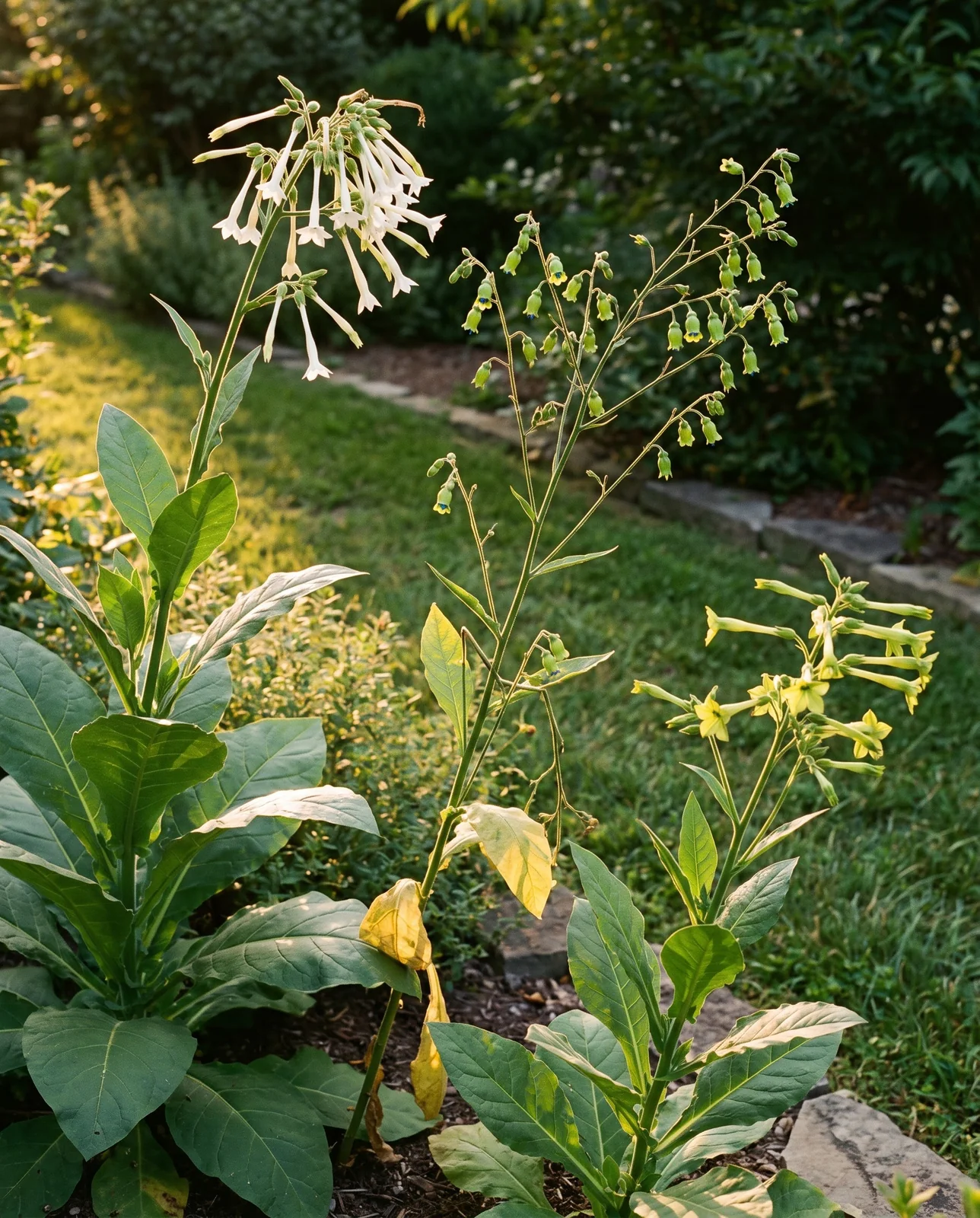
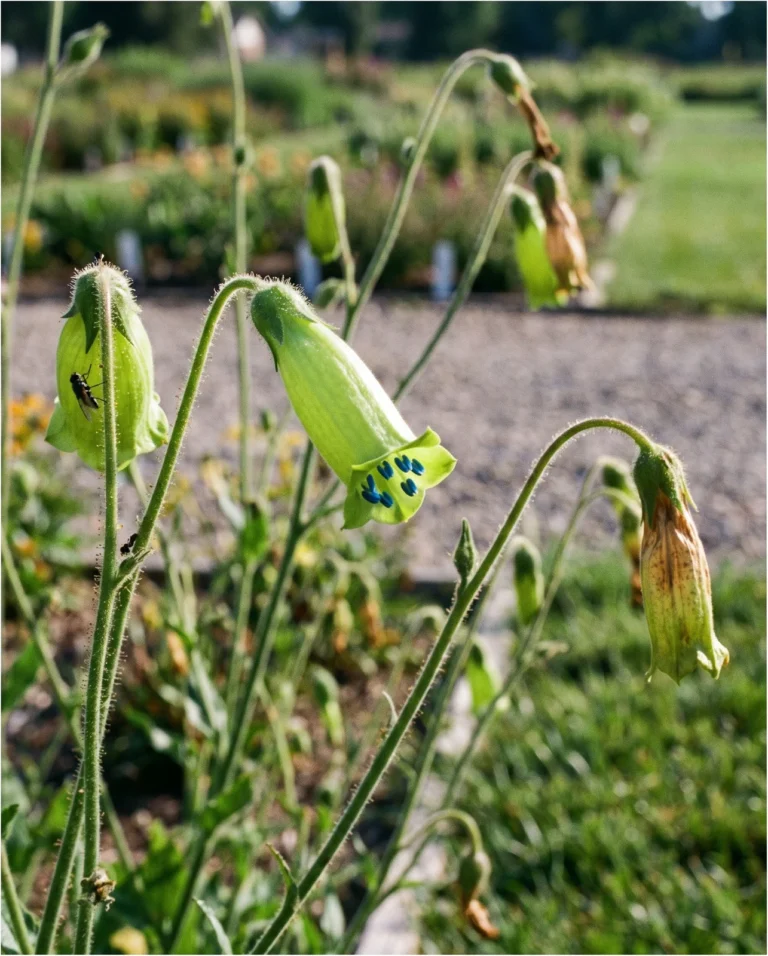
Wild species plants are rarely sold outside seed packets, having been replaced in nurseries by compact cultivars that stay open during daylight. These newer hybrids are less fragrant than older varieties, and many carry little scent. One species has no scent by nature: Nicotiana langsdorffii can grow up to 5 feet tall without fragrance, prized for apple-green flowers with striking blue anthers.
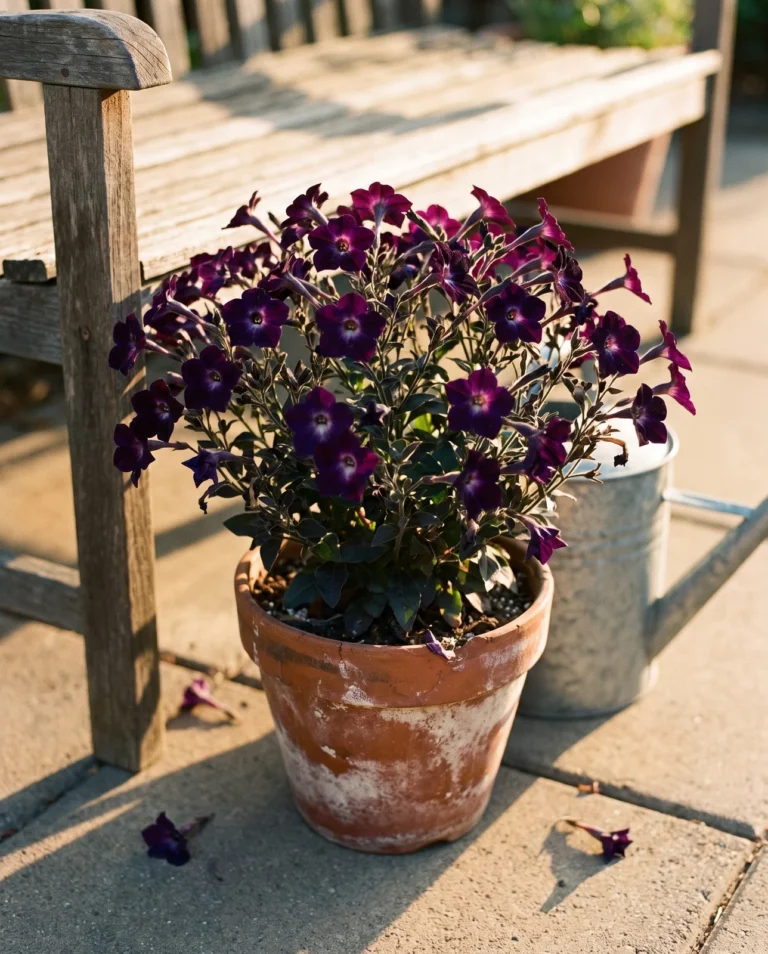
Certain named strains are selected especially for fragrance. The Perfume series produces scented flowers in bright rose, blue, red, white, deep purple, antique lime and mixed shades. The tall selection 'Grandiflora' ranks among the most fragrant options, opening in late afternoon or evening with a jasmine-like perfume. Scent can still vary between seedlings from the same packet, where one plant blooms with rich perfume while a sibling from the same seed lot has almost none.
Species and series side by side
The four things that separate these from each other are height, flower color, whether the plant smells, and the hour its flowers open.


Annual or perennial, and where the difference shows
Most flowering nicotiana grows as an annual across the country, with some varieties surviving as short-lived perennials only in zone 10 and warmer. Both alata and woodland tobacco are tender perennials hardy in USDA zones 10 and 11, and they are grown as annuals elsewhere. In those mild winter regions alata may return each year, while gardeners in colder climates replant it every spring.
By nature, both tall species are short-lived perennials, and sylvestris forms a branching biennial or short-lived perennial that colder gardens grow as a half-hardy annual. Where winter temperatures only occasionally drop to 23 F, woodland tobacco can overwinter outdoors under dry mulch and resprout from its rootstock in spring. Perennial survival is sometimes reported across zones 6 to 11, though the outcome depends heavily on the specific species.
Zones and when to plant
For spring planting, start seed indoors 6 to 8 weeks before your last frost date, or sow directly into the garden once frost danger has passed. When sowing into 72-cell flats, an indoor window of 5 to 6 weeks is enough before planting out. In cold regions like zone 3a, that timetable calls for sowing indoors between March 15 and April 1, with transplants moving outside around May 15. In zone 5, an indoor start about eight weeks before the final frost date prepares sturdy plants for the garden.
Selections of alata are frost sensitive, and most ornamental varieties cannot survive freezing temperatures, with some overwintering where frost is rare. Wait to move plants into the garden until all danger of frost has passed, whether you raised them from seed or bought nursery stock.
In zone 9, that schedule can turn around, with seeds germinating through fall and winter to bloom from January through April. Volunteer plants in those mild areas can tolerate local frosts without damage, flowering steadily until early spring heat sets in.
Starting it from seed
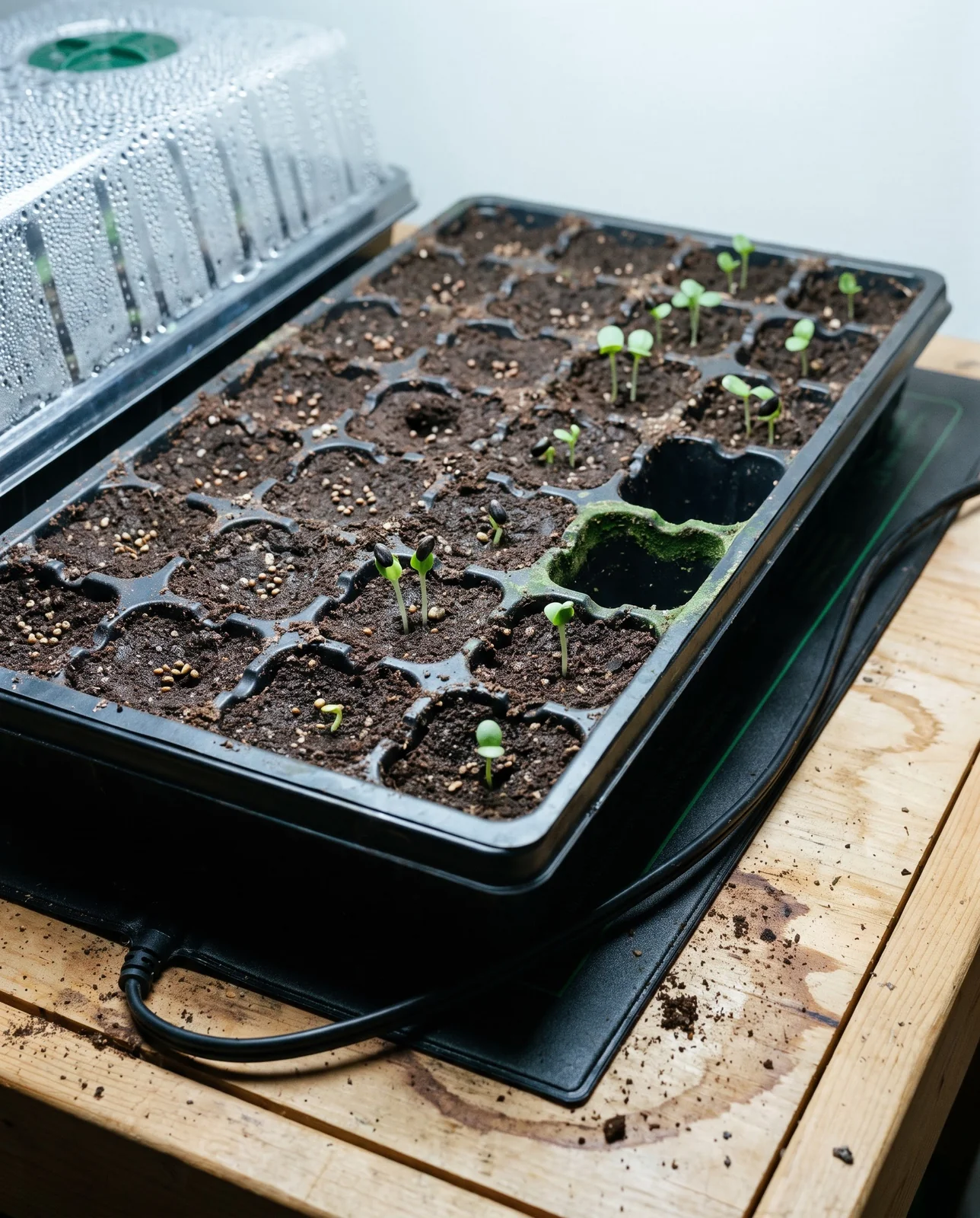
The seed is dust-fine and almost microscopic. Light helps it germinate, so press it gently into the soil and leave it uncovered, or cover it only very lightly. Kept at 64 to 78 degrees F, it usually sprouts in 7 to 21 days.
Under ordinary conditions, most seed comes up within one to two weeks. When sown outdoors, it needs at least 12 hours of light a day to germinate. Most varieties start flowering about 8 to 12 weeks after sowing, depending on the variety and growing conditions. Pinching out the center stem after transplanting encourages young plants to branch.
Where to plant it
Most flowering tobaccos grow best in full sun to partial shade. Nicotiana alata withstands full sun, though the plants appreciate some afternoon shade, especially in hot southern climates. Nicotiana sylvestris prefers partial or dappled shade. Space the plants about 9 to 18 inches apart, depending on the variety chosen.
Placement matters far more here than for ordinary bedding, because the fragrance belongs to the evening. You can use it as a container filler, in rock gardens, near a patio, or massed across garden borders. The pale, luminous flowers often open in the evening, so tuck plants near a door or window to bring the jasmine-like perfume indoors. Planted at the far end of the yard, that evening scent goes to waste.
Watering and feeding
Nicotiana has low tolerance for drought, so the soil needs to stay consistently moist. Water the ground before the surface dries out, and mulch beds that dry quickly. Check container plants every day once summer heat sets in, because letting the soil dry out sets them back quickly.
Feeding requires patience. Hold back fertilizer while plants are actively growing, because early feeding causes fast, leggy growth; wait until the plant is established and in bloom. Once flowers open, apply an all-purpose 20-20-20 fertilizer or a 15-30-15 bloom formula every three to four weeks, or every two to three weeks for containers.
Why it stops flowering
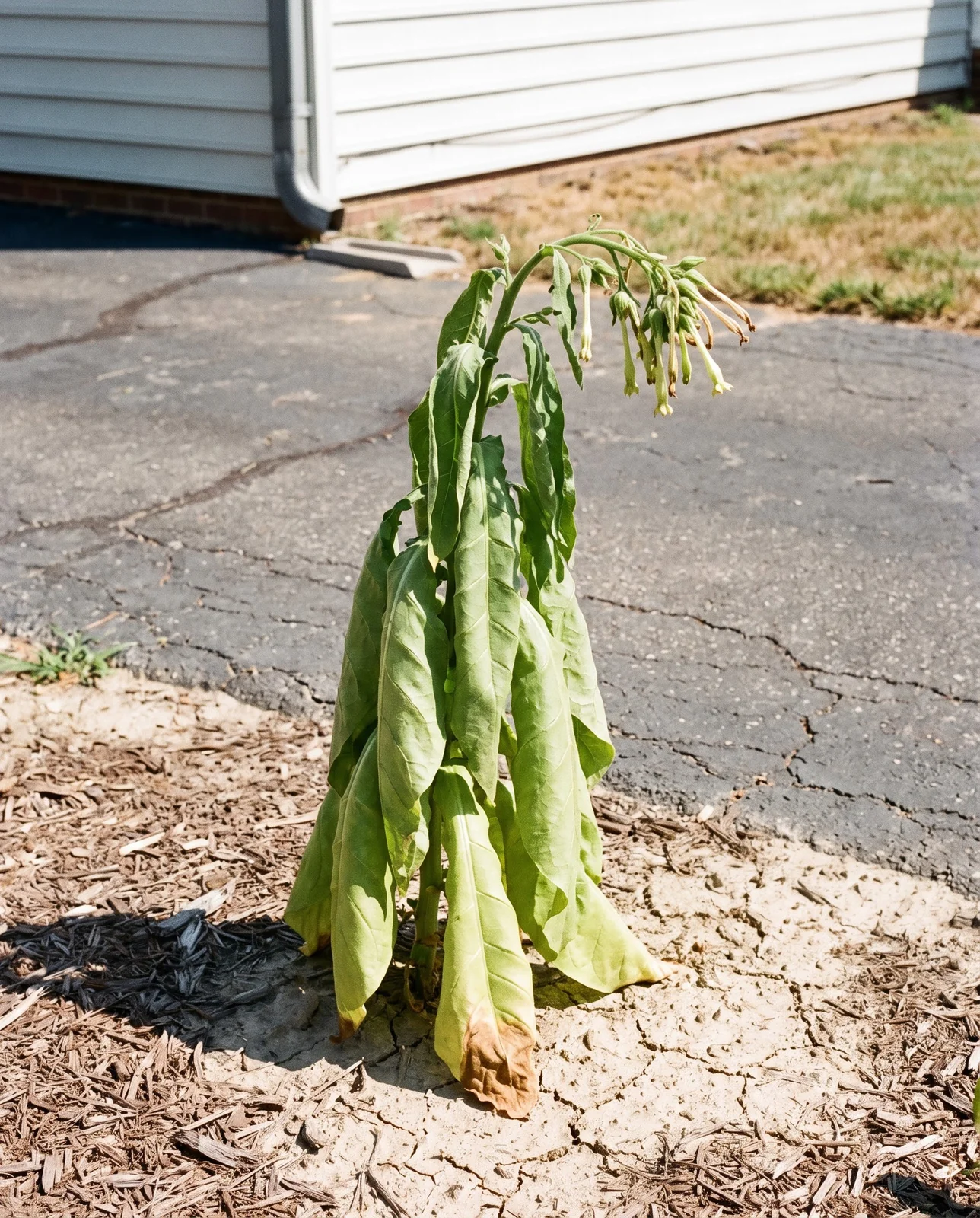
Lack of sunlight and lack of water are the two most common reasons flowering tobacco stops blooming. Too little light makes the plant stretch, producing the same leggy growth caused by overfeeding. Look for long bare stems, wide gaps between the leaves, and only a few buds at the tips. When water runs short, check soil moisture an inch down before suspecting anything more complicated.
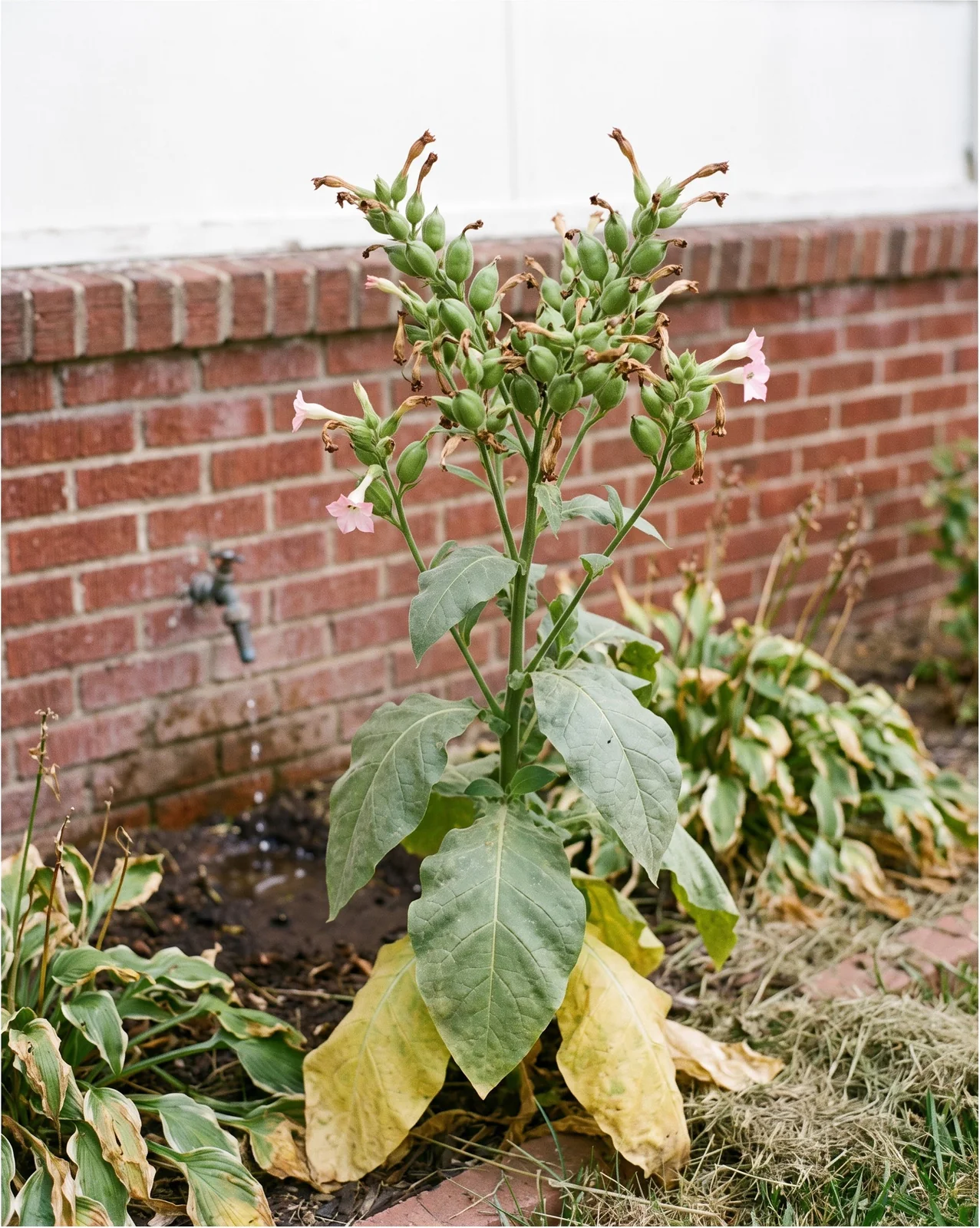
Summer heat can also cause a temporary pause. Flowering runs from summer to fall in cool climates, but blooms often fade in the heat of a hot summer. In zone 5, the heat may cause only a brief slowdown, with full bloom returning once temperatures cool slightly. A resting plant still looks healthy, keeping upright stems and broad green foliage with capsules forming where blossoms dropped.
A short path through a plant that stopped flowering
Work through these steps in order, giving each adjustment time to work before trying the next.
Yellow leaves: the garden answer and the crop answer
Yellow lower leaves often look like a nitrogen shortage borrowed from commercial farming. On field tobacco, bottom leaves turning yellow at six weeks commonly lack nitrogen, an expected stage in crop production. Commercial recommendations measure nitrogen in pounds per acre, a farm scale that has no place in home flower beds. In a garden border, yellow leaves usually point directly to watering.
When nitrogen is short, the plant moves what it has from the lower leaves up to new growth, so the bottom of the plant fades first. The initial sign is a paler green across the lowest leaves. Those pale leaves gradually change to light yellow and become steadily more bleached, eventually turning brown and falling off.
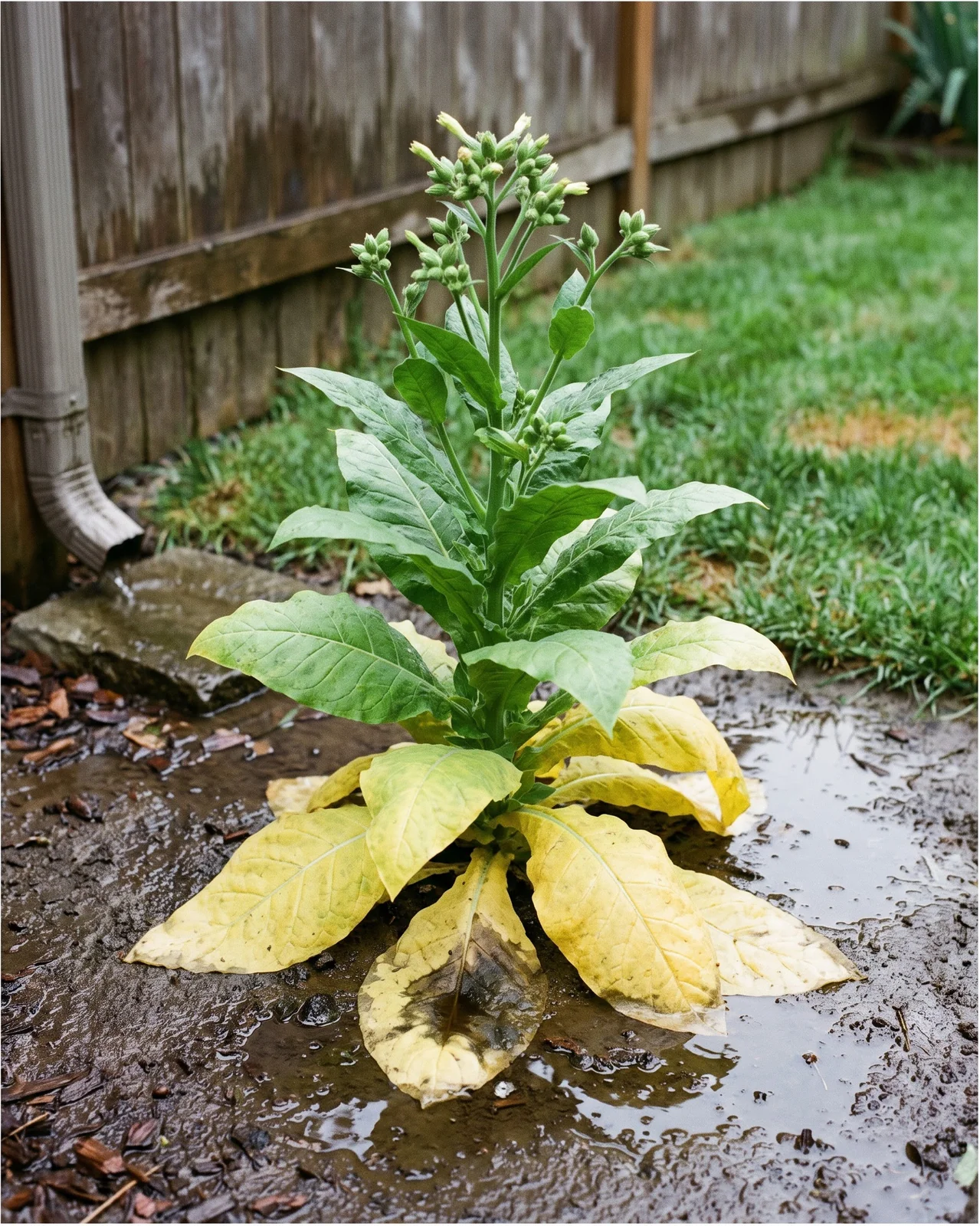
In a garden bed, yellow leaves almost always come down to moisture, making both parched beds and poorly drained hollows prime suspects. Testing leaf tissue alongside the soil can clarify stubborn cases, because nutrient shortages in leaves are not always caused by poor soil. Check the drainage and feel the soil an inch down before buying any fertilizer.
What goes wrong, ranked
Four common problems on flowering tobacco, each with symptoms, causes, and practical fixes.
Symptoms: the lower leaves turn yellow on plants standing in poorly drained soil. Cause: overwatering in waterlogged ground. What to do: let the soil drain properly, mulch to keep moisture even, and feed every two to three weeks with a 2:3:2 fertilizer.
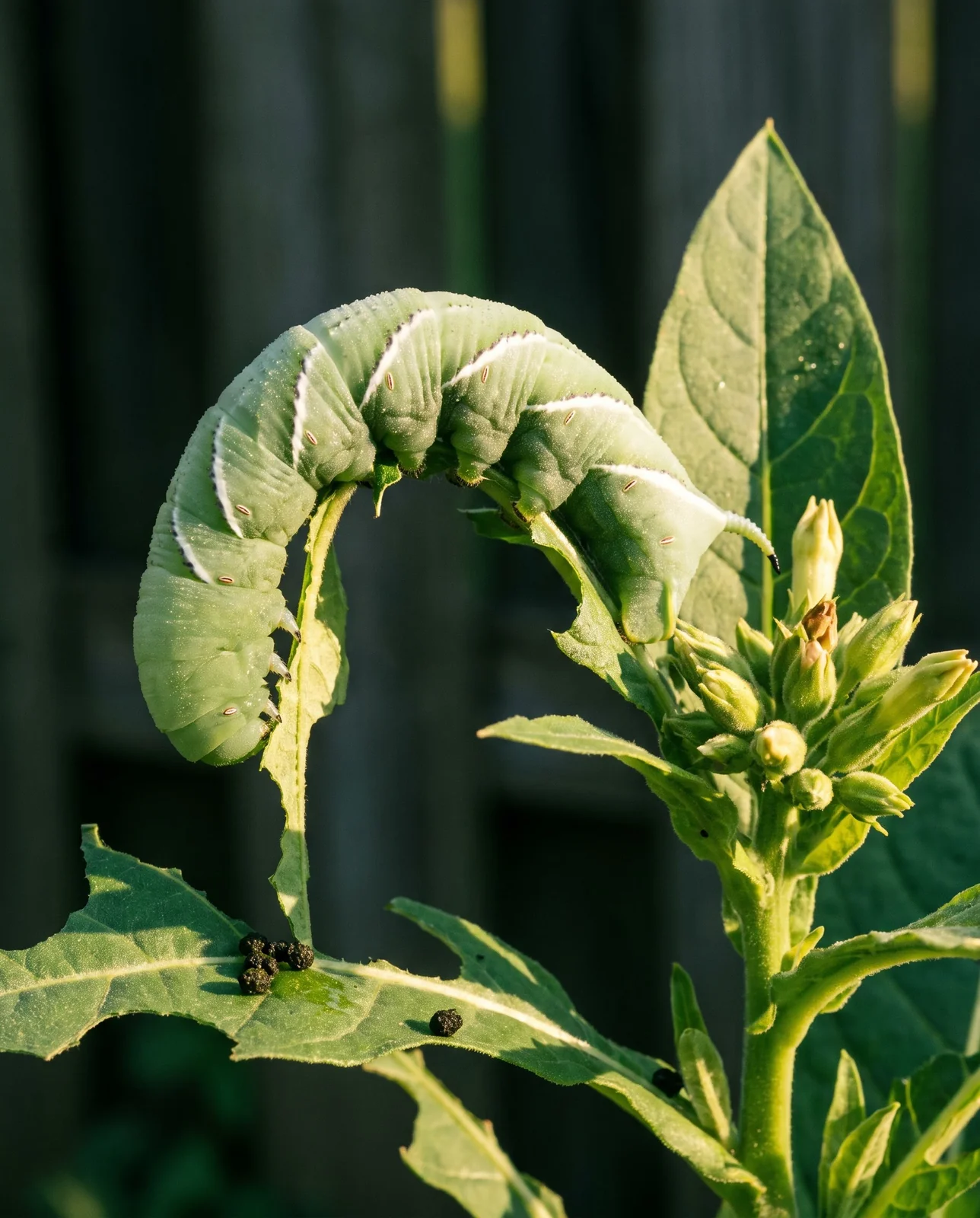
Symptoms: leaves chewed back to the midrib, with a green caterpillar about 4 inches long marked by oblique whitish bands along each side. Cause: larvae of the tobacco hornworm or tomato hornworm often feed on the leaves. What to do: handpick the caterpillars off the plants; they are rarely abundant enough to need more, because natural enemies usually keep numbers low.
Symptoms: newest growth shows the most severe distortion and stunting, while older leaves look less affected. Cause: tobacco mosaic virus infection. What to do: remove the infected plant immediately, and keep hands and pruning tools away from vegetable beds.
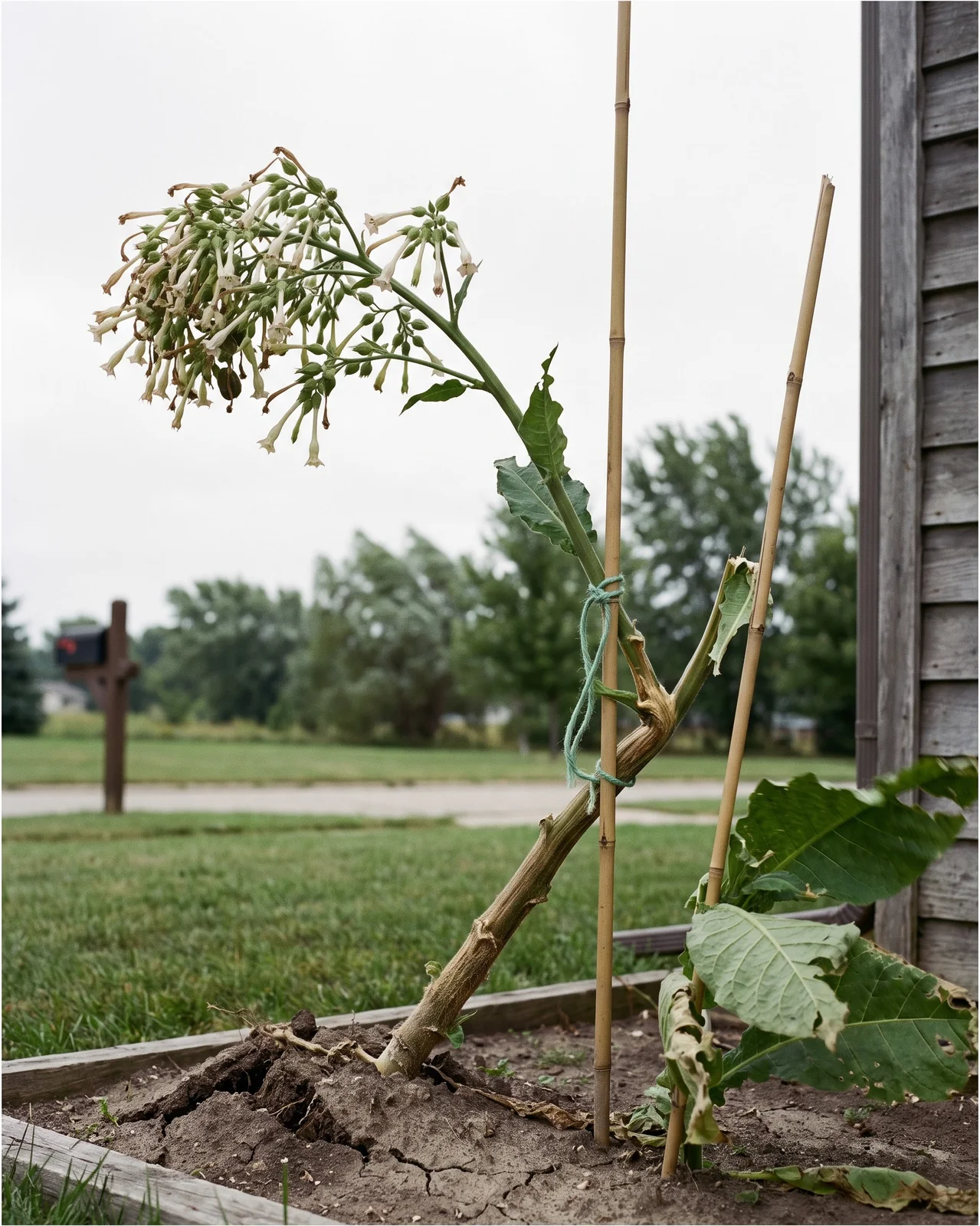
Symptoms: stems bent or leaning after heavy weather, with flower heads hanging sideways. Cause: wind catching top-heavy flower spikes. What to do: taller varieties that reach 5 to 7 feet may need staking in wind.
Tobacco mosaic virus in a garden
Tobacco mosaic virus appears first on the youngest growth. Young leaves are usually distorted, carrying pale yellow and dark green mottling. Infected plants can develop mottled green patterns, ring spots, deformed veins, and twisted foliage. Older leaves react differently, developing dead white and brown patches that look like rust. Together, these symptoms leave the plant with mottled foliage, twisted growth, and poor vigor.
The virus spreads easily from infected plants to healthy ones on bare hands, clothing, and pruning tools during routine tasks like pinching or staking. Cigarettes and chewing tobacco can also carry the disease straight to garden beds, so avoid handling tobacco products before touching your plants. The pathogen survives for weeks to months on wooden stakes and trellises, and for up to 50 years in plant debris.
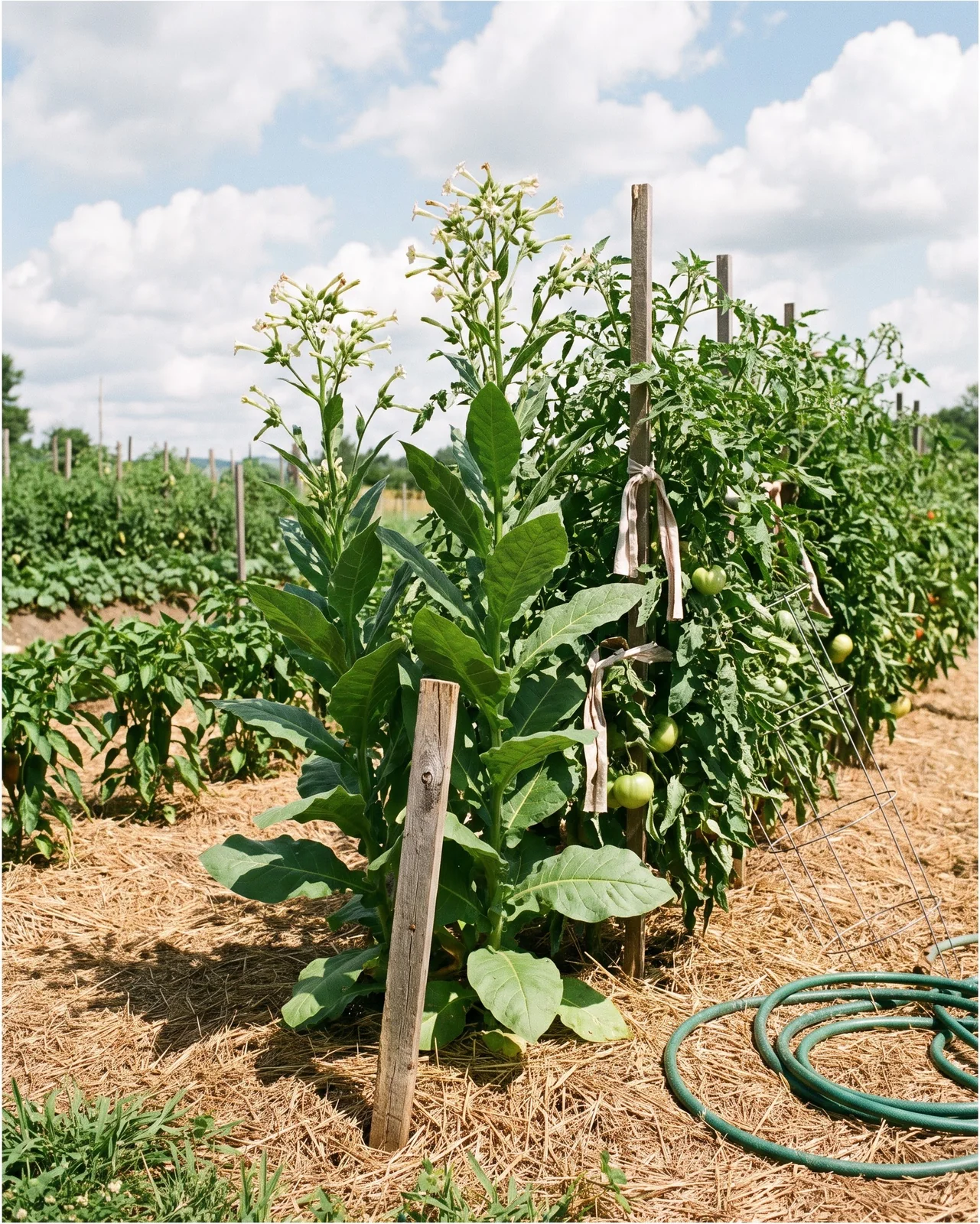
Keep flowering tobacco away from tomatoes, potatoes, peppers, and eggplants, because all of these nightshades share susceptibility to the same virus. Infected eggplants produce small leaves with mosaic patterns, while peppers develop mosaic markings or distorted oak-leaf foliage on jalapeño types. There is no cure once a plant becomes infected. Pull and throw away diseased plants immediately, and never add them to compost. To clean contaminated tools, soak them for 1 minute in a 20 percent powdered milk solution to kill the virus.
Pests, and the tell for each
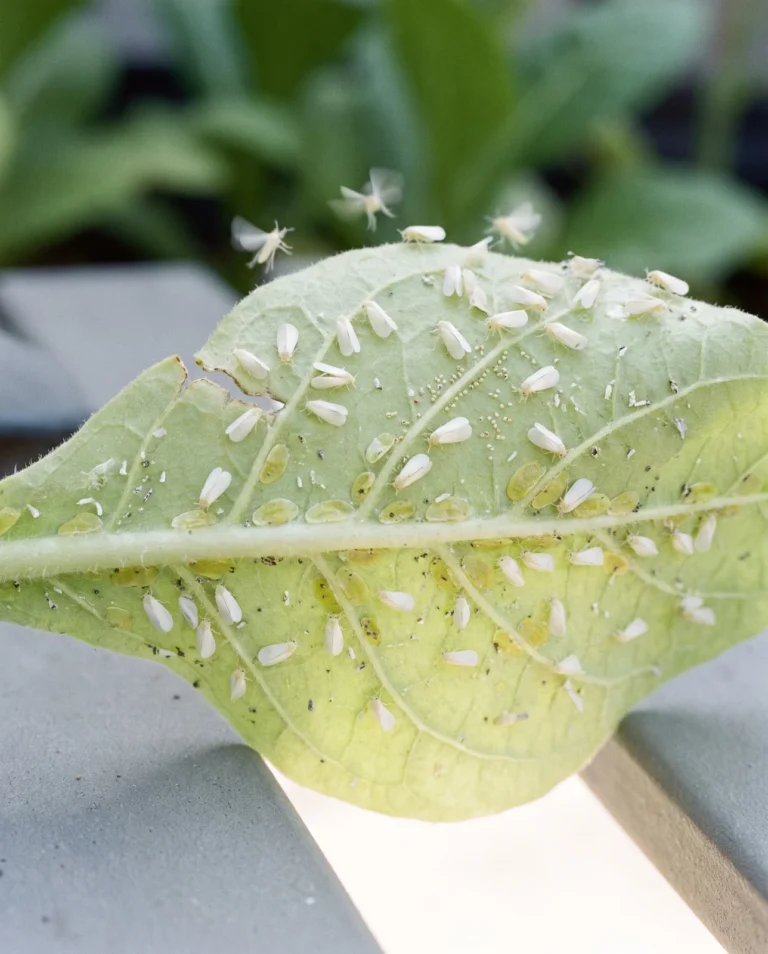
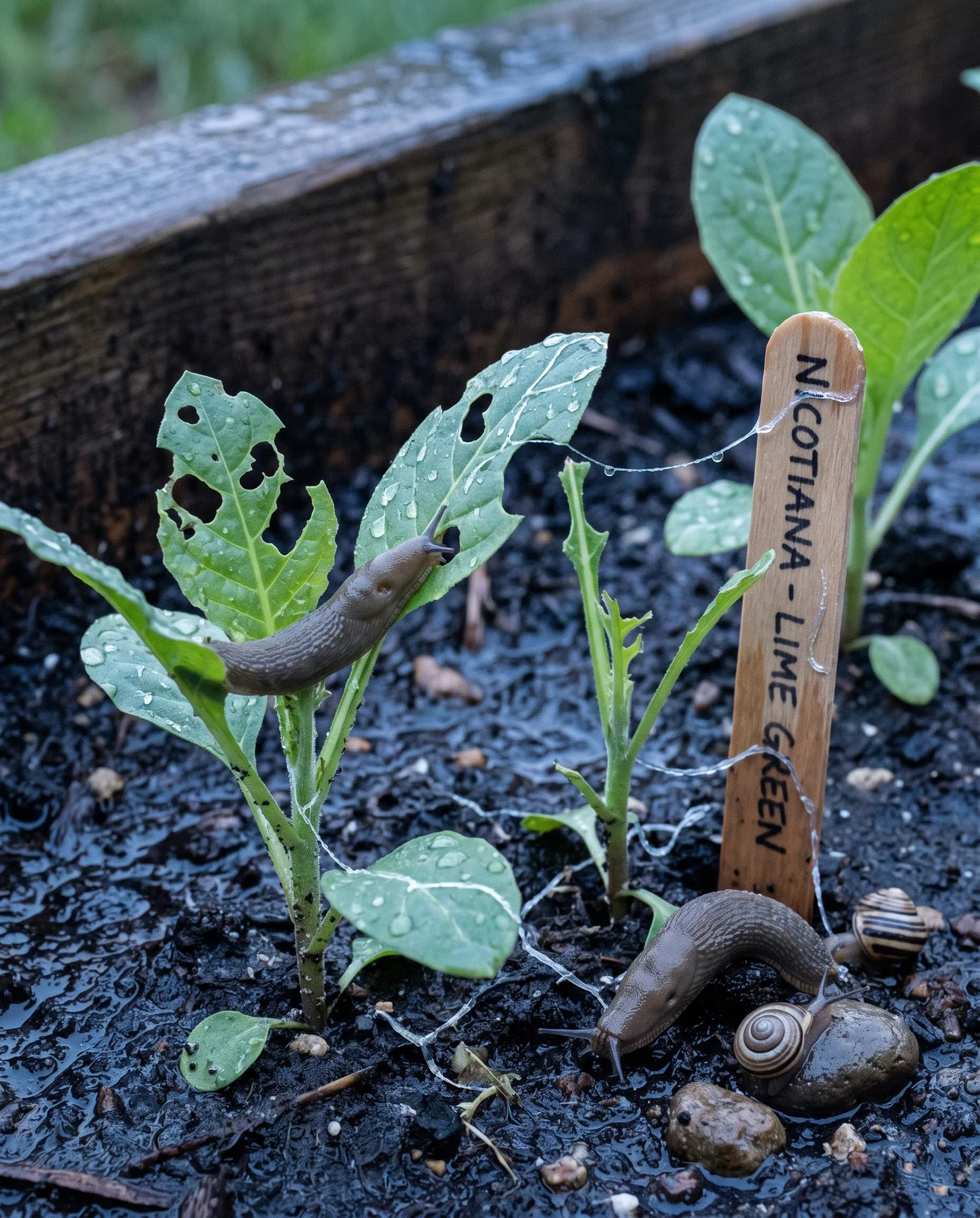
Two pests cause most of the damage on flowering tobacco, and each leaves a telltale sign in the garden.
Staking the tall species
Tall varieties can be damaged by strong winds, so plant them in a sheltered spot or stake them for support. The tallest kinds may need to be staked. Set a cane early while the stem is light and easy to work around, and tie above the middle of the stem where the weight of the flower head sits.
Deadheading and cutting back
Cutting spent flower stalks off woodland tobacco promotes additional bloom. Newer varieties such as the Domino series are bred to be self-cleaning and need no deadheading at all. When an old stalk has set seed and died back, you can cut it back to the new growth already emerging at the base.
Moths, hummingbirds and the night shift
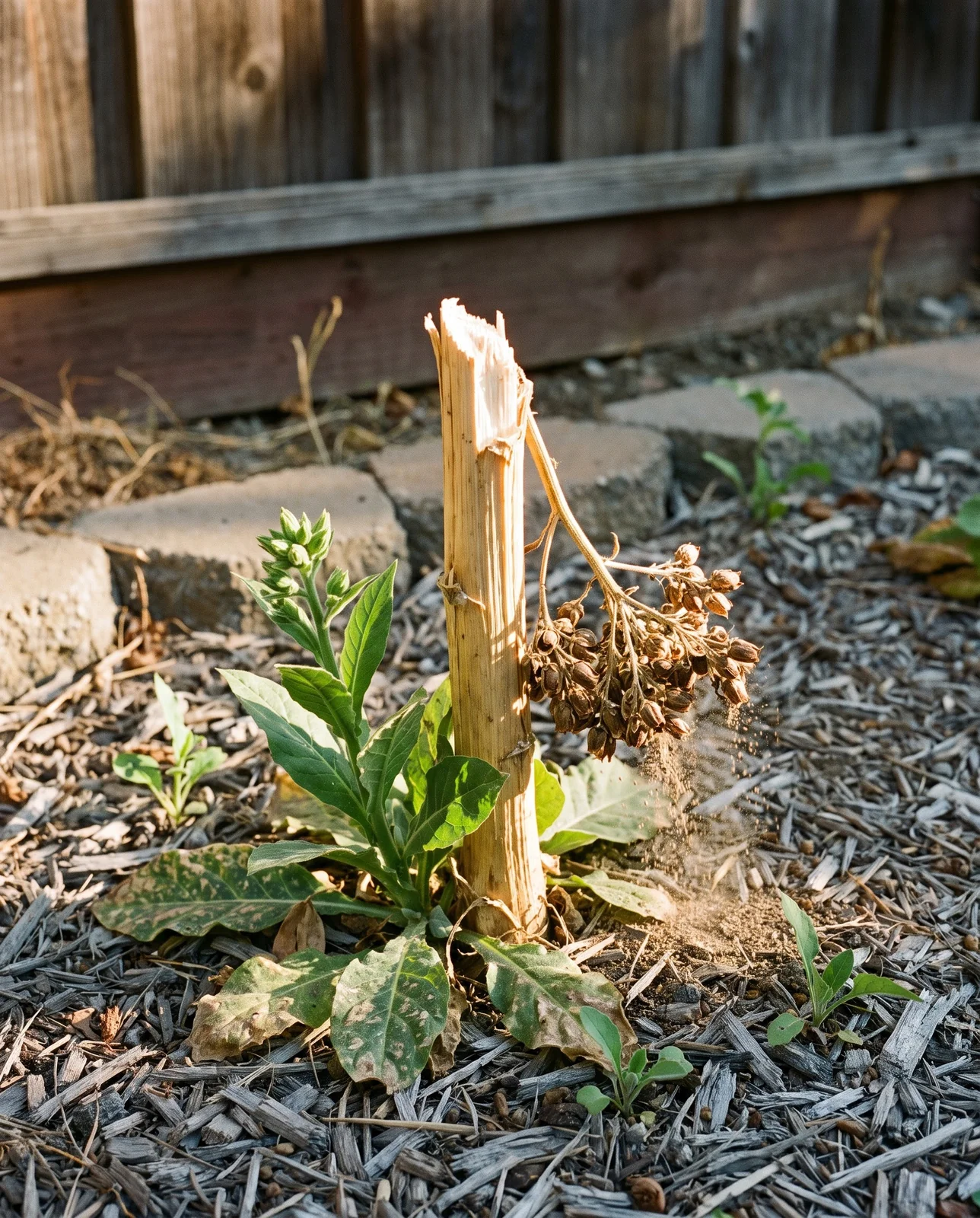
The evening opening turns nicotiana into a feeding station for night fliers. The flowers feed nighttime visitors such as moths and bats after dark, while hummingbirds visit the same blooms by day. The long tube with a flat face suits pollinators that hover. Planting nicotiana alongside jasmine creates an evening border that feeds those night visitors well after sunset.
White woodland tobacco flowers attract butterflies and hummingbirds to the garden. The plants hold up well through heat and humidity while drawing in hummingbirds and moths. On Nicotiana alata, visits come from only a few pollinators, including the hawk moth and the occasional hummingbird.
It seeds itself
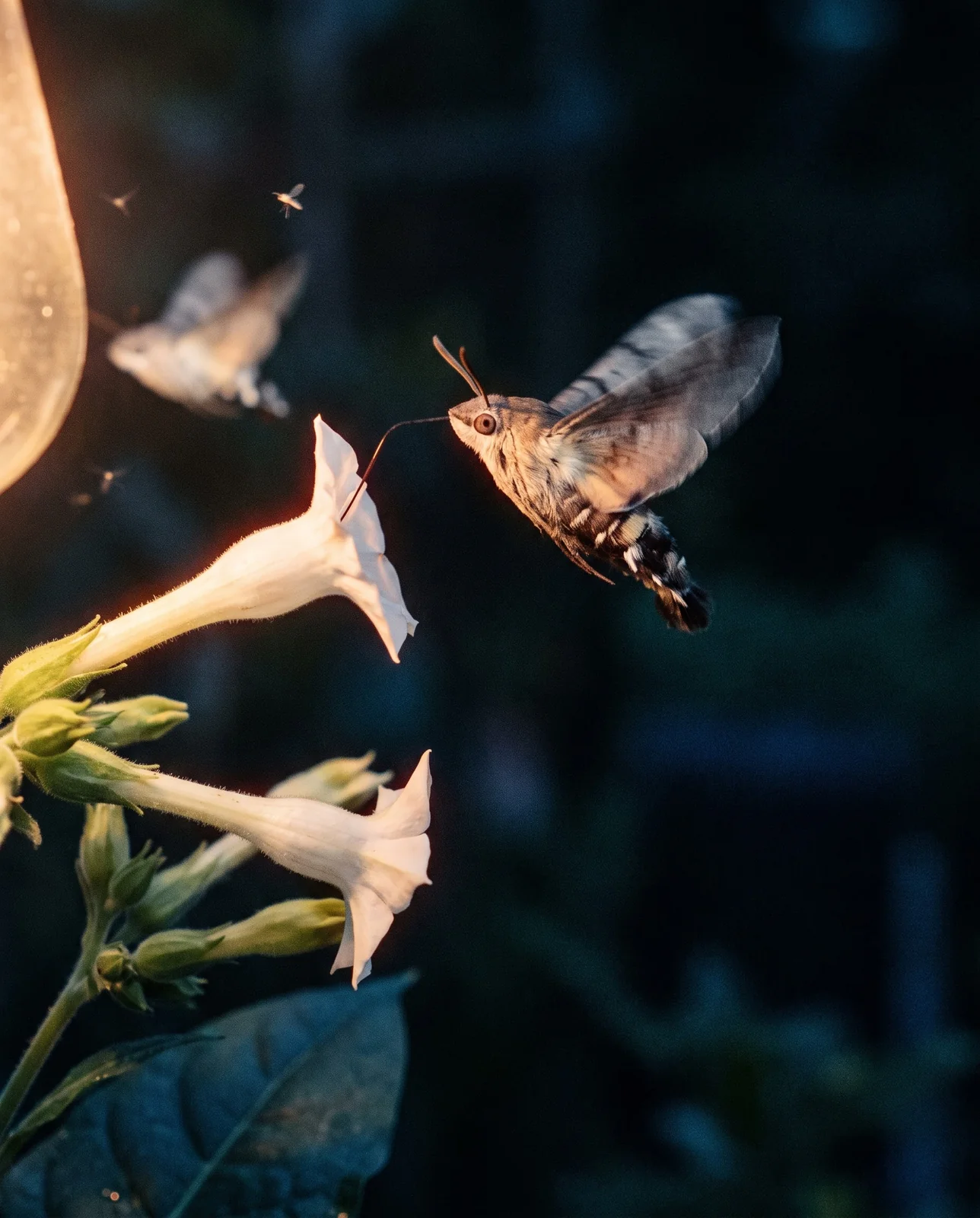
Nicotiana seeds itself generously, and seedlings often turn up far from where you planted it. Woodland tobacco can self-seed so freely that seedlings appear all over the yard, spread partly by sticky seeds that cling to clothing and hair. It behaves like an easy, almost weedy pioneer, establishing in soils ranging from pure unimproved sand to well-fed vegetable beds. The young volunteers lift easily while small, and you can pull them out just as quickly wherever they are not wanted.
Growing nicotiana in pots
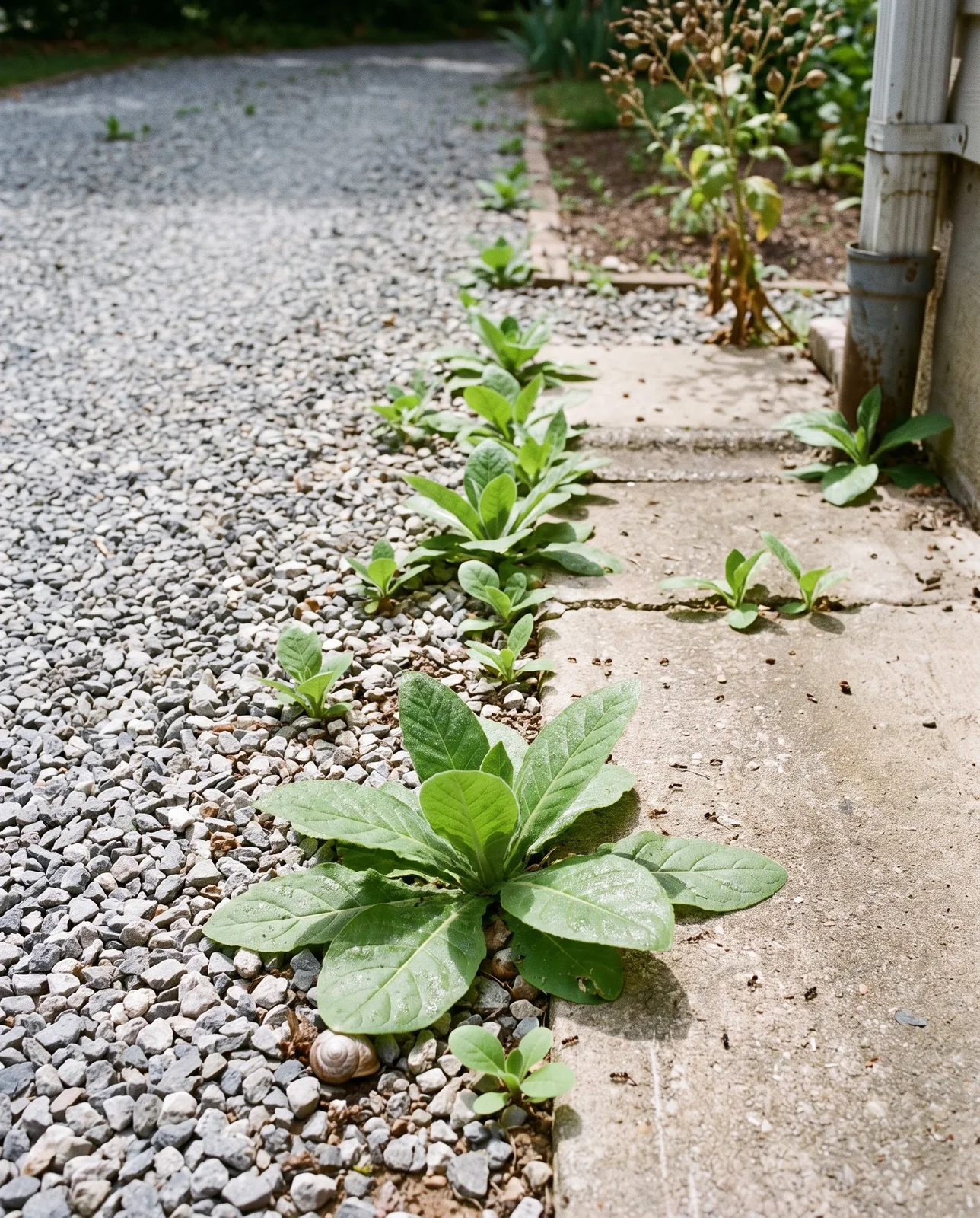
Nicotiana is one of the garden flowers that adapts easily to containers. It grows well in pots as long as drainage is good, the soil stays consistently moist, and the pot is sized for the variety. Shorter modern hybrids that grow just 1 to 2 feet are wonderful in containers. In a mixed planting, a large woodland tobacco makes a tall center feature, with smaller Nicotiana alata used as filler around it. Containers dry out faster than garden beds, so keeping the soil consistently moist is the main chore to watch.
Nicotiana in a vase
Nicotiana holds well as a cut flower, lasting close to a week in fresh water when picked and conditioned properly.
Four claims that follow this plant
Four common ideas about flowering tobacco turn out differently in the garden.
The myth: The ornamental kinds are a milder plant than the tobacco crop.
The reality: Cigarette tobacco contains 10 to 15 mg of nicotine per cigarette, and chewing tobacco holds up to five times as much. Those numbers come from tobacco products. No one has measured the nicotine in garden leaves against the farmed crop.
The myth: Yellow leaves mean the plant is hungry.
The reality: The position of the yellow leaves reveals the cause. A shortage starting at the bottom of the plant points to nitrogen, while a sulfur shortage starts in the middle of the plant and spreads up toward the tip.
The myth: It smells all day.
The reality: Many ornamental varieties are night-scented, releasing their fragrance in the evening to attract night-flying moths.
The myth: It comes back every year.
The reality: What returns in spring is usually the next generation. In zone 9, the plant can volunteer freely across the garden, often far from where seed was intentionally sown and sometimes years later.
FAQ
Do nicotiana come back every year?
Most nicotiana grows as an annual across the country, though some varieties may survive as short-lived perennials in zone 10 and warmer.
Can you smoke the leaves of nicotiana?
No. Nicotiana tabacum is the species grown for smoking tobacco. Garden flowering tobaccos contain nicotine, so pets and children should not eat any part of them. Both tall species are harmful if eaten, and you should avoid skin contact and wear gloves when handling them.
Do nicotiana like sun or shade?
Nicotiana grows well in full sun to partial shade, and while it withstands full sun, it appreciates afternoon shade in hot southern climates. Woodland tobacco is the exception, preferring partial or dappled shade.
Do nicotiana bloom all summer?
The bloom season runs from early summer to the first frost, though each flower lasts only one night. Flowering often fades in the heat of a hot summer. In zone 5 gardens, plants may simply slow down before blooming fully again as temperatures cool.
Do yellow leaves mean a lack of nitrogen?
Not on their own. When nitrogen is limited, the plant moves it from lower leaves to upper leaves, so yellowing begins on the bottom foliage first. Commercial tobacco guidance calculates those needs in pounds per acre for farm crops.
Should nicotiana be cut back?
It depends on the plant. Removing spent flower stalks promotes additional bloom on woodland tobacco, while newer hybrid series such as Domino are self-cleaning and do not require deadheading.
Do hummingbirds like nicotiana?
Yes. The flowers of woodland tobacco attract both butterflies and hummingbirds. Nicotiana alata is visited by a few pollinators as well, including hawk moths and the occasional hummingbird.
Is nicotiana poisonous to dogs?
Yes. Both tall garden species are harmful to dogs if eaten. The ASPCA entry for nicotiana covers tree tobacco, Nicotiana glauca, but garden species are harmful in their own right if eaten.
Can leaves recover once they have turned yellow?
No. Once yellowing starts, pale green leaves change to light yellow and become progressively more bleached over time. Those bleached leaves eventually turn brown and fall off the plant.
How long does nicotiana take to flower from seed?
Most nicotiana varieties flower about 8 to 12 weeks after sowing, depending on the species, variety and growing conditions. You can start seed indoors 6 to 8 weeks before your last frost, or sow it directly outdoors once frost has passed.
Interesting tips
- Cutting back near plants that have set seed can leave sticky seeds in your hair, and they take a wash to get out.
- Two other species offer very different heights: the color-changing Nicotiana mutabilis grows 3 to 5 feet tall, while the dwarf Nicotiana longiflora stays between 4 and 20 inches.
- Whisper Mixed proved a top performer in the Colorado State University trial garden.
Related Guides & Flowers

Cosmos
Another annual raised from seed for a long summer border, and another plant that turns up on its own the following spring.
Snapdragon
A bedding annual started indoors from fine seed, for the same upright shape earlier in the season.
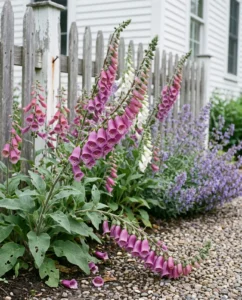
Foxglove
The other tall garden spire readers ask about for poison before they ask about flowers.

Verbena
A long flowering annual for pots and path edges, useful in the same seat-side container planting.
Enjoying our flower guides? Add YourFlowersGuide as a preferred source on Google. It helps more readers find us.
Add to Preferred Sources