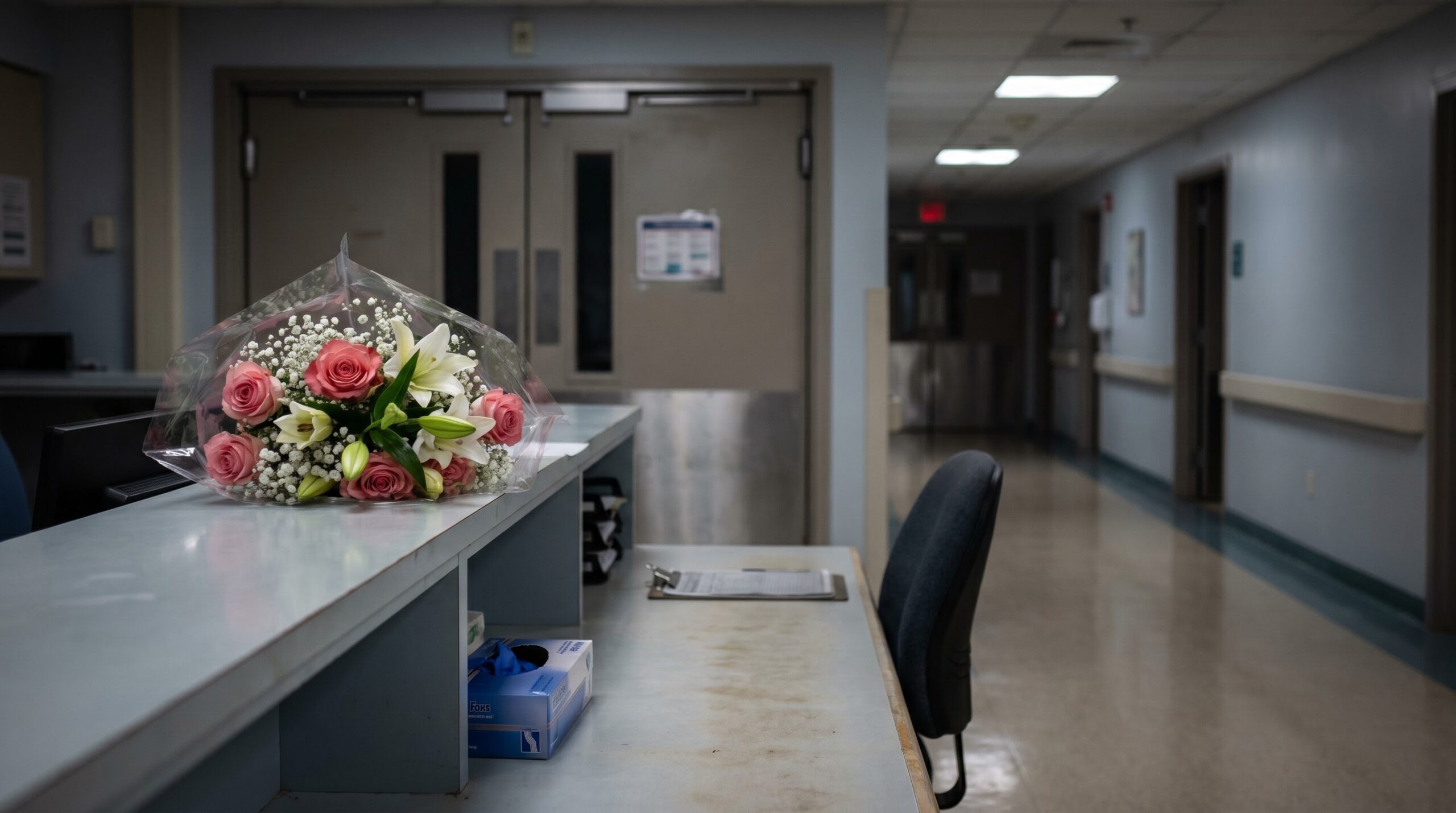
Call before you order, and call again before you send anything else. That's most of the answer in one line: nearly every ICU in the country turns fresh flowers away at the door, no matter how thoughtful the bouquet or how much you need to do something for the person you love right now. This isn't a rule invented to inconvenience you. It's infection control, and it applies just as firmly to someone who already placed an order twenty minutes ago as to someone who hasn't yet. If you're in that first group, panicking because a relative just mentioned the rule after your card was already charged, most florists will redirect or cancel a delivery that hasn't gone out. Call the florist first, then call the unit desk to ask what they'll actually accept instead. A wasted bouquet is a smaller problem than it feels like right now.
What happens when flowers show up at the ICU anyway
Before any of that, confirm the person is still in that bed. ICU stays move faster than florist delivery windows account for, and a bouquet addressed to a room the patient left that morning becomes a delivery nobody there can act on. A call placed directly to the unit, rather than the hospital's main switchboard, tells you whether they're still admitted, still in that specific unit, and what that unit allows, since the policy can differ floor to floor inside the same building.
Flowers that do arrive for an ICU patient never reach the room. Couriers hand packages to hospital staff at a desk rather than walking them to a bed themselves, and the staff member who receives a vase for someone in intensive care has nowhere appropriate to put it. Most units set it at the nurses' station, sometimes for a shift, sometimes for days, and whoever finds space for it is now doing something outside the job they signed up for that morning. That's the part senders don't picture: one more task stacked onto a day that's already full of higher-stakes ones. It's a worry that surfaces again and again in family forums: does sending flowers just add work for a nurse with no real benefit to the patient? Yes, a little, even when no one says so out loud.
Enforcement isn't perfectly consistent day to day either, by various accounts from patients and families who've watched it happen. A stray vase might sit at a station without incident most of the time, then get quietly moved out of sight the day the infection control team walks the floor. That gap between the written policy and how firmly it's enforced in any given hour is exactly why "it'll probably be fine" is the wrong bet to make with someone else's recovery. Don't ask a nurse to be your courier or your vase-washer, and don't treat a rule as soft just because the last bouquet sat there for an afternoon before anyone said anything.
Why hospitals draw this line
The reasons sound bureaucratic until you hear them from the people who wrote the policy. The CDC's guidance on infection control in health-care facilities is direct on this point: do not allow fresh or dried flowers, or potted plants, in patient care areas for immunosuppressed patients, no exception carved out for a nice bouquet. Standing water in a vase and damp soil around a potted plant both give bacteria and mold somewhere to multiply quietly, according to Ohio State University Extension's master gardener program, and a body running on a ventilator or fighting sepsis has none of the immune reserve to shrug that off the way a healthy visitor's body would. One nurse summed it up plainly in an online nursing forum: units like oncology don't take flowers because of infection risk, or, in her words, "bugs."
Space is the second reason, and it's less about biology than geometry. An ICU room gets built around the equipment first and the visitor second: ventilators, monitors, IV poles, sometimes a crash cart parked within reach. There's rarely a windowsill free for a vase, and anything that has to be moved during an emergency becomes one more obstacle between a nurse and a patient. Cleveland Clinic sets that expectation in its ICU guide without softening it: visitors to intensive care may need to skip bringing food or flowers entirely, alongside stricter limits on how many people can be in the room at all. Mercy Hospital in Minneapolis puts it almost the same way: flowers aren't allowed in an ICU patient's room for as long as they remain an ICU patient, and even a potted plant in dirt needs a nurse's sign-off first.
Scent is the reason families argue about most, mostly because it feels like the softest of the four and the easiest to wave off. It isn't, especially in a shared critical-care space where one patient's nausea trigger is unpredictable and the room can't be aired out the way a house can. Lilies are the classic offender, strong enough that people without allergies report headaches from them in an enclosed space. That's one more argument for waiting on the heavily scented arrangement until the setting can actually hold it.
What to send to the ICU today
None of this means arriving empty-handed, and it doesn't mean the gesture has to feel small. A card addressed to the patient, even if they can't read it yet, becomes something a nurse can read aloud or a family member can keep. A foil balloon works where a latex one won't: hospitals that ban balloons almost always mean the latex kind specifically, over worries about allergic reactions and about strings tangling in equipment, and mylar or foil balloons usually clear the same rule that stops a bouquet cold. Nurses who spend their careers around hospitalized patients and families, including several at SUNY Upstate Medical University who shared their go-to comfort ideas, point to smaller things that survive the no-flowers rule easily: a tiny photo album of the people and pets waiting at home, warm socks for whoever is sleeping in a waiting room chair tonight, a favorite snack or a coffee run for the family member who hasn't left the building in two days. One family skipped the flower question entirely and built a bouquet out of Lego bricks for the nightstand, something bright that needed no water and broke no rule, because sometimes the workaround ends up more memorable than the flowers would have been anyway.

If the person in the ICU may not recover, the urge to send something bigger tends to get stronger, and it's worth aiming that energy at the people keeping vigil rather than at the patient's nightstand. A phone call timed for when a family member needs a break, a dropped-off meal, or just showing up to sit with them for an hour reaches further than a bouquet could anyway, in a room built to keep bouquets out. For the fuller list of what actually helps when flowers can't get through a hospital door at any stage, get-well gifts that work when flowers can't get in covers ground this page doesn't have room for.
When flowers finally get their moment
The restriction eases gradually, one stage at a time. The moment to watch for is the transfer out of intensive care, first to a step-down or intermediate unit, and eventually to a regular medical floor, since each move changes what the walls will allow.

| Stage | Fresh flowers | Balloons | What tends to work | What changes it |
|---|---|---|---|---|
| ICU | Not allowed | Latex banned; foil sometimes | Card, foil balloon, small photo, a comfort item cleared by the nurse | Transfer out of intensive care |
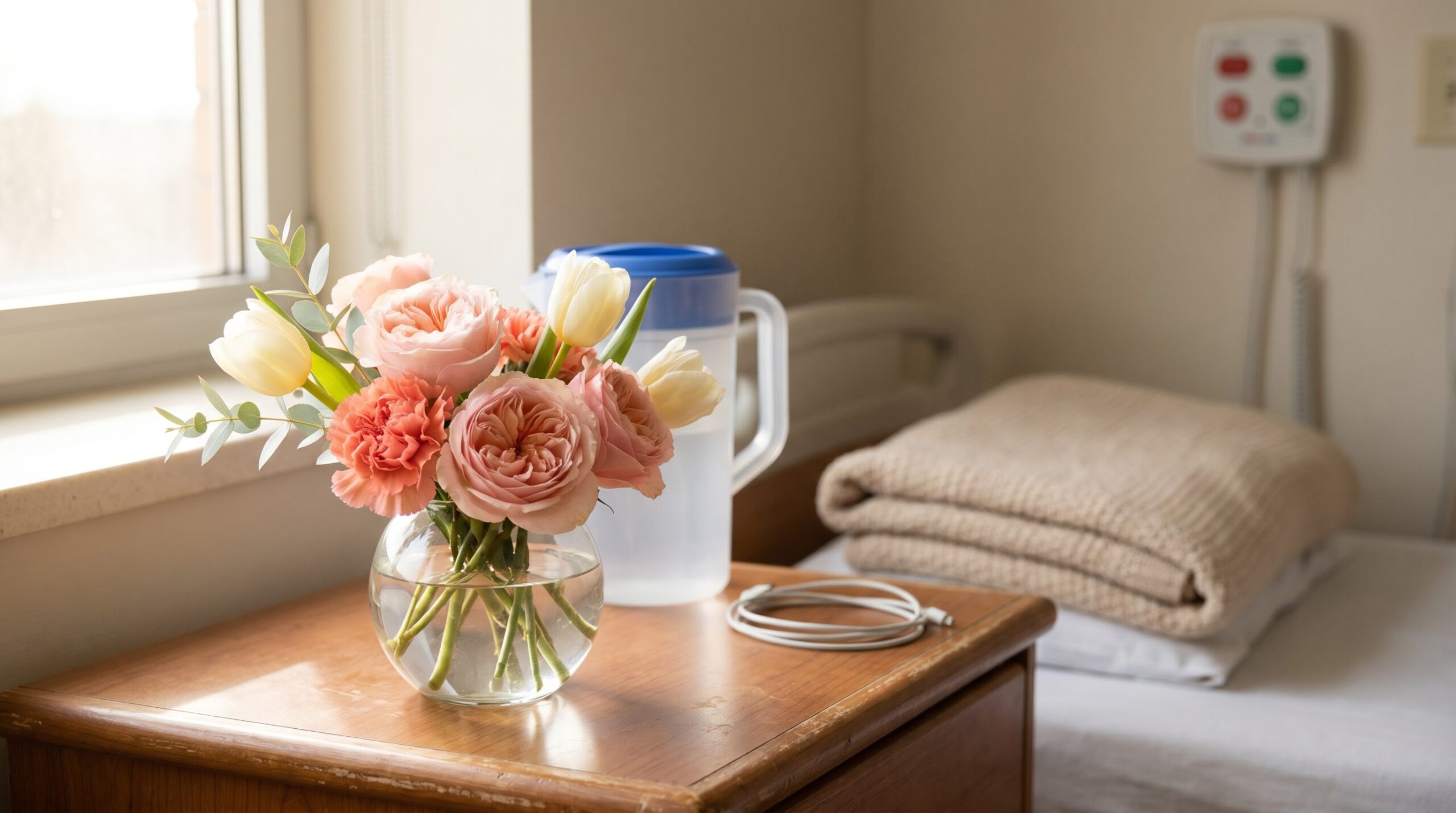
| Step-down / intermediate unit | Small, low-scent arrangements sometimes allowed, unit by unit | Latex still usually banned | A compact bouquet in its own vase, unscented; carnations, roses, or tulips over lilies or chrysanthemums | Whether the room is shared; ask before anything heavily scented |
| Regular room | Generally allowed | Foil and often latex allowed | A full arrangement, or a potted plant for later | Discharge date, for timing the homecoming version |
| Home | No hospital restriction | No hospital restriction | Whatever they actually love; this is where flowers finally do their full job | Nothing. This is the finish line |
Swipe →
Even inside a regular room, what's welcome still varies hospital to hospital and floor to floor, which is where whether you can send flowers to a hospital, unit by unit, matters more than any single rule this page can give you. A shared step-down room is also exactly where the scent problem resurfaces, so this is the stage to skip the lily-heavy arrangement. The same strong scent behind why lilies overwhelm a hospital corridor is exactly what bothers a roommate who never agreed to smell it, whatever the bloom itself is meant to say. Once flowers do make sense again, choosing a bloom that says the right thing is worth more thought than it usually gets when everyone's first instinct is speed.
Common questions
Are fake or silk flowers allowed in the ICU? Usually, yes. Most ICUs don't restrict artificial flowers the way they restrict fresh ones, since silk and plastic carry none of the bacteria or mold that worries infection control. A few strict units still say no to anything taking up counter space near equipment, so it's worth a quick call before you send one, especially into a small room.
Can you send flowers to the NICU for a new baby? Rarely, and for the same underlying reason as the adult ICU: premature and medically fragile newborns have even less immune reserve to spare. Most NICUs skip flowers entirely and suggest supporting the parents instead, a meal, a gift card, or something for an older sibling at home going through a strange stretch too.
Are flowers allowed in the CCU or cardiac intensive care? The CCU runs on the same logic as any other ICU: a critical-care unit built around monitors and often unstable or immunocompromised patients, so fresh flowers get the same no they'd get anywhere in intensive care. Confirm with the cardiac unit directly, since some hospitals draw the line slightly differently between step-down cardiac care and full CCU.
Is it better to bring flowers in person than have them delivered? No, and it can go worse: a florist at least calls ahead, while you might drive over and get turned away at the desk in front of the family you came to support. For timing around a surgery rather than a sudden admission, timing flowers around surgery and recovery at home is worth reading first.
Is the "no flowers in the ICU" rule real, or something hospitals quietly dropped? It's real, and long-standing rather than some recent add-on. How strictly a given unit enforces it can vary day to day, which is why a rule that seemed soft on one visit can turn firm on the next.
None of this has to get resolved beyond two calls: one to the unit desk to confirm the patient's still there and what that specific unit allows, and one to a florist or gift service if there's an order to redirect. Send what actually clears the door this afternoon, a card, a foil balloon, something for whoever is holding down the waiting room chair, and save the flowers themselves for the room that can finally hold them.
Enjoying our flower guides? Add YourFlowersGuide as a preferred source on Google. It helps more readers find us.
Add to Preferred Sources