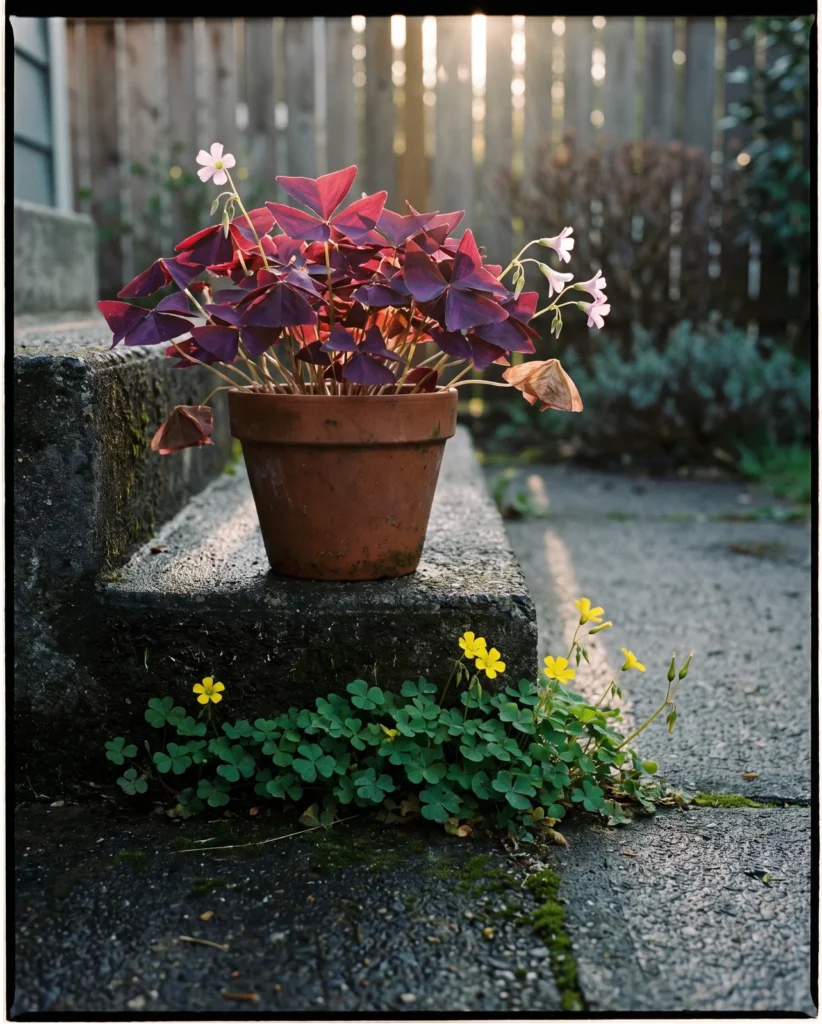
Which oxalis do you have
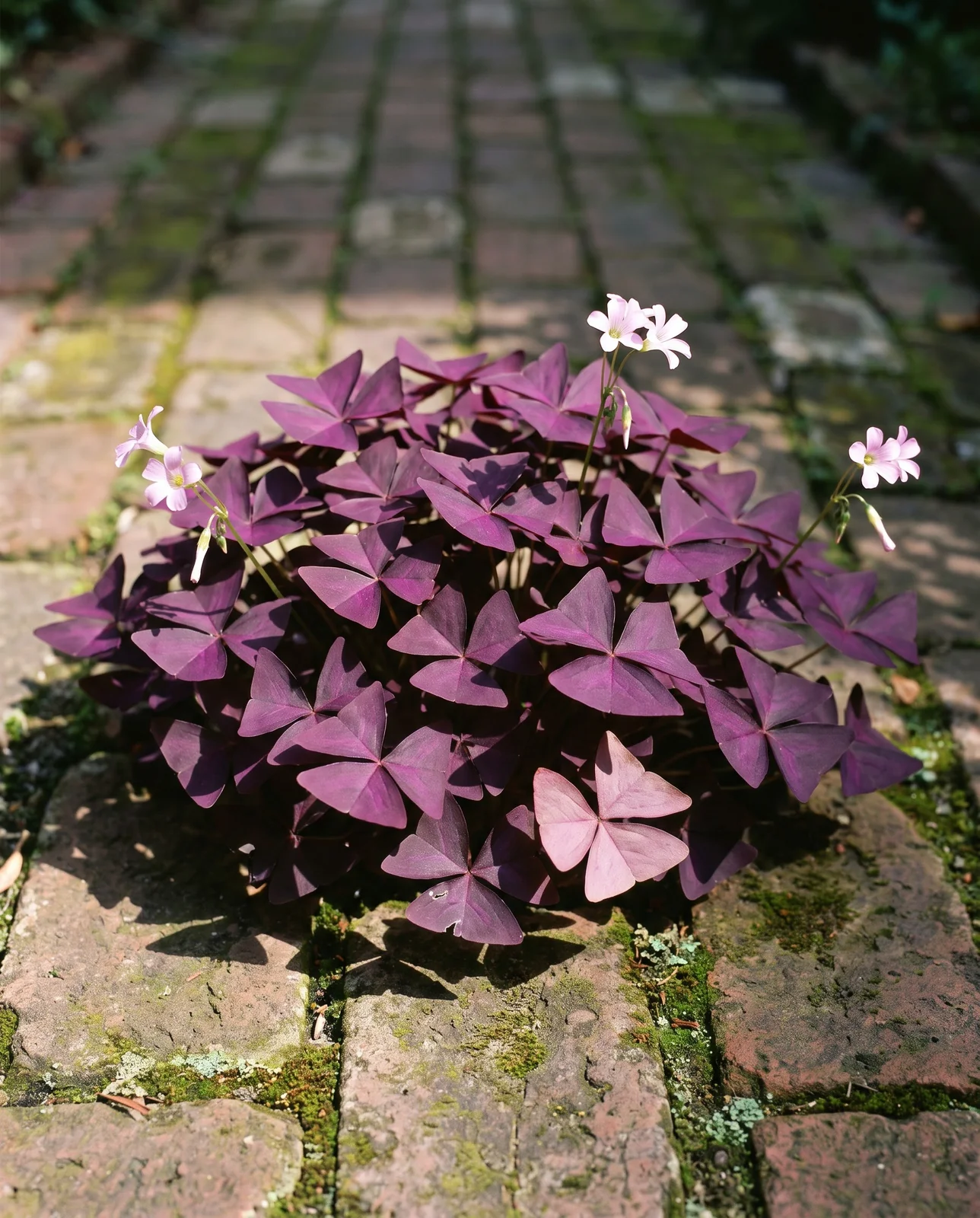
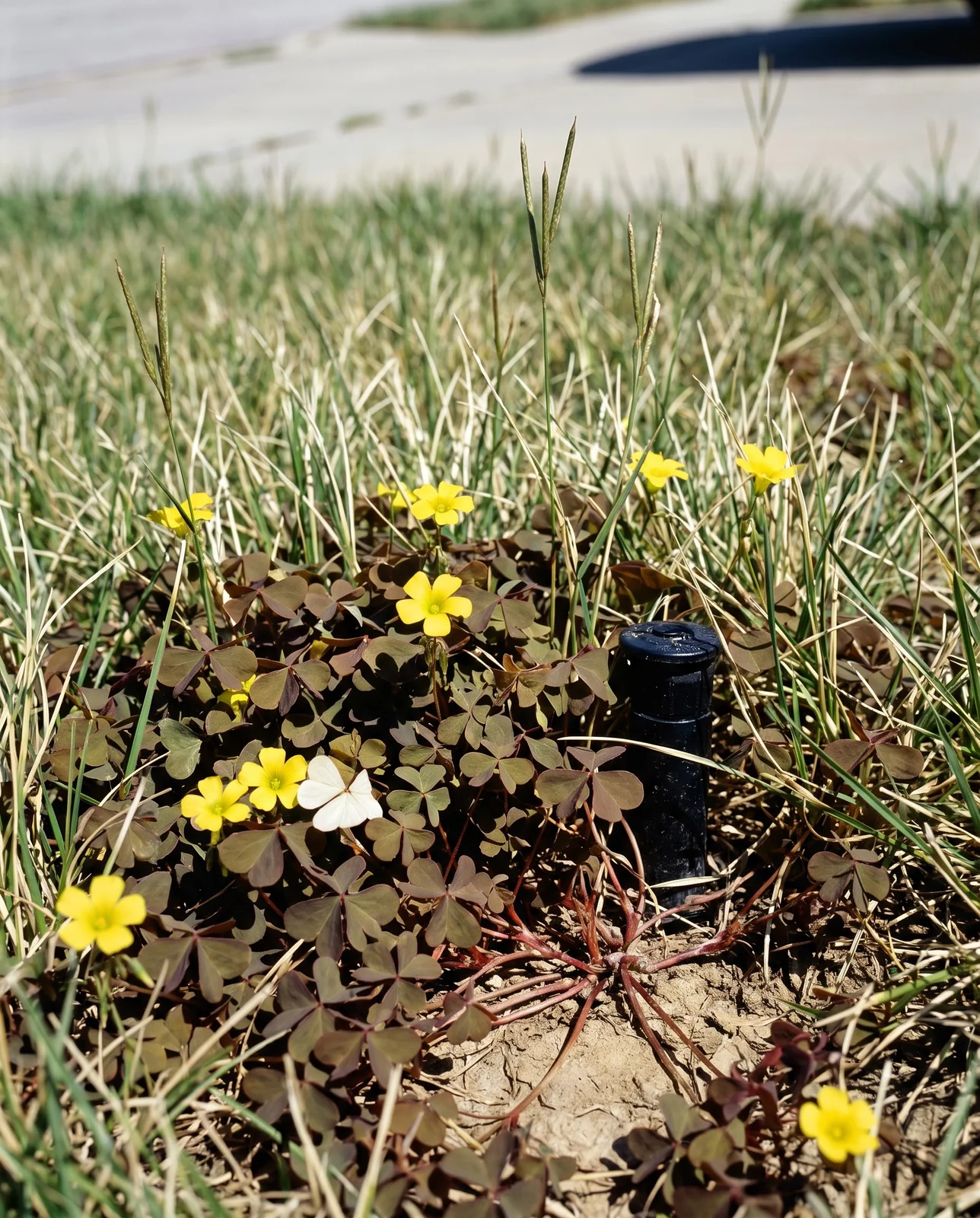
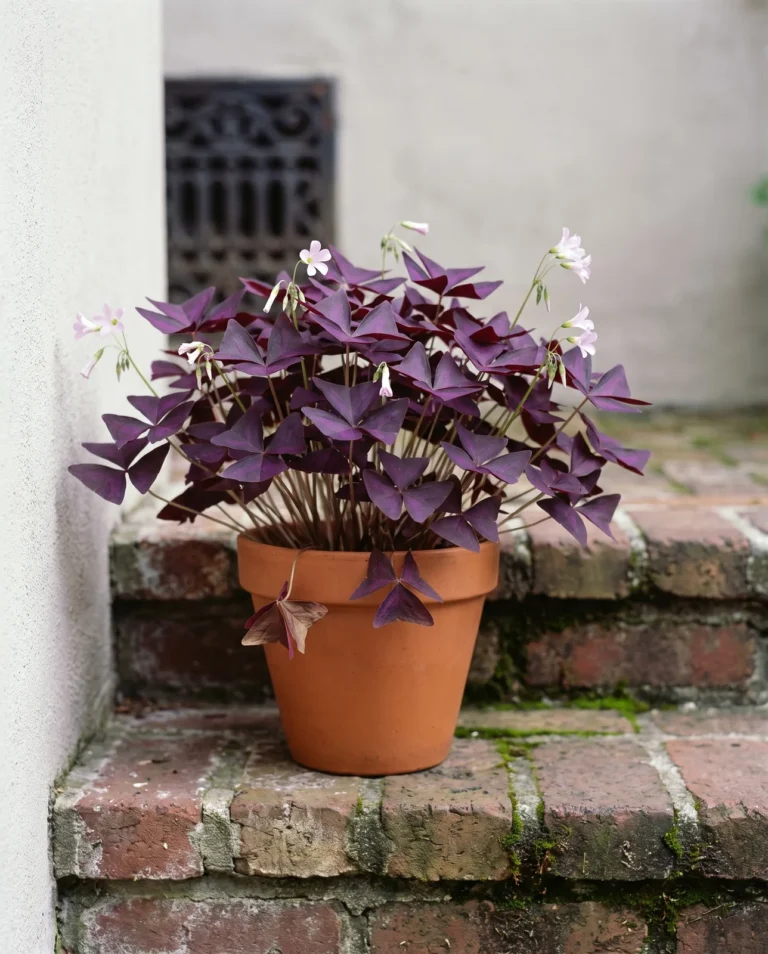
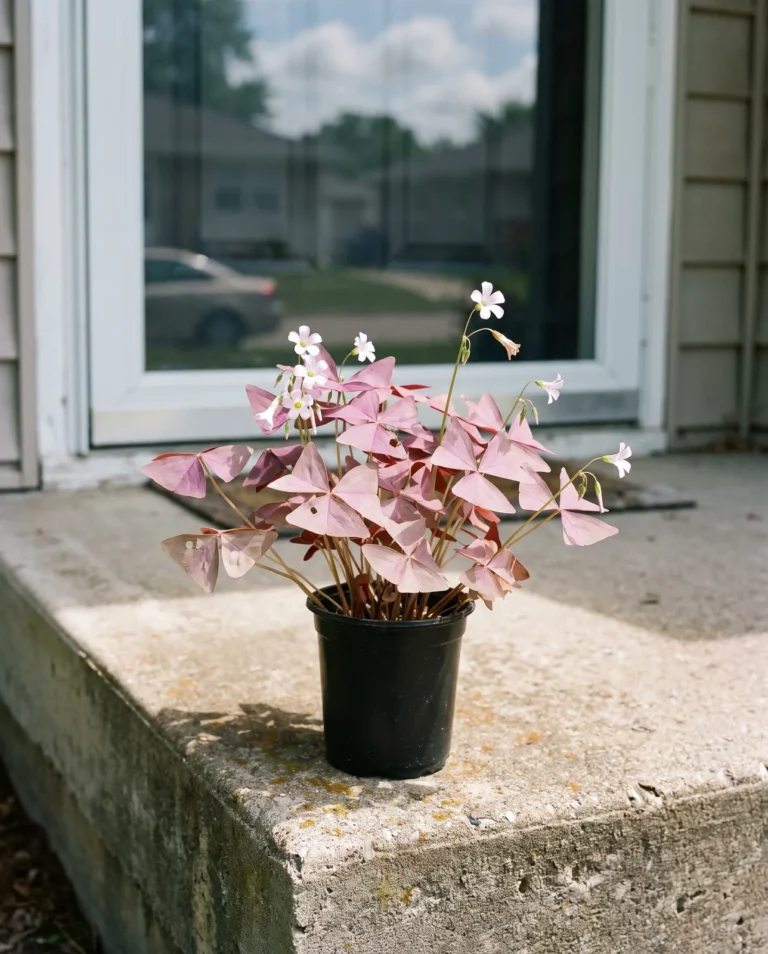
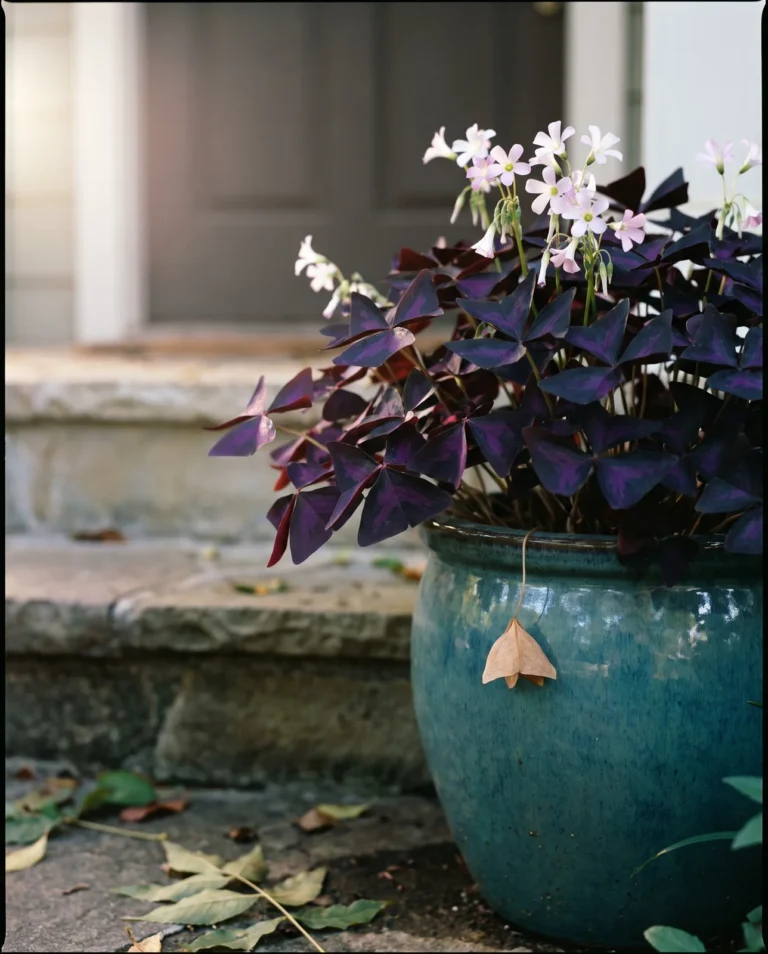
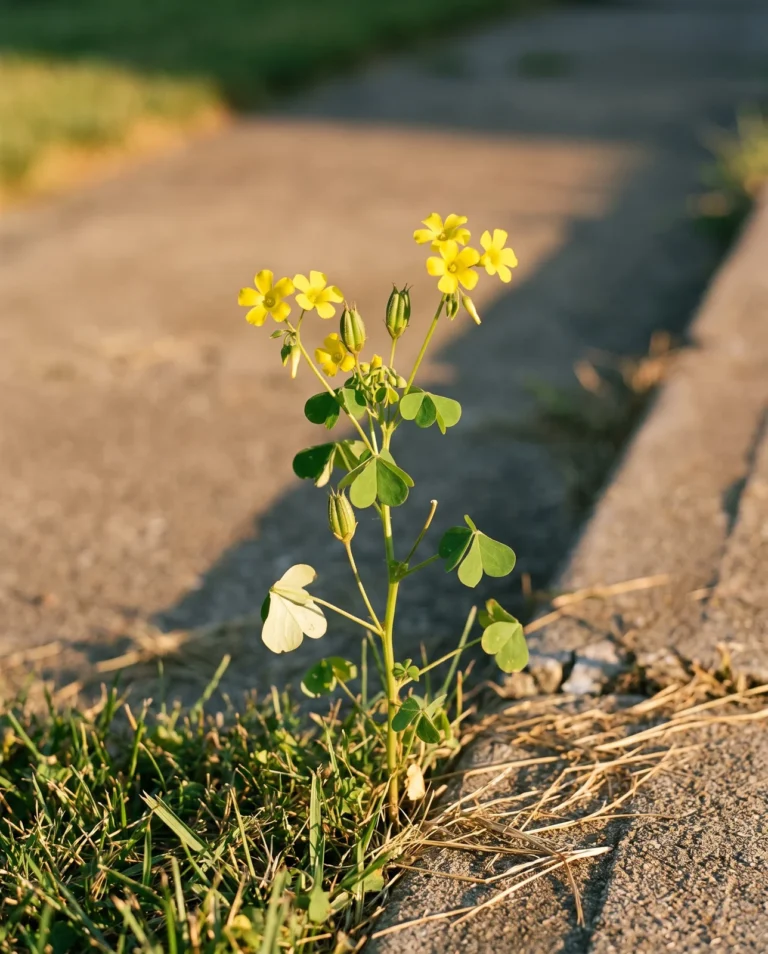
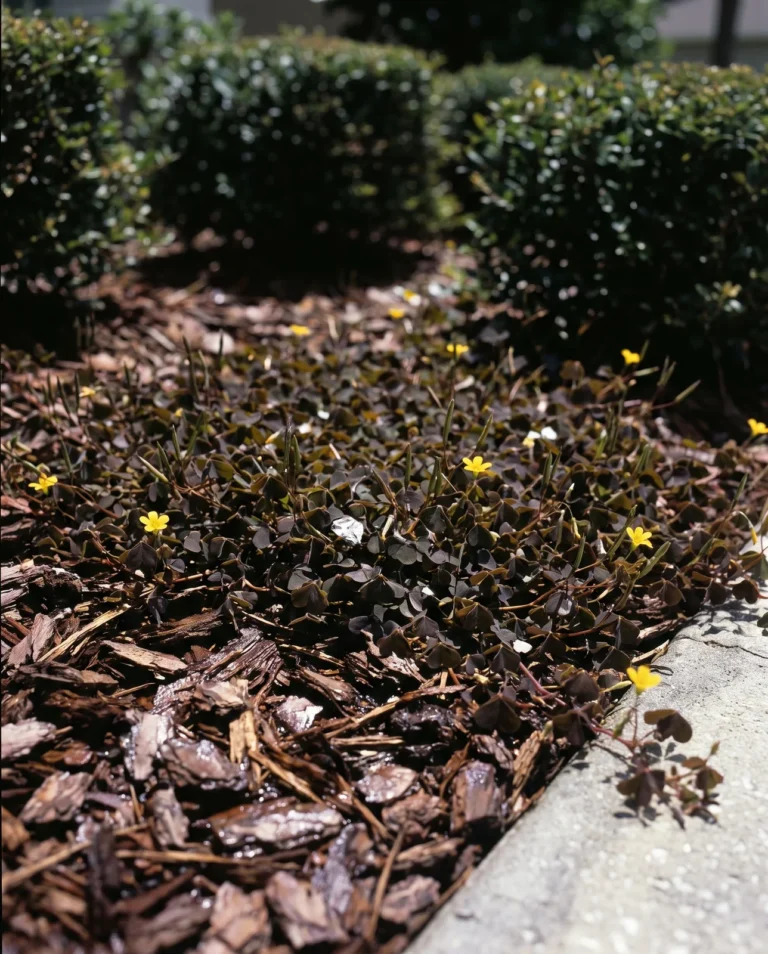
You can tell which oxalis you have by looking at the leaves, the flowers, and where the plant is growing. A potted plant with deep purple triangular leaflets and pale pink to white flowers is purple shamrock, Oxalis triangularis. If it is spreading outdoors with small yellow flowers and heart-shaped leaflets, it is usually one of two weeds. Yellow wood sorrel, Oxalis stricta, is an aggressive green-leaved perennial found most often in turf. Creeping wood sorrel, Oxalis corniculata, spreads on creeping stems with foliage that ranges from green to dark purple, turning up most often in landscape plantings.
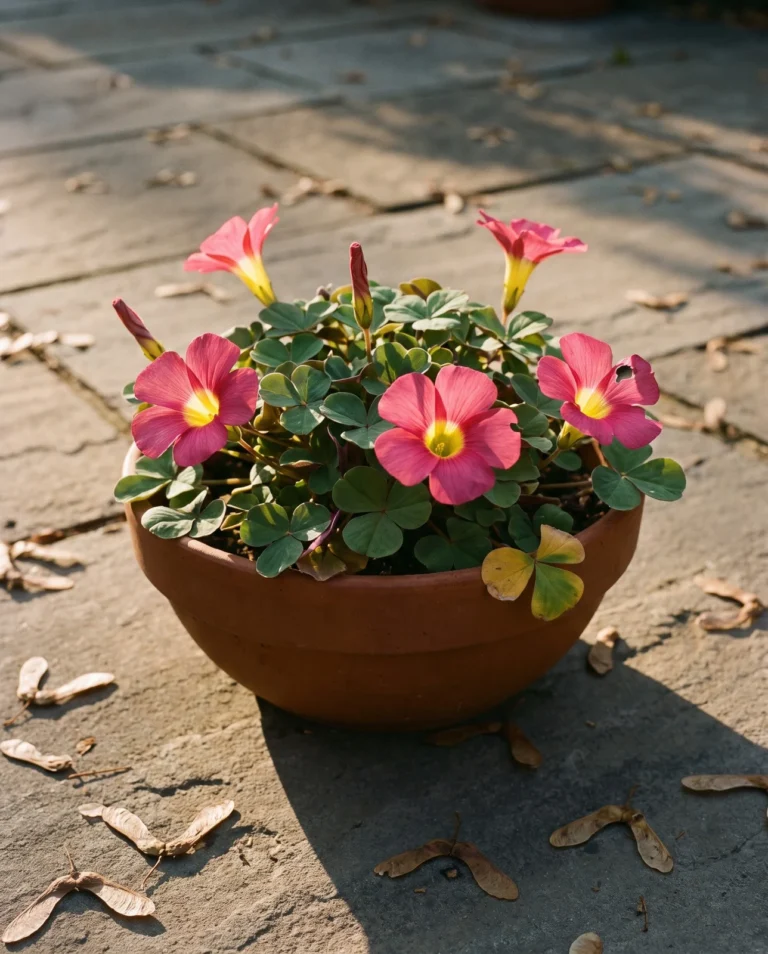
The genus holds anywhere from over 550 or 582 accepted species up to about 850. Purple shamrock is grown indoors for its clumping habit, pale pink to white flowers, and green or deep purple triangular foliage. Other species arrived as garden flowers and became stubborn weeds. Pink wood sorrel was planted as an ornamental and escaped into gardens and lawns across several southern states. Pink oxalis forms a low, stemless mound with clover-like leaves and 5-petaled pink, white, or magenta flowers, though it often turns weedy. Bermuda buttercup and creeping wood sorrel become pernicious invasive weeds whenever they escape cultivation outside their native ranges. That leaves gardeners with two very different jobs: caring for a potted plant through its seasonal rest, or weeding out persistent invaders from the lawn.
What oxalis is, and how it differs from clover
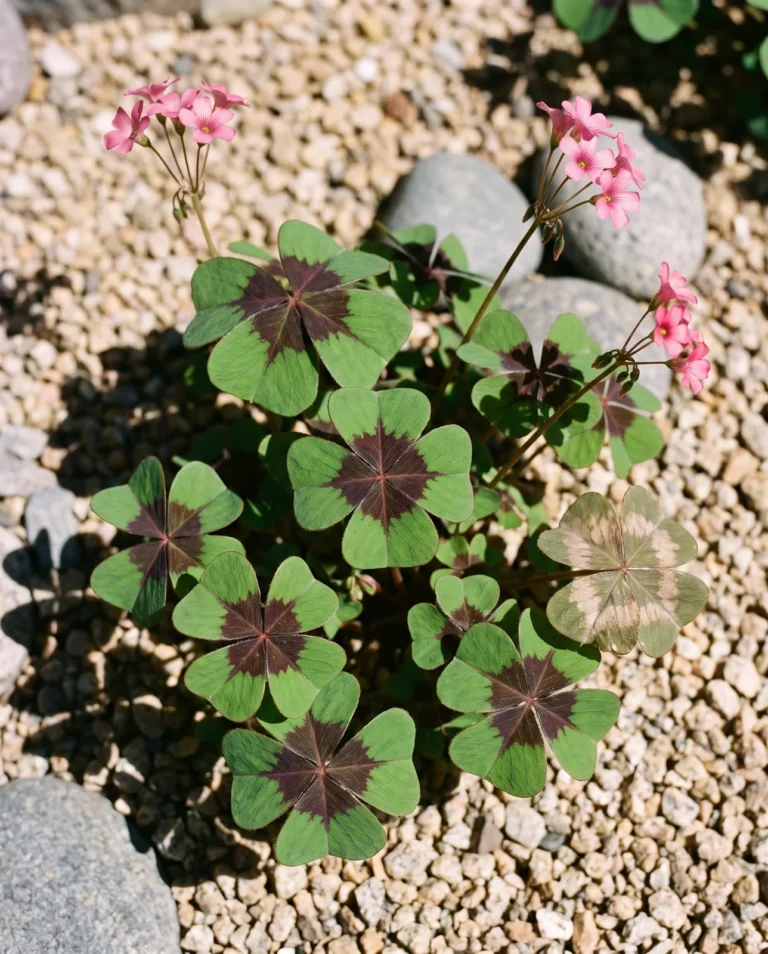
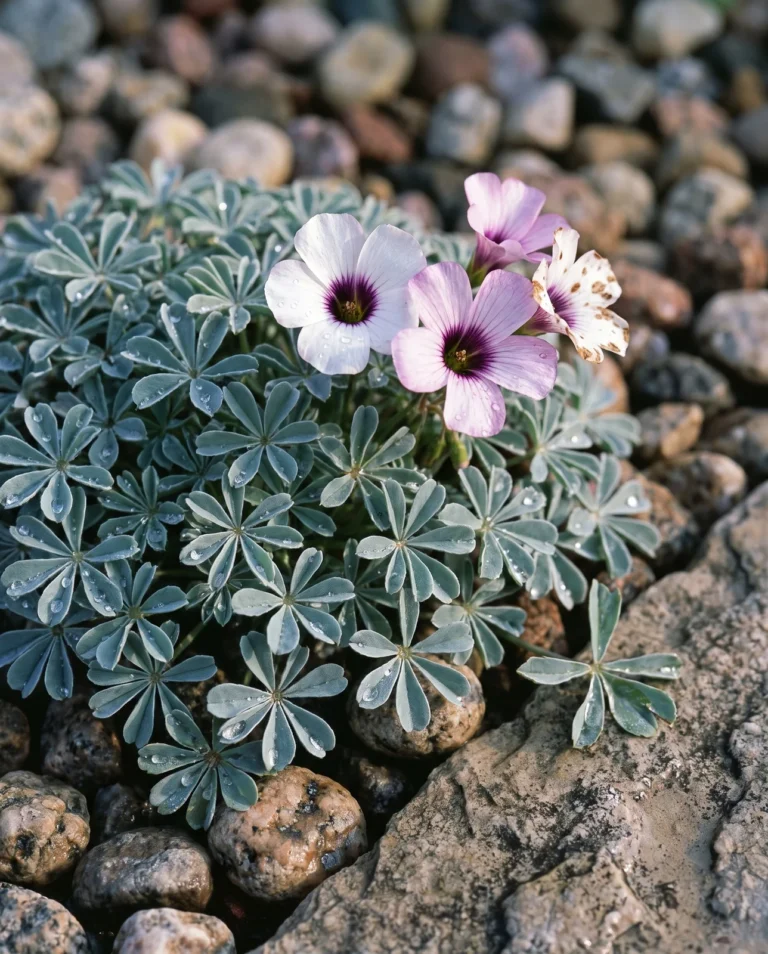
Oxalis belongs to the wood sorrel family, Oxalidaceae. These low-growing plants are known for clover-like leaves and five-petaled blooms. The easiest way to tell oxalis from true clover is the leaf shape. Oxalis leaflets are heart-shaped with a notch at the tip, while clover leaflets are rounded. Each flower has five petals, usually joined at the base, and ten stamens that ripen into a small seed capsule. The name Oxalis comes from the Greek word for sour or sharp, pointing to the acid taste of the leaves. A couple of species break the three-leaflet pattern. Oxalis tetraphylla grows four regular leaflets and is sometimes sold as a four-leaf clover. Oxalis adenophylla spreads its leaves into as many as 22 leaflets arranged like a fan.
The family grows wild across North, Central, and South America, Europe, Australia, and parts of Asia and Africa. The greatest variety centers in tropical Brazil, Mexico, and South Africa. Underground, the plants store energy in very different ways. Purple shamrock grows from scaly rhizomes that hold water and food like a long bulb. Several species spread through small bulbils that break away from the parent plant to start new growth. Because those growing points stay hidden underground, mowing or pulling off the foliage leaves the plant ready to return.
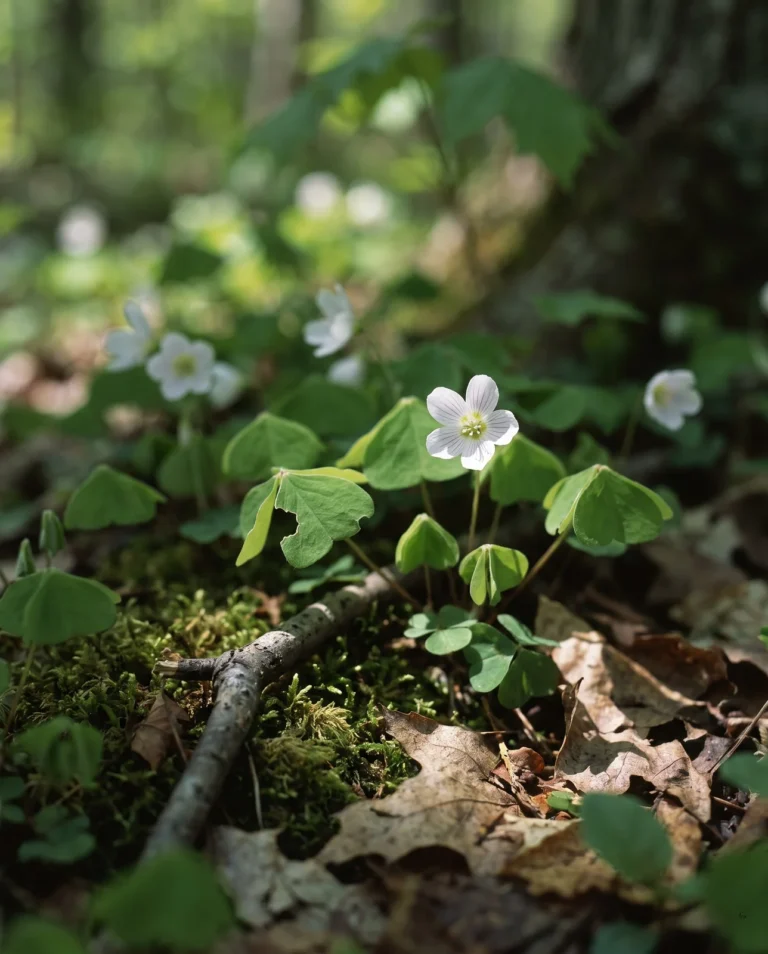
The shamrock sold for St. Patrick's Day is an oxalis. That name covers five different species: Oxalis acetosella, Oxalis deppei, Oxalis purpurea, Oxalis regnelii, and Oxalis triangularis. Common wood sorrel, Oxalis acetosella, is the traditional Irish shamrock of the group. It carries green triangular leaflets and white flowers, suited to shady spots and woodland borders. Because five different plants share that holiday name, advice for a potted shamrock often varies depending on which one you brought home.

The leaves fold at night, and what actually triggers it
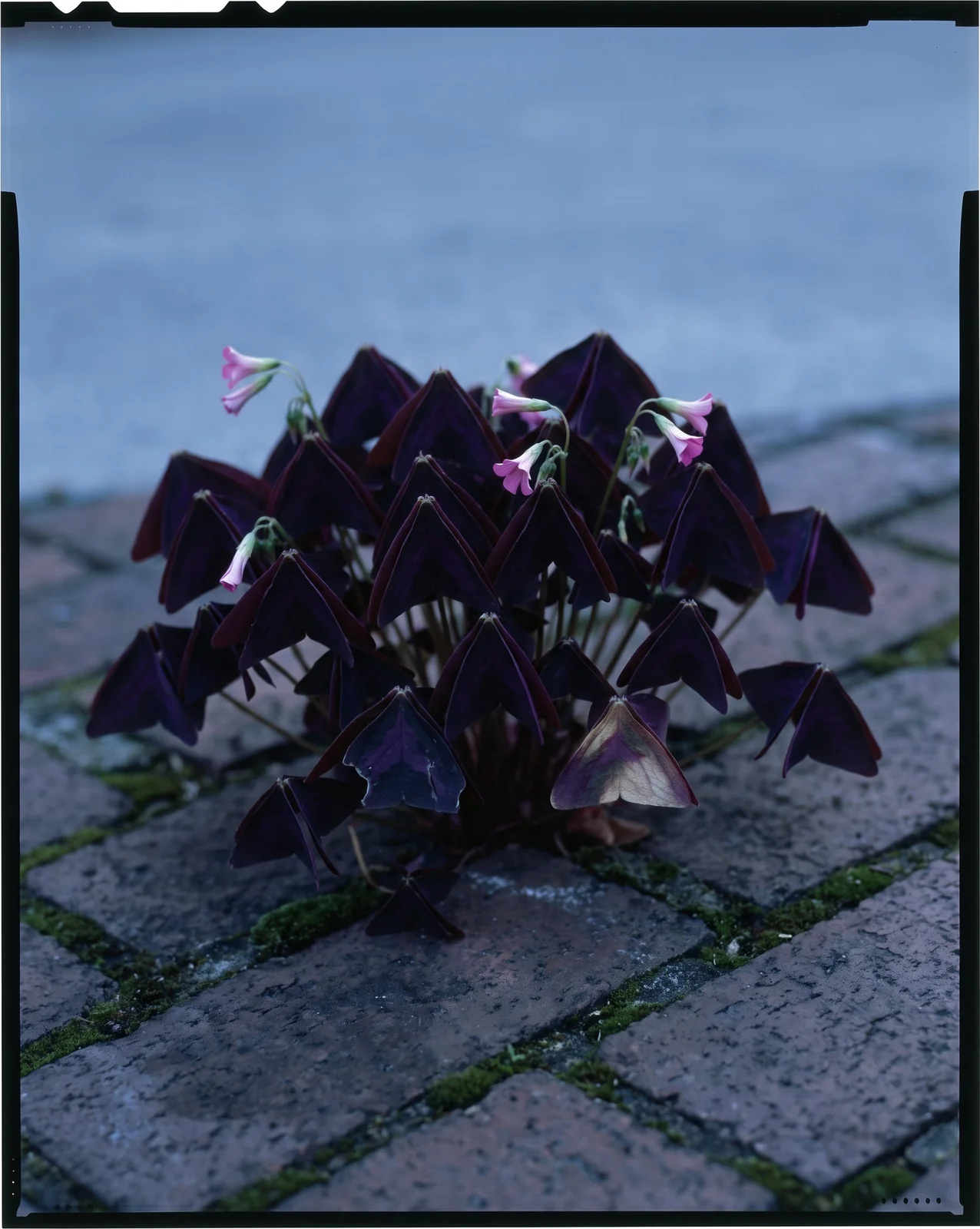
Oxalis folds its leaves in response to changing light and an internal daily clock. Leaves and flowers close up at night and on cloudy days, reopening when the sun returns. Creeping wood sorrel folds its foliage downward under intense sun as well as after dark, and yellow wood sorrel droops at night before opening again in daylight. This folding, called nyctinasty, is powered by a motor organ called the pulvinus, where specialized cells shift water and ions to move the leaflet. A core circadian clock gene, OtLHY, controls that daily rhythm alongside plant hormones and calcium signaling.
The leaflets can also fold down if disturbed, alongside closing at night. In daily growth, the movement stays tied to light and the daily cycle, folding in darkness or harsh midday sun and expanding in daylight. The purpose of the movement is not entirely understood, though it likely helps the plant conserve energy.
Is oxalis edible, and how safe is it
Oxalis is safe to eat in small amounts, with leaves, flowers, seeds, and roots that all carry a pleasant sour lemon taste. Yellow wood sorrel is rich in vitamin C and was once used to treat scurvy. Keep servings small, because oxalic acid is an antinutrient that can block the body from taking in calcium. The risk of poisoning is low, with no documented cases in humans. Livestock that eat large amounts can develop cramps, trembling, and staggering. All parts of the plant produce soluble calcium oxalates, including the leaves, flowers, seeds, stems, and roots. Those oxalates make the whole plant mildly toxic, though eating a little generally causes little trouble.
The tiny oxalate crystals are harder than tooth enamel and do not break down with leaching, pounding, or cooking. For household pets, oxalis requires caution. The ASPCA classifies Oxalis species as toxic to dogs, cats, and horses under the names shamrock plant, good luck plant, and sorrel. Eating large amounts can trigger colic in horses, along with tremors and drooling. Kidney damage is possible, but kidney failure is rare in dogs and cats. If a curious cat or dog grazes on your potted shamrock, watch for stomach upset and check in with your vet.
Growing oxalis as a houseplant
Growing oxalis indoors comes down to bright light, cool air, and a light hand with watering. The plant does best in full sun to bright indirect light, planted in a moist, fertile, well-drained potting mix with a slightly acidic pH. Purple shamrock needs medium water, full sun to part shade, and stays low maintenance throughout the year. Indoor temperatures between 50 and 75 degrees Fahrenheit suit oxalis well. The ideal sweet spot runs from 60 to 75 degrees, with afternoon shade to shield the foliage from extreme summer heat. Feed the pot monthly while it is actively growing.
Much of how oxalis behaves comes down to what is happening beneath the soil line. Those underground reserves keep purple shamrock low maintenance and quick to recover.
It dropped every leaf, and that is normal
A pot that has lost every leaf is usually only resting. Purple shamrock may go dormant in autumn, or whenever it gets too hot or dry, so ease off on water and wait for new growth. Unlike a peace lily that keeps its leaves all year, an oxalis drops its foliage to rest, so a bare pot can look finished. Caring for the resting plant takes little work: water less as the foliage dies down, remove the dried leaves, place the pot in a cool, dark spot, and stop watering. New growth should emerge in 1 to 3 months, and the pot then goes back to a sunny spot. In some pots, leaves take about 4 to 5 weeks to show.
The timing is flexible, and light plays a large part in it. A plant can slip into full dormancy in a west-facing window while resting only partly in an east-facing spot. Short winter days can also bring on a partial rest indoors, even if the plant skips dropping every leaf in some years. Outdoors in zone 8 and warmer, that rhythm reverses: purple shamrock goes dormant in winter and reemerges in spring. Between a potted plant indoors and a clump in the garden, oxalis simply follows two different calendars. A rest in July and a rest in January are both natural.
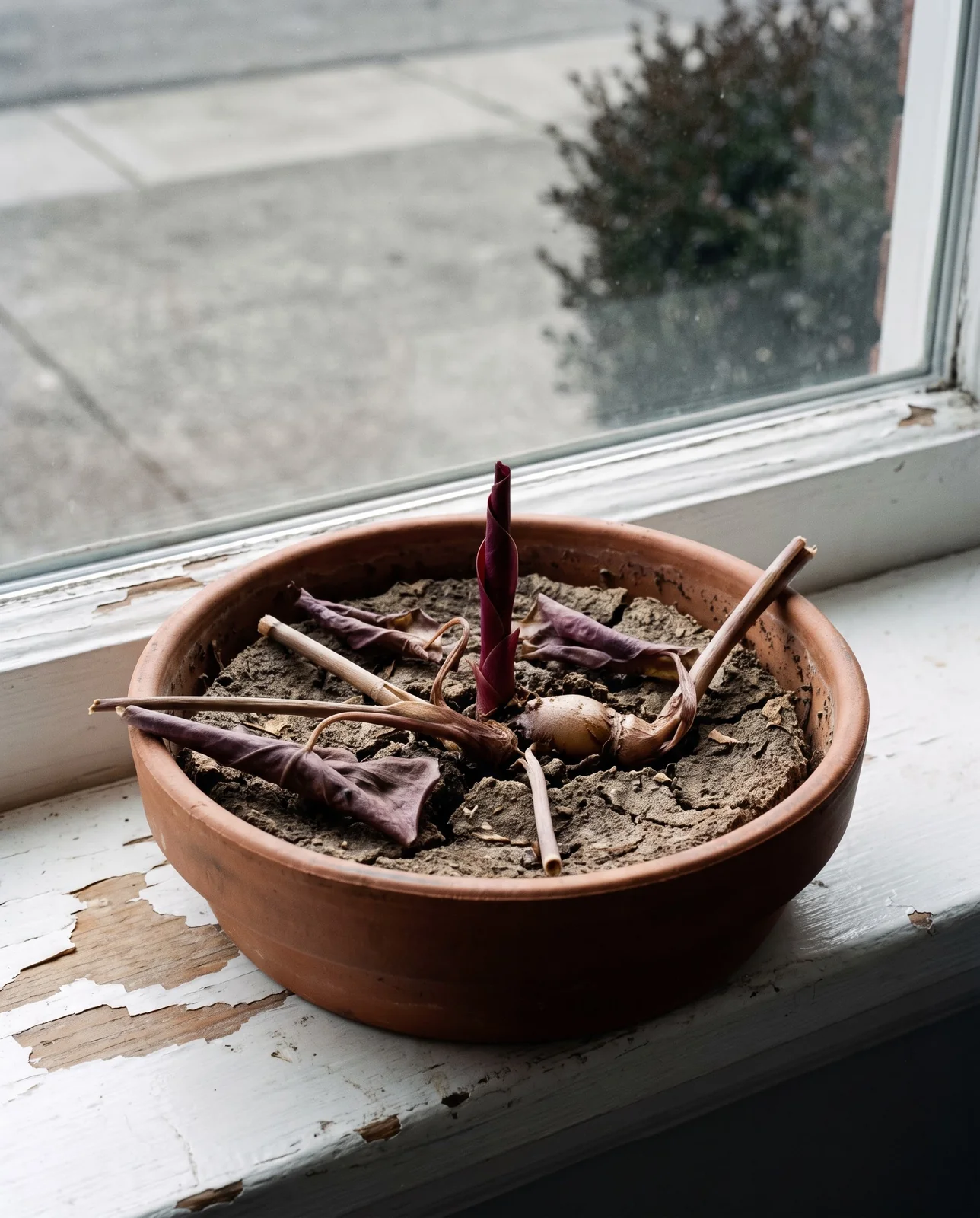
Dormant or dying: work down the checks
Run these checks in order when a potted oxalis looks finished. The first two settle most cases before anything gets repotted.
Planting oxalis bulbs
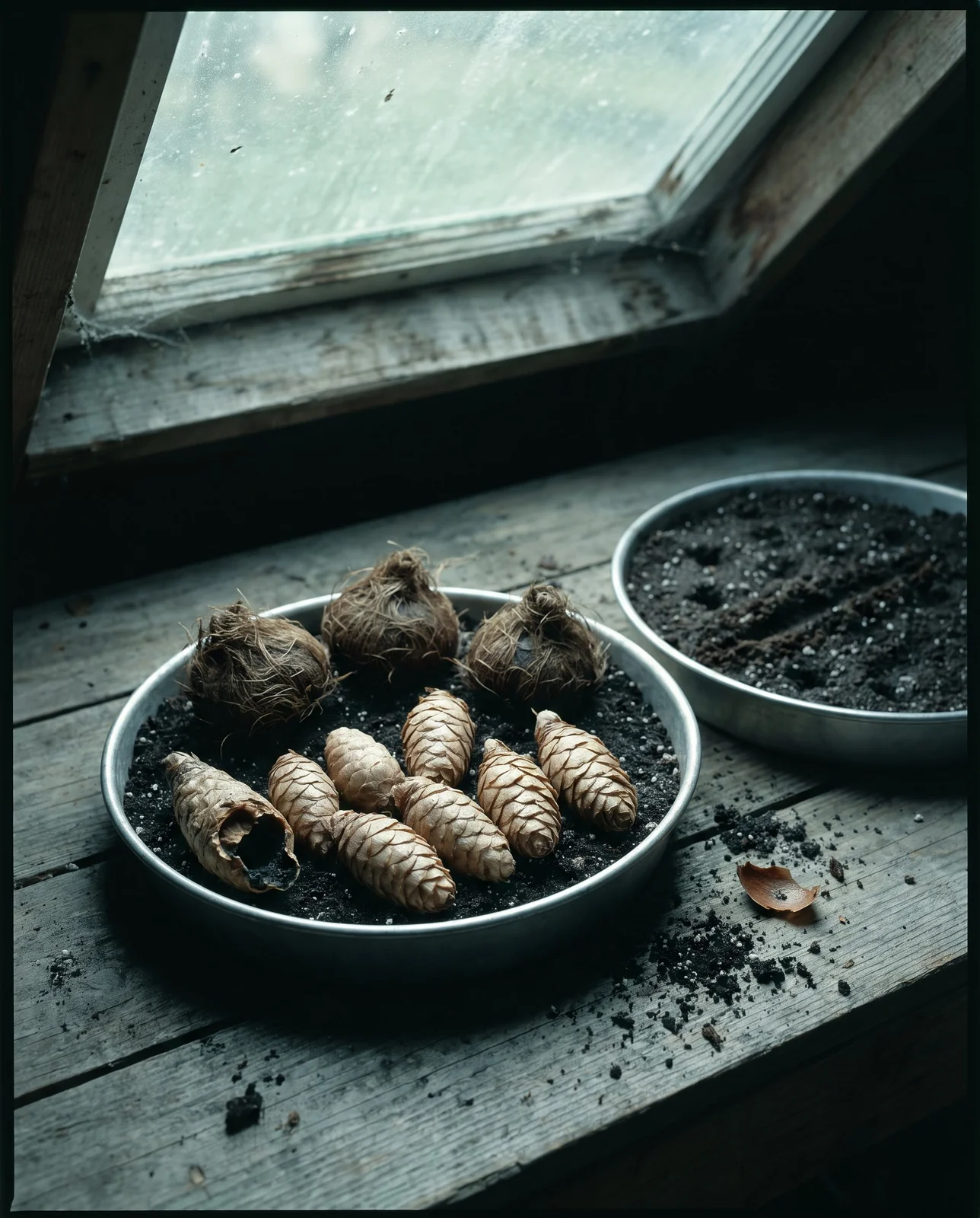
Set oxalis shallow in the soil, giving each root room to spread. Plant the bulbs or rhizomes 1 to 2 inches deep with the pointed end facing up, spacing them about 3 to 4 inches apart. Oxalis adenophylla is the exception, growing from whiskery corms. Plant those corms 4 inches deep and 4 inches apart, which comes to roughly 9 per square foot.
Spring is the natural planting window both indoors and out. Oxalis rests during summer heat and blooms best when planted in spring to match its regular flowering season. In the garden, plant after the last frost in zones 6 to 9, or plant year-round in zone 10 and warmer. Oxalis adenophylla follows an autumn schedule: plant its corms in fall once ground temperatures cool to about 55 degrees Fahrenheit, after about two weeks of night temperatures in the 40s. Sprouts usually appear in 2 to 4 weeks. Foliage typically emerges in 3 to 4 weeks, with flowers arriving 4 to 6 weeks from planting, extending to 8 to 10 weeks in some cases. To increase your plants later, divide an older rhizome or break off individual scale leaves, which will produce new plants.
Oxalis outdoors, and why the zone depends on the species
Outdoor hardiness belongs to the individual species. Broad genus ranges span zones 5 to 10 or zones 6 to 10, but individual species differ sharply. Purple shamrock survives outdoors in zones 8 to 11, covering zones 8a through 11b. Cape oxalis, Oxalis purpurea, stays small at only 4 to 5 inches tall and is hardy in zones 9 to 10. It cannot survive freezing winters like those in St. Louis, so grow it in pots brought indoors for winter, keep it dry, or lift and store the bulbs in a dry medium. Creeping wood sorrel tolerates colder ground from zone 4a through 8b, surviving much farther north than the indoor types and enduring in chilly lawns.
The hardiest ornamental is Oxalis adenophylla, which is generally hardy in zones 4 to 9, and can reach into zone 10. Its cold tolerance comes from bulbs adapted to freezing while dormant, making them prone to rot in mild winters where the ground never freezes reliably. In zone 6 and colder, dig tender bulbs before the first frost to store dry and cool until spring, or keep them in pots that come indoors.
In the garden, ornamental types earn their place in containers, along edges, and in quiet shade under trees. Wood sorrel settles naturally into shady spots and woodland borders. A few species, however, can quickly run out of hand. Plants like pink wood sorrel, pink oxalis, Bermuda buttercup, and creeping wood sorrel easily turn into persistent garden weeds once they escape into beds and lawns. With stems and bulbils that spread underground, an unchecked border clump can easily wander into the lawn.
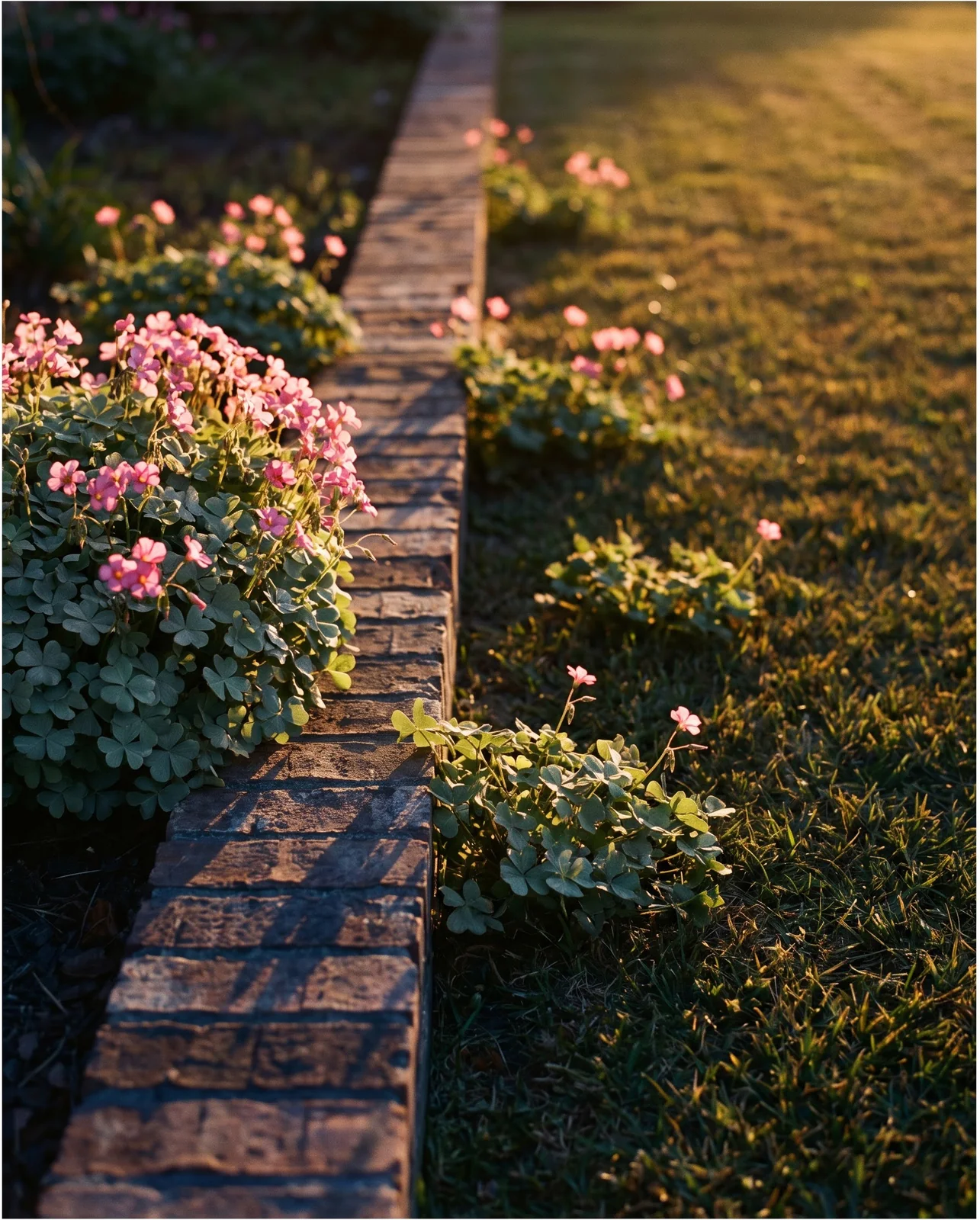
Getting rid of oxalis in a lawn
Pulling oxalis by hand rarely clears a lawn, because the plant regrows from pieces left in the soil while shedding fresh seed. Most wood sorrels store energy in tubers, which makes them resistant to common weed controls. When you pull creeping wood sorrel, the taproot or stolons often break off underground, allowing the plant to regrow. Once established, removing every rhizome and stolon completely is nearly impossible. Yellow wood sorrel also spreads below ground, forming new plants at nodes along its taproots and rhizomes. The seeds spread just as fast. A single yellow wood sorrel can produce 5,000 seeds with close to 100 percent germination. When disturbed, its seed capsules burst open and can fling seeds up to 13 to 16 feet away. Creeping wood sorrel can also produce more than 5,000 seeds per plant and cast them 10 to 16 feet. These seeds have no dormancy, so they can sprout as soon as they land. On the upright species, yellow flowers, capsules, and fresh seeds keep appearing from late spring into early fall.
The belief that oxalis spreads only by bulbs holds true for only one common weed. Bermuda buttercup (Oxalis pes-caprae) reproduces by bulbs alone, with no documented viable seed in California and rarely any elsewhere. A single plant forms about a dozen small bulbs a year, each under 1 inch long, right at the base of its leaf rosette. Yellow wood sorrel has short rhizomes and never forms bulbs. Multiplying by seed and by creeping rhizomes together makes it very challenging to control. Stems can also take root at their nodes, while mature capsules shoot seeds high enough to reach 3-foot raised beds. That split habit matters for lawn care: some preemergence herbicides control seedlings from seed, but they have no effect on plants emerging from rhizomes.
Chelated iron (iron HEDTA) offers a gentle starting point on lawns. Sprayed on turf, it injures oxalis and dandelions within 1 day and controls them in about 3 days without hurting the grass. These iron products control or suppress common broadleaf lawn weeds while leaving grass unharmed. Because iron leaves no soil residual, new oxalis seedlings can appear within about a month, though in fewer numbers than before. Selective broadleaf herbicides reach further. Triclopyr and fluroxypyr are extremely effective against seedling and established creeping wood sorrel in cool-season lawns. Triclopyr harms bermudagrass and kikuyugrass and is not labeled as a stand-alone spray for warm-season turf, while fluroxypyr is safer and very effective. A single application of triclopyr is often enough, but a follow-up 3 to 6 weeks later might be needed for complete control. Herbicide combinations with 2,4-D, dicamba, MCPP, and fluroxypyr also control yellow wood sorrel effectively in turf.
Timing herbicide applications depends on the weed's natural calendar. Most wood sorrel seeds sprout in late winter or early spring, though some germinate at any point during the year. To tame a heavy infestation, apply preemergents up to 3 times a year, timed to early fall, midwinter, and late spring. Preemergent options for home lawns include dithiopyr, isoxaben, oryzalin, pendimethalin, and prodiamine. When applying post-emergent sprays, pick a calm day with temperatures below 90 degrees Fahrenheit, and water the grass the day before. Standard lawn care will not crowd the weed out. Mowing, fertilizing, and watering do not control creeping wood sorrel, because the weed simply grows more vigorously as the turf thrives. The weed survives and sets seed even when mowed as close as 1/4 inch, so wash mower blades before cutting clean grass.

Which control to use, in order
Work through these questions in order before buying a weed killer. The first two decide whether you face a morning of digging or a season-long plan.
Getting oxalis out of beds and pots
Dig out the entire clump along with the surrounding soil, because garden beds offer no selective spray once the weed emerges. No selective post-emergent herbicide is available to clear creeping wood sorrel from ornamental plantings once it is up. If you use a chemical control, apply a non-selective spot treatment to thoroughly wet the foliage of seedlings and young plants before they flower. After clearing the weeds, keep light off the ground. Oxalis seeds need light to germinate, so spreading 2 to 3 inches of mulch over open soil blocks the next flush. A lighter layer around garden flowers and shrubs helps prevent new seeds from germinating in planted beds. What you dig up depends on the species. Pink wood sorrel grows from perennial bulbs, while creeping wood sorrel spreads as a trailing weed.
Solarization and sheet mulching can clear an empty garden bed that you can leave fallow for a season. For solarization, spread a clear plastic tarp over the dirt to trap summer heat for at least 4 consecutive weeks during June, July, or August. You can also till, fertilize, and water first to encourage germination, then cover the bed securely with clear plastic for a month or two. Sheet mulching lays down 6 to 10 layers of cardboard and newspaper covered by 4 to 6 inches of mulch or compost. These methods clear seeds and seedlings, but mulches and covers have little effect on dormant bulbs, leaving them to be dug out by hand.

Oxalis types worth telling apart
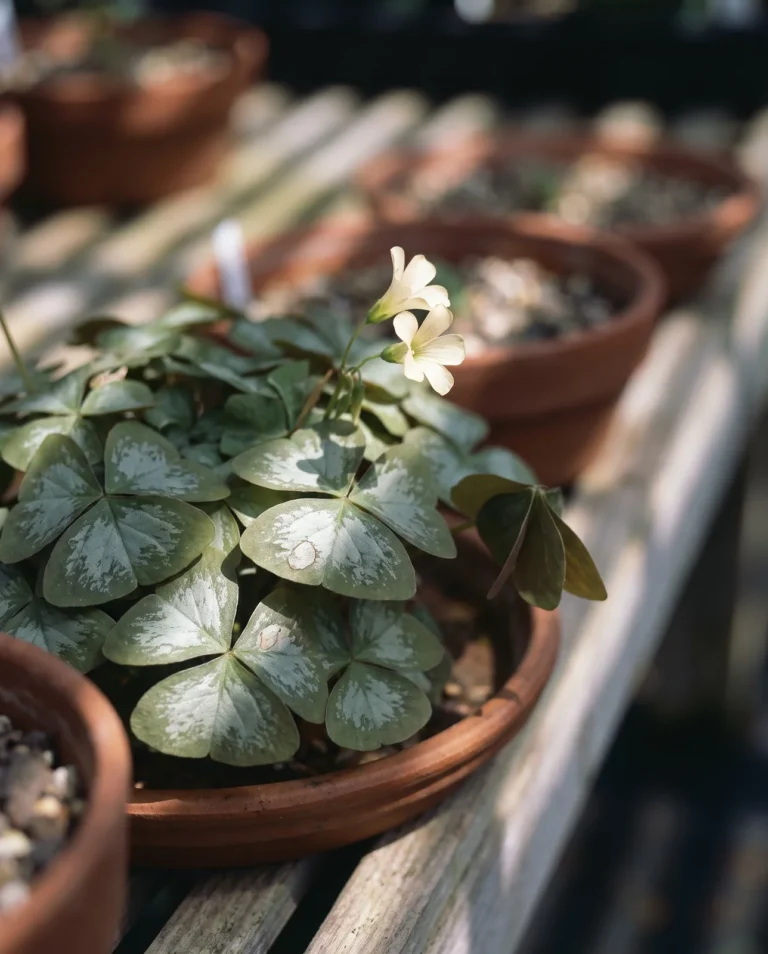
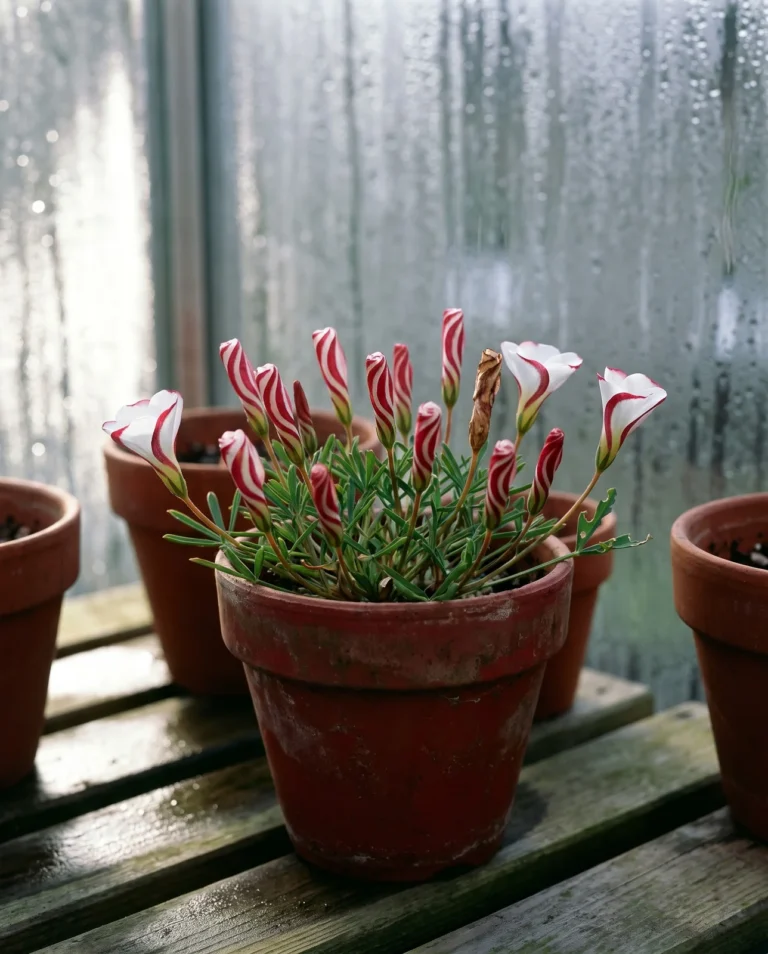
The cultivar name 'Plum Crazy' is used for two different species by different nurseries, so a pot label alone does not settle what you have. The cards below separate the ornamental kinds, whose foliage can rival any of the purple flowers on a windowsill, from the two weeds people mistake for them.
Pests and diseases
Oxalis has relatively few pests, though it pays to watch for aphids, leaf miners, spider mites, and whiteflies, along with mildew, leaf spots, and rust. Plants are susceptible to the rust fungus Puccinia oxalidis. Purple shamrock usually has no serious insect or disease problems, though rust can be problematic, and you should prune and remove any diseased foliage. Most trouble in a pot traces back to water. Overwatering can cause root rot with mushy stems and yellow leaves, while wilting leaves may result from underwatering or dry air.
What actually goes wrong, in order
Listed from the most common complaint down. Each one gives the symptoms, the cause, and what to do.
Symptoms: the same yellow-flowered weed returns within weeks of pulling or a weed-and-feed pass. Cause: plants easily survive weeding and regrow. What to do: post-emergent herbicides containing 2,4-D, dicamba, fluroxypyr, or triclopyr can be effective in turf, though the first pass is rarely the last.
Symptoms: every leaf has dropped, the mix is dry, and nothing new has appeared for weeks. Cause: the plant has entered its natural dormant rest. What to do: remove the dead leaves, keep the pot cool and dark, and stop watering until new growth appears.
Symptoms: long, weak stems reaching toward the window with few or no blooms. Cause: low light, or too little time since planting. What to do: move the plant into full sun to bright indirect light. Blooms usually arrive 4 to 6 weeks from planting, stretching to 8 to 10 weeks in some cases.
Symptoms: planted bulbs sit in the potting mix with nothing showing. Cause: the bulbs simply need more time to break dormancy. What to do: keep the mix barely moist and give them time. Sprouting usually takes 2 to 4 weeks. Restarting dormant tubers can take 4 to 5 weeks before leaves appear.
Symptoms: an ornamental planted for edging turns up across garden beds and in other containers. Cause: several species produce bulbils that detach and grow into new plants, and pink wood sorrel escaped cultivation to become a weed across several southern states after being introduced as an ornamental. What to do: grow spreading species in separate containers and pull stray plants early.
Symptoms: pale spots, shriveled leaflets, or a powdery coating on the foliage. Cause: fungal disease such as mildew, leaf spots, or rust. What to do: prune out and remove any diseased foliage.
How long an oxalis lives
An oxalis has no single lifespan, because plants may be annual or perennial depending on the species and your hardiness zone. Yellow wood sorrel can grow as an annual or short-lived perennial, while in Southeastern lawns it persists almost year-round as a cool-season perennial. Potted ornamentals renew themselves underground, so with an occasional rest, a pot replaces itself as it goes. As with other bulb-grown types of flowers, the health of an oxalis shows in its bulbs more than in its leaves.
Myths about oxalis
Five common misunderstandings about how oxalis grows, spreads, and rests.
The myth: Oxalis is clover.
The reality: Oxalis leaflets are heart-shaped with a notch at the tip, while clover leaflets are rounded. Both yellow wood sorrel and the commonly found creeping wood sorrel carry three heart-shaped leaflets, though yellow wood sorrel leaves are green while creeping wood sorrel leaves range from green to purple.
The myth: The purple houseplant and the lawn weed have nothing to do with each other.
The reality: They belong to the same genus. Creeping wood sorrel and Bermuda buttercup are both Oxalis species. They share the genus with purple shamrock, a clumping perennial houseplant with deep purple triangular leaves and pale flowers.
The myth: Oxalis only spreads by bulbs and never sets seed.
The reality: A single yellow wood sorrel plant can produce 5,000 seeds with close to 100 percent germination, thrown up to 16 feet by exploding seed capsules. That species grows from short rhizomes and never produces bulbs. Spreading by bulbs fits Bermuda buttercup, which reproduces by bulbs and has never had viable seed documented in California.
The myth: The pot lost every leaf, so it is finished.
The reality: A leafless pot is usually just taking a rest. Purple shamrock may go dormant in autumn, or if it gets too hot or dry, so cut back on water and wait for new growth.
The myth: A cultivar name tells you which plant you are buying.
The reality: A cultivar name does not reliably identify the species. Plum Crazy is sold as an oxalis with vivid maroon foliage marked in bright pink, but that name also belongs to Oxalis spiralis subspecies vulcanicola, a different species.
What to expect, month by month
How the plant develops through its first year, indoors in a pot and outdoors in a lawn.
The first few months in a pot bring steady progress. Planted bulbs usually sprout in 2 to 4 weeks. Foliage typically emerges in 3 to 4 weeks, with flowers opening 4 to 6 weeks after planting, stretching to 8 to 10 weeks in some cases. Feed the plant monthly throughout its growing season.
At some point during the first year, the plant will take a natural rest. Purple shamrock may go dormant in autumn, or whenever conditions turn too hot or dry, shedding its leaves. Plants often seem uncommon as long-term houseplants because people discard them after St. Patrick's Day, despite garden centers selling large numbers every March. When foliage dies back, remove the dead leaves, move the pot to a cool, dark spot, and stop watering. Fresh growth should emerge in 1 to 3 months.
Managing creeping wood sorrel in a lawn takes persistent attention into the second season. Reducing a heavy infestation may require up to 3 applications of preemergent herbicide a year, timed to early fall, midwinter, and late spring. Iron treatments leave no soil residual, and new oxalis plants can appear in treated turf within about a month, though fewer than in untreated areas.
FAQ
Why is oxalis a problem?
The weedy types spread fast by seed and underground runners. A single yellow wood sorrel plant can produce 5,000 seeds with close to 100 percent germination. Once the plant takes hold, completely clearing out its rhizomes and stolons is nearly impossible.
Does oxalis need sun or shade?
Most oxalis prefer full sun to bright indirect light, planted in moist, fertile, well-drained loamy soil with a slightly acidic pH. Purple shamrock takes full sun to part shade, while wood sorrel belongs in shady areas and woodland borders.
Is oxalis a good houseplant?
Yes, purple shamrock makes an ideal houseplant, growing as a compact, clumping perennial that requires low maintenance. It likes cooler rooms from 50 to 75 degrees Fahrenheit and an owner willing to wait out its natural dormancy.
What is oxalis used for?
Indoors, people grow it for foliage, and several species sell as potted shamrocks around St. Patrick's Day. Outdoors, the ornamental types work well in containers, garden edging, and shady borders. You can also eat small amounts of the raw leaves, flowers, and seeds for their sour, lemon-like flavor.
What kills oxalis in lawns?
Post-emergent herbicides with triclopyr or fluroxypyr are extremely effective against seedling and established creeping woodsorrel in cool-season lawns. Chelated iron also works quickly, injuring oxalis within one day and controlling it in about three days without damaging the grass.
How do I get rid of creeping oxalis in my lawn?
A single application of triclopyr is often enough, though a follow-up spray 3 to 6 weeks later might be necessary for complete control. Adjusting your mowing, fertilizing, or watering will not help, because creeping woodsorrel simply grows more vigorously as the grass grows.
How do you get rid of oxalis in flower beds?
No selective post-emergent herbicides exist for ornamental beds once the weed appears. For spot treatment, spraying young plants with glyphosate before they flower is the best choice. Spread 2 to 3 inches of mulch across the bed to block the light that seeds need to germinate.
Will oxalis come back every year?
Yes, though it takes a rest period between seasons. In garden beds where it is hardy, purple shamrock goes dormant in winter and reemerges in spring. In a pot, it returns after resting, and new growth should emerge in 1 to 3 months.
How long does an oxalis plant live?
It depends on the species you grow and your local climate. A plant may be an annual or a perennial depending on the species and your hardiness zone. Upright yellow woodsorrel, for instance, grows as an annual or a short-lived perennial.
Are oxalis hard to care for?
No, purple shamrock is an easy, low-maintenance plant. Overwatering is the biggest risk, since it can cause root rot with mushy stems and yellow leaves. The plant may also go dormant in autumn or during hot, dry spells, which only calls for cutting back on water and waiting for new growth.
How long do you soak oxalis bulbs before planting?
You do not need to soak oxalis bulbs before planting. Set the bulbs 1 to 2 inches deep with the pointed side up, spaced 3 to 4 inches apart. Sprouting usually takes 2 to 4 weeks once they are in the soil.
Do oxalis plants spread?
Yes, oxalis spreads easily through both seed and bulb multiplication. Several species produce bulbils that detach from the parent to grow into new plants. Weedy types fling seed up to 16 feet away when their seed capsules explode open, while potted corms can multiply quickly on their own.
Interesting tips
- Container plants can introduce the weed to a clean landscape, so avoid buying pots with either oxalis species growing in them.
- Do not put pulled oxalis with seeds into compost bins meant for reuse in the landscape, because the seeds can survive the composting process.
Related Guides & Flowers
Cyclamen
The other windowsill plant that drops every leaf on purpose and gets thrown out for it.

Amaryllis
A bulb judged by the same question: what to do with the pot once the leaves go down.
Crocus
Another small corm planted shallow, and another plant that spends part of the year with nothing above ground.

Flowers toxic to cats
Where the pet question sits beside the other plants a cat is most likely to chew.
Enjoying our flower guides? Add YourFlowersGuide as a preferred source on Google. It helps more readers find us.
Add to Preferred Sources