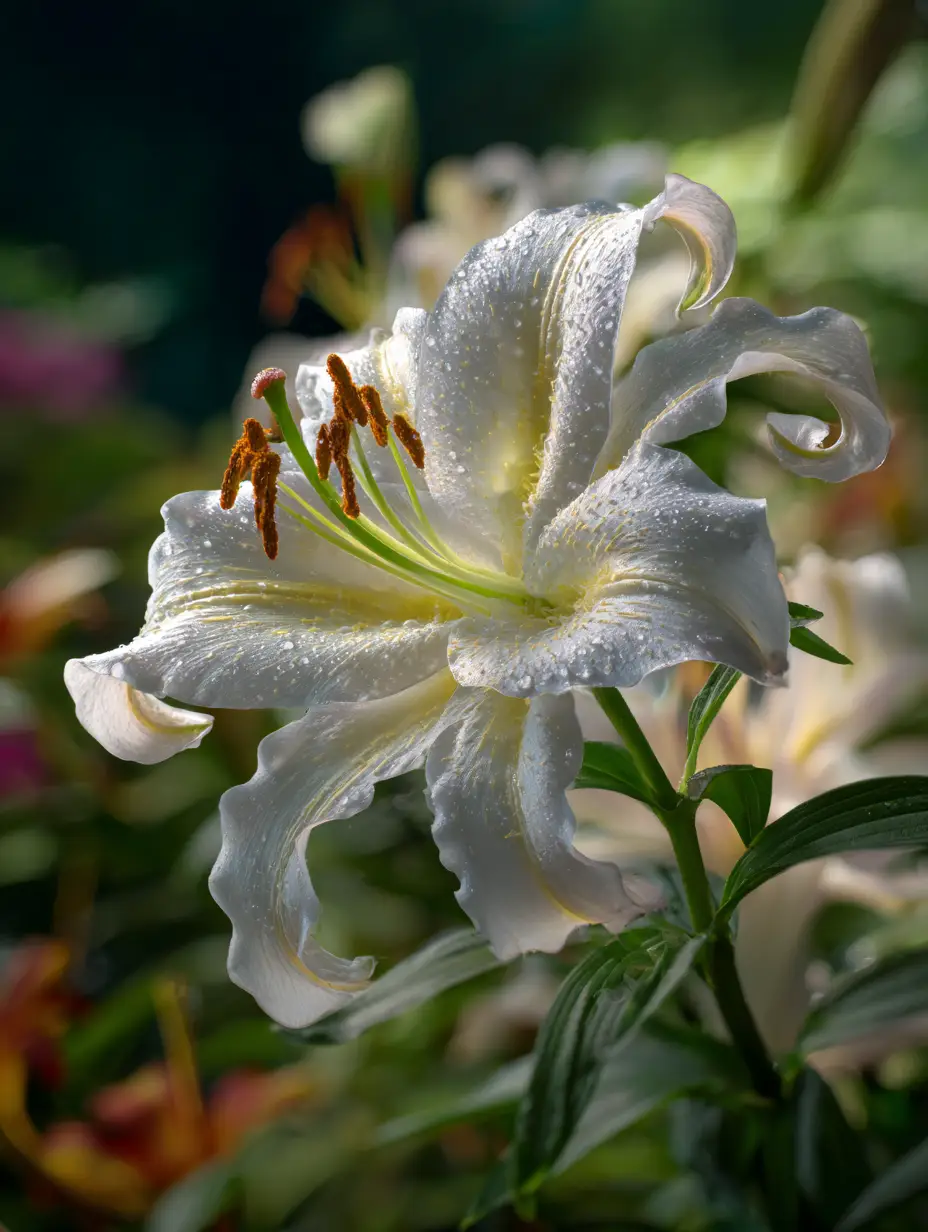
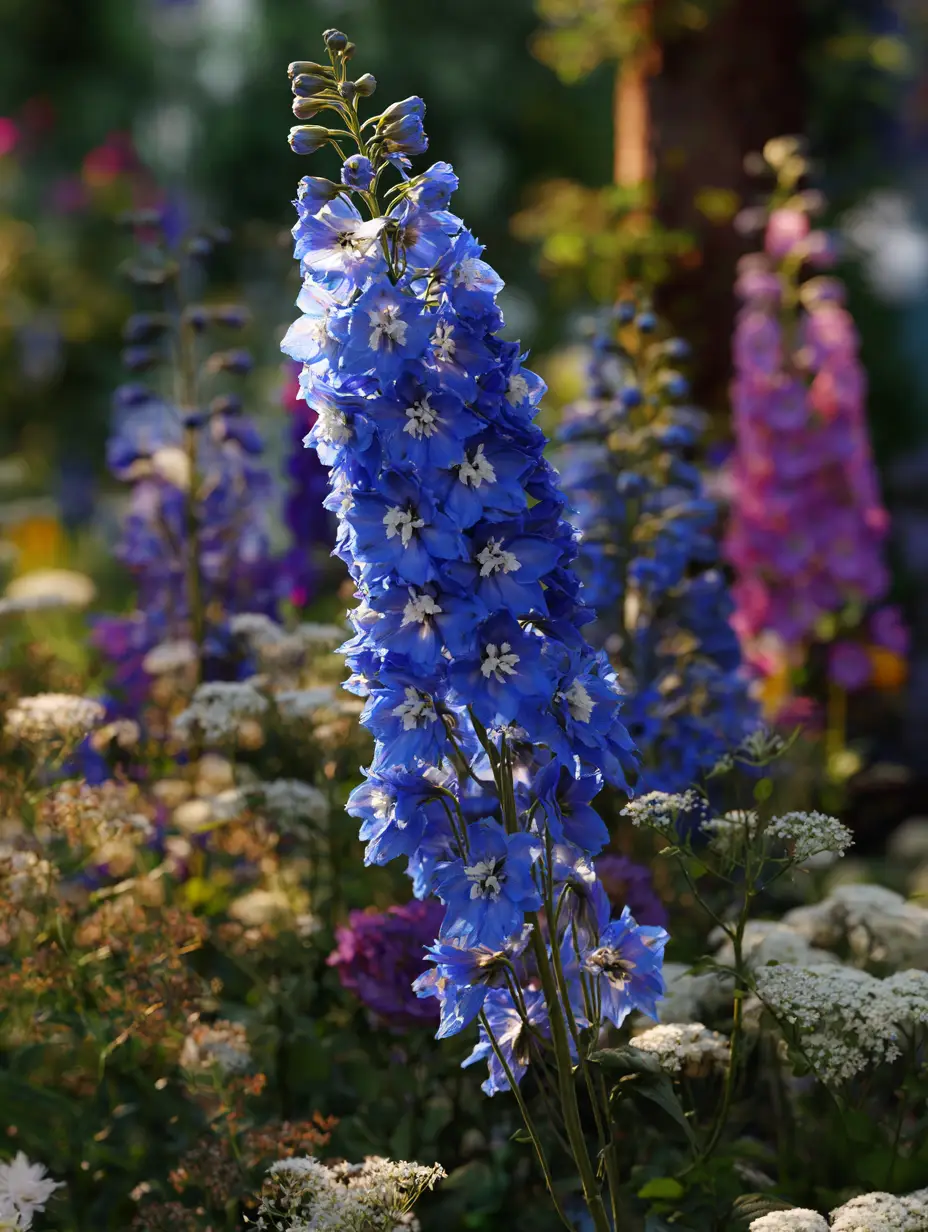
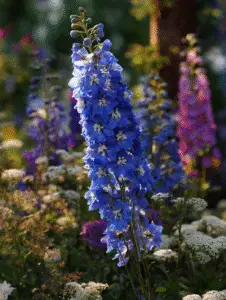
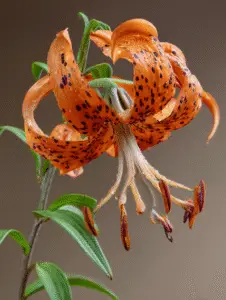
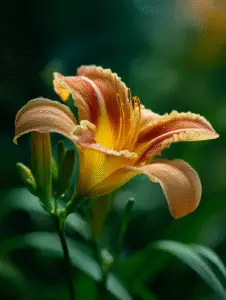
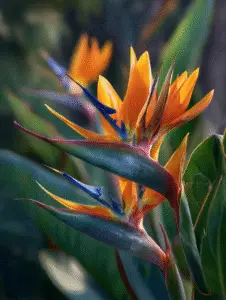
The most dangerous on the list: Lily at 97/100 risk. Delphinium elatum follows at 81.
A warning list, not an award: only species ASPCA explicitly lists toxic to cats are here, ranked by documented severity and how often the flower actually enters a home. Not listed is not the same as safe.
If your cat may have chewed one of these, do not wait for
symptoms. Call your vet, or the ASPCA Animal Poison Control Center at
(888) 426-4435.
The riskiest
The riskiest of the list
Ranked highest to lowest risk, with what makes each one dangerous.
Severity of the reaction: can kill a cat · Arrives as a cut flower: garden cut · Lives in the room year round: outdoor only
Why it is dangerous:poisoning that can kill a cat, not an upset stomach; the whole plant carries diterpene alkaloids, the young growth most of all; toxic to dogs and horses too
Deer: seldom damaged (Rutgers B)Not for cat households
81/ 100tap for the breakdown
Severity of the reaction70 / 70can kill a cat
Arrives as a cut flower7 / 18garden cut
Lives in the room year round4 / 12outdoor only
Also on this list
More flowers the ASPCA lists as toxic to cats, in the same order of risk.
Severity of the reaction: can kill a cat · Arrives as a cut flower: not grown for cutting · Lives in the room year round: no published rating
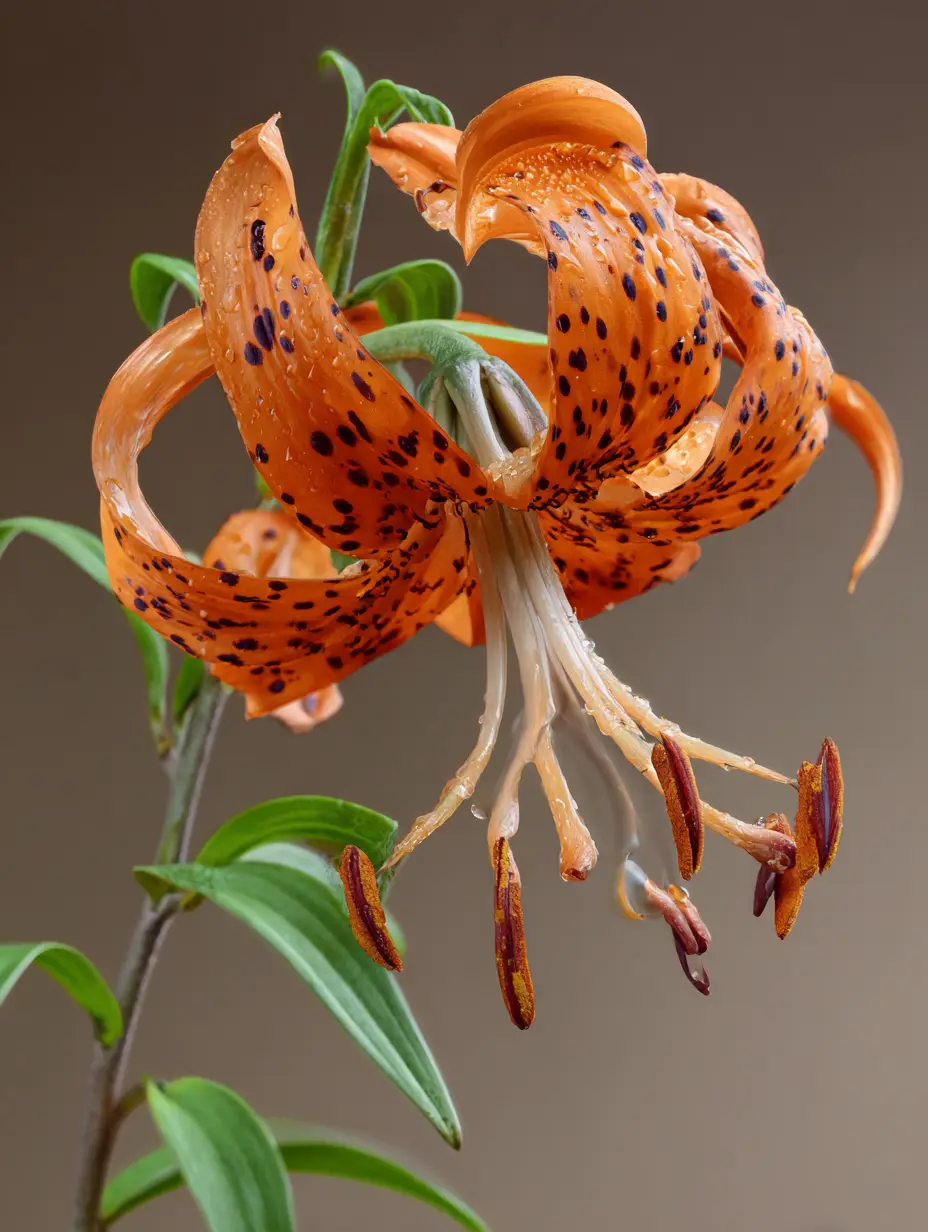
Why it is dangerous:poisoning that can kill a cat, not an upset stomach; every part is dangerous, including pollen and the water in the vase
Deer: sometimes eaten (Rutgers C)Not for cat households
79/ 100tap for the breakdown
Severity of the reaction70 / 70can kill a cat
Arrives as a cut flower3 / 18not grown for cutting
Lives in the room year round6 / 12no published rating
The protocol
How the score is built
3 rules, 100 points, no opinions. Every line reads one field of the table.
Severity of the reaction70 pointscan kill a cat 70; serious systemic reaction 40; mild digestive upset 10 Read from: the ASPCA toxicity listing.
Arrives as a cut flower18 pointssold in most shops bouquet flower 18; sold by specialist growers 12; garden cut 7; rarely arrives cut 3 Read from: whether it is grown as a cut flower.
Lives in the room year round12 pointslives indoors year-round 12; temporary indoor bloom 9; outdoor plant 4 Read from: indoor viability.
Not ranked here: not on the ASPCA toxic list (non-toxic, or never evaluated).
The full method ↗
The leaderboard
The top ten
The 10 highest of 35 on the list. Tap any score to open the lines behind it.
Lives in the room year round12 / 12lives indoors year-round
Not on this list
Absence from the ASPCA list is not proof of safety.
not on the ASPCA toxic list (non-toxic, or never evaluated) (statusRoses, Sunflower, Marigolds and 47 more
!A note on pet safety.This page reports what published sources say: the ASPCA lists and university extensions. It is not veterinary advice, and no plant list is ever complete. If your pet may have chewed any plant, do not wait for symptoms: call your veterinarian or the ASPCA Animal Poison Control Center at (888) 426-4435.
How we rank
We keep one table of 85 flowers,
with 25 documented facts each, drawn from university and extension sources. Every ranking is
a published formula worth 100 points; tap any score and it unfolds into the lines that made
it. A flower that does not fit the question is not scored lower: it is excluded, and the reason is
shown. When the table changes, every score and stamp updates itself.
The full method ↗
So what can live in a house with a cat?
The same table, read the other way round: species the ASPCA lists as non-toxic.