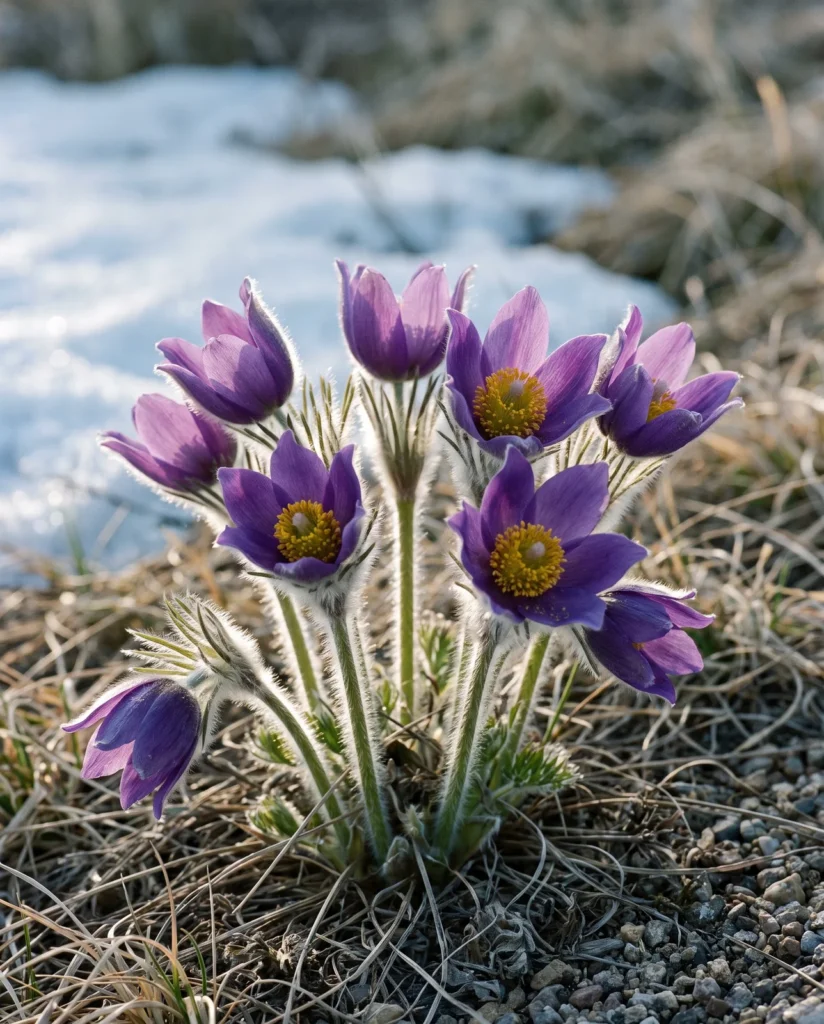
Three plants share the name pasque flower
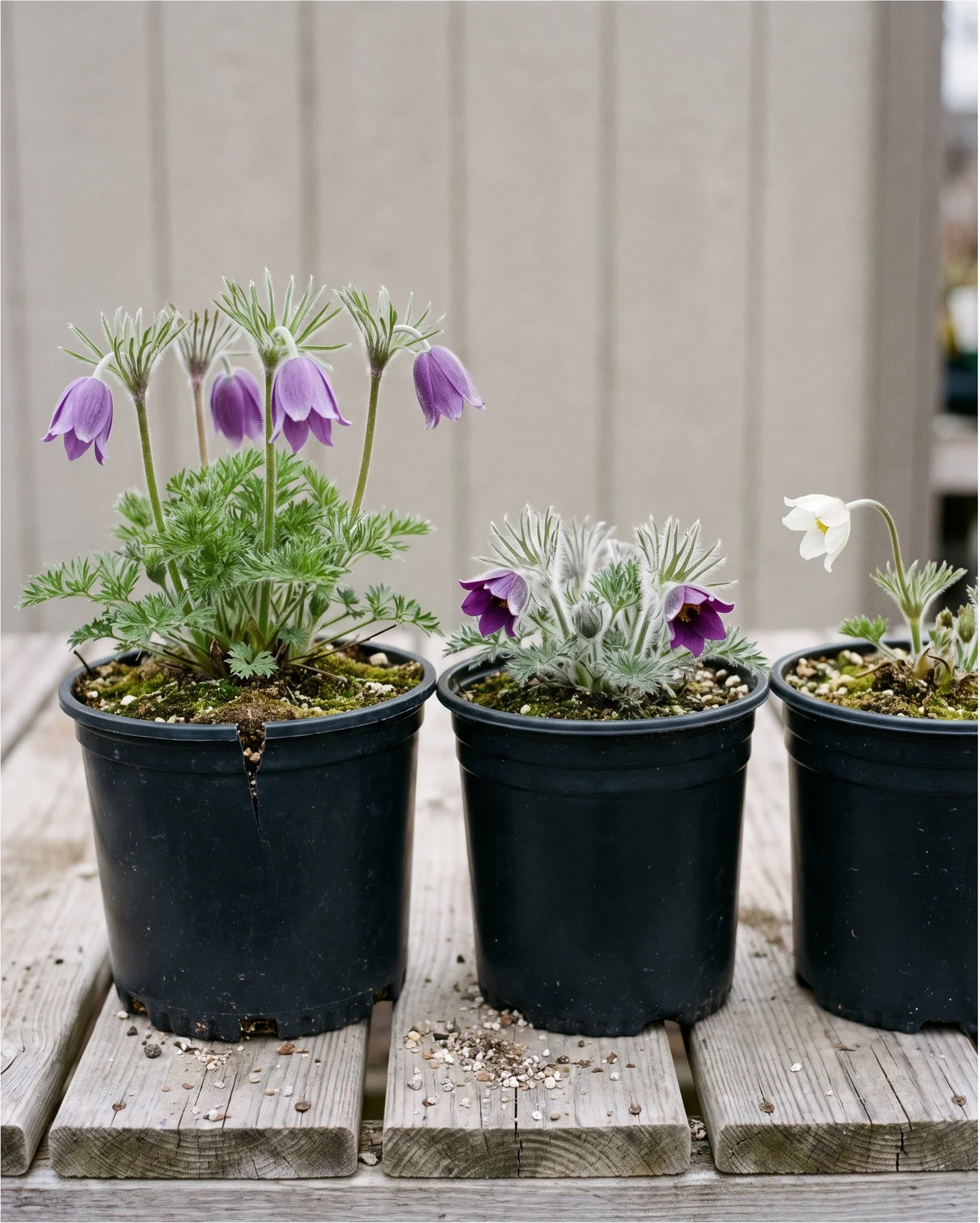
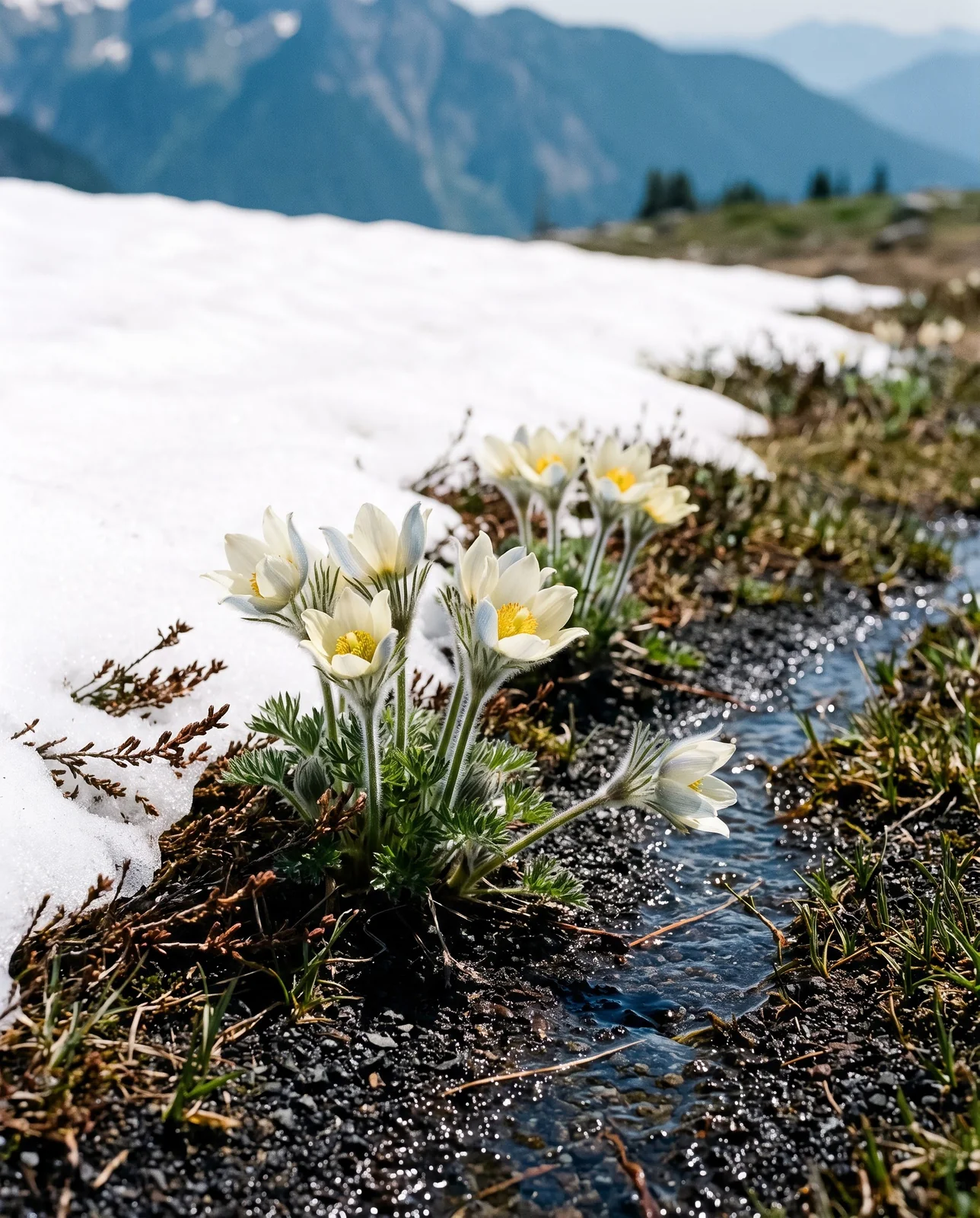
Three separate plants are sold and photographed under this one name. The European pasque flower, Pulsatilla vulgaris, is the garden plant of American benches and rock gardens, sold in places under its old name Anemone pulsatilla. The North American prairie plant is the wild one, filed under both Anemone patens and Pulsatilla patens. Its range runs from near Lake Michigan to the Northwest Territories and south to New Mexico, and in the United States from Idaho to Wisconsin down into Utah and Colorado. The third is the western pasque flower, Pulsatilla occidentalis, a white-flowered mountain plant of ground from British Columbia to California and east to Montana. All three get shuffled between Pulsatilla and anemone, two genera so close that the European plant still turns up under the second.
The split matters at the till. The prairie plant is seldom grown as an ornamental, and it gets confused with the European species that is. An order under the shared name sometimes arrives as the European or the western plant. The two grown as ornamentals take different amounts of cold, want different amounts of water and flower in different months. A label carrying only the words pasque flower settles none of that, so the line worth reading is the binomial.
Which one is South Dakota's state flower
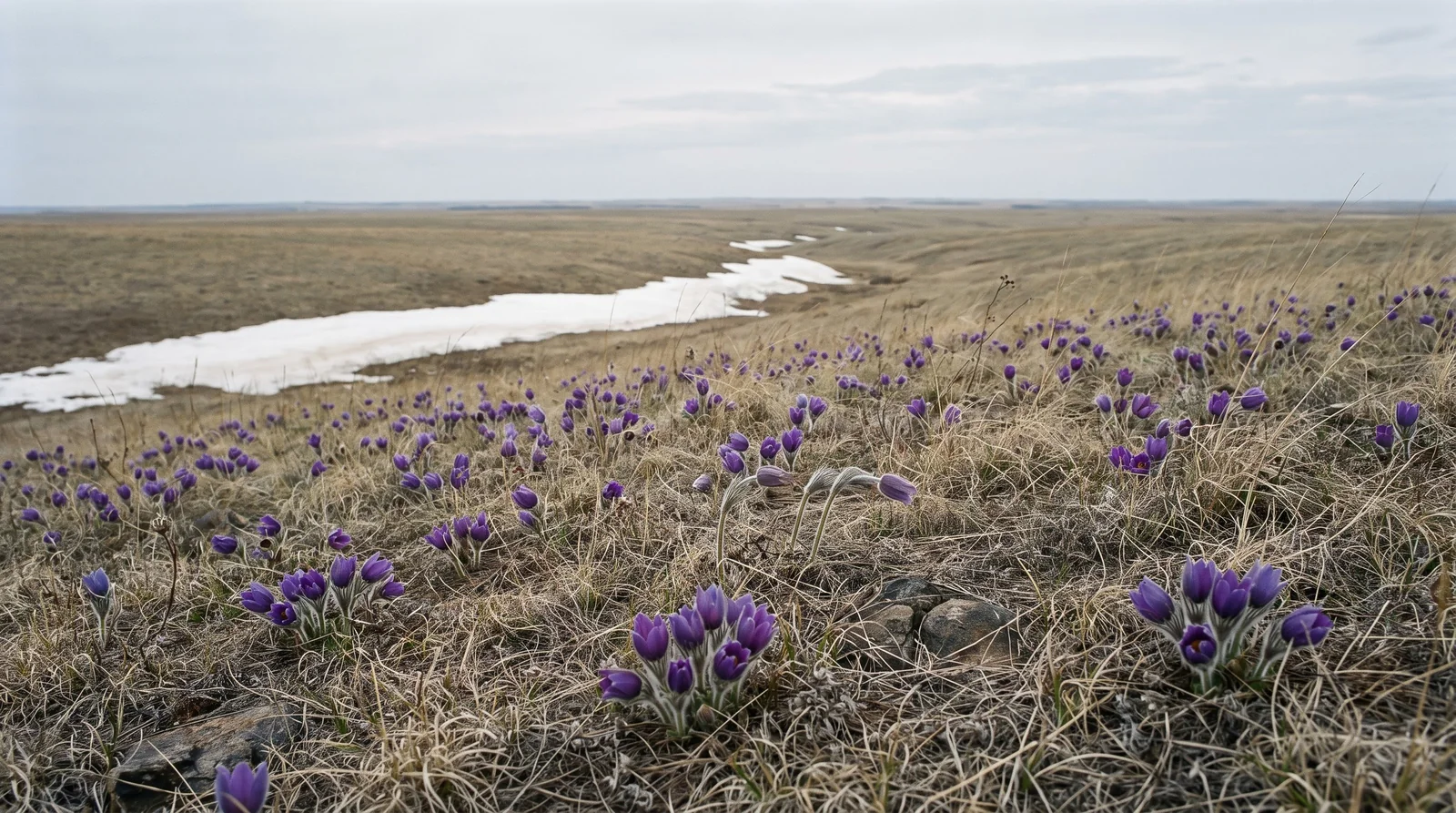
South Dakota's state flower is the American prairie plant. The state named it in 1903, under the older binomial Pulsatilla hirsutissima, and the same prairie species grows wild in seventeen other states and Alaska. The European garden species holds no such title anywhere. It is also the plant most often sold under the shared name, and that is the root of the mix-up. Pasqueflower is also the provincial flower of Manitoba, and members of the genus are county flowers for Hertfordshire and Cambridgeshire in England and for Oppland in Norway.
What a pasque flower looks like
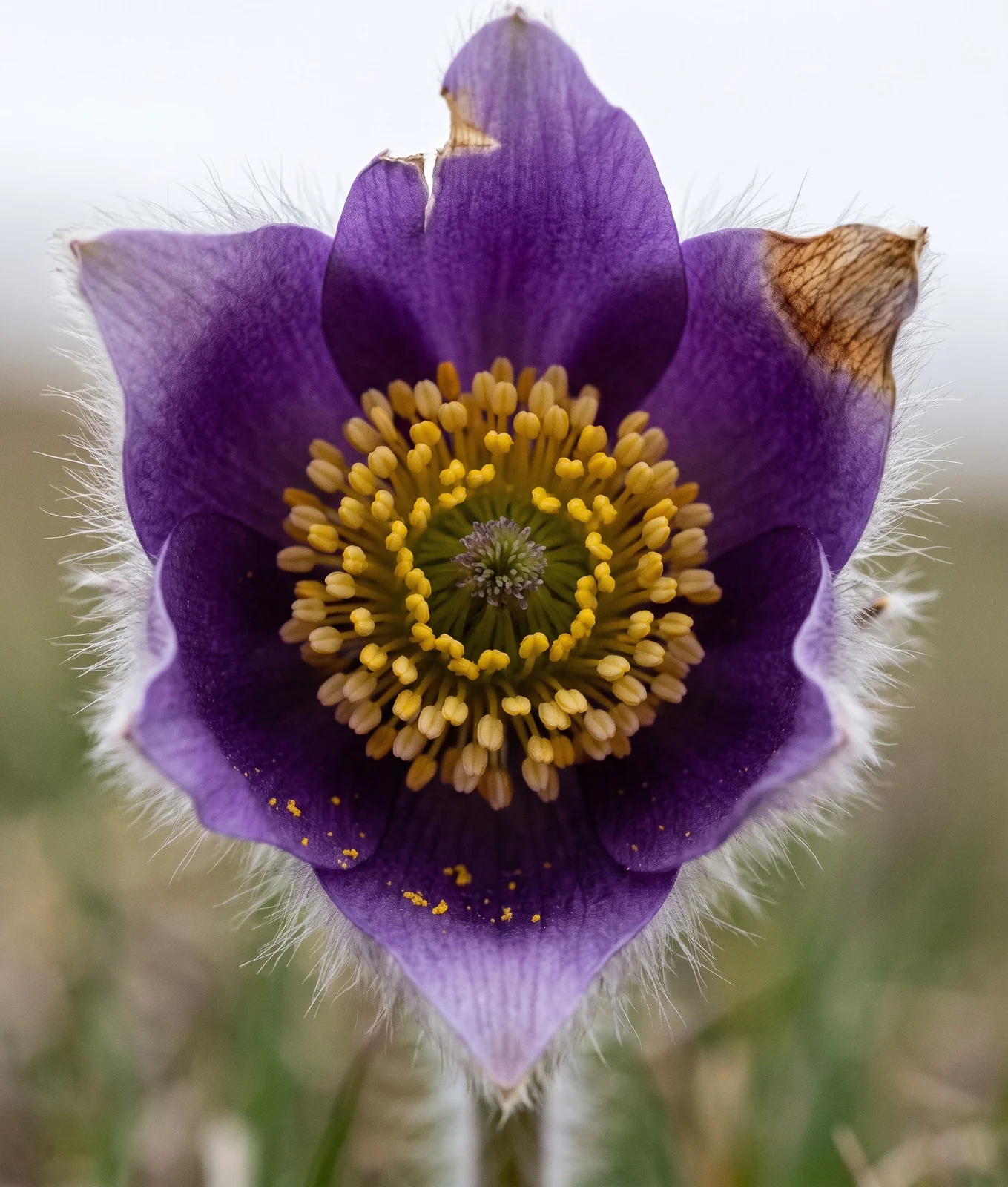
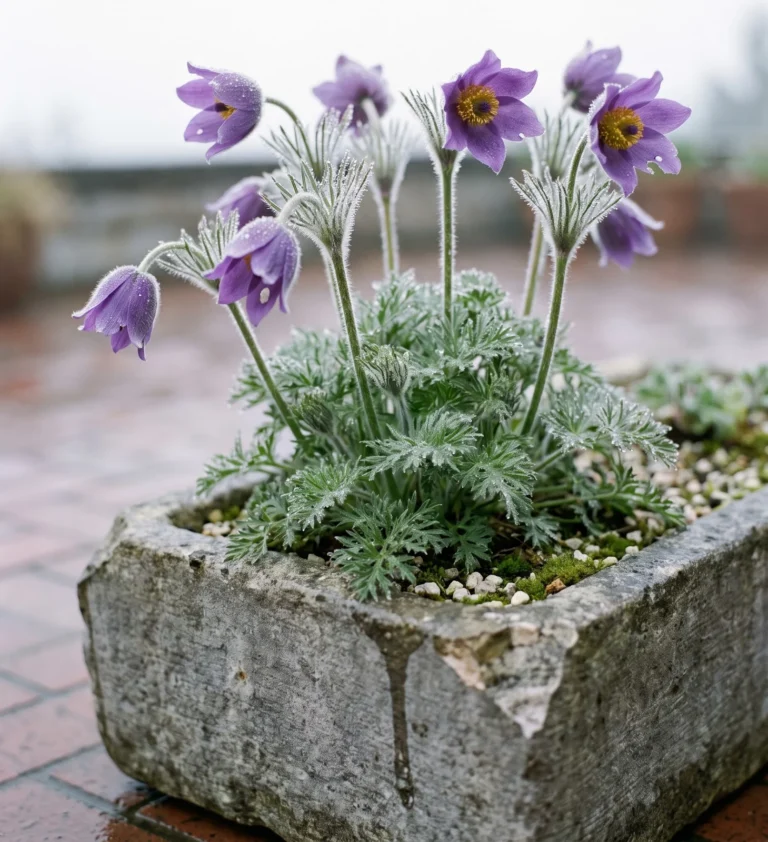
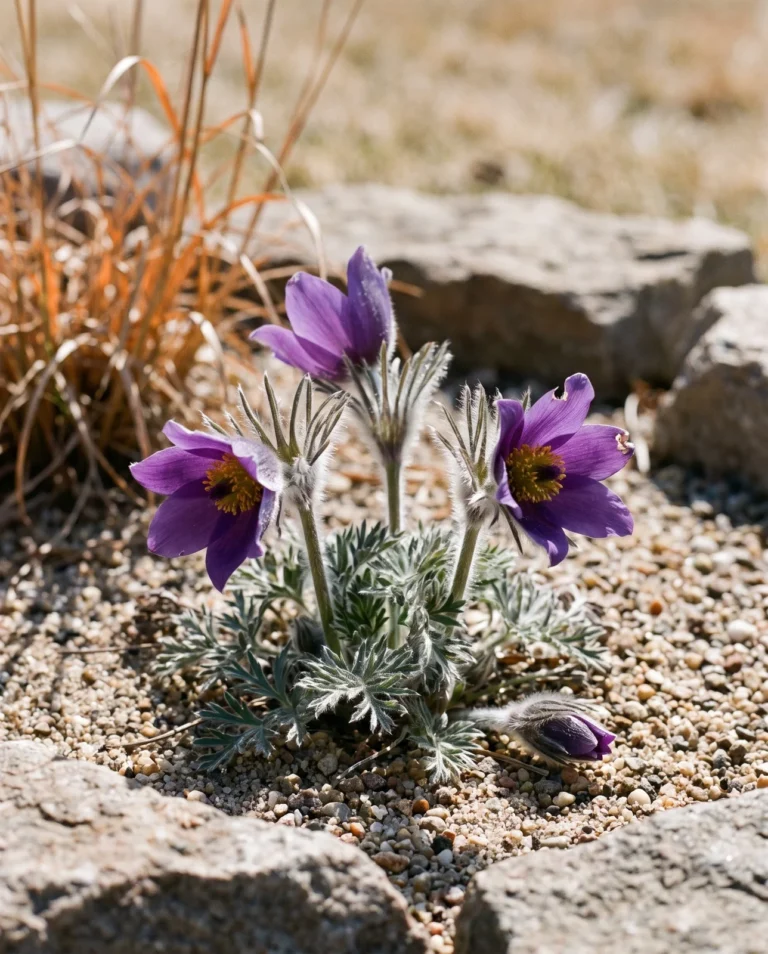
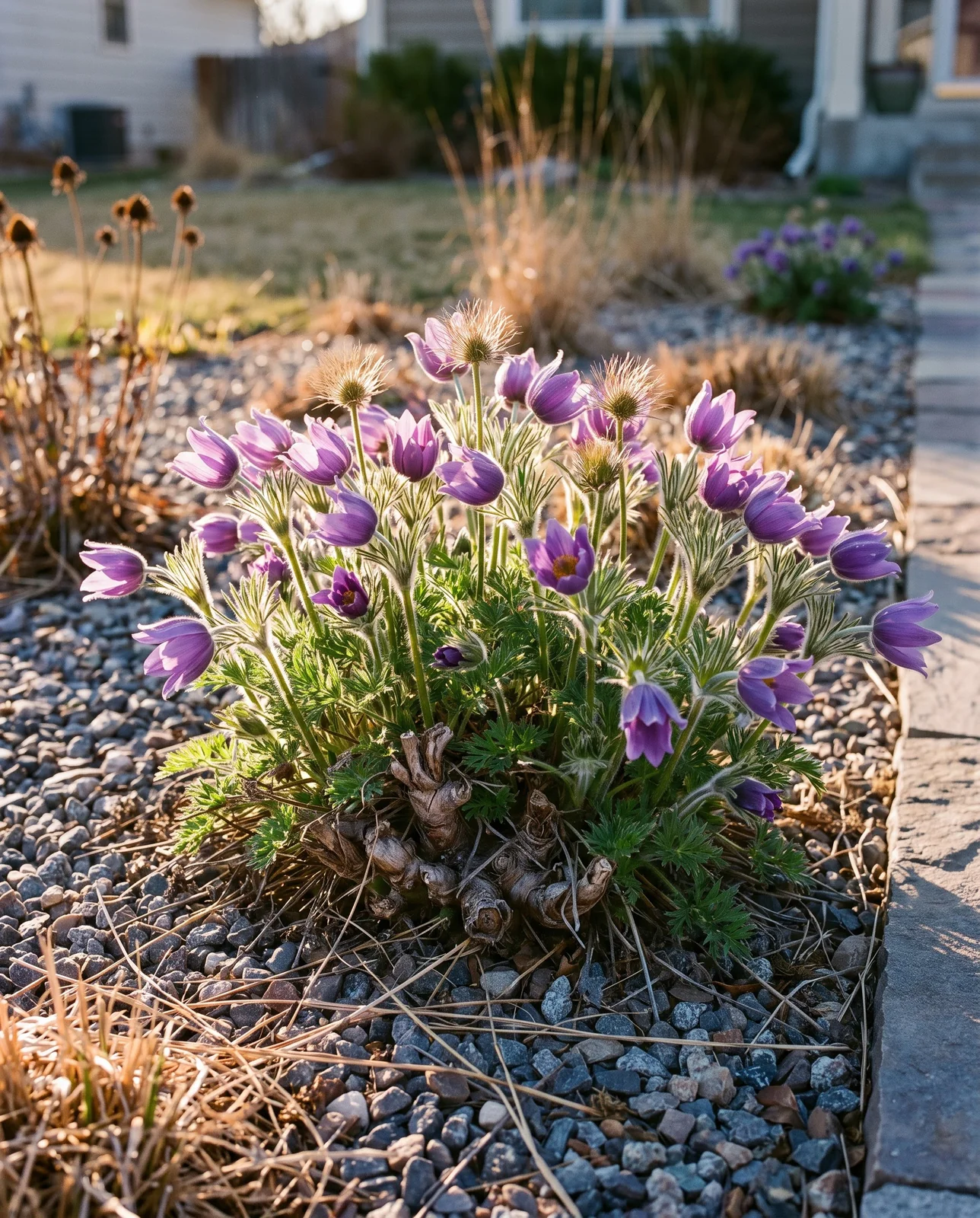
The colored cup is not made of petals. Pasque flowers have no petals at all, and the violet parts are sepals. On the prairie plant they number six to eight, joined at the base and running from deep blue to purple. Inside sits a dense boss of 150 to 200 yellow stamens around a bundle of pistils. Flowers on the European plant open 1 to 3 inches across, carried singly. On the prairie plant they measure 20 to 40 millimeters long. Color runs past violet to cream, tan, lavender and white.
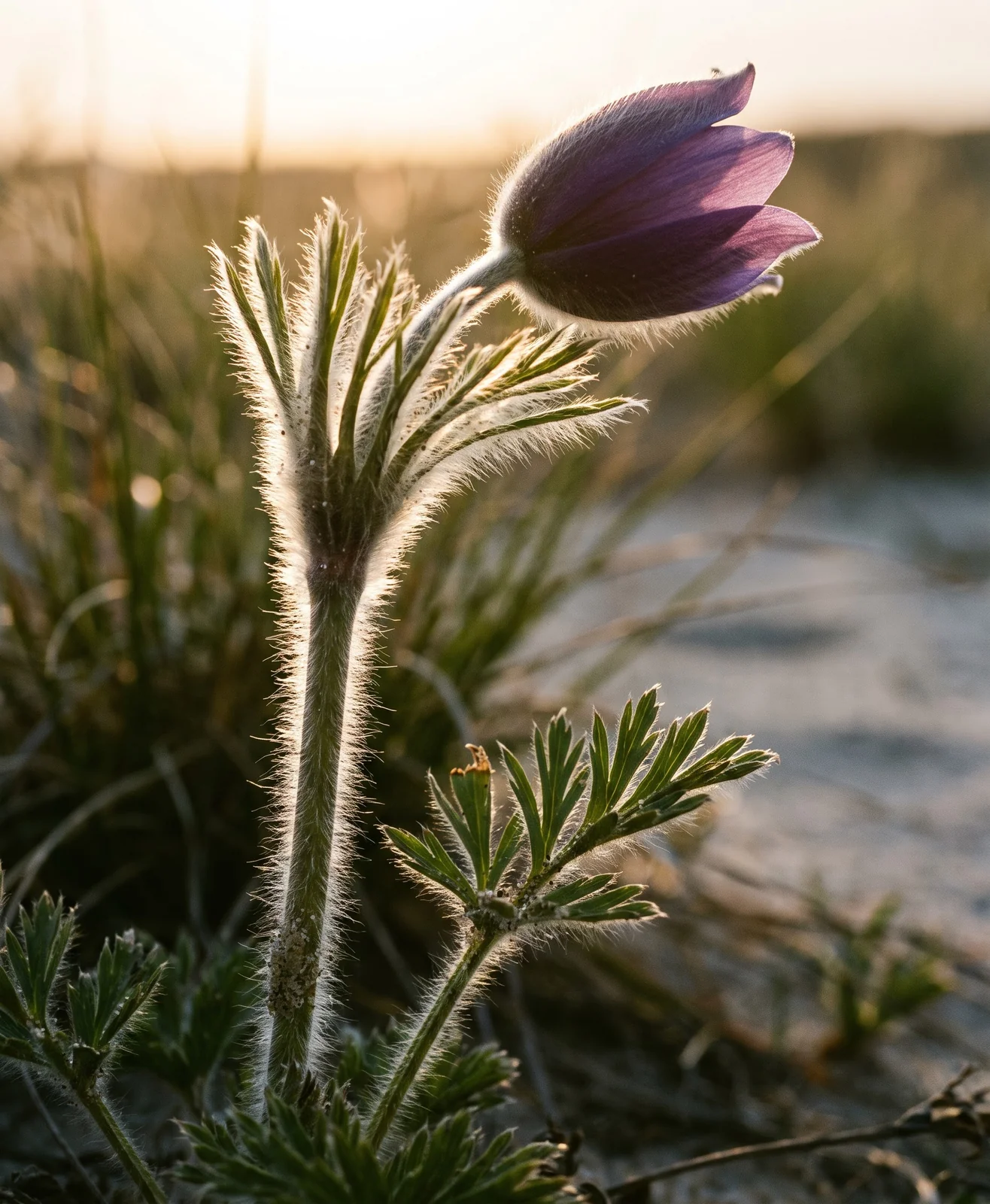
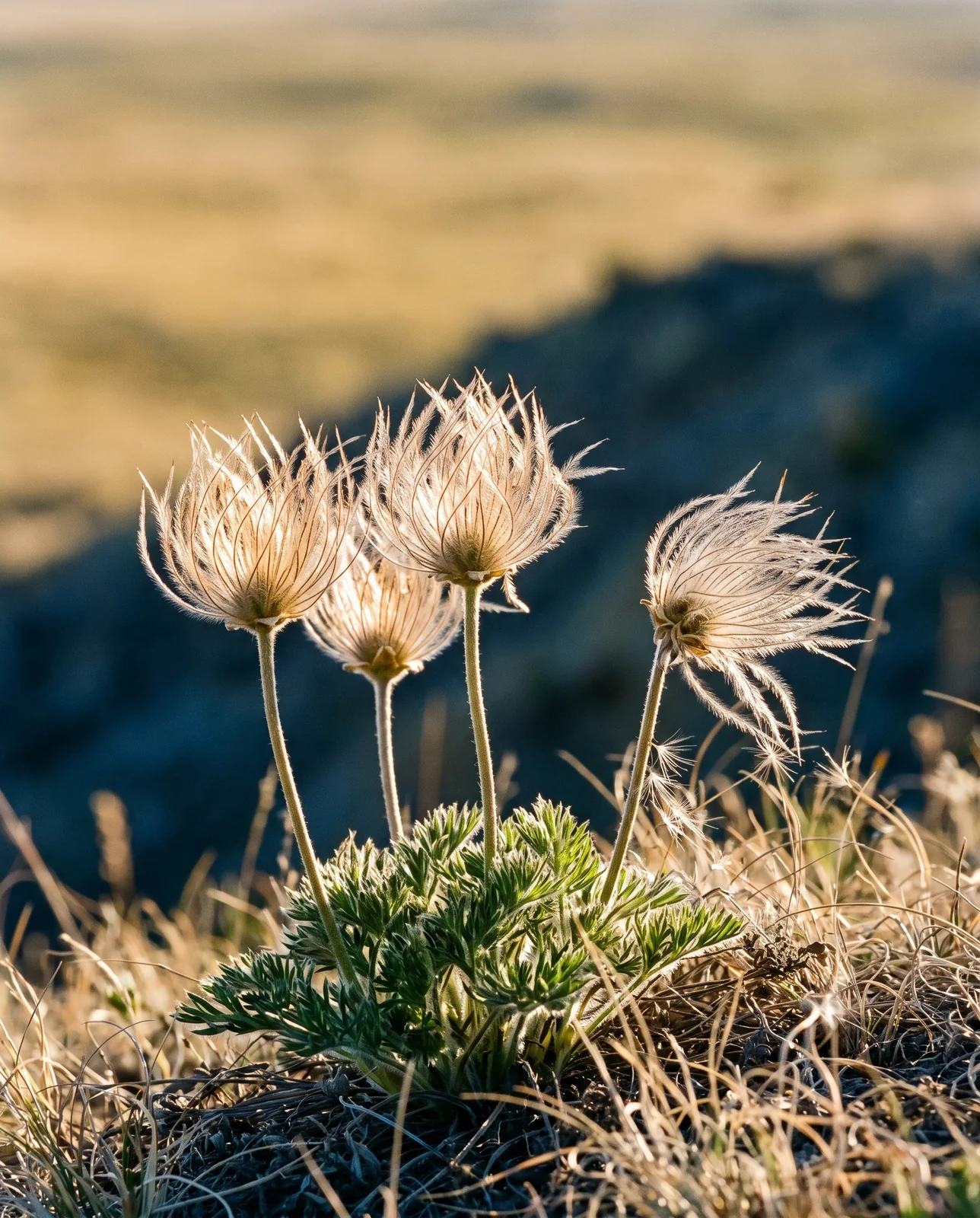
The silver look is hair. Very long silky hairs cover the sepals, the stems and the dissected leaves. They are on the buds before the flowers open and on the seed heads afterward, and they gave the plant the name prairie smoke. The Blackfeet name Napi, old man, points at those gray silky heads, and the seeds leave on the wind or in the fur of an animal walking through. In Canada the plant is prairie crocus, for its likeness to a true crocus, and hartshorn-plant and gosling were in use before the 1920s. Juice from the purple sepals leaves a stain that washes out, and it has colored Easter eggs in parts of Europe. The look-alike that catches gardeners out on the European species is clematis.
When pasque flower blooms
It opens with the thaw, and the month depends on the species and on how high the ground is. The prairie plant flowers March to April, the European plant April to May. Across its elevation range, from 330 to 12,500 feet, flowering runs from April through August. One calendar cannot cover that: a mountain meadow at the edge of a snowfield keeps nothing like the dates of an open hill prairie.
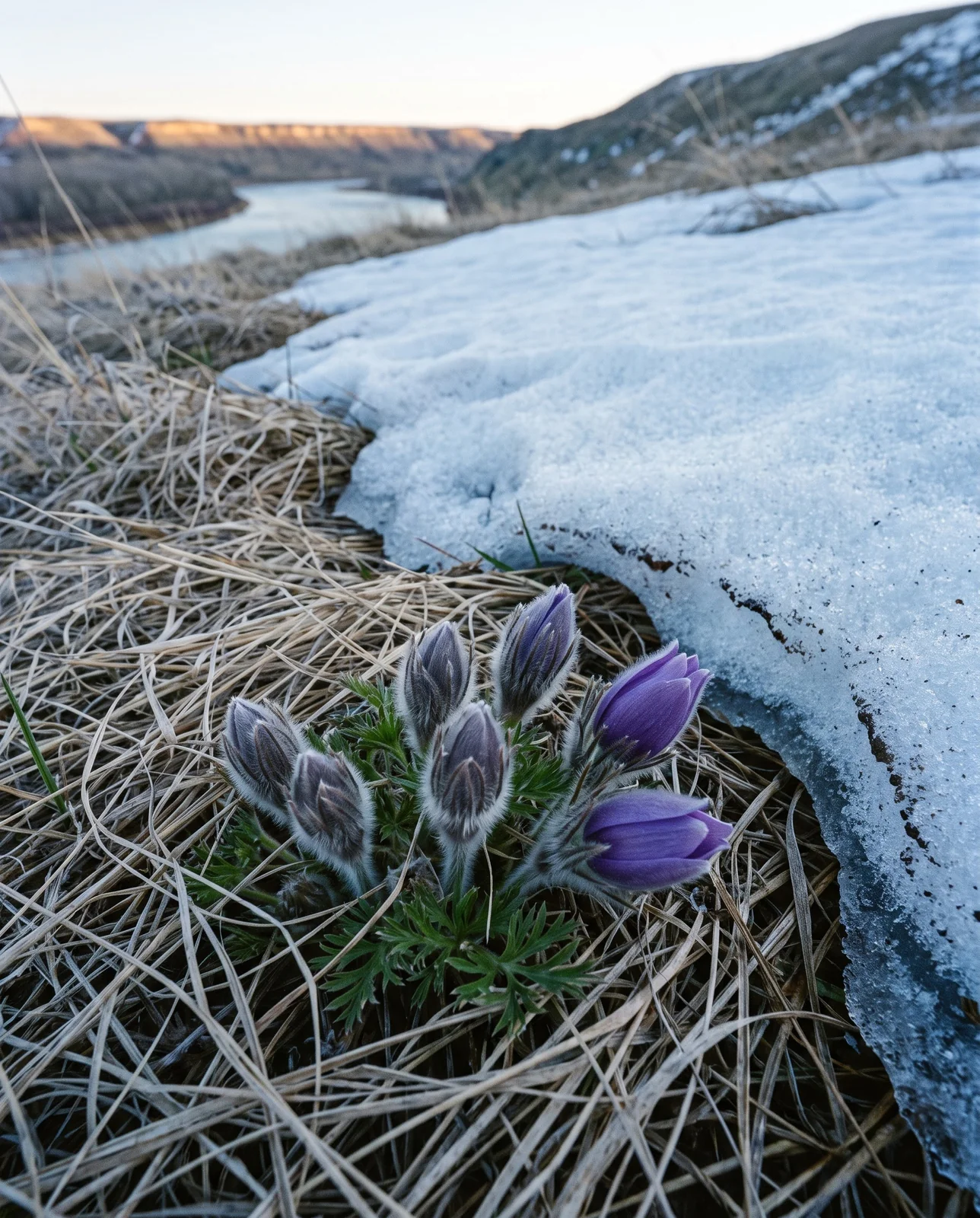
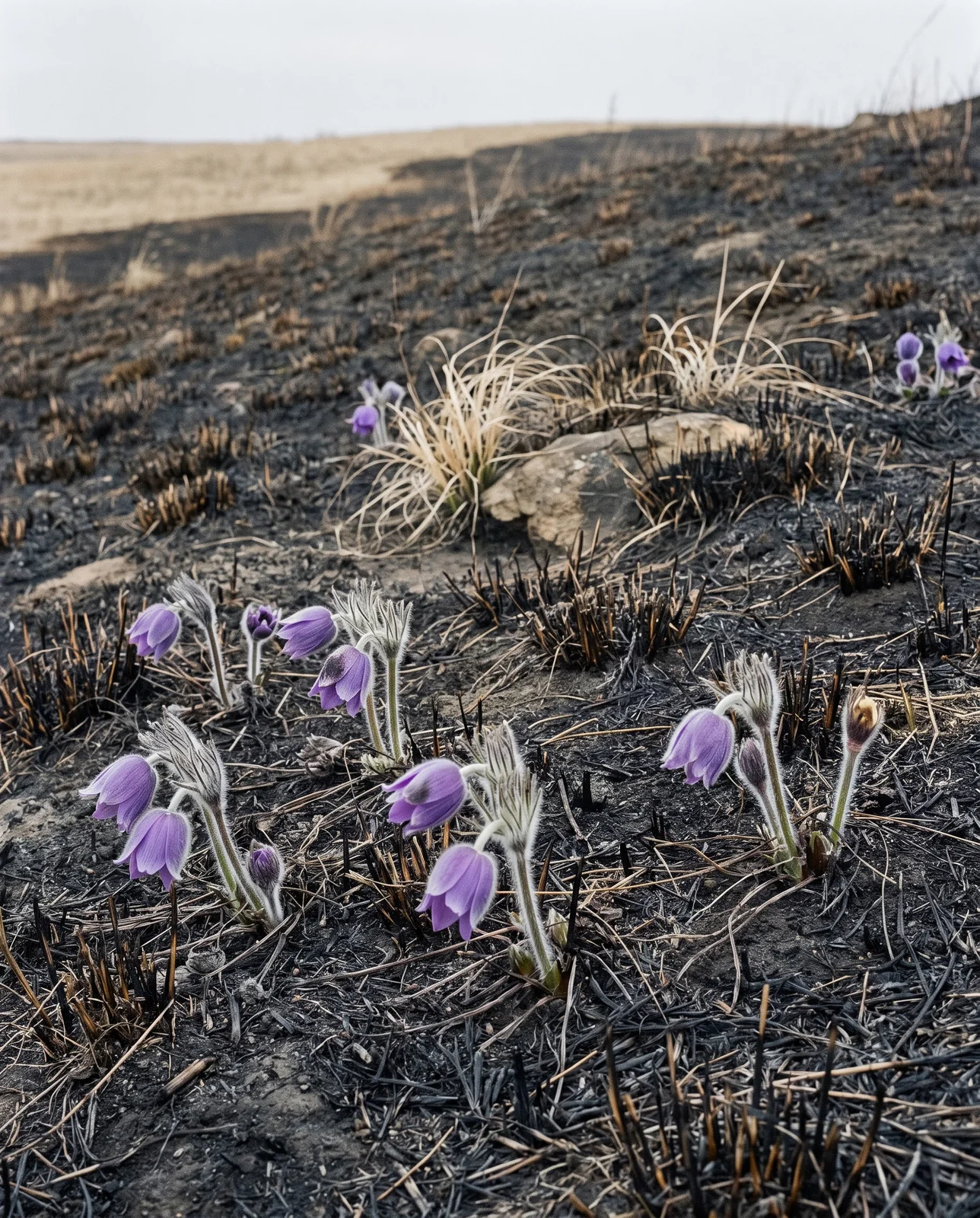
The trigger is snowmelt, and the flowers do not wait for settled weather. They often emerge as soon as the snow melts, may then be snowed on again, close up in colder weather and reopen when it warms. Buds that come up furred and shut beside a shrinking crust of old snow are behaving normally. Coming out this early is the point of the plant in a garden, since these are among the first blooms of the spring.
Hardiness, species by species
Hardiness splits by species, and it splits in one direction. The prairie plant takes a full zone more cold at the bottom end than the European garden plant.
Where to plant it
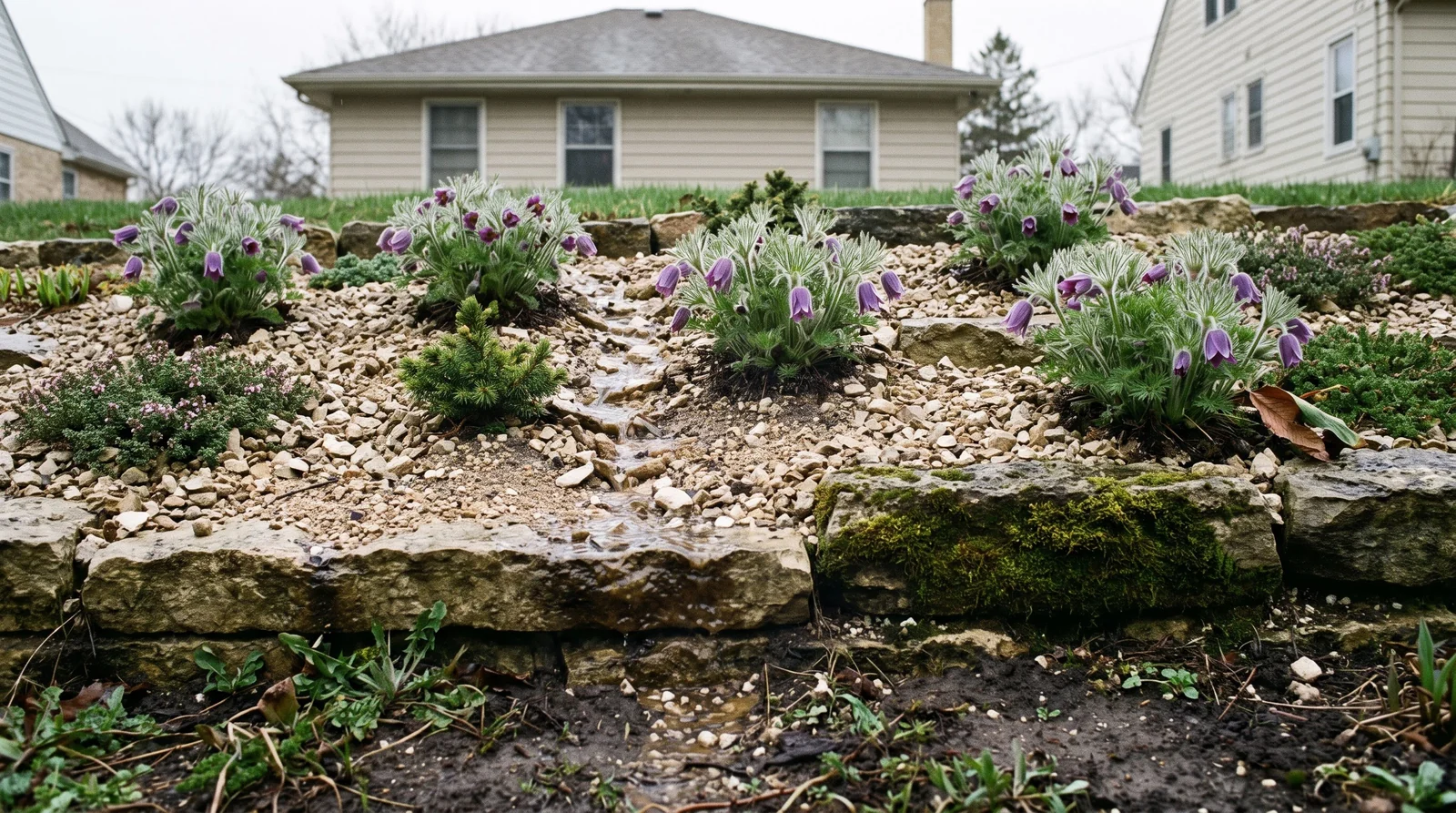
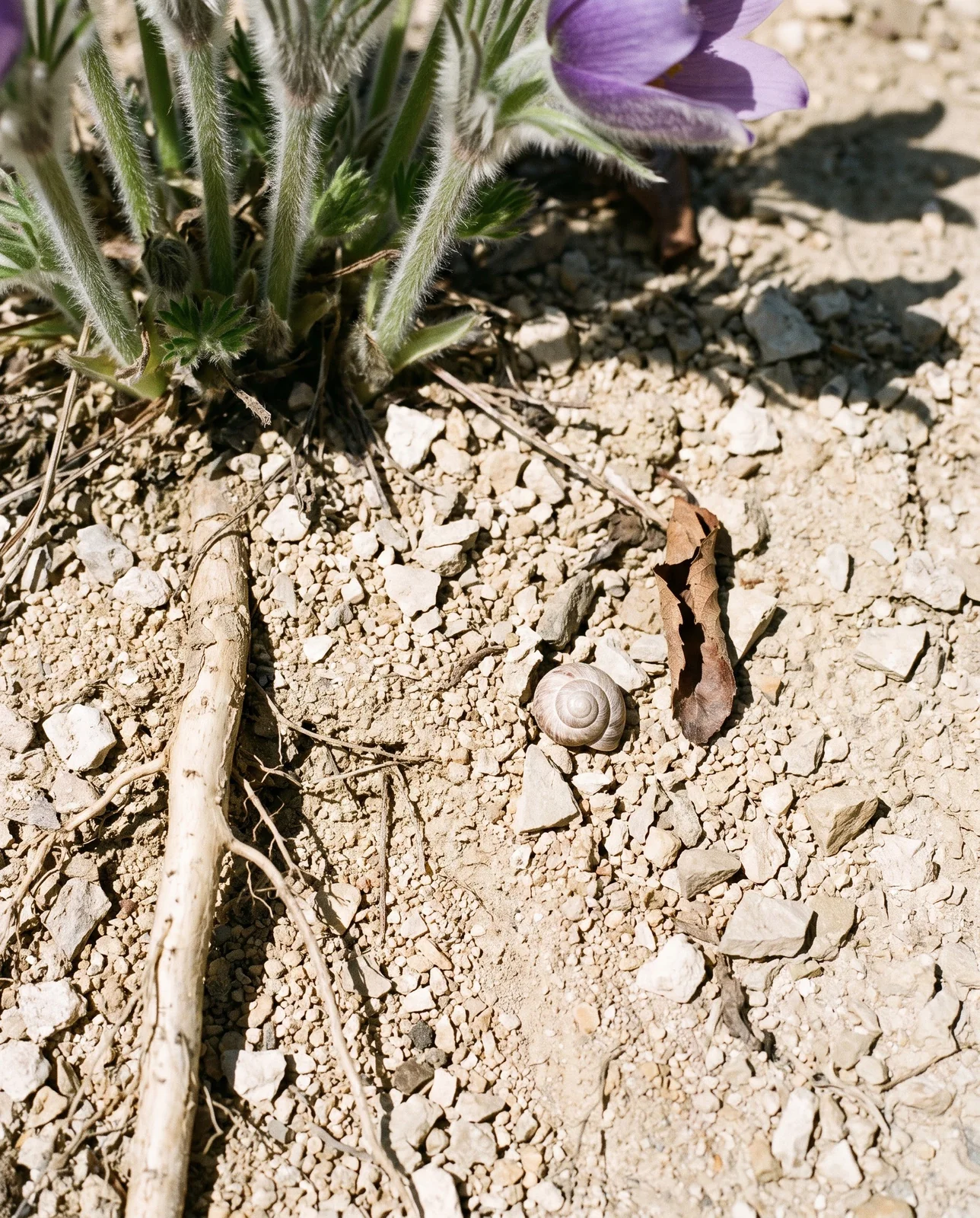
Full sun to light shade, and ground that drains hard. Both garden species take that same light, and the difference between them is moisture. The European plant wants fertile, humusy, gritty soil of medium moisture, with drainage the one condition that cannot be missed. The prairie plant takes the same grit kept drier, dry to medium, and it tolerates drought, dry soil and shallow rocky ground. The European plant turns quite drought tolerant once it has settled in. In the wild the genus grows in grassland over alkaline, limestone soils, on deep tap roots. Aim for neutral to slightly alkaline ground, between about 6.8 and 8.0.
Wet ground is what the siting advice is written against. In a moister climate, plant on a slope, a hillside or a raised bed, so the roots are not standing in waterlogged soil over winter. This is a plant that loves cold weather and a poor choice for the southern half of the country. Established plants are best left undisturbed, and the reason is underground: the tap root goes deep, and a plant built on that root resents being lifted.
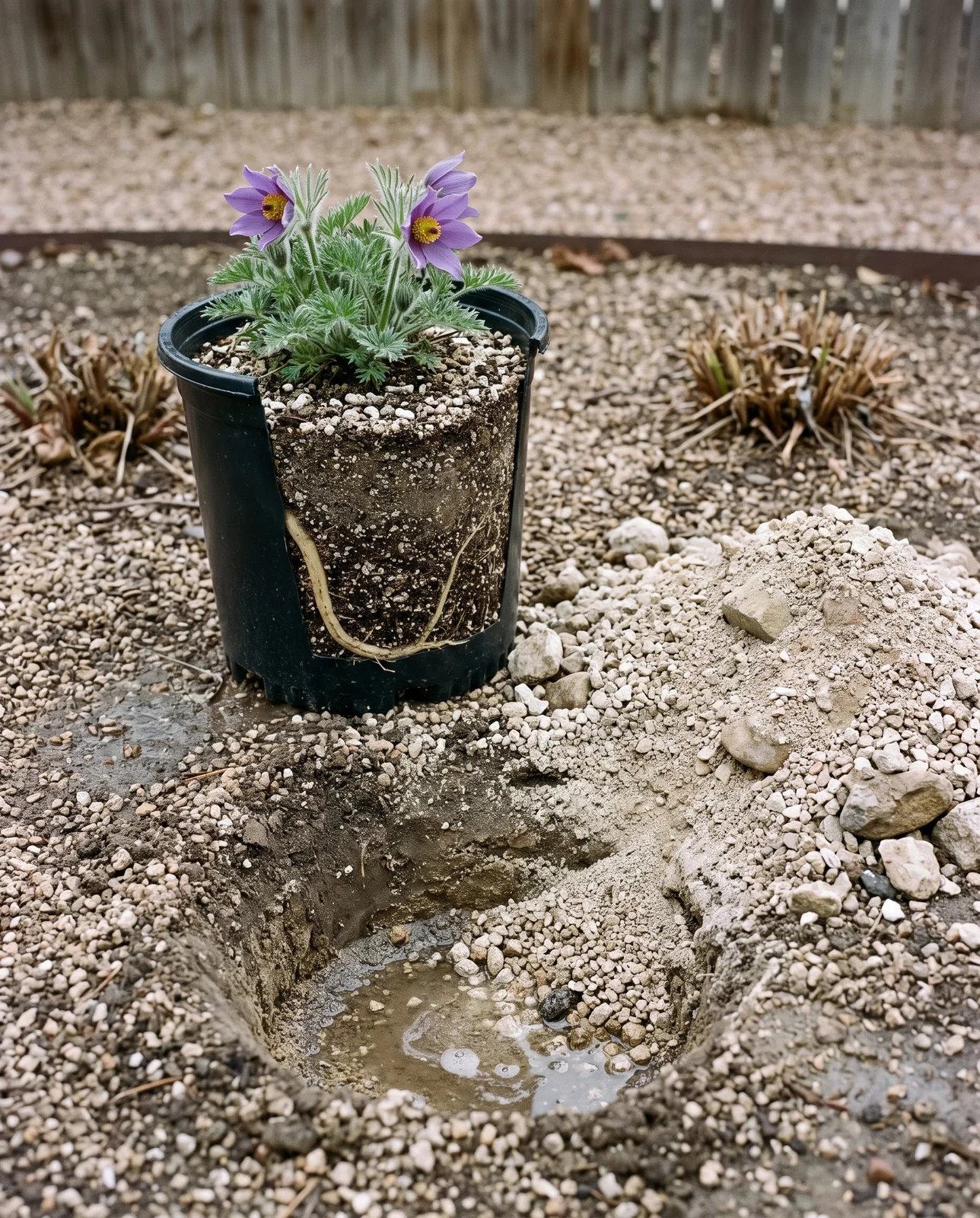
Planting one, and moving one that is already in
Dig the hole in the place the plant is going to stay. No depth or spacing figure is published for a potted pasque flower. What matters is the root: lift the plant with a substantial amount of soil around it, and size stops mattering. Young seedlings take a move better than settled plants do, and neither is easy. A plant on a long deep tap root resents being lifted and is better left alone.
An established plant can be moved, with a condition attached. Cut it back hard first, and it should regrow and rebloom in about 4 weeks. Take off all the open flowers and large buds before you lift it. Division is the other way to get more plants, and one mature clump divides into 4 to 6, alongside seed and root cuttings. Given how deep that tap root runs, division has the most to lose.
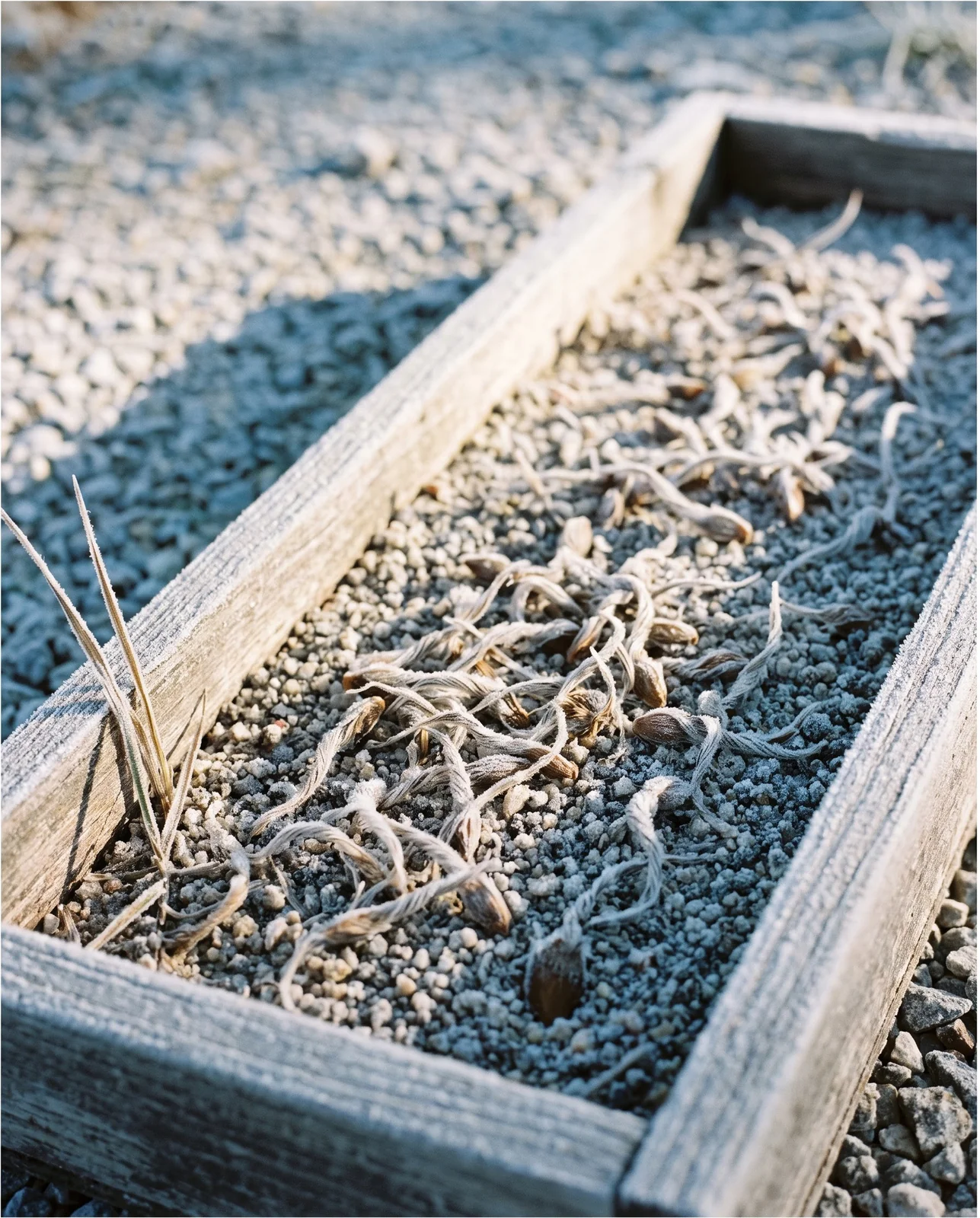
Growing pasque flower from seed
Whether the seed needs a cold period depends on how old the seed is. Fresh seed germinates readily with no pretreatment, in about 3 weeks or a little more. Seed that has been dry stored for months behaves differently. It goes into deep dormancy and germination turns variable. It takes about 60 days of cool moist stratification before it will sprout, then germinates at 65 to 70 degrees Fahrenheit. The way around that dormancy is to sow outdoors in fall and let the freeze and thaw cycles do the work. A full winter of cold moist conditions suits stored seed, the longer the better.
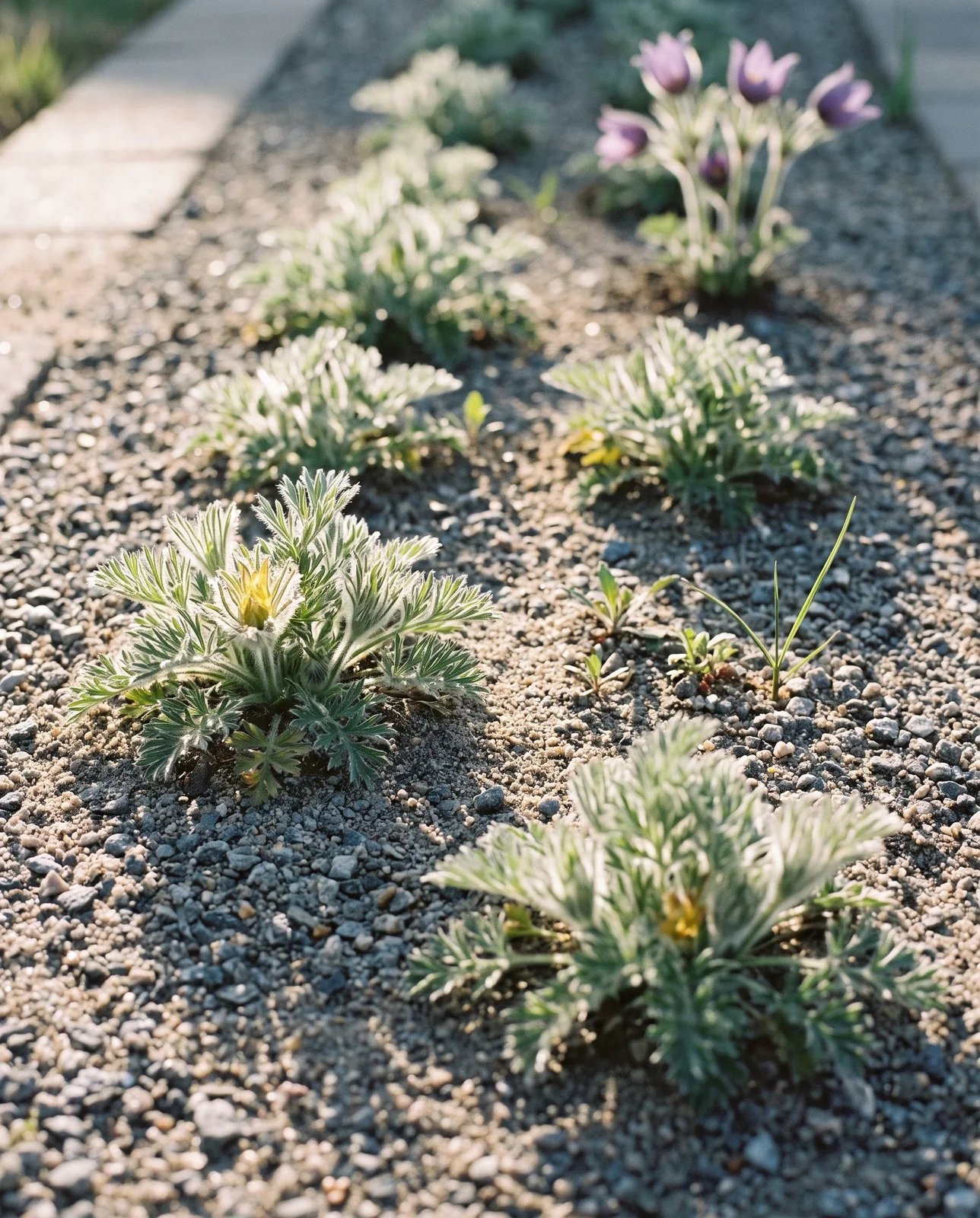
A seedling is a multi-year project. Flowering begins after several years at the earliest, and the first flowers come at two or three years of age. Until then there are hairy divided leaves and nothing above them, which is worth knowing before a flowerless patch gets dug up and replanted. From seed the species is somewhat difficult in general.
Why a pasque flower is not flowering
Start at the top and stop at the first check that fits your plant.
Yellow leaves, and the dormancy that is not a fault
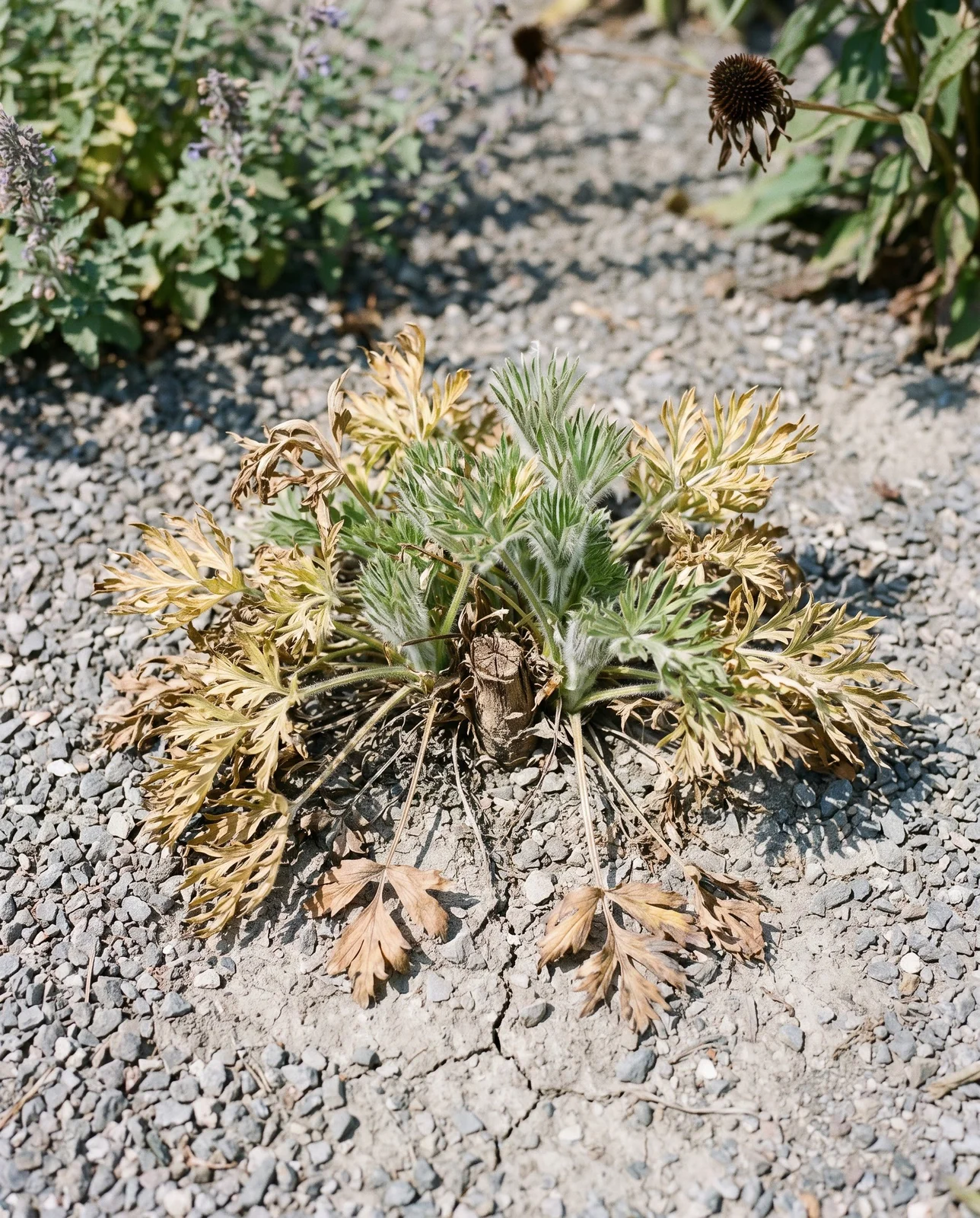
Most of the yellowing on a settled pasque flower is the plant going quiet on schedule. The foliage holds through the summer, and the leaves may die back late in it. Later in the year the plant can go dormant as a normal part of its cycle. Drought pushes the same switch, since the prairie species may go dormant when the ground runs dry. Winter takes the leaves off entirely, because this is an herbaceous perennial that spends the cold months as a root, with new leaves up in early spring before the flowers. A clump that is bare in late summer and again through the winter is doing what it should.
The fault to look for is standing water. What the plant needs above all is good drainage, in soils that run moist to dry. The two garden species do not take the same water: dry to medium for the prairie plant, medium for the European one. So the question in front of a yellowing clump is what the ground has been doing. Dry ground under a plant that flowered in spring points at the yearly cycle; soil that has stayed wet over winter does not.
Cutting back: there is no annual cut
Nothing on this plant needs cutting once a year. Take off the open flowers and large buds before you move a plant, or leave the seed heads standing to disperse. The leaves may die back on their own in late summer, and winter takes the rest, since the plant spends the cold months as a root. The warning that a hard cut can kill a pasque flower comes from a plant care app, which puts the limit at 15 to 20 percent of the plant at one time. No horticultural guidance for the species repeats it.
Does pasque flower spread?
It makes a clump and stays where it is put. The prairie species grows from a substantial underground tap root and can also reproduce vegetatively. New rosettes come up from its vertically branched roots, so an old plant thickens into several crowns of the same individual. Seed is the other route, and a short-lived one, since the seeds do not persist in the soil. A seedling appears in the season after the seed falls, or the chance is gone. No runner, no colony, no edge that has to be cut back.
How poisonous pasque flower is
Every part of a pasque flower is poisonous while it is fresh. Behind that is protoanemonin, a bitter oil carried by many species of the genus, and an estimated 30 fresh plants eaten is a lethal amount. On the European garden species, eating any part causes severe pain in the mouth, and serious poisoning follows large quantities. Fresh sap inflames and blisters skin on contact, and swallowing it brings vomiting and diarrhea. The western mountain species carries the identical warning, poisonous in all parts when fresh. That makes gloves worth wearing when you cut or divide a plant.
Drying changes the hazard. Protoanemonin breaks down quickly into a harmless compound once the plant is dried, so the caution belongs to the fresh plant. For pets there is no direct answer. The ASPCA's toxic and non-toxic plant list has no entry for pasque flower, none for anemone and none for windflower. That list is a compilation of the plants most often encountered, and not all-inclusive, so an absence there settles nothing about this plant.
The medicine question
The plant has a long medical history. The US Forest Service calls pasqueflower a powerful healing agent, used in small amounts by Native Americans and settlers for various ailments. The uses are specific: dried leaves as a tea for rheumatism, a poultice of pressed dried leaves on the skin, and pulverized roots against lung disorders. The European species carries the same kind of note as an herbal medicine, and the flowers served Native Americans as medicine for centuries.
The modern uses have no clinical evidence behind them. Homeopathic pulsatilla is used for sore nipples and mastitis, and to reduce or increase a milk supply, and no scientifically valid clinical trials support any of it. The chemistry explains why the old accounts all describe the dried plant. Pulsatilla contains ranunculin, protoanemonin and anemonin, along with triterpene saponins and flavonoids. The fresh plant is extremely irritating to the skin, the gastrointestinal tract and mucous membranes, and allergic reactions are reported. Never swallow the fresh plant. The medicinal use in the old accounts belongs to the dried one.
Pasque flower varieties, and which plant each one is
Labels split by species before a cultivar name is printed, so the two species come first. Every cultivar below is a selection of the European plant, the one most often on a bench of spring garden flowers.
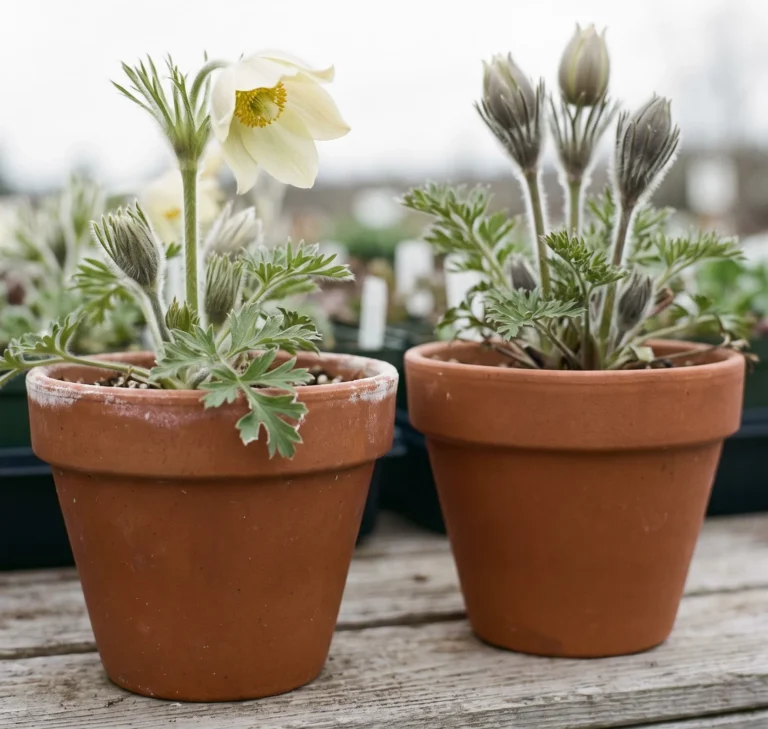
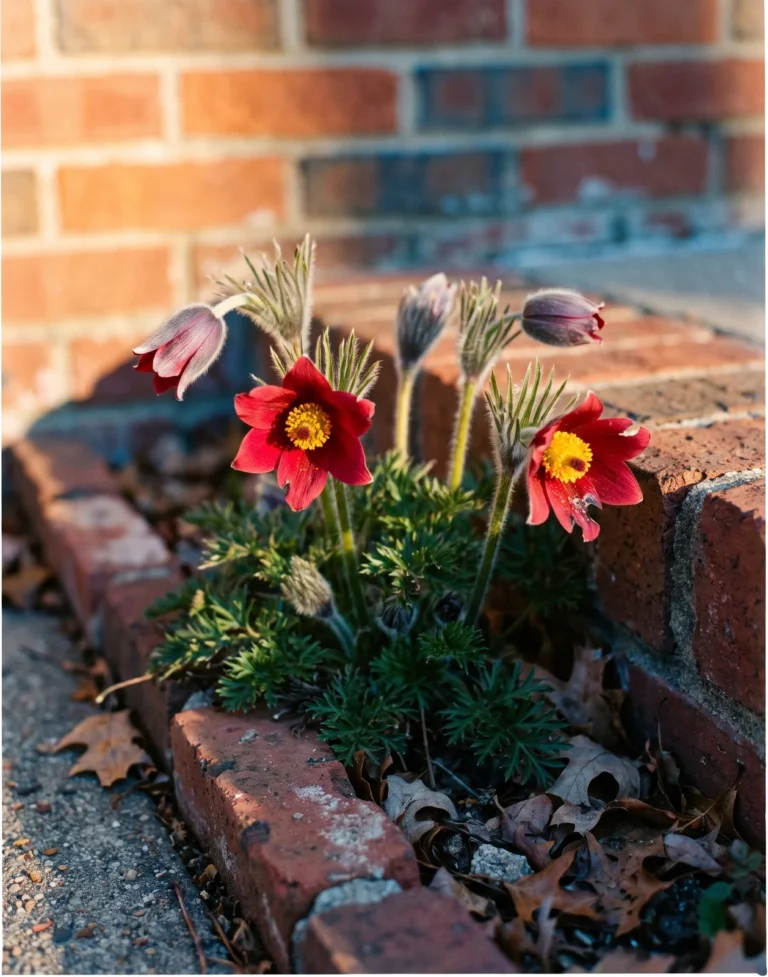
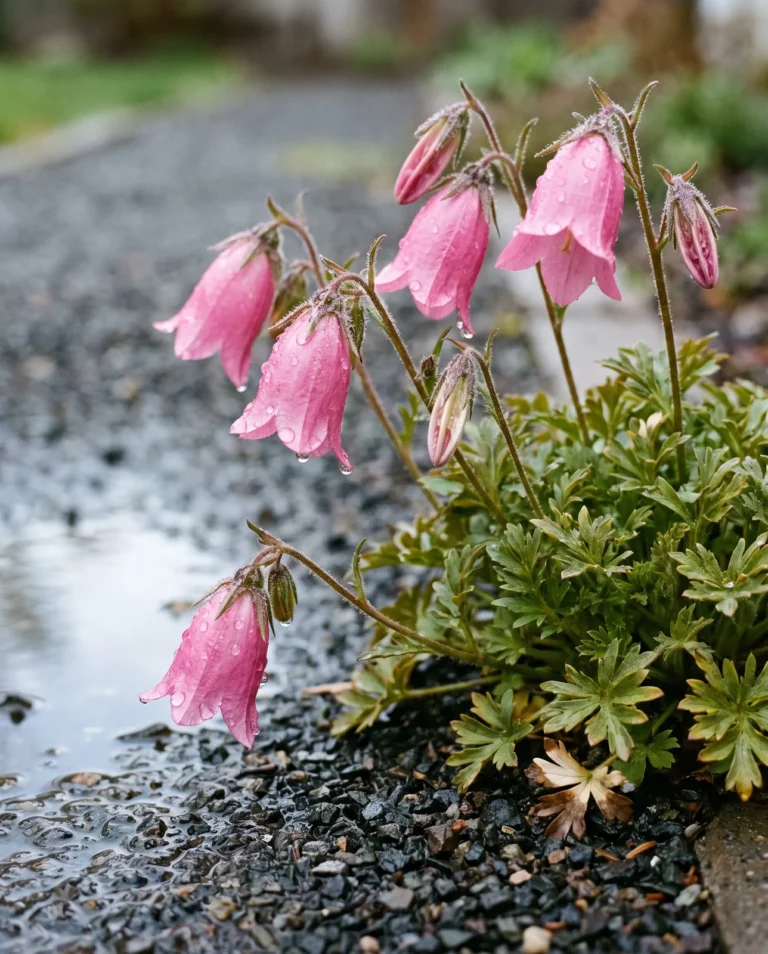
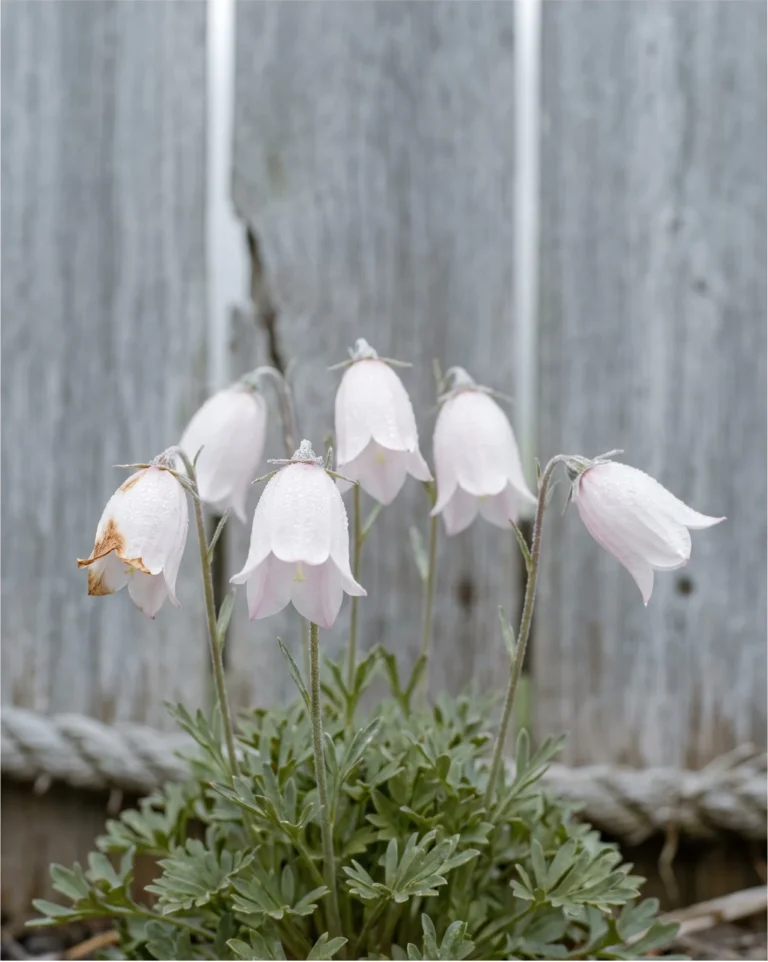
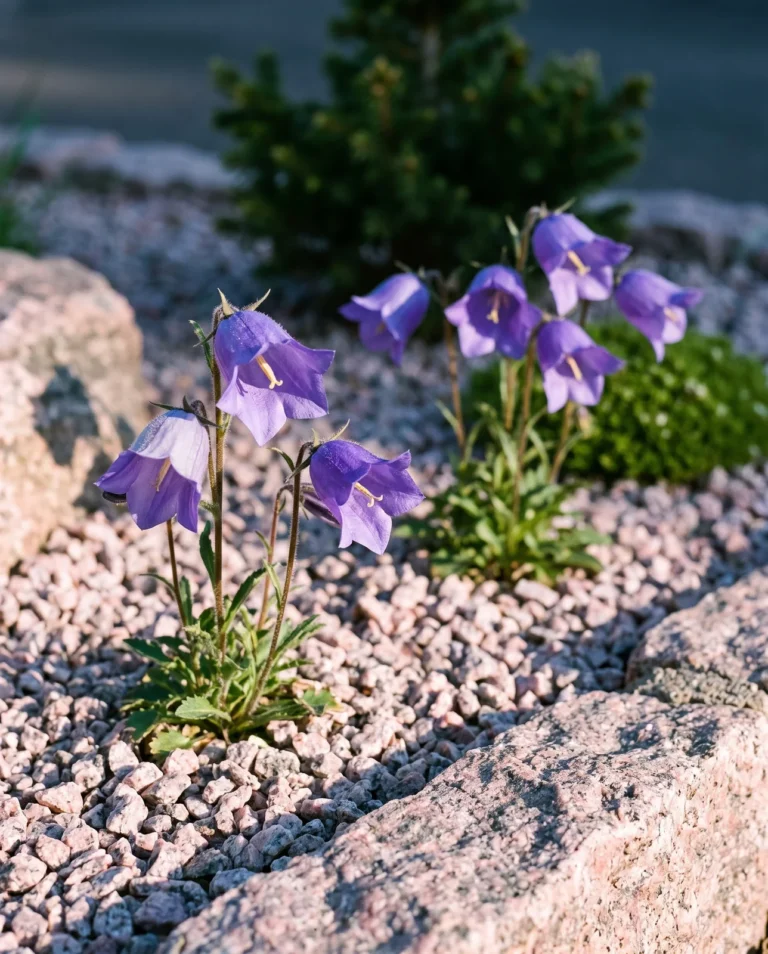
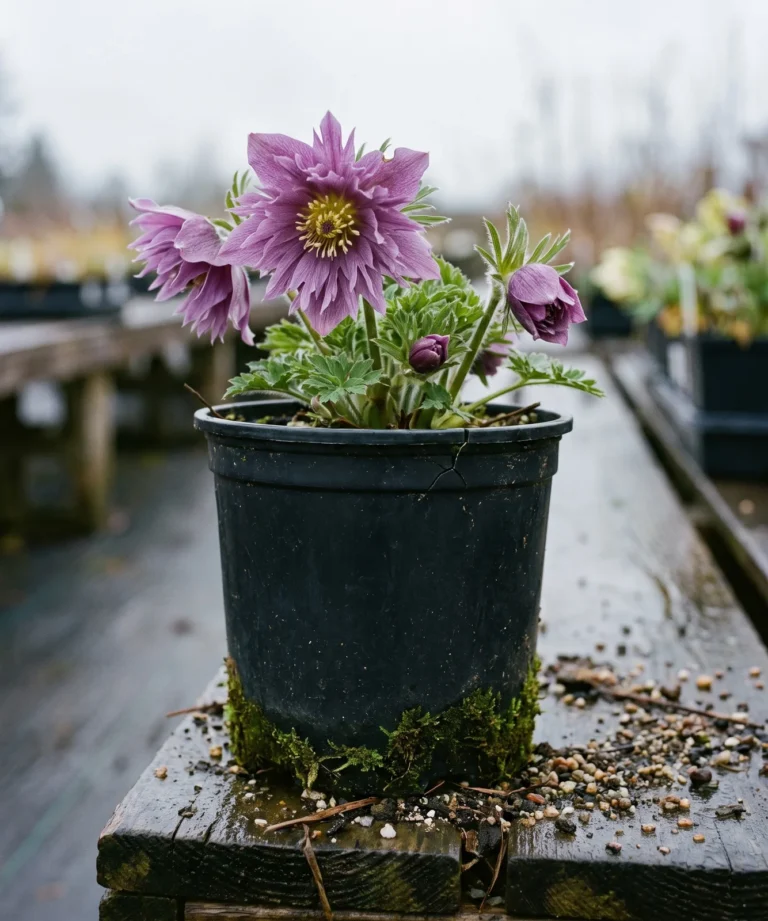
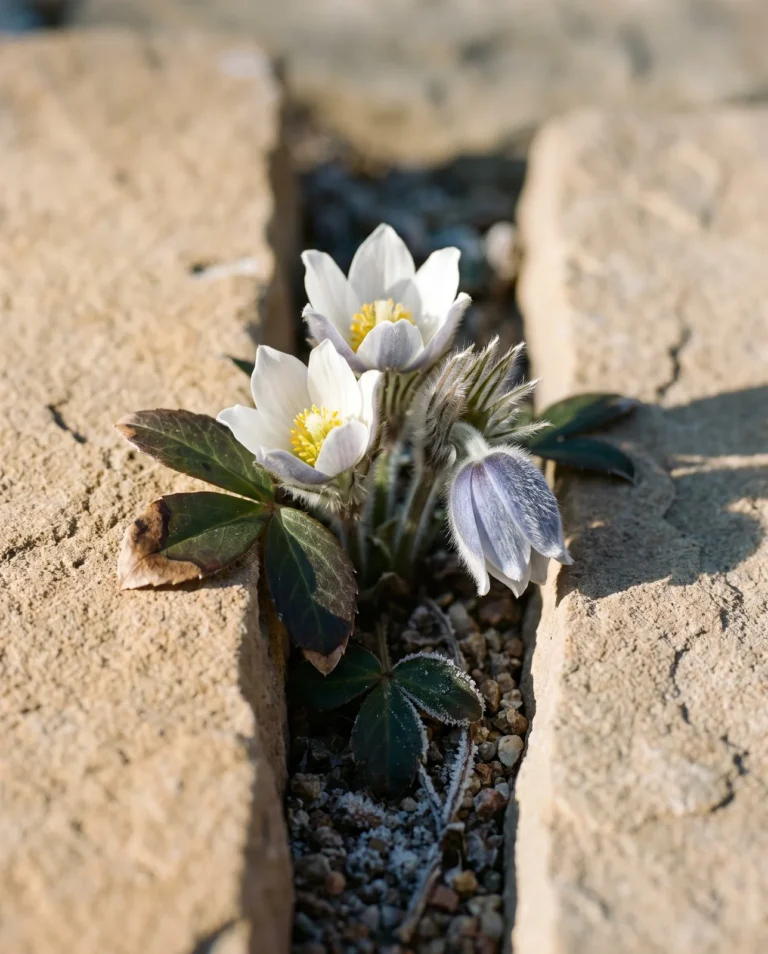
How tall and wide pasque flower gets
Pasque flower is small, and nothing published makes it wide. The European plant is about a foot each way, 9 to 12 inches tall and as much across. The prairie plant runs 3 to 12 inches tall with a spread of 3 to 6 inches, and its taller measurements reach 16 to 24 inches. Where a label names no species, the height printed is about 10 inches.
Season is part of the reason they differ. The prairie plant's spring height reaches 17 inches. On the European plant the flower stems stand 5 to 8 inches tall, with the leaf mound behind them at 10 to 12 inches. A plant measured with its flower stems up, and the same plant measured later as a mound of leaves, will not give the same number.
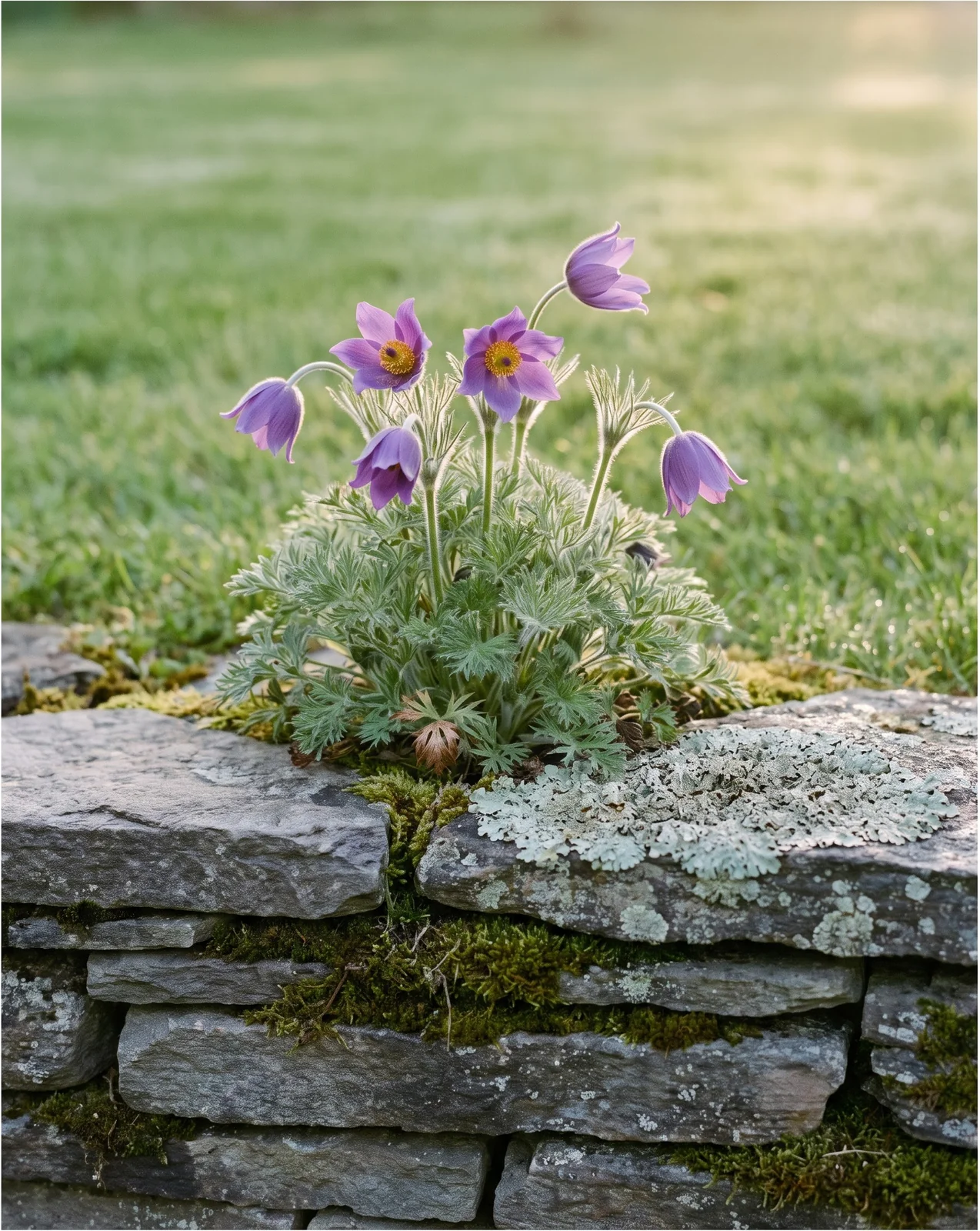
What it feeds, and what it does on prairie
Pasque flower opens when almost nothing else is out, and that timing is most of its value to wildlife. The flowers are good for pollinators, and the prairie plant is cross-pollinated by honeybees, solitary mining bees, bumblebees and hover flies. Grazing animals are a different case. The prairie plant is mildly toxic from its protoanemonin content, its forage value to herbivores is low, and a grazed plant answers by producing new leaves from dormant buds. On prairie ground it is adapted to disturbance, wildfire included, and its numbers increase in heavily grazed meadows.
What to plant with pasque flower
Pasque flower belongs at the front of a perennial border or in a rock garden, where it combines well with spring-flowering bulbs and ground covers. Anything beside it has to take full sun and gritty ground that drains hard, and it has to stay off the crown of a plant that dislikes being disturbed. The bulbs it is asked to share a bed with, snowdrops among them, come and go on the same early clock. Plants that fill a similar niche to the European species are Anemone blanda, Anemone hortensis 'St Bavo' and Viola sororia.
What actually goes wrong
The European species has no serious insect or disease problems, so what goes wrong is about buying, siting and handling.
Symptom: the label reads pasque flower and nothing more, and the plant behaves like a different species. The prairie native is seldom grown as an ornamental, so the European plant fills the benches, and an order under the shared name sometimes ships the western species. Fix: read the binomial, and treat the common name as no answer.
Symptom: a crown that spent the winter on ground that holds water. Fix: in a wetter climate, plant on a slope or a raised bed, so the roots are not sitting in waterlogged soil through the cold months.
Symptom: a plant that flowered before it was lifted and sulks afterward. Cause: disturbed roots. Transplanting works at any size only when a large spadeful of soil comes up with them. Fix: decide the position once and leave a settled plant alone.
Symptom: leaves yellow and gone by late summer on a plant that flowered normally in spring. That is the dormancy, not a fault. Fix: mark the crown so nothing digs into it while it is bare.
Symptom: a flat of bought seed with nothing in it. Stored seed goes into deep dormancy and germination rates turn variable. Fix: sow outdoors in fall and leave the job to the winter.
What to expect, year by year
One plant from the season it goes in to the point where the clump is several crowns wide.
The planting year is quiet, and most of what matters happens out of sight. The leaves may die back in late summer, and the plant then goes leafless until early spring. A first-year plant that disappears twice is on schedule, and the tap root it is building is why the position gets chosen once.
The first full spring is the one to judge it on. Flowers come with the thaw, March to April for the prairie plant and April to May for the European one. They open with the snowmelt and shut again in a cold snap. A plant raised from seed is on a slower clock and may carry no flowers yet, since the first come at two or three years of age.
An old clump is several crowns of one plant. It grows from a substantial tap root and sends up new rosettes from vertically branched roots, so it widens without going anywhere. Increase comes from seed, root cuttings and division, with one mature plant dividing into 4 to 6. That same tap root is the argument against dividing it.
Four things people get wrong about pasque flower
These four come up whenever the plant changes hands or gets moved.
The myth: The pasque flower on the garden bench is South Dakota's state flower.
The reality: South Dakota named the American pasque, under the older name Pulsatilla hirsutissima, in 1903. The plant on the bench is usually the European species, the one the prairie native gets confused with.
The myth: It is a kind of crocus.
The reality: Prairie crocus is a common name and not a botanical one, taken from the likeness to a true crocus. The plant belongs to the buttercup family, and it is highly toxic.
The myth: A prairie native this tough must spread like a weed.
The reality: It runs the other way. The prairie plant is critically imperiled in Washington, Illinois and Ontario, though secure globally, and the conservation notices for the genus run to rare or threatened.
The myth: Move it in autumn and it will be fine.
The reality: Root disturbance is not tolerated well. A move works only with a hard cut back first, after which the plant should regrow and rebloom in about 4 weeks. A settled plant on a long tap root is better left where it is.
FAQ
What are the ideal growing conditions for pasque flower?
Full sun to light shade, on grit that drains fast. Drainage is the condition that cannot be missed. The European species takes medium moisture, the prairie species dry to medium, and the prairie one handles drought better.
Is pasque flower endangered?
In Europe the plant of that name is. Pulsatilla patens there is one of the most endangered plant species in Europe, protected as critically endangered and covered by Annexes II and IV of the EU Habitats Directive.
Is pasque flower a perennial or an annual?
A perennial that spends part of the year underground. It loses its leaves in winter, puts up new ones in early spring before it flowers, and can go dormant later in the year as well.
Is pasque flower poisonous to dogs and cats?
Treat it as poisonous. All parts are toxic while fresh, and the sap can inflame and blister skin. The ASPCA list carries no entry for it under pasque flower, anemone or windflower, and that list is not all-inclusive.
Is pasque flower toxic to touch?
Fresh sap can cause inflammation and blistering on contact. The European species causes contact dermatitis, and its poisonous parts run to bark, flowers, fruits, leaves, roots, seeds and stems.
Do deer eat pasque flower?
Deer like it, and it may need protection in some areas. Rabbits are the easier case, since the European species tolerates rabbit browsing.
What is the difference between Pulsatilla vulgaris and Pulsatilla patens?
Water and cold. The prairie species wants dry to medium water against medium for the European one. It is also a full zone hardier at the cold end, 3a to 8b against 4a to 8b.
What is pasque flower good for?
Early nectar, mainly. It supplies invaluable early season nectar to honeybees and native bees, and it goes into rock gardens and into gardens meant to resemble an Upper Midwest prairie.
Is pulsatilla safe to take as a medicine?
Nothing supports it. Pulsatilla contains ranunculin, protoanemonin and anemonin, and the fresh plant is extremely irritating to the skin, the gut and mucous membranes. No valid clinical trials back the traditional and homeopathic uses, and nursing mothers are steered elsewhere for lack of information.
Do you cut back a pasque flower?
There is no annual cut. Flowers and large buds come off before a plant is moved, and the seed heads can stand and disperse. The leaves die back on their own in late summer.
Interesting tips
- The newest naming puts a trap in the label. Under the treatment that splits the two, true Pulsatilla patens is native only to Europe, Russia, Mongolia and China, and the American prairie plant becomes Pulsatilla nuttalliana. A label reading Pulsatilla patens no longer says which continent the plant came from.
- A plant code settles what a common name cannot. The federal code for the North American prairie pasqueflower is PUPA5, filed under Pulsatilla patens and marked native to the Lower 48, Alaska and Canada. It is the fastest way to check that a plant sold as native is the prairie species.
Related Guides & Flowers
Hellebore
The other perennial that flowers while the ground is still cold, for the shadier end of the same season.
Gentians in rock gardens
Alpine neighbors for the same gritty, sharply drained bed.
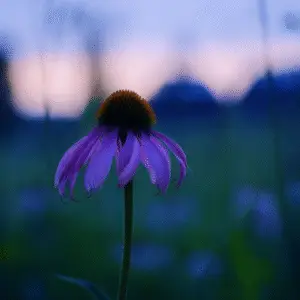
Purple flowers
Where the violet cup sits among the other purple flowers of the garden year.
Spring plants that vanish by summer
The gap left by a plant that finishes early, and how gardeners plan around it.
Enjoying our flower guides? Add YourFlowersGuide as a preferred source on Google. It helps more readers find us.
Add to Preferred Sources