Taxonomy and origin
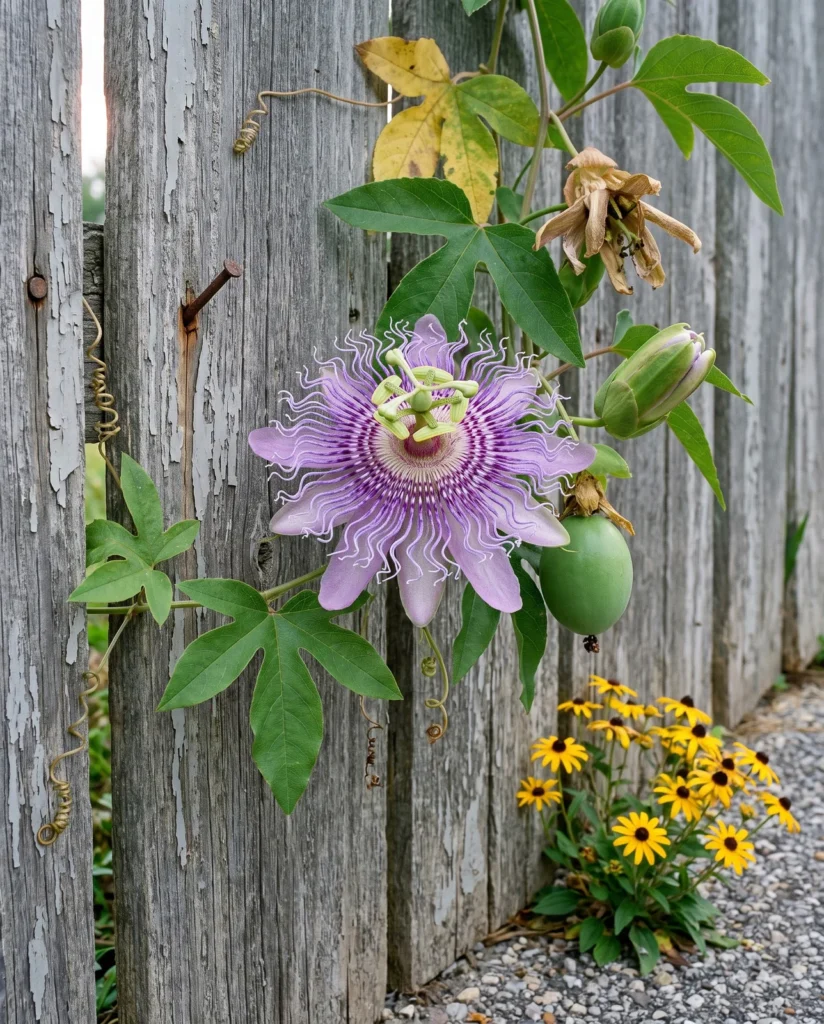
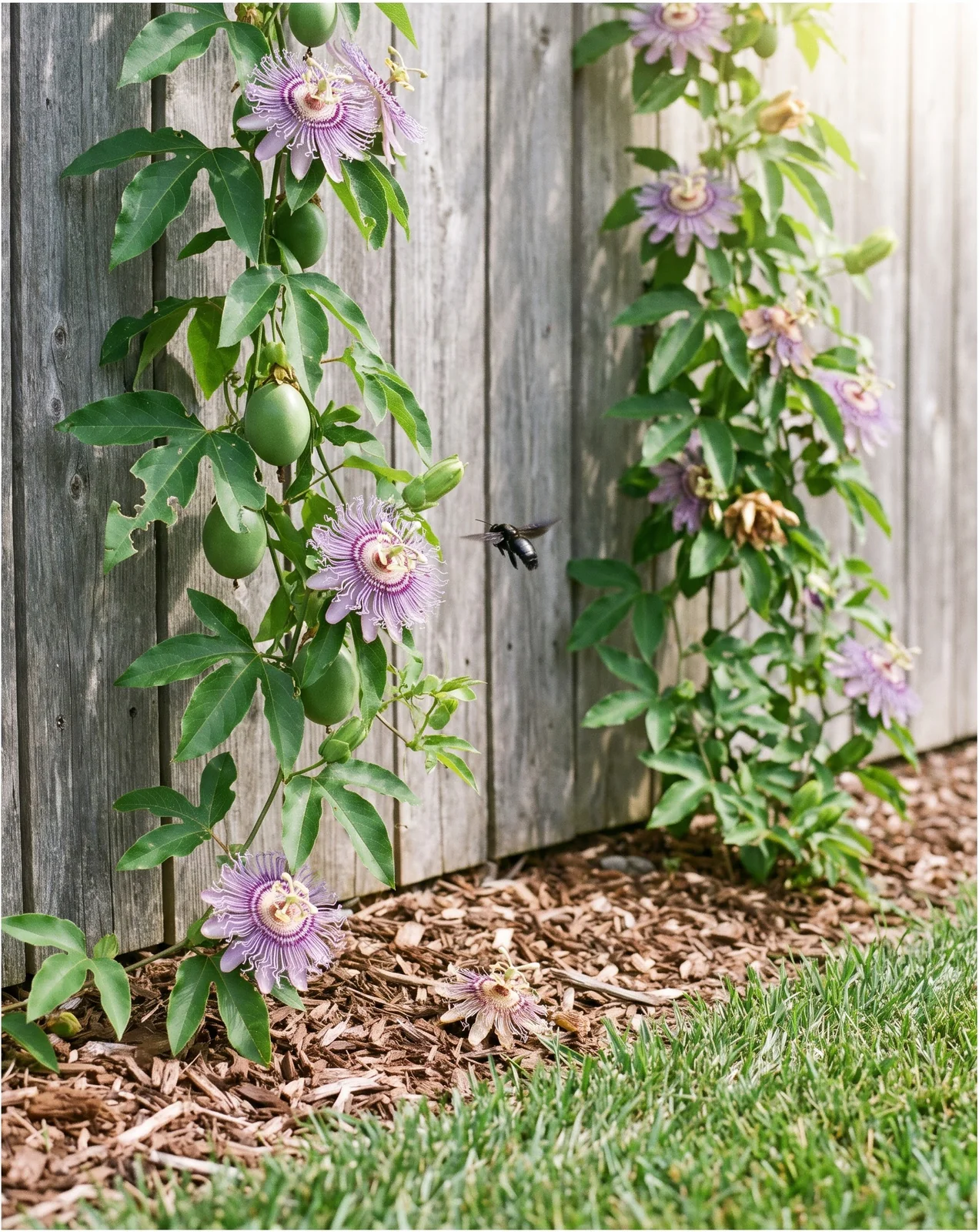
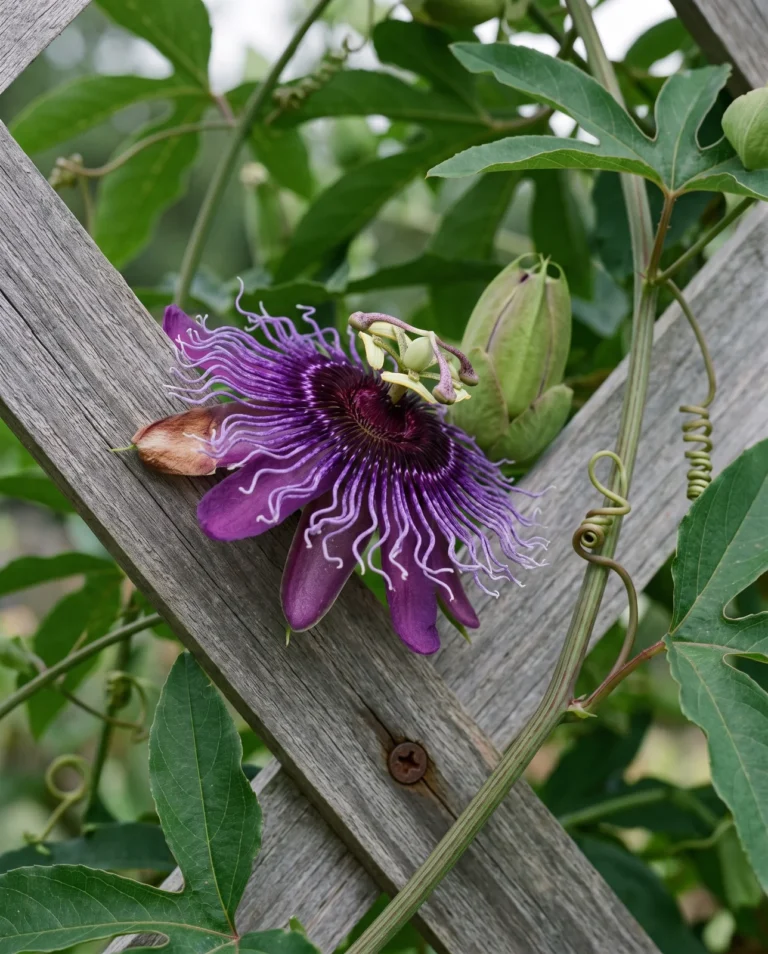
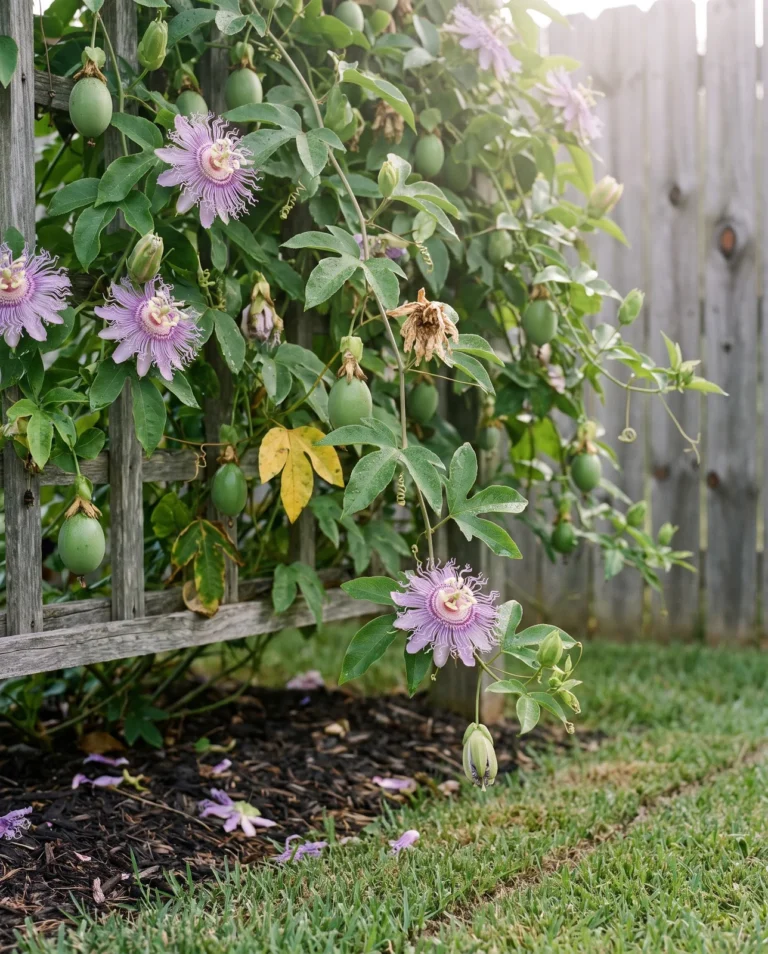
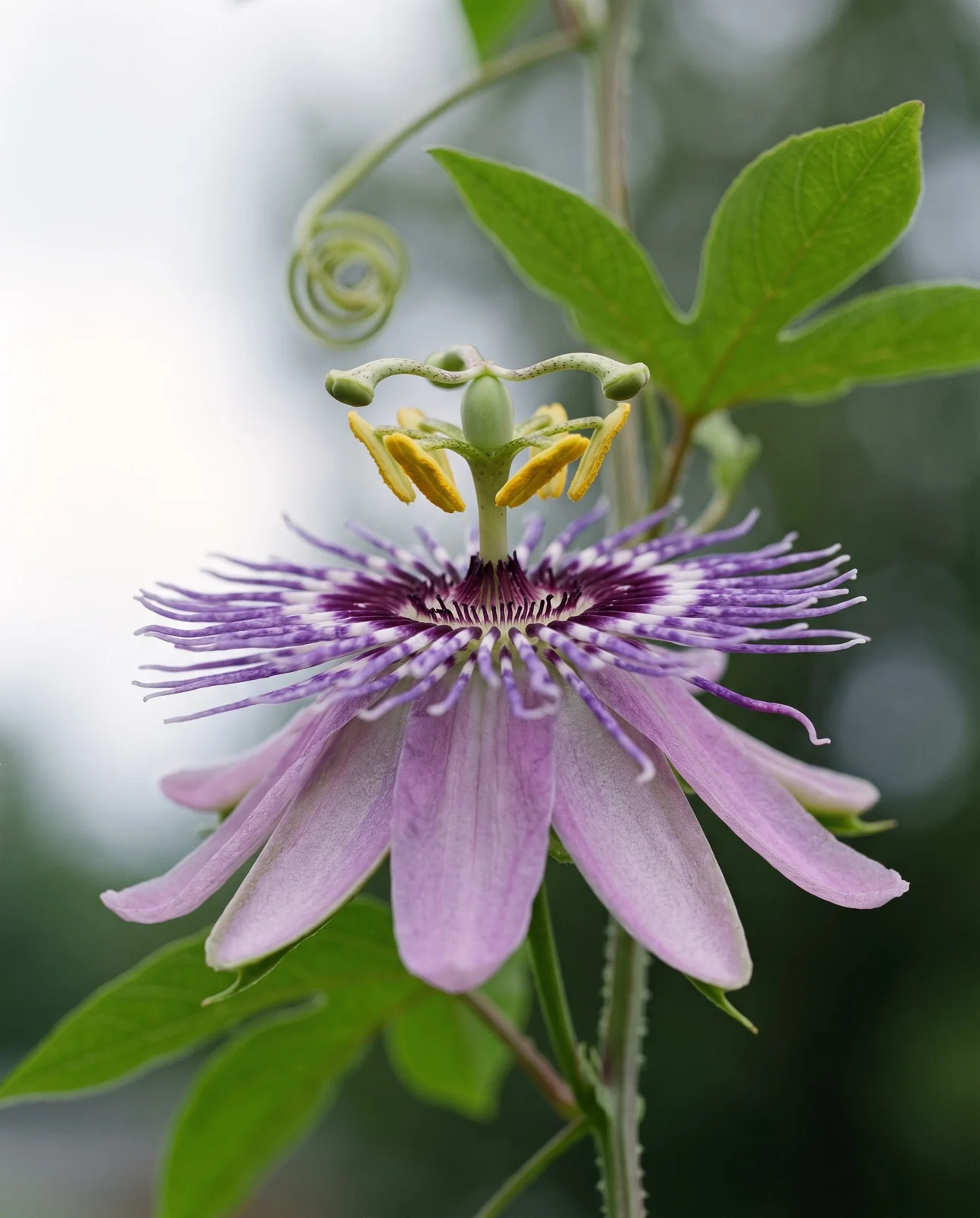
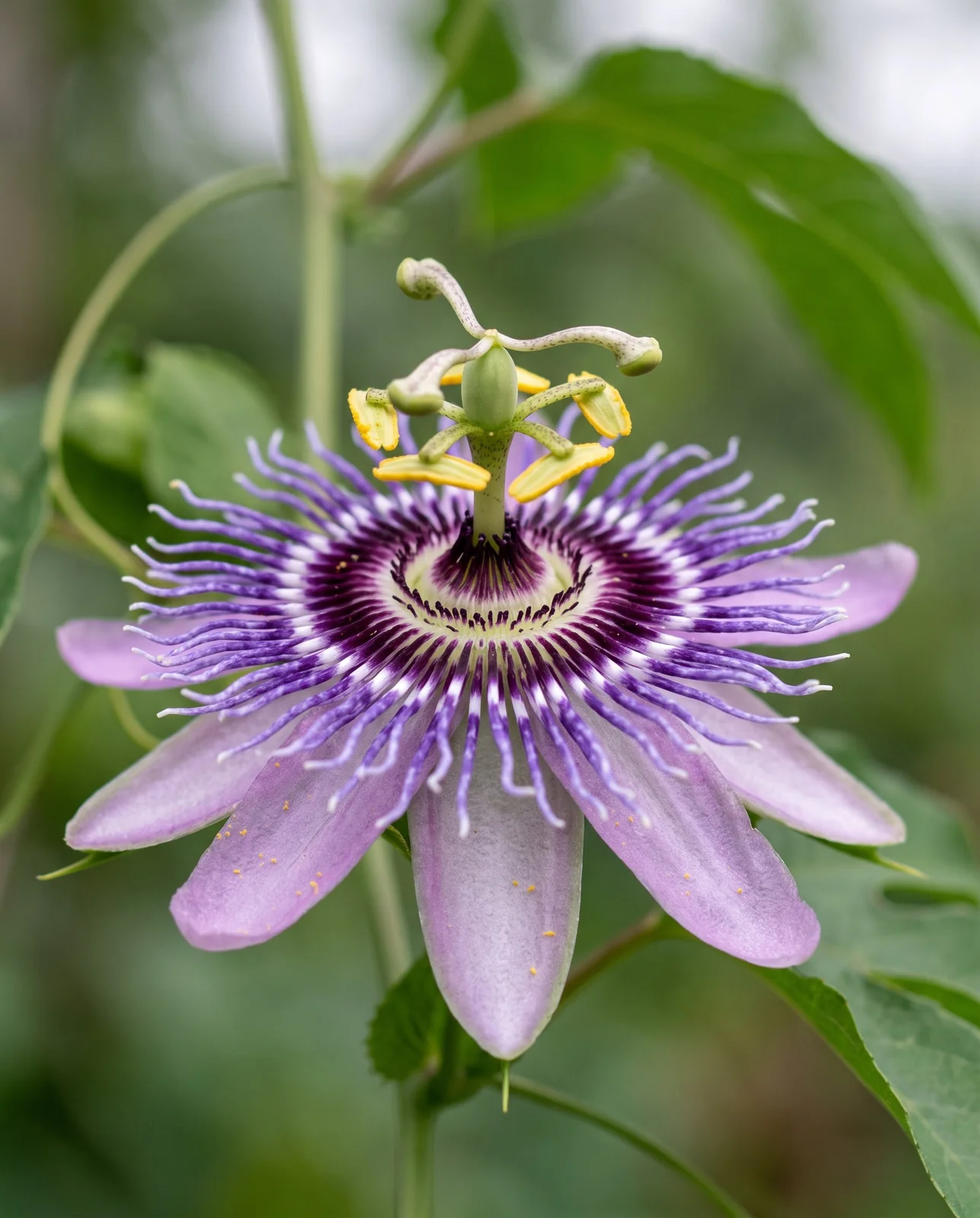
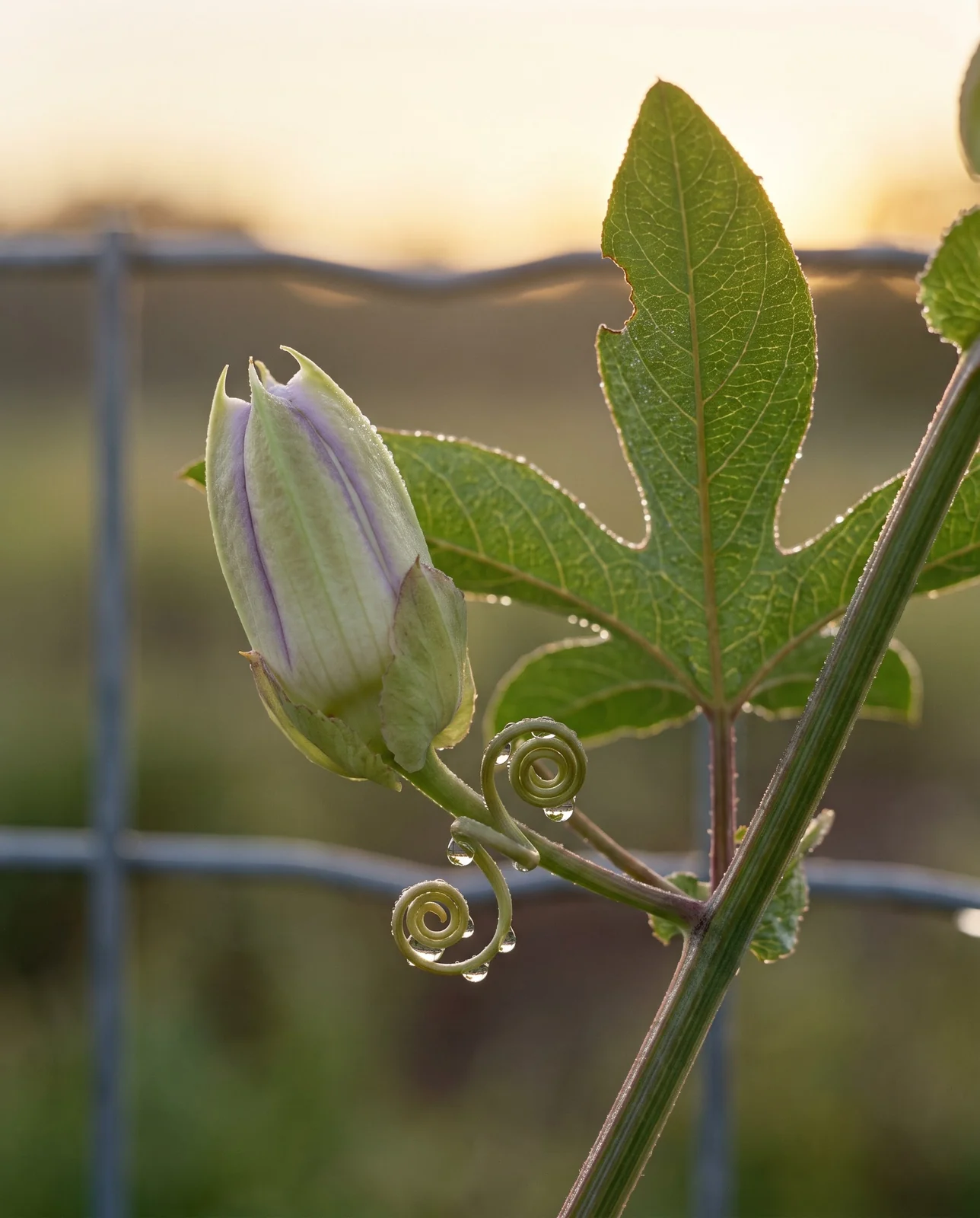
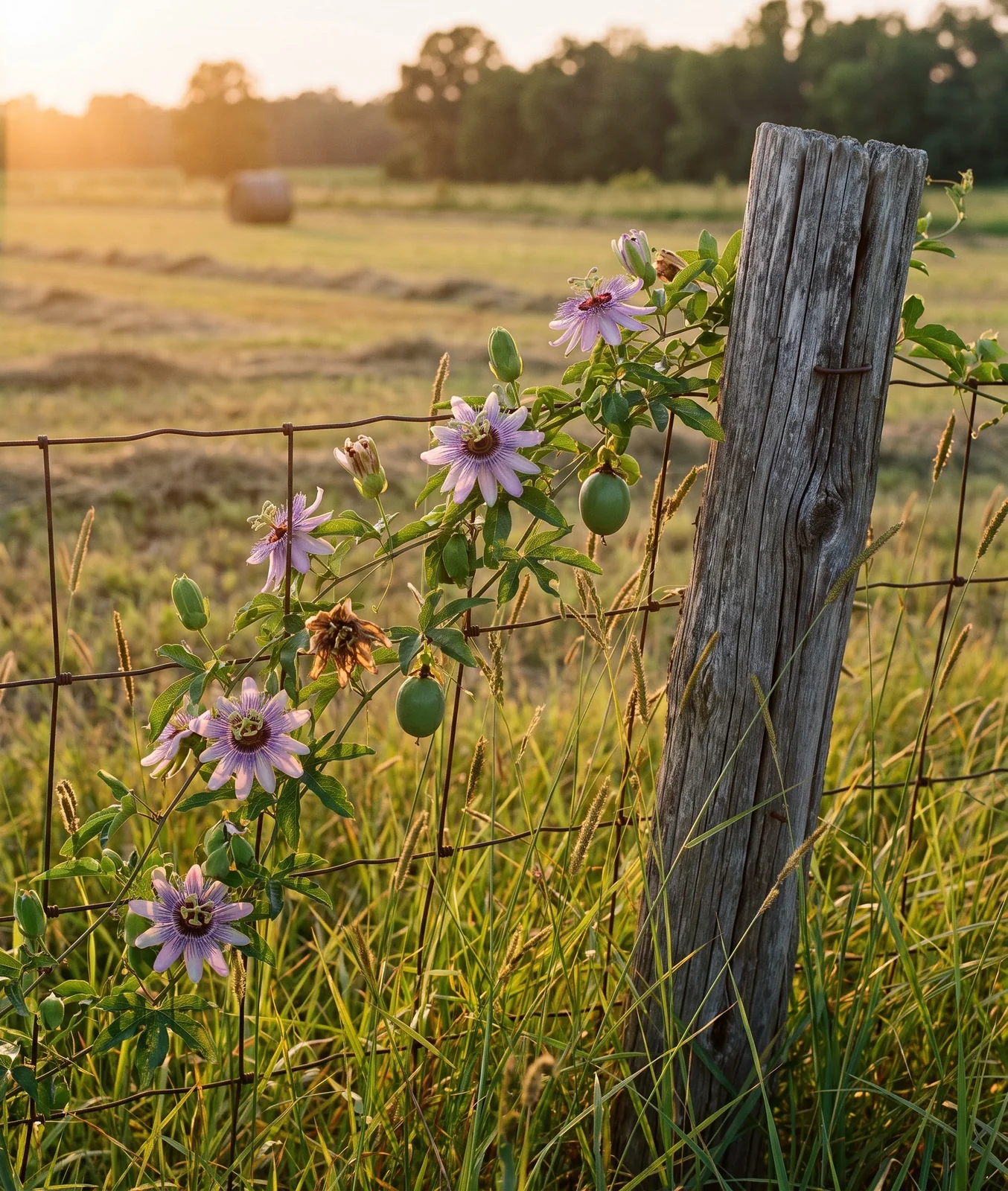
Passionflower is the common name for Passiflora, a genus of more than 500 species, nearly all of them vines that climb by tendrils. The tendrils grow at the leaf joints and wrap wire, string, or a neighboring stem, so the vine wants the thin support a clematis does. Five petals and five sepals open almost flat, and above them stands the corona, a crown of fringelike segments. Maypop flowers measure 1.5 to 3 inches across.
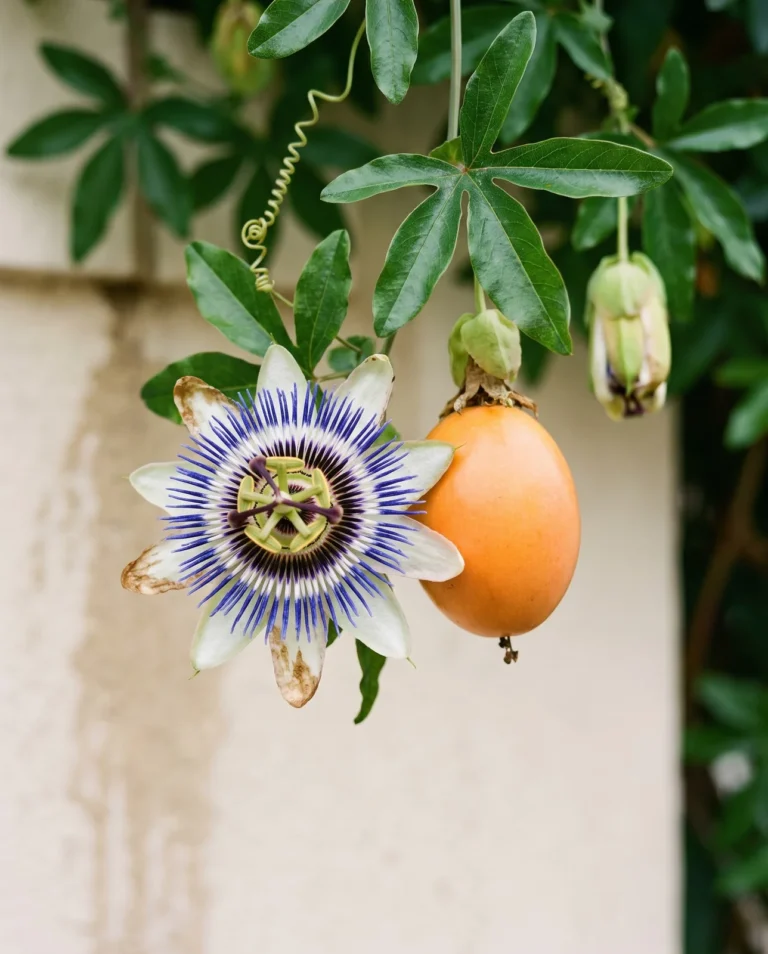
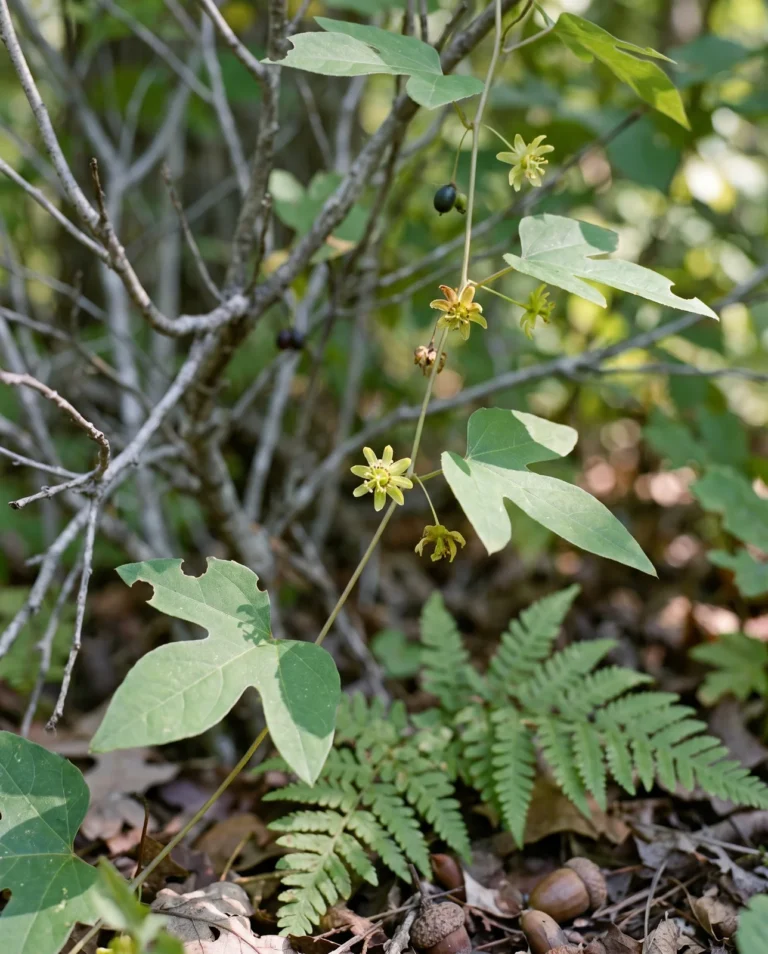
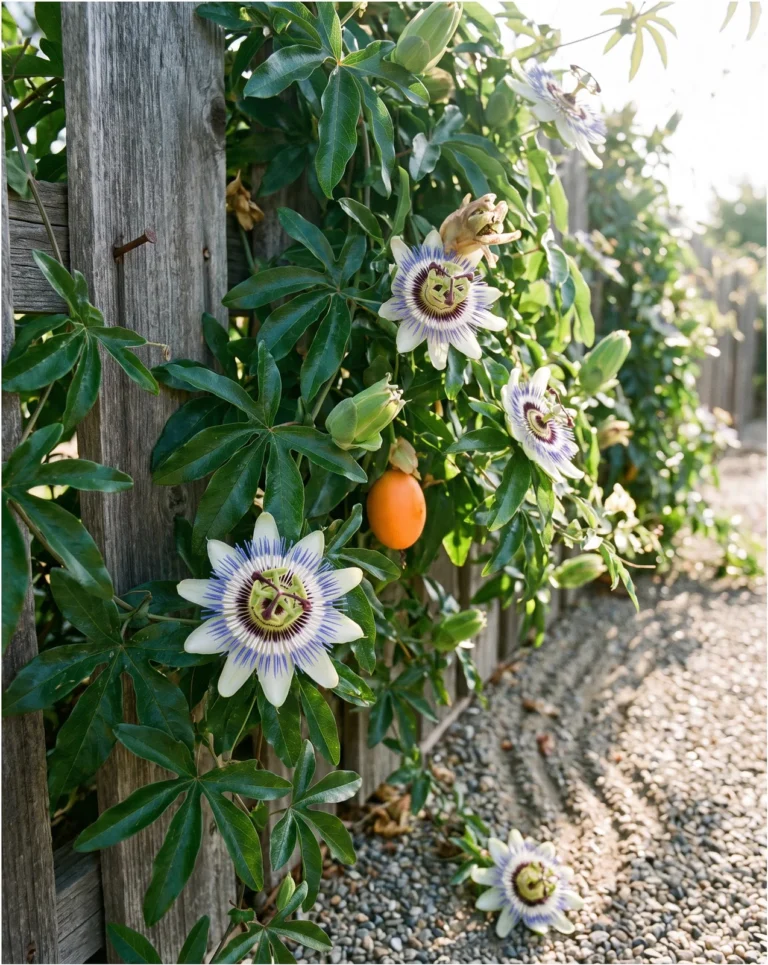
Four species account for most of what American gardeners grow. Maypop, Passiflora incarnata, is native to the southeastern and south-central United States. Blue passionflower, P. caerulea, comes from Brazil and Argentina and is the national flower of Paraguay. Purple passion fruit, P. edulis, is the grocery vine, native to Paraguay, Brazil, and Argentina. Yellow passionflower, P. lutea, is smaller, with greenish yellow flowers and purple fruits, across the south-central and southeastern states. The genus name joins the Latin passio, meaning passion, and flos, meaning flower. Maypop is blunter, from the loud pop of a mature berry underfoot. Native Americans ate the young shoots and leaves cooked with other greens.
Bloom time
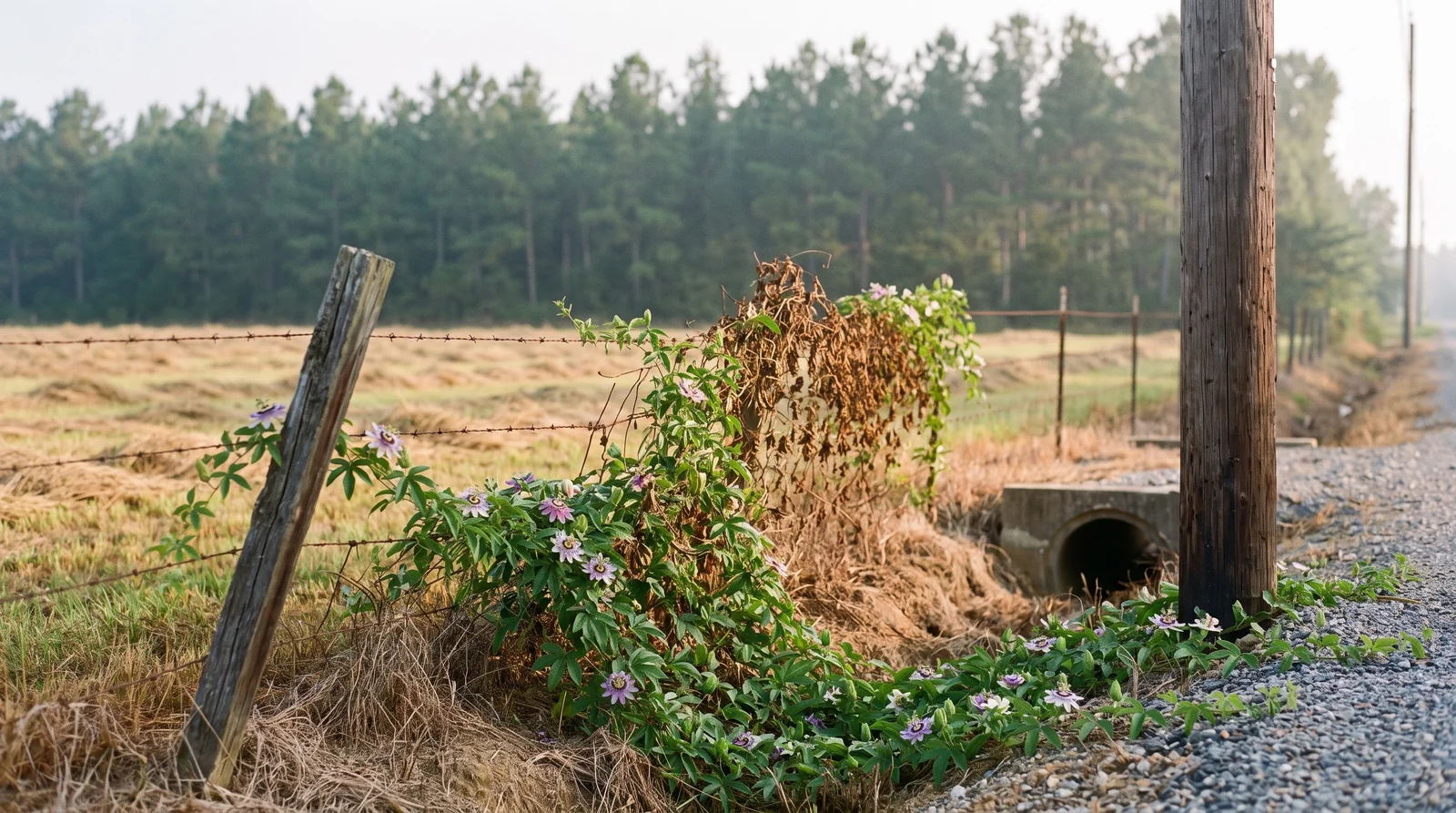
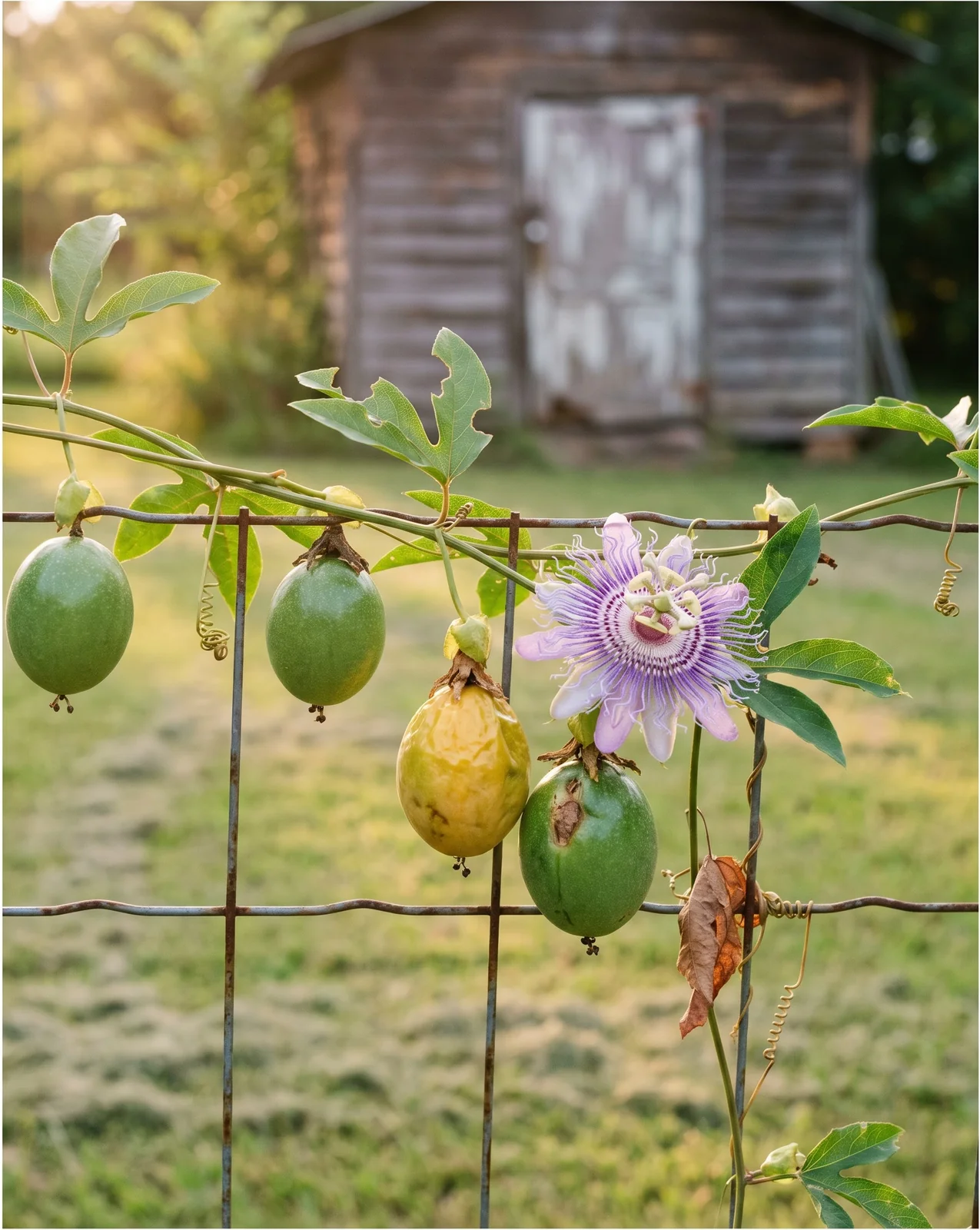
Passionflower blooms through the heat of summer and into fall. Maypop flowers from June to September, yellow passionflower over the same stretch, and the hardy hybrid 'Incense' in July and August. Each flower gets a single day, opening and closing within it, and passion fruit flowers do the same. What covers a vine in August is a rolling succession of one-day flowers. Fruit runs later: maypops appear from July to October and ripen yellowish with brown seeds, and in Florida passion fruit ripens about 80 days after flowering.
Why your vine will not flower or fruit
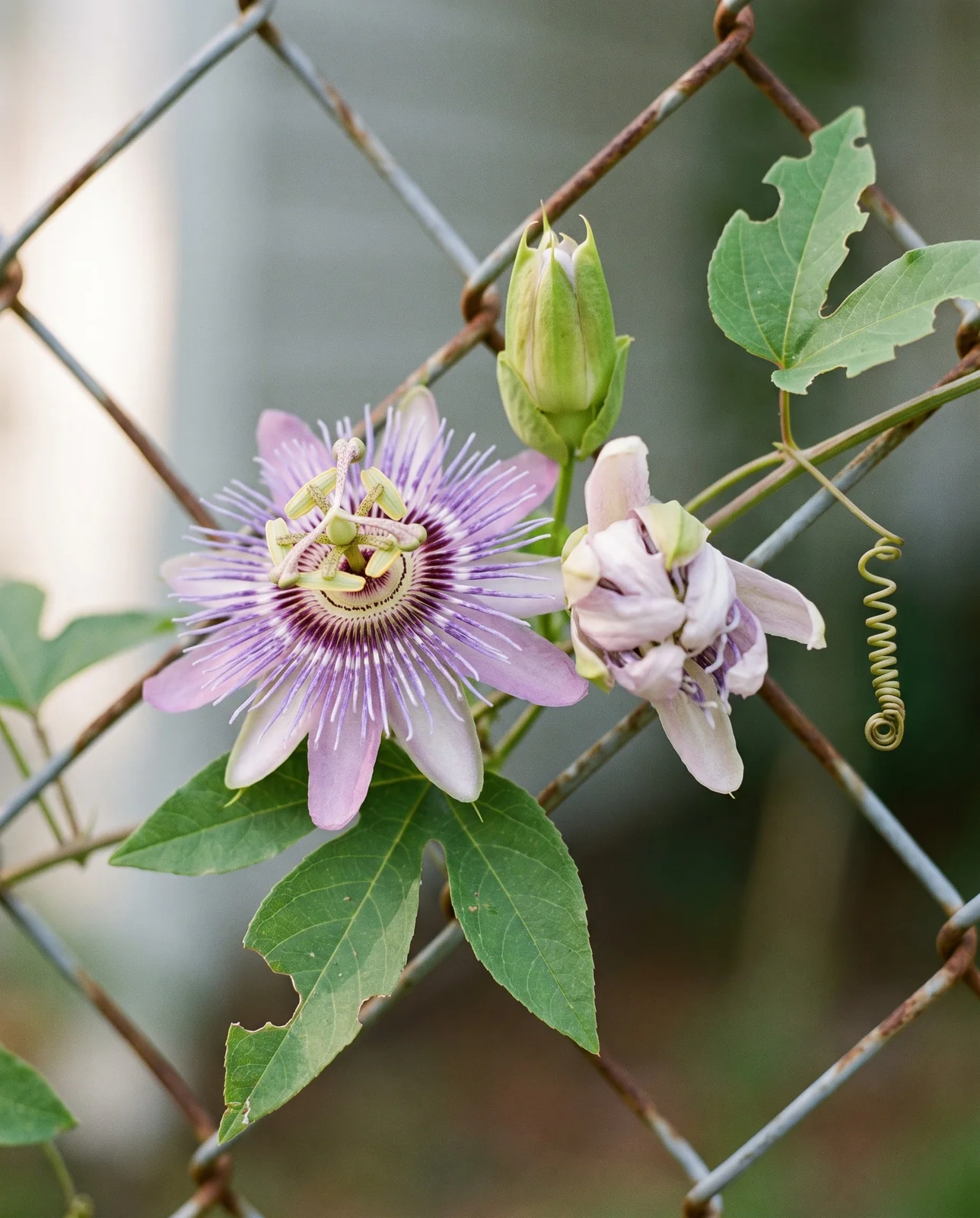
No bloom at all and heavy bloom with no fruit are two different problems. A vine that will not flower is usually too young, too well fed, or too shaded. Young plants do not flower until they reach maturity, which can take up to a year. Heavy nitrogen pushes the vine into leaf and stem at the expense of flowers, and too much manure or compost does the same. Cut the fertilizer back once the vine is mature. These vines perform best in full sun and only tolerate some shade, so a vine in a tree canopy or against a north wall has too little light. Buds drop if the soil dries out far enough to wilt the plant.
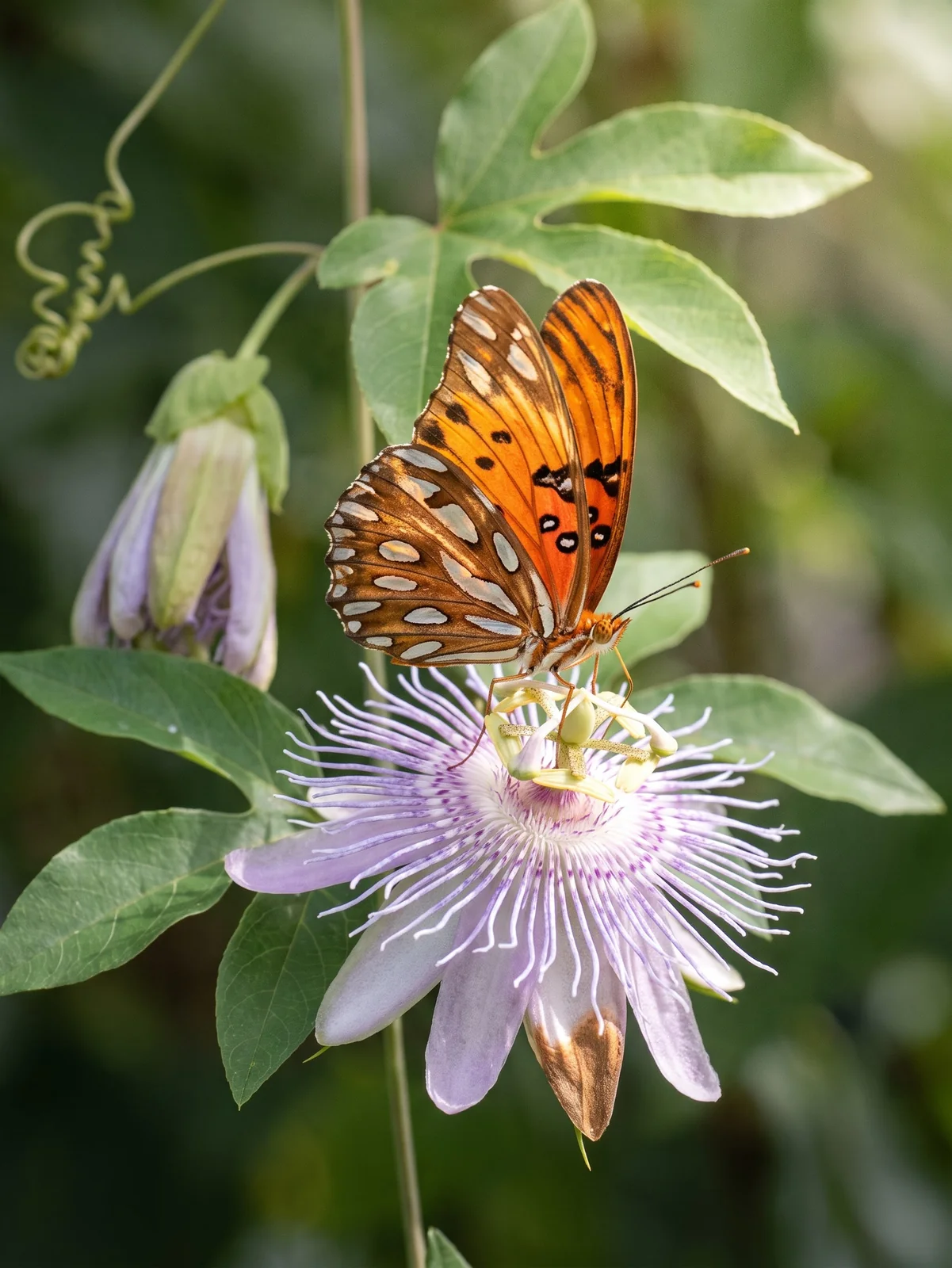
Heavy bloom with no fruit is almost always pollination. The anthers sit below the stigmas, so the flower needs an insect or a brush. Wind does not fill in, because the pollen grains are heavy and sticky. Honey bees and carpenter bees do the work, and the big bodies of carpenter bees move the pollen best. In a controlled trial, 122 maypop flowers pollinated with their own pollen set nothing. Crosses between plants of different origins did work, at 40 to 85 percent. A lone maypop can flower for years and never fruit.
With passion fruit the answer depends on the form you planted. Purple passion fruit and its hybrids are self-compatible and need no partner. Yellow passion fruit is largely self-incompatible and needs one. Rule out age first, since a passionflower generally will not fruit until at least its second year. Hollow or dry fruit points back at feeding and water: excess fertilizer leaves empty fruit, and short water or nutrients leaves it without the pulpy arils around the seeds.
Finding the cause on your own vine
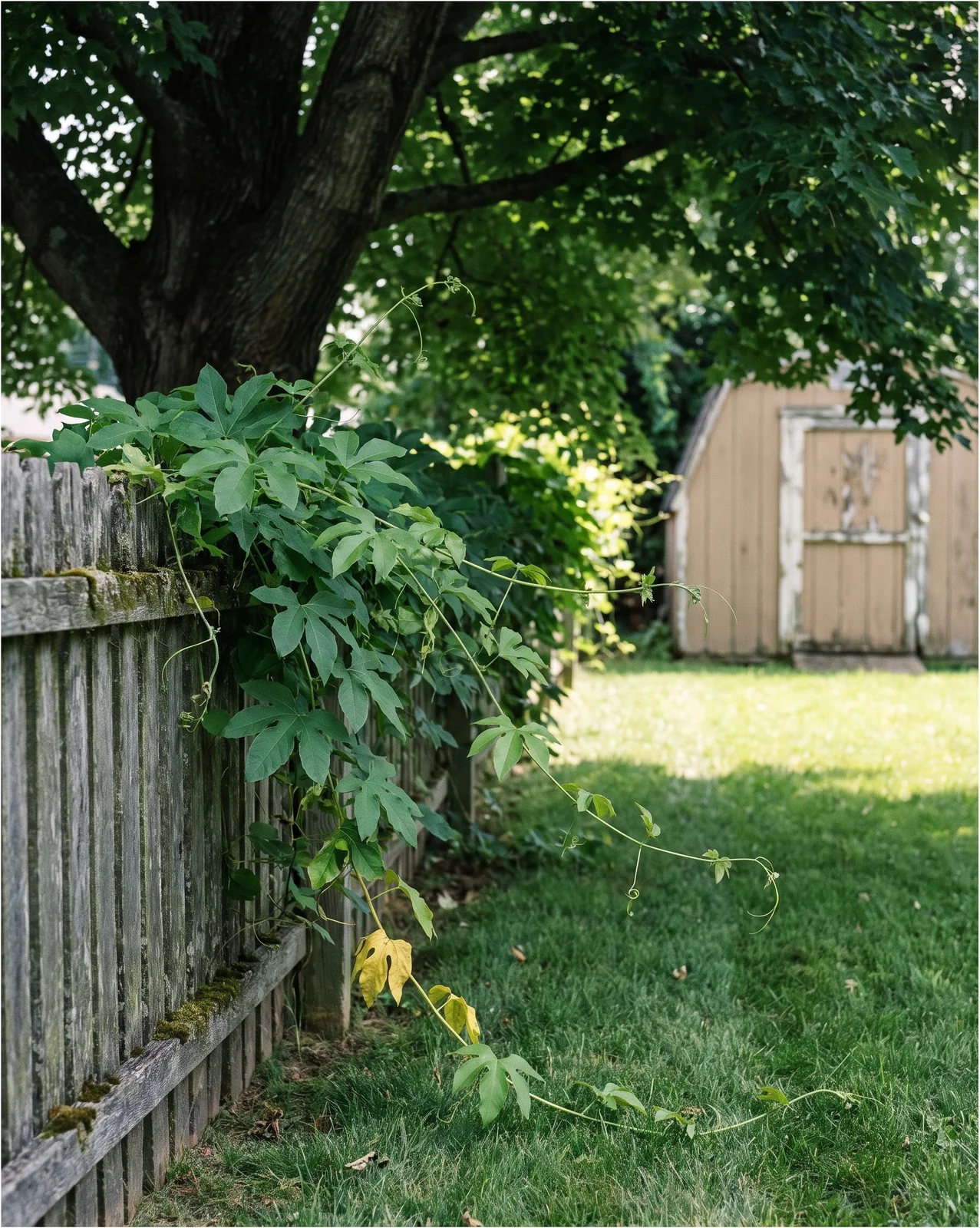
The two failures need different answers. Stop at the check that fits your vine.
Which passionflower fruit is edible
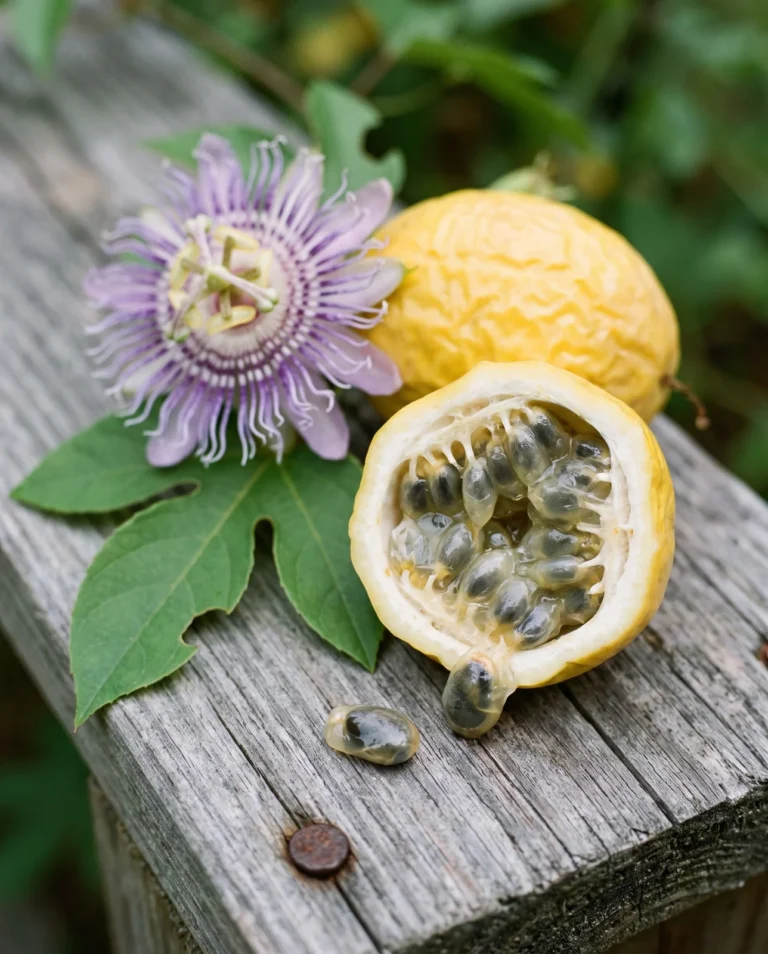
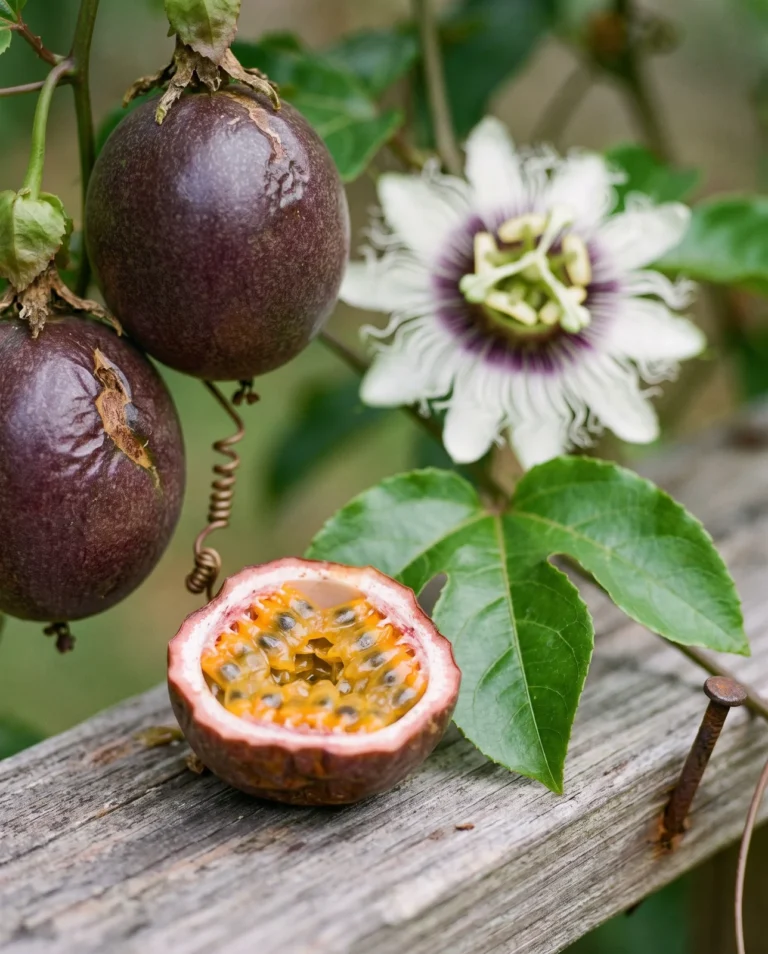
Four fruits turn up on American vines. Identify yours before anyone eats it.
Winter, dieback, and what comes back
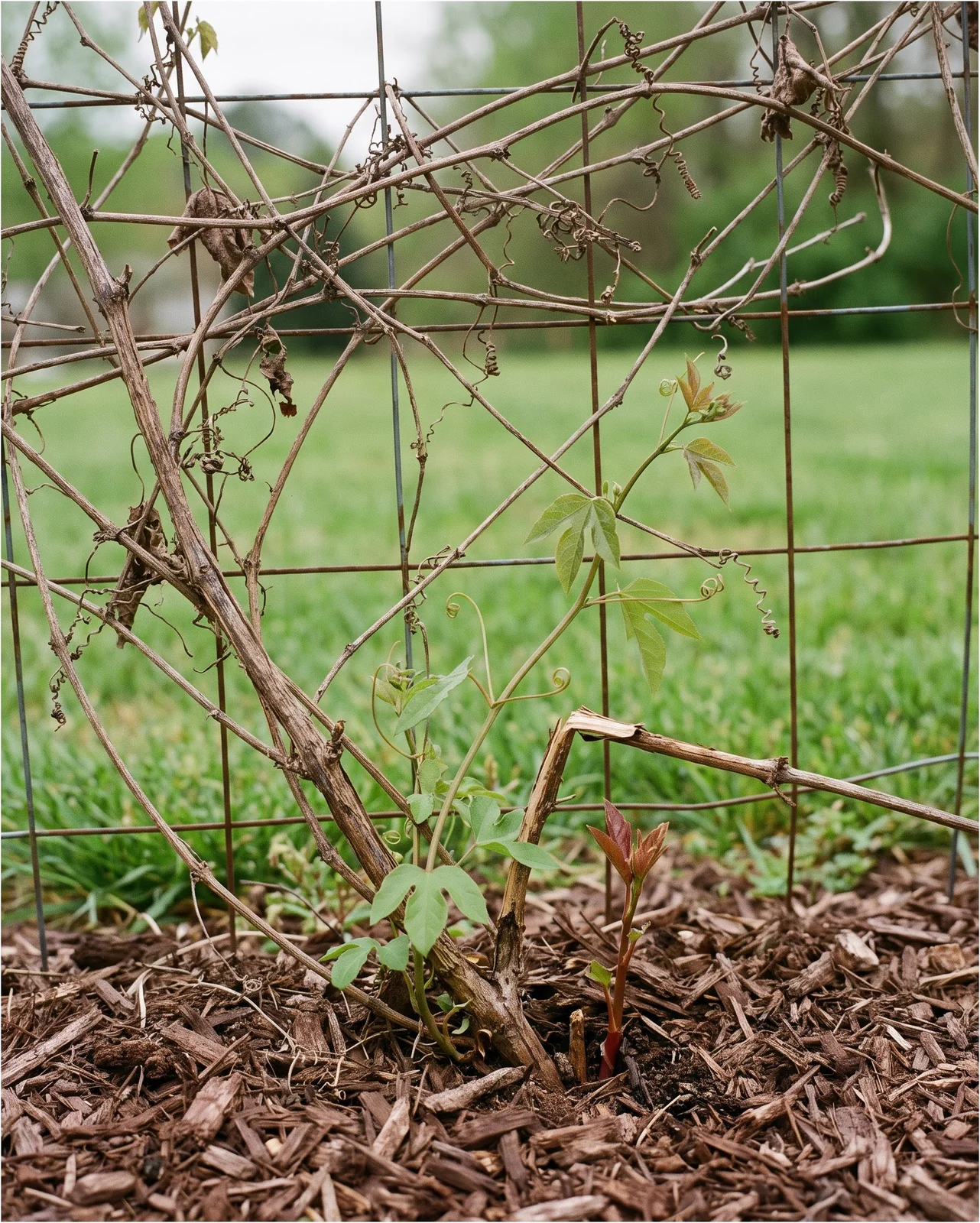
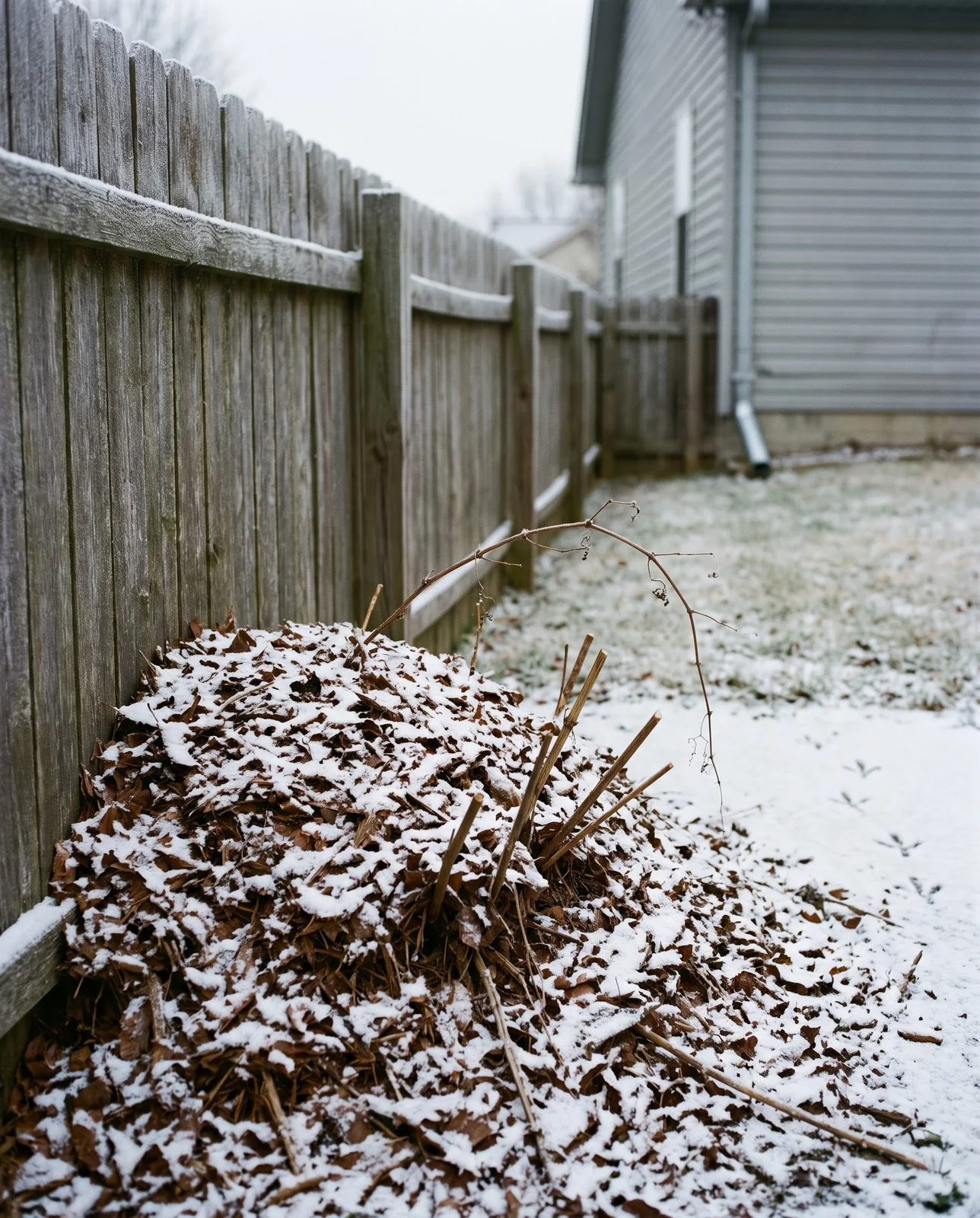
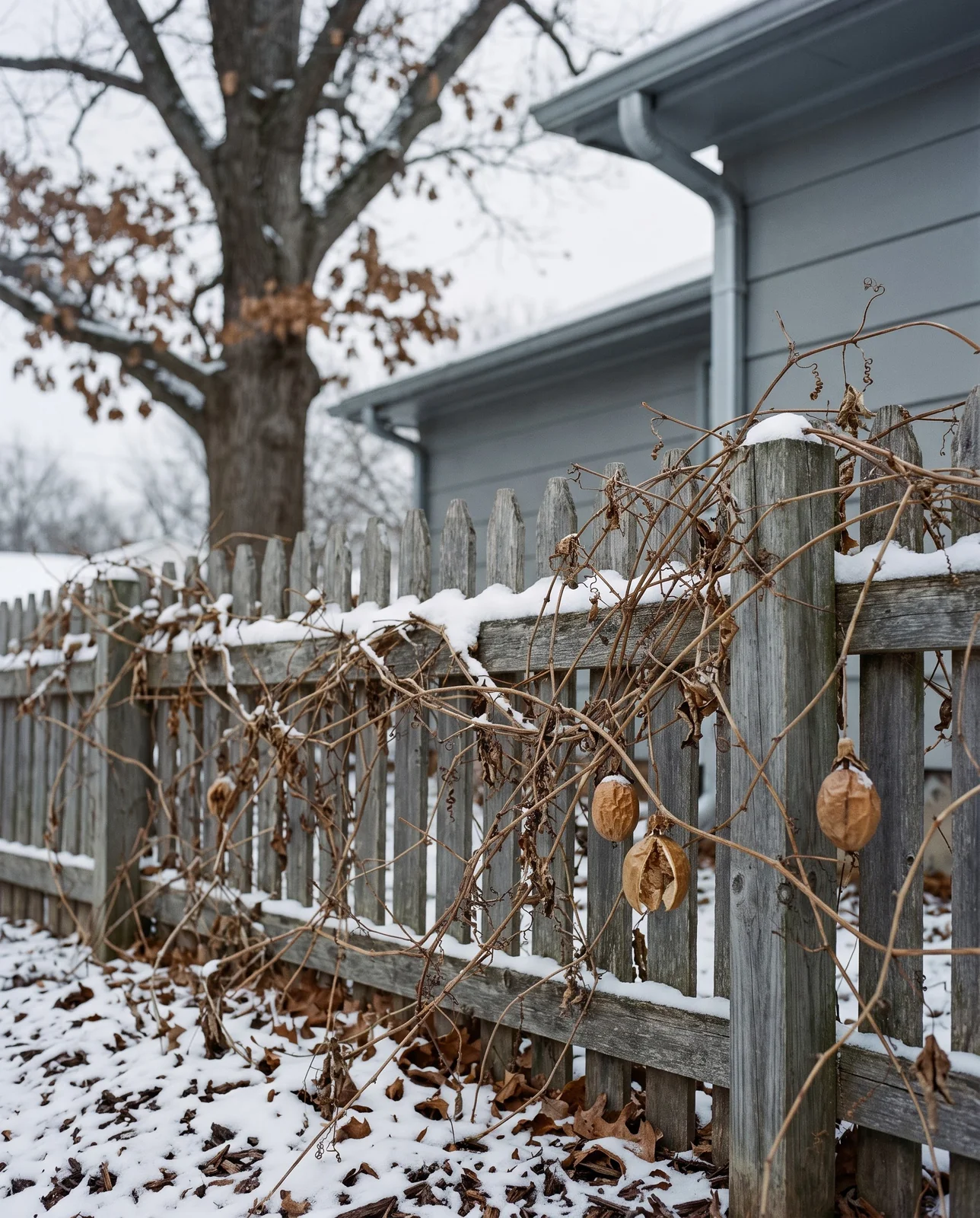
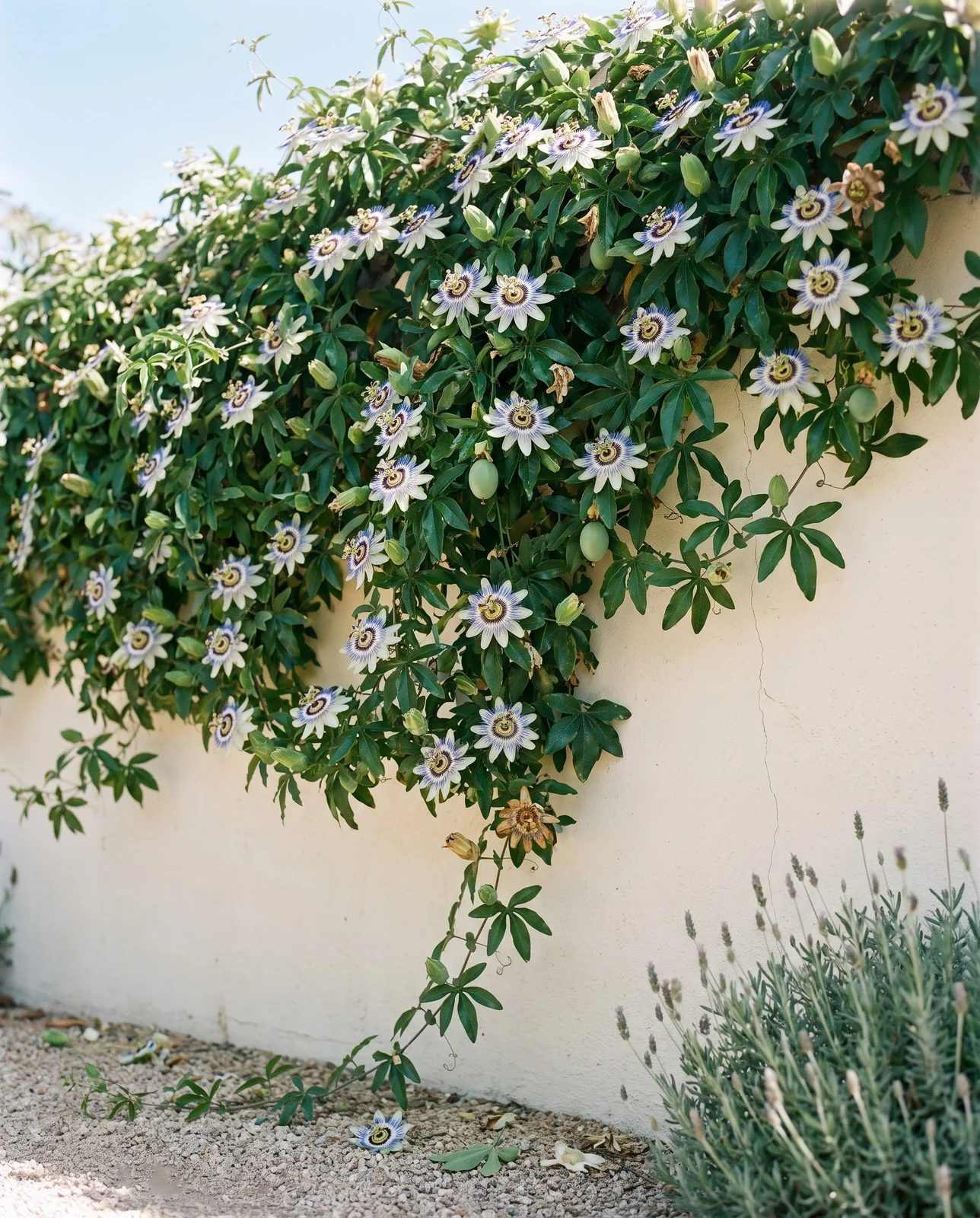
Winter takes the top of a hardy passionflower and leaves the roots alive. Maypop is woody where winters stay warm and dies to the ground where they turn cold. Blue passionflower shifts the same way: evergreen in warm-winter areas, deciduous in temperate ones. Blue passionflower has regrown from deep roots after 5 degrees Fahrenheit with the ground frozen more than two feet deep. A vine that looks like dry string in March is usually untouched below the soil line, and digging the crown out in spring is the standard mistake.
These vines also come up late. Maypop emerges well behind the perennials around it, so mark the spot in fall and leave the ground alone until early summer. In poorly drained wet soil the roots rot. Mulch the root zone, and in colder areas wrap the stems you want to keep with insulating fleece. Check the dead growth before you clear it: the Gulf fritillary pupa is mottled brown and looks like a dead leaf.
Tender species get no second chance. Several ornamental passionflowers need a minimum of 41 to 45 degrees Fahrenheit, and passion fruit and giant granadilla nothing lower than 50 to 61 degrees. Below those thresholds the whole plant is lost, roots included. Purple passion fruit is winter hardy only in zones 10 to 12, so most of the country grows it in a pot that winters indoors at a bright window, cut back and kept drier until spring.
Winter by zone, species by species
The same plant behaves differently across the country: what the top does, what the roots do, and the temperatures behind both.
Pruning and cutting back
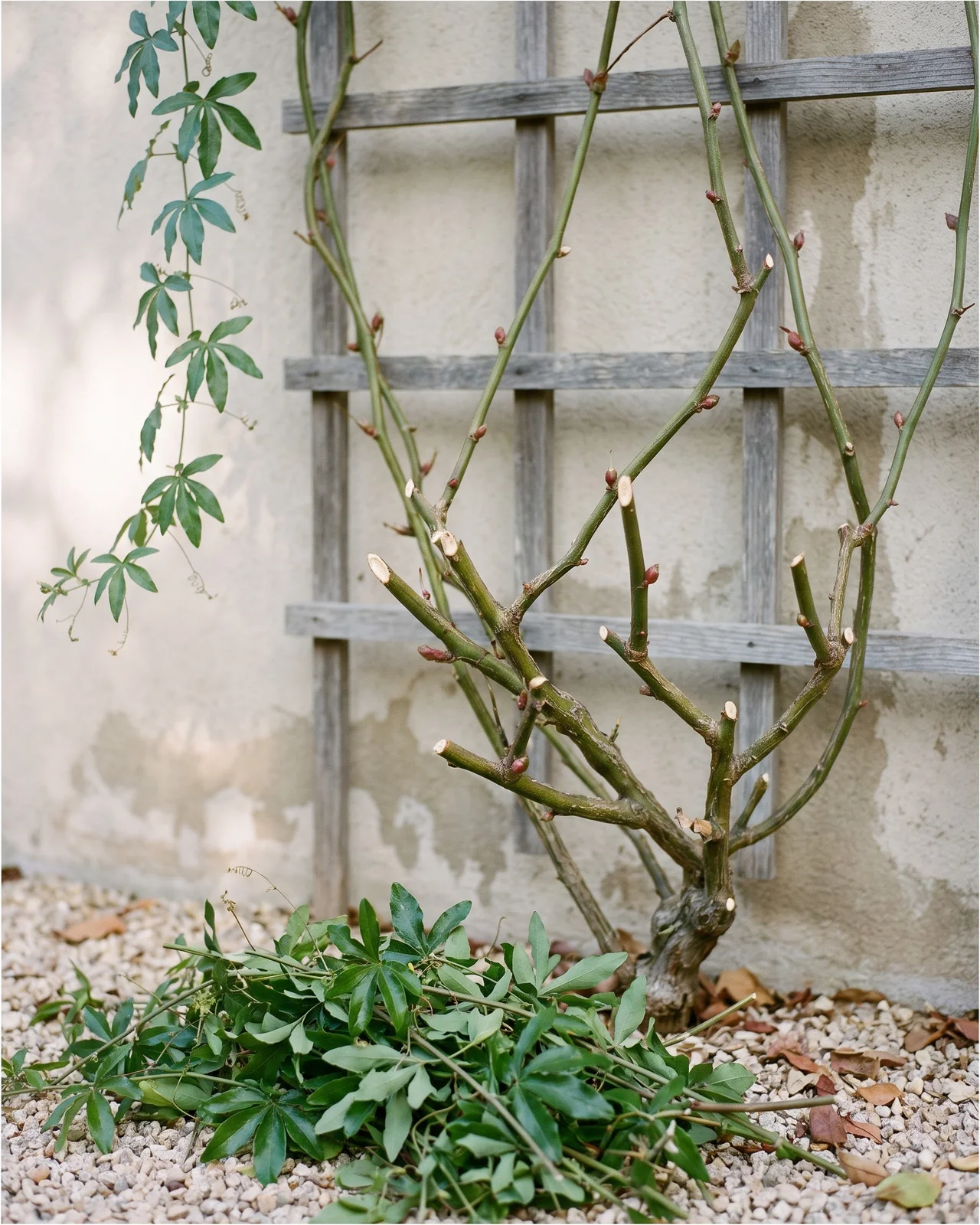
Prune passionflower once a year in early spring, taking out the old flowered stems. A light cut at the end of summer, once flowering has finished, also works. Passifloras flower on new growth and can be pruned early in the season without costing the bloom. Spring work sets the framework; the late trim only tidies a plant that has already flowered. On a vine that dies back, spring pruning is simply clearing dead stems off the trellis.
How hard to cut depends on what the vine has become. For routine work, cut flowered shoots back to two buds from the previous year's framework. A vine gone to a bare tangle up top with nothing at the base needs renovation, cutting the stems back to 1 to 2 feet from the base. That is a job for every few years at most, because it weakens the plant, and hard, frequent pruning does the same. Taking off too much top growth at once weakens the roots and opens them to fungal infection.
In season the work is small and constant. Clip the shoots heading for a gutter, a shrub, or a doorway, and tie in the ones you want. Thinning also moves air through the growth, and blue passionflower develops fungal disease where the air stands still. Clean the blades between plants, because passion fruit woodiness virus travels on pruning tools and through grafting.
Pruning calendar
One job to a window, with the limit that goes with it.
Spreading, suckers, and the invasive question
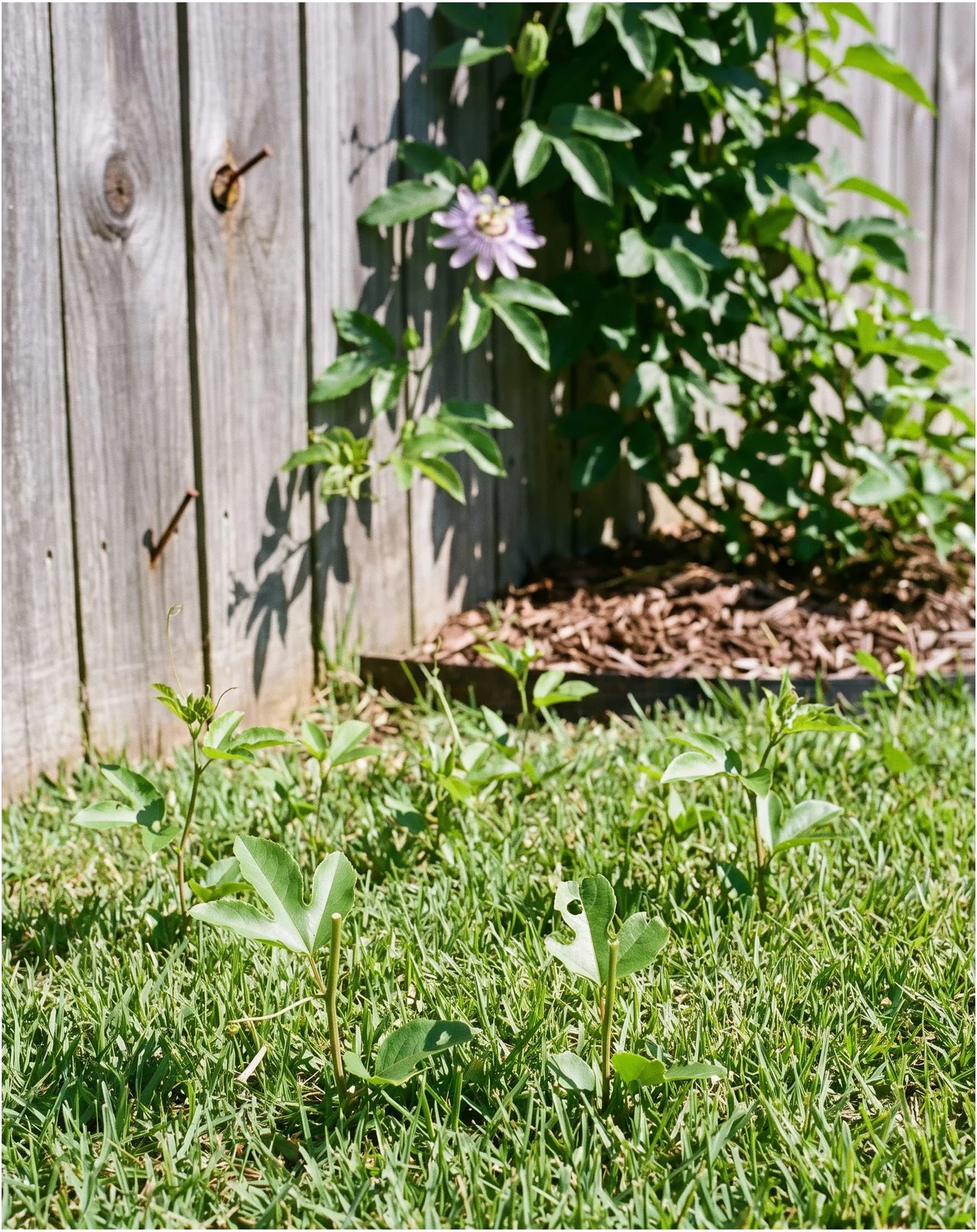
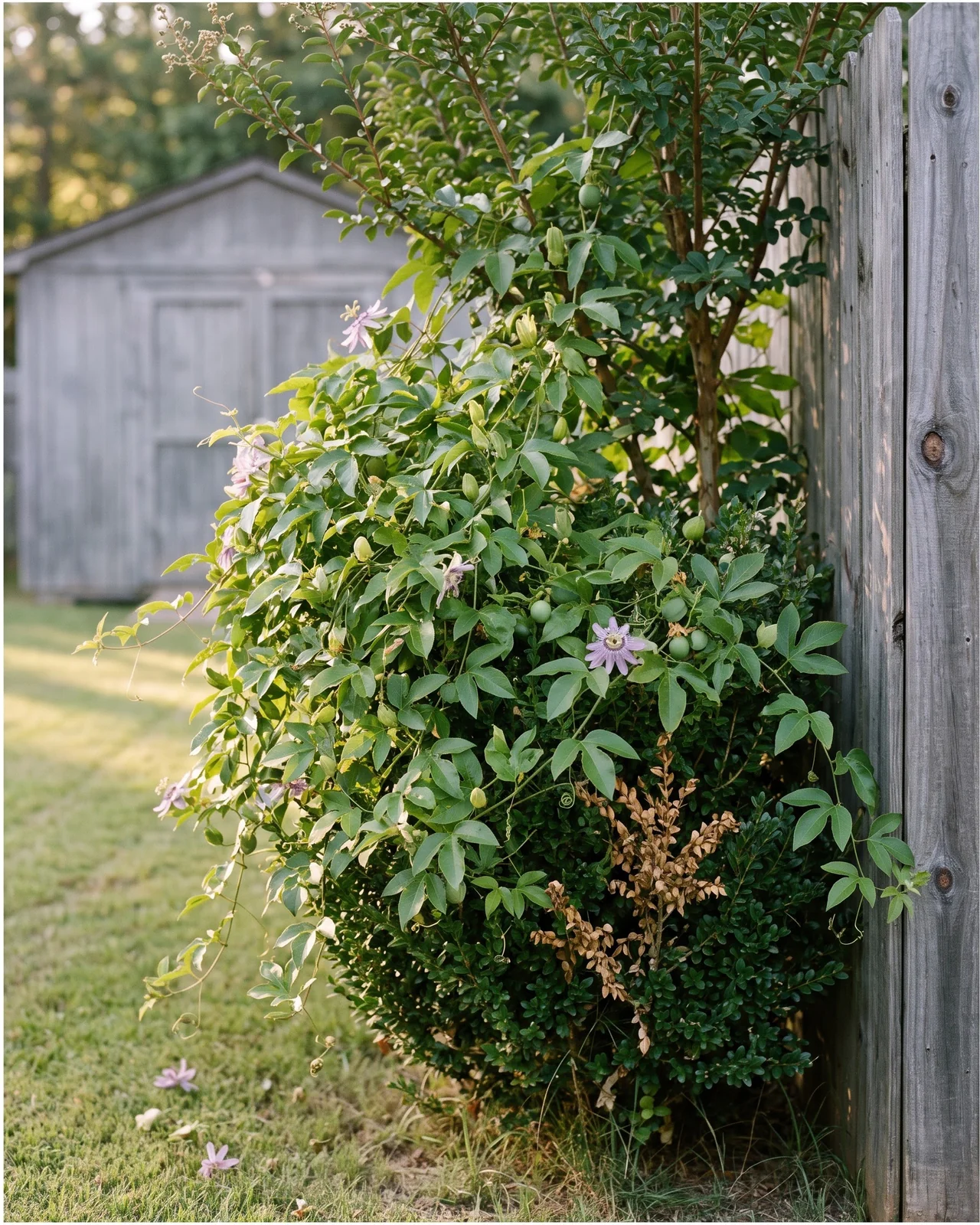
Maypop spreads underground, and after a few years that is the usual complaint. The plant develops a very deep perennial rootstock and sends sprouts up from it, so a vine planted beside a mailbox can push shoots through a bed across the walk. Control means removing the root suckers on a schedule. Mowing handles the shoots that come up in turf. A barrier, a raised bed, or a large container keeps them inside a boundary you chose. Digging out the parent seldom finishes the job, because that rootstock sits deeper than a spade reaches.
Whether it counts as invasive depends on the species. Purple passionflower may become invasive in some regions or habitats and displace desirable vegetation, and it appears on more than one invasive plant list. In Florida, where the plant is native, it is a nuisance only if it grows out of control. The imported passion fruit is the clearer case, predicted to be invasive and not recommended for Florida gardens. For the flower without the running roots, yellow passionflower behaves much better than maypop.
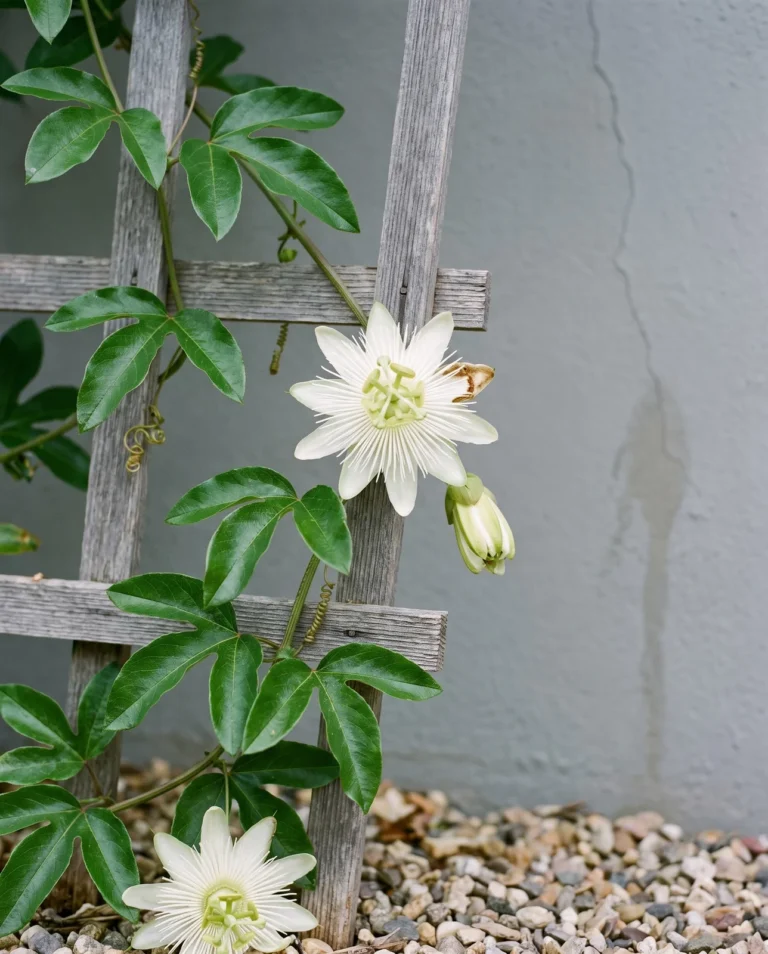
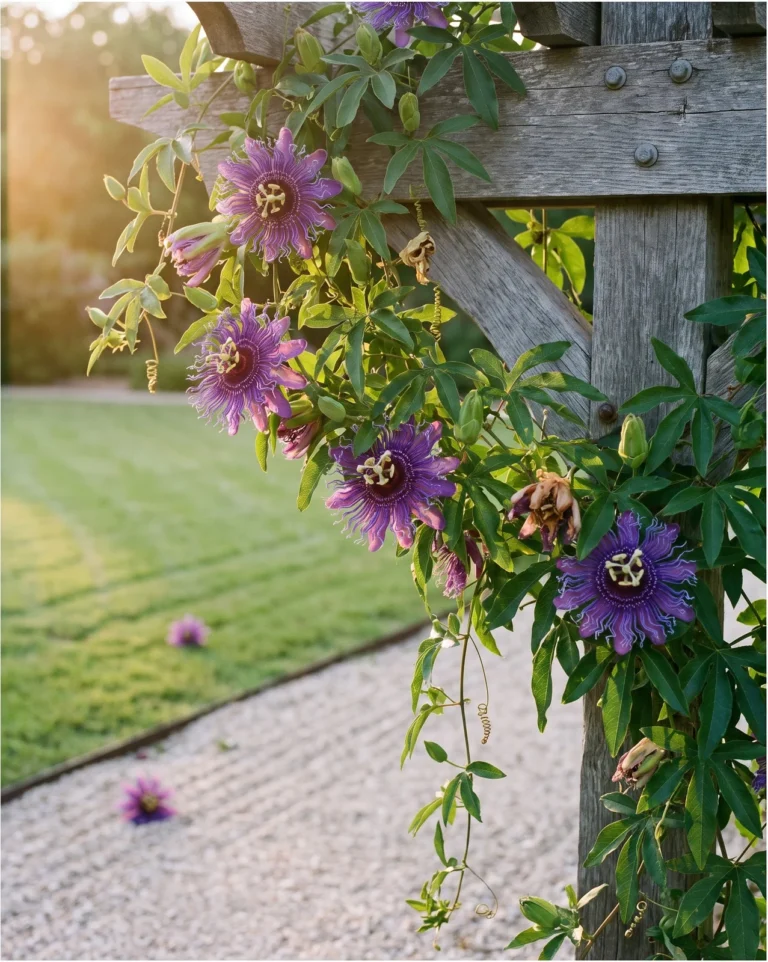
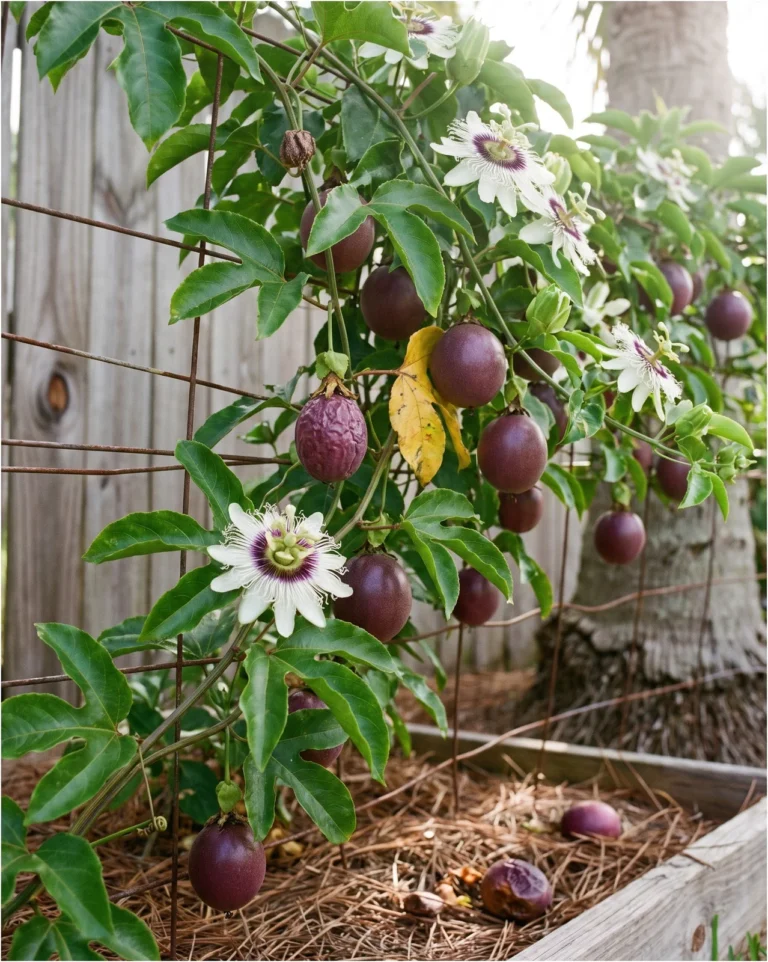
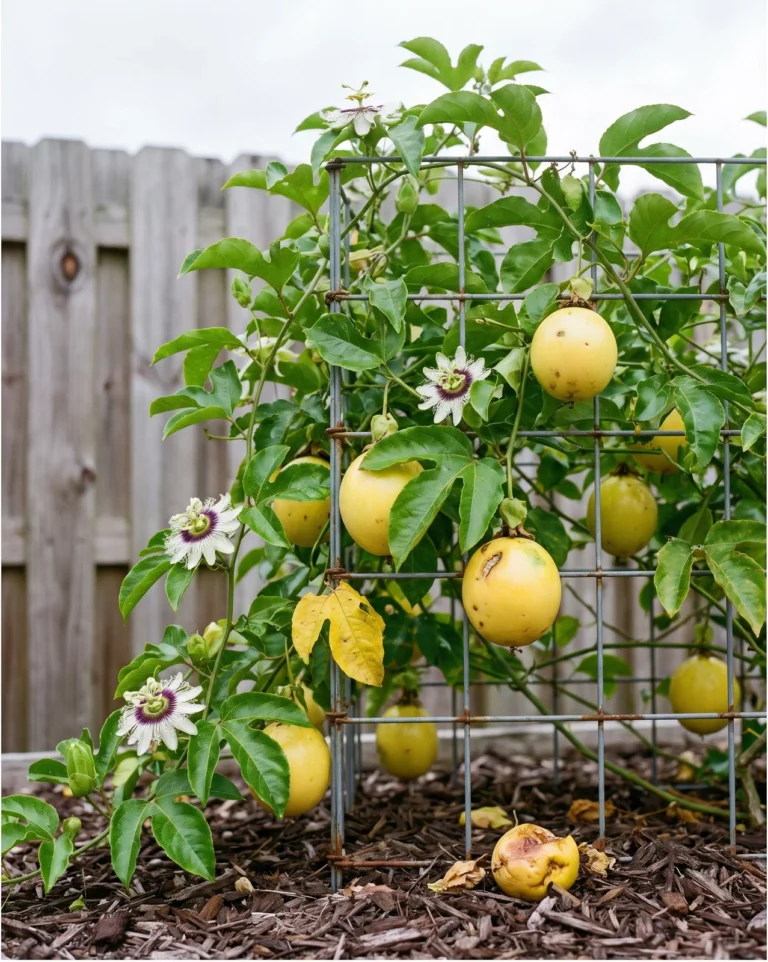
Passionflower types worth telling apart
Hardiness is what separates these plants in practice. Blue passionflower turns up on every list of blue flowers, and it is not the hardiest of the group.
Light
Passionflower flowers best in full sun, six or more hours of direct light a day, and it still grows in partial shade. For the native maypop the floor is direct sunlight for at least half of the day. Below that the vine keeps climbing and the bloom thins out. Where the roots sit matters less than where the top ends up: a crown in the shade of a fence still flowers if the growth runs over the top into open sun. Read the light at the height where the vine will flower, over the arbor or on the far side of the fence.
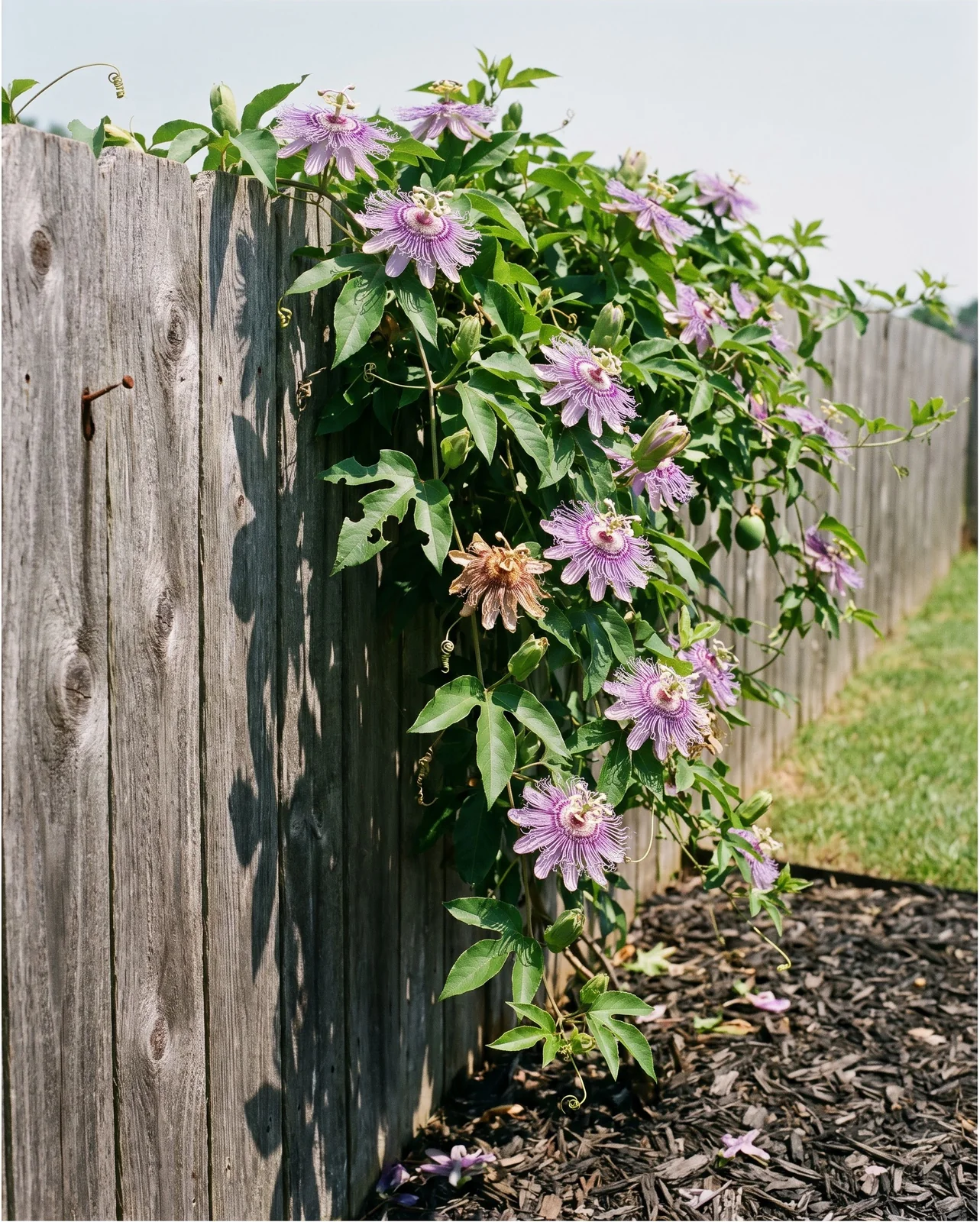
Water and feeding
Water passionflower about once a week during a dry spell, and water a container as soon as the surface looks dry. In open ground it wants a light hand with fertilizer and deep, infrequent soaking. Containers reverse the feeding half of that, because every watering carries nutrients out of the drainage holes. A liquid feed every four to six weeks through the growing season keeps a potted vine in leaf and bud. Taper the feeding as the nights cool, and keep the water steady through late summer.
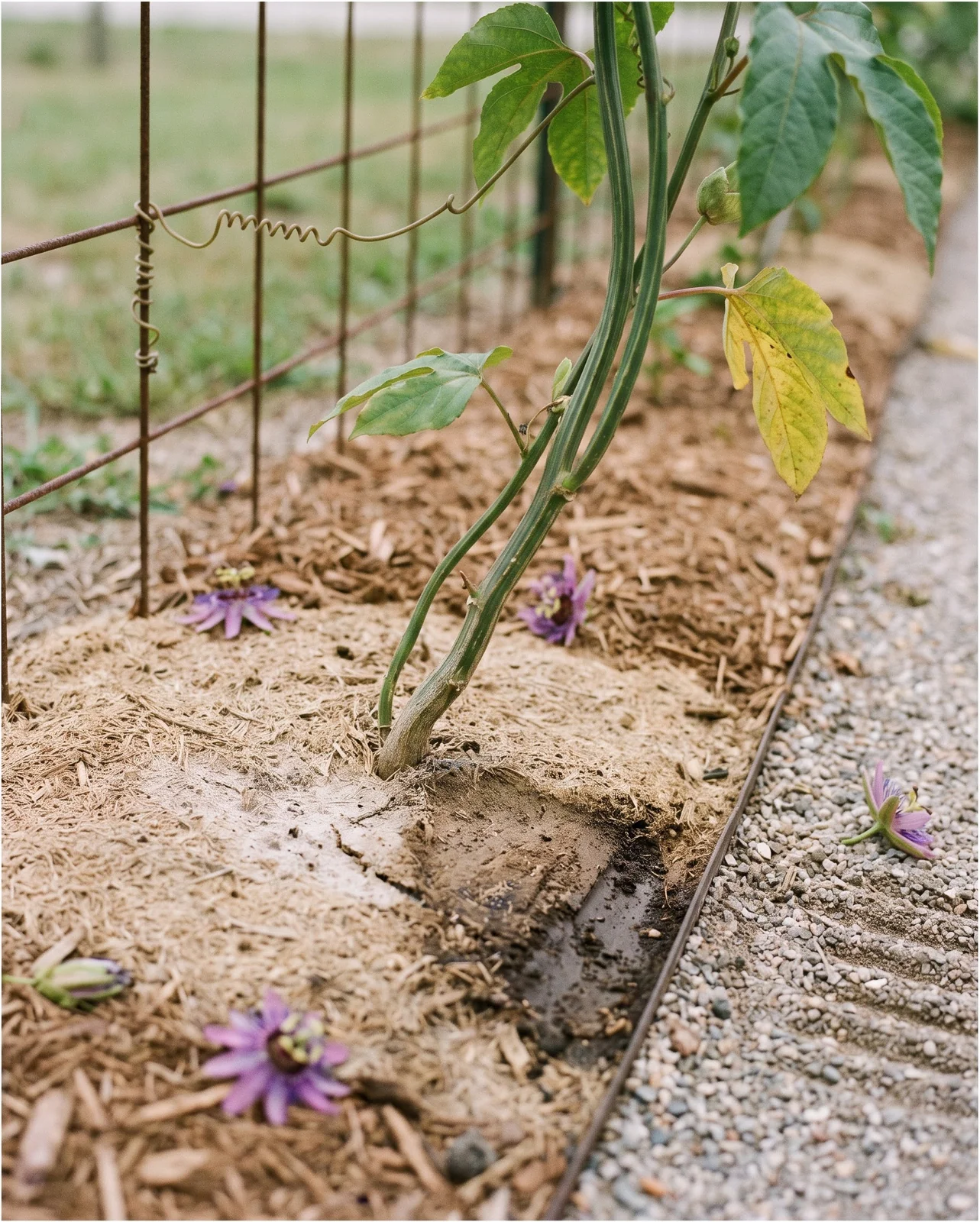
Cold hardiness and why the ratings disagree
Cold hardiness depends on the species and on what a rating is measuring. NC State lists Passiflora incarnata for zones 5a through 9b, while UF/IFAS rates passion flower for zones 7B through 11. At the cold end the top is killed every winter and the plant is judged on the roots pushing new shoots in early summer. A rating built around a vine that keeps its woody framework starts much further south. In the cold half of the range, treat passionflower as a perennial that behaves like a herbaceous plant: good drainage, mulch over the crown, patience in spring. In the warm half, expect a woody vine that holds its structure and needs pruning to stay in bounds.
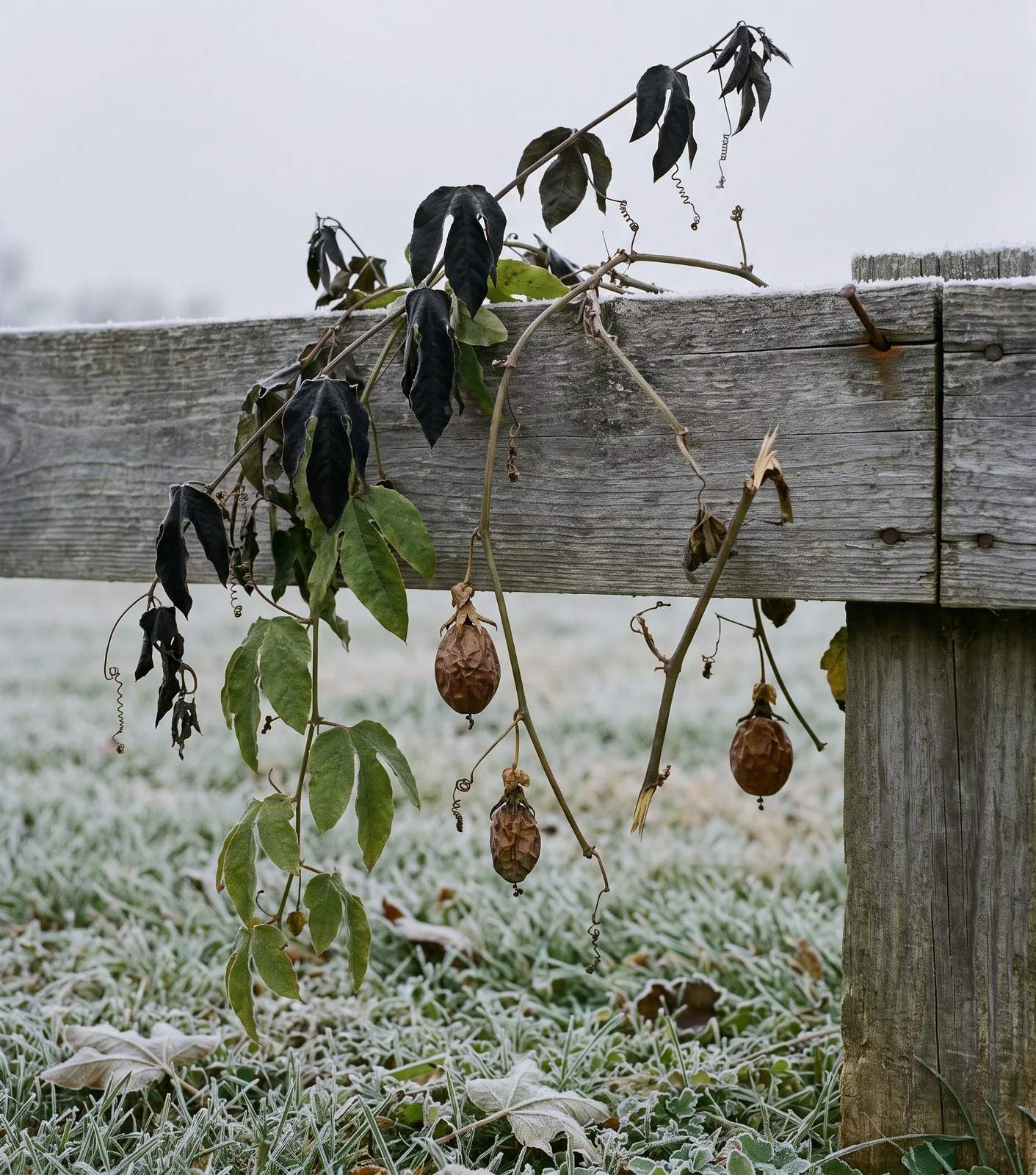
Height, spread, and what it climbs
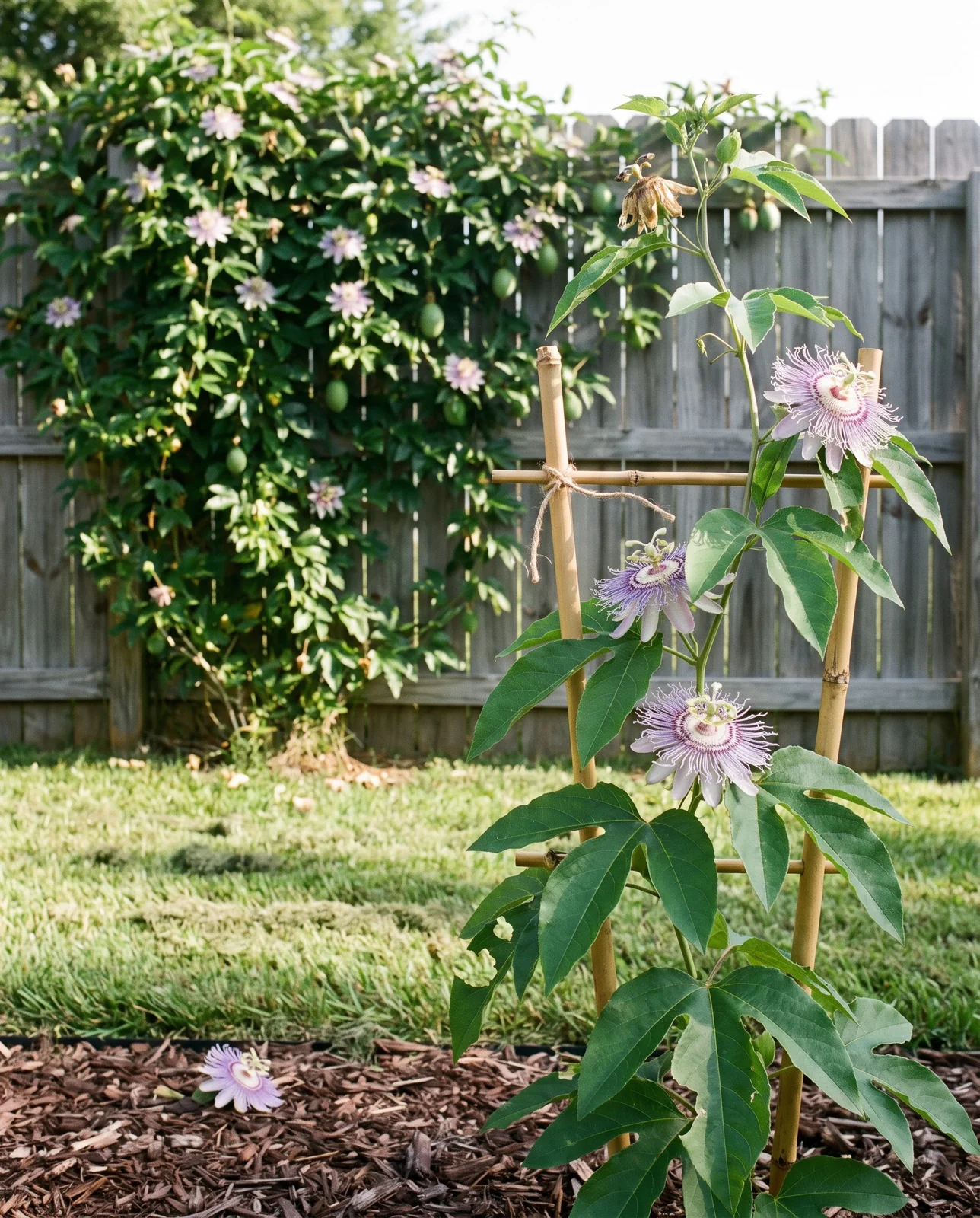
As garden climbers passionflowers are usually at least 10 feet tall, with vines running 6 to 20 feet long. Given nothing to climb, the same plant sprawls, its stems reaching about 6.5 feet across open ground. Tendrils need something thin to catch: wire, netting, string, or the crosspieces of a trellis. A tendril climber will not wind around a bare post the way a honeysuckle does, and a smooth column or a flat wall gives it nothing to hold. Put the support in at planting and tie the first shoots in until the tendrils take over.
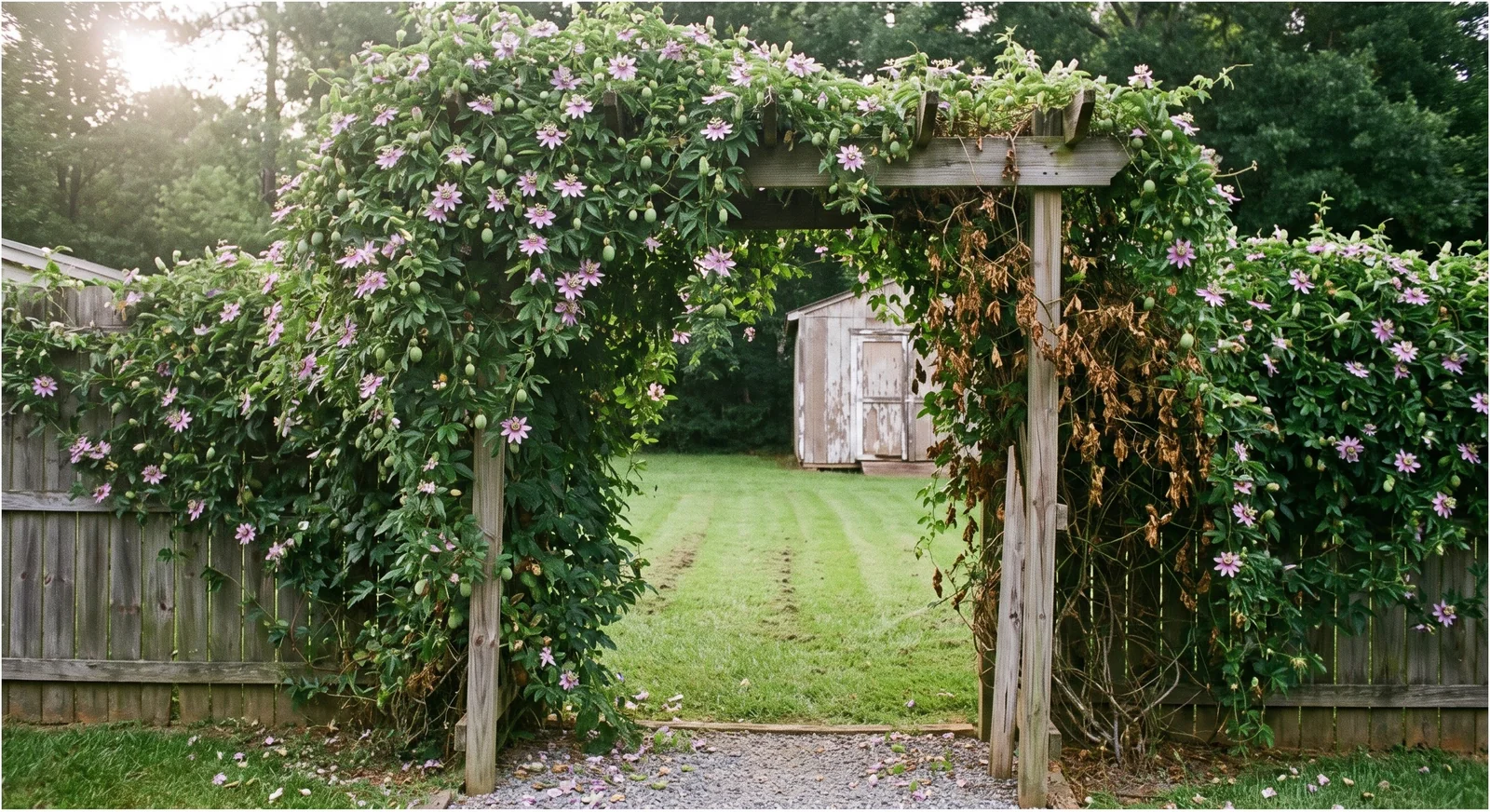
Growing passionflower in a pot
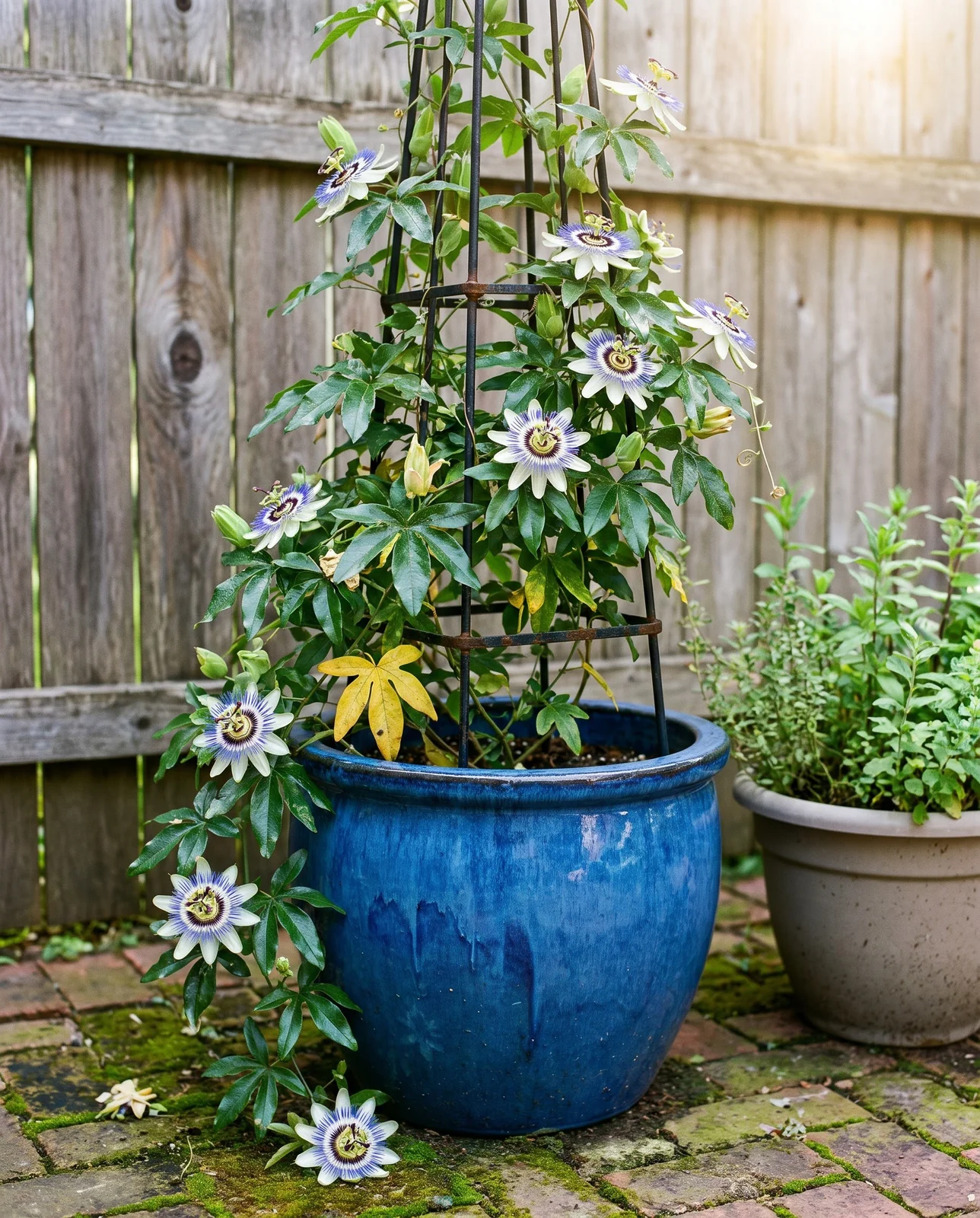
A container is the standard answer north of the tender species' range, and the pot can be modest at the start: a young plant goes into one about 12 inches wide. Repot every two or three years, because a vine that has filled its pot with root dries out faster than anyone remembers to water it. Purple passion fruit will live indoors year round in a sunny room, flowering under glass where it would freeze outside. Choose depth over width, and set the trellis in place at planting.
Pests and diseases
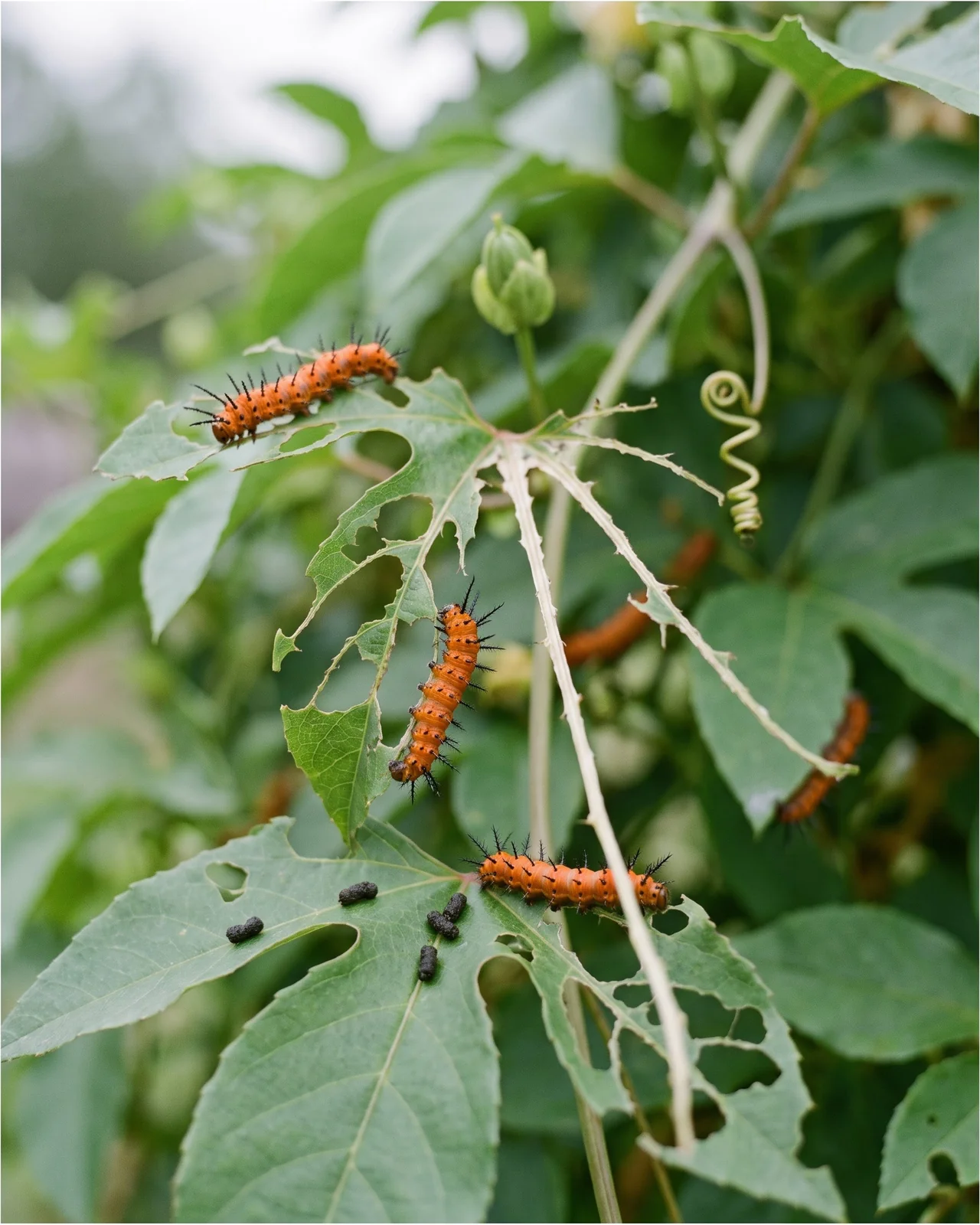
The insect most likely to strip a passionflower is the one the plant exists to feed. Gulf fritillary females lay small yellow eggs singly on the leaves, stems, and tendrils, and the larvae feed on all parts of the plant and can defoliate a vine quickly. Some species carry pigmented callosities on the leaves that resemble butterfly eggs and discourage laying. The caterpillar eats passion fruit foliage and nothing else, and hand removal is the answer where you want the leaves kept. A vine stripped in August is the host plant doing its work, not a plant with a disease. The native maypop otherwise carries no serious insect or disease problems, though nematodes trouble it below the soil line.
Real disease trouble concentrates on the passion fruit crop and on plants under cover. Fusarium wilt, caused by Fusarium oxysporum, shows as pale-green leaves, mild dieback, leaf drop low on the plant, and wilting on young plants. Passion fruit woodiness virus leaves foliage distorted and crinkled, dark green with light-yellow spots, and aphids are the nuisance on young growth. Root and crown rot in wet soil comes from Phytophthora, anthracnose from Colletotrichum gloeosporioides. Under glass the list changes to red spider mite, whitefly, scale insects, and mealybug.
What actually goes wrong, ranked
The complaints gardeners raise most often, in the order they raise them.
Bare stems into late spring, nothing green at the base. Hardy kinds come up late from the roots. Leave the crown alone until early summer.
Heavy bloom, every flower dropping, nothing behind it. The flower cannot pollinate itself easily. Hand pollinate a morning flower, or bring in a plant of different stock.
Shoots several feet out, in beds and lawn, from a deep rootstock. Pull them on a schedule, mow what comes up in turf, use a barrier next time.
Tender species will not live outdoors through a northern winter. Bring the plant into a sunny room before the first cold nights, and water less until spring.
Leaves yellowing and dropping while the plant loses ground. Wet soil and root rot are the first suspects. Check the drainage before you water more.
Long stems and big leaves, no buds. That is nitrogen. Stop feeding for the season, and check the sun at the top of the vine.
Every leaf gone within days. Gulf fritillary larvae. Pick them off if you want the foliage; the vine slows down and survives.
Toxicity and pet safety
The poison listing covers the leaves and stems, and names cyanogenic glycosides as the toxic principle. Poison severity for the native maypop is medium, and the symptoms are severe nausea, vomiting, drowsiness, and episodes of irregular heartbeat. Cats, dogs, horses, and children are all on that entry. Train a vine up out of reach of a dog that chews, and fence the base of one a horse can lean over. Ripe fruit sits outside the listing, and the fruit of several species is eaten while the foliage is left alone. Eating the leaves as herbal medicine is not recommended.
The tea and supplement question
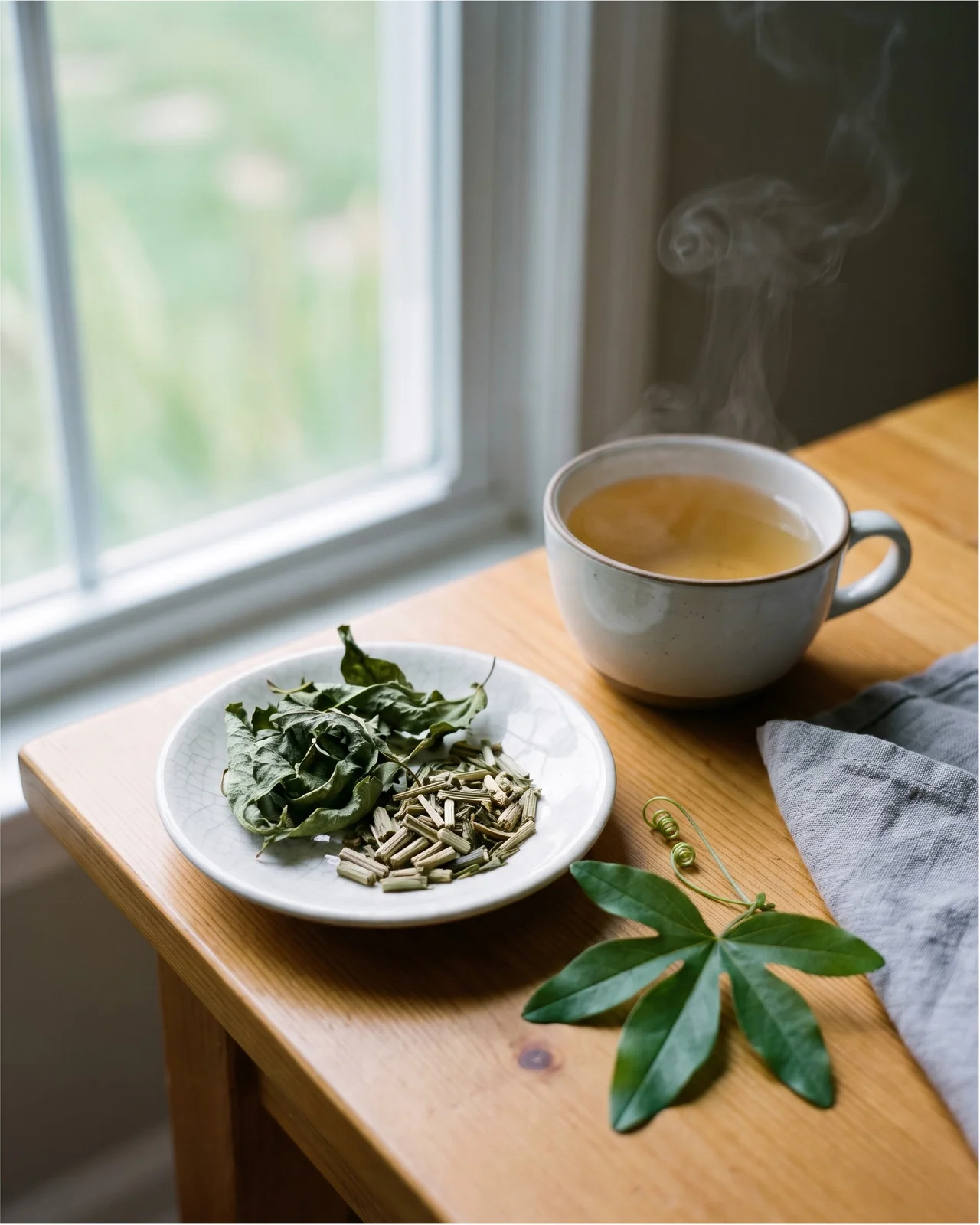
The supplement and the tea sold as passionflower come from this climbing vine, traditionally used as a sedative. It is promoted for anxiety, sleep problems, stress, attention-deficit hyperactivity disorder, and pain. The National Center for Complementary and Integrative Health states that its effect on anxiety and other conditions has not been studied extensively. A small amount of research suggests it may reduce anxiety before a surgical or dental procedure. Possible side effects are drowsiness, dizziness, and confusion. It may interact with anesthesia drugs and is avoided before surgery, and it is advised against in pregnancy because it may induce uterine contractions. People also boil the flowers and leaves for tea at home.
Meaning and symbolism
The name records what missionaries read into the flower. Roman Catholic priests in Latin America used parts of the flower to symbolize the Passion of Christ, and early Spanish explorers described it as representing the sufferings of Christ. The corona is the crown of thorns, the styles are the nails, and the stamens are the wounds. The sepals and petals stand for the apostles, five of each and ten in all, with Judas and Peter left out. The reading stuck to the whole genus, so a wild vine on an Alabama fence row carries a devotional name. The same species is Tennessee's state wildflower, and its lavender coloring puts it among the purple flowers.
Myths worth clearing up
Four beliefs follow this plant around, and each changes what you do.
The myth: Every part of a passionflower is poisonous, fruit included.
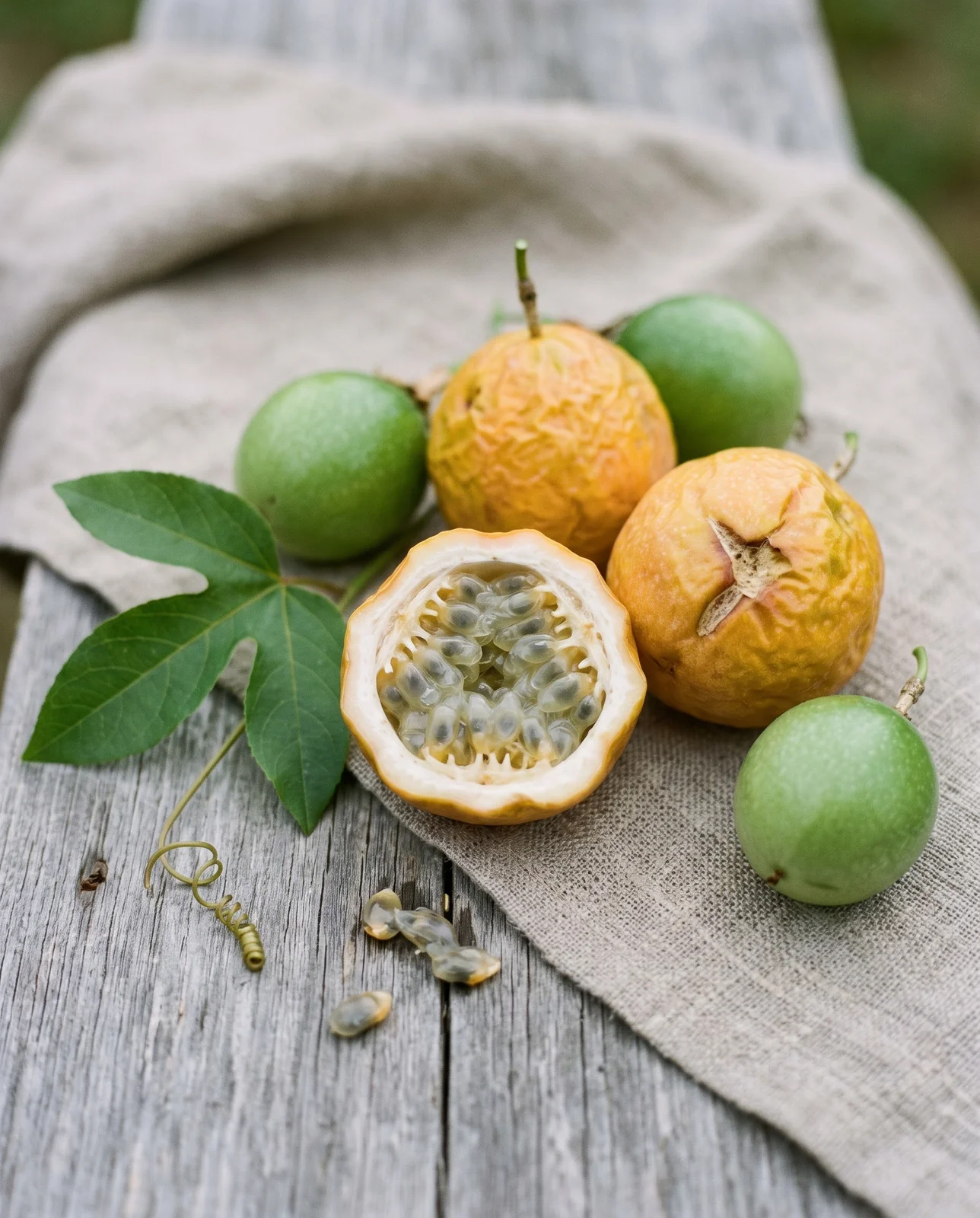
The reality: Ripe pulp is eaten from several species. Maypop pulp tastes of tropical punch, and blue passionflower fruit tastes vaguely of blackberry and stands in for blackberries in a pie.
The myth: Caterpillars eating the leaves will kill the vine.
The reality: They slow the plant down as they work through the foliage, and it survives.
The myth: Aphids on the new growth are the pest to worry about.
The reality: Aphids seldom cause serious damage on passion fruit on their own, but they are the main way woodiness virus moves from plant to plant.
The myth: A passionflower needs a big pot before it will flower.
The reality: Blue passionflower will flower in a small pot, though it does better where there is plenty of root space.
What to expect, year by year
An honest picture of the first three seasons, where most of the disappointment sits.
Year one is establishment and little else. A vine planted in spring spends the season making stems, tendrils, and root, and it may not flower at all that first summer. Fruit is unlikely whatever you do, because the plant is not old enough for it yet. The work is a support the tendrils can catch, steady water, and restraint with the fertilizer bag.
Year two is when the plant shows what it is. Growth starts earlier and runs harder, flowering fills the summer, and the first fruit becomes possible if bees or your own brush have done the work. The first shoots also appear away from the crown, so pulling root suckers becomes a standing habit.
From year three the plant is on a maintenance cycle. Walk the bed each spring pulling suckers. Expect the top to be replaced from the roots in cold zones and to thicken into a woody framework in warm ones.
Flower photos
FAQ
Is passionflower hardy in zone 6?
The hardy species are: maypop zones 5 to 9, yellow passionflower 5a to 10b, blue passionflower 6a to 10b. The top dies back and returns from the roots.
Do passion flowers come back every year?
Hardy species do. Maypop dies to the ground in a cold winter and returns from the roots. Tender species need at least 41 to 45 degrees Fahrenheit.
Why does my passion flower vine flower but not fruit?
Pollination. The anthers sit below the stigmas, so the flower needs an insect or a brush, and maypop refuses its own pollen: none of 122 self-pollinated flowers set fruit.
Can you eat passion flower fruit?
The ripe pulp of several species is eaten. Maypops go straight off the vine or into jelly, and blue passionflower fruit is edible though bland.
Is passionflower poisonous to dogs and cats?
The leaves and stems are a problem for cats, dogs, horses, and children, at medium poison severity. Symptoms are severe nausea, vomiting, drowsiness, and irregular heartbeat.
How do you cut back a passion fruit vine?
Once a year in early spring, taking out the old flowered stems. Routine cuts go back to two buds from last year's framework.
What do you do with passion flowers in winter?
Mulch the root zone and wrap any stems you want to keep with insulating fleece. Tender species come indoors before the cold arrives.
Is a maypop the same thing as a passion fruit?
Different species. Maypop is Passiflora incarnata, native to the southeastern and south-central states. The grocery passion fruit is P. edulis, winter hardy only in zones 10 to 12.
Can you grow maypop in a container?
Yes. Start a young plant in a pot about 12 inches wide and repot every two or three years.
What does passion flower do to your body?
It has traditionally been used as a sedative and is promoted for anxiety, sleep problems, stress, attention-deficit hyperactivity disorder, and pain, though the effect on anxiety has not been studied extensively.
Is it safe to take passionflower every day?
Tea may be safe for up to 7 nights, and the extract for up to 8 weeks. Avoid it in pregnancy and before surgery.
Interesting tips
- The white blue passionflower is catalogued under two spellings, 'Constance Elliot' and 'Constance Eliott', so try both before deciding nobody sells it.
- Where collar rot has taken a passion fruit vine, the fungus behind it stays viable in that soil for up to four years, so the replacement plant goes somewhere else in the garden.
- Silken webbing over the leaves is the sign that a mite population has already gone dense, so an indoor vine gets checked underneath the leaves as well as over them.
Related Guides & Flowers
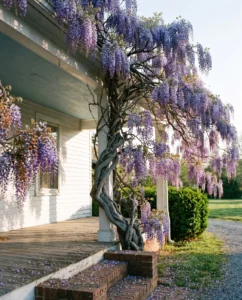
Wisteria
The other climber that outgrows its trellis and lives or dies by when it gets pruned.
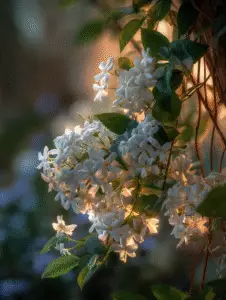
Jasmine
The other climber people put on the same fence, grown for scent and with its own winter problems.
Meaning of flowers
What other flowers have come to stand for, and where those readings started.

Types of flowers
The full catalog of flowers grouped by kind, for whatever goes on the trellis next.
Enjoying our flower guides? Add YourFlowersGuide as a preferred source on Google. It helps more readers find us.
Add to Preferred Sources