What a protea is, and what else gets called one
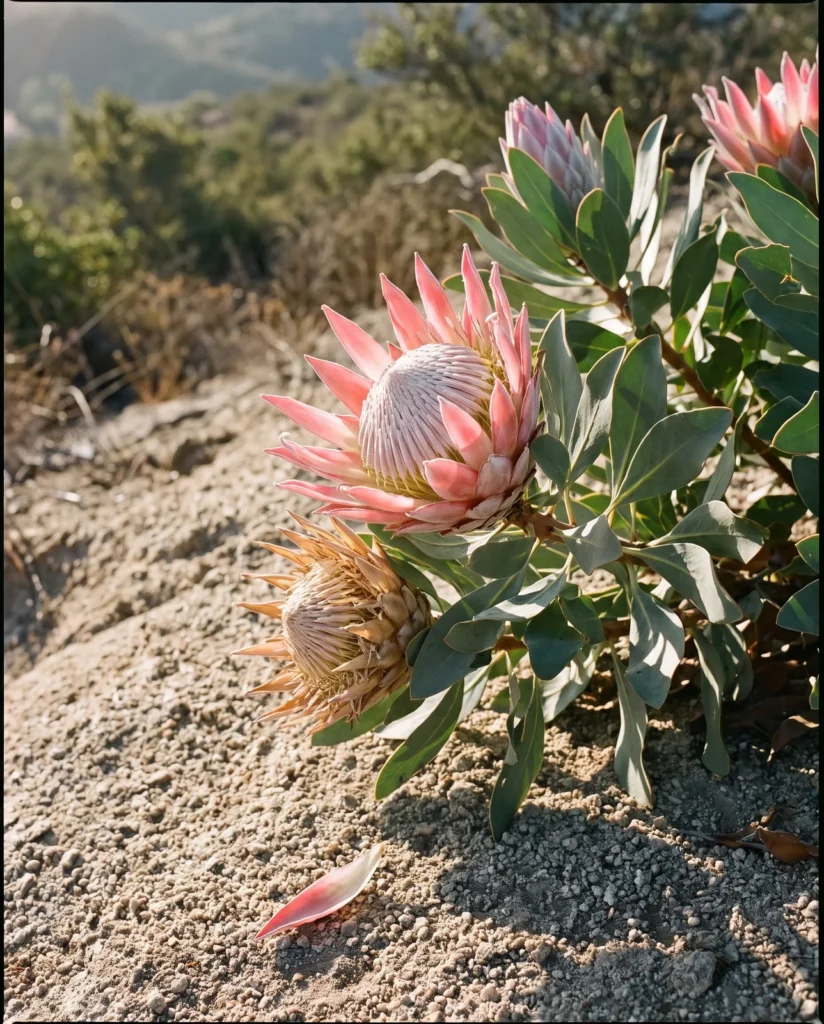
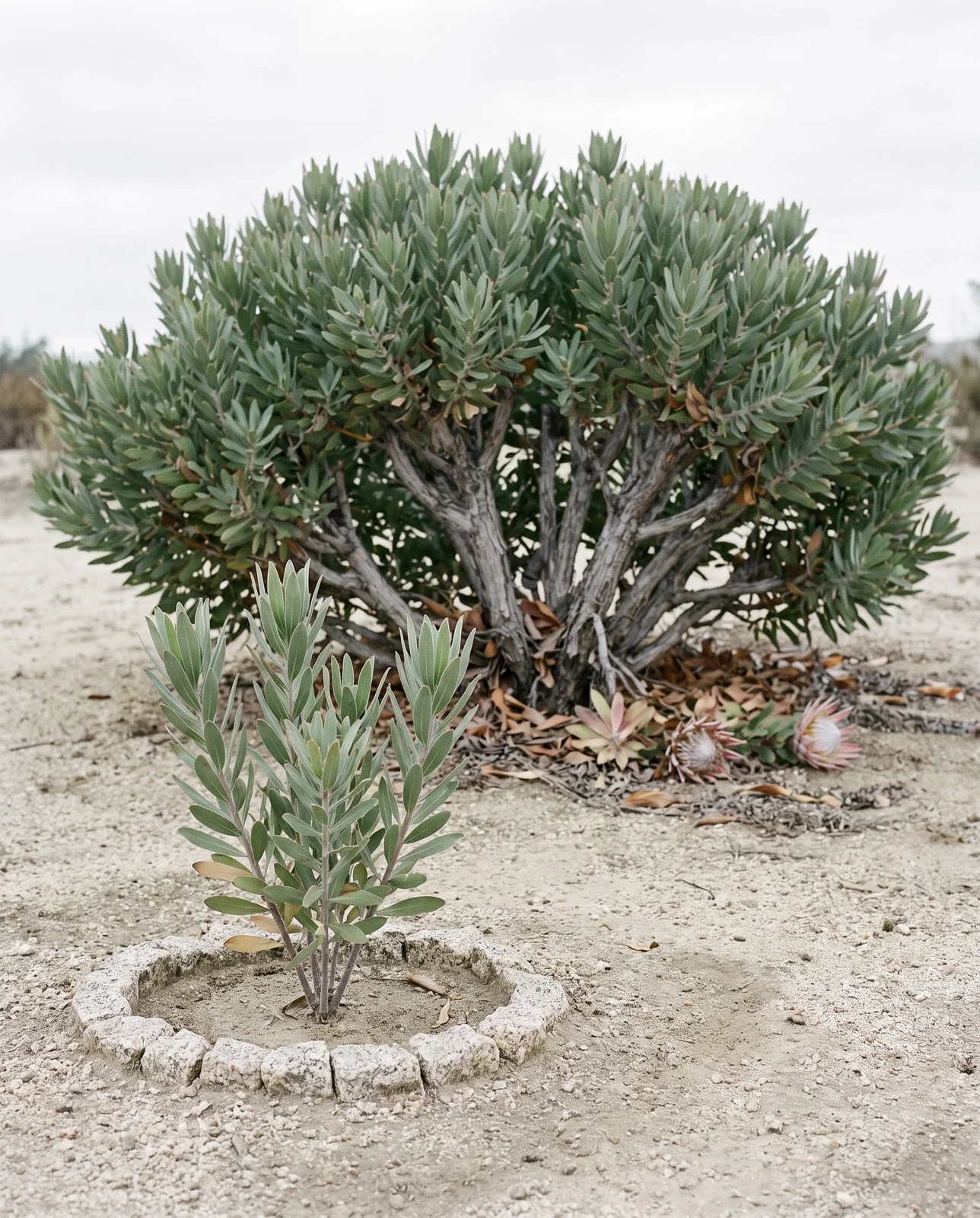
A protea is a South African shrub in the genus Protea, bearing a dense head of small flowers cupped by stiff, colorful bracts. Each individual floret measures between about 1 and 2 inches, and the whole head can reach 12 inches across. Plants in the genus range from low shrubs to trees of 25 feet or more. Carl Linnaeus named the genus in 1735 after the shape-shifting Greek god Proteus. Its Afrikaans name is suikerbos, or sugarbush, seen in Protea repens with its rosy-tipped sticky bracts that form an urn. About 92 percent of Protea species grow only in South Africa's Cape Floristic Region. In that native home, habitat loss and over-collection have left about 120 of roughly 360 species endangered.
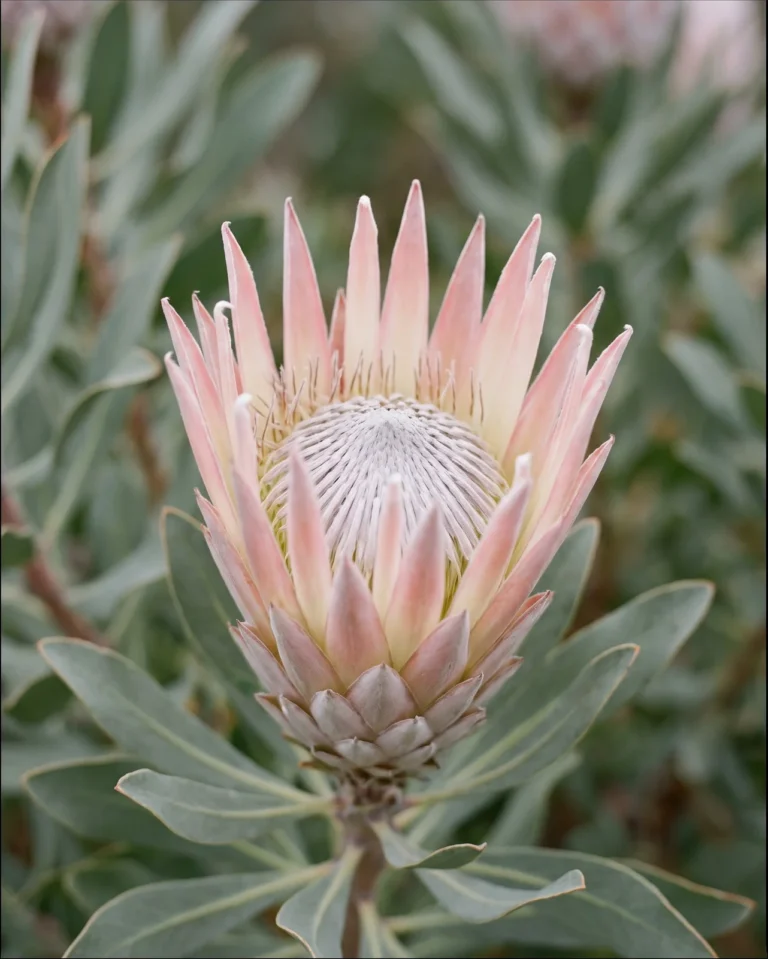
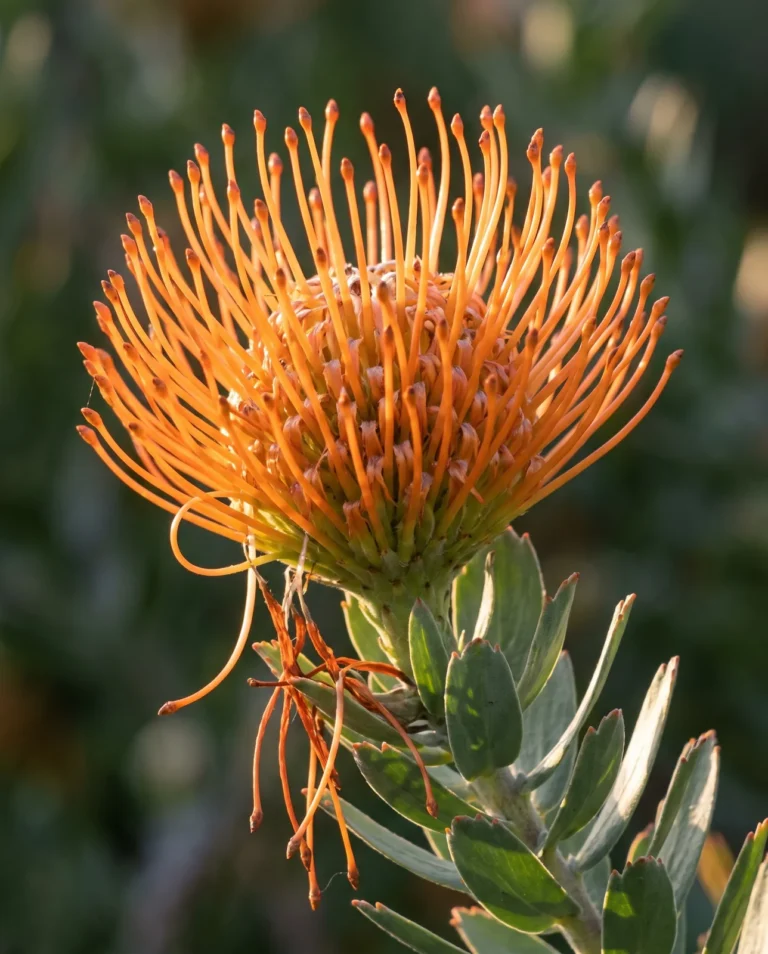
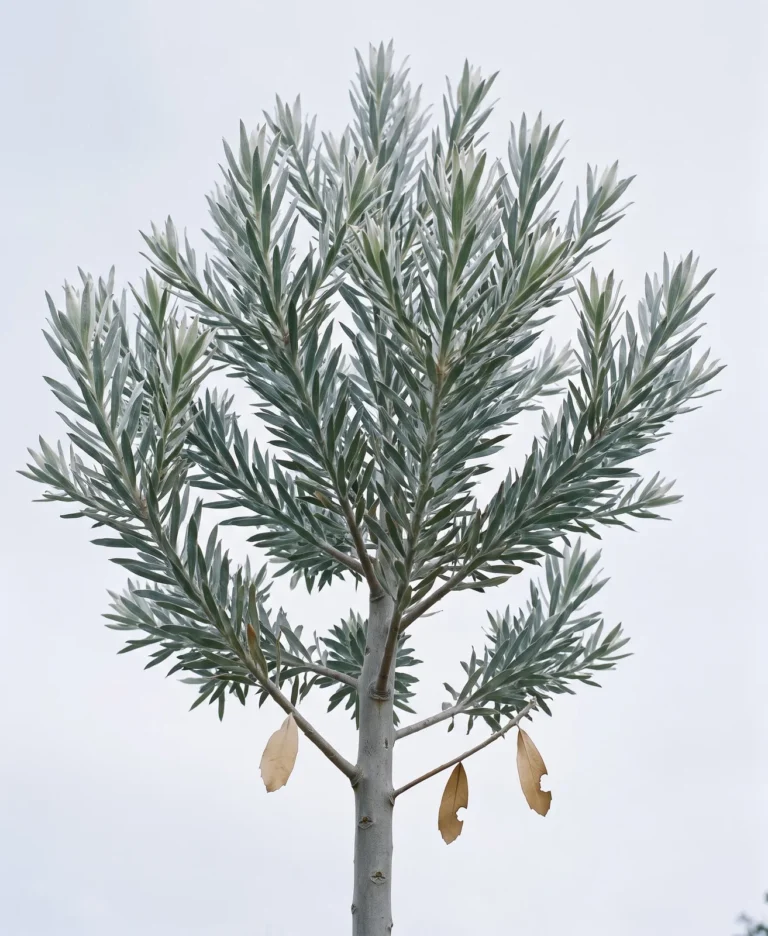
In nurseries and flower shops, the name protea often covers several distinct plants from the wider family. Counts for the Proteaceae family run from more than 1,400 to about 1,660 species in 83 genera. Most of these species live in the Southern Hemisphere, centered in Australia and South Africa. The nodding pincushion with dome-shaped blooms in pink, yellow or orange is Leucospermum cordifolium, while the silver tree with glistening grayish-blue foliage is Leucadendron argenteum. Within the genus Protea, the best-known species is king protea, Protea cynaroides. While care varies across these different genera, they all share the fragile root chemistry that makes standard feeding dangerous.
Why ordinary fertilizer kills a protea
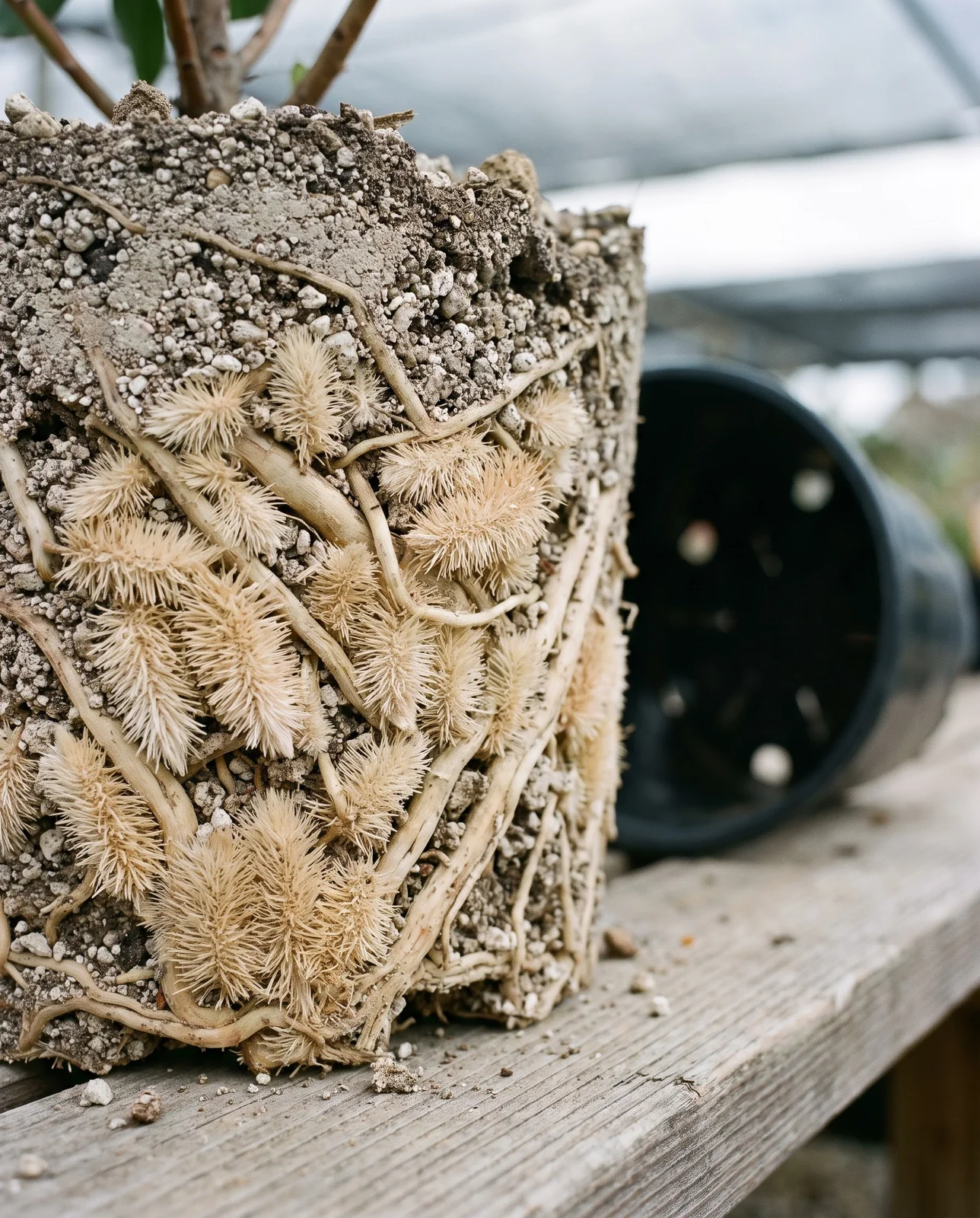
Ordinary garden fertilizer can kill a protea, because the plant is built to grab phosphorus from very poor soil. In lean ground it grows dense mats of fine roots that release acids and free up phosphorus the soil would otherwise hold on to. It is one of the few flowering plant families that never forms the usual partnership with root fungi. Those roots have no off switch. When phosphorus is plentiful, a protea keeps taking it in, which can poison the plant, and bad cases kill it. Along with heaths and some lupines, proteas are the garden plants most sensitive to extra phosphorus. For species from southwestern Australia, even a small rise above their very low natural soil levels can badly stunt growth and even kill the plant.
The margin for error is tiny. Protea neriifolia shows damage in its young leaves at very low phosphorus levels, far lower than other members of the family tolerate. A related shrub, Hakea prostrata, stores the extra in its stems and roots for a while before its leaves are poisoned. Because a balanced plant food contains phosphorus by design, a routine feeding quickly turns into a poisoning.
Fertilizer containing phosphorus will poison and kill proteas: foliage turns yellow and the plant fails, with no cure except moving it to fresh soil. Skip fertilizer at planting time, particularly anything containing phosphorus. Leaving them unfed is the safest choice because proteas are so sensitive to phosphorus. Too much fertilizer forces fast growth with crooked stems and heavy foliage. If you feed, choose a low-phosphorus or zero-phosphorus native plant blend, or apply alfalfa and blood meal in late winter or early spring. Older advice once suggested proteas responded to standard fertilizers and benefited from cottonseed meal around the base, but the family is generally intolerant of fertilization.
Reading a yellowing protea
Yellow leaves can point to phosphorus poisoning, wet soil, or summer heat. Most garden guidelines address only phosphorus deficiency below 0.1 percent in foliage, but proteas suffer from having too much.
Where protea will actually grow in the United States
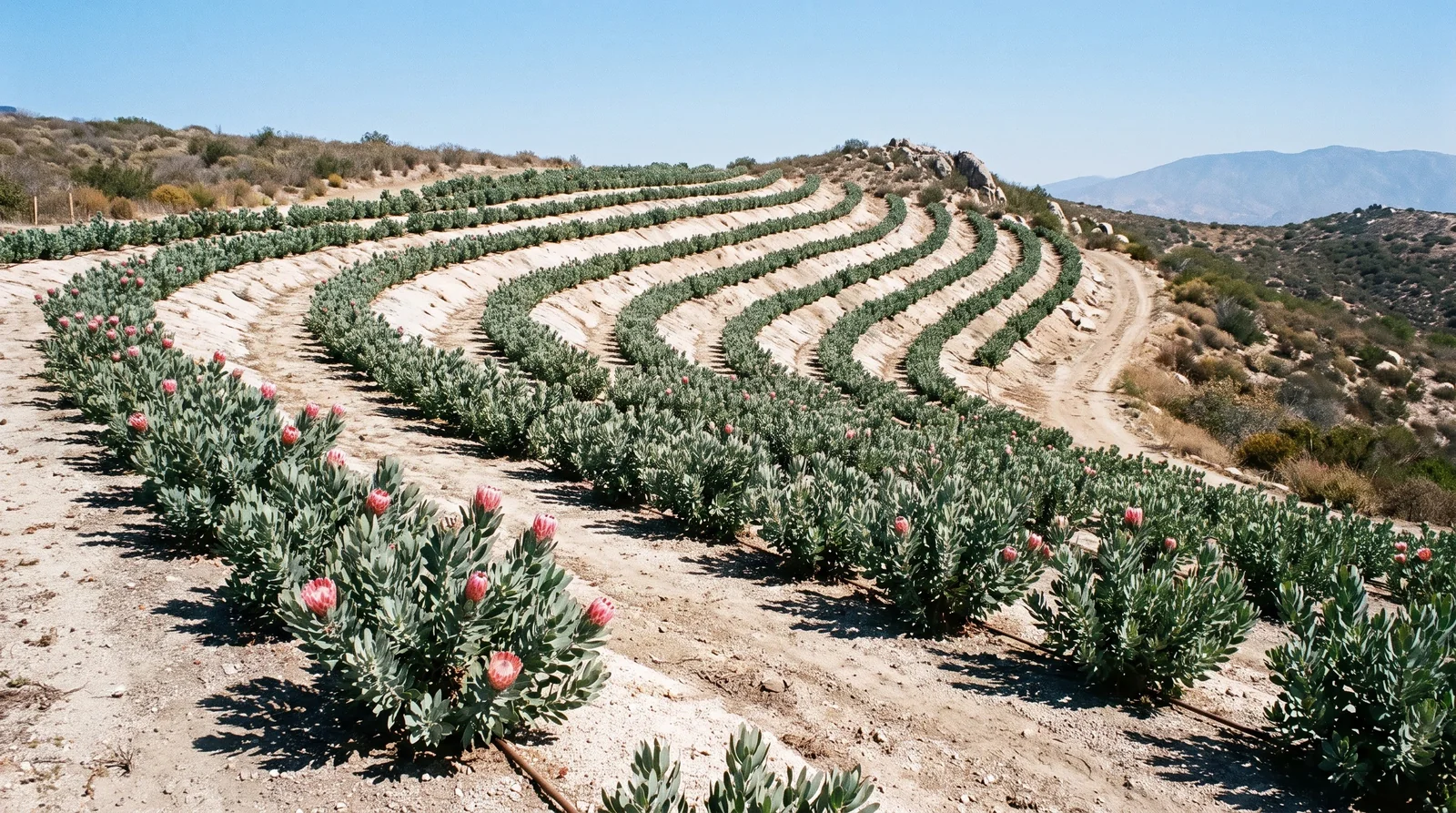
Outdoors in the United States, proteas grow reliably only along the coastal strip of California. That coastline is one of five Mediterranean-climate regions on earth where these plants can be produced. Members of the family adapt well to coastal gardens between Monterey Bay in the north and San Diego in the south. A garden where bird of paradise stays outdoors all winter has the right mild climate. Further south, commercial protea farms blanket the sunny hillsides north and east of San Diego.
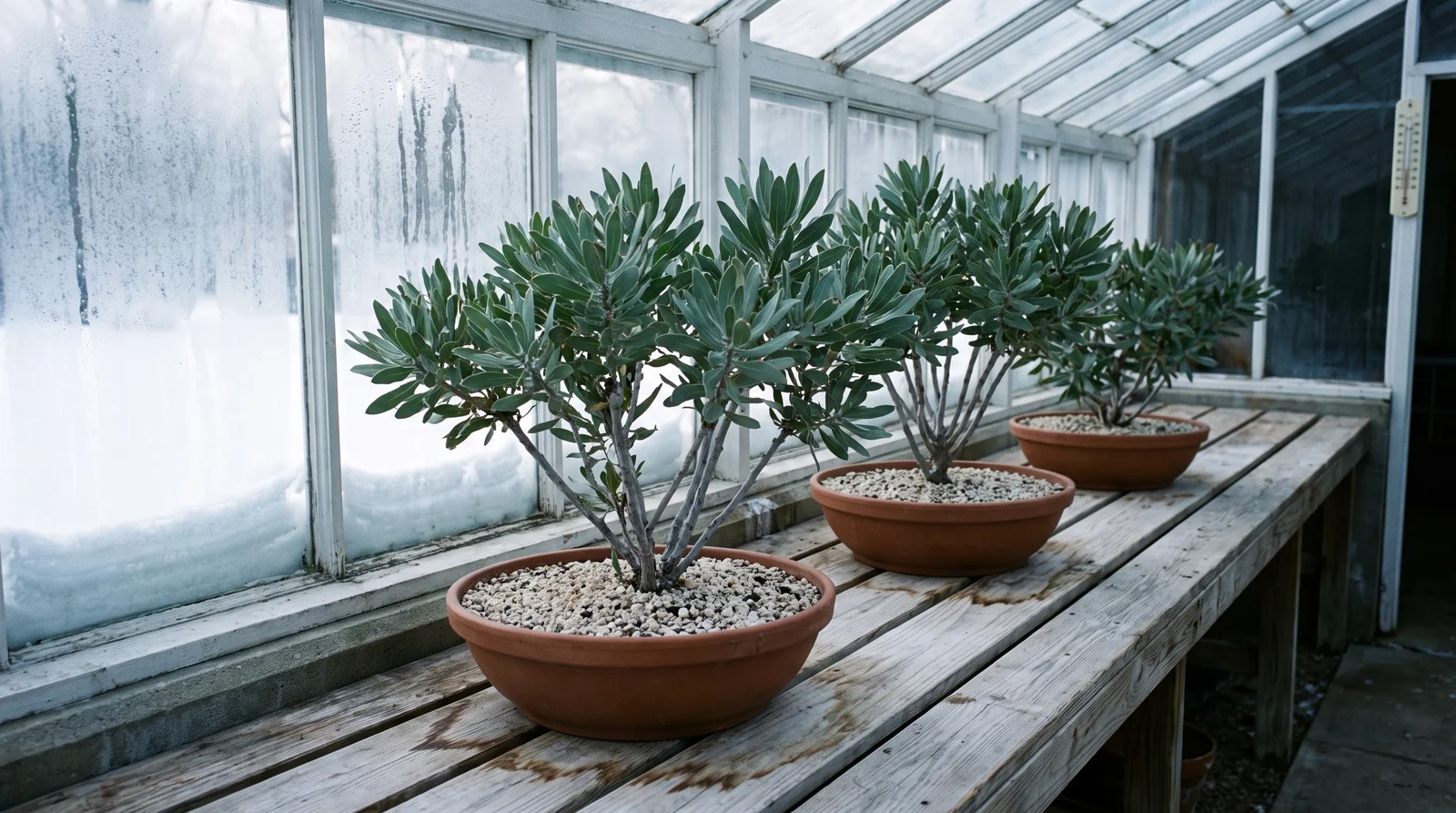
Cold tolerance drops to about 23 to 25 F, and a hard freeze kills the roots. In colder states like Pennsylvania, South African plants such as protea may be grown in pots. Move the pot under cover for the cold months, sharing protected winter quarters with potted plumeria.
Site conditions by threshold
Thresholds and growing conditions for keeping proteas healthy outdoors.
The soil it needs, and why improving that soil backfires
Proteas need lean, coarse, sharply drained ground that leans acid, and trying to enrich that soil usually backfires. The ideal soil pH runs between 5.5 and 6.5, with common targets around 5.5 to 6.0 or slightly higher. Some advice extends that acidic floor down to 3.5, but the ground should remain acidic and nutrient-poor.
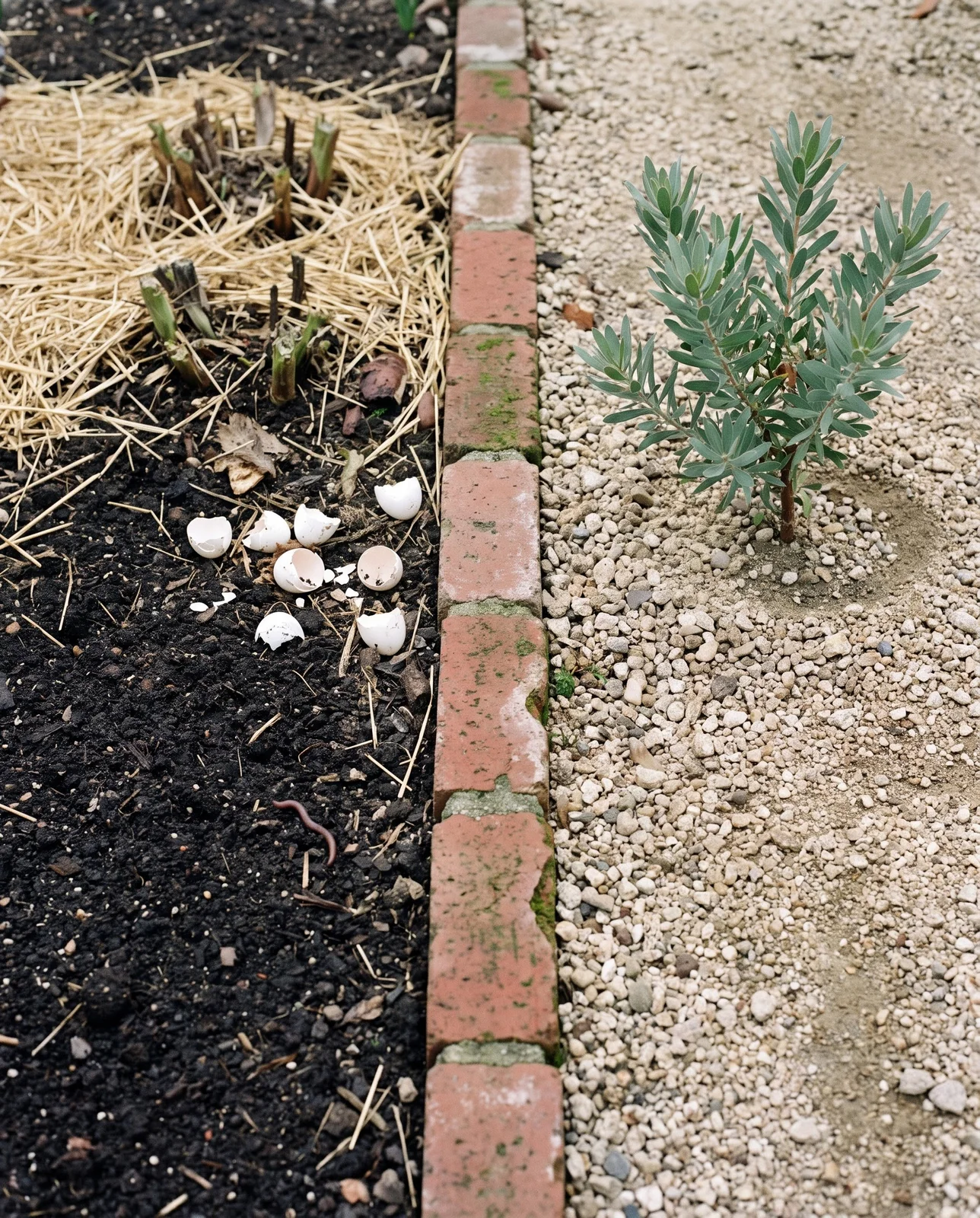
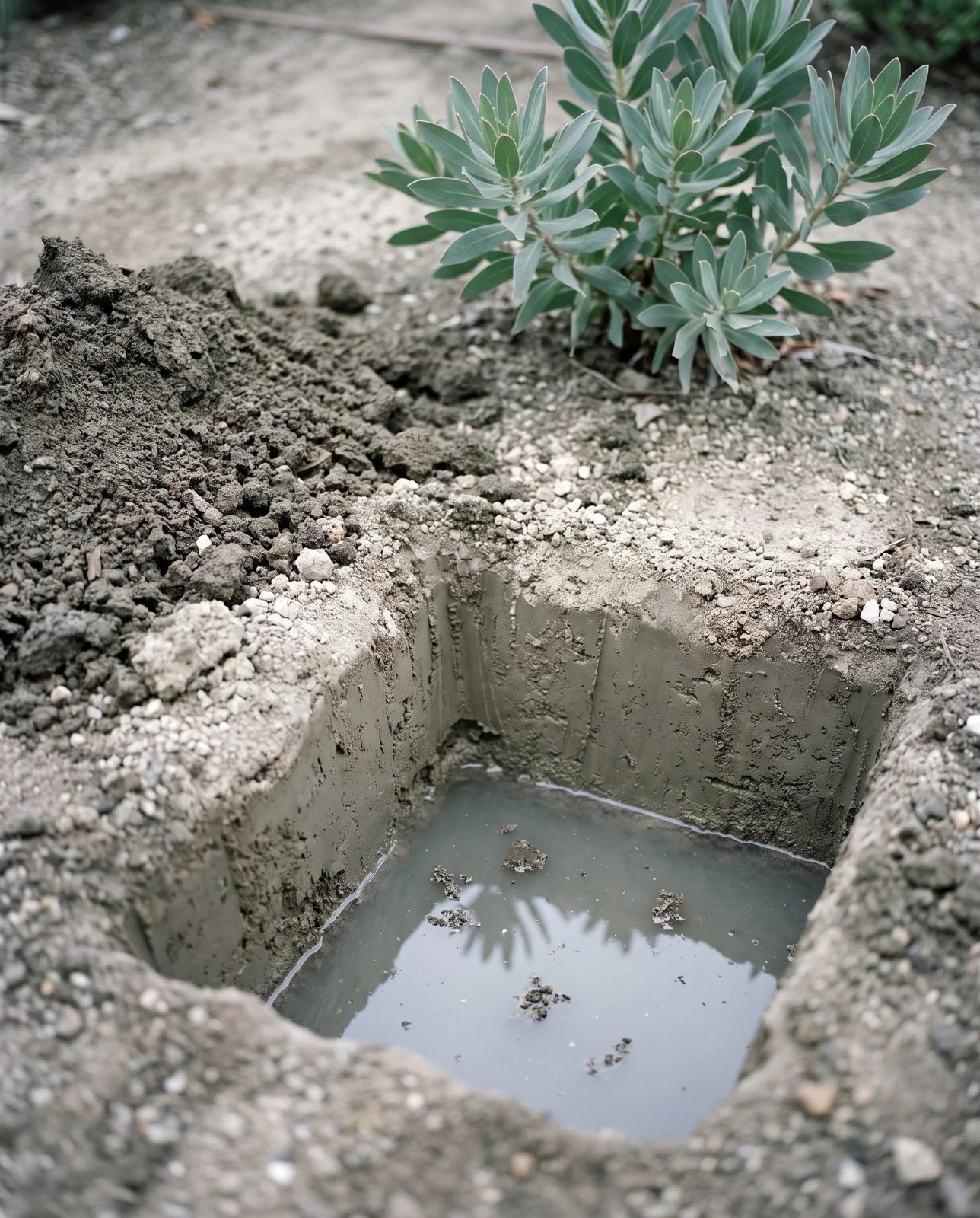
On heavy clay, building up provides the sharp drainage proteas need. Shape a planting mound at least 4 feet by 4 feet and a minimum of 8 inches high, or build raised beds at least 12 to 18 inches high over heavy clay. Keep compost and organic matter out of the planting hole, blending in pumice or similar grit to loosen the soil. Peat can be worked in to increase acidity, and crushed rock or scoria will improve drainage, avoiding lime rock. Do not plant proteas near heavy-feeding garden neighbors that disperse fertilizer through the soil. Unimproved native soil or even poor ground with sharp drainage suits them best, whereas enriched soil only causes trouble.
The phosphorus already resting in your garden soil matters just as much as what you feed, because available phosphorus leaches slowly and can persist for up to 20 years. Native fynbos soils carry only about 1 to 4 milligrams of phosphorus per kilogram in sandstone areas, reaching up to roughly 70 in sand fynbos. Old farmland or heavily tended garden soil can easily reach 300 milligrams per kilogram. Most proteas thrive only where soil concentrations stay between 1 and 40 milligrams per kilogram. Commercial growers keep levels around 5 to 20 milligrams using rock phosphate, leaving out manure and superphosphate. If the top 8 inches read above 40 milligrams while deeper soil is cleaner, deep plowing to 20 inches offers a practical remedy. In open ground, a cover crop of oats and lupins reduced soil phosphorus by 10 to 30 percent over one season. Even without a laboratory test, past garden habits tell the story: an old vegetable plot, a manicured lawn edge, or an enriched flower bed is loaded ground.
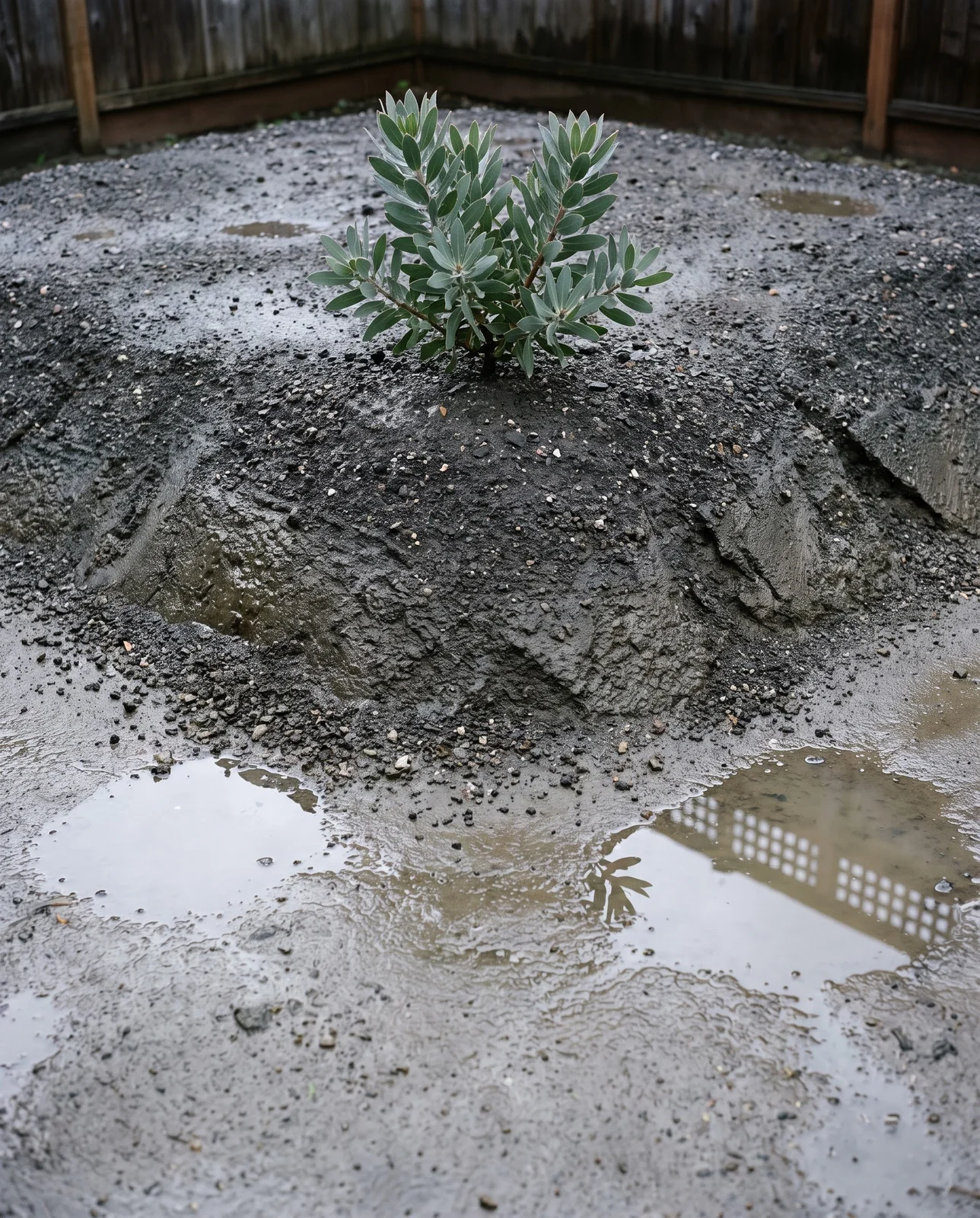
How and when to plant one
Plant a protea from autumn to early spring, when cool weather gives the roots time to settle in good sun before heat arrives. Choose its permanent spot from the start, because an established protea should never be moved.
Dig the planting hole 2 feet deep, lifting off the top 12 inches of soil and breaking up the layer underneath before backfilling. Water once a week during the first one to two years, and a new planting should not have water more often than weekly in the evening through the first summer. A layer of mulch helps hold that moisture, as long as the site drains well.
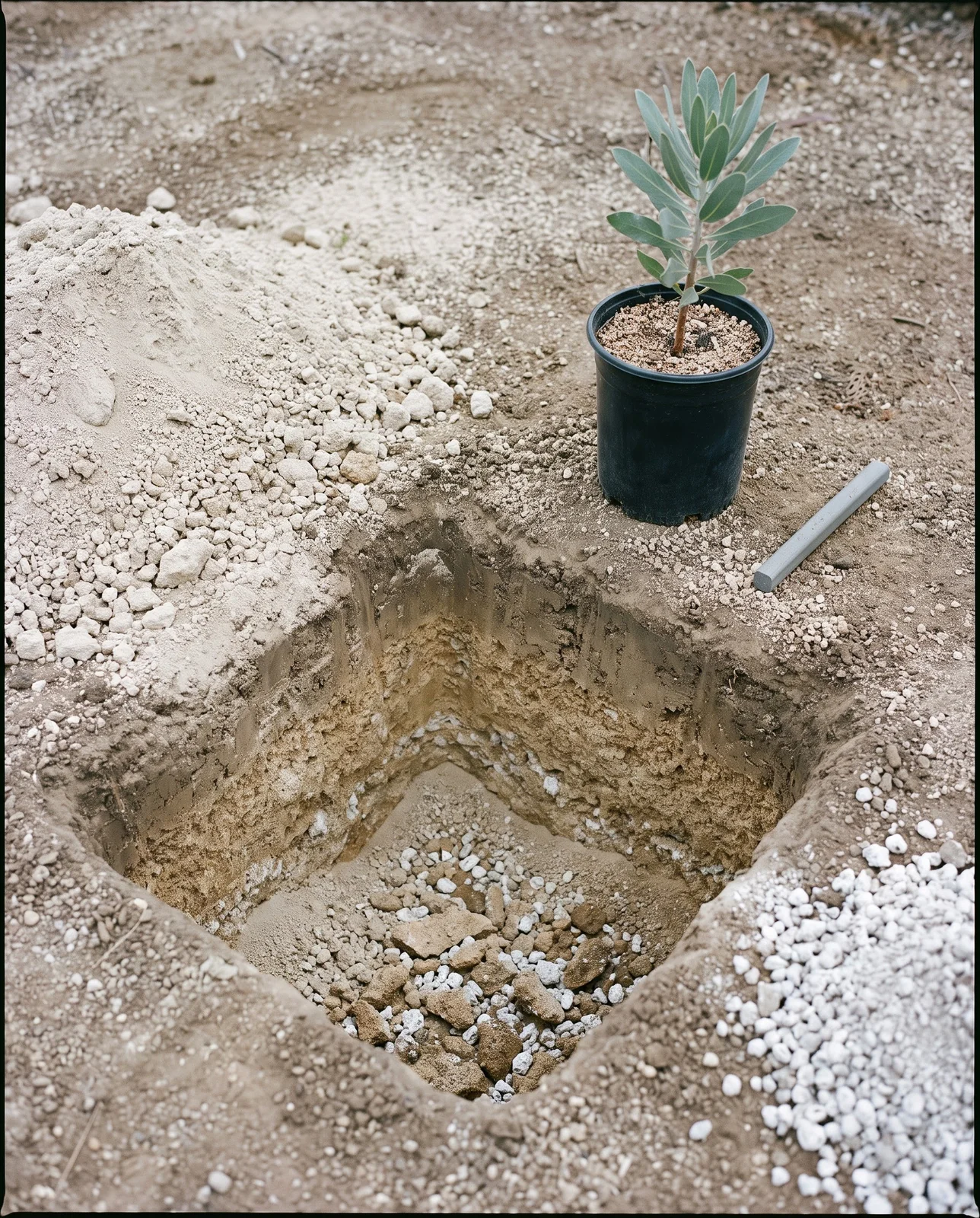
Watering without drowning it
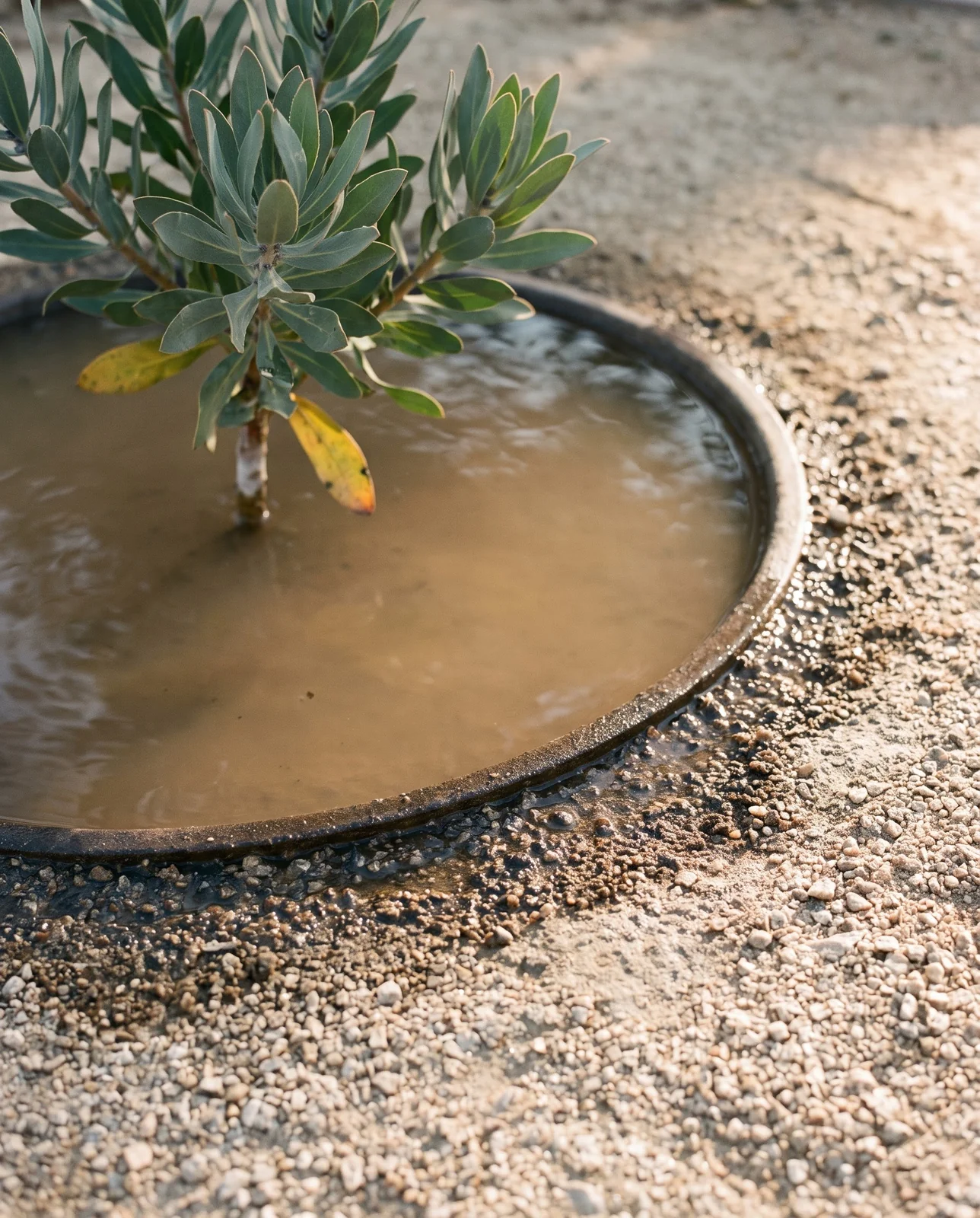
Water an established protea deeply but infrequently in dry weather, letting the top couple of inches dry out between soakings to prevent overwatering. How often you soak depends on your soil, ranging from every 7 to 10 days during dry weather to once every two weeks.
Sudden death can strike an otherwise healthy protea at any age, usually caused by soil-borne fungi in poorly drained ground after overwatering or drought. The trouble often looks like drought: after heavy rain, leaves turn gray-brown and dry while flowers grow sideways and stunted as roots rot. On young plants, keep watering until you see good new growth, then taper back to once every two weeks.
Why a protea will not flower
A protea that is not flowering may simply be waiting for its season. In mild coastal climates, blooms typically appear across fall, winter and spring, and careful growing can stretch flowering nearly year-round. King protea can flower sporadically throughout the year, while proteas usually bloom in spring or simply behave as seasonal bloomers. A plant with no buds in a given month is often just resting between flushes.
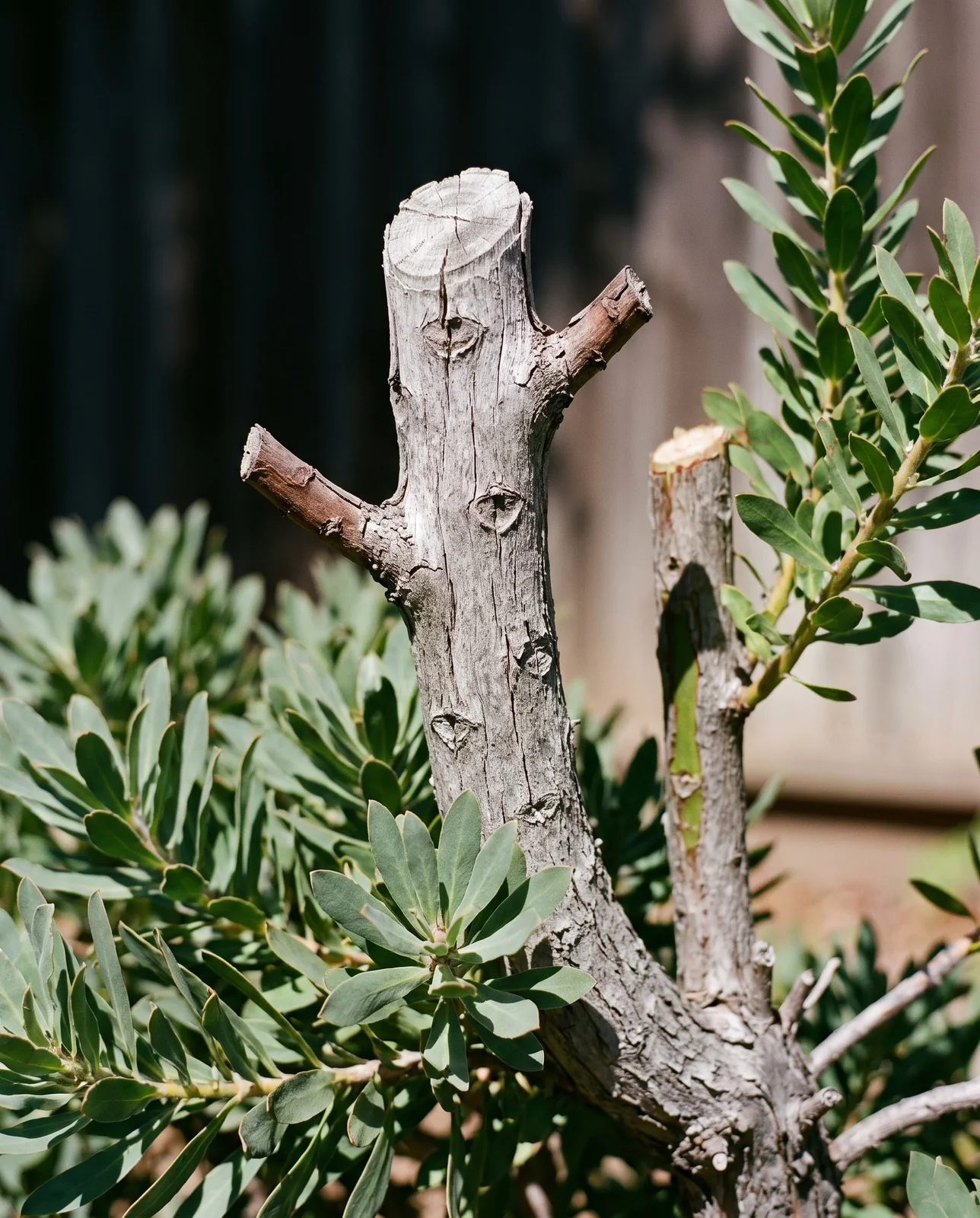
When a healthy shrub refuses to set flower heads, hard pruning is often the cause. A shrub cut back into old bare wood can sit for seasons with fresh leaves and no flowers. Other problems hide below ground. Shade keeps the shrub green without setting buds, soggy soil rots roots quietly, and fertilizer triggers phosphorus poisoning that begins with yellowing leaves. Because none of these troubles announces itself on the buds, the checks below start with the site and work inward.
Working out why yours has stopped
Work through these checks in order, from the simplest test to the hardest problem to reverse.
Pruning, and the one place the sources split
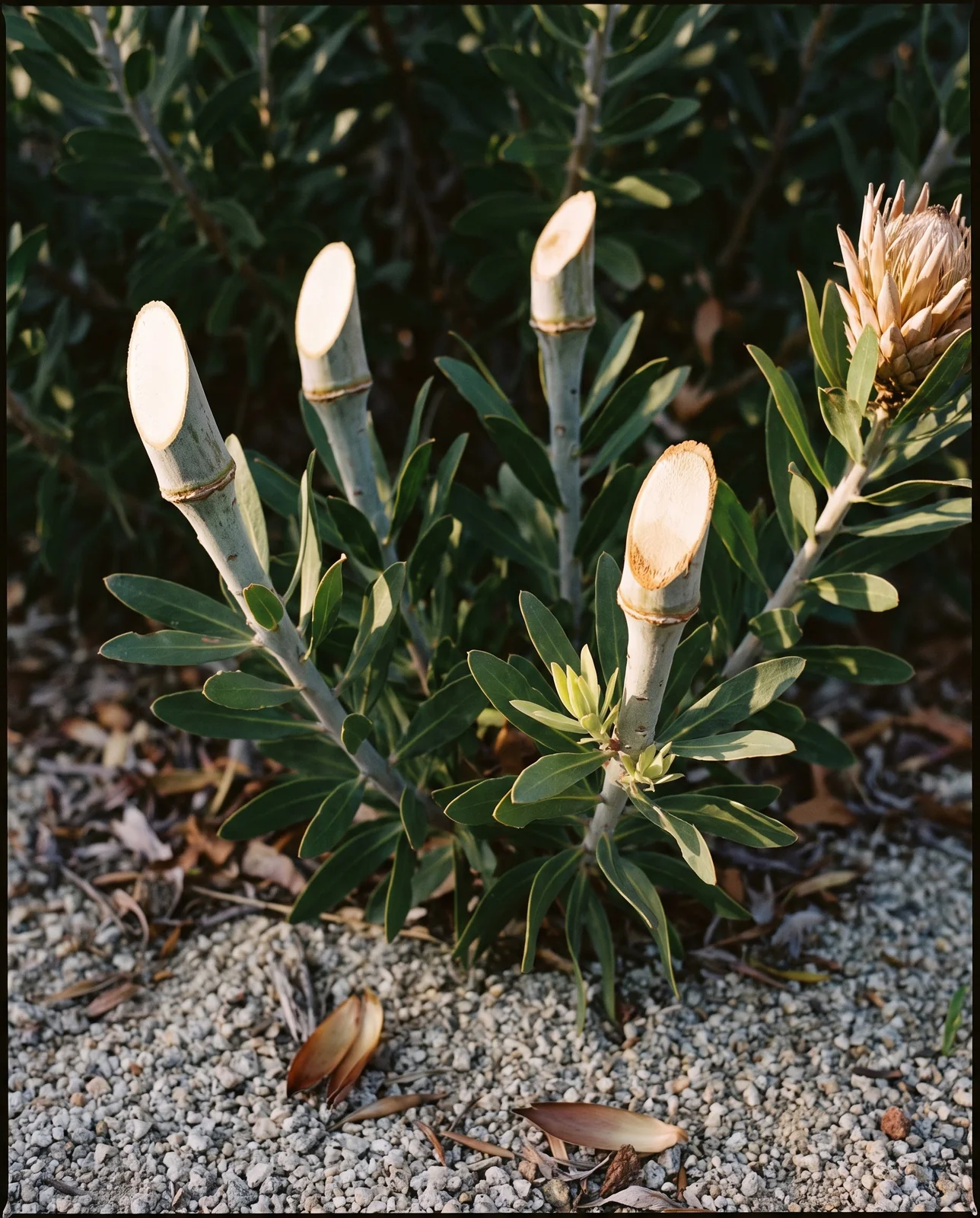
Prune a protea immediately after flowering, cutting lightly and trimming each flowered stem back by one half to three quarters. Leave 4 to 6 inches of green leaves below the cut. Cutting stems for a vase takes care of much of that work, since a vase cut lands on that same flowering growth. During the first 12 months, keep pruning light to shape the bush, because mature plants can suffer permanent damage if cut back too hard.
Advice divides on cutting old wood. As a general rule, never cut into bare wood, and make cuts only at a growth ring on the stem. King protea is the exception: old flowering stems and even older shrubs can be cut back to ground level, where they will re-sprout from the base. If you grow a confirmed king protea, cutting to the ground rejuvenates the plant. On any other protea, always stay above the green leaves so the shrub can recover.
Growing protea in a pot
A container is the only practical choice for most American gardeners, and the potting mix decides whether the shrub survives. Plant in cactus mix, or use a coarse, well-drained native potting mix with the roots sitting close to the top of the pot. Both offer sharp drainage, gritty air pockets, and low fertility, with no soggy moisture around the crown. Watering changes in a pot, too: while garden plants take deep and infrequent soaks, a container should never dry out completely. Without surrounding soil to hold reserves, potted roots need watchful moisture through the warmest weeks.
King protea needs frost-free conditions outdoors, and belongs in a greenhouse in colder climates. Move the container into a bright unheated room, a cold frame, or a greenhouse before the first hard frost. Gardeners who overwinter a potted bougainvillea know the rhythm: full sun outdoors all summer, followed by cool, bright winter shelter. A potted shrub rarely flowers under cover, but winter protection keeps the plant alive until spring returns.
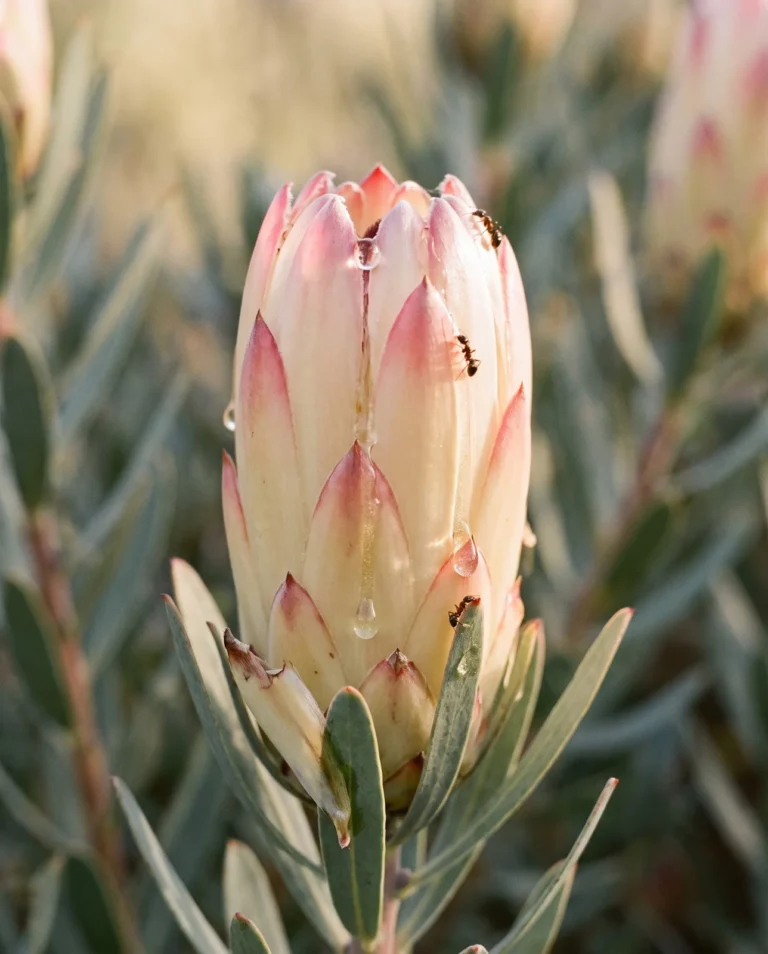
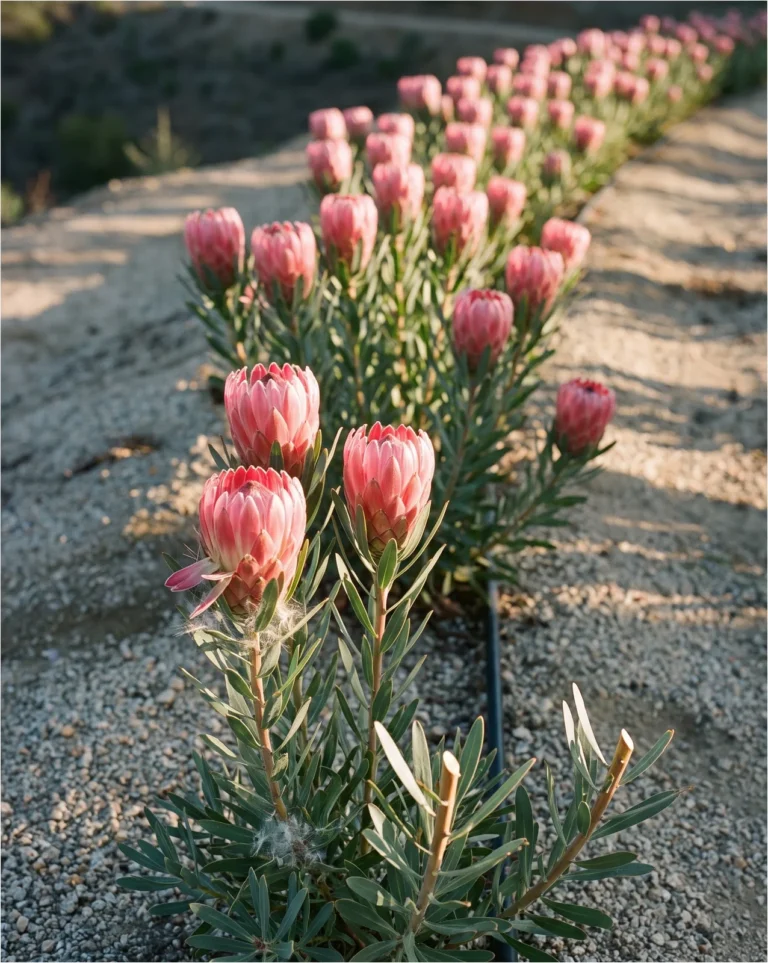
Protea, and the plants sold as protea
Two of these six plants belong to other genera in the same family, frequently sold alongside true proteas.
Protea as a cut flower
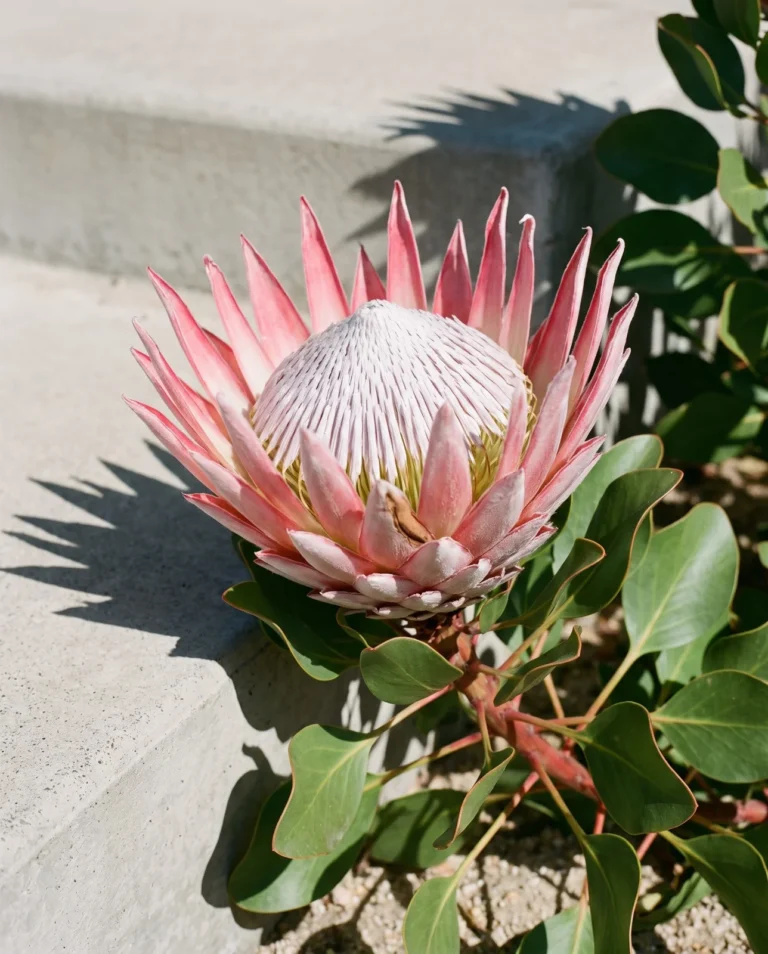
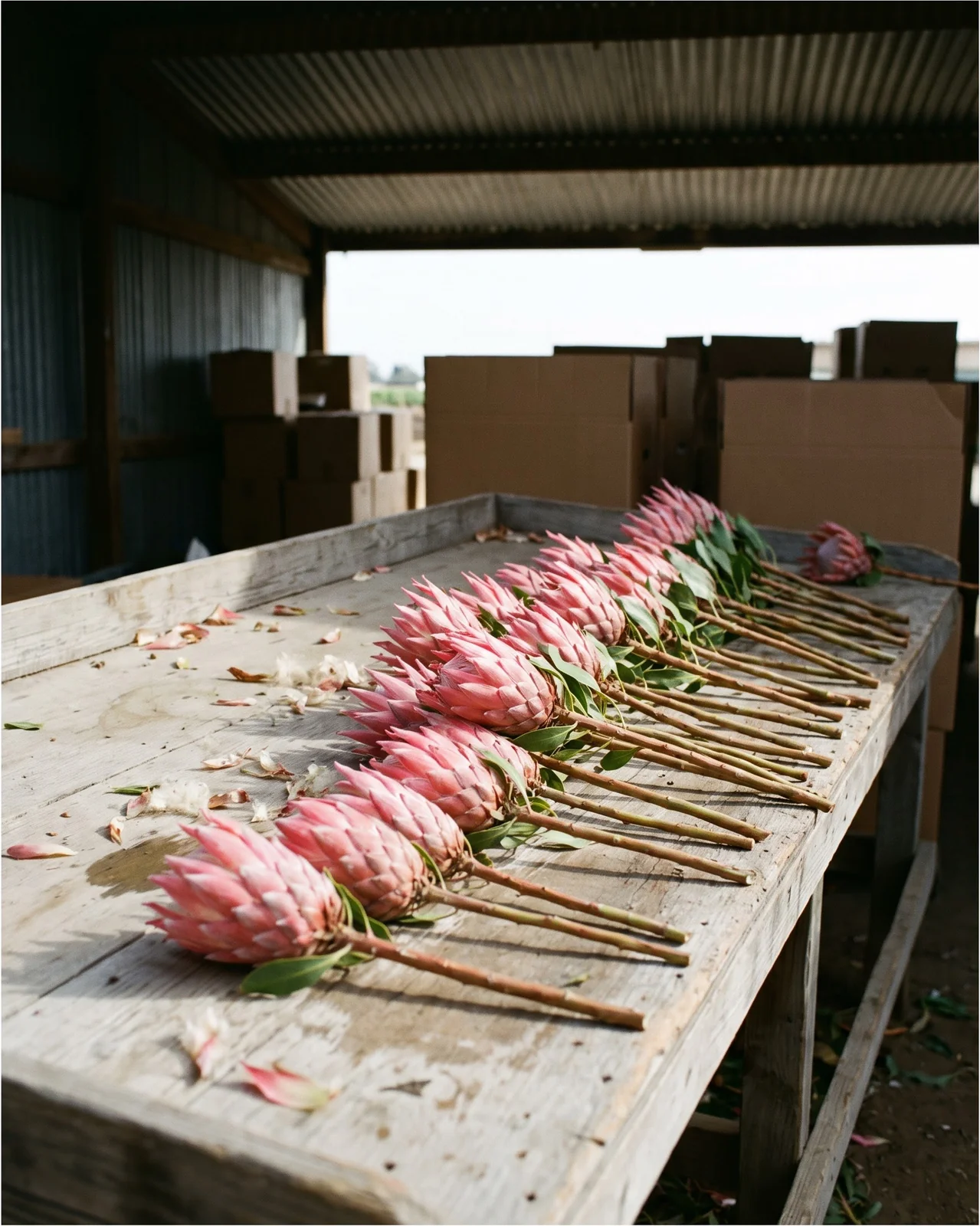
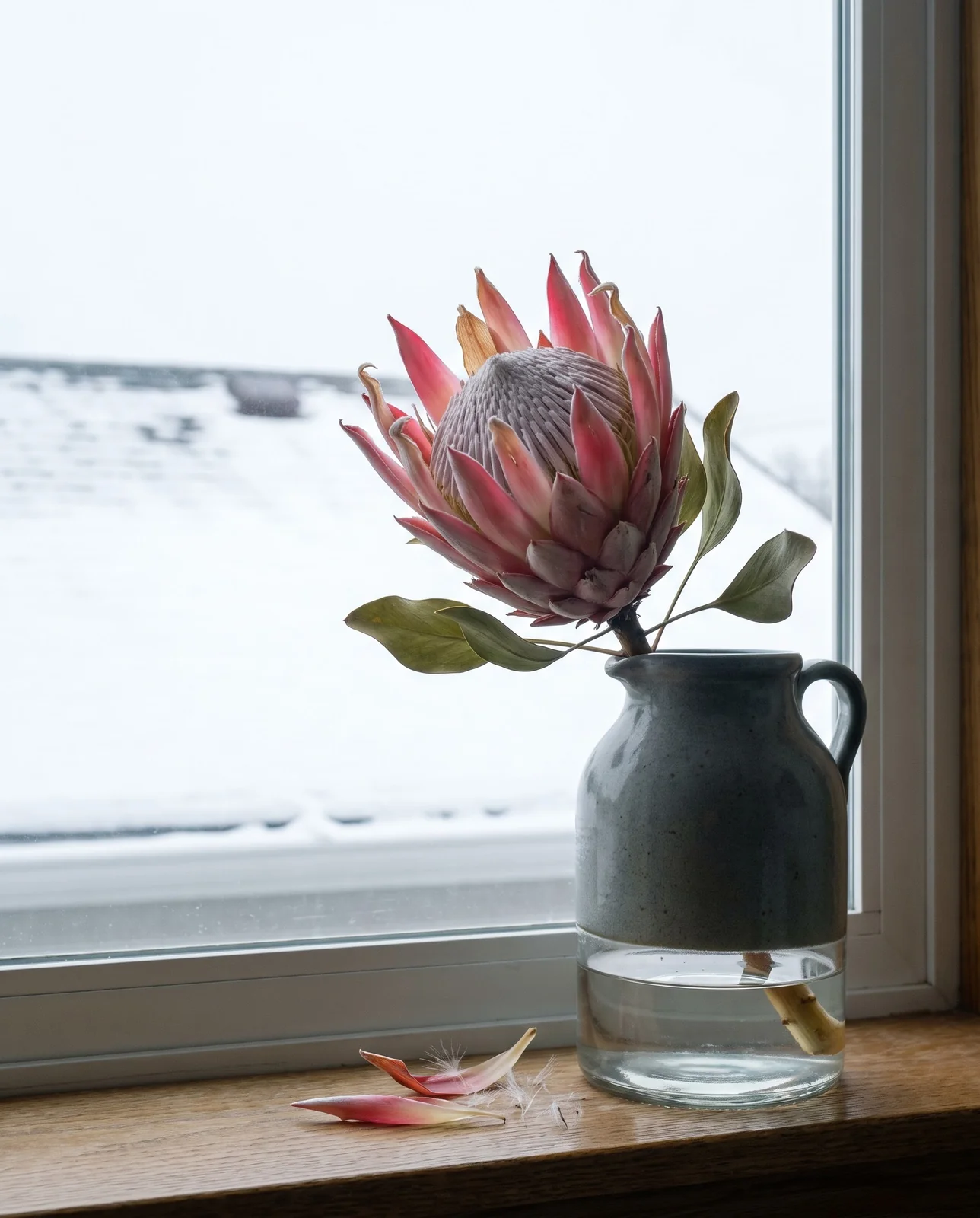
Proteas are among the longest-lasting cut flowers you can bring indoors, and they dry well, keeping indefinitely in dried arrangements. Fresh stems held in preservative solution can last for more than 3 weeks, easily outlasting common bunches of cut pink flowers. Once the water display is finished, the dried head will sit on a shelf for years without falling apart.
What the vase trials measured
How long cut stems hold in a vase and what they need to stay fresh.
Root disease, and what the records disagree about
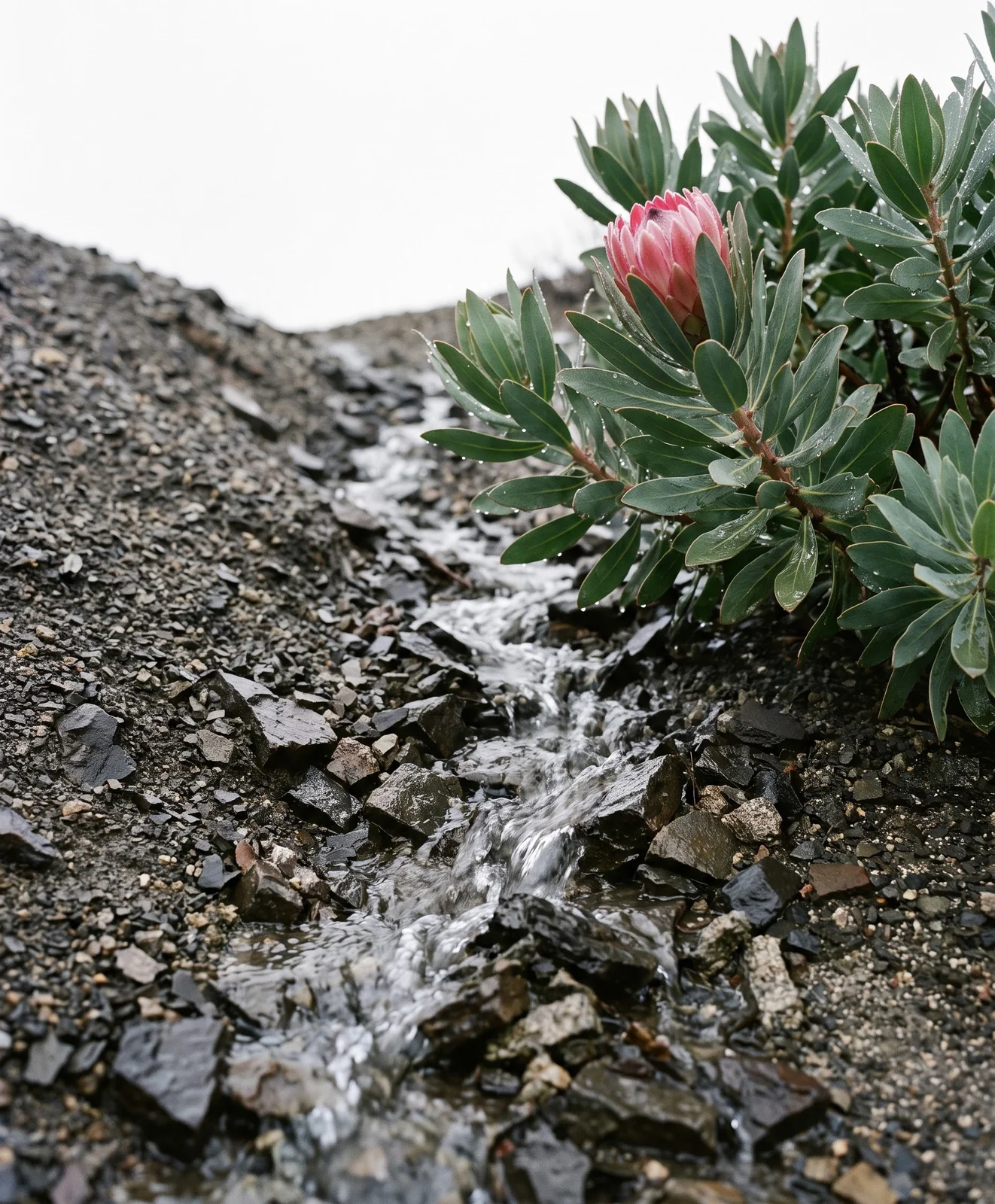
Almost everything that harms a protea begins in wet soil. The plant family is highly vulnerable to dieback from Phytophthora cinnamomi water mold. This organism attacks roots in damp ground, making sharp drainage your main defense. Above ground, Colletotrichum fungus can cause blight, canker and dieback. Preventing both problems comes down to two practices: sharp-draining soil, and deep, infrequent watering during dry weather.
In proper garden conditions, a king protea has no serious insect or disease problems, but it stays highly vulnerable to water mold dieback in wet ground. In sharp, lean soil, it rarely suffers from the common pests that bother other shrubs. In heavy or damp beds, standing moisture around the roots will quickly kill the plant.
What actually goes wrong, in order
Listed from the most common complaint down. Each one gives the symptoms, the cause and what to do.
Symptoms: leaves turn yellow, then brown, followed by the sudden collapse of the plant weeks or months after feeding. Cause: fertilizer toxicity, especially from phosphorus. What to do: stop feeding, and check what has been added to the soil before placing another protea in that spot.
Symptoms: plants damaged or killed by freezing winter weather. Cause: growing protea outdoors beyond its hardiness range. What to do: plan on container growing from the start, and size your winter shelter before buying the plant.
Symptoms: foliage turns gray-brown and dry while the plant remains standing, often after a hot spell or heavy rain. Cause: root rot from wet soil or scorch from intense heat, which produce identical leaf symptoms. What to do: inspect the drainage and review the last two weeks of weather before deciding, because both conditions produce the same dried foliage.
Symptoms: poor growth or failure on sites across California and the Southwest. Cause: heavy garden dirt or leftover fertilizer in the soil. What to do: test the soil drainage and check what has been fed to the ground in past years, which matters far more than the regional climate.
Symptoms: new growth sags, whole plants turn limp, and the shrub collapses after prolonged rain or a wet winter. Cause: root rot caused by standing water in slow-draining soil. What to do: improve the planting site. Planting on a mound or in a raised bed costs less than buying a replacement plant.
Symptoms: leggy plants that stop blooming after being cut back, or plants that fail to produce flowers. Cause: cutting stems back into old, leafless wood where new growth cannot sprout. What to do: check plant conditions before pruning further, and keep future cuts above active green growth.
Symptoms: confusion over whether a plant is a true protea, a leucospermum or a leucadendron. Cause: sellers grouping several related genera under the single trade name protea. What to do: wait for the flowerhead to open to confirm the plant, and adjust your care once you know the genus.
What protea stands for
Protea stands for transformation and variety, drawing on the shape-shifting Greek god Proteus to connect the bloom to change and many forms held in one. The flower also carries deep patriotic pride, with king protea honored in South Africa as the national flower.
Three things people get wrong
Three common assumptions about protea, and what is actually true.
The myth: Protea, pincushion and safari sunset are the same plant, so what is true of one is true of the others.
The reality: They belong to separate genera in the same family, and safety rules for one cannot be assumed for another. On ASPCA lists, pincushion flower, Leucospermum incisum, is non-toxic to dogs, cats and horses. True protea species, including king protea and sugarbush, do not appear on the cat or dog toxicity lists. A safety status given to pincushion does not apply to a true protea.
The myth: A protea head is always the size of the ones in photographs.
The reality: Flowerhead size spans a wide natural range. King protea blooms vary from about 5 to 12 inches across, reaching up to 1 foot in diameter. A flower opening at the smaller end of that spread is healthy and normal.
The myth: Protea costs what it does because every stem is flown in from South Africa.
The reality: Domestic farms produce a cut crop in the United States, and wholesale prices are modest. Wholesale stems run from $1 to $7 each, depending on the variety and season. Any higher price at retail reflects handling, shipping and shop markup.
What the first years look like
What to expect through the early seasons when planted in suitable ground.
The first year belongs to the roots. Keep pruning light during the first 12 months to shape the young shrub, as severe pruning may permanently damage the plant. Water sparingly once the roots settle, and leave the surrounding soil as lean as you found it. Proteas thrive without the rich compost or feeding that other shrubs receive, and giving them fertilizer is how most new plants are lost.
Once flowering begins, routine pruning keeps the shrub shapely and vigorous. Cut back one half to three quarters of each flowering stem right after it finishes blooming. Prune lightly and frequently through the growing season, because thick older wood rarely re-sprouts. When you gather stems for a vase, harvest and pruning become the same simple job.
An established protea asks for very little care, but it tolerates few mistakes. The hazards that threaten an older shrub are the same ones that kill a seedling: waterlogged roots, phosphorus fertilizer, and deep cuts into old wood. Sharp-draining soil carries the plant through rainy winters, and you solve that requirement the day the shrub goes into the ground.
FAQ
Where do proteas grow in the US?
Outdoors, proteas grow mainly along coastal California between Monterey Bay and San Diego, where farms blanket the hillsides north and east of the city. They tolerate cold down to about 23 to 25 F, so in colder climates they belong in containers brought under cover for winter.
How long does a protea flower last?
Proteas are among the longest-lasting cut flowers, and their dried heads keep indefinitely. A cut bouquet stays fresh for more than two weeks if you re-cut the stems and refresh the water every few days. In preservative solution, blooms last more than 3 weeks.
What does the protea flower symbolize?
The flower stands primarily for change. Carl Linnaeus named the genus in 1735 after Proteus, the Greek god who could change his shape at will. It also carries national pride, as king protea is honored in South Africa as the national flower.
Why are my proteas not flowering?
A lack of direct sunlight or heavy pruning is usually the reason. Proteas need a minimum of 6 hours of full sun each day to form flower buds. Pruning is another common cause, because larger branches and stems rarely re-sprout, so cutting a shrub back hard can cost you flowers for seasons.
What is the best fertilizer for proteas?
Proteas generally grow best with no fertilizer at all. Avoid feeding at planting time, especially with anything containing phosphorus, and choose a native-plant fertilizer with low or zero phosphorus if you feed. For a lower-phosphorus option, apply an alfalfa meal and blood meal blend in late winter or early spring.
What are the downsides of using phosphorus fertilizer?
Phosphorus fertilizer can easily kill a protea. The plants cannot limit their uptake when phosphorus is plentiful in the soil, and severe toxicity results in plant death. Available phosphorus also leaches slowly and can persist in the soil for as long as 20 years.
What does a phosphorus deficiency look like in plants?
In woody plants, phosphorus deficiency is diagnosed by testing that finds less than 0.1 percent phosphorus in current-season foliage. On a protea, yellowing foliage usually signals excess phosphorus, which begins with leaf yellowing and progresses to dead leaf tips and whole dead leaves.
What is the ideal growing zone for protea flowers?
Proteas grow outdoors in zones 9 to 12, though king protea does best in frost-free sites in zones 9 and 10. They thrive between 40 and 95 F, with cold tolerance reaching down to about 23 to 25 F.
When should you plant proteas?
Plant proteas from autumn to early spring, which gives the young roots time to develop before summer growth. An autumn or spring planting also provides maximum sunlight while the shrub establishes.
What is the average lifespan of a protea?
Sudden death of an otherwise healthy protea is common at any age. It strikes most often at the end of a dry season or after overwatering, caused by soil-borne fungi in poorly drained ground.
Interesting tips
- Treating the soil with aluminum sulfate lowers available phosphorus and produces better growth than leaving plants untreated, as with Protea 'Sylvia'. It acts on phosphorus already sitting in the ground, though it is mostly farm-scale work.
- Once phosphorus gets into the soil, the plant turns yellow and begins to fail, and the only fix is to move it. Yet you should never relocate an established protea. That makes the planting spot a one-time decision, and what the ground was fed matters as much as how it drains.
Related Guides & Flowers

Types of flowers
The full index of flower guides here, arranged by type and by name.

Red flowers
Red garden and cut flowers, with what each one needs to hold its color.
Oleander
Another sun and drought shrub for the warm half of the country, with a warning of its own.
Gladiolus
A tall summer cut flower grown from corms and planted in batches for a long season.
Enjoying our flower guides? Add YourFlowersGuide as a preferred source on Google. It helps more readers find us.
Add to Preferred Sources